Case of the Day – Thursday, May 22, 2025

DOUBLE DIPPING, KENTUCKY STYLE

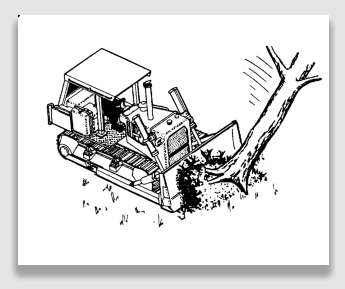
Lon Chaney was not a part of this lawsuit.

Lon Chaney was not a part of this lawsuit.

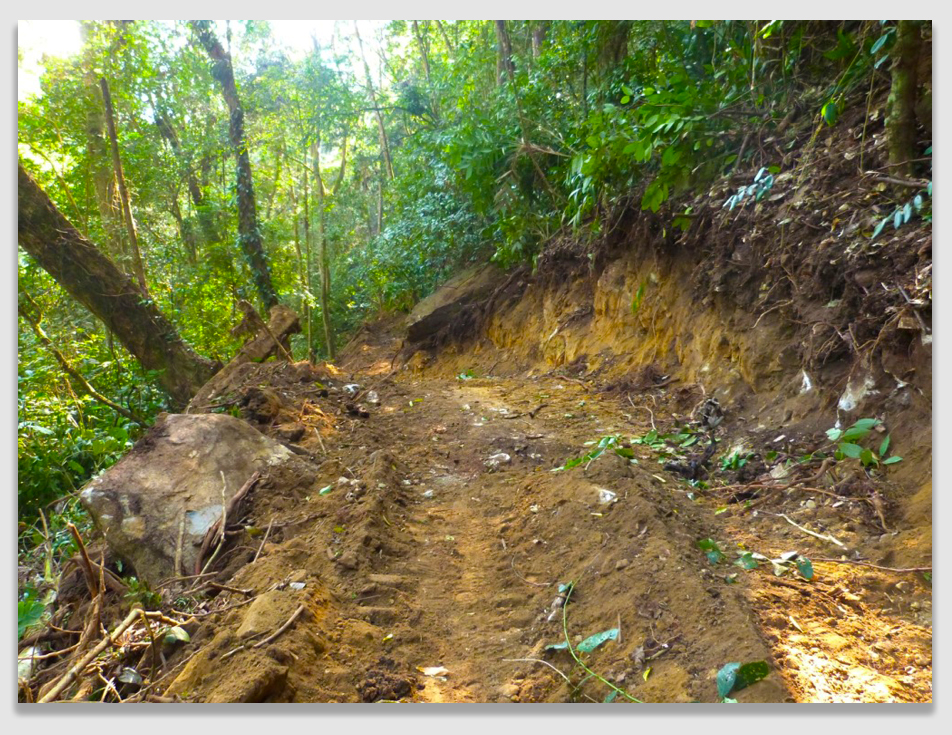
It’s hard to feel too much sympathy for Mr. Chaney (Dave Chaney, not Lon Chaney) in today’s case. He and his wife lived in a hollow on the Ohio River, downhill from the Wilsons.

When the Chaney homestead filled up with mud because of a landslide, the Chaneys saw green where most homeowners would just see brown. They sued the hilltop Wilsons, complaining that their neighbors had trespassed and cut down some 400 trees, many of them belonging to the Chaneys. The Chaneys alleged that the removal of the trees — insulting enough on its own — led to the hillside ending up in the Chaneys’ living room.

The trial court got the two sides to agree that their surveyors would decide on the proper boundary. The surveyors did so and concluded that Mr. Wilson had cut down his own trees, not Chaney’s trees. Meanwhile, the Chaneys lost or fired their attorney — we’re unclear what happened, but regardless, it came at a bad time — and proceeded to lose on summary judgment. They then appealed, arguing for the first time that they hadn’t agreed to have their surveyor work with the other side’s surveyor.

The Court of Appeals ruled against the Chaneys, holding that their allegation was too little, too late. Because it hadn’t been raised in the trial court (where it could have been corrected), the argument could not be raised on appeal. Besides, the Chaneys’ lawyer had agreed to the two-surveyor mechanism, and that agreement was binding on the parties.

There may have been more to the Court’s repudiation of the Chaneys’ position. The trial judge was clearly a little put off that the Chaneys had told their insurance company that the landslide was caused by rain, thus collecting a cool $200,000 for the damage (the Chaneys must have had quite a living room). Now, the Chaneys were saying that the mudslide resulted from the Wilsons’ alleged tree cutting. The shifting story didn’t especially smack of sincerity.

Most people see a mudslide as a disaster ... the Chaneys saw it as a ticket to Easy Street.

Most people see a mudslide as a disaster … the Chaneys saw it as a ticket to Easy Street.

It is considered poor form to try to collect twice.

Chaney v. Wilson, 2007 Ky. App. Unpub. LEXIS 307, 2007 WL 2019673 (Ct.App. Ky., July 13, 2007). Philip and Michaelynn Wilson owned property adjacent to David Chaney’s property in Maysville, Kentucky. The Chaneys lived at the bottom of a steep hill near the banks of the Ohio River. The Wilsons lived at the top of the hill, overlooking the river.

The Chaneys charged that the Wilsons caused timber to be cut and removed from the Chaneys’ property and that such actions caused the removal of lateral and subjacent support, either causing or aggravating a landslide that damaged their property. At the behest of the trial court, two surveyors surveyed and agreed on the boundary line between the parcels. The surveyors also concluded that any trees that had been cut were in fact on the Wilsons’ property.

The Chaneys may have been perfectly honest with the insurance company ... but if they were, it meant they were trying to snooker the court.

The Chaneys may have been perfectly honest with the insurance company … but if they were, it meant they were trying to snooker the court.

The trial court entered a final order, incorporating by reference the surveyors’ agreed description as the disputed boundary line and granting the Wilsons’ motion for summary judgment. Regarding the Chaneys’ claim that some 400 trees had been cut, the trial court found that the physical evidence on the site did not support the allegation, and, “based upon the boundary line as agreed and established by the parties two independent surveyors, any minimal cutting of trees occurred on the defendant’s side of the established boundary line, effectively negating any claims of improper ‘cutting of timber’ as alleged in the Complaint.”

The court also took judicial notice of a separate legal proceeding filed by the Chaneys against their insurance company in which they also alleged that their home was damaged by a landslide in March 1997 – nine months before the Wilsons cut down any trees –which had been triggered by heavy rains. The Chaneys had received a settlement of $200,000 from their insurer for the landslide damage.

The trial court dismissed the Chaneys’ complaint. An appeal followed.

Held: The summary judgment was upheld. On appeal, the Chaneys — who had lost their attorney during the proceedings — only made one argument, that they did not authorize counsel to agree to the surveyors’ collaborating on the legal description of the disputed boundary line. But the Court held that while an attorney cannot substantively settle a case without his client’s express authority, a party is nonetheless bound by the procedural agreements and stipulations of its attorney in the conduct of the litigation for which that attorney was hired. The agreement entered to have the surveyors conduct a joint survey was such a procedural agreement and was within the attorney’s authority.

What’s more, the Chaneys never complained in the trial court that their attorney lacked the authority to make the agreement. The Court noted that an issue not timely presented to the trial court may not be considered for the first time on appeal.

Tom Root
TNLBGray140407

Case of the Day – Wednesday, May 21, 2025

HAPPY TRAILS TO YOU

It’s easy enough to imagine the liability headaches that a political subdivision might face in the operation of parks. There are so many ways to get into trouble in a park: There are ponds to drown in, gopher holes to step in, cliffs to fall over, and the occasional falling tree.

Most states have recreational use statutes that limit public and private liability for the noncommercial use of land in its natural state. Before one can sue a sovereign – not just a king, but the federal government, state government, or a political subdivision – the government about to be sued must give permission to sue. These days, such permission is given in the form of federal and state tort claims acts.

In California, for instance, an injured park user must show that a dangerous condition of public property existed. This is not your average gopher hole: instead Government Code § 830(a) says it “means a condition of property that creates a substantial (as distinguished from a minor, trivial or insignificant) risk of injury when such property or adjacent property is used with due care in a manner in which it is reasonably foreseeable that it will be used.” To win money from the State of California, which (despite the legislature’s best efforts, may still have a little left), one must show 1) a dangerous condition of public property; (2) a foreseeable risk arising from the dangerous condition of the kind of injury the victim suffered; (3) either negligence on the part of a public employee in creating the danger or failure by the political subdivision to correct it after notice of its existence and dangerousness; (4) a causal relationship between the dangerous condition and the victim’s injuries; and (5) actual injury suffered by the victim.

That’s a pretty tall order for a victim to fill. And if that were not enough, the State has granted itself “trail immunity.” Section 831.4 of the Government Code holds that a political subdivision “is not liable for an injury caused by a condition of… [a]ny unpaved road which provides access to fishing, hunting, camping, hiking, riding, including animal and all types of vehicular riding, water sports, recreational or scenic areas… [and] any trail used for the above purposes.”

You may see where this is headed. A 10-foot-long eucalyptus branch split off from a tree in July 2013 and fell on Lorin Toeppe while she was walking with her boyfriend. Lorin, a physical therapist, suffered a crushed leg, fractured spine and lacerations to her face.

She sued the City, alleging its workers negligently maintained a eucalyptus tree that dropped its branch on her. The City countered that she was walking on a park trail when it happened, so the City had “trail immunity.”

Lorin appealed, and – even in the face of dire predictions that parks would close – the court held that things were not quite as cut and dried as the City argued they were.

Toeppe v. City of San Diego, 13 Cal. App. 5th 921, 220 Cal. Rptr. 3d 608 (Ct.App. 4th Dist. 2017). While Lorin Toeppe was walking through Mission Bay Park with her boyfriend, a branch fell off a eucalyptus tree and struck her. She was badly hurt.

Lorin sued, claiming the tree constituted a dangerous condition of public property under Gov. Code 830(a). The City moved for summary judgment, arguing it was immune from liability under Gov. Code § 831.4, because Lorin was on a trail when she was injured. The trial court agreed, holding that “[t]he evidence shows the injuries to Toeppe were caused when she was walking on the trail. Although it is disputed whether she was actually on the paved trail or just off of it, Toeppe’s contention is that the trail immunity does not apply to the other condition (failure to adequately maintain a tree next to the trail). Even if… the tree’s condition was a dangerous condition – and… substantially contributed to the accident, it does not create liability to fulfill its purpose, the immunity should apply to the tree (and its condition) because of the location of the tree to the trail.”

Lorin appealed.

Held: The City’s tree maintenance is not immune from negligence claims just because the trees are near a trail.

Lorin argued that between 2004 and 2013, a City employee negligently trimmed the eucalyptus tree. She claimed the City created and was aware of the dangerous condition of the tree, and as such, the City is liable for the harm caused by the falling branch.

The Court noted that trail immunity “is afforded ‘to encourage public entities to open their property for public recreational use because the burden and expense of putting such property in a safe condition and the expense of defending claims for injuries would probably cause many public entities to close such areas to public use.

     That’s what the City thought… but the Court saw it differently.

Lorin argued that trail immunity applied to the condition of the trail, not to the fact that she may have been on the trail when she was hurt. She claimed that the negligently maintained eucalyptus tree was the dangerous condition that gave rise to the City’s liability and her damages, not the trail. The City countered that Lorin was on the trail when she was struck by the branch, and the dangerous condition at issue here was thus connected to the trail.

In short, the Court said, “This is not a case about trails. It is about trees. Trees that were planted and maintained by the City. Trees that were not naturally occurring in Mission Bay Park. This is not a case where Toeppe was injured walking on a City trail in a naturally occurring forest. This is not a case where Toeppe had to walk on a trail to reach a dangerous condition or a dangerous condition was part of the design of the trail. Instead, Toeppe was injured when a tree branch struck her. She maintains the branch fell on her because the City was negligent in maintaining the eucalyptus trees in the park. There are no allegations that she was harmed based on a condition of the trail. There are no allegations that she was injured because of the location or design of the trail. On the record before us, we find no basis on which to apply trail immunity.”

The Court was not persuaded by the City’s argument that finding trail immunity does not apply here could result in the closing of City parks in which trees exist. “Although it might be prudent for the City to evaluate its maintenance of trees in its parks,” the Court said, “we do not foresee several park closures based on this opinion. Here, we merely conclude trail immunity is not applicable based on Toeppe’s allegations and the evidence submitted in support of and in opposition to the City’s motion for summary judgment.”

– Tom RootTNLBGray

Case of the Day – Tuesday, May 20, 2025

DRIVE-BY INSPECTIONS, FEDERAL-STYLE

Delaware Water Gap National Park

Delaware Water Gap National Park

Ms. Merando and a friend had been enjoying the scenery of Delaware Water Gap National Park – a beautiful place – one summer day, when a tree (which had previously been topped) fell from an embankment and crushed the car, killing Ms. Merando and her young daughter, Kaylyn.

It was a tragedy, and sometimes tragedies drive the bereaved to push harder than makes sense. That happened here, where Ms. Merando’s husband sued the National Park Service for not having removed this topped tree before it fell. The tree was a disaster waiting to happen, a dead, previously-butchered hulk leaning over the road like an ogre waiting to pounce.

A legal tradition – dating back to the days of knights and knaves and peasants and ogres – holds that no one may sue the king without the king’s permission. The doctrine is known as “Sovereign Immunity.” To address the unfairness of this rule, the U.S. government and virtually all states have passed tort claim acts, which give permission in certain circumstances to sue the sovereign (here, the sovereign is an Uncle named Sam, not a King or Queen).

The federal statute is called the Federal Tort Claims Act. Under the FTCA, an individual may sue the government in some cases but not others. There are limitations. One of those limitations is that you can’t sue the government if it fails to perform a discretionary act. Whether hazard tree removal is a discretionary function is at the heart of this case.

The Court of Appeals upheld the lower court, dismissing Mr. Merando’s case. The National Park Service, it appears, had written guidelines that essentially directed every park to adopt a hazard tree removal policy that makes sense for the individual park. The result is a patchwork of unwritten policies. That sounds like a prescription for chaos.

Actually, it’s a prescription to avoid liability. If the Service had a written hazard tree removal policy and the local rangers hadn’t adhered to it with the tree in question, then liability on the part of the government would be pretty clear. But, as some sharp National Park Service lawyer undoubtedly figured out — and yes, even Smokey the Bear has his own mouthpiece — if you don’t write it down, it’s that much harder for a plaintiff to prove that you failed to follow it.

The Delaware Water Gap National Park had a rather amorphous “drive-by” inspection policy, and Mr. Merando was unable to demonstrate that anyone had violated it. The lesson seems to be that “the less you do, the safer you are.”

Some hazard trees are easier to spot than others ...

Some hazard trees are easier to spot than others …

Merando v. United States, 517 F.3d 160 (3rd Cir., 2008). Janine Noyes, Kathleen Merando, and Kathleen’s daughter, Kaylyn, were sightseeing in Delaware Water Gap National Recreation Area. While traveling in Ms. Noyes’s car along the New Jersey side of the Park, a large dead oak tree fell from an embankment and crushed the vehicle. Mrs. Merando and her daughter were killed instantly. The tree was about 27 feet in length and had been “topped” and delimbed, leaving it standing in a “Y” shape with no bark or branches and with the dead tree pole leaning toward the roadway.

The 63,000-acre park lies along four miles of the Delaware River in Pennsylvania and New Jersey. It is mainly forested land and is accessed by approximately 169 miles of roadways, 68 miles of trails, and several streams. As with other national parks throughout the country, the National Park Service, an agency within the U.S. Department of the Interior, is responsible for maintaining the Park, including the area where the accident in question occurred. The Government took title to the land where the oak tree was situated in 1969 and to the roadway itself in 1996.

Plaintiff, as the administrator of the estates of Ms. Merando and her daughter, sued the Government for negligence, alleging that the Government negligently pruned the tree causing it to die and eventually collapse, and that the tree constituted a hazardous and extremely dangerous condition of which the Government knew or should have known and that it negligently failed to act to remove the tree. The Government moved to dismiss the complaint based on the discretionary function exception to the Federal Tort Claims Act (“FTCA”). The Government also argued that the New Jersey Landowner Liability Act barred the action. The trial court dismissed on the basis that the FTCA stripped the court of jurisdiction to hear the case. Mr. Merando appealed.

Held: The district court’s dismissal was affirmed. The federal, as a sovereign, is immune from suit unless it consents to be sued. That consent, and the extent of the consent, is set out in the FTCA. It is the plaintiff’s burden to prove that the FTCA has waived the immunity. Generally, the government is immune from a suit claiming negligence in the discharge of a discretionary function.

car150518The purpose of the discretionary function exception is to prevent judicial second-guessing of legislative and administrative decisions grounded in social, economic, and political policy. In determining whether the discretionary function exception applies in any particular case, a court must first determine whether the act giving rise to the alleged injury involves an element of judgment or choice. The requirement of judgment or choice is not satisfied if the law, a regulation, or policy specifically prescribes a course of action for an employee to follow, because the employee has no rightful option but to adhere to the directive. – But even if the challenged government conduct involves an element of judgment, the court must determine whether that judgment is of the kind that the discretionary function exception was designed to shield. The focus of the inquiry is on the nature of the actions taken and on whether they are susceptible to policy analysis.

In this case, determining whether the discretionary function exception applied to a tort action arising when the dead tree fell on the passing car, the relevant conduct was not the National Park Service’s alleged violation of its mandatory policy not to “top” trees, because there was no evidence that the Government was involved in or consent to the topping of the tree. Instead, the relevant conduct was the Service’s decisions that comprised its hazardous tree management plan and its execution of that plan. The issue was whether the controlling statutes, regulations, and administrative policies required the Park Service to locate and manage hazardous trees in any specific manner. The Court concluded that the Service’s unwritten tree management plan did not mandate any particular methods of hazardous tree management, and its choice to use “windshield inspections” in low-usage areas of the park was a discretionary decision — driven by limited resources — not to individually inspect every potentially hazardous tree in the park.

– Tom Root

TNLBGray

Case of the Day – Monday, May 19, 2025

NOT A HAPPY BUNCH AT ALL

This bunch is pretty happy ... The Wongs? Not so much.

This bunch is pretty happy … The Wongs? Not so much.

The Wong family, through their company Happy Bunch, LLC, was quite happy indeed with the nice piece of property the family occupied. The Wongs especially liked the 10 trees that lined one boundary. They had planted and nurtured them for 20 years or so, and the trees had gotten big enough that eight of them actually straddled the boundary line with their neighbor.

But what a hot dog the neighbor turned out to be! Grandview North was a developer and planned a Wienerschnitzel franchise on the lot next door. The City required that Grandview add about four feet of fill to the lot, and Grandview was afraid the Wongs’ boundary trees would get in the way. Grandview had a survey done, and the company knew the trees were on the boundary line, with most of the trunks on the Happy Bunch land (two were entirely on the Happy Bunch side of the boundary). So what? After finding itself unsuccessful at getting Mr. Wong to consent to the trees being cut down, Grandview made its view grander by taking out the trees itself. Mr. Wong was done wrong …

Happy Bunch sued. The trial court ruled that Grandview owed $32,000 or so for the trespass to timber, but it refused to impose statutory treble damages, finding them not applicable to boundary trees.

The Court of Appeals, in a case of first impression, disagreed. It ruled that boundary trees in Washington State are owned by both landowners as common property, and neither may cut them down without the consent of the other. The Court ruled that damages resulting from a boundary tree being cut down are the replacement value of the tree, apportioned by the percentage of the trunk on the injured landowner’s property, a method that strikes us as rather artificial and likely to undervalue the tree to the injured property owner. What, Happy Bunch gets half a tree back? There was a little bit of justice, however: the Court of Appeals ruled that the treble damage statute for trespass to timber applied to boundary trees as well as other trees.

Happy Bunch, LLC v. Grandview North, LLC, 173 P.3d 959 (Wash.App. Div. 1, 2007). The Wong family owned land through its limited liability company, Happy Bunch LLC. Grandview was a property development company that purchased a parcel of property next door to the Happy Bunch property to build a Wienerschnitzel drive-through restaurant. The City of Mount Vernon required that four feet of fill be placed on the Grandview property as part of the planned development.

cutdownTwelve mature trees stood either on or near the boundary line between the Happy Bunch and Grandview properties. Some portion of the trunks of 10 of the trees — all originally planted by the Wongs some years before — extended from the Happy Bunch property onto the Grandview property. Grandview believed it couldn’t meet the city’s fill requirement without putting a retaining wall on the Happy Bunch/Grandview property line. Because the roots and trunks of the trees extended onto Grandview’s property, Grandview believed that they would interfere with the construction of the retaining wall and decided to move them, even though Grandview knew a survey showed the trees’ true location on the property line.

The Happy Bunch was not happy, not agreeing with the plan and finding through its own survey that the trees were either on the boundary line or entirely on the Happy Bunch land. Despite Happy Bunch’s opposition, Grandview cut down all ten trees. Happy Bunch sued, claiming that it had acquired title to the land under and around the trees by adverse possession due to the Wongs’ maintenance of the trees and surrounding area. It also sought damages for both the value of the cut trees and the estimated $15,065 cost of digging up the trees’ root systems and repairing damage to the Wongs’ driveway likely to be sustained as a result. Happy Bunch also requested that the entire award be trebled under Washington law because of Section 64.12.030 of the Revised Code of Washington, the state’s timber trespass statute. Happy Bunch was thus happy to seek a total damage award of $168,294.

Hotdogg160610The trial court ruled that Grandview committed timber trespass by cutting the trees on the Wong/Grandview property line. The trial court took the damage figure to the trees of $40,033 and multiplied it by the percentage of the cut trees that had been growing on Happy Bunch’s property, resulting in damages of $32,519.22 to Happy Bunch on its timber trespass claim, as well as $2,500 for the cost of grinding out the remainder of the stumps. The court denied the damages of $15,065 for completely removing the trees’ root systems and repairing the resulting damage. Finally, the trial court ruled that Happy Bunch was not entitled to treble damages as provided by the timber trespass statute “[b]ecause the trees that were cut straddled the common property line.”

Happy Bunch appealed.

Held: Judgment was reversed on most counts. The Court of Appeals concluded that Happy Bunch was only entitled to recover damages for injury to those portions of the trees growing on its land. However, the Court found that RCW § 64.12.030’s treble damages provision did apply.

In most jurisdictions, a tree standing on a common property line is considered the property of both landowners as tenants in common. Although Happy Bunch admitted that courts commonly calculate damages based on the value of each cut tree, apportioned according to the percentage of the tree that was located on the injured landowner’s property, it contended that the proper approach here was the one applied in the Colorado case, Rhodig v. Keck. Rhodig held that absent a showing of an agreement to the contrary, a boundary line tree belongs entirely to the party on whose land the tree was originally planted, with damages calculated accordingly.

The Court of Appeals rejected Rhodig, holding that adoption of its rule would enable Washington landowners to effect boundary line adjustments with trees, creating “an entirely new theory of adverse possession without a basis in either the statutory or common law of this state.” The Court said the Rhodig holding would mean that Happy Bunch acquired title to the land under the trees simply because had once had planted the trees. Therefore, the Court held, a tree standing directly upon the line between adjoining owners so that the line passes through it is the common property of both parties, whether marked or not; and trespass will lie if one cuts and destroys it without the consent of the other. Grandview had an interest in the trees proportionate to the percentage of their trunks growing on Grandview’s property, and thus, the trial court correctly awarded Happy Bunch only that portion of the trees’ value reflecting Happy Bunch’s property interest in them.

Happy Bunch contended that an award of treble damages was mandatory pursuant to RCW § 64.12.030, unless Grandview proved one of the mitigating factors listed in the statute. The Court agreed, holding that the trespasser must allege and prove mitigation, and absent such a showing, treble damages will be imposed. The Court rejected Grandview’s argument that it believed it had a right to remove the trees, noting that Grandview possessed a survey that indicated that the majority of the trees were predominantly located on Happy Bunch’s property, and that at least two of the trees were not located on Grandview’s property at all.

The Court said that where a person has been given notice that another has an ownership interest in trees, and the person nonetheless cuts them down, the actor will be liable for treble damages under the statute. Both the punitive and compensatory policies underlying the statute are implicated with respect to boundary line trees, the Court reasoned, and for that reason, the statute must be applied.

– Tom Root

TNLBGray140407

Case of the Day – Friday, May 16, 2025

SHE FELL FROM HER HORSE, BUT THE COURT SAID, “NEIGH”

Think how much litigation a talking horse might have saved ...

Think how much litigation a talking horse might have saved …

A horse is a horse, of course, of course…

Sherri Ann Konieczny — and we’ll just call her Sherri Ann — was horseback riding at the Dmytros’ farm. Sadly, her horse, who was neither named “Mr. Ed” nor could talk, was unable to warn her about the pile of timber hidden in the tall grass. Instead, the horse struck the pile of wood left by Mr. Dmytros along a fenceline and then tripped and fell. Sherri Ann fell, too, and the Dmyrtos’ insurer got sued.

But Sherri Ann was a non-paying guest of the Dmytros. Their insurer thought her claim was… well, was the kind of stuff you find falling from the south end of a northbound horse (if you get our allusion). The insurance company defended under the recreational user immunity statute.

That statute hardly applies, the grievously injured Sherri Ann argued, because Wisconsin’s recreational user immunity law only relates to the condition or maintenance of the land. A stack of timbers, she said, isn’t related to the condition or maintenance of the land.

Maybe Sherri Ann’s horse couldn’t talk, but the Court of Appeals could: it said “neigh.” The Court ruled that the intent of the recreational use law was to encourage landowners to open their lands to the public. The Dmytros’ act of storing lumber on their land was the kind of thing a landowner would normally do. Clearly, if the courts started drawing such artificial lines – such as holding that a landowner’s typical use of his or her land might negate recreational user protection – then landowners would be unable to trust the recreational use statutes, and they simply wouldn’t open their lands to recreational users at all.

It’s a constant balancing act between giving injured people the right to collect for injuries caused by the negligence of others and encouraging a socially useful end like public access to recreational opportunities. The Court did it well in this case.

Konieczny v. Wausau-Stettin Mut. Ins. Co., 740 N.W.2d 902 (Wis.App. 2007). Sherri Ann Konieczny was injured while horseback riding on William and Cecilia Dmytro’s property. According to Konieczny, her horse struck a piece of timber that was lying next to a fence line, causing the horse to lunge forward and throw her to the ground.

The Dmytros had obtained the timbers about five months earlier when William Dmytro helped a neighbor demolish a barn. The timbers had been stored by the fencerow ever since.

Konieczny sued the Dmytros’ insurer, Wausau-Stettin, which moved for summary judgment under Wis. Stat. § 895.52, the recreational immunity statute. Konieczny argued the recreational immunity statute did not apply because the storage of the timber on the Dmytros’ property was unrelated to the condition or maintenance of the land. The trial court ruled that Konieczny’s claim was barred, and she appealed.

Held: Konieczny’s claim was properly rejected under the Wisconsin recreational use statute.

So an owner's clutter might constitute a "condition of the land?"

So an owner’s clutter might constitute a “condition of the land?”

Horseback riding is explicitly included within the statutory definition of “recreational activity.” A plain reading of the statutory language, the Court said, appeared to bar Konieczny’s claim because the Dmytros had no duty to keep the property safe or to warn Konieczny about the timbers. Konieczny claimed the statute did not apply where a landowner’s conduct causes injury and that conduct is not directly connected to the condition of the land. But, the Court noted, the recreational immunity statute was designed to immunize people in their capacity as landowners to encourage them to open their land for public use.

Here, the Dmytros’ act of storing timber along their fence line is not distinct from their capacity as landowners. The timber constituted a condition on the Dmytros’ land, and their act of putting it there created that condition. Contrary to Konieczny’s assertion, the timber was not unrelated to the condition or maintenance of the land. This situation fits squarely within the parameters of the recreational immunity statute, the Court held.

– Tom Root
TNLBGray

Case of the Day – Thursday, May 15, 2025

ALL YOUR TREE ARE BELONG TO US

If you were not following Internet culture (as oxymoronic as that phrase may be) back in 2001, you might not recognize the badly-mangled taunt “All your base are belong to us,” derived from the poorly-translated Japanese video game, Zero Wing. It became a cult classic in 2001 (and still endures). The minor-key melodious strains of the techno dance hit Invasion of the Gabber Robots can be heard in some of the goofier corners of the ‘Net – and there are plenty of those – to this very day.

allyourbaseIn today’s case, an elm tree stood on the boundary line between the Ridges and the Blahas. One can almost imagine Mr. Blaha — who was tired of the mess the elm made every fall — announcing to the tree “you are on the way to destruction!” But the problem was that, contrary to Mr. Blaha’s belief, all the tree’s base did not belong to him, at least not just to him. Rather, the base of the tree straddled the property line between the Blaha homestead and the Ridges’ house.

Unlike the Colorado decision of Rhodig v. Keck, the Illinois court did not require that the plaintiff show who had planted or cared for the tree. Instead, its analysis was simple: the tree grew in both yards and thus, the Ridges had an interest in the tree, as did the Blahas. This made the landowners “tenants in common,” and prohibited either from damaging the tree without permission of the other.

The Illinois view, which is the more common approach than Colorado’s “husbandry” test, is the prevailing view in the United States. In this case, the Court issued an injunction against Mr. Blaha prohibiting him from cutting down the tree. For great justice.forgreatjustice

Ridge v. Blaha, 166 Ill.App.3d 662, 520 N.E.2d 980 (Ct.App. Ill. 1988). The Ridges sought an injunction against the Blahas to prevent them from damaging an elm tree growing on the boundary line between their respective properties. After living with the elm for many years, the Blahas tired of the tree’s unwanted effects and decided to remove it with the help of an arborist. The Ridges were not consulted, however, and when arborist Berquist came to remove the tree, plaintiffs objected that the tree belonged to them and that they did not want it destroyed.

Growing_TreeThe evidence showed that the base of the tree extended about 5 inches onto the Ridges’ property, but that the tree trunk narrows as it rises so that at a height of 1.25 feet, the trunk is entirely on Blahas’ side of the line. Photographs were also introduced which showed the tree interrupting the boundary line fence. The trial court found that no substantial portion of the elm’s trunk extended onto the Ridges’ property and that, as such, they did not have a protectable ownership interest in the tree. The Ridges appealed.

Held: The Ridges had a protectable interest. The Court held that the fact that a tree’s roots across the boundary line, acting alone, is insufficient to create common ownership, even though a tree thereby drives part of its nourishment from both parcels. However, where a portion of the trunk extends over the boundary line, a landowner into whose land the tree trunk extends had a protectable interest even though the greater portion of the trunk lay on the adjoining landowners’ side of the boundary. That interest makes the two landowners tenants in common and is sufficient to permit the grant of an injunction against the adjoining landowner from removing the tree.

Move Zig.

– Tom Root

TNLBGray140407

Case of the Day – Wednesday, May 14, 2025

JUDGE JUDY HAS HER LIMITS, YOU KNOW

Ah, Cleveland! Renowned for the Rock and Roll Hall of Fame, a world leader in the manufacture of duct tape, the home to some really good beer and some really bad teams.  Sure, the Best Location in the Nation has former Indians and the Cavs and the Browns. And maybe this is the year…

Cleveland's gift to the world

Cleveland’s gift to the world.

Add to that impressive string of achievements one more jewel: Cleveland gave the United States its first small claims court in 1913. The People’s Court was not far behind.

Small claims courts exist in every state of the country, informal courts of very limited jurisdiction (awards of a few hundred or few thousand dollars), places where lawyers and formality are rare indeed. It was to just such a place that Mr. Iny dragged Mr. Collom. It seems the roots of Mr. Collom’s tree were breaking up the walls of his neighbor’s garage. Now, any fan of the Massachusetts Rule would have told the neighbor to get out there with a shovel and ax and cut the offending roots at the property line. Self-help is, after all, as American as … well, as the Massachusetts Rule.

Of course, self-help doesn’t mean you can go onto your neighbor’s property, and it seems the homes and garages in this Long Island town were packed together like sardines. Mr. Iny couldn’t dig up the attacking roots without going on to Mr. Collom’s place, and we’re suspecting from the decision that these two guys were not the best of friends. So Mr. Iny took him to court.

The small claims court awarded him $2,100 for damages. Being of limited jurisdiction, the court couldn’t order Mr. Collom to cut down the tree or dig up the roots, so money was all that was available. Mr. Collom appealed (something you never see happening on TV).

Great Lakes' American pale ale, named for that embarrassing episode in 1969 when the Cuyahoga River burned.

Great Lakes’ American pale ale, named for that embarrassing episode in 1969 when the Cuyahoga River burned – not for the first time – and ended up as an icon for the nascent environ-mental movement. Incidentally, the river’s quite clean these days, and the brew’s a pretty fine pale ale.

The Supreme Court (which in New York State is not the state’s high court, but rather in this case just a court of appeals) reversed. The remedy here, the court said, shouldn’t have been money. It should have been to cut down the tree. But the small claims court lacked jurisdiction to do that. The Supreme Court itself didn’t have such constraints, so it reversed the money damages and instead ordered Mr. Collom to get rid of the tree.

The most interesting part of the decision is the lengthy and well-written dissent arguing that Mr. Iny’s tree claim was in fact a nuisance claim and that money damages should have been awarded as well. The dissenting judge argued that New York has adopted its own tree encroachment rule, a hybrid of the Massachusetts Rule and Virginia Rule (which itself has since this case been abandoned by Virginia). In New York, the judge concluded, a complainant has to resort to self-help first. If that fails, the courts will intervene if the tree can be shown to be a nuisance — that is, if the tree “is causing substantial interference with the use and enjoyment of plaintiff’s land, that defendant’s conduct is intentional or negligent.”

Of course, the discussion is found in a dissent to a fairly low-level, unreported decision, but it’s a thoughtful analysis of the encroachment rule in a state where precedent on the subject is sparse. Good reading on a cold winter night … unless, of course, another episode of Judge Judy is on.

Iny v. Collom, 827 N.Y.S.2d 416, 13 Misc.3d 75 (Sup.Ct. N.Y., 2006). The roots of a tree situated on Robert Collom’s property damaged the wall of a garage on Sol Iny’s property. Sol lacked the room to cut the roots out himself without trespassing on Bob’s land. He sought to get Bob to remove the objectionable tree, which he felt would have been the best way to fix the problem, but Bob refused. Sol sued in small claims to recover $2,100. The trial court awarded him this sum. Bob appealed.

Held: The decision was reversed. The Supreme Court noted that a New York small claims court is a court of limited jurisdiction and lacks the authority to grant any equitable remedy, such as directing the removal of a tree. Under the circumstances presented, the Court ruled, “substantial justice would have been most completely rendered had the court awarded judgment in favor of defendant dismissing the action on condition that he remove the subject tree within a specified period of time”. But the trial court couldn’t do that. The Supreme Court could, however, and it ordered the case dismissed, conditioned on Bob removing the tree within 60 days.

One justice dissented. He believed that the trial court’s judgment awarding Sol $2,100 in damages was based on a nuisance claim, and should have been affirmed. The dissent said the issue faced in the case was whether, under New York law, a property owner whose property is being encroached upon and damaged by the roots of a neighboring property owner’s tree may successfully assert a cause of action sounding in private nuisance if the property owner’s resort to self-help is unworkable, and the property owner’s attempts at obtaining assistance from the neighboring property owner to abate the roots’ encroachment have been unsuccessful.

The dissent argued that to establish a cause of action for private nuisance, the plaintiff must show that the defendant’s conduct causes substantial interference with the use and enjoyment of the plaintiff’s land and that the defendant’s conduct is (1) intentional and unreasonable, (2) negligent or reckless, or (3) actionable under the laws governing liability for abnormally dangerous conditions or activities. The interference can be caused by an individual’s actions or failure to act. Where a defendant has been put on notice that his activity is interfering with the plaintiff’s use and enjoyment of his land and the defendant fails to remedy the situation, the defendant ought to be found to have acted intentionally and unreasonably.

Remember - the dissent is the opinion of the losers

Remember – the dissent is only the opinion of the losers, amusing but inconsequential.

Furthermore, the dissent argued, “[u]nder New York law, a party is liable for failing to abate a nuisance [under a theory of negligence] upon learning of it and having a reasonable opportunity to abate it.” The question of whether there has been a substantial interference with the plaintiff’s use and enjoyment of his/her property is one to be resolved by the trier of fact and involves a review of the totality of the circumstances based upon a balancing of the rights of the defendant to use his or her property against the rights of the plaintiff to enjoy his or her property. The balancing amounts to a risk-utility analysis weighing the social value of the conduct involved against the harm to private interests.

The dissent admitted that while the elements of a nuisance action appear straightforward, in New York there is a paucity of case law addressing nuisances arising from trees or other plant life. Nevertheless, the justice argued, there is substantial case law from jurisdictions outside New York, and he describes in detail the Massachusetts Rule, the Virginia Rule, and the Hawaii Rule. The dissent concludes New York has “in large measure, adopted a hybrid approach somewhere between the Hawaii and Virginia Rules in determining the issue of nuisance liability. To sustain a cause of action for nuisance, a plaintiff must resort to self-help in the first instance, which does not appear to be a prerequisite under the Hawaii Rule. Once a plaintiff establishes that self-help failed or self-help was impracticable, he or she must (1) show sensible damage (this kind of “sensible” has nothing to do with common sense, but rather is an injury that can be perceived by the senses), (2) that defendant’s conduct is causing substantial interference with the use and enjoyment of plaintiff’s land, (3) that defendant’s conduct is intentional or negligent, and (4) that the continued interference with the use and enjoyment of plaintiff’s property is unreasonable.

Where a defendant has been notified that a tree was causing damage to the plaintiff’s property and refuses to assist the plaintiff in taking measures designed to abate the nuisance, the defendant should be found to have acted intentionally or negligently regarding the nuisance. The unreasonableness of the interference will depend upon an overall balancing of the equities: the injuries to the plaintiff and to the defendant, the character of the neighborhood, the ongoing nature of the injury, and the nature of the defendant’s actions.

Remember, the foregoing – while it may be eminently “sensible” in the meaning of the term – was the opinion of a lone judge, one who was outvoted. It makes for thoughtful reading. But don’t mistake it for the law.

– Tom Root
TNLBGray140407