Case of the Day – Wednesday, October 8, 2025

GREAT EXPECTATIONS

Yes, my dear, 2-1/2 baths, cathedral ceilings throughout, and a three-car garage!

“Yes, my dear, 2-1/2 baths, cathedral ceilings throughout, and a three-car garage!”

Great expectations? What the Dickens might those be?

This week, being the first week of the new Supreme Court term (appropriately named “October Term 2025”), perhaps we expect great decisions from that august body. Perhaps, this being the eighth business day of Fiscal Year 2026 for our dear Uncle Sam (and the eighth day of the shutdown), we expect great bipartisan progress on reopening the government, infrastructure and tax reform, the debt ceiling and prudent spending. Of course, if we expect those things, we would be wishing as well that marijuana be made legal in all 50 states, because we’d have to be on dope to really think any of that is going to happen in Washington, D.C.

No, the “great expectations” we’re talking about are the great expectations that new homebuyers so often harbor. After all, what are developers selling if not dreams? Real estate people don’t even pretend that they’re doing anything but. Look at the housing bubble. The last one, not this one.

Well, it’s gone on ever since the dawn of our great nation. Today’s case is an illustration of what can happen in the fallout of a dream. A subdivision planned in Meriden, Connecticut, in the 1930s, included a number of beautiful streets that were never built. Nevertheless, the Doucettes and their predecessors had always used what would have been a street to get access to the garage at the back of their narrow lot… at least until their neighbor announced he was going to build a motorcycle gang hangout where the driveway lay, and it would have to go.

The Doucettes didn’t think much of this idea. Matters ended up in court, where the Doucettes were held to have an implied easement which was roughly the size of the proposed street (to the extent handy for their ingress and egress). The neighbor complained that the Doucettes could have built a driveway from the front of the house, but the Court said that didn’t matter. Because buyers are buying the dream, they have a legitimate expectation that streets are going to be built. It’s enough that the original maps as recorded in the land records showed the street and the Doucettes found it “reasonably necessary for the use and normal enjoyment” of their land.

The Doucettes had a serviceable driveway.

The Doucettes had a serviceable driveway.

Doucette v. Burnham, 2007 Conn. Super. LEXIS 1937, 2007 WL 2363856 (Superior Ct. Conn., Aug. 2, 2007). The Doucettes owned a house on a narrow lot, so narrow that the garage behind the house was sited sideways, with the garage doors facing the property of their neighbor to the east, Mr. Burnham. The lots were on a development that had been laid out in the 1930s, and which planned a street behind the homes to be known as Francis Street. Francis Street was never built, let alone dedicated to public use, but ever since the homes were built, a driveway located along what would have been Francis Street connected the Doucette’s garage to the public thoroughfare, Carl Street. This driveway lay on the part of Burnham’s land that would have been Francis Street (if there had been a Francis Street).

Prior to the dispute, Jeffrey Doucette took care of the portion of Burnham’s land that would have been Francis Street, trimming the trees, removing leaves, seeding, fertilizing and mowing the lawn, plowing the snow, and adding processed stone to the already existing driveway. Over many years, Burnham’s would-be Francis Street land had been used by the Doucettes and others in the neighborhood for parking cars and as an area to walk, play, and ride bicycles.

Burnham, however, wanted to build a clubhouse ... you know, just to have a few friends over every now and then.

Burnham, however, wanted to build a clubhouse … you know, just to have a few friends over every now and then.

Friction began when Burnham bought a large neighboring lot and made plans to develop it commercially. He told the Doucettes he planned to build a clubhouse for a motorcycle gang right where their driveway presently lay, a proposal that did not meet with approbation. Burnham proceeded to tear out the wide drive that had been there, straightening it along the centerline of the unbuilt Francis Street (which put a sharp 90-degree turn in the drive) and narrowing it to 8 feet in width with a berm on either side. The Doucettes could have installed a driveway down one side of their home (where there was about 9 feet between the house and the boundary), but they would have had to take out three mature trees to do so, and the drive would have been quite narrow.

The Doucettes sued Burnham, seeking an injunction and a ruling held they had an easement implied by the original plat maps to use the right-of-way that would have been Francis Street.

Held: The Doucettes were entitled to an injunction. The Court held that the issue of whether a map creates an easement by implication is a question of law. Under an equitable estoppel theory, an implied easement exists when the owner reasonably anticipated the use of the streets disclosed on the map that would prove beneficial to him. Also, a lot owner may acquire an implied easement by virtue of a map under an implied covenant theory, if the anticipated use of the street served as an inducement to the purchase of the lot. Under either theory, the owner doesn’t have to show that such an easement is necessary in order for the implication of its existence to arise, but rather only must show that the easement is highly convenient and beneficial for the enjoyment of the portion granted.

The reason that absolute necessity is not essential, the Court held, is because fundamentally such a grant by implication depends on the intention of the parties as shown by the instrument. It is not strictly the necessity for a right of way that creates it. Thus, the Court said, in determining whether an easement by implication has arisen, the Court examines (1) the intention of the parties, and (2) whether the easement is reasonably necessary for the use and normal enjoyment of the dominant estate.

Here, the Court said, although the Doucettes could have had access to their garage over their own property by removing three trees and repositioning or restructuring the building, access over the Francis Street route is highly convenient and beneficial to the Doucettes for the normal enjoyment of their land. Based upon a review of the maps and deeds entered into evidence, as well as the circumstances giving rise to the easement in this case, the Court found that the Doucettes had an implied easement for ingress and egress to their garage over Burnham’s land on Francis Street. The rule in Connecticut is that while some benefit to the dominant estate must be shown to establish the right to an easement implied from a map, generally, the easement itself is not limited to such as is reasonably or materially beneficial to the grantee. The court must consider any language on a map or other instrument as a matter of law and consider that legal language in light of the surrounding circumstances involving the facts of the case.

meant150630The implied easement in this case arose from documents recorded in the land records. Therefore, the Court held, it must follow the intentions of the grantor of the implied easement at the time it was granted, even though the circumstances have changed significantly since 1939 when the original map was recorded. Based upon the maps, deeds and circumstances that existed at the time Map 388 was created in 1939, the Court said, Francis Street was clearly intended to provide ingress and egress to the Doucettes’ garage, as though it was a public highway. The physical scope of the easement for ingress and egress was clearly established by the description of Francis Street on the map and recorded in the land records. Therefore, to the extent that the Doucettes had used Burnham’s land on Francis Street in the past to access their garage, they had not overburdened their right to do so as the owners of the dominant estate.

However, the Court said, because the original purpose of the easement over Francis Street was to provide ingress and egress to the Doucettes’ garage, the scope of their use of the easement must be limited to the normal and natural activities that may be conducted on a residential roadway, including parking and for ingress and egress to the Doucette property by foot or bicycle. But roadways, the Court held, are not intended to be used as a playground or for conducting other social activities. Therefore, the easement was not intended to provide the Doucettes with access to a park or to open space, for their general use without limitation, so kids could not be playing on it.

Tom Root
TNLBGray140407

Case of the Day – Tuesday, October 7, 2025

TRADITION

Sometimes, state law leaves a landowner suffering from invading roots and branches from a neighbor’s tree with no remedy but a chainsaw. As we all know, the Massachusetts Rule – alive and well in a number of states – lets a property owner trim offending branches and roots up to the property line, but that’s it: no lawsuits, no damage awards, no injunctions, and no meddling lawyers.

It’s the traditional approach.

Other states follow variants of the Hawaii Rule and let a property owner sue when a neighboring tree becomes a nuisance, causing “sensible harm,” a weird expression apparently meaning something more than falling leaves and twigs.

Then there’s the approach adopted by a Florida court of appeals of few words.  In the Sunshine State, a ficus tree near a landowner’s property boundary line was wreaking havoc on the neighbor’s house. The ficus is a very old tree, maybe 60 million years old (and possibly as old as 80 million years). It features aerial roots and is pollinated by a single species of wasp known as a fig wasp.

The owner of the tree was General Engineering Enterprises, Inc., obviously a big, faceless corporation with oodles of money. So Mike sued, asking for money damages. Why not? Everyone knows big mega-corporations are nothing but ATM machines, and you activate the cash-dispensing feature by walking through the courthouse door.

The Court was unsympathetic. Mike, you have a saw? Use it, man. Concerned that to permit Mike to get free money because branches from the ficus were overhanging his property might work in derogation of the time-honored principle of self-help, the Court of Appeals followed the Massachusetts Rule, despite the fact that the opinion candidly admitted that most other courts seemed to be headed toward the Hawaii Rule.

Ah, tradition!

Richmond v. General Engineering Enterprises, Inc., 454 So. 2d 16 (Ct.App. Fla. 1984). Mike Richmond sued General Engineering Enterprises, Inc., for money damages based on the company’s “negligence” in permitting branches of a ficus tree growing on its property to extend over and onto Mike’s home lot. The trial court wasted no time in dismissing Mike’s complaint.

Mike, obviously no reader of this blog, appealed.

Held: The Massachusetts Rule prevailed.

While there is substantial authority to the contrary, the Court said, “which may indeed represent the majority rule… we agree with those decisions which hold that in view of the undoubted right of the landowner himself to cut off intruding roots or branches at the property line, no such action may be maintained.”

The Court said that letting Mike proceed with his lawsuit to redress a claimed wrong “which might otherwise be obviated by the time-honored remedy of self-help would represent a wasteful and needless use of the judicial system.”

– Tom Root

TNLBGray

Case of the Day – Monday, October 6, 2025

UNSKILLED LABOR

W.C. Fields once quipped, “He’s a self-made man – which shows the horrors of unskilled labor.”

When Farmer Wilson decided to sue his neighbor, demanding after 50 years of not bothering to enforce an agreement on keeping trees bordering his field trimmed that the neighbor clear-cut a 40-foot wide swath, he decided to represent himself. After all, it seemed that the lawyering business was just so much talk. Anyone ought to be able to do it…

Well, not just anyone. It turned out that as a lawyer, Farmer Wilson was more a son of the soil than he was a barrister. The heart of Farmer Wilson’s nuisance beef was that the trees cut down the crop yield on his land, because they shaded the field. Reduced to its essence, that was just a claim that he had a right to light, that is, a right to the sun being shaded by his neighbor’s trees. What he was claiming was the easement known as “ancient lights,” the Court said, and “ancient lights” was a doctrine that had been run out of West Virginia.

If that weren’t enough, the Court threw even more shade on Farmer Wilson’s lawsuit. The prior owner of Farmer Wilson’s land had had a deal with the former owner of the next-door property on keeping the bordering trees trimmed. Farmer Wilson candidly admitted he had not tried to enforce the contract for a half-century, confidently asserting that this meant his damages had really accumulated.

But what it really meant was that under the West Virginia statute of limitations that applied to nuisance suits, his lawsuit was about 48 years too late.

Farmer Wilson may not have been a self-made man, but his lawsuit was an excellent illustration of the horrors of unskilled labor.

Wilson v. Polino Enterprises, Inc., 2018 W. Va. LEXIS 413, 2018 WL 2277812 (Supreme Ct. of Appeals W.Va., 2018). Farmer Wilson and Polino Enterprises own adjacent properties in Upshur County, West Virginia. The Wilson property borders the Polino land’s western and southern boundaries. Farmer Wilson sued Polino, complaining that the Company had created a nuisance on the western boundary of its property that was damaging his farmland.

Farmer Wilson claimed that trees on Polino’s side of the property line were nuisances because of “[d]amage to the production (yield and quality) of crops as a result of invasion by roots and shading.” For this alleged crop damage, Farmer Wilson asked for $100 per year for a total of $4,500 from May of 1969 through 2014 when he originally filed the action. He also sought unspecified “labor and equipment cost[s] of removing branches and limbs of trees fallen” on his farmland. Finally, he wanted Polino to remove deer stands placed in trees near the property line because he had “no way of policing the killing of deer” on his property.

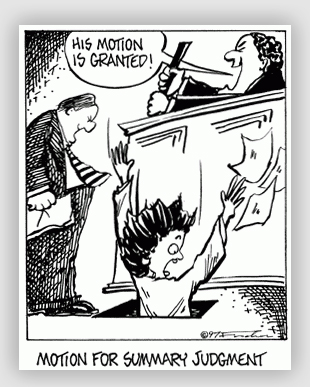
Polino filed a motion for summary judgment in the trial court. The Company showed the court letters between the parties regarding the care of boundary areas between the properties. In the letter, Farmer Wilson noted that Polino had previously agreed to his “cutting overhanging limbs and dragging them back to the wooded area” of the Wilson property, but that the proposal would restrict his cutting of tree limbs to those “no higher than 25 to 30 feet from the ground level.” Consequently, Farmer Wilson requested that Polino “clear-cut all the area 40 feet from our fenced border to remove the encroaching limbs and roots of trees from your forested land.” His letter explained that ‘I have neglected enforcement of the agreement between Mr. Robert Woofter[, a previous owner of the Polino property,] and my father. As a result, [I] have suffered economic loss during the past 50 years and [am] suffering economic loss each year in the form of forage crops harvested from the cultivated fields involved.’

In its motion for summary judgment, Polino argued that assuming all of Farmer Wilson’s allegations were true, it was nevertheless entitled to judgment as a matter of law on the nuisance claim. The trial court agreed.

Farmer Wilson appealed.

Held: Polino’s trees were no nuisance.

A private nuisance is a substantial and unreasonable interference with the private use and enjoyment of another’s land.

Abe Lincoln could have been talking about Farmer Wilson, who has a real dummy for a client.

The lower court properly ruled that Farmer Wilson’s nuisance claim was barred by the statute of limitations under West Virginia Code § 55-2-12(a). That section gave a party claiming a nuisance only two years from the time the claim arose to sue.

The Supreme Court even considered the statute of limitations, because it determined that Farmer Wilson’s rather opaque and do-it-yourself nuisance claim was fatally flawed. His contention, as best the Court could surmise, was that insufficient sunlight caused by overhanging trees on the respondent’s property had resulted in his farmland yielding fewer crops. That claim, the Court said, “fails as a matter of law… The common law doctrine of ancient lights has been abolished in West Virginia… Though an adjoining property owner may still establish an easement implied by necessity to light and air, such an easement does not exist here because there is no prior common ownership of the parties’ properties.”

In Cobb v. Daugherty, the court discussed easements of necessity, also called easements by necessity or ways of necessity. Such easements are typically implied to provide access to a landlocked parcel. Easements implied from quasi-easements, also called implied easements or easements by implication, are based on a landowner’s prior use of part of the landowner’s property (the quasi-servient tenement) for the benefit of another portion of the property (the quasi-dominant tenement). Three elements – common ownership, transfer of part of the land (severance), and necessity of some kind – are required in both cases. The fundamental distinction is that easements implied from quasi-easements are based on prior use.

While Cobb recognized that a certain type of easement to light and air still exists in West Virginia, the Court said, Farmer Wilson did not meet the legal requirements. He had not previously owned the Polino property. Therefore, the Court ruled, “We conclude that the circuit court did not err in awarding respondent judgment as a matter of law with regard to petitioner’s nuisance claim.”

– Tom Root

TNLBGray

Case of the Day – Friday, October 3, 2025

DO YOU HAVE A POINT?

More than one reader wondered where I was headed yesterday when I wrote about the New Hampshire law of animals ferae naturae. Other than showing you a picture of my dog – always a worthwhile goal, in my book – the blog may not have seemed all that relevant. After all, neighbors, especially urban neighbors, are seldom overrun with wild animals intent on committing mayhem in your backyard.

But, yes, I had a point. As that great philosopher Elvis once said, “I said all that to say all this…” The law of animals ferae naturae translates a bit into “plants ferae naturae.”

In today’s case, the afflicted neighbor, Linda Pesaturo, claimed that her neighbor’s trees were overhanging her property, making her driveway unusable, and collapsing her fence. The trees, she complained, were a private nuisance.

The New Hampshire Supreme Court nixed the claim. It pointed out that just as the law of animals ferae naturae required human interference with the animal before making a property owner liable for a resulting nuisance, it was not enough that Linda said the trees caused damage. Unless she could somehow show that neighbor Robbin had somehow interfered with nature in the planting or growth of the pine and maple, the lush and fecund trees.

Tree’s gonna tree.

Pesaturo v. Kinne, 161 N.H. 550, 20 A.3d 284 (Supreme Ct. N.H., 2011). Linda Pesaturo brought a small claims action against her neighbor, Robbin Kinne, seeking more than $2,000 in damages because two of Robbin’s trees overhung her property; one limited Linda’s use of her driveway, while the other one damaged her fence.

Robbin moved to have the claim dismissed, arguing that Linda failed to state a claim upon which relief could be granted. The trial court agreed, dismissing Linda’s negligence and nuisance claims.

Linda appealed.

Held: Linda had adequately raised a claim for negligence with respect to one tree, but she failed on the other. Her claim of private nuisance was properly rejected.

It is the common law rule that a landowner is under no affirmative duty to remedy conditions of purely natural origin on his or her land, even though they are dangerous or inconvenient to his neighbors. In order to create a legal nuisance, a human act must have contributed to its existence, just as under the law of animals ferae naturae, as held in Belhumeur, a landowner cannot be held liable for the acts of wild animals occurring on his property unless the landowner has actually reduced indigenous wild animals to possession or control, or introduced non-indigenous animals into the area.

But ferae naturae does not apply to plants, such as trees. Instead, the Court ruled, a duty exists on the part of a landowner when it is foreseeable that an injury might occur as a result of the landowner’s actions or inactions. A landowner’s liability may extend beyond the borders of his or her property, and a duty may be present if the landowner’s acts or omissions create a sufficiently foreseeable risk of harm in such a case, where it can be found that the landowner did not use reasonable care in the maintenance and operation of his or her property.

Because there is a foreseeable risk of injury when a tree is decayed or defective, a landowner who knows or should know that his tree is decayed or defective has a duty to maintain the tree to eliminate this dangerous condition. Thus, a landowner who knows or should know that his tree is decayed or defective and fails to maintain the tree reasonably is liable for injuries proximately caused by the tree, even when the harm occurs outside of his property lines. However, a landowner does not have a duty to consistently and constantly check all trees for non-visible decay. Rather, the manifestation of the tree’s decay must be readily observable in order to require a landowner to take reasonable steps to prevent harm.

To recover for negligence, a plaintiff must demonstrate that the defendant has a duty, that he or she breached that duty, and that the breach proximately caused injury to the plaintiff. In this case, Linda’s complaint failed to allege a cause of action for negligence because she had not alleged that Robbin’s trees were decayed or defective, or that Robbin knew that the trees were in such a condition but failed to eliminate the danger to Linda.

But when Linda amended her complaint, which she did after Robbin filed his defense of failure to state a claim, she sufficiently alleged that Robbin knew her oak tree had “swinging, dead limbs” and, thus, that the tree was decayed or defective, thereby imposing a duty upon him to eliminate the condition. The amended complaint also sufficiently alleged that Robbin breached his duty by failing to act and that this breach caused Linda injury by denying her use of her driveway.

But Linda’s claim that Robbin’s pine tree damaged her fence was insufficient. She claimed the tree failed because of “rain, wind, ice and snow,” and because of Robbin’s “insufficient management” of his pine tree, and that limbs broke off and damaged her fence. Her claim was insufficient to establish that the tree was decayed or defective.

– Tom Root

TNLBGray

Case of the Day – Thursday, October 2, 2025

WHAT’S THE BUZZ?

I dimly remember my first-year property law professor teaching us about ferae naturae (wild animals). The cases we studied then had to do with ownership. You shoot a deer bounding over the fields, and it falls for the final time in Farmer Brown’s corn. Who owns the deer?

But what if the deer was not a deer, but a family of fat old woodchucks? As we Midwesterners know, woodchucks don’t get fat by accident. Rather, they do it by ravaging someone’s field. So what if a woodchuck family lived under Farmer Brown’s cornfield year-round, eating tender shoots of corn, timothy hay, and Mrs. Brown’s buttercups and vegetable garden? And when the pickings got slim, the chucks invaded your soybeans (the roots of which they love)?

Farmer Brown knew the furry little woodchucks – diligent destroyers that they are – were ravaging the crops. Shouldn’t he have removed the pests himself, you know, shot them, poisoned them, blown them out of the earth, run them down with a tractor, borrowed a rodent-hating dog like my own stone-cold groundhog slayer, Winnipeg Rocket Riley Root? (And, by the way, yesterday was Winnie’s special day – National Black Dog Day. Enjoy the celebration!)

Back to the topic. The ‘chucks are ferae naturae, wild animals who answer to no one. Still, you might think Farmer Brown had a duty not to let his field be a staging area for rodent terrorism. (America invaded Afghanistan for much the same sin).

That question bedeviled Denny and Shirley Belhumeur, who were stung by what the trial court incorrectly called a “bee’s nest.” C’mon, people, it’s a hive!

Belhumeur v. Zilm, 157 N.H. 233, 949 A.2d 162 (Supreme Ct. N.H., 2008). Dennis and Shirley Belhumeur lived next door to Jason and Jessica Zilm. One day, Dennis got stung several times by some aggressive bees that had swarmed into Denny’s property from their hive in a tree on Jason’s property. Denny sued, claiming that Jason had actual or constructive knowledge of the bees’ existence and aggressive behavior and was negligent in not removing the hive. Additionally, Denny claimed that the bees constituted a private nuisance.

The trial court granted summary judgment in favor of Jason. Dennis, feeling like he’d been stung again, appealed.

Held: Jason was not liable for wild animals living as a natural occurrence on his property.

The Court held that the buzz is that a landowner is under no affirmative duty to remedy conditions of purely natural origin upon his land, even where the conditions are dangerous or inconvenient to his neighbors. In other words, in order to constitute a nuisance as a matter of law, human action must have contributed to the condition’s existence.

Under the doctrine of animals ferae naturae, the Court said, wild animals are presumed to be owned by no one specifically, but rather by the people generally. This doctrine has spawned a rule of law that a landowner cannot be held liable for the acts of indigenous wild animals occurring on his or her property unless the landowner has actually reduced the wild animals to possession or control, or introduced a non-indigenous animal into the area. New Hampshire does not, as a matter of judicial policy, impose absolute liability for damage by wild animals.

The doctrine of ferae naturae is actually based upon a reality not appreciably altered by the passage of time; namely, the unpredictability and uncontrollability of wild animals. The doctrine of animals ferae naturae reasonably balances the interests of landowners and the interests of those who may be harmed by the actions of wild animals found on or emanating from the landowners’ property. Here, the bees were wild, and neither Jason nor Jessica had the ability or duty to control them.

Claims for negligence rest primarily upon a violation of some duty owed by the actor to an injured party. Absent a duty, there is no negligence. Duty, the Court said, “is an exceedingly artificial concept, therefore, when charged with determining whether a duty exists in a particular case, courts necessarily encounter the broader, more fundamental question of whether a plaintiff’s interests are entitled to legal protection against the defendant’s conduct.” The decision to impose liability ultimately rests on a judicial determination that the social importance of protecting the plaintiff’s interest outweighs the importance of immunizing the defendant from extended liability. 

It is a sad fact of life that dogs bite and bees sting. There is no social utility in demanding that Jason and Jessica be liable for when it happens.

Denny complained that Jason had actually gotten estimates from tree removal companies, and in so doing, assumed a duty to Denny that he otherwise would not have had. The Court said that while Jason was the bee’s knees for doing so, that did not impose a duty on him to carry through with the job. “In determining how much action is sufficient to create a duty on the part of a person volunteering services, it is necessary to know if the conduct has gone forward to such a stage that inaction would commonly result, not negatively merely in withholding a benefit, but positively or actively in working an injury.”

– Tom Root

TNLBGray

Case of the Day – Wednesday, October 1, 2025

FORGIVE US OUR TRESPASSES

I found myself wondering the other day, as I mentioned an allegation of trespass in a post, whether we talk about basic garden-variety trespass often enough.  So here we are.

The United States inherited the law of trespass from medieval England.  At common law, a trespass upon land occurred when a person, acting without authority, physically invades or unlawfully enters the premises of another, and damages result (even though the damages may be insignificant).  The entry may be intentional or negligent.  Just about every entry onto the land of another that occurs happens due to negligence, because it requires remarkably little negligence to accomplish a trespass.

I watched a lot of football this past weekend, starting with high school football on Friday night, as my beloved Norwalk Truckers eked out a win against the Vermilion Sailors, 14-9. Saturday afternoon, my bride of 46 years and I watched our No. 1 Ohio State Buckeyes – we went to OSU, so we have a right to be Scarlet and Gray fans – convincingly beat the U-W Huskies. Sunday, I was shocked, shocked I tell you, to watch the Cleveland Browns lose to the Detroit Lions, 32-10. Well, disappointed maybe, but hardly shocked.  

As football weekends go, Meatloaf described it musically: two out of three ain’t bad.

But because I have football on my mind, let me liken trespass to catching a pass on the inbounds white line. If you deliberately run out of bounds and then catch the pass, the pass is no good. Call it trespass. If you catch one right on the line, and your foot accidentally steps on the white line as you catch it, the pass is no good. It’s still trespass.

If you catch a pass in bounds, and – while you’re in the air catching it – a defender wraps you up and carries you out of bounds, however, the pass is complete.  It’s not a trespass.

In other words, you can intentionally trespass. You can negligently trespass. But if your body is deposited on someone else’s land through involuntary means, it’s not a trespass.

Trespass is most commonly asserted by people who have lost trees to a misguided tree cutter taking timber on the wrong side of an unclear or misunderstood property line.  It has also been applied where people took self-help a little too far, and went onto neighboring property to aggressively trim a problem tree.  Trespass has been found where people mistakenly believed they owned the property they had occupied, where a party has negligently caused livestock or water to enter another’s land, and where someone was on the property with permission to cut down certain trees, but cut down trees he had been told to avoid.

Muir v. Ruder, 945 S.W.2d 33 (Court of Appeals of Missouri, Eastern District, 4th Div. 1997). Jim Ruder, a landscaper, agreed to buy trees on the Muirs’ property.  Ruder was to remove the trees and pay $6.00 a tree.   He also agreed to transplant 120 trees for Muir, and repair any ruts or holes created in the process.   The deal went south, as such deals sometimes do, and the Muirs sued.  They said Ruder had committed trespass by breaking the contract and then entering the property and unlawfully removing about 220 trees.  Ruder said he only took 130 trees, and the rest were stolen by persons unknown.  He admitted he didn’t pay for any trees, fill in ruts or holes, or transplant any trees.  He claimed he told the Muirs he didn’t have the right equipment to move the specific trees they wanted transplanted.

The trial court agreed that Ruder had trespassed, and awarded the Muirs $6,160 in damages.

The Court of Appeals reversed, providing some basic guidance on the law of trespass in the process.  It said the evidence failed to prove the elements of either trespass or conversion.  Common-law trespass, the Court said, is the unauthorized entry by a person upon land of another.  For damages to be awarded for trespass, a plaintiff has to show that the defendant intended to be on the property and that he directly interfered physically with that property.  Removing trees from someone else’s property may also be a statutory trespass. A person can wrongfully cut down a tree in two ways, either of which would result in trespass under § 537.340 RSMo.  He can enter the land without permission and cut down the trees. Alternatively, he can enter with the owner’s consent and then exceed the scope of the consent by cutting down trees without permission.

Here, the Court found, Muir – wisely or not – had given Ruder permission to enter his property.  Muir argued that the agreement was broken because the landscaper removed the first batch of trees, but did not transplant the trees Muir wanted moved. Ruder testified that he had already removed the first trees before he realized that the trees Muir wanted transplanted were too large for his equipment.  Ruder nevertheless returned to the property for more trees.  Muir said he “objected” when Ruder took the second load before paying for the first load, but he didn’t tell Ruder to leave or to bring the first load of trees back.  Instead, he watched Ruder take the second load and even had Ruder show him how to bag trees.  The Court said, “One who silently watches another enter upon his land, and then willingly engages him in conversation while standing on the premises, may not later complain of trespass.”

More high school football coming up tomorrow. Go, Truckers!

 – Tom Root

TNLBGray

Case of the Day – Tuesday, September 30, 2025

A RATHER SURPRISING HOLDING FROM A DELAWARE TRIAL COURT

In this tree law gig, I read a lot of cases. After a while, reading between the lines gets a lot easier.

Today’s case, which I decided was nothing special, was just about some neighbors who were over-the-top haters of the defendant. The defendant seems like a guy whose crime was that he apparently had the effrontery to move in next door and then fix up the place.

The trial court’s long opinion had flushed away most of the plaintiffs’ breathless and frantic complaint – and “flushed” is the correct verb for most of the claims the tin-foil-hatted neighbors made against the defendant– when I got to their claim that defendant Bill Collison had “damaged a maple tree near the property line by shaving the trees directly up from the property line.”

“Holy Massachusetts Rule!” I muttered to myself. Everyone knows that this claim should be summarily tossed, because the Massachusetts Rule is as universally accepted as is turkey at Thanksgiving. Assuming Bill did “shave” the tree at the property line, that’s perfectly within his rights.

Much to my shock, the Court disagreed. It held that the right of “self-help” trimming of encroaching branches is not established in Delaware, and if this court was going to do it, it would not do it on summary judgment. It became obvious to me that whatever else Judge Calvin Scott, Jr., of Newark, Delaware, reads with his morning coffee, it sure isn’t this blog.

It did not take long to find reason to question the Judge’s refusal to grant summary judgment on this issue. In the 1978 Delaware Chancery Court decision Etter v. Marone, the court ruled

At the same time, certain generally accepted principles obtain with regard to encroaching trees or hedges. Regardless of whether encroaching branches or roots constitute a nuisance, a landowner has an absolute right to remove them so long as he does not exceed or go beyond his boundary line in the process. 2 C.J.S. 51, Adjoining Landowners § 52; 1 Am.Jur.2d 775, Adjoining Landowners § 127. He may not go beyond the line and cut or destroy the whole or parts of the plant entirely on another’s land even though the growth may cause him personal inconvenience or discomfort. 2 C.J.S. 51, supra.

So the Judge seems to be wrong: Delaware is firmly in the Massachusetts Rule camp.

What with allegations of underground tanks, clogged drainpipes and extreme mental anguish contained in the messy and unsupported complaint, Judge Scott pretty clearly had his hands full. By and large, he acquitted himself masterfully in the opinion, carefully deconstructing the plaintiffs’ complaints. But I’m betting that in about nine weeks, the Judge will be sitting down to a turkey dinner with all the trimmings. When he does, he should reflect that as many of us accept the Massachusetts Rule as will be dining on the same meal that day.

Dayton v. Collison, C.A. No. N17C-08-100 CLS (Super. Ct. Del. Sept. 24, 2019), 2019 Del. Super. LEXIS 446. Margaret Dayton and Everett Jones clearly had it out for their neighbor, Bill Collison. They claimed that since 2014, Bill had removed a significant number of standing trees and about 5,000 square feet of naturally growing plants from the City of Newark’s natural buffer zone, removed a 30-year-old drainage pipe located on his property and filled the remaining pipe with rocks and debris, intentionally altered the natural grade of his property so as to interfere with the natural flow of water, and trimmed a maple tree located on Maggie and Ev’s property along the boundary line. Additionally, they claim that an underground storage tank Bill installed – apparently your garden-variety propane tank – violates Newark’s municipal ordinances.

Maggie and Ev allege Bill’s property is a public nuisance, and that they have suffered “extreme mental anguish and damages of at least a $50,000 loss in the value of their home” because of flooding caused by Bill’s alteration of the grade’ invasion of privacy due to the removal of the buffer zone, being forced to live next to a hazardous condition because of the propane tank, and “damage or potential damage” (guess they’re not sure which) to the structural integrity of their property’s foundation.

They also claim Bill trespassed on their property multiple times to “alter the natural drainage flow of water, construct a berm, cut Plaintiffs’ trees, and take pictures or otherwise spy on Plaintiffs. From this, Plaintiffs claim they have suffered and continue to suffer damages and mental anguish in a sum to be determined at trial.”

Bill moved for summary judgment, claiming that Ev and Maggie cannot bring claims based on the alleged violation of city ordinances, and showing that their claims were baseless.

Held: Summary judgment in Bill’s favor was granted on all claims except the tree-trimming claim.

The Court held that a public nuisance is one which affects the rights to which every citizen is entitled. The activity complained of must produce a tangible injury to neighboring property or persons and must be one that the court considers objectionable under the circumstances.

To have standing to sue on a public nuisance claim, an individual must be capable of recovering damages and (2) have standing to sue as a representative of the public, “as in a citizen’s action or class action.” Here, Maggie and Ev have no right to bring a claim against Bill for alleged violations of the Code and thus, no standing to sue as representatives of the public. The Newark Code creates no rights enforceable by members of the public, and thus, it presents no basis upon which the requested relief may be granted.

To determine whether an implied private right of action exists, Delaware courts ask, among other things, whether there is any indication of legislative intent to create or deny a private remedy for violation of the act. Under the Newark City Charter, the City possesses “all the powers granted to municipal corporations by the Constitution and laws of the State of Delaware, together with all the implied powers necessary to carry into execution all the powers granted..” The city manager is responsible for administering all city affairs authorized by or under the Charter and may appoint individuals to enforce specific ordinances of the Code. The Court held that these reservations showed that the City of Newark intended for it to be solely responsible for enforcing its ordinances and did not intend to create a private right of action based upon ordinance violations.

Claims that Bill’s tree cutting was creating a public nuisance on the floodplain, likewise alleged violation of City ordinances, and thus were claims that Ev and Maggie lacked any standing to bring. As well, their claim that Bill’s propane tank had been installed without a permit alleged a violation of the City Code, a claim only the City could make.

Finally, Ev and Maggie claimed Bill created a public nuisance because he allegedly removed a drainage pipe from his property and filled the remaining pipe with rocks and debris. Outside of the fact that they were able to cite no evidence that any drainpipe had ever existed on Bill’s property, only the City of Newark had jurisdiction and control over drainage.

But Ev and Maggie claimed that Bill created private nuisances, too. A private nuisance is a nontrespassory invasion of another’s interest in the private use and enjoyment of their land. There are two types of private nuisance recognized in Delaware: nuisance per se and nuisance-in-fact. A claim for nuisance per se exists in three types of cases: 1) intentional, unreasonable interference with the property rights of another; 2) interference resulting from an abnormally hazardous activity conducted on the person’s property; and 3) interference in violation of a statute intended to protect public safety. A claim for nuisance-in-fact exists when the defendant, although acting lawfully on his own property, permits acts or conditions that “become nuisances due to circumstances or location or manner of operation or performance.” Plaintiffs allege claims under both the theory of nuisance per se and the theory of nuisance-in-fact.

But saying it doesn’t make it so. The Court granted Bill’s motion for summary judgment on the private nuisance claims because Ev and Maggie did not provide sufficient evidence supporting their nuisance per se claim, and did not submit expert reports to show the necessary elements of their claims.

Ev and Maggie also argued that Bill’s destruction of certain trees on their property and his failure to respect known boundary lines also constitute a continuing nuisance. They alleged that they suffered a diminution in the value of their home, in an amount of at least $50,000, as a result of the “nuisance created and maintained by” Bill. Ev and Maggie estimated the value of their home and the loss they had suffered. They argue that, as landowners, they may offer an opinion on the value of real estate. The Court disagreed: “Although Plaintiffs might know the fair market value of their property based on what they paid for it and based on a comparison of their property to other homes in the area, Plaintiffs do not know how each of Defendant’s alleged actions changed the value of their property. To establish how each of Defendant’s actions changed the value of Plaintiffs’ property, Plaintiffs would need to identify and submit an expert report from an expert witness; Plaintiffs have not done so.”

Those tin hats really work — it’s just that THEY want you to think there’s something wrong with wearing ’em …

Ev and Maggie allege that they have suffered “extreme mental anguish” as a result of Bill’s alleged nuisances. The Court ruled that Ev and Maggie “needed to show proof of the ‘extreme mental anguish’ they allegedly suffered through a medical expert. Without expert testimony, the Court is not able to find that Plaintiffs suffered this type of harm or that Defendant’s conduct caused such harm. Plaintiffs have neither identified an expert witness to testify to this matter nor submitted an expert report regarding this matter.”

Ev and Maggie’s only victory came on their claim that Bill damaged their maple tree. They alleged that he damaged a maple tree near the property line by shaving the trees directly up from the property line. Ev and Maggie have identified and submitted a report from an arborist, Russell Carlson, detailing the manner in which the maple tree was damaged by Bill’s alleged cutting back of the branches. The report shows the damage done to the maple tree and estimates the cost of that harm.

Bill responded to their report, arguing that he has a right to engage in “self-help” to the property line. The Court held that “it remains unclear in Delaware whether a defendant has a right to engage in ‘self-help’ by cutting tree limbs that extend onto his property. The Court declines to make a determination on this issue in a motion for summary judgment. Therefore, Defendant has not shown, in the face of Mr. Carlson’s report, that he is entitled to judgment as a matter of law. Accordingly, summary judgment on this allegation is not proper.”

Ev and Maggie argued they are entitled to treble damages pursuant to 25 Del. C. § 1401, Timber Trespass. The Court may award treble damages for timber trespass when the plaintiff establishes that a trespasser “fells or causes to be cut down or felled a tree or trees growing upon the land of another”; 2) that plaintiff’s property was established and marked by permanent and visible markers or that the trespasser was on notice that the rights of the plaintiff were in jeopardy; and 3) that the trespass was willful.

Because Ev and Maggie only alleged that Bill damaged the tree, and did not cut it down altogether, they are not entitled to treble damages.

Finally, Ev and Maggie alleged that Bill intentionally trespassed on their property. The elements of a claim for intentional trespass are that the plaintiff has lawful possession of the land, the defendant entered onto the plaintiff’s land without consent or privilege, and the plaintiff shows damages. The Court held that there was a factual dispute as to whether Bill ever entered Ev’s and Maggie’s land. Thus, Bill was denied summary judgment on the trespass count.

Still, the Court pretty much savaged Ev’s and Maggie’s rather shrill and frantic claim, leaving their all-encompassing nuisance broadside a rather puny trespass and trim of a single tree.

– Tom Root

TNLBGray