
SHE SURE GOT HER BELL RUNG
 A young girl and her friend sneaked onto church property to play. While they were doing what young kids do when they’re where they shouldn’t be, the girl rang a bell. The bell fell, injuring her foot. When kids trespass and do stupid things, how do the parents respond? Why, they sue the landowner, of course.
In this case, it was a local Catholic Church getting sued – unusually enough – for something that had nothing to do with sex abuse. Despite the Diocese’s obvious relief at being sued on behalf of a child plaintiff who wasn’t complaining about a priest, the Church nonetheless argued that it enjoyed immunity under Wisconsin’s recreational use law.
In a strange analysis, the Court of Appeals disagreed. Reba was hurt when she pushed on the bell, and the Court held that her pushing the bell wasn’t related to the game she and her friend had been playing. The Court said that it was mischief. Plus, the Court said, the Church wasn’t really recreational property, and it didn’t invite people to use it that way. In fact, it took steps to keep kids from playing there. Because Reba was engaging in mischief as a trespasser, and because the Church was arguably acting responsibly to prevent this kind of conduct, it owed Reba a greater duty than if it had left the place wide open. This probably applies the recreational use statute correctly, but it doesn’t make much sense as a matter of public policy.
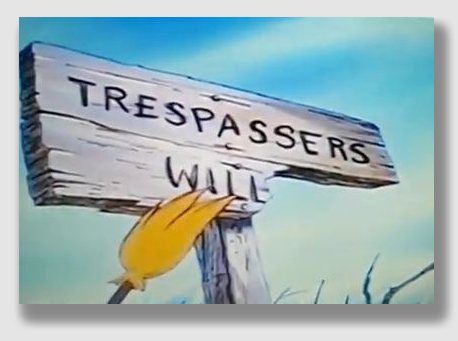
Remember Winnie the Pooh? “Trespasser William” young Reba was not …
Fortunately, under Wisconsin law, the Church would have owed a trespasser only a duty to refrain from willful, wanton, or reckless conduct, about the same result the Church would have gotten from applying the recreational use statute. Unfortunately, a jury found the Church had engaged in such conduct and awarded the plaintiff money damages.
You might think that you have no duty to a trespasser wandering onto your property. Guess again.
Fargo ex rel. MacArthur v. United Nat. Ins. Co., 739 N.W.2d 490 (Wis.App., 2007). A child playing house on church property was injured when she tried to push on a bell, which fell and injured her. The girl sued the St. Ignatius Catholic Church through her parents for negligence, and a jury awarded her damages. St. Ignatius appealed, arguing it was entitled to immunity under the Recreational Use law, Wis. Stat. § 892.52.
 Held: The award of damages to young Miss Fargo was affirmed. The recreational immunity statute limits property owners’ liability toward others who use their property for recreational activities. The statute defines recreational activity as “any outdoor activity undertaken for exercise, relaxation or pleasure…” It lists 29 specific recreational activities but instructs that “recreational activity” should be liberally construed in favor of property owners to protect them from liability.
To determine whether a person was engaged in a recreational activity under the statute, the Court said, a fact-finder should consider the totality of circumstances surrounding the activity, examining the intrinsic nature of the activity, the purpose of the activity — including the injured person’s subjective assessment of the activity — and consequences of the activity. A court should also consider the nature of the property, including whether the owner intended the property for recreational use, and the injured person’s reason for being on the property.

The Church should have posted this sign. Um … on second thought, maybe not.
Here, St. Ignatius argued it was entitled to immunity because young Reba Fargo was injured while playing house with a friend on church property, and this was a recreational activity. The Court disagreed. Instead, it ruled that Reba was injured when she pushed the bell, which fell on her foot. The Court held that pushing the bell wasn’t related to the game she had been playing. Rather, viewed objectively, she was trying to move a large, stationary object by pushing very hard.
The Court concluded that this independent act was mischievous because Fargo was trying to move an object that was not designed to move. Wisconsin law holds that mischievous conduct is not recreational activity. What’s more, given the nature of the property, St. Ignatius was a church, not a playground or other place where recreational activity would usually occur. The church made attempts to limit children playing on its property. While not determinative, that fact was an appropriate factor in the recreational-use analysis.
Considering all of the factors, the Court concluded that Reba Fargo was not engaged in a “recreational activity” within the meaning of the Recreational Use statute. Thus, St. Ignatius was not entitled to immunity.
– Tom Root


