


A “furious” federal judge excoriated the Trump administration Monday morning for cutting down hundreds of trees at East Potomac Golf Links, the historic course eyed for redevelopment by President Donald Trump, telling government lawyers they had cost their credibility by ignoring her repeated warnings to give notice before work continued. Government lawyers told U.S. District Judge Ana C. Reyes at an emergency hearing that approximately 430 trees were removed Saturday and that another 299 are still targeted for removal. Reyes ordered the government to stop cutting down trees until at least 2 p.m. Tuesday, by when she hopes to hear testimony from another administration official involved in the tree removal. Reyes says she had been reluctant to issue a temporary restraining order in the case. But, she added, “I have no faith that the government isn’t going to cut them down unless there’s an order in place not to do so.” Violating her order “by two seconds” would prompt contempt proceedings, the judge said. “I am thoroughly unamused right now,” Reyes said as the hearing began. “I do not know how I could have made it any plainer. I did not want what happened to happen…”
If you’re not keeping an eye on smears of dried mud on your car, forest pest educators like Ginger Nickerson say now’s a good time to pick up the habit. Nickerson and other experts warn that spotted lanternflies could be hitching a ride into Vermont, where they pose a threat to trees and other plants. “They could lay their eggs on anything that you have outdoors, like your car, or if you’ve got bikes on the back of your car,” she said. “And then, when you come back to Vermont — or if you’re moving your child to Vermont to go to college — and you park your vehicle here, then (they) could hatch in the springtime.” What might look like a patch of dry mud could actually be the egg mass of a spotted lanternfly, she warned. Experts say species like spotted lanternfly and others can disrupt local ecosystems. And, spotted lanternflies are laying eggs around this time, leading up to hard frosts. When the insect feeds on a plant or tree, they excrete a sticky substance called honeydew. It can disrupt photosynthesis when it falls on leaves, and the insects can impact yields of grapevines, berries and roses. It might not kill most plants, but it is most likely to kill grapevines and black walnut trees…
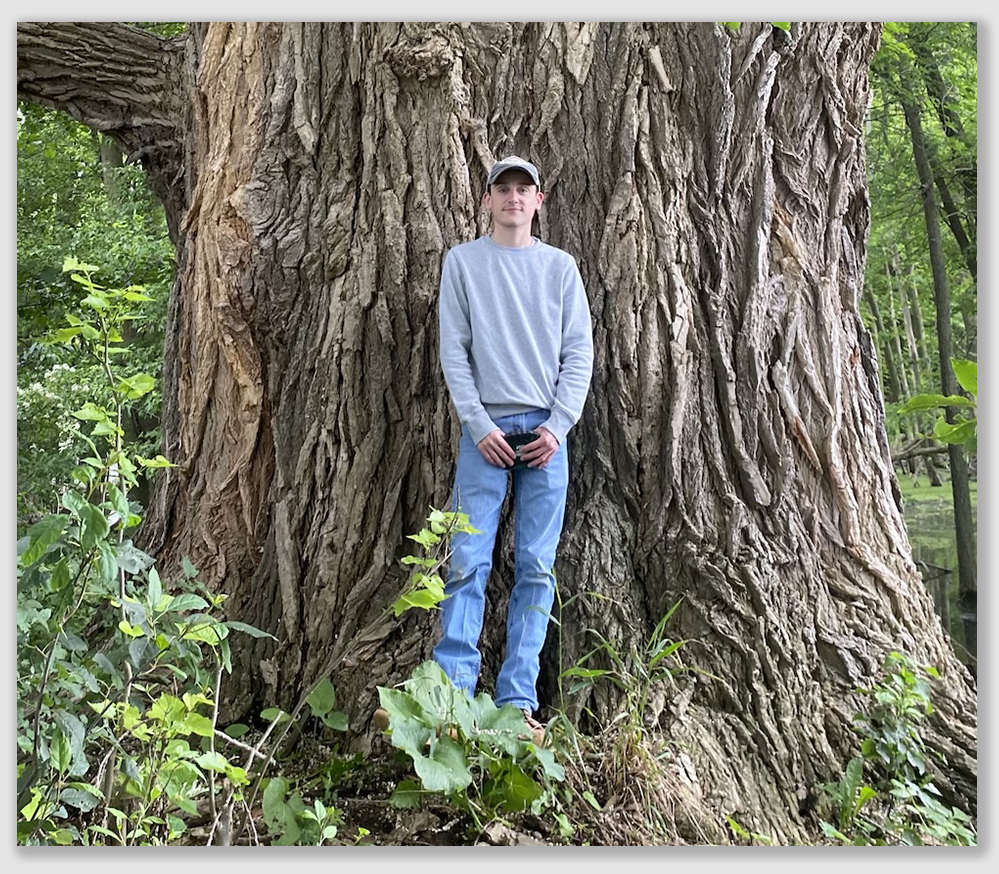
Michigan has new champion American basswood, eastern cottonwood and sugar maple trees. Thanks to two programs that hunt for and catalog the state’s biggest trees, these specimens – which are potentially hundreds of years old – are now known to the public. The new champions include a giant sugar maple that stands in the middle of farming fields in Lapeer County, an impressive American basswood next to a driveway in Calhoun County and a huge eastern cottonwood near a road in Isabella County. An eastern cottonwood near a road in Isabella County is the new Michigan champion of that species. It has a girth of 219 inches. All three trees were submitted to ReLeaf Michigan’s 16th biennial Big Tree Hunt contest. Two of them were submitted to the Michigan Big Tree Register, which tracks the state’s largest trees, at the same time as the contest. ReLeaf submitted the third champion along with more than a dozen other potential champions and big trees discovered through the contest; four others were added to the register as notably large trees for their species…
Neenah plans to replant hundreds of trees this fall after an EF-3 tornado in late July damaged or removed over 400 trees in parks and public areas. The plan calls for over 300 trees to be planted, starting in parks and eventually extending to street terraces, Neenah Parks and Recreation Director Michael Kading said. “Really, the public is driving it,” he said. “One of the things we heard most often right after the event — it wasn’t even maybe two or three weeks after the storm event — and people were like, ‘What are you going to do about the trees?’” The tornado damaged communities across the Fox Cities, including Appleton, Fox Crossing, Menasha and Neenah. Kading said replacing the trees will take years. “We do annual tree plantings, but not to the magnitude of this amount,” he said. “This is going to take a much greater effort and take a lot more dollars and cents to get those trees purchased and get them in the ground…”
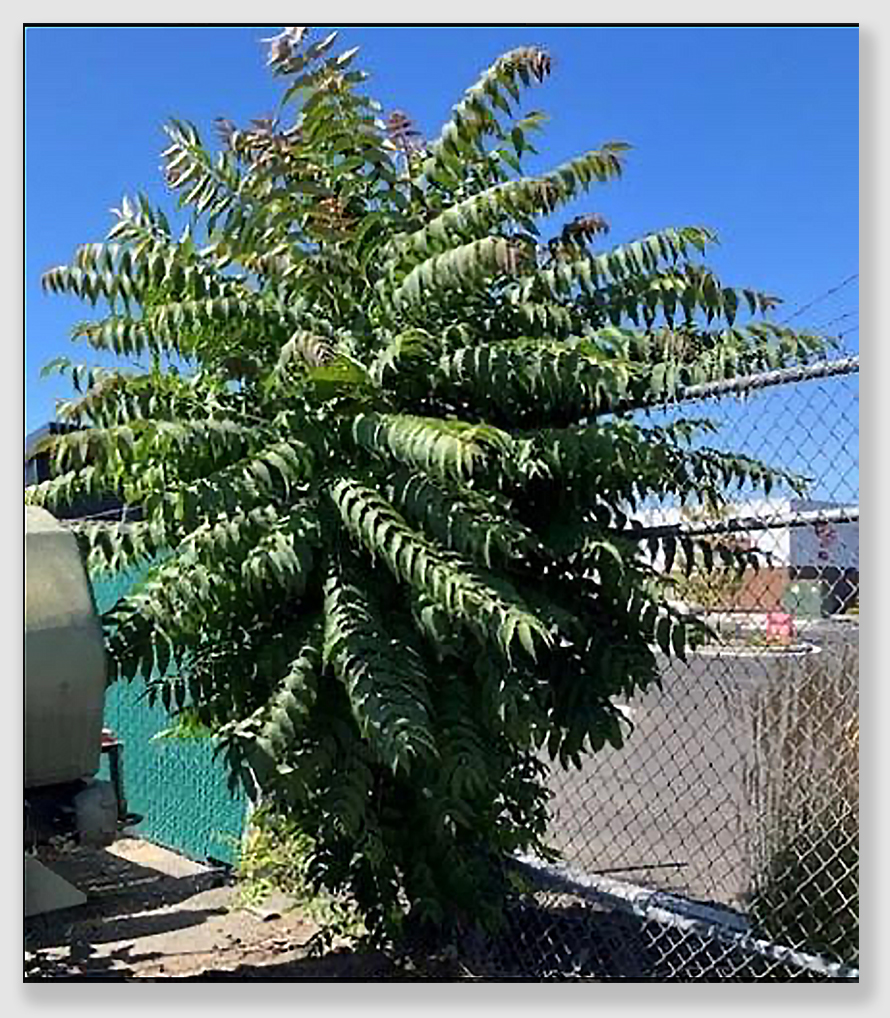
The easiest way to bring a neighborhood together is to rally around a bad neighbor. To Mike Miller, one of Denver’s worst neighbors is the Ailanthus tree — commonly known as the tree of heaven. “This is a tree of heaven gone wild,” Miller said while pointing out a lot with seemingly endless trees of heaven on it. “Somebody didn’t take care of it, and this is what it turns into.” Not only do the trees take over lots — they also spread seeds — about 300,000 can come from one female tree, and many of those seeds are viable. It is hard to walk anywhere in the city and not see a few, or an entire grove, of the tree. That’s why Miller and a group of other tree of heaven un-enthusiasts joined together over the last year to create the Denver Invasive Species Coalition. “You cannot be on a bike or in a car for longer than 30 seconds without seeing a stand in them somewhere,” group member Suzanne Smith said. Part of the reason these trees are everywhere is because they will grow anywhere. The other part is because people do not know how to kill them.
“It’s so damn difficult to find the information,” Miller said. “I got mine chopped down by an arborist and he treated it and it spread…”
Burlington, Vermont, WCAX-TV, October 8, 2026: Rutland students help restore American chestnut trees
Students in Rutland are helping to conserve the American chestnut, a tree once common in Vermont and nearly wiped out by blight. While it might not seem like a major orchard, nine chestnut trees at Mount St. Joseph Academy are an important learning tool for some of the students who have passed through its halls. Tom Estill has taught Rutland students for years, including some in a group on Thursday. “We’re doing something really small, but it can have a profound effect down the road to bringing back the American chestnut tree. So, it’s wonderful to see the kids so excited about it,” Estill said. The local resident has extensive knowledge of the tree that was once common in the area and around the country. American chestnut trees were nearly wiped out after a pathogen was first discovered at the turn of the century. Now, Estill is working to repopulate the species, even though he knows the blight will eventually kill the trees planted here…
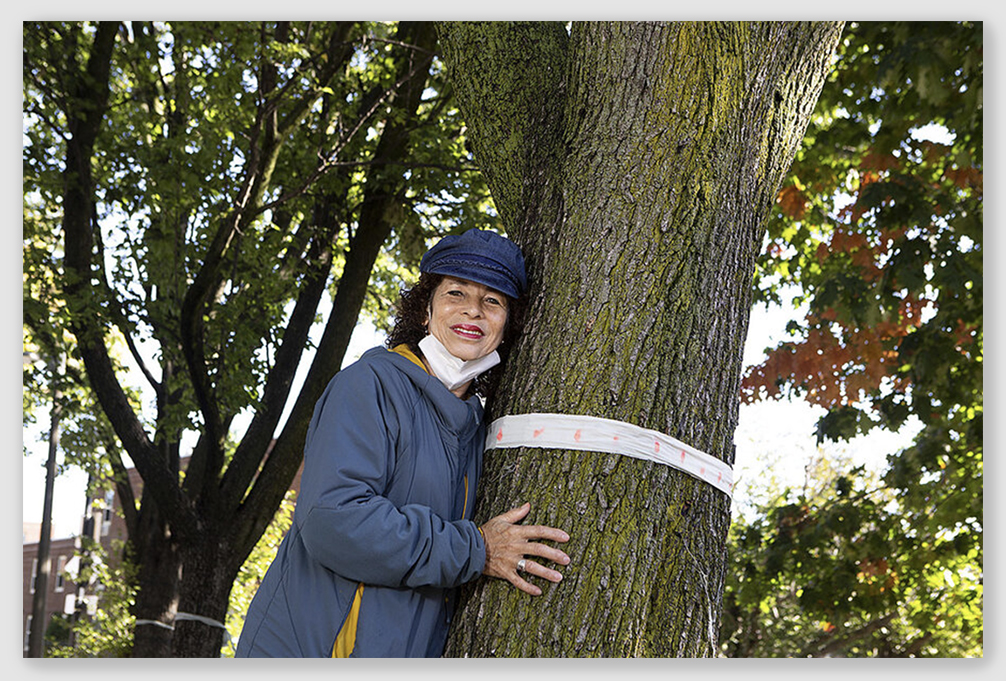
Two Mondays ago, Beth Duddy was enjoying the early fall weather, relaxing on her second floor porch of the apartment she rents near the corner of 46th and Springfield in West Philadelphia. She was taking in the sunshine and ample birdsong when her peace was suddenly interrupted by the sound of loud machinery. She peered down the street and saw a crew removing large branches from a lovely willow oak tree in front of 4601 Springfield Avenue. One of the workers had climbed up the tree and two others stood below. Duddy, a retired copyeditor, walked outside to speak to the workers. She asked what they were doing and they told her they’d been hired to cut the tree down and remove the stump. “I asked them if they had a permit, and they said no,” Duddy says. So Duddy stood next to the tree, making it impossible for them to continue their work, in a move reminiscent of 1970s activists who chained themselves to trees. Alas, Duddy didn’t have a chain at the ready…
After the family of the landscaper who died last year while working on Yale’s golf course sued the University, alleging “carelessness and negligence,” Yale is now claiming in court that the contractor who employed the landscaper should be responsible for any damages and injuries. But three residents of Conrad Drive, the golf course’s only exit road and where Luis Alberto Morocho Marcatoma was fatally electrocuted in August 2025, said the incident was not the first time a tree on their street had taken down a power line. They recalled trees on Conrad Drive — which straddles University and New Haven properties — taking out their electricity on several occasions and said they frequently flagged the hazardous trees before Marcatoma’s death. “Prior to the landscaper’s death, we had many conversations with Yale Golf Course personnel and with the City of New Haven requesting that trees be trimmed and/or removed to prevent trees from taking down power lines,” Joel Abraman, who has lived on Conrad Drive since 1978, wrote in a text message to the News…
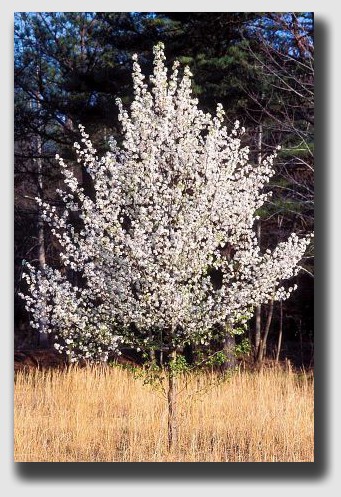
The “Bradford Pear Bounty” program is encouraging people across Kentucky to help combat an invasive plant species. The program is put on by the University of Kentucky Martin-Gatton College of Agriculture, Food and Environment, UK Forest Health Extension, participating county Extension offices and the Kentucky Division of Forestry. According to the university, Bradford pear trees are an invasive plant, which are non-native species that spread aggressively and cause environmental or economic harm. People with Bradford pear trees can find a local “Bradford Pear Bounty” event, cut down their Bradford pear tree and take a picture to receive a free native tree to take home…
Austin Wienecke, a master arborist with Arbor Care stopped in at The Astorian on Friday, Sept. 25. He was concerned about a tree that had been taken down at Astoria’s Shively Park. Wienecke said it was done improperly. It had created a hazard for people at the park and the felling of the tree had permanently damaged several other trees. At the behest of the Astoria Parks and Recreation Dept., he and his team were out picking up the pieces on Friday, Oct.3. On Sept. 17, Luke Colvin, Arbor Care’s owner went to Shively Park with the Astoria Parks and Recreation Department to do a walkthrough of a potential disc golf course that would surround the perimeter of the park. He was there to see if any trees surrounding the park would present a hazard to disc golfers once the course was built. In a different area, next to the entrance of the park and away from the proposed golf course, Colvin had observed a large hemlock that showed visible signs of internal decay. On Sept. 18, Wienecke was dispatched to the park to learn more about the decay and give the city a recommendation on what to do next. Wienecke said after he submitted his report on Tuesday, Sept. 21 the department asked how much it would be to remove it. “We gave (our cost estimate) and then we were told our bid wasn’t necessary. They’d found a lower bidder who could do it the next day…”

Bratenahl board delays tree plan for Taylor Swift and Travis Kelce property over height dispute; neighbors express concerns
A rear-yard tree plan for a Bratenahl property owned by Taylor Swift and Travis Kelce went before the village’s Architectural Review Board Tuesday night and hit a snag over the height of proposed trees. A village solicitor Dave Matty said the setback line in Bratenahl applies to anything behind the home in this situation and needs to be a certain height as far as the mature nature of the landscaping. The solicitor said the entire front setback has approval. A board member said privacy and screening can be achieved with plants less than 10 foot in height. Tiny Construction LLC says there was some confusion over the tree restrictions, but now that it’s aware of the 10-foot limit, it’s willing to make adjustments and follow the law. However, neighbors said the process has been difficult, citing lost lake views and a shared sewer line. Chuck Bauernschmidt said he has lived in Bratenahl for four decades and is concerned about trees being removed. “I live here, been here for 47 years. I take offense when we start knocking trees down,” Bauernschmidt said. Bauernschmidt adds he is trying to protect his home…
A Wausau committee upheld a $550 fee Monday against a homeowner who says he never knew the tree his contractor damaged belonged to the city. The Parks and Recreation Committee voted 4-0 to affirm the assessment against the Stoneridge Drive homeowner. His contractor dug a drainage trench that severely damaged the roots of a city-owned linden in the public right-of-way. The committee deliberated in closed session before voting. Alder Carol Lukens was excused. Under city code, no one may cut below ground or otherwise disturb a tree in a public area without a written permit from the city forester. Plumbing Inspector Dennis Kurszewski testified that no permits were sought for the work, which required excavation and lateral permits. Kurszewski also testified that the curb was damaged. When a permit is sought, Wausau Water Works, sewer staff and the city forester are notified so they can check for problems before the permit is issued, Kurszewski said. The homeowner told the committee he bought the house in September 2024 and was never told about water problems. The first spring, the basement flooded, ruining the finished space and about $30,000 worth of belongings, he said. Remediation still isn’t finished…
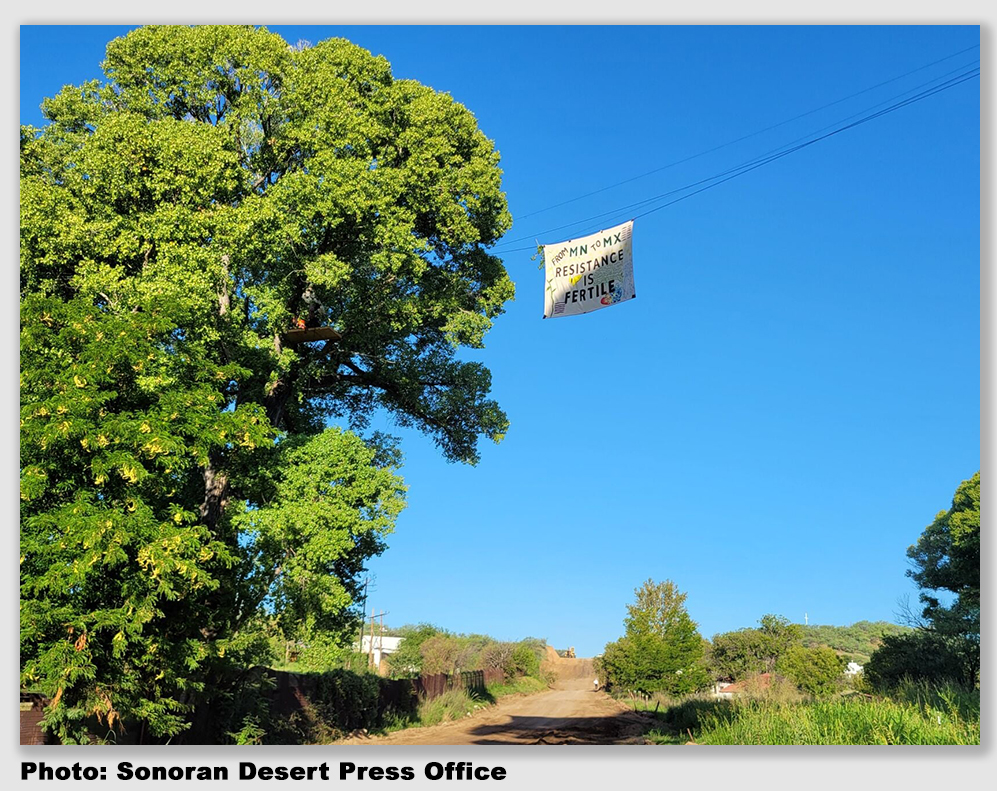
A giant cottonwood along the U.S.-Mexico border in Arizona was knocked down by heavy equipment Monday, after authorities cleared out protesters who had been camping in the tree for more than two months to try to save it from destruction. In a video posted on social media at just after 9 a.m. Monday, people can be heard screaming as the massive tree crashes to the ground in Lochiel, about 85 miles southeast of Tucson. The toppling came after law enforcement officers raided a nearby encampment of self-described “land defenders” just after sunrise and used a crane to pull a demonstrator from the branches of the tree, according to Erick Meza, borderlands coordinator for the Sierra Club who has also been serving as a spokesman for the protest group. Meza said Border Patrol arrested about a dozen people, though some of them were in the process of being released early Monday afternoon. U.S. Customs and Border Patrol spokeswoman Jessica Turner confirmed the removal of the tree but did not acknowledge the law enforcement action or provide any information about it. Turner did not respond to the Star’s questions about how many arrests were made or provide the locations and alleged offenses of those taken into custody. According to a press release from the protest group, more than 50 armed Border Patrol agents entered the encampment on private property next to the border at 6:30 a.m. The release states that the officers ignored demands for a warrant and refused to identify themselves as they knocked down tents and tackled protesters…
For years, Danielle and Walter Conklin say they worried a dead tree across the road from their home on a neighbor’s property would eventually come crashing down. They say they warned their neighbor about it countless times, but nothing was done. On March 12, they say their worst fear became reality. The massive tree fell on to their home, narrowly missing family members inside. Within seconds, the house they called home for nearly 25 years was destroyed. Now, six months after the March 12 incident, Danielle and Walter Conklin, their two children, and four pets are still living in a hotel, facing tens of thousands of dollars in expenses and an uncertain path toward rebuilding the home…
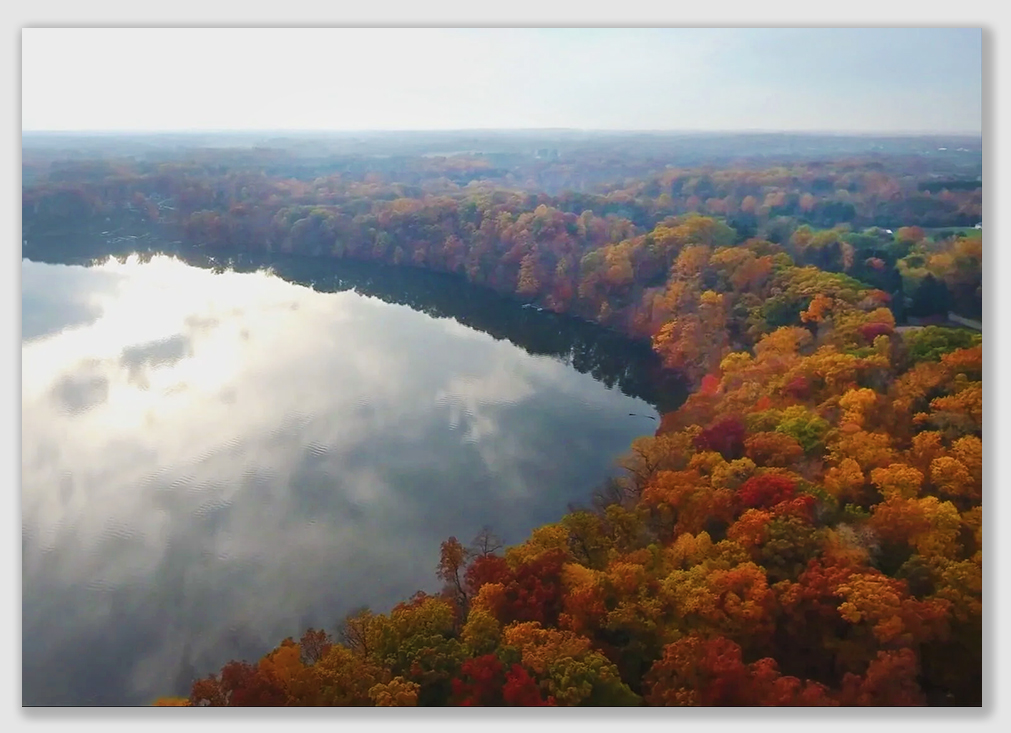
It is already the first week of October and most of the trees in the Tri-State area are mostly green. Most of the ones that have remained green are Oak trees. But if you are driving around, some trees are already showing a small bit of color. “We will start to see Hickories and Maples starting to change. Walnuts will also start to turning yellow and loose their leaves a little bit earlier than other species. But we are mainly looking for the Hickories to start turning that yellow,” said Sam Kosark, a Community and Private Land Forester for the Missouri Department of Conservation. Other species that are already changing are understory Dogwoods, Cottonwood, Locust, and Buckeye. Outside air can have a decent impact on color timing, color duration, and intensity. Unusual temperatures and moisture can cause unnecessary stress on the leaves. “We are now just getting into some fall temperatures, but that just puts more stress on the leaves and they are already getting to the end of their growing cycle,” Kosark mentioned. “So if it is dry and hot later in the fall, they will start turning (brown) Quicker instead of hanging on to those colors longer…”


