

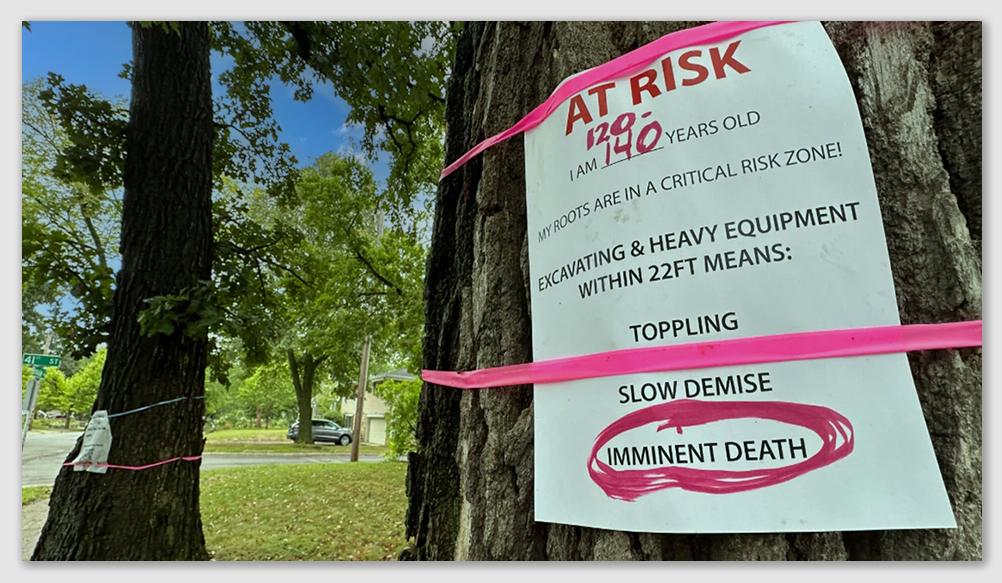
An online petition in St. Louis Park, Minnesota, has nearly 800 signatures after neighbors say a city project is threatening to remove historical trees on their street. Hugging Highway 100’s west side lies tight-knit neighborhoods Creekside and Brookside, two of the city’s oldest. “It used to be an old oak savannah,” said resident Shannon Farrell. “There’s kissing canopy in some places, so trees across both sides of the street will actually meet.” Pink ribbon and warning signs now cling to trunks on the Brookside Avenue block. Neighbors are putting pink ribbons on trees to alert the neighborhood about the city’s 2028 Pavement Management Project. The project entails reconstruction, underground utility work and a new bike lane on Brookside, which is what they’re most worried about. “We’re not against a bike lane. We just want a bike lane in a safe spot, and it’s not Brookside,” said resident Karen Waters…
Boston, Massachusetts, Globe, September 17, 2026: A Concord man believes he’s a victim of government tyranny. Town Hall says he’s the tyrant.
At the end of a country lane in Concord, there are a half-dozen homemade bulletin boards arrayed by the side of the road. They display some unusual material for this quiet repose: transcripts of depositions, excerpts from judicial decisions, and magnified images of old newspaper clippings. If you linger in front of this odd signage, a resident of the street, Brooks Read, will spot you on his surveillance camera and come out to speak with you. “I try to educate one person a day,” he recently told a lingering Globe reporter. Read looks like Bernie Sanders and talks like Christopher Lloyd in “Back to the Future.” He has been locked in a struggle with the town of Concord, the courts, and a contingent of local dog walkers for nearly a decade. The town has sued him and may consider doing so again. The dog walkers have accused him and his allies, at various times, of harassment and threatening to poison their pets, charges he vehemently denies…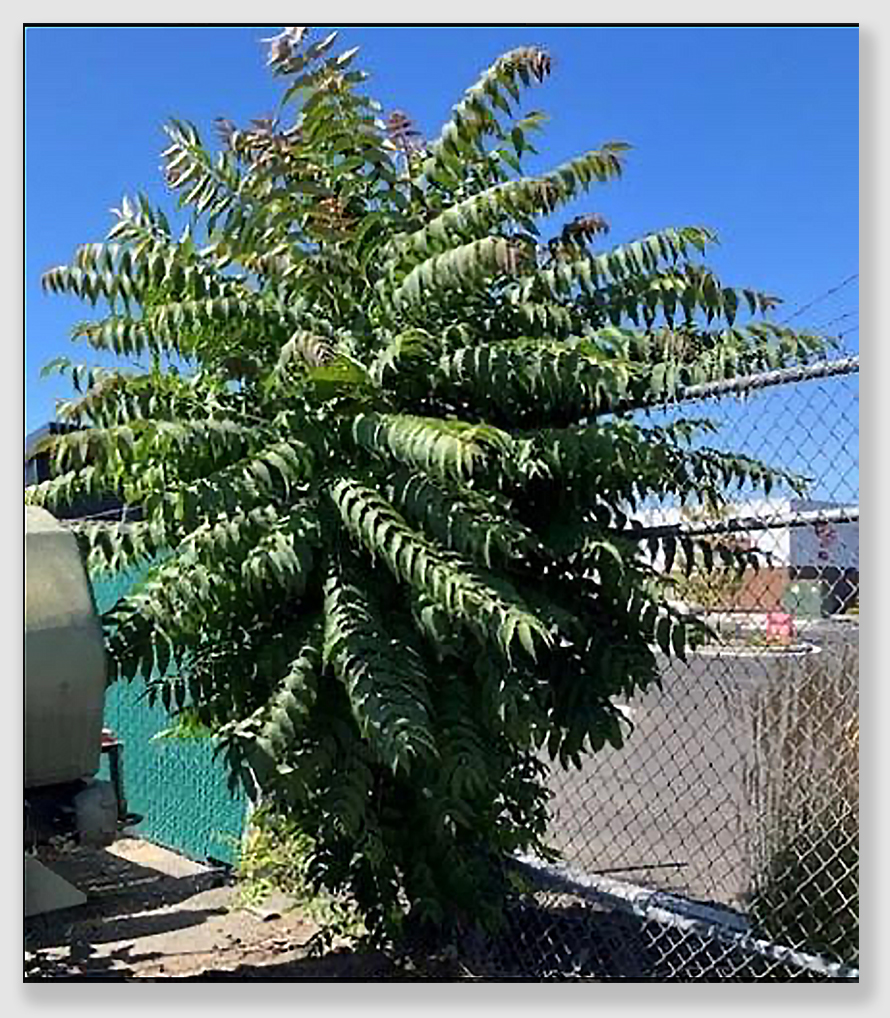 The Cool Down, September 20, 2026: Ohio woman says neighbor’s ‘tree of heaven’ unleashed lanternflies all over her driveway
One Toledo woman says an invasive tree on a neighboring property has turned her backyard into a sticky, bug-covered mess, making it difficult for her to park in her driveway or sit outside comfortably. She said the issue has now dragged on despite repeated efforts to get help. In comments to WTVG, Toledo resident Heather Keyes said spotted lanternflies around a neighbor’s tree of heaven are creating a sticky buildup that is getting on her car, patio furniture, and trash cans. Both the tree of heaven and the spotted lanternflies are invasive species from Asia, and spotted lanternflies feed on the tree of heaven. “I can’t park my car back here; I can’t even sit back here. It’s just so gross with everything. Not just the bugs, but the tree just drips constantly,” Keyes told the outlet. Keyes added to WTVG that she has lived in the home for seven years and that the invasive tree next door was once tiny when she moved in. Now that it’s larger, the insects have taken notice, with the problem really starting last year. Keyes estimated that she has already killed hundreds of these insects…
London, UK, BBC, September 18, 2026: When a beloved tree began withering away, locals suspected a killer in their midst
Every summer, Seoul turns a deep green, growing dense and lush under humid skies. But this year, one tree was visibly suffering. “Green leaves were falling to the ground, which shouldn’t happen at that time of year,” recalls Jung, who lives near the streetside ginkgo in Buam-dong, a largely residential neighbourhood in the north of Seoul. The tree is beloved by locals, who believe it has occupied its spot for more than 100 years. So Jung couldn’t ignore what she was seeing. With each passing day, her curiosity turned to concern. A rotting carpet of familiar fan-shaped leaves soon surrounded the tree, a sight so alarming Jung and her neighbours formed a crew of amateur detectives to solve the mystery: what was ailing their hardy ginkgo? The whodunnit engrossed Buam-dong and piqued the country’s interest, making national headlines. But the attention unsettled Jung, who spearheaded the campaign but has since requested anonymity – we are using a pseudonym. “Imagine a grandfather who silently embraces you every day, listens to you, and has always been strong and full of life,” she says. “Suddenly, he begins to die…
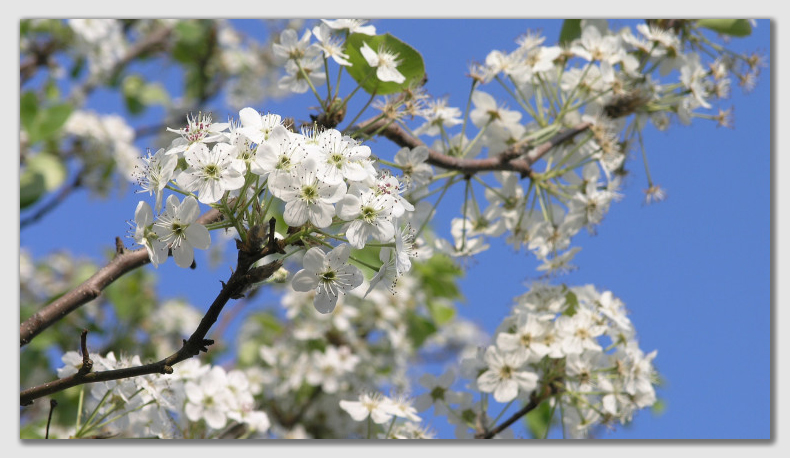
A stretch of notoriously smelly trees is set to be removed along Wren Road in Bowling Green by city Urban Forestry Division workers. Listed by House Digest as a “bad smelling tree to avoid,” Callery pear trees are known to become odorous in springtime. The species is also highly invasive, according to Bowling Green’s Public Works Department. “A once popular choice for landscapes and street trees has been found to be highly invasive,” a press release from the department said. “The Callery pear is particularly invasive due to its ease of reproduction; it overtakes natural areas and chokes out desirable native species.” Callery pears were added to a “banned invasive plants” Ohio list in January 2023, BG city officials say, making it illegal to produce, plant or sell the trees in-state. While the ban does not regulate already-planted trees, the city says removal will reduce the possibility for the species to spread…
As summer comes to an end, some Texas trees may appear to be showing fall color ahead of schedule. Prolonged drought and extreme heat can cause hardwood trees, particularly oaks, to develop brown or yellowing leaves and fall-like coloration earlier than expected. Across East and Central Texas, these changes may be a sign that trees are entering premature dormancy in response to severe drought stress. While premature dormancy can be a survival mechanism that helps trees conserve resources until conditions improve, drought can also cause leaf scorch, dieback and other damage that may appear similar. It can be difficult to determine from appearance alone whether a tree has entered premature dormancy or is experiencing more severe drought-related damage. Trees lose water through transpiration, the process of releasing water vapor through their leaves. By slowing physiological processes and shedding leaves, drought-stressed trees can significantly reduce water loss and protect critical vascular tissues in the trunk and branches…
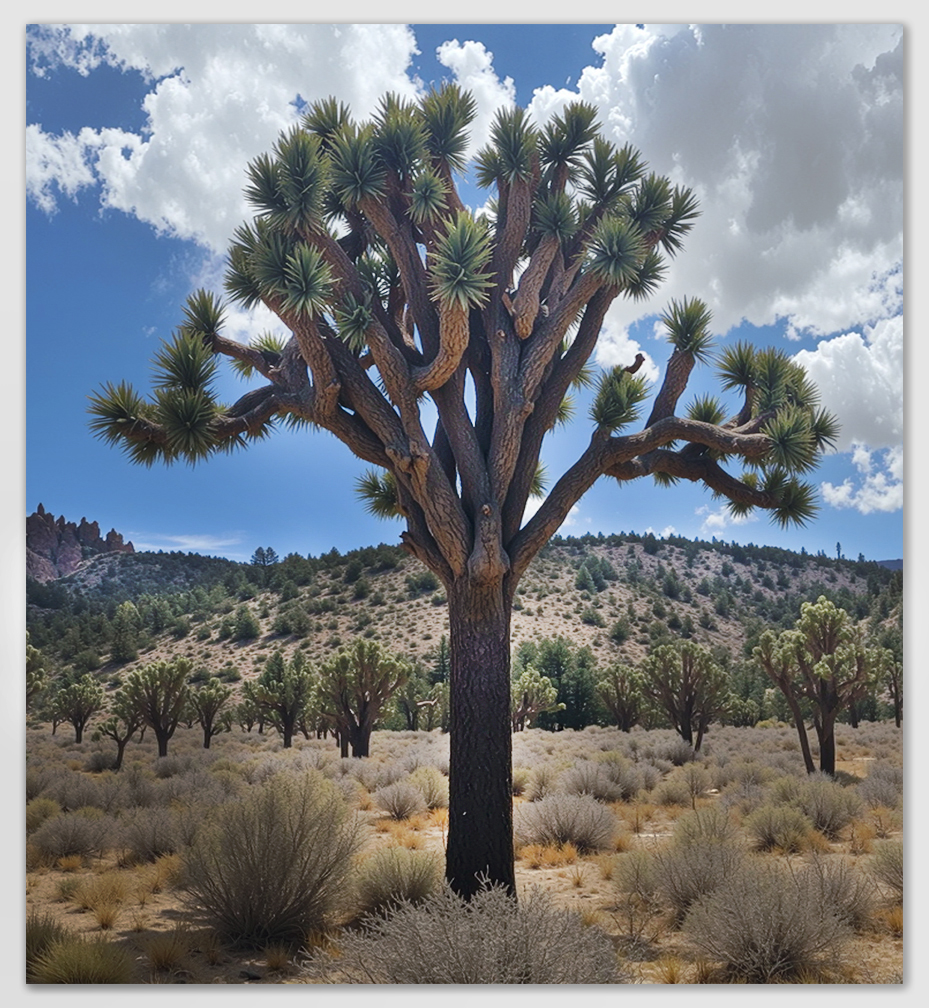
The California Department of Fish and Wildlife (CDFW) has made a significant purchase of western Joshua tree habitat using the Western Joshua Tree Conservation Fund. The land will be co-managed by CDFW and California Native American tribes. On Aug. 24, CDFW acquired 640 acres of western Joshua tree habitat northwest of Pioneertown in San Bernardino County. According to research, this property is highly likely to provide the best future suitable western Joshua tree habitat in Southern California based on environmental factors and climate projections. The land acquisition will contribute to meeting conservation targets laid out in the Western Joshua Tree Conservation Plan. CDFW is now working with the Native American Land Conservancy on plans for long-term protection and co-management of the property by CDFW and California Native American tribes…
Tree removal has been a hot-button topic in the world of golf. Most recently, Aronimink’s large-scale restoration, including the removal of hundreds of trees to restore the original design intent, had golf social-media pundits barking about how easy the course would play during this year’s PGA Championship. That was early in the week. Turns out, Aronimink played perfect with a varied leader board and a winning score of single-digits under-par. The most recent rallying cry from the anti-tree removal folks has come about the removal of one of Pebble Beach Golf Links’ well-known cypress trees, which sat about 90 yards short and right of its 16th hole. The two trees created a field-goal post of sorts for players to navigate in their pivotal approach near the event of a round. Photos surfaced recently showing the removal of the tree, and people sounded off, including Justin Thomas, who said: “makes no sense to me why they’d do this. When are places going to realize getting rid of trees is not the answer to making courses better, haha…”
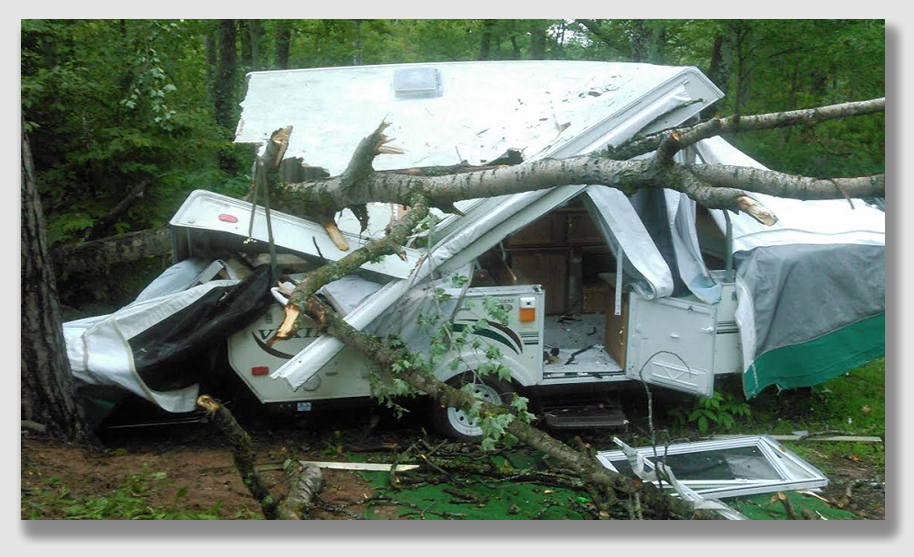
A Livonia family says their lives with their special needs son have been turned upside down because a county-owned tree fell on their property – and the county won’t come out to remove it. The county tells Local 4 that they are denying the family’s claim due to their legal policy. “We didn’t do anything wrong – we live here, and we don’t take anything from anyone. We work very hard,” Livonia woman Barbara Porcek said. Every year, Porcek’s son with special needs, Damian, signs his name on a piece of memorabilia in their family camper to mark the time spent with each other. The camper is the only place outside of their home equipped for him to stay in…
Josh Halman flew over Vermont’s woods late last summer and saw something that surprised him. Swaths of trees had already gone brown, scorched by an extreme drought that affected more than 64,000 acres. This year, from the same vantage, things are looking up. “We haven’t seen anything even close to the level of damage we were seeing in the foliage last year,” said Halman, who leads a long-running tree-monitoring project at Vermont Forest Parks and Recreation. The rebound is good news for the leaf-peepers who pour into Vermont each fall. But for the foresters who study those same trees, the annual turning of the leaves is more than a spectacle. It’s a record. It shows, in real time, how a warming climate is quietly rewriting the rules by which Vermont’s forests live. After last year’s damage, experts say this season is largely back on track, though a few of the hardest-hit spots are turning early. And the reason the leaves turn at all is a process more precise, and more sensitive to weather, than most roadside admirers realize. “It is showing right in our backyard in Vermont that climate has an influence on how long trees, or sugar maples specifically, are able to be growing in a given year,” Halman said…

It was a routine day in the laboratory belonging to Cameron Peace on the campus of Washington State University, Pullman, in the high, dry hills close to the Idaho border. Peace is a tree-fruit geneticist, and on this warm September afternoon, as on most days, he was running programs that tease out the DNA profiles of apples. Apples are Peace’s passion and the focus of his professional expertise. He maintains a backyard collection of unusual varieties and runs a project called MyFruitTree, which lets members of the public send in leaves from unidentified apple trees and matches those trees’ genetic fingerprints to entries in a database of known types. Washington State University is a land-grant university, founded to research and support agriculture, and Peace was honoring that mission. The samples he was examining had come from a team on the other side of the country at the Maine Organic Farmers and Gardeners Association (MOFGA), a long-standing agricultural nonprofit. The group wanted to identify trees it had found on old and abandoned farms, hoping to salvage valuable rarities before high winds or harsh winters killed them…
Wednesday’s story about Wilkes-Barre City Council brought up a long-standing concern for Wilkes-Barre in particular and for our region in general: Care for and value of urban trees. Council Member Tony Brooks offered photos of trees on various streets and dubbed them “destroyed” by a local tree-cutting agency. “One of our jobs here in the city is to make this city look as pretty as possible,” Brooks said. “But destroying these street trees like this completely destroys how beautiful our city is. It’s just utterly disgusting.” We have sung the praises of proper urban forestry practices over the years, usually when trees seem to be downed unnecessarily, dramatically altering the landscape. The most egregious example may be the 2020 felling of more than 20 large oaks lining South Pennsylvania Boulevard in Wilkes-Barre, justified as necessary for construction of the new Luzerne County Transportation Authority center. A three-man crew accompanied by a clawed backhoe showed stunning efficiency, spending as little as three minutes to eliminate a tree that had taken decades to grow. Sam Troy, a persistent local government watchdog, led the Wilkes-Barre Shade Tree Commission at the time. “I didn’t know this carnage was going to take place today, or yesterday,” he said, calling for a new city rule that would require any entity removing a tree to plant a new one…
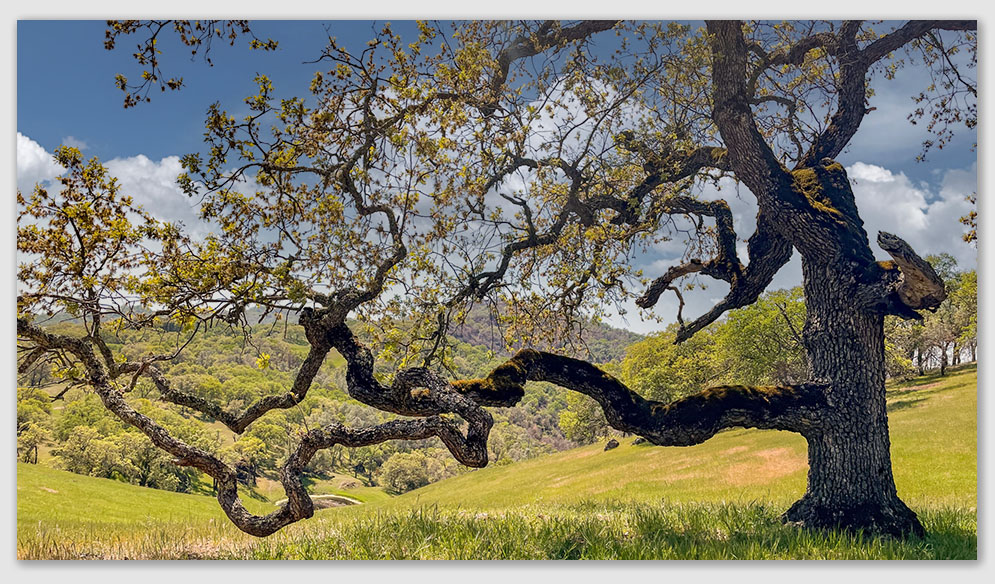
Two meetings are planned this week to share information about an invasive beetle that threatens an unknown number of trees in Santa Cruz County. An infestation of the invasive beetles was first detected along Zayante Creek near Felton in 2024. Called shothole borer beetles, the tiny insects hail from Southeast Asia and are problematic locally because they bore into trees and bring a deadly fungus with them which can cause tree dieback. The female beetles, generally a bit larger than males, are about 3.78 mm long or roughly 5/32 of an inch. The beetles are known to affect trees across urban, rural and agricultural areas. In Santa Cruz County, box elders have suffered the most destruction but the beetles have also been found in California sycamore, coast live oak, willow and black cottonwood trees…
Joseph Tarquinto Jr. said he received his $1,000 back this weekend after accusing a company of scamming him out of a deposit for tree removal work that was never completed. Tarquinto hired workers to remove a tree from his backyard. He said he agreed to pay half of the cost upfront and the remaining half after the job was finished. Shortly after receiving the initial deposit, the workers left and did not return, and the job was not started. The company initially said the men who took the deposit were not their employees. Tarquinto’s family filed a police report. With no work done and the $1,000 gone, Tarquinto’s family contacted 13abc about the potential scam. This weekend, a man arrived at Tarquinto’s home to return the money. “I was sitting on the front porch and the guy drove up in a truck and the guy walked up and he started talking and he told me he was sorry about what happened to me and losing my money and he brought my money back. He counted it to me and I counted it back. I was totally in shock,” Tarquinto said…
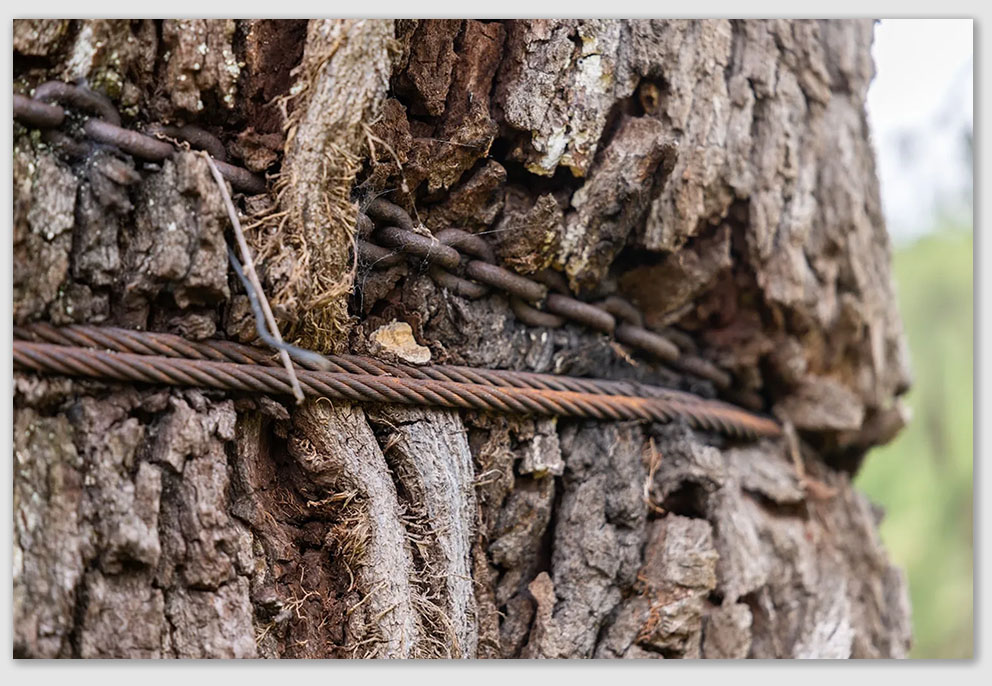
A centuries’ old “witness tree” that survived not only the Revolutionary War but a direct hit from lightning is facing yet another existential threat. Ironically, the famous oak in Eutaw Springs, South Carolina, is struggling to survive due to the strategies conservationists first used when attempting to preserve it decades ago. The nearly 300-year-old tree was already nearing its semicentennial on September 8, 1781, when around 2,000 British and 2,500 American troops met at the Battle of Eutaw Springs. Believed to be the American Revolution’s last open-field engagement, the vicious combat was later remembered by colonial Maj. Gen. Nathanael Greene as “by far, the hottest action I ever saw, and the most bloody for the numbers engaged.” Records indicate 1,461 troops were killed, wounded, captured, or missing by the end of the conflict—although both sides claimed victory. “That tree probably took a few lead balls itself,” arborist Aron Landsaw recently said in an Associated Press profile…
A New York City effort to plant more trees is facing opposition in Brooklyn’s Bensonhurst neighborhood, where members of the Chinese American community say they were not consulted about the placement of new trees and are concerned about the impact on feng shui. Residents object to markings for new tree wells that have been placed in front of some homes. They say the planned locations could interfere with beliefs about energy flow and personal fortune. “You cannot plant right directly in front of someone’s home. Basically, we believe that’s going to stop the good energy coming in, bad for the health,” Brooklyn Councilwoman Susan Zhuang said. Bensonhurst is home to a large Chinese American population, and residents say the locations were laid out without warning or input from the community. They contend that the new trees could disrupt the neighborhood’s feng shui…
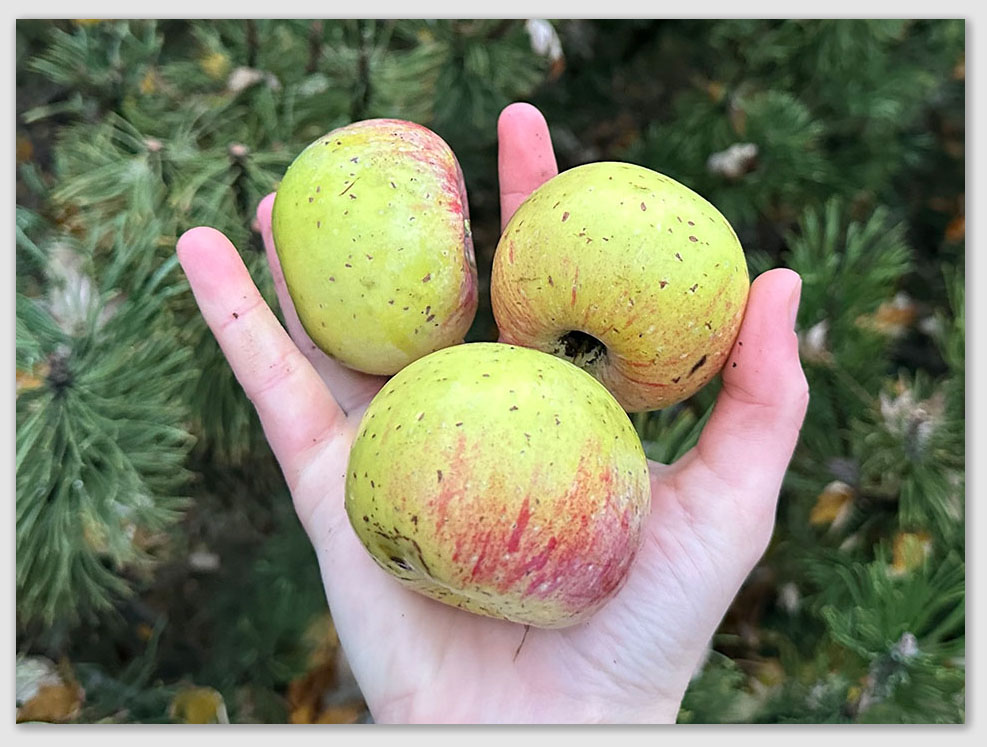
Tayettin Brodzinski doesn’t really like apples. But her work is bringing new life to a popular apple variety once thought to be extinct. Brodzinski, a Washington State University graduate student studying horticulture, took a crop plant genetics class last fall during her senior year of college in Pullman. The students were tasked that September with finding a leaf from an apple tree that hadn’t already been sampled, so they could test its DNA. She went to Lawson Gardens, just a mile from WSU’s campus, and found a tree at the entrance with green apples. Her apple didn’t come back with a known DNA match, and she continued working with her tree fruit genetics professor, Cameron Peace, to identify the apple. About a month later, the leaf was identified as being from a Walbridge apple tree, which apple researchers had thought to be extinct after it was taken out of mass markets before the 1920s, when the number of apple varieties grown commercially shrank. “It’s the No. 1 lost apple that we’re looking at across the country,” Peace said…
If you walk or drive through the Park at Forest Green neighborhood in southern Overland Park, you’re likely to see something pretty unique. Its streets are lined with mature, healthy trees, which isn’t all that special in a city that boasts of its comprehensive tree canopy. What makes this neighborhood special is that a lot of these trees are ash trees. Having hundreds of still-thriving ash trees is practically unheard of in a city that’s spent millions of dollars over the past several years removing ash trees from neighborhood streets since the arrival of the emerald ash borer. The pest, once detected, is certain doom for virtually every ash tree in the area. Emerald ash borers tunnel under a tree’s bark, which interrupts the way water and nutrients flow in the tree, causing it to eventually starve. That is, unless you give the tree a regular prophylactic insecticide injection right into its stump, like the Park at Forest Green neighborhood has, said Laura Peterson, a city forester…
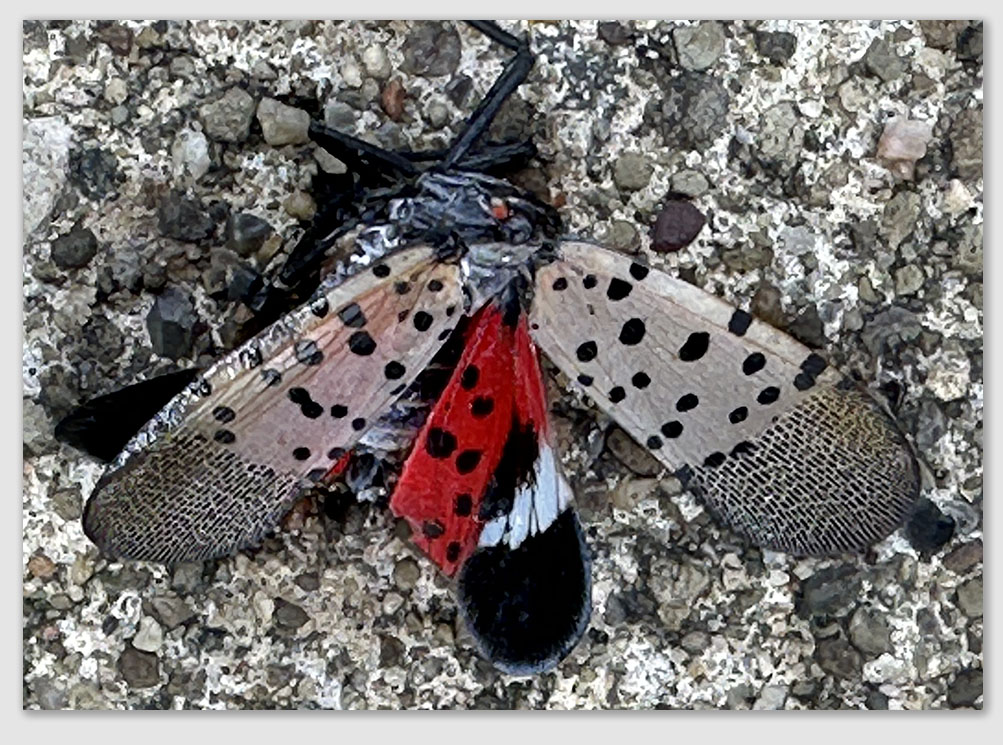
The invasive spotted lanternfly is spreading in Michigan, according to the Michigan Department of Agriculture and Rural Development. According the MDARD, a population of spotted lanternfly was confirmed near Niles in Berrien County, making it the first confirmed population in Southwest Michigan. Previously, there were confirmed populations only in Southeast Michigan in Macomb, Lenawee, Jackson, Monroe, Oakland and Wayne counties, plus a recent detection in Washtenaw County. Michigan State University said it was first detected in 2022 and it feeds on more than 70 plant species in the state. MSU Extension is also providing tips to help slow its spread and detect new populations. One way is to put a homemade trap wrapped around a tree. According to MSU, it almost looks like a lampshade when wrapped around the tree. According to MSU, forestry entomology researchers Deborah McCullough and Tim Harrison found that about 80% of egg masses from the spotted lanternfly were laid on lampshade traps, even when populations were low…
href=”https://treeandneighborlawblog.com/wp-content/uploads/2013/11/tnlbgray.jpg”>
 Tree and Neighbor Law For Homeowners and Professionals
