

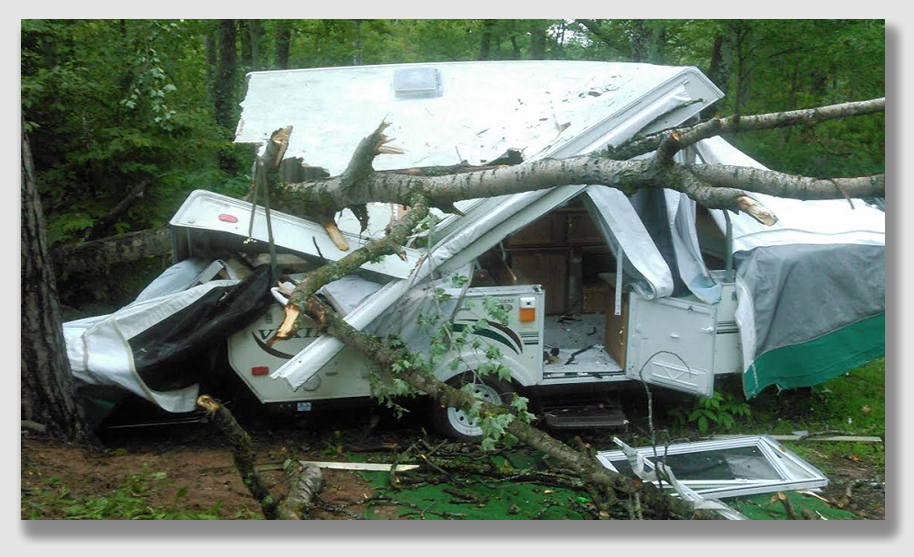
A Livonia family says their lives with their special needs son have been turned upside down because a county-owned tree fell on their property – and the county won’t come out to remove it. The county tells Local 4 that they are denying the family’s claim due to their legal policy. “We didn’t do anything wrong – we live here, and we don’t take anything from anyone. We work very hard,” Livonia woman Barbara Porcek said. Every year, Porcek’s son with special needs, Damian, signs his name on a piece of memorabilia in their family camper to mark the time spent with each other. The camper is the only place outside of their home equipped for him to stay in…
Montpelier, Vermont, vtdigger, September 16, 2026: Fall foliage varies from year to year, for leaf-peepers and trees
Josh Halman flew over Vermont’s woods late last summer and saw something that surprised him. Swaths of trees had already gone brown, scorched by an extreme drought that affected more than 64,000 acres. This year, from the same vantage, things are looking up. “We haven’t seen anything even close to the level of damage we were seeing in the foliage last year,” said Halman, who leads a long-running tree-monitoring project at Vermont Forest Parks and Recreation. The rebound is good news for the leaf-peepers who pour into Vermont each fall. But for the foresters who study those same trees, the annual turning of the leaves is more than a spectacle. It’s a record. It shows, in real time, how a warming climate is quietly rewriting the rules by which Vermont’s forests live. After last year’s damage, experts say this season is largely back on track, though a few of the hardest-hit spots are turning early. And the reason the leaves turn at all is a process more precise, and more sensitive to weather, than most roadside admirers realize. “It is showing right in our backyard in Vermont that climate has an influence on how long trees, or sugar maples specifically, are able to be growing in a given year,” Halman said… Scientific American, September 15, 2026: How apple detectives solved the mystery of an ancient tree—and rewrote the history of fruit
It was a routine day in the laboratory belonging to Cameron Peace on the campus of Washington State University, Pullman, in the high, dry hills close to the Idaho border. Peace is a tree-fruit geneticist, and on this warm September afternoon, as on most days, he was running programs that tease out the DNA profiles of apples. Apples are Peace’s passion and the focus of his professional expertise. He maintains a backyard collection of unusual varieties and runs a project called MyFruitTree, which lets members of the public send in leaves from unidentified apple trees and matches those trees’ genetic fingerprints to entries in a database of known types. Washington State University is a land-grant university, founded to research and support agriculture, and Peace was honoring that mission. The samples he was examining had come from a team on the other side of the country at the Maine Organic Farmers and Gardeners Association (MOFGA), a long-standing agricultural nonprofit. The group wanted to identify trees it had found on old and abandoned farms, hoping to salvage valuable rarities before high winds or harsh winters killed them…
Wilkes-Barre, Pennsylvania, Times-Leader, September 16, 2026: Don’t lose sight of the value of a city tree
Wednesday’s story about Wilkes-Barre City Council brought up a long-standing concern for Wilkes-Barre in particular and for our region in general: Care for and value of urban trees. Council Member Tony Brooks offered photos of trees on various streets and dubbed them “destroyed” by a local tree-cutting agency. “One of our jobs here in the city is to make this city look as pretty as possible,” Brooks said. “But destroying these street trees like this completely destroys how beautiful our city is. It’s just utterly disgusting.” We have sung the praises of proper urban forestry practices over the years, usually when trees seem to be downed unnecessarily, dramatically altering the landscape. The most egregious example may be the 2020 felling of more than 20 large oaks lining South Pennsylvania Boulevard in Wilkes-Barre, justified as necessary for construction of the new Luzerne County Transportation Authority center. A three-man crew accompanied by a clawed backhoe showed stunning efficiency, spending as little as three minutes to eliminate a tree that had taken decades to grow. Sam Troy, a persistent local government watchdog, led the Wilkes-Barre Shade Tree Commission at the time. “I didn’t know this carnage was going to take place today, or yesterday,” he said, calling for a new city rule that would require any entity removing a tree to plant a new one…
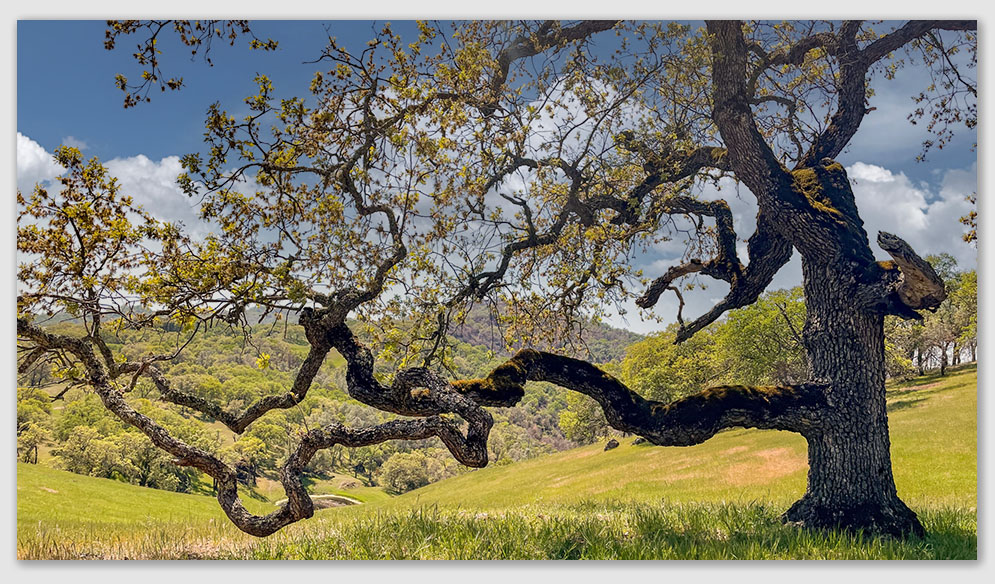
Two meetings are planned this week to share information about an invasive beetle that threatens an unknown number of trees in Santa Cruz County. An infestation of the invasive beetles was first detected along Zayante Creek near Felton in 2024. Called shothole borer beetles, the tiny insects hail from Southeast Asia and are problematic locally because they bore into trees and bring a deadly fungus with them which can cause tree dieback. The female beetles, generally a bit larger than males, are about 3.78 mm long or roughly 5/32 of an inch. The beetles are known to affect trees across urban, rural and agricultural areas. In Santa Cruz County, box elders have suffered the most destruction but the beetles have also been found in California sycamore, coast live oak, willow and black cottonwood trees…
Joseph Tarquinto Jr. said he received his $1,000 back this weekend after accusing a company of scamming him out of a deposit for tree removal work that was never completed. Tarquinto hired workers to remove a tree from his backyard. He said he agreed to pay half of the cost upfront and the remaining half after the job was finished. Shortly after receiving the initial deposit, the workers left and did not return, and the job was not started. The company initially said the men who took the deposit were not their employees. Tarquinto’s family filed a police report. With no work done and the $1,000 gone, Tarquinto’s family contacted 13abc about the potential scam. This weekend, a man arrived at Tarquinto’s home to return the money. “I was sitting on the front porch and the guy drove up in a truck and the guy walked up and he started talking and he told me he was sorry about what happened to me and losing my money and he brought my money back. He counted it to me and I counted it back. I was totally in shock,” Tarquinto said…
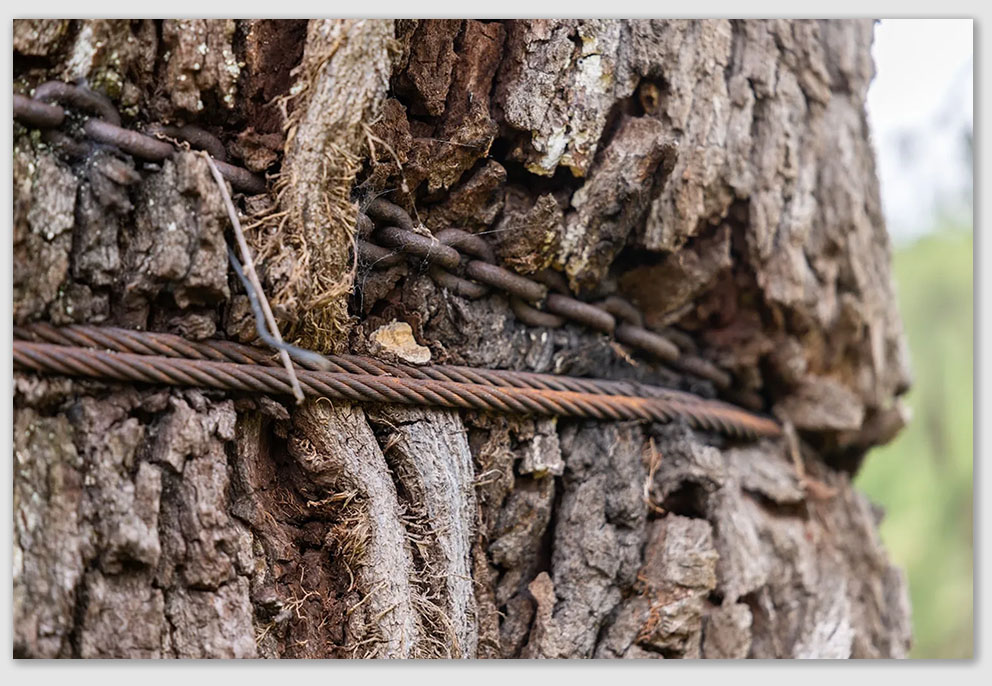
A centuries’ old “witness tree” that survived not only the Revolutionary War but a direct hit from lightning is facing yet another existential threat. Ironically, the famous oak in Eutaw Springs, South Carolina, is struggling to survive due to the strategies conservationists first used when attempting to preserve it decades ago. The nearly 300-year-old tree was already nearing its semicentennial on September 8, 1781, when around 2,000 British and 2,500 American troops met at the Battle of Eutaw Springs. Believed to be the American Revolution’s last open-field engagement, the vicious combat was later remembered by colonial Maj. Gen. Nathanael Greene as “by far, the hottest action I ever saw, and the most bloody for the numbers engaged.” Records indicate 1,461 troops were killed, wounded, captured, or missing by the end of the conflict—although both sides claimed victory. “That tree probably took a few lead balls itself,” arborist Aron Landsaw recently said in an Associated Press profile…
A New York City effort to plant more trees is facing opposition in Brooklyn’s Bensonhurst neighborhood, where members of the Chinese American community say they were not consulted about the placement of new trees and are concerned about the impact on feng shui. Residents object to markings for new tree wells that have been placed in front of some homes. They say the planned locations could interfere with beliefs about energy flow and personal fortune. “You cannot plant right directly in front of someone’s home. Basically, we believe that’s going to stop the good energy coming in, bad for the health,” Brooklyn Councilwoman Susan Zhuang said. Bensonhurst is home to a large Chinese American population, and residents say the locations were laid out without warning or input from the community. They contend that the new trees could disrupt the neighborhood’s feng shui…
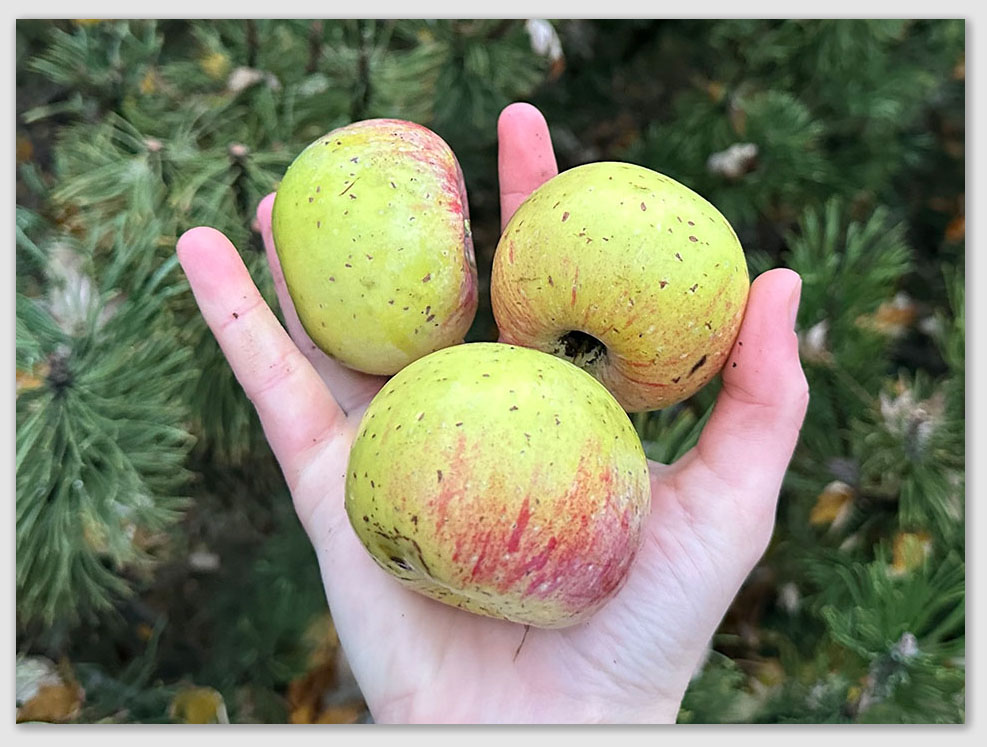
Tayettin Brodzinski doesn’t really like apples. But her work is bringing new life to a popular apple variety once thought to be extinct. Brodzinski, a Washington State University graduate student studying horticulture, took a crop plant genetics class last fall during her senior year of college in Pullman. The students were tasked that September with finding a leaf from an apple tree that hadn’t already been sampled, so they could test its DNA. She went to Lawson Gardens, just a mile from WSU’s campus, and found a tree at the entrance with green apples. Her apple didn’t come back with a known DNA match, and she continued working with her tree fruit genetics professor, Cameron Peace, to identify the apple. About a month later, the leaf was identified as being from a Walbridge apple tree, which apple researchers had thought to be extinct after it was taken out of mass markets before the 1920s, when the number of apple varieties grown commercially shrank. “It’s the No. 1 lost apple that we’re looking at across the country,” Peace said…
If you walk or drive through the Park at Forest Green neighborhood in southern Overland Park, you’re likely to see something pretty unique. Its streets are lined with mature, healthy trees, which isn’t all that special in a city that boasts of its comprehensive tree canopy. What makes this neighborhood special is that a lot of these trees are ash trees. Having hundreds of still-thriving ash trees is practically unheard of in a city that’s spent millions of dollars over the past several years removing ash trees from neighborhood streets since the arrival of the emerald ash borer. The pest, once detected, is certain doom for virtually every ash tree in the area. Emerald ash borers tunnel under a tree’s bark, which interrupts the way water and nutrients flow in the tree, causing it to eventually starve. That is, unless you give the tree a regular prophylactic insecticide injection right into its stump, like the Park at Forest Green neighborhood has, said Laura Peterson, a city forester…
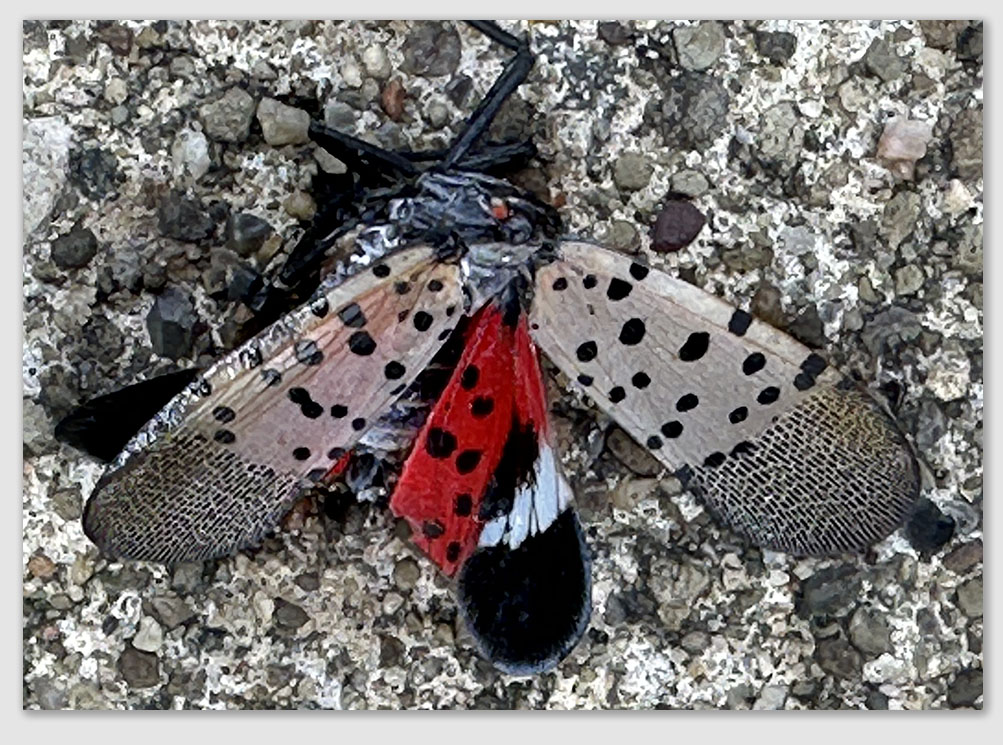
The invasive spotted lanternfly is spreading in Michigan, according to the Michigan Department of Agriculture and Rural Development. According the MDARD, a population of spotted lanternfly was confirmed near Niles in Berrien County, making it the first confirmed population in Southwest Michigan. Previously, there were confirmed populations only in Southeast Michigan in Macomb, Lenawee, Jackson, Monroe, Oakland and Wayne counties, plus a recent detection in Washtenaw County. Michigan State University said it was first detected in 2022 and it feeds on more than 70 plant species in the state. MSU Extension is also providing tips to help slow its spread and detect new populations. One way is to put a homemade trap wrapped around a tree. According to MSU, it almost looks like a lampshade when wrapped around the tree. According to MSU, forestry entomology researchers Deborah McCullough and Tim Harrison found that about 80% of egg masses from the spotted lanternfly were laid on lampshade traps, even when populations were low…
href=”https://treeandneighborlawblog.com/wp-content/uploads/2013/11/tnlbgray.jpg”>
 Tree and Neighbor Law For Homeowners and Professionals
