

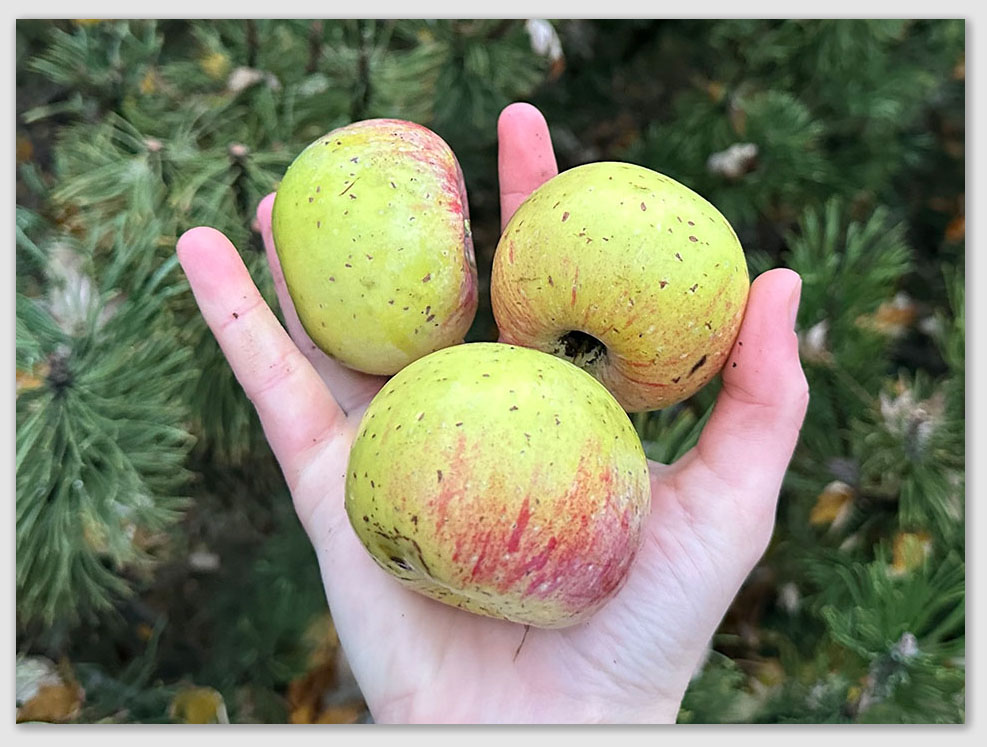
Tayettin Brodzinski doesn’t really like apples. But her work is bringing new life to a popular apple variety once thought to be extinct. Brodzinski, a Washington State University graduate student studying horticulture, took a crop plant genetics class last fall during her senior year of college in Pullman. The students were tasked that September with finding a leaf from an apple tree that hadn’t already been sampled, so they could test its DNA. She went to Lawson Gardens, just a mile from WSU’s campus, and found a tree at the entrance with green apples. Her apple didn’t come back with a known DNA match, and she continued working with her tree fruit genetics professor, Cameron Peace, to identify the apple. About a month later, the leaf was identified as being from a Walbridge apple tree, which apple researchers had thought to be extinct after it was taken out of mass markets before the 1920s, when the number of apple varieties grown commercially shrank. “It’s the No. 1 lost apple that we’re looking at across the country,” Peace said…
Kansas City, Missouri, KCUR Radio, September 13, 2026: How an Overland Park neighborhood saved hundreds of trees from a killer pest
If you walk or drive through the Park at Forest Green neighborhood in southern Overland Park, you’re likely to see something pretty unique. Its streets are lined with mature, healthy trees, which isn’t all that special in a city that boasts of its comprehensive tree canopy. What makes this neighborhood special is that a lot of these trees are ash trees. Having hundreds of still-thriving ash trees is practically unheard of in a city that’s spent millions of dollars over the past several years removing ash trees from neighborhood streets since the arrival of the emerald ash borer. The pest, once detected, is certain doom for virtually every ash tree in the area. Emerald ash borers tunnel under a tree’s bark, which interrupts the way water and nutrients flow in the tree, causing it to eventually starve. That is, unless you give the tree a regular prophylactic insecticide injection right into its stump, like the Park at Forest Green neighborhood has, said Laura Peterson, a city forester…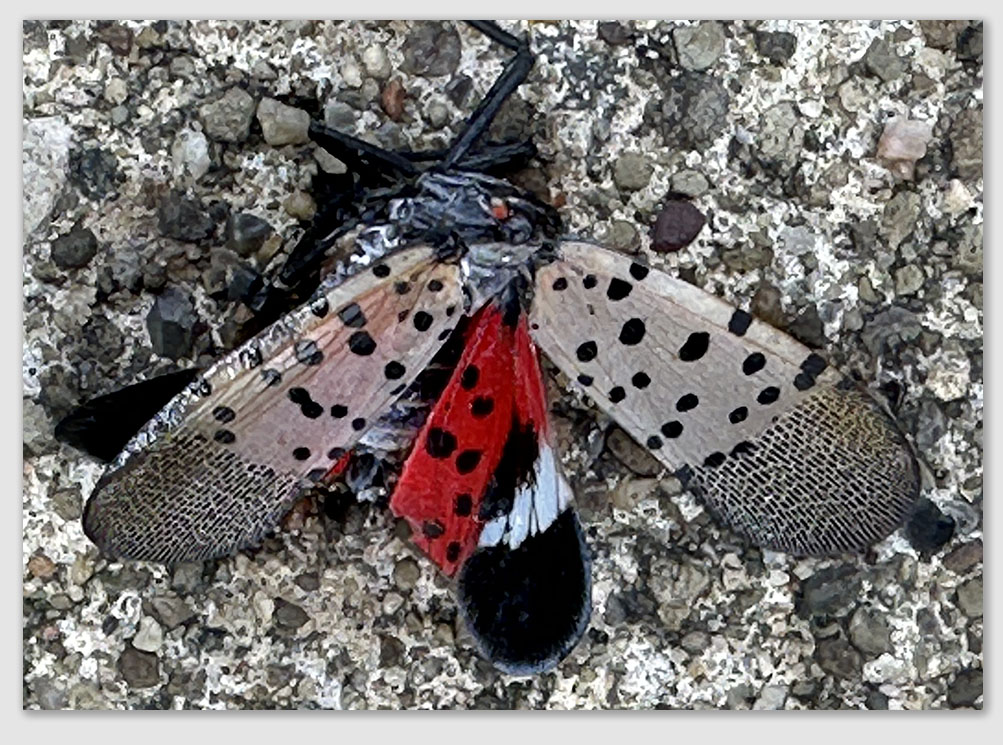 Detroit, Michigan, WXYZ-TV, September 13, 2026: Spotted lanternfly is spreading in Michigan. MSU gives tips to help protect trees
The invasive spotted lanternfly is spreading in Michigan, according to the Michigan Department of Agriculture and Rural Development. According the MDARD, a population of spotted lanternfly was confirmed near Niles in Berrien County, making it the first confirmed population in Southwest Michigan. Previously, there were confirmed populations only in Southeast Michigan in Macomb, Lenawee, Jackson, Monroe, Oakland and Wayne counties, plus a recent detection in Washtenaw County. Michigan State University said it was first detected in 2022 and it feeds on more than 70 plant species in the state. MSU Extension is also providing tips to help slow its spread and detect new populations. One way is to put a homemade trap wrapped around a tree. According to MSU, it almost looks like a lampshade when wrapped around the tree. According to MSU, forestry entomology researchers Deborah McCullough and Tim Harrison found that about 80% of egg masses from the spotted lanternfly were laid on lampshade traps, even when populations were low…
MarthaStewart.com, September 12, 2026: Can a Tree Grow Back From a Stump? What Arborists Say
There are a few reasons a homeowner might cut down a tree—the tree could be diseased, growing too close to the house and posing a safety risk, or interfering with utility lines. Whatever the reason, after the tree is cut down, you’re likely left with its stump, and you might be wondering whether you can leave it without a whole new tree attempting to grow from it. We spoke with arborists and tree professionals to learn whether a tree can grow back from its stump, whether you should let it, and how to stop it from regrowing. Yes, a tree can grow back after being cut down if the stump and roots remain. “If the tree was healthy and vigorous, then it will also have a strong root system that will supply stored energy for regrowth,” says Gabe Vlasma, horticulture lead and certified arborist at Frederik Meijer Gardens & Sculpture Park. “This stored energy initiates dormant buds that are found below the surface of the bark of a tree.” Dormant buds that sit just under the bark can be stimulated when something stressful happens to the tree, like cutting it down, significant injury, or even a change in sunlight exposure, says JP McDonnell, a board-certified master arborist and owner of Shakerag Consulting. Coupled with the stored, dormant energy in the tree’s surviving roots, the stump can produce multiple new tree sprouts after being cut down…
 New Haven, Connecticut, Independent, September 10, 2026: Farewell, Beech Trees. What’s Next?
In the woods of East Rock Park, a 40-foot American beech tree lies on its side. Like all the beech trees in the city, and the state more broadly, it had been infected with beech leaf disease — a rapidly spreading sickness that kills trees within years. But this particular tree didn’t fall just because it was sick. The city’s Parks Department had cut it down, as part of a study aimed at promoting forest health in parks that have been impacted by beech leaf disease. In cutting down some beech trees and treating others, the Parks Department is trying to figure out what our changing urban forests will look like in 50 years. American beech trees are a staple of forests in the eastern United States. They can grow to be 100 feet tall and live for hundreds of years. Their thick canopy keeps forests shady. They’re most known for their smooth, gray bark, which humans have taken to as a de facto canvas. “If you see someone carved their name into a tree, almost always it’s a beech tree,” Parks Director Max Webster said on Wednesday while giving the Independent a tour of a beech tree plot being studied by the city, alongside Tree Warden Annie Mixsell. But beech trees have been declining across the country in the last 15 years. They’re already picky to changes in the environment — “They’re not a super adaptable tree species,” Mixsell said — and for decades many have suffered from beech bark disease. In 2012, however, researchers in Ohio also discovered beech leaf disease. Beech leaf disease is caused by an invasive microscopic worm that feeds on beech buds and causes leaves to curl and darken as they lose their ability to photosynthesize and keep the tree alive, ultimately killing the tree within two to ten years…
While peak fall colors are still weeks away for Milwaukee, eventually those colorful leaves will fall to the ground. And if you’re a homeowner, it’s up to you to rake them up – even if they fell from your neighbor’s tree, Kali Murray, a property law professor at Marquette University, told the Journal Sentinel. It doesn’t matter how the leaves got there, even if your neighbor’s tree has branches hanging over your yard. You can only trim your neighbor’s tree if there are branches stretching into your yard, and even then, there are limitations. The tree needs to be trimmed within reason and can’t harm the tree. Murray recommended documenting the issue first and informing your neighbor, then trimming only the relevant parts of the tree. It might be worth simply leaving leaves wherever they fall, according to UW-Madison’s Extension Horticulture Program…
Honolulu, Hawaii, Aloha State Daily, September 10, 2026: True tales of tall trees in the Islands
 Even in urban areas, trees are a part of everyone’s life. Their rate of growth is so slow that we cannot clearly see how they steadily increase in size. In fact we rarely even notice them at all until, unfortunately, they experience some calamities. Here are some tales of some high-profile Hawai‘i trees that have attracted attention over time. A Moreton Bay fig tree, originally from Australia, once dominated the waterfront All‘i Drive in Kailua Kona, Hawai‘i Island. It’s thought that this species could have been introduced to Hawaii in 1851. This particular one was planted in 1910 and obviously found this location to its liking, growing vigorously to a great size as many other related banyan trees tend to do here. Sadly, an unknown condition eventually would begin to damage this majestic tree. Large branches started to die off, eventually reducing it to a tragic stump…
Albany, New York, WTEN-TV, September 10, 2026: The legacy of a 200-year-old tree in Albany lives on
A centuries-old tree at Albany Rural Cemetery has been cut down after part of it became a hazard. But, as NEWS10’s Amber Fisher shows us, the cemetery isn’t letting its story end there. The English Oak stood along the main road into Albany Rural Cemetery for about 200 years. Recently, one of its branches broke off. The rest became a hazard, so crews cut it down. “We’ve lost a tree that we’re estimating is about 200 years old. Actually, it was here before the cemetery was founded in and dedicated in 1844.” explained Michael Radlick, chairman of the Building and Grounds Committee, trustee and treasurer for the Friends of Albany Rural Cemetery. Bruce Otto, trustee at Albany Rural Cemetery, said that the oak isn’t even native to this area, and it likely arrived with early settlers…
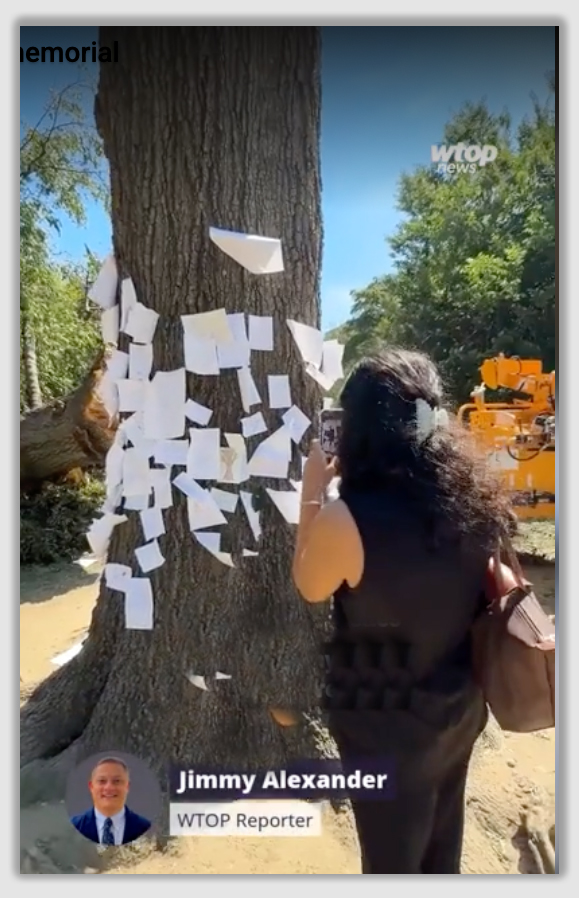
Apparently, if a tree falls in Washington, people will notice — and even mourn its collapse. When an intense storm struck the D.C. region Thursday night, lightning flashed, thunder cracked and hundreds of trees fell down. One was a massive tree in Dupont Circle that had grown there for decades until it suddenly snapped in half. Over the weekend, Washington residents began to mourn the tree, and by Monday afternoon, dozens of handwritten messages were affixed to what remained of the trunk. At its base, the trunk was as wide as a few adults. But at its jagged top, just one lone branch was left. In the notes, people shared memories of their time in the tree’s shade. They thanked it for providing oxygen. They lamented its destruction, they lamented the weather, and they lamented the U.S. government. One person attached a photo of squirrels on the tree from a few years ago. Others drew pictures…
Winchester, Virginia, Star, September 9, 2026: Box tree moths remain a threat to local boxwoods
Box tree moths continue to inflict damage on boxwood shrubs in the region. And property owners who want to protect their boxwoods from infestation are being urged to spray them. Box tree moths are an invasive pest that can inflict significant damage on boxwoods if left unchecked, according to the USDA. Once their caterpillars hatch, they quickly begin eating the leaves and then the bark of boxwoods. In Virginia, boxwoods are an extremely popular ornamental shrub. An evergreen, they were initially brought over by colonists in the 17th century. Driving around the Winchester area right now, it’s easy to spot boxwoods that have turned brown as a result of damage from box tree moths. The pest was first detected in the United States in New York in 2021. Four years later, in the summer of 2025, it was detected in Virginia for the first time in nearby Clarke and Loudoun counties. On Dec. 3, 2025, Virginia Department of Agriculture and Consumer Services (VDACS) announced a box tree moth quarantine for Frederick and Clarke counties and the city of Winchester in an effort to slow the spread of the pest from infested to uninfested areas…
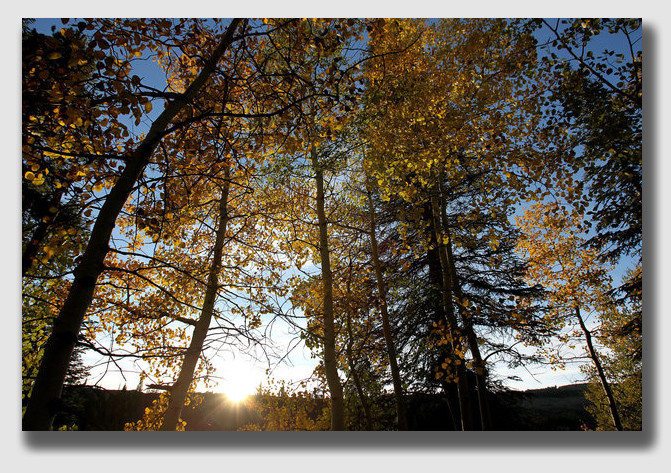
From a small plane above Colorado’s mountains, Dan West has been getting a bird’s-eye view of the state’s trees. He conducts forest surveys and has been watching for the first patches of autumnal yellow and orange to emerge. But this year, the early fall colors come with a caveat: for many trees, it’s not the seasons shifting that’s making them change. It’s drought. “Really this year we’re seeing a lot more effects from the drought than we are just from that autumnal kind of seasonal change that we would typically see,” said West, the state’s Forest Service lead entomologist. Trees across the state are showing signs of drought stress, and that’s causing some to change color and drop their leaves earlier than they normally would. And according to West, the fall foliage is running roughly a week ahead of its typical schedule in many places…
Public opposition will slow plans to remove and display a section of a dead Shoshone National Forest tree that surveyors mapping Yellowstone Forest Reserve boundaries inscribed 133 years ago. The dead Engelmann spruce still stands about 28 miles from the nearest trailhead in the Washakie Wilderness. Plans to recover the artifact via helicopter have been underway for years, and there’s even a place in the Wyoming State Museum to display it. But as plans advanced, federal land managers did not loop in the general public nor advocacy groups whose mission it is to uphold the Wilderness Act. When they ultimately learned about the project, advocates publicly objected — and let Shoshone National Forest Supervisor Ken Coffin know it…
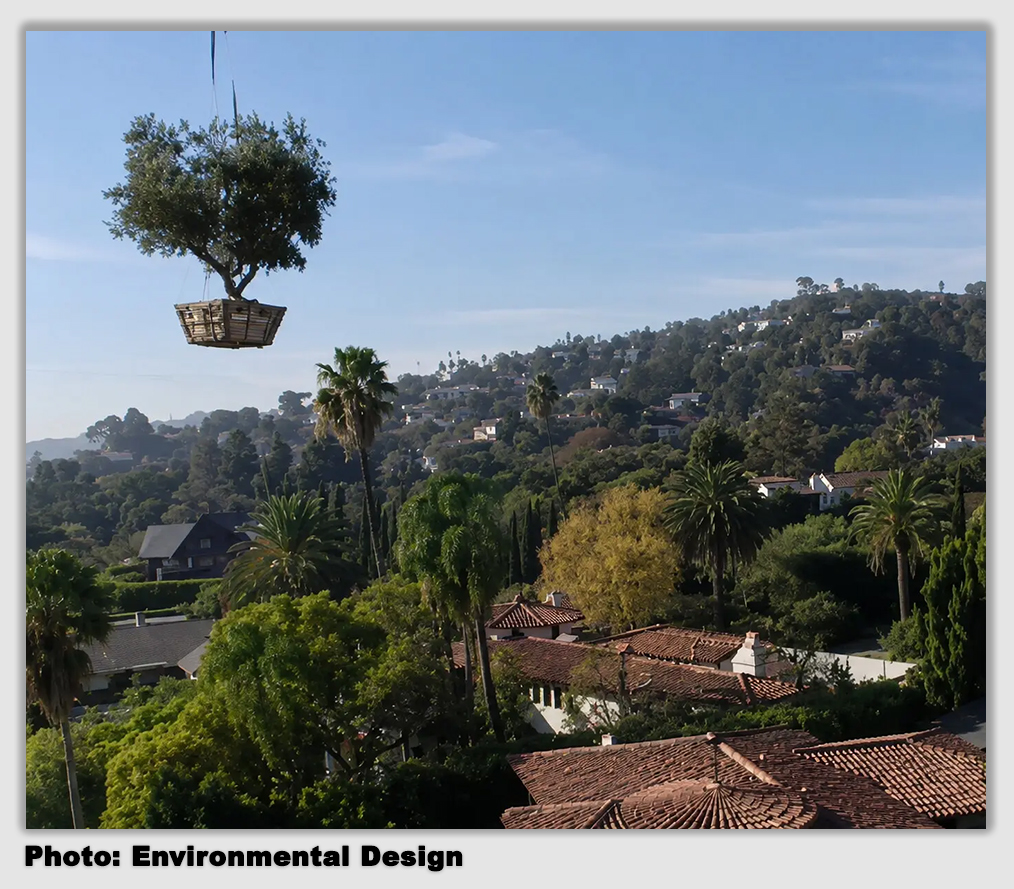 New York City, The New York Times, September 8, 2026: The Latest Wealth Flex: Big Trees
Imagine lifting a chair and moving it to a corner of the living room. Now imagine that the chair is 50 feet tall and weighs 100 tons. That, or something very like it, is the daily task of specialized workers who uproot and replant trees that may have been saplings when Ronald Reagan was a child. “Every day, that’s what we do,” said Tom Cox, a co-founder of Environmental Design, a company in Texas that sources and transplants some of the largest and heaviest trees in the world. “People who can afford it want the biggest, and they want the best in everything, and they want it now.” The commerce in old trees is certainly not new. But as the billionaire class rapidly grows and the net worth of the richest Americans soars at unprecedented rates, the mature tree business is booming, according to experts in this once-niche industry. “Of course, people have done big trees before,” Andres Blanco, a principal at Ferguson & Shamamian Architects in New York, said. “But not at this scale. The money is now out of control…”
Visual Capitalist, September 7, 2026: Ranked: The World’s Cities With the Most Tree Coverage
Tampa ranks first with a Green View Index (GVI) of 36.1%, 6.8 percentage points above Breda and Singapore. Eight cities have a GVI above 25%, including Oslo, Sydney, Vancouver, Montreal, and Cambridge. Treepedia measures greenery from a pedestrian’s perspective, capturing the share of tree canopy visible along city streets.Urban trees can reduce heat, help manage stormwater, and make streets more comfortable for pedestrians. But measuring how green a city feels at street level is more complicated than simply counting parks. This ranking uses data from Treepedia, developed by the MIT Senseable City Lab in collaboration with the World Economic Forum, to compare tree canopy visible from streets across major global cities…
Scientists in the state of Vermont have spent the summer spreading Dutch elm disease to thousands of trees. You read that correctly. Researchers with the U.S. Forest Service and the Nature Conservancy want to see if a new generation of elms — bred from survivors of the disease — might have resistance to the fungus spread by bark beetles that has been decimating elm populations in the U.S. and Canada for decades. The goal is one day repopulating areas where towering elms were once ubiquitous, lining city streets and thriving along river banks. “The loss of the trees over the years has been devastating,” Gus Goodwin, a senior conservation planner for The Nature Conservancy, told The Associated Press. Time will tell if the Vermont experiment will result in a strain of trees resistant to Dutch elm disease (DED). Researchers working on similar efforts here in Canada hope science will offer solutions at a time when the disease is becoming a threat in new areas…
Your neighbor has a gorgeous shade tree with branches that stretch across the fence-line. For a few months, you appreciate the shade, shelter, and brilliant fall color this tree provides. But then that tree dumps a huge load of leaves onto your property. Thanks to your neighbor’s tree, you’ve got a massive cleanup job that you never asked for. Since the tree belongs to your neighbor, shouldn’t they rake up the leaves? Why not blow those leaves right back over to their side of the property line where they belong? We’re afraid we have some news for you: You are responsible for cleaning up the leaves that fell from your neighbor’s tree. Whatever falls on your property is almost always your responsibility. This includes leaves, acorns, seed pods, twigs, and even fallen branches, unless your neighbor was neglecting a diseased and rotting tree. Since no one has control over which way the wind blows or which side of the property line these “natural products” land on, everyone takes care of their own side of the fence…
href=”https://treeandneighborlawblog.com/wp-content/uploads/2013/11/tnlbgray.jpg”>
 Tree and Neighbor Law For Homeowners and Professionals
