

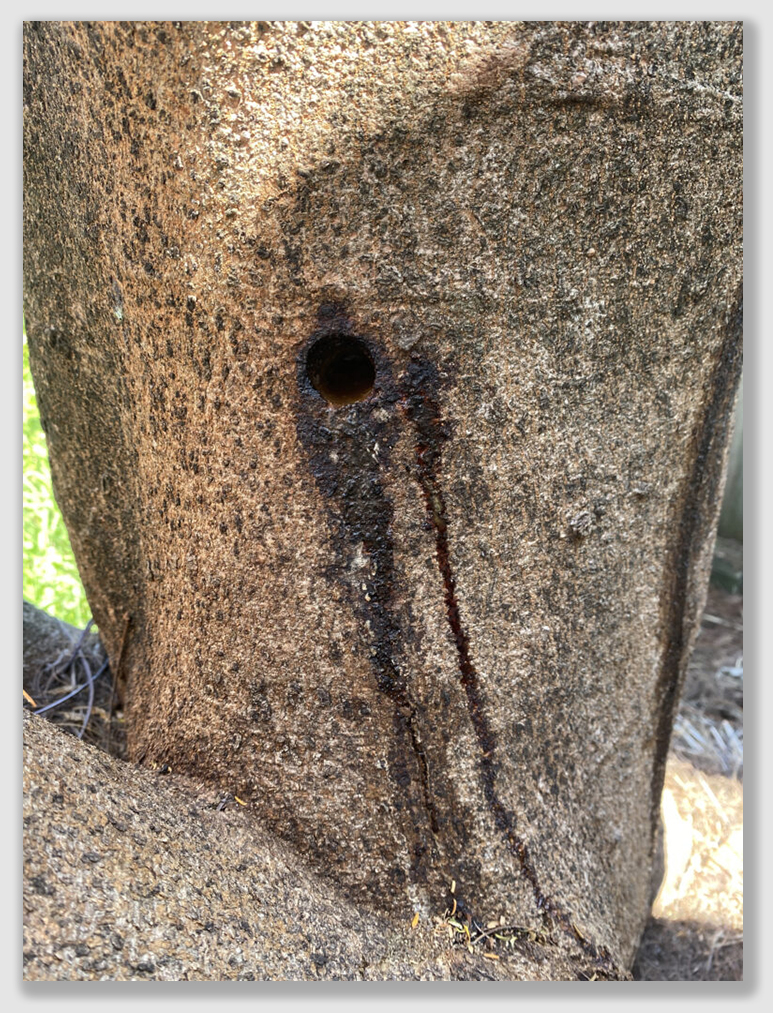
 Reno, Nevada, KRXI-TV, August 3, 2026: Deputies seek tips and security video in tree poisoning case
The Washoe County Sheriff’s Office is investigating a string of deliberate tree poisonings at Burnt Cedar Beach after multiple trees were recently found contaminated. Deputies first responded to the beach on July 24, after a strong odor was discovered near the base of a large pine tree. Soil samples collected from the scene carried a distinct smell consistent with previous tree-poisoning incidents reported at the property. Investigators returned to Burnt Cedar Beach on August 2 after additional trees were found with a suspicious substance poured around their bases. Authorities believe the most recent attack occurred between 11:30 a.m. on Saturday, August 1, and 5:00 a.m. on Sunday, August 2. A trail camera in the area captured a brief flash of light around 2:00 a.m. on August 2. Detectives are continuing to canvas the neighborhood for additional security video and evidence…
East Hampton, New York, The East Hampton Press, August 3, 2026: Tree-Cutting Regulations in the Works in East Hampton Village
Elizabeth Linker of Hedges & Gardens is taking the lead on pitching the East Hampton Village Board on a law that would cut down on property owners felling aged trees during construction. This saga began last month, when Linker led a chorus that reacted sharply to the felling of a tree thought to be nearly 200 years old during the demolition of a house on Newtown Lane. Those opposed were left up in arms over what appeared to be the unnecessary destruction of a healthy tree and pointed to laws meant to protect trees in other municipalities, like North Haven and Sag Harbor. But when Linker was before the Village Board on July 31, she advocated for a stricter law than those found in neighboring municipalities, referencing specifically the tree legislation in Old Westbury, where cutting down specimen trees over 6 inches in diameter is regulated. The numbers for regulation have been — and remain — up in the air for East Hampton, as Linker has alternatively suggested mandating a permit to cut down trees over 10 inches in diameter…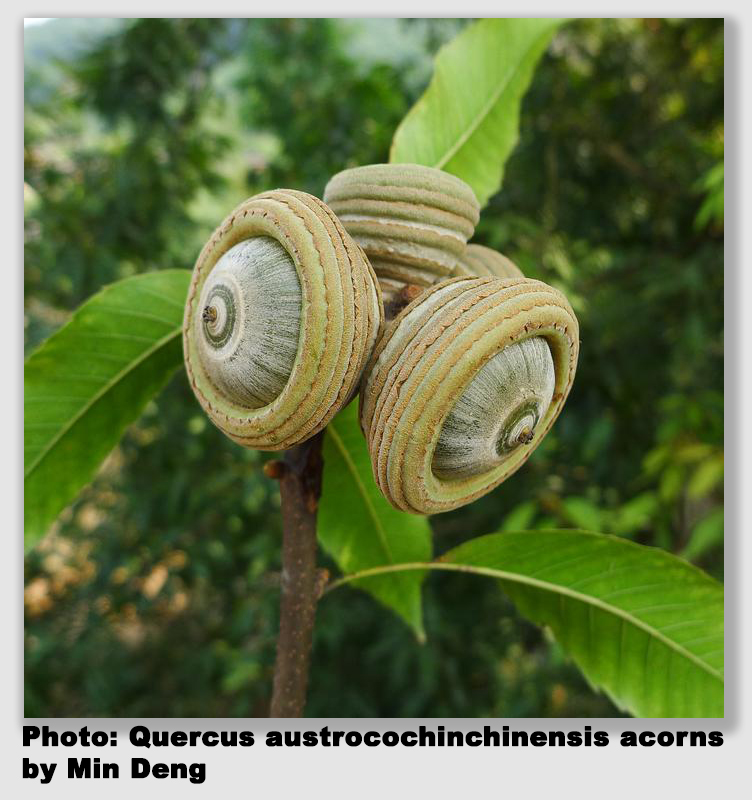 Chicago, Illinois, The Morton Arboretum, August 3, 2026: Asia has more threatened oak tree species than anywhere in the world. First-of-its-kind report led by The Morton Arboretum will help prioritize oak conservation efforts.
Many threatened or understudied oak tree species are at risk of extinction in Southeast and East Asia, where more than half of their native range is subject to sharply increasing human pressure. Should these species of oak disappear from the wild, most of them do not have a single backup in a managed botanical collection anywhere in the world. Those are among the findings in the first Conservation Gap Analysis of Select Native Asian Oaks, conducted by scientists at The Morton Arboretum alongside collaborators in the region. Oaks are a crucial species that anchor entire ecosystems—supplying food and shelter for humans and wildlife alike—and by addressing vast disparities in data about these at-risk trees, this report informs the most practical next steps for conserving them. “Southeast Asia is a biodiversity hotspot for oaks,” said lead author Kate Good, the Arboretum’s global tree conservation research manager. “There are more threatened species of oak in Asia than anywhere in the world, and yet many of these species are not adequately represented in protected areas or in botanic gardens…”
Atlanta, Georgia, Saporta Report, August 3, 2026: Atlanta’s tree canopy hits new low
The City of Atlanta set a goal in 2023 to have a tree canopy of 50 percent. At the time, the Atlanta City Council said the city’s tree canopy “is a well-recognized integral part of the City’s identity, as the city is frequently described as the ‘City in the Forest.’” It went on to cite a 2018 study that showed the canopy cover at 46.5 percent, saying the goal of 50 percent was within reach. Shortly after, the City of Atlanta commissioned a new assessment (based on 2023 data) from Georgia Tech’s Center for Urban Resilience and Analytics. The Center had conducted the previous tree canopy studies for the city. Based on 2023 data, Atlanta’s tree canopy is now at 45.5 percent, a significant drop from 47.9 percent in 2008. Although the city has had the findings of the report for two years, there has been no public release of the study. SaportaReport received a copy of the report through an indirect channel thanks to a couple of city council members who had shared it with interested citizens…
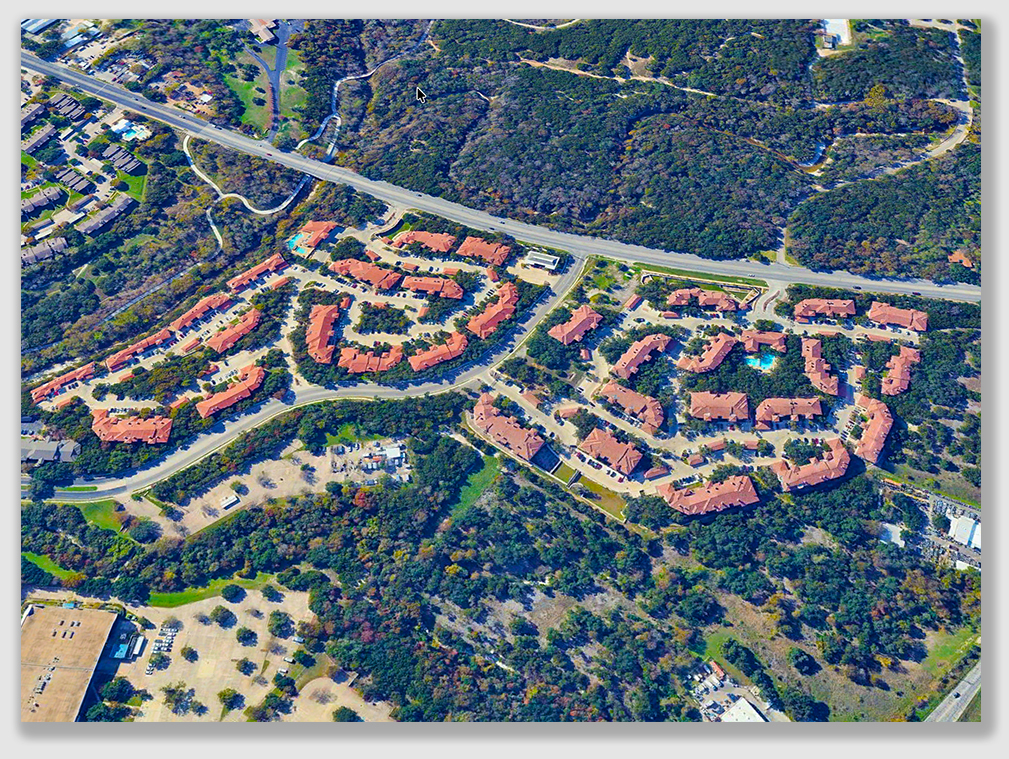
Money is getting tighter for America’s hundreds of thousands of homeowners associations, and they are extending a shorter financial leash to their residents. HOAs are getting more aggressive about pursuing people who rack up unpaid dues, skipping informal grace periods to make up the payments and turning delinquent accounts over to lawyers. In the most extreme cases, they are pursuing foreclosures on these properties. There were 6,376 properties with HOA-related foreclosure filings in the first quarter of this year—spanning initial default notices to completed sales. That is up nearly 40% from two years earlier and rising faster than overall mortgage foreclosure rates, according to real-estate analytics firm Attom. “HOAs are being forced into more aggressive collections to avoid their own financial collapse,” said Brian Fox, co-founder of real-estate technology firm Benutech, which tracks HOA delinquency trends and foreclosures…
New York City, The New York Times, August 1, 2026: When Neighbors Fight Over Shared Space, Who Wins?
Q: I own a single-family home in New York City. The apartment building next door has an illegal unit in the basement, and we share ownership of a small paved alley. The owner next door has complained of flooding in the basement apartment because the drain to the sewer on his side of the alley isn’t functioning. He told me that he intends to block the drain, regrade our alley and redirect all the water through the alley and into the street — which will wash out our lawn. If we won’t regrade the alley with him, he will make his side higher, redirecting all the water away from the basement and toward our house. What are our rights?
A: Your neighbor cannot solve his problem by directing water onto your property, or by ignoring city laws. The city code requires owners to keep their properties in a safe, code-compliant condition, and this could arguably include the drain, said Michael Nacmias, a lawyer in Brooklyn. To take a legal approach to this project, he would likely have to file plans and obtain permits before any work is done. This would mean figuring out whether the consent of both owners is required by checking deeds, surveys and easements, said Mr. Nacmias. If the work requires temporary access to your property and you do not grant it, be aware that your neighbor could sue you under state law, though the law does not allow your neighbor to alter your property…
 Southern Living, August 2, 2026: How To Get Rid Of Tree Roots Without Damaging The Rest Of Your Yard
When you take down a tree in your yard, that usually isn’t the end of it. A thicket of shoots grows from the stump, forcing you to remove the stump or do everything you can to kill it. Then, suckers begin sprouting from the ground 5 or 10 feet away—maybe even all over the lawn. This remarkable survival mechanism can cause endless frustration for a homeowner. Tree roots can survive for years after the original tree is gone. Digging up an extensive root system is difficult and could damage your lawn and flower beds. Drenching the roots with weed killer or rock salt will kill every other plant around. If you’re looking for a way to kill tree roots, there are safer methods you can use. Here’s how to kill tree roots without damaging your yard…
Odessa, Texas, American, August 2, 2026: Caring for established trees in hot dry weather
Trees form the framework in our landscapes, providing shade, cleaning our air of dust and pollutants, absorbing carbon dioxide, releasing oxygen, protecting our soil and helping to manage stormwater. Once established, they are often overlooked when hot dry weather has us dragging hoses to water flower and vegetable gardens to keep them alive. Make ongoing care of trees part of your gardening routine, especially during extremely hot dry weather. Proper care will help keep your trees healthy and reduce the risk of insect pests and diseases that often attack drought-stressed trees for the following years. Let the weather, soil type, and type of tree determine the watering schedule. High temperatures and fast draining soils dry out quickly and trees will need more frequent watering. Cooler temperatures and slow or poorly drained soils stay moist longer. Established trees with larger root systems and drought tolerant trees need less frequent watering than moisture lovers and new plantings…
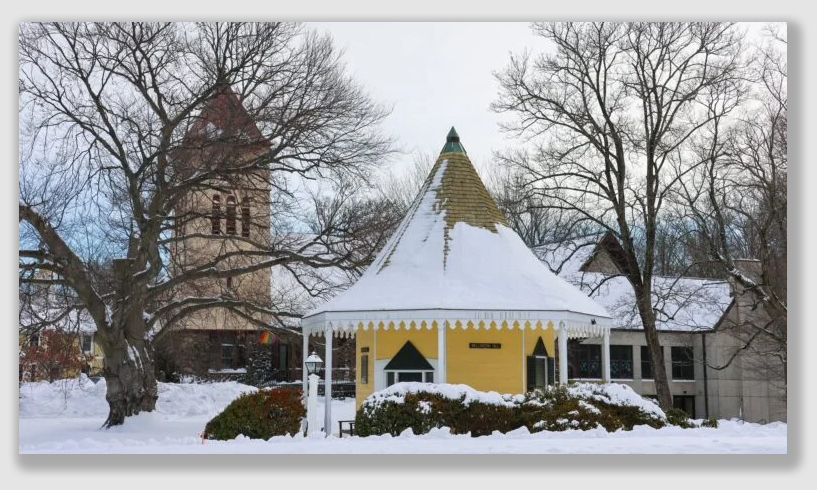 A tree that has towered over the Belmont Town Green for generations was scheduled to be removed last week — until an unexpected discovery delayed that plan. Belmont Tree Warden and Natural Resources Manager Will McPhee said the copper beech tree that sits on the town’s Green is an iconic landmark of a central space for residents, where families gather and children play. “The tree has become a de-facto symbol of the town for well over 150 years,” he said. But unfortunately all good things must come to an end, and the tree was scheduled to be removed July 20 due to a disease causing its rapid deterioration. However, just as they prepared to cut the tree down, a nest containing two American robin nestlings was discovered, and they’re a federally protected species. “We immediately stopped everything, dropped work, and rescheduled the removal for next week,” McPhee said…
Activists are protesting the construction pathway for President Trump’s border wall in Arizona because it would require the removal of an ancient cottonwood tree. A demonstrator was arrested on Wednesday for trespassing after protesting plans that would include chopping down a Fremont cottonwood tree, estimated to be 200 to 250 years old. Three similar trees were cut down earlier this week. “Destroying these ancient cottonwoods is a death sentence for an entire ecosystem,” Russ McSpadden, Southwest conservation advocate at the Center for Biological Diversity, said in a statement. “These magnificent cottonwoods survived centuries, nourishing wildlife through floods and drought, only to be bulldozed for the Trump administration’s disastrous border wall. The San Rafael Valley is one of the most biologically rich landscapes in North America,” he added…
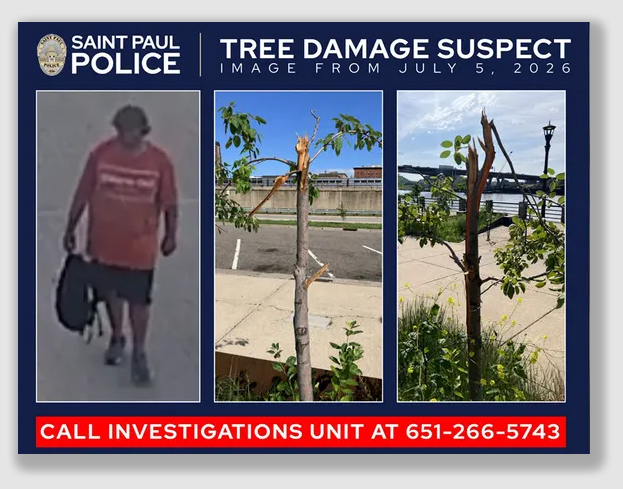
Two dozen trees damaged in St. Paul have authorities searching for a suspect they believe might be the culprit. The St. Paul Police Department says images were captured just after 5 a.m. on July 5 at 200 Warner Road showing a man they believe to be responsible for the damaged trees at Lower Landing Park. The person shown is believed to be a white male and approximately 35-50 years old, a photo can be seen above. In surveillance photos, he is seen wearing an orange T-shirt with white lettering, black shorts, gray shoes, and was carrying a black backpack…
Burn scars near Caliente are underscoring a long-running debate in California over how to balance wildfire prevention with environmental protections, as a new bill seeks to speed up fuel-reduction work in high-risk areas. Assembly Bill 2410 would allow for the quick removal of dead brush and trees to prevent wildfires by exempting critical fuel reduction projects from the requirement to procure a coastal development permit. Assemblymember Stan Ellis, who proposed the legislation, said the bill grew from Gov. Gavin Newsom’s emergency proclamation. “If you got a fuels fire hazard problem, you shouldn’t have to spend three years with CEQA to get a permit to go in and clear the brush,” Ellis said. Ellis said that after Newsom’s proclamation temporarily suspended CEQA, “there’s been over like four hundred wildfire safety projects that were approved statewide within as much as thirty days…”

An Austin homeowner is suing the city over its tree-protection ordinance after officials ordered him to plant replacement trees or pay nearly $9,000 for what he describes as routine trimming intended to protect his Northwest Hills home and family. The Texas Public Policy Foundation, an Austin-based conservative think tank with a history of suing Austin, filed the federal lawsuit Monday on behalf of Michael Petrick, arguing that the city’s requirements violate constitutional protections for private property. The suit seeks to prevent Austin from enforcing the ordinance against Petrick and asks a judge to declare all or part of it unconstitutional. “The City cannot lawfully demand that Mr. Petrick pay thousands of dollars or plant a miniature forest in his yard simply because he engaged in ordinary, harmless, yard maintenance,” the foundation’s lawyers wrote in the complaint. The litigation is part of a broader effort by the foundation to challenge local permitting and tree-replacement requirements that it argues infringe on property rights and increase housing costs…
Protesters today climbed into an ancient cottonwood tree in Arizona’s San Rafael Valley to stop the Trump administration from cutting it down for construction of two parallel 30-foot-tall border walls. The action comes after Department of Homeland Security contractors cut down three neighboring Fremont cottonwoods estimated to be 200 to 250 years old. “Destroying these ancient cottonwoods is a death sentence for an entire ecosystem,” said Russ McSpadden, Southwest conservation advocate at the Center for Biological Diversity. “These magnificent cottonwoods survived centuries, nourishing wildlife through floods and drought, only to be bulldozed for the Trump administration’s disastrous border wall. The San Rafael Valley is one of the most biologically rich landscapes in North America. It’s both a refuge and crucial corridor for jaguars, ocelots, black bears, pronghorn and hundreds of bird species.” Today’s action is believed to be the first tree sit aimed at stopping U.S. border wall construction…
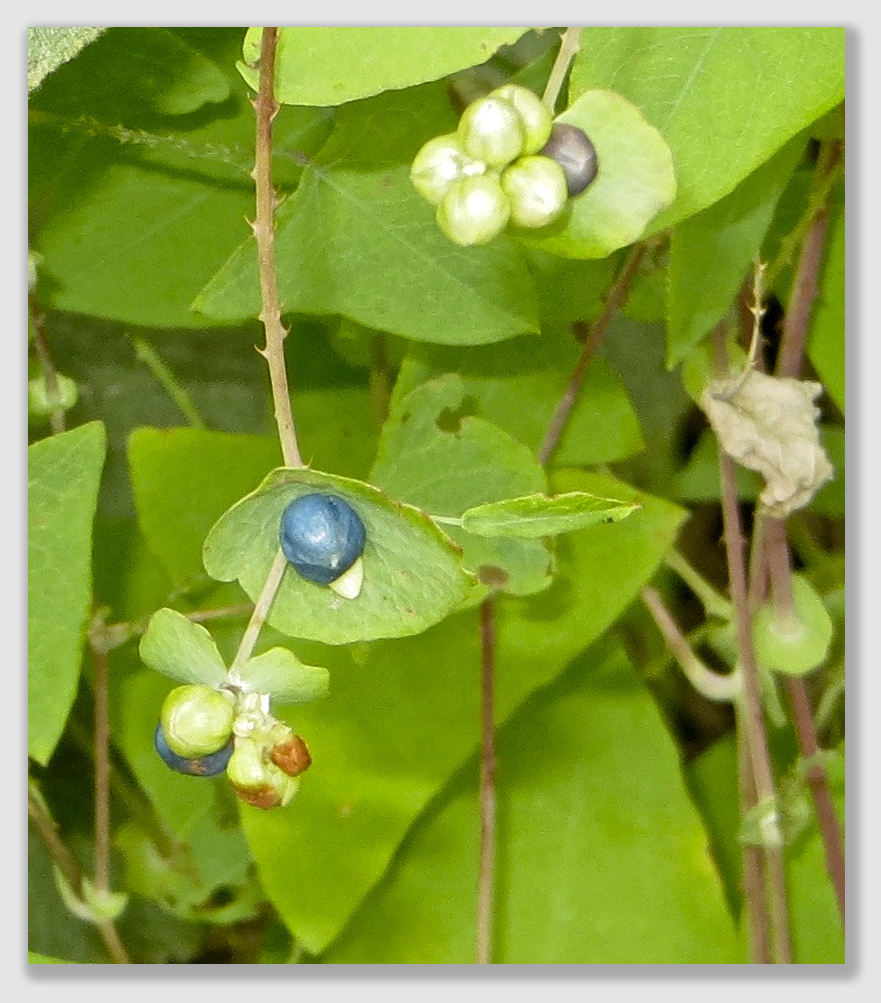
A dense-growing, highly invasive vine that can smother trees and vegetation has been confirmed in Jackson County, and its name tells its (scary) story: mile-a-minute weed. The vine gets its name from its ability to grow at a stunning pace, up to 6 inches per day or 25 feet in six to eight weeks. Mile-a-minute weed’s dense growth and ability to climb tall trees make traditional herbicide treatment difficult. It can be removed by hand, but its seeds can persist in soil up to six years, so infested sites need to be monitored regularly for regrowth. Mile-a-minute weed was confirmed in Jackson County following a landowner’s report through the Midwest Invasive Species Information Network’s online reporting system. MISIN is a regional data aggregation effort that relies on citizen science to enable early detection and response to invasive species in the U.S. Midwest. The invasive vine was first detected in Michigan in 2020 at Albion College’s Whitehouse Nature Center in Calhoun County. Since then, the Barry-Calhoun-Kalamazoo Cooperative Invasive Species Management Area has conducted outreach, surveys and treatment of infested properties in the vicinity of Albion and Homer in eastern Calhoun County…
Mongabay.com, July 29, 2026: Rare palm tree rediscovered in Madagascar after nearly 100 years
Researchers have tracked down 28 individuals of a palm tree species last recorded in Madagascar nearly 100 years ago. Nearly every tree of the species, Ravenea latisecta, was found within four protected areas in the Andasibe-Mantadia region of Madagascar, according to a recent study. “Andasibe–Mantadia is one of Madagascar’s best-explored botanical regions, and Ravenea latisecta is not an inconspicuous plant, it is a palm several metres tall,” Louis Aureglia, study lead author with Aix-Marseille University in France, told Mongabay by email. “Yet confirmed populations remained undocumented for almost a century. This is a good reminder that botanical exploration is far from complete.” There are around 20 known species of palm trees in the genus Ravenea. All are only found in Madagascar and the Comoros, and nearly all are endangered or critically endangered. For the study, Aureglia and his colleagues launched a survey in Andasibe–Mantadia in 2024 to document Ravenea palm trees in the wild. They also examined historical specimens kept in herbariums. Palm trees are usually large and difficult to miss, yet some Ravenea species can be tricky to tell apart with confidence if they’re not flowering, Aureglia said…
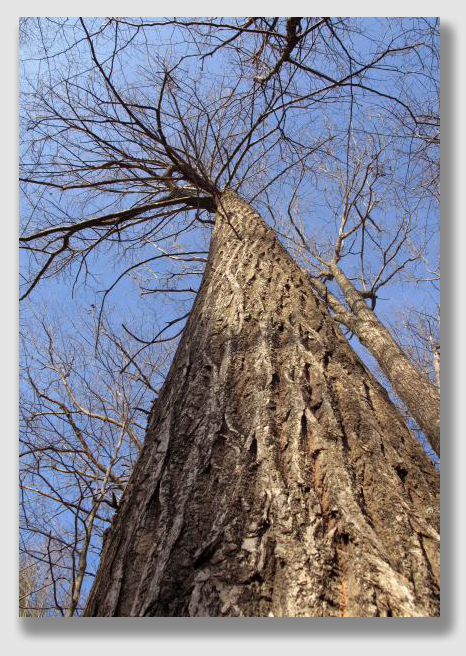
The first thing that popped into my head when I got word of Mayor Freddie O’Connell’s announcement of the expansion of Beaman Park was, “Oh, I wonder if this is about the Joelton chestnuts?” And then it dawned on me that people probably don’t know about the Joelton chestnuts — partially because that’s just what I call them, and I’ve never called them that to anyone but myself. But it’s a thing I’ve noticed over the years on Newspapers.com: Every once in a while, there’s a story about someone finding an American chestnut tree in Joelton, here in Davidson County. Much like Bigfoot, the Joelton chestnuts live in the woods, and people spot them when they’re out hunting or when the chestnut ends up in their backyard. Unlike Bigfoot, these American chestnuts sighted up in Joelton probably did exist, and may still. But seeing one is like seeing a passenger pigeon or an ivory-billed woodpecker. You shouldn’t be able to. They’re supposed to be gone. Let’s start at the beginning. This region used to be covered in American chestnuts. They were tall trees, and big around. Everything and everyone ate these chestnuts. Many of our original land deeds use distinctive chestnut trees as boundary markers. To give you a sense of how hand-in-hand chestnuts and the Joelton area went, on Jan. 6, 1896, the Nashville American ran a story about men standing around talking about the weather (slow news day I guess) and bullshitting each other: “Every man had his say, and there were more chestnuts re-hashed than could be gathered in a week’s hunt on Paradise Ridge…”
Milwaukee, Wisconsin, WUWM Radio, July 27, 2026: How to detect & manage heat stress in trees
Milwaukee has faced extreme heat waves this summer, with even nighttime temperatures staying above 70 degrees. These high temperatures have been uncomfortable for people and trees alike. Trees depend on a cycle of heating and cooling in the summer — and when temperatures stay too high, that can cause heat stress. “It’s always a battle out there with trees,” says Adam Passo, district manager for the Davey Tree Expert Company. He spoke with Lake Effect’s Joy Powers in-studio to share how to identify and manage heat stress in trees.
Joy Powers: We have been having some pretty intense heat waves here in the Midwest, and we’re not really seeing the kind of relief from the heat that some trees depend on. What does that mean for tree health?
Adam Passo: It can be a challenge, but they’re really quite adaptive. Trees want to live. They’re fighters. They do whatever they can to conserve and protect. Underneath the soil, if there are similar trees nearby, they’re grafting roots a lot of times. If one tree is kind of struggling in the stand, other trees will help it. They’ll push water and nutrients. Stands of trees help each other out quite a bit. We don’t see it, but there’s a lot of stuff the trees are doing…
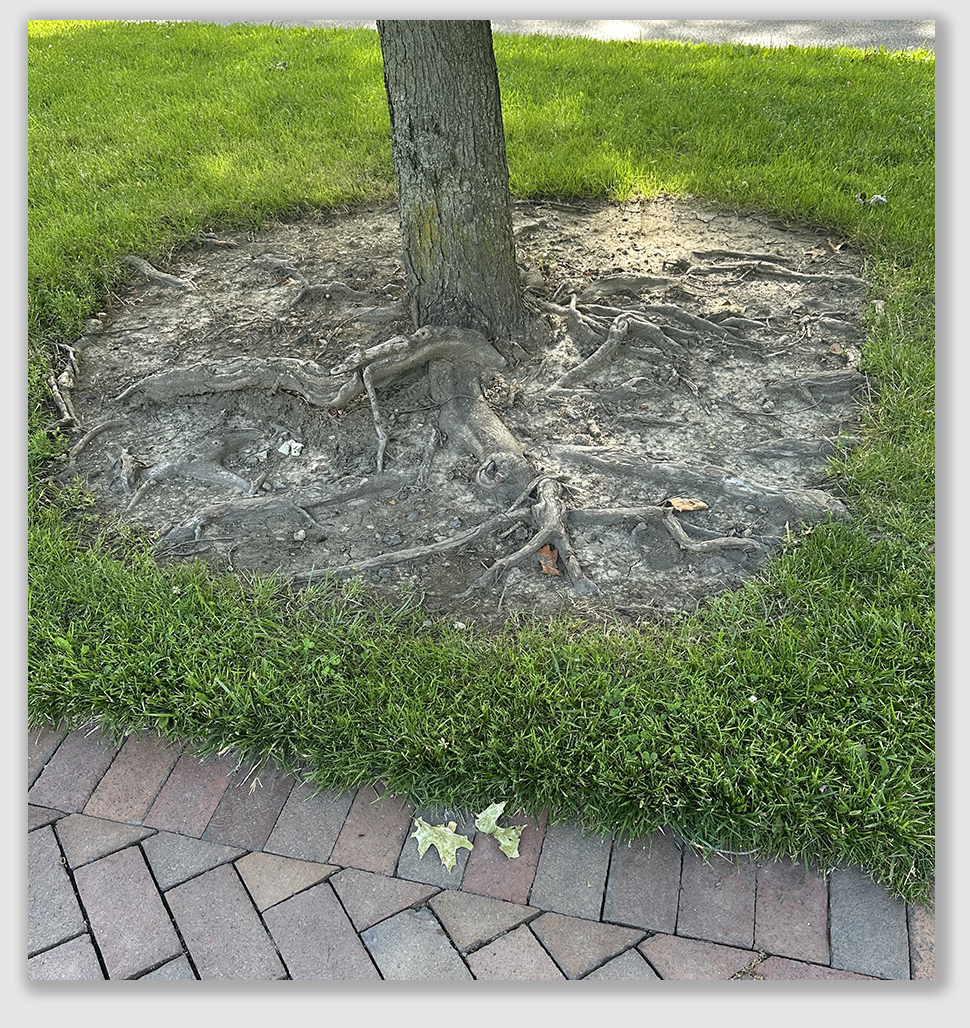
A tree’s roots are its lifeline, but when they grow above ground, they can cause some problems in your yard. For starters, you might not appreciate the look of visible roots surrounding your tree. Roots growing above the ground can pose extra challenges to landscaping tasks such as lawn mowing, and can lead to safety concerns by creating uneven walking surfaces. If you have a tree with its roots growing above ground, you are probably wondering why this is and how you can remedy the situation. To find out more, Southern Living spoke with Mark Russell, ISA Certified Arborist and owner of 770 Arborist Emergency Tree & Crane in Atlanta, Georgia, to find out why this happens and what you should (and shouldn’t) do. First, it’s important to understand that a tree’s roots actually aren’t as deep as you might believe them to be. “Start with the myth. Everybody’s seen that drawing of a tree with roots going as deep as the tree is tall. It’s a hundred percent not true,” explains Russell. “A taproot might go four or five feet. Most roots? Two or three feet down—maybe five, tops. Here’s why: all the feeding happens right at the top of the soil, in the organic layer. That’s how a tree eats. The roots stay up where the food is…”
Washington, DC, WUSA-TV, July 27, 2026: Tree trimming tips as summer storm season continues
Recent drought has put stress on trees across the DMV this year. Dry, brittle trees are more vulnerable when strong thunderstorms roll through. There is still plenty of time left for summer storms and the damage that follows them. Here are some tips for maintaining your trees during storm season. Pruning or trimming trees can considerably lower your property’s risk for storm damage. When done properly, it reduces wind resistance, does away with diseased or dead branches and ensures that young trees grow well-proportioned and strong, with low stress on their joints. A-AAA Tree Services officials, which serves Maryland properties, said maintaining your trees doesn’t make them “storm-proof” but reduces the stress load trees bear during strong thunderstorms. Here are the signs that your tree needs attention before the next storm: Dead or hanging branches: Dead wood will not bend during high winds. It will break and could be lofted into the air, where it could strike windows, cars, or people; Limbs that extend past the canopy: Long, out-of-place branches catch winds, causing trees to sway more. This can lead to breaks or splits in weak areas…

 Tree and Neighbor Law For Homeowners and Professionals