

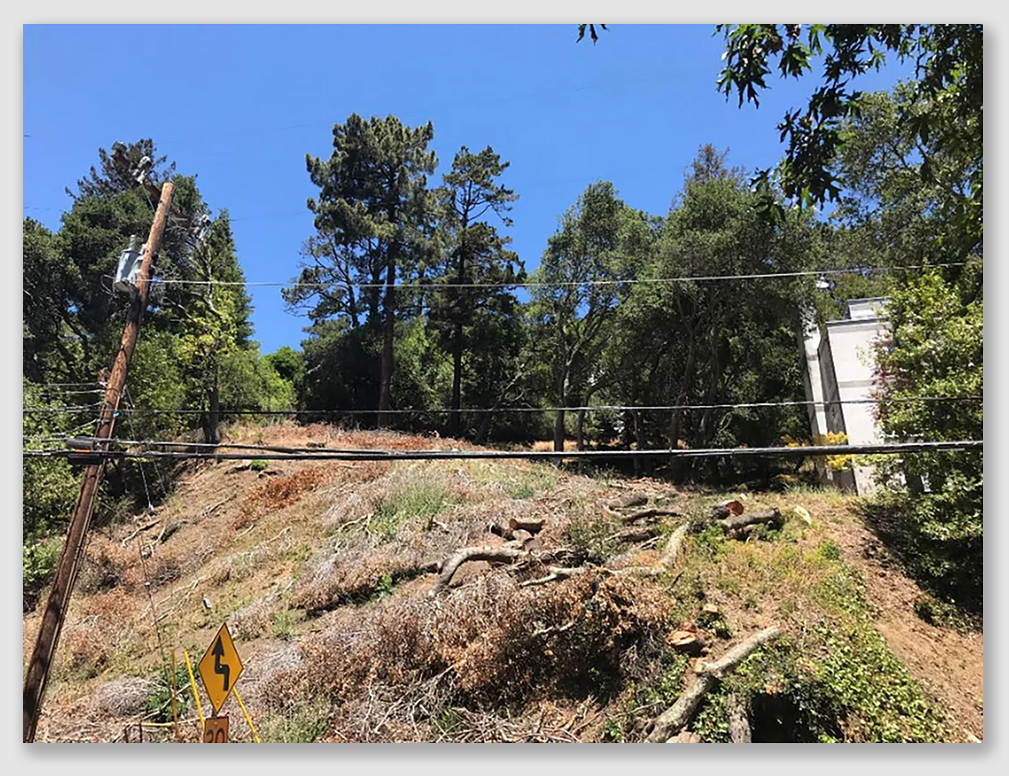
In May, the Oakland City Council approved a $915,000 fine against a couple who cut down 38 mature trees across their property and their neighbors’, violating the city’s tree ordinance. But the city may not be out of the woods yet. On Monday, the Texas Public Policy Foundation filed a lawsuit against Oakland, arguing that the fine is arbitrary and excessive and that the city’s tree ordinance — which requires a permit to remove most trees with trunks larger than nine inches in diameter — infringes on private property rights. The suit, filed in U.S. District Court in Oakland, seeks to block the fine against property owners Lynn Warner and Matthew Bernard. It argues that the penalty is not proportional to the harm caused by removing the trees. The foundation also seeks to overturn the fine and block further enforcement of Oakland’s tree ordinance. “There is no evidence that clearing the trees from the Property has negatively affected Plaintiffs’ neighbors, or the health, safety, or environment of the City or its residents,” the foundation’s lawyers wrote in the complaint. “In fact, the clearing has benefitted neighbors by reducing fire hazards, falling trees, bugs, and other invasive species…”
A sapling taken from the Sycamore Gap tree has been stolen from the grounds of a castle just months after it was planted. The Sycamore Gap tree, on Hadrian’s Wall in Northumberland, was one of the UK’s best-known and most loved trees. It was criminally felled for no apparent reason on a stormy night in September 2023. Last July Daniel Graham and Adam Carruthers were found guilty over the illegal felling of the tree and sentenced to more than four years in prison. The National Trust collected seeds from the tree, which was at least 100 years old, and 49 saplings were successfully salvaged, to be planted across the country as “signs of hope”. Gardens and historic sites across the country clamoured for the saplings, with one receiving at least 500 applications. But now, one has been stolen from the picturesque grounds of Wray parkland and castle in Cumbria where it was planted in April this year…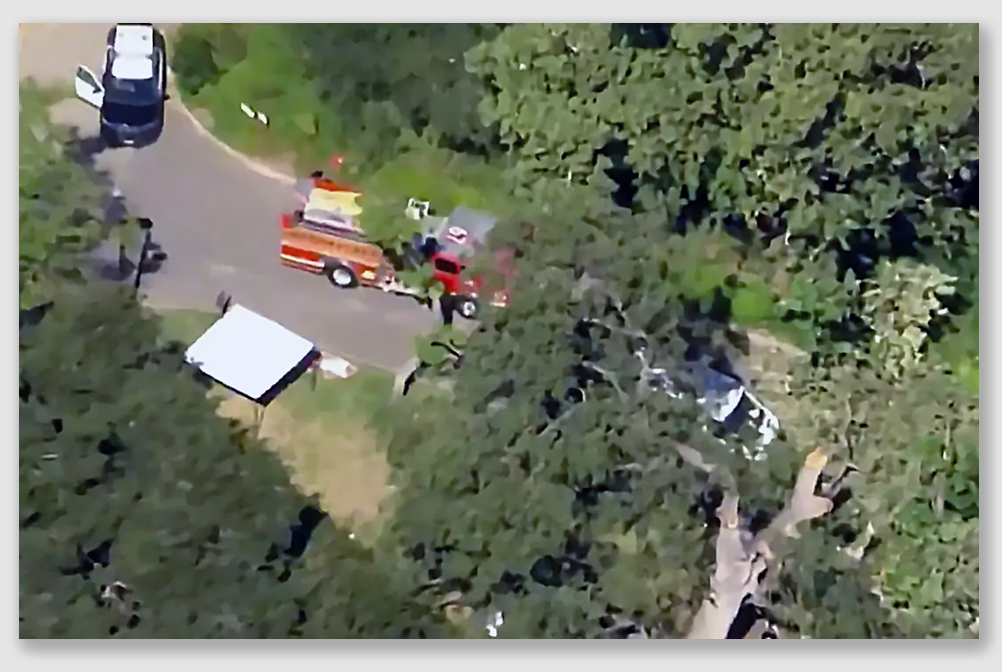 Los Angeles, California, Times, July 1, 2026: SoCal boy was killed by massive tree branch at summer camp; $19.3-million settlement reached
A year after a tree branch fell at a Calabasas summer camp and killed an 8-year-old camper, the child’s family has reached a $19.3-million settlement with a local public agency, the camp and a landscaping company, documents show. Lamar McGlothurn’s family will receive some $16 million from insurers for the Mountain Recreation and Conservation Authority, according to a settlement reviewed by The Times and reporting by the Pasadena Star-News. Insurers for the camp and a landscaping company would contribute an additional $3 million. “This tragedy was entirely preventable,” said attorney Robert Glassman in a statement on behalf of the family. “When dangerous conditions exist on public property, families deserve answers, transparency, and action.” On July 9, 2025, people at Camp Wildcraft reported hearing a loud crack before the massive branch, estimated to weigh several hundred pounds, came tumbling down, Los Angeles County Sheriff’s Department Homicide Lt. Daniel Vizcarra told The Times…
McMinnville, Oregon, Oregon Wine Press, July 1, 2026: Small Seeds Become Ancient Trees
You’ve almost certainly driven past this tree without realizing it. To most, it looks like a standard shade tree, usually standing alone in the middle of a field or at the edge of a vineyard. Its bark is deeply furrowed, limbs gnarled and canopy– in advanced age– as wide as a farmhouse. If the tree is old enough, it stood when Lewis and Clark explored the Willamette Valley. Its acorns fed the local Kalapuya people long before a single grapevine was intentionally planted in Oregon soil. It is Quercus garryana– the Oregon white oak– and is rapidly disappearing. According to the Clackamas Soil and Water Conservation District, a mere 10 percent of the oak habitats present in 1850 still remain. And 96 percent of what’s left stand on private land. The Umpqua Watersheds organization puts the loss in starker terms: estimates of remaining oak ecosystems across the Pacific Northwest range from just five to 15 percent of their pre-European settlement extent, with less than one percent protected in parks or reserves…
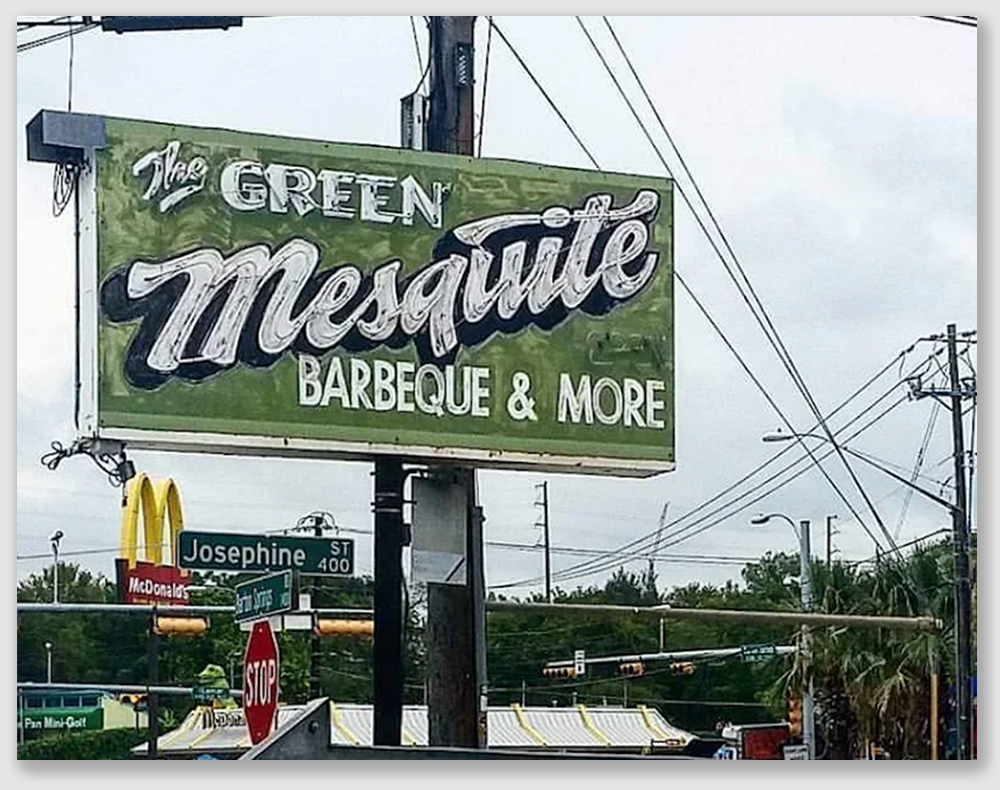
The family of a Texas father of four is suing after the man was allegedly “fatally crushed by the preventable falling” of a “diseased” pecan tree while he was eating at a BBQ restaurant. Kirk Foyle, 64, died after a May 19 when a tree fell on him at Green Mesquite BBQ in Austin, according to the lawsuit, Fox 7 reported. The tree was hanging over an outdoor patio area where Foyle was eating as storms moved through the area. The tree, which is referred to in the complaint as a “Widow Maker,” was located at 1410 Barton Springs Rd, but parts of the tree extended into Green Mesquite’s outdoor patio area, where Foyle was seated, according to the outlet. The tree was allegedly never properly inspected by restaurant staff or management at a neighboring business, Aspen Hatter, despite being “located on, or in part on, property owned and controlled” by the businesses, according to the lawsuit. The complaint alleges that staff at the two local businesses allowed the tree, which allegedly showed signs of disease, to rot and decay without warning customers or taking action to maintain it or remove it…
A winged creature not caught in North Carolina for more than a decade has been rediscovered, and the circumstances resemble Halloween decorations. Deep in the 531,148-acre Nantahala National Forest stands a towering and twisted hemlock that appears to be dead, but is very much alive on the inside with a colony of bats. Specifically, Indiana bats, a rare species known to communicate in the night with eerie “clicking” sounds. “Twenty-four bats were counted. This is the first Indiana bat maternity roost found in the state in 14 years, so it was a huge conservation win,” the N.C. Wildlife Resources Commission told The Charlotte Observer. “Indiana bats commonly roost under loose bark on dead trees, so this tree fit what we would expect. The tracking team searched on foot for three long days before finding the roost, which included an 11-mile hike on the second day.” The species is listed as endangered and has been considered near extinction. “The current population has declined by half compared to when the species was listed as endangered,” the U.S. Fish and Wildlife Service reports…
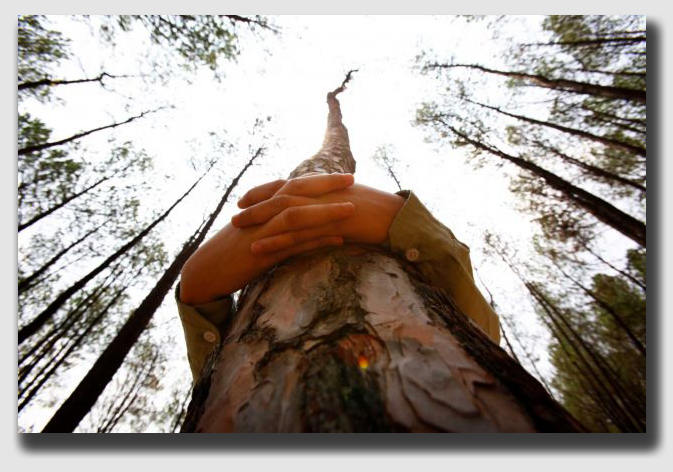
Hug your loved ones while you still can — and maybe add these trees to that list. These giants have endured the test of time and human impact to become some of Washington’s oldest and most renowned trees. In 2019, an estimated 9.4 billion trees were in Washington’s forest land, according to a survey conducted by the U.S. Department of Agriculture. Even with that sheer number, these trees have managed to make a name for themselves. Concentrated around Olympic National Park, it’s possible to see all of them over the weekend with a car. With an abundance of state parks and camping sites in the area, there are plenty of options for accommodation to fully immerse yourself in nature. As gentle as they are enduring, these trees deserve the same care in return. Be sure to follow Leave No Trace principles so others can enjoy them for years to come and make sure you have the 10 essentials. These giants have endured the test of time and human impact to become some of Washington’s most renowned trees…
Cambridge officials are weighing stronger tree-protection rules after a five-year update to the city’s Urban Forest Master Plan warned that new housing development could erode recent gains in the city’s tree canopy. City staff unveiled the update at a Monday meeting of the City Council’s Health and Environment Committee, highlighting an increase in citywide tree canopy and recommending a new target of 35 percent coverage. But many residents at the meeting argued that increased development following the city’s multifamily zoning changes last year could threaten mature trees on private property, urging stronger tree-protection rules as Cambridge continues its effort to build more housing. The five-year update found that Cambridge’s tree canopy has grown by roughly 4 percentage points since 2009, reaching the plan’s original goal of 30 percent coverage in 2024 after planting about 1,200 trees a year since 2019…
 London, UK, BBC, June 28, 2026: Why some trees might fall during extreme heat
In the last week, a group of bowlers had a lucky escape when a tree crashed down onto a green. A few days later, an MP in the House of Commons revealed a mature tree had fallen on her house. So could this be linked to the recent soaring temperatures? Trees can really suffer during a heatwave and the heat stress can show in lots of different ways. It can affect processes on a molecular level, right up to the biology of the whole tree itself. A three-day heatwave has been shown to be more than enough time to cause real damage to a tree population. Dr Anna Gardner, a research fellow at the University of Birmingham’s Institute of Forest Research, studies the effects of climate change on trees. “During prolonged hot, dry weather, trees lose more water through their leaves than they can replace from the soil, placing them under water stress,” she said…
President Donald Trump in recent months has cultivated a side project: counting the number of trees in a public park across the street from the White House. Under Trump’s plans for Lafayette Square, which he has previously described as “the entrance to the White House,” the public park would feature 47 trees, matching his status as the nation’s 47th president, according to two people who spoke on the condition of anonymity to detail the administration’s plans for the park. The trees would all be maples, a favorite of the president. The park has historically contained several dozen trees, although some have been taken out during renovations. It’s unclear how many additional trees Trump would plant to get to 47 and whether he would remove any existing trees as part of his effort. Officials cautioned that as with Trump’s other building and design projects — which they have acknowledged he has tended to micromanage — nothing is final until the president formally announces it…
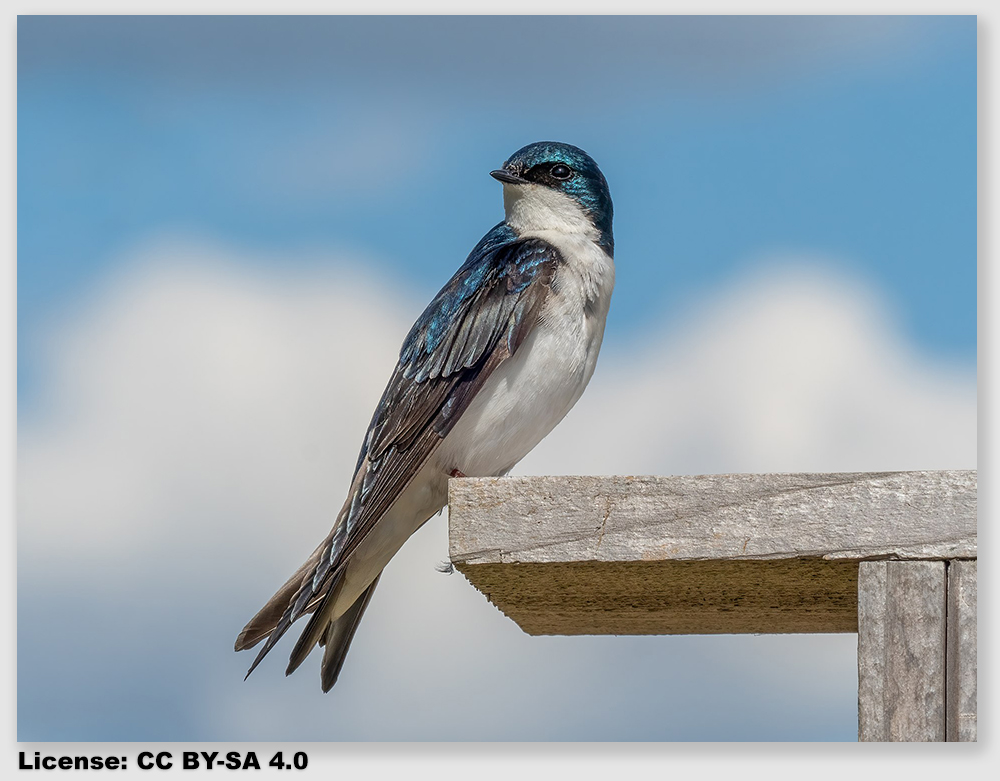
Tree swallows at a Great Lakes bird observatory are shrinking, a troubling finding that University of Michigan researchers said is tied to crashing insect populations in the region and world. Tree swallows are small songbirds that primarily eat insects. As the amount and diversity of insects declined at the Long Point Bird Observatory in Ontario, so did the size of the observatory’s tree swallows as well as the number of eggs they lay, the U-M researchers found in a study to be published this week in the journal Proceedings of the National Academy of Sciences. Without as many insects to eat, the birds are experiencing “something closer to malnutrition,” said Charlotte Probst, a doctoral candidate in the U-M School for Environment and Sustainability who led the research. “We are seeing in real time how low insect abundance is negatively impacting the health and chance of survival of these birds,” said Matt Fuirst, a Birds Canada research ecologist and Long Point Bird Observatory manager. Probst and her colleagues used data collected by Bird Canada ecologists at the Long Point Bird Observatory to study the changes in tree swallows since 1977. Ecologists at the observatory on Lake Erie’s north shore have been monitoring tree swallows since 1960, Fuirst said. They track things like the birds’ reproduction success, nesting habits and food supply. Observatory workers also have spent decades measuring the type and amount of insects they see at the site, said. Insect biomass has declined by a staggering 62% over the last 50 years…

 Tree and Neighbor Law For Homeowners and Professionals