

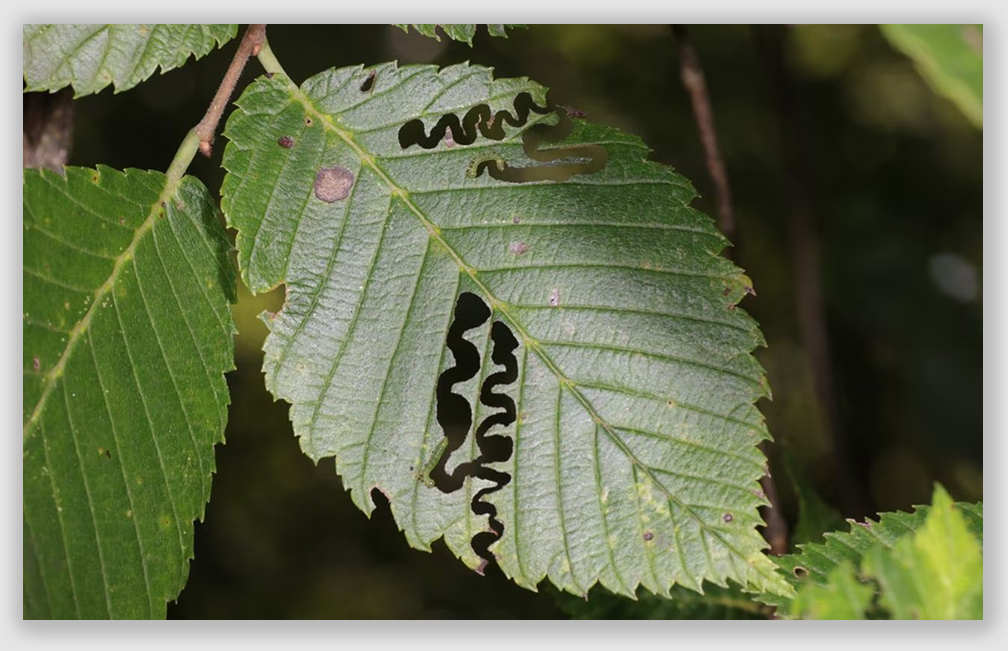
An invasive, elm tree-damaging fly from Asia was discovered in Michigan for the first time, the Michigan Department of Agriculture and Rural Development reports. Detection of the elm zigzag sawfly in St. Clair County was confirmed after it was reported by an arborist using the Midwest Invasive Species Information Network online reporting tool. The invasive species was identified by the U.S. Department of Agriculture’s Animal and Plant Health Inspection Service after its review of the reported sighting. Native to Asia, the elm zigzag sawfly is less than a half-inch long with shiny black bodies, smoky wings, pale yellow to whitish legs and distinctive, three-segmented antennae, with the final segment much longer than the first two. Most people are likely to encounter it in its larval stage, when the yellow-green caterpillar-like larvae actively feed on elm leaves. These larvae grow to nearly a half-inch in length and can be recognized by a brown band on the head and dark, T-shaped markings on the hind legs. Elm zigzag sawflies feed on the leaves and can defoliate several elm species. Young larvae create distinctive, meandering zigzag patterns starting at the leaf edges as they feed. Older larvae consume a greater amount of leaf material, creating large notches. Though the defoliation can distress trees, healthy elms can recover and produce new leaves…
Saving trees was never a controversial issue, but it has still taken St. Paul a year and a half of negotiation, meetings and public input to craft regulations to protect them. On Wednesday, the city council heard a new plan that supporters hope will strike a balance between protecting trees that shade streets and allowing necessary construction. But this isn’t the first time St. Paul has talked through the balance. A city tree preservation ordinance was first introduced in January 2025, to praise from environmental groups like Great River Greening and the Friends of the Mississippi River. But some residents opposed the new rules because they didn’t think they went far enough, and did not trust the city to do right by trees — especially along Summit Avenue… Seattle, Washington, KUOW Radio, A private Seattle golf course allegedly axed over 200 trees. Are the city’s removal laws being enforced?
In 2019, a private country club in Northeast Seattle hired a world-renowned Scottish designer to convert what had been a Northwest-style golf course with plenty of coniferous obstacles into a links-style course with plenty of bumps and dips to navigate, and nearly 100 fescue-bearded, sand-filled bunkers. As part of that process, critics say the Sand Point Country Club illegally removed over 200 trees, dramatically limbed up those that remained, and planted hundreds of invasive English ivy plants in a steep gully that is considered an environmentally critical area. Trees play a vital role in Seattle, especially as climate change makes Northwest summers hotter and drier. During heat waves, areas of the city with substantial tree cover can see temperatures 20 degrees cooler than areas with few or no trees. Healthy trees also absorb pollutants and greenhouse gasses, reduce stormwater runoff and the risk of flooding, and increase ecosystem diversity. The loss of tree canopy at Sand Point was so extreme that Theo Hoss, a natural resources graduate student at Oregon State University, noticed it as part of his master’s capstone project. Hoss was using the city’s own light detection and ranging technology to look at changes in the tree canopy between 2016 to 2021…
New York City, The New York Times, June 25, 2026: Supreme Court Rejects Lawsuit Alleging Roundup Weedkiller Caused Cancer
The Supreme Court on Thursday sided with the manufacturer of the weedkiller Roundup, overturning a jury award for a Missouri man who claimed the widely used herbicide caused cancer in a decision that could have sweeping impacts on thousands of other Americans who similarly claim the product sickened them. In the 7-to-2 decision, written by Justice Brett M. Kavanaugh, the majority found that a federal law that regulates pesticides barred the Missouri man’s lawsuit. Justice Kavanaugh wrote that the Missouri case would “require a cancer warning on Roundup’s label,” which would directly conflict with the label required by the federal Environmental Protection Agency. Because of this conflict, he wrote, federal law “expressly pre-empts” the Missouri man’s claim. In an unusual pairing, Justices Ketanji Brown Jackson, a liberal, was joined by Neil M. Gorsuch, a conservative, in dissent. Justice Jackson wrote that in her view the majority had misunderstood the scope of the federal law, leaving the Missouri man “without a remedy for the significant harms he has suffered…”
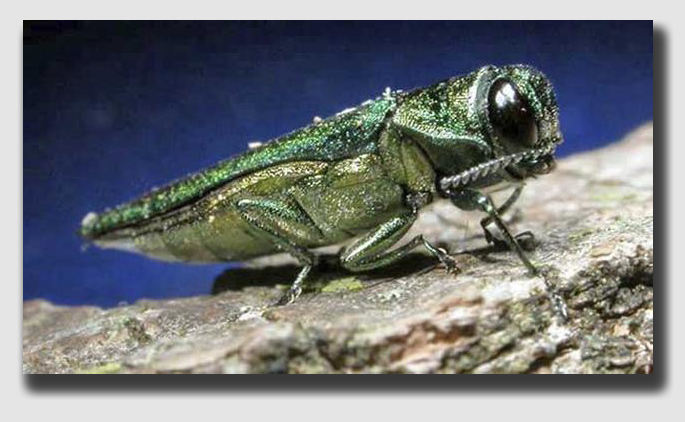
A small invasive pest known for killing millions of trees in North America was spotted in three new Willamette Valley locations including Silverton, according to the Oregon Department of Forestry. The emerald ash borer (EAB) is native to eastern Asia and was first found in Oregon in 2022. It has since infested and killed many North American ash trees as its larvae feeds underneath their bark. In the Willamette Valley, the beetle was confirmed by ODF in a parking lot east of I-5 in Tualatin, a parking lot outside of Newberg and in a residential neighborhood in Silverton. In Silverton, a pesticide applicator treating an ash tree reported the unique pattern carved by the beetles when burrowing, according to the ODF’s news release. ODF confirmed that case…
The Trace, June 24, 2026: How Often Are Dogs Shot by the Police?
A joyous night for an NBA fan living in Los Angeles’s Canoga Park neighborhood turned sour on June 13, when police officers responding to a call about a “screaming woman” shot and killed the family dog. The screams were actually cheers from Marie Marseille, who was celebrating the New York Knicks’ championship victory over the San Antonio Spurs. Police body camera footage released a week later shows Marseille’s 2-year-old golden Saint Bernard doodle, Jameson, clad in a blue Knicks jersey, barking at the officers as she opens the door. The officers in the footage can be heard telling Marseille, “Put your dog away!” and “That’s a big-ass dog.” Another says, “I ain’t getting bit by that, bro.” Marseille insisted that her dog was not aggressive. Still, as Jameson slipped past Marseille into the outdoor hallway, one of the officers fired four times.“The Knicks just won the championship; we were just so happy,” Marseille cried while hugging her dog’s lifeless body in a video shared on social media. “Oh my God, no — not my baby!” The shooting sparked intense backlash, raising questions about how often such killings — sometimes called “canicides” or “puppycides” — happen in the United States, and what consequences, if any, officers face…
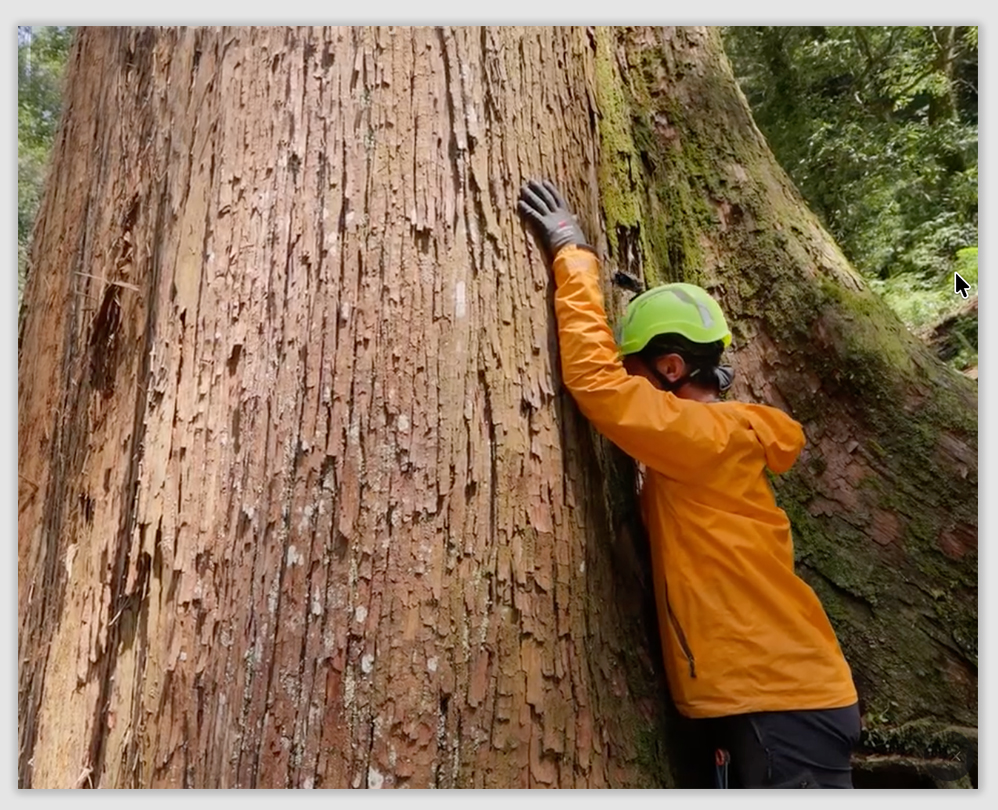
The higher you climb up the gigantic, millennia-old trees of Taiwan’s forests, the more layers of habitat and life emerge. On the forest floor, ferns thrive in the moist shade. Flying squirrels and owls sleep inside the hollow tree trunks. Yellow bell-shaped rhododendron flowers spring from the lower tree canopy. Higher still, dense lichen spread. Up in cloud-drenched branches, a rare, hardy orchid, Bulbophyllum ciliisepalum, can be spotted. “In one tree, every species has their preferred location,” says Dr Rebecca Hsu, assistant researcher at the Taiwan Forestry Research Institute. “Every metre the temperature, the wind, the sun, the light is different.” Hsu and her team have spent more than a decade mapping Taiwan’s tallest trees, scanning forests from the sky, then hiking through rugged terrain to measure the towering giants in situ. This month her study, published in Frontiers in Forests and Global Change, revealed Taiwan’s tallest tree, a Taiwania cryptomerioides that reaches 84.1 metres, higher than the average 20-storey building…
In 1996, Tony Singh began rewilding a plot of land in LeClaire, hoping to restore its oak savanna, native prairie, woodlands and wetlands. Less than five years later, he noticed the leaves on his oak trees were in tatters. “When the leaf is coming out, if it is natural, it’s a beautiful thing,” Singh said. “But then they start spraying this pre-emergent herbicide, and the leaves get completely shattered.” Over the last 20 years, Singh has been documenting the phenomenon and trying to raise awareness about it. But his 50-acre reserve is surrounded by an industrial agriculture system that is economically entwined with the land he seeks to restore. “Acetochlor has been correlated strongly with oak tatters, where the tissue just is missing from the oak leaf, and you just see the veins, or with dicamba, you’ll see cupping and curling,” said Iowa Department of Natural Resources Forest Health Program Leader Tivon Feeley. Tony Singh shows off pre-emergent herbicide damage to an oak tree in 2026 on his reservation in LeClaire, Iowa. (Photo courtesy of Tony Singh) Acetochlor and dicamba are two widely used herbicides. Acetochlor is typically applied to target early grasses and weeds on row crop plots. Dicamba is used to target broadleaf weeds…

A Central West End couple is facing a foreclosure lawsuit over an unpaid tree removal bill they say was never disclosed before they signed an emergency agreement following the May 2025 EF-3 tornado. The couple, who spoke anonymously, said they had only moments to react when the tornado struck. “The lights went off… The giant tree in front of our house ended up smashing into the front of it,” the homeowners said. The tree shattered their windows and blocked the entrance to their home. The couple said removing it became their first priority. Their neighbor recommended OLI Outdoor Services. Neighbors said several of OLI’s trucks were already in the neighborhood. “I remember I mentioned insurance… he said the insurance will take care of it,” the homeowners said. The couple signed an emergency mitigation agreement that they said had no pricing details at the time. “He didn’t give me any idea of what it would cost,” the homeowners said. About a month later, they received an invoice totaling $36,720…
Justin Evertson describes it almost like a children’s story: something akin to an early page from Kenneth Grahame or Beatrix Potter. “In an out-of-the-way corner where nobody’s poking around, there’s this huge cottonwood,” he marvels. “Why is it there, how did it get there? That’s just kind of neat. In Pibel Lake, of all places.” Evertson is Nebraska Forestry’s Champion Tree Program Director. He’s more surprised by the location than the tree itself. Nebraska’s an ideal environment for the species. “Wherever there’s a creek or a channel of water, you’ll find some cottonwoods,” he said. “And since there’s thousands of miles of those streams around the state, there’s a lot of places for them to grow, and they’re constantly popping up, getting big.” But to say the Pibel Lake cottonwood’s “popped up” would sell it short, literally…

 Tree and Neighbor Law For Homeowners and Professionals