


Dozens of people who live in North Knoxville want a noise-abatement wall put up alongside their condo community, which lies a couple of hundred feet off I-75. Ever since trees and shrubs were removed last year, residents say the rumble of trucks, cars, and engine braking has become “unbearable.” From Lee Williams’ back porch, he has a direct view of I-75. However, it didn’t look like this when he moved in three years ago. His subdivision, Alpine Meadow, is just south of the Emory Road exit in North Knoxville. Where there is now a flat terrain, a thick grove of dense trees and shrubs was cut down last year. They once served as a natural sound barrier for homeowners who are closest to the road. Since the removal of trees and shrubs, highway noise levels have risen sharply. “It has just gotten louder, a lot louder,” said Williams. “At first, I could at least go outside. We could have conversations on our back deck. Now I can’t, we can’t do any of that. I just go outside, I cook, I grill out, and I just come right back inside….”
Norwich, Vermont, Valley News, June 2, 2026: Invasive beetle prompts removal of nearly 400 ash trees in Norwich
Nearly 400 trees along the “fastest and busiest” town roads are slated to be cut down over the next four months. The 394 trees along Beaver Meadow, Elm, Hopson, New Boston, Turnpike and Union Village roads make up just under 4% of the more than 10,000 ash trees along Norwich’s roadways, Doug Hardy, a member of Norwich’s Emerald Ash Borer Management Group, said last week. The collection consists of the “most dangerous” ash trees along well-traveled Norwich roads and “virtually everything” marked to be cut down already is infested with the invasive emerald ash borer. The $106,000 removal project began Monday. “We felt that the safest thing to do in the best interest of the community was to cut any ash tree which could fall into the road,” Hardy said…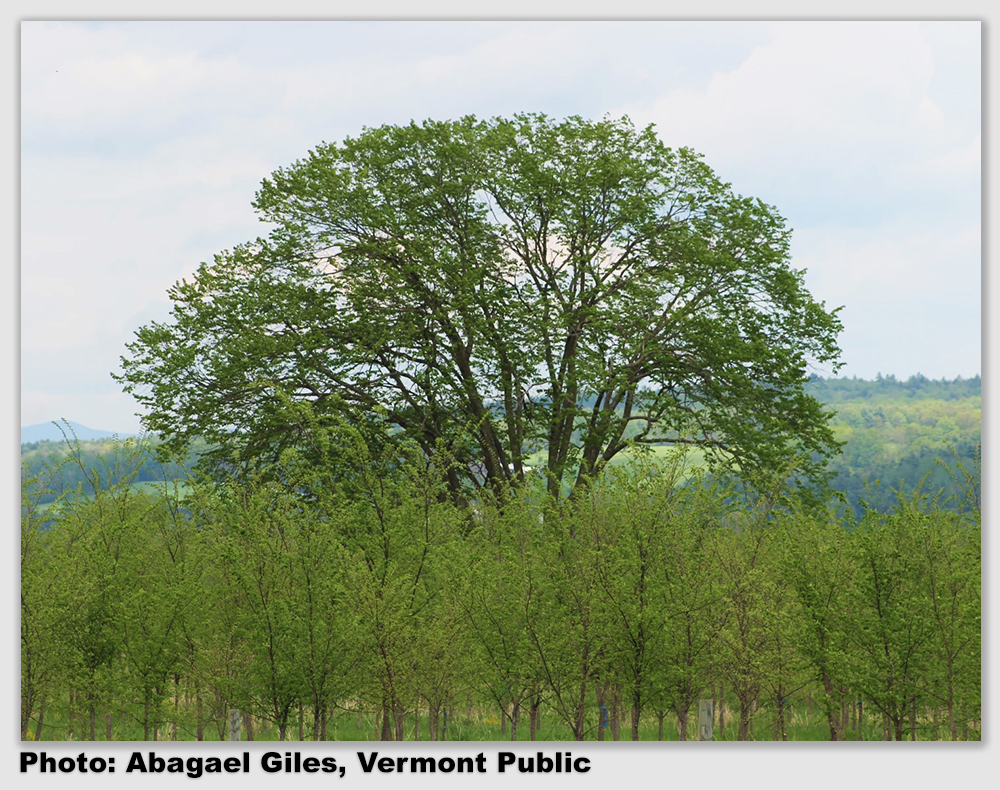 Colchester, Vermont, Vermont Public, June 3, 2026: Scientists are injecting elm trees with a killer fungus to save them
Walking down into the floodplain at the Nature Conservancy’s preserve in Benson is like walking into a sea of American elm saplings. The trees criss-cross about 30 acres on the valley floor in tight rows. “American elm is a foundation tree species in floodplain forests,” says Leila Wilson, an ecologist with the U.S. Forest Service. “These are systems which are facing severe threats from non-native pests and pathogens, but we also know from other impacts, right? Land use change, conversion to agriculture, now climate change, and changing precipitation and temperature patterns. So these are systems that are in peril.” Wilson knows these trees well. Each one comes from a seed she harvested from a tree whose flowers she isolated with little plastic bags, then hand-fertilized using pollen collected in the lab. That pollen came from big old elms scattered across the Northeast…
Jackson, Mississippi, WLBT-TV, June 3, 2026: A neighbor’s cracked tree leans toward a house, here’s what the homeowner did when the owner wouldn’t remove it
Dead and dying trees from a neighboring property threatening homes is a problem many face. How do you handle the tree owner not taking responsibility? One Ridgeland property owner had to get the city involved to remove the hazard. A more than 50-foot dead tree hovers dangerously over the Ridgeland home. It is on the property of the neighbor. The property owner said they are getting no help with having it removed. “It’s already cracked at the bottom and it could fall any time,” said Bankeni Monzilli Tillman. Since January, Tillman has worried as the dead pine rests on branches of an oak tree over her house on Lincolnshire Boulevard. The tree is on Carol Thompson’s property. Tillman said Thompson hasn’t responded to requests to remove it. Thompson declined to comment about the dead tree. Tillman reached out to the City of Ridgeland and said it’s been four months of no action. “The tree’s probably gonna fall, and I just continue to pray and just ask God to keep it up until this is resolved,” said Tillman, “And we cannot go and cut the tree because it’s on her property, and that’s gonna be a trespassing problem…”

It’s been nearly a century since dust filled the skies and spread across the country during the Dust Bowl. During the peak of fieldwork this spring across Minnesota and North Dakota, it may have felt as if history was repeating itself. As thousands of acres were tilled and planted, dry weather was exacerbated by howling winds day after day. It brought the National Weather Service in North Dakota to issue High Wind warnings, Dust Storm warnings and a Blowing Dust Advisory. The Minnesota Pollution Control Agency issued warnings about air quality. Matthew Olson, a forest stewardship manager in Lisbon, North Dakota, said the winds came at a horrible time as those fields were being opened up and were most susceptible to soil loss. In one of the social media posts put out by the National Weather Service in Bismarck, a commenter responded that the reason for the “micro-Dust Bowl” activity was that farmers are removing windbreaks to make room for more farmland. Others called that claim false, even saying that there are now more windbreaks than before…
By the time it is finally adopted, Saint Paul’s long-delayed tree preservation ordinance could resemble a mighty oak. The Saint Paul City Council on May 20 laid over the proposed ordinance for another public hearing. The ordinance, which has been on the drawing boards for more than a year, continues to be amended. The community-led Tree Preservation Ordinance Public Input Group has continued to make recommendations. So has a group of staff from the city’s departments of Public Works and Parks and Recreation. According to City Council president Rebecca Noecker, city officials intend to have the ordinance and related rules ready for approval by late June. However, she added, the tree preservation measures need to be implemented correctly. Saint Paul’s tree canopy has been decimated in recent years by the emerald ash borer. Tree diseases and weather extremes, including severe storms, have also taken a toll. Many of the city’s low-income neighborhoods also contain relatively few trees along city boulevards and parks, raising concerns about equity and urban heat islands…
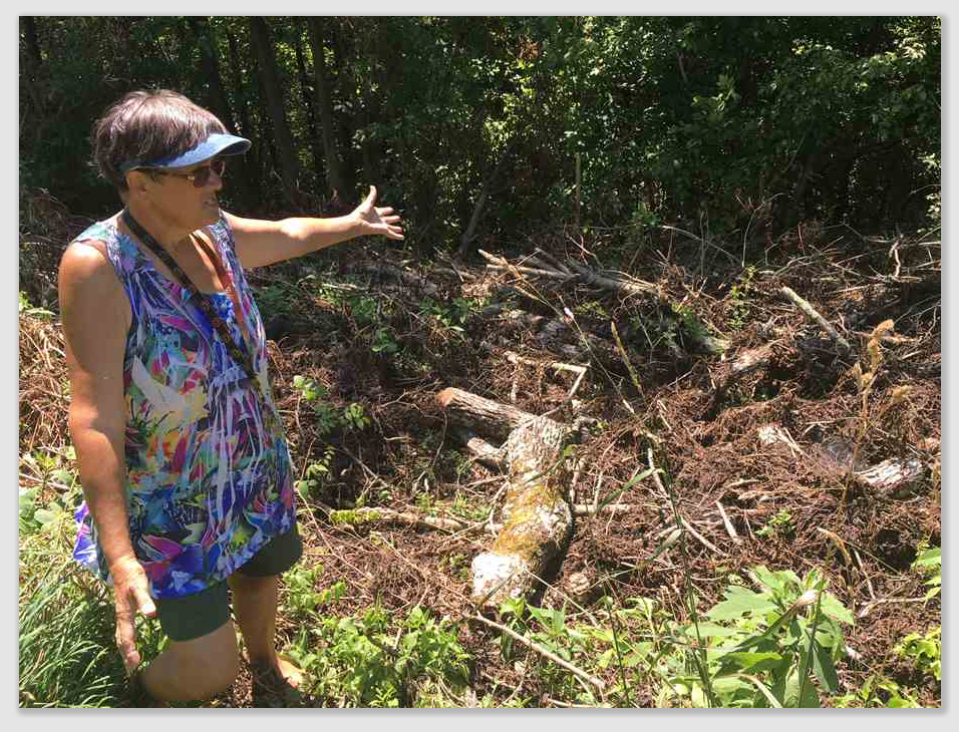
A Northland homeowner contacted KMBC 9 Investigates after a tree removal company working for Evergy left a pile of limbs and debris in her yard, leading to confusion over cleanup responsibilities. Evergy has agreed to remove the debris after hearing about Michelle Crawford’s concerns on Friday. “My neighbors have said, ‘Hey, what are you doing over there? Maybe we ought to have a bonfire,'” Crawford said. She explained that a crew of seven or eight workers brought the debris out from a tree line near power lines behind her home last month. It followed work in December on the same area. Crawford has tried contacting Evergy and the tree trimmers to address the mess but has not received clear answers on next steps. “I feel lost,” she said. “You know, I’ve called, called, called, and I haven’t gotten the answer we need because it’s still sitting here…”
Tree-lined streets in areas like Esplanade Avenue, Magazine Street, Old Metairie, and the Northshore are admired for their beauty and shade, but they can become hazardous during hurricanes, causing property damage and power outages. David Benton, vice president of Bayou Tree Services, encouraged homeowners to act before hurricane season begins. “The best thing you can do is call prior to hurricane season starting, get on the list, and then that way you can make an informed decision and not make an impulsive decision on something that may be drastic as to remove a large mature tree in your yard,” Benton said. Experienced arborists can identify issues that may not be visible to the average person. “We look at the trees, and when we assess, what we’re looking for is obviously, you know, broken, dead limbs,” said Jessie Mudge, lead arborist at NOLA Tree Solutions. “Not so obviously, we look for a lot of signs of the tree moss or mushrooms growing up the base of the tree, different things like that give us an idea as to the health of the tree…”
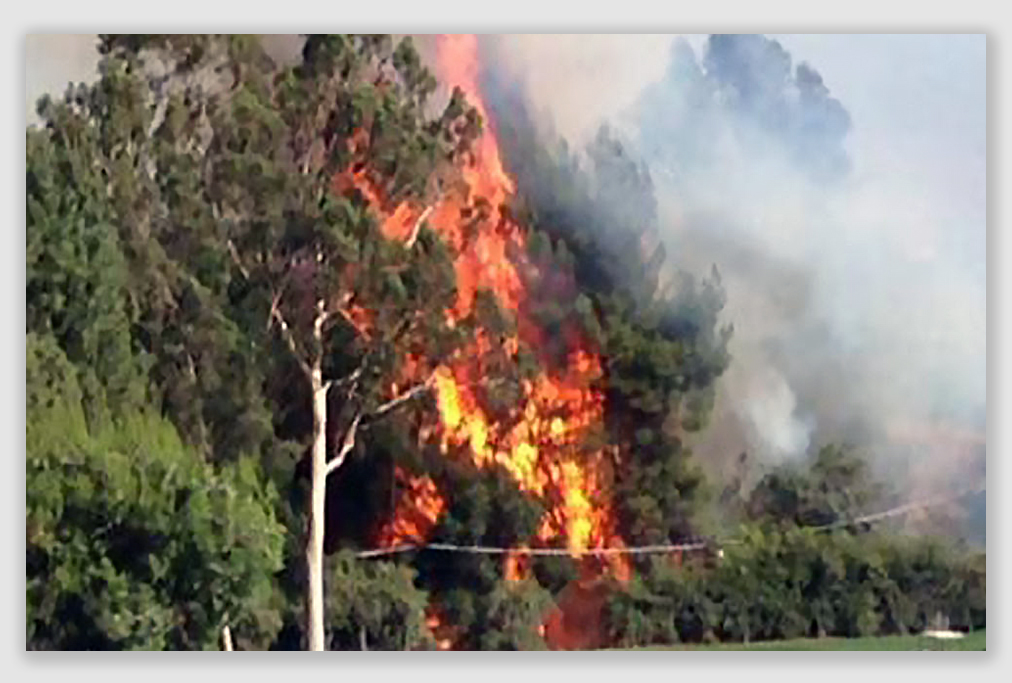
Marley Moose is spending her third summer planting trees in northern Manitoba as part of a crew trying to help Mother Nature regenerate forests destroyed by wildfires. But that goal has become more challenging with the cancellation of a federal program that aimed to plant two billion trees by 2030. “Everywhere around me is burnt, but it’s where life used to be, so we’re back here giving life back to these dead areas,” said Moose, 22, efficiently digging a hole and slipping tiny jack pine and black spruce trees into the ground. In 2016, this forest in Manitoba’s Interlake region, about 300 kilometres northwest of Winnipeg, was devastated by a jack pine budworm infestation. It was starting to regenerate when wildfire ravaged the Devils Lake area in 2021. Areas just north are already burning this spring…
The gympie-gympie tree (Dendrocnide moroides) – also known as the stinging tree – is primarily found in Australian rainforests and certainly doesn’t look all that threatening at first glance. It stands at a maximum of 10 metres tall, and its melodic name comes from a language of the indigenous Gubbi Gubbi people of south-eastern Queensland. You don’t want to get too close to this tree – its stem, leaves, and fruit are all covered in fine hairs that, when touched, inject toxin into the skin, causing severe stinging that can last for days, weeks or even longer. Among the first to document the painful effects of the gympie-gympie tree was road surveyor A.C. Macmillan, writing in a letter in 1866 that his horse “was stung, got mad, and died within two hours…”

 Tree and Neighbor Law For Homeowners and Professionals