

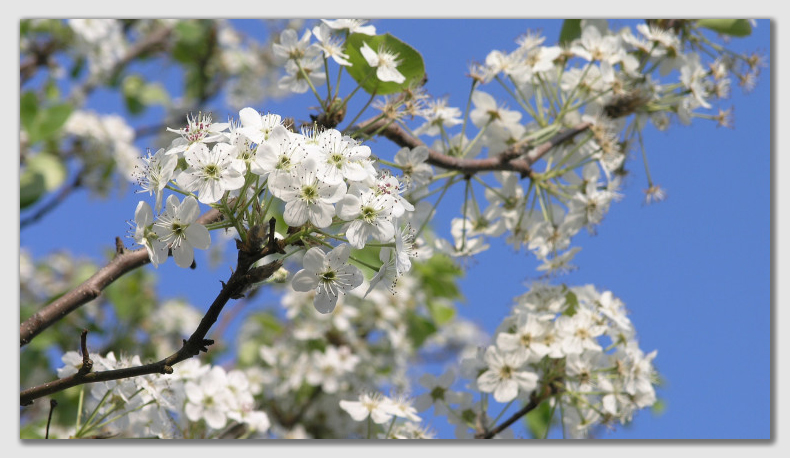
Two invasive plants will be added in June to Michigan’s list of prohibited species, with four others added to the restricted species list starting in 2028, state officials said. One of the soon-to-be restricted plants is a flowering tree that has been commonly planted in urban areas – the Callery pear. The Michigan Commission of Agriculture and Rural Development issued the order after its Wednesday meeting.An invasive species is not native to a specific area and additionally has been known to cause harm or is likely to harm the existing environment. “Invasive species cause harm when they out-compete native species by reproducing and spreading rapidly in areas where they have no natural predators and change the balance of the ecosystems we rely on,” state officials said. If a species is prohibited, it is not widely seen in Michigan, and effective management or control techniques are considered not available. If a species is restricted, it has already been established, and usually, some measures can be used to control it. Official state orders routinely update the list…
Syracuse, New York, SUNY College of Environmental Science and Forestry, May 28, 2026: Urban ‘Heat Islands’ Would Be Twice As Hot Without City Trees, Major Study Finds
The world’s ‘urban heat islands’ (UHIs) would be twice as hot without the cooling effect trees have on superheated cityscapes, according to an unprecedented study that also highlights stark inequalities in access to this powerful form of nature-based air conditioning. Led by The Nature Conservancy (TNC) and published in Nature Communications, the paper pools data from nearly 9,000 large cities worldwide – collectively home to approximately 3.6 billion people – to find that tree cover currently mitigates nearly half (~48.6%) of the UHI effect that occurs when man-made surfaces such as roads, buildings and car parks absorb and release heat from the sun, causing urban areas to heat up more than surrounding rural regions. Over 200 million city-dwellers globally, the study finds, have trees to thank for ambient air temperatures more than 0.5°C lower than would otherwise be the case in their neighborhoods – a highly significant contrast when extrapolated across the thousands of cities, billions of citizens and increasingly life-threatening temperatures concerned. ESF researchers contributed to the study’s analysis of how trees reduce heat at the neighborhood scale. Dr. Theodore Endreny, study co-author from the SUNY College of Environmental Science and Forestry (ESF) said, “Strategic tree planting and management where people live can dramatically reduce the intensity, duration, and frequency of extreme heat. Trees in cities across New York State are working hard as natural air conditioners, but they need care to deliver their full cooling benefits…”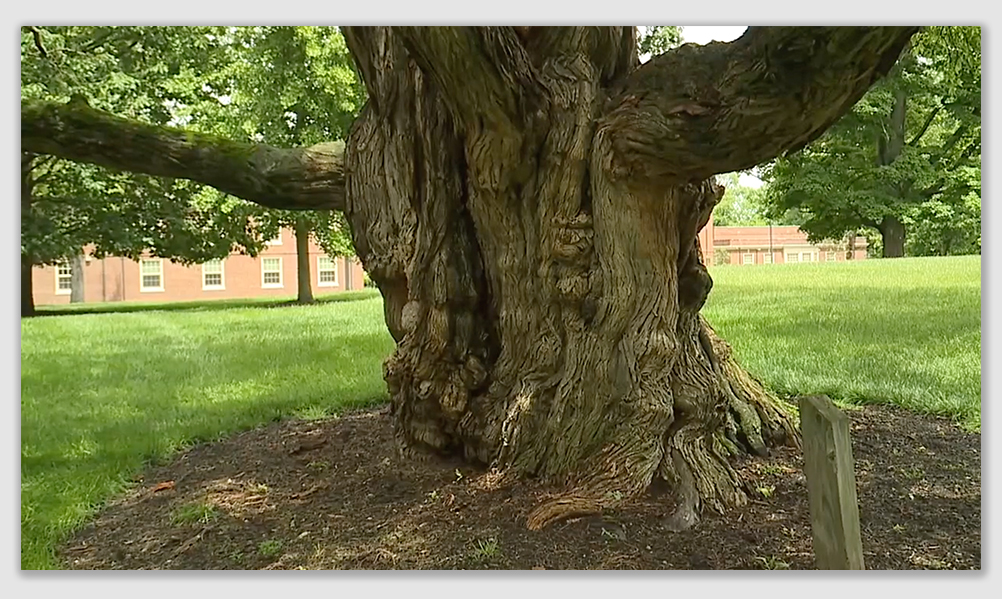 Cincinnati, Ohio, WCPO-TV, May 27, 2026: ‘You can’t replace 300 years’ | Push grows to preserve Miami University’s historic trees amid arena project
As Miami University advances plans for a new multipurpose arena, a growing coalition of faculty, students and community members is raising alarms over what could be lost alongside the project: a grove of historic trees that advocates say includes one of the oldest Osage orange trees in the country. For Joel Armor, an assistant teaching professor in the Institute for Innovation in Arts + Design at Miami University’s College of Creative Arts, the debate is about more than landscaping. It is about preserving what he describes as a living ecosystem, a source of artistic inspiration and a piece of campus history that cannot be recreated. Armor said he first learned during the past academic semester that the university was reevaluating green space near the future arena site, which will be on the current Cook Field grounds. Later, he heard discussions about the possibility of constructing a parking lot in the same area — a plan that, should it come to fruition, would fundamentally alter the landscape. “When you see this space in its glory and see these magnificent trees, it’s disappointing,” Armor said. “From an ecological standpoint, these trees are extremely important…”
Jacksonville, Florida, WTLV, May 25, 2026: Orange City Council to vote on tree service permit ordinance
The Orange City Council will hold its second and final vote Tuesday on an ordinance that would require tree cutting and trimming companies operating for hire within city limits to obtain a permit before beginning work. The council meets at 5:30 p.m. Tuesday. The ordinance received its first reading and initial approval May 12. Under the proposed rules, a separate permit would be required for each address where work is performed. Kelvin Knauf, the city’s director of Planning and Community Development, outlined the key provisions during the May 12 meeting. “The proposed ordinance would require a permit for all tree services for hire operating within the city,” Knauf said. Knauf added that each permit would be valid for 14 days from the date it is issued, and all work must be completed within that window. If the work is not finished in time, a new permit must be obtained. The permit must be kept on site and presented upon request to a police officer or code enforcement officer…
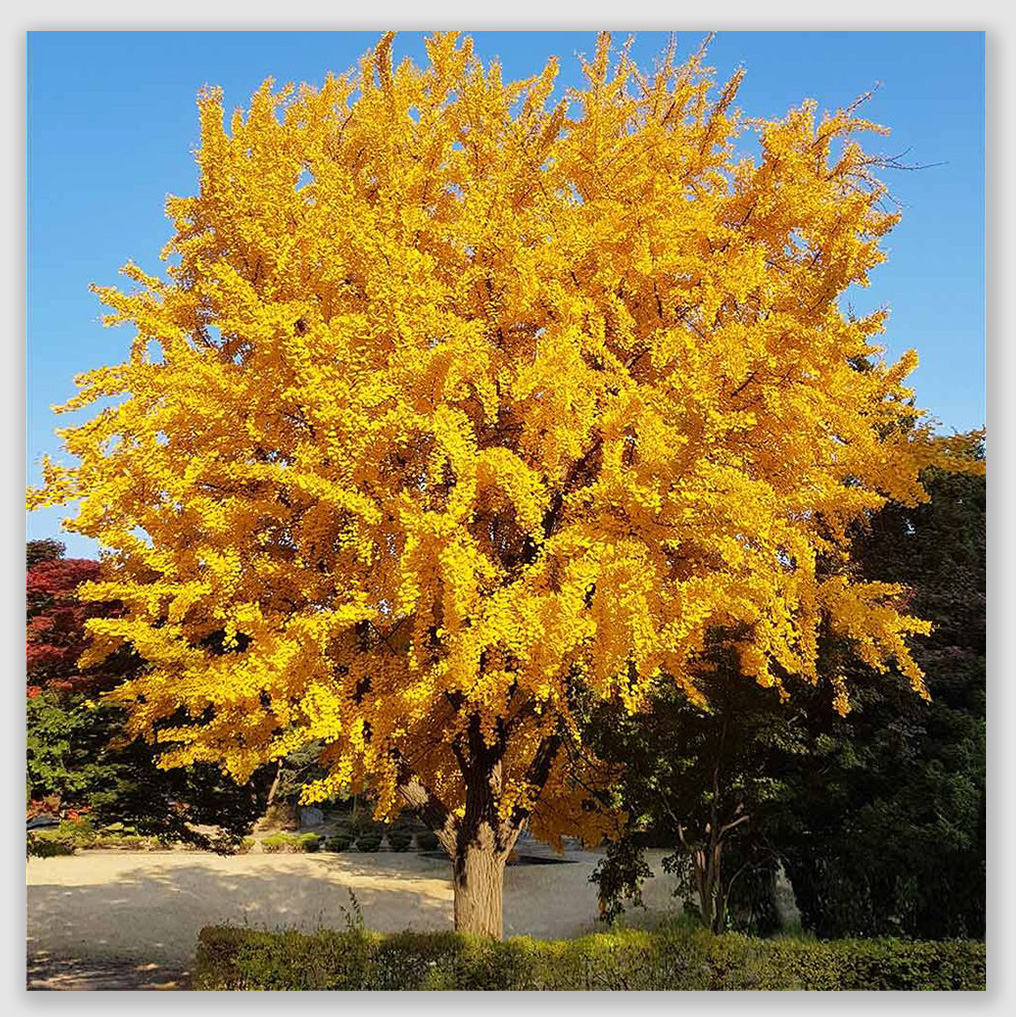
An increasingly common non-native tree in Toronto may have overstayed its welcome. For over 20 years Alan Page and his wife have lived in their Leslieville home, near Jones Avenue and Gerrard Street E., and their backyard ginkgo has always been part of the property’s landscape. But the tree has recently started bearing fruit every autumn, which is sticky and smelly, and is often tracked into the house, Page told CBC Toronto. “You can’t get the residue off, it’s like glue,” he said, “and it attracts flying insects as well, like bees and wasps, which is a concern.” The female ginkgo tree’s fruit produces such a foul odor — described by arborists, city councillors and homeowners who spoke with CBC Toronto as a cross between dog poop and vomit — that residents have been asking their councillors for permission to cut them down, even though the trees are otherwise healthy. Page applied for permission to have the tree removed earlier this year, but city forestry staff refused his application…
With storms already running through the state, it’s the time of year when homeowners need to start making calls to tree cutters. Storms came through the whole CSRA a few days ago. Even heavy rain can weaken roots and make trees unsafe. In Marietta, the owner of a tree cutting company says he’s done 13 emergency calls this week after the storms. He says now is the time to get your home ready for storms if you haven’t already. “A tree that leans toward your house obviously is always of concern. If it’s within striking distance, doesn’t necessarily mean there’s something wrong with it. It’s just pretty obvious where it’s going to fall,” said David Hall, owner of Top Tier Trees. Tree experts warn that you should check the health of trees around your home. They say if there are any signs of decay, it’s best to call a tree cutting company to cut them down…
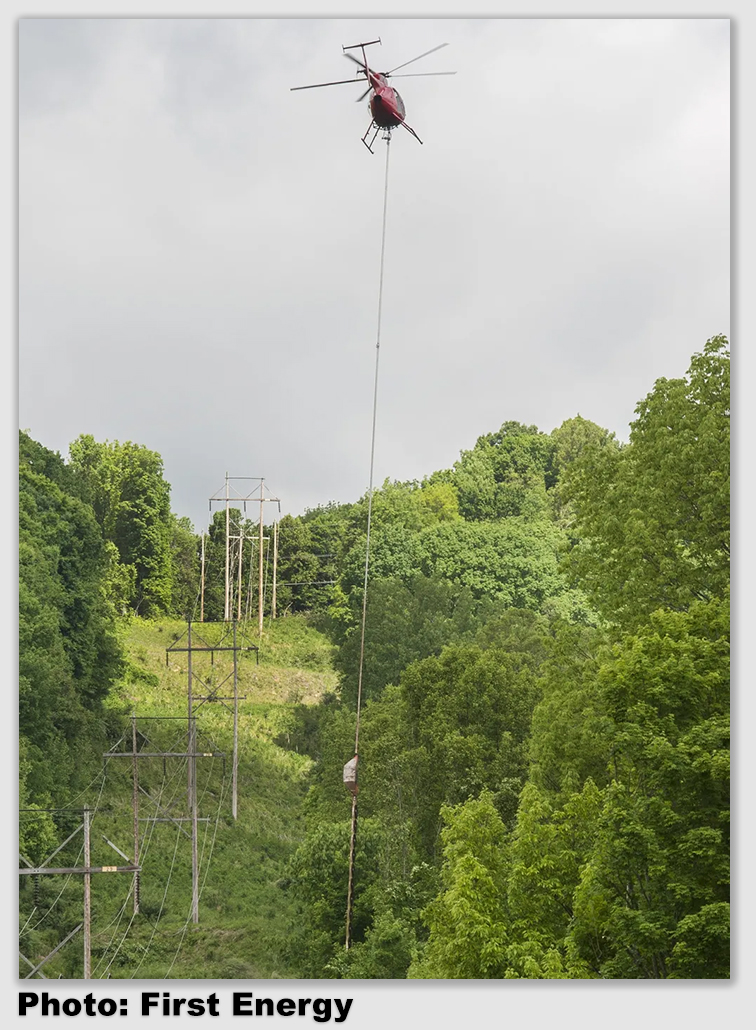
Saws hanging from…helicopters? It looks like something straight out of a horror movie. But FirstEnergy is assuring residents that the appropriately named “aerial saw” is no cause for alarm. The North Royalton Police Department took to Facebook Tuesday, May 26, to publicize that work with the aerial saw will be done along the Ohio Turnpike within the next few weeks. You may have seen it before, but if you haven’t, here’s what you should know about the piece of eye-catching equipment hovering high above. According to FirstEnergy, the 24-blade rotary saw suspended from a helicopter is meant to help clear foliage around transmission lines and electrical equipment, thereby preventing or minimizing the impact of tree-related power outages, especially during severe weather events. And we see plenty of those in Northeast Ohio. “Clearing incompatible vegetation under power lines also gives company personnel easier access to inspect and maintain lines and make repairs quicker if an outage occurs,” a FirstEnergy spokesperson told Fox 8 News…
T&D World, May 22, 2026: Wildfire Risk Is Expanding — And Utilities Know It
As it is time to turn T&D World’s attention — and my own — to wildfires again for our yearly supplement on mitigation, I thought for a moment that this had perhaps been a quieter year for wildfires. Here on the West Coast, we got some relief in our superdrought conditions as precipitation levels seemed to stabilize and snowcaps returned to our mountains. Unlike in years past when severe wildfires struck places like Los Angeles, California and Hawai’i’s island of Maui, fewer headline-making blazes sprang to my mind. A quick search of the news proved I was wrong. There are currently wildfires ravaging Nebraska’s cattle country during a time of year where pastures should be greening. In South Carolina, a controlled burn became uncontrolled and the fires are shrouding the area in thick, smothering smoke. In California’s Siskiyou County, another fire is blazing on federally managed land. However, this one, according to the Sacramento Bee, is a prescribed fire, or one set purposefully to limit the amount of debris and fuel that accumulate on the ground. Letting areas periodically burn under controlled conditions can lessen the severity of future fires, or potentially steer them away from populated or sensitive areas…
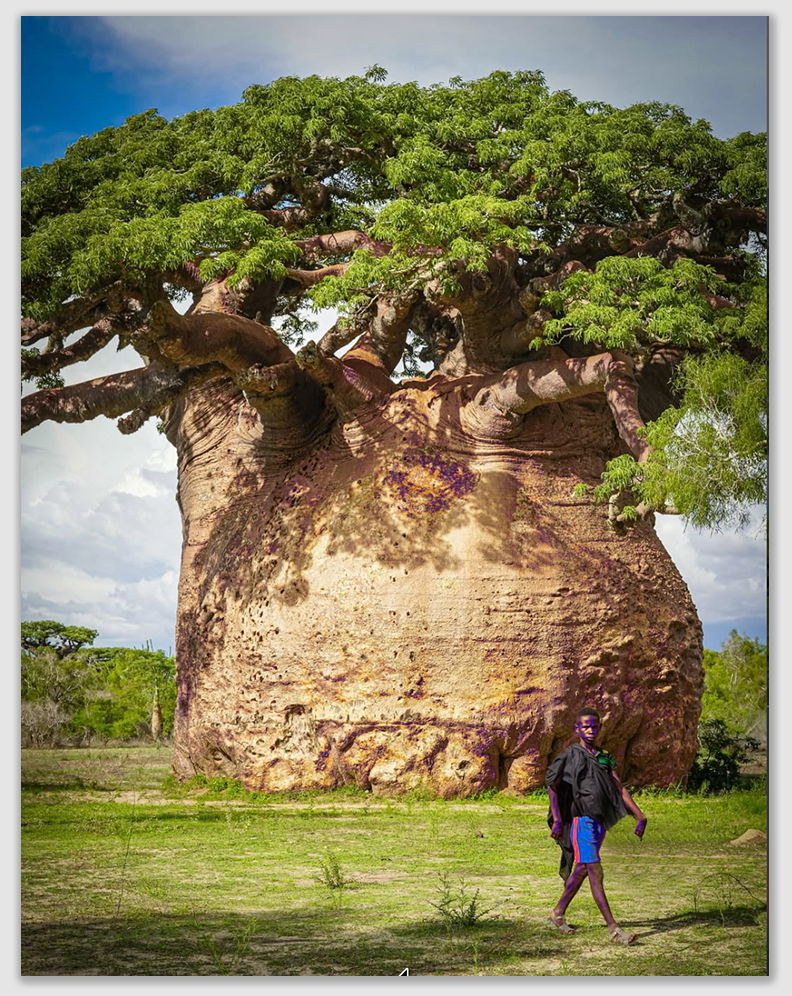
The first sign that the tree was in trouble was the scent — a musty odor that cut through the warm forest air. “It smelled like mushrooms but worse, like decomposition,” said Cyrille Cornu, a French researcher who visited the tree, an ancient baobab that locals call Tsitakakantsa, last October in southwest Madagascar. Approaching the massive trunk in the island nation’s Andombiry Forest, Mr. Cornu’s heart sank. A dark, foul-smelling liquid was seeping from the base of the tree. “I was surprised because I never saw this before,” said Mr. Cornu, who specializes in baobabs and has visited the tree several times over the last 15 years. He thought to himself: “Something is wrong.” Tsitakakantsa, one of the largest and oldest baobab trees in Madagascar, is dying, according to experts and local stewards. Having survived centuries, it appears to have entered a final phase in which it will buckle, collapse and eventually disintegrate. It could take months, maybe longer. Eventually, only a patch of stained earth — like a shadow in the soil — will remain…
A man from Chicago’s far north suburbs died this weekend after an encounter with a live while he was trimming trees. At 4 p.m. Saturday, Lake County Sheriff’s deputies and the Wauconda Fire District were called to Bonner Road and Jackson Avenue in unincorporated Wauconda for a report of downed power lines and an unresponsive person. It turned out that a 67-year-old man from unincorporated Wauconda was up on a ladder trimming trees near overhead power lines when a branch came in contact with the live wire and electrocuted the man, officials said. When first responders came to the scene, the power lines were still arcing in the trees. Power had to be cut off before crews could access the victim, who was still about 15 feet above the ground, officials said…
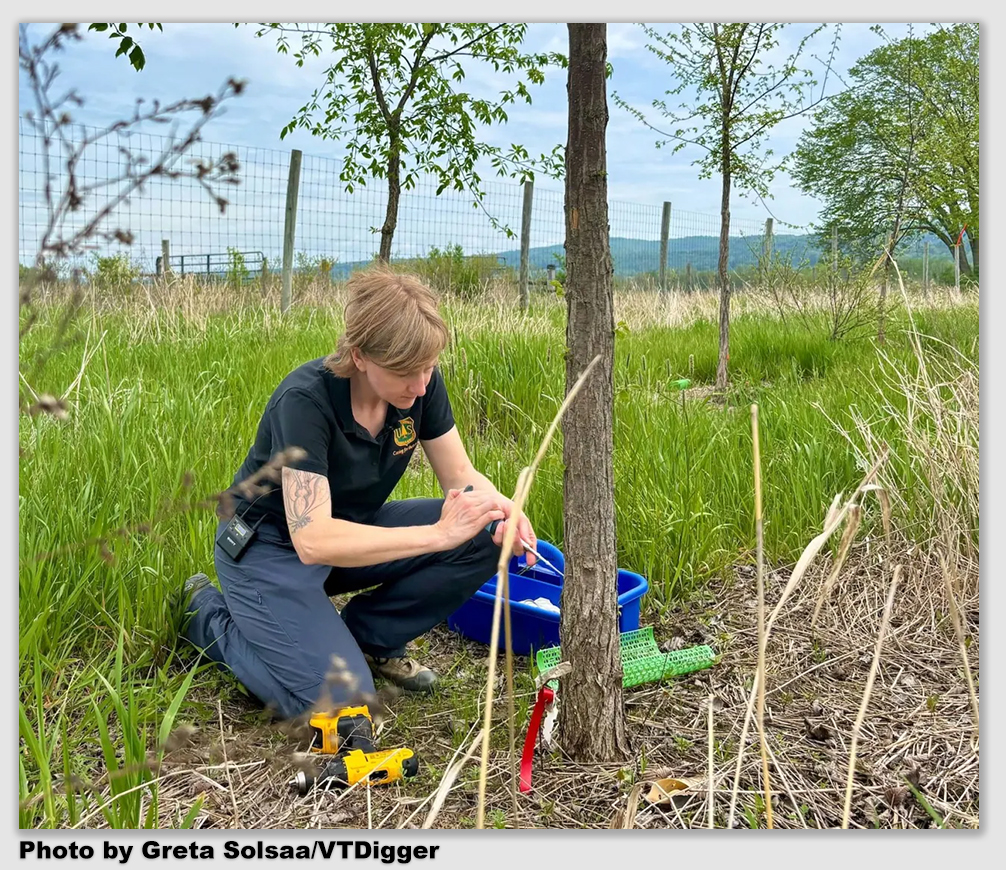
Elm trees in New England were nearly wiped out by disease more than 50 years ago, but a small number of the majestic trees survived. Now researchers are asking why and hoping the answer could help restore the trees to the landscape and even limit flood damage in the process. It all started nearly a decade ago when workers with the U.S. Forest Service and The Nature Conservancy planted around 5,300 elm trees in a 28-acre orchard in hopes of restoring the once-abundant tree to New England’s landscape. Elm trees suffered a mass die-off in the 1970s, said Gus Goodwin, a conservation planner with The Nature Conservancy in Vermont. The tree is tied to the region’s history and is integral for future flood resilience, he said. Researchers identified 53 “survivor” elm trees in New England, Goodwin said. These are trees that survived around outbreaks of Dutch elm disease, said Chris Hansen, a research technician with the University of Vermont. This experiment will test if the trees are truly resistant…
A section of a 1,500-year-old giant sequoia tree that died in the SQF Complex Fire, which burned roughly 175,000 acres of California’s Mountain Home Demonstration State Forest in 2020, is headed to the Smithsonian, Cal Fire announced on May 24, 2026. The tree was felled for public safety and will now be on display in California and Washington, D.C. for the public to enjoy. “The preserved trunk section carries centuries of visible fire scars, making it a remarkable record of California fire history,” Cal Fire said. The tree has been cut into two sections. One section will be on display at the new California Natural Resources Agency building in Sacramento. The other slab is headed for the Smithsonian Museum in Washington…
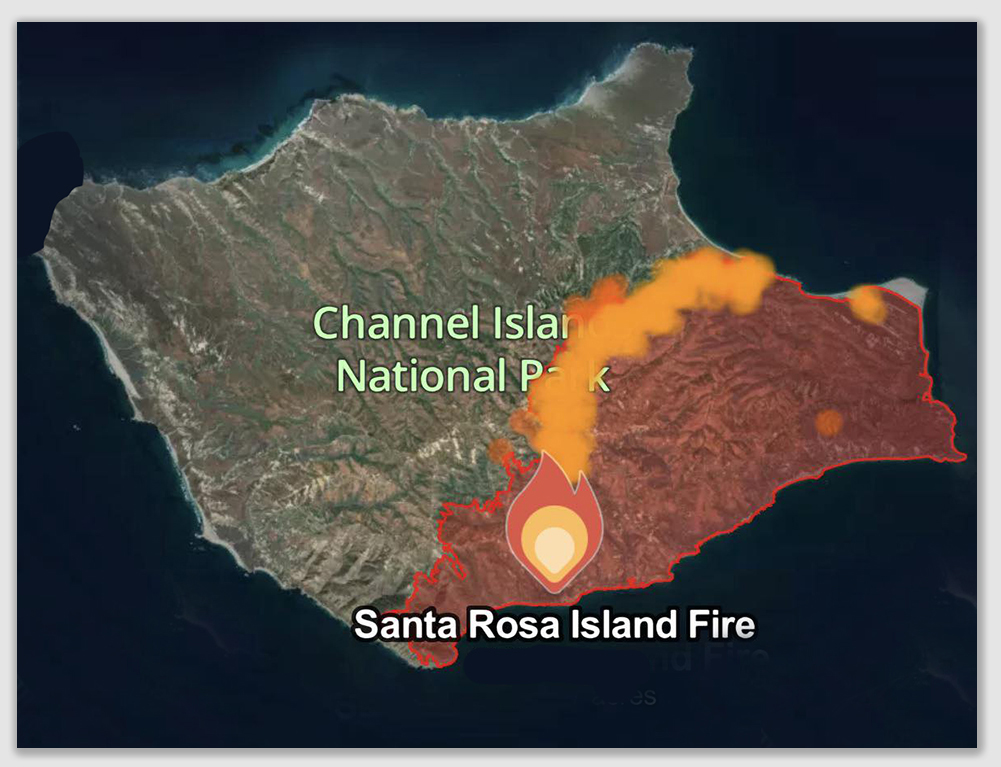
Santa Rosa Island’s grove of rare Torrey pines appears to have been mostly spared from the massive wildfire tearing through the second-largest island in Channel Islands National Park, according to initial assessments on Wednesday. The Torrey pine is “the rarest native pine in the United States and, possibly, the rarest pine in the world,” according to the National Park Service. The tree only grows naturally in two very specific areas: Santa Rosa Island and Torrey Pines State Natural Reserve in San Diego. The fate of one of the tree’s only two habitats has hung in the air this week while the Santa Rosa Island Fire burned through more than one-third of the island, including the Torrey pine habitat a few miles away from the island’s pier. But Torrey pine lovers and Channel Islands aficionados received tentative good news on Wednesday, even as the fate of the rest of the island’s unique ecology remains uncertain. Firefighters conducted initial assessments of the grove on Wednesday, and an uncrewed aircraft module also produced flight imagery of the trees…
Newark, Delaware, WDEL Radio, May 21, 2026: Downed tree in Newark causing issues
A stretch of West Park Place in Newark will be closed for an extended period of time due to a downed tree. The incident was reported Thursday morning, May 21, 2026, shutting the roadway down between South College Avenue and Orchard Road. The tree also pulled down wires which snapped multiple utility poles resulting in a power outage in the area. The damage will result in an extended road closure…

 Tree and Neighbor Law For Homeowners and Professionals