

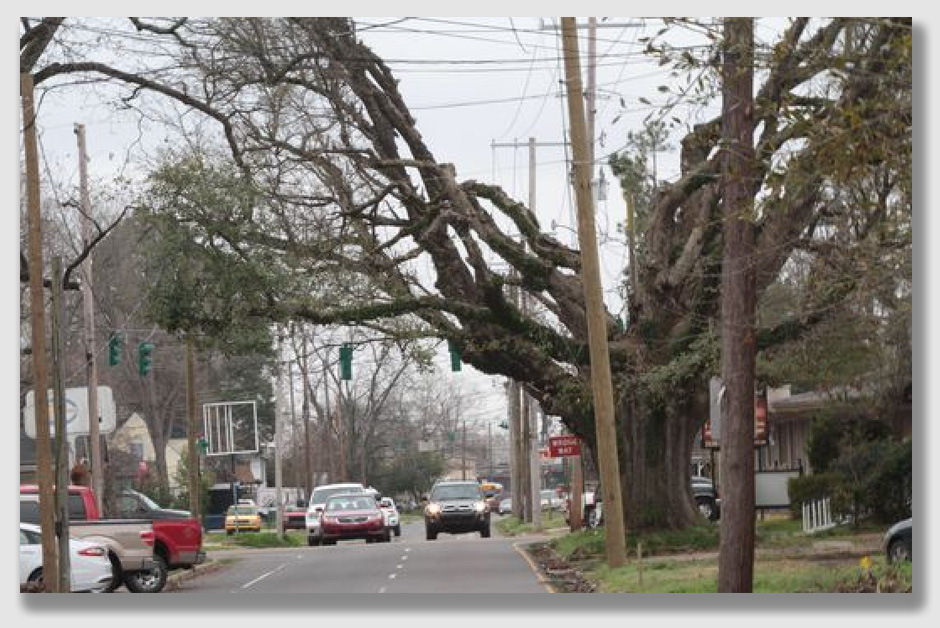
Nashville’s Metro Council is asking the Nashville Electric Service for a temporary moratorium on its new tree trimming policy — though it’s unclear it will make an immediate difference. City leaders expressed concern around the lack of communication and transparency about the policy. “The request here is very simple: It’s to pause the blanket application of the 15-foot clearance rule that’s being applied to every tree of every species in every neighborhood regardless of whether that tree poses any meaningful risk to the power grid,” said Councilmember Brenda Gadd. “Treat our trees like the living biological systems they are.” NES recently expanded the zone it clears between trees and power lines from 10 feet to 15 feet for all tree species. The power company that distributes electricity across all of Nashville will now also cut or trim more vegetation growing directly below utility infrastructure. The idea is to prevent more power outages during storms. In January, a record half of Nashville lost power during an ice storm. NES does not plan to alter its policy, the company said in a statement to WPLN…
Cape Coral, Florida, Breeze, May 20, 2026: Tree removal under way along Cape Coral Parkway
Tree removal is under way along Cape Coral Parkway today. Joshua Tree Inc., subcontracted by Back Bay Construction, is removing 33 southern live oak trees along the parkway as part of an ongoing public safety and infrastructure improvement initiative. The large-scale removal was set to begin at 7 a.m. and is expected to continue until 5 p.m. along what is one of Cape Coral’s busiest and most visible corridors. The work will begin near 1331 Cape Coral Parkway E. “While Southern Live Oaks are admired for their beauty and longevity, experts say these particular trees were planted in spaces too confined to support their mature root systems safely. Over time, the expanding roots have caused sidewalk upheaval, pedestrian trip hazards, and surrounding infrastructure concerns,” officials said. “These trees are a perfect example of the wrong tree in the wrong place,” said Ryan Ishley, ISA Certified Arborist with Joshua Tree Inc., in a prepared statement. “Southern Live Oaks thrive in large open environments, but when planted in narrow urban corridors, root conflicts with sidewalks and roadways become unavoidable over time.” The tree removal is part of the Cape Coral Parkway East improvement project which city officials say will keep traffic in the South Cape moving safely and efficiently by expanding the parkway East to six continuous lanes between Coronado Parkway and Del Prado Boulevard…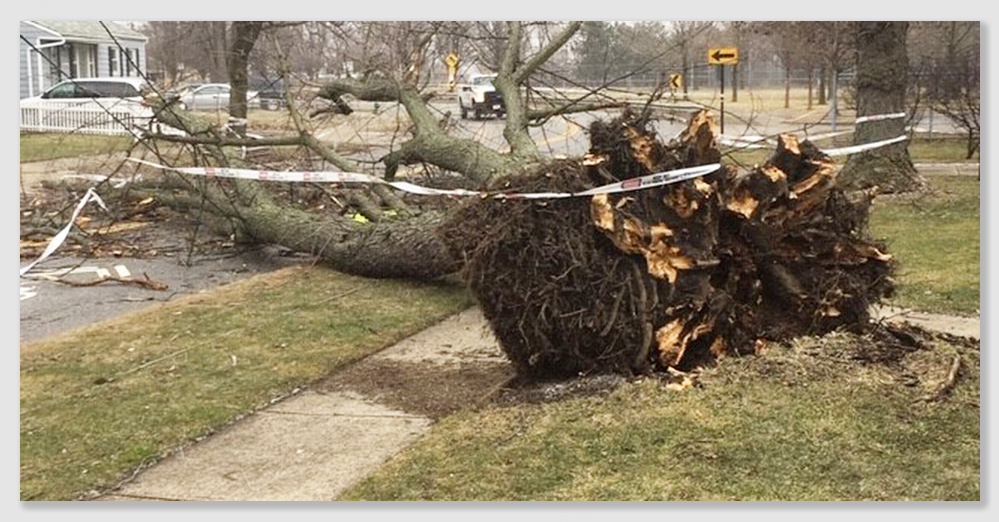 Raleigh, North Carolina, The Carolina Journal, May 20, 2026: Court revives fallen tree branch lawsuit against two Raleigh employees
The North Carolina Court of Appeals will allow a man to pursue a lawsuit against two Raleigh city employees. The suit stems from injuries the man sustained from a fallen tree branch in a city-maintained park. Michael Creech was injured in June 2022 when a “large section of an oak tree” fell and struck him when he was sitting on a park bench in Nash Square. Creech sued Raleigh and three named employees: urban forester Zach Manor, city arborist Anthony McLamb, and former Parks Department director Oscar Carmona. A trial judge issued a January 2025 order dismissing the suit against the city and all three employees in their official and individual capacities. Yet a state Appeals Court panel ruled Wednesday in an unpublished opinion that two of the three named plaintiffs — Manor and McLamb — did not have “public official immunity” protection from Creech’s complaint. Unpublished opinions have limited value as precedents for future court disputes. Creech’s lawyers argued that all three individual defendants “are public employees — not public officials,” Judge Michael Stading wrote…
Denver, Colorado, Sun, May 19, 2026: Colorado launches $4M emergency tree-cutting project along highways with high risk of wildfire
With wildfire season looming, crews will begin to cut trees along some of Colorado’s busiest highways in a $4 million emergency effort aimed at reducing the risk of catastrophic fires before summer intensifies. The Colorado Department of Transportation targeted five highways determined to be at the highest risk for wildfires this summer. Work is expected to continue through the end of June.Drivers should expect alternating traffic along the following routes: — Colorado 119 from U.S. 6 in Clear Creek Canyon north to the Nederland area; — Colorado 72 from U.S. 6 in Coal Creek Canyon through Pinecliffe and Nederland to near Allenspark; — Colorado 93 between Golden and Boulder; — Colorado 128 near the junction with Colorado 93, west of Broomfield; — Colorado 67 from the Woodland Park area north toward Westcreek. The emergency project, announced Tuesday, comes as fire officials warn of a significantly high risk of devastating wildfires as temperatures rise in the coming months. It’s the first time CDOT has conducted a fire mitigation project of this magnitude, a spokesperson said. In a news conference last month with some of the state’s top fire experts, Gov. Jared Polis urged the state to prepare, as the drought, paired with long-term consequences of a changing climate, makes Colorado particularly vulnerable…
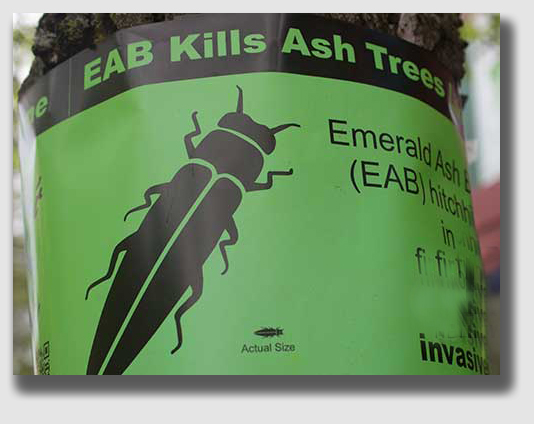
The warm spring weather tends to get people out and about to enjoy the sun. Unfortunately, it’s not just the humans. The mild temperatures through the winter and now into spring have resulted in the invasive emerald ash borer maturing faster and emerging weeks earlier than usual, the Oregon Department of Forestry says. Wyatt Williams, an invasive species specialist with the department, confirmed he found one in early May in King City in southeast Washington County, a news release states. That’s bad news for Oregon’s ash and olive trees. Emerald ash borers have been in the state since at least 2022. As their name suggests, they infest and kill ash trees; they’re also known to attack olive trees. The National Invasive Species Information Center says they first showed up in the U.S. in 2002. They’ve killed hundreds of millions of ash trees in the eastern U.S., according to Oregon State University’s Extension Service, which shares research-based knowledge with Oregon’s 36 counties. So far there’s no cure for a tree infested with the bugs – they’re a death sentence, the Extension Service says. It can take up to six years for an infested tree to die. The bug’s larvae burrow under the tree bark and chow down on the sapwood. These damaged layers of tissue below the bark are critical to transporting water and nutrients throughout the tree…
Health experts and urban planners have long believed that planting more trees in residential areas is good for everyone in those neighborhoods. A new study shows that’s not necessarily so. Researchers at Michigan State University found that while trees do reduce stress and extend longevity, the benefits vary based on other factors. Professor Amber Pearson led the study. She and her team examined the relationship between residential tree canopies and allostatic load. That’s the cumulative wear-and-tear that stress has on the human body. Pearson says they confirmed that trees improve human health. “What we found was that having higher percentage of residential trees was associated with lower allostatic load scores,” she says. “In other words, it’s good for your health.” But Pearson found something surprising: It wasn’t good for everyone…
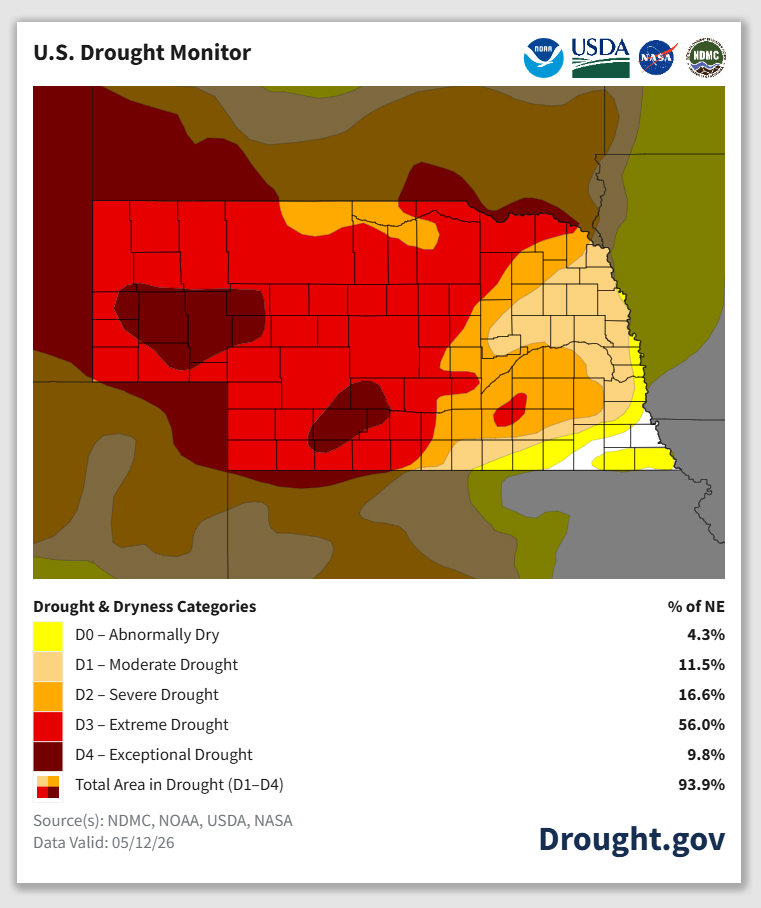
As drought conditions cover most of the state, the Nebraska Forest Service’s latest Forest Health Report flagged potential stress and disease in trees. NFS Forest Health Specialist Jennifer Morris put together the report. “These large bouts of drought that extend for a long time really do cause some issues with trees across Nebraska,” she said. Trees without enough water can’t properly photosynthesize, Morris said, halting development of the chemical processes trees need to fight off disease. After the last severe drought in 2022, Morris said many trees were affected by canker diseases. “It’s just been quite devastating on some of our oaks and hackberries and things like that,” Morris said. Trees compromised by drought are also left vulnerable to pests. “We don’t have a lot of that protection in place that the tree can have as it’s healthier,” Morris said. “We see a lot of boring insects…”
Experts are weighing in on how to keep trees in Shasta County healthy and why that could play an important role during fire season. Lance Richards, lead arborist with Redding Tree Service, told the Northstate’s News that nearly any type of tree can grow in the county because we have ideal weather, though he recommended native oaks since they do better in the local climate. Other trees, Richards said, can have problems with the intense heat and sun. He added that it’s important to keep an eye on tree health to prevent dead trees, which can pose a fire risk. “We’re coming into the summer right now, and we’re going to get a lot of these prevailing winds out of the north,” Richards said. “So I would just recommend, if anything looks like it’s damaged or dead up in your trees, that you call a local company to have them come out and address the situation…”
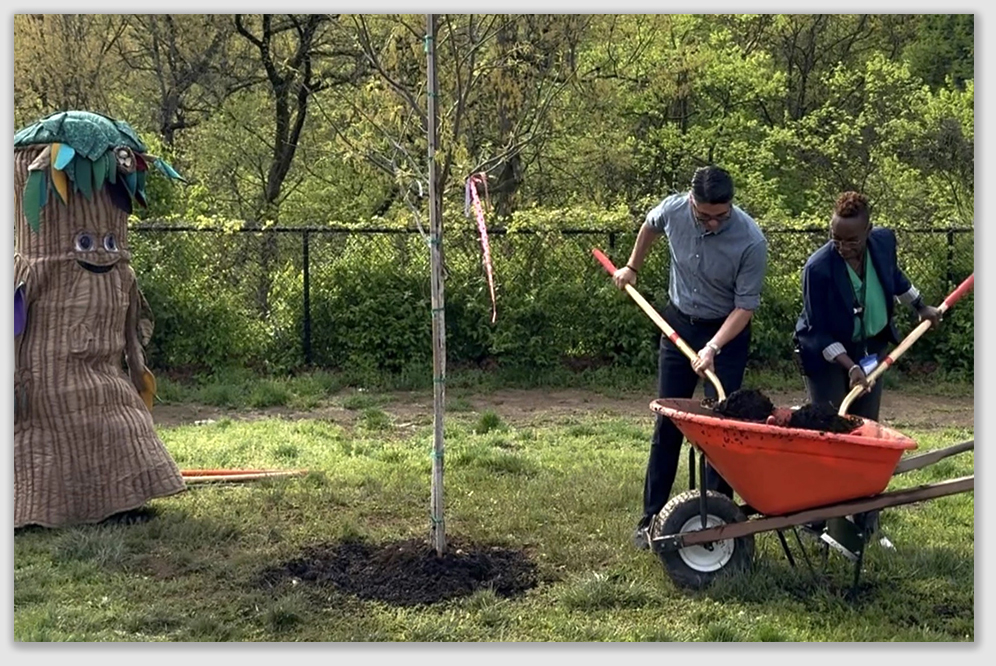
Burning trees to help other trees grow? It sounds counterintuitive, but using biochar to improve soil conditions is a practice that dates back centuries. On Arbor Day 2025, Cincinnati Mayor Aftab Pureval announced the city’s first use of biochar for tree planting to an enthusiastic crowd: elementary students at Roberts Academy in Price Hill. “Make some noise if you love trees,” Pureval exclaimed to loud cheers. “Here’s the most exciting thing, guys — you are part of history. Today, we are using a magical ingredient for the first time in Cincinnati’s history. It’s called biochar.” Biochar is more science than magic, but it’s pretty powerful. The charcoal-like material can enrich soil and keep climate-warming carbon out of the atmosphere. Cincinnati has been purchasing biochar from out of state, but soon, the city will make hundreds of tons of biochar a year right here in the city. Cincinnati Parks Director Jason Barron says the parks produce a lot of wood waste, like dead trees and trimmed branches. “And that wood waste was just decomposing and releasing that carbon back in the air,” Barron said. “And this allows us to take what we already have and turn it into something that’s beneficial, not just for us, but for others…”
Baker Hunt received the unfortunate news that their beloved American Beech tree, estimated to be around 140 years old, needs to be removed. Several years ago, the team noticed a fungus, which was identified as Brittle Cinder Fungus, an incurable infection that destroys the tree trunk’s structure at the base. At that time, Virginia Kerst paid for remediation: canopy reduction, nutrient treatments, core samples for studies, etc. Baker Hunt has continued the nutrient treatments quarterly for the last four years. These steps and treatments “bought” the tree an additional 4 years. However, recent tests have shown that the fungus has grown, and the tree is no longer viable. Under the advice of six different tree experts from several reputable local companies, Baker Hunt needs to remove the tree for the safety of its campus and students, due to the progression and internal destruction the fungus is causing. This news is sure to stir a lot of feelings, and the gardeners, staff, and students are experiencing those same feelings. However, once Baker Hunt knew it was for the safety of the students, the choice was clear…
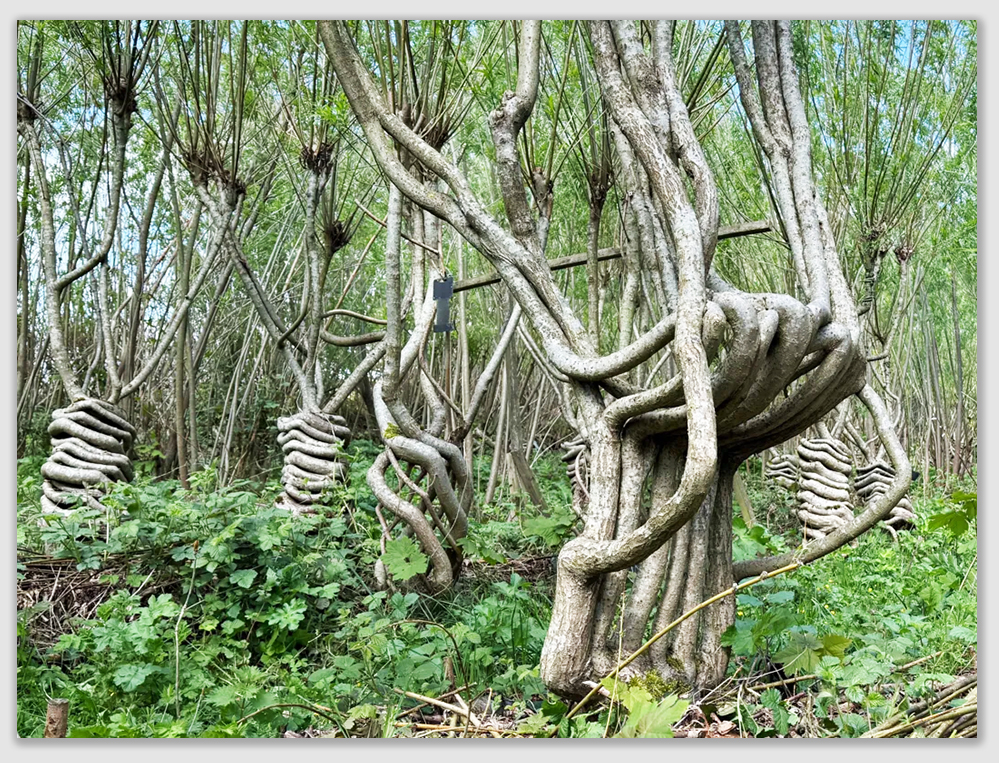 London, UK, BBC, May 18, 2026: ‘It takes 10 years to make our chair-shaped trees’
A couple has spent the past 20 years experimenting to perfect the practice of moulding trees so they grow into the shape of a chair. Alice and Gavin Munro grow their creations upside down, in a process that they say typically takes between six and nine years, before each item is dried for a year. The process involves training and pruning young tree branches as they grow over specially-made pieces of recycled plastic which help to shape the trees’ growth. Branches are then grafted together at certain points, so that the object grows into one solid piece. Gavin said the first seed for the project was sown when he was a young boy and saw an overgrown bonsai tree that he thought looked like a chair. The idea grew when Gavin was in and out of hospital with Klippel-Feil syndrome – a rare congenital condition characterised by the abnormal fusion of two or more neck vertebrae. He underwent several operations to straighten his spine during his youth, when he said he had time to “reflect and learn patience…”

 Tree and Neighbor Law For Homeowners and Professionals