

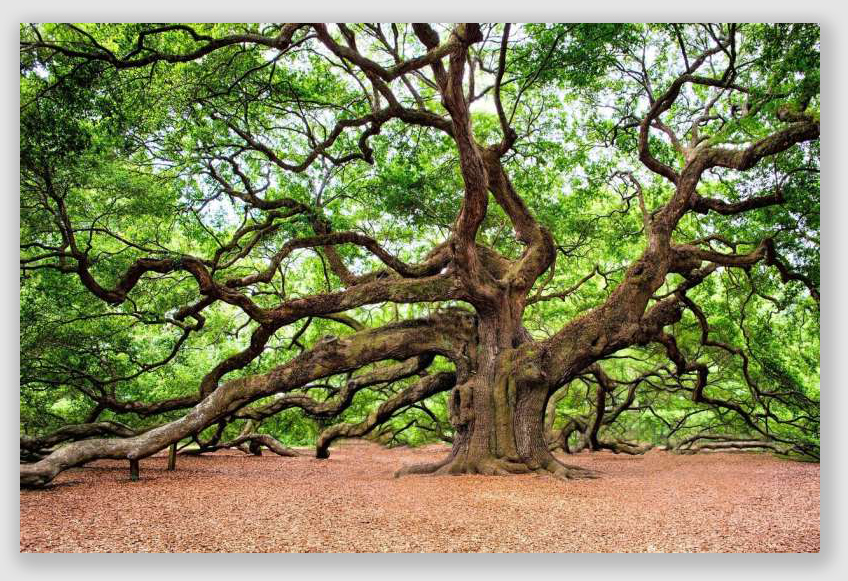
After months of debate and visible frustration, the Oakland City Council voted Tuesday to enforce a $1 million fine against a couple who cut down 38 mature trees across their property, a neighbor’s lot and an adjacent city lot on Claremont Avenue. For some, the vote was about more than a single hillside property. It became a test of whether Oakland, which has gained a reputation for permissiveness and lax enforcement, would stand behind its own laws. “We have to decide as a council if the laws mean something, or if they’re just ink on a piece of paper,” Council President Kevin Jenkins said during the meeting. “We have to decide whether Oakland will continue to have the reputation that people can do whatever they want without consequences…”
Burlington, Vermont, WCAX-TV, May 6, 2026: Why are crews cutting trees along Interstate 89?
Why is the state cutting so many trees along Interstate 89 between Montpelier and Burlington? WCAX viewer Andrew from Williamstown emailed that question. We got some answers from officials about several projects going on right now. One is near train tracks in Waterbury. A spokesperson for the New England Central Railroad said a contractor is rock scaling and installing fencing to protect the tracks from potential rockslides. It should finish up in a few weeks. Another tree-clearing project closer to the road is also in Waterbury. VTrans said they do this for safety and to save money. They say it prevents trees from falling onto the highway, improves sight lines for drivers, and allows more sunlight, preventing icing and roadway deterioration…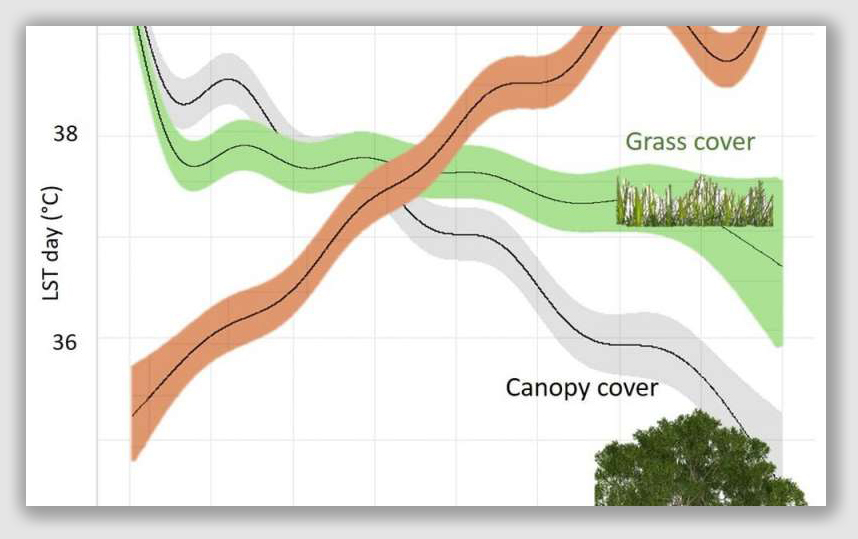 Nature, May 6, 2026: Trees halve urban heat island effect globally but unequal benefits only modestly mitigate climate-change warming
Although tree cover reduces the urban heat island, no global estimate quantifies air temperature reductions by contemporary or future tree cover, currently and with climate change. Here, we estimate these reductions for all 8,919 large urban areas. Current urban tree cover mitigates 41–49% of the maximum potential air-temperature urban heat island that would occur in the absence of tree canopy. Tree canopy reduces summer air temperature by a population-weighted mean of 0.15 ± 0.03 °C, with wide variation (0.0–2.7 °C), benefiting 914 (805–1040, 95% CI) million people by >0.25 °C. Cooling benefits are greater in already cooler areas: high-income countries and suburbs. Current and plausible future tree cover mitigate only ~10% (6.7–18% and 6.3–17%, respectively) of the median mid-century climate-change warming under a moderate emission scenario. Our results suggest tree canopy expansion in densely settled low-income urban areas is necessary for equitable urban heat island mitigation and climate adaptation…
Denver, Colorado, Denverite, May 6, 2026: Snow downed a tree outside your home? You’re not alone
Denverites drifting off to sleep last night were serenaded by a lullaby of faint snaps, followed by thuds. The extremely wet snow has been collapsing branches across town, leading to obstacles as minor as a twig and a few leaves on the sidewalk this morning. But in some neighborhoods, entire branches or trunks fell, blocking roads or sidewalks, maybe even crushing a parked vehicle. In those serious cases, the city recommends calling 311 to report it. But be warned — it may take a while for an arborist to get to it. Denver Parks and Recreation said that they’ve received 150 reports of downed trees or branches as of this morning. “They’re working all day to clear,” Denver Parks spokesperson Stephanie Figueroa said in an email. Also something to heed: The cost of work to remove a tree or branch impeding a road will be billed to the responsible property owner…
 Stillwater, Oklahoma, KOSU Radio, May 4, 2026: Invasive tree-killing beetle found in Wagoner County
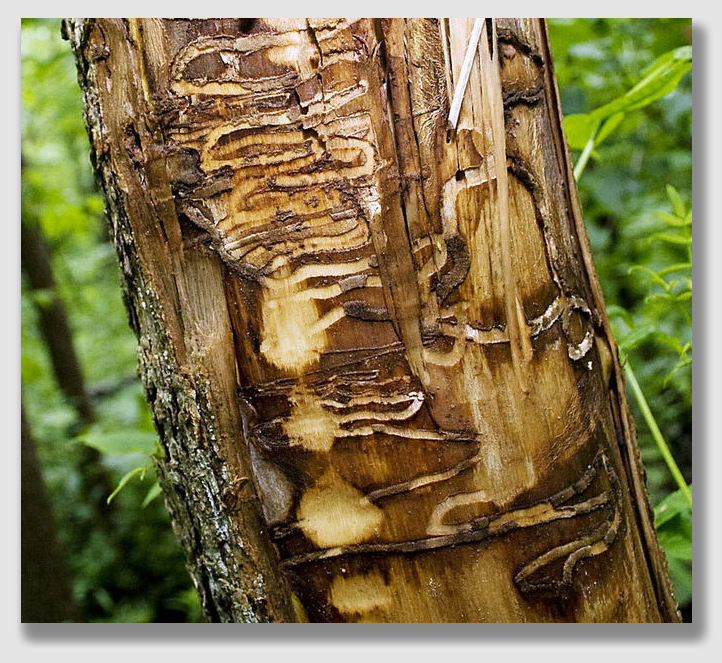
Officials with the U.S. Department of Agriculture have confirmed a population of emerald ash borers in Wagoner County. State foresters first announced they were investigating the insect’s presence in the area on April 21. Emerald ash borers are small beetles responsible for destroying hundreds of millions of native ash trees by boring into their bark and feeding on nutrients. Oklahoma’s ash trees are mainly found around lakes, including those in state parks. The beetles can fly up to 10 miles each year, but they primarily hitch rides on firewood. Forestry officials are urging Oklahomans to avoid traveling with wood and instead burn it where they buy it. The emerald ash borer, native to northeastern Asia, was first found in North America in 2002 and has killed off large populations of ash trees in eastern states. Wagoner County joins Carter, Choctaw, Delaware, Love, McCurtain, Murray and Pushmataha counties with confirmed cases. A thinning canopy, branch dieback and D-shaped exit holes are markers of the destructive beetle. The bugs have no significant predators in the U.S. aside from woodpeckers, which usually only reach the larvae once a population has grown and the tree is dead. Last year, Oklahoma foresters began releasing parasitoid wasps to help limit the beetle’s spread…
In the southeast region of Colorado Springs, where the tree canopy is more sparse than other parts of the city, municipal arborists lug a trailer full of young trees to residents who applied for “Grow Shade Together,” the city’s free tree program. “We’ve been wanting to add more trees ever since we moved in,” said Ann Vasseur, a Colorado Springs resident and recipient of one of the city’s free trees. When Vasseur first moved into her house in the Southborough neighborhood, there were not any trees, she said. Ann Vasseur and her husband, Kenneth Vasseur, applied for a free tree after hearing about it on their local news station in March. The city is planting 3- to 5-year-old trees — which can require up to 25 gallons of water per week, depending on their size — throughout Colorado Springs, despite Colorado experiencing one of its driest years on record. About 98% of Colorado has reached at least Stage 1 drought, according to the U.S. Drought Monitor, the first of four stages. Many cities along the Front Range, including Manitou Springs, Denver, Brighton, Boulder and Arvada have declared Stage 1 drought. Much of the state is currently experiencing Stages 2 through 4, which are severe, extreme and exceptional drought, respectively, according to the same monitor…
 ESPN, May 4, 2026: Judge limits tree cutting at golf course Trump aims to renovate
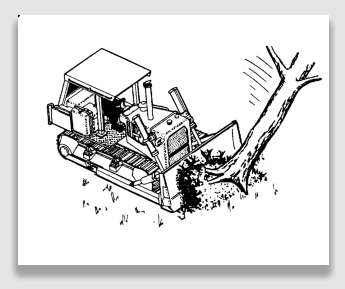
A federal judge told the U.S. government Monday not to cut down more than 10 trees without first providing notice amid a legal dispute at a historic Washington golf course that President Donald Trump plans to renovate. U.S. District Court Judge Ana Reyes said during a remote hearing that she wasn’t going to issue a temporary restraining order just yet in the case brought by the DC Preservation League. She also told the National Park Service that it should first discuss any plans with government lawyers if it is going to cut down more than 10 trees. Monday’s hearing came after the plaintiff’s emergency petition seeking to stop work at the course, citing news reports that major renovations were to begin Monday. Kevin Griess, the superintendent of the National Mall and Memorial Parks for the Park Service, said during the hearing that there was no plan to begin such work Monday but added that a safety assessment was underway. Reyes told the parties she didn’t want to play the role of the “Parks and Rec” department, an allusion to the sitcom, but said she also didn’t want trees being bulldozed…
A large tree toppled onto rowhomes in the Brewerytown section of Philadelphia late Tuesday morning, with residents saying warnings about the tree dated back nearly a year. It happened on the 1400 block of North 27th Street around 11 a.m. Neighbors said concerns about the tree began last summer, after a portion of it fell and caused major damage. “In June or July of last year, the tree that fell down, part of the tree branch fell onto my car and totaled it,” said Lauren Dyenetti, who lives on the block. Jackie Ray, who lives next door to the home that was directly hit by the fallen tree, said she has repeatedly contacted the city about the issue. “I have been calling 311, Parks and Recreation, and so have my other neighbors about getting these trees trimmed,” Ray said. Officials shut down power along the block as a precaution following the collapse. Myles Drayton, whose home was among those affected, said residents had tried for months to get action taken…

A popular tree found outside many homes and on walkways across the Chicago area will soon be illegal to sell or grow after an unexpected turn of events. The Illinois Department of Natural Resources has added the Callery pear, also known as the Bradford pear, tree to the Illinois Exotic Weeds Act, the agency announced in October. The invasive trees are currently blooming all around the region “and are now spreading into natural areas.” According to the University of Illinois, the trees were widely planted in the 1950s as “a fast-growing popular ornamental tree despite weak branches that break off easily from storms.” “Callery pear is native to Asia. It was introduced to the U.S. as the cultivar ‘Bradford’ for use in research. It was considered as a potential means to develop resistance to fire blight in edible pears. ‘Bradford’ was then also introduced as an ornamental tree and was widely planted,” the Morton Arboretum stated. Now, decades later, it will be labeled an “exotic weed…”
The Economist, May 3, 2026: The case against trees
Two years ago the authorities tore down a building on Hill Road, a busy street in an overpriced part of Mumbai, to widen it and ease the traffic. But they left in place a large-canopied rain tree that stood in front of the vanished structure. In theory, the road has been widened. In practice, however, the building’s footprint is now an informal car park. The Hill Road tree is not an exception. Across Mumbai traffic is obstructed by trees that remained rooted as lanes were added. It is the same story in other growing cities. The reason for this bizarre state of affairs is that there is a noisy group even more feared by authorities than motorists, who are themselves no pushovers. That is the tree-huggers. India has spent the past 25 years frantically building infrastructure, both in cities and between them. The pace sped up after Narendra Modi, who enjoys few things more than a highway inauguration ceremony, came to power in 2014. Yet a binary idea has taken hold that trees and development are antithetical to each other. This is rather a strange notion for a country that can do with a lot more of both…
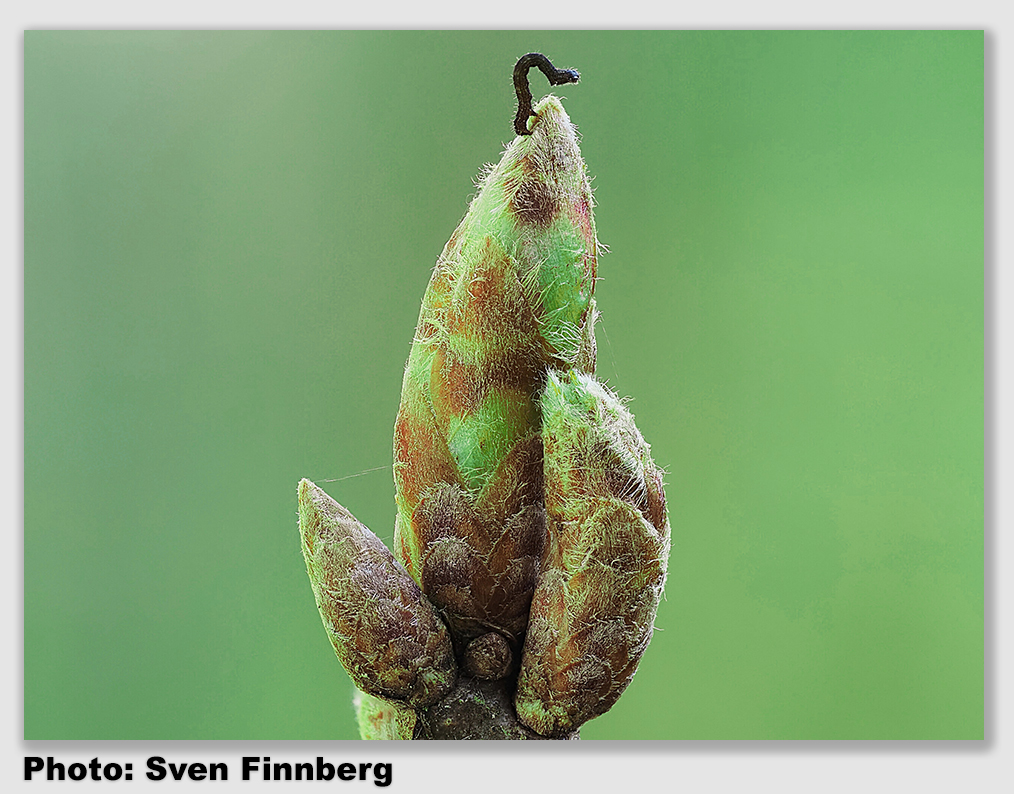 Phys.org, May 1, 2026: How oak trees outwit their predators
Spring in the forest: Many insects, particularly caterpillars, hatch just when the trees’ nutrient-rich leaves are still young and soft. This means they find a table laden with food and can start eating straight away. If oak trees are heavily infested by caterpillars in a given year, they react to this the following spring: they delay their leaf emergence by three days. This is unfavorable for the caterpillars. After hatching, they are literally faced with empty plates, because the oak leaves are still firmly hidden in the buds. This strategy is highly effective: the three-day delay is sufficient to drastically reduce the insects’ survival rate. And it reduces the damage caused by feeding on the tree by an impressive 55%. A team of international researchers report this in the journal Nature Ecology & Evolution. “The delaying tactic is more effective for the oak than a chemical defense, such as bitter tannins in the leaves,” says Dr. Soumen Mallick, a postdoc at the University of Würzburg’s Biocentre and lead author of the study. This is because the tree would have to expend a great deal of energy to increase tannin production…
The trees around your home may need more attention than they’re getting. Disease, pests, and extreme Pacific Northwest weather can quietly turn a healthy tree into a hazard. When it’s time to call a professional, the difference between a good hire and a bad one can cost you thousands of dollars or your roof. “ConsumerMan” Herb Weisbaum, a contributing editor at Checkbook.org, joined “Seattle’s Morning News” on KIRO Newsradio with advice on how to hire a reliable tree service in the Puget Sound area. Checkbook is currently offering free ratings for 50 Puget Sound area tree services through June 5 on its website. If someone knocks on your door after a storm offering tree work, walk away. “Just because a company calls itself a tree service does not mean they are able to come to your house, diagnose the problem, and take care of it properly,” Weisbaum said. Seek out multiple estimates from established companies instead. Checkbook priced the removal of a 35-foot oak tree in the Puget Sound area and found quotes ranging from $1,355 to $3,650 for the exact same job. Getting several bids is the single most effective way to avoid overpaying for Seattle area tree removal…

 Tree and Neighbor Law For Homeowners and Professionals