

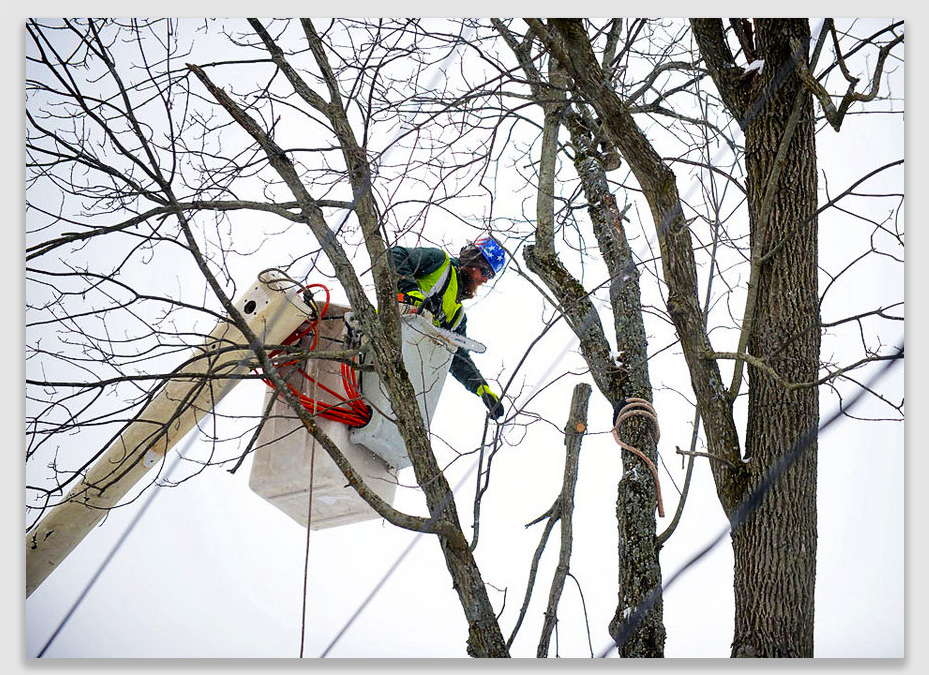
Trees and overgrown vegetation are responsible for at least half of KUB’s power outages, according to the Knoxville Utilities Board, which says that’s why its tree trimming and vegetation management work runs year-round. Nick Bridgeman, a team lead in KUB’s vegetation management program, said KUB maintains a large system serving more than 220,000 electric customers and covering more than 5,000 miles of overhead distribution lines. “Overall, at least 50% of our outages are caused from vegetation,” Bridgeman said. “Vegetation management is a really important part of what we do here at KUB to make sure that we can provide safe and reliable services for our customers.” KUB said the biggest goals are safety and reliability—reducing the chance that limbs contact lines during day-to-day conditions or during storms…
Miami, Florida, WFOR-TV, April 20, 2026: Miami residents demand halt to tree removal permits as city defends process amid flooding fears
A growing group of Miami residents is urging city leaders to immediately pause tree removal permits, warning that widespread tree loss could worsen flooding and heat, while officials insist current policies remain intact and properly enforced. The push comes in a scathing letter signed by dozens of residents and sent Monday to Mayor Eileen Higgins, City Manager James Reyes and members of the Miami City Commission. The letter, organized by a member of Sierra Club Miami, calls for an immediate stop to certain permits until a committee of experts and stakeholders can weigh in on reforms. “Literally our trees are getting slaughtered,” said Sandy Moise, a Miami resident and Sierra Club Miami member. Moise and others argue the city is allowing too many trees to be cut down, raising concerns about environmental and quality-of-life impacts across neighborhoods. Experts say those concerns are not unfounded. “We feel the effects on heat,” said Chris Baraloto, associate director of Florida International University’s Institute of the Environment. “Now that it’s starting to rain again, we’re going to see the effects manifest themselves in stormwater…”
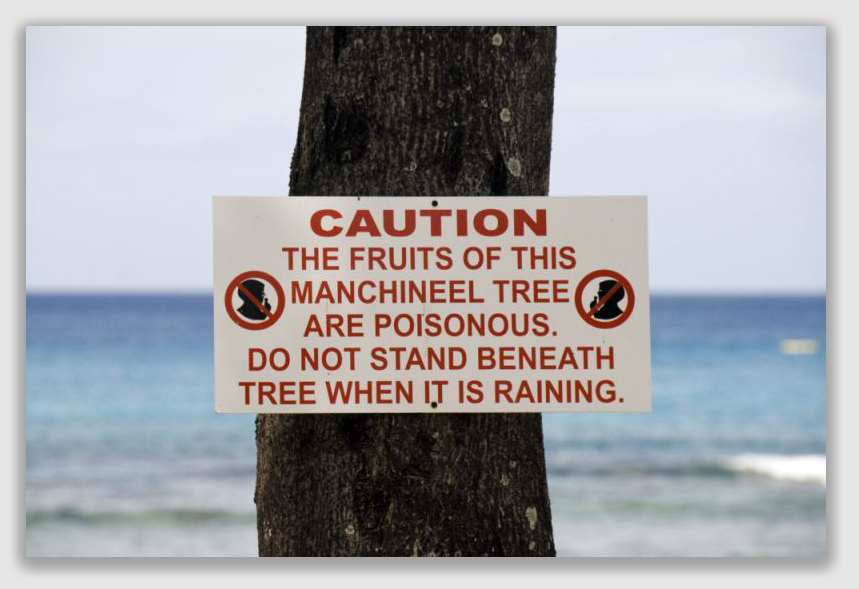
The nickname of this species – the ‘Tree of Death’ – tells you everything you need to know about its lethality. Native to the Caribbean, Florida, the Bahamas, and parts of Central and South America, the Manchineel can grow as tall as 15 metres, with every part of the tree containing strong toxins. Stand underneath its branches during rainfall and you can expect your skin to blister. Rub its sap in your eyes and temporary blindness is likely to ensue. It’s no surprise that we deemed it the most poisonous tree in the world. However, eat one of its small, apple-shaped fruits and the consequences will be even worse – in his journal, 18th-century explorer Nicholas Cresswell wrote: “They are rank poison. I am told that one apple is sufficient to kill 20 people…”
Washington, DC, PoPville.com, April 20, 2026: DDOT Started Spraying Ginkgo Trees Overnight!!
From DDOT: “The District Department of Transportation (DDOT) will begin the annual spraying of the female ginkgo street trees on Sunday, April 19, 2026. The spraying will occur overnight from 9:00 p.m. through 6:00 a.m., weather permitting. The annual spraying serves to reduce the formation of mature ginkgo fruit, which emits an offensive smell when it falls on sidewalks and roadways. DDOT will use the same spray it has used for the past 20 years, Shield-3EC 24(C)…

As an extreme drought continues throughout the Big Bend and South Georgia, a local arborist is warning that trees are feeling the stress. Mike Cross from Fielder Tree Service says this is the worst drought they’ve seen, and because of that, it’s important to be proactive to avoid a tree falling on your house or your car. He says that because the drought has lasted so long, trees are showing signs of stress, and they are essentially shutting down. He says trees don’t necessarily die overnight; it’s more of a slow decline, but since the drought has lasted several months, we’re right in the thick of it…
Syracuse, New York, Post-Standard, April 20, 2026: Volunteers plant 3,500 native trees to protect Skaneateles Lake
Thousands of brightly colored ribbons fluttered in the warm breeze blowing across an old farm field in Skaneateles on Saturday, marking spots where 3,500 saplings would soon take root. More than 160 volunteers planted eight native tree species, including River Birches, Swamp White Oaks, Red Maples, Sugar Maples, Silver Maples, Sycamores, White Oaks, and Tulip Poplars. “Planting native trees is one of the best ways to help clean up our rivers and lakes,” said Patrick Lynch, executive director of the Central New York Land Trust, a conservation nonprofit that organized the event…
I can vividly recall the first time I ever laid eyes on a “Fringe Tree” (Chionanthus virginicus), also known as “Grandfather’s Beard.” I was driving to cover a NASCAR race at Charlotte Motor Speedway in May in the 1980s. (They bloom in April now.) The specimen was in full, glorious bloom in the front yard of a house somewhere on Highway 49 near the Uwharrie Mountains. I said, “Whoa, what is that?” I had an expert who had all the answers to our gardening questions, so I discussed it with my first WPTF Weekend Gardener co-host, Erv Evans. I described the magnificent flowers on this small tree or large shrub, and Erv knew immediately what I was talking about, of course. A perfect specimen cloaked in a mass of sinewy, creamy-white flowers is a sight to behold. They form a cloud of 4- to 8-inch-long panicles that resemble an old man’s beard. The more spectacular flowers are found on the male tree. There is an exceptional specimen in my neighborhood along my daily walking route, and I always get a kick out of seeing this showy bloom each spring…
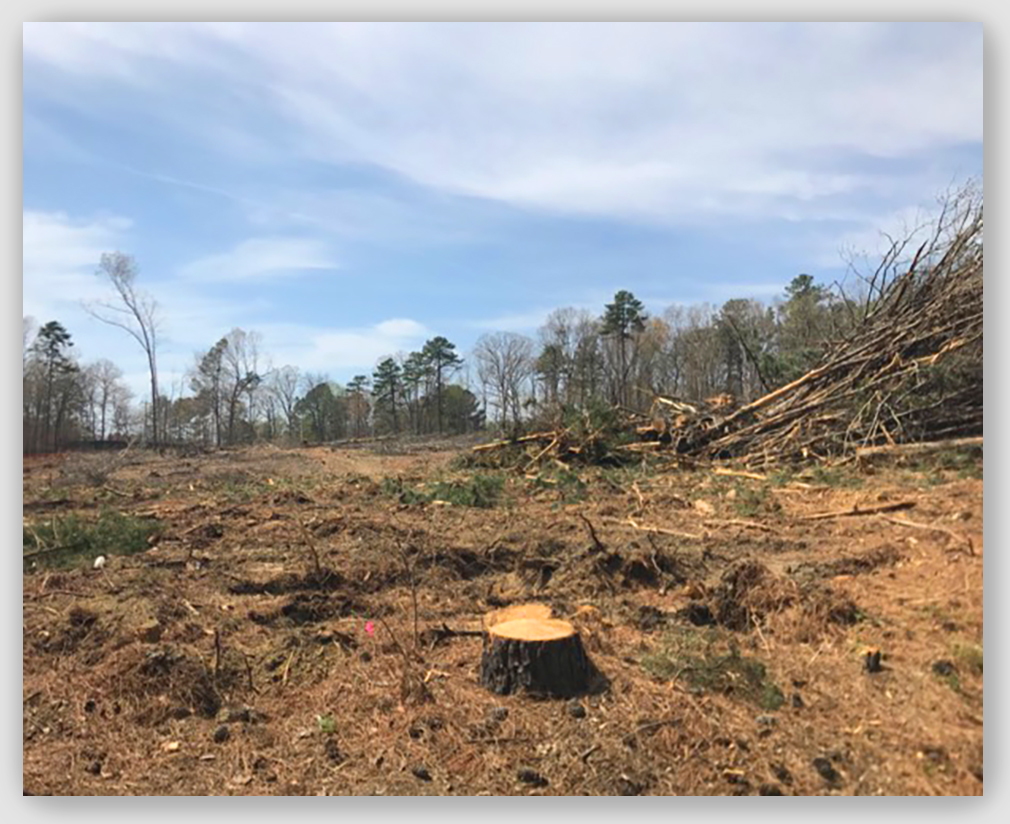
What began as a City Council hearing on a nearly $1 million fine for a man who city arborists said cut down protected trees on his Claremont Avenue property escalated into a heated debate about whether Oakland’s leaders would enforce their own laws. It ended without a decision — and the council will take it up again next month. The Tuesday hearing centered around Matthew Bernard and Lynn Warner, who city arborists say chopped down 38 mature trees without permits in 2021 and 2022 across their land, an adjacent city property and on neighbors’ lots. One arborist called it “the most egregious illegal tree removal case” in decades. Bernard, who was born in Nigeria and immigrated to the United States in 2001, said he and Warner wanted to build a future home for their family on the Oakland hills lot, and did “everything in their willpower” to respect the city’s laws. He said that he had acted on advice of an arborist to remove trees at risk of falling, or igniting during a wildfire. Bernard’s neighbors have also sued him over the trees that he cut on their property. The Oakland City Council was split — with some aligning with environmental advocates who felt the city needed to show it would not allow trees to be removed without consequences, and other council members expressing sympathy for a couple trying to navigate city permitting…
London, UK, BBC, April 13, 2026: Why are trees dying beside a major road and how can it be fixed?
National Highways is to trial a new way of planting trees alongside roads after admitting its “performance on tree planting has not been good enough”. Many thousands of trees have died since it planted 860,000 saplings between Cambridge and the A1, after completing the A14 upgrade in 2020. A further 165,000 trees and shrubs were planted between 2022 and 2023, and people nearby even took to planting their own trees along part of the road’s embankments. So what goes wrong after trees are planted – and can it be fixed?
National Highways. For decades, the A14 in Cambridgeshire was synonymous with slow-moving traffic, jack-knifed lorries and very long delays. That changed with the completion of a £1.5bn road improvement scheme, a 12-mile (19km) Cambridge to Huntingdon three-lane carriageway. About 270 hectares (670 acres) of habitat, including 40 native tree and shrub species, was planted as part of the project. In part, this was to mitigate for the removal of the many existing mature trees in the path of the re-routed road. “Trees are the soft estate along the highways and have multiple functions, including as a visual screen to hide it from surrounding landscape,” said Neil Davies, the chairman of the board of trustees at the Arboricultural Association, a charity which promotes awareness of tree care. “It can provide environmental screening, for noise for example, and it has a habitat and landscape value, including linking up with established habitats…”
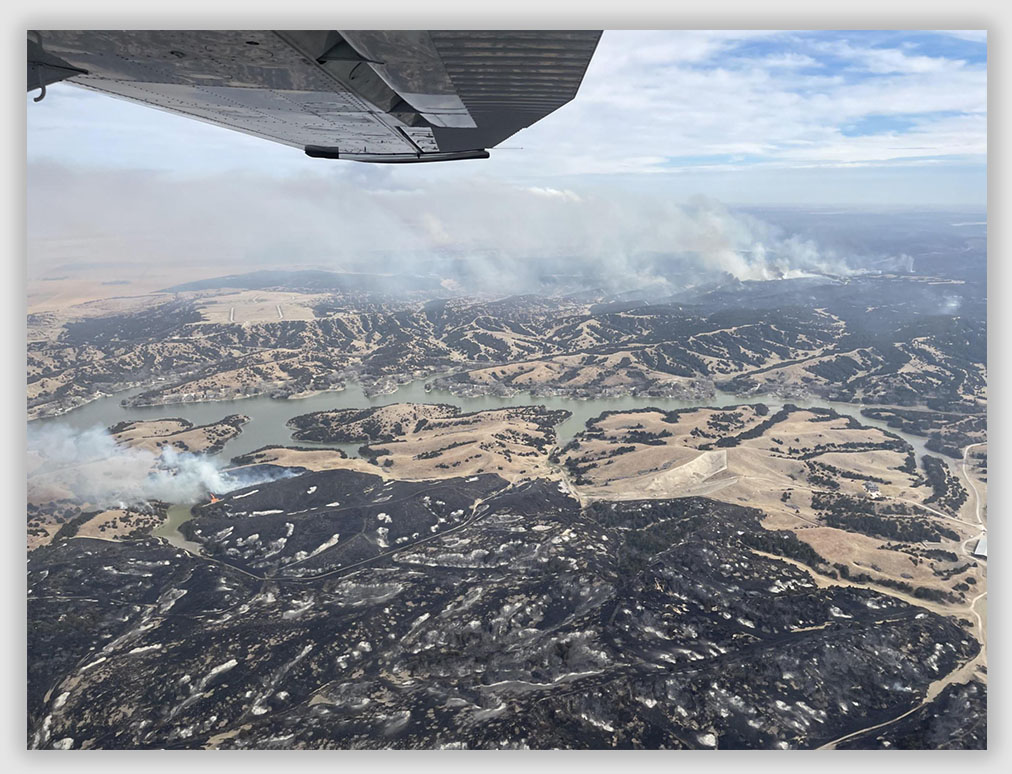
In a normal year, the vast grasslands that roll across the American Great Plains would be starting to green. But at the center of the US, where most of the nation’s beef producers graze their herds, this spring brought fire instead of moisture, leaving more than a million acres black and barren. Multiple blazes raged across Nebraska, where the records for the annual acreage burned were obliterated in a single month. The state logged the largest blaze ever recorded when the Morrill fire cascaded across more than 642,000 acres (260,000 hectares) before it was contained in March. Fire is not a stranger to this region early in the year, when precipitation is low, grasses are dry and dormant, and strong winds howl through the open flats. While other parts of the American west face their biggest fire threats in summer and fall, grasslands are more primed to burn in the spring. In recent years, however, the risks have sharply risen, along with the size and impact of bigger blazes. “There is a changing wildfire dynamic in this region,” Dr Dirac Twidwell, a rangeland ecologist at the University of Nebraska, said, describing how a cycle of extreme conditions can create more catastrophes. Stronger summer storms seed the grasses that cure by winter. If there’s no protective snow cover, that browned vegetation ramps up fire risks – especially when the winds begin to blow…
New York City, The New Yorker, April 7, 2026: The Forest Service “Reorganizes” Under Trump
On a recent morning in central Vermont, where I live, it was raining, and the wood frogs had just begun to chorus. The sap run from the maple trees has started to dwindle as the branches begin to bud out. There is a timeless quality to a New England spring (or as timeless as anything can be in an age of rapid climate change), and part of that timelessness is the United States Forest Service, whose land boundaries I wander across most days on rambles through the woods. For more than a century, the Forest Service has been a fairly stable fact of life across vast swaths of the American landscape. Which is why last week, though in the big cities it was barely noticed amid the noisy horror of the war in the Middle East, there was much talk in rural America about the Trump Administration’s sweeping changes to—really, a gutting of—the Service, which operates under the purview of the Department of Agriculture. The Service’s regional headquarters will vanish, along with most of its research facilities and experimental forests—and also quite likely the sense of mission that has animated the agency for more than a century. The Forest Service controls a hundred and fifty-four national forests and twenty national grasslands—at a hundred and ninety-three million acres, that’s the second-largest land base, public or private, in the country, trailing only the Bureau of Land Management, which runs the nation’s federal rangelands. Sometimes the national forests are confused with the (much smaller) national-park system, which is understandable—often those parks butt up against the forests, and the uniforms of the two services look a little alike, and that’s before we’ve even considered the Fish and Wildlife Service. But, if you see people driving a minty-green pickup, they’re from the Forest Service, a job that implies a very particular history.The agency’s antecedents date to the nineteenth century, but it was at the beginning of the twentieth, under President Theodore Roosevelt, that it came into its own. Its first chief was Gifford Pinchot, a close friend of Roosevelt’s, who believed in protecting the country’s natural resources to help power its growth—he wanted there to be plenty of trees for the industrial needs of the country. “Unless we practice conservation, those who come after us will have to pay the price of misery, degradation, and failure for the progress and prosperity of our day,” he said. In his time, however, Pinchot’s biggest confrontation was with the forces of what might be called “preservation,” saving forests not for their industrial potential but for their intrinsic meaning and beauty…

 Tree and Neighbor Law For Homeowners and Professionals