

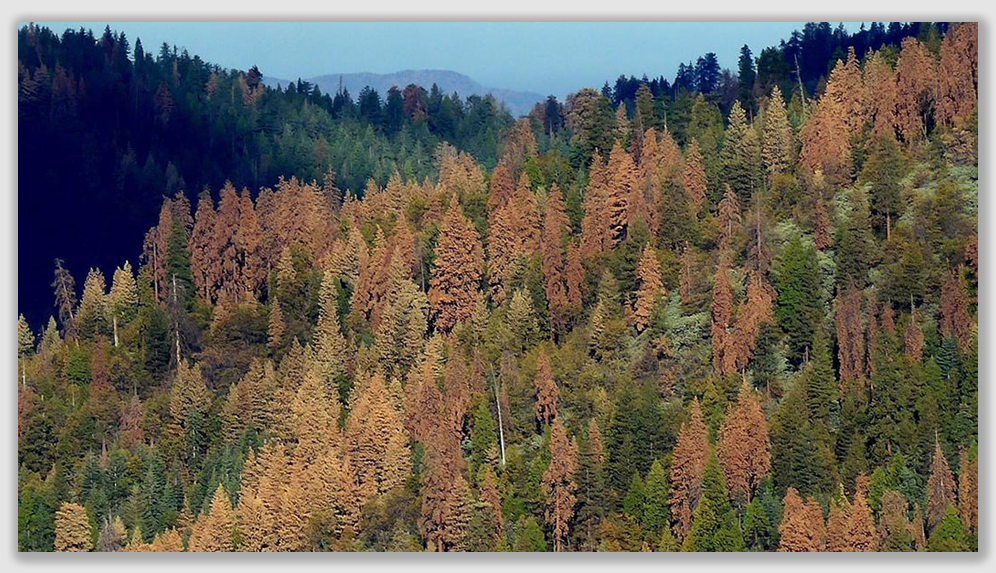
More trees are dying in Northeastern forests, and not just from old age. A new study authored by researchers at the University of Vermont finds disease and invasive insects spurred on by climate change are increasingly changing the character of the region’s woods. “It’s definitely worrisome,” said Lucas Harris, a postdoctoral researcher at the Rubenstein School who was the lead author on the study. “It’s not just that scattered trees are dying here and there in stands.” The researchers used the federal Forest Inventory and Analysis database to compare more than 300,000 records of tree death across 18 states from 2009 to 2024. At the start of that period, logging was the leading cause of tree death in the Northeast. But during that time, losses from natural causes increased by nearly 40%…
Econews, April 12, 2026: Africa is surprising the whole world with a phenomenon no one expected: trees are reappearing without anyone having planted them
When people picture African landscapes, they often imagine dust, drought, and thinning vegetation. But in central Tanzania, farmers are seeing something that feels almost backwards in the best way. Trees are coming back in places where they were cut down decades ago, and no one is planting new seedlings. The surprise is not magic. It’s management. Instead of starting from zero, communities are working with an “underground forest” of living roots and stumps that never fully died, using a method called Farmer Managed Natural Regeneration (FMNR), known locally as “Kisiki Hai.” A cut tree can look finished, especially in drylands where the ground bakes hard and plants struggle. But in many fields, the stump’s root system is still alive, sending up small shoots that resemble weak shrubs. FMNR works by selecting the strongest shoots and pruning the rest so the plant’s stored energy is focused on fewer stems. Farmers also protect those shoots from grazing animals, which is often the difference between “it tried” and “it returned…”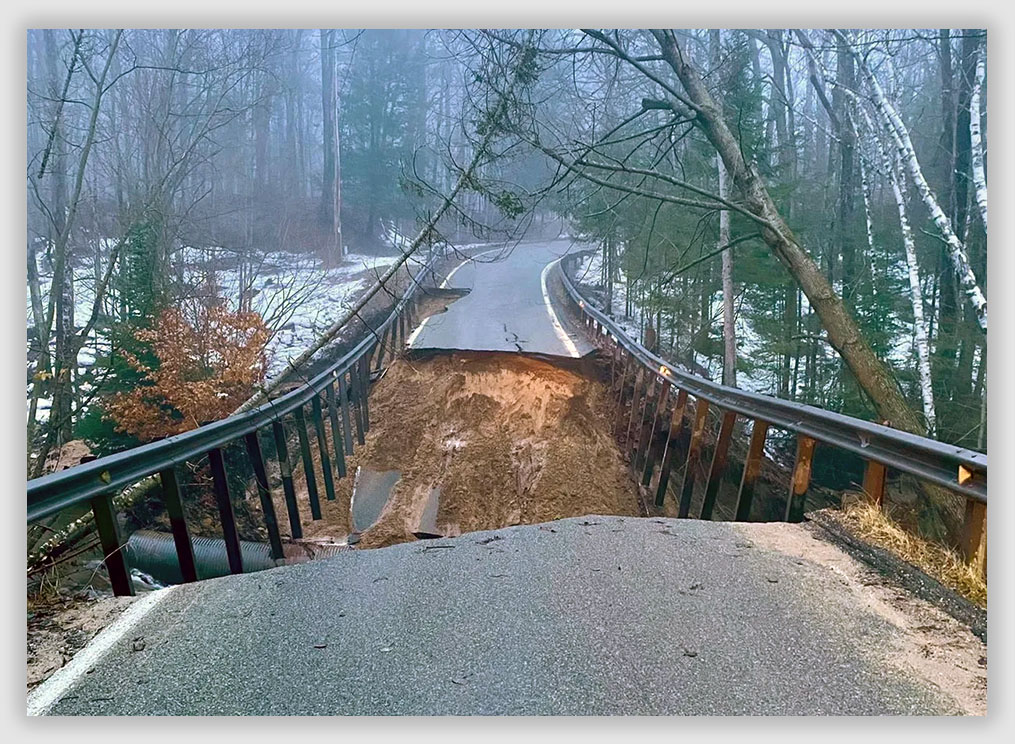 Traverse City, Michigan, WPBN-TV, April 13, 2026: Tunnel of Trees route disrupted as culvert failure closes part of M-119
A culvert failure has washed out part of M-119 in Emmet County overnight, closing a stretch of the highway — including part of the scenic “Tunnel of Trees” route — as crews assess the damage and drivers are detoured around the area. Tunnel of Trees is a roughly 20-mile stretch between Harbor Springs and Cross Village, famous for its tree canopy and Lake Michigan views. According to the Michigan Department of Transportation, the washout happened south of Division Road, between Good Hart and Cross Village. Tunnel of Trees is open between Stutsmanville and Island View Roads through Good Hart. MDOT crews are evaluating the damage and working to develop a repair plan, though no timeline has been set for reopening. Drivers are being detoured using Island View Road and North State Road in coordination with the Emmet County Road Commission…
New York City, The City, April 11, 2026: They Speak for the Trees: Meet the ‘Petal Protectors’ Guarding NYC’s Cherry Blossoms
As cherry blossoms bloom in the beginning of April, the idyllic promenades of Roosevelt Island transform into catwalks. Visitors travel to the tiny island to capture the fleeting beauty of the flowering trees overlooking the Manhattan skyline — and their own portraits, for Instagram. Crowds wearing their best outfits flash wide smiles under the pink and white blooms there to view and be seen with the more than 100 cherry blossom trees that bring a brief flurry of activity to the typically quiet island. But amidst the fervor for the best pictures, some visitors turn the trees into props. “They like to snap the flower off the tree, or I’ve actually seen someone take a branch off,” said Jennifer Engstler, who has lived on the island for 23 years. “I’ve seen people crawl on the trees like kids, or they hang from them. It just — it drives me crazy…”

The mother of a 14-year-old Portland boy who died in 2021 after a massive branch fell on him during a windy and rain-soaked tree planting event has settled the $29 million lawsuit that she filed against her son’s school and the nonprofit that organized the event. The case had been scheduled to go to trial next week in Multnomah County Circuit Court. But court papers state that Central Catholic High School in Southeast Portland and the nonprofit tree-planting organization Friends of Trees have paid over $1.2 million in attorneys’ fees to Pickett Dummigan Weingart LLP, the law firm representing the teen’s mother. It’s unclear, however, how much settlement money went to the mother of Christopher Robert Declan Kelly. Attorneys stated in court papers that the amount she received shall remain confidential. However, the attorneys’ fees might offer some indication. As an industry standard, lawyers who settle cases typically receive one-third of settlements — meaning a $3.6 million settlement might result in attorneys receiving $1.2 million of that in fees, with the remaining $2.4 million going to their client…
PBS, April 11, 2026, Drought threatens myrrh tree key to luxury perfumes and African incomes
The critical note in some of the world’s most well-known perfumes is myrrh, a tree resin from the Horn of Africa that is under pressure from what experts say has been a historic drought. Threatened by the lack of water and nibbled by starving livestock, the trees that once formed a dense forest in the Somali region of Ethiopia are in danger, locals say. Earlier this year, researchers supported by the American Herbal Products Association, a trade group, and Born Global, a nonprofit, visited a source of the prized resin that makes its way to global markets from some of the most vulnerable places on earth. Their goal was to ensure that those who harvest the resin get more of the direct profits instead of middlemen along the opaque supply chain. Ethiopia is a major source of myrrh, which has been used in beauty, health and religious practices since at least ancient Egypt. Traditional harvesting in the region has not changed, which helps to protect the trees and produces the highest quality resin…
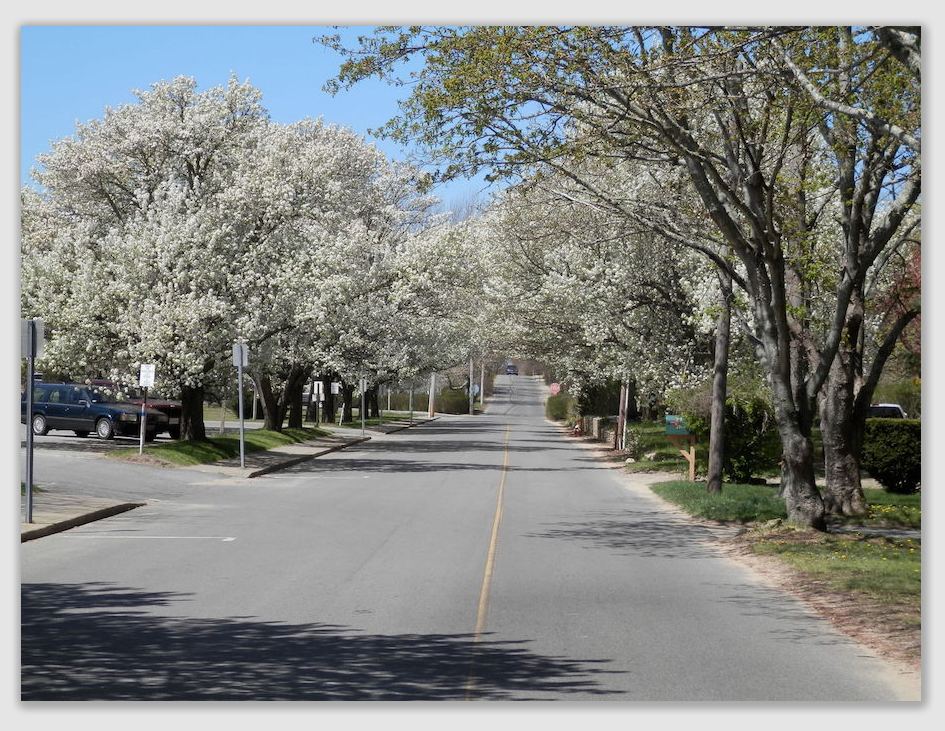
My friend Gerry lives in Pennsylvania and every spring, without fail, he posts the same message. Cut them down. Get them out of your yard. The best way to prune a Bradford pear tree, he says, is with a single horizontal cut through the trunk as close to the ground as possible. I laughed when I read it this year. Then I thought about last weekend. I was on a bike trip along the JAM trail in Delaware — beautiful ride, runs near a landfill. At one point I caught a smell and figured, well, that’s the landfill doing what landfills do. I kept riding. The smell stayed with me longer than it should have. A few miles later I looked up and saw them. White flowering trees, lining the trail in both directions. Bradford pears in full bloom…
Phoenix, Arizona, KTVK-TV, April 12, 2026: Worker dies after palm tree skirt falls on him in Tempe
A worker is dead after a palm tree skirt fell on him in Tempe on Sunday morning. Just after 8:30 a.m., first responders were called for a tree rescue in the area of Maple Avenue and 12th Street, just east of Mill Avenue, according to the Tempe Fire Department. Crews say 57-year-old Flavio Sesmas Maya was climbing and trimming a palm tree when its skirt dislodged and fell on him, crushing him against the tree trunk. Firefighters used a ladder truck to reach Sesmas Maya and remove the debris. Tempe Fire’s technical rescue team then helped with lowering him out of the tree and onto the ground. However, Sesmas Maya was pronounced dead at the scene. A palm tree skirt is a collection of dead fronds and debris that builds up over time and can weigh hundreds of pounds, easily trapping and killing someone…

It’s spring, and soon you may see invasive spotted lanternflies fluttering around Ohio. The Ohio Department of Agriculture wants to slow their spread. ODA placed every Ohio county under spotted lanternfly quarantine in February 2026 and is no longer asking Ohioans to report sightings. Still, the department has launched a grant program rewarding seven organizations for their efforts to reduce the spread of the invasive spotted lanternfly and its host, the invasive tree of heaven. Here’s where the organizations are and more about the spotted lanternfly. ODA to reward over $65,000 to seven organizations to combat spotted lanternflies, tree of heaven… Altogether ODA will distribute $65,193 to help fight against spotted lanternflies. Projects to reduce the spread of these species may include community engagement activities to help control the spread, removal of trees of heaven, herbicide treatments to prevent regrowth, targeted insecticide treatments for the spotted lanternfly and identification and removal of egg masses…
Las Vegas, Nevada, The Nevada Independent, April 8, 2026: The war on grass is killing our trees
When the Southern Nevada Water Authority’s turf conversion program started in 1999, I was on board with the idea. I was a true believer, an environmentalist and conservationist who’d proudly served for many years as lead groundskeeper at its partner agency, the Las Vegas Valley Water District. The rationale behind the Water Smart Landscapes rebate program was valid: There was simply too much grass that served little to no purpose in Southern Nevada. Much of it was irrigated inefficiently, especially on highly sloped surfaces that caused a huge amount of runoff and water waste. I strongly believed then — and still do now — that a desert landscape is far more beautiful than a boring lawn. The water authority’s cash-for-grass incentive started off paying people 50 cents per square foot of grass removed from their yards. It later increased to $1, and it’s risen to roughly $7 per square foot today. (For its part, the water district contributes to the incentives by discouraging lawns through excessive use charges — without necessarily considering factors such as property size, number of residents or existing vegetation, but that’s another subject.) But perhaps the biggest incentive will come into play when a wide ban on irrigating “nonfunctional turf” from our taps, AB356, takes effect in 2027. In the water authority’s war on grass, this could be the decisive battle. (Disclosure: I gave a sworn declaration in an active lawsuit challenging the water authority’s enforcement of this ban, but I am not a plaintiff.) If only it were that simple. There’s a problem with this all-grass-is-bad thinking: It doesn’t consider our trees, which in many cases are dependent on grass…
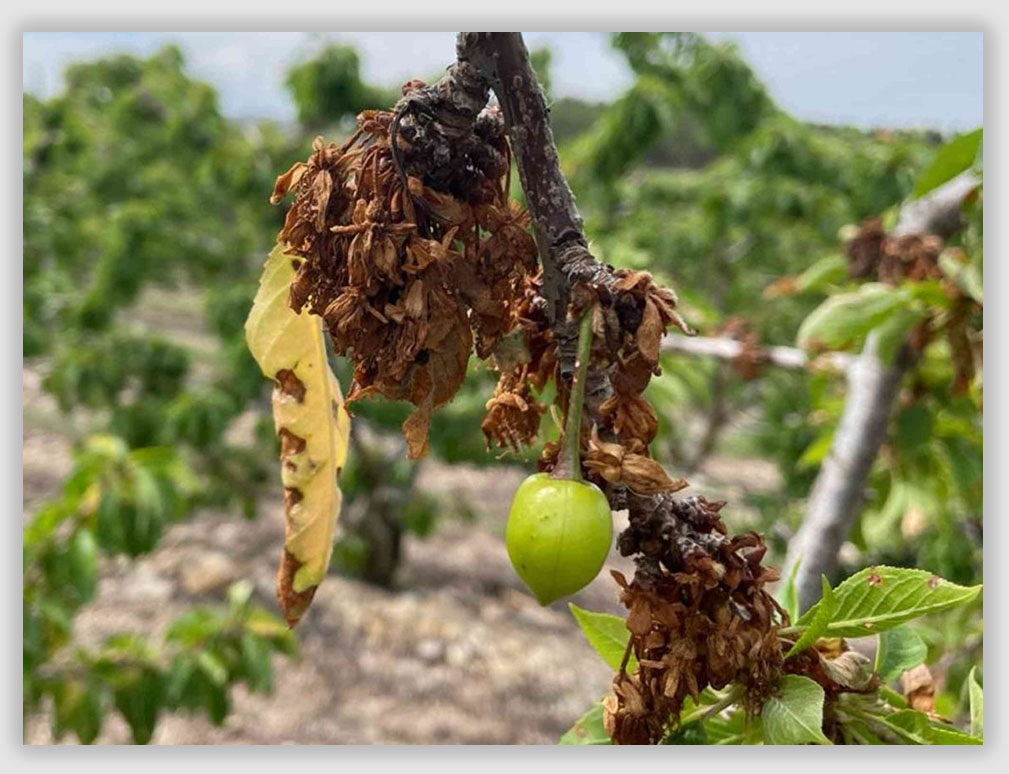 Earth.com, April 8, 2026: Fungus that rots trees from the inside out may be hiding a climate problem
A new study has found that a common tree disease can turn some dry northern forests from methane sinks into methane sources. The finding suggests that damage hidden inside living trunks may be quietly changing how much warming a forest helps prevent. In sugar maples growing across the Wisconsin-Michigan northwoods, the strongest methane signal came from trees decaying at the center. At the University of Notre Dame Environmental Research Center (UNDERC), researchers documented that methane levels rose as that internal decay worsened. Healthy neighboring trees still released small amounts, but diseased trunks released far more, enough to overwhelm the modest methane uptake in nearby soil…
They are the sons of stumpy, or, better yet, clones of stumpy, and they are growing right now in D.C., readying to be replanted at the Tidal Basin. The progeny of the gnarled yet beloved cherry tree, which was removed from the Tidal Basin during sea wall restoration, are now growing at the National Arboretum. “The National Park Service reached out to the National Arboretum and asked if we could help them propagate Stumpy so that Stumpy’s spirit would live on, and, as you can see, that was successful,” Piper Zettel, horticulturist at the National Arboretum told WTOP, as she pointed to the three small Yoshino cherry trees that have grown to be about three feet tall. The National Arboretum is a public garden, but it’s also serves as a gene bank and a research facility for the U.S. Department of Agriculture’s Agricultural Research Service. They house plant genetic material from all over the world as a safeguard…
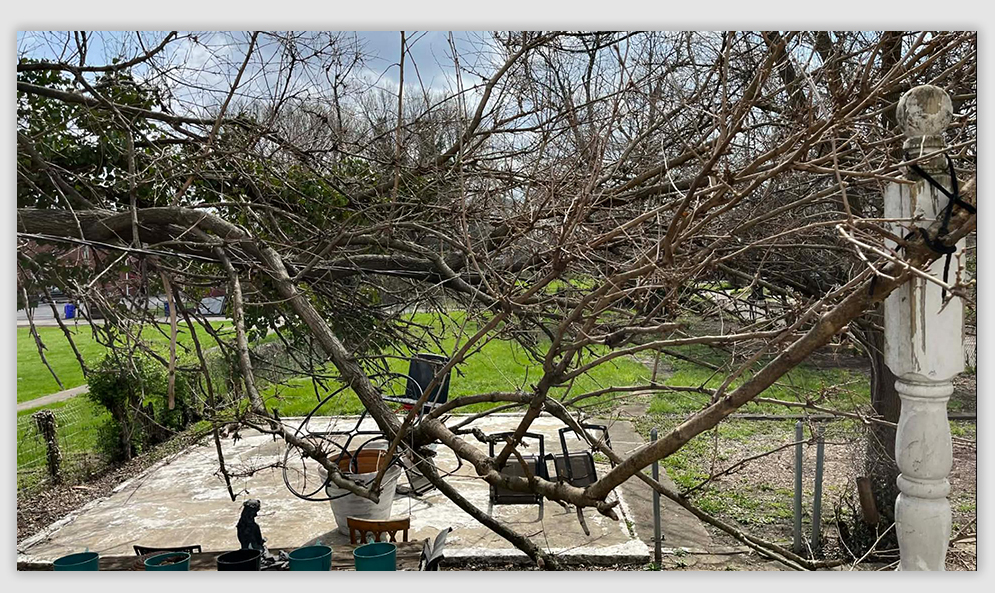
Ella Moody has lived in her east Columbus home for 16 years. But recently, she’s found herself navigating a new problem. “The neighbor’s tree, it didn’t die. It didn’t fall. It laid open like a flower, a trunk laid open,” she said. But unlike a flower in bloom, the result has been anything but beautiful.”It has collided with the power line coming across the alley through my yard to service that empty house,” she said. The house next door is currently vacant. Moody told 10 Investigates she doesn’t know who owns it. She added that she’s called code enforcement for help, but claims she was told the city couldn’t intervene. So, she said she called AEP. “AEP won’t move the line. They’re telling me I need to cut these limbs so they can tighten the line. I’m saying tighten the line. How about run it in another direction? They said they need the owner’s permission…
Blawnox is looking a little greener with the help of multiple volunteers and the Western Pennsylvania Conservancy. The nonprofit environmental agency partnered with the borough for a tree planting through TreeVitalize on April 2. TreeVitalize is a community tree planting program. It’s a joint project of Allegheny County Parks, the city of Pittsburgh, Tree Pittsburgh, the state Department of Conservation and Natural Resources, and the Western Pennsylvania Conservancy. Since 2008, TreeVitalize has planted more than 40,000 trees in 59 municipalities in Allegheny County and nearly every Pittsburgh neighborhood. About 20 people, including many Blawnox residents, and Western Pennsylvania Conservancy members replaced 10 invasive trees with native ones along Freeport Road. Both the ones to be removed and types to be planted were selected by Brian Crooks, the conservancy’s urban forestry manager. He also helped provide supplies such as gloves, safety vests and shovels for volunteers. The borough provided food and refreshments. “Our goal is to make sure the right tree goes into the right space,” Crooks said April 2. Trees planted included two cherry trees, two oak hybrids and six lilacs…

As spring takes hold, Russia is back on the offensive in Ukraine. Moscow’s forces are trying to exploit the warmer weather to regain the momentum they lost over the winter as Ukraine waged successful counterattacks along a crucial section of the front. Russia has an edge in soldiers and matériel, and it will look to put those advantages to use by leveraging a critical springtime asset: foliage that helps conceal advancing troops from the omnipresent drones that hunt and strike almost anything that moves. The days when troops pushed forward in tanks and other armored vehicles are largely over. Most attacks today are carried out on foot, with soldiers moving in small groups to reduce detection. Forested areas are scarce in Ukraine’s east and south, the main theater of the war. As a result, soldiers often move through the tree lines that border agricultural fields. These lines are a legacy of Soviet-era policies that used trees to shield crops from wind. Now, they are used by troops to seek cover from enemy fire or regroup before an attack. They have also become pathways for troops trying to gain territory or to retreat from the front line…
Joe Zdrilich, lead attorney at Zdrilich Injury Law, says that, in his state of Georgia, it is legal to trim a neighbor’s tree when the branches or roots extend onto your property. “You have a right to protect and keep up your property, just as your neighbor has the right to preserve their tree. Both are involved in private-property rights that are enshrined in the Constitution,” explains Zdrilich. As far as what parts of the tree you can legally cut, Zrilich says it should be kept strictly to what’s on your side of the property line. He advises remaining conservative with your trimming, as anything that weakens the tree or threatens future disease could present a liability, regardless of whose side of the property line the cut was made from. “Cutting into the base of the trunk, weakening the tree, or stepping onto a neighbor’s land without permission can present liability,” Zrilich adds. “I’ve dealt with disputes in which the pruning was too aggressive, and the neighbor went on to contend that shade had been lost, aesthetics destroyed, and damage done structurally to a tree. If a tree is injured, the potential monetary liability can be high as the law deems trees valuable property…”

 Tree and Neighbor Law For Homeowners and Professionals