Case of the Day – Monday, October 6, 2025

UNSKILLED LABOR

W.C. Fields once quipped, “He’s a self-made man – which shows the horrors of unskilled labor.”

When Farmer Wilson decided to sue his neighbor, demanding after 50 years of not bothering to enforce an agreement on keeping trees bordering his field trimmed that the neighbor clear-cut a 40-foot wide swath, he decided to represent himself. After all, it seemed that the lawyering business was just so much talk. Anyone ought to be able to do it…

Well, not just anyone. It turned out that as a lawyer, Farmer Wilson was more a son of the soil than he was a barrister. The heart of Farmer Wilson’s nuisance beef was that the trees cut down the crop yield on his land, because they shaded the field. Reduced to its essence, that was just a claim that he had a right to light, that is, a right to the sun being shaded by his neighbor’s trees. What he was claiming was the easement known as “ancient lights,” the Court said, and “ancient lights” was a doctrine that had been run out of West Virginia.

If that weren’t enough, the Court threw even more shade on Farmer Wilson’s lawsuit. The prior owner of Farmer Wilson’s land had had a deal with the former owner of the next-door property on keeping the bordering trees trimmed. Farmer Wilson candidly admitted he had not tried to enforce the contract for a half-century, confidently asserting that this meant his damages had really accumulated.

But what it really meant was that under the West Virginia statute of limitations that applied to nuisance suits, his lawsuit was about 48 years too late.

Farmer Wilson may not have been a self-made man, but his lawsuit was an excellent illustration of the horrors of unskilled labor.

Wilson v. Polino Enterprises, Inc., 2018 W. Va. LEXIS 413, 2018 WL 2277812 (Supreme Ct. of Appeals W.Va., 2018). Farmer Wilson and Polino Enterprises own adjacent properties in Upshur County, West Virginia. The Wilson property borders the Polino land’s western and southern boundaries. Farmer Wilson sued Polino, complaining that the Company had created a nuisance on the western boundary of its property that was damaging his farmland.

Farmer Wilson claimed that trees on Polino’s side of the property line were nuisances because of “[d]amage to the production (yield and quality) of crops as a result of invasion by roots and shading.” For this alleged crop damage, Farmer Wilson asked for $100 per year for a total of $4,500 from May of 1969 through 2014 when he originally filed the action. He also sought unspecified “labor and equipment cost[s] of removing branches and limbs of trees fallen” on his farmland. Finally, he wanted Polino to remove deer stands placed in trees near the property line because he had “no way of policing the killing of deer” on his property.

Polino filed a motion for summary judgment in the trial court. The Company showed the court letters between the parties regarding the care of boundary areas between the properties. In the letter, Farmer Wilson noted that Polino had previously agreed to his “cutting overhanging limbs and dragging them back to the wooded area” of the Wilson property, but that the proposal would restrict his cutting of tree limbs to those “no higher than 25 to 30 feet from the ground level.” Consequently, Farmer Wilson requested that Polino “clear-cut all the area 40 feet from our fenced border to remove the encroaching limbs and roots of trees from your forested land.” His letter explained that ‘I have neglected enforcement of the agreement between Mr. Robert Woofter[, a previous owner of the Polino property,] and my father. As a result, [I] have suffered economic loss during the past 50 years and [am] suffering economic loss each year in the form of forage crops harvested from the cultivated fields involved.’

In its motion for summary judgment, Polino argued that assuming all of Farmer Wilson’s allegations were true, it was nevertheless entitled to judgment as a matter of law on the nuisance claim. The trial court agreed.

Farmer Wilson appealed.

Held: Polino’s trees were no nuisance.

A private nuisance is a substantial and unreasonable interference with the private use and enjoyment of another’s land.

Abe Lincoln could have been talking about Farmer Wilson, who has a real dummy for a client.

The lower court properly ruled that Farmer Wilson’s nuisance claim was barred by the statute of limitations under West Virginia Code § 55-2-12(a). That section gave a party claiming a nuisance only two years from the time the claim arose to sue.

The Supreme Court even considered the statute of limitations, because it determined that Farmer Wilson’s rather opaque and do-it-yourself nuisance claim was fatally flawed. His contention, as best the Court could surmise, was that insufficient sunlight caused by overhanging trees on the respondent’s property had resulted in his farmland yielding fewer crops. That claim, the Court said, “fails as a matter of law… The common law doctrine of ancient lights has been abolished in West Virginia… Though an adjoining property owner may still establish an easement implied by necessity to light and air, such an easement does not exist here because there is no prior common ownership of the parties’ properties.”

In Cobb v. Daugherty, the court discussed easements of necessity, also called easements by necessity or ways of necessity. Such easements are typically implied to provide access to a landlocked parcel. Easements implied from quasi-easements, also called implied easements or easements by implication, are based on a landowner’s prior use of part of the landowner’s property (the quasi-servient tenement) for the benefit of another portion of the property (the quasi-dominant tenement). Three elements – common ownership, transfer of part of the land (severance), and necessity of some kind – are required in both cases. The fundamental distinction is that easements implied from quasi-easements are based on prior use.

While Cobb recognized that a certain type of easement to light and air still exists in West Virginia, the Court said, Farmer Wilson did not meet the legal requirements. He had not previously owned the Polino property. Therefore, the Court ruled, “We conclude that the circuit court did not err in awarding respondent judgment as a matter of law with regard to petitioner’s nuisance claim.”

– Tom Root

TNLBGray

Case of the Day – Wednesday, February 12, 2025

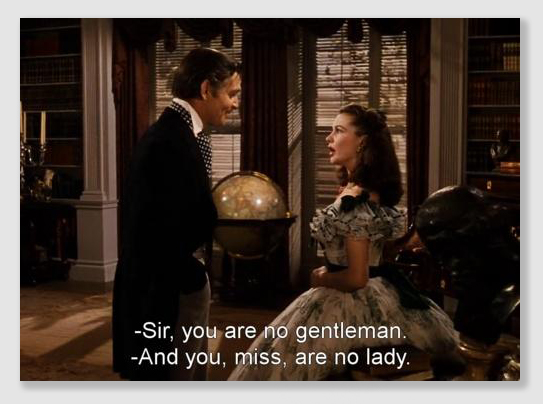
YOU, SIR, ARE NO GENTLEMAN

It is fairly common to find people in some kind of kerfuffle over an alleged breach of contract, where one complains that despite what the document might say, the parties had really orally agreed to something else altogether.

That’s why canny lawyers make sure that every contract has an integration clause in it. An integration clause is no relic of the civil rights era. Instead, it provides that the parties have no deals but the deal written down in the contract; in other words, everything has been integrated into the document, and if it ain’t written, well… then it just ain’t so.

Beyond the careful draftsmanship lies the common-law “parol evidence rule.” The word here means “oral” or “solely evidenced by speech.” Today’s case provides a perfect example of it. When the power company got a written easement to trim trees on the Larew estate, that easement provided the power people could keep the lines free of tree hazards. But as the easement was being signed, Mr. Larew asked, “How about my 300-year-old white oak?”

“Oh, that?” the slick power company real estate man said. “We’ll never touch it. You have my word on it.”

Right. It may have taken the power company 20 years, but the tree did get hacked up. When old man Larew’s kids sued – he was long gone by then – the power company said, “What gentlemen’s agreement?”

The utility’s lawyers, having gone to law school, said, “Parol evidence rule! You can’t introduce evidence of an inconsistent oral deal to undercut a clear written easement.”

They were right about that, but dead wrong that the easement meant that they could do as they liked to the trees. The trimming crew boss talked to the property owners but then unlimbered the saws and, as for what was needed, said, “I’ll be the judge of that!”

The West Virginia Supreme Court said, “Not so fast, my friend!” ‘Reasonableness’ and due regard for the rights of the Larews had a lot to do with it, too.

Larew v. Monongahela Power Co., 199 W. Va. 690 (Supreme Ct. W.Va., 1997). In 1975, Glen Larew (a predecessor-in-interest to Susan and Keith Larew) granted a written easement to Monongahela Power Company giving Monongahela the right to trim, cut or remove trees in order to maintain electric service. According to the Larews, there was also a “gentlemen’s agreement” in 1975 that a 300-year-old white oak tree on the Larew property would never be touched.

However, one day in 1994, Asplundh Tree Expert Company, Monongahela’s tree trimming contractor, told the Larews that tree trimming would commence shortly pursuant to the easement. The Larews discussed the extent of the trimming with Asplundh but to no avail. Two months later, the trimmers arrive with chainsaws blazing. They trimmed three trees on the Larews’property, including severely cutting up the 300-year-old white oak.

The Larews sued for wrongful cutting, arguing that the extent of trimming was unreasonable. Monongahela filed for summary judgment, alleging that “reasonableness” is not an issue because the determination of the extent of tree trimming needed rests solely with the easement holder. The trial court agreed with Monongahela and dismissed the LaLarews’omplaint.

The Larews appealed.

Held: The power company’s easement gave it the right to trim trees to the extent that the trees endangered the safety or interfered with the use of the power lines, but such trimming has to be done in a reasonable manner with due regard to the rights of all parties. The trimming must not inflict unnecessary damage to the land or unreasonably increase the burden on the servient tenement (the property owner’sights).

The Larews raised two arguments on the appeal. First, they claimed, the trimming violated the 1975 “gentlemen’sgreement” not to trim the white oak. Second, they argued that the trimming performed was unreasonable.

The Supreme Court made short work of the “gentlemen’s agreement.” The parol evidence rule, which generally prohibits the introduction of any extrinsic evidence to vary or contradict the terms of written contracts, is quite clear: prior or contemporaneous statements that contradict the clear, unambiguous language of a written contract are inadmissible. Parol evidence may only be admitted to explain uncertain, incomplete or ambiguous terms.

Here, the terms of the written easement were clear, and evidence of an oral “side deal” that contradicted those written terms was inadmissible.

The fee interest in land over which a power company has been granted an easement remains with the party making the grant. The grantor-owner of the land retains the right to make any reasonable use of the land subject to the easement so long as that use is not inconsistent with the rights of the grantee.

In exercising the rights granted under an easement, a power company must follow the rule of reasonableness. In other words, the power company may not inflict unnecessary damage on the land and may not unreasonably increase the burden placed upon the servient tenement.

Under a general right-of-way easement, a power company has the right to enter upon the land to maintain and repair its equipment to the extent necessary to ensure the safe and effective operation of that equipment. In exercising that right of entry, however, the power company may not inflict unnecessary damage on the land or unreasonably increase the burden placed upon the servient tenement. This right of entry includes the right to enter upon the land to cut or trim trees or limbs that might be a danger to the power lines.

A power company’s right as an easement holder is limited to the removal of growth that endangers the safety or interferes with the use of the power company’s lines on the right-of-way, and any removal must be done in a reasonable manner with due regard to the rights of all the parties. The power company’s rights are not unlimited. The power company must not inflict unnecessary damage to the land nor may its exercise of its rights unreasonably increase the burden placed on the servient tenement.

The Larews also maintained that there was a genuine issue of material fact concerning the reasonableness of Monongahela’s trimming. The trial court held that “the easement permits Mon Power to exercise its own opinion in determining how much to trim to prevent the trees from interfering with the power lines” and that the rule of reasonableness stated in Kell v. Appalachian Power did not apply.

In Kellthe Court observed that the “fee interest in land over which a power company has been granted an easement remains in the party making the grant. The grantor-owner of the land retains the right to make any reasonable use of the land subject to the easement so long as that use is not inconsistent with the rights of the grantee.” Thus, the Court said, in exercising the rights granted under an easement, a power company must follow the rule of reasonableness. It “may not inflict unnecessary damage on the land” and “may not unreasonably increase the burden placed upon the servient tenement.” The Kell court held that the right given by the utility easement was “to cut and remove trees, overhanging branches or obstructions that endanger the safety, or interfere with the use, of the power company’s lines on the right-of-way granted by the indenture.

Given the principles upon which Kell is predicated, the Court said, “We find that the [trial] court erred in holding that as a matter of law, the appellees were not subject to the reasonableness rule of Kell.” Monongahela’s right is limited to the removal of that which endangers the safety, or interferes with the use of the power company’s lines on the right-of-way, and any removal must be done “in a reasonable manner, with due regard to the rights of all the parties.” 

Because there is a genuine question of material fact concerning whether the power company unreasonably increased the burden on the Larews’ property when it exercised its rights under the easement, and whether Monongahela limited the trimming to that necessary to assure the safety and continued use of the power company’s lines, summary judgment should not have been granted.

– Tom Root

TNLBGray140407