Case of the Day – Thursday, November 13, 2025

FATHER (AND MOTHER) MAY NOT KNOW BEST

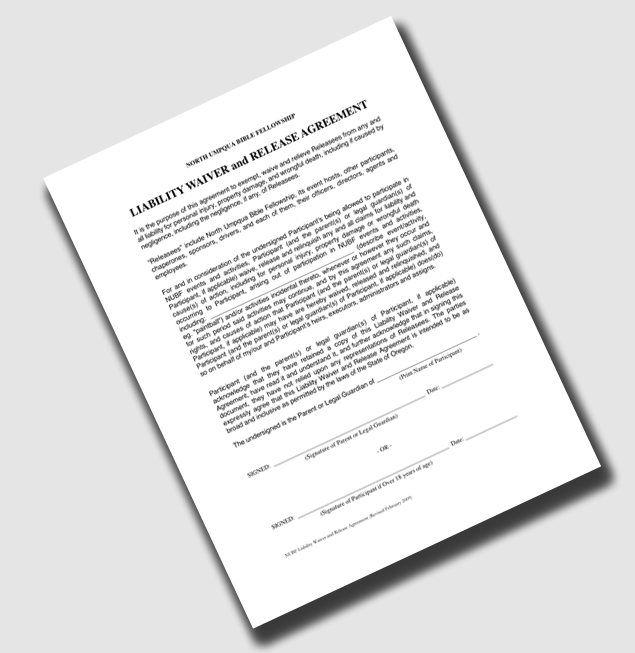
I have written before about preprinted and non-negotiable waivers of liability. You know…that dense print on your coat check receipt, or 6-point type on the form you sign at the ski resort, which says something about whatever happens to you isn’t their fault.

Whether the waiver is enforceable is a debatable proposition, with different answers depending on the facts of the case. But what about a waiver form your child brings home, something requiring your John Hancock so that he or she can go with friends to ski or rollerblade or (as in today’s case) bounce on a trampoline?

Even if you – a rational, thoughtful and risk-averse adult – can sign away your right to seek compensation from others whose negligence or worse injures you, can you give away your kid’s right to do so?

The Kentucky Supreme Court, in a decision that is a little creepy in its “big brother” approach to your right to be parent to your child, said that you cannot, at least where the waiver is sought by some rapacious commercial enterprise. And face it, all of the best fun (and greatest risk) is offered by such enterprises: amusement parks, scuba diving schools, zipline operators, skydiving entities…

The Kentucky Supreme Court blithely assumes that commercial defendants can simply buy insurance without pricing their services out of the marketplace or taming the adventures they offer.

E.M. v. House of Boom Ky., LLC, 575 S.W.3d 656 (Supreme Ct. Kentucky, 2019). House of Boom is a for-profit trampoline park, a collection of trampoline and acrobatic stunt attractions. Kathy Miller purchased tickets for her 11-year-old daughter, E.M., to go play at House of Boom.

Before purchasing a ticket, House of Boom required the purchaser to check a box indicating that the purchaser had read the waiver of liability, which waives claims arising from “negligent acts and/or omissions committed by HOUSE OF BOOM or any EQUIPMENT SUPPLIERS, whether the action arises out of any damage, loss, personal injury, or death to me or my spouse, minor child(ren)/ward(s), while participating in or as a result of participating in any of the ACTIVITIES in or about the premises.”

The waiver includes language that, if enforceable, would release all claims by (1) the individual who checked the box, (2) her spouse, (3) her minor child, or (4) her ward against House of Boom. Once Kathy Miller checked the box, E.M. used the trampolines at House of Boom, and was injured when another girl jumped off a three-foot ledge onto E.M’s ankle, breaking it.

Kathy sued House of Boom on behalf of her daughter in Federal district court. House of Boom, relying on questions over Kathy’s legal power to waive her daughter’s right to sue, concluded that House of Boom’s motion for summary judgment involved a novel issue of state law and used a procedure by which a federal court may certify such a question to the state supreme court for resolution.

Held: A pre-injury liability waiver signed by a parent on behalf of a minor child was unenforceable because under common law, absent special circumstances, a parent had no authority to enter into contracts on a child’s behalf.

Pre-injury release waivers are not automatically invalid in Kentucky, but they are generally disfavored and are strictly construed against the parties relying on them. The courts analyze these agreements for violations of public policy.

The liberty interest of parents in the care, custody, and control of their children is perhaps the oldest of the fundamental liberty interests recognized by law. Although parents have a fundamental liberty interest in the rearing of one’s child, this right is not absolute, and the State may step in as parens patraie to protect the child’s best interests of the child. The question of whether a parent may release a minor’s future tort claims implicates wider public policy concerns, the Court said, as well as the parens patriae duty to protect the best interests of children.

Section 405.020 of the Kentucky Revised Statutes provides that the father and mother shall have the joint custody, nurture, and education of their minor children. However, this grant of custody and parents’ right to raise their child, choose the child’s educational path, and make healthcare decisions on a child’s behalf has never abrogated the traditional common law view that parents have no authority to enter into contracts on behalf of their child when dealing with a child’s property rights, prior to being appointed guardian by a district court.

Even when acting as next friend in a lawsuit, a minor’s parent has no right to compromise or settle a minor’s claim without court approval or collect the proceeds of a minor’s claim.

As litigation restrictions upon parents have remained a vital piece of the Commonwealth’s civil practice and procedure, the Court refused to recognize any parental right to quash their child’s potential tort claim.

Children deserve as much protection from the improvident compromise of their rights before an injury occurs as the common law and statutory schemes afford them after the injury. The law generally treats pre-injury releases or indemnity provisions with greater suspicion than post-injury releases. Such an exculpatory clause that relieves a party from future liability, the Court held, may remove an important incentive to act with reasonable care.

Such clauses are also routinely imposed in a unilateral manner without any genuine bargaining or opportunity to pay a fee for insurance. The party demanding adherence to an exculpatory clause simply evades the necessity of liability coverage and then shifts the full burden of risk of harm to the other party. Compromise of an existing claim, on the other hand, relates to negligence that has already taken place and is subject to measurable damages. Those after-the-fact releases involve actual negotiations concerning ascertained rights and liabilities.

Thus, if anything, the policies relating to restrictions on a parent’s right to compromise an existing claim apply with even greater force in the preinjury, exculpatory clause scenario. The public policy reasons for protecting a child’s civil claim pre-injury are no less present than they are post-injury.

Besides, the Court observed, a commercial entity has the ability to purchase insurance and spread the cost over its customer base. It also has the ability to train its employees and inspect the business for unsafe conditions. A child has no similar ability to protect himself or herself from the negligence of others within the confines of a commercial establishment. If pre-injury releases were permitted for commercial establishments, the incentive to take reasonable precautions to protect the safety of minor children would be removed.

– Tom Root

TNLBGray140407

Case of the Day – Wednesday, June 25, 2025

TRUST US … WE KNOW WHAT WE’RE DOING

Anyone who hasn’t been living in a cave the past decade knows that sunny California has been just a little too sunny. The state and local governments have begged, pleaded, and cajoled homeowners to save water. Some rather severe measures have been implemented.

Maybe so, but you're not the only people around with a law degree. Some folks at the gas company have them, too.

Maybe so, but you’re not the only people around with a law degree. Some folks at the gas company have them, too.

This is not a particularly new story, but the drought persists. That’s why we recall the story that broke a few years ago that the California rich – like the rich everywhere – aren’t exactly like you and me. At least, not like me.

Sure there’s a severe shortage. And sure people should cut back. But not rich people. “We pay significant property taxes based on where we live,” one uber-wealthy property owner once complained to the Washington Post. “And, no, we’re not all equal when it comes to water.”

Ah, yes, we know what entitlement must feel like. It’s sort of like how the Andrewses, high-powered and sophisticated lawyers both, must have felt when they bought their house. You see, Mr. and Mrs. Andrews weren’t your typical blundering homebuyers. He was a tax attorney – one of the high priests of the legal profession – and she was an appellate specialist. So when they settled on a beautiful homestead in the Ohio countryside next to a hillside covered with pine trees, they figured that they understood all those ‘thences’, distances and bearings to PK nailsets, and ‘principal places of beginning’, you know, the stuff other lesser lawyers put in deeds. So how could they have missed the easement that the prior owner had granted to the gas company for two pretty big gas transmission lines buried on the place?

We’re sure they must have read it. But these legal beagles apparently never dreamed the easement meant what it said.

About four years after they moved in, the gas company came along and said the pine trees on the hill were encroaching on the easement and had to go. Being frugal as well as sharp, the Andrewses sued in a local court, acting as their own attorneys. They argued the gas company was stuck with the trees because it had let them grow there in the first place, and anyway, it hardly needed to clear-cut a swath 80 feet wide (25 feet on either side of the two pipelines and 30 feet in the middle).

FoolOl’ Abe Lincoln was right: the Andrews had a pair of fools for clients.

As it turned out, Columbia Gas had a few lawyers, too, and these guys knew easements like Mr. Andrews knew taxes. Maybe even better. The gas company removed the case to federal court, where, after a trial, the Andrewses had their heads handed to them. The Court of Appeals affirmed the defeat.

The court held that Columbia Gas hadn’t acquiesced to the trees, because they weren’t there when the pipeline was built (but were planted by a later homeowner). The fact that the gas company hadn’t cut a swath of trees from the easement in 55 years didn’t matter, nor did it matter that the gas company was cutting such a wide right-of-way on neighboring easements. The court gave credence to the Columbia Gas and state utilities commission witnesses, who carried the day by carefully explaining all of the safety, economic, and reason for the gas company to want the trees removed.

The Court ruled that absent evidence to the contrary, a judge should presume that the parties contemplated that normal development would result in some changes in the use of the easement, even if it is unlikely that the parties anticipated specific developmental changes. New technology permitting aerial inspection, new federal regulations on pipeline safety and security, and new techniques of internal pipeline inspection were all such “developmental changes,” arguing for the gas company to take a heightened interest in keeping its easement clear.

Andrews v. Columbia Gas Transmission Corporation, 544 F.3d 618 (6th Cir., 2008). In 1947, Ruby W. Davies owned the piece of land in Licking County, Ohio, where the Andrews family now lives. She granted The Ohio Fuel Gas Company an easement to build and maintain a pipeline and to “lay, maintain, operate, repair, replace and remove other lines of pipe at any points on said premises upon the payment of like consideration” and the right of “ingress and egress to and from the same” over and across the property. Ohio Fuel agreed to “pay any damages which may arise to crops and fences from the laying, maintaining, operating and final removal of said pipeline.” The agreement did not specify the width of the easement.

pipe2Pursuant to the agreement, Ohio Fuel installed two large high-pressure underground natural gas transmission pipelines through the property. The first, Line K-170, is 16 inches wide and was installed in 1947. The second, Line K-205, is 24 inches wide and was installed in 1957. The two pipelines run parallel to each other about 30 feet apart. Columbia Gas succeeded to Ohio Fuel’s interest in the right of way and still operates and maintains the pipelines. The property changed hands several times over the past 50 years. In the late 1960s, the owner built a house on it and planted pine trees on the hillside behind the house for aesthetics and erosion control. The owner was unaware that he had planted the trees within 25 feet of Line K-170.

In March 2000, the Andrewses bought the property with notice of the 1947 right-of-way agreement. By then, the pine trees had matured. The Andrewses’ decision to purchase the property was motivated in large part by the rural setting and the hillside landscaping.

Columbia Gas made no efforts to clear a right of way around the pipelines until 2004, when a work crew told the Andrewses that the location of the pipeline required them to remove the stand of pine trees. Columbia Gas claimed the right to remove the trees and to maintain a right of way totaling approximately 80 feet, 25 feet on each side of the two pipelines and the 30 feet between the two pipelines. The Andrewses sued Columbia Gas, seeking an injunction and asking for damages if the trees were cut. After trial, the court entered judgment in favor of Columbia Gas, relying on the testimony of Timothy Seibert, a long-time Columbia Gas employee responsible for overseeing the inspection and maintenance of the pipelines running through Andrewses’ property, and Paul Hollinger, an investigator for the Public Utilities Commission of Ohio, the state agency responsible for overseeing natural gas transmission lines. Based on their testimony, the Court concluded that a 50-foot right of way for each pipeline was “necessary and convenient and consistent with the language of the 1947 Davies easement.” The court declined to apply the doctrines of laches, estoppel, or waiver, noting that those doctrines do not apply to expressly granted easements under Ohio law. Finally, the Andrewses were not entitled to compensation for the removal of the trees because the right-of-way agreement only provided recovery for damage to crops and fences. The Andrewses appealed.

NHE-16006_300Held: Columbia Gas was entitled to the 80’ wide right-of-way, and the Andrewses were not entitled to damages for the lost trees. Under Ohio law, an easement is an interest in the land of another, created by prescription or express or implied grant, that entitles the owner of the easement to limited use of the land in which the interest exists. The owner of the land subject to an easement has the right to use the land in any manner not inconsistent with the easement but has no right to interfere with or obstruct the reasonable and proper use of the easement. The owner of an easement has the right to remove objects within it that unreasonably interfere with or obstruct its reasonable and proper use.

Where the terms of an expressly granted easement are ambiguous, the Court held that a judge must determine its scope from the language of the grant, the circumstances surrounding the transaction, and what is reasonably necessary and convenient to serve the purposes for which the easement was granted. Absent contrary evidence, a judge should presume that the parties contemplated that normal development would result in some changes in the use of the easement, even if it is unlikely that the parties anticipated specific developmental changes. Acquiescence for a long period of time in a certain construction of a grant of an easement estops the assertion of a different construction.

EasementsThe Andrewses argued that Columbia Gas never cleared any area within its claimed right of way, and never objected when the prior owner planted the pine trees in the late 1960s. But lack of action prior to this time did not stop the gas company from asserting its rights now. If Columbia Gas had consistently cleared only 10 feet on each side of its pipelines, the Court said, the Andrewses’ argument would have more force. But the fact that the company did nothing is not fatal to its claim. Besides, the Court said, Columbia Gas did not acquiesce to the trees. No trees were growing there in 1947, making it reasonable for the trial court to conclude that the conduct of Columbia Gas after the trees were planted did not evidence the original intent of the parties.

The Andrewses also argued that Columbia Gas acquiesced by allowing trees near its pipelines on other properties. But the original intent of the parties is the primary inquiry and only the conduct of the parties regarding the particular property at issue is relevant. The fact that the gas company may or may not have enforced its easement to its fullest width elsewhere has absolutely no bearing at all on whether it may enforce its easement to its fullest width on the Andrews property.

Capt. Picard may well have landed at the plaintiff's table in this case ...

Capt. Picard may well have landed at the plaintiff’s table in this case …

Relying on testimony by expert witnesses, the lower court ultimately concluded that a 50-foot easement was reasonably necessary and convenient for the inspection, operation, and maintenance of each of the pipelines. The factual findings upon which he based that conclusion were not clearly erroneous. Although each easement case is factually unique, almost every court that has construed an easement with similar language as the one at issue here has concluded that a 25-foot right of way on both sides of the pipeline was reasonably necessary and convenient. And it is beside the point to argue that federal regulations do not require natural gas companies to clear rights of way around their pipelines. Assuming that to be true, the regulations do not prohibit gas companies from clearing rights of way. Although federal law may be helpful in construing certain ambiguous easements, the rights granted in an easement ultimately flow from a private agreement. The difficulties Columbia Gas might face in conducting pipeline inspections was a primary ground for the lower court’s conclusion that a 50-foot right of way was reasonably necessary and convenient for each of the pipelines on the Andrews property.

Columbia Gas offered evidence that the trees hindered the company’s ability to conduct both aerial and close-interval pipeline inspections. According to an expert witness, the presence of trees within the right-of-way interfered with aerial inspections. Additionally, trees within 25 feet of the center of a pipeline could hinder the company’s ability to conduct close-interval surveys and to excavate the pipeline in the event of an anomalous inspection or an emergency, such as a leak or rupture.

The Andrewses argued that Columbia Gas had safely maintained its pipelines for decades without removing the trees and that if an emergency ever arises, it can remove the trees quickly enough at that time. The trial court recognized this as well, but also reasoned that there were some circumstances in which the additional time to remove the trees could impose a substantial hardship on customers who would be without natural gas service during the excavation, and the delay to remove the trees could unnecessarily jeopardize public safety. There was ample support in the record for the conclusion that a cleared right of way was reasonably necessary to ensure a safe, timely, and efficient excavation. The trial court also considered evidence that a 50-foot right-of-way is standard in the gas pipeline industry.

Finally, the Andrewses challenged the trial court’s determination that they are not entitled to damages for the removal of the trees. Because the trees were inconsistent with the easement rights of Columbia Gas, the company was authorized to remove them.

Thomas L. Root
TNLBGray140407

Case of the Day – Thursday, May 29, 2025

YOU’RE ON YOUR OWN, PAL

From the hatcheck to the parking lot to the dry cleaner to the amusement park, we grant pre-injury waivers of liability all the time. And we’re helpless to stop it. Don’t believe us? Try negotiating that fine print on the back of your parking lot ticket next time you leave your Bugatti Tourbilon in the hands of some teenager named “Kent Steerwell.” You’ll be handed your keys, probably with a suggestion of where to put them (and it won’t involve inserting them in the ignition, either).

With the first meteorological day of summer still a few days away away, it’s a nice escape to think about skiing.  Fact is, there are still a few places in the continental United States where you could be skiing today. So here goes: When expert Alpine skiing enthusiast Bill Rothstein parted with his hard-earned cash for a couple of souped-up passes to the Snowbird resort (your basic pass and a special one that let him skip lines and not have to mingle with the great unwashed), he signed the waivers without a second thought. You know, the ones that said the resort wasn’t liable for a ding-dong thing in case he got hurt.

031-downhill-skiingWhile skiing the “Fluffy Bunny” run (hardly sounds like a double-diamond course, does it?) Bill ran into a poorly-marked retaining wall and messed himself up but good. Fortunately, his favored hand wasn’t injured, so he quickly signed off on a lawsuit against the ski operator. But the trial court was impressed by the breadth of the release Rothstein had signed — as tall as the Wasatch and as wide as the Bonneville Salt Flats — and it threw the case out.

The Utah Supreme Court saved Rothstein’s bacon. It held that, no matter what the pre-injury waivers said, Utah public policy required that ski resorts take responsibility for the results of their negligence. A state statute, the Inherent Risks of Skiing Act, exempted ski resorts from certain risks that are inherent in skiing — such as broken legs, frostbite, and fashion faux pas — so that the operators could buy insurance against actual negligence. The Court held that inasmuch as the legislature exempted ski resorts from certain types of risks so that they could afford insurance to cover the remaining ones, it was contrary to public policy for a ski resort to try to exempt itself from liability for any negligence whatsoever. The Romans had some words for it: expressio unius est exclusio alterius, which means “the expression of one excludes all others.” This means that because the law expressly carved out certain acts from liability – such as the effects of the relentless pull of gravity – it specifically intended not to carve out other unlisted acts: like failing to adequately mark a retaining wall.

Now available - expressio unius coffee mugs!

Now available – expressio unius coffee mugs!

The waiver was void, and Rothstein was free to sue… if not to ski the “Fluffy Bunny.”

Rothstein v. Snowbird Corp., 175 P.3d 560 (S.Ct. Utah, 2007). “Fast Billy” Rothstein, an expert skier collided with a retaining wall while skiing at Snowbird Ski Resort. The retaining wall was unmarked and no measures had been taken to alert skiers to its presence. Although Snowbird had placed a rope line with orange flagging near the wall, there was a large gap between the end of the rope and a tree, which Mr. Rothstein incorrectly understood indicated an entrance to the Fluffy Bunny run.

No - not this kind of

No – not this kind of “law suit”

Rothstein sued Snowbird for negligence. Snowbird defended itself by asserting that Mr. Rothstein had waived his ability to sue Snowbird for its ordinary negligence when he purchased two resort passes that released the resort from liability for its ordinary negligence.

Rothstein’s super passes — which let him have faster access to the slopes than mere mortals — required him to sign an agreement that said:

I hereby waive all of my claims, including claims for personal injury, death and property damage, against Alta and Snowbird, their agents and employees. I agree to assume all risks of personal injury, death or property damage associated with skiing… or resulting from the fault of Alta or Snowbird, their agents or employees. I agree to hold harmless and indemnify Alta and Snowbird… from all of my claims, including those caused by the negligence or other fault of Alta or Snowbird, their agents and employees…

If that wasn’t enough, a second agreement he signed said:

In consideration of my use of the Snowbird Corporation (Snowbird) ski area and facilities, I agree to assume and accept all risks of injury to myself and my guests, including the inherent risk of skiing, the risks associated with the operation of the ski area and risks caused by the negligence of Snowbird, its employees, or agents. I release and agree to indemnify Snowbird, all landowners of the ski area, and their employees and agents from all claims for injury or damage arising out of the operation of the ski area or my activities at Snowbird, whether such injury or damage arises from the risks of skiing or from any other cause including the negligence of Snowbird, its employees and agents.

Read the fine print

Read the fine print – if your eyes are up to the challenge

The trial court thought these agreements were pretty comprehensive, not to mention dispositive. It granted summary judgment in favor of Snowbird. Quicker than you could say, “Fluffy Bunny,” Rothstein appealed.

Held: The trial court was reversed, and Rothstein was allowed to sue the ski resort. The Court held that releases that offend public policy are unenforceable. Under Utah’s Inherent Risks of Skiing Act, certain hazards inherent in skiing are defined. Resorts aren’t liable for those risks — like breaking a leg on a downhill run — thus clarifying the hazards sufficiently to enable the ski operators to buy insurance against those risks that aren’t excluded.

The Court said that by expressly designating a ski area operator’s ability to acquire insurance at reasonable rates as the sole reason for bringing the Inherent Risks of Skiing Act into being, the Utah legislature “authoritatively put to rest the question of whether ski area operators are at liberty to use pre-injury releases to significantly pare back or even eliminate their need to purchase the very liability insurance the Act was designed to make affordable. They are not.” The premise underlying the passage of a law to make insurance accessible to ski area operators is that once the Act made liability insurance affordable, ski areas would buy it to blunt the economic effects brought on by standing accountable for their negligent acts. The Court said, “The bargain struck by the Act is both simple and obvious from its public policy provision: ski area operators would be freed from liability for inherent risks of skiing so that they could continue to shoulder responsibility for noninherent risks by purchasing insurance.”

Inasmuch as the legislature had determined that resorts should insure themselves against risks not inherent in the sport of skiing, the Court held that it was contrary to public policy to permit an operator to duck liability for negligence that could have been avoided by requiring its patrons to waive claims for negligence as a condition of use.

– Tom Root

TNLBGray140407

Case of the Day – Friday, May 31, 2024

PLEASE RELEASE ME

It’s not what you know, it’s who you know… That’s what the people looking for a break were saying in the late days of the Trump Administration these days. Paul Manafort and Michael Cohen got released from federal prison early because of COVID-19. Previously, we’ve seen Rod Blagojevich, Michael Milken, Eddie DeBartolo, and, of course, Sheriff JoeSholom Rubashkin, an obscure sailor whose offense of being sloppy with secret material was seen as less serious than Hillary’s,  a dead boxer, and a right-wing writer who was prosecuted by Presidential enemy Preet Bharara for campaign law violations. The late-term clemency beneficiaries included Presidential once-and-future buddies like Steve Bannon, Michael Flynn, Roger Stone, and Lil Wayne.

It’s no wonder the current White House resident has decided to keep a light thumb on the clemency button for now.

Word has it that the former White House resident could use some clemency of the state variety right now, too.

This might be a good time to talk about releases… not the Presidential kind, but rather the kinds of prospective releases or liability waivers that are a part of our lives, from amusement parks and ski resorts to pools to dry cleaners to parking lots and hat checks. We get little tickets that have fine print on the back stating that by using whatever service we’re using, we agree that we can’t hold the vendor liable if anything goes wrong. Our fedora’s missing from the hatcheck? Too bad. Our pants have a hole burned in them from being pressed? Maybe we can cut them off and make shorts. The roller coaster collapses and crushes us to death? Sorry, pal, guess this just ain’t your day, and tomorrow doesn’t look very good, either.

Certainly, such releases serve an important purpose, being crucial grease on the cogs of commerce. You can find websites that let you “roll your own” liability waiver form for whatever event you have planned with just a few clicks. But the proliferation of such releases has left us wondering. First, are all these liability waivers enforceable? Second, can we use prospective waivers in the arboriculture industry — such as “by hiring me to trim your tree, you release me of liability if I make it fall on your Yugo” — to absolve ourselves from liability?

A California court grappled with such a release when a developmentally disabled child drowned at a city-run camp for such children. The girl’s mother had signed a release from liability – parents sign those forms all the time, and whoever reads them? – but the trial court and the court of appeals held the release would not release the City from liability for gross negligence. The Supreme Court of California agreed, holding that an agreement to release future liability for negligence in recreational activities could not, as a matter of law, release the City or the employee from liability for gross negligence.

The case includes a detailed review of the history of such releases and a rationale for determining which types of releases are enforceable and which are not. Generally, a prospective release may not relieve a grantee of any obligation to meet even a rudimentary standard of care. If Santa Barbara had written its release to relieve it of liability for simple negligence, the release probably would have been valid. But it wrote it too broadly, to release it from any negligence, even gross negligence or recklessness. That was too much for the Court.

Big pigs get slaughtered ... The takeaway - write your release to be reasonable, or a court may ignore all of it.

Big pigs get slaughtered… The takeaway – write your release to be reasonable, or a court may ignore it.

In other words, little piggies go back to the trough, but big piggies get slaughtered.

City of Santa Barbara v. Superior Court, 62 Cal.Rptr.3d 527, 41 Cal.4th 747, 161 P.3d 1095 (S.Ct.Cal., 2007). The City of Santa Barbara provided extensive summer recreational facilities and activities for children, including a camp for children with developmental disabilities called Adventure Camp. Katie Janeway, who suffered from cerebral palsy and epilepsy participated in the camp. Swimming activities were held on two of five camp days each week in a City swimming pool.

The application form for Adventure Camp included a release of all claims against the City and its employees from liability, including liability based upon negligence, arising from camp activities.

Katie’s mother signed the release in 2002, as she had in prior years. She also told the City about Katie’s disabilities, specifically that the girl was prone to seizures in the water, and that Katie needed supervision while swimming. The City knew the child had suffered such seizures in the past, and camp administrators took special precautions during the Adventure Camp swimming activities in 2002, assigning a special, trained counselor to keep Katie under close observation during the camp’s swimming sessions.

Pants came back from the cleaners with a hole? read the fine print on your claim ticket. There's probably a waiver there.

Pants came back from the cleaners with a hole? Read the fine print on your claim ticket. There’s probably a waiver in there somewhere.

Katie participated in the first swimming day at the 2002 Adventure Camp without incident. On the second swimming day, she drowned. About an hour before drowning, Katie had suffered a mild seizure that lasted a few seconds. Her counselor observed the seizure and sent another counselor to report the incident to a supervisor. The supervisor said that the report never was received. Katie’s counselor watched her for 45 minutes following the mild seizure, and then — receiving no word from her supervisor — let Katie go ahead with swimming. Malong concluded that the seizure had run its course and that it was safe for Katie to swim. As Katie dove into the water for the second time that day, the counselor momentarily turned her attention away from Katie. When she looked back no more than 15 seconds later, Katie had disappeared. After the counselor and others looked for Katie for between two and five minutes, an air horn blew and the pool was evacuated. Lifeguards pulled Katie from the bottom of the pool, and she died the next day.

Katie’s parents filed a wrongful death action alleging the accident was caused by the negligence of the City. Relying upon the release, the City moved unsuccessfully for summary judgment. Failing in this, the City appealed, and the appellate court denied the petition, holding the agreement was effective and enforceable insofar as it concerned liability for future ordinary negligence but concluding that a release of liability for future gross negligence is generally unenforceable. Thus, the release form did not validly release any liability.

The Supreme Court granted review.

Held: The City’s release was invalid to the extent it purported to apply to future gross negligence. The Court observed that “ordinary negligence,” an unintentional tort, consists of a failure to exercise the degree of care in a given situation that a reasonable person under similar circumstances would employ to protect others from harm. “Gross negligence,” on the other hand, is a want of even scant care or an extreme departure from the ordinary standard of conduct. A signed release absolving the City and its employees from liability for “any negligent act” in its operation of a recreational program for disabled children violated public policy and was thus unenforceable, to the extent it purported to release liability for future gross negligence. Therefore, the Janeways were not precluded from pursuing wrongful death action.

Sure you can impose your waiver in the fine print ... but it's not just boilerplate. Use care in drafting it, or - better yet - spend a little money to have a lawyer do it for you.

Sure you can impose your waiver in the fine print … but it’s not just boilerplate. Use care in drafting it, or – better yet – spend a little money to have a lawyer do it for you Some things are too important for D-I-Y.

The Court said that public policy generally precludes enforcement of agreements that would remove the obligation to adhere to even a minimal standard of care. Courts may, in appropriate circumstances, void contracts on the basis of public policy, the determination of which resides first with the people as expressed in the California Constitution and second with the state legislature. The power of the courts to declare a contract void for being in contravention of sound public policy is a very delicate and undefined power and should be exercised only in cases free from doubt. Nevertheless, the Court said, courts are authorized to distinguish ordinary negligence from gross negligence, even absent express legislative authorization.

The Court grudgingly seemed to accept that waivers of liability for future ordinary negligence – at least in recreational or sports contexts – would be enforceable. However,  California does not permit a waiver of liability for future aggravated negligence. For that matter, neither do an overwhelming number of other states.

Whether this holding might have applicability before recreational and sports activities, such as in “inherently dangerous” activities such as tree removal, is up in the air. While this shouldn’t dissuade an arborist or tree removal company from including a carefully drawn and limited waiver in the contract, neither should the professional bank on the waiver being enforced.

  – Tom Root

TNLBGray140407