Case of the Day – Friday, September 6, 2024

ALL YOUR TREE ARE BELONG TO US

If you were not following Internet culture (as oxymoronic as that phrase may be) twenty some years ago or so, you might not recognize the badly-mangled taunt “All your base are belong to us,” derived from the poorly-translated Japanese video game, Zero Wing. It became a cult classic in 2001, and the melodious strains of the techno dance hit Invasion of the Gabber Robots can be heard in some of the goofier corners of the ‘Net – and there are plenty of those – to this very day.

allyourbaseOver the past week, we have examined Colorado’s unusual and needlessly complex approach to boundary trees. Yesterday and today, we are examining another approach, one that is simple, clean and efficient.

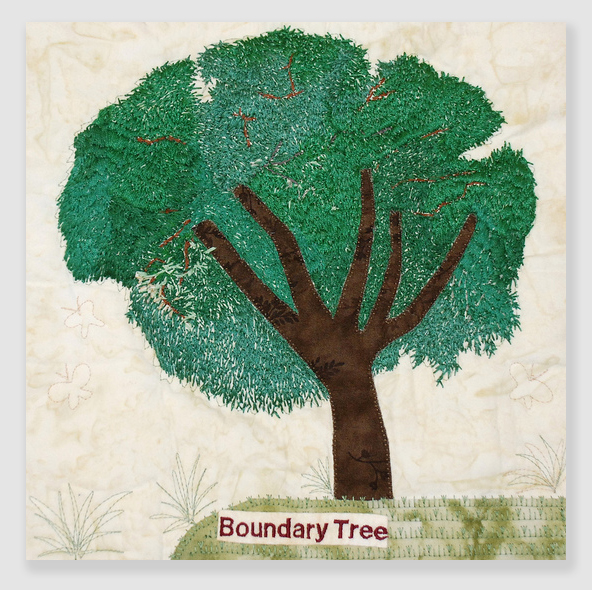
In today’s case, an elm tree stood on the boundary line between the Ridges and the Blahas. One can almost imagine Mr. Blaha — who was tired of the mess the elm made every fall — announcing to the tree, “you are on the way to destruction!” But the problem was that, contrary to Mr. Blaha’s belief, all the tree’s base did not belong to him, at least not just to him. Rather, the base of the tree straddled the property line between the Blaha homestead and the Ridges’ house.

Unlike the Colorado decision of Rhodig v. Keck, which we discussed in our review of Love v. Klosky last week, the Illinois court did not require that the plaintiff show who had planted or cared for the tree. Instead, its analysis was simple: the tree grew in both yards, and thus, the Ridges had an interest in the tree, as did the Blahas. This made the landowners “tenants in common,” and prohibited either from damaging the tree without permission of the other.

The Illinois view, exemplified here and in yesterday’s discussion of Holmberg v. Bergin, is the more common approach than Colorado’s “husbandry” test, and it prevails in the United States. Here, the Court issued an injunction against Mr. Blaha prohibiting him from cutting down the tree. For great justice.forgreatjustice

Ridge v. Blaha, 166 Ill.App.3d 662, 520 N.E.2d 980 (Ct.App. Ill. 1988). The Ridges sought an injunction against the Blahas to prevent them from damaging an elm tree growing on the boundary line between their respective properties. After living with the elm for many years, the Blahas tired of the tree’s unwanted effects and decided to remove it with the help of an arborist. The Ridges were not consulted, however, and when arborist Berquist came to remove the tree, plaintiffs objected that the tree belonged to them and that they did not want it destroyed.

Growing_TreeThe evidence showed that the base of the tree extended about 5 inches onto the Ridges’ property, but that the tree trunk narrowed as it rose so that at a height of 1.25 feet, the trunk is entirely on Blahas’ side of the line. Photographs were also introduced which showed the tree interrupting the boundary line fence. The trial court found that no substantial portion of the elm’s trunk extended onto the Ridges’ property and that, as such, they did not have a protectable ownership interest in the tree. The Ridges appealed.

Held: The Ridges had a protectable interest. The Court held that the fact that a tree’s roots across the boundary line, acting alone, is insufficient to create common ownership, even though a tree thereby drives part of its nourishment from both parcels. However, where a portion of the trunk extends over the boundary line, a landowner into whose land the tree trunk extends had a protectable interest even though a greater portion of the trunk lay on the adjoining landowners’ side of the boundary. That interest makes the two landowners tenants in common and is sufficient to permit the grant of an injunction against the adjoining landowner from removing the tree.

Move Zig.

– Tom Root

TNLBGray140407

Case of the Day – Tuesday, September 3, 2024

LOVE, BOUNDARY TREE STYLE

Tree law fans (and I consider myself to be a fan) waited for a long time for the Colorado Supreme Court to decide Love v. Klosky, and do away with the clunky old Rhodig v. Keck rule. The Rhodig rule holds that a tree that has grown up to be a boundary line tree is not owned by both property owners unless the neighbors claiming part ownership can jump through hoops to prove they (or their predecessors-in-interest) helped plant or nurture the tree, or treated it as the boundary line. The Court acted in 2018, and we duly reported on the matter at the time.

I was quite disappointed by the missed opportunity the Love decision turned out to be, and we said so.

Today, I’m reviewing the ruling, because, for the next week or so, I will be talking about the strangeness that is the boundary-tree rule. Brushing up on current events, weirdly enough, is a good place to start.

In the rest of the civilized world (except for Minnesota, where, ironically enough, I am sitting writing this), a tree that straddles a boundary line is owned by both property owners, usually as tenants-in-common but – as we will see next week – sometimes as something more or less. The general rule is that one owner can’t mess with the tree without the other one’s permission.

As 1970s television cooking personality Chef Tell would have said, “Very simple, very easy.” No messy litigation, no one keeping tree-feeding logs, garden shop receipts, or detailed journals of joint plantings of years gone by. Just a simple, binary rule: If the tree crosses the property line, both landowners have an interest. If it does not cross the line, only one does.

Unfortunately, the Colorado Supreme Court’s love affair with stare decisis – the legal doctrine that holdings of prior cases should govern the outcome of present and future cases – has led it to a tortured defense of Rhodig. Everyone has it wrong, the Court said: Rhodig doesn’t apply to all boundary trees, just trees that started growing on one side of the property line and grew across the line to encroach on the other property.

It is more than a little ironic that a cartoon set in Colorado, South Park, once featured the Chewbacca defense, spun out by a Johnny Cochrane caricature. As Johnny put it in his closing, “That does not make sense.”

Johnny could have been talking about this decision. We all learned in 7th-grade math that a line segment stretches between points A and B and has no thickness. Unless that tiny little sprig of an oak tree in your backyard has the dimensions of, say, Flat Stanley, the odds that it will not start growing on one side of the boundary or the other approach zero. And 10, 20 or 50 years down the road, proving that the tree began its arboreal life straddling a boundary line of no thickness will require legal and arborist legerdemain that will make the Chewbacca defense sound like a Supreme Court argument.

The effect of Love v. Klosky could well be to start a real cottage industry for Colorado lawyers and arborists, proving where young maple or catalpa shoots began their lives. The only trees that are not subject to this nonsensical rule would be those old enough to have been standing in the 19th century when Colorado was first platted.

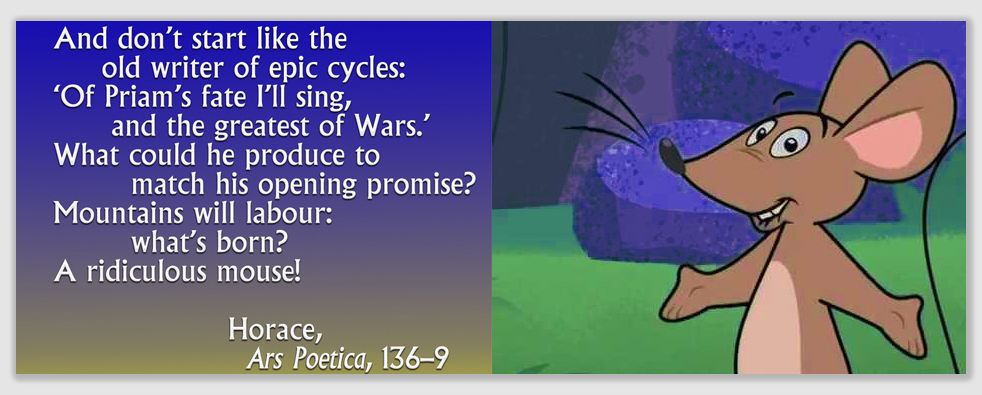
The Colorado Supreme Court had a chance to clean things up by running Rhodig through the tree chipper of legal history. Instead, it labored mightily… and brought forth a mouse.

Love v. Klosky, 413 P.3d 1267 (Supreme Court Colo., 2018). Carole Bishop and Mark Klosky and Shannon and Keith Love own adjacent parcels of land in Denver’s Washington Park neighborhood. A 70–foot tall catalpa tree towers over two adjacent properties. At the base of its trunk, the tree sits roughly three-quarters on the Kloskys’ property and one-quarter on the Loves’ property. The tree began growing on the lots well before the parties moved in, and no one knows who (if anyone) planted it. Whatever its origin story, the tree shed its leaves, seed pods, and branches on both properties without favoritism.

Catalpa tree

Unhappy with the debris, the Kloskys want to cut the tree down. The Loves unsuccessfully tried to convince their neighbors not to do so. When persuasion failed, they sued. The trial court ruled for the Kloskys, holding consistent with the Colorado rule enunciated in Rhodig v. Keck that unless the Loves could prove that they or their predecessors had helped in planting or maintaining the tree, or that they and the Kloskys’ predecessors had treated the catalpa tree as the boundary, the tree belonged solely to the Kloskeys.

On appeal, the Loves argued that Rhodig should be overturned, but the court held it was bound by Rhodig, which it interpreted to mean that “boundary trees are held as common property only if the landowners jointly planted, jointly cared for, or jointly treated the trees as a partition between the properties.” Two of the appellate judges, however, called on the Colorado Supreme Court to overturn Rhodig and require instead that any time a tree straddles two lands, the adjacent property owners jointly own the tree as tenants-in-common.

The Loves asked the Colorado Supreme Court to review the case.

Held: The Supreme Court, refusing to overturn Rhodig v. Keck, held that the Kloskys could remove the tree because it remained the sole property of the owner of the land where the tree first grew unless the tree was jointly planted, jointly cared for, or treated as a partition between the two properties. Because the Loves could not prove any shared property interest in the tree, they could not prevent the Kloskys from removing it.

The Loves argued that Rhodig should be overruled and that the Court should automatically make them tenants-in-common with the Kloskys for no other reason than the catalpa tree had crossed the property line. The Kloskys, on the other hand, argued that Rhodig holds that even when a tree crosses over a boundary line, it remains the property of the owner of the land on which the tree originally grew unless one of the joint-action situations enumerated in Rhodig applies.

The Court said there was no sound legal basis for abandoning Rhodig, surmising that “our ambiguous precedent caused the lower courts to conflate the common law rule for true boundary-line cases and the test for encroachment trees.” Instead, it clarified that Rhodig only governs “encroachment trees,” trees that begin life entirely on one property only to migrate partially to another. Under Rhodig, a landowner may remove such a tree without first securing the approval of his neighbor, unless the landowners jointly planted, jointly cared for, or jointly treated the trees as a boundary marker. The Court said that Rhodig does not represent some weird minority rule on boundary trees. Indeed, the Court lectured, the common law rule regarding true boundary-line-tree cases – where the tree sits squarely on a property boundary with no evidence of migration – is not implicated by Rhodig. In such a case, a tree standing on the division line between adjoining landowners is generally considered the common property of both landowners, even in Colorado. 

Thus, the Court ruled, Rhodig only applied when a tree originally growing on one property grew and encroached on another. Having clarified what Rhodig means, the Court concluded it was correctly decided and remains sound. “And, we see no conditions that have changed to make the above reasoning any less compelling today than when we decided Rhodig.”

The Court ruled that the Loves did not show other circumstances that would create joint ownership. “Just as the Rhodigs had no property interest in the trees that had encroached onto their land because there was not sufficient evidence the parties jointly planted the trees, jointly cared for the trees, or intended for the trees to serve as a boundary,” the Court wrote, “here, the Loves have no property interest in the tree that has encroached onto their land because they have not shown such joint activity implying shared ownership.”

– Tom Root
TNLBGray140407

Case of the Day – Friday, August 30, 2024

HEDGE FUN

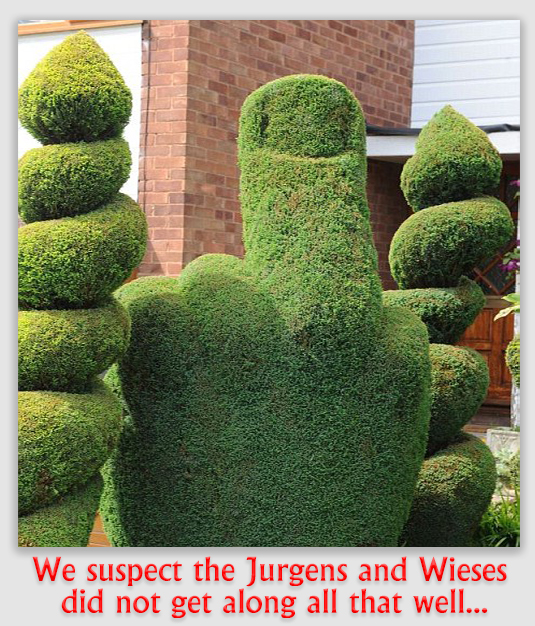
The other day, we found ourselves reading a fascinating brief – and only a lawyer can employ the adjective “fascinating” to describe the noun “brief” – that argued against what the writer called the “common-hedge rule.” Under the common-hedge rule, the argument went, vegetation growing on or near a boundary might be regarded as property held in common, meaning that adjoining landowners would have to protect the vegetation from harm.

To the initiated among us (and because you’re reading this, you are among the initiated), this merely sounds like something close to the rule in Rhodig v. Keck. To the brief writer, however, the common-hedge rule was an un-American mischief-maker that would spawn vexatious litigation, engender confusion, and threaten the freedom-loving people of Earth. What was worse, the writer argued, it would interfere with the first prong of the Massachusetts Rule (that is, the doctrine that a landowner may trim overhanging branches and encroaching roots up to his or her property boundary).

Alas, the brief was for naught: the case in which it was filed, an Arizona hedge encroachment action, was decided on an arcane procedural question regarding the timeliness of a post-judgment motion under Arizona Civil Rule 60(c)(1). But the whole notion of a “common-hedge rule” was interesting.

But on closer examination, the common-hedge rule appears to be nothing special, at least, nothing we could not divine with what we know of the Massachusetts Rule and boundary-tree law. The highlights:

First, a person on whose land a hedge is located is the owner of it, although the roots and branches thereof extend into and over a neighbor’s land.

Second, a landowner whose property is invaded by the boughs of a hedge growing on adjoining premises may cut them at the point where they enter her property. However, the fact that a landowner trims branches overhanging her property from a hedge growing on an adjoining landowner’s land is not evidence that she has any ownership in the hedge, or that it is a boundary between the properties.

Third, if a hedge constitutes a boundary between adjoining lands, it is the common property of the owners of the lands, but neither has a right to cut, injure, or destroy the hedge without permission of the other.

This is pretty basic stuff. It appears the rules we know and love will apply whether the vegetation in question is a tree, a hedge or even a beanstalk.

Jurgens v. Wiese, 151 Neb. 549 (Supreme Court of Nebraska, 1949). Martin and Anna Jurgens sued John and Tena Wiese to stop them from destroying a hedge located entirely on the south boundary of the Jurgens’ and Wieses’ properties, and for damages suffered because of John’s partial cutting of the hedge.

The Jurgens and the Wieses (and the people who owned the properties before them) had for more than 10 years recognized the boundary between their lands to be the center of the hedge. The Wieses trimmed it on their side, not claiming to own the whole thing but rather just the part they trimmed.

The trial court found that the row of hedge trees was completely on the Jurgens’ land and awarded them damages for the Wieses interference with the hedge. The Wieses appealed.

The hedge had been there about 78 years. The owner prior to the Jurgens, John Lenners, maintained the hedge and claimed it was his. In about 1936, John complained he was running into trouble with Lenners, and said, “I want to take that hedge from the old gentleman.” When Lenners died, the Jurgens bought the western 133 acres of the property.

John’s father, George, had owned John’s tract previously. George never made any claim to the hedge, but he did complain that it was too close to the line. More than 30 years before the trial, George said, “To my notion it ain’t right. Lenners has got that big hedge so close… it is damaging my land…. by sapping and they had to go along it every so often and cut branches.”

After John and Tena acquired the land, they did not make any claim that the hedge was on their land or that it was on the boundary line, but they did complain that the hedge was sapping his ground and causing damage. After the Jurgens bought their land, John told Martin he could get “damage off you” because the hedge damaged his land and that he wanted to have some damage for the injury done to his land. The hedge was so close to the line, he said, it sapped some of his ground. When Martin asked him how much he wanted, John said, “Half of it.”

Held: The hedge belonged to the Jurgens, but John and Tena were entitled to trim the part that overhung their property.

The Supreme Court found that the hedge clearly was planted and the trunks of the trees within the hedge were wholly upon the Jurgenses’ land. The Court said the hedge was the Jurgenses’ property, and no part of it has ever been owned by the Wieses. The Court held that ownership of trees standing wholly on the land of one owner, although their roots or branches extend into or over the land of another, is vested in the person on whose land the trees stand, and the adjoining owner has no property in them.

The fact that the Wieses trimmed branches from trees and the hedge which extended over their property was not evidence that they had any interest in or ownership of any part of the hedge, the Court held. One whose property is invaded by the boughs of trees growing on adjoining premises, the Court ruled, may cut them at the point where they enter his property. The act of cutting the branches to the extent they have entered the adjoining property is the exercise of a right, but it is not evidence of the ownership of a tree or trees from which the branches grew.

The Wieses admitted they were cutting the hedge but claimed they were cutting within their legal rights thereby to protect their property in it, that they were the owners of at least one-half of it. They had cut about 20 yards of the hedge and more than 20 hedge trees, and were continuing to cut the hedge at the time the suit was filed. Because a substantial portion of the hedge they cut was on Jurgens’ land, an injunction was a proper remedy. One who has trespassed upon the land of another, and threatens to continue such trespass may be enjoined from so doing. The owner of real estate is not required to permit the devastation of his hedge by a trespasser and seek relief in an action at law for damages, the Court said, but instead may resort to an action to prevent such trespasses.

– Tom Root

Case of the Day – Thursday, March 28, 2024

COLORADO SUPREME COURT BRINGS FORTH A MOUSE

Tree law fans (and we consider ourselves to be fans) couldn’t wait for the Colorado Supreme Court to decide Love v. Klosky, and do away with the clunky old Rhodig v. Keck rule. The Rhodig rule holds that a tree that has grown up to be a boundary line tree is not owned by both property owners unless the neighbors claiming part ownership can jump through hoops to prove they (or their predecessors-in-interest) helped plant or nurture the tree, or treated it as the boundary line. When the Court finally acted a six years ago, it brought forth a silly mouse of a rule that tries to save Rhodig by “clarifying” it in the most meaningless way possible.

The story bears repeating.

In the rest of the civilized world (sorry, Minnesota, not you), a tree that straddles a boundary line is owned by both property owners as tenants-in-common. One owner can’t mess with the tree without the other one’s permission. As 1970s television cooking personality, Chef Tell, would have said, “Very simple, very easy.” No messy litigation, no one keeping tree-feeding logs, garden shop receipts, or detailed journals of joint plantings of years gone by. Just a simple, binary rule: If the tree crosses the property line, both landowners have an interest. If it does not cross the line, only one does.

Unfortunately, the Colorado Supreme Court’s love affair with stare decisis – the legal doctrine that holdings of prior cases should govern the outcome of present and future cases – has led it to a tortured defense of Rhodig. Everyone has it wrong, the Court said: Rhodig doesn’t apply to all boundary trees, just trees that started growing on one side of the property line and grew across the line to encroach on the other property.

It is more than a little ironic that a cartoon set in Colorado, South Park, once featured the Chewbacca defense, spun out by a Johnny Cochrane caricature. As Johnny put it in his closing, “That does not make sense.”

Johnny could have been talking about this decision. We all learned in 7th-grade math that a line segment stretches between points A and B and has no thickness. Unless that tiny little sprig of an oak tree in your backyard has the dimensions of, say, Flat Stanley, the odds that it will not start growing on one side of the boundary or the other approach zero. And 10, 20 or 50 years down the road, proving that the tree began its arboreal life straddling a boundary line of no thickness will require legal and arborist legerdemain that will make the Chewbacca defense sound like a Supreme Court argument.

Love v. Klosky ought to start a real cottage industry for Colorado lawyers and arborists, proving where young maple or catalpa shoots began their lives. The only trees that are not subject to this nonsensical rule would be those old enough to have been standing in the 19th century when Colorado was first platted.

The Colorado Supreme Court had a chance to clean things up by running Rhodig through the tree chipper of legal history. Instead, it labored mightily… and brought forth a mouse.

Love v. Klosky, Case No. 16SC815, 2018 CO, 413 P.3d 1267 (Supreme Court Colo., 2018). Carole Bishop and Mark Klosky and Shannon and Keith Love own adjacent parcels of land in Denver’s Washington Park neighborhood. A 70–foot tall catalpa tree towers over two adjacent properties. At the base of its trunk, the tree sits roughly three-quarters on the Kloskys’ property and one-quarter on the Loves’ property. The tree began growing on the lots well before the parties moved in, and no one knows who (if anyone) planted it. Whatever its pedigree, the tree sheds leaves, seed pods, and branches on both properties.

Catalpa tree

Unhappy with the debris, the Kloskys wanted to cut the tree down. The Loves unsuccessfully tried to convince their neighbors not to do so. When persuasion failed, they sued. The trial court ruled for the Kloskys, holding – consistent with the Colorado rule enunciated in Rhodig v. Keck – that unless the Loves could prove that they or their predecessors had helped in planting or maintaining the tree, or that they and the Kloskys’ predecessors had treated the catalpa tree as the boundary, the tree belonged solely to the Kloskys.

On appeal, the Loves argued that Rhodig should be overturned, but the court held it was bound by Rhodig, which it interpreted to mean that “boundary trees are held as common property only if the landowners jointly planted, jointly cared for, or jointly treated the trees as a partition between the properties.” Two of the appellate judges, however, called on the Colorado Supreme Court to overturn Rhodig and require instead that any time a tree straddles two lands, the adjacent property owners jointly own the tree as tenants-in-common.

The Loves asked the Colorado Supreme Court to review the case.

Held: The Supreme Court, refusing to overturn Rhodig v. Keck, held that the Kloskys could remove the tree because it remained the sole property of the owner of the land where the tree first grew, unless the tree was jointly planted, jointly cared for, or treated as a partition between the two properties. Because the Loves could not prove any shared property interest in the tree, they could not prevent the Kloskys from removing the tree.

The Loves argued that Rhodig should be overruled, and that the Court should automatically make them tenants-in-common with the Kloskys for no other reason than the catalpa tree had crossed the property line. The Kloskys on the other hand, argued that Rhodig holds that even when a tree crosses over a boundary line, it remains the property of the owner of the land on which the tree originally grew unless one of the joint-action situations enumerated in Rhodig applies.

The Court said there was no sound legal basis for abandoning Rhodig, surmising that “our ambiguous precedent caused the lower courts to conflate the common law rule for true boundary-line cases and the test for encroachment trees.” Instead, it clarified that Rhodig only governs “encroachment trees,” trees that begin life entirely on one property only to migrate partially to another. Under Rhodig, a landowner may remove such a tree without first securing the approval of his neighbor, unless the landowners jointly planted, jointly cared for, or jointly treated the trees as a boundary marker. The Court said that Rhodig does not represent some weird minority rule on boundary trees. Indeed, the Court lectured, the common law rule regarding true boundary-line-tree cases – where the tree sits squarely on a property boundary with no evidence of migration – is not implicated by Rhodig. In such a case, a tree standing on the division line between adjoining landowners is generally considered the common property of both landowners, even in Colorado. 

Thus, the Court ruled, Rhodig only applied when a tree originally growing on one property grew and encroached on another. Having clarified what Rhodig means, the Court concluded it was correctly decided and remains sound. “And, we see no conditions that have changed to make the above reasoning any less compelling today than when we decided Rhodig.”

In this case, the Court held, the Loves did not sufficiently show other circumstances that could create joint ownership of the encroaching tree. “Just as the Rhodigs had no property interest in the trees that had encroached onto their land because there was not sufficient evidence the parties jointly planted the trees, jointly cared for the trees, or intended for the trees to serve as a boundary,” the Court wrote, “here, the Loves have no property interest in the tree that has encroached onto their land because they have not shown such joint activity implying shared ownership.”

– Tom Root

TNLBGray140407