Case of the Day – Thursday, May 14, 2026

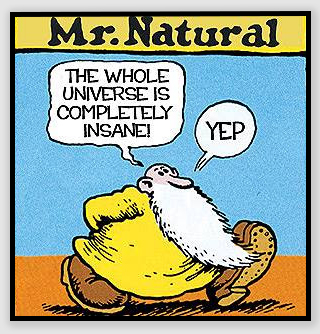
MR. NATURAL

Do you remember the 60s? If so, you weren’t really there. Still, you may know someone whose brain was not so addled by the Summer of Love that he or she has forgotten Robert Crumb’s famous counter-culture cartoon character, Mr. Natural. Mr. N. was a bearded mystic guru who spouted aphorisms on the evils of the modern world, his most famously puzzling one probably being “Keep on Truckin’.”

Contrary to the cachet that Mr. Natural gave the notion, there was never that much virtue in being natural. That certainly has been true in the development of modern arboriculture law. There was a time when the common law made a substantial distinction between the natural and the, dare we say, artificial. If you had a tree on your land that had sprouted and was nurtured without your help, like the dozens of volunteer maple tree sprouts we yank out of our daylilies every year, the tree could do as it wished – grow, shed branches, attack the neighbor’s sewer lines with its roots, even decay and fall on the neighbor’s car – while you were exonerated of any responsibility. On the other hand, if your great-grandpa had planted the elm tree out back a century ago on returning home from the Great War, and it has become diseased and rotted (as trees are wont to do), the common law made you responsible for whatever damage its decay may cause.

You can imagine the furball this rule has caused. Who could tell whether your great grandfather planted that tree before catching influenza and cashing in? And for that matter, what possible should the agency by which the seed got into the ground have on whether a property owner ought to shoulder some duty to third parties for the condition of his or her property?
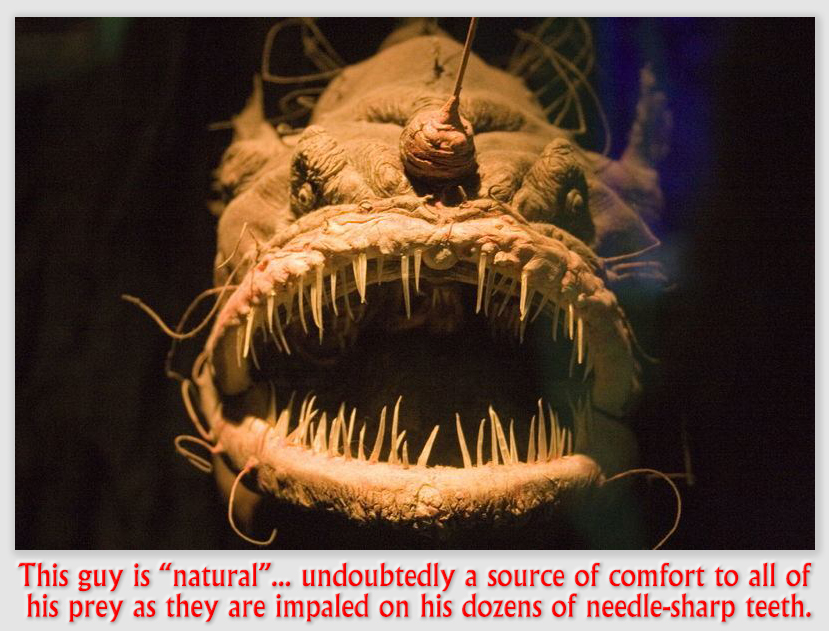
As society changed and the population shifted to urban and suburban living, courts have often had the opportunity to question the rationale for the natural/artificial dichotomy. Today’s case is an excellent example of how appellate courts grappled with the issue.

One note: Despite the fact that the overwhelming reason for the damage to the Rowes’ house was that the McGees shirked their responsibility for the diseased tree, the Court found that the victims themselves had a very small role in the overall negligence. Under the old tort law doctrine of contributory negligence, if a defendant were 99% negligent, a plaintiff was only 1% negligent – contributorily negligent, we used to say – the plaintiff collected nothing. Zero. Nada. Zip. Bupkis.

The pernicious “contributory negligence” doctrine gave way in the late 20th century to “comparative negligence,” a much more sensible approach in which the percentage of negligence is weighed by the jury. If a defendant is 70% negligent and the plaintiff 30% negligent for the plaintiff’s injuries, the damage award is cut by 30%. Much more rational.

Rowe v. McGee, 5 N.C.App. 60, 168 S.E.2d 77 (N.C.App. 1969). Noah and Jeanette McGee sold a tract of land to Chuck, who built a house on it and promptly sold it to Ed and Josie Rowe. The McGees held on to a second tract of land which adjoined the Rowes’ new premises.
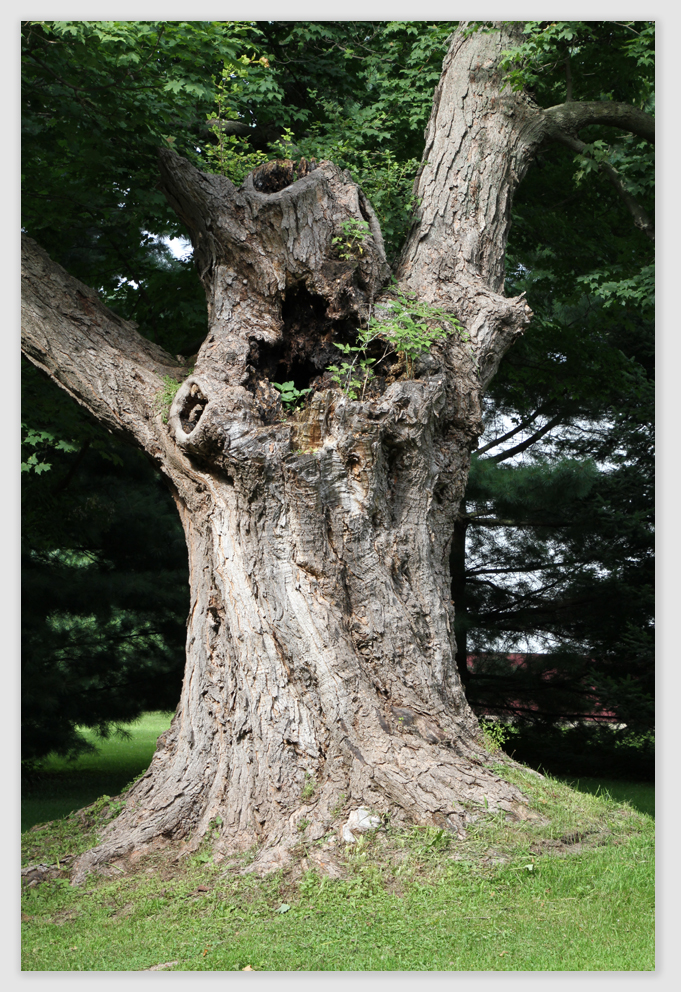
An oak tree stood on the McGees’ land, a towering old thing that was hollow, partially rotten and leaning in a manner that suggested sooner or later it would fall. The tree was completely natural: no evidence suggested any landowner had planted or nurtured it. The oak was in this decrepit condition when Chuck bought the neighboring plot. Part of the McGees’ deal with Chuck was that he would remove the tree, but he did not. Instead, he completed the house and sold it to the Rowes, with the tree still leaning toward the new house.

The Rowes found it hard to enjoy their spanking-new, thoroughly modern luxury home with this next-door Sword of Damocles looming outside their living room window, so they demanded that the McGees eliminate the hazard. The McGees told the Rowes they wanted the great oak reduced to sawdust; they would have to do it themselves. The Rowes agreed to take it down.

Sadly, as of the night of April 22, 1967, they had not yet done so. That night, Mother Nature resolved the problem, blowing the decayed oak right onto the Rowes’ living room sofa and new RCA color TV.

The Rowes sued the McGees for damages. The trial court agreed the McGees had a duty to remove the tree and were responsible to the Rowes for damages. However, because the Rowes told the McGees they would remove the tree and did not, they were found to be contributorily negligent, so they were awarded nothing. The Rowes appealed.

Held: Because the McGees knew that their oak tree was decayed and liable to fall and damage Ed and Josie’s house, the McGees had a duty to eliminate the danger, and could not place the burden to remove the tree on the Rowes.

The Court of Appeals admitted that there were no North Carolina cases on the precise issue, and the state of the law – as reflected in The Restatement of the Law of Torts – was that “where a natural condition of land causes an invasion of another’s interest in the use and enjoyment of other land, the possessor of the land containing the natural condition is not liable for such invasion.” Thus, the Court said, at least historically, the law relieved the McGees of any obligation for mischief caused by the old oak.

The term “’natural condition’ comprehends trees which are the result of a natural condition,” the Court said, “not trees which have been planted by man.” But, as the Court conceded, it often was difficult to determine whether the tree’s origin was natural or artificial.

Ironically, in concluding that the natural-artificial distinction no longer mattered, the Court found direction in a case from Massachusetts, that flinty home of the self-reliant Massachusetts Rule. It cited a Bay State case in which a defendant owned a vacant lot with a large, dead elm tree. When a branch from the tree fell across the property line and hit a neighbor, the Massachusetts Court held that keeping such a tree near a property line constituted a private nuisance, observing that

public policy in a civilized community requires that there be someone to be held responsible for a private nuisance on each piece of real estate, and, particularly in an urban area, that there be no oases of nonliability where a private nuisance may be maintained with impunity.

In the Rowes’ row with the McGees, our North Carolina Court concluded that the greater probability of injury to other people or their property imposes a higher degree of care upon the owner of the tree or structure. In this case, the Court said, “Where the defendants knew that the tree on their property was decayed and liable to fall and to damage the property of Edward and Josephine, we think and hold that the defendants were under a duty to eliminate the danger and could not with impunity place such burden to remove the tree on Edward and Josephine.”

But the Court said the trial judge was right to give the contributory negligence instruction because the Rowes told the McGees that they would remove the tree but did not, so the Rowes still took nothing.

– Tom Root

TNLBGray

Case of the Day – Wednesday, April 29, 2026

TRADITION!

Teyve the milkman has nothing on the law when it comes to the reverence afforded tradition. That’s chiefly because development of the common law is based on the doctrine of stare decisis, shorthand for stare decisis et non quieta movere, meaning “to stand by decisions and not disturb the undisturbed.”

In common law legal systems, precedent – prior authority – is a principle established in one or more prior cases that is either binding on or persuasive authority for a court when deciding subsequent cases with similar issues or facts. Common law legal systems value deciding cases according to consistent rules, so that similar facts will yield similar and predictable outcomes, and people can fairly be said to understand what the law requires of them. Observance of precedent is the mechanism by which those goals are attained.

As Justice Brandeis famously wrote, however, “The rule of stare decisis, though one tending to consistency and uniformity of decision, is not inflexible… Stare decisis is usually the wise policy, because, in most matters, it is more important that the applicable rule of law be settled than that it be settled right.”

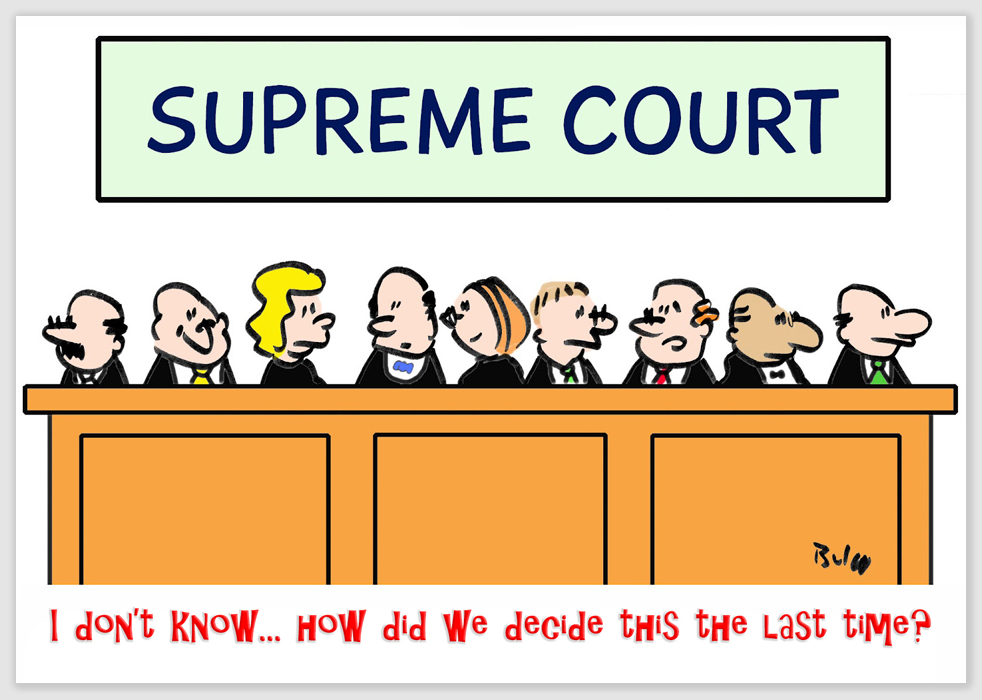
When courts are seen to be messing with stare decisis, a lot of people can get their knickers in a bunch. Look at the kerfuffle over the Supreme Court decision in Dobbs v. Jackson Women’s Health Organization that struck down Roe v. Wade and the constitutional protection for abortion, or (closer to my heart), what Loper Bright Enterprises v. Raimondo did to the Chevron doctrine, that bête noire of judicial purists and conservative deep state-hating pundits.

As a concept, stare decisis is hardly shocking. But sometimes being right becomes more important than being consistent. Were that not so, Plessy v. Ferguson and “separate but equal” would still be the law of the land, and laws limiting the number of hours in a work week would still be unconstitutional. Sometimes, rules with ancient roots that run deep get overturned. Times change, and with them, rules change, too.

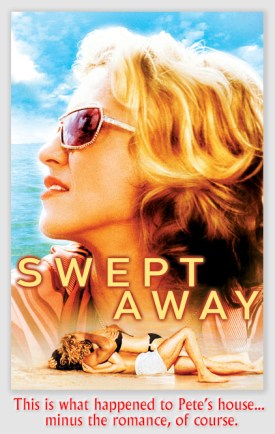
Such was the case in California, which was among the first to completely and soundly reject the quaint common law notion that a landowner was responsible for artificial conditions of his property, but not the natural conditions. As the country became more settled, early tree liability cases began to nibble at the doctrine, perhaps because courts were offended that a property owner could let a tree rot and decay until it fell on a neighbor’s house (or worse yet, the neighbor), and yet not be liable because the tree was a “natural condition.” As the nation became less rural, the rule made less and less sense, until a California landslide swept it away.

Sprecher v. Adamson Companies, 30 Cal. 3d 358, 636 P.2d 1121 (1981). South Winter Mesa Associates, a joint venture between Adamson Companies and Century-Malibu, owns a 90-acre parcel of land in Malibu, California. The parcel is bounded on the north by the Pacific Coast Highway and on the south by Malibu Road.  Across Malibu Road and opposite the parcel are a number of beachfront homes, including one owned by Peter Sprecher.

South Winter’s land contained part of an active landslide that extended seaward from the parcel for 1,700 feet along Malibu Road and beyond the boundaries of the property. Pete’s house sat within the toe of this slide. The landslide, which has been evident since the area was first developed in the early 1900s, was a natural condition of the land that has not been affected by any of South Winter’s activities on the 90-acre parcel.

In March 1978, heavy spring rains triggered a major movement of the slide which caused Pete’s home to spin up against the home of his neighbor, Gwendolyn Sexton.  As a result, Gwen sued Pete, seeking to enjoin the encroachment of his home upon hers. Pete then sued Gwen, the County of Los Angeles and South Winter, seeking damages for harm done to his house by the landslide. He complained that South Winter had not done anything to correct or control the landslide condition.

South Winter moved for summary judgment, arguing primarily that a possessor of land has no duty to remedy a natural condition to prevent harm to property outside his premises. Pete countered that the common law rule of nonliability for a natural condition should be jettisoned because the rule is neither premised upon sound public policy nor in accord with modern principles of tort liability.

The trial court held that South Winter was not liable, and Pete appealed. Eventually, the issue reached the California Supreme Court.

Held: Rejecting the distinction between artificial and natural conditions, the California Supreme Court held that a possessor of land is liable to others when he is negligent in preventing a natural condition of his land from causing harm.

Under the common law, the major important limitation upon the responsibility of a possessor of land to those outside his premises concerned the natural condition of the land.  While the possessor’s liability for harm caused by artificial conditions was determined in accord with ordinary principles of negligence, the common law gave the landowner an absolute immunity from liability for harm caused by conditions considered natural in origin. No matter how great the harm threatened to his neighbor, or to one passing by, and no matter how small the effort needed to eliminate it, a possessor of land had no duty to remedy conditions that were natural in origin.

The Court observed that over the 20th century, a progression of the law mirrored a general trend toward rejecting the common law distinction between natural and artificial conditions.  Instead, the courts increasingly used ordinary negligence principles to determine a possessor’s liability for harm caused by a condition of the land.  The earliest case to do so was a tree case in 1896, in which a New York court held a possessor of land was liable for damage caused when a decayed tree on her premises fell on her neighbor’s house during a storm.  After observing that the defendant clearly would be liable for the fall of a dilapidated building, the court observed that it could “see no good reason why she should not be responsible for the fall of a decayed tree, which she allowed to remain on her premises… The tree was on her lot, and was her property. It was as much under her control as a pole or building in the same position would have been… A defendant had no more right to keep, maintain, or suffer to remain on her premises an unsound tree… than she would have had to keep a dilapidated and unsafe building in the same position.”

In more recent years, the California Supreme Court noted that thirteen states and the District of Columbia have begun applying ordinary negligence principles in determining a possessor’s liability for harm caused by a natural condition. All of the cases involved injury caused by fallen trees. However, the California Supreme Court said, the principle is not limited to trees: a possessor of land has a “duty of common prudence in maintaining his property, including trees thereon, in such a way as to prevent injury to his neighbor’s property.”

The California Supreme Court concluded that the national trend was moving toward jettisoning the common law rule in its entirety and replacing it with a single duty of reasonable care in the maintenance of property.  Even the Restatement Second of Torts recognizes that a possessor of land may be subject to liability for harm caused not just by trees but by any natural condition of the land, drawing no distinction between landowners located in urban areas and the rural countryside. While some cases have held rural landowners have a lesser duty of inspection than do urban dwellers, others do not, while a compromise position taken by a few states holds that the rural or urban nature of the land is only one of several factors to be considered.

Historically, the consideration most frequently invoked to support the rule of nonliability for natural conditions simply embodied the principle that one should not be obligated to undertake affirmative conduct to aid or protect others. A natural condition of the land was, by definition (some argued), one which no human being had played a part in creating. Therefore, no basis for liability existed because a duty to exercise reasonable care could not arise out of possession alone.

Whatever the rule may once have been, the California Supremes said, it is now clear that a duty to exercise due care can arise out of possession alone.  The duty to take affirmative action for the protection of individuals coming upon the land is grounded in the possession of the premises and the attendant right to control and manage the premises.

The historical justification for the rule of nonliability for natural conditions, the Court concluded,

has lost whatever validity it may once have had. In addition, adherence to the rule in California would produce an anomalous result. A possessor of land would owe a duty of care to protect trespassers, invitees and licensees, but not his neighbor, from harms threatened by a natural condition of the land… It is difficult to see why this court should support a rule which would allow a trespasser to bring an action in negligence that would be denied a neighbor, where both were standing on either side of the possessor’s boundary line and were both struck by a dead limb from his tree.

The distinction between artificial and natural conditions and the immunity from liability predicated on that distinction, the Court concluded, bore scant relationship to the factors that should determine whether immunity should be afforded a landowner for harm done by a natural condition of the land. “The foreseeability of harm to the plaintiff, the degree of certainty that the plaintiff suffered injury, the closeness of the connection between the defendant’s conduct and the injury suffered, the moral blame attached to the defendant’s conduct, the policy of preventing future harm, and the extent of the burden to the defendant and the consequence to the community of imposing a duty to exercise care have little, if any, relationship to the natural, as opposed to artificial, origin of the condition causing harm.”

– Tom Root

TNLBGray140407

Case of the Day – Friday, April 10, 2026

DOING NOTHING IS NOT AN OPTION

Among our favorite meaningless aphorisms is the admonition that “doing nothing is not an option.”

Who are these guys kidding? Doing nothing is always an option, which helps explain why so many people do it so often and so well. We admit that sometimes doing nothing brings unpleasant results. But a lousy outcome does not mean that doing nothing is not an option. It only means that it may not be a wise option.

In a lot of legal decisions, you can sense some of the undercurrents at work behind the law that’s being applied, like you’re getting a glimpse of the litigants’ B-roll. In today’s case, you have the good guy defendants – Ev and Marie Walsh, who happily occupy their snug little home – and then there’s the ogre plaintiff, the absentee owner of the rental house next door.

How do we know this? First, when landlord Ed Scannavino noticed his retaining wall starting to tilt and break apart, he didn’t stop by at the Walshes’ for a pleasant chat. Instead, he sent the neighbors a letter complaining that their trees were knocking down his wall. The nice-guy neighbors ignore the impersonal slight that the letter represents and hire contractors to professionally trim their trees along the wall.

The trimming did not help because the problem was encroaching roots. So a few months later, Ed ramps it up with a certified letter, so the Walshes would have to sign for it. How often have you ever gotten a certified letter containing good news? In the letter, Ed complains again, but this time he adds that if the Walshes try to fix the problem he had demanded they fix – like the dutiful neighbors they are – they had better not let their contractors step on his land unless they first prove they have insurance and permits.

This time, the Walshes detected Ed’s condescension, or at least sensed the futility of trying to make this guy happy. In response to the certified letter, they did nothing. Which, it turns out, was as good an option as anything.

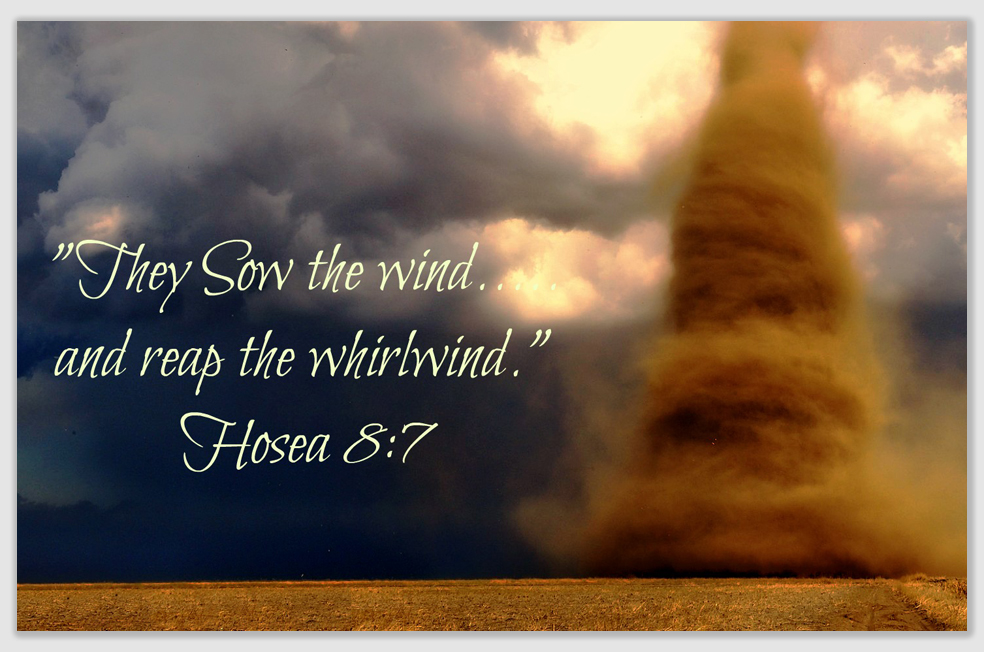
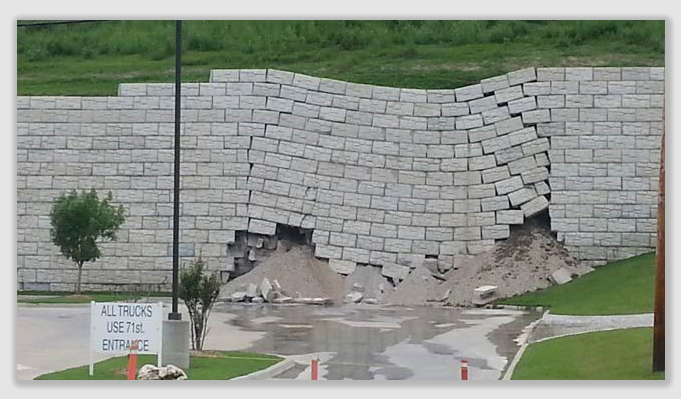
Face it – absentee landlord Ed was spoiling for a fight right from his first letter. How did that work out for Ed? Well, as the Good Book says, sow the wind, reap the whirlwind. Ed got a fight all right, and when the smoke cleared, Ed’s retaining wall lay in small chunks in his yard.

Ed had to rebuild the wall, and he had to pay for it. Donald Trump could be inspired by such an outcome.

Scannavino v. Walsh, 445 N.J.Super. 162, 136 A.3d 948 (N.J.Super.A.D. 2016). Ev and Marie Walsh had a house next to \one owned by Ed Scannavino. Ed was a landlord, with a tenant occupying his parcel. The Walsh family moved into their home in 2004.

The properties were separated by a cinder-block retaining wall, about 4 feet high and 100 feet long. Sometime after the Walshes moved in, a mulberry tree and some shrubs began growing on their property near the retaining wall. No one knew how the tree got there, and the trial court held it was a natural occurrence.

Once the tree and shrubs began growing, Marie or her son trimmed the trees every year, but never trimmed any of the roots below ground level. No evidence was presented that trimming trees above ground affected root growth.

Ed said he first noticed damage to the retaining wall in January 2012, and he asserted roots from the mulberry tree and shrubs caused the retaining wall to tilt. He sent a letter to Marie expressing concern about the damage. She hired some guys to trim the trees and bushes near the retaining wall. But 10 months later, Ed sent Marie a second letter, this one by certified mail, complaining again that “the trees on your property have caused excessive damage to my retaining wall.” In a spirit of accommodation, Ed also warned Marie not to have any workers she hired enter his property to remove the trees without first supplying him with proof of insurance and permits. Marie did not respond.

Nine months later, Ed sued the Walshes, alleging that their careless, negligent, and grossly negligent maintenance of their property caused damage to the retaining wall. He demanded $12,750 in damages.

At trial, the Walshes argued that improper installation, or “simple wear, tear, and deterioration,” could have caused the damage to the retaining wall. Marie also asserted that when she and her husband moved onto the property, the retaining wall was already tilting and had some cinder blocks missing.

The trial court found that the trees near the wall were a “naturally occurring condition and therefore defendants cannot be held liable for the condition of the wall.”

Ed appealed.

Held: The mulberry and shrubs were not a nuisance, and the Walshes were thus not liable. The Court noted that the Restatement (Second) of Torts held that “neither a possessor of land, nor a vendor, lessor, or other transferor, is liable for physical harm caused to others outside of the land by a natural condition of the land.” A natural condition of the land includes the natural growth of trees, weeds, and other vegetation upon land not artificially made receptive to them.

Thus, the Court said, “we have recognized that the Restatement (Second) of Torts ‘draws a distinction between nuisances resulting from artificial and natural conditions of land. The former are actionable; the latter are not’.” But here, Ed was claiming that Marie and Ev were liable “not because of the natural process of the growth of the tree roots. Instead, it is the positive act — the affirmative act — of the property owner in the actual planting of the tree which instigated the process.”

The Court disagreed. “The fact that the affirmative act is helped along by a natural process does not thereby make the condition a natural one within the meaning of the traditional rule.” Here, the trial court found the tree roots that grew and allegedly damaged the retaining wall were a natural condition. It is true, the Court said, that the Restatement (Second) of Torts may permit liability for damage caused by a tree not planted by the possessor of land where the possessor has “preserved” the tree. However, the preservation envisioned by the comment “means some sort of affirmative action on the part of the defendant and not its failure to act.” There was no evidence that Marie took affirmative action to preserve the trees or engaged in any “nurturing” like fertilizing, or in any other maintenance “designed to keep the trees alive or growing.” Rather, she and her son simply trimmed the trees.

The Court rejected the notion that it needed to explore whether evidence of trimming or pruning that improves the health or growth of a tree would be sufficient to convert a “natural” tree into an “artificial condition.” Ed had not introduced any evidence that Marie’s trimming had improved the tree’s health or accelerated root growth, and the trial court had found nothing else in the record that suggested that “Marie or her agent caused the damage to the wall.” Even Ed admitted on appeal that he was not suggesting that Marie’s trimming back the trees had increased root growth.

Instead, Ed argued that the mere fact she had trimmed the trees made her responsible for whatever damage the tree caused. The Court rejected this, pointing out that “the rule of non-liability for natural conditions of land is premised on the fact that it is unfair to impose liability upon a property owner for hazardous conditions of his land which he did nothing to bring about just because he happens to live there.” Because Marie’s trimming did not bring about root growth, she could not be blamed for the damage to the retaining wall. Besides, the Court said, Ed’s proposed rule of liability would “lead to the anomaly of imposing liability upon one who cuts back wild growth ‘while precluding liability of an adjacent landowner who allows the natural condition of his property to run wild’.”

The Court wanted to be sure it did not send the signal that doing nothing was an option.

– Tom Root

TNLBGray140407

Case of the Day – Thursday, July 24, 2025

A TREE GROWS IN BROOKLYN – AND THAT’S DIFFERENT

Poster140306Time was, trees were just trees, and what they did, how they lived, grew and died, was out of the control of the property owner. No one blamed little Francine Nolan if the tree growing in Brooklyn fell on a Sabrett’s cart.

About the time little Francine was living in her Williamsburg tenement, an influential group of judges, scholars, and lawyers in Philadelphia formed an organization known as the American Law Institute. They believed, among other things, that they could write comprehensive treatises about all areas of the law – which they called “Restatements” – that would serve as authoritative statements of the principles of common law. No more confusion, no more divergence of holdings, no more contentious arguments! You can just about hear the group, lemonades hoisted (this was during Prohibition, after all), singing “We Are the World.”

I hear the ALI singing ...

I hear the ALI singing …

Alas, Prohibition failed, and so did the ALI’s goal of replacing all of those tedious casebooks and treatises with the Restatement of the Law. Everyone loved the Restatements, but far from replacing state common law, case reporters, and codes of statutes, the volumes became just another secondary source. To be sure, some of the ALI members never really thought an entire law library could be replaced with one shelf of Restatements, notably Benjamin Cardozo. He believed that the Restatement “will be something less than a code and something more than a treatise. It will be invested with unique authority, not to command, but to persuade.”

The Restatement of the Law continues today, with some volumes in their third printing. And courts love them, even if they don’t always follow them.

Today’s case is a good example. When the Browns’ tree fell on Ms. Barker’s property, it made a mess. She sued her neighbors, arguing that they should have recognized that the tree was at risk of falling and done something about it. The Browns pointed out that no less persuasive source than the Restatement (Second) of Torts said that they weren’t responsible for the natural condition of trees on their property. The trial court agreed and threw the case out.

The appellate court disagreed. It rejected the Restatement approach as being outdated and not sufficiently attuned to the differences between urban and rural life. In other words, the Court said, if a tree grows in Brooklyn, little Francine had better keep her eye on it.

Francine - be careful that tree doesn't fall on the hot dog vendor's cart.

Francine – be careful that tree doesn’t fall on the hot dog vendor’s cart.

Barker v. Brown, 236 Pa.Super. 75, 340 A.2d 566 (Pa.Super. 1975). Virginia Barker’s property adjoins that of the Browns. Both are located in a residential district of State College. A large tree stood on the Browns’ property, a tree that Barker said the Browns knew or should have known was in a decayed, rotting, and dangerous condition. Barker alleged that the Browns negligently failed to take steps to avert the danger and, as a result, the tree fell onto her property.

The tree’s fall destroyed two of Barker’s trees, valued at about $600 each. Barker had to have the fallen tree removed from her property at a cost of $147.50, and the process required her to miss two days of work, causing lost wages of $34.00. Finally, the incident resulted in a loss of value to Barker’s property in the amount of $600.00.

The trial court threw out the case on the grounds that section 363 of the Restatement (Second) of Torts (1965) precluded holding the Browns to blame. That section provided:

(1) Except as stated in Subsection (2), neither a possessor of land nor a vendor, lessor, or other transferor, is liable for physical harm caused to others outside of the land by a natural condition of the land.

(2) A possessor of land in an urban area is subject to liability to persons using a public highway for physical harm resulting from his failure to exercise reasonable care to prevent an unreasonable risk of harm arising from the condition of trees on the land near the highway.

Held: The appellate court reinstated the lawsuit.

The court held that the Restatement’s distinction between natural and artificial conditions – a distinction that had never been the focus of prior Pennsylvania court decisions – was outdated. “It may very well be true,” the Court said, “that the distinction between artificial and natural conditions was valid in a time when landowners were possessed of, and hence would have been charged with the care of large quantities of land. It would still be valid today in rural areas where large landholdings are common. [However], we do not believe that the distinction should be applied to land in or near a developed or residential area. Urban living, by altering the purpose for which the land is used, must also bring with it certain responsibilities. A tree growing in an urban or residential area does not have the same natural relation to surrounding land as a tree located in a rural setting.”

Basswood140306While acknowledging that its approach imposed more cost on landowners, the Court nevertheless believed that “the relatively minor expenditures in time and money that it will take to inspect and secure trees in a developed or residential area is not large when compared with the increased danger and potential for damages represented by the fall of such a tree.”

The Court thus held that a possessor of land in or adjacent to a developed or residential area was subject to liability for harm caused to others outside of the land by a defect in the condition of a tree thereon, if the exercise of reasonable care by the possessor would have disclosed the defect and the risk involved, and repair would have made the tree reasonably safe.

In this case, the Court held, Barker alleged in her complaint that the Browns “knew, or should have known, that the said tree was in a decayed, rotting, and dangerous condition.” This is denied by the Browns, but for purposes of this appeal, the Court had to accept the facts alleged in Barker’s complaint as true. On remand, it noted, the question would be one for the fact finder.

– Tom Root

Case of the Day – Friday, May 23, 2025

SHOW ME WHERE IT HURTS

king160615At common law, it was always good to be king. Because of a cool crown and a nice castle to live in, the king could not be sued by his subjects without his permission. This concept is known as “sovereign immunity.” Sadly, the concept never extended to a private citizen. This is hardly surprising. A sovereign usually takes care of itself, not its subjects. However, where social utility calls for it, states have extended immunity to the common man and woman.

The most obvious of these kinds of statutes are “Good Samaritan” laws in the United States and Canada, legislation that shields from liability those who choose to aid the injured or ill. The laws are intended to reduce bystanders’ hesitation to assist out of fear of being sued for unintentional injury or wrongful death.

Of particular interest to us is the class of immunity laws known as recreational user statutes. Recreational user statutes, although they vary from state to state, generally create tort immunity for landowners who open their land to the public free of charge for recreational use. If you let people wander your woods, you aren’t liable if they step into a woodchuck hole. The statutes serve a public purpose. If you had to shell out every time Bertha Birdwatcher tripped over an exposed root, then you would respond by posting your land to prohibit hikers, campers, and boaters.

The public benefits from getting back to nature are obvious. In fact, in many cases, the recreational use statutes apply to governments as well, such as the nice little park a small town maintains around the municipal reservoir. Recreational use acts are intended to encourage landowners to offer free use of their land to the public for recreational purposes to preserve and utilize the state’s natural resources.

The foregoing has not rid us of creative lawyers. We all dislike crafty litigators (at least, until we need one ourselves). Today’s case – which is, unfortunately, very timely – concerns a little girl who was camping with her family in a California state park. During the night, a tree 60 feet from her campsite fell, hitting the family’s tent and leaving the 3-year-old with severe brain damage. A sad state of affairs to be sure, one that makes the plaintiff a very sympathetic party.

The family’s crafty litigator figured out that the California recreational use statute only applied to unimproved land. The tree was on unimproved land, but the campsite it fell on was improved. The plaintiff’s attorney argued that because the injury occurred on improved land, California was liable for little Alana’s serious injuries.

angels160615Much of the decision turned on whether one measures “unimproved area” from where the defect is located, or where the injury occurs. Remember President Clinton? It depends on what the meaning of “is” is. Often on the heads of such semantic pins an entire case can turn. Here, it did not matter whether Alana was on improved property when she was hurt. It mattered whether the tree that fell was standing on improved property because it toppled.

Alana M. v. State of California245 Cal. App. 4th 1482 (Ct.App. Calif. 1st Div., 2016).  Three-year-old Alana M. was camping with her family in Portola Redwoods State Park, which is owned by the State and is located in an existing forest in the Santa Cruz Mountains.

As Alana’s family slept in their tent, a tanoak tree fell directly on the campsite and struck Alana on her head, resulting in brain damage. The tree was growing on a hillside about 60 feet away from the Campsite. Tanoak trees are indigenous to the area. The nearest man-made object to the tree, before it fell, was a picnic table at Campsite 42, which was about 30 feet away. The tree broke about three feet from the ground.

The State had built improvements and amenities in the Park, including roads, campsites, hiking trails, a visitor center, and various other buildings. The amenities are scattered throughout the park, occupying about 5 percent of the parkland.

Tanoak tree

Tanoak tree

Alana sued the State, asserting claims of premise liability under Government Code § 815.2, and dangerous condition of public property under Government Code § 835.2. She said the tree that fell had rot, a cavity, a hatchet wound, and it “was overextended with poor taper.” Alana alleged the State negligently failed to properly maintain Campsite 41 “and its environs” and negligently failed to warn of the danger of falling trees and, further, the State knew or should have known of the structural defects of the tree that fell and injured her.

The State argued it was immune from liability under Government Code § 831.2 because Alana was injured by a natural condition of unimproved public property. The State pointed to Alana’s concession that the fallen tree “was an object of nature.” Alana maintained there was a dispute of fact as to whether the tree that injured her was on improved or unimproved public property. She relied on the Department’s Tree Hazard Program, which established a process for identifying and removing dangerous trees from developed areas. In Portola Redwood State Park, the Tree Hazard Program applied to all the trees in the campgrounds, including the trees that fell. Under the program, the campground was subject to biannual tree inspections, and periodically hazardous trees were removed. Alana cited language from a Department operations manual that said the Tree Hazard Program applied “solely within the developed areas of all parks operated by the Department.” The publication thus raised a question of whether the entire area of the campground, including the tree that injured her, was “improved public property” outside the ambit of § 831.2.

The trial court granted summary judgment to the State, and Alana appealed.

Held: Alana failed to raise an issue of fact as to whether the tree was on “unimproved public property” for purposes of Government Code § 831.2, and the State’s “natural condition immunity” applied.

Government Code § 831.2, commonly referred to as the “natural condition immunity,” provides that “[n]either a public entity nor a public employee is liable for an injury caused by a natural condition of any unimproved public property, including but not limited to any natural condition of any lake, stream, bay, river or beach.” The statute provides for absolute immunity, intending “to encourage public entities to open their property for public recreational use” by providing immunity “because the burden and expense of putting such property in a safe condition and the expense of defending claims for injuries would probably cause many public entities to close such areas to public use.” The natural condition immunity applies even “where the public entity had knowledge of a dangerous condition which amounted to a hidden trap,” and even “where a governmental entity voluntarily assumes a protective service” – such as the Department’s Tree Hazard Program – that induces “public reliance, and through the negligent performance of that protective service concurrently causes a member of the public to be victimized by a dangerous, latent, and natural condition.”

It is also the rule that “improvement of a portion of a park area does not remove the immunity from the unimproved areas.” Otherwise, the Court said, the immunity of an entire park area would be wiped out even if only a small portion was improved.

Finally, because the phrase “of unimproved public property” in § 831.2 modifies the “natural condition” that caused the injury, the relevant issue for determining whether the immunity applies is the character (improved or unimproved) of the property at the location of the natural condition, not at the location of the injury.

tent160615Alana did not dispute the tree that injured her was a natural condition under § 831.2. Portola Redwoods State Park is an existing natural forest and tanoaks are indigenous. There is no evidence of any artificial change in the tree’s condition nor any evidence of artificial improvements to the tree. Alana argued there was a causal link between the improvements to the campsites and the dangerousness of the tree because “the campsites increased the likelihood that humans would be present when a tree fell in the area and hence increased the likelihood that one of them might be injured.” But, the Court said, the public is always more likely to visit public lands with amenities such as parking, informational signs and maps, toilets, lifeguards, fire rings, hiking trails, picnic tables, campsites, and the like, than similar public lands with no amenities. Such amenities do not abrogate the natural condition immunity for areas that are not improved. If Alana’s argument were to prevail, this would seriously thwart accessibility and enjoyment of public lands by discouraging the construction of such improvements as restrooms, fire rings, campsites, entrance gates, parking areas, and maintenance buildings.

California’s natural forests provide great natural beauty and recreational opportunities along with natural hazards. Alana points to “evidence that all trees eventually fail” and “the simple fact that the tree that fell was 86 feet tall and only 60 feet from Campsite 41” as evidence the tree that injured her was on improved property. This evidence, however, only shows there is risk associated with spending time among the trees of Portola Redwoods State Park; it does not show the tree that fell was on improved property. The Court said, “We do not believe the State became a guarantor of public safety by providing campsites.”

Alana argued the fact the tree was subject to the Tree Hazard Program “leads ineluctably to the inference that the [Department] considered that tree to be standing on improved property within the meaning of § 831.2.” Even if this were so, the Court said, Alana offered no authority for the proposition a defendant’s belief regarding a legal conclusion creates a triable issue on the matter in the absence of any evidence supporting that legal conclusion. Here, there is no evidence raising a triable issue of fact as to whether (1) there was a physical change in the condition of the property where the tree grew or (2) an improvement or human conduct contributed to the danger of the tree. The Department’s belief that the tree was on improved property is not competent evidence on either of these issues.

Essentially, the Court concluded, Alana’s position is she was entitled to a campsite in the forest safe from falling trees, but this “is exactly the type of complaint § 831.2 was designed to protect public entities against.”

– Tom Root

TNLBGray

Case of the Day – Wednesday, March 26, 2025

OUT IN THE FOREST WHERE I MIGHT BE EATEN BY A BEAR

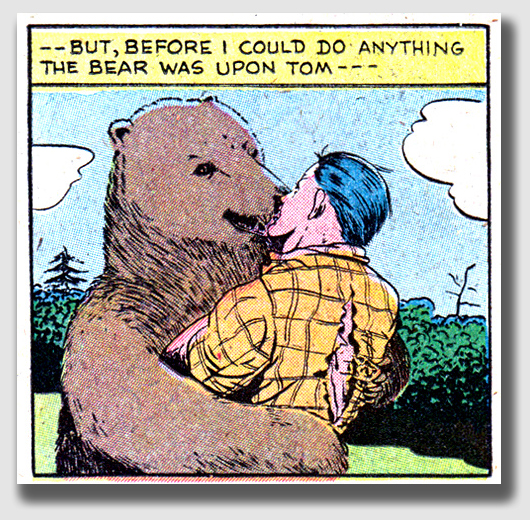
bearontom141013We saw a notice at church the other day reminding the kids that it was time to start signing up for summer camp, now only a scant several months away. We remember camp fondly – dirt, mosquitoes, busy days leaving us hungry enough to eat a bear. If we could find a bear.

Of course, finding a bear might have been a tall order in the wilds of eastern Ohio several decades ago. There are a lot more roaming the woods these days. But even if we had found an Ursus americanus, locating our prey would have only been half the task. It is a profound truth of life that sometimes you eat the bear, and sometimes the bear eats you. You might ask poor Tim Hilston (although the answer to your question will have to wait until the next life) …

Mr. Hilston understood the bipolar nature of life, or maybe just the literal truth of the expression. Back about the turn of the century (this century), Mr. Hilston was field-dressing an elk carcass when he became a carcass himself at the hands — the paws, maybe — of a couple of grizzly bears.

Kind of a gory way to go… but the story doesn’t end there. After all, this is America. Nothing happens anymore, even in the wild, without someone being blamed for it, and this was no exception. The late Mr. Hilston’s estate promptly sued the State of Montana for letting the bears kill poor Mr. Hilston. The State defended under the Montana Recreational Use Act, saying that wild and hungry bears were a “condition of the land” for which it was not responsible. Mr. Hilston’s survivors argued that the State’s allegedly lousy bear management was a problem having nothing to do with the land.

Popular media attribute the "sometimes you eat the bear ..." line to the 1998 movie, "The Big Lebowski ..."

Popular media attribute the “sometimes you eat the bear …” line to the 1998 movie, “The Big Lebowski …”

The Court sided with the State, holdings that ferae naturae — judges love to use Latin words, these words meaning “wild animals” — were as much a condition of the land as a tree or a rock or a stump. Mr. Hilston’s tragic demise was not Montana’s fault.

Estate of Hilston ex rel. Hilston v. State, 337 Mont. 302, 160 P.3d 507 (S.Ct. Mont., 2007). Mr. Hilston was hunting elk in the Blackfoot-Clearwater Wildlife Management Area (“BCW”). Mr. Hilston shot an elk, and while he was field dressing the carcass, he was attacked and killed by grizzly bears. State and federal wildlife investigators captured the two grizzly bears responsible for the attack, a 12-year-old female and one cub, and killed them.

The BCW is located in the Blackfoot Valley about 45 miles east of Missoula on state and private land and is open to public access free of charge. Mr. Hilston’s estate sued the State of Montana for negligent grizzly management. The State filed a motion for summary judgment, and the trial court held it was entitled to judgment as a matter of law under the Recreational Use Immunity Act. Hilston appealed.

... but "Preacher Roe," who pitched for 16 years in the major leagues until 1954, said it first.

… but “Preacher Roe,” who pitched for 16 years in the major leagues in the 40s and 50s, said it first.

Held: Grizzly bears are a “condition of the property” under the Recreational Use Immunity Act (§ 70-16-302, MCA). Hilston contended that the Act applied only to defects in property and that grizzly bear management in the BCW is not a “condition of the property” for which the Act grants immunity. The Court disagreed.

The Act provides that a landowner otherwise qualified under the terms of the Recreational Use Immunity Act owes no duty of care to a user “with respect to the condition of the property, except that the landowner is liable to the person for any injury to person or property for an act or omission that constitutes willful or wanton misconduct …” In this case, there was no dispute that the late Mr. Hilston was using state-owned land for recreational purposes, that his use of the property was gratuitous, and that the alleged mismanagement by the State was not willful or wanton. The only question was whether the statute provides immunity for an attack by an indigenous wild animal on the property, and, derivatively, whether wild animals are a “condition of the property” for which a landowner owes no duty of care.

The rule of law is a landowner cannot be held liable for the acts of indigenous wild animals occurring on his or her property unless the landowner has actually reduced the wild animals to possession or control, or introduced a non-indigenous animal into the area. Grizzly bears are wild animals existing upon the property, and, as such, are a “condition of the property” for purposes of Montana’s Recreational Use Immunity Act.

Thus, the State of Montana owed no duty to protect Mr. Hilston from the grizzly bear attack that led to his unfortunate death, and the District Court correctly granted summary judgment for the State.

– Tom Root

TNLBGray140407

Case of the Day – Thursday, September 26, 2024

A MARMOT IS A VARMINT

Cute ... but varmints

Cute … but varmints

It seems that the furry little critters called marmots dig holes and generally make pests of themselves. That’s what they say at Yosemite. And that’s what Pam Tessman would tell you.

She and her son spent July 4th one year at a Wyoming RV park. At one point that day, Pam walked through a field and saw a marmot hole. A few hours later, after dark, she tripped over the same hole she had seen earlier.

Of course, the fact she knew the hole was there and that the marmot probably wasn’t in the employ of the park owner, didn’t matter to the limping and litigious Pam — she sued park owner Mary Berry anyway. The alliteratively named Mary Berry might tell you that Pam was something of a varmint herself. Nevertheless, the jury awarded Pam a cool quarter million dollars at trial (reduced by 25% because the jury figured that she should have remembered seeing the hole in the grassy field from earlier that day).

But the Supreme Court of Wyoming had other ideas. Before there can be liability, the Court said, there has to be a duty. And in Wyoming, a landowner isn’t responsible for protecting guests from dangers that were known and obvious. Little furry burrowing animals tend to leave holes that are completely natural, the Court said, as well as open and obvious. There was no reason to hold the RV park owner liable for Pam’s clumsy misfortune or to sting Mary Berry to line Pam’s pocket.

trip150112Berry v. Tessman, 170 P.3d 1243, 2007 WY 175 (Sup. Ct. Wyo., 2007). Pam Tessman was staying at Mary Berry’s RV park. At check-in, Pam asked Mary Berry where she could take her son fishing. Mary Berry pointed Pam to a river just off the property, and Pam followed the directions. She and her son cut behind a bathhouse across several fields, over a broken-down fence and over a set of railroad tracks, to the fishing hole.

Pam saw a lot of adults and kids using the “grassy area” behind the bathhouse to get to and from the river. In fact, on the way back, Pam saw several boys playing by a marmot hole in the field behind the bathhouse. That evening, Pam was watching fireworks when she saw her son had gone up by the railroad tracks with some children who appeared to be setting off fireworks. Concerned for his safety, Pam left the lit pool area and went out into the grassy area behind the bathhouse to call him back. She stumbled into the marmot hole she had seen earlier that day, twisting her ankle.

Pam sued to be compensated for her injuries. The trial court found in Pam’s favor and awarded her $259,000, which it reduced by 25% for her own negligence.

Pam appealed.

Held: The Wyoming Supreme Court reversed the trial court, and Pam got nothing.

The elements of a negligence action are a duty owed by the defendant to the plaintiff to conform to a specified standard of care and a breach of that duty by the defendant. Then, the breach of the duty of care must be shown to have proximately caused injury to the plaintiff. A landowner in Wyoming owes a general duty to maintain his or her property in a reasonably safe condition in view of all the circumstances, including the likelihood of injury to another, the seriousness of the injury, and the burden of avoiding the risk. Landowners have no duty to protect others from known and obvious dangers, even those resulting from natural causes.

However, a plaintiff may prove that an otherwise naturally occurring condition does not fall within this rule by showing that the defendant-landowner created or aggravated the hazard, that the defendant-landowner knew or should have known of the hazard, and that the hazardous condition was substantially more dangerous than it would have been in its natural state. Even a naturally occurring, known and obvious hazard that the landowner had not aggravated could result in liability if the landowner were to create an expectation of heightened safety for people on the premises. The Court saw no reason the known and obvious danger rule should not apply to the ubiquitous hazard posed by the holes of burrowing animals.

slip_and_fall150112However, Pam Tessman hadn’t shown that her circumstances warranted a finding that the marmot hole she stepped in was anything other than a naturally occurring, known and obvious danger, from which Mary Berry had no duty to protect her. She made no showing that Mary Berry owed her any other duty that would support a finding of negligence here. The marmot hole was not a hazard she had created. The marmots weren’t domestic animals or pets but wild animals present in the surrounding area, as well as on the property itself.

Simply enough, the record evidence didn’t suggest that Mary aggravated the danger posed by the marmot hole. To the contrary, the trial court found that Mary tried to minimize the danger from such holes on her property by filling them regularly and by having the animals trapped whenever they became a nuisance. A landowner does not have a duty to protect a guest on her property from a naturally occurring, known and obvious hazard she has not aggravated if she has not, through her own undertaking, created an expectation in her guests that they will be protected from such a hazard.

Mary didn’t create or aggravate the marmot hole that caused Pam Tessman’s injuries, nor did Mary act in any way that could have caused Pam to rely reasonably on a heightened expectation that she would be safe from marmot holes on Mary’s property. Thus, Pam collected nothing.

– Tom Root

TNLBGray