Case of the Day – Monday, December 15, 2025

GOOD FENCES MAKE GOOD NEIGHBORS…
Don’t you believe it …

… or so one of my favorite poets, Bobby Frost, said. The flinty old New Englander wrote a lot of good, straightforward stuff (my favorite being The Pasture), but you need to know that this particular line about fences was written as a wry observation. Frost didn’t believe it, and he intended for his readers to question it, too.

Today’s neighbors are living proof of that. Lyle and Kate Batton had lived next to Dan and Kathy Bylander for 13 years, and the factual recitation in the case makes it pretty clear that they were good neighbors. There was a property line between their homes. Of course. There always is. But it wasn’t very important to them.

Instead, the friendly neighbors freely used each other’s properties, even giving each further permission to plant trees on the other’s properties. In fact, they did not really know for sure where one property ended and the other began. It seems that the Bylanders and the Battons had differing ideas about who owned what, but they were good neighbors. The technicalities of ownership were not that important.

But at last, the Bylanders moved out, and the Hawks moved in. The Hawks felt the need for a fence to separate themselves from the Battons, and that’s when the neighbors ceased to be good.

As Frost observed, “Something there is that doesn’t love a wall.” That something apparently was Lyle Batton. And who can blame him? For 13 years, Lyle and Kathy lived in unfenced harmony with Dan and Kate. At any rate, at some point after the fence was installed, tempers frayed, and Lyle exchanged sharp words with new neighbor Terry Hawk. And that’s when everything changed.

The Hawks demanded every inch of the land their surveyor said was theirs. The Battons demanded damages and asked the court to declare that their occupation of some of the disputed land over the years made it theirs.

The lawyers profited, and the neighbors – both sets – lost.

Batton v. Hawk, 2019 Minn. App. Unpub. LEXIS 1133 (Ct. App. Minn. Dec. 9, 2019). Lyle and Katherine Batton bought land in Thief River Falls 19 years ago. At the time, they shared their southern boundary line with Daniel and Kathy Bylander.

During the time that the Battons and Bylanders were neighbors, neither knew where the exact boundary line fell between their properties, but they did not much care – they were friends as well as neighbors. The Bylanders planted evergreen trees on what they believed was their property on the western side of their northern boundary line, which they thought was about eight to ten feet north of the line of evergreen trees. They mowed the area like it was theirs… because they figured it was.

At the same time, the Battons planted various trees along what they believed was their southern boundary line in the eastern part of the land, up to the edge of the Thief River. A second tree line, made up of about 12 spruce trees, sat north of the Bylanders’ home on the west side of the adjoining properties and acted as a windbreaker for their house. The Battons gave the Bylanders permission to plant more trees along the line.

Then disaster struck. After 13 years, the Bylanders sold their property to Terry and Dawn Hawk. The next year, the Hawks wanted to build a fence along the northern line of their property. The Hawks talked to the Battons about the property line, and the Battons explained that they believed it was along the tree line.

Trust but verify. The Hawks hired Houston Engineering to survey the boundary line. Houston found the Battons’ understanding of the boundary line was wrong, as the boundary line went through, or was very close to, the southeast corner of the Battons’ house.

Lyle Batton and Terry Hawk then met with a Houston Engineering surveyor to discuss establishing a new boundary line. The new boundary line ran 13½ feet north of the original boundary line, increasing the size of the Hawks’ property. The surveyor labeled this “Tract A.” Tract A included the wind-breaking tree line that sat north of the Hawks’ home. On the east end of the properties, the new boundary line was 25 feet south of the original boundary line and would become the Battons’ property. The surveyor labeled this “Tract B,” which included an area south of the Battons’ home. Tract A is .021 acres, and Tract B is .326 acres. The parties agreed that Tract A would become the Hawks’ land and Tract B would become the Battons’ land. After the meeting, surveyors from Houston Engineering placed markers along the new boundary line.

So the Hawks began to build a fence near the markers placed bysurveyors’ markes’ request, the Hawks built the fence directly on the new boundary line and gave the Hawks permission to enter their land to maintain the fence. According to the Battons, when Terry was finishing the eastern part of the fence, they realized that the markers placed by the surveyors were not in the correct spots and that the Hawks’ fence was “maybe a few inches up to many feet” north of what the Battons believed was the new boundary line.

The Battons also complained that the Hawks cut down four of their spruce trees on the western side of their property in order to build the fence. The Hawks countered that when they were bu, while building the fence, several trees fell duringlowing a hostile confrontation between Lyle and Terry in July 2016, the Battons sued the Hawks, asking the district court to order the parties to exchange deeds to Tract A and Tract B, to determine the practical boundary line of the property, and to rule that the Battons had adversely possessed some of the Hawks’ property, and therefore owned it. But the Battons’ complaint had a typographical error and, instead of requesting that the district court determine they had adversely possessed Tract B, they requested Tract A, which was already part of their property by deed.

The Hawks answered that the parties had discussed exchanging deeds to the tracts of land, but that they had never come to an agreement to exchange the deeds. The Hawks counterclaimed that the Battons had trespassed on their land and had damaged their property by removing the survey markers, and also that had relied on the B attons’ promise to grant them an easement.

The district court held a bench trial. At the end of the trial, the Battons amended their complaint to indicate that they adversely possessed Tract B, not Tract A, and they also moved to amend further to state that they adversely possessed the land that extended from Tract B to the middle of the tree line.

The district court held that the Battons failed to establish their claim for adverse possession because they did not show that they openly and continuously possessed the rest of the land that they claimed north of the tree line, failed to establish a claim for boundary by practical location, and did not show that the four removed trees belonged to the Battons.

The Battons appealed.

Held: The Battons did not acquire any land by adverse possession, nor did they obtain a declaration that the old supposed boundaries governed.

A party can become the titleholder of land by adverse possession. To show adverse possession, plaintiffs must show, by clear and convincing evidence, that their possession was actual, open, continuous, exclusive, and hostile for 15 years. Evidence presented in support of adverse possession must be strictly construed, with every presumption or inference to be taken against the party claiming adverse possession.

The district court found that the Battons had not established open, hostile, and continuous use of all of the land. Such use must give “unequivocal notice to the true owner that someone is in possession in hostility to his title.” There is sufficient evidence when “visible and notorious acts of ownership have been continuously exercised over the land for the time limited by the statute.”

The Battons and the Hawks had different understandings of where the boundary line fell. The Battons treated the tree line as the boundary, while the Hawks (and the Bylanders before them) treated the boundary line as 8-10 feet north of the tree line. Before the Hawks moved in, the Bylanders mowed up to that line, and, when the Hawks moved in, the Bylanders instructed them to continue to mow up to that line. While the Battons and the Hawks testified that they used the land for other purposes, there is no dispute that the Bylanders and the Hawks mowed part of the disputed land. “For that reason alone,” the Court ruled, “we cannot conclude that the Battons gave the Hawks unequivocal notice of their hostile possession of all of the disputed land.”

The Battons also testified that they used the disputed land for fishing, playing Frisbee and soccer with their kids, planting a garden and trees, and placing birdhouses and bird feeders. They said that they treated the disputed land as their own because they planted a garden, but neither of them could remember how long it had been there. Lyle testified that he placed birdhouses and bird feeders on the disputed land, but all had been removed several years before the trial. Because the evidence supporting adverse possession must be strictly construed, the Court said, “The district court’s finding that the Battons’ use of the land was simply occasional is not clearly erroneous.”

The Battons also argued that they had proven a boundary line by practical location. A boundary by practical location may be established in one of three ways: (1) by acquiescing in the boundary for a sufficient period of time to bar a right of entry under the statute of limitations; (2) by expressly agreeing with the other party on the boundary and then by acquiescing to that agreement; or (3) by estoppel.

The Battons argued that they established a boundary by practical location by acquiescence. If a party acquiesces to a boundary for a sufficient length of time to bar a right of entry under the statute of limitations (15 years in Minnesota), a court may establish the boundary by practical location.

The district court did not expressly address whether they had established a boundary by acquiescence. But the judge did note that there must be acquiescence to a boundary line for the statutorily required 15 years to be established by practical location. Because the Hawks had not lived in the home long enough to meet the 15-year requirement, the Court looked to their predecessors, the Bylanders.

But the Battons and Bylanders treated the boundary line differently. While the Bylanders believed the boundary was eight to ten feet north of the tree line, the Battons believed the boundary was along the tree line. The disputed 8-10 feet showed that the parties did not acquiesce to a boundary line. Instead, they apparently agreed to disagree, maintaining the peace despite their disagreement.

Thus, the Court said, the Battons failed to establish a boundary by acquiescence.

Finally, the Court observed that the district court had concluded that it could not determine if the four trees were on the Battons’ land. Based on this inability, the district court did not award them treble damages for trespassing and felling under Minn. Stat. § 561.04. Lyle testified that the Hawks cut down four trees that were on the Battons’ land in order to erect their fence. The Hawks, on the other hand, said that during the summer of 2015, a storm downed some trees, and the Hawks removed them from the property. Terry denied cutting down any trees north of the fence line.

Because the district court sits in the best position to weigh the credibility of witnesses, the Court of Appeals ruled, “we are not left with the firm conviction that, based on the conflicting testimony, the district court made a clear error.”

– Tom Root

TNLBGray140407

Case of the Day – Wednesday, July 9, 2025

FUN WITH TREE LAWNS

paradewatch140703 We must seem like pretty serious killjoys at treeandneighborlaw. Last week, we dumped a bucket of water on backyard fun with fireworks. Today, we rain on your parade.

We could have used a little rain on our hometown parade last Friday, a 95-degree sizzler under a blazing sun. The best thing we could say is that we weren’t in Philadelphia, where in addition to the heat, parade fans were treated to the olefactory bouquet of uncollected garbage

Not that small town America doesn’t have its own parade issues. In my town, people start placing chairs and roping off other people’s tree lawns, that strip between your front sidewalk and the street, on July 1st. And last Friday, we again heard the same question we hear every year: can I, Harry or Harriet Homeowner, keep parade watchers off my beautiful tree lawn (or, in the alternative, can I reserve the best seats for my family and friends)?

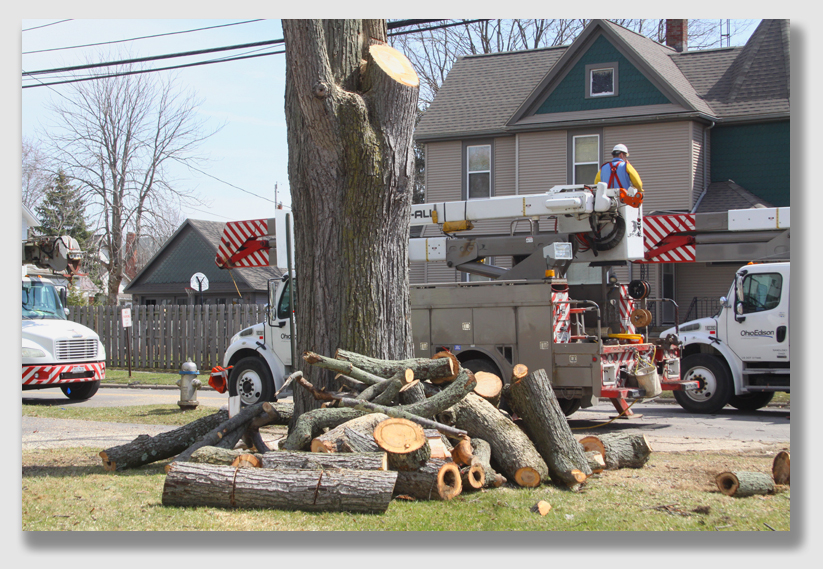
Generally speaking, it’s your tree lawn (subject to the rights of the city to maintain its right-of-way). That’s what the Miller-Lagro family established in today’s case. It seems that they arrived home one day to find that the electric utility and its tree-trimming subcontractor had butchered the trees on their tree lawn. This being America and all, they did the American thing.

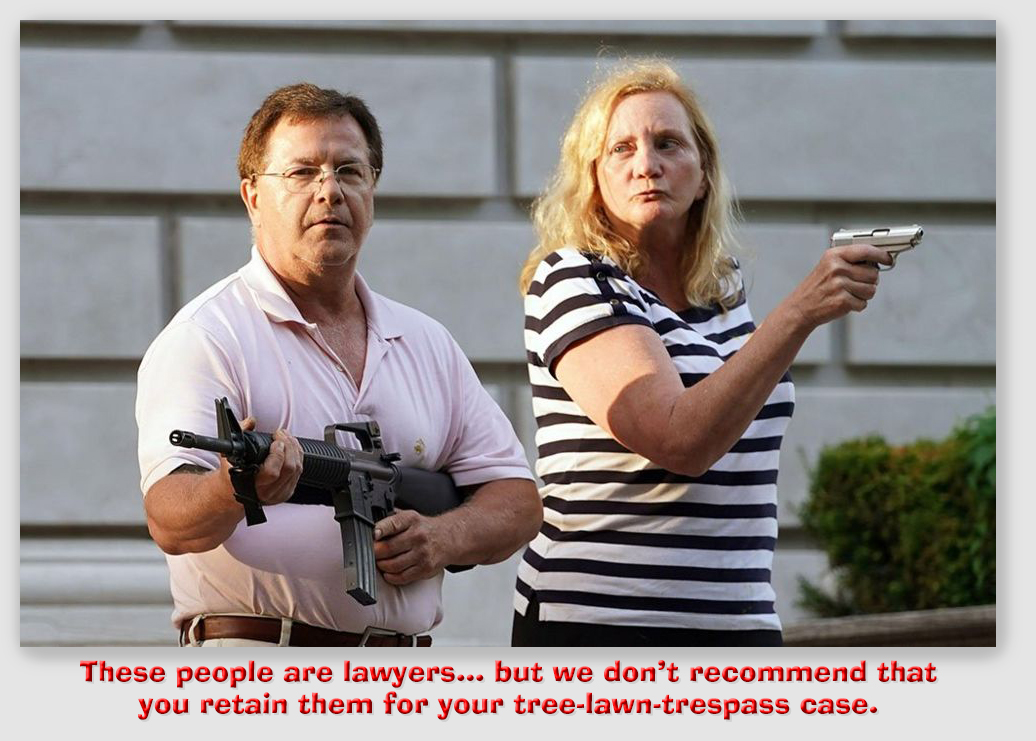
No, they didn’t unlimber their assault rifles to threaten the mob, like some lawyers might do. Instead, they did what almost all other lawyers would have their clients do. They sued, citing a Minnesota statute giving them the right to treble damages for wrongful cutting on their property.

The trial court sided with the utility, holding that because the tree lawn was land dedicated to the road right-of-way, the Miller-Lagros could not recover.

The Court of Appeals reversed.

The Minnesota Supreme Court sided with the Miller-Lagros. It held that they had standing under common law and the statute. Sure, the Court said, their interest in the trees was subordinate to the right of the city, as exercised by the electrical utility in its utility line maintenance function. But the utility’s rights to trim, derived from the city’s right-of-way maintenance rights, existed only to the extent that the trimming was reasonable and necessary.

The Miller-Lagros had the right to their day in court to prove that the trimming was unreasonable.

Normally, a landowner owns property to the center of the roadway passing the land, including the tree lawn. Obviously, the public has the right to occupy the roadway and sidewalks for their intended purpose, to transit across the land. However, there is no similar public purpose that would let people occupy the tree lawn. It seems to us that a landowner has the exclusive right of possession to the tree lawn, subject only to utility easements and rights-of-way (if the city wants to widen the street, you’re probably out of luck). As for the sofa, beer refrigerator, umbrella and roped-off area that some people from the other side of town have erected on your tree lawn (with the parade days away): they’re trespassers. Pure and simple.

That’s the legal end of it… of course, there are social and political considerations in evicting them as well, especially if the patriarch of the parade squatters is 6’5”, 290 lbs. and goes by “Bubba.”

You’re on your own.

Miller-Lagro v. Northern States Power Co., 582 N.W.2d 550 (Sup.Ct. Minn. 1998). When Heidi Miller-Lagro and Kent Lagro returned to their home in Medicine Lake on the afternoon on October 21, 1992, they were shocked to discover that Northern States Power Company and Asplundh Tree Company had cut down several trees that were located on the city right-of-way between their lot and the paved roadway. The Lagros sued NSP and Asplundh, who promptly submitted surveys showing the trees were on land that was dedicated as a public roadway in 1887 and thus were the property of the City of Medicine Lake, not the property of the Lagros.

The trial court granted NSP’s and Asplundh’s motion for summary judgment, concluding that the Lagros lacked standing and could not recover because the trees were not located on their property. They appealed, citing Minn.Stat. §561.04, that stated “[w]hoever without lawful authority cuts down or carries off any… tree… on the land of another person, or in the street or highway in front of any person’s house… is liable…” The Court of Appeals reversed, holding that the statute did apply, remanding the case for further proceedings on the issue of whether NSP had lawful authority to cut down the trees.

Held: The Miller-Lagros control the tree lawn. The Minnesota Supreme Court held that homeowners had standing under both common law and wrongful tree removal statute to bring a claim for removal of trees located on the tree lawn in front of their residence by a utility company’s contractor.

The homeowner’s interest in the trees is subordinate to the right of the city, as exercised by the electrical utility in its utility line maintenance function, to trim or cut trees in the performance of its public works, the broad grant of authority provided by the statute governing utility’s maintenance of its lines, and the corresponding city ordinance. However, the statutes do not divest the property owner of ownership or control of the tree lawn, but rather only give] utility companies the lawful right to trim or remove trees to the extent that the trimming is reasonable and necessary for the purpose of constructing, using, operating, and maintaining lines.

– Tom Root

TNLBGray140407

Case of the Day – Wednesday, July 2, 2025

WHOSE TREES ARE THEY?

treelawn150217I was writing about your tree lawn recently, that strip of grass between the sidewalk and street. With the big parade tomorrow, you might be anticipating (or fearing) dozens of strangers in their lawn chairs squatting on your strip of domain.

But is it your domain? No issue of property ownership may be more misunderstood than the question of who owns the tree lawn, sometimes called the boulevard lawn, that strip of land between your front sidewalk and the street.

The confusion was illustrated recently by our reader Joel, who wanted the city to remove a dead tree on his tree lawn. He had always just understood that the tree lawn wasn’t his and that he couldn’t cut or trim the trees growing there. We straightened him out, but a lot of uncertainty remains.

In today’s case, homeowners Gene and Joan Foote knew the tree lawn was theirs, but their failure to appreciate the limits of their rights led to a suit against the city. It seems that the city was improving the street, and its plan included the removal of four trees from the Foote tree lawn. The homeowners demanded compensation, arguing that the city’s removal of the beautiful trees amounts to a “taking” of property under the 5th Amendment, a “taking” for which they must be paid. A trial court agreed with them.

The Minnesota Supreme Court reversed the decision. It explained that the Footes, like any owners, were entitled to use all of their property right to the centerline of the street. However, the property was owned subject to a public easement (that’s why a deed always says “subject to all legal highways, easements and other restrictions of record”). In other words, the owner’s use of the land had to yield to the public easement of the highway.

Here, the city was merely using more of its highway right-of-way by expanding the street. As long as it remained within the bounds of its easement — which usually extends beyond pavement for a distance — the city could remove trees and other of the owner’s property to the extent needed for the public’s enjoyment of the easement. The removal of the trees let the public enjoy the easement, and no money was due to the property owner because of it.

Some road-widening projects can get quite close to buildings. Be sure to check on the width of the highway easement before you build.

Some road-widening projects can get quite close to buildings. Be sure to check on the width of the highway easement before you build.

How wide is the right-of-way? It depends on the state you live in and the size of the street. If you have questions, you could check with your local government’s engineering department. Or ask your lawyer.

Lawyers love to answer questions. Usually for a fee.

Foote v. City of Crosby, 306 N.W.2d 883 (Supreme Court of Minn. 1981). Gene and Joan Foote owned a home in the City of Crosby. The platted right-of-way of the street in front of the home, Cross Avenue, was 80 feet wide and extended to approximately 6 inches from the front steps of the house.

The center 32 feet of the right-of-way was paved. Next to the pavement is a 10-foot wide grassy boulevard, and then a 4-foot sidewalk. On the boulevard were four large healthy elm trees which had been maintained by the Footes. Although the trees had cracked and heaved the sidewalk, there had been no complaints that the trees impeded foot travel, nor had the trees interfered with motorized travel.

The city began an extensive municipal improvement project prompted by the need for storm sewers, including a new lateral line under Cross Avenue. To provide a proper grade for drainage, Cross Avenue would be torn up entirely, a plan which called for the removal of the four trees, because any root cutting necessary to accommodate the change in grade and repositioning of the curb and sidewalk would likely kill them. The Footes sued for an injunction, arguing the city couldn’t cut the trees without paying them compensation. The district court granted the injunction, and the city appealed.

sign150217Held: The injunction was dissolved. The Court observed that the owner of property abutting a right-of-way for public travel had the right to use his half of the roadway in any manner compatible with the use by the public of its easement. Any encroachment on the public right-of-way must be clearly an obstruction to the public easement before the municipality may remove it without an adjudication that it was in fact an obstruction.

The Footes were not entitled to compensation for the removal of trees within the public right-of-way, the Court ruled. Although the Footes had a property right in the trees, because the taking was pursuant to a project which was a proper exercise of police power and encompassed a public purpose, and because removal of trees was necessary to the implementation of the project, the Footes could not recover anything for their removal. After all, the Court said, the removal of the boulevard trees within the platted right-of-way was necessary for the street improvement project, and if not removed, the trees would clearly obstruct the public’s easement of travel.

– Tom Root

TNLBGray140407

Case of the Day – Wednesday, June 18, 2025

YEAH, WELL, THEY WERE UGLY TREES…

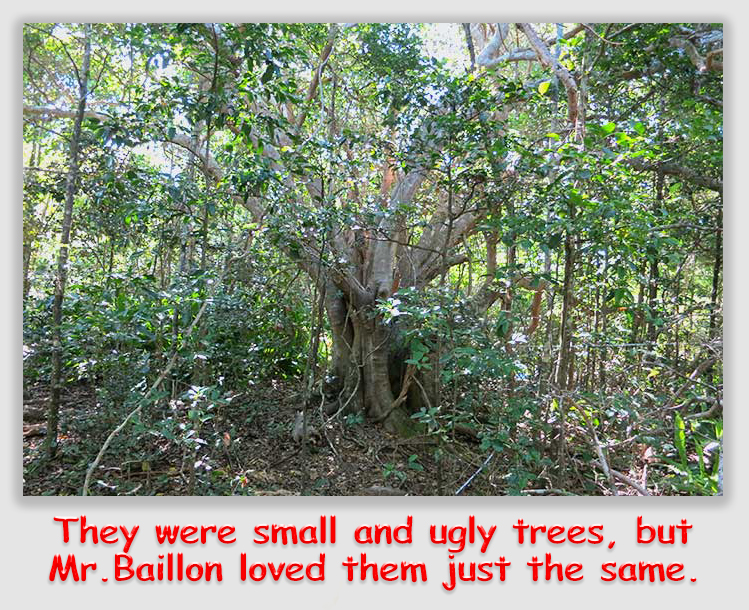
When the contractor building an interstate highway interchange needed some space to park bulldozers, the state highway department asked Mr. Baillon for an easement.  Being justly proud of his scrubby little trees and stunted bushes, he refused.

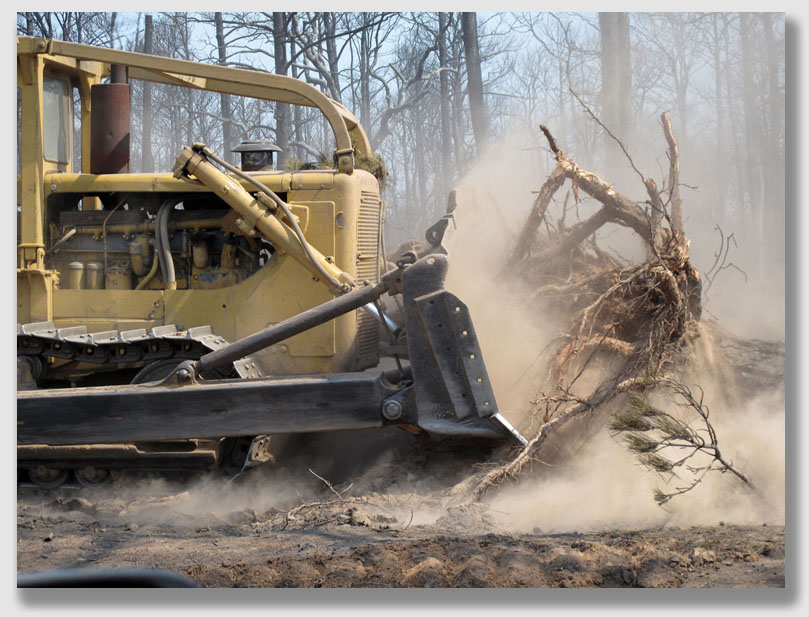
A couple of volunteer oak trees and some forsythia bushes are no match for a Caterpillar D10, so the contractor, Carl Bolander & Sons Co., went ahead and used Mr. Baillon’s land anyway.  But it turns out a Caterpillar D10 is no match for a Minnesota trial court.  Mr. Baillon sued and won.

But he won what?  The trial court judged his damages by the diminution in value of his land.  That is, how much less is the scrawny strip of real estate worth with the scrub trees gone?  Not much, the Court said, giving Mr. Baillon just $500.00.

Mr. Baillon appealed.  He argued he had wanted the trees and bushes as a sound barrier between himself and the road.  Also, he should have gotten treble damages because of the intentional trespass.

The appeals court sort of agreed.  It held that the measure of damages for the loss of trees — because they weren’t particularly desirable as shade trees or ornamental trees — was the reduction value of the real estate.  Clearly, however, treble damages should be assessed under Minnesota Statute 561.04, Minnesota’s wrongful cutting statute, because the trespass was anything but casual.

This type of damage calculation, well known to contract law students who read Peevyhouse v. Garland Coal Co., is intended to avoid economic waste.  The thinking is that the courts won’t order restoration of the property if the cost exceeds the reduction in value caused by the conduct.  But at what price to freedom?  Mr. Baillon didn’t want to sell his property; he wanted his trees, pathetic though they might be.  The fact that the marketplace might not share his desires shouldn’t matter all that much: it was his land, and he should be able — within broad parameters — to keep it as he likes.  Letting the bulldozer operator off the hook for the intentional trespass by not requiring that the land be restored to what it looked like before the trespass, even if that cost ten times the difference in real property value, seems to us to not accord Mr. Baillon’s rights the respect they deserved.

Baillon v. Carl Bolander & Sons Co., 306 Minn. 155, 235 N.W.2d 613 (Sup.Ct. Minn. 1975).  The Highway Department tried to get Baillon to grant a temporary construction permit, giving the state an easement to go on his property adjacent to where Bolander was constructing I-35.  Although Baillon wouldn’t grant the easement, Bollander’s workers trespassed on the land and destroyed a number of trees and shrubs. Baillon wanted the particular trees, in order to preserve a natural and wild appearance, to abate noise from the highway, and to preserve the beauty of the premises.  The trial court found that Baillon was damaged by the Bolander company’s intentional acts in the sum of $500.00.  

Arguing that the trial court should have applied as a measure of damages the replacement cost of the trees and not, as the trial court held, the diminution in value of the real estate, and that he was entitled to treble damages, Baillon appealed.

Held: The award of damages was upheld in part.  The Supreme Court held that the proper measure of damages for the destruction of trees which, for the most part, were quite small, ill-formed and not particularly desirable as shade trees or ornamental trees, but which served to prevent erosion and acted as a sound barrier, was the diminution in value of the real estate rather than the replacement cost of trees (even though the trespass was willful).

However, treble damages should be awarded. The Court held that where the highway contractor — in the course of building the freeway — intentionally cut the trees, which did not protrude over the highway. The trespass was not necessary for the contractor’s purposes and was not “casual.”  It was clearly the duty of the trial court to order treble damages unless Bolander’s activities came within one of the exceptions specified in the statute, and those activities clearly did not.

– Tom Root

TNLBGray140407

Case of the Day – Thursday, June 5, 2025

SIGNS? WE DON’T NEED NO STINKIN’ SIGNS

truck141121The Andersons were livin’ large in the (very) flatlands of far north Minnesota … at least until the swampland next to theirs got sold to the State.

The Minnesota DNR built the Halma Swampland Wildlife Management Area for tourists from down south. You know, just a place to watch birds, hunt deer and bear, and be drilled by mosquitoes the size of floatplanes.

If that wasn’t bad enough, the State then put up signs to stop visitors, including the neighboring Andersons, from racing their ATVs, cars, and pickups up and down the wildlife trails. A year later, the State fenced off the boundaries, right across one of the trails.

Sadly, the Andersons’ raison d’être – a Minnesota term meaning “it’s what we live for” – for living next to the swamp was to race their ATVs, cars, and pickups up and down the wildlife trails. So they hired one of them fancy-pants city slickers with an armful of lawbooks. He told the Anderson clan that they had a prescriptive easement, that is, a right to run their pickups and cars up and down the WMA trails, because they had done it for so long.

The State unsurprisingly took a dim view of the Andersons’ activities, arguing that the recreational use statutes — not to mention Minnesota’s policy of encouraging private recreational use of land (but probably not pickup trucks being driven up and down trails) — meant that no one could acquire a prescriptive easement on recreational lands.

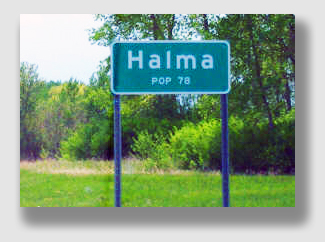
There are only 78 people in Halma - so if you don't drive your pickup through the swamp muck, there's not a lot to do.

There are only 78 people in Halma – so if you don’t drive your pickup through the swamp muck, there’s not a lot to do.

The Court had to balance competing interests here. Although one might expect that the judiciary would bend over backward in favor of a state-run recreational area, it played the case right down the middle. The Andersons won their prescriptive easements, but the court held the easements were not transferable, and they would expire on the deaths of the particular Andersons named in the suit.

Anderson v. State, 2007 Minn. App. Unpub. LEXIS 911, 2007 WL 2472359 (Minn. App. Sept. 4, 2007). Since the 1930s, the Andersons had owned a piece of land next to property now owned by the State of Minnesota. The state bought its parcel from a private owner in 1989 and created the Halma Swamp Wildlife Management Area. The WMA is managed by the Department of Natural Resources.

The DNR put up signs prohibiting motorized vehicles on the property and installed fences across a trail where it entered the WMA. Because the Andersons had used the trails on what was now state land for more than 60 years, often driving cars, pick-up trucks, and all-terrain vehicles on them, they sued the state, claiming a prescriptive easement. The trial court found the Andersons had a prescriptive easement by motor vehicle over five trail segments in a section of the WMA. The court held that the right is not assignable and will terminate with the lives of the named Andersons. The state appealed.

solomonic141121Held: The Andersons had a right to the prescriptive easement. The Court described an easement as an interest in land in the possession of another which entitles the easement owner to a limited use or use of the land in which the interest exists. Whether a prescriptive easement exists is determined in a manner similar to title by adverse possession.

A prescriptive easement may be found if the person claiming the easement has acted in a manner “hostile and under a claim of right, actual, open, continuous, and exclusive.” Adverse possession may be maintained by “tacking,” when the current adverse possessor obtained the property through transfer or descent from a prior adverse possessor. The state argued that the trial court erred by granting an easement to the Andersons when Minnesota law encouraged landowners to permit public recreation on their land and purported to protect landowners from claims arising from such recreational use. The trial court was not unsympathetic to the argument, but because the recreational-use statute was passed in 1994, it applied only to causes of action arising on or after that time.

The Court of Appeals agreed, noting that while Minnesota encouraged public use of lands and waters for beneficial recreational purposes since 1961, only in 1994 was the law changed to prohibit the creation of adverse easements on private recreational lands. The Andersons had used the property and trails beginning in the 1930s, and use continued uninterrupted until 2002, when the DNR installed signs, and 2003, when the DNR erected a fence across a trail. The evidence showed that the Andersons’ adverse use of the trails extended for 15 or more years before the state’s ownership of the land.

goodtimes141121The state argued, however, that the trial court erred by concluding that the Andersons had established a prescriptive easement because, since recreational use is encouraged by Minnesota law, the element of hostility could not be shown. What’s more, the state contended, the district court erred by determining that respondents’ adverse use of the WMA was visible.

The Court held there was ample evidence that the Andersons developed and used the trails, and it has long been recognized in Minnesota that a person who purchases land with the knowledge or with actual, constructive, or implied notice that it is burdened with an easement in favor of other property ordinarily takes the estate subject to the easement. There is no dispute that there were existing trails when the state bought the land in 1989. That fact was sufficient to sustain the trial court’s findings.

A dissenting judge said the Andersons’ use of the land was permitted by statute and state policy, and was neither inconsistent with the rights of the property owners nor hostile. Because the Andersons’ use was not hostile, he reasoned, they had not obtained a prescriptive easement. As we all know, the dissenting opinion is the losing jurist’s lament (if not whine), and – while sometimes interesting and often scathing – doesn’t really count.

– Tom Root

TNLBGray140407

Case of the Day – Wednesday, April 23, 2025

TESTING THE BOUNDARIES

forgot150430Before I forget to do this, I’d like to report on a case of a conveniently forgetful property owner from the Land of 10,000 Lakes.

Mr. Meixner made an agreement with his neighbor, a sawmill, to replace some boundary fences. The first several fencelines were replaced according to the parties’ agreement, with Meixner and the sawmill sharing the costs. Everything seemed hunky-dory, as they like to say in Minnesota..

Out of nowhere, Mr. Meixner sued, claiming that the sawmill had cut down 73 trees on his land before replacing the second of the three fences.

The sawmill said, “Yup. Sure did.” These Minnesotans are people of few words, when they’re not saying things like “hunky-dory.” But the sawmill employee did say, “Had to cut down the trees to build the new fence. Meixner agreed.” Those words were plenty, and the jury found for the sawmill.

On appeal, the Court agreed with the level-headed jurors. It first adopted the general principle that trees on a boundary line are owned in common by the property owners, and neither may cut down a boundary tree without the consent of the other. But here, the Court said, it’s pretty clear that the sawmill employees had Mr. Meixner’s OK to axe the trees. After all, the Court observed, Mr. Meixner had given the sawmill permission to build the new fence, and he even shared the cost. If permission is given to enter onto the property to build a new fence, that permission implies authority to do all acts necessary to the completion of the task.

Don't you believe it ...

Don’t you believe it …

The sawmill employee said the trees had to go if the new fence was to be built. That evidence was good enough for the Court. Mr. Meixner wanted a fence, so he necessarily wanted the trees cut in order to build it.

Meixner v. Buecksler, 216 Minn. 586, 13 N.W.2d 754 (Sup.Ct. Minn. 1944). Meixner owned property next to a lumber company. He had an agreement with the company to replace old fences standing on the common boundary line.

Meixner and Buecksler, a tenant and employee of the company, built a new east-west fence in September 1938. Pursuant to the lumber company’s direction, Buecksler then cleared out the brush and cut down some trees in preparation for building a new fence to replace the old one that marked the boundary between Meixner’s south forty and the company’s north forty. A survey was made of this line, and thereafter Meixner and Buecksler constructed the replacement fence. A third fence was later completed, marking the east-west boundary.

Meixner contended that Buecksler and the company unlawfully cut 73 trees on his property prior to building the north-south fence, and that such acts were done without his knowledge or consent, and constituted trespass. The lumber company claimed Meixner had consented to clearing away the brush and cutting the trees, and that such acts were necessary in order to carry out the mutual plans to build the fence. The jury found for the defendants.

Meixner appealed.

Held: The appeals court upheld the verdict. It found that trees on the boundary line are the common property of the adjoining landowners, neither of whom may destroy without the consent of the other. However, trespass is not committed if there is permission or consent to do acts complained of, which consent may be implied from circumstances, and the jury was entitled to find that the Defendants had Meixner’s consent.

Generally, the Court said, permission to do a particular act carries with it authority and right, by implication, to do all that is necessary to effect principal objects and to avail the licensee of his rights under the license. Meixner’s agreement with Buecksler and the company for building a line fence between the adjoining properties carried with it by implication the right to do such things as were reasonably necessary in order properly to build the fence, including the cutting of trees on the boundary line.

Meixner had asked the court to award him treble damages under the Minnesota statute on wrongful cutting. The court declined, pointing out that there had to be damages in order to treble them, and Meixner simply had none.

– Tom Root

TNLBGray

Case of the Day – Friday, December 6, 2024

NOTHING TO REPORT

I regret to say that I was all tied up with important activities, and thus I was unable to post anything of substance today. 

What could be more important than tree and neighbor law, you wonder? First, I had to assist my 5-year-old granddaughter in building a scale-model snowman, then help her 3-year-old dynamo of a younger sister make soap in the shape of dinosaurs, and finally attend a tea party whose guests included the orange soap Tyrannosaurus and a stuffed meerkat.

The dinosaur ate a plastic taco before the party broke up. 

My wife and I were quite busy with the girls, whom we just don’t see very often because they live where there is even more snow than we have in northern Ohio.

FaceTime is a great thing, but you can’t use FaceTime to make soap dinosaurs. As the 3-year-old surely would tell you.

I’ll be back to work Monday, when we’ll explore how trees–like some people–can get a bad reputation, and what knowing the reputation can do to affect our duty to others.

– Tom Root

TNLBGray140407