Case of the Day – Tuesday, November 26, 2024

WHEN LIFE GIVES YOU LEMONS …

lemonsup160302Lemon and Curington were neighbors. Things were neighborly when Curington planted a pair of poplar trees — fairly fast-growing and tall things — near the property line.

Over the years, things became less so, as several legally significant events occurred. First, the trees got big. As they did, the trunks ended up crossing the boundary line so that the trees were growing on both Curington’s and Lemon’s land. Second, the root systems expanded and began putting the squeeze on Lemon’s foundation. Third, Lemon discovered that if he used self-help, trimming back the roots and topping off the trees, he would make them unstable, turning the poplars into topplers. So Lemon — who was completely soured on the trees by this point — sued Curington, asking that the trees be declared nuisances and that Curington be made to remove them.

Life had given Curington a Lemon, but he tried to make lemonade. He argued that the Massachusetts Rule gave Lemon no aid and that he was limited to self-help. However, the court relied on the Idaho nuisance statute (noting in passing that the Massachusetts Rule didn’t really apply to a tree growing in both properties at once, a fascinating observation we wish it had explained a bit better), ruling that the trees were nuisances for having damaged Lemon’s foundation. It also seemed important to the Court that Lemon couldn’t trim the tree and roots himself without making the poplar a “danger” tree that was likely to fall.

founda160302This case is a gallimaufry of issues — the interplay of nuisance statutes with common law and the interplay of boundary trees with encroachment — as well a rather poorly-thought out dismissal of the Massachusetts Rule for reasons that were unnecessary. After all, the Massachusetts Rule was specific in its limitation to non-nuisance encroachment, twigs and leaves and that sort of thing. The Lemon decision, remarkably similar to the Hawaii Rule (but decided 14 years before the Hawaii Rule was adopted), is also quite similar in its fact pattern to Fancher v. Fagella, a 2007 Virginia Supreme Court decision. In fact, a real argument can be made that this Idaho case was entirely unnecessary in its treatment of the venerable Massachusetts Rule.  Michalson v. Nutting, in our view, is a “big tent” with enough room for all of the poplars, sweet gums and banyan trees that followed.

Lemon v. Curington, 78 Idaho 522, 306 P.2d 1091 (1957). Lemon and Curington owned adjoining land with a common boundary, on which two poplar trees had been planted over 50 years ago. The trees had grown to approximately four to five feet in diameter at the base, and the trunks and branches extended across the boundary line. The roots were surface feeders and, in one case, extended from the boundary line to and against the foundation of Lemon’s house, cracking the house’s foundation. pushing the wall of the plaintiffs’ house inward.

lemondown160302If Lemon topped the trees and cut the roots extending onto his land, the trees are likely to fall over. Lemon sued, alleging the trees to be a nuisance, and asked for the authority to remove the offending trees.

The trial court authorized the destruction of the tree damaging the foundation but held the other tree was healthy and mature, and thus not a nuisance. Curington appealed, arguing that the Massachusetts Rule limited Lemon’s remedies to self-help, that is, to Lemon’s trimming the tree and roots himself.

Held: The tree is a nuisance, and the Court may order Curington to remove it. The Supreme Court held that the Massachusetts Rule was not dispositive where a nuisance had been shown to exist.

roots160302The Court said, “[w]e think the condition here shown to exist constitutes a nuisance under the provisions of Idaho Code § 52-101.”  That statute defined a nuisance to be “[a]nything which is injurious to health … or an obstruction to the free use of property, so as to interfere with the comfortable enjoyment of life or property.” Here, not only had the tree made a mess of Lemon’s foundation, but the evidence showed that if Lemon cut the roots and topped the tree, the whole thing was likely to fall over. The Court said that the statute authorized an action by any person “whose property is injuriously affected or whose personal enjoyment is lessened by the maintaining of a nuisance to have it abated.”

Without explaining its reasoning very far, the Court also said that the fact the tree was a boundary tree, on the properties of both parties, made the Massachusetts Rule inapplicable. So while Lemon reserved the right of self-help, the courts were also available to him to abate the nuisance tree.

– Tom Root

TNLBGray

Case of the Day – Friday, November 15, 2024

SLAPP-HAPPY

Only in California could a tree-trimming case end up as a free speech issue.

bureaucracy140923Our regular readers know that good old-fashioned Massachusetts Rule self-help is available to any homeowner seeking to protect life and property from encroaching trees. Today, we look at what happens when good old-fashioned common-law self-help runs into bureaucracy.

The Dilbecks wanted to add a second story to their house, but their neighbors’ oak tree had extended its branches so close to the Dilbecks’ place that they had to be trimmed back in order to make room. No problem, right? We all know that self-help is available to the Dilbecks anywhere in California. Sure, but it turns out that Los Angeles isn’t just anywhere. In LA, oak trees are “protected,” and before trimming the oak, the Dilbecks had to get a permit from the County. And the County wouldn’t issue a permit unless the tree’s owner signed on to it.

So much for self-help. The Dilbecks sued, asking that the County be ordered to issue the permit and that their neighbors be found liable for trespass for the tree (the theory being that the neighbors let the branches intrude over the Dilbecks’ lawn). And here’s where it got even more complicated. California has a statute addressing litigation known as “strategic lawsuits against public participation,” the so-called anti-SLAPP statute. This mouthful with the catchy name is intended to stop oppressive lawsuits intended to keep people from exercising their rights to free speech. There’s a whole cottage industry in the Golden State surrounding SLAPP actions. And as with a lot of other good ideas (such as RICO), the anti-SLAPP statute is another tool in the canny lawyer’s arsenal, something else with which to bludgeon a plaintiff.

Here, the neighbors complained that the Dilbecks were trying to force them to petition the County to let the tree get trimmed, and the suit should be thrown out as violating the anti-SLAPP statute. The trial court refused to dismiss the action. The Court of Appeals agreed, holding that the Dilbecks weren’t demanding that the neighbors do anything. They were asking the County to do something, and they were suing the neighbors for trespass because of the tree. California law would let them collect money damages if the encroaching tree was a nuisance (Bonde v. Bishop held as much). So whether the Dilbecks win on the merits or not, the action was not a SLAPP suit, and it wouldn’t be dismissed.

Oaktree140923Whew! Makes you long for the simple, ol’ Massachusetts Rule… no permits, no lawsuits, just an aggrieved landowner with a chainsaw.

Dilbeck v. Van Schaick,  2007 Cal. App. Unpub. LEXIS 7718, 2007 WL 2773986 (Cal.App. 2 Dist., Sept. 25, 2007). The Dilbecks owned a place in Altadena, next door to the Van Schaicks. The Dilbecks planned to remodel their home by adding a second story. However, the branches of an oak tree located on the Van Schaicks’ property have grown over the Dilbecks’ home, rendering the Dilbecks’ plans unworkable unless the tree was pruned.

Oak trees are protected by California state law. The County of Los Angeles had adopted regulations to preserve and protect oak trees, requiring a permit to cut down mature oak trees or to prune their larger branches. The Dilbecks applied to the County for a permit, but the County had not approved it because it took the position that only the owner of the tree may obtain a pruning permit, and the Van Schaicks had not acquiesced. So the Dilbecks brought suit against the Van Schaicks and the County for declaratory relief and trespass. They alleged the oak tree growing on the Van Schaicks’ property had encroached onto their land and interfered with their ability to add a second story to their home. The suit said the County refused to grant the permit because the Dilbecks were not the owners of the tree. The trespass cause of action alleged the oak tree branches were encroaching on the Dilbecks’ land and asked for an order permitting the Dilbecks or an independent contractor to prune the tree.

The Van Schaicks filed a special motion to strike pursuant to the anti-SLAPP statute, Code of Civil Procedure §425.16, asserting that the complaint was based on their refusal to support the Dilbecks’ oak tree permit application and therefore attacked their right to free speech. They further argued that the trespass claim lacked merit because the law forbade the Van Schaicks to prune or cut the offending oak tree branches.

The Dilbecks contended that their action did not fit within the definition of a SLAPP suit and that, in any event, their complaint had merit. They denied that the complaint sought to compel the Van Schaicks to support or sign the oak tree permit. The trial court denied the Van Schaicks’ motion to strike, finding that they had not demonstrated that they were being sued for engaging in protected activity. Instead, the trial court held, they were just being sued for trespass. The Van Schaicks appealed the court’s denial of their motion to strike.

Freespeech140923Held: The Dilbecks’ complaint did not arise from acts undertaken in furtherance of the Van Schaicks’ rights of free speech or petition, and the Van Schaicks’ attempt to get it dismissed was rejected. The California Legislature enacted the anti-SLAPP statute in response to its perception that there has been an increase in lawsuits brought primarily to chill the valid exercise of the constitutional rights of freedom of speech and to petition for the redress of grievances. The anti-SLAPP statute provides a procedure for the court to dismiss at an early stage non-meritorious litigation meant to chill the exercise of free speech rights. The statute requires the trial court to engage in a two-step process when determining whether a motion to strike should be granted, first, whether the defendant has made a threshold prima facie showing that the acts of which it complains were ones taken in furtherance of its constitutional rights of petition or free speech in connection with a public issue, and two, whether there is a probability that the plaintiff will prevail on the claim.

The issue here, the Court said, was whether the complaint arose from conduct in furtherance of the exercise of the constitutional right of petition or the constitutional right of free speech in connection with a public issue or an issue of public interest. The Van Schaicks contended the suit sought to compel them to petition the County for discretionary relief from the oak tree statutes. The Court disagreed, holding that their characterization of the complaint was wrong. In fact, the Court said, the suit merely sought to compel the County to review the merits of the permit application submitted by the Dilbecks and requested an order permitting the Dilbecks or their arborist to prune the tree. The complaint did not seek to compel Van Schaicks to become personally involved in the permit application process in any way, and thus did not violate the anti-SLAPP statute.

The Van Schaicks contended that the complaint would indirectly force them to speak because a judgment in favor of the Dilbecks on the trespass action would necessarily require the Van Schaicks to petition the County of Los Angeles for discretionary relief from the Oak Tree statute. The Court rejected that argument, finding that the Van Schaicks’ position was based on the incorrect assumption that the only remedy available for trespass was injunctive relief. However, California law held a party over whose land overhanging branches extend may either cut them off or maintain an action for damages and abatement, as long as he or she can prove the branches constitute a nuisance.

The prospect that the Van Schaicks could eventually be faced with an order to abate the nuisance and could do so only by seeking a permit from the County did not transform the Dilbecks’ lawsuit into a SLAPP action. The Court ruled that the thrust of the Dilbecks’ complaint was the injury caused to their property by the encroaching tree, not the Van Schaicks’ decision to refrain from involvement in the permitting process. The permit, although obtainable only by petitioning a governmental entity, principally concerned and affected the remodeling of a private home by private individuals.

– Tom Root

TNLBGray140407

Case of the Day – Thursday, October 24, 2024

YOU’RE BREATHING MY AIR

I recently undertook a home construction project (imagined and ramrodded by my wife of 45 years, of course). I found myself trimming back some gargantuan arborvitae belonging to my neighbor, whom I will call “John” because that’s his name. The arborvitae were just puny little bushes when planted by Andy and Allwyn, next-door residents two neighboring homeowners ago, but in the 25 years since they were mere shrubs planted a foot or so on John’s side of the property line, the arborvitae have grown into towering, misshapen monsters.

On my side of the property line, they have swollen well into my airspace.

My airspace? Sounds a bit pretentious, doesn’t it? But that’s what we’re really talking about when we discuss overhanging branches and limbs. We all know about adverse possession – in which a sufficiently brazen squatter can gain title to your property if he or she waits you out – and even prescriptive easements, where the same trespasser can acquire rights to use your property.

What if my neighbor had stalked out his back door last weekend and claimed his branches had been overhanging my property (and messing up the roof of my shed) for more than 21 years, giving him a prescriptive easement to my airspace? So while it’s still my air, he gets to use it. And breathe it. And there is nothing I can do about it? Whither the Massachusetts Rule?

A prescriptive easement over your neighbor’s airspace is a novel argument, indeed. Fortunately for me, if my neighbor stalks out of his backdoor, he is much more likely to confront me with a basket of zucchini or a big butternut squash than he is with a wacky airspace easement argument. He is a pretty fine neighbor.

But not everyone is blessed with a neighbor as congenial as mine. That’s lucky for me in a sense because – as the Kansas Court of Appeals observed – when neighbors cannot get along, the courts protect property rights. And when courts do that, I have something to write about. Neighbor disputes that end up in court happen frequently enough to keep me going five days a week. And there are plenty of cases I never get to.

But how about that airspace argument? In today’s case, the owner of a tree that leaned over his neighbor’s yard claimed his 75-year-old pecan tree had acquired a prescriptive easement over his neighbor’s airspace. Take that, Massachusetts Rule!

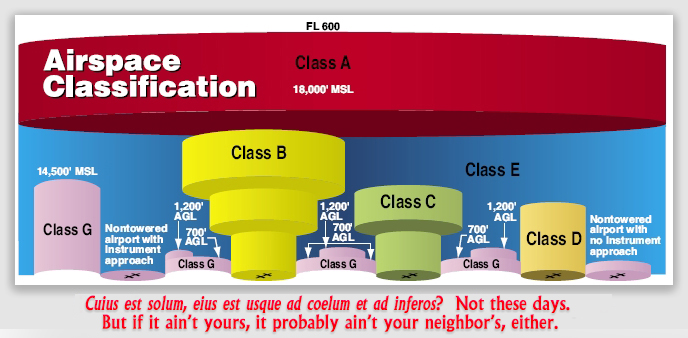
Cuius est solum, eius est usque ad coelum et ad inferos (Latin for “whoever’s is the soil, it is theirs all the way to Heaven and all the way to Hell”), a principle of property law, holds that property holders have rights to not only to the plot of land itself, but also the air above and (in the broader formulation) the ground below. (Note to self: insert here a nod of thanks to my sainted Latin teacher of yore, Emily Bernges, or else I couldn’t translate that). The principle is often referred to in its abbreviated form as the ad coelum doctrine. So was the airspace claim clever lawyering, or just a lot of hot air? Let’s see whether the Court abrogated the ad coelum doctrine or instead brought the defendant back down to earth.

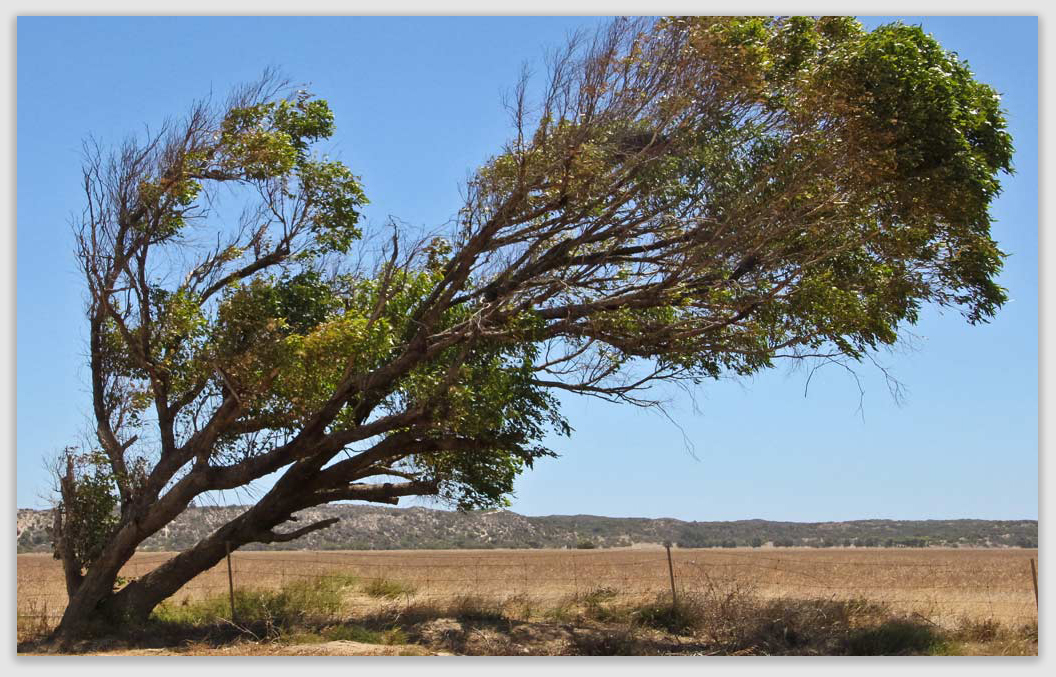
Pierce v. Casady, 11 Kan.App.2d 23, 711 P.2d 766 (Kansas Ct.App. 1985). Jim Pierce and Paul Casady are adjoining landowners with a 75-year-old pecan tree between them. The pecan trunk and root flare are on Paul’s land – but only a foot from the property line – and the tree leans toward Jim’s place. In fact, according to Jim, about three-quarters of the tree overhangs his land, rather ominously, given the substantial split in the tree’s fork (which also overhangs Jim’s property).

The length of the split on one limb is four feet and on the other about two feet. If the tree fell due to the split, it would fall on Jim’s house, garage, and any cars in the driveway. Trimming the tree at the property line is not practical – unless one does not mind killing the tree in the process – because of the tree’s location and the angle at which it leans.

Jim sued for a declaratory judgment that he had the right to cut the overhanging branches back to their property line or, in the alternative, to declare the tree a nuisance to be abated by removal. Paul claimed he had acquired a prescriptive easement to Jim’s airspace. The trial court disagreed, ruling that Paul had no prescriptive right to the airspace the tree occupied and that the tree constituted a nuisance that rightly caused Jim to fear for his safety. Paul was ordered to abate the nuisance by removing the tree either at its base or at the point where it crosses plaintiffs’ property line.

Paul appealed.

Held: An easement by prescription cannot be acquired by overhanging tree branches. Furthermore, a landowner has a right to trim branches that overhang the landowner’s property even though the trunk of the tree is on a neighbor’s land, although the landowner may not go on a neighbor’s land and remove any part of a tree without the neighbor’s permission.

Trees constitute a nuisance if overhanging branches do substantial harm or the overhanging branches create an imminent danger. If a tree is a nuisance, a landowner may compel a neighbor to abate the nuisance or, if an injury occurs, look to the neighbor to pay any damages allowable by law.

The court of appeals rejected Paul’s argument that he had acquired an easement through Jim’s airspace, because such cannot be gotten by prescription, that is, by simply occupying the airspace without permission for a long enough period of time.

Jim argued that the tree could not be a nuisance. That did not affect Paul’s right to trim branches that were overhanging his property even though the trunk of the tree was on Paul’s land. The landowner may not, the Court said, go on the neighbor’s land and remove the tree or any part thereof absent his neighbor’s permission.

If the tree is a nuisance, the landowner may compel the neighbor to abate the nuisance or, if an injury occurs, look to the neighbor to pay any damages allowable by law. In this case, the Court observed, it appeared that if the tree is trimmed at the property line it would be killed. The trial court recognized this and gave Paul the option to trim back to the property line or simply remove the whole tree.

The Court held that whether the tree constituted a nuisance was a question of fact. Generally, a tree is a nuisance when it constantly drops branches and requires constant maintenance. Or, a tree is a nuisance when there is a statute so defining it. Finally, a tree becomes a nuisance when it does substantial harm or creates an immediate danger of causing harm, the Court held, relying on Whitesell v. Houlton, the case that defined the Hawaii Rule.

Kansas recognizes that trees constitute a nuisance if the overhanging branches do substantial harm or the overhanging branches create an imminent danger.

Here, the Court said, the tree was a danger to Jim, reasonably causing him to fear for his safety. The evidence supported the reasonableness of his apprehension: the split in the fork of the tree located above his property, the squeaking sound when the wind blows, the angle at which the tree leans toward Jim’s property, and the testimony of the experts.

Paul argued that the tree could be made safe by cables and bolts. The Court was unimpressed, holding that even that work would have to be done in Jim’s airspace. Paul had no right to go on Jim’s property to do that work for the same reasons Jim had no right to go on Paul’s property to trim or cut down the tree.

Paul was thus ordered to cut the tree off at the property line or remove it altogether.

The Court admitted that “the result reached here will be distasteful to all who treasure trees. The philosophy of the law is simply that whenever neighbors cannot agree, the law will protect each property owner’s rights insofar as that is possible. Any other result would cause landowners to seek self-help or to litigate each time a piece of vegetation starts to overhang their property for fear of losing the use or partial use of their property as the vegetation grows.”

– Tom Root

TNLBGray

Case of the Day – Tuesday, October 8, 2024

I’M FROM MISSOURI

All right, I’m not from Missouri, but I have passed through the “Show Me State” a few times, and it’s a pretty nice place. But, given their reputation for being hard to convince, how would Missourians treat encroachments to their properties from trees not their own?

On one hand, there’s the state nickname. The most well-known and widespread story features Missouri’s United States Congressman, Willard Duncan Vandiver, who gave a speech in 1899 to some Philadelphians in which he said:


”I come from a state that raises corn and cotton and cockleburs and Democrats, and frothy eloquence neither convinces nor satisfies me. I am from Missouri. You have got to show me.”


His statement may be interpreted as a claim that Missourians are not naïve: If you want someone to believe you, you better have convincing evidence. 

On the other hand, Missouri’s official motto is “Salus populi suprema lex esto,” which my sainted Latin teacher, the late Emily Bernges, would have told us translates to “the welfare of the people shall be the supreme law.”

All right, let’s run with that.

When Pete Hasapopoulos’s driveway started crumbling from neighbor Joyce Murphy’s Chinese elms, was his good the supreme law? Or, because Missourians are not naïve, should he have known that Joyce’s Chinese elms were going to grow? After all, a natural tree largely does what it wants to do. It may sit on one owner’s property, but above ground, the branches may spread over the neighbor’s property, and leaves or fruit or even deadfall may make a mess of the neighbor’s house, outbuildings or yard. Underground, the root systems may spread until they meet retaining walls, basements, septic systems and underground utilities.

This phenomenon is called “encroachment.”

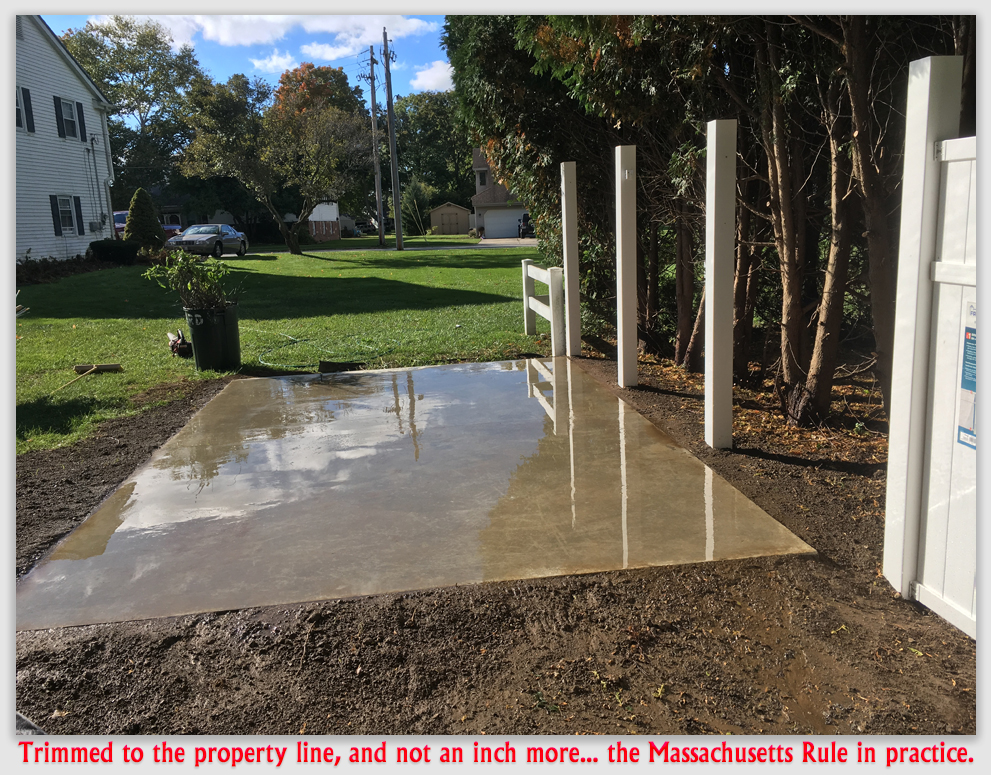
Traditionally, the rule has been that any property owner has the right to trim back branches and root systems to the property line, at his or her own expense. This “self-help” doctrine is known as the Massachusetts Rule, so called because it was first articulated in a Massachusetts case known as Michalson v. Nutting. The dark side of the Massachusetts Rule was that no matter how destructive the neighbor’s tree was to your property, you had no right to sue your neighbor to force him or her to trim the tree or roots or to get any financial help from your neighbor for costs you incurred in doing it.

As American society became more urbanized, other courts took a more liberal view. When a neighbor’s banyan tree – a monstrosity of a tree – began overgrowing Mr. Whitesell’s property in Honolulu, he sued his neighbor to get a court order to force the neighbor to take care of the problem. Impressed by the sheer magnitude of the nuisance caused by the tree, the Hawaii court held that in Whitesell v. Houlton that while anyone had the right of self-help as described in the Massachusetts Rule, when a tree caused sensible harm to a neighbor, the owner of the offending tree could be ordered to trim the tree or roots at his or her own expense. This is called the Hawaii Rule.

The Hawaii Rule has gained traction in a number of states over the past 20 years. Tennessee, New Mexico, North Dakota, Arizona and New York follow it. Several other states follow the rule with variations.

But not in Missouri. What’s that? “Show me,” you demand? All right, you’re from Missouri. We will.

Hasapopoulos v. Murphy, 689 S.W.2d 118 (Court of Appeals of Missouri, Eastern District, 1985). Pete Hasapopoulos experienced problems from overhanging branches and cracking of his driveway caused by the roots of two Chinese elm trees owned by the next-door neighbor, Joyce Murphy. The trial court held that Joyce was not liable, and Pete appealed.

Held: Joyce prevailed.

The Court of Appeals, agreeing with other jurisdictions “which find no cause of action for damages to neighboring property caused by encroachment of the roots or branches of healthy trees,” found that Joyce was not liable. At the same time, it held that Pete retained a right of self-protection by cutting off the offending roots or branches at the property line.”

The Court observed that Missouri is “squarely among those jurisdictions which find no cause of action for damages to neighboring property caused by encroachment of the roots or branches of healthy trees, but leaves the plaintiff to his right of self-protection by cutting off the offending roots or branches at the property line.” And here, Pete had no proof the chinese elms were defective.

Application of the Massachusetts Rule, the Court, results in no injustice in this case. “Neither plaintiffs nor defendant committed a wrongful act. We are not inclined to find defendant acted unreasonably in permitting perfectly healthy trees to grow, and certainly defendant intended no harm thereby. The trees and their proximity to plaintiffs’ land existed when plaintiffs purchased their residence. They must be charged with awareness of the potential effects of growing trees. Recourse to self-help to protect from damage and to eliminate annoyance from overhanging branches was available to plaintiffs for 15 years before they had the branches cut off at the property line. Imposition of liability upon the tree owner under such circumstances would create the potential for continuous controversy between neighbors and could promote harassment and vexatious litigation, disruptive of neighborhood serenity. Possible exposure to liability would warrant the uprooting of trees and shrubbery in proximity to boundary lines resulting in non-aesthetic barrenness.”

– Tom Root

TNLBGray

Case of the Day – Tuesday, September 10, 2024

WASHINGTON STATE – GREAT COFFEE, GREAT VISTAS… AND GREAT CONFUSION

I have to confess that, although I am a proud Midwesterner, I love the State of Washington. Temperate rain forests, soaring mountains, beautiful lakes, great coffee, greater beer, and Seattle in the sunlight.

OK, not so much about the sunlight. But for that, Washington is two fantastic states, the first being a lush and moist paradise west of the crest of the Cascades, and the other being a sprawling, sunny and semi-arid plain east of the mountains.

Despite my love of the place, I was unstinting in my criticism yesterday about how the Mustoe court had sanctioned an “anything goes” culture in Washington, in which a landowner could misuse the Massachusetts Rule to kill a neighbor’s tree by the indiscriminate cutting of roots and branches, regardless of effect. As long as you stay on your own property, you can trim branches and roots with a backhoe bucket, if you so choose.

Today’s case is every bit as puzzling as is Mustoe, but in quite the opposite direction. One set of neighbors hacked branches off a boundary tree to the point that the other set legitimately feared that it was so unstable it would fall. The second set of neighbors then retaliated, taking the rest of the branches off the tree. That stabilized the tree trunk but had the unfortunate side effect of killing the tree.

Neighbor One, who lacked not for chutzpah, sued Neighbor Two for timber trespass. The courts found Neighbor Two liable for treble damages under the State’s timber trespass statute, regardless of the fact that Neighbor One’s reckless trimming created a hazard tree and the need for the drastic remedy that killed the tree.

The Court, in today’s case, candidly “acknowledge[s] that under Mustoe and our holding here, it would appear that a property owner has greater rights with respect to trimming a neighboring tree than a tree standing on a common property line with a neighboring property. This outcome is the result of applying a statute to a situation that was not likely contemplated upon the statute’s drafting. Our legislature may clarify the statute’s applicability to boundary trees in future legislation.”

Of course, part of the problem may be that the lawyer for the Pelayos (Neighbor Two) failed to remember that the best defense is often a good offense. He did not file a timber trespass claim against the Herrings (Neighbor One), which would have placed their misconduct into play. To be sure, in any fair world, the Herrings’ conduct in removing all the branches overhanging their property also violated RCW 64.12.030 and should have mitigated, if not outright excused, the Pelayos’ cutting in response.

Herring v. Pelayo, 397 P.3d 125 (Wash.App. Div. 2, 2017). The Herrings and Pelayos are neighbors. In December 2011, the Herrings hired a tree trimmer to remove some branches from a tree located on the common property line. The Herrings did not discuss their plan to remove branches from the tree with the Pelayos prior to the work. When they discovered the trimming, the Pelayos believed that the work had caused the tree to become unbalanced, constituting a danger to their home. Three weeks after the Herring trimming, the Pelayos had a tree trimmer remove all the remaining branches from the boundary tree, causing the boundary tree to die. Like the Herrings, the Pelayos did not discuss their plans with the neighbors before the work was done.

The Herrings sued, claiming a timber trespass in violation of RCW 64.12.030 or, in the alternative, regular garden-variety trespass in violation of RCW 4.24.630. At trial, Jose testified that he knew the tree at issue was on the common property line, he told the tree trimmer to remove all of the remaining branches from the tree, he did not discuss his plan with the Herrings, (4) the tree was alive prior to the removal of the remaining branches, and (5) he believed that removing the remaining branches would kill the tree, which it did.

The Pelayos’ tree trimmer, Tim Jones, testified that he believed the tree was a danger to the Pelayos, and he had recommended that they remove the entire tree or, at least cut off all the remaining branches. But Tim also told the Pelayos that they could remove a top portion of the tree to balance it, and Tim admitted that he might have been able to remove some of the remaining branches to render the tree safer without killing it.

The trial court held that the Pelayos committed timber trespass under RCW 64.12.030, and their defense of mitigating circumstances, allowed by RCW 64.12.040, did not apply.

Held: The Pelayos had to pay.

Jose and Blanca Pelayo argued that the trial court failed to find that their conduct in removing the branches from the boundary tree was both (1) willful and (2) without lawful authority. Without those findings, they contended, they could not have violated RCW 64.12.030.

RCW 64.12.030 provides that “whenever any person shall cut down, girdle, or otherwise injure, or carry off any tree… on the land of another person… without lawful authority, in an action by the person… against the person committing the trespasses… any judgment for the plaintiff shall be for treble the amount of damages claimed or assessed.” Washington law is clear that there must be an element of willfulness on the part of the trespasser to support treble damages under RCW 64.12.030. In this context, the Court said, “willful” simply means that the trespass was “not casual or involuntary.” The burden of proving that a trespass was casual or involuntary is upon the defendant once the fact of trespass and the damages caused thereby have been shown by the plaintiff.

Here, the Court said, the Pelayos never argued and no evidence ever suggested that the trespass was casual or involuntary. Under those circumstances, it was not necessary for the Herrings to prove willfulness.

Jose admitted at trial that he knew the Herrings had an ownership interest in the boundary tree and that he had ordered the remaining branches to be removed from the tree knowing that such removal of branches would kill the tree. The Court said his testimony “was tantamount to a concession” that the conduct in removing the branches was willful. No other evidence would have let the trial court infer that this conduct was casual or involuntary. Therefore, no specific finding as to willfulness was required.

Next, the Pelayos argued that they were lawfully authorized to remove branches from the boundary tree that were overhanging their property. The Court made short work of that argument as well.

RCW 64.12.030 applies only to people acting without lawful authority. A landowner has the legal authority to engage in self-help and trim the branches and roots of encroaching onto his or her property. On the other hand, a landowner does not have the legal authority to cut down an encroaching tree. But here, the issue was whether a landowner may trim the branches of a tree standing on a common property line in a manner that a defendant knows will kill the tree.

The Court began by holding that trees standing directly on the property line of adjoining landowners are the common property of both landowners. The Pelayos contended that landowners had an unfettered right to trim branches that overhang their property regardless of whether the tree is situated entirely on a neighboring property or, instead, is situated on a shared property line.

Despite Washington State’s rather cavalier treatment of a tree owner’s rights vis-à-vis the neighbor in the Mustoe decision, the Court concluded that where the tree stood on a common property line, both the Pelayos and the Herrings had undivided property interests in the tree. This was consistent with the only other relevant decision on the matter, a Washington appellate decision in Happy Bunch LLC. Because the Pelayos have a property interest in the tree at issue, the Court reasoned, portions of the tree overhanging their property could not be said to be “encroaching” in the same way that the branches and roots were encroaching in Mustoe.

The Pelayos and Herrings owned the tree as tenants in common, and thus each couple was entitled to use, maintain, and possess the boundary tree, but not in a manner that “interfered with the coequal rights of the other cotenants.” Unlike a landowner engaging in self-help to trim branches overhanging his or her property from a tree situated entirely on the property of another, the Court ruled, a cotenant owning a boundary tree had a duty not to destroy the common property and thereby interfere with the rights of the other cotenants.

After all, the Court argued, if landowners had an unfettered right to cut away the portions of a common boundary tree that stand on their property, without any regard for whether such cutting would injure or destroy the tree, the timber trespass statute could become inapplicable to neighbors sharing a property interest in a boundary tree. Under the Pelayos’ argument, the Court complained, a neighbor sharing a property interest in a boundary tree could effectively destroy the tree and escape liability under the timber trespass statute if the neighbor destroys the tree in a manner that does not physically trespass on the portion of the tree situated on the neighboring property. “This result cannot withstand the plain language of RCW 64.12.030,” the Court said, “which imposes liability on ‘any person… [who] cut[s] down … or otherwise injure[s] … any tree… on the land of another person’.”

The Court observed that it also had to “give effect to language in the statute shielding from liability conduct that is taken with ‘lawful authority’… In recognition of the long-recognized lawful authority to trim overhanging vegetation, the lawful authority to use and maintain property held in common with a cotenant, and the plain language of the timber trespass statute, we hold that where a tree stands on a common property line, the common owners of the tree may lawfully trim vegetation overhanging their property but not in a manner that the common owner knows will kill the tree.”

Because the Pelayos admitted they directed the removal of the remaining branches of the boundary tree, knowing that the removal would kill the tree, they were liable under RCW 64.12.030.

The Pelayos tried to avoid being hit with treble damages under RCW 64.12.040 by arguing that mitigating circumstances applied to their conduct. They said that because they cut the tree branches while standing on their property, they had probable cause to believe that they owned the land where such conduct took place.

The Court rejected that argument, too, holding that RCW 64.12.030 violations involve direct trespass to a tree, not trespass to the land on which the tree grows. The timber trespass statute applies when a defendant commits a direct trespass that causes immediate, not collateral, injury to a plaintiff’s timber, trees, or shrubs, even if the defendant is not physically present on a plaintiff’s property.

– Tom Root

TNLBGray140407

Case of the Day – Friday, August 30, 2024

HEDGE FUN

The other day, we found ourselves reading a fascinating brief – and only a lawyer can employ the adjective “fascinating” to describe the noun “brief” – that argued against what the writer called the “common-hedge rule.” Under the common-hedge rule, the argument went, vegetation growing on or near a boundary might be regarded as property held in common, meaning that adjoining landowners would have to protect the vegetation from harm.

To the initiated among us (and because you’re reading this, you are among the initiated), this merely sounds like something close to the rule in Rhodig v. Keck. To the brief writer, however, the common-hedge rule was an un-American mischief-maker that would spawn vexatious litigation, engender confusion, and threaten the freedom-loving people of Earth. What was worse, the writer argued, it would interfere with the first prong of the Massachusetts Rule (that is, the doctrine that a landowner may trim overhanging branches and encroaching roots up to his or her property boundary).

Alas, the brief was for naught: the case in which it was filed, an Arizona hedge encroachment action, was decided on an arcane procedural question regarding the timeliness of a post-judgment motion under Arizona Civil Rule 60(c)(1). But the whole notion of a “common-hedge rule” was interesting.

But on closer examination, the common-hedge rule appears to be nothing special, at least, nothing we could not divine with what we know of the Massachusetts Rule and boundary-tree law. The highlights:

First, a person on whose land a hedge is located is the owner of it, although the roots and branches thereof extend into and over a neighbor’s land.

Second, a landowner whose property is invaded by the boughs of a hedge growing on adjoining premises may cut them at the point where they enter her property. However, the fact that a landowner trims branches overhanging her property from a hedge growing on an adjoining landowner’s land is not evidence that she has any ownership in the hedge, or that it is a boundary between the properties.

Third, if a hedge constitutes a boundary between adjoining lands, it is the common property of the owners of the lands, but neither has a right to cut, injure, or destroy the hedge without permission of the other.

This is pretty basic stuff. It appears the rules we know and love will apply whether the vegetation in question is a tree, a hedge or even a beanstalk.

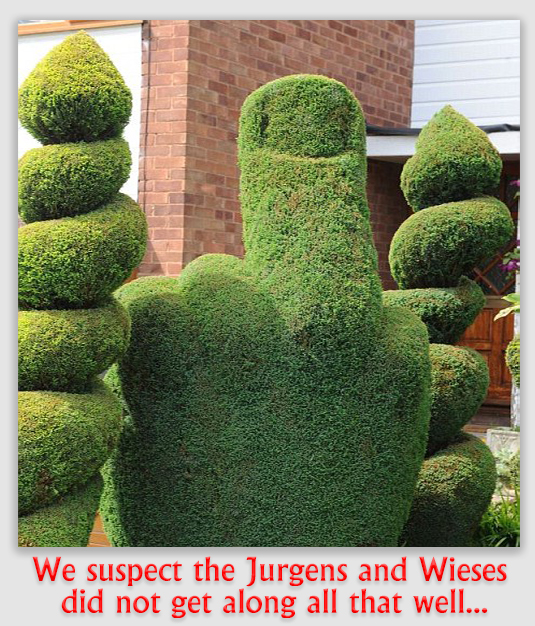
Jurgens v. Wiese, 151 Neb. 549 (Supreme Court of Nebraska, 1949). Martin and Anna Jurgens sued John and Tena Wiese to stop them from destroying a hedge located entirely on the south boundary of the Jurgens’ and Wieses’ properties, and for damages suffered because of John’s partial cutting of the hedge.

The Jurgens and the Wieses (and the people who owned the properties before them) had for more than 10 years recognized the boundary between their lands to be the center of the hedge. The Wieses trimmed it on their side, not claiming to own the whole thing but rather just the part they trimmed.

The trial court found that the row of hedge trees was completely on the Jurgens’ land and awarded them damages for the Wieses interference with the hedge. The Wieses appealed.

The hedge had been there about 78 years. The owner prior to the Jurgens, John Lenners, maintained the hedge and claimed it was his. In about 1936, John complained he was running into trouble with Lenners, and said, “I want to take that hedge from the old gentleman.” When Lenners died, the Jurgens bought the western 133 acres of the property.

John’s father, George, had owned John’s tract previously. George never made any claim to the hedge, but he did complain that it was too close to the line. More than 30 years before the trial, George said, “To my notion it ain’t right. Lenners has got that big hedge so close… it is damaging my land…. by sapping and they had to go along it every so often and cut branches.”

After John and Tena acquired the land, they did not make any claim that the hedge was on their land or that it was on the boundary line, but they did complain that the hedge was sapping his ground and causing damage. After the Jurgens bought their land, John told Martin he could get “damage off you” because the hedge damaged his land and that he wanted to have some damage for the injury done to his land. The hedge was so close to the line, he said, it sapped some of his ground. When Martin asked him how much he wanted, John said, “Half of it.”

Held: The hedge belonged to the Jurgens, but John and Tena were entitled to trim the part that overhung their property.

The Supreme Court found that the hedge clearly was planted and the trunks of the trees within the hedge were wholly upon the Jurgenses’ land. The Court said the hedge was the Jurgenses’ property, and no part of it has ever been owned by the Wieses. The Court held that ownership of trees standing wholly on the land of one owner, although their roots or branches extend into or over the land of another, is vested in the person on whose land the trees stand, and the adjoining owner has no property in them.

The fact that the Wieses trimmed branches from trees and the hedge which extended over their property was not evidence that they had any interest in or ownership of any part of the hedge, the Court held. One whose property is invaded by the boughs of trees growing on adjoining premises, the Court ruled, may cut them at the point where they enter his property. The act of cutting the branches to the extent they have entered the adjoining property is the exercise of a right, but it is not evidence of the ownership of a tree or trees from which the branches grew.

The Wieses admitted they were cutting the hedge but claimed they were cutting within their legal rights thereby to protect their property in it, that they were the owners of at least one-half of it. They had cut about 20 yards of the hedge and more than 20 hedge trees, and were continuing to cut the hedge at the time the suit was filed. Because a substantial portion of the hedge they cut was on Jurgens’ land, an injunction was a proper remedy. One who has trespassed upon the land of another, and threatens to continue such trespass may be enjoined from so doing. The owner of real estate is not required to permit the devastation of his hedge by a trespasser and seek relief in an action at law for damages, the Court said, but instead may resort to an action to prevent such trespasses.

– Tom Root

Case of the Day – Tuesday, July 30, 2024

TREE GONNA DO WHAT A TREE GONNA DO

When I was a kid, we had a cottonwood in the far backyard that my father christened “The Mess Tree.” It was not a sobriquet of affection.

The Mess Tree seemed to shed leaves and twigs all 12 months of the year. It was stubbornly marcescent, slow rolling its autumnal leaf drop from late August through February. Its twig production was prodigious: we all knew never to walk barefooted anywhere near the drip line. And when it released its seeds in June, the backyard looked as though it had been dusted with an early November snow.

Until I became responsible for my own yard, I could not understand my father’s disgust at The Mess Tree. But I am now responsible for a pair of cottonwoods in my own side yard, and I have empathy – a little late in coming, I admit – for Dad’s frustration.

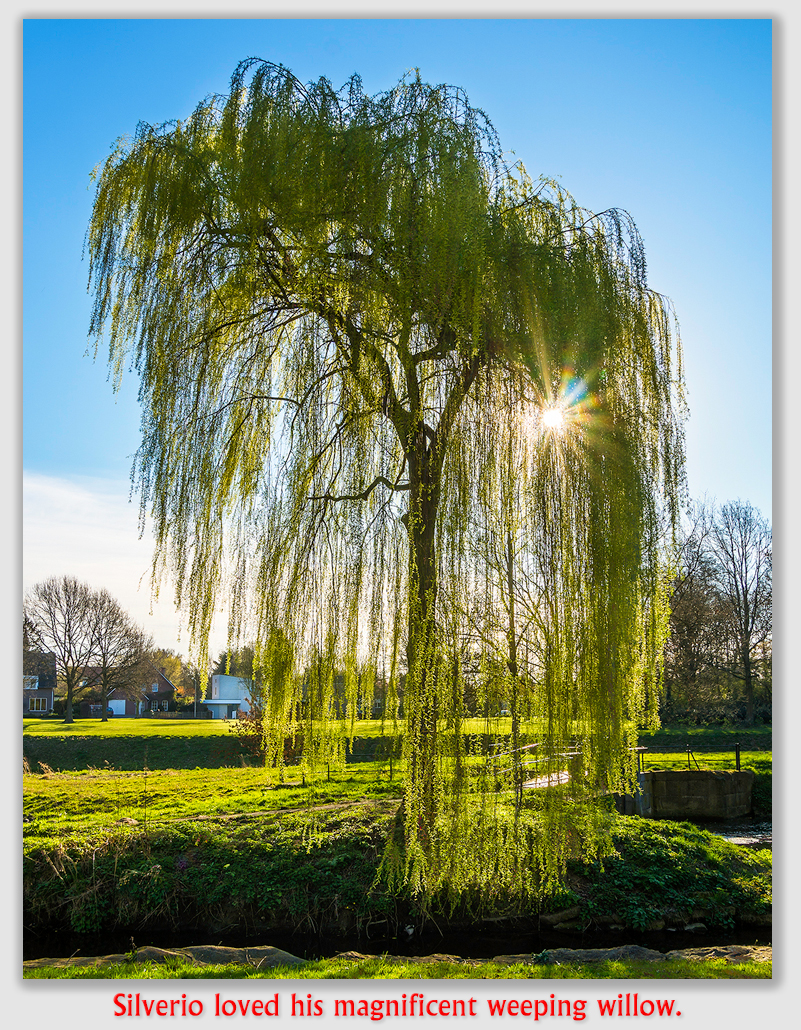
For that matter, like many people, I understand Helena and Joe Ponte’s vexation at Silverio DaSilva’s weeping willow. As unhappy as Dad was at his cottonwood, it was his cottonwood: he could remedy the problem with a single call to our neighborhood tree service. But when Silverio’s tree rained its ration of sap, twigs and other debris onto the Pontes’ lawn and driveway, all they could do is demand that Silverio cut it down.

He would not.

Finally, when Helena slipped on some wet leaves and twigs, breaking her ankle, the Pontes brought in their lawyer.

Satisfaction did not follow. Silverio’s weeping willow was a fine, healthy tree. It was just doing what trees do. And that, the Court said, was fine. A tree gonna do what a tree gonna do, and the law won’t get in its way.

Ponte v. DaSilva, 1982 Mass.App.Div. 6 (1982). Helena Ponte lived next to Silverio DaSilva and his magnificent weeping willow tree. The tree, standing about four feet from Silverio’s boundary with Helena, overhung the picket fence and Helena’s driveway.

Helena began noticing all of the leaves, sap and branches that fell from the tree onto her driveway about two years before the accident. She complained to Silverio, demanding he cut down the tree. Leaves and debris were clogging Helena’s gutters and swimming pool filter. Sap and tree debris (leaves and twigs, no doubt, inasmuch as willows don’t have much fruit) fell on Helena’s Studebaker. And of course, Helena darkly foretold, there was the ever-present slip-and-fall risk.

Helena’s attorney then wrote to Silverio, complaining that Helen’s husband had already fallen on the leaves and debris. The letter portended similar incidents unless the tree was removed.

Sure enough, about 10 days later, Helena fell due to the leaves and sap, breaking her ankle. She sued.

The trial court found that the tree was not diseased and that the leaves, sap and debris which fell were due to the natural characteristics of weeping willow trees. They do, after all, “weep.” Nevertheless, the trial court awarded Helena $15,000 and her husband another $3,000 for loss of consortium (which we will not endeavor to describe here).

Silverio appealed.

Held: Helena and Joseph got nothing, and the tree kept on being a tree.

The crucial issue, the Court of Appeals said, was whether under the circumstances Silverio owed a legal duty to Helena and Joseph to remove the tree. If so, then he would be liable for the damages caused by a breach of that duty.

The Pontes claimed essentially that the weeping willow was a nuisance because it bothered them. But the test for nuisance, the Court held, was not whether the conduct or activity would be objectionable to a hypersensitive person, but rather whether a normal person in the community would find the conduct at issue clearly offensive and annoying.

The Court observed that the tree had been there for some time, and it was obviously quite alive. No evidence in the record showed the tree to be a hazard (beyond Helena’s ankle, of course) to life or property. Trees “whose roots or branches extend beyond the boundary line,” the Court said, “have been held not to constitute a nuisance in themselves.” In fact, the Court noted, “the Restatement of Torts suggests that where the tree is a part of the natural condition of the land, there is no liability for private nuisance.”

The Court characterized Michalson v. Nutting (the case that was the origin of the Massachusetts Rule) as addressing the notion, albeit obliquely, of a tree as a nuisance. There, the Court said, “the Supreme Judicial Court held that the natural and reasonable extension of the roots and boughs of trees into adjoining property was damnum absque injuria.” The rationale given for this approach “is that to allow recovery in such situations would inundate the courts with frivolous and vexatious suits.”

But Helena argued that the underpinnings of the Michalson case had eroded to the point that a new theory of liability would and should make the defendant legally responsible in a case such as this. The Court dismissed her argument for a change in the law, noting that the line of cases she relied on to make her point all involved trees that were diseased, decayed or dead. Silverio’s weeping willow, on the other hand, was very healthy.

The right of a landowner to use and enjoy it for lawful purposes, the Court said, must be weighed against the likelihood of substantial harm to a neighboring landowner in cases of private nuisance. A dead, diseased or decayed tree has little or no utility to its owner and poses a foreseeable threat to adjoining landowners from falling limbs. A live tree, on the other hand, provides shade and will generally enhance the landowners’ property. The fact that leaves or other debris will naturally fall from live and healthy trees that are harmless in and of themselves and that such falling leaves and twigs might cause some inconvenience or annoyance to neighbors does not render the tree’s owner liable for damages.

– Tom Root

TNLBGray140407