Case of the Day – Friday, February 14, 2025

SO WHY ISN’T IT THE CALIFORNIA RULE?

The Massachusetts Rule is a topic I tend to flog ad nauseam. This is chiefly because it arises in so many states and in so many forms.

There are two components to the Massachusetts Rule. The first is easy and universally acclaimed. A landowner owns the portion of branches and roots of a neighbor’s tree that encroach on the landowner’s property and may trim those to his or her heart’s content.

The second is more controversial, and has been limited or abridged by a number of jurisdictions, that a landowner’s right to stop an encroaching tree from harming his or her property is limited to self-help – you can trim limbs and cut roots to the boundary line, but you cannot sue to force the tree’s owner to do it for you.

There are more exceptions than you can shake a fallen limb at. The Hawaii Rule holds that you can sue to have the tree’s owner “abate a nuisance,” that is, do whatever it takes to stop the tree from causing you “sensible harm.” Variations have been adopted in Virginia, North Dakota, New Mexico and Tennessee, to name a few places. In fact, some argue that the Massachusetts Rule is a frontier relic, and these days, urbanization and complexity make it prudent for tree’s owner to be responsible for nuisances it causes.

Curiously, however, everyone still refers to the original flinty self-help standard as the Massachusetts Rule. But it arose in sunny California well before Mr. Michalson sued Mr. Nutting.

I saw a column the other day written by a California lawyer. He was explaining how California fixed liability for fallen trees. He cited a California Supreme Court case called Grandona v. Lovdal, which he described as a 1952 decision that applied the Massachusetts Rule in California (although he did not call the rule that).

I was puzzled.I thought I knew the leading California cases for the last half of last century. I had never heard of Grandona or Lovdal. I looked it up and had a tough time finding it. It turned out it had been decided 63 years earlier, in 1889.

And it is a fascinating case, one in which the parties squabble over how much benefit or damage the trees caused, exhaustively referree’d by the trial court. The California Supreme Court simply cut the Gordian knot: it does not matter, the Court said, because the plaintiff has the power to stop encroachment at the property line, and with a saw instead of a lawsuit. While the Court did not say that a nuisance action would never lie (and California has leaned more toward Hawaii and away from Massachusetts in the ensuing 130 years), it seemed to pretty firmly foreclose any successful nuisance action as long as the landowner could be said to own anything straying over or under the damaged property.

So why don’t we call it the California Rule?

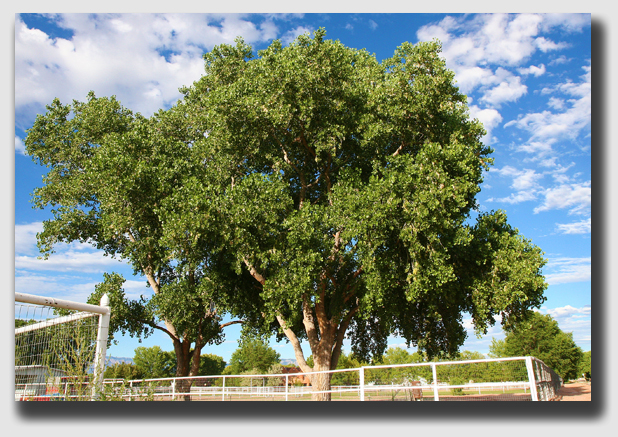
Grandona v. Lovdal, 21 P. 366, 78 Cal. 611 (Supreme Ct. Cal. 1889). Andrea Grandona owned about 15 acres of farmland next to that of Ole Olson Lovdal. Ole Olson (probably not the children’s chant) had a line of cottonwoods, planted about eight feet apart, running for 500 feet or so just on his side of the boundary, planted about 25 years before by a prior owner.

Andrea complained that the branches of the tree were overhanging part of her land, and the roots were encroaching about 30 feet into her property, making plowing impossible. She sued to abate a nuisance and for damages, wanting Ole Olson to pay her for the damage the trees caused, and to cut them down.

The trial court would have none of it. It found that the trees had not destroyed any portion of Andrea’s crops, and they had not prevented Andrea from plowing or cultivating the land. In fact, the trees had anchored the fence against floods, and Ole Olsen had kept the trees trimmed, using the limbs he removed for fuel and construction, but he had done nothing more to affect their growth other than to trim.

Andrea appealed, and the case ended up in the Supreme Court.

Held: The trees were no nuisance, and Ole Ole Olson is in free.

The Court was not impressed with Andrea’s complaint that the trees prevented full and fair use of the land, because he could not plant fruit trees on the shaded portion. The Court noted with a bit of exasperation that “we are unable to see how it can be said that land is injuriously affected, or that its owner’s personal enjoyment is lessened because he cannot use it for a purpose which he has never attempted or wished to use it for.”

The heart of the Court’s decision, however, was that Andrea could hardly be inconvenienced by overhanging branches or encroaching roots because that which encroached on his property belonged to him. “The trees and the overhanging branches,” the Court said “insofar as they were on or over his land, belonged to the plaintiff, and he could have cut them off or trimmed them at his pleasure. This being so, we do not see how the fact that the trees had grown so that a small part of them was on plaintiff’s land could give him any cause of action.”

Andrea argued that Ole Olson “maintained the trees for the purpose of supplying himself with fuel and hop-poles, and thereby using plaintiff’s land for his own profit and advantage.” But how can this be so, the Court wondered. “The fuel and hop-poles growing over plaintiff’s land were his and could have been claimed by him as against the defendant. And the fact that the balance of the limbs and branches were useful to defendant in no way harmed the plaintiff or gave him cause for complaint.”

The trial court’s dismissal of Andrea’s complaint was upheld.

– Tom Root

TNLBGray140407

Case of the Day – Thursday, February 13, 2025

A PRÉCIS ON ENCROACHMENT

North Dakota - you can see the gas flares from outer space.

North Dakota – you used to be able to see the gas flares from outer space. Now, the place is hot once again. 

It’s been a roller coaster for North Dakota over the past decade. Early on, North Dakota was a pretty happenin’ place. It was the No. 2 oil producer in the country, unemployment there was at a measly 2.6%, 18,000 more people moved there in 2013 than left… and the state had so much underground methane that it was flaring $100 million in natural gas a month that it couldn’t use.

Suddenly, you couldn’t give away houses there, equipment firms were saddled with bulldozers they couldn’t use, and boom towns were going bust.

But what goes around comes back again. By 2018, Nodak was back on top, pumping as much oil as all of Venezuela (although that’s a pretty low bar).  The pandemic drove a green stake through the heart of oil, but in 2020, business heated up again. As of the end of 2024, Nodak was “mature” but still pumping 1.2 million barrels a day, a third more than Maduro’s workers’ paradise.

But I’m not here to talk fracking.  The natural resources we care about around here are underground only to the extent of their root systems – root systems that, along with branches, can occasionally encroach on the neighbors. And that can be a real pain in the neck.

Over a decade ago, our guest justices from the North Dakota Supreme Court took time from deciding mineral rights, liability for train derailments, mobile home park regulation and the like to consider the law of tree encroachment. They did a bang-up job of summarizing the history, policy bases and goals of the various rules, before thoughtfully consigning the Massachusetts Rule’s proscription against lawsuits to what we here at treeandneighborlawblog call the “wood chipper of history.”

Back to the pain-in-the-neck tree. Dr. Richard Herring knows something about pains in the neck. They’re his livelihood, as long as they’re found in his patients. But this chiropractor had to deal with another pain in the neck, too. The property next door, on which sat an apartment building, had a large tree with branches that were overhanging Dr. Herring’s bone-crunching office. He fought back with self-help, trimming branches, cleaning up the debris that clogged his gutters, and raking up the mess the tree made every fall. But he couldn’t keep ahead. Finally, the branches damaged his building, and the debris created an ice dam on his roof that flooded the place.

pain-neck140211The absentee owners and hired managers at the apartment house next refused his entreaties to care for the tree. So he sued, claiming that they had a duty to manage the tree in such a way that it didn’t mess up his place. The trial court threw the suit out, telling the good doctor that he could trim the parts of the tree that were overhanging his place, but that was his only remedy.

“Wait,” you say, “that’s the Massachusetts Rule.” Right you are. But, as the North Dakota Supreme Court decided, there are other rules out there as well, including some that it thinks are a whole lot better than the doddering relic from Michalson v. Nutting. It reversed the trial court, holding that a tree owner does indeed have a duty to care for his or her trees so as to avoid damage to others.

In its thoughtful opinion, the Court wrote perhaps as fine a roundup on tree encroachment rules as has yet been written.

Herring v. Lisbon Partners Credit Fund, Ltd., 2012 N.D. 226, 823 N.W.2d 493 (Supreme Ct. N.D., 2012). Dr. Herring owned a commercial building in Lisbon housing his chiropractic practice. The apartment building next door is owned by Lisbon Partners and managed by Five Star. Branches from a large tree located on Lisbon Partners’ property overhang Herring’s property and brush against his building. For many years, Dr. Herring trimmed back the branches and cleaned out the leaves, twigs, and debris that would fall from the branches and clog his downspouts and gutters. He claimed that the encroaching branches caused water and ice dams to build up on his roof, and eventually caused water damage to the roof, walls, and fascia of his building. Herring contends that, after he had the damages repaired, he requested compensation from Lisbon Partners and Five Star, but they denied responsibility for the damages.

Encroaching tree roots and branches can sometimes be unsightly

Encroaching tree roots and branches can sometimes be unsightly

Dr. Herring sued Lisbon Partners and Five Star for the cost of repairing his building, claiming the companies had committed civil trespass and negligence, and maintained a nuisance by breaching their duty to maintain and trim the tree so that it did not cause damage to his property. The district court granted Lisbon Partners and Five Star’s motion for summary judgment, dismissing Herring’s claims. The court held Lisbon Partners and Five Star had no duty to trim or maintain the tree, and Herring’s remedy was limited to self-help. He could trim the branches back to the property line at his own expense, but that was it.

Held: The trial court’s dismissal was reversed, and Dr. Herring was given his day in court.

The North Dakota Supreme Court began its analysis by observing that the Massachusetts Rule was the original common law on tree law in the United States, holding that a landowner has no liability to neighboring landowners for damages caused by encroachment of branches or roots from his trees, and the neighboring landowner’s sole remedy is self-help: the injured neighbor may cut the intruding branches or roots back to the property line at his or her own expense. The basis for the Massachusetts Rule is that it is “wiser to leave the individual to protect himself, if harm results to him from the exercise of another’s right to use his own property in a reasonable way, than to subject that other to the annoyance and burden of lawsuits, which would likely be both countless and, in many instances, purely vexatious.

The Hawaii Rule, on the other hand, rejected the Massachusetts approach as overly simplistic. Instead, it held that the owner of a tree may be liable when encroaching branches or roots cause harm, or create imminent danger of causing harm, beyond merely casting shade or dropping leaves, flowers, or fruit. When overhanging branches or protruding roots actually cause, or there is imminent danger of them causing, sensible harm to property other than plant life, in ways other than by casting shade or dropping leaves, flowers, or fruit, the damaged or imminently endangered neighbor may require the owner of the tree to pay for the damages and to cut back the endangering branches or roots and, if such is not done within a reasonable time, the damaged or imminently endangered neighbor may cause the cutback to be done at the tree owner’s expense.

The Restatement Rule, based upon the Restatement (Second) of Torts §§ 839-840 (1979), distinguishes between natural and artificial conditions on the land. Under the Restatement Rule, if the tree was planted or artificially maintained it may be considered a nuisance and its owner may be liable for resulting damages, but there is no liability for a naturally growing tree that encroaches upon neighboring  property.

The Virginia Rule, adopted in 1939, makes a distinction between noxious and non-noxious trees. Under the old Virginia rule, a tree encroaching upon neighboring property will be considered a nuisance, and an action for damages can be brought if it is a “noxious” tree and has inflicted a “sensible injury.”

The district court concluded that under N.D.C.C. § 47-01-12, Herring had a “right” to do as he wished with the overhanging branches and underlying roots of the tree, and therefore this portion of the tree was “just as much the responsibility of the adjacent landowner as it is the owner of the trunk.” In effect, the district court concluded that because Herring had the “right” to the branches above his property, he, therefore, had the responsibility to maintain them as well.

The state Supreme Court complained that the district court had essentially nullified N.D.C.C. § 47-01-17. That statute expressly provides that when the trunk of the tree is wholly upon the land of one owner, the tree “belong[s] exclusively to that owner.” The district court’s holding that Herring, in effect, owned the branches above his property was thus contrary to statute. Statutes must be construed as a whole and harmonized to give meaning to related statutes and are to be interpreted in context to give meaning and effect to every word, phrase, and sentence. The interpretation adopted by the district court did not give meaning and effect to that portion of N.D.C.C. § 47-01-17 which provides that the owner of the tree’s trunk “exclusively” owns the entire tree.

Our thanks to the Supreme Court of North Dakota for its comprehensive opinion ...

Our thanks to the Supreme Court of North Dakota for its comprehensive opinion …

Contrary to the district court’s conclusion that the Massachusetts Rule was more consistent with North Dakota statutory law, the Supreme Court held that the Hawaii Rule more fully gives effect to both statutory provisions. The Hawaii Rule is expressly based upon the concept, embodied in N.D.C.C. § 47-01-17, that the owner of the trunk of a tree that is encroaching on neighboring property owns the entire tree, including the intruding branches and roots. And because the owner of the tree’s trunk is the owner of the tree, the Supreme Court thought he or she should bear some responsibility for the rest of the tree. The Court said, “We think he is duty bound to take action to remove the danger before damage or further damage occurs.”

The Supreme Court also observed that “the Hawaii Rule is the most well-reasoned, fair, and practical of the four generally recognized rules. We first note that the Restatement and Virginia rules have each been adopted in very few jurisdictions, and have been widely criticized as being based upon arbitrary distinctions which are unworkable, vague, and difficult to apply … In fact, the Supreme Court of Virginia has … abandoned the [old] Virginia rule in favor of the Hawaii Rule [in] Fancher…”

The Court said the Massachusetts Rule fostered a "'law of the jungle' mentality" among landowners.

The Court said the Massachusetts Rule fostered a “‘law of the jungle’ mentality” among landowners.

The Court also complained that the Massachusetts Rule has been widely criticized as being “unsuited to modern urban and suburban life.” The Massachusetts Rule fosters a “law of the jungle” mentality, the Court said, because self-help effectively replaces the law of orderly judicial process as the only way to adjust the rights and responsibilities of disputing neighbors. The Court observed that while self-help may be sufficient “when a few branches have crossed the property line and can be easily pruned by the neighboring landowner himself, it is a woefully inadequate remedy when overhanging branches break windows, damage siding, or knock holes in a roof, or when invading roots clog sewer systems, damage retaining walls, or crumble a home’s foundation.”

Accordingly, the North Dakota Supreme Court held that “encroaching trees and plants are not nuisances merely because they cast shade, drop leaves, flowers, or fruit, or just because they happen to encroach upon adjoining property either above or below the ground. However, encroaching trees and plants may be regarded as a nuisance when they cause actual harm or pose an imminent danger of actual harm to adjoining property. If so, the owner of the tree or plant may be held responsible for harm caused by it, and may also be required to cut back the encroaching branches or roots, assuming the encroaching vegetation constitutes a nuisance.” The rule does not prevent a landowner, at his or her own expense, from cutting away the encroaching vegetation to the property line whether or not the encroaching vegetation constitutes a nuisance or is otherwise causing harm or possible harm to the adjoining property.

– Tom Root
TNLBGray140407

Case of the Day – Friday, February 7, 2024

ONE STATE’S TREE IS ANOTHER STATE’S PEST

Fast growing ... and messy as a 3-year old ...

Fast growing … and messy as a 3-year-old child …

Long before the Virginia Supreme Court’s decision in Fancher v. Fagella, a little-noticed New Mexico decision grappled with the problems caused by cottonwood trees. Cottonwoods can be majestic, and they were welcome enough to the tired and thirsty pioneers that the cottonwood became the state tree of Kansas. But at the same time, there are some arborists (and more than a few homeowners) who label them as dangerous, messy and a tree that should “be removed from most residential property.

Mr. Fox had a cottonwood tree he loved dearly. His neighbors didn’t fall into the same category, however. They hated the constantly shedding tree with the invasive and prolific root system. Like the banyan tree in Whitesell v. Houlton, there was a lot about Mr. Fox’s cottonwood not to like.

I have often mentioned the time-honored legal maxim that “hard cases make bad law.” It bears repeating here. Like the Whitesell v. Houlton banyan tree, Mr. Fox’s cottonwood generated sufficient horror stories in the trial transcript to explain the trial court’s decision that Mr. Fox’s tree had to go. A more level-headed weighing of the competing property and societal interests was undertaken by the Court of Appeals.

It's beginning to look a lot like Christmas ...except it's June, and the cottonwood is shedding cotton like a plantation in a tornado.

It’s beginning to look a lot like Christmas … except it’s June, and the cottonwood is shedding cotton like a plantation in a tornado.

None of that changed the outcome for Mr. Fox. He had to pay damages, and Abbinetts were free to hack away at the tree’s root system to the full extent of the Massachusetts Rule. But for those of us who admire the process, the Court of Appeals’ thoughtful opinion was a breath of fresh air.

Abbinett v. Fox, 103 N.M. 80, 703 P.2d 177 (Ct.App. N.M. 1985). The Abbinetts and Fox formerly owned adjoining residences in Albuquerque. The Abbinetts sued, alleging that while Fox owned his place, roots from a large cottonwood tree on his property encroached onto their land and damaged a patio slab, cracked the sides of a swimming pool, broke a block wall and a portion of the foundation of their house, and clogged a sprinkler system.

The Abbinetts asked for an injunction against Fox. The trial court found against Fox for $2,500.00 but denied injunctive relief to force Fox to remove the tree roots. Instead, the Court entered an order authorizing the Abbinetts to utilize self-help to destroy or block the roots of the cottonwood trees from encroaching on their land. The Foxes appealed the decision.

Cottonwoods are known for their intricate and aggressive root systems

Cottonwoods have intricate and aggressive root systems …

Held: The New Mexico Court of Appeals grappled for the first time with the Massachusetts Rule, the Hawaii Rule and the Smith v. Holt-era Virginia Rule. Instead, it adopted a modification of all of these, finding that when overhanging branches or protruding roots of plants actually cause – or there is imminent danger of them causing – “sensible harm” to property other than plant life, the damaged or endangered neighbor may require the owner of the tree to pay for damages and to cut back the endangering branches or roots. Such “sensible harm” has to be something more than merely casting shade or dropping leaves, flowers or fruit. In so doing, the New Mexico Court anticipated the Virginia Supreme Court’s Fancher v. Fagella holding by about 22 years.

The New Mexico Court also opined that it is the duty of a landowner to use his property in a reasonable manner so as not to cause injury to adjoining property. This is the Hawaii Rule. And the landowner who suffers encroachment from the tree of another may — but is not required to — “abate it without resort to legal proceedings provided he can do so without causing [a] breach of [the] peace.” This, of course, is the heart of the Massachusetts Rule. The New Mexico Court called all of these holdings a “modified Virginia Rule,” as indeed it was.

The Court held that a trial court may grant both damages for already incurred injuries and injunctive relief to prevent future harm where there is a showing of irreparable injury for which there is no adequate remedy at law.

– Tom Root

TNLBGray140407

Case of the Day – Thursday, February 6, 2025

ENCROACHMENT, NUISANCE … AND THE MARCH OF TIME

camelhorse140429Encroachment – not the football kind, the tree kind. Encroachment governs the rights of adjoining property owners when the trees on one of the properties encroach on the property of the other. Overhanging branches, invasive root systems, falling debris … those kinds of problems.

Monday, we explored one of the two different approaches to encroachment under American law, the “Massachusetts Rule” that landowners are limited to self-help – but not lawsuits – to stop encroaching trees and roots. Yesterday, we looked at the other end of these 50 United States, and the “Hawaii Rule,” a holding that a landowner could sue for damages and injunctive relief when a neighbor’s tree was causing actual harm or was an imminent danger to his or her property.

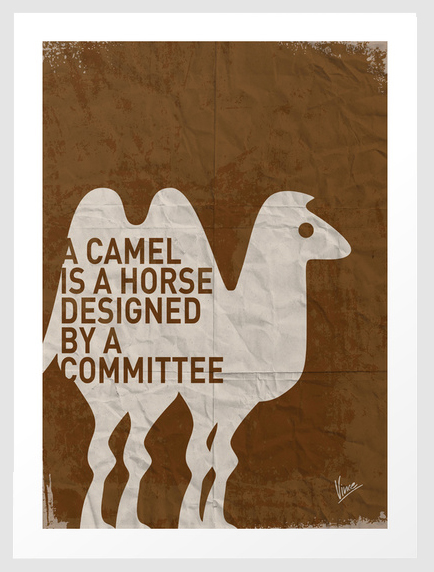
Between the two competing rules, Virginia found herself firmly straddling the line. The fair Commonwealth may be for lovers but it is also for equivocators. The landmark Old Dominion case on the issue, Smith v. Holt, hailed from the 1930s, holding that the Massachusetts Rule applied unless the tree in question was (1) causing actual harm or was an imminent danger; and (2) “noxious.” This holding brings to mind the maxim, “A camel looks like a horse designed by a committee.” Frankly, Smith v. Holt had “committee’ written all over it. It seemed to hold that the Massachusetts Rule applied except where it didn’t. And what did “noxious” have to do with anything?

hoist140715The Virginia Supreme Court finally addressed the confusing situation in Fancher v. Fagella. There the Court found itself hoisted on its own “noxious” petard. Everyone could agree that poison ivy was noxious, and most people could agree kudzu was noxious. But how about a cute little shade tree? Shade trees are definitely not in the same league with poisonous or entangling pests, but yet, a cute little shade tree can come out of the ground harder and do more damage than poison ivy or kudzu ever could.

Take the tree in Fancher. It was a sweet gum, a favored landscaping tree as well as a valuable hardwood. But for poor Mr. Fancher, it was Hydra covered in bark. Only halfway grown, Fagella’s sweet gum’s roots were already knocking over a retaining wall, kicking up patio stones, breaking up a house foundation and growing into sewers and even the house’s electrical system. Fancher sued for an injunction, but the trial court felt obligated to follow Smith v. Holt. There was just no way that a sweet gum tree could be noxious, the local court held, and thus, it would not help the frustrated Mr. Fancher. But the Virginia Supreme Court, wisely seeing that the “noxious” standard was of no help in these cases, abandoned the hybrid rule of Smith v. Holt, an unwieldy compromise that had already become known as the “Virginia Rule.” The Court – noting that the “Massachusetts Rule” was a relic of a more rural, bucolic age – decided that the “Hawaii Rule” was the better fit for modern, crowded, helter-skelter suburban life. It sent the case back to the trial court, instructing the judge that the court should consider whether an injunction should issue.

This decision fits neatly into what we have been considering for the past week on negligence and nuisance. Here, the tree had become a nuisance, possibly because Fagella had not cared for the tree before it began damaging the neighbor’s property. All the tree had ever done is what trees do – it grew. And grew and grew. It was healthy, perhaps amazingly so, but Fagella was ordered to shoulder the cost of damages caused not because it was dangerous or dead or anything other than an inconvenience.

Like the decision or hate it, you could see this coming. From an age in which trees grew and lived and died, and effects of the life cycle were not chargeable against the landowner, we may be arriving at a point where trees aren’t much more than big, woody pets, with their owners responsible for whatever the tree may naturally do.

Fancher v. Fagella, 650 S.E.2d 519, 274 Va. 549 (2007). Fancher and Fagella were the owners of adjoining townhouses in Fairfax County, Virginia (a largely urban or suburban county west of Washington, D.C., and part of the Washington metropolitan area). Fagella’s property is higher in elevation than Fancher’s, and a masonry retaining wall runs along the property line to support the grade separation. Fancher has a sunken patio behind his home, covered by masonry pavers.

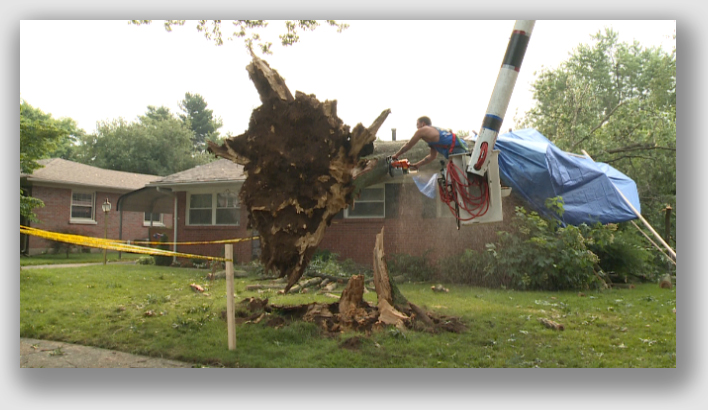
treeonhouse160322Fagella had a sweet gum tree located a few feet from the retaining wall, about 60 feet high with a 2-foot diameter trunk at its base. Sweet gums are native to the area and grow to 120 to 140 feet in height at maturity, with a trunk diameter of 4 to 6 feet. The tree was deciduous, dropping spiky gumballs and having a heavy pollen load. It also has an invasive root system and a high demand for water.

In the case of Fagella’s tree, the root system had displaced the retaining wall between the properties, displaced the pavers on Fancher’s patio, caused blockage of his sewer and water pipes and had begun to buckle the foundation of his house. The tree’s overhanging branches grew onto his roof, depositing leaves and other debris in his rain gutters. Fancher attempted self-help, trying to repair the damage to the retaining wall and the rear foundation himself, and cutting back the overhanging branches, but he was ineffective in the face of the continuing expansion of the root system and branches. Fancher’s arborist believed the sweet gum tree was only at mid-maturity, that it would continue to grow, and that “[n]o amount of concrete would hold the root system back.” The arborist labeled the tree “noxious” because of its location, and said that the only way to stop the continuing damage being done by the root system was to remove the tree entirely.

Fancher sued for an injunction compelling Fagella to remove the tree and its invading root system entirely and asked for damages to cover the cost of restoring the property to its former condition. Fagella moved to strike the prayer for injunctive relief. The trial court, relying on Virginia law set down in Smith v. Holt, denied injunctive relief. Fancher appealed.

Held: The Supreme Court abandoned the “Virginia Rule,” adopting instead the “Hawaii Rule” that while trees and plants are ordinarily not nuisances, they can become so when they cause actual harm or pose an imminent danger of actual harm to adjoining property. Then, injunctive relief and damages will lie. The Court traced the history of the encroachment rule from the “Massachusetts Rule” — which holds that a landowner’s right to protect his property from the encroaching boughs and roots of a neighbor’s tree is limited to self-help, i.e., cutting off the branches and roots at the point they invade his property — through the modern “Hawaii Rule.” The Court noted that Virginia had tried to strike a compromise between the two positions with the “Virginia Rule” set out in Smith v. Holt, which held that the intrusion of roots and branches from a neighbor’s plantings which were “not noxious in [their] nature” and had caused no “sensible injury” was not actionable at law, the plaintiff being limited to his right of self-help.

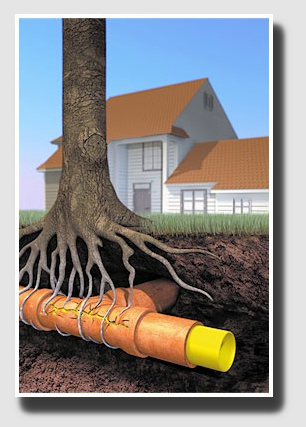
Invasive_rootsThe Court found the “Massachusetts Rule” rather unsuited to modern urban and suburban life, although it may still work well in many rural conditions. It admitted that the “Virginia Rule” was justly criticized because the classification of a plant as “noxious” depends upon the viewpoint of the beholder. Just about everyone would agree that poison ivy is noxious. Many would agree that kudzu is, too, because of its tendency toward rampant growth, smothering other vegetation. But few would declare healthy shade trees to be noxious, although they may cause more damage and be more expensive to remove, than poison ivy or kudzu. The Court decided that continued reliance on the distinction between plants that are noxious and those that are not imposed an unworkable and futile standard for determining the rights of neighboring landowners.

Therefore, the Court overruled Smith v. Holt, insofar as it conditions a right of action upon the “noxious” nature of a plant that sends forth invading roots or branches into a neighbor’s property. Instead, it adopted the Hawaii Rule, finding that encroaching trees and plants are not nuisances merely because they cast shade, drop leaves, flowers, or fruit, or just because they happen to encroach upon adjoining property either above or below the ground. However, encroaching trees and plants may be regarded as a nuisance when they cause actual harm or pose an imminent danger of actual harm to adjoining property. If so, the owner of the tree or plant may be held responsible for harm caused to adjoining property, and may also be required to cut back the encroaching branches or roots, assuming the encroaching vegetation constitutes a nuisance. The Court was careful to note that it wasn’t altering existing law that the adjoining landowner may, at his own expense, cut away the encroaching vegetation to the property line whether or not the encroaching vegetation constitutes a nuisance or is otherwise causing harm or possible harm to the adjoining property.

The Court warned that not every case of nuisance or continuing trespass may be enjoined, but it could be considered here. The decision whether to grant an injunction, the Court held, always rests in the sound discretion of the chancellor and depends on the relative benefit an injunction would confer upon the plaintiff in contrast to the injury it would impose on the defendant. In weighing the equities in a case of this kind, the chancellor must necessarily first consider whether the conditions existing on the adjoining lands are such that it is reasonable to impose a duty on the owner of a tree to protect a neighbor’s land from damage caused by its intruding branches and roots. In the absence of such a duty, the traditional right of self-help is an adequate remedy. It would be clearly unreasonable to impose such a duty upon the owner of historically forested or agricultural land, but entirely appropriate to do so in the case of parties, like those in the present case, who dwell on adjoining residential lots.

– Tom Root

TNLBGray140407

Case of the Day – Wednesday, February 5, 2025

YESTERDAY CHOCOLATE, TODAY VANILLA

chocolate160325The law of encroaching trees runs a continuum from total self-help to the exclusion of any judicial remedy (theMassachusetts Rule,” which we discussed yesterday) – to tree owner liability (the “Hawaii Rule”), with many variations in between. If the law of encroachment were administered by Baskin Robbins, the Massachusetts Rule would be chocolate ice cream, and the Hawaii Rule would be vanilla.

In Whitesell v. Houlton, a Hawaiian appellate court first adopted what is generally known as the “Hawaii Rule,” which held that when there is imminent danger of overhanging branches causing “sensible” harm to property other than plant life, the tree owner is liable for the cost of trimming the branches as well as for the damage caused.

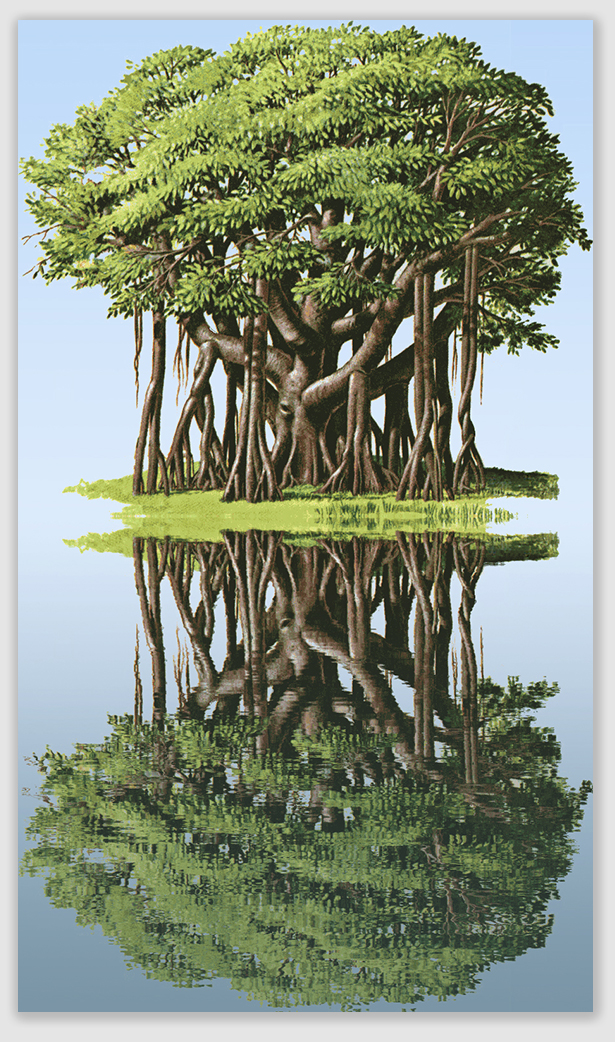
Maybe the court’s holding that the Whitesell v. Houlton tree was a nuisance arose from the hard facts of that case: the tree was a massive banyan tree, with a 12-foot trunk and 90-foot height.

There is an old legal maxim that “hard cases make bad law,” and the banyan tree in this case was pretty clearly monster flora, sort of the kudzu of trees. Perhaps it is that the laid-back political and cultural nature of the Sandwich Islands is too far removed from the flintier New Englanders and the type of self-reliance embraced by the “Massachusetts Rule.

banyan160325For whatever reason, if a branch from a healthy tree in Massachusetts is in danger of falling into a neighbor’s yard, that neighbor may trim it at his or her own expense … but that’s it. In Hawaii, overhanging branches or protruding roots constitute a nuisance when they actually cause, or there is imminent danger of them causing, sensible harm to property other than plant life, in ways other than by casting shade or dropping leaves, flowers, or fruit. Then, the damaged or imminently endangered neighbor may either use self-help to cut back on the encroaching tree or may require the owner of the offending tree to pay for damages and to cut back endangering branches or roots. If such is not done within a reasonable time, the neighbor may even have the trimming done at the tree owner’s expense.

As we said, nothing in this ruling prevents a landowner — at his or her own expense — from cutting any part of an adjoining owner’s trees or other plant life up to his property. It’s just that the Massachusetts Rule says that’s all a landowner may do. Hawaii thinks differently. Tomorrow, we’ll see that Hawaii may be on the right side of history in this debate.

Whitesell v. Houlton, 632 P.2d 1077 (App. Ct. Hawaii, 1981). The Whitesells and Mr. Houlton lived next to each other. Mr. Houlton owned a 90-foot-tall banyan tree with foliage extending 100 to 110 feet from the trunk. The tree overhung the Whitesells’ property. and the two-lane street fronting both properties. The Whitesells asked Mr. Houlton repeatedly over a two-year period to trim the tree, and they took it upon themselves to do so at various times. Their VW microbus – probably chartreuse – was damaged by low-hanging branches, their garage roof was damaged by some intruding branches from the tree, and they identified storm-damaged branches that were in danger of falling.

Despite their entreaties, Mr. Houlton did nothing. Finally, the Whitesells hired a professional tree trimmer who cut the banyan’s branches back to Houlton’s property line and then sued Mr. Houlton to get him to pay.

The trial court sided with the Whitesells and ruled that Mr. Houlton had to pay. He appealed.

Held: Mr. Houlton had to pay. The court surveyed different approaches taken by other states, identifying the “Massachusetts Rule” holding that Mr. Houlton had no duty to the Whitesells or the “Virginia Rule” that said Mr. Houlton had a duty to prevent his tree from causing sensible damage to his neighbor’s property.

nuisance160325The Court agreed with Mr. Houlton that “the Massachusetts Rule is ‘simple and certain’. However, we question whether it is realistic and fair. Because the owner of the tree’s trunk is the owner of the tree, we think he bears some responsibility for the rest of the tree. It has long been the rule in Hawaii that if the owner knows or should know that his tree constitutes a danger, he is liable if it causes personal injury or property damage on or off of his property… Such being the case, we think he is duty bound to take action to remove the danger before damage or further damage occurs.” This is especially so, the Court said, where the tree in question was a banyan tree in the tropics.

Thus, the Court adopted what it called “a modified Virginia rule.” It held that “overhanging branches which merely cast shade or drop leaves, flowers, or fruit are not nuisances; that roots which interfere only with other plant life are not nuisances; that overhanging branches or protruding roots constitute a nuisance only when they actually cause, or there is imminent danger of them causing, sensible harm to property other than plant life, in ways other than by casting shade or dropping leaves, flowers, or fruit; that when overhanging branches or protruding roots actually cause, or there is imminent danger of them causing, sensible harm to property other than plant life, in ways other than by casting shade or dropping leaves, flowers, or fruit, the damaged or imminently endangered neighbor may require the owner of the tree to pay for the damages and to cut back the endangering branches or roots and, if such is not done within a reasonable time, the damaged or imminently endangered neighbor may cause the cutback to be done at the tree owner’s expense.”

The Court pointed out that this rule did not strip a landowner of the right, at his or her expense, to trim a neighbor’s overhanging tree or subterranean tree roots up to the property line. It’s just where the Massachusetts Rule limits you to helping yourself, the Hawaii Rule lets you enlist the courts to do the heavy lifting.

– Tom Root

 TNLBGray140407

Case of the Day – Wednesday, January 29, 2025

BELLYACHING

When I was a kid, we had a magnolia in the backyard that my father would fume about at least twice annually. He called it “the mess tree.”

When I finally owned a backyard with a magnolia of my own, I understood. The tree is a thing of beauty every spring… for about 24 hours. Then the petals fall in a slimy, stinky mess. In the fall, the magnolia’s leaves turn from green straight to a uniform, blah brown, and then fall in a thick blanket that is resistant to most leaf rakes and machines of any size.

At least I bellyache about my own trees. What happens when your neighbors start to complain about your trees, which – while remaining on your property – mess their yards with leaves, twigs and general mess?

We all know at least the first prong of the Massachusetts Rule. A property owner has the right to trim back overhanging branches and encroaching roots of a tree standing on his or her neighbors’ yards, at least back to the property line. The second prong of the Rule, of course, is where all the variations arise. In Massachusetts, the neighbor cannot sue. In other places, the neighbor can. And even where nuisance actions are contemplated – think Mr. Houlton’s banyan tree in the famous case that begat the Hawaii Rule – at what point does a tree’s general messiness (leaves, pine cones, fruit, twigs and the such) cross the line from unremedied annoyance to actionable nuisance?

The Massachusetts Rule’s self-help provisions do not do a neighbor much good if the tree stands wholly on the next-door property. There is no trimming or root-hogging that will keep wind-blown twigs, leaves, fruit and other debris from raining onto your property.

Is there nothing that can be done? How many times have we noted that hard cases make bad law? Today’s case provides yet another illustration of the truth of this old saw.

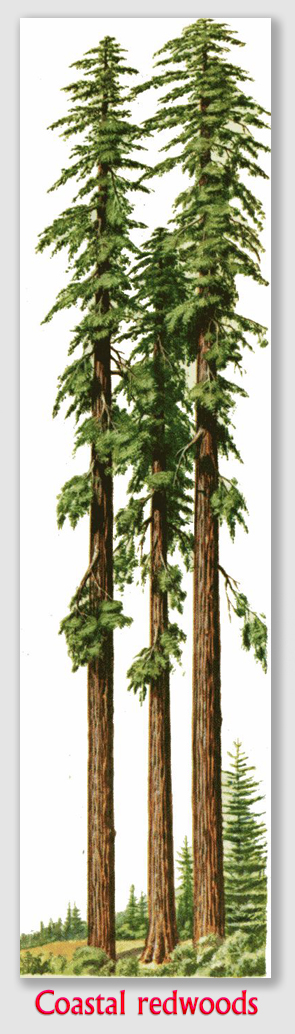
John Leech apparently took Dorothy’s mantra to heart, believing there was no place like home. So when he and his wife had the chance, they moved into John’s boyhood home. There they lived, happy and proud (especially of the majestic coastal redwood tree in the sideyard, already 80 years old or so).

John remembered the tree from when he was a boy. He nurtured it as an adult. But about 18 years after he and Brenda returned to reside in the house in which John had grown up, the Boyles moved in next door.

The Boyles never said a word to John or Brenda about the coastal redwood. But they were plenty agitated that the tree dropped pine cones and other debris on their yard, and in the process stained everything a sticky, unappealing brown. You would think that the neighbors might engage the tree’s owners in pleasant conversation, looking for a mutually acceptable solution to the problem. If so, you would be thinking wrong.

Terri and Kent Boyle might be great people, but their conduct as neighbors was as puzzling as those people who buy a house a quarter mile from the threshold of the primary runway at O’Hare and then complain about the noise. And puzzling not just to me, either. It is hard to read the Court’s opinion that John’s and Brenda’s tree was not a nuisance without concluding that the Court was a little put out that the Boyles never bothered to discuss the problem with their neighbors, but rather hired an expert and then ran for the courtroom.

Besides, there is something vaguely unjust that a couple of Johnnies-come-lately can move in, and within a couple years demand that a tree that had stood for 80 years on land inhabited by the same people for over 20 years (and more, when the lord of the manor was a mere stripling), be chopped down, all because they did not like it.

I have the sense that if the Boyles had sought a collegial solution, resorting to litigation as a last resort, their petition might have been greeted with less skepticism.

Ah well… hard cases make bad law.

Boyle v. Leech, 2019 Wash. App. LEXIS 224 (Ct.App. Washington, Jan. 28, 2019). John Leech lived at his current residence as a child in the 1950s. He and his wife, Brenda, moved back to the property in 1995 and have lived there for the past 24 years.

From the time John was a child, a large coastal redwood tree has grown on the property, about 70 feet from the boundary line the Leeches share with their neighbors Theresa and Kent Boyle. The branches of the stately tree do not come closer to the property line than about 50 feet.

The Boyles moved into their home in July 2013. Soon enough, Terri and Kent noticed that the wind was blowing debris from the Leeches’ tree onto their property. Sometimes, the debris, which contains tannic acid, causes staining. The staining does not remove easily, requiring power washing or strong cleaning products to remove.

The Boyles hired Brian Allen, a certified arborist, to inspect the coastal redwood. Brian determined that the tree “is dying slowly,” causing excessive sap and cone production. Despite this diagnosis, the tree is not currently considered high risk. On a one-to-ten health scale (one being the highest risk, with the potential for critical failure at any moment), Brian ranked the health of the tree as close to seven. Brian recommended that “due to client’s motivations, and the potential for continued and worsening damage to surrounding property, removal is recommended.”

Inexplicably, Terri and Kent never complained to the Leeches about the coastal redwood. Rather, they filed a nuisance action against the Leeches, asking for $5,000 in damages and for a court order that the Leeches abate the nuisance by cutting down the tree. When the Leeches recovered from their shock at being sued, they moved for summary judgment, arguing the Boyles failed to establish a prima facie case of nuisance. The trial court agreed, throwing out the Boyles’ lawsuit.

The Boyles appealed.

Held: The Leeches have acted reasonably by keeping the tree, which is entirely on their property, without complaint from anyone before the Boyles. The Boyles’ claim of nuisance thus fails as a matter of law.

RCW 7.48.010 defines “actionable nuisance” as including a number of specific events, such as obstructing a highway or clogging a stream with floating timber, and includes a “catch-all” provision that holds “whatever is injurious to health or indecent or offensive to the senses, or an obstruction to the free use of property, so as to essentially interfere with the comfortable enjoyment of the life and property, is a nuisance.”

In Washington, the Court said, “an unreasonable interference with another’s use and enjoyment of property” constitutes a nuisance. Thus, in nuisance cases, the trial court mainly considers whether a party reasonably uses his or her property, balancing the rights, interests, and convenience unique to the case and considering all the surrounding facts and circumstances.

Here, the Court observed, the tree was growing entirely on the Leeches’ property, without any branches overhanging roots encroaching on the Boyles’ yard. The tree is about 80 years old, or any underground Leech believes the tree has been on the property for 80 years. Aside from the Boyles, no neighbor has ever complained to John or Brenda about the tree.

The Boyles described the tree as “a dying tree shedding toxic debris,” but their expert evidence only opined that the tree was dying slowly but remained relatively healthy. The tree’s debris may have been “excessive,” but it was in no way toxic. Arborist Brian Allen only explained there was a “potential” for continued damage. He recommended the tree be cut down only because that was what his clients, the Boyles, wanted.

The Court of Appeals concluded that the Leeches did not act unreasonably with regard to the tree, especially given the redwood was located entirely on their property. Thus, there was no nuisance, and the Leeches would not be required to remove the tree to prevent staining from occurring on the Boyles’ property.

The Court admitted that no case it could find in Washington or any other state addressed a nuisance action regarding a tree situated wholly on someone else’s property. In Gostina v. Ryland, the Washington Supreme Court ruled that overhanging tree branches or encroaching roots onto a neighboring property constitute nuisances, and that the offended party was entitled to cut back any tree branches or roots that intrude onto his or her property. But in dictum, the Gostina court noted, “[t]he remainder of the trees will doubtless shed their leaves and needles upon the [plaintiff’s] premises; but this they must endure positively without remedy.” As well the Court of Appeals said, in Whitesell v. Houlton – the case that adopted the Hawaii Rule – that court was careful to exclude from the definition of nuisance a tree that only was “casting shade or dropping leaves, flowers, or fruit.”

Certainly, the Court of Appeals ruled, “If natural debris from an overhanging tree should not constitute a nuisance, neither should such debris from a tree that does not encroach onto neighboring property… Wind blowing natural debris from the Leeches’ tree causes staining on the Boyles’ property. We decide that this – debris from a tree wholly on another’s property – does not constitute a nuisance.”

– Tom Root

TNLBGray140407

Case of the Day – Thursday, January 9, 2025

THE HORSE HAS BOLTED

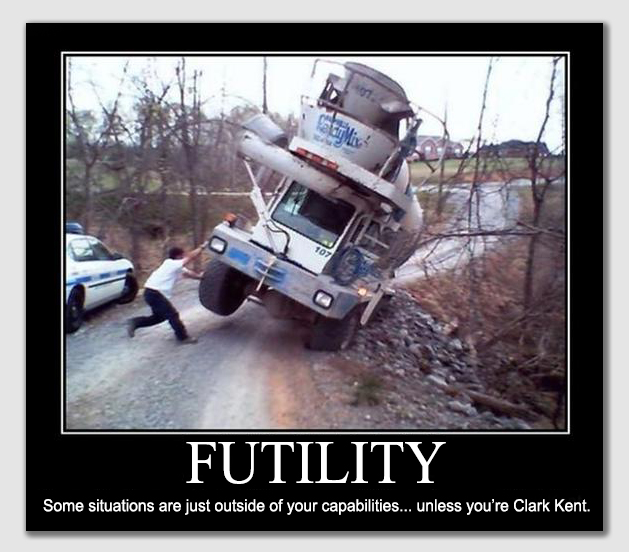
Anyone wanting to witness an exercise in futility only has to examine some of the laws passed by Congress, largely meaningless gestures intended to prevent something that has already happened.

I give you TSA for example. To be sure that no one takes a utility knife (the uninitiated call them “box cutters”) onto a  plane again after 9/11, TSA makes grannies remove their shoes and uses machines that reveal your bodily imperfections to the world. This is little more than “security theater,” intended to make us feel safer despite the government’s own evidence that TSA checkpoints are weapons sieves.

In the tree world, after the Emerald Ash Borer was already hopping amok across North America, states responded with roadside signs warning people against transporting firewood.

The Emerald Ash Borers, of course, being illiterate insects, did not read the signs. Rather, the little green destroyers continued their march unimpeded.

Sure stopped those Emerald Ash Borer critters…

When Frances Levine’s neighbor Ida decided to hack down a boundary tree, Frances got a restraining order stopping the butchery. By then, the tree was pretty much done for. The trial court, recognizing that the tree was much too far gone, declined to issue a permanent injunction against further tree removal. The tree was already beyond repair: issuing an injunction against killing it now would be futile.

Frances would not take ‘no’ for an answer… until she heard it two more times from two higher courts.

What Ida did was not right, and could get Frances some damages. But the act was done, and an order prohibiting the act would not unring the bell.

Levine v. Black, 312 Mass. 242, 44 N.E.2d 774 (Supreme Ct. Mass. 1942): A large tree was located on the property line between Frances Levine’s lot and a parcel owned by Ida Black. The boundary line ran just about through its center, which was only about two feet from Frances’ southerly wall. It was from 50 to 60 feet high and in “a reasonably healthy condition” before Ida began chopping the branches.

Ida was looking to build a new repair shop extending to the northerly boundary of their land, and finding the tree in her way, began to cut it down without Frances’ consent. Ida intended to remove the entire tree. She cut and carried away branches and limbs, some of which extended over Frances’ residence.

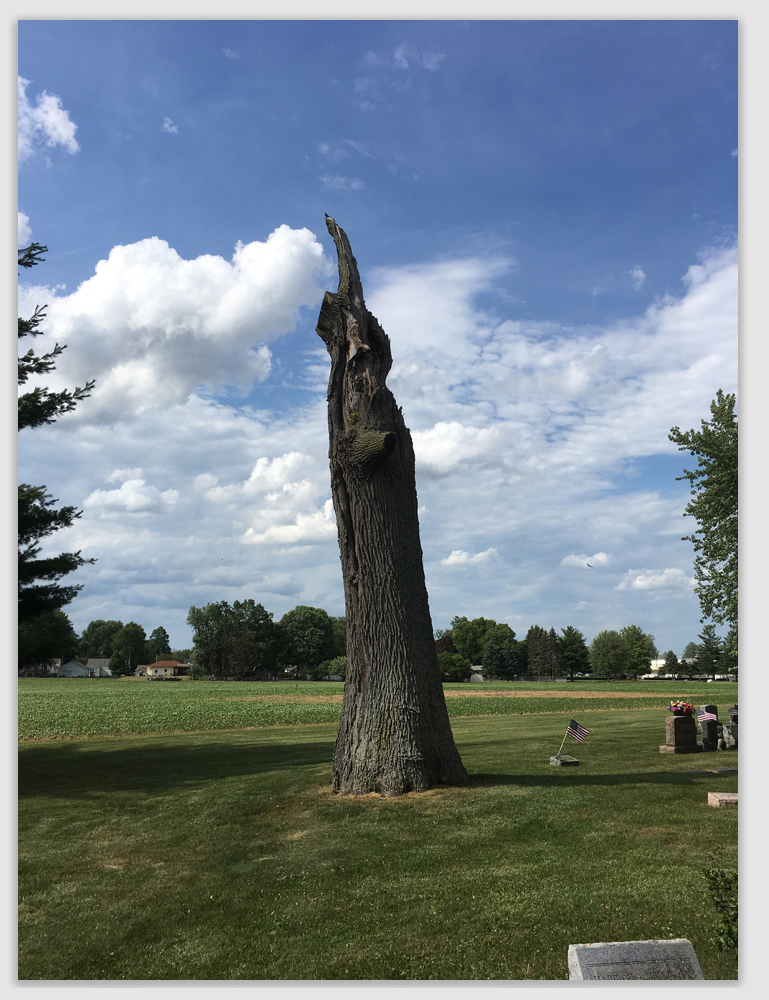
When Frances yelled at Ida about the arboreal butchery, Ida stopped, and thereafter a court issued a restraining order. The trunk of the tree is still standing, but the upper part has been reduced to two denuded limbs, the highest point of which is about forty feet from the ground. , “and there is an entire absence of branches and foliage.” On the south side of the trunk, there is a large scar resulting from the removal of the bark by chopping it with an axe.

Frances sued, but the trial court dismissed the action. She appealed. The appellate court ruled that both parties equally owned the tree, but Ida had damaged the tree so badly that an injunction would have served neither party. The court held that the tree would never grow back, and therefore it would have been more beneficial to both parties to have the tree chopped down. Thus, the court of appeals affirmed the trial court decree dismissing  Frances’ action for a permanent injunction to prevent Ida from cutting down a tree.

Frances appealed to the Supreme Court of Massachusetts.

Held: The court of appeals was right. The damage had been done, and an injunction should not issue.

The Court observed that where the trunk of a tree stands wholly on the land of one property owner, he is deemed the owner of the entire tree. This is true despite the fact that the Massachusetts Rule gives his or her neighbor the right to cut off limbs and roots which invade his premises. But where, as in the present case, the trunk stands across the boundary line, it has generally been said that under these circumstances both parties own the whole tree as tenants in common.

In other cases, the Court admitted, it has been held that each party has title to only that part of the tree on his side of the line but has a right to prevent his neighbor from so dealing with his part as unreasonably to injure or destroy the whole. But here, resolving inconsistencies in the two approaches is not necessary. Under either view, “it is difficult to see why either owner should have any less right to cut off branches and roots than he would have if the trunk stood entirely upon the other’s land.”

But this case, the Court ruled, it is unnecessary to determine whether “the value of a tree to one owner is to be weighed against the detriment to the other owner of being unable to use all of his land for building purposes.” That is because the overarching principle applicable here is that relief by injunction will not be granted where the granting of it would be but a futile gesture and would serve no useful purpose in protecting any substantial right or interest of the party applying for it.

Before this suit was brought, the Court said, “the tree had been reduced to a condition in which it could be of no benefit to the plaintiff from the viewpoint either of beauty or of utility. It was and still is a bare skeleton consisting of a trunk and two limbs, with no other branches or foliage whatever. There is nothing to show that the lapse of any reasonable period of time will restore it to attractiveness or value. Its removal would now appear to be advantageous to both parties and harmful to neither.”

The Court did not intend to reward Ida’s trespass, Rather, it simply recognized reality, that to deny a permanent injunction under these circumstances “is merely, in dealing solely with the question of injunctive relief, to take a practical view of an existing situation for which an injunction can afford no genuine remedy.”

– Tom Root

TNLBGray140407