Case of the Day – Friday, May 1, 2026

DOUBLE, DOUBLE DOIL, AND TROUBLE

My apologies to Bill Shakespeare, despite the fact he and the three witches of MacBeth probably are not regular readers of this blog. Today we meet Aynne Doil, a hapless landowner who gets slapped with double damages under an unusual Maine law requiring the marking of property boundaries, but who dodges much greater liability for the misfeasance of her independent contractor, Matt McCourt.

Aynne is the Doil. And, pretty clearly, Matt is the trouble.

This is not the first time, and it won’t be the last, that I emphasize the importance of written agreements and (for you homeowners, especially) ensuring that your timber harvesters, tree trimmers, and arborists are and remain independent contractors.

At trial (where Aynne’s timber harvester and co-defendant, Matt McCourt, proved himself to be “Matt SkipCourt” and did not bother to show up), the court bonked Aynne over the head with about $120,000 in damages for the mess Matt had made in denuding the Stocklys’ 20 acres of woodland. Lucky for Aynne, she had signed a written agreement with Matt that, under Maine’s Bonk v. McPherson factors, made him an independent contractor.

The Maine Supreme Court unbonked Aynne, because – as we all know – a landowner is only responsible for the intentional or negligent acts of his or her independent contractor if the landowner reserved the right to control the manner of the contractor’s performance. Aynne knew from nothing about timber, a fact pretty evident from her rather simple negotiation of the agreement. But for its failings, the contract was good enough in the end to make Matt an independent contractor. Thus, Aynne was not responsible for the $119,000 in damages but only for about $14,000 for failing to mark her property, which the statute doubled to $28,000.

Matt promised in the contract to indemnify Aynne against any liability, which should have protected her from even the $28,000 in damages, but we’ll leave it to you to imagine how reliable a promised indemnity might be from a guy who did not even show up in court to defend himself.

On some other occasion, I’ll talk about performance bonds, people. For now, we’ll call Aynne “Double Doil,” but concede that she nevertheless may have avoided $119,000 worth of real trouble.

Stockly v. Doil, 870 A.2d 1208 (Me. 2005). The Stocklys owned 20 acres of undeveloped land in Falmouth. Aynne Doil’s 30 acres of land abutted the Stockly property. Neither Aynne nor the Stocklys cleared their properties, which were naturally forested with a mix of mature hardwoods and softwoods, prior to Spring 2001.

It was then that Aynne hired Matt McCourt to selectively harvest timber on her property. Matt handled the paperwork with the State and helped Aynne obtain a copy of the tax map for her property. Aynne, who was not especially cartographically inclined, understood that Matt would determine the boundary of the property from the tax map, an impossible task.

No matter, because Matt told Aynne he would indemnify her in the event that he trespassed on any land she did not own. The indemnification provision in the agreement was to protect Aynne, who didn’t want to be liable for “anything that might… happen.”

Stone walls marked the boundary between the western and southern edge of the Stockly property and the eastern edge of Aynne’s land. The eastern, northern, and southern edges of the Stockly property, which abutted the Doil property, had previously been surveyed and flagged, but no other markers indicated the boundary between the two properties. Aynne knew Matt had identified the stone wall boundaries along at least one edge of the property, and she thought he had all the information he needed to determine her property’s boundary. Unfortunately for Aynne, she didn’t know Maine law required her to mark her boundaries, something that Matt – being the pro here – should have told her. At trial, she conceded liability under 14 MRSA § 7552-A, which requires the owner of 10 acres or more being cut to mark the property lines or pay double damages for any resulting injury to another property.

Pretty complete clearcut: Matt did a complete job, but it wasn’t pretty.

During the spring and summer of 2001, Matt “selectively” cut trees on 30 acres of Aynne’s property and on all 20 acres of the Stockly property, much the same way the locusts “selectively” descended on Egypt. The Stocklys lost about 725 trees to Matt’s saw, mostly large hardwoods and softwoods (the good stuff). The Stocklys obviously did not authorize the cutting and were not aware of it until after it occurred. Matt paid Aynne $18,000 for the trees he cut.

The trees cut on the Stockly property had a fair market or “stumpage value” of $14,127.00. The forfeiture value of the trees, pursuant to Maine’s unlawful cutting statute, 17 MRSA § 2510(2), was $59,525.00. The cost to clean up the debris and slash left behind from the timber harvesting was $35,750. To restore the property would have cost about $370,000. The cutting, however, did not have a significant impact on the fair market value of the Stockly property, but the Stocklys understandably contended that their property was 95% clear-cut and was of little or no value to them, as they could no longer use it for recreational purposes.

The Stocklys sued Aynne and Matt, seeking damages for (1) breach of statutory duties pursuant to 14 MRSA §§ 7552 and 7552-A; (2) negligence; (3) nuisance; and (4) negligent infliction of emotional distress. Aynne filed a cross-claim seeking indemnification from Matt. Matt failed to appear, and a default judgment was entered against him. The Superior Court found Aynne responsible for damages of $28,254.60 (double the stumpage value) under § 7552-A, for failing to mark her property line; and (2) finding Aynne and Matt responsible for damages of $119,050 (double the forfeiture value of the trees), pursuant to 14 MRSA § 7552, for negligently cutting, destroying, damaging, and carrying away trees from land without the property owner’s permission, but reduced Aynne’s share to $35,750 pursuant to 14 MRSA § 7552(3)(B). To add insult to injury, the Stocklys got $45,000 in attorney fees and $1,537.00 in other costs pursuant to § 7552(5).

Aynne and the Stocklys both appealed.

Held: Aynne was not liable for Matt’s trespass. The Maine Supreme Court examined 14 MRSA 7552 and found that it “simply provides that ‘a person’ may not ‘cut down’ someone else’s trees and that ‘a person’ who violates this prohibition is liable to the owner of those trees. “Nothing in this statute indicates that the language ‘a person’ and ‘cut down’ was intended to also include one who engages an independent contractor to cut down someone’s trees,” the Court held, “especially because 14 MRSA § 7552-A already creates such liability.”

The Court said the statute’s history supported its interpretation. In legislative history accompanying a 1977 amendment, the legislature said that the “new draft clarifies the purpose of the original bill. It increases the damages for which the trespasser himself is liable, in section 1 of the new draft. Section 2 of the new draft clarifies the law with regard to the landowner who authorizes cutting, but fails to mark his property lines, with the result that timber is cut on the abutting owner’s land.”

In 1992, the Supreme Court considered a case, Bonk v. McPherson, 605 A.2d 74, 79 (Me. 1992), that applied 14 MRSA § 7552 in a case where a landowner hired an independent contractor. There, the Court held that the statute was ordinarily applicable only to the actual trespasser and that liability may extend back to an employer for the trespass of his independent contractor only under very narrow circumstances:

a party can be held liable for the trespass of an otherwise independent contractor if the trespass was [1] authorized as part of the contract, [2] or was the natural result of the work contracted to be done, [3] or the trespass was somehow directed or part of a common purpose, or [4] the trespass was ratified.

Here, Aynne’s contract with Matt provided that Matt would “assume all responsibility for the cutting of wood on adjacent properties and shall indemnify and hold the Seller harmless from all claims of trespass and damage and further shall be responsible for complying with all applicable governmental regulations.”

The Court noted that the trespass was not authorized under the contract and was not the natural result of the riskiness of the work contracted to be done. Aynne did not direct Matt to enter the Stocklys’ property and cut down their trees, and she did not subsequently ratify the trespass. Aynne’s acceptance of Matt’s payment could ratify his acts only if she was aware of all the material facts relating to the trespass. Here, there was no evidence in the record that suggests Aynne knew at the time she accepted payment that Matt had cut Stockly trees. “Common sense,” the Court said, “suggests the opposite.”

Aynne was liable for the damages caused by her own failure to mark her boundaries. “However,” the Court ruled, “it only makes sense to hold her responsible for the intentional or negligent act of Matt if she reserved the right to control the manner of his performance somehow. Because Matt was an independent contractor, the only opportunity Aynne had to exert control over the manner of his performance was during the formation of the contract, when she was deciding what exactly it was that she wanted him to perform. Consequently, that is the point in time that we look to.” An independent contractor’s employer has a say-so only about whether the end product is acceptable, not about the exact manner or means used to achieve it.

Meanwhile, the Stocklys complained that the trial court erred by awarding them damages pursuant to 14 MRSA § 7552-A based only on the value of the severed trees, or the “stumpage value.” In Maine, an owner can claim the diminution in value of the land or treat the timber as personal property and claim the value of the severed trees as his damage. However, nothing prevented the trial court from considering the cleanup costs, which Aynne and the Stocklys agreed totaled $35,750, “to remove the debris left by” the cutting. “Those cleanup costs,” the Court said, “which may be necessary to reduce risks of fire, erosion and sedimentation of streams, and to restore use of trails and roads on the property, are recoverable as an element of damages pursuant to section 7552-A.” The issue was sent back to the trial court.

Because Aynne is no longer liable for the $119,050 in trespass to tree damages, the attorneys’ fees awarded to the Stocklys were mooted.

– Tom Root

TNLBGray140407

Case of the Day – Wednesday, September 10, 2025

A TALE OF TWO TALES

It is often tempting to consider only one side of a story. It makes for humor, it fuels rage, often it titillates. Indeed, it is the very basis of social media fury.

I remember the story about Dan Quayle lamenting that, “I regret I didn’t study Latin harder in school so I could converse with people in Latin America.” Great yarn, illustrating just how vapid and shallow the Vice President really was. The story became much less interesting when you heard the other side.

There was another side? Well, yes. During a speech in April 1989, Representative Claudine Schneider of Rhode Island told a gathering of Republicans that she had recently attended an event at the Belgian embassy, also attended by Vice-President Quayle. They spoke to each other, and the Veep complimented the Congresswoman on her command of French.

Then, Schneider told the group, the vice president said, “I was recently on a tour of Latin America, and the only regret I have was that I didn’t study Latin harder in school so I could converse with those people.” Ms. Schneider intended to make a joke, something she explained at the conclusion of her speech. Somehow, the media missed the disclaimer and presented her joke as fact.

Reading today’s case reminded me of the dangers of uncritical acceptance of one version of reality. The majority describes a mean old woman who was willing to go to great lengths to mete out woe to her nice neighbors. The dissent, on the other hand, tells about a nice widow woman who had lived in harmony with her neighbors for 40 years, until a pair of boorish neighbors upset the neighborhood, stole her property, denuded the landscape and let their dogs take dumps all over Patty’s yard. To protect herself, the widow tries to restore nature, only to be sued by the Philistines next door.

What is at once puzzling and disheartening is that the judges are reaching their conclusions from the same pool of evidence.

Tranfield v. Arcuni-English, 2019 ME 135 (Supreme Ct. of Maine, Aug. 15, 2019): A nasty neighbor, an old battleaxe octogenarian named Patricia Arcuni-English, took an immediate disliking to her new neighbors, the Tranfields. The day the Tranfields moved in, Richard knocked on Patty’s door, seeking to borrow a bit of firewood. She refused to open it. Richard took a few logs, intending to replace them later. Patty, watching from behind the curtains, saw him take the wood.

[We can stop the recitation of facts right there, as far as I’m concerned. We have a term for people who take the property of others without permission, even when they later claim that they had always intended to replace it at a later time. We call them “thieves.” Apparently, things are different in Maine. At any rate, imagine the gall of that old woman, disliking her new neighbors because she saw them stealing her wood!]

Of course, the real factual recitation does not end there. Instead, it continues…

Later, Richard was removing a tree near a shed on his property and limbing dead branches on his property along the property boundary line. Patty approached him, furious that he would dare to cut his trees without discussing it with his neighbors first. She threatened to install a 10-foot fence to block the Tranfields’ view of the ocean. At the same time, she chewed Richard out for the Tranfields having removed a koi pond on their property and for letting their dogs do their business in her yard.

Later, while Patty was traveling, a local landscaper who works for both parties sent Patty a photo of the parties’ boundary line. The Tranfields had cleared much of the deadwood and debris on their property, opening up a view of their house to Patty. She was devastated by the Tranfields’ having cleaned up their property and called the landscaper. She told him she needed trees and privacy, and they discussed how to do it.

A few months later, the landscaper planted 24 arborvitaes along the boundary line. The trees were 10-12 feet tall, with some shorter trees installed to create an additional row to fill in any gaps. The landscaper also installed seven 4-6’ tall pine trees near a structure on Patty’s property.

The Tranfields sued Patty, alleging that the plantings were nothing but a spite fence. They asked for damages and injunctive relief. The trial court found that Patty’s “dominant motive was to install a continuous green barrier between the two properties along the boundary line. The trees were installed without any advance notice to the Tranfields, along the portion of the boundary that would block their view and without considering other types of vegetation that could provide her privacy without blocking entirely the slot view that the Tranfields had or without totally closing in their back yard.”

The trial court thus concluded that the mean old lady had constructed a spite fence, albeit one made of trees. It ordered Patty to remove every other pine tree along the boundary line, remove the trees that were planted as an additional row to fill in gaps and trim all of the arborvitae to a height no greater than 10 feet. Additionally, the court prohibited her from replacing any of the arborvitae that might die off.

Patty appealed, and the case ended up before eight judges of the Maine Supreme Court.

Held: A seven-judge majority of the Court said Patty’s arborvitae had to go.

The Court cited 17 M.R.S. § 2801, which stated, “Any fence or other structure in the nature of a fence, unnecessarily exceeding 6 feet in height, maliciously kept and maintained for the purpose of annoying the owners or occupants of adjoining property, shall be deemed a private nuisance.” The Tranfields, as the plaintiffs, bore the burden of demonstrating each of these elements by a preponderance of the evidence. However, they did not have to prove that “malice, the purpose to annoy, was the sole motive for building the fence. The plaintiff needs only to prove that such was the dominant motive, meaning that without that malicious motive, the fence would not have been erected or maintained.”

The Maine Supreme Court held that the Tranfields met their burden. The finding of malice, the Court said, “is supported by the history of animosity between the parties,” the fact that Patty’s “claimed reason for building a fence was not credible,” the fact that Patty installed the fence without advance notice to the Tranfields, and “the size, extent, and anticipated growth of the trees.”

The Maine Supreme Court conceded that it did “not doubt that her privacy was part of her concern,” it determined that Arcuni-English’s motive was malicious and without that motive, she would not have installed the trees as she did, even to vindicate her privacy interest.”

Patty argued the court should not have assigned a malicious motive to her because she deferred to the landscaper on decisions about what to plant and where. The trial court disagreed, noting that its analysis of whether this was a spite fence was informed by the acrimonious encounters between the parties that had occurred before any decisions concerning what to plant were made. Finally, she argued that the court erred by finding that the height of the trees unnecessarily exceeded six feet because she presented the landscaper’s uncontradicted testimony that trees of this height were necessary to protect her privacy. Simply enough, the court refused to believe the landscaper, as it had the right to do.

At the start of the trial, the court visited the property to inspect the arborvitae in question. Thus, as the Maine Supreme Court put it, the trial court “was able to weigh the testimony it heard during the trial in light of the information it acquired during that view. As its judgment indicates, the court specifically considered the number and size of the plantings, as well as Patty’s malicious motive, in finding that the trees were “unnecessarily” taller than six feet.

Thus, the Supremes held, the trial court “did not err by determining that Patty’s installation of trees on the parties’ boundary line constituted a spite fence pursuant to § 2801 because her installation of more than thirty trees, which created a dense and continuous wall, was done with malice.”

But what if Patty wasn’t a nasty old woman? A dissenting judge took a decidedly different view of the evidence, finding that “from the time they moved onto their property, Richard Tranfield and Karla Doremus-Tranfield provoked, promoted, and continued an adverse relationship with their elderly neighbor, Patricia Arcuni-English… The trial court failed to sufficiently consider the role the Tranfields’ provocations played in Ms. Arcuni-English’s efforts to restore her privacy after the Tranfields had eliminated the privacy barrier between the two properties.” Further, “the trial court’s finding that Ms. Arcuni-English requested her landscaper to plant trees “to ensure her privacy” and did not tell him “to block their view,” is inconsistent with its finding that malice – a purpose to annoy-was the dominant motive in planting the trees at issue.”

The dissenting judge seemed to me to be right on point when he said Patty, “a woman in her eighties, lives alone in the Camden residence she has occupied for more than forty years.” The very day in January 2016 the Tranfields moved in, Patty returned home to find “Mr. Tranfield apparently stealing firewood from her home. The trial court found that the Tranfields “left a note on her door” indicating that they had taken the firewood. That finding has no support in the record evidence. In any event, a note, if there ever was one, would have done little to ameliorate the bad first impression already created. The Tranfields followed up the negative start to the neighborly relationship by releasing their dogs to urinate and defecate on Ms. Arcuni-English’s property. Then, without notifying Ms. Arcuni-English, they cut a couple of trees near her property.”

After Patty threatened to build a fence to block the Tranfields’ view of the ocean, while she was away from her residence, the Tranfields chopped down the barrier of greenery on their property that had provided privacy to Patty’s home for several decades. When Patty found out, she was “devastated.” So, as the dissent put it, “She called the landscaper and said, ‘I need trees’.”

The dissent complained that the trial court specifically found that Patty “never told [the landscaper] to block their view…” The landscaper “was her agent when he sent the photo to her of the trees cut down. She only said she needed trees and privacy and directed [the landscaper] to install trees but left to him decisions concerning what trees and where to place them to ensure her privacy.” Even the trial court found that it “does not doubt that her privacy was part of her concern.”

The dissent complained that the spite fence statute “does not appear to contemplate the situation, as occurred in this case, where the adversity in the relationship that the court found led to the planting of the trees was provoked, at least in part, by the hostile actions of the plaintiffs, and where the ‘fence or other structure’ only replaced a barrier that previously existed.

Additionally, the dissent wondered how the majority “could find malice the ‘dominant motive’ in planting the trees when it also found that ‘she never told [the landscaper] to block their view’ and ‘left to him decisions concerning what trees and where to plant them to ensure her privacy’.”

The question will remain rhetorical because the wood-taking Tranfields convinced a majority of the judges that Patty was a mean old woman and they were well-meaning, innocent neighbors.

– Tom Root

TNLBGray140407

Case of the Day – Wednesday, November 6, 2024

FALL IN MOOSE RIVER, MAINE

Not Bullwinkle -- Moose River is named for a generic moose, we understand.

     Not Bullwinkle – Moose River is named for a generic moose, we understand.

With the autumn leaves popping, it’s a perfect time to drive up U.S. Route 201 a pretty good way, up past Jackman and Wood Pond. There, you’ll happen on beautiful little Moose River, Maine, population 219. Located about 10 miles as the crow flies from the Canadian border, the little town is everything simple and natural that a harried city dweller could imagine about such a bucolic place.

Being a little backwater has some disadvantages. Too small for municipal buildings, the town officials are expected to greet the public and transact the town’s business from their homes. That’s what Elizabeth Bell, the town clerk, did. One January day in 2004, Linda Rodriguez – who had just moved there from Arizona and perhaps was unfamiliar with the concept of winter – was leaving Elizabeth’s home cum office when she slipped on the steps. Unfortunately, the handrail was missing. Liz had noticed it was wobbly, and her hubby removed it for repair. Being a spouse of the male persuasion, he hadn’t quite gotten around to fixing it yet. The playoffs were on the weekend before, you know.

Liz didn’t have homeowners’ insurance against claims for personal injury because she believed “neighbors don’t sue… neighbors.” Sadly, it turned out that some of them – the ones from Arizona – do. Liz defended herself by claiming that she was protected by governmental employee immunity. The Town, on the other hand, argued it was her house, and the Town had no control over it, so it had no liability. Even in friendly small towns in rural Maine, it’s “every dog for himself” when the subpoenas start flying.

Ms. Rodriguez - having just moved in from sunny and hot Arizona - apparently was surprised to find the white stuff was slippery.

        Ms. Rodriguez – having just moved in from sunny and hot Arizona – apparently was surprised to find the white stuff was slippery.

The trial court found that Liz was not immune from liability but the Town was. On appeal, the Maine Supreme Court agreed that her failure to replace the handrail had nothing to do with her government function. As for the Town, the Court said, like it or not, Liz’s place was a public building and the Town could be liable for negligence. And judging from the comments on the news report, some Maine residents see it as another case of “flatlanders” messing things up in Maine.

Rodriguez v. Town of Moose River, 922 A.2d 484 (Sup.Ct. Me., 2007). The Town of Moose River has a population of about 230 residents. Like other small towns in Maine, the Town does not own an office building suitable for conducting Town business. As a condition for holding office, the Town required the town clerk to conduct official duties at her personal residence. The Town conducts its selectmen’s meetings at a selectman’s home.

In March 2000, Elizabeth Bell was elected town clerk and tax collector. Accordingly, she opened her home to the public to conduct Town business. The Town brought its computer, file cabinets, desk, and office supplies to Liz’s home. She placed a sign on the side of her house, which read, “Moose River Town Clerk and Tax Collector.” Shel received about $300 per month as compensation for her work for the Town. During an average year, approximately 200 people would enter her home to conduct Town business.

Moose River isused to different day-to-day hazards than steps without handrails.

      Moose River is used to different day-to-day hazards than steps without handrails.

On January 23, 2004, newcomer Linda Rodriguez went to Liz’s home with her husband and two children to register two motor vehicles. She had called Liz beforehand to schedule the appointment. There was some snow and ice on the sides of the steps leading into the Bell home, but the middle of the steps was clear. During the registration process, Linda had to leave the home office to retrieve her checkbook. After conducting her business, Linda exited the home carrying one of her children in a car seat. She fell when she stepped down to the middle cement step outside, injuring her leg as a result of the fall.

Prior to Linda’s fall, there had been a handrail on Bell’s front steps. Liz’s husband had removed the handrail when he noticed that it was wiggling but did not check with the Town before doing so. Linda sued Moose River and Liz, claiming they had been negligent in failing to properly maintain the Bell property. The trial court denied Liz’s motion for summary judgment, holding that she was entitled only to discretionary function immunity. The trial court granted the Town’s motion for summary judgment, finding that Liz’s residence was not a “public building” pursuant to the immunity exception of the Maine Tort Claims Act, 14 M.R.S. § 8104-A(2).

Liz and Linda both appealed.

Held: Liz was denied immunity, and the dismissal of the Town as a defendant was reversed.

The Maine Supreme Court said that whether discretionary function immunity applies depends on whether the challenged act, omission, or decision (1) necessarily involves a basic governmental policy, program or objective; (2) is essential to the realization or accomplishment of that policy, program, or objective as opposed to one which would not change the course or direction of them; and (3) requires the exercise of basic policy evaluation, judgment, and expertise on the part of the governmental agency involved. Of course, the governmental agency involved possesses the requisite constitutional, statutory, or lawful authority and duty to do or make the challenged act, omission, or decision.

The question with respect to Liz’s entitlement to discretionary function immunity, the Court said, was whether her failure to install or replace the handrail on her front steps constituted a discretionary act “reasonably encompassed” by her duties as the town clerk and tax collector. Generally, operational decisions, such as those regarding the safety or maintenance of premises, fall outside the scope of discretionary function immunity unless those decisions serve some other government policy or purpose. Here, Liz’s decision on the handrail did not involve a basic governmental policy related to performing duties as the town clerk, was not an act essential to the realization or accomplishment of such a policy, and did not require her to exercise a policy evaluation, judgment, or expertise. Instead, her choice not to replace the handrail (or rather, her acquiescence in her husband’s sloth) resembled a decision ordinarily made by the general population, relating to the duty of care a landowner owes to the people who enter upon his or her property. Thus, she was not entitled to discretionary function immunity.

steps150121However, Liz was entitled to limited liability as a government employee. Pursuant to 14 M.R.S. §8104-D, the personal liability of an employee of a governmental entity for negligent acts or omissions within the course and scope of employment are subject to a limit of $10,000 for any claims arising out of a single occurrence. Because she was required to open her home to the public as part of her duties as town clerk and tax collector, the Court found, Liz’s failure to replace the handrail on her stairs was an act within the scope of her employment.

As for the Town, the Maine Tort Claim Act holds that governmental entities are liable for negligent acts or omissions in the construction, operation or maintenance of any public building or the appurtenances to any public building. For all intents and purposes, the Court said, Liz’s home functioned as a public building as well as her private residence. By its plain meaning, a “public building” includes “[a] building that is accessible to the public.” Here, the residents of Moose River had no choice but to go to Bell’s home to perform legally necessary Town business, such as registering motor vehicles and paying taxes. Liz put a sign on her home, allowed residents to come into her home to conduct official Town business, and did not restrict her hours of service. The Court concluded that on the specific facts of this case, her home was a “public building” within the meaning of the Tort Claims Act.

– Tom Root

TNLBGray140407

Case of the Day – Wednesday, May 29, 2024

EXPERIENCE MATTERS

Ask a Cleveland Browns fan (if there are any left, that is):  Experience really does matter. Grabbing the hottest college quarterback (Charlie Frye, Brady Quinn, Colt McCoy, Johnny Manziel, Deshawn Kiser,) with zero NFL experience has not been Jimmy Haslam’s ticket to the Super Bowl.  And then, we got Baker Mayfield. He lasted longer than most, but he ended up as yet another college QB standout, sent to Cleveland to die.  At least he’s got a second act in Tampa.

Finally, the very expensive quarterback Deshaun Watson will be in the backfield for a full season. He’s an experienced fighter… unfortunately, many say, the fighting so far has been with women, not opposing teams

To borrow Samuel Johnson’s description of a second marriage, it’s the triumph of hope over experience.

Experience does make a difference. That’s a lesson we can take away from today’s case.

There’s another lesson, too, illustrated by the old criminal law adage that no defendant should ever trust his freedom to 12 people who are too stupid to know how to get out of jury duty. Part of that maxim is based in reality: despite the Constitutional promise of a “jury of your peers,” most trial attorneys know that the jury generally ends up overpopulated with government workers (who get time off with pay for jury duty), such as county workers and schoolteachers, or retirees. Professionals, business owners and managerial types – to name a few – usually finagle their way out of the jury dock.

You're much more likely to get 12 confused jurors than you are to get angry ones ...

You’re much more likely to get 12 confused jurors than you are to get angry ones …

Historically, the facts found by the jury are virtually bulletproof. This is partly because tradition and the Constitution have sanctified the community judging concept represented by juries, and partly because the legal system has to have some method of deciding facts with some finality.

Nevertheless, social scientists tell us that there is wisdom in the crowd. Donald Trump is about to find out whether the jury is right more than it’s wrong. Perhaps it isn’t. Because the law accords such respect to the secrecy of jury deliberations, we may never know.

Today’s case illustrates how carefully appellate courts parse jury findings. It’s quite common for the trial-court loser to complain on appeal that the jury findings were wrong. As the Maine Supreme Court makes clear to us, it’s quite uncommon for the appellate court to agree.

Back in the spring of 2011, Keith Anthony asked his neighbor, Paul Gagnon, to help him cut down a rotten tree. Both Keith and Paul were accomplished tree professionals. Paul used a chainsaw on the 30-inch trunk while Keith pushed on it with a Bobcat. Suddenly, the tree “exploded.” A falling limb knocked Paul unconscious and seriously injured him. (Despite the fact that Paul subsequently died during the litigation, he did not succumb to injuries from the tree).

Paul sued Keith for negligence, arguing that Keith should have warned him that the tree could explode and that he shouldn’t have been pushing on the tree with the skid-steer. In his answer to Paul’s complaint, Anthony argued that Paul was negligent, too, raising what’s known as the affirmative defense of comparative negligence. The trial court jury found that both Keith and Paul were negligent and that Paul was at least as negligent as Keith in causing his own injuries.

explo151116The appellate courts do everything possible to tip the scales in favor of the jury. Its standard of review – the deference the courts of appeal will give the jury’s decision – is to uphold a jury’s verdict if, when viewed in the light most favorable to the winning party, there is any credible evidence in the record to support the verdict. This means that if five witnesses said Keith drove the Bobcat over Paul’s foot, but one witness said that Paul deliberately stuck his foot under the wheels, the jury’s decision to go with the one witness and reject the observations of the other five will be upheld. Appellate litigation can be like watching those hapless Browns get outscored 30-0 by the Ravens for the first 59:30 minutes of the game, only to have Cleveland score a single field goal in the final thirty seconds and win.

Here, the Court decided that no one expected the tree to explode. Shortly after the accident, Paul admitted that he didn’t think Keith was doing anything with the skid-steer that contributed to the tree breaking or falling too soon. Keith corroborated the accidental nature of the event, testifying that the tree “just dropped suddenly without warning or anything.”

The Court went out of its way to note that both Paul and Keith “had substantial experience cutting trees and working in the woods, and both were aware of the rotted condition of the tree they were working on.” A Maine arborist testified that using the Bobcat to try to bulldoze the tree over while someone else sawed at it was, charitably put, a stupid idea. Under the circumstances, the Court said, both Paul and Keith should have known better than to try to use a skid-steer to push the tree over.

As for the jury, the Court reasoned that from the evidence, a jury could have concluded that Keith was negligent in operating the Bobcat; (2) either Keith or Paul or both were negligent because they should have known that the way they were cutting down the tree was dangerous; or (3) no one was negligent, and the tree “explosion” was just one of those things. Because the jury could have gone any of several ways on the verdict, its conclusion that both of the guys were knuckleheads was supported by the record.

In other words, there was enough evidence in the record for everyone. When that’s the case, the jury’s decision as to which version to credit stands.

And if you’re experienced enough to know better, a jury is going to hold you to your experience.

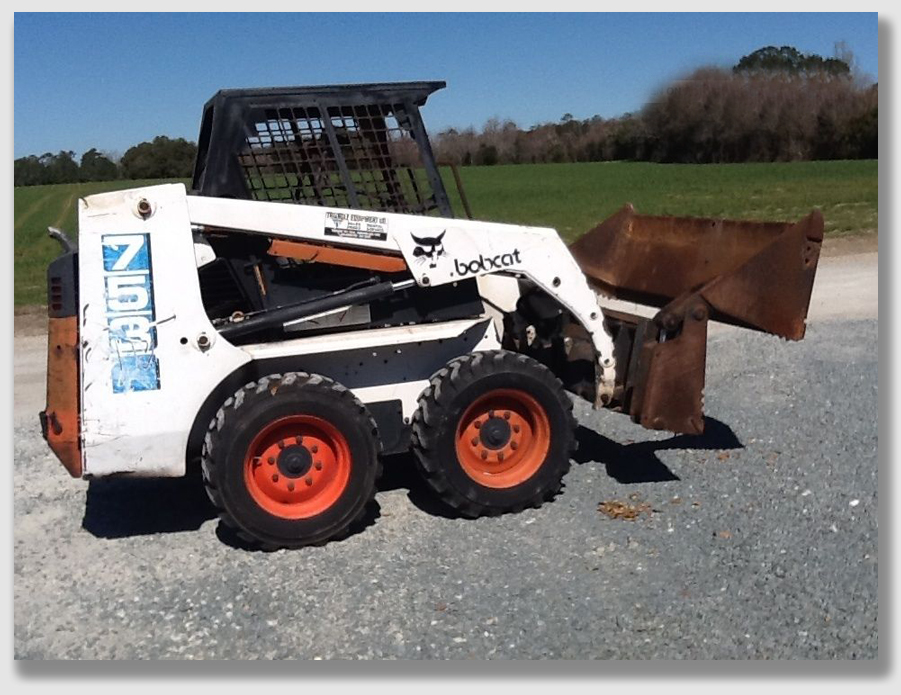
A Bobcat of the type that Keith misused ...

A Bobcat of the type that Keith misused …

Estate of Gagnon v. Anthony, 126 A.3d 1142 (Supreme Court of Maine, 2015). Keith Anthony asked his neighbor, Paul Gagnon, to help cut down a rotted tree at Anthony’s place. Both men were experienced woodcutters. The tree to be felled was about thirty inches wide with a large limb growing out of it. Gagnon used a chainsaw to make a wedge cut in the tree below the limb while Anthony used the bucket of his Bobcat skid-steer loader to push the limb away from the house and a nearby sapling. As they performed their respective tasks, the tree “exploded” and the limb fell on Gagnon, injuring him. Gagnon sued Anthony, alleging that Anthony failed to warn him about the possibility that the limb could snap because of the rotted condition of the tree, and also alleging that Anthony was negligent in his operation of the Bobcat. Anthony raised an affirmative defense of comparative negligence under 14 M.R.S. § 156 (2014).

A trial jury found that both Anthony and Gagnon were negligent and that Gagnon was at least as negligent as Anthony in causing his own injuries. The Estate’s motion for a new trial was denied, and this appeal followed.

Held: The jury’s verdict was upheld. The Court said it would uphold a jury verdict if, when viewed in the light most favorable to the prevailing party, there is any credible evidence in the record to support the verdict. Gagnon, as the movant, was required to show that the jury verdict was so manifestly or clearly wrong that it is apparent that the conclusion of the jury was the result of prejudice, bias, passion, or a mistake of law or fact.

jury151116The Maine Supreme Court said it was clear from the record that neither man expected the tree to “explode” as it had. In a recorded statement that was admitted in evidence, Gagnon explained that the tree “broke way too soon, it should have never broke at that point.” In his statement, Gagnon placed no blame on Anthony, stating that he did not believe that Anthony was doing anything with the skid-steer that contributed to the tree breaking or falling too soon. Anthony corroborated the accidental nature of the event, testifying that the tree “just dropped suddenly without warning or anything.” Furthermore, the evidence showed that both Gagnon and Anthony had substantial experience cutting trees and working in the woods, and both were aware of the rotted condition of the tree they were working on. The Court dryly observed that “it would not be unreasonable to infer from this circumstance that both men knew, or should have known, the risks associated with cutting the rotted tree, and both should have known that the plan to use the Bobcat to fell that tree was ill-advised.”

The Court said that the evidence was sufficient for the jury to decide any of three ways. The jury could have found that (1) Anthony was negligent in his operation of the Bobcat; (2) either Anthony or Gagnon or both were negligent because the dangerousness of the method they undertook to fell the rotted tree should have been obvious to each; or (3) neither of them was negligent, and the limb falling onto Gagnon was simply an unexpected accident. Where the causal fault of both parties is in dispute, the Court said, “it is the sole prerogative of the jury to determine the comparative degrees of fault of each of the parties to a negligence action.”

Although the record did contain evidence that Anthony accepted some responsibility for Gagnon’s injuries, and although a licensed Maine arborist testified that pushing a tree with a skid-steer is “not the proper way to do it,” the Court ruled that there was sufficient credible evidence in the record to support the jury’s finding that Gagnon was at least as negligent as Anthony.

Thus, the trial court didn’t abuse its discretion in denying Gagnon’s motion for a new trial.

  – Tom Root

TNLBGray