Case of the Day – Monday, April 7, 2025

STAKING A CLAIM

We’re rather hesitant to wander into the political morass.  But back when President Trump was merely Candidate Trump, he told CNBC that he was the “king of debt.”   “I love debt,” he said.   “I love playing with it.”

He sure proved that. The debt went up 40% in four years, from $19.9 to $27.6 trillion. And in four years, President Biden increased it by another $7.4 trillion. Lucky that the government loves debt, because there sure is plenty of it to love.

But we’re not here to criticize any President. Instead, we merely wonder what do you do when you play with debt?  If you’re the government, “playing” means spending it.   Indeed, the wisdom and prescience of the government are so awe-inspiring that we should be giving all of our extra money to our needy Washington, D.C., uncle, to our cousins in the state capital, or even the folks downtown

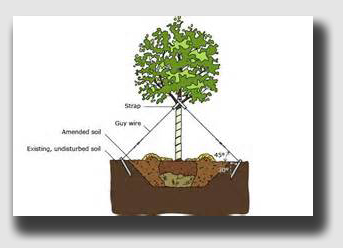
What? You question whether the government spends our dollars wisely? “Like what thoughtful investments will the government make? Well, how about all those spindly trees that cities and towns plant by the hundreds, pathetic things supported by one or more posts and guy wires, standing on tree lawns and in medians with not much more than a pathetic possibility that they might someday be majestic shade trees?  We bet the Donald could make a great deal on buying some of those (if they’re grown in America, of course).
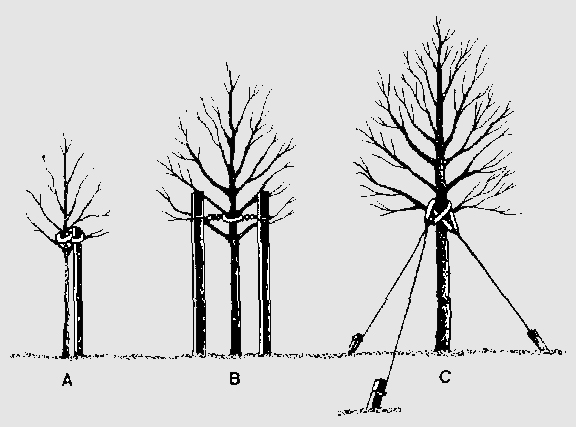
Guyedtrees

Well, maybe those aren’t the best investment. Take what happened in Kenner, Louisiana, one day. One of these staked and wired sentinels fell in high winds, and the City of Kenner, Louisiana, sent one of its crews to repair it. They replanted it in the same hole and rewired it with the same guy wires — hardly a prescription for a tree with a future. But what a prudent use of existing resources!

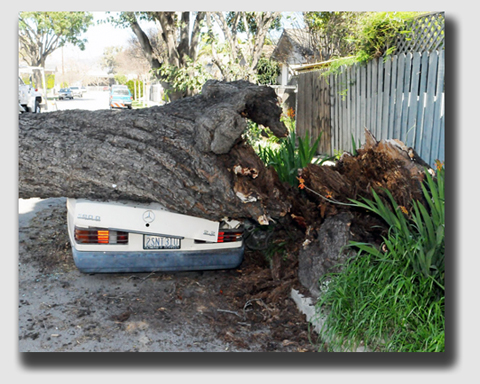
Maybe not this time. As it turned out, the tree’s future after replanting could have been measured on a stopwatch. Within hours, it fell again in some more high winds, this time squarely onto Mrs. Sampedro’s car.

You’d think the Sampedros would have cheered the frugality of the City. They did not. Instead, the Sampedros sued, claiming that the City had negligently placed guy wires on the tree, and that anyway, the City should be strictly liable whenever one of its trees falls. The trial court granted summary judgment for the City.

Strict liability is a great thing for a plaintiff. He or she is generally relieved from proving any more than that something injured him or her, and that the defendant owned or controlled it. Negligence is irrelevant. But in 1995, the Louisiana legislature gutted strict liability where a municipality was a defendant. Even in strict liability cases, the lawmakers said, the plaintiff had to prove that the municipality had notice of the defect.

The Court here ruled that it didn’t matter that the Sampedros had an expert who testified that the guy wires should have been placed differently. There were no published guidelines on how to guy a tree, and anyway, the City had planted hundreds of trees in the year before the accident, with only about a dozen of them falling. That’s about a 4% failure rate for those math whizzes among us. Not bad: imagine if the airline industry only had 2,000 crashes per day out of its 49,000 flights.

But the numbers seemed right to the Court. High winds had knocked over the tree, it said, not bad guy wires. Of course, this begs the question of why guy wires were there to begin with, if not to keep trees from falling in high winds. But Mrs. Sampedro had to repair her own car. The City was not liable.

Sampedro v. City of Kenner, 989 So.2d 111 (La.App. 5 Cir., 2008). Rosa Sampedro was driving past the intersection of Williams Boulevard and Granada Street when a tall, slender oak tree fell into the path of her vehicle. Mrs. Sampedro, who was wearing her seat belt, braked quickly and struck her knees on the dashboard of her vehicle. The tree damaged her vehicle but no other vehicles were involved. A police officer said he thought that high winds caused the tree to fall. The Sampedros sued the City of Kenner and its insurer.
Stake1

Trial testimony showed that the day before the accident, a driver lost control of his pickup truck at the same intersection and knocked down the oak tree in question. The next day, a maintenance crew from Kenner’s Department of Public Works re-planted the tree, securing it with guy wires on three sides as it had been prior to the accident. The Public Works crew used the same guy wires attached to the tree and placed them close to the base so as not to interfere with the mowing of the grass on the median. A witness from the city admitted the alternative would have been to put the guy wires farther out and instruct the mowers to be careful. The Public Works Department had planted 200 to 300 trees in Kenner in the prior year, and the department had received about a dozen complaints of leaning or fallen trees since that time. It had never received a complaint regarding the tree in question.

The court found for the City, concluding it did not have notice of a defect before the accident so it was not strictly liable for Mrs. Sampedro’s damages. Even if it had been put on notice, the City was not negligent under for the placement of the tree in question. The Sampedros appealed.

Held: The City was not liable. Louisiana law provided two theories under which the City might be held liable for damages: negligence under Louisiana Civil Code § 2315 and strict liability under Civil Code § 2317. Under strict liability, a plaintiff was relieved of proving that the owner of a thing that caused damage knew or should have known of the risk involved. In 1985, however, the Louisiana Legislature eviscerated this distinction in claims against public entities by requiring proof of actual notice of the defect that causes damage, thus making the burden of proof the same under either theory.

The Sampedros argued the City of Kenner was negligent because of its “want of skill” in replanting the tree that had been struck by a car the previous night. They claimed the City was negligent because the Public Works Department improperly erected the tree by placing the guy wires too near the base of the tree and too low on the trunk of the tree. They presented an affidavit from a horticulturist stating that the City “improperly tied the guy wires too low on the trunk to provide adequate stability.” The record, however, contained no guidelines for guy-wire placement that were not followed by the City of Kenner or procedures that were lacking in its installation of trees. By 2003, the City had planted between 200 and 300 trees since 2000 in the same manner as the tree in question under the direction of a landscape architect and had received only a dozen complaints of leaning or falling trees.

Sometimes, the trees fall even when they're staked and guyed in place ... like this poor thing, which toppled after a careering drunk hit it.

Sometimes, the trees fall even when they’re staked and guyed in place … like this poor thing, which toppled after a careering drunk in a pickup truck drove over it.

The Court ruled that the Sampedros had not met their burden by merely arguing that the placement of the guy wires was improper, causing the tree to fall over in high winds.

As for the Sampedros’ claim that the City was strictly liable for their damages because it knew of the defective guy wires and failed to correct the defect, the Court ruled that the complaint was foreclosed by law. Under the 1995 amendment to Louisiana’s Civil Code, “no person shall have a cause of action against the public entity for damages caused by a condition under its control absent a showing of actual or constructive notice of the particular condition and a reasonable opportunity to remedy the defective condition.”

The Sampedros had to establish that the thing that caused the damage was in the custody of the defendant, that it was defective, and that the defendant had actual or constructive notice of the defect and failed to take corrective measures within a reasonable time. The law defines constructive notice as the “existence of facts which infer actual knowledge.”- The Sampedros contended that the City of Kenner was aware that the tree had been knocked down the night before this accident so it was aware that “the defective guy wire locations … had failed the night before the accident.” The Court didn’t buy it. The record supported the theory that the tree fell because of high winds the night before. The fact that a tree was knocked down and then re-planted “securely” did not constitute constructive notice of a defect in the guy wire or the tree’s placement.

– Tom Root

TNLBGray140407

Case of the Day – Friday, January 24, 2025

FORCE MAJEURE

Does anyone remember Hurricane Katrina? Who could forget the immensity of the storm, the devastation, the lives lost, the agony?

Ms. Title spent a lot of money in court defending herself against the Hoerners ... but she won this chic tote bag. She should read its message ... every day.

Ms. Title spent a lot of money in court defending herself against the Hoerners … but she won this chic tote bag. She should read its message … every day.

Doctor and Mrs. Hoerner, that’s who. These folks – Big Easy residents for 25 years – sued their neighbor, Beulah Title, under the Louisiana Civil Code article that governed negligence. It seems Ms. Title’s trees were kind of bushy, and the neighbors were always cutting them back. Ms. Title, a better neighbor to the Hoerners than they were to her, always let them trim the trees and even cut down an oak once when the Hoerners asked her to. She was a very nice neighbor … a kindly lady who learned the hard way that Oscar Wilde was right: no good deed goes unpunished.

When the big blow came, it took down a couple of Ms. Title’s pine trees, damaging the Hoerners’ brick wall, patio and pool. And probably spilled their pitcher of martinis. Imagine the horror! We bet those poor folks in the Lower Ninth Ward didn’t have it any worse than the Hoerners. But the Hoerners had something those victims in the Crescent City’s worst neighborhood didn’t have: a lawyer. He sued Ms. Title, arguing that because she knew the trees were overgrowing the Hoerners and needed trimming, she was liable for the damage caused when they toppled.

The courts made pretty short work of this. Rather patiently, we think, the Court of Appeals explained to the clueless (or avaricious, take your pick) Hoerners that the trees didn’t fall because of the overhanging branches. They fell because of this Cat 5 hurricane that hit the city, the one the Hoerners must have overlooked.

The Court held that even if the branches had been the cause, Ms. Title could avail herself of the force majeure defense, specifically that even if she had exercised reasonable care, the injury couldn’t have been avoided because of the intervention of a greater force unforeseen by the parties.

Hoerner v. Title, 968 So.2d 217 (La.App. 4 Cir., Sept. 26, 2007). Be warned: Beulah Title is a person, not a title insurance company. Beulah Title (the person)n had property right behind the home of Linda and Harry Hoerner. The Hoerners complained that they had had problems with Ms. Title’s pine trees and other foliage along their brick wall since 1991. Yet, every time Dr. Hoerner sought permission to trim the trees and shrubs back to the property line, Ms. Title allowed him to do so. On many occasions, the Hoerners removed branches from Ms. Title’s trees that were hanging over the brick wall. On one occasion, Ms. Title removed an oak tree from her backyard at the Hoerners’ request. The Hoerners did not allege that the trees in question were defective, just that they were bushy.

During Hurricane Katrina, the trunks of Ms. Title’s trees were blown, damaging the Hoerners’ brick wall, patio, pool and landscaping. The damage was not caused by branches hanging over the wall, and the trees did not fall due to lack of maintenance or improper trimming. Nevertheless, the Hoerners sued Ms. Title for repairs to their property, alleging that she was strictly liable under Article 2317.1 of the Louisiana Civil Code. That provision directed that the owner of a thing (like a tree) was liable for damage occasioned by its defect upon a showing that she knew or, in the exercise of reasonable care, should have known of the defect which caused the damage, that the damage could have been prevented by the exercise of reasonable care, and that she failed to exercise such reasonable care. Ms. Title argued that the trees were not defective and she is entitled to the defense of force majeure. The trial court agreed with Ms. Title, and the Hoerners appealed.

Force majuere - not a French superhero group - rather, a rational legal concept.

Force majeure – not a French superhero group – rather, is a rather rational legal concept.

Held: Ms. Title was not liable. Under Article 2317.1, in order to establish liability, a plaintiff must demonstrate that the owner of the thing knew, or should have known, in the exercise of reasonable care of the defect that caused the damage, that the damage could have been prevented by the exercise of reasonable care, and that the owner failed to exercise such reasonable care. Here, the Hoerners admitted that the trees were healthy, but they complained they were defective because they were neglected and overgrown and placed too close to the brick wall. The Hoerners cited a case where lack of tree maintenance was considered in finding that the owner had knowledge, but the Court observed that that case involved a diseased tree. Ms. Title’s trees, on the other hand, were healthy.

Based on the evidence, the Court said, it did not find that Ms. Title’s trees were defective for lack of maintenance or location. While the Hoerners had shown Ms. Title’s trees had plenty of overgrowth into their yard, the evidence showed that the trees themselves were blown over and into the brick wall, causing all of the damage to the Hoerners’ property. It was not the overgrowth that did the damage. Additionally, Ms. Title was entitled to the defense of force majeure. The Court observed that the winds of Hurricane Katrina caused trees to fall and damage property regardless of maintenance or location all over the Greater New Orleans area. Thus, she could not be liable for the fallen trees under any circumstances.

– Tom Root

TNLBGray140407

Case of the Day – Thursday, November 14, 2024

NO, YOU CAN’T TRIM MY TREE… BUT WHEN YOU DO, LEAVE ME THE WOOD

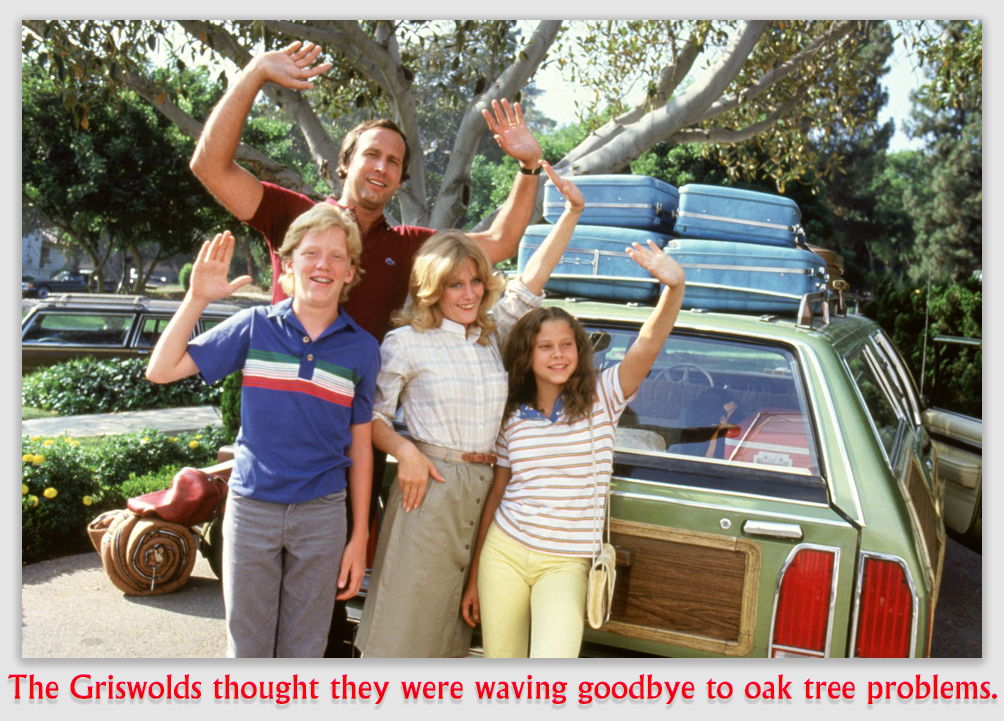
The Griswolds (no, not those Griswolds) worried about the heavy limbs of a century oak overhanging their place. Adrian, the arborist they had hired, got permission from the sweet old lady living next door, Clare, for a tree-trimming crew to come onto her property to trim the branches overhanging the Griswolds place.

Seems pretty clear cut, a garden-variety Massachusetts Rule situation, complicated only by the need to use the neighbor’s place to gain access. What could go wrong?

Whatever grandmotherly Clare thought arborist Adrian meant by saying he was going to trim the oak, cutting limbs off was apparently not what she had in mind. Once the chainsaws started up, she suddenly concluded that she had never given Adrian permission to be on her property, and anyway, she had asked Adrian to give her the wood from the branches.

Huh? It’s kind of puzzling. If Clare had denied Adrian permission to use her property to trim the tree, how could she could have asked him for the wood at the same time. It confused the jury, too, which found permission must have been given, and, necessarily, concluded that Clare could not be believed.

But seriously, wouldn’t a signature on an approval form obviated six years of litigation? A cautionary tale for our time…

Beals v. Griswold, 468 So.2d 641 (Louisiana App. 4th Cir. 1985). The Griswolds lived next to Clare Beal, who had a beautiful, full 130-year-old oak tree in her side yard. Limbs from the tree overhung the Griswolds’ place. They hired Adrian’s Tree Service, Inc., to trim the overhanging limbs. While the trimming work was in progress, Clare protested excitedly and the work was stopped.

Clare sued the Griswolds and Adrians, but the jury found for the defendants. Clare appealed, complaining that the jury should have found the Griswolds and the tree service to have committed trespass for entering her property to perform the tree trimming without her permission; conversion, for discarding the severed tree limbs despite Clare’s request that they be given to her; and negligence for failing to cut the tree according to Louisiana Horticulture Commission standards.

Held: The jury’s finding for the Griswolds and Adrian’s Tree Service was upheld.

Trespass in Louisiana is defined as any unlawful physical invasion of the property of another without the other’s consent. Here, the thrust of Clare’s trespass action is that the Griswolds unlawfully entered her property without her permission to gain access to the branches overhanging the Griswold residence. Although everyone agreed that the tree service’s workers walked onto Clare’s front yard and climbed the tree from her property, the crucial issue was whether she consented to their entry. Although Clare vehemently denied that she had given her consent for the work to either the arborist or the Griswolds, her version of the events was in direct conflict with what the Griswolds testified to.

Arborist Adrian Juttner testified he had obtained Clare’s oral permission to prune when he inspected the property with the Griswolds to prepare a cost estimate for the job. Adrian said that after discussing the matter with the Griswolds, he approached Clare, walked outside in her yard with her, and pointed out the limbs he was going to cut. She said that was “all very fine and good with her.” The Griswolds corroborated this, testifying they had discussed with Adrian the need for Clare’s permission with Juttner, who then walked to Clare’s house and later returned to tell them he had received it.

There was adequate evidence in the record for the jury to find that Clare had consented to Adrian’s entry onto her property.

But Clare complained that – oral approval aside – a trespass occurred because she gave no written permission to enter her property. In support of this argument, she relied on regulations of the Louisiana Horticulture Commission requiring every licensed tree surgeon to enter into a written contract with the property owner employing him to engage in tree surgery service and to obtain written permission from the owner before using “climbing irons” to climb the tree.

The Court said the regulations Clare relied on appear to require the tree surgeon to enter into a written contract with the property owner employing him. They do not require written consent from the adjoining landowner. Here, Adrian’s Tree Service gave the Griswolds a written memorandum, and that was sufficient.

“Conversion” in Louisiana is a distinct act of dominion wrongfully exerted over another’s property inconsistent with or in denial of the owner’s rights. Clare complained the jury erred in failing to award damages for Adrian’s conversion of the 800 lbs. of wood cut from the tree.

Clare testified that Adrian’s Tree Service disposed of the felled limbs and refused her request to retain them as firewood. Although Adrian acknowledged that Clare Beals had asked about firewood after the cutting had occurred, he testified that she was completely “irate and irrational” at the time of the incident and that he was not willing to expend the labor to chop up the branches, which were lying in the Griswolds’ driveway, and deliver the wood to Clare’s property. No evidence showed that any employee of Adrian’s Tree Service denied or refused to allow Clare access to remove the cut wood herself. Under the circumstances, the Court concluded that Clare had access to the wood and that Adrian merely refused to haul the wood back to her property. Adrian did not wrongfully exert dominion over the branches, especially in light of the evidence that Clare had earlier given her permission to prune the tree without mentioning her desire to retain the branches.

The Court further noted that the main thrust of Clare’s claim and evidence concerned her cause of action in trespass. Evidence of conversion was sketchy at best, the Court said.

Finally, Clare proffered testimony by two tree surgeons to support her argument that the tree was not trimmed as required by Horticultural Commission standards of tree pruning. In contrast to their views, however, the Griswolds’ tree expert testified that no damage was done to the tree in this case. The Court said photographs and testimony led to a conclusion that the tree is intact and healthy. Furthermore, the Court found that stumps remaining from the trimming may very well have resulted from Clare’s own abrupt halting of the work in progress on the morning of the incident.

The jury’s judgment that there was no negligence was supported by the evidence.

– Tom RootTNLBGray140407

Case of the Day – Friday, October 25, 2024

ILLEGAL CONTACT

RefWhat would October be without football? Pop Warner football, middle school football, high school football, college football, pro football, backyard football… and the promise of the rivalry games of November, then Ohio State-_ichigan, Army-Navy, and the bowl games starting with the dull thrum of the Celebration Bowl and Camellia Bowl on December 14th, building up to the thundering crescendo of the Sugar, Cotton, Orange and Rose Bowls, and, of course, the new 12-team college playoffs that will add spice to the major bowl games.

So, in honor of football, more football, and even more football, we’re looking at one of the Cardinal rules of trespass – illegal contact.

Usually illegal contact, that is, trespass to trees — where someone enters someone else’s land and cuts down trees without any right to do so — is pretty cut and dried. But not all trespasses are clear-cut (to turn a pun).

In today’s case from Louisiana, a party bought a piece of land from the tree owner’s sister but conditioned the purchase on being able to get rid of some trees on the boundary line with the tree owner. The owner – no doubt a Patriot – signed a contract entitling the buyer to cut down trees on the boundary. The problem was that the contract was imprecise as to how many, or where exactly the trees were. The only thing that was clear was that the parties agreed that wild Broncos couldn’t pull him over to cut down the tree owner’s prize old live oak.

Too bad the owner didn’t watch the tree-cutting crew like a Seahawk. The buyer’s contractor was no Saint. In fact, he was kind of a Buccaneer. He cut down 12 trees and, although he was told not to, he trimmed the live oak pretty aggressively. The owner cried “Deciduous foul!” and lawsuits flew like yellow hankies. Being unable to Bear the mess, the owner raced like a Jet to the courthouse and slapped a Giant lawsuit on the buyer, Raven that he hadn’t given permission to do anything like that, and the contractor was Lion if he said otherwise. He wanted treble damages for the wrongful cutting.

The court awarded about 5,000 Bills in damage for the cut branches on the live oak, but it disagreed on the treble damages. The Court said that the ambiguous contract seemed to contemplate that the 12 trees would be cut down, and there was no basis for any recovery on those. As for the injured live oak, it was damaged but still standing. The statute awarded treble damages for cutting down trees, and the trimming — although a violation of the contract — wasn’t something for which treble damages could be awarded.

The plaintiff felt deflated over the whole episode.

Distefano v. Berrytown Produce, LLC, 973 So.2d 182 (La.App. 1 Cir., 2007). Distefano owned a 2-acre vacant tract of land along Church Street. Berrytown Produce, LLC sought to buy a piece of land next to the Distefano tract to operate a produce business. That land was owned by Rose Millican, DiStefano’s sister.

A line of trees on Distefano’s land blocked the view of the Millican tract approaching it from the highway. Berrytown conditioned its purchase on obtaining Mr. Distefano’s permission to remove trees from his property. So Distefano authorized Berrytown in a written agreement to remove all trees on the property line dividing the Distefano and Millican tracts, except for a live oak tree. Berrytown hired Kemp Richardson to perform the clearing work. Richardson cut and removed 12 trees from the Distefano and Millican tracts, and he cut a significant number of branches from the live oak tree on Mr. Distefano’s tract.

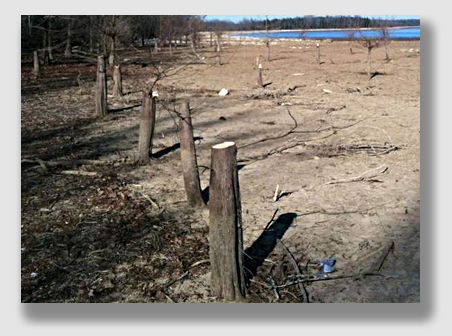
Eisfeld should have gotten this sign with special wording, "And don't cut down my trees, Martin!"

     This means you, Berrytown!                   Trespassing – kind of like the real property version of offsides.

Distefano filed a timber trespass action against Berrytown and Richardson, saying the defendants cut and removed five trees from his property and cut branches off the live oak tree without his permission. Distefano tried to recover damages under Louisiana Revised Statute 3:4278.1, commonly referred to as the “timber trespass” statute, which imposes a penalty of three times the fair market value of trees on people who unlawfully cut, fell, destroy, remove, or divert trees from a landowner’s property. Distefano also claimed restoration damages and damages due to the decrease in the value of his land and further urged that the defendants’ cutting activities caused him to suffer non-pecuniary damages.

At the conclusion of a bench trial, the court found that the agreement between Distefano and Berrytown contemplated the cutting and removal of all trees on the Distefano property that had been actually cut down. The court found that the parties clearly understood that the live oak tree was not to be cut, and awarded Distefano $6,045.00 for the unlawful removal of branches from his live oak tree, accepting expert testimony setting the fair market value of the live oak tree at that amount. The court declined to award treble damages, finding the treble damage provision inapplicable because the tree itself had not been cut down and removed, and because there was insufficient evidence of the fair market value of the limbs removed from the tree.

Distefano appealed, challenging the court’s finding that he consented to the cutting down of five trees from his property and the denial of his treble damage claim.

Held: The trial court’s decision was upheld. The Court found that the contract called for the cutting of “all trees on the dividing property line” between the Distefano and Millican tracts, “with the exception of the live oak tree located on or near the property line.” A witness attested there were no trees on the property line itself, but there were trees close to the property line that hung over the property line, and those were the trees Berrytown wished to have removed. Distefano contended that the parties never contemplated the removal of any trees not located exactly on the common property line, but other witnesses disagreed, and the trial court’s findings of fact were found to be reasonable.

Distefano contended that the trial court should have ordered the defendants to pay treble damages. Louisiana Revised Statute 3:4278.1 imposes a penalty of three times the fair market value of the trees on those persons who unlawfully cut, fell, destroy, remove, or divert trees from a landowner’s property without the landowner’s consent. But, the Court said, no tree was cut down without permission. Instead, the oak tree was trimmed without permission, and the cut trees were taken pursuant to the agreement. Although contrary to the contract, the Court ruled, because the oak tree was not cut down, the statute did not authorize treble damages under the facts of this case.

– Tom Root

TNLBGray

Case of the Day – Friday, July 26, 2024

IF A TREE FALLS …

keystone140514This Louisiana case is another in our continuing series of “someone got badly hurt, so obviously, someone else has gotta pay.”

Today, a couple lived in a house leased from their physician daughter (so we already know who in this saga has money). The couple wanted to have a dangerously leaning tree taken down. They hired a landscaper, who in turn hired someone who represented himself as a guy who could take down a tree.

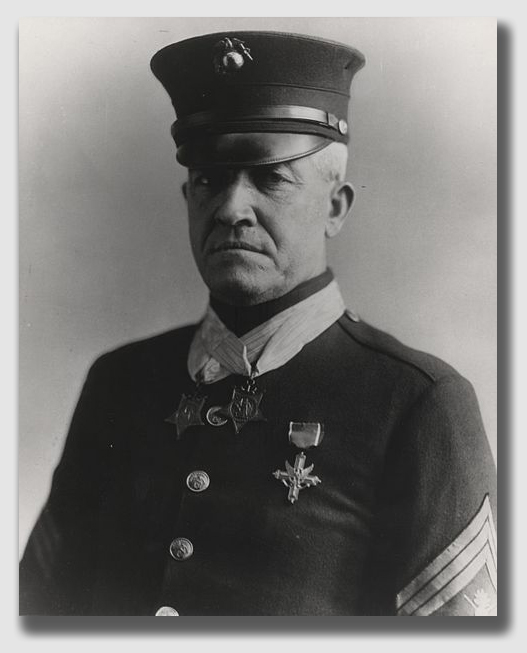
Gunnery Sergeant Daniel Daly, one of only two men to ever win two Medals of Honor, exhorted his fellow Marines to charge the Germans at the Battle of Belleau Wood, shouting, "C'mon! Do you want to live forever?" A brave sentiment in battle; a pretty foolhardy sentiment when removing trees.

Gunnery Sergeant Daniel Daly, one of only two men to ever win two Medals of Honor, exhorted his fellow Marines to charge the Germans at the World War I Battle of Belleau Wood, shouting, “C’mon! Do you want to live forever?” A brave sentiment during battle, but a pretty foolhardy one when removing trees.

The tree cutter had all the safety equipment, but he didn’t use it. After all, it was just a tree. Safety is for wimps! After all, do you want to live forever?

The tree cutter obviously didn’t care to do so. He directed the landscaper, who was helping him, to harness the tree to his pickup truck. During their Keystone Cops antics, the landscaper’s truck pulled down part of the tree. Sadly, the tree cutter was attached to it at the time.

The tree cutter sued the landowner and the tenants. But of course! He argued that the doctor-daughter and her parents (and, of course, their insurance company) should pay because they didn’t warn him. Warn him to do what? To use his safety equipment? That the law of gravity was in force? That God may protect fools, but not for very long?

Fortunately, common sense prevailed …

Frazier v. Bryant, 954 So.2d 349 (La.App. 2 Cir. Apr. 4, 2007). The Bryants lived on a property owned by their daughter, Dr. Garrett, a tenancy based on a verbal lease. Mr. Bryant wanted to have a large tree removed because it was leaning toward the house and several of the limbs of the tree were near the roof. He contacted Ron’s Lawn Care to take down the tree.

Mr. Hughes, the owner of Ron’s, hired Mr. Frazier, who had previously approached Mr. Hughes offering his services in tree removal. Mr. Frazier climbed up to the top of the tree and started to cut away the top limbs. He wore a climbing harness and was attached to a climbing rope that was strung over the top of the tree, but he hadn’t connected a lanyard rope that would have secured him to the tree. Mr. Hughes was using his pickup truck to direct portions of the tree away from the house. At some point, Mr. Hughes pulled with his pickup truck and the entire top of the tree came down. Mr. Frazier, still attached to the climbing rope, came down with the tree. He was badly injured.

Mr. Frazier sued Ron’s Lawn Care, the Bryants and Dr. Garrett for negligence. All three filed for summary judgment, and the trial court granted it. Plaintiff Frazier appealed.

Tree vs. truck - who wins? Certainly not the people taking down the tree ...

Tree vs. truck – who wins? Certainly not the people taking down the tree …

Held: The tree cutter falls again. Under Louisiana law, most negligence cases are resolved by employing a duty/risk analysis with elements: (1) whether the defendant had a duty to conform his conduct to a specific standard (the duty element); (2) whether the defendant’s conduct failed to conform to the appropriate standard (the breach element); (3) whether the defendant’s substandard conduct was a cause-in-fact of the plaintiff’s injures (the cause-in-fact element); (4) whether the defendant’s substandard conduct was a legal cause of the plaintiff’s injuries (the scope of liability or scope of protection element); and (5) whether the plaintiff was damaged (the damages element). Here, the Court said, Mr. Hughes was pulling on the tree because he was told to do so by plaintiff Frazier. No other defendant exercised such control over the operation as to be liable for the accident.

Mr. Frazier argued that the Bryants were liable for failing to warn him of the defective condition of the tree. The Court said that the owner or custodian of a thing is liable for damage only upon a showing that (1) he or she knew or should have known of the defect that caused the damage, (2) that he or she knew or should have known that the damage could have been prevented by the exercise of reasonable care, and (3) that he or she failed to exercise such reasonable care. Here, the Court said, no evidence showed that any defect in the tree existed. At most, the evidence suggested that the tree was leaning due to erosion at the base of the tree, the Court held, and nothing indicates that this condition caused Mr. Frazier’s fall.

– Tom Root

TNLBGray140407

Case of the Day – Thursday, May 30, 2024

ARTIFICIAL DISTINCTIONS

rottentree140408When a tragedy occurs, it’s all too common to look for someone to pay for it. In today’s case, a young man was left a quadriplegic when a healthy-looking tree standing alongside a public highway fell without warning and struck his car. The trial judge was obviously moved by the sad story and felt it was his duty to open the state’s wallet.

The trial judge denied the Louisiana Department of Transportation and Development a free pass. The judge recognized that a prior holding relieved the state from the duty to inspect all sides of a tree. But he reasoned that the rule had been adopted in a case where a construction crew’s negligence had weakened the tree on the side away from the road. The trial court here reasoned that this case was different: it was natural rot, and natural rot did require DOTD to inspect all sides of a tree.

Truly a distinction without a difference! Step back and consider the implications of this holding. Besides the fact that why the tree was weakened is really not relevant to the danger it poses, the trial court’s ruling would mandate incredibly costly and time-consuming inspections. A state — even Louisiana — has a lot of highways to inspect. In Louisiana’s case, it amounts to nearly 17,000 miles of road, and a lot of trees. The costs to the taxpayers of a tree-by-tree inspection would be staggering.

A perfect illustration of a distinction without a difference.

A perfect illustration of a distinction without a difference …

The Court of Appeals made short work of the trial judge’s higher “duty.” It held that the law was clear. Where the tree appears healthy — like the one that fell on the victim — the state’s duty could be discharged in a drive-by inspection… no matter why the tree was rotten.

Walker v. State Dept. of Transp. and Development, 976 So.2d 806 (La.App. 2 Cir., 2008). Nathaniel Walker was a passenger in a vehicle being driven by Dannie Evans on Louisiana Highway 71, when a large oak tree fell on the car. Nathaniel was left a quadriplegic, albeit one with a good lawyer. He sued Dannie, Allstate Insurance and the State of Louisiana Department of Transportation and Development.

Among other things, Walker alleged the oak tree that fell on the vehicle was on the highway right-of-way in violation of highway safety regulations, that DOTD had prior knowledge that the tree needed to be removed and that DOTD failed to inspect the right of way. DOTD moved for summary judgment, arguing that Nathaniel couldn’t show any facts in support of his allegation that DOTD had prior knowledge that the tree needed to be removed. DOTD supported this claim with an affidavit from one of its maintenance superintendents who had conducted an inspection of the area in question two weeks before the mishap. The state agency argued that under the law, it owed no duty to motorists traveling on state highways to check for damage on all sides of trees that abut state roadways. The trial court denied summary judgment to DOTD because the damage to the tree was a result of natural rot as opposed to third-party-operated construction equipment. The trial court stated that despite the holding in a prior case – Caskey v. Merrick Const. Co. – the distinction as to how the tree was injured imposed a greater duty to inspect on DOTD.

DOTD appealed.

Held: DOTD won, and Walker’s case was dismissed. The appellate court said in order to recover damages from DOTD, Walker had to prove that the state had ownership or control of the tree that caused the damage; the tree was defective (that is, it created an unreasonable risk of harm); the state had actual or constructive knowledge of the defect and failed to take remedial procedures within a reasonable amount of time, and the state’s failings led to the injuries Walker suffered.

Now this is a distinction without a difference ...

… as is this.

No one contested that DOTD had control over the rotten oak tree, that the rotten oak tree was defective, and that the rotten oak tree caused Walker’s injuries. Instead, the Court held that the primary issue was whether DOTD had actual or constructive knowledge that the tree was rotten. The condition that caused the oak tree in question to fall was visible only on the backside of the tree, out of sight of DOTD inspectors who passed by on the road. There was no genuine issue as to the location of the rotten area in question, or whether the rotten area in question was observable from the roadway. Additionally, the photographs taken at the accident scene revealed that the oak tree was otherwise healthy, containing a full canopy of green leaves.

The Court said that DOTD’s duty to protect against the risk of a tree falling onto a highway required it to inspect for dead trees and remove them within a reasonable time. The state was not required, however, to inspect every tree that conceivably could fall on the road or to remove trees simply because they had the potential to fall onto the road.

In Caskey, the court held that DOTD inspectors had no duty to walk around all sides of the tree and check for damage, particularly when the tree was otherwise green and healthy. The trial court in this case imposed a greater duty on the state than the law required. The Court of Appeals ruled that the trial court’s incorrect determination – that a different duty exists when the defect results from natural causes as opposed to artificial causes – was a contradiction of the law, a distinction without a legal difference.

– Tom Root

TNLBGray