Case of the Day – Friday, February 6, 2026

“SQUIRREL!”

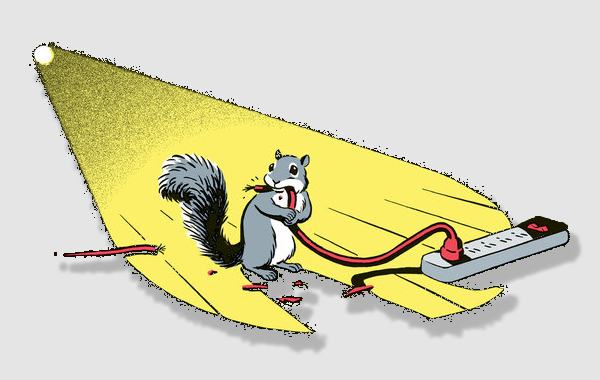
Squirrel - before ...

Squirrel – before …

Last June, we looked at a case in which a squirrel frightened a Massachusetts resident who was taking out her garbage. Today, it’s deep-fried southern squirrel… or at least that’s what the plaintiff had on her hands.

Mrs. Pardue was talking on her cordless phone when a squirrel jumped onto a power company transformer and closed the circuit. The squirrel got zapped (it happens, you know) when it jumped from an untrimmed tree to the transformer. The power went out, and an “acoustical shock” — which the plaintiff called an explosion — came from the cordless phone and injured Ms. Pardue.

She, of course, sued the power company for not trimming the trees. That was a little too much for the trial court, which threw out the case. The Court of Appeals agreed. Remember that Louisiana civil law is a little different: down in bayou country, the standard is “ease of association,” the likelihood that the complained-of conduct could have been foreseen to cause the damage. It bears a resemblance to Palsgrafian causation.

A reasonable person can imagine a lot of bad things happening as a result of power companies not trimming trees.  However, the Court held, loud noises coming out of cordless phones wasn’t one of them. Rube Goldberg would have been proud.

Squirrel - after ...

Squirrel – after …

Pardue v. AT&T Telephone Co., 799 So.2d 710, 2001-0762 (La.App., 2001). Louise Pardue was at her cordless phone at home when there was a sudden explosion in the handset and, simultaneously, the electricity went out at her home. After Central Louisiana Electric Company (CLECO) was notified of the outage, its personnel fixed the problem, later reporting to Ms. Pardue that a dead squirrel was found on the line.

According to Ms. Pardue’s expert, the squirrel’s presence on the lines caused an electrical surge into the ground system that was shared by the telephone line. Although the expert admitted it would have been “a very difficult thing” to get an electrical shock from a cordless telephone, he opined that the electrical surge created an acoustical shock, that is, a loud noise. As a result of the incident, Ms. Pardue immediately developed a headache and experienced ringing in her ear, followed by problems in her neck, shoulder, arm, and foot.

Ms. Pardue sued the phone manufacturer (who was dismissed) and CLECO, seeking damages related to the alleged injuries. She claimed that the power company was negligent in failing to adequately trim the trees around the line so as to prevent the squirrel’s interference with the transformer. CLECO filed a motion for summary judgment, which the trial court granted.

The court held that “we don’t know that the squirrel came from the tree, or whether it climbed the pole that the transformer was on, or it climbed another tree, or another pole. I think that when you do the first analysis, the ‘but for’, you can’t answer that; and when you can’t answer it, under the jurisprudence, then the plaintiff’s action fails, and a motion for summary judgment in this instance is warranted.”
cia150924Disagreeing with this sage analysis, Ms. Pardue appealed.

Held: Ms. Pardue’s suit was dismissed. The Court of Appeals observed that negligence cases require consideration of the duty/risk analysis. A plaintiff must prove the defendant had a duty to conform his conduct to a specific standard, the defendant failed to conform to the appropriate standard, the substandard conduct was a cause-in-fact of the plaintiff’s injuries, the defendant’s substandard conduct was a legal cause of the plaintiff’s injuries and actual damages. For the purposes of negligence analysis, the risk cannot be held to be within the scope of a duty where the circumstances of that particular injury or of the plaintiff could not reasonably be foreseen or anticipated, because there was no “ease of association” between that risk and the legal duty.

Cause-in-fact determinations are factual in nature, while the legal cause or scope of the duty determination is a legal one. Here, the Court ruled that CLECO — the electric utility — did not owe a duty to protect Ms. Pardue a duty. Even assuming CLECO had a duty to maintain the trees surrounding its lines, the Court said, the scope of that duty did not extend to protect Ms. Pardue under the particular facts of this situation.

Ms. Pardue was at home talking on a cordless telephone (and the Court emphasized the word “cordless”). Not only did an animal gain access to the transformer, but the resulting outage caused an “acoustic” shock — not an electric shock — sufficient to result in serious injury. In the least, the Court held, under the particular facts and circumstances of this case, there was simply no “ease of association” between that risk and the legal duty.

– Tom Root –
TNLBGray140407

Case of the Day – Wednesday, January 28, 2026

CLIPPING

The Super Bowl® brand football game (which, as my old friend David Oxenford has made clear, is a registered trademark of the  NFL) will be upon us before we know it. Everyone I know is already excited beyond all reason that the Seattle Seahawks – who brought us one of the worst Super Bowl® brand football games in history the last time they appeared – are willing to risk being deflated by the Belichick-less New England Patriots.  Already, the commercial teasers are airing.

Alas, if Bill Belichick attends the game, he’ll need tickets. The Grumpy Lobster Boat Captain didn’t have a stellar season at the helm of the North Carolina Tar Heels and probably longs for the days of secret video and soft footballs.

But we both honor and follow the rules here at treeandneighborlawblog.com. Today, I review the old 15-yard standby, clipping. The clipping in today’s case was done not by a offensive player, but rather by an electric utility.

Tree trimming along and under an easement to protect power lines is typically done according to standards set by the North American Electric Reliability Corporation, known as NERC. Standards for tree trimming sound dry to you? Maybe a little looting, people trapped in elevators, and a power outage affecting 50 million people will get your attention. The great blackout of August 2003 had many contributing causes, but it all started when power lines – sagging in the heat of the day and under the load put on the system – became entangled in poorly-trimmed trees.

blackout140131OK, tree trimming is important work. And so it was in Louisiana. It seems that a road was widened, and power lines were relocated as a result. The electric utility came along to clip vegetation along the route, but ran into Mr. James, who objected to the vigorous removal of trees and brush. He kept running the crews off, until the utility sued for a ruling that it had an agreement with the city that superseded Mr. James’ complaints.

That’s where things got interesting. Mr. James and the utility signed an agreement that permitted the utility to trim back to the historical trim limits or to an established limit according to the kind of tree. No sooner was the ink dry but Mr. James argued that the utility had violated the deal. He sought all sorts of damages — even emotional distress — for the alleged violations.

The utility of course loaded up at trial with three of four experts, who carefully showed that the trees were cut back to their historical trim point and no more. The trial court found for the utility. On appeal, the Court agreed that despite all of the tort theories and general complaints alleged by Mr. James, because he had signed the deal with the utility, the only question was whether the deal had been kept. And as for that, the utility’s thundering herd of experts trumped Mr. James’ speculation.

With the new NERC reliability standards requiring more aggressive vegetation management, it is likely that clashes as to the extent to which utilities may trim will be more frequent and substantial. Thus, there are likely to be more Mr. James v. Entergy battles throughout the country.

Entergy Louisiana, Inc. v. James, 974 So.2d 838 (La.App. 2 Cir. 2008). In 1991, Highway 143 — located next to Tupaw Manor Apartments — was widened. Entergy’s distribution lines ran along Highway 143 and with the widening of the highway, several poles were relocated. Three poles were placed so that the lines crossed the highway diagonally to the southeast corner of the apartment complex. The distribution lines at issue were contained within what Mr. James, the owner of the apartments, characterized as a “green zone” that buffers the apartment complex from the highway traffic, adding to the aesthetic value of the complex.

Tree trimming - boring. Mass panic - not so boring.

Tree trimming – boring. Mass panic – not so boring.

Entergy hired West Tree Service to trim vegetation encroaching on electrical distribution lines, the work to be done in compliance with Entergy’s “Distribution Vegetation Management Line Clearance Specifications” (“Clearance Specifications”) on file with the Louisiana Public Service Commission. During August 2004, another subcontractor sprayed the area with herbicide. Then, West cleared vegetation that had been sprayed and performed additional trimming on Mr. James’ property as per Entergy’s contract. Mr. James objected, but the West crews made several additional attempts to trim vegetation on the property. Unable to obtain consent from Mr. James, Entergy filed a petition asserting that it had an agreement with the city of West Monroe to operate electric facilities within the city and had a right-of-way easement onto Mr. James’ property for maintenance purposes. Mr. James answered and demanded damages in excess of $410,000. He claimed that Entergy engaged in the clear-cutting of trees, harvesting and removing over 200 trees, far in excess of the allowed or agreed upon width of trimming.

Prior to trial, the parties entered into a stipulated declaratory judgment in which they agreed that Entergy has the right to maintain all of its electric distribution lines and poles by trimming any encroaching trees, limbs, shrubs and other vegetation within 10 feet of Entergy’s lines in accordance with modern arboretum standards and as specifically outlined in Entergy’s Clearance Specifications, and as long as Entergy complied in good faith with the vegetation maintenance standards, Mr. James would have no right to prohibit with Entergy’s reasonable and necessary trimming of encroaching trees, limbs, shrubs and other vegetation along its distribution lines.

The Clearance Specifications provided that at a minimum, all trees would be trimmed back to the previous trim point or according to a table, whichever was greater. The table provided that slow-growth trees in rural settings would be trimmed to 10 feet and fast-,growth trees in rural settings would be trimmed to 15 feet. An exception would be made where there was a customer refusal where procedures outlined in the Clearance Specifications have been followed, provided that the exception would not result in unsafe conditions or jeopardize reliability.

Mr. James argued Entergy could only trim to an indefinite width depending on the extent to which it had actually claimed and used a right-of-way in the past or 10 feet under the Clearance Specifications. Mr. James alleged that Entergy exceeded the allowable width, causing damage to the aesthetic value of the “green zone” around the apartment complex. Mr. James filled out a Tree Cutting Refusal Form expressing his objection to having any trees removed, which he contended requires Entergy to then seek a court order to continue trimming. Entergy’s letter to Mr. James noted that the trimming was necessary to ensure safe, reliable electrical service to the area, including the apartment complex.

Entergy sued to get the court order. At trial, Entergy provided detailed testimony regarding the existence of a prior trim point, and that all trimming was within that point. Mr. James provided testimony that there were log trucks being loaded with cut trees coming and going from the property, which was contradicted by West employees. The trial court framed the issue as whether Entergy had complied with its Clearance Specifications in performing the trimming and found that Mr. James failed to carry his burden of proof and was, therefore, entitled to no damages. He appealed.

Held: Entergy had the right to trim the vegetation. The Court concluded that the stipulated declaratory judgment signed by the parties prior to trial controlled the allowable trimming width of the vegetation on the James property. Thus, the issue was whether Entergy complied with its Clearance Specifications. Entergy produced several qualified witnesses, whose testimony was thoroughly outlined by the trial judge, who found strong evidence of re-sprouts and prior trim points. The Court found no abuse of discretion. Although the Court noted that the Clearance Specifications might, in certain circumstances, lead to unauthorized, increased and unchecked trimming on private property, it concluded that under the specific facts of the case, Mr. James was bound by the stipulated declaratory judgment.

– Tom Root

TNLBGray140407

Case of the Day – Tuesday, October 28, 2025

HE’S A CAD, NOT A TRESPASSER

It does not take very many years in the general practice of law for an attorney to see people at their worst. There’s nothing like watching a loving family, united in grief over the death of a loved one, get torn apart by greed and jealousy when the time comes to probate the will. A close second, however, has to be divorce.

Early on in my career, I witnessed a wife who threw her husband’s expensive shotgun collection into a swamp and refused – even on pain of jail for contempt of court – to tell anyone where she had bogged the prized Purdeys. Then there was the husband who hid all the money over a three-month period before announcing, “Surprise, I’m divorcing you!” His wife had been diagnosed with inoperable cancer, and he could not understand why he should spend all of their money on her healthcare when she was just going to die anyway.

One of my favorites was the couple who had agreed to an amicable divorce. They owed about $10,000 on credit cards, so they agreed to jointly borrow the money from the bank to pay off the high-interest debt with a loan that they would share in paying down. The day before the final divorce hearing, the husband called the bank and convinced the loan officer that his soon-to-be ex had asked him to pick up the check. He did, and then forged his wife’s name on the back, took the $10,000, and fled for Florida.

Shortly after he got to the Sunshine State, his mother died and left him $500,000. Using some of the money to get drunk and high, the still-the-husband ran his Harley into a bridge abutment at 95 mph. Since he had never gone through with the divorce, he was still married. Of course, the knucklehead had no will, so his brother – next in line for the money – got nothing, while my client, the wife (who had been furious at being stuck with the $10,000 loan obligation), got it all. She went to Florida, picked up his new $40,000 truck, all sorts of expensive tools, and the remainder of the money he had inherited (about $420,000). It took two cops to go with her to dead hubby’s family compound to pick up the property from the enraged family.

Karma is a bitch, sayeth… someone, I’m sure.

So why the family law lesson? Because, as we will see in today’s case, trying to screw your ex is never a very good idea. A moment’s visceral pleasure, followed by years (or a lifetime) of regret. Still, the ex-husband, whose in-your-face ripoff of the ex-wife even went to the extent of having her share paid to the new girlfriend, got off easy. When he sold 400,000 board feet of jointly-owned timber – cheating the ex out of $52,600, the former wife originally got her share plus treble damages under Louisiana’s timber trespass statute (and another $63,000 in legal fees). But the Cajunland Supreme Court ruled that whatever the ex-husband might otherwise be, he was not a trespasser to whom the treble damage statute applied.

Sullivan v. Wallace, 51 So.3d 702 (Supreme Ct. Louisiana, 2010). During their marriage, defendant Bruce Sullivan and plaintiff Janice Sullivan bought a 120-acre tract of land in Claiborne Parish. The couple divorced in 1990, but they retained the community tract in co-ownership and listed it as an asset in the divorce proceeding. The divorce judgment prohibited the parties from doing anything to sell or diminish the value of community property.

In 1994 and 1995, however, Bruce cut, stacked and sold some of the timber on the property. The checks for the 1994 timber he sold were payable to Priscilla Wallace, the defendant’s girlfriend at the time (now his wife). The checks for the 1995 timber were made payable to Bruce. In all, Bruce sold over 254,000 board feet, worth over $105,000.

In 1995, Janice learned that Bruce had been cutting and selling timber from their jointly-owned tract. She advised the timber buyer that the property was in litigation, and the buyer immediately ceased removing timber from the property. When Bruce told the buyer there was another 40,000 board feet of timber awaiting pickup, the buyer declined to have anything to do with it.

Janice sued Bruce, his girlfriend Priscilla and the timber buyer, claiming trespass, negligence, and conversion, and seeking treble damages and attorney fees under La. Rev. Stats. 3:4278.1 and 3:4278.2. At trial, Bruce argued the timber had come from his separately owned but adjoining tract, and that the timber had been damaged by an ice storm and had to be cut. The trial court, noting that the sale receipts predated the ice storm, didn’t believe him. Imagine that.

Instead, the Court ruled for Janice, finding that her share of the cut timber was about $52,600.00. To that figure trial court applied La. Rev. Stat. 3:4278.1 to award treble damages, or about $157,800.00, and to award attorney fees in the amount of 40% of the treble damage award, about $63,000.00.

The court of appeal affirmed that Janice was entitled to damages, but it reversed as to the treble damages and attorney fees. The appellate court agreed with Bruce that the timber trespass statute does not apply to co-owners of property, holding that the co-ownership articles of the Louisiana Civil Code provide adequate recourse among co-owners of real property. The appellate court cut Janice’s award to $52,600.00, representing one-half of the value of the lost timber, and vacated the portion of the judgment awarding attorney fees.

Janice petitioned the Louisiana Supreme Court for review.

Held: The treble damage statute for trespass to timber does not apply to co-owners who cut timber without the consent of the other owners.

The Court observed that the fundamental question in cases of statutory interpretation such as this one is legislative intent and determining the reasons that prompted the legislature to enact the law. The starting point in statutory interpretation is the language of the statute itself. When a law is clear and unambiguous and its application does not lead to absurd consequences, the Court said, the law is to be applied as written.

When the language is susceptible to more than one meaning, however, the Court held, it must be interpreted as having the meaning that best conforms to the purpose of the law, and the words of the law must be given their generally prevailing meaning. When the words of a law are ambiguous, their meaning must be sought by examining the context in which they occur and the text of the law as a whole, and laws on the same subject matter must be interpreted in reference to each other.

La.Rev.Stat. 3:4278.1, commonly referred to as the “timber trespass” or “timber piracy” statute, provides that it “shall be unlawful for any person to cut, fell, destroy, remove, or to divert for sale or use, any trees, or to authorize or direct his agent or employee to cut, fell, destroy, remove, or to divert for sale or use, any trees, growing or lying on the land of another, without the consent of, or in accordance with the direction of, the owner or legal possessor, or in accordance with specific terms of a legal contract or agreement.” Although the statute is directed to “any person” who cuts, fells, destroys, removes, or diverts for sale or use any trees, the Court said, the statute is facially ambiguous with regard to co-owners of the timberland, neither expressly including nor excluding these persons from its provisions.

When viewed strictly, the statute is violated only when “any person” acts with respect to trees growing or lying “on the land of another” and when this action is taken without “the consent of … the owner or legal possessor.” The timber trespasser owes the penalty to “the owner or legal possessor of the trees,” a phrase the Court said more logically describes a person other than the wrongdoer as described in the statute. What’s more, the timber trespass statute is found within the title of the Revised Statutes entitled “Agriculture and Forestry,” the chapter entitled “Forests and Forestry” and the part entitled “Protection and Reforestation.” Given this context, the Court held that the legislative purpose behind La. Rev. Stat. 3:4278.1 is to protect those with an interest in trees from loggers who enter their property without permission to harvest timber illegally. Thus, with the proper construction in mind, the Court said, “The focus of the statute is on an actor other than an owner.”

The Court said the fact that La.Rev.Stat. 3:4278.1 is not directed to co-owners who act without the permission of their co-owners was further supported by considering it in context with La. Rev. Stat. 3:4278.2, the 80% rule, which allows a timber buyer to cut standing timber when the buyer has the consent of co-owners holding 80% or more of the ownership interest. If 3:4278.1 applies to co-owners, then one co-owner who holds more than 80% of the ownership interest and permits timber to be cut in accordance with La. Rev. Stat. 3:4278.2 would nevertheless be liable to the other co-owners for treble damages under 3:4278.1 despite the fact the timber “buyer” would escape the penalty because of La. Rev. Stat. 3:4278.2(B). “Such a contradiction.” The Court reasoned, “cannot be what the legislature intended in enacting these statutes.”

Therefore, Janice was entitled only to her share of the cut timber.

– Tom Root

TNLBGray140407

Case of the Day – Tuesday, September 9, 2025

YOU DON’T KNOW, JACK

Louisiana alone among the fifty states has a diverse (some might say muddled) legal history. Due to its heritage of French ownership for 81 years, then Spanish ownership for 38 years, and finally French for a few more (until Thomas Jefferson bought the place), Louisiana law between private parties, principally contracts and torts, is based on French and Spanish codes and ultimately Roman law, with only a few common law influences.

Rather than relying on stare decisis and law by accretion – that is – judicial decisions on real conflicts following prior cases and in some cases expanding on the principles that controlled the resolution of the conflicts, Louisiana has a comprehensive civil code, sort of like a binding version of Restatement of Torts and Restatement of Contracts.

Not everything is different, however. Louisiana’s laws, like those of other states, occasionally establish legal presumptions. All a presumption does is tilt the scales one way or the other, depending on the public convenience or good. And presumptions are doggone useful: For instance, a child born of a husband and wife living together is presumed to be the natural child of the husband. A person who has disappeared and not been heard from for seven years is presumed to be dead. And the one we all know from TV, an accused person in a criminal proceeding is presumed innocent until proven guilty.

Presumptions can also be useful in tree law. If a tree is growing on the boundary between your property and your neighbor’s, it can be pesky and difficult to prove who planted it, when it was planted, and what arrangements the people then owning the properties may have made regarding the sapling. Some states resolve this issue simply: if it straddles the boundary, it is commonly considered to be owned by both landowners, and neither can interfere with it without the other’s consent. Others make it more difficult: whether the tree is commonly owned depends on whether the neighbors claiming part ownership can jump through hoops to prove they (or their predecessors-in-interest) helped plant or nurture the tree, or treated it as the boundary line.

Louisiana splits the difference: it presumes that if the tree is on the boundary, it is commonly owned. However, either neighbor may rebut that presumption by offering evidence that the tree is not commonly owned.

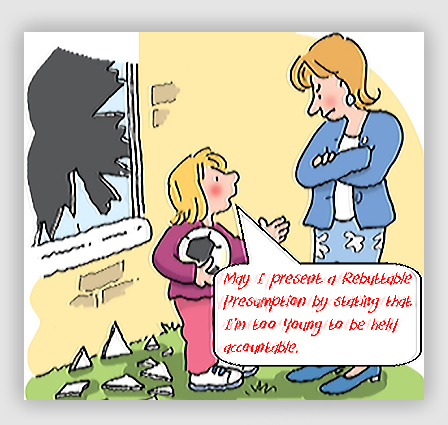
In today’s case, the plaintiffs – Mark and Catina Jack – were unable to prove that the tree was not commonly owned. They could not show who planted it, when it was planted, or what arrangements had been made. The court declared the presumption to control the case, saying that as far as any evidence to the contrary went, “You don’t know, Jack.”

Jack v. Successions of Albert, 2019 La.App. LEXIS 1512 (La.App. 1 Cir. Sept. 4, 2019):  The Jacks and the Alberts are neighbors. A large oak tree stands on the boundary between their properties. The Jacks complained that the roots of the tree were heaving the concrete in their driveway. The Jacks alleged that the Alberts owned the tree, and demanded that they pay to remove the tree and fix the driveway.

Louisiana Civil Code article 688 gives a landowner the right to demand that the branches or roots of a neighbor’s trees that extend over or into the landowner’s property be trimmed at the neighbor’s expense, provided that the roots or branches interfere with the enjoyment of the landowner’s property. The Jacks sought to recover the costs and expenses to repair the driveway, as well as damages for inconvenience and mental anguish.

At trial, the Jacks offered evidence of the extent of the damage to the driveway. The Alberts, on the other hand, offered the testimony of a surveyor who testified that the tree is located on the boundary between the Jacks’ and the Alberts’ properties. The Alberts argued that under Civil Code article 687, trees on the boundary are commonly owned unless there is proof to the contrary. Article 687 gives an adjoining landowner the right to demand the removal of a tree on the boundary that interferes with the enjoyment of his or her estate, but that owner must bear the expense of the tree’s removal. Based on these articles, the Alberts argued that the oak, located on the boundary of the two properties, is presumed to be the common property of the parties. Because the Jacks offered no evidence to rebut the presumption of common ownership, the Alberts contended, the Jacks must pay to remove the tree and fix their own driveway.

The trial court found for the Jacks, expressing its belief that the tree started growing on the Alberts’ property. The court ruled that the absence of evidence regarding how the tree arrived was irrelevant. Instead, it found that the Jacks’ photographs showed that most of the tree was on the Alberts’ property. The trial judge said he would be “hard-pressed” to find the tree was a boundary tree commonly owned by the Jacks and the Alberts.

Concluding that the oak was originally the Alberts’ tree, the court awarded $8,500.00 damages to the Jacks.

The Alberts appealed.

Held: The trial court holding was reversed because the Civil Code’s presumption that the boundary tree was commonly owned carried the day.

The record showed the tree was already on the boundary when the Jacks bought their property in 2003. The Alberts called Charles St. Romain, a civil engineer, whose testimony was less than stellar. He testified that the tree was “smack dab” on that line, but admitted on cross-examination that it was not really “smack dab” in the middle, and when it was a small tree, it probably was not a boundary tree at all.

But shaky testimony is better than no testimony at all. Under Louisiana law, trees belong to the owner of the soil on which they stand, regardless of their proximity to the property line. A landowner has the right to demand that the branches or roots of a neighbor’s trees, bushes, or plants that extend over or into his property be trimmed at the expense of the neighbor. An adjoining owner has the right to demand the removal of boundary trees, bushes, or plants that interfere with the enjoyment of his estate, but he or she must bear the expense of the removal.

Under Louisiana Civil Code article 687, trees, bushes, and plants on the boundary are presumed to be common unless there is proof to the contrary. Here, the Court of Appeals said, everyone agreed the oak tree is located on the boundary between the Jack and Albert properties. And everyone agreed that the oak tree’s roots had encroached under the Jacks’ driveway, causing damage and thus interfering with their enjoyment of their property. If Civil Code article 688 applied, the Alberts had to pay for the Jacks’ driveway and tree removal. If Civil Code article 687 applied, the Jacks would have to bear their own costs and damages.

The appeals court held that the correct interpretation of the Civil Code 688 assigned the Jacks the burden to prove that the offending tree was located on a neighbor’s property. However, Civil Code article 687 establishes a presumption that a tree located on the boundary between two properties is commonly owned. The section permits the presumption of commonness to be overcome by proof to the contrary, but that placed on the Jacks the burden to convince the trial court that their proposed conclusion is more correct than the presumed one. The presumption does not have any probative value in and of itself, but it does provide the factfinder with a conclusion in the absence of proof to the contrary.

If there is no proof to the contrary and the presumption of commonness stands, an adjoining landowner may have a common tree removed from the property but must do so at his or her own expense. The location of the oak tree on the boundary between the Albert and the Jack properties triggered Civil Code article 687′s presumption that the tree is a common one. “The Jacks,” the Court said, “who are claiming that the tree on the boundary is not common but is in fact owned by the Alberts, bore the burden of offering proof sufficient to overcome the presumption that the tree is commonly owned.”

The trial judge was wrong. The absence of evidence as to how the tree got there was very relevant. There is no evidence, the appeals court ruled, as to who planted the oak or when it was planted. While a photograph shows that years ago, a young tree may have been solely on the Alberts’ property, “the photograph is not conclusive since there is no expert testimony presented by the Jacks as to the exact location of the property line in said photograph. The only established fact is that the tree in question is located on the property line. Therefore, it is presumed to be common under Civil Code article 687.

The Jacks had an opportunity at trial to present proof that the tree is not a common one, but they failed to do so. Because the tree is presumed to be common, and the presumption of commonness was not rebutted by the Jacks, the Jacks and the Alberts are deemed to be co-owners of the tree.

– Tom Root

TNLBGray140407

Case of the Day – Friday, August 29, 2025

THEY DO THINGS FUNNY IN LOUISIANA

The bridge was down ... something like this ...

The bridge was down … something like this …

This might not be the best day to point out that things are different in Louisiana, what with everyone buzzing about the 20th anniversary of Hurricane Katrina. But, hurricanes or not, Louisiana marches to a different drummer.

It’s the only state in America without a legal system based on English common law. Counties are parishes, county commissioners are “police juries,” and when a party loses in court, it may file a devolutive appeal.

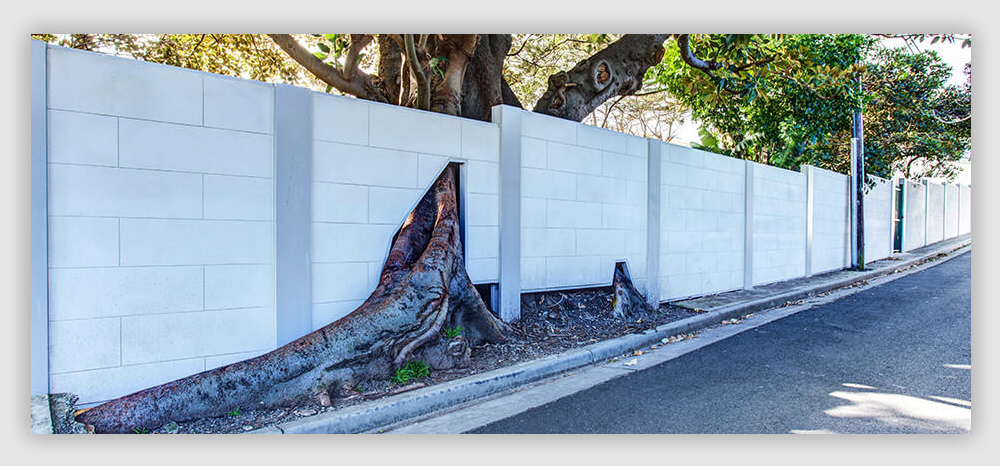
But Louisiana has a lot of trees and thus generates a substantial amount of neighbor and tree law. Today’s case is a little different, a case of a large farm seeking to get a county (parish) road – long closed due to a bridge being down – declared abandoned so that ownership could revert to the farm. The evidence was all over the map, including minutes of the parish government showing an intent — albeit a desultory one — to get the bridge fixed and the road reopened, recall of the people who lived around and near the road as to when it was closed, and even a tree expert, who dated a tree growing up through the roadbed of the abandoned stretch of highway.

The trial court weighed all the conflicting evidence and concluded that the weight of it supported a finding that the parish had abandoned the road more than 10 years prior, meaning that ownership had reverted to Richland. The appellate court didn’t necessarily agree, but appellate courts review lower court decisions deferentially. Here, the standard was whether the trial judge’s findings were reasonable, based on the record, and the court of appeals said they were.

Louisiana law is different ...

Louisiana law is different … (Dramatic re-enactment of actual Bayou State courtroom proceeding).

Richland Plantation, Inc. v. East Feliciana Parish, 973 So.2d 179 (La.App. 1 Cir. 2007). The Parish of East Feliciana maintained a public road running north from Richland Creek to Louisiana Highway 422 through property owned by Richland Plantation, Inc. In 2005, Richland sued, maintaining that the Parish had abandoned the road. Richland alleged that public use and maintenance had been terminated for more than ten years, and therefore, the road was abandoned, and full ownership of the property reverted to it.

The Parish claimed the road was temporarily closed in December 1996 because the bridge across Richland Creek was unsafe. In September 2001, the Parish filed a petition for expropriation of some of Richland’s land for the bridge, and a judgment was rendered in its favor in March 2005, but was later reversed. The Parish said the expropriation suit established that it did not have any intention of abandoning the road.

Trial witnesses had varying recollections of when the road was closed. Photographs of the gravel road south of the bridge, where it was still open and maintained, were compared with photographs of the closed area of the road, which was overgrown with plants and seriously eroded. The bridge railings were twisted and bent, and the wooden planks were rotted and broken. A forester testified on behalf of Richland that one of the trees in the roadbed had been growing there for eleven years; a cross-section of the trunk, showing its growth rings, was submitted into evidence. In addition to the witnesses’ testimony, the record included some bridge inspection reports, as well as the minutes from Parish meetings, which showed when and why the road had been closed and when the expropriation process to rebuild the bridge was approved. The trial court agreed with Richland, and the Parish filed a devolutive appeal.

Held: The road was declared to have reverted to Richland. The Court said that under Louisiana law, the public may own the land on which the road is built or merely have the right to use it. The courts have held that maintenance of a road by a Parish for three continuous years gives rise to a “tacit dedication” of the road to public use by its owner. Abandonment of a public road must be evidenced by (1) a formal act of revocation in accordance with Louisiana statute, (2) relocation of the public road by the governing body, or (3) clear and well-established proof of intent by the governing body to abandon. Nonuse of a strip of land as a public road or street for a period in excess of ten years may also result in termination of public use.

The road abandoned, maybe? Bayou law would bring a tear of joy to Robert Frost's eye ...

The road abandoned, maybe? Bayou law would bring a tear of joy to Robert Frost’s eye …

Because the Parish didn’t execute any formal act of revocation and its meeting minutes showed its intent was to rebuild the bridge and reopen the road, the Court concluded there was no proof of any intent to abandon this roadway. Thus, the only means by which the Parish’s servitude of public use of the roadway could be terminated was by factual non-use for more than ten years. Within that period, even occasional use or use by only one person constituted public use.

Reviewing the record to determine whether a reasonable factual basis for the trial court’s findings, the Court held that while there were obviously some conflicting stories about exactly when and how the northern portion of Ellis Road was closed, there was reasonable factual basis in the record for the trial court’s finding that the road had not been used for over ten years and was, therefore, abandoned by the Parish.

Richland’s licensed forester testified about the age of a tree located in the roadbed of the old road and used dendrochronology to determine how long the tree had been there. He determined that the tree growing in the roadbed was 11 years old when it was cut in June 2006, thus dating the abandonment of the road at over 10 years.

– Tom Root

TNLBGray140407

Case of the Day – Tuesday, June 3, 2025

TRIGGER ALERT – SLEEP-INDUCING LEGAL TOPIC AHEAD

Snooze141120The whole issue of “conflict of laws” is about as dry as toast, at least until someone’s injury will go uncompensated because the wrongdoer is immune from liability.

In today’s case, Mr. Cain — a Mississippian — worked for a Mississippi tree-trimming company. The company signed on with a Louisiana public utility to trim trees along a right-of-way in Louisiana. Mr. Cain was hurt when his bucket truck came into contact with an electric line, and he collected on workers’ comp from the Mississippi company. But he sued the electric utility for his injuries, too.

We have no basis for saying that the utility was or was not negligent, and thereby whether it was or was not liable for his injuries. What we do know is that the utility company and Cain’s employer had entered into an agreement that made Cain a “statutory employee” of the utility while he was working on the job, although he really remained an employee of the tree-trimming service.

Whether someone is a “statutory employee” – like beauty – is in the eye of the beholder. Someone who is a statutory employee for IRS purposes may or may not be a statutory employee under state law. Under Louisiana law, the utility was immune from Cain’s suit, because as a statutory employee, his remedies were limited to what he could collect from workers’ comp. But under Mississippi law, companies couldn’t use the “statutory employee” dodge to avoid liability. The trial court said that Louisiana law applied because the accident happened there. Pretty logical, huh? The U.S. Court of Appeals for the Fifth Circuit in New Orleans didn’t think so.

The Court said that while normally that would be the case, Louisiana state law provided an exception, that it would not apply where there was a conflict with another state’s law, and the other state’s policies would be seriously harmed by applying Louisiana law. Mississippi had a strong policy in favor of protecting the subcontractor’s worker — and that policy carried the day. The lesson here for companies working across state lines — or hiring out-of-state companies to work in their home states — is to check carefully beforehand to be sure that protective measures like “statutory employees” really will work. What goes on in Vegas stays in Vegas … but what goes on at home sometimes doesn’t really travel well.

Does this make conflict of laws clear to you? We thought so ...

Does this make conflict of laws clear to you? We thought so …

Cain v. Altec Industries, Inc., 236 Fed.Appx. 965 (5th Cir.,  2007). Francis Cain, a Mississippi resident, worked for Carson Line Service, Inc., a Mississippi corporation. Carson signed a contract with Washington – St. Tammany Electrical Co-operative (“WST”), a Louisiana corporation, under which Carson agreed to clear rights-of-way for WST’s power lines.

Working on this project, Cain was trimming trees along a power line in St. Tammany Parish, Louisiana, when his aerial truck boom came into contact with an energized WST power line. Cain was badly hurt.

Cain got workers’ compensation benefits under Mississippi’s workers’ compensation law through Carson’s insurance carrier, but that wasn’t enough. He and his wife decided to raise cain with WST, too, so they sued.

WST filed a third-party claim against Carson for defense and indemnity. WST filed a motion for summary judgment claiming tort immunity based on the “statutory employer doctrine” in Louisiana’s workers’ compensation law. That law lets contractors agree that a subcontractor’s employees are “statutory employees,” which makes the contractor immune from liability to them. Cain argued that their case was an “exceptional case,” pursuant to La. Civil Code Article 3547. Mississippi law — under which no “statutory employee” exception existed for the companies to hide behind – should govern the claim, he argued. The trial court granted WST’s motion, concluding that Louisiana law applied.

The Cains appealed.

Held: Mississippi law, not Louisiana law, governed. The Court of Appeals first determined that the laws of Louisiana and Mississippi conflicted. It then found that under Louisiana law, a written contract between a principal and contractor recognizing the principal as the statutory employer of the contractor’s employees was valid and enforceable, making WST immune from civil tort liability. Mississippi law, on the other hand, didn’t recognize and wouldn’t enforce contracts giving tort immunity to a principal sued by a contractor’s employees unless the principal has the legal obligation under the Mississippi Workers’ Compensation Act to secure compensation for that contractor’s employees.

Why all this legal hair-splitting? An injured worker thought workers' comp was;'t enough ... and was looking for a deep pocket.

Why all this legal hair-splitting? An injured worker thought workers’ comp wasn’t quite enough… and was looking for a deep pocket.

WST had no obligation under the Act. Thus, there was a substantive difference between Louisiana and Mississippi law, requiring a choice-of-laws determination. The Court said that the issue of whether WST was immune from tort liability was an issue of loss distribution and financial protection governed by La. Civ. Code article 3544. Under its mechanical rule, Louisiana law would apply because, at the time of the injury, Cain, who lived in Mississippi, and WST, a Louisiana corporation, were domiciled in different states, and both the injury and the conduct that caused it occurred in one of those states, that is, in Louisiana. Thus, the Court said, WST would be entitled to the statutory employer tort immunity afforded it under Louisiana law.

However (and this was the big “however”), article 3547 also holds that where “from the totality of the circumstances of an exceptional case, it is clearly evident under the principles of Article 3542, that the policies of another state would be more seriously impaired if its law were not applied to the particular issue …” the law of the other state will apply. The Court ruled, after comparing the policies and interests of both Louisiana and Mississippi, that it was clear the policies of Mississippi would be more seriously impaired if Louisiana law were applied to this dispute than would Louisiana’s if Mississippi law were applied.

Consequently, the Court said, it would apply Mississippi law to this dispute. Thus, WST was not immune from suit.

– Thomas L. Root
TNLBGray140407

Case of the Day – Tuesday, April 15, 2025

STICK IT TO THE MAN …

Tal Mims owned a rental house. He also owned a landscaping company. So when Rosemary Stills, his tenant, called to say a tree had fallen on the house, who better to come over to clean up the mess that Tal’s landscaping crew? It seemed like perfect synergy. It also was a bit redolent of the ’60s mantra,stick it to the man.” That is, if the “man” in question is a State Farm agent.

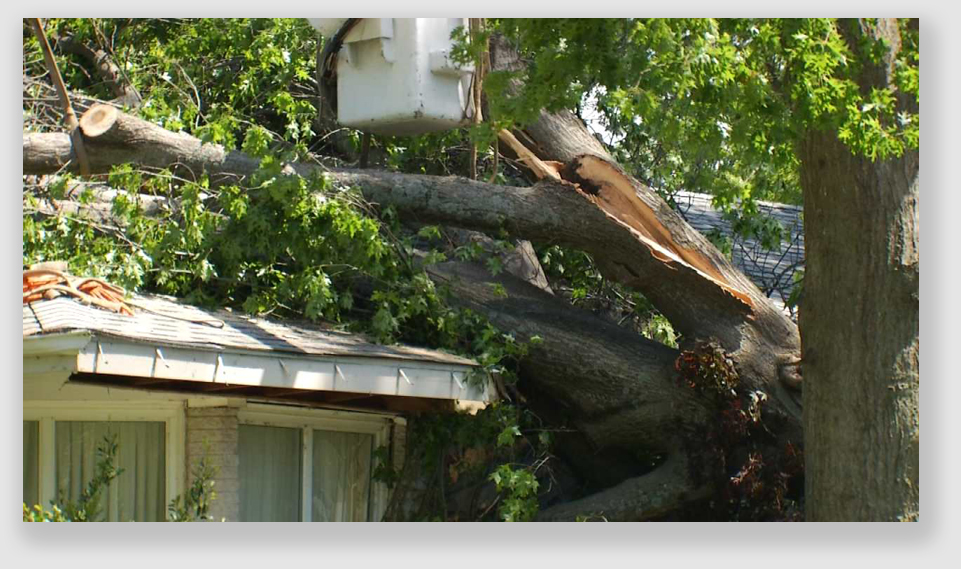
Some would say "disaster." Tal Mims said "opportunity."

     Some would say “disaster.” Tal Mims said “opportunity.”

But things got worse. While the tree was being cut up, a large branch fell on the tenant’s son, breaking his leg. The tenant sued Tal, and then she added his homeowner’s insurance carrier as a defendant. Then both the plaintiff and defendant Tal ganged up on the insurance company.

The policy pretty plainly excluded bodily injury and property damage “arising out of the rental or holding for rental of any part of any premises by any insured” and “arising out of premises owned or rented to any insured, which is not an insured location.” But Tal and Rosemary argued that while the falling tree related to the rental property, the accident — which occurred while it was being cut up — did not. Tal Mims argued rather disingenuously that he was acting on his own behalf at the time of the accident and that he was not engaged in any business pursuit or employment.

Here’s the problem, the Court said. While throttling insurance companies is something courts do fairly often, the companies still are free to limit coverage so long as the limitations do not conflict with statutory provisions or public policy. The business pursuits exclusion in a homeowner’s policy is intended to exclude risks that should be covered under different policies. Here, the Court said, the property on which the accident occurred was never listed in his homeowner’s policy, but instead happened on another piece of property that should have been covered by its own policy. Besides, the accident happened because Tal was removing a tree from the roof of the rental house. The Court guessed that if Tal had left the tree on the roof, it would have badly affected the value of the house.

That being true, the Court said, this was pretty clearly a project related to a rental property and thus pretty clearly excluded from Tal’s insurance policy, a happy ending for common sense. It was not so happy for Tal and Rosemary, both of whom hoped State Farm’s deep pocket would solve their problems.

Stills v. Mims, 973 So.2d 118 (La.App., 2007). Stills rented her home from Tal and Tommie Lee Mims. Tal operated a business named Tal’s Custom Landscaping, Inc. When a storm caused a tree to fall on the roof of the home. Stills informed Tal of the damage, and he came to remove the tree. In doing so, a limb fell from the roof onto the ground and injured Stills’ son, LeWilliam. stickit150427Stills sued Tal and Tommie Lee Mims, and he added State Farm as a defendant. She alleged State Farm had in effect at the time of the accident a policy covering the Mims’ actions.

State Farm filed a motion for summary judgment asserting that the homeowner’s policy issued to Tal Mims was for his personal residence at 2508 Lindholm Street and that State Farm never issued a policy for 604 Central Avenue, where the accident occurred. State Farm asserted that the liability and medical payments coverages provided in the policy excluded bodily injury and property damage “arising out of the rental or holding for rental of any part of any premises by any insured” and “arising out of premises owned or rented to any insured, which is not an insured location.” The trial court granted summary judgment in favor of State Farm, finding no coverage under the Mims’ homeowner’s policy. Both Stills and the Mims appealed.

Held: The trial court’s dismissal of State Farm Insurance was upheld. Stills argued that her claim was based on the Mims’ negligence in cutting the tree down, and not on any property defect, making the insured location issue irrelevant. Both Stills and the Mims asserted that the business pursuit exclusion did not apply, because the Mims’ actions fell under the exception for activities ordinarily incident to non-business pursuits.

Mims denied being in the business of renting homes. He claimed that he was acting on his own behalf at the time of the accident and that he was not engaged in any business pursuit or employment. The Court noted that insurance companies are free to limit coverage so long as the limitations do not conflict with statutory provisions or public policy. Exclusions must be strictly construed against the insurer with any ambiguities construed in favor of the insured. The insurer bears the burden of proving the applicability of an exclusion to a claimed loss.

The Court said that the business pursuits exclusion in a homeowner’s policy is intended to exclude risks that should be covered under different policies. For example, the commercial risks of a business would typically be covered by a commercial liability policy, whereas the risks associated with a rental dwelling would typically be insured by rental property insurance. The removal of the risks associated with business enterprises or rental properties helps to lower the rates of homeowner’s insurance by eliminating non-essential coverages.

Stills and the Mims argued that her claim did not arise from any business pursuit by the Mims, but rather, the claim was based on the Mims’ personal liability and involved activities that were ordinarily incident to non-business pursuits. They cited Blue Ridge Insurance Co. v. Newman — where the Court found that such a tree mishap was covered by a homeowners’ policy – in support of their position. But the Court said Blue Ridge was different. First, plaintiff Newman’s property on which the tree was located was insured under his homeowner’s policy. Here, the house leased by Stills was not insured under the Mims’ State Farm policy. The Mims were not seeking coverage for an accident that occurred on Tal’s insured residence, but instead, the Court held, Tal sought to have his homeowner’s insurance cover an incident that occurred on an unrelated rental location that should have been insured by some other policy. The very purpose behind the business pursuits exclusion, the Court said, supported a finding of no coverage.

scamSecond, in Newmanthe defendant’s property had been his family’s home since 1965 and had only been rented to a friend for less than a year prior to when the accident occurred. In Tal Mims’ case, there was no indication that the Stills residence was anything other than a rental property.

Third, Newman’s house was vacant when the tree fell, whereas Stills and her son were residing in the Central Avenue home when the tree fell on it. Fourth, the damage in Blue Ridge arose when the tree from Newman’s property fell on a neighboring property. Here, the existence of the tree on the property and its falling during the storm did not cause the damage. Instead, young LeWilliam’s injury arose from Mims’ removal of the tree from the roof of the rental dwelling.

Finally, the Blue Ridge court’s major consideration was that the mere existence of the tree on the property had no bearing on the use of the property- as a rental. The fact that a tree fell on the roof of the rental home in this case, particularly if left there, would likely affect the suitability of Stills’ rental dwelling. While the existence or maintenance of a tree on Newman’s family property was an activity usually incident to non-business pursuits, Tal Mims’ removal of a fallen tree from the roof of a rental dwelling by Stills was clearly not.

Pretty clever argument, the Court conceded – but State Farm was not liable.

– Tom Root

TNLBGray