Case of the Day – Monday, December 22, 2025

WHEN THE GAS COMPANY COMES A CUTTIN’

I’ve told you before to beware of what lurks in the dark and malevolent corners of your deed. Today, we’re going to look at a cautionary tale.

No one really thinks about the wording of easements when the power company or the gas folks come by with some standard form clipped to a dollar bill. The utility reps tell you that it’s no big deal because the language is standard, no one can change it, and anyway, all your neighbors have signed off on the same form, so what’s the big deal?

I’m not a public utility, so I’ll tell you what the big deal is. Or, better yet, show you.

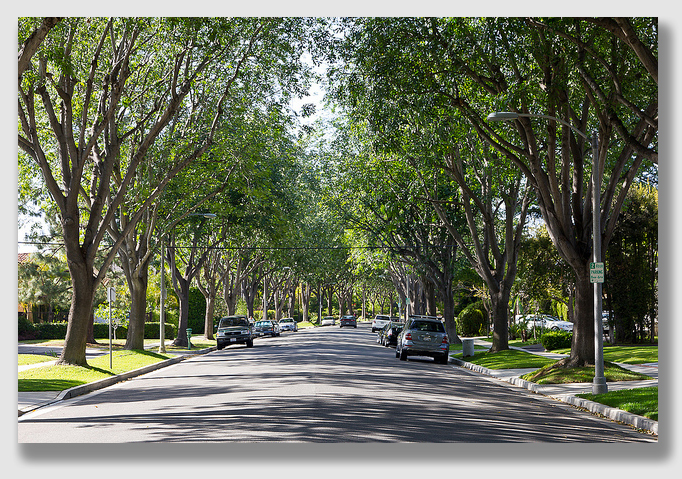
Consider New Jersey. Please. Just for right now. In East Brunswick, New Jersey (city motto: “We’re located at Turnpike Exit 9″), a gas transmission company had acquired an easement for a 3-1/2 foot wide natural gas transmission pipe through some unimproved land back in 1967. The property – once used only for mob hits and toxic waste dumping (just kidding) – was sold sometime after the easement was granted. At some point, a housing development was over a 42” high-pressure gas line the company had buried inside the easement.

The utility had always patrolled its pipeline and was well aware of the 19 oak trees growing along the street, 40 inches above the pipe. But when new evidence showed that tree roots could cause catastrophic pipeline failures, the gas utility announced it intended to cut down the trees.

newjersey150908

The property owners, who probably had never bothered to read all of the boring stuff in their deeds that followed the “Know all Men by These Presents …” part, were outraged. They complained that the gas utility shouldn’t be allowed to cut the trees now because it hadn’t ever bothered to before. This argument is called “laches,” based on the old legal maxim that “equity aids the vigilant.” Or, as some like to say, “Don’t sit on your rights.” The owners argued that the gas company had never tried to remove the trees before, and – 40 years after obtaining the easement – it should not be allowed to do so now.

What’s more, the owners contended, the gas company couldn’t really prove the 19 trees were hurting anything.

Horrors! Imagine buying land subject to an easement, only to have the easement holder actually try to exercise the easement rights! As they say in New Jersey, “Oh, the humanity!” The gas utility carefully showed how new techniques had determined that tree roots could weaken high-pressure supply lines and, in fact, had caused some spectacular failures. The property owners could only muster an expert who opined that the tree roots in question probably wouldn’t grow that deep.

The Court of Appeals agreed with the trial judge. The gas company didn’t have to show that the tree roots were damaging the line, only that it had a reasonable basis for keeping roots away from its pipe. The evidence easily did that. As for the laches argument, the Court agreed that the nonuse of an easement in New Jersey didn’t result in the loss of the right. Plus, the Court said, the gas company had a good reason for not seeking to remove the trees until it did, as science had only recently determined that tree roots and gas pipelines didn’t mix.

Township of East Brunswick v. Transcontinental Gas Pipeline Corp., 2008 N.J. Super. Unpub. LEXIS 27, 2008 WL 2627688 (N.J.Super.A.D., July 7, 2008). Transcontinental (“Transco”) operates an interstate natural gas transmission system that runs from the southern Atlantic seaboard to New York City. One of its main lines, the Lower Bay Line, runs across East Brunswick and along Timber Road. This 42″ high-pressure gas line was built in 1967.
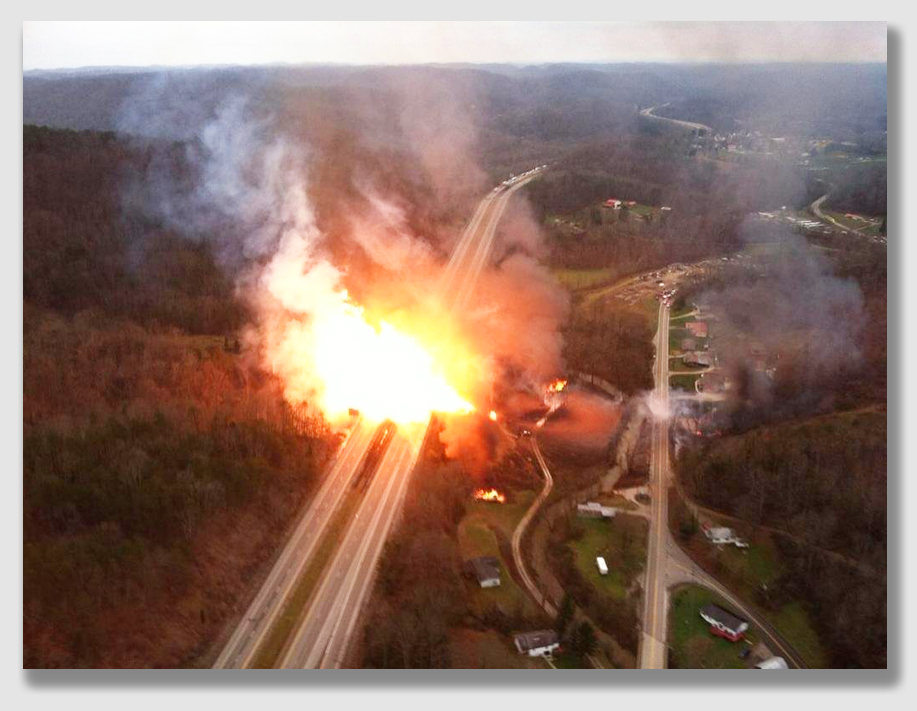
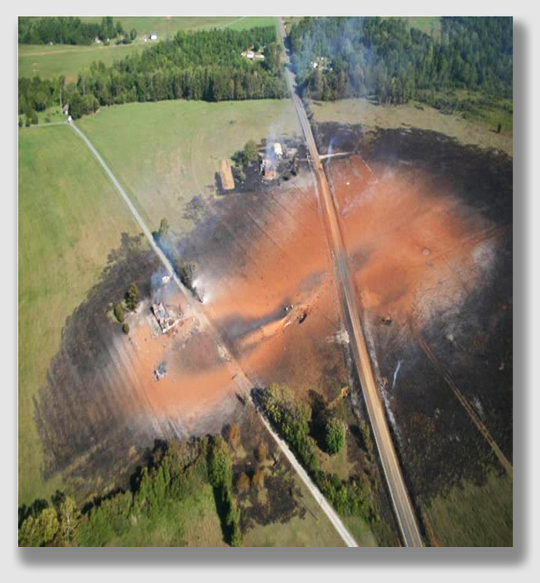
When trees fall on power lines, the lights go off for a few hours. When gas transmission lines are breached by tree roots, the misadventure that follows is usually much more energetic.

When trees fall on power lines, the lights go off for a few hours. When gas transmission lines are breached by tree roots, the ensuing misadventure is usually much more energetic.

Transco held a 100′ wide easement for the pipeline under a right-of-way agreement “for the purposes of laying, constructing, maintaining, operating, repairing, altering, replacing and removing from time to time one or more pipelines … together with such other rights as may be necessary or convenient for the full enjoyment or use of the rights herein granted [including] the right to enter upon the right of way and easement … at such times as Grantee may elect … and the right from time to time to keep said right of way free from trees, undergrowth and all other obstructions that may endanger or interfere with the construction, operation and maintenance of Grantee’s pipe lines[.]”

The owner sold the property subject to the easement, and in the 1980s, it was developed into a residential community of single-family homes. The easement covered the width of Timber Road, the sidewalks, and portions of residents’ front yards. The pipeline was buried 40″ deep and runs along one side of the street in the public space between the sidewalk and the curb.

Nineteen shade trees were planted sometime in the 1980s between the sidewalk and the curb, so they were growing directly above the pipeline. Transco knew of these shade trees because it regularly inspected and monitored the pipeline.

Natural gas pipelines must be properly maintained and monitored because any rupture can cause severe damage. Transco monitored the pipeline and conducted an extensive on-site inspection program of the Lower Bay Line pipeline right-of-way. An inspector walked directly over the pipeline at least once a year to perform ground tests to determine if natural gas was leaking. The right-of-way was patrolled almost daily by vehicle. It was inspected weekly by air to determine if any unauthorized excavation occurred in the area and to detect early signs of leakage.

Concerned about damage to the pipeline’s protective coating by tree roots, maintaining a clear line of sight along the pipeline, and preventing any delays in reaching the pipeline in an emergency, Transco tried to remove the 19 trees above the pipeline as part of a larger effort to remove trees above all of its pipelines in the area. The residents sued for a temporary restraining order enjoining Transco from removing the trees. Transco argued it had an absolute legal right to remove the trees under the right-of-way easement. Plaintiffs argued there was a genuine issue of material fact whether the trees endangered the pipeline and whether their removal was reasonably necessary for Transco’s enjoyment of its easement right. No evidence was adduced that the tree roots were currently damaging the pipeline, but there was evidence of potential harm.

A 2004 investigation revealed metal losses in the pipe walls ranging from 6% to 15% at various locations along Timber Road. Additional testing in 2005 uncovered pipeline coating defects or interruptions at some of the same places where the metal anomalies were discovered, but neither inspection definitively determined that tree roots caused the damage. Finding that Transco need not wait for actual damage to its pipeline before exercising its express easement rights, the judge concluded, “the record indicates that tree roots may damage the protective coating of the pipeline …. [and][f]urther, efforts to keep the protective coating of the pipe intact [are] part of the necessary maintenance program for a pipeline.” The judge also reasoned that while the pipeline’s path was marked with yellow markers, the trees detracted from the area’s appearance as a right-of-way and may lead to third-party interference with the pipeline, a major cause of pipeline accidents. The Court granted summary judgment for Transco.

The plaintiffs appealed.

easement150908Held: Transco had the right to remove the trees. The Court said the primary rule of construction is that the intent of the conveyor is normally determined by the language of the conveyance read as an entirety and in the light of the surrounding circumstances. Here, the easement plainly and expressly gave Transco the right to remove trees when they may endanger or interfere with the construction, operation or maintenance of the pipeline. The language specifically stated the grantee had “the right from time to time to keep said right of way free from trees, undergrowth and all other obstructions that may endanger or interfere with the construction, operation, and maintenance of Grantee’s pipelines….” The easement also clearly gave Transco the right to remove trees if they interfered with Transco’s immediate access to the right-of-way. The plain language of the easement gave Transco the express right to remove trees and did not require actual damage to or interference with pipeline operations before the trees were cut. The easement permitted preventive action to avoid potential harm, disruption, or interference with the operator’s pipeline.

The uncontroverted evidence showed that the pipeline and its coating along Timber Road had been damaged. Although there was no proof that the damage was caused by tree roots, other sections of Transco pipelines and their coatings in New Jersey had been damaged by tree roots. The Plaintiff had no proof to the contrary, but instead, their expert only posited that “the roots are not likely to interfere in any way with the pipeline;” the root systems are “generally non-invasive;” and root growth is “typically” confined to the upper two to two-and-one-half feet beneath the ground surface. The proof didn’t foreclose the possibility that the tree roots may grow deep enough to interfere with the pipeline, as they had in other sections of Transco’s pipeline.

Plaintiffs also contended Transco was barred from taking affirmative action by the equitable doctrine of laches because it waited so long to exercise its easement rights. But the mere nonuse of an easement cannot destroy the rights granted by it. Rather, clear and convincing evidence of the intent to abandon the easement rights must be shown. In this case, there was no evidence that Transco intended to abandon its easement rights; therefore, any reliance placed by plaintiffs on Transco’s inaction was unreasonable. Also, there was reasonable justification for Transco’s inaction over the years, as it was unaware of the potential danger posed by the tree roots at the time the trees were planted.

The evidence showed that since the trees were planted, there have been three accidents nationwide involving natural gas pipeline ruptures and three incidents in New Jersey in which Transco has discovered that tree roots have damaged pipelines. The Court said that the fact that action had not been taken earlier did not preclude preventive action now, nor did it require waiting for actual damage to occur.

The Plaintiffs did not demonstrate how their interest in preventing the removal of the trees outweighed Transco’s taking preventive measures in the public interest.

– Tom Root

TNLBGray140407

Case of the Day – Wednesday, June 25, 2025

TRUST US … WE KNOW WHAT WE’RE DOING

Anyone who hasn’t been living in a cave the past decade knows that sunny California has been just a little too sunny. The state and local governments have begged, pleaded, and cajoled homeowners to save water. Some rather severe measures have been implemented.

Maybe so, but you're not the only people around with a law degree. Some folks at the gas company have them, too.

Maybe so, but you’re not the only people around with a law degree. Some folks at the gas company have them, too.

This is not a particularly new story, but the drought persists. That’s why we recall the story that broke a few years ago that the California rich – like the rich everywhere – aren’t exactly like you and me. At least, not like me.

Sure there’s a severe shortage. And sure people should cut back. But not rich people. “We pay significant property taxes based on where we live,” one uber-wealthy property owner once complained to the Washington Post. “And, no, we’re not all equal when it comes to water.”

Ah, yes, we know what entitlement must feel like. It’s sort of like how the Andrewses, high-powered and sophisticated lawyers both, must have felt when they bought their house. You see, Mr. and Mrs. Andrews weren’t your typical blundering homebuyers. He was a tax attorney – one of the high priests of the legal profession – and she was an appellate specialist. So when they settled on a beautiful homestead in the Ohio countryside next to a hillside covered with pine trees, they figured that they understood all those ‘thences’, distances and bearings to PK nailsets, and ‘principal places of beginning’, you know, the stuff other lesser lawyers put in deeds. So how could they have missed the easement that the prior owner had granted to the gas company for two pretty big gas transmission lines buried on the place?

We’re sure they must have read it. But these legal beagles apparently never dreamed the easement meant what it said.

About four years after they moved in, the gas company came along and said the pine trees on the hill were encroaching on the easement and had to go. Being frugal as well as sharp, the Andrewses sued in a local court, acting as their own attorneys. They argued the gas company was stuck with the trees because it had let them grow there in the first place, and anyway, it hardly needed to clear-cut a swath 80 feet wide (25 feet on either side of the two pipelines and 30 feet in the middle).

FoolOl’ Abe Lincoln was right: the Andrews had a pair of fools for clients.

As it turned out, Columbia Gas had a few lawyers, too, and these guys knew easements like Mr. Andrews knew taxes. Maybe even better. The gas company removed the case to federal court, where, after a trial, the Andrewses had their heads handed to them. The Court of Appeals affirmed the defeat.

The court held that Columbia Gas hadn’t acquiesced to the trees, because they weren’t there when the pipeline was built (but were planted by a later homeowner). The fact that the gas company hadn’t cut a swath of trees from the easement in 55 years didn’t matter, nor did it matter that the gas company was cutting such a wide right-of-way on neighboring easements. The court gave credence to the Columbia Gas and state utilities commission witnesses, who carried the day by carefully explaining all of the safety, economic, and reason for the gas company to want the trees removed.

The Court ruled that absent evidence to the contrary, a judge should presume that the parties contemplated that normal development would result in some changes in the use of the easement, even if it is unlikely that the parties anticipated specific developmental changes. New technology permitting aerial inspection, new federal regulations on pipeline safety and security, and new techniques of internal pipeline inspection were all such “developmental changes,” arguing for the gas company to take a heightened interest in keeping its easement clear.

Andrews v. Columbia Gas Transmission Corporation, 544 F.3d 618 (6th Cir., 2008). In 1947, Ruby W. Davies owned the piece of land in Licking County, Ohio, where the Andrews family now lives. She granted The Ohio Fuel Gas Company an easement to build and maintain a pipeline and to “lay, maintain, operate, repair, replace and remove other lines of pipe at any points on said premises upon the payment of like consideration” and the right of “ingress and egress to and from the same” over and across the property. Ohio Fuel agreed to “pay any damages which may arise to crops and fences from the laying, maintaining, operating and final removal of said pipeline.” The agreement did not specify the width of the easement.

pipe2Pursuant to the agreement, Ohio Fuel installed two large high-pressure underground natural gas transmission pipelines through the property. The first, Line K-170, is 16 inches wide and was installed in 1947. The second, Line K-205, is 24 inches wide and was installed in 1957. The two pipelines run parallel to each other about 30 feet apart. Columbia Gas succeeded to Ohio Fuel’s interest in the right of way and still operates and maintains the pipelines. The property changed hands several times over the past 50 years. In the late 1960s, the owner built a house on it and planted pine trees on the hillside behind the house for aesthetics and erosion control. The owner was unaware that he had planted the trees within 25 feet of Line K-170.

In March 2000, the Andrewses bought the property with notice of the 1947 right-of-way agreement. By then, the pine trees had matured. The Andrewses’ decision to purchase the property was motivated in large part by the rural setting and the hillside landscaping.

Columbia Gas made no efforts to clear a right of way around the pipelines until 2004, when a work crew told the Andrewses that the location of the pipeline required them to remove the stand of pine trees. Columbia Gas claimed the right to remove the trees and to maintain a right of way totaling approximately 80 feet, 25 feet on each side of the two pipelines and the 30 feet between the two pipelines. The Andrewses sued Columbia Gas, seeking an injunction and asking for damages if the trees were cut. After trial, the court entered judgment in favor of Columbia Gas, relying on the testimony of Timothy Seibert, a long-time Columbia Gas employee responsible for overseeing the inspection and maintenance of the pipelines running through Andrewses’ property, and Paul Hollinger, an investigator for the Public Utilities Commission of Ohio, the state agency responsible for overseeing natural gas transmission lines. Based on their testimony, the Court concluded that a 50-foot right of way for each pipeline was “necessary and convenient and consistent with the language of the 1947 Davies easement.” The court declined to apply the doctrines of laches, estoppel, or waiver, noting that those doctrines do not apply to expressly granted easements under Ohio law. Finally, the Andrewses were not entitled to compensation for the removal of the trees because the right-of-way agreement only provided recovery for damage to crops and fences. The Andrewses appealed.

NHE-16006_300Held: Columbia Gas was entitled to the 80’ wide right-of-way, and the Andrewses were not entitled to damages for the lost trees. Under Ohio law, an easement is an interest in the land of another, created by prescription or express or implied grant, that entitles the owner of the easement to limited use of the land in which the interest exists. The owner of the land subject to an easement has the right to use the land in any manner not inconsistent with the easement but has no right to interfere with or obstruct the reasonable and proper use of the easement. The owner of an easement has the right to remove objects within it that unreasonably interfere with or obstruct its reasonable and proper use.

Where the terms of an expressly granted easement are ambiguous, the Court held that a judge must determine its scope from the language of the grant, the circumstances surrounding the transaction, and what is reasonably necessary and convenient to serve the purposes for which the easement was granted. Absent contrary evidence, a judge should presume that the parties contemplated that normal development would result in some changes in the use of the easement, even if it is unlikely that the parties anticipated specific developmental changes. Acquiescence for a long period of time in a certain construction of a grant of an easement estops the assertion of a different construction.

EasementsThe Andrewses argued that Columbia Gas never cleared any area within its claimed right of way, and never objected when the prior owner planted the pine trees in the late 1960s. But lack of action prior to this time did not stop the gas company from asserting its rights now. If Columbia Gas had consistently cleared only 10 feet on each side of its pipelines, the Court said, the Andrewses’ argument would have more force. But the fact that the company did nothing is not fatal to its claim. Besides, the Court said, Columbia Gas did not acquiesce to the trees. No trees were growing there in 1947, making it reasonable for the trial court to conclude that the conduct of Columbia Gas after the trees were planted did not evidence the original intent of the parties.

The Andrewses also argued that Columbia Gas acquiesced by allowing trees near its pipelines on other properties. But the original intent of the parties is the primary inquiry and only the conduct of the parties regarding the particular property at issue is relevant. The fact that the gas company may or may not have enforced its easement to its fullest width elsewhere has absolutely no bearing at all on whether it may enforce its easement to its fullest width on the Andrews property.

Capt. Picard may well have landed at the plaintiff's table in this case ...

Capt. Picard may well have landed at the plaintiff’s table in this case …

Relying on testimony by expert witnesses, the lower court ultimately concluded that a 50-foot easement was reasonably necessary and convenient for the inspection, operation, and maintenance of each of the pipelines. The factual findings upon which he based that conclusion were not clearly erroneous. Although each easement case is factually unique, almost every court that has construed an easement with similar language as the one at issue here has concluded that a 25-foot right of way on both sides of the pipeline was reasonably necessary and convenient. And it is beside the point to argue that federal regulations do not require natural gas companies to clear rights of way around their pipelines. Assuming that to be true, the regulations do not prohibit gas companies from clearing rights of way. Although federal law may be helpful in construing certain ambiguous easements, the rights granted in an easement ultimately flow from a private agreement. The difficulties Columbia Gas might face in conducting pipeline inspections was a primary ground for the lower court’s conclusion that a 50-foot right of way was reasonably necessary and convenient for each of the pipelines on the Andrews property.

Columbia Gas offered evidence that the trees hindered the company’s ability to conduct both aerial and close-interval pipeline inspections. According to an expert witness, the presence of trees within the right-of-way interfered with aerial inspections. Additionally, trees within 25 feet of the center of a pipeline could hinder the company’s ability to conduct close-interval surveys and to excavate the pipeline in the event of an anomalous inspection or an emergency, such as a leak or rupture.

The Andrewses argued that Columbia Gas had safely maintained its pipelines for decades without removing the trees and that if an emergency ever arises, it can remove the trees quickly enough at that time. The trial court recognized this as well, but also reasoned that there were some circumstances in which the additional time to remove the trees could impose a substantial hardship on customers who would be without natural gas service during the excavation, and the delay to remove the trees could unnecessarily jeopardize public safety. There was ample support in the record for the conclusion that a cleared right of way was reasonably necessary to ensure a safe, timely, and efficient excavation. The trial court also considered evidence that a 50-foot right-of-way is standard in the gas pipeline industry.

Finally, the Andrewses challenged the trial court’s determination that they are not entitled to damages for the removal of the trees. Because the trees were inconsistent with the easement rights of Columbia Gas, the company was authorized to remove them.

Thomas L. Root
TNLBGray140407

Case of the Day – Monday, February 24, 2025

DOING NOTHING IS NOT AN OPTION

“A stitch in time saves nine” is an idiom that’s been around for three hundred years or so. It also is an everyday explanation of the equitable doctrine of laches.

It always seemed a little ironic that English common law needed an entire branch of jurisprudence known as “equity.” Oliver Wendell Holmes, Jr., famously lectured a litigant once that his courtroom was “a court of law, young man, not a court of justice.” It was precisely because there was so much law and so little justice that medieval England developed a parallel judicial system known as courts of equity, where litigants could get just results that were precluded in the courts of law by hidebound rules of pleading and damages.

The basis of equity is contained in the maxim “Equity will not suffer an injustice.” Other maxims present reasons for not granting equitable relief. Laches is one such defense.

snoozeLaches is based on the legal maxim “Equity aids the vigilant, not those who slumber on their rights.” In other words, “you snooze, you lose.” Laches recognizes that a party to a lawsuit can misplace evidence, lose witnesses, and thus forfeit a fair chance to defend himself or herself after the passage of time from the date the wrong was committed. If the defendant can show disadvantages because, for a long time, he or she relied on the fact that no lawsuit would be started, then the case should be dismissed in the interests of justice.

Ms. Garcia suffered encroachment from a copse of boundary-tree elms for a long time, perhaps too long a time, without doing anything about it. She could have trimmed roots and branches that intruded into her alfalfa fields years before – New Mexico law let her do that – but she fretted and stewed in silence. When she finally wanted to take action, the elms were so big that the trunks themselves had crossed the property line. Her “self-help” would have killed the trees.

The lesson? As Ed McMahon used to adjure us, “You must act now.”Act now

Garcia v. Sanchez, 108 N.M. 388, 772 P.2d 1311 (Ct.App. N.M. 1989). This dispute between neighboring landowners involves trees originally planted on the defendant’s property which have overgrown and now encroach upon the plaintiff’s property. By the time Garcia bought her land in 1974, ten elm trees planted some years before near the common property line were well established. Although originally planted inside the defendant’s property line, over the years, the trees had reached full size and had grown so that nine of them were directly on the boundary, with the trunks encroaching onto the plaintiff’s property from one to fourteen inches.

Garcia used her land for growing field crops. Sanchez’s side had a driveway and residence. Garcia didn’t complain about the trees until 8 years after buying her property. Two years after her first complaint, she sued.

The trial court found Garcia’s actions in providing water and nutrients to her crops had caused the trees to grow toward her property, but it concluded that Sanchez negligently maintained the elm trees, allowing the roots and branches to damage the crops on Garcia’s property. The court also found that she had not suffered enough damage to warrant the removal of the trees and that cutting any substantial portion of the trunks of the trees would seriously harm them. The court found that yearly trenching of the roots and trimming of branches on Garcia’s side of the property line would essentially resolve any problems resulting from the encroachment of tree roots and overhanging branches on her property, so it ordered Sanchez to pay $420.80 for damage to Garcia’s alfalfa, to yearly trench the roots and trim the branches of the trees, and to provide water and nutrients to the trees in order to restrict their growth toward plaintiff’s property.

The parties appealed.

Elms make good boundary trees

Elms make good boundary trees

Held: The Court of Appeals reversed and remanded. It held that the trees originally planted inside a property line, which had grown to encroach onto adjoining property along the boundary, were not jointly owned under the common boundary line test absent an oral or written agreement to have the trees form the boundary line between the parties’ property. It agreed that the trial court’s refusal to order that Sanchez remove the encroaching trees was not an abuse of discretion, observing that the trial court had tried to balance equities by weighing the value of trees against the agricultural character of the property involved and the nature of the harm suffered by Garcia.

But the Court of Appeals went further: it ruled that the harm caused to Garcia’s crops by the elms’ overhanging branches and tree roots is not actionable. Instead, following Abbinett v. Fox, the Court held that a plaintiff’s remedies are normally limited to self-help to protect against the encroaching branches and roots. But here, Garcia waited too long: her plan now, after years of suffering in silence, to remove a substantial portion of the root system or trunk of the encroaching trees (her Massachusetts Rule right) may endanger lives or injure Sanchez’s property, and that laches gives a court the right to limit the exercise of her self-help plan under its equitable authority.

The Court sent the case back to the trial court to determine whether Garcia’s failure to exercise self-help to control encroaching roots, branches and tree trunks over an extended period should preclude injunctive relief now.

– Tom Root

TNLBGray

Case of the Day – Thursday, January 16, 2025

SITTING ON YOUR RIGHTS

Equity is a beautiful thing.

There was a time, back in merry olde England, went the courts of law had gotten so hidebound and formalistic that your average aggrieved peasant couldn’t catch a break. So people who needed something more than what the law could provide would petition the Lord Chancellor.

Thus began the courts of chancery, known more commonly as courts of equity. A court of equity is authorized to apply principles of equity, as opposed to those of law, to cases brought before it.

Equity courts hear lawsuits and petitions requesting remedies other than damages, such as writs, injunctions, and specific performance. Most equity courts were eventually merged with courts of law, but some American states, including Delaware, Mississippi, New Jersey, South Carolina, and Tennessee, preserve the distinctions between law and equity and between courts of law and courts of equity.

Today’s case, being from Tennessee, started with a Chancellor (something like this fellow), because what the plaintiffs really wanted was an injunction, a court order that the owner of the hedge trim it. But it ended up in the Tennessee Supreme Court.

At its root, equity is nothing more than fairness. Note how equity creeps into this case, not only in the application of the Massachusetts Rule – and how much a creature of equity is that? – but in the observation at the end of the decision that laches should prevent Bill Granberry from getting any relief from his claim.

Bill sat on his rights. If he had sued Penelope when the hedge was still short and young, the outcome might have been different.

Granberry v. Jones, 188 Tenn. 51, 216 S.W.2d 721 (Supreme Ct. Tenn. 1949): Bill Granberry and Penelope Jones each owned a residence on adjoining lots in Tullahoma. Due to the narrow frontage, Bill’s residence is a little less than five feet from the boundary line between the properties.

Penny planted an evergreen shrubbery hedge entirely on her side and within a few inches of the boundary line. The hedge has grown to a height of about twenty feet and its branches and foliage have grown over the boundary line and over Bill’s property to the extent that they rub the side of his house and enter his open windows.

Bill sued for an injunction that would require Penny to trim the hedge back to the boundary line. For good measure, he also asked for a decree requiring her to move the hedge entirely or at least to cut it down to a height of not more than 24 inches and to keep it that way, and for damages.

Penny demurred (which is legalese for saying to the court, “Even if everything he says is true, Bill’s got nothing coming). Penny argued that she had the legal right to grow the shrubbery on her own property to any height she desired, and if any of the branches or foliage protruded onto Bill’s land, his remedy was only to cut the hedge to the extent of the protrusion. The trial court overruled her demurrer, and Penny appealed.

Held: Penny’s demurrer was correct: Bill’s remedy was limited to self-help.

The court reversed the lower court’s decree which had overruled the defendants’ demurrer to the complainant’s bill, seeking inter alia to enjoin the defendants from permitting their hedge to extend onto his land. The court dismissed the bill.

Noting that it could “find no Tennessee case where resort to a Court of equity has been attempted on the facts alleged by this bill,” the Supremes ruled that every owner of land has dominion of the soil, and above and below to any extent he or she may choose to occupy it. As against adjoining property owners, the owner of a lot may plant shade trees or cover the grounds with a thick forest, and the injury done to them by the mere shade of the trees is damnum absque injuria.

No landowner has a cause of action from the mere fact that the branches of an innocuous tree belonging to an adjoining landowner overhang his or her premises. The afflicted owner’s right to cut off the overhanging branches back to the property line is considered a sufficient remedy, the Court said, citing the Massachusetts Rule.

The principle, the Court said, is that an owner of land is at liberty to use his land, and all of it, to grow trees. Their growth naturally and reasonably will be accompanied by the extension of boughs and the penetration of roots over and into the adjoining property of others.

Bill argued that the overhanging branches and foliage had caused the outside wall of his home to rot and decay, and the sills and woodwork have been caused to rot to such an extent that they will have to be replaced by reason of the constant leaning against them of the hedge.

The Court was a mite troubled that it obviously had taken many years for the hedge had grown to its current size. Bill could have taken action when the hedge was much smaller, and the damage to him and burden to Penny – were she to be required to cut the hedge – would have been much less. “The long acquiescence and laches upon the part of [Bill] without any notice to [Penny] and with no attempt to aid himself,” the Court wrote, “is clearly the cause of the damage for which he seeks equitable relief. Of course, the Courts are open to [Bill] if, in legally aiding himself, he is improperly interfered with by [Penny] or her brother. Our conclusion, also, is without prejudice to whatever rights, if any, [Bill] may have for recovery of the expense to which he may be put now or hereafter in cutting the overhanging branches or foliage.”

– Tom Root

TNLBGray

Case of the Day – Friday, December 13, 2024

DON’T SIT ON YOUR RIGHTS

burgerk150223Today’s case appears at first blush to be nothing more than a titanic conflict between a fast food purveyor and a strip mall, hardly the material that will get a tree or neighbor law fan’s blood pumping. But it illustrates a few worthwhile points.

A Burger King and a Long John Silver’s sat next to each other in Bay City, Michigan. The owners of the lots agreed to mutual easements so that patrons of each could use a common driveway while their arteries clanged shut from the cholesterol and trans fat. The easements were written without the benefit of a legal description of the land subject to the easement (perhaps to save the $300 or so a surveyor would have cost). Sometime after that, the Burger King was dethroned, and the restaurant was torn down. The buyer of the land, the strip mall next door, tore down the BK and expanded the mall. In so doing, the developer built over where one of the access drive easements lay (although the actual common driveway had never been constructed).

The Long John Silver’s crew observed the construction, but the company didn’t complain until the construction was completed. Then, the fish folks sought an injunction in federal court to get the offending building torn down. The Court agreed that the mall developer had violated the easement, but the facts that the remedy was so drastic (tearing down the building) and the fact that Long John Silver’s sat on its complaint during the construction and said nothing when the mall developer could have remedied the problem easily. That is called “laches,” and the law doesn’t think much of people who engage in it.

The case wasn’t resolved at that point, but Long John Silver’s was more likely to just win the difference in the value of the real estate (about $35,000, or 1,591 8-piece family meals). But the lesson is that if you sit on your rights and permit the other party to really damage you, you may be severely limited in your remedies.

The lesson of laches - don't sit on your rights.

The lesson of laches – don’t sit on your rights.

BR Associates, Inc. v. LaFramboise, 2007 U.S. Dist. LEXIS 46036, 2007 WL 1840031 (E.D.Mich., June 26, 2007). BR operated a Long John Silver’s restaurant just west of a busy intersection in Bay City, Michigan. LR owned a commercial plaza east of the Long John Silver’s at the intersection itself. In 2004, a Burger King operated on the LR site, but it closed and was sold to LR. LR demolished the Burger King and added to its existing plaza, making space for five new tenants. BR’s fish fryers were aware of the construction, and they informed BR’s corporate offices of the activity.

BR never complained during the construction. But after LR was done, BR claimed that the plaza blocked an easement arising out of a written agreement entered into by BR and the old Burger King owner, in which BR and the prior owner gave a mutual “perpetual, non-exclusive easement” for the customers of each other to use two driveways (the “North Access Drive” and the “South Access Drive”) on the easement areas, which were the boundaries of the two properties. Under the easement, the parties had the right “to relocate from time to time and in each party’s own discretion, those driving aisles and ingress and egress points located on their own Parcels … provided that such relocation does not adversely effect [sic] the other party’s right to use the Easement Area … [and] upon the mutual written agreement of the parties hereto.”

Apparently, the contemplated South Access Drive was never constructed when the Burger King still operated. The easement agreement did not specify the width or the length of the access drives nor did it include a legal description of the areas. LR did not get BR’s permission to move the North Access Drive, nor did it have permission to completely block the South Access Drive, which it did as a result of the construction.

BR sued LR for trespass during the construction, but mostly for breach of the easement agreement, seeking an injunction to compel LR to honor the easement. BR contended that LR’s conduct violated the easement agreement and placed an increased burden on the easement. LR’s actions constituted a trespass, in BR’s view, and created additional wear and tear on BR’s parking lots. Finally, LR’s activities interfered with BR’s business. BR claimed that the easement agreement simply did not contemplate loading and unloading of vendor vehicles as well as parking or that LR would use BR’s property for uses beyond simple customer ingress and egress contemplated by the easement agreement.

LR argued that any recovery for breach of the easement agreement should be limited to $35,000 because BR’s appraiser valued its property with the easement at $650,000 and without the easement at $615,000. BR and LR both moved for summary judgment on all issues.

Imagine 1,591 of these monster meals - that's probably what the damages will buy.

Imagine 1,591 of these monster meals – that’s probably what the damages will buy.

Held: BR was entitled to summary judgment on some claims, and others would go to trial. The District Court noted that Michigan law defined an easement as the right to use the land of another for a specific purpose. In order to create an express easement, there must be language in the document manifesting a clear intent to create a servitude. Any ambiguities are resolved in favor of use of the land free of easements. The unambiguous language of an agreement controls the determination of whether a breach has occurred.

Here, the Court said, there could be no dispute the LR breached the express terms of the easement when it constructed the addition to the plaza. The easement agreement provided that an “access drive” could only be relocated upon the parties’ mutual written agreement. LR didn’t contend that it got BR’s consent. Instead, it claimed that the South Access Drive never came into existence at all. No curb cut was made, and the electrical installations otherwise blocking the south access drive and preventing its use were never removed. The parties’ course of performance, LR argued, demonstrated that there was never an intent to open the south access drive.

However, the Court found that the parties’ mutual intent was clearly expressed in the plain language of the easement agreement, which granted BR a “perpetual, non-exclusive easement.” The fact that one of the access drives hadn’t been built, the Court said, provided no basis to depart from the language of the agreement. However, the Court noted that requiring LR to remove the building blocking the south access drive was unjustified because BR waited until construction was complete to seek any type of relief. It couldn’t identify the specific dimensions of the South Access Drive. Neither party required that level of precision in the easement agreement. The Court said it would be difficult, if not impossible, to fashion such injunctive relief to the extent of the breach. Finally, destroying the structure would necessarily be economic waste.

The Court refused summary judgment on BR’s remaining issues, denied summary judgment on all of LR’s issues, and set trial dates.

– Tom Root

TNLBGray

Case of the Day – Tuesday, April 9, 2024

LETTING SLEEPING EASEMENTS LIE

The eclipse is now in the record books, a moment when all of America came together for a common purpose… to be wowed and humbled a little by nature. And to eat too much, drink too much, and groan at bad jokes.

We don’t come together for a common purpose that much anymore. Not like we used to. A long time ago in a war far away, everybody was doing all he or she could for the war effort. Buying bonds, working on the home front, soldiers marching, airmen flying, sailors sailing, marines landing… we were all in it together.

The Heaths, who owned property in New Jersey, were in it, too, and were only too happy to provide an easement to a defense plant for a natural gas pipeline to be laid under their land.

The War ended but the easement lived on. It passed from owner to owner (as did the unimproved land to which the easement applied) until the easement for the gas lines was owned by Duke Energy and the unimproved land had become University Heights. By then, the easement for the gas lines was lined up with a beautiful boulevard that had been built over it. That boulevard, Fountain Avenue, in turn, was lined with trees when the bullets were flying in the 40s. Now, they had become stately 75′ oak trees.

Fast forward to 2001, a new century, a time when World War II vets were octogenarians. Duke Energy announced that it was going to cut down the trees to better service the gas lines. All that collective “we’re in it together” twaddle had long since gone the way of Howdy Doody and the jitterbug. By the new millennium, it was every dog for himself. Thus, as they say in legal circles, litigation ensued.

The trees belonged to the Township, although as the Court of Appeals observed, the homeowners thought of them as their own. The Township rolled over and agreed that Duke could take down 55 of the 80 it had planned to cut, but the residents kept up the fight. The trial court sided with them, and prohibited Duke from cutting the trees.

Duke appealed, arguing the homeowners had no standing to stop it. After all, the trees didn’t belong to them. Standing is a powerful concept in the law. The Constitution empowers courts to hear “cases and controversies,” and those words have meaning. If a party lacks standing, that is, skin in the game, there’s no real case or controversy, because the parties aren’t really at loggerheads.

Here, the Court disagreed with Duke. A 75’ shade tree in your front yard is, the Court said, powerful incentive to litigate vigorously. However, the Court said, the trial court’s siding with the homeowners on summary judgment was too hasty. Real questions existed whether aerial surveillance was necessary, whether the tree roots were really invading the gas line, and whether the trees would keep crews from an emergency break.

Gas line explosions are usually big enough to get ...your attention ... hence, Duke Energy's concerns were entirely fanciful

Gas line explosions are usually big enough to get your attention. Hence, Duke Energy’s concerns were not entirely fanciful …

Township of Piscataway v. Duke Energy, 488 F.3d 203 (3rd Cir., June 6, 2007). In the early 1940s, Flora and H. Morgan Heath took title to a large tract of undeveloped land in the Township of Piscataway. The Heaths granted Defense Plant Corporation “the right to lay, operate, renew, alter, inspect and maintain” two pipelines for the transportation of natural gas across the land. The 1944 grant required Defense Plant “to bury such pipelines so that they will not interfere with the cultivation or drainage of the land, and also to pay any and all damages to stock, crops, fences, timber and land which may be suffered from the construction, operation, renewal, alteration, inspection or maintenance of such pipelines.” Defense Plant subsequently installed two 20-inch diameter natural gas pipelines.

In January 1960, the Richters and Gerbers (who now owned the property) granted TETCO — which was Defense Plant’s successor — the right to construct a third pipeline across the property. The 1960 grant allowed the owners “to fully use and enjoy the said premises, except for the purposes granted to [TETCO] and provided the [owners] shall not construct nor permit to be constructed any house, structures or obstructions on or over, or that will interfere with the construction, maintenance or operation of, any pipe line or appurtenances constructed hereunder, and will not change the grade over such pipe line.” TETCO agreed to bury all pipes to a sufficient depth so as not to interfere with cultivation, and agreed to pay such damages which may arise to growing crops, timber, or fences from the construction, maintenance and operation of said lines. TETCO then constructed a third 36-inch diameter pipeline.

Three years later, three real estate development companies that then owned the property entered into an agreement with TETCO in which TETCO agreed to reduce the size of the easement by releasing all portions of the land in the prior grants not needed for the pipelines. Attached to the 1963 agreement was a drawing prepared by TETCO, which showed a proposed residential neighborhood through which TETCO’s 60-foot wide easement ran at a slight diagonal. The 1963 agreement preserved all of the rights and restrictions set forth in the prior grants. Later, Duke Energy succeeded TETCO.

Meanwhile, as a result of residential development of the property, the land on which the easement is located became a one-block long public street named Fountain Avenue. The street became flanked by a large number of trees, many of which were planted in the early 1960s as part of the original residential development of the neighborhood and have grown to about 75 feet tall.

The homeowners who became part of this lawsuit lived in single-family homes built by the developers on lots lining Fountain Avenue. Although all of the trees at issue in the case were located on Township property, the homeowners viewed the trees, from a practical and aesthetic perspective, as extensions of their front yards. In April 2000, Duke announced that it would be removing approximately 80 trees from Fountain Avenue in order to better maintain the pipelines. Township residents vehemently opposed the proposed action, and sued Duke for an order prohibiting the Township and the homeowners from interfering with Duke’s rights under the easement.

The Township settled with Duke and consented to the immediate removal of fifty-five trees from Fountain Avenue, as well as to the future removal of any trees that exceed eight inches in diameter. The homeowners disagreed, and proceeded with the case. Following a hearing, a federal district court granted the homeowners’ motion for summary judgment, concluding that Duke failed to offer any evidence that removal of the trees was “reasonably necessary” to the maintenance of the pipelines and that Duke was barred by the doctrine of laches from asserting a right to remove the trees pursuant to the terms of the easement grant.

Duke appealed.

street151022Held: The case was sent back to the trial court. Duke argued that because the homeowners didn’t own the trees, they lacked the legal standing to stop Duke from cutting them down. But the Court disagreed, finding that removal of the trees from in front of homeowners’ property would have caused actual injury to the homeowners’ servient estates. The trees added to the value of the owners’ property, and they helped reduce air pollution, improved air quality, and provided cooling shade which reduced energy costs in summer months.

Under New Jersey law, the Court said, there is an implied right arising out of every easement to do what is reasonably necessary for its complete enjoyment. However, that right is to be exercised in such reasonable manner as to avoid unnecessary increases in the burden upon the landowner. Therefore, summary judgment for the homeowners wasn’t proper here, because a genuine issue of material fact existed as to whether aerial surveillance was reasonably necessary to the maintenance of natural gas pipelines and, if so, whether the trees along Fountain Avenue prevented such surveillance. Likewise, a question existed as to whether the trees prevented operators from gaining quick access to pipelines in event of an emergency, as well as to whether the root growth of the trees posed a significant threat to the integrity of the pipelines.

The trial court also found that Duke was barred by laches from seeking to remove the trees now, after having had the right to do so for many years without exercising it. Under New Jersey law, laches may be enforced only when the delaying party had sufficient opportunity to assert the right in the proper forum and the prejudiced party acted in good faith believing that the right had been abandoned. The key factors to be considered when deciding under New Jersey law whether to apply the laches doctrine, according to the Court, were the length of the delay, the reasons for the delay, and the changing conditions of either or both parties during the delay. In this case, the Court said, there was evidence of newly promulgated natural gas transmission standards, as well as greater attention paid to natural gas pipeline safety, as a result of recent catastrophes. Those new developments, the Court said, were sufficiently compelling to create a genuine issue for trial.

– Tom Root

TNLBGray140407