Case of the Day – Monday, December 8, 2025

THE LAW, SIR, IS AN ASS

In the 1970s (and undoubtedly even more so now), parking around The Ohio State University College of Law was awful. Everything was either reserved for faculty and staff (the parking lots) or metered with devices that would have made Einstein proud: while time crawled as we sat in property law, it was accelerated by the meter so that the hours (and the quarters) flew by.

The result, predictably, was that as a law student, I collected more than my fair share of parking tickets. When I didn’t pay them (chiefly because my student budget did not include a big chunk for the City of Columbus), dunning notices would be sent to my legal residence, which, of course, was my ancestral home. My mother would see them, shake her head in deep disappointment at her eldest son, and say, “I would think that law school would teach you to respect the law.”
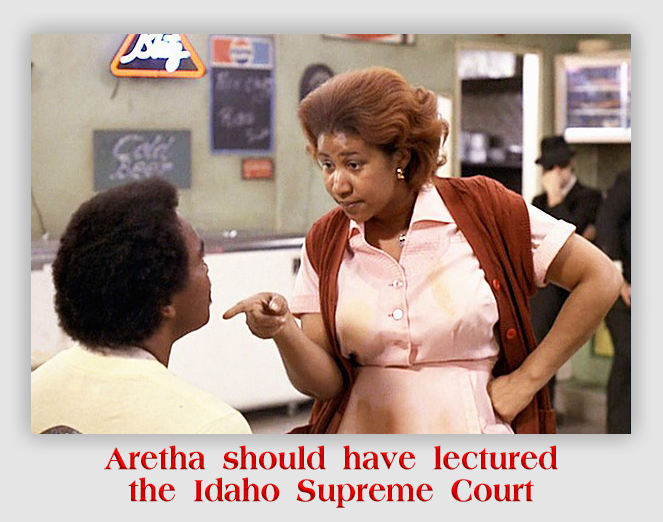
Well, it did not, Ma, I am sorry to say. Or maybe not so sorry. After all, today’s case is Exhibit A in my argument that while Aretha may be entitled to a little respect, the law is not.

Ken and Sally Eyer were senior citizens who were forced to sell off timber to pay Sally’s chemotherapy bills. They owned the land: a big timber company contracted to cut the trees. Ken Eyer showed the company the boundary line, but the timber company – which, being in the business, should have known better – crossed onto neighboring land and committed a trespass to timber. The neighbors sued the Eyers, the Eyers brought in the timber company, and then what appears to have been a straightforward case went to hell.

Chief Justice Jim Jones, since retired, concurred in the judgment very reluctantly:

“I concur in the judgment because it correctly applies the law, even though the outcome is most unfortunate for the Eyers. It appears to me that the legal system catastrophically failed Kenneth and Sally Eyer. 

This case started out as a $1,600 timber trespass. Under Idaho Code section 6-202, the Eyers were obligated to their neighbors, Russell and Laura Stevens, for treble damages. The Stevens filed suit, seeking a whopping $268,770 in damages. Eventually the case was settled upon the Eyers’ agreement to pay $50,000, plus interest, out of the estate of the last of them to die (they were octogenarians). Trial testimony indicated that $15,000 of the settlement was for damages and $35,000 for the Stevens’ attorney fees incurred in the suit. The Eyers had incurred their own attorney fees and costs in the sum of $37,934 by the time of the settlement. The Eyers’ third-party claim against Idaho Forest Group then went to trial and the Eyers lost. The district court granted Idaho Forest Group attorney fees and costs in the amount of $97,821.30. Thus, excluding attorney fees incurred by the Eyers in pursuing their third-party complaint and this Court’s award to Idaho Forest Group of its fees on appeal, the Eyers are out a minimum of $185,755.30 on a $1,600 timber trespass… 

It is not clear from the record how the Eyers ended up in this position but it is a tragedy and does not speak well for the legal system. It is imperative that court procedures be reformed to expedite the process and reduce the cost of litigation to avert a repeat of this unfortunate story.”

So no, Ma, in the ensuing 49-odd years since law school, I have not learned to respect the law. If anything, I’m headed the other way.
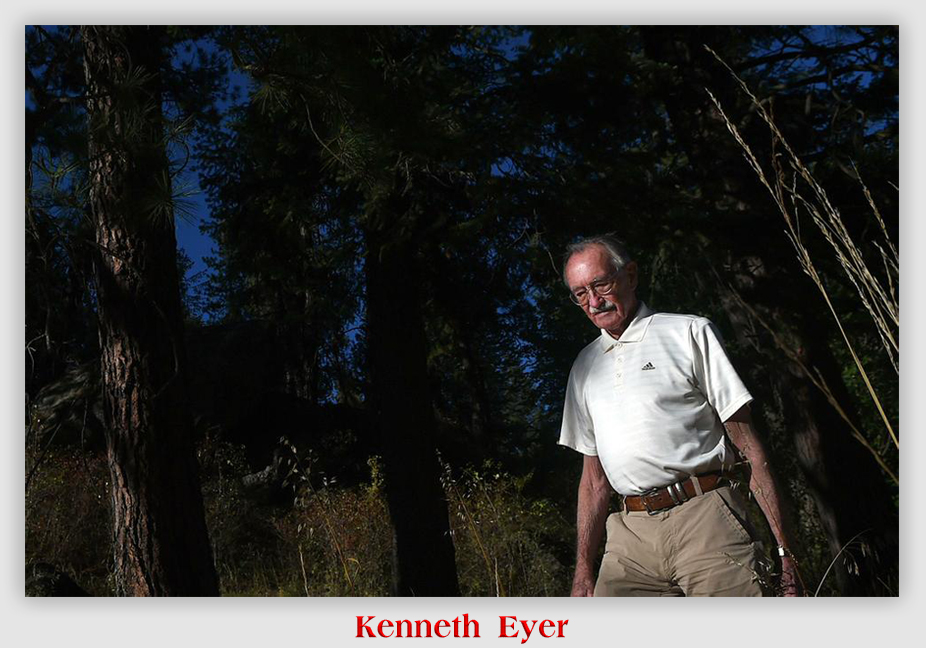
I do, however, respect Ken and Sally Eyer. Sadly, Sally died of cancer shortly after the Idaho Supreme Court stripped her of her life savings. Ken passed away in April 2020. After all of that miserable litigation, his obituary nonetheless said, “his life was adventurous, full of humor and endless learning.”

He and Sally are worthy of all of the respect I have failed to give the law. (Chief Justice Jim Jones, too… he retired from the Idaho Supreme Court in 2017, and is now “actively educating and recruiting community to help refugees to establish in Idaho“).

Stevens v. Eyer, 161 Idaho 407, 387 P.3d 75 (Supreme Ct. Idaho, 2016). Ken and Sally Eyer entered into a log purchase agreement with Idaho Forest Group, Inc., because the couple – both in their 80s – needed money to pay medical bills. IFG sent an agent to the Eyers’ property before logging to assist them in locating property lines. “I told them not to cut anything I could see from my deck,” Ken told the Spokane, Washington, Spokesman-Review.

But when the logging occurred, IFG mistakenly cut timber located on neighboring land belonging to Russ and Laura Stevens. The Stevenses promptly sued the Eyers for timber trespass. The Eyers brought a third-party action against IFG, which essentially said that if the Eyers were liable to the Stevenses, then IFG was liable to the Eyers for the same amount. The Eyers claimed IFG breached its duty to properly mark the property lines.

The Stevenses, who sued for over $250,000 for $1,600 worth of mistakenly-cut trees, settled with the Eyers for $50,000, to be paid from the estate of the latter Eyer spouse to die.

At trial, the Eyers alleged that IFG assumed a duty to locate the property boundary between the Eyers and Stevenses’ properties. The jury found that IFG had not assumed this duty.

Afterward, IFG moved for an award of $95,600 in attorney fees under Idaho Code section 12-120(3), which permits the award of such fees in a commercial transaction. The Eyers argued that there was no commercial transaction because they were going to pay medical bills with the proceeds of the timber sale. The district court nevertheless awarded IFG the full amount of the company’s requested attorney fees.

On appeal, the Eyers contended Idaho Code section 12-120(3) does not apply.

Held: The Eyers owed the legal fees.

The commercial transaction ground in Idaho Code Ann. § 12-120(3) neither prohibits a fee award for a commercial transaction involving tortious conduct nor requires a contract. Instead, the rule is based upon the second paragraph of § 12-120(3), which mandates an award of reasonable attorney fees to the prevailing party in any commercial transaction.

The Court said that whether a party can recover attorney fees under the statute depends on whether the “gravamen of a claim” is a commercial transaction. A “gravamen” is the material or significant part of a grievance or complaint. Courts analyze the gravamen claim by claim. To determine whether the significant part of a claim is a commercial transaction, the court must examine whether a commercial transaction (1) is integral to the claim and (2) constitutes the basis of the party’s theory of recovery on that claim. For a transaction to be commercial, each party to the transaction must enter the transaction for a commercial purpose.

The Court noted it had previously characterized transactions as commercial when the purpose for entering into the transaction was to generate income. Earning income, the Court said, is the quintessential act of engaging in commerce.

To be sure, the Eyers had purely personal purposes in mind for the revenue they would realize from the sale of timber to IFP. Most employed people use their income for “personal or household purposes,” such as paying for lodging, food, utilities, and entertainment. Nevertheless, the Court said, by virtue of their employment, they are engaged in commerce. For that reason, actions brought for breach of an employment contract are considered commercial transactions under Idaho Code Ann. § 12-120(3).

– Tom Root

TNLBGray140407

Case of the Day – Wednesday, December 3, 2025

WHEN IS FEE SIMPLE NOT SIMPLE?

Potatotruck140220Nothing light today, boys and girls. We have work ahead of us. Sure, Thanksgiving is a memory (except for all of the leftovers stacked in the refrigerator), but the Christmas season is here, Black Friday and Cyber Monday have come and gone, and as that great educator M.C. Hammer once said, “Yo, sound the bell, school is in, sucker …

So listen up. When land is conveyed from one party to another without any limitations whatsoever, the conveyance is done in “fee simple absolute,” or just “fee simple” for short. The conveyance usually says that the land is conveyed “unto the said party of the second part and its successors and assigns forever,” or words to that effect.

At the time the railroad came through a part of Idaho (think “Famous Potatoes”) in the late 19th century, a lot of landowners thought they were conveying their land to the railroad in fee simple. But their deeds had not just the magic “fee simple” language, but also a “habendum clause.” A “habendum clause” is a clause in a deed that defines the extent of the interest being granted and any conditions affecting the grant.

Legal mumbo-jumbo? Not when the facts changed.

Legal mumbo-jumbo? Not when the facts changed.

In the case of the Idaho deeds, the conveyance language transferred title to the railroad “to have and to hold all and singular the tenements, hereditaments and appurtenances as a perpetual right of Way for said second party’s Rail Way Line unto the said party of the second part and its successors and assigns forever.” Yeah… yadda, yadda, yadda, how lawyers like to natter on and on… None of this gibberish seemed important for a century, during which time the trains puffed up and down the track. But when the rail line was torn up, suddenly the old documents became very interesting.

Under the National Trails System Act, the government can convert an old railroad right-of-way into a recreational trail without the rail line being deemed to be abandoned. That’s what happened in Idaho. But some of the landowners whose properties were transected by the abandoned right-of-way talked to a smart lawyer. She told the owners, “These old documents aren’t deeds; they’re just easements for a railroad.” That was an important distinction: the easements weren’t for the benefit of some granola-munchers, but rather for rolling stock.

The Federal Court of Claims had a tough task ahead of it. The Idaho Federal District Court had already ruled that such deeds were conveyances in fee simple, meaning that the owners abutting the railroad had no means to reclaim the land. The problem was that the interpretation of the deeds was a matter of Idaho law, and the Idaho Supreme Court had never reached the precise issue. The Court of Claims carefully parsed other Idaho decisions and decided that, based on its treatment of other cases, the Idaho Supreme Court would rule — if it had been asked to  — that the references in the deeds to the “perpetual right of Way for said second party’s Rail Way Line” limited the purpose of the conveyance, and therefore made the deed a grant of a mere easement, not perpetual ownership.

With two federal courts disagreeing on what Idaho jurists would say if asked, it’s likely that the state courts themselves ultimately will have to resolve the issue by ruling definitively on the question.

Abandoned right-of-way

Abandoned right-of-way

Blendu v. United States, 79 Fed.Cl. 500 (2007). Owners of land abutting or traversing an abandoned railroad right-of-way contested the government’s using the right-of-way as a recreational trail pursuant to the National Trails System Act, claiming that the government’s action effected a taking of their property without just compensation in violation of the Fifth Amendment.

The predecessor landowners had deeded land to the railroad about a hundred years before, with deeds that contained language in the granting clauses that convey all estate, right, title and interest in the property to the railroad, but also contained habendum clauses “to have and to hold all and singular the tenements, hereditaments and appurtenances as a perpetual right of Way for said second party’s Rail Way Line unto the said party of the second part and its successors and assigns forever.” Under the Act, the government could convert abandoned railroad rights-of-way to trails without the use constituting an abandonment of the right of way. However, Blendu and the plaintiff property owners argued that under their deeds, they had really just given easements – not a deed in fee simple – and the cessation of rail service did not permit the government to use the easement of a trail. They moved for summary judgment in the U.S. Court of Claims, and the government cross-moved for summary judgment, arguing that the deeds were a conveyance of the property in fee.

Held: Under Idaho law, a deed which contained a granting clause that quitclaimed certain real estate to the railroad and a habendum clause stating that the railroad held the real estate “as a perpetual right of Way for said second party’s Rail Way Line unto the said party of the second part and its successors and assigns forever,” the deed only conveyed an easement and not fee simple title.

The easement was for rolling stock, not for Birkenstocks.

The easement was for rolling stock …

... not for Birkenstocks.

… not for Birkenstocks.

The Court said that the use of the term “right of way” in the habendum clause unambiguously reflected an intention to convey an easement, overcoming Idaho’s statutory presumption in favor of a fee simple interest. The Court of Claims concluded the distinction between the granting clause and the habendum clause had not been made by the Supreme Court of Idaho, but the Court of Claims believed that the Idaho Supreme Court cases found the presence of the term “right of way” in any substantive part of the deed to be determinative. The deeds in this case contained the term “right of way” in the habendum clause, thus unambiguously reflecting an intention to convey an easement and overcoming Idaho’s statutory presumption in favor of a fee simple interest.

As further evidence of the conveyance of an easement, the Court said, the deeds contained a designation for use of the right of way for the Railroad’s “railway line.”

The easement was for rails, not trails.

– Tom Root

TNLBGray140407

Case of the Day – Tuesday, November 26, 2024

WHEN LIFE GIVES YOU LEMONS …

lemonsup160302Lemon and Curington were neighbors. Things were neighborly when Curington planted a pair of poplar trees — fairly fast-growing and tall things — near the property line.

Over the years, things became less so, as several legally significant events occurred. First, the trees got big. As they did, the trunks ended up crossing the boundary line so that the trees were growing on both Curington’s and Lemon’s land. Second, the root systems expanded and began putting the squeeze on Lemon’s foundation. Third, Lemon discovered that if he used self-help, trimming back the roots and topping off the trees, he would make them unstable, turning the poplars into topplers. So Lemon — who was completely soured on the trees by this point — sued Curington, asking that the trees be declared nuisances and that Curington be made to remove them.

Life had given Curington a Lemon, but he tried to make lemonade. He argued that the Massachusetts Rule gave Lemon no aid and that he was limited to self-help. However, the court relied on the Idaho nuisance statute (noting in passing that the Massachusetts Rule didn’t really apply to a tree growing in both properties at once, a fascinating observation we wish it had explained a bit better), ruling that the trees were nuisances for having damaged Lemon’s foundation. It also seemed important to the Court that Lemon couldn’t trim the tree and roots himself without making the poplar a “danger” tree that was likely to fall.

founda160302This case is a gallimaufry of issues — the interplay of nuisance statutes with common law and the interplay of boundary trees with encroachment — as well a rather poorly-thought out dismissal of the Massachusetts Rule for reasons that were unnecessary. After all, the Massachusetts Rule was specific in its limitation to non-nuisance encroachment, twigs and leaves and that sort of thing. The Lemon decision, remarkably similar to the Hawaii Rule (but decided 14 years before the Hawaii Rule was adopted), is also quite similar in its fact pattern to Fancher v. Fagella, a 2007 Virginia Supreme Court decision. In fact, a real argument can be made that this Idaho case was entirely unnecessary in its treatment of the venerable Massachusetts Rule.  Michalson v. Nutting, in our view, is a “big tent” with enough room for all of the poplars, sweet gums and banyan trees that followed.

Lemon v. Curington, 78 Idaho 522, 306 P.2d 1091 (1957). Lemon and Curington owned adjoining land with a common boundary, on which two poplar trees had been planted over 50 years ago. The trees had grown to approximately four to five feet in diameter at the base, and the trunks and branches extended across the boundary line. The roots were surface feeders and, in one case, extended from the boundary line to and against the foundation of Lemon’s house, cracking the house’s foundation. pushing the wall of the plaintiffs’ house inward.

lemondown160302If Lemon topped the trees and cut the roots extending onto his land, the trees are likely to fall over. Lemon sued, alleging the trees to be a nuisance, and asked for the authority to remove the offending trees.

The trial court authorized the destruction of the tree damaging the foundation but held the other tree was healthy and mature, and thus not a nuisance. Curington appealed, arguing that the Massachusetts Rule limited Lemon’s remedies to self-help, that is, to Lemon’s trimming the tree and roots himself.

Held: The tree is a nuisance, and the Court may order Curington to remove it. The Supreme Court held that the Massachusetts Rule was not dispositive where a nuisance had been shown to exist.

roots160302The Court said, “[w]e think the condition here shown to exist constitutes a nuisance under the provisions of Idaho Code § 52-101.”  That statute defined a nuisance to be “[a]nything which is injurious to health … or an obstruction to the free use of property, so as to interfere with the comfortable enjoyment of life or property.” Here, not only had the tree made a mess of Lemon’s foundation, but the evidence showed that if Lemon cut the roots and topped the tree, the whole thing was likely to fall over. The Court said that the statute authorized an action by any person “whose property is injuriously affected or whose personal enjoyment is lessened by the maintaining of a nuisance to have it abated.”

Without explaining its reasoning very far, the Court also said that the fact the tree was a boundary tree, on the properties of both parties, made the Massachusetts Rule inapplicable. So while Lemon reserved the right of self-help, the courts were also available to him to abate the nuisance tree.

– Tom Root

TNLBGray