Case of the Day – Friday, August 1, 2025

WHEN GOOD TREES GO BAD

The tree was just doing what trees do.

The tree was just doing what trees do.

Your tree is growing, man. Do something!

That was Ed Chandler’s lament to his neighbors, the Larsons. The nerve of those Larson people, owning a tree growing near the boundary with Ed’s place. What’s worse, they had the unmitigated gall to permit the tree to drop its leaves on Ed’s property, and to let the tree’s roots grow up to his garage foundation. Ed complained mightily, but to no avail.

Ed could have stood for merely mitigated gall, but not this unmitigated kind. Oh, the humanity! So, this being America in general and Illinois in particular, Ed sued. He claimed that “as a consequence of the growth of that tree, plaintiff’s garage had been severely and greatly damaged from the roots of the tree so that ‘the foundation has been broken, walls damaged and the roof coming apart’.”

The trial judge, being a flinty, self-reliant sort, threw out the suit, holding that the tree was doing what trees do – growing – and the Larsons weren’t responsible for that. The Court of Appeals disagreed, citing Professor William L. Prosser’s gold-standard treatise on tort law:

“[I]t is scarcely suited to cities, to say that a landowner may escape all liability for serious damage to his neighbors, merely by allowing nature to take its course. A different rule accordingly has been developing as to urban centers. * * * [W]hen the tree is in an urban area, * * * the landowner now has a duty of reasonable care, including inspection to make sure that the tree is safe. Recent decisions have extended the right to reasonable protection from travelers on the street to adjoining landowners as well.”

Like it or not, the Massachusetts Rule increasingly seems to be a relic of a bygone era. The Illinois courts still seem to discount normal tree problems – falling leaves, sap, and the like – but when genuine harm (we call it “sensible harm”) results to an adjoining landowner from a tree’s natural development, the tree’s owner may be liable for repairs and removal of the tree.

eviltree160815Chandler v. Larson, 148 Ill.App.3d 1032, 500 N.E.2d 584 (Ct. App. Ill. 1986). Chandler complained that his next-door neighbor, Larson, had a tree that for some time had been growing over and onto Chandler’s property, with the roots growing under his garage and the leaves growing above his property. As a result of the tree’s growth, Chandler’s garage foundation has been broken, with the walls damaged and the roof coming apart. Chandler asked the Larsons to cut down their tree, but they refused. Chandler asked for an injunction ordering that the tree be destroyed. The trial court refused.

Held: The appeals court ruled that an urban property owner owed his adjoining landowner the duty of reasonable care, which necessarily would include taking reasonable steps to prevent damage to the adjoining landowner’s garage caused by roots of the urban property owner’s trees. A complaint that alleged that the adjoining landowner had placed the urban property owner on notice that the roots from his trees were causing considerable damage to the adjoining landowner’s garage and alleged that although the urban property owner had received the notice, he refused to uproot the tree or to use other methods which would prevent further harm, stated a good cause of action for negligence.

The ruling is substantially at odds with the traditional Massachusetts Rule that an owner of land is entitled to grow trees on any or all of his land and that their natural growth reasonably will result in the extension of roots and branches onto adjoining property, and the adjoining landowner’s only remedy is to trim back the roots and branches. The appeals court in this case held urban landowner Larson to a higher “city dweller” standard. This standard is generally known as the Hawaii Rule, which imposes liability upon the adjoining landowner if the trees, plants, roots, or vines cause harm in ways other than by casting shade or dropping leaves, flowers, or fruit.

– Tom Root

TNLBGray140407

Case of the Day – Monday, July 7, 2025

NOW LOOK WHAT YOU’VE DONE!

Rarely (as in “I don’t recall when I’ve ever said this before”) do I caution that the prevailing law in any particular state is wrong, and likely to be cruisin’ for a bruisin’ the next time an appellate court has to think about it. But I feel comfortable issuing that warning about today’s case.

From Ohio (home of rock ‘n roll, pro football, the first guy to walk on the moon, the brothers who turned a bicycle into the first airplane, and a ton of other cool things), comes a case that pretty much runs smack into Fancher, Herring, the Hawaii Rule, and a raft of other cases reflecting the modern view that a homeowner whose tree is wreaking havoc on the neighbor’s property may be ordered by a court to fix the damage at his expense.

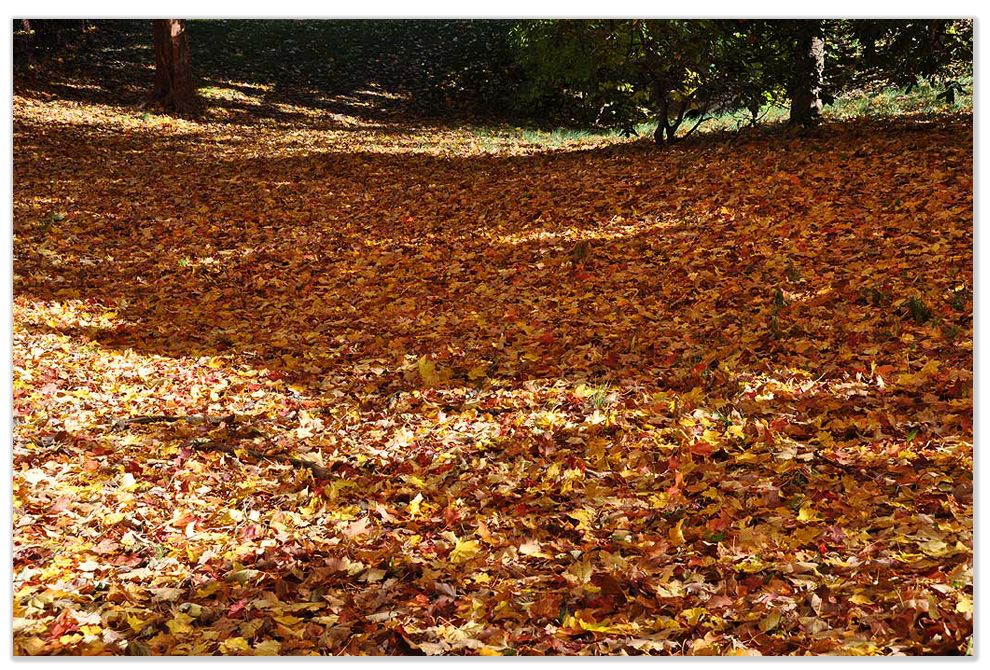
To be fair, this case may be proof of the old legal aphorism that “hard cases make bad law.” Even the most cursory reading of the facts suggests that Dave Rababy may well have been a horse’s ass, hounding his neighbor because a tree dropped leaves and twigs on his property. Speaking as a guy who owns all of my five southern neighbors’ leaves every fall – and these things are the size of dinner plates – I understand how it can be irritating to have other peoples’ leave on your lawn. But I would never sue them over it. I don’t think I would…

Dave had no such compunction, and his emesis of woe delivered to the court made him the boy who cried wolf. He howled so loudly about leaves and twigs and the fact that his trimming crew was not allowed to trespass on Roy’s property and hack away at the offending tree, and minutiae of a similar nature, that his real complaint – his driveway was being heaved and foundations dislodged by the roots – got lost in the underbrush. In Fancher, Whitesell, and even Iny, such damage was enough to get the neighbor’s tree declared a nuisance. If Dave had exercised a little plaintiff self-control, he might have gotten there, too.

We are too urban and too suburban, and our properties are too developed for the Massachusetts Rule to be the exclusive remedy for genuine harm done by a neighbor’s tree. That is the way the law is trending throughout the civilized world, and it is bound to reach Ohio sooner or later.

Rababy v. Metter, 30 N.E.3d 1018 (Ct. App. Cuyahoga Co., 2015). David Rababy and Roy Metter were next-door neighbors. Dave’s driveway abutted Roy’s property in certain places and nearly abuts in others. A fence separated the properties, and a stand of mature trees ran along the fence on Roy’s side of the boundary line.

Dave sued Roy for negligence, nuisance, trespass, and interference with a business contract. Dave asserted that trees at the edge of Roy’s property extended over his own property, and dropped leaves, needles, sap, and branches onto his car and home. Some of the trees, Dave complained, were rotten. He whined that the trees cast shadows over his property and cause mold growth on his roof, as well as damaged his driveway and foundation.

Dave groused that he had hired a company to trim the overhanging branches, but Roy’s daughter prevented the unnamed landscape service company from properly performing this work. The complaint alleged the trees constituted an ongoing nuisance and trespass, and that Roy negligently maintained the trees. Dave asked for $52,500: $37,000 for future tree trimming services and $15,000 in compensatory damages.

Both parties filed motions for summary judgment. Dave argued that on “an ongoing basis, Roy’s trees encroach onto my property, specifically over my home and driveway. His trees deposit leaves, debris, and sap onto my property, causing damage.” Dave also repeated the claim about Roy’s daughter running off the tree trimmers.

Roy argued that he owed no duty to Dave to trim otherwise healthy trees on his property. He claimed the trees were mature and preexisted either party’s ownership of the property. He said that a year before, Dave hired Cartwright Tree Service to trim the row of pine trees that ran along the driveway. He said no one complained when Cartwright trimmed the overhanging branches from Dave’s property free, but when Cartwright began trimming branches and trees back further than the property line, Roy’s daughter objected. Roy said that he has no objection to Dave trimming the overhanging branches back to the property line.

Dave replied with new allegations that the trees in question were decaying or dead. Attached to the reply was a new affidavit that averred that the trees were decaying and dangerous and that one had fallen on his property. He included a picture of a tree that appears to have fallen across a driveway. However, the affidavit was neither signed nor notarized.

The trial court granted Roy’s motion for summary judgment and denied Dave’s. Dave appealed.

Gen. Robert E. Lee – a man recently consigned to the ash heap of history – knew something about duty … and even he couldn’t have found that Roy owed one to Dave.

Held: Roy owed Dave no duty, so the trial court’s dismissal of the case was upheld.

In order to succeed in a negligence action, the Court said, Dave must demonstrate that Roy owed him a duty, that Roy breached the duty, and that he suffered damages that proximately resulted from Roy’s breach. Here, Dave offered evidence that falling pine needles, leaves, sap, and sticks have damaged his car, driveway, and roof. He also alleges, without evidentiary support, that encroaching tree roots damaged his driveway and home.

While he showed damage, Dave was unable to show that Roy owed him any duty. A landowner is generally not responsible for the losses caused by the natural condition of the land. Instead, the Court observed, states generally allow one impacted by such growth the remedy of self-help. A privilege existed at common law, such that a landowner could cut off, sever, destroy, mutilate, or otherwise eliminate branches of an adjoining landowner’s tree that encroached on his land. But, the Court said, whether a separate remedy exists is an open question.

The Massachusetts Rule provides that in almost all circumstances, the sole remedy for damages resulting from the natural dropping of leaves and other ordinary debris from trees is the common law remedy of self-help. The rule does provide a limited exception for dead trees, just as Ohio has established a duty for urban landowners of reasonable care relative to the tree [hat overhangs a public street, including inspection to make sure that it is safe.” Where constructive or actual knowledge of an unreasonably dangerous condition exists on the land of an urban landowner, such as a dead tree, the duty prong of a negligence claim may be satisfied.

The reasoning set forth in support of the Massachusetts Rule, the Court said, is apt to the facts of this case: “[T]o grant a landowner a cause of action every time tree branches, leaves, vines, shrubs, etc., encroach upon or fall on his property from his neighbor’s property, might well spawn innumerable and vexatious lawsuits.” The Court thus adopted the Massachusetts Rule as the law of this jurisdiction.

But Dave also argued that in Ohio a “landowner in an urban area has a duty to exercise reasonable care to prevent an unreasonable risk of harm to others from decaying, defective or unsound trees of which such landowner has actual or constructive notice.” Dave contended Roy’s trees were in such a defective condition and thus constituted a nuisance. Dave also argued that Roy, an urban landowner, had a duty to inspect his trees and protect others from a dangerous condition created by any unsound trees. Even if such a duty existed, the Court said, it only is breached when the owner has actual or constructive notice of a dangerous condition.

Leaves – often a pain in the arse, but seldom a nuisance

The Court held that Dave put forth no evidence that any of the trees constituted a dangerous condition of which Roy was aware or should have been aware. He presented no evidence that the trees are dead, decaying, or unsound, and cited no case holding that “the normal yearly life-cycle of a tree and the natural shedding of leaves, twigs, and sap constituted a nuisance. Thus, he provided no compelling justification for a court to hold that Roy’s trees case constituted a nuisance or a dangerous condition. The problems Dave had experienced with the trees “are the natural consequence of living in an area beautified by trees. Dave’s remedy is to trim tree limbs that overhang his property back to the property line, to which Roy averred he has no objection.”

The trees at issue, in this case, do not constitute a nuisance, and Roy is not negligent in regard to them.

Dave also asserted that the trees on Roy’s property constituted a trespass. But the elements of a successful trespass claim include an unauthorized intentional act and entry upon land in the possession of another. Here, there is no intentional act. Dave claimed that Roy’s actions of not removing or trimming the trees constitute an intentional act. But, the Court said, as it explained, Dave’s remedy for intrusion by vegetation is to trim it back to the property line.

In sum, Dave’s claims that detritus falling from trees from the neighboring property constituted a trespass, a nuisance, and negligence were simply not actionable. The Court cited a Maryland case that “it is undesirable to categorize living trees, plants, roots, or vines as ‘nuisances’ to be abated. Consequently, we decline to impose liability upon an adjoining landowner for the ‘natural processes and cycles’ of trees, plants, roots, and vines.”

– Tom Root

TNLBGray140407

Case of the Day – Wednesday, June 11, 2025

IT’S YOUR PLACE – TAKE CARE OF IT

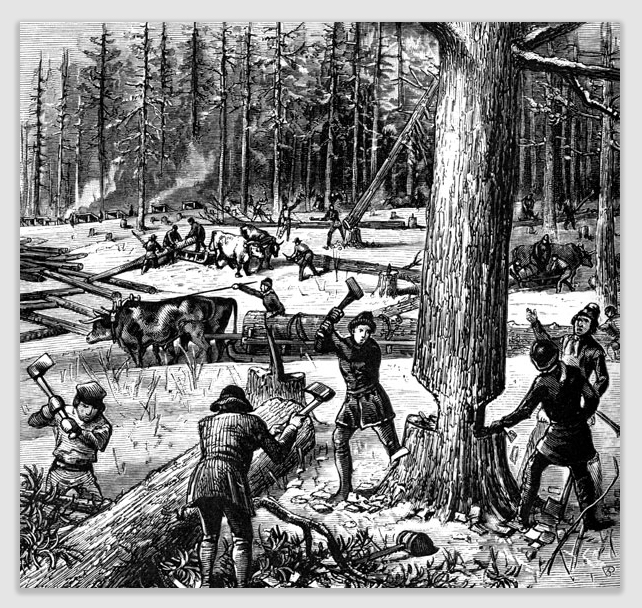
It’s fun these days to deride the Massachusetts Rule as a relic of a bygone era, when manly men hewed the logs for their cabins, wielded their own axes for firewood, and posted their own selfies as drove their oxen teams in the fields… back in that rustic pre-war era (before the first Persian Gulf war) when the web was something you walked into down in the basement and “text” was not a verb.

The Massachusetts Rule, of course, embodies the libertarian view that each landowner is both entitled to and limited by the doctrine of “self-help.” The Rule has two prongs. The first is universally accepted: a landowner has a right to cut encroaching branches, vines, and roots back to the property line, provided he or she does not enter the adjoining landowner’s property to chop down a tree or cut back growth without the neighbor’s consent.

The second prong of the Massachusetts Rule is less widely acknowledged. Rather, it has fallen out of favor to a great extent over the past 30 years.

But when Jon Melnick ran into problems, the second prong was still the law of the land. Back in the late 1970s, Jon bought a decrepit Baltimore warehouse next to the railroad tracks, which he then repaired for commercial use. After he fixed the place up, he discovered that a fair amount of the reason the property had become run down to begin with was that the Baltimore & Ohio Railroad (which after several mergers, consolidations and rebrandings, had become a component of CSX Transportation, a subsidiary of CSX Corporation) did little to maintain the trees alongside its railroad right of way. As a result, branches were overhanging the warehouse, dropping twigs and leaves and vines and other plant life onto the roof.

Jon was whining to the railroad all the livelong day, but no one paid any heed to his lament. So he sued, alleging trespass, negligence, and nuisance.

The modern-day B&O: as much a hometown hero to Baltimore as the Ravens and Orioles.

Don’t bet against the home team. The Baltimore & Ohio prevailed in Baltimore. The Maryland court followed the Massachusetts Rule to the letter. In a paean to an era of rugged individualism lost since in the past, the Court held that the privileges of real estate ownership are accompanied by certain obligations. One of those is “proper maintenance.” Indeed, the Court lectured that “to grant a landowner a cause of action every time tree branches, leaves, vines, shrubs, etc., encroach upon or fall on his property from his neighbor’s property, might well spawn innumerable and vexatious lawsuits. We have gotten along very well in Maryland, for over 350 years, without authorizing legal actions of this type by neighbor against neighbor.”

Well, of course. We’ve always done it that way. For that matter, we got along just fine for 275 years without paved roads. Candles served us well in the evening, and those newfangled electric lights everyone uses now just encourage people to remain awake past their bedtimes.

The justification that ‘we’ve always done it that way’ is usually a poor reason to resist change. While it got CSX off the hook and picked Jon’s pocket to have his roof and gutters constantly cleaned, the Massachusetts Rule’s proscription on legal redress for encroachment was already on the exit ramp when this case was decided in 1988. The Hawaii Rule – which holds that when there is imminent danger of overhanging branches causing “sensible” harm to property other than plant life, the tree owner is liable for the cost of trimming the branches as well as for the damage caused – has gained traction in a number of states over the past 20 years. Tennessee, New Mexico, North Dakota, Arizona, and New York follow it. Several other states follow the rule with variations: in Oregon, the owner of the offending tree must somehow be at fault or the tree must be “ultrahazardous.” In Missouri, the Hawaii Rule is followed if the offending tree is diseased or damaged, but the Massachusetts Rule is followed if it’s healthy.

Until 2007, Virginia had an unworkable rule that in order for a neighbor to be liable for damage caused by his or her tree, it had to be “noxious,” that is, one generally seen to be a pest. It abandoned that approach in favor of holding that encroaching trees and plants are not nuisances merely because they cast shade, drop leaves, flowers, or fruit, or just because they happen to encroach upon adjoining property either above or below the ground. But encroaching trees and plants may be regarded as a nuisance when they cause actual harm or pose an imminent danger of actual harm to adjoining property. If so, the owner of the tree or plant may be held responsible for harm caused to adjoining property, and may also be required to cut back the encroaching branches or roots, assuming the encroaching vegetation constitutes a nuisance.

The Melnick court found it “undesirable to categorize living trees, plants, roots, or vines as a ‘nuisance’ to be abated, citing an Ohio case holding that “[t]o grow a tree is a natural act of the soil. It is not itself a dangerous instrumentality.” Were the issue to arise in Maryland courts now, 30 years later, we suspect the outcome would be much different.

Melnick v. CSX Corporation, 312 Md. 511, 540 A.2d 1133 (Ct.App.Md. 1988). Johnathan Melnick purchased a warehouse in Baltimore that shared a common boundary with a railroad right-of-way owned by the Baltimore & Ohio Railroad Company. He replaced the roof, which had been in poor condition.

Since the roof replacement, Melnick constantly experienced clogged drains, standing water, roof deterioration, and some water damage to stored merchandise. These problems result from leaves and limbs falling on his property from the railroad’s trees. Melnick tried to remedy the situation by cleaning the gutters on several occasions and cutting back the growth, but the problem continued. When his complaints to the railroad were ignored, he sued on theories of trespass, negligence, and nuisance.

The trial court granted judgment to the railroad, holding that Melnick was limited to a self-help remedy. Melnick appealed.

Held: Under the circumstances, Melnick had no cause of action against the railroad. The appellate court reasoned that the remedy of “self-help” was generally the most efficient way in which to prevent injury from occurring to property due to encroaching vegetation.

The Court followed the Massachusetts Rule, set out in Michalson v. Nutting. “We believe that it is undesirable to categorize living trees, plants, roots, or vines as a “nuisance” to be abated. Consequently, we decline to impose liability upon an adjoining landowner for the ‘natural processes and cycles’ of trees, plants, roots, and vines… ‘Indeed, such natural growth and shedding processes of trees are inherent… and to most people constitute a pleasurable reflection of seasonal changes’.”

The Court held that a landowner must assume responsibility for the care and preservation of his or her own property. “Along with the benefits derived from property ownership come certain obligations. Proper maintenance of one’s own property is one of these obligations.”

– Tom Root

TNLBGray

Case of the Day – Tuesday, June 10, 2025

SELF-HELP MEETS CATCH-22

catch22141217 Those of us old enough to remember the ‘60s – and if you were around then, you probably were in such a state that you don’t remember them – recall Joseph Heller’s book, Catch-22. The short rocket is this: the “Catch 22” is simply this – if one is crazy, one can be relieved from flying combat missions. But one has to apply for the discharge, and applying demonstrates that one is not crazy. As a result, one will not be discharged.

The Catch-22 typifies “bureaucratic operation and reasoning,” which brings us to today’s conundrum. An alert reader in Toad Lick, Arkansas, wrote to complain that a branch from his neighbor’s oak tree hangs over his property to a great extent, dropping leaves and acorns. He says it’s so big and long that it’s a hazard, and he fears that it will fall on his children. What, he wonders, can he do?

Oh, yawn, you say. Being a faithful reader of this blog, you immediately recognize that the solution to this is the Massachusetts Rule, which permits a homeowner to use “self-help,” trimming the branches back to his property line. Ah, but there’s a twist to this particular problem. If our afflicted homeowner trims to the property line, he will leave a six-foot or so stub of a branch because he cannot go onto the neighbor’s property to trim the branch all the way to the trunk. The city, he tells us, requires that the branch be trimmed all the way to the trunk, or it will fine him.

At this point, the notion of a lousy $25 fine leaves you still unimpressed, and you’re about to click off this blog for one of those Internet sites that no one admits to checking out, but we all do, anyway. Not so fast. It gets better. Our homeowner complains that the City’s fine for improper trimming is $400 per inch of diameter of the tree, and the diameter of the offending oak (at 4 feet above the ground) is something like 36 inches. That’s right, he’s looking at shelling out $15,000 in fines (plus tree trimming costs), all to cut down a single hazardous branch.

Or so our afflicted correspondent says. Frankly, we were perplexed by his report. If things were as our complainant said they were, one could not effectively exercise self-help without one’s neighbor’s cooperation. That seemed to eviscerate the Massachusetts Rule, taking the “self” right out of “self-help.” It’s the classic Catch 22 – you cannot exercise self-help without your neighbor’s cooperation, which, if you can get it, pretty much makes it anything but self-help.

Years of law practice have made us acutely aware of a sad fact of life: clients get it wrong. They get it wrong all the time. You could be cynical and say that clients lie, but we would never suspect that. Indeed, you don’t have to go that far. Whether they’re simply confused, perceive it incorrectly, or flat out fib, the result’s the same.

standards141217Here, the Toad Lick City Code tells a somewhat different story. The ordinance requires that any trimming in the city has to be done according to ANSI Standard A300, which sets out best practices for tree maintenance. If a trimmer adheres to the standard, what happens to the tree is not his or her fault. If the trimmer does not trim to the ANSI standard, and the tree later suffers “substantial destruction” – that is, it is killed or becomes a hazard tree – the trimmer is liable. So our homeowner’s trimming won’t lead to a fine unless the tree is “substantially destroyed.” And that will take a few years to determine.

Talking to the Toad Lick City Forester’s office, we found out a few other facts as well, details our correspondent homeowner overlooked telling us. It appears that our afflicted complainant may not be all that concerned with the fate of his children playing under the branch. Instead, he wants to build a swimming pool, and the branch is directly over the new installation. What’s worse, the branch spoils his view.

Whew! We haven’t had a problem like this since our last law school final exam. Where to start? First, our unhappy pool-building homeowner should hire an arborist. If the arborist agrees that the branch is a hazard, our man is on much more solid ground. The neighbor should be placed on notice of the hazard determination, and the neighbor’s insurance company should be told, too. We bet the insurance company will convince the recalcitrant neighbor to let our homeowner trim to A300 standards without a whimper of protest.

But what if the branch isn’t a hazard (as we’ve heard)? Our homeowner might still have an arborist trim it to the property line according to accepted industry standards (if such a thing is possible). If it is not, our homeowner may have to risk lopping the branch off at the property line, and hoping that the tree doesn’t die. If it does, the City is going to assert that it was the homeowner’s improper trimming that caused the hazard (or death).

We suspect our homeowner won’t find an arborist who will cut the branch other than at the trunk (which cannot be done without the neighbor’s OK). If the homeowner is going to go ahead with the pool, he may just have to cut the branch at the property boundary and hope for the best. If the tree withers and dies within a few years of the surgery, well, then, he has a problem.

That should not be surprising. Even without the city ordinance, the suggestion has often been made that Massachusetts self-help requires first that the overhanging branches be doing more than just causing shade or dropping leaves. In Herring v. Lisbon Partners, the court suggested that Massachusetts self-help was only available when the overhanging branches or intruding roots were doing more than your average tree: that is, they were a danger or a nuisance, breaking up pavement or damaging roofs. It is possible that courts may rule that self-help isn’t available merely to improve the view (although such a ruling hasn’t been made anywhere yet).

Thus, it could be that our homeowner really isn’t entitled to do much of anything if he cannot get an arborist to certify that the branch is doing more mischief than your average branch. Endangering kids is one thing: spoiling a view is something else. If the branch is a hazard, the homeowner might have a defense to trimming it to the property line, even if the tree dies – the defense of necessity.

Our complaining homeowner told us that he doesn’t want to end up in a lawsuit or defending himself from a $15,000 fine. That’s perfectly understandable. In that case, his best course is obvious, if the branch is a hazard (as he says it is). If his arborist will give him an opinion that the branch is a hazard, the homeowner should make sure the neighbor and the neighbor’s insurance carrier are both aware of that. Certified mail, return receipt requested, would be prudent. We suspect our homeowner will be happily surprised at how quickly the insurance carrier persuades his neighbor to cooperate.

peter141217Lawrence Peter postulated the idea years ago as a corollary to the Peter Principle: pull is always stronger than push. If our homeowner gets the neighbor’s insurance company on board, he’ll have a lot of pull.

Fine aside, could our homeowner be liable for causing substantial damage to his neighbor’s tree by not trimming according to A300 standards? Remember, our complainant wants to avoid litigation, trimming away the offending branch in a way that leaves him legally bulletproof. Even without the city’s statutes requiring trimming in compliance with A300, yesterday’s Booksa case from California should serve as a cautionary tale.

We have previously determined that California generally recognizes the Massachusetts Rule, which permits a neighbor to use “self-help,” trimming the branches back to the property line. Of course, California also seems to permit use of the private nuisance laws — something that seems like the Hawaii Rule or Virginia Rule — to let a homeowner like our correspondent force someone like his neighbor to remove the branch himself if it is a nuisance.
Chainsawb&w140225

You recall that Mr. Patel was unhappy that the roots from Mr. Booska’s pine tree had heaved some of Mr. Patel’s sidewalk. He excavated along the edge of his yard down to three feet, severing the roots of the pine tree that had encroached under his sidewalk. The root cutting so weakened the tree that it started dying and was in danger of falling. Mr. Booska had to take the tree down, and he promptly sued.

The lower courts said that Patel had an absolute right to cut the roots on his property, citing the holding in Bonde v. Bishop. Not so, said the appeals court. Instead, Mr. Patel had an obligation to cut the roots in a reasonable manner that would achieve his aims — to stop sidewalk heaving — without undue harm to the tree. The Court held that “no person is permitted by law to use his property in such a manner that damage to his neighbor is a foreseeable result.”

Unfortunately, this isn’t the final answer. The Booska court was swayed by testimony that Mr. Patel could have protected his sidewalks with a much less aggressive method. We don’t yet know what the result would be if the only means of protecting Mr. Patel’s sidewalk would have required cutting that would necessarily be fatal, but our correspondent could provide us with the answer if he lands in court over cutting the branch to the property line, but not in accordance with A300.

In the situation our writer presented to us, his explanation for wanting the branch removed clashed with what the city understood the real motivation might be. In discussions with his arborist, our neighbor will need to consider whether the branch could be deemed a nuisance, a finding that Bonde suggests can be easily made in California. Even if it is not a nuisance, our correspondent maybe can start hacking away on his side of the property line, but the hacking should be done according to A300. Assuming that it cannot be (because the neighbor won’t permit trimming to the trunk), the trimming has to be done in a way that weighs our correspondent’s legitimate aims — whatever they are — against the health and safety of the tree. And preserves the tree, thus avoiding the $15,000 fine.

complexity150604Oh, the complexity! And to make it worse, next week we’ll look at a Kafkaesque result where a neighbor’s right to cut back a tree can’t be exercised without the approval of the property owner, resulting in an old-fashioned California SLAPP-down.

Not to sound like the Bar Association, but we suggest that all of these legal gyrations well illustrate why spending a few bucks at your local counselor-at-law might be prudent, not just in California, but wherever you live.

Booska v. Patel, 24 Cal.App.4th 1786, 30 Cal.Rptr.2d 241 (Ct.App. Div.1, 1994). Read the Booska decision again, or review our synopsis of it in yesterday’s Case of the Day. And if you’re caught up on all of your Kardashian reading, you might want to consider Herring v. Lisbon Partners once again, too.

– Tom Root

TNLBGray

Case of the Day – Wednesday, May 14, 2025

JUDGE JUDY HAS HER LIMITS, YOU KNOW

Ah, Cleveland! Renowned for the Rock and Roll Hall of Fame, a world leader in the manufacture of duct tape, the home to some really good beer and some really bad teams.  Sure, the Best Location in the Nation has former Indians and the Cavs and the Browns. And maybe this is the year…

Cleveland's gift to the world

Cleveland’s gift to the world.

Add to that impressive string of achievements one more jewel: Cleveland gave the United States its first small claims court in 1913. The People’s Court was not far behind.

Small claims courts exist in every state of the country, informal courts of very limited jurisdiction (awards of a few hundred or few thousand dollars), places where lawyers and formality are rare indeed. It was to just such a place that Mr. Iny dragged Mr. Collom. It seems the roots of Mr. Collom’s tree were breaking up the walls of his neighbor’s garage. Now, any fan of the Massachusetts Rule would have told the neighbor to get out there with a shovel and ax and cut the offending roots at the property line. Self-help is, after all, as American as … well, as the Massachusetts Rule.

Of course, self-help doesn’t mean you can go onto your neighbor’s property, and it seems the homes and garages in this Long Island town were packed together like sardines. Mr. Iny couldn’t dig up the attacking roots without going on to Mr. Collom’s place, and we’re suspecting from the decision that these two guys were not the best of friends. So Mr. Iny took him to court.

The small claims court awarded him $2,100 for damages. Being of limited jurisdiction, the court couldn’t order Mr. Collom to cut down the tree or dig up the roots, so money was all that was available. Mr. Collom appealed (something you never see happening on TV).

Great Lakes' American pale ale, named for that embarrassing episode in 1969 when the Cuyahoga River burned.

Great Lakes’ American pale ale, named for that embarrassing episode in 1969 when the Cuyahoga River burned – not for the first time – and ended up as an icon for the nascent environ-mental movement. Incidentally, the river’s quite clean these days, and the brew’s a pretty fine pale ale.

The Supreme Court (which in New York State is not the state’s high court, but rather in this case just a court of appeals) reversed. The remedy here, the court said, shouldn’t have been money. It should have been to cut down the tree. But the small claims court lacked jurisdiction to do that. The Supreme Court itself didn’t have such constraints, so it reversed the money damages and instead ordered Mr. Collom to get rid of the tree.

The most interesting part of the decision is the lengthy and well-written dissent arguing that Mr. Iny’s tree claim was in fact a nuisance claim and that money damages should have been awarded as well. The dissenting judge argued that New York has adopted its own tree encroachment rule, a hybrid of the Massachusetts Rule and Virginia Rule (which itself has since this case been abandoned by Virginia). In New York, the judge concluded, a complainant has to resort to self-help first. If that fails, the courts will intervene if the tree can be shown to be a nuisance — that is, if the tree “is causing substantial interference with the use and enjoyment of plaintiff’s land, that defendant’s conduct is intentional or negligent.”

Of course, the discussion is found in a dissent to a fairly low-level, unreported decision, but it’s a thoughtful analysis of the encroachment rule in a state where precedent on the subject is sparse. Good reading on a cold winter night … unless, of course, another episode of Judge Judy is on.

Iny v. Collom, 827 N.Y.S.2d 416, 13 Misc.3d 75 (Sup.Ct. N.Y., 2006). The roots of a tree situated on Robert Collom’s property damaged the wall of a garage on Sol Iny’s property. Sol lacked the room to cut the roots out himself without trespassing on Bob’s land. He sought to get Bob to remove the objectionable tree, which he felt would have been the best way to fix the problem, but Bob refused. Sol sued in small claims to recover $2,100. The trial court awarded him this sum. Bob appealed.

Held: The decision was reversed. The Supreme Court noted that a New York small claims court is a court of limited jurisdiction and lacks the authority to grant any equitable remedy, such as directing the removal of a tree. Under the circumstances presented, the Court ruled, “substantial justice would have been most completely rendered had the court awarded judgment in favor of defendant dismissing the action on condition that he remove the subject tree within a specified period of time”. But the trial court couldn’t do that. The Supreme Court could, however, and it ordered the case dismissed, conditioned on Bob removing the tree within 60 days.

One justice dissented. He believed that the trial court’s judgment awarding Sol $2,100 in damages was based on a nuisance claim, and should have been affirmed. The dissent said the issue faced in the case was whether, under New York law, a property owner whose property is being encroached upon and damaged by the roots of a neighboring property owner’s tree may successfully assert a cause of action sounding in private nuisance if the property owner’s resort to self-help is unworkable, and the property owner’s attempts at obtaining assistance from the neighboring property owner to abate the roots’ encroachment have been unsuccessful.

The dissent argued that to establish a cause of action for private nuisance, the plaintiff must show that the defendant’s conduct causes substantial interference with the use and enjoyment of the plaintiff’s land and that the defendant’s conduct is (1) intentional and unreasonable, (2) negligent or reckless, or (3) actionable under the laws governing liability for abnormally dangerous conditions or activities. The interference can be caused by an individual’s actions or failure to act. Where a defendant has been put on notice that his activity is interfering with the plaintiff’s use and enjoyment of his land and the defendant fails to remedy the situation, the defendant ought to be found to have acted intentionally and unreasonably.

Remember - the dissent is the opinion of the losers

Remember – the dissent is only the opinion of the losers, amusing but inconsequential.

Furthermore, the dissent argued, “[u]nder New York law, a party is liable for failing to abate a nuisance [under a theory of negligence] upon learning of it and having a reasonable opportunity to abate it.” The question of whether there has been a substantial interference with the plaintiff’s use and enjoyment of his/her property is one to be resolved by the trier of fact and involves a review of the totality of the circumstances based upon a balancing of the rights of the defendant to use his or her property against the rights of the plaintiff to enjoy his or her property. The balancing amounts to a risk-utility analysis weighing the social value of the conduct involved against the harm to private interests.

The dissent admitted that while the elements of a nuisance action appear straightforward, in New York there is a paucity of case law addressing nuisances arising from trees or other plant life. Nevertheless, the justice argued, there is substantial case law from jurisdictions outside New York, and he describes in detail the Massachusetts Rule, the Virginia Rule, and the Hawaii Rule. The dissent concludes New York has “in large measure, adopted a hybrid approach somewhere between the Hawaii and Virginia Rules in determining the issue of nuisance liability. To sustain a cause of action for nuisance, a plaintiff must resort to self-help in the first instance, which does not appear to be a prerequisite under the Hawaii Rule. Once a plaintiff establishes that self-help failed or self-help was impracticable, he or she must (1) show sensible damage (this kind of “sensible” has nothing to do with common sense, but rather is an injury that can be perceived by the senses), (2) that defendant’s conduct is causing substantial interference with the use and enjoyment of plaintiff’s land, (3) that defendant’s conduct is intentional or negligent, and (4) that the continued interference with the use and enjoyment of plaintiff’s property is unreasonable.

Where a defendant has been notified that a tree was causing damage to the plaintiff’s property and refuses to assist the plaintiff in taking measures designed to abate the nuisance, the defendant should be found to have acted intentionally or negligently regarding the nuisance. The unreasonableness of the interference will depend upon an overall balancing of the equities: the injuries to the plaintiff and to the defendant, the character of the neighborhood, the ongoing nature of the injury, and the nature of the defendant’s actions.

Remember, the foregoing – while it may be eminently “sensible” in the meaning of the term – was the opinion of a lone judge, one who was outvoted. It makes for thoughtful reading. But don’t mistake it for the law.

– Tom Root
TNLBGray140407

Case of the Day – Thursday, February 13, 2025

A PRÉCIS ON ENCROACHMENT

North Dakota - you can see the gas flares from outer space.

North Dakota – you used to be able to see the gas flares from outer space. Now, the place is hot once again. 

It’s been a roller coaster for North Dakota over the past decade. Early on, North Dakota was a pretty happenin’ place. It was the No. 2 oil producer in the country, unemployment there was at a measly 2.6%, 18,000 more people moved there in 2013 than left… and the state had so much underground methane that it was flaring $100 million in natural gas a month that it couldn’t use.

Suddenly, you couldn’t give away houses there, equipment firms were saddled with bulldozers they couldn’t use, and boom towns were going bust.

But what goes around comes back again. By 2018, Nodak was back on top, pumping as much oil as all of Venezuela (although that’s a pretty low bar).  The pandemic drove a green stake through the heart of oil, but in 2020, business heated up again. As of the end of 2024, Nodak was “mature” but still pumping 1.2 million barrels a day, a third more than Maduro’s workers’ paradise.

But I’m not here to talk fracking.  The natural resources we care about around here are underground only to the extent of their root systems – root systems that, along with branches, can occasionally encroach on the neighbors. And that can be a real pain in the neck.

Over a decade ago, our guest justices from the North Dakota Supreme Court took time from deciding mineral rights, liability for train derailments, mobile home park regulation and the like to consider the law of tree encroachment. They did a bang-up job of summarizing the history, policy bases and goals of the various rules, before thoughtfully consigning the Massachusetts Rule’s proscription against lawsuits to what we here at treeandneighborlawblog call the “wood chipper of history.”

Back to the pain-in-the-neck tree. Dr. Richard Herring knows something about pains in the neck. They’re his livelihood, as long as they’re found in his patients. But this chiropractor had to deal with another pain in the neck, too. The property next door, on which sat an apartment building, had a large tree with branches that were overhanging Dr. Herring’s bone-crunching office. He fought back with self-help, trimming branches, cleaning up the debris that clogged his gutters, and raking up the mess the tree made every fall. But he couldn’t keep ahead. Finally, the branches damaged his building, and the debris created an ice dam on his roof that flooded the place.

pain-neck140211The absentee owners and hired managers at the apartment house next refused his entreaties to care for the tree. So he sued, claiming that they had a duty to manage the tree in such a way that it didn’t mess up his place. The trial court threw the suit out, telling the good doctor that he could trim the parts of the tree that were overhanging his place, but that was his only remedy.

“Wait,” you say, “that’s the Massachusetts Rule.” Right you are. But, as the North Dakota Supreme Court decided, there are other rules out there as well, including some that it thinks are a whole lot better than the doddering relic from Michalson v. Nutting. It reversed the trial court, holding that a tree owner does indeed have a duty to care for his or her trees so as to avoid damage to others.

In its thoughtful opinion, the Court wrote perhaps as fine a roundup on tree encroachment rules as has yet been written.

Herring v. Lisbon Partners Credit Fund, Ltd., 2012 N.D. 226, 823 N.W.2d 493 (Supreme Ct. N.D., 2012). Dr. Herring owned a commercial building in Lisbon housing his chiropractic practice. The apartment building next door is owned by Lisbon Partners and managed by Five Star. Branches from a large tree located on Lisbon Partners’ property overhang Herring’s property and brush against his building. For many years, Dr. Herring trimmed back the branches and cleaned out the leaves, twigs, and debris that would fall from the branches and clog his downspouts and gutters. He claimed that the encroaching branches caused water and ice dams to build up on his roof, and eventually caused water damage to the roof, walls, and fascia of his building. Herring contends that, after he had the damages repaired, he requested compensation from Lisbon Partners and Five Star, but they denied responsibility for the damages.

Encroaching tree roots and branches can sometimes be unsightly

Encroaching tree roots and branches can sometimes be unsightly

Dr. Herring sued Lisbon Partners and Five Star for the cost of repairing his building, claiming the companies had committed civil trespass and negligence, and maintained a nuisance by breaching their duty to maintain and trim the tree so that it did not cause damage to his property. The district court granted Lisbon Partners and Five Star’s motion for summary judgment, dismissing Herring’s claims. The court held Lisbon Partners and Five Star had no duty to trim or maintain the tree, and Herring’s remedy was limited to self-help. He could trim the branches back to the property line at his own expense, but that was it.

Held: The trial court’s dismissal was reversed, and Dr. Herring was given his day in court.

The North Dakota Supreme Court began its analysis by observing that the Massachusetts Rule was the original common law on tree law in the United States, holding that a landowner has no liability to neighboring landowners for damages caused by encroachment of branches or roots from his trees, and the neighboring landowner’s sole remedy is self-help: the injured neighbor may cut the intruding branches or roots back to the property line at his or her own expense. The basis for the Massachusetts Rule is that it is “wiser to leave the individual to protect himself, if harm results to him from the exercise of another’s right to use his own property in a reasonable way, than to subject that other to the annoyance and burden of lawsuits, which would likely be both countless and, in many instances, purely vexatious.

The Hawaii Rule, on the other hand, rejected the Massachusetts approach as overly simplistic. Instead, it held that the owner of a tree may be liable when encroaching branches or roots cause harm, or create imminent danger of causing harm, beyond merely casting shade or dropping leaves, flowers, or fruit. When overhanging branches or protruding roots actually cause, or there is imminent danger of them causing, sensible harm to property other than plant life, in ways other than by casting shade or dropping leaves, flowers, or fruit, the damaged or imminently endangered neighbor may require the owner of the tree to pay for the damages and to cut back the endangering branches or roots and, if such is not done within a reasonable time, the damaged or imminently endangered neighbor may cause the cutback to be done at the tree owner’s expense.

The Restatement Rule, based upon the Restatement (Second) of Torts §§ 839-840 (1979), distinguishes between natural and artificial conditions on the land. Under the Restatement Rule, if the tree was planted or artificially maintained it may be considered a nuisance and its owner may be liable for resulting damages, but there is no liability for a naturally growing tree that encroaches upon neighboring  property.

The Virginia Rule, adopted in 1939, makes a distinction between noxious and non-noxious trees. Under the old Virginia rule, a tree encroaching upon neighboring property will be considered a nuisance, and an action for damages can be brought if it is a “noxious” tree and has inflicted a “sensible injury.”

The district court concluded that under N.D.C.C. § 47-01-12, Herring had a “right” to do as he wished with the overhanging branches and underlying roots of the tree, and therefore this portion of the tree was “just as much the responsibility of the adjacent landowner as it is the owner of the trunk.” In effect, the district court concluded that because Herring had the “right” to the branches above his property, he, therefore, had the responsibility to maintain them as well.

The state Supreme Court complained that the district court had essentially nullified N.D.C.C. § 47-01-17. That statute expressly provides that when the trunk of the tree is wholly upon the land of one owner, the tree “belong[s] exclusively to that owner.” The district court’s holding that Herring, in effect, owned the branches above his property was thus contrary to statute. Statutes must be construed as a whole and harmonized to give meaning to related statutes and are to be interpreted in context to give meaning and effect to every word, phrase, and sentence. The interpretation adopted by the district court did not give meaning and effect to that portion of N.D.C.C. § 47-01-17 which provides that the owner of the tree’s trunk “exclusively” owns the entire tree.

Our thanks to the Supreme Court of North Dakota for its comprehensive opinion ...

Our thanks to the Supreme Court of North Dakota for its comprehensive opinion …

Contrary to the district court’s conclusion that the Massachusetts Rule was more consistent with North Dakota statutory law, the Supreme Court held that the Hawaii Rule more fully gives effect to both statutory provisions. The Hawaii Rule is expressly based upon the concept, embodied in N.D.C.C. § 47-01-17, that the owner of the trunk of a tree that is encroaching on neighboring property owns the entire tree, including the intruding branches and roots. And because the owner of the tree’s trunk is the owner of the tree, the Supreme Court thought he or she should bear some responsibility for the rest of the tree. The Court said, “We think he is duty bound to take action to remove the danger before damage or further damage occurs.”

The Supreme Court also observed that “the Hawaii Rule is the most well-reasoned, fair, and practical of the four generally recognized rules. We first note that the Restatement and Virginia rules have each been adopted in very few jurisdictions, and have been widely criticized as being based upon arbitrary distinctions which are unworkable, vague, and difficult to apply … In fact, the Supreme Court of Virginia has … abandoned the [old] Virginia rule in favor of the Hawaii Rule [in] Fancher…”

The Court said the Massachusetts Rule fostered a "'law of the jungle' mentality" among landowners.

The Court said the Massachusetts Rule fostered a “‘law of the jungle’ mentality” among landowners.

The Court also complained that the Massachusetts Rule has been widely criticized as being “unsuited to modern urban and suburban life.” The Massachusetts Rule fosters a “law of the jungle” mentality, the Court said, because self-help effectively replaces the law of orderly judicial process as the only way to adjust the rights and responsibilities of disputing neighbors. The Court observed that while self-help may be sufficient “when a few branches have crossed the property line and can be easily pruned by the neighboring landowner himself, it is a woefully inadequate remedy when overhanging branches break windows, damage siding, or knock holes in a roof, or when invading roots clog sewer systems, damage retaining walls, or crumble a home’s foundation.”

Accordingly, the North Dakota Supreme Court held that “encroaching trees and plants are not nuisances merely because they cast shade, drop leaves, flowers, or fruit, or just because they happen to encroach upon adjoining property either above or below the ground. However, encroaching trees and plants may be regarded as a nuisance when they cause actual harm or pose an imminent danger of actual harm to adjoining property. If so, the owner of the tree or plant may be held responsible for harm caused by it, and may also be required to cut back the encroaching branches or roots, assuming the encroaching vegetation constitutes a nuisance.” The rule does not prevent a landowner, at his or her own expense, from cutting away the encroaching vegetation to the property line whether or not the encroaching vegetation constitutes a nuisance or is otherwise causing harm or possible harm to the adjoining property.

– Tom Root
TNLBGray140407

Case of the Day – Friday, February 7, 2024

ONE STATE’S TREE IS ANOTHER STATE’S PEST

Fast growing ... and messy as a 3-year old ...

Fast growing … and messy as a 3-year-old child …

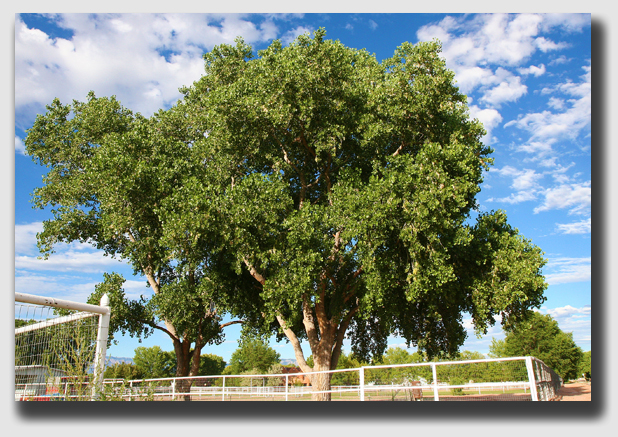
Long before the Virginia Supreme Court’s decision in Fancher v. Fagella, a little-noticed New Mexico decision grappled with the problems caused by cottonwood trees. Cottonwoods can be majestic, and they were welcome enough to the tired and thirsty pioneers that the cottonwood became the state tree of Kansas. But at the same time, there are some arborists (and more than a few homeowners) who label them as dangerous, messy and a tree that should “be removed from most residential property.

Mr. Fox had a cottonwood tree he loved dearly. His neighbors didn’t fall into the same category, however. They hated the constantly shedding tree with the invasive and prolific root system. Like the banyan tree in Whitesell v. Houlton, there was a lot about Mr. Fox’s cottonwood not to like.

I have often mentioned the time-honored legal maxim that “hard cases make bad law.” It bears repeating here. Like the Whitesell v. Houlton banyan tree, Mr. Fox’s cottonwood generated sufficient horror stories in the trial transcript to explain the trial court’s decision that Mr. Fox’s tree had to go. A more level-headed weighing of the competing property and societal interests was undertaken by the Court of Appeals.

It's beginning to look a lot like Christmas ...except it's June, and the cottonwood is shedding cotton like a plantation in a tornado.

It’s beginning to look a lot like Christmas … except it’s June, and the cottonwood is shedding cotton like a plantation in a tornado.

None of that changed the outcome for Mr. Fox. He had to pay damages, and Abbinetts were free to hack away at the tree’s root system to the full extent of the Massachusetts Rule. But for those of us who admire the process, the Court of Appeals’ thoughtful opinion was a breath of fresh air.

Abbinett v. Fox, 103 N.M. 80, 703 P.2d 177 (Ct.App. N.M. 1985). The Abbinetts and Fox formerly owned adjoining residences in Albuquerque. The Abbinetts sued, alleging that while Fox owned his place, roots from a large cottonwood tree on his property encroached onto their land and damaged a patio slab, cracked the sides of a swimming pool, broke a block wall and a portion of the foundation of their house, and clogged a sprinkler system.

The Abbinetts asked for an injunction against Fox. The trial court found against Fox for $2,500.00 but denied injunctive relief to force Fox to remove the tree roots. Instead, the Court entered an order authorizing the Abbinetts to utilize self-help to destroy or block the roots of the cottonwood trees from encroaching on their land. The Foxes appealed the decision.

Cottonwoods are known for their intricate and aggressive root systems

Cottonwoods have intricate and aggressive root systems …

Held: The New Mexico Court of Appeals grappled for the first time with the Massachusetts Rule, the Hawaii Rule and the Smith v. Holt-era Virginia Rule. Instead, it adopted a modification of all of these, finding that when overhanging branches or protruding roots of plants actually cause – or there is imminent danger of them causing – “sensible harm” to property other than plant life, the damaged or endangered neighbor may require the owner of the tree to pay for damages and to cut back the endangering branches or roots. Such “sensible harm” has to be something more than merely casting shade or dropping leaves, flowers or fruit. In so doing, the New Mexico Court anticipated the Virginia Supreme Court’s Fancher v. Fagella holding by about 22 years.

The New Mexico Court also opined that it is the duty of a landowner to use his property in a reasonable manner so as not to cause injury to adjoining property. This is the Hawaii Rule. And the landowner who suffers encroachment from the tree of another may — but is not required to — “abate it without resort to legal proceedings provided he can do so without causing [a] breach of [the] peace.” This, of course, is the heart of the Massachusetts Rule. The New Mexico Court called all of these holdings a “modified Virginia Rule,” as indeed it was.

The Court held that a trial court may grant both damages for already incurred injuries and injunctive relief to prevent future harm where there is a showing of irreparable injury for which there is no adequate remedy at law.

– Tom Root

TNLBGray140407