Case of the Day – Monday, October 20, 2025

CHOICE VERSUS DISCRETION

It is inevitable in the exciting world of statutory construction that defendants and plaintiffs alike will vigorously overreach in applying exceptions that are written into the law until, as judges are wont to say, “the exception swallows the rule.

I have written before about sovereign immunity and the exceptions to it that must be written into the law in order for people to seek compensation for the negligent misadventures of government employees. The king of those statutes is the Federal Tort Claims Act.

The FTCA permits people to sue the government when its countless officers, agents, departments, bureaus, commissions and assorted employees commit acts of negligence. But there are exceptions, lots of exceptions. The one most often encountered is the discretionary function exception.

An example: If a government employee T-bones you in an intersection because she ignores a red light, obviously you (or your next of kin) want to sue not only her, but also Uncle Sam. You know, respondeat superior, and all of that. Plus, Uncle Sam’s pocket is as deep as pockets get, when it comes time to pay damages.

After all, there’s nothing discretionary about her conduct. Government employee or not, she does not have the discretion to ignore a stop light. The FTCA applies. Pretty slam dunk.

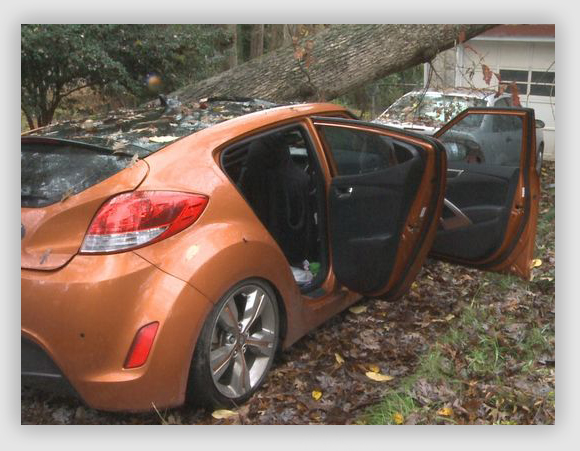
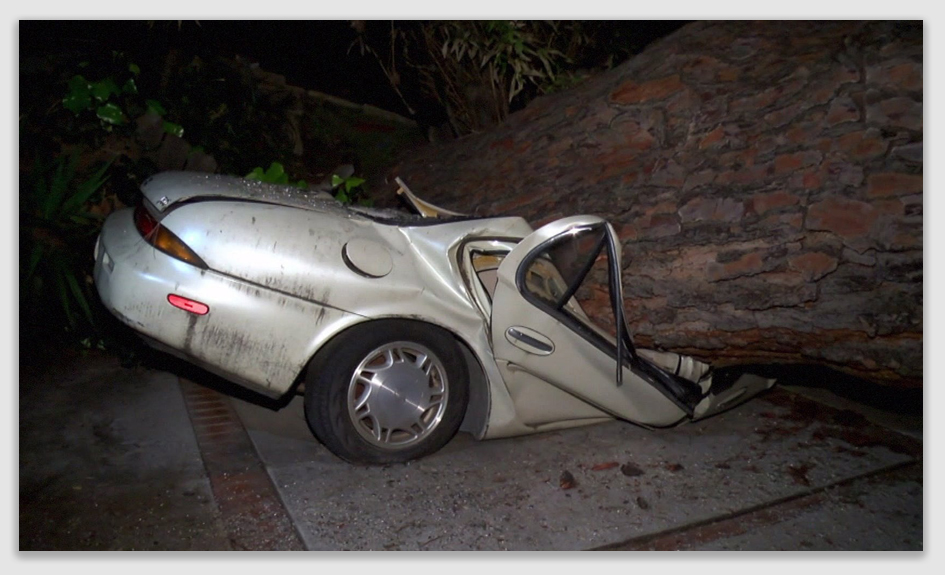
But what if the government agency was in the process of deciding, for example, not to inspect trees because of the cost? A tree falls on your car as you pass through the intersection, a tree that was rotten to the core, but which the agency had done nothing about because its policy was not to inspect its trees? There, the decision not to inspect was a discretionary one, a matter of government policy. In that case, the FTCA would consider you to be out of luck.

But, going back to the first example, let’s say the government employee was on her way to a meeting to decide whether to adopt the no-inspection policy. You sue for damages due to the accident, but the government argues that the agency’s decision to not inspect its trees is a discretionary act, and thus, having a meeting to reach the decision on the tree inspection policy is likewise a discretionary act, as is the decision to include the government employee-lousy driver in the meeting. But for the meeting, she would not have been driving through that traffic light at that moment. Where and when to hold the meeting, who should be invited, and so on… All discretionary acts.

Voila! Like that, the blown traffic light becomes a discretionary act, and you recover nothing. The discretionary function encompasses absolutely everything the agency does, and exception has successfully swallowed the rule.
In today’s case, the government was well on its way to doing just that, denying the parents of a dead teenager any compensation for the collapse of a tree limb by turning a failed tree inspection into a discretionary function. Fortunately for the parents, the U.S. Court of Appeals for the Ninth Circuit said, “Not so fast!”

Just because there may be a choice, the Court held in so many words, does not mean that there has been a discretionary function.

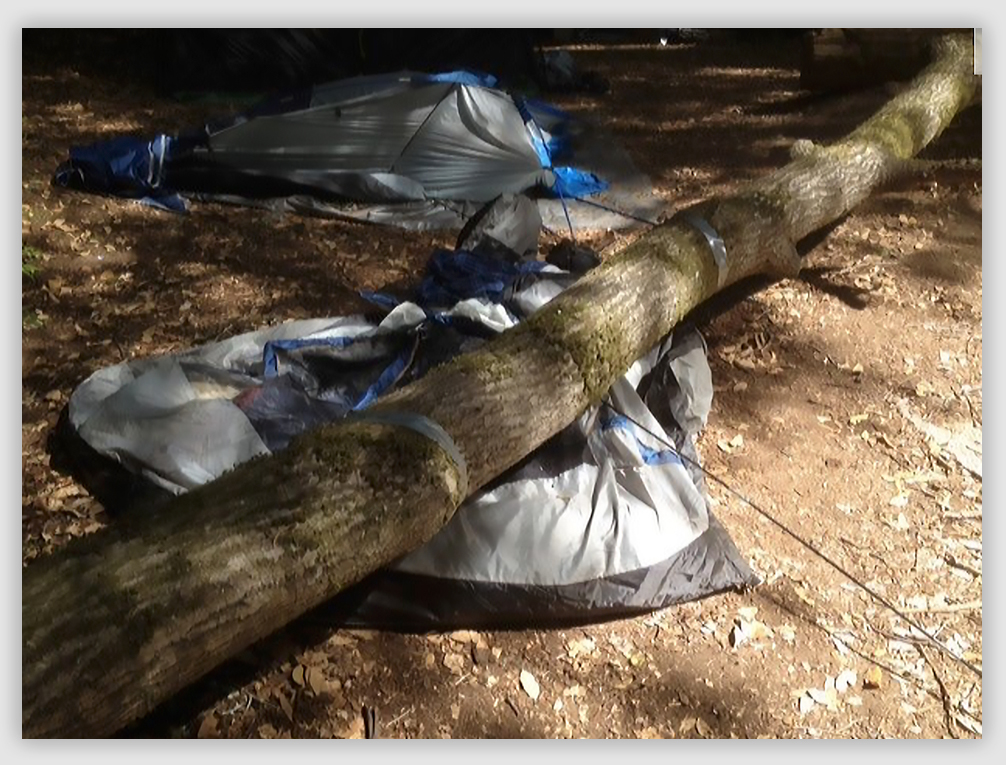
Kim v. United States, 940 F.3d 484 (9th Cir. October 10, 2019). One August night in 2015, Daniel and Grace Kim, their daughter Hannah, their teenage son Dragon, and their son’s friend Justin Lee were camping in the Upper Pines Campground in Yosemite National Park. Before dawn, a limb from a large oak tree overhanging the campsite broke and fell on the tent where the two boys were sleeping, killing them.

The Kims and Justin Lee’s parents sued under the Federal Tort Claims Act, alleging that National Park Service officials were responsible for the accident. The families raised wrongful death and negligent infliction of emotional distress claims.

The complaint also alleged that Park officials fraudulently concealed information about the danger posed by the tree so that campers would continue to patronize the campground.

The Park Service moved to dismiss the lawsuit, arguing that the FTCA did not apply because of the discretionary function exception, which bars tort claims against the United States based upon the exercise or failure to exercise a discretionary function or duty. After reviewing the Park Service’s local policies regarding tree maintenance, the district court found that decisions regarding “how to evaluate and respond to tree hazards” were subject to the discretion of Park officials. The court dismissed the complaint.

The families appealed to the U.S. Court of Appeals for the Ninth Circuit.
Held: The Court affirmed the district court’s dismissal of the plaintiffs’ claim for fraudulent concealment, but it reversed the dismissal of the negligence-based claims.

The FTCA is the only means of suing the United States, its agencies or employees for actions or omissions that constitute a tort. It is limited as to the kind of tort that he asserted, strict in the filing deadlines it imposes on plaintiffs, and fraught with pitfalls as to whether the tort – even if a permitted action and even if timely brought – can apply to the conduct in question.

Specifically, the FTCA’s discretionary function exception bars claims based upon the federal officials’ “exercise or performance or the failure to exercise or perform a discretionary function or duty.” The point of the exception is to prevent judicial second-guessing of legislative and administrative decisions grounded in social, economic, and political policy. The government bears the burden of proving the negligence related to discretionary functions, but plaintiffs usually bear the brunt of the broadly applied exception.

Determining whether the complained-of negligence relates to a mandatory or a discretionary duty is difficult. Courts evaluate the FTCA discretionary function exception in two steps. First, the court must determine whether the challenged actions involve an element of judgment or choice. Second, if the actions do involve an element of judgment, the court must determine whether that judgment is of the kind that the discretionary function exception was designed to shield, namely, only governmental actions and decisions based on considerations of public policy. The relevant choice must be susceptible to some consideration of social, economic, or political policy.

Generally, the design of a course of governmental action is shielded by the discretionary function exception, but the implementation of that course of action is not… unless the implementation itself implicates policy concerns.

Here, the government argued that whether the Park Service inspected the trees was a discretionary function, so the failure to identify the oak as a hazard did not subject the Park Service to liability. The evidence, however, showed that the Park Service did inspect the campsite trees every two years. The Court said that where the Park Service decided to inspect the trees, the argument that a decision on whether to inspect was discretionary was irrelevant.

Once the Park Service actually inspected the trees in the campground, the Court said, Park officials were required to do so in accordance with their established policies. Yosemite Park Directive No. 25 set forth the Park’s “Hazard Tree Management” program and, among other things, it specifies how Park officials are to evaluate the risk posed by trees they inspect. Yosemite used the “‘Seven-Point’ (Mills and Russel 1980) system, a professionally recognized, documented and quantified hazard tree rating system.” The system includes a “Total Hazard Rating” (ranging from two to seven) that combines a “Defect Rating” based on the tree’s potential for physical failure and a “Target Rating” based on the potential impact in the event of a failure. The system provides specific criteria for how to rate each component based on the tree’s visible features and the nature of the surrounding area. Trees with a total rating of five or higher are considered “high” risks and, according to the Park Service plan, “will require some type of abatement/mitigation.”

Once the Park officials used their discretion to adopt the Seven-Point system instead of some other method for evaluating trees, there was no discretion whether the Seven-Point system had to be properly followed. But the Park Service had a final “Hail Mary” to throw. It claimed that its implementation of the rating system is shielded by the discretionary function exception because the system itself requires officials to consider questions of public policy.

The Court rejected this argument, too. “The government appears to conflate policy considerations with technical considerations,” the Court said. “Matters of scientific and professional judgment — particularly judgments concerning safety — are rarely considered to be susceptible to social, economic, or political policy.” And scientific and professional judgment, the Court ruled, “is all the Park’s rating system requires. The system directs officials to assign certain hazard ratings based on a tree’s structural defects and its likelihood of damaging various Park features… Certainly, the system requires the careful — perhaps even difficult — application of specialized knowledge… The mere fact that experts might reach different conclusions when conducting a technical analysis does not mean that the analysis somehow turns on questions of public policy. Even if the Seven-Point system requires officials to make difficult choices, it still does not ask them to make policy choices and it does not afford them an opportunity to rate a tree based on their social, economic, or political views.”

However, the Court ruled, the fraudulent misrepresentation claim had to be rejected. Under the FTCA’s exception for claims arising out of misrepresentation or deceit, claims against the United States for fraud or misrepresentation by a federal officer are absolutely barred. “It goes without saying,” the Court found it necessary to say anyway, “that a fraudulent concealment claim sounds in fraud or misrepresentation.”

– Tom Root

TNLBGray140407

Case of the Day – Tuesday, September 16, 2025

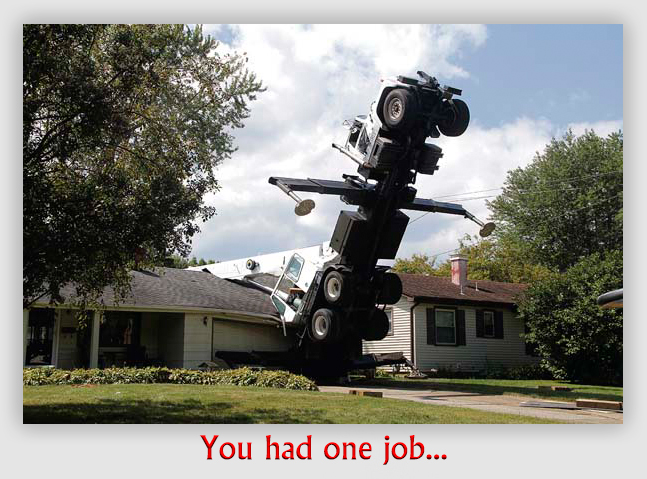
YOU HAD ONE JOB

The municipal position of tree warden in this country is unique to a few New England states. In Massachusetts and Connecticut, for example, state law requires that each town appoint one. A tree warden is a person in charge of shade trees on public town lands. The word “warden” was a common title for natural resource officials in the late 1800s. Being a warden signified a unique legal responsibility: to guard public resources against destructive forces that might include persons, insects, or diseases.

A tree warden may be either or appointed. In either case, the responsibility is the same – to oversee the care, maintenance, or removal of all public shade trees. As both manager and advocate, the tree warden must protect the trees and, where necessary, protect the public from the trees.

Massachusetts describes the tree warden’s functions as being “broad and includ[ing] responsibility for all community trees – on streets and town commons as well as in parks, schoolyards, and town forests. The position of tree warden requires qualified training in arboriculture, the science of tree care. A tree warden should also have good communication skills for dealing with the public, municipal department heads, and local politicians.”

Connecticut says that “Tree wardens are appointed public officials responsible for trees alongside public roads and in public spaces, other than those on state property or under the jurisdiction of a park commission. Each municipality is required to have a tree warden. The tree warden’s responsibilities include approving the planting, pruning or removal of trees under his or her authority. Public safety is among the chief concerns of the tree warden.”

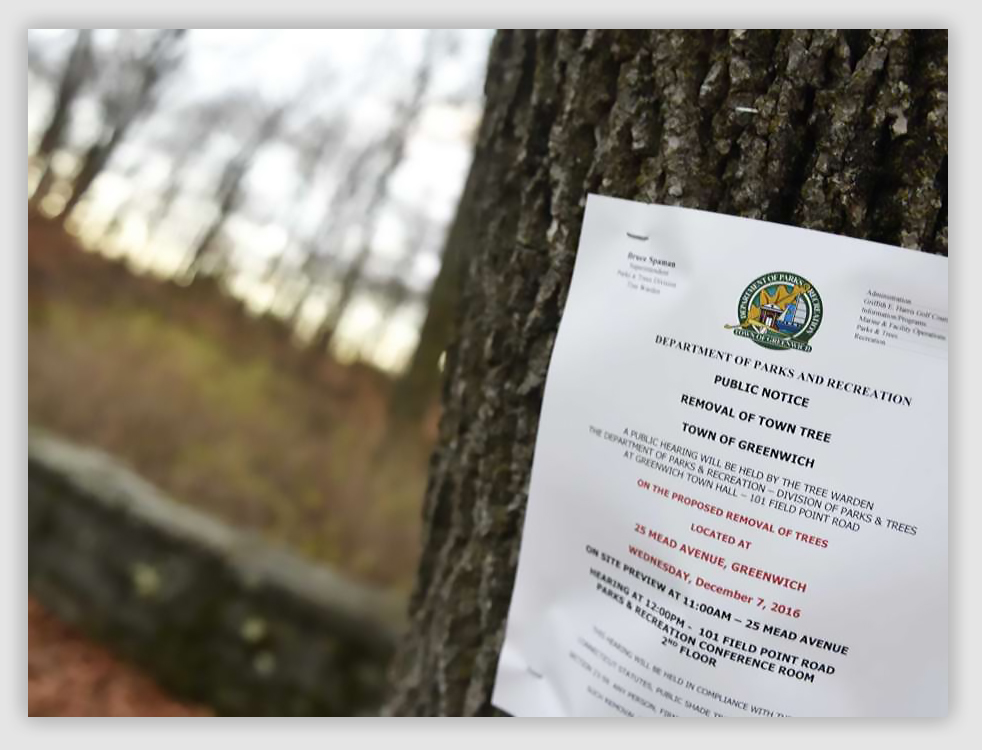
Fans of the many “you had one job” posts online (and even on ESPN, back in the day) can appreciate the “fail” in today’s case. A Connecticut town tree warden ignores his duty to check on a tree that a concerned resident reports on several occasions as dangerous and decayed. The woman even had her own arborist inspect it, but since the tree was on town property, it was the town’s responsibility to care for it. And that meant it was up to the tree warden.

He ignored it for nearly a year. Sure enough, it fell… right across the road and onto a passing car. When the motorist and his wife sued the town and the tree warden, the defendants claimed immunity. It turns out there is plenty of immunity for a government official acting according to his or her discretion. But immunity for failing to drive out to check on a reported danger tree?

C’mon, man. You had one job…

Wisniewski v. Town of Darien, 135 Conn. App. 364, 42 A.3d 436 (Ct.App. Conn. 2012). Mieczyslaw (let’s call him “Bud”) and Jolanta Wisniewski were injured when a tree within the street right-of-way toppled onto his car in front of 35 Rings End Road, inside the Darien, Connecticut, city limits. This should not have surprised the Town, which had been notified several times by property owner Kristen Doble that her arborist had determined that five trees located near the roadway “need attention.”

On one occasion, Kris told the Town that limbs had fallen from trees near the roadway. On another occasion, she asked that the Town send someone to examine a “hollow” tree located near her front gate, next to the roadway, that had lost a leader (which is “a primary or terminal shoot of a plant (as a main branch of an apple tree or the terminal shoot of a spruce tree… the upper portion of the primary axis of a tree especially when extending beyond the rest of the head and forming the apex…” leader.

At the time Kristen complained and later, when the tree fell on Bud and Jolanta’s car, Mike Cotta was the Town’s tree warden. Pursuant to General Statutes § 23-59, he was responsible for the care and maintenance of trees located along certain rights-of-way within Darian’s geographic limits. There were no other express town charter provisions, rules or ordinances directing Mike’s duties as tree warden.

Bud and Jolanta sued the Town and Mike Cotta, claiming negligence against Mike and seeking indemnification against the Town pursuant to General Statutes §§ 7-465 and 7-101a. In addition, the complaint contained claims for liability pursuant to General Statutes §§ 52-557n and 13a-149 against the town.

The Town and Mike argued that Bud and Jolanta’s lawsuit was barred by the doctrine of governmental immunity. That motion failed. The Town and Mike moved for summary judgment, arguing, in part, that governmental immunity barred the Wisniewskis’ claims. The court denied the motion for summary judgment, and the case proceeded to a jury trial.

The jury found for Bud and Jolanta, holding that he had established Mike’s and the Town’s negligence under § 52-557n. Although the defendants established that their duty to maintain the subject tree was public in nature, they failed to establish that their duty to inspect, maintain and remove the tree was discretionary. Jolanta Wisniewski got $200,000, and Bud Wisniewski was awarded $1.5 million.

Mike and the Town appealed.

Held: Mike and the Town of Darian were liable for negligence.

As a general rule, a municipality is immune from liability for negligence unless the legislature has enacted a statute abrogating that immunity. In this case, Gen. Stat. § 52-557n abandons the common-law principle of municipal sovereign immunity and lists circumstances in which a municipality may be liable for damages. One is a negligent act or omission of a municipal officer acting within the scope of official duties. Section § 52-557n(a)(2)(B) explicitly shields a municipality from liability for damages to person or property caused by the negligent acts or omissions that require the exercise of judgment or discretion as an official function of the authority expressly or impliedly granted by law. Municipal officers are not immune from liability, however, for negligence arising out of ministerial acts. Ministerial acts are defined as acts to be performed in a prescribed manner without the exercise of judgment or discretion.

The language of Conn. Gen. Stat. § 23-59 provides that many, but not all, of the duties of a tree warden involve the exercise of discretion, and thus are immune.

The determination of whether official acts or omissions are ministerial or discretionary for liability purposes is normally a question of fact for the fact finder. Generally, evidence of a ministerial duty is provided by an explicit statutory provision, town charter, rule, ordinance or some other written directive. Testimony of a municipal official, however, may provide an evidentiary basis from which a jury could find the existence of a specific duty or administrative directive.

A municipal employee, and, by extension, the municipality, may be liable for the misperformance of ministerial acts, but are entitled to immunity in the performance of governmental acts, including acts that are discretionary in nature.

Although Darian maintains no written policies directing the conduct of its tree warden, the town’s assistant director of public works, Darren Oustafine, testified at trial that the general direction provided to Mike Cotta upon receipt of a complaint “is always the same, look at the tree, make a determination. Is it a safety concern? Is it a priority?” Moreover, Cotta himself testified that upon receipt of a complaint regarding a potentially hazardous tree, he has a nondiscretionary duty to perform an inspection. “In light of the evidence adduced,” the Court said, “including Cotta’s own statements, which were couched in mandatory language, it was appropriate for the court to decline to direct or to set aside the verdicts on the basis that the defendants’ actions as a whole were discretionary as a matter of law.”

The evidence in the record was enough to let the jury reasonably find that some of Mike’s duties, including the duty to inspect upon receipt of a complaint concerning a potentially hazardous tree, were ministerial. This was especially so given that Mike testified that upon receipt of a complaint regarding a potentially hazardous tree, he had a nondiscretionary duty to perform an inspection. The evidence showed a total absence of any documentation in the town’s work order records concerning Mike having inspected the trees. Although Mike testified at trial that he had performed a quick visual inspection, he admitted that performing a quick visual inspection is “not the same thing as saying you inspected it at all…” In addition, in a pretrial deposition, Mike admitted that he had not inspected the trees for decay or, for that matter, “for any reason.”

Furthermore, while Mike testified at trial that he had gone to the property and pruned the hazard tree in 2004, Bud and Jolanta introduced a deposition transcript in which Mike testified that he had not returned to the property between March 14, 2003, and July 11, 2006. Thus, the Court said, “numerous issues were raised concerning Cotta’s credibility, and the jury was free to decide that Cotta was not credible and to resolve the claim in favor of the plaintiffs that he failed to respond to any of the complaints by going to the property to inspect the trees.” Bud and Jolanta’s expert “opined that the subject tree would have exhibited signs of decay in 2002 and 2003, when Doble lodged her with the town. Accordingly, the jury could infer that a reasonable tree warden, had he performed an inspection, would have determined that the subject tree was a hazard.”

– Tom Root

TNLBGray140407

Case of the Day – Tuesday, May 20, 2025

DRIVE-BY INSPECTIONS, FEDERAL-STYLE

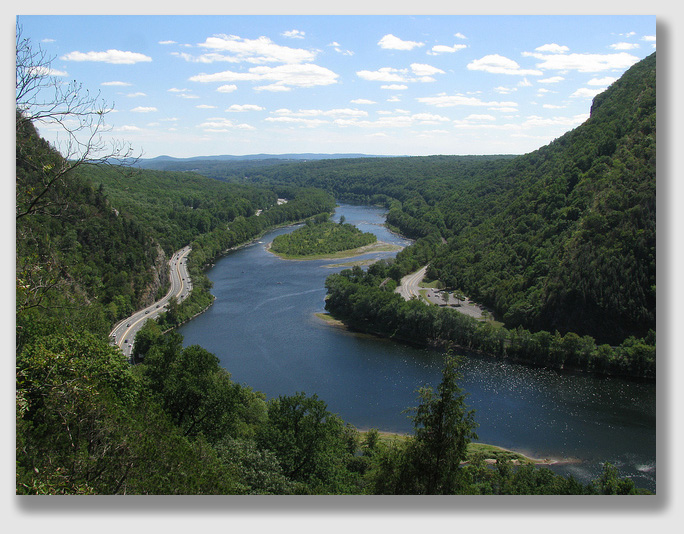
Delaware Water Gap National Park

Delaware Water Gap National Park

Ms. Merando and a friend had been enjoying the scenery of Delaware Water Gap National Park – a beautiful place – one summer day, when a tree (which had previously been topped) fell from an embankment and crushed the car, killing Ms. Merando and her young daughter, Kaylyn.

It was a tragedy, and sometimes tragedies drive the bereaved to push harder than makes sense. That happened here, where Ms. Merando’s husband sued the National Park Service for not having removed this topped tree before it fell. The tree was a disaster waiting to happen, a dead, previously-butchered hulk leaning over the road like an ogre waiting to pounce.

A legal tradition – dating back to the days of knights and knaves and peasants and ogres – holds that no one may sue the king without the king’s permission. The doctrine is known as “Sovereign Immunity.” To address the unfairness of this rule, the U.S. government and virtually all states have passed tort claim acts, which give permission in certain circumstances to sue the sovereign (here, the sovereign is an Uncle named Sam, not a King or Queen).

The federal statute is called the Federal Tort Claims Act. Under the FTCA, an individual may sue the government in some cases but not others. There are limitations. One of those limitations is that you can’t sue the government if it fails to perform a discretionary act. Whether hazard tree removal is a discretionary function is at the heart of this case.

The Court of Appeals upheld the lower court, dismissing Mr. Merando’s case. The National Park Service, it appears, had written guidelines that essentially directed every park to adopt a hazard tree removal policy that makes sense for the individual park. The result is a patchwork of unwritten policies. That sounds like a prescription for chaos.

Actually, it’s a prescription to avoid liability. If the Service had a written hazard tree removal policy and the local rangers hadn’t adhered to it with the tree in question, then liability on the part of the government would be pretty clear. But, as some sharp National Park Service lawyer undoubtedly figured out — and yes, even Smokey the Bear has his own mouthpiece — if you don’t write it down, it’s that much harder for a plaintiff to prove that you failed to follow it.

The Delaware Water Gap National Park had a rather amorphous “drive-by” inspection policy, and Mr. Merando was unable to demonstrate that anyone had violated it. The lesson seems to be that “the less you do, the safer you are.”

Some hazard trees are easier to spot than others ...

Some hazard trees are easier to spot than others …

Merando v. United States, 517 F.3d 160 (3rd Cir., 2008). Janine Noyes, Kathleen Merando, and Kathleen’s daughter, Kaylyn, were sightseeing in Delaware Water Gap National Recreation Area. While traveling in Ms. Noyes’s car along the New Jersey side of the Park, a large dead oak tree fell from an embankment and crushed the vehicle. Mrs. Merando and her daughter were killed instantly. The tree was about 27 feet in length and had been “topped” and delimbed, leaving it standing in a “Y” shape with no bark or branches and with the dead tree pole leaning toward the roadway.

The 63,000-acre park lies along four miles of the Delaware River in Pennsylvania and New Jersey. It is mainly forested land and is accessed by approximately 169 miles of roadways, 68 miles of trails, and several streams. As with other national parks throughout the country, the National Park Service, an agency within the U.S. Department of the Interior, is responsible for maintaining the Park, including the area where the accident in question occurred. The Government took title to the land where the oak tree was situated in 1969 and to the roadway itself in 1996.

Plaintiff, as the administrator of the estates of Ms. Merando and her daughter, sued the Government for negligence, alleging that the Government negligently pruned the tree causing it to die and eventually collapse, and that the tree constituted a hazardous and extremely dangerous condition of which the Government knew or should have known and that it negligently failed to act to remove the tree. The Government moved to dismiss the complaint based on the discretionary function exception to the Federal Tort Claims Act (“FTCA”). The Government also argued that the New Jersey Landowner Liability Act barred the action. The trial court dismissed on the basis that the FTCA stripped the court of jurisdiction to hear the case. Mr. Merando appealed.

Held: The district court’s dismissal was affirmed. The federal, as a sovereign, is immune from suit unless it consents to be sued. That consent, and the extent of the consent, is set out in the FTCA. It is the plaintiff’s burden to prove that the FTCA has waived the immunity. Generally, the government is immune from a suit claiming negligence in the discharge of a discretionary function.

car150518The purpose of the discretionary function exception is to prevent judicial second-guessing of legislative and administrative decisions grounded in social, economic, and political policy. In determining whether the discretionary function exception applies in any particular case, a court must first determine whether the act giving rise to the alleged injury involves an element of judgment or choice. The requirement of judgment or choice is not satisfied if the law, a regulation, or policy specifically prescribes a course of action for an employee to follow, because the employee has no rightful option but to adhere to the directive. – But even if the challenged government conduct involves an element of judgment, the court must determine whether that judgment is of the kind that the discretionary function exception was designed to shield. The focus of the inquiry is on the nature of the actions taken and on whether they are susceptible to policy analysis.

In this case, determining whether the discretionary function exception applied to a tort action arising when the dead tree fell on the passing car, the relevant conduct was not the National Park Service’s alleged violation of its mandatory policy not to “top” trees, because there was no evidence that the Government was involved in or consent to the topping of the tree. Instead, the relevant conduct was the Service’s decisions that comprised its hazardous tree management plan and its execution of that plan. The issue was whether the controlling statutes, regulations, and administrative policies required the Park Service to locate and manage hazardous trees in any specific manner. The Court concluded that the Service’s unwritten tree management plan did not mandate any particular methods of hazardous tree management, and its choice to use “windshield inspections” in low-usage areas of the park was a discretionary decision — driven by limited resources — not to individually inspect every potentially hazardous tree in the park.

– Tom Root

TNLBGray

Case of the Day – Wednesday, April 30, 2025

NEITHER FISH NOR FOWL

Normally, one would think that when an electric utility was busy building new transmission lines, it was just as subject to liability for empty-headed negligence as the next guy. That would be true for your garden-variety profiteering, money-grubbing commercial enterprise. But not necessarily when your Uncle has his fingers in the pie… at least until this past Monday.

Back in the dusty days of the Great Depression, some Americans began to think it was a good idea for the “public” – that is to say, the government – to own electric utilities. A lot of people thought private electric companies charged too much for power, did not employ fair operating practices, and were subject to abuse by the utility holding companies that owned them. What crazy ideas!

After all, the government is benevolent. And efficient. And responsive to citizens. Look no further than your local DMV. Isn’t it sad that everything can’t be so well run? During his presidential campaign, Franklin Roosevelt claimed the federal government would never part with control of its power resources. At least where the Tennessee Valley Authority is concerned, he has been as good as his word.

The TVA is a utility that is neither fish nor fowl, acting in all respects like a privately-held company engaged in electricity generation and distribution. At the same time, it acts like a government agency, wielding powers reserved to the government.

Is that a good thing? Don’t ask Gary Thacker. He and fishing buddy Tony “Ski Daddy” Szozda were trollin’ and a’rollin’ in an Alabama fishing tournament on the Tennessee River one weekend, just while TVA crews were raising a submerged power line that they had accidentally let drop into the river. If you ever saw the scene in “The Great Escape” where Steve McQueen commandeers a motorcycle with a rope across the road, you know where things were headed for Gary and Tony. As they passed through the unmarked work area at full throttle, the TVA crews lifted the conductor out of the water. The boat hit the cable. Tony died.

Logically, Gary sued the TVA for negligence. After all, its crews had dropped the cable, and they had no boats patrolling the channel to warn boaters of their recovery activities, despite knowing that boats traversed the area at high speed and that the usual Tuesday fishing tourney – with a lot of fast-moving boats – was underway.

After filing the lawsuit, Gary got smacked again. It turns out that sometimes the TVA is a private utility company. Sometimes it’s the government. The government has a substantial impact on liability because no one may sue the federal government for tortious conduct (like negligence) unless the plaintiff has permission.

Permission is granted by the Federal Tort Claims Act, which grants permission to sue for many types of negligence. The FTCA, however, does not permit suit where the negligent act complained of is a “discretionary function” of government. The trial court concluded that “clotheslining” fishermen with an understaffed and poorly-thought-out power line recovery operation was a government function, and the court thus lacked jurisdiction to hear the lawsuit. The 11th Circuit Court of Appeals agreed.

But two years ago, the Supreme Court of the United States reversed. TVA could be a fish. Or a fowl. But it could not change according to what was convenient. If it were out in the marketplace acting like a private entity, it would be treated like one.

The Court of Appeals had applied an unusually attenuated syllogism here: the TVA has the power of eminent domain to condemn real estate for the installation of power lines. Because that is a government function, if when and where and how to build power lines is a discretionary function, any institutional stupidity that attends the building of power lines is likewise a discretionary function.

The Supreme Court would have nothing to do it. When TVA (or other government actors that compete in the marketplace with private companies)  it is subject to suit when its employees do something bone-headed, and victims are hurt or killed.

There is little question that SCOTUS (the acronym for The Supreme Court Of The United States, used by people in the know) brought some sanity to the FTCA. When we reported on the Court of Appeals decision, we complained, “Where does this string finally snap? Would driving a truck to be used in the building of a power line a discretionary function, so that a drunken TVA employee running down a busload of Brownies be shielded from liability? After all, relieving the tipsy trucker would require using another employee, an allocation-of-resources decision? More to our topic, would the clearing of trees well beyond a right-of-way – because maintaining power lines that TVA built on land it had condemned might be part of the “discretionary function” chain – likewise block a suit when the tree fell on the same busload of Brownies? There seems to be no logical way to cabin the 11th Circuit’s reasoning in this decision.”

Maybe the Justices read this blog. It’s doubtful, but the wisdom of the Court’s decision is not.

Thacker v. Tennessee Valley Authority, 587 U.S. 218 (2019). Gary Thacker sued TVA for negligence involving a tragic 2013 accident on the Tennessee River. While Gary and his friend Anthony Szozda were participating in a local fishing tournament, TVA was raising a downed power line that was partially submerged when a pulling cable had failed earlier that day. At the moment that TVA employees began lifting the conductor out of the water, the fishing partners’ boat passed through. The conductor struck Szozda, killing him, and Thacker. Injuring him seriously.

The district court concluded that TVA’s activities raising the cable were part of its discretionary function as a government agency and dismissed the complaint for lack of subject-matter jurisdiction. Gary appealed, and the 11th Circuit agreed. Last week, the Supreme Court reversed the two lower courts.

Held: TVA is not immune from suit for negligence arising from the accident.

Under the doctrine of sovereign immunity, no one can sue the United States without the government’s permission. In the Federal Tort Claims Act, the government granted a limited waiver of its immunity, allowing people to sue the government for torts committed by its employees and agents. The FTCA contains an exception from liability when a government employee performs “a discretionary function or duty.”

By contrast, the TVA is governed by its own statutory waiver of sovereign immunity, 16 U.S.C. § 831c, which grants the TVA the power to “sue and be sued in its own corporate name,” with any judgment paid from TVA assets rather than the federal treasury.  The Supreme Court has previously held that when Congress “launched a governmental agency into the commercial world and endowed it with authority to ‘sue or be sued,’” the clause should be “liberally construed.”

The government successfully convinced the 11th Circuit Court of Appeals that something like the FTCA’s discretionary-function exception should be judicially inferred to prevent “judicial second-guessing” of TVA policy decisions. Citing a prior Supreme Court decision, Federal Housing Administration v. Burr, the government contended that courts should recognize implied limits on “sue-and-be-sued” clause authority when “necessary to avoid grave interference” with governmental functions. Thus, the government argued to the Supreme Court that the TVA’s discretionary decisions should be protected from court review.

But the Supreme Court “balk[ed] at using Burr to provide a gov­ernmental entity excluded from the FTCA with a replica of that statute’s discretionary function exception.” The Court explained that because “[t]he law … places the TVA in the same position as a private corporation supplying electricity,” “a suit challenging a commercial act will not ‘grave[ly]’—or, indeed, at all—interfere with the ‘governmental functions Burr cared about protecting.’”

However, as the court noted, “the TVA is something of a hybrid, combining traditionally govern­mental functions with typically commercial ones.” The TVA engages in governmental activities such as exercising eminent domain to take private property for TVA use and running its own band of law enforcement agents. The Court said that if TVA’s activities are “commercial—the kind of thing any power company might do – the TVA cannot invoke sovereign immunity.” But even if the conduct is governmental, it must be clearly shown” that granting TVA immunity from private lawsuit is needed to prevent a “grave interference” with a governmental function.

Because the district court bypassed the “grave interference test,” the court sent the case back for reconsideration in light of this analytical framework.

The Court rejected the government’s claim that constitutional separation-of-powers principles prevent courts from reviewing a government entity’s discretionary choices. The Justices rejected the separation-of-powers argument as applied to the commercial activity engaged like the construction undertaken by the TVA in this case. Beyond that, the Court ruled that Congress by statutory waiver may strip a government entity of immunity. “The right gov­ernmental actor (Congress) is making a decision within its bailiwick (to waive immunity) that authorizes an appro­priate body (a court) to render a legal judgment.”

The ruling should blunt government defenses of policy immunity for entities that “operate[] in the marketplace as private companies do” and thus should be “as liable as they are for choices and judgments.”

– Tom Root

TNLBGray140407

Case of the Day – Monday, February 3, 2025

DRIVE-BY INSPECTIONS, FEDERAL STYLE

Delaware Water Gap National Park

Delaware Water Gap National Park

Friday, we looked at the Federal Tort Claims Act, the king’s way of saying, “Go ahead, sue me.”  Like it’s that easy…

In Friday’s case, the U.S. Forest Service evaded liability because how it followed the guidelines for maintaining a bike trial was considered to be a discretionary function. Today, we’re going to see how something so quotidian as tree inspection can be considered discretionary, too.

Ms. Merando and a friend had been enjoying the scenery of Delaware Water Gap National Park – a beautiful place – one summer day, when a tree (which had previously been topped) fell from an embankment and crushed the car, killing Ms. Merando and her young daughter, Kaylyn.

It was a tragedy, and sometimes tragedies drive the bereaved to push hard. That happened here, where Ms. Merando’s husband sued the National Park Service for not having removed this topped tree before it fell. The tree was a disaster waiting to happen, a dead, previously butchered hulk leaning over the road like an ogre waiting to pounce.

Under the Federal Tort Claims Act, as alert readers may recall from last Friday, you can’t sue the government if it failed to perform a discretionary act. Whether hazard tree removal is a discretionary function is at the heart of this case.

The Court of Appeals upheld the lower court, dismissing Mr. Merando’s case. The National Park Service, it appears, had written guidelines that essentially directed every park to adopt a hazard tree removal policy that makes sense for the individual park. The result is a patchwork of unwritten policies. That sounds like a prescription for chaos.

Actually, it’s a prescription to avoid liability. If the Service had a written hazard tree removal policy and the local rangers hadn’t adhered to it with the tree in question, then liability on the part of the government would be pretty clear. But, as some sharp National Park Service lawyer undoubtedly figured out — and yes, even Smokey the Bear has his own mouthpiece — if you don’t write it down, it’s much harder for a plaintiff to prove that you failed to follow it.

The Delaware Water Gap National Park had a rather amorphous “drive-by” inspection policy, and Mr. Merando could not demonstrate that anyone had violated it. The lesson seems to be that “the less you do, the safer you are.”

Some hazard trees are easier to spot than others ...

Some hazard trees are easier to spot than others …

Merando v. United States, 517 F.3d 160 (3rd Cir., 2008). Janine Noyes, Kathleen Merando and Kathleen’s daughter, Kaylyn, were sightseeing in Delaware Water Gap National Recreation Area. While traveling in Ms. Noyes’s car along the New Jersey side of the Park, a large dead oak tree fell from an embankment and crushed the vehicle. Mrs. Merando and her daughter were killed instantly. The tree was approximately 27 feet long and had been  “topped” and delimbed, leaving it in a “Y” shape with no bark or branches and with the dead tree pole leaning toward the roadway.

The 63,000-acre Park lies along four miles of the Delaware River in Pennsylvania and New Jersey. It is mainly forested land and is accessed by approximately 169 miles of roadways, 68 miles of trails, and several streams. As with other national parks throughout the country, the National Park Service, an agency within the U.S. Department of the Interior, is responsible for maintaining the Park, including the area where the accident occurred. The Government took title to the land where the oak tree was situated in 1969 and to the roadway itself in 1996.

Plaintiff, as the administrator of the estates of Ms. Merando and her daughter, sued the Government for negligence, alleging that the Government negligently pruned the tree, causing it to die and eventually collapse and that the tree constituted a hazardous and extremely dangerous condition of which the Government knew or should have known and that it negligently failed to act to remove the tree. The Government moved to dismiss the complaint on the basis of the discretionary function exception to the Federal Tort Claims Act. The Government also argued that the New Jersey Landowners Liability Act barred the action. The trial court dismissed the suit on the grounds that the FTCA stripped the court of jurisdiction to hear the case. Mr. Merando appealed.

Held: The district court’s dismissal was affirmed. The federal, as a sovereign, is immune from suit unless it consents to be sued. That consent, and the extent of that consent, is set out in the Federal Tort Claims Act, and it is a plaintiff’s burden to prove that the FTCA has waived the immunity. Generally, the government is immune from a suit claiming negligence in the discharge of a discretionary function.

The purpose of the discretionary function exception is to prevent judicial second-guessing of legislative and administrative decisions grounded in social, economic, and political policy. In determining whether the discretionary function exception applies in any particular case, a court must first determine whether the act giving rise to the alleged injury involves an element of judgment or choice. The requirement of judgment or choice is not satisfied if the law, a regulation, or policy specifically prescribes a course of action for an employee to follow because the employee has no rightful option but to adhere to the directive. – But even if the challenged government conduct involves an element of judgment, the court must determine whether that judgment is of the kind that the discretionary function exception was designed to shield. The inquiry focuses on the nature of the actions taken and whether they are susceptible to policy analysis.

In this case, determining whether the discretionary function exception applied to a tort action arising when the dead tree fell on the passing car, the relevant conduct was not the National Park Service’s alleged violation of its mandatory policy not to “top” trees, because there was no evidence that the Government was involved in or consent to the topping of the tree. Instead, the relevant conduct was the Service’s decisions that comprised its hazardous tree management plan and its execution of that plan. The issue was whether the controlling statutes, regulations, and administrative policies required the Park Service to locate and manage hazardous trees in any specific manner. The Court concluded that the Service’s unwritten tree management plan did not mandate any particular methods of hazardous tree management, and its choice to use “windshield inspections” in low-usage areas of the park was a discretionary decision — driven by limited resources — not to individually inspect every potentially hazardous tree in the park.

– Tom Root

TNLBGray

Case of the Day – Friday, August 2, 2024

NINE-TENTHS OF THE LAW

The old (and not necessarily flawed) legal aphorism goes something like “possession is nine-tenths of the law.” In the world of Federal Tort Claims Act litigation, the expressions would just as accurately read “discretion is nine-tenths of the law.”

Yesterday, we discussed the Federal Tort Claims Act, and its function as a waiver of sovereign immunity to permit suit against the United States for some kinds of claims.

What we did not tell you yesterday is that there are some exceptions you should know about. If a federal law enforcement agent seizes all of your stuff and then destroys it? Tough luck, fella. If the Postal Service loses your mail? You can guess. A surly Social Security Administration clerk punches you when you complain that you got shorted on your check? Pound sand. Don’t believe it? Read Title 28, U.S. Code, Section 2680(a).

Of all the exceptions, the one hardest to fathom (and easiest for the government to game us with) is the first exception. A district court has no jurisdiction (which means it cannot hear your lawsuit) over claims “based upon the exercise or performance or the failure to exercise or perform a discretionary function or duty on the part of a federal agency or an employee of the Government.” 28 U.S.C. § 2680(a).

Some of this makes sense. The government decided not to build a dam on a river above your town. That does not mean the government is liable for the next flood. The government-run control tower at an airport closes at 10 p.m. The government is not liable for a collision on the runway at midnight.

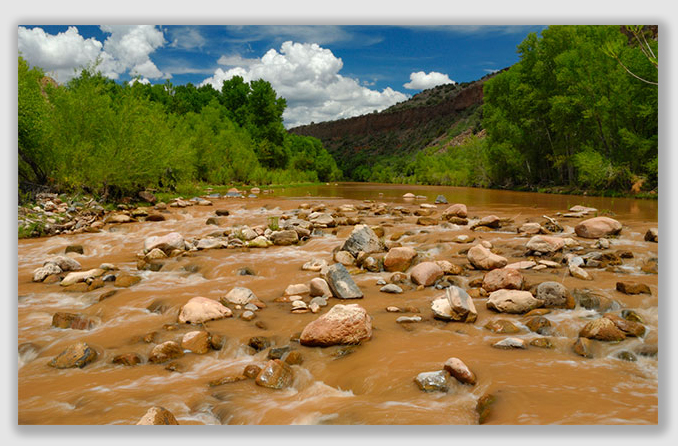
But some of it may not. In today’s case, the U.S. Geological Survey constructed a “cableway” – a cable strung over a wild and scenic river in Arizona for the purpose of accessing a “streamgage” station, a series of devices used to measure river flow, temperature, turbidity and water level. When a helicopter struck the naked and unmarked cable, killing everyone on board, the survivors sued the USGS under the FTCA for negligence in failing to mark an obvious danger. After all, the USGS had had aircraft strike its cableways before. You’d think the agency would know better.

The Court of Appeals, however, affirmed that the USGS’s failure to mark the cable fell “squarely in this discretionary function exception.” With no evident sense of irony, the Court warned that the “invocation of the discretionary function doctrine in cases involving public safety should not be read as giving the government a pass every time it raises the exception.” Judging from this case, it is difficult to accept the Court’s admonition at face value.

Perry v. United States (In re Morales), 895 F.3d 708, 710 (9th Cir. 2018). The U.S. Geological Survey is a federal agency responsible for collecting scientific information about the “geological structure, mineral resources, and products of the national domain.” As part of its duties, USGS collects streamflow data and water quality samples to predict floods, manage drinking water, evaluate water quality standards, aid in the preservation of aquatic habitats, and investigate streamflow history and climate change. This information is collected through “streamgage” sites that include a continuously functioning measuring device that collects the mean daily streamflow in a particular watercourse. When a streamgage site is installed in a location without a bridge, USGS generally builds a cableway — a cable car suspended from a wire rope—to provide USGS personnel with safe access to the site.

In 1934, USGS installed a streamgage site and cableway over the Verde River Canyon in Prescott National Forest, Arizona. USGS has operated the streamgage site since 1932. The cable stretched 286 feet across the canyon at a height of 40 feet above the river. Despite the cable being virtually invisible from 100 feet or more away, or to aircraft flying at the same height, USGS did not mark the cableway or add warning signs because the cable did not meet the criteria for marking under USGS policy.

Since 1980, USGS has modified its policy on marking several times, often in response to accidents involving cableways. In each case, however, it adopted Federal Aviation Administration standards for marking obstructions to airspace. The FAA regs required marking of objects more than 200 feet above the ground (“AGL”), and suggested that marking of cableways should be considered if they are hazardous to low-flying aircraft. USGS District offices were directed “to review all… cableway installations and decide which may be hazardous to low-flying aircraft,” and to develop “[a] plan… to install markers on those cableways designated as potentially hazardous.”

After an aircraft struck an unmarked cableway in 1995, USGS considered “a broad policy to require the marking of all cableways” but ultimately decided against it after consulting with an FAA Air Specialist. The specialist reviewed photographs and aeronautical charts for a subset of cableways and recommended against marking them because none met the FAA criteria for marking obstructions. The expert recommended against marking any USGS cableways that did not meet the FAA criteria.

USGS later issued Memorandum No. 2000.13, which recognized that “Congress has charged the FAA with the responsibility to promote the safety of aircraft and the efficient use of navigable airspace,” and repeated USGS’s policy that structures over 200 feet AGL “should normally be marked,” but specified nothing for cableways under 200 feet AGL. In 2008, USGS issued a policy manual — Survey Manual, No. SM 445-2-H (the “2008 Survey Manual’’) — that was functionally the same as the 2000 Memorandum. The 2008 Survey Manual repeated that it was USGS policy to comply with the FAA’s obstruction marking regulations.

Even though the default policy was not to mark cableways under 200 feet, USGS also considered site-specific and other factors to determine whether to mark cableways that did not meet FAA criteria. The specific considerations relevant to the Verde River cableway included the absence of any prior accidents; the cost of installation; the physical risk to employees installing markers; the risk of confusion to pilots who expect to see markings at higher heights; the likelihood of vandalism by marksmen and accompanying economic and safety concerns; and the United States Forest Service’s scenic integrity objectives to “minimize or eliminate visual distractions” in the area given the Verde River’s designation as a “Wild and Scenic River.”

In June 2012, a helicopter flown by Raymond Perry crashed in the Prescott National Forest, killing Perry and his three passengers. The chopper struck the unmarked cableway suspended forty feet above the Verde River by USGS as part of its cableway. Although the cable was virtually invisible to aircraft pilots, USGS placed no markers or warning signs out because the unmarked cableway complied with the FAA obstruction regulations.

Following the accident, Perry’s estate sued, claiming that USGS was negligent for failing to mark the cable. The district court held that the decision not to mark the cable was a discretionary function of USGS, and thus exempt from the Federal tort Claim Act. It thus held it lacked subject matter jurisdiction and dismissed the lawsuit.

Perry’s estate appealed.

Held: USGS was exempt from liability because its decision not to mark the cableway was a discretionary function of the agency.

The FTCA waives the government’s sovereign immunity for tort claims arising out of negligent conduct of government employees and agencies acting within the scope of their duties, allowing a plaintiff to sue the government “under circumstances where the United States, if a private person, would be liable to the claimant in accordance with the law of the place where the act or omission occurred.” If there is no waiver of sovereign immunity through the FTCA, the district court lacks subject matter jurisdiction and the case must be dismissed.

One exception to the broad waiver of sovereign immunity under the FTCA is called the discretionary function exception. That exception provides immunity from suit for any claim “…based upon the exercise or performance or the failure to exercise or perform a discretionary function or duty on the part of a federal agency or an employee of the Government, whether or not the discretion involved be abused.” The purpose of the exception is to prevent “judicial ‘second guessing’ of legislative and administrative decisions grounded in social, economic, and political policy through the medium of an action in tort.”

There is a two-step process to determine applicability of the exception. First, a court must decide whether the act is “discretionary in nature,” which necessarily involves an element of judgment or choice. The “judgment or choice” requirement is not met where a “federal statute, regulation, or policy specifically prescribes a course of action for an employee to follow.” If a statute or policy directs mandatory and specific action, the inquiry comes to an end: there can be no element of discretion when an employee has no rightful option but to adhere to the directive.

If discretion is involved, a court must consider whether the discretion “is of the kind that the discretionary function exception was designed to shield”—that is, governmental actions and decisions grounded in social, economic, and political policy. The focus is on whether the actions are “susceptible to a policy analysis,” not whether the government actually considered such public policy judgments when making the decision.

No federal statute, regulation, or policy specifically prescribed the marking of the Verde River cableway. Instead, the decision whether to mark the cableway was a result of considered judgment and choice. The Verde River cableway fell within USGS’s default policy not to mark cableways that did not meet the FAA’s 200-feet AGL criteria. Nor did the cableway trigger any of the verification requirements set forth in the 2008 Survey Manual and 2000 Memorandum, which only applied to cableways exceeding 200 feet AGL that were not marked.

Thus, there was no mandatory directive within USGS’s policies to mark the cable. That USGS policy let its personnel consider specific factors which necessarily varied by site “highlights that judgment was involved in the decision.” This is not an instance, the Court said, “in which USGS’s policy identified site-specific considerations that mandated marking. No such guidance was provided in any USGS policy, so USGS employees were left to exercise their judgment when deciding whether to mark a particular site.”

Although its policy directed personnel “to review” all cableways, “decide which may be hazardous,” and develop a plan to install markers at those sites, USGS’s language cannot be construed as a “mandatory and specific” directive to mark the Verde River cableway. Rather, the policy left employees with a discretionary choice about which cableways were hazardous and which should be marked.

What’s more, the Court held that USGS’s decision is susceptible to policy analysis grounded in social, economic, and political concerns. USGS’s decision to defer to the FAA as the agency charged with “the responsibility to promote the safety of aircraft and the efficient use of navigable airspace”’ is grounded in social, economic, and political policy. USGS recognized the FAA’s role and expertise in regulating navigable airspace and affirmatively decided to defer to the agency’s standards with respect to marking.

Verde River

As well, USGS’s decision was susceptible to a number of additional social, economic, and political considerations. There were competing safety concerns, such as the risk of confusing pilots “who expect to see obstruction markers only at higher levels” and the risk to USGS personnel tasked with the installation or maintenance of the markers. Economic factors were also considered, such as the cost of installation and maintenance of the markers, particularly given the likelihood of vandalism. USGS also knew of USFS’s objective to minimize visual distractions to meet “scenic integrity objectives” given the Verde River’s designation as a “Wild and Scenic River’ and bald eagle nesting area.

“All of these considerations,” the Court ruled, “embody the type of policy concerns that the discretionary function exception is designed to protect, reflecting that USGS’s decision was based on competing policy considerations related to safety to aircraft, safety to USGS personnel, financial burden, protection of scenic integrity, and respect to the objectives of land-management agencies.”

The Court refused Perry’s argument that the government ought not to be allowed to invoke the discretionary function exception whenever a decision involves considerations of public safety. Such a “sweeping exemption would severely undermine the discretionary function exception and is unsupported by our precedent,” the Court held. “In case after case, we have considered the government’s balancing of public safety with a multitude of other factors.” Here, USGS’s decision not to mark the cableway was “actually susceptible to policy analysis, including deference to another agency’s expertise, competing safety interests, financial burden, and the effect on scenic integrity.”

The Court warned that its “invocation of the discretionary function doctrine in cases involving public safety should not be read as giving the government a pass every time it raises the exception. We emphasize that the government bears the burden of sustaining the discretionary function exception and that the record must bear the weight of that burden.”

– Tom Root

TNLBGray140407