Case of the Day – Friday, November 28, 2025

WRITE ME UP A VERBAL CONTRACT

putt150827OK, what’s a little New York case about a miniature golf course construction contract doing on a tree law blog? It’s here as a cautionary tale …

A miniature golf operation called Oasis Park hired Bill Oberholtzer – who was both a miniature golf course owner and a mini-golf course builder – to jazz up Oasis Park before the mini-golf season started up in the Troy, New York, area. Disregarding the universally accepted good practice in construction of starting with a nice, neat signed agreement setting out the scope of the work, payment terms, time to completion, and other such details, the Oasis Park people and Bill pretty much sketched out their agreement on the back of a cocktail napkin. And that was a mistake.

Later, Oasis Park needed a more formal document in order to convince its bank to release financing. Bill, of course, accommodated Oasis Park by signing one. You can guess what happened. When the parties’ working relationship soured, Oasis claimed that the accommodation document – and not the “cocktail napkin” – was the real deal between the parties covering the scope of the work. Bill countered that he had already been working for weeks, and the plans had changed.

You probably need a little more contract detail than you can fit on a napkin.

You probably need a little more contract detail than you can fit on a napkin.

Nevertheless, within six weeks after some fateful April 29 “thing” occurred — and even the Court couldn’t tell what the “thing” was — Oasis fired Bill amid claims that he hadn’t adhered to some nonexistent schedule, hadn’t provided workers, and hadn’t provided materials. For good measure, Oasis claimed that Bill’s work was substandard.

Bill naturally argued just the opposite, asserting that he couldn’t buy supplies because Oasis Park wouldn’t pay him. The whole mess ended up in federal court, where the judge threw up his hands and said no one was getting summary judgment. The entire kerfuffle would have to be sorted out at trial.

So now, let’s all grab our calculators and figure out how Bill saved by not wasting his money on a lawyer preparing a contract with Oasis Park upfront. Not much, we guess. And you arborists, tree trimmers, loggers, and owners – let’s remember this: No contract, no winners.

sign150827Paone, Inc. v. Oberholtzer, 2007 U.S. Dist. LEXIS 75092, 2007 WL 2455074 (N.D.N.Y., Aug. 23, 2007). Oberholtzer agreed to provide all labor and materials necessary to remodel Paone’s miniature golf course. Beyond that fact, the parties could agree on nothing.

Paone said that under a contract dated April 29, 2004, Oberholtzer was to build a bumper boat pond, including walls, docks, light fixtures, a cave, a filter system, a perimeter walkway, and a staging area deck. As well, Paone said, the contract required Oberholtzer to renovate the course’s clubhouse entrance, the third hole, and the practice green. Paone said that under the contract, Oberholtzer began the project in May 2004, but its laborers did not show up for work, causing the project to fall behind schedule. To rectify the situation, Paone claims that it hired temporary workers.

Even with these outside laborers, the project did not move forward because Oberholtzer failed to provide supervision and direction. Paone said it had to supply all materials to the site and hire various construction professionals to inspect the work. Paone contended that these professionals found that Oberholtzer’s work violated building code requirements and fell below industry standards. After the project had gone on for about a month, Paone notified Oberholtzer that it was in default of the contract.

Oberholtzer, on the other hand, claimed that he reached an agreement to perform work for Paone well prior to April 29, 2004. Oberholtzer said he began preparatory work in March. The April 29th document, Oberholtzer contended, was merely an estimate prepared at Paone’s request, intended by both parties to help Paone get a bank loan released. The April 29th agreement was conformed to an earlier budget from the winter of 2003-2004, which Paone had submitted to the bank to support its initial loan application.

golf150827Consequently, Oberholtzer argued, the estimate did not reflect intervening changes of which both parties were aware, including a different location for the bumper boat pond, changes in site elevations for the clubhouse and parking lot, which required alteration of a ramp and deck, and additional concrete walkways on the course.

Oberholtzer said he had already made significant progress before April 29, 2004, including filling in traps, reconfiguring the practice green, removing an existing sidewalk near the old practice green, building a deck between the seventh and eighth holes, and removing fixtures and equipment from the old clubhouse. What’s more, Oberholtzer asserted, he had also cleared and trimmed trees for a new picnic area, built retaining walls for a walkout basement, constructed a deck attached to the clubhouse, erected bumper boat pond walls and skimmer baskets, and backfilled the pond.

As for the schedule, Oberholtzer argued that the April 29th document did not include such a timeline or any other time-related requirements. Oberholtzer said that Paone knew Oberholtzer would be opening and operating his own miniature golf course in Georgia at the end of May. Therefore, Oberholtzer claimed, Paone knew that Oberholtzer would not be available to work on the project on a regular basis. Furthermore, Oberholtzer argued that several weeks of delay resulted from the actions of an unrelated contractor who placed heavy equipment in the area of the future bumper boat pond. Also, he said, Paone failed to make timely payments, preventing Oberholtzer from buying materials and advancing the project. Finally, Oberholtzer complained that Paone had approved all building plans and that town building inspectors routinely inspected the progress and noted no building code violations.

Paone sued for breach of the contract and for negligence, and then moved for summary judgment.

obfus150827Held: Summary judgment was denied in this fact-laden morass. The Court observed that Paone’s causes of action for breach of contract and breach of the implied covenants of good faith and fair dealing both required first that there be an enforceable contract with sufficiently definite terms. Here, the parties could not even agree whether the document was a contract, let alone what its terms were. Paone contended the document represents the parties’ complete agreement, but Oberholtzer asserted that the document was an estimate used solely for the purpose of obtaining funding. While Paone said the performance period commenced in May 2004, Oberholtzer alleged that it had already completed substantial portions of the project prior to that time.

What’s more, the Court found that reference to the April 29th document wasn’t helpful because it contained no details about the parties’ responsibilities or the construction schedule. The document was labeled “Spring 2004 Construction” and merely set forth the various projects and the price for each. In light of these disputes, the Court held, it could not determine whether an enforceable contract existed between the parties without evaluating the parties’ conflicting factual accounts. On the basis of the April 29, 2004 document alone, the Court held, it could not determine the construction schedule or the parties’ respective contractual responsibilities.

A trial would be necessary to straighten out the whole mess.

– Tom Root

TNLBGray140407

Case of the Day – Wednesday, August 6, 2025

BUYER’S REMORSE

What do you get when you cross a lousy businessman with a careless homeowner? In today’s case, you get a whopper of a lawsuit.

The job's not finished until the paperwork's done.

The job’s not finished until the paperwork’s done.

The lousy businessman was Jeff Davis, who may well be a very good arborist but clearly was lacking in paperwork and billing skills. The shocked homeowner was Ron Sexton, who — to put it charitably — was woefully (and conveniently) forgetful, not to mention rather unforgiving.

Ron had hired Jeff to trim trees in 2002, and he paid the invoice, which had been figured at $1,200 (although he couldn’t remember ever seeing the bill he paid). He hired Jeff again the following year, but Jeff not only didn’t prepare a written proposal or estimate, he couldn’t even be sure he had told Ron the price would be the same as the year before.

For his part, Ron kept expanding the scope of the work, appearing frequently as the crews worked to suggest additional trimming. By the time Ron was done changing the job to encompass all 60 trees on his land, Jeff’s crews had 14-1⁄2 days of work in, presenting Ron with a bill for $17,400.

You’d think that Jeff would have said something to Ron about how the bill was mounting up. For that matter, you’d think Ron might wonder at some time during the two weeks of tree work how much it was all costing him. But neither Dumb nor Dumber questioned anything until the bill arrived in the mailbox. And then, Ron refused to pay.

Like every state, Kansas has a consumer practices act, intended to protect consumers from unscrupulous businesses that prohibit unconscionable acts and deceptive practices. And even if Dorothy isn’t in Kansas anymore, that doesn’t mean that the state’s restrictions are over the rainbow: just about all states have unfair or deceptive acts and practices statutes, consumer protection statutes, consumer fraud statutes, or the like. The laws are well-intended, but as our homeowner hero proves today, the likelihood that they can be used for mischief is high.

Here, we suspect that Ron didn’t feel like a defrauded consumer until some lawyer suggested that some KCPA claims would be a dandy way to beat paying Jeff. So Ron claimed Jeff had violated the KCPA by deceptive practices (not telling him how much it would cost and trimming well beyond the scope of the work in order to jack up the price) and unconscionable acts (performing unnecessary work and not giving Ron his money’s worth). The jury didn’t buy it — especially the whopper that he didn’t know it was $1,200 a day because he hadn’t gotten last year’s bill, a bill which he had managed to pay without seeing at the rate of (guess it) $1,200 a day — but the jury did apparently find that the value of Jeff’s work fell somewhat short of $17,400, because it awarded Mr. Davis only $6,500.

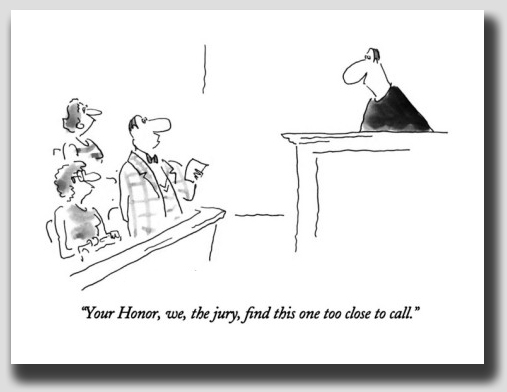
    Does this look like a Mensa convention?

And here, we encounter a popular fiction: juries are wise and Solomonic. They’re not, often hurried, bored, a collection of weak-willed people bullied by one or two strong ones, even just plain stupid. But juries as fact-finders are the foundation of our legal system, and appellate courts protect that foundation with a most deferential standard of review. Typically, an appeals court won’t overturn a jury’s findings of fact unless no rational juror — even taking the evidence in a light most favorable to the winner — could have made the decision the jury handed down.

Here, just about everything in the record was contradicted. But assuming the jury believed evidence in favor of Davis Tree — and the appeals court made that assumption — it could have come to the conclusion it reached. Interestingly, the Court of Appeals seems to have been less than thrilled with the jury’s verdict even while showing it deference, asking cryptically, “Would the evidence also support contrary inferences? Yes, but that is simply not the question which we are called upon to decide.”

Everyone was a loser here, especially because all of this could have been avoided with a written estimate from the arborist and a careful written record of change orders maintained throughout the job. The homeowner was negligent to the point of recklessness as well, but… well, he was the customer. Expect customers to be foolish or to try to beat the contractor out of a fair price. The tree professional has to prepare for the naïve and the cunning customer alike.

Davis Tree Care v. Sexton, 197 P.3d 904 (Ct.App. Kan., 2008). In 2003, Ron Sexton hired Jeff Davis, doing business as Davis Tree Care, to trim the trees at his house. It was a big job, with over 60 trees trimmed and a final bill of $17,400. When Sexton refused to pay, Davis sued him for breach of contract and unjust enrichment. Sexton counterclaimed under the Kansas Consumer Protection Act (KCPA), alleging deceptive practices and unconscionable acts. Sexton had used Davis Tree the year before, for which he was billed $1,200 per day. He denied having seen the 2002 invoice and denied the 2002 job was priced on a per-day basis, but he admitted he had paid the same amount as was shown on the invoice. He maintained that Davis had never told him the 2003 job would cost the same as the 2002 work, and that was “willful misrepresentation of a material fact” under the KCPA.

Sexton and Davis Tree agreed that the work was intended to include removing two trees and removing an oak tree branch, but Sexton said he didn’t ask for anything else. Davis testified that Sexton also wanted some general trimming and that he came out from time to time and pointed out additional work he wanted done. Sexton argued there was no need for general trimming because that was what Davis Tree had done the year before. The trial court found against Davis Tree on the contract claim, but it awarded Davis Tree $6,500 on the unjust enrichment claim. As for Sexton’s creative KCPA claims, the court found that Davis Tree had committed neither deceptive practices nor unconscionable acts.

Sexton didn’t appeal the $6,500 he was found to owe Davis Tree on the unjust enrichment claim, but he did challenge the findings that Davis Tree had not violated the Kansas Consumer Practices Act.

ToocloseHeld: Davis Tree had not violated the law. Because the trial court jury had found for Davis Tree, the appellate court had to consider the evidence in a light most favorable to the tree trimmer. If the evidence so viewed supports the verdict, the appellate court will not intervene to disturb the verdict. The question on appeal, the Court said, was whether there was evidence to support the jury’s findings against Sexton’s claims.

The issue was whether Jeff Davis believed Ron Sexton knew the price and requested added tree trimming services. There was ample evidence that he knew what he had paid the year before, and that Davis believed he knew the price would be the same in 2003. Likewise, there was plenty of evidence that Sexton had asked for extra services. Based on that, a rational jury could have found from the record that Davis Tree did not willfully conceal or misrepresent the price or scope of the work.

Under the KCPA, a supplier shall not engage in deceptive acts or practices, including the willful use in a misrepresentation of “exaggeration, falsehood, innuendo or ambiguity as to a material fact,” the willful failure to state a material fact or the willful concealment of a material fact. Such practices are violations regardless of whether the consumer has, in fact, been misled. Here, the evidence supported that Jeff Davis of Davis Tree believed he and Sexton had discussed the price and that Davis believed Sexton knew the price for the 2003 job would be the same as the prior year — $1,200 per day. Likewise, the evidence supported the inference that Sexton requested additional trimming services. That, the Court said, was sufficient to find Davis Tree did not willfully conceal or misrepresent the price or scope of the work.

Sexton also claims the trial court erred in finding Davis Tree did not commit unconscionable acts in violation of the KCPA. He argued that because KCPA cases were so “fact-sensitive,” the appellate court had to conduct an “unlimited review” of findings that certain conduct was not unconscionable. But the Court disagreed, holding that the standard is “abuse of discretion,” that is, when no reasonable person would take the view adopted by the trial court. This is especially true where the credibility of witnesses is central to the resolution of the case. Credibility determinations will not be reweighed on appeal.

The KCPA prohibits a supplier from engaging in an unconscionable act in connection with a consumer transaction. In determining whether an act is unconscionable, a court considers a nonexclusive list of circumstances “which the supplier knew or had reason to know,” including whether when the consumer transaction was entered into, the price grossly exceeded the price at which similar property or services were readily obtainable in similar transactions by similar consumers, and whether the consumer was able to receive a material benefit from the subject of the transaction.

Sexton argued that the Davis Tree invoice lacked documentation, and compared it to invoices for other Davis Tree customers that differed both in amounts charged and in how specifically the tasks were described. Davis Tree cited the extensive equipment and complex procedures required to trim the large number of trees on the Sexton property over the claimed 14-plus days of work. The trial court found that “just looking at $1200 a day for three people and the equipment, the Court … does find that it has not been established by a preponderance of the evidence that the price was grossly exceeding the value of what was being provided.”

Davis Tree Service learned a costly lesson

Davis Tree Service learned a costly lesson

The Court of Appeals found essentially that Sexton had not sustained his burden of proof. The trial court found there were three people working on the project, using a number of machines, and at least two of the people climbing trees with their gear. Even Sexton admitted to seeing the equipment and work being done. However, the trial court noted, Davis Tree’s failure to prepare specific proposals was “a bad way to run a business,” and “more of a poor business that was run by Mr. Davis and not an unconscionable act or an intentional misleading business. Just bad business practices.”

At trial, in support of the claim that he did not receive a material benefit under the KCPA, Sexton argued the work Davis Tree claimed to have done was the same as done the previous year and, therefore, unnecessary, or that Davis Tree charged for work not done, and that Sexton did not receive the benefit of the full $17,400 charged. But as the Court noted, the jury did not order Sexton to pay the full $17,400 charged. The jury’s verdict against Sexton was for $6,500, and that was not challenged on appeal.

The trial court found there was little evidence to show what the value of the work actually should be, but it considered the evidence of the number of people and amount of equipment involved to conclude $1,200 a day was not excessive and, therefore, not unconscionable. The Court of Appeals couldn’t say that no reasonable person would agree with that ruling. Thus, the trial court’s ruling that Sexton received a material benefit would not be disturbed.

-Tom Root

TNLBGray140407

Case of the Day – Wednesday, June 4, 2025

ONE BIG HAPPY FAMILY

We dimly recall those halcyon days of first-year law school, when our minds were exposed to all of the many ways people could own the land. There were divided interests, undivided interests, partitions, fee tails, tortious fees, tenancies in common… We also recall there was a bar across the street from the law school, and often we would flee the property law classroom for the comfort of a tall, cold one.

That was not always such a good idea. Had we retreated instead to the library, we might have appreciated some of the nuances of real estate ownership better than we did. Had logger Richard Lessard’s attorney appreciated those finer points, his client might have been saved becoming one of the actors in today’s case.

Duane Henry owned 40 acres in Winneshiek County, Iowa. He also co-owned another 120 acres with his four adult kids, with Dad owning 60% and the four children each having an undivided 10% interest. The arrangement may have been some lawyer’s idea of estate planning, or even a protection against the state forcing a sale if senior citizen Richard needed Medicaid for long-term nursing home care.

Whether the ownership would have shielded the land from a Medicaid claim is beyond our ken, and when the questions have come up in our parents’ affairs, we willingly hired lawyers who do nothing but elder law. We do know, however, that whatever its merit as an estate planning tool, this kind of ownership – a cotenancy – plays havoc with getting anything done with the land.

When Dad Duane needed money for a nursing home, he signed a deal with logger Richard Lessard to cut enough timber to pay the bill. Richard knew about the cotenancy, but he thought that Duane could sign the contract.

Richard started to work, but within a day was thrown off the property by one of Duane’s kids. The kids apparently didn’t much like the deal Dad had made from his nursing home bed. They later took bids on timbering the land, and all of the owners – the kids and Dad – signed a deal with another company.

Richard’s problem was this: in a cotenancy, all of owners may have interests, but none of them is automatically an agent for the others. A contract for timber has to be ratified by all of the owners, even that third cousin once removed who lives in Jerkwater, West Dakota, that no one has seen for a decade.

If you’re cutting timber, buying an easement, or making some other deal to materially affect the value of the property, be sure that you know who the owners are and that you have signatures from everyone who needs to sign. Your lawyer can advise you, and the bill will be a lot lower than the costs of being wrong.

Lessard v. Henry, 804 N.W.2d 315 (Ct.App., Iowa, 2011). Duane Henry co-owned 120 acres with his four adult children. Duane owned an undivided 60% of the acreage, and each child owned an undivided 10% interest.

Duane hired Richard Lessard, a logger, to cut timber on Duane’s own 40 acres and on the 120 acres he owned with his children. Richard Lessard knew that the 120 acres were owned in the 60-10-10-10-10 cotenancy. The contract Duane and Richard signed specified that Lessard Logging would cut down mature trees on Richard’s 40 acres and the 120-acre cotenancy. Duane would receive 60% of the profits, and Lessard 40%. The agreement also provided that Duane’s children would each receive 5% of Duane’s share. Duane was in a nursing home at the time they entered into the agreement and wanted the money to help pay nursing home bills.

One or two days after the contract was signed, Richard moved a skidder to the property. Duane’s son, David, told him to remove the skidder, which he promptly did. Soon after that, Richard learned that Duane and his children were taking bids for logging on their property. Eventually, another person entered into a contract with Duane and his children to cut 345 trees on the property.

Richard sued, but he lost in the trial court because Duane’s children, as cotenants of the property, had not authorized or ratified the contract. The court found the children “had given their father no authority to enter into any kind of a logging agreement with the Plaintiff as to the parcels of land in which they have an ownership interest.”

Richard appealed.

Held: Richard’s contract was no good. The appeals court said that the existence of a cotenancy does not imply an agency relationship between the cotenants. One cotenant owner cannot ordinarily bind cotenants by contracts with third persons or transfer or dispose of the interest of another cotenant in such a manner as to be binding, unless authorized to do so or unless his act is thereafter ratified by other cotenants.

Richard had no evidence that Duane was authorized by his kids to enter into the timber contract, and there was no proof they had ever ratified the contract after the fact. “Where there has not been authorization or ratification,” the Court of Appeals said, “any dealing on the part of one cotenant in relation to the common property is a nullity insofar as their interests are concerned.”

Richard also argued for the first time in the court of appeals that logging contracts do not require cotenants’ assent. He maintained that Duane could agree to sell 60% of the timber – his share of it – without the kids’ OK. The Court noted that this had once been the law, but the courts now hold that a cotenant may not sever timber from the land without the consent of the other cotenants. But since Richard had not raised the argument in the trial court, the Court of Appeals refused to reach the issue.

– Tom Root

TNLBGray140407

Case of the Day – Tuesday, January 21, 2025

THE CONTRACT SAYS WHAT?

springsnow160321Somewhat to my surprise, my snowdrops poked their little green shoots through the cold soil a few weeks ago. But with the arrival of snow last week and an Arctic blast yesterday, they are buried under several inches of white stuff. Which is good, because they are not usually seen until the second week of February here in the Great Lakes Basin just 30 miles south of the Canadian border.

My wonder dog Winnie found this morning’s walk a little nippy, but tomorrow will be worse, with the temp hovering slightly below zero. She’ll still find it fine for chasing deer (she flushed ten of them on Sunday, pursuing them like the 40 lbs. of bad news she can be when chasing game, small and large).

So I walk my dog on a cold day. Who cares? Landscaper Superior Property Management Services, Inc., sure did when Colleen Hill decided to do that. Utah-based Superior had been hired by the Waterbury Homeowners Association to landscape and maintain the grounds at beautiful Shanty Acres. The parties had a standard contract, one that – among other things – called for Superior to mow the grass weekly and edge bi-weekly “throughout the normal growing season.” Elsewhere, the contract directs the landscapers to “trim . . . small and lower branches” on trees.

The contract was just a formality. Superior has been in business since the bristlecones were seedlings, and its crews thus knew exactly what needed to be done. They often went beyond the literal terms of the contract, which – as was typical for landscaping contracts – were not especially detailed. Over the seasons, Superior maintained Shanty Acres very well, and the contract was repeatedly renewed. The Happy Homeowners Association was indeed happy.

Then condominium resident Colleen Hill ventured outside to walk her dog one cold day. When she followed the cavorting canine onto the lawn, she tripped over a basal shoot growing from a tree root, fell, and hurt herself. She sued both Superior and the Association, claiming that Superior owed her a duty of care because of what it agreed to do in the contract. Superior, she alleged, was negligent in not trimming the basal shoots.

But how could Superior owe Colleen Hill a duty? Its contract was with the Association, and the Association thought Superior had done a superior job. True, Superior prided itself on doing more than the contract called for, but that was what a good landscaper did. Thus, Superior’s crews normally trimmed basal roots … but if Colleen’s complaint was to be believed, it appears Superior’s workers may have overlooked the shoots that proved a snare to her feet.

Superior should have trimmed the exposed roots, Colleen said, whether the contract said it should or not ...

Superior should have trimmed the exposed roots, Colleen said, whether the contract said it should or not …

The courts finally concluded that Superior owed Colleen no duty. Its obligations were to the Association, and those obligations were those spelled out in the contract, not what additional services Superior might gratuitously provide. The landscaper won in the end, but only after four years of expensive litigation.

So what does the professional arborist or landscaper learn from Superior’s legal travails? The first lesson is to read the contract form he or she is using. Does it adequately define the services being provided? If the arborist will be performing more services than those described in the contract, those probably should be described in the contract.

At a minimum, the contract should clearly provide that any services provided beyond those required by the contract are being provided as a courtesy only and that the contract does not establish a duty between the arborist and anyone other than the client.

Will this be enough to save the arborist from frivolous lawsuits? Probably not in this society. But an ounce of careful contract drafting now may be worth a pound of lawyers later.

Hill v. Superior Property Management, Inc., 2013 UT 60 (Utah Supreme Ct., 2013). Superior Property Management had held the contract to maintain premises for the Waterbury Homeowners Association for years. The form contract called for Superior to mow the grass weekly and edge bi-weekly “throughout the normal growing season” and to “trim . . . small and lower branches” on trees. After resident Colleen Hill, while walking her dog one early spring day, tripped on a growth from a tree root, she sued Superior for negligence because it had not trimmed the root.

Held: The landscaper didn’t owe Colleen a duty of care. As the Supreme Court of Utah observed, the “law draws a critical distinction between affirmative acts and omissions. As a general rule, we all have a duty to act reasonably in our affirmative acts; but no such duty attaches with regard to omissions except in cases of a special relationship.”

The Court agreed that sometimes, such a special relationship might be rooted in a contract. But it held that neither specific obligation in the contract – the obligation to mow the grass weekly and edge bi-weekly “throughout the normal growing season,” or the obligation to “trim . . . small and lower branches” on trees – created a duty flowing from the landscaping company and the injured property owner.

Lesson: No contract is the ultimate contract, but that doesn't mean you shouldn't try for comprehensiveness in drafting ...

Lesson: No contract can plan for every contingency, but that doesn’t mean you shouldn’t try for comprehensiveness in drafting whenever possible …

The Court noted that “in the first place, it is not at all clear that mere failure to perform would sustain liability in tort. A breach of contract, after all, typically gives rise to liability in contract … Even assuming that Superior’s maintenance contract could sustain a tort duty, moreover, there is still no basis for liability here, as neither of the provisions required Superior to perform the acts it is now charged with omitting.” The Justices analyzed the contract provisions, pointing out that the accident happened in early spring, outside of the “normal growing season.” What’s more, the dictionary definition of “branch” is “a stem growing from the trunk or from a limb of a tree” or a “shoot or secondary stem growing from the main stem.” Therefore, the Court reasoned, “the ‘branches’ to be trimmed under Superior’s maintenance contract are protrusions from the main trunk only, not separate shoots stemming from the tree’s roots. Superior could not be in breach for failing to trim back those shoots.”

Maybe so, argued the homeowner, but regardless of what the contract may have said, the landscaper’s obligations “were not comprehensively detailed in its maintenance contract, but encompassed acts that it habitually engaged in over time.” The Court rejected this dangerous notion, declaring that there “is no room in our law for a tort duty arising from course-of-performance acts that are nowhere provided by contract.” The Justices reasoned that “where a duty is rooted in the express language of a written contract, the parties are on notice of their obligations, and are in a good position to plan their activities around them. That is not at all true for … extracontractual, course-of-performance acts relied on” by Ms. Hill. “If we were to impose a duty in connection with those acts,” the Court said, “we would establish a troubling perverse incentive. A party facing a tort duty in connection with any undertaking not required by contract would be discouraged from such undertaking. And a disincentive for gratuitous service benefiting another is not the sort of conduct that our tort law ought to countenance. In any event, to the extent injuries ensue from negligence in the performance of such activities, liability would properly be governed by a different branch of our tort law – by the standards governing liability for a voluntary undertaking, a theory we … find unavailing.”

– Tom Root

TNLBGray140407

Case of the Day – Monday, October 28, 2024

MEAN WHAT YOU SAY

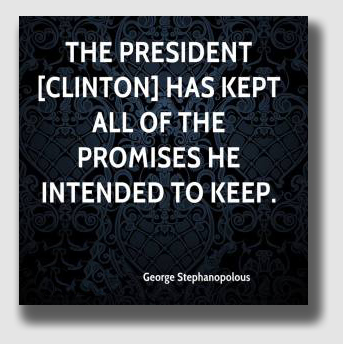
clinton140912I suppose that given the most recent former inhabitant of the White House – who figures to live there again, conviction-free, come January  – discussions of the warts, real or imagined, of former presidents must seem like nitpicking. But still, we recall that back when George Stephanopoulos was a mere flack for President Bill Clinton and not yet a respected television commentator for ABC, he parried a skeptical Larry King with a defense that was unintentionally candid.

President Clinton, George declared, had “kept all of the promises he intended to keep.” Any suggestion that the former President might have lacked veracity at times may today seem hopelessly quaint. But the malefactors in today’s case apparently tried it out for themselves.

In order to get a zoning variance to add on to their newly-purchased estate in the tres chic village of Centre Island, New York (once home to Billy Joel and his $32.5 million shanty), the Comacks promised not to let the shrubs and trees obstruct anyone’s view of Oyster Bay. Believing their sincere pledge, the Village OK’d the proposal.

A few years later, the bushes were high and the trees were leafy, and the Comacks said something to the effect of, “Promise? What promise? Oh, that promise… It’s… uh… kind of unclear what we really intended to promise. Let’s just forget the whole thing.” Or something like that.

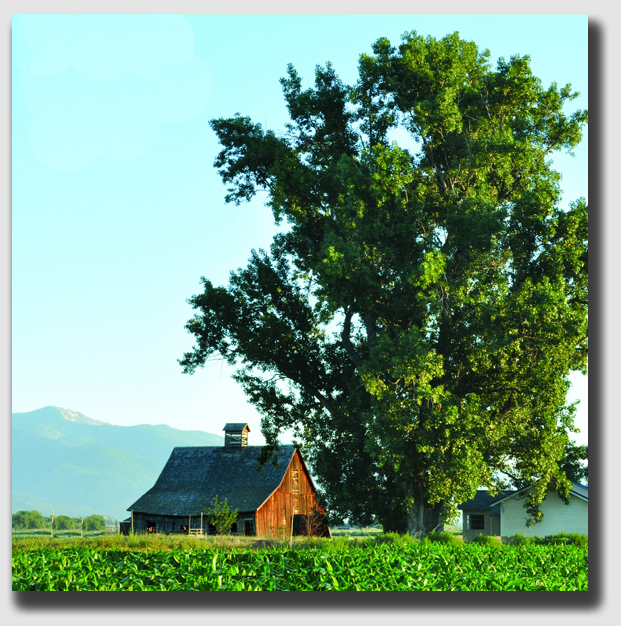
Sometimes, as nice as the trees may be, the view without them is even better.

Sometimes, as nice as the trees may be, the view without them is even better. (Editor’s note: this photo was not taken at the Comack’s – it is illustrative only)

The Village elders didn’t forget it, soreheads that they apparently were, and sued the Comacks. The trial court found for the Comacks, but the court of appeals reversed and required the Comacks to keep their word. The appellate judges apparently could figure out what the meaning of “is” was.

Incorporated Village of Centre Island v. Comack, 39 A.D.3d 712, 834 N.Y.S.2d 288 (N.Y.A.D. 2 Dept., 2007). In 1999 the Comacks purchased property in the village of Centre Island and sought a variance to maintain and enlarge the pre-existing, nonconforming home on the lot. Specifically, they sought to build a second-story addition over the existing garage and to change the roof line. The proposed expansion and changes would have necessarily affected the neighboring properties’ existing views of the waters of Oyster Bay. And, Centre Island being a ghetto of the fabulously well-to-do, the unobstructed views of all that their wealth had enabled them to accumulate were rather important to the residents.

word160208In consideration for the granting of the variance, the Comacks signed a “Declaration” that provided “[a]ll open views from points off the premises to Oyster Bay shall remain in their present unobstructed state … [n]o trees or major shrubs shall be planted on lots 85 and 86 with the exception of minor shrubs and bushes which if allowed to grow to full height would not impede the aforesaid open views. Any shrubs or plants which if allowed to grow to maturity would exceed three feet in height will require the approval of the village building inspector for compliance with the intent of the declaration …”

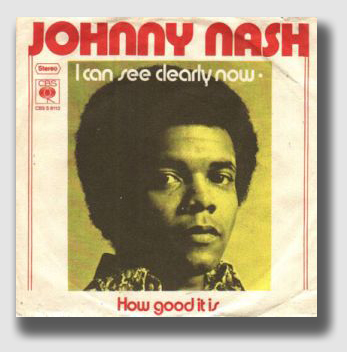
Remember Johnny Nash? Are you really that old? Johnny obviously didn't live near the Comacks, or he would never have written the song.

Remember Johnny Nash? Are you really that old? Johnny obviously didn’t live near the Comacks, or he would never have written the song.

The variance was granted, but a few years later, shrubs and trees planted by the Comacks began obstructing neighbors’ views of the Bay. The Village sued. The trial court agreed with the Comacks that the “Declaration” was vague and that the case should be dismissed. The Village appealed.

Held: The trial court was wrong. It was the Village’s complaint that should be granted, not the Comack’s request that it be dismissed. Contrary to the trial court’s determination, the language of the “Declaration” and, in particular, the first provision thereof, was not “imprecise and vague” so as to render it unenforceable. Instead, the “Declaration” — read as a whole to determine its purpose and intent — is clear that the Comacks made a deal. In consideration for the granting of the variance, the Comacks agreed to maintain “[a]ll open views from points off the premises to Oyster Bay … in their present unobstructed state.”

Because there is no ambiguity, the “Declaration” must be enforced according to the plain meaning of its terms. The Court held that to the extent that certain shrubs and trees planted by the Comacks obstructed “open views from points off the premises to Oyster Bay,” these violate the “Declaration.” The Court sent the case back to the trial court to determine whether the Village was entitled to damages and whether the Comacks should be ordered to cut down certain shrubs and trees from the subject property that obstructed “open views from points off the premises to Oyster Bay.”

– Tom Root

TNLBGray140407

Case of the Day – Tuesday, September 24, 2024

IT DOES NOT MAKE SENSE

Every good trial lawyer knows how to employ the Chewbacca Defense.

Every good trial lawyer knows how to employ the Chewbacca Defense.

Sometimes you wonder when you read a decision, “What were they thinking? That does not make sense.”

Today’s case is something like that. The facts are straightforward enough. Smith sold a gas station-restaurant-bar to Mendonsa, but carefully secured Mendonsa’s promise that he wouldn’t let the trees on the plot get so high that they shaded Smith’s adjacent orchard. Wouldn’t you know it, Mendonsa at some point decided he liked tall trees, or he didn’t like trimming trees, or he couldn’t find his clippers, or something. He let the trees grow, and they shaded four of Smith’s something-berry trees (we have no idea what he was raising in the orchard, but this being California, they probably weren’t plantain trees).

Anyway, Smith sued, and Mendonsa, for some foolish reason, fought the action. The trial court found for Smith in due course and then worked some rump math, figuring the past damages were about $140.00 a year (this was 1952, when a dollar was worth a bit more than now), and multiplied over three years, the damages were $420.00 (or $4,862 in 2024 dollars). The Court also enjoined Mendonsa from maintaining trees over 15 feet or branches which were hanging over Smith’s land.

On appeal, Mendonsa complained that the damage calculations were too imprecise and that the injunction was unduly burdensome on him. The Court of Appeals disagreed, finding the calculations pretty good for an uncertain case, and anyway complaining that “[t]he wrong was that of the appellants and they are not in a favored position to urge the technical rules governing awards of damages.”

This case may be the legal equivalent of this - what were they thinking?

This case may be the legal equivalent of this – what were they thinking?

Huh? In the words of South Park’s parody of Johnnie Cochran in the legendary Chewbacca defense: “that does not make sense.” If the wrongdoer isn’t entitled to argue that the court has to follow the “technical rules” of assessing damages, then who is? It’s a cinch the plaintiff isn’t going to do anything to restrain the court in calculating damages. This is probably one of those “hard cases make bad law” kinds of decisions … but even so, it’s difficult to feel much sorrow for Mr. Mendonsa, who should have been enjoined and been made to pay damages.

A deal’s a deal, after all.

Smith v. Mendonsa, 108 Cal.App.2d 540, 238 P.2d 1039 (Ct.App. Cal. 1952). Smith entered into an agreement with Mendonsa concerning the use of a gas station, restaurant and bar he had sold to him. Mendonsa agreed that he would permit no trees to remain on the site which exceeded a height of 15 feet;, and that if any tree got taller than that height, Smith would have the right to remove the same. The purpose of the agreement was to prevent the shading of Smith’s orchard next door. land and to prevent trees on the appellants’ property from overhanging it. Mendonsa let the trees get too tall, and Smith sued to enforce the deal. The trial court agreed with Smith and awarded him money damages for past violations as well as an injunction prohibiting Mendonsa from maintaining any tree in excess of 15 feet in height or from permitting branches of any tree to overhang the orchard. Mendonsa appealed, complaining that the damages awarded weren’t supported by the record and that the injunction was too harsh.

Mendonsa let the trees get a little too tall …

Held: The damages and injunction were upheld. The Court observed that the record showed that the shading of the orchard trees near  Smith’s property line was detrimental to the growth of the trees themselves and would, during some seasons, decrease the yield of fruit on the affected trees. Four trees were affected, the evidence showed, and while the proof of damage was not exact, it nonetheless gave some fairly definite basis for computation.

With respect to growing crops, the measure of damages is the market value of the probable yield without detriment, minus the cost of producing and marketing, and minus the return actually received. The damages awarded amounted to about $140.00 per year, and the period of the damage was three years. Additionally, there was damage in that the trees themselves were retarded in growth by the shade.

The Court concluded that the record furnished adequate support for the award made. Anyway, the Court said, Mendonsa was in the wrong, and thus he was not in any position to demand the application of the technical rules governing awards of damages. Where a party has suffered damage, the Court held, a liberal rule should be applied in allowing a court or jury to determine the amount, and that, given proof of damage, uncertainty as to the exact amount is no reason for denying recovery.

As for the injunction, the Court held, in cases involving promises as to use of property, injunctive relief — depending upon the inadequacy of damages — may be granted. A deal is a deal, the Court seemed to say, and where Mendonsa made the promise to keep the trees trimmed back and then violated it, the award of a perpetual injunction from maintaining any tree in excess of the agreed-upon height and from permitting branches to overhang was not an abuse of the trial court’s discretion.

It is, after all, the duty of the court to encourage the keeping of agreements properly made and to give adequate remedy for breach thereof when it occurs, particularly where the breach is deliberate and wrong is willful.

– Tom Root

TNLBGray