Case of the Day – Wednesday, January 21, 2026

THE SINKHOLE WAS LINED WITH GOLD AFTER ALL

When we last left our intrepid Air Force Academy cadets, they had just been rescued in the nick of time from the runaway train that was the U.S. District Court for the District of Colorado. At the same time, the dastardly Jim Nelson saw the Tenth Circuit Court of Appeals snatch the cadets’ $7.7 million (it was probably the mortgage money) from his grubby mitts.

OK, that’s both hyperbolic and fictional. The 4,400 USAFA cadets had not been sued individually, but rather the U.S. government was the defendant. What’s more, Jim was not dastardly. His hands may have been grubby, but that was because he fell into a massive sinkhole on what may or may not have been a bike path on the expansive Academy property. The District Court found that the Academy’s management had breached a duty to Jim, whom it ruled was USAFA’s invitee (despite the bike path having signs warning against trespass). But the Tenth Circuit Court of Appeals rode (or flew) to the Academy’s rescue, applying the Colorado Recreation User Statute and holding that USAFA was immune from liability because it had opened up its bike path without charge for the public’s use, whether it intended to (or even knew it had) or not.

But the Tenth Circuit decision had a little “gotcha” right at the end. After finding the RUA applied, the appellate court remanded the case to the District Court to determine if an exception to the RUA’s liability limitations applied — whether the Air Force Academy’s actions constituted a “willful or malicious failure to guard or warn against a known dangerous condition, use, structure, or activity likely to cause harm…” Such a failure is an exception to the RUA’s broad immunity.
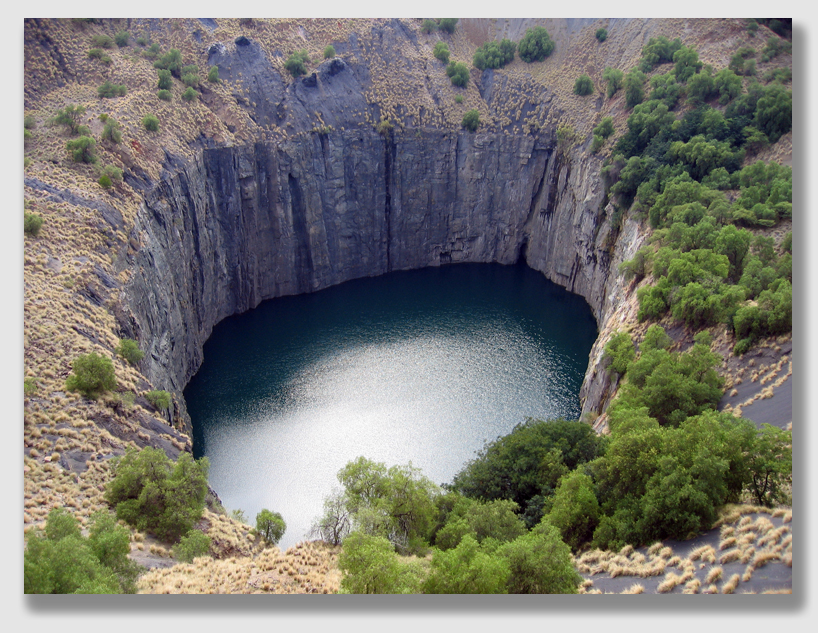
Last spring, the case was again in front of the District Court, which seemed just a little too enamored of the bike rider and too dismissive of USAFA management for our tastes. After all, a sinkhole big enough to swallow Jim? We’ve seen the Academy grounds, even the unimproved parts, and they are pretty wide open, sparse of trees and underbrush. How did Jim, who admitted he rode the trail regularly, miss seeing the sinkhole well before he rode into it?

Alas, we’ll never know. What we do know is that the District Court concluded that the Academy folks knew people used the trail although they were not supposed to. A USAFA employee who maintained the 40-square mile grounds saw and photographed the sinkhole a few weeks before the accident, but because he himself did not know that people were using the path despite the signs, he saw no reason to fill the sinkhole.

But thanks to the tort doctrine of respondeat superior, which is a Latin way of saying the company is to blame when its employees are negligent in the course of their employment, the District Court strung together management’s knowledge that people ignored the signs and used the path with the employee’s knowledge of the sinkhole, and found that USAFA willfully failed to guard or warn against a known dangerous condition…”

Voilà! Just like that, the Air Force Academy was back on the hot seat, and Jim rode off on his bicycle with 160 lbs. in his rucksack, which is about what $7.3 million in 100-dollar bills weigh.

Nelson v. United States, 256 F. Supp. 3d 1136 (D.Colo. 2017): James Nelson was seriously injured in a bicycle accident on September 3, 2008, when he encountered a sinkhole/washout on a bike path on United States Air Force Academy land. He sued under the Federal Tort Claims Act for damages. The Tenth Circuit previously determined that the Academy was immune from liability within the limits of Colorado’s Recreational User Statute.

Prior to Jim’s accident, USAFA knew that the path existed on its property and that members of the public used the path where Jim was injured. Upkeep of the property was the Academy’s responsibility. The Academy had a Trails Management Plan that provided guidance about the proper maintenance to be performed on official trails, but the asphalt path on which the biking accident occurred was not on the Academy’s Real Property Record, so maintenance of the path did not fall within the scope of a contract the USAFA had with a maintenance company.

The sinkhole Jim encountered was the result of off-site water flowing onto Academy property that overwhelmed the culvert running under the path, causing a washout. Dr. Brian Mihlbachler, an Academy contractor responsible for grounds maintenance, testified that the sinkhole was large and readily visible during the day. However, a witness who encountered the sinkhole while jogging the morning after Jim’s accident thought the sinkhole was water until he was significantly closer to it.

Dr. Mihlbachler said the condition of the path with the sinkhole would be a safety hazard for path users if it were an official Academy trail. Thus, if it were an official trail, he would have reported the condition of the path to maintenance to get it repaired. He was the only Academy employee actually aware of the sinkhole before the accident and in fact, had photographed the sinkhole two weeks before Jim was injured. However, he did not report the sinkhole or to anyone else before the accident, because the trail management plan did not reference any asphalt-surfaced trails. There was no rule or regulation in the trail management plan or otherwise, that would have required fixing a hole on an unofficial path, such as the asphalt path. Dr. Mihlbachler also said the Academy’s trail management plan contained guidelines about what constitutes a safe trail for the users, and that “criteria would have applied in this situation [to the asphalt path] had I known that it was designed – . . . as a trail, yes.”

The Court held that Dr. Mihlbachler chose not to do anything about the sinkhole when he encountered it (other than to take its picture). His decision was based on his perception that it was not the Academy’s responsibility because he did not think people were using the path for recreational purposes. He “didn’t feel the Air Force Academy considered it to be a trail of any sort” and that the hole was thus unlikely to cause anyone harm.

The Court found the Academy unreasonably failed to exercise reasonable care to protect against a danger – the sinkhole on the path caused by erosion – of which it actually knew. Under the respondeat superior doctrine, “an employer or principal is liable for acts that its employee or agent commits on behalf of the employer or principal within the scope of the employment or agency… based on the theory that the employee acts on behalf of the employer when the employee is acting within the scope of his authority.” The evidence shows that Dr. Mihlbachler knew of the significant erosion problems in the immediate area of the path and its condition prior to Jim’s accident.

The RUA places the risk of injury for recreational activity upon the recreational user rather than the landowner subject to certain specifically enumerated exceptions to its limitations on landowner liability. One of these exceptions to liability is a landowner’s “willful or malicious failure to guard or warn against a known dangerous condition, use, structure, or activity likely to cause harm.”

The RUA does not define the terms “willful” or “malicious,” but the court concluded the phrase had its plain and ordinary meaning of “voluntarily, purposefully and with a conscious disregard for the consequences of the act”. Willfulness does not require that a government employee be consciously aware that his acts or omissions create danger or risk to the safety of the public. It was enough that the Academy knew that the asphalt path existed on its property and knew that persons used the path for recreational purposes, including bicycling, by invitation or with permission.

What’s more, the Court said, the Academy knew that people were using the path for recreational purposes yet chose not to communicate that to its agent, Dr. Mihlbachler, even though he played a safety role at the Academy in connection with his role as Trail Manager. Thus, the court concluded, Dr. Mihlbachler acted “voluntarily, intentionally, and with a conscious disregard for the consequences of the act” when he chose not to make the sinkhole a priority or to do anything to warn about it or guard against its danger.

Despite the immunity normally afforded by the RUA, the Air Force Academy was liable to Jim.

– Tom Root

TNLBGray140407

Case of the Day – Tuesday, January 20, 2026

SOMETIMES, DOING NOTHING IS AN OPTION

We’ve talked before about state recreational user acts, statutes adopted in almost every state that encourage landowners to permit recreational use of their undeveloped land. The notion goes that by shielding property owners from liability when Connie Klutz, out for an afternoon of bird-watching, blunders into a pool of quicksand, they will magnanimously open their lands for free to the litter, noise, and hubbub of the general public.

That’s the theory.

But sometimes, an RUA can ride to the rescue of a landowner who never intended that people traipse across his or her land. Why would that be? Imagine you live in Colorado. And why not? It’s a nice place, Rocky Mountain highs, nowadays from marijuana as much as from taking in the scenic splendor.

One day, some knucklehead ignores the “trespassers will” signs posted around your property, hikes through your fields, and falls in a gopher hole. It could happen, you know. His lawyer shouts, “negligence!” You respond, “I let him take the path that was just as fair, and having perhaps the better claim… Therefore, I am protected by the RUA.”

Your alternative to RUA protection is hardly as pretty. If you invited him onto your premises, and he was not a recreational user, you owed him “the highest duty of care.” Suppose he was a mere licensee, a person “who enters or remains on the land of another for the licensee’s own convenience or to advance his own interests, pursuant to the landowner’s permission or consent.” In that case, you still are liable if there is an “unreasonable failure” on your part to exercise reasonable care concerning dangers you created or failure to warn of hazards you did not create but which “are not ordinarily present on property of the type involved and of which the landowner actually knew.” Even if your clumsy hiker is simply a “trespasser,” a person who “enters or remains on the land of another without the landowner’s consent,” he may recover for damages you willfully or deliberately caused.

How much easier just to make anyone who gets hurt on your land a recreational user. Under Colorado’s RUA, “the owner of land who either directly or indirectly invites or permits, without charge, any person to use such property for recreational purposes” will not be responsible for “any injury to person or property… caused by an act or omission” of the landowner.

In today’s case, the Colorado landowner under the gun is the United States Air Force Academy. USAFA has a sprawling complex of academic buildings, airfields, athletic complexes, housing for support personnel, and a lot of undeveloped land, all nestled up against the Front Range. Within the 40 square miles or so of Academy land was a bike trail, ominously marked at the entrance with a sign prohibiting entrance. Another sign, put up by persons unknown but not removed by Air Force Academy folks, said, “Bicycle Path – No Motorized Vehicles.”

Jim Nelson, a guy who regularly ignored the “Entry Illegal” signs, managed to ride into a “large sinkhole” – what, Jim, you didn’t see it? – and racked himself up rather badly. At trial, he stuck it to USAFA to the tune of millions of dollars. The Tenth Circuit, however, had other ideas. Whether it invited Jim or not (and the Academy was sure it had not), he was a recreational user, and the Academy seemed to be as free as a falcon.

Whoever said, “Doing nothing is not an option?” Certainly not the Tenth Circuit.

Nelson v. United States, 827 F.3d 927 (10th Cir. 2016). Jim Nelson was a regular user of a bicycle path on property owned by the United States Air Force Academy. While riding in 2008, he struck a large sinkhole and severely injured himself.

Two signs stood near the path’s entrance. The first sign, erected by the Academy, informed visitors that entry was illegal without permission. The second sign, located closer to the path’s entrance and easier for bikers to read, stated, “Bicycle Path, No Motorized Vehicles.” The Academy did not erect the “Bicycle Path” sign, nor did anyone there know who did or when it was done. But the sign was displayed for at least as long as Mr. Nelson had been using the path.

A year before the accident, the Colorado Department of Transportation offered to remove the sign near the right-of-way on Interstate 25 where the highway crosses Academy property. The Academy, however, never responded to the email offer, and the sign remained in place until Mr. Nelson’s accident the following year. After the accident, the Academy closed the path.

Mr. Nelson sued the United States for his injuries. The district court found the Academy knew the path was used for recreational purposes such as jogging and biking, although USAFA considered bike path users trespassers on Academy land. Nonetheless, the Academy never confronted recreational users or prevented them from using the path. The district court also found that the Academy did not intend for the path to be a recreational trail open to the public.

Based on these findings, the district court held the Academy could not take advantage of the limitations on liability under the Colorado Recreational Use statute because the Academy had not intended to open the path for public recreational use. And since the Academy knew bikers were using the path and was aware of the sinkhole, it breached its duty of care by failing to repair the sinkhole or warn users of the risk.

Held: USAFA is entitled to rely on the Colorado Recreational Use Statute (CRS § 33-41-103). The U.S. Court of Appeals for the Tenth Circuit held that the Academy was shielded from Jim Nelson’s tort claims because it knew the bike path was being used by the public and took no steps to block such usage. Thus, for purposes of the statute, the Academy “indirectly permitted” Jim’s use for recreational purposes. The Court of Appeals said the RUA extends protection to any person the landowner “directly or indirectly invites or permits” to use the property for recreational purposes. Under Colorado law, “permission” is defined as “conduct that justified others in believing that the possessor of property is willing to have them enter if they want to do so.”

No one thought USAFA directly permitted use of the path – in fact, the Academy considered users of the bike path to be trespassers. But the Air Force Academy knew people used the path all the time, knew someone had placed an unauthorized sign at the start of the party, and never removed the sign or otherwise prevented its use. This conduct, the Court said, “can only be seen as indirectly permitting bikers such as Mr. Nelson to use the path for recreational purposes.

The Court said no “subjective intent requirement” was required under the RUA. In other words, you don’t have to intend to offer your land for free recreational use. It’s enough that you don’t stop people.

Here, the Court said, the Academy’s purposeful actions implicitly allowed or acquiesced in Mr. Nelson’s use of the path. USAFA’s knowledge that the path was used by the general public, combined with its knowledge of the sign and its refusal to remove it, was enough to demonstrate permission under the Act. The Court ruled, “Landowners are entitled to protection by knowingly permitting recreational use of their property. Under a plain reading of the statute, the Academy “indirectly permitted” Mr. Nelson’s use of the path through its conduct.”

Sounds like a sweet deal for the Zoomies, right? Just wait until tomorrow…

– Tom Root

TNLBGray140407

Case of the Day – Friday, March 14, 2025

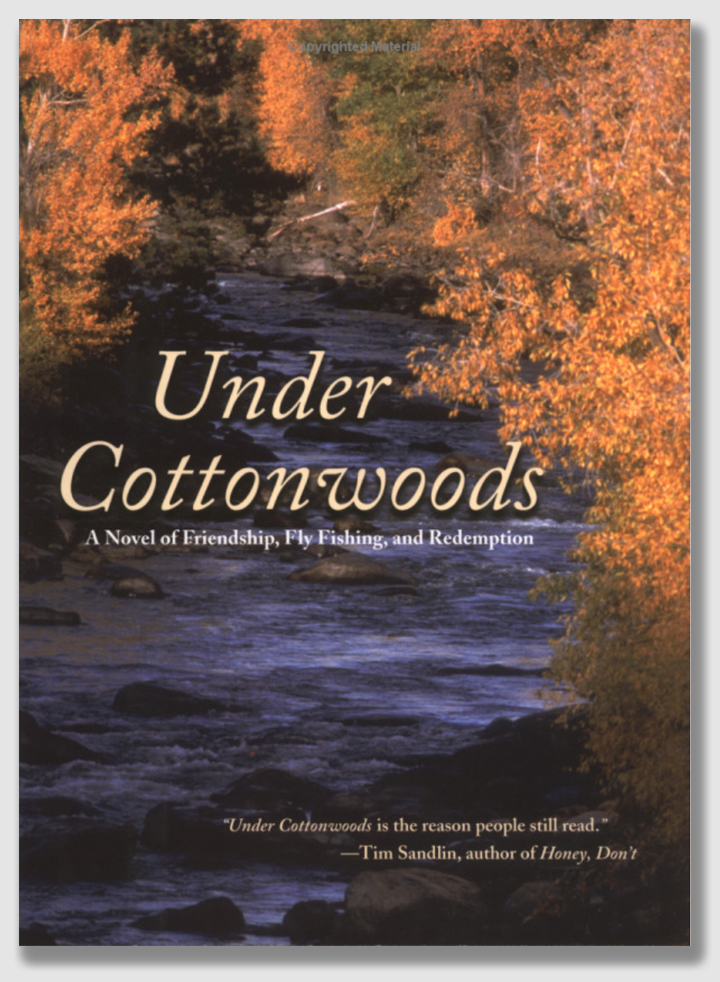
UNDER THE COTTONWOODS

We don't know him ... but he's reputed to be good at what he does.

We don’t know him… but he’s reputed to be good at what he does.

Anyone who has suffered through more than an hour of daytime television is familiar with personal injury lawyers’ ads. One of Ohio’s PI stars is Tim Misny, whose bald pate is immediately recognizable to any Buckeye State dweller with a TV set, along with his trademarked slogan, “I’ll make them pay.”

Tim cautions his would-be clients that the slogan isn’t a guarantee. It’s too bad that Sara Burnett’s Colorado attorney – who was not Tim Misny, and for that matter, may not even have been bald – didn’t tell her as much. Sadly for her, after five years of litigation, she got nothing.

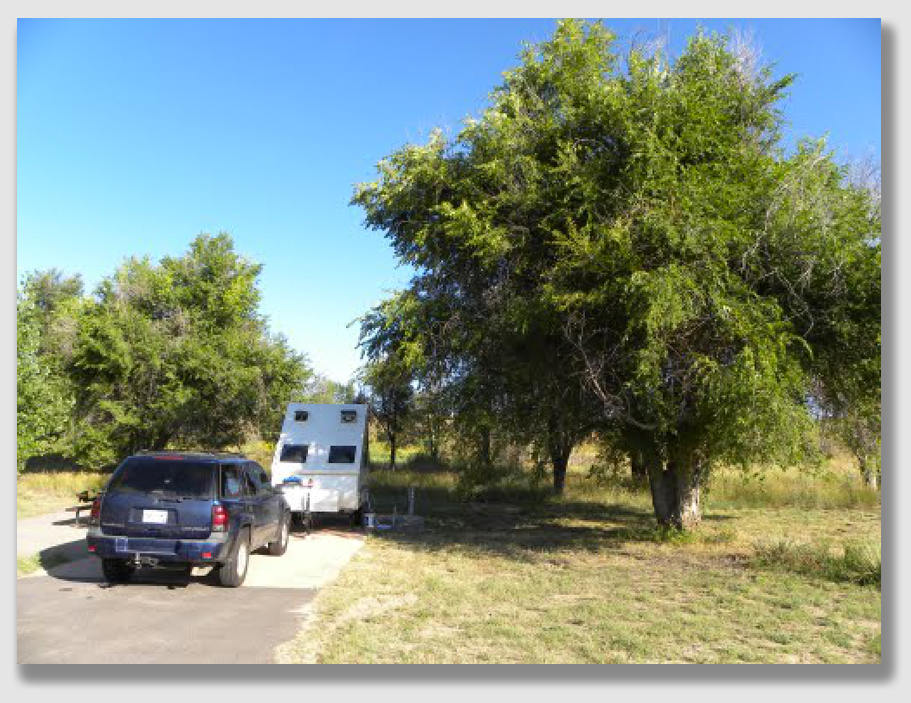
Sad for her, but not for the public, whose pain in the pocketbook is all too often forgotten. It seems that Sara and her friend Mackenzie went camping at a suburban Denver state park, just a pleasant July evening under the cottonwoods. Unfortunately for Sara, one of the cottonwoods she camped under picked that same night to shed a branch. A big branch. The falling limb demolished Sara’s tent and badly hurt her head and back. Fortunately, Mackenzie was able to drive both of the young women to the hospital.

For Sara, "Under Cottonwoods" did not have a happy ending.

     For Sara, “under the cottonwoods” – unlike the novel – did not have a happy ending.

Sara then embarked on a campaign to make the State of Colorado pay for her injuries. The State defended on the grounds that it was immune from suit.

The notion of governmental immunity, fully known as “sovereign immunity,” traces its origins to early English law. Back then, the sovereign – that is, the king – was deemed incapable of committing a legal wrong. Thus, his majesty (and by extension his entire government of officials, ministers, clerks, and knaves) was immune from civil suit or criminal prosecution.

The doctrine survives today in the United States. The Federal government, all state governments, and most political subdivisions thereof are immune from liability for the conduct of their officers, agents, and employees acting within the scope of their employment. Unsurprisingly, there are exceptions, cases in which the government has permitted itself to be sued. A good example is the Federal Tort Claims Act, which permits certain types of actions (such as negligence) to be brought against Uncle Sam, subject to some limitations.

Colorado has a statute similar to the FTCA, known as the Colorado Governmental Immunity Act. Generally, courts require that statutes like the FTCA and CGIA be strictly construed in favor of the sovereign and may not be enlarged beyond the waiver its language expressly requires.

In Sara’s case, the Colorado Supreme Court observed at the outset that “governmental immunity is sometimes inequitable, but… governmental entities provide many essential services that unlimited liability could disrupt or make prohibitively expensive… The balance between these two competing interests ‘is for the legislature alone to reach’.”

The CGIA held that the State retains immunity for “an injury caused by the natural condition of any unimproved property.” This seems to pretty much slam the door of Sara claiming that a branch falling out of a tree should open the Colorado treasury to her. But her lawyer was crafty. He learned that the Park employees sometimes trimmed trees that required it. Thus, he argued, the trees ceased being in “natural condition” because the State altered that condition through incidental maintenance. Plus, because the State built the campsite next to and under the trees, those trees became “incorporated” into improved property.

Works in real estate ... for tort claims against the State – not so well.

Works in real estate… But for tort claims against the State?  Not so well.

The Colorado Supreme Court rejected Sara’s claims. Parsing the voluminous history of the CGIA, the Court concluded that the Act did not permit the “spatial analysis” she proposed. In other words, it doesn’t matter how close to the improved facilities an unimproved natural object – like a cottonwood – might be. What matters is what caused the injury. Here, it was a branch from an unimproved tree in its natural condition. Its location next to a campground did not alter its natural state.

For that matter, neither did the State’s occasional cleanup of that tree and others like it when dangling limbs caused Park employees to trim and haul away detritus. The State had no duty to do so, the Court said, and the fact that it may trim on a volunteer basis did not convert what was not a duty into a legal obligation.

The Court’s decision is an interesting tutorial on governmental immunity, and on the balancing of competing interests in making unimproved land available for recreation and protecting the public from hazards created by governmental action.  It’s also a reminder that sometimes, no lawyer is good enough to “make them pay.”

Burnett v. Dept. of Natural Resources, 346 P.3d 1005 (Supreme Court of Colorado, March 23, 2015). One summer night, Denver area residents Sara Burnett and Mackenzie Brady were camping at suburban Cherry Creek Park. The pair chose a campsite that included a utility hookup, a parking area, a picnic table, and a level dirt pad, pitching their tent under a canopy of four mature cottonwood trees that flanked the campground. Early the next morning, while Burnett and Brady were sleeping inside their tent, a tree limb from one of the cottonwoods fell on their tent. The blow seriously injured Sara. Mackenzie suffered minor injuries but was able to drive Burnett to the hospital.

Due to the density of the canopy, Park employees who subsequently investigated the accident could not determine the source of the fallen tree limb.

Sara sued the State of Colorado Department of Natural Resources, Division of Parks and Outdoor Recreation for negligence. She relied on section 24-10-106(1)(e) of the Colorado Government Immunity Act to argue that the Park was a “public facility” and the branches overhanging the campsite constituted a “dangerous condition” of it. The State moved to dismiss, asserting sovereign immunity under a separate provision of the CGIA, by which a public entity retains immunity for “an injury caused by the natural condition of any unimproved property.” The parties agreed that the improved campsite was a “public facility” under the CGIA and that the trees adjacent to it originated on unimproved property.

The trial court applied Rosales v. City & County of Denver, 89 P.3d 507, 510 (Colo. App. 2004), determining that the sole issue was whether the trees adjacent to Sara’s campsite constituted a “public facility.” The trial court conducted a two-part Rosales analysis, concluding that the trees were not integral or essential to the campsite and thus could not constitute part of a “public facility” under § 24-10-106(1)(e). The court of appeals agreed, holding as well that because the trees were a “natural condition of … unimproved property,” § 24-10-106(1)(e) precluded Sara’s suit.

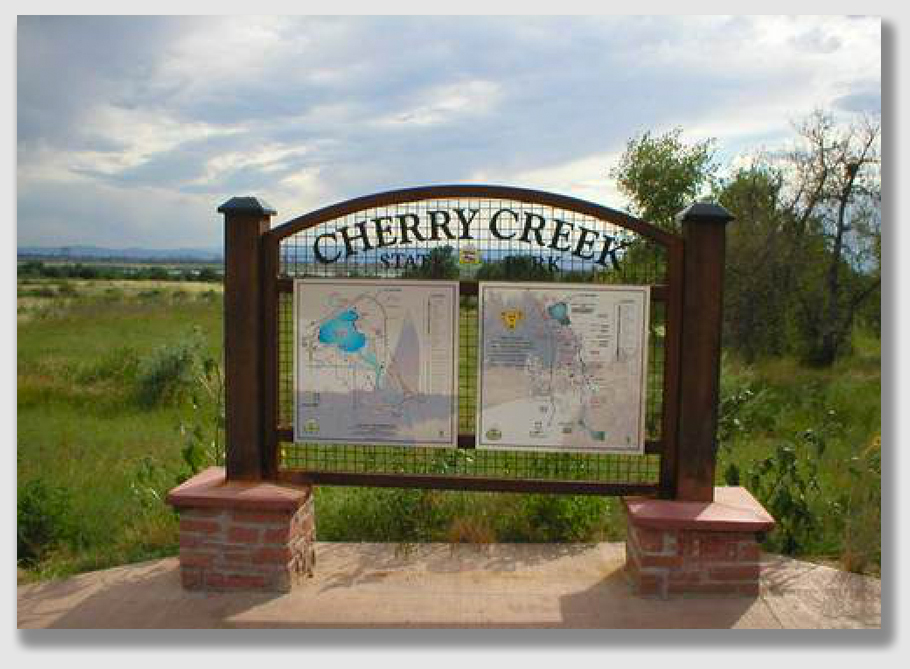
The suburban Denver state park where the mishap occurred.

The suburban Denver state park where the mishap occurred.

Sara appealed to the Supreme Court of Colorado.

Held: The State is immune from liability under the CGIA.

In the CGIA, a public entity waives its immunity to suit for an injury arising from a “dangerous condition of any… public facility located in any park” it maintains. But the public entity retains immunity for injuries “caused by the natural condition of any unimproved property, whether or not such property is located in a park…” Therefore, the Supreme Court said, “irrespective of what constitutes a public facility, the government retains immunity here if the tree at issue falls within the ambit of the natural condition of unimproved property limitation.”

The CGIA does not define “natural condition of any unimproved property.” Sara argued that the trees were in their “natural condition” until the State altered their condition through incidental maintenance. Plus, because the State built the campsite next to and under the trees, the State “incorporated” the trees into improved property. Therefore, she argued, the trees ceased to be a natural condition of unimproved property. The State, on the other hand, reasoned that where trees are native flora to property, their character as a “natural condition of unimproved property” remains regardless of incidental maintenance or their proximity to improvements on the land. Because the statute lacked a definition, the Court looked at the substantial amount of CGIA legislative history.

Prior to 1971, Colorado had no governmental immunity statute. Rather, immunity existed only as a court-made doctrine. That year, the Colorado Supreme Court “held that judicially imposed sovereign immunity was inappropriate and abolished such immunity at every level of government.” The legislature responded the next year with the CGIA. Fourteen years later, municipal insurance rates had skyrocketed. In response, the General Assembly rewrote the statute to afford the government greater protection against liability. A report supporting the amended law illustrated the legislative intent: first, it distinguished between dangerous conditions arising from man-made objects and natural objects; second, it explained that immunity should turn on the precise mechanism of the injury; third, it expressed the intent to exempt public entities from a duty to maintain any natural conditions; and fourth, it stated the policy goal of encouraging public entities to make unimproved, government-owned property open to the public without exposing those entities to the expense of defending claims brought by people injured while using the property.

Cottonwoods in the park ... If you know cottonwoods, you know how they like to shed.

Cottonwoods in the Park … If you know cottonwoods, you know how they like to shed.

Based on the CGIA’s legislative history, the Court concluded that “the legislature intended to retain immunity for injuries caused by native trees originating on unimproved property regardless of their proximity to a public facility…” Applying its interpretation to this case, the Court concluded that because a branch from trees originating on unimproved property caused Sara’s injuries, the natural condition provision of the CGIA precludes her suit. As for Sara’s argument that the statute can be interpreted that the State waives immunity for injuries caused by natural objects that are contiguous to improved property, the Court concluded that nothing in the legislative history indicated that the General Assembly intended the “spatial analysis” for which she was advocating. A rule that a public entity waives immunity for injuries that are caused by natural conditions and occur on improved property would create “a literal line-drawing problem,” requiring courts to adopt an arbitrary rule to determine when natural objects – such as trees – sit on improved property and when they do not. The Court tersely noted, “We are not at liberty to create this third category.”

Because the CGIA retains immunity for injuries caused by a “natural condition of … unimproved property,” immunity turns on the mechanism of Sara’s injuries, not her location when the injuries occurred. The Court found that the cottonwoods bordering Sara’s campsite were “native vegetation of the unimproved property,” and the branch at issue fell from one of those cottonwoods. “Thus,” the Court held, Sara’s “injuries were caused by a natural condition of unimproved property, such that the natural condition provision precludes her suit.”

In reaching that holding, the Court rejected Sara’s argument that the State had altered the natural condition of the trees by having previously pruned them. “Under the CGIA,” the Court ruled, “the State did not have any duty to prune the limbs, nor did it assume a duty to continue to prune them once it chose to do so … An assumed duty would be contrary to the public health and safety, as it would discourage the State from undertaking any pruning whatsoever.” The Court refused to create a rule “that would transform natural conditions of unimproved property into improved property where, for the public health and safety, a public entity performs such incidental maintenance.”

In what was little more than a footnote at the end of the decision, the Colorado Supreme Court observed that “the trial court and court of appeals relied upon the two-part analysis delineated in Rosales … first, was the tree an “integral” part of the public facility …” and “second, was the tree “essential” for the public facility’s intended use?” Noting that “these questions do not originate in the CGIA,” the Court overruled its 11-year-old Rosales rule.

The Court admitted that Sara’s “injuries are tragic,” but it concluded that “eliminating governmental immunity in this case would only compound the tragedy by sidestepping legislative intent and providing a disincentive for the government to facilitate access to public lands.”

– Tom Root

TNLBGray140407

Case of the Day – Tuesday, September 3, 2024

LOVE, BOUNDARY TREE STYLE

Tree law fans (and I consider myself to be a fan) waited for a long time for the Colorado Supreme Court to decide Love v. Klosky, and do away with the clunky old Rhodig v. Keck rule. The Rhodig rule holds that a tree that has grown up to be a boundary line tree is not owned by both property owners unless the neighbors claiming part ownership can jump through hoops to prove they (or their predecessors-in-interest) helped plant or nurture the tree, or treated it as the boundary line. The Court acted in 2018, and we duly reported on the matter at the time.

I was quite disappointed by the missed opportunity the Love decision turned out to be, and we said so.

Today, I’m reviewing the ruling, because, for the next week or so, I will be talking about the strangeness that is the boundary-tree rule. Brushing up on current events, weirdly enough, is a good place to start.

In the rest of the civilized world (except for Minnesota, where, ironically enough, I am sitting writing this), a tree that straddles a boundary line is owned by both property owners, usually as tenants-in-common but – as we will see next week – sometimes as something more or less. The general rule is that one owner can’t mess with the tree without the other one’s permission.

As 1970s television cooking personality Chef Tell would have said, “Very simple, very easy.” No messy litigation, no one keeping tree-feeding logs, garden shop receipts, or detailed journals of joint plantings of years gone by. Just a simple, binary rule: If the tree crosses the property line, both landowners have an interest. If it does not cross the line, only one does.

Unfortunately, the Colorado Supreme Court’s love affair with stare decisis – the legal doctrine that holdings of prior cases should govern the outcome of present and future cases – has led it to a tortured defense of Rhodig. Everyone has it wrong, the Court said: Rhodig doesn’t apply to all boundary trees, just trees that started growing on one side of the property line and grew across the line to encroach on the other property.

It is more than a little ironic that a cartoon set in Colorado, South Park, once featured the Chewbacca defense, spun out by a Johnny Cochrane caricature. As Johnny put it in his closing, “That does not make sense.”

Johnny could have been talking about this decision. We all learned in 7th-grade math that a line segment stretches between points A and B and has no thickness. Unless that tiny little sprig of an oak tree in your backyard has the dimensions of, say, Flat Stanley, the odds that it will not start growing on one side of the boundary or the other approach zero. And 10, 20 or 50 years down the road, proving that the tree began its arboreal life straddling a boundary line of no thickness will require legal and arborist legerdemain that will make the Chewbacca defense sound like a Supreme Court argument.

The effect of Love v. Klosky could well be to start a real cottage industry for Colorado lawyers and arborists, proving where young maple or catalpa shoots began their lives. The only trees that are not subject to this nonsensical rule would be those old enough to have been standing in the 19th century when Colorado was first platted.

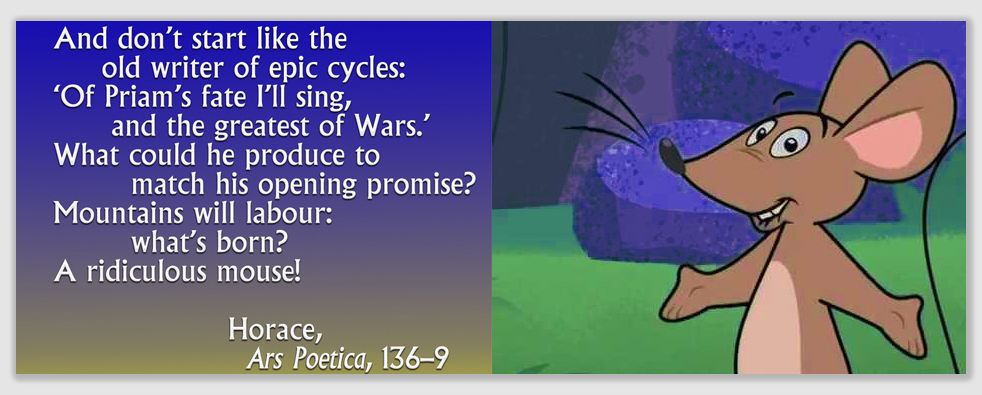
The Colorado Supreme Court had a chance to clean things up by running Rhodig through the tree chipper of legal history. Instead, it labored mightily… and brought forth a mouse.

Love v. Klosky, 413 P.3d 1267 (Supreme Court Colo., 2018). Carole Bishop and Mark Klosky and Shannon and Keith Love own adjacent parcels of land in Denver’s Washington Park neighborhood. A 70–foot tall catalpa tree towers over two adjacent properties. At the base of its trunk, the tree sits roughly three-quarters on the Kloskys’ property and one-quarter on the Loves’ property. The tree began growing on the lots well before the parties moved in, and no one knows who (if anyone) planted it. Whatever its origin story, the tree shed its leaves, seed pods, and branches on both properties without favoritism.

Catalpa tree

Unhappy with the debris, the Kloskys want to cut the tree down. The Loves unsuccessfully tried to convince their neighbors not to do so. When persuasion failed, they sued. The trial court ruled for the Kloskys, holding consistent with the Colorado rule enunciated in Rhodig v. Keck that unless the Loves could prove that they or their predecessors had helped in planting or maintaining the tree, or that they and the Kloskys’ predecessors had treated the catalpa tree as the boundary, the tree belonged solely to the Kloskeys.

On appeal, the Loves argued that Rhodig should be overturned, but the court held it was bound by Rhodig, which it interpreted to mean that “boundary trees are held as common property only if the landowners jointly planted, jointly cared for, or jointly treated the trees as a partition between the properties.” Two of the appellate judges, however, called on the Colorado Supreme Court to overturn Rhodig and require instead that any time a tree straddles two lands, the adjacent property owners jointly own the tree as tenants-in-common.

The Loves asked the Colorado Supreme Court to review the case.

Held: The Supreme Court, refusing to overturn Rhodig v. Keck, held that the Kloskys could remove the tree because it remained the sole property of the owner of the land where the tree first grew unless the tree was jointly planted, jointly cared for, or treated as a partition between the two properties. Because the Loves could not prove any shared property interest in the tree, they could not prevent the Kloskys from removing it.

The Loves argued that Rhodig should be overruled and that the Court should automatically make them tenants-in-common with the Kloskys for no other reason than the catalpa tree had crossed the property line. The Kloskys, on the other hand, argued that Rhodig holds that even when a tree crosses over a boundary line, it remains the property of the owner of the land on which the tree originally grew unless one of the joint-action situations enumerated in Rhodig applies.

The Court said there was no sound legal basis for abandoning Rhodig, surmising that “our ambiguous precedent caused the lower courts to conflate the common law rule for true boundary-line cases and the test for encroachment trees.” Instead, it clarified that Rhodig only governs “encroachment trees,” trees that begin life entirely on one property only to migrate partially to another. Under Rhodig, a landowner may remove such a tree without first securing the approval of his neighbor, unless the landowners jointly planted, jointly cared for, or jointly treated the trees as a boundary marker. The Court said that Rhodig does not represent some weird minority rule on boundary trees. Indeed, the Court lectured, the common law rule regarding true boundary-line-tree cases – where the tree sits squarely on a property boundary with no evidence of migration – is not implicated by Rhodig. In such a case, a tree standing on the division line between adjoining landowners is generally considered the common property of both landowners, even in Colorado. 

Thus, the Court ruled, Rhodig only applied when a tree originally growing on one property grew and encroached on another. Having clarified what Rhodig means, the Court concluded it was correctly decided and remains sound. “And, we see no conditions that have changed to make the above reasoning any less compelling today than when we decided Rhodig.”

The Court ruled that the Loves did not show other circumstances that would create joint ownership. “Just as the Rhodigs had no property interest in the trees that had encroached onto their land because there was not sufficient evidence the parties jointly planted the trees, jointly cared for the trees, or intended for the trees to serve as a boundary,” the Court wrote, “here, the Loves have no property interest in the tree that has encroached onto their land because they have not shown such joint activity implying shared ownership.”

– Tom Root

TNLBGray140407

Case of the Day – Thursday, March 28, 2024

COLORADO SUPREME COURT BRINGS FORTH A MOUSE

Tree law fans (and we consider ourselves to be fans) couldn’t wait for the Colorado Supreme Court to decide Love v. Klosky, and do away with the clunky old Rhodig v. Keck rule. The Rhodig rule holds that a tree that has grown up to be a boundary line tree is not owned by both property owners unless the neighbors claiming part ownership can jump through hoops to prove they (or their predecessors-in-interest) helped plant or nurture the tree, or treated it as the boundary line. When the Court finally acted a six years ago, it brought forth a silly mouse of a rule that tries to save Rhodig by “clarifying” it in the most meaningless way possible.

The story bears repeating.

In the rest of the civilized world (sorry, Minnesota, not you), a tree that straddles a boundary line is owned by both property owners as tenants-in-common. One owner can’t mess with the tree without the other one’s permission. As 1970s television cooking personality, Chef Tell, would have said, “Very simple, very easy.” No messy litigation, no one keeping tree-feeding logs, garden shop receipts, or detailed journals of joint plantings of years gone by. Just a simple, binary rule: If the tree crosses the property line, both landowners have an interest. If it does not cross the line, only one does.

Unfortunately, the Colorado Supreme Court’s love affair with stare decisis – the legal doctrine that holdings of prior cases should govern the outcome of present and future cases – has led it to a tortured defense of Rhodig. Everyone has it wrong, the Court said: Rhodig doesn’t apply to all boundary trees, just trees that started growing on one side of the property line and grew across the line to encroach on the other property.

It is more than a little ironic that a cartoon set in Colorado, South Park, once featured the Chewbacca defense, spun out by a Johnny Cochrane caricature. As Johnny put it in his closing, “That does not make sense.”

Johnny could have been talking about this decision. We all learned in 7th-grade math that a line segment stretches between points A and B and has no thickness. Unless that tiny little sprig of an oak tree in your backyard has the dimensions of, say, Flat Stanley, the odds that it will not start growing on one side of the boundary or the other approach zero. And 10, 20 or 50 years down the road, proving that the tree began its arboreal life straddling a boundary line of no thickness will require legal and arborist legerdemain that will make the Chewbacca defense sound like a Supreme Court argument.

Love v. Klosky ought to start a real cottage industry for Colorado lawyers and arborists, proving where young maple or catalpa shoots began their lives. The only trees that are not subject to this nonsensical rule would be those old enough to have been standing in the 19th century when Colorado was first platted.

The Colorado Supreme Court had a chance to clean things up by running Rhodig through the tree chipper of legal history. Instead, it labored mightily… and brought forth a mouse.

Love v. Klosky, Case No. 16SC815, 2018 CO, 413 P.3d 1267 (Supreme Court Colo., 2018). Carole Bishop and Mark Klosky and Shannon and Keith Love own adjacent parcels of land in Denver’s Washington Park neighborhood. A 70–foot tall catalpa tree towers over two adjacent properties. At the base of its trunk, the tree sits roughly three-quarters on the Kloskys’ property and one-quarter on the Loves’ property. The tree began growing on the lots well before the parties moved in, and no one knows who (if anyone) planted it. Whatever its pedigree, the tree sheds leaves, seed pods, and branches on both properties.

Catalpa tree

Unhappy with the debris, the Kloskys wanted to cut the tree down. The Loves unsuccessfully tried to convince their neighbors not to do so. When persuasion failed, they sued. The trial court ruled for the Kloskys, holding – consistent with the Colorado rule enunciated in Rhodig v. Keck – that unless the Loves could prove that they or their predecessors had helped in planting or maintaining the tree, or that they and the Kloskys’ predecessors had treated the catalpa tree as the boundary, the tree belonged solely to the Kloskys.

On appeal, the Loves argued that Rhodig should be overturned, but the court held it was bound by Rhodig, which it interpreted to mean that “boundary trees are held as common property only if the landowners jointly planted, jointly cared for, or jointly treated the trees as a partition between the properties.” Two of the appellate judges, however, called on the Colorado Supreme Court to overturn Rhodig and require instead that any time a tree straddles two lands, the adjacent property owners jointly own the tree as tenants-in-common.

The Loves asked the Colorado Supreme Court to review the case.

Held: The Supreme Court, refusing to overturn Rhodig v. Keck, held that the Kloskys could remove the tree because it remained the sole property of the owner of the land where the tree first grew, unless the tree was jointly planted, jointly cared for, or treated as a partition between the two properties. Because the Loves could not prove any shared property interest in the tree, they could not prevent the Kloskys from removing the tree.

The Loves argued that Rhodig should be overruled, and that the Court should automatically make them tenants-in-common with the Kloskys for no other reason than the catalpa tree had crossed the property line. The Kloskys on the other hand, argued that Rhodig holds that even when a tree crosses over a boundary line, it remains the property of the owner of the land on which the tree originally grew unless one of the joint-action situations enumerated in Rhodig applies.

The Court said there was no sound legal basis for abandoning Rhodig, surmising that “our ambiguous precedent caused the lower courts to conflate the common law rule for true boundary-line cases and the test for encroachment trees.” Instead, it clarified that Rhodig only governs “encroachment trees,” trees that begin life entirely on one property only to migrate partially to another. Under Rhodig, a landowner may remove such a tree without first securing the approval of his neighbor, unless the landowners jointly planted, jointly cared for, or jointly treated the trees as a boundary marker. The Court said that Rhodig does not represent some weird minority rule on boundary trees. Indeed, the Court lectured, the common law rule regarding true boundary-line-tree cases – where the tree sits squarely on a property boundary with no evidence of migration – is not implicated by Rhodig. In such a case, a tree standing on the division line between adjoining landowners is generally considered the common property of both landowners, even in Colorado. 

Thus, the Court ruled, Rhodig only applied when a tree originally growing on one property grew and encroached on another. Having clarified what Rhodig means, the Court concluded it was correctly decided and remains sound. “And, we see no conditions that have changed to make the above reasoning any less compelling today than when we decided Rhodig.”

In this case, the Court held, the Loves did not sufficiently show other circumstances that could create joint ownership of the encroaching tree. “Just as the Rhodigs had no property interest in the trees that had encroached onto their land because there was not sufficient evidence the parties jointly planted the trees, jointly cared for the trees, or intended for the trees to serve as a boundary,” the Court wrote, “here, the Loves have no property interest in the tree that has encroached onto their land because they have not shown such joint activity implying shared ownership.”

– Tom Root

TNLBGray140407