
THE OYES DON’T HAVE IT
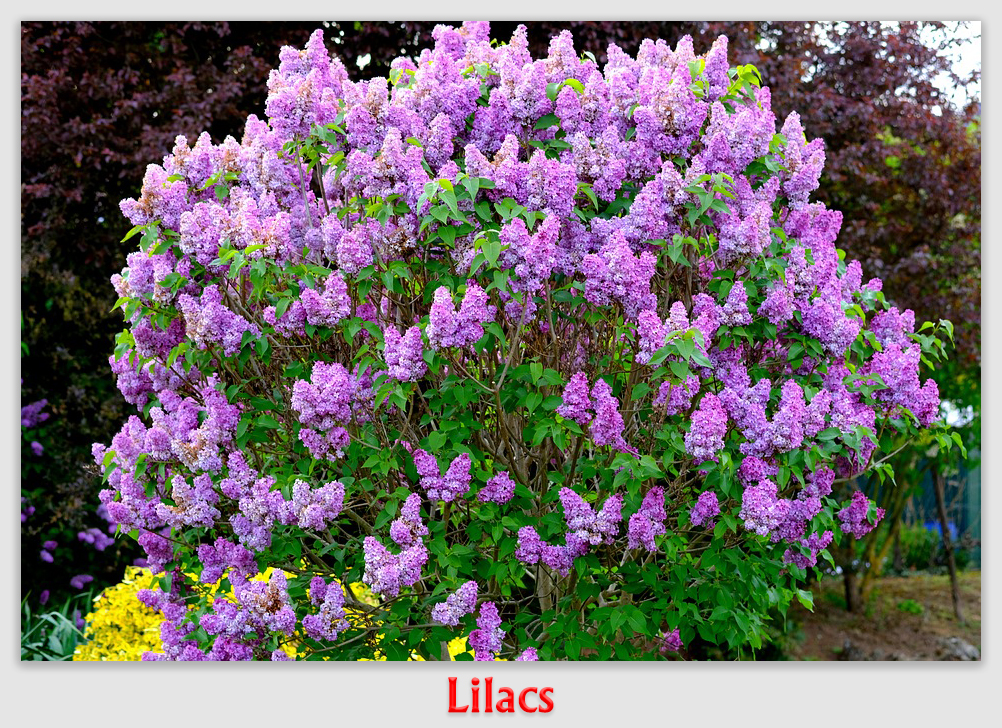
 You sort of wonder how a kerfuffle over some lilac bushes and a bridal wreath bush in a backyard can end up in the state supreme court. I mean, even back in 1983, legal fees were not insignificant. These bushes were on the back boundary of a couple of properties, so we’re not even talking curb appeal.
Regardless, Raymond Oye did not like the shrubs on the property line. He and his wife thought they were ugly. Neighbor Lou Ann Patterson did not. But Ray started tearing them out anyway. When Lou Ann protested, Mr. Oye said, ‘Nay.’
There ensued a trial, an appeal and a trip to the Supreme Court in Lincoln, Nebraska, the principal purposes of which seemed to have been to enrich some lawyers and reach a result Mr. Oye should have seen coming like a freight train through a tunnel. Now mind you, we have no problem with enriching lawyers. We sort of see it as a happy ending. But not everyone feels that way, nor should they.
More than once, we’ve told would-be clients to save their money and suck it up, because they weren’t going to win. We often quote the old legal saw, “A bad settlement is better than a good lawsuit.” It’s an enduring aphorism, probably because it’s true.
In this case, the Oyes didn’t have it, and never did. Compromise with Ms. Patterson would have been much cheaper.
 Patterson v. Oye, 214 Neb. 167, 333 N.W.2d 389 (Supreme Ct. Neb. 1983). Lou Ann Patterson owned a piece of property next to Ray and Jeanette Oye’s place. Their backyards abutted on a 132-foot north-south line, with Lou Ann’s property being slightly higher at the boundary line. Lou Ann’s house was built by Truman Clare in 1955, and she bought it in 1972. The Oyes’ residence was built in 1956 by Elmer Larsen, who planted lilac bushes and some beautiful bridal wreath on the southern third of the boundary line.
Both Elmer and Truman said the bushes contributed to their privacy and improved the general appearance of their backyards. When Elmer sold the property to Lou Ann, the bushes were at least six feet high and had spread out by natural growth. Some other bushes grew on the property line, and Elmer trimmed them, but he never claimed to own the bushes.
Between 1973 and 1977, Lou Ann and the Oyes both maintained the bushes, although the Oyes performed more work than Lou Ann did. Nevertheless, Lou Ann considered the bushes to be growing on the boundary line and to be common property. She said that they provided her privacy and added to the aesthetic value of the property. The Oyes claimed that they owned the bushes inasmuch as Elmer had planted them and they had done most of the caring for the bushes. In fact, Ray Oye claimed that in 1973, Lou Ann told him she thought the hedge belonged to him.
The Oyes considered the brilliant purple of the lilacs and delicate whites of the bridal wreath to be ugly. Ray wanted to remove the hedge and build a rock wall, partly to divert runoff from his land. So Ray started to work, removing about 48 feet of bushes at the north end of the boundary line before Lou Ann objected. The neighbors’ efforts at compromise failed, so Lou Ann sued, alleging trespass and asking for damages and an injunction.
As of the time of trial, the remaining bushes were 12 to 18 inches wide at their base, growing on the boundary line, and were untrimmed, spread out and intermingled with other growth. The cost of replacing the bushes Ray had torn out was from $300 to $1,500.
 The trial court found that the shrubs were on the boundary line and issued an injunction against Ray and Jeanette cutting any more of the bushes. The court further ruled that Oyes owed Lou Ann $400.00 in trespass damages.
The Oyes appealed.
Held: A tree, standing directly upon the line between adjoining owners so that the line passes through it, is the common property of both parties, and neither owner may cut and destroy it without the consent of the other. When one common owner threatens damage to a commonly owned tree or shrub, a court may issue an injunction to prevent the damage.
Traditionally, where the tree trunk impinges upon the lot line, “and when the respective owners have for years jointly cared for the tree, and divided the expenses of protecting it… then each has an interest in the tree sufficient to demand that the owner of the other portion shall not destroy the tree.” The equities in a boundary tree favor the shade and other benefits of a tree.
 The Supreme Court of Nebraska found that Lou Ann and the Oyes owned the bushes growing on their common boundary line as tenants-in-common and that the Oyes wrongfully removed and destroyed about 48 feet of those bushes, for which the trial court properly assessed $400 in damages. The Court found that if the Oyes continued on their course of conduct, they might “harm, damage, or destroy some or all of the remaining bushes growing on the boundary line, which would cause irreparable damage to plaintiff and unnecessary litigation, and that the terms of the trial court’s injunction are equitable.”
The Oyes argued that the injunction would impose years of unreasonable future hardship on them and invite abuse from Lou Ann. The Court was unmoved: “Defendants are reminded that the law provides avenues of relief in the event they feel aggrieved. Where there is a change of circumstances, they may apply to the court to vacate or modify the decree.”
To channel the late Rodney King, Mr. and Mrs. Oye, can’t we all just get along?
– Tom Root


 Tree and Neighbor Law For Homeowners and Professionals