Case of the Day – Tuesday, January 13, 2026

BOB AND TED’S EXCELLENT ADVENTURE

In these days, when so many people do the bare minimum needed to get by, it’s refreshing to read about a pair of go-getters like Bob and Ted. When the Weisslers built their dream home on the Finger Lakes in Palmer, Alaska, they arranged for electric coop Matanuska Electric Association to provide electric power. They signed off on an easement with MEA for a 4-foot-wide easement, a matter of some importance to the Weisslers, who wanted the maintain their privacy by cutting as small a swath through the trees as possible.

A work order was drawn up for the electric installation, noting “R2-4, 80 ft,” which in MEA-speak meant a four-foot right of way, 80 feet long. MEA dispatched Bob and Ted to clear the path on Weissler’s property. Ted admitted that they knew the clearing was to be four feet wide, 80 feet long, but the boys were energetic and looking for a chainsaw adventure. They cleared the stately pines from the road all the way to the northeast corner of the house and then, spying the meter box on the southeast corner of the building, decided to continue to clear to that corner as well. Ted knew the Weisslers wanted electrical service as soon as possible, and he and Bob figured they were exceeding expectations by enlarging the clearance to get the lights turned on that much quicker.

Their enthusiasm was as unbridled as their chainsaws were sharp. Bob and Ted cut a swath that, instead of being four feet wide, was up to 21 feet wide. The cutting cleared about 1,200 square feet, some four times what the work order called for and what the Weisslers wanted.

The Weisslers sued MEA for breach of contract and trespass, claiming treble damages for loss of timber under Alaska Statute 09.45.730. Punitive statutes mandating double or triple damages for wrongful cutting of timber are common in virtually all states, on the theory that merely requiring a wrongdoer to pay the value of the tree was insufficient deterrence when the cutting was reckless or intentional.

There is always a tension in calculating damages when the trees cut were not for commercial timber. It’s straightforward where the stand of timber is kept for sale. The plaintiff does some timber cruising, and the stumpage value is set. The trial court then trebles it and sometimes (depending on the state) dumps in attorneys’ fees, too. But what happens when the loss is of trees that lack much commercial value but are of great value to the homeowner… say, like the Weisslers, the homeowners love the privacy a stand of trees affords. Here, as the proper measure of damages, the court chose the cost of restoring the property to its approximate pre-cutting condition. The judge awarded compensatory damages of $5,250.00 ($4,050.00 restoration costs and $1,200.00 for maintenance) and then applied the treble damages provision of AS 09.45.730, ultimately ordering payment of $15,750.00, as well as attorney’s fees of $2,200.00 and interest of $6,300.00, for a total judgment of about $25,000.00.

MEA argued vigorously that the treble damages statute did not apply to cases like this one, where it was lawfully on the property but just sort of exceeded its brief. The statute provides that treble damages apply unless “the trespass was casual… or the defendant had probable cause,” in which case, only actual damages may be recovered. But the appellate court said ‘nothing doing.’ “Casual” means, essentially, negligent entry onto the property, such as if a car swerved off the road and hit a tree. MEA’s crew intentionally went beyond the easement and meant to cut down the trees.

As for “probable cause,” the court said that means “an honest and reasonable belief.” Ted and Bob knew the easement limits. They went beyond them, and – good intentions aside – they were trespassers, and not casual ones, either.

Matanuska Electric Association v. Weissler, 723 P.2d 600 (Alaska 1986). A couple of overzealous electric utility workers cleared a swath of up to 21 feet wide to bring electric service to a new home, even though the homeowner had given the utility only a 4-foot wide easement. The homeowners sued for trespass and asked that Alaska’s treble damages statute for wrongful timber cutting be applied.

The trial court agreed and trebled the damages, which were based in the first instance on the cost of restoration of the property. The homeowners won a $25,000 judgment. The utility, MEA, appealed.

Held: MEA was liable for treble damages. The utility argued that the treble damage statute’s primary purpose was to deter those who pursue their own objectives on a public right of way from disregarding the adjacent landowner’s interest. The Alaska Supreme Court rejected that argument, pointing out that “MEA’s construction of the statute would allow the most willful of trespassers, i.e., those who enter onto timber land to cut and sell another’s merchantable timber, to be liable for only single damages.”

MEA also argued that urges the court to apply common law principles governing punitive damages. Punitive damages require malice, MEA argued, and there was none here. The Supreme Court looked to Oregon’s treble damages statute (the law on which Alaska’s version was based). The Oregon courts had held that the legislature properly exercised its prerogative to define when single damages should apply and when treble damages should apply. The legislature abrogated common law here, and the statute is reasonable.

The statute requires that the trespass be without lawful authority, and MEA argued that it did not trespass because it had the Weisslers’ permission to be there. But, harkening to the Restatement (Second) of Torts § 168 comment d (1965), the Court held that the rule is well recognized that “one who has a private easement of way becomes a trespasser when he goes beyond its boundaries.” MEA exceeded the scope of the easement that the Weisslers granted and thus trespassed without lawful authority.

But, MEA asserted, any trespass it committed was “casual,” and hence only single damages should be awarded. MEA contended the trial court “found MEA’s excessive cutting to be the result of negligence and mistake,” but the Alaska Supreme Court disagreed. While the trial judge said that this was not a case where people were “recklessly cutting down other people’s trees without regard for them,” she nevertheless described MEA’s conduct as negligence “verg[ing] on recklessness.” At any rate, “casual” does not mean negligent. Instead, it comes from a 19th-century New York statute, in which “casual” meant “casualty” or “involuntarily,” contrasted with “designedly and under a claim of right.”

“Casual,” the Court said, “does not include a mistaken belief in the authority to cut trees.” A trespass committed under a negligently mistaken belief in the right to cut would not be “casual,” the Court said, because “the trespasser intends to cut.” Only where the trespass is unintended is it “casual.” Once a trespasser forms an intent to enter the land, the trespass becomes “willful,” and the plaintiff may recover treble damages.

The Court said, “MEA’s negligent decision to exceed the scope of the Weisslers’ permission to cut cannot qualify as ‘casual’ negligence. MEA’s agents intended to cut the trees under a mistaken belief that Weissler would approve. Since MEA’s agents intended to cut, their actions were not ‘casual’.”

Finally, MEA lacked probable cause to cut the Weisslers’ trees. The statute awards only single damages where a defendant had probable cause to believe that the land on which the trespass was committed was the defendant’s own or that of the person in whose service or by whose direction the act was done. The Court said that probable cause means “an honest and reasonable belief.” By definition, the Court ruled, “a negligent mistake as to authority cannot qualify as probable cause since negligence involves unreasonable conduct.

The Alaska Supreme Court concluded that the tree damages statute “mandates treble damages unless the trespasser exempts him or herself” by proving, as an affirmative defense, that single damages apply.

– Tom Root

TNLBGray140407

Case of the Day – Tuesday, December 9, 2025

IT’S EASIER TO ASK FORGIVENESS THAN PERMISSION

Tom and Jody apparently did not think much of the cottonwoods standing in the front yard of the house across the street from them. They talked to a tree service representative (at least, I surmise as much from the facts of the case), who told them that the cottonwoods stood in the city right-of-way, so they could have them removed regardless of what neighbors Chris and Jeanne may have thought.

That seems rather extreme: a homeowner on one side of the street can cut trees on the other side of the street. And, it turned out, there was a paperwork catch. The City of Anchorage ordinance required that one get a permit to “use” the right-of-way. “Using” the right-of-way includes cutting down a tree.

Tom and Jody did not bother getting a permit. Neither did the tree service they hired. A few months after the fact (probably because neighbors Chris and Jeanne were howling about the missing cottonwoods), the tree service applied for and got an after-the-fact permit. After all, as Admiral Hopper famously said, it’s easier to ask for forgiveness than for permission.

Chris and Jeanne cried foul, arguing that because the tree service did not have a permit in hand when it took down the trees, the tree removal constituted timber trespass, and entitled them to treble damages. Their case wasn’t helped when the Anchorage bureaucracy pointed out that the trees were on its right-of-way, not on property controlled by Chris and Jeanne. To add insult to injury, the municipality asserted its right to grant retroactive tree removal permits, and, by the way, told Chris and Jeanne that the tree removal was a good thing, and replacement trees would never be permitted.

An interesting issue was whether Chris and Jeanne even had the right to sue for trees removed from the city right-of-way. Alas, that question was not answered, because the Alaska Supreme Court said the back-dated permit the City issued Tom and Jody was perfectly acceptable.

Rosauer v. Manos, 440 P.3d 145 (Supreme Ct. Alaska, 2019). Chris and Jeanne Rosauer owned a home across the municipal roadway from a home owned by Thomas Manos and Jody Liddicoat. The Municipality of Anchorage owns a right-of-way between the Rosauers’ property and the municipal roadway.

In August 2015 Tom and Jody hired Greatland Tree Service to cut down several cottonwood trees within the municipal right-of-way in front of the Rosauers’ property. The Anchorage Municipal Code requires private citizens to get a permit for the “use” of municipal rights-of-way, including for tree removal. Neither Tom and Jody nor Greatland obtained a permit before the tree removal, but Greatland later obtained a permit after the fact, a few months later.

In April 2016 the Rosauers sued Tom, Jody and Greatland, seeking damages under Alaska’s timber-trespass statute, AS 09.45.730, which provides that a “person who without lawful authority cuts down, girdles, or otherwise injures or removes a tree, timber, or a shrub on the land of another person or on the street or highway in front of a person’s house… is liable to the owner of that land.”

The next month, Chris asked the Municipality to invalidate the permit issued to Greatland. The Municipality denied Rosauer’s request, explaining in a permit-inspection report that the trees had been located on a “right of way and not on private property” and that their removal benefited the Municipality by “improv[ing] maintenance, snow removal, and access to the drainage ditch.” The report stated that the Municipality “will not permit the replacement of the trees in the same location.”

The two issues arising under the statute were whether the retroactive permit negated the requirement that removal be “without lawful authority” and whether the Rosauers could bring a claim under the statute even though they did not own the land from which the trees were removed.

The defendants argued that, because the statute does not specify when authority must be obtained, the retroactive permit constituted “lawful authority.” The Rosauers countered that while the statute is silent on timing, the Anchorage Municipal Code requires that a permit be obtained before removing trees from a right-of-way. The defendant replied that the code allows the Municipality to waive any breach of the terms or conditions of a permit, and that such terms and conditions include the requirement for obtaining a permit before tree removal.

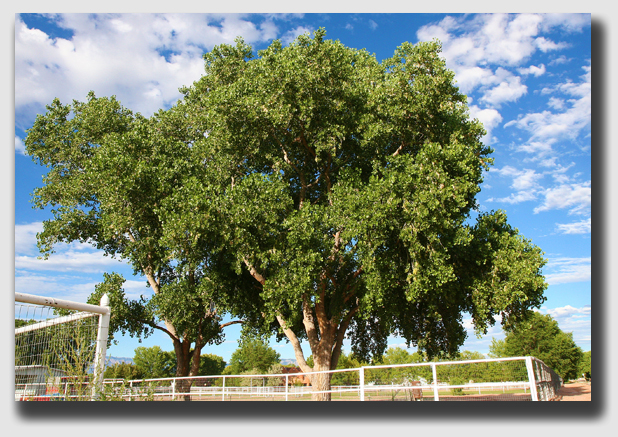
Cottonwoods – fast-growing… and as messy as a 3-year old...

Tom and Jody also argued that the Rosauers lacked standing to bring a claim under AS 09.45.730 because they did not own the land from which the trees were removed. Tom and Jody interpreted the condition “liable to the owner of that land” to grant a cause of action only to the owners of land from which trees are removed. The Rosauers responded that Tom and Jody seemed to ignore the second condition — “or on the street or highway in front of a person’s house” — and that the term “owner of that land” also applies to homeowners whose property abuts a street or highway from which trees are removed, thus granting them a cause of action.

The trial court granted summary judgment to the defendants, holding that to “prevail under AS 09.45.730, Plaintiffs are required to show Defendants cut down a tree on the street in front of their house without lawful authority.” The court concluded that the retroactive permit conferred lawful authority after the fact but before the lawsuit, and that was all that was required.

The Rosauers appealed to the Alaska Supreme Court.

Held: Forgiveness is as good as permission.

Under AS 09.45.730, Alaska’s timber-trespass statute, a landowner may recover treble damages from a person who, without lawful authority, cuts down a tree on the land of another person or on the street or highway in front of a person’s house.

At the same time, municipalities may broadly delegate powers to their agencies or officers. Delegation of power promotes efficient government. Here, the Court said, Anchorage Municipal Code 24.30.120(A) broadly entrusts decisions regarding the safe and efficient use of public spaces to the Department of Development Services. Authority to grant retroactive permits, with terms and conditions necessary to protect the public interest, is consistent with such a policy.

The Court said Tom and Jody were correct that AS 09.45.730 does not specify when lawful authority must be obtained, a point which the Rosauers conceded. The statutory provision granting the Department permitting authority makes clear that permitting decisions involve agency expertise on public safety issues. This is clearly illustrated by the permit at issue in this case.

The subsequent permit-inspection report — created in response to the Rosauers’ request that the permit be invalidated — refuted any suggestion that it is unreasonable to interpret the municipal code provision authorizing waiver of permit terms and conditions to include waiver of the prior authorization requirement.

Thus, the Court ruled, the retroactive permit conferred lawful authority for the tree removal. Because the Municipality’s retroactive permit deprived the Rosauers of the requirement under AS 09.45.730 that removal be “without lawful authority,” the Court said the issue of whether the Rosauers had standing to sue need not be decided.

– Tom Root

TNLBGray140407

Case of the Day – Thursday, January 23, 2025

THAT’S PERSONAL

Reader Paul D. sent a comment yesterday:

Figuring damages for tree loss… I don’t understand why you would use diminution of property value… Unless you were going to soon sell the property or you had a business on the property or your property generated some kind of income. But if the trees were for a personal reason, such as shade or privacy, wouldn’t the better way of proving damages be the current value of trees removed or at least restoration costs?

I think placing a diminution price on a residential property can often be very subjective and inaccurate, especially compared to having a qualified arborist make a value assessment.

Paul asks a good question. Why would anyone prefer a diminution in property value over restoration costs or stumpage value?

Here’s a prime example of someone who might: A few years ago, a tree service company sent a crew to an address in Grove City, Ohio, to remove a maple on the front lawn. Instead of going to 1553 Main Street, the crew mistakenly went to 1533 Main Street. That house, coincidentally, also had a maple tree in its front lawn, a magnificent and healthy specimen that the homeowner loved very much.

You can guess what happened. While the homeowner was obliviously toiling in his office 10 miles away, the tree cutting crew made short work of the beautiful maple. When the owner arrived home that evening, his arboreal pride and joy was nothing but a stump and some sawdust.

There was no question about liability: the tree service company goofed. But how much to pay for the tree? Stumpage value makes no sense. The homeowner wasn’t raising the tree to sell the timber. Replacement cost for the tree might be a fairer measure. However, the largest tree that could be planted for the homeowner – with costs of a few thousand dollars – will not begin to replace the lost tree.

In our homeowner’s case, the measure of damages we finally settled on was a real estate appraisal that concluded that the value of the home had been lessened by about $17,000 by the removal of the mature tree.

Today’s case considers what might happen if the removal of the trees does not diminish the value of the property. A man named Chung bought a parcel of land for a home. When he had a tree-cutting service clear the land for construction, the cutters crossed the line onto Rora Park’s land and removed about 560 trees. The decision only implies this, but it appears that the “accident” might not have been accidental at all. Rather, Chung may have steered the cutters in the wrong direction in order to improve the view from his land.

Whatever the reason, the liability was certain. The problem arose because removing 560 trees didn’t really decrease the value of Rora Park’s land at all. Hard to believe, but then, Alaska is a pretty big place. So Ms. Park demanded restoration damages and payment of the cost of restoring the property by planting new trees. That would have been about $400,000. The trial court granted damages equal to the cost of replanting 50 trees, but the Alaskan Supreme Court reversed.

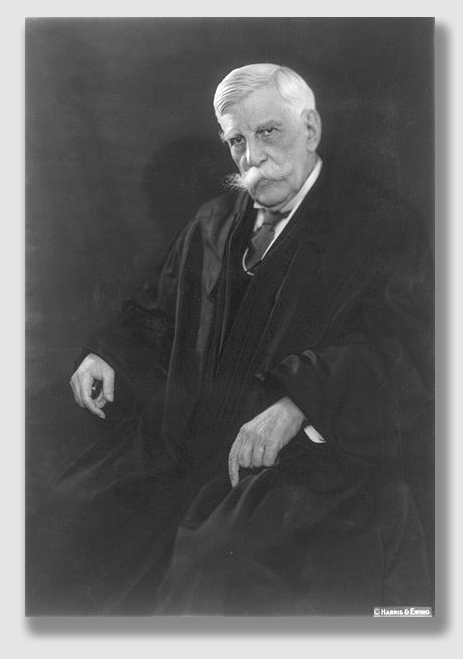
Chief Justice Oliver Wendell Holmes, Jr.

       Chief Justice Oliver Wendell Holmes, Jr.

It seems that if the wronged property owner doesn’t have a “reason personal to the land-owner for restoring the trees,” an Alaskan court won’t use that measure of damages. In this case, Ms. Park waxed eloquent about how she had once had cancer, and “this natural beauty of my yard is [a] healing spot for me, and . . . after work I come by, see my property and see the natural beauty and the trees and all that[. W]hen I [saw] that all cut out it just [made] me very – [it] just [broke] my heart, and then very angry . . .” Unfortunately for her, she later tried to downplay how often she visited the property.

The trial court wouldn’t let her have it both ways and found that she hadn’t justified restoration damages. But, apparently troubled by Ms. Parks’ neighbor getting away with a fast one, the trial court awarded her restoration damages anyway. It may have seemed like justice, but it wasn’t the law.

The Alaskan Supreme Court said that restoration damages could be awarded only if Park had a “reason personal” for restoring her property. Because she failed to prove she had such a reason, she ended up being entitled to pretty much nothing.

There’s something not right about letting a slippery character like Chung pull a fast one, cut down 50 of the neighbor’s trees for a better view, and not have to pay damages for it. But that’s the system for you. It reminds one of a quotation attributed to Oliver Wendell Holmes, Jr: “This is a court of law, young man, not a court of justice.”

Chung v. Park, 339 P.3d (Sup.Ct. Alaska, 2014). Landowner Rora Park sued her neighbor Christopher Chung for trespass, alleging that he cleared about 50 trees from her property without permission. The trial court found that the tree cutting did not diminish the property value and that there was no reason personal to the landowner for restoring the trees. But the trial judge nevertheless awarded damages equal to the cost of restoring 50 trees on the property.

Ordinarily, a landowner damaged by a trespass may recover either the loss in property value or reasonable restoration costs. But restoration costs are inappropriate if they are disproportionate to the loss in property value unless there is a reason personal to the landowner for restoring the land. We thus conclude that we must vacate this award.

Chung hired a company to build the foundation of his new house. As part of that project, the contractor agreed to clear trees and other vegetation from the lot. Aerial photographs indicate that some trees were removed from Park’s property near the border of Chung’s lot between August 2008 and the end of September 2008, and more trees were removed between 2008 and 2009. The trees appear to have been removed more or less directly behind the house built on Chung’s property. Timber debris, presumably from the cleared trees, was also discovered buried on Park’s property. An expert witness hired by Park estimated that 562 trees were cleared from about a third of an acre of Park’s property. He calculated that it would cost over $400,000 to restore the property to its former condition. But Chung’s expert witness testified that the market value of Park’s property was likely not affected by the removal of trees.

trespasstimber150126The trial court found Chung liable for the trees removed from Park’s property. Although the court acknowledged that Park had not proved that the tree cutting reduced the value of her property and found that Park had no reason personal for replacing the trees, it nevertheless concluded that “it would be reasonable both aesthetically and legally to award damages that would permit replacement of trees on that first portion of the lot that can be clearly shown to have been scraped clean as of September 27th, 2008.” The court, therefore, awarded Park the cost of replacing 50 trees, $23,500. Because the court found that Chung’s trespass was intentional, it awarded treble damages under AS 09.45.730.

Chung appealed.

Held: The Alaska Supreme Court vacated the damage award. It held that a party who is injured by an invasion of his property not totally destroying its value may choose as damages either the loss in value or reasonable restoration costs. But reasonable restoration costs are an inappropriate measure of damages when those costs are disproportionately larger than the diminution in the value of the land and there is no reason personal to the owner for restoring the land to its original condition. A reason personal is one that is “peculiar or special to the owner.” The Court said, “We require the landowner to demonstrate a reason personal because we believe it indicates circumstances where the owner holds property primarily for use rather than for sale and where the owner is likely to make repairs with the restoration costs award rather than to pocket the funds and enjoy a windfall.”

meditation160218

     Ms. Park tried to sell the court that the trees were her “personal healing spot.” New wave… or just trying to pump up her damages?

During the trial of this case, Park tried to establish a reason personal for replacing the trees that Chung had allegedly removed. She talked about having had cancer, and relying on her property as a “healing spot for me.” But later in the trial, she downplayed her visits to the property. As a result, the court found that Park had not established a reason personal for restoring her property.

According to the unrebutted testimony of Chung’s expert witness, the removal of trees from Park’s property did not appreciably affect the value of her property. The trial court accepted that testimony in its findings of fact. Therefore, the Supreme Court concluded that the damages the trial court awarded – $23,500 before trebling – were disproportionate to the diminution of the property value. The Court said that the trial court could award restoration damages only if it found that Park had a reason personal for restoring her property. Because it did not, the trial court’s award of compensatory damages that exceeded the diminution in the market value of Park’s property was not appropriate.

– Tom Root

TNLBGray140407

Case of the Day – Friday, June 14, 2024

I WANT MY TREES BACK…

A long, long time ago, before I was trained to think like a lawyer, I was a neophyte law student and still thinking like a layman, that is to say, “normally.” New law students are first exposed to contract law. Digging into Basic Contract Lawthat boring-looking brown tome that was chock-a-block with fascinating cases, I very quickly ran into Peevyhouse v. Garland Coal Co. (on the second day of class, I recall).

Farmer Peevyhouse signed a deal with Garland Coal Co., to strip mine his land. The land was hilly, and Farmer P thought the strip mining was the ideal time to fix that. So he got Garland Coal to agree to level the land when the company was done strip mining.

Garland Coal left a lot of hills behind…

When the coal was gone, so was Garland Coal, leaving the farm just as hilly as it was before the mining. Farmer Peevyhouse sued for breach of contract. He won, of course, but when it came to figuring damages, the court noted that the diminution in value of the farm because it was still hilly (as opposed to flat) was only about $5,000. But if Garland Coal were required to come back to keep its promise to level the place, Garland Coal would have to spend $25,000 to pull it off. The higher award would constitute economic waste, the court held, and the court was not about to be wasteful with the coal company’s money.

Back then, as a tyro-at-law, I couldn’t understand the decision. Who cared if the damages were wasteful, or if the market value of the farm was only slightly less? To me, Farmer Peevyhouse made a deal, Garland Coal agreed to the deal, and – inasmuch as Garland got all the coal it bargained for – Farmer P should get what he bargained for as well, economics be damned. The economics did not matter to me nearly as much as did the reasonable expectations of the parties.

Now, with many years of practice under my belt, I tend to think like a lawyer. But Peevyhouse still makes no sense to me. The farmer would not have let Garland Coal strip his land without the promise to level the hills. So the promise was material to the farmer. Why reward Garland Coal simply because Mr. Peevyhouse’s legitimate desires might not make great economic sense?

In The Princess Bride, Inigo Montoya ends his years-long quest to avenge his father’s untimely death in a fight to the death with the six-fingered man. At last, Montoya has the tip of his sword at Count Rugan’s throat:

Inigo Montoya:   Offer me money.
Count Rugen:     Yes!
Inigo Montoya:   Power, too, promise me that.
Count Rugen:     All that I have and more. Please…
Inigo Montoya:   Offer me anything I ask for.
Count Rugen:     Anything you want…
[Rugen knocks Inigo’s sword aside and lunges. But Inigo traps his arm and aims his sword at Rugen’s stomach]
Inigo Montoya:   I want my father back, you son of a bitch!

That, on a less dramatic level, was Paul Harder’s complaint. As we read in yesterday’s installment on this case, while Paul was gone from Alaska, Joel and Darlene Wiersum clear-cut his land without permission in order to improve their view. In seeking money to restore his property – a sum that came to something like four times the fair market value of his land before the clear-cutting – Paul told the jury he “didn’t want money,” but rather he only wanted his trees back. Paul, therefore, asked for damages to restore the property by replanting the forested area.

Count Rugen could give Inigo money and power and land. But he could not give Inigo what he wanted the most, a desire that was heartfelt if utterly infeasible (and rather uneconomical). In that regard, Inigo Montoya and Farmer Peevyhouse had something in common. The question is whether they both had something in common with Paul Harder. We’ll find that out now…

Wiersum v. Harder, 316 P.3d 557 (Alaska, 2013). Paul Harder owned a pretty nice piece of Alaskan wilderness near Kodiak. He built a cabin on it and lived happily for quite a stretch. But when wanderlust set in, he subdivided the land, sold the plot with the cabin on it to his sister Lisa, and kept one for himself, and left for a 15-year sojourn in warmer climes.

Paul lived in Hawaii but returned to visit his plot of land occasionally and enjoy the hunting, fishing and recreation opportunities it afforded.

About nine years after Paul went south, Joel and Darlene Wiersum bought some land at the top of a hill, adjacent to the Harder tracts. Looking down the hill, they could see Lisa’s cabin several hundred yards below, and incorrectly assumed she owned it all. One day, Darlene called Lisa at work and asked whether they could cut down some trees on Lisa’s property that Darlene thought might “come down with the wind” and hit their home. Lisa gave them permission because she thought the removal of some trees would “let a little more light in” to the woods.

Darlene and Joel did not just thin out a few hazard trees. Instead, they clear-cut the entire hill, out to almost 400 feet beyond their property line. When Lisa returned home to find that bare naked hillside, she told the Wiersums not to cut any more trees.

When Paul returned a couple of years later, he discovered the clear-cut hillside (which really was on his plot, not that of his sister), and promptly sued the Wiersums for timber trespass. A jury him $161,000 in compensatory restoration damages, which was trebled under Alaska statute AS 09.45.730.

The Wiersums appealed.

Held: The jury’s restoration damage award was reversed and sent back for retrial.

A party who is injured by an invasion of his or her property that does not totally destroy its value may choose as damages either the loss in property value or “reasonable restoration costs.” To determine whether an award of restoration costs is appropriate, Alaska follows the Restatement (Second) of Torts § 929. The Restatement says if a plaintiff is entitled to damages for harm to land resulting from a trespass that does not amount to a total destruction of value, the damages include either (1) the difference between the value of the land before the harm and the value after the harm, or—if the plaintiff so chooses—the cost of restoration that may be reasonably incurred. Damages are measured by the difference between the value of the land before and after the harm only if the cost of restoring the land to its original condition is disproportionate to the loss in the value of the land caused by the trespass “unless there is a reason personal to the owner for restoring the original condition.”

That’s the law for you. A layman untrained in legal niceties would say “a personal reason,” but the legal phrase is a “reason personal.” The distinction is intended to convince you that the law must be complex, and thus you ought to pay that “bill inflated” your lawyer hands you without a whimper.

A “reason personal,” the Court said, is a reason peculiar or special to the owner, where “the owner holds property primarily for use rather than for sale and where the owner is likely to make repairs with the restoration costs award rather than to pocket the funds and enjoy a windfall.” For example, the Court in the past had found a “reason personal” where the damaged property was used by the plaintiff as “a showplace in connection with his nursery business” and, in another case, where the property enjoyed “unique views… abundant trees, and the unusual juxtaposition of the trees, the cabin, and the views,” and its owners, who planned to retire on the property, had testified that “other properties in the area were not comparable.”

To find that a plaintiff had a “reason personal” for restoration, where those costs were much higher than the loss of value to the land, a court should look for evidence showing “a reasonable likelihood that the trees would be restored.”

Paul showed at trial that he held on to the Monashka property for 34 years and that he intended to build a house and live on it once his son graduated from college because “it’s a very beautiful piece of property.” A real estate agent testified that he approached Paul about selling the land, but Paul had refused. Paul testified he “didn’t want money,” but rather he only “wanted his trees back” and was asking for damages to restore the property by replanting the forested area. He said he enjoyed spending time with his children on the property, but that after the trees were cut down, the property “looked totally different,” full of salmonberry bushes… whereas it was just like thick moss before,” and he reported that he had not heard any ravens there since the trees were cut.

The Wiersums argued the award of restoration damages was objectively unreasonable because the total market value of Paul’s property before the timber trespass was only $40,000. A damage award of $161,000, they contended, was disproportionate to the property’s diminution. Besides, peripatetic Paul’s “minimal use of and contribution to the land’s special value would at most justify a marginal award of restoration costs.”

The Court noted it had found in the nursery case that restoration damages were not “grossly disproportionate” where the owner had paid $4,000 per acre for the property, but the jury awarded $12,550 for restoring a quarter-acre of land. Because the principal value of the property stemmed from the creek running through it, and the owner intended to use the property to create “a showplace in connection with his nursery business,” the cost of restoration, although disproportionate to value, was reasonable. Nevertheless, the Court had previously cautioned that “restoration costs exceeding diminished market value may be awarded only to the extent such added costs are objectively reasonable in light of the ‘reason personal’ and in light of the diminution in value.”

The “reason personal” may be a non-commercial one based on the property’s uniqueness, but the restoration award must be limited to the cost that has been or may be reasonably incurred.  The reason for this rule, the Court said, is “to reduce the economic waste that occurs when a party incurs repair costs in excess of the diminished value of the property.” The application of this principle “must ensure that an award of restoration damages does not confer a windfall upon a landowner.” Where proposed replacement costs are excessive in relation to the damage caused by the trespass, “the achievement of a reasonable approximation of the land’s former condition may involve something less than substantially identical restoration… It may be more appropriate to award costs for the planting of saplings, or a few mature trees, or underbrush to prevent erosion and achieve a lesser but, over time, reasonable aesthetic restoration.”

Applying these principles to Paul’s denuded hillside, the Court held that the award of $161,000 in restoration costs was objectively unreasonable in light of the $40,000 pre-trespass total value of the property. Paul’s “reason personal” for restoration, and the absence of any proof of the extent of the decrease in the value of his property, made it more appropriate to award costs “for the planting of saplings or a few mature trees or underbrush to prevent erosion and achieve a lesser but, over time, reasonable aesthetic restoration.” The Court’s conclusion was based on its determination that the “property could be reasonably restored by replacing at least some of the mature Sitka spruce with saplings or smaller trees and that because the property’s large trees were growing in a forested environment where the root zones were intertwined” it was not possible to ” replace that exact tree in that environment.”

The jury must base its award on a finding that the restoration costs were objectively reasonable in light of the value of Paul’s land, the loss of value due to the Wiersums’ trespass, and his “reason personal.” Here, the Court said, no reasonable juror would award restoration costs totaling more than four times the full fair market value of the property before the trespass. Thus, the Court sent the case back for a new trial on damages.

And what’s my take on this case, based upon my decades of thinking like a lawyer? I’m with Inigo Montoya and Paul Harder: “I want my trees back, you son-of-a-bitch,” and economics be damned.

This is a bad decision.

– Tom Root

TNLBGray

Case of the Day – Thursday, June 13, 2024

THE DEVIL MADE ME DO IT

You know the guy I’m talking about. Nothing is ever his fault. (No, I did not suggest a certain former inhabitant of the White House or the current inhabitant, either – we stay above politics around here).

But… that guy. The blame always lies with someone else. Think of John Belushi in the Blues Brothers, groveling at the feet of an assault rifle-toting Carrie Fisher, explaining all the reasons he had left her standing at the altar and ending with the plaintive wail, “It’s not my fault!”

Today’s defendants have something in common with the pathetic Jake Blue. For reasons unexplained (but I suspect, given this occurred on breathtaking Kodiak Island, Alaska, that it was intended to enhance their view), Joel and Darlene wanted to remove some trees on the downslope of the hill they lived on, out to about 400 feet. Most of the trees – beautiful 100-foot plus Sitka spruces – were not on their property. A minor detail.

Darlene called her neighbor, Lisa, and asked whether she and her husband could cut down a few trees on Lisa’s land, you know, just trees that might pose a hazard if they were to fall in a windstorm across the property line and strike Joel and Darlene’s cabin. Lisa was at work when Darlene called her, and she didn’t really have a well-formed idea of what her neighbors had in mind. This was understandable, given that Darlene misled Lisa into believing they were talking about a few sickly boundary trees. Lisa, thinking that thinning the woods there would probably let more light in and spur growth, said that she did not mind at all.

When Lisa got home that evening, she discovered a denuded hill, with trees clear-cut from the boundary line toward her cabin for almost 400 feet. Hyperion itself couldn’t have fallen from that point and hit Joel and Darlene’s. Lisa was furious and called Darlene (who had the good sense not to answer the phone). Lisa told Darlene’s voicemail that there would be no more tree cutting.

Now for the fly in the ointment: Lisa had always thought that her land extended all the way from her cabin to Joel and Darlene’s property line. But it did not. Her brother, Paul, who had subdivided a larger parcel years before and sold Lisa one of the plots – the one with his old cabin on it – had reserved for himself a plot between Lisa’s and Joel and Darlene’s place. After selling in 1992, Paul had left for an extended sojourn (well over a decade) in Washington state and Hawaii. When he finally came home from wandering the Lower 48, some two years after the tree-cutting incident, he was not pleased. Paul demanded Lisa tell him who had cut all of his trees. That was when Lisa found out that much of the property between her cabin and the land up to Joel and Darlene’s property line belonged to Paul.

Naturally, Paul went after Joel and Darlene. Who wouldn’t? But they sniveled, “It’s not our fault! Lisa told us we could cut your trees!” Well, they did not exactly snivel, not audibly, but they promptly brought Lisa into the lawsuit as a third-party defendant. They maintained that because Lisa gave them permission to cut some trees without telling them that some of the intermediate land between their property and her cabin was Paul’s (and that they could not cut his trees), she was negligent. Joel and Darlene whined that if Paul had been damaged, Lisa owed Paul some of those damages. They argued Lisa had breached her duty to inform them, that she had made misrepresentations to them, and that she had breached her duty to Paul as well as a general duty she had to her neighbors.

The Alaska Supreme Court cut through Joel and Darlene’s arguments like a hot knife through butter. Lisa got nothing out of the tree-cutting episode, and she thus owed nobody nuthin’. Joel and Darlene had no right to rely on Lisa’s permission without checking the boundaries themselves. The Court’s finding might have been a blessing for the defendants, too, because it avoided the sticky question of whether – given Darlene’s obvious fraudulent misrepresentation to Lisa as to their tree-cutting – Lisa could possibly be liable at all. After all, if Darlene asked Lisa, “Hey, mind if we clear-cut 400 feet in the direction of your shanty so that we can improve our magnificent view?”, we suspect Lisa would not have been so forthcoming with permission.

Clearing up the issue of Lisa’s liability let the Alaska Supreme Court get to the meat of the case, which was the amount of damages owed to Paul. We’ll take up that part of the holding tomorrow.

Wiersum v. Harder, 316 P.3d 557 (Supreme Court of Alaska, 2013). Paul Harder owned a pretty nice piece of Alaskan wilderness near Kodiak. He built a cabin on it and lived happily for quite a stretch. But when wanderlust set in back in 1992, he subdivided the land, sold the plot with the cabin on it to his sister Lisa and kept one for himself, and set off for parts unknown.

Not completely unknown, however. Paul spent the next 15 years living in Washington state and Hawaii, but he returned every so often to visit his plot of land and enjoy the hunting, fishing and recreation opportunities it afforded. It was, after all, overlooking Monashka Bay on Kodiak Island – it would be hard to stay away from home when it was as beautiful and wild as that.

About nine years after Paul went south, Joel and Darlene Wiersum bought some land at the top of a hill adjacent to the Harder tracts. Looking down the hill, they could see Lisa’s cabin several hundred yards below, and they assumed she owned everything between their home and hers. One day, Darlene called Lisa at work, and asked whether they could cut down some trees on Lisa’s property that Darlene thought might “come down with the wind” and fall on their land, damaging their home. Lisa readily gave them permission, because she thought the removal of some trees might “let a little more light in.”

Darlene was not being exactly straight with Lisa. She and Joel never intended to thin out some hazard trees. Instead, they intended to clear-cut the entire hill, out to more than 300 feet beyond their property line. When Lisa returned home from work later that day, the deed had been done; she discovered that bare naked hillside. Upset by the number of trees that had been cut, Lisa immediately called the Wiersums and left a message instructing them not to cut any more trees.

Paul did not return to the Last Frontier for about two years. When he did, he discovered the clear-cut hillside. Paul asked Lisa who had cut the trees, and then explained to her that the trees had been on his plot, not hers. After that, he promptly sued the Wiersums for timber trespass.

The Wiersums, apparently a couple not lacking chutzpah (just look at the clear-cutting escapade), filed a third-party complaint blaming Lisa for the trespass. They sought to apportion fault onto Lisa, claiming that she had negligently misrepresented that she owned the property where the trees were cut when she gave them permission to remove trees from her property. The trial court granted Lisa’s summary judgment motion and dismissed the claim against her. The Wiersums and Paul went to trial, and a jury awarded Paul $161,000 in compensatory restoration damages along with statutory treble damages.

Held: Lisa was not liable for the Wiersums’ trespass, but the case had to be sent back to the trial court, because the damages were excessive. Today, we’ll talk about Lisa’s “duty” to the Wiersums and her own brother.

The Wiersums contended that fault must be apportioned to Lisa because she was negligent when she failed to disclose to Darlene that she did not know exactly where her property lines were and that Harder also owned property in the area. In essence, their negligence claim was based on the theory that Lisa had negligently misrepresented or failed to disclose information to the Wiersums, and her negligence thus caused them to trespass on Paul’s property and remove his trees.

However, the Court held, negligent misrepresentation requires a showing that a party made a misrepresentation in the course of her business, profession, or employment, or in any other transaction in which she has a pecuniary interest.” Likewise, a person is liable for failure to disclose information when there is an affirmative duty to do when someone “fails to disclose to another a fact that he knows may justifiably induce the other to act or refrain from acting in a business transaction.” Lisa had no financial interest in what the Wiersums did with their land and thus owed them no duty under a theory of negligent misrepresentation or failure to disclose information when she had an affirmative duty to do so.

But did Lisa owe a duty to Paul? The Wiersums argued that Lisa owed a broad duty of care to her neighbors – both themselves and Harder – and was liable for any unreasonable risk of harm to them that stemmed from her own conduct. They supported this assertion with references to the Restatement (Second) of Torts § 158 and § 165, and they cited decisions from other states in support of the rule that a “landowner who intends to have timber cut on his land owes a duty to an adjoining landowner to ascertain the boundary line of the adjoining land with diligence and care.”

None of these arguments carried the day. The Court held that sections 158 and 165 of the Restatement (Second) of Torts were inapplicable because they applied only where the person intentionally causes a third person to enter the property, that is, “commands or requests” a third person to enter the land of another. Lisa never commanded the Wiersums to do anything. Section 165 similarly provided no support for the Wiersums’ position but rather imposes liability where someone recklessly or negligently enters land in possession of another or causes “a thing or third person so to enter,” and thereby harms the land. Comment (a) to this section indicated that the rule applies where “the conduct of the actor either… involve[s] an unreasonable risk of invading the possessor’s interest in his exclusive possession of the land, or… [is] caused by an abnormally dangerous activity carried on by the actor.” Lisa’s act of giving the Wiersums permission to cut trees on her own land did not present an unreasonable risk that the Wiersums would enter Paul’s land and cut his trees.

The Wiersums also argued that a Texas case held that landowners who intended to cut timber on their own land owed a duty to adjoining landowners to ascertain the boundary lines of the adjoining land. But Lisa did not seek out the Wiersums to remove trees from her land, nor did she affirmatively offer inaccurate information about her property boundaries. The Wiersums did not ask her for this information and because this was not a business transaction, she was under no legal obligation to provide it. Thus, the Court said, she did not assume a duty to give accurate information to the Wiersums when they asked permission to remove her trees.

Finally, the Wiersums relied on Prosser and Keeton’s treatise on tort law for the rule that a landowner owes a broad duty “to cause no unreasonable risks of harm to others in the vicinity.” The Court was unimpressed. “Our prior decisions recognize that landowners have a duty to use due care to guard against unreasonable risks created by dangerous conditions existing on their property. We have also held that a landowner must act as a reasonable person in maintaining his property in a reasonably safe condition in view of all the circumstances. But we have never previously gone so far as to hold that a landowner has a broad duty to prevent the unreasonable risk of harm to her neighbors caused by third parties.”

Foreseeability of harm is the most important factor in whether Lisa had a duty to Paul, the Court said, and “there can be no duty where the harm is unforeseeable, but foreseeability alone is insufficient to establish a duty if the burden of taking care or the effect on society is too harsh.”

The foreseeability of harm to Paul resulting from Lisa’s conduct was low. Lisa made no active representation to the Wiersums to imply that the trees on the hillside near their property were hers and not Paul’s. She merely gave the Wiersums permission to cut trees on her own land. It was thus foreseeable that the Wiersums would cut trees on Lisa’s property, but it was not foreseeable that they would remove 70 large trees from Paul’s hillside – some of which were located between 300 and 400 feet from their own land – “without conducting proper due diligence to identify the true property owner and then seeking that person’s permission. No person,” the Court said, “can be expected to guard against harm from events which are not reasonably to be anticipated at all, or are so unlikely to occur that the risk, although recognizable, would commonly be disregarded.”

– Tom Root

TNLBGray