

 Washington, D.C., Post, December 30, 2021: This tree has stood here for 500 years. Will it be sold for $17,500?
The Sitka spruce soaring more than 180 feet skyward has stood on this spot on Prince of Wales Island for centuries. While fierce winds have contorted the towering trunks of its neighbors, the spruce’s trunk is ramrod straight. Standing apart from the rest of the canopy, it ascends to the height of a 17-story building. This tree’s erect bearing — a 1917 publication called the Sitka species “the autocrat of timbers” — is what helps give it such extraordinary commercial value. Musical instrument makers covet its fine grain, as do builders whose clients want old-growth wood that’s increasingly scarce. In a world whose ancient forests have largely disappeared, this grove holds a sliver of what remains. Even when the top and branches are lopped off, a tree this size would yield at least 6,000 board feet of lumber, said industry consultant Catherine Mater, who assessed the spruce’s potential market value for The Washington Post. It would fetch around $17,500 on the open market. But there’s another value the spruce holds: the carbon dioxide locked inside its fibers, in its roots, in the soil and in the vegetation that clings to it from its branches to its base, where berry bushes proliferate. The miraculous process that sustains life on Earth is embedded within its vast trunk, a reservoir for the greenhouse gases that now threaten humanity. The spruce draws in carbon dioxide through the tiny holes in its leaves, known as stomata, and water through its roots. The sunlight it absorbs fuels a reaction that splits the water and carbon dioxide into glucose, which traps the carbon, and releases oxygen into the atmosphere…
Albany, New York, Times-Union, December 30, 2021: UAlbany tree removal stuns some neighbors
Harriet Temps has lived in the same house for almost 50 years and has enjoyed the look of the University at Albany campus just down the road. One of the most treasured characteristics over those years were the trees, an enjoyable sight during her walks. But on one recent walk, she noticed something strange: Many of the trees had red strips around them, and she was unsure of what it meant. On Temps’ walk a couple of days later it came to her – as the trees with red strips were now stumps. “I was absolutely astounded … it never occurred to me that the university would take down those trees,” said Temps, who was an academic adviser and assistant to the chair of the history department at the school for 13 years. Her family has a longstanding rapport with UAlbany and she said she had a special connection with nature for as long as she can remember. “When I saw them start to cut them, all of those trees one after the other, it was so sad,” Temps said. “These were trees that have been there since the beginning of the campus being put in. They were magnificent, beautiful, old trees.” The tree removal was the first step toward constructing a new bus route being created to shorten commute times…

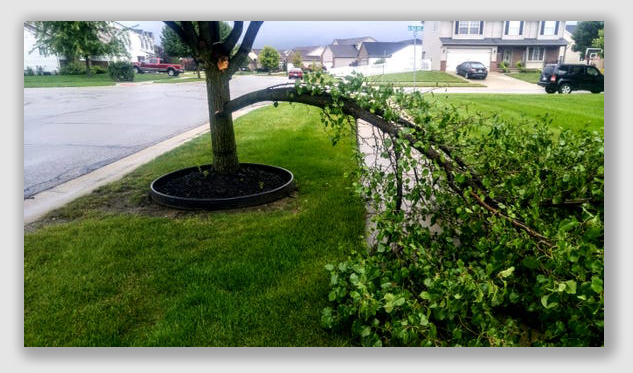
After the wind and rain we have had, you’ve likely seen or experienced the damage storms can cause and how it can negatively impact your trees’ health while threatening your own safety. When inspecting trees, always make your inspections from the ground. If you suspect a hazardous condition, immediately contact your utility company and consult an arborist who has the equipment and training to conduct the inspection safely. A common mistake that people make is to assume that if a tree didn’t fall during the storm, then it will continue to hold its ground. Unfortunately, this isn’t always the case, and a tree that falls can cause significant damage to your property. If any of your trees are leaning after a storm, then you should have an expert come out and determine if tree removal will be necessary. As you check each tree for damage, you should also keep an eye out for any wires that are in contact with their branches. High winds can loosen utility lines or break branches, allowing trees and wires to come in contact with one another. If you see any wires that are touching your trees, then you should schedule tree trimming for your property and contact your electrical provider…
“Christmas Tree O Christmas Tree, how lovely are thy branches”. So goes the yuletide anthem, and yes, it seems humans everywhere relish the opportunity to bring a big old bit of foliage into their dwellings and cover it with twinkly trinkets to celebrate Christmas. Delightful. But wait! Cutting down trees for a few weeks of pleasure is not very 21st century is it? We are not a pack of feckless Bolsonaros getting jacked on the illicit thrill of felling vital woodlands, are we? So should we be cutting down these trees? What impact does it have on the environment? Should we stop? Or should we keep going? And when we have had enough of Christmas and its indoor trees, how should we rid ourselves of them? The first question in ascertaining whether you should be on the naughty or nice list this year is: what sort of tree have you got? Artificial trees are bad. In fact they are not trees at all, they just seem a bit like them to our rudimentary human senses. A single artificial tree has a total carbon footprint of around 40kg, according to the Carbon Trust. They are usually made in China, and are composed of metal and plastic, which will ultimately go to landfill. This is bad…
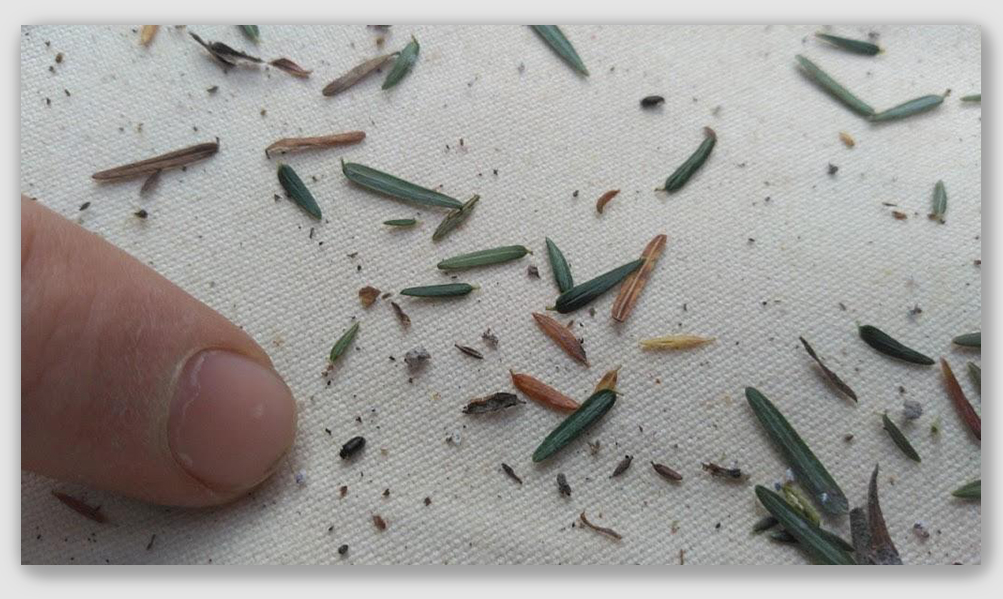
A small bug has been attacking the High Country’s hallowed hemlock trees, but a familiar hero has recently emerged to turn the tide to keep the sap-sucking pest at bay, according to local entomologists. Research from the Watauga County Agricultural Extension Office and a local entomologist has revealed that a small black beetle — known as the Laricobius nigrinus — is literally eating away at the pest, the hemlock wooly adelgid (HWA) in a large number of locations. In 36 of 43 locations surveyed in the Watauga County area, researchers have found the little black beetles. Their presence is saving hemlock trees from being savaged by HWA, which can and will injure trees. Blake Williams, a sustainable development senior at App State and intern for the Watauga County Agricultural Extension Office, completed the study with extension director Jim Hamilton to see how widespread the Laricobius beetle is throughout the High Country. Landowners started introducing the beetle to properties in the High Country in the early 2000s after noticing the impact of HWA on their trees. The aphid-like bugs suck sap from and kill needles, shoots and branches on hemlocks. HWA gets its name from laying white bundles of eggs on the underside of the needles, giving them a woolly appearance. Preserving the trees isn’t just for conservation’s sake, though. Williams said that hemlocks fulfill an important niche in the environment, growing along waterways and helping regulate water quality and temperature, flooding and even trout populations…
State and local officials are offering their annual reminder that there’s “one last gift you can give as the Christmas season closes.” That final gift? Your Christmas tree. In St. Louis and beyond, area residents are being asked to recycle their Christmas trees for beneficial reuse, instead of having the conifers clog up dumpsters, ditches or other problematic places where people can discard them. In the city of St. Louis, for instance, trees can be taken to any of three locations — one each in the north, south and central parts of the city — until Jan. 10. In St. Louis County, they can be brought to four county parks through Jan. 16. Madison County has set up 34 locations, and will accept trees for recycling through Jan. 14. The St. Louis region’s recycled Christmas trees have two main destinies: mulch or fish habitat. The conversion to mulch is the most common use of the trees in St. Louis, said Alan Jankowski, the city’s commissioner of forestry. The ground-up trees join reserves of mulch made available for free to city residents. But some recycled trees meet a perhaps more adventurous — and aquatic — afterlife as fish habitat, once officials sink them to the bottom of local lakes. There, “reefs” of the trees can provide a boost to fisheries, particularly as protective nurseries where smaller fish can take refuge. Decisions about tree placement rest with the Missouri Department of Conservation…
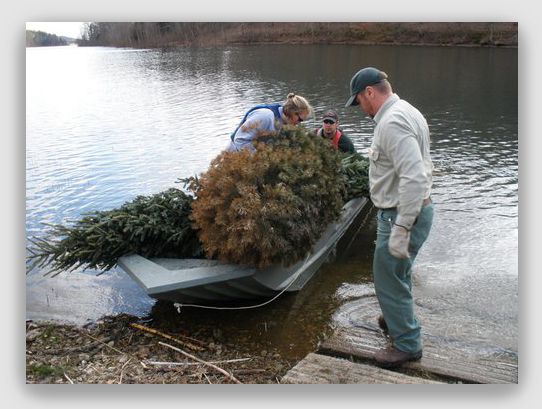 Bass Resource, December 29, 2021: What Happens to Christmas Trees Under Water?
This time of year, the phone will ring several times from folks wanting to improve habitat in their ponds by adding cedar trees. Some of those guys also tell me they talk with local Christmas tree lot managers about coming by right after Christmas, trailer behind a pickup truck, to collect unsold trees, haul them to the lake, and put them out as fish attractors. Heck, I’ve had several people over the years boast how they beat the trash trucks and snagged people’s trees off the curb in the neighborhood before the sanitary engineers can scoop them up to be ground into mulch. How well do these trees work as fish attractors? Do they fit into a habitat plan? Many times over the years a crew of us bundled smaller trees and big limbs, tethered them with a concrete block, and dropped them overboard from a boat or barge, into spots we believed needed the extra cover. Many times, after we put out the last pile for the day, we’d fire up the electrofishing boat, go right over the piles we just launched, and presto-chango, fish were already finding it. Small fish, that is. When we add cedar or Christmas trees for habitat, the density of its limbs attracts the smaller fish in that pond. When you think about it, having something for the smallest fish makes great sense. The thick needle mass and small limbs of these trees effectively attract those small ones, giving them a few more days, maybe weeks, perhaps even a few months to not be eaten by their bigger brethren. The longer they live, the bigger they get. Which, by the way, those bigger fish are soon attracted to said trees because they sense the opportunity for a fast lunch…
Mechanical trees which suck CO2 out of the atmosphere 1,000 times faster than real ones could be as common as cars within two decades, their developer has said. In 1999, Professor Klaus Lackner became the first scientist to say that cutting carbon emissions would not be enough to avert catastrophic climate change and CO2 would also need to be removed from the air. Since then, he has been developing the mechanical tree with the prototype about to launch on the campus of Arizona State University, where he works. The prototype tree is a “concertina” column that is 10 metres tall when fully extended and 1.5 metres wide, with a 2.5-metre wide drum attached to the bottom. The column contains 150 horizontal, circular discs coated with chemicals which catch CO2 when the wind blows through them. If all goes according to plan, the prototype trees will fill up with CO2 every 30 to 60 minutes, when they will concertina down into the drum and the CO2 will be collected and stored or sold for use in industrial applications, including making drinks fizzy, creating fuel and extracting oil…
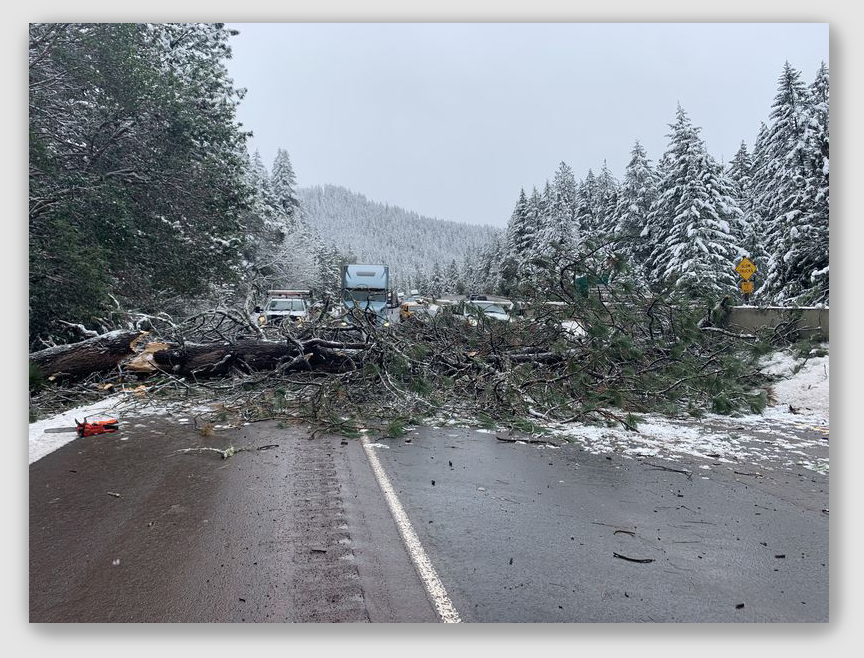
An Oregon Department of Transportation worker outdrove death Monday after his truck barely missed being crushed by a falling tree on Interstate 5. Dramatic dashcam footage shows the ODOT vehicle skating beneath the path of the tumbling timber a second before impact. “That tree just fell out of nowhere, and they were extremely lucky to have sneaked beneath and only got tagged by one of the branches as it fell down,” said Matt Noble, an agency spokesperson. Noble said the incident responder was driving north on I-5 near Wolf Creek Pass in Josephine County around 2 p.m. when the towering evergreen, which was later measured to have a 2.5-foot diameter trunk, slammed to earth, blocking all of the northbound lanes and one southbound lane. No one, including the driver, was hurt, Noble said, even as one falling limb left a spider web of fractured glass on the vehicle’s windshield. “It really just kissed the top of the car,” Noble said. “It was a pretty heavy impact, but luckily (the driver) was OK. [Watch the video]…
As temperatures drop, the Michigan Department of Natural Resources says now is the best time to prune oak trees to help prevent oak wilt. Oak wilt is a fungal disease that blocks the flow of water and nutrients from the roots of the tree to the top. It can cause leaves to slowly wilt and fall off and eventually kill the tree. Simeon Wright, a forest health specialist with the state DNR, says beetles that are most active in the spring and summer usually spread the disease. “So basically, in Michigan, there’s a high-risk period that research has identified from about April 15 to July 15 when oak trees are most likely to become infected when they’re pruned,” he said. Wright says the risk of infection significantly lowers in the late fall and into the winter. “So it’s a completely safe time to prune oak trees,” he added…
The Pennsylvania Department of Agriculture has added the Callery pear, also known as Bradford Pear or its scientific name Pyrus calleryana, to the state’s noxious weed list. Noxious weeds cannot legally be sold or cultivated within the state. Bradford pears have been used as street trees since the 1950s and have increasingly been recognized as an ecological disaster, spreading uncontrollably and disrupting native ecosystems. The ban on sale and cultivation will take effect Feb. 9, 2022 with enforcement phased in over two years. “Callery pear is another non-native plant that was brought to this country for its beauty and rapid growth, without regard for its long-term potential to harm our environment and food supply,” said Agriculture Secretary Russell Redding. “Banning the sale of an invasive plant is an important tool to stop its spread and is a step we take only after careful consideration of the damage it causes and its potential for continued harm to our ecosystem and economy.” Landscaping businesses and nurseries will have two years to remove the trees from their stock and find alternatives. Plant breeders who own the rights to proven sterile varieties may be able to obtain an exemption. Callery pear was brought to the U.S. in the early 1900s by researchers looking for a fire blight-resistant species that could be bred with European pears to increase fruit production, then gained popularity as a street tree. It has garnered attention in recent years as a prolific invader that can easily spread into woodlands, pastures, fields and natural areas…
Show Low, Arizona, White Mountain Independent, December 28, 2021: Pine Bark Beetles
While we had a better monsoon season this year, the drought continues for our area. Drought is one of the stressors that can lead to bark beetle infestations. Bark beetles contribute to the death of thousands of ponderosa pines in Arizona each year. Most often, when larger trees are attacked and killed they have been weakened by drought, lightning, construction activity or they have been growing on poor sites. Evidence of Infestation: Fading needles (changing from green to a light straw color) is often the first sign of a beetle attack. Depending on the attacking species, the fading can either begin at the crown of the tree working its way down or from the bottom up. This can take a few weeks to one year after the attack and eventually the needles will turn brown or red. Another sign is dust caused by boring in the bark crevices at the tree base. Often, numerous small pitch tubes (globules of pitch ¾ to 1 ¼ “ in diameter) appear on the trunk of infested trees. The tubes generally have a creamy appearance. The presence of one or two pitch tubes may not mean that a beetle was successful. Prevention and Control: Freshly cut ponderosa pine slash and firewood are subject to attack by bark beetles. Trees cut during the late summer and fall are seldom successfully attacked, because the inner bark dries during the fall and winter. The inner bark of trees cut from January-July remains moist and suitable for beetle habitat…
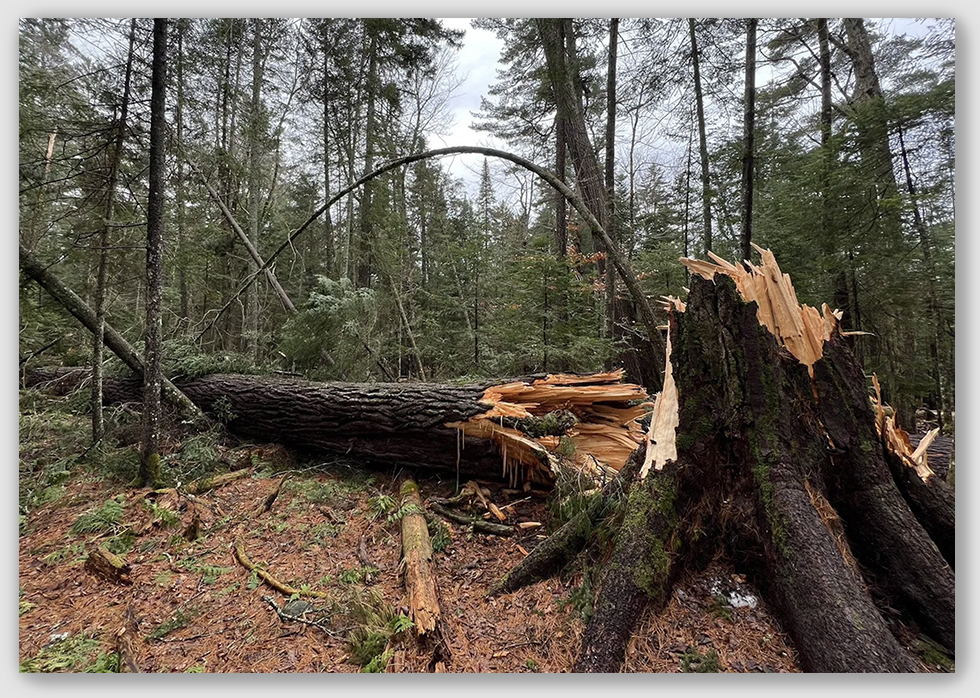
New York has lost a giant. A majestic white pine once believed to be the state’s tallest tree crashed to earth in early December in Elder’s Grove near Paul Smith’s College in the Adirondack Mountains. Known as tree 103, and identified by a metal tag near its base, it soared to an estimated height of 160.4 feet and stood among a group of white pines in existence since the mid- to late 1600s — more than 100 years before New York became a state. Generally, white pines can survive 350 to 400 years, so tree 103, one of around 30 remaining in the grove, was approaching the end of its life, said Justin Waskiewicz, a forestry professor at the college. But a series of recent events hastened its demise. In July, the tree next to 103, tree 111, cracked about 20 feet above its base and instead of falling over, it began “leaning hard on 103,” Waskiewicz said. “When I saw 111 leaning on 103, I knew it was going to come down sometime this year,” he said. “It was an unstable situation.” Then, a few weeks ago, a windstorm swept through the area. “That’s all it took…”
A Christmas tree appears to have caused a deadly house fire that brought tragedy to one family in Quakertown, Pennsylvania, according to authorities. A father, 41-year-old Eric King, and two of his sons, 11-year-old Liam and 8-year-old Patrick, died in the early Christmas morning blaze, police said. Kristin, and their oldest son, Brady, managed to survive. “This news is devastating for the District community and the Quakertown area at large,” the Quakertown School District Community said in a Facebook post. “Eric, Kristin, and their boys are very active in the community, and the kind of people who make this a special place to live and attend school.” The fire is under investigation, but Scott McElree, chief of police, said lights on the family’s Christmas tree may have caused it. “The area of origin was a Christmas tree, so we’re not sure if it’s because of electric or a dried-up old Christmas tree,” he said, according to CNN…
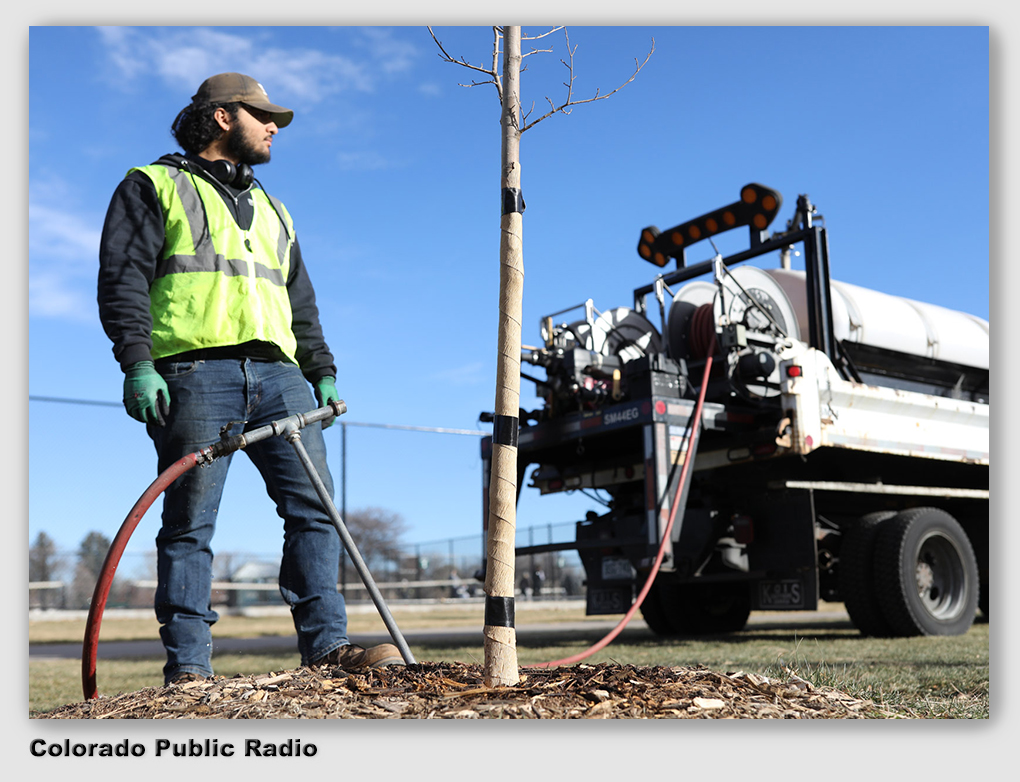 Centennial, Colorado, Colorado Public Radio, December 27, 2021: Yes, you need to water your trees
It was another snowless morning when Ben Rickenbacker, Denver’s forestry operations manager, examined the cracked soil beneath a blue spruce in Hurston Lake Park. A worker soon arrived with a hose attached to a water truck. For the next few minutes, he provided a small flood meant to help the tree through a historic winter drought along Colorado’s Front Range. “It’s really bad,” Rickenbacker said. “We usually have some sort of snow cover, but we’ve had little to no snow this holiday season.” Other Colorado foresters and local arborists have started to worry about the fate of Metro Denver’s urban trees. Record-dry weather made it even harder for trees to survive in a natural semi-arid prairie. If any die out, the area could lose pieces of a leafy climate buffer that helps suck up carbon, improve local air quality and soften the severity of heatwaves. Those are all benefits Denver is trying to build on, not lose, as global warming heats up. The city has increased its tree-planting pace over the last few years. Its goal is to expand the urban tree canopy, which now shades about 13 percent of the city, to 20 percent, according to its latest parks and recreation plan…
Trees are an important part of our city. They provide shade on a hot summer day, provide habitat for birds and other wildlife and they can even block the sounds of traffic. In Bismarck, the city plants between 750 and a 1,000 new trees each year. But there are also plenty of old trees, some of them have been deemed worth of recognition. Two women have been working to identify the city’s champion trees. Susan Wefald and Nancy Willis are passionate about trees. “I love trees,” said Willis. They love them so much they’ve spent the past year looking for the city’s biggest trees. Determining which are champion trees wasn’t easy. The city provided them with some special measuring tools. The women measured the tree’s circumference and height as well as the spread of the branches. Looking for big trees became a bit of an obsession for Wefald and Willis. “We were both walking around the city looking at the trees and then we’d think, ‘gosh we better go measure that one,’” recalled Wefald…
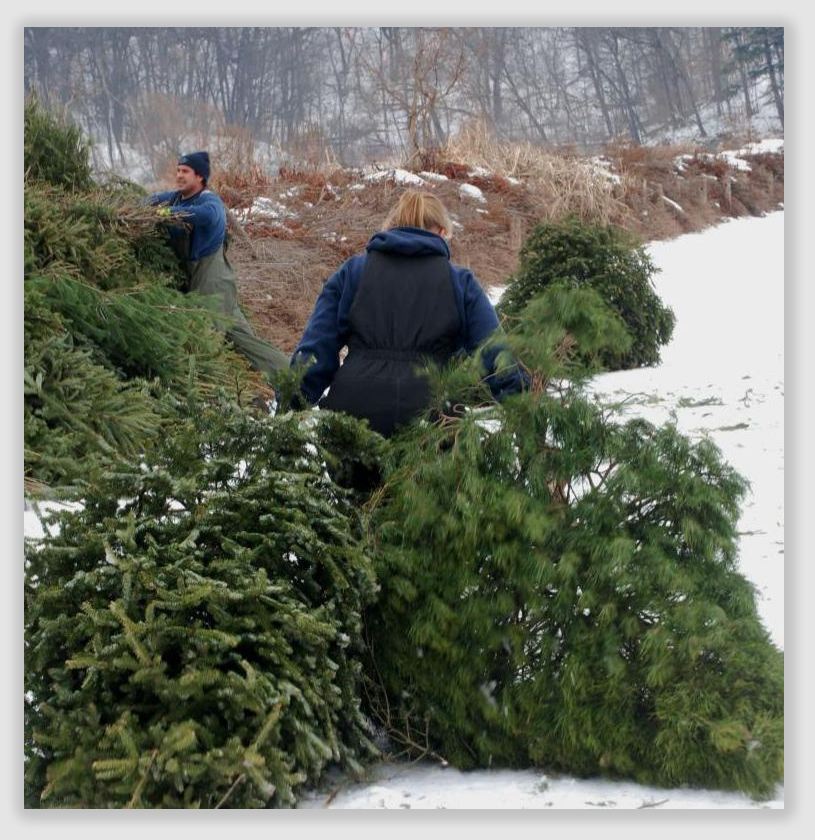
For those of us who’ve already returned to work, Christmas seems more like a distant memory with each hour that passes. A clean start to the New Year is always a good thing, but confusion about exactly when to take down the Christmas tree and decorations continues to abound. In a bid to avoid any further bad luck, we establish when it’s time to put the tinsel away for another year – and it’s not as straightforward as it might seem. Here’s everything you need to know. In the UK, tradition dictates that Christmas decorations remain up until Twelfth Night. Twelfth Night is a Christian festival marking the beginning of Epiphany. A count of exactly 12 days from 25 December takes us to 5 January. According to the Church of England, this day is Twelfth Night. However, the day of Epiphany falls on the following day – 6 January. Other Christian groups may count the 12 days of Christmas from Boxing Day, however, which makes 6 January Twelfth Night. Countries such as Germany, Poland and the Czech Republic all consider the Twelfth Night to fall on this day, for example…
When Ron Binkney and Lucky found a pretty seashell near a lone cedar tree while walking the beaches of St. Simons Island, the spirit of Christmas was still a distant afterthought. But that pretty shell had a hole in it, perfect for hanging from a limb of the 8-foot-tall tree. As Binkney and his golden retriever continued their daily walks along the island’s East Beach, he made it a point to add additional pretty shells that caught his eye. “Lucky and I decided to put on more seashells,” said Binkney, recalling early November when it started. “I would find the shells that had holes in them and add them to the tree.” But Binkney had nothing to do with the starfish that appeared on the tree one day. Likewise, he did not hang the dog bone cutout with a pet’s name on it. And he certainly did not add the jingling bells or the handmade bamboo cross…
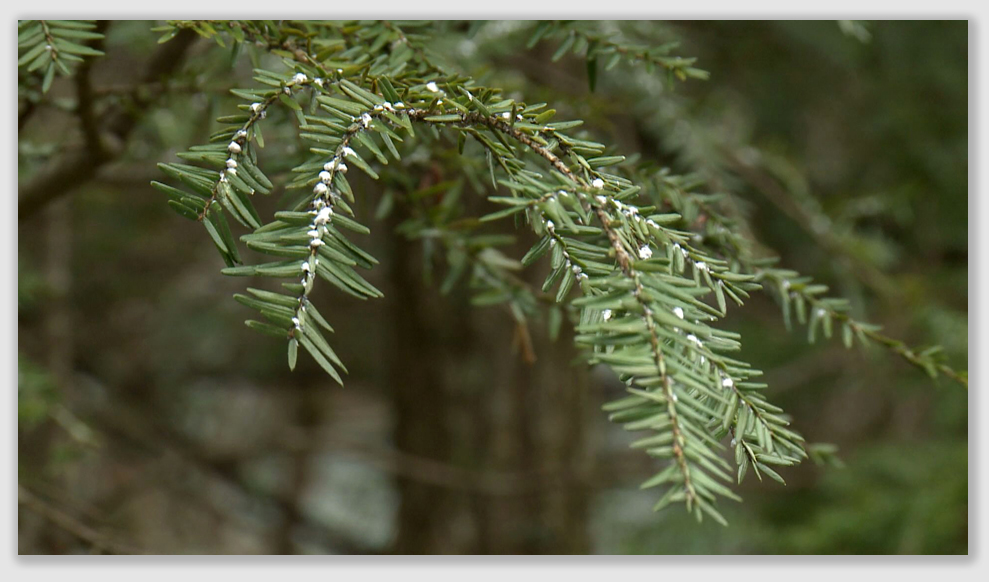
Hemlock woolly adelgids suck the sap out of Michigan’s eastern hemlock trees. “And over time, say four to ten years, they can actually kill the trees,” said Joanne Foreman, Invasive Species Communications Coordinator with the Michigan Department of Natural Resources. The bugs are really small, but you can spot evidence of them and wintertime is a good time to look. Round, white hemlock woolly adelgid ovisacs (resembling cotton balls) are found on the undersides of branches near the base of the needles. The underside of hemlock needles have parallel silvery-white stipes. “Right now, the woolly adelgids are working at sucking sap out of the hemlock trees. And while they’re doing so, they’re spinning these little white cottony threads that turn into small white balls that you can see on the underside of hemlock branches,” Foreman explained…
The scent of pine is one of the hallmarks of this happy time of the year. Perhaps that’s what inspires so many homeowners to plant pine trees in their yards. “Unfortunately, many of them don’t do very well,” said Sharon Yiesla, plant knowledge specialist in the Plant Clinic at The Morton Arboretum in Lisle. “It’s wonderful to enjoy them indoors for the holidays, but outdoors, the Chicago region just isn’t hospitable to most species of pines.” Pines, like most evergreens, need very well-drained soil that lets water flow away from their roots — the opposite of the sticky, water-retaining clay found in most of this region. In the Arboretum’s Conifer Collection, many evergreens are planted on sloping sites where water drains away more readily than in a typical flat city or suburban yard. Pine species that are widely planted around homes, such as Scots pine (Pinus sylvestris), Austrian pine (Pinus nigra), and Japanese red pine (Pinus densiflora), are vulnerable to several nasty diseases and insects. “Plants that are in less than optimal conditions, such as pines in poor soil, are always less able to tolerate pests, diseases and other stresses,” Yiesla said…

The Callery pear, a widely popular ornamental tree commonly sold under the names Bradford pear, Cleveland pear and flowering pear, has been added to Pennsylvania’s Controlled Plant and Noxious Weed list. But it will be 2024 before an actual on-the-ground ban is in place. The tree has been listed among the Class B noxious weeds, for which the department might require control to contain an injurious infestation or may provide education or technical consultation. According to the Pennsylvania Department of Agriculture, Class B weeds are considered to be “so prolific they cannot realistically be eradicated. These plants are targeted for control measures.” The department’s Noxious Weeds Program considers Class A noxious weeds as high priority for preventing new infestations and eradicating existing infestations. Pennsylvania also has a Class C noxious weeds list, which is made up of federally declared noxious weeds that are not yet established in the state and are not on either the Class A or Class B lists, and a list of controlled plants, which currently covers hemp…
Whittier city officials again will study its tree manual that provides criteria for removal, among other options, in response to concerns after receiving about 30 calls about falling branches and limbs during last week’s storm. Whittier Councilman Henry Bouchot asked for the study at the Dec. 14 council meeting in response to the storm that occurred earlier that day, saying he’s concerned that trees, which aren’t safe, are not being removed.In particular, he blamed the Whittier Conservancy, a nonprofit preservationist group, for opposing necessary removals of trees. “It’s like we’re scared of a confrontation with the Whittier Conservancy,” Bouchot said. “I would like to see ways we can preserve our urban canopy but does that mean waiting until a tree, which has reached past the end of its life cycle, potentially falling upon a person or a person’s home?” he asked. “Sometimes there are lives at stake…”

Residents are outraged at a council’s ‘ludicrous’ plans to chop down four apple trees because the fruit which falls to the ground is a ‘tripping hazard’. The large trees have sat in the heart of Westwood in Wiltshire for over 30 years and the apples are eaten by locals who also use them to make cider and jam. But four of the five trees have now been earmarked to be cut down after the fallen fruit was deemed a health and safety risk. The trees line a footpath and the local parish council has apparently said people might stumble on the fruit – making them dangerous. Nearly 200 people have signed a petition against the proposals with organisers saying the trees face the chop because the fruit was deemed a tripping risk. Villager David McQueen, 56, who launched the petition in November, has condemned the plans to destroy the four mature apple trees labelling it ‘eco vandalism’. Mr McQueen said: ‘They are fantastic trees and so far over 150 people have signed my petition to save them, which is amazing considering the size of the village. ‘This is the last chance to save these beautiful trees that are a resource for the children and residents of the village, for birds and insects and which provide habitat for wildlife…
Island Beach State Park officials will collect freshly discarded Christmas trees at the Swimming Area #2 in January. The trees help catch sand and support the island’s dunes, which provide habitat for about 400 plant species and numerous types of birds. Dunes also help to protect the island from storms. Donated trees must have ornaments and lights removed before the drop off. Flocked trees will not be accepted. In 2020, Island Beach State Park officials advertised for Christmas tree donations, hoping to receive about 200. Instead, park officials received about 2,000 donated trees. This year, people willing to donate their trees must register online in advance. Volunteers to drive beach buggies and plant the trees in the dunes must also register in advance…
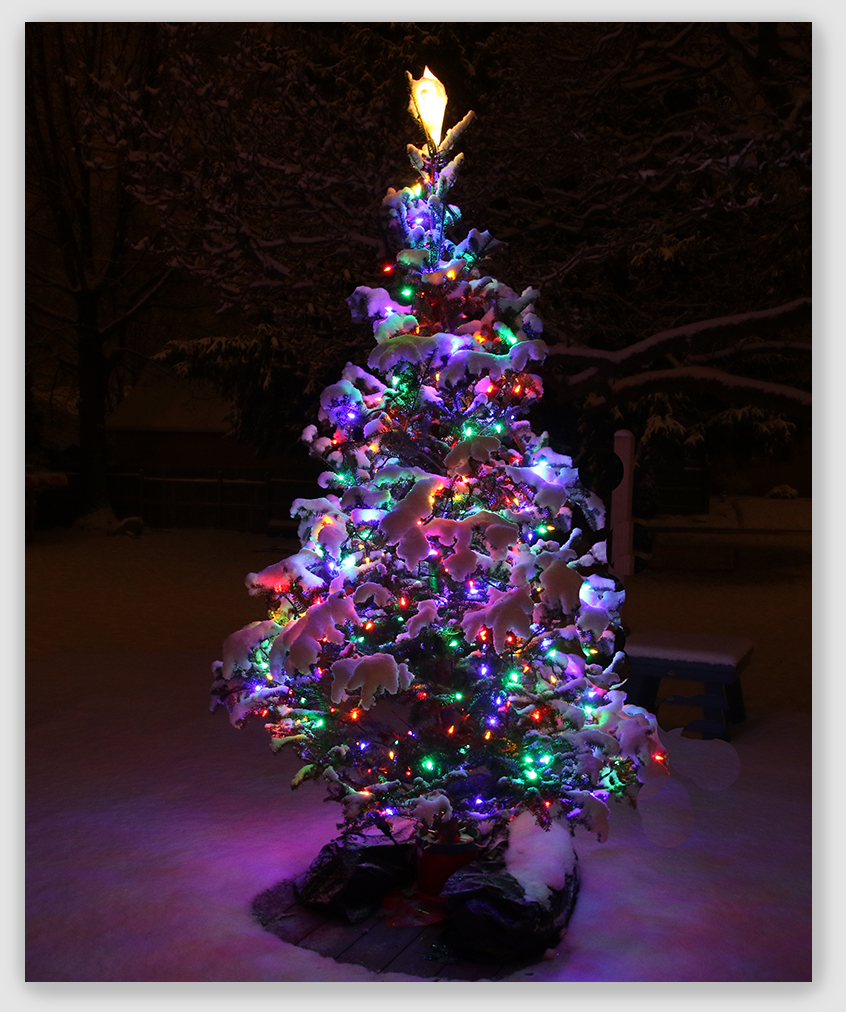
Placed among a neat row of fresh-cut evergreen trees, an eight-foot Fraser fir with a thick coat of needles stands like a handsome sentinel in a crowd of green. The tree, selling for $145 at the Bru-Mar Gardens nursery in Annapolis, Md., is a real beauty: It resembles a cone, with long, sturdy branches at the base that gently taper higher along the trunk. The needles are thick enough to hide behind. At its top, a single lean branch is a throne suitable for an angel or a glowing star. If all goes to plan, a family will take the tree home and adorn it with lights, ornaments and tinsel. It will, at last, fulfill its destiny as a Christmas tree. Evergreens like this one are not — to borrow a phrase from Lady Gaga — born this way. Christmas trees owe their existence, survival and specific shape to years of painstaking care and attention. “A lot of people don’t realize the story behind what’s at the centerpiece of their family holiday Christmas,” said Beth Ann Bossio, a tree farmer at the Quarter Pine Tree Farm in Smithfield, Pa. “It’s a lot of love and patience from these farmers and a lot of years.” Evergreens have played a role in winter celebrations for thousands of years. Long before Christians began setting up trees in their homes to mark the birth of Jesus Christ, people around the world marked the return of winter by decorating their private and public spaces with greenery. Ancient Egyptians adorned their homes with green date palm leaves; Romans observed Saturnalia by surrounding themselves with evergreen boughs; and the pre-Christian Druids hung mistletoe. Records show Germans bringing evergreen trees into their homes at Christmastime in the 16th century, a tradition Americans began embracing with gusto in the 1800s…
US News, December 21, 2021: Louisiana Park Lost 80% of Trees, Could Reopen in Spring
A southwest Louisiana park closed since August 2020 by Hurricane Laura could open next spring but will have far fewer trees, Louisiana State Parks Director Brandon Burris said. Four-fifths of the trees at Sam Houston Jones State Park either toppled or were damaged beyond recovery, Burris told The American Press. Burris said crews have cleared 80% of the 1,087-acre (440-hectare) park in Moss Bluff. Other continuing work includes rebuilding cabins, water and sewer treatment systems, bathrooms, the park’s entrance station, the pavilion and other facilities. Depending on weather, the park could reopen by late March or early April, he said. “We’re at a good pace now,” he said. Burris said the state is paying to clear the downed and damaged trees while negotiating for reimbursement by the Federal Emergency Management Agency. Insurance covered repairs to buildings and other structures, he said…
<img class=”aligncenter wp-image-1521″  Phoenix, Arizona, KAET-TV, December 21, 2021: Joshua trees are first plant to get California protections because of climate change
More than a decade ago, Brendan Cummings was living in this desert town and working to gain federal protections for Arctic polar bears, which can’t survive without the sea ice that’s disappearing because of climate change. A world away from the icy tundra, in a sunny spot named for the iconic yucca plants that grow all around, the environmental lawyer realized that polar bears weren’t the only earthly wonders in danger of extinction. “While I was focusing on a climate-threatened iconic species in the Arctic where the threat of climate change was so clear – temperature warms, ice melts, habitats lost – literally right out my front door, right out my window was another climate-change threatened species that’s fate was less obvious,” said Cummings, who also is the conservation director of the Center for Biological Diversity, based in Tucson. “That which we think is common and abundant — and therefore we assume secure, safe from the threats of climate change and other threats — is actually a lot more vulnerable than it appears.” From the national park that bears its name to Instagram feeds to U2’s classic album from 1987, the Joshua tree is an iconic symbol of the Southwest. But with experts predicting that up to 90% of them could disappear by century’s end, they may become another symbol of our failure to act on climate change…
Georgia gardeners will find the most success transplanting trees in the cooler seasons. But anywhere a tree or shrub dies within the first year of planting, there is usually a root issue involved. Spring-planted trees and shrubs are generally more stressed from summer heat because their roots are still underdeveloped during the first year. This results in excessive wilting, which causes well-intentioned gardeners to literally water their plants to death. Fall- and winter-planted trees and shrubs can more quickly become established in their new environment while they are dormant, giving them far more resilience during their first summer. Even with proper timing and planting technique, woody plants may still take a few years to fully establish and recover from transplant stresses. Spring plantings also are more likely to suffer from chronic transplant shock. Under stressful conditions, plants are unable to recover, continue to decline and eventually die. The most common reasons for transplant shock and root stress are planting too deep, poor drainage, backfilling with composted soil amendments, damaging the stem/root ball connection during planting or excessive watering. It is possible that a combination of these issues may be involved, especially with the amount and frequency of rain we’ve had the past few years in the northern part of the state. Burris said the state is paying to clear the downed and damaged trees while negotiating for reimbursement by the Federal Emergency Management Agency. Insurance covered repairs to buildings and other structures, he said…

Toronto officials are investigating after a resident in southwest Scarborough allegedly cut down an oak tree in order to build a pool, even after the city rejected a permit to do so. Gary Crawford, city councillor for the area said the home on the Blantyre Avenue property was torn down about two years ago, and two houses were built in its place. At the time, six trees were permitted to be removed through provincial legislation and the owners agreed to put in around 13 to 15 trees to replace them. But about a year after that, another permit application came in to remove one more tree in the backyard to build a pool, he said. “My office did intervene and that permit was rejected by urban forestry,” said Crawford. The councillor says the tree appears to have been removed anyway. The Birchcliffe-Cliffside neighbourhood is known for its high tree canopy, including oak trees which take decades to mature. The minimum fine for the illegal removal of a tree is $500 dollars under municipal code, up to a maximum of $100,000…
The New Republic, December 20, 2021: The Strange Quest to Save North America’s Most Elusive Oak Tree
There was perhaps no one better than Cornelius H. Muller—one of twentieth-century America’s most notable oak fanatics—to document the continent’s most mysterious oak trees. In July 1932, the horseback-riding botanist first encountered Quercus tardifolia while collecting samples in the steep-cut canyons of Texas’s Big Bend National Park. Muller jotted down details of the twigs (slender, somewhat fluted), buds (hairy at the tip), leaves (dull blue-green), and branches (short, stiff). He anointed it with a Latin name that referenced the tree’s late-season leaf development. This process of scientific description is a kind of sacrament, a communion between scientist and species: Muller saw Q. tardifolia, and so it was. Then, as suddenly as it blinked into taxonomic existence, the species vanished from sight. In Muller’s wake, a succession of ecologists have scoured Big Bend for more of the species, trying to prove that it exists. None have succeeded. Ecologists only ever found one possible Q. tardifolia tree—which may or may not have been Muller’s original specimen; it died around 2011, before it could be genetically analyzed or botanically cultivated for conservation. Today, Q. tardifolia has grown about as lonely as a species can get, with an estimated population in the double digits and a known range of one location…
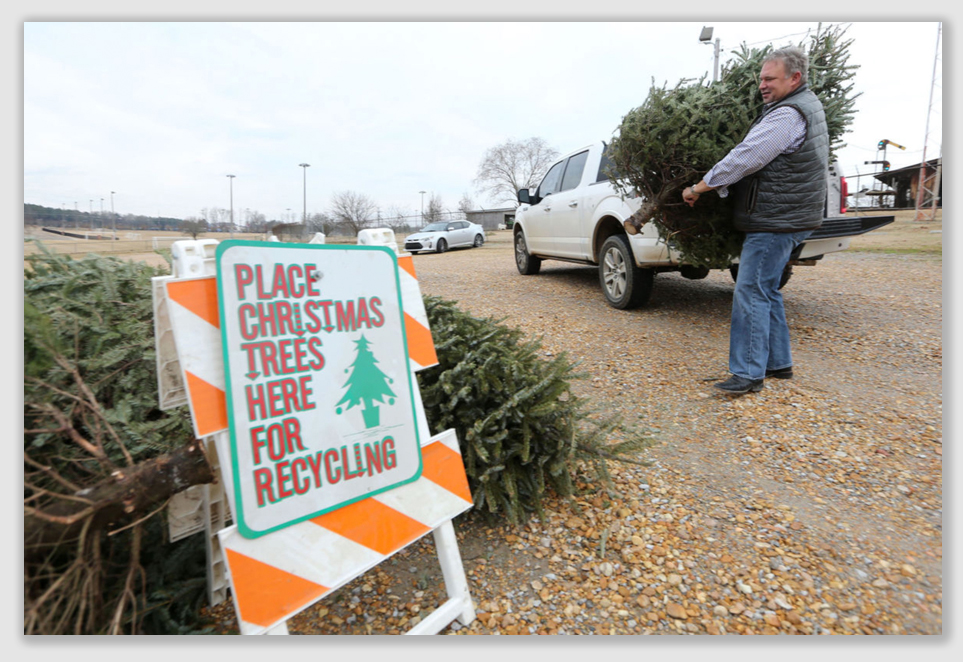 Albany, Georgia, Herald, December 20, 2021: Give your Christmas tree life after the holidays
If you celebrate Christmas, there is nothing like having a real tree to decorate in your home for the holidays. The festive aroma alone provides such a sense of nostalgia. However, once the holidays have quickly come and gone, the next order of business is disposing of your tree. For most people, the first thing that may come to mind is to add it to their weekly trash pickup to go to the landfill. In theory, while this seems like a good idea, it is environmentally destructive. When your tree is sent to the landfill, it is packed so tightly it cannot decompose properly. In turn, this causes the tree to release methane gas that is harmful to the environment. So what other options are out there? To give your tree life beyond the holidays, University of Georgia Cooperative Extension has compiled some ways to recycle and repurpose your tree to give back to Mother Nature. Check out your local options: Contact your city, county, local waste management company, nearby garden center, local conservation organization or local nonprofit organizations to find out if they offer tree recycling. Many times, they will either pick up your tree or provide you with information on a drop-off site…
A walk around the neighborhood or forest will confirm winter is here. Of course, there are the recent thermometer readings and the shorter days. Other signs Leon County are the thicker coats on animals which, by choice or situation, must remain exposed to the elements. Some, like the native reptiles and amphibians, are absent from sight, having retreated to a safe location to “sleep” the winter away. There are also the plants and trees which have completed their annual cycle of renewal, growth, reproduction and the return to a dormant state. In the current state of stillness, the seeds developed during the warmer days have hardened and are ready for distribution. One of the easiest identified examples of the process for continuing the species are pinecones. In Leon County the ever-present woody structures, botanically known as strobilus, are currently open and releasing seeds at the end of a single wing which flutters to earth, if it survives the trials of life in the open…

A fresh, woody and, sometimes, spicy smell. Crunchy leaves that are so thin they’re called needles. Decorated with festive ornaments and colorful lights — or just white lights — depending on your family’s style. A Christmas tree is a December tradition for a lot of families. More and more, though, that classic Christmas-tree smell isn’t there, and the leaves are not so much crunchy as they are plastic. Of the families that celebrate with a Christmas tree, most chose the artificial kind, according to the National Christmas Tree Association. Artificial trees are reusable, which makes them convenient and seem environmentally friendly. But, a live, cut tree is actually the more responsible choice when it comes to the environment. “People have the misconception that real trees are bad because you’re cutting down a tree, [but] the opposite is true,” says Bill Ulfelder, the executive director of the Nature Conservancy’s New York office. Trees are a renewable resource. Cutting them down and planting more, as Christmas tree farms tend to do, makes for a well-managed forest that helps the environment…
Leafless trees and shrubs seem almost dead in the winter, but they’re not. Bright daffodils and tulips of springtime and colorful summer perennials may feel like faded memories, yet they’re all still here. They’re just dormant. “Dormant plants are alive,” said Sharon Yiesla, plant knowledge specialist at The Morton Arboretum in Lisle. “They’re just inactive.” Dormancy is a tactical retreat that gets plants through times when conditions are difficult and resources are short. In the Midwest, many plants become dormant to take refuge from winter. “The weather is cold and windy, and it’s also a time of drought,” she said. Liquid water is essential to most of a plant’s life processes, but when temperatures fall below freezing and water turns to ice, plants are left high and dry. “Dormancy helps plants do without water until snow melts and spring rains come,” Yiesla said…
 USA Today, December 18, 2021: ‘Griswold’ family’s Christmas tree search ends in dramatic rescue
A Washington family was ridiculed after driving into the forest in severe weather to look for a Christmas tree, prompting a dangerous search-and-rescue effort. The Washington Department of Fish and Wildlife Police on Friday titled its news release, “Griswold Family Rescue.” The reference to “National Lampoon’s Christmas Vacation,” a 1989 comedy film starring Chevy Chase as Clark Griswold, might be understandable to some. The unidentified family ventured into the Blue Mountains despite a weather forecast calling for up to 18 inches of snow. A prominent road closure sign was ignored. The family did not pack suitable clothing or tire chains. The Asotin County Sheriff’s Office received the emergency call Saturday evening and requested assistance from the Washington Department of Fish and Wildlife. The WDWF’s “Sergeant Mosman” led a rescue operation that involved volunteers and the use of snowmobiles…
Something seemed off to John Kreie when he arrived at Wells Christmas Barn on Laudholm Farm Road to pick up an order of wreaths he had placed. To begin with, Todd Pickering and Paige Williams were nowhere to be seen on their property, which was odd, given the premium the couple places on providing customers with a warm welcome and a festive holiday atmosphere. And then there was the box that sat on a table among the Christmas trees for sale. Kreie discovered the box had been placed there on the “honor system,” the hope that whoever took a tree from the property would leave the right amount of money for it. Eventually, Kreie learned the situation at the small family business: both Pickering and Williams had been diagnosed with COVID-19 and were inside their home, feeling ill and quarantining for 10 days. Well, thought Kreie, who lives about 3 miles away on Grand Trail Drive, we’ve got some good people in our neighborhood who could lend a hand. Kreie got in touch with one of them, Lisa Blaisdell, and she organized a group of more than a dozen volunteers. On the weekend of Saturday and Sunday, Dec. 4 and 5, these helpers reported to Wells Christmas Barn and worked in shifts to keep alive its mission: to “bring joy and happiness to everyone who comes here,” as Pickering recalled in an interview…
 Techxplore, December 16, 2021: Tree trimming pays dividends for energy customers
Eversource Energy’s tree trimming program led to 900 fewer tree-caused power outages per year, according to research done by UConn energy analysts and published this month in the journal Energy Policy. For tree-caused power outages that did occur, the duration was reduced by 54%, meaning 18,000 fewer customers experienced tree-caused power outages every year the study looked at. Power outages are a common occurrence for those living in Connecticut. An almost entirely above-ground electricity distribution network paired with a highly forested landscape provides ideal conditions for frequent power outages. Utility companies trim the trees around power lines to try to reduce the number of power outages. But tree trimming is both costly and labor intensive, as well as contentious in many towns where historic trees can clash with modern power lines. The study addressed whether trimming trees actually reduces outages, and whether there might be other equally cost-effective measures. “Trimming trees to prevent power outages might seem obvious at first, but this analysis helps us determine where tree trimming will provide the most benefit to the electricity grid and where it won’t,” says lead author Adam Gallaher, a Ph.D. student in the Department of Geography and Team TERRA NSF-NRT Fellow. The findings from the study were presented to Eversource Energy and at the annual Eversource Energy Center Meeting held on November 19…
Twenty-nine trees could be removed in West Lakeview so the city can replace century-old water mains, but neighbors called on the city’s water department to explore all other alternatives before removing any trees. The trees are mostly along Paulina Street between Belmont and Lincoln avenues, with 19 trees along the route flagged for possible removal, said Anthony Falada, general superintendent of construction for the Department of Water Management. Ten additional trees could be removed along the side streets, including School and Melrose streets from Ravenswood to Lincoln and Ravenswood from Melrose to Belmont. The parkways along those streets are situated above pipes that were installed in 1889 and need to be replaced to prevent breaks or leaks, said Bulent Agar, deputy commissioner of the Department of Water Management. The trees would need to be removed if their roots are too close to the excavation work, but they will be replaced with trees measuring 4.5 inches in diameter, Falada said. “One of the big things we have an issue with is we have to carve a safe excavating path to lay the water main,” Falada said. “In order for the tree to survive, we have to not impact those roots at all. Unfortunately for Paulina and the side streets, the [roots] will be affected … on a case-by-case basis…”
 Modern Farmer, December 16, 2021: The Great Recession Is Still Hurting the Christmas Tree Industry
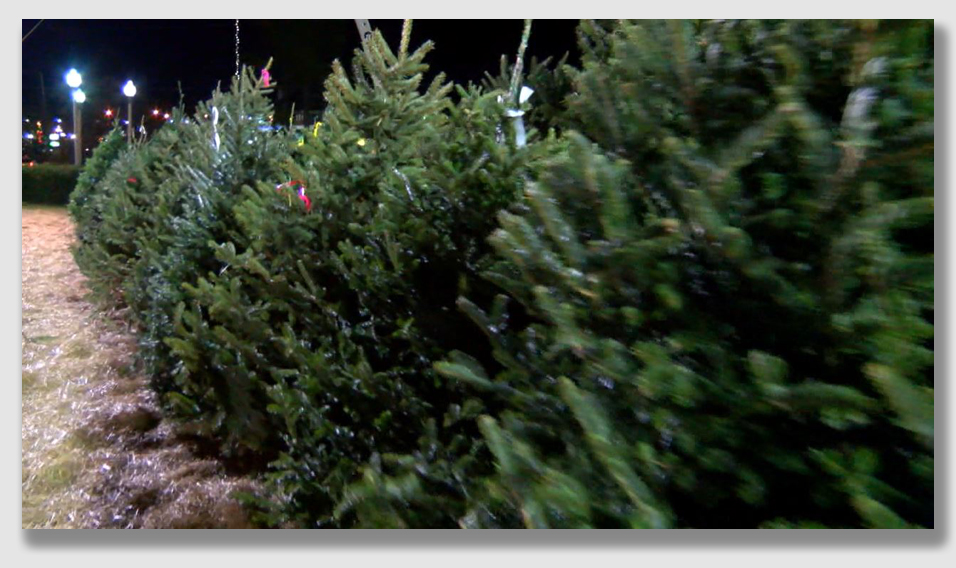
To be clear, we are not experiencing a Christmas tree shortage. No one said anything about that. Some growers called it a “tight supply.” One person I spoke with said there was an “under supply.” But the important thing, they all stressed, is that there’s no shortage of trees. This is all well and good, until you’re driving to three different lots trying to track down a tree. And clearly, some folks have been having a tough time getting their hands on just the right tree. There are lots of reasons for the tighter supply this year. Supply chain disruptions have impacted trucking and transport availability. And in general, those costs have also risen for producers. There are also extreme weather events to deal with and a general loss of acreage for Christmas trees across the country. But one of the main reasons you might not find that perfect fir dates back to 2008 and the financial crisis. Along with other industries, farmers were hit hard by the Great Recession. And growers of Christmas trees were under extra pressure, forced to forecast more than a decade out, rather than a single season. While producers of cereals or grains might be able to change up crops from year to year based on predictions and costs, tree-growers are locked in for the long haul. “Most of our farms run on a ten-year rotation,” says Marsha Gray, executive director of the Christmas Tree Promotion Board. “And a lot of things can happen along the way…”
Public appreciation for green spaces has grown greatly in recent years, and that’s fortunate. As the coastal plain of South Carolina develops rapidly, there’s a special need to pay attention to our quickly disappearing tree canopies. Along the Waccamaw Neck and into the Murrells Inlet Watershed, policymakers are under increasing pressure to give serious consideration to the value of trees. There has been some progress. But almost all of the policies enacted so far are woefully inadequate and have given far too much priority to development interests. Generally speaking, the policies of Georgetown County and too many other communities put an emphasis on protecting the trees we have with no consideration given to replanting the next generation of trees. This is a flawed approach. The trees we have suffer attrition yearly as they grow old or are damaged by wind storms, parasites and pests. Some die a slow death from root damage inflicted by nearby development. New driveways and roads prevent their roots from drinking in rainfall…
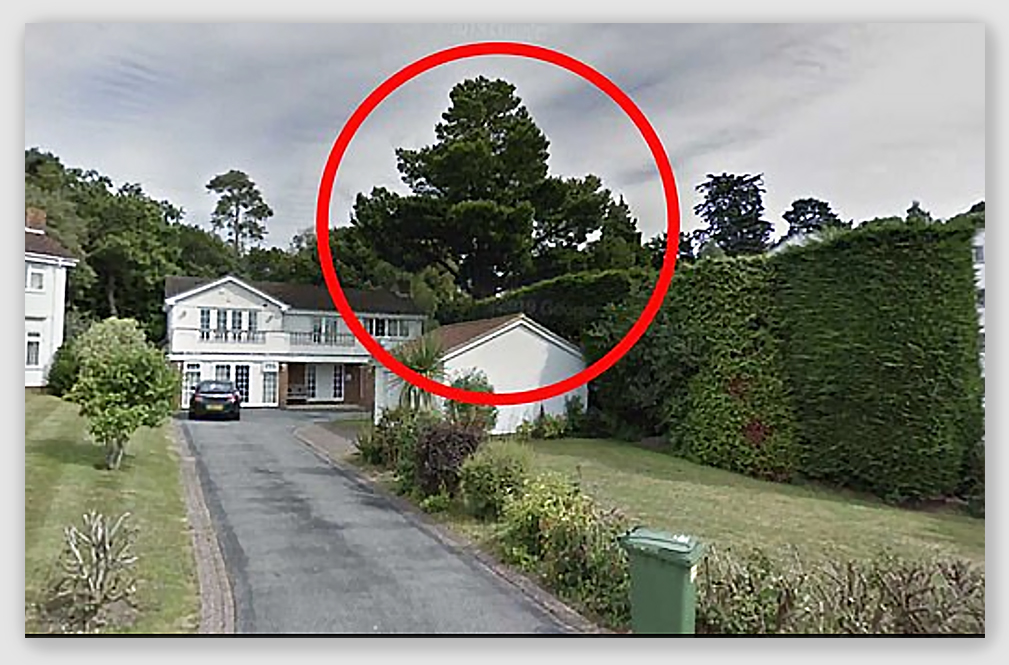
An ‘arrogant’ homeowner who killed a protected tree that stood in the way of a lucrative property deal has been ordered to pay £80,000 in fines and costs. Robert Page, 71, formed an ‘irrational dislike’ of the 65ft Monterey pine after it scuppered his bid to sell his home near Poole Harbour to a property developer. The retired chartered accountant stood to make £100,000 from the deal but planning permission was repeatedly refused, with the public amenity value of the evergreen cited as a reason. The 65-year-old specimen, that was made subject to a Tree Preservation Order in 1989, also cast a large shadow over Page’s £900,000 home in Dorset. In 2016 he arranged to have drill holes made in the trunk of the tree and a deadly herbicide poured inside, before claiming a vigilante had come onto his property and killed it. Concrete was also poured around the roots to ‘choke’ it of oxygen. Upon inspection two years later, tree officers at the local council discovered the once-luscious pine had been sabotaged after it withered and died. After spotting the officials on his property in the upmarket district of Lilliput, Poole, Page was overheard saying to his wife: ‘Don’t tell them anything.’ Following a four-day trial, he has now been found guilty of breaching a TPO order with intent to destroy the tree…
When a wind event happens in Colorado, arborists and tree service companies like Denver Tree and Landscape know to be prepared. “It just kinda doesn’t happen, and then it does. And then probably in the next two, three hours as people were getting off of work, and show up with trees in their driveways and around their houses, the phone’s really going to start ringing here,” said Joshua Davis, the co-owner and president of the tree service and landscaping company. On Wednesday, the Denver metro took some of the damage that came with heavy wind gusts, including several spots with downed, and in some cases uprooted, trees. Even though it’s technically the company’s slow season, the storm spiked demand for some companies like Davis’. “What we’re doing now is I’m pulling my landscaping crew off their jobs for tomorrow,” Davis said. “Today and the rest of the evening is just making sure that there’s no dangers, there’s not hanging branches that’s gonna hurt somebody, any trees on houses, driveways that are blocked that people can’t get out if there’s a medical emergency. So that’s our focus today.” He said there’s a need for more workers in the industry. “Generally right now, it’s been like this for a few years, it’s just finding people willing to work that want to do it,” he said. “I have constant ads out, always asking people that work for us, ‘Hey, if you know anybody that wants to come on board…'”
<img class=”alignright wp-image-19673″
src=”https://treeandneighborlawblog.com/wp-content/uploads/2021/12/kenworth211216.jpg” alt=”” width=”509″ height=”389″ />Fleet Management, December 14, 2021: What It Takes to Transport the Capitol Christmas Tree
Special delivery: an 84-foot-tall white fir harvested straight from the Six Rivers National Forest in California. The tree, which was selected as the 2021 U.S. Capitol Christmas Tree, went on a 3,300-mile journey from its home in California to Washington, D.C. Cheney, Washington-based flatbed carrier System Transport was the fleet for the job. With a specially wrapped Kenworth T680 Next Generation tractor, System Transport hauled the tree on a cross-country tour, stopping in 17 communities along the way from Oct. 29 to Nov. 16. The trek culminated with the official tree lighting on the West Lawn in early December. One of the stops was at the Kenworth manufacturing plant in Chillicothe, Ohio, where the Next Gen was assembled, with a special event for plant employees. Spireon’s FleetLocate trailer management technology tracked the journey in real time. Transporting the tree with the 105-foot-long tractor-trailer presented unique challenges. It started with a lot of coordination in arranging vehicle escorts throughout the trip, primarily from U.S. Forest Service law enforcement but occasionally from local law enforcement. “As needed, the escorts would block traffic to allow room and time to maneuver the over-dimensional load through intersections and around corners,” says Chad Reiling, marketing manager for Trans-System…
We all know how hot and damaging the summer sun can be in Australia and most of us are only too willing to take sensible precautions, and slop on sunscreen. It’s not only humans that suffer from sunburn and its consequences. Some pets, such as cats and dogs, can get sunburnt in some of their less furry places, and pig farmers have long known the damage sun can do to their prized stock. But have you ever wondered about sun damage to plants? Can trees be sunburnt? It may surprise you to know the answer is actually yes! Tree sunburn tends to occur during hot spring days or in early summer, when trees are full of moisture. So let’s explore why it happens, and the easy ways you can protect your trees from damage. Many of you may be thinking of sun scorch, which occurs on the leaves of some of our favourite garden plants on a hot summer’s day: the brown, wilted hydrangea leaves or the large blotchy brown patches that appear on camellia leaves that weren’t there at the beginning of the day. This is sun damage, but is not the same as sunburn on trees. Leaf scorch can occur because leaves are exposed to high levels of solar radiation. The damage is often exacerbated by a low level of soil moisture, which reduces the cooling effect of transpiration (when water evaporates from leaves)…
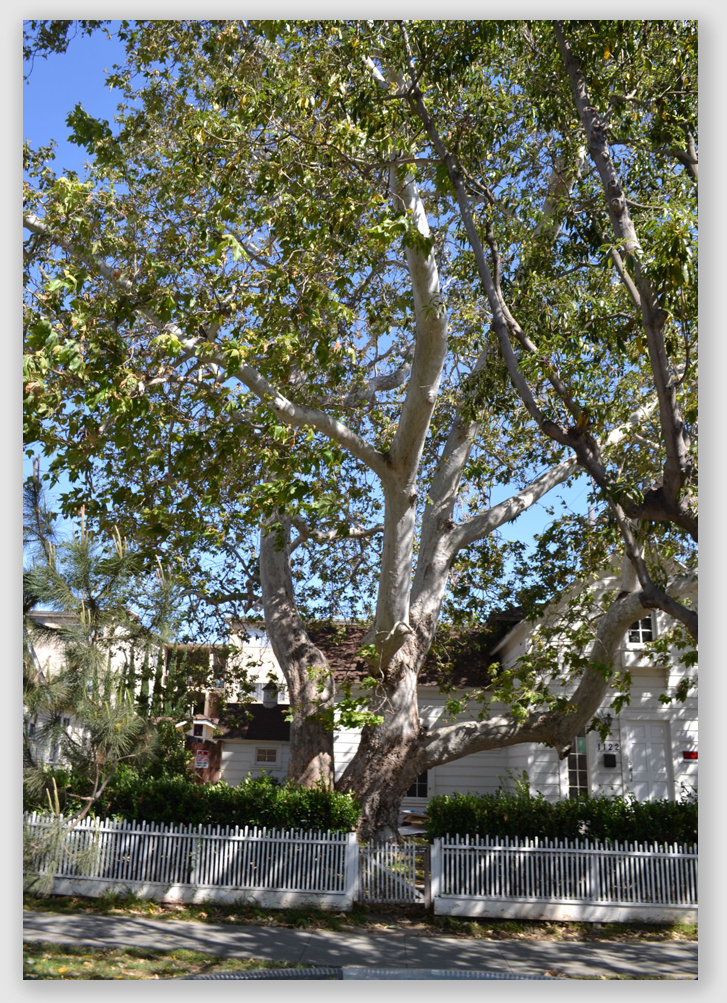
If you swipe your hand across a tree leaf near the Port of Houston, your fingers will come away covered in white dust. That’s the residue of cement from the concrete plants that are making nearby neighborhoods experience some of the worst air pollution in the Houston area. Houston’s health department has teamed up with local non-profit Houston Wilderness to create an adaptable blueprint with one simple task: planting trees. Although planting trees is not a policy or system-wide solution that will end these polluting industrial operations, the new trees will help improve air quality and reduce flood risks. By scoring different tree species on their capacities to improve the climate, and mapping out the most at-risk community areas, this data can be used to plant trees best suited to solve the environmental problem that is exacerbating health inequities, such as increased risk of asthma and cardiac arrest. The health department and the non-profit say they hope other cities will use this tree-planting project as a way to address similar problems across the country or the world. For Loren Hopkins, chief environmental science officer for the Houston Health Department and a co-author of the study published in Plants, People, Planet, this approach is a call to action to make people reckon with the interconnectedness of these issues. “Maybe they’re health people or insurance companies or other industrial partners who understand that tree planting is a method to combat climate change,” Hopkins says, “but they leave it to the environmental groups.” The first step in the process was to identify which native tree species would be planted. Houston is home to trees that are hardy and grow well, as well as a large list of native tree species…
Christmas is right around the corner and many people are putting up Christmas trees at home. Because trees can catch fire and burn quickly, safety is of the utmost importance. Tony Smart, Winterville fire marshal, says it is important for people to make sure that if they have a real tree in their home, it should have a stand. That way, water can be put in it to keep the tree hydrated. People should also check the water level every day and add more as it is needed. Smart also tells us it is important to make sure the tree is at least 3 feet from any heat source, like fireplaces, radiators, candles, heat vents, and lights. “We stress to everyone when it comes to Christmas trees — make sure they are watered. Make sure to use only approved lighting and keep all flames away at least 3 feet…”
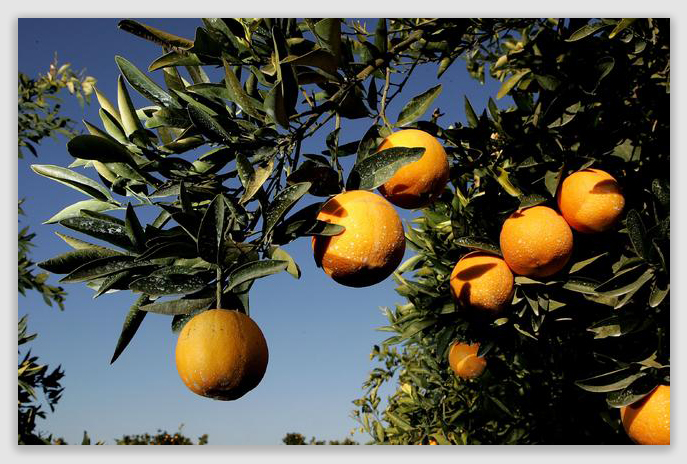
For the first time ever, scientists have been able to measure the speed of a bacterium that causes the incurable citrus greening disease. Citrus greening disease (also known as Huanglongbing) is the most devastating citrus disease in the world. Afflicted trees grow yellow leaves and low-quality fruit and eventually stop producing altogether, resulting in enormous economic losses to farmers. Small insects carry the causal bacteria Candidatus Liberibacter asiaticus (CLas), and inject it when they feed on a tree’s sap. CLas also relies on this sap to grow and spread throughout the tree. Using a new statistical modeling analysis and measurement approach, plant pathologists were able to follow CLas on its journey through a tree. “We found that CLas can move at average speed of 2.9 to 3.8 cm per day. At these speeds a tree that is 3 meters in height will be fully colonized by CLas in around 80 to 100 days, and this is faster than the symptoms appear, which generally takes at least 4 months,” explained Silvio A. Lopes, a plant pathologist based at São Paulo State University in Brazil…
Chicago, Illinois, WGN-TV, December 14, 2021: West Lakeview residents fight to save trees
The replacement of old underground water mains in West Lakeview is set to begin early next year. And while residents acknowledge the upgrades are needed, some worry it could come at a price. In other neighborhoods, where the same pipe replacement work was done, the city needed to cut down fully grown trees, leaving once leafy blocks bare. West Lakeview residents are concerned that could happen to their streets, too. There is a group actively campaigning to save trees on a roughly four-block stretch of North Paulina Street. “At the end of the day, we understand the pipe has to be replaced,” resident Caroline Teichner said. “But we want to be part of that dialogue, because this will really impact the neighborhood.” Teichner is part of a resident group that’s working to raise awareness online and by passing out fliers and posting signs on trees. The group estimates more than 20 mature trees could be in jeopardy. Ald. Matt Martin (47th) says he understands residents’ concerns. “Our area [takes] tree canopy incredibly seriously,” he said. “So, the prospect of losing one tree is one thing. The fact that we may lose dozens is hugely significant…”

Over the last year, residents have told town officials about trees being chopped down and ruining the character of their property and neighborhood. One emailed the town in frustration after several trees on Bayberry Lane were cut down. The resident said that while the trees were not only cut down without a permit, it has left a bit of an eyesore on the rest of the neighborhood as the rubble has been sitting on the property for close to a year. Another resident told a planning and zoning subcommittee that a developer bought the property next to him and cut down the majority of the trees. He said the situation drastically transformed the back half of his 50-year property. “We decided the time has come to try and do something about it,” said Planning and Zoning Chairwoman Danielle Dobin. “I’ve conducted a little bit of research and asked the staff to do the same to see if we could find any ordinances that thoughtfully preserved tress while still allowing for private property owners to have utilization of their property.” The group found a number of towns have drastically different ordinances for preserving trees…
Hemlock woolly adelgids, tiny invasive insects that suck nutrients from hemlock trees, are known to be present in Allegan, Ottawa, Muskegon, Oceana and Mason counties. State agency staff, university researchers and regional cooperative invasive species management areas have been working to identify and contain infestations that span across public and private lands. This winter, the Michigan departments of Natural Resources and Agriculture and Rural Development encourage those who have eastern hemlock trees on their property, whether in known infested counties or elsewhere, to take time to inspect the trees for signs of hemlock woolly adelgid. If untreated, hemlock woolly adelgids can kill hemlock trees in four to 10 years. Trees can be protected with proper insecticide treatments. Winter is the optimum time to look for evidence of an infestation, according to Robert Miller, MDARD’s invasive species prevention and response specialist. “Cooler temperatures trigger feeding activity,” Miller said. “As hemlock woolly adelgids feed, they secrete a white, waxy material that creates ovisacs. The presence of these small, round, white masses makes it possible to identify infested trees…”
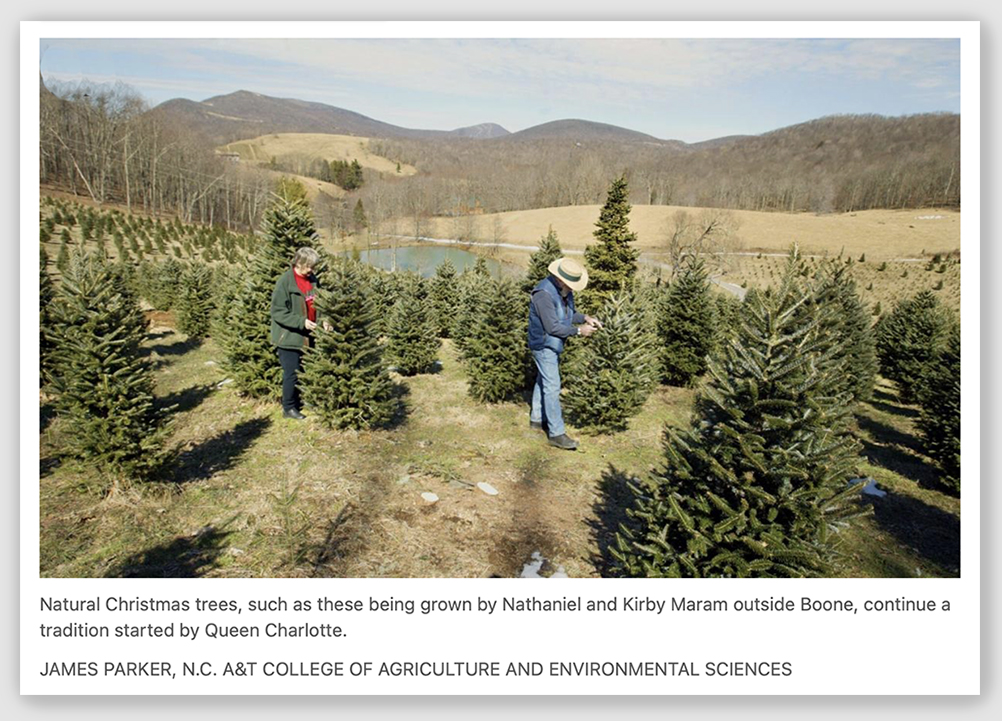
This is the season when countless Charlotte homes display decked-out evergreens, a centuries-old holiday tradition. But even in the Queen City, few remember how the tree became synonymous with Christmas — or how Charlotte’s namesake spread its popularity to the English-speaking world. Charlotte of Mecklenburg-Strelitz married Britain’s King George III in 1761 and quickly became a popular figure throughout the kingdom. Within a few years of her ascension, English settlers named Mecklenburg County after their queen’s birthplace, then adopted her first name for the growing township at its center. “Charlotte was a speck of dust, this was the edge of the British world,” Charlotte Museum of History development director Lauren Wallace said. While there’s no evidence that overseas settlers kept up with the details of palace life, they were eager to see a spirit of adventure and trepidation in their new rulers. At that time, “the people here are very proud of being British,” Wallace said. “When Charlotte and George come to power people are excited because they see it as a moment for change, innovation… they’re young, they have a lot of energy…”
Many residents who grow palms are familiar with the signs of Ganoderma butt rot, Ganoderma zonatum, which is confirmed when a conk is found at the base of infected palms and palm-like plants. On the other hand, the fungus that can kill most woody trees and shrubs is Armillaria root rot, and it isn’t as well known. Armillaria fruiting bodies, or mushrooms, are typically only produced when there are moist conditions and cooler temperatures. For our area, that is generally fall, winter and occasionally in the spring. If you have a yard full of trees and shrubs, be on the lookout for Armillaria mushrooms. Armillaria root rot also goes by the common names mushroom root rot, shoestring root rot, and honey mushroom rot. This disease decays the root system of many woody trees and shrubs. This genus of fungi can be found world-wide, from the warmer tropics to the colder temperate regions of the north. Armillaria has a large list of hosts that it can infect, including many hardwoods and conifers…
In late 2016, as many of us were enjoying the harvests from our backyard citrus, I wrote an article about being on the lookout for citrus greening. At the time, citrus greening, a bacterial plant disease that can affect all citrus, was widespread in central and south Florida but had not made it this far north. That year, the vector, the insect that spreads the disease from tree to tree, had been found in Leon County and a few other surrounding Panhandle counties, but the disease had not. By mid-2017, the disease had been confirmed in Franklin County and we hoped that our cooler temperatures could keep the insect and disease at bay. Well, I regret to inform you that the disease has also now been confirmed in Leon County, growing in a residential yard in Tallahassee. Now that it is confirmed in non-coastal (and cooler) north Florida locations, I thought a review of the signs and symptoms – as well as what to do with your tree if you suspect or confirm greening – would be helpful…
Glenda Griest said her bad experience with C&J Tree Service — a Springfield-based company subject to a new consumer warning from the Better Business Bureau — happened the same day as that big sonic boom that rocked southwest Missouri in late September. Griest said C&J Tree Service workers were going door-to-door soliciting customers, claiming they were short on work at the time but could easily remove nine 60-foot trees from the home property owned by Griest and her husband, Dale. “We live in a development with a ton of trees,” the Nixa resident said of her neighborhood, Deer Ridge. She said Dale worked out an agreement with C&J to pay $4,000 for the removal of the nine trees: Not just cutting them down, but removing the stumps and disposing of all the limbs and trunks into firewood. Griest said her husband gave C&J $3,700 in cash on the spot for the work they agreed upon…
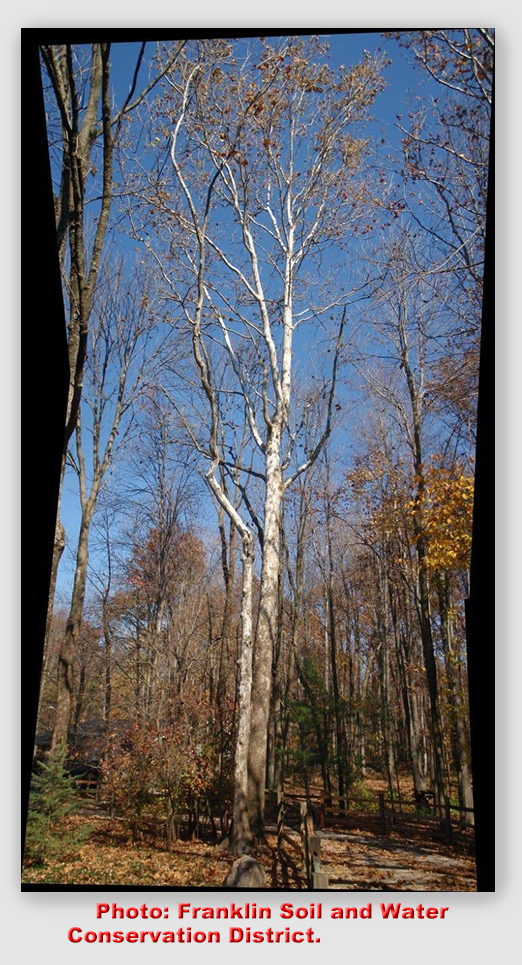
A scan of stream and river banks in this part of the country frequently reveals tall, broad trees towering over the landscape. Their upper trunks bear a creamy white bark that transitions to an interesting mottled appearance farther down the tree. What you observe is one of the larger deciduous trees in the eastern U.S.— the American sycamore. Also known as planetree or buttonwood, Platanus occidentalis is a fast-growing giant that can ultimately reach 100 feet or more in height and up to 10 feet in diameter at the base. In Central Ohio, sycamores and their variants are sometimes planted as street trees due to their toughness and adaptability. But given their growth rate and mature size, they can overwhelm planting strips or sites that are too narrow. They are better suited to parks and large yards where they can grow large and offer plenty of shade. In their natural settings, sycamores provide habitat for bird species as diverse as chickadees, barred owls and wood ducks. Cavity nesting wildlife seek out the trunk hollows that develop with age…
After this year’s summer drought in Illinois, it is more important than ever to monitor soil moisture conditions and water trees and shrubs going into winter. Drought conditions in the late fall, along with dry air and low soil moisture, can lead to plant damage if no supplemental water is provided. “If soil is dry, homeowners should consider watering their trees and shrubs this fall and winter,” says Gemini Bhalsod, University of Illinois Extension horticulture educator. Plants under water stress are more susceptible to insects and diseases. They can also experience injuries to roots or foliage. Before watering, check the soil moisture. Monitor the moisture levels about once a week. Dig a small hole under the tree’s drip line, 4 to 6 inches is enough. Feel for moisture. If the soil is dry, the tree should be watered. “This little bit of consistent effort will pay off in the long run,” Bhalsod says. In particular, newly fall-planted trees, shrubs, and perennials should be monitored and watered late into the season, since they do not have as much time to develop extensive root systems as anything planted in the spring. Pay attention to evergreens and shallow-rooted trees such as birches and maples. Some shallow-rooted trees can be identified by roots breaking the surface of the soil. Evergreens do not go dormant in the winter and are still actively respiring and lose water through their needles…

Access to the big trees and Sequoia National Park’s world-famous Giant Forest will reopen to the public on a limited schedule beginning this weekend. The beloved sequoia grove, which includes the Earth’s largest tree, General Sherman, will reopen beginning Saturday. The grove will be open four days a week to start, from Thursday through Sunday. The park will be open for a seven-day period between Christmas and New Year’s, weather and conditions permitting, park officials announced. General Sherman and sequoia groves have been closed to the public since September due to the KNP Complex Fire, which burned more than 88,000 acres across Sequoia and Kings Canyon national parks. The fire remains 80% contained but is now burning only in remote areas of the park that pose no threat to the public, park officials said. Thousands of sequoia trees are dead or dying as a result of the lightning-caused blaze, park officials said last month. A fifth of the world’s mature giant sequoia were severely scorched or killed by California wildfires in the past two years alone. The Giant Forest Grove was shielded from the KNP Complex thanks to several prescribed burns that the National Park Service has done in the area since the 1970s…
CNN, December 8, 2021: These Christmas trees may improve your health
The scent of pine and sticky sap waft through the house. A Douglas fir stands tall in the living room, adorned with shiny ornaments and shimmering lights. Almost nothing is as synonymous with holiday decorations as a fresh-cut evergreen tree. The tradition began in Germany in the 16th century and spread to other countries over the next three centuries, according to Encyclopaedia Britannica. The artificial tree was invented in the United States, with the plastic ones we know today originating in the 1950s and 1960s. Artificial trees have grown in popularity due to their convenience and longevity, but they don’t offer the same mental health benefits as spending time around real trees, some studies report. Exposing yourself to a natural environment is known to reduce psychological stress, according to a 2018 study published in Behavioral Sciences. “I would expect that bringing a bit of the great outdoors indoors would affect us positively,” said psychologist Sonja Peterson-Lewis, an associate professor at Temple University in Philadelphia. Multiple studies have shown that forest bathing, mindfully taking a walk through a forest, can have a positive impact on a person’s well-being…
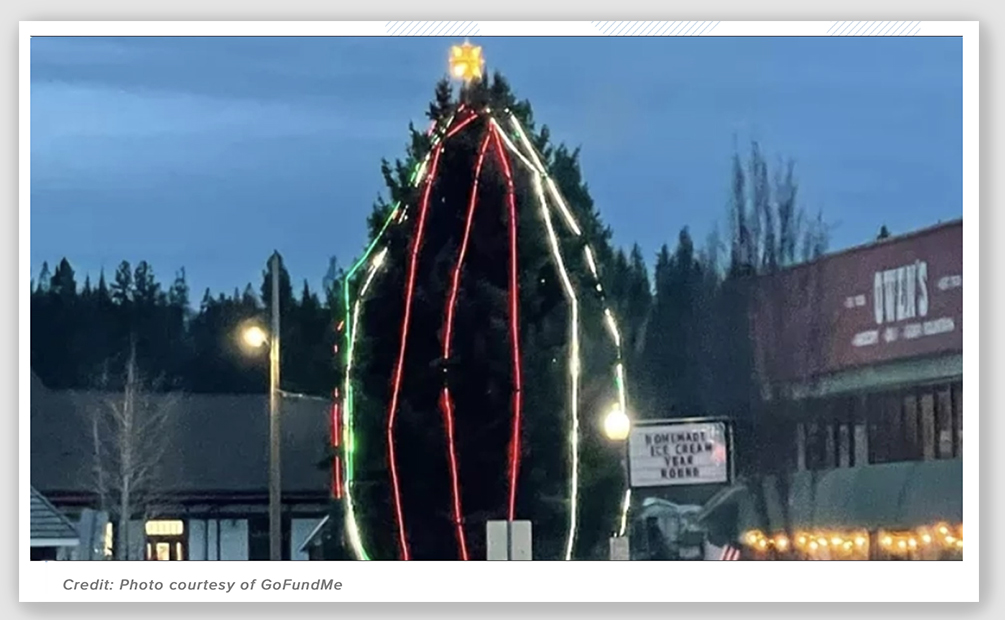
Christmas trees decorated with many lights and ornaments spark joy for many people during the holiday season. But that joy soon faded for some Newport residents when they saw their town’s tree. The tree, with a few white, red and green lights hanging vertically from it, was a sad sight for some during a time that’s supposed to be filled with the Christmas spirit. But that won’t last for long, as a resident started a fundraiser to decorate next year’s tree that turned into this year’s town joy. “This tree is just sad…we can do better,” Fritz Turner posted on the GoFundMe page that he created. On the GoFundMe page, ‘”Help fix Newport’s town Christmas tree,” Fritz asked the community to come together and raise funds for buying better decorations for the tree. “Even Charlie Brown’s Christmas tree looked better than this sad spruce,” Fritz said on the post. “This is a disgrace to the good name of not only Newport but Saint Nic himself, and I won’t stand for it.” Since the fundraiser was created on Dec. 3, it has raised more than $2,500 of its $5,000 goal as of Thursday afternoon. The funds are will be used to buy the tree’s decorations and lighting for next year’s tree. However, after many residents and local organizations stepped in to help, the tree will now have handmade ornaments made by Newport Middle and High School students. The Public Utilities District (PUD) will be rehanging the lights…
Next time you ask someone to meet you under the mistletoe, it may be an arborist to get rid of it. That is, if you’ve got the plant growing in your trees. Not to dampen the holiday spirit, but the Texas A&M Forest Service is warning people that the often romanticized plant is actually a parasite. “While socially it may bring good cheer, biologically it can be quite damaging to trees,” the service posted on Facebook. There are more than 30 species of mistletoe in North America and more than 1,300 species of Mistletoe across the world, according to the forest service. And it’s spread easily by birds that carry the sticky seeds to new hosts. When the plant germinates, its roots penetrate the tree and take water and nutrients from the tree. It also uses photosynthesis to produce energy — so technically it’s considered semiparasitic or hemiparasite. The Texas A&M Forest Service says in Texas, mistletoe affects oak, sugarberry, elm and several species of pine and says any tress that are infested with mistletoe should be treated by pruning, though it can be hard to eradicate. “If extensive pruning is needed, a Certified Arborist should be contacted to assess the tree and the extent of infestation,” the service advised. The good news is, it’s not considered a serious tree pest, so you probably won’t have to kiss your tree goodbye…
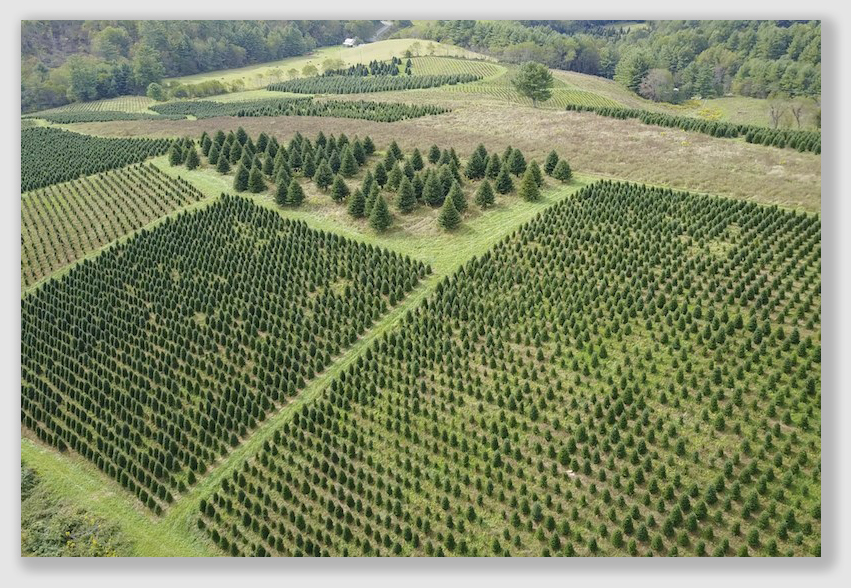 Pennlive, December 8, 2021: Is there a Christmas tree shortage? Depends on who you ask.
Is there a Christmas tree shortage? Well, it depends on where you live and who you ask. Michael Breighner, who operates the Gettysburg Tree Farm in Mount Joy Township, Adams County, said he’s not experiencing any shortages. He grows his own trees and sells them too. “We have a large repeat and loyal following,” said Breighner, who has been in the Christmas tree business for more than 40 years. While news reports indicate fewer live trees for holiday shoppers in metropolitan areas and supply chain issues have stalled deliveries of artificial trees, the good news for tree shoppers in Pennsylvania is that growers report a fairly healthy tree inventory. Breighner said he began selling trees before Thanksgiving and still has hundreds left, some as tall as 20 feet. Curtis Sober of Sober’s Trees in Franklin Township, York County and Kendra’s Trees in Monroe Township, Cumberland County said he is doing well because he sells the trees he grows with the exception of one variety. Sober’s Trees has a farm near Ickesburg in Perry County and previously sold Christmas trees in New Cumberland for 55 years…
Honey fungus is causing root rot in trees and orchards in South Carolina, posing a threat to one of the nation’s largest peach industries. The Armillaria root rot, also know as oak root rot, is costing farmers millions of dollars yearly in crop loss. But a Clemson University professor is studying ways to manage the disease, including the development of a vaccine to protect this jewel in the Palmetto State. The research is being conducted in the Pee Dee region. People from across the state rush to this area, where Mac’s Pride is popular, to stock up on this special fruit when in season. Sweet and juicy South Carolina-grown peaches have become a staple in cobblers, pies and even teas. Scientists are stepping in to ensure this remains true. Finding a solution to root rot is an important task in supporting the state’s peach industry. When root rot affects peach trees, it decreases the production of the fruit, which can lead to lost revenue, said Ginny Gohagan, a marketing specialist with the state Department of Agriculture. And this loss could get passed on to consumers through fruit shortages and higher prices…

Next time you ask someone to meet you under the mistletoe, it may be an arborist to get rid of it. That is, if you’ve got the plant growing in your trees. Not to dampen the holiday spirit, but the Texas A&M Forest Service is warning people that the often romanticized plant is actually a parasite. “While socially it may bring good cheer, biologically it can be quite damaging to trees,” the service posted on Facebook. There are more than 30 species of mistletoe in North America and more than 1,300 species of Mistletoe across the world, according to the forest service. And it’s spread easily by birds that carry the sticky seeds to new hosts. The Texas A&M Forest Service says in Texas, mistletoe affects oak, sugarberry, elm and several species of pine and says any tress that are infested with mistletoe should be treated by pruning, though it can be hard to eradicate. “If extensive pruning is needed, a Certified Arborist should be contacted to assess the tree and the extent of infestation,” the service advised. The good news is, it’s not considered a serious tree pest, so you probably won’t have to kiss your tree goodbye. Not to pile on the plant, but it’s also poisonous, so if you do have it in your trees, or in your home over the holidays, make sure that no humans or pets put it in their mouths…
State employees will visit the Rockford area Wednesday and Thursday to tackle the newest invasive species that could threaten Michigan’s Christmas tree industry. The Michigan Department of Agriculture and Rural Development first confirmed the presence of balsam woolly adelgid in a set of backyard trees in August. The homeowner noticed the trees seemed sickly and contacted an arborist, whom Woodland Tree Services identified as its arborist, Kathryn Smith. The arborist reported the suspected case to the Midwest Invasive Species Network in July. An expert confirmed it was BWA on Aug. 12. This week, about 20 staff members from MDARD will start systematically surveying the area for balsam woolly adelgid. They’ll collect bark samples about the size of a postage stamp and send them back to a lab for testing, according to Rob Miller, MDARD invasive species prevention and response specialist. Miller says it’ll take a few weeks for the first round of results. Woodland Tree Services‘ arborists have been contracted to remove the infected trees starting next week, Miller and the company confirmed. MDARD and MISN representatives will oversee the process, which will include strict guidelines on how to handle the subsequent woodchips and equipment used to remove the trees. “One adelgid can create hundreds more,” Miller cautioned in a webinar last month…
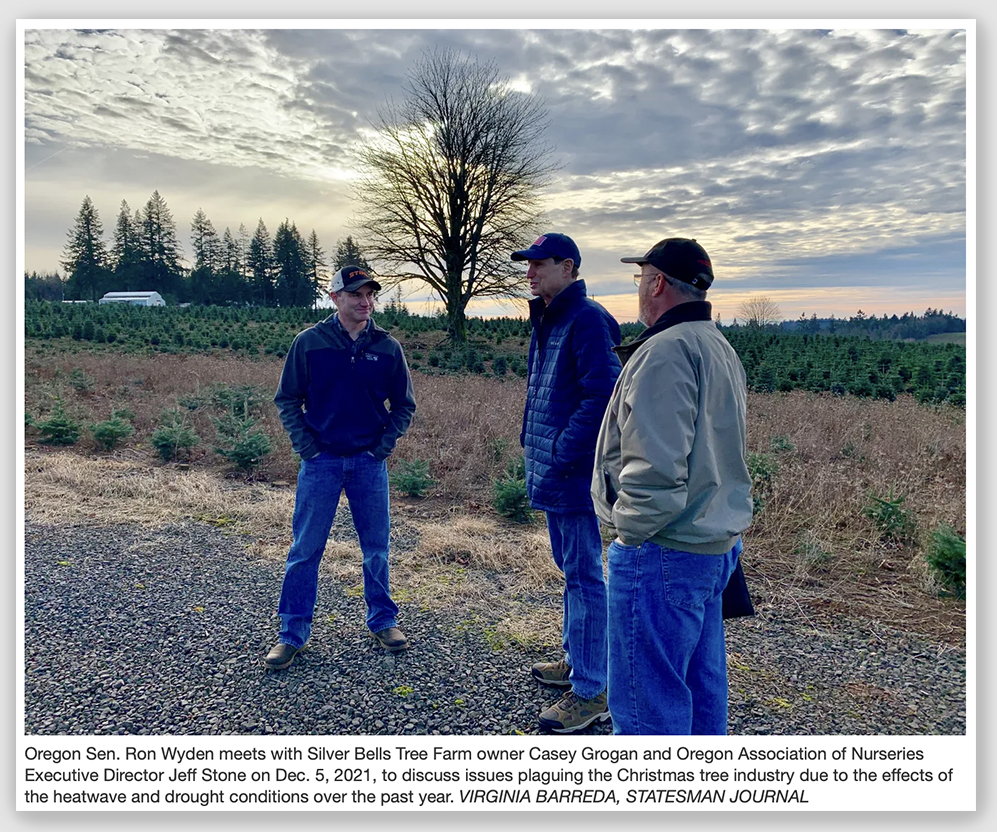
Oregon Sen. Ron Wyden wants to introduce a bill to fund agricultural research to protect Christmas trees for years to come. Various species of Christmas tree suffered this year through abnormally dry seasons and some record hot days across the state. Seedlings and smaller trees were among the most susceptible to damage. Growers are cultivating Christmas trees on about 300,000 acres nationwide, according to the U.S. Department of Agriculture. Oregon and North Carolina produce the most trees, with Clackamas, Marion and Polk counties producing the most trees in Oregon. Wyden visited Silver Bells Tree Farm just outside Silverton on the edge of Silver Creek Canyon Sunday to get a sense of the issues plaguing the industry. Farm owner Casey Grogan said while mature trees on the farm suffered minimal damage from this year’s “heat dome,” the wholesale farm is likely to feel negative impacts in the years to come…
A 50-foot-tall Christmas tree caught fire outside the Fox News headquarters in New York City early on Wednesday, prompting a race to extinguish it and leading to one arrest. The tree had been ceremonially lit in the network’s “All-American” Christmas special on Sunday. One of the network’s hosts announced the fire in a live broadcast. “This is the Fox Square in New York, outside of Fox headquarters,” the host, Shannon Bream, told viewers shortly after midnight. “It appears that our giant Christmas tree there, just a couple of minutes ago, was completely engulfed in flames.” A few minutes later, as a live feed showed smoke billowing above the tree, Ms. Bream said that the fire seemed to have been put out. “But we’re going to monitor the situation to try to figure out what sparked this whole thing,” she added. A representative for Fox News did not immediately respond to an overnight request for comment…
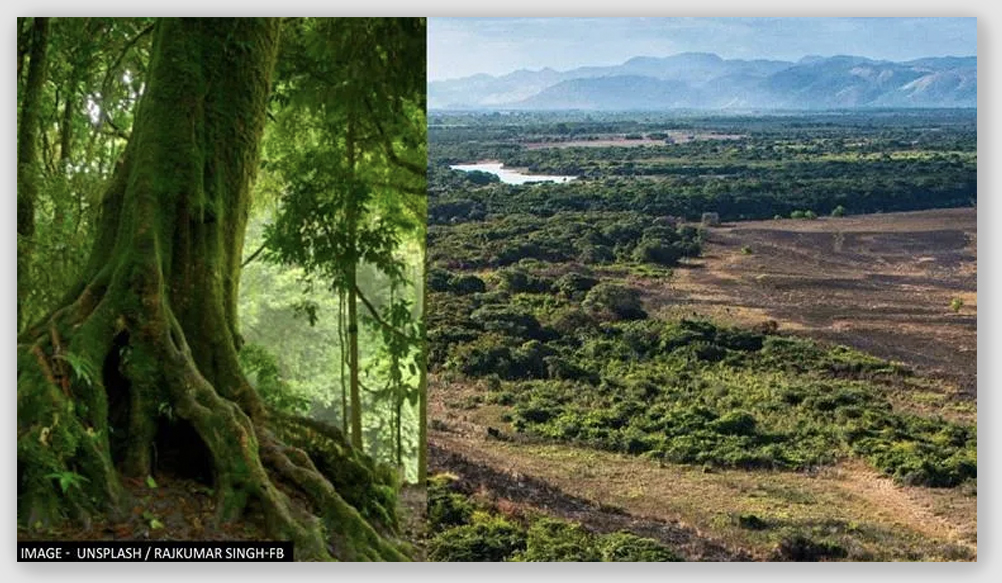
A recent study by the researchers at the University of Birmingham unveiled that the majority of methane gas emitted from Amazon wetlands regions is discharged into the atmosphere through tree root systems. The study’s results which have been released in the journal ‘Philosophical Transactions A’ of the Royal Society further stated that a considerable quantity of methane emissions happens even when the ground is not flooded. The researchers discovered indications stating that trees thriving on floodplains in the Amazon basin produce significantly more methane than trees grow in soil or surface water and that this happens in both wet and dry situations. To the atmosphere, wetlands provide a significant amount of methane which is considered to be the second most important greenhouse gas. Although there is a lot of study going on to figure out how much methane is emitted this way, most models believe the gas is only created when the ground is entirely inundated and underwater. As per the study, when there are no trees in the wetland region, methane would usually be ingested by the soil in its direction to the surface. However, researchers believe that in the forested wetland region, the tree root system could act as a transportation network for the gas, carrying it up to the surface where it could emit the gases into the atmosphere through the tree trunks…
FIPP, December 8, 2021: How cutting down trees for paper can improve the health of forests
Deforestation rightfully receives a lot of attention for its links to climate change and biodiversity loss, and it was the topic of one of the most optimistic deals struck early on at the recent COP26 climate summit in Glasgow. Yet contrary to what one might believe, given the ubiquity of paper products, cutting down trees for this purpose isn’t a big part of the problem and can even help alleviate it, as discussed by UPM at a recent webinar. Sustainability has also become a hot-button issue for the magazine media industry at large, as readers become more aware of climate change, waste and how materials are sourced. “And if my customers are asking me about sustainability,” said UPM’s Stephanie Eichiner, Senior Manager, Sustainability, “then chances are your customers are going to be asking you.” The historical context is important. Drawing on research from two reports published in 2020 – the UN’s State of the World’s Forests and Forest Europe’s State of Europe’s Forests – Eichiner explained that the 20th century was the century of forest loss, with a peak of tropical forest loss in the 1980s. Once people realized what was happening, global outcry followed, and limits were put in place by some national governments. “In the last 30 years, every year the loss is actually decreasing – we have a net gain of forest growth across the planet,” said Eichiner. In Europe, forest cover has actually expanded by nine per cent in the last 30 years. “That means trees are bigger and more plentiful across the continent,” added Eichiner…
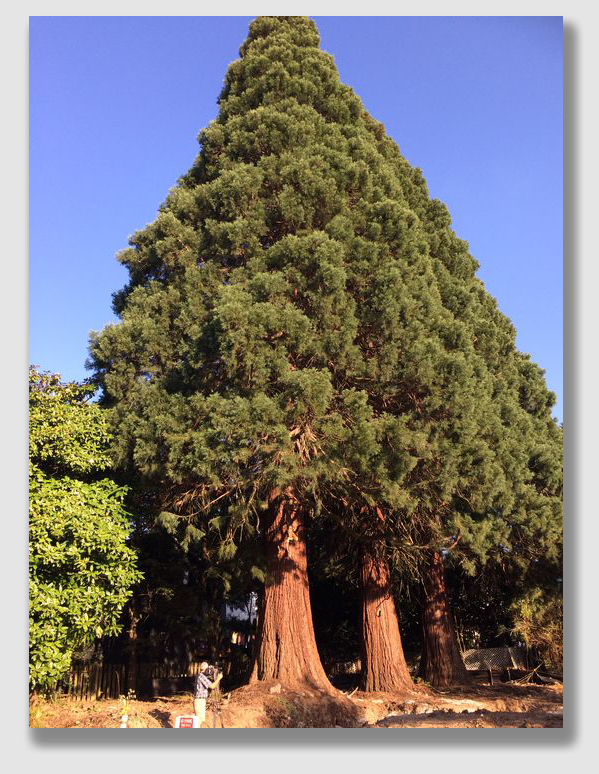
Giant sequoia trees generally grow on the western slopes of California’s Sierra Nevada Mountains. But, for the past 73 years, three sequoias have survived and thrived along a bluff overlooking Lake Michigan in Manistee. That’s not supposed to happen, but it is. The genetics that make up the Manistee sequoias have become an obsession for a northern Michigan man who believes with conviction the trees’ DNA is the solution to global climate change, and the cutting-edge work and research he’s doing will eventually prove it. The story begins in 1948 when Manistee, Mich. residents Gertrude and Edward Gray were vacationing in California. They decided to bring six sequoia seedlings back with them to their Michigan home which, today, is known as the Lake Bluff Bird Sanctuary. Only three of the sequoias survived, but one of them is truly thriving and continues to grow, which many experts say is a marvel of nature. “For [over] 70 Michigan winters, that tree has somehow survived on that high-bank property in extreme wind,” said David Milarch, who is the co-founder of Archangel Ancient Tree Archive, a Michigan 501(c)(3) nonprofit that preserves the genetics of old-growth trees. “That one tree may be the most important giant sequoia on the planet…”
An Onslow County Christmas tree farmer says they sold out of Christmas trees this past weekend, the earliest that has ever happened in the more than three decades they have been in business. Family farmer Becky Rooks said. “It is six to seven years later and we’re now feeling that gap,” said Rooks. Rooks is referring to when some Christmas tree farmers took a break from planting because of the increasingly popular fake tree. “We had a couple of years where we didn’t plant any Christmas trees because we thought we had enough. Same thing with the Christmas tree growers in the mountains,” she said. Justice Tree Farm in Onslow County grows its own trees and receives some from the mountains. Rooks said they got in less Fraser Furs from their mountain supplier due to the break in growing and other environmental factors. Fewer trees have also meant an increase in prices. James Sprunt Community College agricultural professor Star Jackson explained the cycle trees go through. “You’re going to see times when we have plenty of water and you’re also going to see times where we don’t have a lot of water…”
Giant oak trees, some more than a century old, are dying in Maryland and across the mid-Atlantic
Jason and Aga Jones loved the magnificent oak tree that was once the centerpiece of their backyard. In 2013 — a year after they bought their home in Takoma Park — they restored a circular stone retaining wall around the base of the tree. In 2019, they added an extension to the back of the home with enormous windows from which they could admire the majestic branches and watch squirrels build nests and collect acorns. Then late last summer, when they hired a company to lop off branches encroaching on the neighbor’s yard, the company’s workers pointed out ominous symptoms: browning leaves, dead branches. Within a year, the tree was dead. “It’s sad. We bought the house because of this oak tree. It’s a great old tree,” Jason Jones said, shaking his head as he peered up at the brown leaves clinging to lifeless limbs on the last evening before workers came to cut it down. He fetched a tape measure from his basement to take stock of the tree: 12 feet in circumference, 4 feet in diameter. “A couple of arborists told me that it is probably one of the oldest trees in the state, but unfortunately it has the blight and it has to come down,” he said, looking across his neighborhood’s sweeping green canopy, then back at his own withered oak…
Q: • I’ve noticed some orchards look like they have their trees painted white, and I was curious as to why that was. I have a few apple trees around my house and thought maybe this was something I should be doing.
A • Whitewashing tree trunks is a tried-and-true technique to prevent injury to trees from sunscald and frost cracking during the colder months. These injuries typically occur on the southwestern side of trees during sunny winter days, which can raise bark temperatures to 80 to 90 degrees before rapidly cooling at night. The high temperatures lower cold hardiness, opening them up to frost damage. The temperature drop at night can cause the bark to quickly contract, causing cracking. Young, thin barked species such as maples, apples and sycamore are particularly susceptible to these types of injuries and appreciate extra protection to prevent damage. Be sure to keep trees hydrated until the ground freezes. Having properly watered trees is the most important step you can take to prevent them from sustaining winter injury. To beef up your tree’s defense further, you can either use a tree guard or apply whitewash, as is done in orchards…
When a shopper in New York, say, plucks a Milky Way bar from a grocery store shelf, that shopper becomes the final link in a long chain that might have started on a patch of land in Ghana, where a tropical forest recently stood. About 80 percent of the trees razed each year in the tropics are cleared to make space for growing cocoa, soybeans, palm oil and cattle that are the raw materials for chocolate, cereal, leather seats and thousands of other products. Ten years ago, some of the world’s largest companies, including Coca-Cola, Kellogg’s, Walmart and Mars, pledged to change their practices to help end deforestation by 2020. Some, like Nestle and Carrefour, went even further, saying they would eliminate deforestation from their supply chains altogether. The 2020 deadline arrived, and some companies reported advances toward their goal. No company, however, could say it had eliminated forest destruction from its supply chain. Many others did not even try, said Didier Bergeret, sustainability director for the Consumer Goods Forum, an industry group of more than 400 retailers and manufacturers that organized the pledge. And annual deforestation in the tropics, where trees store the most carbon and harbor the most biodiversity, has lately been on the rise…
Martins Ferry, Ohio, Times-Leader, December 2, 2021: Christmas tree safety
Winter is the peak season for home fires, according to the National Fire Protection Agency and the U.S. Fire Administration, with cooking and home heating the leading causes. Candles, decorations and Christmas trees are among other cause of fires during the last two months of the year. Between 2013-2017, U.S. fire departments responded to an average 160 home fires that started with Christmas trees per year. These fires caused an average of three deaths, 15 injuries and $10 million in direct property damage annually. On average, one of every 52 reported home fires that began with a Christmas tree resulted in a death, compared to an average of one death per 135 total reported home fires. If you are purchasing a live Christmas tree, make sure to purchase a fresh one. The U.S. Fire Administration reported needles on fresh trees should be green and hard to pull back from the branches, and the needle should not break if the tree has been freshly cut…

Name: Disappointing Christmas trees. Height: As much as 25m. Appearance: Well, this is the thing. Some are described as “rubbish” and “just shocking”, while others are “a bit of a joke” and – wait for it – “not very Christmassy”. Is this like the big Christmas tree in London’s Trafalgar Square being called “sad and spindly”? No! That’s a 50 to 60-year-old spruce – Picea abies – sent from Norway every year as a show of gratitude to the British for their support during the second world war. And while one Christmas tree critic tweeted: “Crikey, who has upset Norway?”, you can’t really be disappointed by such a majestic gesture. So what are we talking about then? We are talking about people’s civic pride being dented when they wait with excitement to see the festive joy of their local Christmas lights switch on, only to find a pylon in place of a tree…
A number of years ago I came across a bottle of anti-transpirant and I wondered what the material was used for myself. This information should be referred to this time of year on a regular basis. So, I’ll attempt to answer my reader’s question about this material here. Anti-transpirants or anti-desiccants are compounds that are applied to the leaves of plants to reduce transpiration for the most part. They consist of a colorless film on the leaf surface which allows diffusion of gases but not of water vapor. Examples of the anti-transpirant include silicone oil and waxes. This compound, anti-transpirant, is also the material you might see being sprayed on Christmas trees when they are being harvested in the fields, or on plants that are being harvested such as flowers that are going to a florist. Each year during the winter when the temperatures are cold for an extended period of time and the soil freezes below the roots, you will see the evergreen, like rhododendrons and azalea that are on all year, are leaves that look normal as you may see them during any time of the year. When the temperatures rise after an extended period during a cold winter, you begin to notice that the leaves curl and look a little like a stick. What is going on is that the leaf is trying to transpire and bring the water up from its roots and leave through the pores or stomas. Only problem is that when the ground is frozen the plant can’t perform as it normally would and that is the azalea’s normal reaction to the transpiration process…
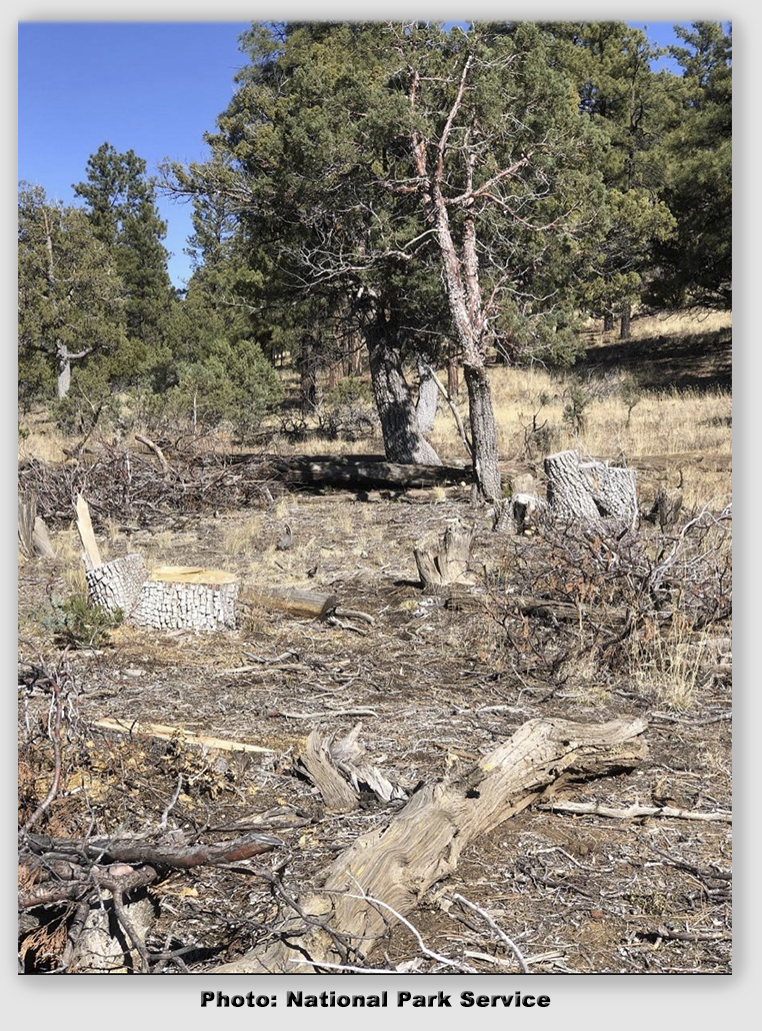 Associated Press, November 30, 2021: Ancient juniper trees illegally cut in New Mexico monument
Several dozen ancient alligator juniper trees have been illegally cut down at El Malpais National Monument in western New Mexico and authorities with the National Park Service are trying to find out who’s responsible. Known for their unique furrowed bark, alligator junipers grow very slowly. A seed can take up to 18 months to mature after pollination and the growth rate for young trees is about 0.6 inches (1.5 centimeters) per decade, slowing as they get older. Officials said the trees that were cut down were likely hundreds of years old. Lisa Dittman, a spokeswoman for the national monument, said Tuesday that officials don’t know why the trees are being targeted or what they’re being used for. Rural New Mexico residents frequently cut wood in the fall to help with winter heating needs, but cutting trees at El Malpais is illegal. The cutting of alligator junipers affects biodiversity within the monument and officials said the area will take many decades to recover…
There are plenty of options for decorative trees during the holiday season. Texas A&M AgriLife experts have ideas and tips for a live or cut Christmas tree, including an increasingly popular option — live container-grown or balled-and-burlap trees. Oregon and North Carolina account for 51% of harvested Christmas trees annually, with almost 3.4 million and 4.3 million trees, respectively. But tree farms in Texas have increased over recent years both as a destination experience and supplier of shipped and locally grown trees. Fraser, Douglas and balsam firs are popular tree varieties shipped from other parts of the country. Eastern red cedar, Virginia and Afghan pine, and Arizona, Leyland and Carolina sapphire cypress trees are suited for growing in Texas climates. These can be bought locally as a cut tree or in a container. Mike Arnold, Ph.D., Texas A&M AgriLife Research landscape horticulturist in the Department of Horticulture Sciences and director of the Gardens at Texas A&M University, Bryan-College Station, said there is a growing trend during the holidays to decorate potted live trees. Potted trees, unlike cut trees, can be planted into a landscape after their decorative use…
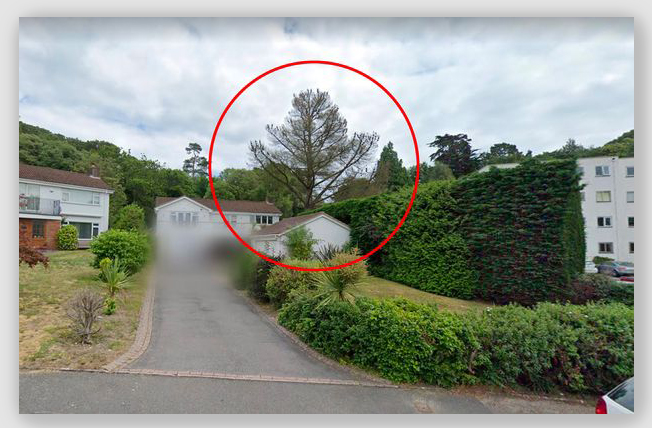
A wealthy homeowner killed a protected tree that blocked the sun on his luxury property after failing to secure permission to fell it legally, a court heard. Robert Page arranged to have the 65ft mature pine in the front garden of his home near Poole Harbour, Dorset, poisoned with a deadly herbicide, it is alleged. The ‘huge and historic’ specimen was protected by a Tree Preservation Order (TPO) and had stood in the posh neighbourhood of Lilliput since the early 1950s. From 2015, Mr Page, 68, had applied to the local council for consent to have it removed. But after the application was refused in 2018, the evergreen began to wither and die despite having decades of natural life ahead of it, a jury heard. A landscape gardener employed by Mr Page emailed the town hall informing them he would be removing the tree which was ‘dying and weeks from death’. The message prompted a tree officer to visit the £900,000 detached house that is close to Sandbanks to inspect the Monterey pine. The court heard that the expert discovered it had been sabotaged. Holes had been drilled into the trunk and a herbicide poured inside and concrete tipped around the base to remove oxygen from the roots, ‘choking’ the Monterey pine. The culprit also ‘ring barked’ the tree meaning they cut out a section of bark to prevent it from absorbing nutrients…
Mayor Linda Gorton asked the Urban County Council to take a strong stand Tuesday against Kentucky Utilities and its decision to clear-cut trees near transmission lines in Lexington. The Council gave initial approval to Gorton’s plan to file a formal complaint with the Kentucky Public Service Commission concerning Kentucky Utilities’ actions, and to seek immediate relief by asking the courts to impose an injunction to stop the chain saws. Gorton said the complaint and injunction are being prepared, and will be filed as soon as possible. “Over the past year we have been working with KU to try to find a way forward that protects our trees and our electric grid because clearly both are important,” Gorton said. “Sadly, the company has not shown our city respect in return. With few exceptions they have ignored our requests. Yesterday, the company again started cutting down trees indiscriminately. Trees that could not possibly interfere with transmission lines.” Vice Mayor Steve Kay said, “It’s unfortunate that an important corporate citizen is unwilling to listen to the clear concerns of the community it exists to serve. As a Council we have been committed to improving our environment. This is a real setback.” KU is applying the same clear-cutting practices it uses in more rural areas, where there are acres of trees, to Lexington neighborhoods. “That makes no sense. We have worked hard and invested resources to build a tree canopy. Trees are important to our city. Lexington has been a Tree City USA for 33 years. Trees help control stormwater, improve air quality, provide shade and enhance our neighborhoods…”

An enormous oak tree toppled onto an Encino, California, home in the dead of night, crushing a 64-year-old man in a second-story bedroom, firefighters said. Los Angeles Fire Department crews tried to extricate the man from the wreckage, but he was pronounced dead, a news release said. “I’ve never experienced anything like this,” Capt. Cody Weireter told KTLA. “You’re looking at well over 100,000 pounds of a tree falling onto a home in the middle of the night.” Firefighters rescued two women and a dog on the first floor of the 3,200-square-foot home after the tree fell about 11 p.m. Sunday, Nov. 28, the Los Angeles Times reported. None were hurt. There were no high winds or gusts, but neighbor Tony Montero told KTLA that he’d expressed concern about the tree to his wife. “It was leaning directly over the house … it was probably 30 degrees,” Montero told the station. Another neighbor, Mark Ruszecki, told the Los Angeles Times that he initially thought the noise of the tree falling was an earthquake. He estimated it was 700 years old…
Trees talk in rings and needles, and the trees along Gold Creek are cranky. The life story of a 35-year-old Douglas fir appears in a core of wood the size of a long kitchen match. The growth rings near its bole, or center, expand a quarter-inch a year during its youth. The outer rings, chronicling the past decade, squish together in sixteenths of an inch or less. “It was growing really well and then it just closed in,” Bureau of Land Management forester Kyle Johnson said, examining the core he’d just drilled out of the trunk. Grabbing a branch, Johnson displayed the frazzled, needleless tips. In addition to fighting for water with five other trees inside a hula hoop’s circle of space, the fir was having its photosynthesis capacity nibbled away by tussock moth caterpillars. The rolling hillsides flanking Gold and Belmont creeks once rumbled with industrial logging that supplied the mills southwest in Bonner, Missoula and Frenchtown. Today, most of that 117,000-acre basin belongs to the U.S. Forest Service, Bureau of Land Management, Montana Department of Natural Resources and Conservation or The Nature Conservancy (which plans to transfer its holdings there to public ownership). What those hillsides should look like has brought a crowd of stakeholders to the table for an exercise in restoration forestry. The tussock moths and other destructive insects thrive in overstocked, single-age tree stands. Those stands are so homogeneous and crowded because they’ve all grown back at once since the hillside was clear-cut in the 1980s…
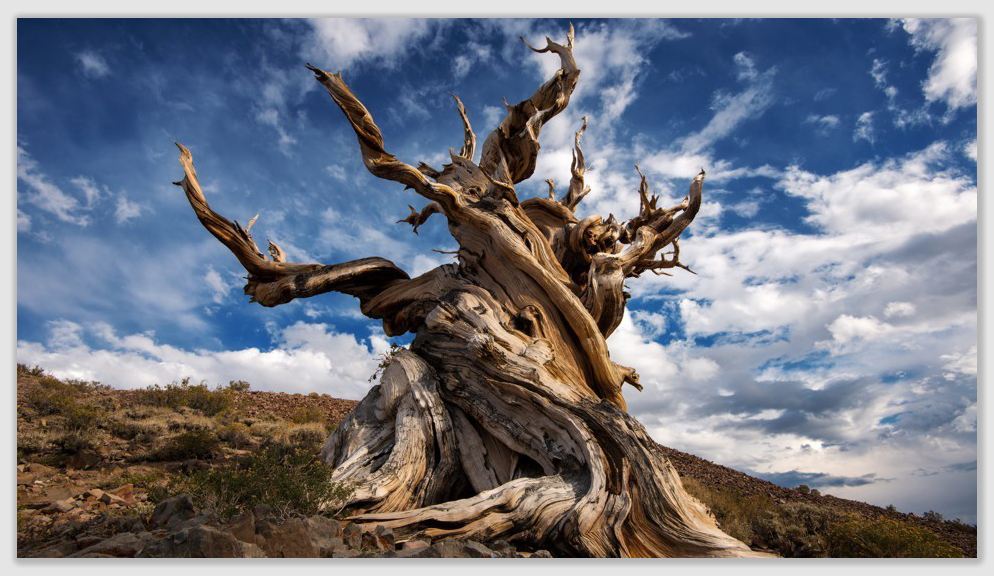 CBS News, November 28, 2021: The oldest trees on Earth
High atop the remote, rocky slopes of California’s White Mountains, the harsh conditions make it difficult for life to take root. But for a certain type of tree – and for those who have traveled here to study it – this place is paradise. These gnarled bristlecone pines are the oldest individual trees in the world. Researchers like Andy Bunn have come to learn from the ancients. Correspondent Conor Knighton asked Bunn, “Looking at this tree, would you have any idea how old this is?” “I’ve been doing this long enough to not try and play the guessing game too much,” he replied. “It’d be easy for this tree to be a thousand years old; it would be easier for it to be two thousand years old. Older than that would be unusual, but not impossible.” There are bristlecones in this grove that are more than twice as old. “It’s remarkable to sit there and have your hand on one of those trees and know that it was growing when the Pyramids were built,” said Bunn…
As daytime temperatures cool and open windows at night let in refreshing breezes, you may need a light blanket on the bed. Day lengths are getting shorter as the planet travels around the sun at 67,000 miles per hour toward the winter solstice. Trees begin preparing for winter by transferring chlorophyll from leaves into stems, showing us other colors present in the leaves. We enjoy this time of year with comfortable temperatures and the colorful change of seasons. Compared to New England, North Florida fall color is more variable from year to year, but we do have several trees with dependable fall color. The trees mentioned here are all American natives which, in addition to great fall color, have value to wildlife throughout the year. Take oaks as an example. White oak and swamp chestnut oak leaves typically turn a pleasant shade of red. In spring and summer, caterpillars dine on their new succulent leaves. In the United States, 90 species of oaks are food for 534 species of caterpillars! Most of these caterpillars become high quality protein for baby birds and their parents. In autumn, acorns are food for insects, birds, and mammals…
 Houston, Texas, Chronicle, November 28, 2021: Michael Potter: Tips for picking and caring for a real
Christmas tree
Christmas just isn’t Christmas without a real Christmas tree! Right? For some, that is the only way to do Christmas. So, I was doing a little thinking over Thanksgiving and decided to shed some light on a few tips to help you select the right tree for your family or situation. Of course, I know there are a lot of early-birds that have already purchased their trees. Hopefully some of this information will be valuable either now or in the future. Whether you purchase your tree from a neighborhood lot, a Christmas tree farm or any other establishment; here are a few things to consider. Choose a spot where the tree will be placed. Will it be seen from all sides or will some of it be up against a wall? Choose a spot away from heat sources, such as TVs, fireplaces and air ducts. Place the tree clear of doors. For most of us married guys, placement is where the wife tells us. Measure the height and width of the location in the room where the tree will be placed. Also make a quick measurement of the maximum size that the tree stand can handle. If the tree you buy is too big, you may have to buy a larger tree stand. There is nothing worse than buying a tree only to find that it’s too tall or too wide for the area or too big for the tree stand. Take a tape measure with you to measure the tree you select and bring rope or tie-down straps to secure the tree. Remember, most trees come from out of state and may have been experienced dry conditions during transit. You can ask the retailer when they receive shipments or when the next batch will come in. The fresher the tree, the longer it will last…
Orlando, Florida, Sentinel, November 24, 2021: ‘Their goal is to bleed owners dry’
When Martin Kessler moved to the Solivita development in Poinciana, Florida in 2008, he says he quickly realized it was a big mistake. This was the first place the 97-year-old had ever lived with a homeowners association. “Living in an HOA is not really a pleasant thing for a resident,” Kessler said. A retired economist, he said the fee he was required to pay was “a capitalist’s perfect dream of a business. People must join whether they like it or not, and they pay all the expenses of the business.” Kessler is among more than 5,000 members of the 55-plus community locked in a class action lawsuit since 2017 against Solivita developer Avatar Properties, which they allege improperly collected HOA fees. On Nov. 2, Polk County, Florida, Circuit Judge Wayne Durden awarded the residents $34.8 million. “That’s the biggest award I’ve ever heard of,” said Harvella Jones, president of the National Homeowners Advocate Group. Based in Texas, Jones’ organization specializes in helping people fight HOAs and lobbies for homeowner protections. “We get calls from all over the country, but no one has ever reported to us a win as large as (Solivita).” Experts agree that fighting HOAs is hard for residents and big wins are even rarer. In Florida, HOAs govern more than 44% of the population, according to research by analysts at iProperty Management. With fees that can reach into the thousands of dollars from an estimated 3.5 million homes in the state, HOAs can make lawsuits long and costly for residents. “Their goal is to bleed owners dry,” said Jan Bergemann, president of Cyber Citizens for Justice, a homeowner’s advocacy group based in DeLand. “They will hit you with motion after motion, tie it up for years…”

Decades-old pine trees cut down to stumps earlier this month along the perimeter of the Imperial Ventura Mobile Home Estates raised alarms among mobile home residents and neighbors. But the fate of the remaining dozen or so trees along Thille Street in East Ventura is unclear. Mobile park resident Nancy Culton, 74, said the trees had been around for more than 30 years but had not been cared for. “Nobody told us they were going to cut these trees down. They just showed up and started cutting,” she said. Phone messages left for the property management company of the mobile home park on Wednesday and Friday were not returned before deadline. Neighbor Paul Cordeiro said he discovered on Nov. 12 that about 10 of the evergreens were removed between the wall of the property and sidewalk. “I was horrified to see what was going on,” he said. He said crews were cutting down pine trees outside the motor home park property, leaving them denuded…
Tweaktown, November 29, 2021:Trees are greening sooner than they should be, and new data show why
Lin Meng won the grand prize for 2021’s Science & SciLifeLab Prize for Young Scientists for her research into how city environments impact tree phenology. “Phenology is the study of periodic events in biological life cycles and how these are influenced by seasonal and interannual variations in climate, as well as habitat factor,” according to Wikipedia. Meng set out to determine how global warming and bright artificial lighting conditions in cities changed when trees started growing leaves in spring. Previous research has shown that higher temperatures impact vegetation growth in cities, so the following question is how global warming affects that. Meng analyzed satellite data spanning 2001 to 2014 and 85 cities in the United States to find when trees began growing leaves. Trees “greened up” an average of six days earlier and were responding more rapidly to climate change in urban areas than in rural areas. Using data from NASA’s Black Marble satellite, which measures artificial light in cities, along with phenology data from the USA National Phenology Network, Ming could also determine how lighting conditions were impacting green-up times for trees in American cities. In the most extreme cases, green-up occurred nine days sooner than expected. Ming suggests artificially extended day length due to urban lights leads to earlier spring greening of vegetation in cities, exacerbating the already early greening due to warming cities…
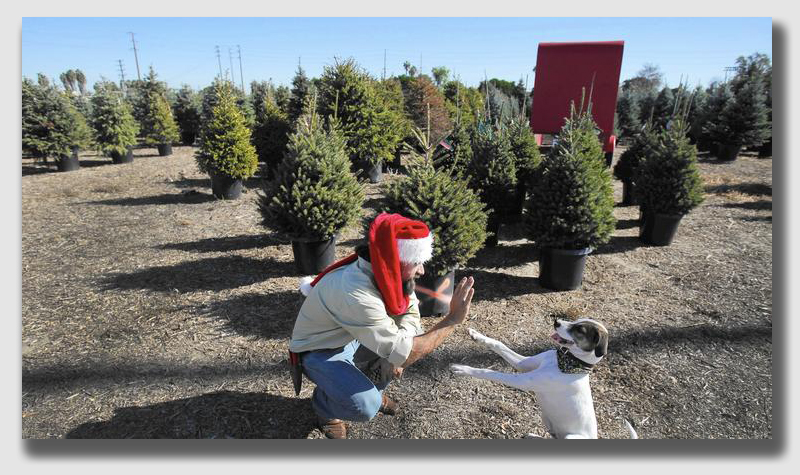
Not even Christmas trees could escape the economic pandemonium of 2021. Rerouted Fraser firs, fried Oregon pines, artificial trees caught in broken supply chains, and sky-high transportation costs have contorted the seasonal arbor trade like an oversized tree scrunched under a low ceiling. The situation has importers, growers, sellers and — now, finally — buyers even more frazzled heading into Black Friday, when Christmas tree shopping begins in earnest. Now many families are unsure whether they will spend the holiday gathered around a majestic tower of greenery — or something more reminiscent of Charlie Brown’s sad spectacle. “Christmas is not canceled, everyone will be able to find a Christmas tree,” said Jami Warner, executive director of the American Christmas Tree Association, a trade group representing the artificial tree industry. Exactly what kind of tree will await people, though, is less clear. The supply chain Grinch may still gum up the works. A plywood sign at Hayfield Secondary School in Alexandria, Va., reads, “Due to a shortage of good Fraser fir trees, the boosters will not be having the annual tree sale this year.” And for National Tree Co., a leading importer of artificial trees, manufacturing time has roughly doubled since before the pandemic, and delivery from Southern China through the Panama Canal and to New York has increased from three weeks to eight…
This summer’s heat scorched Oregon trees — maybe worse than ever before — and scientists are beginning to piece together what that means for the trees’ long-term health. Reports of fading foliage and crispy conifers started coming within days of a June heat wave, during which many parts of the state endured consecutive days with temperatures higher than 110 degrees Fahrenheit. Aerial surveys from the U.S. Forest Service, Oregon Department of Forestry and Washington Department of Natural Resources documented tree scorching on about 229,000 acres in Oregon, Oregon Public Broadcasting reported. That’s likely an undercount, given the method’s limitations. “By some estimates, it’s probably the largest scorch event in history,” Oregon State University researcher Christopher Still told OPB’s “Think Out Loud” this week. “I mean this is a new thing for us to be seeing on Earth, so it’s sort of a dubious milestone.” Researchers like Still, with help from citizen scientists, have spent months documenting the heat wave’s effects on Oregon’s trees…
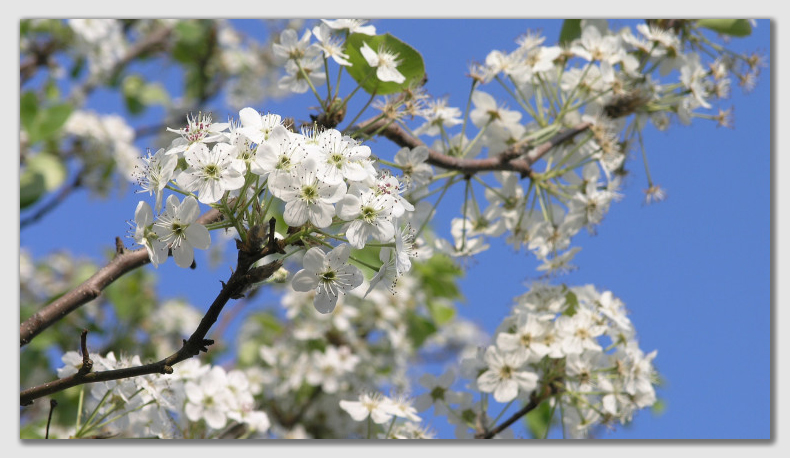
In the distance, beside a brick house in a tidy subdivision, the trees rose above a wooden fence, showing off all that had made the Bradford pear so alluring: They were towering and robust and, in the early spring, had white flowers that turned their limbs into perfect clouds of cotton. But when David Coyle, a professor of forest health at Clemson University, pulled over in his pickup, he could see the monster those trees had spawned: a forbidding jungle that had consumed an open lot nearby, where the same white flowers were blooming uncontrollably in a thicket of tangled branches studded with thorns. “When this tree gets growing somewhere, it does not take long to take over the whole thing,” Professor Coyle, an invasive species expert, said. “It just wipes everything out underneath it.” Beginning in the 1960s, as suburbs sprouted across the South, clearing land for labyrinths of cul-de-sacs and two-car garages, Bradford pears were the trees of choice. They were easily available, could thrive in almost any soil and had an appealing shape with mahogany-red leaves that lingered deep into the fall and flowers that appeared early in the spring…
Dozens of trees are potentially slated to get the axe in West Lakeview, and residents have been mobilizing to stop it. As CBS 2 Political Investigator Dana Kozlov reported Wednesday evening, these residents do not want a repeat of the virtual clearcutting seen in other neighborhoods. They want every preservation option explored. The trees are decades old and towering – one of them is about 10 times taller than Kozlov herself, who is a little over 5 feet. They may all be cut down by the city in the next couple of months for water pipe replacement. So some who live in the area are being proactive – taking action and demanding the city be more transparent about its plans. The trees mean a lot to many living on a two-block stretch of Paulina Street in West Lakeview – from Belmont Avenue to the six-way intersection with Lincoln Avenue and Roscoe Street. “People in the neighborhood really care about the trees,” said Caroline Teichner…

If you’re getting ready to start your Christmas decorating with a live tree, beware the spotted lanternfly. The invasive pest is encroaching on North Carolina, and while the insects are “indiscriminate egg layers” with a wide variety of host vegetation, experts say they could travel to the state on Christmas trees from nearby Virginia, where a small infestation was recently detected. The spotted lanternfly generally doesn’t kill the trees they prey on, but they can cause significant damage to agricultural crops and reduce yields. The News & Observer talked with Larry Long, forest health monitoring coordinator with the N.C. Forest Service, and with Kelly Oten, an assistant professor and forest health specialist at N.C. State University, to learn more about the spotted lanternfly, the risks they pose and the proper steps you should take if you see the pest this holiday season. Here’s what we learned. The spotted lanternfly is an invasive pest that is… native to China, India and Vietnam, and was introduced to Korea in 2004. It was first found in the U.S. in eastern Pennsylvania in 2014 and has since been spotted in New Jersey, Virginia, Delaware, West Virginia, Maryland, Connecticut, New York, Ohio, Indiana and Massachusetts…
Phys.org, November 23, 2021: Urban trees are a singular weapon in stormwater management
It’s hard to overstate the environmental importance of trees, which among other functions pull climate change-inducing carbon from the atmosphere, clean the air of toxins and help control runoff. While it can likewise be hard to quantify some of these effects, a new study by University of Maryland researchers helps clarify the role of urban trees in mitigating stormwater flows, and finds that even isolated trees lining a street or planted in a park may have a significant effect. A study published yesterday in the journal Scientific Reports by Assistant Professor Mitch Pavao-Zuckerman and doctoral candidate Sara Ponte, both of the Department of Environmental Science and Technology, found that individually planted trees capture, store and release stormwater back into the atmosphere—a process called “transpiration”—at a rate three times that of trees in a forest. The study was conducted in partnership with the U.S. Forest Service and the nonprofit Center for Watershed Protection, with funding from the Chesapeake Bay Trust…

Tuesday afternoon, Turkey Mountain Urban Wilderness Area published a message to visitors on their Facebook page: Don’t steal. “We’re a little sad that we have to say this, but don’t take plants and trees from the park,” the post warned. Officials explained that they came across a couple in the park that were digging up seedlings, removing bushes and cutting branches at Turkey Mountain. The couple was doing this in order to move the plants to their own yard, according to the post…
Red oak trees are not particularly common in northeastern Minnesota. But on the University of Minnesota Duluth’s research plot, 850 1-year-old trees have taken root. “They’re really small,” said Dr. Julie Etterson, a professor in the department of biology at UMD, while pointing to what looked like a stick in the ground. Etterson and other researchers, at UMD and several other groups will be studying those “sticks” in the years to come, watching them grow to see how they do in northeastern Minnesota’s climate. Given how much that climate has changed in recent history, it might not be too hard a task. “The idea is that the climate has shifted further north and so maybe the plants are mismatched with the climate they are adapted to,” Etterson said. “Some species are unaffected, some species are benefitting…and some species are really suffering, like paper birch…what’s happening is we’re ending up with areas, patches of empty habitat…”

It’s an unlikely place for a nature hike: Tucked away on the Northwest Side of Chicago, the Montclare neighborhood is marked by quiet streets, neat bungalows and postage-stamp lawns. But Scott Carlini’s pale blue eyes are alight as he peers over fences and rooftops. There, more than a block away, he spots them, towering six stories above the ground, their gnarled branches black against a gray sky. “Those are the ash trees I’m going to be taking you to,” he says. Since 2006, Carlini, 58, of Elmwood Park, has been on a one-man mission to save the Chicago area’s historic ash trees from the ravages of the emerald ash borer, a torpedo-shaped metallic-green beetle that has killed more than 6 million trees in the Chicago region since 2010. In his spare time, and at his own expense, he protects 50 trees in the Chicago area and Wisconsin, inoculating them with a highly effective insecticide. Carlini said he is fulfilling a promise he made to himself as a tree-loving kid growing up in Chicago and Elmwood Park. Even as an 8-year-old, he questioned whether damaged trees really had to be cut down, and when Dutch elm disease started taking its toll, his resolve intensified. “I said, if something like Dutch elm happens again, when my generation is in charge, I will be in the forefront, helping tree owners save their trees,” he recalled…
A Pensacola City Council decision Thursday to hold off on approving site plans for the Roger Scott Tennis Center to investigate how to save 70 protected trees — including two heritage trees — served as a win for the region’s tree advocates. What was a routine vote to accept an interlocal agreement with Escambia County turned into a community discussion on the need to protect trees at Thursday’s City Council meeting, ultimately leading to a unanimous vote to kick back the design to save as many trees as possible. The city and county are each kicking in up to $1.3 million of American Rescue Plan Act funds to renovate the aging courts that Mayor Grover Robinson has said are beyond their lifespan and inaccessible by wheelchair users right now. The point of contention is that the current design involves installing a large stormwater retention pond and a parking lot that requires the removal of those trees, something many council members say they didn’t know about until this week. About a dozen public speakers supported both renovating the courts and mitigating the impact to the trees. “The facility should be designed with the idea of low-impact development,” resident Margaret Hostetter said. “We don’t need to continue digging these huge holes in the ground… There are lots of other design types that could be used…”
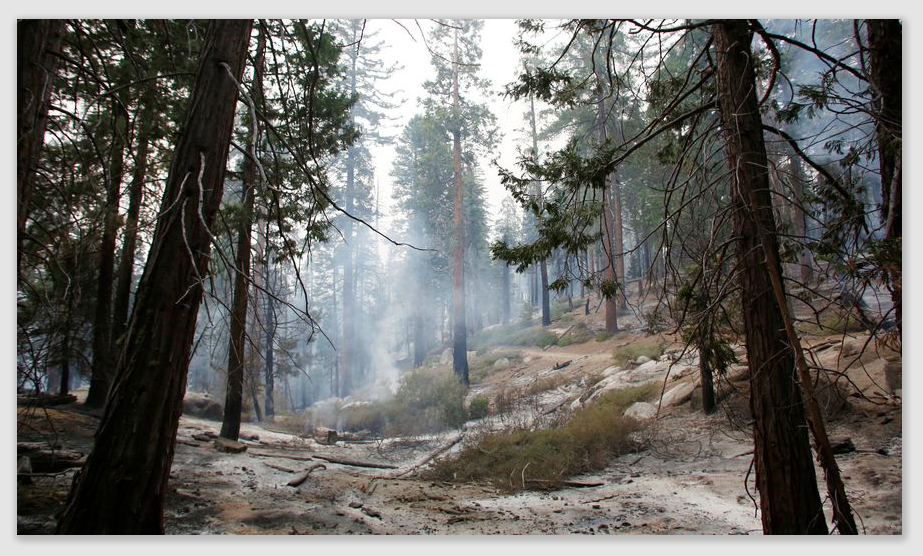
Three wildfires in California in the past 15 months killed or mortally wounded thousands of mature giant sequoias, accounting for an estimated 13 to 19 percent of the world’s population of the majestic trees, officials said on Friday. A National Park Service report estimated that two fires in September, sparked by a lighting storm, caused 2,261 to 3,637 mature giant sequoias — or between 3 to 5 percent of the population of mature giant sequoias — to be killed or so severely burned that they were expected to die within five years. Mature giant sequoias have a diameter of more than four feet. Giant sequoias, which are found on the western slope of the Sierra Nevada in California, can live thousands of years on their way to dwarfing most everything around them. These trees include iconic national treasures like the General Sherman Tree, which is considered the world’s largest tree, standing at 275 feet tall with a diameter of 36 feet at the base. The death of the trees in staggering numbers is the product of a “deadly combination” of unnaturally dense forests caused by fire suppression that began about 150 years ago and increasingly intense droughts driven by climate change, Clay Jordan, superintendent of Sequoia and Kings Canyon National Parks, said in an interview on Friday night…
After this year’s summer drought in Illinois, it is more important than ever to monitor soil moisture conditions and water trees and shrubs going into winter. Drought conditions in the late fall, along with dry air and low soil moisture, can lead to plant damage if no supplemental water is provided. “If soil is dry, homeowners should consider watering their trees and shrubs this fall and winter,” says Gemini Bhalsod, University of Illinois Extension horticulture educator. Plants under water stress are more susceptible to insects and diseases. They can also experience injuries to roots or foliage. Before watering, check the soil moisture. Monitor the moisture levels about once a week. Dig a small hole under the tree’s drip line, 4 to 6 inches is enough. Feel for moisture. If the soil is dry, the tree should be watered. “This little bit of consistent effort will pay off in the long run,” Bhalsod says…
We all know why it’s good to be the early bird, but with Thanksgiving turkeys still defrosting it seems early to be thinking about a real Christmas tree. However, those in the industry warn supply may be tighter than ever this year. Last summer’s heat wave is coming back to haunt us as tree shoppers discover how some tree farms were impacted. At Trinity Tree Farm in Issaquah, the mature trees did better than new plantings. “I would say half of what we planted last year is not going to survive,” Geoff Wiley said. It can take a decade for a tree to be ready depending on the variety. Wiley said this damage may mean more shortages in future years. Though many of their mature trees made it through the heat wave without major damage, Wiley said he’s heard of other farms that weren’t so lucky. “It’s horrible to watch it because you see it happening and then you can’t do anything to control it and you have to wait and see how bad the damage is going to turn out to be,” Wiley said. Trinity will replant the young trees they lost but other farms that are dealing with mature tree damage might find it harder…
From low supply to shipping backlogs, experts are telling Christmas tree shoppers to buy one sooner rather than later – and that goes for both real and artificial trees. It was opening weekend at Jordan Lake Christmas Tree Farm in Apex. The farm’s co-owner, Byron May, said it was one of, if not the busiest, opening weekends in his more than 25 years in business. He said demand for real trees is higher than supply right now. He said he has about 25 percent fewer trees to sell than he would like. “I’m not gonna be able to get the number of trees that I wanted, at least the Fraser firs, so I’m concerned that after the December weekend, supply is gonna be tight,” May said. He’s noticed an increased demand in the past three to four years but said growers in the North Carolina mountains are behind that demand, noting many have retired in recent years. May grows some of his own trees and gets Fraser firs from the mountains. “I hate to turn anyone away that wants to come out and get a real tree,” May said. “All we can do is sell what we can get and make as many people happy as we can…”
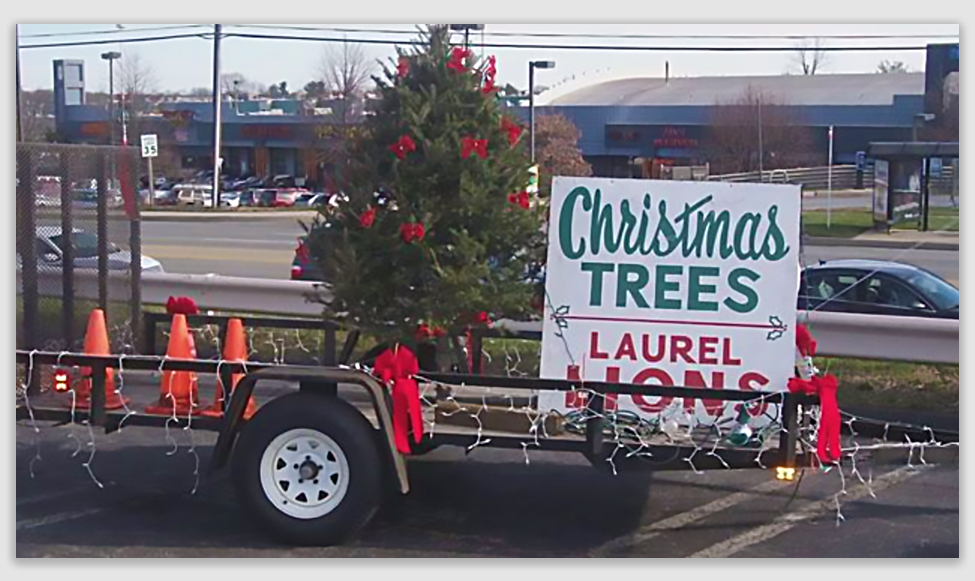 Reuters, November 18, 2021: Why Canada’s floods could make your Christmas tree cost more
Finding the perfect real Christmas tree will be harder and more expensive this year. Canada, the world’s top exporter of natural Christmas trees, is grappling with a shortage that will likely be exacerbated by historic flooding in British Columbia, where some tree farms are underwater. A phenomenon known as an atmospheric river dumped a month’s worth of rain on the Pacific province in just two days, destroying roads and bridges and leaving some communities cut off from the rest of Canada. Canada exports about 2.3 million Christmas trees per year, with some 97% going to the United States. While British Columbia does not export cut Christmas trees, it is a significant domestic supplier. That means shortfalls in that province will have to be made up with supply from elsewhere, leaving fewer Canadian trees for export. “We can’t ship them because all the roads are closed,” said Arthur Loewen, whose tree farm in Chilliwack, east of Vancouver, has been swamped. “We’re basically shut down until the water recedes…”
Fear not. There will be plenty of Christmas trees for sale in Pennsylvania, wine, beer, Kennett Square mushrooms, and turkeys for the holidays, experts say. The shortages feared across the country also worry farmers, brewers, vintners, and grocers because the panic could hurt business more than any shortages. “We’ve never run out of trees,” said Michelle Keyser, director of communications for the Pennsylvania Christmas Tree Growers Association. “It’s not like a toilet paper situation.” In the case of trees, alcohol and food products, the advice from experts is: Buy early, if a specific variety of tree or food is needed. Demand for goods increased “substantially” in 2021, between 10 and 20 percent since last year, according to Brent B. Moritz, associate professor of supply chain management at Penn State University. “Barring some other unforeseen change, I expect demand to continue to be strong for let’s just say the next two quarters.” Advice from the Pennsylvania Department of Agriculture: “In general, we would encourage shoppers to buy local. Generally, the shorter the supply chain, the fewer shortages there are…”

Florida is full of formidable creatures: Alligators, pythons, blacktip sharks and other animals known to bite, chomp, attack and chase. But reptiles and bloodthirsty predators aren’t the only lethal living things in the Sunshine State. A tree can be just as deadly. The Manchineel tree, found in the Florida Everglades and parts of the Caribbean coast, was dubbed the most dangerous tree in the world by “The Guinness Book of World Records” in 2011. On the surface, it seems harmless: A green, leafy tree bearing fruits that resemble green apples. But don’t be fooled: Everything from the bark, sap and fruit can be incredibly dangerous to humans.“Even standing under it in the rain is enough to cause blistering if the skin is wetted by raindrops containing any sap,” Guinness World Records says. “In addition, a single bite of its small green apple-like fruit causes blistering and severe pain, and can prove fatal.” Colloquially known as the “beach apple” tree, the Manchineel — botanical name Hippomane mancinella — can cause severe medical problems. The milky sap can cause blistering, burns and inflammation when in contact with the skin, according to the National Institutes of Health…
Reuters, November 17, 2021: ‘The woods next door’: U.S. community forests take root
Chris Gensic swept his arms around him as he sought to fully explain the scope of the surrounding Virginia forest – as a project, a green space and an opportunity for local residents. A parks and trails planner for Charlottesville, Gensic was standing just off a new trail in the 142-acre (57-hectare) Heyward Community Forest, which he helped the city buy and which opened to the public just before the pandemic hit. The new parcel connects other forestlands in the area. “To have a huge, unbroken forest tract that’s been a forest for a long time – you feel like you’re in a national park, even though you’re two miles out of the city,” he said, surrounded by towering tulip poplars and oaks, their leaves rustling in a warm October breeze. While the city owns Heyward, it is designated as a community forest, purchased in part with funding from a federal program that has helped establish dozens of similar projects across the country in the past decade. They are all part of a growing movement of creating urban and rural green spaces that involve residents in local conservation efforts, backers say. “The community is the one that’s been coming up here and creating trails. The nonprofits come up here and remove invasive species. Groups (ask) if they can bring kids up here and educate them,” Gensic told the Thomson Reuters Foundation. “To me the word ‘community’ means all of that – it’s not one agency, one nonprofit, but rather the entire community that sees the value in this,” he added…
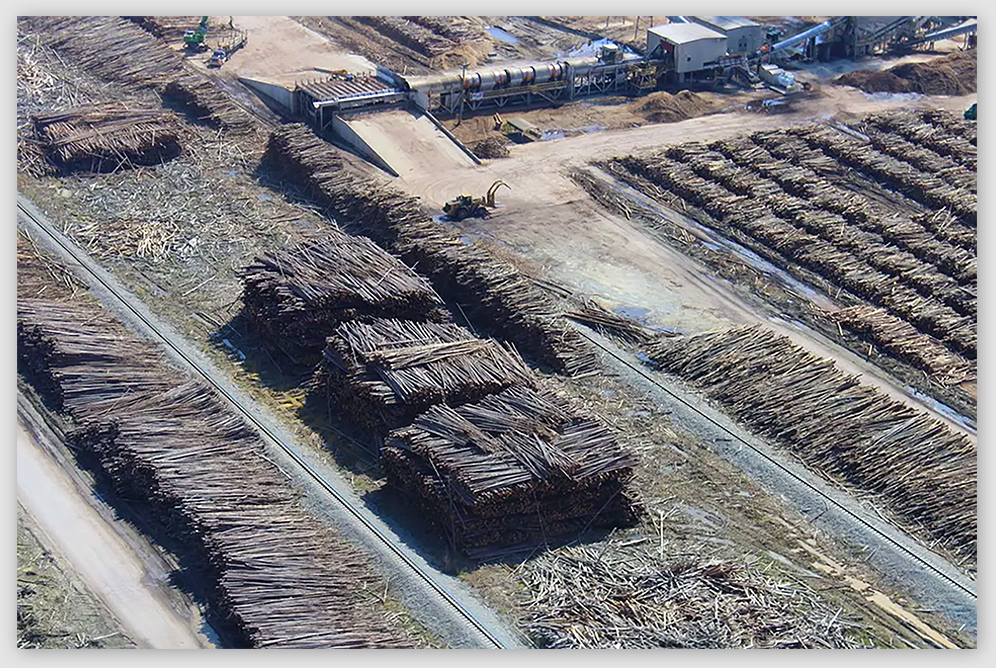
North Carolina’s Cape Fear River is dotted with industrial facilities, cranes, storage containers, large ships, and old cypress trees with large roots anchored in the water. Near the mouth of the river, two white domes, each capable of holding 45,000 metric tons of wood, tower over the river bank. It’s here, where the river meets the sea, that wood pellets stored in the domes are packed onto a ship and transported across the Atlantic, to be burned in power plants that generate electricity. Millions of tons of wood pellets, each the length of a fingernail and width of a straw, are replacing coal in Europe. Billed as a clean fuel that helps countries meet their renewable energy targets, these so-called woody biofuels are at the center of a rapidly growing industry valued at $50 billion globally in 2020. The logic behind considering them a renewable source of energy, like solar or wind, is simple: As long as forests are allowed to regrow after trees are cut and burned, the carbon dioxide released by burning will be absorbed by the growing trees. It’s a net-zero transaction, proponents say—and the European Union and other governments have accepted the argument. Wood is considered a zero-emissions fuel…
Erie has a Chestnut Street. So do Cranesville and Corry, Girard and Lake City, Edinboro, Waterford and North East. There’s a reason you find so many stretches of road that carry that name here and elsewhere in the eastern United States. American chestnut trees once numbered into the billions, stretching from Maine to Mississippi. “The American chestnut was a very plentiful tree, especially in Pennsylvania,” said Sara Fitzsimmons, director of restoration at The American Chestnut Foundation at Penn State University. The American chestnut was known as a cradle-to-coffin tree because its rot-resistant wood served people’s needs from birth to death. It also produced healthy and tasty nuts eaten by humans and their animals as well as by wildlife. Then a blight, first officially identified in 1904 in the Bronx Zoo, struck American chestnut trees. They never recovered and are now considered to be “functionally extinct.” New trees sprout, but most don’t live that long. A few old “survivors,” often scarred by the blight, are known to be out there, including in Erie County. And now the American chestnut is facing another challenge, identified by a Penn State Behrend student at a research site in North East Township…
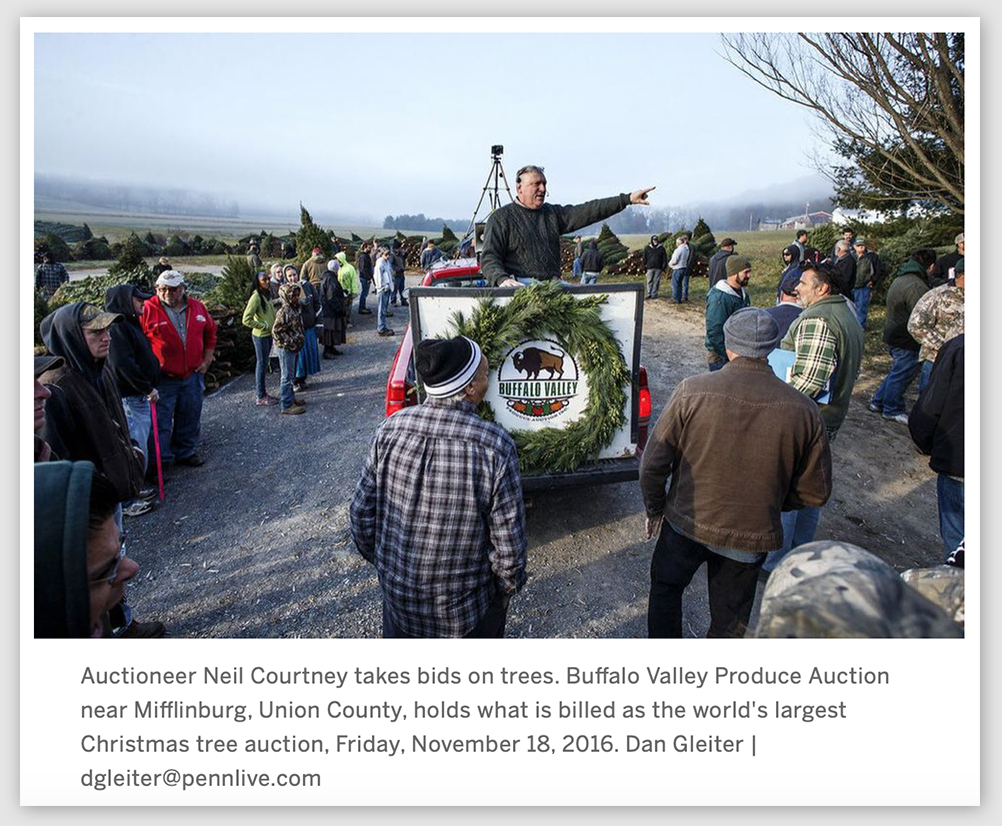
What is billed as the world’s largest Christmas tree auction will have more trees, more first-time buyers and higher prices this year, says the person who runs it. Neil Courtney, manager of the Buffalo Valley Produce Auction near Mifflinburg, said Tuesday approximately 50,000 Christmas trees will be sold to wholesalers beginning at 8 a.m. Friday. The average lot size for standard-sized trees is 50. Large trees and exotic varieties typically are in smaller lots. Approximately 40,000 wreaths, 8,000 rolls of roping, center pieces, winter berries, bulk greens and other holiday decorations will go on the auction block at 9 a.m. Thursday. The baled Frasers fits, Douglas firs, blue spruces, white pines and other species are from growers throughout the East Coast, from Canada to North Carolina, Courtney said. There were no trees from Canada last year because of the coronavirus pandemic, he said. “I think we will have a huge sale,” Courtney said. It was a good growing season and the quality appears good, he said. ” He anticipates more than 100 first-time buyers. They are being required to provide credit information in advance, he said…
The months-long legal battle revolving around an Escambia County heritage tree and its 16 neighboring protected trees could be drawing to a close. An Escambia County Circuit Court judge recently dissolved a temporary emergency injunction that had been protecting the 16 other trees from also being cut down. Judge Jan Shackelford signed an order Monday ending the injunction, which allows the owners of A+ Mini-Storage — W.M. Bell Co. of Santa Rosa County LLC — to proceed with developing plans to expand their mini storage business on land that houses the trees. The owners of A+ Mini-Storage did not respond to requests for comments made through the company’s attorney, Brian Hoffman. Hoffman himself declined to comment for this article. Attorney Will Dunaway, who filed a civil lawsuit on behalf of Emerald Coastkeeper Inc. to stop future development from endangering the trees, also did not respond to the News Journal’s request for comment. Emerald Coastkeeper Executive Director Laurie Murphy also could not be reached for comment. Earlier this year, environmental advocates launched a legal battle to save a large heritage tree on a plot of land that neighbors A+ Mini-Storage at 6155 N. Palafox St. The live oak, whose diameter was 85 inches, was classified as a “heritage tree,” meaning there are higher fees and mitigation requirements to remote it. Heritage trees must have a diameter larger than 60 inches…

Refugees are on the move in forests across the western U.S. As climate conditions change, the ranges of tree species are shifting, especially toward cooler or wetter sites. A new Stanford analysis provides some of the first empirical evidence that wildfire is accelerating this process, likely by reducing competition from established species. The study, published Nov. 15 in Nature Communications, raises questions about how to manage land in an era of shifting ecosystems—a key issue as President Biden prepares to sign into law an infrastructure bill that allocates more than $5 billion for forest restoration and wildfire risk reduction. “Complex, interdependent forces are shaping the future of our forests,” said study lead author Avery Hill, a graduate student in biology at Stanford’s School of Humanities & Sciences. “We leveraged an immense amount of ecological data in the hopes of contributing to a growing body of work aimed at managing these ecosystem transitions.” As the climate changes, animal and plant species are shifting their ranges toward conditions suitable for their growth and reproduction. Past research has shown that plant ranges are shifting to higher, cooler elevations at an average rate of almost five feet per year. In many studies, these range shifts lag behind the rate of climate change, suggesting that some species may become stranded in unsuitable habitats. The factors that impact plant species’ ability to keep up with climate change are key to maintaining healthy populations of the dominant trees in western forests, yet have remained largely mysterious…
It includes a $4.1 billion tax break for people who buy electric bicycles, $2.5 billion for “tree equity,” another $2.5 billion to help “contingency fee” lawyers recoup their expenses and a long-sought tax break for producers of sound recordings. The marquee programs within the Democrats’ social safety net and climate change bill — such as universal prekindergarten, child care subsidies and prescription drug price controls — have garnered most of the public attention. But when a nearly $2 trillion piece of legislation moves through Congress, it affords lawmakers ample opportunity to pursue any number of niche issues — and lobbyists and industries plenty of room to notch long-sought victories tucked deep inside thousands of pages of text. That is the case with the Build Back Better Act, which could aid a wide array of special interests and Democratic allies that have waited for years for such a moment… Other provisions might suffer from their names more than their intentions. Tree planting is widely accepted as a way to absorb carbon from the atmosphere, and a provision in the climate change section of the bill to ensure that tree planting include poor neighborhoods might have escaped notice. But because Democrats used the buzz phrase “tree equity” to describe it, Senate Republicans singled out the $2.5 billion provision in a memo as one of the questionable “earmarks for Democrat interests and allies,” along with environmental justice tax credits for universities and climate justice block grants…
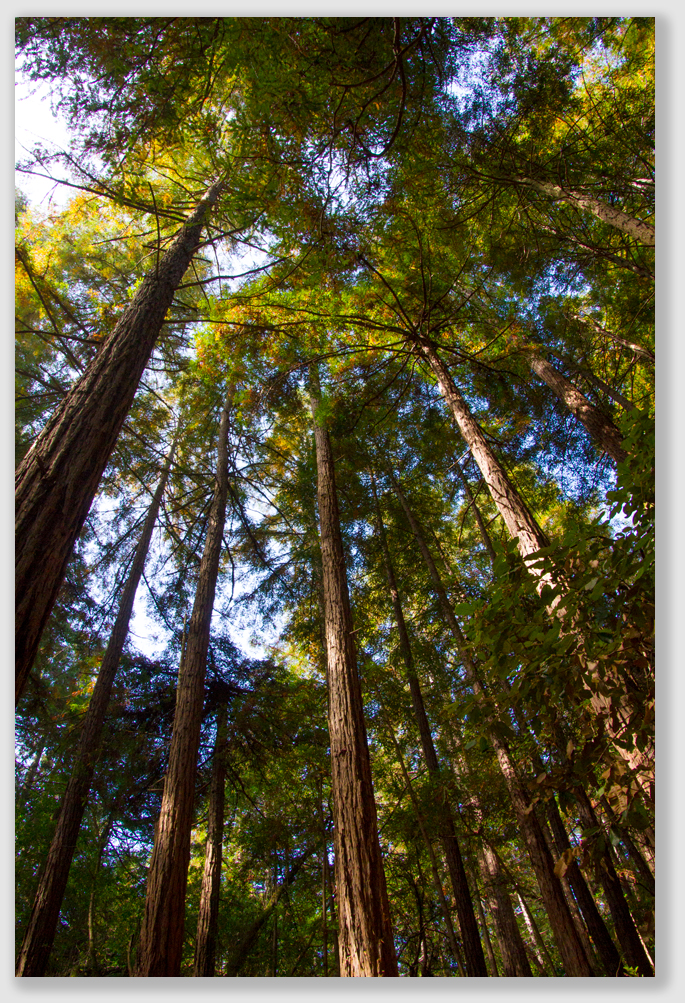
Large, majestic trees are iconic symbols of great age among living organisms, yet published evidence suggests that trees do not die because of genetically programmed age deterioration, but rather are killed by an external agent or a disturbance event. And, they can be a record of thousands of years of environmental change, especially in Nevada. “These ancient trees are indicative of the enduring landscapes that surround us,” Franco Biondi, a professor at the University of Nevada, Reno and co-author of the paper said, “and a reminder of the value of having such long-lived organisms within them.” Biondi and co-author Gianluca Piovesan, a professor at the University of Tuscia, Italy, are both dendrochronologists, researchers who date events, environmental change and archaeological artifacts by using the characteristic patterns of annual growth rings in timber and tree trunks… In their paper about tree longevity published in the August edition of New Phytologist, as a Tansley Review, they find that the “cambium,” which is the growth tissue area between the bark and the wood, appears immune to senescence, which is defined as the intrinsic age-dependent increase in mortality or deterioration in performance under the control of an internal biological clock. Theoretically then, trees could be immortal organisms, and gene expression analyses are starting to uncover the processes that maintain a balance between growth and aging processes in old trees…
Rollie Perron has spent nearly his whole life walking the land that his parents bought almost 70 years ago. His family built a popular Christmas tree farm on the property, which has been eyed by developers for years. Rollie’s Farm is located across 20 acres along Varnum Avenue. To save the serene land from being developed, three conservation groups have come together to purchase the property. Mass Audubon, Mill City Grows and the Lowell Park and Conservation Trust will buy it for just under $4 million, to keep it as a place for walking, wildlife and agriculture. “I like the idea of it staying a farm, open space, forever,” Perron said…

Usually, the downtown holiday icon is donated by a generous citizen, and the switch for its decorations gets flipped as part of the Dickens of a Christmas celebration. But so far this year, nobody has offered an appropriate Christmas tree, said Michael Clark, the city’s director of Parks and Recreation. That’s OK, too, because a farsighted former city forester prepared for exactly such a contingency about 20 years ago. Dan Henry, who’s now retired, shrewdly planted a couple of Norway spruce saplings in Highland Park just in case city hall ever found itself in a Christmas-tree-finding pinch. Apparently, though, Henry failed to anticipate that as the planted spruce inched skyward over two decades, fondness for it would grow among tree-hugging residents of Roanoke’s Old Southwest neighborhood. That’s what happened. And then one day last week, a crew of city workers showed up to survey the spruce in question, which stands on the park’s Walnut Avenue side. Alert neighbors quickly learned the tree would be sacrificed for the holiday season. From there, word spread like a pine needles in a stiff wind…
San Diego’s famous chill-vibe beach community Ocean Beach is a laid-back affair, in most cases. Unless, of course, you come for their palm trees. Then things get litigious. The streets at the northern edge of Point Loma were laid out back in 1887, according to the Ocean Beach Mainstreet Association, but the community did not really take off till the teens, when the famous Wonderland beach-front amusement park opened. Sometime in the ’20s — the NINETEEN 20s — someone took it upon themselves to plant palm trees (fan palms, according to a lawsuit filed in October by a couple of locals) on and near Newport Avenue, between Santa Barbara and Guizot streets. Ninety or so years later, John and Tracy Van de Walker in 2008 bought their home, just up the hill and steps from the beach, as the brochures say, and in 2021, those same trees are still flourishing, soaring some 60-70 feet into the air, looking almost comically thin in their reach to such heights. In early October, the Van de Walkers received a somewhat impersonal note from Ralph Redman, San Diego manager of airport planning, saying the trees were doomed and would be removed “within the next few weeks.” To be clear, the trees near the Van de Walkers home are four blocks away and about 150 feet of elevation above the heart of OB on Newport Avenue, just west of Sunset Cliffs Boulevard. The trees down there are not a risk. At least not yet: “Mexican fan palms live for an average of 100 years, give or take a few years depending on the environment in which they’ve grown,” according to GardenTabs.com…
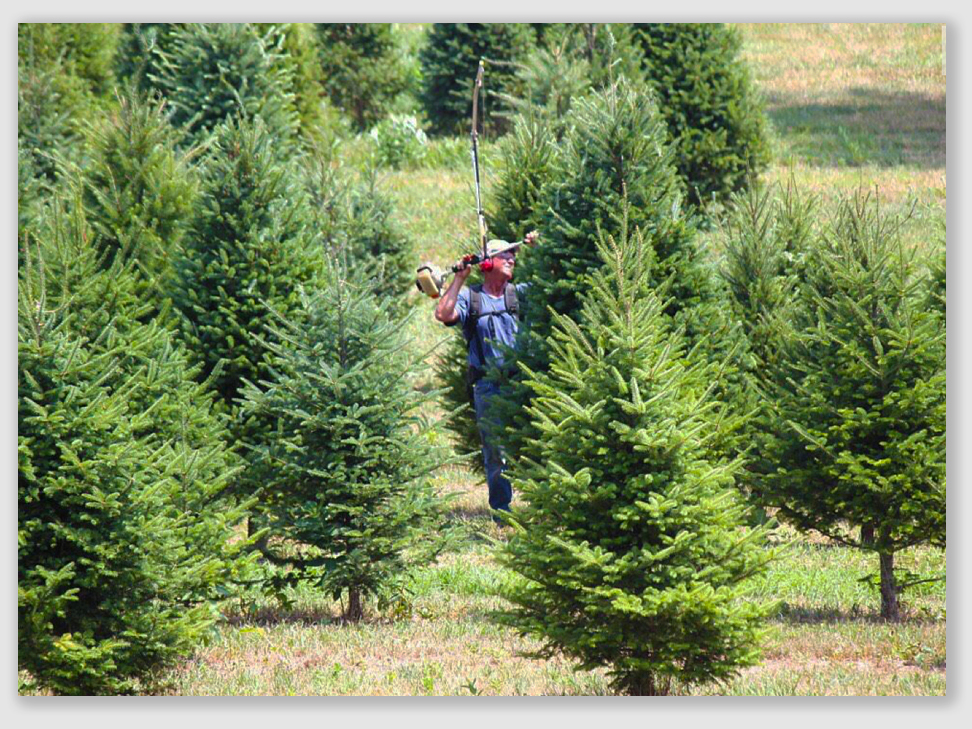
Shoppers eager to be outdoors during the pandemic last year bought so many Christmas trees that consumers now might find fewer available as the holiday approaches this year. Trees take seven to 10 years to grow to a suitable height for purchase and with so many trees sold last year, growers are already warning that Christmas trees may become the next scarce item in the supply chain. “We cut off last year after five days,” said Jon Herzig of the Herzig Family Tree Farm in Durham. “The first two weekends were so crazy.” In addition, a wet summer caused root rot on some trees, forcing producers to toss them. “With agriculture, you never know,” said Kathy Kogut, who owns Kogut’s Hemlock Hill Tree Farm in Meriden with her husband, Bill. Kogut, who also is executive director of the Connecticut Christmas Tree Growers Association, said buyers should not expect shortages. She suggested consumers prepare early by checking on availability of trees, size and other factors…
Little Rock, Arkansas, Democrat-Gazette, November 14, 2021: Fight to save trees begins at home
The word “deforestation” brings up thoughts of the Amazon River basin in Brazil or the Congo River basin in Africa. These huge tropical rainforests are sometimes called the lungs of the earth, and are extremely important. They are in grave danger. A few decades back our family went with a building team from El Dorado First Baptist Church and Three Creeks Baptist Church to central Brazil. The final leg of the journey involved flying from the town from Manaus, the capital of the state of Amazonas, over dense rainforest to our destination. I was sitting up front near the co-pilot. I pointed toward a line of black clouds. Thunderstorms? I asked him. “Just smoke from cattle ranchers burning the forest,” he replied. That was several years back; deforestation is still taking place in Brazil. The recent United Nations Climate Change Conference in Scotland calls for that practice to be eliminated, and Brazil has agreed. However, based on the president of Brazil’s pro-clearcutting actions over several years, few expect him to hold to the agreement. Beyond tropical rainforests, deforestation is occurring in cities and towns in the Natural State. We don’t have landscaping or tree ordinances in El Dorado, so you can do just about anything with your property. Almost all of our parking lots are as blank as you can get them. Several studies compare landscaped parking lots with trees to parking lots without them; the landscaped lots had 25 percent more customers than the non-landscaped lots. Urban designer Dan Burder estimates that over its life a single downtown street tree has $90,000 in direct benefits, and on a residential street with trees, houses sell for an average of 10 percent more than those on a street without trees…

With the passage of time, old friends become especially dear and are to be cherished, and for the Earth Lady and other like-minded souls, the same holds true for old trees. Through the years, these arboreal treasures have steadfastly stood sentinel over woodlands and towns. And in the fall of the year, many of these trees are ablaze with color, are worthy of a fall foliage tour, and one does not have to travel far from home. Every autumn, the Earth Lady takes circuitous drives about town to witness these trees in all of their autumnal glory, and of the many trees sporting vibrant color, the vast majority are maple trees. The most familiar maple tree is the Red Maple, Acer rubrum, which is sometimes called a Swamp Maple by locals and rightly so, for this native tree does thrive in moist woodlands and swamps. However, long ago the early pioneers, mesmerized by the beauty of this tree in the fall of the year, brought Red Maple saplings from the woods to plant on the old homestead. This maple tree proved to be most accommodating and adapted well to most home sites, grew rapidly, and even thrived in urban settings, lining neighborhood streets in cities and adorning yards in new suburbs. The Red Maple tree is one of the most prevalent trees in Eastern North America, and one of the loveliest. In very early spring, sometimes even late February, the Red Maple tree will be one of the first trees of the forest to bloom. The red flowers of this maple tree add a subtle blush to the stark woods and are a welcome harbinger of spring…
While I’ve been behind on a lot of things this year (most, actually), one of the things that I don’t want to be late on is mentioning that the best time of year for planting trees, especially the larger ones, is coming up soon. These days, with the convenience that the nursery trades offer, lots of trees get planted year round, regardless of the season. However, the best time for tree planting is the fall and winter. I try to bring this up every year, but this year there are a lot of people out there who have recently lost trees and are wanting to replace them. Unfortunately, because of the nature of the recent losses (big, mature shade trees in important places), many of those people are going to want larger trees than normal. Of course, that assumes such trees are going to be available, and/or that the potential customers are going to be able to afford them. Real quick, I’m going to mention cost/availability, as it pertains to what I just brought up. Basically, the cold weather that hit homeowners also hit growers and nurseries. While this discussion certainly could be a column of its own, essentially, what we have is a very limited supply of large trees while there is also a huge demand for them…

In the spring and summer of 2018, a crew of poachers had been chopping down trees by night in the Olympic National Forest in Washington State, federal prosecutors said. On Aug. 3, they came upon the wasp’s nest. It was at the base of a bigleaf maple, a species of hardwood tree with a shimmering grain that is prized for its use in violins, guitars and other musical instruments. The crew was selling bigleaf maples to a mill in Tumwater, using forged permits, prosecutors said. Logging is banned in the forest, a vast wilderness encompassing nearly a million acres. The timber poachers sprayed insecticide and most likely gasoline on the nest, and burned it, the authorities said. But they were unable to douse the fire with water bottles, so they fled, prosecutors said. The fire spread out from the forest’s Elk Lake area, near Hood Canal, burning 3,300 acres and costing about $4.2 million to contain, prosecutors said. It came to be known as the Maple Fire. On Monday, the leader of the illegal operation, Justin Andrew Wilke, 39, was sentenced to 20 months in federal prison, prosecutors said. In July, a jury had convicted Mr. Wilke of conspiracy, theft of public property and trafficking in illegally harvested timber, among other charges, according to a statement from the U.S. Attorney’s Office for the Western District of Washington. Notably, the jury did not convict him on charges related to the fire, even though prosecutors had argued that he was directly involved. Had it not been for a relatively new technique that used tree DNA as evidence, Mr. Wilke might not have been convicted on the other charges…
Nestled in the unique and biodiverse steephead ravines along the mighty Apalachicola River, an evergreen tree found nowhere else in the world teeters on the brink of extinction. Since European colonization, Torreya taxifolia has been known by many names; Florida Torreya, stinking cedar, Florida nutmeg, polecat wood, fetid yew, and gopherwood. Many of these refer to the tree’s pungent odor when the leaves are bruised, or the wood is cut. To me, the scent is similar to the aroma of tomato plants but much more concentrated. Its Latin name honors New York botanist John Torrey, who first acknowledged it as a new species based on samples sent in 1833 from Florida. At that time, Florida Torreya was a standard component of the lush and biologically rich steephead ravines found mainly on the eastern side of the Apalachicola River in the Florida Panhandle. These unusual ravines wind for miles inland from the river, eroded slowly over millions of years by the area’s unique geology. They are exceptionally steep and deep, an unexpected sight in Florida. A nearly vertical drop of up to 80 feet down is typical and will culminate in clear, cool sandy-bottom streams that flow year-round. The cool microclimate formed by the cold water and lush canopy harbor many relictual species of flora and fauna that, just like the Torreya, are not found anywhere else in the world…
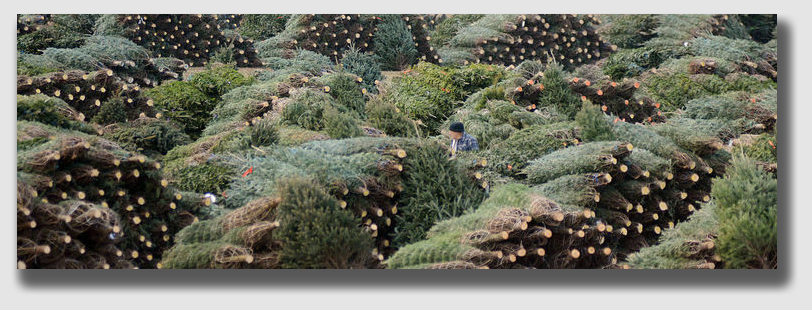
Dave Morin, owner of Arrowhead Acres in Uxbridge, Massachusetts, is expecting a “toilet paper rush” on opening day for cut-your-own Christmas trees. “I’ve hired more people than usual, to be prepared for that opening day crush,” he said. A past president of the Massachusetts Christmas Tree Association who still runs the organization’s communications, Morin said the rumors are circulating widely that trees are in short supply this year. Taking front and center stage as consumers start shopping for the holiday season are product shortages and supply chain issues worldwide. The same will ring true for Christmas trees this year, both live and artificial. Consumers are encouraged to buy their trees early, and be prepared to pay a heftier price – due to a combination of supply chain issues, pandemic demand and a year of extreme weather events. The push to buy early, though, could result in a flood of demand all at once. “In 2021, we’re seeing a variety of trends influencing artificial and live Christmas tree supply across the country, and are encouraging consumers to find their tree early this year to avoid shortage impacts,” said Jami Warner, executive director of the American Christmas Tree Association, in a statement. “If I can give one piece of advice to consumers right now, it is to find and buy your Christmas tree early…”
Out the back of a suburban home on a leafy Australian street, a humble tree bearing 10 different fruits has just claimed a Guinness world record for most types of fruit on a single tree. The tree is the result of a decade of Hussam Saraf’s hard work, transforming his modest stretch of grass in regional Victoria into a tropical oasis bearing rare fruit trees and edible natives, The Guardian reports. “The previous record was five fruits grafted onto one tree, so I decided to graft 10,” Hussam said. “But I was waiting to hear back and they told me my application was rejected, because they needed five different species, not varieties.” The previous record of five grafted fruits – apricot, cherry, nectarine, plum and peach – had been held by Luis H Carrasco of Chile for two decades. Hussam’s initial application, for grafting white and yellow nectarines, white and yellow peaches, blood and yellow plums, peachcots, apricots, almonds and cherries was deemed to only represent five types of fruit, placing him at a tie with Carrasco…

You may have noticed people posting pictures of their dogs or cats on their Instagram stories as part of a recent campaign promising to plant trees for every picture posted. You may have even posted one yourself. More than four million people have added pictures of their pets to their Instagram stories as part of a social media campaign that used a new Add Yours sticker feature released by Instagram last week. The sticker created by the Instagram account behind the campaign claims “We’ll plant 1 tree for every pet picture.” But who is the “we” behind the post and is anyone planting millions of trees? The answer is complicated. Instagram debuted a new feature earlier this month, a sticker it said could be used to create public threads in Instagram Stories, another feature that allows users to share content. Since the Add Yours sticker feature went live last Monday, an Instagram page belonging to an organization called Plant A Tree Co. created a sticker and began using it for a campaign that promised to plant a tree for every pet photo users shared. The campaign quickly blew up and millions of people, including celebrities like actresses Sarah Hyland and Lili Reinhart, got in on the trend, using the sticker and sharing photos of their pets…
He performed his own one-armed rescue, after a chainsaw accident in a tree left his other arm almost completely severed. Now a tree trimmer is recovering in the hospital after the job went horribly wrong in Citrus Heights. Neighbors Kevin and Sharon White described the gutsy moves they watched of the tree trimmer in trouble. They saw one of his colleagues climb up and give him a tourniquet after an accident left one of his arms nearly severed by his own chainsaw. “The other guy was just getting to him,” Kevin White said,” the neighbor said, ‘he’s gonna try to tie off,’ give him a tourniquet of some sort and I just saw the motion through the branches.” “And then next thing we know we saw him lowering himself, you know, I can’t imagine doing it one-handed.” Dispatch audio describes Sac Metro Fire crews responding to the 911 calls for help with a ladder truck preparing for an aerial rescue…
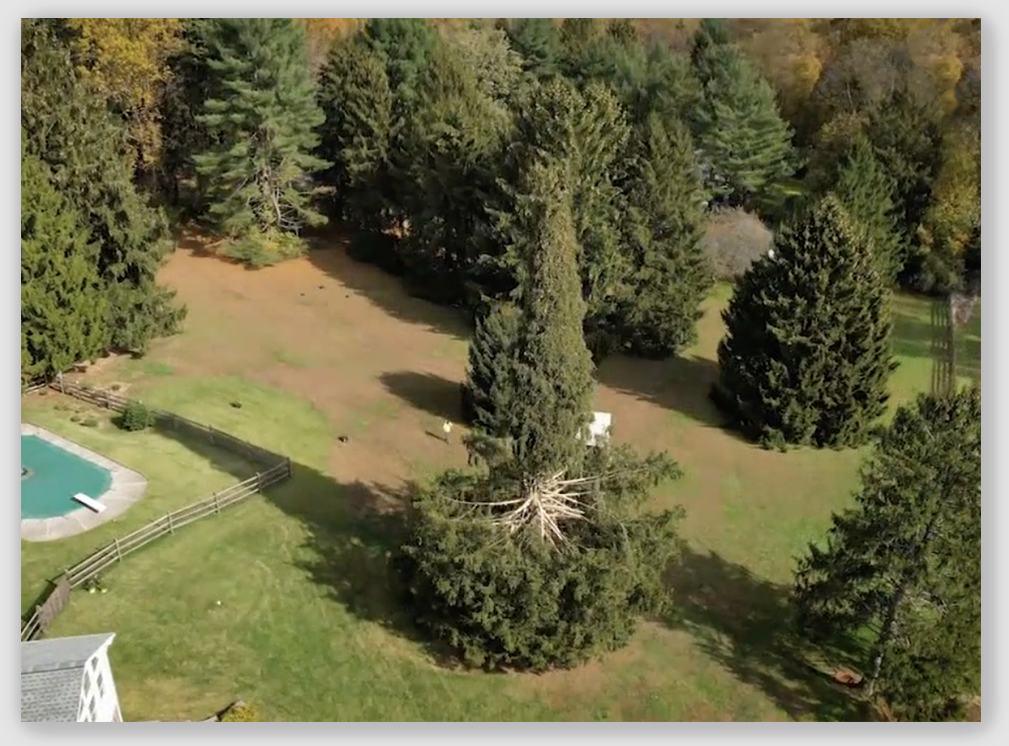
The 2021 Rockefeller Center Christmas Tree will be cut down Thursday before it heads to New York City. This year’s iconic tree won’t come from New York, or New Jersey, or Pennsylvania like it usually does — the 79-foot tall Norway Spruce was donated by a family in Elkton, Maryland. The head gardener at Rockefeller Center and the family will be present for the chop on Thursday morning. The big news for the small town had been kept secret for weeks, and the tree has been under the watchful eye of local authorities ever since it was picked to become one of the most famous trees in the world. “I found out about the tree from our lovely sheriff, who has been guarding the tree and making sure it is safe, and nothing happens to it,” Cecil County Executive Danielle Hornberger said. The giant spruce will be gingerly loaded onto a flatbed truck for its 145-mile journey from just over the western border of Delaware and arrive at Rockefeller Center on Saturday. After its trek, the tree will be dressed with more than 50,000 LED lights and topped with a Swarovski crystal star…
Michigan’s Public Service Commission has approved an accounting measure that allows DTE Electric Co. to provide a one-time, $70 million voluntary refund to be spent on tree trimming. The tree trimming is part of the company’s efforts to boost system reliability after power outages during severe storms across southeastern Michigan, according to the commission. DTE Electric had requested approval of a one-time regulatory liability and accounting authority to use a portion of unexpectedly higher profits from changed electricity use patterns of its retail customers amid the ongoing COVID-19 pandemic. The utility said the money would fund an additional surge in tree trimming in response to the summer’s storms. The trimming is expected to take place during the remainder of 2021 through 2023…

As a California wildfire was exploding in July to become the state’s second-largest ever, Patti Poppe made an executive decision. The chief executive of PG&E Corp. traveled to the town of Chico, in fire-ravaged Butte County, and declared that the utility would spend as much as $20 billion to bury 10,000 miles of power lines like the one that had likely sparked the fire burning out of control just miles away. The decision left PG&E’s board of directors reeling, according to people familiar with the matter: The company had scarcely fleshed out the details of the proposal, or how to pay for it. Ms. Poppe had surprised the board the night before with her plan to publicize it anyway. The announcement amounted to a Herculean promise to substantially reduce wildfire risk by safeguarding electric lines from making contact with trees. No U.S. utility has ever attempted such a feat, in part because of cost and engineering hurdles. PG&E itself had earlier called undergrounding, as the practice is known, prohibitively expensive…
Savannah has suffered a spate of live oak tree failures in the last few months. From a large limb dropping onto State Street to an enormous live oak splitting in Calhoun Square, our stately old trees are showing signs of decline. In fact, the tree in Calhoun Square could not be saved and was recently removed. It can be shocking and even painful to see these iconic trees removed, leaving large gaps in our lush tree canopy. Their removal often leads to public outcry. What is happening to our trees? What can we do to save them? We are seeing a normal part of the life cycle of any forest. Our forest just happens to be in the middle of a city. Trees are living structures and cannot survive forever, even in ideal habitats. And urban streets are not live oaks’ ideal habitats. Though live oaks can live for hundreds of years in more natural areas, we can expect our downtown trees to live closer to the 150-year mark. That’s the root of the problem…
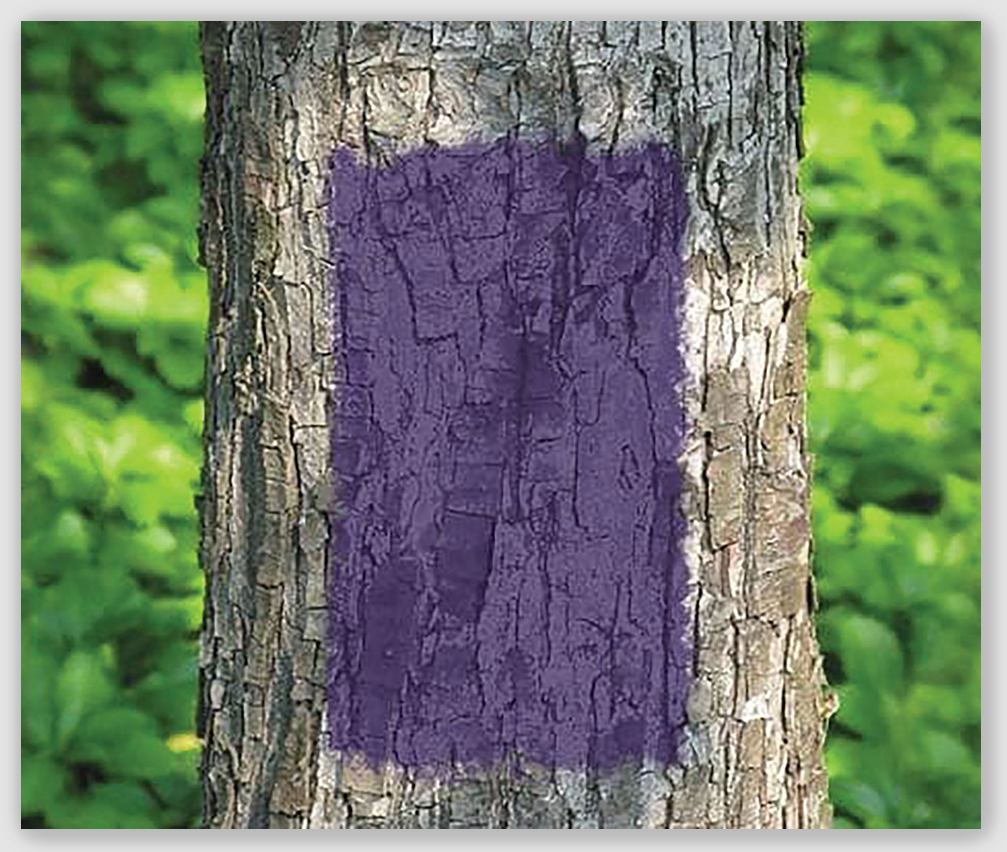 Reader’s Digest, November 9, 2021: If You See Paint on Trees, This Is What It Means
Seeing blue dots, red Xs, orange circles, and purple bands on trees and wondering what they mean? Here’s what we found out about those painted trees. Whether you’re walking along a city sidewalk or hiking deep in the forest, you might occasionally notice paint marks on tree trunks (or even a metal band once in a while). Those paint marks are codes used by forestry workers and contractors to pass along a range of messages, from which trees to chop down to which ones need treatment for disease. All cities have codes for marking trees. Here we’ll use Boulder, Colorado, as an example. In Boulder, when you see a dot at the base of the tree, that signifies it needs treatment for emerald ash borer, elm scale, or drippy blight. Paint dots at head height mean the tree needs pruning. “Basically, it marks the tree in an inconspicuous way,” says Ken Fisher, assistant forester for the Boulder Parks and Recreation Department. “A lot of people don’t even notice it, but it alerts our contractor that this is the tree we’re talking about. We’ve been using paint dots for 25 years or so now, so some trees have several paint dots on them.” Pruning and treatment dots also give a heads-up to property owners near the trees. This way, when the city notifies them of an upcoming pruning or treatment, they know which trees will be affected…
Amarillo, Texas, Globe-News, November 7, 2021: Selecting and planting trees (Part 2)
The planting hole is key. Dig it at least twice as wide as the existing root ball. The larger, the better. The length of time it takes to get the tree established and growing rapidly is directly related to how quickly the tree grows its roots. If the hole is larger than the root ball, the roots will have a better area to grow into. Putting a root ball into a hole the same size creates a “pot” in the ground that may keep roots confined or circling at worst or make it more difficult and time consuming for them to spread into new ground at best. Dig the hole no deeper than the root ball to prevent the tree from sinking into loose soil below the root ball. When planted, the root flare (where the roots flare out at the base of the tree trunk) must be above ground, not under the soil. Trees planted too deeply have a shortened life and will not perform up to their potential…
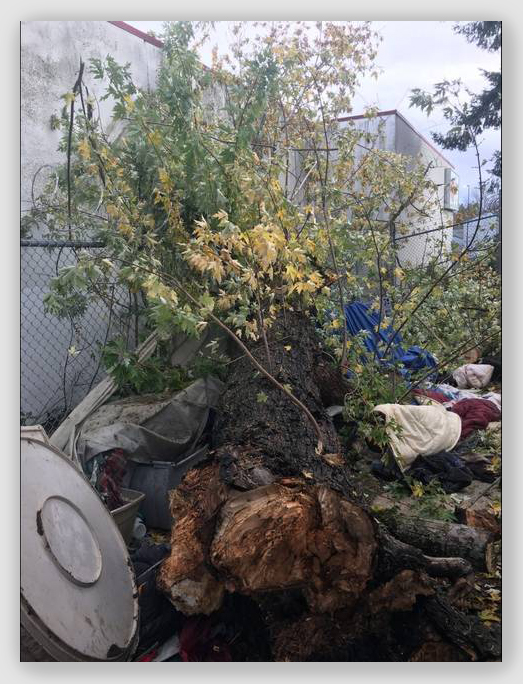
A 14-year-old boy planting trees at an Oregon park as part of a volunteer project died Nov. 6 after a tree limb fell on him, The Oregonian reported. Another fallen limb also killed one man and injured another at a Portland homeless camp, police reported on Twitter. The deadly incidents followed a series of rainstorms with gusty winds, KATU reported. The incident at the homeless camp near Northeast Sandy Boulevard and Northeast 118th Avenue took place about 10:45 a.m., KGW reported. An arborist called to inspect the tree from which the limb fell called it “severely deteriorated,” police wrote on Twitter. They did not provide the condition of the injured man. About 30 minutes later, a fallen limb at Thousand Acres Park in Troutdale, just outside Portland, hit and killed the 14-year-old boy, KGW reported. The boy had been planting trees at the park with Friends of Trees, The Oregonian reported. The organization’s executive director said in an email that it was “devastated” by his death…
Neighbors came to blows over a small grove of trees in Manette last week. The cops were called Nov. 1 after a local developer, who had hired a tree service to trim six Douglas firs near his recently built townhomes, ended up in a brief but physical confrontation with a man who lives next door. No arrests were made, and police called it a civil matter. But what led to the incident is a familiar milieu in a forested county like Kitsap, where trees and habitat are often coveted by their human neighbors. In what he described as a “moment of panic,” Gregg Louden, a recently arrived tenant in a home in the shadow of the trees, said he felt compelled to stop the trimming because he felt they had “butchered” the first in the line of six. “I’d decided, I’m not going to let them keep cutting,” said Louden, concerned about the trees’ habitat for bald eagles. Under the trees, which grow across three different properties, he argued with Clinton Bergeron, builder and owner of the Manetteview Townhomes, across a fence. The argument got so heated that when Louden jumped the fence to Bergeron’s side, the developer thought he was going to be assaulted, according to police. So Bergeron grabbed Louden and pushed him back against the fence, Louden said…
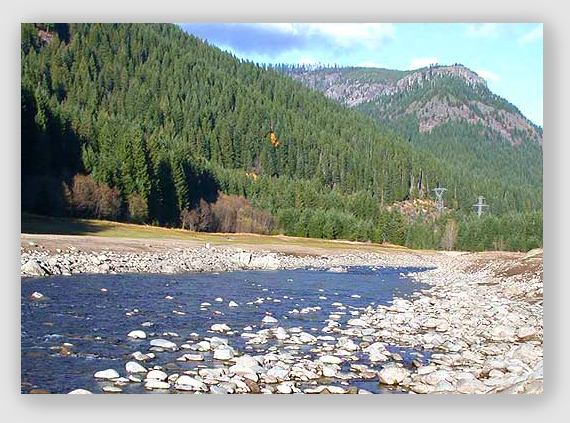 A federal judge has paused U.S. Forest Service plans for extensive roadside hazard tree-cutting in the Willamette National Forest. U.S. District Judge Michael McShane issued a preliminary injunction Friday halting plans for tree-cutting on 400 miles of roads in the Willamette National Forest. McShane said a lawsuit arguing the plan is against the law has merit and can’t begin before a court rules. The Forest Service planned to cut roadside trees likely to fall down after the 2020 Labor Day Fires, which included the 174,000-acre Holiday Farm Fire that burned through the McKenzie River Valley. The Forest Service concluded the project is under a category of road maintenance that doesn’t require an environmental study before it is conducted. The project was set to begin Sunday, Nov. 7. McShane agreed with environmental groups suing the Forest Service that a previous 9th Circuit Court case precludes road maintenance from being used as a reason not to have to conduct an environmental study on large-scale hazard tree removal projects…
Amarillo, Texas, Globe-News, October 31, 2021: Selecting and Planting Trees (Part 1)
Late fall and winter are the best times for planting trees. In anticipation of this, now is a good time to select the tree or trees that you want to plant. Since fall color is one attribute that trees may have, now is the time to look at local nursery stock to see what trees will look like as they prepare for winter. However, fall color is but one attribute from which to base the plant selection. One must consider others as well as any special conditions you have or needs that must be met. For example, you might want a windbreak and/or shade from hot the western sun to increase comfort and decrease cooling costs. Other things to consider include evergreen versus deciduous, shade, flowering, fruits and nuts, height and width, growth rate, growing environment (wet; dry; alkaline or acidic soil; clay, sandy, or loamy soil; heat and cold tolerance), and other concerns that you may have. Size and placement are often not given enough thought. Although it may look silly, a small tree may need to be planted in the middle of a large area far away from buildings, etc. The mature size must be factored in to where the tree is located so that it will fit the space and landscape, not cover part of a building or windows, or grow up into power lines, years later…
On Tuesday, more than 100 countries signed on to an ambitious plan to halt deforestation by 2030 and pledged billions of dollars to the effort. Although world leaders lauded the move, climate activists say they’ve heard that promise before and that past efforts have come up short — the world is still losing massive numbers of trees each year. “Despite ambitious political commitments to end deforestation over the past decade, we are still losing tropical primary forests at an untenable rate,” said Crystal Davis, the director of the Global Forest Watch monitoring initiative. “We are running out of time to solve this problem.” According to Global Forest Watch, the world lost 411 million hectares of forest between 2001 and 2020. That’s roughly half the size of the United States and equivalent to 10 percent of global tree cover. In 2020, the world lost a near-record 25.8 million hectares — almost double the amount in 2001. Over the past two decades, forestry has been the primary driver of tree-cover loss, followed by commodity-driven deforestation — the permanent conversion of forest for the expansion of commodities like beef, minerals, oil and gas. Trees play a critical role in absorbing carbon dioxide as they grow, thereby slowing global warming. There are a number of ways trees can disappear — from logging and wildfires to being cleared to make way for crops or livestock. But when they are cut, and are either burned or decay, they release the carbon into the atmosphere. According to the U.N. Intergovernmental Panel on Climate Change, about 23 percent of global greenhouse gas emissions come from agriculture, forestry and other land uses…
A giant tree fell outside a Los Angeles concert venue Wednesday evening, injuring one woman and crushing dozens of parked cars. The towering tree came down in the parking lot of the Greek Theatre at 8:08 p.m. Wednesday night, hitting about 30 cars, according to the Los Angeles Fire Department. No one was in the vehicles, officials said. A 35-year-old woman suffered a non-life-threatening leg injury and was taken to the hospital, fire officials said. LAFD said the tree was 40 to 50 feet. NBC Los Angeles reported the tree was a 90-foot Aleppo Pine, citing an arborist from the Los Angeles Department of Recreation and Parks. The tree fell as a concert for Brijean and Khruangbin was ending, according to the venue’s website. “We heard it and then we saw there was a reaction — like a stretcher and lights. Everyone was like, ‘What happened?’ We didn’t know,” one concert attendee told NBC Los Angeles…

For over 30 years, Leon County Government has been proud to support our native ecosystem through the Adopt-a-Tree Program, which provides County residents the opportunity to have a tree planted on their property for free. This year, residents who participate in the program can choose between American linden (or basswood), red maple, and witch hazel. All three are native species that put on quite a show during certain seasons. Applications are available now at LeonCountyFL.gov/AdoptATree. American linden, Tilia americana, or basswood as it is sometimes called,is a large sized shade tree that typically grows 40 to 50 feet in height but can get much taller. If the lower branches are allowed, they will gently drape toward the ground before sweeping up in a gentle curve. It is more shade tolerant than many other large trees and does well in full sun or partial shade. It is often found growing along moist stream banks but can tolerate some drought. Basswood flowers around June and has extremely fragrant cream-colored blooms that are very attractive to pollinators. A delicious honey can be made from the nectar of the flowers. A small, dry fruit is produced that goes mostly unnoticed and is not messy…
Despite criticism from community members, Ann Arbor officials have declined to reconsider their approval of a developer’s plan to cut down hundreds of landmark trees to build a 57-home luxury subdivision. City Council voted 8-3 in favor of the controversial Concord Pines development on Earhart Road two weeks ago. This week, Council Member Jeff Hayner, D-1st Ward, urged his colleagues to reconsider the vote, but they declined. “Many of us received emails from folks asking — some even pleading — that someone who was in the affirmative on the approval of Concord Pines reconsider that, because I think a lot of people felt that they were kind of blindsided by the notion of cutting down all these trees,” Hayner said. It would be a great service to the public to reconsider the project, Hayner said…

President Biden said Tuesday that conserving our forests is indispensable. It’s right there in the transcript from his speech to the United Nations Climate Change Conference in Glasgow: “Preserving forests and other ecosystems can and should play an important role in meeting our ambitious climate goals as part of the net-zero emissions strategy we all have,” the president said. Unfortunately, the news came too late for “Sugar Bear.” Sugar Bear is an 84-foot white fir from the Six Rivers National Forest in northwest California that at the moment is lying horizontal on a flatbed trailer somewhere near Sacramento. It is at the beginning of a circuitous 3,500-mile route through the lower part of the lower 48 on a three-week journey to the nation’s capital, where, in a special ceremony on Nov. 19 on the U.S. Capitol Lawn, it will officially become “The People’s Christmas tree.” Every year the honor is bestowed upon a single tree from one of the nation’s 154 national forests. This year was California’s turn, an honor it has enjoyed four other times since House Speaker John W. McCormack kicked off the tradition in 1964…
Dr. Bill Libby knows it’s an important tree to the world, and, given his credentials, that is really saying something.
After all, Libby is a professor emeritus of forestry and genetics at the University of California-Berkeley, who has traveled the world for decades planting forestry projects and teaching at prestigious institutions all about the subject. He is on the short list of world experts regarding sequoia and redwood trees, but there is one tree that he was in awe of when he first saw it: A giant sequoia located in Manistee, Michigan. Yes, you read that correctly: Michigan. Not exactly a place you might expect to find a sequoia. And yet, there is a thriving, giant sequoia tree located in the far north, in an area that can best be described as a frozen tundra during the winter. “Any giant sequoia surviving, and particularly any thriving, at or near the then-known edge of its potential range, provides an important data point as we consider where to possibly plant this species as climate changes,” Libby said. At its last measurement in 2016, the tree was measured at more than 100 feet tall, said David Milarch, co-founder of the Archangel Ancient Tree Archive, based in Copemish, Michigan, roughly 40 minutes northeast of Manistee. The tree is perched on a cliff along Lake Michigan at the Lake Bluff Bird Sanctuary, and is actually one of three sequoias there. The other two are simply smaller, and just don’t receive the same attention…
When Tom Spellman began lecturing on fruit trees more than two decades ago, his audience skewed primarily older with lots of people in their 60s and 70s. In recent years, that’s started to change. Spellman, southwestern sales manager for Hickman, California-based Dave Wilson Nursery, said he’s seeing more and more people in their 20s and 30s get into gardening and fruit tree growing. They usually get into it because of some extenuating factor like the economic recession of 2008 or the coronavirus pandemic, but lots of them stick with it, he said. “All of a sudden they get to taste that first tomato and they get to eat that first peach off that tree and they’re like, ‘Hey, you know what? I can’t buy this; this is not available at the standard grocery store,’” Spellman said. Growing great fruit takes some careful planning and maintenance by home gardeners and some important steps include picking the right varieties for the area, planting them correctly and making sure that they are properly pruned and cared for throughout the season. Conditions such as climate and soil can affect the taste of fruits such as apples, and to a lesser extent stone fruit such as peaches and apricots, said Neil Collins, owner of Paso Robles-based heirloom tree nursery Trees of Antiquity…
Earlier this week, The California Utility Team answered a reader question from Jorge Velasquez, of Elmhurst, who wanted to know what he can do about a neighbor’s tree that has branches overhanging into his yard. While that answer was pretty clear — you can trim overhanging tree branches or encroaching roots of a neighbor’s tree up to the property line as long as you don’t cause unreasonable damage — Velasquez had a follow up question: What can you do if tree branches start falling into your yard? To answer, the utility team talked with a real estate lawyer, Robert J. Enos, of BPE Law Group. Here’s what Enos had to say: First, you need to look at what kind of debris is falling. Your neighbor is not liable for small debris such as leaves and twigs, or in other words, anything that will inevitably fall as a natural part of a tree’s life. When larger branches fall, you need to determine what might have caused that branch to fall. If a branch fell because of an “act of god,” which includes unusually severe storms or earthquakes, your neighbor is not liable. An event like the 100-year storm that brought a downpour to Sacramento last month is a good example of something with qualifying severity…
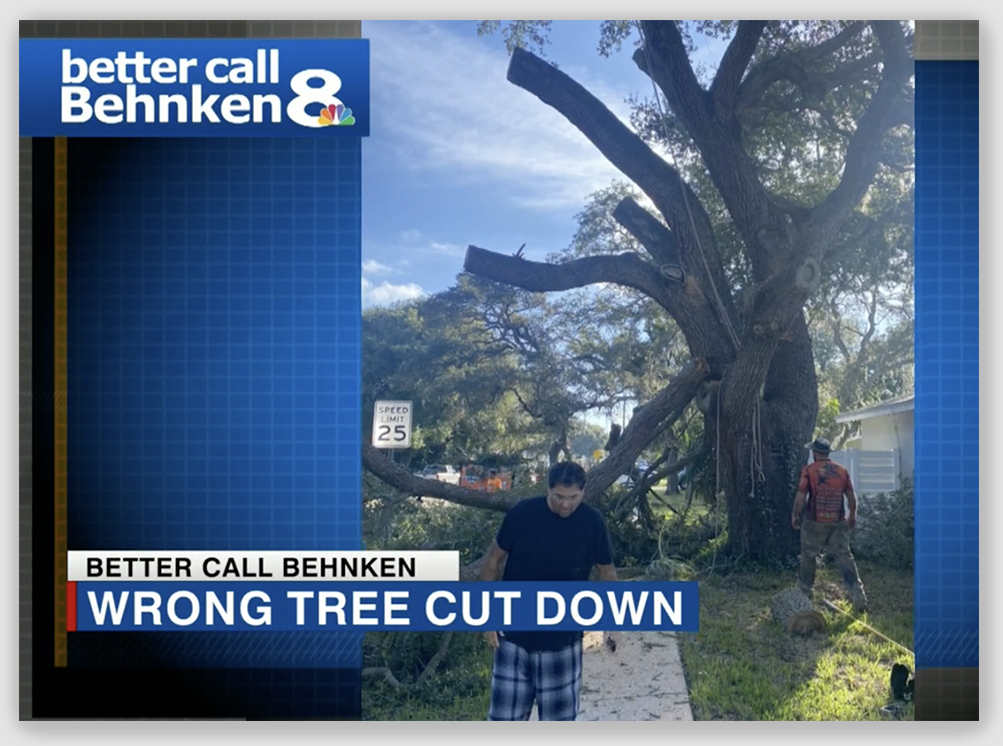
Sarah Martinez and her family woke up last month to the sound of chainsaws. They say they heard branches hit their roof and ran outside to see three men in their big oak tree, cutting it down. “I yelled for them to stop but the tree was too far gone,” Martinez said. It turns out, a neighbor was the one that hired St. Petersburg-based Tree Ninjas Tree Service to cut down a diseased tree, but workers got the wrong house and the wrong tree. Martinez said no one knocked on the door to double-check before they started cutting. Sarah Martinez and her family woke up last month to the sound of chainsaws. They say they heard branches hit their roof and ran outside to see three men in their big oak tree, cutting it down. “I yelled for them to stop but the tree was too far gone,” Martinez said. It turns out, a neighbor was the one that hired St. Petersburg-based Tree Ninjas Tree Service to cut down a diseased tree, but workers got the wrong house and the wrong tree. Martinez said no one knocked on the door to double-check before they started cutting…
Linda Beck has a problem hanging over her head that may sound familiar to other homeowners in Modesto. The large city-owned tree in front of her home has a heavy limb extending over the kitchen where she often sits. Beck, 73, said the silver maple tree, with a 5-foot-wide trunk, was mature when she moved into the home on Ardmor Avenue almost 50 years ago. She said the trunk is hollow in the middle and decayed. And the tree is leaning. “It is scary,” Beck said. “It would take out a quarter of my home if it fell. It’s a big tree.” In August 2018, a cracked limb fell from the same tree and smashed the roof of a caregiver’s car. Beck said a city crew came out to remove the limb and the tree was assessed at that time. But it wasn’t removed. Beck said Thursday that she had called the city forestry division every day since Oct. 20 and worried about the tree limbs overhead during the recent “bomb cyclone” that hit the West Coast and caused localized flooding across Modesto. City tree crews have been backed up with calls since the wind gusts of Oct. 11-12. Modesto Councilman Chris Ricci said city trees in established neighborhoods in his council district and elsewhere are a huge challenge. He gets two or three tree complaints from residents every day…
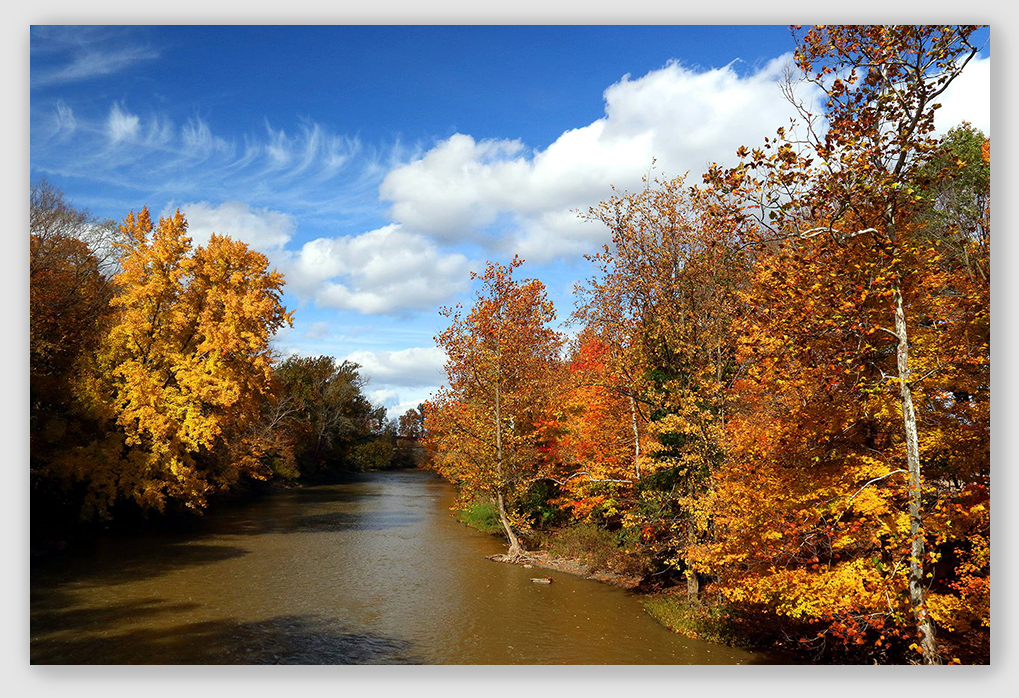
Leaves use carbohydrates (sugars) to continually produce chlorophyll, which gives the leaves their green color. Chlorophyll absorbs the blue and orange parts of sunlight and converts them into energy for the tree. The signal for leaves to change correlates to the length of daily sunlight, not just frost or temperature. With fading daylight, the layer of cells around the leaf stem start to harden, cutting off chlorophyl. Other colors that were present in the leaf, but blocked by the green, become visible with the lack of chlorophyll…
The Edge, November 1, 2021: Sustainability: How effective is tree planting?
Tree planting is a popular activity that corporations and governments like to organise in order to reduce carbon emissions and preserve biodiversity. In fact, Malaysia’s former prime minister Tan Sri Muhyiddin Yassin kicked off the 100 million Tree-Planting Campaign 2020-2025 last year. This activity has also been used to generate carbon credits that entities can purchase to offset or cancel out their own carbon emissions. The problem is that while planting trees is good, cutting down an old-growth forest and planting a few new trees that will take decades to mature does not exactly help mitigate climate change, especially when greenhouse gases (GHG) continue to be emitted. This issue has been highlighted by many scientists and observers, who suggest that equal focus should be given to halting deforestation and reducing GHG emissions in the first place. And if tree-planting activities to offset carbon emissions continue, being mindful of the type of trees that are planted, as well as how and where they are planted, will be critical…
World leaders from more than 100 countries, including the U.S., China and Brazil, agreed to a deal aimed at ending and then reversing deforestation by 2030, committing nearly $20 billion of public and private funds to protect and restore forests. U.K. Prime Minister Boris Johnson, during the COP26 climate summit in Scotland on Tuesday, called the pledge a landmark agreement that includes countries accounting for 85% of the world’s forest land. But details about how such a deal, which isn’t legally binding, would be executed and policed haven’t yet been worked out. “Protecting our forests is not only the right course of action to tackle climate change but the right course for a prosperous future for us all,” Mr. Johnson said. President Biden spoke about the U.S. plan for forest preservation Tuesday morning. “Preserving forests, and other ecosystems can and should play an important role,” he said. “I’m confident we can do this. All we need to do is summon the will to do what we know is right…”
Rooted on a former Ute encampment in the foothills of the Front Range, the piney crown of a long-lived ponderosa pine pokes nearly 100 feet into the sky. Its trunk, gnarled and knobbly with age, is hollowed at the bottom, offering what could be a narrow shelter for someone to hunt from. Higher up, there’s a peephole – just wide enough for an arrow – carved in the cinnamon-colored bark. The tree’s trunk begins to spiral near the top, marking what some believe was a high energy source, ideal for healing, along what was a heavily traveled Native American trade route. Before there were highway signs, trees served as natural signposts through the forest, marking important sites, such as water sources, sacred healing spots, hunting lookouts and birthing stations, Janet Shown, co-founder of The Association for Native American Sacred Trees and Places, said as she guided a group of curious people through the woods behind Glen Isle Resort in Bailey. People are drawn to the unusually-shaped trees, known to some as culturally-modified trees or marker trees, and the tales some say they tell, yet they are entangled in controversy. Southern Ute and Ute Mountain Ute tribal officials say no evidence of shaped trees is found in their oral traditions and some archaeologists point to nature to account for the trees’ twists and turns…
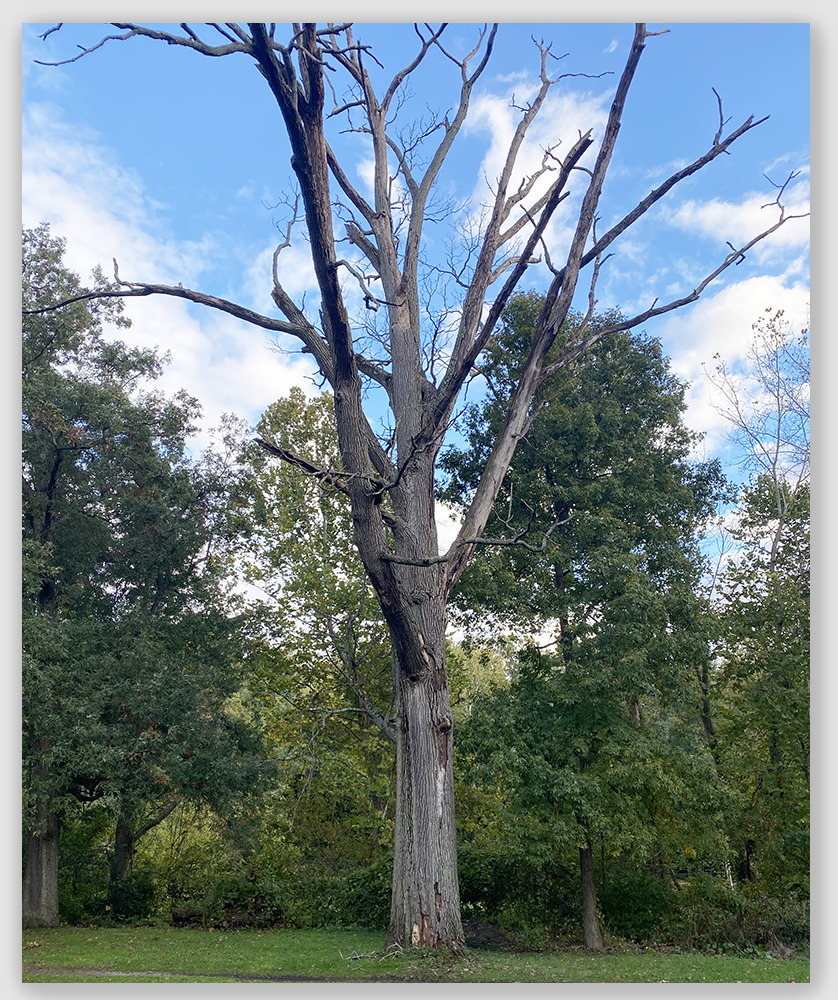 Portland, Oregon, KGW-TV, November 1, 2021: Arborists warn of ‘zombie trees’
As we get deeper into autumn, experts say trees may be at risk for losing more than just their leaves. “This year has been particularly bad with trees we normally don’t see problems with,” said Dash Schenck, certified arborist with The Davey Tree Expert Company. In just the last week, Schenck said he responded to more than a dozen calls of trees falling onto houses, garages or fences. “The lack of water we’ve got and then that heat back in the summertime really stressed the trees out… and so even in light weather like this with just a little bit of rain, the conditions are just right that trees can break or fall.” Schenck also pointed to the February ice storm that killed many trees and left others with dead and damaged branches. He said some of those trees are structurally unsound, though at first glance they may not look damaged or decayed. He calls those, “zombie trees.” “Those branches can fail and then they can hit your home or your car or the worst-case scenario, somebody being in the wrong place at the wrong time.” To help homeowners protect their trees, Schenck advises all of his clients to look up at their trees, often. “If you really look at your canopy, you might start seeing things that you just don’t see with a quick glance,” said Schenck. “You may see a dead branch or a broken branch or something hanging or that part of the tree is actually dead…”
After months of legal wrangling and community outcry to save Escambia County’s largest tree, property owners moved forward with cutting down the heritage tree on Saturday morning. Advocates battled to save the tree — a large live oak whose diameter was 85 inches —after the owners of the mini-storage facility where it was located wanted to cut it down to expand their business. Tree service professionals hired by the owners of A+ Mini-Storage — W. M. Bell Co. of Santa Rosa County LLC — began cutting down the tree with chainsaws Saturday morning. Attorney Will Dunaway recently filed a civil lawsuit on behalf of Emerald Coastkeeper Inc. to stop any future development from endangering the tree. When he received a text message informing him of the tree’s impending demise from a concerned onlooker Saturday, he sprang into action. He hand-delivered an emergency injunction to the worksite ordering the work to cease signed by First Circuit Chief Judge John L. Miller. It was too late to save the heritage tree, however, which was nothing but a massive stump by the time Dunaway arrived…
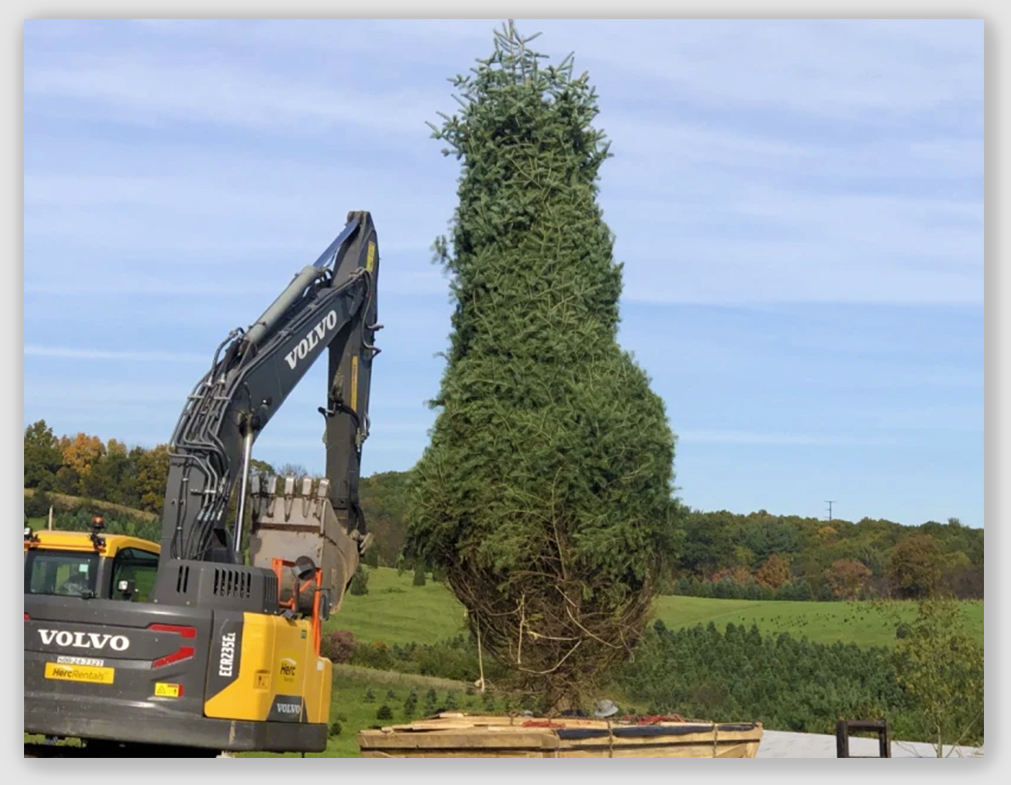
Preparations for the Christmas season are already underway in Washington D.C. as a Christmas tree from a farm in Pennsylvania’s Snyder County began its voyage to the nation’s capital Friday morning. Darryl Bowersox grew up working on his grandfather’s farm, purchased in 1954. Decades later, he owns Hill View Christmas Tree Farm in Middleburg. “I look at this, not so much from my own standpoint, but what it means to the area,” said Bowersox. After more than three decades of growing the 28-and-a-half foot tree, Bowersox decided to donate it to the nation as the 2021 National Christmas Tree, which will be lit by President Biden. A trailer carrying the massive tree departed for Washington D.C. just after 9:00 a.m. according to Nexstar’s WBRE/WYOU. “The family and I talked it over and given the significance of the tree, what it not only means to the industry, but to the county because it is the National Christmas Tree, we decided we would donate it,” said Bowersox…
Norwalk, Connecticut, The Hour, October 28, 2021: New ordinance aims to boost tree canopy in Norwalk
The city’s new tree ordinance, approved by the Common Council on Tuesday, aims to increase Norwalk’s tree canopy and protect rare trees. The revised ordinance gives more power to the city’s tree warden and established a legacy tree program, among other new initiatives. The plan to expand the ordinance began in May and, with multiple drafts and revisions, made its way through the Common Council’s Ordinance Committee and council. Ordinance Committee Chair Lisa Shanahan and council member Tom Livingston led the charge on reforming the ordinance. “The idea for revising our tree ordinance grew out of tree summit planning meeting,” Shanahan said. “There was a clear consensus from this group that there was more that needed to be done to protect our tree canopy and to expand it for the coming years…”
Pennlive.com, October 27, 2021: Why is there purple paint on trees everywhere in Pennsylvania?
Many readers seem to be noticing something “new” on the landscape across Pennsylvania: splotches of purple on trees and fence posts. I’ve seen speculation on the reason for the purple ranging from governmental markings to some sort of treatment of spotted lanternflies. All of that is misinformation. While purple may have showed up on trees in your normal haunts, the practice has been in place since the start of 2020. Also, it has nothing to do with secret government programs or anti-invasive species efforts. The purple paint has been put there in place of “no trespassing” signs…
As fire crews work to contain the KNP Complex Fire that has destroyed many of California’s iconic sequoia trees, it has been determined that 10,000 trees are a hazard and need to be removed. The wildfire that was sparked by lightning has been burning since early September and is only 63% contained, according to the incident report released Monday by Sequoia and Kings Canyon National Parks. Fire crews have been trying to save majestic giant sequoias that are internationally recognized treasures and historic landmarks, according to the National Park Service. On Friday, the park service said reports are that 10,000 trees along the Generals Highway, the main road through the park, are considered a hazard and need to be removed. “Hazard trees — weakened by drought, disease, age, and/or fire — have a high probability to fail in part or whole and have the potential to strike people, cars, other structures, or create barriers to emergency response services,” reads the park’s incident report…
Some residents in Ocean Beach on Thursday continued their fight to keep the City of San Diego from taking down palm trees in their neighborhood. Several palm trees along Santa Barbara Street and Newport Avenue were slated to be removed by city crews after they were deemed a potential threat to airplanes heading into and out of San Diego International Airport. According to some neighbors, city crews were in the area Wednesday morning and placed “no parking” signs along the street near the targeted trees. On Thursday morning, however, there were no signs of crews at work. “I’ve been waking up every morning, coming out and pretty much patrolling the neighborhood, to try to see if they’re going to sneak in and try to top off some of the trees before anyone is able to catch them,” one resident said. Attorney Marc Applbaum, who was hired by a group of residents as part of the effort to stop the tree removal, told ABC 10News a cease-and-desist letter was sent to airport officials, the FAA, the City of San Diego, and city arborist Brian Widener…
Beijing, China, China Daily, October 29, 2021: Trees that served as dinosaur food found in Yunnan
More than 200 Cyathea trees were found in the deep mountains of Wenquan town, in Changning county of Baoshan, Yunnan province, recently. The sight is rarely seen. The average height of the trees is 5 to 6 meters. The highest reached 14 meters, with a root diameter of 60 centimeters. It looks like a huge umbrella from a distance. Also known as a tree fern, the plant emerged on Earth about 200 to 300 million years ago. It was food for dinosaurs. Scientists call it a “living fossil”…
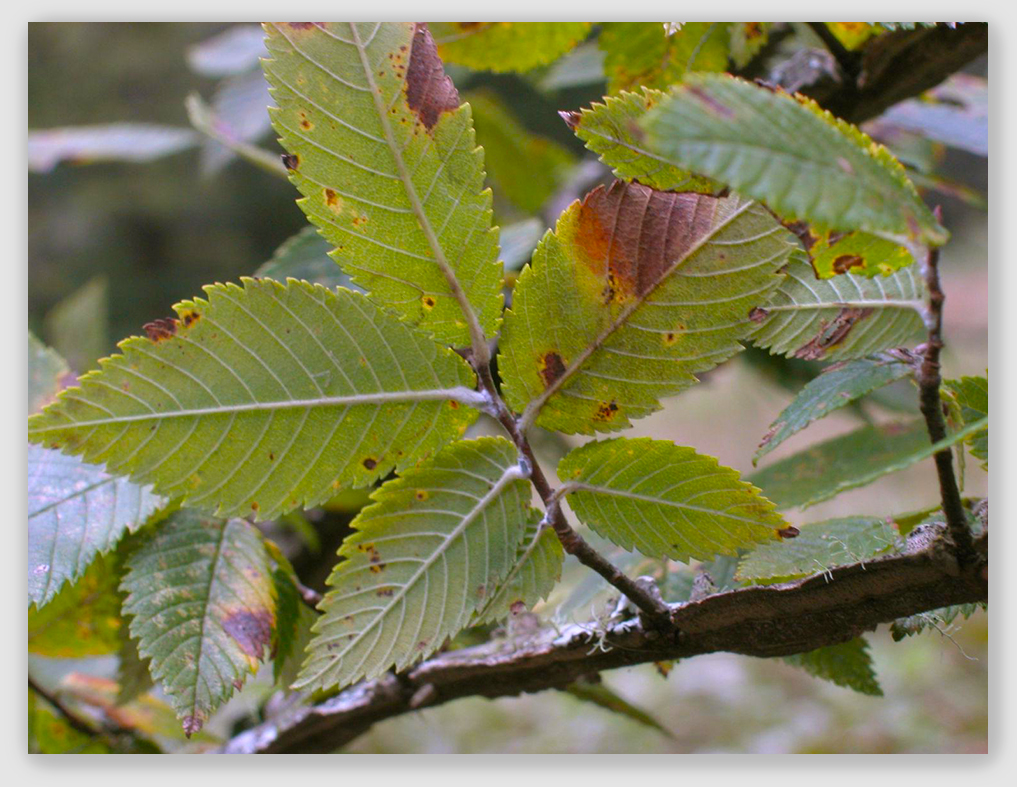
Winter is still a long way off, but the leaves have been falling for several weeks now. Won’t be long before sweaters and jackets will be part of the morning routine, along with a steaming bowl of nice hot oatmeal — butter and brown sugar, please. Autumn and the resultant winter seasons offer plenty of lessons from the world of botany. In general, plants respond to quite a number of environmental “signals” throughout the year. During the autumn, it’s the accumulated change of day length which has many effects on plants — and of course, it’s cooling down. Most plants have already begun a sort of slide into a quiescent period — not exactly “hibernation” but similar. There are various ways of seeing these effects exhibited by the plants around us. For example, many woody species (trees and shrubs) are deciduous and they lose all their leaves regularly. Evergreen species such as Southern magnolia and American holly do not fall into this plan…
Greenville, South Carolina, WYFF-TV, October 28, 2021: How weather affects fall colors on trees
Scott Carlson, speaking on behalf of TreesUpstate, explains how weather impacts fall foliage and when the area can expect the leaves to reach peak. Peak in the Upstate is running a little later than usual this year, but give it another one to two weeks — early-to-mid November — and those vibrant colors should be funneling into the area. Ideal conditions for the beautiful colors of fall stem back to much earlier in the year. Those conditions include a nice, wet spring; a favorable, mild summer without too many hot or dry days; and what really kicks the colors into full swing are the number of days where people wake up to temperatures in the 40s, then the sunshine warms up the area into the 70s…
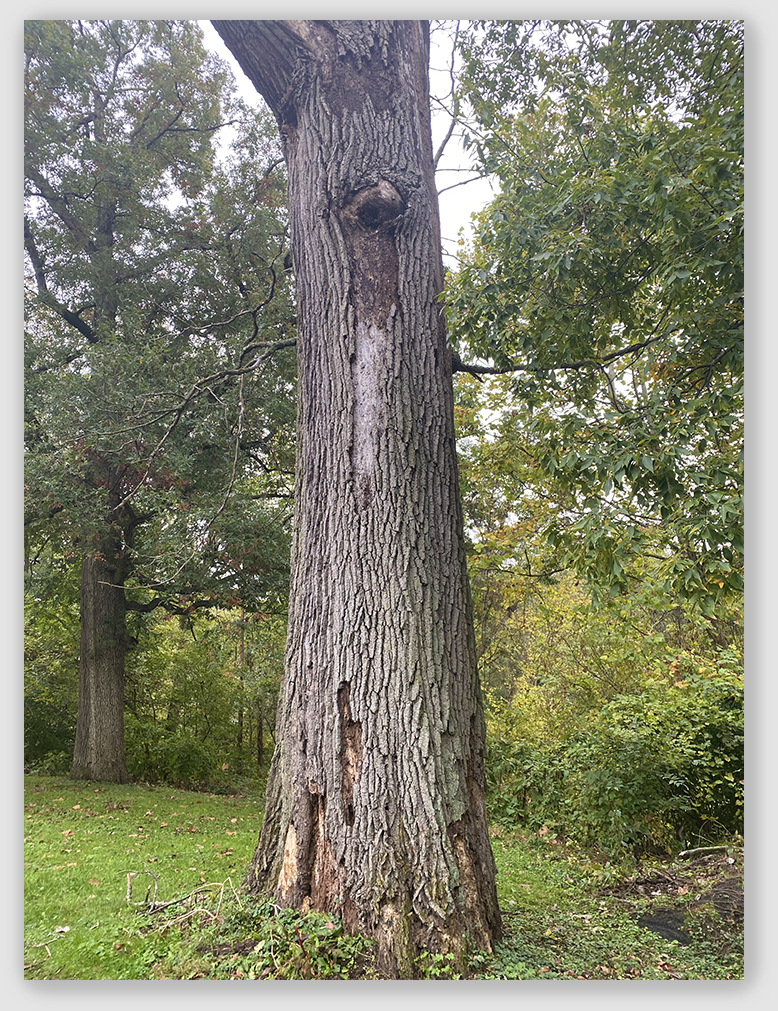 BestLife, October 27, 2021: If You See a Tree That Looks Like This, Call Officials Immediately
We don’t like to think about it, but our yards are full of things that can harm us. Maybe it’s a snake hidingalongside your garden hose, or a venomous spider just waiting to bite. But it could also be something as unassuming as a tree. Over past year, a number of experts have issued warnings about one kind of tree in particular, which could be a serious potential danger to you or someone else. Read on to find out what tree you should be keeping an eye out for. Recently, experts have been warning people to watch out for trees that may look alive, but are actually decaying or dying on the inside. These aptly named “zombie” trees could become dangerous to both you and your property, as their weakened state may cause them to fall unexpectedly. “They’re trees that are dead and just don’t know it yet,” Matt Petty, an arborist who works with the Davey Tree Expert Company, told the Houston Chronicle. “They’re in decline with crippling health or safety issues that are not visible to the untrained eye…”
Poway has started the second phase of a three-year project to remove unhealthy trees from key fire evacuation routes, city officials said. This phase includes securing environmental permits for the project, which is mostly funded through a $1.4 million Federal Emergency Management Agency Grant that was matched by $500,000 in local funds. The goals for the project include making the evacuation routes safer in the event of a wildfire, adding to the ambience of the city and improving the overall health of the trees, officials said. “We want to protect these natural resources as well as balance public safety,” Izzy Murguia, senior management analyst with Poway Public Works, told those gathered Tuesday night at a public meeting on the tree project. The city plans to remove invasive species and diseased trees along the right of way of Espola and Twin Peaks roads, as well as an open space area of Green Valley, just west of Espola Road. The bulk of the trees will be removed from the Green Valley open space, which officials say will achieve wildfire fuel reduction. The project calls for the extrication of 1,874 trees to begin in July of 2022…
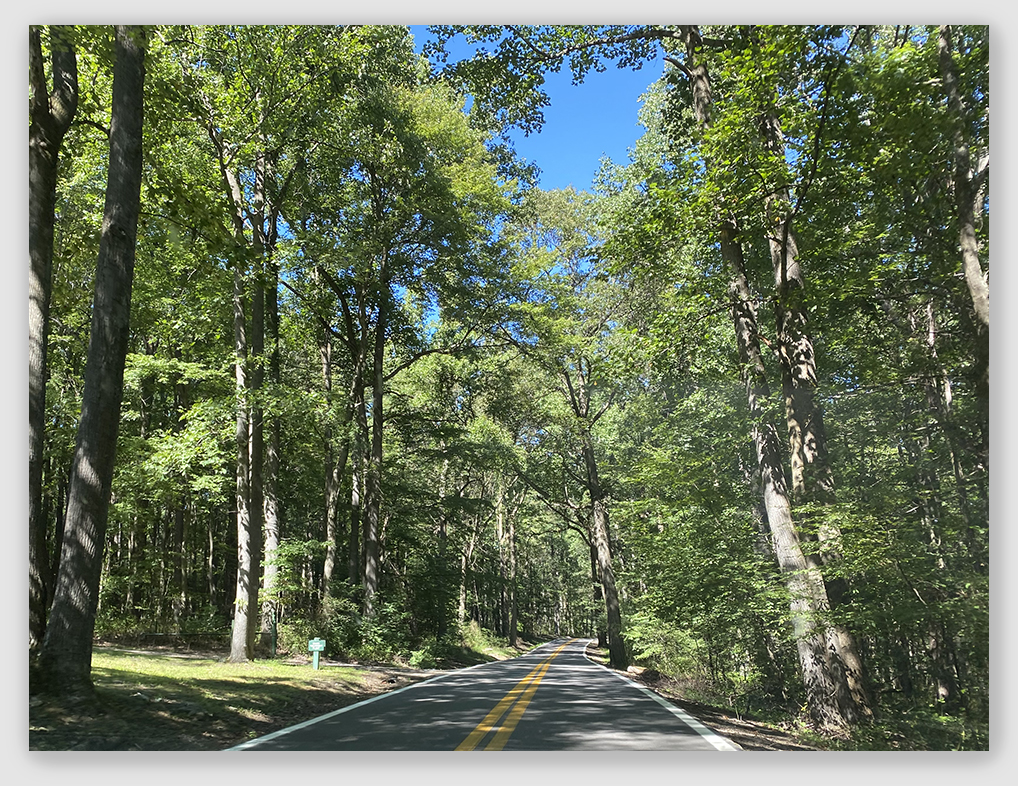
The city of Norfolk wants more trees shading bus stops, lining streets, covering your backyard. Trees are useful not only in the fight against climate change but also to weather its consequences, such as extreme heat and increased rainfall, city officials say. They clean particulate matter, support pollinators and other wildlife, reduce energy bills and add beauty. With new rules approved by City Council Tuesday, Norfolk planners hope they can eventually cover nearly a third of the city with trees. The changes incentivize builders to keep or plant trees, as well as require a certain amount depending on a development’s size. “There’s nothing about a tree that, frankly, isn’t positive,” said George Homewood, city planning director. They take in a lot of water, helping absorb extra flow that could otherwise overwhelm city infrastructure, for instance. Homewood said the goals are to keep as many trees as possible, replace ones that can’t be saved and look for areas where planting them can have the most impact, including formerly redlined areas…
Winter pruning apple trees is an essential task for any apple tree grower. Leave an apple tree to its own devices, and you will likely have a tangled mess of branches, and not very much fruit next year. While pruning shrubs incorrectly probably won’t kill your hedge, pruning apple trees incorrectly will very likely affect your apple harvest, so you want to make sure you’re doing it at the right time and in the right way. We’ve asked Codey Stout, a professional arborist with over 20 years’ experience and Head of Operations for TreeTriage, to name the one thing every grower should know about pruning their apple trees in winter. Here’s what he had to say. irst, however, it’s important to know when to prune your apple trees. It is very important to only prune apple trees once they are dormant – that is, after you’re done with harvesting apples and they are completely bare. Your safest bet is to wait until November, or later if fall is mild where you are, because you want to make sure you’re not pruning branches with sap running through them…

The artificial Christmas tree industry is facing challenges this holiday season due to ongoing disruptions in the global supply chain. Like many decorations and gifts, artificial trees are often imported from China, so port congestion and shipping delays are affecting timing and availability this year. As a result, experts are recommending that Americans order their fake trees as early as possible to ensure delivery in time for holiday festivities. But what about real Christmas trees? Murmurs of shortages tend to crop up year after year, but is that the case in 2021? And how do the effects of climate change and the current supply chain issues affect our ability to get one of those green centerpieces into our homes? Below, industry experts share their insights about the 2021 Christmas tree season. Lately it seems like every year there are headlines or news clips about tree lots selling out ― sparking fears of natural tree shortages around the holiday season. But there might be some misconceptions at play. “We’ve never run out of Christmas trees in the U.S.,” said Tim O’Connor, executive director of the National Christmas Tree Association. “The supply of trees has become tighter though. Previously growers had planted too many trees, and there weren’t enough buyers to purchase them all, so it was a difficult time in the industry ― everyone was selling their trees at a loss…”
After strong winds splintered a tree and crushed four cars parked underneath it, the Hamilton County Board of Commissioners agreed to pay for the damages. “We are so grateful that no one was hurt in this incident,” said Hamilton County Commissioner Christine Altman. “The vehicles involved can be replaced or repaired. We’re just incredibly lucky this incident didn’t result in someone getting hurt.” The 86-foot tree was located on the northeast corner of the Old Courthouse Square in Noblesville. Strong winds on the evening of Thursday, Oct. 21, caused the tree to splinter and topple onto the cars parked in spaces outside the courthouse. The commissioners said the tree was certified by an arborist three years ago and deemed healthy at the time. “We did not have evidence that the tree was diseased, dying or posing any threat,” Altman said. “Even though there is a question if the County is responsible under common law for the damage caused by the fallen tree, we feel strongly that we should assume responsibility for the damage caused to the vehicles. We do not want to place additional burden on those affected and want to get them back ‘on the road’ as quickly as possible…”
If you look carefully, your trees are talking to you. Trees have marks and tell signs when they are sick. Trees repair themselves when they have been damaged or are under stress. They use their sap as a barrier and where bark has been removed may turn red. Like humans they also fight fungal pathogens — Evergreens in particular when rooted in a moist environment. According to the American Phytopathological Society some fungal pathogens can be life threatening to a tree, but they can adapt to many fungal pathogens overtime. Fungi can weaken a tree against other infections. All trees make a pitch. Sometimes it forms in ball-like shapes. Survivalists have been known to use the pitch to keep fires going. According to the Idaho Forest Products Commission, even the forests get sick — except when the trees get sick, it might just be because of a real bug. Forest health problems also can be caused by parasitic plants and fungus infections, IDPC officials said on the group’s website. “Insects, fungi, and parasites are all natural parts of the forest ecosystem,” they note on the site. “And just like the bacteria in our bodies, they only become a problem when something gets out of whack…”
As high-level rain events become more frequent, flooding events are going to become more common, and as they become more destructive and expensive, it’s going to be crucial to identify the causes of that flooding. “Missing and dying trees are one of the reasons that we’re seeing record flooding,” one expert told CBS2’s John Elliott. When a tree is healthy, it provides all kinds of benefits — it absorbs rain water, provides habitat, provides shade and it helps to clean the air. With dying trees, however, you lose all of those benefits. “This old 300-year-old oak tree is dying because the roots were completely covered with heavy clay, a process which is done over and over in our area, increasing the flooding in our area,” an expert explained. It’s a delicate balancing act between development and the environment. One new development in Scotch Plains took out about 100 trees, which led to six feet of water in the basement and three inches on the first floor during Ida in a nearby home that’s been there for 46 years…
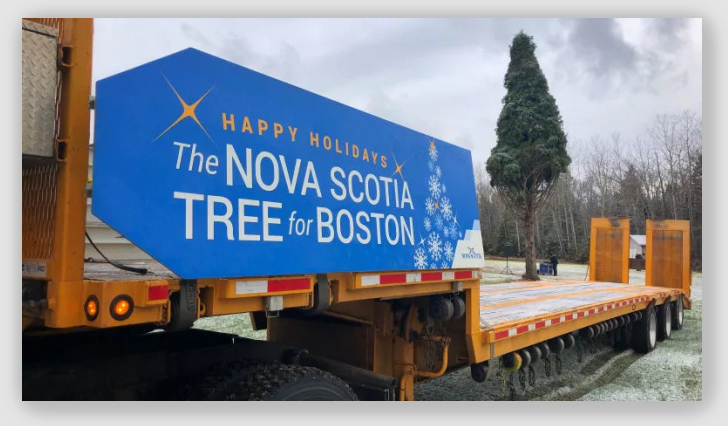
It’s two months until Christmas, and the kind people of Nova Scotia have selected the City of Boston’s official Christmas tree. It’s the 50th year of this great tradition – a tree to say ‘thank you’ to Boston for sending medical personnel and supplies to Nova Scotia within hours of a devastating explosion in Halifax in 1917. That explosion killed nearly 2,000 people and left thousands more injured or homeless. The first tree for Boston was donated in 1971. This year’s tree is a 60-year-old, 48-foot white spruce. It was donated by a landowner, L’Arche Cape Breton. The tree-cutting ceremony will be held on November 10 and the tree will leave Halifax on November 15 for delivery to Boston Common. “The Tree for Boston has been a symbol of appreciation, friendship and unity for 50 years,” said Tory Rushton, Minister of Natural Resources and Renewables. “We will never forget the kindness the people of Boston showed Nova Scotia following the tragedy of the Halifax Explosion…”
Trees are such majestic creations. They provide much environmental benefit, while also delivering grace and character to our properties. But sometimes, when they must be removed, it’s a tough decision to make – especially when a tree has been part of your life for an extended period. But, before you start asking how much does it cost to cut down a tree, stop a while to understand why you have no other option but to cut it down. That understanding might not ease the pain of losing a long-time tenant on your property. But it will help you make a rational decision to have it removed. Everyone knows of the important role that trees play in our environment. From reducing greenhouse gasses (GHGs), to cooling down the earth, and even helping with flood control and soil erosion. However, overgrown, diseased, or rotting trees are a danger, as are trees damaged by lighting or winds, and those with aggressive root systems. When faced with such situations, property owners are justified in thinking “Why not call a cheap tree cutting service near me to deal with the issue”. Why? Because those trees (1) May damage property and other nearby assets of homes and businesses; (2) Can fall and cause death or injury to people and pets; (3) Might transmit disease and pests to nearby trees and landscaping elements; or (4) typically, drastically reduce property values…
 Business Insider, October 25, 2021: Updated supply information from growers of real Christmas trees
The latest outlook from the Christmas Tree Promotion Board is that despite challenges this year, if shoppers are flexible they can expect to go home with a real Christmas tree. The assessment is based on discussions in the first half of October with multiple growers in major production regions of the country. Taking into account their harvests and wholesale demand, the consensus is that although the supply has been tightened by a variety of things, including bad weather and supply chain issues, warnings of mass shortages are unwarranted. The particular effects of a tightened supply will vary by location since any given supplier may have greater or fewer options to provide any given retailer. Some consumers may not find the exact tree that they’re looking for in the exact place they look for it, but there will be trees available within shopping distance…
A new study, published in the Proceedings of the National Academy of Sciences (PNAS), finds that black spruce trees—a key species on the boreal landscape for millennia—are losing their resilience and capacity to regenerate in the face of warming temperatures and increasingly frequent Arctic wildfires. A continuation of this trend could result in a landscape-wide ecological shift that would have a complex and rippling impact on the region, including an acceleration in permafrost thaw, and a loss of valuable biodiversity. In boreal North America, the thick, spongy soils on which black spruce grows are made of peat moss and lichens that retain moisture very well but when they do dry out are highly flammable. Black spruce rely on fires for regeneration—their cones open up in the heat and drop seeds onto the charred organic soil—but this latest study indicates that more severe fires that burn deeper into these peat soils are leading to a short-circuit of the regeneration process…
 CNN, October 24, 2021: Florida is ditching palm trees to fight the climate crisis
When you think of Florida, beaches and palm trees come to mind. But what if those palm trees were slowly replaced with other trees? That could happen over time because of climate change, and communities in South Florida are trying to save the world from the climate crisis, one tree at a time. “Palm trees do not sequester carbon at the same rate as our native canopy trees and do not provide shade, cool down streets and sidewalks to help counter the urban heat island effect that canopy trees do,” said Penni Redford, the Resilience and Climate Change Manager for West Palm Beach. With atmospheric carbon dioxide levels today higher than at any point in at least the past 800,000 years, according to the National Oceanic and Atmospheric Administration (NOAA), the Earth needs to remove it or humans have to stop adding it. In fact, the last time carbon dioxide concentration was this high was more than 3 million years ago. Scientists are working on solutions to capture and safely contain atmospheric carbon. One approach is called “terrestrial sequestration” — which is essentially planting trees. A tree absorbs carbon during photosynthesis and stores it for the life of the tree…
Thousands of trees of all species along the Generals Highway in Sequoia National Park pose risks to park visitors and structures because of their weakened condition due to the wildfire burning through the park as well as disease and the region’s long-running drought. Exactly how many trees need to be taken down and removed, or simply trimmed to address hazardous conditions, remains to be seen. An initial estimate of 10,000 trees was made from observations along the Generals Highway from Grant Grove in Kings Canyon National Park down towards Lodgepole in Sequoia. “Just that section of the Generals Highway is what we’re talking about when we come up with this number of approximately 10,000 hazard trees,” Sequoia spokesperson Rebecca Patterson said Sunday during a phone call. For the rest of the highway that runs on south past the Giant Forest and down to the park’s Ash Mountain Entrance, “we don’t even have preliminary numbers for that area,” she said. While some media reports said there were 10,000 sequoia trees that were considered hazardous, Kimberly Kaschalk, a spokesperson for the massive KNP Wildfire Complex, and Patterson both clarified that a number of species were involved in the estimate…

After almost a year of planning, the U.S. Capitol Christmas Tree, an 84-foot white fir nicknamed “Sugar Bear,” will be harvested from the Six Rivers National Forest in a virtual ceremony on Oct. 24, 2021 at 10 AM. The harvest ceremony will include a blessing by the Lassic Band of Wylacki-Wintoon Family Group Inc., as well as brief remarks by USDA Forest Service leadership, local elected officials, project partners, and the yet-to-announced local youth tree lighter. The public is invited to view this significant milestone during a livestream of the ceremony available on the Six Rivers National Forest Facebook page, starting at 10 AM. https://www.facebook.com/SixRiversNF The People’s Tree will be harvested using a two-person crosscut saw, which is more eco-friendly and fire safe, as well as celebrates decades of U.S. Forest Service crosscutting tradition. It will be supported by cranes provided Mountain F Enterprises, and then transported by West Coast trucking carrier System Transport using a specially-decaled Kenworth T68O Next Generation truck. Once wrapped and secured, the People’s Tree will begin its journey from Northern California to Washington, D.C., Oct. 29. On its almost 3,500 mile journey, the tree will visit more than 20 communities* throughout California and across the United States for a series of outdoor festivities hosted by local organizations…
Digital Trends, October 24, 2021: Next-generation batteries could use material derived from trees
A team of scientists has found a way to make use of an unusual material in next-generation batteries: Wood. The team from Brown University has developed a tree-derived material to be used in solid-state batteries, which are safer and less environmentally damaging than current batteries. Current generation lithium-ion batteries, like those used in phones, computers, and electronic vehicles, use volatile liquids as electrolytes. These electrolytes conduct lithium ions between the positive and negative electrodes of a battery. Liquid electrolytes do this job well, but they are toxic and can be dangerous. If the battery experiences a short circuit, for example, the liquid can combust and the battery can catch fire. This isn’t usually a problem in everyday use, but it has led to the recall of some batteries which have been incorrectly manufactured. To make batteries safer, researchers are developing solid-state batteries, in which a solid material is used as an electrolyte instead. A solid, non-flammable material would be safer to use and potentially less environmentally damaging to produce. Most of the current research into solid electrolytes has involved ceramics, which conduct ions very well but which are brittle and can easily crack or break…
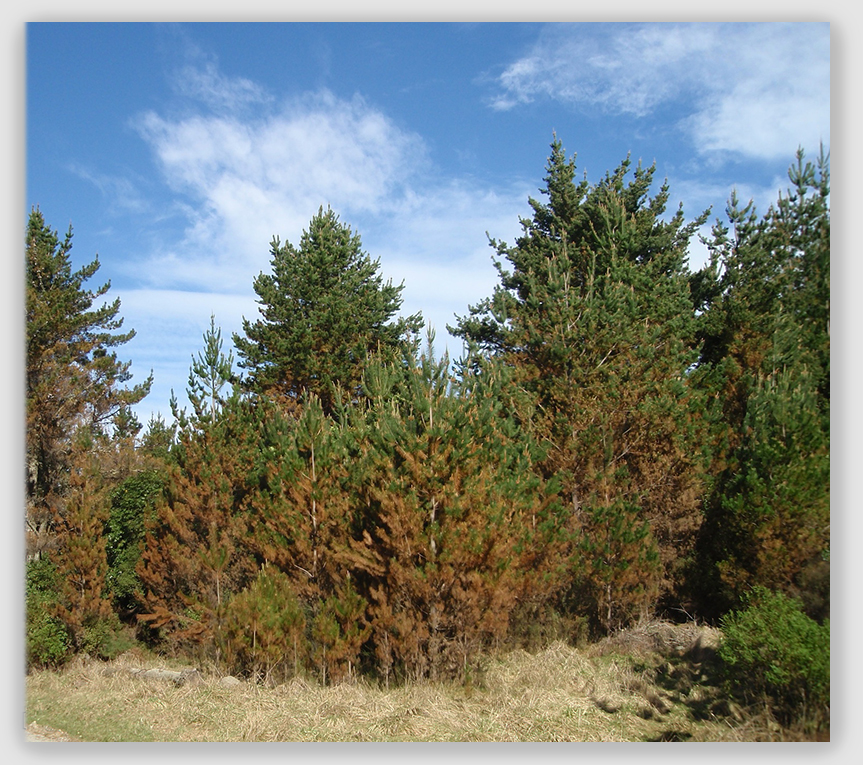
A new tree disease, called Pythophthora pluvialis, has been discovered in Cornwall, as experts warn a huge rise in cheap imports are putting UK tree varieties at risk. Figures released by the government show the total value of imported trees rose from £52 million in 2016 to £100 million in 2020, a 92 per cent increase. Imports of outdoor plants, which are often alternate hosts for tree diseases, have also increased from a low point of £19 million in the 1990s to £90 million in 2020. This reliance on cheap imports is putting native varieties at ‘serious risk,’ according to the Woodland Trust, which claims it has led to at least 20 serious tree pests and diseases being inadvertently imported into the UK since 1990. The trust has called for greater investment in nurseries, to ensure there are enough home grown trees to be planted to meet carbon emission goals up to 2050…
The next chapter in Pensacola environmental advocates’ quest to save an 85-inch diameter “heritage tree” has started. Attorney Will Dunaway filed a civil lawsuit on behalf of Emerald Coastkeeper Inc. in Escambia County Circuit Court on Tuesday opposing a county-approved order to go ahead with a construction project that would remove the massive live oak tree. The lawsuit seeks to have a judge declare that a site plan development order — previously approved by Escambia County’s Development Review Committee — is inconsistent with the county’s comprehensive plan, a document concerning construction and development regulations in the county. “In its most basic, the argument is that the comprehensive plan sets forth a clear goal of protecting protected trees and certainly that’s the highest standard for heritage trees,” Dunaway said. “The land development code that implements that has very specific provisions and criteria that must be proved in order to have an exception to that — to remove a protected tree or heritage oak. And we believe that we will be able to prove that those steps were not followed…”

Neighbors in Sunset Cliffs got into a heated exchange with police and an arborist on Thursday after they got word multiple palm trees were set to be cut down. The protest was successful for the neighbors as the City announced they will hold off cutting down the palm trees until further notice. A spokesperson for the city said, “There will be no tree removal today. The City is working with the Airport Authority on the next step and how to respond to community concerns.” Authorities say the issue with the trees has to do with their height and the airport’s flight path. Neighbors said that excuse didn’t make sense to them, so they sprang into action. Sunset Cliffs resident, Rebecca Erickson told News 8 that the trees are home to numerous birds and that her grandkids use them as a home base when they are playing outside. “It’s like a gut punch, and it is right in front of their house. It is something you wake up to every morning and you see every night. But you also watched the whole bird community, the life. Kids play on them, my grandson said, ‘make sure they know we play on that tree.’ That tree is our home base,” said Erickson…
Frankfort, Kentucky, State Journal, October 21, 2021: Healthy trees increase income, tourism
It is an exciting time in the City of Frankfort. Now more than ever our community needs to come together to improve the quality of life for our citizens. The City of Frankfort Parks Department houses Frankfort’s Urban Forestry Division, which maintains and improves the health and safety of all right of way and park trees. The parks staff along with local professionals are working together to improve the canopy in downtown Frankfort in order to improve the air quality and increase property value. National studies show that business districts with a healthy amount of trees increase income and tourism. This tree plan, provided and maintained complete by the city, is tentatively scheduled for the next three years increasing the canopy in most of the downtown area. If successful the hope is to improve the canopy in other areas of Frankfort…
When Cheryl Spector goes for an afternoon walk on the tree-lined streets of her Park Hill neighborhood, she is moved by the stunning array of yellow, gold and dark crimson leaves that have made for an unusually beautiful fall color season along the Front Range. “The late afternoon sun is weaving its way in between the leaves, highlighting and illuminating the yellows, the golds, and it’s almost like shining a bright light on the reds,” said Spector, an architect. “It feels like the trees are embracing you. Not only do you have the canopy above, but the leaves that have been released and are on the ground tickle your feet as you walk through them.” Experts agree with what Spector and other tree lovers have observed anecdotally, that this is shaping up as an exceptional year for fall colors along the Front Range. They cite two reasons: good moisture when trees were leafing out in the spring — including a cool, moist June — and the mild temperatures of recent weeks…
A small change to the Milpitas city code proposed by the public works department on Tuesday brought to light a larger issue facing homeowners: city trees causing damage to residential sewer lines. As it stands, a resident in Milpitas needs to clear out any backups to their sewer line that extend from their home all the way to the edge of their property. The proposal from public works would make it so residents must clear their line all the way to the main pipe, which is in the middle of the road. Public Works Director Tony Ndah said Tuesday to councilmembers that his department has faced “issues” with residents who haven’t cleared their lines all the way — and said that the language in the city code needs to be cleared up. But the code change sparked discussion over an issue Milpitas has faced for years. In 2014, Milpitas paid a homeowner $95,000 after the council determined that a sewage backup at the resident’s home was the city’s fault…
 Norway, Maine, Advertiser-Democrat, October 20, 2021: Elm trees grace Main Street, Norway once again
Once upon a time, North America was home to an estimated 77 million elm trees, shading neighborhoods and inspiring street names in almost every town. Early in the 20th century the trees were attacked by an invasive beetle, believed to have originated in The Netherlands and decimating elms worldwide by mid-century. By 1989 75% of the United States’ and Canada’s elms were gone. Norway, Maine, was no exception. No one knows exactly how many elm trees grew in town before Dutch elm disease invaded but until very recently there were zero. While making plans for Maine’s bicentennial, the Norway Historical Society came up with the idea of bringing back the elms of yesteryear as part of the town’s celebration. Early in 2020, with Planning Board Chair and founding Norway Downtown board member Dennis Gray leading the way, the board of selectmen approved the plan. The project would be funded by private donations collected by Town Manager Dennis Lajole…
The New Republic, October 20, 2021: Should a Tree Be Able to Sue the State?
An otherwise quiet corner in British Columbia, Canada, has become one of the most spectacular struggles for forest preservation in North America in recent decades. For more than a year, the Rainforest Flying Squad has fought root and leaf to protect the old-growth forests on Fairy Creek. There, on southern Vancouver Island, 75 percent of trees are estimated to be more than 250 years old, and some are older than 1,000. Yet companies are allowed to log this “white rhino” of forests, as one biodiversity report termed the rare, ancient ecosystem. So 24 hours a day, volunteers guard blockades against the logging industry and the police attempting to enforce its timber rights. “What gives you the right to cut down trees older than Western society?” one of the Fairy Creek protest signs asks. It’s a prescient question. The matter of the tree’s rights—to clean air and water, to profits, and maybe to existence itself—is looking like the next frontier of global climate action. Across the United States, humans are fighting over trees. In the last month alone, East Orange, New Jersey, residents woke to the sound of more than a dozen trees being bulldozed for artificial turf athletic fields, sparking public outcry. Meanwhile, the Texas Department of Transportation began removing almost 200 trees impeding construction of a new highway, despite Austin residents’ attempts to stay the arboreal executions in court…
 Fort Lauderdale, Florida, South Florida Sun Sentinel, October 20, 2021: After canker catastrophe, scientists want to bring back
Florida’s zest for citrus
Floridians still shudder at the memory. The knock on the door. The warnings to cooperate or be arrested. Then chain-saw crews destroying prized lemon and orange trees in an effort to wipe out citrus canker. And all for nothing. Despite the loss of almost 900,000 trees in residential areas, the state’s eradication program failed and was abandoned in 2006. But the bitterness lingers and the scars run deep. Despite the trauma of years past, there is a flicker of hope among researchers that any remaining citrus trees could be preserved. And, perhaps more exciting, University of Florida scientists have created a tree that they hope will be resistant to disease. ut it will be a while before you can pluck fresh citrus in your backyard. The days of plant it and forget it have gone. And no one is sure how to get the new tree to the market — or whether there is even any demand…
Massacred, unilateral decisions, frustrating, one size fits all, disrespectful, disgrace were just some of the emotional comments Tuesday during the Urban County Council’s three-hour discussion about Kentucky Utilities clear-cutting of trees along some power lines and plans to do more next year. Much of the impact thus far has been in the 4th and 9th districts with more planned in the 5th District. The utility says the cutting is needed to safeguard against power outages by keeping fallen limbs and trees out of those lines. Residents say it’s needless butchering that puts profits ahead of people, destroys one of the community’s greatest assets, hurts property values and worsens drainage. “It can be managed, it can be trimmed with a great deal of ease and these magnificent trees can continue to live but that’s not satisfactory with Kentucky Utilities for basically no reason at all,” said Fifth District resident Rob Walker who was the first in a string of residents who spoke…
No one likes Bradford pear trees. Once upon a time, landscapers and homeowners planted Bradford pear trees because of the tree’s pretty spring blossoms but the pungent odor and frail trunks — the trees can easily break in a storm — have caused them to fall out of favor. Worse, according to Clemson Extension Services, Bradford pear trees contribute to the spread of one of the most invasive plant species in the Southeast, the callery pear. So, what to do? Clemson Extension has put a bounty on the Bradford pear tree. Property owners can take advantage of the bounty and exchange up to five Bradford pear trees for an equal number of young native replacement trees — for FREE — during a tree swap Saturday, Oct. 23. The event, 1-4 p.m. at Sandhill REC located at 900 Clemson Rd. in Columbia, does have some rules… Replacement trees will be distributed on a first-come, first-serve basis while supplies last. If your preferred replacement tree is not available at time of distribution, you will be provided with a healthy alternative. Specific tree species cannot be reserved ahead of the event. Learn more about the Bradford pear and about the bounty on the trees at clemson.edu/extension/bradford-pear…
Albany, Georgia, Herald, October 19, 2021: Many popular landscape trees are often short-lived
Some trees naturally live longer than others but, ironically, many of the most popular landscape trees tend to be relatively short-lived. Although their flowers are quite attractive, Bradford or Callery pears are generally considered short-lived trees, and they are also highly invasive. As a group, these flowering pears tend to have a very weak, vertical branching structure that is notorious for splitting and breaking. On average, Bradford pear trees live around 10 to 15 years, 20 with luck, and will literally begin to self-destruct when storm winds blow through. Most of the popular cultivars of Japanese flowering cherry trees (Kwanzan and Yoshino types) are also short-lived. They are grafted, which means the upper part (scion) of the tree is grown on the root system (rootstock) of a related tree. This process allows growers to replicate (clone) unique traits such as certain flower colors, weeping branches or larger flowers. These traits would not be expressed consistently if these trees were grown from seed…
 Littleton, Colorado, Patch, October 18, 2021: Main Street Tree Project: Honey Locusts To Be Removed
Work on the Main Street Tree Project is set to begin Oct. 25 in Downtown Littleton. The Littleton Public Works Department aims to replace most of the Honey Locust trees inside the sidewalk grid, which were planted more than three decades ago, according to the Littleton Report. Honey Locusts have an average life of around 120 years in the wild, but only 20 years in urban environments, city officials said. Urban trees are under constant stress and they’re often surrounded by asphalt or concrete. Several trees along Main Street have already been removed. The first part of the project, which is expected to take several days, will begin Oct. 25 with crews filling empty grates with concrete, according to the Littleton Report. After the holiday season, eight trees are set for removal, some of which are almost completely dead, the city said…
A Columbus woman is dead after a tree branch fell on her as she was hiking in Mohican State Park Sunday afternoon. The Ashland County Coroner’s Office has identified the woman as Shelley Miller, 57. The Ohio Department of Natural Resources is investigating the incident. ODNR reports show officers from the state Department of Natural Resources and the Ashland County Coroner’s Office responded to the call Sunday afternoon. Miller was pronounced dead at the scene. She was hiking on the Hemlock Gorge Trail, which follows the north bank of the Clear Fork through the park, and was struck by a falling branch at about 3 p.m…
 Dallas, Texas, Morning News, October 18, 2021: How do trees get their fall color?
It’s fall, and there’s a nip in the air. Besides time spent on football, school activities and holidays approaching, it’s time to enjoy a little fall color from our trees before full-fledged leaf management kicks into gear and I have to continue to remind homeowners and businesses to mulch the leaves rather than send them to the landfill. What causes and controls fall color, anyway? Temperature? Soil moisture? Shorter days? Sunny days? It’s all of those factors, actually, but here’s what technically happens. Green chlorophyll is present in leaves in large quantities during the growing season. As the days shorten, chlorophyll production slows to a stop. As chlorophyll breaks down in the leaves, two compounds called anthocyanins and carotenoids take over. Carotenoids are leaf pigments responsible for yellow and orange colors. They are present in leaves during the growing season but are masked by the green chlorophyll, except in plants that are stressed or with naturally yellow leaves. Carotenoids are helpful in that they absorb wavelengths of light that chlorophyll doesn’t accept — mainly blue-green and green. They also use excess energy produced in leaves, as happens in high-light conditions. In fall, with no chlorophyll left, they can act as a sunscreen to help protect foliage…
With autumn here, you may be looking at Central Texas’ trees a little more often than you usually do. If you’re anything like us, you may have noticed something peculiar — a bunch of trees have bald patches all over them. These bald patches aren’t because of the seasonal change, according to the University of Texas’ Urban Forestry Supervisor Jennifer Hrobar. Instead, they’re damage leftover from February winter storm. “This was a very off event in that there haven’t been any real defined patterns,” Hrobar said about some of the stranger damage she’s seen over the years. “Maybe the upper crown was sticking out more exposed to (the) winds and the cold temperatures that killed that tissue, where as the main stems were more protected,” Hrobar said. Essentially, as the temperature plummeted, the cells inside the trees froze. This meant that some limbs, but “trees don’t heal, they seal.” Instead of letting that creeping cold take their lives, the trees sealed off frozen limbs. This meant the limb died while the tree survived. “That’s called compartmentalization,” Hrobar said. Hrobar says which trees survived depended less on species and more on where the tree is located and what protection it had. “Live oaks, which we tend to think of as a very great tree for urban areas … some came through with flying colors, others we completely lost…”
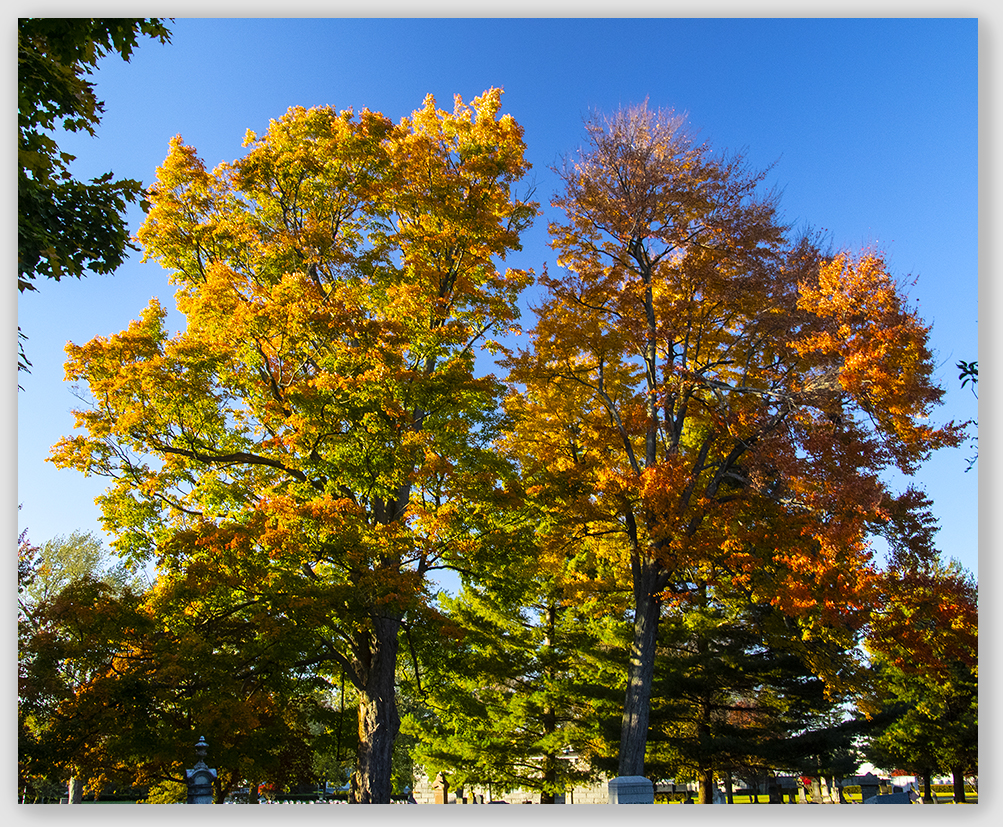
Environmentalists are concerned a federal court ruling this week could limit tree protection ordinances. The ruling by the U.S. Sixth Circuit Court of Appeals dealt with landowners’ private property rights and Canton Township’s tree ordinance. The ordinance requires landowners who remove trees to plant new trees or pay into a fund to ensure there’s not a net loss of trees. Canton Township ordered a property owner who cleared more than 150 trees from his property to plant replacement trees or deposit more than $47,000 into a township tree fund. The owner sued. The court ruled the township didn’t show that it properly assessed the burden to the landowners. Sean Hammond is policy director at the Michigan Environmental Council which filed a brief supporting the ordinance. “The court basically ruled that Canton Township did not prove that it was going to benefit the city as much as it burdened the owner.” He says the ruling could affect other municipalities. “It really only impacts this one company in terms of direct scope. But, it sends a message to a lot of other places about how valid their tree ordinances are…”
Greenbiz, October 18, 2021: Wildfires redraw the landscape for corporate tree planting
… I love trees. So when wildfires rip through my home state of California or my favorite travel destinations in the Pacific Northwest or Colorado, I feel the most climate grief. Wildfire isn’t just sad for nature lovers, but it’s also a huge problem for the planet. Forests are some of our best carbon sequesters, and over the past five years hundreds of thousands of acres in the U.S. have literally gone up in smoke, pouring carbon back into the atmosphere. The only way to directly reverse the effects is to wait for new trees to take the place of the old ones. Given the greater number and intensity of wildfires that have become the norm due to climate change, coupled with insufficient forest management practices, the forests need help to regenerate. So corporations are stepping up and expanding their tree-planting budgets to address the problem, but tree-planting after a forest fire is different from traditional reforestation projects. It takes a lot of management, care and infrastructure to plant trees. Without tree planting organizations and money, usually from corporate backers, once-forested areas would turn into blank landscapes dotted with shrubs that have out-competed the trees in the wake of fire…
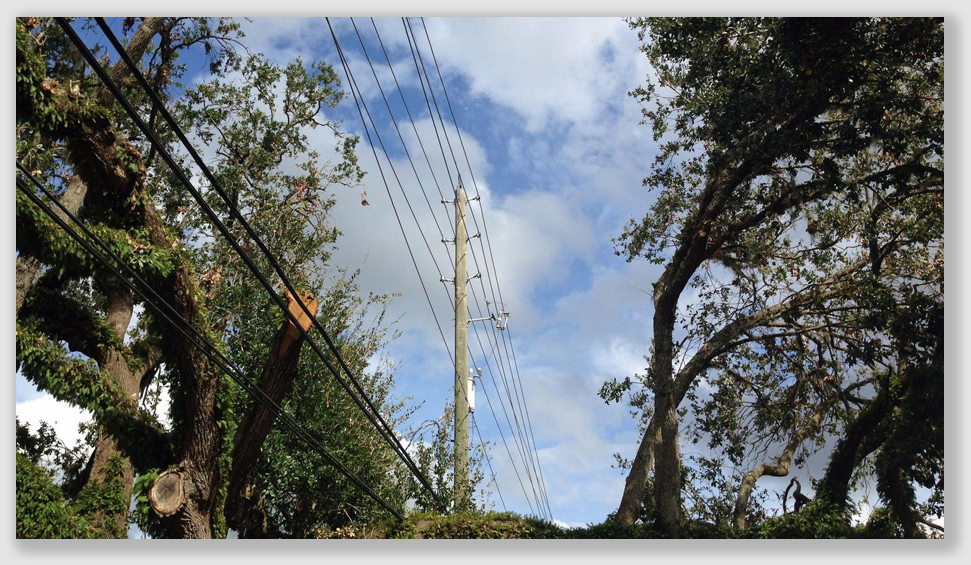
Energy company Eversource is encouraging municipalities and residents to make a plan for their trees. With an arboretum in Hooksett now open to the public, the company wants Granite Staters to tour a variety of vegetation that is friendlier to power lines. For Eversource, trees are the leading cause of power outages, especially during storms. But it’s important to keep planting them, said Bob Allen, an arborist who manages vegetation maintenance efforts at Eversource. New Hampshire is the second most forested state in the country. The company says it’s planning to spend $27 million across New Hampshire for tree-trimming and removal efforts this year, covering 2,500 of the 12,000 miles of overhead lines it maintains in the state. Some in Eversource’s New England service areas have pushed back on the company’s efforts to cut down trees, saying the removal would create environmental and safety concerns, and harm property values. Allen wants to introduce residents to the diversity of tree species that can thrive in New Hampshire and encourage people to start planting…
The state Supreme Court has rejected a challenge by environmental advocates in Lafayette to an agreement by local park officials that allowed Pacific Gas and Electric Co. to remove trees near an underground gas pipeline, one of several legal disputes over parkland trees in or near the East Bay community. The East Bay Regional Park District agreed in March 2017 to let PG&E uproot 245 trees that were within 14 feet of the pipeline in Briones Regional Park and the Lafayette-Moraga Regional Trail, in exchange for payments of $1,000 per tree, an additional $10,000 for safety maintenance, and PG&E’s promise to plant 31 replacement trees within city borders. The utility says it has removed all but 17 of the trees, which are the subject of a separate suit by Lafayette before a federal judge who is overseeing PG&E’s bankruptcy. The fate of about 200 more trees is still unsettled, however, and the Lafayette City Council and PG&E are discussing how many need to be removed to protect the pipeline. The environmental group Save Lafayette Trees won a 2019 ruling from a state appeals court allowing it to challenge the removal of those trees. But the state’s high court refused Wednesday to take up the environmental group’s appeal of a lower-court ruling dismissing its suit over the 2017 tree-downing agreement. That ruling, now final and binding on trial courts statewide, said California law authorizes a regional park district to manage its park lands, even if its decisions conflict with environmental laws of a city or county within the district’s territory…
 Phoenix, Arizona, Patch, October 14, 2021: South Phoenix Residents Seek Preservation Of Historic Palm Trees Displaced By
Light Rail
On a late summer afternoon, Victor Vidales walked along the one-acre lot of his backyard that is temporarily housing more than two dozen palm trees. Dried weeds and rocky soil crunched under his flip flops. “If these trees could talk, what would they say?” Vidales said, as the tall and thin palm trees towered over him. Vidales, a South Phoenix resident who can proudly trace back his roots to the neighborhood for generations, is temporary steward of these palm trees, some with healthy green fronds, others bare at top. “They saw all the killings, all the murders, but they also saw all the quinceañeras, all the weddings,” Vidales said, imagining the stories the trees would tell. The palm trees housed at Vidales’ property were once a landmark of south Central Avenue. The trees were planted along the median and, residents say, had been there for about 60 years. The future of the iconic trees was endangered when plans for a $1.3 billion South Central/Downtown Hub project that will bring the light rail to south Phoenix were drawn up. To make way for the light rail tracks and system, the median and the trees would be gone…
A new plan for planting and maintaining trees in Walla Walla was approved unanimously at a Wednesday, Oct. 14 City Council meeting after a long, and at times, controversial process. The plan, which calls for $315,454 over five years for planting new trees and over $2.6 million for pruning and maintenance of the city’s nearly 8,000 trees, replaces the city’s 2003 Urban Forestry Management Plan. The plan calls for the city to plant nearly 300 new trees annually, or four new trees for every tree that needs to be removed every year on average. Pruning and maintenance is more costly than planting new trees, according to city staff, hence the larger budget for the former. New tree plantings would be concentrated in the city’s West and East wards, according to city staff, which have historically not had as many plantings. Several updates were made to the plan since it was last seen by the City Council in July, including a sample five-year budget for planting and plans to encourage community buy-in, as most land in the city where trees can be planted is privately owned, according to Parks and Recreation Director Andy Coleman. These updates came after weeks of review and community input, including vocal opposition from activist group Tree People of Walla Walla, who had criticized the lack of a planting budget in the draft plan presented in July. The inclusion of this budget in the plan approved Wednesday did not assuage their concerns, said Tree People co-founder Gayle Bodorff, who called the plan inadequate…
 Farm Progress, October 13, 2021: My love-hate relationship with black walnut trees
On a mid-September day, I could hear the wind howling as I tapped away on my laptop keyboard. Sitting at the kitchen table, which is next to the back door to the porch, a loud thud grabbed my attention. It was followed by two more booming thuds and then a tap on the door. I thought it was strange someone would be visiting using the back door. From the racket, I was half expecting the Jolly Green Giant. But there were no visitors, unless you count the bushy-tailed kind, standing upright balancing on his back legs while his tiny paws clutched a nut covered with a lime-green husk. The thuds were black walnuts dropping on the porch from several of the 60-foot-plus-tall walnut trees in my backyard. One rolled to the door mimicking a knock. It’s been a banner year for walnuts. Some say that’s a sign of a long, cold winter ahead. I think it has more to do with the cycling of the tree, but believe what you will. Like a lot of people, I have a love-hate relationship with black walnut trees. In the summer — there’s more than a dozen in my yard — they provide great shade, and in the fall the leaves turn golden. But black walnut trees are very selfish. The roots, which may extend 50 feet or more from the trunk, exude a natural herbicide known as juglone, which is also found in the tree’s leaves and husks…
General Sherman is still standing, but it’s not out of the figurative woods just yet, as it still towers in one of the county’s most famous stretch of woods. The biggest and most famous of all the sequoia trees in California’s Sequoia National Park, General Sherman, has yet to be affected by the surrounding wildfires plaguing the area and destroying other trees and acreage. There are concerns it might, given the tree’s base was wrapped in aluminum-based, burn-resistant material back in September. At 275 feet tall and more than 36 feet in diameter at its base, General Sherman is larger than the Statue of Liberty. It is estimated to be more than 2,000 years old, and was named after Civil War General William Sherman. Ever since lightning ignited the KNP Complex fires on Sept. 9, there have been more than 184,000 acres and at least 26 groves of giant sequoias that have been charred, according to an article in the Los Angeles Times…
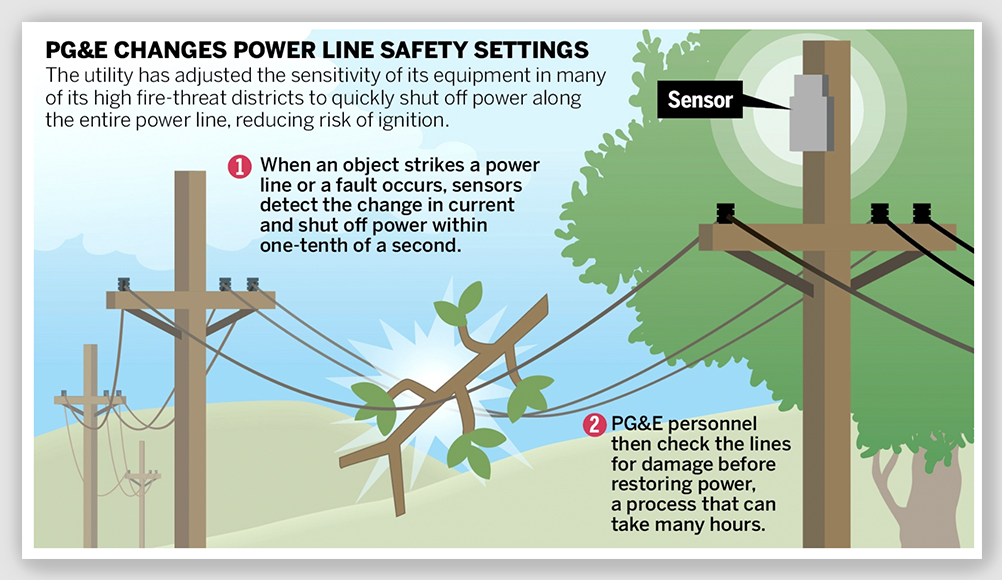
During this tinder-dry wildfire season, a change to Pacific Gas & Electric’s power lines has dramatically reduced the risk of sparking calamitous and killer blazes. But every time a rogue squirrel gets zapped, hundreds of rural residents are suddenly plunged into darkness – for hours, sometimes days. Computer screens go blank. Stoves don’t work. WiFi goes dead. Refrigerators stop cooling. “It’s like camping,” said Barbara Melchin, a 71-year-old widow who was forced to haul water in buckets during one recent outage in the Santa Cruz Mountains, because her well quit working. “Life is controlled by this thought: ‘Am I going to have power?’ These unplanned outages are different than the now-familiar Public Safety Power Shutoffs (PSPSs), like the one Monday that pre-emptively shut off power for 24,000 customers in 23 counties because of windy weather and high fire risks. In contrast, the new shutoffs are spontaneous and surprising, often on calm days…
The cleanup continues two days after storms slammed Michiana. Torrential downpours and severe wind gusts sent many trees toppling. Tree removal crews were at a house in Granger Wednesday afternoon, armed with chainsaws, cranes, and woodchippers. A large tree crashed through the roof of a garage on Monday and needed to be cleared. The damage was caused by the combo of wet ground and strong winds. However, Michiana’s lack of fall weather so far means that most of the leaves are still on the trees. This can weigh things down and making it easier for trees to fall during storms, according to experts. “When there are leaves on the trees and they are wet, it’s like a sailboat,” Walt Temple, owner of Temple Tree Service explained. “The wind will catch onto those leaves and will add stress. If the tree is sitting in an area where the root-ball, the ground is so wet and you get that kind of leverage, it’ll tip right over, which is what we had here…”

A South Windsor-based tree contractor had a chance to show off just what a new piece of equipment could do recently while also performing a good deed. Jason Yerke, a Vernon native and the owner of Distinctive Tree Care in South Windsor, recently purchased a new piece of equipment to take down dead and dying trees along roads and highways. He was looking for a place to get his crews practice time on the machine. Yerke and his company do a lot of work for the state Department of Transportation and Department of Energy and Environmental Protection removing dead and dying trees from along state highways and from state parks. The machines Jason has purchased enable his crews to do in a day what a traditional tree crew, using a bucket truck, would take weeks to achieve. The new one takes it to a new level…
A 200-yard stretch of the 240-mile Katy Trail got a bit nicer Saturday. Around 20 people, working with nonprofits Forest ReLeaf of Missouri and Magnificent Missouri along with the Missouri Parks Department, planted 65 trees along the trail near its trailhead in Marthasville. The trees included Kentucky coffeetrees, hackberries and a variety of oaks. The project, which started in March with a planting a few miles away in Dutzow, is part of a three-year quest to plant 300 trees on the trail using a $28,000 annual grant from the Robert J. Trulaske Jr. Family Foundation. “We’ve been scrambling to get it all done,” Meridith Perkins, executive director of Forest ReLeaf, said about three hours into Saturday’s planting. The groups plan to plant another 100 trees next year, starting in the spring. The grant also includes money for staff time…
Extreme weather along the west coast, including fires and heat waves, have impacted Christmas tree crop. Some Oregon farmers have lost up to 90% of their trees this summer, and a few local carriers rely on those farms and are pivoting to be able to provide this Christmas. Habilitat is already making adjustments to its Christmas tree order. “There was some damage created by the high heat that happened this year, especially some of the grand furs are going to be in short supply and some of the noble furs might be a little bit smaller than people are used to seeing,” said Becky Harrison, Habilitat marketing director. The nonprofit organization is still expecting to bring in 5,000 trees for its annual sale. Meanwhile, Paula Tajiri, owner of Christmas Hawaii, is relieved after checking on her crop in Washington. “Luckily our contracted farm has little damage so it didn’t really affect us too much,” said Tajiri. For local growers like Hamakua Christmas Tree Forest on Hawaii Island, they’re already selling to accommodate the impacts from mainland farms. “You can tag a tree, you can pay for it and put a tag on it, and then come back and get it in a month or so when you actually want it,” said Richard Bradwell, owner of Hamakua Christmas Tree Forest. “That way you can guarantee getting a tree without having to worry about it later. That seems to be where everybody’s worried about, that the trees wouldn’t be available…”
On a brilliant October late afternoon, Jerry Backes casts a long shadow into the steady current of the South Platte River, in roughly the same direction he casts a fly to entice the teeming life below. The water carries his line for a few seconds but soon snags on vegetation coursing downstream. But for Backes, a 68-year-old retired electrical engineer from Missouri who ventures to Colorado a couple of times each year to experience what anglers call the Dream Stream, hope resides in the next cast. And soon he’ll feel the telltale tug that reminds him why he came here. “It’s a good time every time I come out,” he says. Situated at 8,700-feet elevation in one of the largest plateau basins in North America, cradled by hills with snow-dusted peaks in the distance, this stretch of the South Platte owes its reputation to a combination of circumstances that create ideal habitat for fish — largely brown and rainbow trout but also species like kokanee salmon. They not only breed in sustainable numbers but also live long and grow to eye-popping sizes…
The Architectural Review, October 13, 2021: Urban lumber: timelines of street trees
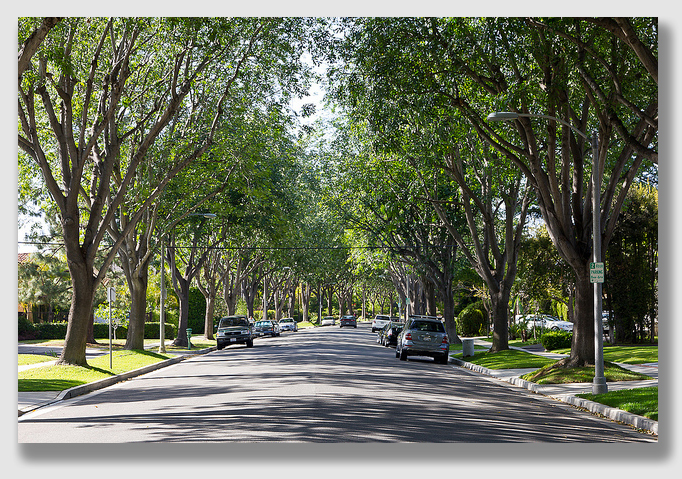 In cities across the United States and the world, street trees have, for centuries, been a crucial agent of urban beautification and identity. These trees have offered their own kind of spatial definition, extending the sense of enclosure and protection offered by buildings into spaces of public movement, rest and gathering. They define edges of urban thoroughfares, implying tunnels or partitions with their regularly spaced trunks. They form rooms and halls in the city, creating a verdant commons. Street trees make space and take up space through their physical form, but they also create dappled shade – extending Lisa Heschong’s enduring call for attention to ‘thermal delight’ in architecture, proposing an enhanced attention to the range of thermal experience offered by the built environment to the outdoors. Simultaneously, at the ends of their lives, these urban space- and shade-makers have frequently been unceremoniously chopped, chipped and hauled away. Their wood is often gnarly and wildly figured, and is commonly of unfamiliar species (in the context of lumber, not trees) that would confound all but the most versatile artisans and craftworkers. Over the past century and a half, street trees in many major cities have had to become resilient on terms that are very specific to the ways that the underground and overhead space of the street itself has modernized…
At 3:45 a.m. I climb on my bike at the Elkhart Park trailhead, one of the many gateways into Wyoming’s mighty Wind River Range, and ride away from the mountains. I’m not entering the Winds here. Instead, I’ll pedal 65 miles to the Green River Lakes trailhead, then walk, climb and swim through the Winds until I’m back at Elkhart Park. Yes, swim. This is my third attempt at the Winds Picnic, a ludicrous adventure I’ve created that entails swimming five lakes on the way to the top of Gannett Peak, Wyoming’s highest point, then swimming five lakes on the way down, and linking both ends of this watery alpine traverse with a bike ride… This will be the adventure of my life, so far. But why? For the experience, the challenge, and to assuage the demons remaining from my brief time leading a small nonprofit advocacy group that championed a species of high-elevation pine tree. I founded TreeFight in 2009 to bring awareness to the devastation pine beetles caused whitebark pine due to the effects of climate change. After years of not noticing these distinctive, candelabra-shaped pines while skiing and climbing, I learned of this cataclysm to their numbers (50% of mature whitebark would eventually die in a five-year period) and was floored by what we were losing…
 Phys.org, October 11, 2021: Moose appetite for deciduous trees counteracts warming effects
Fast-growing deciduous trees can respond more quickly to a warmer climate than conifers, so climate change will influence the composition of forests through increased deciduous tree growth. But deciduous species are also the most vulnerable to browsing. “We studied how moose modify the climatic effect on boreal trees on two continents,” says biologist Katariina Vuorinen, who defended her dissertation earlier this year. Vuorinen took her doctorate at NTNU, focusing on herbivore browsing in 47 demarcated sites in Norway and 15 sites in Canada. Many assistants supported her in taking the annual spring measurements in the relevant areas. Vegetation growth in fenced areas where moose were excluded was compared with the surrounding vegetation. The researcher modeled causal relationships that took into account different climatic factors, various tree species, competition between tree species, tree height, time, food availability and presence of herbivores as well as browsing intensity.Moose browsing led to less growth in rowan and birch trees in Canada and in birch and pine in Norway. In Canada, rowan grew 12 cm less and birch 13 cm less than in the fenced-in plots. In Norway, birch grew 8 cm less and pine 3 cm less than in similar exclusion plots. Vuorinen concluded that moose browsing counteracts the effect of a warmer climate on forest growth. But her research also shows that the foraging impact varies depending on other factors in each ecosystem, such as snow, which protected the trees from browsing moose…
Hyperallergic, October 10, 2021: Mourning a Tree That Has Lain Down
The story behind the piece “Fallen” (2021) by Jean Shin is that a hemlock tree, now horizontal, cut from its roots, and suspended above the ground by two boulders, was going to die anyway. The groundskeeping team at the Olana State Historic Site couldn’t heal it. Because of the tree’s size it was feared that in the upcoming winter storms it might fall and damage the nearby main house. Shin determined to commemorate this one death that stands in for many. The ongoing pandemic has felled hundreds of thousands of people, their lungs ravaged by a virus they couldn’t see, borne on the air we must breathe. Many of these people (including my grandfather) were buried hurriedly, without the presence of family to wave them on with loving rituals from this shore to the next. They did not have the benefit of being properly mourned, held, and released. So Shin gave this ritual gentleness to a tree. She coordinated with the state’s parks department to salvage the trunk and bark after they had cut it down. Working with William Coleman, the director of collections and exhibitions, Shin reenacted the stripping of the bark and then, using leather (which they term “dead stock”) sourced from fashion houses and the upholstery industry, she clothed it in that animal skin riveted together to form a funeral shroud…”
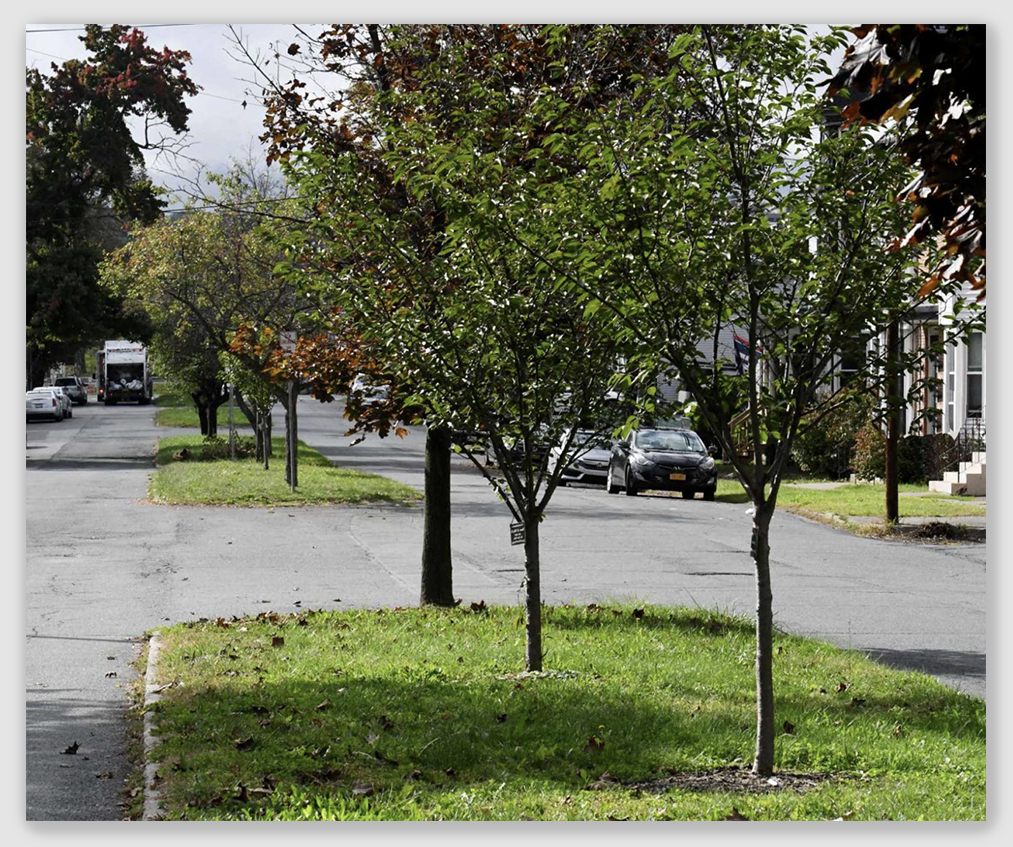
The city owns 3,400 trees and is pushing its new Memorial Tree Program to let residents sponsor a tree in an attempt to create a sustaining effort to plant more trees on municipal property. All a person has to do is write the city a check for $150 to claim sponsorship for a tree, which will be numbered and include a small plaque with the name of the person for whom the tree is dedicated. “This way we’ll raise more money for more trees. It won’t cost the taxpayers anything,” said Bill Fahr, a member of the Watervliet Tree Committee. The flowering trees help brighten up the city when they bloom in the spring and when their leaves change colors in the fall. Crabapple, Callery pear and cherry trees are some of the types planted by the city, said Dan McGrath, an arborist and chairman of the Watervliet Tree Committee. “We try to go with the small trees,” McGrath said pointing out the difference between the trees considered appropriate for planting in street rights-of-way so they fit into the urban landscape and larger maple trees found in residential backyards which are bigger…
A tally of West Palm Beach’s trees is underway, with a surveyor documenting the species, size and health of every shade-maker in neighborhood rights-of-way and medians. The count is part of the city’s effort to fight climate change and work toward its goal of reaching net-zero greenhouse gas emissions by 2050. That means encouraging people to walk or bike instead of drive, and to do that in South Florida shade is a necessity. “You don’t want to be biking or walking in the full sunshine, and because of climate change we are having more and more days that are hotter and hotter,” said Penni Redford, West Palm Beach’s resilience and climate change manager. “We have a focus on trees as a city and you can’t really manage and improve something that you don’t have a good metric on.” Palm Beach County’s average daily temperature has increased nearly 4 degrees since 1900, from 73 degrees to 2020’s average of 76.9, according to the National Centers for Environmental Information…
 Washington, D.C., The Hill, October 7, 2021: Who is going to plant all those trees? Thune’s
bill addresses multi-year tree planting backlog
Trees have been getting a lot of attention as a natural carbon storage solution, and rightfully so. Trees are truly amazing; they act as sponges pulling in carbon dioxide from the air, absorbing the carbon, and then releasing oxygen back into the atmosphere. The carbon is then stored in the trees and forest soils. Even sustainable harvesting of trees converted to wood products like lumber, engineered wood products, and paper continue to store carbon. And trees are a renewable and sustainable resource — through growth, carbon storage, and harvest, the cycle of forest renewal can continue indefinitely for centuries. Congress has recognized the value of planting trees to mitigate and reverse the effects of a changing climate. Several bills introduced in this Congress call for increased tree planting and tree seedling production. These include the Trillion Trees Act (H.R.2693), the REPLANT Act (S.866), and most recently, America’s Revegetation and Carbon Sequestration Act (S.2836). The REPLANT Act provisions are included within the Senate Bipartisan Infrastructure bill that passed in August 2021. Each of these bills recognize the need to produce more tree seedlings and plant trees. But what is missing is a way to ensure there is labor available to plant the trees…
Las Vegas, Nevada, Sun, October 7, 2021: California fires may have killed hundreds of giant sequoias
Northern California wildfires may have killed hundreds of giant sequoias as they swept through groves of the majestic monarchs in the Sierra Nevada, an official said Wednesday. “It’s heartbreaking,” said Christy Brigham, head of resource management and science for Sequoia and Kings Canyon national parks. The lightning-caused KNP Complex that erupted on Sept. 9 has burned into 15 giant sequoia groves in the park, Brigham said. More than 2,000 firefighters were battling the blaze in sometimes treacherous terrain. On Wednesday afternoon, four people working on the fire were injured when a tree fell on them, the National Park Service reported. The four were airlifted to hospitals and “while the injuries are serious, they are in stable condition,” the report said. It didn’t provide other details. The KNP Complex was only 11% contained after burning 134 square miles (347 square kilometers) of forest. Cooler weather has helped slow the flames and the area could see some slight rain on Friday, forecasters said. The fire’s impact on giant sequoia groves was mixed. Most saw low- to medium-intensity fire behavior that the sequoias have evolved to survive, Brigham said…

For decades, scientists have been baffled by a mysterious tree in the Amazon rainforest. Now, it has finally been declared a new species. Samples of the mysterious tree were first collected by scientist Robin Foster on a forest trail in Peru’s Manu National Park in 1973, Field Museum noted in a news release. It was about 20 feet tall and had small orange fruits that looked like orange Chinese lanterns. “I didn’t really think it was special, except for the fact that it had characteristics of plants in several different plant families, and didn’t fall neatly into any family,” Foster, now of the Smithsonian Tropical Research Institute, said in the news release. “Usually I can tell the family by a quick glance, but damned if I could place this one.” Other scientists were also stumped by the mysterious tree that remained unidentified for many years. In their new study, published in the journal Taxon, a team of researchers finally identified the tree as a new species. “Preliminary molecular analysis indicated that it belonged to the Picramniaceae, even though the vegetative features were discordant,” the researchers wrote…
My good friend, the late Benny Simpson, was once describing growing up in the Texas Panhandle. Benny was one of Texas’ most noted tree experts, and trees were a love of his from the time he was a child until the day that he died. He once told me, “When I was a kid on Sunday afternoons, my dad would take me down to the river to see the tree.” We all need to have that same level of appreciation for trees here in Texas. They shade us and they protect us. They make our recreational spaces enjoyable many months of the year. And, as if all that weren’t enough, a properly chosen, placed and cared for shade tree can be worth thousands of dollars in the resale value of a Texas home. That’s been especially noticeable in the frenzied housing market of the past couple of years. It only stands to reason then, that you’d want to protect that investment by hiring only highly qualified professionals to work on your trees. How do you find such a company?…

Chicago has tried for more than a decade to slow the declining health of ash trees, some of the city’s oldest and most mature trees that provide communities benefits like shade and flood mitigation, as the trees have been overcome by a small but mighty green pest. Starting in 2008, the city began inoculating the ash trees, which numbered about 96,000 at the time, against the invasive emerald ash borer beetle. But by 2018, with almost half of the ash population dead and removed, the city decided to stop inoculations and let the remaining 50,000 ash trees die off. Now with a flush of federal money in the city’s coffers, some activists and aldermen are pushing for the city to bring that inoculation program back, arguing it could save Chicago’s most populous tree, a key part of the overall tree canopy. That’s in part because of the type of trees ash are — featuring larger, wider leaves…
Eversource is appealing the town tree warden’s decision that keeps it from removing dozens of trees in the Little Brook Road area as part of the power company’s vegetation management plan. The proposal to cut the trees has sparked controversy in town with many residents speaking out against the proposal citing environmental, safety and quality of life concerns. Eversource maintains that the clear-cutting is needed to ensure the safety and reliability of the power grid. Darien Tree Warden Michael Cotta issued a decision on Sept. 22, saying 21 of the tagged trees could come down because they are “diseased, defective or dead and provide little or no environmental benefit.” The decision came a day after a virtual public hearing drew 100 people, with most of the speakers opposing the proposal. His decision only concerns the trees in the town right-of-way adjacent to Little Brook Road and Raymond Street. The bulk of Eversource’s plan — which spans 18 miles along the company’s transmission lines, including 3.5 miles in Darien — involves clear-cutting on the state Department of Transportation property along the railroad tracks…
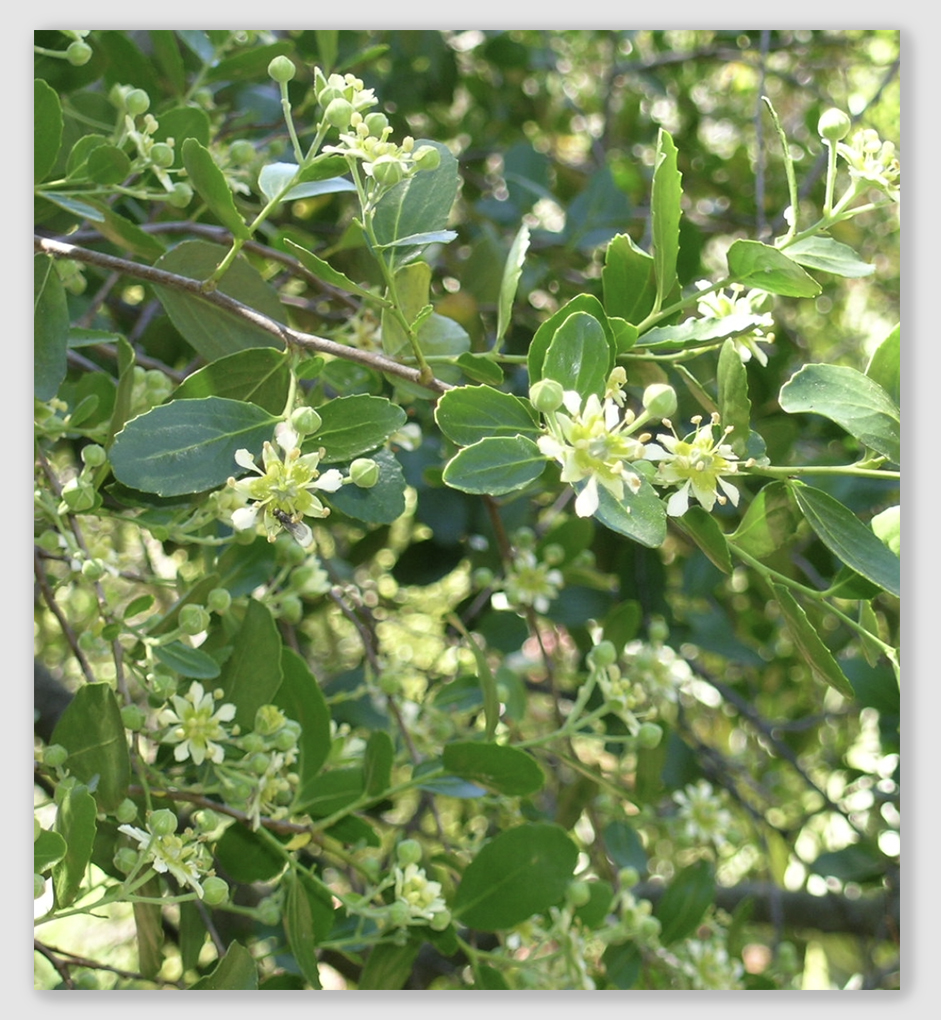
Down a dusty farm track in Chilean wine country, behind a wooden gate wrapped in chains, forestry experts are nursing a plantation of saplings whose bark holds the promise of potent vaccines. Quillay trees, technically known as Quillaja saponaria, are rare evergreens native to Chile that have long been used by the indigenous Mapuche people to make soap and medicine. In recent years, they have also been used to make a highly successful vaccine against shingles and the world’s first malaria vaccine, as well as foaming agents for products in the food, beverage and mining industries. Now two saponin molecules, made from the bark of branches pruned from older trees in Chile’s forests, are being used for a COVID-19 vaccine developed by drugmaker Novavax Inc. The chemicals are used to make adjuvant, a substance that boosts the immune system. Over the next two years, Maryland-based Novavax plans to produce billions of doses of the vaccine, mostly for low- and middle-income countries, which would make it one of the largest COVID-19 vaccine suppliers in the world. With no reliable data on how many healthy quillay trees are left in Chile, experts and industry officials are divided on how quickly the supply of older trees will be depleted by rising demand. But nearly everyone agrees that industries relying on quillay extracts will at some point need to switch to plantation-grown trees or a lab-grown alternative…
Q: I have just read an article about the Brazilian pepper tree and wanted to know if it is illegal to have one in my garden. My neighbor has been complaining about it and wanted to know if I am legally obligated to cut it down.
A: Such a loaded question! Brazilian pepper was brought to Florida from South America in the 1840s as an ornamental plant that bears red berries around the winter holidays. It was soon found to be spreading over much of Florida without help from humans, and it now is considered one of the most aggressive and invasive species found in Florida. Brazilian pepper is classified with poison ivy, cashews, and mangos. Named Schinus terebinthifolius by scientists and horticulturists, it is easy to recognize by its form and fruit. Brazilian pepper is an evergreen tree that can reach over 40 feet in height and width… Brazilian pepper is classified by the state of Florida as a noxious weed. This means it is unlawful to introduce, possess, move or release any part of the plant in Florida. Also, the live plants are not protected by any local or state laws or ordinances. Ordinances or rules requiring the removal of Brazilian pepper trees vary by municipality. Many entities such as counties, cities or villages do not have requirements to remove them from private property unless the property undergoes development and a permit of any type is required…
Change is happening everywhere, but it’s how living things adapt that counts — a perfect example of this is aspen forests. A new decade-long study by University of Wisconsin researchers reveals how aspen trees can change their genetic structure to compete for sunlight and defend themselves against pests like ants, moths and other tree-eating insects. Ecology professor Rick Lindroth and the Lindroth lab led the study — in their research, the lab primarily focuses on plant functional traits and how they influence plant ecology. “Functional traits are things like photosynthesis rates, growth rates, phonology and chemistry,” Lindroth said. “How do those different functions influence their ability to compete with other organisms?” The Lindroth Lab also researched the trade-offs among some of these traits in different genetic strains of aspens — those that grow well defend poorly and those that defend well grow poorly in a competition amongst themselves. Lindroth said he had previously tested this in the short term with potted plants, but he wanted to know what happens in a more natural environment when these trees are growing for long periods of time…
Sluggish hurricanes are dumping more rain over the coastal Southeast than in centuries past thanks to climate change, scientists reported this week. The researchers examined over 300 years of tree ring data to determine how rainfall from hurricanes has changed over time in the Carolinas. They found that extremes in tropical cyclone precipitation have increased between 64 to 128 millimeters (2.52 to 5.04 inches) compared with the early 1700s, mostly in the last six decades. The team published the findings on October 4 in Proceedings of the National Academy of Sciences. “The wettest years are getting even wetter,” says Justin Maxwell, a climatologist at Indiana University Bloomington and coauthor of the study. “We’re truly in uncharted territory with this amount of rainfall.” Storm surges and high winds cause plenty of destruction during a hurricane. However, one of the deadliest and most costly hazards is inland flooding, which is determined by how much rainfall the hurricane produces. Two striking recent examples are Hurricane Harvey and Hurricane Florence, which pummeled parts of Texas and the Carolinas with record-breaking amounts of rain in 2017 and 2018, respectively. The storms caused tens of billions of dollars of damage, took dozens of lives, and ruptured lagoons filled with animal waste…
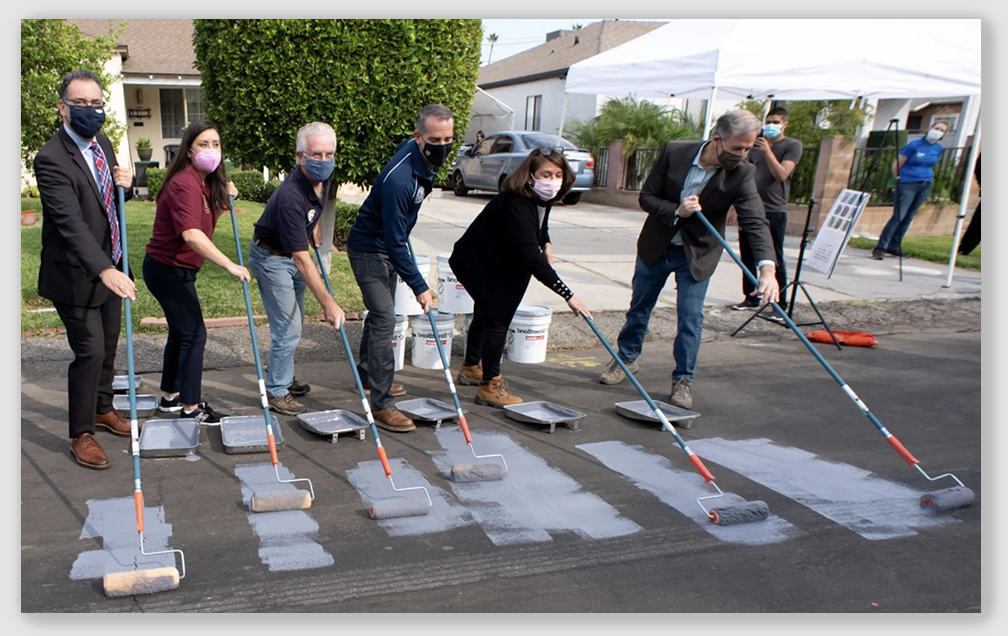
Los Angeles officials on Monday, Oct. 4, announced a second phase of the “Cool Streets L.A.” program aimed at lowering the temperatures in L.A.’s warmest neighborhoods by planting trees and adding cool pavement. The new phase, called “Cool Neighborhoods,” will add 60 miles of cool pavement and nearly 2,000 trees to Pico Union, Westlake South, North Hollywood, Canoga Park, Sylmar, Vermont Square, South Central and Boyle Heights. “The skyrocketing temperatures on our streets is an equity issue that puts local communities on the front line of the climate crisis,” said Mayor Eric Garcetti. “Our hottest and most vulnerable neighborhoods are our top priority when it comes to climate action, and this program is about taking action in ways that will make a direct impact on people’s daily lives.” Garcetti announced the new program alongside Councilmen Bob Blumenfield and Paul Krekorian on Monday morning in North Hollywood, which received 13.4 lane miles of cool pavement — the largest single application in Los Angeles’ history. The cool pavement reduces ambient temperatures by reflecting more sunlight and absorbing less heat…
Boulder, Colorado, Daily Camera, October 5, 2021: Sharon Bokan: Planning a windbreak
As we head into the windier and hopefully snowy time of the year, now is the time to make plans to plant a windbreak on your small acreage next spring. Windbreaks make your yard less windy, prevent snowdrifts across the driveway and in corrals, prevent soil erosion, provide protection and shade for your livestock and provide wildlife habitat. In our area, windbreaks should be planted on the north and west sides of a property to block our winter winds. The principle behind windbreaks is the trees and shrubs are a barrier for the wind, slowing it down and allowing soil or snow to drop out. By slowing the wind velocity, they also protect soil from erosion. Windbreaks should not be planted directly next to the area you are trying to protect. They must be planted a distance away, allowing for the dust or snow to drop out prior to the driveway or building. The windbreak needs to be placed back two to five times the tree height at 20 years of age (usually from 20 to 50 feet tall) away from the driveway or structure. Windbreaks need to be 10 times the height of your tallest plant (mature height, not planted height) in length and continuous to be effective…
 San Francisco, California, KPIX-TV, October 4, 2021: Years-Long Tree Removal Dispute
Between PG&E, Lafayette Residents May Soon Be Resolved
After the San Bruno pipeline explosion in 2010, PG&E began an aggressive tree-cutting program near its pipelines. They told Lafayette they wanted to cut down 1,200 trees, many along the Lafayette-Moraga Regional Trail. To the people who live there, the trees are essential. “We absolutely love the trees,” said neighbor Dinesh Gomes. “There’s lots of beautiful oak trees and a lot of other trees in this neighborhood, which is why we also moved into this neighborhood.” Residents then formed a group called “Save Lafayette Trees” which filed a lawsuit against PG&E. Facing opposition, the utility cut its request down to 900 trees, then 272, and it now stands at 207. Michael Dawson, who co-founded Save Lafayette Trees, said he thinks it was always about convenience, not safety. “The only trees that should be removed,” Dawson told KPIX 5, “is a tree that is an immediate safety concern, an immediate risk to public health. That should be removed, and we support that. Outside of that, we will continue to fight for all the trees…”
Are you hearing more taps on your roof than normal? Or maybe a few extra crunches as you pull the car out of your driveway? Some Americans are seeing more acorns drop than usual this year. If you’re in the same boat, then you could be in the middle of what’s called a “mast year” for oak trees, which is when they produce an abundance of nuts. In Michigan, one resident said the two “epic oaks” outside her house started dropping acorns in bunches this year after not producing any for years. In Connecticut, parts of the state are seeing a sparse output while others see “a lot.” If acorn mast years seem a bit random, that’s because they are – in some ways, at least. They can happen on varying scales and don’t occur on a set schedule. They come around as often as once every year or two and can be spurred by winter weather, experts say…

Mature trees can boost the amount of carbon dioxide (CO2) they absorb, a new study shows, which is ‘good news’ in the fight against climate change. Scientists in Birmingham conducted a giant outdoor experiment on oak trees in rural England that had reached ‘middle age’, meaning they’d stopped growing upwards. The trees increased their rate of photosynthesis by up to a third when exposed to elevated levels of CO2 from the air, they found. The fact that mature trees are so abundant around the world might give humanity ‘extra headroom’ to fight climate change. Forests are widely recognised as important ‘carbon sinks’ – ecosystems that are capable of capturing and storing large amounts of CO2. The research was conducted on trees in Staffordshire at the Birmingham Institute of Forest Research (BIFoR) and published in Tree Physiology. ‘We are sure now that the old trees are responding to future carbon dioxide levels,’ said Professor Rob MacKenzie, founding Director of BIFoR…
Anyone else head outside in the morning and scratch their head at where all the leaves came from? Did anyone else spend this past weekend raking leaves, feeling like you had to break out the garden tools a little earlier than last year? Just two weeks into fall and nearly a month before the city of Indianapolis usually begins its fall leaf collection, Central Indiana is seeing leaves drop all over the place. As Hoosiers anxiously await for fall colors of red, orange and yellow to take over the canopy, the only hues many are seeing are shades of dull green and brown. On the ground. With that said, the question on many people’s minds becomes: Am I going crazy or are the leaves dropping early — and, if so, why? We spoke to a couple tree experts to figure out what is going on and what, if anything, residents should know about how to address it. So keep reading to get to the bottom of it. First things first, you are not going crazy. The leaves are dropping early this year — plain and simple. “We are not in the appropriate scope of natural fall color,” said Carrie Tauscher, state urban forestry coordinator with the Indiana Department of Natural Resources. “Not even for early fall color, this is too early for the normal healthy range” to change color and drop leaves…
Staten Island, New York, Advance, October 2, 2021: ‘They are everywhere’ — Hundreds of 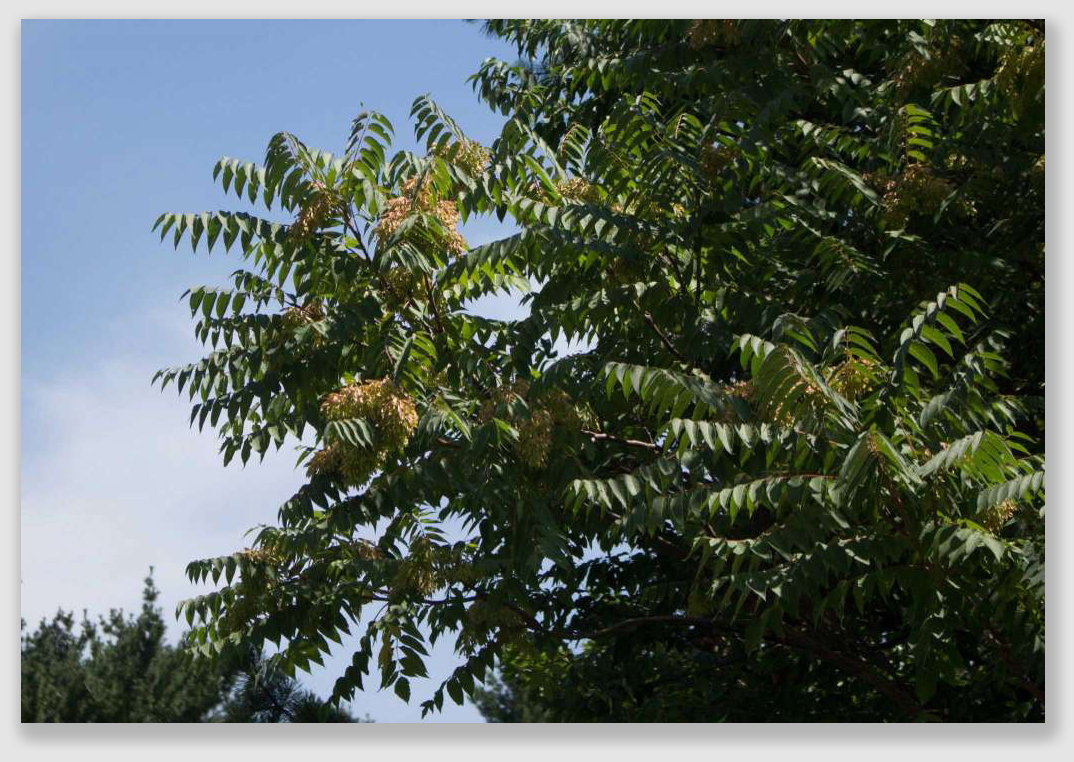 spotted lanternflies infest tree of heaven in Tottenville
A tree of heaven outside a Tottenville family’s home has become a living hell for area residents now that hundreds of spotted lanternflies have infested its trunk. “They are everywhere. You can’t miss them,” said the Rev. Bette Sohm, pastor of Bethel United Methodist Church, who lives on Bethel Avenue with her husband, Glenn. The Sohms first noticed the lanternflies on their property and inside the church’s cemetery over the past month. “I’ve seen them on my walks through the cemetery to the church and around the neighborhood,” Rev. Sohm said. “I took my daughter to Arthur Kill train station and it looked like there were a lot of them near there, but as though someone had killed them all.” She added that it was her daughter who first noticed them on the Ailanthus tree, aka tree of heaven, in their front yard. Lanternflies are known to feed on Ailanthus trees as well as poplar, maple and willow trees. When the Advance/SILive.com visited the home Saturday, the tree was covered with the speedy insects from the roots up to the branches. Swarms of them were on top of each other…
Spooky season is upon us in Central Texas — and so is fall foliage! While it may seem that Texas’ long summers turn directly into winter, we do see a small stretch of autumn. Much of Central Texas has native trees that are evergreen (like our infamous cedar trees), but that doesn’t mean we don’t experience our own taste of beautiful fall colors. Maple trees put on a great show in the autumn across the Lone Star State. You can recognize these by their bright red, yellow and orange leaves that tend to peak in late October or early November, according to Trips to Discover. Using this data, in addition to The Spruce, here’s a look at the colors you may see this fall. The Texas Ash tree is a common tree that changes colors from green to reds, yellows and oranges…
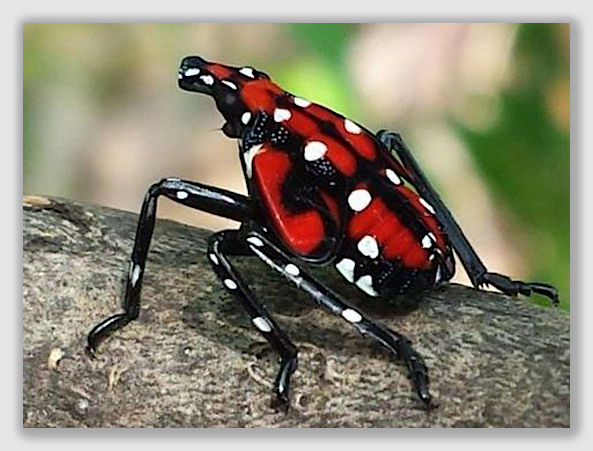 Wilmington, Delaware, WDEL Radio, October 3, 2021: Arborist offers tips to keep your trees healthy
Fall is here, the trees in your yard need looking after, and an expert has some tips to keep them healthy. One big problem is lanternflies, which “mob” their favorite trees and can destroy them, said Jason Gaskill with Davey Tree Expert Company. “They’re entering into the tree bacteria and fungus and things like that, they’re also opening the tree to wounds that the tree has a hard time compartmentalizing because they got so much insect pressure,” said Gaskill. Gaskill added at this time of year, you should start thinking about composting dead leaves and including them in mulch piles and landscape beds, which gives trees needed nutrients, but that’s not all. “It’s also going to help some of the matrix of bionomes, like beneficial bacteria and beneficial fungus and things like that that are also gonna help the tree by breaking down compost and helping the tree be able to absorb nutrients and so forth,” said Gaskill. During the winter, Gaskill suggests checking your trees for any defects, which should be easier to see while most trees are without their leaves…
While I might really enjoy knowing a fair amount about trees and working on them, at the end of the day I’m simply another contractor, such as a plumber, yard maintenance person, roofer or cement worker. In fact, in my world, we contractors run across each other all the time, and sometimes our work — of whatever flavor — impinges on other contractors’ work. Or it could something that needs to be accomplished so that other contractors can get in and get their work taken care of. Mostly, as far as trees go, when somebody else needs me to do something first, it involves getting something out of the way. In some cases, it’s a roofing crew that needs trees cut back so they have room to work. Other times, it might be a pool contractor that needs a tree removed so they can dig up the area. Of course, let’s not forget about the house painters that need room between the house and large shrubs so they can get in there and paint. Not to mention that these days, I’m starting to get calls about cutting back, or removing, trees that are in the way of light for solar panels…
 The Hill, September 30, 2021: Canadian firm seeks to make tree planting programs more accountable
A Canadian apparel company that focuses on sustainability is expanding its efforts by trying to solve a key problem at the heart of tree-planting programs worldwide: accountability. In launching a blockchain-based forestry management tool, the clothing maker known as tentree hopes to release a flood of investment cash by helping companies ensure that the trees they are sponsoring have actually been planted; that they are still growing years after the fact; and that they haven’t been sold to someone else. One of the biggest challenges in global tree planting efforts – along with carbon offsetting programs more broadly – has been establishing a standardized certification process to determine which projects are reliable. The major hurdle now facing tentree is getting sufficient buy-in from companies in the sustainability sector…
There’s a cozy quietness to the beginning of fall that even those of us woefully zipping up jackets and already missing summer can appreciate. And as far as Midwest autumns go, nothing beats a stroll through an apple orchard and that first bite of a perfectly tart, just-picked Honeycrisp. The Chicago suburbs and surrounding countryside are full of pick-your-own apple orchards for that quintessential fall day trip, and many have adapted their business in response to the pandemic. For some, that means hand-washing stations and reminders to keep masks on, or extra staff on standby to get crowds in and out of line quicker. Others, lacking the space to spread out safely, have had to close up shop early. But orchard staff are not the only ones feeling a bit of strain this season. “The warm winter prior to February and a couple of timely freeze events did put some significant pressure on apples throughout the state,” said Trent Ford, Illinois state climatologist. “Most orchards made it through without tremendous loss, but a few — especially some of the smaller ones who may not have as many adaptive resources to deal with late freeze — did unfortunately lose quite a bit of their crop…”
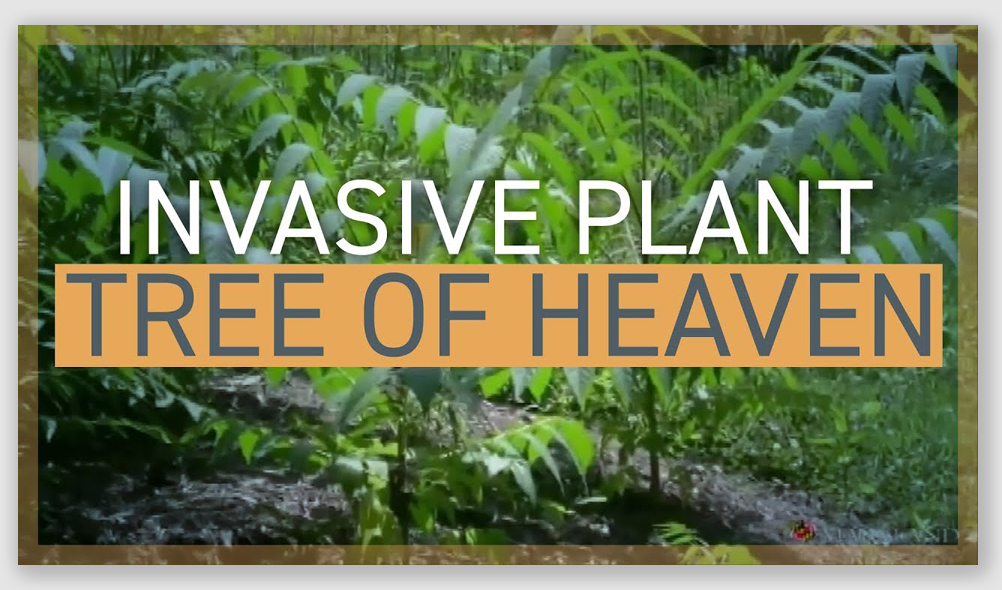
Reggie Williams had a Tree of Heaven in his Northeast Portland yard. But the City of Portland actually says it’s “an alien plant invader” that has “cracked foundations, shifted pipe and caused an untold amount of damage” in many local neighborhoods. Williams’ battle with the Tree of Heaven has been extreme over the past few years. He first noticed something was wrong in the basement of his Northeast Portland home in 2017. Two years later he shared his story with KOIN 6 News, and now four years into his ordeal experts are saying his home may need to be torn down. “I’m going through a bunch of crazy,” he said. “I’m on medication. I’m going through counseling behind this. I never thought this would ever happen to me. This should never happen to anybody in America.” According to the original engineer’s report in 2019, two foundation walls had “cracking that is likely causing the structure to become unstable.” The engineer said it was the Tree of Heaven between Williams’ house and his neighbors. One early estimate showed the damage to his home would cost $36,000 to $38,000 to repair…
The winter freeze this February was a tough test for trees across North Texas, and we’re still seeing the impact months later. If your trees appear to be dying now, there’s a good chance it might be an after-effect from the February freeze. But before you start looking for warning signs in your trees, you might have a common question: What tree do I have anyway? North Texas covers two main ecoregions, divided east and west: Cross Timbers on the west and Blackland Prairie on the east. But both regions feature similar trees. In North Texas, some of our most common trees are oaks, pecans and elm trees include • Live oaks, post oaks and blackjack oaks are among the most common oak trees in Texas. All three types of oak trees can grow to more than 50 feet tall. Live oaks are notable for a low, dense crown that can spread more than 100 feet. Oak leaves are typically oval or elliptical and 2-4 inches long. • Pecans: Another large tree, some pecan trees can grow to 120 feet tall with a truck of four feet in diameter. The most obvious indicator? Yep, you guessed it: It produces pecans, which ripen in the fall…
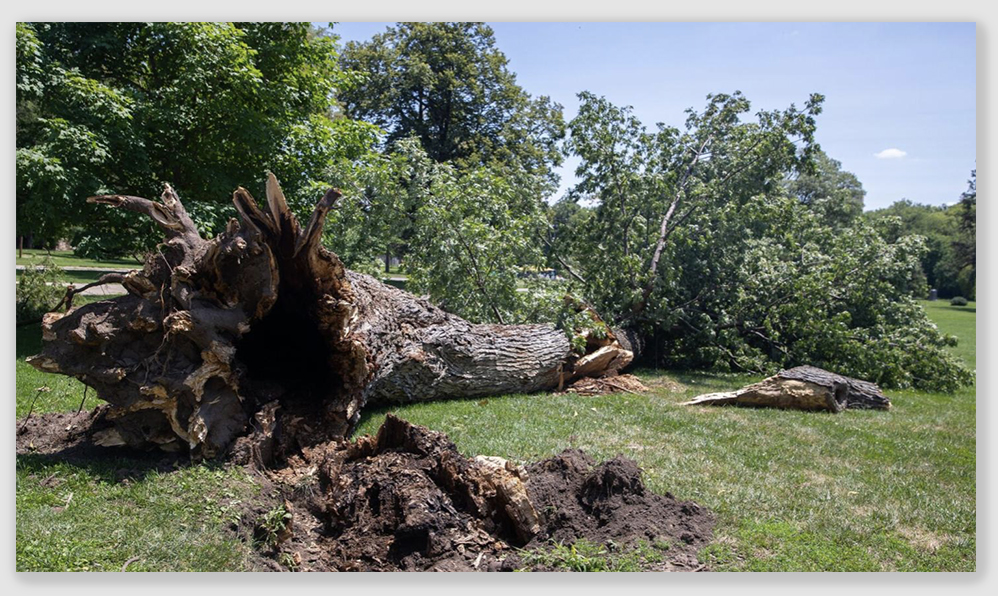
When Michelle Foss would talk to people about a community forest plan, they’d often ask, “What do we need that for? We’re doing just fine.’’ Then came the relentless march of the emerald ash borer and this summer’s violent windstorm that decimated parts of the city’s tree canopy. So far, 6,663 ash trees have been removed across the city of Omaha because of the borer, with more than twice that still scheduled for removal. Tree losses from the July windstorm aren’t quite so clear cut because no one compiles damage estimates for private property. But Matthew Kalcevich, Omaha’s director of parks, recreation and public property, said his staff compares this year’s damage to the tornado and windstorm that struck parts of the Omaha area in 2008. To paint a picture, he said the City of Omaha has removed more than 800 trees from parks and golf courses because of the storm…
More than a dozen groves of giant sequoias may lose significant numbers of trees in the wildfires now raging in the southern Sierra Nevada, even as fire crews succeed, sometimes dramatically, in keeping flames at bay in the most popular stands. Scientists surveying the damage of two active fires say the biggest losses will likely be at the south end of Giant Sequoia National Monument, where already 29 large trees have been listed as dead and many more are expected to follow. The Windy Fire there has exploded to 87,901 acres, and it’s burning out of control through several less-known, but still-towering sequoia stands, including the stately Packsaddle Grove. The fire was just 25% contained on Wednesday…
The City of Panama City is continuing to move forward with plans to plant trees throughout Panama City. By 2025, the city hopes to plant more than 30,000 trees, which would replace the trees lost on city property, due to Hurricane Michael. “Tree canopies bring an ecosystem-type service, which is pollution control,” Sean DePalma, Panama City Quality of Life Director said. “It’s a natural air filter, and also stormwater management. It helps absorb a lot of stormwater so that will help us out.” Overall the city lost more than a million trees from the hurricane. Soon DePalma said the city will start planting oak trees downtown along Harrison Ave., from Government Ave. to Fourth Street. “It also adds a quality of life,” DePalma said. “Aesthetics, it brings up the value of the property, it brings shade to patrons. You know families and individuals underneath it so there’s a lot of value to a healthy tree canopy. And that’s what we’re going to strive to work towards.” Downtown business owners are excited for the downtown area to return to its look, before Hurricane Michael. “What that’s gonna provide for our public is shade, beauty,” Nate Taylor, operating partner of C&G Sporting Goods said. “Who doesn’t love an oak? And I believe the size of the trees are at 15 feet because they’ve got to be ADA compliant as well…”
Bakersfield, California, KERO-TV, September 28, 2021: Joshua trees found cut down near Tehachapi
It’s a piece of nature that goes hand in hand with California: the Joshua tree. They only grow in a small handful of places across the world, and one of those spots is not far from Tehachapi in the Mojave Desert. That’s why when one local woman says she found a bunch of them cut down in eastern Kern County, she wanted answers and reached out to 23ABC. What’s usually a place of joy, is now the opposite for Julie Weigel. “This is not normal for the dirt to look like this. It’s really sad and it angers me,” said Weigel. “As you can see, they’re pretty good-sized tracks. They’re not a little tractor. It’s a big bulldozer.” Bulldozer tracks and leftover debris now cover the area she goes hiking at. “Who’s doing this, and why? It’s not right.” Those are questions she continues to ask in a location just southwest of Mojave off of Tehachapi-Willow Springs Road, where it’s common to see Joshua trees. But in one place that you can only get to by a dirt road, those unique tree-like plants are visibly absent…
In tonight’s dose of good news… A southwest Missouri city will soon have more life in the local park. The City of Goodman will get 15 free tulip trees from the “Forest ReLeaf of Missouri,” out of St. Louis. The trees will be planted around the park on East Garner Avenue. Mayor J.R. Fisher sent in an application explaining that the city is rebuilding after the 2017 tornado — and they were officially chosen as a recipient. “The park, there’s constantly people, now that it’s out there, you know so we’re just wanting to pretty it up some, and I’m looking forward thinking. Looking ahead next generations to have some place to go, and how it’s gonna look,” said J.R. Fisher — Goodman Mayor. The trees will be planted sometime this weekend…
Heading west to spot Virginia’s best fall colors? You may want to err on the early side this year, one tree expert says. John Seiler, professor and tree physiology specialist at Virginia Tech, is predicting peak leaves in the fourth weekend of October, or around Saturday the 23rd. That’s due to a significant dry period in August that caused trees to start shutting down, followed by a cooler September including rain, he said. “Things are looking pretty good for a good year,” he said. Seiler looks at the same few individual trees each year, on the same dates, for his classes. This year, he’s noticed them starting to turn early. The end of October is always the rough peak period for western Virginia, but it can range within a week or so on either side. Being early is nothing negative, he noted. In Hampton Roads, fall colors come about a week later and are more muted compared to the mountains due to the region’s species. Early November is usually our peak, but the early shift will make it the last weekend of October, Seiler said. The main reason why trees change color and drop their leaves is the same each year — daylight. They’re genetically programmed to turn when the days start getting shorter. If you put the trees in a greenhouse with all other factors controlled, they’d still change the exact same day every year because of the day length, he said…
The United Nations is preparing to host pivotal conferences in the coming months on two global crises: climate change and biodiversity loss. As experts have pointed out, these issues are fundamentally, inescapably intertwined. In both cases, human activities are harming nature and the support it provides to people. But that connection also is an opportunity. Protecting places that are both carbon- and species-rich can help slow climate change and biodiversity loss at the same time. For example, in a June 2021 report, U.N. biodiversity experts urged nations to establish strict protected areas and govern forests through “locally adjusted sustainable management practices.” I study Mexican community forests, and believe they are the world’s best model of local sustainable management. My research over 30 years has shown that when Indigenous and local communities control their forests for commercial timber production, both humans and the land benefit…

Fairfax City Council voted unanimously Tuesday night to not endorse the funding request to pay for the John Mason Trail. With this action, the project, which has face a great deal of criticism in recent weeks from city residents, has been placed on hold. The city had an Oct. 1 deadline to endorse its application to receive 70 percent funding from the Northern Virginia Transportation Authority for Fiscal Year 2027. By not endorsing the application, the city would not receive the $6.8 million needed to pay for the project. After the meeting, Judy Fraser, who was one of the citizens who opposed the current trail proposal, said she was elated by the decision to pause the project. “Many of us who raised the concerns are bicyclists too and are looking forward to being involved in a more holistic take on building a bikeable transportation network in the city, definitely one that doesn’t treat publicly owned forests and stream valleys as mere ‘right of ways,'” she said…
Under the heat dome, Vanessa Csurbi measured survival in the spaces between shade and water. Fifty metres to the women’s shelter for a cold bottle. A hundred metres to the volunteers handing out Freezies. As the temperature soared past 40 C, Csurbi would tuck herself into the lee of a building with her dog, searching for relief and fighting back dizziness. Concrete everywhere. “I would move around to different spots. I’d soak myself at the different water stations,” she remembers. “You don’t have these big, lush trees.” “If you’re homeless and you’re down in the Downtown Eastside, it’s really, really hot.” Vancouver is no Montreal or Toronto. Summertime temperatures are usually buffered by the cooling effects of the Pacific Ocean, and the city rarely faces the vicious heat waves of other North American cities. That respite took a deadly turn at the end of June when a one-in-a-thousand-year slab of high pressure roasted British Columbia, shattering all-time temperature records and leading to at least 569 deaths. By the time the ambulance and fire truck sirens waned, it became clear death hit B.C.’s biggest cities hardest, where the amplifying effects of a concrete jungle create a notorious “urban heat island effect…”
Paul Rogers may go far, all the way to central Europe from his northern Utah home, but he’s never far from his muse. After all, aspens are among the world’s most widespread tree. This month in Czechia, aspens were indeed Rogers’ focus — as they have been for other scholarly retreats over his 20-plus years of research. Rogers is director of Utah State University’s Western Aspen Alliance, an informational clearinghouse for the tree garnering admiration every fall. For the start of the shimmering show in the American West, Rogers found himself abroad, studying a species different from the “quaking” one known here. But many things were the same. For one: “I never meet anyone, public or professional, who doesn’t say this is their favorite tree,” Rogers said in a Zoom call. “You know, for centuries, both in this continent where I’m sitting and where you’re sitting, people have gone to aspen forests for meditative or healing purposes…”
Memphis police are looking for a robber caught on camera after holding up a tree trimming crew at gunpoint in East Memphis. It happened outside a home in the 4100 block of Tuckahoe Lane at around 11:30 a.m. September 17. The four victims told officers a man got out of a silver Mercury Milan with a semi-automatic handgun, told them not to move, and took multiple chainsaws and other landscaping equipment. In a picture released by police, you can see the suspect walking toward a silver car carrying what appears to be a chainsaw. MPD said investigators believe the suspect is responsible for several other robberies…

Storms and hurricanes, combined with the torrential rains of late, have wreaked havoc on our trees. To many, losing a tree is akin to losing a member of the family. In recent weeks, massive oaks and willows, pines and sycamores have come crashing down. Many of those trees may have taken 20 to 30 years to reach a mature size, and now there are gaping holes in the landscape. Some homeowners want to fill those gaps but don’t have the time for new trees to reach full maturity. So they turn to fast-growing trees and shrubs. Although the landscape will look better sooner, one of the trade-offs for fast-growing trees can be weak wood, and you could find yourself back where you started when the next storm blows through…
If you live in Sioux Falls, chances are you’ve seen some of the trees in parks and along city streets disappear. More often than not, the reason for this removal is a little pest called the Emerald Ash Borer (EAB). The EAB is a tiny green beetle that arrived as an invasive species from China and has so far killed more than 100 million ash trees in the United States. In 2018, due to the threat of the EAB, the City of Sioux Falls began a preemptive process to removing ash trees in city parks and properties, as well as those in the public right of way, such as in the boulevard in front of houses and apartments. According to Kelby Mieras, the city’s Park Operations Manager, there were around 22,000 ash street trees in the community when the city began it’s process, which is expected to be completed in 2028. While trees in the boulevard are removed by the city, the work and cost of replanting is up to the property owner. When it comes time to replant, the city has a recommended list of ‘street trees’ that you can plant between your sidewalk and the street…

Hawaii has pledged to conserve, restore or grow 100 million trees by 2030 as part of a global one-trillion-tree effort. The state Department of Land and Natural Resources in a news release said Gov. David Ige revealed Hawaii’s pledge in a video message during virtual or in-person Global Citizen Live events, which are being held in cities around the world. The One Trillion Trees Pledge is part of the 24-hour Global Citizen Live event today to “defend the planet and defeat poverty” and is meant to achieve net-negative carbon goals and combat climate change. The DLNR is leading the state’s pledge, which has also been supported by the state Department of Transportation and Department of Defense. The state will plant, conserve or restore 10 million trees each year this decade. “Forest carbon projects withdraw carbon dioxide (CO2), the greenhouse gas largely responsible for global climate change, and stores it in trees or other biomass,” DLNR Chair Suzanne Case said in a statement. ‘The actions planned until the end of this decade will contribute to our net-negative carbon goal…”
Even though it seems like planting season is over, fall is a great time to replace a tree you may have lost in the July wind storm or just add a new one. The tree will get one more beneficial season (spring) before it has to deal with the stress of heat and limited precipitation during the summer. It will be ready to take off at the first signs of warmth, when its spring-planted counterparts haven’t even left the nursery. “All of this increases the likelihood of the tree surviving the critical establishment period in its first year after replanting and developing a healthy root system,” said Chris Stratman, executive director of Keep Omaha Beautiful…
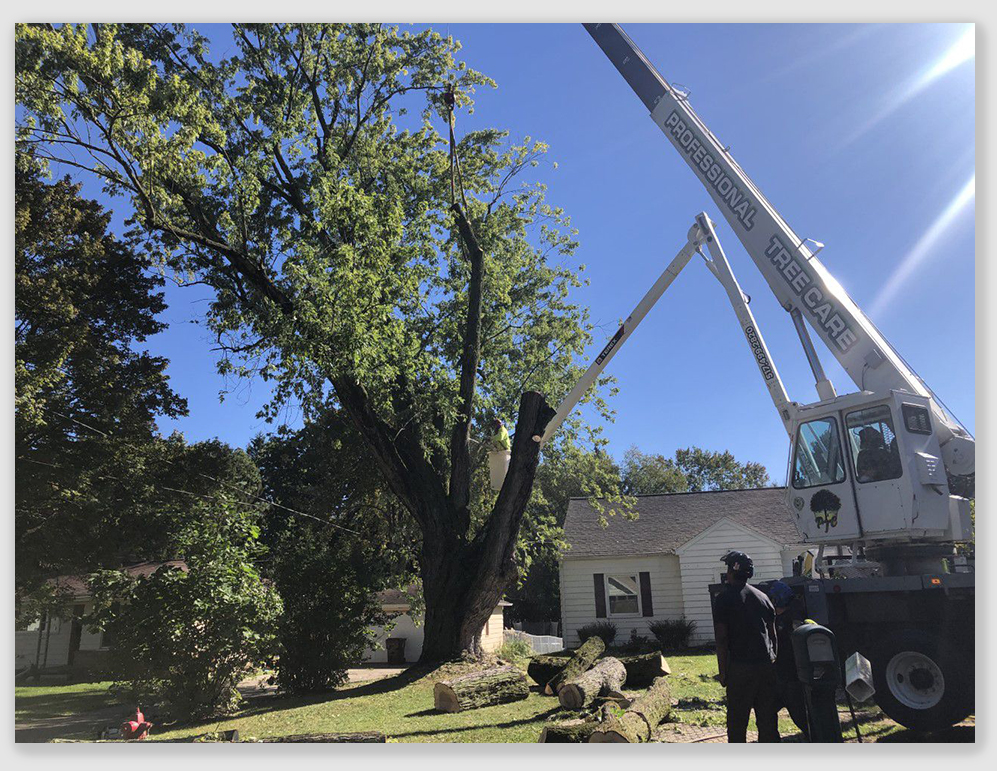
After standing for 100 years, a silver maple tree in Jackson was cut down due to safety concerns from the homeowner and surrounding houses in the wake of recent storms. The tree grew in Sharon Cabage’s front yard. It was approximately 164 inches in girth and 70 feet tall, taking up a large section of the property she moved onto 63 years ago. “I always thought it was a big tree then,” Cabage said. “It’s too, you know, enormous.” The Jackson Audubon Society has estimated the tree is more than 100 years old and likely is the third largest silver maple in the county, Cabage said. Cabage decided to finally remove the tree from her property due to storms with heavy wind and rain that Jackson County has experienced the last few weeks. With the tree so old, Cabage said she was worried it or its limbs would fall onto nearby homes, she said. “This was such a danger to our house and our neighbor’s house, it just had to come down,” she said. “With the storms we’ve had, we don’t want it to come down on our neighbor’s house…”
The effects of the drought and heat on trees won’t be fully known until next spring, tree experts in Oregon say. Oregon State University professor and forest health specialist Dave Shaw told The Oregonian/OregonLive that there’s typically delayed mortality associated with drought. But rain is predicted this weekend. “It will definitely be a good thing for the forests,” Shaw said. “But we won’t really know how the trees did this year until next spring, as we often see delayed mortality associated with drought.” All of Oregon is experiencing drought ranging from severe to exceptional, the worst category. Leaves on some trees are turning brown instead of the traditional fall colors before falling to the ground. Extreme conditions like these are often from a combination of unusual random, short-term and natural weather patterns heightened by long-term, human-caused climate change. Scientists have long warned that the weather will get wilder as the world warms…
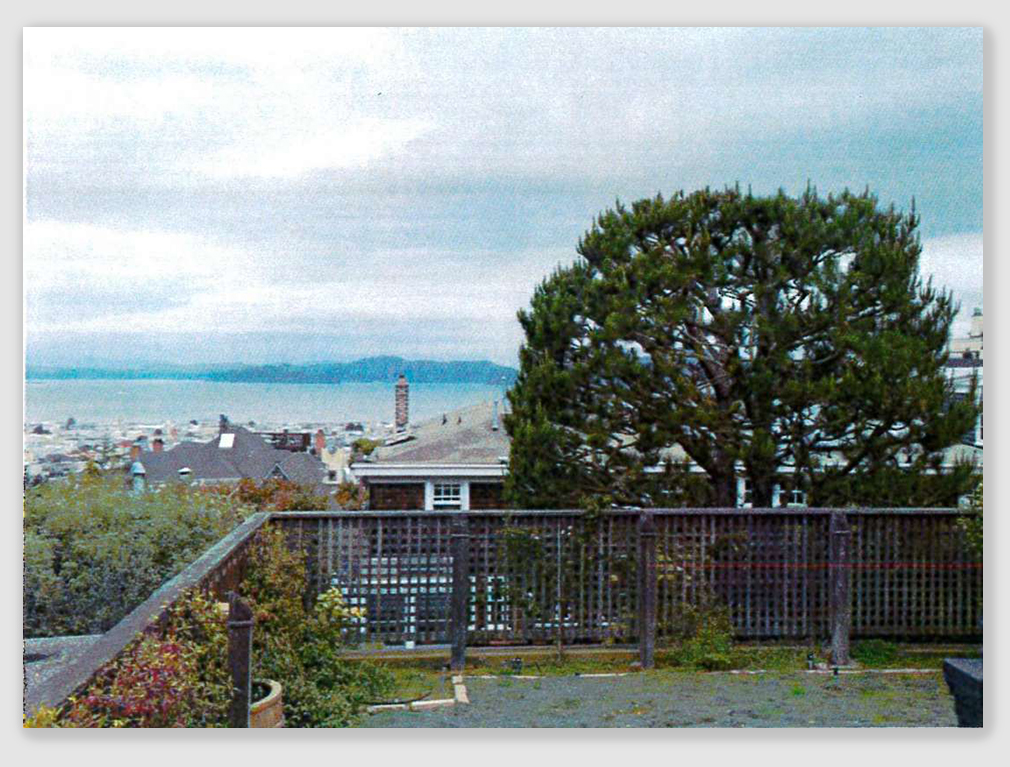 San Francisco, California, Chronicle, September 23, 2021: That tree blocks my view, so it’s got to go. Pacific Heights resident wins dispute over neighbor’s pine
Trees are among nature’s wonders — but a neighbor’s growing arbor can also eliminate a resident’s treasured scenic views. Now a state appeals court, relying on a San Francisco ordinance that seeks to resolve treetop feuds, has ordered a Pacific Heights couple to take down a sprouting Monterey pine that stands between their next-door neighbor’s home and the bay. The neighbor, now 81, moved into the San Francisco home with her now-deceased husband in 1976 and testified that they chose the site largely because of its unobstructed view of San Francisco Bay, the Golden Gate Bridge, Angel Island and lands to the north. The pine was planted next door by a prior resident in 1999 and, by the time the case went to trial in 2019, had grown to 30 to 32 feet, with widening, thickly growing branches. “The tree’s rapid growth in both height and breadth obstructs the views of landmarks and vistas that could once be seen” from the neighbor’s ground floor, Superior Court Judge Jeffrey Ross, who had visited the site during the non-jury trial, said in a December 2019 order to remove the pine under San Francisco’s 1988 Tree Dispute Resolution Ordinance…
Trees are dying off fast in a New Mexico forest. Now, neighbors are worried it’s creating a more than 50,000-acre fire hazard. ine Meadow Ranches in Cibola County is a remote subdivision a few miles away from the El Morro National Monument. “See the little ones are getting it now, that’s only happened in the last few weeks,” said resident Danny Heim while pointing out the trees. Heim keeps an eye out on the trees. “See those that are light,” Heim said. “Those are going to be dead in a few days just like these.” Heim is concerned their trees are dying at an alarming rate. He said at least half of the pinon trees within a 5,000-acre radius are dead or dying. “Last year, you wouldn’t have seen nothing, anything like this,” said Heim. “I mean you would’ve seen a dead one here and there, more typical you’ll see a dead pinon every now and but like this no I’ve never seen anything like it. Most all of this happened this summer…”
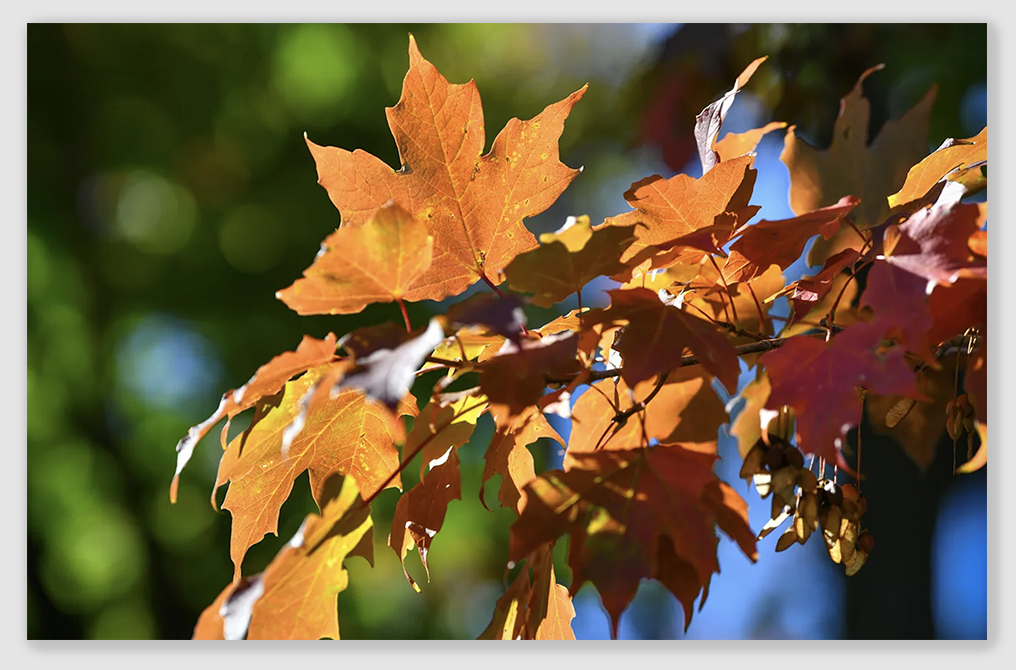
You think you’re stressed this fall? Try being a tree. Central Minnesota’s significant summer drought means Central Minnesota’s peak fall colors are expected to shine less brightly than usual and leave faster, DNR Cooperative Forest Management Outreach Specialist Jennifer Teegarden said this week. Most of Minnesota experienced extreme drought this summer, and St. Cloud clocked its 13th driest summer on record. “Healthy leaves produce the best fall colors,” Teegarden said. A mild drought can actually help produce better fall color, Teegarden said. But this year, trees had “a double whammy” — the trees themselves were water-stressed, and their leaves were stressed, too. Central Minnesota typically experiences peak fall color in late September through early October. Teegarden said peak color might not last as long as early October. The DNR’s fall colors map, updated Sept. 22, shows the St. Cloud area at about 25-50% of fall color. Leaves release water vapor through small pores called stomates. When a tree is thirsty, it can conserve water by shedding leaves early. It can also essentially shut the leaf down so it is no longer functioning properly (and not releasing water). But “in the process of shutting the leaf down, the leaf no longer has the ability to go through photosynthesis,” Teegarden said…
Fires have been burning for two weeks in Sequoia National Park and Sequoia National Forest, two of California’s iconic landmarks. Late Wednesday, National Park Service officials finally allowed press photographers into the Giant Forest, a spectacular grove that contains five of the largest trees in the world by volume, including the General Sherman Tree, the world’s largest, which is 275 feet tall, at least 2,300 years old, and 102 feet around at the base. The photos — the first since the flames entered the Giant Forest last Friday — show that the General Sherman Tree and several others, known as the Four Guardsmen, have so far survived. Fire crews wrapped the massive trees in fireproof blankets and cleared flammable vegetation from around them. The grove also has benefitted from 50 years of thinning projects and prescribed fires done by park service crews so that if a major wildfire broke out, flames would stay close to the ground. Other groves of giant sequoias in the park and in Sequoia National Forest have not had that work done and are at greater risk in the two fires, known as the KNP Complex and the Windy Fire…
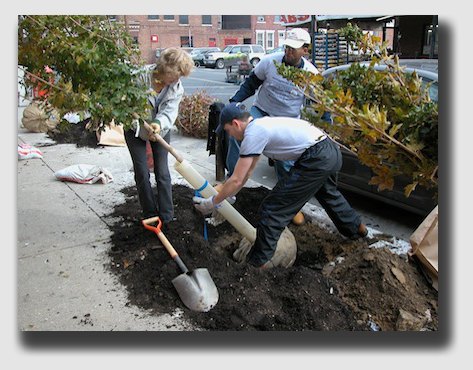
The goal is to plant 90,000 trees across Los Angeles by the end of this year and increase the tree canopy in areas of greatest need 50% by 2028. It is part of Mayor Eric Garcetti’s Green New Plan. It is an ambitious multi-pronged strategy to fight climate change. The city hired its first Forest Officer, Rachel Malarich, to oversee the process that involves non-profit organizations, universities, and volunteers. “Our goal is to have trees providing benefits to all of our residents,” Malarich said. So far more than 52,000 trees have been planted, the city admittedly behind. The COVID-19 pandemic put a pause to shovels in the ground. The work is now picking up, planting and educating people in areas like Boyle Heights on how to care for trees planted in their neighborhoods. “Whenever we come and give water to it, it will continue to grow more and more,” one volunteer told NBC4. “If it’s a house, if it’s an apartment to give shade, you don’t have to use your air conditioning as much,” another volunteer at a recent planting event in Koreatown said…
A federal judge in Los Angeles ruled Wednesday that the Trump administration violated the law when it declined to grant Endangered Species Act protections to the iconic Joshua tree. In 2019, the U.S. Fish and Wildlife Service rejected a petition from WildEarth Guardians to list the desert trees as threatened under the landmark 1972 conservation law. The agency said at the time that it analyzed a number of potential impacts, including drought, wildfire and climate change, and found that neither of the two species of Joshua trees, Yucca brevifolia or Yucca jaegeriana, warranted federal protection. U.S. District Judge Otis Wright, an appointee of President George W. Bush, slammed the federal agency in his Wednesday opinion and sided with WildEarth Guardians, which argued that the federal agency disregarded science showing the myriad ways in which climate impacts threaten the trees’ long-term survival…
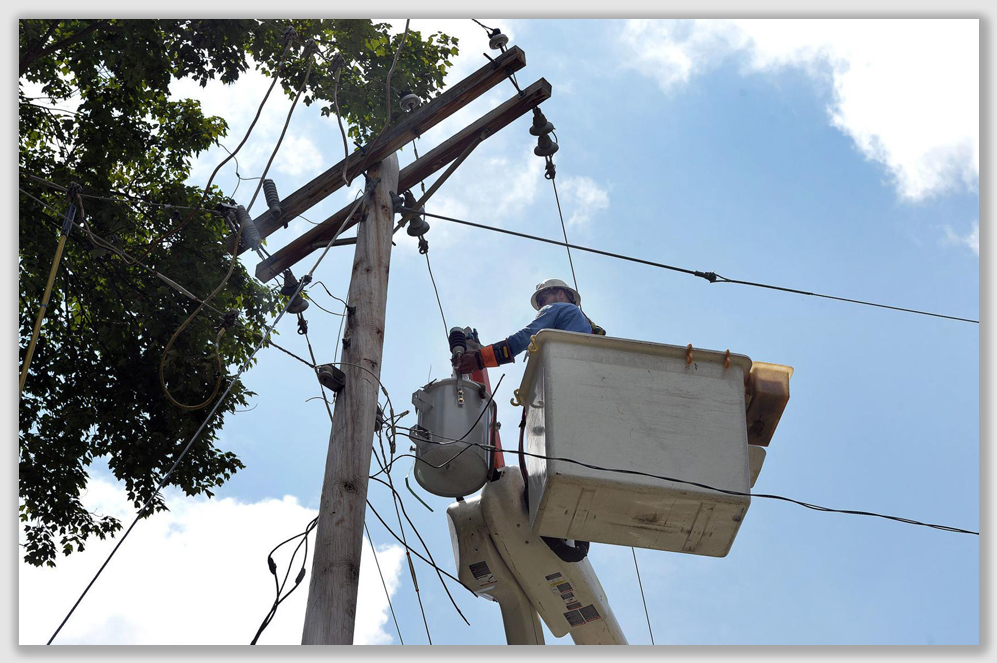
Residents repeatedly said they supported the need for a safe and reliable power grid, but they publicly questioned Eversource’s approach with its plan to clear-cut trees. “While I share the critical importance of Eversource’s goal of a resilient and reliable electric grid, as Darien’s first selectman I wish to be on the record as objecting to clear-cutting vegetation as an effective utility resilience measure,” Jayme Stevenson said at a virtual public hearing on Tuesday. “Electric utility resilience measures must be balanced against impacts to the natural environment and impacts to residential property values.” The hearing dealt with Eversource’s vegetation management plan in Darien and drew about 100 people. None of the nearly 20 residents who spoke supported the plan. The tree warden has three days to make a decision about the trees slated for removal in the town right-of-way on Little Brook Road and Raymond Street…
Long before skyscrapers came to town, a majestic rain tree has grown tall and proud for nearly a century, bringing beauty and a touch of controversy to a quiet spot in downtown Fort Lauderdale destined for development. Soon enough, the same ground where the tree now stands will become home to twin 30-story towers, shiny and modern with 771 luxury apartments along with boutique shops and fancy restaurants. The tree, planted nearly 100 years ago and now soaring 70 feet into the air, will need to be moved to a new spot to make way for the project — and some worry it won’t survive. Over the years, the prospect of losing the evergreen to yet another high-rise has sent neighbors into a frenzy. Now they’re atwitter all over again in what for many is a déjà vu moment. For some, the rain tree has become a symbol of the ongoing conflict between the old and the new, between developers driving downtown’s fast-paced growth and preservationists compelled to save a tree they say can never be replaced…
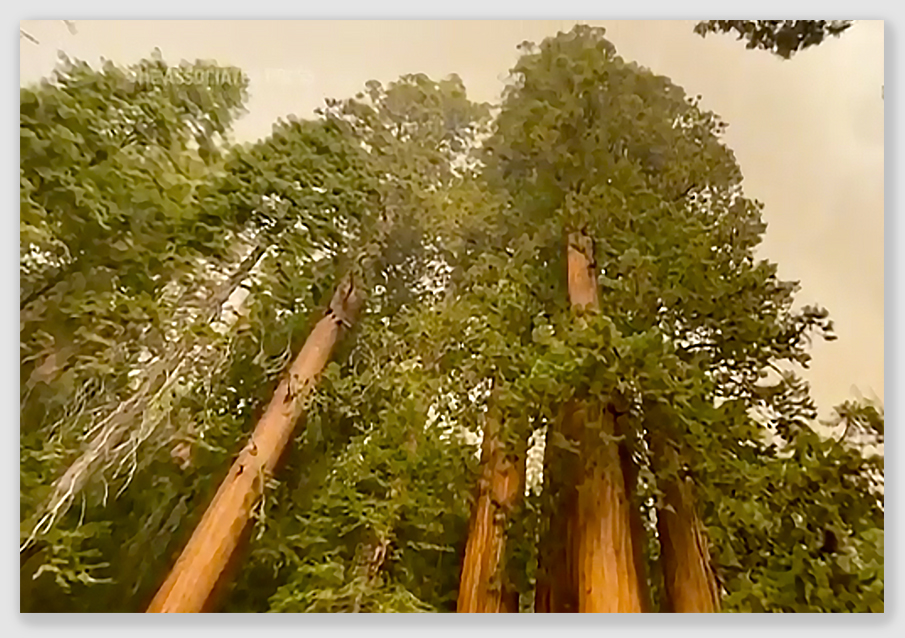
Four famous giant sequoias were not harmed by a wildfire that reached the edge of Giant Forest in California’s Sequoia National Park, authorities said. The Four Guardsmen, a group of trees that form a natural entryway on the road to the forest, were successfully protected from the KNP Complex fire by the removal of nearby vegetation and by wrapping fire-resistant material around the bases of the trees, the firefighting management team said in a statement Sunday. The KNP Complex began as two lightning-sparked fires that eventually merged and has scorched more than 37 square miles (96 square kilometers) in the heart of sequoia country on the western slope of the Sierra Nevada. There was no immediate word, however, on the full extent of damage in several other sequoia groves reached by a separate blaze, the Windy Fire, in the Giant Sequoia National Monument area of Sequoia National Forest and the Tule River Indian Reservation. The Windy Fire has burned through the Peyrone and Red Hill groves, as well as a portion of the Long Meadow Grove along the Trail of 100 Giants. A portion of one giant sequoia along the trail was confirmed to have burned, said Thanh Nguyen, a spokesman for the fire command. Fire crews with hoses and water-dropping helicopters were working to limit damage to the giant sequoias in the groves, where there are also other types of trees…
Environmental advocates lost their fight to try to save an 85-inch diameter live oak Monday when the Escambia County Board of Adjustment ruled unanimously that they lacked standing to appeal the county’s decision allowing the protected tree to be cut down. During a four-hour, quasi-judicial hearing Monday that was at times chaotic and contentious, the Board of Adjustment ruled that neither Emerald Coastkeeper nor tree advocate Margaret Hostetter had standing to appeal the county’s decision. Because of the decision over the lack of standing, the Board of Adjustment did not get to hear any arguments challenging the Development Review Committee’s decision in August to approve a development order for a self-storage building that required the removal of the protected tree. The owners of A+ Mini-Storage, W. M. Bell Co. of Santa Rosa County LLC, are planning to expand the A+ Mini-Storage location in Brent on Palafox Street and bought the neighboring property…
 Horticulture, September 21, 2021: Why Tree Leaves Change Color in Autumn
For deciduous trees and shrubs, the warmth and abundant sunshine of summer is the time to be productive. Leaves come out in the spring with the job of absorbing sunlight. They use the sun’s energy to produce food, glucose sugar. But these leaves are relatively fragile. They could never withstand the below-freezing temperatures of winter, so the plant “knows” to shed them in the fall. (Evergreens, on the other hand, have stronger leaves, even with their own antifreeze inside, so they can withstand the winter cold.) The green we see in leaves is chlorophyll, the pigment that absorbs sunlight. But there are other pigments in leaves, with different colors. Carotenoids are always present in plant leaves, but their colors are masked by the chlorophyll green. When chlorophyll production slows and eventually stops in autumn, the yellow, orange or brown of the carotenoids can shine through. Anthocyanin is another pigment, one that is primarily produced in the fall by only some plants. Those that have it display brilliant red and purple leaves. Pigmentation varies by species, as does the timing of the color change, thus we can get a varying panorama of colors in the autumn. Deciduous trees and shrubs have two cues they use to stop producing chlorophyll and shed their leaves. When the days become shorter and the nights longer in fall, it’s a sure sign of colder temperatures to come. This is the prime cue plants use, because it is consistent year after year. The other signal is the actual decrease in overnight temperatures. This is a secondary cue, since temperature is dependent on weather patterns that can vary…
It’s come to be known as a “torture orchard” – researchers stressing trees to determine which are drought tolerant and design varieties for commercial food production. “When it comes to overhead irrigation, there’s a lot of water on the plants – a lot of water on the roots – and this is going to encourage disease,” said Thomas Gradziel, a plant breeder. Gradziel goes with the flow when it comes to water and what it does to plants and trees. “With drip irrigation with smaller trees, we’re getting that water directly to the roots,” Gradziel said. He walked us through an almond orchard outside Winters part of a research facility for UC Davis. On the 80 acres they have 20 different varieties of trees and 30,000 seedling trees and they test those and pick the best ones based on production, quality and tolerance to adversity – things like drought and pests. “Our goal in terms of breeding new varieties is a future variety that can produce consistently 2000 pounds per two acre feet of water,” Gradziel said…

California’s iconic General Sherman Tree and many other behemoth trees in Sequoia National Park were still standing Monday morning, authorities said. The KNP Complex wildfire threatened the park’s so-called Giant Forest in recent days, especially Saturday when the blaze exploded, but the trees, which are a popular tourist attraction, escaped flames. Garret said activity on the KNP Complex escalated Saturday when an inversion layer lifted and winds picked up. “The flame lengths went from 20 feet to 100 feet down to a couple feet when they hit the prescribed burn area,” he said. “The fire skirted all around the west side of the Giant Forest up there, went up past Lodge Pole and the Wuksachi Lodge.” It seemed like a miracle of sorts, but Mark Garrett, a fire information officer for the National Park Service, said there’s an explanation for why these trees survived — and that’s prescribed burns. More than 400 acres around the General Sherman Tree underwent a prescribed burn as recently as 2019, Garrett said. Prescribed burns, in which fires are set intentionally and monitored closely, can maintain the health of a forest and prevent overgrowth of vegetation that can intensify fires…
NPR, September 20, 2021: Climate Change Is Killing Trees And Causing Power Outages
On a hill in Oakland, CA, Igor Lacan looks out from under his Stetson hat at the neighborhood below and begins listing trees. “Maples to birches to plums to liquid amber,” says Lacan, horticulture advisor for the University of California Cooperative Extension. “A cedar. I see some palms, and then you’ve got a monkey puzzle up here!” In between the trees is a criss-crossing web of power lines, delivering electricity to the houses below. Lacan works as an advisor for California utilities like PG&E, and he says while most of the trees seem to be flourishing, that’s not true for some nearby acacias. He points upwards to a spiral of dead bark hanging off an acacia branch. “If you can see the wood underneath, which in this case you can, that’s typically a sign that that part of the tree is dead. Which is why we didn’t stand under that branch…”
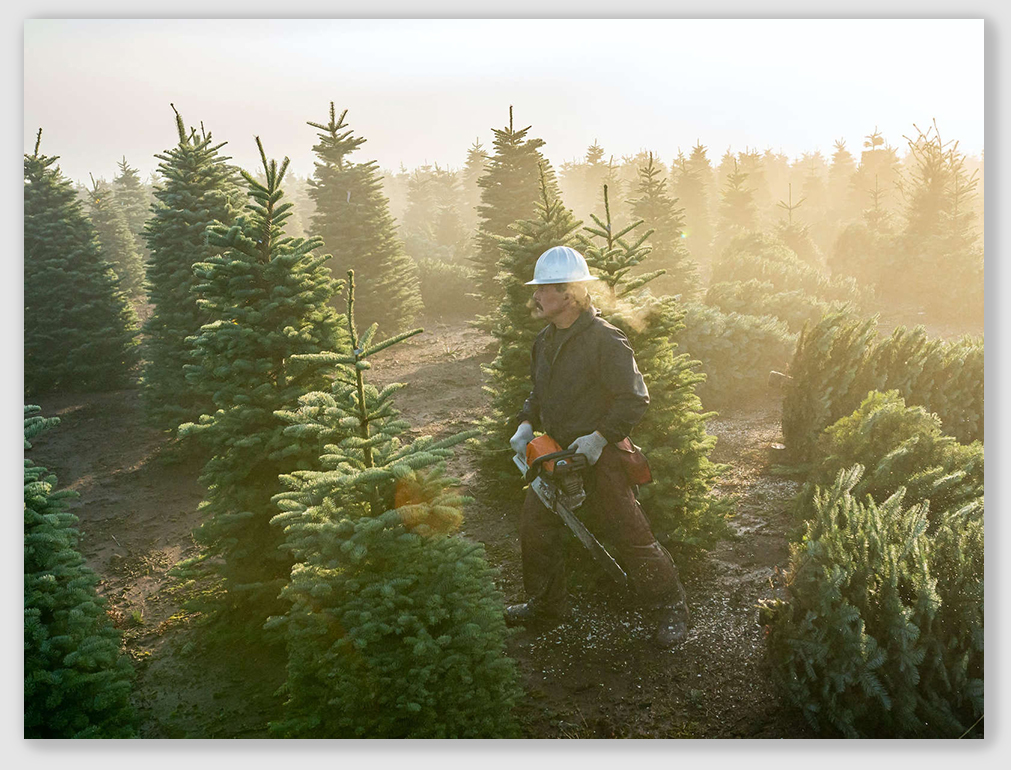
You may have a harder time than usual finding a live Christmas tree this holiday season. Christmas-tree-growers in the Pacific Northwest have seen their crops decimated this year due to drought and heat waves. One grower, Mark Wonser, recently told The Oregonian that he estimates he’s lost 90% of his Christmas tree crop this year due to extreme heat. He said he planted 13,500 trees this past May, only to see nine acres scorched in the heat. Christmas trees typically take between eight and 12 years to reach maturity, meaning that the decimation of this year’s seedlings could be felt as late as 2029 and beyond. Jacob Hemphill, a grower based in Oregon City, Oregon, told The New York Times in July that his seedlings were wiped out by heat waves and that many of his mature trees were damaged too – he estimated the destruction could cost him upwards for $100,000. “The second day of the heat, it was 116. I came in the driveway that night and seen the trees were basically cooking. Burnt down to nothing,” Hemphill told Reuters…
Honolulu, Hawaii, KITV, September 20, 2021: How common is tree failure in Hawaii?
Several people are still recovering from serious injuries after a huge tree branch fell on them this weekend. The accident happened in Waikiki, but what is the likelihood of it happening elsewhere? A big tree is great for providing shade on a sunny day, but if not properly cared for and monitored, trees can also do serious damage to those underneath or around them. Along with trees losing leaves, branches will also sometimes come down naturally. “Trees they will drop branches. They do self pruning. They will have branches that die and they will drop,” said Oahu arborist Kevin Eckert. Strong winds can also suddenly bring down branches. Heavy rains can wash away soil and weaken the hold a tree has, leading to it toppling over. The collapse of a banyan branch in Waikiki was also a sudden damaging event, but the failure of the tree could have been a long time coming. according to Eckert. “Barring disease, pests, and digging – it takes time as trees grow they get larger, more exposed to wind, and their branches get longer…”
Los Angeles, California, Times, September 19, 2021: Sequoia National Park’s General Sherman tree, one of largest in 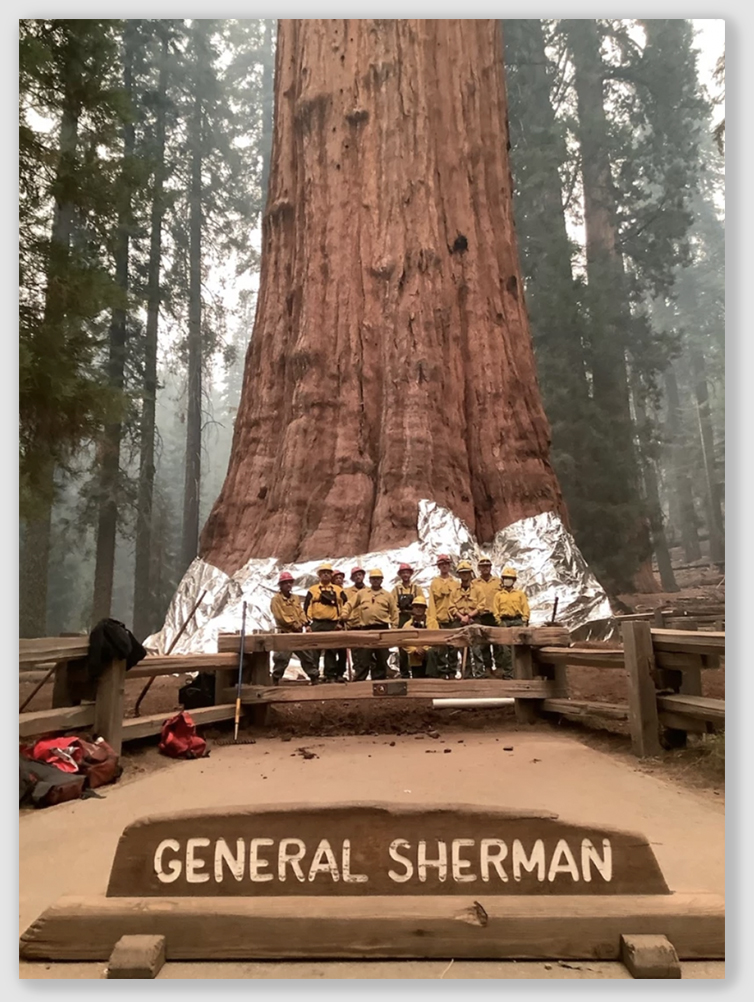 the world, still safe amid growing wildfire
Firefighters battling a major wildfire in Sequoia National Park had some good news to report on Sunday: General Sherman — the giant sequoia and one of the largest living trees in the world — is still standing. The 21,777-acre lighting-sparked wildfire — dubbed the KNP Complex fire after the Colony and Paradise fires merged into one — grew by more than 3,900 acres overnight, but officials said Sunday that hundreds of firefighters have valiantly kept key areas of the forest under control. The park is east of Fresno. In an upbeat report Sunday, fire officials said they were feeling fairly confident about protecting the Giant Forest, home to thousands of towering sequoias. Numerous well-established walking trails meander through this iconic part of the park, so firefighters have been able to move around and work from multiple locations. In addition, the museum and all the infrastructure around the General Sherman tree are equipped with sprinklers, which firefighters have been running nonstop to ensure that the area stays wet. The ancient sequoia, a major tourist draw for the park, is 275 feet tall and over 2,000 years old. It is considered the largest known tree in the world by volume…
Youngstown, Ohio, Vindicator, September 19, 2021: Prune but keep your tree safe
Q: I have a large maple with a very low branch that needs pruning. The branch is about 14 inches in diameter. Can I cut it off without harming the tree?
A: Well, it depends. It depends on what tools you have to remove the branch and how you go about the pruning. A branch of this size requires the use of a chainsaw for proper removal. But, that’s just the start of planning to make the pruning cut since the branch is so large. Consider leaving the branch. Is it really in the way of something else you need the area for? Are there ways to landscape or mulch under the branch as to avoid removal? The only things to avoid is planting flowers close to the trunk and piling up topsoil or mulch around the trunk. Think of all the reasons you want to get rid of the branch compared to the possibilities of leaving it alone. Then, if the branch still requires removal, think about your ability to cut such a large branch. Pruning incorrectly can be detrimental to the tree…

The patient stood approximately 80 feet high and somewhere over 17 feet in circumference at its base, depending on where you placed a tape measure. Its age? Probably close to 100 years, maybe more. To the untrained eye, this stately elm tree — known as the Grayson elm — at 111 Sunset Ave. in Amherst, looked reasonably healthy, with a full canopy of branches and leaves, though perhaps its lower bark was a little ragged. But this elm, just like so many others across the country, is battling Dutch elm disease, a plague that arrived in the U.S. in the late 1920s/early 1930s and within about five decades proceeded to destroy over 80% of the nation’s elm trees, according to some sources. The disease is caused by a fungus, spread by bark beetles that burrow into the trees; the fungus blocks water movement in a tree, causing its foliage to wilt and eventually die. The whole elm can then follow. But there are ways to fight the disease and to preserve elms, as an arborist explained last week to a group of University of Massachusetts students who gathered at the Amherst tree for a demonstration of one of the treatment methods…
Paul Rogers may go far, all the way to central Europe from his northern Utah home, but he’s never far from his muse. After all, aspens are among the world’s most widespread tree. This month in Czechia, aspens were indeed Rogers’ focus — as they have been for other scholarly retreats over his 20-plus years of research. Rogers is director of Utah State University’s Western Aspen Alliance, an informational clearinghouse for the tree garnering admiration every fall. For the start of the shimmering show in the American West, Rogers found himself abroad, studying a species different from the “quaking” one known here. But many things were the same. For one: “I never meet anyone, public or professional, who doesn’t say this is their favorite tree,” Rogers said in a Zoom call. “You know, for centuries, both in this continent where I’m sitting and where you’re sitting, people have gone to aspen forests for meditative or healing purposes…”

A pair of wildfires burning in the Sequoia National Forest in California ballooned in size this week, threatening famous giant sequoia trees and prompting new evacuation advisories for the area. More than 300 firefighters were working to control the KNP Complex Fire, which includes the Paradise and Colony fires. The blazes, sparked by a lightning storm late last week, grew to 7,039 acres by Wednesday with no containment. Firefighters struggled to contain flames burning in hard-to-reach areas, and had to predominantly rely on aircraft to spread fire retardant. The Colony, the smaller of the two fires, has burned within a mile of the Giant Forest, said Rebecca Paterson, a fire information specialist for the KNP Complex Fire. The forest—home to the General Sherman Tree, the world’s largest tree—is the most famous and well-traveled of the giant sequoia groves across this part of the state. The fire could burn at least partially into the grove, which includes 2,000 giant sequoias, Ms. Paterson said. But decades of prescribed burning in the area may moderate any potential devastation. “There’s definitely reason for optimism that those treatments are going to have really good positive effects in the Giant Forest, if the Colony Fire does reach that area,” she said…
Supporters of stronger tree protection regulations in Seattle say most voters are on their side, according to newly released poll results. They’re hoping the findings help spur a long-awaited city ordinance. In July, the Northwest Progressive Institute surveyed 617 likely Seattle voters about issues in the primary election. They also asked voters about tree canopy. Of the people surveyed, 81% said they support stronger rules requiring developers to keep more existing trees, and 82% want increased tree planting in low-income neighborhoods (82%). Institute Director Andrew Villeneuve said these questions got the most favorable response of any issue in the survey. “Those are really robust findings – anytime you have a poll finding up in the 80s in total, which we do in this case, it really shows that voters have reached an accord in terms of where they are on the issue.” A slightly smaller majority supported specific proposals like adding tree replacement requirements, and creating a city tree planting and preservation fund. Creation of a permitting process for removal of significant trees had the narrowest support, at 57%…
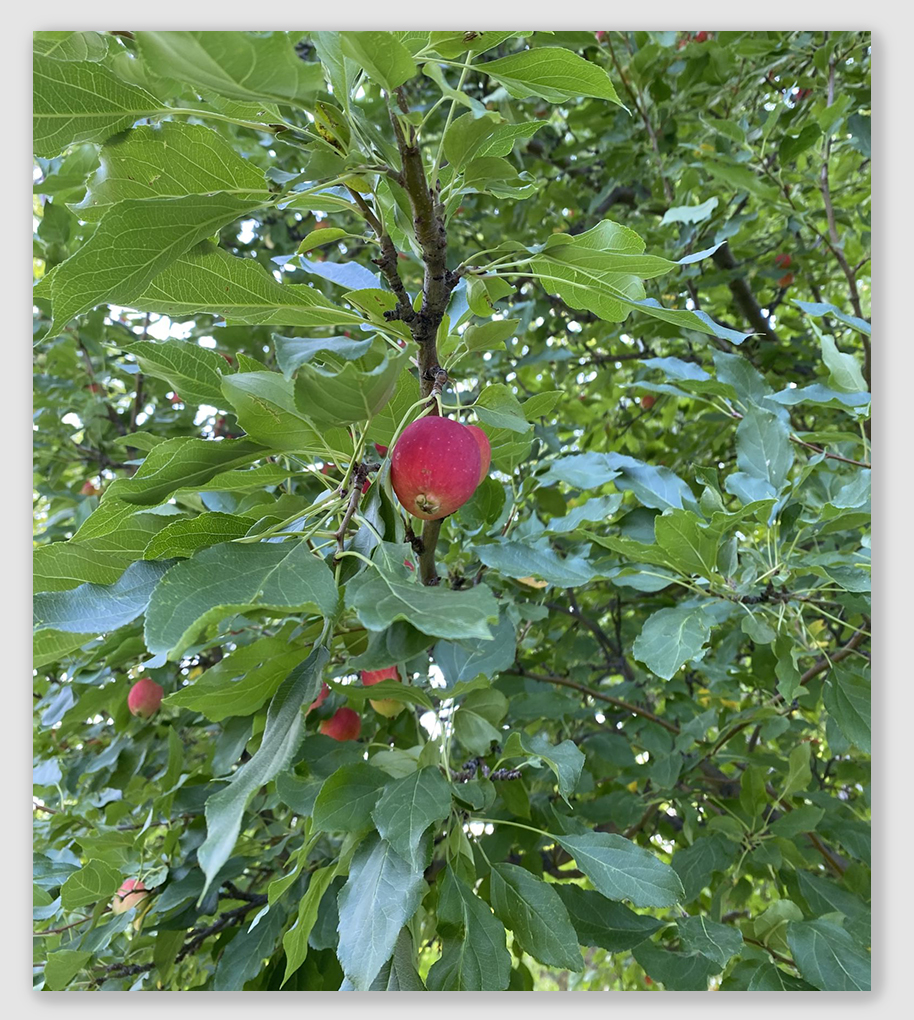
If you haven’t noticed it yet in the heat and haze of our prolonged summer, Boulder’s apple trees are in their ninth month. They are limb-breaking-ly heavy with fruit and the black bears are loving it. Early rain, prolonged heat and lack of a killer freeze means an epic year for apples, and this is the big apple week in Boulder. This week, the Boulder Apple Tree Project is tagging hundreds of historic heirloom trees while Community Fruit Rescue is harvesting backyard trees to supply food banks, and if you bring your home-harvested apples to BOCO Cider, they’ll transform them into delicious hard cider. You could also bake a pie. How did Boulder end up so overloaded with apple trees? That simple question inspired Katharine Suding—a University of Colorado professor and scientist—to form a multi-disciplinary team to answer it, says Amy Dunbar-Wallace, project coordinator for the Boulder Apple Tree Project. Basically, if you now live in a neighborhood from North Boulder to south of Table Mesa, your front lawn used to be a fruit orchard…
Firefighters wrapped the base of the world’s largest tree in a fire-resistant blanket as they tried to save a famous grove of gigantic old-growth sequoias from wildfires burning Thursday in California’s rugged Sierra Nevada. The colossal General Sherman Tree in Sequoia National Park’s Giant Forest, some of the other sequoias, the Giant Forest Museum and other buildings were wrapped as protection against the possibility of intense flames, fire spokeswoman Rebecca Paterson said. The aluminum wrapping can withstand intensive heat for short periods. Federal officials say they have been using the material for several years throughout the U.S. West to protect sensitive structures from flames. Homes near Lake Tahoe that were wrapped in protective material survived while others nearby were destroyed. The Colony Fire, one of two burning in Sequoia National Park, was expected to reach the Giant Forest, a grove of 2,000 sequoias, at some point Thursday. It comes after a wildfire killed thousands of sequoias, some as tall as high-rises and thousands of years old, in the region last year…
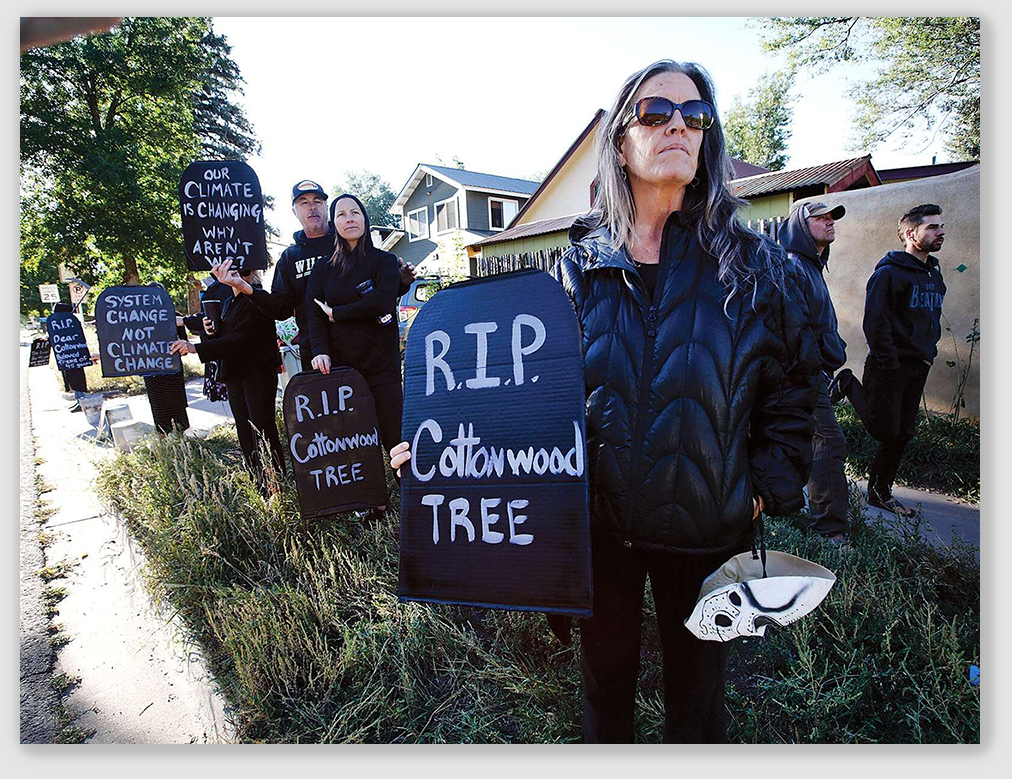
Residents of the Animas City neighborhood gathered Wednesday in north Durango to hold a “funeral”/protest over the removal of a large cottonwood tree that was cut down Wednesday morning by the city. “My tax dollars are going toward bringing this beautiful tree down right now, and that breaks my heart,” said Jules Harris, a resident of the Animas City neighborhood. The tree, near the corner of 32nd Street and East Third Avenue, was removed to make way for the Animas River Trail underpass project. Several residents advocated on behalf of keeping the tree. About 20 people showed up Wednesday morning, many wearing black and holding “R.I.P.” signs as it was cut down. Some protesters shed tears…
Supply-chain disruptions will make decking the halls more expensive than ever for consumers looking for artificial trees this Christmas.Some U.S. retailers are raising prices by 20% to 25% to keep pace with skyrocketing shipping costs and they are warning that certain trees could sell out early because deliveries from overseas producers have been hit by the congestion that has tied up distribution networks from ports in China to freight yards in Chicago. Balsam Hill, a Redwood City, Calif., company that sells medium- to high-end trees online and in stores, is raising prices by 20% on average, with list prices for some of its trees pushing close to and beyond the $1,000 level it charges for its premium trees. “We’ve never raised prices anywhere close to that in our history and will make way less money,” said Mac Harman, the firm’s chief executive. The company’s 7 ½-foot tall Brewer Spruce with clear LED lights is listed at $999 this year, up from $899 last Christmas. Its 4½-foot tall Grand Canyon Cedar tree with clear fairy lights will list at $499, up from $300 last season, as soon as it is in stock…
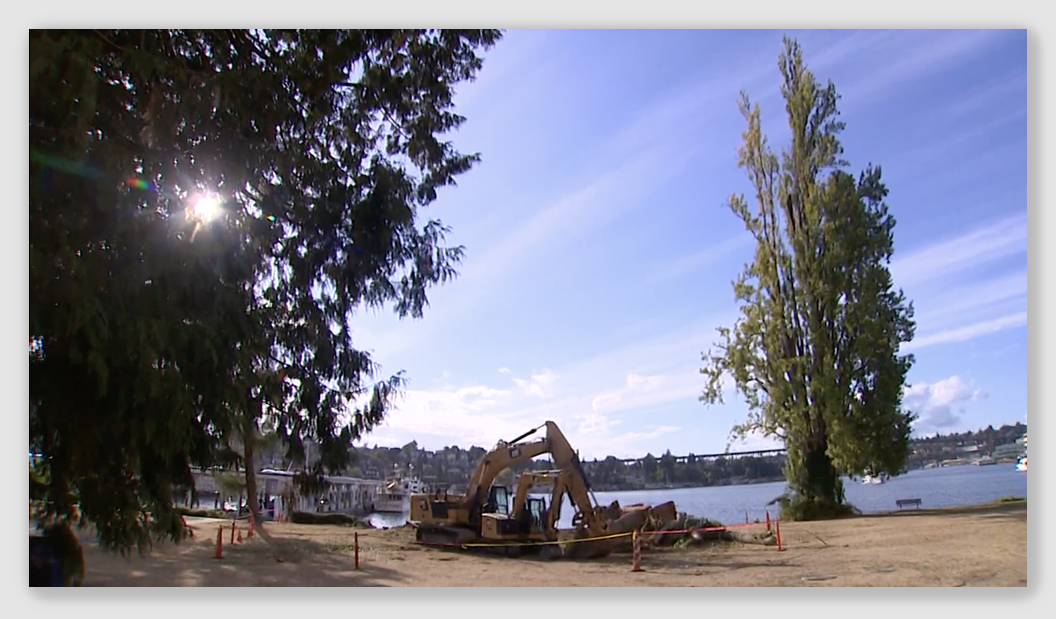
Two large poplar trees that once stood in Seattle’s West Montlake Park are gone after one fell naturally and the other was removed by the city. “There was sort of a relatively minor wind storm and this tree just fell in the water,” Caleb Wilkinson said. Residents who live in the neighborhood, adjacent to the Seattle Yacht Club, urged the city to consider removing the trees that sit at the edge of the water overlooking Portage Bay. One of the trees overturned and fell into the water in early August, according Wilkinson, who along with fellow neighbors, discovered the fallen tree the next morning after they assumed it fell. The fallen tree barely missed a park bench. “I call it a dead body in the water, it’s a huge poplar tree,” said Caleb’s father, Rob Wilkinson, who said he has lived in the neighborhood for at least 40 years. Wilkinson guesses each poplar weighs at least a dozen tons and was concerned if children were near the water…
Houston, Texas, KPRC-TV, September 16, 2021: How to clean up tree debris after a storm
Removing a tree can be a very stressful process. Without insurance, the average price per tree costs between $700 to $1200. There are a few good reasons why experts say it’s best to leave it to them. On Wednesday, KPRC 2 tagged along with a company called Nature’s Tree Removal of Houston as they began day one of a three-day job removing seven pine trees from a yard. The homeowner said he was fearful that future storms could bring the trees down onto his house. Some homeowners left with dead trees after Hurricane Nicholas may not have a choice, but arborist Adrian Arechiga said it’s important to have an expert come out to be sure the tree is actually dead and not just in need of proper care. “You could inject the ground with fertilizer. There’s a lot of things you could do to make the tree come back to life,” Arechiga said. For those still needing to rid your yards of thin twigs and branches, there are some important steps to take…
Essex, Connecticut, Patch, September 13, 2021, Tree Controversy Ensues In Essex
According to long-time Essex Tree Warden Augie Pampel, if a formal complaint is received involving the removal of a tree in town, he must call a public hearing on the issue. That is exactly what has happened regarding a large tree set to come down at 36 Main Street in downtown Essex. One resident sent an email to Pampel contesting the removal of this tree. Others have taken to The People of Essex Facebook page to express concerns for and against the tree’s removal, questioning if the tree is healthy or diseased and if it is dangerous or not? One post reads, “Looks like they have some nice new ones planned on either side of the tree. I doubt they aren’t cutting the tree down without having a good reason…”
A woman is recovering Monday after a huge tree came crashing down as she was driving in Valley Village. The accident happened Sunday near West Huston Street at about 11:40 a.m. The woman was approaching Huston when the giant tree fell over and landed on her car. The woman was able to get herself out of her car, and witnesses say she seemed OK – but she was taken to a hospital as a precaution. The tree’s fall ripped its roots out of one side of the street and left it sprawled across the roadway, on top of the car, and its branches in the bed of of a parked pick-up truck that was unoccupied at the time. Neighbors were stunned by the tree’s collapse, but some were not…

Removing a tree, whether because of storm damage, disease, pests or decay, is a loss — but it’s also an opportunity. “When you replace a tree, you have a chance to choose a species that will diversify your neighborhood,” said Julie Janoski, Plant Clinic manager at The Morton Arboretum in Lisle. In the past, communities and homeowners have planted too many of the same kinds of trees — especially elms, ashes and maples. “That made our elms and ashes sitting ducks for disease and pests,” she said. “Now we know that planting many different species can prevent one single problem from killing off so many of our trees.” Janoski recommends that before selecting a new tree, homeowners take a walk and note the species that are already growing along nearby streets and in neighbors’ yards. “You’ll probably notice a high concentration of some kinds of trees, such as honey locusts and maples,” she said. “For your own yard, mix it up by choosing a kind of tree you don’t see growing nearby…”
Fall is the best time of year to plant new trees, from early September through late October. Fall’s cooler temperatures and increased rain allow trees to establish their root systems quickly, giving them a jump-start on spring growth. Tree root growth continues late in fall, until soil temperatures drop below 40 degrees. But growing healthy trees that will provide beauty, shade and wind protection for your property long-term, means getting them off to a good start by avoiding common problems at planting. More than ever before, tree experts know that half the battle in long-term tree success is addressing potential problems before the tree is in the ground. What problems, you ask? Isn’t the tree I bought in perfect condition to be planted? Maybe. But increasingly the horticulture industry recognizes that production methods we use to grow trees in containers or in the field can cause problems for trees down the road…

After determining that lightning ignited the Black Mountain Fire, investigators have shared photos of the tree where they think the fire began. Images shared Friday show a tree struck by lightning that investigators say caused the fire. The bark and wood had separated from the tree, and the tree was split at the bottom, common evidence of a lightning strike. With the Black Mountain Fire burning just a few miles away from the East Troublesome Fire burn scar, many have wondered why the cause of this new fire was found so much faster. The East Troublesome Fire, which ignited Oct. 14, 2020, was determined to be human-caused, but fire officials have not released any further information. Mike De Fries, spokesperson for the incident management team working the Black Mountain Fire, emphasized that he could not speak to the cause of the East Troublesome Fire. However, he explained that determining the cause of the Black Mountain Fire fire in less than a week was possible because of a number of specific circumstances…
When Jeff Olson met a guy in Hoyt Park and caught a ride with him to Texas in 1981, he was a 19-year-old Madison West High School graduate with a backpack in his lap and $150 in his pocket. When he returned 15 years later, he was a trained horticulturist and the founder of a successful Dallas tree care business that trimmed and removed trees for the likes of future president George W. Bush and business magnate Ross Perot. When he moved back to Wisconsin with his wife and kids, he’d sold the company. He planned to take a year off to consider his options; he liked working with trees, but the years he’d spent climbing had worn him out. After so long away, he was eager to spend a winter deer hunting. But on a hunting trip in Barneveld, on that first winter back home, he fell from a deer stand. The accident left him paralyzed from the chest down — and unsure what was next…
Almost everything about a sequoia tree is giant: It can grow to more than 200 feet tall and live longer than 3,000 years. Yet the sequoia’s footprint is shrinking, as human-induced climate change threatens this ancient tree’s survival. Sequoias were once found across the Northern Hemisphere, but today, they only naturally grow across the western slopes of the southern Sierra Nevada mountain range in California. So when the Castle Fire broke out in August 2020, and merged with another fire to tear through more than 174,000 acres over four months, the loss was something even experts didn’t think possible — somewhere between 7,500 to 10,600 mature giant sequoias were destroyed, according to a report by the National Park Service, published in June. That’s 10-14% of the entire world’s population of mature sequoias — a big chunk of history up in flames. “They stood for a couple of thousand years before ancient Rome, before Christ,” Clay Jordan, superintendent of Sequoia & Kings Canyon National Parks, told CNN. “I mean, these trees were mature.” There are only around 48,000 acres of sequoia groves left in the world, and the trees are now facing threats from human-made climate change in several ways…
This story is about one tree, but a tree that represents a bigger problem. A Logan Square resident is fighting to save a catalpa tree on her street, even though the city says workers need to replace water pipes and thus, the tree has to go. As CBS 2 Political Investigator Dana Kozlov reported, things may now be on pause – at least for the time being. The tree is about 100 years old. Emma Poelsterl is on a mission to save it, and her alderman is now helping the fight too. “Some people have stopped and looked up for quite a while,” Poelsterl said. People gaze skyward at the catalpa’s canopy because of a note that Poelsterl taped to its trunk about a week ago. The note informed neighbors and passersby that the tree was slated to be chopped down by Chicago’s Bureau of Forestry. Poelsterl put up the note after getting a notice from the city saying the tree was “hindering progress” and “must be removed” because of upcoming work on the water pipes below. “I started to get passionate about not only this tree – which I love dearly and is very personal to me – but also thinking about all the mature trees of Chicago,” she said…
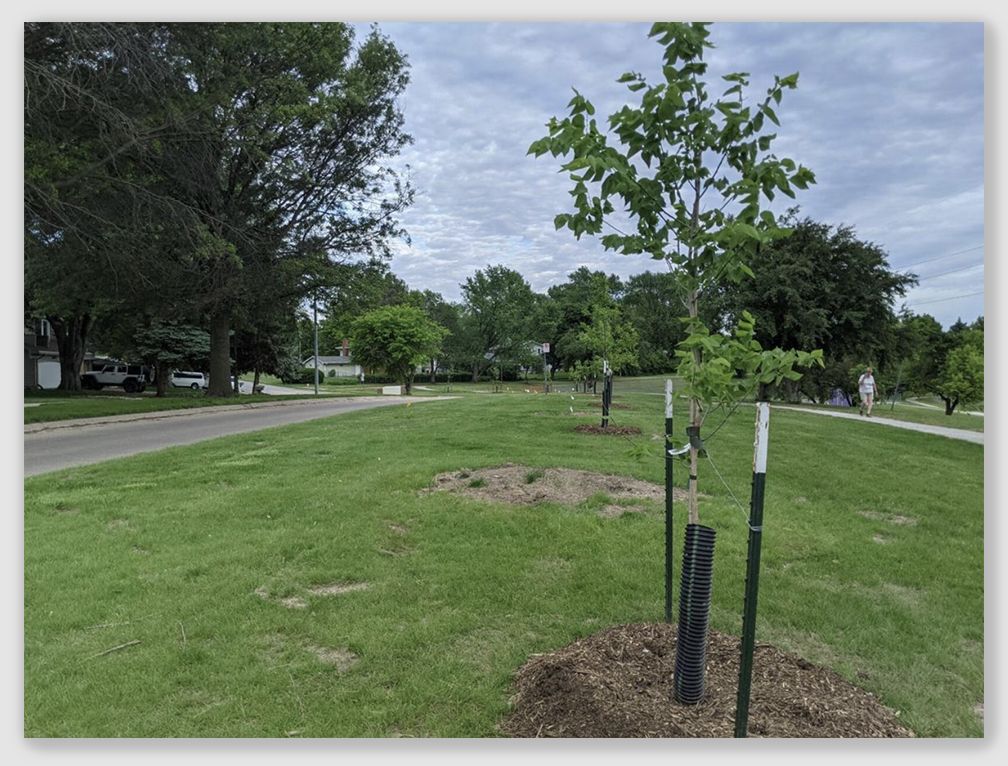
With the fall planting season approaching, the Omaha community is looking to replace trees that fell in the July 10 storm. One local garden center is supporting the effort and encouraging the community to do the same. In the weeks after the storm, for every tree sold at Mulhall’s Garden + Home, the company donated $10 to Keep Omaha Beautiful in support of the Trees for Omaha initiative. With more than $4,100 toward the effort, that’s enough to support the supplies, labor and other costs to plant roughly 20 additional trees in public parks and right-of-ways across the community and maintain them during their critical first year of establishment. Keep Omaha Beautiful estimates that over their lifetime, the additional trees will sequester 185,715 pounds of CO2, prevent 333,835 gallons of storm-water runoff and remove 600 pounds of air pollutants…
Q: Our very large post oak is dropping brown leaves. How much water is enough?
A: Large trees can use copious amounts of water. Some parts of our state have had little rainfall the past month. Starting to water now to make up for dry conditions will help but not stop early leaf shed. The fact that the tree is dropping leaves is a good thing. It just means it is shutting down its season a tad early. Post oaks are usually pretty tough. We are definitely seeing signs of drought stress in landscapes across Central Arkansas, especially in yards that have had no supplemental watering…

Someone in Fort Myers took matters into their own hands when they planted a tree in a pothole to protest the roadway’s poor conditions. Area residents were surprised to find the outlandish sight in the middle of the road earlier this weekend. “They literally put a whole tree in the middle of the road,” said a resident. “I pulled up, and I’m like, ‘Is that really a tree in the middle of the road?’” said Fort Myers resident John Hulker. “I took two takes. I was like, ‘What? What? What is this?’” said local business owner Scott Shine. “Me and my wife started instantly laughing,” said area resident Nicholas Angus. But the tree is no laughing matter, and neither is the pothole where it’s growing. Cars driving down this road have to either veer left or right to get around the tree — just like they have to do if they see the pothole in time. “The tree is actually kind of making it harder to get around the next pothole that’s right next to it,” said Angus, “because I usually just drive over the pothole, but now that there’s a big tree, you can’t drive through a big tree…”
The bur oak (Quercus macrocarpa) is a noble native tree. This oak has large (5- to 9-inch-long), dark-green leaves. The base fiddle-shaped leaves have deep, rounded sinuses. The acorns are most notable for the deep-fringed cups, with only a small portion of the nut showing. The acorns mature in one season, ripening in early- to mid-autumn. The common name is due to the acorns’ resemblance to the spiny bur (or husk) of the chestnut. The bark is a grayish-brown color, with deep ridges and vertical fissures. Bur oaks have an open canopy with a large trunk that supports horizontal limbs. This tree will often be wider than it is tall, making it a great tree for large spaces and less suitable for a small garden. The bur oak is tolerant of many soil conditions, even the occasional drought or flood…

Local experts say the leaves in Western North Carolina are on track to reach their peak yellows and oranges that draw tourists to Western North Carolina in mid-October. “The trees are in good shape, and the leaves look nice. It depends now what the weather does through September and early October,” said Howard Neufeld, professor of plant eco-physiology at Appalachian State University in Boone, who also runs the “Fall Color Guy” Facebook page. The National Weather Service predicts slightly above-average temperatures during the week of Sept. 5 with highs in the low 80s and lows in the high 50s, low 60s. Asheville’s average temperatures in September are about 79 degrees at the highest and 58 degrees at the lowest, according to a National Centers for Environmental Information weather analysis from 1991-2020. Climatologist Rebecca Ward with the State Climate Office, said temperatures should be to their average point by mid-September. But if warm weather persists through the month, not only would WNC’s fall colors be delayed, but the tones could also be less vibrant, Ward said…
“Keep Gulfport Weird” is practically a town motto, found on bumper stickers all over, so it’s fitting that a home listing there landed on the “Zillow Gone Wild” Facebook page. Look past the marble countertops and waterfront view, and there is a giant tree growing in the kitchen with its top sprouting through the roof. Now that tree has new owners, Greg and Linda Simek, who bought the 2,874 square-foot waterfront house for $899,000. Questions like “How did this happen?” and “What are you going to do with that thing in your kitchen?” can finally be answered. The family of Michelle Pillucere Clark, 53, a hair stylist in downtown St. Petersburg, lived in the home from 1963 until 1983. She was not happy with snotty comments online about a house her father thought of as a piece of art…
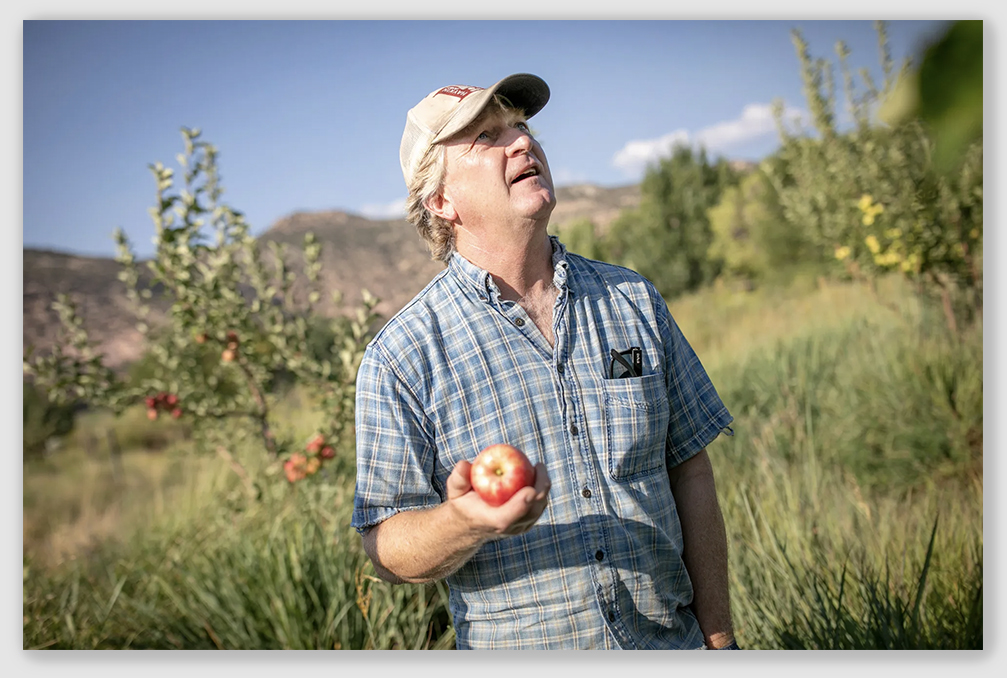
The Montezuma Orchard Restoration Project can be described as many things: an agricultural project, an economic development project, a history project — even an apple scavenger hunt. Jude and Addie Schuenemeyer founded MORP in 2014. It has several orchards in Montezuma County. The Schuenemeyers’ own orchard and nursery in McElmo Canyon grows more than 200 different apple varieties. One of their main goals is to preserve every kind of apple grown in Colorado. Sometimes that involves a treasure hunt — like the Schuenemeyers when he set out to find the Thunderbolt apple. Jude Schuenemeyer said he’d originally seen it in a real estate guide for the Montezuma Valley from the early 1900s. The guide said it grew well on the land and was beloved by the people who lived there. So he did some digging, talking to people who live in the area where it was grown. He eventually found the Thunderbolt in the remnant of an old orchard, but it still took a while before they were able to confirm it was the real deal. “We went and took cuttings and grafted all of them and then started growing them out here,” Schuenemeyer said, gesturing to his orchard where heritage apple trees are spaced far apart to give their root systems room to grow. “And over time we recognized one of those apples matched a Thunderbolt that we had gotten from a place north of Cortez…”
A family in South Knoxville is cleaning up after storms knocked over a massive and historic white oak tree dating back to the early roots of the United States of America. Leigh Ann Dickert said the tree fell after powerful storms from Ida’s remnants moved through Knoxville Monday night, and it nearly fell on top of her and her husband. “In the storms two days ago, we heard a little crack, and my husband stepped outside and saw the big shadow start to fall and started running and yelled to me to get away. It all happened so quickly that I couldn’t move,” she said. “It grabbed the power lines and fell… and he was able to move far enough away… it brushed the back of his leg and fell six feet from me.” Dickert said the white oak was one of the oldest trees in Tennessee, dating back to 1787 when it was planted in honor of the signing of the U.S. Constitution. “It is the second-oldest white oak in the state,” Dickert said. “This tree is very near and dear to us…”
 Kitchener, Ontario, Daily Record, September 1, 2021: More care for our old trees, please!
Our trees and forests have had a punishing year: wildfires in the west, thawing Arctic permafrost that creates “drunken forests” of dead trees, and an exploding gypsy moth caterpillar population stripping trees bare. Land speculators and private owners chop down “inconvenient” trees that stand in the way of human construction. Vancouver Island’s Fairy Creek has become the latest threatened old growth forest facing clear-cutting despite very vocal and active blockades trying to protect them. Inspiring stories keep popping up about people around the world taking on mass tree-planting and restoration projects to rehabilitate disturbed land. Even though they bring back wildlife and lower the ambient temperature of the area, new forests do not provide equal eco-services as old growth forests. Because trees both emit and store carbon, NASA is mapping forest cover around the globe to try and understand the net carbon budget. A study published in Science Advances this year found “gross emissions and removals in the tropics were four times larger than temperate and boreal ecosystems combined,” indicating global differences…
DTE Energy — which is under fire from customers, consumer groups, municipal leaders, the state attorney general, governor, and utility regulators — announced Wednesday it is spending $70 million more to remove trees and trim branches to curb power outages. In addition, DTE President and CEO Jerry Norcia vowed the power company “will do what it takes to protect Michiganders from power outages caused by catastrophic storms and extreme weather patterns.” The announcement comes nearly two weeks after DTE said it “voluntarily issued” $100 credits as a one-time courtesy to business and residential customers who lost power for several days. This summer, customers and consumer groups have been demanding better service from the utility, and sharply criticized what it considered high rates and executive compensation, and low reliability…
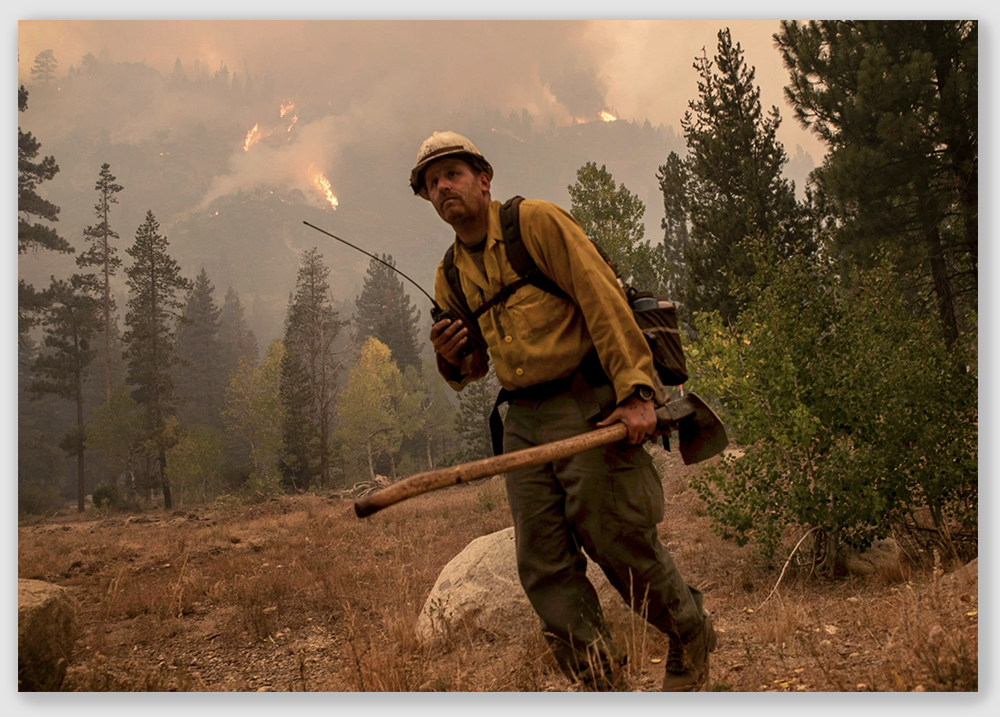
The Caldor Fire threatening communities and breathtakingly scenic landscapes around Lake Tahoe — a destination that Mark Twain once called “the fairest picture the whole earth affords” — is a dramatic, unfolding disaster. But the conditions that led to the evacuation of more than 50,000 people around the famed alpine lake’s south and western shores — where embers rain down on rustic communities and soot chokes the normally pristine mountain air — didn’t spring up this week, this month or this year. They are the culmination of more than 150 years of decisions that people made to unwittingly set the stage for today’s catastrophe, experts say. “We are in an emergency crisis throughout the Sierra,” said Susie Kocher, a forestry and natural resources adviser for the University of California Cooperative Extension in South Lake Tahoe. Kocher, her husband, dog and cat evacuated their home in nearby Meyers on Monday to stay with relatives near Sacramento. Before she moved to the Tahoe area 15 years ago, she lived in Greenville, a small town in Plumas County. Nearly all of Greenville burned to the ground last month when the Dixie Fire raged through the northern Sierra Nevada’s forests…
Forbes, September 1, 2021: One In Three Tree Species Face Extinction, Study Finds
A third of the world’s trees are at risk of extinction as climate change and extreme weather events takes their toll, according to a new study. The State of the World’s Trees report by the Botanic Gardens Conservation International (BGCI) warns that 17,500 tree species – around 30% of the 60,000 around the world – are currently at risk of extinction. It adds more than 440 tree species are right now on the brink of extinction, meaning they have fewer than 50 individuals remaining in the wild. These species are found all over the world, from the Mulanje cedar in Malawi, with only a few remaining individuals on Mulanje Mountain, to the Menai whitebeam found only in North Wales, which has only 30 trees remaining. The report comes after wildfires have recently destroyed forests in California, Greece and Canada. “This report is a wake-up call to everyone around the world that trees need help,” said BGCI secretary general, Paul Smith…

When trees get dressed with the colors of fall, it’s time to go shopping for a new addition to the garden. “If you’re specifically interested in fall color, it will soon be the time to start looking,” said Neil Bell, horticulturist with Oregon State University’s Extension Service. “Trees will start to display color in the next few weeks.” First, though, Bell recommends doing some research. Walk around neighborhoods, parks and public gardens to get ideas. If you can’t identify the trees you like, snap good photos, pick up several leaves or ask the owner for a cutting. Take them to the nursery or to your local OSU Extension office for identification. You can also cut out pictures from magazines and flip through garden books to find possibilities. But wait, you’re not done. After filtering down your favorites, be absolutely sure about size, soil and sun requirements, Bell said. You don’t want to be stuck with a 60-foot tree where a 30-foot tree should have gone…
Trees are among the planet’s strongest warriors in the fight against climate change. We walk by them, perhaps pausing in their shade or noticing their beauty. We rarely pause to calculate how much pollution they’re removing from our air, how much oxygen they produce, or how much carbon dioxide they are guzzling and storing away. There’s a growing body of research that suggests trees not only benefit our planet, but also our physical and mental well-being. We want to know about the trees you care about, why they’re special to you and how you think they benefit you or your neighborhood. We hope to share your stories at wbur.org and on social media. To participate, email WBUR multi-platform editor Meghan Kelly (meghan@bu.edu) a photo or two of your favorite tree along with a short explanation about how it helps you, your loved ones or your neighborhood. Note: Please include “tree project” in the subject line. We prefer horizontal images, if you can pull it off, but we get that trees are vertically shaped…
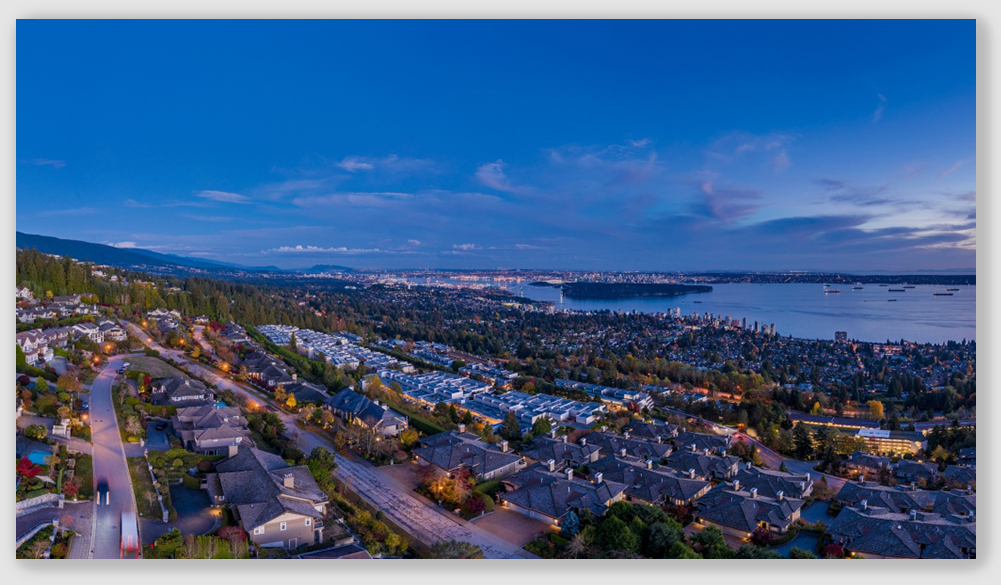
A West Vancouver homeowner has been ordered by a B.C. court to keep off his neighbour’s property and pay her $48,000 after he cut the tops off of her cedar trees. The ruling follows a multi-year spat between two families who lived next door to each other in newly-constructed homes with private outdoor swimming pools and ocean views, both located on multi-million dollar properties in one of Canada’s wealthiest postal codes. Erminia Minicucci had her home custom-built in a residential area of a West Vancouver hillside with plans to stay for the long term and retire there, read court documents. But with her neighbours, Yang Liu and Ying Liang, also building their home on the lot above hers, she worried about her privacy. So in July 2017, Minicucci paid landscapers $38,000 to plant 28 trees along the property line she shared with Liu and Liang. Nearly a year later, Liu complained to Minicucci and her husband that the trees, a mix of 10-foot tall and 25-foot tall cedars – which had by then grown by three feet – were interfering with the view from his three-storey home. Liu asked if he could trim the trees. The Minicucci’s said no… Liu didn’t take the Minicucci’s no for an answer. Instead, when his neighbours were on vacation in the summer of 2018, he snuck onto their property with a ladder and lobbed the tops off “numerous” trees, says the ruling…
Three years after clear-cutting of trees on Erie Canal embankments was halted by court order, the New York State Canal Corp. is seeking public comment on a written policy on tree removal. The policy would cover 125 miles of embankments all over the state, including about 60 miles between Lockport and Rochester. Up for comment until Oct. 15 are a maintenance guidebook and a generic environmental impact statement that says the Canal Corp. will “remove trees and brush smaller than 3 inches in diameter at breast height that impede inspections, and trees larger than 3 inches that are dead, diseased, and imminently dangerous to property and people.” The impact statement said that the Canal Corp. decided against clear-cutting trees along the 524-mile canal system. The trees grew up wild since the original canal was upgraded to the Barge Canal a little more than 100 years ago, Canal Corp. spokesman Shane Mahar said. Tree removal plans may run afoul of habitat for endangered species or local zoning codes and comprehensive plans that may apply to the canal banks, said James Candiloro, director of environmental health and safety for the Canal Corp…
 National Geographic, August 31, 2021: Why city trees can be good for kids’ brains
With three kids under eight years old, New York City parents Kimberly and Sam Leopold made proximity to nature the top must-have during their recent apartment search. “We spend time in a park two or three times a day,” says Kimberly, who lives in a 750-square-foot South Harlem apartment with her husband and daughters. “Honestly, it’s a matter of survival. The kids are just happier when they can play and explore outdoors.” And it turns out that a regular infusion of nature—in particular, seeing and being around trees—could help bolster kids’ thinking and reasoning skills, too. A recent British study of more than 3,500 city-dwelling children and teenagers from across London found that having a higher daily exposure to woodlands (basically, places with trees) can help kids’ cognitive development. The good news is that kids can—and should—get a daily dose of trees and other nature even if your family lives in a city or suburb, says Tim Beatley, founder and executive director of Biophilic Cities, which advocates for future cities in which residents are surrounded by nature…
Nut allergies have led to food policy changes in schools, airplanes, and workplaces around the country. For some, allergic reactions can be potentially fatal. But are all nut allergies created equal? According to a new study, most people diagnosed with a nut allergy may actually only have a sensitivity to birch pollen. Tree nut allergies are among the most common food allergies in both children and adults. The six tree nut allergies most commonly reported are sensitivities to walnut, almond, hazelnut, pecan, cashew and pistachio. When a person with an allergy to a particular tree nut is exposed to that tree nut, proteins in the nut bind to specific antibodies made by the person’s immune system. This binding triggers the person’s immune defenses, leading to reaction symptoms that can be mild or very severe…

On July 29, the city of Northampton cut down the row of Kwanzan Japanese cherry trees that lined Warfield Place, despite strong opposition from those who live on the street. The lawsuit, filed Wednesday in Hampshire Superior Court, says that the city violated state law by refusing to hold a public hearing before the trees came down. In an interview with the Globe last month, Northampton Mayor David Narkewicz said the city did not have to hold such a hearing as state law allows for an exemption from the requirement for a project like the one on Warfield Place. The tree removal is part of a multi-street paving program planned by the city. The lawsuit also claims that the city took down the trees “without any prior warning” despite previously informing neighbors that they would be notified of any times when parking is prohibited. Instead, residents say that members of the Northampton police department, fire department, and Department of Public Works arrived without any warning on the morning of July 29 with tow trucks to begin clearing the trees. That same day — and just hours after the city workers had arrived on the street — Warfield Place residents obtained a temporary restraining order to prevent the city from cutting and removing the trees before an official hearing was held…
On the corner of Burrows and Allyn streets is a fortress of towering hedges and intertwining maple, oak and pine trees so thick, it’s easy to miss the small yellow house within when driving by. Daniel Sims, the owner, stopped mowing his lawn years ago to form what he calls his “bird sanctuary.” Following Tropical Storm Henri on Aug. 22, Sims discovered that one side of a large white pine in his backyard had split and fallen on top of neighboring trees and his shed. “I didn’t see or hear it fall,” he said. Sims, like most Connecticut residents, loves trees, which provide shade and privacy, but rarely thinks twice about trimming or removing them — that is, until severe weather is forecast. About 60% of the state is forested and 73% of that is owned by individuals, families, land trusts, Native American tribes and corporations, according to the state. Municipalities own an additional 9%, and the rest is state owned and includes forests in state parks and along highways. Ownership, however, is not always clear and maintenance is not always easy, especially when tree removal is costly and there has been a rising number of dying trees in the state due to widespread aging and pests…
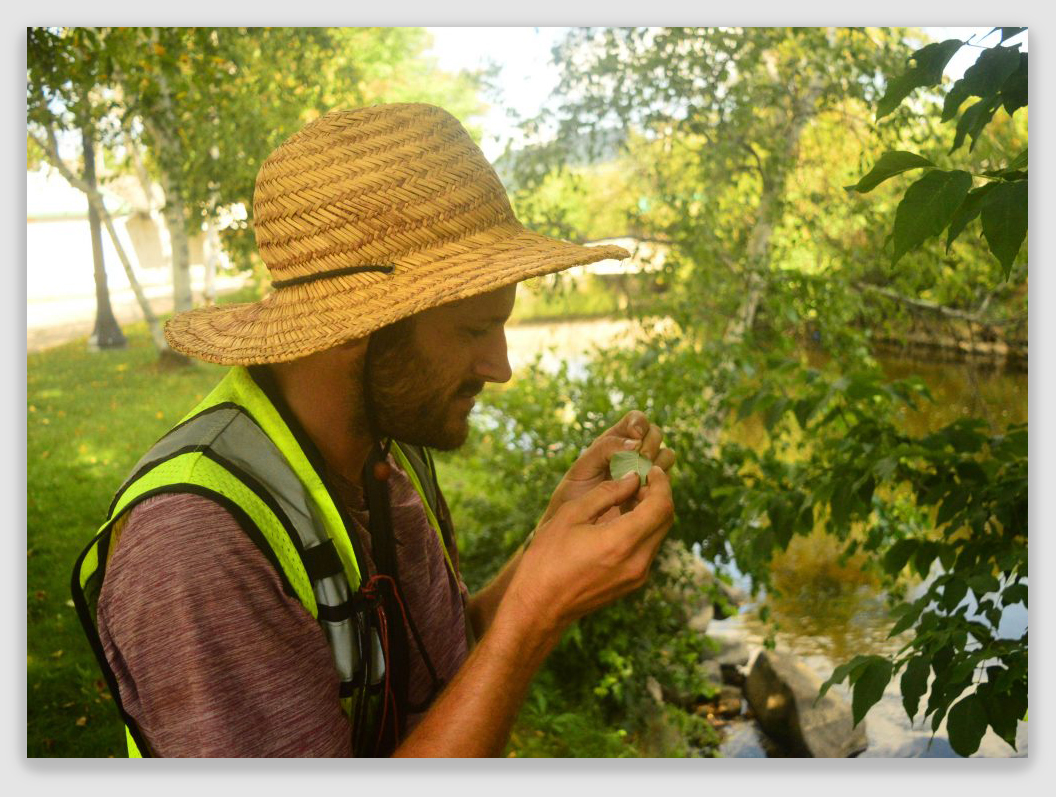 Saranac Lake, New York, Adirondack Daily Enterprise, August 26, 2021: State of the tree
Edwin McGrath is walking around the village this week looking at trees. He’s an arborist with the urban forestry consulting company ArborPro Inc., which has been contracted by the village of Saranac Lake to take a census of all the leafy and piny growth within the 2.78-square-mile village limits. The data he collects will be used to create a forest management plan. The village will use this plan to care for its trees in the coming years as it looks to plant more in the downtown corridor and in village parks. The plan will also outline how the village will combat invasive species, remove and plant trees, and keep its streets green. “There’s a lot of benefits to an urban forest, the aesthetics of it, shade — it helps keeps things cooler — stormwater capture,” village Community Development Director Jamie Konkoski said. “It’s really valuable.” The village was awarded $12,800 by the state Department of Environmental Conservation’s Urban and Community Forestry Program for this survey and plan. The $10 million Downtown Revitalization Initiative grant the village won in 2018 also includes some funding to increase the number of trees planted downtown…
St. Louis, Missouri, Post-Dispatch, August 29, 2021: Be sure to expose root flare when planting tree
Q. I am planning on having some trees planted this fall, but I don’t know much about plants. How do I make sure that my trees are being planted properly?
A. One of the most common mistakes when planting a tree is planting it too deep and not exposing the root flare. This is the point where the tree’s trunk widens above the soil line and indicates where the trunk ends and the root system begins. To ensure the tree is planted at the proper depth, make sure that the flare is above the soil line or grade. Planting a tree too deep can cause problems such as poor root growth, reduced canopy growth or even premature death, which can occur weeks to years after planting. If your tree looks like a telephone pole growing straight out of the ground, carefully remove soil until you see the trunk taper out. Find a great diagram of how a tree should be planted according to industry standards at cityofaspen.com/DocumentCenter/View/4632/Tree-Planting-Detail-2021…
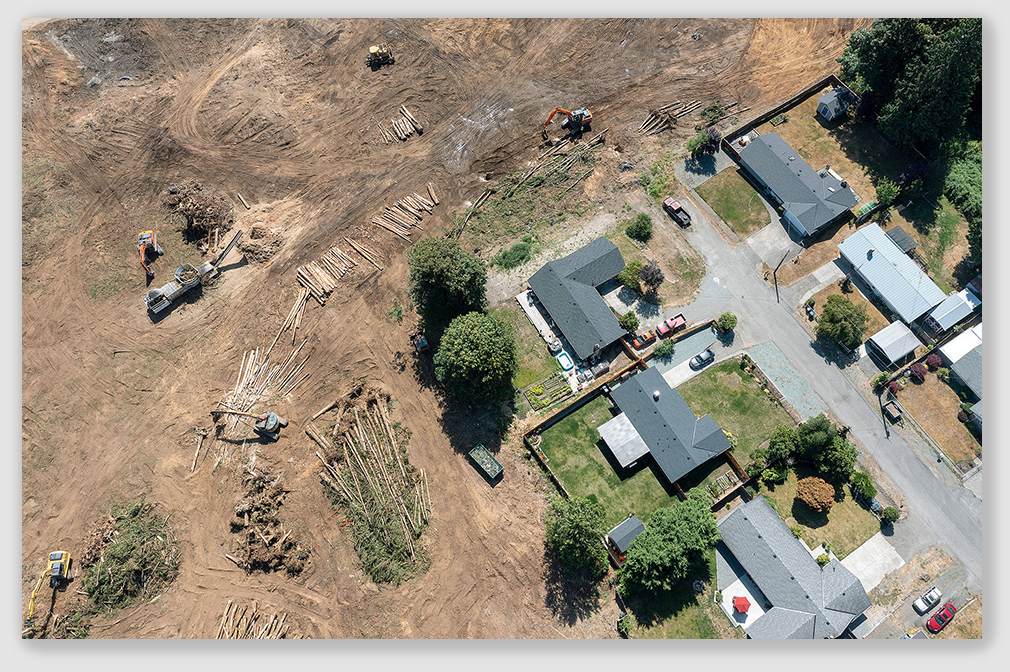
The lush green backdrop residents on 93rd Drive SE once enjoyed has turned brown, hot and dusty. Costco construction is underway. “The trees are gone,” said Doug Turner, former owner of Turner’s Grocery and a member of Livable Lake Stevens. Environmental degradation is a byproduct of development, something that Livable Lake Stevens, a group that opposed the construction of Costco, attempted to prevent through a Land Use Petition Act lawsuit. Developers say they plan to plant three trees for every mature tree they cut. But not all of those will be on the Costco land off 20th Street SE. When all is said and done, nearly 2,000 will be planted on the nearly 40-acre lot. The rest, more than 3,000, will be planted elsewhere. The company, according to a memo from Costco’s wetland, stream, traffic, geotechnical and stormwater consultants, also will provide a monetary contribution to the city’s tree fund. In the meantime, the site will be canopy-deprived…
When tornadoes swept through the western suburbs late on a Sunday this June, they flattened homes and buildings and also toppled or damaged uncounted trees in the leafy communities of Woodridge, Naperville, Darien and unincorporated Downers Grove Township. Soon after, the phone started to ring at the Morton Arboretum in Lisle, which was just 5 miles north of where one tornado struck. The arboretum serves as a resource to give plant and tree advice in the Chicago area and homeowners were wondering what they should do, said Murphy Westwood, vice president of science and conservation. Should they replant? The Morton Arboretum announced Monday that it would give away up to 300 trees to private homeowners who lost trees in the June storms. Homeowners can request one tree per address on a first-come, first-served basis by completing a Tornado Recovery Tree Request Form set up by the arboretum. (Only those who lost a tree due to the June 20 tornadoes are eligible.) They will be notified of their selection at the end of October and trees will be delivered to communities for pickup in spring 2022. The arboretum was already on track to give away 1,000 trees next year to celebrate its 100th anniversary; 300 of those trees through the Centennial Tree Planting Initiative will now be used for tornado recovery for private homeowners, Westwood said…
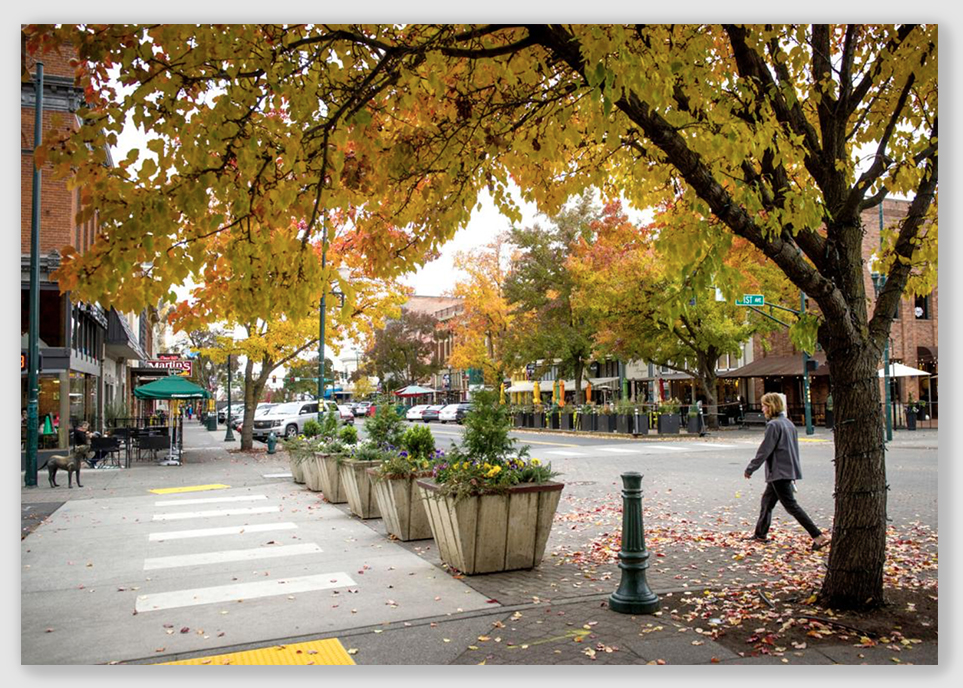
Would you like to weigh in on Walla Walla’s plan for managing the 7,000-plus trees in the city’s urban forest? You have until Aug. 30 to send city officials a note. Walla Walla City Council heard all about urban forest management at a recent public work session. It was here that an updated ArborPro Urban Forestry Management Plan was presented in draft state to city officials. Now the Parks and Recreation Department has opened an input period for the public to comment on the plan until Monday, Aug. 30. Input or questions can be submitted to Parks Director Andy Coleman or mailed to the department. “We’re doing the public input process right now for folks to have time to read the plan because it is 50-some pages, so it takes some time to dig into,” Coleman said. After that, the draft plan will be taken to the Parks and Recreation and Urban Forestry Advisory Board on Sept. 13. Walla Walla City Council is set to vote on the plan Sept. 22. Both meetings have opportunity for public comment…
Nature, August 12, 2021: Clouds plus trees equals cooler climes at mid-latitudes
Planting trees in the zone between the tropics and the poles creates more clouds, which help to cool the planet. Forests pull heat-trapping carbon dioxide out of the atmosphere. In tropical regions, the trees are so dense that the resulting cooling outweighs warming from the heat absorbed by their dark foliage. But forests at higher latitudes, such as those in parts of Europe and North America, are sparser than forests in the tropics. Scientists have debated whether mid-latitude forests’ heat absorption outweighs the cooling from their CO2 absorption. Amilcare Porporato at Princeton University in New Jersey and his colleagues studied satellite data on global land cover and modelled cloud formation over various types of vegetation. They found that at latitudes between 30 and 45 degrees, clouds are more numerous, and form earlier in the day, above forests than above other types of vegetation. The extra clouds reflect additional light and mean that the forests have an overall cooling effect…

PG&E Corp. inspectors had found no problems with power lines, power poles or the tree linked to the Dixie fire raging in Northern California, according to a summary of inspection records the utility released Monday. Under investigation in connection with the fire, which has become the second largest in California history, PG&E said its crews conducted routine inspections May 13 of the two power poles located where the fire started and found nothing wrong. The last previous inspection was in December 2016. “These inspections did not result in any findings that required corrective action at or between poles 908 and 909,” the utility said. Similarly, PG&E said a Jan. 14 inspection of the tree that may have sparked the fire found no problems. The utility also released a picture from 2019 of one of the power poles “and the tree that PG&E believes to be the tree of interest.” The tree was due to be inspected again Sept. 21. The company has already reported to the California Public Utilities Commission that an employee spotted a “healthy green tree” leaning against a conductor on a pole July 13, and fire burning on the ground near the base of the tree. At 489,287 acres, the Dixie fire trails only last year’s August Complex fire, which burned just over 1 million acres. Last week, the Dixie fire destroyed most of downtown Greenville, a community of about 1,000 people in Plumas County. PG&E is under intense scrutiny over wildfires and is spending billions of dollars a year to trim tree limbs and take other corrective actions aimed at improving fire safety…
Contractors hired after the derecho to mark damaged trees for removal put an orange X on the trunk of a Katsura tree on Blake Boulevard SE, but City Arborist Todd Fagan gave the tree a pardon. After all, it was one of only 38 Katsuras on city-owned property before the derecho and one of the biggest, with a 7-inch-diameter trunk at last measurement. Katsura trees come from Japan, but grow well in the Midwest and have peachy-gold leaves in the fall. And with subalternate buds — something only a “geeky tree guy” would know — Fagan couldn’t let the tree be cut down. “No, you’re not,” Fagan said, pointing to the orange circle he sprayed around the X last year to spare the Katsura from the chain saw. In 2015, Cedar Rapids created an inventory of all trees on city rights of way. Before the derecho, the inventory helped city employees maintain a pruning schedule, know which trees to treat for emerald ash borer and set a value of the urban forest. A city intern visits one-quarter of the trees each summer to make sure they still are standing, record new trunk size and note significant damage and disease. After the Aug. 10 storm destroyed nearly 20 percent of the city-owned trees, city staff are using the inventory to track which trees have been removed, which stumps still need grinding and which species to replant and where, Fagan said…

Summer storms have damaged trees, some more than 100 years old, in communities across the state. Homeowners in these communities, including Woodridge and Naperville which were hit by an EF-3 tornado this summer, are now struggling to find the best ways to clean up after a tree is damaged and the proper way to restore trees and woodlands. From watching the light flicker through a tree’s green canopy in summer to enjoying the falling cascade of red, yellow, and brown leaves in the fall, trees serve as a symbol for many homeowners. Storms can damage or destroy long-living trees and the memories they carry with them. What happens after a storm damages trees? When a tree becomes damaged by a storm, or another type of disturbance, it not only affects the immediate area, but also the surrounding trees. “Trees are usually very resilient to damage,” says University of Illinois Extension horticulture educator Ryan Pankau. “But when a storm or disease takes out parts of a tree, it exposes the other trees in the area differently, and you may see damage to them years down the line.” After a disturbance, sunlight can now reach the understory, which exposes the soil and creates opportunities for new plants to fill those gaps. Those gaps can be filled by younger trees or plants, but also by less desirable plants, such as invasive weedy species. And, a thinning tree canopy from storm damage can reduce a tree’s capacity to filter wind. “Trees with thicker canopies act like a sail during high winds,” says Christopher Enroth, Illinois Extension horticulture educator. “But when topped, small, new branches have a very weak attachment to the tree itself, making it less stable overall…”
A material found in the wood of our plants is being trialled as a way to produce sustainable battery power. Finnish designers Stora Enso have built a new production facility costing €10 million that will create renewable bio-based carbon by turning trees into batteries. This will be achieved by the use of a wood-based material called lignin. The plant is based beside the company’s Sunila Mill in Kotka, southern Finland, which employs over 150 people and specialises in producing softwood pulp, and biofuels like tall oil and turpentine. The company is responsible for developing a number of wood and biomaterial-based solutions for everyday problems that require eco-friendly solutions. Their innovative product offerings range from mouldable woods to formed fiber food packaging. Not to be confused with the Swedish berry, lignin is nature’s second most common macromolecule after cellulose, deposited in the cell wall of plants to make their structure firm and woody to prevent them from rotting. It makes up around a third of all wood’s total composition…
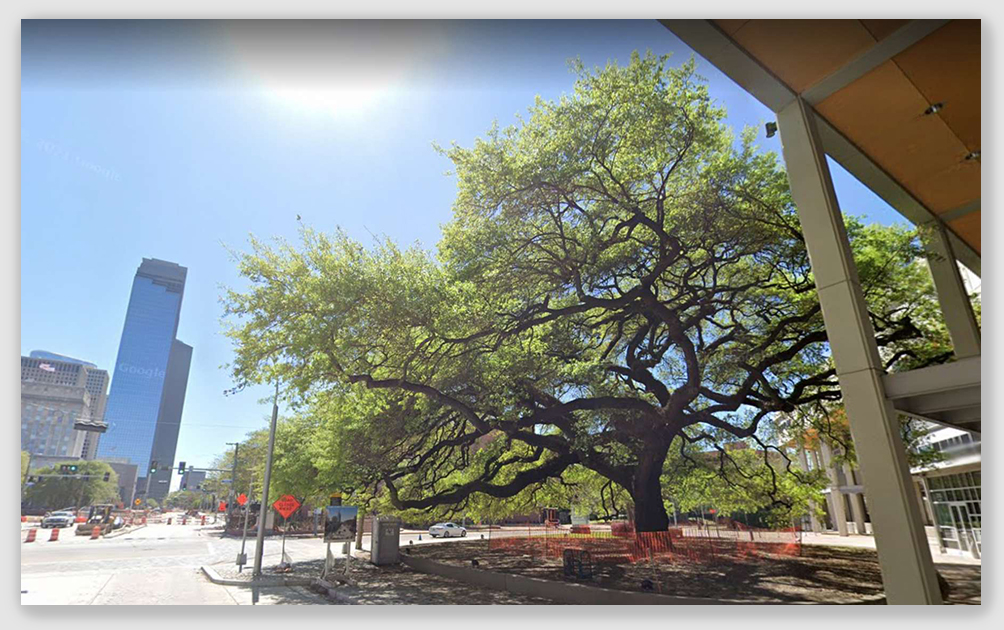 Houston, Texas, Chronicle, August 9, 2021: Why Houston’s oldest tree needs a new identity
Houston is home to a centuries-old tree in search of a new identity. Located near the corner of Bagby and Capitol streets in downtown Houston, a massive, 400-year-old tree dubbed the “Old Hanging Oak” is believed to be the city’s longest-surviving tree. With a little luck and ingenuity, it will outlive us all. What we should let die, however, is the fake story of the oak’s morbid tenure as hanging gallows. As recently as the late 20th century, legend told of nearly a dozen men hanged from its boughs when Texas was just a republic. Unfortunately for perpetuators of the myth, the truth is much different than the tale. The case is stacked against any notion that the tree was used to hang anyone. Authors Louis F. Aulbach and Linda Gorski did the research and concluded no one was ever hanged from its branches. There were other trees nearby confirmed to have hosted hangings, according to a 2006 post in Bayou City History, but not our lovely oak. A city-funded plaque dedicated in the 1990s prolonged the lie, although even it admitted that the claim was disputed at the time it was erected…
Portland, Maine, WCSH-TV, August 9, 2021: Planting a tree this fall? Start planning now
The best time to plant a tree is ten years ago. It’s an old saying, but these days you really do need to plan ahead. It is no secret that there is a major labor shortage right now. All businesses seem to be struggling to find enough people to meet demand. Landscaping contractors are no different. There are also supply issues for garden centers depending on what you are trying to find. For those reasons Tom Estabrook of Estabrook’s in Yarmouth suggests starting early if you are planning to plant a tree this fall. If you are putting in a large tree you will likely need some help. Estabrook suggests finding a contractor now and lining them up for the fall. If you are going to plant the tree yourself great! We are actually in really good shape for that right now. July was a rainy month so the ground is well watered. Typically if you plant a tree in the summer you are worried about keeping it wet enough. That shouldn’t be a major issue right now. Trees are not going to grow a lot if you plant them now they will be focused instead on rooting. For that reason Estabrook suggests you add a root stimulant to tree you are planning to put in the ground. One of his favorites, Biotone, attaches to the roots and causes them to branch. That will establish a solid root system…
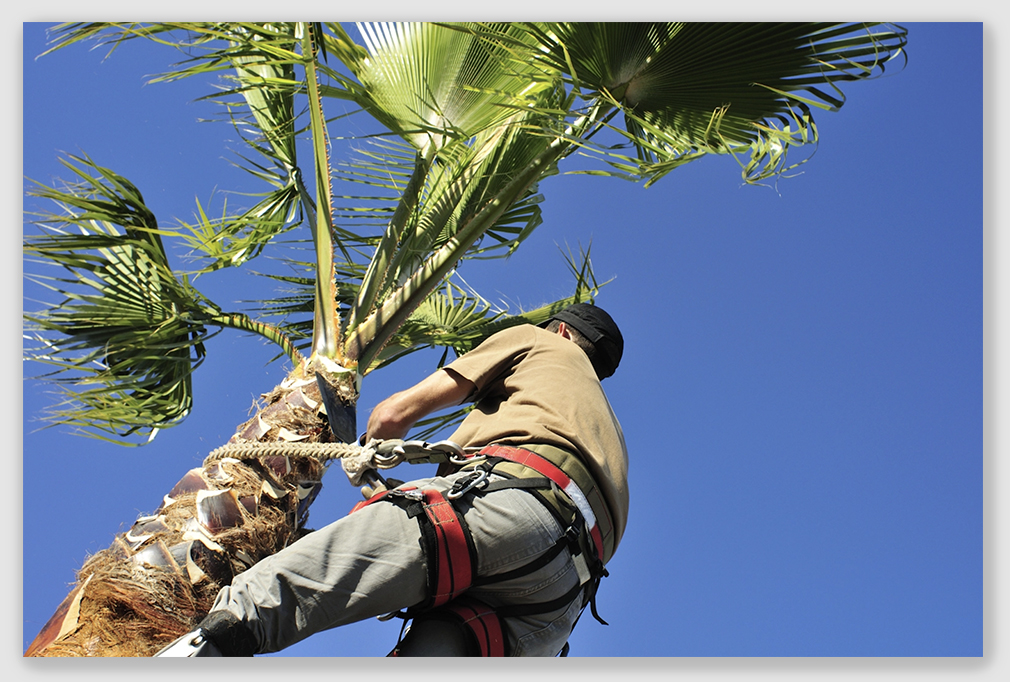
With their towering heights and lush green canopies, palm trees are a beloved part of Southern California’s skyline. But if they are covered with dead material that gets ignited, sometimes they light up the sky. Gary Gragg, founder of Golden Gate Palms in Richmond, called them candles covered in gasoline. “The worst thing anybody could have is a giant, never-trimmed tree that has all this dead material in it. They’re probably the most flammable things on the landscape,” said Gragg, who also hosted an HGTV series called “Superscapes” in 2009. But before they tackle trimming issues, homeowners should know if palm trees should be in their yards in the first place, according to David Guzman, Vegetation Management and Forestry manager with Southern California Edison. “A lot of people like to grow palm trees in their backyards because they have pools and want a tropical landscape. We will stress the fact that you want to put the tree in the right place,” he said in a separate phone interview. “These palm trees should not be within 50 feet of our electrical facilities.” In March, the utility announced a two-year project to remove about 11,000 palms that are too close to power lines from properties throughout its coverage area. Communities included Simi Valley, Santa Clarita, La Cañada Flintridge, Malibu, Lake Elsinore and Santa Ana. Palms are tropical plants, and most aren’t native to Southern California. There are more than 2,500 species in many shapes and sizes. Some plants thought of as palm trees are actually cycads, which reproduce via flowers…
New York City, The Wall Street Journal, August 7, 2021: The Scientific Thrill of the Charcoal Grill
The evening air here in London has acquired the distinctive signature of summer: the smell of barbecues. The sources are mostly out of sight, hidden in dozens of gardens and backyards, but on a warm evening the whiff of smoke fills entire neighborhoods. It’s distinctive because it’s the only time we burn charcoal, an ancient fuel that still has a place in a modern city. But you can burn lots of things to generate enough heat to cook food, so why is it always charcoal? It turns out that the key is the opposite of a magic ingredient—it’s more about what charcoal lacks. The starting point for most charcoal is wood, a useful fuel because it’s full of molecules that can react with oxygen and give out heat in the process. Wood is both the internal scaffolding that can hold a tree up for decades and also the tree’s plumbing and storage system. The strength comes from cellulose and lignin, long molecules with carbon backbones that form a thin wall around every cell in the tree. These molecules are what make wood useful as fuel. Each cell is a single brick in the structure of the tree, packed together tightly. The cell innards and the fluids stored in the narrow pipes that run up and down the trunk have less stored energy because they’re mostly water. When you start to heat wood to start a fire, the first thing that happens is that the water evaporates. As the temperature starts to rise further, toward 400-500°F, the lignin and cellulose start to break down, but don’t burn yet. The heat causes other molecules in the wood to escape as gases, and these burn in the air just above the wood surface. When you start a log fire, these are the flames you’re seeing: The bright flames are due to the mix of gases that are driven off the wood…
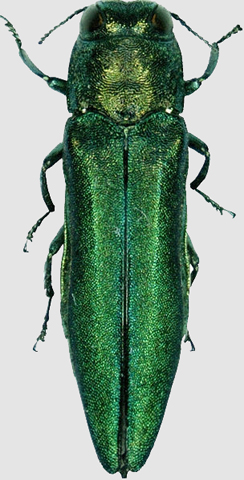
Before you squash that weird-looking bug, local scientists are asking people to check if it’s one of a handful of invasive species that may be on the move in Cowlitz County. Washington State University Master Gardener Alice Slusher said that “citizen scientists like you and me are the ones that have reported some of the problem ones before” they become widespread, so participating in the National Tree Check month is important. “The Invasive Species Council website is amazing, so get in there and look at all the priority insects,” Slusher said. “Some are here and we know they’re here, and some aren’t, but it’s a fun hobby.” State officials are asking people to check trees, lights, outdoor equipment and standing water in their yards for harmful bugs. Slusher said that water sources such as dog bowls, pans of water for chickens, or light fixtures are places bugs are attracted to and sometimes die in, making them good places to survey what insects are around…
Police arrested a man they say was involved in cutting down or trimming about a dozen trees on the median of a Winnipeg street to make way for a large house that was being moved. At about 7 a.m. Saturday, police traffic units were facilitating the move of a large house on Roblin Boulevard, police said in a news release. The moving company had a permit to move the house out of the city, and officers confirmed the load dimensions were specified in the permit. However, police say the operator clearly hadn’t confirmed the accessibility of the route, as required in the permit. Officers in the area reported multiple trees along the route had been deliberately felled or trimmed without permission. A man associated with the move was arrested and charged with mischief over $5,000. The move was temporarily halted…
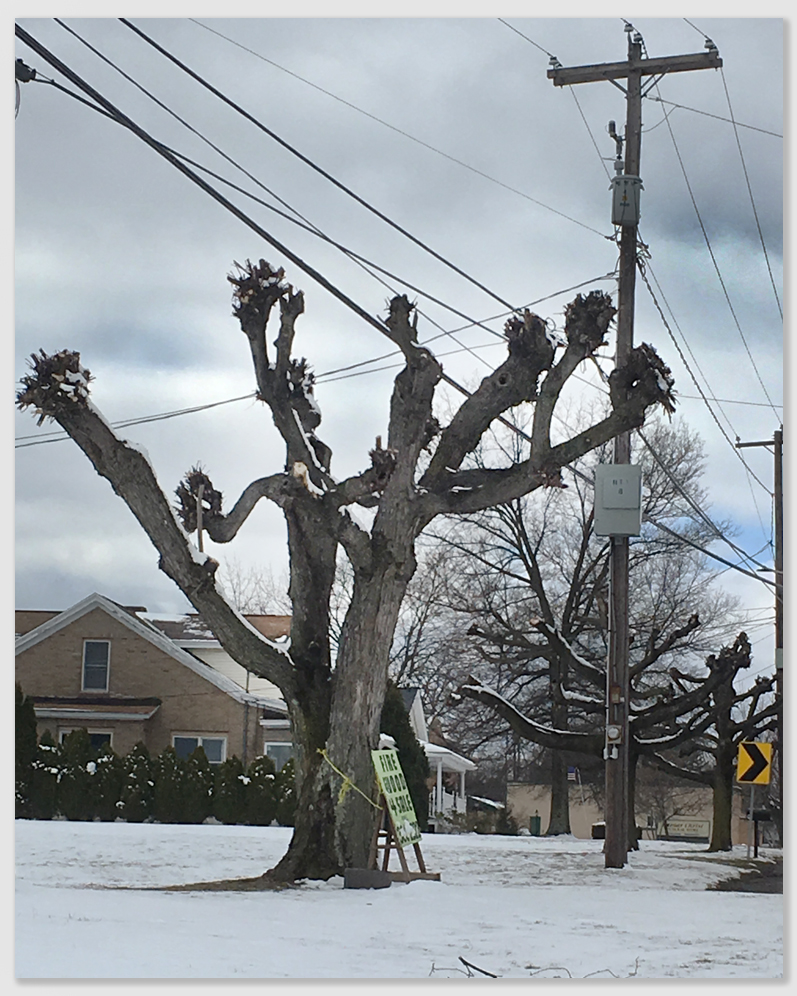
“Topping” is the removal of a large portion of a tree’s crown to make it smaller and/or rounded. This misguided practice has reduced the life span and created hazardous situations of many shade trees throughout our community. There are three basic rules for pruning shade trees: 1. Never remove more than 25% of the leaf surface area at one given pruning (annually); 2. When reducing the size of a limb, make sure that the lateral branch (the one that you intend to leave as the new end) is at least one-third the size of the branch that you are removing; and 3. Never make a cut on a tree without a good reason (i.e. dead or rubbing limbs, branch level, house clearance, limbs with defects, etc). “Topping” breaks all of these rules. Let me explain. The physiological process of a tree’s response to a topping cut is rather simple. The leaf surface produces food through photosynthesis. The woody portions of a tree (i.e. trunk, limbs, roots) use what they need and store the surplus. When a tree is in relative good health (with adequate stored food) and it is topped, the tree will grow back rapidly (4-5 times its normal growth rate) until it recovers lost leaf surface. For example, silver maples grow between 12-16 inches each year. If you “top” it, the tree will respond by producing adventitious sprouts, commonly referred to as “suckers.” These suckers will grow 4 to 5 feet or more the next season and continue at that rate until it reaches the same size that it was before the damage. If the tree is not in good health when the damage is done, the tree may die outright. More frequently, the tree will begin a downward spiral of decline until its inevitable failure…
Open Access Government, August 9, 2021: Researchers to make trees more resilient to climate change
Six research teams across the UK will receive a share of £10.5 million to help trees adapt to climate change and capture greenhouse gas emissions. Expanding the UK’s trees, woodlands and forests will help the government to reach its net-zero greenhouse gas emissions by 2050, however, our treescapes need to become more resilient to pressures such as changing climate. The six projects, which will receive funding from UK Research and Innovation, aim to: (1) Understand how local authorities are meeting their tree planting targets, the cultural significance of trees to communities and how well they capture greenhouse gases; (2) Work creatively with young people to co-produce new approaches to creating and caring for treescapes that benefit the environment and society; (3) Investigate how trees respond to stress and pass on that memory to future generations; (4) Assess the potential of woodland restoration along over 200,000 km of England’s rivers and bodies of water; (5) Examine how community forests enable stakeholders to work in partnership to deliver multiple benefits from forests; and (6) Study whether trees can adapt effectively to climate change, pests and diseases…
For scientists, building a true understanding of how climate change is affecting the planet is complicated. A conversation in a Portland pub led to one solution — find the tree at the bottom of the world and see how it’s being affected by rising temperatures. The idea took root a few years ago when University of Colorado associate professor Brian Buma attended a landscape ecology conference in Portland. Afterward, he went out for a beer with Portland State University geography associate professor, Andrés Holz. Common interests had them chatting about everything from climate change to a study of the northernmost trees in Siberia. And that got them thinking. “The southern hemisphere is very understudied compared to the northern hemisphere,” Buma said. Climate change likely impacts trees at the top of the world differently from those at the bottom. The northern hemisphere is dominated by large, dry land masses, such as Russia and North America, whereas the southern hemisphere is dominated by oceans. The scientists pitched the idea of an expedition to find the southernmost tree to the National Geographic Society, which agreed to sponsor a team of a dozen scientists along with the Universidad des Magallanes in Chile. The researchers studied everything from the southernmost tree to invasive species, birds and possible ancient human settlement…
Residents in Eastchester say a neighborhood tree is creating chaos every time a storm blows in. Denise Cox, who lives nearby, says the tree pulled down a wire last year. “As soon as it’s windy, branches come down,” she said. “A branch is going to break off and kill someone.” Neighbors say they’ve tried submitting 311 requests and calling the New York City Parks Department to remove the tree, but there’s been little progress over nearly two years. “What has to happen? Does it have to fall and kill somebody for someone to come out and take care of this tree?” Cox said. The Parks Department said in a statement, “We are sending one of our expert foresters to the site for inspection; noting, we have not directly received a request for this condition.”
An inspector checked the tree Thursday while News 12 was present. While he couldn’t speak on-camera, neighbors say he told them the department would likely come back within two days. Residents, however, remain skeptical…
<img 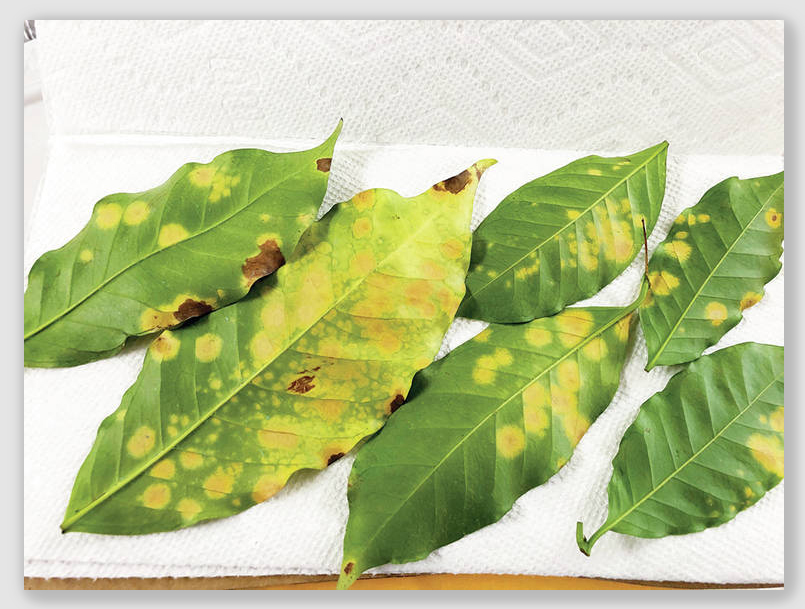 Lihue, Hawaii, The Garden Island, July 28, 2021: Farmers tackle new threat to island coffee trees
The most-destructive disease known to the coffee plant has arrived on Kaua‘i, putting local growers on high alert. Less than one year after the state’s first reported case of coffee leaf rust occurred in Maui, the blight’s presence has now been established on all major Hawaiian islands. Coffee leaf rust, which is caused by the fungus Hemileia vastatrix, can lead to defoliation, reduced fruit size and plant death. Local grower Ben Fitt of Outpost Coffee was the first to report the disease on Kaua‘i while tending to his one-acre orchard on the North Shore in late June. “I came across some interesting markings on some of the leaves and had a look, and I was pretty certain it was coffee leaf rust,” Fitt said. Fitt immediately contacted the state Department of Agriculture, which sent a field agent to collect laboratory samples. The results came back as CLR on July 9. However, the fungus had been on Kaua‘i for at least six months prior to Fitt’s discovery, according to a department announcement released last week. No one will ever know how the rust took hold in Fitt’s orchard, which follows stringent protocols intended to mitigate the risk of infection. In addition, the state has restricted the movement of affected islands’ coffee plants and other potential hosts since CLR’s first appearance in Hawai‘i last October. Coffee leaf rust was first documented in Africa in 1861, according to the U.S. Department of Agriculture, which claims it was next spotted in Sri Lanka six years later, where it ruined that country’s coffee production within a decade. The disease has since been found in all major coffee-producing countries. “I can only speculate as to how it got over. We took every step we can to prevent it. It’s just so contagious,” said Fitt, who hopes to destigmatize growers dealing with rust and other agricultural ills…
People across the Lowcountry are concerned about more than 70 grand trees that could be cut down if the City of Charleston and County of Charleston’s Boards of Zoning Appeals approve the applications. According to the agenda for the city’s Board of Zoning Appeals meeting Aug. 4, there are applications submitted to remove about 75 grand trees all across the area, including Johns Island, James Island, West Ashley and Cainhoy. The agenda for the county’s Board of Zoning Appeals shows they are considering applications for the removal of eight grand trees: two on Wigeon Lane and six on Stoney Road. According to city and county codes, grand trees are protected, so in many circumstances, a developer or property owner has to get special approval to cut them down. Franny Henty, who lives on James Island, said she is actively fighting this and wants the community to help. “Get involved and let your voice be heard,” she said. “Trees are a part of the infrastructure. They need to keep in mind they’re not just taking down a tree, they’re taking down something that holds water and is beautiful and provides shade. It also has an element there that it helps with pollution and the air…”
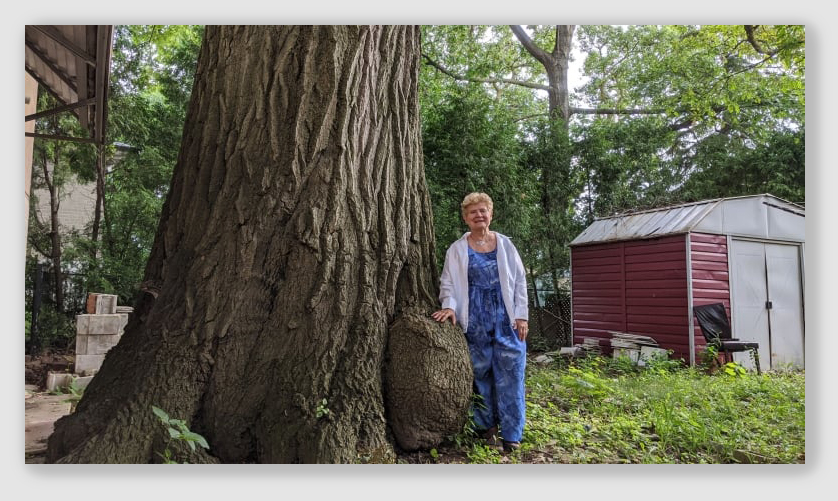
A legal battle is brewing between the City of Toronto and the property owner of a 250-year-old heritage tree refusing to sell — the latest snag in a years-long community push to protect the famous red oak. The city entered an agreement with the home’s owner, Ali Simaga, in December 2019 to purchase the North York house for $780,000 with certain conditions, including that the community raise $400,000 within a year to go toward the purchase and maintenance of the tree, according to the city’s court application filed this May. The plan was to demolish the house and transform the property into a parkette to showcase the gigantic tree, the last remnant of the ancient oak forest that once spanned the area. But that plan may now be in jeopardy, with Simaga changing his mind about the agreement after watching house prices soar throughout the pandemic. He’s now looking for the city to match the current market value of other homes in the area. “I’m afraid I’m going to be homeless with my family with this price,” Simaga told CBC News. He acknowledged they currently don’t live in the house, but rent it out, and own another house elsewhere in the city. This spring, the city requested the Superior Court of Justice to order the purchase complete and put the property title in its name. The case will be heard in October…
A tree, which looks like it could fall on a house at any moment, is causing one South Philadelphia family many sleepless nights. They say their calls for help are falling on deaf ears. Every night this family goes to bed they pray that their home is not destroyed by a tree in their backyard that’s just barely hanging on. This mother-daughter duo reached out to CBS3 in hopes that someone will see their story and help. Right now, they say they are running out of options. Due to physical limitations, Ginny Bowen is restricted to the first floor of her home, a place she’s lived in for more than 20 years. “As long as I can take care of myself, I will. I want to stay,” she said. But is it safe? Bowen’s daughter, Cindy Candelore, shows us what they use to call their backyard. “There’s actually wires hanging in between those branches as well,” she said…
Everybody has a tree story. That’s the mantra of Michael Dugan, the Director of Forestry at Openlands, one of the main organizations that helps the city of Chicago plant hundreds of trees a year. As he walked through Douglass Park, an expansive city park on the Southwest Side of Chicago, Dugan rejoiced about the benefits of green space, and the attachments to which Chicagoans place the trees within them. “Everybody talks about a tree as they’re growing up,” he said through a smile. “… Interacting with a tree, climbing a tree, having a picnic under a tree, planting a tree with family members.” But Dugan and other environmental advocates in Chicago want residents — and the aldermen who represent them — to think more consciously about the trees they walk past in their everyday adult lives. They say that if so-called “tree inequity” — how some neighborhoods that lack resources also are lacking in tree canopies — is fixed, that could lead to better health and community outcomes. In Chicago, there are nearly 4 million trees to consider. But, until now, there hasn’t been a single city agency to oversee them in a unified way. Instead, the departments of Streets and Sanitation, Transportation, the Park District, aldermen typically field individual requests for tree trimming or tree planting by residents who need it. That’s opposed to an overall plan that looks at the environmental impacts of the trees the city plants…
When Jacob Hemphill pulled into the driveway at his 200-acre Christmas tree farm in Oregon City, Ore., on the second night of a record-breaking heat wave late last month, his stomach dropped. That morning, a vast field of about 250,000 green trees had adorned his property. But now, it was patched over with large swaths of singed brown. All of his seedlings were gone, and some of his mature trees, too — a tremendous loss that he estimates could cost him about $100,000. The deadly heat wave that scorched the Pacific Northwest in late June also upended Oregon’s typically prosperous Christmas tree market. More Christmas trees are grown there than anywhere else in the country, followed by North Carolina and Michigan. Farms like Mr. Hemphill’s dot the country roads southwest of Portland. But now, he said, “There’s nothing left.” Climate change was already having an impact, even before the most recent heat wave. A recent U.S. Agriculture Department report found that from 2015 to 2020, the amount of acreage in the state growing Christmas trees dropped by 24 percent as wildfires and drought reduced the harvest. Over the same time period, the average cost of Oregon trees — which are primarily sold on the West Coast — nearly doubled, the report said, from about $18 to $31 each…
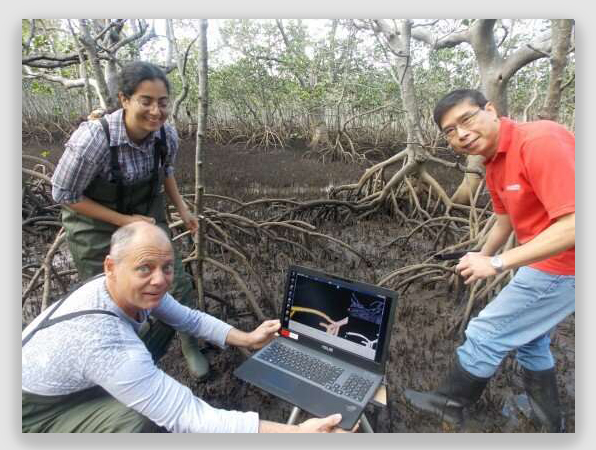 Phys.org, July 27, 2021: Lack of species depth threatens mangroves
Marine ecologists have revealed mangroves might be threatened by a limited number of crustaceans, mollusks and other invertebrates for each ecological role. The international study found that low functional redundancy, or number of species performing similar roles in mangrove forests, suggests even a modest loss of invertebrates could have significant consequences. “Mangrove forests have been disappearing at alarming rates worldwide,” said Professor Shing Yip Lee from the Chinese University of Hong Kong and Adjunct at Australian Rivers Institute, Griffith University. “The ecological functions and services they provide depend upon the relationships between their individual plant and animal components. “There is no viable mangrove forest without a healthy community of invertebrates sustaining it.” Although mangrove ecosystems support a broad range of specialised invertebrates, little is known about the effect of deforestation and human impact on the functional diversity and resilience of these resident fauna…
Mecosta County residents saw significant tree damage from an infestation of gypsy moth this summer, leaving many asking why county and city officials were not taking action to prevent or manage the infestation.
DNR forester Cheryl Nelson recently told Big Rapids city commissioners that large-scale spraying was not necessarily the best option when dealing with gypsy moths. “The gypsy moth became naturalized in the 1990s — it became part of our ecosystem,” Nelson said. “We deal with two- to four-year outbreaks every seven to 10 years. These populations are kept in check by natural predators — the NPV (Nucleoplyhedrosis) virus and the Entomophaga maimaiga fungal pathogen.” Spraying will not eliminate the gypsy moth from an area, and large-scale spraying can have a negative impact on the gypsy moth of denaturalizing them from an area, Nelson said. “Spraying is about 80% effective and can disrupt the naturally occurring predators that control the virus on their own,” she said. “With that cycle disruption, the outbreaks may not naturally correct.” Nelson said that without the caterpillars, the viruses and the fungus that control the populations cannot be maintained, and without those, there are no natural predators there when the new caterpillars hatch out…

The Indiana Department of Natural Resources is reporting that the Spotted lanternfly (Lycorma delicatula) has been found in Indiana. The insect turned up recently in Switzerland County in extreme southern Indiana which is the farthest west the insect has been found. This federally regulated invasive species negatively impacts plant growth and fruit production, especially in vineyards and orchards. A homeowner in Vevay contacted DNR’s Division of Entomology & Plant Pathology (DEPP) with a picture that was taken outside his home of a fourth instar, or developmental stage, larvae. DEPP staff surveyed the site and discovered an infestation in the woodlot adjacent to a few homes in the area. The site is within 2 miles of the Ohio River and the Markland Dam. DEPP and USDA are conducting an investigation to determine exactly how large the infestation is and where it could have come from, as well as how to limit the spread and eradicate the population. Spotted lanternfly is a planthopper that originated in Asia. It was first discovered in the United States in Pennsylvania in 2014. The Pennsylvania Department of Agriculture tried to limit the spread of this pest, but it excels at being a hitchhiker and is often spread unknowingly by humans…
A protest group is defending the actions of its members who cut down some small trees to impede police enforcing a court injunction against blockades that have been set up to prevent old-growth logging on southern Vancouver Island. The RCMP said in a news release Saturday that protesters had cut 18 trees with chainsaws and laid the trunks across a road in the Fairy Creek watershed area. The group, dubbed the Rainforest Flying Squad, responded in a statement on Monday, saying its members cut the small, second-growth trees in order to slow police progress in reaching other protesters who were chained to structures. They say Pacheedaht First Nation elder Bill Jones, who supports the protest group, does not disapprove of their felling of small trees to protect old growth. A statement from Jones released by the group says it’s common practice in logging to cut down young trees growing at the side of roadways and that’s not a threat to ecology. The Rainforest Flying Squad says very little of the best old-growth forest remains in B.C., and the province’s temporary deferral of old-growth logging across 2,000 hectares in the Fairy Creek and central Walbran areas falls short of what’s needed. The RCMP have made 494 arrests since they began enforcing the injunction in May…
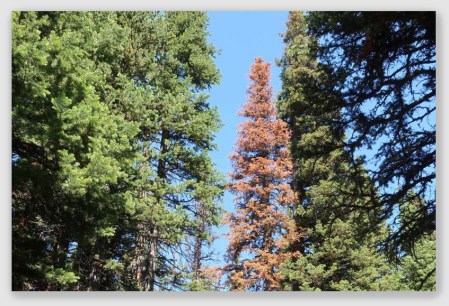 Phys.org, July 26, 2021: Extreme heat, dry summers main cause of tree death in Colorado’s subalpine forests
Even in the absence of bark beetle outbreaks and wildfire, trees in Colorado subalpine forests are dying at increasing rates from warmer and drier summer conditions, found recent University of Colorado Boulder research. The study, published in the May print issue of the Journal of Ecology, also found that this trend is increasing. In fact, tree mortality in subalpine Colorado forests not affected by fire or bark beetle outbreaks in the last decade has more than tripled since the 1980s. “We have bark beetle outbreaks and wildfires that cause very obvious mortality of trees in Colorado. But we’re showing that even in the areas that people go hiking in and where the forest looks healthy, mortality is increasing due to heat and dry conditions alone,” said Robert Andrus, lead author of the study and postdoctoral researcher at Washington State University. “It’s an early warning sign of climate change…”
Update on the ‘tree-of-heaven’: Last week I fielded a question about the nefarious and invasive “tree-of-heaven,” which apparently is even more evil than I suggested. Cooperative Extension Service Agent Alison Arnold gave a good rundown on the tree, encouraging homeowners and others not to plant them and to eliminate them where possible. Andy Tait, co-director for forestry at EcoForesters, an Asheville forestry nonprofit, reached out with some “even more alarming facts about tree-of-heaven (Ailanthus altissima),” as well as a good tip. “1. It is allelopathic, which means it exudes a chemical which inhibits other plants from growing, giving it a competitive advantage,” Tait said via email. “2. If you just cut it down, it aggressively re-sprouts from all of it’s underground roots — so literally 100s of baby trees will spring up to take over if you just cut it down and don’t use herbicide on the freshly cut stump. I’ve seen pure monoculture stands of totally worthless (both to wildlife and as timber) tree-of-heaven after disturbances without trying to control the invasive tree-of-heaven first…”
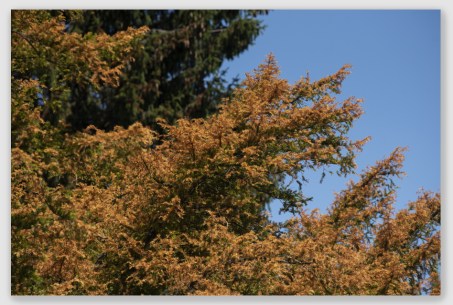 Vancouver, Washington, The Columbian, July 25, 2021: Proper care can help stressed trees in Clark County weather dry times
As wildfires burn across the West, many are casting a wary eye toward sun-scorched trees right here. Vancouver’s urban forester, Charles Ray, said he has been answering worried calls from homeowners ever since last month’s record heat. “The heat dome in June was unprecedented, on the heels of the driest spring on record,” Ray said. “I don’t think we know all the impacts on trees because we really haven’t experienced it before.” Michael Laster is among those who have noticed trees that look distressed and dead, with desiccated needles cascading down every time the wind gusts. “It is especially noticeable on the western sides of evergreen trees, where the needles have turned brown. Many deciduous trees also show wilted, dried and falling leaves,” said Laster, a Felida resident and Vancouver’s fire code officer. Although his expertise is in fire-suppressing sprinkler systems, Laster said he’s getting terribly worried about heat waves, wildfires and the future of local trees. “I think the concept that climate change is not happening is foolish. It’s obvious that it is. Our temperatures hit an all-time high, three days in a row. After three days, we see damage to the trees — not just a few of them but all of them,” Laster said. “And dead trees tend to burn more than live trees do…”
The emerald ash borer (EAB) is a half-inch long, green buprestid or jewel beetle. It’s an invasive insect native to Asia, believed to have made its way to the United States on solid wood packing material carried in cargo ships or on airplanes. EAB was first discovered in the United States in 2002, near Detroit, Michigan. Around that time, it was also found across the Detroit River in Windsor, Ontario, Canada. In 2003, the United States Department of Agriculture (USDA) Animal and Plant Health Inspection Service (APHIS) initiated a domestic quarantine program for areas infested with the extremely destructive wood-boring pest of ash trees, but the insect still managed to progressively advance and expand its range. EAB is now present in 35 states, the District of Columbia, and 5 Canadian provinces and is responsible for the destruction of hundreds of millions of ash trees in forests, rural areas, and urban and suburban landscapes. It has become the most destructive and costly invasive forest insect in North America. States in the eastern U.S. produce nearly 114 million board feet of ash saw-timber annually, with a value of more than $25 billion. The compensatory value of the 8 billion ash trees on U.S. federal, state, and private forest land potentially infested with EAB is estimated to be $282 billion. EAB was first discovered in New York State in the spring of 2009, after two USDA Agricultural Research Service employees recognized damage to ash trees in the Town of Randolph, in Cattaraugus County…
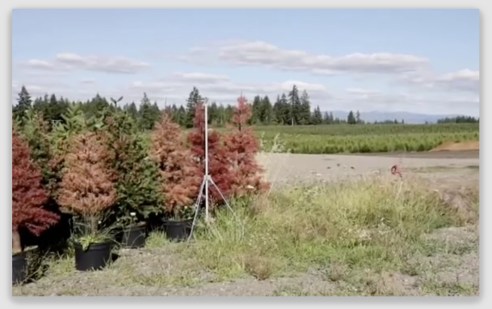 North Bend, Oregon, KEZI-TV, July 22, 2021: Scientists Still Surveying Scope Of Tree Damage Following Heat Wave
Scientists are still trying to figure out the extent of the damage to western Oregon trees after a historic heat wave scorched leaves and needles across the state. Oregon State University and the Oregon Department of Forestry are trying to map the damage, which they believe happened mostly in the Willamette Valley and coastal range west of the Cascades. Lauren Grand, OSU Forestry and Natural Resources Extension agent for Lane County, said the sun scorched some trees and damaged tissue during the heatwave, causing them to die. Other effects are less visible and happening inside the trees which are struggling to get water, Grand said. “You’re probably going to see this if you’re going hiking in the coast range or in the Cascade Mountains on the western side. If you notice something and you want to help report the damage that’s going on, reach out to your local extension office and let us know,” Grand said. There’s also the ongoing heat and drought across the state making matters worse. “Trees can also die just outright from drought and high-heat weather. We’re just going to see a lot more… tree mortality on the landscape,” Grand said. Even trees that are typically more tolerant of droughts, like Douglas Fir, Western Red Cedar and Hemlock trees are starting to see issues from the conditions. Trees that manage to survive the heat and drought can in turn become more vulnerable to other ailments…
Q: I would like to remove a tree on our homeowner association’s property in front of my house. My association wants to charge me around $1,000 for removing the tree, stump grinding and replacing the sod. My question is, can I be charged for this procedure?
A: Landscaping on your community’s common property belongs to the community as a whole, not just the member whose home it is in front of. Your association must maintain the common areas for the entire community’s benefit, not just one member. Each homeowner pays regular maintenance dues to their association to cover the costs of running the community. In your case, you are asking to have a change made to the landscaping that only benefits your property. Your board has determined this change is acceptable for the neighborhood’s look and feel. Even so, the board does not want the cost of making your requested change shared among the entire community. When I received your email, I was a bit surprised that the board approved this, even with you paying for it. Most calls I get on similar issues involve the board flat out refusing this type of request. Removing a tree is an expensive proposition that often involves getting a permit from your city’s building department. The removal, stump grinding, and sodding are necessary to keep your community looking nice and may even be required by your local building code. Fortunately, it seems that you are living in a community with a reasonable board willing to work with individual member’s requests. Now you need to decide if it is worth spending the money to have the tree removed…
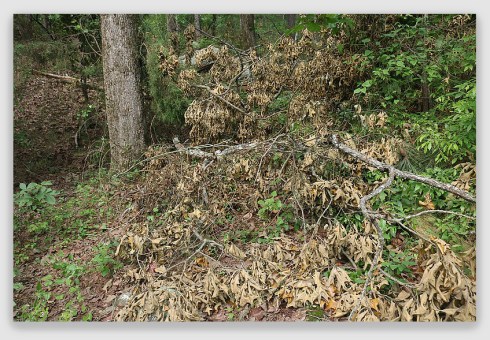 Little Rock, Arkansas, Democrat-Gazette, July 23, 2021: Author charged over felled trees set to surrender
A man accused of causing over $100,000 worth of damage to forestry on Central Arkansas Water land will surrender today on a warrant of arrest issued by the Pulaski County District Court. The warrant issued on Wednesday for Dennis Rainey, a Christian author, podcast host and co-founder of FamilyLife, charges him with felony first-degree criminal mischief regarding an tree-cutting incident. On May 12, Roland resident Rhonda Patton discovered the tops of some trees cut and others completely chopped down while walking along the Ouachita trail running alongside Lake Maumelle. When she asked those cutting down the trees, they told her they were working for Rainey, 73. “I was mad. My husband was shocked,” Patton told the Democrat-Gazette in May. After surveying the area, Central Arkansas Water initially determined between 75 and 100 trees were cut without knowing how many were completely chopped down. The warrant states Central Arkansas Water contact Raven Lawson, who also spoke to the Arkansas Democrat-Gazette, told investigators 111 trees were cut, with an approximate value of $109,899 and $12,000 being the cost for cleanup. Lawson said in an interview after the incident that many of the trees, which have taken years to grow to 20 foot heights, could die…
Many years ago when I was a University of Illinois grad student, a local resident wrote to the department’s Cooperative Extension office with a question. After a bit of a preamble, the question emerged … “How long do I need to compost fresh cricket manure before using it to fertilize my plants?” Well, those of us self-appointed to the horticultural glitterati had a good laugh. I mean I had completed a four-year college curriculum in horticulture and a whole year of grad school. These silly people and their silly questions. … Obviously, the letter writer had spent too much time in the sun. Of course what she meant to ask about was chicken manure (not an uncommon organic fertilizer), not cricket manure. Who on earth would ever amass enough cricket manure to have to worry about composting it before using it as fertilizer? Turns out, the letter writer’s son was at the time owner of the largest live fishing bait company in the eastern USA. They grew and sold about a hundred zillion live crickets a year and, well, you can imagine how much cricket manure that number of Jimminys can produce … Our dear letter writer wanted to share her botanical booty with her fellow garden club members but wanted to make sure she properly processed it before sharing it with her friends. Laugh’s on us! Some questions just need to be asked, no matter how silly they might seem on the surface…
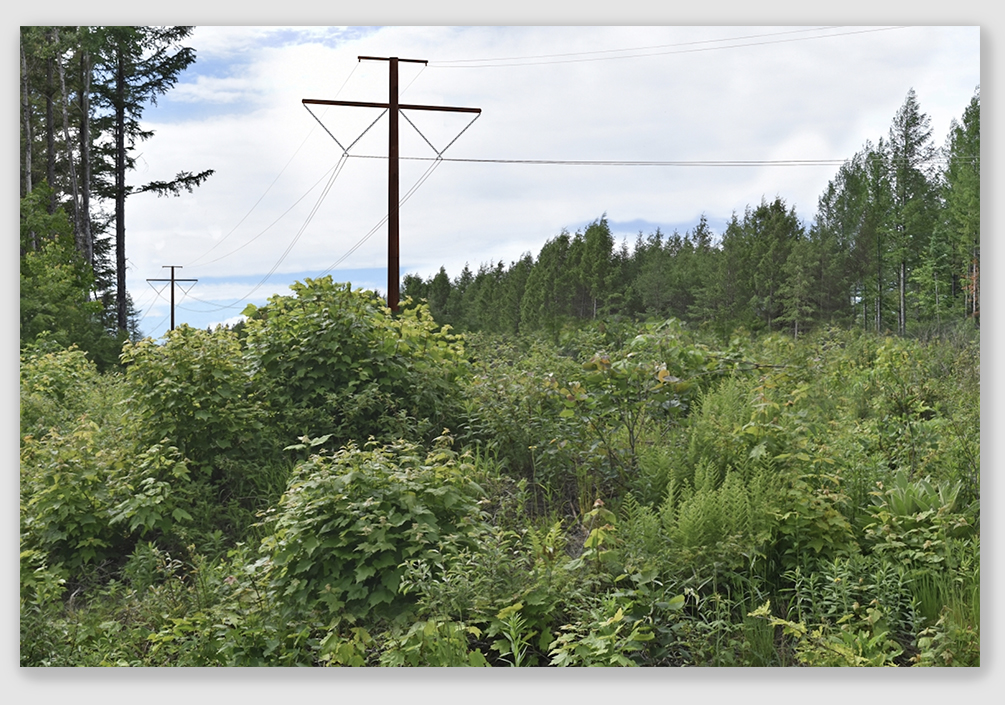
The centuries-old tree that shaded an Ocean Springs playground is no more. On Wednesday morning, the streets around Fort Maurepas Park were blocked off as a crew started sawing off the Live oak’s massive branches. The scene marked the conclusion of a months-long battle over the tree. City officials believed it was damaged during Hurricane Zeta and hired an arborist to evaluate it. In his report, arborist Ben Kahlmus recommended it be removed because it could threaten the playground that sits in its shadow. After months of deliberation, and after paying for some of the tree’s branches over the playground to be cut off, the board of aldermen voted in June to remove it. But many Ocean Springs residents still held out hope that it might be saved. They argued there was little sign that Hurricane Zeta had significantly affected the tree, and that it appeared healthy enough that it was unlikely it would suddenly come crashing down while children were playing below it. At a board of aldermen meeting on July 6, several residents spoke during the public comment period to ask the board to save the tree, but the board took no action on the issue…
OSHA Online, July 14, 2021: Updated Enforcement Guidance for the Tree Care Industry is Implemented
OSHA issued a memorandum updating its enforcement guidance for compliance safety and health officers (CSHOs) when inspecting tree care and tree removal operations, according to a trade release sent out by the U.S. Department of Labor. This memorandum highlights some of the hazards that workers face while working with trees regarding care and removal operations. It also provides CSHOs with guidance on OSHA standards that address dangerous situations as well as citations under the OSHA General Duty Clause (29 USC 654(a)(1)). Addressed in the memorandum, some issues include falls, use of PPE, occupational noise exposure, machine guarding and first-aid kits. nOSHA, however, does not have a specific standard for tree care operations. The administration currently applies some standards to address the serious hazards in the industry. The tree care industry petitioned in 2008 for its own rule-making. OSHA then completed a Small Business Regulatory Enforcement Fairness Act (SBREFA) panel in May 2020. According to an article, the administration collected “information from affected small entities on a potential standard, including the scope of the standard, effective work practices, and arboricultural specific uses of equipment to guide OSHA in developing a rule that would best address industry safety and health concerns. Tree care continues to be a high-hazard industry…”
A $1 billion hydropower corridor continues to draw controversy as legislators who visited the first segment of the project in a remote part of Somerset County said Wednesday that the utility in charge of it cannot meet permit requirements, a claim the company denied. The legislators said the nature and age of the forest prevents a Central Maine Power Co. affiliate from being able to meet the tapering requirements in the permit, so tree-cutting should be stopped until protections are put into place. The New England Clean Energy Connect is one of the largest and most controversial projects in the state’s history, with many environmentalists and residents questioning its value to the state. The four lawmakers also asked the commissioner of Maine’s Board of Environmental Protection in a letter to have the board take jurisdiction over the project. The board is part of the Maine Department of Environmental Protection, which issued a permit for the project, but it can enforce environmental protection laws independently. The permit requires the tree-cutting to be tapered to preserve the natural environment and wildlife, but the lawmakers said the cutting was in a straight line and wider than allowed in some areas, and that the state’s permit requirements are impossible for the project to meet…
Science News, July 14, 2021: Mixing trees and crops can help both farmers and the climate
Maxwell Ochoo’s first attempt at farming was a dismal failure. In Ochieng Odiere, a village near the shores of Kenya’s Lake Victoria, “getting a job is a challenge,” the 34-year-old says. To earn some money and help feed his family, he turned to farming. In 2017, he planted watermelon seeds on his 0.7-hectare plot. Right when the melons were set to burst from their buds and balloon into juicy orbs, a two-month dry spell hit, and Ochoo’s fledgling watermelons withered. He lost around 70,000 Kenyan shillings, or about $650. Ochoo blamed the region’s loss of tree cover for the long dry spells that had become more common. Unshielded from the sun, the soil baked, he says. In 2018, Ochoo and some neighbors decided to plant trees on public lands and small farms. With the help of nonprofit groups, the community planted hundreds of trees, turning some of the barren hillsides green. On his own farm, Ochoo now practices alley cropping, in which he plants millet, onions, sweet potatoes and cassava between rows of fruit and other trees. The trees provide shade and shelter to the crops, and their deeper root systems help the soil retain moisture. A few times a week in the growing season, Ochoo takes papayas, some as big as his head, to market, bringing home the equivalent of about $25 each time…
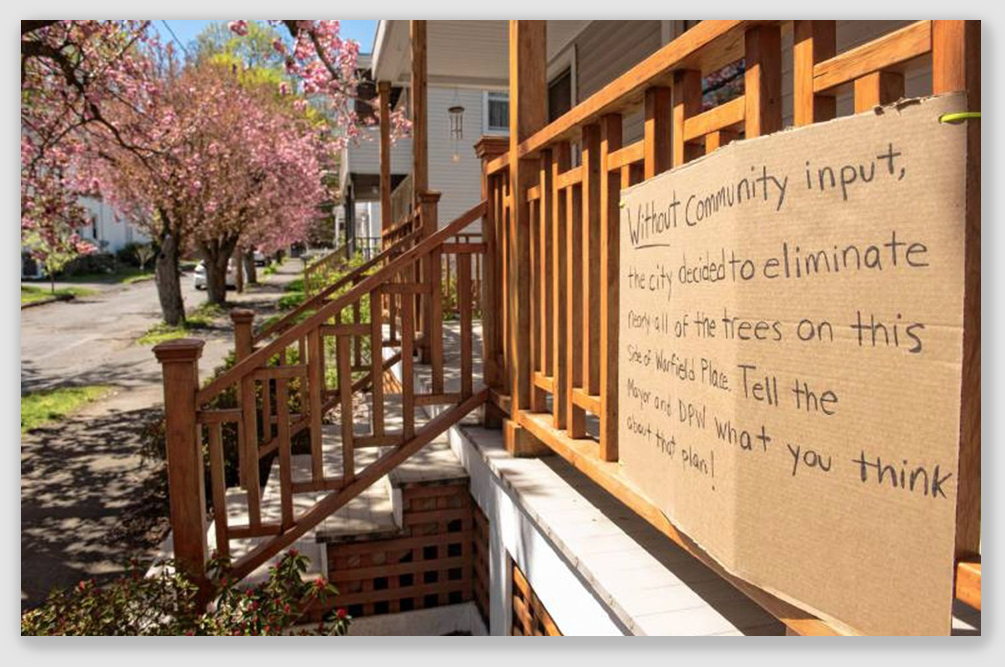
Every neighbor who lives on or near Warfield Place, a quiet residential street in Northampton, seems to have a story about the cherry trees. The row of seven Kwanzan Japanese cherry trees sits right outside Lois Ahrens’s kitchen window. Ahrens, 74, said they have been an “integral” part of her life during the more than 23 years she’s lived on Warfield Place. Cecilia Shiner, 38, remembers introducing her newborn baby to her neighbors beneath the cherry trees eight years ago. Meg Robbins, 70, still has memories of taking her children to see the trees when they were young. Her kids would hug them as a sign of their appreciation. “They’re doing their beautiful leafy thing in the summer, they shade the entire side of that street, and when they bloom … they’re amazing,” Robbins said. “It’s just a pleasure.” Now, Northampton residents are rallying to save the trees, which the city is planning to cut down this year. Ruth Ozeki, who has lived on Warfield Place since 2015, said letters left on the doors of homes in April informed residents that a project to repave the street and reconstruct the sidewalk, part of a multi-street paving program in Northampton, would spell the end of the cherry trees. A groundskeeper from nearby Smith College planted the trees roughly 30 years ago when he lived on the street, according to Ozeki. Since then, they’ve become a beloved fixture of the neighborhood. After receiving the notice, a group of neighbors began a petition that now has more than 1,800 signatures. They’ve also penned editorials, met with the city’s mayor and Department of Public Works, and hosted the First Annual Cherry Blossom Festival in May to celebrate the trees…
Grand Junction, Colorado, Daily Sentinel, July 13, 2021: City responding to insect-damaged trees
The city of Grand Junction is taking action to combat several species of insects that are damaging the urban tree canopy. The primary tree species that has been impacted are ash trees, which makes up 23% of the public tree inventory. Grand Junction residents can expect to see city crews treating and removing public trees around the community at an increased pace this fall. Ash trees are particularly susceptible to pests such as the lilac ash borer and the ash bark beetle. Another even more damaging pest, the emerald ash borer, has caused severe damage Front Range communities, according to a city press release. The Parks and Recreation Department is taking steps to prepare for the emerald ash borer. It is injecting ash trees that are healthy and have a large enough trunk with a treatment to help them fight off the insects. Smaller ash trees will be sprayed to deter insects. Already infested ash trees must be removed, as no treatment will save the tree, according to the release. Trees will be planted in locations where there are signs of stewardship — mainly watering — to replace the lost trees. The city will plant a diverse group of species. It does not plant ash trees and suggests residents plant species other than ash…
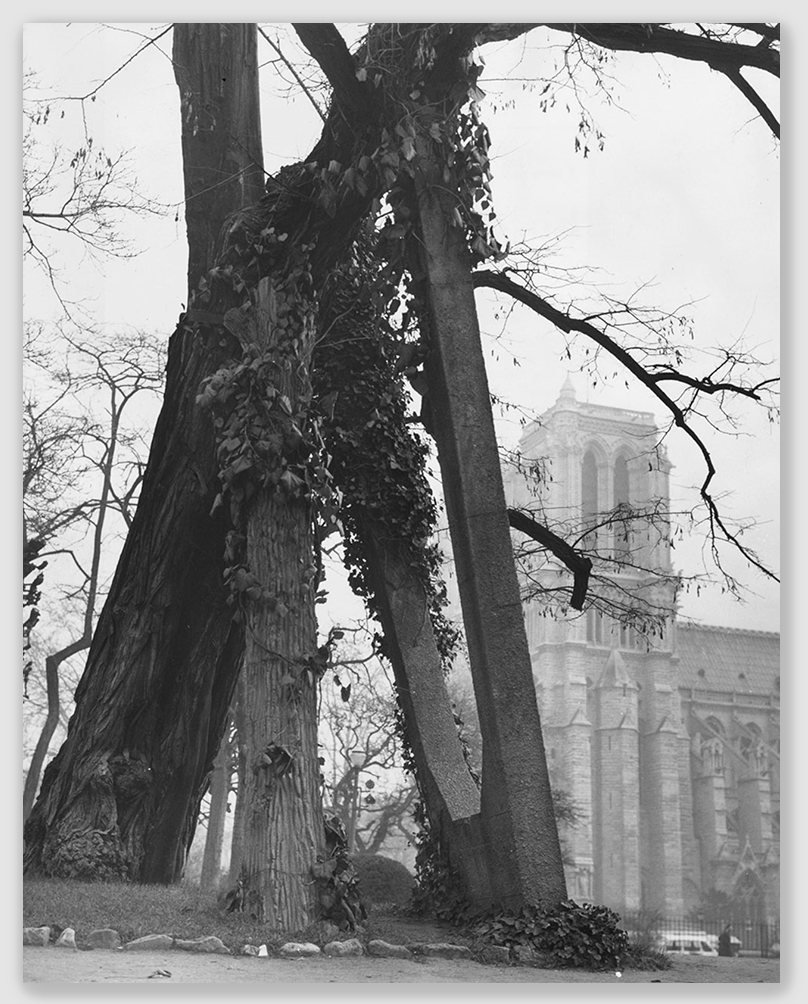 National Geographic, July 13, 2021: What we can learn from Paris’s oldest tree
From the window of the apartment I’m staying in I can see the top of a not very tall but very remarkable tree, one that has occasionally been distracting me from the story I came to Paris for. I know the tree is remarkable because a plaque identifies it as the city’s oldest, planted in 1601. It’s a black locust, Robinia pseudoacacia, and it came originally from the Appalachians, in the United States… A wounded old soldier itself—its scarred trunk is kept upright by concrete braces—it turns out to have been the spearhead of an invading army: Since the 17th century, American black locusts have advanced across Europe and indeed the world. In Central Europe, especially, foresters soon fell in love with them. Black locusts grew quickly on land that had been denuded for firewood, protecting it from erosion. More recently, on the Loess Plateau in northwestern China, 25 million acres have been planted with black locusts over the last few decades to combat some of the worst soil erosion on Earth. Black locust wood is valuable too, and not just for burning; it’s hard and durable. Four centuries after Robin first planted the American import in his garden, Robinia is advertised here as the only “European” wood that can be used for garden furniture without pesticide treatment—a sustainable alternative to imported tropical teak. The trouble is, black locust doesn’t stay where it’s planted. It’s incredibly invasive, spreading by underground runners. In that it’s like another hardy pioneer, Ailanthus altissima, aka the tree of heaven, which in the 18th century traveled the world in the other direction, from China to America, with Paris botanists again offering a crucial assist…
As Utahns cut back on landscape watering during the intensity of the drought, experts said it’s still important to monitor the health of our trees. They said trees are pretty resilient, but some of them might need a little extra help to survive. “They, for the most part, can hang in there,” said Shaun Moser, manager of the Conservation Gardens at Jordan Valley Water Conservancy District. “It depends on the type of tree, obviously, but most of them can go through summers and show minimal stress, with only having rain or (precipitation) every once in a while.” Gov. Spencer Cox asked all Utahns to cut back watering to twice a week and to prioritize trees and shrubs over turf. But with very little precipitation over the last two months, some trees are struggling, especially those that don’t get any irrigation. “It actually takes a pretty significant toll on the trees,” said Moser…
 Phys.org, July 12, 2021: When a single tree makes a difference
A single tree along a city street or in a backyard can provide measurable cooling benefits, according to a new study from American University. The research shows that “distributed” trees, those that are stand-alone and scattered throughout urban neighborhoods, can help to reduce evening heat. The research suggests that planting individual trees can be a strategy to mitigate urban heat, particularly in areas where land for parks can be scarce. “There are plenty of good reasons to plant trees, but our study shows we shouldn’t underestimate the role that individual trees can play in mitigating heat in urban areas,” said Michael Alonzo, assistant professor of environmental science and lead author of the new study. “City planners can take advantage of the small spaces that abound in urban areas to plant individual trees.” The study is published in Environmental Research Letters. While urban parks provide important mid-day cooling for residents and visitors, the key to cooling from individual trees happens in the evening. In the new study, which was conducted in Washington, D.C., cooling benefits from distributed trees were found to occur around 6 or 7 p.m. and after sunset. The study revealed lower temperatures in neighborhoods where at least half the area was covered by canopy from distributed trees. Temperatures were 1.4 degrees Celsius cooler in the evening compared with areas with few trees. Even in the predawn hour, areas with only modest distributed canopy cover (about 20 percent of the area) were cooler than those with no trees, showing that on average, afternoon and evening cooling effects last well into the night, Alonzo added…
Saskatoon, Saskatchewan, July 12, 2021:Tree tests positive for Dutch elm disease in Saskatoon park
One case of Dutch elm disease (DED) has been confirmed in a Saskatoon tree, according to the City of Saskatoon on Monday. Crews will start removing the infected tree located in the Westmount neighbourhood on Tuesday, read a press release. “(DED) is a serious disease of the American elm, and elm makes up about 25 per cent of Saskatoon’s urban forest,” entomologist Sydney Worthy said in a statement. “The disease was introduced into North America in the 1930s and has since spread mainly through the transport of firewood and lumber. It has wiped out millions of elms across Canada and the United States and has been present in Saskatchewan since the 1980s. “Saskatoon had a reposted case in September last year…”
Hidden amongst mossy crags on an uninhabited outer-Hebridean island of Scotland’s west coast, a rare example of a pure European crab apple tree species has been surviving, likely since the end of the last ice age, scientists have suggested. The single lonely tree was first discovered by botanists in 2003 on a rocky outcrop on the island of Pabaigh Mor, which lies off the wild west coast of Lewis, and its highly remote location has baffled scientists. The tree is growing at what is believed to be the northwestern limit for the species, with only one other similar case known – another single apple tree found over 200 miles away on an inaccessible cliff in Shetland. Now, scientists have examined the tree’s DNA, and discovered it is a “pure” species of European crab apple, which has never been cross pollinated with modern species, and it represents a type of apple tree which colonised the British Isles and other parts of Europe after the last ice age. Crab apple trees have a lifespan of up to around 150 years, and the possibility of a seed reaching the outer hebrides by animal or human is unlikely, the scientists said, as neither birds nor humans consume crab apples. Dr Markus Ruhsam, molecular ecologist at the Royal Botanic Garden, Edinburgh, told The Independent: “We’ve been looking at wild apple trees in Scotland for around three years, and the idea is to establish how pure the wild apple trees we find in the countryside are. “All over Europe there is a lot of hybridisation between the wild apple tree and the domesticated apple tree, and we wanted to establish how pure it is.” Other recent reports have suggested the tree itself may be 11,000 years old. Dr Ruhsam said this was not the case. “Dating back to the ice age is not quite correct. There must be a misunderstanding,” he said…
Omaha, Nebraska, July 12, 2021: Historic storm destroyed Omaha’s oldest trees
Hurricane force winds that blew through the Omaha metro over the weekend were not kind to our trees, especially the older ones. Hedi Lowe lost a tree in her yard that was more than 80 years old. She will miss the shade it provided in the summer but she’s grateful for the way her old friend went out. “Very fortunately, it fell away from the house and away from the cars and nobody was under it,” said Hedi. Things didn’t work out that way for homeowner Tod Nyquist. No one was hurt but the tree that belongs to his neighbor fell on his car and in his yard. “Everything past our property line, we have to pay to remove and he’s responsible for his side of it,” said Tod. All of these downed trees mean more work for tree service companies. John Simpson owns Nebraska Tree and Snow. He says his crew will give emergency calls priority. “It’s anything that on the house on power lines we get to those things first. Anything that’s an emergency, to try to get people’s power back on or get back inside their house or into their cars,” said Simpson. Officials with Nebraska Tree and Snow say most likely it will be next week before they will begin cutting up and removing the larger trees after they take care of customers with most urgent needs. John Fech is with the Douglas Sarpy County Extension Service. He says this storm taught us a lot about having too many weak wooded trees in the same place and we should think about replacing the old trees with a variety of different trees…
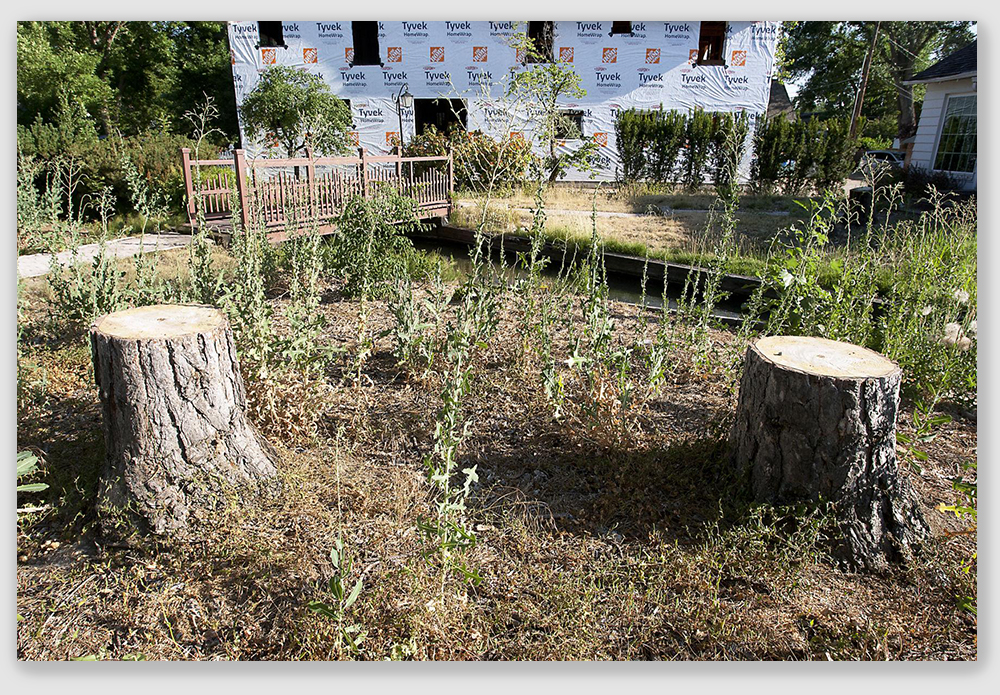
Late last year, a family renovating a North End property unwittingly demolished 10 mature trees without a necessary permit, writes Idaho Press reporter Ryan Suppe North Enders, and others, bent on maintaining the City of Trees’ historic character and natural amenities, say it was the latest example of a trending problem. Restoration and remodeling projects are threatening the appeal of Boise’s oldest neighborhoods, they say, and the city should take a more active role in enforcing guidelines to maintain historic districts. Kate Henwood co-chairs the North End Neighborhood Association’s bodies on issues that may impact the area’s historical integrity. When she’s not “sprinting from chainsaw noise to chainsaw noise” herself, Henwood acts as a sort of liaison between policymakers and North End residents, including those upset by the tree removals near 19th and Ada streets. Last year’s illegal tree removal is exactly the type of phenomenon she hopes to prevent. “The loss is just really disorienting and obviously upsetting to the folks who have been looking at them and enjoying them for years and years,” she said of the trees…
A Washington tree thief who sparked national headlines after poaching prized maple trees on the Olympic National Forest — and ultimately causing the 2018 “Maple Fire” — has been convicted in U.S. District Court. After a six-day trial and seven-hour jury deliberation, Justin Andrew Wilke, 39, was convicted of conspiracy, theft of public property, depredation of public property, trafficking in unlawfully harvested timber and attempting to traffic in unlawfully harvested timber. Wilke, the main defendant in the case, will be sentenced this October. It was the first federal criminal trial to use tree DNA evidence. According to a news release from the Justice Department, Wilke, along with Shawn Edward Williams, 49, poached maple trees in the Elk Lake area. When a wasp’s nest posed an obstacle at the base of one tree, they used insecticide and gasoline to light it on fire, ultimately failing to extinguish it, causing a wildfire that burned more than 3,300 acres between August and November. Containment ran $4.2 million. The illegal logging operation was started with the goal of transporting the wood to a Tumwater mill. The kind of maple trees illegally cut down are used to make musical instruments…
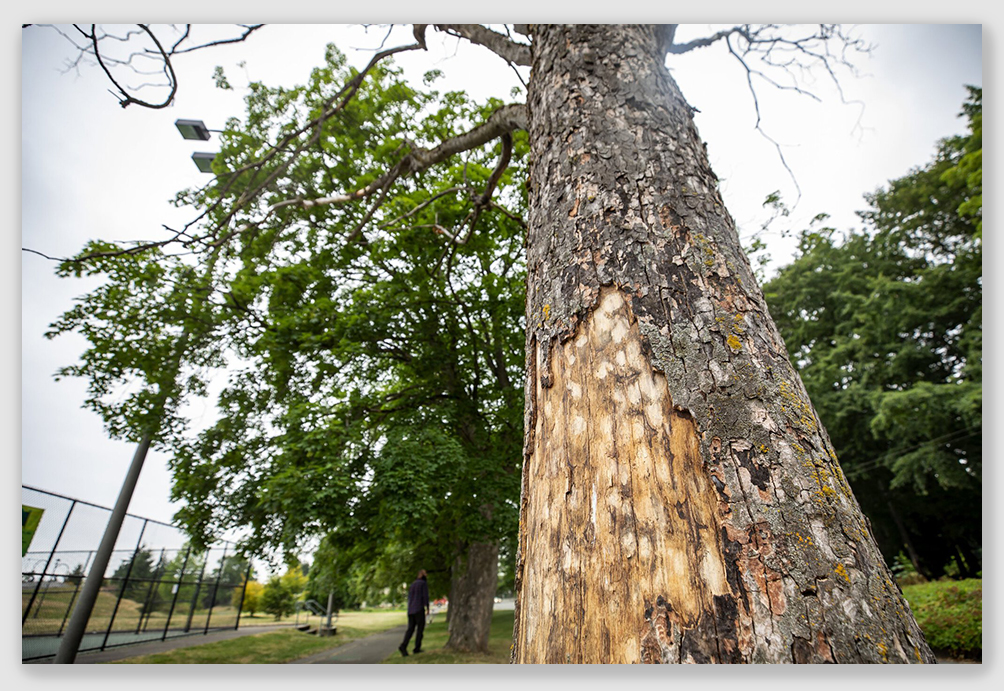
It looks burned, as if blasted with a blowtorch: blackened — and dead. This maple, in a row of trees along the parking strip at the driving range at the Jefferson Park Golf Course, is a victim of a disease killing Seattle’s street trees. First detected here in 2020, the disease is caused by a fungus that also can pose risks to human health. So-called sooty bark disease is named for the black, powdery patches that are the telltale marks on tree bark of the fungus Crypotostroma corticale. At least 46 street trees have been observed to be suffering or killed by the disease so far in the city, but many more trees may be infected, said Nicholas Johnson, an arborist for Seattle Parks and Recreation. The disease has emerged as a growing concern because it is expanding in the variety of trees it infects, including native Pacific dogwood and big leaf maple. Trees are critical for cooling in urban areas made warmer by climate change, and in Seattle, are grieved individually when lost to development. Greenbelts are cherished play places for kids and habitat for wildlife. Even with their sidewalk-busting ways, street trees are fiercely defended. The new disease further threatens the city’s canopy. The fungus’ spores also are allergenic and can cause a debilitating inflammation of the lungs in humans under prolonged contact with infected wood. Diseased trees in Europe are considered an occupational hazard, suffered by people with intensive job-related contact with wood, such as mill workers…
Like humans, trees need water to survive on hot, dry days, and they can survive for only short times under extreme heat and dry conditions. During prolonged droughts and extreme heat waves like the Western U.S. is experiencing, even native trees that are accustomed to the local climate can start to die. Central and northern Arizona have been witnessing this in recent months. A long-running drought and resulting water stress have contributed to the die-off of as many as 30% of the junipers there, according to the U.S. Forest Service. In California, over 129 million trees died as a consequence of a severe drought in the last decade, leaving highly flammable dry wood that can fuel future wildfires. Firefighters are now closely watching these and other areas with dead or dying trees as another extremely dry year heightens the fire risk. Trees survive by moving water from their roots to their leaves, a process known as vascular water transport. Water moves through small cylindrical conduits, called tracheids or vessels, that are all connected. Drought disrupts the water transport by reducing the amount of water available for the tree. As moisture in the air and soil decline, air bubbles can form in the vascular system of plants, creating embolisms that block the water’s flow. The less water that is available for trees during dry and hot periods, the higher the chances of embolisms forming in those water conduits. If a tree can’t get water to its leaves, it can’t survive…
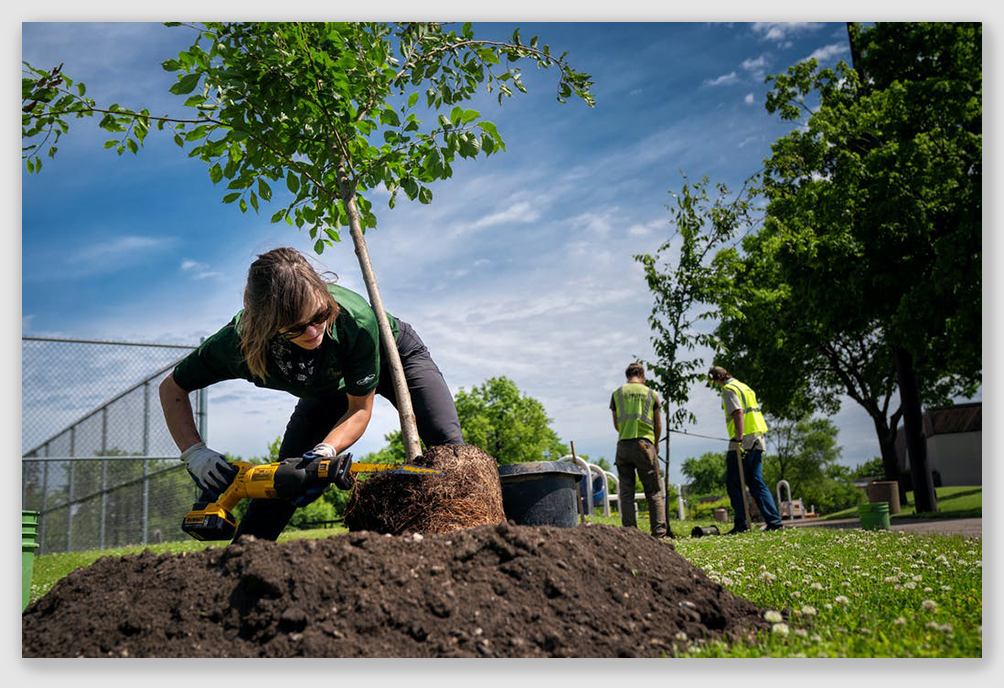
Just as St. Paul is ramping up efforts in its multiyear struggle to combat emerald ash borer by removing ash trees across the city, a national report is pointing out disparities in leafy canopies among neighborhoods nationwide, including locally. A new Tree Equity report by the nonprofit American Forests reveals tree cover disparities along race and class lines in many cities. The group gave St. Paul an equity score of 83, which indicates the city is performing well overall, but with some neighborhoods lacking suggested tree cover. The biggest disparities are on private property, not on city boulevards and parks, according to city officials. The importance of tree coverage has grown in recent years as concern for climate change and heat islands grows. Tree cover has become a point of concern particularly in St. Paul, where the emerald ash borer was first found in Minnesota, in the St. Anthony Park neighborhood in 2009. Though many communities across the state have battled with the invasive species, it’s been a particular blight in St. Paul…
With Tropical Storm Elsa expected to hit the Washington, D.C. region, homeowners are preparing for heavy rain and wind. That includes in St. Mary’s County where a State of Emergency has already been declared…The Verify team is getting ahead of the damage and looking into who is responsible for paying for damage caused by toppled trees. If a home is damaged by a toppled tree, from either a neighbor’s lawn or public property, who is responsible for paying for repairs? Generally speaking, the claim should be made by the homeowner, regardless of where the tree came from. This applies for trees located on a neighbor’s property and those on public land. Erin L. Webb, an insurance lawyer in the Washington, D.C. area, says there is a general rule when dealing with storm-related property damage caused by toppled trees. “The general approach is ‘your property, your problem,'” she says. “In other words, where the tree falls, that determines who will be financially responsible for removal.” That standard is supported by Michael Barry, the Senior Vice president at the Insurance Information Institute. “The claim starts wherever the tree fell,” he said. “So if the tree fell on your house, even if it wasn’t your tree, you should file a claim.” A situation where that advice might change is if a homeowner had previously warned the neighbor, in writing, that the tree was at risk of falling and they neglected to address it…
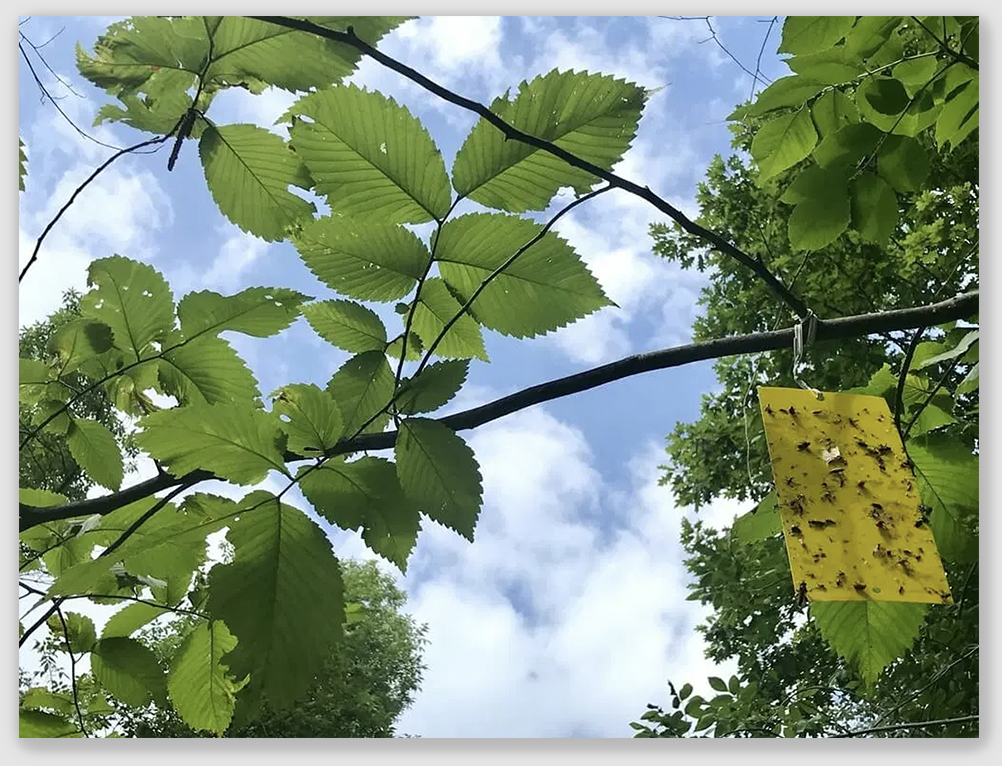
If you see an elm tree leaf with an odd, zigzag-shaped missing section, Maine forestry officials want to hear about it. It could be evidence of a new and potentially destructive insect pest in the state called the elm zigzag sawfly. The elm zigzag sawfly was observed in Quebec a year ago and officials there this summer reached out to their counterparts in adjacent states in the United States and Canadian provinces asking for help determining if the insect is spreading — and, if so, how far. Native to Asia, the elm zigzag sawfly was observed in Eastern Europe in 2003. Since then it has spread to more than 15 other European countries where it is causing significant damage to elm trees. So far, it has not been seen outside of Quebec in North America. “This is a new and unfolding story in North America,” said Michael Parisio, forest entomologist with the Maine Forest Service. “It’s difficult to say at this point how bad of a problem it could be here.” Two weeks ago, at the request of his counterpart in Quebec, Parisio set out traps — squares of yellow plastic coated with a sticky material — on elm trees in Augusta and Hermon. Because the traps have only been out for a couple of weeks, Parisio said it’s too soon to give any updated information on whether the insect has made it to Maine. “Our first step is to determine if it’s even a problem here,” Parisio said. “Then figure out the extent of the problem and what to do about it…”
Finally, spring has sprung and summer is on its way. The hot days and warm nights are welcome for us, but summer isn’t always so kind to our trees, especially in our urban forests and landscapes. Trees are dynamic living organisms that respond to external stimuli in very strategic ways and each season presents its own challenges and summer is no different. During the summer, growth slows as some resources become limited and typically, this is water. As the summer season progresses, the likelihood of less rain means potential drought conditions. The primary responses of a tree to heat and drought are a reduction in photosynthesis and carbon assimilation rates. This translates to a reduction in energy production and food reserves. This reduction can increase vulnerability to health issues and reduced defense mechanisms against pests. There are some key steps to summer tree care which can help trees through potentially challenging conditions in the summer. (1) Watch the water; be sure to supplement trees with additional watering when there isn’t adequate rainfall that measures at least an inch per week. Mature trees need supplemental watering just as the younger, newly established trees. Be sure to know the symptoms of dry conditions and how much to water with more information here…
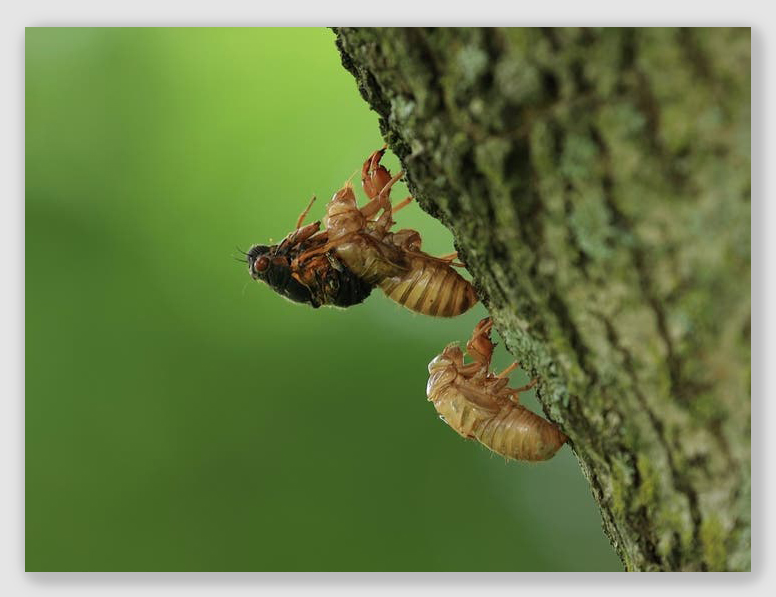
In case you haven’t noticed, cicadas are officially gone. After eight weeks of the “bottomless supply” of droning insects in Maryland, the Brood X cicadas have left for another 17 years. But they wouldn’t be cicadas without leaving something behind to remember them by. The tips of tree branches are turning brown as a result of flagging from female cicadas. Before their departure, the female cicadas cut “train track like patterns” into tree branches to lay their remaining eggs. The branches are turning brown because the cuts stop sap and water from reaching the end of the branch, killing it. According to WTOP news, the cicadas seem to only lay their eggs in thin, small tree branches. The cicadas’ damage to the branch does not harm the rest of the tree. The laid eggs will remain in the branch for about a month before they hatch, fall from the tree, and go underground. They will reappear in 2038, 17 years from now, and the cicada mania will begin all over again…
Norfolk, Virginia, WTKR-TV, July 7, 2021: How to handle fallen trees after a major storm
With Tropical Storm Elsa on its way to Hampton Roads and northeastern North Carolina, Dominion Energy’s linemen are on the clock. “The good news is that we’re ready. We prepare for things like this all year long,” said Legislative Advisor/Sr. Communications Specialist Paula Miller. Continuing preps Wednesday afternoon, crews readied vehicles for strong winds and rain that could take down trees and limbs. “Usually when trees land on a power line, we’re going to be having to put a lot of wire backup, so we keep a good amount of wire on our truck,” said Walter Moore, a lineman for Dominion Energy. “It could be a twig that could lay across [it] and affect the whole power line.” It could also affect your relationship with your neighbor: Who’s responsibility is it to remove the tree? How far can branches be cut back? What if the tree root is encroaching on two properties? “For the most part, insurance covers when there’s damage. It’s when the tree falls and doesn’t damage anything. So, good news – [there’s] no property got damaged, but the not-so-good news is that somebody’s got a pay to remove it,” said John Tarley, managing attorney at Tarley Robinson in Williamsburg. Tree removal can be expensive if the tree is large enough. Tarley isn’t offering legal advice, but he hopes to clear up some confusion with Virginia’s “Tree Law.” “The general Tree Law in Virginia is if the tree limbs of your neighbors tree are hanging over your fence, you can cut them up to your property line,” he said. Tarley has also taken to the internet to answer some questions about Tree Law and neighbors’ disputes. In the event a storm does make a mess across yards, you may want to just talk it out with your neighbor before getting caught up in legal trouble. Tarley said one time, “A tree on my neighbor’s property fell on my land and we split the cost of removing the tree, which is people will find is substantial…”
 Phys.org, July 7, 2021: Trees: The critical infrastructure low-income neighborhoods lack
As the Pacific Northwest sweltered through a record-breaking heat wave last week, many residents here in America’s least air-conditioned city sought relief under the shade of cedars and maples in city parks. But in some areas of Seattle, that shelter was hard to come by. “If you look at aerial photographs, north Seattle looks like a forest,” said Washington state Rep. Bill Ramos, a suburban Democrat who sponsored a bill the legislature recently passed to help cities improve their tree canopy. “On the south side, you see nothing but rooftops and asphalt and not a green thing anywhere. It’s strictly a matter of socioeconomics and race.” That disparity is not unique to Seattle. American Forests, a Washington, D.C.-based conservation nonprofit, released a nationwide analysis last month showing that low-income neighborhoods and communities of color have significantly less tree canopy. Those areas also are more likely to suffer from the urban heat island effect caused by a lack of shade and an abundance of heat-absorbing asphalt. Heat islands can be as much as 10 degrees hotter than surrounding neighborhoods. “We found that the wealthiest neighborhoods have 65% more tree canopy cover than the highest poverty neighborhoods,” said Ian Leahy, the group’s vice president of urban forestry. “As cities are beginning to heat up due to climate change, people are realizing that trees are critical infrastructure. I’ve never seen as much momentum toward urban forestry across the board.” In many cities and states, policymakers and advocates say they’re aiming to correct decades of inequities in urban tree canopy. They acknowledge how racist policies such as redlining have had a stark effect on the presence of urban green space, and that trees are important for public health. Some leaders have even pledged to use American Forests’ “Tree Equity Score” to target their tree plantings in the neighborhoods that need it most…
NPR, July 7, 2021: What The Rise And Fall Of Lumber Prices Tell Us About The Pandemic Economy
It’s been a roller-coaster ride for lumber prices over the last year – and it’s drawn outsize attention from the aisles of Home Depot to the Federal Reserve. Lumber prices surged to record highs this year on the back of booming demand from home-builders and do-it-yourself-ers with plenty of time on their hands. The price surge was so big and sudden, it became a symbol of what some economists feared: rampant inflation. But over the past two months, lumber prices have been dropping equally fast, giving weight to the central bank’s argument that pandemic price spikes for many products are likely to be temporary. That’s not the end of the story, however. Lumber prices may have fallen but they are still elevated, creating new headaches for the critical housing sector. And companies in the lumber industry are wrestling with a new pandemic problem: a shortage of workers. Here are three things that the rise, fall, and now volatility of lumber prices tell us about the pandemic economy. The supply shock that sent lumber prices to record levels earlier this year did not come from a shortage of trees: The price of raw timber has barely budged. Instead, the lumber crunch was centered on sawmills, which cut round timber into square boards…

It may be too early to tell if your trees have truly survived this winter’s storm, but a Plano forester is back to discuss the warning signs that a tree may be damaged beyond repair. Plano’s urban forester Marc Beaudoing and Mike Sills, a Dallas region urban forester for the Texas Urban Forest Service, outlined what to look for during a video presentation. Beaudoing had previously discussed what to look for immediately after this winter’s storms, and returned to discuss signs of damage or death in area trees. The types of trees that are showing damage from the storm include lacebark elm, Texas ash, Chinese tallow, and red oak. The full extent of damages throughout the city is not yet known, Beaudoing said. “We’ve been going through the neighborhoods and trying to figure out how many trees have been affected by the storm and we’ve been keeping track of all of the trees on public properties and private properties, as well,” Beaudoing said. Some of the warning signs of damage are brittle branches, leaves growing out of the base of the tree, and tips that have died back about five feet into the canopy. In addition to record-setting low temperatures of below 5 degrees in February, the storm brought more than 200 hours of below-freezing temperatures to Plano, Beaudoing said. Thankfully, the winter storm has been followed by a lot of rain, but trees that appear to be recovering are not out of the woods just yet, according to the foresters. A summer drought, for example, could prove too stressful for trees that are already damaged…
Orlando, Florida, WKMG-TV, July 6, 2021: Tree trimming companies busy ahead of Elsa’s arrival
Tree removal services are keeping busy ahead of Elsa’s potential to bring tropical force winds and heavy rain to parts of Central Florida and one of the major safety concerns are flying tree limbs and trees toppling over. “Usually, whenever they announce a storm especially if the trajectory is to come to Florida, the phones just go off the hook,” Iván Arocha, the owner of Forrest Stump Tree Services in Orlando said. “The biggest thing is to keep your trees pruned and properly pruned.” Pruning is another word for trimming. As the storm approaches, high winds are a concern because they cause flying debris like tree limbs and can even uproot trees. “It could be catastrophic. I mean it’s hard to say what level of damage a tree is gonna cause. Sometimes if the whole tree uproots it could come down very slow it could actually rest on a home and do very minimal damage,” Arocha said. Just hours before the storm hits his team removed a large tree from the backyard of a home in Orlando. A homeowner told Arocha they had a tree with limbs falling off. Arocha said that’s an indication that a tree could be weak…
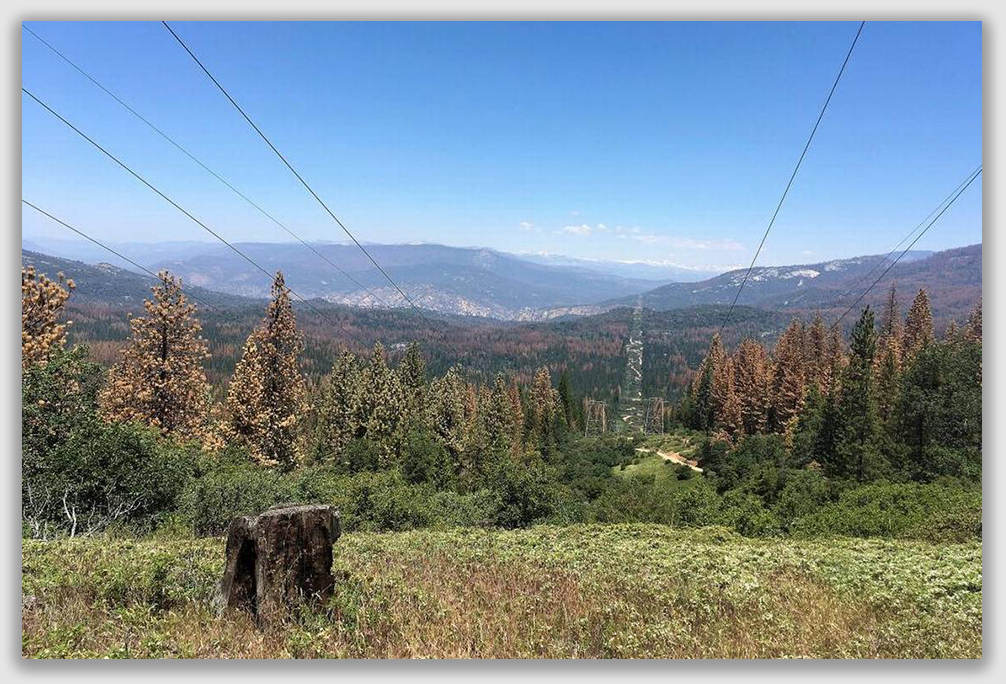
It’s easy to see the beauty and benefits of large, mature trees. What’s harder to see is that the drought is already putting many of them under stress. “If you notice things that for this time of year look a little different,” said John Chapman, an arborist for the Santa Clara Valley Water District. “Like, a lot of our trees will start to turn color in the fall as just part of their natural progression. We’re seeing plants starting to do that already.” Chapman says other trees, which were probably stressed in the last drought, have now died. And more could follow in the yards of homeowners when people turn off their lawn sprinklers to save water. That’s why the Valley Water District is modifying its message when it comes to watering during the drought. “The messaging is to cut back on general use of water in your landscape, convert over to drought-tolerant landscaping, but if you have established trees, give them water.” Mature trees provide shade and natural cooling, which can cut down on home energy use. They also provide habitat for birds and wildlife, cut down on erosion and provide oxygen for us to breathe. “You can’t just replace a large mature tree like that. You need to plant the tree and wait and wait, 30 to even, like, hundreds of years,” said Sophia Saavedra with Our City Forest, which helps replenish San Jose’s tree population…
Country Living, July 6, 2021: What to Do about Gypsy Moths Devouring Your Trees
It all started when an entrepreneur in Massachusetts imported European gypsy moths in 1869 in hopes of finding an alternative insect for silk production; his effort failed miserably in more ways than one. Unfortunately, a few caterpillars escaped, reproduced, and spread. These destructive insects are now found throughout the Northeast, west to Wisconsin, and south to Virginia. “Gypsy moths can defoliate hundreds of acres and decimate a forest,” says entomologist Michael Skvarla, PhD, assistant research professor of arthropod identification at Penn State University. “They haven’t been an issue for the last 10 or 15 years, but in 2021, we’re seeing a significant outbreak.” Generally, population explosions eventually collapse due to natural predators such as mice or specialized wasps, or two naturally occurring diseases, a virus known as NPV and a fungus. In the meantime, it’s decidedly not so pleasant to watch them chowing down on your trees, covering the side of your house, or crashing the family picnic. Plus, a huge infestation may result in a lot of, well, caterpillar poo, on decks and patios. The good news is that gypsy moth caterpillars don’t bite, though if handled, their hairs can cause skin irritation—and their waste simply can be hosed off. While you can’t eliminate gypsy moths, you can take a few steps to try to reduce the population and feel a little less anxiety-ridden that your entire garden is their personal buffet. Here’s what you should know to help control gypsy moths in your garden. Fortunately, state and federal programs have slowed the spread in the last 20 years—but they’re still a big threat because they’ve defoliated 75 million acres in the U.S. since 1970. You may see the caterpillars, also called larvae, munching on your trees and shrubs; they feed on more than 300 species. Some of their favorites include oak, birch, cedar, and fruit trees—but they’ll even eat conifers if they get hungry enough, says Skvarla. Typically, you’ll see the tiny ¼-inch to ½-inch-long caterpillars hatch in early to mid-May; by June they’re 1 to 2 or more inches long, hairy, with two rows of little bumps down their backs. The first third of the dots are blue, the second 2/3 are red dots. No other caterpillar looks like this, says Skvarla…
 Jackson, Tennessee, Sun, July 5, 2021: An in-tree-guing discovery: Globally rare, endangered tree discovered in
The rare and endangered Harbison’s Hawthorn tree—thought only to exist as a single stalk in Nashville’s Percy Warner Park—has been discovered in Obion County, thanks to the efforts of a number of very dedicated ecological scientists over a six-and-a-half year span. “I’m really rocked back on my heels over the interest this has gotten! This has been very shocking and encouraging,” said Barry Hart, ecological site inventory specialist for the Natural Resources Conservation Service of Tennessee, and the original discoverer of the tree. “I just stumbled upon this population—it’s the plant that warrants all of this attention, not me.” Hart made the seemingly impossible discovery while on a routine survey trip with a soil scientist back in October 2014, when he was cataloging plant specimens along a rural backroad in Obion County. “I was in the Loess Hills, in a very rural area in the southwest portion of Obion county, and I was just out walking along the road,” he said. “I did not have permission to go on the land along the road, so a soil scientist and myself were walking along the road, just jotting down species, trying to characterize the landscape as well as the plants growing on the trees.” That’s when Hart saw the first small hawthorn tree…
June worked very hard to retain its reputation as our rainiest month, and seeing the nutlets that are growing on pecan trees, I think it’s safe to say we have over-weighted pecan limbs in our (near) future. I still am curious about the timing on our pecan crop this year; as I mentioned in an earlier column, this year’s cooler temperatures got pecans off to a later start, which makes me think the pecans will mature later than usual. Something else that I’ve recently noticed, and this is an entirely different kind of crop, is that I’m not seeing mesquite beans in mesquite trees. Granted, most of the mesquites I’m looking at are just ones I’m driving by, and maybe I’m just missing them. However, it’s July and normally at this time of year, mesquite beans are almost mature, or already falling out of trees. What brought my attention to the mesquites is that they currently are blooming, and I’m wondering if this second bloom actually will set a crop this year, since the primary spring crop seems to be mostly missing…
 Popular Science, July 1, 2021: Willow trees could be a sustainable (and beautiful) way to treat wastewater
Just like most everything else in our day-to-day life, the climate crisis is stressing storm drainage systems and wastewater management—especially in large cities. As intense rainfall and flooding increase for many coastal areas, all that access water overwhelms municipal stormwater management systems. This can lead to backups where runoff of “contaminants such as trash, nutrients, sediment or bacteria into local waterways” which lowers water quality and even threatens drinking water supplies according to the U.S. Environmental Protection Agency. There’s a lot of water to process and clean up in North America alone. Canada treats and releases six trillion liters (more than 1.5 trillion gallons) of municipal wastewater into the environment every year. Another billion liters of untreated sewage is then discharged into pristine surface waters when storms overtax systems and facilities, leading to water contamination. Water treatment facilities in the United States process over 34 billion gallons (over 128 million liters) every single day, the EPA reports. But, the question remains, is the way we are currently treating wastewater the best way to go? A team of researchers from various universities in Canada and the United Kingdom may have found a sustainable solution—planting willow trees. The group investigated a plantation of willow trees in Quebec and found that the lovely, weepy trees were able to filter over 30 million liters of primary wastewater per hectare in the course of three years. They published their findings in the peer-reviewed journal Science of The Total Environment. “We’re still learning how these trees can tolerate and treat such high volumes of wastewater, but willows’ complex ‘phyto’-chemical toolkit is giving us exciting clues,” Eszter Sas, lead author of the study and a Ph.D. student at Université de Montréal said in a release. “It seems likely that we’re still only scratching the surface of these trees’ natural chemical complexity, which could be harnessed to tackle environmental problems…”
The edges of the leaves of an old oak tree near Brainerd turned brown last summer when they should have been at their healthiest. This spring, as everything around the tree was blooming, its leaves fell, creating a telltale carpet of dead leaves with brown edges and green centers. Samples sent to a lab in the Twin Cities recently confirmed what arborists suspected: Oak wilt has made it to Crow Wing County. It’s the farthest north the disease, always fatal to most oak species, has been found. The spread now covers about a third of the state, putting one of Minnesota’s most important trees at risk. One of the striking things about oak wilt, caused by an invasive fungus, is how quickly it attacks a tree once it’s there, said Rachael Dube, forest health specialist for the Department of Natural Resources (DNR). Most red oaks die within two months of infection, she said. Some are killed in just a couple of weeks. “While it’s devastating to individual trees, what we’re very concerned about over time is the ecological impact of losing oak trees,” Dube said. Oak wilt was found recently in Crow Wing County as the disease continues to creep across the state. Caused by an invasive fungus that can kill a healthy tree in just weeks, oak wilt has been here since 1945…
The trees were supposed to stay. It didn’t matter that the owners of the squat building alongside were planning to redevelop the property. The four eastern red cedars stood on city land, where they had grown for the better part of a century. “There’s no way these trees are coming down,” Shane McQuillan, who manages the city’s trees, recalled thinking. “The default position for us is, you don’t take out big trees to put in small trees.” Here’s why: At a time when climate change is making heat waves more frequent and more severe, trees are stationary superheroes. Research shows that heat already kills more people in the United States than hurricanes, tornadoes and other weather events, perhaps contributing to 12,000 deaths per year. Extreme heat this week in the Pacific Northwest and Canada has killed hundreds. Trees can lower air temperature in city neighborhoods 10 lifesaving degrees, scientists have found. They also reduce electricity demand for air conditioning, not only sparing money and emissions, but helping avoid potentially catastrophic power failures during heat waves…
Weather plays a big part in the overall health of our trees. The freeze in February of this year, along with more than adequate rainfall, are just examples of what trees encounter over their lifespan. The freeze event really did a number on many trees. Also keep in mind all the ups and downs that trees have to endure. We have been receiving questions regarding how to handle or what to do with a damaged tree. “Should I cut it down? What can I do to save the tree?” I ran across a publication that our Texas Extension Disaster Education Network (EDEN) published. It was a publication called the “Tree Care Kit.” I hope the following information will help you assess a trees properly before writing off a damaged tree as a “goner.” Homeowners should evaluate their trees by asking the following questions: Other than the storm damage, is the tree basically healthy and vigorous? If the tree is basically healthy, is not creating a hazard, and did not suffer major structural damage, it will generally recover if first aid measures are applied immediately after the storm…
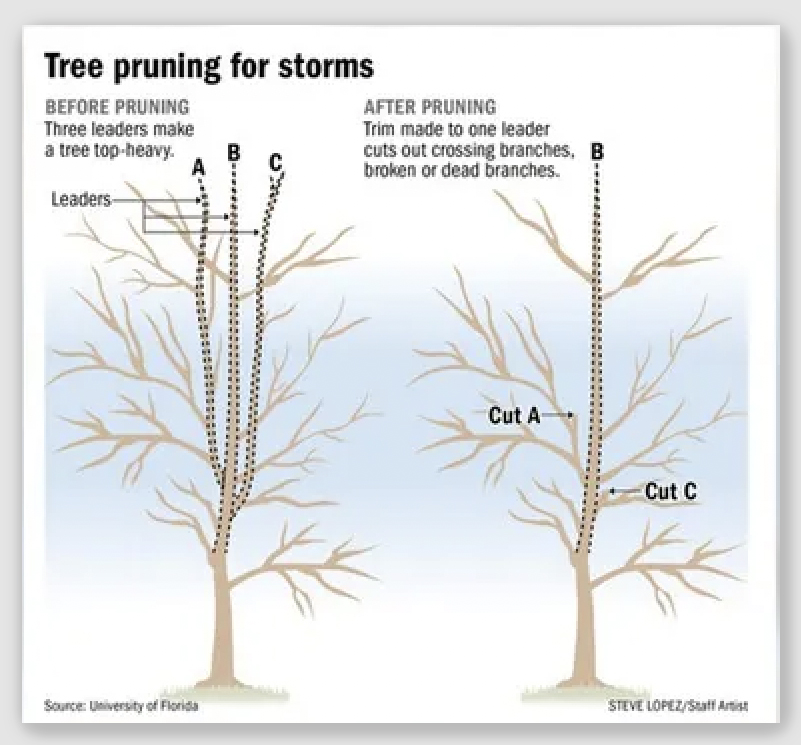
Trim trees before storms threaten. Many municipalities have “amnesty” weeks before storm season, when you can deposit more than the allowable limit of yard debris . Call municipalities for more information. Call a professional. Trees trimmed by a professional arborist are far less likely to fall. Thinning a tree allows wind to blow through its canopy, offering less wind resistance in a storm. Prune young trees to create a single leader, which will grow into a strong trunk. Minimize damage to mature trees by removing weak branches and reducing limb lengths. Hatracked trees become sails. Removing a tree’s canopy encourages bushy growth, making a tree top-heavy and wind-resistant. Hatracking is also illegal…
Farm Progress, July 2, 2021: Oak trees are mighty
Many years ago, as we were developing our community arboretum in my hometown, we planted a handful of bur oak seedlings in our parks. At the time, there were a few skeptics who mentioned that they would never live long enough to see these oaks amount to anything. Besides, their experiences with bur oak were in a wild, pasture setting, where the trees grew up gnarled and tough. They weren’t considered stately park trees. Now, about 30 years later, those little bur oak seedlings have grown to about 40 feet in height and are beautiful shade trees in our parks. Granted, they were planted next to a creek, so moisture was never a problem in their growth. Yet, this little bur oak experiment has proven to me that oaks are a tree that should be considered for plantings around the farm and ranch. On our farm, there are no native bur oak trees. Our creek valley grows plenty of native hackberry and cottonwood, but no oak. That’s why we planted a couple of bur oak seedings a few years back on the farm, because of their longevity and toughness under extreme conditions. Oaks thrive in zones 3 to 8, which covers most of the continental U.S. They are known for their slow growth rate, which is why they are considered survivors. They take their time and require a little patience, growing maybe a foot or more a year under normal conditions…
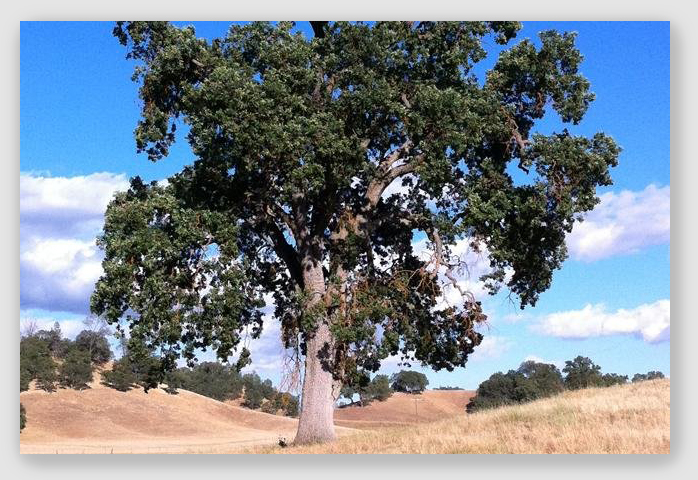
Sprinkled along the foothills of California’s Central Valley stand the iconic blue oak woodlands. Towering up to 80 feet tall and some reaching over 400 years old, the trees are home to one of the most biologically diverse ecosystems in the state. But extreme drought and wildfires are forcing the woodlands into an uncertain future. A new study conducted by U.S. Geological Survey researchers found that the historic drought of 2012-2016 alone caused nearly 490 square miles of tree cover loss — or the reduction of leaves and branches — in the blue oak woodlands. That’s about 37% of the entire tree cover loss in the study’s 32-year period… Blue oak cover loss in 2015 and 2016 was 5.2 and 3.2 times greater, respectively, than the average annual tree cover loss in the entire study period. Tree cover loss occurred even during periods without forest fires, with the greatest damage done during the driest and hottest years, according to the study published Tuesday in the journal Frontiers in Climate…
A Charlotte neighborhood is breathing a sigh of relief after a potentially dangerous situation was resolved thanks to help from WCNC Charlotte. Linda Britton and several of her neighbors were concerned about some power lines that were buried in the trees in some backyards and common areas in their community. Neighbors said the lines even sparked a small fire at one point. Britton contacted Bill McGinty about getting the trees cut back, which is something all homeowners should consider now that it’s hurricane season. “And the tree branches are causing spark-ups and fires in the tree branches when they rub against the power lines,” Britton said. For some people, the trees don’t really look like they’d be a problem but they were, especially in strong winds. The neighborhood was having trouble getting this issue fixed, so Britton emailed WCNC Charlotte, who in turn contacted Duke Energy, which is responsible for those lines. This story serves as yet another reminder that trees near power lines, or your home for that matter, should be pruned back, especially in storm season…

The past several weeks have seen a voracious moth caterpillar eat its way through tree leaves across southern Ontario and Québec, and from Michigan to Vermont. Since the 1980s, Lymantria dispar has led to enormous outbreaks, often lasting multiple years. The caterpillar has caused a great deal of damage, totaling more than 17,000 square kilometers across Canada. Efforts to manage the insect have cost billions of dollars in both Canada and the United States. The common name of this insect (gypsy moth) is problematic, so I’ll refer to it as L. dispar. You might also see it called “LDD moth” in some reports. They’re all the same species. L. dispar can be traced back to one man’s failed business venture, in this case, an attempt to launch a North American silk industry more than a century ago. Although it remains limited to a handful of provinces and U.S. states, the invasive species could spread further with global warming. Étienne Léopold Trouvelot, a French artist, astronomer and entomologist, was living in Medford, Mass., in the late 1800s when he decided to start breeding native North American moths in the trees near his house to create a silkworm colony. He was unsuccessful, probably because his caterpillars contracted viral diseases when they were kept in large numbers. Birds kept eating his caterpillars too…
Santa Barbara County District Attorney Joyce E. Dudley announced today that a felony complaint has been filed against James Allen Carr, 76, of Elk Grove, California and Enriquez Calles Vasquez, 51, of North Highlands, California. Mr. Carr and Mr. Vasquez have been charged with two felony violations; Conspiracy to Commit Vandalism, in violation of Penal Code section 182(a)(1), and Vandalism causing damage over $10,000, in violation of Penal Code section 594(a)(3). Additionally, Mr. Carr and Mr. Vasquez are charged with 3 misdemeanor violations of Santa Barbara Municipal Code section 15.20.115 (Unlawful Tree Removal from a Parkway), and 1 misdemeanor violation of Santa Barbara Municipal Code section 15.24.020 (Unlawful Tree Removal from a Setback). It is alleged that in December of 2020, Mr. Carr and Mr. Vasquez illegally cut down and removed 3 Eugena Trees owned by the City of Santa Barbara, and located on City of Santa Barbara property in front of a house on Paterna Road on the Riviera, owned by Mr. Carr. It is also alleged that Mr. Carr and Mr. Vasquez illegally removed a 4 th Eugena Tree located on Mr. Carr’s property. The Eugena Trees are estimated to have been over 50 years old, and the cost of replacing the 3 City of Santa Barbara-owned trees is estimated to be over $100,000…
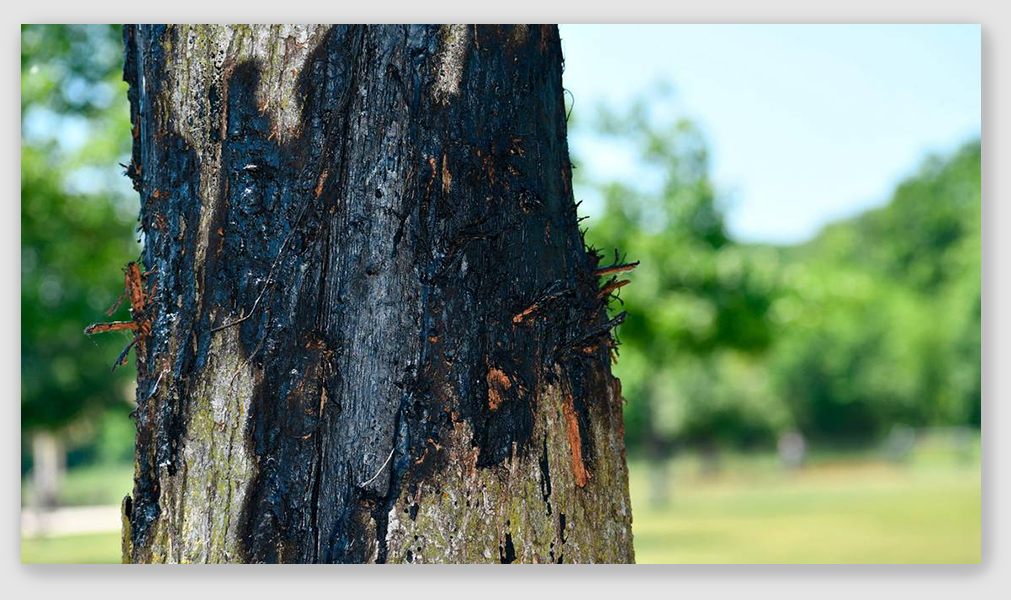
A man who said he sprayed trees in a suburban Chicago park to protect them after an anxious dog chewed off the bark has been ticketed by authorities. Asher Thomas is accused of “altering flora” in a Naperville dog park. The ticket from the Will County Forest Preserve carries a $225 fine, the Aurora Beacon-News reported. “Just as you can’t go around doing things to other people’s property, even if intentions are good, you can’t allow your dogs to do damage or spray a foreign substance on trees,” said Forest Preserve Deputy Police Chief Dave Barrios. Thomas said he regularly takes his dog, Dixie, to Whalon Lake Dog Park and learned that another owner’s German shepherd had gnawed away the bark on more than a dozen trees. He said he used a can of tree pruning sealer to cover the wounds…
The Oregon Department of Transportation has fired its contractor responsible forremoving trees and clearing debris from last year’s Riverside and Beachie Creek fires after delays “caused us to lose confidence in ECC’s ability to complete this work timely and in accordance with the state’s expectations.” The agency told lawmakers in an email Monday afternoon that the decision to remove ECC Constructors LLC resulted in part due to oversight mechanisms and contract administration put in place after the Legislature held hearings on the hazard-tree removal program this spring after media reports that it was being mismanaged. Those changes gave the state more flexibility to move contractors from one fire to another. The email, from Lindsay Baker, ODOT’s assistant director of government relations, went to 23 senators and representatives. “I do have news to share that I expect you’d want to learn from me instead of seeing it in the papers,” she told them. Nicole Sherbert, a spokeswoman for the debris removal program, said Tuesday the state and ODOT had expected that hazard tree cutting and removal and private property ash and debris cleanup would be completed by the end of this year. “When comparing this contractor’s performance to others and their general lack of urgency, we do not feel that they are able to complete the work in a reasonable timeframe; thus find it in the best interest of the public to terminate all contracts with ECC for convenience on June 28, 2021,” she said in an email…
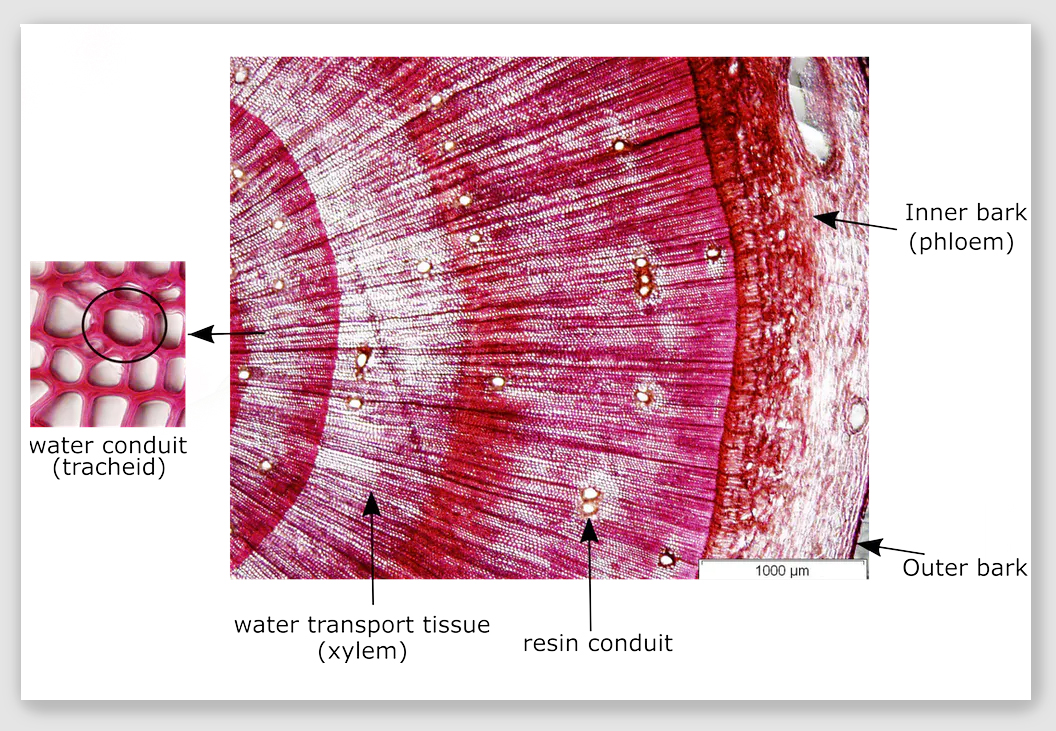
Like humans, trees need water to survive on hot, dry days, and they can survive for only short times under extreme heat and dry conditions. During prolonged droughts and extreme heat waves like the Western U.S. is experiencing, even native trees that are accustomed to the local climate can start to die. Central and northern Arizona have been witnessing this in recent months. A long-running drought and resulting water stress have contributed to the die-off of as many as 30% of the junipers there, according to the U.S. Forest Service. In California, over 129 million trees died as a consequence of a severe drought in the last decade, leaving highly flammable dry wood that can fuel future wildfires. Firefighters are now closely watching these and other areas with dead or dying trees as another extremely dry year heightens the fire risk. Trees survive by moving water from their roots to their leaves, a process known as vascular water transport. Water moves through small cylindrical conduits, called tracheids or vessels, that are all connected. Drought disrupts the water transport by reducing the amount of water available for the tree. As moisture in the air and soil decline, air bubbles can form in the vascular system of plants, creating embolisms that block the water’s flow. The less water that is available for trees during dry and hot periods, the higher the chances of embolisms forming in those water conduits. If a tree can’t get water to its leaves, it can’t survive…
Access to clean air and outdoor activities seems like a basic right. But in cities across the country, lower-income communities and communities of color more often live in neighborhoods with a higher share of concrete surfaces such as roads, buildings and parking lots, and a very limited number of trees and parks. Neighborhoods with a majority of people in poverty have 25 percent less tree canopy on average than those with a minority of people in poverty, according to American Forests’ Tree Equity Score tool that analyzes income, employment, age, ethnicity, health and surface temperature with tree canopy data in 486 metro areas.
In the most extreme cases, wealthy areas have 65 percent more tree canopy than communities where nine out of 10 people live below the poverty line. Communities with too few trees are feeling the consequences this week, as a heat wave sweeps through much of the Pacific Northwest. The average temperature can vary to up to 10 degrees between places with trees and those without. And where there is more heat, there is more death: Heat kills more people in the United States than any other kind of extreme weather. We can expect up to a tenfold increase in heat-related deaths in the eastern United States by the latter half of the 2050s and at least a 70 percent increase in the largest cities nationwide by 2050…
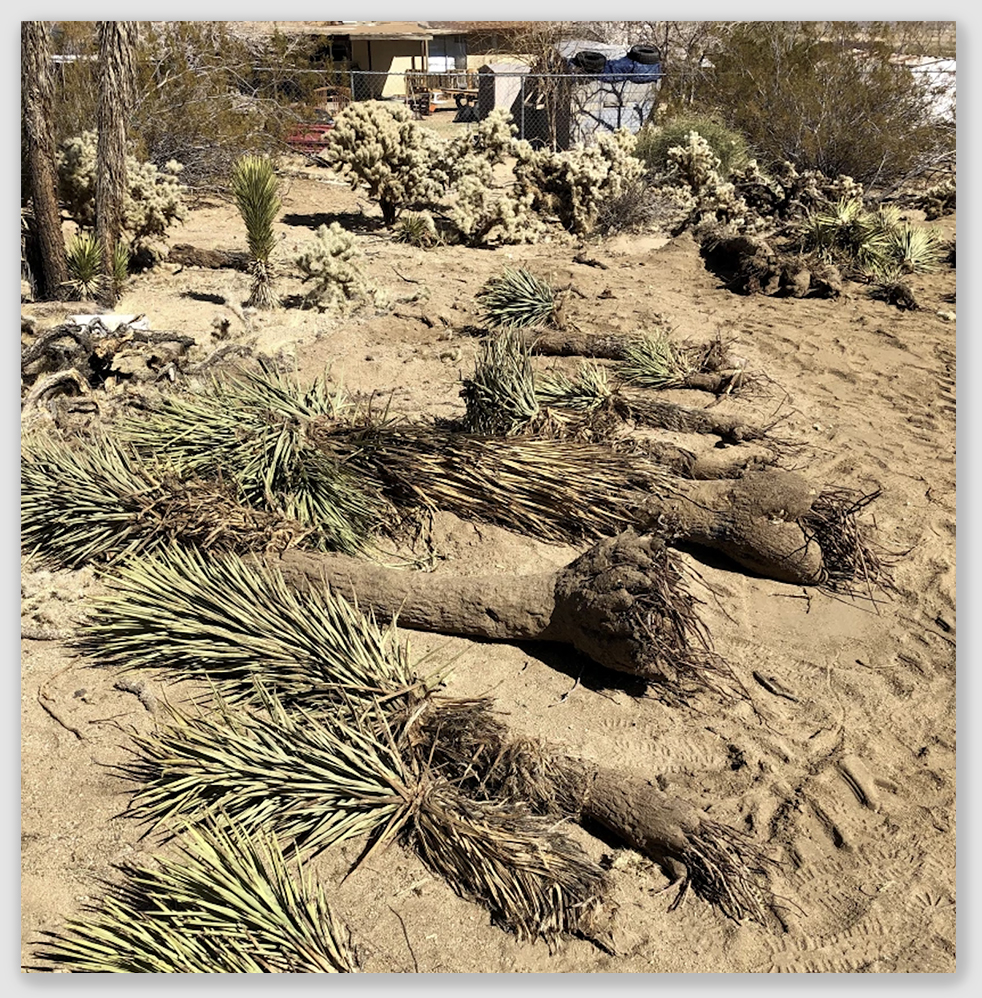 Los Angeles, California, Times, June 28, 2021: Couple fined $18,000 for bulldozing dozens of Joshua trees to make
way for home
A couple who bulldozed and buried 36 Joshua trees to make way for a home were recently fined $18,000 — a punishment authorities hope will deter others from destroying the iconic trees. “I would hope that the person that would otherwise take, remove, bulldoze a Joshua tree would understand that they are facing fairly significant criminal liability for doing so,” said Douglas Poston, supervising deputy district attorney with the San Bernardino County district attorney’s office. An investigation into the destruction began Feb. 11, when a Morongo Basin resident saw his neighbors using a tractor to mow down dozens of the twisted, bristled trees and reported it to the California Department of Fish and Wildlife through a tip line, wildlife officials said. Not long before, the neighbor — who was not identified — noticed the trees were marked for removal and warned Jeffrey Walter and Jonetta Nordberg-Walter not to take them out. The western Joshua tree is a candidate for protection under the California Endangered Species Act. It is illegal to cut down, damage or remove the sensitive desert tree without a permit while they’re under review for more lasting protection. According to Poston, the couple believed that small trees, under a certain diameter, could legally be removed. The two own the land where the trees were and planned to build a home on the lot. “But that’s not accurate, obviously,” he said. “It doesn’t matter if it’s a foot tall or 20 feet tall, it’s under that protection…”
US News and World Report, June 28, 2021: How Much Do Trees Lower Urban Temperatures?
Could trees be the key to a cool summer in the city? Yes, claims new research that calculated just how much greenery can bring temperatures down. “We’ve long known that the shade of trees and buildings can provide cooling,” said study co-author Jean-Michel Guldmann. He is a professor emeritus of city and regional planning at Ohio State University, in Columbus. “But now we can more precisely measure exactly what that effect will be in specific instances, which can help us make better design choices and greening strategies to mitigate the urban heat island effect,” Guldmann said in a university news release. For the study, his team created a 3D digital model of a nearly 14-square-mile area of northern Columbus to assess the effect that shade from trees and buildings had on land surface temperatures over one hour on a summer day. The researchers found that the amount of tree canopy had a significant impact on what’s known as the urban heat island effect. For example, on a day when the temperature was 93.33 degrees Fahrenheit in one neighborhood, the temperature would have been 3.48 degrees lower (89.85 degrees) if all the current trees had been fully grown. And if the neighborhood had 20 more full-grown trees, the temperature would be another 1.39 degrees lower…
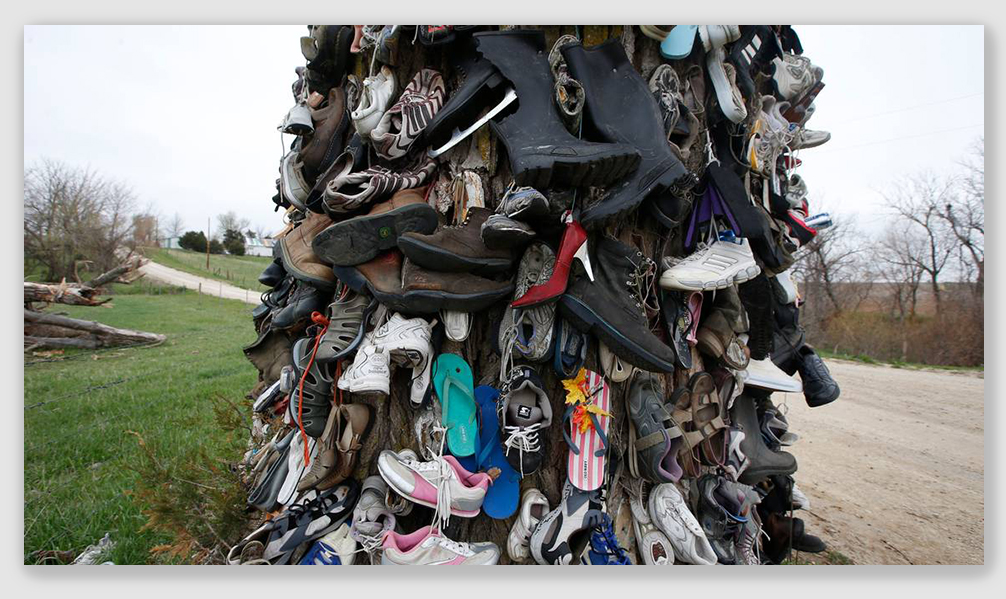
It’s unclear whether it made any noise when it fell, but the famous shoe tree near Wetmore in Nemaha County, Kansas has definitely made some noise after it fell during a storm earlier this week. People from all over the world visited the large cottonwood tree that had hundreds of shoes, heels, boots, clogs and sneakers nailed to it. It fell during a storm Thursday night. A Facebook post showing a photo of the downed tree has been shared hundreds of times, including by the Big Kansas Road Trip’s Facebook page. One person replied to the road trip’s share that it was on their bucket list to visit the tree. “There’s a little bit of it left but it sure isn’t the same as seeing the huge majestic tree as it once was,” the BKRT replied. Jerry Kissel, whose father nailed the first shoe to the tree in the 1990s, said his father never thought the tree would be so popular. He said the tree knocked out the power at his fourth-generation farmstead a quarter-mile from the tree, which is on public land. “It came down hard,” Kissel said. “We knew it was going to come down. It was a matter of time.” The tree is believed to be more than 100 years old. Kissel said it had the circumference of a telephone pole when his great grandfather moved to the farmstead in 1909. His father would later play under its branches while he waited for the mail carrier to drop off letters at the corner…
Gulfport, Mississippi, WXXV-TV, June 28, 2021: 200-year-old oak tree in Ocean Springs causing issues
A 200-year-old live oak tree in Ocean Springs is causing controversy. The tree is presenting safety concerns leaving many stumped on whether the tree should be cut down. This morning, an arborist from New Orleans weighed in the debate. “Leave it. Absolutely 100 percent don’t cut it down. It’s just crazy what is happening to this tree that’s been here for 200 years.” For Ocean Springs resident Bob Smith, cutting down the oak tree at Fort Maurepas Park near Front Beach is absurd considering the big trees right down the road. “Everybody recognizes that if a tree falls, it’s a danger to whoever is under the tree. All the tees on Washington Avenue would crush somebody if they fall, but you don’t go whacking down trees in case they fall one day.” John Benton, an arborist for Bayou Tree Service, has a different view. He determined the city could place a brace on the tree and monitor it, but because of its location on the potential risk is too great. “From a professional standpoint, my recommendation would have to be removal because of the liability over a playground. It’s a public area. There’s a lot of potential for problems…”
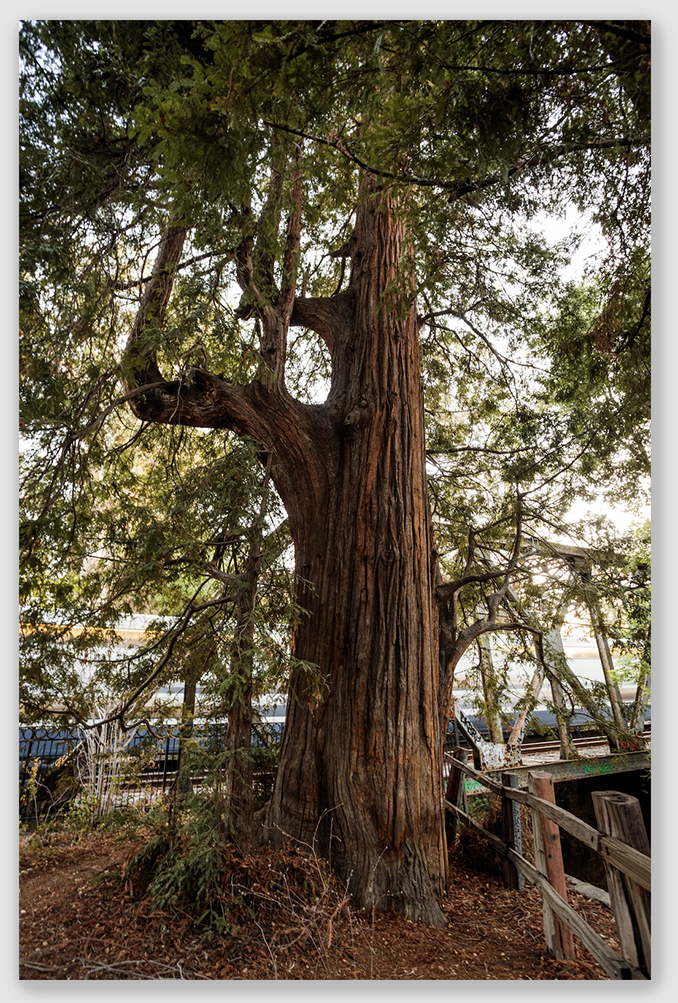
It could have toppled long ago. For one thing, it’s a loner, miles from kin that thrive in far wetter climates. Its massive roots are sandwiched between a concrete wall and railroad tracks. It has weathered coal and diesel smoke from passing trains for more than a century. It has survived earthquakes and record-breaking droughts, and a less destructive man-made force: graffiti. El Palo Alto — a 1,081-year-old redwood tree that has long served as the 120-foot-tall symbol of Palo Alto, the city that took its name — is arguably Silicon Valley’s original no-tech start-up. It still stands after nearly 11 centuries because it has been singled out for veneration, and people tend to have an emotional connection to charismatic megaflora with a story to tell, from the cedars of Lebanon in the Middle East to the major oak that supposedly housed Robin Hood and his men in Sherwood Forest. That’s El Palo Alto on the official emblem of the City of Palo Alto and the official seal of Stanford University. And that’s El Palo Alto, sort of, that dances around at Stanford games as the unofficial campus mascot, a googly-eyed oddball costumed tree with floppy branches. “It embodies the pioneer spirit of Palo Alto,” said Walter Passmore, the city’s former urban forester, who cared for the tree for nine years until he left the position in May. “Palo Alto has always prided itself on being home to innovators, leaders and creative thinking. That is what some people see in the tree…”
As a tree guy, one of the things that I’m constantly thinking about when I’m looking at trees to prune, trying to establish new trees or working with trees that are in distress is how much energy they might have. And what is their ability to create more. When I say “energy,” I essentially mean stored photosynthate that the plant has created out of available nutrients, water, gases and sunlight (whew, that sure sounds like a complicated process). Generally, trees with full canopies and a vigorous appearance are going to have access to energy reserves which they can utilize in several different ways if the need arises. On the other hand, trees with visibly thin canopies, an excessive amount of dead/dying structure or missing large pieces probably are telling you that they don’t have a lot of extra energy available. The reason I bring this up is that there are a lot of trees and larger shrubs throughout our region that were heavily damaged by the February cold…

Kindling is piling up on the forest floor. Beetles, pests and diseases that have been attacking Minnesota’s core tree species over the past several years have turned entire stands into the ready-made fuel of fallen branches and dead trunks. Now a hot and dry spring, with more abnormally dry weather expected well into summer, has foresters bracing for what could be a brutal wildfire season. And they’re worried about the impact a prolonged drought will have on Minnesota’s trees. More wildfires had already broken out across the state by mid-June than in all of last year. The state typically has fewer than 1,200 wildfires a year, burning roughly 25,000 acres. So far this spring, more than 1,425 fires have burned roughly 35,000 acres of forest and grassland, according to the Department of Natural Resources (DNR). “I don’t see it going anywhere or mitigating soon,” said William Glesener, DNR wildfire operations supervisor. “This is a period when we should be having very few fires, but we’re adding about 50 a week. We’re really going to be in it in a couple weeks when things really dry out…”
The path up to Chalk Hill Estate Vineyards in the hills northeast of Windsor, through the years became one of the most scenic drives within Sonoma County. Its entrance, which gave way to nicely paved roads lined by tall eucalyptus trees, captivated visitors and provided them with the perfect setting to begin a day of wine tasting. But during the 2019 Kincade fire, those eucalyptus trees were identified as a potential hazard as the blaze burned its way closer and closer to Chalk Hill Road. Ultimately, though, while the wildfire did threaten the winery it only caused limited damage to nonessential buildings and equipment, as well as the outer portions of the vineyards. “After talking with the firefighters, we learned those things (eucalyptus trees) are just basically what they call ‘liquid kerosene.’ We were really worried, coming into another drought,” said Shaun Harder, chief of staff for Foley Family Wines, which owns the winery. Like many other local businesses and residents, the winery turned to Jeff Allen of Allen Land Design to redesign the landscape in an era of climate change, which this year means living with what has been classified as an exceptional drought…
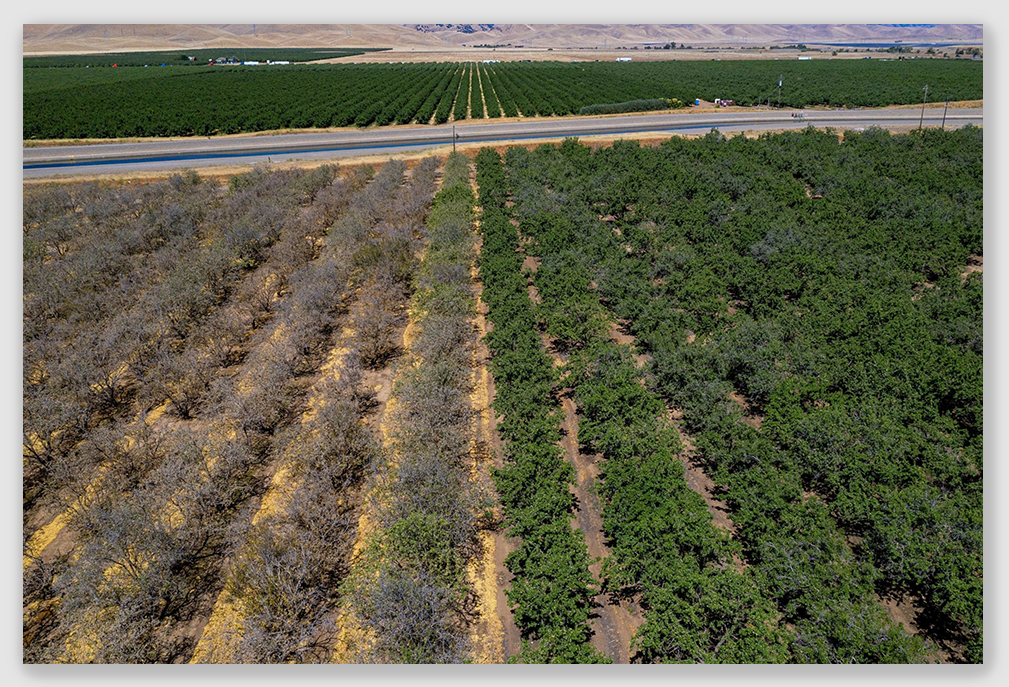
Christine Gemperle is about to do what almond farmers fear the most: rip out her trees early. Water is so scarce on her orchard in California’s Central Valley that she’s been forced to let a third of her acreage go dry. In the irrigated areas, the lush, supple trees are dewy in the early morning, providing some relief from the extreme heat. Walking over to the dry side, you can actually feel the temperature start to go up as you’re surrounded by the brittle, lifeless branches that look like they could crumble into dust. “Farming’s very risky,” said Gemperle, who will undertake the arduous process of pulling out all her trees on the orchard this fall, replacing them with younger ones that don’t need as much moisture. It’s a tough decision. Almond trees are typically a 25-year investment, and if it weren’t for the drought, these trees could’ve made it through at least another growing season, if not two. Now, they’ll be ground up into mulch. “I don’t think a lot of people understand just how risky this business is, and it’s a risk that’s associated with something you can’t control at all: The weather,” she said. It’s a stark reminder of the devastating toll that the drought gripping the West will take on U.S. agriculture, bringing with it the risk of food inflation…
Depending on geographic and climate conditions, different trees grow in a tree farm or family forest. These differences define which ecological community may call it home. A forest with a diversity of canopy levels has more potential to attract a greater variety of wildlife, and unbroken sections of forest can also host a group of animals called Forest Interior Dwelling Species, or FIDS. In Frederick County, for example, a ridge-top forest such as Gambrill State Park is mostly composed of chestnut, oaks, red maple, black gum, and a variety of pines. These create favorable denning habitats for bear, bobcat, gray fox, rattlesnake and perhaps the Alleghany wood rat, an endangered species known to exist in Frederick County. In contrast, in marshy glade areas such as the floodplain around Jan and Dave Barrow’s Middle Creek tree farm, trees such as hazel alder, ninebark, silky dogwood, black willow, arrow wood viburnum, hazelnut and bladderwort dominate. These create attractive habitat for woodcock, red winged blackbird, waterfowl, beavers, muskrat, weasel and bear. Old fields, left fallow for five to 10 years, will grow herbaceous plants such as grasses, forbs, brambles and sedges, along with scattered woody plants like cedar, flowering dogwood, redbud, wild cherry and elm, to name a few. These “pioneer” species typically colonize their sites through wind- or wildlife-dispersed seed…

There are places to hold an exorcism and places to maybe avoid holding an exorcism. Any guess where the lumber aisle of a Home Depot falls? A police report from Dickson City in Lackawanna County raised eyebrows this week for its bizarre description of an incident that happened Monday. “3:26pm: Commerce Blvd. @ Home Depot for disorderly people having an exorcism in the lumber isle (sic) for the dead trees,” authorities wrote. “They were escorted out of the building.” A call placed to Dickson City police elicited a chuckle from one officer. “There were two people hanging out in the lumber department doing their little exorcism thing,” the officer said. “Some people at the store started picking up that something was happening that was not necessarily normal. Police were called to the store and they were escorted out of the building.” The individuals involved will not be charged, the officer said. “It was a séance type of thing for the dead,” he said…
With workforce shortages, some businesses say they’re having to evolve and adapt to meet daily demands. Todd Rickert, owner of Rickert Landscaping and Tree Service, says it’s become a challenge to not just find workers but also skilled workers. He said the tree removal process requires specialty jobs where people need to have a proper driving record and the right capabilities to do the task safely. Rickert said, “It’s not like colleges are putting out a hundred new tree climbers every year.” He added, “It’s more of an apprenticeship type thing where we train or have other employees that work for other industries and cross over.” Rickert said there’s becoming less and less of these skilled workers. He said the pay is not the issue and said workers can make about $50 an hour while doing storm work on the weekends. Rickert believes it may just be a lack of interest in the job. He added, “It doesn’t matter how much we offer to pay. We may not attract new workers.” In order to make for the loss, Rickert says the business recently made a large investment that cuts down the number of people needed on a job and allows them to cut and remove a tree by simply using a remote control. Instead of needing four people for one job, Rickert says they can get the same job done with just two, and in less time. He said the truck makes their projects more efficient and safer for their employees. He said the truck is the first of its kind in Tulsa…
 London, UK, Times, June 24, 2021: Battle over birdsong ends with tree being sliced in half
Hilarious photos circulating online show what happens when neighborly conflict is taken to the extreme. A tree, located on the very edge of one property, has been allegedly been sawed in half vertically by its next-door neighbor, and photos from the scene are prompting people to weigh in. The conflict between Mistry and his neighbors, Graham and Irene Lee, began about a year ago. “It has been there for 25 years and we’d trimmed [it] into a ball shape with an agreement with the [neighbor] and he has been fine about it,” Mistry explained. Recently, however, the Lees allegedly expressed that the birds living in the tree were too loud and created a mess. Mistry told WalesOnline that his neighbors “started off by putting black bin liners in the tree to stop the birds sitting there.” From there, things seemed to escalate: “Last weekend he said he was going to get a tree surgeon to cut it down and we asked him not to but they came on Friday and did it.” “We were absolutely distraught,” said Mistry. “We pleaded and pleaded with them not to do it, but their mind was made up. That tree was coming down.” A Reddit post documenting the bizarre feud gained traction on the platform, where it was described as “some traditional British pettiness on display.” Since then, it appears the photo’s owner has deleted the image, but hundreds of comments regarding the dispute still remain on the site. Many commenters used the forum to share their own experiences with neighborly, garden-related conflicts…
Eversource returned to Little Brook Road Wednesday to prune trees along its large power lines, prompting one neighbor to file a complaint with the state. The road has been at the center of a debate involving the power company’s plans to remove about 50 trees due to what it says are safety reasons. Last week during a meeting with residents, Eversource officials observed that there was electrical arcing taking place, due to branches being too close to the power lines. Two dozen workers, most of whom were contracted by Eversource through Davis Tree Service, came to trim back branches along a 200-yard stretch that runs adjacent to the railroad tracks, just south of Little Brook Road. While utility officials said it was an emergency operation to avert the potential danger of nearby trees becoming charged with electricity, neighbor Natalie Tallis, who has led the opposition to the work, claimed that was not the case. “I believe that Eversource is violating state and municipal laws,” she wrote to the state Department of Energy and Environmental Protection’s Public Utilities Regulatory Authority. She said the utility has “wrongfully and intentionally misinterpreted” the law, overstepping its right to trim and remove trees. Tallis wrote that she asked Darien First Selectman Jayme Stevenson to consider having the town’s legal counsel challenge Eversource claims. However, Tallis told PURA that Stevenson rejected her request. “For the record, I have not rejected any of your requests,” Stevenson responded. “I am in contact with Darien’s attorney, who is assisting me with the town’s authorities regarding this matter.” After visiting the road Wednesday morning, Stevenson also confirmed that the work was being done on state Department of Transportation property in response to last week’s arcing, as well as some other work to be done on the opposite end of the road in the Eversource easement area that’s on private property…

A ruling last month by the state’s highest court blocking tree removal for snowmobile trails in protected forest areas has created uncertainty for other recreational projects in the Adirondack Forest Preserve. That uncertainty could result in some trail crews keeping their focus on private lands or on construction and maintenance work that doesn’t require tree cutting, as the Adirondack Mountain Club said it planned. The state Department of Environmental Conservation has declined to respond to questions that include what would come of the 19 or so miles of snowmobile trails already built; how the decision would affect other trail work; how the DEC was interpreting the handling of a constitutionally protected tree; whether the agency would pursue a constitutional amendment to authorize the snowmobile trail,. and what guidance the department would provide to trail crews heading into their summer season. A spokesperson on May 25 would only say, “DEC remains committed to thoughtful stewardship of the Forest Preserve for the use and enjoyment of the public and protection of this resource. DEC is carefully and thoroughly analyzing the court’s decision and determining the implications for DEC’s varied and complex work.” The Adirondack Park Agency also did not respond to similar questions, except to say that the state attorney general’s office was reviewing the decision. Ben Brosseau, director of communications for the Adirondack Mountain Club, said last year’s DEC guidance held that trail crews were not allowed to cut trees on the forest preserve while the case was pending. “We expect new guidance for hiking trail work to come out by mid to late summer,” Brosseau said. The club is continuing trail work in some areas of the park that do not involve tree cutting. Crews continue to work on projects at Avalanche Lake, Phelps Trail past Johns Brook Lodge, and a new project on Mount Jo. The Mount Jo project is on private property, so is not affected by the court decision. Brousseau said the club will reroute the Long Trail because a large section is eroded into a streambed…
Sometimes wealth is the product of effort and hard work, and other times it is mere luck. That is clear to the peasant couple Rani and Sankalp Parihar , who accidentally planted some of the most expensive mangoes in the world . Now they have Miyazaki mango trees whose cost per kilo is around 270,000 rupees (about $ 3,630 or 74,600 Mexican pesos). The story of these horticulturists, inhabitants of the city of Jabalpur, in the state of Madhya Pradesh, India, seems like something out of a movie. It all started four years ago, when the Parihar went to Chennai, in the south of the country, to buy some trees to plant. On the train he met a mysterious man who offered him the valuable plants. “He offered me these saplings and asked me to take care of them like our babies. We planted them in the orchard without knowing what variety of mangoes they would produce, ” Sankalp told The Times of India . In 2020, when the trees grew and began to bear fruit, they noticed that they were very different from other more common types of mangoes. These had a rather unusual intense ruby color.“Since I didn’t know the name of this variety, I named the fruit after my mother Damini. Later, we did research on this variety and found the real name. But he’s still Damini for me , “Parihar added. To his surprise, they turned out to be Miyazaki mangoes originating in Japan, which are among the most expensive in the world…
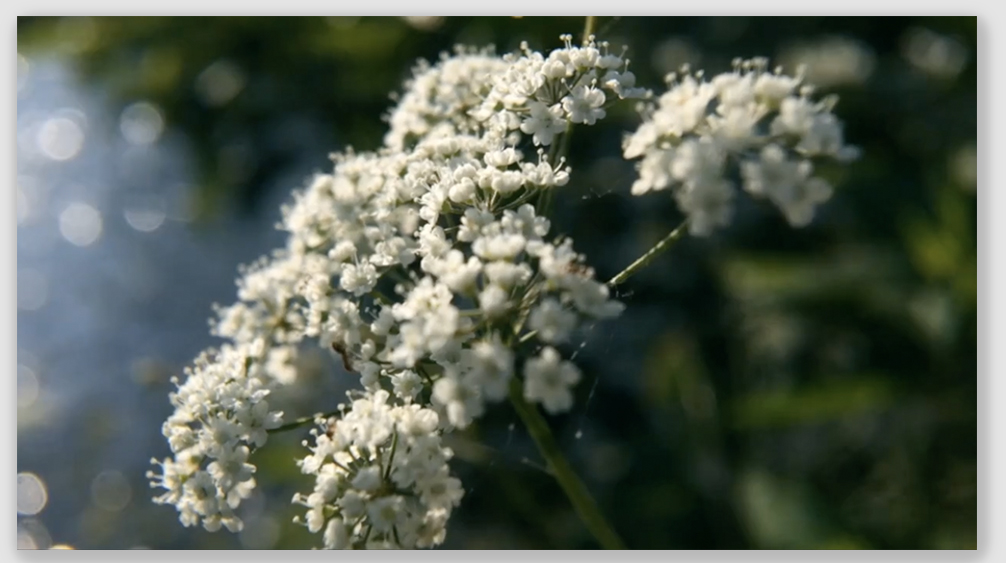
Poison hemlock, a dangerous weed that has only been in the Buckeye State for a few years, is in full bloom this week in North Central Ohio. The hazardous plant is more visible in the area this year than ever before, according to Jason Hartschuh, Ohio State University Extension agent for Crawford County. “It’s everywhere. You about can’t drive U.S. 30 and not see it,” Hartschuh said. “It keeps spreading by wildlife and by water and flood plains.” Poison hemlock started making news in 2019 when it was reported to have spread across southern Ohio. Now it’s abundant across the state. The plant is also prevalent in Pennsylvania. The plant can be deadly if eaten, said professors Joe Boggs and Erik Draper, in The Ohio State University’s Buckeye Yard & Garden online blog. “Poison hemlock is one of the deadliest plants in North America,” they wrote. “Plants contain highly toxic piperidine alkaloid compounds, including coniine and gamma-Coniceine, which cause respiratory failure and death in mammals. The roots are more toxic than the leaves and stems; however, all parts of the plant including the seeds should be considered dangerous.” The plant is in the carrot family, as is Queen Anne’s Lace, and their similarities can make them hard to differentiate. “The roots of wild carrot, or Queen Anne’s lace (Daucus carota), are sometimes eaten raw or cooked,” the professors wrote. “Unfortunately, they bear a striking resemblance to poison hemlock roots and misidentifications have been responsible for a number of accidental poisonings.” Farmers who have pasture land will want to keep an eye out for poison hemlock to ensure none of it is growing where their animals are grazing…
Most models explaining how viruses are transmitted focus on viral particles escaping one person to infect a nearby person. A study on the role of microscopic particles in how viruses are transmitted suggests pollen is nothing to sneeze at. In Physics of Fluids, by AIP Publishing, Talib Dbouk and Dimitris Drikakis investigate how pollen facilitates the spread of an RNA virus like the COVID-19 virus. The study draws on cutting-edge computational approaches for analyzing fluid dynamics to mimic the pollen movement from a willow tree, a prototypical pollen emitter. Airborne pollen grains contribute to the spread of airborne viruses, especially in crowded environments. “To our knowledge, this is the first time we show through modeling and simulation how airborne pollen micrograins are transported in a light breeze, contributing to airborne virus transmission in crowds outdoors,” Drikakis said. The researchers noticed a correlation between COVID-19 infection rates and the pollen concentration on the National Allergy Map. Each pollen grain can carry hundreds of virus particles at a time. Trees alone can put 1,500 grains per cubic meter into the air on heavy days. The researchers set to work by creating all the pollen-producing parts of their computational willow tree. They simulated outdoor gatherings of roughly 10 or 100 people, some of them shedding COVID-19 particles, and subjected the people to 10,000 pollen grains…
Vast, treeless paddocks and fields can be dangerous for wildlife, who encounter them as “roadblocks” between natural areas nearby. But our new research found even one lone tree in an otherwise empty paddock can make a huge difference to an animal’s movement. We focused on the Atlantic Forest in Brazil, a biodiversity hotspot with 1,361 different known species of wildlife, such as jaguars, sloths, tamarins and toucans. Habitat loss from expanding and intensifying farmland, however, increasingly threatens the forest’s rich diversity of species and ecosystems. We researched the value of paddock trees and hedges for birds and bees, and found small habitat features like these can double how easily they find their way through farmland. This is important because enabling wildlife to journey across farmlands not only benefits the conservation of species, but also people. It means bees can improve crop pollination, and seed-dispersing birds can help restore ecosystems. Lone trees in paddocks, hedges and tree-lined fences are common features of farmlands across the world, from Brazil to Australia. They may be few and far between, but this scattered vegetation makes important areas of refuge for birds and bees, acting like roads or stepping stones to larger natural habitats nearby. Scattered paddock trees, for instance, offer shelter, food, and places to land. They’ve also been found to create cooler areas within their canopy and right beneath it, providing some relief on scorching summer days…
It’s no secret to those living in Lakewood that the city is seeking to beef up its business sector. The city’s south side — near I-5 and Joint Base Lewis-McChord — has seen the announcement of a new Amazon warehouse, a possible occupation by Tesla and planned relocation of Aero Precision. There’s more to come. “Certainly, we are, you know, business-focused, and we invite development, and you can see the number of … warehouses going up,” said Jim Kopriva, communications manager for the city of Lakewood. The latest development comes at what some see as an unacceptable price. An 8-plus-acre property at 4901 123rd St. SW could be home to Lakewood’s next warehouse. It’s also home to over 100 oak trees native to Washington state. Some residents are fighting to save them. Lakewood resident Christina Manetti has seen warehouses pop up and the Garry oaks come down. Her fear of even more Garry oaks being destroyed across Lakewood has led her to rally additional residents and experts in an effort to save the trees on 4901 123rd St. SW…
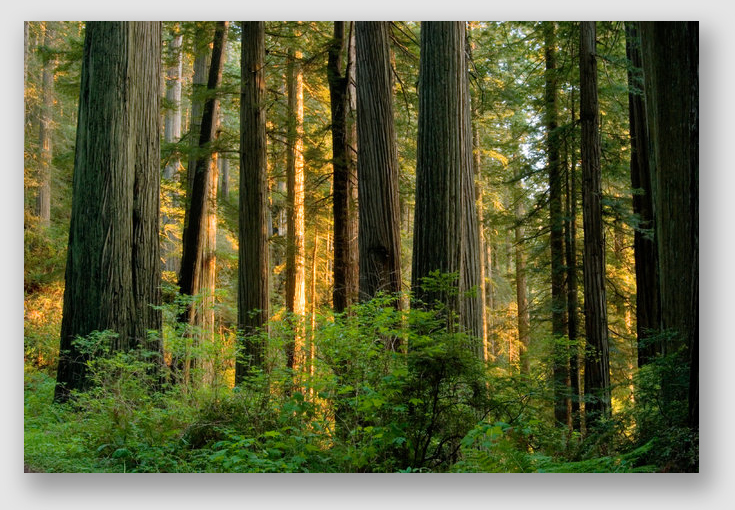 Phys.org, June 22, 2021: Future wood use assures long-term climate benefit from commercial forests
A new study published in Nature Communications demonstrates the important role that planting new commercial forests could play in the fight against climate change by including new accounting of greenhouse gas (GHG) mitigation achieved from future use of harvested wood. The study applied a novel, time-dependent assessment to capture the complex dynamics of carbon uptake, storage and partial eventual release back to the atmosphere, alongside product and energy substitution by wood products, over a 100-year timeframe. Uniquely, the study considered multiple wood uses along multi-decadal cascading value chains (e.g. construction timber to paper to bioenergy), and future projections on wider decarbonisation of substituted products and energy (to avoid overestimating future substitution “credits” derived from use of wood). “Our goal was to undertake a really comprehensive life cycle assessment that considers the whole life cycle of carbon taken up by trees in new commercial forests” says Eilidh Forster, a Ph.D. student in Bangor University and lead author of the study. “Because new forests won’t be harvested for another 50 years, the standard assessment approach of applying current technology emission factors to wood value chains is inaccurate. Therefore, we decided to apply projections of future technology deployment to better represent the likely long-term climate change mitigation achieved by harvested wood…”
A preliminary proposal to add more teeth to a 74-year-old Plymouth Township tree ordinance upset a few residents so much that one threatened to bring a chainsaw to a trustees meeting. Plymouth Township Supervisor Kurt Heise emphasized the process of revamping the township’s current tree ordinance, which is based on Public Act 359 of 1947, should begin with borrowing the City of Plymouth’s recently-enacted tree laws and then tailoring them based on the guidance offered by the board of trustees and residents. “I’m putting (the Plymouth tree ordinance) out there as a starting-off point to show what is probably one of the most restrictive — depending on your point of view — and detailed ordinances from a comparable community, but one that has also gone through a very thorough vetting process,” Heise said. Heise explained his idea to start with Plymouth’s ordinance and alter it for the township as residents and trustees see fit as a money- and time-saver. “As much as I respect (township attorney) Kevin Bennett, I’d prefer not to have to pay him to start from scratch and draft a whole new ordinance,” Heise said. “It is not my intention to use Plymouth’s tree ordinance, word for word, as the township’s ordinance. It’s a starting point…”

“I just want the tree to live. I can’t have my dad but I can have the tree,” Sandy Coffer-Ruff said. The 32 ft long and 39 ft wide tree is located at Coffer-Ruff’s childhood home in Charleston. She said her father, Henry Coffer, took care of the tree up till his last breath. “It feels like my dad’s tombstone,” Coffer-Ruff said. She’s concerned it may be damaged due to work on the sidewalk that was done by the state.“I want the tree to live so my great grandkids can see it,” Coffer-Ruff said. She said the sidewalk construction, just steps from the front door, started about a month ago. Around that time is when she noticed the bark falling apart, clipped branches and tree roots nearby. “This isn’t normal. You shouldn’t be able to do that to a tree. Other side there is a big crack,” Coffer-Ruff said. For help, she reached out to conservation experts. She was told factors such as bugs and the tree’s size can be a threat, on top of added stress from construction. “I just look at it every day. I just feel like if the tree dies then it’s like my dad’s funeral all over again,” Coffer-Ruff said…
Reason, June 21, 2021: Malibu Man Fined $4.2 Million Over Disputed Beachfront Gate
When Warren and Henny Lent bought their Malibu beach house in 2002, it was the realization of a lifelong goal. Warren, a doctor by training, says he worked a second job on top of the time he put in at a Beverly Hills plastic surgery practice just to afford the down payment. It was “a dream come true which lasted about two months,” Lent says. That was when the Lents learned, via a casual conversation with a neighbor, that their house had a five-foot-wide public access easement along its eastern side that people could use to get down to the water. These easements aren’t uncommon, and at first, the Lents didn’t think much about the fact that their home had one too. After all, it wasn’t like their side yard made for a great means of accessing the beach given that it contained two steep drops, and that running underneath the whole thing was a large storm drain which could make building anything on top of it an engineering challenge. Nevertheless, this easement put the Lents on a collision course with one of the most powerful agencies in the state, and one with a history of antagonizing property owners: the California Coastal Commission (CCC). Beginning in 2007, the commission began demanding that the couple remove a gate and stairs obscuring their side yard so it could build its own improvements there. The Lents said they would comply once the commission was actually ready to break ground. Negotiations continued until 2016, when the commission—tired of arguing and newly empowered to issue fines—slapped the couple with a $4.2 million penalty. This remains one of the largest fines the commission has ever handed out…
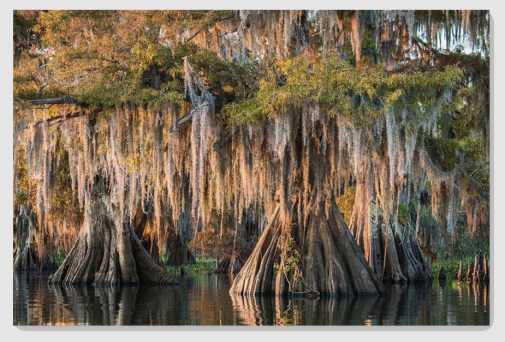 Louisiana’s iconic bald cypress trees will be protected on state-owned property, after Gov. John Bel Edwards signed a new law banning the trees’ harvesting on more than 1 million acres (404,685 hectares) of state land. Rep. Neil Riser told The Advertiser that he sponsored the bill — which won unanimous passage in the House and Senate — to give nature time to reestablish dense stands of cypress that once covered vast tracts of land. “The cypress tree symbolizes Louisiana and the Mississippi Delta,” said Riser, a Columbia Republican. “I hope this new law will help people have a true appreciation of these trees’ majesty.” The new law doesn’t apply to cypress trees growing on privately-owned land. Cypress trees grow throughout Louisiana’s swamps and can have lifespans of more than 1,000 years. The bald cypress was named the official Louisiana state tree in 1963. Riser said the forests will return on state-owned lands with protection, though it will take almost a century for the slow-growth trees to mature…
President Barack Obama’s first Bureau of Land Management director has pulled his support for Tracy Stone-Manning, saying she should withdraw her nomination to head the agency over her involvement in a tree-spiking case three decades ago. Bob Abbey, who led the agency from 2009-2012, said he initially supported her selection, but that recent reports about her “questionable past” raise questions about her judgment and would bring “needless controversy” to the agency charged with managing 245 million acres of federal lands. “If the reports regarding Ms. Stone-Manning’s involvement with spiking trees are true then I firmly believe she should immediately withdraw her name from further consideration for the BLM director job,” Mr. Abbey told The Washington Times in an email. In her 1993 federal court testimony, Ms. Stone-Manning admitted to retyping, editing and mailing an anonymous warning letter on behalf of an activist who had participated in an extensive tree-spiking operation in Idaho’s Clearwater National Forest. She received prosecutorial immunity to testify against the activist, who was found guilty and sentenced to 17 months in prison…
 New York City, The Wall Street Journal, June 17, 2021: Thieves Find Money That Grows on Trees: ‘Avocados Are the Green Gold’
Avocado farmer Mark Alcock has motion-activated infrared cameras dotting 170 acres of groves that send intruder alerts to his phone. The beeps typically wake him at least once an hour, every night. It’s usually bush pigs, porcupines or baboons. “But there’s always that chance it’ll be someone coming to steal,” he said. “It’s just getting out of hand.” The cameras are part of an elaborate antitheft system that includes a rapid-response team run by an ex-military man and expert in tracker dogs. South Africa is the world’s sixth-largest avocado exporter, and farmers like Mr. Alcock are entangled in a cat-and-mouse game with fruit thieves who abscond with thousands of pounds at a time. Many avocado growers have resorted to security measures borrowed from gold mines and other big-money targets. “As the value of the product rises, the accessibility of it rises because there’s more orchards being planted,” said Howard Blight, who grows avocados, macadamia nuts and dragon fruit on his nearly 350-acre farm. The property is guarded by an electric fence standing more than 7-feet high and topped with barbed wire. Guards patrol the farm 24/7. “It seems a bit drastic,” Mr. Blight said. “But avocados are the green gold…”
Chicago, Illinois, Tribune, June 17, 2021: About to plant a tree or shrub? Wait it out until fall
If you have been planning to plant or transplant a tree or shrub this year and haven’t gotten around to it, consider waiting until fall. “Even in a normal year, summer is not the best time to plant or transplant,” said Sharon Yiesla, plant knowledge specialist at in the Plant Clinic of The Morton Arboretum in Lisle. “And this year we’re in a drought.” Planting in summer has extra risks, because the heat makes soil and plants dry out faster. As the temperature rises, water evaporates more quickly. In this drought year — one of the driest on record — rainfall is not likely to provide enough water for plants. “At this point, homeowners might be better off waiting until late summer or early fall to purchase or transplant trees or shrubs,” she said. Plants are mostly water, and they need a steady, reliable water supply to survive. Between 80% and 90% of the weight of any green plant consists of the water that fills its cells. Even a mature tree, with its woody trunk and branches, is about 50% water. In summer, plants cool themselves by allowing water to escape through tiny holes in their leaves, taking heat with it. The water that evaporates needs to be replaced in order for the plant to keep functioning…
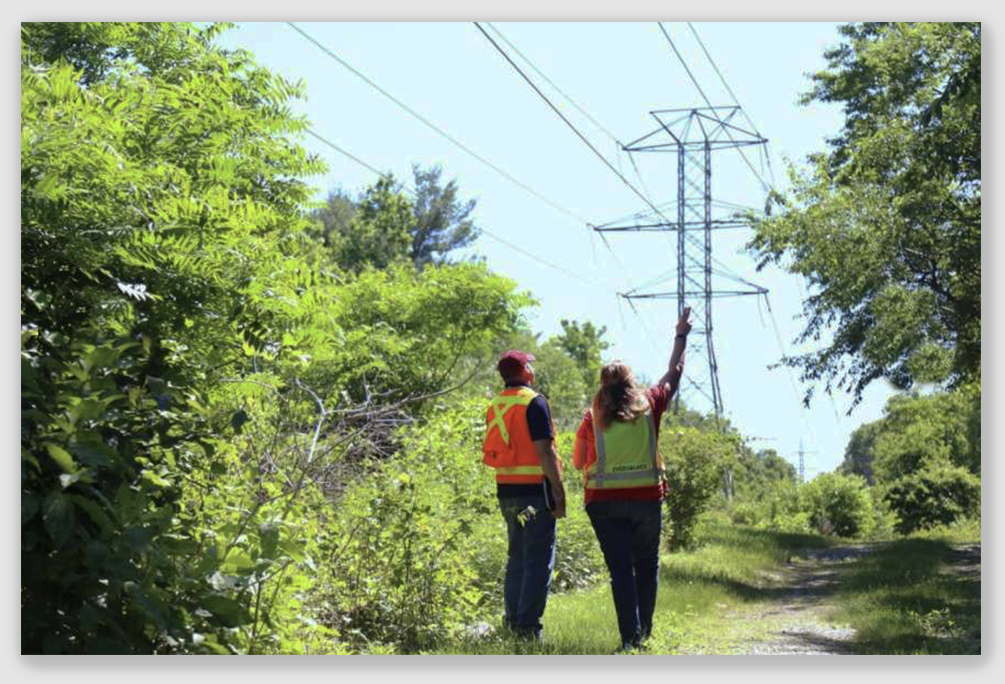 Houston, Texas, Chronicle, June 17, 2021: Eversource: ‘Imminent risk’ prompted Darien tree removals
Eversource officials have reaffirmed their stance that last week’s tree trimming along Little Brook Road was necessary for “safety reasons.” Sean Redding, head of Eversource’s vegetation management, visited the road on Wednesday, explaining to First Selectman Jayme Stevenson and residents that the pruning was an emergency measure necessary for safety reasons. But neighbors continue to question the company’s plans for the tree removal along the street. “We’re here today to continue our collaboration so we can come up with the best resolution,” Stevenson said. Eversource began trimming trees along Little Brook Road last Friday to eliminate what company representatives called an “imminent risk” to the electric system. The work was completed in a day, and company representatives stated no trees were to be outright removed. Neighbors, who are fighting Eversource’s proposed removal of some 50 trees along the south side of the intersection of Little Brook and North Little Brook roads, say the electric company’s trimming plan was not warranted. Natalie Tallis and her neighbors along Little Brook and North Little Brook roads have called on Stevenson to file a formal complaint with the state’s Public Utilities Regulatory Authority concerning the work. Stevenson has not filed a complaint, but acknowledged the neighbors have that right. The town’s tree warden has placed warning signs on some 50 trees, which sit at the south side of the intersection of Little Brook and North Little Brook roads. These trees have been tagged for removal as part of Eversource’s tree trimming and hazardous tree removal program…
A 64-year-old hiker died after a tree fell and hit him on a North Carolina trail, officials said. The man was rushed to a hospital after he was found unconscious Tuesday morning at Bur-Mil Park in Greensboro, according to the city’s police department. The hiker — identified as Howard Huey Shepherd — was later pronounced dead, police spokesperson Ronald Glenn told McClatchy News in an email. Shepherd was struck when a tree toppled near Big Loop Trail, a walking and biking path that stretches about 2 miles. “A preliminary site review reveals that the tree was 50 yards away from the trail when it fell,” Guilford County said Wednesday in a news release. Big Loop Trail closed Tuesday and was expected to reopen before the weekend…
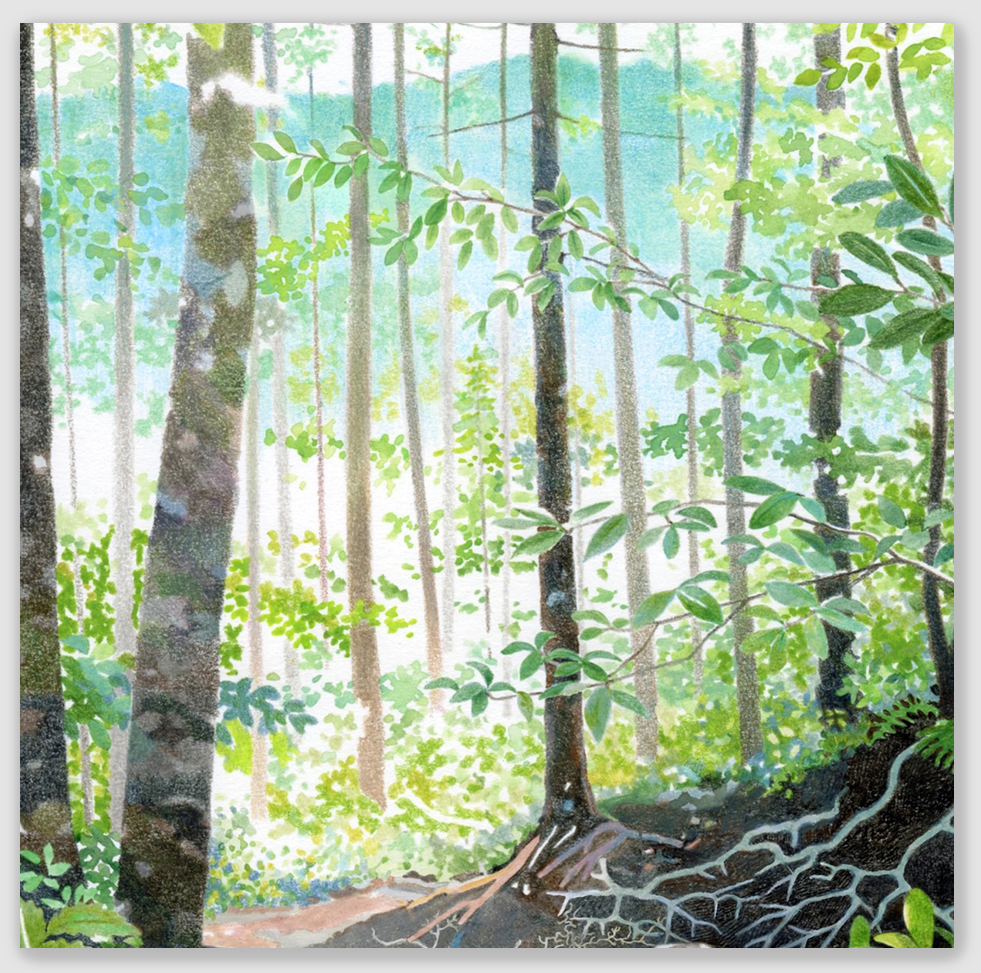 The Atlantic, June 17, 2021: A Better Way to Look at Trees
Above all else in the plant kingdom, trees make good trellises for our self-regarding thoughts. Robert Frost knew this when he wrote “Two roads diverged in a yellow wood.” A woodland is the right spot to yield to reflection. Though the life of a tree has little in common with the life of a person, we are accustomed to approaching trees on personal, even introspective, terms. As trunk is a synonym for torso, as branch can be interchangeable with limb, trees of great variety (especially the old ones) give body to human concerns. Consider the coastal eucalyptus, forced by sea winds to grow prostrate along the ground—how the maxim “Better bend than break” takes shape in its supplicating posture. Or meditate on Sakura, the cherry blossom, and its instructive transience. We look to trees for their symbolism, and to have our own comparatively stunted existence put into perspective. High up in the Sierra Nevada mountains, bristlecone pines preside—seemingly more stone than wood, partly fossilized. Some rise from saplings at a tempo so slow that they endure through generations, even whole civilizations—thousands of years—living off the ephemeral sustenance that all trees rely on: light, water, a smattering of nutrients drawn from the soil. These ancient pines have been called sages and sentinels, as though it were their edict to stand watch over cycles of human progress and folly. Yet have we ever really understood trees in the plural? Since the turn of the millennium, a remarkable recasting of our attention—away from the gravitas of individual trees and toward the question of what trees do together, as a collective—has been under way…
One dad is using public shaming for a neighbor who allegedly reported his family’s tree fort to their homeowner association. The dad, who goes by the first name Dave, printed out a scathing letter that condemned his neighbor’s tattling, according to a snapshot uploaded to Reddit’s “Facepalm” forum – a subreddit that’s dedicated to sharing “the stupidity of people online and IRL.” Sporting a plastic sheet cover and two green tacks that were hammered into the offending tree, the open letter confronts the anonymous neighbor who reportedly tipped off the HOA. “Dear Anonymous Passerby,” the letter begins. “Don’t worry, you’re safe now! Your act of casual cruelty was successful. The complaint you lodged with the HOA was heard. They had me take down the small treefort that I built on this location with my sons during the pandemic.” Dave adds: “No longer will its presence offend your walk past my house. Please enjoy your stroll free from the sound of my children’s play and laughter. They are safely back inside now, watching television I’m sure. Enjoy the unobstructed view of my backyard. I will try to keep it up to code.” The Reddit user who shared the disgruntled note characterized the neighbor as being a “Karen,” a modern-day pejorative used to describe an entitled or unreasonably demanding woman. With no additional context provided, the Redditor suggested the Karen-like neighbor decided “that children’s fun isn’t enough of a reason to have a treehouse…”

Eliseo De La Guardia was climbing an avocado tree behind a Broward County duplex when the limb he was balancing on got too close to a power line carrying 7,620 volts. The contact sent electricity through his body. For years, neighbors had complained to the power company that the lines dividing the small block’s backyards were choked by tree limbs. When branches touched the lines, home lights dimmed and electricity visibly jumped from one stretch to another. And when the wind blew, the avocado tree’s branches would hit the wires and spark. Florida Power & Light, which provides electricity to about half of the state, knew of at least nine times trees on that block interfered with power lines in the years leading up to the accident, according to court records. But when De La Guardia climbed the avocado tree to pick fruit in January 2013, the company hadn’t performed routine trimming there for 15 years. Two days later, De La Guardia died from his injuries. He was 42. People are electrocuted at a higher rate in Florida Power & Light’s service area than almost any other electricity provider in the state, a Tampa Bay Times analysis found. The only two that outpaced it were small power companies serving areas of north Florida…
One by one, branches from a dead tree are falling and destroying the backyard of Dorothy Franklin’s Jennings home. “I have it rough right now,” she said. The 65-year-old says the concern began growing last fall when a limb fell from the tree and landed on the grass not causing any damage. But Franklin says the limbs that are falling now are much bigger and causing major damage. The second limb fell on Sunday hitting her truck. “I was sitting in my room and all of a sudden I heard a boom and my dogs started barking,” she said. And the third one came down Tuesday morning crashing into the patio. She’s worried the next limb will hit her home. “They need to hurry and get this tree because I’m fearing for my life,” she said. “I’m fearing for my dog’s life.” News 4 found the dead tree sits in Franklin’s neighbor’s yard. Insurance experts and state tree removal regulations say it will be Franklin’s neighbor’s responsibility to remove the dead tree. News 4 called the property owner and he said he’s working with his insurance company to get the tree removed and fix Franklin’s truck. Ordinances in St. Louis City say if the city’s forestry division sees a tree is a danger to the public, they have the right to enter private property to inspect or remove the tree. News 4 has reported on concerns of dead trees falling on residents homes in the past. In 2019, St. Louis City spent $1 million to remove more than 2,000 dead trees. And in St. Louis County, they have a 311 hotline were residents can request tree removal…
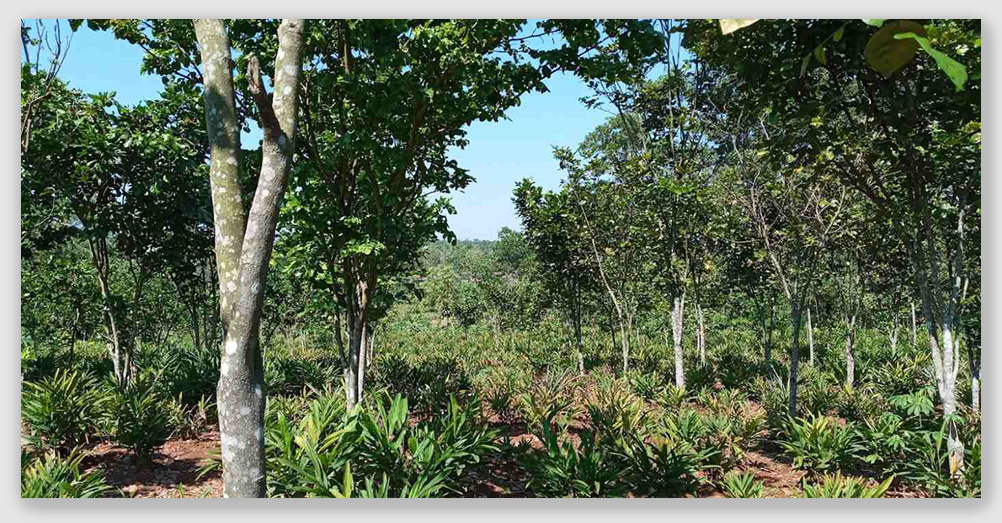
Growing across much of Asia, it’s known by many names: including Indian Beech, pongamia, Karum tree, kranji, and malapari. Pongamia pinnata is a member of the pea family that is being considered by Indonesian forestry experts for potential landscape restoration and the future of bioenergy. A number of big challenges are bearing down on the Indonesian archipelago of more than 17,000 islands, and the government has to find ways in which it can restore 14 million hectares of degraded land to keep its promise to the UN, while also developing a green energy sector worth 23% of total grid contributions in just 5 years. The country’s natural gas and oil reserves are projected to dry up by 2030, even while energy demand—currently served by fossil fuels—is increasing. Enter the pongamia tree: growing well on degraded or marginal land in both wet and dry climates, it can be found from India to the west, right the way across to Fiji in the Pacific. For centuries, its orange/brown seeds have been pressed into oil for leather tanning, soap making, wound healing, and more. Indonesia’s Ministry of Forestry and Environment’s Research is looking into pongamia for mass tree planting as they believe this special oil can be used to power a biomass energy revolution, as well as offering a new crop for local communities to thrive off of economically, and even use as food…
Your trees need a drink of water. Now. The drought the Chicago area is experiencing has them parched. And as you will recall from high school biology class lectures on photosynthesis, trees need water to make the carbohydrates they require to live and make new tissue. We asked Julie Janoski, manager of the plant clinic at the Morton Arboretum in Lisle, whether we should be worried about our trees. “Yes,” she said, almost before the question was out. And what can we do? “It’s one word: Water,” she said. Does the arboretum water its trees? “With 1,700 acres, it’s pretty tough to do much watering. We are watering some of the trees and plants around our core area (the Visitors Center and Arbor Court) right now,” Janoski said. The Chicago area is in a moderate to severe drought as of June 10, says the National Integrated Drought Information System, which will issue its monthly update on Thursday. The National Weather Service says there is a 50% chance of rain Thursday night and Friday. The short-term outlook for June 18-24, however, predicts continued hot and dry conditions. So, yes on watering. But how? And which trees get priority? Here are eight tips from Janoski on keeping your trees healthy through the drought. Don’t forget to check your town’s water-use restrictions…

Drones are mapping out Nob Hill’s tree locations in an effort to create hard data that will lead the way on how Albuquerque’s neighborhoods can maintain and create more tree canopies, ensuring the character of the neighborhoods in an environmentally friendly way 20 years from now. “Policymakers need to understand the importance of restoring the tree canopy. This starts with hard data, and right now no one has any,” said Marc Powell, who co-founded the Dakota Tree Project and co-chairs the Nob Hill Neighborhood Tree Canopy Committee with his wife, Pamela Weese Powell. “We’ll overlay the drone’s aerial footage onto software, and by going through the footage we’ll be able to identify healthy trees and properties that are missing trees to create data to help us be more effective at prioritizing plantings,” Powell told The Paper, adding they want to work with the city to make sure that areas where plantings occurred add value so the city will see a return on their investment. The self-labeled “tree geek couple” plant trees and create community gardens through their Dakota Tree Project that they began as a way of honoring Marc Powell’s son, Dakota William Powell, who passed away in August 2017. Marc says Dakota loved to help plant trees and felt a special affinity for the protection and power that they provide. The project plants trees in historically disadvantaged areas in Albuquerque, like the International District. In their first year in operation, they planted over 100 trees and have received several grants from generous community members and organizations…
A handful of Livonia residents stood out front of city hall ahead of tonight’s city council meeting hoping to save their trees. Fully grown trees line plenty of neighborhood streets in Livonia. “These trees are really what make the neighborhood, they give it the aesthetic. They are what people look for when they move to Livonia,” said Brent Sabo, resident. But street repairs in the city have put hundreds of trees on the chopping block. “What the road work does to the root systems, the trees would be in danger of falling,” said Kathleen McIntyre, council president. “And causing harm or damage to property – or even more significantly, to a person.” McIntrye says tree removal is nothing new and represents a small percentage. “We have about 38,000 trees in the right of ways alone and we are talking about 400,” she said. Brent Sabo made it his mission to help spread the word about the removal of trees and try to put an end to it. “These are mature trees that are irreplaceable,” he said. Sabo says on Monday as he prepared to protest the planned cutting down of hundreds of trees, the very tree in front of his house was in fact cut down. “There was actually just a stump left of our tree,” he said. “Our entire front lawn was littered with branches, there was a tree removal truck blocking our driveway.” The city says they are replacing more trees than they plan to remove…
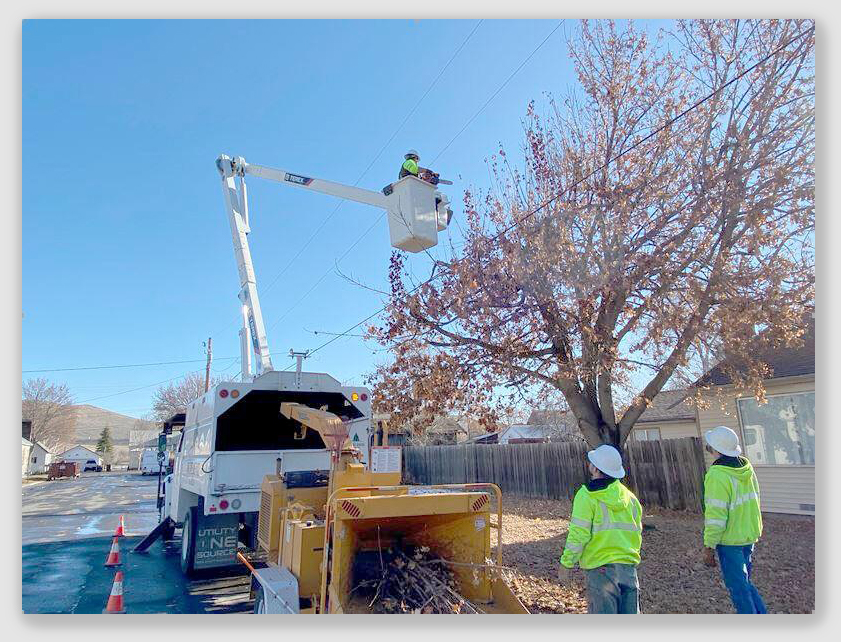 John Day, Oregon, Blue Mountain Eagle, June 15, 2021: Watch for trees near power lines
Oregon Trail Electric Cooperative is asking its member-owners to be on the lookout for any trees or branches hanging or leaning too close to power lines and to call the cooperative if you see one. Trees that grow too close to power lines can cause outages or create other hazardous conditions. “Although most trees do not present a problem, some of them grow into or crowd power lines or other utility equipment,” said Maaike Schotborgh, OTEC’s safety and loss control manager. “When greenery becomes too close for comfort, we have to address it because overgrowth can interfere with power distribution and create a hazard for those on the ground.” Tree branches that come in contact with power lines can interfere with electrical service. For example, the lights in a house may flicker when tree branches brush power lines during high winds. Stormy weather can also cause limbs to break off and land on lines. OTEC works year-round to trim or remove tree branches and, in some cases, remove trees. OTEC’s tree-trimming program is a key aspect of the cooperative’s priority of delivering electrical service safely and reliably to its member-owners…
In 2013 American Forests conducted a list of the 10 best cities for urban forests. Charlotte was among the 10, including Austin, Denver, New York, and Portland. A recent analysis looked at Charlottes tree canopy change from 2021 to 2018 and found Charlotte’s tree canopy is at 45%. “Traditionally, the upper 40s is the cream of the crop. It’s the gold star for a major American city,” said Porter. However, there has been some decline in the last 15 years, from 49% to 45%. “What we found is that development is playing a large role the types of development impacting, the greatest area of canopy decline was in single-family areas but not subdivision related,” said Porter. However, Treepedia New York has 14% tree canopy, Tampa 36%, and Boston 18%. The tree canopy action plan part of the 2040 comprehensive plan hopes to revise Charlotte’s tree ordinance and implement preservation and planting requirements…

Q: I have a huge blue spruce tree in my yard. I am noticing that there are dead branches scattered on the lower part of the tree. They are dead from the trunk to the tip. There are patches of what looks like bird droppings or dried white sap on the bottoms of most of the dead branches and the bottoms have wounds on them that look like they rubbed on another branch, but they did not. What is this and will it kill my tree?
A: This is a common fungal disease for blue spruce trees called cytospora canker. It usually happens to trees that are 15 years old or older. If the tree is younger, there has been stress from poor growing conditions. Unfortunately, there is no cure for cytospora. You can slow it down by managing the tree’s health. Cytospora attacks individual branches on the tree, causing them to die in a stair-step fashion. The first thing that you will notice that a branch has needles turning a purple color. The needles eventually turn a chocolate brown, die and fall off. Sometimes, but not always, there will be cankers that look like wounds that are trying to heal on the bottom of the branch. Sap, which is called pitch, leaks out and dries to a bluish-white. Cytospora does not kill the tree for a long time. But eventually, the tree looks so terrible, with lots of dead limbs, that you will want to cut it down. On rare occasions, Norway, balsam fir and Douglas fir become infected. Again, it’s a stress-related problem and possibly contact with another infected tree…
A cherished ginkgo tree will not be harmed as a result of a planned expansion of a Kenton County elementary school. The Kenton County School District appears to have listened to the public’s concerns and has decided not to remove the ginkgo tree – thought to be 150 years old, school district officials said in a tweet Saturday morning. “The KCSD has taken necessary steps to ensure the (Ginkgo) tree is protected & will not be removed as part of construction,” the tweet read. “The goal is to provide world-class facilities for our kids & we will continue to work to find alternative solutions at Hinsdale going forward.” Edgewood City Councilman Ben Barlage said he was trying to spread the word to people about the tree when he saw it marked with an ‘X’ for demolition in a Kenton County Schools’ plan for an expansion at R.C. Hinsdale Elementary School. His Facebook post about the tree and school’s intertwined history generated 106 shares. Barlage said his phone has been filled with texts and calls from people who remember the tree fondly, he said. Ginkgo trees, native to Southeast Asia, can also be found across the Midwest…
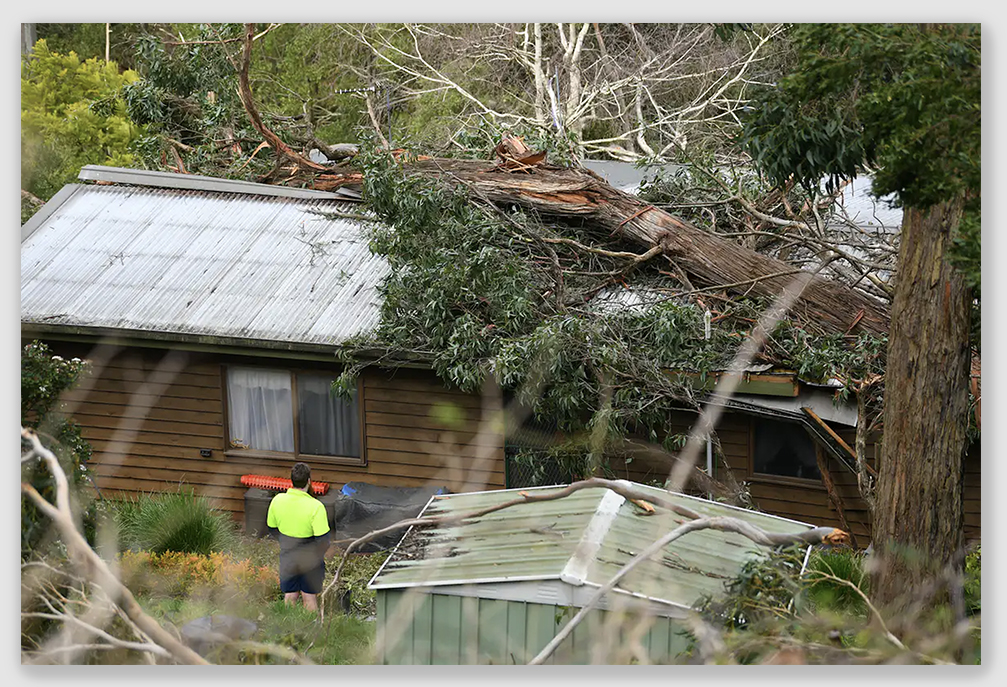
The savage storms that swept Victoria last week sent trees crashing down, destroying homes and blocking roads. Under climate change, stronger winds and extreme storms will be more frequent. This will cause more trees to fall and, sadly, people may die. These incidents are sometimes described as an act of God or Mother Nature’s fury. Such descriptions obscure the role of good management in minimising the chance a tree will fall. The fact is, much can be done to prevent these events. Trees must be better managed for several reasons. The first, of course, is to prevent damage to life and property. The second is to avoid unnecessary tree removals. Following storms, councils typically see a spike in requests for tree removals – sometimes for perfectly healthy trees. A better understanding of the science behind falling trees – followed by informed action – will help keep us safe and ensure trees continue to provide their many benefits. First, it’s important to note that fallen trees are the exception at any time, including storms. Most trees won’t topple over or shed major limbs. I estimate fewer than three trees in 100,000 fall during a storm…
The “official” start of hurricane season is upon us and many homeowners are considering pruning their trees in preparation of the hurricane season. I have encountered many homeowners who believe that tree canopies need to be thinned out in order to accommodate wind flow. While this type of thinking seems intuitive, it actually may create a greater likelihood of tree failure. Trees should only be pruned for a valid reason. There is no such thing as a “pruning cycle” where trees are supposed to be pruned every “X” number of years. I have actually encountered this thinking with some municipalities. Trees are pruned for several reasons. One reason is to improve the structure of the tree. Structure refers to the branching and trunk pattern of the tree. For example, some trees which are supposed to be a single trunk species, have a co-dominant trunk. This means that, at one point, the tree created two almost equal-sized leaders. This can occur close to the ground, midway up the tree, or near the top of the tree. Co-dominant leaders can be poorly attached to one another, leading one to break under the stress of winds. As the tree grows older and larger, these leaders get heavier and can lead to property damage or injury when they fail. Select the better leader and prune back the other one over a one to three year period. Another example of structure is the spacing and arrangement of the branches. Ideally, limbs should be spaced 18 to 36 inches apart along the trunk and should not grow at an angle less than 45 degrees off the trunk. Multiple limbs should not originate from the same point on the tree…
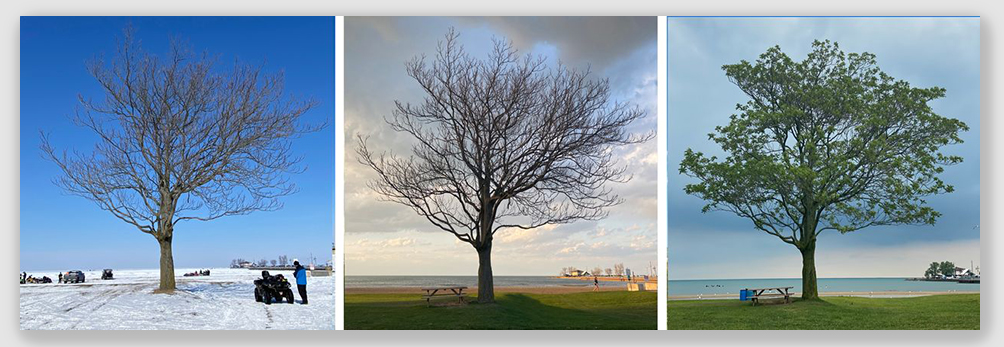 New York City, The Wall Street Journal, June 12, 2021: Why a Tree Is the Friend We Need Right Now
I’ve got a new buddy. She’s a banyan tree. I met her while walking my dog. She has two enormous limbs that reach out like welcoming arms. And there’s a small bench next to her. One day I sat down. I was worried that afternoon about an ill family member, and as I stared at her gnarled trunk, I thought of all this tree has survived. I watched the light filter through her canopy and listened to a squirrel chatter on a branch. And I felt better. Now I visit her often. Sometimes, I compliment her—“Looking good, baby!”—pat her trunk or share my water. But occasionally, on hard days, I sit down on the ground next to her, put a hand on one of her massive roots and soak in her strength. We could all use a steady, strong friend right now. We’re emotionally rocky crawling out of the pandemic—gripped by residual anxiety and sadness, stress about heading back out into the world, worries about once again becoming overwhelmed by a busy pace of life. What we need is a tree bestie. (Bear with me, dear reader.) Trees have a lot to teach us. They know a thing or two about surviving harsh years and thriving during good ones—they can show us the importance of taking the long view. They’re masters at resiliency, enduring fallow periods every winter and blooming anew each spring. They’re generous—they share nutrients with other trees and plants and provide clean air and shade for the rest of us. They certainly know how to age well…
Provo, Utah, Daily Herald, June 12, 2021: Speculation surrounds death of walnut trees
We’ve been getting several calls and emails each day about walnut trees that seemed to look fine last year and now look either dead or dying. You’ve probably seen struggling walnut trees when you’ve been out and about. Is it a walnut tree apocalypse? A walnut plague? You may have heard about a “new” walnut disease and wondered if that’s the problem. It’s true there is a serious fungal disease, Thousand Cankers Disease, affecting black walnut trees and occasionally English walnut trees. Black walnut trees are very susceptible to the disease, but English walnut trees are only slightly susceptible. The disease is spread by a small beetle called the walnut twig beetle. Once the fungus is in the tree, small cankers develop under the bark where the beetles have entered. Repeated infestations lead to tree decline and death. Preventing beetle infestation of black walnuts is important because there is no treatment for the disease. Infected trees generally die within a few years of showing symptoms. Most of the walnut trees you’re seeing now with dead branches are English walnut trees and very few of the trees with dead branches have the disease. So, what exactly is going on with all these walnut trees? The short answer is, we don’t exactly know, but we hope to know more as the season progresses…
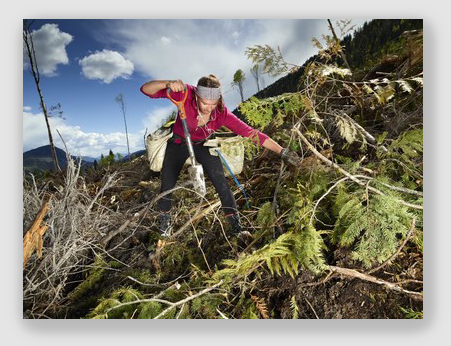 Business Insider, June 11, 2021: Canadian Tree Planters Celebrate Cross Canada Plant
On June 10th, thirty-four Canadian tree planting companies with over 6000 planters aligned efforts to celebrate the first annual Canadian Tree Planters’ Cross Canada Plant. On June 10th Canadian tree planters celebrated the first annual Cross Canada Plant involving over 6000 planters. Every year, approximately 600 million seedlings are planted in Canada. This is accomplished through a well-organized supply chain and significant physical labour, requiring long, exhausting days. Many planters share physical traits with high-performance endurance athletes. The value of planting trees is growing and a goal for the Cross Canada Plant is to raise the profile of tree planters and tree planting companies. It’s about witnessing the amazing work that is accomplished by the Canadian planters throughout the planting season. “We are ready to participate in growing Canada’s forests and help in Trudeau’s vision of Planting 2 Billion trees in 10 years. We are an industry that can do this,” says Tim Tchidaof Blue Green Planet Project. For the June 10th Cross Canada Plant, the number of seedlings planted and the number of planters who participated will be reported. The aim is to have these numbers available by June 13th on Instagram @CanadianTreePlanter. “In between the millions of trees being planted each day, in every moment there is a lot happing here. In the space between trees there is friendships, initiation, and giving back…. and tough, grueling, rewarding work,” says Tchida…
Earthworms are often seen as a welcome presence in gardens, and even on fishing hooks. But in the Northeast, experts say invasive “crazy worms” from Asia are creating havoc in forests — and they say the unusual worms are a danger to animals and plants, and especially to sugar maple trees. “The street cred that they have is hiding the invasion,” Josef Görres, a soil scientist at the University of Vermont, says of the worms. “I call earthworm invasions ‘socially cryptic,’ ” Görres tells NPR, “because folks think of earthworms as the good guys — and maybe they are in certain ecosystems. But in the context of the northern [U.S.] forest, they are relative newcomers that have the potential to have huge effects.” Crazy worms — also known as jumper worms — reproduce rapidly. They also love to tear through the nutritious layer of decomposing leaves and nutrients that blanket the forest floor — a habit that can be very damaging to forests, including maple trees. So, what makes these worms so crazy? “They’re really active worms, and the craziness comes from that. They can jump out of your hand,” Görres says, adding that the creatures’ intense wriggling can launch them into the air. “And they also lose their tails,” he adds. “Some of the species will lose their tails just like a salamander. So that is kind of crazy, too, when you see it…”
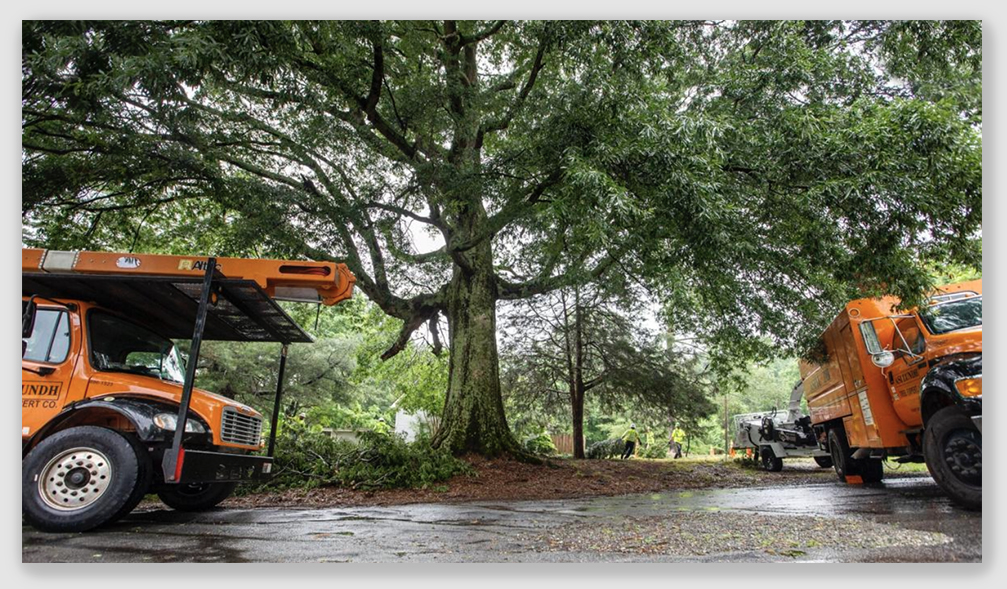
A Summerfield man visiting his rental property Tuesday found two pine trees near a powerline had been stripped of most of the branches on one side, which he worried made them dangerously unstable. Eric Clamage complained to Duke Energy about not only the state of the trees, but the pile of debris left behind on his Brookfield Drive property. On Thursday, he got some satisfaction. The tree company returned to remove the debris and promised to take down the two trees next week. He also got a surprise. His pines weren’t the intended targets. “They went to the wrong house,” Clamage, a retired engineer, said employees of the tree company told him on Thursday. That might explain why he never got notified that Duke would be conducting what it calls “vegetation maintenance” on his property. The utility says on its website it attempts to notify property owners before doing any work. Clamage said the property owner behind him had apparently asked Duke to trim the trees by an old farmhouse on his land. Clamage estimates it would have cost at least $1,400 to cut down the damaged trees and clean up the pile of tree limbs, which he described as enough to fill a dump truck. Grinding the stumps left behind would’ve cost about $200…
It’s not the law in New York just yet, but in central New York and some neighboring states, there’s a new way to say “get off my lawn.” Purple paint laws allow spray-painting trees purple as a state-recognized way to mark private property, and are currently in place in 16 states. According to Hudson Valley radio station Q105.7, the trend is starting to show up in parts of New York, even if it isn’t officially recognized. The laws allow the purple paint to function legally identically to a “No Trespassing” sign. In New York, “No Trespassing” and “Keep Out” signs are the standard, and landowners are authorized to give written notice to trespassers when it makes sense to do. Jomo Miller at the New York Department of Environmental Conservation said that since purple paint is not legally recognized in the state, his department doesn’t track its use. Statewide, trespassing on posted areas comes with a fine of up to $250, and/or 15 days of jail time, plus further action for those who damage property on posted land. As the state doesn’t recognize purple paint as posting, legal action cannot currently be taken simply for trespassing on land with conspicuously purple trees. David Wick with the Lake George Park Commission said he hadn’t heard anything about the use of purple paint on property around Lake George, but that he didn’t see a problem with the method, so long as property owners correctly mark only their own property. Although it’s not law yet in New York, it has shown up in state legislature. In 2018, former state Senator James L. Seward introduced a bill that died on the Assembly vine…
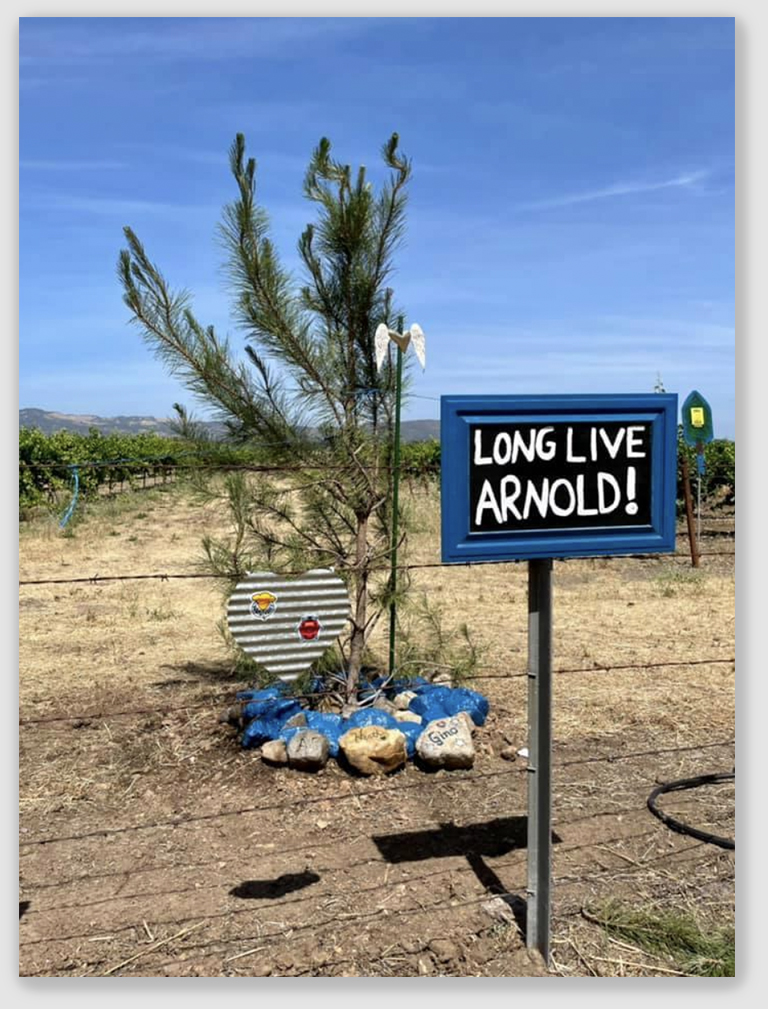 Sonoma, California, News, June 10, 2021: Arnold the Tree lives again
It took a community-wide effort to get Arnold the Tree back into decorating condition – with no small thanks to Sonoma Mission Gardens, which donated a tree to replace the vandalized original, Ned Hill and crew from La Prenda Vineyards Management for digging the hole and installing irrigation, and Sam Sebastiani of La Chertosa wines for donating a safe place on his La Gemelle Vineyard at Watmaugh and Arnold Drive. A slight delay in the replanting was due to awaiting PG&E to show up and let everyone know where power lines were, so that the digging and planting could proceed safely on the vineyard side of the fence. Sam Sebastiani and vineyard manager Jane Schneider said they will give the anonymous tree decorator – who has adorned Arnold the Tree with seasonal decor for several years – safe access to the property to continue decorating Arnold whenever they choose. You can see Arnold on Facebook…
A potentially fatal disease for beech trees has become widespread in large parts of Connecticut, and is no longer novel, according to Connecticut Agricultural Experiment Station scientists. Beech Leaf Disease, first detected in the state in 2019 in lower Fairfield County, now is widespread and prevalent on American beech trees (Fagus grandifolia) throughout Fairfield, New Haven, Middlesex and New London counties, and appears to be spreading into Litchfield, Tolland and Windham counties, as well, CAES officials said in an email. Robert E. Marra, an associate scientist/forest pathologist in the Department of Plant Pathology and Ecology at CAES, said it is not known for sure how many beech trees are affected by beech leaf disease in Connecticut, “but it is worth noting that the difference between last year and this year is dramatic, especially in these four lower Connecticut counties.” “If you ask property owners in Fairfield, New Haven, Middlesex, and New London Counties, they would say that nearly all their beeches have beech leaf disease,” Marra said. “However, while we haven’t been able to survey all our state forested lands, it seems that there are pockets of severe outbreaks, and stands where we see little if any BLD…”
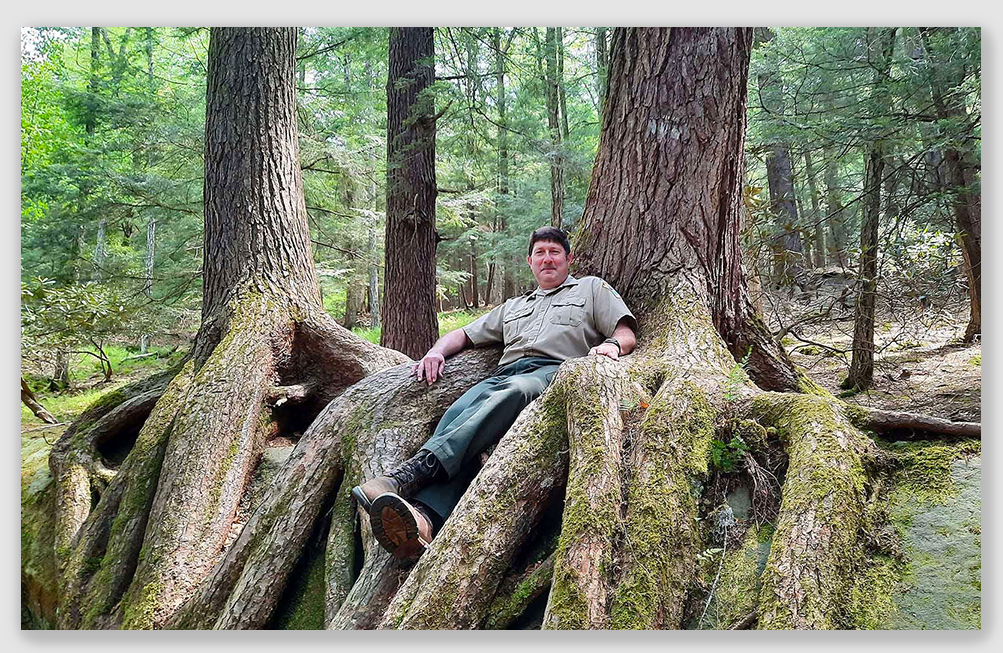
When you’re thinking about getting back to nature, realize there’s a state park in northwestern Pennsylvania that can actually take you back in time. Cook Forest State Park in Clarion County has acres of old-growth forest areas with trees that are several hundred years old. This area escaped the mass lumbering that occurred across most of the country. “For conifers, Cook Forest is the place to go,” Dale Luthringer, the park’s environmental education specialist, said during a tour of the highlights of the 8,500-acre state park and Clarion River. He said there are 30 white pine trees that are at least 160 feet tall and about 80 that are 150 feet tall. The tallest tree is a 171-foot white pine tree that is also the tallest tree in Pennsylvania. To put that in perspective, that one tree rivals the height of a 16-story building. “There is no other site (in the state) that comes close to the white pines,” he said about Cook Forest…
Phys.org, June 9, 2021: Some tree species in Mexico could be vulnerable to climate change
A new study found certain species of pine and oaks in the mountains of southwestern Mexico could be more vulnerable to decline as the environment becomes hotter and drier due to climate change. The findings, published in the journal Ecosphere, will be important as land managers seek to conserve and protect vulnerable species in these forests in Oaxaca, Mexico, and around the world. “We have pine-oak forests in North Carolina, in the Himalayas, in the Mediterranean and all over the world,” said the study’s first author Meredith Martin, assistant professor of forestry and environmental resources at NC State. “We wanted to get more information about how to manage and regenerate both pine and oak trees, which are both really ecologically and economically important…”
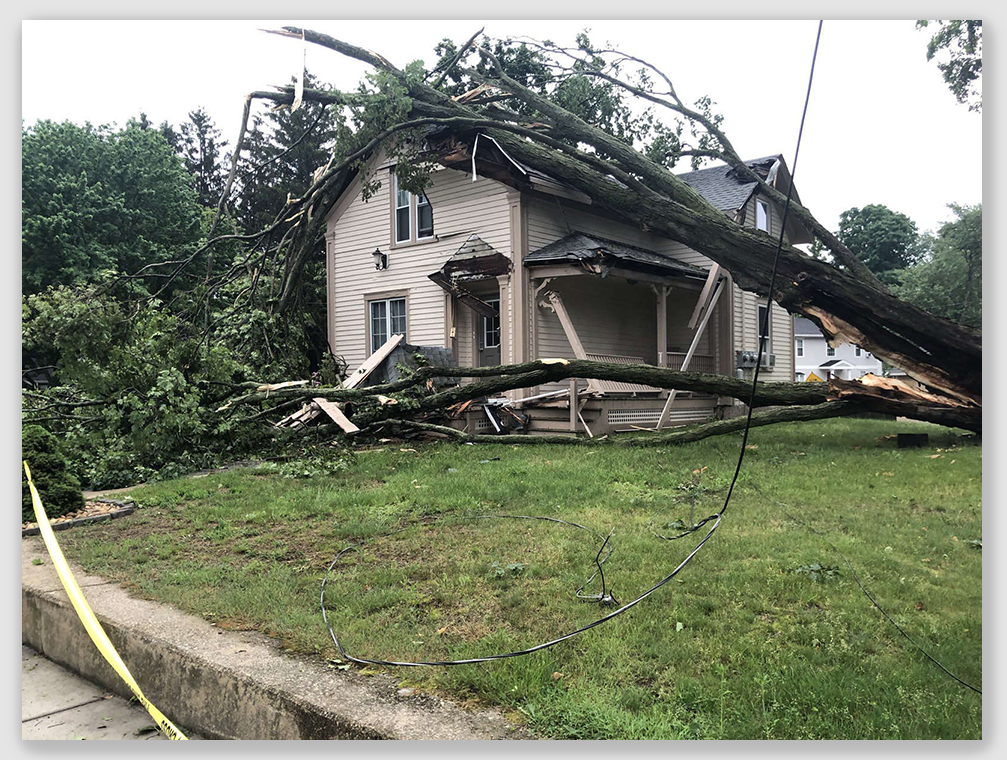 Boston, Massachusetts, WFXT, June 9, 2021: Tree crashes into house in Haverhill Tuesday
The picture shows just one tree branch, but the tree has five or six branches of that same size that thankfully didn’t fall. However, that one branch alone was enough to do serious damage to the roof and front half of the home, including the porch, the roof and the entire front yard. “That’s really awful, I feel for them. There’s nothing worse,” said neighbor Nancy McKenna. “It’s devastating. Look at it, right through the roof. That’s terrible.” A lot of people were looking at it. In fact, it seemed like every resident on Salem Street came by to take pictures. All the residents heard the thunder and lightning, but they didn’t hear the tree fall. “It was very windy,” said neighbor Kaylyn Cressinger. Neighbor Dougie Cressinger said he was wondering, “if everyone is OK and if it made a noise.” The answers are yes and yes. The homeowner said he and his two tenants were all home and looking out the window watching the tree fall on them; thankfully they are all okay. Neighbors also thankful it was the only serious damage in their neighborhood…
The Emerald Ash Borer is an invasive beetle that infests and kills native Ash trees. Dozens of Ash trees in our community have already been infested and are dying at alarming rates. Once an ash tree dies, it should be removed quickly if the tree would pose a danger should it fall or lose a branch. This is because ash trees become brittle and unstable soon after they die. The Town has begun to identify dead and infested Ash trees on Town property that must be removed as a safety measure. We will begin to remove dead trees along East and West Brookside Drive next week. Trees that have been identified for removal have a green dot spray painted on the trunk. If you believe you have an Ash tree on your property that is infested, or have noticed increased woodpecker holes in an ash tree, have it evaluated by a tree professional. If the tree is removed, the tree must be chipped to 1-inch or smaller pieces to prevent the spread of the beetle. ..

Beech leaf disease — a disease that has led to the destruction of beech trees from Ohio to southern New England — has been confirmed in Maine and added to the state’s invasive species list. Landowners in Lincolnville observed possible symptoms of the disease and reached out to the Maine Forest Service pathologist, according to the Maine Department of Agriculture, Conservation and Forestry. The presence of the disease was confirmed by staff at the Connecticut Agricultural Experiment Station using leaf samples from a forest in Lincolnville. The find is concerning to Maine’s tree experts. “Beech trees are a pretty significant component of our forests in Maine and ecologically important to mammals, birds and insects,” said Aaron Bergdahl, state pathologist with the Maine Forest Service. “The leaves are high in nitrogen so the tree is important to soil nutrition.” Beech leaf disease was first reported in Ohio in 2012, and for many years it was known only in adjacent states and nearby Ontario, Canada. In 2019, it was detected in eastern New York and by 2020 a survey and outreach effort found beech leaf disease in southern New England…
When it comes to climate change, policymakers may fail to see the trees for the forest. It turns out that the trees may be the answer after all, according to a study published by authors from more than seven countries on June 3rd in Nature Climate Change. “Climate change and biodiversity loss are two major environmental challenges,” said paper author Akira S. Mori, professor at Yokohama National University. “But the vast majority of attention has been paid to one unidirectional relationship—climate change as a cause and biodiversity loss as a consequence.” Mori and his co-authors argue that climate change and species diversity across ecosystems are mutually independent, and, while they can influence each other, they are not a direct cause and effect. The problem, Mori said, is that this perspective is largely lacking from both policy efforts and science so far. “There is now recognition of the need for nature-based solutions, which involve working with nature to address society challenges, including carbon storage by restoring forests,” Mori said. “However, natural climate solutions are currently missing biodiversity as part of the equation: it is not yet widely appreciated as a powerful contributor to climate stabilization…”
 Toledo, Ohio, Blade, June 8, 2021: Outdoors: Dead trees home sweet home for many
We hear a lot about the housing crisis these days — homes on the market for just hours before the offers fly in, or a mad scramble for places to live in communities where anything affordable is nearly non-existent, and those long waiting lists for the places where government subsidies soften the impact of the monthly rental fee. There are housing crises in nature, too. Habitat is housing for wildlife and birds, and many of the species that are most threatened with drastically declining populations, or teetering on the brink of extinction, have been brought to this point by the loss of habitat. Animals need a place to live. A certain housing predicament in the natural world that we can help remedy is one that has been exacerbated by the often innocent urge to “clean up” things and cull the less-than-ideal growth from our landscapes. Dead and dying trees, while clearly not as pleasing to the eye as those healthy trees filled with lush growth, are still an important piece of habitat — often housing — for many species of birds, other wildlife, and essential insects. Tim Schetter, director of natural resources for Metroparks Toledo, said that we too often pull out the chainsaw as an impulse reaction to the sight of a dead or dying tree, and overlook the value these trees provide. “Unless dead or dying trees pose a safety hazard to people or structures, they should be allowed to stand wherever possible,” Schetter said. “Dead trees, known technically as snags, provide valuable wildlife habitat, offering nesting opportunities for woodpeckers, perches for raptors looking for prey, denning opportunities for mammals, and foraging opportunities for a host of wildlife species…”
Canby, Oregon, Herald, June 9, 2021: Create a defensible space 5-30 feet from your home
Clackamas Soil and Water Conservation District recommends making your property and home more wildfire resistant by taking on the tasks one weekend at a time. You may find the first weekend’s task list on our website at conservationdistrict.org. This week we are looking at the Intermediate Zone, 5-30 feet from your home or outbuilding. We will be thinking about the landscape/hardscape and creating fire breaks. Gather your family and friends for these activities:
• Clear vegetation from under large stationary propane tanks.
• Create fuel breaks with driveways, walkways/paths, patios and decks. This may be a long-term project, but it is good to think about what fire breaks you already have and what you may want in the future.
• Mow lawns and native grasses to a height of 4 inches. Maintain this throughout the summer. Remember if it is brown, cut it down.
• Remove ladder fuels (vegetation under trees) so a ground fire cannot climb into tree crowns. Prune trees up to 6-10 feet from the ground; on shorter trees do not exceed one-third of the overall tree height.
• Maintain tree spacing to have a minimum of 18 feet between crowns, with the distance increasing with the percentage of slope…
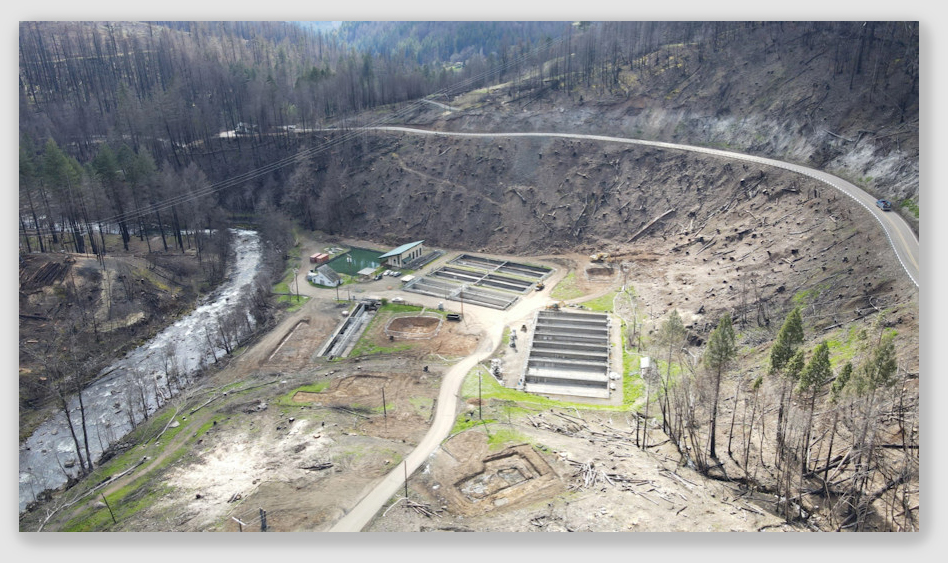
A Pacific Northwest arborist with more than 30 years of experience has submitted his positive findings to the state following a thorough review of the hazard tree removal effort underway to support Oregon’s rebuilding and recovery process, the Oregon Office of Emergency Management said Monday.
In response to public concerns and calls for an independent investigation into the work underway, Galen Wright, president of Washington Forestry Consultants, Inc., evaluated the state hazard tree removal program and its workers and drafted a report sharing the findings. Here’s the rest of Monday’s OEM news release on the arborist’s findings: According to ODF, Wright’s review found that the certified arborists and professional foresters working in the field generally meet or exceed the experience and qualifications required to evaluate fire-damaged trees. The report also found that the FEMA-required criteria being used is sound for making these determinations and is being applied appropriately in the field. “It is our finding that ODOT and the Debris Management Task Force have the necessary operational plan, protocols, contracts and requirements necessary to conduct and provide quality assurance for this hazard tree mitigation program for the 2020 Oregon wildfires. No changes are recommended to the current protocols,” Wright said in the report…
Dying trees on private property that the city can’t take down without a court order, even though they could fall, damaging adjacent homes, streetlights and power lines. Elderly homeowners who can’t afford to take proper care of their trees. Trees adjacent to alleys that homeowners “build a fence around” and claim they’re the city’s responsibility. Those and other problems now fall to a 13-member Urban Forestry Advisory Board created Monday by the City Council’s Finance Committee. Chicago has been without a Tree Advisory Board for more than a generation — since the 1990’s panel created by former Mayor Richard M. Daley, a self-described tree lover, “kind of dissipated,” according to city forestry chief Malcolm Whiteside. The newly-created tree board will be purely advisory. It can’t order beleaguered Chicago homeowners to do anything about the trees on their property. But Finance Committee Chairman Scott Waguespack (32nd) argued that the 13 members —which will include the Chicago Park District superintendent, the city’s chief sustainability officer and four city department heads — could make pivotal suggestions about ways to defray the cost of tree trimming, removal and replacement and find money to support Chicago’s under-funded Bureau of Forestry…
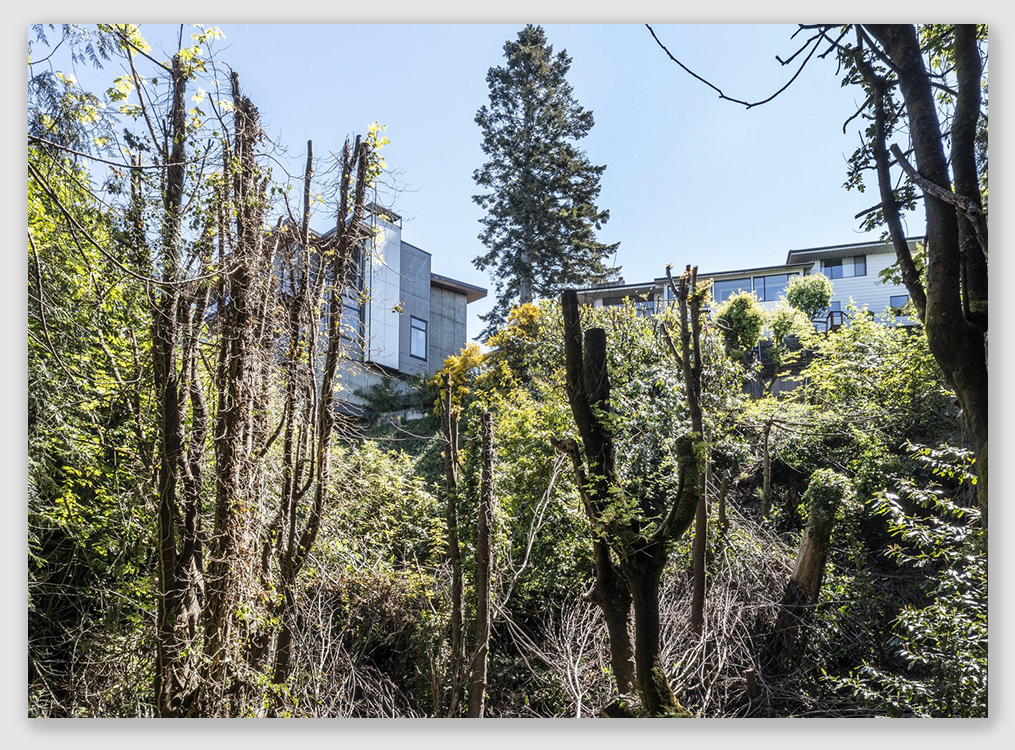
Seattle officials are investigating two incidents of illegal tree topping this year at Golden Gardens Park in Ballard. Three large maple trees were cut down without a permit March 30 and two trees were topped in May near the dog park, said Seattle Parks and Recreation spokesperson Rachel Schulkin. Both cases have been reported to Seattle police, Schulkin said. Though only a small number of trees were impacted, she said, Golden Gardens Park has been hit with illegal cutting three times in the past three years. Patches of trees were removed in 2019. Tree topping, the removal of branches or the top section of a tree, is prohibited within any city-owned parks, boulevards and greenbelts, though trees may be pruned with a permit from the city. Culprits are typically homeowners looking to improve their home’s view. In the latest incident, Schulkin said three other trees were removed on private land bordering the park. Jane Ripley Wheeler said she reported the most recent set of cuttings when she spotted them while on a walk just north of the dog park. The trees, she said, had orange tags with the name of a private tree service company…
Phys.org, June 7, 2021: New remote sensing methods are well-suited for the detection of tree species
Researchers from the Department of Geographical and Historical Studies at the University of Eastern Finland, and from the Finnish Environment Institute, are collaborating in the IBC-Carbon project to develop novel remote sensing methods that can be used explore forest biodiversity and carbon sequestration. Led by Professor of Environmental Geoinformatics Timo Kumpula and Leading Scientist Petteri Vihervaara (Finnish Environment Institute), the group has tested various remote sensing methods to detect different tree species in the Evo research area, among other places. In Evo, very high-resolution remote sensing data have been collected from an area of 83 square kilometers, which constitutes a diverse research environment that comprises conserved old forests, commercial forests and a popular camping area. The researchers have been particularly interested in detecting the European aspen from among other tree species. The European aspen is an ecologically valuable tree species because it is associated with a rich and versatile selection of flora and fauna that maintain forest biodiversity. “The European aspen is associated with an exceptionally large number of different organisms, such as insects, fungi, lichen, cavity-nesting birds, and endangered species. The European aspen also has a history of being an undesired species from the 1960s to the 1980s, when young aspens were linked to the spread of a fungal disease to pine trees in commercial forests. Later, the significance of the European aspen for forest biodiversity has been understood…
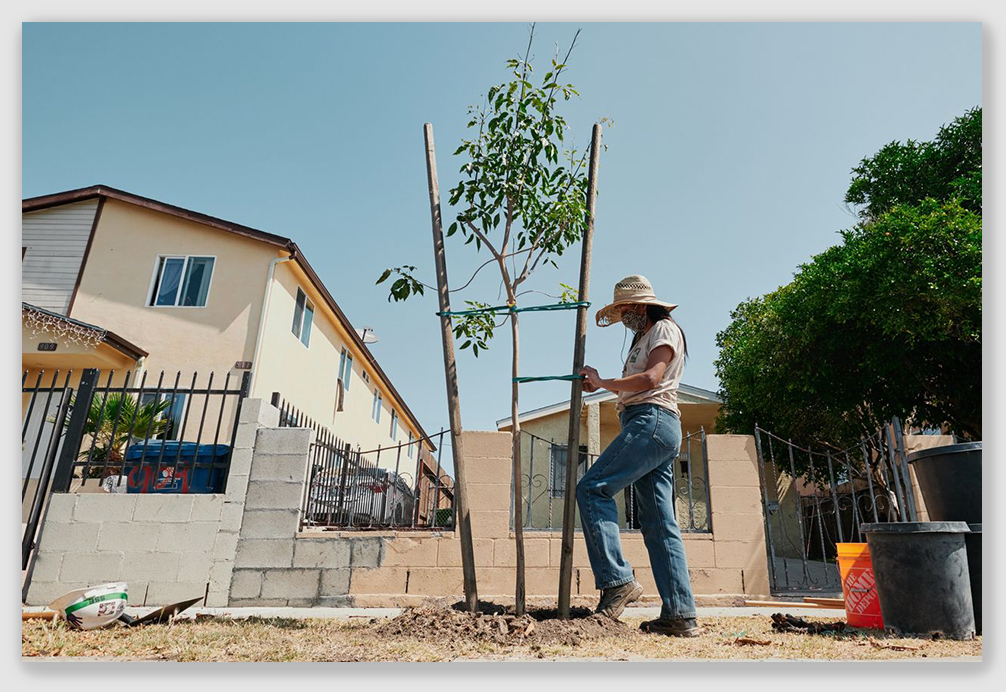
With record global temperatures stoking droughts and deadly heat waves, some scientists are eyeing audacious schemes to counteract global warming—from erecting enormous air filters to suck carbon dioxide from the air to launching millions of sunlight-defecting space mirrors into orbit around the planet.
Other scientists see the value of simpler tools: shovels and paintbrushes. The shovels are for planting trees, whose shade has been shown to lower air temperatures in sweltering cities by up to 45 degrees Fahrenheit; the brushes for painting rooftops and other dark surfaces light colors that limit the absorption of temperature-raising sunlight. More trees and more reflective surfaces won’t stop climate change. But they could refashion cities for a warming world, tempering what scientists call “heat islands” caused by heat-absorbing rooftops, building materials and roads that make urban areas hotter than the surrounding countryside. In addition to lowering temperatures, trees improve air quality and help manage storm water…
DTE Energy launched its Tree Trim Academy Thursday to create 200 high-paying jobs in Detroit over the next three years. DTE’s Tree Trim Academy will offer new jobs, paid training, and wraparound services like childcare and transportation. The tree trimmers graduating from the Academy, like other tree trimmers DTE employs, will help to ensure energy reliability by reducing outages due to fallen trees and branches. The DTE Tree Trim Academy is inclusively recruiting talent from Detroit and metro-Detroit’s diverse, eager workforce to train 60 graduates in 2021, filling the area’s ever-growing demand for line-clearance tree trimmers. The academy will offer an unparalleled, six-week Line Clearance Tree Trimming (LCTT) training program to equip graduates with the career-readiness preparation, safety training and tree trimming skills needed to move into IBEW Local 17’s apprenticeship program pipeline. Graduates will also earn a commercial driver’s license (CDL) and a certificate in customer service. Experienced tree trimmers can earn more than $100,000 per year. Including this year’s class of 60 graduates, the program will create 200 jobs in Detroit by 2024…
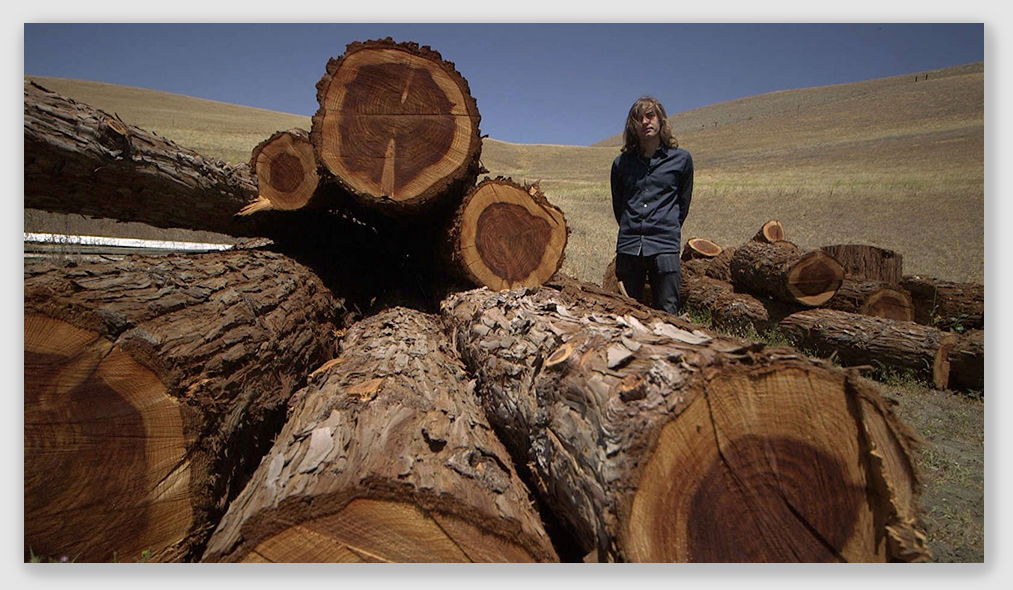 San Francisco, California, KNTV, June 4, 2021: Bay Area Man Salvaging Trees From the Urban Forest
The normal fate of a tree that falls in an urban neighborhood is a compulsory date with a wood chipper or a landfill. But when a tree comes in down in Nick Harvey’s Hayward neighborhood, it just might end up as somebody’s new kitchen table. That’s exactly how Harvey, a former scientist at Lawrence Livermore Laboratory, landed in the tree-saving-furniture-making business — a tree fell in his neighborhood. “I thought it was crazy they’re going to enter the waste stream,” Harvey said, “so I had them deliver it to the front of my house of all places.” Harvey called a portable miller, and turned his garage and backyard into a quasi-lumberyard. The boards filled his garage, and fed his conscience. From the experience, he founded Bay Area Redwood, a company devoted to salvaging fallen trees from the urban forest, and turning them into products like tables, bar tops or cutting boards. “We’re taking that waste,” Harvey said, “and being able to create something out of it to where people can improve their lives…”
Residents were divided on a proposed tree protection ordinance presented on May 25 that has potential to be the strongest in the state. While most residents and commenters who offered input during a South Portland City Council workshop on the topic said that they value the importance of trees, not every resident said that they would be in support of the ordinance as drafted, while others said the ordinance would be beneficial to the city. More than 25 individuals provided public comments or questions. In the fall of 2020, the city council decided not to pursue a moratorium on development after being presented with concerns about the cutting down of trees. Instead, councilors asked that the city create measures in order to protect trees. City Planner Milan Nevajda said the proposed ordinance would protect trees that fall into four categories:
• Significant, non-invasive trees that meet a height requirement of 10 feet in diameter;
• Heritage, old and large with diameter of 60 inches, are 90 years or older or listed on the state’s “Big Tree List;”
• Historic or Cultural, trees designated by the council;
• and Program, which is defined as tree replacements to mitigate trees that are removed or must be preserved.
The proposal also would add a tree removal permit process, Nevajda said. Additional staff would be required, and the ordinance would go into effect six months after approval…

A coastal Maine orchard is one of only three spots in the country where researchers have planted what could be the forest of the future. But what makes that future different is that it contains the next wave of American chestnut trees — the kind made in a lab. Last week, after receiving a permit from the federal government, Maine scientist Thomas Klak and his team planted hundreds of transgenic chestnut seedlings in an experimental orchard in the remote coastal town of Cape Elizabeth. If the experiment helps restore the mighty chestnut to American forests, it would be “the biggest ecological turnaround in North American history,” said Klak, a gene conservationist with the American Chestnut Foundation and a major player in the national restoration effort. Americans miss the chestnut more than they realize. Often called the “redwood of the East,” the keystone species was the most valuable tree this side of the Mississippi River, stretching as much as 100-feet high with trunks 10-feet thick. Native Americans used the chestnut for its medicinal leaves, and it was a staple food source for birds, insects, fungi and mammals. People baked chestnut flour and made chestnut pudding, and used its premium wood for houses, furniture, instruments and other woodcraft…
One thing that’s sure to bring complaints in leafy North Carolina towns is the sight of a field freshly clearcut of trees or crews taking down long-established oaks. Now a bill moving through the state legislature may make local officials less able to prevent such taking of trees. House Bill 496 would require local governments to obtain the General Assembly’s approval for restrictions on removing trees from private property. Tree ordinances in about 40 of the state’s larger cities and towns have such approval, but the proposed law would eliminate tree protections in many towns and counties that have approved them only at the local level. Rep. Mark Brody, a Union County Republican and a co-sponsor of the proposed change, said it’s necessary because tree ordinances involve costs and restrictions that legally should be approved by legislature. “A lot of municipalities are deciding on their own and the heck with the General Assembly,” he said…
Saskatoon, Saskatchewan, Canadian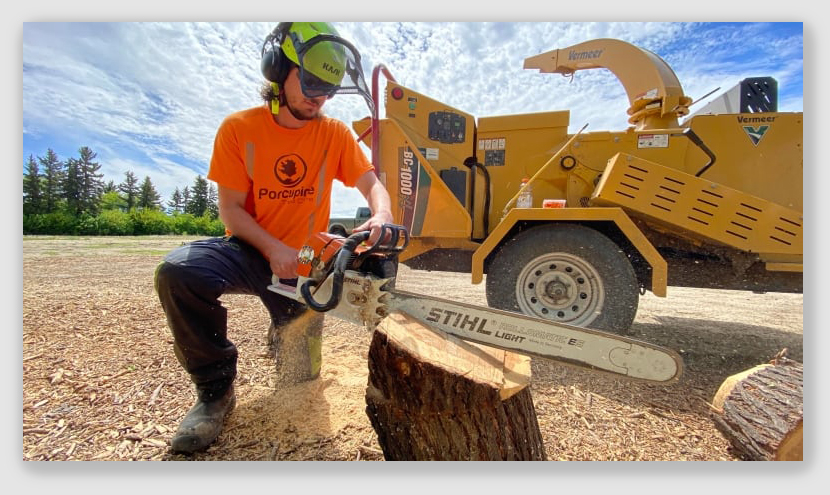 Broadcasting Corporation: Saskatoon tree pruning company shocked at $275 fee for disposing long logs at landfill
Quill Shiell believes a new policy at Saskatoon’s landfill could eventually lead to the spreading of Dutch elm disease in the city. Last month, Shiell, the owner of a tree pruning company, tried to drop off a load of cut elm wood at the Saskatoon landfill. Apart from the general disposal fee, he was told a special fee of $275 would also apply for any wood over 10 inches in diameter or three feet long. “They have a guy on the hill where you dump, hanging out with a tape measure that measures each log and tells you whether it’s within their parameters,” said Shiell, owner of Porcupine Tree Care. While Shiell normally disposes of his waste wood outside of the landfill, elm wood is a different matter altogether. All waste elm wood must be thrown out in the landfill so that it doesn’t spread Dutch elm disease, a disease that can quickly spread and kill elm trees in the area. Rather than pass the extra money on to his customers, Shiell took his wood back to his workshop to cut into tiny pieces. However, he worries that other people won’t be so conscientious..
They say money doesn’t grow on trees, but in Georgia, it kind of does. The state says timber is Georgia’s second most-profitable commodity, after agriculture, and you may have gotten sticker shock if you wanted lumber lately. Local farms say those the steep profits aren’t branching out to them. What we’ve got here is a simple supply and demand. Back in 1989, the federal government was helping farmers, so they helped them plant 600,000 acres of trees. Now, those trees are at their maturity level and that is creating a perfect storm for timber land owners. Danny Hamsley farms land that has stood in his family for decades. “Well, I have 240 acres that I grow trees on,” he calculated. Hamsley is an unusual timber farmer. He grows them– planes, the boards, and actually sells that lumber, and even furniture he’s made directly to customers. That gives him a little insulation on prices. “The run-up in prices is artificial. It’s a function of the pandemic,” he reasoned. “Timber land owners have not enjoyed a run-up in prices like the mills have seen.” Tim Lowrimore is the state’s forester with Georgia Forestry. He agrees with Hamsley and has had several conversations with timber land owners across the state. “Mills began to ramp down their operations because they didn’t know what the market was going to do,” he said…
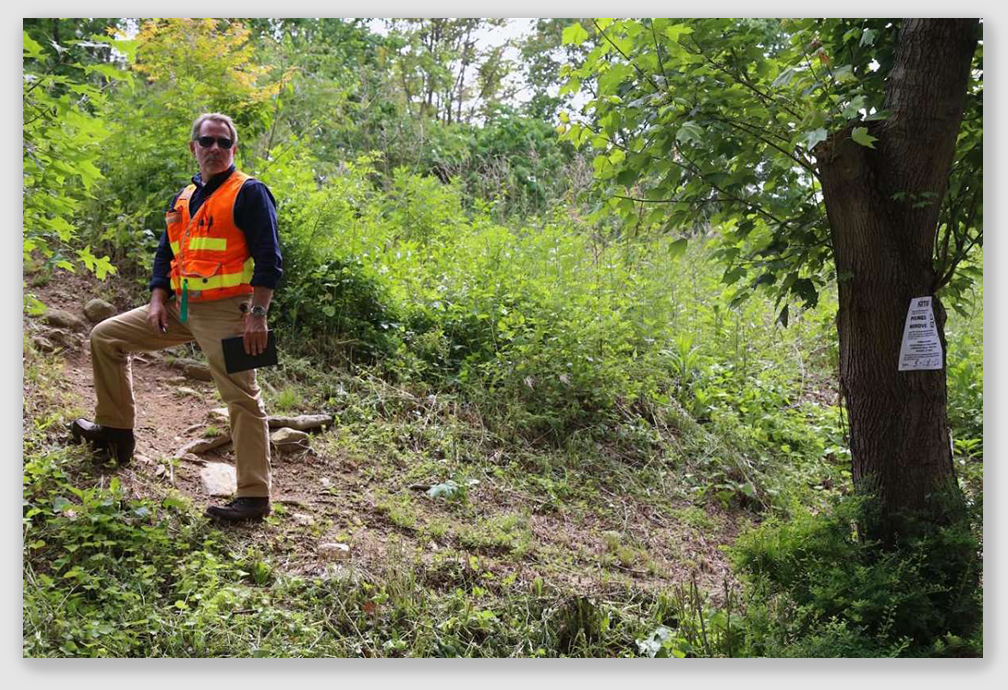
First Selectman Jayme Stevenson is fighting alongside residents of Little Brook and North Little Brook roads to preserve dozens of trees, and the next step is a public hearing. Warning signs have been posted on some 50 trees — which sit at the south side of the intersection of the two roads — by the town’s tree warden. These trees have been tagged for removal as part of Eversource’s tree trimming and hazardous tree removal program. Stevenson joined residents in the neighborhood and Eversource representatives Tuesday afternoon to walk the area and examine the trees set for removal. The walk-through lasted more than an hour but, according to residents, town officials and Eversource, more questions need to be answered. “It’s a mutual education opportunity for us so that we can give our input. … I certainly understand your challenge, but I’m here to support the town and the neighbors,” Stevenson said, noting she was hopeful that there could be more pruning than tree removal. Stevenson said she understands why some of the trees have been marked for removal but added that officials on site identified a handful that can be saved. “Every tree saved is a win,” Stevenson said…
Each year in the United States hundreds of people are struck by lightning and about 50 die. Most fatalities occur when people take refuge under trees. The number of trees struck greatly exceeds a million a year. Some of these trees die immediately due to the strikes. Many are predisposed to attack by wood boring insects, decay, canker and root rot, and die within a few years. Some trees are struck with seemingly no damage at all. Lightning is produced to equalize electrical charges between negatively charged clouds and positively charged objects on earth. As lightning approaches the ground it is in the form of a stepped leader. The leader pulls a traveling spark from tall conductive objects in the area. When the stepped leader and the traveling spark connect, there is a flash of lightning. Benjamin Franklin is credited with the development of lightning protection systems in 1749. Fortunately, he was never electrocuted during the experiments he conducted. His systems are in widespread use to this day, protecting barns, steeples and homes. In the 1920’s, the tree care industry adapted Benjamin Franklin’s lightning protection system for use in shade and ornamental trees. Over the years the materials and techniques have changed somewhat for the better, but the concept remains the same…
 The Verge, June 2, 2021: This scientist shoots trees to study how they migrate
In Black Rock Forest, just north of New York City, Angie Patterson aims a shotgun at a northern red oak tree. Patterson is a plant ecophysiologist, and the leaves that she’s shooting out of the canopy will give her data to understand how and why trees migrate. Trees have been on the move since at least the last ice age. As their native habitats become inhospitable, tree ranges shift, slowly, to areas they can thrive. But climate change is disrupting the process, scientists say. As of 2019, the IUCN Red List categorized more than 20,000 tree species as threatened, and upward of 1,400 as critically endangered. As scientists scramble to learn more about what drives tree migration, others are planning for the future. To preserve biodiversity, both citizens and researchers are employing interventionist tactics once steeped in controversy like “assisted migration” — taking tree seedlings and planting them in new locations. Rising global temperatures may force wildlife agencies and forest managers to decide what to save and what to leave behind…
ABC News, June 2, 2021: Study: California fire killed 10% of world’s giant sequoias
At least a tenth of the world’s mature giant sequoia trees were destroyed by a single California wildfire that tore through the southern Sierra Nevada last year, according to a draft report prepared by scientists with the National Park Service. The Visalia Times-Delta newspaper obtained a copy of the report that describes catastrophic destruction from the Castle Fire, which charred 273 square miles (707 square km) of timber in Sequoia National Park. Researchers used satellite imagery and modeling from previous fires to determine that between 7,500 and 10,000 of the towering species perished in the fire. That equates to 10% to 14% of the world’s mature giant sequoia population, the newspaper said. “I cannot overemphasize how mind-blowing this is for all of us. These trees have lived for thousands of years. They’ve survived dozens of wildfires already,” said Christy Brigham, chief of resources management and science at Sequoia and Kings Canyon National Parks. The consequences of losing large numbers of giant sequoias could be felt for decades, forest managers said. Redwood and sequoia forests are among the world’s most efficient at removing and storing carbon dioxide in the atmosphere. The groves also provide critical habitat for native wildlife and help protect the watershed that supplies farms and communities on the San Joaquin Valley floor…

Officials have announced that a hiker was found dead in New Hampshire’s White Mountain National Forest last Thursday after the tree he was using as a hammock anchor fell on top of him. Identified as Edward Murphy, of Sandown, New Hampshire, the hiker was found in an area of the national forest called Bean’s Purchase, having had plans for a multi-day hike that was set to end on Wednesday. His failure to return as scheduled prompted a search that started around noon on Thursday, with Murphy found deceased later that day. There were reportedly no signs of foul play. A tragic accident, this incident highlights the dangers of being around weak, dying, and dead trees. In Colorado, weak trees can be common in areas of beetle kill and in burn scars. If dead, dying, or fallen trees are present in an area, proceed with extreme caution, especially when winds are rolling through. Though death by falling tree is a rare occurrence, it does happen. In August of 2019, a 56-year-old was killed after a tree fell on her tent in Colorado’s San Juan backcountry. In 2020, another woman was killed by a tree near Vail when a tree fell on the family campsite. In that case, the campsite was in an area where many trees had fallen victim to a rampant pine beetle infestation with the toppling further prompted by strong winds…
After the town tree warden ruled Tuesday that Eversource can remove only two of the 29 trees it requested for maintenance, the utility company warned that the trees could cause future power outages. Residents challenged Eversource’s plan to cut down 29 trees in four locations in town, which led to a hearing last week. On Tuesday, Tree Warden Gregory Kramer issued a written decision, saving 27 of the trees and allowing only two to be removed. Eversource can remove one western cedar tree from Arch Street and Summit Road and one Norway maple tree from the Riverside Train Station, Kramer said in his ruling. Also, he said the trees cannot be removed until he has approved a landscape plan from the utility company to beautify the area and mitigate the loss of the trees. “I welcome the continued collaboration of working with Eversource Utilities as the time necessitates the proper pruning of trees near distribution wires,” Kramer said in his decision…
 Smithsonian, June 1, 2021: A Journey to the Northernmost Tree in Alaska
Ecologist Roman Dial removes a shell from his 12-gauge shotgun. “Wherever this lands,” he says, tossing the shell over his shoulder, “will be the center of our first study plot.” We stand in a sparsely wooded valley, 23 miles as the raven flies from the nearest road. That road is the only thoroughfare in an Arctic wilderness the size of California, and our party of seven left it five days ago, heading east through mountains in packrafts and on foot. For the next 37 days and 320 miles of travel, we will not see another human. The gun is for the grizzlies, who are fresh out of hibernation and mad with hunger. We have traversed mountainsides pocked with craters, where ravening bears have moved a ton of earth for a bite of ground squirrel. They’re so hungry that Dial has instructed us not to warn them of our presence, but instead to “sneak through.” Why all this sneaking around? Because something strange is happening in the Far North. This valley marks the northern treeline, the diffuse boundary beyond which the mountains and tundra stretch treeless to the Arctic Ocean. As the planet warms, this treeline may be on the move. Dial finds the shotgun shell in a tangle of feather moss and lichen. We set down our packs and begin to sweep the surrounding area. From our feet, we notice several shin-high spruce seedlings. We look closer, combing the understory like grooming monkeys. Suddenly a new world comes into focus: A generation of toe-height trees, not more than a few years old, bristles through the soil…
Bloomberg Green, June 1, 2021: Cutting Down Trees Can Help Save Climate in Forest Industry Math
Sweden’s forest industry has prepared a defense against critics who say trees should be left in the forest to bind carbon and help fight climate change. At the heart of the conflict is the European Union’s need to regulate sustainable activities across the bloc, where forest-based carbon sinks are on average declining, in net terms. That has prompted concerns that forestry accumulates a so-called carbon debt because trees take several decades to grow back. In densely forested Sweden, the industry is keen to show trees are, overall, sequestering more carbon dioxide than is released. The companies, who make their profit from pulp, packaging and timber, commissioned a study that shows a bigger climate benefit from cutting trees than reducing or halting harvests. The math in the report published on Tuesday centers on displacement effects: fossils can be left underground if wood is used to replace such materials, resulting in smaller carbon dioxide emissions than keeping forests intact but using materials such as plastic instead…
 Orlando, Florida, Sentinel, May 29, 2021: Seminole looks at stronger tree protection rules
To restrict developers from clear-cutting every tree on a tract of land before erecting a subdivision of new homes or shopping centers, Seminole has started updating portions of its land development rules to provide broader arbor protections and protect tree canopies around the county. As part of that process, Seminole commissioners are considering hiring an urban forester who would be charged with recommending tree preservation conditions on rezoning requests, applications for land use changes and preliminary plans for new residential developments. “What I continually hear all the time is citizens calling me up and saying: ‘You know, we had this beautifully wooded area and now all of a sudden, it’s stripped completely. They didn’t save any trees and the trees had been there for a long time,’” Commission Chairman Lee Constantine said. “There’s got to be a better way than just cutting down every tree on a piece of land…”
A 50-year-old hiker in New Hampshire’s White Mountains was found dead Thursday evening at a tent site, and authorities believe he was killed when a tree fell on him, the state Fish and Game Department said Friday. In a statement, the agency identified the victim as Edward Murphy, 50, of Sandown, N.H. Fish and Game said Murphy had been attempting a multi-day hike that was supposed to conclude on Wednesday around 5 p.m. A search was launched when he failed to make it back by noon on Thursday, officials said. Murphy, authorities said, was found at the Spruce Brook Tent site by a search team around 7:30 p.m. Thursday. The site is located just off Wild River Trail in the Bean’s Purchase area of the mountain range, according to Fish and Game. “Evidence at the scene indicated that Murphy had been killed when a tree he had placed his sleeping hammock on fell and struck him,” the statement said. “There was no evidence of foul play and all indications point to this being a tragic accident…”

Visitors to the Grayling area this summer will notice some spots in the woods where trees have been cut down on state-managed land near trails and roadways. The clearcuts may be unsightly for a few seasons, but they’re an important part of the process the Michigan Department of Natural Resources uses to manage 3.9 million acres of state forest and keep forests thriving well into the future. “We cut trees for a lot of different reasons. It’s part of good forest management. It can be for the health of the forest, to provide wildlife habitat, or to regenerate stands that are aging,” said Steve Milford, manager of the Eastern Lower Peninsula District of the DNR’s Forest Resources Division. Trees being cleared by timber harvesters in that area include jack pine, red pine and hardwoods such as oak. Clearcuts also take place for other purposes. For example, jack pines in the area are strategically cut to maintain nesting sites for the Kirtland’s warbler, a once-endangered songbird that will nest only on the ground under the shelter of young, shrub-like jack pine trees…
Driving across Texas has been an interesting occupation for foresters and arborists these past few weeks. Many trees appear as healthy and vibrant as they have ever been, but littered in among the growing green are an equal — and seemingly arbitrary — population of barren oak trees. This bizarre phenomenon has intrigued professionals across the state — especially since oak trees, and particularly live oak trees, are known to be an incredibly resilient species. Now, months after Winter Storm Uri swept across Texas in mid-February, many of the oaks still aren’t leafing out. Standing in contrast to their vibrant and vivacious brethren, they look dead. Courtney Blevins has spent almost 40 years with Texas A&M Forest Service, and he can’t recall any past freeze leaving so many oaks looking bare this late into the spring. “I’ve been telling people my whole career that the single toughest species we have up here is live oak,” said Blevins, a forester out of Fort Worth. “And yet, it’s the live oaks that seem to be most stressed from this freeze. I’m shocked by that…”
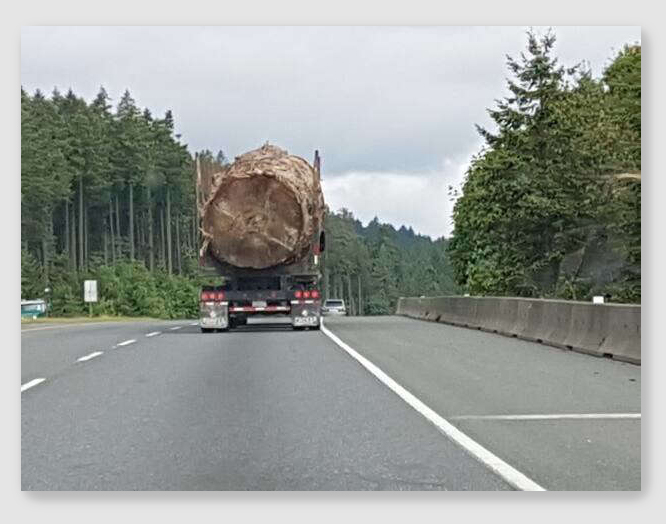
A massive old-growth tree rolling down a B.C. highway has captured the attention of thousands of people around the world after a Nanaimo woman snapped a photo on her way to the grocery store. Lorna Beecroft was driving down the Nanaimo Parkway Tuesday morning when she came across a logging truck weighed down with a single enormous spruce tree. “It was just shocking to look up and see a huge old-growth tree like that driving down the road,” she said. She posted the photo to her Facebook page, sparking a massive response. Beecroft said she has received messages from all over the world, from Japan, Denmark, Germany and all across Canada and the U.S. The photo caught the attention of politicians as well. Taylor Bachrach, MP for Skeena-Bulkley Valley, re-tweeted the photo calling it “Barbaric…” “Mostly, it’s people who are unhappy, sad, upset that trees like that are harvested. Others, who are making fun of me for being a tree hugger. I’m not,” said Beecroft. “People have to make a living. We live in houses, they’re made of wood. But surely we don’t have to cut down trees like this…”
Moneycontrol, May 27, 2021: The risks of tree plantation in grassland and non-forest areas
Planting trees by the millions has come to be considered one of the main ways of reining in runaway carbon emissions and tackling climate change. But experts say many tree-planting campaigns are based on flawed science: planting in grasslands and other non-forest areas, and prioritising invasive trees over native ones. Experts point out that not all land is meant to be forested, and that planting trees in savannas and grasslands runs the risk of actually reducing carbon sequestration and increasing air temperature. The rush to reforest has also led to fast-growing eucalyptus and acacia becoming the choice of tree for planting, despite the fact they’re not native in most planting areas, and are both water-intensive and fire-prone. A tree-planting frenzy has taken over many countries to counter climate change. In July 2019, Ethiopia announced that they planted more than 350 million trees in one day. A month later in India, the Uttar Pradesh government announced that more than a million people planted 220 million trees on a single day to increase the state’s forest cover. “Always be suspicious of such big claims,” says William Bond, a grasslands researcher and emeritus professor at the University of Cape Town in South Africa. “It’s taken for granted that tree planting is good. But look at what they’re planting, where they’re planting…

U.S. lumber futures have hit their highest prices ever. July 2021 futures on the Chicago Mercantile Exchange are set at $1,541 per 1,000 board feet (us.fsc.org). As we’ve learned from rising construction costs, wood is in high demand and has people asking themselves how lucrative tree farming is. A timber stand’s value depends on the size of the trees, the species, the quality of the wood, the ease of the harvest and the distance to a mill. For example, black cherry may obtain a much better price for veneer than a crooked sweetgum which may be priced for paper. On a tree farm, pine for chipboard or paper can be thinned for the first time after 10 to 20 years. An initial thinning of an oak forest yielding lumber products may occur as early as 60 to 70 years in our region. The cheapest wood often comes from fast growing evergreens, such as pine, fir and spruce. It is comparatively soft and has a closed grain, which makes it a better choice for construction and general woodworking. Here too, we distinguish between grades of wood, with a grade C being ideal for trims, while grade D may have knots the size of a dime and can be used for bigger projects. Grades A and B are often dedicated to veneers and furniture. In general, high-quality wood at the base of the tree is used for higher value products like veneers and big pieces of lumber. Wood from the middle of the tree is used for wood pallets and smaller pieces. The thinner wood towards the top and other logs not suitable for saw timber are turned into chips, which may become wood pulp for biomass fuel, firewood and paper products…
Science Friday, May 28, 2021: Making Syrup From More Than Maple Trees
Researchers at the University of New Hampshire are studying new ways to make syrup out of the northern forest—not from maple trees, but from beeches, birches, sycamores and more. They want to create new markets for an industry that, right now, depends on just one kind of tree—making it vulnerable to disease and climate change. At the tail end of maple sugaring season, other kinds of sap were still flowing freely in the woods of Lee. UNH researcher David Moore had sensors plugged into a stand of beech trees to measure that sap and the conditions helping produce it. “You can see I have three trees with sensors here that are all tied back to one data logger,” Moore said, pointing to the tubes and wires running from the beech trunks. Nearby, a bucket collected the resulting sap, while other equipment gathered weather data. Researchers say monocultures, like the all-maple syrup industry, are more at risk from climate change, pests and other unpredictable threats. So Moore sees untapped potential in other common species, like the American beech. It’s found throughout New Hampshire’s forests, farms and sugar bushes—almost like a tree weed. “If you can think of some economical use—if you can make syrup from them, that would be a nice way to actually generate a little profit from them,” Moore said…
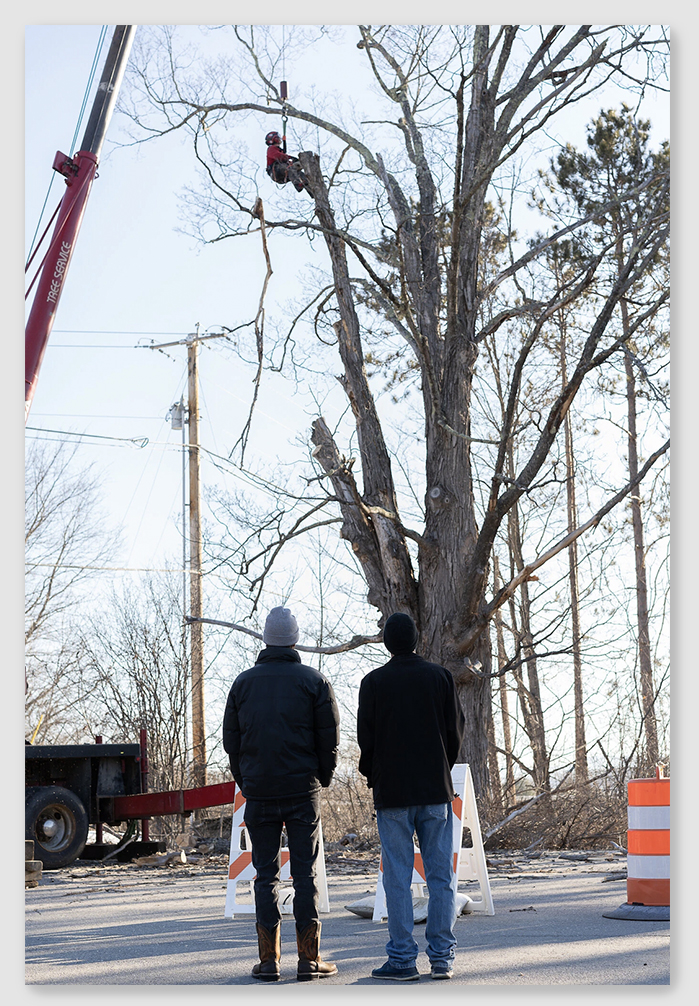 New York City, The New York Times, May 27, 2021: Goodbye to a Yankee Farmer, the Ghost of Exit 8
The morning sun was just slanting through the trees when a crew arrived with chain saws to remove the last sign of Romaine Tenney. It was only a tree, a gnarled rock maple that stood for generations on the Tenney farm, and somehow survived what happened there on that September night in 1964. Now Vermont had ordered the tree cut down. A chain saw began to whine, and clouds of sawdust bloomed into the air. Then the first limbs began to fall, light and springy, coming to rest in a shower of twigs. A dozen townspeople stood watching, mourners at a graveside. The tree was mostly dead, but they associated it with Mr. Tenney, the bachelor farmer whom they had called “Whiskers,” and who had died in such a terrible way. They were old enough to remember when the Interstate was built, on land taken from farmers up and down the Connecticut Valley. The state offered compensation, but if landowners refused, it could seize land by eminent domain. Plenty of farmers grumbled about leaving, but Mr. Tenney simply refused to go. Throughout the summer of 1964, bulldozers leveled much of the land around his farmhouse, but Mr. Tenney kept milking his cows, as if nothing was happening…
It’s a picture-perfect morning in the Ozarks. The birds are singing, the sun is shining and the chickens are grooming, getting ready to start their day. But there’s something wrong with the picture this spring. It’s May 25 and a lot of the trees do not have all of their leaves. According to Eric Driskell, who works for Falwell Tree Service in West Plains, cold weather and excessive moisture could be the culprits. “More than likely, they’re going to pull back through it, they’re just coming out of late bloom and I’d say a lot of it is probably because of that frost,” said Driskell. Driskell said even minor differences in temperatures, soil and moisture can affect trees. According to KY3′s Chief Meteorologist Ron Hearst temperatures in West Plains set record lows in April, dipping into the 20′s. Even as late as May 13, the temperature bottomed out at 39 degrees…
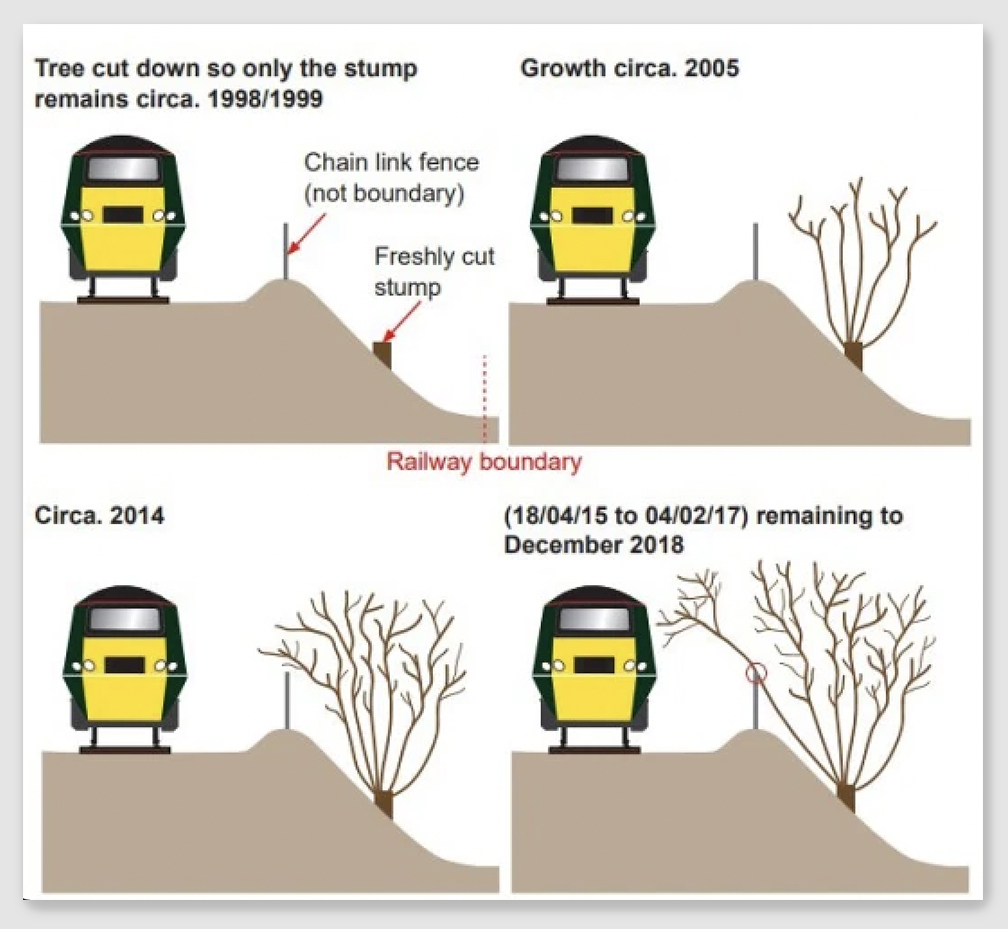
A woman died after being struck by a tree branch after leaning out of a train window, an inquest was told. Bethan Roper, 28, suffered fatal head injuries and was killed on the Great Western Railway (GWR) while the train was travelling at around 75mph. An inquest at Avon Coroner’s Court heard how Miss Roper had been out Christmas shopping with friends in Bath on December 1, 2018. She had got on a train from Bath Spa station and was passing through the Twerton area towards Bristol Temple Meads when the incident happened. Mark Hamilton, an inspector with the Rail Accident Investigation Branch, said: ‘We established that one of the group of friends opened the window of the door and at least one other friend leant out of the window.‘But around two and a half minutes after the train departed Bath Spa station Bethan leant out of the window and a few seconds later she fell backwards having sustained a serious head injury. ‘The simple conclusion we have drawn from the evidence presented was that Bethan’s head came into contact with a lineside tree and that tree was growing on Network Rail infrastructure…’
Recent storms and spring weather have many homeowners hiring landscapers to remove dangerous trees and beautify lawns. Consumer protection experts tell the FOX31 Problem Solvers it’s important to choose a landscaping company wisely before signing a contract. Dottie tells FOX31 she hired a landscaping contractor for tree removal, but after paying the total amount of approximately $6,000, she said the stumps remain on the property. “He told me he would come back in the spring and finish the job,” she said. Dottie showed FOX31 a contract saying the stumps were to be ground down six to 10 inches beneath the surface of the ground. She is considering taking her case to small claims court, where the limit is $7,500. The Problem Solvers asked attorney Bryan Kuhn about homeowners’ rights. He tells FOX31 Dottie “absolutely could sue for breach of contract.” Kuhn explains that contracts are binding. “There’s a misconception out in the general public that a contract has to be a sort of lengthy formal document. Nothing could be further from the truth….there are cases that have (involved) contracts on napkins,” he said…
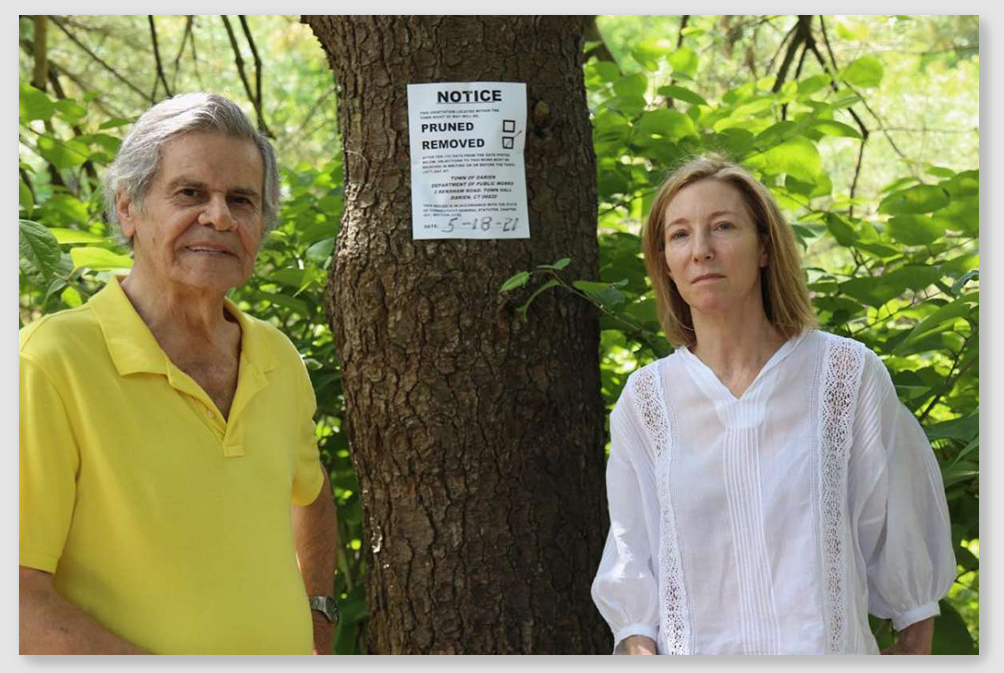
Residents along Little Brook and North Little Brook roads are fighting to prevent the destruction of 40 trees as part of Eversource’s tree trimming and hazardous tree removal program. Warning signs were posted on the trees — which sit at the south side of the intersection of the two roads — on May 18 by the town’s tree warden. “Quality of life, biodiversity, beauty of the neighborhood will be impacted,” neighbor Richard Poli wrote in an email to the town. “I think it’s going to make the neighborhood look awful,” said Henry Nisimblat, who has lived on the road since 1985. “Darien is known as a wooded area. Why do we have to cut them down? That’s what I’m really opposed to. I think it’s a sin.” Stevenson, in an email to the neighbors May 20, said she and other local officials need to find out more before any trees are taken down…
Bangor, Maine, Dailhy News, May 25, 2021: Maine lawmaker sued over trees cut down on neighbors’ land
A state lawmaker from Maine is facing a lawsuit from neighbors who say she and her husband cut down thousands of trees from their property to build a barn and horse paddock. Sasha and Christopher Malone filed the lawsuit against Republican Rep. Heidi Sampson and Robert Sampson, of Alfred. The Malones’ lawsuit said the Sampsons clear-cut part of the Malones’ forested property, removing more than 4,300 trees. The Sampsons said in court records that they mistakenly thought the area was part of their own property, the Portland Press Herald reported. They filed their own complaint against the company that harvested the trees in 2012…”

There’s been an uproar in Johannesburg after magnificent fever trees on William Nicol Drive were lopped to give a clear view of a huge Showmax billboard advertising The Handmaid’s Tale. The billboard is placed against a wall of the high-end Hyde Park Corner shopping centre. This “PR disaster” earns Showmax the zero rating of the week from branding and advertising expert Andy Rice. There are about eight or ten reasonably mature fever trees that were blocking the line of sight of view to the billboard. Suddenly, everybody wakes up one morning and they’ve all been lopped dramatically, not just trimmed. Rice says there are a couple of lessons that should be learned from a PR disaster like this. Firstly, you must remember that a brand is about promises – a promise made and a promise kept. But importantly, what really matters when you do have a blunder… is not the strength of the brand prior to the blunder but how you solve it afterwards…
The fear in one house at the end of Adare Drive in Cary is the park district will kill the oldest resident in town to make room for a new aquatic facility with plastic slides and bubblers. “At the very end of this road is this magnificent oak,” says Kimberly Kobos, who fell in love with the tree after she moved into that house with her husband, Salvador Islas, in 1992. “It’s probably 200 years old.” The tree’s fate, same as its towering branches, is up in the air. Will it be cut down to make way for water and sewer connections at the soon-to-be-built aquatic center? “I can’t answer that for you right now, and I’m not going to,” says Dan Jones, the executive director of the Cary Park District. The water park, which is part of a master plan adopted in 2016, “is a huge item that people in the community wanted,” Jones says. But the park district has more than 7,000 acres, including 5.5 miles of trails, some of which wind through oak savannas…
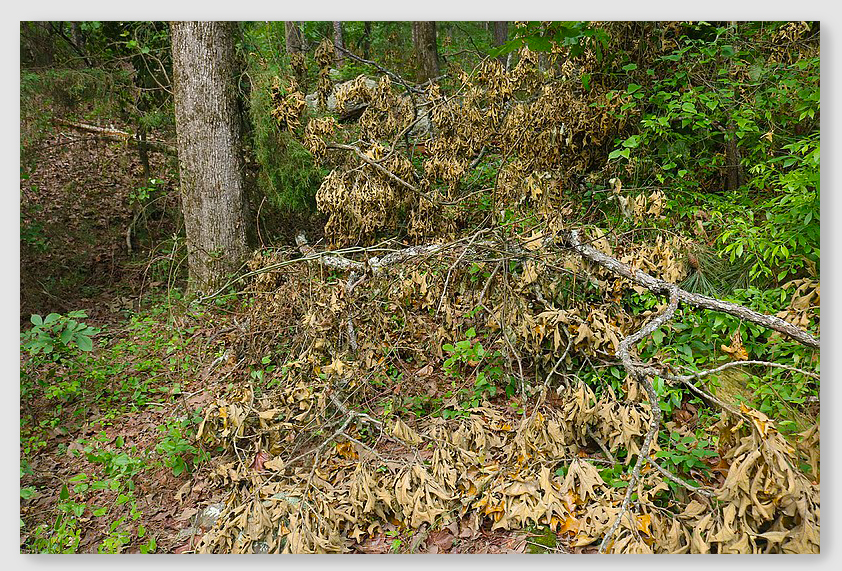
Pulaski County authorities are investigating a resident near Lake Maumelle in Roland after several trees were topped, debranched or cut down on Central Arkansas Water land. Investigators cite in a report that a “concerned citizen” contacted Central Arkansas Water on May 12 about witnessing a crew cutting down trees on behalf of the property owner. According to nearby resident Rhonda Patton, she was the concerned citizen walking along the Ouachita Trail when she discovered the trees being cut. “I live right off of the Ouachita trail,” Patton said. “We could walk right out of our back door and within two minutes we’re on the [Ouachita trail].” Patton hikes the trail regularly, so when trees appeared to be cut down along a section she normally hikes, she became concerned. “I was taking my hike between 11 and 12 in the morning, and I can hear the chainsaws and stuff that’s happening,” Patton said. “As I start to come up the trail, I start to notice that there are a bunch of limbs, cut limbs, lining the side of the trail. And I knew that was wrong…”
Milwaukee, Wisconsin, WTMJ-TV, May 24, 2021: Ash trees coming down fast in race against deadly bug
It might seem extreme, but a lot of communities are cutting down healthy-looking trees. Those trees are the target of a very hungry bug. Nathan Schuettpelz oversees the emerald ash borer program for Whitefish Bay. His company triages treats and removes trees that look like breakfast for a bug born to kill. “Emerald ash borer, being in the state of Wisconsin, doesn’t allow you to make the choice of keeping or removing your tree. It’s gotta go,” Schuettpelz said. Emerald ash borer is an invasive beetle from Asia. It’s been in Wisconsin since 2008 and has been found in 52 of the state’s 72 counties. The best estimate: 50 million trees killed by these beetles across the Midwest. While a few of the most healthy ash trees in a community are treated and monitored, most “street trees” are coming down fast…

Many trees in East Bay regional parks are dead or dying — likely due to lack of rainfall — and officials fear the trees could catch fire and that the flames could sweep through the parks and reach nearby homes. The trees cover about 1,000 acres of the 124,909-acre district, and multiple species are affected, including acacia, eucalyptus, Monterey pines, manzanitas and others. Most of the trees, on about 624 acres, are in Castro Valley’s Anthony Chabot Regional Park, where eucalyptus grow in some places so close together that game trails do not exist. The second biggest concentration, with about 177 acres, is in Reinhardt Redwood Regional Park in Oakland. “It’s quickly coming to a point where it’s a matter of public safety, with fire season looming,” district Fire Chief Aileen Theile told the park district’s citizen advisory committee recently, adding: “No action is not an option at this point.” Many trees are in “interface” areas, Theile said, or where parkland abuts residential neighborhoods, making the fire threat especially dangerous. Crews began noticing the number of ailing trees last October while doing scheduled vegetation cleanup…
A lot of new trees have been planted in the past year after many were uprooted by last year’s tornadoes and storms. The organization Root Nashville, led by the Cumberland River Compact and Metro Nashville, is working hard to replant trees and bring their benefits to Nashville. “We’ve set a record at Nashville of 8,000 trees planted as of last season,” Campaign Manager Meg Morgan said. But now that we’ve hit a dry spell, all of those trees really need extra care in the form of water that they aren’t getting right now. Morgan says the first three summers of a new tree are critical. “Without this watering time over the summer, all these efforts to replant and bring benefits of trees to the neighborhood actually won’t matter if you don’t take care of the trees over the summer,” Morgan said. New trees need 10 gallons of water each week. For every week it doesn’t rain at least one inch, Morgan says trees need help with supplementing. There are a couple of simple ways you can do that. For example, leaving the hose on low at the base of your tree for 10 minutes or for twice a week you can drill small holes in the bottom of a 5-gallon bucket (average heavy-duty bucket size) and leaving at the base of each tree for slow soaking…
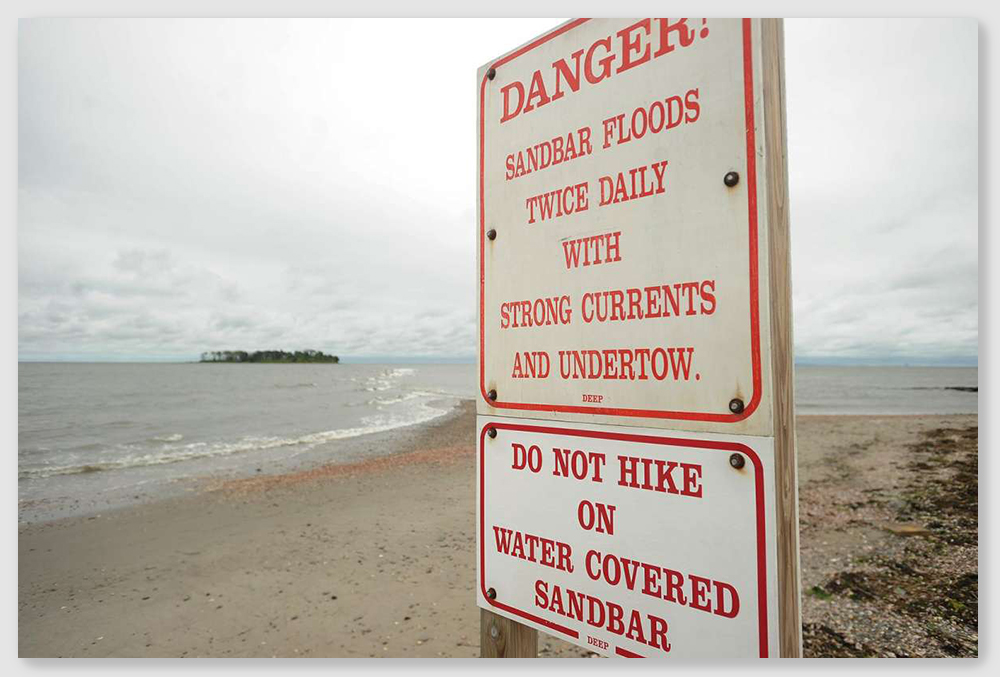
Like many city residents, Bill Pursell has seen how Charles Island Natural Area Preserve has changed over the years. Deer overpopulation, a fungal tree disease and storms, for example, have greatly reduced the forestation on the island, according to wildlife biologist Pete Piccone of the state Department of Energy and Environmental Protection. Now, Pursell hopes to lead a tree comeback using trees native to the area to restore Charles Island’s landscape. It is a piece of land Pursell is familiar with: He said his grandfather bought a cottage in 1941 that has a view of the island. So, after talking to some family members, Pursell said he decided to help reforest the 14-acre bird sanctuary, one tree at a time…
They’re only about four to six centimetres long, but gypsy moth caterpillars are a massive threat to Ontario’s forest cover. Scientists are warning that 2021 is shaping up to be a bumper year for the invasive species, brought to North America around 1860 by a French entomologist who hoped to cross-breed them with silkworms. The good news is that landowners can help battle the bugs using burlap and soapy water. “A caterpillar can eat about one square metre of leaves as it goes from a little tiny new caterpillar to a great big adult one that’s ready to pupate. That’s a fair amount of foliage for just one caterpillar,” noted Chris MacQuarrie, a research scientist with the Great Lakes Forestry Centre in Sault Ste. Marie, Ont., one of five research centres that form part of the Canadian Forest Service. The gypsy moth caterpillar (Lymantria dyspar) isn’t fussy about what it eats, either. “It really likes oak and birch and aspen,” said MacQuarrie. “It also eats maple and beech, and it’ll even eat some of the softwood species such as white pine and balsam fir and … Colorado blue spruce…
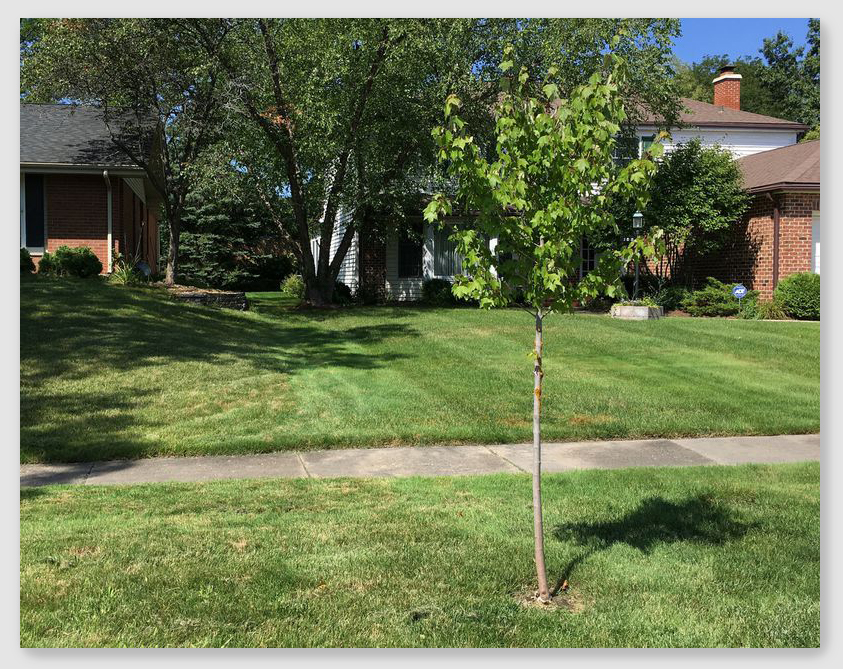 Chicago, Illinois, Tribune, May 22, 2021: Staking trees in your garden can do more harm than good
A newly planted young tree may look like it needs help to stay upright. Yet in most cases, tying the tree to stakes is not good for it, according to Julie Janoski, Plant Clinic manager at The Morton Arboretum in Lisle. “Staking a tree can limit its movement, which can keep the trunk from strengthening the way it should,” she said. As the wind moves a slender sapling, its trunk and its anchoring roots will respond by becoming stronger, making the tree more stable long term. A sapling restrained by stakes can’t build that strength. The best way to help a young tree grow stable and sturdy is to plant it properly, in a hole that is wide and not too deep, Janoski said. The wide hole, refilled with tamped-down soil, will encourage the tree to grow strong anchoring roots. Another risk from tree staking is damage to the bark, Janoski said. Rope or wire used to secure the tree to the stakes can rub right through the bark and the important layer just beneath the bark, where the tree grows and where it transports water and nutrients between the leaves and the roots. “If that layer is cut, the tree can’t function,” she said…
Imagine waking up 150 years ago, opening your window and looking out onto the Southern Appalachians. Within view would be any one of the billions of American chestnut trees that once covered the landscape. Places that are now considered coal country were chestnut country. Today, not so much. The tree is considered functionally extinct, thanks to a fungus imported in on a tree from Japan in the late 1800s. The airborne fungus, Cryphonectria parasitica, flings its spores onto the American chestnut until its bark develops sickly looking blisters that soon spread throughout its body, destroying the tree’s ability to grow tall enough to reproduce. But all hope is not lost: a new partnership between the American Chestnut Foundation and the Eastern Band of Cherokee Indians aims to repopulate the region with the lost tree…
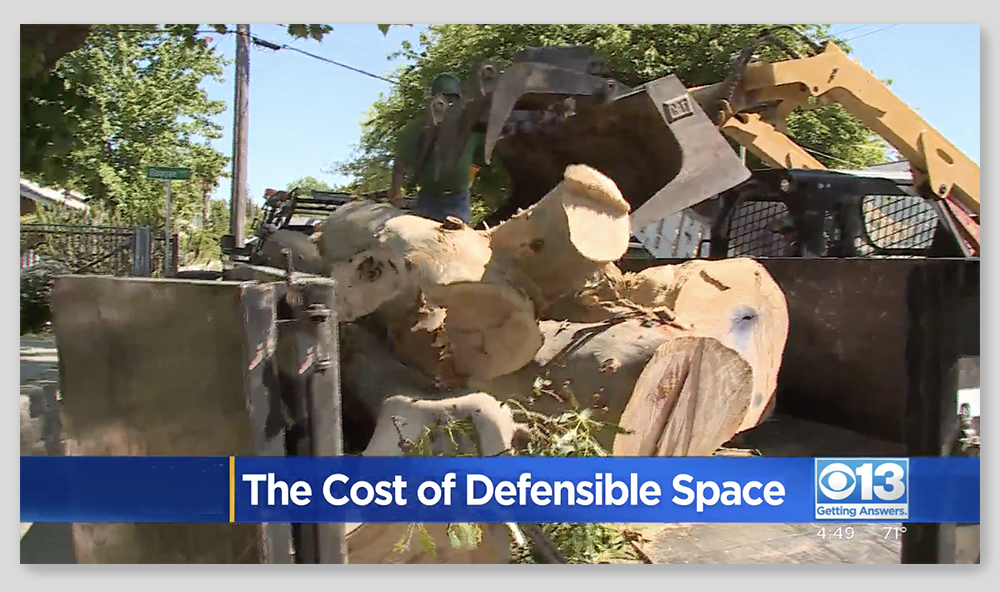
A growing problem in California is what to do with all the logs, clippings and brush associated with clearing defensible space or downed dangerous trees. “The problem is too easily solved. Why there isn’t a solution is baffling to me,” said Daniel Hovarter, a tree professional. Hovarter was downing a eucalyptus tree on 38th Street in Sacramento, right over Daisy Gutierrez’s home. “This is a very dangerous tree and I have two kids,” Gutierrez said. “If it’s a hazard to the home or a potential fire hazard to the home, they’re required to take the tree down or the homeowner’s insurance will drop them,” said Hovarter. Hovarter says due to the storms with high winds in January, and now the drought, his business has almost tripled. The problem is, so have fees at area landfills. “I pass those expenses along to the homeowner and at that rate, nobody gets their tree done,” he said. For example, the eucalyptus tree costs $15,000 to cut down and it will cost nearly $13,000 to dispose of the 200 tons of wood. Insurance won’t pay for preventative maintenance, so it comes out of pocket…
To win the future, we need to embrace bold ideas and innovative, long-term climate solutions. As we chart solutions to address climate concerns, we must remember that we owe it to future generations to be responsible stewards of our environment — as well as our economy. The Trillion Trees Act, which I’m proud to again reintroduce this Congress, is a solution designed to do just that. Despite the marvels of modern technology, planting trees remains the largest, most cost-effective and most environmentally friendly method we have for sequestering carbon. Trees naturally remove carbon dioxide from the atmosphere and store it in their roots, bark, and branches, all while filtering pollution and emitting pure oxygen. Studies show that planting a trillion trees worldwide would sequester 205 gigatons of carbon, roughly two-thirds of all the man-made carbon emissions created since the Industrial Revolution. The Trillion Trees Act, led by my friend and colleague Rep. Bruce Westerman of Arkansas, the House Natural Resources Committee’s lead Republican, will solidify the U.S. as a global leader of the World Economic Forum’s One Trillion Trees Initiative to conserve, restore and grow a trillion trees worldwide…
 Phys.org, May 21, 2021: Carbon storage offers hope for climate, cash for farmers
The rye and rapeseed that Rick Clifton cultivated in central Ohio were coming along nicely—until his tractor rumbled over the flat, fertile landscape, spraying it with herbicides. These crops weren’t meant to be eaten, but to occupy the ground between Clifton’s soybean harvest last fall and this spring’s planting. Yet thanks to their environmental value, he’ll still make money from them. Farmers increasingly have been growing offseason cereals and grasses to prevent erosion and improve soil. Now, they’re gaining currency as weapons against climate change. Experts believe keeping ground covered year-round rather than bare in winter is among practices that could reduce emissions of planet-warming gases while boosting the agricultural economy, if used far more widely. “For too long, we’ve failed to use the most important word when it comes to meeting the climate crisis: jobs, jobs, jobs,” President Joe Biden said in his April address to Congress. One example, he added: “Farmers planting cover crops so they can reduce the carbon dioxide in the air and get paid for doing it.” Clifton, 66, started growing cover crops several years ago to improve corn, soybean and wheat yields. Then he read about Indigo Agriculture, a company that helps businesses and organizations buy credits for carbon bottled up in farm fields. He signed a contract that could pay about $175,000 over five years for storing greenhouse gases across his 3,000 acres (1,214 hectares)…
Greenwich, Connecticut, Patch, May 20, 2021: Battle Brewing Over Trees At Greenwich High School
Following a ruling by the Town of Greenwich Tree Warden, a battle is shaping up over trees related to the Cardinal Stadium improvement project. Earlier this week, Tree Warden Dr. Gregory Kramer issued a ruling after a contentious public hearing on trees within the construction site. The Board of Education had requested the removal of 34 trees so that an ADA compliant parking lot, rain garden for drainage, and access road could be built. That number was later changed to 21 after Russell Davidson, President of KG+D Architects, said on the day of the hearing that 13 trees would not need to be removed for the current phase of the construction project. Kramer ruled that a handful of trees for the proposed rain garden must stay, as well as two trees along East Putnam Avenue. Twelve trees were approved for removal as part of the ADA access and parking area. Additionally, Kramer ruled that the trees will be removed upon the planting of 68 trees in the area, double the original removal request from the Board of Education of 34. Board of Education member Joe Kelly heavily criticized Kramer’s ruling, saying that “100 percent, under no conditions could the stadium be done according to the proposal of the tree warden.” The ruling, Kelly added, could delay the opening of the stadium, even though he pledged that work will continue elsewhere until completion…
 Anniston, Alabama, Star, May 19, 2021: Fallen tree a quandary for Anniston woman — and city council
Carol Malet was getting ready to leave her house on the morning of Palm Sunday when a vine-covered tree fell on her 2005 Scion. Malet, 78, has been carless ever since. “The insurance company told me that because it was a living tree, not a dead one, it was an act of God and there was nothing they could do,” Malet said. Malet, who lives on Woodland Court in Anniston, is one person with a very specific problem — one that isn’t directly related to the tornado that struck Calhoun County in late March, leveling acres of forest and damaging hundreds of buildings. But her problem is one that fell through the cracks, leaving her without a car for more than six weeks. On Tuesday, her problem landed in the lap of the Anniston City Council. “I’m asking the council to take some action to help this lady get her car repaired,” said City Councilman Jay Jenkins… Malet’s house is near a creek that runs down a hillside, shaded by trees. The creek — and the trees — are the city’s property. Five years ago, one of those trees fell on Malet’s house, she said. Later she asked the city to cut down five or six additional trees that seemed ready to fall. City workers cut them down…
Dallas, Texas, Morning News, May 17, 2021: Growths on your trees may indicate a deeper problem
Proclaiming that galls in trees are simply cosmetic and not a problem is not quite right. The abnormal growths don’t usually cause a problem, but they can indicate one. When present in small scatterings throughout the canopy, they are usually more cosmetic than damaging. But when trees are heavily infested with galls, there’s a problem. The tree is under stress and needs healing. This year has another factor to consider: freeze damage. Trees that are off color or have scarce growth on the top limbs may have galls show up more heavily, a reminder to do nothing that will stress the trees further. In addition to galls, you might also see an increase in diseases, insects, woodpecker holes or rodents chewing bark. Another symptom of ill health that’s starting to show up is white scale on crape myrtles. The answer is to stop poisoning your soil and your trees. That means making sure the landscape company you’re using (if you’re in that lucky category) stops poisoning your trees as well. What would my yard guy possibly be doing to poison my trees? Lots of things. At the top of the list would be using high-nitrogen synthetic fertilizers, nitrogen-only fertilizers and especially “weed and feed” fertilizers. Fertilizing too much is also a serious problem, as is watering too much — especially this year, with all the rain we’ve had…
As far as the plant scientists at the Missouri Botanical Garden in St. Louis know, the tiny purple-and-white flower that recently grew in their greenhouse has never before been seen, at least by experts like them. On May 3, Justin Lee, a senior horticulturist at the garden, was checking on a group of Karomia gigas tree saplings in a greenhouse when he spotted the flower. The tree, related to mint and originally from Africa, is one of the world’s most critically endangered tree species. The one-inch-long flower had a halo of light purple petals that sloped downward while a cluster of four white, pollen-bearing stamens poke out. “It’s a bit odd for a mint flower. It looks flipped inside out,” says Lee. The mint family, Lamiaceae, more commonly puts out tube-like flowers. The tree’s caretakers think it’s likely the flowers attract pollinating bees, butterflies, and moths, but it’s also possible that the tree is capable of self pollinating…
Phys.org, May 18, 2021: Tree species diversity is no protection against bark beetle infestation
In recent years, foresters have been able to observe it up close: First, prolonged drought weakens the trees, then bark beetles and other pests attack. While healthy trees keep the invaders away with resin, stressed ones are virtually defenseless. Freiburg scientist Sylvie Berthelot and her team of researchers from the Faculty of Environment and Natural Resources and the Faculty of Biology are studying the importance of tree diversity on bark beetle infestation. They are investigating whether the composition of tree species affects bark beetle feeding behavior. The team recently published their findings in the Journal of Ecology. In a 1.1 hectare experimental set-up in Freiburg, six native deciduous and coniferous tree species from Europe and six deciduous and coniferous tree species from North America were each planted in different mono- and mixed plots. After the severe drought in the summer of 2018, the Sixtoothed spruce bark beetle mainly attacked the native species: the European spruce and the European larch. “We were surprised that the beetles exhibited only a slight interest in the exotic conifer species, such as the American spruce,” Berthelot says. While measuring the infestation, the researchers found that the position within the experimental site was also crucial. The treesat the edge were attacked the most. Therefore, Berthelot suspects that the bark beetle entered the testing plot from outside. “In addition, environmental influences weaken the unprotected outer trees more, so they are more susceptible…”
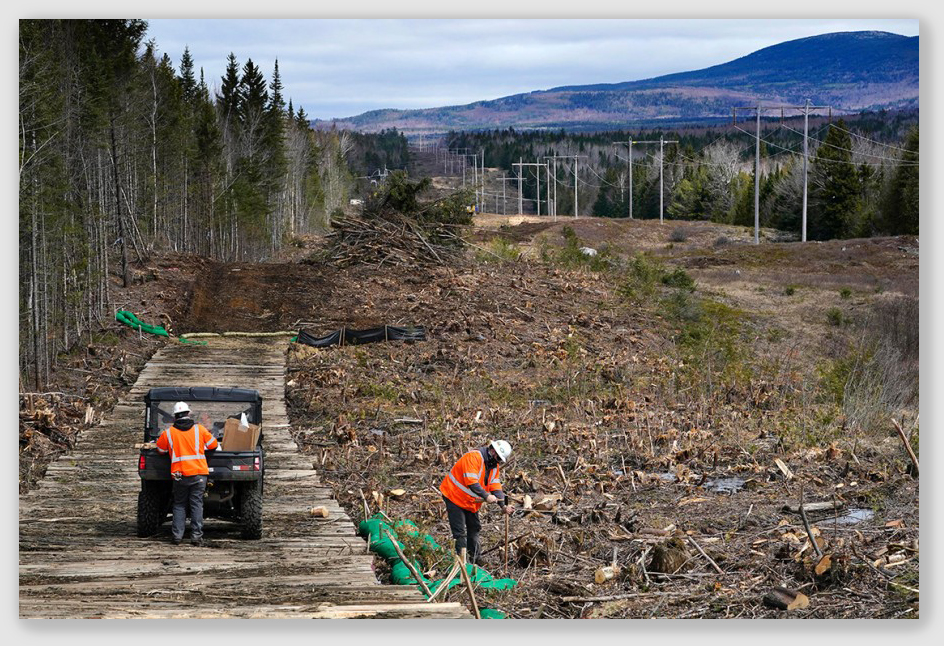 Stars and Stripes, May 18, 2021: Tiny bats put kibosh on power line tree-cutting for two months
Tree-cutting on a key stretch of a $1 billion hydropower project in western Maine is going to stop almost as soon as it started to protect the newly born young of a federally protected bat. The New England Clean Energy Connect has a narrow window of only two weeks to begin work on the power line after a federal appeals court gave the green light to proceed last week. Tree removal will have to stop in June and July when the pups of northern long-eared bats are born and cannot yet fly. A permit issued by the Army Corps of Engineers in November prohibited tree-cutting during June and July, and tree crews who’re already on the job had planned to stop during the two-month period to protect the bats, whose populations have been decimated by so-called white-nose syndrome. “NECEC Transmission LLC has been aware of this prohibition since the beginning of the federal consultation and permitting process and will comply with it,” NECEC said in a statement. The northern long-eared bats are tiny — the size of a small mouse — and they live in trees instead of caves. The bats are listed as threatened by the federal government and endangered by the state government because of white-nose syndrome, which has killed 90% to 95% of all bats in Maine, said Nate Webb, wildlife director at the Maine Department of Inland Fisheries and Wildlife…
A previously damaged tree branch falling onto an Avista power line caused the wildfire that destroyed most of Malden and Pine City last fall, according to a report completed by the Department of Natural Resources. 4 News Now obtained the report through a public records request. The fire, named the Babb Road fire, swept through the area September 20, 2020. It burned 15,266 acres, 121 homes, eight commercial buildings and 94 other structures. The report details the investigation from beginning to end, starting with an interview with a man who lived in a fifth wheel on the south side of Babb Road. The man saw the first signs of smoke and called 911, pointing to a tree line at the base of the hill that leads up to the John Wayne Trail. That led investigators to the man who owned the property, who showed them the area where he believed the fire started. “He said that he had been over to an area that he believes is the area of the origin, as there was a tree with a yellow ribbon around it next to the power lines,” the report says. That property owner was retired from Inland Power and Light Company, “but the distribution line where the fire started belonged to Avista Power, which feeds the natural gas station located on Babb Road west of his residence…”
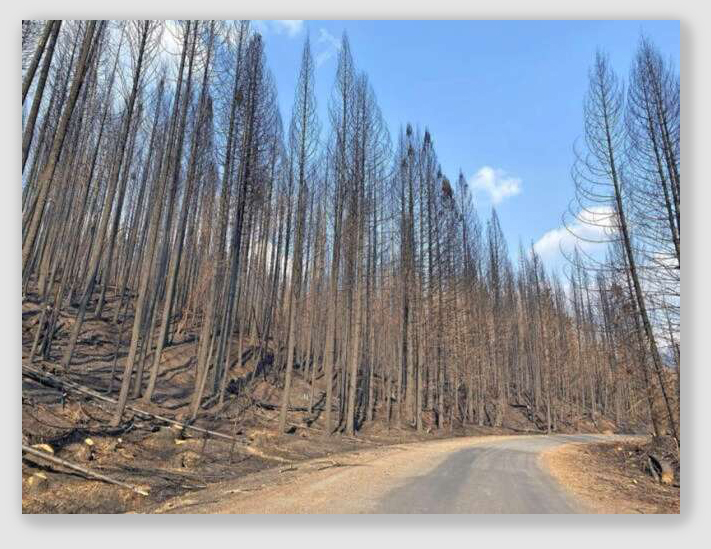
Oregon is hiring a Pacific Northwest-based arborist to review the state’s removal of trees in wildfire burn areas after recent concerns that the operation has been hasty and excessive. The Oregon Office of Emergency Management announced Monday that Galen Wright has been hired as an independent contractor to review the hazard tree effort, Oregon Public Broadcasting reported. Wright is president of Washington Forest Consultants, Inc. He is tasked with providing a full assessment of Oregon’s program and his recommendations are due in June. “As this adaptive and evolving emergency response operation continues to make significant progress, Oregonians deserve to have confidence in the good work underway,” said Mac Lynde the Oregon Department of Transportation’s head of the three-agency Debris Management Task Force. It has been coordinating the tree-removal program in the aftermath of the 2020 wildfires that burned over 1 million acres. The state is in the midst of the giant effort to cut down an estimated 140,000 burned trees that could be dangerous to people on state roads or burned properties. Transportation officials told a legislative panel two weeks ago that it would bring on an independent arborist after several workers publicly voiced concerns about the hazard tree program. They have said the operation, led by a contracting firm out of Florida, has irresponsibly marked trees for removal that weren’t dead or dying…
Wall Street is built on trading in stocks and bonds. Now it is turning its attention to the financial value of the natural world and how to fit that value into investment strategies. This has left academics puzzling over weighty questions, like ‘what is a bee worth?’ Earlier this year, the Natural Capital Investment Alliance was founded by HSBC venture Pollination, Lombard Odier and Mirova. It aims to raise $10bn by 2022 and to latch on to new revenue streams from natural habitats, such as forests, oceans and coral reefs, as part of projects designed to protect or restore these environments. These natural capital initiatives have ranged from simple solutions, like investments in companies preventing plastic pollution, to more esoteric ones such as purchasing and improving undesirable land. In the longer run, advocates hope to create a diverse array of assets linked to nature. Banks are also starting to include nature-based goals in sustainability-linked loans. Last year, in a loan it arranged for Mexican cement company Cemex, BNP Paribas agreed to provide a financial incentive for the company to preserve biodiversity at its quarry sites and improve its water usage in arid regions. The idea of earning or saving money for declining to destroy the natural world is anathema to many climate activists. But proponents say innovations such as paying companies not to rip up forests could become a way for green-minded investors to put their money to work beyond simply buying green bonds or excluding oil producers from their portfolios…
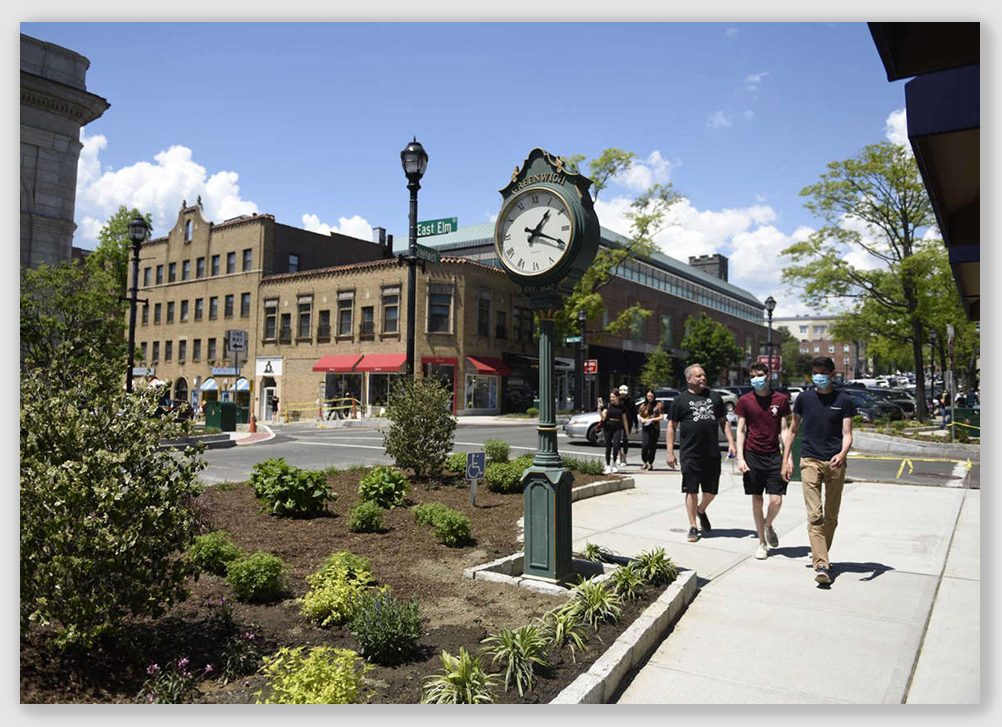
A compromise has been reached between the town and those looking to preserve a tree on Greenwich Avenue but it doesn’t satisfy a leading advocate for the disabled in town. As part of intersection improvements at Greenwich Avenue and Elm Street, the town planned to remove a pin oak tree located at 235 Greenwich Ave. in front of TD Bank to install an accessible parking space with a ramp. Members of the community and business owners objected, however, to the tree’s removal. The compromise: The tree stays and the accessible parking space will be moved to the opposite side of the street, Deputy Commissioner of Public Works James Michel said Monday. Michel said putting the space on the southeast side avoids the location of the tree but comes with an additional cost to the town of $12,000, which will come from the existing Department of Public Works budget. “This was the location that that was able to meet the required slopes while minimizing the amount of replacement of the pavement. We wanted the project to be completed in a timely manner,” Michel said…
US News and World Report, May 16, 2021: How This Tree Can Yield Better Kentucky Bourbon in Future
On a Central Kentucky hillside, over a thousand American white oak stand in neat rows, just barely towering over nearby blades of grass. These trees, currently just seedlings, have sat in this field on the Maker’s Mark Starhill Farm for less than a month. But years from now, researchers hope they can provide answers on how to protect a species endemic to many American forests and necessary for the creation of the amber liquid that has become one of the state’s most famous exports. In mid-April, project participants descended on the grassy hillside outside Loretto and planted the first volley — over 1,400 trees — of what will become the world’s largest repository of white oak. The repository was made possible because of a three-way partnership between University of Kentucky researchers, the Maker’s Mark distillery and barrel-makers from the Independent Stave Company. The collection of white oak will also tie in nicely with another Maker’s Mark and UK effort to map the entire genome of the white oak species. Researchers and distillers alike hope the projects will yield stronger, healthier trees and maybe, just maybe, more flavorful bourbon. Charred white oak barrels are key to the bourbon aging process…
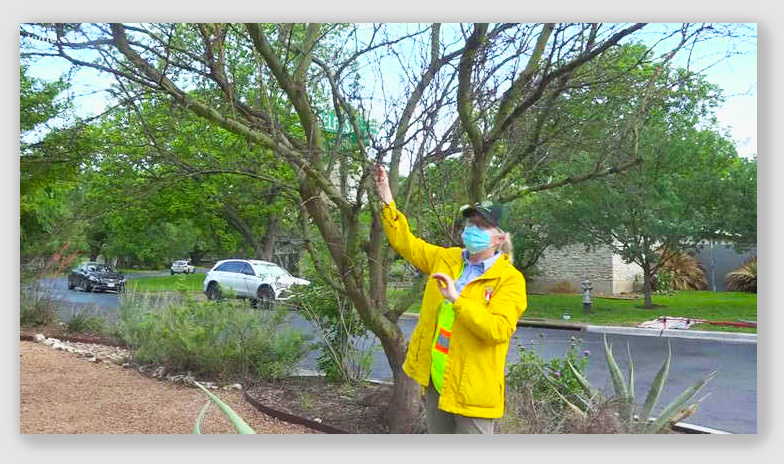
Warm weather is here, flowers are in full bloom and our lawns are green again. Even so, the February freeze continues to haunt some Houston-area homeowners with potentially dangerous zombie trees. Experts say the troubled trees often look fine outside but are slowly decaying inside can pose a problem to people or property. Some can be saved, but others will need to be removed. How to spot a zombie tree: Dead wood, decay or fungus: Dead trees and large, dead branches can fall at any time. Cracks: Deep splits through the bark that extend into the wood of the tree’s trunk or limbs. Peeling bark: Look for patches of bark that are peeling off. Heavy Canopies: Excessively thick branches and foliage catch more wind during stormy weather. This increases the risk of branch breakage and uprooting. Discolored foliage or leaves with dying tips: Extreme weather like the arctic front that hit Texas in February and heavy flooding can cause leaves to wilt or die-back early. Prematurely falling leaves on a mature tree are another sign. Root problems: Check if the soil near the base of the tree is cracked or lifting on one side. If construction has taken place nearby, closely examine that area of the tree. Nearby construction may sever large roots or compact the soil, reducing root growth. Without a strong root system, trees are more likely to be uprooted or blown over in storms…
Homeowners in an Islington Village neighbourhood are hoping to spare dozens of old trees slated to be ripped down for a townhouse development. Valerie Gibson has lived across the street from the site for 30 years, which is located near Burnhamthorpe Rd. and Dundas Street West in Etobicoke. Gibson doesn’t understand after three years of fighting, why more than 40 trees should come down to make way for the project. “I went into shock, total shock,” Gibson said. “[The trees] are heritage because most of them are over 100 years old. The tall pines are 120 years old. Down the street, Chris Grant is stumped too. On top of time, he said he’s spent around $90,000 hiring a lawyer and planner because the project pushes into his quiet residential neighbourhood. Some of his main concerns are traffic and a driveway for the complex. Grant said it’s planned to go in just a couple homes away from where he lives. “Kids play on this street,” Grant said. “The density, the height, and everything is massive. It’s too big to fit into a neighbourhood scheme…”
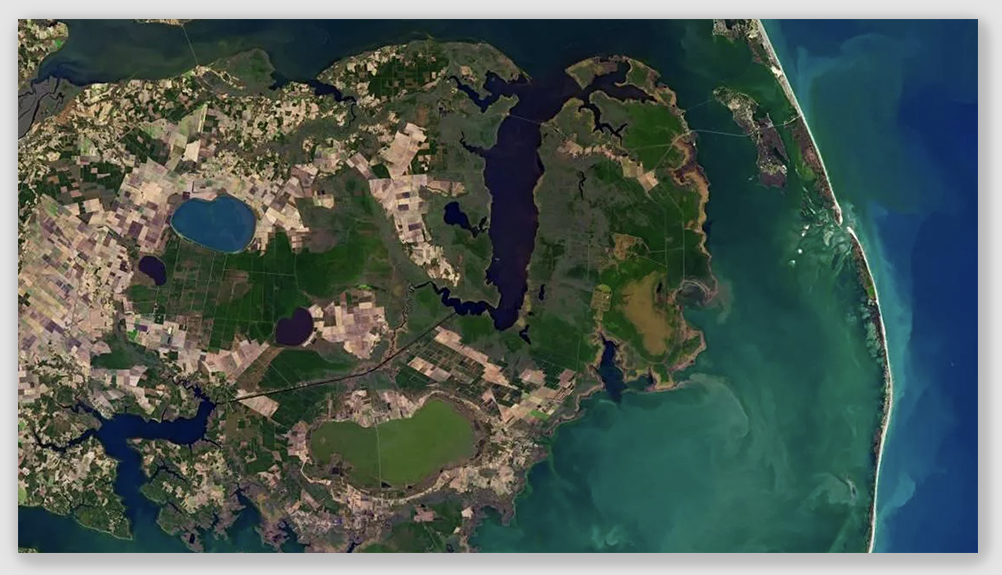 CNet, May 14, 2021: Ghost forest ‘tree farts’ are releasing greenhouse gases, scientists say
Large swaths of coastal wetland forest areas in North Carolina have taken on an apocalyptic appearance, with dead trees standing out like bare sticks. A research team at North Carolina State University is studying the environmental impact of greenhouse gas emissions from these “ghost forests.” Researchers have given the tree gas emissions the catchy nickname of “tree farts.” Greenhouse gases can trap heat around the Earth, contributing to a warming planet. The team measured carbon dioxide, methane and nitrous oxide gases from standing dead trees (called snags) and from surrounding soil. “Snags can act as conduits for soil produced greenhouse gases and can also be sources as they decompose,” the study said. The paper appeared last week in the journal Biogeochemistry…
Half dead and half alive, the name “zombie trees” was coined to perfectly describe the eyesores somewhere in between. Curt Smith with Davey Tree Expert Group gave ABC13 the information that could help residents identify and treat them. “The ‘zombie tree’ is [either] alive and dead, or dead and alive and doesn’t know it,” he said. “This year [they are] very common.” Zombie trees have been here for awhile, but this year they appear worse. The winter storm in February did a number on not only Texas’ electric grid but also on the state’s vegetation. Trees that might otherwise survive flooding or drought may be hiding the fact it couldn’t overcome a week of below freezing temperatures. Smith, an arborist, said the danger in these zombie trees is that if left unrecognized or untreated, they can fall without warning and cause property damage or injury anyone nearby. The Texas A&M Forest Service agrees that the Houston trees have had a rough year. Just two months after the freeze, experts said that oaks all over the state had a hard time recovering. Shrubs, bushes and vines were also susceptible…
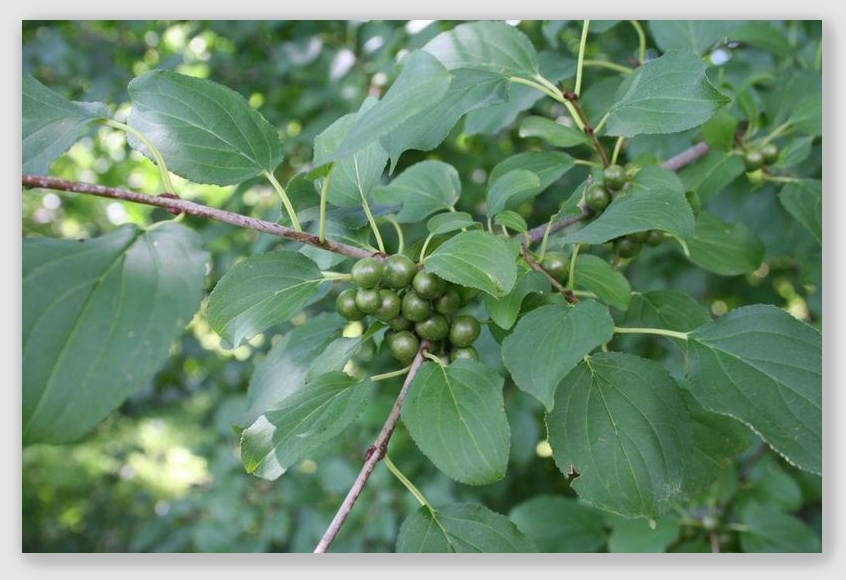
You might have noticed a dense hedge, large shrub or small tree in your yard. Does it have glossy, broad green leaves that open early in spring? It might be buckthorn, one of the most troublesome invasive plants in the Chicago region. According to the recently released 2020 Chicago Region Tree Census from The Morton Arboretum, 36% of all the trees in Chicago and the seven surrounding counties are a single species, European buckthorn (Rhamnus cathartica). Very few of those trees were planted on purpose, according to Melissa Custic of the Chicago Region Trees Initiative, or CRTI, a partnership based at the Arboretum in Lisle. Most grew from seeds spread by birds that eat buckthorn berries. The plants can then expand into dense thickets by sprouting from underground roots. “Buckthorn spreads very easily, and it’s able to crowd out most other kinds of trees,” Custic said. “That’s what makes it an invasive plant. It takes over any area it can get into.” Why is buckthorn so destructive? It crowds out and outcompetes other trees and shrubs for water, nutrients and space. In natural areas such as forest preserves, it overpowers wildflowers and other native plants. Buckthorn has a longer growing season than most native trees, leafing out earlier in the spring and keeping its leaves longer in the fall. “That gives it an advantage,” Custic said…
St. Louis, Missouri, May 16, 2021: Cedar Rapids tries to turn city of stumps into tree oasis
Until one afternoon last August, Cedar Rapids had always been a lush, leafy island surrounded by a sea of corn and soybeans, with its giant oaks, sycamores and other trees towering over the community’s neighborhoods and providing a shady refuge from Iowa’s steamy summer heat. It took 45 minutes to shred nearly all of those trees, as a rare storm called a derecho plowed through the city of 130,000 in eastern Iowa with 140 mph (225 kph) winds and left behind a jumble of branches, downed powerlines and twisted signs. Power was restored in the following weeks, and workers continue repairing thousands of homes battered by the hurricane-force winds, but nine months later Cedar Rapids is not back to normal — because of the trees. “A lot of people once took the trees for granted, for what they provided,” said city arborist Todd Fagan. “That’s not the case anymore.” Now, city officials, businesses and nonprofit groups have teamed up with ambitious plans to somehow transform what is a city of stumps back into the tree-covered Midwestern oasis along the Cedar River…
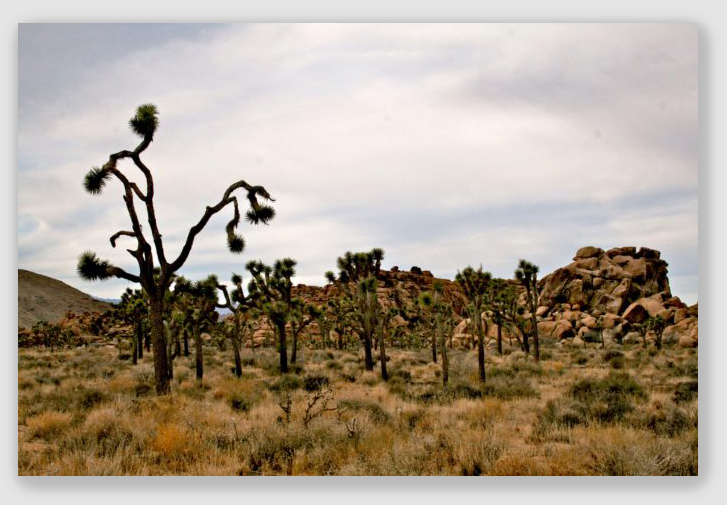
WildEarth Guardians has submitted emergency petitions (here and here) to the U.S. Fish and Wildlife Service to immediately provide federal Endangered Species Act (ESA) protection for both the eastern and western species of Joshua tree, icons of California’s Mojave Desert. Guardians submitted these petitions to list the Joshua tree on an emergency basis under the ESA, while simultaneously challenging the Service’s 2019 decision under the Trump administration to deny Joshua trees protected status as a “threatened” species in federal court—a listing decision that was prompted by a previous petition submitted by Guardians in 2015. Guardians’ emergency petitions were submitted in advance of what is expected to be yet another severe fire season in Southern California. Last summer, the Mojave Desert reached a record-breaking 130 degrees while enormous wildfires like the Dome Fire also decimated thousands of acres of Joshua tree habitat, destroying an estimated 1.3 million Joshua trees. Joshua trees have existed for over 2.5 million years, but multiple published, peer-reviewed climate models show that climate change will eliminate this beloved plant from the vast majority of its current range, including its namesake National Park, by century’s end without robust efforts to dramatically reduce carbon emissions and address threats from invasive grass-fueled wildfires…
This newsletter has often looked at the part trees can play as part of the climate change solution, with their ability to suck carbon out of the atmosphere and store it. As with so much else, however, there is nuance — we need to be careful about assuming trees alone can save us. With wildfires and natural die-off, trees sometimes give off more carbon than they absorb. And when it comes to sequestration, some trees and their ecosystems appear to be more effective than others over time. With that in mind, it is noteable to see a new tree-related carbon project finding favor with some high-profile corporations. Proctor and Gamble, Apple and Gucci have all announced projects to protect and restore the mangrove, a woody tree or shrub living in salty coastlines in the tropics and subtropics. Mangroves (like the one being repopulated in the photo above) hold a particular allure as carbon sinks. “At a high level, [mangroves] are salty and wet, and that keeps the carbon from breaking down,” Jen Howard, senior director of the blue carbon program for the American non-profit Conservation International, told GreenBiz. Conservation International says mangroves, which have been in decline in recent years, can sequester up to 10 times as much carbon compared to terrestrial forests…
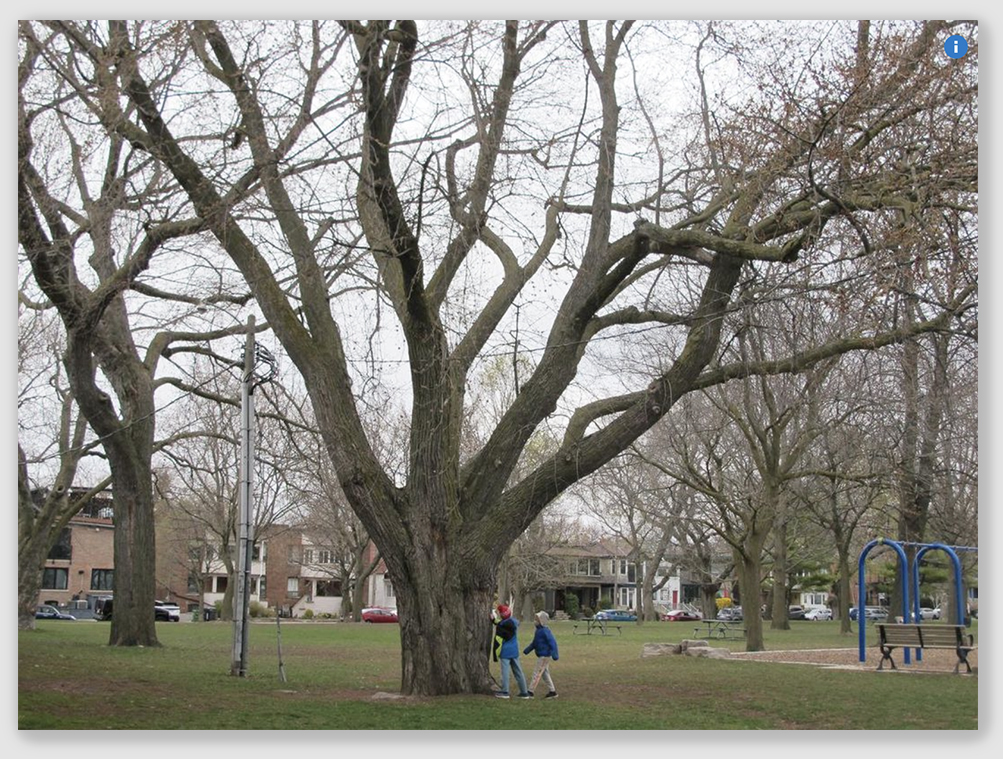
A lot of big old trees could use some fixing, and there’s a group of honest-to-goodness tree huggers trying to come to their rescue. My recent columns about mature trees that stand out for their size and place in neighbourhoods prompted lots of email about local trees that readers love or are trying to save from development or other predations. One that jumped out came from Toni Ellis, manager of an Elora-based group called Tree Trust, which raises money to pay arborists to work on old trees that wouldn’t otherwise get the care needed to extend their lifespan. Toronto and other municipalities put substantial resources into maintaining trees on city property, even pruning and removing limbs. That leaves trees on private property to fend for themselves, unless the owner maintains them. Ellis, an environmentalist and former co-manger of the old borough of East York’s recycling program, founded Tree Trust in Elora in 2019, as a way to preserve mature trees that she describes as “ecological workhorses.” A mature tree captures and stores tonnes of carbon, releases oxygen into the atmosphere and provides shade for people and habitat for birds and animals, making them far more valuable than it might seem, she said. “What we’re doing is stalling the inevitable,” she said. “Trees are living things. They only last so long. But you can give them a lot more time to do their job by taking care of them…
A Texas-based Navy veteran has flown his American flag in the same spot for the past 17 years, but he’s now being told to change it. Gary Pirics said the flag has always been displayed on a tree in the front yard of his Avery Ranch neighborhood home in Austin, per Fox News’ Audrey Conklin. It’s been up for so long, the bark of the tree has started growing around the bracket, per CBS Austin’s Walt Maciborski. But in December, Pirics received a letter from the homeowner’s association saying the placement violates U.S. Flag Code and Texas Flag Regulations.””The flag’s important to me for several reasons. One is both my father and my wife’s father were World War II veterans,” said Pirics, as reported by Conklin. “I served in the United States Navy as an officer in Charleston, South Carolina, during the Vietnam War. So that flag does several things.” Kirsten Voinis, a neighbor of Pirics’, also received a violation letter over her flag, which she’s flown in her yard since 2003, according to Maciborski. These violations inspired Jim Dufner, another neighbor, to fly an American flag in solidarity. Dufner has since been served with two violations, per Maciborski. According to the HOA, the residents were never asked to remove the flag — just to fly it in accordance with local and national codes…
Vancouver, British Columbia, The Guardian, May 13, 2021: Chainsaw massacre: tree poaching hits Canada amid  lumber shortage
Two tree stumps signaled to Larry Pynn that something was wrong. Jutting from a mossy forest floor in western Canada, the fresh stumps were the final remnants of two western red cedars that had been chopped down by chainsaw. Nearby, a set of deep tire tracks ran for nearly a kilometer in the mud before terminating at the main road. “I immediately suspected that this is the work of poachers,” said Pynn, a journalist who lives nearby. “These are clearly valuable trees and they were likely cut because of that.” Since January, local officials on central Vancouver Island say at least 100 trees have been illegally chopped down. As lumber prices across the continent soar – prompting a flurry of memes and conspiracy theories – ecosystems full of valuable old growth trees have increasingly become a target for poachers. The section of forest Pynn found the stumps in is part of a municipally owned 5,000 hectare swath of woods known locally as Six Mountains. The area, popular with hikers and mountain bikers, is also home to the endangered coastal Douglas fir ecosystem, which is on the verge of vanishing after centuries of logging and urban development…
In light of the heavy development happening around Georgetown, specifically in the Waccamaw Neck, county planning director Holly Richardson is proposing updates to its tree ordinance to ensure more of the region’s beloved forestry is preserved. One of the main changes to the ordinance is a site inspection requirement before any ground is broken. Richardson said previously, tree site inspections would sometimes occur in tandem with stormwater site inspections, but not because of any written requirement. Making it a requirement to have specific tree site inspections will ensure less foliage is cut down sooner, Richardson said. Other amendments include adding in a tree fund, which would fund landscaping, public parks and the replanting of trees in the county from fines developers pay for various violations, such as cutting down unapproved trees…
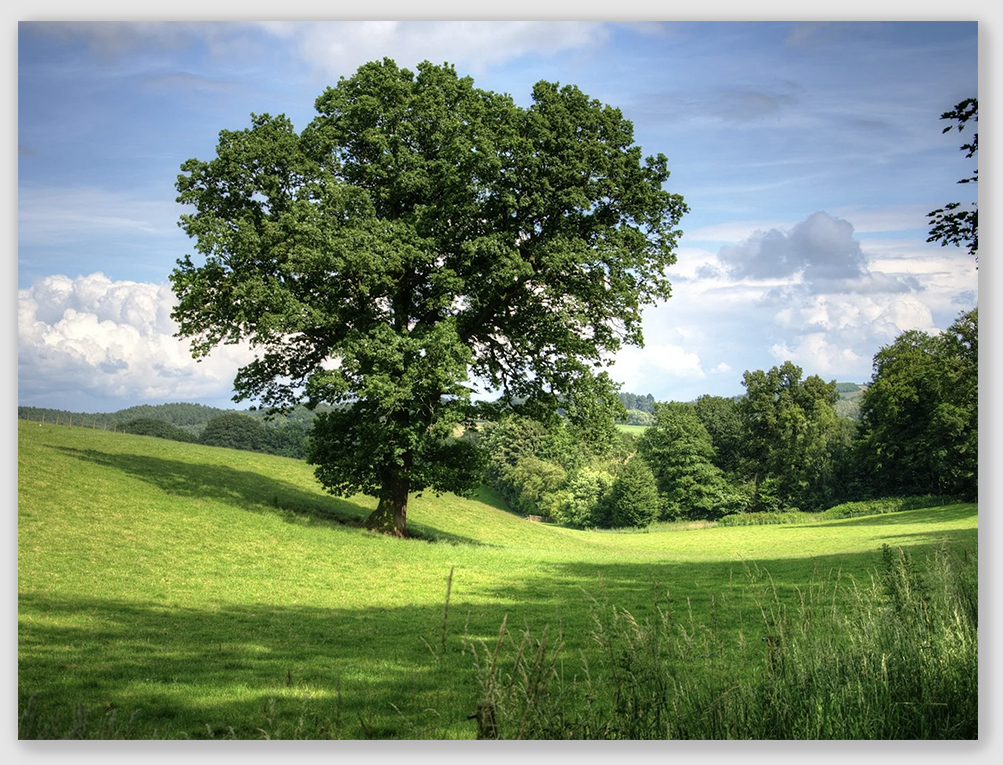 Popular Science, May 12, 2021: Trees need wind to reproduce. Climate change is messing that up.
Trees may seem sedentary, but movement is a big part of their lives. To reproduce, many trees rely on wind to move their pollen and seeds around, says Matthew Kling, a postdoctoral researcher in plant biogeography at the University of California, Berkeley. A study led by Kling, published on April 27 in the journal Proceedings of the National Academy of Sciences, examines how wind patterns affect the exchange of DNA between populations of trees. Their findings suggest that factors such as wind strength and direction can help mold the genetic makeup of forested landscapes. As the climate heats up, some plants won’t thrive as well in their current environments, and will need to be in historically cooler locations to stay within a comfortable temperature range, says Kling (for many plants, this is already happening). But plenty of questions remain around precisely how the plants will get there, he says, “and one of the biggest areas of uncertainty in plant movement is related to wind,” because wind dispersal can be tricky to measure at large scales. Kling and his coauthor David Ackerly, a professor of integrative biology at UC Berkeley used 72 previously published scientific papers to gather genetic data on nearly 2,000 populations of trees belonging to nearly 100 different tree species around the globe. The researchers took this genetic data and compared it to a “windscape” model they developed, which pulls from three decades of hourly wind data. The wind model provides a prediction for the way we would expect dispersal of seeds and pollen to take place across large geographic scales and long time periods, says Kling. “And the genetic data provides a measured estimate, totally independent of the wind data, of the way that the seeds and pollen have dispersed across large landscapes in the past.” The authors then compared the predictions made by the wind model to the observed genetic patterns, allowing them to test whether the wind was actually driving them…
Phys.org, May 12, 2021: Earliest forest fires evidence of ancient tree expansion
The Earth’s first forest fires appear to have occurred earlier than previously thought, pointing out a link between widespread wildfires and ancient tree evolution, according to researchers at The University of Alabama. Although small wildfires of primordial vascular plants without leaves, branches or a developed root system, and sparked by lightning or lava occurred as early as 420 million years ago, these are not believed to be widespread because the plants needed water or a wet climate to survive. However, using fossil charcoals and geochemical signals from ancient rock layers, UA researchers found the early forest fires started to spread about 383 million years ago. This is also evidence that more mature plants of trees and shrubs spread through forestation into relatively arid and inland environments. The study was an invited submission and published recently in a special issue of the journal Palaeogeography, Palaeoclimatology, Palaeoecology. It demonstrates the methods used to find evidence of these ancient forest fires are useful to discover more about paleoecological and paleoclimate indicators…
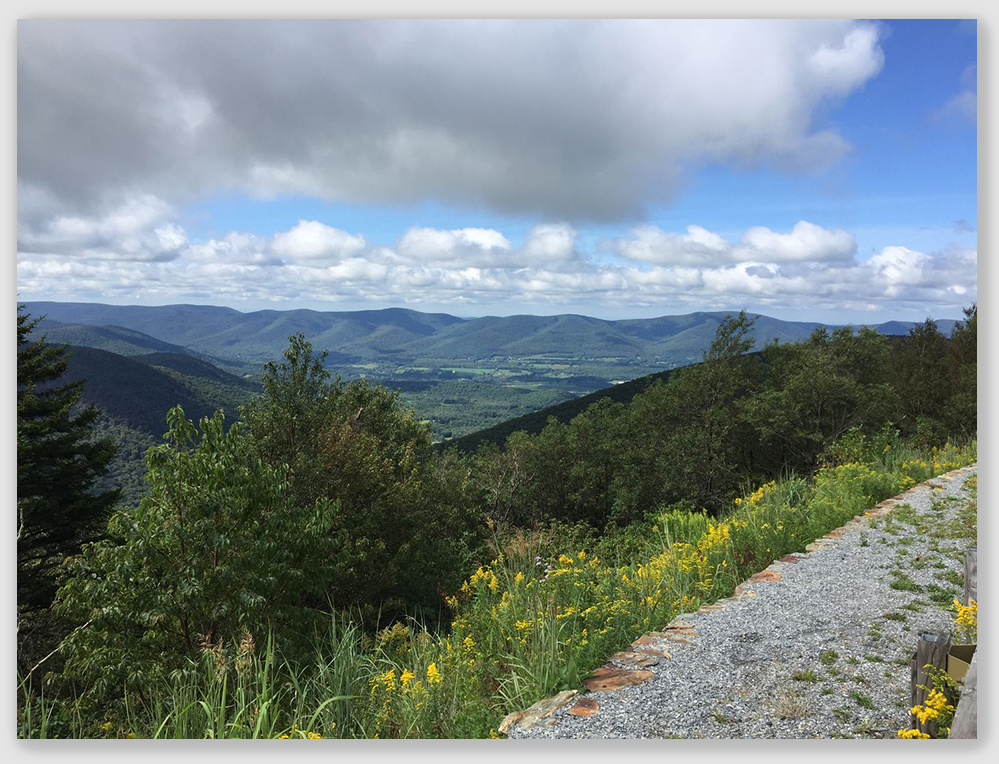
The Massachusetts Audubon Society has long managed its land in western Massachusetts as crucial wildlife habitat. Nature lovers flock to these forests to enjoy bird-watching and quiet hikes, with the occasional bobcat or moose sighting. But in 2015, the conservation nonprofit presented California’s top climate regulator with a startling scenario: It could heavily log 9,700 acres of its preserved forests over the next few years. The group raised the possibility of chopping down hundreds of thousands of trees as part of its application to take part in California’s forest offset program. The state’s Air Resources Board established the system to harness the ability of trees to absorb and store carbon to help the state meet its greenhouse gas reduction goals. The program allows forest owners like Mass Audubon to earn so-called carbon credits for preserving trees. Each credit represents a ton of CO2. California polluters, such as oil companies, buy these credits so that they can emit more CO2 than they’d otherwise be allowed to under state law. Theoretically, the exchange should balance out emissions to prevent an overall increase in CO2 in the atmosphere. The Air Resources Board accepted Mass Audubon’s project into its program, requiring the nonprofit to preserve its forests over the next century instead of heavily logging them. The nonprofit received more than 600,000 credits in exchange for its promise. The vast majority were sold through intermediaries to oil and gas companies, records show. The group earned about $6 million from the sales, Mass Audubon regional scientist Tom Lautzenheiser said…
An Olympia homeowner who challenged the city of Olympia and a builder lost his struggle to save a 150-foot Red Cedar tree, which stood on the boundary between his property and a construction site, where a housing development is being built. On Monday morning, the tree was cut down on the development side while the homeowner and several neighbors leaned against the other side in protest. Nearby, five Olympia police officers looked on, warning the protesters not to cross the property line. “They cut the tree over the top of our heads,” said Andrew Hannah, the homeowner who owns the property. He admitted only a small fraction of the tree was on his side. “The majority of it is on his property, and only a portion of it is on my property,” said Hannah, while pointing out state law, which states if two property owners share a part of a tree, then they own the tree equally. This time, the city of Olympia settled the dispute. Below the tree, the city of Olympia posted a sign, stating the city’s urban forester, engineer, and certified arborist determined the tree could not be preserved in a healthy condition because the construction project would damage the tree’s critical root structure. A city spokesperson told KIRO 7 the building permit allowed the developer to legally take the tree down…
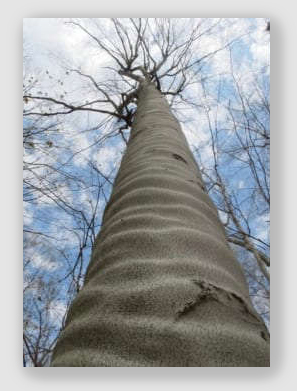 Canadian Broadcasting Corporation, May 10, 2021: Tree experts stumped by case of ‘elephant trunk’
While out in the woods at Murphys Point Provincial Park near Perth, Ont., in late April, chief park naturalist Mark Read stumbled across a tree unlike any he’d seen in his seven years on the job. “I thought it looked very much like a palm tree,” Read said. Though a common local species, the trunk of the American beech Read was looking at had an uncommon wrinkled appearance. “I did pass the photos around and I had comments back that said, ‘That looks like an elephant’s trunk,'” he said. “[The discovery was] totally new for me. Quite amazing.” The consensus among both Facebook sleuths and more seasoned tree experts seems to be that “rippled beeches,” while documented and possibly more common in the United Kingdom, aren’t well understood. While Read isn’t sure what’s creating the effect, he believes it likely occurred during the tree’s earlier development. Paul Sokoloff, a botanist at Ottawa’s Canadian Museum of Nature and a member of the board of directors of the Field Botanists of Ontario, confirmed it’s a rare find, and a first for him, too. “My first impression was, oh, the bark is slipping off, which is of course not what’s happening,” Sokoloff said…
More than two months following the record cold temperatures of Winter Storm Uri, Texans are noticing that some oak trees are still struggling to recover. This has left many of our state’s experts wondering why. Even Neil Sperry, a Texas gardening and horticulture expert known across the country, has been stunned by the variability, and the scope, of damage left behind by the freeze. Followers of his Facebook page have submitted over 2,000 photos of struggling oak trees, including all varieties of species and from every single region of the state. “I have been in this business professionally since 1970, and I’ve never seen anything like this,” said Sperry. “We think of oaks as permanent as concrete and steel, and for them to selectively be affected by this freeze is particularly odd.” After spending weeks responding to residents and landowners who are concerned about the health and condition of their trees, Sperry decided to pull together a blue-ribbon panel of certified arborists, foresters, extension specialists, nursery leaders, horticulturists and garden communicators to send out a unified message. Their advice to those wondering what they should do, and whether they should cut down their valuable trees, is simple: just wait…

Tree No. 252256 is a 95-foot Douglas Fir that stands south of Oregon 22 east of Mehama, one of dozens of trees in this patch of the Santiam Canyon that has been tagged to be cut as part of the state’s troubled hazard tree removal program. The massive undertaking is slowly creeping westward, leaving swaths of denuded highway and private properties in its wake. This particular tree, one of nearly 143,000 that officials estimate needs to be removed statewide, was inspected March 21, and its removal was approved by a certified arborist from Pennsylvania who is now working in Oregon. Details about the tree come from a mapping database that CDR Maguire, the contractor monitoring the program under a $75 million contract, is maintaining to document the work for reimbursement by the federal government. The data includes pictures of every tree, some basic measurements, and the names of the inspectors and arborists who evaluated it. But there’s not much information on the call to cut No. 252256. “Condition: Poor; Recommendation: Remove” Yet the owner of the land and two independent tree experts who toured the forest patch Monday raised concerns about this tree and others tagged in this tiny portion of the immense project. “Light to moderate” bark char extends only 15 feet up the trunk of the tree, they said, and the crown – the top branches – look healthy. “There is just very light cosmetic damage to the tree,” Rick Till, a certified arborist and qualified tree risk assessor from Portland, said after shaving off a bit of blackened bark with his hatchet. “If it did fall, it would fall into the woods. It is a very low-risk tree, yet it’s marked for removal, and someone’s going to get paid a few thousand bucks for cutting down this tree, which should take about 10 minutes work…”
Walking along Nunez Street, Old Algiers native Alex Selico Dunn Sr., 65, waves his hand toward nearby rooftops. “When I was young, that would all be trees,” he said, recalling how leafy giants once towered above and between houses. There are still trees in Old Algiers. But as in much of New Orleans, Hurricane Katrina’s vicious winds and prolonged flooding laid much of its canopy to rest. About 100,000 trees were lost citywide, earning New Orleans a spot among the nation’s most deforested cities. Under then-Mayor Mitch Landrieu, City Hall in 2010 set an ambitious goal in its master plan to increase the tree canopy to cover 50% of the city by 2030. Now, 11 years later, city officials have taken the next step, signing an agreement last week with a local environmental nonprofit to develop a $140,000 reforestation plan. Founded by Susannah Burley, Sustaining Our Urban Landscape, or SOUL has led volunteer plantings in several neighborhoods since 2016, including one that added almost 900 trees in Old Algiers. Next, it will plot the city’s plans toward reestablishing the canopy…
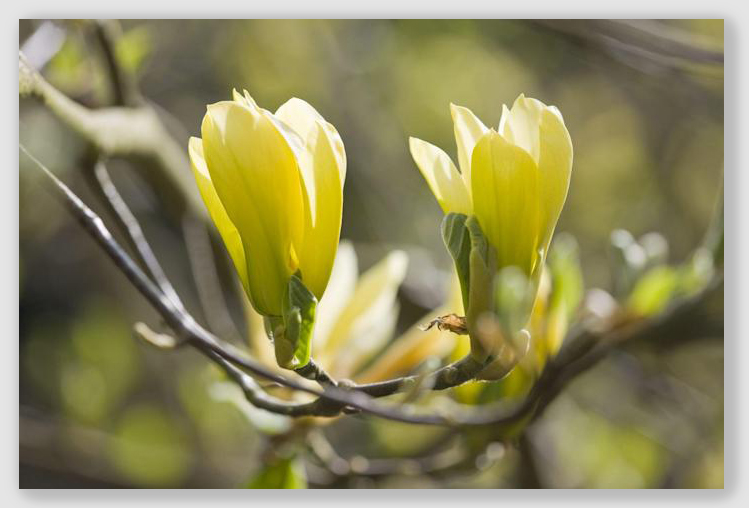 Southern Living, May 10, 2021: We Love the Yellow Flowering Magnolias for Small Yards
While white- and pink-blooming magnolias blanket the South, there’s something wonderfully unexpected about yellow magnolia blossoms, and every year, we’re seeing more of them planted in lawns and gardens. Best of all, some of them grow compactly, making them ideal for small yards and tight spaces. Many different sorts of magnolias produce yellow blossoms, but two of our favorites are ‘Daphne’ and ‘Golden Gift.’ ‘Daphne’ magnolia is one of the most vividly yellow bloomers. It produces big, long-lasting flowers in deep yellow hues. The blooms are held above the foliage. The tree itself has a narrow, upright form, which is great for tight spaces, and it grows from 10 to 20 feet tall. It can thrive in many climates, from the coastal south through the lower, mid-, and upper south regions. Another magnolia that produces beautiful deep yellow blooms is ‘Golden Gift.’ This is a smaller magnolia that grows from 8 to 15 feet tall and 5 to 10 feet wide. The deep yellow blooms are 2 to 5 inches wide and appear throughout the spring. It can also thrive in a variety of areas and has been grown successfully from the coastal south all the way through to the upper south. There are several other members of the magnolia genus that grow compactly and produce yellow blooms. Some of our favorites are… Magnolia figo, also known as banana shrub, is an evergreen shrub planting that grows slowly. It will typically reach 6 to 8 feet tall, sometimes 15 feet tall in the right conditions. It has glossy leaves and blooms heavily in spring. This magnolia produces blossoms that are small and creamy yellow, as well as a strong fruity fragrance…
Reuters, May 8, 2021: Mexican president pushes trees-for-visas plan in call with Harris
Mexican President Andres Manuel Lopez Obrador pitched a tree-planting jobs program in Central America that he said should lead to U.S. work visas, in talks with U.S. Vice President Kamala Harris on Friday about root causes of migration. At the start of the call, Harris said the United States and Mexico must fight violence and corruption together, to help diminish migration from Central America. “Most people don’t want to leave home and when they do it is often because they are fleeing some harm or they are forced to leave because there are no opportunities,” said Harris. Lopez Obrador, 67, said he had a specific proposal he wanted to discuss with Harris. He did not give details, but told reporters minutes earlier that the tree planting idea was at the top of his mind. “We agree with the migration policies you are developing and we are going to help, you can count on us,” he said. The Mexican leader told reporters at a news conference Friday morning that legal routes were the best solution to migration. “If there’s a regular, normal and orderly migratory flow, we can avoid the risks migrants take who are forced to cross our country,” he said. The trees-for-visas proposal was met with some surprise when Lopez Obrador previously raised it at a Washington climate summit in April…
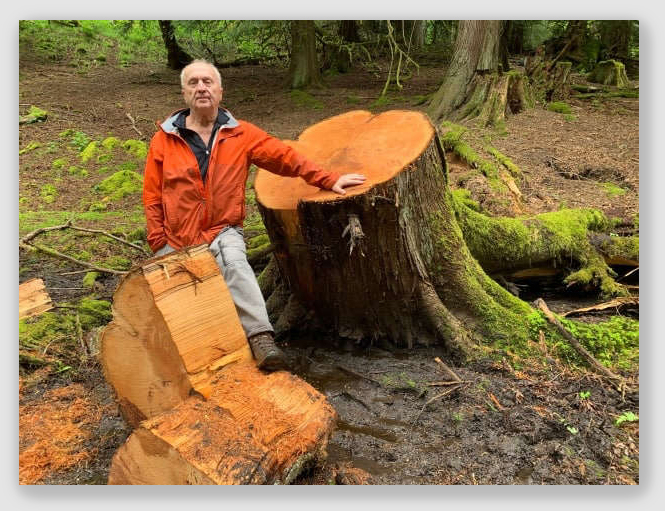
The municipality of North Cowichan, B.C., is stepping up patrols of the region’s forest reserve, after an increase in timber theft in the area, which lies 70 kilometres north of Victoria on Vancouver Island. Since January, approximately 100 trees, including Douglas fir and Western red cedars have been poached and local residents and officials believe the spike is likely tied to the surge in lumber prices. North Cowichan resident Larry Pynn stumbled upon a large cedar tree stump along slabs of crudely cut wood while he was out for a walk two weeks ago in a forested area known as Stoney Hill. “I immediately thought that this had to be the work of a poacher,” he said in an interview with CBC News. “Something like this is not being taken for firewood. It’s a valuable tree.” Pynn estimated the tree was 87 years old because he counted the rings on the remaining stump. Not far from it, the mossy ground had been torn up by what appeared to be ATV tracks…
Washington, D.C., Post, May 6, 2021: Pipeline tree stand protesters get jail time, fines
Two Mountain Valley Pipeline protesters have been sentenced to months in jail and ordered to repay the cost of removing them from tree stands they were chained to along the pipeline’s path. The Roanoke Times reports that Montgomery County General District Court Judge Randal Duncan convicted Alexander Lowe, 24, of Worcester, Massachusetts, and Claire Fiocco, 23, of Dorset, Vermont, on Wednesday of obstructing justice and interfering with Mountain Valley’s property rights. Fiocco, who occupied a tree from early January until March 23, was sentenced to 158 days. Lowe was sentenced to 254 days after occupying a tree from November until state police removed him on March 24. Later in the day, the pair appeared before Circuit Court Judge Robert Turk, who ordered them down from the trees. Turk fined Lowe $17,500 and Fiocco $10,000 for defying his order. He also ordered them to pay more than $140,000 to Mountain Valley to cover the cost of extracting them. A crane hoisted two state police officers to where the protesters were chained on wooden platforms about 50 feet above the ground. “I appreciate the passion you had in your protests,” Turk told them before they were taken away. “You just did it the wrong way…”
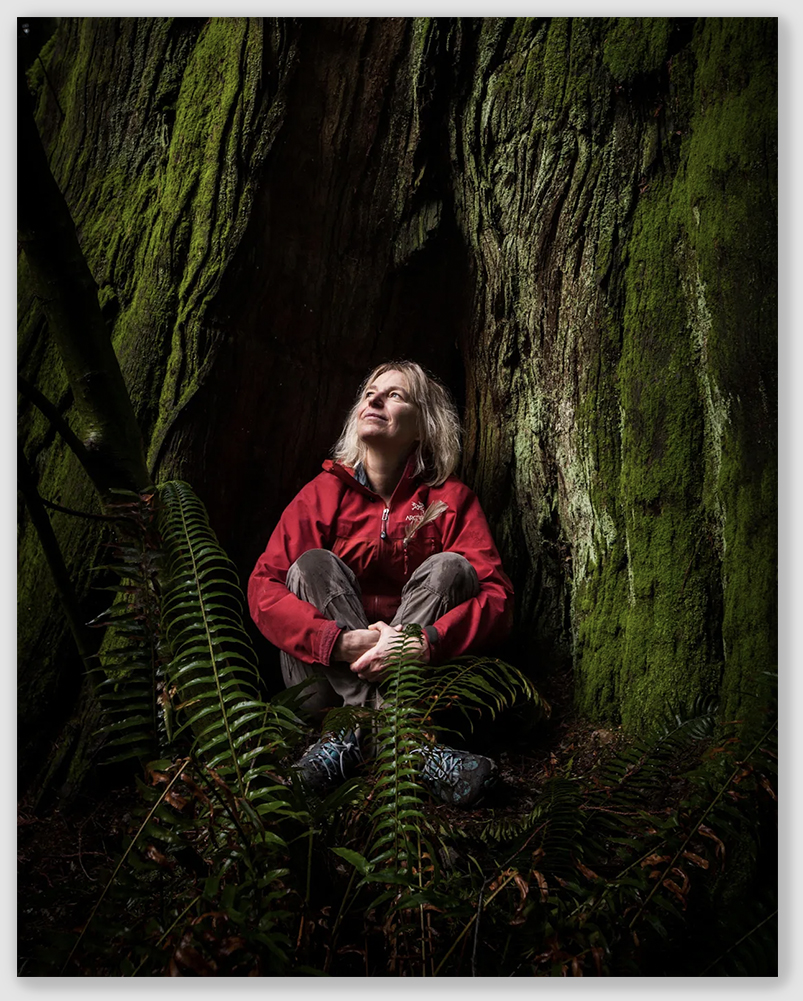 New York Magazine, May 6, 2021: Suzanne Simard Changed How the World Sees Trees
Suzanne Simard has given her life to the study of trees. She sweated for them. Bled for them. Damn near died for them — once at the claws of a grizzly, and once from the invisible clutch of cancer. (Working with toxic herbicides and radioactive isotopes in the course of her research likely contributed to her breast cancer, which resulted in a double mastectomy.) But Simard’s sacrifices as a forest ecologist have paid off. Her work with herbicides uncovered the fact that denuding tree farms doesn’t help them grow faster — a finding that overturned the forestry industry’s prevailing logic for half a century. Later, upending basic Darwinian logic, she showed conclusively that different trees — and even different tree species — are involved in a constant exchange of resources and information via underground fungal networks, known technically as mycorrhizae and popularly as the Wood Wide Web. Her long fight against the twin patriarchies of the logging industry and the scientific Establishment has yielded startling discoveries about tree sociality — and even, some believe, about tree sentience. Now Simard, a professor at the University of British Columbia, has published a memoir, Finding the Mother Tree: Discovering the Wisdom of the Forest — which is being adapted into a film, with Amy Adams set to star. We spoke recently about what studying trees has taught her about how to live in our increasingly tenuous world, and how forests can help fix our compounding problems…
Discover, May 6, 2021: 10 Golden Rules For Reforestation Show How To Plant Trees The Right Way
Large-scale tree planting is often presented as a simple solution to conserving the environment and preventing climate change through carbon capture. But reforestation is more complicated than it looks. “It’s very easy to say, you’re going to plant a tree,” says Erin Axelrod, the program director for Jonas Philanthropies’ Trees for Climate Health initiative. “It’s very, very complex, to actually follow that pledge through to the outcome of having a tree that is not only effective at removing carbon dioxide from the atmosphere, but also effective from the standpoint of doing all the other great things that trees can do.” In recent years, massive reforestation efforts have included shockingly high numbers of tree-planting goals linked to them as a low-cost, high-impact solution to climate change. In 2019, Ethiopia claimed to have planted 350 million saplings in under 12 hours, breaking the world record for trees planted in a day. China is on course to plant 87 million acres of trees by 2050 to make a “Great Green Wall” the size of Germany. And just last year, the World Economic Forum began its 1t.org project, aiming to conserve, restore or grow one trillion trees by 2030…

A giant sequoia has been found smoldering and smoking in a part of Sequoia National Park that burned in one of California’s huge wildfires last year, the National Park Service said Wednesday. “The fact areas are still smoldering and smoking from the 2020 Castle fire demonstrates how dry the park is,” said Leif Mathiesen, assistant fire management officer for Sequoia and Kings Canyon National Parks in Central California. “With the low amount of snowfall and rain this year, there may be additional discoveries as spring transitions into summer.” The smoldering tree was found recently by scientists and fire crews surveying the effects of the blaze, which was ignited by lightning last August and spread over more than 270 square miles (699 square kilometers) of the Sierra Nevada. It took five months to fully contain. Most of California is deep in drought, with severe to extreme conditions in the mountain range that provides about a third of the state’s water. On April 1, when the Sierra Nevada snowpack is normally at its peak, its water content was just 59% of average, according to the state Department of Water Resources. The dryness could set the stage for a repeat of last year, when wildfires, many of them ignited by thousands of dry lightning strikes, burned a record 6,562 square miles (16,996 square kilometers) in the nation’s most populated state…
Ashland, Oregon, Daily Tidings, May 5, 2021: Hazard tree logging should stop temporarily
There is plenty to debate about salvage logging of burned trees after wildfires. The timber industry says it’s important to cut down and remove still-usable trees before they rot and become worthless for lumber, and then replant to replenish the forest for future generations. Environmentalists say cutting down burned trees does more harm than good, damaging fragile soils and making logged areas more vulnerable to future fires, not less. But some burned trees must be removed because they pose a hazard to human life and property. But there are rules about how many can be cut and where, and those rules should be followed. It appears unscrupulous contractors may be ignoring those rules, and that should stop. So-called hazard trees, if left standing after a fire, can fall across roads and highways, potentially causing injury or death to motorists, and those standing near homes can pose a danger as well. The Oregon Department of Transportation has contracted with companies to remove hazard trees left standing after last year’s wildfires. But in testimony before the Senate Natural Resources and Wildfire Recovery Committee in Salem last Wednesday, whistleblowers, landowners and others told lawmakers the program lacks oversight and is plagued by unqualified staff, disputes over what trees should be cut and even outright fraud. If confirmed, the allegations could jeopardize funding from the Federal Emergency Management Agency, which is reimbursing the state for the work…

New York cannot cut down thousands of trees for a 27-mile snowmobile trail in the Adirondack Park without voters approving an amendment to the state constitution, the state’s top court ruled Tuesday. The 4-2 decision by the state Court of Appeals is a victory for environmentalists who sued over the partially built snowmobile trail, a wide “Class II” connector trail that was to be part of a larger network. Opponents claimed the Class II trail violates the “Forever Wild” clause of the state constitution, which protects state-owned forest preserve land. Lawyers for the state Department of Environmental Conservation argued that the number of trees affected per-mile would be relatively small and that any impact would be justified by increased recreational opportunities in the popular winter tourist destination, according to the decision. But the court wrote that the Class II trail, which requires rock removal, grading and cutting down 25,000 trees, is “constitutionally forbidden” without a voter-approved amendment…
Phys.org, May 5, 2021: Trees may work together to form resource-sharing networks with root grafts
A length of steel pipe and a heart monitor are the unlikely tools underpinning new research which suggests that trees may work together to form resource-sharing networks, helping the group collectively overcome environmental challenges. The findings, laid out in a paper published today in Communications Biology, offer fresh insight into how forests around the world might adapt to the increasing environmental stresses of climate change. Researchers from universities in the UK, Germany, France and Mexico partnered on the project, which investigated how mangrove trees form networks of root grafts in a Mexican coastal lagoon. Root grafts are physical connections between tree roots which can allow them to exchange water, carbon and mineral nutrients. Trees with less access to sunlight have been shown in previous studies to survive by sharing resources supplied from root grafts with better positioned neighboring trees. Very little research has been conducted into resource-sharing in more extensive networks, however, because mapping root grafts between trees requires costly, time-consuming and difficult excavation work…
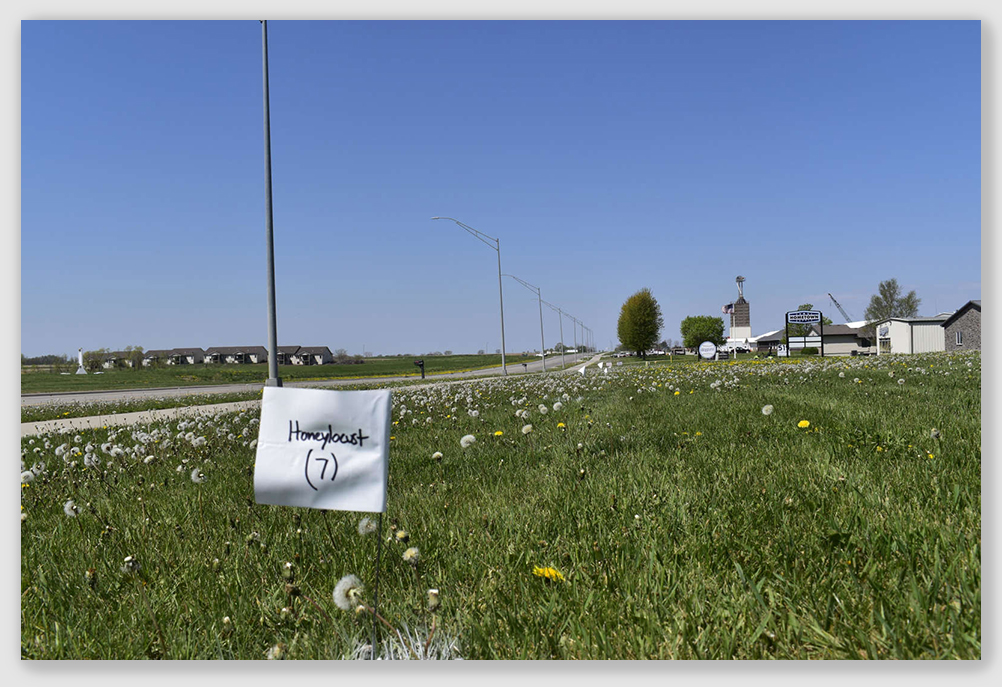
Indianola’s tree lines have been devastated over the last decade after the city lost hundreds due to disease, construction and powerful storms. Despite the losses, Indianola Parks and Recreation Director Doug Bylund says the city remains dedicated to replanting what’s been lost with a diverse collection of new saplings. The city’s West Highway 92 tree planting project, which will get underway in early May, will plant 21 young trees in southwest Indianola, replacing ones that were downed in 2012 and 2013 when the roadway was expanded. Bylund said the highway project will end up costing more than $8,000, but the funds come in the form of a reimbursement from the Iowa Department of Transportation at no cost to the city. He said the planting will likely be completed by the end of May, but low tree nursery stock is happening right now because of the 2020 derecho storm. Plans for Treeline, a 25-home development by Savannah Homes on the city’s northeast side, include 100 maple trees alongside the single-family homes, according to the project developer’s website…
Bobvila.com, May 4, 2021: How Much Does It Cost to Remove a Tree?
Trees are a wonderful part of nature, but roots or an overgrown tree can become problematic over time. Roots can break through sidewalks and driveways or damage underground pipes. Overgrown branches could damage a house. On rare, unfortunate occasions, trees may need to be removed after falling during a storm.When a homeowner considers removing a tree from the yard, a common question is: How much does it cost to remove a tree? On average, it costs $750 to remove a tree, but this can range from $200 to $2,000, depending on the size and condition of the tree. Factors that affect the cost to remove a tree include accessibility, tree height, trunk diameter, condition of the tree, stump removal, cleanup, and any extra equipment required. A tree service company can quickly identify any tricky situations that would make tree removal challenging or hazardous. In some cases, the tree is located too close to a home or fence, which means extra care is needed. Trees with smaller diameters or shorter trunks are often less costly to remove than large, old trees. According to HomeAdvisor, a tree’s location and accessibility can affect the cost of tree removal by 25 to 50 percent. Large branches growing over the house should be lowered by rope when they’re cut, rather than dropped, to prevent damaging the home. If a large tree is growing in a small space between a fence and structure, it will likely cost more to remove…
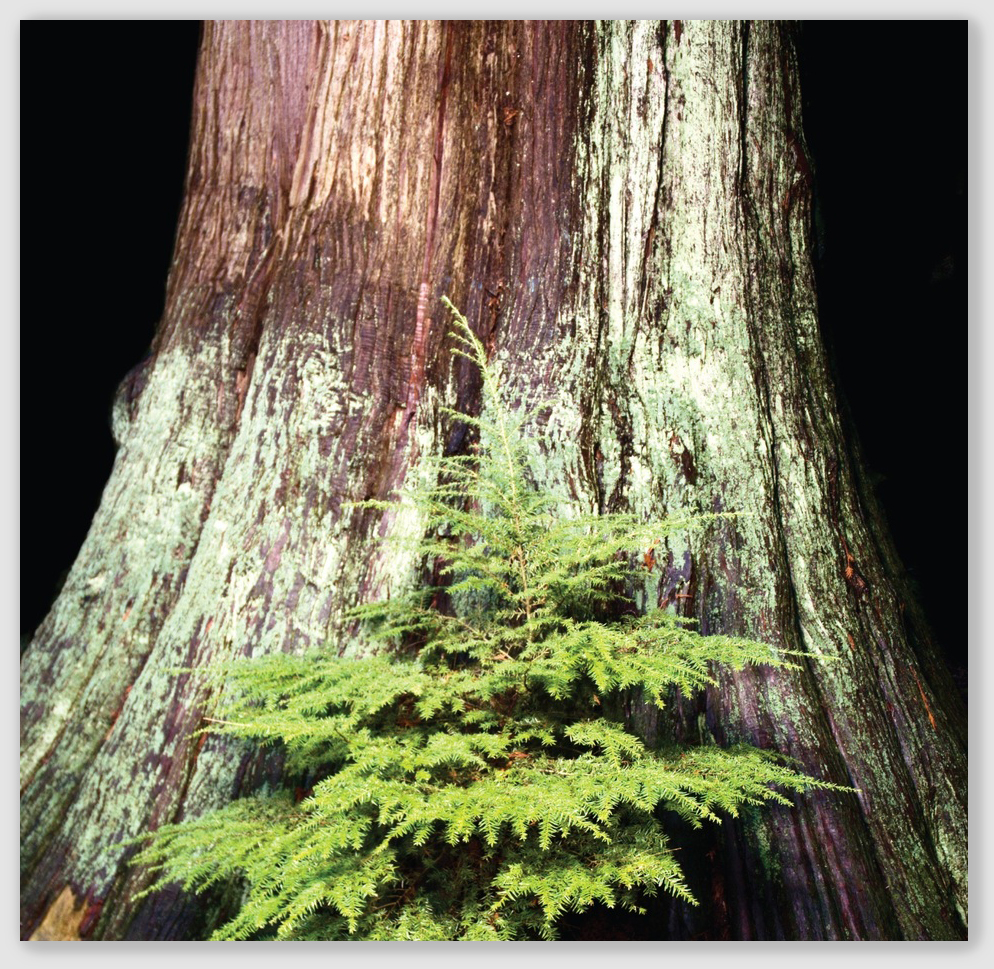
Trees are “social creatures” that communicate with each other in cooperative ways that hold lessons for humans, too, ecologist Suzanne Simard says. Simard grew up in Canadian forests as a descendant of loggers before becoming a forestry ecologist. She’s now a professor of forest ecology at the University of British Columbia. Trees are linked to neighboring trees by an underground network of fungi that resembles the neural networks in the brain, she explains. In one study, Simard watched as a Douglas fir that had been injured by insects appeared to send chemical warning signals to a ponderosa pine growing nearby. The pine tree then produced defense enzymes to protect against the insect. “This was a breakthrough,” Simard says. The trees were sharing “information that actually is important to the health of the whole forest.” In addition to warning each other of danger, Simard says that trees have been known to share nutrients at critical times to keep each other healthy. She says the trees in a forest are often linked to each other via an older tree she calls a “mother” or “hub” tree. “In connecting with all the trees of different ages, [the mother trees] can actually facilitate the growth of these understory seedlings,” she says. “The seedlings will link into the network of the old trees and benefit from that huge uptake resource capacity. And the old trees would also pass a little bit of carbon and nutrients and water to the little seedlings, at crucial times in their lives, that actually help them survive…”
There is now a red flag warning in effect in Solano County, fire season is nearly upon us, and firefighters are saying ‘”beware.” They’re also highlighting a growing problem – dead trees. Monday we flew our SKY7 chopper above the East Bay Hills. While what we saw may not look concerning to you, look closer and you’ll see dead trees in some areas, something that is alarming to firefighters in the East Bay Regional Park District, which covers 123,000 acres in the Bay Area. “When you have trees that are dead and standing like that, if they do catch fire, the danger is that they’re going to throw embers aloft up in the wind,” says East Bay Regional Park District Fire Chief Aileen Theile. Chief Theile says there are 1,000 acres of dead trees scattered amongst the brush in their park land, located in Alameda and Contra Costa Counties. The park service has been working to remove them, but will up their efforts next week in Redwood Regional Park. Some of the dead trees are in Tilden Regional Park. Some people we talked with don’t notice any major differences. “It’s a little bit drier than it normally would be but in general, nothing too different than a usual year,” says Andrew Coulter of San Francisco. Others do notice changes that have come earlier in the season…

South Bend is saying “sayonara” to a very pretty but invasive tree known for its distinctive smell. Dozens of invasive plant species, including a commonly planted flowering tree, will be banned from being sold or planted in South Bend starting this fall under a new ordinance. The South Bend Common Council unanimously approved the ordinance last week. The ban takes effect Sept. 1, but it does not apply to anything that’s already planted, and many of the plants it covers aren’t sold in garden stores. But the list does cover the callery pear tree, which includes a cultivar known as Bradford pear. That tree is often planted for its bright white spring flowers, but it is very invasive. The Bradford pear can currently be seen in bloom, with its small, white blossoms and distinctive smell. And South Bend isn’t the only Indiana city that doesn’t want to see (or smell) the tree anymore. City leaders in Fort Wayne shared a word of warning for homeowners heading into the spring planting season: Don’t plant the stinky tree. However, it’s not just the smell that has the city asking homeowners to turn their backs to the tree. The trees aren’t native and are considered to be invasive, fighting with native plants and trees for space and resources…
Phys.org, May 3, 2021: 17-year cicadas and tree damage: Expert on what to expect from Brood X bugs
Noisy Brood X periodical cicadas will soon emerge in parts of southeastern Michigan and in a handful of other states in the eastern half of the country, after developing underground for 17 years. Cicadas do not bite and are harmless to humans. However, they can damage small trees and shrubs if too many of them feed from a plant or lay eggs in its twigs. The city of Ann Arbor says covering vulnerable or smaller trees with mesh or netting is the best defense against cicadas and that insecticides should not be used. Overall, cicadas may be good for forests, which may experience a growth spurt the year after an emergence, said University of Michigan entomologist Thomas Moore, a professor emeritus in the Department of Ecology and Evolutionary Biology and at the Museum of Zoology. Cicada emergence holes allow sunlight, air, water and nutrients to penetrate more rapidly and to greater depths into the soil than typically, according to Moore. In fact, the very presence of cicadas is a sign of a robust forest, he added…

Quarantine has become synonymous with global pandemic. But for the gypsy moth — an invasive species released accidentally in the United States more than 150 years ago — it’s just another Sunday. The Virginia Department of Agriculture and Consumer Services works each year to control the spread of the gypsy moth, which can now be found across much of the eastern United States, including in Hampton Roads. One control method might sound familiar: prevent their spread from an infested area to a non-infested one. In recent weeks, farmers in southern Chesapeake have reported seeing traps set by the state that lure male gypsy moths in so their population numbers and locations can be tracked. Then, the state comes up with a plan on where to spray. About 10 days ago, the state used low-flying planes in the area of Ballahack Road and Lake Drummond Causeway. The planes dumped a bacteria known as Bacillus thuringiensis as they buzzed over the tree canopy where the moths, mostly in caterpillar form, feed on leaves. A second bacteria dump was done on Tuesday…
In its Hungry Pests campaign against the “Top Invasive Pest Threats,” the Animal and Plant Health Inspection Service of the USDA has created an interactive website to provide details on each of the destructive insects and plant diseases that “cost the U.S. an estimated $40 billion each year in damages to trees, plants, crops and related management efforts.” The website allows visitors to draw out a directory of the threat species by state, and for Pennsylvania it includes the following species we should be alert for their presence. Asian gypsy moths are several species native to Asia but detected recently in Georgia, Oklahoma, Oregon, South Carolina and Washington. They are similar to the European gypsy moth already found throughout the northeastern U.S. but have a much broader host range. Each female moth can lay hundreds of eggs that, in turn, yield hundreds of voracious caterpillars that may feed on more than 500 tree and shrub species. Their ability to fly long distances makes it probable that the moths could quickly spread throughout the U.S. A wide variety of North American tree and shrub species could be at risk, including alder, larch, sweetgum, apple, popular, oak, willow, linden and elm…
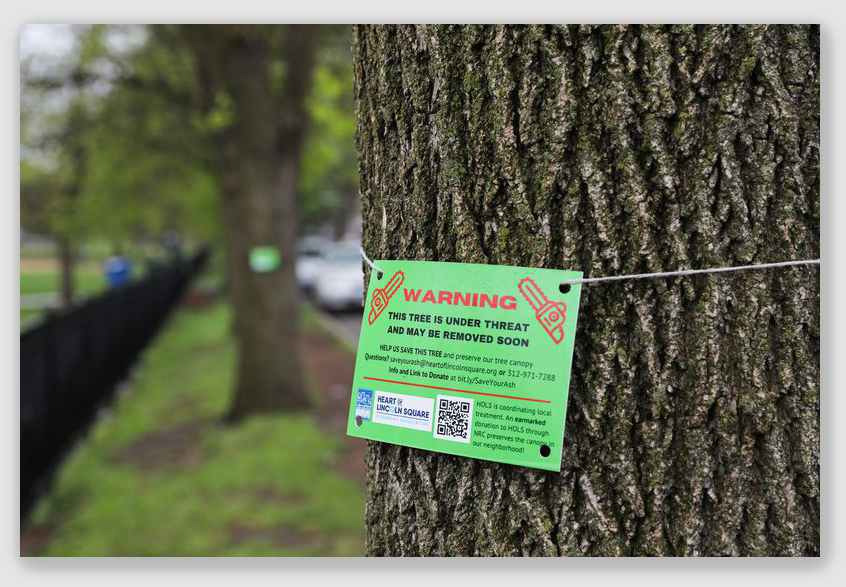
When Shirley Rounds Davis moved to her home on the Far South Side decades ago, she could see a maple tree through the window. Over the years, she watched it grow. “And the birds would come,” Davis said. “In the morning, they would wake me up, and my children too, they’d wake us up with their song in the morning.” The tree reminded her of the mulberry tree she passed by on the way to Bible class growing up, with berries sweet enough to eat — until the day it was cut down. “I grew up loving trees,” Davis said. Recently, she watched the last ash tree go. Now, she’s hoping the invasive tree of heaven, which has taken hold across the street, doesn’t reach her home. Davis is one of many Chicagoans caring for the trees that make up the regional canopy coverage, which has increased by 2% since 2010, according to a new tree census from the Morton Arboretum. But that finding comes with some caveats. A jewel-toned beetle fond of ash trees is killing Chicago’s canopy. An invasive tree is eclipsing other species. Some neighborhoods continue to enjoy tree-lined sidewalks while others long for shade as temperatures climb and climate change threatens more warmth. Like the layers of a forest, the view from the top doesn’t tell what’s happening below. In Chicago — where the tree canopy has actually decreased 3% — people who care about trees are fighting to save them, plant them and care for them…
As the hazardous tree-removal program overseen by the Oregon Department of Transportation goes into high gear after last fall’s devastating wildfires, many of Oregon’s most scenic and beloved areas are being transformed into post-apocalyptic stretches of roadside clearcuts, gargantuan log piles and slash. “A person really has to come and look at it to get a sense,” said Ron Carmickle, mayor of Gates, which was ravaged in the Labor Day fires that raged through the Santiam Canyon and is now seeing heavy post-fire cutting on both public and private property. “The scale of it … ” he said. “It’s absolutely insane. You have to see it.” State officials estimate there are 142,000 hazard trees along roadways, rivers and on private properties burned in the fires. The tree removal program, being carried out by several contractors monitored by the Florida-based disaster recovery firm CDR Maguire, has already removed some 29,000. But a growing number of arborists, landowners and environmental advocates are concerned that CDR Maguire is mismanaging the tree-removal program. They also say the state is failing to oversee the firm, which was hired under a $70 million contract to monitor the logging and debris removal and ensure the state is reimbursed by the Federal Emergency Management Agency…
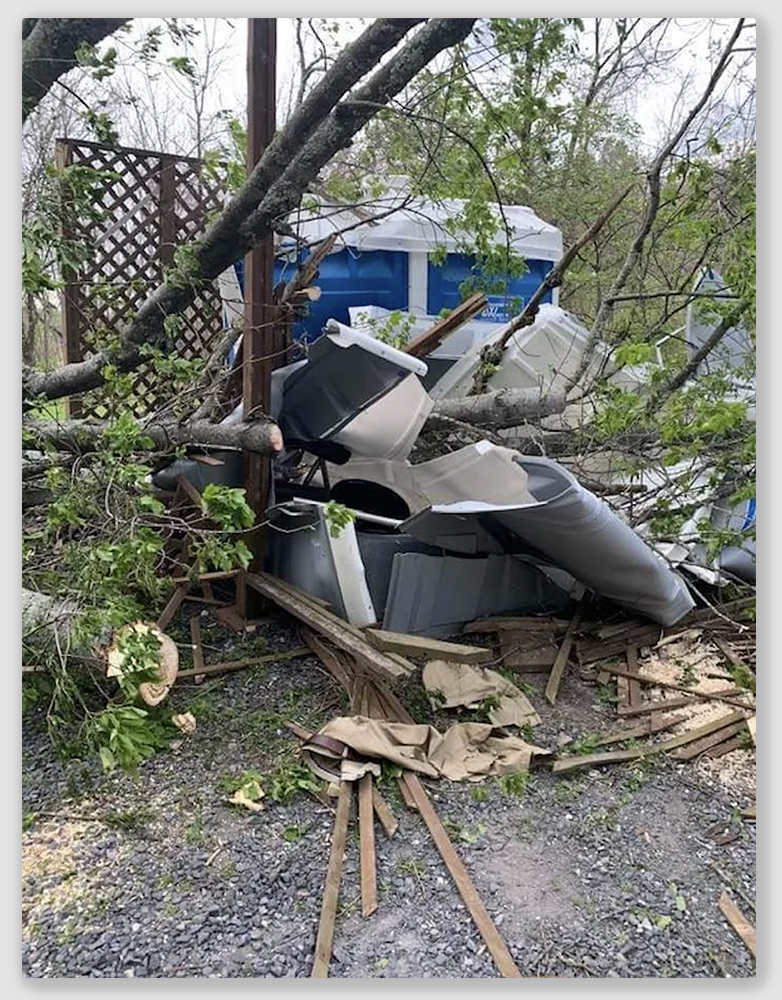
Barlow Volunteer Fire Department Assistant Chief Joe Robinson has been a volunteer firefighter for 30 years, so there’s not much he hasn’t seen on the job – until Friday. At around 3:52 p.m., Robinson was called to Little Round Top in Gettysburg for a rescue with entrapment. “I thought maybe it was someone in a car or a UTV,” Robinson said. When he got to the scene, he walked by a vehicle that had a tree on it. He looked inside, but did not see anyone. “When I got there, park rangers were there, so I asked them if everyone was out,” the assistant chief said. “They said yeah, everyone was out of the vehicle, but not out of there.” “There” was a porta potty, where a man was trapped by the fallen tree. “It was an interesting call because there were a lot of other calls going on and, with the wind being so high, it was hard to communicate with dispatch, so I wasn’t sure what I was getting into until I got there,” Robinson said. At the time, crews all across the region were handling calls of downed trees and wires, as well as fires. The majority of those were related to the wind, Robinson said…
Maine.gov, May 2, 2021: Right Tree – Right Place
We all know the benefits of trees in our landscape – shade, beauty, wildlife habitat – to name just a few, but if you don’t choose the right species for your site, it won’t thrive or even survive. First of all, know your Hardiness Zone. The U.S.D.A. has determined 11 zones throughout the U.S. that provide an annual range of temperatures for those areas. These are very helpful in determining which trees will survive where you live. Most of Maine is in zones 3-5. Find your zone here. Second, know your property. It is best to observe your property for a full year before investing in and planting something as permanent as a tree. Where are the sunny spots? Is one corner very windy? Where does the sun hit in the winter versus in the summer? Many microclimates can exist in one small plot of land. A sun-drenched ell against your house can be many degrees warmer than a windy field. You also want to consider moisture availability. A sandy dry corner near the road isn’t the perfect spot for a water-hungry willow. Trees need a substantial amount of water, especially as they get established. Will you be able to water the tree often and deep enough? A couple of days of lugging heavy watering cans for multiple trips can soon sabotage your good intentions. Remember that trees also can provide cooling in the summer and solar warmth in the winter. A big, leafy maple can shield your house from the hot sun in the warmer months, yet can let the sun strike your house once the leaves have fallen when the temperatures drop. A row of evergreens can provide a windbreak from an open field – or a noise buffer from a busy highway…
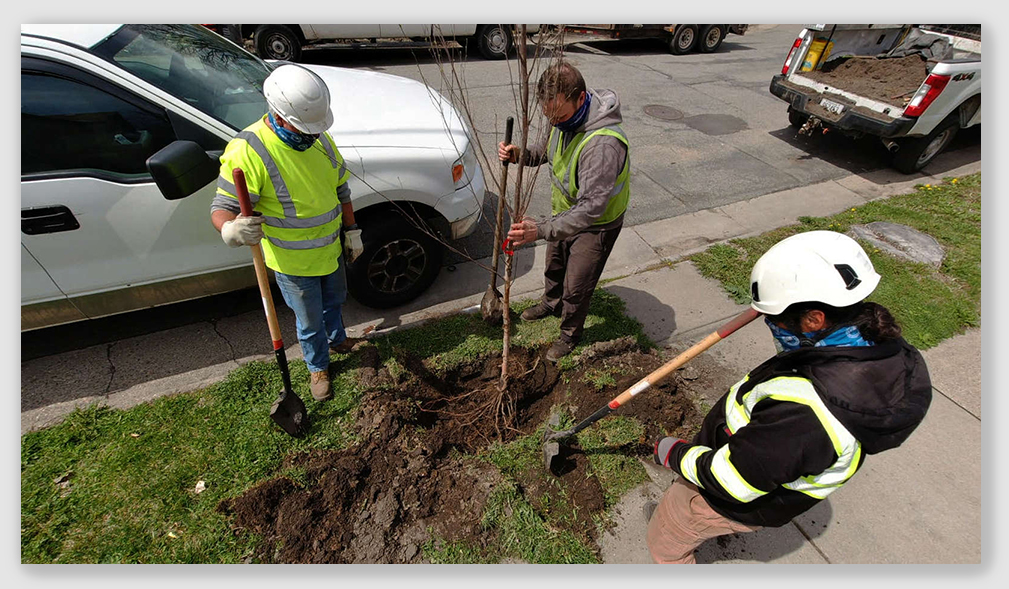 Minneapolis, Minnesota, WCCO-TV, April 29, 2021: How Do Communities Decide Where To Plant Trees?
Friday is Arbor Day — a chance to celebrate and improve nature by planting trees. Many Minnesota cities will host events, and encourage residents to plant alongside forestry crews. But how do communities decide where to plant trees? WCCO spoke with arborist Greg Hoag. “Think back to the 70s. Every tree along the boulevard was an elm tree, They’re almost all gone now,” Hoag said. Then emerald ash borer was discovered in Minnesota in 2009. Now, many cities are simply trying to replace the ash trees they’re cutting down. “We work very hard at diversifying the stock of trees with the type,” Hoag said. He says his forestry crew will first plant trees in neighborhoods where trees are being removed. “We move all around the city, and don’t just focus on one area,” Hoag said. The money for tree planting in Brooklyn Park comes from grants. In other cities, it’s part of their budget. In Minneapolis, the-80 person forestry department falls under the park board, according to Philip Potyondy, the board’s sustainable forestry coordinator. “We’re working in all the neighborhoods all the time,” Potyondy said…
A federal judge will not make Pacific Gas and Electric alter its fire-prevention power-shutoff program in a way that would expand blackouts, citing opposition from California regulators, but he strongly recommended PG&E adopt those changes anyway. U.S. District Judge William Alsup had proposed making the company consider all trees capable of striking powerlines when it decides where to cut power during windstorms in areas of high fire danger. In response PG&E offered to consider the top 30% of trees most likely to strike its powerlines. Recent estimates predict adding that criteria would have increased the number of hours PG&E customers went without power by 29% in 2019 and by 21% in 2020. At a hearing last month, a PG&E lawyer told Alsup the company “believes this is the right approach” and supports altering its power-shutoff program in time for the 2021 wildfire season, which typically starts in June. But the California Public Utilities Commission (CPUC) and the Governor’s Office of Emergency Services strongly opposed the proposal. They said power shutoffs should be a last resort and that wildfire risk must be measured against risks associated with outages, such as disruptions to emergency communications and the loss of electricity to power medical devices…
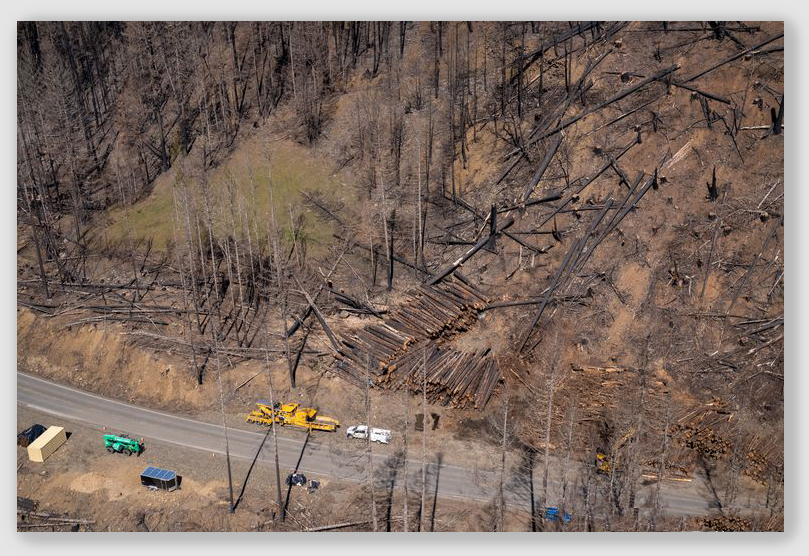
More and more workers are lining up to blow the whistle on a state project that they say is irresponsibly removing trees along roads and properties that burned in last year’s wildfires. Multiple people who have worked for Oregon Department of Transportation contractors have now come forward to flag problems with the state’s hazard tree removal project. Lawmakers heard many of their concerns at a hearing before the Senate Natural Resources and Wildfire Committee on Wednesday, and are now considering their options for trying to stop the work until it can be reviewed. On Thursday, committee chair Jeff Golden, D-Ashland, sent a letter to Gov. Kate Brown asking her to suspend the state’s tree removal operation and order an investigation of the allegations shared in Wednesday’s testimony. He flagged concerns that mismanagement of the state contracts could jeopardize Federal Emergency Management disaster funding that the state is counting on to help pay for wildfire cleanup work. “The testimony was alarming,” Golden wrote. “There are multiple allegations that core elements of the project’s stated purpose and specifications are being violated. … If any of these allegations are substantially true, the negative consequences for our state would be grave in a number of ways.” Golden told the governor his committee is not qualified to assess the allegations, but that no more trees should be felled under the existing contracts until an “on-the-ground inquiry” can “ascertain the facts…”
Roanoke, Virginia, Times, April 30, 2021: Editorial: Can we bring back the chestnut? Should we?
In 1904, the forester for the Bronx Zoo noticed something unusual. Some of the zoo’s trees were sick. They looked wilted and scorched, with ugly cankers growing out of them. Hermann Merkel called in a mycologist, a fungus expert. By the time William A. Murrill figured out the cause two years later, the disease had spread as far south as Virginia. And that is how the great chestnut blight began. Within just a few decades, most American chestnuts were gone, whole forests wiped out by something we couldn’t see (at least not without a microscope). Today, we don’t fully appreciate what happened with the chestnut. That’s because we’re living in the arborial equivalent of a post-apocalyptic horror, with no real memory of what came before. For us, the forests we see around us are normal, yet they’re not normal. They are what remained after their most dominant species was rendered functionally extinct. Today is Arbor Day, a day we set aside to think about trees (and maybe plant a few more). We are also still in a global pandemic. If we combine those two thoughts, Venn Diagram-style, we wind up thinking about tree pandemics. Perhaps the greatest of those was the chestnut blight that swept through Virginia in the early 1900s and completely changed the look — and the culture — of Appalachia…
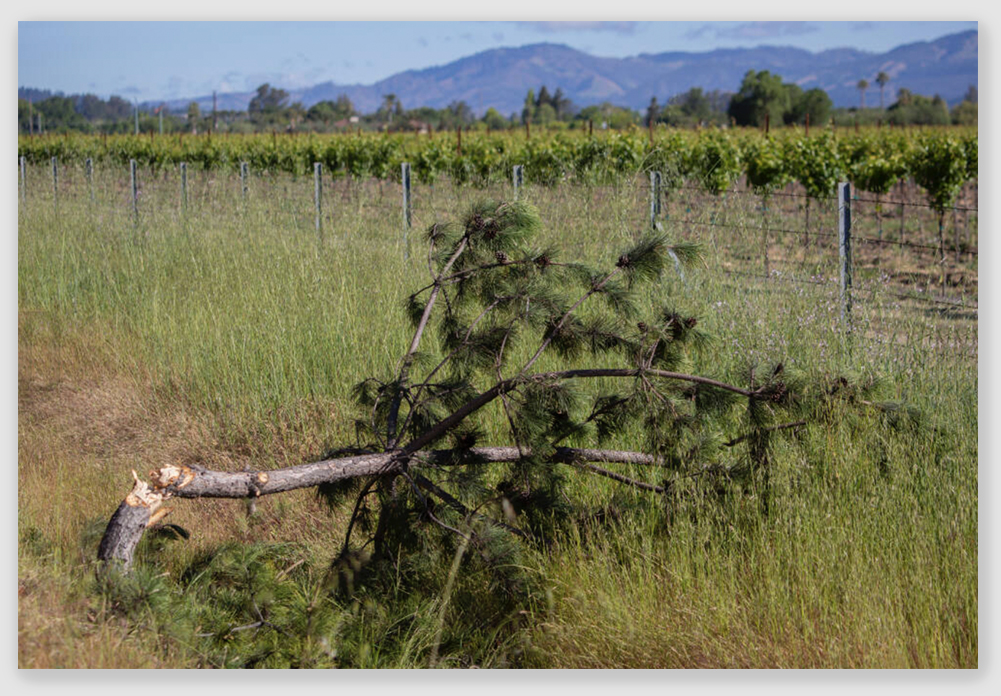
A tree has fallen in Sonoma ‒ and the sound is reverberating throughout the community. In the early morning hours of April 25, Sonoma’s iconic little roadside tree, dubbed “Arnold the Tree” by locals who drive past it on Arnold Drive, was destroyed by an unknown vandal equipped with what locals believe was a hand saw. In recent years the tree has been embellished with seasonal-appropriate crafts and other baubles ‒ with Halloween, Christmas and Easter-themed decorations festively displayed for the enjoyment of passing drivers. No one seems to know who cut the tree or why Arnold was targeted, but local social media pages have been rife with the news since the first photos of Arnold’s destruction were posted on Sunday. Gary Gudmundson lives nearby, just off Arnold Drive, and he told the Index-Tribune that it is he who has been quietly decorating the tree since 2015. “I was retired and had some time on my hands and I thought the decorations might bring a smile to people’s faces as they drove by,” he said. The small, slightly bent pine tree rose to local fame when it was credited with helping lift Sonoma’s spirits after the October 2017 wildfires…
A new analysis of thousands of U.S. communities finds that, on average, low-income urban blocks have less tree cover and are hotter than high-income blocks. Robert McDonald of The Nature Conservancy in Arlington, Virginia, and colleagues present these findings in the open-access journal PLOS ONE on April 28, 2021. Mounting research links urban tree cover with human health benefits, including reduced air pollution, better cardiovascular function, and improved mental health. Tree cover can also cool urban areas, mitigating the effects of heat waves. However, research from the U.S. and other countries suggests that urban tree cover is unequally distributed, with low-income and minority communities often having less tree cover. In the new study, McDonald and colleagues sought to quantify urban tree cover and temperature disparities in the U.S. at the resolution of individual blocks. They used digital images from the National Agriculture Imagery Program to examine tree cover in the 100 largest urban areas of the U.S, covering 5,723 cities, towns, and other Census-designated places that are collectively home to 167 million people. They also used Landsat imagery to analyze summertime temperatures in these communities…
The four cherry trees that once stood in the center of town have been gone for weeks, but the debate over their removal shows no sign of stopping. Attorneys met Tuesday with Judge Barry Stevens to discuss a legal complaint challenging the town’s decision to allow the Kwanzan cherry trees to be removed and requesting an injunction to save them. Now that the trees are down, plaintiffs James Hughes and Alyssa Israel intend to pursue sanctions, fines and monetary damages. The town has filed a motion to dismiss the complaint. “I don’t think the motion to dismiss has legs to stand on,” Hughes, a Fairfield lawyer, said in a phone interview following Tuesday’s conference. A remote hearing for the complaint is scheduled for June 8, when arguments are expected to take place concerning the motion to dismiss. “I feel quite confident the matter will be dismissed,” Town Attorney James Baldwin said in an interview Tuesday…
Treehugger.com, April 27, 2021: This Program Recognizes Cities That Prioritize Their Trees
On a site named Treehugger, we can’t help but get excited about all things tree-related. One thing that we’re loving right now is Tree Cities of the World, an annual recognition program for cities “seeking excellence in urban forest practices and management.” The program, created in 2018, is a partnership between the United Nations’ Food and Agriculture Organization and the Arbor Day Foundation. This program encourages cities to educate residents and motivate local governments to protect, care for, and expand their urban forests, as these provide so many benefits. Trees yield three to five times their cost in overall benefits to a city, in the form of stormwater management, erosion control, and reduced energy costs. A 2018 study by the US Forest Service’s Northern Research Station found the country’s urban forest canopies, which are home to some 5.5 billion trees, “provide roughly $18 billion in annual benefits to society through the removal of pollution from the air ($5.4 billion), carbon sequestration ($4.8 billion), reduced emissions ($2.7 billion) and improved energy efficiency in buildings ($5.4 billion)…”
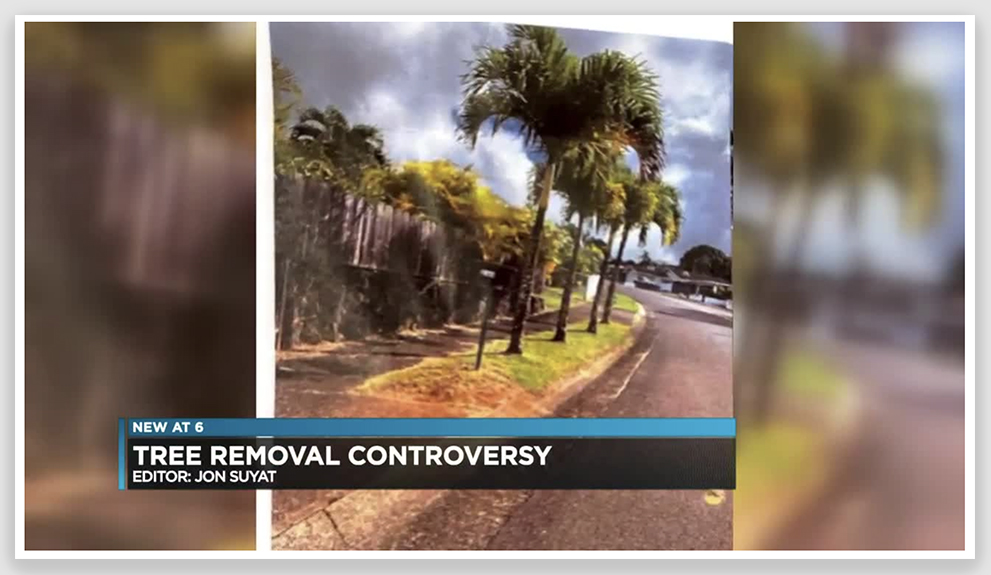 Honolulu, Hawaii, KHNL-TV, April 28, 2021: After 261 complaints from 1 person, city orders trees cut in Pacific
Palisades
Some Pacific Palisades residents say the city is forcing them to cut down trees on city sidewalks fronting their homes. They say it’s ironic given that the city has set a goal of planting 100,000 new trees by the year 2025. The city recently sent out notices to dozens of residents in the community, saying the trees on the sidewalks were unauthorized. The city said they must cut down the trees — paying hundreds of dollars of their own money — or they can seek a variance, which can also be costly and time consuming. “People are really upset,” said Pearl City Neighborhood Board member Charmaine Doran. “A lot of residents have been forced to pay to have the trees removed and many of these trees have been here for decades.” Doran said her next door neighbor recently cut down four palm trees at a cost of about $500. She said that was unfair because the trees were planted more than two decades ago by previous owners. Doran also believes the city is singling out her community, saying it issued similar notices of violations to at least 40 other Palisades residents. But the city denied the allegation. “To be clear, we are not targeting the Pearl City or Palisades communities. We are responding to a citizen’s complaints, which is part of our duties,” the Department of Planning and Permitting said in an email. But the complaints, according to the DPP, came from a single person who filed a total of 261 complaints during a two-day period back in October. The complaints alleged unauthorized trees or planting on sidewalks — not just in Palisades but throughout Pearl City, Halawa, Aiea, and Waipahu, the department said…
Houston, Texas, Chronicle, April 27, 2021: Ameren urges right tree in right place
Now that Spring has arrived, many homeowners are heading outdoors with landscape beautification plans in mind. Ameren Illinois is offering customers important safety advice when it comes to tree planting and safe digging. Before the first shovel is turned into the ground, homeowners or contractors should call JULIE at 8-1-1 to have underground utilities properly marked. Digging without first calling JULIE can disrupt utility service to an entire neighborhood, lead to injuries and result in hefty repair costs and possible fines. There is no charge for JULIE utility locating services and the call must be made at least two business days before digging. George Justice, Vice President of Electric Operations for Ameren Illinois, encourages the planting of shrubs and trees, which can help reduce a homeowner’s energy costs by keeping homes cooler in the summer and warmer in the winter. However, he suggests consulting with a nursery or an arborist to help select “the right tree to plant in the right place” to avoid potential problems in the future. “Many folks plant trees and shrubs without understanding the future problems that can arise when planting near power lines,” Justice said. “When tall trees are too close to electrical power lines, strong winds, wet snow and ice storms can cause tree limbs and even entire trees to fall into those power lines. Downed wires can cause extensive power outages and pose a safety risk to members of the public…”
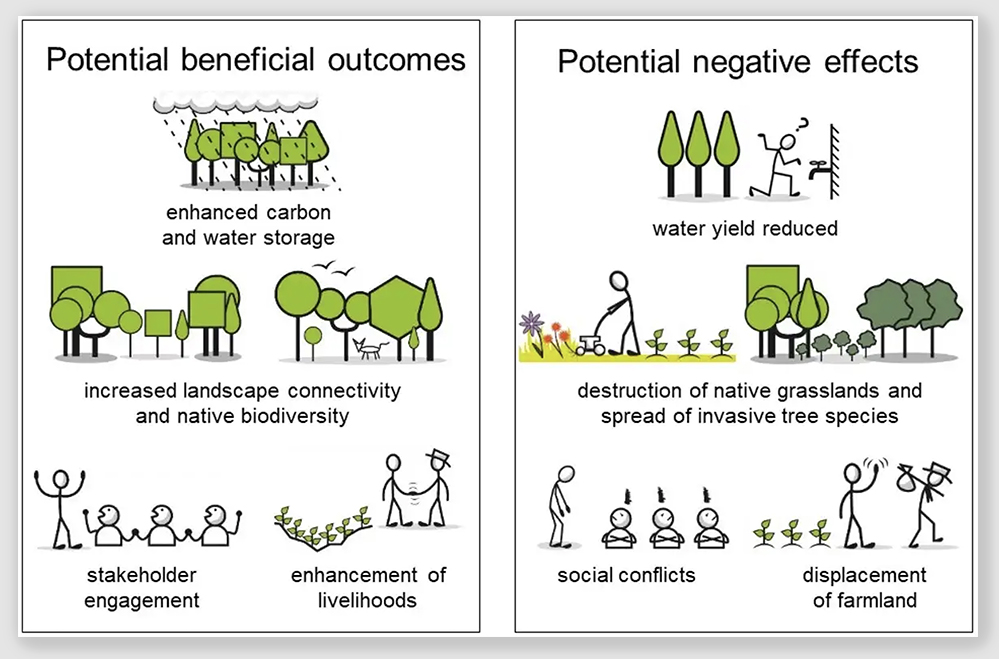
Pennlive.com, April 27, 2021: Arbor Day should be about growing trees, not just planting them
For 149 years, Americans have marked Arbor Day on the last Friday in April by planting trees. Now business leaders, politicians, YouTubers and celebrities are calling for the planting of millions, billions or even trillions of trees to slow climate change. As ecologists who study forest restoration, we know that trees store carbon, provide habitat for animals and plants, prevent erosion and create shade in cities. But as we have explained elsewhere in detail, planting trees is not a silver bullet for solving complex environmental and social problems. And for trees to produce benefits, they need to be planted correctly – which often is not the case. It is impossible for humanity to plant its way out of climate change, as some advocates have suggested, although trees are one part of the solution. Scientific assessments show that avoiding the worst consequences of climate change will require governments, businesses and individuals around the globe to make rapid and drastic efforts to reduce greenhouse gas emissions. Moreover, planting trees in the wrong place can have unintended consequences. For example, planting trees into native grasslands, such as North American prairies or African savannas, can damage these valuable ecosystems…
The Atlantic, April 27, 2021: Why Dead Trees Are ‘the Hottest Commodity on the Planet’
Bitcoin? Blasé. Gold? Going out of style. “The hottest commodity on the planet,” according to Dustin Jalbert, an economist at the market-research firm Fastmarkets, is lumber. In North America, lumber is typically traded in units of 1,000 board feet; builders need about 15,000 board feet, on average, to construct a single-family home. From 2015 to 2019, lumber traded at $381 for 1,000 board feet, according to Fastmarkets. This month, it reached an all-time high of $1,104 for the same amount. The lumber shortage has added at least $24,000 to the cost of a new home, according to the National Association of Homebuilders. On its face, the surge in lumber’s price has a simple explanation: Demand for wood is really high right now. Over the past year, Americans have bought new homes, started renovations, and embarked on DIY projects at stratospheric rates. But the lumber story is not simply about record-breaking demand. The spike has hit just as lumber supply is dwindling and undergoing a major transition, analysts and scientists told me. Since 2018, a one-two punch of environmental harms worsened by climate change has devastated the lumber industry in Canada, the largest lumber exporter to the United States. A catastrophic and multi-decade outbreak of bark-eating beetles, followed by a series of historic wildfire seasons, have led to lasting economic damage in British Columbia, a crucial lumber-providing province. Americans have, in effect, made a mad dash for lumber at the exact moment Canada is least able to supply it…

As someone who has spent years volunteering my time with others to help increase the tree and shade canopy in Phoenix, I feel it’s important for residents to have facts. In its trial budget for the 2021-2022 fiscal year, Phoenix is proposing an increase of 1,800 new trees as part of its “Cool Corridors” program, in addition to the 4,500 trees already slated to be planted by various Phoenix departments. The trial budget has some people making the erroneous claim that the budget allocates $833 to plant each tree, when it supposedly cost $250-$300 per tree in prior years. In addition to being inaccurate, that number does not tell the whole story. The forest is being lost through the trees, you might say. The city is admirably proposing to plant 6,300 trees next fiscal year, which includes the increase of 1,800 new trees. At a cost of $2,127,500, that equates to $337.70 per tree – not the $833 per tree suggested by some people. The trial budget also proposes to add a new Department of Heat Mitigation and Response, which will bring in four new positions to the city – one in particular that is crucial to the success of the 6,300 new trees: a tree administrator. The tree administrator role, which was called for in the city’s adopted 2010 Tree and Shade Plan, will ensure government efficiency by functioning as the adhesive that binds all tree-related programs across city departments. Currently, tree planting is handled by several city departments. The tree administrator will ensure efficiency by highlighting and addressing areas of replication, inefficient processes, as well as identifying gaps in tree management…
To say that Melissa Martin has deep ties to Arlington is an understatement. She identifies as sixth generation resident of the city, which was home to fewer than 8,000 people in 1950. In addition, her family donated a foundational 200 acres to the city’s celebrated River Legacy Park, and still owns several properties in the area. Martin has worked with an arborist for more than 20 years to preserve older trees on her properties, particularly those native to Tarrant County. “All of us have a responsibility to be good stewards for the earth and the environment,” Martin said. “We have a responsibility to preserve our history.” So, when Martin heard from a neighbor that city surveyors were at her 201 Jimat Street property with plans to build a sidewalk in early April, she immediately jumped into action. Her primary concern was how the project, on a vacant lot near the Arlington Woman’s Club on Abram Street, would affect a 190-year-old post oak that predates the founding of Arlington. The species, native to the Cross Timbers ecoregion in Texas, is drought-resistant and can live for hundreds of years. However, post oaks are very sensitive to construction and disruption to their root systems, according to Martin and her arborist, Danny Wright. “Post oaks have these really shallow root feeders that extend way out beyond the drip line of the tree,” Martin said. “Those tiny roots that lay just a bit below the surface are what brings all the nutrients and oxygen into the tree. Any heavy equipment going over them, cutting them, can absolutely kill the tree.” Martin’s frustration with construction echoes the stories of many North Texans raising concerns over the impact of rapid development on older trees, acres of which are often removed to make room for homes and businesses…

Eight months after a lightning siege ignited more than 650 wildfires in Northern California, the state’s oldest park — which was almost entirely ablaze — is doing what nature does best: recovering. Big Basin Redwoods State Park is closed, but during a backcountry guided tour earlier this week, clusters of chartreuse shoots were budding on blackened redwood branches and trunks. Bright yellow bush poppies, white violets and star lilies dotted the scorched landscape. Hillsides of purple California lilac shrubs were fixing nitrogen in the soil. And new Knobcone pine trees, which need temperatures above 350 degrees to pop open their cones and drop their seeds, were sprouting. “I think nature is finding a way,” State Parks senior environmental scientist Joanne Kerbavaz said. Scientists, parks advocates and conservations say the resiliency of Big Basin Redwoods State Park is cause for hope well beyond the Santa Cruz mountains. In California, COVID-19 infections and deaths have dropped rapidly as a widespread vaccine rollout appears to be turning the corner. And in the burned communities that lost homes in last year’s fires, construction vehicles crowd narrow roads to lay new foundations. At first glance, Big Basin Redwoods State Park is a mess. The entire 18,000-acre park, which has about 1 million visitors a year, burned hard and fast for 24 hours and is still smoldering in a few spots, causing nearly $200 million in damage. More than 100 structures were destroyed, including the historic park headquarters, tent cabins, picnic tables, viewing platforms and trail railings. Dozens of bridges are gone, and logs litter the forest floor. In some places, smoldering subterranean root balls are still smoking, leaving dangerous underground ash pits, Kerbavaz said…
Thousands of parasite wasps are set to be released in England in an effort to kill an in invasive pest attacking sweet chestnut trees. The Government has granted approval for Torymus sinensis, a type of parasite wasp, to be introduced in order to attack the invasive Oriental Chestnut Gall Wasp. Concern has been mounting about the fate of England’s sweet chestnut trees after the Oriental Chestnut Gall Wasp was first spotted in Kent in 2015. The wasp’s larvae causes abnormal growths – known as ‘galls’ – on the leaves of sweet chestnut trees. Large infestations can weaken the host tree, making it more vulnerable to pests and diseases. Torymus sinensis will be used in England as a ‘biological control agent’ in an effort to stop the spread of the Chestnut Gall Wasp. As a parasite, it specifically targets Chestnut Gall Wasps. Females lay their eggs in the chestnut tree galls, leaving their larvae to feed on Chestnut Gall Wasp larvae. The parasite is the most effective known method to target Chestnut Gall Wasps. “Threats to sweet chestnut trees have increased as a result of tree pests and diseases such as Oriental Chestnut Gall Wasp and Sweet Chestnut Blight,” said the UK’s chief plant health officer Nicola Spence. “The release of this biological control agent represents a huge step towards protecting the health of sweet chestnut trees and will further enhance the resilience of our treescape…”

U.S. Vice President Kamala Harris will speak with Mexico’s president on May 7 about his proposal to expand a tree-planting program to Central America as a way to reduce poverty and migration, Mexico’s foreign minister said on Saturday. Mexican President Andres Manuel Lopez Obrador has suggested the U.S. government offer temporary work visas and eventually citizenship to those who take part in the tree-planting program, called “Sembrando Vida,” or “Sowing Life.” Harris’ senior advisor and chief spokesperson, Symone Sanders, confirmed next month’s virtual meeting between the U.S. vice president and Obrador. “This meeting will deepen the partnership between our countries to achieve the common goals of prosperity, good governance, and addressing the root causes of migration,” Sanders said in a statement. The program aims to create 1.2 million jobs and plant 3 billion additional trees through expansion into southeastern Mexico and Central America, Lopez Obrador said at a White House virtual climate summit last week. He also said U.S. President Joe Biden “could finance” the program’s extension to Guatemala, Honduras and El Salvador…
Bloomberg, April 23, 2021: Lumber’s Unusual Price Surge Inspires TikTok Videos and Sticker Shock
It started with toilet paper and bleach wipes. Then came price surges inBitcoin, silver and even puppies at one point. Now many are being confounded by a spike in a commodity few ever really think about: wood. Lumber prices have tripled since June 2020, soaring to more than $1,300 per 1,000 board feet. This has meant some serious sticker shock for many who were planning home-improvement projects this spring and summer. It has also had a knock-on effect on the booming U.S. housing market. Elevated wood costs have added more than $24,000 to the price of the average new American house, according to the National Association of Home Builders. In what may be a first, lumber prices also inspired a TikTok video. Why is this happening and what should you do about it? Here’s what analysts and a financial planner have to say: The lumber industry has been struggling with a labor shortage for many years. The number of loggers in the U.S. has dropped almost 40% from 20 years ago, according to the U.S. Bureau of Labor Statistics. Many jobs have been automated. Some of those that remain are dangerous and low-paying. So just as wood is more in demand, there isn’t an adequate supply of workers…

For decades, Walter Acree operated a modest landscaping business in Deerfield Beach, Fla. A self-described rebel, he mowed lawns in his bare feet, his then-long hair falling around his shoulders. Then, a few years ago, he stumbled into a lucrative niche business: helping South Florida’s superrich find trophy trees—the latest in status symbols for the most well-off Americans. “I’m kind of unique,” said Mr. Acree, now the owner of Green Integrity’s, a tree relocation and landscaping firm. “Not a lot of people do what I do.” Mr. Acree, 61, a so-called tree broker, regularly drives his wealthy clients around South Florida in search of the perfect tree for their garden, whether it is a giant kapok, an enormous canopied oak, a baobab, a ficus or a banyan. Together, they scope out trees in other people’s gardens and outside local businesses, then approach the owners with an unsolicited offer. Then, it is Mr. Acree’s job to find a way to transport the tree to his client’s property. Sometimes, that involves using a long flatbed truck, a barge or even a 300-ton crane. Mr. Acree has also developed his own technique, which he calls “arbor division,” for moving the largest trees. It involves slicing the tree vertically into several parts using 6-foot-long saws with specially hardened blades, transporting the individual pieces to the site, then reassembling the tree with steel aircraft cable, ratchet straps and bolts. Mr. Acree’s business has been flourishing for more than five years, but it went into overdrive this past year as hordes of ultrahigh-net worth home buyers piled into the South Florida market amid the Covid crisis. While trophy trees are a nationwide trend, Miami tree brokers have particularly benefited because of the area’s diversity of available trees. The city’s system of canals also makes it easier to transport trees by boat without having to cut back tree canopies…
You may have had the unlucky experience this spring of finding that one side of your pine trees has turned brown, while the rest of the tree has stayed green and looks good. If this change occurred over the winter, and the tree was fine before winter started, then there is a good chance you have a mixture of damage due to wind desiccation and sunscald. Evergreens, and specifically pines, are more prone to having these two issues together. As small trees, they lack a large and established root system to be able to draw in enough water to keep the whole tree alive through the winter months. You have to keep in mind that pines and all other evergreen trees, like spruce or fir trees, actually do not go dormant like deciduous trees during winter. Instead they just “slow down” their natural processes of drawing in water through their roots and are technically still functioning and completing their natural plant processes. We live in such a dry arid climate and have dry winds throughout the wintertime. Since they are pulling in water throughout the winter, one side of our trees will often die back. To compound this issue, sunscald can occur during February and March when there is still snow on the ground. There are days where the daytime temperature spikes and the nighttime temperature drops to well below freezing. This can cause the fluids in the bark or needles on the side of the tree that gets the most sun to freeze during the cold of night, damaging the plant cells and killing off that side of the tree…
 Reuters, April 22, 2021: Trees for visas: Mexico suggests US citizenship for reforestation
Mexican President Andres Manuel Lopez Obrador on Thursday suggested the U.S. government offer temporary work visas and eventually citizenship to those who take part in a vast tree planting program he hopes to expand to Central America. In remarks at a White House virtual climate summit, Lopez Obrador said that Mexico aimed to expand his administration’s signature “Sembrando Vida,” or “Sowing Life,” program to Central America, which he said is planting 700,000 trees. Calling it “possibly the largest reforestation effort in the world,” Lopez Obrador said the program aims to create 1.2 million jobs and plant 3 billion additional trees through expansion into southeastern Mexico and Central America. At the two-day climate summit attended virtually by leaders of 40 countries, Lopez Obrador said U.S. President Joe Biden “could finance” the program’s extension to Guatemala, Honduras and El Salvador. “I add a complementary proposal, with all due respect, the U.S. government could offer those who participate in this program that after sowing their lands for three consecutive years, they would have the possibility to obtain a temporary work visa,” Lopez Obrador said. “And after another three or four years, they could obtain residency in the United States or dual nationality,” he added…
A day before Earth Day, retired forester Rex Mann watched as scientists signed an agreement with the Eastern Band of Cherokee Indians in North Carolina to allow for the eventual planting of genetically engineered American chestnut trees on tribal land. Mann, who has heard countless stories about the American chestnut tree that once dominated the Appalachia region, was emotional as he witnessed the signing. “My dad loved the tree… and he understood what it meant to the way of life of these people in the mountains,” the 76-year-old from Kentucky said. “That way of life died with the tree.” In the early 20th century, a blight is believed to have wiped out some four billion chestnut trees that once grew across the eastern United States, from Maine to Georgia. Now, American chestnut advocates, like Mann, and a small network of scientists are hoping to restore the trees by genetically engineering a blight-resistant tree. Several experiments have been tried over the years, but so far scientists believe the greatest promise comes from a transgenic tree – engineered with a gene from wheat – known as Darling 58. They also hope that this initiative will encourage similar projects for other species…

More than 1,500 tree planters from Quebec and Ontario are expected to travel across the country to the B.C. Interior in the next two weeks to help plant millions of seedlings in the midst of a pandemic. They’ll join thousands of B.C. planters who are preparing to work on a major provincial reforestation effort, planting more than 300 million seedlings in the B.C. Interior this summer. The government’s plan to mitigate wildfire damage and address the impacts of climate change by replacing lost trees took shape well before the pandemic. Silviculture, or the growing and managing of trees, “is an essential service, because it’s considered an essential step to maintaining continuity in the global supply of pulp and paper,” said Jordan Tesluk, the B.C. forestry safety advocate who co-ordinates COVID-19 prevention strategies for silviculture in the province. Last year, a similarly large reforestation project in B.C. was delayed and nearly cancelled over community concerns tree planters would bring COVID-19 to remote communities…
Architectural Digest, April 22, 2021: These Trees Will Help You Lower Your Energy Bill
If someone told you that one mature tree sequesters 50 pounds of carbon dioxide annually, you’d probably think, Great, but what does that mean? Austin Mackrill, vice president of the Arbor Day Farm, part of the Arbor Day Foundation, knows that’s a challenging figure to wrap one’s head around, so instead he likes to tell people to look at it this way: A single mature tree provides enough oxygen for two people each year. In the last 49 years, the foundation has worked to celebrate trees and educate the public on the many ways they help us. “It’s something we know is important to nature, is important to our lives,” Austin says. “There isn’t really another substitute out there.” To date, the Lincoln, Nebraska–based organization has worked to plant approximately 300 million trees. It’s no small feat, but its mission for this year could dwarf it. The goal, Austin says, is to engage with 5 million first-time planters and put 100 million more trees in the ground worldwide by this time next year, just in time for the 150th anniversary of Arbor Day (which happens on the last Friday in April). One of the ways they plan to do that is appealing to homeowners looking to lower their energy bills… Depending on what type of tree is planted and where it is in relation to your house, it can help reduce air conditioning and heating costs. For instance, placing sturdy evergreen trees on the north side of a property helps protect from North Winds (especially in northern latitudes), making it easier to heat homes in the winter and saving up to 30% on heating bills. Similarly, homes with leafy, deciduous trees on the western side of the dwelling (which sees the hottest afternoon sun) create a leaf canopy, providing shade that can reduce air conditioning costs by up to 35%…
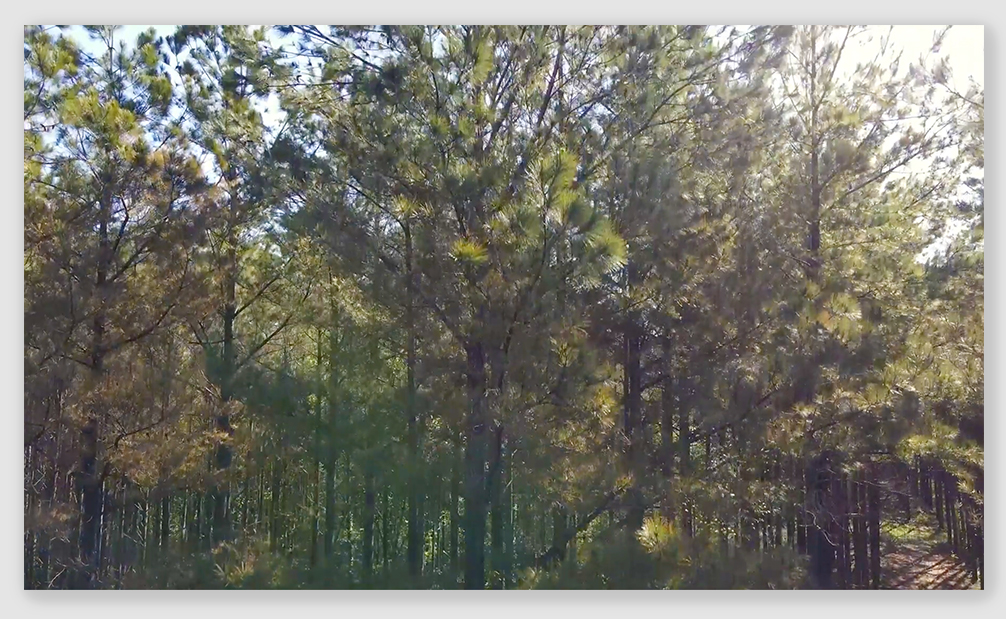
Here is a new way for Southern pine growers to get paid for their timber: Leave it standing. Companies eager to offset their emissions are paying Southern timberland owners not to cut more than a million acres of mill-bound pine trees until next year. The idea is that the longer the timber stands, the more carbon the trees can sponge from the atmosphere before becoming two-by-fours and telephone poles. The companies are credited with socking away carbon in wood, measured in metric tons and documented with tradable assets called carbon offsets. Companies buy offsets to scrub emissions from the carbon ledgers they keep to show investors and customers their pollution-reduction efforts. Landowners get a check as long as their trees remain standing. The market’s architect, SilviaTerra, plans to expand its Natural Capital Exchange this summer from Southern pine to hardwood forests there as well as to woods around the Great Lakes. The firm uses satellite photos, forest surveys and computer programs to size up timber, calculate how much carbon the trees can sequester and determine how many offsets their owners can sell. The price—$17 an offset—was set with an auction that landowners began by naming the price it would take to keep them from cutting…
A lot of Sullivan’s Island residents tell the same sad story: They didn’t vote in the 2019 town elections, and now regret it. Don’t expect them to make that mistake again. That’s because a 1-vote margin for a single Town Council seat shifted the island’s balance of power two years ago. To say the new council majority made the most of that narrow victory is putting it mildly. Last fall, the majority scheduled a debate on the island’s biggest issue in the middle of a work day, during a pandemic, via Zoom … with minimal public notice. And then, on a 4-3 vote, signed an agreement to butcher the island’s popular maritime forest. Make no mistake: That’s the single-biggest issue in the May 4 election. The officials who engineered that settlement are urging voters to move on from “single issue” politics. Yeah, don’t count on it — because this isn’t simply about one thing. This election is about more than accreted land; it’s about the mindset that threatens it. And it’s about paid parking, as well as a commercial district that wants to creep into residential neighborhoods. Pretty much everything but a gate. That stuff tends to drive people to the polls, even in municipal elections that typically garner little interest…

The DeSoto City Council recently voted not to enact an ordinance regulating tree removal, but residents aren’t giving up. Terrence Gore of the nonpartisan DeSoto Progressive Voters League, along with members of Dynamic DeSoto, a resident feedback forum, created a petition to have the council reconsider the ordinance and address what they call the “indiscriminate clear cutting of the remaining woods and forest areas in DeSoto” by developers, Gore said via email. “Right now developers are coming in and clear cutting, like they do in the Amazon forest, for future development,” he said. “Landowners are doing the same. It’s easier and more profitable to sell developed land or ready to build than it is undeveloped.” Gore said the proposed tree ordinance would have required developers to make plans with minimal impact to existing trees and replaces ones that are cut down. But last month, Mayor Rachel Proctor and council member Andre’ Byrd voted against adopting the ordinance in a 5-2 vote. A 6-1 supermajority was needed because the Planning & Zoning Commission had recommended against it…
Starting next week, the City of Austin will undergo a massive clean up effort to remove the dead trees and vegetation from the historic winter freeze from streets, sidewalks, alleys and other public land. The Public Works Department estimates an astounding 90% of the city’s palm trees are dead. In order to ensure safety, the forestry department will begin proactively removing dead trees from high traffic areas, a job that must be completed sooner rather than later. Experts say the longer rotting palms are left standing, the heavier they become and the more likely to snap on unsuspecting pedestrians and drivers. If trees are believed to pose an immediate threat to public safety, residents and businesses nearby will be notified with a door hanger that provides information and contact numbers in case questions arise. Residents are responsible for caring for plants on their own properties or extend into the right of way. The city, however, will remove vegetation on private property if it extends into the right of way and is deemed a potential risk to the public. Other trees hit particularly hard by the deep freeze were Arizona ash and Chinese tallow trees, along with non-native palms and species of pine trees, the City says…
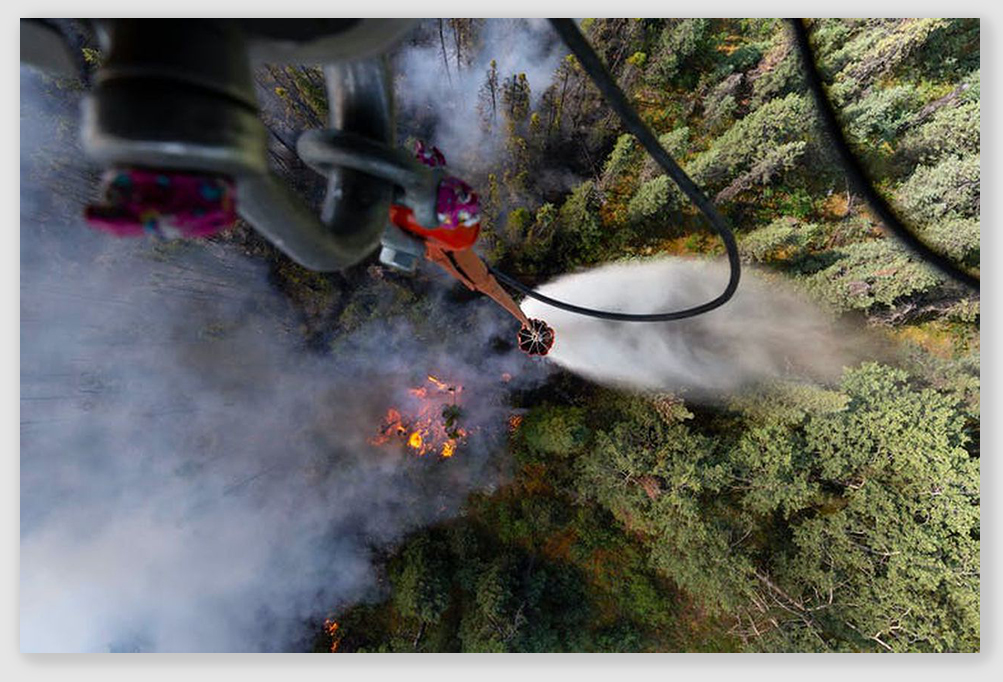
Fire is a hot topic these days, particularly when it comes to the boreal forest, the vast expanse of trees that stretches across Alaska, Canada and other cold northern regions. Large fires have been burning more frequently and severely in these remote landscapes, driven by longer seasons of hot, dry weather and more lightning strikes as the climate warms. As forests burn, they release organic carbon that has accumulated in tree trunks, leaves and roots and in soils. This sets up a potentially dangerous climate feedback loop: More fires release more carbon from the land, which further exacerbates global warming, which means more hot, dry weather that can fuel more fire activity. It’s enough to keep scientists like ourselves awake at night. However, new results from our research team published in the journal Science on April 15, 2021, suggest there may be a natural brake on the system. We found that when black spruce forests that had recently burned in interior Alaska began regrowing, more aspen and birch trees were mixed in with the spruce. In fact, broadleaf deciduous trees like these were becoming the dominant species. This has two important effects when it comes to climate change and wildfires: The deciduous trees store more carbon, and they don’t burn as quickly or as severely as dry, resinous black spruces and their needles do…
Memphis, Tennessee, WMC-TV, April 20, 2021: Breakdown: Why a late Spring frost can damage trees
The last Spring freeze varies every year in the Mid-South, but a later date can have detrimental effects on our plants and trees. Although most vegetation can tolerate temperatures in the 30s, the cold can still damage leaves on trees and shrubs. Damaged leaves will look brown and shriveled. The worst damage typically occurs when temperatures drop into the 20s after a warmer stretch of weather. This is because leaves have started to regrow and are more susceptible to damage. However, you should not be alarmed if this happens in your yard. Trees and shrubs typically recover quickly and will usually have new growth within a week or two. For gardeners and farmers, Spring is the time to plant crops and flowers. However, picking the right time to plant can be essential for plant growth too. The last spring freeze has taken place as early as February 12 in Memphis, which took place back in 1878. The latest last spring freeze took place on April 25, 1910. On average, around March 19 is the last freeze to take place in Memphis. Due to this, you should consider cold-hardy plants that can handle a few frosts or wait until mid-April to plant anything…
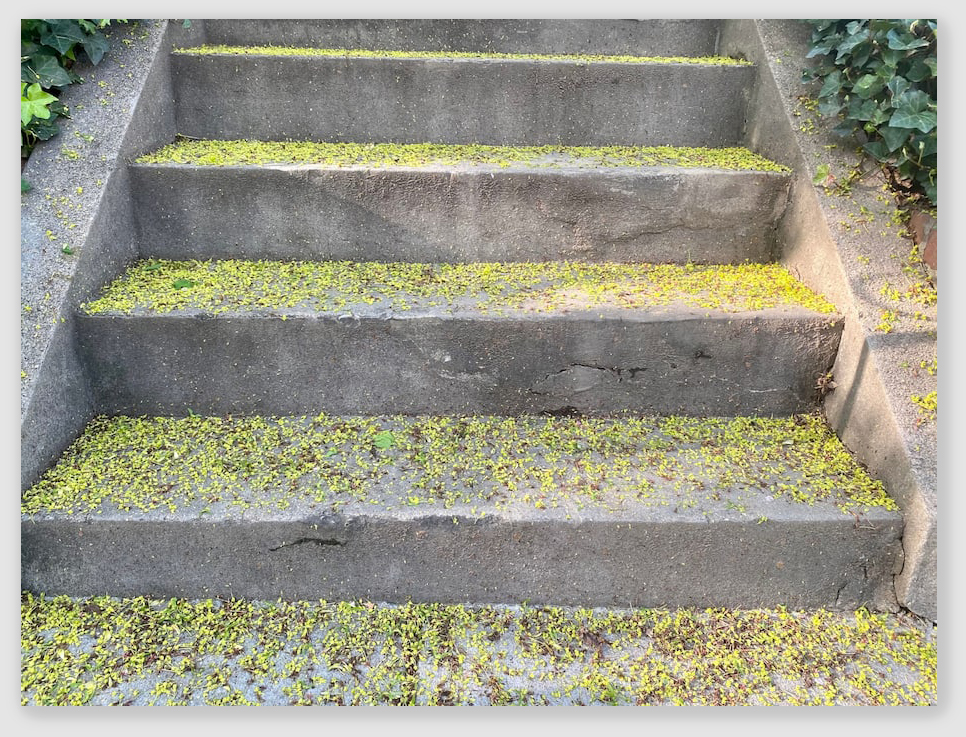
Peak tree pollen season is here. The normal high point for the year in the Washington area is the third and fourth week of April. And the current season is showing consistently high pollen counts right on schedule. Washington’s worst allergy days tend to come when tree pollen explodes in early to mid-spring. This year, it actually peaked on March 11, when counts surged to their highest level on record, following an otherwise slow start to the season. The March 11 count of 2,758.47 pollen grains per cubic meter of air has not been tested since. Such an early spike was unusual, and it may not be surpassed moving forward, but the season so far has been punishing sinuses with a regular barrage of high-pollen days. That’s probably something we should get used to in a warming climate. According to data from the U.S. Army Centralized Allergen Extract Lab in Forest Glen, Md., tree pollen counts first hit moderate levels on March 3. Before that, levels were depressed by unusually chilly February weather. But by the second week of March, counts quickly bounced too high and even very high levels in the second week of the month, climaxing on March 11…
NJ.com, April 20, 2021: N.J. forestry bills may be barking up the wrong tree
The road to unfunded mandates is paved with good intentions in the form of legislation. At least that’s my main take-away with one group of bills that the Legislature is now considering. In a nutshell, Assembly Bill 4843 and its Senate companion, S-3549, would require municipalities and nonprofit organizations that use state Green Acres funds to acquire forestland for parks or recreation to create and implement a “forest stewardship plan” if the property is 25 acres or larger. If the state itself is the buyer, the Department of Environmental Protection would be required to develop the stewardship plan. Being a public official from an urbanized community, I am not especially knowledgeable about forests or forest management. But I suspect that a “stewardship plan” will come with the need to hire professional consultants to do some combination of assessing, reporting and recommending, services that do not come cheaply. Once a plan is in place, implementation is also likely to require funding that cities like Bridgeton simply do not have. My initial concern is that a bill like this one should not be a one-size-fits-all proposition. The forest-like Pinelands are different in character from wooded areas that make up parts of Bridgeton City Park. Certain planning and management efforts that might make sense in the Pinelands don’t make sense for a section of a community park that has trails. I hope that any forthcoming legislation would acknowledge these differences…
 Anaheim, California, Orange County Register, April 19, 2021: Pine tree stood tall in Westminster
More than 100 feet and 60 years of marriage later, Charles and Gayle McGrew said goodbye to an old friend. A pine tree that stood next to their Westminster home since Gayle McGrew planted the two-foot-tall sapling a year after the couple married in 1959 had to be removed Monday, April 19. Crews had to use a 75-foot lift to cut down the pine, which was estimated to have grown to 110 feet tall, likely the tallest in the city. It was visible over City Hall from its place in a city parkway near the family’s home just behind the Civic Center. The city was paying for the removal. Charles McGrew said the family noticed last month the tree seemed dry at the top and the city had an expert out to take a look. Arborist Daniel Ruelas said he found rotting in the tree’s vascular system because of an irrigation problem…
Charleston’s elected leaders want to make it easier to put underground power lines through the city, saving tree canopies and improving the views along highways and in residential communities. In March, Charleston City Council passed an ordinance to make it easier to access millions of dollars in public funds that can be used to bury sections of the city’s power grid. The new law is expected to simplify the process for Charleston residents who want to remove the utility poles in their yards and install those electrical lines underground. It will also allow the city to shoulder more of the financial burden for those projects. The work will help to prevent utility crews from cutting down palmetto trees or slashing through the tops of grand oaks in order to maintain the electrical lines and protect the power system from storm damage…

Maggie Zawalski was getting ready to go to her yoga class on Friday morning when she found an unpleasant surprise on her truck. A tree snapped from above and fell on her truck, damaging her side mirror and gas tank. “I keep calling it a branch. It’s huge,” Zawalski exclaimed. “The one thing that’s broken is my truck. You know, it sucks.” It was a similar story all throughout the Capitol Hill neighborhood as powerlines and broken trees blocked the streets. So, what should you do if a tree land on your car? Scott Gilmore, who is the Deputy Manager of Denver Parks and Recreation, says your first call should be to your insurance company. “That’s who’s going to take care of your car and repair your car, get your car repaired,” Gilmore said. Next, call a certified arborist to get the tree removed. “You want to find a company that actually will be able to remove the tree, pick it up safely, trim your tree up, and make sure your tree is taken care of,” he said. If a tree is blocking an intersection call 311 so the city can remove it. If there are any downed power lines, call Xcel and dial 911 immediately…
An Arkansas man pleaded guilty Monday to illegally damaging or removing trees from the Mark Twain National Forest in Missouri. Jamie R. Edmondson, 46, pleaded guilty in federal court in Springfield to depredation of government property. He admitted that he cut and removed 27 walnut and white oak trees from the forest in Barry County without permission of the U.S. Forest Service. He sold the timber he took between June 1, 2019, and Jan. 31, 2020, to sawmills in the area. Prosecutors said Edmondson was caught after surveillance cameras were installed in the area and they recorded images of the truck he used. The timber was valued at about $20,000 and the ecological damage and remediation necessary was at least $44,000, prosecutors said…

Before you know it, the dirt mounds will rise and the unmistakable buzzing will begin. Cicadas — specifically Brood X — are arriving by the billions for the first time in 17 years. These insects emerge from underground for six-week lifespans, sometimes landing inside your home, and have the potential to wreak havoc on your smaller, young trees. You may also decide you don’t like the look of the rising dirt mounts in your yard and beneath your plants that signal the brood’s arrival. While cicadas do present some benefits, if insects give you the creeps, or if you’ve got new, expensive trees you’ve just planted, you may be wondering how to keep the critters away. While you’ve got limited time left before Brood X arrives, there are several preventative measures you can take to keep them off your young trees. And if they’re already there, we’ve got ways to get rid of them. Keep reading to find out what you need to do to keep the periodical cicadas out of your trees this spring. We’ll also tell you which chemicals or oils not to use — and why you might even relent and let Brood X stick around. (Plus, here’s what happens if your pet eats a cicada…
A week ago, Fairfield resident James Hughes was going about his day in the town center when he witnessed a startling sight. Four Kwanzan cherry trees outside the Sacred Heart University Community Theatre were being removed. “I was shaking, I was in shock, I was incredulous,” he said. The removal of the trees was particularly surprising because Hughes, an attorney whose office is a block from the theater at Post and Unquowa roads, had filed a legal complaint only days earlier challenging the town’s decision to allow the trees’ removal and seeking an injunction to save them. “The town was aware of the lawsuit, and yet they moved forward,” he said. The trees, which were owned by the town, were removed with permission by Kleban Properties as part of the ongoing redevelopment of the theater and surrounding area. They will be replaced with three different Kwanzan cherry trees and a northern red oak…
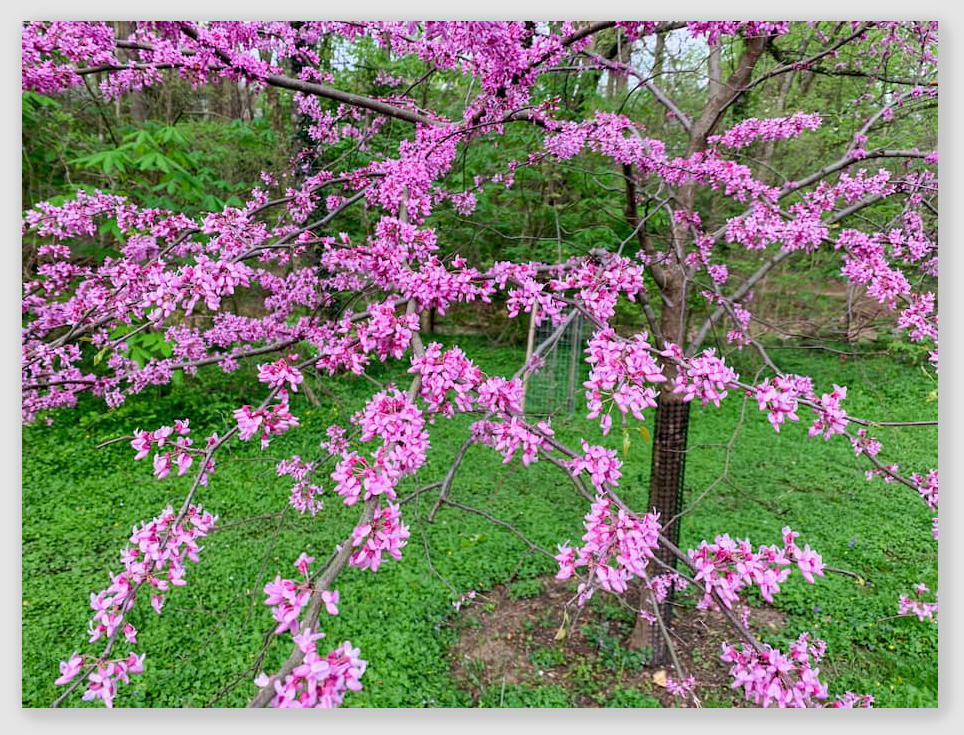
If my house was ever on a garden tour, I’d take visitors to the corner of my backyard and say, “And this is the reddud tree.” Someone might respond, “You mean, ‘redbud?’ ” “No,” I would answer. “Reddud. Do you see any buds on it? I don’t.” “But —.” “I suppose I could call it a ‘deadbud,’ but that would imply that the tree was dead. Or the buds. Oh, it’s alive, all right. Sentient, even. But evil. Or cursed. No, don’t leave! Come back! Don’t you want to see my daffydils? They’re daffodils that grow backward.” That’s how I imagine it would go. That’s probably why my house won’t ever be on a garden tour. The yards — front and back — have come to disappoint My Lovely Wife and me. Certain once-hardy bushes have started dying — ancient azaleas; long-lived laurels — and so we’re forced to ponder a landscape upgrade. There’s only so long you can go with your front door flanked by brown and crispy shrubs, like something out of a Charles Addams cartoon. We tried to brighten things up with daffodils, planted last fall on the slope in front of our house, but I don’t consider them a complete success. For some reason, the daffodils don’t all face the same direction. Some offer their yellow faces to the north, some to the south. I don’t know how that’s even possible for a heliocentric plant, unless these narcissus are as stupid as they are vain: literally dim bulbs…
Since local citizens voiced concerns about an upcoming road reconstruction project and its potential impact on the historic Buttonball Tree, the town has negotiated putting up a metal fence around the tree and designating a “tree protection zone” during the work. Select Board member Tom Fydenkevez said at a board meeting last week that he and Town Administrator Geoff Kravitz met at the Buttonball Tree on April 9 with a representative from the state Department of Transportation, the contractor for the project, arborists and others to consider ways to protect the tree, an American sycamore on North Main Street (Route 47) believed to be roughly 400 years old. A plaque, embedded in a rock in front of the tree, states the National Arborist Association and the International Society of Arboriculture in 1987 jointly recognized the tree as having been in Sunderland when the U.S. Constitution was signed 200 years earlier. “Not to say things may not change, but the first thing is the town has negotiated with the contractor and we’re going to be putting a metal fence to designate the tree protection zone around the Buttonball Tree to better define it,” Fydenkevez said. “We also are strongly considering eliminating the turnoff that’s presently there…”
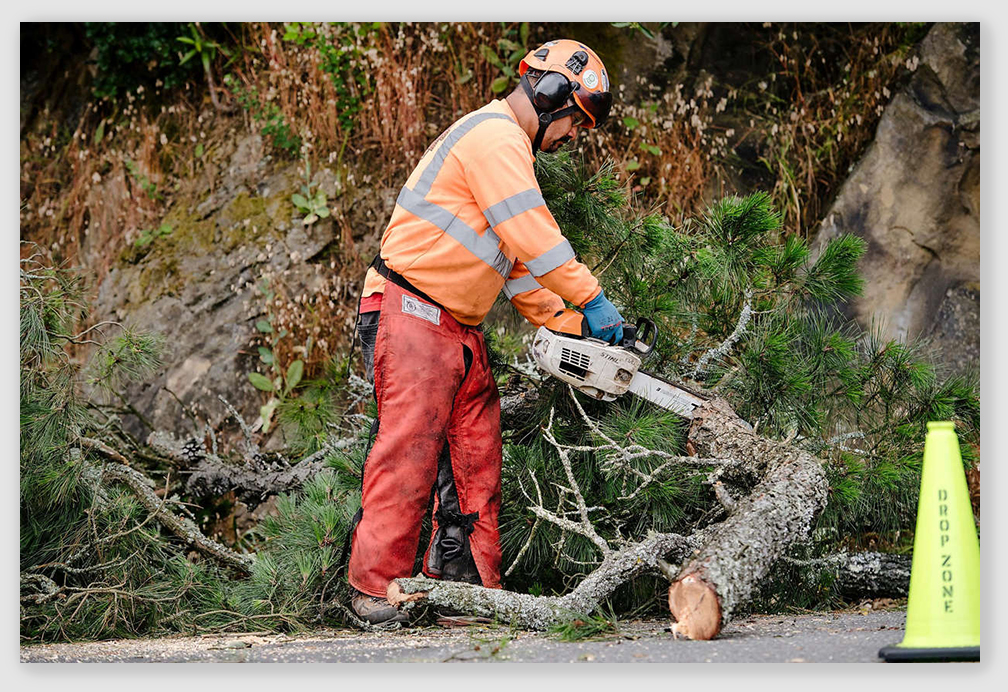
Pacific Gas and Electric Co. has been forced to submit to increased regulatory scrutiny because of its failure to trim trees adequately around its power lines most at risk of starting wildfires. The California Public Utilities Commission on Thursday ordered PG&E to create a plan detailing how the utility will ensure that its most dangerous electric circuits are prioritized for vegetation management work this year. It’s a response to an earlier commission audit showing that less than 5% of PG&E’s enhanced tree trimming occurred on the company’s 20 highest-risk power lines in 2020, based on the company’s own rankings. The commission vote places PG&E in the first of a six-step escalating regulatory enforcement process created last year when the company concluded a year-and-a-half-long bankruptcy prompted by its responsibility for years of disastrous wildfires. PG&E could lose its operating license if commissioners placed the company at the most extreme end of the new enforcement process. But regulators opted Thursday to impose the least-strict step, which requires the company to submit a plan by May 5 explaining how the company will avoid a repeat of its 2020 tree trimming failures. PG&E must report back every 90 days until the commission decides otherwise…
More severe and frequent fires in the Alaskan boreal forest are releasing vast stores of carbon and nitrogen from burned trees and soil into the atmosphere, a trend that could accelerate climate warming. But new research published this week in the journal Science shows that the deciduous trees replacing burned spruce forests more than make up for that loss, storing more carbon and accumulating it four times faster over a 100-year fire interval. The study, led by a team of researchers at the Center for Ecosystem Science and Society at Northern Arizona University, suggests that these faster-growing, less flammable deciduous forests may act as a stabilizing ‘firebreak’ against escalating fire patterns and nutrient loss in the region. The study began in the wake of the dramatic 2004 fire season in Alaska when an area seven times the long-term average burned. Historically, more than half of this forested terrain has been dominated by black spruce, but after fire, faster-growing aspen and birch are replacing some of these stands. The team, made up of researchers from Northern Arizona University, the University of Alaska Fairbanks, Auburn University, and University of Saskatchewan surveyed 75 black spruce stands that burned in 2004 and followed their recovery over the next 13 years. They also collected a range of data from trees and soils of different ages and burn severities to construct a chronosequence, a kind of scientific time-lapse that lets researchers fast-forward through a 100-year fire cycle to see how forests recover and change. “In 2005, I thought that there was no way these forests could recover the carbon they lost in this fire,” said Michelle Mack, a professor of biology at Northern Arizona University and the lead author of the study. “The literature is full of papers suggesting deeper, more severe fires burn more carbon than can be replaced before the next fire. But not only did we see these deciduous trees make up for those losses, they did so rapidly…”

Dominion Energy said Thursday it has begun cutting down 29 palmetto trees in Bluffton’s historic district, despite pressure from state legislators and outcry from town residents. Dominion Energy began removing the 90-year-old trees on Monday because they touched electrical wires and were a risk to the public, officials said. Earlier this week, there was hope that the utility might postpone the project, giving town officials and legislators time to fast-track a plan to bury the power lines and save the trees, a dilemma officials are also grappling with in Charleston. But on Thursday, Dominion Energy confirmed that nine trees had already been cut and said the project would continue. “Safety is our top priority, and due to increased foot traffic in the community during this weekly event — and as a courtesy to the town, the residents and participating vendors — work in the area will primarily be scheduled Monday through Wednesday as the project moves forward,” wrote Dominion spokesperson Paul Fischer. The energy company plans to work with Bluffton officials to plant future trees “in the right place to avoid trimming or removal as vegetation matures,” Fischer said…
Detroit, Michigan, News, April 15, 2021: Bradford pear trees on the way to becoming pests
Each spring for the last few years, I’ve taken the opportunity to voice my opinion on this blog about an invasive plant species issue that is relatively small right now but has the potential to explode into a major problem. I’m talking about Bradford Pear trees, those white-flowered, lovable, lollipop-shaped trees that everyone seems to adore. There are so many around and more are being planted every year. When first brought to market, they were thought to be sterile and unable to reproduce in the wild, therefore they were not considered a threat to the native landscape. And that seemed to be true for decades. Lately however, they are beginning to make their escape into the wild and are taking over plots of land. It’s been several years since I was made aware of the potential problem by a natural history biologist when she pointed out small clusters of wild Bradford pear trees popping up in spots across the area…
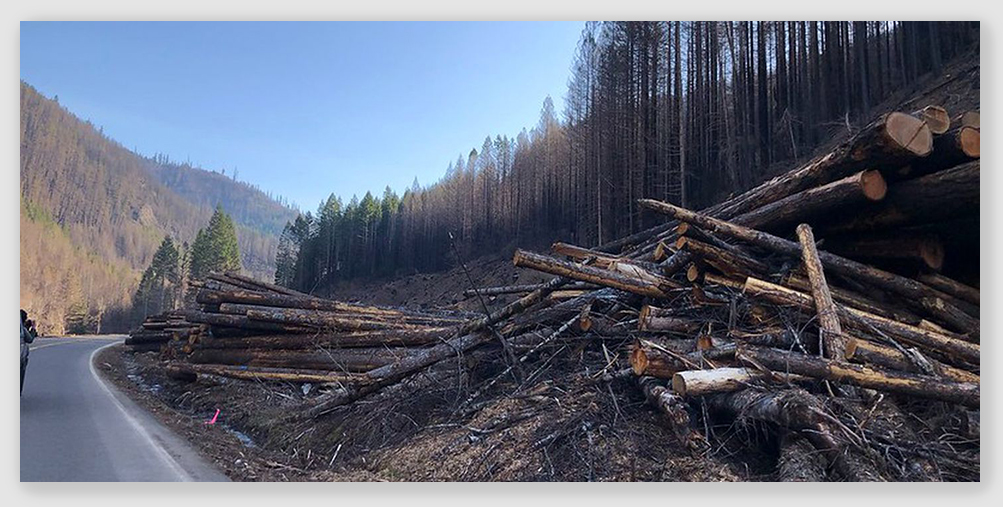 Portland, Oregon, Oregon Public Broadcasting, April 14, 2021: Arborists say ODOT post-fires tree cutting is
excessive, rushed
Oregon has a lot of cleanup work to do after more than 1 million acres of land burned in last year’s wildfires. That cleanup involves removing burned trees near roads and structures that could fall and create safety hazards. But which burned trees are truly hazardous and need to be removed? More than 20 conservation groups sent a letter Tuesday to Interior Secretary Deb Haaland and Agriculture Secretary Tom Vilsack opposing the post-fire roadside logging proposed or actively being carried out by federal agencies. And a growing number of people are sounding alarms over excessive tree-cutting along scenic highways and protected rivers as the Oregon Department of Transportation and its contractors proceed with plans to cut nearly 300,000 trees deemed as hazardous. The critics include arborists who have worked on the project and say the reckless tree-cutting operations across the state are being mismanaged and need to be stopped…
Maryland lawmakers voted late Monday to allow developers and home builders to replace some trees they cut down by preserving existing forest, a measure that local planning officials said was necessary to keep development moving. The legislation, passed in the final hours of the General Assembly session, came in response to a state attorney general opinion in October that said local planners had erred for decades in allowing developers to offset tree losses by preserving forest off-site. The state’s 1991 Forest Conservation Act, the opinion said, required that developers offset cleared trees by planting new ones. The legislation, sponsored by Del. James W. Gilchrist (D-Montgomery), would allow developers and builders to resume buying “credits” from “forest mitigation banks” created by farmers and other landowners who agree to preserve the required acreage. Planners in some counties had allowed that practice for decades but stopped it in the fall, following the attorney general’s opinion that it was improper…
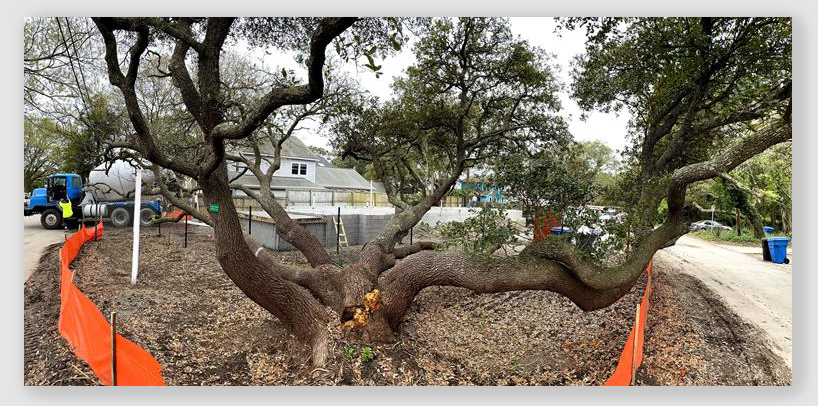
Home builders are trained to focus on certain elements of a plot of land. Zoning, surveying and demolition are among them. But for builder Chip Iuliano and his wife, Lisa, who were shopping for their own personal residence, a brawny southern live oak on the edge of a North End property sealed the deal from the beginning. “That was one of the things that drew us to the lot,” said Lisa Iuliano. “That tree is gorgeous sitting on the corner.” Known by neighbors as the “spider oak,” the tree’s burly branches spread low from its trunk like the legs of an oversized arachnid. This gentle giant has stood its ground on the corner of 88th Street and Atlantic Avenue for more than a century…
An unusual crime alert was issued this week in Tennessee, involving thefts of something most people ignore: Trees. Hardwoods are vanishing in the night thanks to thieves who are experts at getting in and out without being noticed, the state’s Department of Agriculture warns. “We’ve had reports of oak trees, poplar, and some hickory stolen in Middle and East Tennessee,” Agricultural Crime Unit Special Agent LaLonna Kuehn said in a news release. Last month, the National Park Service reported more than a dozen trees disappearing from Chickamauga & Chattanooga National Military Park in northern Georgia, “including several old-growth oaks.” A park ranger noticed a road where there should be no road and evidence trees were being dragged away. An arrest was made and the suspect took a plea deal, the National Park Service said. The motive is big money, Tennessee officials said. Timber prices are up — particularly for some species — and that is enticing thieves to take risks in the illegal logging trade…
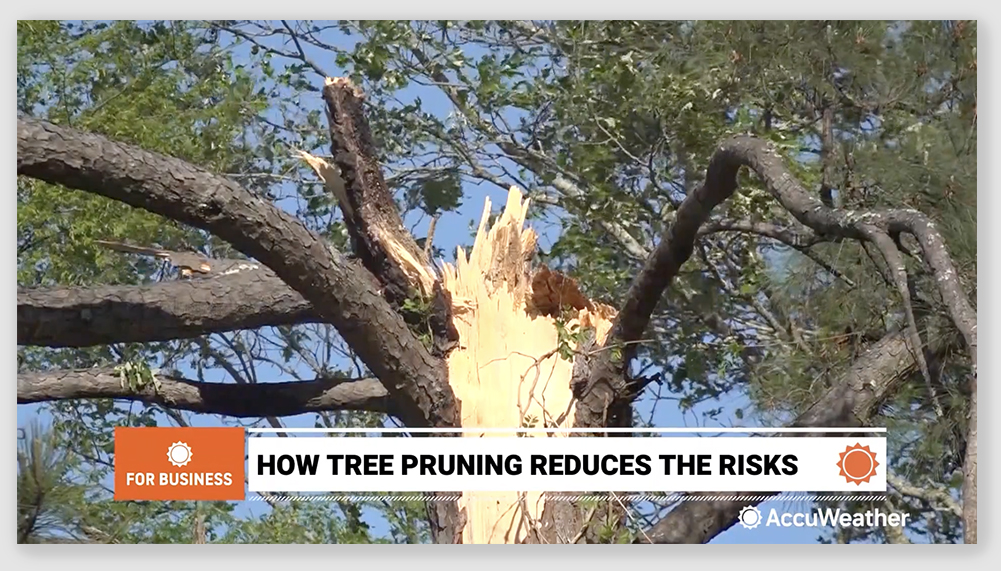 Yahoo News, April 12, 2021: How tree pruning can reduce the risks during spring storms
Experts say proper tree pruning can reduce the risk of property damage and injuries during spring severe weather season and the upcoming hurricane season. When the winds pick up, trees can come crashing down. A thunderstorm snapped a tree near Shreveport, Louisiana, hitting a mobile home and killing a man inside. An EF-1 tornado in north Louisiana sent trees toppling over, one injuring a grandmother inside this home. She was trapped inside her house for hours after an EF-3 tornado in central Alabama until crews and neighbors could cut their way through and get her to safety… Everybody loves trees, but trees are very heavy. And they can be deadly if they’re not taken care of… Pat Edmonds owns Edmonds Tree Service and says above-average rainfall across much of the South means more trees are uprooting and toppling over… The biggest safety risk is large trees growing too close to homes. It may cost hundreds or thousands of dollars, but Edmonds says removing a hazardous tree is worth the investment…
A group of researchers led by Brazilians has used an innovative model to map gaps in the Amazon rainforest and identify factors that contribute to tree mortality. Water stress, soil fertility, and anthropic forest degradation have the most influence on gap dynamics in the world’s largest and most biodiverse tropical rainforest, according to an article on the study published in Scientific Reports. Forest gaps are most frequent in the areas with the highest levels of soil fertility, possibly because the abundance of organic material drives faster tree growth and shorter life cycles. The main method of data collection used in the study was LiDAR (light detection and ranging), a remote sensing method that uses pulsed laser light. Coverage extended to remote parts of the Brazilian Amazon where fieldwork is very difficult and satellite images can be imprecise, owing mainly to heavy cloud…
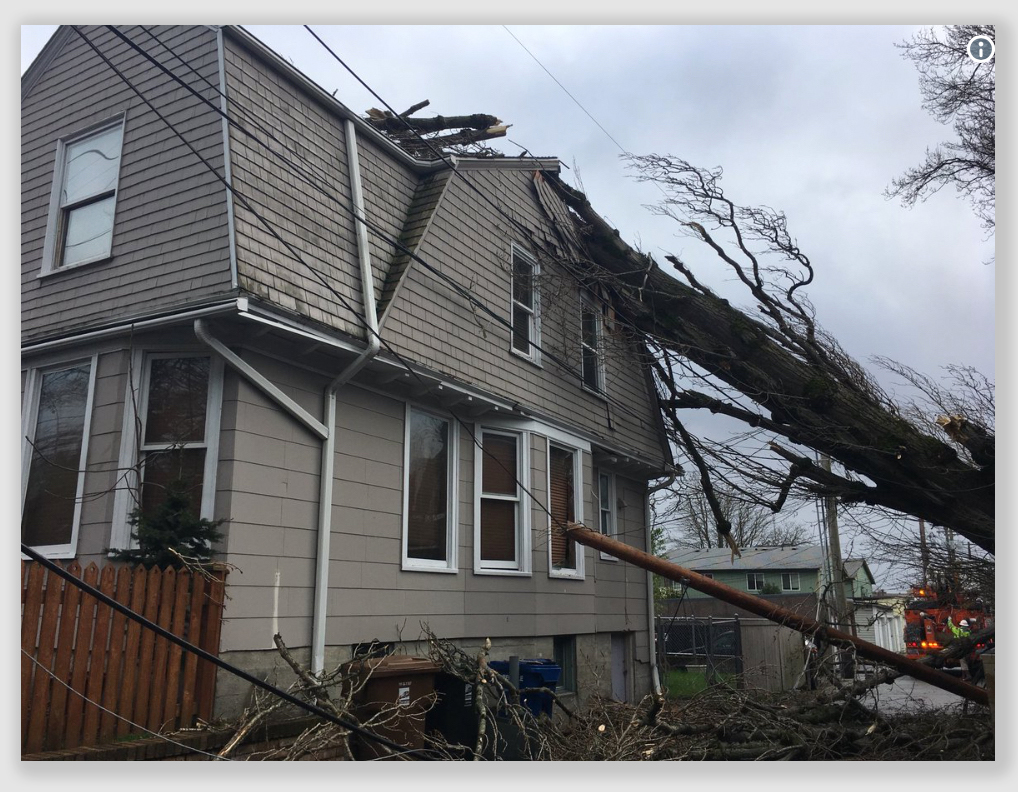
A local woman claims borough officials ignored her warnings about the dangerous condition of a historic tree here — a massive black oak that ultimately fell during a storm and destroyed her house. Brenda Zadjeika has sued the municipality and its Shade Tree Commission, contending they “disregard” her concerns about the centuries-old tree on the 200 block of Lake Street. Her lawsuit also alleges negligence by New Jersey-American Water Co., which owned the property where the tree stood. That site holds a pump house across the street from Zadjeika’s former home at the corner of Lake and Colonial Avenue. The tree, which was some 60 feet high and had a six-foot diameter, toppled during a thunderstorm on June 3, 2020. Almost three weeks earlier, Zadjeika had contacted borough officials about the tree’s “apparent dead trunk” and expressed fear “of the tree possibly falling” on her house, says the suit. She previously had alerted the borough in April 2020 that branches had dropped from the tree onto Lake Street and had made complaints in October 2019 and April 2015, the suit says. “It was in pretty bad shape,” the homeowner’s lawyer, Dennis Crawford, said of the tree. “Brenda put the township on notice and it’s something that could have easily been avoided,” said the Audubon attorney…
Though noise may change moment by moment for humans, it has a more lasting effect on trees and plants.
A new Cal Poly study reveals that human noise pollution affects the diversity of plant life in an ecosystem even after the noise has been removed. This is the first study that explores the long-term effects of noise on plant communities. It was published in the Proceedings of the Royal Society B. In a study conducted twelve years ago near natural gas wells in New Mexico, researchers found that there were 75% fewer piñon pine seedlings in noisy sites as in quiet ones. This was most likely due to the noise driving away the Woodhouse’s scrub jay, which plants thousands of pine seeds while storing them to eat during the winter months. A research team recently returned to the sites to find out whether the piñon pine had recovered over time. Because companies change the sites where they use noisy compressors to help produce natural gas, some of the previously noisy sites had become quiet. In these areas, there were fewer seedlings and saplings compared to sites that didn’t have compressors added to the wellpad to speed up gas extraction. The decrease in saplings results from the time when the site was noisy, but the decrease in seedlings shows that piñon pine seeds still weren’t sprouting once the noise was removed. “The effects of human noise pollution are growing into the structure of these woodland communities,” said biology professor and senior author Clint Francis. “What we’re seeing is that removal of the noise doesn’t necessarily immediately result in a recovery of ecological function…”
 Phys.org, April 12, 2021: States are growing fewer trees. Forest owners say that’s a problem
When wildfires ripped through Oregon last Labor Day, they burned huge swaths of forest, including 63,000 acres of smaller, private lands. Oregon state law requires forest owners to replant their land within two years of a wildfire, but many haven’t been able to: They used to rely heavily on state-run tree nurseries, but Oregon closed its nursery more than a decade ago. “We’re scratching our heads over this trying to address the need from the fire,” said Glenn Ahrens, a forester with the Oregon State University extension service. Seedlings are hard to come by. Large, commercial nurseries typically grow large tree orders on contract, supplying industrial timber companies that plan operations years in advance. State-run nurseries provide a more diverse array of species to landowners, allowing smaller orders on short notice. Many of the family foresters hit by the Oregon fires have struggled to obtain seedlings from the private sector. The seedling problem is not unique to Oregon. Eight states have closed their nurseries, most in the past two decades, according to a survey by the National Association of State Foresters. Twenty-nine states still operate nursery programs, though many have closed some of their facilities…
The half-dozen residents who sit on the Swampscott Tree Advisory Taskforce are quite the industrious bunch. Members dutifully assist the Swampscott Department of Public Works in the protection, planting and care of the town’s public trees – from developing policies to securing resources. “Swampscott trees are important: The town would be a very different place without them,” Swampscott resident Verena Karsten, who serves on the advisory task force, in a Friday call. “They play a critical part in everything: For animal life, for climate change, for public shade, for our quality of life.” Concerned residents established the advisory task force in 2018 after a conveyor belt of big storms wreaked havoc on Swampscott trees. “We had a couple nor’easters that took down a lot of our public-shade trees,” said Karsten. “So we started this group, and we’ve been meeting monthly ever since.” The advisory task force’s latest project – Swampscott Town Hall Tree Replacement – seeks community input and financial support to replace a former European beech situated next to the entrance of town hall. DPW crew members got rid of the massive, 70-year-old tree because it posed a safety hazard after a couple big storms took off a few of its limbs. The task force invites community members to vote on the next tree from a list of three species: scarlet oak, American sweetgum and American basswood…
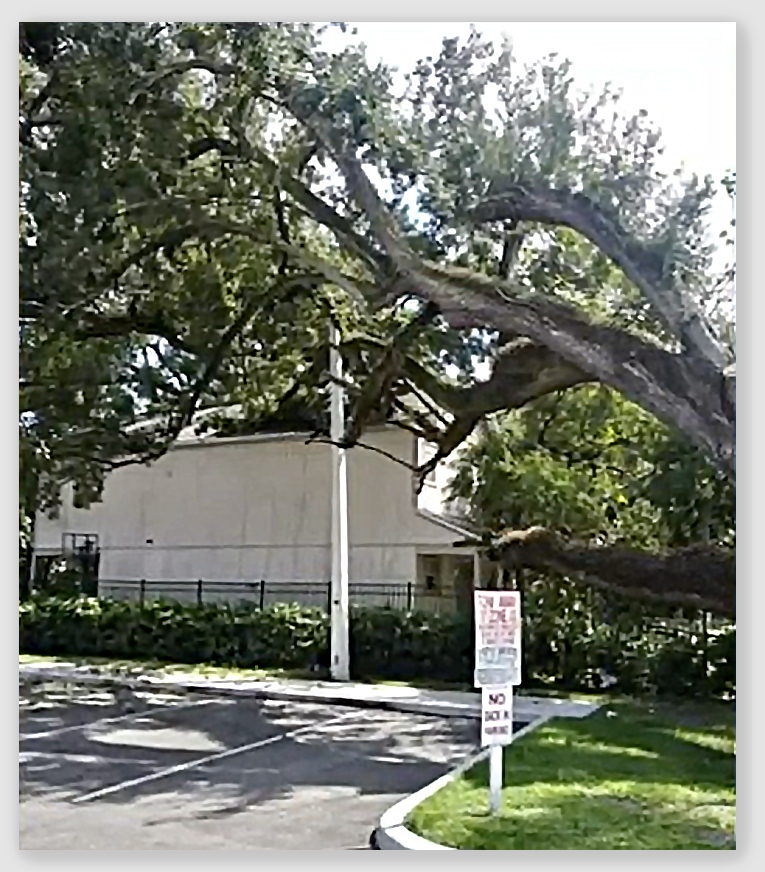
A Parramore woman says a tree from the city of Orlando’s right of way fell on her home. The city has paid out claims for damages like this in the past, but 9 Investigates learned they don’t plan to do so in this case. 9 Investigates first looked into the issue of old or dying trees in downtown Orlando back in 2018, during hurricane season. At the time, we learned that settlements had been paid for trees that fell on a person, or when a city tree was flagged for removal prior to the tree falling. The tree that once stood next to the home at 825 S. Parramore Ave. was never flagged for removal, and the city determined it wasn’t negligent in its maintenance, even after the homeowner said a private company cut some of its root system out to add a sidewalk right next to it. There is now a code enforcement warning on the front door of Frances Claxton’s home of 21 years. “It’s a city tree, so it was very frustrating. You think you’re doing the best you can, and nobody’s helping you,” Claxton said. Claxton was forced out of her home in September 2020, after the huge oak tree landed right on top of her roof. “The fire department, police department, code enforcement, city of Orlando, the apartment complex, everybody was out here, and the tree was laying over my entire house,” Claxton recalled. 9 Investigates has looked into what some call “time-bomb trees” in communities lined with laurel or live oaks across Orlando, where five years ago, a man won a $1.1 million judgment against the city after a downtown tree that had been flagged for removal fell and seriously hurt him…
Trees outside forests (TOF) are an underrepresented resource in forest poor nations. As a result of their frequent omission from national forest resource assessments and a lack of readily available very-high-resolution remotely sensed imagery, TOF status and characterization has until now, been unknown. Here, we assess the capacity of openly available 10 m ESA Sentinel constellation satellite imagery for mapping TOF extent at the national level in Bangladesh. In addition, we estimate canopy height for TOF using a TanDEM-X DEM. We map 2,233,578 ha of TOF in Bangladesh with a mean canopy height of 7.3 m. We map 31 and 53% more TOF than existing estimates of TOF and forest, respectively. We find TOF in Bangladesh is nationally fragmented as a consequence of agricultural activity, yet is capable of maintaining connectedness between remaining stands. Now, TOF accounting is feasible at the national scale using readily available datasets, enabling the mainstream inclusion of TOF in national forest resource assessments for other countries…

Pittsburgh’s Shade Tree Commission is embarking on a strategy to bring more street trees to low-income neighborhoods, part of an ambitious goal to plant 100,000 trees over the next decade. That’s a laudable effort that will benefit the targeted communities, but the city must also commit to maintaining existing trees if for no other reason than the liability involved. The commission recently reported on its findings that show “low-income and Black communities disproportionately have fewer city street trees and thus see less of the benefits of trees.” To that end, the commission plans to identify 10 low-income neighborhoods for tree plantings, urban forest education and cyclical tree maintenance schedules. While planting the trees to benefit these often neglected communities rightly is a top priority, maintenance of existing trees is equally important. Maintenance entails pruning, sidewalk repair and stump removal. Poorly maintained trees have been an ongoing problem for the city. An audit by Controller Michael Lamb of the city’s law department found that the majority of liability claims made against the city in 2016 and 2017 were from damage caused by city-maintained trees. Tens of thousands of dollars were paid out in claims from trees falling on cars or from tree-root damage to sidewalks, utility lines and buildings…
The ice storms that hit West Virginia in mid-February damaged a lot of trees, and some of those fallen trees and limbs blocked state park hiking trails. “Most of our areas didn’t have significant reports of damage,” said Brett McMillian, the state’s deputy chief of parks. “In the cases where there was significant damage, park staffs or volunteers have been working to get the trails cleared.” McMillian said the ice storm’s timing was actually pretty fortunate. “It happened just before we started into our spring maintenance programs,” he added. “We would have been out inspecting and clearing the trails anyway.” The storm hit the state’s westernmost counties hardest. McMillian said trail damage was worst at Cabwaylingo State Forest, in southeastern Wayne County. “We had some concerns that we might not be able to open the Cabwaylingo section of the Hatfield-McCoy Trail network (on March 1) as planned,” he added. “But our people were able to work with the Hatfield-McCoy people to get everything cleared on time.” Ice also damaged trees at Beech Fork State Park in northern Wayne County. Park superintendent Dillard Price said the storm toppled entire trees onto several popular trails…
Descendants of a Black family that once owned a thriving oceanfront resort in Manhattan Beach could get the property back under state legislation announced Friday. Backers of the proposal, which will be introduced by state Sen. Steven Bradford (D-Gardena) on Monday, say it is the first step toward correcting a historic injustice when the city seized the resort of Charles and Willa Bruce and forced Black beachgoers out of town 100 years ago. The bill, if passed, would allow Los Angeles County, which currently runs a lifeguard center on the site, to transfer the property to the Bruce family. State legislation is necessary to lift the restriction that the state placed on the property when it transferred the two parcels to L.A. County in 1995. “We stand here today to introduce a bill that will correct this gross injustice and allow the land to be returned to the Bruce family,” Bradford said Friday. “It is my hope that this legislation will not be the last in a series of actions by the state to address centuries of atrocious actions against Black Americans…”
I grew up on J Avenue in northwest Cedar Rapids, a neighborhood typical for much of the city, with lots of friends and helpful neighbors. It was a great place to be a kid. I had no idea that the magic of this community, its neighborhood spirit, would be central to my later life successes, let alone in response to community disasters. Our first business, Teleconnect, opened in 1980. Our primary competitor was the largest corporation in the world! However, at 33, I knew how our community worked, and I was completely confident we could create a compelling product that businesses here would purchase, and they did. This community acts as an incubator for many local companies, dating back to the city’s founding. And in times of disasters, we shine. The 2008 flood was a real testament to how our community pulls together. Some cities would have withered; Cedar Rapids has prospered. We all witnessed “community” — neighbors helping neighbors, sand bagging, rescues. No fatalities. This past year, a derecho struck our city in the midst of a pandemic. Again, the community responded. Neighbors helping neighbors. People moving in with others. Food, generators, chain saws, you name it: If you asked for something, someone seemed to be there with it. Immediately following the derecho, my friend and business partner Steve Knapp came up with a simple but brilliant solution to help our employees at Fiberutilities Group (FG) recover from the storm. Steve realized that the disaster was an opportunity for employees to learn the importance of native trees to our environment…
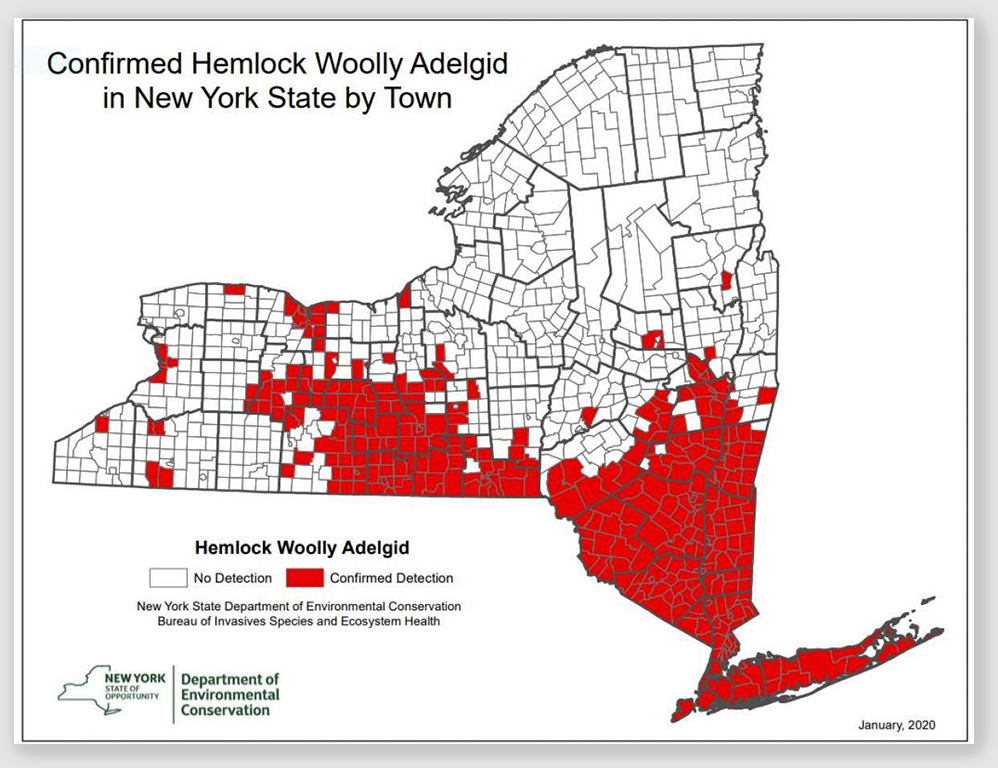
A tiny invasive insect is killing hemlock trees in the Adirondacks and your help is needed to spot the pest before it is too late. The Lake George watershed is home to the highest concentration of Eastern hemlocks in the state. Hemlocks play a vital role as a foundation species, hosting spiders and keeping streams level by absorbing excess groundwater in the spring and fall. The trees also insulate snowpack, which slows the melting process and ultimately helps freshwater streams and cold water fish species — like brook trout and salmon — thrive. But these valuable trees have a predator. This past summer, Hemlock Woolly Adelgid (HWA) infestations were found in and around the Lake George Islands and later in the fall at Shelving Rock, Buck Mountain Trailhead, on Dome Island, and several other locations in northern Saratoga County. HWA is a tiny, invasive insect that slowly kills hemlocks. It can hitch a ride on birds or small mammals, blow in the wind or move with lumber. “Our hemlock trees are not adaptive to a piercing, sucking pest like this, and we have no natural predator or controls in our ecosystem,” said Caroline Marschner of the New York State Hemlock Initiative with Cornell University. Native to Asia and the Pacific Northwest, HWA was first found in the lower Hudson Valley and Long Island in 1985, according to the Department of Environmental Conservation…
Many government commitments to fight climate change hinge on planting huge numbers of trees in hopes that the plants will remove carbon dioxide from the atmosphere and store it in their trunks. Scientists have criticized the suggestion that mass tree planting could be a climate change panacea, but a new study suggests there may not even be enough seeds to reach the lofty reforestation goals of initiatives such as the World Economic Forum’s one trillion tree campaign. In the United States, the “Trillion Trees Act” proposed planting 24 billion trees over the next 30 years. A 2020 analysis from the World Resources Institute stated that there was ample space to achieve 60 billion new trees by 2040, if all suitable land across the country was reforested without reducing food production. The new study was published last month in the journal Frontiers in Forest and Global Change. The U.S. would need to double its current seedling production—and then some—to plant roughly 30 billion trees, which is the amount the authors estimated would fit on the lower 48 states’ natural and agricultural lands, reports Kyla Mandel for National Geographic. “You can’t plant a tree until you grow it. And you can’t grow it in the nursery until you have the seed,” Joe Fargione, science director for The Nature Conservancy’s North America Region and the study’s lead author, tells National Geographic. Per the study, U.S. seedling production is currently around 1.3 billion a year, which means adding 30 billion trees by 2040 would require increasing annual production by 1.7 billion seedlings, a 2.3-fold increase that would raise total production to 3 billion baby trees…
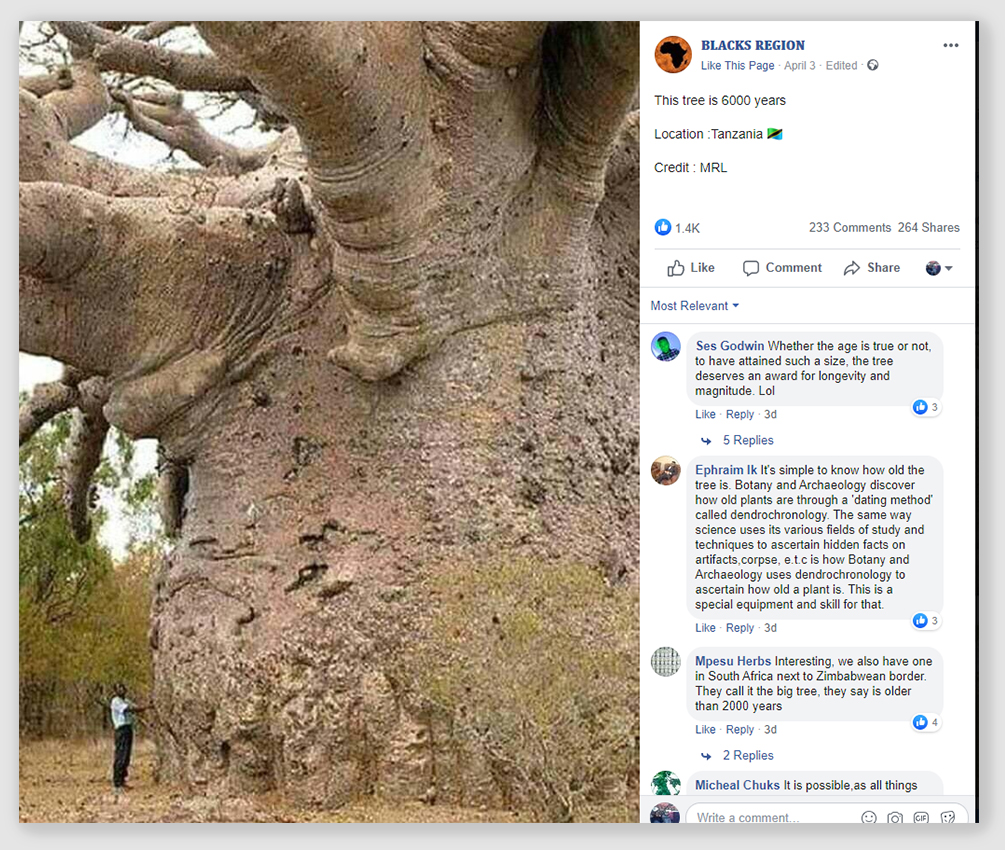 Agence France Press, April 8, 2021: To date, no tree has been verified to be 6,000 or more years old
An image of a large baobab has been shared hundreds of times on Facebook alongside claims that the tree is 6,000 years old and located in Tanzania. But experts say that no tree in the world has been discovered that is this old to date. The oldest living tree on record is a bristlecone pine in the United States. The Facebook post with the photo of the baobab has been shared more than 260 times since it was uploaded on April 3, 2021. No tree in the world has been verified to be 6,000 or more years old. In 2019, Snopes debunked a similar claim featuring this photograph. AFP Fact Check was unable to track down the exact tree in the Facebook post, but identified some key clues. The image has been circulating online since at least 2004. It shows a large baobab (Adansonia digitata) in an unknown location. Early postings claim that the photograph was taken in Senegal, not Tanzania. Based on a study published in the scientific journal Nature Plants, the oldest baobab tree on record lived in Zimbabwe and was estimated to be 2,450 years old when it died…
Piles and piles of raw logs stacked in the yards of wood pellet mills in northern British Columbia were one red flag. Now, a new report from the Canadian Centre for Policy Alternatives (CCPA) think-tank has caught the attention of environmental groups and a forestry workers’ union, who are concerned about companies chipping whole trees into pellets and exporting them for biofuel. They say the practice harms the environment and generates little employment, and are calling on the province to suspend the approval of new wood-pellet mills and conduct an independent review of the industry’s activities. “I don’t think that that is something we want from a climate perspective, from a jobs perspective, or from an ecological perspective,” said Ben Parfitt, CCPA policy analyst and the author of the report, which was released April 7. Parfitt’s research shows roughly 12 per cent of everything logged in B.C. becomes wood pellets. Pellets are primarily meant to be made from wood waste generated by pulp and saw mills. The report was released after the CCPA received photographs taken in March by an environmental organization that show large numbers of logs in pellet-mill yards in northern B.C. “Whole trees, indeed whole tracts of forest, are being logged with the express purpose of turning trees into a product that is then burned,” the report says…
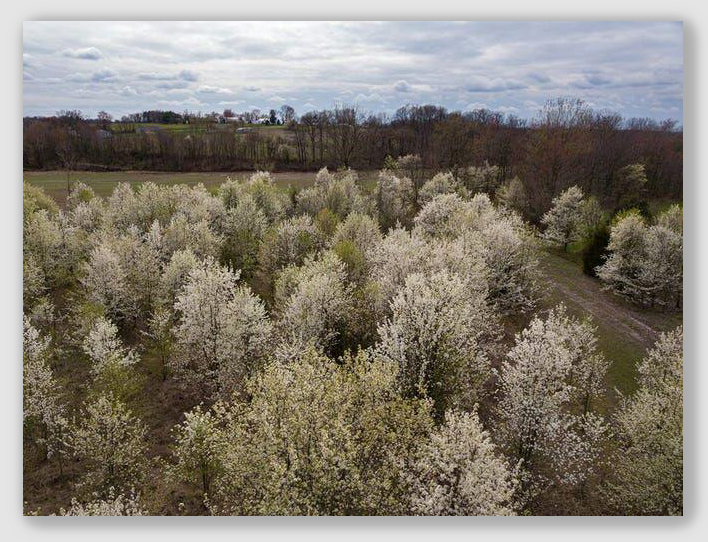
Invasive plants are wreaking havoc on Indiana’s ecosystems. It’s why last year the state put the Terrestrial Plants Rule into effect, banning 44 species of them from the landscaping trade. But experts say there were a few glaring plants left off the list. Most notably? The Bradford pear tree. This plant, favored by landscapers for its beautiful white blooms and stately appearance, is one of Indiana’s most criminal invasive species. Bradford pear trees, also called Callery pears, bloom earlier in the year, giving them an advantage over native species and allowing them to take their resources for its own. The trees have become so ubiquitous in Indiana that in some places you can find entire fields of them. But while they are bad for the environment, they’re also economically valuable for growers in the state. Very valuable. An analysis done in recent years found the tree earned nursery owners millions of dollars each year. That’s why they didn’t make it on the terrestrial plant rule. The Indiana Invasive Species Council, the group that decides which species to add to the ban, is prohibited from adding any plants that could cause significant economic harm to nurseries and small businesses. As such, a statewide effort is under way to educate consumers about the Bradford pear: If they stop buying, the council can finally add the tree to the list and cut Bradford pears out of the landscape trade for good. “We’re educating the general public and nurseries about how invasive they are,” said Megan Abraham, state entomologist with the Indiana Department of Natural Resources and member of the Indiana Invasive Species Council. “That comes with a lot of public outreach…”
A tree stump grinding machine fell on top of a man while he was working at a home on Redwood Avenue and died, according to the Jacksonville Sheriff’s Office. Officers and rescue personnel were called to the Southside neighborhood about 3:20 p.m. when a resident found the man trapped under the machine, Sgt. Steve Rudlaff said. He was 35 to 40 years old. “We know the employee was working by himself In the backyard of a residence using an industrial tree stump grinder between and the house and hedge,” Rudlaff said. After getting stuck, JSO said he immediately started screaming for help which led neighbors to call 911. The man was reportedly working to remove tree stumps from debris that was on the road, officers said. A First Coast News crew on the scene said there was a crew from Shaw’s Tree Service working at the home. Some details are still limited at this time as JSO continues to investigate this incident…

Trekking out to my research sites near North Carolina’s Alligator River National Wildlife Refuge, I slog through knee-deep water on a section of trail that is completely submerged. Permanent flooding has become commonplace on this low-lying peninsula, nestled behind North Carolina’s Outer Banks. The trees growing in the water are small and stunted. Many are dead. Throughout coastal North Carolina, evidence of forest die-off is everywhere. Nearly every roadside ditch I pass while driving around the region is lined with dead or dying trees. As an ecologist studying wetland response to sea level rise, I know this flooding is evidence that climate change is altering landscapes along the Atlantic coast. It’s emblematic of environmental changes that also threaten wildlife, ecosystems, and local farms and forestry businesses. Like all living organisms, trees die. But what is happening here is not normal. Large patches of trees are dying simultaneously, and saplings aren’t growing to take their place. And it’s not just a local issue: Seawater is raising salt levels in coastal woodlands along the entire Atlantic Coastal Plain, from Maine to Florida. Huge swaths of contiguous forest are dying. They’re now known in the scientific community as “ghost forests…”
Eucalyptus, a pest-resistant evergreen valued for its hardy lumber and wellness-promoting oil, can be genetically modified not to reproduce sexually, a key step toward preventing the global tree plantation staple from invading native ecosystems. Oregon State University’s Steve Strauss led an international collaboration that showed the CRISPR Cas9 gene editing technique could be used with nearly 100% efficiency to knock out LEAFY, the master gene behind flower formation. “The flowers never developed to the point where ovules, pollen or fertile seeds were observed,” Strauss said. “And there was no detectable negative effect on tree growth or form. A field study should be the next step to take a more careful look at stability of the vegetative and floral sterility traits, but with physical gene mutation we expect high reliability over the life of the trees.” Findings were published in Plant Biotechnology Journal…
 Reason.com, April 6, 2021: Why Isn’t California Safer From Wildfires?
It’s been four years since the North Bay Fires in California devastated Sonoma, Napa, and Mendocino, and three years since Paradise was nearly wiped off the map. Until last year, 2017 was the largest wildfire season on record, with more than 1.5 million acres burned in the wake of six years of drought. This past year blew that record away—2020 was the largest wildfire season in California’s recorded history, with 4.2 million acres burned by 10,000 wildfires. The severity of the 2020 fire season and the number of forest fires that move from the floor up to the canopy are clear evidence that we have not done enough. Our forests are not healthy, and lives and property continue to be at risk. We know all this. Wildfire risk is a top concern of fire agencies, legislators, and residents alike. So why aren’t we safer? The biggest hurdle is the well-intentioned California Environmental Quality Act (CEQA), which introduces layers of uncertainty and complication, holding up much of the fire prevention work identified after 2017…
Fort Myers, Florida, WBBH-TV, April 6, 2021: Historic trees experience unusually early bloom
The blooming of the East Asian Cherry Tree is a major springtime tourist attraction in Washington, DC and in cities across Japan. But this year the beautiful hues of pink and white came earlier than normal, and in some parts of Japan, blossoms peaked at the earliest point on the calendar in more than 1,200 years! That’s according to a new study released in Japan which looked at documents dating back to the year 812 kept in the city of Kyoto. That’s where this year, the brief window of time when blossoms were at their peak, occurred on March 26th. That makes for the city’s earliest bloom peak in the long trail of records dating back centuries upon centuries. There are several factors likely at work moving up the blossom peak this year. In any given year, the weather will certainly play a role in day-to-day temperature ranges and variations in precipitation. These are factors that can delay or speed up the blossom peak. Another contribution could be the concept of the “urban heat island”. Considering Kyoto has more than 1,000 years of consistent recorded history you must take into account how the city itself has changed in that time. Large modern cities of today are filled with concrete and pavement, things that weren’t there when Kyoto was first settled before the year 800. Massive concrete structures absorb heat during the day before releasing it at night when the sun goes down. This keeps urban areas warm during the day, and mild at night, especially compared to outlying rural areas which cool down far more because of the absence of the build-up of materials creating the urban heat island effect…
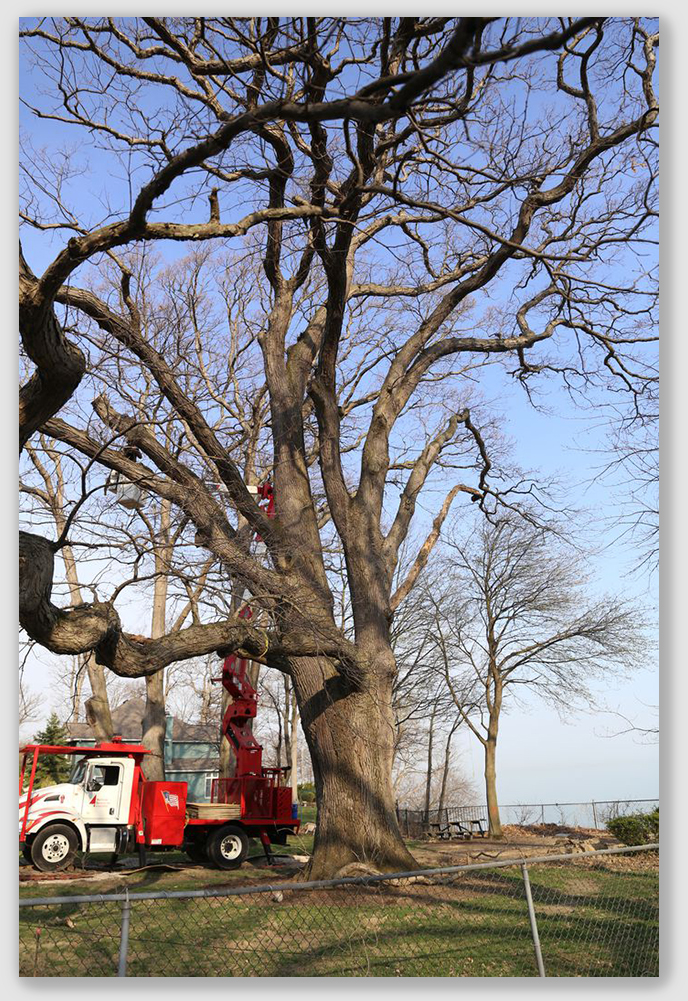 Cleveland, Ohio, Plain Dealer, April 6, 2021: 350-year-old tree in Bay Village comes down
As Wendy Wagner and her husband, Mike Walker, sat on their balcony Tuesday, the whir of the chainsaw reverberated around Lake Road. For a moment, the couple played bagpipe music as is done at funerals, gazing at Grand Abby Oak as the 350-year-old tree was slowly stripped from the earth. The tree, located on property known as Lil Acre, is a beloved landmark in Wagner’s neighborhood and in Bay Village, but it came down Tuesday despite a public pressure campaign aimed at getting Lil Acre’s new owners, Steven and Debra Diamond, to save it. A week ago, Steven Diamond told cleveland.com that his family had made no decision about removing the tree as part of a construction project underway on the property. “If we can save it, we will,” he said then. “It’s a cool tree. If we don’t need to dig near it, it may survive.” Diamond said he was seeking opinions from experts to determine the oak’s life expectancy and whether its extensive root system would be damaged when crews dig the foundation for his new home. “After consulting with an arborist after we spoke he explained that the tree was nearing the end of its life and that any changes to the current habitat of the tree would not be tolerated very well,” Diamond wrote in a text to cleveland.com…
The Missouri Department of Conservation is once again asking the public to stop the spread of Callery pear trees and plant alternatives instead. Also known as the Bradford pear, the Callery pear tree is an invasive species known to crowd out Missouri’s native plants. It’s been a popular landscaping tree for decades, and cultivated forms have spread throughout the state. Abundant clusters of five-petaled, white flowers emerge in late March and April before leaf out. Round, small, olive-brown fruits appear from May to July, according to the department. “Callery pears have been a tree many people have enjoyed for years,” said Ann Koenig, a community forester with the department, in a statement. “However, besides the fact that these trees often break apart in storms, and that they have foul-smelling flowers, it turns out these trees are spreading throughout fields and forests, causing problems in our more natural areas. We are excited to work with our partners to provide great, native trees to those who are ready to replace them.” Ozark Nursery of Joplin owner Gayl Navarro said she doesn’t sell Bradford pear trees because they’re invasive and birds tend to spread the seeds everywhere. “They’ve been listed as an invasive species by the MDC, so when you make that hot list, I’m out,” she said…
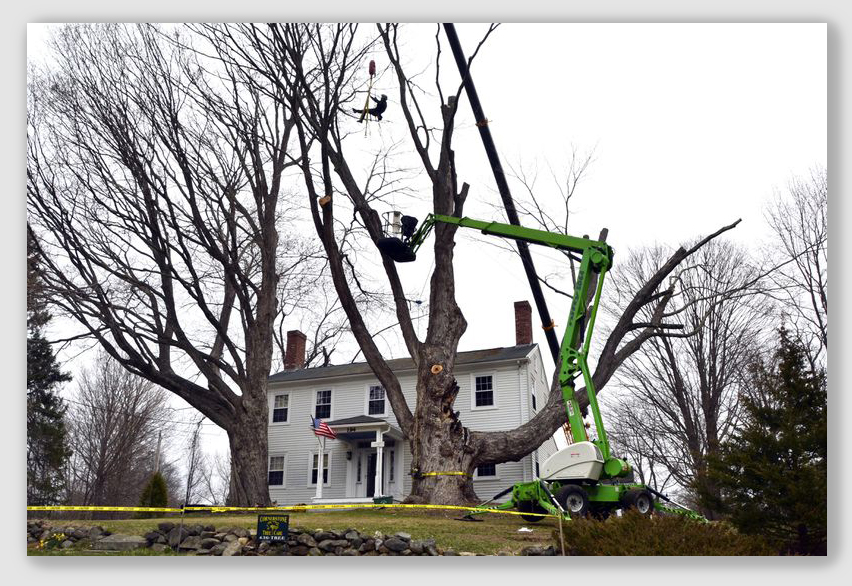 Manchester, New Hampshire, Union Leader, April 5, 2021: Taking down the tree
A treasured sugar maple tree that is the largest known of its kind in the country has towered over the front of the Buxton property for nearly 250 years, but now it is dying. On Monday, the decaying tree that has made memories for generations of locals is to be taken down. The tree has withstood beatings from fierce hurricanes and other harsh weather during its long life, but recent winds took a heavy toll and a widening crack has worsened, raising fears that it could break apart and damage the 18th-century farmhouse or hurt someone. “We’ve had many years of pleasure from the tree,” said Janet Buxton, whose family moved to the Drinkwater Road farm property in 1954. The tree is known as a “champion” sugar maple. It has long been considered the largest sugar maple in the state through the New Hampshire Big Tree Program. Last year, the Buxtons’ sugar maple appeared on the National Register of Champion Trees after it was determined to be the largest known tree of its species in the United States based on measurements provided to American Forests, the country’s oldest national nonprofit conservation organization. The tree is believed to have been planted alongside a second sugar maple around 1780…
A new chapter is being written for Centralia, the mostly abandoned Columbia County town with a coal-fueled fire burning beneath it. The Eastern Pennsylvania Coalition for Abandoned Mine Reclamation is leading an environmental improvement effort in the town to develop wildlife habitat, offset some carbon footprint, reduce illegal dumping and lead to more ecosystem restoration. The next step is a tree-planting project involving volunteers and 250 apple trees April 17 in the deserted areas of Centralia. The project is funded by ISI and Mental Insight Foundation. The coalition has also partnered with Keystone 10 Million Trees Partnership, which will donate shelters for the trees as well as native trees for a fall planting during the next annual cleanup in October. The organization also hopes the area, which already has several patches of wildflowers and attracts considerable butterfly populations, will become an official Monarch Butterfly Waystation. The coalition plans to grow milkweed and other pollinator plants, and to work with local community programs to raise butterflies, culminating in a fall release of the butterflies at the location…The one-time thriving coal town saw its history and legacy change dramatically in 1962 when a trash fire near an abandoned strip mine ignited what was left of the 25 million-ton coal seam beneath the town. That fire never stopped spreading and, as it did, released noxious gas and opened sinkholes…

When wildfires ripped through Oregon last Labor Day, they burned huge swaths of forest, including 63,000 acres of smaller, private lands. Oregon state law requires forest owners to replant their land within two years of a wildfire, but many haven’t been able to: They used to rely heavily on state-run tree nurseries, but Oregon closed its nursery more than a decade ago. “We’re scratching our heads over this trying to address the need from the fire,” said Glenn Ahrens, a forester with the Oregon State University extension service. Seedlings are hard to come by. Large, commercial nurseries typically grow large tree orders on contract, supplying industrial timber companies that plan operations years in advance. State-run nurseries provide a more diverse array of species to landowners, allowing smaller orders on short notice. Many of the family foresters hit by the Oregon fires have struggled to obtain seedlings from the private sector. The seedling problem is not unique to Oregon. Eight states have closed their nurseries, most in the past two decades, according to a survey by the National Association of State Foresters. Twenty-nine states still operate nursery programs, though many have closed some of their facilities…
Last month at the Mammoth Mine site in Smithers, 36 contractors planted 204,000 trees on 267 acres of legacy minelands, as part of a large-scale restoration project in the Upper Kanawha Valley. The property is owned by the West Virginia Land Trust, which will manage the tract and adjacent, non-mined land. Appalachian Headwaters and Green Forests Work will perform annual restoration work on the 6,000-acre mine. After access and trails are developed, it will be open to the public for outdoor recreation under the name of the Mammoth Preserve. Mountain bike and hiking trails are among the recreational amenities foreseen for the property, according to a September 2020 Charleston Gazette-Mail article. Horseback riding trails and camping sites will also be considered, the article stated. The Mammoth site was covered in autumn olive and other invasive species during last month’s effort. Invasives were cleared, the largest trees were left standing and mined areas were deep ripped. Species such as white oak and black locust were planted by the contractors over a four-day period. Trees were provided to the project by the Arbor Day Foundation. Site preparation began last summer…
 New York City, The Wall Street Journal, April 3, 2021: The Cycling Fans Who Watch the Trees
When all of Belgium tunes in to watch the Tour of Flanders bicycle race, Pieter De Frenne watches the trees. They’re only on screen for as long as it takes the peloton to whiz by, but it’s enough for De Frenne to recognize them, log them, and gather a tiny insight into how the planet is changing. That’s because De Frenne is a pro cyclist in his dreams and a pro botanist in real life. And along with a team from the University of Ghent, he figured out that somewhere in Belgium’s annual festival of sore legs, cobbled hills and heady beers, there was climate science to be done. It turns out that three decades’ worth of footage from the Tour of Flanders, whose 105th edition is this Sunday, contained a trove of botany data. By identifying specific trees along key points of the race route, De Frenne’s team of researchers was able to log their leaf cover, April after April, and see how dozens of species were reacting to climate change. “There are not many professional sports that are displayed on television annually, on the same routes, in the same places,” De Frenne said. “And it’s also exactly the right time, April, when the trees start to flush their leaves.” If the Tour of Flanders were in June, the bike race might be worthless to botanists. But because it lands at this precise moment of spring, it became clear to his team that plant life was blooming earlier in the year as temperatures crept up. The work was as much about counting leaves as it was about pioneering this innovative approach, which De Frenne and his team laid out in a 2018 paper published in the British Ecological Society’s Methods in Ecology and Evolution…
As you research the trees or shrubs you might plant this spring, keep one important idea in mind: diversity. “It’s always better, in the garden and in the neighborhood, to have lots of different kinds of plants than to plant more of the same thing,” said Julie Janoski, Plant Clinic manager at The Morton Arboretum in Lisle. Too many of any one kind of plant makes them all more vulnerable. The classic example is the stately American elms that once lined many of Chicago’s streets. When the Dutch elm disease arrived in the 1950s, it passed readily from one tree to the next. “Large numbers of trees were infected and killed,” Janoski said. Often, the elms were replaced by ash trees — “Too many ash trees,” Janoski said. Those trees then became easy pickings for the emerald ash borer. “Now we know better than to put all our eggs in one basket,” Janoski said. “We want to mix it up and plant a lot of different species, so no one pest or disease can destroy a whole street of trees.” The need for diversity is not just true of trees. It’s a familiar principle to anyone who plans a vegetable garden. You may love the taste of a particular tomato variety, but if that’s all you plant, you can lose your entire crop to one disease or other problem. Experienced gardeners plant a range of varieties to be sure of having tomatoes in August…
 London, UK, Daily Mail, April 5, 2021: Expert calls for BAMBOO to be sold with a warning as the highly-invasive oriental plant can damage houses and break through bricks, mortar and concrete just like Japanese knotweed
Bamboo is a popular choice for people living in cities as it grows quickly, is very hardy and provides natural screening from nosy neighbours. But experts say bamboo is an invasive plant that spreads rapidly and can damage houses, much like the notorious Japanese knotweed. Shoots of the oriental plant have been found in people’s homes after breaking through from their garden and experts are now calling for the plant to be sold with a warning to inform members of the public of the risk it poses. Shoots of the oriental plant have been found in people’s homes after breaking through from their garden and experts are now calling for the plant to be sold with a warning to inform members of the public of the risk it poses. The roots of some varieties of the Asian plant can spread up to 30ft, causing large amounts of damage to nearby homes. Its destructive ability and durability make it a risky choice for a domestic garden and also make it difficult and expensive to remove…
Waco, Texas, Tribune, April 2, 2021: Severe tree topping leads to decay
DEAR NEIL: I have an issue with some type of insect eating my red oak tree. (Please see photos attached.) What type of insecticide would control them?
Dear Reader: This is not about an insect. I don’t know why the tree would have been pruned the way it has been. However, the severe topping of the tree has led to decay through the heartwood of the trunk. Borers have then moved into the trunk over the years and devoured the wood. Feel free to get the second opinion of a certified arborist. I am fearful that this tree could fall once it leafs out. The canopy will catch the prevailing winds, and there may not be enough strength left in the trunk to support it all. I believe it’s time to have it taken down and to find a replacement tree…
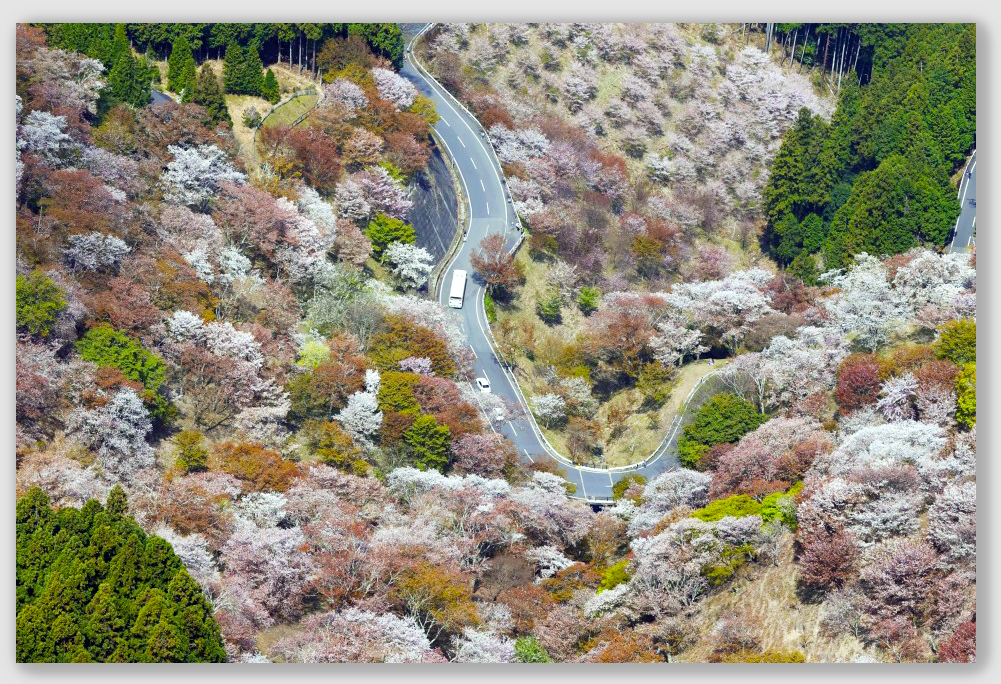
Cherry blossoms covering Mt. Yoshino, renowned for its 30,000 sakura trees of 200 varieties, in the western Japan prefecture of Nara reached their peak blooms Friday, 10 days earlier than usual. This year was also marked by fewer visitors due to the coronavirus pandemic, with disinfection booths set up in nearby train stations and parking areas, as well as bus tours for tourists taking rapid COVID-19 tests before visiting the area. Reservations for about 2,000 buses for tours are made every year but they have plummeted to a tenth this year due to the coronavirus spread, according to the town of Yoshino where the mountain is located. Most of the visitors who saw the pink and white flowers, mostly Cerasus jamasakura, wore masks and took pictures as they walked up the mountain paths…
The family of a recent Cal State University East Bay grad who was killed by a fallen tree outside his workplace in Burlingame in late February has filed a wrongful death lawsuit against the property owner and landscaping companies. Khalil Gay was walking with a co-worker outside the Color Genomics facility on Mitten Road when a 30-foot-tall Brazilian peppertree fell on him February 26. Despite assistance from coworkers and first responders, Gay was declared dead at the scene. Attorneys representing Gay’s parents filed a lawsuit in San Mateo County Superior Court on Tuesday seeking general and wrongful death damages. “This brilliant and caring young man’s life was cut short as a result of the defendants’ neglect in caring for and safely maintaining this tree. In fact, the tree should have been removed long before it fell onto Kahlil and killed him,” said attorney Robert Glassman. According to attorneys, the tree was in a dangerous condition due to multiple factors. The lawsuit alleges that the tree was planted on bay fill and too close to a neighboring tree, which hindered its root structure and its growth. Attorneys also claim the tree was in “obvious decline” since at least May of 2019 and its roots were further disturbed last year when a large fire water main was installed nearby. Before the tree fell, the tree’s roots were cut, and most of the other roots were diseased and or decayed…
 Counterpunch, April 2, 2021: The 99-Year Old Grandmother Argument and the Bias of Forestry Advocates
This past week I was invited to present my views on forest health and fire ecology to a group of Washington State residents and legislators by Zoom. The other presenter was a forester with the Washington State Natural Resources Department. The forester continuously told our audience that our forests were unhealthy and needed to be “restored,” by “active forest management” so they had “resilience.” As some of you know, “active forest management” is a euphemism for logging and manipulating our forest ecosystems. Of course, the unspoken underlying assumption is that foresters “know” what constitutes a “healthy” forest. Not surprisingly, the timber industry, forestry schools, and foresters tend to define forest health in terms of tree mortality. High tree mortality from any natural agent–whether drought, wildfire, bark beetles, mistletoe, fungi, or other sources– is to many foresters evidence of an “unhealthy” forest. By happy coincidence, the solution to all these health issues is to log the forest. Most foresters share a worldview that managing forests for timber production is the same as maintaining healthy forests. Like many of today’s more enlightened agency people, this forester acknowledged that fire had a place on the landscape. Just not that much of the landscape and not if it killed a lot of trees…
Legislation sponsored by a rural Washington lawmaker aims to improve the quality of life in the state’s urban communities by encouraging utilities to engage in tree-planting efforts. House Bill 1114, sponsored by Rep. Mary Dye, R-Pomeroy, passed the Washington House and Senate unanimously and now awaits the governor’s signature. Besides encouraging electrical utilities to adopt tree-planting programs, the measure authorizes the Washington Utilities and Transportation Commission to approve financial incentives for investor-owned utilities that offer such programs. The intent, Dye said, is to reduce the negative effects associated with urban heat islands, thereby improving the environment and quality of life for urban residents. The term “urban heat island” refers to the higher temperatures that occur in areas where natural vegetation and soils have been replaced by sidewalks, pavement, buildings and other heat-absorbing materials and structures. This built-up environment essentially creates human-made canyons that absorb heat, release it slowly and raise overall temperatures, Dye said. Downtown Seattle, for example, “can be as much as 17 degrees warmer than the surrounding countryside, and the median difference is 4.1 degrees…”

The Idaho Potato Commission (IPC) revealed today that its famous Big Idaho® Potato Truck has grown sprouts up to 30 feet long while being stored in a cool, dry place (as recommended) since March 2020 when the annual tour was suspended due to COVID-19. But not to worry! It turns out potatoes are still perfectly fine for both eating and touring with all of their heart-healthy nutrients intact, even after sprouting. “When a potato sprouts, it’s just doing what potatoes naturally do – growing and making more potatoes,” says Frank Muir, President & CEO, IPC. “To enjoy them, simply remove the sprouts. In fact, that’s why peelers have a scooped-shaped tip – to help dig out the sprouts.” The IPC is currently working on building a giant potato peeler to rid the 4-ton-tater of its oversized tuberous appendages before it returns to the road, hopefully sometime later in the year…
A back-and-forth dispute between next door neighbors is spilling over to the rest of the neighborhood. “It’s offensive to me. It’s offensive to my neighbors. It’s degrading. It’s disgusting and it needs to come down,” said neighbor Rhonda Valdez. Four blow-up dolls and a blow-up llama were hung over the weekend at a home on W. Dartmouth Place in Lakewood. The dolls are intended to be little more than gag gifts. The dolls hang onto the property of the man who owns them. The tree itself is on the property of his neighbor. Both told us off camera they have had disagreements over the years about everything from tree limbs to cars parked in back yards. “I understand there’s a dispute between neighbors, but they made it a neighborhood dispute,” said neighbor Andy Hodler. Neighbors are taking issue with the dolls being hung in plain sight…
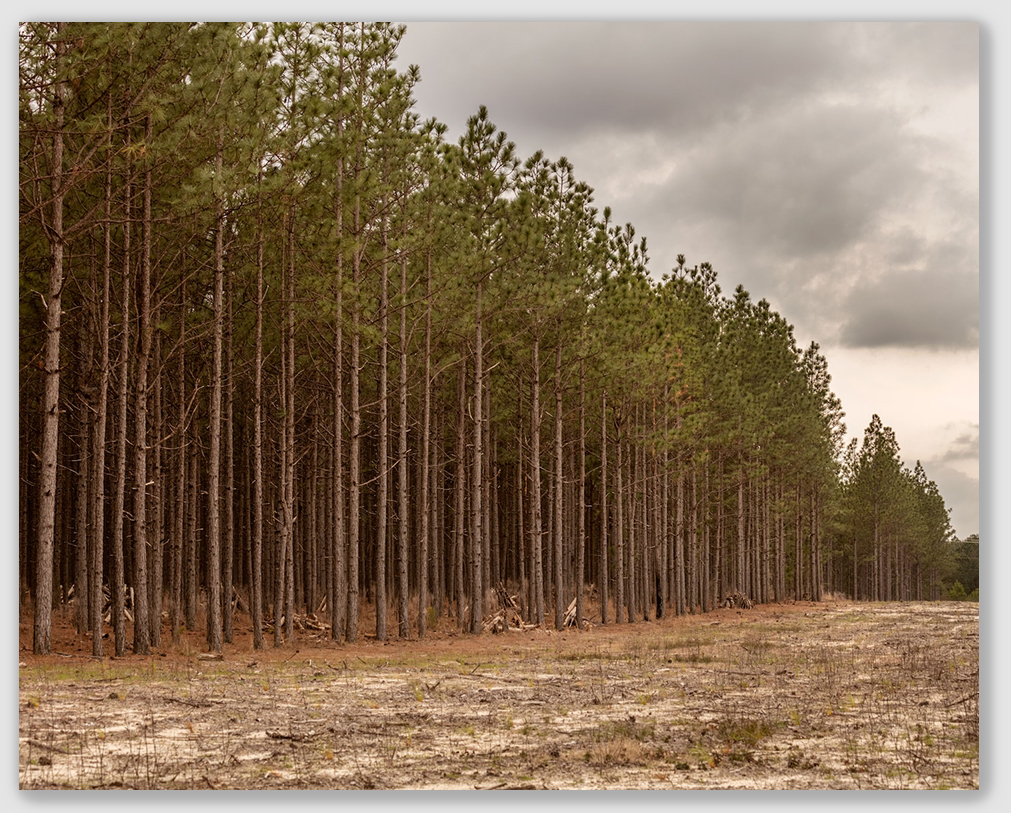
There is a saying among some farmers in the Carolina Sandhills: “A man would have to be a fool to cut down a longleaf pine.” It’s not because the gangly-limbed tree is particularly beautiful. The pine doesn’t have a magnolia’s flowers or an oak’s shade. And it has nothing to do with the endangered red-cockaded woodpecker that calls the tree home. The longleaf pine’s most obvious attribute is its strong, straight timber — perfect for utility poles. But the reason that longleaf pines are prized around here: their needles. The dropped needles are in such demand that a lucrative business has grown up around raking, baling and selling them to landscapers and homeowners as mulch. Three varieties of pine needles are farmed, but the discarded debris of a longleaf pine is the most sought-after — and fetches the best price — because of its unusual length and high resin content, making it an attractive, water-retaining ground cover for gardens. Some even call it “brown gold.” And like anything valuable left just lying on the ground, theft is a problem. That’s why North Carolina made it a felony to steal pine needles…
As the city still recovers from several flash floods and rains over the past week, one community group is looking to the future. Jim Gregory with the Nashville Tree conservation Corps says a new bill signed into law by Mayor John Cooper this week could help prevent some future flooding. The bill would require developers to install new trees to replace ones they remove when building certain developments. Gregory says he’s seen how tree removal has made neighborhood flash flooding issues worse. “When you remove these large trees that are absorbing thousands of gallons of water in our neighborhood, and then expand the building footprint to create more impervious services, we are going to have flooding issues,” Gregory said…

Southern California Edison will remove about 11,000 palm trees over the next two years to mitigate the risk of wildfires. The work will begin next month, according to SCE, and is part of the utility’s Wildfire Mitigation Plan 2021 update. The removals will occur in Los Angeles County communities including Santa Clarita, La Canada Flintridge and Malibu, and also in Santa Ana, Simi Valley, Lake Elsinore and other cities. The targeted trees are too close to power lines, and can cause power outages or fires due to falling palm fronds, according to the utility. The removal will include about 5,000 palms located in non-high fire risk areas if they are not at least 18 inches away from power lines. SCE officials say it’s better to remove the trees than trim them, which only stimulates growth. Officials will notify property owners ahead of time to discuss the risk factors. A door hanger will also be posted 24 to 48 hours prior to any required work, except in cases of an imminent risk to public safety. Home and property owners who plan to do their own tree trimming or removal are encouraged to call SCE before starting any work. “We understand that people living in Southern California love their palms, but since fire season is year-round, they can be a danger to the public. We will inspect vegetation before it’s removed and meet with the property owner in person to discuss the process,” said David Faasua, SCE vegetation management senior specialist…
What does a robotics professor know about trimming trees? If you ask Dugan Um of Texas A&M University-Corpus Christi, he’ll tell you just enough to make a difference in his community. “I kind of just picked (tree trimming) up in a way,” he said. “So it’s kind of, you know, instinct.” But it’s intellect instead of instinct that Um used to make the landscaping activity safer. Relying on his 20 years of experience studying and making robots, Um and a visiting professor from South Korea designed a contraption that allows them to use an electric saw high in a tree from a safe distance away, allowing them to avoid cut branches falling from the tree. With the right equipment, the professor duo then started a tree trimming service back in December. They have some paying customers, but Um is also offering his services for free to people who’ve been negatively impacted by the COVID-19 pandemic and/or the deep freeze in February. “There are some people who are broken financially,” Um said. “So we try to help them make this, you know, the society kind of beautiful…”
Dennis O’Leary slowly moved across a thick carpet of oak leaves, pausing to run a bare palm over the bark of a pair of gnarled, intertwined trees that had weathered centuries of the elements together. “Look at how that white oak is embracing that red oak,” he said. “You can see the twists and turns from lightning strikes and freeze-thaw cycles. Our lives are a speck in their timelines.” O’Leary led a tour Friday afternoon through the last old-growth forest within shouting distance of downtown Albany. The 65-acre parcel, never logged or disrupted by human hand, contains dozens of trees on the former Corning family estate that are more than 150 years old, a designation of “old-growth” determined by an international consortium. Specimens of American beech trees here are believed to date to the 17th century, with crowns more than 80 feet high and trunks 4 feet in diameter. “The forest is a living laboratory if you know how to observe and learn from it,” O’Leary said…
UPI, March 29, 2021: Keeping mature trees could mitigate drainage in coastal forests
North Carolina State researchers said Monday that managers should keep older trees when they timber harvests since they drain less water. Researchers tracked how water moves through wetland pine forests near the North Carolina coast, found that younger trees take up and release less water than mature trees — those 10 years or older — according to their new study, published Monday in the journal Agricultural and Forest Meteorology. Clearing the site and replanting could initially increase drainage and flooding, but those impacts would decrease once trees mature, the findings suggest. “The water balance, especially in coastal sites, is very important,” the study’s lead author Maricar Aguilos, a N.C. State postdoctoral research associate in forestry and environmental resources, said in a press release. The findings come from a long-term research project into how wetland forests in eastern North Carolina, including pine forests managed for timber and a natural hardwood forest at the Alligator River National Wildlife Refuge in Dare County, have been responding to climate change…

Friends and family of the couple who died when a redwood tree fell on their car near Hiouchi on Thursday have created a Go Fund Me page for their five children. Jake Woodruff, 35, and his wife, Jessica, 45, who were on their way from Yreka to Oregon to celebrate Jessica Woodruff’s birthday, were killed instantly, according to their cousin, Emma Miravalle Hood, whose family created the Go Fund Me page. The Woodruffs leave behind five children ranging in age from 8 to 24. The children’s names are Megan, Evan, Casey, Allie and Chelsea. “The two adult children are from Jessica’s prior marriage and they have immediately stepped up to take on raising their younger siblings that share Jake and Jessica as parents,” Miravalle said via email Sunday. “This family and these parents were such a humble, fun loving pair that knew they were soulmates at the moment they met.” Jake Woodruff was driving his 2016 Honda Accord southbound on U.S. 199 north of Walker Road at about 11:49 a.m. Thursday when a large redwood tree fell from the east side of the highway, according to a California Highway Patrol news release. The tree fell directly on top of the car, crushing the passenger compartment, according to the CHP. Jessica and Jake Woodruff suffered fatal injuries as a result…
Eversource Energy and a Plantsville resident are trying to mediate a dispute arising from the company’s tree removal work on her property. The resident, Simona Raneri, estimates that the crew leveled half- to three-quarters of an acre of her 7-acre property on Lagana Avenue as crew members cleared a right-of-way to a power line corridor. Among the things lost was a 5-7 foot line of shrubs, a half-dozen trees and other plants within an area about 30 feet wide and 100 feet long. That area blocked the view to her back porch and tennis court, she said. “They call it trimming. They didn’t. They bulldozed it,” Raneri said. The company says it was within its rights doing the cutting as part of work vital to delivering electricity to its 1.27 million customers, but has sent an arborist and landscape architect to work with Raneri to develop a remediation planting plan, said Eversource spokesman Frank Poirot. “It was in the scope of work that we originally talked to the property owners about. We have to reach our right of way and to get to it, we went outside the right of way,” Poirot said…

The average western consumer of coffee, chocolate, beef, palm oil and other commodities is responsible for the felling of four trees every year, many in wildlife-rich tropical forests, research has calculated. Destruction of forests is a major cause of both the climate crisis and plunging wildlife populations, as natural ecosystems are razed for farming. The study is the first to fully link high-resolution maps of global deforestation to the wide range of commodities imported by each country across the world. The research lays bare the direct links between consumers and the loss of forests across the planet. Chocolate consumption in the UK and Germany is an important driver of deforestation in Ivory Coast and Ghana, the scientists found, while beef and soy demand in the US, European Union and China results in forest destruction in Brazil. As a wealthy, populous country, the US has a particularly large deforestation footprint, being the main importer of a wide variety of commodities from tropical countries, including fruits and nuts from Guatemala, rubber from Liberia and timber from Cambodia. China bears the biggest responsibility for deforestation in Malaysia, resulting from imports of palm oil and other farm produce…
Auburn, Indiana, The Garrett Clipper, March 29, 2021: Tree trimming can present special hazards
Trees add immeasurable value to your property but maintaining them comes with a cost. They need pruning, sometimes heavy trimming, or removal. Maintaining trees can come with special hazards, however, according to Indiana Electric Cooperatives. “We know hiring professionals to do some of these tasks goes against that independent streak some of our consumers have,” said John Gasstrom, CEO of Indiana Electric Cooperatives. “Trimming and removing trees can be dangerous and even deadly. Before attempting any work yourself, please understand the dangers.” The most common types of serious tree trimming accidents are electrocution, falling, being struck or overestimating abilities. Gasstrom warns people can be seriously injured or killed by coming into contact with an electric line. It’s easy to misjudge the height of a tree or length of a branch, he said. If there’s a chance power lines might be involved at all, always call your electric utility first and its experts will come out and advise you. Even when you think there’s room, if the wind blows a limb into a power line as you’re trimming it, you can be electrocuted. People can be seriously injured or killed falling from a tree. Pruning branches or trimming out dead or overgrown limbs sometimes requires getting into the tree…

Echoing the sentiments of many Americans itching to get out after a year of hibernation, Washington’s cherry blossoms burst Sunday into full-on cotton-candy splendor, several days earlier than predicted. The National Park Service said above-average temperatures in recent days brought the blossoms to peak bloom ahead of schedule. The Trust for the National Mall’s BloomCam broadcast live footage of the display around the Tidal Basin as a smattering of pedestrians strolled under a cloudy sky, nowhere near the teeming crowds of a typical peak bloom. To the Park Service, thin crowds this year are a good thing. The agency announced Tuesday it would limit vehicular and pedestrian access and shut down parking lots around the Tidal Basin during peak bloom to avoid crowds gathering during the coronavirus pandemic. Park Service officials did not respond to calls Sunday about any changes in access coinciding with the early peak bloom or how many people have visited. The agency said last week that blossom admirers would have access to the Tidal Basin until crowds swelled past an acceptable limit. After that, it would be prepared to close off the area until after most trees have lost their blooms…
Minneapolis, Minnesota, Star-Tribune, March 28, 2021: Lileks: Time for the tree-reapers again
You hate to see it: The green band of paint around a tree trunk. You cycle quickly through the stages of grief: No! Looks fine to me. Give it a chance. Can’t you use some new experimental treatment? Must it go now? Then the men come, the saws sing and that’s the end. You wonder if it ever gets to them, or whether they think they’re doing the necessary work of arboreal management. There’s probably one guy who takes unnecessary pleasure in his work, though. “I hate trees. A tree killed my brother.” That’s awful! How did it happen? “He entered a logrolling competition.” Oh, no! Was he crushed? “No, he got a paper cut on his lip when he licked the envelope to mail in his entry. Got infected. Carried him off a month later.” That’s … horrible, but I don’t see how a tree is to blame. “Envelopes are made of paper. Paper’s made of trees.” I understand, but this boulevard oak isn’t going to be made into paper. “You never know. They’re shifty like that. One day they’re standing there; the next, they’re figuring out a way to get pulped.” It’s interesting to consider the overlapping jurisdictions: The boulevard is the city’s responsibility, except when it comes to mowing or watering. The sidewalk is public terrain when it comes to shoveling, and private when it comes to paying for its repair…
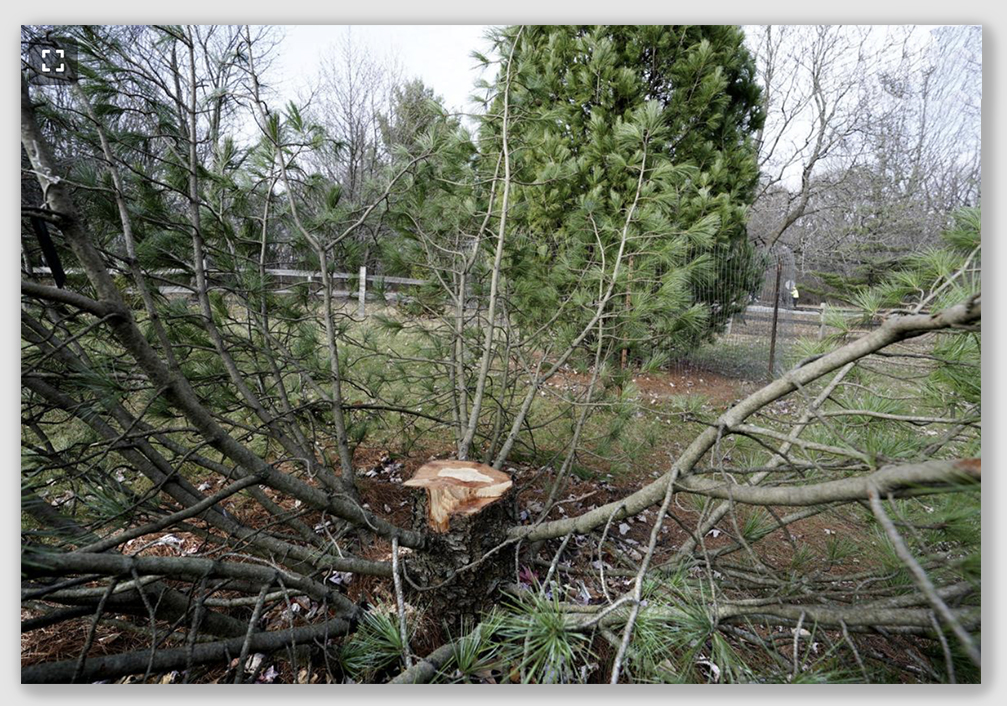
One of the more bizarre crimes in Madison history has been solved, with citations being issued to three 19-year-old UW-Madison students in the theft of a 25-foot pine tree from the UW Arboretum in November. UW-Madison officials asked for the public to help in finding whoever went into the Arboretum between Nov. 5 and Nov. 9, cut down and carted away the rare Algonquin Pillar Swiss Mountain pine tree, and cut off a 12-foot section of a Compact White Fir tree, but left it on the ground. The trees were worth at least $13,000 combined. On Friday, UW-Madison police spokesperson Marc Lovicott announced that the case had been solved “thanks to a tip from the community” to the department on Monday. Lovicott said the information led officers to an unrecognized student organization formerly known as Chi Phi, which was terminated as an official student organization in 2015 because of hazing. In various interviews, three members of the former Chi Phi admitted to purchasing a chainsaw, renting a U-Haul, and stealing the tree as part of the organization’s “pledge.” They said when they learned how rare the tree was, and that police were investigating, they destroyed the tree and disposed of it outside of Madison, Lovicott said….
Portland, Oregon, The Oregonian, March 26, 2021: Good news, Portland: the cherry trees are in bloom
As if sensing a collective need, Portland’s much beloved cherry trees are now in bloom. The trees line the Japanese American Historical Plaza along the north section of Tom McCall Waterfront Park in downtown Portland. By this weekend, their blossoms should be peak. The Japanese American Historical Plaza highlights the story of Japanese Americans in Portland and Oregon. Among the many cherry trees, the park features stones carved with poetry written about the experience of immigration and later, incarceration during World War II. This Sunday, March 28, is Minoru Yasui Day in Oregon. in 2015, Yasui was posthumously awarded the Presidential Medal of Freedom for challenging the forced incarceration of Japanese Americans, about two-thirds of them American citizens, during World War II. Yasui is the only Oregonian to have a day named in his honor…

The Town of Paradise and Cal OES held a press conference to update the Ridge Communities on hazardous tree removal progress. Officials say there are a total of 90,000 hazardous trees that need to be removed from the Camp Fire burn scar, and even though crews have spent almost five months getting rid of dead trees, there is still a ways to go. “This tree removal program is an intrical part of our recovery and is well on it’s way to wind down,” said Paradise Mayor Steve Crowder.Cal OES and the Town of Paradise say they’re nearing the halfway point of removing all dead or hazardous trees within the burn scar like the trees with blue dots on it, but statistics show that they’re still a ways out, and some homeowners decided to take their own measures to get rid of their own trees. “We would have too many sleepless nights when the wind blew, so we would have to sleep towards the front of the house instead of the back of the house,” said Jamie Johnston. For Johnston and her husband, the tree removal program didn’t come fast enough. “We were waiting for Cal OES to come and take down the trees that were already marked and it kept taking too long,” she said. “This I believe is the tree that I had to pay to take down with my own money…”
Redlining was a racially discriminatory housing policy established by the federal government’s Home Owners’ Loan Corporation (HOLC) during the 1930s. For decades, redlining limited access to homeownership and wealth creation among racial minorities, contributing to a host of adverse social outcomes, including high unemployment, poverty, and residential vacancy, that persist today. While the multigenerational socioeconomic impacts of redlining are increasingly understood, the impacts on urban environments and ecosystems remain unclear. To begin to address this gap, we investigated how the HOLC policy administered 80 years ago may relate to present-day tree canopy at the neighborhood level. Urban trees provide many ecosystem services, mitigate the urban heat island effect, and may improve quality of life in cities. In our prior research in Baltimore, MD, we discovered that redlining policy influenced the location and allocation of trees and parks. Our analysis of 37 metropolitan areas here shows that areas formerly graded D, which were mostly inhabited by racial and ethnic minorities, have on average ~23% tree canopy cover today. Areas formerly graded A, characterized by U.S.-born white populations living in newer housing stock, had nearly twice as much tree canopy (~43%). Results are consistent across small and large metropolitan regions. The ranking system used by Home Owners’ Loan Corporation to assess loan risk in the 1930s parallels the rank order of average percent tree canopy cover today…
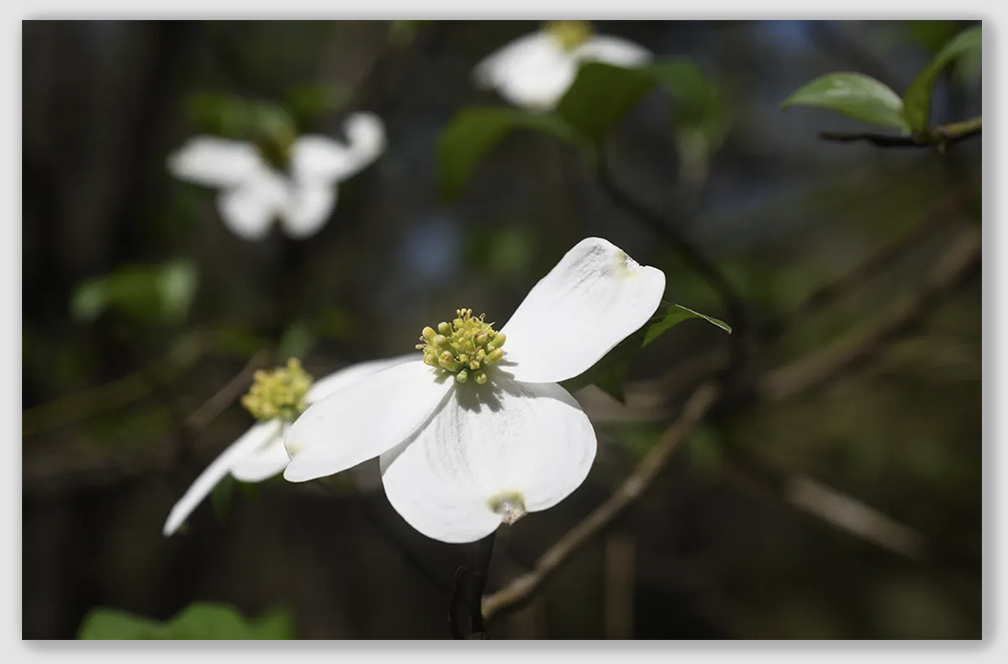
The ample rainfall recently has accelerated the return of greenery to Leon County. The slow, steady drizzle was punctuated by the occasional downpour. The many native plants have, in turn, responded to the liquid encouragement. Flowers of almost every hue and tone are exhibiting this season’s finest display of colors and texture. Rain lilies are making their brief appearance in roadside ditches and in damp, isolated sites around the region. Sparkleberries are rendering hundreds of tiny bell-shaped blooms which give the plant the appearance of a frosty wrap. While usually not as obvious, many of the trees are blooming too. Pine tree blooms are almost never admired for their beauty or color, though no one can miss their ever-present pollen…
Eurekalert, March 25, 2021: MIT engineers make filters from tree branches to purify drinking water
The interiors of nonflowering trees such as pine and ginkgo contain sapwood lined with straw-like conduits known as xylem, which draw water up through a tree’s trunk and branches. Xylem conduits are interconnected via thin membranes that act as natural sieves, filtering out bubbles from water and sap. MIT engineers have been investigating sapwood’s natural filtering ability, and have previously fabricated simple filters from peeled cross-sections of sapwood branches, demonstrating that the low-tech design effectively filters bacteria. Now, the same team has advanced the technology and shown that it works in real-world situations. They have fabricated new xylem filters that can filter out pathogens such as E. coli and rotavirus in lab tests, and have shown that the filter can remove bacteria from contaminated spring, tap, and groundwater. They also developed simple techniques to extend the filters’ shelf-life, enabling the woody disks to purify water after being stored in a dry form for at least two years…

An hour of oral arguments summed up nearly eight years of litigation on Tuesday in the state’s highest court, which will soon decide what qualifies as a constitutionally protected tree in the Adirondack Forest Preserve. Protect the Adirondacks, a nonprofit advocacy group, sued the state Department of Environmental Conservation in 2013 over the construction of what are categorized as Class 2 community connector trails on the forest preserve — snowmobile trails between 9 and 12 feet wide. The plaintiffs argued that the number of trees to be cut in the first 25 miles of those planned trails, along with how the network would be built, violated the state constitution’s “forever wild” clause, which states that the forest preserve “shall be forever kept as wild forest lands.” It also commands that timber on the preserve shall not be “sold, removed or destroyed.” The DEC has argued its longstanding guidance on tree-cutting, including what is proposed to make these connector trails, does not violate the constitution. An appellate court decision said the trails were allowed under “forever wild,” though the amount of tree-cutting involved was excessive. As the lawsuit has made its way to the state Court of Appeals, it has divided typically aligned advocacy groups. Some fear the decision, if made in Protect’s favor, could impact all trail maintenance, rerouting and other projects in the forest preserve. Other groups, including Protect, believe the outcome would only affect community connector trails…
Omaha, Nebraska, WOWT-TV, March 24, 2021: Dead man’s tree menacing neighbors’ backyard in Omaha
A dangerous tree hangs over an Omaha neighborhood, and there’s already been a close call. A huge branch crashed down from the tree onto the Pautlers’ fence — in two places — and they worry there’s more to come. A violation notice has been sent to the homeowner near 70th and Burt streets, but there was no response. “Not a safe place to stand, get that danger taken off from looming over our property,” Jenny Pautler said. That’s why Jenny and Nate Pautler don’t let their kids play in the backyard while they find who is responsible for removing the dangerous tree next door. “It’s been very frustrating. It’s been a lot of phone calls, waiting on hold and getting passed around from person to person and eventually coming back to the same dead end,” Nate Pautler said. That’s because the homeowner responsible for the tree is dead, and he lived in the house alone. Since he died 18 months ago, next-door neighbor Mary Anna Anderson said she and others have been picking up the yard. “The family said, ‘don’t contact us; contact the bank. We want nothing to do with it,’ ”Anderson said…
 Deutsche Welle, March 24, 2021: When planting trees does more harm than good
When Prosopis juliflora was introduced to Kenya’s Baringo County in the 1980s it was heralded for the benefits it would bring to the area’s pastoral communities. A native of arid lands in Central and South America, the woody shrub, known locally as mathenge, was promoted by the Kenyan government and the UN Food and Agriculture Organization to help restore degraded drylands. At first, mathenge helped prevent dust storms, supplied ample wood for cooking and construction and provided fodder for animals, said Simon Choge, a researcher with the Kenya Forestry Research Institute in Baringo County. But after the El Niño rains of 1997, things changed. Mathenge seeds dispersed widely, and without any local fauna adapted to eat the foreign tree, it spread aggressively. Impenetrable thickets overran grazing pastures, displaced indigenous biodiversity and depleted water sources. The trees’ thorns pierced the hooves of livestock, while its sugary pods caused tooth decay and loss, sometimes leading to starvation among the animals it was meant to nourish. “Now, people have no livelihoods,” Choge said…
For the past several months, the city of Charleston and Dominion Energy have been grappling with an unfortunate problem: What to do about more than 170 palmetto trees that have matured to the point where their fronds interfere with overhead power lines, even sparking fires in some cases. It’s related to but different from the much more familiar challenge of regularly pruning street trees — i.e., trees planted in the public right of way, most often between the sidewalk and the road — to reduce the risk of their branches breaking during a storm and snapping an electrical line on the way down. The bad news is that the city and Dominion began work Wednesday to remove about 130 of these problematic palmettos from St. Philip and other downtown streets. The good news is that this unexpected problem has prompted the city to plant new trees in their place and to review and update its policies about which trees should be planted along certain types of streets. The city’s urban forester David Grant realizes removing the trees will be unpopular — partly because most won’t be replaced right at once. But he strikes an encouraging note: “This is the last time we’ll have to deal with this pain. We’re going to do it differently…”
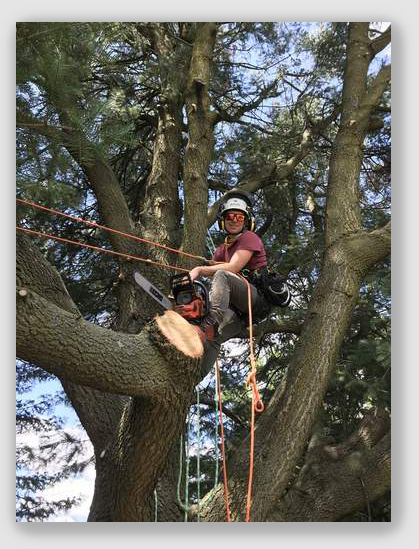
“Heartbreaking” is the word arborist Virginia Hayes-Miller uses to describe the tree damage the Aug. 10 derecho left behind in Cedar Rapids and much of Iowa. “It will take 30 years or more of consistent work to rebuild the tree cover that was lost in one storm,” she said. Miller, a certified arborist at Acorn ArborCare in Iowa City, and her co-workers have been cleaning up storm damage for the past eight months, and they’re still getting calls. “A lot of people are scared of the trees that are still standing in their yard, scared that their remaining trees will come down in the next storm,” she said. “This fear is understandable, but it is not always warranted.” That’s where the professionals come in to help. Saving trees is Miller’s passion. “I have always loved trees, but it took me a long time to imagine a place for myself within the tree care industry,” she said. “I spent a good portion of my childhood climbing my next-door neighbor’s crabapple in a neighborhood lined with mature ash trees that had been planted in the ’50s.” Growing up, Miller’s father worked for the Minnesota Department of Natural Resources as a forest health pathologist. The family spent a lot of time in state parks. When it was time for college, Miller majored in marketing and management at the University of Wisconsin-Madison. “I became more acutely interested in the field of urban forestry in the early 2010s, when I heard about the emerald ash borer,” she said. “I immediately thought about the idyllic canopy that framed my childhood, and saving ash trees from EAB sounded really interesting to me…”
The destruction of tropical forest is a major contributor to biodiversity loss and the climate crisis. In response, conservationists and scientists like us are debating how to best catalyse recovery of these forests. How do you take a patch of earth littered with tree stumps, or even a grassy pasture or palm oil plantation, and turn it back into a thriving forest filled with its original species? Foresters have traditionally relied on planting trees, which seems obvious enough. Yet this approach has attracted criticism from some restoration ecologists, who argue that planting and caring for young trees is expensive and an inefficient use of scarce resources. They also point out that the carbon locked up in growing trees is quickly released into the atmosphere if plantations are harvested and used for short-lived wood products such as paper or cardboard. There are even some well-documented case studies where tree planting has had negative outcomes. For instance, when forest cover was expanded on the Loess Plateau in China, soil erosion increased and there was less water available for people and agriculture. In Chile, subsidies for tree planting created a perverse incentive to plant trees instead of conserving natural forests. In the period between 2006 and 2011, the policy triggered a loss of natural forest cover and no net change in the amount of carbon stored in trees across the country…
 Barron’s, March 23, 2021: Russia, An Oil Giant, Goes Big On Timber
In a dense forest northeast of Moscow, logging machines cut down rows of trees as Russia taps foreign demand for its wood as part of efforts to reduce its dependence on oil exports. Nowhere is this more evident than in Vologda, a region 500 kilometres (310 miles) northeast of the Russian capital, where forests of birch and pine stretch as far as the eye can see. Tracked vehicles equipped with booms that can grab and cut trees are used by the Segezha group, which turns the wood into planks at a nearby factory. For Segezha vice president Dmitry Rudenko, the scene illustrates a turning point for Russia’s timber sector. “What we’re seeing today is the rise of the timber construction industry. It is Russia’s future without a doubt,” he told AFP at the Moscow offices of the Sistema holding firm, of which Segezha is a subsidiary. Russia is home to one-fifth of the world’s forest and further exploiting this resource could help the country cut down its economic reliance on oil and gas. Hydrocarbons account for half of Russian exports by volume while wood and its derived materials represent about three percent…
A unanimous decision from Charleston City Council means you may be seeing less power lines hanging above the Holy City. This plan comes after many years of neighborhood leaders pushing for something to be done about their power lines. However, some have been waiting 20 years with nothing coming to fruition. Tracy McKee, Chief Innovation Officer for the City of Charleston, says the biggest issue has been the limitations for the funding set aside for projects like burying power lines. “The way it was set up was basically by neighborhood…and it was really challenging to get these projects to the finish line,” says McKee. According to McKee, the funding was part of the city’s deal with Dominion Energy made in the late 1990s. The idea behind this new plan was to allow the City of Charleston to take the reigns on this project and change the ordinance that limited how the funding can be used. This new proposal passed unanimously before council. “These improvements that we’re putting into place will allow more projects to get into the ground all over the city. It’s really exciting to think about,” says Councilmember Ross Appell. The 2 main reasons why city leaders and community members are going to begin burying power lines are 1.) Protecting power lines when severe weather hits and 2.) Protecting Lowcountry trees from being chopped down…
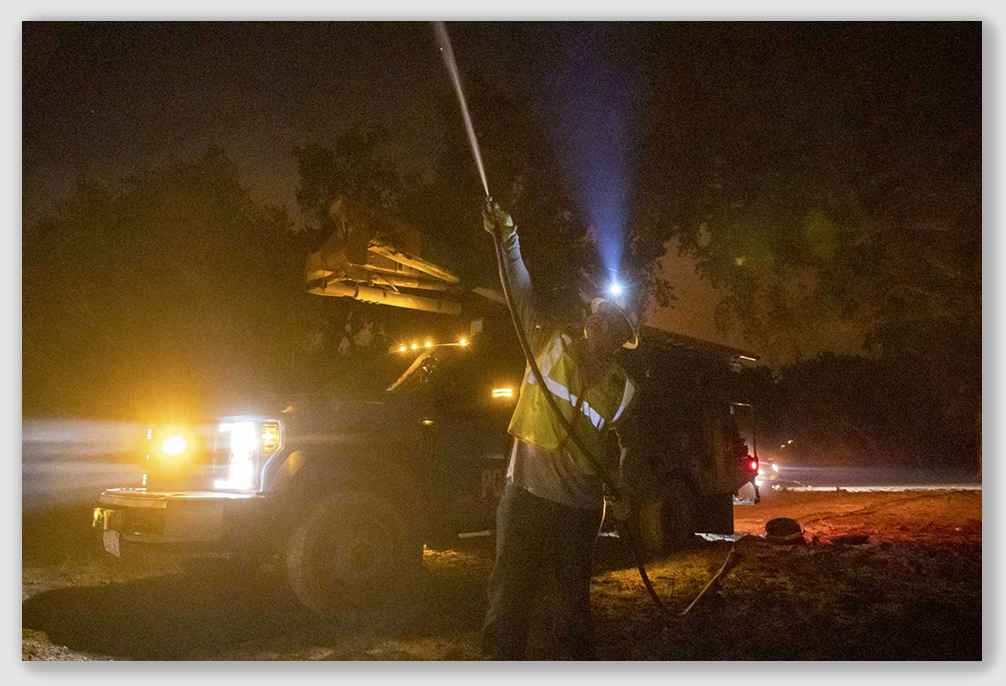
A Northern California wildfire that killed four people and destroyed more than 200 buildings last year was sparked when tree branches came into contact with Pacific Gas & Electric power lines, officials said Monday. Investigators with the California Department of Forestry and Fire Protection seized equipment belonging to PG&E in the weeks after the Zogg Fire tore through rural communities in Shasta and Tehama counties last September and October. “After a meticulous and thorough investigation, Cal Fire has determined that the Zogg Fire was caused by a pine tree contacting electrical distribution lines owned and operated by Pacific Gas and Electric located north of the community of Igo,” the agency said in a short news release. PG&E officials didn’t immediately respond to a request for comment late Monday…
Q: Last year my Bradford pear’s leaves were covered with rust fungus. What can I do this year to prevent that from happening again?
A: You are correct. It seems like rust disease was everywhere last spring. There are a variety of rust diseases such as cedar-apple rust, Asian pear rust, cedar-hawthorn rust, and cedar-quince rust to name a few. While these diseases are not terribly harmful to their host, they can diminish the vitality of the host plant and reduce production on fruit trees. You mentioned Bradford pear, which is an invasive species, but first let’s talk about rust disease prevention. The funny thing about these rust diseases is that they require two different host plants to prosper. Cedars or junipers are the host during one portion of the life cycle and other plants like Bradford Pears are the host during the other portion of the life cycle. Asian pear rust is the culprit when it comes to Bradford pears. The fungal spots we see in the spring on Bradford pear leaves were blown there by the wind from a nearby cedar. Nearby is kind of an oxymoron since nearby could be within a mile or so. The fungal spores continue to grow on the leaves of the Bradford until June or July when they release spores of their own that are blown by the wind to a nearby cedar…
 Phys.org, March 22, 2021: Multitalented mangroves: Spotlight on the trees that could save the planet
Picture the perfect tree. In your mind’s eye it is probably as majestic as a mighty oak, as tall as a towering redwood, bursting with fragrant, brightly coloured blossom and weighed down with succulent fruit. Mangroves are none of these things, but in their own inimitable way they are so much more. Their party piece is turning salt water into fresh water, a natural talent that enables them to thrive in the hostile hinterland between land and sea – an intertidal environment that most trees find too inhospitable. Many mangrove species are able to filter out as much as 90% of the salt found in seawater as it enters their roots. Some are able to excrete salt through glands in their leaves. And that is just one of the numerous attributes that make mangroves so valuable – indispensable, in fact. Their branches support myriad creatures, from praying mantids to primates. Their leaves are food for swamp specialists such as the proboscis monkey. And their elaborate root structures provide vital shelter for marine life, creating natural harbors for aquatic mammals such as manatees and dolphins, and nurseries for countless reef fish and crustaceans in their early stages of development when they are most vulnerable to predation…
New York City, The New York Times, March 22, 2021: How to Collect Firewood
“Worst-case scenario, the tree ends up falling on you, and you end up dying,” says Trennie Collins, 36, a member of the Southern Ute tribe who lives in Durango, Colo. Picking up sticks with your hands is for amateurs. To cut enough firewood to keep a house warm in winter, you need to know your way around a chain saw as Collins does; in her early 20s, she became one of the first women on her reservation certified to take trees down as a faller. When the pandemic started last spring, Collins saw how many people were struggling for basic needs like food and heat. She helped start the Four Corners Mutual Aid Network, a volunteer organization that provides all kinds of assistance, including firewood, to several southwestern Colorado counties and to the Ute Mountain Ute, Southern Ute and Navajo reservations. “Don’t go out alone,” says Collins, who recommends collecting wood in teams of two or three. Always wear long pants and shirts, boots, ear protection and helmets. The United States Forest Service and the Bureau of Land Management allow firewood collection on many public lands with a permit for a small fee. Follow their rules on what, how and when to cut. Mostly you’ll want to take trees that are already dead. Hardwoods like oaks tend to burn hotter and longer than coniferous softwoods like pines. Don’t enter a forest willy-nilly as if you own the place. “Go with respect for the land,” Collins says…
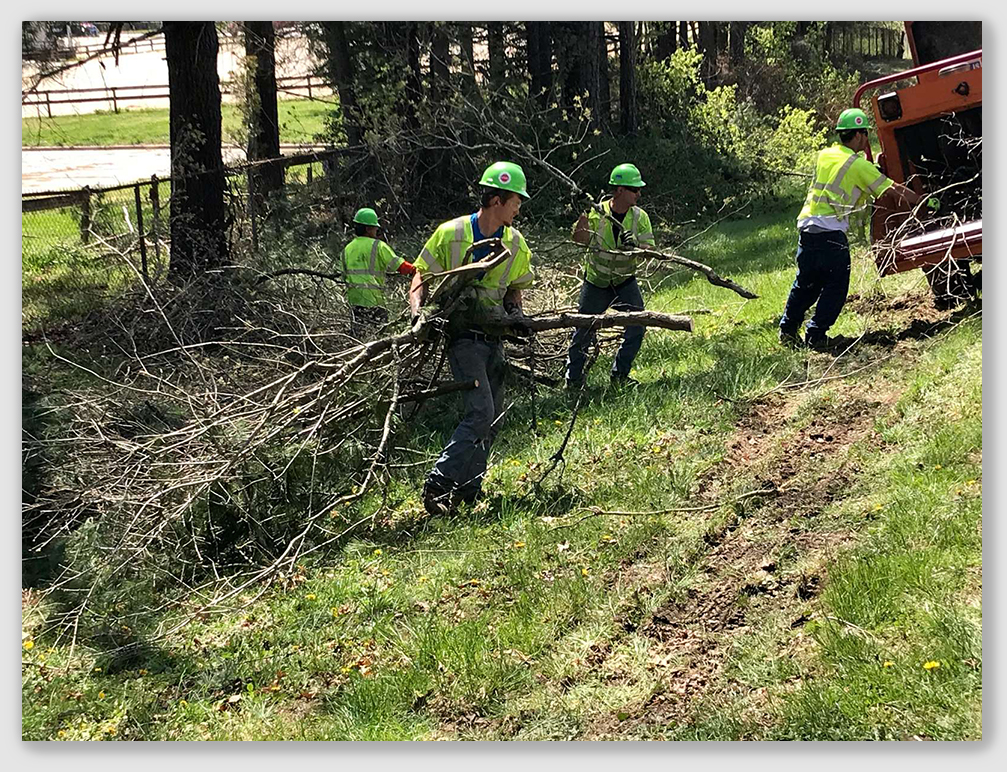
Question: We’re having some issues with Duke Energy over tree cutting on our property, or on the easement, under the power lines. A person from Duke came out here – we live in Lytle Cove off of 70 in the Swannanoa area – and they said they need to cut the trees, which are on our property. Our paperwork shows we have a 30-foot right of way, but Duke says they have a 35-foot easement, which includes the area where our trees are. Is there any way to appeal this before Duke cuts the trees down? Also, the lot is pretty hard to access, and when we asked Duke how they would get the cut trees out of there, they said they would just leave them in the easement. Can Duke do this? Doesn’t that seem like it would pose a fire hazard? It’s also not very nice to have to look at…
My answer: Generally speaking, it’s hard to stop a man with a chain saw from doing what he wants to do. It’s a rule I live by. Real answer: Duke Energy spokeswoman Meghan Musgrave Miles answered this one, albeit in mostly general terms. She did ask for the customer’s information so Duke and the customer can talk more about the details or any possible appeal. Regarding leaving some of the cut trees or limbs behind, Miles said Duke usually removes smaller materials. “After scheduled maintenance for improved reliability, small limbs and branches — 6 inches or less in diameter — are taken away after a tree is pruned in landscaped areas such as yards, turf and paved areas,” Miles said via email. “If debris must be left overnight for some unforeseen reason, affected customers and residents are notified…”
Q: We have a place in South Windham where we have yearly visits from a pair of woodpeckers. The birds arrive, feast for 30 minutes or so, and then they are off until we see them the next year. They return only to this one tree we have at the property. A friend of ours who is an arborist by trade has been trying to convince us that this tree is old, rotted, full of ants and bugs, and needs to come down before it hits one of our cars or us on the head. We counter that the woodpeckers are helping the tree stay alive by removing the harmful insects that have been eating away at the tree. Despite signs of aging, the tree is still beautiful and should be preserved as long as possible. The question we have is: Are the woodpeckers helping save the tree or contributing to its demise?
A: From Paul’s photo, we can see that these are a pair of pileated woodpeckers. What a treat to have a pair of pileated woodpeckers around, if even for just a short visit. These are the largest woodpeckers in North America and can easily remind you of their dinosaur ancestors when you see them swoop onto a dead tree. And, it is a really fun question to ponder if any of the actions from one of these woodpeckers could help save the tree that they are feeding on. The answer probably depends on the timing. To start, it is worth noting that the diet of pileated woodpeckers shifts throughout the year, based on what they’re doing and what food is abundant. Thanks to research done as far back as 1948, we know that in the summers, especially when raising young, these woodpeckers are eating (and feeding to those young) a large variety of insects. Come fall, they’ll feed on abundant fruits. Then as winter sets in, their primary food source is carpenter ants, which are often found in the tunnels the ants have formed in rotting wood. By early spring, the larvae of various wood-boring beetle species, also found in dead or dying trees, becomes the most sought-after food target…
 House Beautiful, March 22, 2021: Choosing a magnolia tree for your garden
A magnolia tree in full bloom is one of the glories of spring, whether it’s a mature tree festooned with large cup-shaped flowers or a compact shrub smothered in starry blossom. At a time when the rest of the garden is stirring into life with emerging spring flowers, bulbs and perennials, the magnolia is putting on a stunning display in colours that range from purest white through to creams and yellows, and to every shade of pink, rich reds and purples. Magnolias are among our most ancient plants, with fossil records dating back a hundred million years. Because they predate the arrival of bees and other flying insects, they’re pollinated by beetles and are generally untroubled by pests – although it’s said they were once grazed by dinosaurs! The majority of spring-flowering magnolias are deciduous. Most frequently planted are the spreading soulangeanas and the bushy stellata varieties. Soulangeana comes in many different flower colours and grows well in most urban environments and soil types, but it can outgrow smaller spaces. For small gardens, the more petite and delicate Japanese Magnolia stellata is perfect, and can also be grown in containers. It produces showy white flowers in spring that resemble a star and it’s also slightly fragrant…
A giant sequoia tree that’s been a subject of controversy in Northeast Portland’s Sabin neighborhood was poisoned, according to police, and an environmental nonprofit is offering a $1,000 reward for information about this case. The city of Portland had been planning last year to have the tree removed from the 4000 block of Northeast 12th Avenue after its root system damaged the foundation of a home on a neighboring property. Neighbors whose property wasn’t damaged have been working for months to buy the property of the damaged home, said Bob Sallinger with the Audubon Society of Portland. He said the purchase was just about to be completed. On Saturday, Portland police said the tree was poisoned in February 2021 after holes were drilled into the base. “The tree is showing signs of significant decline, you can really see the impacts. The canopy is turning brown. It’s not clear whether the tree will survive or not,” Sallinger told KGW. Sallinger said the tree is about 100 years old, but they normally live for “hundreds and hundreds of years.” He said it could take months to know if the tree will live or not…
N ew data distributed through NASA’s Oak Ridge National Laboratory Distributed Active Archive Center, or ORNL DAAC, provide an unprecedented picture of plants’ carbon storage capacity around the globe. Generated by the Global Ecosystem Dynamics Investigation, or GEDI, instrument installed on the International Space Station, these data can help answer questions about Earth’s biomes and ecosystem impacts on the carbon cycle and climate. From towering sequoia trees to the grasslands of the African savannah, plants pull carbon dioxide from the air and store that carbon in their tissues. Predicting how much carbon plants might store in the future starts with a better understanding of current environments. “This is the first chance of getting a reasonably global view of biomass made by a consistent measurement technique,” said Bruce Wilson, head of the Remote Sensing and Environmental Informatics Group and lead for the ORNL DAAC. “These data provide a vertical profile of all vegetation above ground, including an exceptional amount of information about forest structure.” GEDI data are filling a gap in that knowledge by supplying not only information about the location and spread of vegetation, but also details about the height of trees and the density of their canopies — creating a detailed record of three-dimensional forest structure and above-ground biomass…
The Saskatchewan government has removed a stand of trees that was near the site of the deadly Humboldt Broncos bus crash three years ago. Sixteen people were killed and thirteen others injured when a semi-truck driver missed a stop sign at a rural intersection and drove into the path of the junior hockey team’s bus on April 6, 2018. A safety review after the crash found that trees mostly on private property could obstruct the sightline of drivers coming from the same directions as the semi-truck and bus had been that day. The review recommended the trees be removed. The Ministry of Highways says the landowner rejected a government offer of compensation, so the province expropriated the land and removed the trees in late February…

No matter where you are in Southern California, strong winds can become a problem for your trees. In some cases, wind can cause plants to dry up, bend, break, or fall down. This week, I will share some tips on how to protect your trees from these misfortunes. When planting a young tree, choose a site that is protected from strong winds. If the prevailing wind is coming from the west, you may want to plant on the east side of your house. Usually, young trees have too much top growth for the size of their root systems. Prune about a third of the top growth so that the root system will have a chance to catch up. Your tree may look kind of sad at first, but it will be healthier and happier later in the season. When pruning, keep in mind that you’ll want an open canopy structure that will allow wind to pass through. Never “top” a tree! Topping will force the growth of many smaller, weaker branches, giving the tree a “lollipop” shape. This makes the tree very top heavy and prone to breakage. It is especially dangerous in windy areas since the dense canopy will catch the wind and can tear the tree out of the ground and onto your neighbor’s car…
It’s clear no one at the Georgia Department of Transportation (GDOT) has read Richard Powers’ “The Overstory,” a popular and heart-wrenching book about the inner lives of trees and all they do to enhance our world. But who would know? The GDOT may be good at assembling crews, setting up their orange cones, closing off lanes and clearing trees, but they stink at talking to us, we the people. They fail in the business of communicating to the public. Or maybe they prefer the obfuscation because that’s what they put out. Driven on Interstate 16 lately? Brace yourself. You’ll think you made a wrong turn. You’ll think you’re driving outside Atlanta or Washington D.C. Yes, the drive between Savannah and Macon can be boring and monotonous, the view tedious, repetitive. But wait until you see the alternative. Take a hanky. It’ll make you weep. Giant stacks of tree trunks all packed together on the side of the road. Colossal heaps of timber that used to absorb carbon dioxide and emit oxygen now lying there, doing nothing, waiting to be picked up, waiting, perhaps, to be sold. Whole swathes of empty, muddy land where trees used to stand upright housing birds, blowing in the wind, offering seasonal color (minimal as it is), giving some kind of distraction to the driver, soaking up water from heavy rains.And why? Why this seemingly wholesale demolition, this willy-nilly leveling? Heck if I know.“They say it’s a safety issue,” says Zoe Rinker, executive director of the Savannah Tree Foundation…
This barrier island community is adjusting a plan to cut trees and shrubs in its maritime forest after a survey found extensive wetlands on the accreted land. The forest was at the center of a decade-long lawsuit brought by some homeowners on the edge of it who wanted to thin the thicket. They complained of vermin and wildfire risk, among other factors. The suit was settled by the town in October with a plan to cut many smaller trees, over the objections of other islanders who wanted the forest to stay largely wild instead. That settlement, it turns out, is mostly unworkable because so much of the area slated for cutting is protected or contains wetlands. The exact boundaries of wetlands can only be determined in a survey, and the town conducted one in January and found 65 acres. Other parts of the land are “critical area,” or special coastal zones that the state of South Carolina protects. Town Council voted 4-2 at its March 16 meeting for a new work plan and a court filing indicating the settlement was being adjusted. The same four council members who voted to settle the case last year approved the changes: Tim Reese, Chauncey Clark, Greg Hammond and Kaye Smith. Councilwoman Sarah Church was not present…
If a tree falls in your yard, what you do next could save you money, a limb and maybe even your life. According to Trees Atlanta, the metro area has the nation’s highest “urban tree canopy,” defined as the layer of leaves, branches and stems of trees that cover the ground when viewed from above. During storms, fallen trees are fixtures in metro Atlanta’s landscape. The steps you take after a tree falls can mean the difference between headache and heartache. The first thing to do is call your homeowners insurance agent, said Bob Delbridge, owner of 404-Cut-Tree, one of the largest tree service companies in the Atlanta area. “Occasionally we will deal directly with the insurance company. But that’s more likely if there is a storm that covers a large area, like a whole neighborhood.” Delbridge said. “Typically, the homeowner deals with their own insurance company.” Where the tree falls determines who pays for what. “Almost everyone is surprised when we tell them, the way the law works is, wherever the tree landed, that person is responsible for dealing with it regardless of where the tree came from.” That’s right, even if the tree is rooted in your neighbor’s yard, if it crashes onto your property, it’s your problem. An exception to this, attorney Steve Goldman with The Goldman Firm said, is if the tree is visibly diseased or damaged. In that case, the owner of the tree might be held liable…
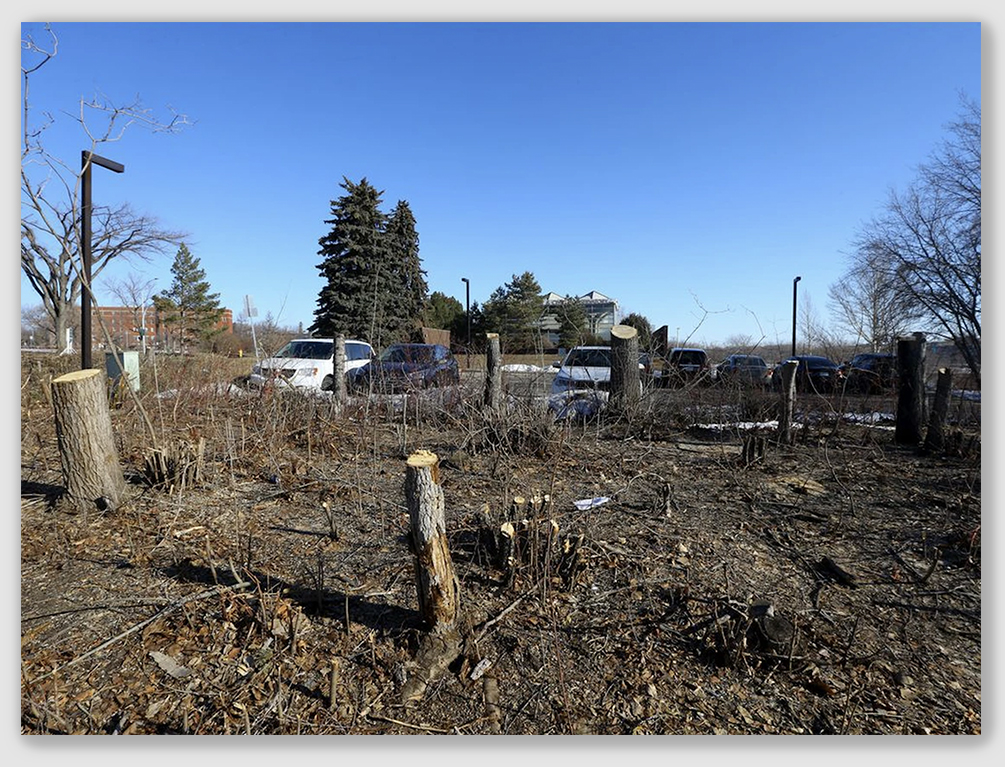 Saskatoon, Saskatchewan, StarPhoenix, March 17, 2021: Tree removal begins around Nutrien Wonderhub
The parking lot behind the former Mendel Art Gallery building looks a little different these days. Earlier this month, work crews began removing dozens of trees to make way for an expanded parking lot, part of the Meewasin Valley Authority’s broader year-long, $644,000 plan to improve the riverbank trails along Spadina Crescent. Meewasin CEO Andrea Lafond said the decision to remove the trees was part of finding the “tough balance” between the organization’s mandates, which include conservation, development and education. While some people might find the tree removals “alarming,” Lafond said the finished project will include more vegetation than was at the site previously, and the clearing was necessary to start work. “It can be tough to see at the very start of the project because, typically, a lot of dismantling does occur,” Lafond said, adding that the “revegetation” of the area is the final phase of work. Meewasin design and development manager Alan Otterbein said a 2019 survey of the parking lot area identified around 80 trees, mostly poplars along with some pines and maples. Eight of those trees were dead at the time of the study, Otterbein said, but that rose to around 30 per cent over the subsequent two years, likely due to poplars’ short lifespan, dry conditions and crowding…
A city board is considering a leash law for Wichita cats to reduce the number of felines running wild. Wichita Animal Control Advisory Board member Richard Ruth has proposed a city ordinance change that would make it illegal to let a cat roam the neighborhood, with penalties including a fine and sterilizing and microchipping the cat. The proposal would also limit the number of cats a person can own at four and require owners to annually license their cats and vaccinate against rabies. Ruth’s proposal would put the same restrictions on cats that currently exist for dogs. That would mean having to be kept indoors, on a leash or tether, or otherwise restricted to the owner’s property or other designated pet areas. While dogs can simply be fenced in, confining a cat to property lines is more challenging because they are prodigious fence-climbers. Under Ruth’s proposal, letting the cat out would probably mean putting it in a “catio,” a kind of mesh tent or cage specifically designed for cat confinement, he said…
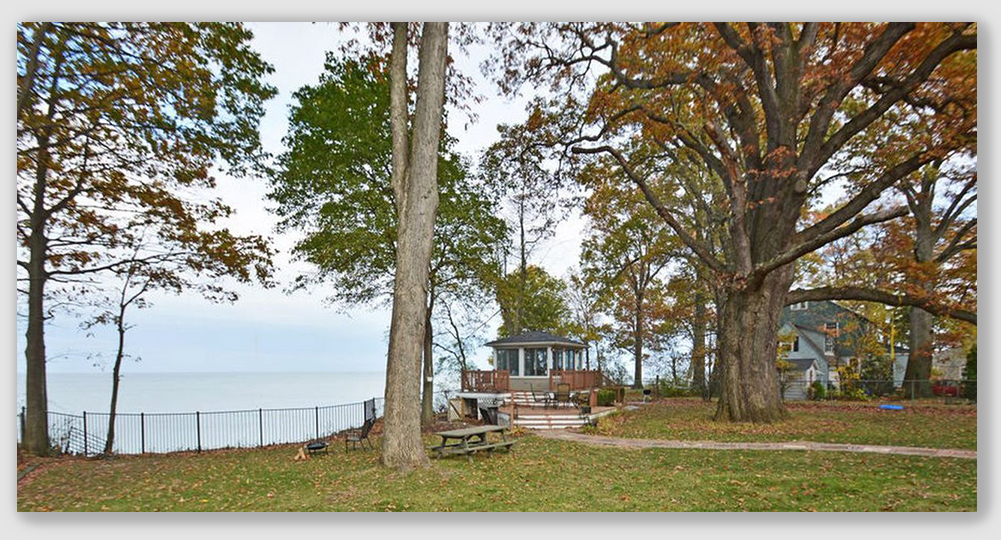
A very old white oak tree at a large home on Lake Road has social media buzzing. The topic is the possible chopping down of the tree, which some claim is more than 300 years old. James Sammon, former owner of the property, said he thought there was a “gentleman’s agreement” when he sold the home to Steven Diamond that the tree would remain due to its historic nature. Now, there are conversations on social media that claim impending doom for the tree. “I wholly understand that it is the new owners’ legal right to do whatever they want to the property for their family’s use,” Sammon said. “They paid my family, and the land is now theirs alone. “Bay Village does not yet have tree restrictions to help preserve those trees on private property that are designated significant. One would hope that simply touching the tree and seeing it would render its significance to any person,” he said. The tree provides welcome shade at the edge of Lake Erie for the 1.5-acre property on which sits what also appears to be an historic home. The home was built in 1917 on the site of a former winery, according to a real estate listing in November 2019. It features six bedrooms, seven baths and glass pocket doors within its 7,051 square feet. There are also two enclosed porches, a flagstone patio, a two-tiered deck and an enclosed, cliffside gazebo. The asking price at the time was $1.95 million…
A Londonderry man accused of cutting timber illegally at a Vermont state park is being sued by the Green Mountain State, officials announced Monday. Vermont Attorney General T.J. Donovan announced the state filed a civil lawsuit in Orleans County Superior Court for timber trespass at Hazen’s Notch State Park against Thomas Tremonte, a Londonderry resident who owns property in Westfield, Vt., abutting the state park. In the lawsuit, the state alleges that Tremonte cleared parts of state land during and prior to 2019 without approval. According to the lawsuit, Tremonte told investigators the trees were cleared for the purpose of backcountry skiing, but admitted he may have cut too far and crossed over from his land into the park. Court documents show Vermont state foresters reported 839 trees and shrubs on state land were cut without permission. “Cutting down trees on public land for private use is a violation of the law that comes at a cost to Vermonters and our environment,” Donovan said in a statement. “It is incumbent on all of us to protect and responsibly utilize Vermont’s natural resources, including our state parks…”
 Phys.org., March 16, 2021: To save giant sequoia trees, maybe it’s time to plant backups
Last month, unusually high winds knocked down 15 giant sequoias in Yosemite. If you haven’t had a chance to see them in person, giant sequoias are big—like, warp-your-sense-of-scale and melt-your-brain big. Then, once you’ve taken in their size, they do the same thing with your sense of time, because an individual tree can survive thousands of years. Wars, plagues, fashion trends: Sequoias have lived through and outlasted them all. To last thousands of years, any sequoia has also endured hungry animals, diseases, fires, snowstorms, El Niño events, and years-long droughts, not to mention the opportunistic loggers of the 19th and 20th centuries. What a shame, then, for 15 trees to survive through so many challenges only to die in a windstorm. Sadly, this is a climate change story. While sequoias are wonderfully adapted to their narrow range in California’s Western Sierras, this habitat has been unusually sensitive to changing weather patterns, and may be changing faster than sequoias can migrate or adapt. If we want to ensure these majestic trees’ survival, it’s time to consider planting a new generation of sequoias in colder, nearby habitats. Although high winds in the Yosemite region are not unusual, last month’s 80-mile-per-hour gusts were the most extreme in at least a decade, and caused the most damage to the park since flooding in 1997. Even if these high winds were unrelated to climate change, ongoing weather changes in the Sierras have produced more stressed trees. Shorter cold seasons have meant more rain instead of snow, which in winter can mean floods and mudslides. In warm seasons, there’s less snowpack to feed the waterways that sequoias and other trees depend on to stay hydrated throughout the year, which in turn makes fires more likely. Hotter, drier summers force trees to make compromises to retain what little moisture they have, which then limits their ability to grow and repair themselves…
The Pioneer Woman, March 16, 2021: Best Redbud Tree Guide: How to Grow Them Right in Your Backyard
If you spot lavender-pink flowers clustered on bare tree branches in early spring, you’ve probably stumbled upon a lovely redbud tree! This flowering tree (just like the mighty magnolia tree), native to woodland areas, has exquisite sweet pea-like flowers that last for weeks before their pretty heart-shaped leaves appear. Pollinators love redbuds because they’re one of the first trees to bloom in early- to mid-spring. They even display bright colors come fall! Best of all, they’re tough little trees that will work in any garden and look beautiful as part of your landscaping ideas. Plus, they always bring a smile to Ree Drummond’s face. She absolutely loves them! “If you love purple, the short time when Oklahoma Redbuds are blooming is like being in a dream,” she says. If you were hoping to learn how to plant redbuds in your yard, there’s good news ahead for you. “Redbuds are very adaptable,” says Nancy Buley, communications director for J. Frank Schmidt & Son, Company, wholesale tree growers in Oregon. “They grow from Massachusetts to Florida and Texas to Minnesota, with more cold-hardy cultivars—or cultivated varieties—having developed in recent years.” But before you plant one of these gorgeous trees in your own garden, there are a few things you need to know about how to care for a redbud tree! Read on for a total redbud tree guide ahead, including information about redbud varieties, planting tips, maintenance, and more…

Sheltering 80 percent of the world’s land biodiversity and sequestering twice as much carbon dioxide as they emit, forests easily make their case for preservation — a case made urgent by increasing deforestation. Though forests still cover about a third of the earth’s land area, they were almost twice as prevalent before human civilization emerged. Clearly, those that remain are worth protecting. The good news is that organizations, individuals and businesses around the world are taking heed of these factors and transforming the way forests are managed. The Forest Stewardship Council (FSC) is one organization that’s working with stakeholders to restore ecosystems and certify products as responsibly sourced. Shoppers can also contribute to ensuring the sustainable management of forests by choosing products that display an FSC logo. We’ve all seen the FSC’s tree logo on products ranging from shoes to toilet paper to furniture. But what does it really mean for a product to come from responsibly managed forests and to be certified by the FSC? The resources used to make an FSC-certified product are sourced from forests managed using a set of universal responsibility principles. These guidelines are applied specifically, based on the industry, environment and community. To be certified, forests are checked by independent auditors for compliance. The FSC system also includes a chain of custody certification that tracks materials and products through each step of their supply chains…
A county councilwoman said a “loophole” in Anne Arundel County’s forest conservation law could soon be closed if her bill requiring approval for clearing certain vegetation in sensitive areas is successful. It would ensure that the 2019 forest conservation bill and associated penalties would still affect developers who cleared forests in violation, even if that clearing took place before they submitted a development application. Bill 20-21 from Councilwoman Lisa Brannigan Rodvien, D-Annapolis, would amend the definition of a “standard grading plan,” require mitigation when clearing is approved, and establish fines and penalties for violation. County Environmental Policy Director Matt Johnston said the bill wouldn’t impact homeowners who needed to remove a tree to install a backyard swing set or a hazardous tree that is at risk of falling on their home. He said the amendments take extra care to ensure it…
 Phys.org, March 15, 2021: Million-tree mission hopes to fix reforestation flaws
It’s an environmental policy embraced by heads of state, multinational businesses and even leading climate sceptic Donald Trump: plant more trees to help the planet and slow global warming. But experts claim some recent mass tree-planting schemes have failed to reduce greenhouse gases when not done properly, and even harmed the environment. Now a pair of Finnish environmentalists believe they have created a reforestation initiative that will avoid these problems and allow for millions of new trees every year, tracked by a smartphone app. Former schoolteacher Mika Vanhanen has overseen the planting of 30 million trees across the globe via a network of 10,000 schools, the result of two decades work. But “some of the trees died because we didn’t have the resources to care for them”, Vanhanen, founder of tree-planting charity ENO, told AFP in his hometown of Joensuu, eastern Finland. Last year Turkey’s forestry trade union said almost all of the 11 million trees planted during the country’s National Forestation Day in 2019 had died after just a few months…
Counterpunch.org, March 16, 2021: The Institutional Bias of Forestry School Research
“A quarter-century-old harvesting restriction intended to last one year has served as an obstacle to returning eastern Oregon national forests to the healthier, more fire-resilient conditions they embodied in the late 1800s.” These researchers are arguing a restriction on cutting large trees (the 21-inch rule) in eastern Oregon hinders the “restoration” of forests. The researchers are so immersed in the only good tree is a green tree paradigm that they see any mortality from natural processes as an anathema to “forest health.” Under their skewed definition of what constitutes a “healthy forest,” they see the only solution is “active forest management,” which is a euphemism for logging. A failure to examine underlying assumptions often leads to misinterpretation of findings. For instance, more than a century ago, scientists assumed that the skull’s size was an indication of intelligence. Many scientists (nearly all of them men) measured skulls, and what did they discover? Men had bigger skulls, and thus men were more intelligent than women. Conveniently, the timber industry and Forestry Schools define what constitutes a healthy forest; then, by happy coincidence, this justifies more logging of the forest…
 Reason, March 11, 2021: Sierra Club Inches Toward Accepting Genetically Modified Chestnut Trees
The chestnut tree was once the dominant tree in forests east of the Mississippi River, but that was before the chestnut blight. First observed at the Bronx Zoo in 1904, the blight destroyed more than 4 billion chestnut trees by the 1940s. In 1983, a hardy band of plant scientists and volunteers founded the American Chestnut Foundation (TACF) Its aim: to breed blight resistance from the Chinese chestnut tree into the American chestnut tree, while maintaining the American chestnut’s characteristics. Beyond that, the group’s ultimate goal is to “reestablish the American chestnut’s function in its native range.” As the science of genetics advanced, the foundation added a biotechnology program. This aims to endow American chestnuts directly with a gene from wheat called oxalate oxidase, or OxO. The OxO enzyme protects the trees by breaking down the oxalic acid that the blight uses to attack them. Adding just a gene or two to the American chestnut genome would make the trees even more “native” than those back-crossed with Chinese chestnuts…
A group of concerned D.C. neighbors is standing their ground and fighting to save a 100-year-old Pecan tree located in Northwest. The tree sits in the backyard outside a vacant property along Fairmont Street in Northwest. Wednesday evening, the DC neighbors posted to Reddit asking the community to help them save the century-old heritage tree. “Recently towards the end of 2020 someone bought the property from the city” said Caroline Wood, neighbor along Fairmont Street. The residents who live next door to the tree explained how a developer stopped by the property on Wednesday and said it would be removed on Thursday. “It’s large enough and old enough that it is classified as a heritage tree, Wood said, “It’s illegal to harm or remove it.” According to the District Department of Transportation, the tree is in fact a heritage tree and is deemed not hazardous. DDOT said it would be illegal if someone removed it…

Trees have a little secret you might not know about. Yes, they produce oxygen. Yes, they take in carbon dioxide, a heat-trapping greenhouse gas. But, they also emit methane. Methane is a greenhouse gas that can be significantly more potent than carbon dioxide. “Just about every tree we measured had elevated amounts of methane in it. And that was consistent across the Northwest with a variety of different species,” says Nick Ward, a scientist with Pacific Northwest National Laboratory. Ward has long been interested in methane. After grad school, he was measuring methane coming out of the water in the Florida everglades. He sat down next to a giant cypress tree. Ward had read about methane actually coming out of trees, so he placed his tool over the knee — a part of the tree — at the base of the cypress. “I just made a PVC thing and put it on there, measured it, and was like, ‘Wow, there’s like 100 times more methane coming out of this little knee than the water right next to it,’” Ward said…
I like deals. Buying a large tree in a box and getting it planted for free is a good deal. Just have it done right. Beware. Numerous people have complained the planting crews dug the hole only wide enough to fit the box. After that, a little bit of mulch was mixed with the soil, watered in and called good. That’s no deal. The tree will decline and maybe die in a couple of years because of these poor planting techniques. The major mistakes made when planting are not making the planting hole wide enough, digging the hole extra deep when it’s not needed, planting too deeply and watering the plants too often after planting. If these deals are too good to pass up, then make sure the planting hole is at least three times the width of the box. Pay planting crews extra to do it the right way if you must. The hole doesn’t have to be dug extra deep, but it should be dug wide. It’s OK to use the soil taken from the hole for planting, but first mix it with about one-third by volume of compost. If a normal compost is used, make sure to mix in some fertilizer with the soil used for the planting hole. Rich composts don’t need extra fertilizer in the soil mix…
 London, UK, The Guardian, March 12, 2021: Green health: a tree-filled street can positively influence depression,
study finds
In 2005, when Celena Owens purchased an investment property in the up-and-coming East Baltimore neighborhood of Oliver, it was supposed to make her life better. But three years later, the housing market crashed, neighborhood renewal stalled, and the home that was going to be a rental became her full-time residence. Owens fell into what she describes as a “major depressive episode” that would last for the better part of a decade. That’s when Owens, an IT developer for the state of Maryland, began to notice a pattern. During her workdays in the leafy suburbs of a nearby county, her mood would lift. “Even though I was still dealing with stuff, I felt a sense of calm, of comfort,” she remembers. On the commute back to the nearly treeless neighborhood she called home, that feeling would evaporate. “The closer I got to my house, the more depressed I would feel,” she says. “It was just this overwhelming sense of heaviness.” Owens’s experience demonstrates the very real influence of tree inequity. In many cities, a map of urban tree cover reflects the geography of race and income, just as it does in Oliver, where 97% of residents are African American. This holds true across Baltimore, which still bears the scars of redlining, policies that denied mortgages and other financial services to entire communities of color. Black residents were essentially barred from purchasing homes in so-called greenlined neighborhoods, forced instead to choose among inner-city redlined areas…
Phys.org, March 10, 2021: Study offers insights into management of invasive paperbark trees
The paperbark tree (Melaleuca quinquenervia) was introduced to the U.S. from Australia in the 1900s. Unfortunately, it went on to become a weedy invader that has dominated natural landscapes across southern Florida, including the fragile wetlands of the Everglades. According to an article in the journal Invasive Plant Science and Management (IPSM), one of the challenges in managing the paperbark species is its large seedbank. A single, large tree located within a dense stand can retain as many as 9 million viable seeds. The seeds are contained in capsules within the tree canopy and are released in response to disturbances, including wildfires and even the application of herbicides. Researchers conducting a 13-year study of Florida paperbark populations say a biological control program launched by state and federal authorities has helped to slow the plant’s invasive capacity. Now seedlings, saplings and large trees are continuously attacked by weevils, psyllids and galling flies. After implementation of biological controls, there was a reduction of greater than 95 percent in the size of new populations of paperbark tree that emerged following wildfires. The biological controls have helped to reduce seedling and sapling density, slow their growth and inhibit surviving plants from achieving the capacity to reproduce for many years. One example: After a 1998 fire, the density of paperbark tree was reduced by 96.3 percent. By 2005, none of the remaining recruits had produced seed capsules…

With the return of spring-like weather, Ann Arborites have begun the annual ritual of tapping into maple trees to harvest sap to make syrup. Sap bags have appeared in recent days on trees on both public and private property in the city. But tapping into a public tree, such as trees along city streets and in parks, is illegal, Ann Arbor officials say. “It is illegal to tap any public tree, which would include street trees. When we find this equipment, staff will remove it,” said Robert Kellar, city spokesman. “Tapping causes damage to these trees, which already face challenges, and leave them susceptible to insects and disease.” The issue of people tapping street trees is something the city faces each spring, Kellar said, noting the city does outreach on the topic each year and the rules remain the same…
The Forest City’s large, old trees, specifically those on private property, are the focus of a new one-year pilot program launched this month by London city hall. City officials say the program, called the Veteran Tree Incentive Program, aims to help London homeowners with veteran trees on their properties maintain them for longer, protect against invasive gypsy moths, and provide alternatives to tree removal. The type of tree eligible under the program is described as a “distinctive tree” by the city, which is a tree within the Urban Growth Boundary and not in a Tree Protection Area that is 50 cm or greater measured at 1.4 metres above natural ground level. The program will provide financial help to residents actively caring for their distinctive trees, the city said in a statement, adding that households may claim a percentage of eligible costs up to a maximum of $1,000 per tree. Work that may be eligible under the program includes pruning the tree to good arboricultural standards to preserve it, having an aborist assist in the mass scraping of gypsy moth eggs on a severely infested distinctive tree, or successional planting, the city says. A list of eligible work can be found on the city’s website…
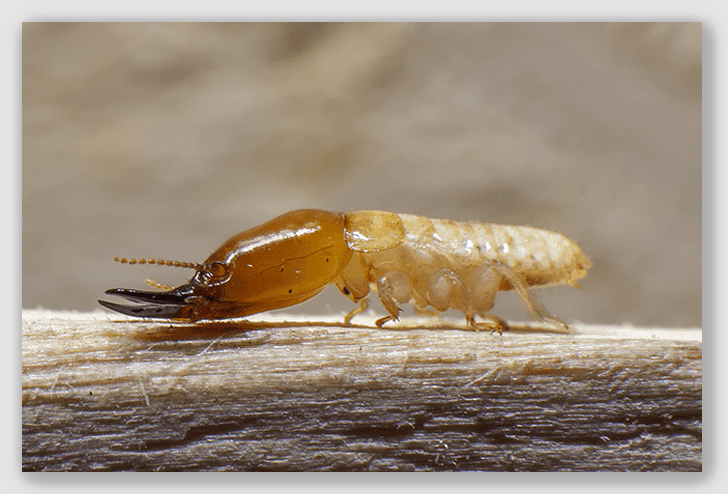
Invasive super termites are taking their voracious appetite from dead wood and timber to South Florida’s live trees, hollowing out decades-old canopies and making them vulnerable to high winds. The change in strategy by the newly arrived Formosan and Asian subterranean termites is alarming to experts who say they are seeing signs that normally wind-resistant trees such as oaks are being compromised and put at greater risk of being toppled during tropical storms and hurricanes. “I would say in the last seven or eight years we’ve begun to see termites that attack trees with more frequency than maybe we have seen prior to that time,” said Michael Orfanedes, commercial horticulture agent at the University of Florida’s Institute of Food and Agricultural Sciences in Broward County. Normally termites make their homes in dead or harvested wood, such as timber used in houses and other construction. But the more voracious species, often called super termites, are finding new sources of food in some of South Florida’s largest and oldest living trees from Palm Beach County to the Keys. The Asian subterranean termite is a growing threat to South Florida, especially in Broward County, and it’ll need to be watched more closely now that it’s termite swarming season. “That’s one of the big things I’m concerned about, especially in South Florida, and especially here in Broward, where we have a big population of Asian subterranean termites that within 20 years have spread extensively from the old part of the city like New River, Riverside (Park), Riverland, all of these areas with beautiful old canopies,” said Dr. Tom Chouvenc, urban entomology professor at UF/IFAS…
A controversial giant sequoia tree that stands between two Northeast Portland homes has reportedly been vandalized. The property owners who have been fighting to save the tree told KOIN 6 News they recently discovered five holes drilled about 12 inches deep into the tree’s trunk. Claire Bollinger said a toxicology report concluded the tree was poisoned. The city’s Urban Forestry Division declared the tree a nuisance in April of 2020 because the root system is damaging the foundation of a home next door and ordered it to be removed. The owner of the neighboring home said the house has been deemed a hazardous structure that is unlivable and it’s been vacant for more than three years. KOIN 6 learned the property the giant sequoia is growing on was about to be sold to a developer who was planning to save the tree. “The worst thing is we had the house pretty much sold — we could have been done with it, we’re happy with the deal, everything was going good, and then this happens,” said Theo Smith. “We were completely blindsided by this poisoning thing, we have no idea who or why anybody would do this,” said Carole Johnson-Smith…
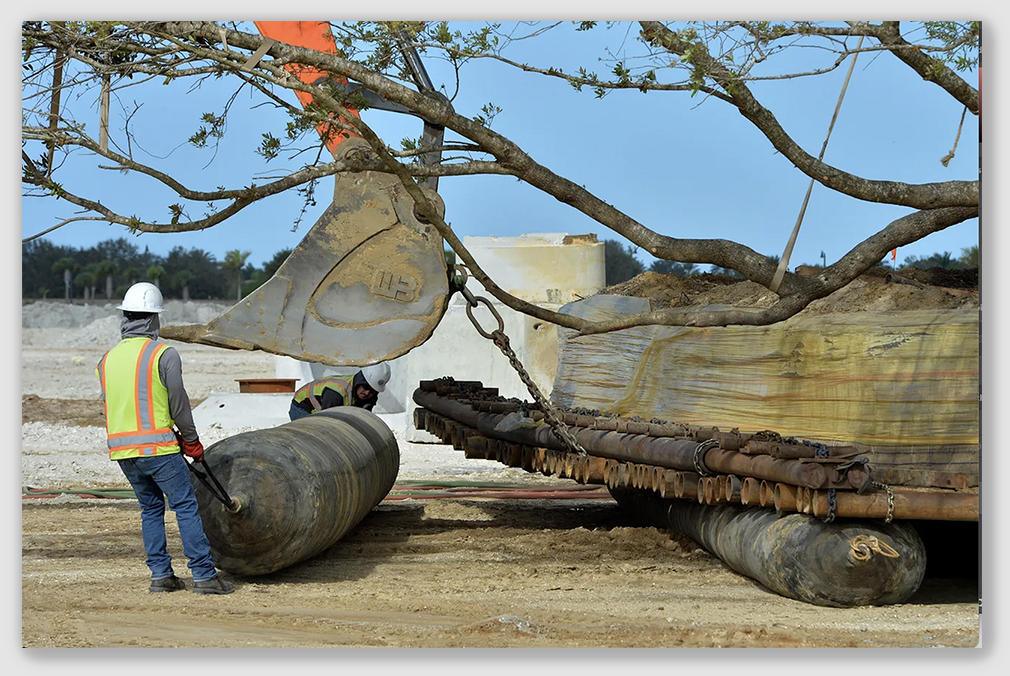
A live oak tree believed to be 100 years old was relocated to its new home near the banks of an 80-acre excavated lake in Wellen Park Tuesday, courtesy of workers from Houston, Texas-based Environmental Design, who started the custom moving process 18 months ago. The 800-foot move will allow the tree, which has a diameter of 96 inches, to become a showpiece and provide immediate shade for people visiting the lake, which is being crafted as the heart of Downtown Wellen Town Center. The $1 million tree relocation effort includes 26 trees in all. The process involves pruning back roots to define a root ball for each tree. Each root ball is bound and stabilized as part of a patented process called Arborlift. A platform encompassing the root balls rolls to its new destination on inflatable tubes. “It rolls about 100 feet per hour,” Paul Cox, principal and vice president of Environmental Design, said Tuesday. “The big giant that we’re moving today is about 50 feet from its home…”
Plano Urban Forester Marc Beaudoing is urging residents to not panic — yet — as trees that usually remain green all winter have turned brown. Not surprisingly, the culprit is likely the record-breaking low temperatures brought on by the winter storms in February, Beaudoing said in a Facebook post. “This bitter cold shocked trees and other plants,” Beaudoing wrote. “You may see leaves that are normally green turn brown.” Residents should not yet panic, he added, as new leaves that emerge in the spring will likely push off the older, damaged leaves. But some trees may have damage to the tips of their branches, which may lead to “dieback,” a term that refers to the progressive death of twigs and branches that typically begins at the tips. However, residents should check their tree trunks for any visible cracks caused by water freezing and expanding inside the tree…
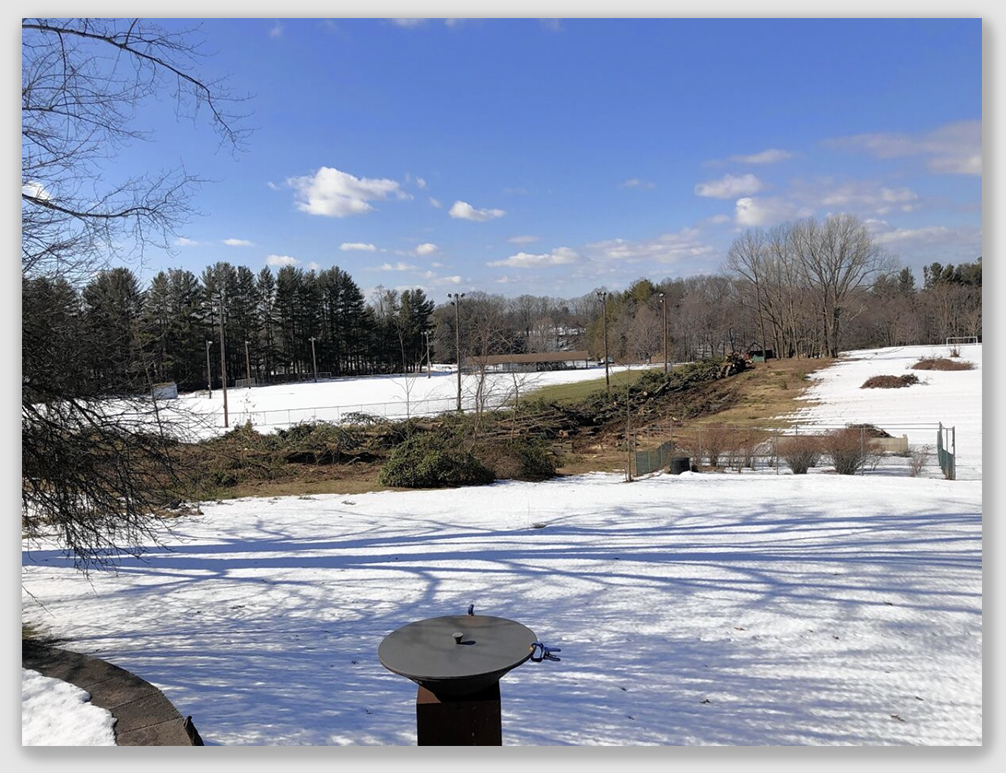
Residents who live near East Windsor Park on Reservoir Road say they are dismayed that the town cut down all the park’s evergreen trees, but a town official said the trees were a safety hazard. Area residents received a letter from the town last June notifying them of the planned tree removal. The letter said work was scheduled for July, but it did not occur until late last month. First Selectman Jason E. Bowsza attributed the delay to the pandemic. Martha Ceppetelli, a resident on Skinner Road, which abuts the park, said she was taken aback when she saw that every tree had been removed. “We knew that trees were going to be taken down at some point, but we didn’t think every single one would be taken down,” she said. Bowsza said the trees have been a safety hazard for both the park and nearby residents. “We’re trying to mitigate the opportunity for additional damage in the future because any time we have sustained winds over 30 miles per hour, we had to go out there and pick up one or more trees,” Bowsza said. Both Ceppetelli and her husband, Michael, wondered why the trees were taken down without a plan in place for what will be offered at the park…
A PG&E subcontract tree inspector worried back in 2018 that “clueless” crews were missing at-risk trees near where Cal Fire suspects a leaning and possibly burned tree touched off the Zogg fire in Shasta County, according to emails reviewed by NBC Bay Area’s Investigative Unit. In an email from Nov. 7, 2018, an unnamed Mountain G Enterprises (MGE) contract inspector tells an unnamed colleague that “trees were mismarked” by crews assigned with removing burned out trees that imperiled PG&E’s power lines following the Carr fire in July of 2018. “There were trees EVERYWHERE standing,” the unidentified inspector emailed to a colleague two years before the Zogg fire left four people dead last September. The author, whose name is redacted, expressed skepticism about leaving burned trees standing until crews could find time to cut them down, given the risk that they could fall onto power lines. “So we as MGE have said these 3,000 trees are safe till routine (patrols) can get these down on the ground,” the inspector said. “All it takes is ONE dead tree we left standing to go through the brand-new lines to give us a black eye,” the inspector warned…

A global observation of an ongoing atmospheric drying—known by scientists as a rise in vapor pressure deficit—has been observed worldwide since the early 2000s. In recent years, this concerning phenomenon has been on the rise, and is predicted to amplify even more in the coming decades as climate change intensifies. In a new paper published in the journal Global Change Biology, research from the University of Minnesota and Western University in Ontario, Canada, outlines global atmospheric drying significantly reduces productivity of both crops and non-crop plants, even under well-watered conditions. The new findings were established on a large-scale analysis covering 50 years of research and 112 plant species. “When there is a high vapor pressure deficit, our atmosphere pulls water from other sources: animals, plants, etc.,” said senior author Walid Sadok, an assistant professor in the Department of Agronomy and Plant Genetics at the University of Minnesota. “An increase in vapor pressure deficit places greater demand on the crop to use more water. In turn, this puts more pressure on farmers to ensure this demand for water is met—either via precipitation or irrigation —so that yields do not decrease.” “We believe a climate change-driven increase in atmospheric drying will reduce plant productivity and crop yields—both in Minnesota and globally,” said Sadok…
Transplanting trees with rhizospheric soil is an important way to facilitate tree survival in the process of landscaping and reforestation. The traditional way to prevent looseness of rhizospheric soil is forming soil balls around the roots with bags, boxes or rope wrapping, which is cumbersome, laborious and easy to break. This study is aimed to develop a new type of degradable environment-friendly polymer as soil consolidation agent to facilitate tree transplanting. In this paper, the KGM/CA/PVA ternary blending soil consolidation agent was prepared by using Konjac glucomannan (KGM), chitosan (CA) and polyvinyl alcohol (PVA) as raw materials. Through the verification and evaluation, the clay and sandy soil can be consolidated and formed into soil balls by the ternary blend adhesive, which was convenient for transportation. The preliminary application of the ternary blend adhesive in the transplanting process of sierra salvia, Japanese Spindle (Euonymus japonicus) and Juniperus sabina ‘Tamaricifolia’ confirmed that the application of soil consolidation agent can effectively solve the problem that the root ball of seedling is easily broken in the process of transplant…
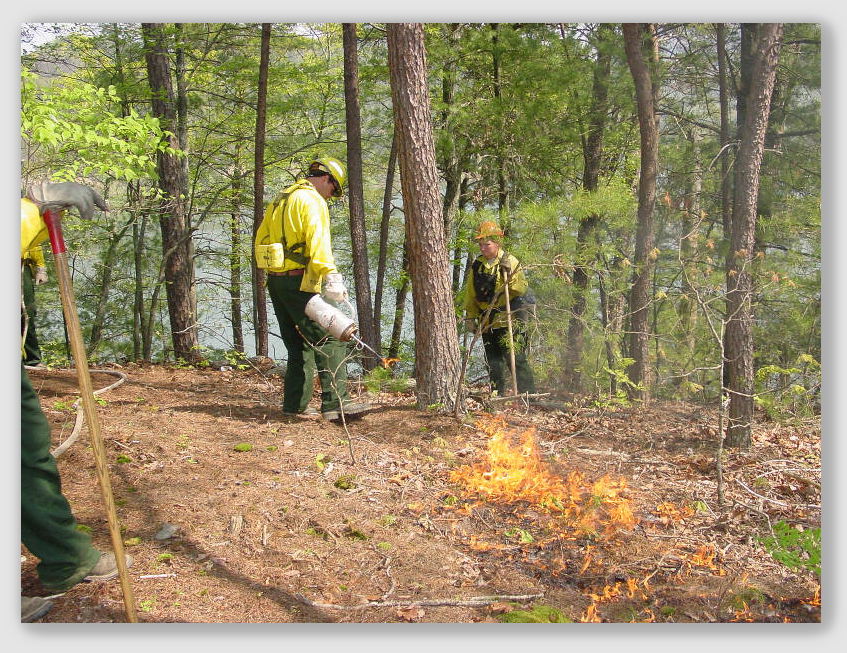
Residents across the region this week and afterward might see smoke rising from purposely set fires in public forests, aimed at keeping the risk of wildfire low. Officials want folks to know in most cases it’s not a wildfire producing that smoke, but a controlled fire called a “prescribed burn,” intended to get rid of wildfire fuel which comes in the form of deadwood, underbrush and leaf litter. U.S. Forest Service officials in the Cherokee National Forest started prescribed burns last week in an effort to forestall wildfires and improve habitat for wildlife and forests, agency spokesperson Terry McDonald said. “To some people the word fire creates visions of great devastation and waste. While this concept can be true of wildfires, it is the opposite with prescribed fires,” McDonald said. “Prescribed burns reduce the threat of catastrophic wildfires by removing vegetation — fuel — that accumulates and creates a fire hazard,” McDonald said. “Prescribed fire improves habitat for wildlife by opening the forest floor up to light and encouraging the growth of native grasses, blooming species and other plants that provide food and shelter for many species…”
As spring approaches, so have construction workers building the Mountain Valley Pipeline. Crews of tree-cutters gathered on recent mornings near Yellow Finch Lane in Montgomery County, where two protesters are occupying tree stands that block work on a small segment of the 303-mile natural gas pipeline. One of the tree-sitters, known publicly only as Acre, said the sound of chainsaws could be heard Monday from his spot about 50 feet above the ground in a chestnut oak. It came as an unneeded reminder to Acre that Mountain Valley and law enforcement officials may soon attempt to remove him and another tree-sitter. “It’s easier to be in the trees when the weather is nicer, but it also means that MVP is starting to want to work again,” he said. Company spokeswoman Natalie Cox said that construction — which over the winter has been limited largely to erosion- and sediment-control measures — is continuing “in compliance with all environmental regulations and guidelines…”

If you find your way to the uppermost reaches of California’s White Mountains, you might catch yourself wondering if you’ve strayed back to some unfamiliar, primeval part of history. Here, the high altitude slopes are populated with twisted, gnarled trees that look as if they’ve been warped into their crooked formations by some unfathomable force. They seem less like trees and more like the remains of apocryphal figures cursed to take their arboreal shape for transgressions against some ancient deity. They stand on the mountaintop, still and silent as tombs but very much alive. These are the Great Basin bristlecone pines of Inyo National Forest. These trees are known for their wizened appearance and their tenacity, growing amid incredibly dry and rocky terrain. And one of these trees is the oldest living non-clonal (genetically identical trees with a shared root system) tree in the world. Before the Great Pyramid of Giza was even a twinkle in pharaoh Khufu’s eye, the Methuselah tree had already taken root. In 1954, dendrochronologist Tom Harlan discovered a tree in the Ancient Bristlecone Pine Forest that is now 4,852 years old. The tree was named after Methuselah, the biblical figure who’s said to have lived to the ripe old age of 969. Somewhat ironically, this ancient bristlecone predates the writing of the texts wherein Methuselah appears…
A Vancouver real estate developer has been convicted of compromising the health and safety of five trees located on a west side property. Robert Boykiw was found guilty in provincial court of 14 of 15 counts related to the violation of the city’s tree bylaw by pruning western red cedars at 3170 Ash St., a multi-unit house, on Jan. 13, 2018. Court heard that a numbered company of which Boykiw was the sole director had acquired a multi-unit dwelling adjacent to the Ash Street property, at 575 West 16th Ave. Boykiw, chief executive officer of Regius Corp., inspected the interior of the West 16th Avenue house, which was bought as an investment, and found severe deficiencies that required immediate action, according to the verdict by Judicial Justice Zahid Makhdoom. Access to the units in the West 16th home needed work, but the city wouldn’t approve any changes due to power limitations, and Boykiw concluded that the power could not be brought in without “lifting the limbs” of the trees on the Ash Street home, said Makhdoom…
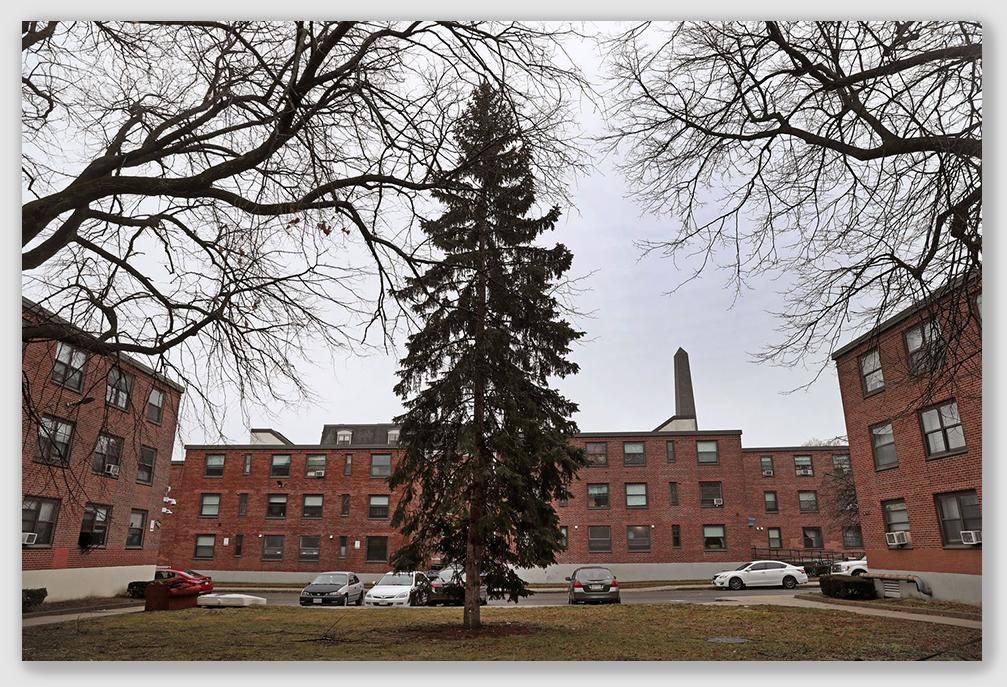
With the Tobin Bridge looming above and a vast expanse of asphalt below, the towering maples, elms, and hundreds of other decades-old shade trees supply fresh air and a hint of grace to a bleak stretch of urban decay in Charlestown. But many of them may soon be cut down. To make way for the long-delayed replacement of the Bunker Hill public housing complex — a crumbling, infested warren of brick buildings in dire need of renovation — the developer and city officials say they must remove about 250 mature trees, three-quarters of those growing on the 26-acre property. It would be among the largest removal of trees in recent city history, double the number that the city last year planned to take down for a controversial road project along Melnea Cass Boulevard in Roxbury. The city withdrew the plan after protests. Opponents say the loss of so many trees — some nearly a century old — would devastate the neighborhood’s thin canopy, harm air quality, and deepen health disparities faced by low-income residents…
It was the 1940s, the end of World War II when U.S. Navy pilot Jim Gardiner came home to the fertile San Joaquin Valley and began to carve a working farm out of sagebrush and virgin land northwest of Bakersfield. At the gateway to the property stood more than 250 palm trees planted in double rows in the shape of a cross. The trees, now known as the Cross of Palms, have been there, it is believed, since the 1880s. “They are majestic, but PG&E is killing them one by one,” said Jim Gardiner’s son, Keith Gardiner. On Monday, a tree removal service contracted by the giant utility cut down seven trees. Some weeks before that, six trees were leveled. Keith Gardiner is beside himself with worry. He feels his family’s heritage and his community’s history are being threatened because PG&E placed the electrical lines too close to the already existing palms. “PG&E obtained an easement to place a power line 12 feet from the trees in 1958, decades after the trees were planted,” he said. “On occasion some palm fronds get close to the lines. It never has been a hazard and now they are claiming the trees are a danger…”
 ABC News, March 5, 2021: First oak trees selected to replace Notre Dame’s spire
The first eight oak trees destined to replace the destroyed spire of Paris’ scorched Notre Dame cathedral have been selected from the Bercé forest in the French Loire region, church officials said on Friday. The iconic, 96 meter (315 foot) spire was completely destroyed in the fire that ravaged the Paris monument in 2019. It was made by architect Viollet-le-Duc in 1859. “It is a source of pride for the foresters of the National Forestry Office to participate in the rebirth of Notre-Dame de Paris,” said Forestry Office Director Bertrand Munch. The first oaks measure around one meter (3.2 feet) in diameter. Officials said the 1,000 oaks that are needed to fully rebuild the spire are all scheduled to be cut by the end of March…”
There’s a tree lurking in our neighborhoods secretly causing harm to nature preserves and the Indiana Dunes National Park, even as I am writing this column. Pyrus calleryana, commonly known as callery pear or ornamental pears, is quickly becoming one of Indiana’s worst invasive species, choking out prairies, oak savannas, forests and woodlands. You may know it by its white blossoms and names such as Aristocrat, Autumn Blaze, Bradford, Capital, Chanticleer, Cleveland Select, Redspire or Whitehouse. Unfortunately, while nurseries may have told us flowering ornamental pear trees are sterile, different varieties being planted next to each other are hybridizing. As a result, many of these trees are now producing small brown fruits, inedible to us, but desirable to squirrels and birds. Inside these fruits are viable seeds that can be pooped out miles away, producing saplings everywhere that are not susceptible to drought, heat and pollution. Suckers from the roots can also produce little trees, and those root-born trees spread infestations even further. These beautiful trees have endeared themselves to us over the years, reminding me of furry tribbles from a 1967 episode of “Star Trek.” The tribbles were adorable but, just like these trees, rapidly multiplied and spread across the landscape to the horror of the “Star Trek” crew. One of the first wild ones I spotted was along U.S. 12 in Porter County in the Indiana Dunes National Park. It was easy to identify because this tree typically begins blooming much sooner than all the other flowering trees. Eric Bird, stewardship manager with Shirley Heinze Land Trust, is also seeing these Tribbles pop up in Cressmoor Prairie Nature Preserve and other sites in Hobart. I hope we won’t end up like other parts of the state where thickets of them are everywhere, especially along rights of way…
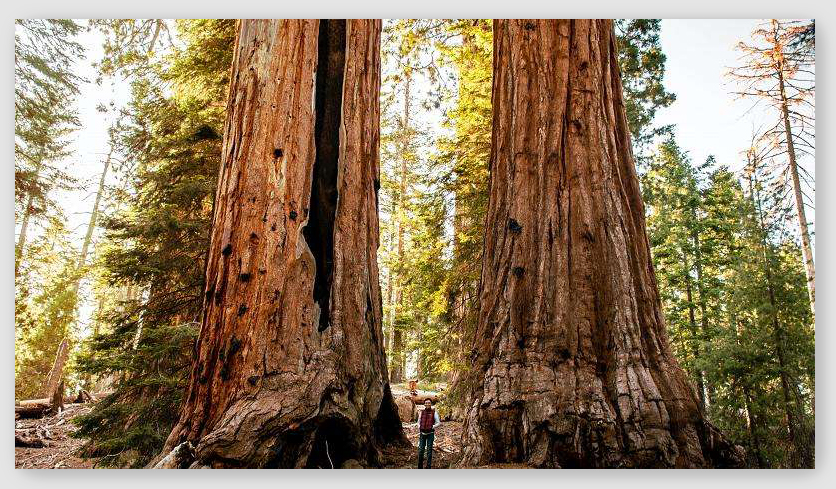 Africa News, March 4, 2021: Where are the world’s tallest trees and why are they so important?
California redwoods are some of the tallest, most ancient trees on earth. Estimating their exact size, however, can be a difficult task. Until recently, the only way of working out just how big these trees were was to climb up them, approximate using the diameter of their trunks, or cut them down. But these methods are not particularly reliable and can have a large margin of error. Now, scientists at University College London and the University of Maryland have developed a way to calculate their total mass using lasers. It has allowed them to gain “unprecedented insights” into the 3D structure of these giant redwoods. Among the trees scanned was the 88 metre tall Colonel Armstrong. Located in the Armstrong Redwoods State Natural Reserve in California, US, it is 88 metres tall and estimated to be over 1400 years old. It was found that Colonel Armstrong may weigh around 110 tonnes or as much as roughly 10 double-decker buses. They discovered that these large trees could be as much as 30 per cent bigger than previously thought…
Arbor Day will have a special feel this year, with the city currently reviewing and renewing its efforts to preserve and enhance its urban tree canopy for future generations. One of the first dominoes expected to fall is North Olmsted regaining its Tree City USA designation, which it had held for more than a quarter of a century before it lapsed in 2010. “We’re working on regaining our status as a Tree City USA this year,” North Olmsted Director of Planning and Development Kimberly Lieber said. “We’ve started fact-finding around the process and criteria, and are planning some type of Arbor Day recognition.” Arbor Day is April 30. Regarding Tree City USA criteria, Lieber said North Olmsted is in good shape. Not only does it have a forestry department and a tree ordinance on the books, but the city is currently spending at least $2 per capita on urban forestry needs…
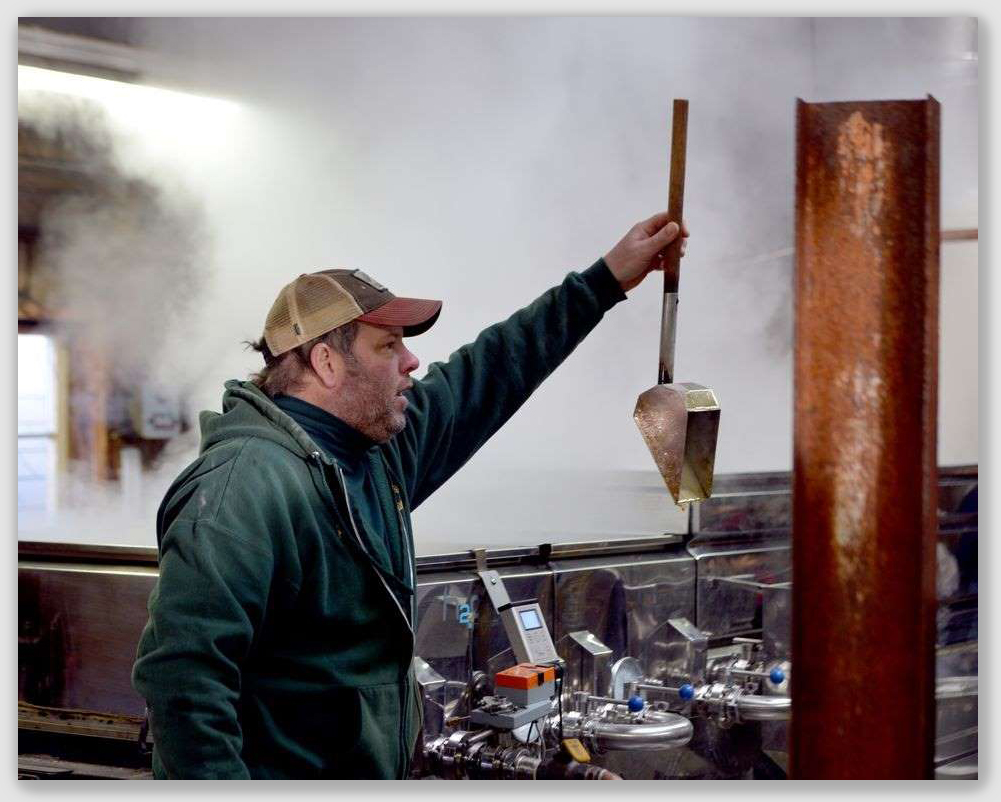
After closing early due to the COVID pandemic in 2020, sugar shacks in Massachusetts have reopened their doors for another season. “We are boiling,” Steve’s Sugar Shack in Westhampton posted to Facebook on Feb. 26. In February, the sugar shack posted it was already fully booked for opening weekend, which is March 6. Due to COVID-19 regulations, seating is by reservations only. Coupled with a shorter season, the sugar shack expects these time slots to fill up quickly. “As you consider when to come, please note that we will only be open for total of 8 days, and we expect reservations to fill up fast,” the website states. As of Monday morning, there are still many open slots for the season, although there are some slots already booked through the last weekend Steve’s Sugar Shack plans to be open. They’re not the only ones. There are about 300 maple producers in the state. About 20 of those have restaurants and many more allow visitors to encourage sales. “Trees don’t get COVID and they’ll be making sap, so sugarmakers will be making maple syrup,” the Massachusetts Maple Producers Association website states. The season typically starts in mid to late February and lasts four to six weeks, “all depending on the weather,” Massachusetts Maple Producers Association said. The Maple Weekend is celebrated March 20 through March 21 this year…
Jamestown, North Dakota, Sun, March 4, 2021: Jamestown considers tree inventory project
There are a lot of trees on the public properties of Jamestown, although nobody is sure just how many, according to Eric Laber, Jamestown city forester. “The last inventory was in 2015,” he said. “Somewhere around 10,000 to 12,000 trees on the boulevards and in the parks in Jamestown alone.” Laber is proposing a project to update that inventory this summer and possibly include the Stutsman County Park Board in the project to count all the trees in its parks. “There is an economy of scale to do the project together,” Laber said. “The same inventory program and person could do all the work.” The tree inventory would only include trees on public lands such as street boulevards and parks. It would not include trees on private property. The project is not just a count of the trees but will include a breakdown by species. “It will be interesting to see how many elm have been lost to Dutch elm disease,” Laber said. “There are other trees that have been lost to the wind over the past few years too.”Previous inventories of trees in Jamestown have indicated about 45% were ash trees. “That is too much of one species,” Laber said. Laber said the emerald ash borer, an invasive insect from Asia that could decimate the ash tree population, is in the region, with confirmed reports in South Dakota, Minnesota and Manitoba. The forestry department is part of a trap and identify program checking for the presence of the emerald ash borer and the Asian longhorned beetle that also can kill trees…
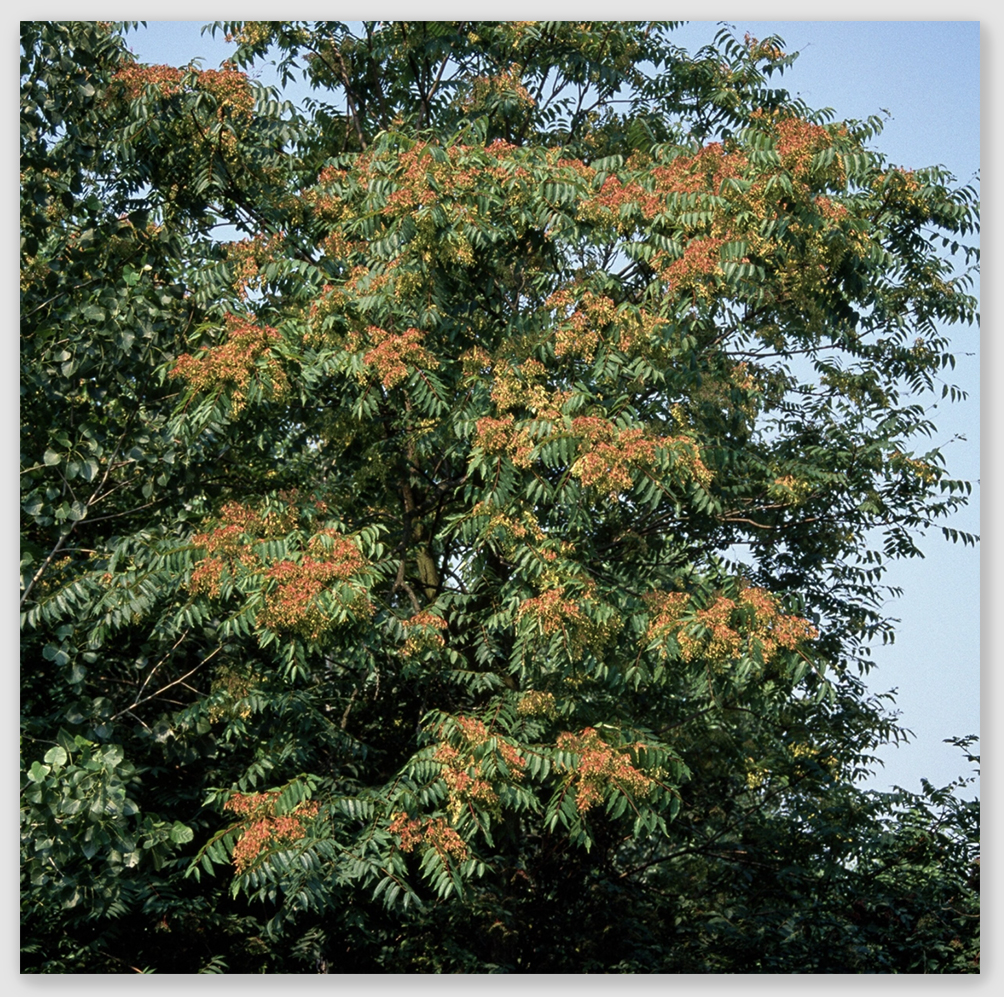
Many trees would be lucky to be as beautiful as Ailanthus anltissima, also known as tree of heaven, a deciduous tree with quill-shaped leaves, light gray bark, and red-and-yellow-tinted seeds that resemble a sunset. But outside its native China, the plant has also earned the nickname “tree of hell,” due to its highly invasive nature: it can grow three feet a year, cloning itself via underground “suckers,” or through the hundreds of thousands of seeds each tree produces every year. The notorious plant wipes out native species with its dense thicket and toxins it excretes into the soil. It also emits a bad smell from its flowers; has no natural predators; and serves as a sanctuary for destructive invasive insects, such as the spotted lanternfly. (See pictures of 11 sacred and iconic trees.) Since its introduction by enthusiastic horticulturists to the United States nearly 240 years ago as a shade tree and botanical specimen, Ailanthus has spread to all but six U.S. states, and has gained a foothold on every continent except Antarctica…
Galveston’s majestic palm trees could be another casualty of Texas’s four-day freeze last month. The cold snap that left millions of Texans without power and caused burst pipes across the state has also had a pronounced effect on local vegetation. Days after the freeze, with the winter weather now normalizing to mild temperatures for the region, many trees in Galveston remain in a torpid state — with brown leaves, broken branches and a general hang-dog appearance. “Your Queen Palms, Japanese blueberry trees, citrus trees, olive trees — there’s probably a 90 percent chance that those are just really not going to come back,” said Orvis Himbaugh, owner of Tree Worxx, a company that specializes in tree servicing in Galveston County and the Houston area. Galveston’s iconic palms, synonymous with the island’s laid-back ethos, bore the brunt of the impact from the harsh weather. The lofty trees — there are more than 20 species of palms on Galveston island — are surprisingly resilient, able to withstand the region’s volatile climate from hurricanes and tropical storms to the occasional frost. But the sustained subfreezing temperatures and vicious winds in February proved too severe for the trees to overcome…

An Oakland woman was listed in fair condition Wednesday at an Augusta hospital after a tree fell on a car she was traveling in and a branch penetrated the dashboard, impaling her Tuesday in Sidney. Theresa Roy, 79, was sitting in the front passenger seat of a 2016 Hyundai Santa Fe being driven north on the Pond Road by her husband, David Roy, 78, at 10:06 a.m. Tuesday when the crash occurred, according to Lt. J. Chris Read of the Kennebec County Sheriff’s Office. “High winds caused a large pine tree to snap and fall onto the vehicle as it traveled,” Read said Wednesday in a news release. “This caused heavy damage to the vehicle and a branch penetrated the dashboard, ultimately impaling Theresa…”
Wolverine Worldwide recently submitted a feasibility study to the Michigan Department of Environment, Great Lakes and Energy outlining a comprehensive plan to address per- and polyfluoroalkyl substances at its House Street property. The proposal combines multiple remediation methods while working to preserve sizable greenspace that “complements the area’s rural character,” the Rockford-based maker of footwear and apparel posted on its blog, WeAreWolverine. The feasibility study and the remediation of the company’s House Street property is one component of its efforts to address per- and polyfluoroalkyl substances (PFAS) contamination in the area stemming from historic disposal of waste containing chemicals that were part of a previous formula for 3M’s Scotchgard product that Wolverine used to waterproof its leather shoes beginning in the late 1950s and early ’60s. PFAS have been linked to certain types of cancers and other health issues… The remediation plan for the House Street property combines two remediation methods to remove PFAS from the ground and further reduce the impact of PFAS on groundwater, Wolverine said. The first method, phytoremediation, is a process where the roots of trees planted on the property will pull PFAS out of the ground over time. The second method, strategic capping, involves installing specially engineered membranes over the thickest areas of PFAS, preventing that PFAS from getting into the groundwater. This “phyto-cap” plan addresses the remediation objectives outlined in the consent decree and has the added benefit of preserving a 76-acre green space in the middle of a rural residential area, Wolverine said…
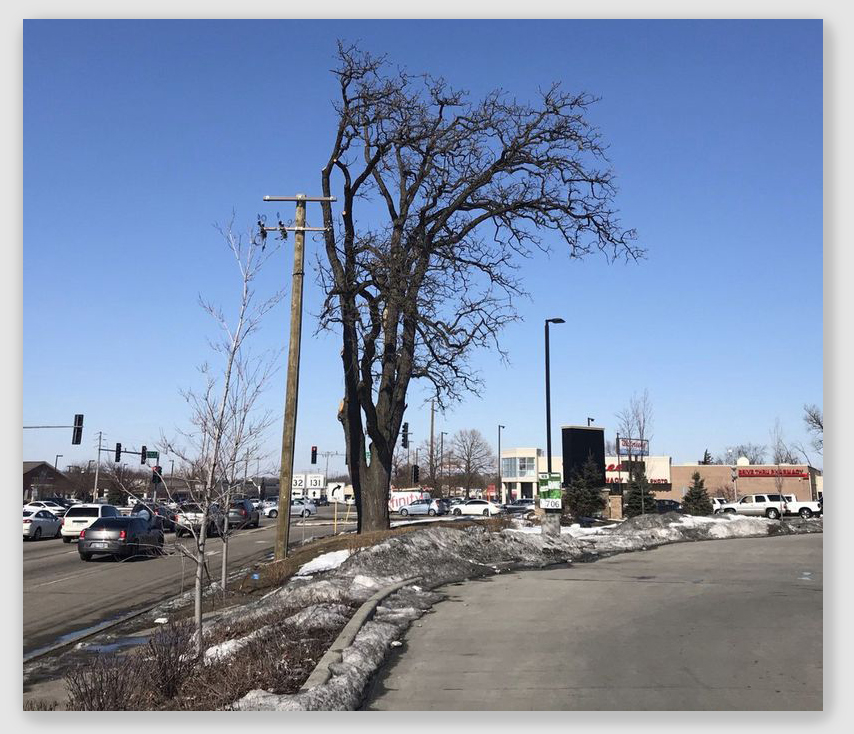
The bur oak tree on the corner of Green Bay Road and Grand Avenue in Waukegan was alive and growing before European settlers had even arrived in the area, then known as Little Fort. It survived as the town grew, even after roads were paved, streets and traffic lights were installed and two recent developments threatened its destruction. Now, the roughly 230-year-old tree is just a glimmer of its former glorious self, according to a Waukegan man and his two grandchildren who helped save the tree from being removed in 2015. This winter, “Commonwealth Edison has come along and cut half the tree down to string a new electric line,” said Pat Carry, who lives four blocks away from the tree. “I’m sure ComEd did have the right to do that, but seeing that the tree is so old, they could have gone around it.” The number of oak trees has been declining in northern Illinois, including in Lake County, for decades. ComEd said the pruning done on the tree was necessary to erect a new power line at the busy intersection to provide electricity to roughly 335 customers…
Mankato, Minnesota, Free Press, March 2, 2021: Ash borer expected to kill 17% of Mankato’s trees
The inevitable arrival of the tree-killing emerald ash borer is expected to take one in every six trees in Mankato in the next decade or so and leave hefty bills in the laps of homeowners with large backyard ash trees. A report to the Mankato City Council Monday night also warned of $1.5 million in expenses just to deal with the estimated 2,500 ash trees on city land. And the report sets out proposed processes for identifying infested trees on private property and requiring their removal at the property-owner’s expense, although options may be provided to pay the bill — which could top $1,000 for large, difficult-to-remove trees — over several years. “It’s going to have a big financial impact on all of our residents as well as the city of Mankato,” said Ashley Steevens, the city forester and superintendent of parks. An “Emerald Ash Borer Management Plan” was originally to be presented to the council a year ago before being delayed by a more pressing scourge — the COVID-19 pandemic. But with the invasive beetle closing in on Mankato from all directions, city staff said preparations for the ash borer can’t wait much longer. “With an estimated 17,400 ash trees on public and private properties combined in Mankato — including 2,500 in boulevards, parks and city managed properties — the city is at risk of losing approximately 17% of its existing tree population in the next 10 years,” the report states…
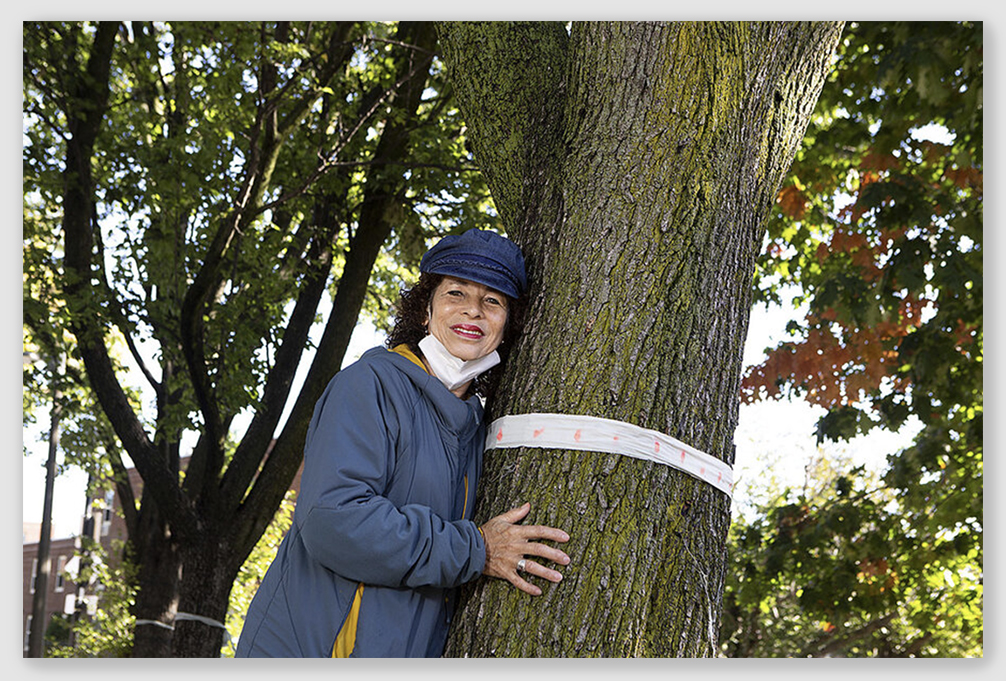
The grumble of car engines whizzing by seems to fade when Yvonne Lalyre talks about the trees. Her eyes sparkle above her mask as she walks the row of natural sentinels between her neighborhood, Roxbury, and the asphalt urban artery that is Melnea Cass Boulevard. “They’re like lungs,” Ms. Lalyre says, looking up in reverence at the canopy of green. “Without the trees, we would just …” Her eyes dim as she trails off with a sigh. “I don’t know. It would be so much worse.” The trees that line the boulevard have been at the center of tensions between Roxbury residents and the city of Boston for the past year. City plans to overhaul the boulevard included cutting many of those trees, thus removing a large portion of the tree canopy in the low-income and largely Black and brown neighborhood. In cities across the United States, research has found that tree canopy typically inversely correlates with income – and that the lack of greenery is making those neighborhoods hotter and more polluted, among other detrimental effects. But in Boston and other cities, there appears to be a shift in thought. As more communities start to map their trees, more residents are getting involved in the conversation…
Pittsburgh, Pennsylvania, Post-Gazette, February 27, 2021: Felling trees for safety
Dozens of decades-old trees have been felled at the Short Line Hollow Park trail head in Ross as part of ongoing efforts to stabilize the hillside. In the wake of the work, a volunteer group that had been working with township officials to improve trails and access to the park has decried the denuding of the land, with one such volunteer proclaiming the park “dead” in a passionate post on the Friends of Short Line Hollow Park Facebook page. Municipal officials, as a matter of course, should work hard to preserve trees, especially those in green spaces — for their environmental value, their beauty, their history. However, when those trees stand in the way of safety or land stability, they must be carefully and minimally pruned, thinned or even cleared. The issue for Short Line Hollow Park began in 2019, when the nearby Reis Run Road experienced a landslide that blocked the moderately trafficked road with thousands of tons of “fill.” Township officials chose to dump some of the fill at the Short Line trail head on Cemetery Lane to reopen the road as quickly as possible, temporarily closing it to hikers and bikers and promising a multiyear plan to increase parking and make the trail head — formerly accessible only to experienced hikers — more accessible to the general public…
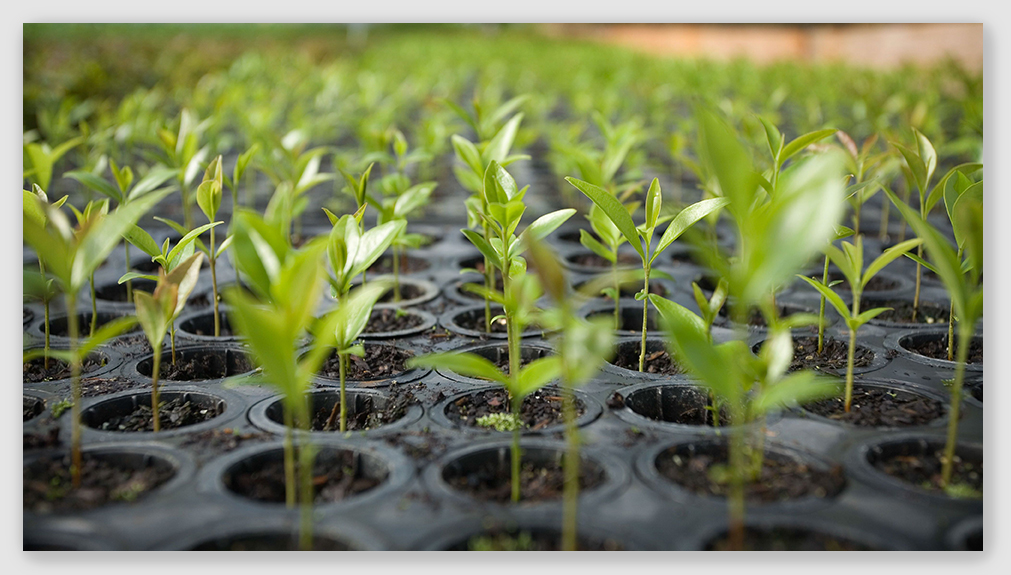
The Nature Conservancy, March 12, 2021: New Study: U.S. Needs to Double Nursery Production
In order to realize the potential of reforestation in the United States, the nation’s tree nurseries need to increase seedling production by an additional 1.7 billion each year, a 2.3-fold increase over current nursery production. Currently the nation produces 1.3 billion seedlings per year. These numbers, taken from a new study, show the promise of increased nursery output as a way to fight climate change, create jobs, and recover from uncharacteristically severe wildfires. With more than 200,000 square miles in the United States suitable for reforestation, ramping up nursery production could offer big benefits for the climate. Restoring forests is an important nature-based solution to climate change and a complement to the critical work of reducing fossil fuel emissions. “To meet the need for reforestation, we’ll need to invest in more trees, more nurseries, more seed collection, and a bigger workforce,” said the study’s lead author, Joe Fargione of The Nature Conservancy. “In return we’ll get carbon storage, clean water, clean air, and habitat for wildlife.” The new study, published in the science journal Frontiers in Forests and Global Change, was co-authored by 18 scientists from universities, nonprofits, businesses, and state and federal agencies…
The cost of building a new home has spiked and it’s all because of forest fires. Last year’s wildfires out West destroyed millions of acres of trees that were supposed to become 2-by-4s. Now, there has been a huge increase in the price of lumber. Gwinnett County lumber yard owner Michael Johnsa told Channel 2′s Berndt Petersen when he saw what was happening, he knew it would turn the lumber industry upside down. “Most of the people who sell that building supply material have had a hard time getting it because of that. When you see something like that, it does strike you as a problem,” Johnsa said. Last year’s wildfires out West burned through millions of acres of trees that were supposed to end up in the form of lumber for new homes. Prices have skyrocketed. Even a do-it-yourselfer like Ray Phillips told Petersen that wood costs more everywhere. “Most of the retail stores like Home Depot and Lowes,” Phillips said. The pandemic also had a hand in this by forcing the sawmills to shut down. While many are back in business, socially distanced operations can’t cut nearly as much lumber…
A plan to log 224 acres of steep land above the Russian River, on the outskirts of Guerneville and Monte Rio, is expected to win approval in the coming days despite heavy opposition from residents and activists alarmed by the project’s proximity to rural communities and the natural landscape that draws tourists there. Representatives for the Roger Burch family, which owns the property and the Redwood Empire Sawmill in Cloverdale — where logs from the Silver Estates timber harvest would be milled — said the forest is overstocked and badly in need of thinning to promote the growth of larger trees and reduce excess fuels. But opponents say they remain unsatisfied by the planning process and have myriad outstanding concerns — everything from effects on wildlife habitat to soil stability, wildfire risks and visual impacts. They say the plan is governed by “outdated” forest practice rules that fail to account for climate change and heightened wildfire risks where wildland abuts or mixes with settled areas. “I still feel like we’re living with the legacy of Stumptown, and we still have to make amends,” said John Dunlap, a leader of the local Guerneville Forest Coalition. Stumptown was the nickname acquired by the community during the logging boom at the turn of the 20th century, when timber from the area helped rebuild San Francisco after the 1906 earthquake and fires. “It’s sort of like we’re not really listening to what the environment is telling us…”

Money may not actually grow on trees. But every leaf on every branch not only boosts curb appeal; it increases the value of your home in plenty of ways, including those you might not expect. Healthy, mature trees add an average of 10 percent to a property’s value, according to the USDA Forest Service. They reduce heating and cooling costs, increase privacy, soften noise, attract birds and pollinators, and create priceless memories. Like money, though, trees perform best when viewed as a long-term investment. To ensure your tree thrives, consider these tips based on a tried-and-true arborist rule: Plant the right tree in the right place at the right time. One tree can serve a variety of purposes. It can screen out a neighbor’s yard, add spring or fall color, create wildlife habitat, cut strong winds, and even cool a house with its shade. According to the Arbor Day Foundation, the net cooling effect of a young, healthy tree is equivalent to ten room-size air conditioners operating 20 hours a day. Aside from aesthetics and practicality, consider the easy outdoor recreation possibilities, from bird-watching to picnicking beneath the boughs. Fifteen years ago, I planted two river birches. In addition to shading the sunny front lawn in summer, softening the wind that whips down the street from the north, and hosting a variety of birds, they sport a much-used hammock tied between them…
The family of a young physics researcher at a Bay Area COVID-19 testing lab was in mourning Sunday after he was killed by a falling tree near the facility in Burlingame. Kahlil Gay had just graduated from Cal State East Bay in December and started working at the company. “At a very early age, he knew that he wanted to be in the physics or engineering field. He knew actually where he was going in life,” said the victim’s aunt, who declined to provide her first name. Family members said Gay was excited about his new job — working for Color, a health tech company that provides COVID-19 testing for several San Francisco city-run sites. “Kahlil had just called his parents to check in (before the tragedy,)” said the victim’s aunt. But that excitement quickly turned into a tragedy on his third day at the Color campus located on Mitten Road. “He was walking with a co-worker of his,” said Kahlil’s older brother, Darryl Gay, when the accident happened. Authorities told the family that around 4 p.m. Friday afternoon, Kahlil was walking with a co-worker on campus when he was struck by the tree. His injuries proved to be fatal. There’s no word on whether or not the co-worker was injured…
 Davenport, Iowa, Quad City Times, February 28, 2021: It’s time to stop pruning oaks
The recent warm weather has given Midwesterners a taste of spring, which means it’s time to finish pruning oak trees for the year to prevent the spread of oak wilt. “The best way to prevent the spread of oak wilt is to not prune any oak tree between the end of March and the start of October,” said Tivon Feeley, forest health program leader with the Iowa Department of Natural Resources. “However, the warm weather conditions indicate that spring might be a bit early this year and for that reason, we recommend finishing your oak pruning by the end of the second week in March.” Oak wilt is caused by a fungus and has been present in the Midwest for many years. It most commonly impacts red, black and pin oaks, but can also infect white and bur oaks. If black, pin, or red oak are infected by the fungus they usually die within the same summer they are infected. White oak and bur oak can often take a number of years before they succumb. “A healthy tree can be infected by this fungus two different ways. The first is through open wounds during the growing season where the fungus is carried from a diseased tree to a healthy tree by a small beetle,” Feeley said. “The second is through root grafts between oak trees of the same species. For example, if a red oak is infected and there is another red oak within 50 to 100 feet there is a good chance that the roots of these trees are grafted and the fungus can move from the diseased tree to the healthy tree…”
Government can only do so much to solve the tree-cover crisis that’s spreading bald patches across Northeast Ohio, making communities uglier, less livable, more polluted, and more vulnerable to flooding, erosion and heat waves. That’s why the nonprofit Holden Forests & Gardens is launching a “People for Trees,’’ a campaign to enlist volunteers to plant 15,000 trees across the region by 2025. Holden, which operates a 3,500-acre arboretum in Kirtland and the 11-acre Cleveland Botanical Garden in University Circle, hopes to enlist some of its 17,000 members, 1,500 volunteers and 380,000 annual visitors to buy, plant, and care for the trees on private property, in yards or businesses. logic behind the campaign is that private property accounts for 85 percent of land within the region. If the public sector is responsible for only 15 percent, the private sector needs to step up, said Jill Koski, the president and CEO of Holden Forests and Gardens.That’s why the organization, which operates America’s 14th largest public garden, is reaching out to members and visitors two months ahead of Arbor Day, April 30. “We know who these people are,’’ Koski said. “We want to do more than a campaign. We want to start a movement. Long term, it’s not about a single organization. We need to bring more people into the fold…”

The fate of garage doors – any garage doors – does not exactly rate high on the list of world problems. But for Julie Good, her new garage doors are a triumph, a piece de resistance, a tour de force. Less hyperbolic, they improve her house’s curb appeal. “I’m very sad at the prospect of having to remove them,” Good, 62, said. When she bought the North Tustin house a decade ago, it featured a long garage with three narrow egresses. Good kept banging up her car getting in and out. “I lost two mirrors and scraped a side panel,” Good said. Last year, after one repair bill too many, she decided a garage remodel was well past due. Completed in mid-January, the face lift merged two of the garage doors into one larger entrance for easier maneuvering. Aside from the pragmatics, Good is thrilled with the aesthetics – Southwestern-style metal doors bearing a weathered, patina look. “They’re even more gorgeous than I had imagined.” But that feeling isn’t universal. Soon after the grand unveiling, Good learned that her homeowners association is not so impressed. Retroactively, the board denied approval…
The pandemic delivered an unexpected boon to the lumber industry. Hunkered-down homeowners remodeled en masse and low mortgage rates drove demand for suburban housing. Lumber supplies tightened up and prices smashed records.
“You must be making a lot of money,” an Ace Hardware store manager told timber grower Joe Hopkins, whose family business has about 70,000 acres of slash pine near the Okefenokee Swamp. “I’m not making anything,” Mr. Hopkins replied. Timber growers across the U.S. South, where much of the nation’s logs are harvested, have gained nothing from the run-up in prices for finished lumber. It is the region’s sawmills, including many that have been bought up by Canadian firms, that are harvesting the profits. Sawmills are running as close to capacity as pandemic precautions will allow and are unable to keep up with lumber demand. The problem for timber growers is that so many trees have been planted between the Carolinas and Texas that mills are paying the lowest prices in decades for logs. The log-lumber divergence has been painful for thousands of Southerners who are counting on pine trees for income and as a way to hold on to family land. And it has been incredibly profitable for forest-products companies that have been buying mills in the South. Three Canadian firms— Canfor Corp, Interfor Corp. and West Fraser Timber Co. —control about one-third of the South’s lumber-making capacity. Since bottoming out last March, shares of the Canadian sawyers have risen more than 300%, compared with a 75% climb of the S&P 500 index….
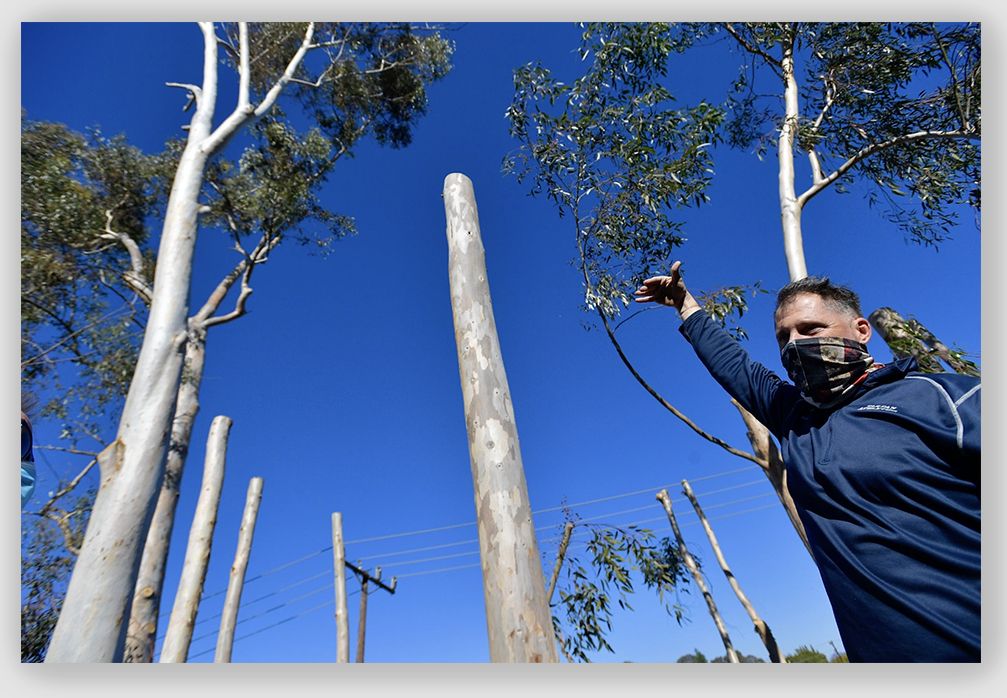
Neighbors in Mission Viejo’s Aegean Heights weren’t too concerned when Southern California Edison went door-to-door at the beginning of the month, letting them know that they’d be trimming trees along nearby power lines — “light trimming,” as one resident recalled. But after hearing the chainsaws, several went out and were stunned to see more than two dozen trees stripped of all branches and leaves, some cut well below the power lines and others 30 feet or more away from those lines. ”Trees that were 100 feet tall are being reduced to five-foot stumps,” said resident Beth Berman said Feb. 17, the week the work was performed. Her husband, Dan Berman, said the trees — mostly eucalyptus — provided welcome shade to their condos, a noise buffer for the railroad in the ravine below, and visual beauty for the neighborhood. “They’re absolutely gorgeous,” he said. In addition to the complaints from neighbors, the contractor — Utility Tree Service — heard from the city Maintenance Operations Manager Jerry Hill. “He encouraged them to work more with the residents and not leave it all hacked up,” said Mark Chagnon, Mission Viejo’s director of public works. “We just want them to leave it decent for the residents. Nobody wants to look at a hack job.” Edison didn’t acknowledge wrongdoing…
Whether swaying in the background of a Super Bowl glamour shot or printed on Art Deco-themed postcards, palm trees are synonymous with the sun-and-fun allure of Miami Beach. In a city with nearly 50,000 trees, more than half have fronds. But due to rising temperatures, that’s about to change. Guided by an urban forestry master plan, which the Miami Beach City Commission unanimously approved in October, city officials are working to reduce the concentration of palms to 25% of the total canopy by 2050. The city says the cutback— intended to help reduce urban warming, improve air quality and absorb more carbon and rainwater — will be accomplished during upcoming construction projects that already require the removal of trees, partly by removing some palms but mostly by adding new shade trees. “Palms, while an iconic part of Miami Beach’s landscape, have moved from being an accent plant to a major component of the city’s urban forest,” the urban forestry master plan reads. To help address the consequences of climate change, city leaders will cut back on the number of new palms in the city and add more eco-friendly shade trees to the Beach’s canopy…

A twisted cliff-top pine that ranked among the South’s most iconic trees met its demise during an ice storm last week, according to Tennessee State Parks officials. “The lone pine at Buzzard’s Roost,” as it was known, was believed to be nearly 150 years old, predating the popular state park that has surrounded it since 1937. It eventually became a landmark in its own right, sought out not just by tourists, but by photographers and artists. “This tree had a very distinct shape, almost like a bonsai tree, and the view behind it is breathtaking,” Fall Creek Falls State Park Manager Jacob Young told McClatchy News. “Fall Creek Falls is getting anywhere from 1.5 to 2 million visitors a year, and many have taken photos at this location. There have been countless weddings, proposals, dedications, spiritual events, anniversaries and celebrations for those who have passed, etc., there…
“If a tree lives 500 years, it carries the carbon assimilated and stocked for the last 500 years,” says Giuliano Locosselli, a researcher at the University of São Paulo (USP) in Brazil. “If instead, the tree lives 300 years, it means the carbon will be stocked by 200 years less. So we are accelerating the carbon cycle, and the result is that we have more carbon in the atmosphere.” Trees have always been our main allies in the fight against global warming, thanks to their capacity to take the carbon dioxide out of the air and store it for dozens or even hundreds of years in their trunks, branches, leaves and roots. Our recklessness, however, has sabotaged this capacity. That’s the conclusion of two studies published at the end of last year, which show that rising temperatures, resulting from our runaway greenhouse gas emissions, are reducing the longevity of the trees in many forests worldwide, including in the Amazon, the largest tropical forest on the planet. The studies — one led by Locosselli and published in the , and the other by Roel Brienen of the University of Leeds in the U.K., published in Proceedings of the National Academy of Sciences (PNAS) — look at the links between rising temperatures and tree growth and mortality rates. Locosselli and Brienen have worked together for many years and are co-authors on both studies, alongside 20 other researchers from Brazil, Chile, Argentina, Canada, the U.S., the U.K., Germany, France, Italy and Finland. Both studies use data from the International Tree-Ring Data Bank, the world’s largest public archive of this type, maintained by the U.S. National Oceanic and Atmospheric Administration (NOAA). The rings that appear in cross-sections of tree trunks provide crucial information about the individual tree’s age, growth rate, and the prevailing environmental conditions…
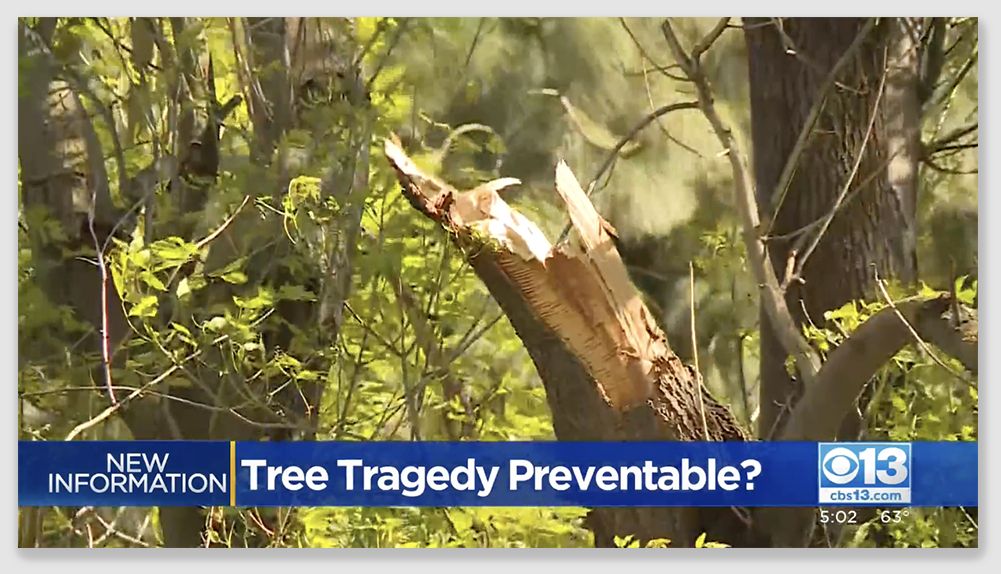
Many questions still surround what led to a tree limb in Davis breaking off and crushing a woman in a park Tuesday.CBS13 walked the area with an arborist Wednesday who said most of the trees in Slide Hill Park are in good condition, except for a couple of them. Among the two trees of concern is the one that lost a limb and killed a woman when it crushed her. “It breaks my heart knowing what happened here,” said Daniel Hovarter, an arborist with Tree Services Sacramento. “These two trees are gigantic red flags.” Neighbors are heartbroken, too. “Horrible – just horrible. We’re devastated,” said Mary Draffan, who lives around the corner. “The messages started flying – are you okay? Is everything okay? We still don’t know the name.” Davis’ Urban Forest Manager, Rob Cain, told CBS13 on Tuesday it was the first time something of this nature had ever happened. But others in the neighborhood say it may have only been the first time it turned deadly. “It’s been happening all over town,” said Sophia Gonzalez…
Through children’s books, films, and television specials, the story of Johnny Appleseed has touched American hearts ever since the real hero, John Chapman, first planted apple seeds across the country in the 1800s. Now, you can literally bring the legend to life by growing a clone of a Johnny Appleseed tree in your own backyard. Jeff Meyer, the founder of Johnny Appleseed Organic, first found out about one of the last known Appleseed trees in the 1990s when the Harvey-Algeo family in Ohio sent him a letter revealing that they had been taking care of the tree on their farm for generations. After verifying the historic tree’s authenticity through independent entities, Meyer acquired exclusive genetic rights to it and started propagating identical copies of it. He planted the grafted saplings in his nursery and discovered that they have several desirable characteristics. “They’re very vigorous, healthy trees with very few problems at all in terms of diseases,” Meyer says. He notes that, compared to all the different varieties such as Delicious and Fuji in the nursery, the cloned Johnny Appleseed trees “will grow more than any of the other trees do in a 12-month time.” They also produce large crops of tasty green fruit, which ripen in late September. Meyer describes the flavor as “a little bit tart and a little bit sweet, but not overly either one…”

After more than two hours of debate, heavily amended legislation that would change the tax definition of agricultural land will head to the Senate floor. However, some in the agricultural industry still aren’t happy with the bill as it stands, particularly those in the foresting industry west of the Missouri River. House Bill 1085 would change the tax code so that land could be classified as agricultural — and receive any ensuing tax breaks — if its “principal use” is agricultural and, in three of the past five years, the landowner had received an annual gross income of at least $2,500 from the “pursuit of agriculture.” Under current statute, land is agricultural if the gross income derived from agriculture is “at least 10% of the taxable valuation of the bare land assessed as agricultural property.” Introduced by Rep. Kirk Chaffee, R-Whitewood, the bill is meant to simplify the tax code and “make sure that agriculture land is really classified as agricultural land for purposes of taxation,” as Sen. Mary Duvall, R-Pierre, said during proponent testimony…
Bradford, Pennsylvania, Era, February 24, 2021: National Invasive Species Awareness Week
Our forests and fields are full of many kinds of plants. Are plants just plants? In northcentral Pennsylvania, there are a number of plants invading natural areas. These plants not only affect the native food web for wildlife, but also impact the health of the forests today and many years into the future. Most of these plants have spread from gardens or other unintentional sources. Invasive plants in local forests suppress regeneration of the future forest. Young tree seedlings need sun and resources. Invasive plants monopolize these resources and prevent the survival of new trees. While a thick stand of Japanese stiltgrass beneath mature trees may look charming, the health of the forest far in the future will suffer. If healthy young trees do not have the potential to replace the mature forest, old trees eventually die and all that is left is a sea of invasive plants and shrubs, and a few unhealthy remaining trees. It is easy to overlook the effects invasive plants can have since tomorrow’s forest is often beyond our lifetimes…
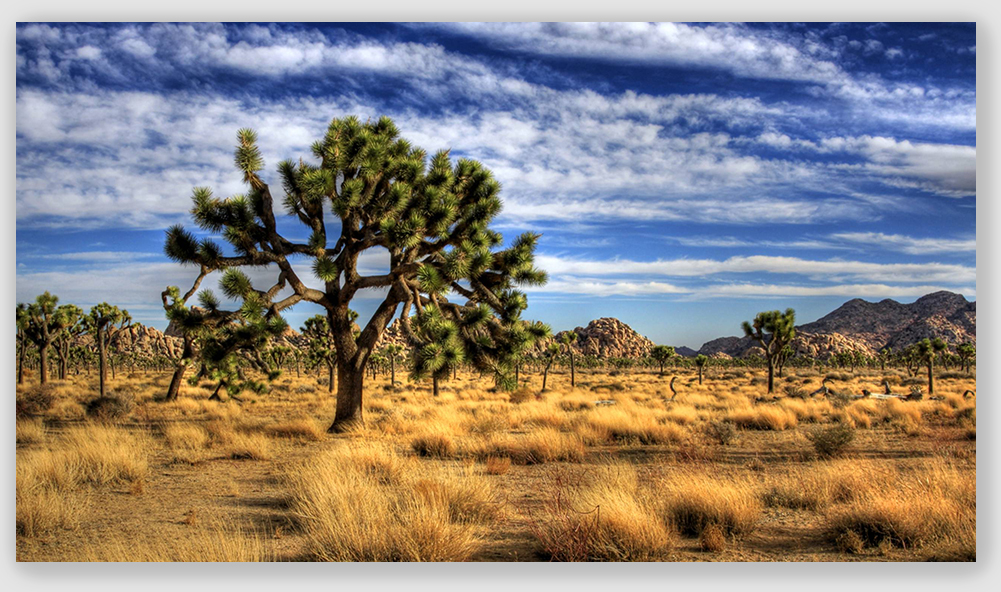
A Fresno County Superior Court judge has rejected an effort by construction and real estate interests, along with the city of Hesperia, to strip away legal protections that currently apply to the imperiled western Joshua tree. “This is a critical victory for these beautiful trees and their fragile desert ecosystem,” said Brendan Cummings, the Center for Biological Diversity’s conservation director and a Joshua Tree resident. “If Joshua trees are to survive the inhospitable climate we’re giving them, the most important thing we must do is protect their habitat, and this decision ensures recent protections will remain in place.” On September 22, 2020, the California Fish and Game Commission unanimously voted to grant western Joshua trees candidate status under the California Endangered Species Act, giving them legal protection during a yearlong review to determine whether the species should be formally protected. The commission’s protection decision came in response to a petition from the Center. On October 21, 2020, a coalition of interests opposed to protection of the Joshua tree filed a lawsuit in Fresno County Superior Court seeking to overturn the commission’s decision and moved to set aside the tree’s candidate status. In her ruling last week rejecting the stay request, Judge Kristi Culver Kapetan found that “it is clear to the court that a stay would be against the public interest…”
A woman was killed by a falling tree branch at Slide Hill Park in Davis on Tuesday morning, city officials said. Police and fire authorities responded around 10:30 a.m. to the park to reports of a woman “critically injured by a falling tree limb,” the city said in a news release. “The woman was provided immediate medical attention and was transported to UC Davis Medical Center in Sacramento where she succumbed to injuries and passed away,” the news release continued. The victim’s identity has not been released. “The City of Davis extends its deepest sympathies to the surviving family and will work diligently to investigate this tragic accident,” Mayor Gloria Partida said in a prepared statement…
 Huntington, West Virginia, WSAZ-TV, February 23, 2021: WVDOH makes progress removing frozen trees
West Virginia Division of Highways crews from all across the state are making progress in reopening hundreds of roads closed because of last week’s ice storms. A series of winter storms from Feb. 10 through Feb. 15 left ice-coated trees and power lines across roadways. The worst of the damage was in Cabell, Jackson, Lincoln, Mason, Putnam, and Wayne counties, where Gov. Jim Justice declared a State of Emergency on Feb. 16. In the six counties within the disaster area, more than 280 roads were left impassable in the aftermath of the ice storms. Many were blocked in dozens of places, with trees both falling across roads and getting tangled in power lines. Both WVDOH District 1 Engineer Travis Knighton and District 2 Manager Scott Eplin said the damage was “as bad or worse than the 2012 Derecho…”
Nature, February 23, 2021: Continent-wide tree fecundity driven by indirect climate effects
Indirect climate effects on tree fecundity that come through variation in size and growth (climate-condition interactions) are not currently part of models used to predict future forests. Trends in species abundances predicted from meta-analyses and species distribution models will be misleading if they depend on the conditions of individuals. Here we find from a synthesis of tree species in North America that climate-condition interactions dominate responses through two pathways, i) effects of growth that depend on climate, and ii) effects of climate that depend on tree size. Because tree fecundity first increases and then declines with size, climate change that stimulates growth promotes a shift of small trees to more fecund sizes, but the opposite can be true for large sizes. Change the depresses growth also affects fecundity. We find a biogeographic divide, with these interactions reducing fecundity in the West and increasing it in the East. Continental-scale responses of these forests are thus driven largely by indirect effects, recommending management for climate change that considers multiple demographic rates…

Protecting forests is an essential strategy in the fight against climate change that has not received the attention it deserves. Trees capture and store massive amounts of carbon. And unlike some strategies for cooling the climate, they don’t require costly and complicated technology. Yet although tree-planting initiatives are popular, protecting and restoring existing forests rarely attracts the same level of support. As an example, forest protection was notably missing from the US$447 million Energy Act of 2020, which the U.S. Congress passed in December 2020 to jump-start technological carbon capture and storage. In our work as forest carbon cycle and climate change scientists, we track carbon emissions from forests to wood products and all the way to landfills – and from forest fires. Our research shows that protecting carbon in forests is essential for meeting global climate goals. Ironically, we see the U.S. Strategic Petroleum Reserve as a model. This program, which was created after the 1973 oil crisis to guard against future supply disruptions, stores nearly 800 million gallons of oil in huge underground salt caverns along the coast of the Gulf of Mexico. We propose creating strategic forest carbon reserves to store carbon as a way of stabilizing the climate, much as the Strategic Petroleum Reserve helps to stabilize oil markets…
Pruning your trees might be one of the last things on your mind after we just experienced our coldest weather in several years. But the temperature is climbing back to around 40 degrees by the weekend and the 50s by early next week, and now through early March is prime time to prune most trees in Colorado. Many people wait until spring to prune, but for most trees pruning when trees are still dormant ensures the wound will close more rapidly, which greatly reduces the chance for disease. That’s why you see city of Fort Collins Forestry Department staff pruning city trees this time of year. Pruning now also can alleviate some of the problems seen in the spring when we have heavy, wet snow that breaks branches. But before you get out the pruners, here are tips on what and how to prune, choosing the right tool for the job and what plants prefer to wait until later in the season…
 Grist, February 22, 2021: Tackling tree equity
A new partnership between Tazo Tea and the nonprofit American Forests is tackling the lack of tree cover in low-income neighborhoods and neighborhoods of color, which is linked to decades of racist housing policy. “If you look at a map of most American cities, you’ll find that tree canopy cover tracks along income lines,” Sarah Anderson of American Forests told Fast Company. “This is the result of decades of discriminatory housing and planning purposes.” The lack of tree cover has an impact: Neighborhoods formerly subject to the government policy of redlining can be 5 to 20 degrees F hotter than non-redlined neighborhoods in the same city. More trees can help keep neighborhoods cool, decrease air conditioning costs, and prevent flooding. The new partnership will work to build tree cover by selecting 25 full-time fellows in Detroit, Minneapolis, New York City, the San Francisco Bay Area, and Richmond, Virginia, to plant and care for trees in their communities. The fellows will earn a “family-sustaining wage” along with childcare, transportation, health, and retirement benefits…
Associated Press, February 23, 2021: Gardening: How to protect or heal trees damaged by snow
The deadly winter storms that have wreaked havoc in large swaths of the country recently can also damage trees and shrubs. Snow can of course enhance the look of yards and gardens, visually knitting together the plants, fences, even lawn furniture in a sea of white. But it also can bring down branches. Or worse, snap a major limb on a tree or split a bush wide open. Most trees and shrubs will recover from such trauma, sending up new sprouts in the spring to replace missing limbs. But there are steps you can take to mitigate the damage and help the plant heal. There also are ways to help protect trees from the weather. The ragged edge from a broken branch exposes a lot of surface area, which slows healing, so cut back any break cleanly to leave a surface that heals better. Many gardeners’ first inclination, however, before doing any pruning, would be to save what is broken, merely putting the broken limb back in place and holding it there the way a doctor sets a broken bone. It can be done, just as if it were a large graft…

A tiny, invasive insect recently detected in a national park campground set off a flurry of activity among environmental experts determined to fend off the threat as long as possible. Evidence of hemlock woolly adelgid was found Feb. 4 on a tree in Platte River Campground within Sleeping Bear Dunes National Lakeshore. A sample taken was the following day confirmed as the invasive pest insect by the U.S. Department of Agriculture. Now local and state invasive species experts want area residents to help them stay vigilant against HWA, which can kill hemlock trees within 10 years, weakening them by sucking the trees’ sap out. “This is our first infestation in our service area,” said Audrey Menninga, invasive species specialist with Northwest Michigan Invasive Species Network. “We are pretty optimistic about it.” National lakeshore employees began surveying high-use areas within the park for HWA in January through Great Lakes Restoration Initiative funding. They found round, white ovisacs characteristic of the HWA on a single tree within the campground in Benzie County…
This month’s snow and ice storms in western Oregon knocked out power for more than half a million utility customers and littered streets and sidewalks with branches. Now a lot of trees are needing some TLC to help them recover. Ian Bonham is a neighborhood trees senior specialist with Friends of Trees in Portland, a nonprofit dedicated to planting and maintaining trees and native plants throughout the region. He says in most cities it’s the homeowner’s responsibility to take care of trees on their property and adjacent to their homes. Still, you’ll want to check in with your city’s urban forestry department before making any changes. “Mostly that’s just to make sure I’m taking care of the tree in the right way and make sure I’m not doing any further damage to the tree,” Bonham said…

Birch trees are more than just a lovely, ghostly flora growing throughout Maine’s forests. They also produce a scrumptious sap that can be sipped or simmered into syrup. Michael Romanyshyn, owner of Temple Tappers in Temple, is the largest — and, currently, only — commercial birch syrup producer in Maine. He started tapping birch trees and producing syrup about nine years ago, after he learned about it while traveling as a puppeteer through eastern Europe where birch sap and syrup is already popular. “Our farm has a really nice grove of birch trees,” Romanyshyn said. “I was thinking about that as a possibility for us to help support being [in Maine]. We got interested not because we were maple producers. We just have a lot of birch trees.” Max Couture, owner of Road’s End Farm in Canton, started experimenting with birch tree tapping and making birch syrup last year. “I’ve been doing maple my whole life,” Couture said. “It’s actually pretty straightforward to transition to birch from maple as long as you have access to trees. It’s not a new thing, but it’s a new thing for Maine…”
Whenever Frederick T. Craddock steps out of his Arlington townhouse, 39 Leyland cypress trees are there to greet him. The trees aren’t ancient — they were planted around the time Craddock bought his new home in 1996. But at 40 feet tall, the cypresses provide aesthetic relief from dense development in the Shirlington area and Interstate 395’s tarmac river. The trees might not be there much longer. After construction on a new community next door began last year, the cypresses have turned brown, and ¬arborists said they will not survive. Now, Craddock is among a group of Northern Virginia residents asking whether greenery can be saved as development encroaches. “The trees are in danger,” he said. “When I press the people at Arlington County, they say, ‘Well, we do protect trees on public land, but homeowners are left to their own devices…’ ”
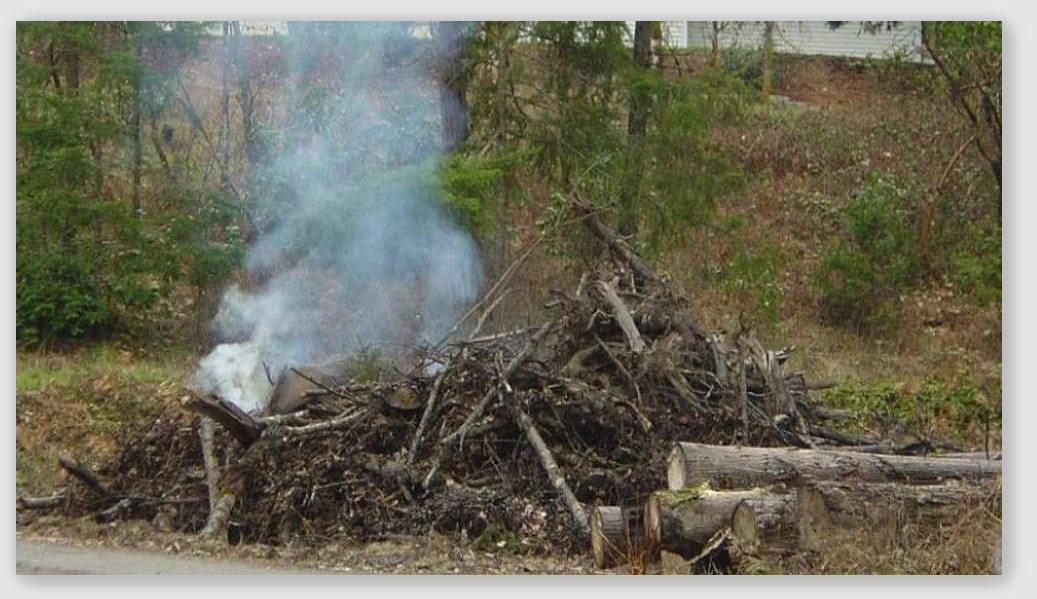
Recent winter storms have brought down a lot of trees in the Pacific Northwest. While starting a bonfire might seem like an easy way to dispose of the material, the Oregon Department of Environmental Quality is asking for people to refrain from burning piles of debris. According to the DEQ, smoke from burning debris pollutes the air and can hurt your eyes and irritate your respiratory system. In the time of the coronavirus pandemic, this can compound health problems, especially for those in vulnerable populations. The DEQ air quality monitors in Clackamas, Linn, and Marion counties are still without power Thursday. The DEQ said it may be a few more days before it’s restored and the facilities are back online…
An ancient, well-preserved tree that was alive the last time the Earth’s magnetic poles flipped has helped scientists pin down more precise timing of that event, which occurred about 42,000 years ago. This new information has led them to link the flipping of the poles to key moments in the prehistoric record, like the sudden appearance of cave art and the mysterious extinction of large mammals and the Neanderthals. They argue that the weakening of the Earth’s magnetic field would have briefly transformed the world by altering its climate and allowing far more ultraviolet light to pour in. Their provocative analysis, in the journal Science, is sure to get researchers talking. Until now, scientists have mostly assumed that magnetic field reversals didn’t matter much for life on Earth — although some geologists have noted that die-offs of large mammals seemed to occur in periods when the Earth’s magnetic field was weak. The Earth is a giant magnet because its core is solid iron, and swirling around it is an ocean of molten metal. This churning creates a huge magnetic field, one that wraps around the planet and protects it from charged cosmic rays coming in from outer space. Sometimes, for reasons scientists do not fully understand, the magnetic field becomes unstable and its north and south poles can flip. The last major reversal, though it was short-lived, happened around 42,000 years ago…
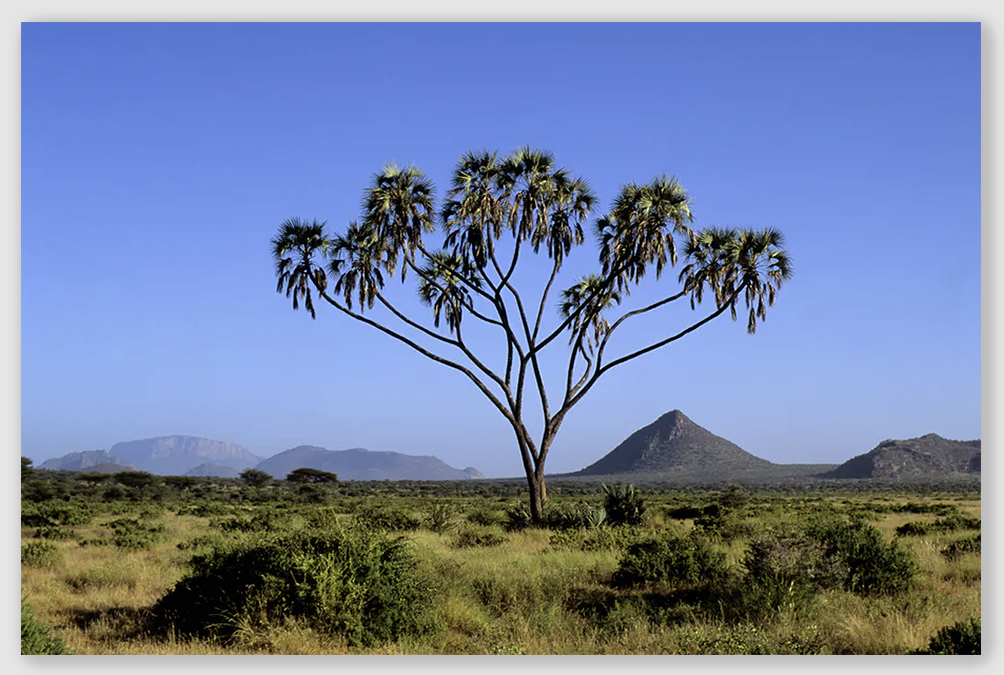
Indigenous fruits have been collected from the wild for centuries for human consumption and other purposes. Across the African continent, indigenous fruit trees are valuable assets for local communities. But the natural habitats of trees are being lost, mainly to widespread deforestation resulting from population growth. Industrial agriculture is also contributing to their loss. Indigenous fruit trees provide vital nutrients that may be scarce in other food sources. They are naturally adapted to local soils and climates, can enhance food and nutrition security and often adapt and survive environmental stresses better than exotic species. My colleague and I reviewed information on 10 fruit trees indigenous to Africa that are considered to be underused. We assessed their occurrence, distribution, nutritional components and medicinal potential. We also explored their challenges and prospects…
More than 300 longleaf pine seedlings rise just six inches from the ground on the south side of Jockey’s Ridge State Park. They may be small and look like a child’s cowlick now, but in a few years, they will stave off the mountain of sand drifting toward homes on Soundside Road. The pine seedlings were among the 1,000 planted two weeks ago to stabilize the largest sand dune on the East Coast and diversify the habitat, said ranger Austin Paul. Park staff also will put up wood slat sand fencing and possibly add old Christmas trees to stand in for the slow-glowing trees, Paul said. The mountain of sand that is Jockey’s Ridge shifts about six feet a year as winter winds blow the sand to the southwest. The dune can move more than 30 feet some years, forming ominous cliffs near houses and roads. Two years ago, an excavating company moved 200,000 tons — or about 14,000 dump trucks — of sand away from Soundside Road to the opposite side of the park…

Plans are moving forward to remove thousands of Omaha’s ash trees that have been damaged by infestation. An inventory by the city forestry division found an estimated 14,569 ash trees that have been damaged by the emerald ash borer, according to a statement Wednesday from the Mayor’s Office. The first signs of the infestation in Omaha were reported in June 2016 at Pulaski Park near 40th and G Streets. “Our first priority is to save trees, not cut them down,” said Parks Director Matt Kalcevich. “We have unfortunately reached the point where treatment is not an effective strategy. The threat of personal injury and property damage is too significant to delay this work any longer.” The city estimates said that 6,119 ash trees have already been removed from public property. The Omaha City Council has approved contracts with private companies to remove an additional 1,382 trees…
The Madisonville Town Council introduced ordinances regulating the use of the town cemetery and defining “protected trees” at its last meeting… The tree preservation ordinance defines a protected tree as any live oak or cypress tree over six inches in diameter at breast height and requires a permit for the cutting, clearing or removal of any tree that meets that definition. Pruning of a protected tree requires the issuance of a permit and must be supervised by a licensed arborist or a state forester at the owner’s expense. The ordinance also makes it unlawful to place soil or fill dirt in a way that would cause a protected tree to become diseased or die, and requires that protected trees be encircled by a protective barrier during any construction project…
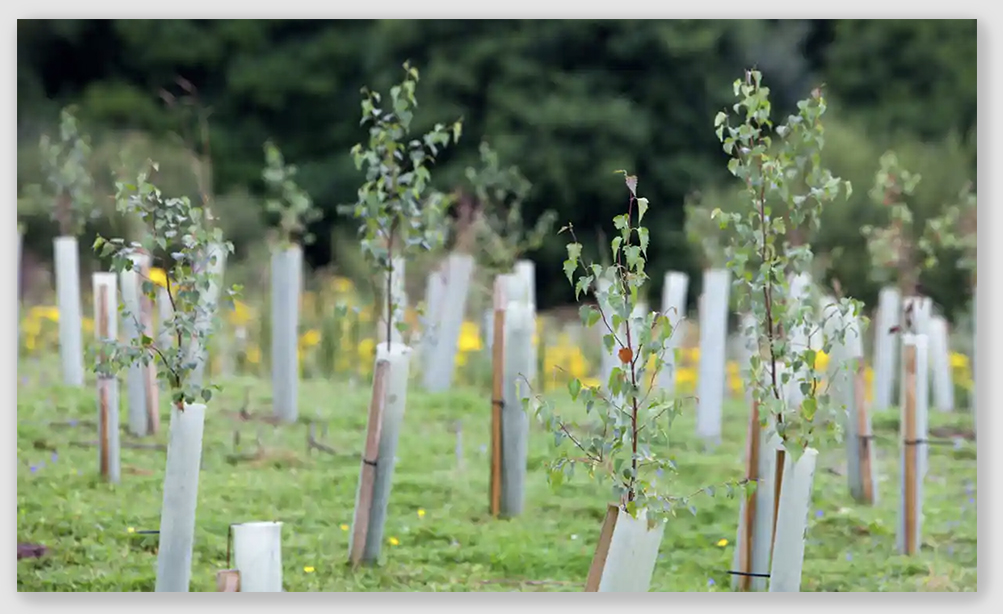
Orders for almost 100,000 trees have been cancelled by Northern Ireland buyers because of a post-Brexit ban on the plants being moved from Britain, the Guardian can reveal. Leaders in the business say it is a major setback for tree-planting programmes in Belfast and elsewhere in the region. The Woodland Trust in Northern Ireland has just cancelled an order for 22,000 trees, which were destined for schools and communities as part of a Northern Ireland greening project. “It’s a disaster. They’re just stopping any exports from mainland UK over to Northern Ireland. We can’t get any trees over from any of the nurseries that we would usually deal with over there,” said Gregor Fulton, an estate and outreach manager at the trust…
Just days ago, ice brought down trees across roads, into homes, and onto power lines in many parts of the Triad. “I think the storm this past weekend…I think it took everybody by surprise – I know it did us. We knew that there was a chance of ice but we do really didn’t think it was going to be that significant,” said Scott Saintsing, owner of Outdoor Exposure, a tree service company. Those in charge of clearing the tree damage and debris are ready for round two. Greensboro’s Field Operations deputy director Chris Marriott says nearly a dozen crews start their shifts at midnight. “That will be tree crews to clear the roads and basically what we call ‘cut and shove’ – cut the trees up and shove them out of the way, to open up access for whoever needs it primarily emergency vehicles,” he explained Wednesday. Dispatched as needed from the operations center on Patton Avenue, he says it could take a while to clear the tree damage near you when you or your neighbors report it. Here’s why. “We’re going to clear [other trees] out of the way on the way to that other call. So we may not necessarily get to them in the order that they come in,” Marriott said…
Residents have through Friday, Feb. 19, to participate in a city-led survey as city leaders seek community input on how they should manage Kirkland’s urban forest through 2026. The 2021 Community Tree Survey will help city officials craft its six-year work plan, specifically for tree maintenance and tree planting efforts, along with any other tree-related concerns or issues. According to the city, the last city-wide tree survey took place in 2012. In a news release, the city writes: “Trees that grow in backyards and parks, along streets, and in forested areas are all part of an urban forest. Trees are important features in urban landscapes because they produce oxygen and improve air quality, reduce urban heat island effects, control stormwater runoff and soil erosion, contribute to human health and well-being, and provide wildlife habitat and bird migration corridors. Many elements negatively affect city trees, reducing their normal life span and the benefits they provide. Because of this, urban forests need help to remain a functioning, healthy, and sustainable asset…”
When an icy tree recently fell on a Greensboro woman’s car, it shattered the windshield and ripped open the back window. You might think, ‘That’s what insurance is for’ and you’re right, but only if she had the right kind of insurance. Comprehensive Coverage: Helps pay to replace or repair your vehicle if it’s stolen or damaged by a non-accident– fire, vandalism, falling objects like a tree or hail. If your car is financed, the finance company requires you to have comprehensive coverage but if not, comprehensive coverage is optional. And if you don’t have it and a tree falls on your car, the insurance company owes you nothing, you pay all costs. Here’s the good news, comprehensive coverage is immediate. Call tomorrow & it starts then. If you have an older car— you need to do the math to figure out if getting comprehensive insurance is worth it. Nerd Wallet has not just the equation, but those numbers mean for you…
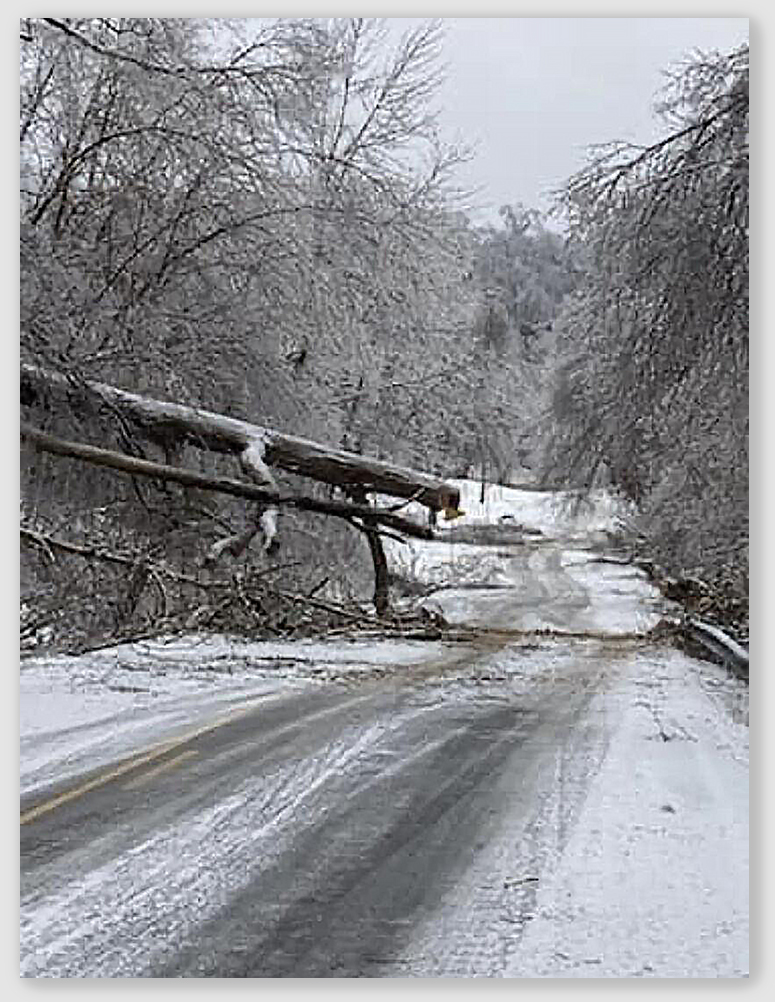
With an estimated 800 trees cracking and falling across the roads and widespread power outages, Boyd County first responders are working around the clock to help respond to calls and help those affected find warmth. County Judge-Executive Eric Chaney estimated about 500 trees fell Monday night alone, hampering emergency response efforts. On Monday, Chaney called in the National Guard and received four troops — “the best of the best,” as the judge said. However, Chaney said with all the trees down on the roads, it’s proven challenging even with the extra hands. “Last night, I was out with them (the Guard) and we spent seven hours trying to get to a family to get them to the convention center,” Chaney said. “As far as our response is going, I couldn’t be more proud. This is an all-hands-on-deck situation and it’s people helping people.” Chaney has requested a “cut and throw” team from the Guard — a group of soldiers who will cut up trees and toss them to the side of the road…
Scientists have long known that trees are essential to human life, making the air we breathe healthier by removing carbon dioxide from the atmosphere through photosynthesis to store energy and releasing oxygen for us to take in. But a newly published study by a West Virginia University professor and alumnus scrutinizing past studies of tree rings suggests that trees are still more vital in helping us breathe and keeping the Earth’s temperature in check than previously thought. In a study published in Proceedings of the National Academy of the Sciences, WVU biology professor Richard Thomas and alumnus Justin Mathias found that photosynthesis is mainly responsible for a recent increase in trees’ water-use efficiency, the ratio of carbon taken up by photosynthesis to water loss that serves as a key measure in climate change research. “Our study really pinpoints trees as an integral part of removing some of that fossil fuel emission from the air,” Thomas said. “… We’re really highlighting how important trees are in that process.” Earlier studies held that a closing of pores on the leaves of trees amid an escalation in carbon dioxide in the air was allowing trees to use water more efficiently. But this new study could change how trees’ role in climate change is viewed, especially since water-use efficiency is an important link between water and carbon cycles…

The snow and ice storm that battered much of Oregon in the past few days has taken a tremendous toll on the trees we so often take for granted. The city of Portland reported more than 500 calls Monday morning – the most in 15 years – from residents reporting fallen or damaged trees. And experts say the damage throughout the Willamette Valley will be the worst in 35 years. It will take weeks for arborists to determine what trees can be saved, and what will be lost. Ice, not snow, caused the problems. “A half-inch of ice on every branch of a tree adds tremendous weight,” said Glenn R. Ahrens, a forester with Oregon State University’s Extension Office, which offers expert help regarding natural resources across the state. Ahrens, based in Oregon City, said the power went out at his home Friday night and he began hearing the explosive sound of trees breaking. “It continued Saturday morning,” he said. “I watched dozens of trees falling down in the neighborhood.” He said colleagues texted each other to report similar problems throughout the Willamette Valley. “We are seeing huge amounts of damage,” he said. While professionals will be in the field in the coming weeks, he said people who want advice can turn to Oregon Department of Forestry, which has documents to help homeowners dealing with tree damage…
Science Daily, February 15, 2021: More trees do not always create a cooler planet, study shows
New research by Christopher A. Williams, an environmental scientist and professor in Clark University’s Graduate School of Geography, reveals that deforestation in the U.S. does not always cause planetary warming, as is commonly assumed; instead, in some places, it actually cools the planet. A peer-reviewed study by Williams and his team, “Climate Impacts of U.S. Forest Loss Span Net Warming to Net Cooling,” published Feb. 12 in Science Advances. The team’s discovery has important implications for policy and management efforts that are turning to forests to mitigate climate change. It is well established that forests soak up carbon dioxide from the air and store it in wood and soils, slowing the accumulation of greenhouse gases in the atmosphere; however, that is not their only effect on climate. Forests also tend to be darker than other surfaces, said Professor Williams, causing them to absorb more sunlight and retain heat, a process known as “the albedo effect.” “We found that in some parts of the country like the Intermountain West, more forest actually leads to a hotter planet when we consider the full climate impacts from both carbon and albedo effects,” said Professor Williams. It is important to consider the albedo effect of forests alongside their well-known carbon storage when aiming to cool the planet, he adds. The research was funded by two grants from NASA’s Carbon Monitoring System. Williams and his research team — comprising data scientist Huan Gu, Ph.D. from The Climate Corporation and Tong Jiao, Ph.D. — found that for approximately one quarter of the country, forest loss causes a persistent net cooling because the albedo effect outweighs the carbon effect. They also discovered that loss of forests east of the Mississippi River and in Pacific Coast states caused planetary warming, while forest loss in the Intermountain and Rocky Mountain West tended to lead to a net cooling…”
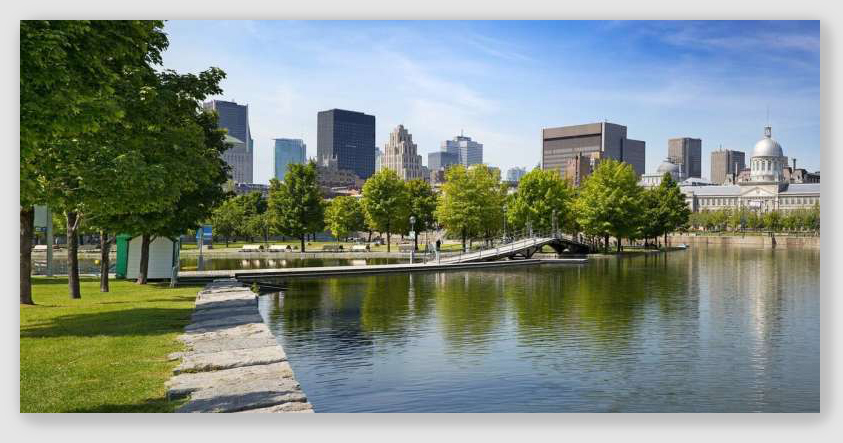
City trees are important: they purify the air, reduce heat islands, help regulate the water cycle and provide immense health benefits. Yet unbridled development threatens the survival of the urban forest and the full range of ecosystem services it provides. The magnitude of these services is closely linked to the importance of the canopy, which is the area covered by treetops. It is generally characterized by an index that relates the sector covered by the tops to the total size of an area. A recent study of the natural canopy in the areas covering Québec City, Beaupré, l’Île d’Orléans, Lévis and other communities along the St. Lawrence River found it generates more than $1.1 billion in annual benefits. Water supply, flood reduction, air quality improvement and carbon sequestration were among the ecosystem services—the benefits people derive from the ecosystem—that were considered. In this context, several major cities have set ambitious canopy expansion targets. However, these objectives face several significant challenges. Residential construction and the development and renovation of infrastructure tend to reduce the urban canopy. Part of this reduction is directly related to the space occupied by the infrastructure, while another part is the result of damage to trees during installation…
A neighborhood on Long Island is covered in Christmas decorations — and not because people neglected to take them down. Although the holiday season is long past, twinkly lights and festive ornaments recently reappeared on the streets of Bethpage, in a show of support for a grieving neighbor. It started when Sara Pascucci received a letter in the mail on Feb. 3 scolding her for still having Christmas decorations up. The anonymous, typed letter read: “Take your Christmas lights down! Its Valentines Day!!!!!!” While the letter would have upset her in normal circumstances, Pascucci said, it hit especially hard now. She lost both her father and her aunt to covid-19, the disease caused by the coronavirus, in January, less than one week apart. Her father, who lived with her, put up the Christmas decorations immediately after Thanksgiving — as he did every year. In the weeks following his death on Jan. 15, Pascucci couldn’t bring herself to take the decorations down. Receiving the harsh letter, she said, was “a major blow to the heart…”
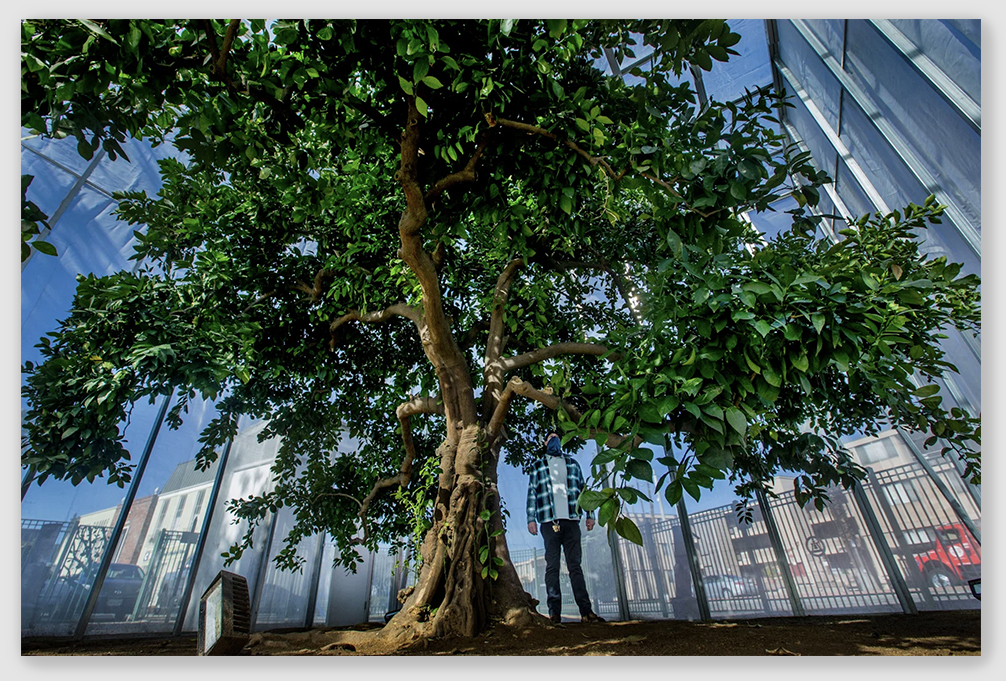
The parent navel orange tree in Riverside, the one from which all seedless oranges in the United States trace their origins, has been pumpin’ out oranges for 148 years, as I wrote last week. “It’s been there for my entire life,” one reader wrote nostalgically on the P-E’s Facebook page. Someone replied: “It’s been there for everyone’s entire life.” I was pleasantly surprised how much interest that column generated. A few benighted souls admitted they knew little or nothing about the tree, which was planted in 1873. (Maybe I’ll follow up by revealing the existence of the 91 Freeway. For all I know, dozens of commuters will tearfully thank me for sharing an alternative to surface streets.) But of course most of you Riversiders knew about the tree already and are rightly proud. “What a heart-warming article you wrote regarding the magnificent navel orange tree. I am now a senior lady but I grew up in Riverside and the tree was always an inspiration to all of us back then,” Cappi Duncan of Cherry Valley writes. “In this time of pandemics, political upheaval and uncertainty, this beautiful article was a wonderful reminder that there is still beauty and wonder right on that corner in Riverside that can brighten anyone’s day. Thank you…”
Save the trees! That’s what many in Gresham are chanting these days after getting news that a potential housing development will wipe out more than 260 long-standing Douglas Fir trees along with some key animal habitat. It’s habitat several groups are fighting to save. The area at the center of the controversy consists of roughly 8 acres along the 3500 block of West Powell Boulevard in Gresham. The hundreds of trees are what drew first-time home buyers Cason and Philip Wolcott to the neighborhood adjacent to it. “We bought the home because we liked the trees in the backyard,” said Cason. Now the couple and many of their neighbors are fighting to save those trees. Bend-based SGS Development LLC recently purchased the land and has plans to develop it into thirty residential lots. The plan calls for the cutting of more than 260 trees.
“I think that’s insane,” said Cason. “I also disagree with the number they’ve given… I mean there’s way more trees back there than the 260 trees.” The area also sits right next to Grand Butte Wetlands, which is a protected area, as well as Southwest Community Park, an undeveloped park that’s also home to a lot of habitats…
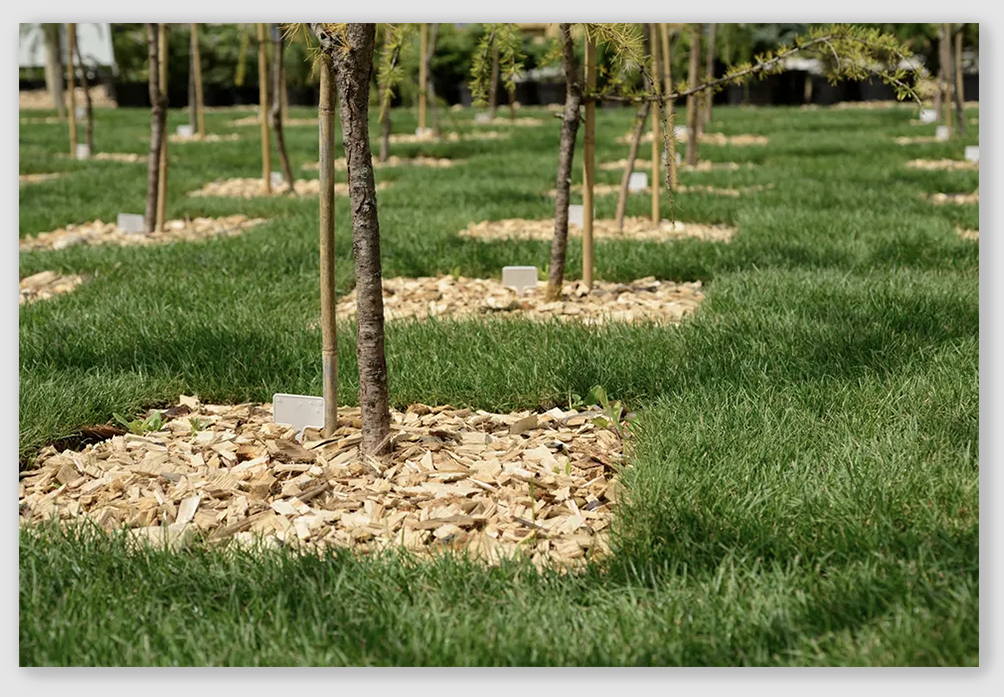
Just over five years ago, countries reached a deal to keep global warming to below 2C above pre-industrial levels under the historic Paris Agreement. But since then, global emissions are yet to reach a peak and the path to reaching the Paris goals grows steeper year by year. Cutting back on greenhouse emissions as fast as possible will be crucial to meeting the world’s climate goals. But to have the greatest chance of meeting the Paris targets, it is likely the world will also have to scale up techniques for removing CO2 from the atmosphere, scientists say. Methods for removing CO2 from the atmosphere range from “natural climate solutions”, such as replanting lost forests and restoring land and ocean ecosystems, to emerging technologies, including the idea of using machines to suck CO2 directly out of the air. Scientists use the term “negative emissions technologies” to describe the wide and varied group of methods available for removing CO2 from air. Many of these techniques are still in their infancy, and all come with risks and challenges…
Starting Monday, workers will be removing dead ash trees along the Dorsey Hall pathway system, specifically along Columbia Road between Rams Horn Row and Broken Lute Way. The pathway will be shut down during this time without access to the public. Weather permitting, the work will be done by mid-March. According to city officials, the ash trees were destroyed by invasive emerald ash borer beetles. The dead trees pose a danger to pedestrians and cyclists passing by, officials noted. The wood and debris left behind by the removal project will be left at the site to “allow for nutrient recycling and local wildlife habitat.” According to the U.S. Department of Agriculture, the emerald ash borer has destroyed millions of ash trees in more than half the nation. Native to Asia, officials believe the pest arrived in the U.S. hidden in wood packing materials. It was first discovered in Michigan in 2002…
 Mobile, Alabama, Real Time News, February 10, 2021: ‘We all want to save trees’: Mobile wants to redefine its heritage trees
Bill Boswell recalled Tuesday his encounter with a Minnesota couple while standing in his front yard on Government Street during last year’s Mardi Gras. “‘What are these green trees?” Boswell recalled them asking, as they looked up at the oak-canopied street. “I said, ‘these are our live oaks. These are our wonderful trees, and we try and do our best to protect them.’” Indeed, Mobile’s love-affair with its live oaks and other trees is continuing as the city examines replacing its existing tree ordinance with a new one designed to protect more trees. The new plan under council consideration also includes details about what kind of trees will be protected, who will provide oversight, and punishment doled out to people who illegally chop them down. A council committee is taking up whether to adopt a new 14-page tree ordinance that would replace a six-page version first adopted in 1961. The ordinance switch also comes in the aftermath of two hurricanes last year that led to vast destruction of trees, including a massive devastation of live oak trees in Mobile’s historic Bienville Square. The changes also are occurring as the city’s reconstruction of Broad Street continues…
CNN, February 10, 2021: Plant trees, sure. But to save the climate, we should also cut them down
Democrats have set their sights on passing major climate legislation, but with a razor-thin majority in Congress, they need to look for common ground with Republicans. One of the most promising ideas is to plant a vast number of trees — and also to cut them down. President Joe Biden has announced an ambitious goal of net-zero emissions by 2050. That would mean switching to renewable energy, expanding public transit, retrofitting buildings, and a host of other policies to slash greenhouse gas emissions. But even in the best-case scenario, it won’t be possible to eliminate all emissions. The idea of “net-zero emissions” is that any remaining emissions can be fully offset by so-called “negative emissions” — methods of sucking carbon out of the atmosphere. Planting trees is the most straightforward way to do that. Trees absorb CO2 for photosynthesis and store it as cellulose and lignin, the main components of wood. Planting trees may also be the most popular climate policy… Forests in the western US, on the other hand, are prone to wildfires, and that calls for putting down the shovel and reaching for the axe. Wildfires turn trees from asset to liability. Last year’s record blazes in California belched twice as much CO2 as the entire state’s power plants. It’s one of the terrible feedback loops of climate change, where wildfires beget more wildfires. To break the cycle, it’s often necessary to sacrifice individual trees for the good of the whole forest…
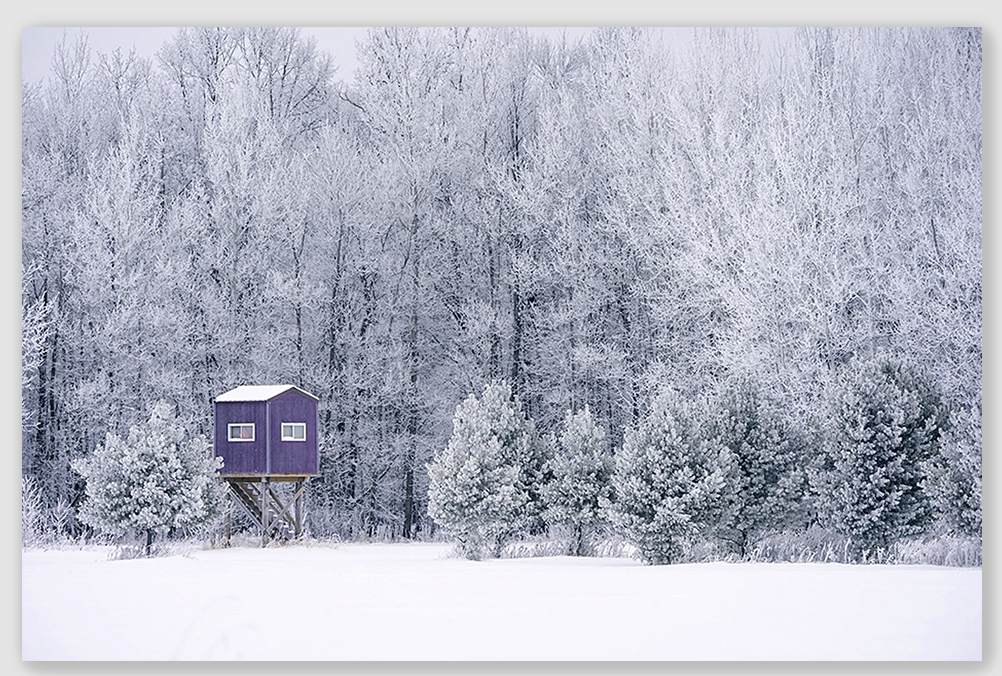
It’s cold this week: Cold enough to do all the cold weather tricks, like throwing hot water into the air and watching it vaporize, or freezing wet jeans upright; cold enough that you can see your breath and cold enough to get frostbite if you don’t hurry the dog along to do its business so you can both return to the warmth of home. In a relatively warm winter like this one, Minnesotans groan at the prospect of a week and a half of what’s actually pretty normal winter weather for this part of the country: single-digit temperatures, nights below zero and stinging wind chills. But the cold isn’t bad for every living thing. Our state’s native trees are pretty well adapted to it, and in fact, cold spells like this — even longer ones with lower temperatures — have benefits for them…
Bradford Pear Trees may be nice to look at, but experts say they’re not good for the environment. Trees are usually the solution to environmental problems, but the Bradford Pear is a faker that experts say we’re better off without. The tree is damaging South Carolina’s native ecosystems, and that’s why the Clemson Cooperative Extension created the “Bradford Pear Bounty.” Property owners who register for the bounty and destroy their Bradford Pears will receive a new native tree in return. Although the event takes place in Sumter and Clemson, you do not have to be a resident of either town to qualify for the event. At first glance, Bradford pears appear to be the perfect tree. The branches explode into bloom in the spring, maintain a beautiful canopy of leaves through heat and drought, and fade into reddish-orange in the fall. It’s an ornamental pear which means it bears no edible fruits, and the trees are sterile, so they won’t reproduce with each other. If all this seems too good to be true, that’s because it is…

The definition of a “heritage tree” in Pensacola could get spruced up this week. The Pensacola City Council on Thursday will debate an update to the city’s tree ordinance, which the city’s planning board has worked on for months. City officials say the main goal of the new ordinance is to streamline the process for regulating trees in the city, but the ordinance also makes three major changes compared to the current code. Under the current city code, “heritage trees” are defined as any tree on a list of 26 protected species that are at least 34 inches in diameter when measured about 4.5 feet off the ground. First of all, the new ordinance adds longleaf pine trees, bringing the list to 27 protected species, and changes the definition of a heritage tree to a tree that is four times the size of one of three different groups of diameters listed in the ordinance. The end result is the diameter requirement for a tree to be considered a heritage tree is lower. For large tree species such as live oaks, the new requirement is 32 inches. For medium trees such as Southern magnolias, the requirement is 24 inches, and for small trees such as dogwoods, the new requirement is 16 inches…
While deforestation levels have decreased significantly since the turn of the 21st century, the United Nations (UN) estimates that 10 million hectares of trees have been felled in each of the last five years. Aside from their vital role in absorbing CO2from the air, forests play an integral part in maintaining the delicate ecosystems that cover our planet. Efforts are now underway across the world to rectify the mistakes of the past, with the UN Strategic Plan for Forests setting out the objective for an increase in global forest coverage by 3% by 2030. With time being of the essence, one of the most popular methods of reforestation in humid, tropical regions is the planting of a single fast-growing species (monoculture) in a large area. This is especially important as a means of quickly preventing landslides in these regions that experience frequent typhoons and heavy rains. However, new research published to Frontiers in Ecology and Evolution by a team from Hainan University and the Chinese Academy of Sciences has not only found this practice could have a detrimental effect on the surrounding soil water content, but it has developed a three-step method to remedy it…

It took nature 300 years to grow “The Meeting Tree” but just a few hours to bring it down. The 50-foot-tall Clements Ferry Road landmark was snipped, clipped and sawed late on the night of Feb. 9, ending one man’s saga to protect it. The cutting schedule kicked in after John “Sammy” Sanders earlier in the day took the risk of leaving the tree, where he had been perched off-and-on for weeks in protest, to fetch some foul weather gear from his truck just a few feet away from the ancient live oak. Sanders was gone only a few minutes, but it was just enough time for three Berkeley County sheriff’s deputies to move in and block his path from returning to his strung hammock above. Some 12 hours later, crews had moved in and the tree was prepped for the saw. Only an 8-foot stump was left, to be removed when work resumes. “it’s been a long, sad day,” Sanders said as he looked on at its demise. “This is just a terrible thing to watch. It’s tough not to cry when I think about it.” Some onlookers screamed at the cutting crew…
Little Rock, Arkansas, Democrat Gazette, February 8, 2021: Courses instruct on care of trees
Healthy trees can enhance homes and businesses, but growing trees takes time, effort and money to help them thrive. The Arkansas Urban Forestry Council, in collaboration with the Cooperative Extension Service, is offering free online presentations that teach best practices for tree care. The series is free and open to the public, but registration is required for each session, according to a news release. “Trees provide numerous benefits to our communities if they are cared for properly,” said Krista Quinn, agriculture agent with the Faulkner County extension office, part of the University of Arkansas System Division of Agriculture. “These sessions are beneficial for homeowners as well as for professional landscapers and municipal workers.” Quinn serves on the Arkansas Urban Forestry Council board and taught a pruning workshop for the first presentation in the educational series. She will also co-teach the Feb. 16 presentation…

The City of Edmonton has hit the pause button on a river valley trail construction project following pushback from conservationists on planned tree removal. Under the current plan, about 962 square metres of vegetation would be cleared for the Riverside Trail realignment in an effort to fix the deteriorating trail that has been closed to the public for several years. The trail, running between the North Saskatchewan River and the Riverside Golf Course on the south bank, has seven areas along a 700-metre stretch requiring urgent rehabilitation due to unsafe conditions caused by erosion. Tree removal was set to begin this month with work on realigning the trail commencing in the spring. But late last week, the city said the project is paused after concerns from the Edmonton River Valley Conservation Coalition about the loss of vegetation and impact on wildlife. Now the city says it will engage with residents before any work continues…
Crews maintaining trees for the City of Toronto were covertly videotaped shopping, exercising and taking “excessive breaks” for an audit update that reveals they spent less than half their workdays tending trees. Video shot for city Auditor General Beverly Romeo-Beehler between July 31 and Sept. 25, released in a follow-up to her scathing 2019 tree services audit, shows city and contracted workers on the job. Their faces and other identifiers are blurred. Romeo-Beehler’s “limited scope follow-up review” made public Monday concludes: “More than 1.5 years since our original audit, concerns persist — the City is still not receiving value-for-money for tree maintenance.” Although city staff in 2019 vowed to root out the waste, more than 500 hours of “physical observations” by auditor staff found contracted crews on average spent only 3.5 hours — less than half an eight-hour shift — “actively working on trees…”
 Houston, Texas, Chronicle, February 7, 2021: Proper pruning can help trees thrive
Trees in the landscape can be easily overlooked for the all the benefits they provide us whether that be casting shade on a warm, summer day, housing our feathered friends or adding a touch of color to our lawns. According to the Council of Tree and Landscape Appraisers, trees on a property can increase the value of a home by almost 20%. However, that value can be diminished when trees are not properly maintained through pruning and thinning. Pruning deciduous trees is best done in late winter around February and March when the trees are dormant. Pruning at this time can help to avoid certain diseases or physiological problems such as oak wilt in oaks, stem cankers in honey locusts, Dutch elm disease in elms, and fire blight in apple trees (includes flowering crab apples, mountain ash, and hawthorns). With the tree leaves dropped, we can see the structure of the tree allowing us to make easier pruning decisions. Pruning should begin when trees are young; by doing this, pruning later in the tree’s lifetime can be reduced. In a young tree, it is important to develop a single dominant leader from which branches will develop. Trees can produce multiple leaders which can result in greater issues further down the road. It is also important to remove dead and diseased branches; this helps defend against the spread of pests and diseases to prevent further damage to the tree…
Gardeners are increasingly concerned about the status of bees, butterflies and other insects as populations of these pollinators continue to decline. This decline can be attributed to many factors, including loss of habitat, climate change, disease, pesticide use and the spread of invasive plants. Fortunately, there are several things that gardeners can do in their yards and gardens to provide habitat and maintain an ecosystem that supports and nurtures populations of pollinators. Pollinators such as bees, butterflies and insects provide an extraordinary service in our food system. It is estimated that one out of every three bites of food we consume as humans can be traced back to the work of these pollinators. Although many plants are pollinated by wind, birds and even small mammals, the overwhelming majority of food crops we rely on depend on pollination by bees, butterflies and other insects. These pollinators are also critical to maintaining native plant populations that are important to maintaining biodiversity and supporting wildlife populations and ecosystem health…
 Huffpost, February 5, 2021: Planting Trees Sounds Like A Simple Climate Fix. It’s Anything But.
A peat bog forms over thousands of years as plants decay into a dense, dark, soggy soil that traps their carbon content within. Peatlands are the world’s most efficient carbon sink, storing twice as much planet-warming carbon dioxide as forests. So when, at the end of last year, the U.K. government approved a tree-planting project on 100 acres of peat bog in northern England, conservationists raised the alarm. Contractors dug long trenches to drain the water and planted rows of conifer trees that “act like straws,” sucking up water and drying out the soil, explained Joshua Styles, botanist and founder of the North-West Rare Plant Initiative. As the soil dried out, thousands of years worth of carbon started to be released. The Forestry Commission halted the project and apologized, saying it had failed to properly assess the location. The mistake is just one example of how tree-planting efforts to tackle climate change can wildly miss the mark. “If you don’t want to do any harm to the environment,” Styles told HuffPost, “it needs to be properly thought out.” As governments and corporations set ambitious climate goals, planting trees has emerged as a favorite way to offset greenhouse gas emissions. The carbon absorbed by new trees is intended to make up for what is being released. But this seemingly simple climate solution isn’t as easy as plopping seedlings in the soil…
City officials are urging residents in the Mason Square area to sign up for a free tree-planting program intended to improve shade and energy efficiency. The city is preparing to hire contractors for the Greening the Gateway Cities program, in which hundreds of trees are being planted. Eighteen communities in Massachusetts are being provided grants under the program, which started two years ago, including Chicopee, Holyoke and Springfield. Westfield was added in 2020. Springfield received a three-year, $1.5 million grant in 2018 for providing and planting 2,400 trees in the McKnight, Old Hill and Upper Hill neighborhoods for interested homeowners. The trees are primarily planted by city-hired contractors in yards…
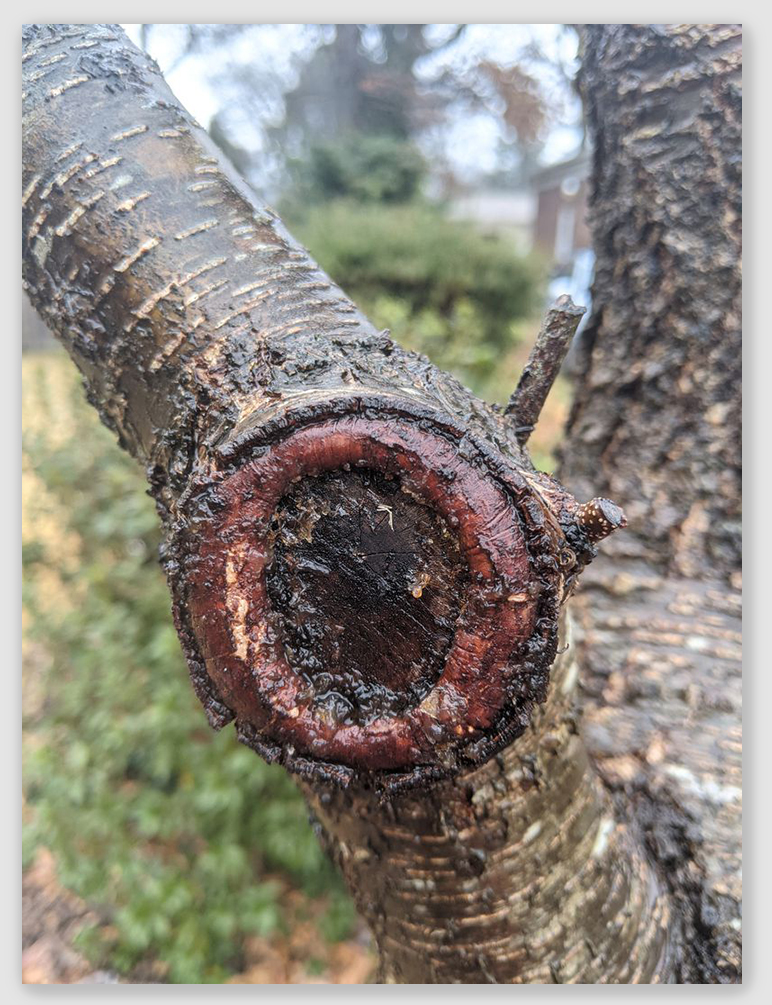
Good luck landed me in a neighborhood with a substantial urban canopy. Many of the trees have been growing for 60 years and have the scars to prove it. Tree pruning is a common practice that has the potential to significantly change the appearance and health of a tree — for better or for worse. This week, we’ll talk about the mechanics of tree pruning and the importance of hiring an arborist when considering tree removal. The winter season, when trees are dormant, is arguably the best time for pruning. In addition to a reduction in insect and pathogen activity, naked trees offer a glimpse into the interior structure, affording an opportunity to prune when necessary. Pruning in the growing season, when trees are working hard transporting food and water throughout their structure is possible, but may reduce food stores and stress a tree — or trigger unwanted growth. Unlike members of the animal kingdom, trees are unable to regenerate damaged tissue. Instead they survive injury by walling off infected or damaged tissues through compartmentalizing it with callus tissue. The larger the wound, the longer it takes to seal, which is why it is imperative to use the appropriate tools with sharp edges and proper training…
Q: We had a big tree come down during one of the early winter storms. Is it disruptive or harmful for wildlife to leave a downed tree, and should we have it removed? Or is it better for our backyard plants and animals to just leave it there?
A: This is a great question because much like our social conditioning to having perfectly mowed lawns, addressed in my Nov. 29 column, many people have a preconceived idea that the forest floor is a bare place. The best way to think of this is that the early winter storm was a natural event (the increased frequency and severity of storms that we’ll see due to climate change is a topic for another column) and the toppling of this tree was nature’s way of changing the forest. Downed trees provide many benefits to wildlife of all types, maybe even more than when the tree is standing. First, the fallen tree will provide shelter for lots of smaller birds and mammals, similar to how you’ll see lots of sparrows and chipmunks taking advantage of a brush pile – this tree is nature’s brush pile. Many insects will move in and help with the decaying process, and those hungry insects then become a great source of food for the next step up the food chain – from porcupines to woodpeckers.The new opening in the canopy will let in light and help new and different species of plants to grow, which adds to the biodiversity of your backyard. Do keep an eye on those plants; invasive species thrive on disturbance so it is good to make sure no Japanese barberry (berberis thunbergii), Norway maples (acer platanoides), or other non-native plants are taking advantage here…
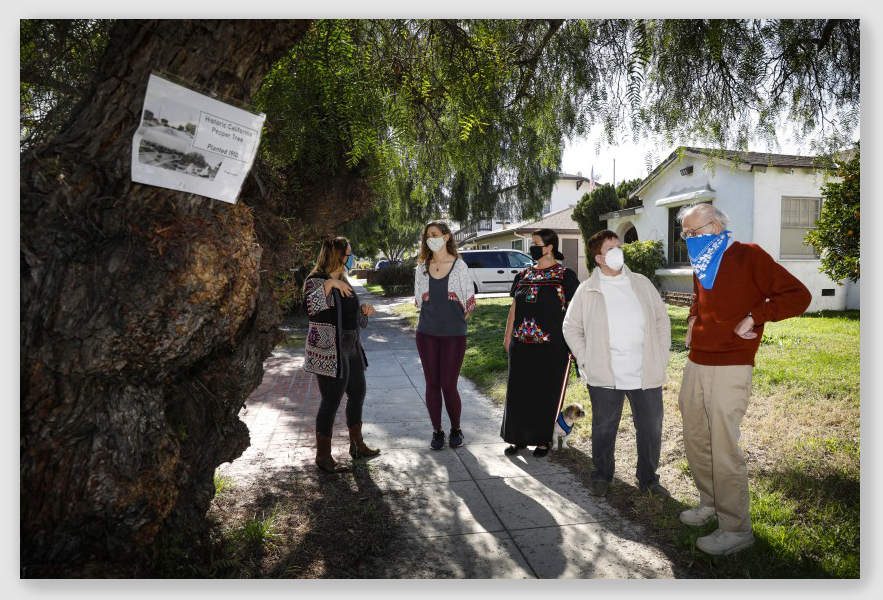
Residents of San Diego’s Kensington neighborhood are again asking city officials not to remove three pepper trees — each one more than a century old — until a city advisory board can weigh in next week. California pepper trees grow up to 50 feet and have a life span of 50 to 150 years. They have wide canopies with feathery leaves and bright pink berries. Three trees along Marlborough Drive were slated for removal Tuesday, but city officials delayed the work until Friday after a request from Councilman Sean Elo-Rivera, who represents District 9. In addition, Kensington resident Maggie McCann said Wednesday she is seeking a temporary restraining order to prevent the removal of the trees. A Superior Court judge is expected to consider her request at a virtual hearing Thursday, she said. Last year the city sought to cut down several pepper trees in the neighborhood, but McCann obtained a temporary restraining order. Removing a tree is not a decision taken lightly, city officials have said. It’s a balancing act between the benefits trees offer — filtering carbon dioxide and creating shade — and such problems as roots buckling and breaking sidewalks, leaves clogging storm drains and dangerous falling branches and trees…
Climate change, voracious beetles and disease are imperiling the long-term survival of a high-elevation pine tree that’s a key source of food for some grizzly bears and found across the West, U.S. officials say. A Fish and Wildlife Service proposal this week would protect the whitebark pine tree as a threatened species under the Endangered Species Act, according to documents posted by the Office of the Federal Register. The move marks a belated acknowledgment of the tree’s severe declines in recent decades and sets the stage for restoration work. But government officials said they do not plan to designate which forest habitats are critical to the tree’s survival, stopping short of what some environmentalists argue is needed. Whitebark pines can live up to 1,000 years and are found at elevations up to 12,000 feet — conditions too harsh for most trees to survive…

One of the world’s most “dramatic” examples of a petrified Triassic-era tree has lost “its battle against gravity” and collapsed, according to the Petrified Forest National Park in Arizona. Known as the Onyx Bridge, the fallen but intact tree was iconic as a massive fossil that resembled a natural bridge, the park said in a Wednesday Facebook post. The bridge was recently discovered snapped apart, and experts believe it happened sometime in December. Park officials lamented the fallen “icon” with before and after photos, showing the longest span of the tree had broken into pieces and was lying in the gully it once spanned. “There were cracks for many years and a couple of spots where it sagged, but the big break happened just two months ago,” the park said. It’s not clear when park officials discovered the change — the bridge is in a remote area — but the damage is credited to natural causes and not vandalism. The 30-foot-long conifer is believed to be 210 million years old, making it overdue for cracking, the National Park Service reports. “Onyx Bridge is a dramatic example of petrified wood eroding out of the Black Forest Bed of the Chinle Formation,” the NPS says…
Tucson Mayor Regina Romero has pledged her commitment to the Tucson Million Trees initiative by joining the 1t.org US Chapter Stakeholder Council, a group of people from corporate sectors, nonprofits and civil society with a shared goal: One trillion trees conserved, restored and grown globally by 2030. In her effort to sustain this pledge, the Tucson mayor aims to plant one million trees by 2030 to increase the city’s canopy and create larger green spaces, especially in frontline and low-income communities most impacted by extreme heat and environmental degradation. “I am thrilled to join such a distinguished group of leaders who support nature-based solutions to mitigate the effects of climate change. I am inspired by the multisector commitment in the 1t.org US Stakeholder Council and I am ready to do my part to advance the restoration and conservation of green spaces here in Tucson, through the Tucson Million Trees initiative, and throughout our nation as part of this Council,” said City of Tucson Mayor Regina Romero. Romero is the first mayor to join the group of U.S. stakeholders. She will now advise and support the chapter’s direction, assuring operations and technical services to meet the needs of her fellow stakeholders…
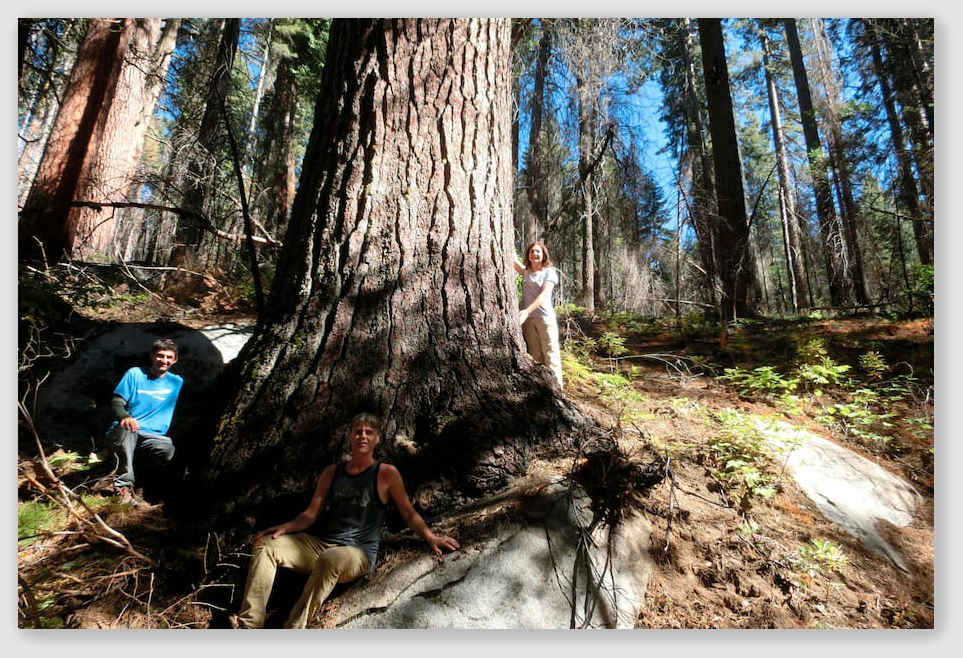
A big-tree hunter who has been charting some of the largest trees in the West for more than a decade has added three in the Sierra Nevada mountains to the list of tallest sugar pines known to exist in the world. Michael W. Taylor recently documented two in the Tahoe National Forest west of Lake Tahoe in California nearly as tall as the length of a football field. At 267 feet, 6 inches and 267 feet, 1.8 inches, they are the second and third tallest sugar pines recorded, the Tahoe Daily Tribune reported. A third tree, found in the Stanislaus National Forest, checks in sixth on the all-time list at 253 feet, 2 inches. The largest of the three measures 10½ feet in diameter 4½ feet above the ground — a universal measurement known as diameter breadth height. Taylor, a longtime partner of the Sugar Pine Foundation in South Lake Tahoe, and partner Duncan Kennedy hiked to the trees based on satellite sensing data from the National Oceanic and Atmospheric Administration and U.S. Geological Survey. The nonprofit supports his exploration as it works to combat the effects of bark beetles and blister rust in Western forests. The discoveries help scientists learn more about the species. Taylor said the tallest sugar pines he has found tend to be on the western slope of the Sierra Nevada and up into Oregon, where there isn’t as much snow. He doesn’t like to give the exact location of the trees out of fear that the public will “love them to death…”
“Criminally reckless” is the term a federal judge used on Wednesday to describe Pacific Gas and Electric’s failure to take down a tree suspected of causing a deadly wildfire that killed four people last fall. “How many people has PG&E killed in this state on account of its failure to take care of trees near distribution lines,” U.S. District Judge William Alsup asked during a virtual court hearing. The answer would be 113 if PG&E took responsibility for all fires caused by its equipment over the last five years. That includes two people who died in the 2015 Butte Fire, 22 who died in the 2017 Northern California wildfires, 85 who died in the 2018 Camp Fire, and four who died in the Zogg Fire last year. Alsup, who oversees PG&E’s criminal probation for convictions related to the 2010 San Bruno gas pipeline explosion, which killed eight people, questioned why the utility’s lawyers are resisting his proposals for new probation terms. The proposed conditions aim to prevent a repeat of the Zogg Fire that sparked in Shasta County this past September and killed four people, including a mother and her 8-year-old daughter. “My heart sinks when I think of the number of people — good ordinary citizens like that mother and daughter who died in the Zogg Fire — because PG&E did not take down trees,” Alsup said. “Then they hire excellent lawyers like you to come in and try to justify it…”
Hattie Carthan was a rare breed — as rare as the huge Magnolia grandiflora flourishing and blooming near her home in Bedford-Stuyvesant, Brooklyn, way north of its natural habitat. And Carthan — a transplant herself from Portsmouth, Va., 300 miles to the south — stood tall and proudly for the huge flowering tree. She secured Living Landmark status for the endangered tree from the city’s Landmarks Commission, and made it a rallying point for the founding of the Magnolia Tree Earth Center. “Mrs. Carthan was among the nation’s first African-American community-based ecology activists,” said a promotion touting last February’s “The Legacy of Hattie Carthan: New Stewards of Grassroots Green Movements” session at the Brooklyn Public Library’s Central Branch. “Her pioneering efforts brought a variety of ‘green’ programs to her neighborhood during the early emergence of the grassroots and environmental education movements.” “It’s building off the things she kind of started organically — taking care of street trees, planting street trees, and having an environment on the world itself,” Wayne Devonish, board chairman of the Magnolia Tree Earth Center, said about the organization Carthan founded in 1972…
Susan Kuykendall and her neighbors were without power for almost three days last week during the storm that dropped 10 inches of snow in some parts of Redding. But the Mountain Gate woman said the electrical outage in her neighborhood probably could have been avoided. Kuykendall said she warned Pacific Gas and Electric Company last summer the gray pine that crashed into power lines last week was a danger. “The tree came down. The tree obstructed the road. We lost our power for two and a half days, and I did warn them about these trees back in July and they did nothing about it,” Kuykendall said. The gray pine was near an embankment on the east side of Old Oregon Trail North, 150 to 200 feet south of Sweetwater Trail. The power lines that were knocked down are on the west side of Old Oregon Trail North…

Thanks to Victorian street planners, many British streets were designed to be full of big trees and, with 84% of the population living in urban areas, most people are more likely to encounter trees in the streets than they are in forests. The UK is one of the least densely wooded countries in Europe (at 13% coverage compared to the EU average of 38%) and, as such, its street trees are even more valuable. This became all too clear as the UK first entered lockdown in spring 2020, when many people spent more time on their local streets and in parks. Online tree app Tree Talk saw a 50-fold increase in users as people fell in love with their local “street trees.” They were quite right to do so. The wood of street trees stores carbon, while their roots and crowns support wildlife and slow rainfall, reducing urban flooding. Transpiration and shade from their canopies reduces temperatures in heatwaves, while pollution-trapping leaves lower the prevalence of asthma. If these ecosystem services weren’t enough, having trees on our streets reduces crime rates and improves mental health and wellbeing. One mature street tree can have a net ecosystem service value of thousands of pounds…
Our public lands and forests are at risk for commercial logging and prescribed burn operations under legislation that is currently making its way through the Legislature. There are three bills in the Legislature that could clear cut as much as 2 million acres of land held in the public trust and burn 60,000 acres a year. Destroying our forests undermines any chance of reducing climate impacts. Instead, it will add millions of tons of air pollution and cause serious health issues. New Jersey has not allowed logging on state forest lands since the early 1960s. New Jersey Green Acres land is managed for conservation and recreation, not forestry and logging. In 2010, former Gov. Chris Christie opened land for forestry and logging. Now under the Forest Stewardship bill, A4843, logging could apply to almost 2 million acres of open space in the state, including state forests, state parks, Wildlife Management Areas, county parks, municipal parks and more. In New Jersey, our open spaces are held in the public trust and treasured by people across the state. This logging bill breaks that trust. Our forests must be preserved to protect our water quality, especially in the Highlands region. The Highlands Act was passed to save our canopy forests to protect streams, forests and biodiversity — not logging…
 New Haven, Connecticut, Register, February 2, 2021: Scotch pine is Hamden’s January Notable Tree
The Hamden Tree Commission named this Scotch pine (Pinus sylvestris) as the Hamden Notable Tree for the month of January. The tree is located on Regional Water Authority property in the Spring Glen neighborhood. It is an evergreen tree, native to Europe and the western part of Asia. It is the only variety of pine native to the British Islands, hence its name, according to the commission. Young Scotch pines are pyramidal in shape with short, spreading branches. As they age, the lower branches die off and the trunk becomes more visible. Mature trees have bare, curved trunks with an umbrella-like branch formation at the top. The Scotch pine is easily recognized by its curvy trunk and distinctive orange bark on its upper trunk and branches. It has short blue-green needles and small cones. Scotch pine was the United States’ most popular Christmas tree from 1950 to the 1980s, but has since been replaced by spruces and firs. In many parts of the country, central states in particular, the Scotch pine remains a very popular Christmas tree…
During this pandemic, more people have self-isolated at their cottages. Parks, conservation areas and Crown forests received record visitors. These people sometimes stumble on loggers, and some don’t like what they see. Logging is ugly work. In short order, forest equipment can enter a woodland and make a mess. Still, we need loggers. The trees they cut become stuff we need: paper, tissue, plywood, two-by-fours and furniture. Plus, forests grow back. Before Christmas, the Peterborough Examiner published an open letter from a logger. Last spring, he wrote, he had been cutting in the Catchacoma Forest, on Crown land about 200 kilometres northeast of Toronto. He left his equipment parked in a clearing for the summer. Loggers generally work in cold weather. Heavy equipment moves more easily across frozen ground, and winter harvest minimizes gouging and avoids damage to tree trunks, roots, waterways, nests and burrows. When the logger, Curtis Bain, returned this fall, he found that someone had vandalized his machines. “The tires were flattened, windows smashed,” he wrote. “The doors on the skidder were torn off and thrown, wires were ripped, all my tools were strewn around and thrown into the mud.” A group of researchers has spoken up over the past year about the need to protect this forest. Peter Quinby, a PhD in forest landscape ecology who founded Ancient Forest Exploration and Research, calls this the largest stand of old-growth eastern hemlock in Canada, and asserts that one tree is 375 years old. The Wilderness Committee, based in Vancouver, pleaded, “Support protection for Catchacoma old-growth forest…”
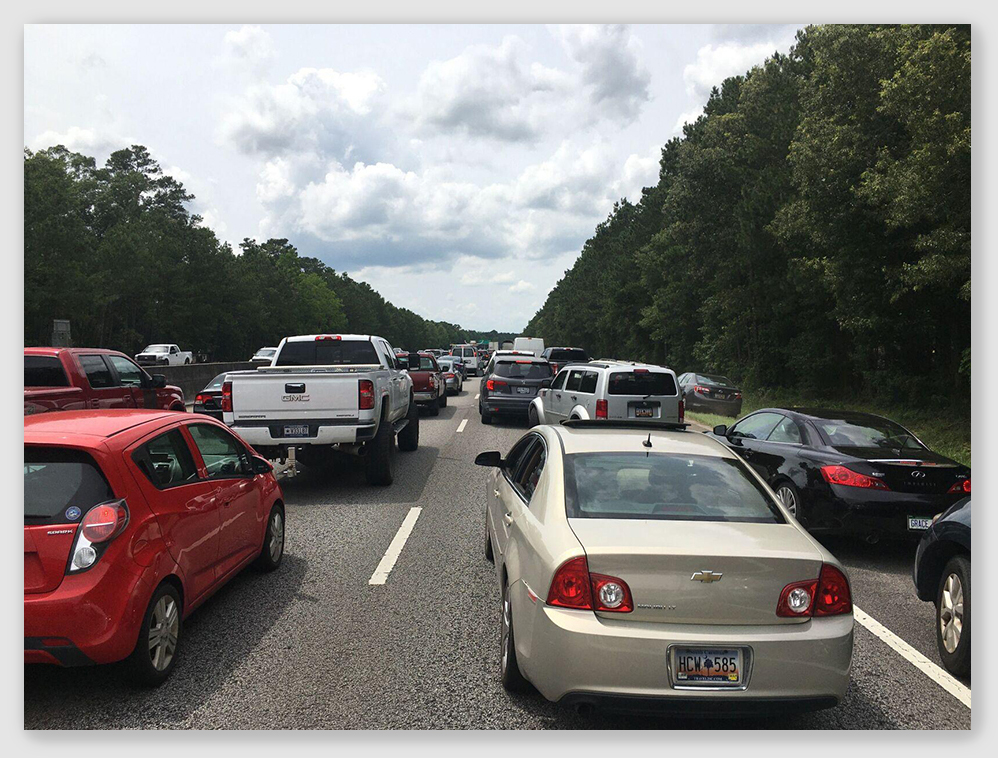
As tree cutting continues down Interstate 26, officials argue that the removals are largely for the safety of drivers. Starting in Ridgeville, I-26 drivers have likely noticed ongoing road work stretching toward Interstate-95. According to the S.C. Department of Transportation officials, that tree cutting comes from a combination of safety concerns and the need to make room for a future road widening. “There were a number of fatalities and crashes that were occurring at certain stretches of that interstate,” said DOT Commissioner Robby Robbins. In 2015, DOT received a push from legislators to address accident concerns on I-26. A DOT study revealed that 57 out of 68 severe-injury or fatal accidents in 2007-11 from the Ridgeville to I-95 portion of I-26 involved hitting trees. The ongoing tree cutting is a part of a continued response to those fatal accident concerns. According to DOT, 11 severe or fatal accidents in 2015-18 involved trees in the same area. Over 100 accidents in general also included trees…
Fox Business, February 1, 2021: Does homeowners insurance cover a tree falling on your house?
Homeowners insurance policies protect consumers when a tree or another object falls on their home, causing damage to the roof or other rooms. These insurance policies will cover tree damage, whether it’s a neighbor’s tree that falls on a person’s house or a tree that was in your yard. Here are some factors that homeowners should be familiar with when it comes to property damage. Insurance companies use several factors to assess property damage for a homeowner. However, there are two types of homeowner policies in the insurance industry — one is called “peril policies,” which cover only specific types of perils named in the policy, and the other is “all-risk policies,” which offer much broader coverage and respond to all types of physical loss unless an exclusion applies — according to Fran O’Brien, a division president at Chubb Personal Risk Services. All-risk policies could provide coverage for damage to a home from falling trees and tree limbs. Peril policies have more limitations and some will only provide coverage for losses in a fire. When there is damage to your house or other structures, an insurer would typically pay the covered loss up to the limit of the insurance policy, she said…
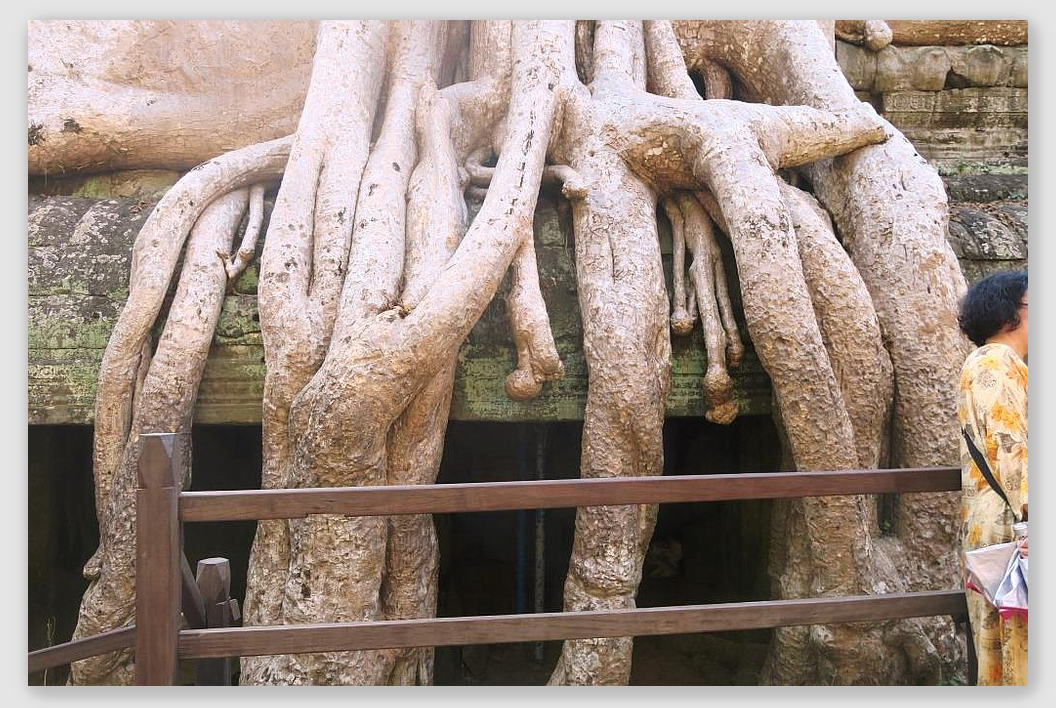 Little Rock, Arkansas, Democrat-Gazette, January 30, 2021: Strangler Trees
One of the mystery plants for this week was a series of trees with large roots on the ground and around buildings. There was a lot of interest in the plants, with quite a few guesses. While there were several species we saw in our travels to Vietnam and Cambodia, collectively the trees are called strangler trees, since they kill other trees and have done massive damage to the temples as well. We have seen examples of strangler trees in Costa Rica, Hawaii, New Zealand and even southern Florida. There are several species of trees that get the common name strangler tree. The most common is the strangler fig- Ficus. There are actually several species of ficus that have this growth habit. They get their start in life from a small seed which a bird drops into a larger tree. The seed germinates and then gets its nutrients from the rain and the sun collected on the host tree. It continues to feed from the host as it sends slender roots down to the ground and around the host tree. Eventually the roots hit the earth and the trees grow aggressively, strangling out their host tree and sending roots outwards. Ficus trees are evergreen…
Questions related to root-flare exposure are on the rise, and that’s good. I’ve had lots of responses to last week’s column on the subject. One of the most common questions I get is, “Why hasn’t my tree care company recommended this procedure?” Well, many people in the tree business were not trained in this technique and don’t really understand how to do it correctly. Some of the universities are taking steps in that direction, but many of the tree care companies are run by people who learned the tree business from others who learned from on-the-job training. So it’s a pretty new technique. Sometimes homeowners are confused about the importance of root-flare work because their trees are old-ish and seem to be healthy — so they ask, “Why is the work needed?” People in this category are usually greatly surprised by how well treated trees do compared with how they looked and grew before the work was done. The disappearance of mistletoe, sapsucker damage and other pests always grabs their attention. Tree age has little to do with whether the work is needed. The national champion pecan tree in Weatherford has had more than 4 feet of soil removed from its base, and this great tree is hundreds of years old…
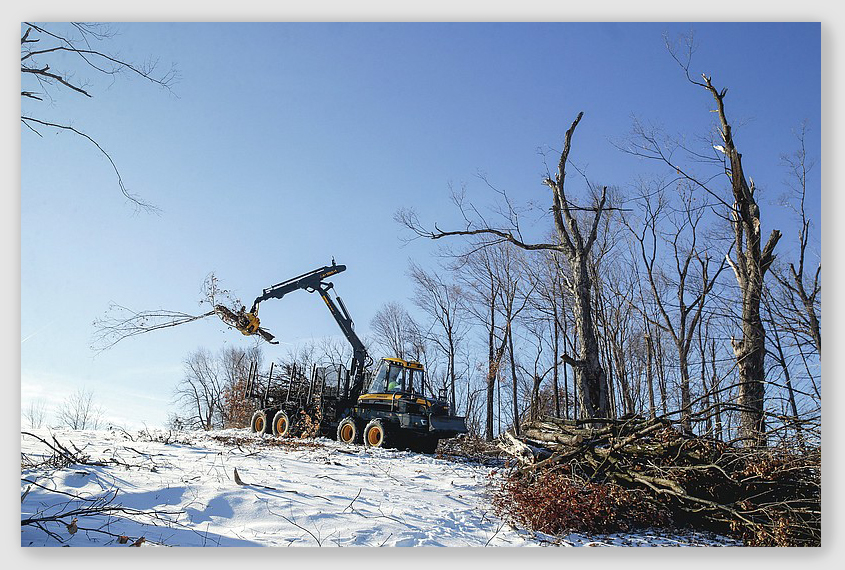
Shannon Ramsay recalls Daniels Park in the northeast quadrant as a majestic green space with “magnificent” oak trees. Then hurricane-force winds pummeled the city in the Aug. 10 derecho. The neighborhood park on Oakland Road NE lost more than 250 trees. It is “a park that was really appreciated and loved, and it’s one of the city’s signature parks,” said Ramsay, founding president of local nonprofit Trees Forever. “It received a lot of care and maintenance, and I think the neighborhood really appreciated it.” City Parks and Recreation Director Scott Hock said it’s “painful” to see that amount of trees come down — and it’s hardly the only park in the city with a diminished tree canopy. Along its destructive path, the derecho devastated Cedar Rapids parks, leaving behind massive amounts of tree debris that crews continue to clean up. But the loss also presents opportunities for the city to plant a more diverse, equitable and sustainable urban forest in it parks in the coming years. “We’re partnering with Trees Forever, of course, to try and put a good plan together for replanting both parks and right of way trees to again bring back the urban forest even stronger,” Hock said, referring to the city’s multimillion-dollar ReLeaf partnership with the organization. As of Jan. 13, the city had removed 5,584 vegetative loads and 238,563 cubic yards of tree debris. The city did not have an estimate on the total quantity left in the city park system, but debris is being documented for Federal Emergency Management Agency reimbursement…
When we spend time outdoors in deep cold, we often get red noses and chapped cheeks. In a young tree, sudden, deep cold can cause more severe damage: cracks in the bark. Such cracks, called frost cracks, are most likely to occur on young trees, whose bark is still thin and relatively flimsy. The cracks are always vertical, and they can be shallow or deep. There can be more than one crack in a single tree. Cracking is most likely to be seen on winter days after temperatures have fallen to 15 degrees or colder at night. “The sudden change is what causes frost cracks,” said Sharon Yiesla, plant knowledge specialist in the Plant Clinic at The Morton Arboretum in Lisle. “If the temperature declines slowly and the tree has a chance to get acclimated, its bark is likely to hold up better.” A swift drop in temperature causes the outer layer of bark to freeze and contract faster than the inner layer, putting them both under tension. At weak points, the strain may crack the bark. The cracks often appear on the south or southwest sides of a tree’s trunk. “That’s where the temperature fluctuations are greatest,” Yiesla said. During the day, the sun from the south and southwest will warm the bark more on that side of the tree, so when the cold night falls, that side faces a greater temperature drop…
The Conservation Commission’s Jan 26 decision to approve trimming 31 trees near an electronic billboard at 611 Pleasant St. is being welcomed by opponents of the placard that borders Route 3.Friends of Finnell billboard opposition co-leader Kathy Swain said tree trimming would be a step toward lowering the billboard’s height and diminishing unwanted light to nearby residents. “We wished that they could have removed the billboard, but obviously, that could not happen,” she said. The billboard lowering and tree trimming is part of a new remediation agreement between Cove Outdoor LLC and Mayor Robert Hedlund’s administration. Cove must add light-blocking technology on the sign, lower it approximately 20 feet by September, and keep it turned off until the work is complete under the agreement. Complaints about light glare from the billboard at 611 Pleasant St. began shortly after the sign was illuminated. Weymouth Conservation Director Mary Ellen Schloss said the commission approved a Cove consultant Metrovision LLC’s request to trim 31 trees in a wetland’s buffer zone. “These trees won’t be cut to the ground,” she said…
As Dominion Energy begins its next tree-trimming cycle with more than 170 palmettos to be cut away from the Charleston peninsula’s power lines, city officials are hoping to save some of the condemned foliage. Mayor John Tecklenburg spent Saturday morning walking alongside Dominion’s experts to see which of Charleston’s trees are becoming hazards, and how city leaders can either circumvent the trimming or replace intrusive trees with safer plants. The utility’s tree cutting, done on a five-year schedule, has attracted ire in the past from several communities who don’t want to see the greenery go. One group called Stop Dominion formed in protest. The work in downtown Charleston had already begun, with 50 trees cut. It was halted so that city crews can coordinate to remove the stumps promptly after the cutting, said Jason Kronsberg, the director of the parks department for the city of Charleston…

Close to 4,000 trees infested with Asian longhorned beetles have been identified in Charleston County since last year. Officials with the U.S. Department of Agriculture said any new trees detected are likely part of the same infestation that has been in the area for at least seven years. The first detection was made in June in the Stono Ferry neighborhood of Hollywood. Residents have shared concerns that the bugs, native to China and Korea, could be spreading to new areas. But officials don’t believe they are spreading beyond the initial infestation. “So it’s been there for a while,” said Rhonda Santos, a spokeswoman for the USDA’s Animal and Plant Health Inspection Service. “The insect has had time to build up its population and continue to infest trees nearby.” When the bugs do start to move on their own, it is because the population has grown enough to branch out…
Pennlive.com, January 29, 2021: When will billions of cicadas emerge in Pennsylvania?
Brood X, which also is known as the Great Eastern Brood, is expected to emerge mid-May through late June this year. If the insects follow the pattern from their previous emergence in 2004, a few may show up in some spots in Pennsylvania in early May. The emergence will occur in Adams, Bedford, Berks, Blair, Bucks, Cambria, Carbon, Centre, Chester, Clinton, Columbia, Cumberland, Dauphin, Delaware, Elk, Franklin, Fulton, Huntingdon, Juniata, Lackawanna, Lancaster, Lebanon, Lehigh, Luzerne, Lycoming, McKean, Mercer, Mifflin, Monroe, Montgomery, Montour, Northampton, Northumberland, Perry, Philadelphia, Schuylkill, Snyder, Somerset, Union and York counties. Other states experiencing Brood X, in which the X is the Roman numeral for 10, will be Delaware, Georgia, Illinois, Indiana, Kentucky, Maryland, Mississippi, North Carolina, New Jersey, New York, Ohio, Tennessee, Virginia and West Virginia. The numbering of cicada broods began in 1893 and that year’s emergence was designated Brood I. When Brood XVII (17) emerged in 1909, followed by Brood I again in 1910, the full range of the 17-year cicadas appeared to have been documented. The 13-year broods, which are mostly southern, were designated XVIII (18) through XXX (30). Pennsylvania is home to just eight of the broods, none of which cover the entire state. While there are 3 species of 17-year cicada and 3 species of 13-year cicada in North America – the only continent on which the insects occur – only 17-year species are found in Pennsylvania…
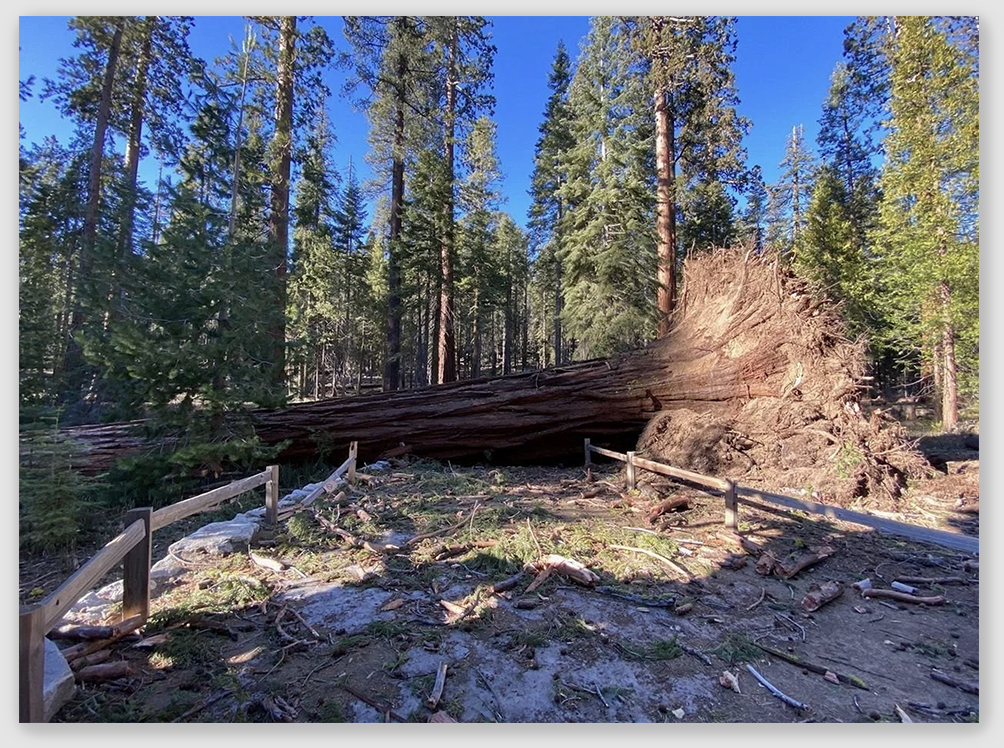
In a stunning display of nature’s force, officials at Yosemite National Park said Thursday that a powerful wind storm that ripped through the park last week caused 15 giant sequoia trees to fall in Mariposa Grove, a landmark forest visited by millions of people over the past 150 years. Originally, officials thought that just two of the massive trees had fallen. But as they have inspected the area on the park’s southern edges in recent days, they discovered wider destruction in the awe-inspiring grove, which was first set aside for protection in 1864 by President Abraham Lincoln. “We have extensive damage in the park,” said Scott Gediman, a Yosemite park spokesman. “Millions and millions of dollars. There could be more giant sequoias down. We are continuing the damage assessment.” The grove’s sequoias are among the largest living things on earth, reaching up to 285 feet tall, with bark more than a foot thick and dating back 2,000 years. Individual trees standing in the grove today stood there when Julius Caesar ruled the Roman Empire, and Alexander the Great led armies through Western Asia. They were there for 1,000 years before the Great Wall of China was built or the first stones laid to build the famed cathedrals of Europe…
Under a business-as-usual scenario of greenhouse gas emissions, the average global temperature may increase by almost 5°C through the end of the century. This climate change could cause a 1-meter increase in sea levels, possibly wreaking havoc on coastal regions and demanding hundreds of billions of dollars every year in adaptation and mitigation measures. As grim as this scenario may sound, it might be optimistic. According to recent research, there are carbon cycle feedbacks not accounted for by current climate models. The reason is that forests, which can absorb about a third of greenhouse gas emissions, may be relatively short-lived carbon stocks in the future as trees live fast and die young. Scientists are concerned because carbon uptake is a “critical ecosystem service that our forests are providing by effectively slowing the rate of climate change—and buying us time while we figure out policies to address it,” said Andrew Reinmann, an assistant professor of geography at the City University of New York. Carbon dioxide (CO2) stimulates the growth of trees due to carbon uptake during their development. This process, which scientists call CO2 fertilization, can accelerate tree growth, with more carbon available in the atmosphere (especially under higher temperatures) causing trees to have shorter life spans. The trees die sooner because higher metabolism rates can cause them to age faster and invest less in defenses or a more efficient hydraulic architecture or simply cause them to reach their maximum size sooner in life. The entire process means that trees will store carbon for a shorter time, accelerating the carbon cycle and potentially increasing carbon concentrations in the atmosphere…

The construction of a “globally significant” fish sorting channel and upgrades to an accompanying park are on hold after citizens came out in opposition to the removal of 63 trees, which is part of the construction process. Work was set to get underway last week, but a judge put a stop to it before it could begin, WPBN/WGTU reports. Citizens opposed to the project believe they should have had a chance to vote on it; the judge is now charged with determining whether that’s the case. The $19.3 million Union Street Dam Fishpass Project in downtown Traverse City is aimed at reconnecting the Boardman/Ottaway River and Grand Traverse Bay to restore the ecosystem – positively impacting at least 30 key species. One of the groups behind the project, the Great Lakes Fishery Commission, is “disappointed with the delay” but remains “excited and optimistic” that it will move forward soon, especially because the opposition is not directly related to the Fishpass but the parkland surrounding it, spokesman Marc Gaden told MLive…
A new 3-D analysis shows that wildland fires flare up in forests populated by similar-sized trees or checkerboarded by large clearings and slow down where trees are more varied. The research can help fire managers better understand the physics and dynamics of fire to improve fire-behavior forecasts. “We knew fuel arrangement affected fire but we didn’t know how,” said Adam Atchley, lead author on a Los Alamos National Laboratory-led study published today in the International Journal of Wildland Fire. “Traditional models that represent simplified fuel structures can’t account for complex wind and varied fire response to actual forest conditions. Our study incorporated a varied, 3-D forest and wind behavior. Adding diverse tree sizes and shapes slowed fire quite a bit, as did adding small gaps between trees. By examining the physics of fire-fuel behavior, we are able to see fundamentally how forest structure affects behavior.” The study for the first time links generalized forest characteristics that can be easily observed by remote sensing and modeled by machine learning to provide insight into fire behavior, even in large forested areas…
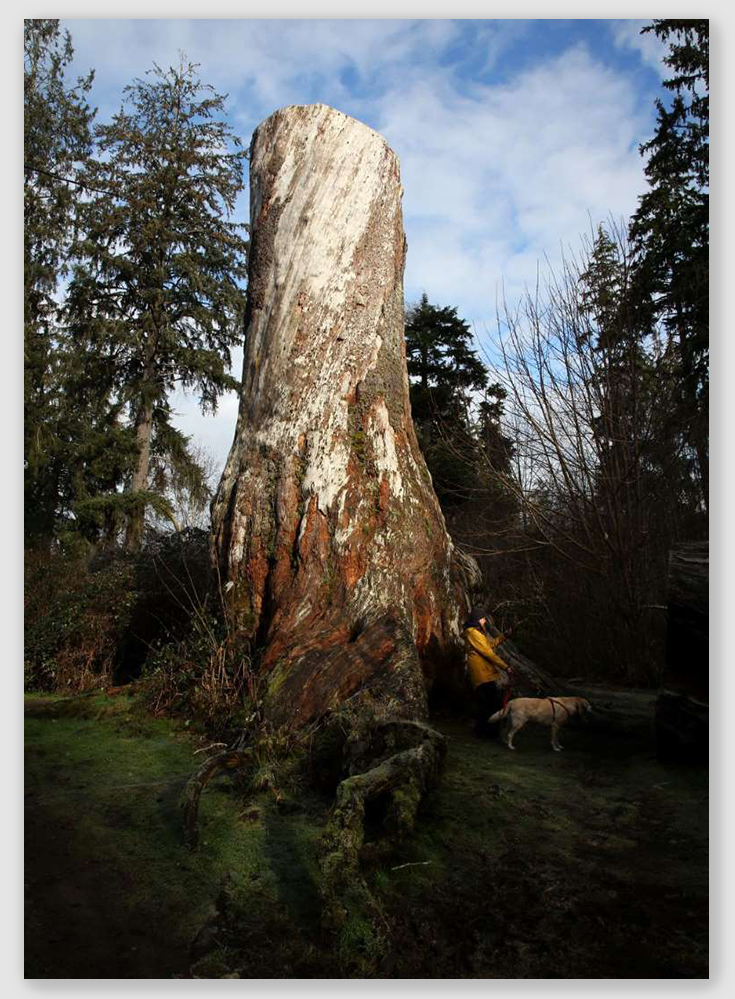
Dead trees don’t usually make compelling roadside attractions, but the giant stump at Klootchy Creek is an exception. Once measuring 200 feet tall with a 17-foot diameter and a circumference of 56 feet, the Sitka spruce between Seaside and Cannon Beach was officially the largest tree in Oregon, and one of the largest trees of its species in the country, before a windstorm finally destroyed it in 2007. The tree sprouted from the earth some 750 years ago, when only the Clatsop tribe of the Chinookan peoples lived along that stretch of coastline, long before European fur trappers and settler colonizers arrived. By the time the land it stood on was called Oregon, the tree had long since reached maturity. It eventually topped out at 216 feet tall – though its crown at some point was cut short to 200. The tree withstood centuries of windstorms, lightning strikes and fires. It even survived the blades of timber companies that tore through neighboring forests with abandon, leaving it as one of the few true giants remaining in the region. Nature finally took its course in 2006, when a winter storm blew out a chunk of rotted wood along an old lightning scar on the trunk, creating a cavity 15 feet wide and two feet deep. Clatsop County officials said the tree wasn’t likely to survive and contemplated cutting it down, according to reports in The Oregonian at the time…
In 2021, we need to heed the tenants of Tu B’Shvat, the Jewish “New Year of the Trees,” perhaps more now than any time in our history. Humans have always relied on nature — forests, watersheds, meadows, rivers, lakes and oceans — to create and provide a safe and viable habitat for humans and critters to live, love, and thrive. Nature has always been our life support system providing fundamental ecosystem services like water supply, livable temperatures, pollination of fruits and vegetables, decomposition and recycling food waste and poop into more fertility for growing food, abundant clean water, fiber, a range of moderate temperatures which provided relative safety and health for us to thrive. But as humans have dominated, conquered and consumed nature, we’ve increasingly and often unwittingly compromised and destroyed those life support systems. Not long ago we reached a tipping point called global warming. Our unabated consuming, wasting, polluting has overwhelmed and compromised nature’s ability to clean up after us and sustain us. That realization must trigger to take Tu B’Shvat with dead seriousness…’
 San Diego, California, Reader, January 26, 2021: The pepper tree fight of Kensington
A battle to save 35 stately old pepper trees, the last to frame the streets of Kensington, is far from over. It’s already too late for Karla, a centurion located at 4190 Monroe Street – until she was toppled last Friday. Karla had an overhanging branch badly in need of trimming. But by noon on Jan. 22, a city crew had carted away every last one of her shade-bearing limbs, leaving only a stump. Residents were told by crew workers that the city would be back Monday for three more pepper trees across from the Kensington Community Church on Marlborough Drive. The latest skirmish erupted in September when the city announced that the four trees would be removed due to decay and other structural defects. Long before that, others had taken note of the heavy branch hanging over the sidewalk. On October 17, 2019, a public request came in through “Get it Done” to review the Monroe Avenue pepper trees for safety between Edgeware Road and 42°d Street,” according to city forester Brian Widener…
Picture your ideal neighborhood. Does it have a canopy of trees that look nice, clean the air and provide shade on a sunny day? In Virginia, localities want the ability to require more of it. With the help and backing of environmental groups, a local delegate is pushing a bill that would give city leaders wider latitude to make real estate developers plant or replace trees when they build. “People need to understand how vitally important trees are to addressing a wealth of environmental challenges,” said Del. Nancy Guy, whose district includes Norfolk and Virginia Beach. “They are cheap, easy and beautiful.” When developers put in applications to build homes or businesses, they often negotiate with city officials in order to win approval, adjusting access to roadways or offering money to offset new residents’ impact on public services. As it stands, Virginia law allows localities to make certain requirements about trees — such as mandating they cover 10% for a residential site.

In the skies above far-flung corners of the Brazilian Amazon, a small plane aims laser beams down at the treetops to create a real-time topography down to the ground. Its goal is simple: find gaps in the forest. “It may sound like a Star Wars movie, but this is just another application of lasers in our day-to-day lives,” Ricardo Dalagnol, a scientist at the Brazilian National Institute for Space Research (INPE), told Mongabay in an email. “In practice, millions of laser beams are shot from an airplane over the forest, some beams hit the trees and some hit the ground. With this information, we can map trees and gaps.” Using this technique of airborne light detection and ranging technology, more commonly known as “lidar,” a team of researchers from INPE and the universities of Leeds and Birmingham in the U.K. remotely studied tree death and canopy gaps — holes in the green cover that extend from the tree tops down to the understory or ground. Their findings have been published in the journal Scientific Reports…
Reuters, January 26, 2021: Scientists in Greece find 20 million year-old petrified tree
Greek scientists on the volcanic island of Lesbos say they have found a rare fossilized tree whose branches and roots are still intact after 20 million years. The tree was found during roadwork near an ancient forest petrified millions of years ago on the eastern Mediterranean island and transported from the site using a special splint and metal platform. It is the first time a tree has been found in such good condition complete with branches and roots since excavations began in 1995, said Professor Nikos Zouros of the Museum of Natural History of the Petrified Forest of Lesbos. “It is a unique find,” he said. “[It] is preserved in excellent condition and from studying the fossilized wood we will be able to identify the type of plant it comes from…”
The reign of a contender for the title of oldest Pacific Yew tree in the United States has come to an end. The yew’s gnarled, bubbly bark and green limbs — celebrated for decades with an exhibit and fencing at Illahee State Park in Washington state — finally came crashing down one day in late December. “It was its time,” said David Cass, agency forester for Washington State Parks. “It was rotten in the middle of the tree and had decayed quite a bit.” Arborists had dated the tree’s beginnings as a seed to around the year 1610, the same time Galileo Galilei was first observing the moons of Jupiter. Jim Trainer, a longtime arborist sometimes referred to as “Kitsap’s Johnny Appleseed,” wrote in the Kitsap Sun of the USA TODAY Network that it was likely the oldest Pacific Yew in the U.S. While old, it was not necessary that big. “This tree is a small and slow grower in the understory of our Douglas Fir and Western Hemlock forests. The tree very rarely grows any higher than 50 feet,” Trainer wrote in 2005. State Park Ranger Kenan Murray, who oversees the park, began to notice this fall that, inch by inch, the trunk of the tree was beginning to separate. “It was obvious that it was starting to fall over,” he said…
London, UK, BBC, January 25, 2021: Scientists address myths over large-scale tree planting
Scientists have proposed 10 golden rules for tree-planting, which they say must be a top priority for all nations this decade. Tree planting is a brilliant solution to tackle climate change and protect biodiversity, but the wrong tree in the wrong place can do more harm than good, say experts at the Royal Botanic Gardens, Kew. The rules include protecting existing forests first and involving locals. Forests are essential to life on Earth. They provide a home to three-quarters of the world’s plants and animals, soak up carbon dioxide, and provide food, fuels and medicines. But they’re fast disappearing; an area about the size of Denmark of pristine tropical forest is lost every year. “Planting the right trees in the right place must be a top priority for all nations as we face a crucial decade for ensuring the future of our planet,” said Dr Paul Smith, a researcher on the study and secretary general of conservation charity Botanic Gardens International in Kew… However, planting trees is highly complex, with no universal easy solution. “If you plant the wrong trees in the wrong place you could be doing more harm than good,” said lead researcher Dr Kate Hardwick of RBG Kew…
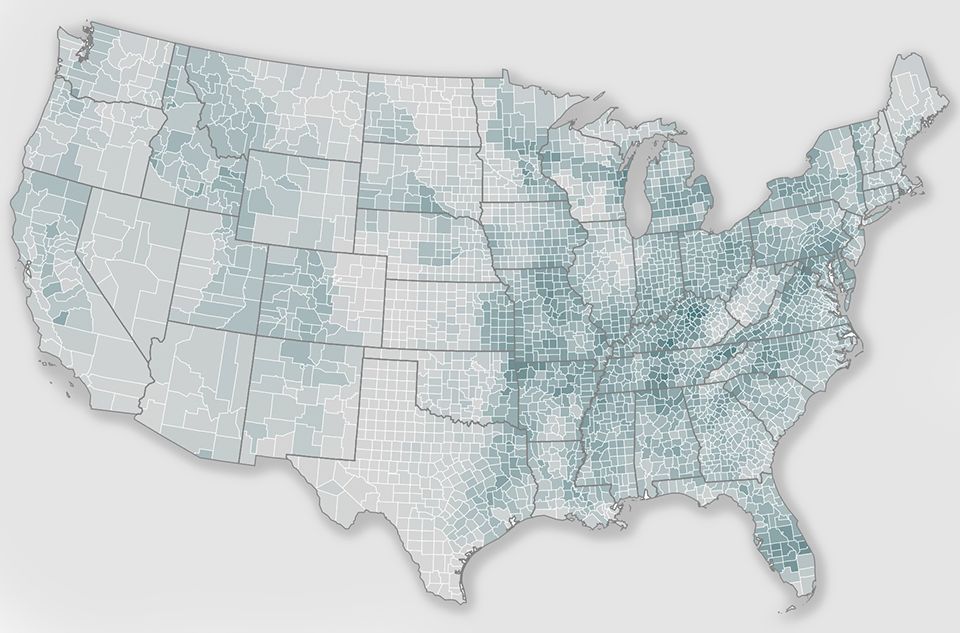 Fast Company, January 26, 2021: Map: Here’s where we could plant 68 billion trees in the U.S.
The U.S. was once covered in around 1 billion acres of forest. While much of that land has been developed, a recent study led by the Nature Conservancy found that there are still as many as 127 million acres of former forestland in the lower 48 states—an area about twice the size of Oregon—that could feasibly be reforested. In that space, we could plant 68 billion trees, which could capture more than 300 million metric tons of carbon dioxide every year, roughly as much as the pollution from 67 million cars. A new tool based on the study, called the Reforestation Hub, maps out exactly where reforestation could happen in each state, county by county. The map, created by the Nature Conservancy and American Forests, doesn’t include most urban land or farmland, or areas that were originally different types of ecosystems, such as grasslands. But in a variety of other areas—including pastures, some protected federal land, places that burned in wildfires or that flood frequently, and some urban spaces, like grass-covered parks or concrete schoolyards—there’s an opportunity to bring back trees. Some of the largest opportunities are in the Midwest and Southeast. Missouri, for example, has 8.7 million acres that could potentially be reforested, and Kentucky has nearly 6 million. Both states have large amounts of pasture, some of which could be put to different use if consumers buy less meat and dairy, if meat production becomes more efficient, or if more trees can be added into current pasture. Kentucky’s aptly named Barren County, for example, has around 146,000 acres of pasture that could be reforested, capturing around 237,000 metric tons of CO2 each year…
Dallas, Texas, Morning News, January 25, 2021: Expose root flares to keep your trees healthy
The largest and most healthy trees in the world have dramatically exposed root flares. Why is the proper exposure of the base of a tree so important? Of all the questions I get about insect issues, diseases, damage by sapsuckers, mistletoe, galls and other tree concerns, the most common cause is the tree being too deep in the ground. The best (and almost always effective) solution is the removal of stuff that is covering the base of the tree — exposing the flare. The reason this so important is that exposing flares allows them to breathe properly. Stress-free trees have a built-in power to protect and/or heal themselves. Exposing the base, root flare, trunk flare or simply flare (all these terms are fine) is the most important step of the Sick Tree Treatment procedure. Almost all trees and other woody plants have been planted too deeply by the growers, aren’t uncovered by the nurseries, get planted too low by landscapers and homeowners, and then have too much mulch added on top. The result is buried flares and stressed trees. Tree flares are transition zones, but they’re more a part of the trunk than the root system. When flares are covered with soil, mulch or anything else, they stay overly moist and don’t breathe properly, and tree health suffers. Pests can detect that, and then they attack. That’s their job. When the soil is removed from the flare, you can almost hear a sigh of relief from the tree, and it starts growing better while shedding pests…

Yosemite National Park will remain closed at least until early next week following a pwerful windstorm Tuesday that toppled trees and caused millions of dollars in damage to vehicles, homes and park facilities. No injuries were reported as a result of the “Mono” wind event, which swept across the region in east-central California last week and caused widespread power outages. The “high wind event” left “downed trees, debris and damage to park facilities,” Yosemite officials tweeted Tuesday. Later that day, the park said it was assessing damage assessments, clearing trees and repairing facilities. The park, which tweeted pictures of trees that had fallen on homes and trucks, is tentatively set to open Tuesday. Among the trees knocked down were two giant sequoias, Yosemite spokesman Scott Gediman told the Sacramento Bee. He estimated damage to facilities, employee homes and vehicles in the millions of dollars, with the park’s Wawana community hit hardest. The event was the biggest in terms of wind speed and damage in at least 25 years, Gediman said…
In the ancient world, one of the many ways kings taxed their subjects was based on the harvest of their subjects’ trees. According to a website sponsored by Ithaka, which describes itself as “a not-for-profit organization helping the academic community…”, sometimes these taxes were comically complicated. For example, since likely crop yields in ancient Egypt depended on annual flooding of the Nile River, taxes required three tax collectors and two assessment periods. Before the floods, officials calculated taxes based on predicted flood heights. After each flood, three assessors refined the tax by holding cords, stretching the cords, and recording by the number of cord lengths the extent of cropland watered. These experts then calculated as a tax 10% of the expected harvest. Ancient commentary on biblical injunctions shows similar procedures elsewhere. The Jewish holiday of Tu BiShvat, linked to the lunar calendar but celebrated this year on Thursday, commemorates the “birthday” of the trees, a demarcation enacted partly for an ancient tax…

You’ve likely heard the buzz around lab-grown (or cultured) meat. We can now take a few cells from a live animal and grow those cells into a piece of meat. The process is kinder to animals, consumes fewer resources, and has less environmental impact. MIT researchers will soon publish a paper describing a proof-of-concept for lab-grown plant tissues, like wood and fiber, using a similar approach. The research is early, but it’s a big vision. The idea is to grow instead of build some products made of biomaterials. Consider your average wooden table. Over the years, a tree (or trees) converted sunlight, minerals, and water into leaves, wood, bark, and seeds. When it reached a certain size, the tree was logged and transported to a sawmill to be made into lumber. The lumber was then transported to a factory or wood shop where it was cut, shaped, and fastened together. Now, imagine the whole process happening at the same time in the same location. That’s the futuristic idea at play here. Wood grown from only the cells you’re interested in (no seeds, leaves, bark, or roots) could be manipulated to produce desirable properties and grown directly into shapes (like a kitchen table). Fewer 18-wheelers and power tools. No fuss, no muss…
I live in a grove of large stately live oaks. Only one is technically on our property; the grove continues across the road and in adjacent yards, even down the road a piece. We are also blessed with some large pines, though we have lost a few to lightning strikes. We are on a slope that runs down towards a drainage way that used to be a creek. I imagine this was originally a mature mixed pine/hardwood forest, and eventually pasture, with well distributed live oaks and pines until time of development in the 1960s. We are not trying to restore what used to be here, but our goal has been to diversify the native tree species in our yard for the benefit of wildlife. When the rose-of-Sharon tree planted by previous owners was declining due to old age, we replaced it with a blue beech, a native tree with pretty fall color, gorgeous muscle-like bark, and unique seed structures. In addition, native caterpillars utilize its leaves which are then eaten by birds, lizards, spiders, and others…

U.S. Customs and Border Protection officers in Cincinnati say they recently seized a deliberately mislabeled shipment of 21 small trees from China. Likely intended to become Bonsai trees, they were labeled as a bracket, a vacuum pump and a pamphlet in a shipment purportedly from an electronics company in Shenzhen, China, headed to an individual in Brooklyn, New York, a customs news release said. “Specialists noted the trees were layered with various coverings – fabric padding, black plastic, bubble wrap, and, finally, tightly bound with colored tape – presumably as an effort to circumvent inspection,” the release said. The trees did not have a certificate from China attesting to the health of the trees as required for their importation, the release said, and were destroyed by customs officials…
Boston officials have discarded a plan to revamp Melnea Cass Boulevard in Roxbury following last year’s community uproar over a proposal to remove scores of trees that line the roadway. In a Thursday letter to the community, city officials said they remain committed to crafting a new plan to make the road safer, enhance its open space, and increase “resilience in an area prone to flooding.” “We are confident that this process will realize a final design that reflects the aspirations and needs of the communities abutting the corridor,” read the letter, which was signed by Chris Cook, the city’s environment chief, Karilyn Crockett, the city’s equity chief, and Chris Osgood, the city’s streets chief. The city’s decision came as welcome news to Tomiqua Williams, a community activist who said she wanted the area to be kept “as green as possible,” something that would help residents’ mental health. “That’s awesome that they’re listening to the community,” Williams said…
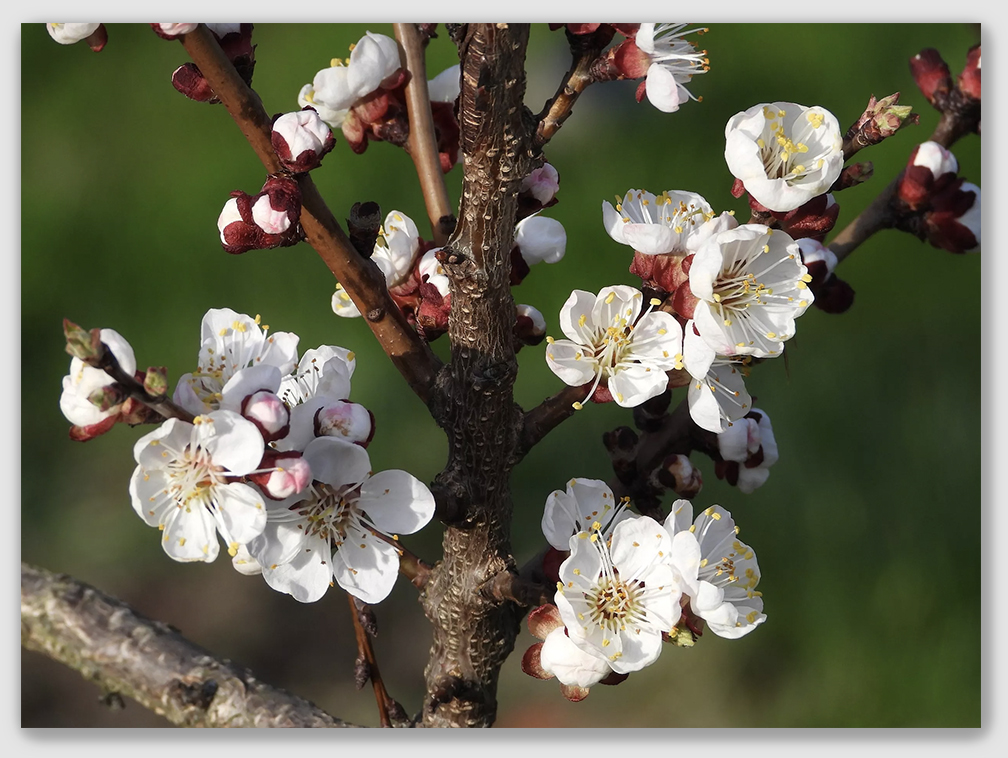
I love apricots! My favorite way to eat them is as apricot pineapple jam. The sweet apricot blends beautifully with the tangy pineapple, especially on a piece of homemade bread. Unfortunately, apricots aren’t the easiest tree to grow in our region. They often bloom very early in the spring and get hit by frost which kills the flower. Take heart though, with careful variety selection, you can assure yourself of a good harvest most years. The key to selecting the right variety is to look for ones that bloom later than other apricots. Normally, apricots bloom at the end of April. Late-blooming varieties bloom closer to mid-May, a timeframe that can avoid the last of the killing frosts. Another characteristic to watch for is whether the variety is self-fertile or needs another apricot variety nearby to cross pollinate with. Here are a few late blooming varieties to look for. All are hardy to USDA Zone 4 and all are late bloomers. Canadian White Blenheim, as its name indicates, was developed in Canada, which is much colder than Spokane with later springs. This tree is partially self-pollinating, so it needs to be planted with another late blooming variety for a heavy crop. Any of the varieties listed below will work. The challenge is whether you have room for two trees in your garden. If fully pollinated, the tree bears a heavy crop in late summer and has gold orange skin around firm, sweet white flesh. The fruit can be eaten fresh, canned, dried or made into jam…
Q: The association board in my condominium complex is planning to cut down a bunch of trees behind my unit. The trees are not especially pretty trees, but they do provide me with a lot of privacy and shade, and do not present any danger to the building. Since this decision mainly affects me, is there anything I can do to prevent this from happening?
A: Before I discuss the recourse part of your question, have you talked to the board to find out why they are taking down the trees? Are the trees infected with something? Are they hosting pests of some sort? Also, is the board planning to replace the trees with some other type of trees, bushes, landscaping, etc., or just planning on leaving the area clear? If they are planning on replacing the trees with another type of tree, it might work out all right for you. Whatever the reason the board has decided to take down the trees, it should be noted that condo association boards, in general, have wide latitude in governing the association. But just because board members have broad authority to handle the affairs of the association does not mean that they are infallible or always make the best decision. Sometimes they make poor decisions…

New federal guidelines allow cutting large trees that have been off-limits to logging for nearly three decades across 8 million acres of Eastern Oregon. The U.S. Forest Service last week approved amendments to what’s known as the Eastside Screens, a plan to manage old-growth forests, rivers and streams, wildlife habitat, and more for six national forests east of the Cascades. The amendments do away with the “21-inch rule,” which prohibited cutting trees larger than 21 inches in diameter and safeguarded many of the oldest trees. Rob Klavins, Northeast field coordinator for the conservation group Oregon Wild, said axing the rule removes “the only real meaningful protections for old-growth forests in Eastern Oregon.” “The logging lobby has been trying to kill old-growth protections for 25 years,” he said. “And the Trump administration just gave them what they wanted.” The Forest Service made its decision in the name of wildfire preparedness. Decades of aggressive fire suppression has left many Northwest forests overgrown with hazardous fuel. Ochoco National Forest supervisor Shane Jeffries said the 21-inch rule made it difficult to remove fire-prone species like grand fir and white fir without a lengthy regulatory process…
Few would dispute that scale insects are not exactly the “charismatic megafauna” of the insect world: They’re small, largely immobile, and often go unnoticed by the untrained eye. These insects feed by tapping their long mouthparts down into cells to extract plant fluids. Many different species of scale are common on trees, both in natural and more managed areas. In most cases—especially in natural areas—scales do little to no measurable damage. However, trees in urban landscapes are particularly susceptible to injury from scale insects for a variety of factors. To learn more about the implications of gloomy scale (Melanaspis tenebricosa), I spoke to the authors of a new article published in December in the Journal of Integrated Pest Management that highlights the ecology and management of this pest on landscape trees. Michael G. Just, Ph.D., now a research ecologist at the U.S. Army Corp of Engineers’ Engineer Research and Development Center, is lead author on the paper and conducted research on gloomy scale while a postdoctoral research fellow at North Carolina State University (NCSU)…
Q: There are a lot of scale species. What makes gloomy scale stand out from the others?
A: The fact that they don’t stand out. I mean, they can be pretty hard to detect on red maples, as they are a similar color to the host’s bark and they don’t move much. (Female adults do not move at all). Also, when compared to some other insect pests, they are not very flashy when it comes to tree damage. They will not denude a canopy in a single season. Instead, they are a chronic pest and it takes some time before host damage is easily spotted. They are also notable because after being described as one of the most important enemies of shade trees in North Carolina, there was a pause on gloomy scale research for almost a hundred years…

An Oak Harbor woman had hoped to save a large Pacific madrone tree that is slated be cut down to accommodate planned demolition and expansion of the city’s McDonald’s restaurant. Despite being named a Tree City USA by The Arbor Foundation for the 17th year in a row, the City of Oak Harbor has no special protection in place for the native tree species, Arbutus menziesii, commonly referred to as the madrona. Carol Johnston works as a dental hygienist in a building next to McDonald’s and has watched the tree grow for the last 14 years. “I love this tree. It’s probably the biggest in Oak Harbor,” Johnston said, referring to the madrone. The large, orange-skinned madrone tree is next to the drive-thru line. Johnston can see it from her window and noted that many patients comment on its beauty when they come in for a cleaning. The multi-trunk tree is likely between 25-30 feet tall and has a diameter of more than 12 inches…
Mountain Home, Arkansas, Baxter Bulletin, January 20, 2021: Almost time to prune fruit trees
Fruit trees should be pruned every year just before the beginning of active growth to maintain their health, encourage balanced growth and productivity, and control their size and shape. When you plant a fruit tree, you should be dedicated to giving the tree proper care and pruning to maximize both fruit quality and quantity throughout the life of the tree. Understanding the principles of pruning and practicing them are important. The objectives of tree pruning are (1) to develop strong tree structure: This should begin when trees are planted and continue each year thereafter; (2) provide for light penetration: Good light quality throughout the tree increases fruit bud development for following years and increases the quality of the current crop; (3) control tree size: Most fruit trees require pruning to control branch spread as well as tree height. This also serves to encourage new growth that will result in new fruit-bearing areas; (4) remove damaged wood: Some wood damage occurs almost every year from such things as wind damage, fruit weight, winter injury and disease and insects…

You do not have to drive very far in Lamorinda before you see dead or dying trees. “I removed thousands of dead trees in Lamorinda last year,” said Brian Gates of Expert Tree Service in Orinda. “By summer, there will be thousands more.” And that is precisely what officials of the Moraga-Orinda Fire District fear: That thousands of dead trees, particularly Monterey pines, will mar the district landscape, adding yet another hazard to a potentially catastrophic fire season ahead. The problem of dead and dying trees is not restricted to the summer. Tom Smith of the California Department of Forestry and Fire Protection toured the Northern California region in December, stunned at the number of sick and dying bay laurel and Monterey pine trees. “There is a lot of death and destruction here,” he said. Residents of Moraga and Orinda have recently reported hundreds of these dead trees to the fire district. “There was enough of an uptick that we took notice,” said MOFD Fire Marshal Jeff Isaacs, who plans to ramp up enforcement of tree removal this year. “Dead trees equal dead fuel. Even a healthy Monterey pine drops a lot of material, and it can land on a roof. When Monterey pines are dying, it’s dead fuel dropping.” Adding to the nuisance value of Monterey pine trees, the U.S. Forest Service says that Monterey pine wood is light, soft, and coarse grained, with little commercial value in the United States except as fuel wood…
The spirea aphid, Aphis spiraecola, an invasive pest, has been discovered for the first time in Denmark by University of Copenhagen researchers. The extent of its current distribution remains unknown, but in time, it could prove to be a troublesome pest for Danish apple growers. Whether the discovery of this aphid in Denmark is an isolated incident, or if the species has made itself at home due to a milder climate, remains unknown to the researchers. Closer investigation is needed. In a collaboration with colleagues at the University of Budapest, University of Copenhagen researchers have analysed and compared a number of samples of green aphids from apples around the world and discovered a new apple-loving pest in Denmark. The bright greenish yellow spirea aphid–Aphis spiraecola– which most likely originates in East Asia, has gradually become a widespread pest in tropical and temperate regions around the planet. While it is especially problematic for citrus and apple trees, it can attack many other plant species. The aphid has been in the United States for the last 100 years and was discovered in Mediterranean countries in 1939. However, the spirea aphid has never been witnessed in the Nordic countries before…
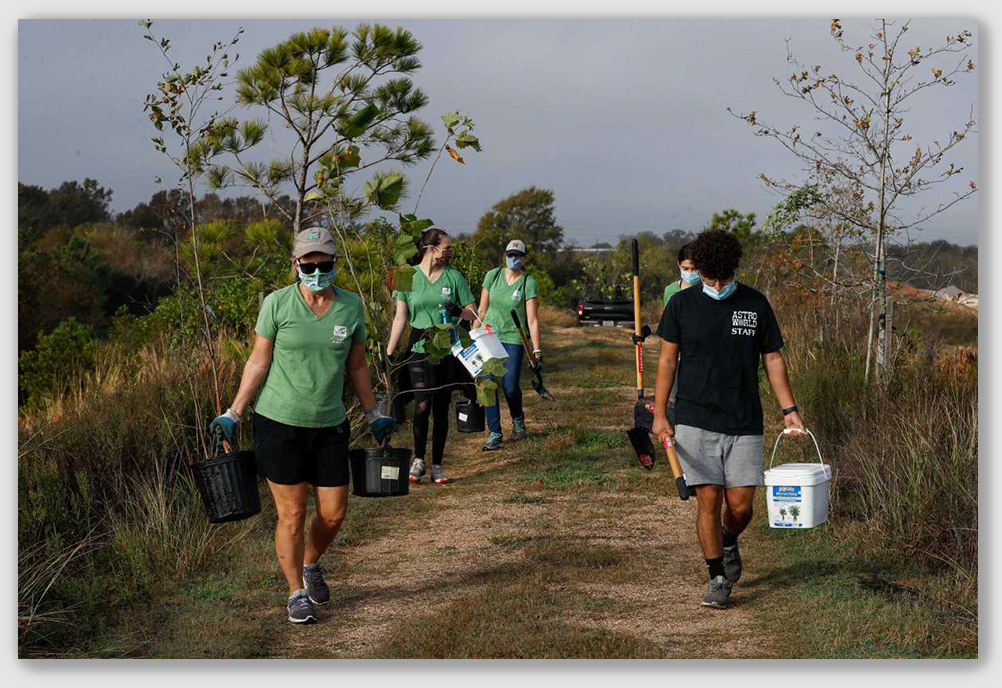
Deer and bobcat have left tracks in the mud. Coyotes have dropped furry scat. Hawks soar overhead.The Port of Houston built the berm, a 2.6-mile-long, 20-foot-high ridge that curves from about Texas 146 to Galveston Bay, to buffer the communities of Seabrook and Jardin del Mar and preserve nearby natural areas from the sights and sounds of its busy Bayport Container Terminal. A massive land development is now under construction on the terminal side. But wildlife sights and sounds appear to be increasing, too. The berm sits along the Great Texas Coastal Birding Trail, an important stop for migrating and overwintering birds. Before heavy industry arrived, the whole area was a wildlife paradise. Patches of it still are. Armand Bayou Nature Center is nearby, and other surprisingly lush pockets of undisturbed marshland and woods lie between the berm and Galveston Bay.It isn’t so obvious yet, but volunteers have planted about 2,500 native tree saplings on the berm since July. And that number will double by the end of March, says Deborah January-Bevers, the president and CEO of Houston Wilderness, a nonprofit founded in 2002 to support and coordinate the work of many partners who want to preserve and promote the 10 diverse eco-regions that lie within the Houston metro region’s 13 counties…
Dublin, Ireland, The Independent, January 20, 2021: The Scots Pine is a native Irish conifer tree
The Scots Pine grows widely throughout Europe and Asia. Its distribution range extends eastwards from western Europe to the eastern extremity of Russia, northwards to Scandinavia and southwards to the chain of mountains stretching from the Pyrenees and Alps to the Balkans in central Bulgaria. Where the tree thrives, it often forms dense forests, an outstanding example being the old Caledonian pine forest of the Scottish Highlands where the species is the dominant tree; hence its name and its special link to Scotland. Pines are a family of evergreen trees distinguished by their scaly buds, the structure of their cones and the way their needle-like leaves are borne spirally. The number of needles is always two, three or five. Scot’s Pine is a two-needle species. It used to be believed that Scots Pine was not native to Ireland and that our pine trees were all imported from Scotland. From research carried out by scientists based in Trinity College Dublin we now know that that Scots Pine is native to Ireland and was living here thousands of years before the any trees were imported from Scotland…
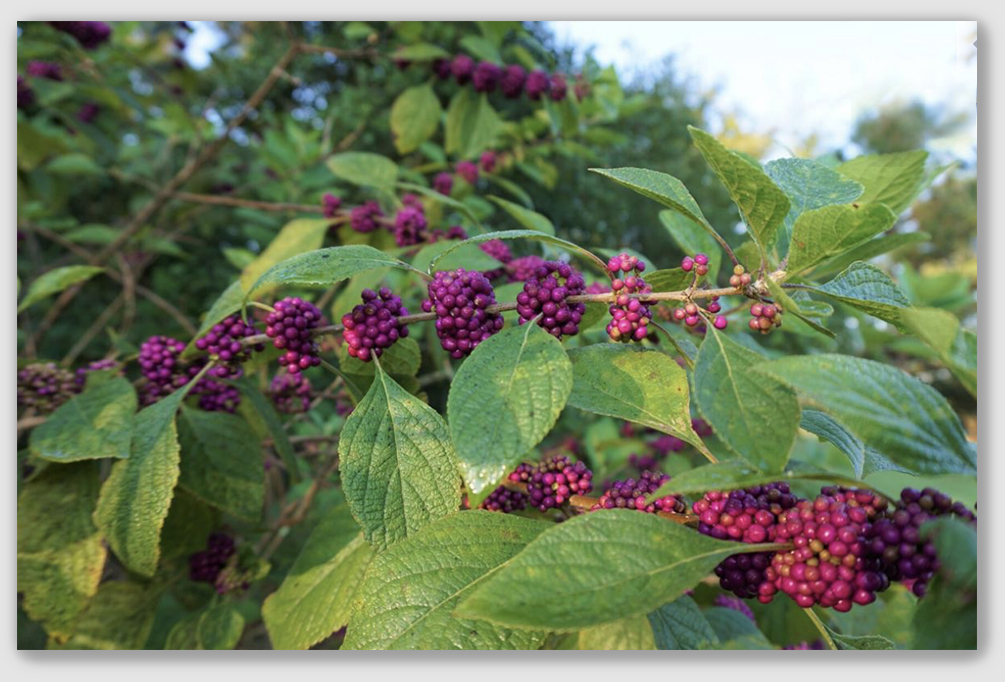
Events to observe Arbor Day are under way in St. Tammany Parish, with more than 1,000 tree seedlings expected to be distributed and planted this year. Arbor Day began in 1872 and has continued as an annual project that encourages people to plant trees. It is held during the optimal planting season, which varies across the country. In Louisiana, Arbor Day is observed the third Friday in January. Catherine Casanova, arborist and landscape inspector with the city of Mandeville, agreed that now is the time to plant trees. “When it’s so cold outside you don’t know if you can dig a hole,” it is time, she said. “We want people to take a tree and plant a tree wherever you can.” Mandeville, Covington and Slidell are among 12 designated as a Tree City by the National Arbor Day Foundation. Tree giveaways are held annually in each location, and more than 400 bare root seedlings have already been distributed during a drive-thru at Fritchie Park…
Experts have predicted another dry year for Arizona following 2020, when the driest year on record stressed forests across the state’s northern region. The dry conditions could have significant impacts on the health of trees and increase wildfire danger, Arizona Daily Sun reported Saturday. The U.S. Drought Monitor reported Flagstaff experienced only 9.56 inches (24 centimeters) of precipitation in 2020. Coconino County, which reaches to the northern border with Utah and includes Grand Canyon National Park, experienced what was termed an exceptional drought. Ponderosa pine forests across northern Arizona are already stressed by overgrown forests and a warming climate. Adding drought can be “a little bit of a one-two punch,” said Andrew Sanchez Meador, executive director of the Ecological Restoration Institute at Northern Arizona University…

Delband Rawanduzi spoke softly to her oak seedlings, as if willing them to grow fast and repopulate forests in Iraqi Kurdistan depleted by war, illegal logging and fires. Over the next five years, the 26-year-old aims to plant one million oaks — resilient trees that can endure both the cold of northern Iraq and the dry spells of one of the world’s hottest countries. Her plan is taking root in her native Kurdistan. In a pilot project late last year “we planted 2,000 oak trees. And in the upcoming autumn we will plant 80,000,” said Rawanduzi, a hiker and rock climber. She has mobilised visitors and shepherds who collect oak seeds from the mountains, which are then planted in two greenhouses donated by a private university in the Kurdish regional capital of Arbil. Once the young seedlings grow into a saplings, they are re-planted in mountain areas selected by the Kurdish agriculture ministry…
Now that the majority of our deciduous plants have dropped their leaves, you may notice gray growths on the trunks of some trees and shrubs in your landscape. Most likely, these are lichens, which, while not harmful themselves, can be a sign a plant is being stressed. Lichens are rarely found on healthy, vigorous trees. But remember that lichens do not cause the problem; they just benefit from unfortunate situations. Because lichens photosynthesize, they prefer sunlight and moisture provided by trees that have suddenly lost leaves or branches. More light can reach the trunk surface where lichens have set up camp, encouraging them to grow. You can lightly prune damaged branches to stimulate new branch growth. This helps establish a fuller canopy. Try to identify and address stressors such as drought, poor drainage, plant competition, root stress, soil compaction, poor nutrition and improper soil pH. Insects and diseases as well as injury from trimmers, poor planting techniques and chemical injury from herbicides also can cause plants to decline…
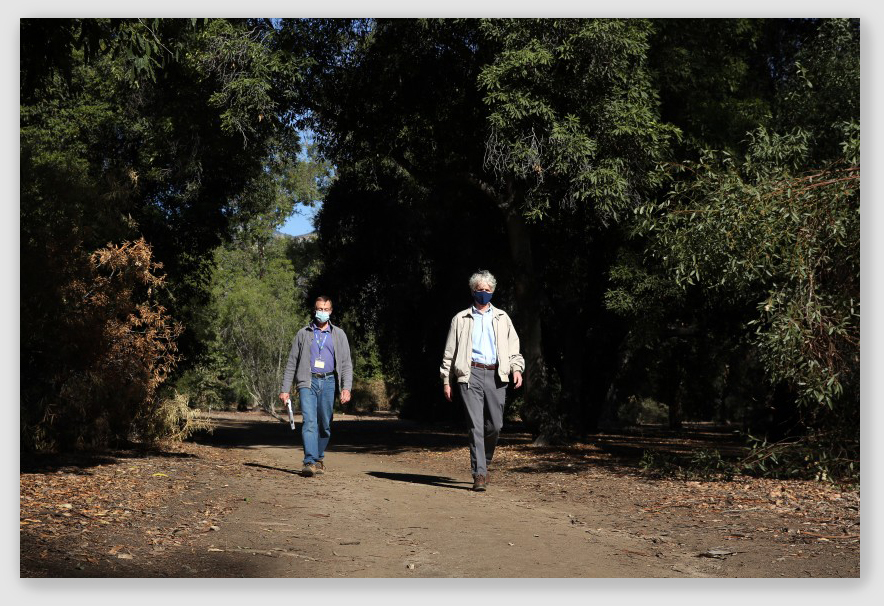
Officials at the Los Angeles County Arboretum and Botanic Garden are in an uproar over a plan to manage storm water and boost climate resiliency by cutting down “specimen trees” — some 70 years old and more than 100 feet tall — to make room for groundwater recharge ponds and a pump station. The strategy was crafted by a consortium of five foothill cities and Los Angeles County Public Works. They believe a portion of the 127-acre paradise of flowering trees and shrubs in Arcadia, which draws more than 500,000 visitors each year, is conveniently located to capture, clean and store storm water pumped out of the nearby Arcadia Wash. Construction of the facility that would consume up to 4 acres of the arboretum’s Australia section could begin within a year or two, according to the group, which comprises the cities of Arcadia, Bradbury, Duarte, Monrovia and Sierra Madre, plus the county. In the meantime, opponents led by executives of the Los Angeles Arboretum Foundation, a nonprofit founded in 1947 to raise financial support for the botanic garden, are sounding the alarm…
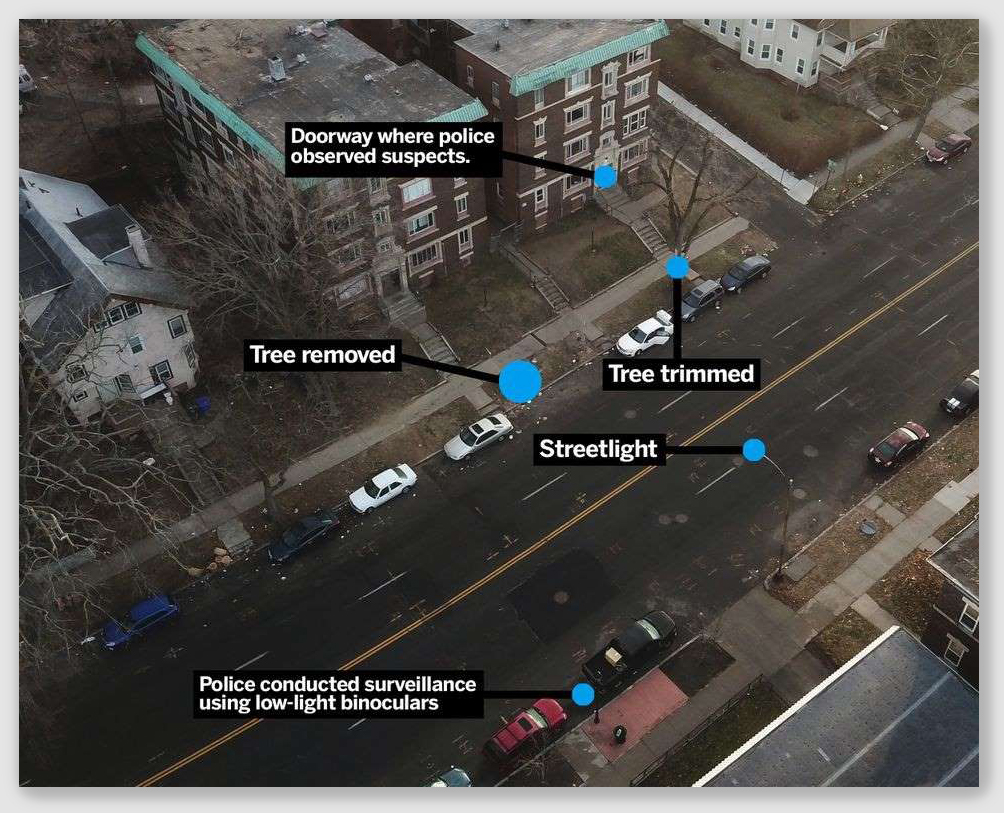
Terrence D. Gaskins and his lawyer Lisa J. Steele contend the police department’s request for the city forester to trim trees on Fort Pleasant Avenue — one day after the court ordered police to arrange a site visit for the defense team — amounted to the “destruction of exculpatory evidence” that could have been favorable to Gaskins’ defense at trial. Springfield police spokesman Ryan Walsh said the allegations are empty, and that the department’s request to trim the trees had nothing to do with Gaskins’ case. The tree work was done, he said, to improve visibility after a surveillance camera was installed in response to a string of shootings. Attorneys for Gaskins have made the argument twice before, and it has been rejected both times. Once was at Gaskins’ May 2019 jury trial, where he was found guilty and sentenced to two years in jail. The trial judge at the time expressed doubts about the timing of the police request and whether it was coincidental, but allowed the case to continue. The other time was last month, when the state Court of Appeals upheld the guilty verdict and rejected Gaskins’ bid to have it tossed out…
We’ve reported on stories across the city of 311 requests being marked completed before the job was done – from trash cleanup to an abandoned car. Now, as CBS 2’s Tim McNicholas reported, a South Side alderman says the same thing has been happening in his ward with tree-trimming requests. “These are the ones that keep falling off,” said Selene Arroyo as she showed us branches on a tree. And Arroyo knows money doesn’t grow on trees. “I can’t spend my savings on unnecessary things,” she said. She said the tree at 56th Street and Hoyne Avenue in West Englewood is costing her money. “I have called several times because the branches keep falling,” Arroyo said. “They’ve actually broken two of my windshields already, and an antenna. Records from 311 show a June 10 tree-trimming request at Arroyo’s address. In November, the request was marked “completed” in 311, but she said no one ever trimmed the tree. In fact, a city worker even noted “no tree.” Arroyo wishes that were true…
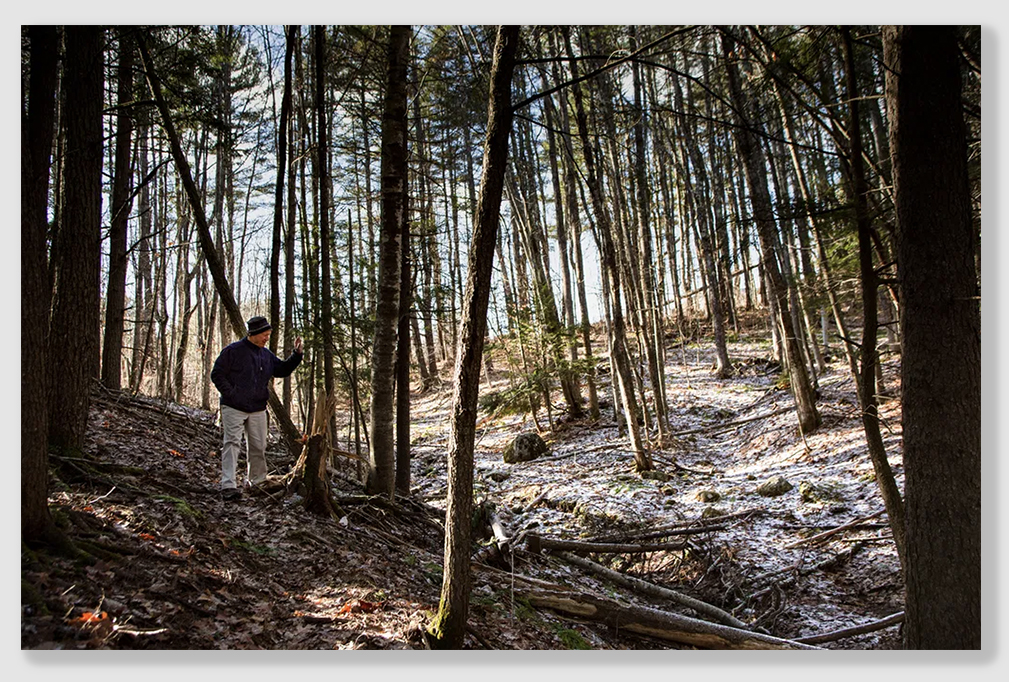
Denis Gallaudet is a retired banker, so he knows the value of things. Take, for example, his trees. There is value in the carbon that his 25-acre woodlot in the town of Cumberland sucks out of the atmosphere and converts into lengthening branches and thickening trunks. That’s because large companies, including Amazon and Disney, are willing to pay landowners for tree growth in order to offset their own carbon emissions. But Gallaudet, a member of Sierra Club Maine, can’t sell his carbon because it’s not financially feasible. The markets where sequestered carbon are bought and sold, including California’s “cap and trade” market, are only available to forest landowners with tens of thousands of acres, due to the high costs of quantifying and verifying projected carbon sequestration in trees. That could soon change. A variety of groups are ramping up efforts to open up the multi-billion dollar carbon offset market to small forest landowners. They want their efforts to financially boost small landowners while also enlisting more corporate polluters to mitigate the harmful effects of climate change on the nation’s most forested state…
When a team of international scientists set out to count every tree in a large swathe of west Africa using AI, satellite images and one of the world’s most powerful supercomputers, their expectations were modest. Previously, the area had registered as having little or no tree cover. The biggest surprise, says Martin Brandt, assistant professor of geography at the University of Copenhagen, is that the part of the Sahara that the study covered, roughly 10%, “where no one would expect to find many trees”, actually had “quite a few hundred million”. Trees are crucial to our long-term survival, as they absorb and store the carbon dioxide emissions that cause global heating. But we still do not know how many there are. Much of the Earth is inaccessible either because of war, ownership or geography. Now scientists, researchers and campaigners have a raft of more sophisticated resources to monitor the number of trees on the planet. Satellite imagery has become the biggest tool for counting the world’s trees, but while forested areas are relatively easy to spot from space, the trees that aren’t neatly gathered in thick green clumps are overlooked. Which is why assessments so far have been, says Brandt, “extremely far away from the real numbers. They were based on interpolations, estimations and projections…”
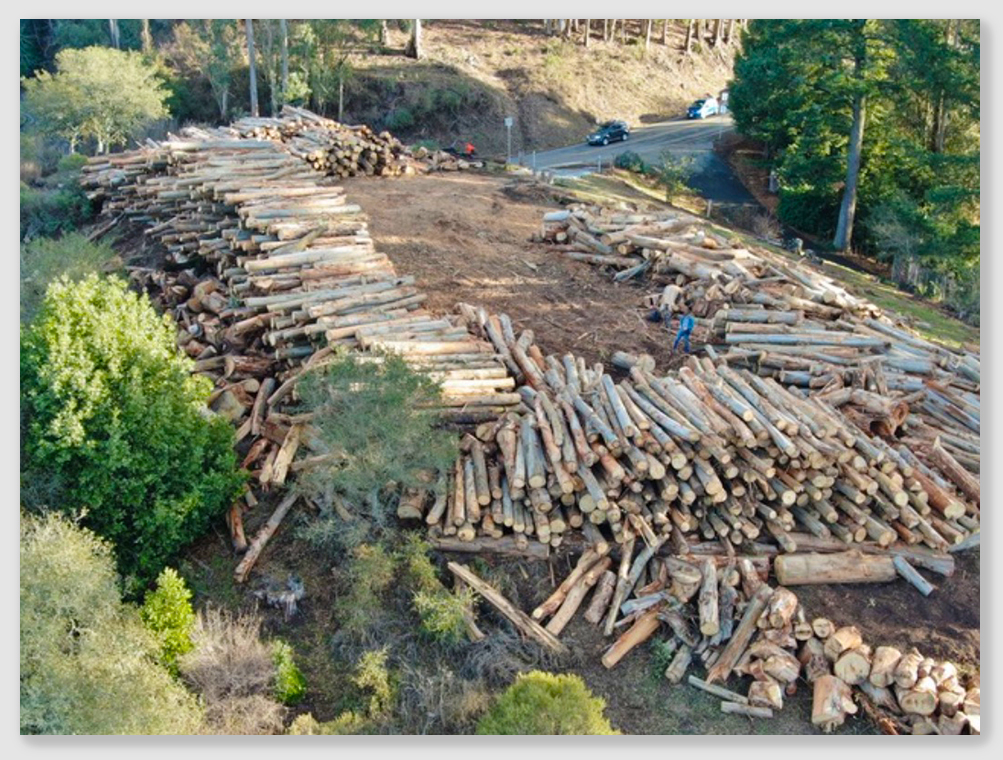
John Radke is a UC Berkeley associate professor who specializes in fire modeling. As part of his coursework, he likes to lead students into the winding thickets of Claremont Canyon in the Oakland hills, where the underbrush can reach chest-high, to show them the likely site of one of the next major East Bay fires. “I was up there one day in the fall and you could hear the leaves cracking they were so dry,” Radke said. “Going in, my students said they were doing great – this is wonderful, we’re out in nature. Then after describing how the fire would burn, I asked them, ‘How do you guys feel?’ They said, ‘We can’t wait to get out of here. Because it’s a fire trap.’” The funneled geography of the canyon and the vegetation that grows in it – vegetation that’s becoming drier each year in our warming climate – creates a natural chimney that’d be devastating in a fire. Winds blowing from the west would drive heat and radiation upslope in a ferocious purge. In Diablo conditions, with gusts surging over the ridge from the east, flames would pour downslope wiping out vegetation and homes – similar to what happened with the destructive 2018 Woolsey Fire in the L.A. region…
Lately I have received quite a few inquiries about inconsistent fruit production in citrus and other fruit-bearing trees. Why does a fruit tree produce so much one year, then hardly anything the next year? This phenomenon is called “alternate-year bearing” and is common to almost all fruit and nut trees. Tree branches have spurs, little twig-like growths that can produce either flowers/fruit or leaves. Not surprisingly, it takes much less energy to produce leaves than fruit. If the tree has undergone some sort of stress, it will reduce its fruit production in favor of leaf production. This stress could be environmental (drought, extreme heat, frost), pest or disease, or improper pruning. When a tree is happy and healthy (not stressed), its leaves produce plenty of sugars that are stored in the branch wood near the spurs. These sugars are used to fuel blossom and fruit production the following spring. Improper pruning can remove these food stores and result in diminished fruit production…
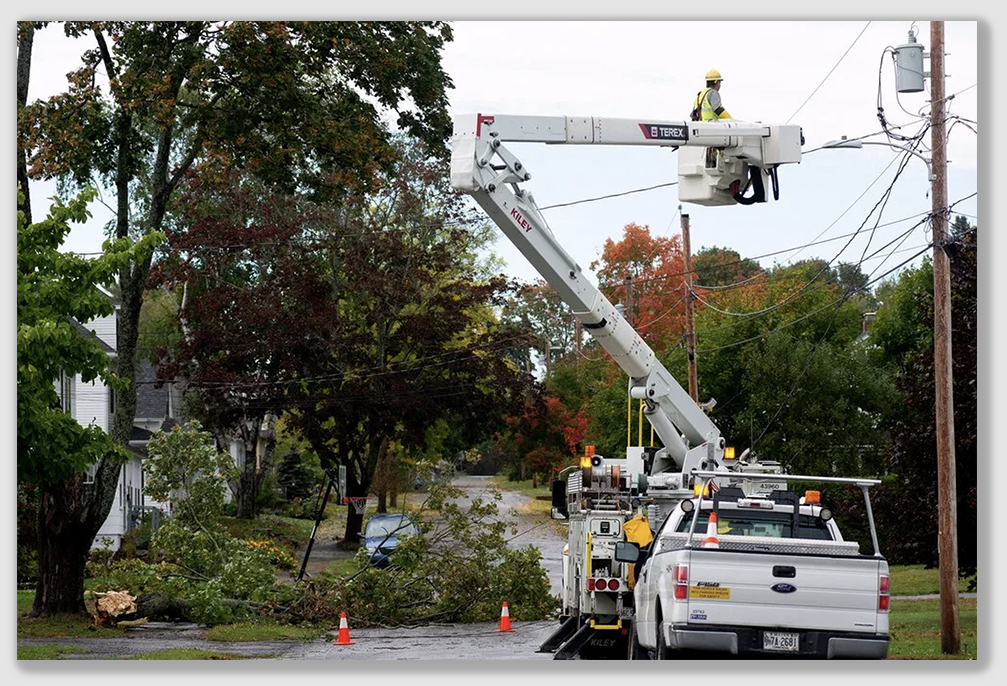
Maine’s Public Utilities Commission has dismissed a complaint against Versant Power from 13 residents of Bangor’s Fairmount neighborhood, though the commission found the complaint about power reliability in the neighborhood had merit. The complaint, sent Oct. 31, 2020, alleged that Bangor’s Fairmount neighborhood had experienced an unreasonable number of long-lasting power outages, and that the outages had grown worse over the last five years. There were at least three multi-hour or multi-day outages in large swaths of Fairmount in 2020, with other, smaller outages occurring in smaller areas of the neighborhood. The Fairmount neighborhood is roughly the area between Third Street, Union Street and interstates 95 and 395. Versant in October 2020 blamed the neighborhood’s high prevalence of tall, old trees situated near power lines. When a branch from one of those trees falls, it can knock out power to multiple streets, or even the entire neighborhood. Though Versant had already done work to improve reliability in the neighborhood, including moving most of the neighborhood off an old substation on Webster Avenue and onto a more reliable one in Hampden, outcry from residents on social media appears to have prompted an extensive tree-trimming effort by Versant last year…
The town Community Forest Commission and Department of Public Works planted 55 trees on town property in 2020, helping to offset carbon emissions and preserve the environment, said Patrick Sweeney of the Community Forest and Conservation and Environment Commissions. Over their predicted lifetime, this year’s planting will sequester 422 tons of carbon, Sweeney said — equivalent to the carbon produced by more than 80 typical passenger vehicles in a single year. The town sets a goal to plant about 50 trees on town property each year. In 2020, it exceeded that goal, Sweeney said. “Planting new native trees and ensuring the well-being of those we already have is one of the most important things that the town can do for our environment and the health of our residents,” Sweeney said in a release…

The City of McKinney is reminding residents to properly dispose of their Christmas trees after a fire damaged a McKinney home on Saturday. According to the McKinney Fire Department, officials responded to a call about a structure fire in the 4400 block of Rancho Del Norte Trail. Officials said firefighters arrived to find that a Christmas tree had been placed into a home fireplace. Only the top of the tree was in the fire, so the flames traveled down the tree and out of the fireplace, officials said. According to the McKinney Fire Department, the fire was quickly extinguished after firefighters arrived. The damage was limited to the area right around the fireplace, and one person was treated for minor smoke inhalation at the scene, officials said…
Baton Rouge, Louisiana, The Advocate, January 11, 2021: Now is the time to plant a tree
Consider this Chinese proverb: “The best time to plant a tree was 20 years ago. The second-best time is now.” That is especially true in Louisiana. Planting during December, January and February provides plants with several months to develop a strong root system before they put out a new flush of leaves and flowers in spring. Nurseries are bringing in woody trees and shrubs to plant now. Tropical plants will be available later in the warmer season when they are less likely damage by colder temperatures. The National Arbor Day Foundation has started the “Time for Trees” initiative to highlight how “trees clean our air, protect our drinking water, create healthy communities and feed the human soul.” Founded by J. Sterling Morton in 1872 in Nebraska City, Nebraska, where an estimated 1 million trees were planted, Arbor Day is celebrated every year. While much of the country celebrates Arbor Day on April 30, the LSU AgCenter Botanic Gardens, 4560 Essen Lane, will hold its annual Arbor Day event from 9 a.m. to 1 p.m. Jan. 23. Free and open to the public, the event will feature educational talks on native trees given by experts from the LSU AgCenter. You can plant a tree while there and get GPS coordinates so you can come back and visit “your” tree and watch it grow for generations to come…

A summer camp on Phillips Lake has reached a deal so it can move forward with adding an overnight cabin, roofed pavilion and trail network to its 28-acre lakefront property in the Village of Lucerne. Camp CaPella, the Village of Lucerne and the Great Pond Mountain Conservation Trust finalized the agreement this past fall after the camp, which serves children and adults with disabilities, mistakenly cut dozens of trees and installed power poles on land owned by Lucerne in 2019. The Great Pond Mountain Conservation Trust has a development easement on and manages the land where the trees were cut down. The poles, erected to provide electricity to a parking area where the camp planned to build two cabins, have since been moved onto camp property. And a licensed forester last year planted more than 80 trees on village property, said Ann Fossett, chair of Lucerne’s board of overseers. The trees were also watered to ensure they survived the drought, she said. Lucerne is an incorporated village within the town of Dedham, approved by the Legislature in 1927, that has its own elected board of representatives — called overseers instead of selectmen — and its own development standards separate from the rest of the town…
A GoFundMe campaign created by the Japanese Cultural and Community Center of Northern California raised over $22,000 on Friday to replace two of its cherry blossom trees that were destroyed in an act of vandalism. Hundreds of donors flooded the campaign with contributions, more than quadrupling the center’s $5,000 goal in a single day. “The cherry blossom trees will bloom again,” read an update from the organization. “The Center would like to thank everyone for their outpouring of support during this time.” View the fundraiser here. For Paul Osaki, 2021 was supposed to symbolize a fresh start and a renewed sense of hope for his Japantown community. But as he looked down at what was left of the splintered cherry blossom trees planted on the sidewalk in front of the Japanese Cultural and Community Center of Northern California, all he could feel was pain. The branches on both of the historically significant trees on San Francisco’s Sutter Street had been hacked off entirely before their buds could bloom, leaving only their gnarled trunks behind. A staff member at the center was the first to discover the slashed trees early Tuesday morning, but after reviewing security footage found that the vandalism had taken place over a span of a few days…

Phoenixville Borough’s Tree Advisory Committee meets tonight, even as residents post photos of tree removal happening along borough streets, some asking if all the trees qualify as “diseased.” The committee meets Jan. 11 at 6:30 p.m. in a Zoom meeting. A citizens’ group called Phoenixville Legacy Trees has 35 members and is planning to attend the meeting to advocate for the “urban forest.” Phoenixville resident Lisa Longo is concerned that the borough’s Tree Ordinance. Longo told Patch she will not permit the borough to remove trees from her property. Barbara Sharp has been posting on social media photos of the trunks of trees left standing around her neighborhood. Sharp said, “Having lived with these magnificent oaks for 25 years as a Phoenixville homeowner, I do understand the problems involved —buckling sidewalks (responsibility of homeowner), pollen and sap damaging cars parked beneath, limbs falling and endless leaf raking…”
New Hampshire Public Radio, January 8, 2021: Do Trees Like Being Hugged?
An anonymous listener in Vermont asks: “I walk everyday and there are lots of trees in Vermont and I’m a tree hugger and I mean literally a tree hugger. And so I hug them and I always feel a sense of calm and I’m wondering if there’s anything that makes that happen? Do the trees notice when I hug them?” The first part of the question I think is fairly easy. Why might you feel calm while hugging a tree? It is likely for some of the same reasons that going outside generally make us feel calm. At this point there are heaps of studies about the mental benefits of being outside. A hypothesis for why that might be that has come into vogue in recent years is that attention is a limited resource and we’ve only got so much of it to expend each day. So being outside means “your attention is able to drift much more naturally, in a much more relaxed way from moment to moment,” explains science journalist Ferris Jabr. “You might be looking at the surface of a lake, watching the ripples, the leaves are falling from a tree, a bird flies by — and that can replenish our mental resources.” But on to the second part of the question, which is the real reason I reached out to Jabr…

The checks are in the mail. Or almost in the mail, to compensate Lee County homeowners who lost their citrus trees to the state’s failed canker-fighting campaign 15 to 17 years ago. The checks are expected to go out Friday, following a long-drawn-out legal fight, said Robert Gilbert, a Coral Gables attorney who represents the homeowners. “We’re delighted to finally distribute payments to thousands of Lee County homeowners whose private property was taken long ago. While the legal journey was long and difficult, justice ultimately prevailed,” he said…
Santa Fe, New Mexico, New Mexican, January 10, 2021: Planting trees: What we need now
In cold and dark January, it is tempting — and encouraging — to think of planting, spring gardens, summer flowers and best of all, budding trees and leafy canopies overhead. To those making plans now, consider the benefits of trees. They are important not just for adding beauty to our world but to alleviating the impact of climate change. Planting during dormant season is best, which means now until mid-March is a prime time to put spade to dirt. It can make a difference in the common battle for climate change. A study published in the journal Science last July — “The global tree restoration potential” — found the Earth could support another 2.2 billion acres of forests. Planting another half-trillion trees, according to the authors, could reduce atmospheric carbon by about 25 percent. This is not an overnight fix, but it could buy time as the nations of the world reduce carbon emissions and take other steps to bring the globe back into balance. Now, take that global perspective and bring it home to New Mexico…
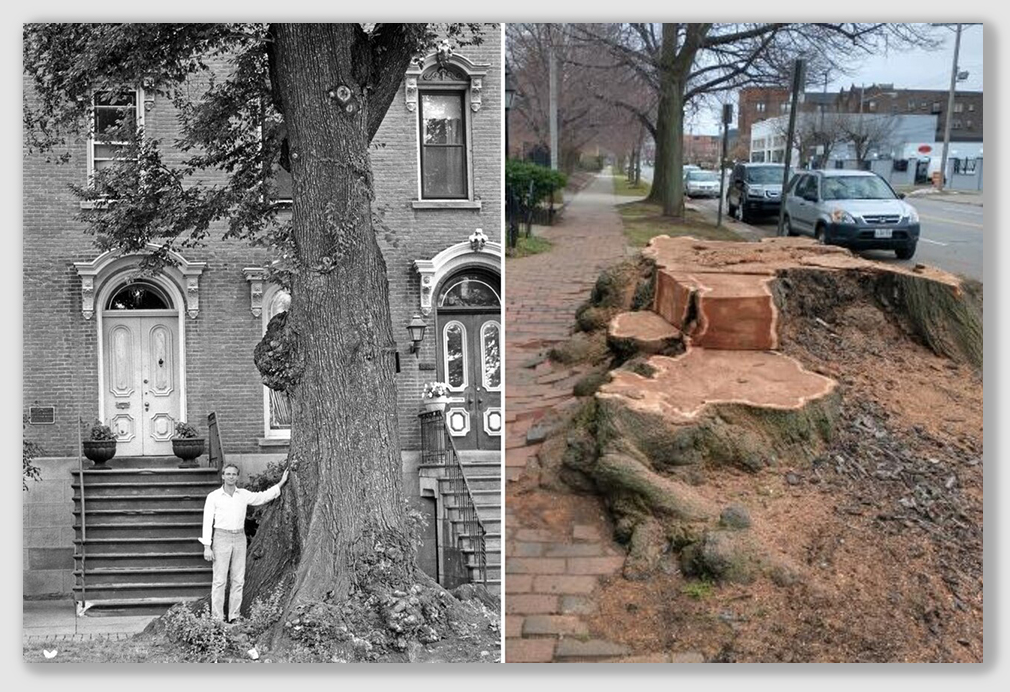
A little bit of Cleveland’s history is gone, after one of the city’s oldest trees was recently removed. An elm tree, which towered above historic row homes on Prospect Avenue, has been reduced to a stump. Jamie Miles, a Cleveland resident, learned about the tree’s removal in early January and took photos of the stump. Miles had last seen the tree standing about two months prior. The tree was at least 150 years old, estimated to be planted in 1868 as one of the earliest street-tree plantings in Cleveland along Euclid Avenue and Prospect, according to a June 11, 1986, article in The Plain Dealer…
Houston, Texas. Chronicle, January 10, 2021: Tips for turning seeds into trees
How exciting to think of a full-size tree locked up within each seed still clinging to the branches of sugar maples, hornbeams, oaks, sycamores and other trees at the end of summer. It was with such visions that I dropped an apple seed into some potting soil in an 8-inch clay flowerpot one autumn day years ago. I wish I could write that the seed has now been transformed into a majestic tree. But no, the seed germinated, started to grow, then stalled at about 4 inches high. The reason for the lack of growth was that apple seeds, like the seeds of many other trees native to cold climates, need pre-treatment before they will germinate or grow well. I was lucky the seed germinated at all! Since then, I’ve learned the tricks of growing trees from seeds. If an apple or maple seed grew as soon as it touched ground in late summer or early fall, the life of the tender young seedlings would be short indeed, snuffed out with the first frost. So most tree seeds that ripen in fall are able to stay dormant until they’re convinced that winter is over…
 Science, January 7, 2021: Dismay greets end of U.S. effort to curb spread of tree-killing beetle
Later this month, the U.S. Department of Agriculture (USDA) will formally admit defeat along one front of its battle against a devastating invasive insect. Starting 14 January, the agency will no longer regulate the movement of living ash trees or borer-infested wood within the United States. This quarantine has, for more than 10 years, formed the cornerstone of the federal government’s strategy for curbing the spread of the emerald ash borer, an iridescent green beetle that threatens to wipe out North America’s ash trees, an ecological linchpin of many forests. Instead, USDA plans to ramp up an effort to control the borer by releasing tiny wasps that parasitize and kill the beetles. The shift is controversial. Some scientists and environmental advocates agree that, after spending some $350 million over the past 2 decades to fight the ash borer, the government should redirect scarce resources to more promising strategies. But others argue the surrender is premature, and some states are vowing to maintain local controls on ash tree and wood movement. “I worry that this decision hastens the rate at which [ash] trees are threatened,” says Leigh Greenwood, a forest health specialist at the Nature Conservancy. “This is one layer of protection we’re taking away.” The emerald ash borer first gained notoriety in 2002, when ash trees in the Detroit area started mysteriously dying. After researchers identified the insect, which was accidentally imported from Asia, Michigan and USDA’s Animal and Plant Health Inspection Service (APHIS) imposed a quarantine that prohibited export of ash trees and wood from inside the infested zone. Biologists also began to set traps to monitor the spread of the beetle…
Omaha, Nebraska, World-Herald, January 8, 2021: Removing dying and dead ash trees
I know there has been a lot of emphasis on the chemical treatment of ash trees for emerald ash borer but we now need to think about the dangerous task of removing dying and dead ash trees. These trees are a risk to our community safety. I know this is a major problem in the older section of Gretna where the houses are very close together and there is a large ash tree in the back yard. The wood properties in dying and dead ash trees from emerald ash borer is very different from healthy ash trees. Their failure is unpredictable. We know ash tree wood does split easier than most other trees, but the borer dries out these trees quickly and causes them to fail sooner than can be predicted. The tree just splits apart when it hits the ground. The removal of dying or street-side dead ash is one problem, but the other problem is that falling dead ash trees have killed people and damaged property. People have been killed by these trees as they walk or drive down the street in their cars. The trees have collapsed on houses and are a risk to arborists that are removing them…
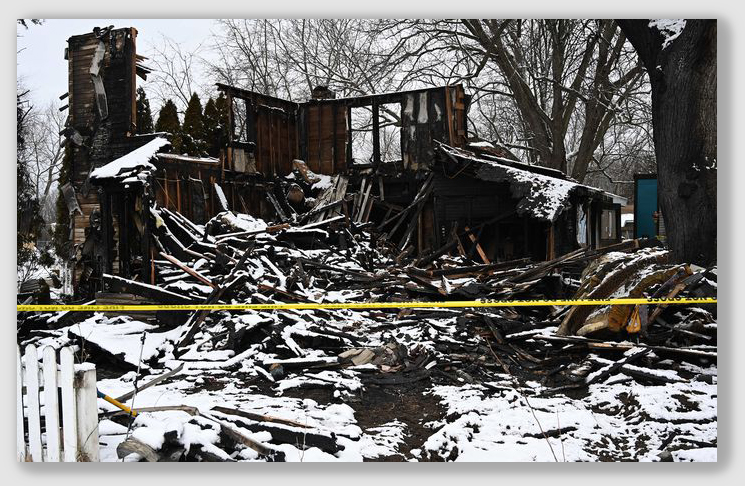
Beth and Todd Snay are figuring out what to do next after a fire destroyed their Clark Lake house. They were home with their son Jonathon Snay, who serves in the Air Force, just before 11 p.m., Dec. 30 in the 9000 block of Vining Street when their dog started barking. Todd Snay looked over to see what was happening, Beth Snay said. “My husband … told me, ‘I noticed there was a fireball coming from the top part of the (Christmas) tree,’” Beth Snay said. “He started pulling me off the couch and yelling and screaming at our son who was upstairs.” Firefighters spent about five hours putting the fire out. The roof and second floor collapsed onto the first floor, covering the fire, making it difficult for crews to access the flames. An excavation company was called in to help uncover the layers, Columbia Township Fire Department Chief Scott Cota said previously. Beyond the family’s two dogs, they couldn’t get anything out of the house, including their cellphones, eldest daughter Jessica Kent said. She was at her own house when the fire started, but her family told her about the experience, including how the fire alarms didn’t go off. Kent knew they were operational. “I know they work because we baked cookies the week before and they went off just from baking cookies,” she said…
Vandals destroyed historic cherry blossom trees in front of a San Francisco Japanese community center, the group said Wednesday. Every branch was vandalized and broken off the trees until only the trunks remained, the Japanese Cultural and Community Center of Northern California said. “This was not simply a passerby trying to break a branch off for fun,” Executive Director Paul Osaki said in the post. “Someone took their time breaking off every branch.” The branches were more than 3 feet thick and the trees were up to 15 feet high, Osaki said. No branches were left on any trees. “This was no easy task,” Osaki said. A similar incident happened two years ago when a third tree was vandalized, the group said. The tree was nearly destroyed then, too. The cherry blossom trees were planted in San Francisco’s Japantown in 1994 when the emperor and empress of Japan visited, according to the community center. Fifty years prior, the Redevelopment Agency in the city had uprooted every tree in Japantown, the group said…
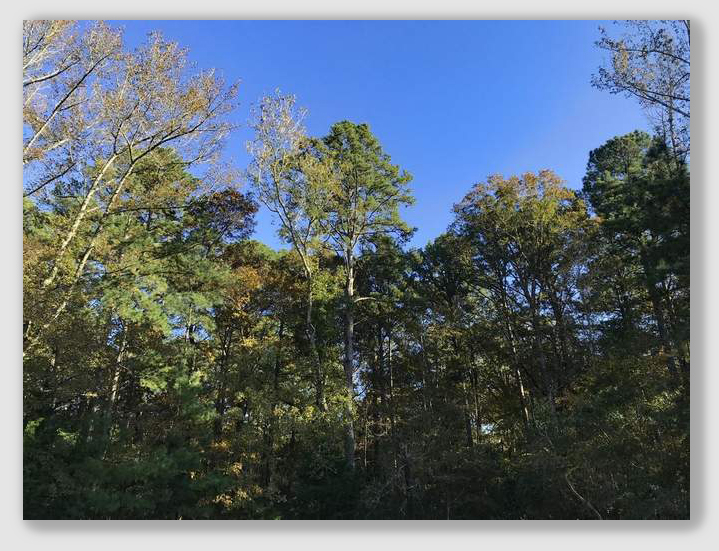
To celebrate the 2020 centennial of the Iowa state park system, the Department of Natural Resources planted at least 100,000 trees, nearly triple the number planted in a typical year. The milestone planting commemorate not only the 100th anniversary of the state park system, but also the centennial of the National Association of State Foresters. Members of association participated in the 2020 Centennial Challenge to plant millions of trees across the United States. The native Iowa trees were supplied by the State Forest Nursery and planted in Iowa’s four state forests, dozens of wildlife management areas and 23 of its state parks, according to Emma Hanigan, urban forestry coordinator. Over the previous five years, she said, the department planted about 35,000 tree plantings each year. In addition to DNR funds, the plantings were aided by a grant from the Arbor Day Foundation. Hanigan estimated the grant covered the internal production costs of about 55,200 seedlings…
Wausau Parks officials announced they’re planning to remove all ash trees in the city after emerald ash borers were found. The city plans to do this gradually over a period of about 12 to 15 years. They’ll remove a few trees at a time, keeping the rest protected with a treatment. Officials plan to replace the ash trees with other types of infection-resistant trees. “A tree that is infested with emerald ash borer larva becomes brittle and very hazardous within about four years,” said Andy Sims, city forester. “The scary part of that is, we don’t really know how long the borer’s been in a tree…”
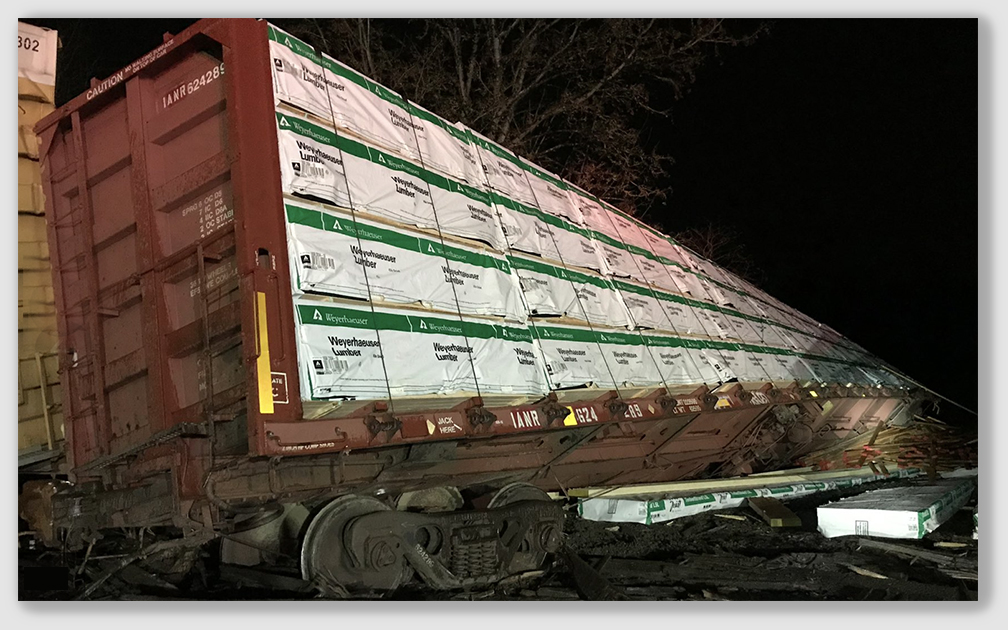
A Union Pacific train carrying lumber derailed after hitting a large tree that had fallen on the tracks along Highway 99 between Canby and Oregon City, authorities said. The Clackamas County Sheriff’s Office said three locomotives and 15 rail cars derailed at around 1:30 a.m. Wednesday. The engineer of the train complained of pain, deputies said, but no one else was injured. None of the debris or rail cars blocked the highway, which was temporarily fully closed…
Huntsville, Alabama, WHNT-TV, January 4, 2021: Prompt removal of Christmas trees encouraged
It’s time to say goodbye to our Christmas trees. The National Fire Protection Association (NFPA) strongly encourages the removal of live Christmas trees sooner rather than later. According to the NFPA, almost one-third or 31% of U.S home fires that begin Christmas trees occur in January. The longer a live tree is kept in a home the more likely it is to become dry and catch fire. “All Christmas trees can burn, but a dried-out tree can become engulfed in flames in a matter of seconds,” said Lorraine Carli, NFPA’s vice president of Outreach and Advocacy. “In a year where many people began decorating their homes earlier than usual, trees have been in homes longer than usual, presenting an increased fire risk as the days go by.” The NFPA and U.S Forest Service both advise against burning your tree yourself in fireplaces or wood burning stoves. They instead recommend using community recycling programs…
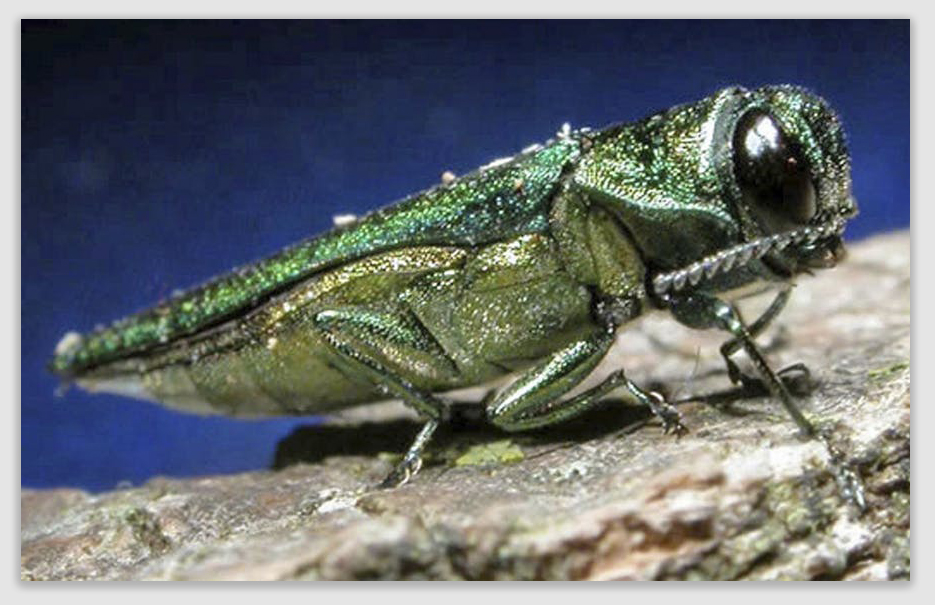 Associated Press, January 5, 2021: Cornell to fell more than 1,700 ash trees infested by beetle
An invasive insect that kills ash trees is prompting Cornell University to fell 1,700 of the trees on its lands, a step it says will visibly alter the campus’s appearance. The trees infested by the emerald ash borer will be felled between January and the end of March and include trees on and off campus, the university said Dec. 22. The beetle, which bores under the tree’s bark, kills most infested ash trees within four years, creating a hazard. “This is a safety issue with trees that are dying or near death, and will eventually fall, so we are going to need to take them down in order to limit concerns about public safety and property damage,” said Todd Bittner, director of natural areas for Cornell Botanic Gardens…
One can’t deny the scenic beauty of Austin. But lurking among the millions of trees that grace our city are some that many don’t appreciate this time of year: Ashe Junipers, also known as Mountain Cedar, whose pollen causes severe allergic reactions for many. Pollen literally explodes from the trees after a cold snap, with January seeing the greatest eruptions. But while they’re a familiar part of the Austin landscape, do you know much about these evergreens? Here are some fun facts: The Texas A&M Forest Service estimates that there are over 13 million of them. In fact, the Ashe Juniper makes up 39% of the estimated 33.8 million trees in Austin – the biggest category of trees in the city. They were here long before we arrived. Ashe Junipers first appeared during the Ice Age, which began around two-and-a-half million years ago…

Pittsburgh will work towards recovering some of its lost tree canopy with a new initiative through Cambium Carbon and the Arbor Day Foundation. In between 2011 and 2015, the city lost about 6% of its tree cover. Before losing tree canopy, Pittsburgh had one of the top percentages of urban tree cover of any city in the U.S. On Jan. 4, the city of Pittsburgh announced it was selected as one of four U.S. cities to receive a Reforestation Hub assessment. The program, developed by Cambium Carbon, a social impact venture focused on reforestation, in partnership with the Arbor Day Foundation, includes the development of a pilot project geared toward “improving resource efficiency and carbon capture at the municipal level,” according to a press release. The ultimate goal will be to create a “circular urban forestry system” that will include programs like tree recycling to create economic opportunities from “healthy forests, restoration of public lands, and the recovery and expansion of the tree canopy.” Other chosen Reforestation Hub host cities include Denver, New York City, and Eugene, Ore…
Abilene, Texas, KTAB-TV, January 5, 2021: Prepping to avoid tree damage during ice storms
Texas doesn’t see many ice storms so if you’re unsure how to prepare you’re not alone. Chris Witulski owns the Abilene based tree removal service “A cut above” and he and his crew have been working almost non stop since new years day to clear the yards and rooftops in Abilene of fallen branches and dead trees. Today they worked at the home of George Jackson. A lakeside estate with more than its fair share of trees. Jackson describes new years night as sounding “Like a war” with branches falling on the roof and sliding into the yard. in all they lost over 6 branches and 2 whole trees due to the ice. Witulski says that damage on this scale can be prevented with proper tree care. “The best measures you can go through is kind of thinning them out and try do lessen the weight on your trees during the winter.” said Witulski. Checking your trees for overly brushy areas or all together dead branches should be a year round practice for land and home owners. To have 6 men come to the property for a day of work “A cut above” charges $2000 dollars which Witulski says is about average for a job like this so acting early and fast can save you both time and money…

The town of Candia will have to pay nearly $10,000 in legal bills as part of an agreement with a couple who sued after the select board declared their crabapple tree a public nuisance. The tree at 14 Jane Drive will be spared, as long as it is properly pruned. Dustin and Jennifer Heiberg sued a year ago after town officials complained that branches were extending into the roadway and creating a hazard for passing vehicles. The Heibergs argued that the branches weren’t a problem and that town officials had singled out their tree and were harassing them. The couple also questioned whether the road was public. “I have lived in Candia for 10 years. The tree was here when I purchased the house. Only the town knows why they chose to single out and aggressively pursue one branch on one tree in a town that is 30 square miles,” Jennifer Heiberg said Monday. To date, the town has spent $9,923 on legal fees to fight the tree dispute, according to figures released Monday by Donna Becker, Candia’s payroll and accounting specialist. The town is still awaiting a legal bill from December…
Saying goodbye to your Christmas tree may not be easy, but due to concerns of natural trees igniting, the National Fire Protection Association is advising people to take them down after the holiday season. The association says nearly one-third (31 percent) of home fires that begin with Christmas trees occurs in January. “The longer a natural tree is kept up after Christmas, the more likely it is to dry out and ignite,” the association said in a press release. NFPA’s latest Christmas Tree Fires report, which reflects annual averages between 2014 and 2018, shows that 160 home structure fires began with Christmas trees, resulting in two civilian deaths, 14 civilian injuries, and $10.3 million in direct property damage. “All Christmas trees can burn, but a dried-out tree can become engulfed in flames in a matter of seconds,” said Lorraine Carli, NFPA’s vice president of Outreach and Advocacy. “In a year where many people began decorating their homes earlier than usual, trees have been in homes longer than usual, presenting an increased fire risk as the days go by…”
 Martha’s Vineyard, Massachusetts, MV Times, January 4, 2021: Police investigate tree removal
Oak Bluffs police are investigating the illegal removal of a catalpa tree near Ocean Park on town property. Mark Crossland of Crossland Landscape, who maintains Ocean Park for the town, posted a photo of the tree stump on the Islanders Talk Facebook page asking anyone with information on who cut down the 35 foot Catalpa tree to contact him, the Oak Bluffs police, parks department, or highway department. Speaking to The Times by phone Monday ,Sgt. Dan Cassidy said police received a call from a witness on Sunday, who after seeing a post on Islander’s Talk from Mark Crossland, said they saw the tree being removed in the afternoon on New Year’s Day by a “white male in a long coat chopping the tree down with an ax” accompanied by a couple of other men. Cassidy said he has been in contact with homeowners in the area and tree companies. Also speaking to the Times by phone Monday, highway superintendent Richard Combra said the tree was “pretty old” and the parks department wanted to keep it…
One invasive beetle is ready to devour just about every ash tree left in Minnesota’s woods. A caterpillar has killed more than 200,000 acres worth of balsam fir trees in just the last year. Another beetle, a native in the midst of a population boom, has already destroyed about half of the state’s tamaracks. Add it all up and pest outbreaks have left Minnesota with quite a lot of dead trees, useless lumber and dried-out and wasted stands, which, if left to rot, will become one large fire hazard. But there’s little incentive to cut ash, balsam fir and tamarack trees down—even as state and local foresters need to thin them before the pests come through—because they have limited uses and have never been highly sought for lumber. To try to change that, researchers at the University of Minnesota Duluth have been racing to find novel ways to make the trees more desirable and valuable to builders, homeowners, lumber mills, city wastewater plants and anyone else who might be willing to come and remove them both before and after the bugs take them down…
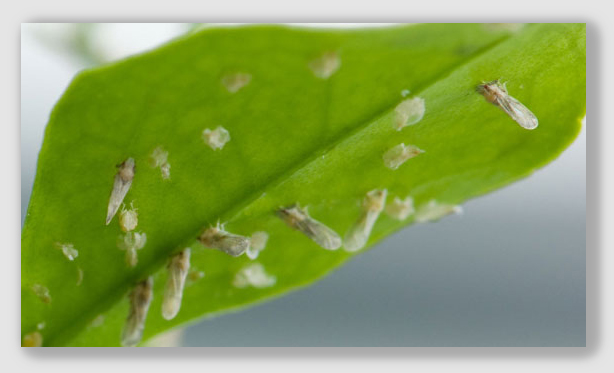
State agricultural inspectors have detected bacteria which can cause a disease deadly to citrus trees during routine pest trapping in Fallbrook, San Diego County officials announced Thursday. The bacteria, which is not harmful to people or animals, was detected on insects in the North County community. A routine spot check by the California Department of Food & Agriculture on Dec. 28 collected a group of four adult Asian citrus psyllids from a citrus tree on residential property in the Fallbrook area carrying the bacteria Candidatus Liberibacter asiaticus. These bacteria can cause a citrus disease called Huanglongbing. At this time, the disease has not been detected in citrus trees in San Diego County. Samples from trees on that property and the surrounding area were undergoing tests for the disease, which is fatal to citrus trees and has no cure…
One invasive beetle is ready to devour just about every ash tree left in Minnesota’s woods. A caterpillar has killed more than 200,000 acres worth of balsam fir trees in just the last year. Another beetle, a native in the midst of a population boom, has already destroyed about half of the state’s tamaracks. Add it all up and pest outbreaks have left Minnesota with quite a lot of dead trees, useless lumber and dried-out and wasted stands, which, if left to rot, will become one large fire hazard. But there’s little incentive to cut ash, balsam fir and tamarack trees down — even as state and local foresters need to thin them before the pests come through — because they have limited uses and have never been highly sought for lumber. To try to change that, researchers at the University of Minnesota Duluth have been racing to find novel ways to make the trees more desirable and valuable to builders, homeowners, lumber mills, city wastewater plants and anyone else who might be willing to come and remove them both before and after the bugs take them down…

The goal was to come up with a standard design for the South Carolina state flag, one that residents could rally around, fly from their porches or proudly display on T-shirts, mugs and hats. But a proposed redesign of the beloved palmetto tree on the flag hasn’t exactly made hearts swell with state pride. One person said it resembled a toilet bowl brush. Others said it looked like one of the palmettos battered by Hurricane Hugo in 1989. Still others compared it to the forlorn little Christmas tree from the 1965 television classic “A Charlie Brown Christmas.” Scott Malyerck, a political consultant who helped create the design as a member of the South Carolina State Flag Study Committee, said with some understatement that the tree had “not been uniformly loved by all South Carolinians.” “I’ve read hundreds of comments,” he said, adding that everyone seemed to have an opinion. “It’s hard to come up with a quintessential palmetto tree that everyone will be in favor of…”
Residents can expect a greener McAllen in 2021. On Tuesday, the city announced via a news release the creation of the Keep McAllen Beautiful Tree Advisory Committee, which will coordinate Arbor Day activities, create a five-year plan to plant and maintain trees on municipal-owned properties, and promote public awareness and education programs. Established by Keep McAllen Beautiful and the city of McAllen Parks & Recreation Department, the committee will also be tasked with reviewing city department concerns relating to tree care. According to the release, the committee will submit an annual report to the McAllen City Commission, apply annually for a Tree City USA designation and develop a list of recommended native trees for planting on city properties…
 Tree and Neighbor Law For Homeowners and Professionals


