

 Minneapolis, Minnesota, KARE-TV, December 31, 2018: Recycling your Christmas tree? Give it to goats
Your real Christmas tree may no longer be lighting up your home, but it can still be a holiday treat – at least for local animals. Goat Dispatch, a Minnesota company that specializes in land management using goats, is once again looking for donations of real Christmas trees and wreaths. It’s the fifth year the organization is collecting them. The trees and wreaths are a good winter snack for the goats during plant-free months, and the animals help recycle the trees through their natural digestive processes, according to Goat Dispatch. If you want to recycle your tree and help feed some hungry goats, you can bring it to White Sands Dog Park at 900 Lyndale Avenue North in Faribault. There is an area marked for tree donations in the northwest area of the parking lot. Trees cannot have ornaments, metal, or stands. They also can’t be flocked…
The day after Christmas, residents of Island Home near their park were seriously surprised to see a Cortese tree truck in their park cutting several trees to the ground. They were mostly sycamore trees. Island Home Airport, which falls under the airport authority, every four or five years tries to cut trees in the flight path of planes approaching the airport. In the past, the cutting has been actually trimming and not clear-cutting to the base of the trees. Former city councilman and vice mayor Nick Pavlis was always alert to these matters and prevented clear-cutting by the airport. Citizen input should be a matter of course. Nancy Campbell, president of the Island Home neighborhood association, contacted greenway backer Will Skelton. Citizens also reached Eddie Mannis, who chairs the Airport Authority. He immediately understood the issue and directed that tree cutting be suspended until full meetings with the neighborhood, affected citizens and council can occur. The tree cutters were not there the next day. There is now time to bring all affected parties together to secure a rational policy based on real public participation…
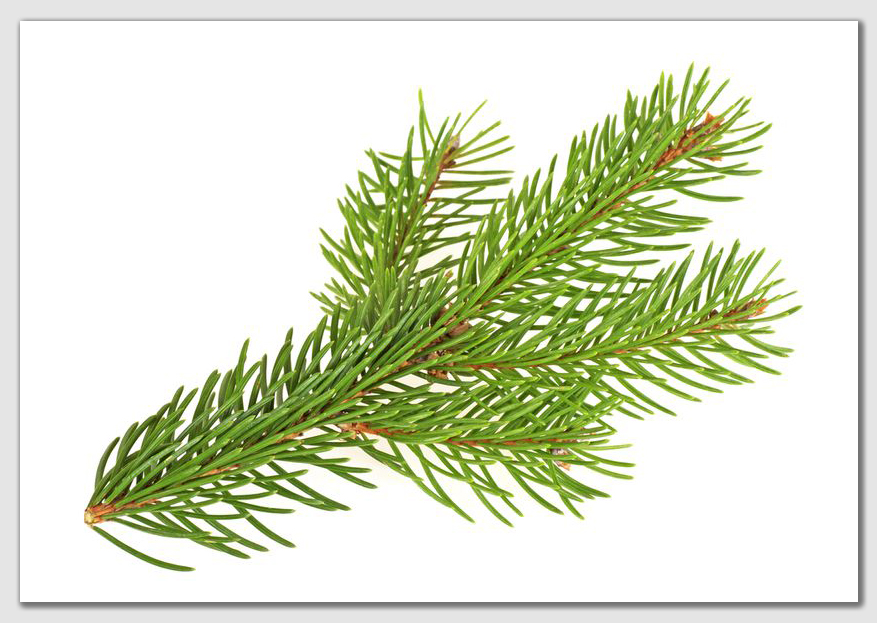 Mother Nature Network, December 30, 2018: How to make beer from your Christmas tree
Christmas is over and soon you’ll be seeing dead Christmas trees lining the sidewalks, waiting to go where dead Christmas trees go. Sometimes, it’s into a chipper to be turned into mulch. Sometimes, it’s into the landfill — but you wouldn’t do that, right? Sometimes dead Christmas trees can serve a higher purpose, such as the trees that became makeshift dunes after Hurricane Sandy ravaged parts of the East Coast shoreline in 2013. But before any Christmas tree reaches its final destination, it can have a chance at a second life — or at least its needles can. The needles can be snipped and used to create a spruce beer or ale. This may seem like some new hipster, DIY idea, but in reality, spruce beer dates at least back to the ancient Scandinavians, according to NPR. They believed it would give them strength in battle and increase fertility as well as combat scurvy. In the 18th century, the British Navy brewed spruce beer to help sailors combat scurvy, too. The needles have vitamin C in them, although modern scientists aren’t convinced enough of the vitamin remains after boiling for the pine to work its scurvy-fighting magic…
A Plano pediatrician was killed Thursday at Great Smoky Mountains National Park when a tree fell on her, striking her and her young son, officials said. Laila Jiwani, 42, was hiking with her husband and three children on the Porter Creek Trail at the park in Tennessee when the tree was knocked down by high winds, park spokesman Mike Litterst said. Her 6-year-old son, Jibran, was airlifted to a hospital and underwent surgery Saturday, the Knoxville News Sentinel reported. His injuries weren’t life-threatening, Litterst said. Jiwani’s husband, Taufiq, wrote on Facebook that his wife took most of the impact of the falling tree, saving her son’s life. A staff page for Cook Children’s Northside Neighborhood Clinic in Fort Worth said Jiwani was a pediatrician there…
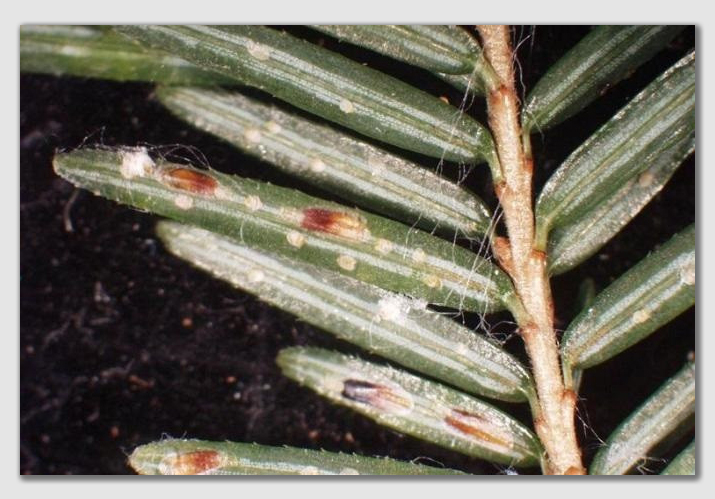
Wisconsin residents are being asked to burn or bag some Christmas decorations after highly invasive tree-eating beetles were found on wreaths, swags and other holiday items made with real evergreen boughs. State tree inspectors on Wednesday said they found the tiny insects, called elongate hemlock scale, or EHS, on wreaths, swags and boughs as well as evergreen boughs used in hanging baskets, porch pots, mugs and sleighs sold at several big-box retail stores statewide. It’s unclear how many infested items were sold. “Burn them if you can. If you can’t do that, bag them and send them to the landfill,” said Brian Kuhn, director of the Plant Industry Bureau in the Wisconsin Department of Agriculture, Trade and Consumer Protection. The insect already has survived Maine winters “so winter weather will not kill it. As a result, if you compost this material, the insects may well attack conifers in your yard or neighborhood and spread from there.” Inspectors found the insects on decorations made with real evergreen boughs sold at Menards, Home Depot, Kmart, Steins and Pick N’ Save. The stores cooperated and destroyed any infested stock they had on hand, said Donna Gilson, spokesman for the state agency. But many infested items were likely sold before the discovery was made…
With Christmas now in the rear-view mirror, many Floridians might be getting ready to take down the decorations and discard the Christmas tree this weekend. For those planning to start the new year with a tree-free home, Florida Forest Service has some advice for how to properly dispose of your Christmas tree. Dry limbs and needles from discarded Christmas trees can be an ignition source for fire if not properly cleared away from homes and natural areas, according to FFS, a division of the Florida Department of Agriculture and Consumer Services. One way to avoid this potential fire hazard is by recycling Christmas trees. Many communities offer tree recycling services, such as curbside pick-up, recycling centers and mulching programs. Check with your local city or county government or utility service for more information about Christmas tree disposal and recycling programs…
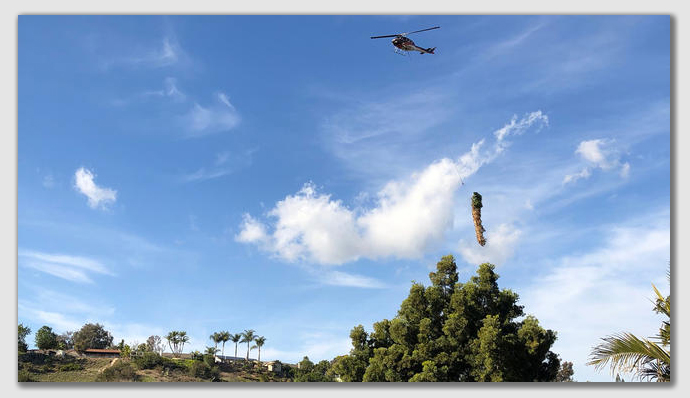
Hundreds of palm trees are being removed from canyons in the Tierrasanta neighborhood this week as the result of a project between the city of San Diego and local conservancy groups. Palm trees are not native to San Diego’s urban canyons but seeds from the trees move by a stream and spread into the canyons. The palm trees take over space from the native trees that should be there like Coast Live Oak, Willow and Sycamore trees. “When a palm tree catches on fire, it’s like a Roman candle,” said Eric Bowlby, Executive Director of San Diego Canyonlands. So beginning at 8 a.m. every day this week, crews will remove approximately 300 mature palm trees that have grown in the urban canyons. Cutting the trees began around Dec. 10 and this week a helicopter will lift the trees from the canyons and deliver them to the Sycamore Landfill. In the meantime, public access to Rueda Canyon Open Space Park will be restricted. Bowlby said removing the trees that are not well maintained is a matter of safety…
It’s a huge space. Covered in mounds of mulch, branches, leaves. Welcome to the Christmas tree graveyard. “We get about 500 tons of Christmas trees every year,” Jeff Smithberger says. Smithberger runs Mecklenburg County’s solid waste department, where he collects those hundreds of Christmas trees yearly. But this isn’t the true resting place for these festive pines. “We’ll grind them up and mulch them and turn them into compost material,” he says. People who live in the county can leave them out to the curb for their respective jurisdictions to collect, or bring them in themselves. “We have even had people bring Christmas trees to us in April,” Smithberger says. But fire crews over in Harrisburg, focused on the household safety of it all, warn to take care of it sooner rather than later. “Today or tomorrow, go ahead and take down your decorations and your Christmas tree, depose of it properly,” Captain Jack Gonzalez says. Gonzalez and his crew lit a dry Christmas tree for WBTV to show just how fast it can be engulfed in flames. They say a scene like that is most likely to happen in your house, after December 25th…
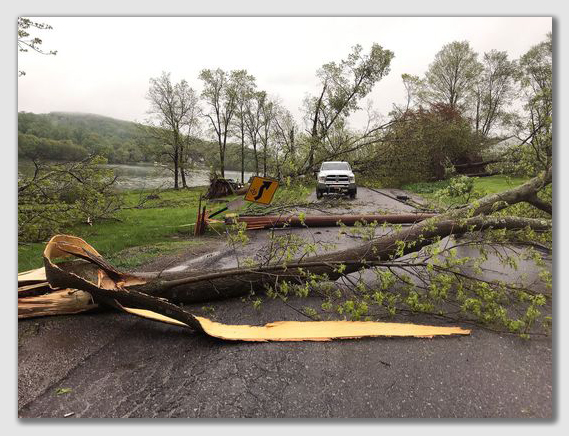 Westchester, New York, Journal News, December 26, 2018: Falling Yonkers tree starts lawsuit
A tree that fell on top of a car on the Bronx River Parkway has started a lawsuit. Althea Crawford alleges that she was driving her car on the parkway just north of one of the Bronx River Road exits on March 2 when a large tree fell on the parkway and struck the roof of her vehicle. Westchester County experienced a nor’easter storm between March 2 and March 5 that included heavy rain and wind gusts of up to 64 miles an hour at the Westchester County Airport, according to the National Weather Service’s summary of that weather event. According to Crawford’s Dec. 17 lawsuit filed in the state Supreme Court, she suffered “serious injuries to her head, back and shoulders.” Crawford seeks unspecified damages from Yonkers and Westchester County and her lawsuit accused both entities of negligent tree maintenance…
Millennials are often blamed for leading to the demise of certain industries and praised for boosting others. Now, a new study says millennials are helping the real Christmas tree industry thrive. A study by Square Inc. said the generation born between 1981 and 1996 is credited with driving up real Christmas tree sales. The figure is based on more than 1,000 Christmas tree sellers using Square software. The study said the price of trees has increased 17 percent in the past two years. According to the National Christmas Tree Association, millennials’ love for live trees is making its financial mark. The group said 95 million Americans were expected to put up trees this year. The survey said 82 percent of the trees will be artificial and 18 percent will be real trees…

When you set up a Christmas tree, you bring a little bit of nature into your home. Real or fake, your spot of green creates warm holiday cheer at a time when the forests outside have grown cold and brown. But once you’ve unwrapped the presents, scarfed down the leftovers, and safely stowed away the ornaments, your glorious display piece instantly transforms into waste—specifically, one of the biggest pieces of trash you’ll have to deal with all year. How we collectively disperse the carbon, metal, and plastic that went into our trees makes a real difference for the environment that provided those resources in the first place. Take artificial trees: Producing one of these contributes about 40 pounds of carbon dioxide to the atmosphere. The key to making it sustainable is to reuse it. By spreading that 40 pounds out over a certain number of years—estimates range from five years to twenty—it eventually will break even with the smaller impact you would see from buying a new natural tree year after year…
Aerial surveys of forested land in Arizona and New Mexico show large swaths of dead trees following an unusually dry winter that aided pests such as bark beetles. Arizona saw its largest uptick in tree mortality since the early 2000s when about 1.7 million acres (688,000 hectares) were affected. New Mexico saw a similar pattern, though surveys done earlier this year don’t account for an expected loss of pinon trees, said Andrew Graves, an entomologist with the U.S. Forest Service’s Southwest Region. The surveys included national forests and other federal land as well as state, tribal and private land…
A Centennial couple is furious after they were billed $400 for a tree service they never agreed to. Contact7 decided to look into it. Leta and Vincent Long used Home Advisor to get quotes for tree service in July. Fit Turf called them but didn’t make a great impression. “He was just so pushy,” Leta Long explained. “It was 8 o’clock in the morning and he was loud, he talked fast and he was just being obnoxious.” The Longs decided to keep looking. A few days later they returned home to find Fit Turf signs in their yard and a $400 bill on the front door. That’s when their son Michael decided to step in and contact customer service. “I said, ‘do you have a written agreement?’ ‘No we do not.’ I said, ‘well, what gives you the right to perform the service?’ She said, ‘Well we sent a couple of emails and they never responded, so we assume that gave us permission’…”
Southold Town has taken Santa to court. A state judge issued a restraining order against Santa’s Christmas Tree Farm in Cutchogue after town officials alleged the evergreen grower was operating outside the scope of its farm-stand permit. The Main Road business features an 8,064-square-foot building that’s open from April through January as a Christmas décor store in addition to selling Christmas trees, according to its website and a complaint filed in State Supreme Court in Riverhead on Dec. 14. Southold Town requires that 60 percent of merchandise sold at farm stands be grown by the farm. Town code also limits the size of farm stands to 3,000 square feet. Town code enforcement officer Michael Chih, after a Nov. 25 inspection of the operation, estimated that 75 percent to 80 percent of Santa’s Christmas Tree Farm’s merchandise for sale consisted of nonagricultural products not grown by Santa’s. Chih also determined the business used almost the entire building as retail space, according to the lawsuit…
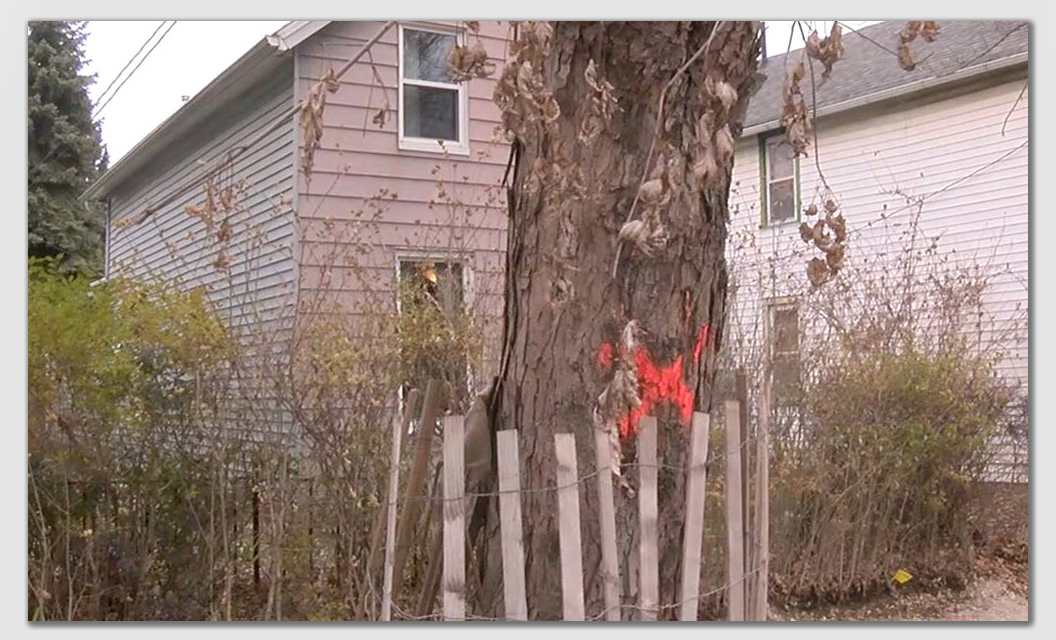
Residents in a Cleveland neighborhood are worried about orders to cut back more trees and get rid of some altogether. It comes just two weeks after the councilman representing Ohio City says other trees were “excessively pruned.” Councilman Kerry McCormack says the tree trouble is part of two different projects, which happen to be affecting the same residents. They say they’re losing shade, fresh air and the look of their neighborhood. Elisa Bredendiek says her house is shaded by the trees on Monroe Ave. “The trees provide significant shade and obviously cool down the temperature, so I appreciate them for that alone,” Bredendiek said. One of the trees outside her home is now marked with an orange X…
Crews from the Sacramento Municipal Utility District are using LiDAR technology to identify and model trees with high fire danger near its transmission towers and poles high in the Sierra Nevada. Though it services the mostly flat Sacramento County with electricity, SMUD owns and operates hydroelectric dams in the Sierra Nevada on the Upper American River. In an average rain year, SMUD gets about 20 percent of its electricity from those 11 reservoirs and eight powerhouses, according to its website. The action comes at a time when another Northern California utility, Pacific Gas & Electric Co., is facing increased liability for wildfires allegedly sparked by its remote power lines. This autumn, SMUD began using Light Detection and Ranging, LiDAR, to identify potential fire danger in vegetation in the forests along its transmission line routes. “This technology saves us time, effort and money in helping us quickly determine which trees need to be cut or pruned, and which can be left alone,” said SMUD chief energy delivery officer Frankie McDermott, in a news release…
 Portland, Oregon, KOPB-TV, December 19, 2018: How thick forests can reduce snowpack
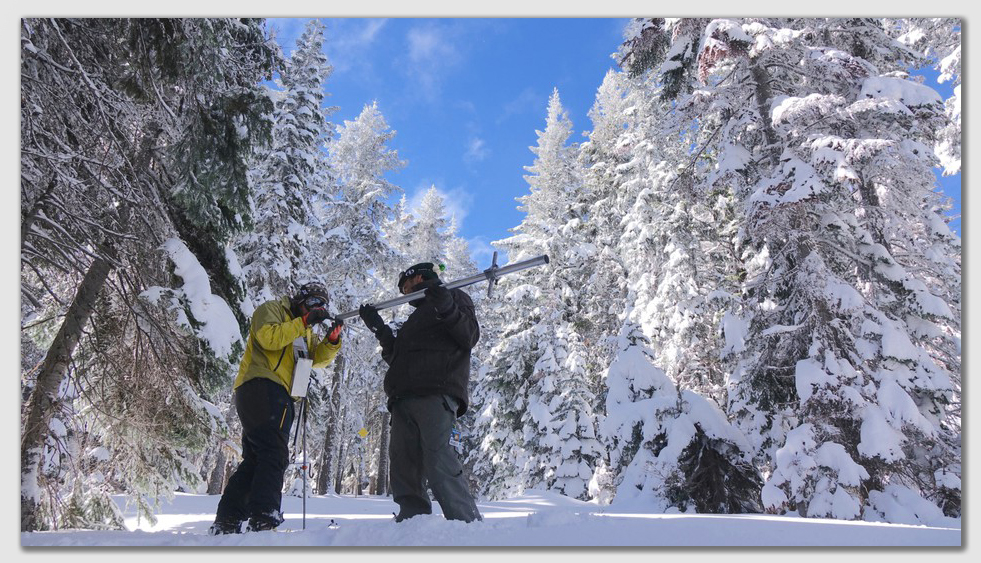
Much of the Willamette Valley’s water arrives in the winter as snow in the forested Cascade mountains. New research shows that the ways we manage those forests can influence how much water flows into rivers during the spring and summer melt. Anne Nolin, a professor at the University of Nevada, Reno, is part of a group of researchers modeling the Willamette Valley’s watershed. They were interested in the ways precipitation travels from where it falls in the Cascade Mountains down to urban centers in the lower Willamette Valley. Reservoirs behind dams act like a valve between the uplands and the lowlands, Nolin said. Although the reservoirs primarily exist for flood control, they also store water in the winter and spring, and then release it in the summer and fall to ensure flows for salmon and people. But there’s an even bigger store of water in the Cascades: snow. And snowpacks are declining. “There are a lot of reasons that we want to increase snowpack, because that’s a natural storage capacity,” Nolin said. “And in many watersheds, the natural storage in the snowpack exceeds the storage in our reservoirs manyfold, like two or three times…”
Columbus, Nebraska, Telegram, December 19, 2018: Important winter tree care tips
Winter weather, especially extremes in weather, can be hard on trees and shrubs. And while Nebraska is known for its often changing weather, broader extremes are becoming the norm. We humans appreciate above average winter temperatures, but plants prefer an average and steady temperature. Warm, sunny winter days increase the risk of sunscald injury and winter drying. Lack of snow increases dessication injury while heavy, wet snows lead to broken branches and wildlife damage. For young, thin-barked trees like fruit and maple trees, bark splitting and sun scald can be prevented by wrapping trunks with tree wrap or painting them with white latex (not oil-based) paint. It is most important to protect the south and southwest facing sides of young, tender barked trees. Evergreens most risk of winter drying are newly planted evergreens but even established Arborvitae, Japanese Yew and some Junipers are susceptible. Evergreens planted in the last year or two and those planted near south facing walls of light colored homes are more at risk…
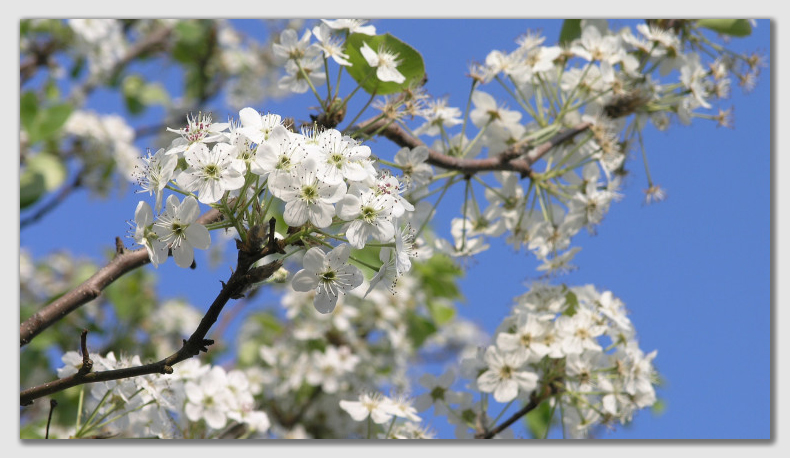
The public comment period for Indiana’s ban on several invasive land species ends Thursday, Dec. 20. Some people at a public meeting Wednesday expressed disappointment that the state did not add two popular invasive trees to the list. Several groups support a ban on the sale of Callery pear and Norway maple. Rick Haggard is the executive director of the Indiana Nursery and Landscape Association. He says some of its member nurseries have been removing the trees from their fields. “Now the ones that are not members — some of the big box stores and everything — we have no control over. We can tell them that they need to look at other options, but they don’t necessarily have to,” Haggard says. Megan Abraham is with the Indiana Department of Natural Resources division of entomology and plant pathology. She says adding Callery pear and Norway maple to this current proposal would mean the state would have to start all over again — with a new assessment and economic impact study…
Chico, California, Enterprise-Review, December 19. 2018: Nature has Plan B for fire’s burned trees
Due to the high heat a lot of trees died in the Camp Fire, unfortunately Mother Nature has a plan “B” which stands for “beetle” for those that didn’t. But there are things we can do to minimize the fire’s collateral damage. Bark beetles attack trees that are low on water due to drought or injury. The adults bore into the bark and lay eggs, the eggs hatch and the larvae mine around between the bark and the wood. The mining severs the tree’s nutrient-moving vessels, killing the tree. The culprits are the mountain and western pine beetles, the red turpentine beetle, and the Douglas fir beetle. Some of these can have multiple generations per summer when conditions are right. The beetles will attack recently killed and weak trees first, then as the beetle’s numbers increase they will move to healthy trees. The best offense is to debark recently felled pine and Douglas fir logs between now and spring. Also, chip or burn all limbs greater than 3 inches in diameter. In spring and summer fall and debark trees that show lots of globs of pitch on the bark. This greatly reduces the amount of breeding habitat…
 Phys.org, December 18, 2018: Trees grow more efficient leaves to compensate for hurricane damage
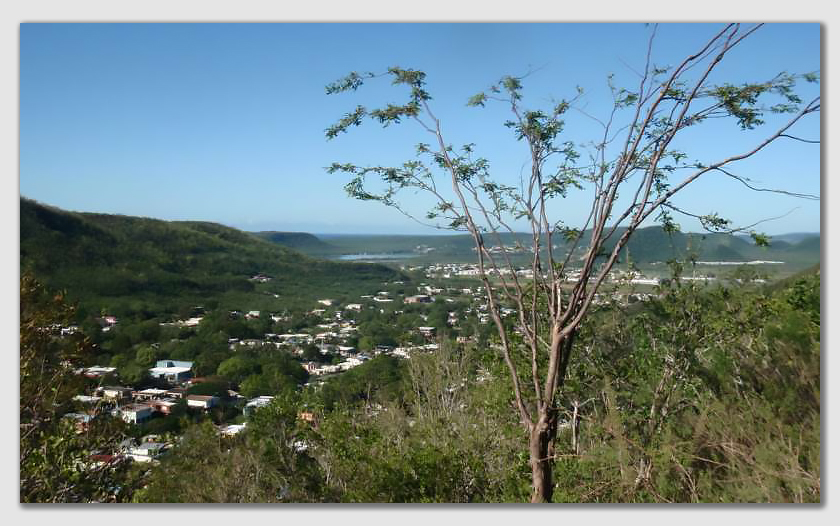
Some tree species heal from the ravages of hurricane damage by growing replacement leaves optimized for greater efficiency, according to a Clemson University field study presented at the British Ecological Society’s annual conference. This new, optimized growth is an apparent attempt to fight back when hurricane winds rip away limbs and leaves. When Hurricane Maria hit Puerto Rico last year, ecologists at Clemson’s Belle W. Baruch Institute of Coastal Ecology and Forest Science in Georgetown, South Carolina, took the opportunity to study how hurricanes affect tropical dry forests in the Caribbean. The worst natural disaster on record to affect the U.S. territory, the hurricane stripped numerous trees bare of their leaves and disrupted their ability to absorb the light needed for growth and survival. Clemson researchers sought to determine whether the trees were capable of compensating for the significant damage by increasing resource acquisition in newly produced leaves. At Tuesday’s conference, which brought together 1,200 ecologists from more than 40 countries to discuss the latest research, doctoral student Tristan Allerton presented findings from the year-long field study. “Our study took us to the Guánica State Forest in southwest Puerto Rico, which comprises one of the best parcels of native dry forest in the Caribbean,” said Allerton. “Rainfall here is extremely erratic, with huge variability within and between years. The forest also sits on limestone from an ancient coral reef, which is extremely porous, meaning trees have little time to capture water as it travels through the underlying rock. As a result, organisms are uniquely adapted to cope with unpredictable water availability…”
Science Daily, December 18, 2018: Experts identify ‘tipping point’ in tree disease outbreaks
New models which can predict the critical point at which plant pests and diseases shift from being a localized problem to a major outbreak could help us in our fight to save the world’s woodlands. Infectious disease outbreaks in plants are a major threat to the world’s ecosystems, agricultural crops and food trade. Currently, several fungal diseases are devastating forests world-wide and under particular threat are key UK species such as oak and ash. Now new research led by mathematicians at Newcastle University, UK, together with the University of Leeds, has identified a way to model disease progression and predict the ‘tipping point’ of a disease, providing early warning indicators that an epidemic is imminent and action needs to be taken. Lead author Dr Sirio Orozco-Fuentes, a physicist at Newcastle University, explains: “Predicting and controlling disease spread is incredibly difficult because of the interaction of all the different components involved. It’s not just about the type of tree or the hardiness of the disease, it depends on the environment — temperature, humidity, wind speed, the types of trees planted nearby and how close they are. So the presence of disease doesn’t automatically lead to an outbreak. A change in the weather, for example, may kill the pest before it becomes a problem without any need for human intervention…
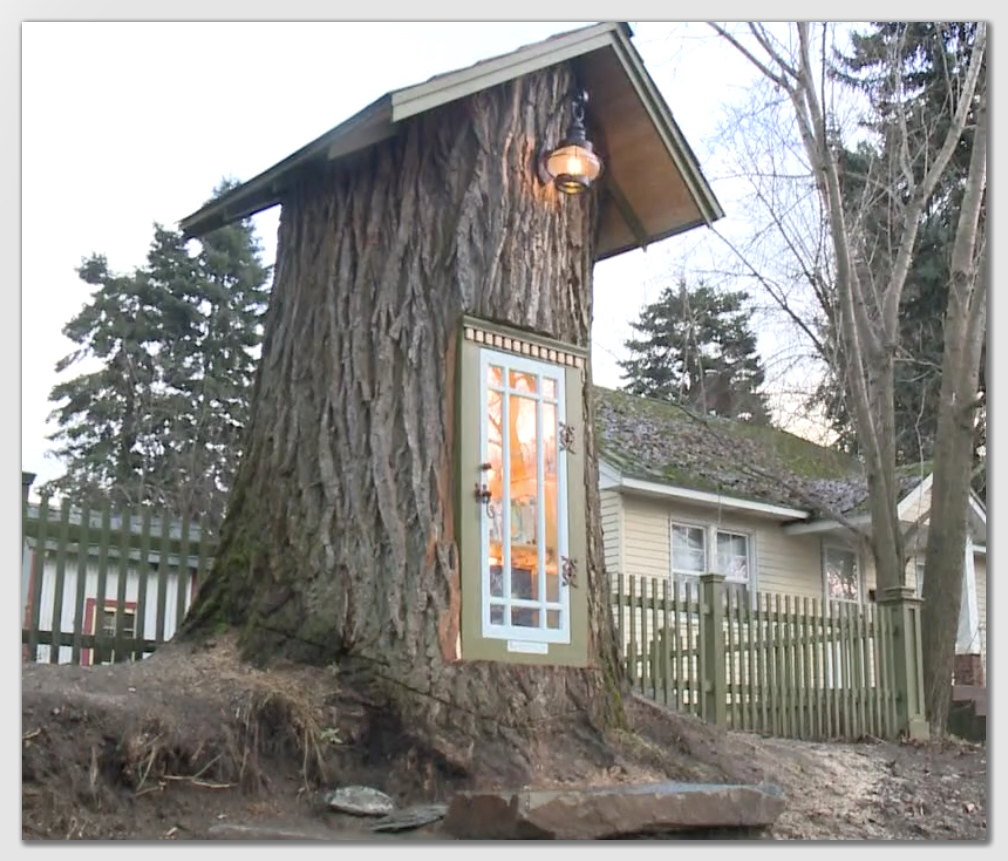
A Coeur d’Alene artist’s project right outside her home is receiving lots of attention online. The artist, Sharalee Armitage Howard, created a “little free library” inside a more than 100-year-old cottonwood tree stump outside her home near midtown Coeur d’Alene. A Facebook post about the project from Howard has since been shared close to 30,000 times. Howard told KREM that her family decided to remove most of the tree after branches began to fall dangerously on cars and the sidewalk below. The core of the tree was starting to rot, Howard said. After having previously created a separate little free library for an unrelated project, Howard said she felt inspired to create one inside the stump that remained from the tree. The library features a swinging glass door, steps, and interior and exterior lights…
There are more than 8,000 living trees on tech’s campus right now, a few hundred dead trees and a total of 10,000 cataloged over the last 10 years. But now the university essentially has a Rolodex of every single tree on the central campus, which they say is already being put to good use. It’s a gorgeous day on Virginia Tech’s campus and the resident tree guy is taking in the view. “It’s pretty varied,” he said of the campus foliage. “It’s something like 200 species.” That tree guy is graduate assistant Peter Stewart, who has personally taken inventory of nearly every single living tree on tech’s campus. “Well I definitely got to know every corner of campus pretty quickly.” he said. He’s helped finish work that started more than a decade ago in Professor Eric Wiseman’s undergraduate class. It’s an effort to document all the trees rooted on campus and those now long gone. “First of all be able to understand what we have and where it is, and that becomes important for a lot of things that go on on campus,” Wiseman said. Professor Wiseman said this catalog of trees revealed more than 200 species, most of which are in good condition…
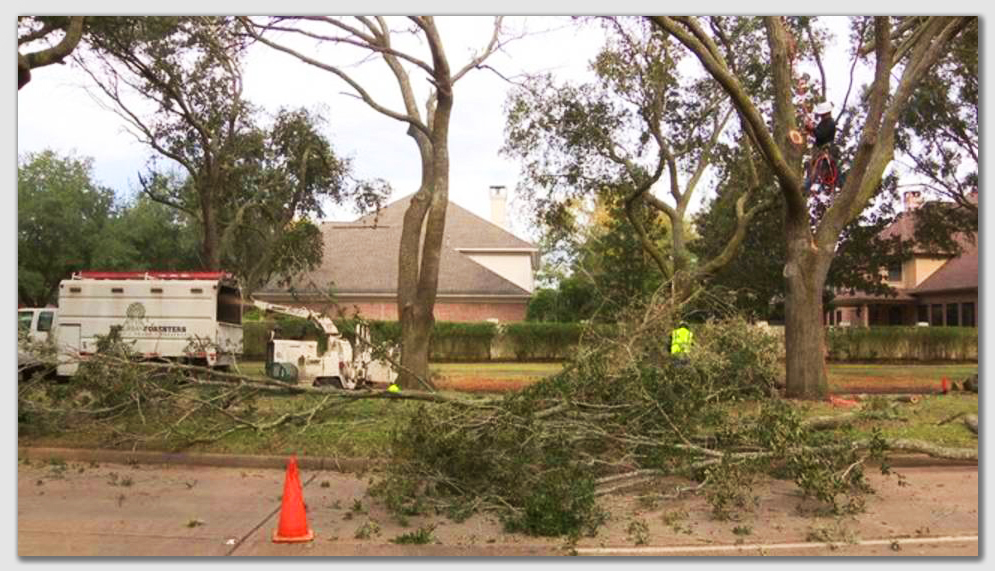
Hundreds of trees are being removed as a part of a First Colony Community Association project. The tree removals began Nov. 20, according to the association. Officials said 150 trees on Elkins, 43 trees on Cartwright, 15 trees at The Oval and 26 trees in Oyster Point will be removed when the project is complete. The remaining budget will be used to remove trees on Sweetwater starting at Colony Park and moving along Sweetwater toward Highway 59. After trees are removed, FCCA said it will replant the area with a different species of tree that will not grow as tall and require trimming by the utility company. The association said: “Mature tree-lined streets with thick leafy canopies have become synonymous with First Colony. While aesthetically pleasing, the maturation of these hardwoods has presented First Colony Community Association with many maintenance challenges. The high density of hardwood trees has resulted in increased competition for sunlight and nutrients, and the weaker trees are being overcome by their larger healthier counterparts. Other maintenance challenges include diminished or no turf growth, increased siltation, damage to sidewalks, irrigation and utility infrastructure caused by dense root systems, and obstructed street lighting…
The City of Mobile has made a decision on the possible removal of five trees in Bienville Square because of safety concerns. An arborist who works for the city said four of the five trees will not have to be cut down. City crews were out at Bienville Square Monday morning concentrating on two of the five trees cited by the city as being in declining health and that might have to be cut down. One tree near St. Francis and Conception had been roped off for the public’s safety, but the yellow tape was taken down after crews finished their work. City of Mobile Urban Forester Peter Toler said, “We removed the hazardous parts to bring the overall risk level of this tree from a ‘high’ down to a ‘moderate,’ to where we can actually deal with it, monitor the tree, and assess its health after that.” Crews also worked on another one of the five cited trees, also along Conception Street…
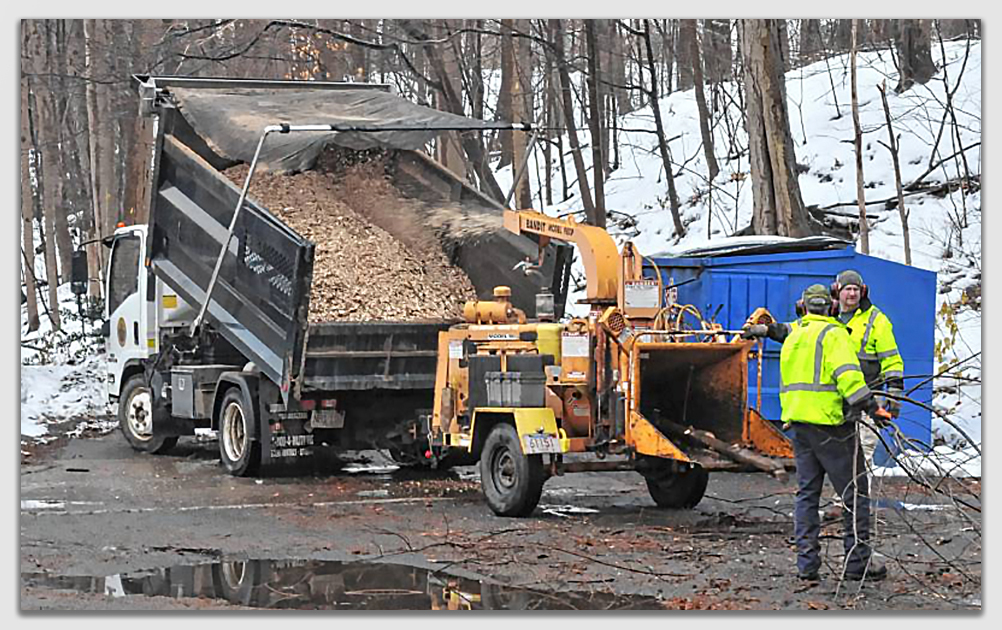
For months, tenant Shelly Neumann has complained about falling tree limbs in the parking lot and near the dumpster at Cahill Apartments, fearing for her safety and the safety of others. “I have called housing about this issue … at least eight times,” Neumann said. “Nobody came out.” After she complained directly to Smith College, which owns some of the property containing the troublesome trees, the college cut down and trimmed its trees. The Northampton Housing Authority then followed suit. “I did this — not housing,” Neumann said. Neumann said she tried contacting Smith College four or five months ago but that nothing came of it. However, on Nov. 14, she tried again, and Bob Dombkowski, grounds supervisor at the college, was notified via the college’s public relations office. “I said, ‘I’m coming right down,’” Dombkowski recalled. Once Dombkowski saw the trees, he acted swiftly, getting in touch with the owner of Howes Tree & Landscaping Cummington. “I called Chad Howes right there from the site immediately,” Dombkowski said. Dombkowski said he saw trees with dead limbs that needed attention, as well as fallen limbs on the ground. That was back in November. Because of the snowstorm predicted to hit the next day, Howes was not able to come out until the following Monday. “There were two trees there that were really bad,” said Dombkowski…
Every tree needs adequate water to thrive, some less, like cacti, some more, like willows. Part of the job of a gardener or homeowner who plants a tree is to provide it with enough water to keep it healthy and happy. One technique that assists you in this task is constructing a berm. A berm is a sort of basin constructed of soil or mulch. It serves to keep water in the right place to drip down to the tree’s roots. Planting trees on berms makes it easier for the trees to get the water they need. If you are wondering how to make a berm, it isn’t difficult. To build a berm, you construct a circular wall of soil that goes all around the tree trunk. Don’t put it too close to the tree, or only the inside of the rootball will get water. Instead, built the berm at least 12 inches (30 cm.) from the trunk. How to make a berm wide enough? Use soil or mulch to construct the wall. Make it about 3 or 4 inches (7.5 to 10 cm.) high and twice that wide. Lots of trees grow perfectly well in fields and forests without berms, and most trees in the backyard may not have berms either. Any tree that is easy to irrigate may do just as well without a berm. But planting trees on berms is a good idea when the trees are isolated on the far corner of your property or located somewhere that is difficult to irrigate. Trees in remote locations require the same amount of water they would if planted nearby…
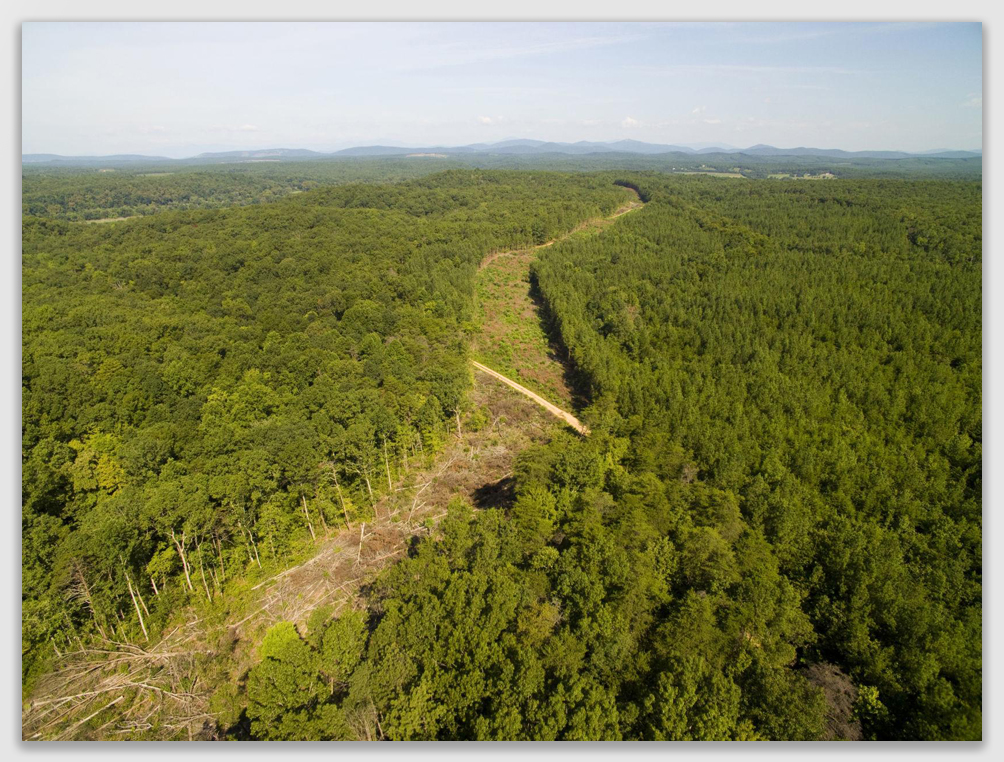
A federal appeals has thrown out another key permit for the Atlantic Coast Pipeline, increasing the likelihood that work on the 604-mile multistate project could be held up until this summer if not longer. The appeals court in Richmond, Va., on Thursday invalidated a federal permit for the planned pipeline to cross 21 miles of national forest in Virginia, including a section of the Appalachian Trail. The court said that the U.S. Forest Service ignored federal law and its own agency rules in granting the permit, which will clear a 125-swath of habitat during construction and leave a 50-foot wide lane in perpetuity for maintenance. The same court last week rejected a permit by the U.S. Fish and Wildlife Service to cut trees and grade land in sensitive habitats that are home to four endangered wildlife species. The consortium building the $7 billion pipeline, led by Charlotte, N.C.-based Duke Energy and Richmond-based Dominion Energy, vowed to appeal the ruling and fight to get it reversed…
Holiday boughs could be infected by a Grinchy red invasive pest that might devastate local crops, Sen. Chuck Schumer (D-N.Y.) warned on Sunday, as he called for an additional $17.5 million in federal funding to help New York stop the spread of spotted lanternflies. Eggs of the spotted lanternfly, which have a taste for grape vines, fruit trees and local forests, might have hitched rides to Long Island on cut Christmas trees trucked in from out-of-state, he said. A live spotted lanternfly and several dead ones were found at a Deer Park nursery this fall, in a shipment that originated in a quarantined area in Pennsylvania. State and local farm officials fear the insect could cause widespread devastation in New York’s agriculture and tourism industries if the insect proliferates here, and have asked the public to report any sightings of the moth-like insect. Schumer, the Senate minority leader, in an interview Sunday, said the United States Department of Agriculture has already committed $17.5 million in Pennsylvania to research the insects native to Asia, which have no natural predators here. “I’m asking for the same amount of money to go to New York,” Schumer said…
 New York City, Wall Street Journal, December 15, 2018: Trees of Life and Wonder
My family never had a pink-frosted Christmas tree, though Lord knows my 10-year-old self really wanted one. Every year my family went to Sal’s Christmas Emporium on Wilshire Boulevard in Los Angeles, where you could buy neon-colored trees, mechanical trees that played Christmas carols, blue and white Hanukkah bushes or even a real Douglas fir if you wanted to go retro. We were solidly retro. Decorating the Christmas tree remains one of my most treasured memories, and according to the National Christmas Tree Association, the tradition is still thriving in our digital age: In 2017 Americans bought 48.5 million real and artificial Christmas trees. Clearly, bringing a tree into the house, especially during winter, taps into something deeply spiritual in the human psyche. Nearly every society has at some point venerated the tree as a symbol of fertility and rebirth, or as a living link between the heavens, the earth and the underworld. In the ancient Near East, “tree of life” motifs appear on pottery as early as 7000 B.C. By the second millennium B.C., variations of the motif were being carved onto temple walls in Egypt and fashioned into bronze sculptures in southern China…
A 50-year-old Porter County man died Sunday night after a tree fell on him while working in his yard, according to the Porter County Sheriff’s Office. The man had been cutting back trees on his property in the 800 block of North County Road 500 East in rural Jackson Township when one tree fell toward the man, trapping him beneath. Porter County Sheriff’s officers, Liberty Township Fire Department, Washington Township Fire Department and Porter Regional EMS responded to the scene around 4:30 p.m., according to a Porter County Sheriff’s Office news release. Family and first responders attempted to cut the tree back to remove the man, however, the man was pronounced dead at the scene…
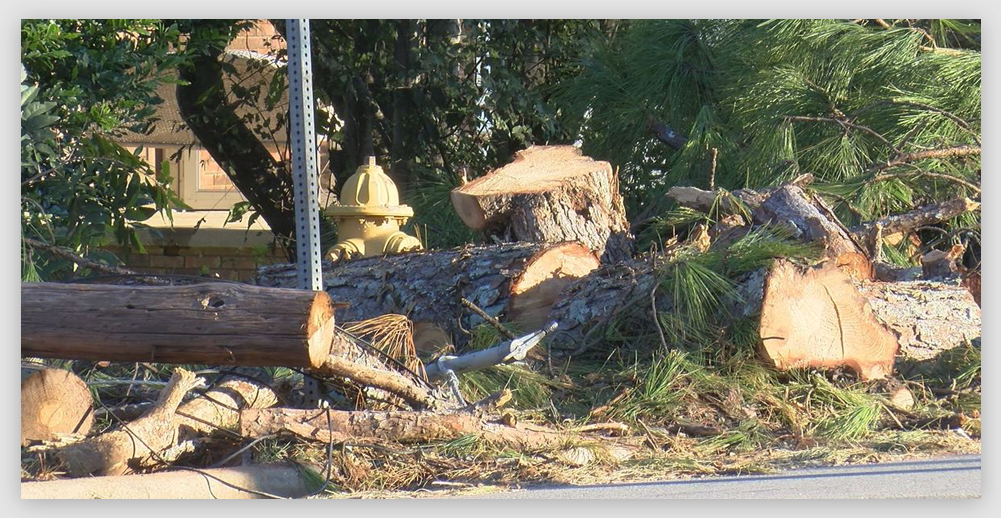 A Superior Court judge has granted a preliminary injunction against an out-of-state tree removal company which keeps the owners from operating in North Carolina and collecting exorbitant fees they charged victims in Castle Hayne in the aftermath of Hurricane Florence. “This out-of-state operator tried to rip off North Carolinians coping with the devastating effects of Hurricane Florence,” said Attorney General Josh Stein. “I’m grateful that the court has blocked them from taking advantage of any other North Carolinians as we continue this case. My office will not stand for anyone who preys on the misfortune of others in violation of our state’s price gouging statute.” Stein announced that his office had filed a lawsuit against Scotts Tree Service and its owners, Scott Lacey and Randy Shannon, during an October stop in Wilmington. The judge’s order will remain in place until the trial, according to Stein. Homeowners from Castle Hayne testified that the company billed them $14,500 to remove two fallen trees without first discussing or getting an agreement on the price. The homeowners also testified that the work took approximately an hour and involved eight employees, which comes to more than $1,800 per man-hour. Lacey testified that he pays his employees around $30 to $60 per hour. The homeowners further testified that Scotts Tree Service had one of the homeowners sign a statement of work to be done and later filled in the document with the $14,500 price, which the homeowner had not agreed to. After the homeowner refused to pay, the company sent the invoice to a bill collector, Goldberg & Donovan, Inc., a Massachusetts-based company. Earlier this year, a judge granted an injunction against Goldberg & Donovan, barring them from doing business in North Carolina…
Houston, Texas, Chronicle, December 13, 2018: Initiative aims to restore American chestnut trees
Volunteers have planted more than 600 American chestnut trees at Eastern Kentucky University in an effort to restore the tree to the Daniel Boone National Forest. WKYT-TV reports the university has partnered with The American Chestnut Foundation and the University of Tennessee-Chattanooga in an effort to restore the trees to the region. A blight in the early 1900s killed millions of the trees across the Eastern U.S. Daniel Boone National Forest supervisor Dan Olsen says 615 seedlings were planted in late November at The American Chestnut Federation Regional Seed Orchard. He says officials hope to harvest seeds from the orchard in the future…
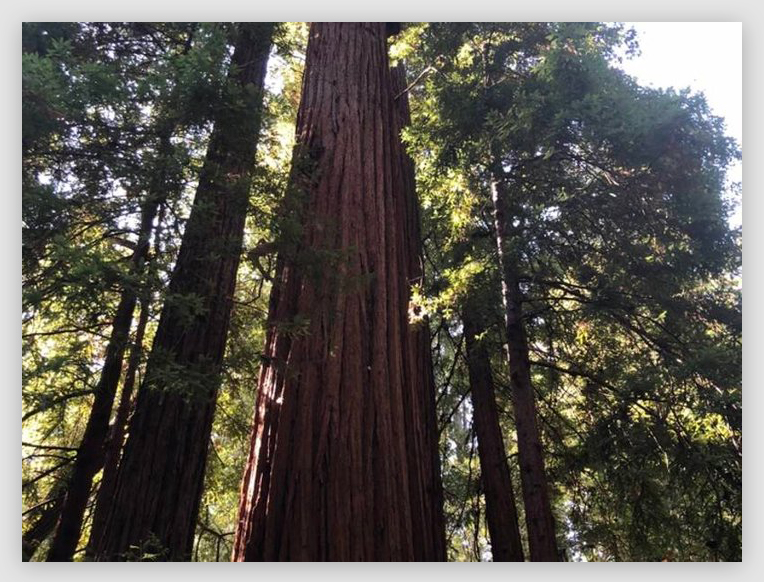
Seventy-five coastal redwood tree saplings will be planted Friday morning in San Francisco’s Presidio to help alleviate climate change. A team from the Archangel Ancient Tree Archive will plant the saplings, which are clones from five local tree stumps, from 9 a.m. to noon. Organizers said the trees will be highly resistant to wildfires, disease and pests and can gather water from fog. Organizers said each redwood tree can remove up to 250 tons of carbon dioxide from the atmosphere over its lifespan, compared with one ton for more average trees…
An Isle of Palms man may spend five days in jail after he cut down two significant trees on the island — on land that he didn’t own. Jonathan Gandolfo, who has been battling the town over the tree cutting incident since 2016, was found guilty Tuesday of two counts related to the removal of two trees at 408 Carolina Blvd. He did not cut the trees himself but directed their cutting by a contractor, according to an IOP police incident report. Gandolfo was sentenced to 30 days in jail on each count, with the sentence suspended so that he would instead spend one day and then two consecutive weekends in the Charleston County jail, and then spend two weekends completing community service. He must also pay a fine of $1,087… At the same time, Gandolfo still may face civil penalties from the town, which also has the ability to fine him for violating the tree-cutting ordinance. Gandolfo did not own the land where the trees were cut, but its owners have not pressed charges against him to date. Their property previously was under contract with Gandolfo as the buyer, but the sale didn’t close, Cornely said. According to the police incident report from 2016, the contractor who cut the trees had texts on his phone from Gandolfo urging the contractor “be a ninja about it and be quick so the code guys don’t interrupt you…”

A man was rushed to the hospital Thursday after a large tree snapped, smashing his car as he drove in Clermont County. A woman who saw it happen is calling for better oversight to prevent this from ever happening again. The man who was badly hurt was driving down a road many people use every day. Now, he’s in critical condition and facing surgeries for his injuries. “When I close my eyes, I see it, over and over again,” Melissa Morganthaler said. It’s a horrific scene Morganthaler can’t forget. She said as she left the grocery store on Loveland-Miamiville Road in Loveland, she witnessed a tree snap and a large part of it landed on a car. “It hit the car and, just, almost like an explosion, just, this horrible loud boom,” Morganthaler said. Photos WLWT obtained showed a mangled BMW sedan, where the man had been trapped. He was badly hurt and bleeding, according to people who called 911 dispatchers as they stayed by his side. “The top of the roof has came in on the person’s head and it’s bad, they’re trying to breathe right now,” a man said to a dispatcher. Morganthaler was there as well, assuring the man. “You’ve got to be calm because there’s chaos all around you, and somebody has to be calm. I just felt so sorry for the poor man,” Morganthaler said. Emergency crews hurried to the scene, cutting the man out of the car in about 12 minutes before they rushed him to University Hospital. Even after the scene cleared, Morganthaler’s mission only began. She called the Clermont County Engineer’s Office because she said the trees in the area where the incident happened are dead and need to be removed. Engineers told WLWT the trees are not in the county’s right-of-way, meaning they are on private property and officials cannot cite the owners…
Washington State University researchers have reverse engineered the way a pine tree produces a resin, which could serve as an environmentally friendly alternative to a range of fossil-fuel based products worth billions of dollars. Mark Lange and colleagues in the Institute for Biological Chemistry literally dissected the machinery by which loblolly pine produces oleoresin. Before the arrival of petroleum-derived alternatives in the 1960s, the sticky, fragrant oil-resin mixture was central to the naval stores industry and products ranging from paint and varnish to shoe polish and linoleum. Meanwhile, the international demand for oleoresins has risen. Naturally occurring oleoresins—from sources like loblolly pine—are often preferred. A 2016 analysis by Grand View Research predicted that global sales of oleoresin will approach $1.7 billion by 2022. The Lange lab’s discovery of how it is made “could inspire new engineering approaches for the production of renewable, green chemicals,” says Dutch biologist Harro Bouwmeester in a commentary accompanying Lange’s research in the Journal of Experimental Botany. As natural factories go, said Lange, plants are industry leaders. Humans, he said, produce roughly 3,000 metabolites, the small molecules that occur in human metabolism. “Plants make hundreds of thousands,” he said, “and most of what’s out there in terms of chemical diversity is probably unknown. It would probably be in the millions…
 Kelowna, Saskatchewan, castanet.net, December 12, 2018: Broncos – trees block view
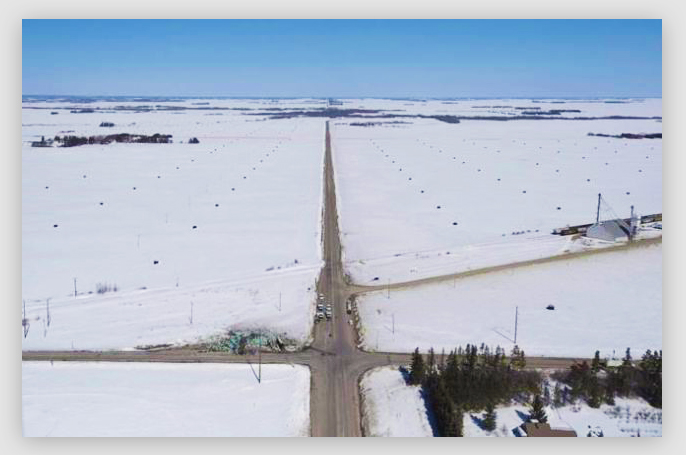
A consulting firm says sight lines are a safety concern at the rural intersection where the deadly Humboldt Broncos bus crash happened. A 70-page safety review done for the Saskatchewan government says a stand of trees, mostly on private property, obstructs the view of drivers approaching from the south and east — the same directions the bus and semi-trailer were coming from when they collided. Negotiating with the landowner to remove the trees is one of 13 recommendations included in the report. Rumble strips, larger signs and painting “Stop” and “Stop Ahead” on the road are some of the other suggestions. Sixteen people died and 13 others were injured in the collision at an intersection north of Tisdale in April. The bus was travelling north on Highway 35 and the semi was westbound on Highway 335. Both roads have speed limits of 100 km/h. Highway 335 has a stop sign. Highway 35 does not. The review notes that because Sidhu’s charges are still before the court, RCMP investigators would not talk to consultants from McElhanney Consulting Services about the causes of the crash. The report’s authors found six collisions at the intersection between 1990 and 2017 and another 14 on roads nearby…
Abilene, Texas, Reporter, December 12, 2018: Evergreen trees more susceptible to damage from snow
Now that we’re well into December, which means winter is just a few days away, we recently had a good reminder of what winter weather can be like. And, by a good reminder, I mean cold temperatures and snow. Personally, I don’t remember a lot of December snows during my time in the Big Country, but what the heck, I’m getting pretty old, and maybe my memory is failing me. I do remember a lot of severe January/February snowstorms, but I’m kind of drawing a blank on tons of December snows. Think about it this way: How many white Christmases have we had over the years? I can recall some white Easters, but very few white Christmases. Well, cold and snow certainly means bundling up for us, but what do they mean for trees? One interesting aspect of the cold part of weather is that for plants it’s all about severity and timing. During December, temperatures in the low-30s and high-20s are no big deal, and our trees should have little trouble taking such temperatures, or even lower ones, in stride…
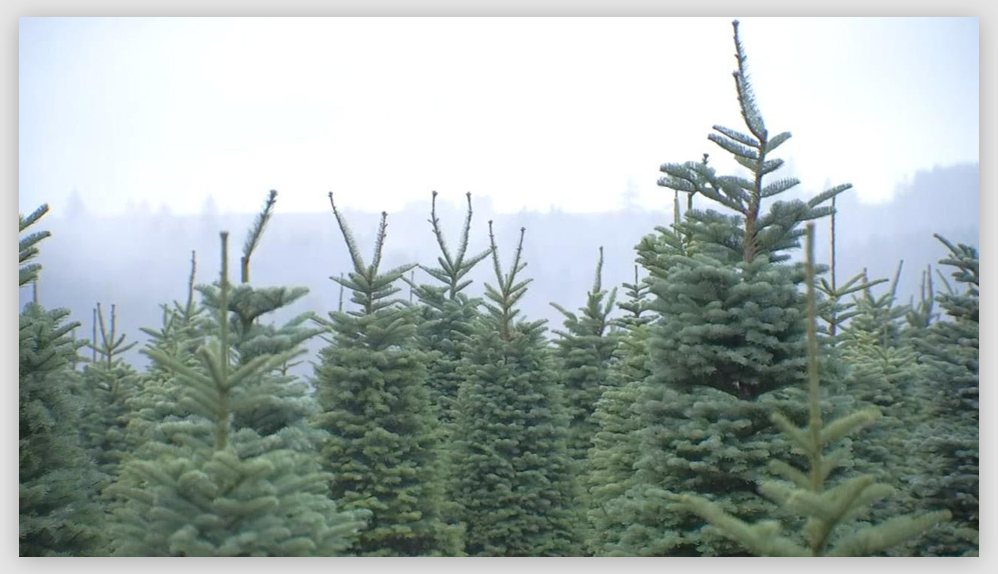
Area Christmas tree farmers are losing business year after year to fake trees, and now, they are trying to buck the trend. When you move into your first house or apartment, that’s when traditions are made. Cutting down the perfect tree and putting it up around Christmas could be one of those traditions, but more and more, people are opting for fake trees. Casey Grogan with Silverbell Trees harvested 60,000 trees this year. That sounds like a lot, but it’s half of what he did just ten years ago. “We are about half the size we used to be, and I think a lot of farms are in a similar position,” Grogan said. He says, partly to blame are artificial trees, now a $1 billion business. “We’ve seen a rise in sales of artificial trees,” Grogan said. “That makes it a real challenge for real tree growers to estimate how many to put in the ground.” Artificial trees are becoming more realistic, come with pre-strung lights, and are easy to store. Between 75% and 805 of Americans who have a Christmas tree are using an artificial one…
Salt Lake City, Utah, KUTV, December 11, 2018: Read this before you cut down your own Christmas tree
Investigators are looking for the person – or persons – who felled a spruce tree on federal property. This happened on Dec. 2 by the Castle Rock campground near Richfield. That tree had been growing there, since the late 80s. A second tree was also chopped down illegally inside the campgrounds. John Zapell, with the National Forest Service, says this is not uncommon because people think they are going to get away with it. A newly-planted tree also just went missing from outside Timpanogos Cave. Zapell says if you are going to chop down your own tree, you first of all need to have a permit. Those will set you back up to $20, depending on the size of the tree you are cutting down, with the tallest being 20 feet high…
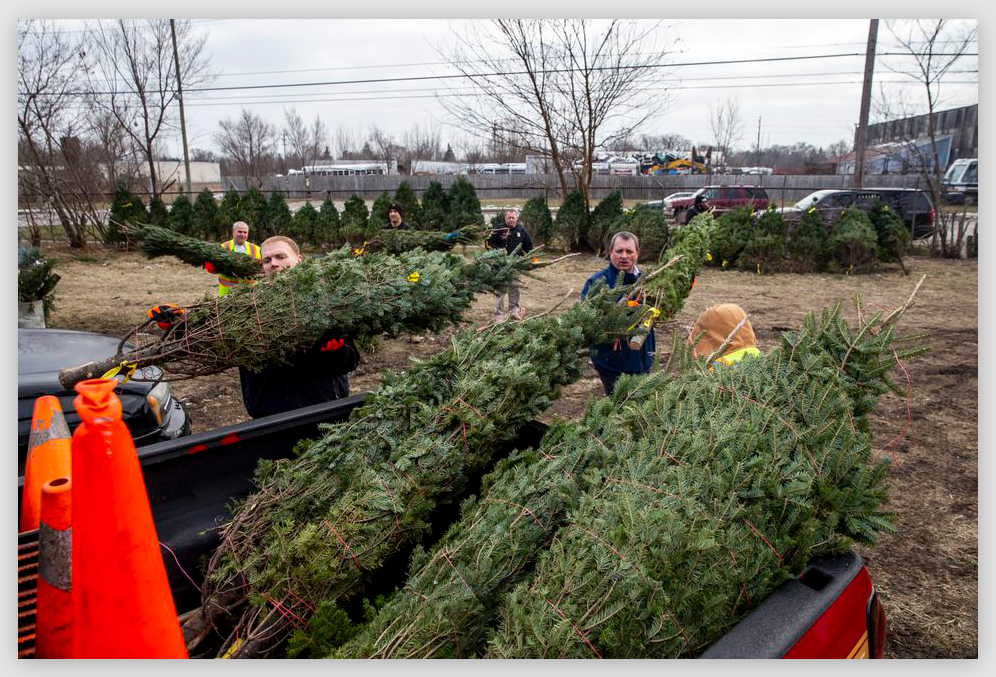
A flipped semitrailer hauling hundreds of Christmas trees to Virginia became a blessing for less fortunate families throughout Saginaw County. On Monday, Dec. 10, Buena Vista police officers, firefighters and the township’s inspector delivered Christmas trees to residents who expressed they needed a tree. The truck overturned on opening day of deer season – Nov. 15 – near Sanford. Mike’s Wrecker Service of Saginaw and Cole’s Wrecker cleared the scene and the semitrailer was towed to Mike’s Wrecker’s tow yard at 2522 Hess. Bill Giorgis, co-owner of Mike’s Wrecker, worked out a deal with the insurance company and bought 500 trees the truck was hauling for $1,500. He’s selling the trees for $10 each or a donation, but also giving them to needy families who want, but can’t afford, a real tree for Christmas. Over the weekend, Giorgis donated 50 trees to Old Town Christian Outreach. He later received a call that they were running out of trees, so Giorgis had 50 more delivered. Sgt. Russ Pahssen and Officer Devin Heyn, of the Buena Vista Township Police Department, Deputy Fire Chief Aaron Hoeppner and Township Inspector Jeff Cain delivered about a dozen trees with tree stands to residents on Monday…
Mankato , Minnesota, Free Press, December 11, 2018: Plea deal for farmer who cut down memorial trees
A Beauford area farmer has pleaded guilty to cutting down a dozen trees planted as a memorial to veterans along Highway 22 last year. But he likely won’t have a criminal record if he pays restitution. Steven Peter Trio, 56, pleaded guilty to felony damage to public property Monday in Blue Earth County District Court. A similar gross misdemeanor charge was dismissed. Trio admitted to cutting down trees on highway right-of-way in July 2017 because the roots were clogging his drainage tiles and killing his crops. Many of the trees were planted along the highway in the 1950s as a tribute to veterans of World War I. The plea deal calls for Trio to receive a stay of adjudication — meaning the charge will be dismissed — if Trio pays restitution and completes probation…
 Wired, December 10, 2018: The science of growing a perfect Christmas tree
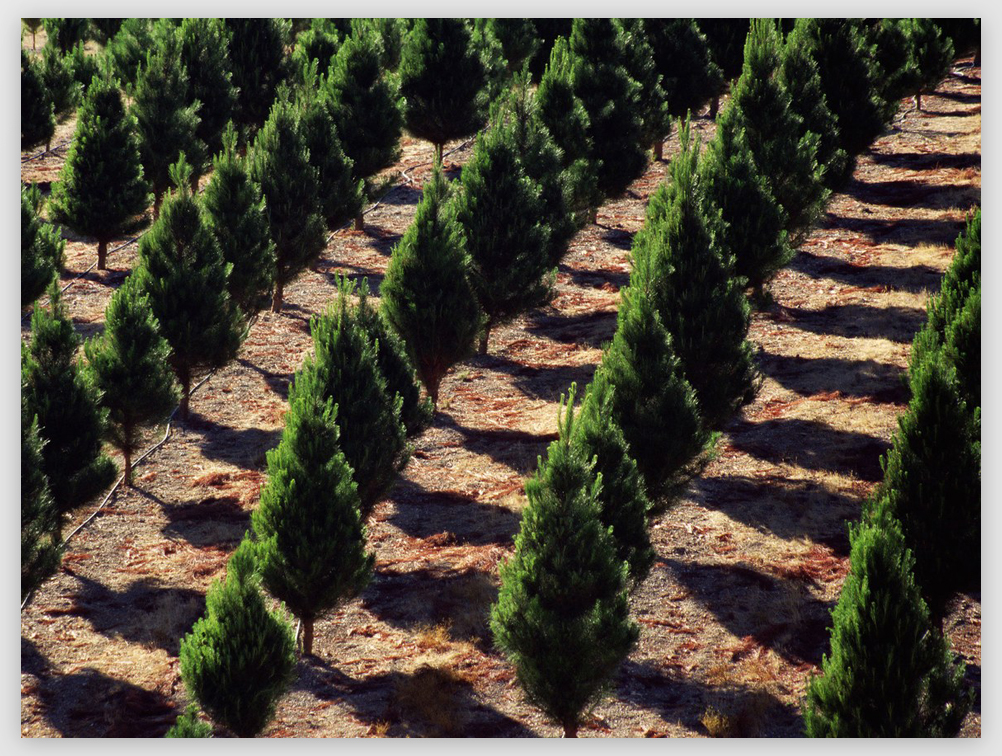
Every winter, millions of Americans descend on farms and lots across the country with the express purpose of inspecting, and ultimately choosing from, their local selection of coniferous evergreen trees. I’m talking, of course, about Christmas tree shopping—the widely practiced pastime of publicly scrutinizing spruces, pines, and firs in search of the ideal yuletide centerpiece. Many people are practiced at picking the perfect tree. They’ll judge on things like color, size, shape, needle quality, and bushiness. But behind the annual selection of a coniferous house guest—some 30 million of them a year, in the US—is a ton of science. To Bert Cregg, identifying exactly what makes a tree perfect is more than a holiday tradition, it’s a major part of his job. He’s a forest researcher at Michigan State University and a renowned expert on Christmas tree production. His work covers two main areas: genetics and culture techniques. “Basically, how can we identify species and seed sources that are going to lead to better Christmas trees, and how can growers manage their farms to produce better trees,” he says…
Rosa Villarreal’s three young sons jumped and ran around the field of Christmas trees like jackrabbits, their excitement palpable as they raced from evergreen to evergreen. The boys, ages 2, 4 and 6, were picking out a real tree this year — a new tradition their young parents hope will create lasting memories. “I saw this video where the big tree, the mom decorates it, and the little tree, the kids get to decorate it,” she said, as her husband, Jason Jimenez, snapped a photo of their toddler posing with a tiny tree just his size. Christmas tree farmers across the U.S. worry families like Villarreal’s are slowly dwindling. Artificial trees, once crude imitations of an evergreen, are now so realistic that it’s hard to tell they are fakes even though many are conveniently pre-strung with lights and can fold up for storage at the push of a button. Between 75 and 80 percent of Americans who have a Christmas tree now have an artificial one, and the $1 billion market for fake trees is growing at about 4 percent a year — even though they can be reused again and again. To combat this trend, Christmas tree farmers have joined forces as the Christmas Tree Promotion Board and are running a social media ad campaign this holiday season to tout the benefits of a real evergreen. The campaign, called “It’s Christmas. Keep It Real!,” is funded by a 15-cent fee that tree farmers pay for each tree they harvest. It’s a modern-day attempt at such famous agricultural ad campaigns as “Got Milk?” and “Beef. It’s What’s For Dinner…”
 Salem, Massachusetts, News, December 10, 2018: Historic tree to see new life at Artists Row
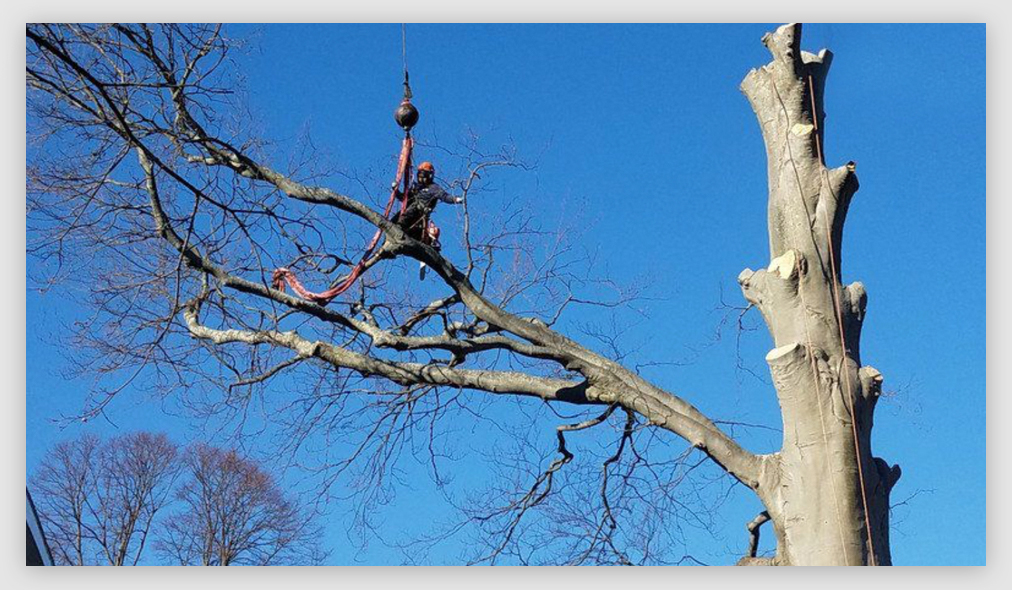
One of the city’s oldest and tallest trees came down on Monday, but its spirit will live on in the form of wooden bowls, table tops and more. The 85-foot-tall European beech tree, believed to be nearly 200 years old, was one of the last vestiges of the historic Manning Garden in North Salem. The tree stood at the corner of Orchard and Dearborn streets until Monday, when it was carefully removed by Essex-based Mayer Tree Service, after losing a brief battle with phytophtora citricola, a plant pathogen. As the tree was taken down, the Rainville family and close friends hosted a celebration honoring the tree, complete with pastries and appetizers. More than a dozen feet of the tree’s best wood was then taken by Tom Gagnon of Boston Woodturning, a shop at Artists Row downtown, to be turned into all sorts of gifts for the Rainvilles and eventual sale to the public. “The tree, we think, was planted in 1825,” said Loretta Rainville, who bought the property in the early 1960s and raised a family under the tree’s towering branches. “According to Rebecca Manning … for some reason, she was 99 when she was interviewed and she said it was (planted in) 1875 for the centennial. So there’s a controversy here…”
The U.S. Forest Service has proposed a vast removal of more than 360,000 acres of dead trees from the Medicine Bow National Forest in Wyoming and Colorado. The Medicine Bow, which stretches across more than 2.2 million square miles in Wyoming and Colorado, has been devastated by beetle infestation. Millions of dead trees now fill the landscape – fueling wildfires, interfering with wildlife, and endangering campers. The proposal is to clear-cut 95,000 acres, perform selective logging on 160,000 acres, and carefully burn and hand-thin another 100,000. This amounts to roughly 30 percent of the entire forest. The plan comes at a time of common claims that forest fires are the result of mismanagement. It’s also a strong departure from the Forest Service’s usual approach, which has been focused on restoration. “We hear a lot of comments that the forest fires today are so common or so bad because of poor forest management during the past 100 years,” says Gene Wengert, the Wood Doctor. “This statement has some truth in it, but we do need to understand that a forest fire is a natural event in nature. For example, in California, away from the coast, there’s evidence that the typical region should be burned every 27 years, thereby “cleaning up” the forest by removing the fuel source. When fires do not occur from time to time, the fuel level increases year after year. The eventual, inevitable fire is then ferocious…”
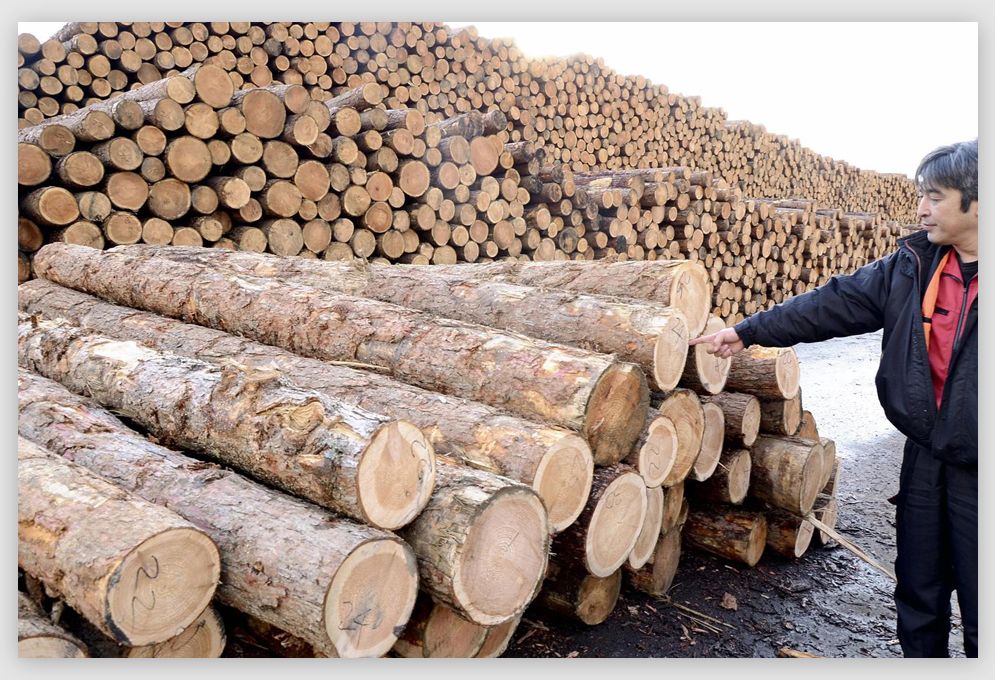
Three months have passed since a strong earthquake hit Hokkaido in early September. In disaster-affected areas, an increasing number of people are using large numbers of trees felled by landslides. The central government, Hokkaido government, local forestry cooperatives and paper-manufacturing companies plan to cooperate with each other to use fallen trees, such as by making the shift to renewable energies by turning them into fuel for stove heaters and biomass power generation, as well as making paper and lumber from them. Through such efforts, they aim to achieve eco-friendly reconstruction from the earthquake. “There are no parts of a tree that can be throw away. We can use fallen trees as energy sources without wasting any parts,” Tatsuo Kobayashi, 46, an official at the Hobetsu processing center of the Tomakomai wide-area forestry cooperative in Mukawa, Hokkaido, said in late November, while looking at piles of logs…
One person is dead after a tree fell on a car, officials say. According to Medic, paramedics responded to a report on East John Street and Charles Buckley Way in Matthews. One person was pronounced deceased by the paramedics. Matthews Police Department officers responded to the area at approximately 4:16 p.m. According to police, the vehicle was struck by a falling tree just before the intersection of Charles Buckley Way. After the tree fell on the car, the vehicle drove through the front lawn of Matthews Church of God on the 500 block of East John Street. The vehicle then struck the front of the church, causing minor damage, before coming to a stop in the next door residential yard, police say…
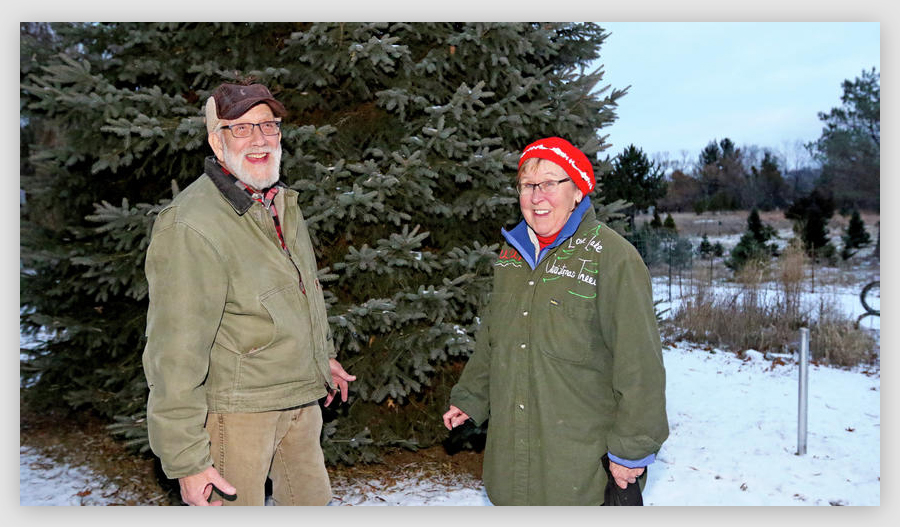
Hidden from view along a country lane north of Baxter is a humble meadow dotted with young evergreens. But for many lakes area families, it’s so much more than that. It’s a patch of land that’s witnessed the unbridled joy of children for two generations, offered countless neighborhood teens first jobs as “elves” and provided thousands of Christmases with the season’s most cherished symbol — the tree. And this December will be its last. “I used to say somebody would drive in here and they’d be all grumpy,” said Susan Schmidt, co-owner of Christmas tree farm Love Lake Trees, “and then they’d leave with a big smile on their face.” Susan and husband Allen Schmidt have been preparing for the farm’s closing chapters — they quit planting new firs, spruces and pines two years ago, and are sharing the news with regular customers who’ve come for this year’s tree. Age — they’re both in their early 70s — and the call of warm weather are factors in the Schmidts’ decision to end the farm’s run, but two consecutive summers of violent storms hastened its exit…
Botanists have a joke about time, distance and themselves. Where most people walk about three miles in an hour, botanists will tell you they dawdle along at one mile every three hours. After all, it is only when you pause that the green blur of a forest resolves into individual species. Joe Rausch, head botanist for the Malheur National Forest in Oregon, claims to be different, though. The barrel-chested 44-year-old looks more like a firefighter than someone fascinated by the genetics of miner’s lettuce plants. “I am impatient for a botanist,” he said. This “impatience” is relative. It’s true that Rausch strode down the trail, deep in central Oregon’s Aldrich Mountains, well ahead of forest geneticist Andy Bower and former Forest Service Northwest region botanist Mark Skinner, who stopped every 20 feet to inspect a new wildflower, exclaiming, “You don’t want to walk by all this stuff, do ya?” But as we switch-backed down a hot, bright slope of yellowing grass, Rausch also lingered over his fair share of plants, especially trees emblematic of the mountain range’s parched climate — juniper, ponderosa pine, mountain mahogany dangling with horsehair lichen. It was a good thing, too: Our destination was the kind you can easily miss, where a few steps take you into a different world…

In recent years, most efforts to expand New York City’s tree canopy—and thus strengthen the urban environment—have focused on planting new street trees or replacing non-native species with native trees in the city’s remaining forests. Yet citywide assessments have found that non-native trees have come to co-dominate the city landscape, calling into question these management strategies and the very value of urban forests. Those assessments might have been looking in the wrong place, according to a new study by Yale scientists and the Natural Areas Conservancy. In a comprehensive inventory of the city’s expansive yet overlooked “forested natural areas,” the team of researchers found that native species still comprise about 82 percent of New York City’s forest stands. And it is in these natural areas where the majority of the city’s trees are located: more than 5 million in these landscapes compared with about 666,000 street trees. Forested natural areas are essentially places that look and feel like “the woods” or “forests” as they are more traditionally known, as opposed to urban forest areas typified by street trees and park trees in addition to natural areas. Natural areas exist in stands, or groups of stands, often growing together in patches across the landscape…
Fourteen of 18 ficus trees in Hollywood that are the focus of a legal battle and demonstrations after the city had slated them for removal will be spared, Los Angeles City Councilman David Ryu said Thursday. The trees on the 1200 block of Cherokee Avenue were scheduled to be cut down according to a summer report from the Bureau of Street Services, which said the removals were needed in order to fix the sidewalks. Two groups, United Neighborhoods for Los Angeles and Eastside Nature Alliance, took legal action to try and stop the removals, and a court injunction put the final decision in the hands of the City Council. Ryu said he worked with the Bureau of Street services on a solution, and a new report issued by the bureau concludes that 14 can be spared the ax. “When I was first told that all 18 of these beautiful, mature trees had to be removed to fix the broken sidewalks on Cherokee Street, I thought `there must be a better way.’ We cannot pit sidewalk repair against protecting our urban canopy,” Ryu said. “This report makes clear – we can do both…”
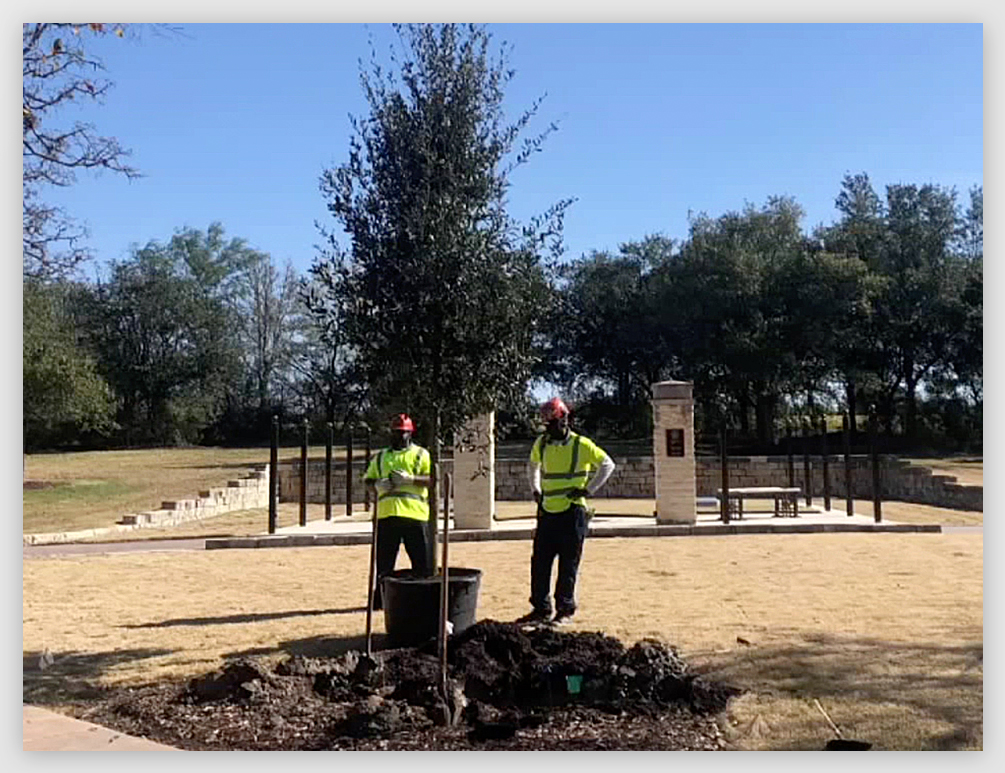
President George H.W. Bush and his family will forever be shaded thanks to a local farmer. Residing about an hour north of Houston is a tree farm that takes its products very serious. “We’re a mom and pop operation,” U.S. Trees of Texas owner David Kleimann said. U.S. Trees of Texas has more than 60 types of trees including hedges, evergreens, and ornamentals. “They are the top beauty of any live oak tree I’ve ever grown, and I’ve been doing this for 35 years,” Kleimann said. The Cathedral Live Oak tree is cell produced and is known to stand above any other tree. “What that means is that you look at each and every other tree that’s in this line,” Kleimann said. “Each and every limb are in the same place on every tree…”
Main Street in Slippery Rock is lined with a large number of Cleveland Select flowering pear trees, whose snow-white blossoms typically appear for a few weeks in April. Unfortunately, many of the trees look as though they have burnt leaves, the result of a contagious pathogen called fire blight. Luke Gregory, a Slippery Rock University senior and Murrysville native, is hoping to change that. “Plants don’t complain,” Gregory said. “Trees are often overlooked so people have to look out for them. This fire blight has swept through and infected a lot of them (along Main Street), so we’re trying to remove the trees that have it and plant a greater diversity of trees.” With that in mind, Gregory and SRU biology professor David Krayesky started Fight the Blight . The project’s goal is to remove infected pear trees and replace them with new species such as Kousa dogwoods, redbuds and Washington Hawthorns, while increasing the variety of species near Main Street to include hornbeams, ivory silks, Linden trees, Prospector elms and royal burgundy flowering cherry trees…
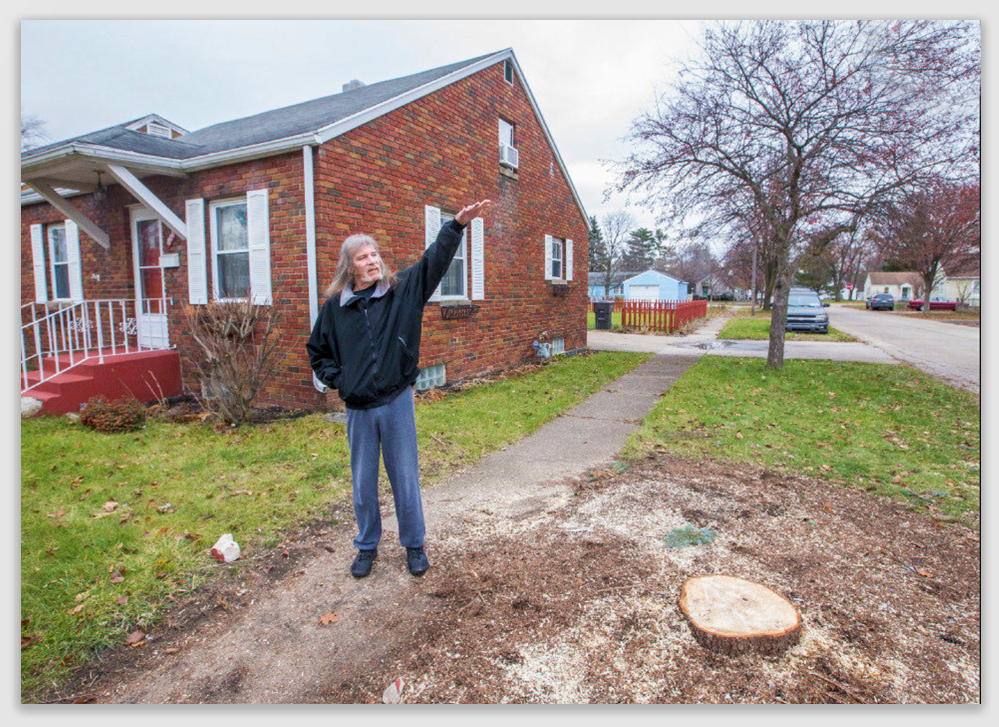
The community will gather Friday night at Civic Plaza for a ceremonial lighting of a Christmas tree, historically a symbol of life and hope during the holiday season. Here in Elkhart, it’s part of the Winterfest celebration. But the way this year’s Christmas tree was obtained has angered a property owner and his father, a situation city Building and Grounds Department head Mike Lightner says he regrets. About 9:40 a.m. on Nov. 26, Dennis Morman said he was surprised to wake up and look out his window to see a city crew cutting down the 33-foot Colorado Spruce from the tree lawn, the city-owned area between the street and sidewalk, next to his yard at 800 W. Lusher Ave. Dennis said he had recently trimmed the tree back because its branches had overtaken the sidewalk, prompting a visit from a city employee who warned him that if he trimmed it again, he could be held liable for damaging the tree, which the city had valued at $16,000 to $18,000. “It was a gorgeous tree,” Dennis said. During that initial visit, the municipal employee said the city might use it for the Civic Plaza display, but nothing was certain, Dennis said. He and his son, Kyle, a South Bend native who lives in Georgia and rents the home to his father, said the city should have shown them the courtesy of at least discussing its removal with them first. Their anger highlights the confusion some people have about city tree lawns. Residents are required to cut grass and weeds there, but the city maintains its trees, Lightner said…
If you peer past the ornaments and outer branches at the base of the city’s official Christmas tree— a broad and bulky 40-foot-tall blue spruce — you’ll find yellow and brown needles along with bare limbs more fitting for Charlie Brown’s famously sad seedling than downtown’s holiday centerpiece. The tree that’s the focal point of the city’s Stroll on State is a victim of a widespread problem disfiguring blue spruces across the region. It suffers from a disease called Rhizosphaera needle cast — pronounced rye-zo-sphere-uh — which has drawn comparisons with the Dutch elm disease epidemic and emerald ash borer that nearly wiped out those trees in northern Illinois. Arborists and other tree care experts say the scourge of Rhizosphaera has surged over the past three to five years, forcing landscapers and homeowners to take down the ornamental tree known for its dense, powder-blue needles. “I think their time has passed here,” said Tim Gruner, garden curator for Anderson Japanese Gardens, the region’s premier public garden. “I wouldn’t plant a blue spruce anywhere in the region…”
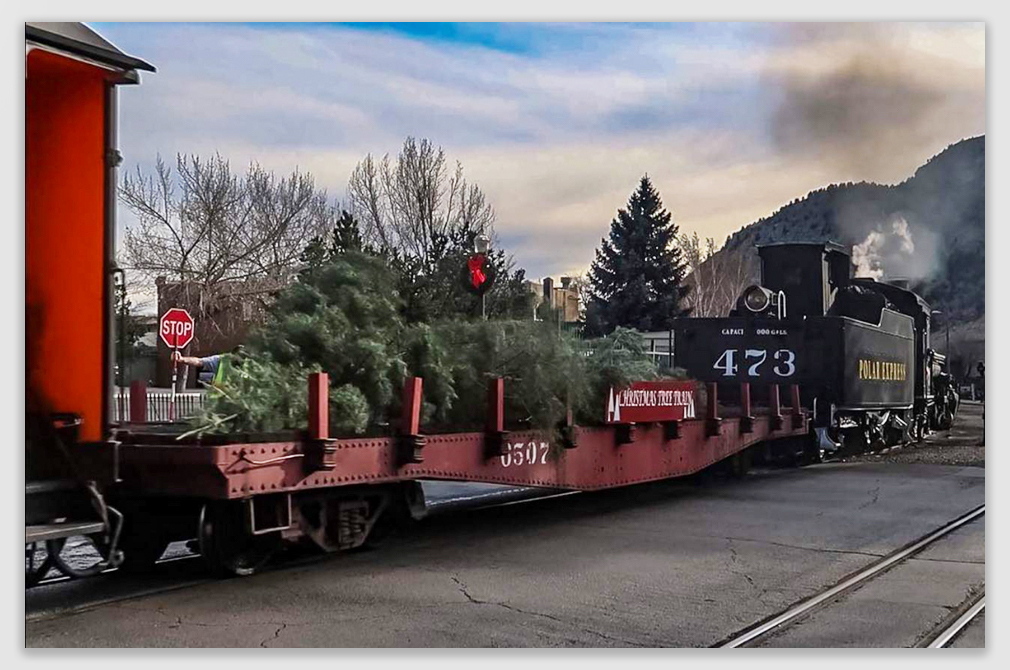 Durango, Colorado, Herald, December 5, 2018: Need a tree? Take the train
The San Juan Mountains are chock-full of trees. So many, in fact, that the Durango & Silverton Narrow Gauge Railroad has to cut some down to help prevent potential wildfires. Now, as the holiday season approaches, the railway is enlisting the help of its riders to reduce fire risk – giving residents a chance to cut down a tree for the holiday season. D&SNG is offering trips to the high country for residents to pick out, cut down and bring home a tree from the mountains for the holiday season. The train has been making the opportunity available for the past four years, said Christian Robbins, spokesman for the D&SNG. Robbins said the service began with a question that sprouted in mind: Why don’t people go to the San Juan Mountains for holiday trees anymore? He did it when he was a kid, but not many people have continued the tradition. And the trees need to be cut down anyway, so why not put them to good use, he said. Robbins took some time the next summer in Cascade Canyon to look at the trees that need to be cut down. They’re all short trees, the ones that burn most in wildfires. Those trees also make for perfect indoor decorations. The D&SNG makes a trip through Cascade Canyon anyway, so why not bring people there to cut down trees for the holidays, Robbins said…
About 13 percent of Rhode Island’s forest trees are dead, state environmental officials have concluded, the result of an unprecedented combination of heat, drought and insect infestations from 2015 to last year. The area of dead trees is concentrated across the western half of the state, from Hopkinton to Burrillville, with pockets on Prudence Island and the Sakonnet Peninsula, according to the just-completed assessment by the state Department of Environmental Management. While there are some large contiguous swatches of mortality — in places such as Richmond, West Greenwich and Foster — the tree death is, for the most part, diffuse, with pockets spread throughout rural and suburban communities. All told, the area of death totals about 45,000 to 50,000 acres, short of initial estimates that put the number at nearly twice as much, but still a large portion of Rhode Island’s 369,000 acres of forest. The assessment by Paul Ricard, forest health program coordinator for the DEM, was based on an aerial survey he conducted in September. The tree mortality may be a sign of things to come. Recent research summarized in the scientific journal Forestry found that climate change can facilitate the spread of both native and invasive forest pests and weaken the resistance of trees to these pests. The new update to the National Climate Assessment, released last month, makes a similar warning…
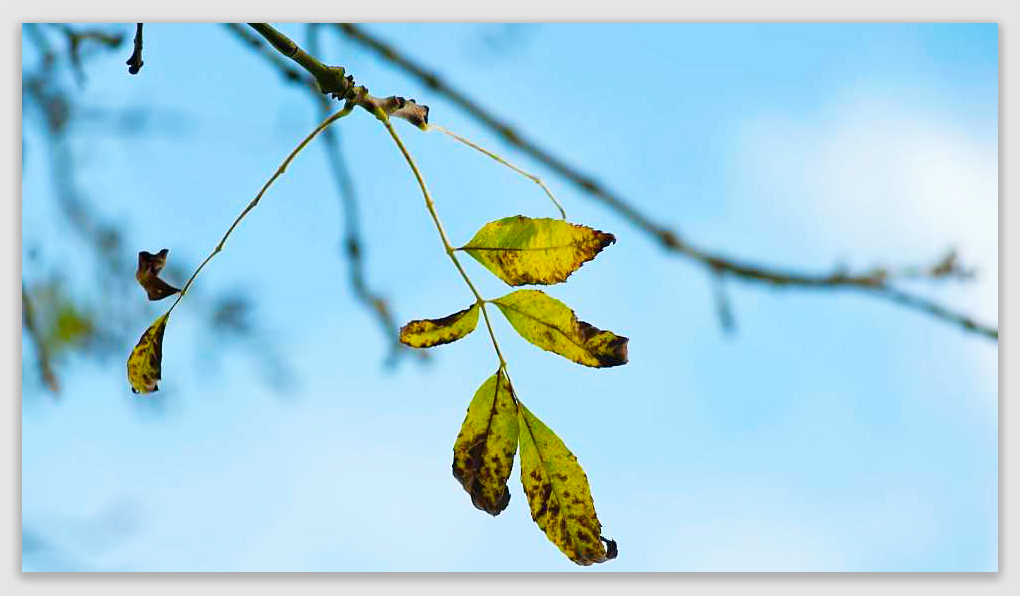 London, UK, BBC, December 4, 2018: Ash dieback: ash woodlands ‘may flourish once again’
Scientists say there is hope that some ash forests will be able to survive a devastating tree disease. Surveys around Europe reveal mortality rates from ash dieback as high as 70% in woodlands and 85% in plantations. A previous study found almost all ash trees could be wiped out. The disease has swept across Europe over the past 20 years, causing widespread damage to woodlands. In many cases the fungus will eventually kill infected plants. “Although the numbers seem grim, the percentage of trees that are still alive is encouraging from a long-term perspective,” said Prof Richard Buggs, of Royal Botanic Gardens Kew and Queen Mary University of London. “If this survival is due to heritable resistance, then conservation policies targeting breeding programs or natural selection may allow ash populations to flourish once again.” The researchers pulled together surveys of ash dieback across Europe, including England, Ukraine, Scandinavia and the Baltic States. They found that even in forests that had been exposed to the disease for 20 years, not all trees were lost…
The Idyllwild-based U.S. Forest Service hotshot crew member who was killed in 2017 when a tree struck him in Montana inadvertently tried to escape directly in the unexpected path the tree was falling, Forest Service reports published this year said. Brent M. Witham, 29, was a resident of Mentone and a graduate of Redlands East Valley High. He had been a member of the Vista Grande hotshot crew for two years and a Forest Service firefighter for six. On Aug. 2, 2017, during the lightning-caused Lolo Peak fire, which burned more than 53,000 acres, Witham was cutting down a tree that suddenly fell. The impact caused broken bones and internal injuries. He died within minutes. Before releasing the reports, the Forest Service had not previously said that Witham was felling the tree or explained why he was hit. Witham’s death, like all Forest Service fatalities, resulted in a number of reports. The lessons-learned report examined the culture within the Forest Service, firefighting in an environment that produces more intense fires, communications and supervisors’ qualifications. The field report, through discussions with a focus group and interviews with firefighters, administrators and academic specialists, assessed tree-cutting techniques, escape routes and safety equipment…
 Phys.org, December 3, 2018: Massive need for growing trees on farms
It’s now over 50 years since the world was first warned that resources were being used at an unsustainable rate. It has now been estimated that almost one quarter to one third of the world’s land is degraded to some extent. Degradation refers to land that’s lost nutrients, or has changed physically, and therefore produces less or supports less life. This is mostly caused by the loss of soil, changes in the quality of the soil, or changes to land cover – like trees being cut down. About 20% of agricultural land and 40% of forests are degraded. Degradation reduces our capacity to feed a world population that will reach at least 9 billion people by 2050 and it destroys ecosystem services – like the supply of clean water. Also when soil is degraded and trees destroyed, the carbon they contain is released into the atmosphere. Having high levels of carbon in the atmosphere is a major cause of climate change. Because a great deal of land has been changed to produce food, agroforestry, the practice of deliberately introducing trees into farms, is an important way to restore degraded land. These trees, outside of forests, have tremendous commercial and ecological value…
US News and World Report, December 3, 2018: Hawaii rapid Ohia tree-killing disease spreads on Kauai
A fungal pathogen that kills trees native to Hawaii has been discovered in two more areas on Kauai. Three more trees have tested positive for rapid ohia death after it was found for the first time on the island in 14 trees in the Moloaa Forest Reserve in early May, The Garden Island reported. The new trees are located on privately-owned land in Halelea Moku and near the Lihue-Koloa Forest Reserve. Scientists at the U.S. Department of Agriculture have identified two different species of rapid ohia death, Ceratocystis lukuohia and Ceratocystis huliohia. Only the less aggressive form, Ceratocystis huliohia, has been found on Kauai. “At this point, only one of the two fungal pathogens has been confirmed on Kauai,” said Melissa Fisher, Kauai forest program director. “Now we need everyone to be extra vigilant to prevent further spread of the existing disease and help to keep the other ROD-causing pathogen off our island as well.” Following the initial discovery of the disease, researchers have conducted aerial surveys of the island, finding 22 areas with ohia trees showing symptoms consistent with the disease. They have collected 76 samples this year and have submitted those for lab testing, said Tiffani Keanini, project manager of Kauai Invasive Species Committee. A collection of local, state and federal agencies as well as private organizations are conducting the work…
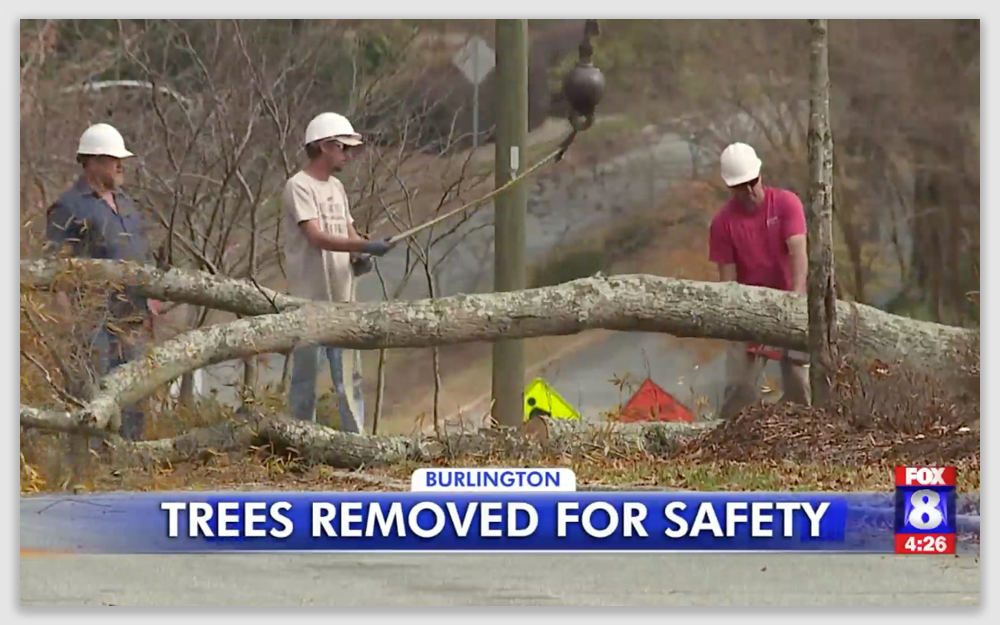
In a way, Todd Henderson with Southern Tree Service, is watching a delicate surgery. Henderson looks on as a co-worker in a bucket rises 60 feet into the Alamance County sky to cut down a huge branch that still towers above him. “They are so big,” Henderson said. “You got to be careful because they are so tall.” A crane operator in a nearby truck brings the large branch to the ground by guiding it between a lamp post and a home. Once on the ground, the rest of the crew revs up their chainsaws and cut the branch into smaller pieces. Southern Tree Service is removing 11 massive trees, mostly oak, because they are a safety hazard. A certified arborist tested 26 trees in Burlington’s West Davis Street/Fountain Place Historic District. According to the arborist, 11 trees in the city’s right of way were in danger of falling. When Southern Tree Service began taking the trees down, their trunks were hollow. “It makes them weaker,” Henderson said. “They are more likely to break in the ice or wind or no wind at all.” The next step is to grind the tree’s stumps or dig them out. Jeff Parsons is Burlington’s cemetery and grounds superintendent. He explains the tall trees, some of them over 100 feet tall, damaged sidewalks and repairs need to be made. “Trees do push up sidewalks and curbs as they try to grow roots,” Parsons said. “Anything in their way, they will push up or over…”
Vodka, 7-Up and aspirin might sound to some like a hangover remedy, but believe it or not they are used by lot of people to keep their Christmas trees fresh. But do they really work? No, according to Chal Landgren, a Christmas tree specialist at Oregon State University. He said one of his research colleagues at Washington State University actually conducted an experiment putting Christmas trees in water mixed with things like vodka, 7-Up, aspirin or sugar. He found none of those things helped. “Just plain old water is all you need, and the only trick is to make sure you keep the water in the stand and don’t put it near a heat source like a wood stove or right above the heater vent,” said Landgren. Landgren said there are some things you can do to keep your Christmas tree fresh. For starters, when you get it home, put it in water right away. If you’re leaving it outside for a bit, go ahead and fill a bucket with water and set the tree in there. If it’s been more than 24 hours since the tree was cut, or if you bought it from a lot, cut the end of the base off. About a quarter inch will do. The fresh cut will allow the water to more easily make it up into the tree…
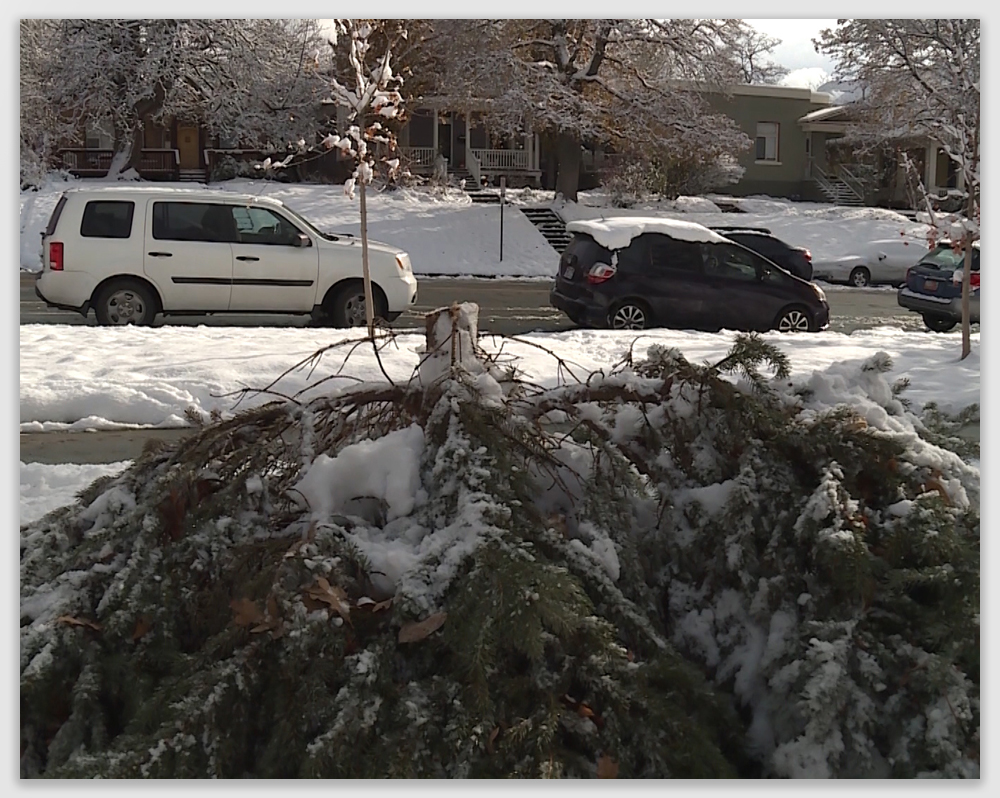
A real-life Grinch in Salt Lake City didn’t steal the Who pudding or the roast beast, but what they took left a big hole. The alleged thief stole a tree right out of the front yard. “It’s frustrating,” said Kipp Lee. “It’s not in the spirit of Christmas.” Lee planted the tree, along with a dozen others, about 13 years ago on the property he managed at 528 South 1100 East. Saturday afternoon, the tree was gone. “I just noticed a void in the yard, because we had this lush tree over here. All of a sudden I just noticed there was 2 feet of a tree left,” said Lee. “Obviously, somebody must have chopped it that morning while I was at work.” The only evidence left behind was a stump where a beautiful, 8-foot Black Hills spruce tree used to stand. “(It was) definitely not an accident,” said Lee. “It was very deliberate and well planned.” Lee didn’t know the person’s motive but said he had a good guess. “Somebody obviously needed a Christmas tree,” he said. “To the person who stole it: I hope you enjoy the tree…”
Mongabay.com, December 3, 2018: Tropical trees grow most easily where they are rare
Tropical forests are incredibly diverse ecosystems, and ecologists have long wondered why. New research studying a specific Panamanian tree – the yellow-flowering Handroanthus guayacan – has provided an answer. But the conclusion is counterintuitive. Rather than growing more abundant in areas where it is common, the tree actually increased its numbers in areas where it is rare. Researchers at Brown University and the University of California, Los Angeles, published their findings recently in the Proceedings of the National Academy of Sciences. They used high-resolution satellite images to investigate the long-term population of this tree on Barro Colorado, a 6-square-mile [15.5-square-kilometer] island in the Panama Canal. Using these data over a 10-year span, they confirmed a scientific hypothesis that has been around, but unproven, for decades. Developed in the early 1970s, it’s called the Janzen-Connell hypothesis after ecologists Daniel Janzen and Joseph Connell, who proposed the idea independently. It maintains that high diversity is a response to predators. Foraging efficiently, predators will hunt for their favorite foods in areas where resources are abundant, rather than in places where these resources are sparse…
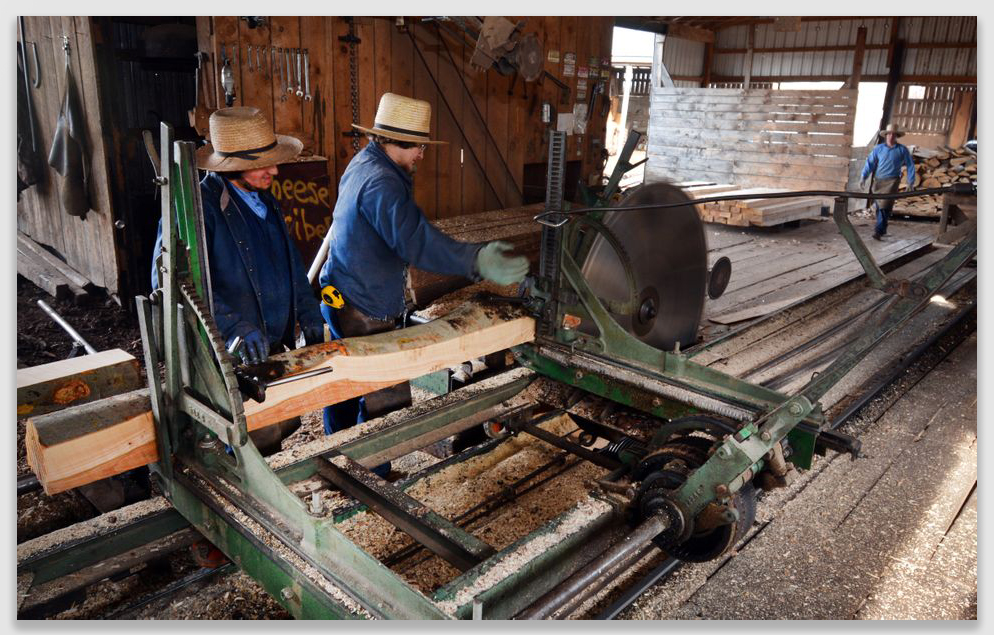
Jerry Hatfield never planned to own a saw mill, but when his father-in-law died in 2005, it fell upon him to take it over. Now it seems it was meant to be. The R.M. Wood Company has been around since the 1950s, tucked away on Old Mill Road among the Amish farmers’ fields and woods outside the village of Spencer along the western edge of Medina County. The small, open-air mill produces more than a million board feet of lumber a year. It is one of about 200 saw mills in the state, which range from large, modern mills that operate with machines, lasers and technological advances to one-man mills run by a guy with a portable saw. Hatfield’s operation is on the small to medium side of an industry that collectively contributes $24 billion a year to the state’s economy. Saw mills once were plentiful in every city and town in Ohio, but these days they are relegated to rural areas. Hatfield’s mill has found a comfortable niche supplying wood for furniture, floors and interior woodwork for houses…
Storms, invasive pests, disease and old age have reduced Hartford’s “urban forest” by thousands of trees in recent years, and city officials hope a newly update ordinance can help slow or prevent more losses. Hartford’s budget problems also have cut drastically into the city’s efforts to replant trees to make up for the dwindling forest cover. The number of trees planted using municipal funds dropped from more than 1,000 in 2013-14 to nothing in the past two years, according to city records. “The [city’s] tree planting budget for this fiscal year … is zero,” Jack Hale, chair of Hartford’s Tree Advisory Commission said. Hartford has lost about 1 percent of its total urban forest since 2011, according to Hale, but many of the trees that have been cut down were old, very large trees that provided a disproportionately large share of the city’s foliage…
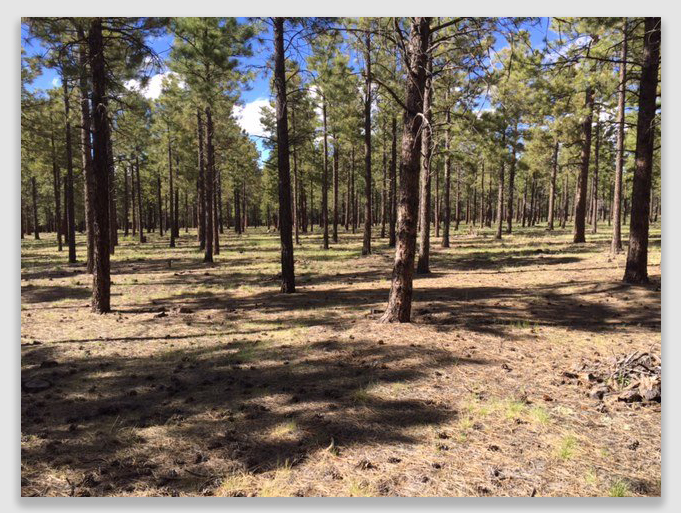 Taos, New Mexico, News, November 21, 2018:Thin the forests to save the trees
We have been thinning our forest here on Llano de la Yegua in Northern New Mexico since 1987. It is a monumental job that does not get accomplished without an incredible amount of time, money, energy and commitment. Our ponderosa forest needs to have around 85 percent of the trees taken out to return it to the tree density numbers nature had before humans screwed up the plan. When I tell people, seeing our work for the first time, that we are removing 85 percent of our trees, the response is always comical. But the effort needed to cut trees, burn the branches and remove the wood is way beyond comical. In the early years, we were lucky to accomplish two or three acres each year. Now we are thinning around 50 acres a year. With over 250 acres in the mostly completed stage, the reforestation makeover completely changes the landscape. Now, instead of dense almost impenetrable thickets of spindly, sick, insect- and disease-infested trees, we have open parklike views of individual trees surrounded by grass and shrubs. The tree ring growth rates tell the tale. An eighth of an inch or less is what the trees were growing in the past. After thinning, we have three-eighths to half an inch of tree ring growth a year. It is amazing what an increase in sunlight and water can do for tree health…
McAllen, Texas, Monitor, December 1, 2018: Historic native trees still worth planting
It’s tree planting time in the Rio Grande Valley. It’s cooler, the sun is not so strong, making November through February the best time to plant trees. During these cooler months, newly planted trees can concentrate on root growth and getting established and will then be ready to prosper with the spring rains. Consider planting one of the Valley’s old standards like ebony, anacua or mesquite, or a not-so-familiar tree such as brasil, or guayacán. Any of these trees will benefit your yard and attract birds and butterflies — for your enjoyment as well as for the health of a native habitat. These five trees are stand-alone as they will eventually take up considerable space. In the meantime, native shrubs and plants can grow alongside the young tree. Texas Ebony (Chloroleucon ebano) can grow to 50 feet tall. It keeps its leaves all year and is a host plant to sulfur, blue and skipper butterflies. It provides great cover for wildlife and nesting sites for birds. Branches have paired spines…

A judge is to sentence a world-renowned Alberta ski resort today for cutting down endangered trees five years ago. The Lake Louise resort in Banff National Park pleaded guilty last December to taking down a stand of trees, including some whitebark pine, along a ski run in 2013. The resort is to be sentenced in a Calgary courtroom on two charges — one under the Species At Risk Act and the other under the Canada National Parks Act. A total of 132 trees were removed, but the actual number of endangered whitebark pine has been disputed. The Crown originally said 39 were removed, but the defence said the number was much lower. The maximum fine under the Species At Risk Act for each tree destroyed is $300,000, while the maximum per tree is $250,000 under the National Parks Act. “We’ll be relieved when it’s finally over,” said Dan Markham, communications director for Lake Louise Ski Resort…”
Heavy rainfall likely caused some trees to fall around the Bay Area. KRON4’s Philippe Djegal was in the East Bay where tree trimmers are in the midst of their busy season. Veteran trimmer Phillip Byers said an old oak tree toppled over on Richmond Boulevard in Oakland due to over-saturation and poor upkeep. He said, “We got the call this morning, but it happened at around 11 o’clock last night.” Byers works for Vega’s Tree Service and says another company maintained the oak over the years but didn’t recognize in the leaning limbs were hazardous. “The tree wasn’t trimmed correctly,” Byers said. “The water, it got saturated in the ground and because all the weight is onto the left-hand side. Heavy rain – it’s inevitable for it to fall…”
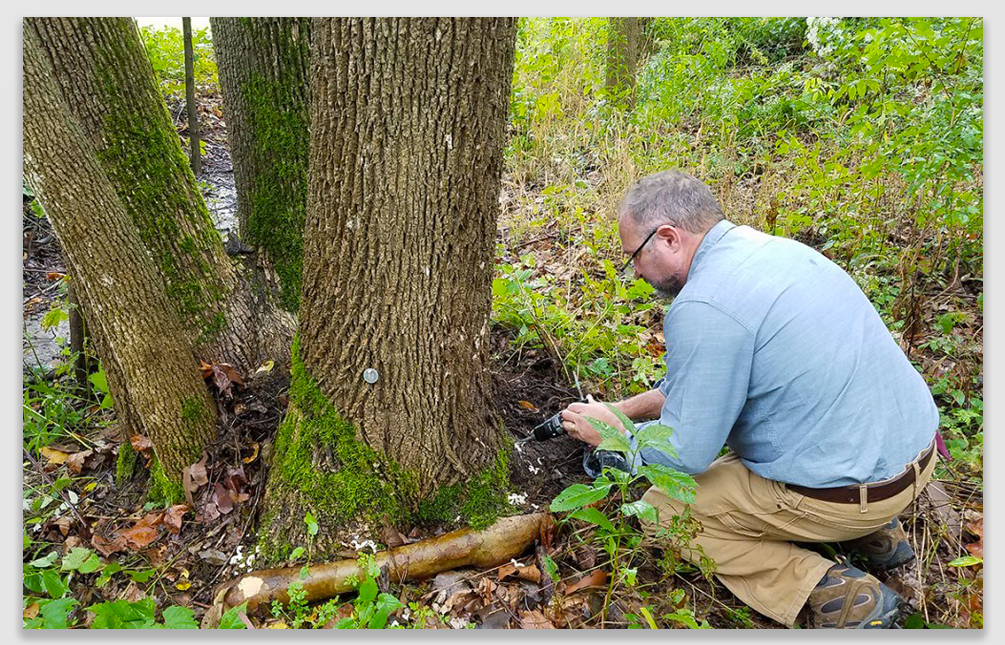
This October, the over-a-century-old tree on Libe Slope located near the Sesquicentennial Memorial died and was cut down. This tree marks one of over 2,100 ash trees on Cornell grounds that will be cut down within the next few years because of emerald ash borer, an invasive insect species that kills ash trees. The larvae of the emerald ash borer beetle feed on the inner bark of ash trees, preventing the trees from transporting water and nutrients and gradually killing them. Since EAB entered the United States from Asia over 15 years ago, the insect has killed hundreds of millions of ash trees in the United States, spreading across 35 states, according to the USDA. In the spring it was confirmed to have reached Tompkins County. Once EAB invades, it only takes two to four years for an ash tree to die. Within one year of dying, ash trees begin to fall apart. Most of the estimated 50,000 to 100,000 ash trees covering Cornell grounds will succumb to EAB, according to Todd Bittner, director of natural areas at the Botanical Gardens. The University is attempting to provide proactive measures and treatments to deal with EAB for a small subsection of the trees, and around 165 trees have already been treated with a pesticide that will protect them from EAB for up to three years. These trees largely consist of rarer types of ash trees and trees with historical or geographical value…
New London, Connecticut, The Day, November 29, 2018: Cutting trees to restore the Hoffman Preserve
More than a half-century ago gold miner Robert D. Hoffman planted some 100,000 pine, spruce and hemlock seedlings in what is now a nature preserve in Stonington, hoping to recreate the Canadian forest he so revered while prospecting on snowshoes and canoe through remote regions of Ontario and Quebec in the 1920s. Today many of those now full-size evergreens are dead or dying because of insect predation, drought and storms, and so plans are underway for a forest management program that calls for carefully planned, significant tree-cutting. The Avalonia Land Conservancy, which owns the 198-acre Hoffman Preserve, approved the plan Wednesday night, and logging crews are expected to begin work soon. “The main issue is it’s become dangerous (because of the threat of falling limbs and trees),” said Beth Sullivan, Avalonia’s steward for the town of Stonington. So much dead wood also poses a risk for forest fires, she added…
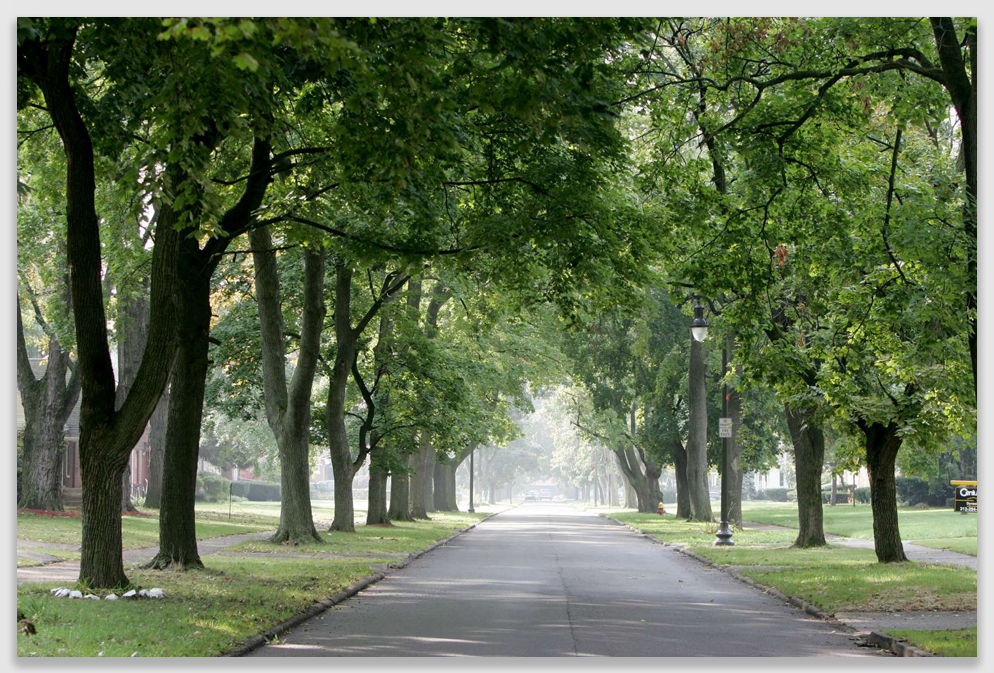
Should cities and townships be able to regulate trees and where they can be in their jurisdictions? A state senator doesn’t think so. State Sen. Tom Casperson, R-Escanaba, and his “Vegetation Removal Prevention Act” would prohibit local governments from adopting or enforcing ordinances or charters “prohibiting or restricting the removal of trees or other vegetation.” The bill, Senate Bill 1188, and six other related bills were passed on a party-line vote Wednesday out of the Senate Natural Resources Committee Casperson chairs, and will now go to the full Senate floor for a likely vote. Casperson, whose family has operated a log trucking company in the Upper Peninsula for three generations, says it’s a matter of private property rights. “When we’ve got personal property being managed by an individual, if they want to thin their forest out, especially if there is disease or invasive species, who’s in a better position to make that decision?” he said…
Peach leaf curl and shot hole disease of peaches are common problems for the backyard gardener. Both are fungal diseases that are treated with copper-based fungicides in late fall after all the leaves have fallen from infected trees. The same copper product can be used to combat both diseases. Leaf fall dates change every year depending on weather patterns. During the next couple of weeks, monitor your peach and nectarine trees for complete leaf fall and check the weather reports for predictions of rain. Rains and overhead irrigation can wash off the fungicides. The most obvious symptom of peach leaf curl occurs in spring during cool, wet weather as the new leaves on peach and nectarine trees turn red instead of green and become thick, curled and distorted. The thicker sections of infected leaves turn yellow and then are covered with a grayish white fuzz of fungal spores. The infected leaves usually fall off and are replaced by a new crop that shows fewer or no symptoms of the disease. Peach and nectarine trees infected with untreated peach leaf curl disease decline in vigor over several years; the fruit is affected, as well…

The head of San Francisco’s new street tree program called for patience Wednesday, saying it will take an additional three years to get to all of the approximate 125,000 street trees citywide. Meanwhile, street tree supporters are calling on The City to spend an additional $12 million a year to plant thousands of more street trees to grow the urban forest. Since the voter-approved StreetTreeSF program launched in July 2017, The City has pruned more than 20,000 street trees, or 19 percent of the total, using a team of contracted arborists. There were 2,020 trees removed last fiscal year after they were deemed unhealthy or structurally unsound — more than the 742 tree removals the previous year, according to information provided to the San Francisco Examiner by Carla Short, superintendent of Public Works’ Bureau of Urban Forestry (BUF). Short told the Board of Supervisors Public Safety and Neighborhood Services Committee Wednesday that arborists are working in sections of the city based on the highest density of trees in the worst conditions. The plan is to prune all the trees by the end of fiscal year 2020-2021…
Now that Thanksgiving is over, getting a Christmas tree is probably high up on your holiday to-do list. Pennsylvania has plenty of options if you adore the tradition of cutting your own at local tree farms. The state has more than 1,400 Christmas tree farms, with sales generating $22 million a year. The state also ranks fourth in the national in annual Christmas tree harvests, at more than 1 million. Only Oregon, North Carolina and Michigan produce more Christmas trees. The state also ranks fourth in acres devoted to growing Christmas trees, at 31,577. That’s more than 49 square miles, or enough to cover all of Bethel Township — Berks County’s largest municipality — and then some. Is the spotted lanternfly a threat to Christmas trees? Not really. The Pennsylvania Christmas Tree Growers Association says the pest does not appear to eat conifers. While the insects lay their eggs on a variety of outdoor surfaces in the fall – firewood, grills, sheds, vehicles and the trunks of a number of trees – the eggs aren’t commonly found on Christmas trees. Even if a resident discovers eggs on his or her tree – the spotted lanternfly lays between 30 to 50 eggs in one mass, noticeable for its waxy gray or muddy inch-long covering on the trunk – it’s unlikely they’ll hatch in your home, according to Tanner Delvalle, a Penn State Extension educator…
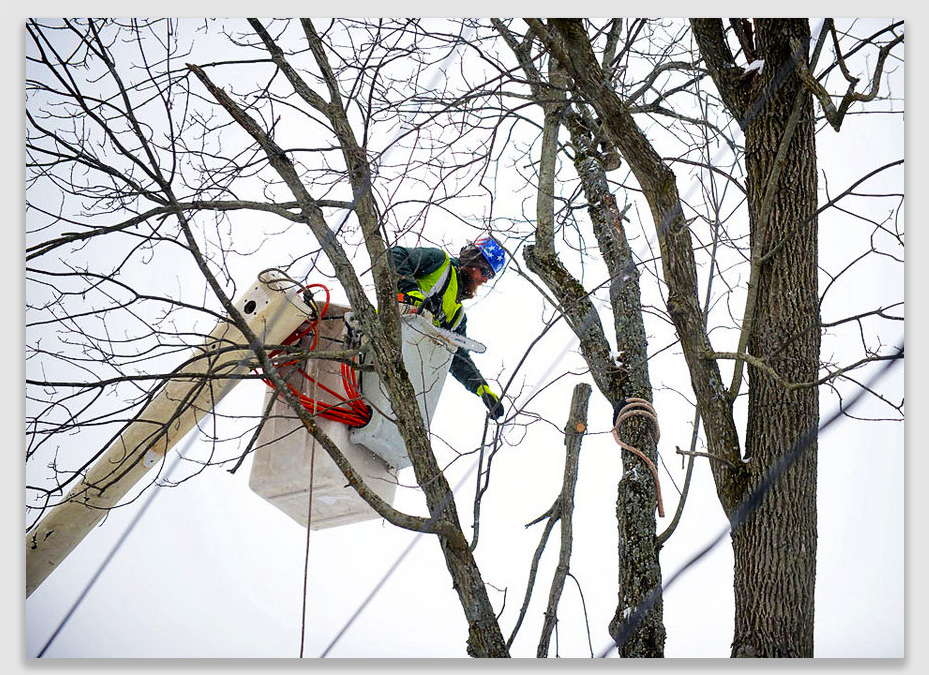
A Hayward-based company has been ordered to pay thousands of dollars in fines for safety violations related to the death of a tree trimmer at the Stanford West Apartments last May, according to public documents. California’s Division of Occupational Safety and Health (Cal/OSHA) issued the $18,600 citation and fines against Arborwell Inc. on Nov. 16. The penalties are for a May 19 incident when an employee was killed after his climbing rope became caught in a chipper. The company plans to appeal the fine, a spokesman said. Arborwell crew members were pruning a line of sycamore trees at the apartment complex, which is located at 700 Clark Way. Jesus Silva Romero, 36, of San Jose, and three others were assigned to prune trees at the green space or lawn area at a child care center on the property. After their lunch break, one of the employees moved a truck and chipper between two trees. Romero climbed one of the trees, another employee entered the other and they began trimming, according to the Cal/OSHA report. The employee who had moved the chipper began moving a pile of branches from under Romero’s tree to add to the chipper. He noticed that Romero’s climbing rope was entangled in some of the cut branches at the far end of the pile. He did not think he had gathered any of the rope when he took the branches to the chipper, he told investigators. As he turned away, he heard a loud sound. Romero was hanging from the line, immobile, after his rope had been fed into the chipper, according to the Cal/OSHA report. Romeron sustained head, neck and torso injuries as he was pulled through the branches by the rope. Workers sought to rescue him. A Santa Clara County Medical Examiner-Coroner’s Office report found he died from blunt-force trauma to his head and neck…
Wedding proposals, wind storms, epic climbs, rope swings and cooling shade. Trees can remind us of lots of things, and we love them here in the Northwest. So much so, Portland is the first city in the world to create an interactive map to tell their stories. “This tree is an amazing tree, it really is. It’s called Monkey Puzzle tree,” said homeowner Walter Poz outside his Laurelhurst neighborhood home. At over five stories tall, and native to Chile, the tree was planted around 1905. “They supposedly grow to be a thousand years old,” Poz said. The tree holds many memories in the 25 years he’s lived here. “We set the teepee up in the yard right under it for a couple of years. And when my son was seven or eight, we put out this water slide and for some reason my son decided he wanted to launch off the slide and grab this tree, you know how boys are. He ended up flying off the top and crashing on the ground,” Poz recalled. It’s those kinds of memories Portland State Professor of Urban Studies and Planning Vivek Shandas wants written down for posterity. “How do we tell stories, what’s the human side of cities, how do we think about community through the perspective of trees?” Prof. Shandas said. In the past year, he and a colleague have received about 300 stories on the website CanopyStory.org. They’re hoping for 1,000. The website shows a wide map of the Portland-metro area. You can zoom into neighborhoods, and further down into the green dots marking trees 50 feet or higher. The dots were able to be mapped thanks to a 2014 radar flight above the city that created a high-definition, 3D map that is able to discern living things like trees and grass, with buildings and map their heights…

A federal jury recently put the West Hayden Estates Homeowners Association on Santa’s naughty list for religious discrimination in violation of the federal Fair Housing Act, ordering $75,000 in compensatory damages to go to the Jeremy Morris family. Prior to the verdict, media coverage of Morris’s dispute with his HOA revolved around crowds, Christmas lights, and not-in-my-backyard sentiment. After examining drafts of letters issued by the HOA to neighborhood residents, sworn affidavits of the people who sold the home to the Morris family, recordings of conversations with HOA board members, and voluminous other pieces of testimony, the federal jury saw it differently. It all started years ago when the Morris family began to organize a Christmas event for the public at their previous home in Hayden. All the usual window dressing of Christmas in America was there, such as candy canes, Santa Claus, and beautiful lights. But the purpose and message of the event was the birth of Christ. Visitors to the Morris’s Christmas program, which would last from 6 to 8 p.m. for five nights before Christmas, would sing traditional hymns, learn the story of the nativity of Christ, and hear a message of faith. Even the candy canes given to visitors included an explicitly religious message. “Look at the Candy Cane, what do you see? Stripes that are red like the blood shed for me,” began the message on the candy canes’ tags. The Morris family paid for the event out of their own pockets. They did not charge admission, or charge for food and drinks their visitors received. They did ask visitors for money to benefit local charities…
A Canton Township feud is fueling accusations that local “tree police” are harassing businesses, prompting a push by state lawmakers to rein in local government rules that limit tree removal or force a business to pay replacement fees. Republican legislation teed up for a possible Senate vote this week during the so-called lame-duck session would allow local governments to regulate the cutting of some large “heritage” trees but ban more aggressive ordinances regulating smaller trees and vegetation in industrial, business, commercial or agricultural zones. Critics argue the proposal is an overly broad response to a local battle in Canton Township, which this month sued businessmen Gary and Matt Percy. The Wayne County township alleged they cleared an estimated 1,500 protected trees from an industrial property without seeking approval through a local permitting process or paying to plant replacements on public property. Canton officials asked the brothers to pay up to $550,000 into a “tree fund” — more than the Percys paid last year for the full 16-acre property, which “essentially was blighted” and plagued by an invasive species, said attorney Michael Pattwell, who argued the legislation is a “narrowly tailored” way to prevent abusive local rules…
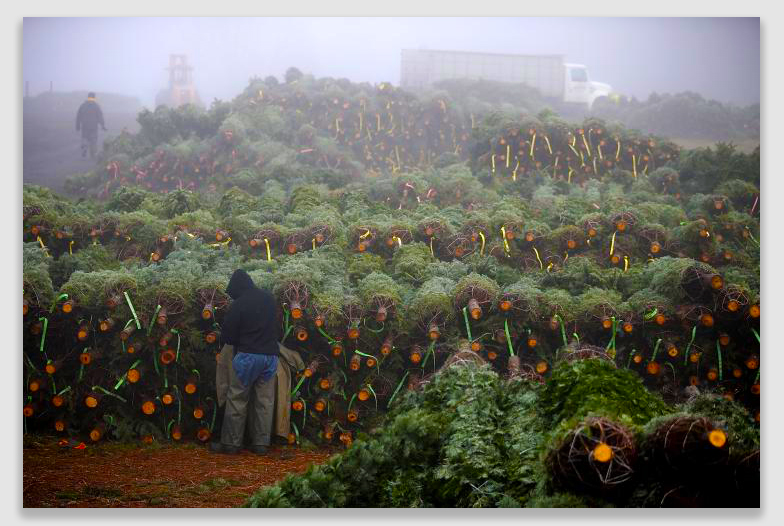
Christmas tree prices continued rising this year as a result of growing shortages dating to the Great Recession, the Miami Herald reported. The 2008 financial crisis put many growers out of business, and the decrease in companies fostering seasonal trees, which take between eight and 10 years to be ready for sale, has yielded a lower supply, driving prices up. The tree shortage exacerbates a problem that has, for consecutive years, plagued Americans who celebrate Christmas. While the supply depletions are widespread, the shortages most impact smaller sellers. “Larger retailers are impacted less by the shortage because they buy a variety of trees in large volume. Liz Simone, the store manager at the Home Depot in North Miami, said her store’s stock is just fine. She expects the store will have enough to last through the 25th,” the Miami Herald reported. At the same time, local retailers are spending more money than previous years and receiving fewer trees. “Last year was bad; this year is horrible,” Chris Winkler, a seller in Miami said. “I’ve invested more money this year and I have less trees.” Approximately 27.4 million real Christmas trees and 21.1 million fake trees were bought last year, according to statistics from the National Christmas Tree Association…
An elderly couple says they no longer feel safe in their own home after they were targeted by thieves posing as tree trimmers. Video captured a man knocking on the Pearland couple’s door, wearing a reflective vest. “I see that he’s got a jacket on with neon stripes like he’s a worker,” said the homeowner, who didn’t want to be identified. When the homeowner answered the door, the man said, “Hello there, sweetheart. I’m so sorry for bothering you. The man claimed he worked for a tree trimming company and he needed to access some cables that may be in the yard. She says he asked if she could take him to the yard. “He said ‘Can I come in and go out through the back?’ and I said, ‘No, you can’t come in…'”
 Techcrunch, November 26, 2018: That night, a forest flew: DroneSeed is planting trees from the air
Wildfires are consuming our forests and grasslands faster than we can replace them. It’s a vicious cycle of destruction and inadequate restoration rooted, so to speak, in decades of neglect of the institutions and technologies needed to keep these environments healthy. DroneSeed is a Seattle-based startup that aims to combat this growing problem with a modern toolkit that scales: drones, artificial intelligence and biological engineering. And it’s even more complicated than it sounds. A bit of background first. The problem of disappearing forests is a complex one, but it boils down to a few major factors: climate change, outdated methods and shrinking budgets (and as you can imagine, all three are related). Forest fires are a natural occurrence, of course. And they’re necessary, as you’ve likely read, to sort of clear the deck for new growth to take hold. But climate change, monoculture growth, population increases, lack of control burns and other factors have led to these events taking place not just more often, but more extensively and to more permanent effect…
Half of all Coloradans now live in an area that’s considered to be at risk for wildfires, according to a new assessment from state researchers. About 2.9 million people lived in what the Colorado State Forest Service calls the wildland-urban interface (WUI) in 2017, the news release said. CSFS defines that as “the area where human improvements are built close to, or within, natural terrain and flammable vegetation.” Their newest figure is 50 percent higher than when the forest service last updated its maps five years ago. Changes in infrastructure, vegetation, weather, and population are all reasons, CSFS said, and the new population numbers are based on a few factors: more people living in the area, more specific data and changes in land use. “The largest increases in population growth within the interface are in areas where agricultural lands are being converted to grasslands and subdivisions. Although these areas are considered in a low-risk category by the assessment, they are still at a higher risk for wildfire than more urban areas,” the report said…
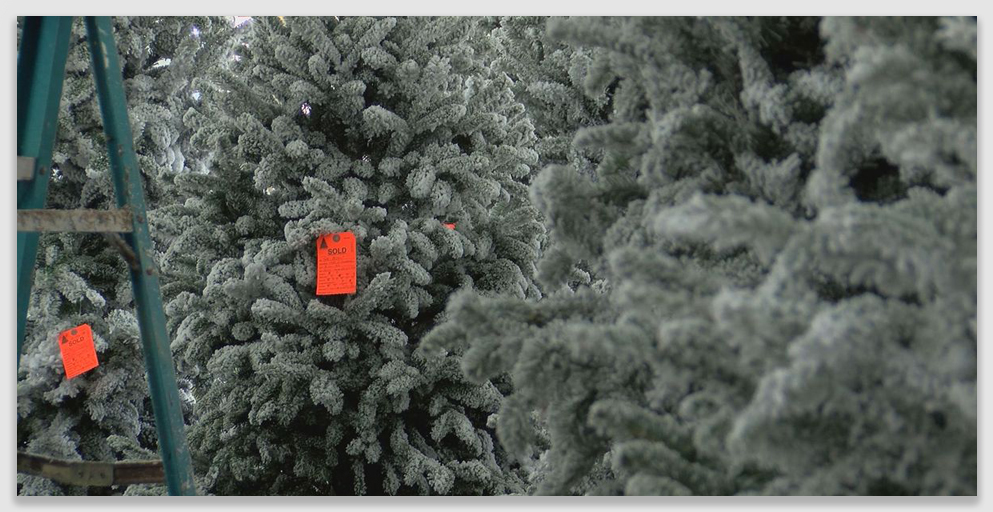
Chip Speaker wasted no time after Thanksgiving this year to pick out a tree at Robert Anderson Christmas Trees in Biloxi. “I’ve come here several years, and I waited too late last year, and they were out of trees,” he said, “And so, I came early this year, and so I’m pleased with what I got.” It’s a good thing Speaker learned his lesson the first time. “Everybody seems to be going to a real tree this year, so we’re predicting to be out in the next three to four days. This will be the earliest we’ve ever been out,” said John Schill, employee at Robert Anderson. Schill said they order around 1,000 Fraser Firs to fill the lot each year. This year, they only received 500. Why the tight supply? Go back a decade ago to the Great Recession. Tight budgets forced growers to plant fewer trees. On top of that, Schill said Hurricane Florence’s destruction in the Carolinas also dented supply. Now, it’s going to take some time to boost the supply again to meet demand…
Roughly 5,300 gallons of wastewater overflowed into Sandy Creek after a tree fell onto a sewer line in Durham. Officials with the City of Durham Department of Water Management said the incident happened on Friday. Reports state that a tree fell and broke the 16″ gravity main along 2989 Cameron Boulevard, causing the sewer water to run into a tributary that flows into Sandy Creek. Officials said the spill lasted from 3:30 p.m. to 1:20 a.m…
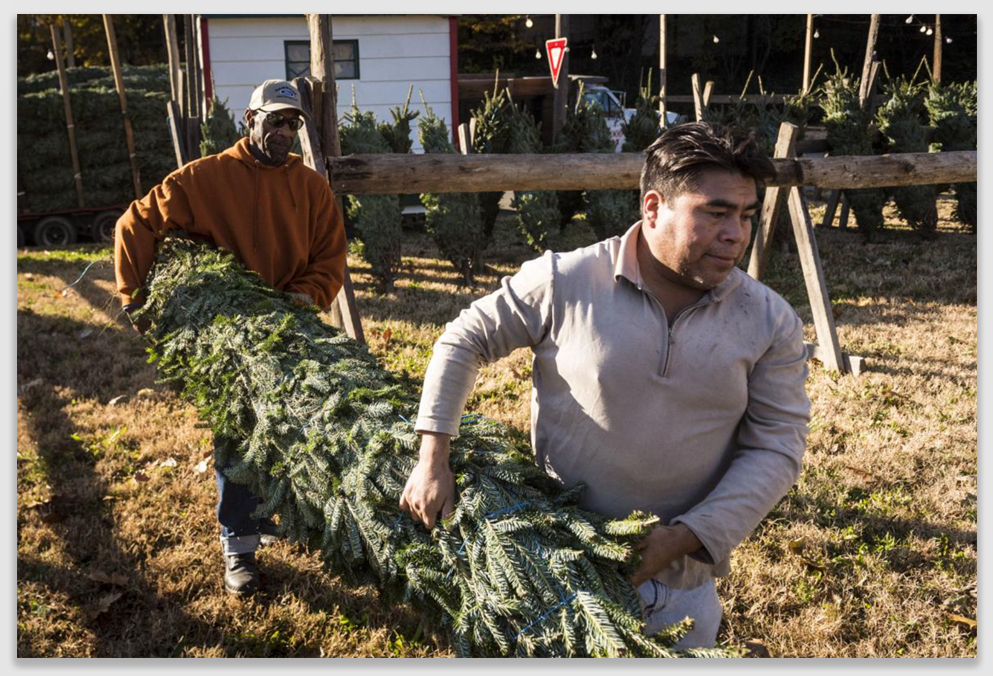
While some people turn to the internet to find the perfect gifts for under the Christmas tree, others are turning online to find the perfect tree. Live 7-foot Christmas trees can be bought online from Amazon and the websites of tree farms across the country and delivered right to your doorstep. “People in the business know online Christmas tree buying has gone on for well over 20 years, Amazon is just breaking into the market this year,” said Doug Hundley, a seasonal spokesman for the National Christmas Tree Association. “It’s a very small percent of buyers, 1 or 2 percent of tree sales. But 1 or 2 percent is still significant when you’re looking at 27 million trees sold,” Hundley said. James Pitts, an owner of the Sugar Plum Farms tree farm in Avery County, said he began shipping trees to individual homeowners all over the country about 12 years ago. He warned, however, that it adds a good $75 in shipping costs to the price tag…
As California fire officials deal with the devasting impacts of wildfires, local agencies are working to prevent such disasters from happening in Tulare County. Recently, county administrators secured state grants for five projects to remove dead trees and brush — materials that typically fuel wildland fires. The money will help local authorities deal with the fallout from the California drought and widespread tree mortality in parts of Tulare County. Tulare County Supervisors also approved the transfer of general fund money to hire additional firefighters, provide training and tools needed to increase fire safety. “It’s important to take the steps we can,” said Steve Worthley, Tulare County supervisors. “These are much-needed projects.” Supervisor Mike Ennis, whose district includes part of the areas affected by tree mortality, said he welcomes the projects. “It’s important to move those hazardous trees away from the road,” he said. “[Having a road blocked] could be really bad…”

Rick Wyffels knew the year was coming. He knew at some point the Christmas tree farm he operates with his wife, Kathy, wouldn’t be open for the tree-buying season. He knew their driveway wouldn’t fill up with cars on the morning after Thanksgiving. They wouldn’t meet first-time visitors, and they wouldn’t see regulars — the ones who had been coming since the tree farm opened in 1997 — for their annual catch-up. Wyffels had been bracing for it since 2012, when a drought killed the roughly 2,000 trees he and Kathy had planted. “Uh oh,” he remembers telling his wife that winter. “There’s going to be a year where we’re not going to be able to sell, because we’re not going to have tall enough trees.” He’s sad to say it, but this is that year. “We just can’t be open,” Wyffels said. “People want tall trees. They want the tallest tree they can find…”
The Arlington County Civic Federation in December will weigh in on the development plan of Upton Hill Regional Park and, more broadly, on Arlington government policies on retaining or removing trees during redevelopment on public land. A resolution demanding a temporary halt to current development plans at Upton Hill was introduced at the Civic Federation’s Nov. 13 meeting and will be debated and voted on Dec. 4. “We’re gravely concerned” about the Upton Hill plan, said Barbara Wien, secretary of the Bluemont Civic Association, pointing to more than 60 trees that will be removed (although others have been planted elsewhere on the site). Passage of a Civic Federation resolution likely would have no practical impact, as Upton Hill is under control of the Northern Virginia Regional Park Authority (NOVA Parks). Members of the Arlington County Board have said they have neither the power nor desire to micromanage the regional body’s decision-making…
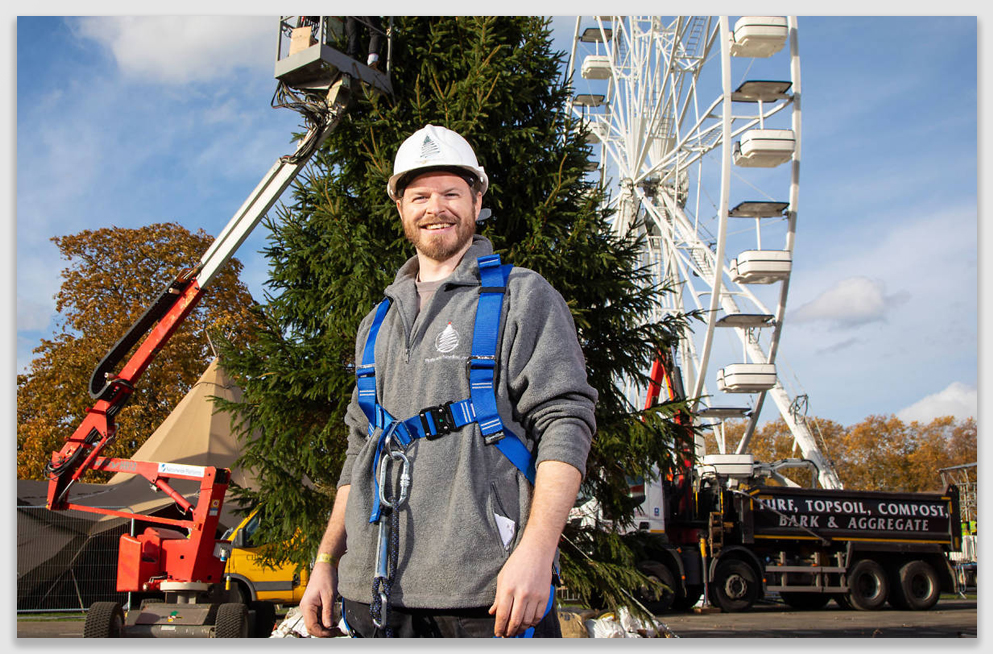 London, UK, Time Out, November 23, 2018: Things you only know if you’re a Christmas tree supplier
…according to Mike De Butts, 38. Putting up trees is serious business: ‘A 60ft tree with its stand and ballast could weigh 15 tons. At Pines and Needles we put up big outdoor trees using cranes, with help from structural engineers. Then we can say the people who’ve been involved in putting up a tree are also capable of putting up skyscrapers.’ Bigger isn’t always better: ‘I got called up once by somebody saying, “I want the tallest tree in London.” But when the tree gets too big, it starts to be a different proportion. The Trafalgar Square tree got slated a couple of years ago because people thought it looked like a cucumber.’ Some spruces need sprucing up: ‘Nature isn’t perfect, and trees often require a bit of a facelift to make them look as nice as they should. When we’re up on the cherry-picker adding the decorations, we usually add in some extra branches to fill in the gaps. In some cases, suppliers will basically stick two separate trees together. That’s happened before for the tree in Covent Garden…’
Fresh Christmas trees will cost more for Texans, on average, than for people in any other state. People in Texas pay, on average, about $104 for a live Christmas tree, which is $31 more than the national average of $73, according to data gathered by Square and the National Christmas Tree Association. That added cost is largely due to decreased supply from some of the largest tree-producing states – Oregon is the top in the country – and the expense of trucking them across the country. But they are expecting a record demand for sales at Christmas Traditions in McKinney, and that is largely attributed to increased interest from the millennial generation…
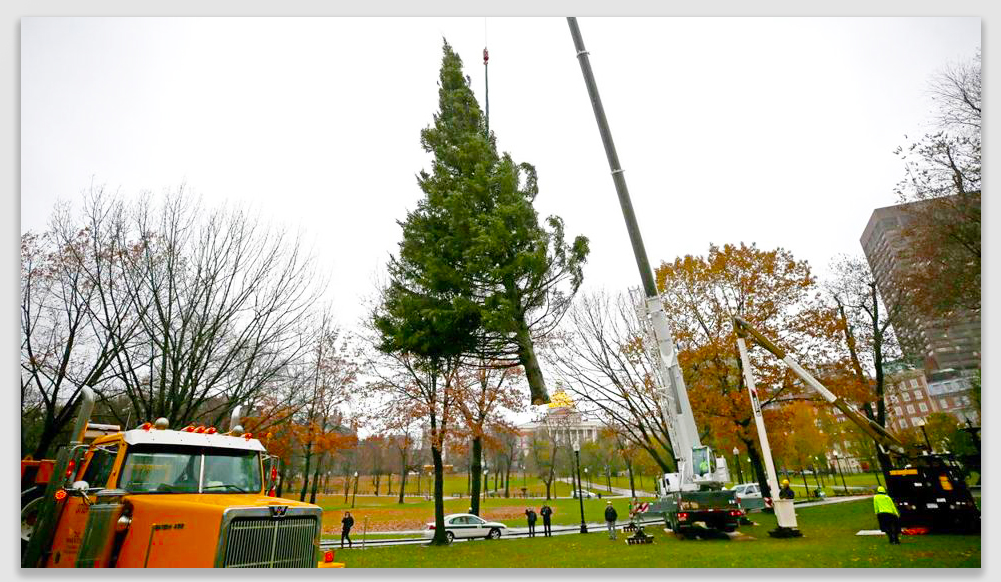
Under foggy skies and an icy drizzle Tuesday morning on Boston Common, city officials and school children breathed in the joyful holiday spirit and welcomed a towering 46-foot Christmas tree from Oxford, Nova Scotia. “I love it,” said James H. Stewart, a town crier from New Glasgow, Nova Scotia, who officially presented the tree to the city. “It’s such a wonderful tradition, and really, when it’s tree time, it’s like, ‘OK, Christmas is coming.’ ” The white spruce, which made its way into the Common in a Boston police escort, is emblematic of the friendship between Halifax, Nova Scotia, and Boston — a partnership that began 101 years ago, after the city of Boston sent aid to Halifax following an explosion in the city’s harbor that killed nearly 2,000 people on Dec. 6, 1917. “You have these two cities, two different locations, two different countries, and you have the spirit of unity and connection between them,” Chris Cook, Boston parks commissioner, told the Globe. “I just think it’s symbolic of the best we can be…”
Christmas tree lots are popping back up across Southwest Virginia. Sweet Providence Farm started selling trees last weekend. Farmers said this year’s trees are some of the best they’ve seen, thanks to the weather. Even last week’s winter weather, which knocked out power to the Floyd County farm for a few days and made it difficult to transport the trees, didn’t set them back. “The wet weather’s been way better than last year. Last year, we had a lot of problems with trees just being drier. We were worried about them lasting through the Christmas season. Everything turned out OK, but this year’s a lot better, so we’ve got a lot fuller, kind of healthier trees,” tree farmer Nathan Kinzie said…

If you haven’t yet gotten your Christmas tree, you may want to resist the urge to rush out and buy yours on Black Friday and Cyber Monday. That’s because those days tend to be some of the most expensive times to buy a Christmas tree, according to a new report from the National Christmas Tree Association (NCTA) and Square. Using 2017 sales data from Square, the report found Black Friday is the first major tree-buying day with average prices reaching $77 before they peak at $81 on Cyber Monday. Looking for a bargain? The best deals are found on Christmas Eve when trees fetch an average price of $47. But if you can’t wait that long, you can still save big the week before Christmas. The seasonal average is $73, so if you find a nice tree for cheaper than that, you’re in good shape…
Forests worldwide are using up the nitrogen in their soil, a new study found. That’s a bit of good news for the Chesapeake Bay, which is ailing in large part from too much nitrogen getting into the water. But the study’s authors warn that a widespread decline of nitrogen in forest soils bodes ill for efforts to prevent global climate change. The study, published recently in the journal Nature Ecology & Evolution, analyzed the chemistry of more than 43,000 leaf samples collected from hundreds of tree species worldwide from 1980 to 2017 and found that the levels of nitrogen in them, which fuel the trees’ growth, has declined. Rising carbon dioxide levels in the atmosphere and longer growing seasons from warmer temperatures are promoting increased tree growth, the authors suggest. As a result, they wrote, forests’ demand for nitrogen is outstripping what’s available in the soil…
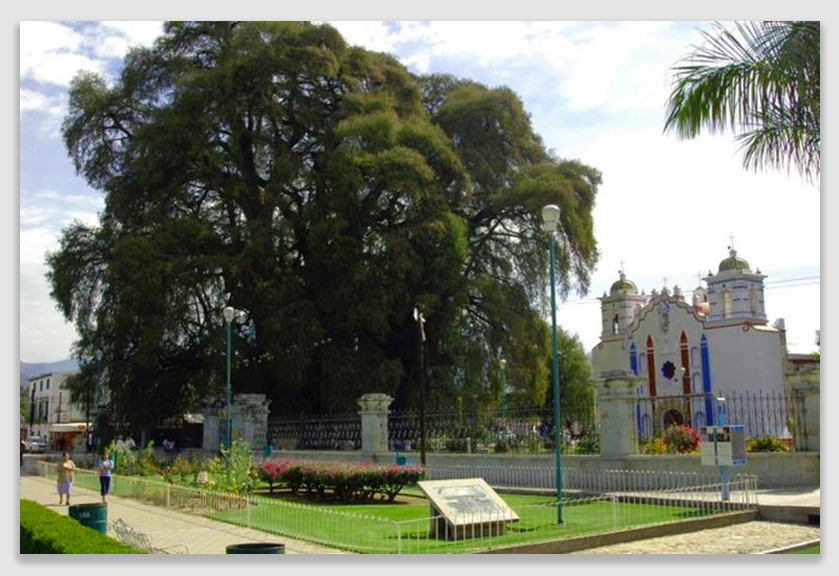
Some of you gardeners and landscape folks probably wonder why I didn’t mention Montezuma cypress in my recent column about trees I have personally planted at my home and office. I love this tree and it’s true that I have planted it. Mine is an offspring of the famous 2,000-year-old El Arbol del Tule in Oaxaca, Mexico. David Creech, a horticulture professor at Stephen F. Austin University, gave me the small start. Instead of a trunk almost 50 feet in diameter like the one in Oaxaca, which has the widest girth of any tree in the world, mine is young and only about a half-inch at this time. I wanted to address this very special tree separately because along with its fabulous features, it has a slight flaw that can be serious in certain cases. Montezuma cypress or Montezuma bald cypress is wider growing and a much more graceful tree than regular bald cypress. It is fast growing, has soft and beautiful foliage, does not have the typical cypress knees, and is almost evergreen here in zone 8 and warmer areas. That last point is where the possible problem jumps up. Because of its near-evergreen trait, it always holds its foliage through the fall and into cold weather. If heavy sleet storms hit while the foliage is still holding on tight, damage to limbs can happen. I have seen that here in Dallas winters twice since I have been acquainted with the tree. It’s not fatal, just a cosmetic problem…
Amazon began officially selling real, full-size Christmas trees Monday, which allows for six-to-seven foot real trees to be delivered to customer doorways. Amazon announced it would start shipping its first real Christmas trees November 19 — including Fraser Firs, Balsam Firs and Black Hills Spruces — for people in a rush to get their trees up as early as Black Friday. The trees are delivered within three to 7 business days to customers with free Prime shipping and CNET reported that Amazon couriers deliver them in a box wrapped in twine. Amazon told ABC News the trees are supplied by local growers in North Carolina and Michigan. But many tree farm owners said Amazon can’t deliver the traditional experience of going out with one’s family to pick out a tree to bring it home together. “Parents say these are the memories their kids are going to remember,” Natalie Sare, the owner of Santa’s Tree Farm in Half Moon Bay, California, told ABC News. “Walking through the field, cutting down the tree together and putting it on the car.” “Buying a Christmas tree can be a divine experience,” Monday’s Good Morning America segment noted. “But will this web disruptions make your life easier or take one of the last local traditions out of Christmas?…”
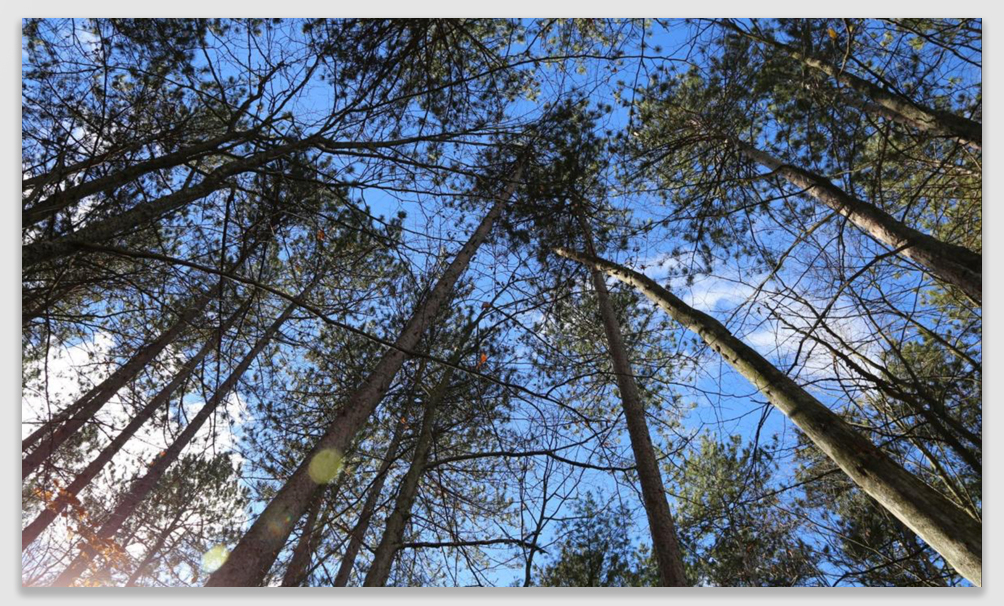
Snow crunched beneath Gary Hill’s feet as he brushed past prickers and bramble into the forest off Reservoir Road. It was a brisk but sunny day on Nov. 14, a good day for Hill to take advantage of the weather to spray paint markers on trees, something that had been difficult with all the recent rain. Hill, a forester, has been managing the 350 or so acres for the village for about 25 years, occasionally helping with bids for loggers to come in and thin out the tree stand. While the logging practices aren’t new, Hill is helping the village take on a new forestry project in the same vicinity — growing Christmas trees. Both projects are a way for the village to make a little extra money, although it’s not clear yet how much. “Christmas trees are going to be new and something we thought may be a good use for the property,” said Mayor Matthew Traver, in an email. “It will take several years to see any results from those plantings.” Most of what Hill does takes “several years,” even lifetimes…
Abilene, Texas, Reporter-News, November 19, 2018: Natural Christmas trees get a bad rap
This year, for a change, I thought I would write about Christmas trees before many people have already gone out and got one, or pulled one out of storage if they go the artificial route. Like many people, I don’t want to talk about Christmas until after Thanksgiving, and being a guy, I also do a little procrastinating before I finally get that column done. Usually, I end up talking about Christmas trees long after most people have taken care of that chore. To start with, I think that real trees have gotten bad press over the last couple of decades. There’s a big push in this country to not do anything to hurt the environment, and as part of that, I think the “living” Christmas tree business has suffered a lot. Generally, I think there are a lot of people out there who consider “killing” a tree, just to bring it in the house for a one-time use as an environmentally bad thing. Au contraire, not everything is as it seems. I could certainly consider cut, living trees, used as Christmas trees, to be a bad thing if the way they were harvested was by somebody going into the nearest forest and cutting down a bunch of young trees. However, that isn’t how it goes at all. Christmas tree growing is big business, or at least it was before using real trees started being looked down on. Not only that, but that “big business” is quite often parceled out among mom-and-pop tree farms. I can think of three tree farms off the top of my head, right here in the Big Country where a married couple is growing trees for income, and Christmas trees are either a big part of what they are growing, or the only thing they are growing…
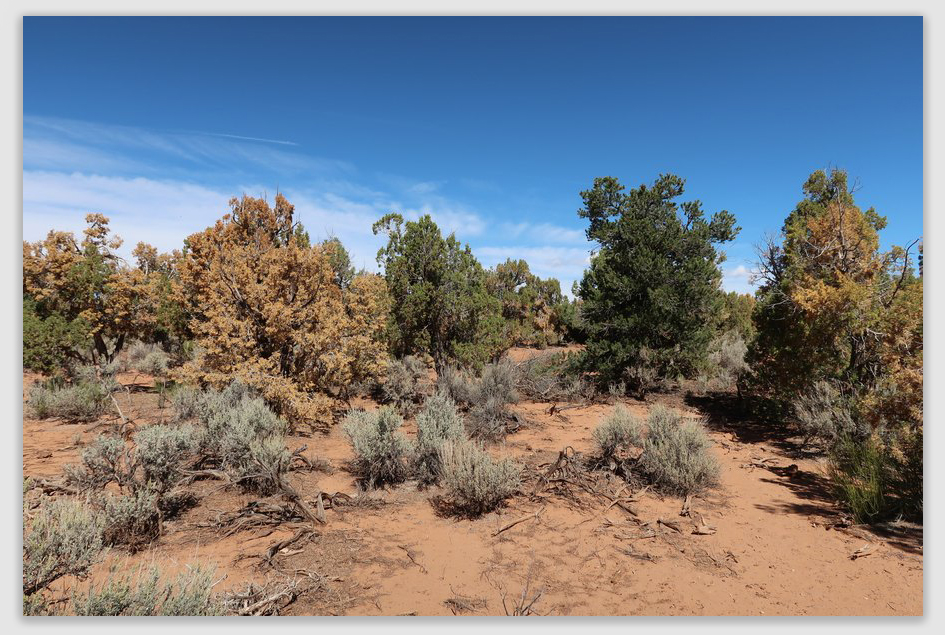
The Utah juniper is considered the West’s most drought-tolerant and resilient conifer, withstanding even the worst dry spells while nearby pinyon and ponderosa drop their needles and die. So it was with some alarm for Kay Shumway, a retired science educator from Blanding, when he noticed yellowing among the juniper on southeastern Utah’s Moki Dugway last spring, a time of year when these trees’ needles should carry a vivid shade of green as they ramp up their photosynthetic capacity. “During summer, the dying junipers were such a bright yellow color. It was easy to see. You could look out over the landscape and see thousands of those dying trees. Now a lot have dropped their needles and are becoming a skeleton,” said Shumway, a former botanist who has kept himself busy as a nature photographer since retiring from the College of Eastern Utah 20 years ago. “They are dying. They are not going to come back [even if they get] some moisture. He frequents the Moki Dugway on the southern tip of Cedar Mesa, which provides photogenic views of the buttes and canyons falling toward the San Juan River in what was initially part of Bears Ears National Monument. Shumway has since documented dying juniper in other parts of San Juan County, which is in the midst of a severe drought. “My first reaction was the drought was causing it. The interesting thing is the pine trees, which are the most susceptible to drought, aren’t affected. They are still green and healthy,” Shumway said. “There were more and more of [the juniper] turning yellow. By July, I went all over the county, like Mustang Mesa and Alkali Ridge [east of Blanding]. Lo and behold, it was happening there, too…”
The sights and sounds after the storm… power saws and tree shredders. Michael Cashdollar, the owner of Keystone Tree Techs, says calls began coming in around 10:30 p.m. Thursday and they haven’t been able to keep up with them. Edward Hill says he heard a loud thud around 10 a.m. Friday; turns out, it was a fallen tree in his backyard. “Lots of ice in these trees and I’ve got another old one back there dropping branches, hope no more fall,” he said. Cashdollar says they didn’t expect the storm to cause this many trees and branches to fall. This process isn’t cheap and insurance doesn’t cover it unless there is property damage.“You are looking at anywhere from $250 is usually the minimum for tree care, anywhere up to, we’ve done jobs where we’ve had to bring in cranes and pick them off of houses and you’re upwards of $4,000 or $5,000 and even higher. It just depends on the job and the risk and the equipment you need to accomplish your task,” Cashdollar said…
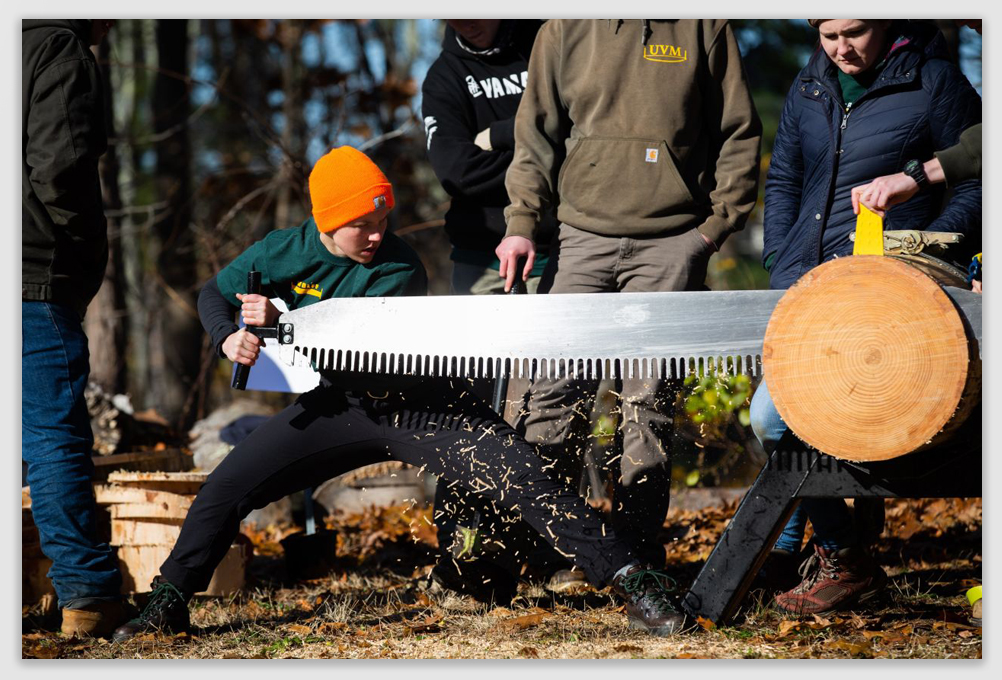 New York City, Wall Street Journal, November 16, 2018: I came, I saw, I stunk (but they were great)
It is cold and drizzly, in the way you expect a cold and drizzly Vermont afternoon in late autumn to be, and in a wet field behind the forestry science lab, I am watching college students happily throwing axes. When an ax strikes its wooden target, it emits a satisfying thunk, and the students whoop with applause. Thunk. Thunk. Thunk. These college ax-throwers, as it turns out, are frighteningly good. I want them on my side in a horror movie. This is a practice for the University of Vermont Woodsmen—a club team that competes in burly events involving saws and axes and other timber items that city slickers like myself should use only under heavy supervision, or not at all. I’m here for the third installment of Go Away Jason, at the recommendation of Journal reader Kate Fannin, who suggested the visit because Fannin’s niece, Sydney Wolff, is a Woodsmen co-captain. That’s right: these Woodsmen are co-led by a woodswoman. Wolff meets me in the team’s shed before practice starts. A 21-year-old senior majoring in health science, she’s dressed in UVM green and wearing a baseball cap that reads NASTY WOMAN. She tells me she never imagined going to school all the way up here—she’s from San Antonio, and grew up around ranching, livestock, camping, and riflery. (“One of my friends recommended UVM, and I said ‘Are you kidding? There’s only cows and maple syrup up there!’”) One day on campus, she was in the student center and ran into a bearded dude wearing jean shorts and a flannel. “He’s just got this ax propped up on this log of wood,” Wolff recalls. This was her introduction to the Vermont Woodsmen. “I was like, ‘This is the coolest thing…’”
A man has to pay more than £45,000 for cutting down trees in his garden that were protected by tree preservation orders. Fareham Borough Council prosecuted Simon Woodhams after he illegally caused or permitted the cutting down, uprooting or wilful destruction of 24 trees at his property in Sarisbury Green. Mr Woodhams was found guilty of the offences at Portsmouth Magistrates’ Court on November 7 and was fined £25,000. He was also ordered to pay £20,000 in costs to the council, plus £300 in court surcharge. Council officers had met at Mr Woodhams’ property in 2015 to discuss the management of the trees and development of the house. An application was received by the council for permission to crown lift seven trees, reduce 17 trees, coppice one tree and fell 36 trees which was granted…

The companies behind each type of tree are going at it with ad campaigns online, trying to convince you that their tree is better. In one video, upbeat tinkley music and fresh-faced American tree farmers chirp: “That smell, that wonderful fresh Christmas tree smell. That beautiful scent that fills the house. Smells like Christmas — that can’t be manufactured.” The fresh Christmas tree farm industry will spend more than $1 million this year asking you to “Keep It Real,” sort of like the ubiquitous “Got Milk” campaign of the 1990s and 2000s. These online videos are developed and funded by tree growers, as part of a program overseen by the U.S. Department of Agriculture. Casey Grogan is one of those growers in Oregon, about an hour south of Portland. His crews are working to cut and ship about 60,000 Christmas trees in 10 days from his Silver Bells Tree Farm…
Countryside Village Mobile home park is a very large complex. It is a mixture of those who own their mobile homes and those who rent. During an I’m Telling Ken Community session, James Diaz and Debbie Spencer came with a complaint about Countryside Village. “Code enforcement came out and she said yes, this tree needs to go,” said Debbie Spencer. Spencer owns her manufactured home, but rents the lot. She said the rent varies because utilities are included but it averages about $600 a month. “I have lived there since 2015 and I have never been late on the rent,” she said. Spencer said in 2016 she filed a complaint with the park management about the pine trees and the danger they pose to her home. “No one has stepped inside to see the danger,” said James Diaz. “If you put a bearing on the floor it will roll from one side to the other.” The tree’s root system has damaged the driveway, it is cracked in the middle, and it has caused the foundation of their mobile home to shift. “We couldn’t get out of the back door,” said Spencer. “Which code enforcement said if we did not correct they would condemn the property…

In the most comprehensive study of its kind, an international team of scientists led by University of Miami biologists has found that tropical and subtropical forests across South America’s Andes Mountains are responding to warming temperatures by migrating to higher, cooler elevations, but probably not quickly enough to avoid the loss of their biodiversity, functional collapse, or even extinction. Published November 14 in the journal Nature, the study confirmed for the first time that, like many other plant and animal species around the world, trees from across the Andean and Amazon forests of Colombia, Ecuador, Peru, and northern Argentina have been moving upward. But unlike species from the world’s temperate or boreal forests, which are far more accustomed to dramatic seasonal shifts in temperature, tropical trees are running into environmental roadblocks at higher, cooler elevations that are thwarting their migration and threatening their survival. “In the Andes, the ecosystems can change very fast and very dramatically, for example, from sunny and dry premontane forests to sopping-wet cloud forests. These changes, called ecotones, appear to be blocking species migrations,” said lead author Belén Fadrique, a Ph.D. candidate who designed and carried out the study with her advisor, Kenneth J. Feeley, UM’s Smathers Chair of Tropical Tree Biology. “These ecotone barriers make it hard for plants to relocate their populations–and if they can’t relocate, they will go extinct…”
With downed trees across the region, people are cutting down trees and branches in their yards and on streets. Before you pull out the chainsaw, remember there are some safety tips you need to follow. A chainsaw has more power per inch than most other tools, which requires extra attention to safety, Lowe’s advises. Here’s what you need to know for cutting down trees: 1. Use protection: Always wear protective clothing and gear including leg protection, a hard hat, gloves, eye protection, boots or shoes with steel toes, Lowe’s advises. 2. Full speed: Whether you’re cutting down a tree, cutting a fallen limb or trimming small, low branches from a tree, run the chainsaw at full speed. It’s not only faster, it’s safer. Running at high speed reduces the chance of the chain binding and causing the chainsaw to fly back at you, according to Sears…

The family of a Benton City woman killed by a falling tree limb in a Kennewick park is seeking $2 million from the city of Kennewick. The family of Stephanie Murray Judd filed a tort claim with the city on Oct. 30. The claim serves as notice that the family could sue after 30 days. Judd, 37, died Sept. 22 in Columbia Park while attending the Ye Merrie Greenwood Renaissance Fair with her husband and son. Steady winds, with gusts of up to 25 mph, are thought to have knocked a large limb from a sycamore tree. It struck Judd, who was sitting on a bench near an outdoor stage with her school aged son. Her son was not physically injured. “It’s a tragic case,” said attorney Ned Stratton, with Johnson Law, a Kennewick firm representing the Judds. Stratton said Judd was the primary breadwinner for the household. She was the office manager for Washington Vision Therapy Center’s Tri-City office. The firm believes there is potential liability for the incident, but Stratton said its investigation is ongoing. The city immediately removed the tree, hindering the law firm’s investigation. The city operates the 363-acre park, but the land itself is federally owned, under the control of the Army Corps of Engineers…
The Washington, D.C., Department of Transportation (DOT) is fining the owner of a Georgetown mansion more than $53,000 for the “excessive pruning” of two of his own trees. Accu-Crete CEO David Hudgens, the homeowner hit with the fine, says the trees were interfering with the maintenance of the Newton D. Baker House, named for the secretary of war who lived there from 1916-1920. Built in 1794, the house was once owned by former First Lady Jackie Kennedy, then Yolande Fox, a singer and socialite who died in 2016. Hudgens is the current owner, and his preferred method of maintaining the property has outraged his neighbors in Georgetown. At least five trees have been removed or trimmed. The Washington Post reported earlier this month: Neighbors say the trees began to disappear soon after Hudgens, who owns two other houses on the street and lives next door, bought the home. In January, the city removed three trees in treeboxes along the street, then last month he cut down a magnolia on his property and trimmed branches off another. It’s the latter two trees that Hudgens is in trouble over. “When the current owner of that property ‘trimmed’ the two trees to a very large extent, thereby removing much of the volume of the trees, the Georgetown community expressed its outrage,” reads a resolution passed by the local Advisory Neighborhood Commission (ANC) late last month. “Appropriate sanctions should be imposed to preserve the trees in Georgetown both for ourselves and for future generations.” The DOT has now acted, fining Hudgens $53,611.20, according to the Post. DOT spokesperson Terry Owens explained why in a statement to Reason. “The fine was for the excessive pruning of 2 magnolia trees. Both trees are legally protected under the Urban Forest Preservation Act of 2002,” he said…
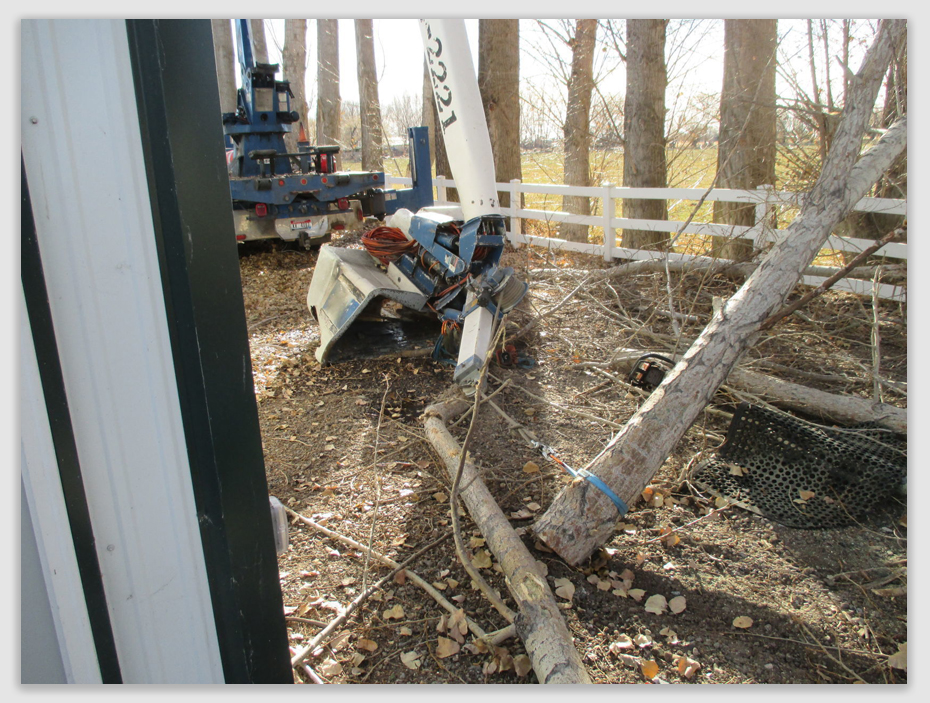
A Burley man was killed Tuesday and another man injured during a tree trimming accident in the Jackson area of Cassia County. Cassia County Detective Kevin Horak said Corbin Bowers, 28, was killed and Emmett Koyle, 26, also of Burley, was injured. Koyle was taken to Portneuf Medical Center, Horak said, and is in critical condition. The accident occurred at 1:45 p.m. at 780 N. 1150 East, where Bowers and Koyle were in a bucket truck about 60 feet above the ground, Horak said. “They were in the bucket together and had tied off a branch to the bucket,” Horak said. “When they cut the branch, it pulled the arm and bucket down to the ground. The branch was just too big.” Bowers was killed on impact…
Youngstown, Ohio WFMJ-TV, November 14, 2018: Mysterious disease killing trees in Northeast Ohio
American beech trees are dying in Northeast Ohio and several other states and providences nearby due to beech leaf disease. Researchers at Ohio State University are conducting a study of the disease to find out why. Enrico Bonello, a professor of plant pathology in Ohio State’s College of Food, Agricultural, and Environmental Sciences (CFAES), oversees the study.”There’s no similar forest tree disease that we are aware of anywhere,” Bonello said, “It’s really a black box.”The disease was first discovered in Lake County in 2012 but has subsequently spread to American beech trees in nine additional counties in Ohio, eight in Pennsylvania, one in New York, and five in Ontario. The disease, which young trees appear to be more susceptible to, starts out as dark stripes on the leaves of the trees and then deforms them. The disease can eventually kill the trees. Carrie Ewing, a doctoral graduate student assisting with the study, is comparing the genes of microorganisms present in leaves that have symptoms of beech tree disease and those that do not. Ewing is hoping to identify the microorganisms that are associated with the disease in order to determine if they are viruses, fungi, bacteria, phytoplasmas or nematodes…
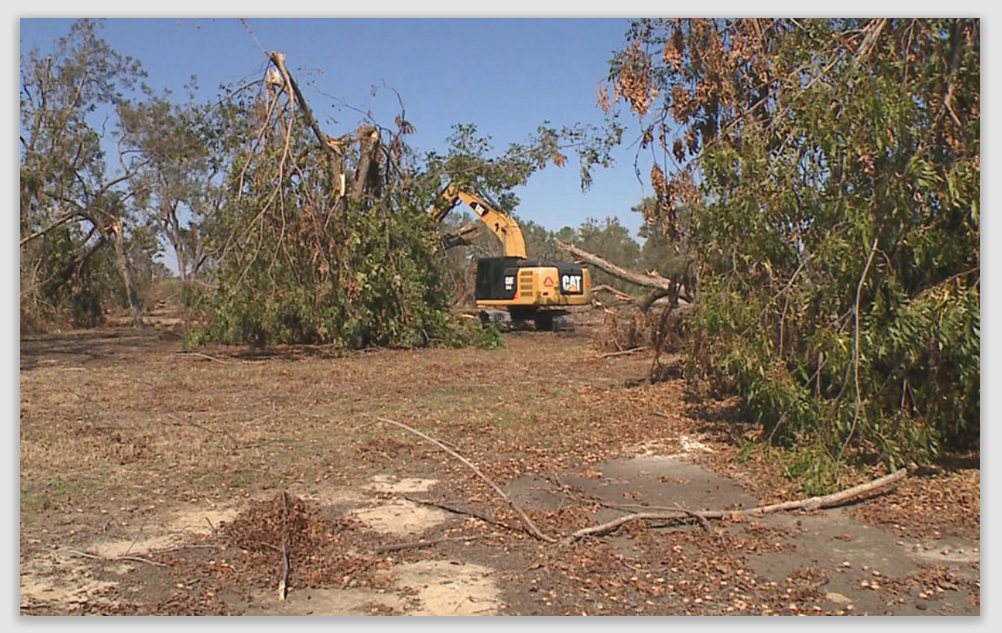 Atlanta, Georgia, WXIA-TV, November 13, 2018: Hurricane Michael destroys 6-decade old pecan farm
South Georgia farmers took a massive hit during Hurricane Michael and for some, it will take nearly a decade to get back on their feet. The Georgia pecan is a pride of the state and a triumph of patience. It takes months to harvest a nut, years to grow a tree, and decades to build an orchard. One of the orchards destroyed during the massive storm was Pecan Ridge Plantation, located south of Bainbridge. “Within five seconds I knew … it’s gonna take all we can, not to lose our farm over this,” said Pecan Ridge co-owner Eric Cohen. Eric and his brother run the plantation and have since been cleaning up the grounds and assessing how much damage they have. Some of the pecan trees on the grounds have been there for over six decades…
Greenwich, Connecticut, Greenwich Time, November 13, 2018: Town searches for a new tree warden
A very important town position is being filled soon. The Town of Greenwich’s superintendent of parks and trees and town tree warden is being replaced. Bruce Spaman, who held this position for 16 years as an arborist and professional forester, has recently retired. During his tenure, Bruce was instrumental in: creating town tree policies including Greenwich’s restrictions on ground to sky tree trimming by utilities; passing a Town Public Tree Ordinance; enabling our public-private partnership that has resulted in more than 3,500 trees being planted over the last decade on public lands in Greenwich; inspiring us to inaugurate the Greenwich Town Arboretum thus far labeling trees in four historic town parks. We also collectively have held Arbor Day tree plantings and celebrations at schools in Greenwich. On a state level the town tree warden is a member of the Tree Warden Association, represents Greenwich on several state boards and commissions and can be instrumental with testimony when trees are in jeopardy. Trees and green space are an important part of our town fabric. This position is very important to the welfare of the town’s 2,000 acres of landscape which includes: 1,100 acres of parks, 250 acres of school campuses and 650 acres of roadside forest. The annual operating budget is close to 5 million dollars and the position has 60 direct reports…
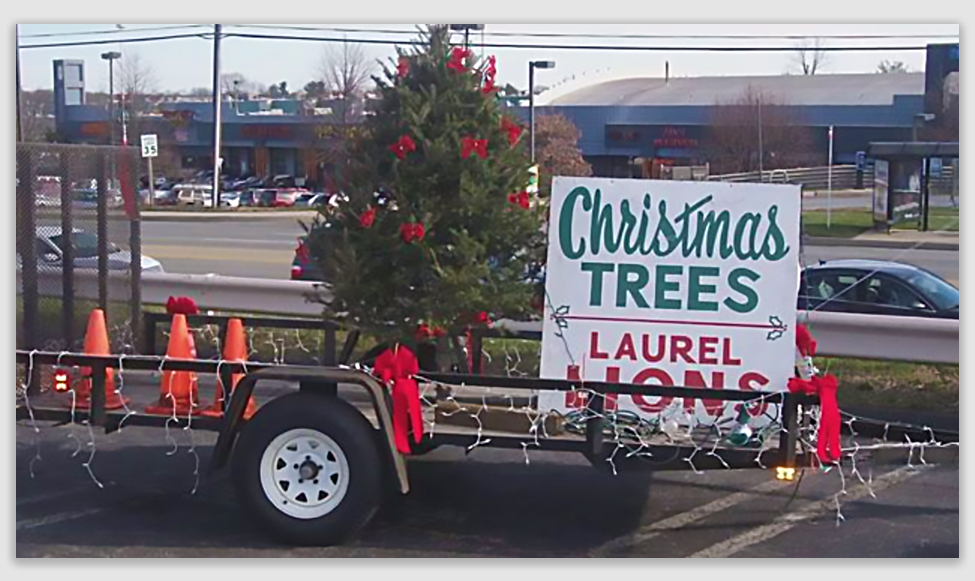
A nationwide Christmas tree shortage is forcing a Maryland non-profit to cancel its tree sale this year. Usually around this time of year, members of the Laurel Lions Club would be busy setting up for their biggest fundraiser – installing everything from fences, platforms and trailers – so they can start selling Christmas trees on the Saturday after Thanksgiving. But for the first time in 61 years, the organization will not be selling trees in the parking lot of the Laurel Shopping Center. “It’s going to be very much missed,” said Darren Davis. “I can tell you that because I know families that do come over here.” “They usually make a lot of money for charity and stuff,” said April Beroid. “It’s for a good reason. I’m sorry to hear that.” The non-profit sent out nearly 1,000 mailers informing customers they would be canceling their largest fundraiser of the year, which will impact the local programs that count on their donations…
For the first time since it hitched a ride from Asia to Allentown, Pa., in 1998 and went on to invade 44 states and four Canadian provinces, the government is cautiously optimistic that it is winning the war against the brown marmorated stink bug. “Yeah, it is good news. It’s pretty good,” said Tracy C. Leskey, the key Agriculture Department research leader on stink bugs and other invasive pests. Ironically the credit goes to another Asian hitchhiker, the so-called “samurai wasp,” a comma-sized bug that lays its eggs in the eggs of the stink bug. The stink bug’s native enemy in China, the wasp, scientifically known as “Trissolcus japonicus,” has been spreading into areas with heavy populations of stink bugs. And, Leskey said, it appears to have no negative impacts. Federal, state, and university scientists for nearly two decades have been trying to wipe out the flying, crawling stink bug that initially had few natural enemies in the United States. Not only does it put out a foul odor when threatened or killed, it damages fruits and vegetables and invades homes to overwinter…
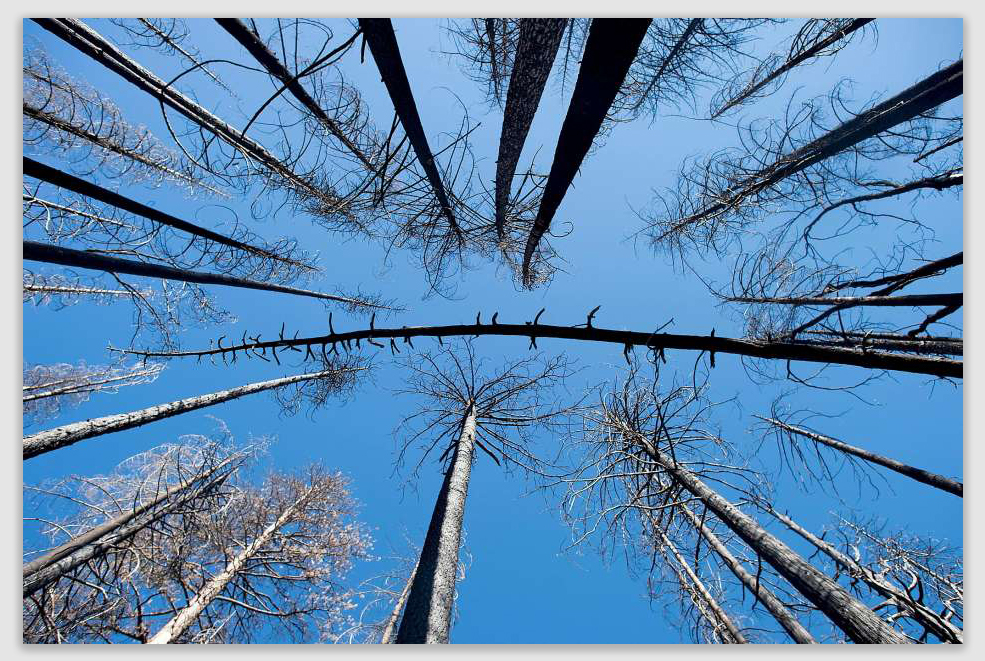
The reason wildfires are burning California with unprecedented ferocity this year is because our public forests are so thick. It is our fault. We don’t manage our forests, we just let them grow. That is the simple truth. However, it is easier to deny the truth and blame a warming climate instead of admitting our guilt and taking action to prevent wildfires. Hot, dry weather doesn’t cause catastrophic wildfires. It only makes them worse. In order for any fire to burn, it must have fuel. To spread wildly, it must have abundant fuel. Efforts in the 20th century to prevent fire and preserve forests have been too successful — they have disrupted the ecological balance and allowed more and more trees to grow. Some California forests have more than 1,000 trees per acre when 40 to 60 trees per acre would be ideal. These overcrowded forests are filled with dead trees, piles of logs, and thickets of small trees. The perfect conditions for severe wildfires…
Five trees at Coronado’s Spreckels Park may need to be cut down before they fall down. The trees, all of them Sugar Gum Eucalyptus, are either at “High” or “Moderate” risk of failure, according to an arborist’s report presented to the City Council last week. One tree, the one deemed the highest risk, is already scheduled for demolition. That will happen Tuesday, starting at 6 am. That tree is in the Northeast corner of the park. The other four will be monitored, including two trees with branches that hang over the children’s playground. The city hired West Coast Arborist to study all 95 trees in the park after a pine tree collapsed in September. City Code gives the Department of Public Services the authority to decide which trees should or should not be cut down. According to the rules, trees will be removed if they present, “a condition that is hazardous, are in declining or poor health and the condition cannot be corrected by pruning or any other means…”

Thanksgiving turkeys are yet to be carved, but it’s already beginning to look a lot like Christmas at Snowshoe Valley Christmas Tree Farm north of Almena. Like a pair of Santa’s most industrious elves, Joe and Sue Clark already are weeks deep into preparations to welcome people in search of the perfect centerpiece for holiday gatherings. With some 11,000 trees on 10 acres from which to choose, they’re likely to find it at Snowshoe Valley. “The best part … is all your customers are coming here and they’re happy; you always have happy customers,” Joe said. “It’s a memory they won’t forget, and you see the generations coming back.” Joe said his parents bought this Barron County farm when he was 12 years old, operating it as a small dairy. When Joe took over, he modified the barn into a shop, keeping seven stanchions “just in case.” But it wasn’t long before notions of milking cows were relegated to the past. He started planting trees in 1987 and offered his first Christmas trees for sale in 2001. “When we bought the farm, the fields where trees are were all ag,” Joe said, adding that they rented the land out to a neighbor for corn, hay and other crops…
It’s like a nightmare for some New Mexico homeowners after squatters moved into their vacant home, and then refused to leave. “I felt the sense of hopelessness,” said Willis Johnston. A mess of a situation is finally behind these Carlsbad homeowners, but it took months of fighting. “Shock and utter disbelief. I could not believe that someone would stoop so low,” said his wife, Aimee Johnston. Complete strangers turned the Johnstons’ house into their home, acting like they owned it, even without a deed. “She said I own the property, I have a tax receipt. That’s their M-O,” said Willis Johnston. Willis Johnston lived in the house on Oak Street as a boy, and inherited it from his grandmother after she died in 2005. “One of the great possibilities is, is they’re watching the obituaries in the newspaper,” he said…
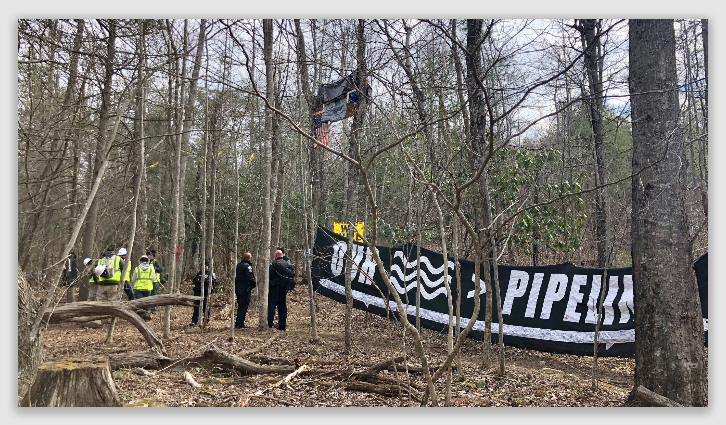
“Stand with Red” became a rallying cry for opponents of the Mountain Valley Pipeline. On Thursday afternoon, Red and Minor Terry had a crowd of supporters when the two tree-sitters faced misdemeanor charges in Roanoke County General District Court. The mother and daughter climbed into their tree stands in early April, in an effort to prevent crews from cutting trees on their property. And they came down in early May, after a federal judge found them in contempt and threatened hefty fines. During the hearing Thursday, their attorney Tom Bondurant questioned officers about the police presence on the Terry property… Minor Terry said the women began their protest after a deadline for cutting in areas with endangered bats passed at the end of March. And she said they came down after a federal judge ruled against them…
Cincinnati, Ohio, Enquirer, November 8, 2018: When and why you should trim your trees and shrubs
Here is the most often asked question in mid to late fall: is it ok to prune my trees and shrubs now’? It’s as if many homeowners are frustrated barbers that, like their own hair, their plants need to be trimmed several times a year, while some may think just once. All plants need some yearly pruning. Why do we need to prune our trees and shrubs? 1. We believe all trees and shrubs should look like bowling balls, nice and round. 2. You brought a cute little Sweet Bay Magnolia and now 7 years later, you can’t see the house. 3. Got a new chainsaw for my birthday and should use it often to please the gift giver, Me! 4. My trees are getting too tall There are other reasons you might have and there are a few good reasons that pruning and lopping shears should be used, but only when needed and not for an annual ritual. Pruning can be a very intimidating process for most homeowners. Let’s take away some of the causes of that fear…

A tree trimmer who got pinned in a pond last spring shares his story for the first time. Willie Hamer almost drowned when his arm got stuck under his cherry picker in Rogers. Eight months later, he’s navigating a new life– but he’s not alone. Hamer doesn’t know exactly how a cherry picker in his backyard slipped down the hill, forcing him into the water. “I didn’t see it coming at me. My back was turned to the machine and it came down and hit me from the back,” he said. Suddenly Willie was trapped with just his nose and eyes above the icy water, with his arm pinned under 6,000 pounds of equipment. By the time police got there, the cold was already taking its toll. “Luckily, I had the jacket on at the time because if I had just a T-shirt, I would have froze to death. I was dying,” Hamer said. After several attempts to move the cherry picker, Rogers Police Chief Jeff Beahen ordered everyone out of the pond to lower the water level on Hamer. He got in with a cold water rescue suit and kept Hamer alert…
Greenfield, Massachusetts, Recorder, November 8, 2018: ‘Untouched’ not always best forestry plan
One hundred and ten years ago, a major forest fire swept through Wendell State Forest, resetting the forest ecosystem with new trees of a uniform age. One hundred and ten years later, this 88-acre parcel is cherished by many residents “as a living, wild and natural asset” with towering oaks that are approaching “old growth” status. Beyond the benefits of scenic beauty, wildlife habitat and recreation, the forest helps deter climate change by sequestering carbon in its trees. So when the Massachusetts Department of Conservation and Recreation announced, in 2016, its plan to start timber harvesting in Wendell State Forest, opposition by nonprofit groups like RESTORE: The North Woods, the Partnership for Policy Integrity, the Wendell Historical Commission and private citizens quickly coalesced. The protesters’ campaign included weekly vigils along Route 2 in Erving, a notice of intent by at least one protester to sue the DCR, and a petition with 1,148 signatures delivered to Gov. Charlie Baker asking the governor to spare this “stately, 80-acre old oak forest that is just beginning to reach an old-growth condition — something that is rare in Massachusetts. Located between the two ponds, this forest is one of the most visited and cherished areas in the state forest, and we want it to remain exactly as it is — untouched by human interference.” Last week, state officials delivered their response — “No” — along with the rationale behind it. According to DCR’s experts, “untouched by human interference” is not necessarily the best course for forest management nor the best response to climate change…
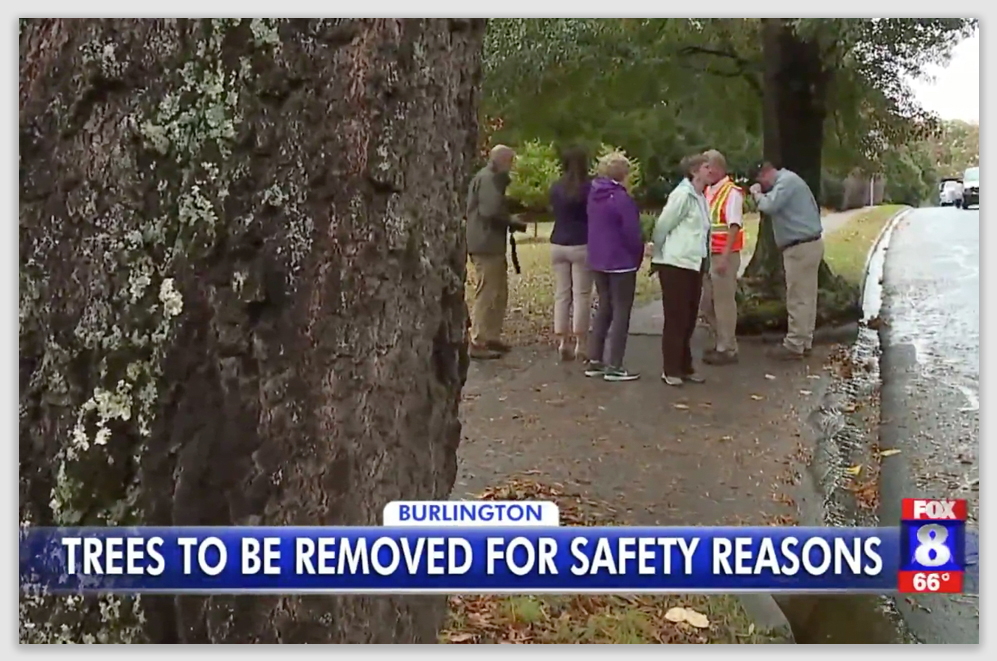
Some of Burlington’s most attractive homes are in the West Davis Street/Fountain Place Historic District. Jeff Parsons is Burlington’s cemetery and grounds superintendent. To him, what really stands out about the community are the trees. “When folks want to show off Burlington, you come down to Davis and Fountain Place,” Parsons said. Massive oak trees line West Davis Street. Some say the trees were planted over 70 years ago to honor local World War II veterans. The oaks and some maples were planted with the best intentions. But now, the tall trees are a growing problem. ”Didn’t expect any damage,” Parsons said. “I just happened to find the tree one morning. It blew over and onto the property.” No one was hurt and no homes were damaged when the tree fell into a homeowner’s yard in early September. But a stretch of bright white cement shows were Burlington repair crews fixed the sidewalk after the root ball of the giant tree tore through the walkway. After the early September event, City of Burlington staff along with a certified arborist tested 26 huge trees that were in the city’s right of way. Eleven trees, mostly oaks, were declared unsafe, marked with a pink dot and scheduled for removal…
A couple of weeks ago I saw one patch of lodgepole pine trees on the side of the mountain that had all blown down. The trees were all pointing in the same direction. It was like a giant Paul Bunyon had chopped down a bunch of trees all at once with a huge ax. The downed trees made me wonder: What had caused only that one patch of timber to fall while all of the other trees around it were still standing? Sometimes trees are blown over by what’s known as a microburst. A microburst is a strong downward draft of wind. That wind can reach 60 mph as it speeds to earth. When the wind hits the ground it’s like water splashing out in all directions. When the wind splashes it may move even faster, creating straight winds that can blow at speeds up to 120 mph. Seems like either one of those speedy winds could take down a shallow-rooted lodgepole pine…
 Galveston, Texas, Daily News, November 8, 2018: Golden rain trees handsome, but also troublesome
Recently, some strikingly-handsome trees have appeared around the island to much acclaim, known as golden rain tree or Chinese lantern tree (Koelreuteria paniculata). These trees are indeed impressive in the landscape with beautiful summer and fall color. There’s good news — and bad news — about this tree. First the good news. Golden rain tree is a small- to medium-sized landscape tree that’s native to eastern Asia. It was introduced to Europe and North America in the mid-18th century, and is a popular landscape tree worldwide. It usually has low branches with a rounded crown, reaching 30-feet tall and wide with an open and often multi-trunked growth habit. Early to mid-summer is when the show begins, with the appearance of long spikes of bright yellow flowers. When the flowers fall they shower the ground with their color, giving the tree its name. Blossoms are followed in late summer by 1- to 2-inch light green seed pods that look like Chinese lanterns that ripen orange to pink, and then to brown as they persist through fall and winter. These seed pods are the showoffs right now…
Lewiston, Idaho, Tribune, November 7, 2018: Consider tree season
With increasing urgency, arborists and urban foresters are studying trees in cities, public gardens, parks and the countryside to try to determine which trees are the most adaptable to changing climate conditions, including extreme weather events such as droughts and flooding. The Chicago Botanic Garden started its Trees for 2050 project specifically to help the garden decide how to replace about 400 trees recently lost to infestations of the emerald ash borer. Of 50 different kinds of trees at the botanic garden, the study found that 40 of the native and well-adapted exotic species remain good choices until 2050, says Phil Douglas, curator of woody plants at the garden. By 2080, as the climate continues to change, only 11 of the species in the initial study will continue to thrive in Chicago and the Upper Midwest, he says. The Garden’s research resulted in an interactive online database to help residents of Chicago — and throughout the Midwest — make the best choices for their home gardens. Gingko, pecan, zelkova and parrotia trees are among the most adaptable and viable trees for the long term in the Midwest, Douglas says, but these trees are just a starting point. Much more work needs to be done to identify the best trees for the Midwest’s changing climate, and for every area of the country. Shawn Kingzette, an arborist with the Davey Tree Expert Company and a regional manager for the company in the Chicago area, recommends diversity, above all, to help ensure a future with healthy trees. “It’s not enough to plant native trees that can resist bugs and blights,” he says. “Natives are susceptible, too…”
 Science News, October 30, 2018: How researchers flinging salmon inadvertently spurred tree growth
How much salmon would scientists sling if scientists could sling salmon? For one research team, the question isn’t hypothetical, and the answer is … tons. During 20 years of monitoring salmon populations in one southwest Alaskan stream, ecologists have found and flung a total 267,620 kilograms of dead fish into the forest. Those rotting carcasses leeched enough nutrients to speed up tree growth, researchers report October 23 in Ecology. Some of the fish had died of old age, while many were torn apart by brown bears or gulls, says ecologist Thomas Quinn. He’s been counting salmon, both dead and alive, in Hansen Creek every year since 1997 with a rotating cast of students from the University of Washington in Seattle. For each dead fish, students catalogued the cause of death, then chucked the carcasses to one bank of the river to avoid double-counting. That toss is something of an art. The researchers use a gaff, a long pole with a hook on one end. The ideal motion is like a checked swing in baseball, when a batter starts to swing but instead lets the ball pass, Quinn says. If all goes well, the salmon carcass launches off the gaff in a graceful arc and lands far enough away that it won’t be washed back into the stream…
The black walnut harvest in the Ozarks is happening now. But Missouri State University students are doing much more than just harvesting them. They are investigating how to breed better black walnut trees. We all see black walnut trees all over the Ozarks, and you can identify them this time of year by the nuts that have fallen to the ground. But the yield can be very unpredictable. At MSU, a research team is taking a closer look at the nuts, leaves and every aspect of the trees. They’re trying to breed a better walnut tree with a more consistent yield that is disease-resistant, has a thinner shell and a large kernel. They’re using DNA technology to identify the varieties of trees that have the best qualities and are creating a hybrid, known as Football Cross Sparrow. The research team has planted some of those hybrid black walnut trees on the MSU Mountain Grove campus. They’re working closely with the MU Southwest Research Center as well as Hammons Black Walnuts in Stockton, Mo., the largest producer of black walnut products in the U.S…
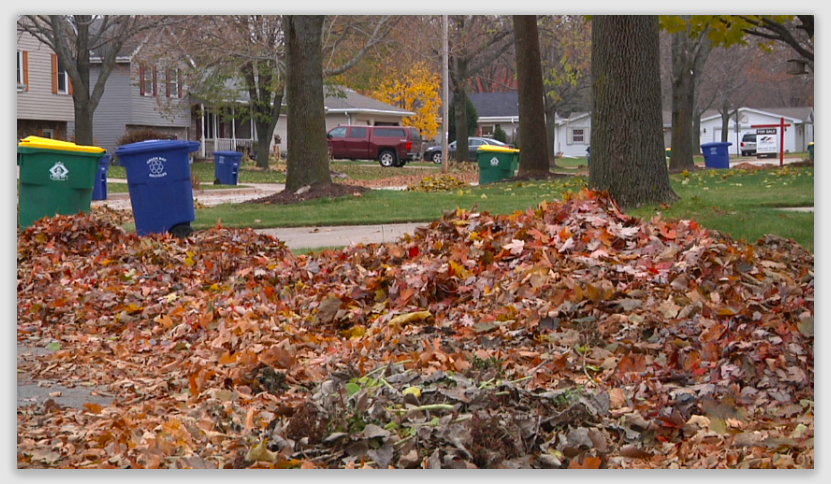
Trees continue to lose their leaves, falling to blanket yards and roadways. The City of Green Bay Department of Public Works is picking up that yard waste right now and is finding it to be quite the task this season. In the fall, Maureen Trafford-Braun puts on her leaf blower to help her neighbors and family members clean leaves out of their yards. “Usually around this time it’s always like that,” said Trafford-Braun. “With trick-or-treating we always walk through the piles on the streets. So, that’s why I kind of wanted to get it cleaned up.” She piles the leaves on the curb for collection by the City of Green Bay Department of Public Works. “We generally try to follow the trash or recycling collection routes, but we’re not day for day pacing those routes,” said Steve Grenier, Director of the City of Green Bay Department of Public Works. “It all depends on how much material is out for collection at this time.” Right now, Grenier says there are more leaves already on the ground than usual…
Without trees, a neighborhood just doesn’t feel neighborly. The world seems too hard and boxy. There’s no rustle of leaves or chirping of birds to buffer the drone of lawnmowers and hissing of tires. The sun shines too bright. The wind blows too hard. I can’t imagine living without the filigree of snow-laced branches in winter, an ephemeral blaze of color in autumn, and that magical, jubilant pop of green when new leaves bud in spring. Trees add more than ambiance. They also increase property values. Depending on other neighborhood factors, researchers have found homes with street trees sell from five to 18 per cent more than those without. And there are other benefits too. Street trees are linked with improvements to pedestrian safety, reductions in car crashes and better drainage in rainstorms. They cool hot streets in summer, improve air quality by absorbing pollutants and converting harmful gases to oxygen. Even just looking at trees has been shown to reduce stress…
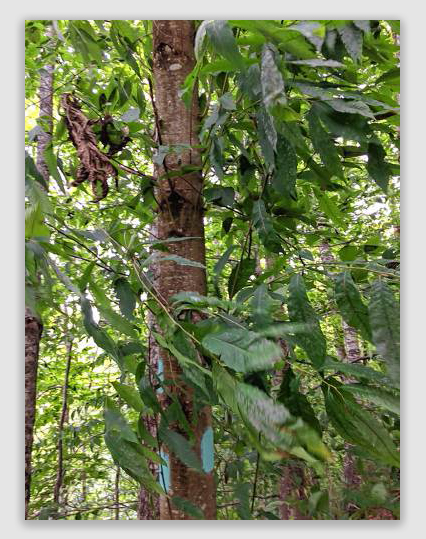
The 16 chestnut trees found during the six-week Chestnut Challenge at Smith Pond Shaker Forest have given the Upper Valley Land Trust hope that there are even more in the 995-acre property that the nonprofit organization has owned since 2015. “What we found on the property were three distinct groups of mature trees and two seedlings found not near any other trees,” said Alison Marchione, programs director at the Upper Valley Land Trust. “The trees range in size from seedlings, young trees and up to at least seven mature trees.” Additionally, the largest tree found was 35 feet tall with a diameter of 7 inches, she said. Five of trees were 25 feet or taller. There were also five trees that are producing chestnuts. “Given the number of trees found in a relatively short search time and in multiple easy-to-reach locations, we suspect that there are many more trees still to be found on the property,” Marchione said via email. “Having multiple groups of several mature trees is a good sign that the trees are pollinating and potentially producing viable seeds…”
A man was electrocuted Monday while trimming trees in west Oak Cliff. The homeowner came into contact with a high-voltage wire shortly before noon at a home in the 2800 block of West Jefferson Boulevard, near Ravinia Drive, Dallas Fire-Rescue spokesman Jason Evans said. He was unresponsive when rescuers arrived. Authorities lowered the 44-year-old to the ground from a lift and confirmed that he was dead, Evans said…
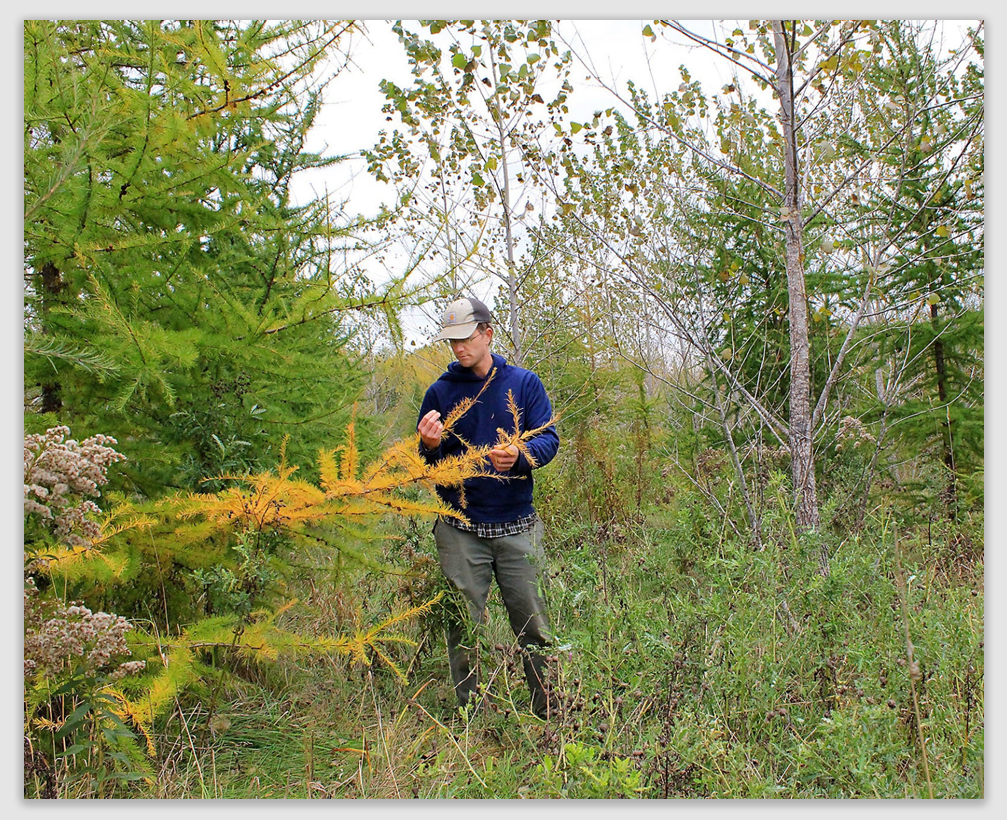
The old adage “the best time to plant a tree was 20 years ago; the second-best time is now” is a favored saying among some financial consultants and other professional advisers. The idea is to get things started now to achieve goals a few decades down the road. But when it comes to actual tree planting, new hybrid varieties can help landowners enjoy the benefits of trees in a fraction of the time. “Find the right tree for soil conditions and the response is amazing,” said UW-Extension’s Jason Fischbach. Whether it’s an erosion buffer, windbreak or agroforestry project, recently developed hybrid trees may fit right into future land management plans, while providing habitat benefits to local wildlife. Fischbach, a food and energy woody crops specialist, has spent eight years working with some 70 genotypes of hybrid poplar, willow and tamarack in northwest Wisconsin. Test plots in Ashland, Bayfield and Washburn counties feature a variety of soils, along with some unique growing conditions near the Lake Superior shoreline. The right tree in the right spot produces growth of up to 8 feet a year. “There are a lot of possibilities with the variety of species available,” Fischbach said. “Trees can be financially valuable to farmers as a crop and as a way to improve soil quality and prevent erosion…”
Denver, Colorado, Post, October 29, 2018: Wolf Creek Ski Area removes 4,000 beetle-killed trees
Wolf Creek Ski Area in Pagosa Springs says it has removed an estimated 4,000 trees killed by spruce beetles over about 150 acres. Owner Davey Pitcher told The Durango Herald that the removal mitigated some of the fire danger at the southwestern Colorado resort and also got rid of hazardous trees. But he says it also allowed a new ski lift to be built and created some new beginner and intermediate trails.The trees were dead for five or six years so only about 20 percent of the wood was good enough to be sold to the timber industry. The rest will be used as firewood or burned in a slash pile. The southern San Juan Mountains, including the ski area, were hit hard by a spruce beetle infestation in the mid-2000s…
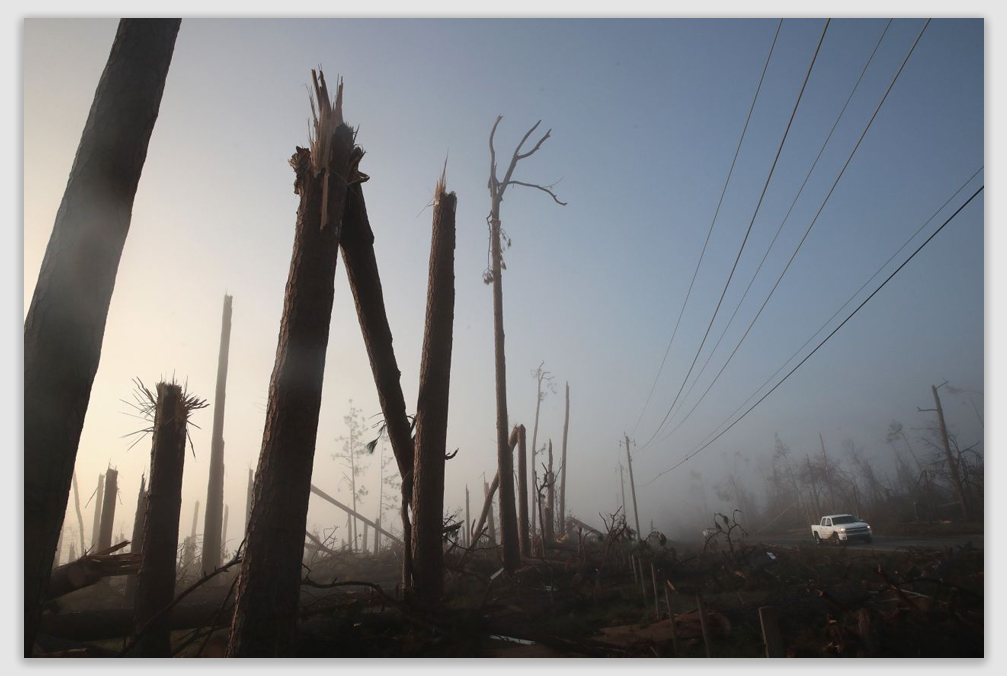 New York City, Wall Street Journal, October 29, 2018: Stressed southern timber growers get hit again
Owners of forest land along the Florida Panhandle and beyond are grappling with at least $1.6 billion in timber losses after Hurricane Michael snapped and mangled trees across the region, according to state authorities. Forestry officials in Florida, Georgia and Alabama estimate the hurricane damaged more than five million acres of woodland in the region when it roared through this month. The destruction marked a fresh blow to timber growers already saddled with historically low prices brought on by a glut of mature trees in the South. The storm hardly dented the oversupply. But it wiped out decades-old investments and triggered heavy cleanup costs for local timber owners, most of whom are individuals and families. Forester Will Leonard said nearly all of his family’s roughly 8,000 acres of Florida Panhandle pine were damaged. This includes 100-foot slash pine that could have fetched up to $60 a ton as utility poles before the storm, but now might be worth $2 to $3 a ton as pulp…
After a killing frost, remove dead plant debris from annual and vegetable beds. Sanitation is especially important if you have had disease problems in your planting beds. Remove all diseased foliage or fruits and do not add affected materials to your compost pile, because most home compost piles do not get hot enough to kill disease organisms. Buckthorn is an invasive tree and common throughout the Chicago area. It tends to hold green leaves later than other deciduous trees in fall so it is easy to spot. Cut buckthorn at ground level and quickly treat the stump with an herbicide to kill the root system. Smaller trees can be dug out with a sharp spade. Shredded leaves make good mulch for your garden beds. For the serious gardener, a shredder can be rented but be aware that they are very noisy, so it is best to use ear and eye protection when using…
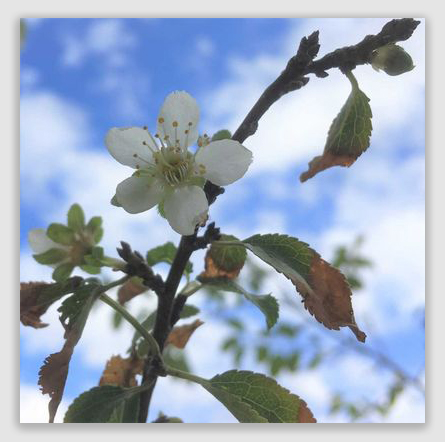
Question: Do you know why my Ranier cherry tree is blooming now (Sept. 30)? It doesn’t look so good, but earlier this year it produced a decent amount of cherries.
Answer: I came across this reader’s question on a gardening Facebook page with photos of her flowering cherry tree. A grower in Edgewood, provided a great response post: “Very common on fruit trees that have been stressed from lack of water. They basically go into a semi-dormant state, and then when monsoons hit with suddenly lower temps, water to the roots, and higher humidity they come out of the dormant state and first thing they do is bloom, just like in spring.” He went on to recommend watering deeper and out beyond the small tree’s dripline, where the majority of the hard-working, water absorbing roots are expected to grow. He also suggested a fat layer of wood-chip mulch, which made me happy as a clam. Other group members started chiming in that their fruit trees were also blooming. A pear here. An apple there. And my interest was piqued. Weeks went by as I wrote about soil amendments, deadheading flowers and how to deal with extra green tomatoes. Last week I saw an NPR headline that practically jumped off my screen: “In Japan, A Strange Sight: Cherry Blossoms Blooming in the Fall.” In this short article, Laurel Wamsley describes a situation in which hundreds of people have reported blooming cherry trees all over Japan. It is suggested that this phenomenon was spurred by typhoons that occurred just weeks before. The stress from being defoliated by wind combined with salt sprays and warm temperatures may have shocked these trees into bloom…
When Randy Morin first moved to Phoenixville, he was instantly drawn to the town’s tree-lined streets. He quickly joined the town’s Tree Advisory Committee in hopes of making his new home even greener by planting more trees. What Morin didn’t expect, however, was that not all residents in town would be as excited about the additional foliage as he was. So while his volunteer work has involved planting trees, it has also required him to change the minds of some of his neighbors. As a scientist at the US Forest Service, Morin has always appreciated trees and their many benefits. “The trees are a benefit to the residents of a town because it makes the town look nice. It can even cause property values to be higher if you have nice tree-lined streets,” he says, also citing trees’ impact on health…
 London, UK, The Guardian, October 26, 2018: The secret lives of trees: what to expect in autumn
“The trees are in their autumn beauty,” wrote the Irish poet William Butler Yeats. “The woodland paths are dry.” Immersed in rich colour and deliciously crunchy underfoot, a woodland walk in autumn is surely one of the most pleasurable and relaxing activities offered by the British countryside. Yet, those excursions are not always quite as straightforward as they appear. For one thing, British trees are rather complicated in their leaf-shedding habits and really vary according to location – autumn takes a while to arrive across the whole country. In the Scottish Highlands, for instance, the woods of the glens are already steeped in golden yellow as early as mid-September. Their canopies are also susceptible to immediate demolition should an early Atlantic storm pass through. In Derbyshire, many woods can often be cleared of vegetation by late October – yet, at the same date in Norfolk, which is more than 300 metres lower in altitude, there are oakwoods looking as emerald green as they did in midsummer. Come November, many trees seem to have barely cast a leaf. Another interesting thing about that leisurely autumn stroll is the environmental intensity that underpins it. Poet John Keats may have famously called it the “season of mists and mellow fruitfulness”, but it is anything but. What really drives those glorious colours in the trees is the stress of hard work. The element of almost all plants responsible for making summer so green is chlorophyll. But as well as being the miracle worker that turns sunlight to sugar during photosynthesis, chlorophyll is also a precious protein. Before they shed their leaves at the end of season, deciduous trees devote themselves to breaking it down and storing it away for another year…
After Akron contractor Thomas Rardon was sentenced to three years in prison for bilking elderly people out of tree repairs, he argued with the judge. “It’s just not right,” Rardon told Summit County Common Pleas Judge Tammy O’Brien. “I’m not supposed to go to prison!” O’Brien cut Rardon off and deputies led him from the courtroom in handcuffs past several of Rardon’s unhappy customers. “I hope you rot in hell!” Rardon hissed at them. “Back at you,” replied Jim Collver, who painted a message to Rardon earlier this year on a half-felled tree. “You piece of garbage!” This was the dramatic end to Rardon’s sentencing Thursday afternoon. Rardon, 41, pleaded guilty in September to two counts of theft from a person in a protected class, fourth-degree felonies; one count of theft from a person in a protected class, a fifth-degree felony; one count of theft, a fifth-degree felony; and one count of petty theft, a first-degree misdemeanor…
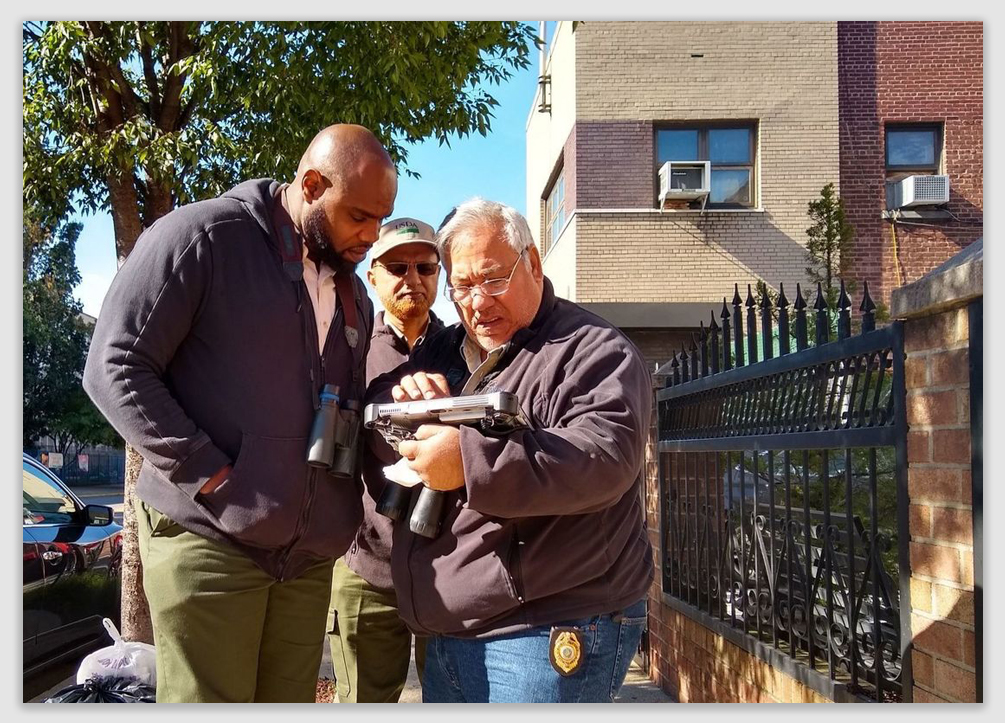
Most New Yorkers think Antony Massop’s badge is fake. A tree inspector in Brooklyn just sounds like a scam, which is why the job requires the savvy of a homicide detective, the agility of a cat burglar, and the tenacity of a pit bull. “Access is a problem, so you gotta be creative,” the U.S. Department of Agriculture Animal and Plant Health Inspection Service supervisor explained as he boosted himself atop an abandoned television in an overgrown yard in Bedford-Stuyvesant one recent morning. He vaulted over a bramble and shimmied behind a full-sized Chevrolet van and up an ivy-covered fence, where he raised his Nikon binoculars to inspect a particularly thorny patch of New York’s urban jungle. “We saved a lot of taxpayer money just now,” he said. Part urban arborist and part social worker, Massop has spent the last 18 years hunting the Asian long-horned beetle, an invasive, wood-boring pest that first appeared in Greenpoint, Brooklyn, in 1996 and looms as an existential threat to the state’s timber industry. The insects, which like to hitchhike on shipping pallets, have been found in Chicago’s O’Hare Airport and warehouses in Los Angeles, and Ohio, Massachusetts and New York all host active infestations. Last year alone, inspectors in New York City and Long Island visited more than 80,000 properties and checked more than 117,000 trees, all in an effort to evict the transplants before they can relocate to upstate New York and its lush forests…
Darlington woman is charged with allegedly stealing nearly $180,000 from an Aberdeen tree company over 18 months, according to court records. Lynn Ann Bowman, 21, of the 2100 block of Glen Cove Road, was indicted Oct. 16 and arrested last Friday on charges of theft more than $100,000 and theft $25,000 to $100,000, conspiracy to commit theft more than $100,000 and theft $25,000 to $100,000 and embezzling or misappropriating, according to court records. She was taken to Harford County Detention Center, where she was released on $25,000 bond according to online court records. Between Sept. 1, 2016 and Sept. 30, 2017, Bowman allegedly stole $122,095.19 from Clayton Glassman, owner of Clayton’s Tree Service, according to an indictment filed in Harford County Circuit Court. Between Oct. 1, 2017 and March 7, 2018, she allegedly stole $57,083.78 from Glassman, according to the indictment…
 Cincinnati, Ohio, WCPO-TV, October 24, 2018: Woman says Cheviot killed her trees, won’t pay
The yellow tape on a quiet Cheviot street does not signify a crime scene. But to homeowner Kathy Stoutimore, what the tape surrounds is indeed a crime. Stoutimore says a city-hired sidewalk contractor sliced through the big roots on her two giant oak trees, killing them. “They had a tree guy come out and cut the roots of the trees to lay the new sidewalk,” she said. Now, one year after her new sidewalk was installed, both trees are dying, and dropping dangerous large limbs. Several arborists she called for help said the trees cannot be saved. “They say the cutting has killed the trees,” she said…
A Bergen County woman who worked as a bookkeeper for a tree service company has been charged with stealing more than $300,000 from the business to pay off her credit cards, police said Tuesday. Julie Shih, 39, of Closter, was the bookkeeper and office manager for the Mahwah company for the past seven years, according to police Chief James N. Batelli. “It is believed Mrs. Shih had been stealing from the company since 2015,” Batelli said in a statement. Batelli did not name the company, but said the owner reported a review of financial records showed business checks had been cashed or deposited into bank accounts without authorization…
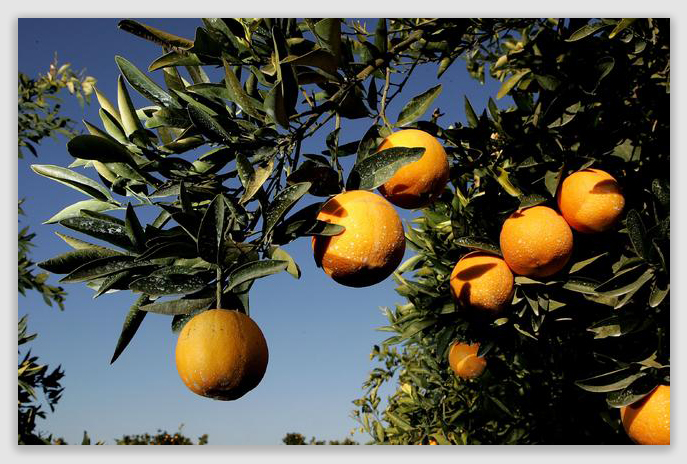
An insect no bigger than a grain of rice called the Asian citrus psyllid, carrier of a bacteria that causes a serious plant disease that is not harmful to humans but kills citrus trees, has been detected in Duarte, city officials said Wednesday. California Department of Food and Agriculture employees are going door-to-door in the community to inspect citrus trees for Huanglongbing or HLB disease, also known as citrus greening disease, for which there is no cure. City officials said residents will be able to recognize the CDFA employees by looking for a department patch on their uniforms. They also wear tan shirts and CDFA badges. The CDFA tracks the presence of the pest and disease, and establishes quarantines to help protect California citrus trees. The insect feeds on citrus leaves and stems, and without proper inspection and treatment, may go unnoticed…
Some time this week, dozens of trees that line the Dallas North Tollway will be chopped down. Pines, live oaks — could be a hundred, easy. They run in a straight line for about half a mile, in an easement on the eastern side of the toll road that stretches from Forest Lane north to Harvest Hill Road. Yes, that’s right — Forest Lane. About four miles east of the Home Depot where all those trees were butchered last year. Forest, I guess, is just destined to become less foresty every year. Oncor’s doing the deed so it can replace old transmission towers with new ones — “to support the increased demand for electric power” in that stretch of North Dallas and beyond. So says the energy provider in notices sent to residents along Quincy Lane about to lose the backyard barrier separating them from the noise and exhaust coming from the tollway…
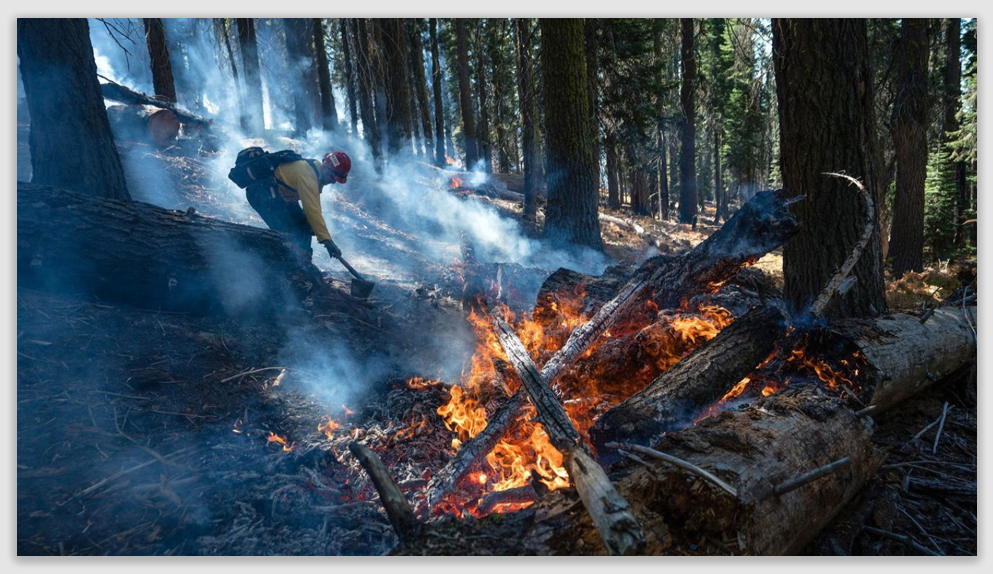
A National Park Service plan to set fire to an ancient sequoia grove in western Sierra Nevada has been canceled for the second time this year, further delaying a delicate forestry operation aimed at triggering new growth near the world’s largest tree. The controlled burn in Sequoia and Kings Canyon national parks was expected to blacken 483 acres in the Giant Forest, a cathedral-like grove of sequoias straddling Generals Highway. The carefully tended fire was expected to last seven days, but was canceled Friday after a test fire failed to consume vegetation fast enough for the plan to work, according to Mike Theune, a fire information officer with the National Park Service. California’s famed General Sherman Tree and other giant sequoias have evolved in a manner that allows them to not only survive periodic wildfires, but also thrive in their aftermath. The towering trees are wrapped in a thick, fire-resistant bark, and their cones release seeds when exposed to heat. Fire also helps to clear the forest floor and expose nutrients that allow the fallen seeds to germinate…
At 4:24 AM a tree loaded with powerful electrical wires crashes down on an unsuspecting driver at Belmont Avenue near Rockhill Road. Fortunately for the driver, whose details are unknown, he/she was in Lower Merion. Police were on the scene in under a minute, the situation was assessed, and the victim was told not to move and no matter what stay in the car. The Power lines were active and occasional sparks and the sound of electricity crackled in the quietness of the early morning. The police had closed the roads leading to the scene. The fire department was dispatched simultaneously with the police and the brave men and women mostly volunteer arose from their beds to respond to the firehouse to man the apparatus. Two fire company rescue trucks were sent one from Station 22 -Belmont Hills and the other from Station 21 -Penn Wynne. Rescue 22 from Belmont Hills arrived with its paid professionals and the volunteers. PECO Energy was notified to respond immediately and asked to cut the power. The situation could be dire. Paramedics from Narberth Ambulance were on the scene, and Penn Wynne Fire Company’s “Heavy Rescue” unit stood by while awaiting the “all-clear” from PECO Energy who owns and maintains the electrical distribution network…

Bonsai trees are a respected form of artwork in Japan. The prestige has carried over to Hawaii where the carefully sculpted and beautifully groomed trees can be worth thousands. And a recent theft of a tree on Hawaii island has left a respected grower feeling like a part of him was stolen. “It was a tremendous sense of loss. It’s almost as if my daughter got kidnapped, you know?” David Fukumoto of the Fuku-Bonsai Cultural Center said. “I mean, you know, if you do good bonsai you have a very strong attachment to specific trees and it was very depressing to realize that someone would kidnap such a tree,” he added. The small tree was stolen from the center in Kurtistown sometime in late September…
Few things so consistently provoke public opposition as cutting down trees that they enjoy. The latest instance is a small one but unfortunately not unique. David S. Dempsey, a Pennsylvanian who has a second home in Avalon, cut down some trees growing on a dune between his house and the ocean. He pleaded guilty to damaging borough property. This is done occasionally, said Avalon Mayor Martin Pagliughi, by people “who want to improve their views from private property.” A citizen spotted Dempsey cutting the trees and reported him to the police. Public interest in keeping trees and stopping those who would cut them is strong enough that a report to police might be the least one could expect from such disregard for nature and public property. Currently, residents in the Bass River Township area are vigorously protesting a state plan to cut enough of a tree farm around a watchtower so spotters can see and report fires before they become a danger to 50,000 area residents and firefighters…
 Berlin, Germany, Deutsche Welle, October 22, 2018: German beaver fells tree onto yacht
Police said a couple making their way down the Müritz-Elbe waterway were “very lucky” to have survived the incident. Once on the brink of extinction, the beaver is making a comeback in Germany and across Europe. A German couple narrowly escaped death when a large tree came crashing down on their yacht, state maritime police said on Monday. A beaver felled a tree when the couple was traveling through the Müritz-Elbe waterway in the eastern German state of Mecklenburg-Western Pomerania. The beaver had managed to bite its way through a 20-meter-high (65.6-feet-high) poplar tree. The felled tree caused thousands of euros in damage to the yacht. “They were very lucky,” said a police spokeswoman. “Luckily the yacht was made of metal, so it was able to continue on its journey…”
Digital Journal, October 22, 2018: Tree removal: A dangerous business for all but the professionals
Despite what many people think, tree removal is a tough business that claims the lives of over 100 Americans each year, while injuring well over that number as well.According to tree care industry watchdog Dripline.net, as of October 18, there have been 84 fatalities in 2018 because of tree removal and trimming accidents. The surprising factor here is that a clear majority (36%) of the fatalities are civilians, as opposed to tree service professionals, who are trained in arboriculture and often highly experienced. The percentage of civilian deaths actually represents an improvement year over year from 2017, where 48% of reported deaths were untrained civilians. “It’s a fact of life that when you’re dealing with large or even mid-sized trees; there is always going to be a lot of risk,” said Glen Markstrom, General Manager at All Clear Tree Service in San Diego. “There are always going to be a lot of factors at play with a tree removal, including winds, tools used and equipment. Add to that the fact that larger trees can weigh hundreds or thousands of pounds, and you have a situation where the amateur may be in considerable danger…”
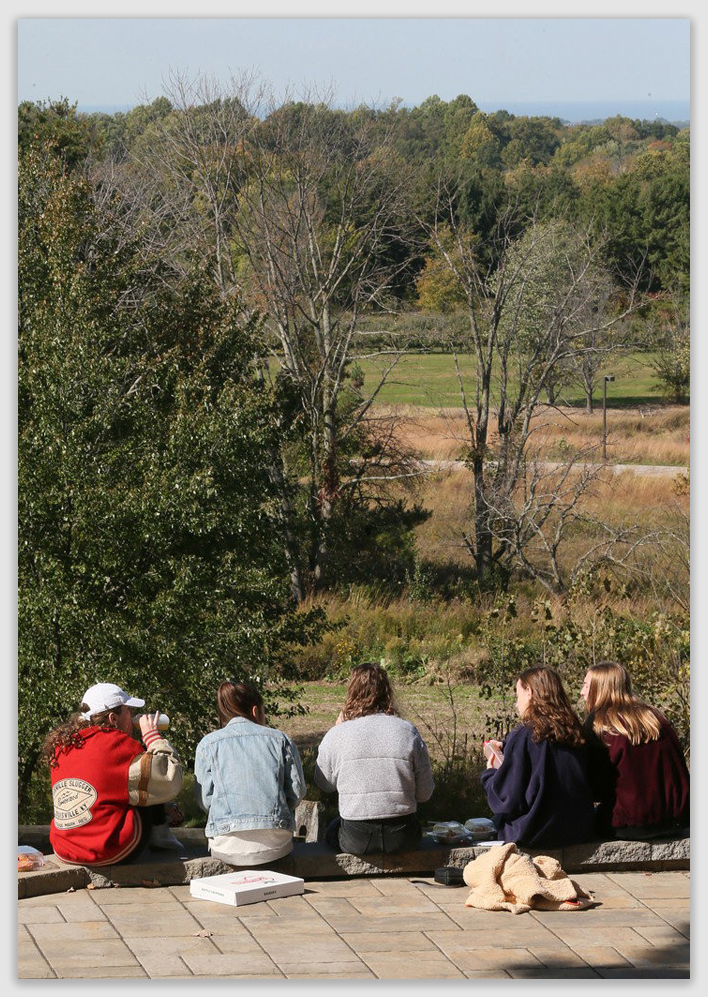
Have you noticed? Northeast Ohio’s famous fiery fall foliage is nowhere to be found. Take a ride through the Valley, in Cleveland Metroparks’ Rocky River Reservation. The historic Green Barn is now fire engine red and the park is a sea of green. Halloween is around the corner and it still looks like August. The leaves are barely changing. What’s up with that? “In Ohio,” reports FoliageNetwork.com, “things are still slow to get going.” Its maps mark the area as “low color.” It’s not just us. For the Mid-Atlantic, notes the Washington Post, “The Foliage Network’s latest update cuts right to the chase. ‘The bizarre foliage season continues! In the 10 years we have covered this region, we’ve never seen anything like this. The fall color is still on hold.'” What’s up with that? The short answer is that the unseasonably warm and wet fall has us on a two- to three-week delay in the leaves changing color…
Remember three years ago when California had its worst drought on record? We might have more water than we did back then, but trees are still suffering. It’s just a different kind of tree. When it all started, it was the pines that were suffering. That’s because they live at lower elevations, where the drought hit the hardest. This year, California red and white firs are the biggest losers, and they live much higher up. That’s according to the latest aerial detection survey of the Southern Sierra, which the U.S. Forest Service released this month. Researchers flew over all the national parks and forests from Eldorado down to Sequoia and recorded how many of the 6.5 million acres contain dead or dying trees. Turns out it’s 11 percent. If you’re counting just the dead firs, that number would be nearly 10 percent. Jeff Moore manages the regional aerial survey program. He said tree mortality has two main causes: drought and bark beetles. And, yes, the drought is over, but the beetles are still here. “Trees at lower elevations have already been heavily impacted by the drought,” he said. “Now the beetles are just trying to find whatever’s leftover, and often times that’s in higher elevations…”
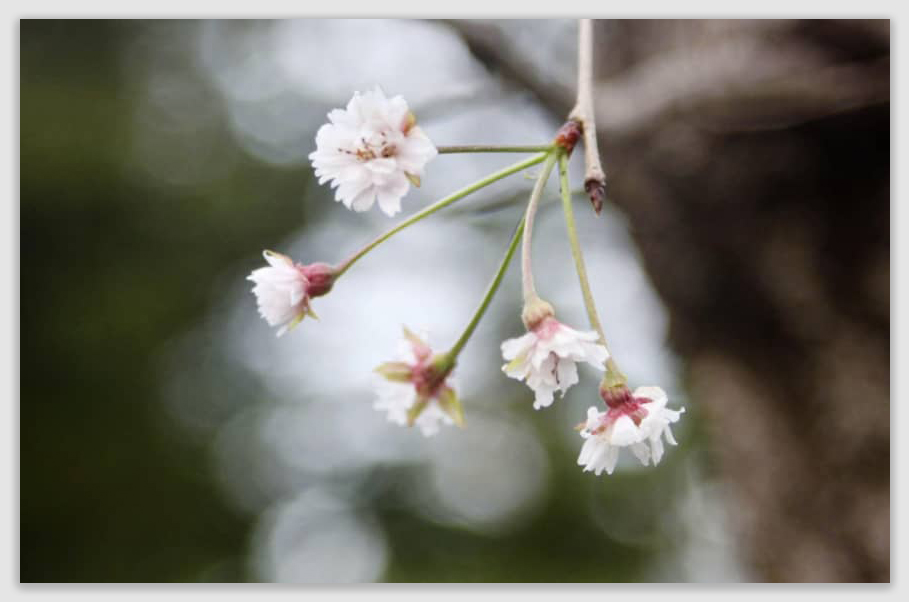
Even cherry trees aren’t sure what to make of this year’s run of unusual weather. Cherry blossoms, which usually bloom in the spring, have recently been flowering across the nation, likely due to typhoons that brought in warm air and salty seawater, according to Weathernews Inc. and other experts. The Chiba-based company said it received reports of the Somei-Yoshino variety of cherry tree blossoming from 354 people in 39 prefectures earlier this month. Experts say it is rare for cherry trees to blossom out of season in so many locations. Weathernews said it started receiving reports of blooming around Oct. 9. One report from the city of Nobeoka, Miyazaki Prefecture, included a photo of a couple of Somei-Yoshino cherry blossoms flowering on a tree with almost no leaves left, the firm said…
Associated Press, October 21, 2018: Falling palm tree kills woman in hammock in Florida
Florida officials say a woman lying on a hammock was killed after a palm tree fell on her. Hillsborough County Sheriff’s officers say 20-year-old Isabel Melendez was in the hammock on Egmont Key Park on Saturday in late afternoon. The palm tree crashed on her, and she was taken to a hospital in St. Petersburg, where she later died of her injuries…
 Colorado Springs, Colorado, October 21, 2018: Beetle kill trees being removed at Monarch Ski Area
As snow signals ski season is just weeks away, logging equipment can be seen moving across Monarch Ski Area. Mountain regulars are aware of what’s going on, an operation to remove trees killed by Spruce Beetles. Remaining slash piles are large, but smaller than the ones seen earlier this summer. The first year of work removed trees from 120 acres, and several hundred more acres will be treated over the next couple of years. This will be just one piece of a much larger infestation on Forest Service land. Monarch works with the U.S. Forest Service, as the ski area operates with a special use permit from the agency. Along with maintaining lifts and supporting winter recreation, there is an attitude of good stewardship toward the forest land. The removal process takes out beetle kill and leaves healthy trees behind, leaving thick stands of trees noticeably thinner…
Winterizing fragile trees and shrubs is a simple and prudent exercise in landscape management. Mulching and watering before the ground freezes up can save you a bundle of time and money. “As long as the soil drains well, water the trees through autumn at least once a week unless there is a lot of rainfall, lot of rainfall,” said Gary Johnson, an Extension professor with the Department of Forest Resources at the University of Minnesota. “Soil moisture should be to a depth of 8 to 12 inches for the roots to take up water.” Apply insulating mulch but don’t overdo it. Piling mulch volcano-style against a tree trunk is the same as burying a tree too deep, Johnson said. Most tree and shrub damage in winter is not cold-related, he said. “Animal damage is the most common,” he said, recommending protective fencing around trees if deer are a problem, “or at least stem protectors like hardware cloth or plastic protectors.” And then there are the troublesome bark- and root-eating squirrels, rabbits and voles. Tree guards and chicken wire generally are used to keep them away…
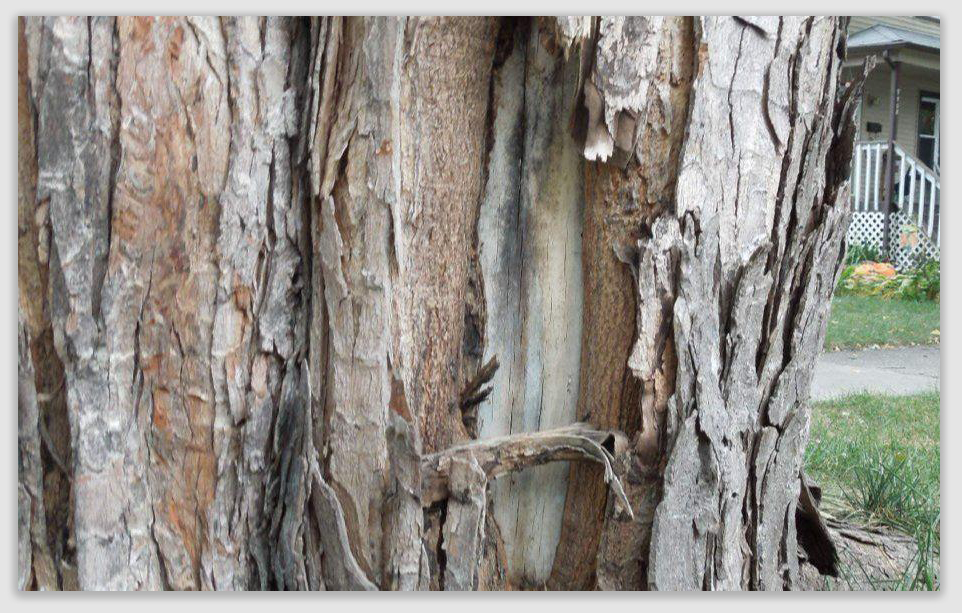
When a branch falls or a tree dies, one common reason is a group of diseases with an especially ominous name: canker diseases. “Canker” comes from the same root as “cancer.” Like cancers, cankers can spread. Cankers — usually oval or elongated areas of dead, discolored, cracked or sunken tissue — can be caused by a variety of pathogens, although most are fungi, according to Sharon Yiesla, plant knowledge specialist in the Plant Clinic at the Morton Arboretum in Lisle. Over time, the pathogen can spread from the original canker into the water-carrying vessels under the bark, cutting off the supply of water and nutrients to a branch or to the entire upper part of a tree. The canker also can create entryways for insects and decay organisms, which can lead to years of rot. Canker diseases have one big thing in common: They exploit weakness. “These aren’t strong attackers,” Yiesla said. “In order to get under a tree’s bark, they have to find a wound.” The breach may be bare wood from recent pruning, the torn tissue of a broken branch or a nick in a young tree’s bark from careless handling during planting…
Neighbors in North Portland continue fight to protect Heritage Tree. The massive white oak tree sits atop Overlook Bluff in North Portland. Neighbors in the area consider it an icon. About a year and a half ago, Portland developer Brandon Brown bought the plot of land on which the tree sits with plans to build six homes on the site. But he also pledged to protect the iconic tree. Brown said he followed city guidelines in his planning. A city planner even recommended Brown’s plan. But neighbors argued, under the plan, the homes would be built too close to the tree and would damage its roots, causing the tree to eventually die. “Oregon white oak roots are very shallow which means they’re very sensitive to any digging construction,” said Friends of Overlook Bluff chair Chrystal Smith…
 Salisbury, North Carolina, Post, October 19, 2018: Money does grow on trees
Managing your forestland can be an excellent long-term investment. Over the years, income from managed timber stands has exceeded that from most other crops in terms of value added per acre per year. Even managed pre-salable timber stands have increased the property value of forestland substantially over bare or unmanaged, cutover woodland. Annual returns from 0 to 40 percent are possible from forest management. The range of returns is wide because of variations in soil productivity, stand condition, tree species, markets (both availability and price fluctuations), intensity of management, and availability of financial incentives. In today’s world, it is easy to track investments and watch them grow. In forestry this is not so easy. It is not easy to see trees grow, but they do increase in size, as well as value. In as little as 35 years a well-managed stand of Southern pines can go from being seedlings to being harvested as sawtimber. If this stand is well managed it is capable of accumulating 250 to 500 board feet of volume per year…
Tucson, Arizona, KGUN-TV, October 18, 2018: TDOT reminding people not to trim city trees
The Tucson Department of Transportation wants to remind people to not trim the city’s trees. Illegal pruning is an issue TDOT deals with a few times per month. Gary Wittwer, landscape architect for the TDOT, believes someone took it upon themselves to prune a city-owned tree on 5th Street and Stone Avenue instead of calling the city to do the job. He says the tree may have been blocking the stop sign or oncoming traffic, which is a safety concern the department would take care of as quickly as possible.”We really want to try to have professional people prune our trees, because it really is important to prune them correctly. Improper pruning can cause damage to the tree and long term disease,” Wittwer said…
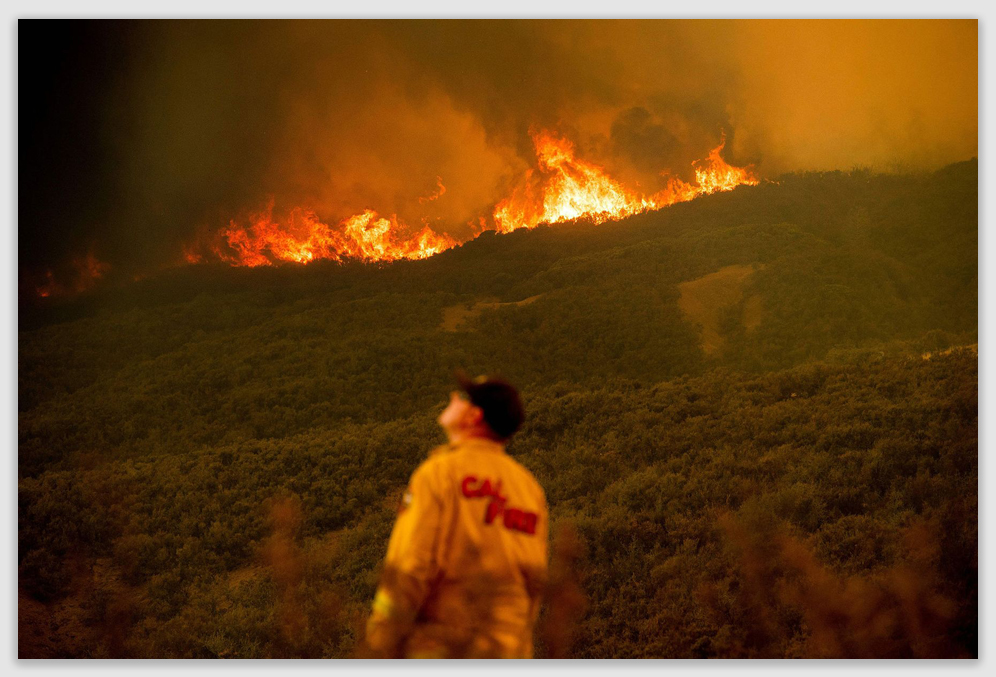
President Donald Trump lashed out at Democrat-governed California on Wednesday, warning its leaders to clean up forests that he said are full of dead trees posing a wildfire risk. “California’s a mess,” Trump remarked at a Cabinet meeting after Agriculture Secretary Sonny Perdue said his department is “making forests work again… It’a a disgraceful thing,” the president continued. “Old trees are sitting there rotting and dry and instead of cleaning them up, they don’t touch them, they leave them, and we end up with these massive fires.” California has experienced 5,322 fires that burned about 621,000 acres so far this year, costing it $773 million for firefighting, according to the state. Fire is a perennial threat in the state, though it has experienced more than twice as much burned acreage so far this year than average…
Four more companies have been sued by the state for alleged price-gouging in Wilmington after Hurricane Florence. N.C. Attorney General Josh Stein came to Wilmington on Wednesday to announce a pair of lawsuits against companies involved with tree removal. One suit names Action Tree Pros and Premier Landscaping and Lawn Care, both of Kentucky, and the other names Scotts Tree Service, of Ohio, and Goldberg & Donovan Inc., a debt collection agency based in Massachusetts. According to the first suit, after Florence struck Action Tree Pros — owned by Nick Downey — gave a property owner a $5,000 estimate for tree removal. But after the work was completed, the company billed the owner for $10,565. After that, the property owner told Downey not to do any tree work on any of her other properties. Stein said that Downey disregarded this and allegedly contracted with Premier Landscaping for more work. That included charging $29,500 to remove a single tree, and charging homeowners $78,865.02 for a total of five trees, Stein said…
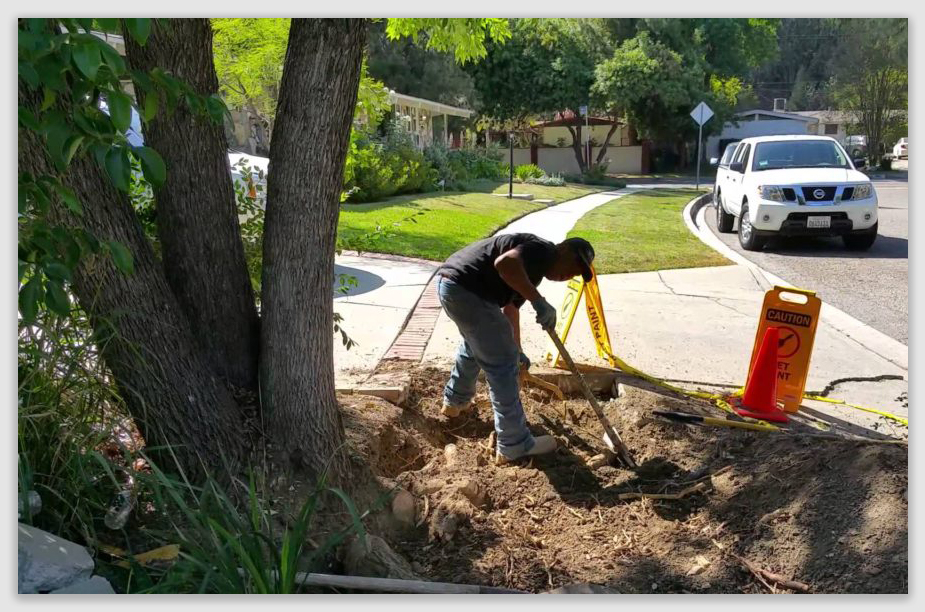 Abilene, Texas, Reporter-News, October 17, 2018: Consider tree roots before digging ditches
Personally, as someone who thinks a lot about keeping trees healthy, and preserving them, in areas of intense human activity, I think winter is a great time for those big remodeling/rearranging type projects around our houses. The reason is the demands the canopy of a tree puts on its root system are not nearly as intense in the winter. So, if we’re going to disrupt the roots with some kind of construction or changes, winter is a much better time to do it than summer. While there are lots of consequences of heavy construction and/or large changes for trees, there are four main problems that occur during this kind of activity — damage to the root systems, soil compaction, problems of toxicity, and drainage changes. You would be surprised how easy it is to do any, or all, of these things, during construction. As you can imagine, these kind of issues are going to be tough for a tree to deal with, and it’s a lot better if they start trying to adapt to such changes in the wintertime, rather than abruptly in the middle of the summer…
OPPD is warning that scammers are calling its customers, pretending to work for the utility company and demanding money. Some tree trimmers also are falsely presenting themselves as OPPD crews. As of 4 p.m., the Omaha Public Power District had received about 125 reports of scam phone calls, the utility said Wednesday in a statement. “This is one of the highest totals of reports we’ve seen in a single day,” said Jodi Baker, spokeswoman. Scammers have been targeting utility customers across the country for years, OPPD said. The scams occur several times a year, sometimes after large outages such as Sunday’s, which cut off power to about 57,000 customers. The scammers often use spoofing technology so that caller identification appears to show a legitimate OPPD phone number. Callers pretend to be OPPD employees, demanding payment on bills they claim are overdue. In some cases, they claim customers need to pay for meters or other equipment…
 New York City, New York Post, October 15, 2018: ‘Top Chef’ star admits to poisoning neighbor’s tree
Bad boy celebrity chef Adam Harvey has turned over a new leaf, admitting Monday that he did, in fact, attack a neighbor’s tree. Harvey, who copped to a misdemeanor charge of criminal mischief, must serve 20 days of community service as part of the plea deal. The onetime “Top Chef” star had been accused of boring holes in the trunk of a maple tree adjacent to his Windsor Terrace property, and inserting some sort of poison into the holes after his neighbor refused to cut it down. “Yes sir,” the chef-turned-lumberjack responded Monday when asked by Judge Joseph McCormack if he’d used a “drill to cut and drill multiple holes into the bark” of the tree, which was blocking the solar panels on his $1.5 million Windsor Terrace home. His guilty plea follows a September appearance in which Harvey turned down a plea offer on the same charge — but which included 35 days community service. He’d faced up to a year behind bars prior to cutting a deal…
Authorities say an 11-year-old girl was struck and critically injured by a tree that was being cut down outside a home in western Michigan. The Ottawa County sheriff’s office says the girl arrived at the home with her family on Monday evening in Allendale Township and ran into the front yard to greet a family friend who was using a chainsaw to cut down trees. One of the trees fell as she approached, striking her in the head. The girl was taken to a hospital in Grand Rapids, where she was listed in critical condition…
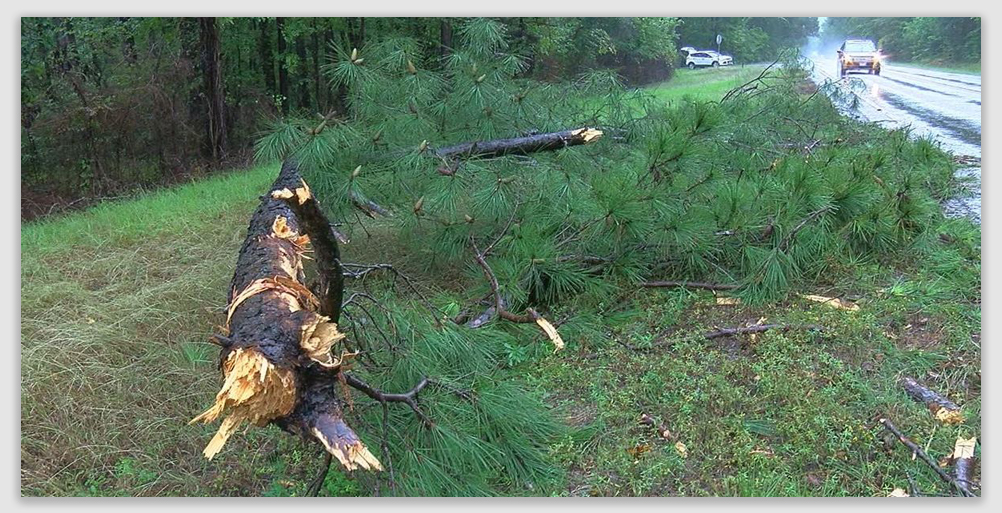 Tyler, Texas, KLTV, October 16, 2018: Rain-soaked ground could lead to falling trees
With so much rain falling across East Texas, the rain-soaked ground could put trees at risk for falling, and the danger will linger long after the rain is gone. When a tree comes falling down in Rusk County, Richie Spencer at Spencer’s Nursery and Landscaping is often one of the people who gets the call. “The concern is the saturation around the root structure of the tree,” Spencer said. With much of East Texas getting a multi-day dousing, Spencer expects more and more trees to come crashing down. “Pine trees are probably the worst,” Spencer said. “That’s because they don’t have much of a root structure. That’s the problem you’ve got to worry about.” Spencer says it’s important to keep an eye on rotting trees and look for cavities or discoloration on the tree’s bark. But despite the clues, Spencer says when a tree’s ready to come down, it will. “There’s no real warning of a tree coming down,” Spencer said. “Once it’s on it’s way, it’s going…”
As cleanup continues, some homeowners are finding out who is responsible for damage left by Tropical Storm Michael. Joyce Longmire learned she would have to find someone to clean up her damaged yard on Lawndale Drive, even though her neighbor’s tree caused it. “Had it gone a little bit further it would have fallen through my house, through my window,” she said. She said her insurance will cover the damage, but it’s been hard finding a tree service with so many homeowners reporting damage. Brent Burgess, a licensed agent assistant, said homeowners are responsible for damage on their own from fallen trees. She added that your neighbor could be liable only if their tree was sick or dying when it fell and you had notified them previously of the potential issue. Crews with the City of Greensboro will clear trees that have fallen into the street, but there are restrictions on how much work crews will do…

Brothers Gary and Matt Percy, business owners in Canton Township, Michigan, face nearly a half a million dollars in fines after they removed trees from their own property without the township’s permission. Many of the plants the township is classifying as trees, their lawyer claims, are actually invasive plants. The Percy brothers are hoping to start a Christmas tree farm on the land, and are working toward planting 2,500 such trees on the property. “It is a shockingly high fine for allegedly clearing a retired grazing pasture in an industrial area,” their lawyer, Michael J. Pattwell, told Watchdog.org. The township is claiming the brothers violated a local tree removal ordinance that requires landowners to get government permission before removing trees from their property. The township defines a tree as a woody plant with a defined stem of at least three inches in diameter at chest height. Because the township does not know the exact number of trees removed, it hired an arborist to examine the make-up of trees on an adjacent property to estimate what trees were on the Percy brothers’ property before they removed them. In a settlement offer, the township proposed fines of about $450,000 for the removal of what it claims is slightly less than 1,500 trees, including 100 landmark or historic trees…
A Columbia couple is suing the city for more than $25,000 in damages, alleging the city cut down several mature trees that were outside utility right of way. James and Susan Reynolds of 1301 Stonehaven Road allege that the city removed the trees from their property during the summer of 2017 and that the trees were beyond the boundaries of a 10-foot utility easement on the western fringe of their property. The petition outlines counts amounting to common law trespass, statutory trespass and inverse condemnation. “This is real estate they really cared about, and it was destroyed and taken without their consent and without compensation,” the plaintiffs’ attorney, Christopher Braddock, said. The trees were within an approximate 40-foot area on the southeast corner of the property and removed for the purpose of maintaining utility lines, according to the petition…
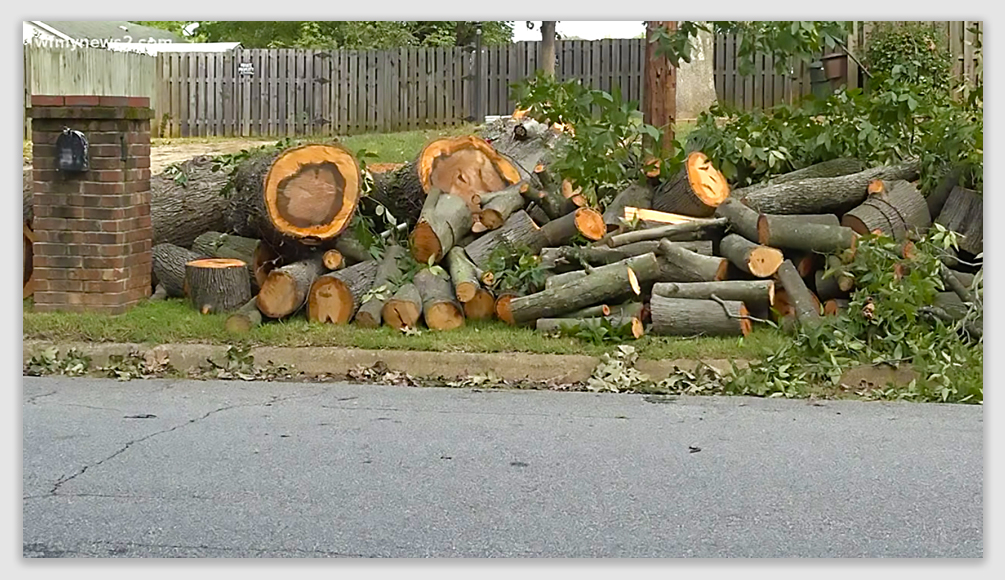
Do you have a tree in your yard, driveway, or even blocking your street? Michael has left tree limbs all across Greensboro. It can be frustrating and confusing. Do you have to clean it up yourself or is it the City’s responsibility? It is 100% the responsibility of the City to clean up tree debris on the road or on the sidewalk. But if there is a downed tree on your yard or driveway, the City of Greensboro cannot go onto your personal property and remove an entire tree. But if you take steps to cut the tree into smaller limbs, the city can assist you in removing debris. The City of Greensboro says residents who have this problem should call the City’s Contact Center hours from 7 a.m. – 6 p.m. Representatives will advise you on whether the city will remove/clean up the tree limbs, or if it’s the owner’s responsibility. Chris Marriot works for the City of Greensboro in the Field Operations Department. He is the Deputy Director. “We are asking residents to call the City Contact Center because the tree damage is sporadic,” Marriot said. “So call into the Contact Center so we know the location. Give us your name and address. We service on our waste routes somewhere in the range of 92,000 customers, and for us to just randomly drive and find places with tree debris, it could take months. So call in so we can get you on a list and we can get to you sooner…”
It all starts with providing some supplemental nutrition for small to medium-aged trees in the late fall when trees go into a state of dormancy. This is when trees stop active growth and begin to form terminal buds, drop leaves and develop cold resistance. Adding fertilizer to trees too early in the season can push new growth which will be prone to winter damage. A fertilization program is used to maintain trees in a vigorous condition and to improve their immune system against pests. Fertilizing trees refers to the practice of adding supplemental nutrients (chemical elements) required for normal growth and development. However, you really can’t “feed” a tree, since trees are autotrophs. They use nutrients to feed themselves by making sugar in the leaves through photosynthesis. Nitrogen (N), phosphorus (P), and potassium (K) are plant nutrients needed in the largest quantity and these are most commonly applied as a complete fertilizer. However, the addition of any soil nutrient is recommended only if soil or plant foliage tests indicate a deficiency…
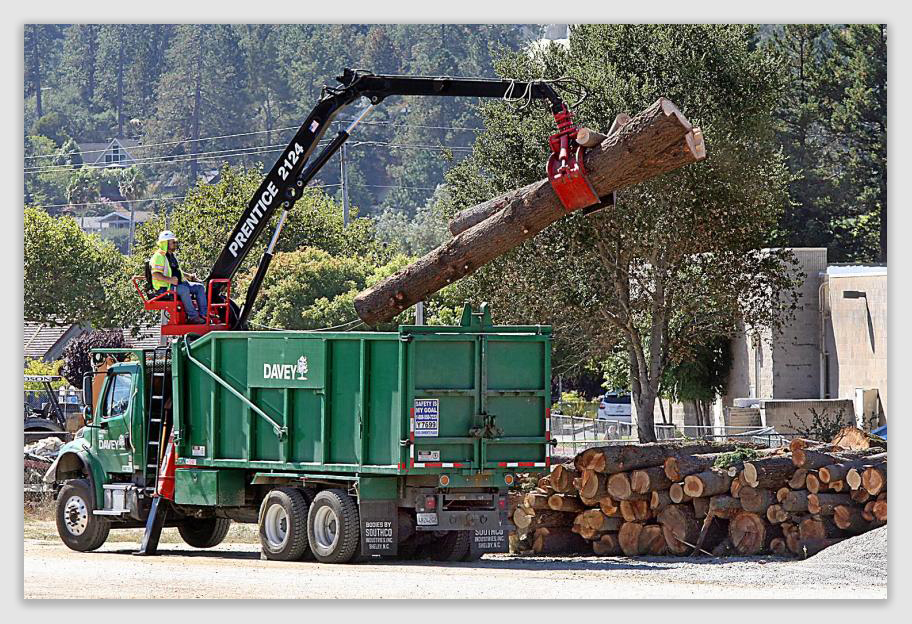
PG&E’s wildfire safety program to clear trees and plants near power lines throughout the Santa Cruz Mountains has spurred confusion among property owners, leaving many of them wondering whether they have any say in the process. “I had no knowledge that it was happening,” said Lorrie Van Zandt, a Boulder Creek homeowner who had just moved from the property and was living elsewhere. She found out that trees on her land would be cut back only after getting a phone call from friends. The program, which PG&E began last month and hopes to finish by the end of the year, affects 7,100 miles of power lines in parts of the state that the California Public Utilities Commission has designated as high fire-threat areas. This includes 700 miles of power lines throughout the Santa Cruz Mountains. As of Oct. 9, crews had inspected more than 278 miles of lines in the Santa Cruz Mountains and cleared trees and plants along 19 of those miles, according to PG&E spokeswoman Mayra Tostado…
Bethesda, Maryland’s tony Congressional Country Club, known for hosting such high-profile golf tournaments as the U.S. Open, recently was visited by some other, perhaps less welcome, guests: Montgomery County inspectors, who cited the club for denuding its picturesque fairways of shade trees without acquiring the proper permit. Large properties such as the country club are required to obtain a sediment control permit from Maryland’s most populous county if they clear more than 5,000 square feet of tree canopy. The club chopped down more than four times that amount without securing permission, according to county officials. After inspecting the grounds and comparing aerial photos with photos received as part of a complaint, authorities said the club appears to have removed roughly half an acre of tree cover in recent months – possibly in preparation for hosting several high-profile tournaments in coming years, including the PGA Championship and the Ryder Cup…
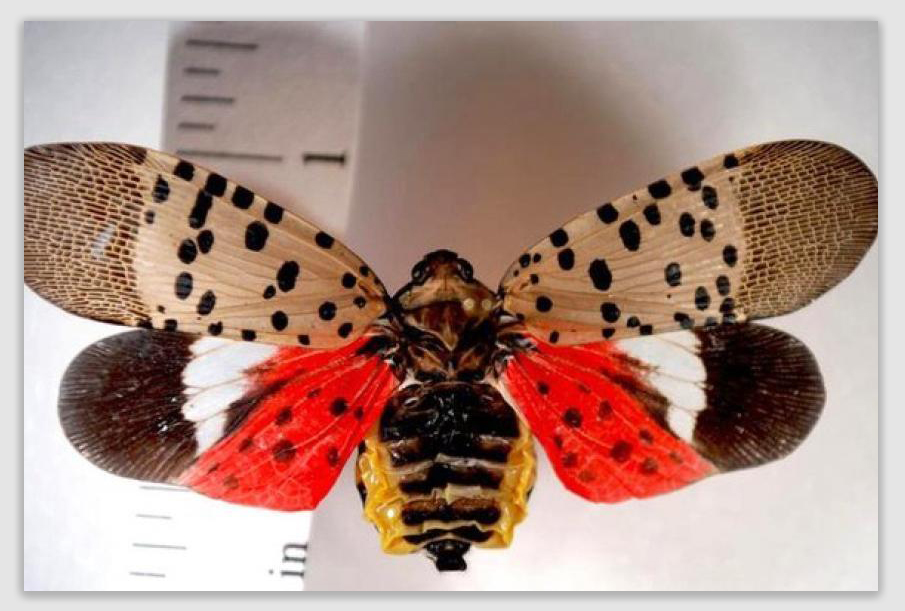 Newsweek, October 15, 2018: Warning: Christmas Tree Spotted Lanternfly could infest homes
The spotted lanternfly could spoil many families’ holiday season, according to New Jersey agricultural expert Joseph Zoltowski, director of the New Jersey Department of Agriculture’s Division of Plant Industry, speaking to NJ.com. Zoltowski says the tree-killing insect could potentially spread to homes by hiding in Christmas trees and leaving eggs to hatch. The spotted lanternfly, which is a native of eastern Asia, arrived in the U.S. four years ago in Pennsylvania and has spread throughout the eastern parts of the state. The bug has recently been detected in three New Jersey counties—Hunterdon, Mercer and Warren. It is believed to spread by attaching itself and its eggs to vehicles carrying wood, landscaping materials and agricultural produce, which would include the bark and branches of Christmas trees. “They’re very hard to spot,” said Zoltowski. A woman in Warren County, New Jersey, confirmed that she found lanternfly eggs attached to her Christmas tree once the insects hatched inside her home, according to Zoltowski. The expert said that there were two egg masses discovered in the bark, which are capable of storing as many as 30 to 50 eggs each…
Curiosity.com, October 12, 2018: There’s a tree that owns itself in Athens, Georgia
Tourists love trees: the Redwoods of California, the Christmas tree at Rockefeller Center, and the animatronic boughs of the Rainforest Cafe. But there’s only one tree, to our knowledge, that tourists flock to because it legally owns itself (ok, semi-legally): the aptly-named Tree That Owns Itself in Athens, Georgia. How Can a Tree Own Itself? Good question. The tree certainly wasn’t born (or didn’t sprout?) owning itself. For hundreds of years, it grew on a local family’s land and they owned it, in adherence with common sense and property law. It grew to a quite a stately size, too: in the early 1800s when Athens became an official city, it was the tallest tree in town. It wasn’t until 1890 or thereabouts that the tree made the local news: It had gained its independence. Being a tree, it had not been able to advocate for its rights. Instead, it lucked into them, thanks to a man named William H. Jackson. His family owned the tree, and Jackson, a University of Georgia professor, had grown up with it. He was emotionally attached to the tree and viewed it as a kind of bark-wrapped friend. So, legend has it, he gave it the legal deed to itself and a circular plot of land around its trunk…
 Fox News, October 11, 2018: As Hurricane Michael topples trees, who is responsible for the cleanup?
As Tropical Storm Michael — once a Category 4 storm — continues on its rampage through Florida and the southeastern U.S., its strong winds and rains have toppled countless trees, leaving many to wonder: If a neighbor’s tree falls on your property, who is responsible? Typically, once a downed tree has fallen into your yard due to “an act of God,” it becomes your responsibility, Orlando-based attorney Tom Olsen told Fox News. “If a healthy tree comes down by act of God — lightning, hurricane, storm — each property owner is responsible for the damage to their own property,” Olsen said. Olsen noted that some instances could be different, including if the property owner knew the tree was diseased or dead. In those cases, someone could officially inform their neighbor, typically by certified mail, that a tree was defective, and then they could be responsible for any damage it caused if a hurricane brought it down…
Jewel Rodgers doesn’t have to look far to see the problems, or the solution. The community builder for the South of Downtown Community Development Organization knocks on doors in the Everett and Near South neighborhoods for a living, and she stands on front porches that feel like they’re falling in. She sees people sitting near the curb on cast-off furniture. And when she looks down, she sees the trash. “The corner of 13th and F is so littered with cigarette butts it’s absolutely ridiculous,” she said. But then she looks up, and she sees the thousands of trees that will fall prey to the advancing emerald ash borer. She thinks about all of that lumber, right there near all of the problems. Why not use it to make public benches? To build ashtrays and trash cans? To help homeowners repair sagging front porches? So on Saturday, Rodgers and the nonprofit South of Downtown group will show the potential in the doomed trees, hosting a sawmill demonstration and inviting woodworkers to showcase their work…

McLean-based Mars Inc. has struck a partnership with a St. Louis company to sustain its bread and butter: the cacao tree. Mars and Benson Hill Biosystems will work together to “improve the productivity and climate resilience of the cacao tree, essential to chocolate production,” the pair said in a release. Benson Hill promises a “revolutionary crop design platform” that combines machine learning and big data with genome editing and plant biology to “drastically accelerate and simplify the product development process.” “We want to enable farmers to produce more cocoa from less land,” Dr. Howard Shapiro, Mars’ chief agricultural officer, said in the release. “Benson Hill has built an impressive data and machine learning platform designed to provide insights that can improve crops faster. By tapping into the natural genetic diversity of cacao, we can speed up the evolutionary process necessary for improved productivity, disease resistance and resiliency to climate change…”
Detroit, Michigan, News, October 11, 2018: Mulch can be good for trees – or a disaster
It’s a sad fact that most of the trees planted in American landscapes today will probably be dead in 10 to 20 years. And the cause of many of these losses is simply because of improper use of mulch – layering it on too thickly and banking it up against the trunk of the tree. Garden writers, horticulturists and plant lovers have been writing about this for years, but sadly the message isn’t getting out. There is no doubt that when properly applied, organic mulches, such as wood chips, bark chips, or tub ground yard waste, can be of great benefit to trees. But used improperly, mulch can lead to their early demise. We know that mulch holds moisture in the soil and acts as a weed barrier. A nice layer of organic material not only looks tidy, it reduces a tree’s need to compete with weeds and grass for water and nutrients…
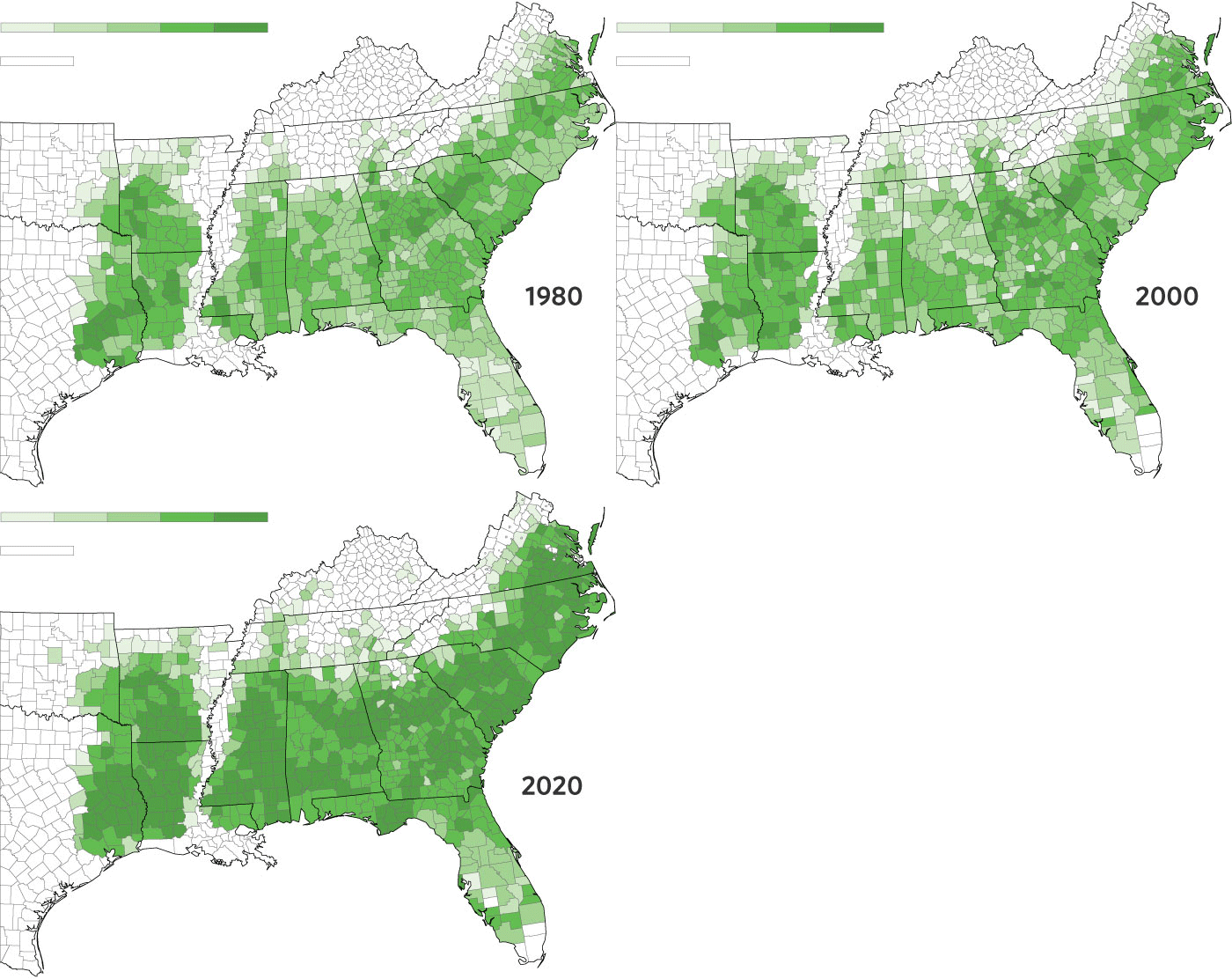
Over the past hundred years, the George family’s farm has been sharecropped, grazed by cattle and planted with cotton. By the late 1980s, Clayton George was growing soybeans and struggling to make ends meet. A new federal program offered farmers money to reforest depleted land. Pine trees appealed to Mr. George. He bought loblolly seedlings and pulled his pickup into a parking lot where hands-for-hire congregated. “We figured we’d plant trees and come back and harvest it in 30 years and in the meantime go into town to make a living doing something else,” he said. Three decades later the trees are ready to cut, and Mr. George is learning how many other Southerners had the same idea. A glut of timber has piled up in the Southeast. There are far more ready-to-cut trees than the region’s mills can saw or pulp. The surfeit has crushed timber prices in Mississippi, Alabama and several other states…
A tree farmer in Schuylkill County says this has been the worst season of weather in his four decades in the business. And to make matters more difficult, over the weekend, a wild driver took out several trees with a vehicle. Wearing his cowboy hat and a custom belt from Mexico, Jeff Hill drove his four-wheeler around his tree farm on this day with plenty of energy, but he says this season has been a rough one because of poor weather, and now, a reckless driver. Nearly 1,000 acres of trees stand tall at J.C. Hill Tree Farms near Orwigsburg. Skid marks and tire tracks indicate the damage done over the weekend. “It was probably late Sunday night. They could not make the turn up here, flew in through my trees and ran them right over. It’s really a shame they didn’t stay sticking there because then, we would’ve had the culprit on track,” owner Jeff Hill said…

Police are warning residents of a group of people posing as “tree service workers” in southwest suburban Palos Park. Officers stopped the group, posing as a crew of workers offering services for downed trees on Monday near 88th Avenue and 121st Street, according to Palos Park police. The scammers were going door-to-door offering help with the removal of downed trees at a discounted rate if customers paid up front, police said. They would then take the money and leave without ever returning to remove the trees. Police are warning residents to beware of services that require up-front cash payments and to expect written estimates and printed materials from legitimate tree services that are registered with the Village of Palos Park, police said…
If a tree falls in your yard, what you do next could save you money, a limb and maybe even your life. According to Trees Atlanta, the metro area has the nation’s highest “urban tree canopy,” defined as the layer of leaves, branches and stems of trees that cover the ground when viewed from above. During the stormy summer months, fallen trees are fixtures in metro Atlanta’s landscape. The steps you take after a tree falls can mean the difference between headache and heartache. The first thing to do is call your homeowners insurance agent, said Bob Delbridge, owner of 404-Cut-Tree, one of the largest tree service companies in the Atlanta area. “Occasionally we will deal directly with the insurance company. But that’s more likely if there is a storm that covers a large area, like a whole neighborhood.” Delbridge said. “Typically, the homeowner deals with their own insurance company…”
It’s been a busy time of year for Gus Holevas, the owner of Gus’s Tree Service in Huntersville. Holevas and his crew spent several days working for customers after Tropical Storm Florence moved through the Charlotte area in September. Now, his phones are ringing off the hook as Hurricane Michael prepares to make landfall in Florida. Holevas said he received close to 75 calls Tuesday from people looking to get trees removed before the storm passes through the Charlotte area. “Any tree service in Charlotte I bet you is busy right now,” said Holevas. He spent most of the day Tuesday at a home on Provincial Ct. in Huntersville. The residents wanted several large trees removed from their backyard. “People panic a little bit for this storm and I don’t blame it,” said Holevas. Jay Simolin, the owner of the house, pointed out the spots throughout his yard where trees had been taken down. “We basically just wanted anything down that if it fell, it would hit the house so we should be good for now,” said Simolin…
New York City, News12.com, October 9, 2018: Chainsaw partially severs tree trimmer’s arm
A mishap with a chainsaw almost cost a tree trimmer his arm Tuesday morning in Soundview. After driving almost 2 miles to White Plains Road and Bruckner Boulevard looking for help, the injured man and his co-workers got the attention of police officers Thomas Natoli and Amauris Rodriguez, from the NYPD’s 43rd Precinct. The officers made a tourniquet while emergency services were en route. The victim’s shirt indicated that he works for a private tree-trimming company, but News 12 was unable to contact the employer…

The deer will eat well this winter. Thanks to a bountiful mass-seeding of oak trees, acorns lay thick on the ground in south-central Minnesota, as they do around the country. This phenomenon is called “masting,” and it happens every few years, said Eli Sagor, director of the University of Minnesota’s Sustainable Forests Education Cooperative. We took seven masting questions to Sagor and other experts to explain the how it works and what effects it might have. What causes a masting to occur in a specific year? It doesn’t appear to be related to good growing conditions in the spring and summer leading up to the masting, Sagor said. “That’s a little bit baffling, isn’t it?” he says. You’d think that, as with farmers’ crops, good weather would mean a bumper crop…
New York City, October 9, 2018: Is there a dangerous tree in your yard? Here’s how to tell
Staten Islanders love our trees — they give our homes and communities suburban charm — but, if unhealthy, they pose a serious danger. Homeowners should examine their trees regularly to ensure that they’re healthy, tree experts advise, because unhealthy trees are most in danger of crashing down during the next big storm. Clues to their instability are easy to spot, said Michael Cafaro, owner of Amboy Tree Service in Prince’s Bay. “Look for any bulging of the ground around the base of the tree,” said Cafaro. “Look for any type of extensive decay; big holes at the base. You’d know it if you saw it.” Decayed limbs are a sign of trouble, he said, adding that if the tree is swaying — be very concerned…
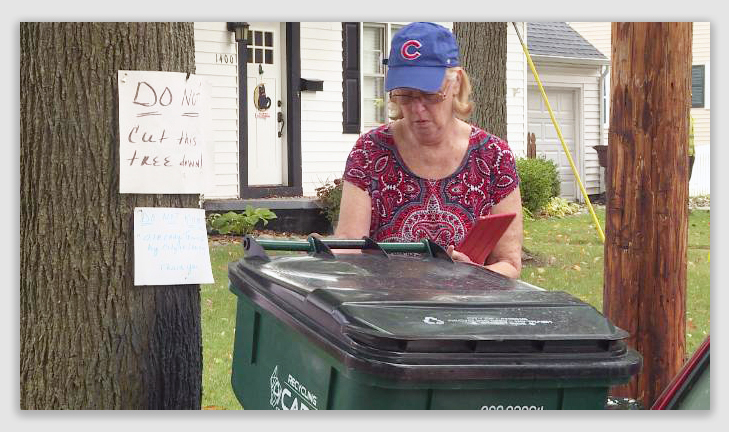
How far would you go to save a tree in your yard? One woman in Lansing decided to get creative when she saw the Board of Water and Light (BWL) cutting crews on her street Thursday morning. This all goes back to a story we brought you in September when people in the Colonial Village neighborhood complained that the BWL was getting overzealous in its trimming. Thursday one of them called News 10’s Alani Letang after she put up a blockade. And all she used was her cars, a sign, and her recycle bin to block the BWL’s contractors from physically getting to her tree. “I said no you’re not. You’ll have to chop me down before you chop my tree down,” said Stephany Burke, a neighbor trying to save her tree. It’s the wake up she didn’t plan for…
Merchants and residents of the lower 24th Street corridor are under attack — from above and below. By trees. Problematic ficus trees are increasingly becoming a headache for area denizens, with roots causing damage to storefronts, raising the sidewalks unevenly and creating tripping hazards, and posing a constant danger of losing heavy limbs on windy days. “The trees can come down at literally any moment and kill someone,” said Marta Sanchez, the owner of the chip company Casa Sanchez, which used to have a restaurant on 24th Street. Sanchez, who grew up in the Mission, said two 24th Street properties owned by her 99-year-old aunt, Lupe Sanchez, have been damaged by ficus trees’ hulking roots growing into her buildings. In one of them, at 2762 24th Street, Sanchez said, the tree’s roots have infiltrated the property and damaged the building’s plumbing, causing the toilets to routinely clog. “Plumbers have been to the [the property] at least once a month,” she said…
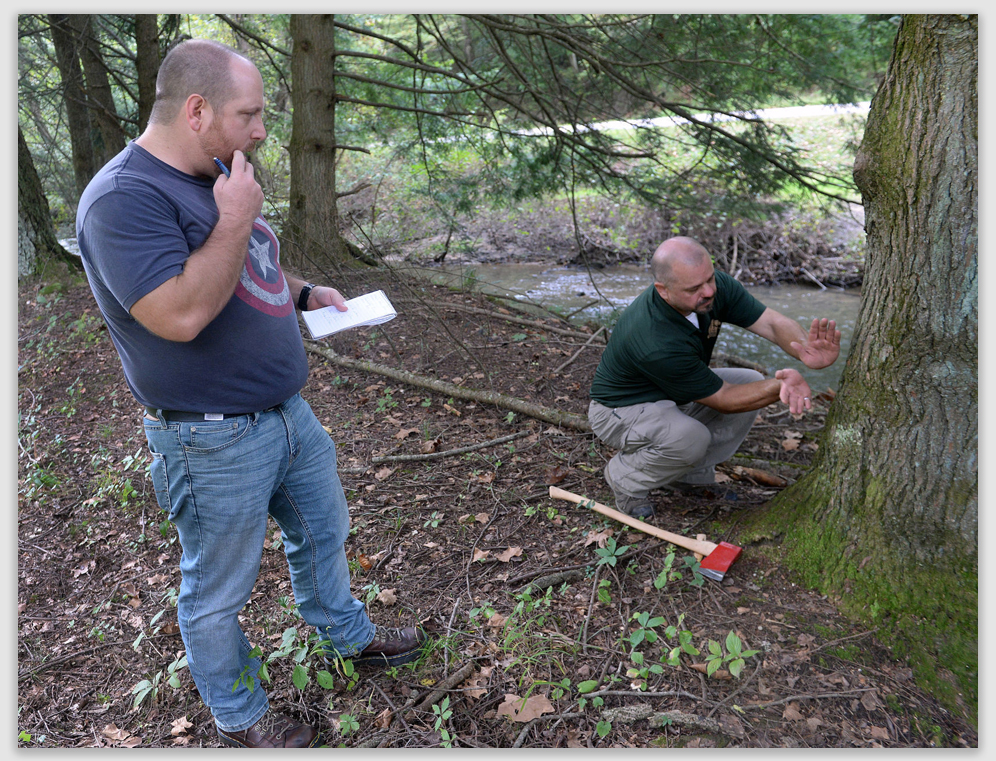
It was about an hour before sunset when I got to the park entrance, though the hills and the trees made it look even later, like the light would be gone in half that time. It was quiet, just a few birds and the sound of water running through the creek. As expected, my cellphone reception had gone from three vigorous bars just a couple of hundred yards up the road to one very weak bar. Texts weren’t coming in. Texts weren’t going out. And I was standing in a parking lot, waiting for a man I’d never met, who told me he’d be bringing a knife, an ax and a saw. I’m not much of an outdoorsman. I’m not crazy about the woods and have a love/hate relationship with the quiet country neighborhood where I live. Seven years ago, I traded in the conveniences of city living for a small house on two-thirds of an acre near Elkview. I love all the space and privacy but hate the yard work. Because the property is on the side of a hill, it can take up to six hours to cut with a push mower if I let the grass get a little ahead of me. With all the rain we’ve been having, the grass has stayed ahead of me. The land came with a bunch of trees, including two apple trees, two pear trees and a peach tree that produces the sweetest, juiciest peaches I’ve ever tasted. One day, I hope to make a pie. During the derecho in 2012, the wind knocked one of the apple trees down. It took all summer for me to slowly saw and hack that thing into firewood, and I’ve had nothing but trouble trying to replace it…
A metro man says OG&E showed up to his property without notice and killed more than a hundred of his trees. “No, there’s no notice and that crew confessed, no we didn’t try to knock on your door or they didn’t try calling me,” said Steve Morse, who lives on a rural property near the turnpike. “There’s well over a hundred trees at least that they poisoned.” Morse says he came home to find a crew on his property spraying his trees, which are near powerlines. He understands if the trees needed to be cut back, but says spraying them to death wasn’t necessary. “I don’t know, is this soil contaminated permanently or just what?,” said Morse. But his biggest fear is fire. “If someone was to throw a cigarette butt out on these dead trees, it would go up in a heartbeat,” said Morse, whose cabin burned to the ground during a wildfire several years ago. Now, he wants OG&E to make things right…
Looking for an older news story we featured on this page? Check our Prior News Links page.
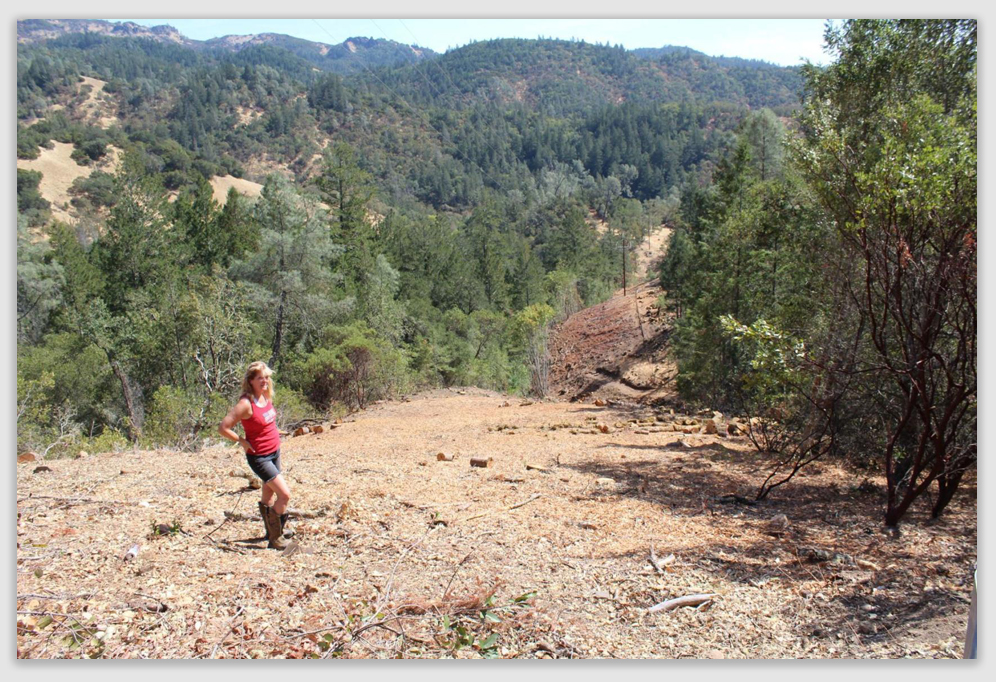
PG&E has been cutting down trees in Napa County in extreme fire-threat areas, and while the measures are necessary under state and federal guidelines, and no one wants a repeat of last year’s wildfires, at least a few property owners are aghast at the results. Jacque O’Neil now has what she calls a “ski run” down her property. In August, the electric company cut down what she says are some 1,000 trees on her and her husband’s 40-acre property about two miles up Old Lawley Toll Road in Calistoga. “They didn’t ask permission, they left debris everywhere, tore down fencing and a gate, and have decimated my property. This is atrocious,” she said. Dale Bleecher and his wife, Marla, own Jericho Canyon Vineyard, on 135 acres, across Old Lawley Toll Road from O’Neil. That property has also been affected by the tree cutting…
Traverse City, Michigan, October 3, 2018: Tree service worker faces embezzlement charge
A tree-service business owner found a growing list of payment issues and thousands of dollars in equipment missing when he returned from a winter in Florida, authorities said. The owner of Dave’s Tree Service heads south when business slows in the winter. He left Dennis Paul Stacey, 29, to prepare the business for the 2018 season. But he found issues with March job payments and missing equipment when he returned, according to court records. Grand Traverse County sheriff’s department investigators suspect Stacey, from Traverse City, instructed customers to pay him or write checks in his name, rather than the business’. Authorities also accused him of using chainsaws and other equipment — with an estimated value exceeding $1,000, but less than $20,000 — without permission, court records indicate. He returned “multiple tools” to the owner through a third party, according to court records. Court files additionally show Stacey took a business-owned pickup truck without consent. He challenged the charges…
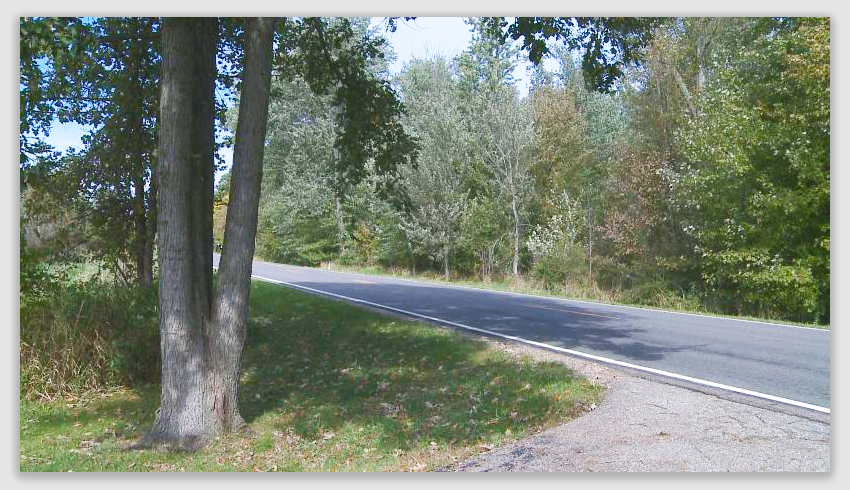 Lansing, Michigan WILX-TV, October 3, 2018: When a county can step in and take down a tree
Police have released the name of the man who was killed when a tree fell on his car on Monday. Joseph Mull of Lowell was 32. Neighbors tell News 10 they had been complaining about the tree to the Clinton County Road Commission, but nothing was ever done about it. In an interview on Tuesday, the Road Commission told News 10 its not responsible for trees when they aren’t in the road. The “Right of Way” is the same for every county. The road commission or department can remove trees or other hazards up to 33 feet from the center-line of the road. Jackson County, for example, handles it on a case-by-case basis. “We always do an investigation of it and we go out at look at it, and if we see any concerns at all they we will get it removed as soon as we can,” Angela Kline of the Jackson County Road Department said. In other words, when it comes to trees on someone’s property, counties have the last say whether or not it is removed, thanks to the McNitt Act of 1931. “Its really their responsibility, but if we feel it’s going to be a danger to the motoring public, then we have the right to remove it and can. We have jurisdiction,” she added…
Newswire, October 3, 2018: New advice on tree planting to accelerate growth of new trees
There’s no doubt that October is one of the best months of the year for planting deciduous shade trees across nearly all of USA. Tree Top Pros, a tree service company with operations in Tampa, takes a fresh look at how to plant a tree. They debunk questionable planting advice such as deep planting holes and explain why. With more than one in ten trees in our urban forests either dead or dying, radical change in tree care and tree planting is needed. The company shares a 12-step tree planting checklist so that anyone can plant like a pro, if not better. It’s available here. They claim the advice will enhance survivability of newly planted trees by a factor of 5. They also state that trees will grow at least 20% faster and taller each year if their simple advice is followed; most useful when trying to raise a large shade tree. There is a problem in our yards and urban forests. Tree research published earlier this year (2018) into the urban forest of Tampa, Florida indicated that 11% of all trees in the city were either dead or dying. In the experience of Tree Top Pros, this is a typical health profile of urban forests across cities in Florida and beyond. But the rate of attrition amongst newly planted trees is much higher. The advice shared will increase survivability of newly planted trees by at least 5-fold. This is because the planting guide directly addresses at least 80% of the known causes of early tree death…
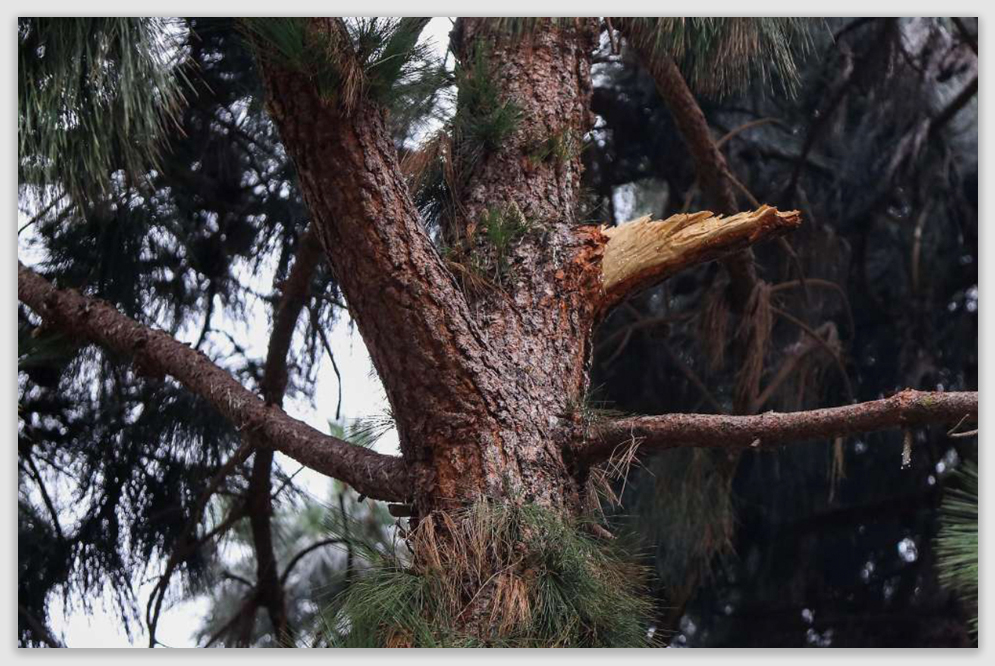
The Board of Supervisors on Tuesday approved a $14.5 million settlement for Emma Zhou, who was paralyzed from the waist down in 2016 when she was struck by a 100-pound tree limb in San Francisco’s Washington Square Park. On Aug. 12, 2016, Zhou was with her two children in the park’s playground, which was bordered by several Canary Island pine trees, when a limb fell off of a 50-foot tree maintained by the San Francisco Recreation and Park Department. The heavy limb fractured her skull and severed her spinal cord. In November 2016, she filed a lawsuit in which her lawyers accused the parks department of maintaining the trees in a way that allowed large, weakly attached branches to grow back. Zhou’s lawyers also asserted that the city was aware of previous reports that branches had fallen in the park…
Lansing, Michigan, WILX-TV, October 2, 2018: County says it’s not liable for tree
The Clinton County Road Commission says it’s not responsible for the tree that fell and killed a man Monday. Neighbors tell News 10 they complained about the tree on Webb Road in DeWitt Township multiple times, but nothing was done. The Managing Director of the Clinton County Road Commission says It doesn’t deal with trees unless they’re on the road. So even though people asked the Road Commission to deal with it, it was really up to the person who owns the land. “This tree is outside the travel portion of the right of way, we maintain the travel portion of the right of way and anything outside of that we deem as the responsibility of the homeowner,” Joseph Pulver said. The Road Commission is going to let it stay the responsibility of the homeowner, even after the accident that killed a driver Monday. “We’re still looking into it. But at this time, we are not going to remove it,” Pulver said…
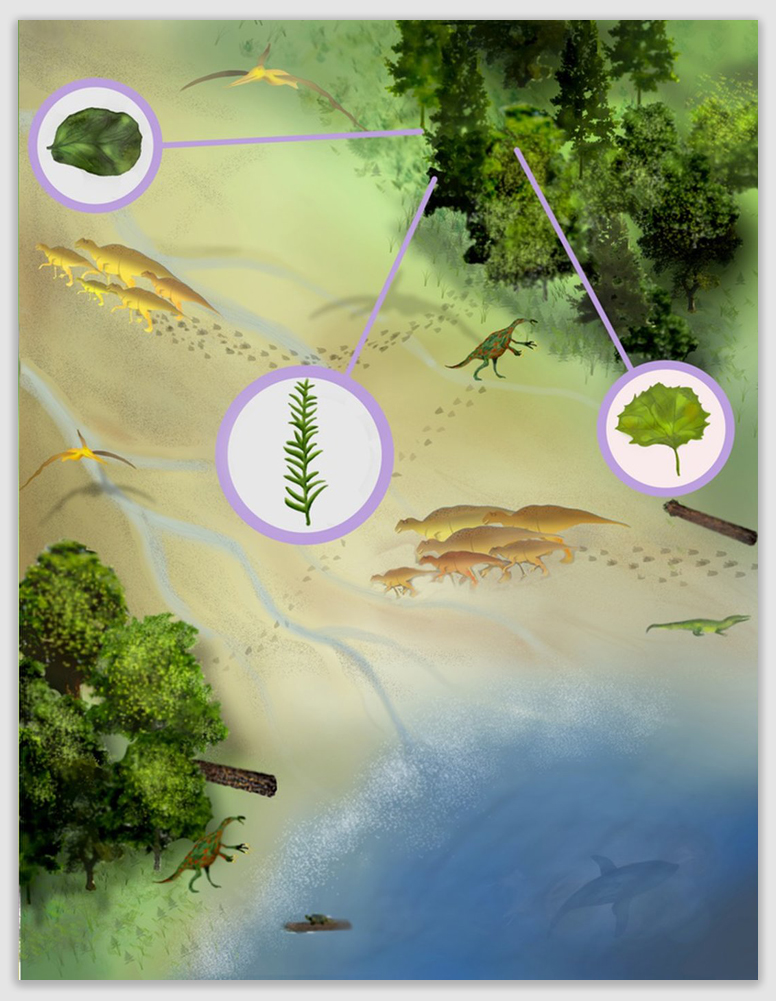
During the late Cretaceous period, northeastern Utah was home to pterosaurs, duck-billed dinosaurs and fearsome therizinosaurs with claws that would put Edward Scissorhands to shame. Now, add to that list giant flowering trees. A fossil log found in the Mancos Shale of Utah reveals that huge angiosperms were part of the forest canopy in North America at least 15 million years earlier than previously believed. The preserved log was nearly 6 feet (1.8 meters) in diameter, 36 feet (11 m) long and probably came from a tree about 164 feet (50 m) tall, according to a new study published online Sept. 26 in the open-access journal Science Advances. It would have shared the forest with gymnosperms like conifers and ginkgo. The fossil is the first documented angiosperm greater than 9.8 feet (3 m) in diameter from prior to 75 million years ago, study researcher Michael D’Emic, a biologist at Adelphi University in New York, told Live Science in an email…
The Oakland City Council is expected to approve a $1.75 million payment Tuesday to the family of a 16-year-old boy who died in 2015 when a tree branch he was climbing near Lake Merritt snapped and fell on top of his head. The teen, Jack Lewis, was an 11th-grader and member of the rowing team at Oakland Technical High School. A lawsuit his family filed alleged that city workers knew the Lakeside Park tree, near Fairyland, had decayed but did not mitigate the danger or warn the public. Lewis was at a birthday party Dec. 4, 2015, and climbing the tree along with several of his friends when the limb broke, causing him to fall. The branch, which the suit described as 20 feet long and a foot in diameter, landed on his head. Lewis was pronounced dead at the scene…
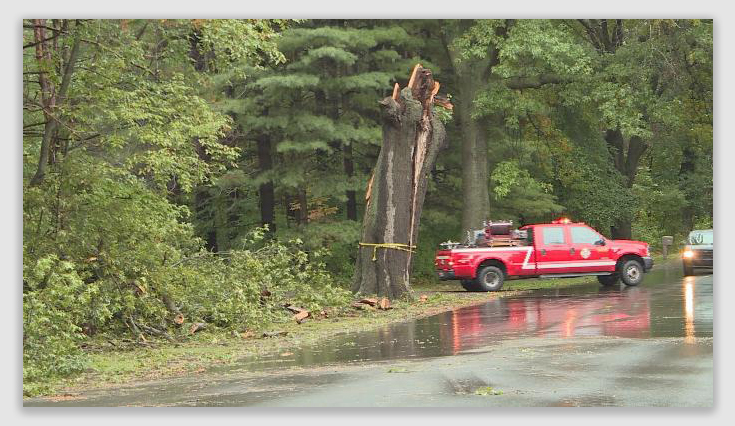 Lansing, Michigan, WILX-TV, October 1, 2018: Neighbors say tree accident was preventable
A Mid-Michigan man is dead after what authorities are calling a freak accident. Police say a tree fell on his car just before 8:00 Monday morning. The 32-year-old was killed when the tree snapped off and fell onto his car. Authorities say this was a wrong place, wrong time situation, but neighbors claim it could have been prevented. “Somebody died that didn’t need to,” David Stewart said. Stewart drives on Webb Road frequently. He says the Clinton County Road Commission cleaned up limbs from this tree when the wind knocked them down about a month ago. He said he asked workers to remove the tree itself. “I said, ‘the whole tree is rotted. The whole thing needs to come down.’ And they said they well, we’ll get with whoever they would report to and get back with me or get back and take care of it. And it’s quite obvious they never came back and took care of it,” he said. Mike May lives just down the street from where the tree fell. He and his wife have been driving out of their way to avoid the tree. “Every time we go by it, it’s like is it going to come down or not? You know, you fear for your life,” May said…
Proposed Dallas regulations that could forbid removing trees from home owners’ back yards are the target of opposition from the Homebuilders Association of Greater Dallas. The Neighborhood Forest Overlay (NFO) plan, making its way through City Hall, is an additional step beyond tougher tree regulations already approved by the Dallas City Council in May. NFO would be an optional step neighborhoods could take to retain trees. Supporters hope to reduce clear cutting that sometimes occurs when small older homes are demolished to make way for larger new homes. New homes are replacing older homes now in many established Dallas neighborhoods with big trees…
More than one year ago a request was made to the City of Wilmington by Guy Williamson, a real estate manager for Fairway Outdoor Advertising that would permit the removal of trees on public and private property that block the views of billboards — after several continuations, the item will be voted on at City Council’s next meeting. But there is a catch, the applicant of the request is asking for the item to be withdrawn from council’s agenda, however, since a public hearing and date have already been set, the item will remain. “This amendment was continued twice by Council at the applicant’s request with the latest action continued to the September 18, 2018 City Council meeting, which was cancelled, with all items moved to October 2, 2018. However, the applicant has now requested to withdraw the item altogether. Nonetheless, because the item was continued to a date certain Council meeting, it is on the agenda for formal action on the applicant’s request for withdrawal,” according to City Manager Sterling Cheatham. The request did not receive favor from the city’s Planning Commission, in April of 2017 the commission voted 6-0 against the approval of the request. Current city code prohibits the trimming or removal of trees in order to make outdoor advertising more visible, the request would have changed that…
The herbicide is called aminocyclopyrachlor. You might not be able to say it, but it was once a common weed killer used by the Oregon Department of Transportation and other public entities. Then, last week, Oregon became the first state in the U.S. to temporarily ban it from rights of way. The Oregon Department of Agriculture is investigating potentially widespread tree damage because of the chemical. “What we’re trying to get a handle on is, is this occurring in other areas? We are starting to hear about a situation in Eastern Washington,” said Rose Kachadoorian, pesticide program manager with ODA. In Central Oregon, she said trees were poisoned in at least four locations. ODA has prohibited the use of products with aminocyclopyrachlor until April, and lasting regulation could be established. Meanwhile, Kachadoorian said ODA will examine paperwork behind years of spraying in the state…

State Attorney General Josh Stein has filed a price gouging lawsuit against a tree trimming operator who allegedly charged a customer in Wilmington more than double the quoted price for services. Officials filed the lawsuit on Friday against Alva Wilson Lewis, the owner of A1 Tree & Storm Relief, A1 Tree and Storm Damage Relief and Big Al & Sons Tree Service, according a written statement released by the attorney general’s office. The lawsuit could be one of the first filed by state prosecutors that allege price gouging in the wake of Hurricane Florence that soaked a large part of North Carolina two weeks and brought flooding and heavy rains to the state. According to state officials, the landscaping company estimated that it would cost $4,000 to remove three trees from a customer’s property…
New London, Connecticut, The Day, Sept. 30, 2018: East Lyme homeowners in battle over four trees
You might think that a few peach trees would be a welcome addition along a street called Peach Lane in a subdivision called The Orchards. But you would be wrong. The neighborhood’s homeowners association says a few trees planted in the front yard of 5 Peach Lane must go, contending they could hurt surrounding property values and the uniformity of the neighborhood. Management has cited the homeowners, Purba Mukerji and Ali Rangwala, for being in violation of the declaration of The Orchards of East Lyme Development Inc. While Mukerji and Rangwala don’t particularly understand the stringency of the rules to begin with, their biggest concern is selective enforcement; they feel they’re being discriminated against. “We’ve always been saying: This is fine, do it for everyone, not just us, and then we are fine,” Mukerji said. The association first sent an enforcement letter to the couple nearly 14 months ago, and the matter remains unresolved. Mukerji and Rangwala have spent more than $1,000 in legal fees trying to keep their trees. So how did it come to this?
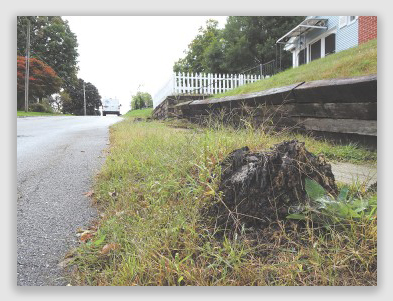
As a lifelong city resident, Richard White can recall the ancient trees that lined many of the city’s streets when he was a child. “I remember as a kid running up and down Merriam Avenue and it was just a canyon of trees. It was fabulous. Now there’s almost nothing,” he said. The trees that have gradually been cut away over the decades were removed for varying reasons, but the trees that were taken down two years ago outside White’s Winter Street home he suspects were killed by a natural gas line leaking underground. “These were old trees. One they cut down that was killed by the gas was about 100 years old and probably 8-feet in circumference,” he said. “It’s a piece of history that’s gone.” When reached for comment about possible complaints customers might have been lodged about gas leaks killing trees in the city, National Grid, Leominster’s natural gas provider, responded saying that it’s very difficult to prove whether a gas leak had been the culprit…
New York City, Wall Street Journal, Sept. 26, 2018: The trees in your yard: Are they just clutter?
… We were raised to believe that all trees are our friends, but this is not so. Many trees are tyrants. If they’re poorly sited, or have grown too big, or create a fire hazard, trees can easily qualify as the worst features of residential gardens. Many “trees” are nothing more than weak-rooted shrubs that have grown into 30-foot monsters waiting to collapse onto your roof during a windstorm. And yet we put up with their bullying. Why? Because trees have great PR. Poets have always loved them. They are in the Bible. The tree of life. The tree of knowledge. The family tree. Unlike humans, the older trees get, the more we respect them. Trees have special legal rights. In my Northern California town, some species—including giant, menacing redwoods—are deemed “heritage trees,” and you can be fined $5,000 for cutting one down without a public hearing…
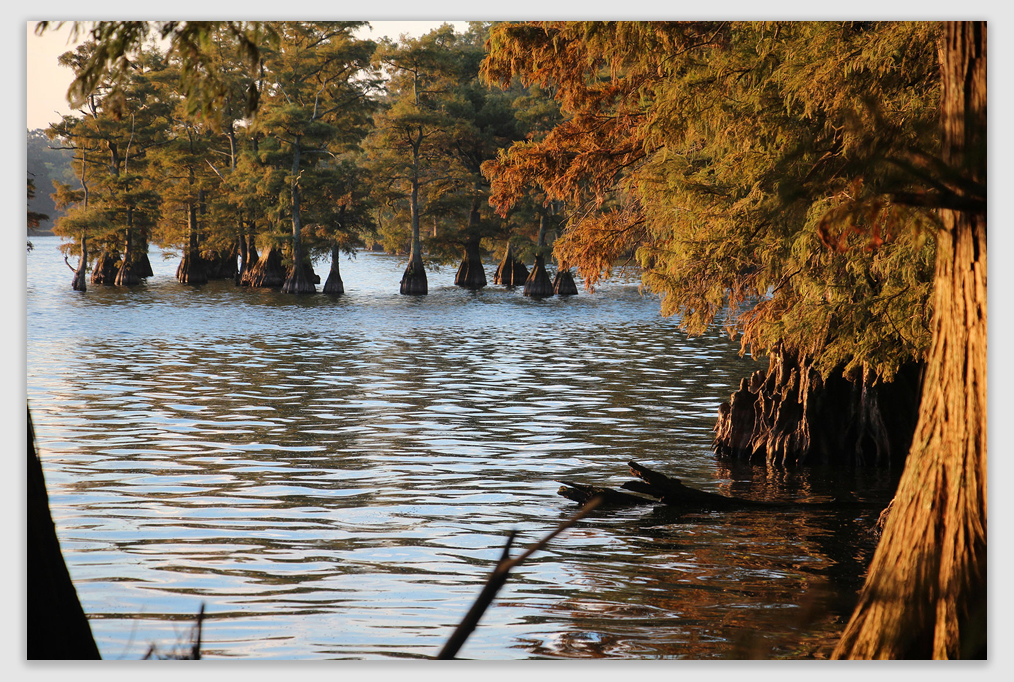 NPR, Sept. 27, 2018: A drifting weedkiller puts prized trees at risk
Mike Hayes and I are sitting on the patio of Blue Bank Resort, the business he owns on Reelfoot Lake, in Tennessee. The sun is going down. It’s beautiful. What really catches your eye here is the cypress trees. They line the lake, and thousands of them are standing right in the water. Hayes tells me that they are more than 200 years old. They were here in 1812, when the lake was formed: A cataclysmic earthquake shook this area, the land dropped, and water from the Mississippi River rushed in and covered 15,000 acres of cypress forest. Yet these trees survived and became a home for fish and birds. “The fishing’s around the tree; the eagles nest in the tree, the egrets,” he says. “The trees define Reelfoot Lake.” Last year, though, Hayes noticed that the trees didn’t look right. Their needles were turning brown. Some were curling. “Something was going on that never happened before,” he says. Everybody had a theory: disease; drought; insects. “They thought of other things, but when it came down to it, it was a drifting chemical,” Hayes says…
The Fox 8 I-TEAM has found you might have to wait decades for city of Cleveland crews to trim trees on your block. An internal e-mail exchange shows the city is on a “23 year cycle.” When you drive down some city streets, you might plow through tree branches hanging down over the roadway. Councilman Brian Kazy tried to get city crews out to West 125th Street and a manager with the Urban Forestry Department wrote, “We are on a 23 year trimming cycle.”In fact, the city told the councilman, that crews are not even working in his ward at all this entire year. Kazy said, “We just learned of the 23 year cycle, and I haven’t gotten an explanation on it.” Last year the I-TEAM revealed the city has been incredibly far behind on cutting dead and dangerous trees. As of last year, the backlog was more than 5,000 trees…
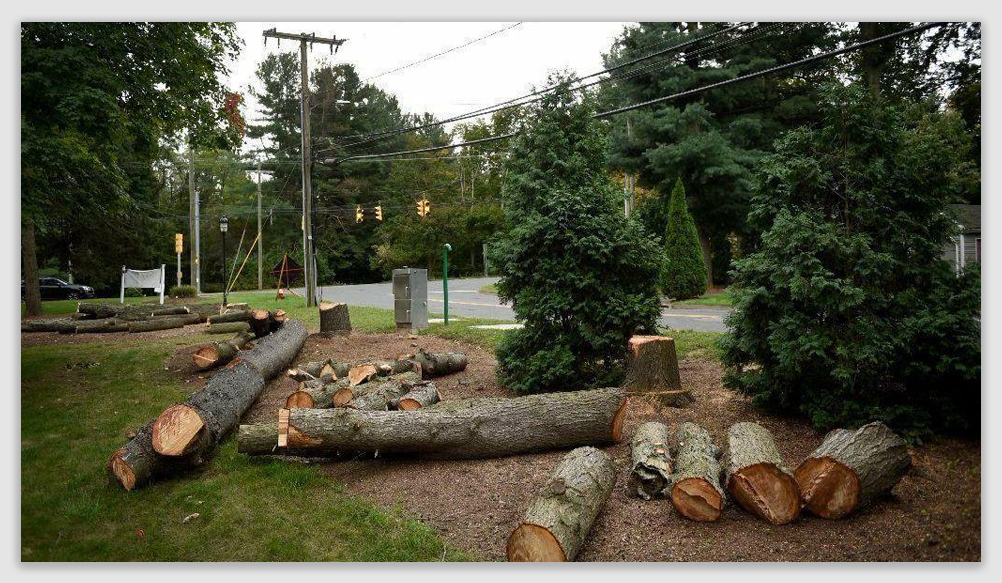
Millions of Connecticut trees are damaged and dying from a combination of invasive pests, years of drought, old age, and major storms. Local officials in many cities and towns across the state are being pushed to the limit as they try to find the resources to deal with growing numbers of trees threatening to topple onto roads, sidewalks, parks and school grounds. In August, contractors hired by the city of Hartford began to take down several trees flagged for removal near a Goodwin Park basketball court, after a tree set to come down fell on an 11-year-old boy. An inspection of the red maple that fell on the boy determined the roots, trunk and crown were in poor condition and there was visible decay, city records obtained by The Courant show. Under a category called health, the inspector wrote: “Remove.” City officials worked to assess the health of trees. At least 230 trees have been marked for removal…
Stinging trees grow in rainforests throughout Queensland and northern NSW. The most commonly known (and most painful) species is Dendrocnide moroides (Family Urticaceae), first named ‘gympie bush’ by gold miners near the town of Gympie in the 1860s. My first sting was from a different species Dendrocnide photinophylla (the shiny-leaf stinging tree). It was like being stung by 30 wasps at once but not as painful as being stung by D. moroides, which I once described as the worst kind of pain you can imagine – like being burnt with hot acid and electrocuted at the same time. I agreed to study stinging trees even after being badly stung. The puzzle was – what was eating the stinging tree? Stinging trees often have huge holes but no-one knew what was eating them. What could possibly eat the leaves that were so painful to touch? Stinging trees grow in light-filled gaps in the rainforest understorey and come in many different shapes, sizes and species (seven in Australia)…
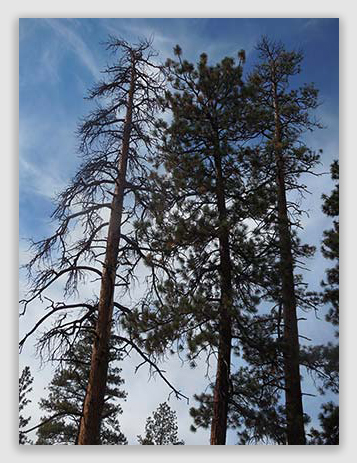 Sisters, Oregon, The Nugget, Sept. 25, 2018: There’s trouble with the trees
Walking or driving around Sisters Country, one can’t help but notice some pretty unhappy trees. The most notable, of course, are the ponderosa pine trees along Highway 20 outside of town. Removal of the dead pines west of Sisters along the highway will start in October. That area was sprayed with an herbicide, which was later determined to be detrimental to the health of the ponderosas. Many other ponderosas are experiencing abnormally large needle dieback on the inside of the limbs, according to Amy Jo Detweiler of the Oregon State University extension office. Every summer, some needle dieback is normal and doesn’t indicate a problem with the health of the trees. There’s just more than usual this year. Several diseases affect the growth and survival of ponderosa pine in the Pacific Northwest and cause disturbances for the pines. These include root diseases, stem decays and diseases, foliage diseases, and dwarf mistletoes. These disturbances can result in dead trees, down wood, abnormal branches (witches’ broomstick), dead branches, dead tops, and broken stems. Disease and drought also promote insect attack and increase risk of wildfire…
A tree fell onto a man’s truck and killed him while he was driving on I-20 in Douglas County on Wednesday morning, causing serious traffic delays, officials said. The man was traveling west in a pickup about 10:30 a.m. when the tree fell, Douglasville police Lt. Mark Edwards told AJC.com. He was found dead when officers arrived on the scene. No other vehicles were affected. The tree, likely a pine tree, fell directly across the cab of the truck, Edwards said. The man, who was the sole occupant of the pickup, has not been identified…
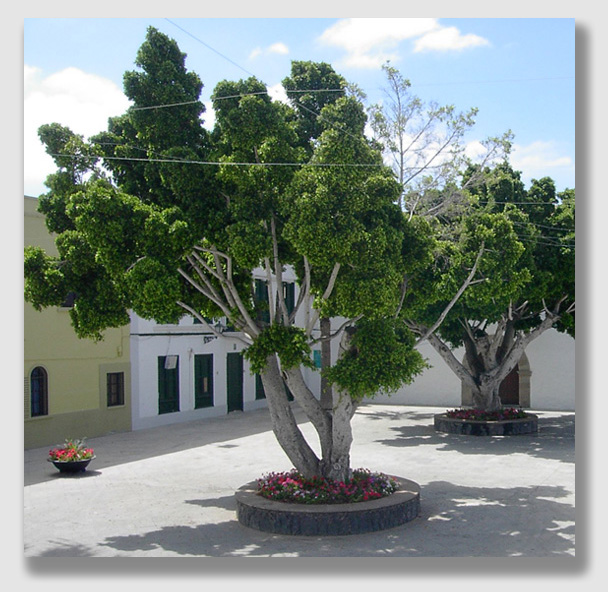
The removal of 18 full-grown ficus trees along Cherokee Avenue in Hollywood remains on hold as a civil lawsuit filed by United Neighborhoods for Los Angeles moves through the court system. A mediation hearing was held on Sept. 25 but yielded no significant breakthroughs on ways to preserve the trees, said Grace Yoo, an attorney and board member for United Neighborhoods for Los Angeles, which filed the lawsuit. The next step is for a Los Angeles Superior Court judge to consider the suit on Oct. 16. The city planned to remove the trees on Cherokee Avenue between Sunset Boulevard and Fountain Avenue, and other trees in a project in South Los Angeles, because their roots damaged adjacent sidewalks. United Neighborhoods for Los Angeles’ lawsuit challenges the city’s Safe Sidewalks LA program, a 30-year, $1.4 billion plan to fix damaged sidewalks. The plaintiff is asking that alternatives to sidewalk repairs be considered before the city systematically removes trees…
“We had a little dry spell in the middle of summer, but made it through that,” says Dean Lemke of Central Wisconsin Evergreens. He’s expecting a Christmas tree harvest that’s about the same, maybe a little better than 2017. Lemke keeps a close eye on this 1000 acres all through the growing season. On this day he’s joined by Jennifer Oestreich from the State Department of Agriculture, Trade and Consumer Protection. The agency is in the process of inspecting trees in all 700-fields throughout the state. “This year the trees look absolutely fantastic,” she says. And they want to keep it that way for many years to come. Those greens that make our homes so cozy during the holidays, can also spread Grinch-like invasives like gypsy moths…
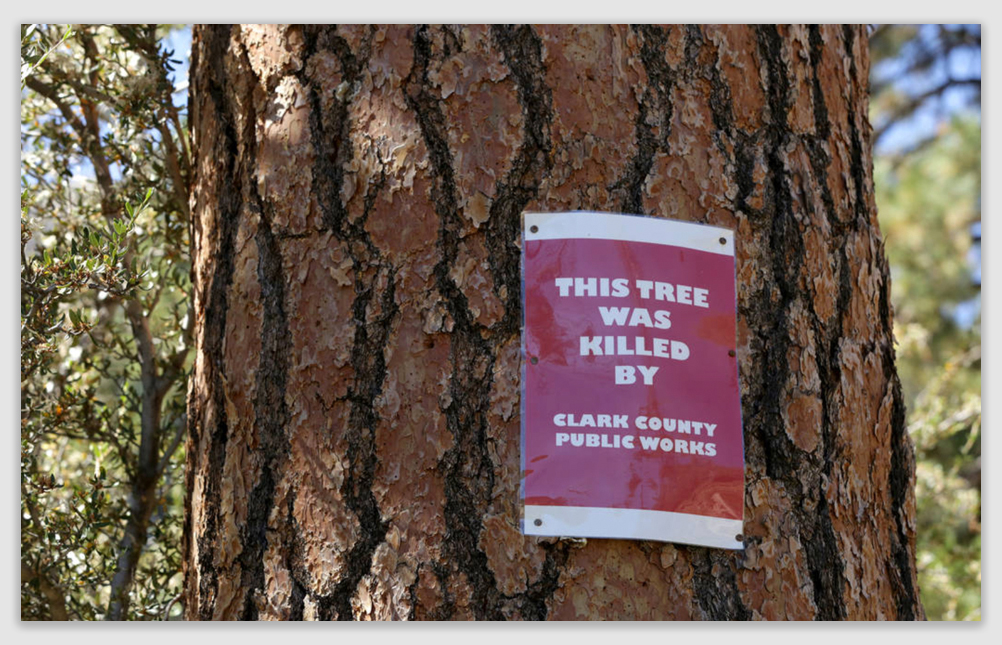
It sprouted from the rocky soil of Mount Charleston before the birth of George Washington and grew to the height of a 10-story building. Rose Meranto can hardly believe it’s gone. For the past 30 years, Meranto lived in the shade of the towering ponderosa. It filled the small yard of her cabin on Yellow Pine Avenue, where its lowest branches cradled lights and ornaments at Christmastime. All that’s left of it now is a stack of wood along the street and a 6-foot-tall stump a few steps from her front door. “I’m sorry that I get emotional over the tree, but this was no insignificant thing that took place,” the 87-year-old said, fighting back tears. “It breaks my heart to see this tree gone.” Meranto isn’t alone. All around the Old Town neighborhood, people are lashing out over the loss of their trees. Signs nailed to some of the still-standing trunks identify the suspected culprit: “This tree was killed by Clark County Public Works.” Mount Charleston residents blame salt-based, road de-icing chemicals used by county crews for poisoning their trees. If the salt doesn’t kill them outright, it weakens them, leaving them susceptible to beetles and disease. Other signs posted around Old Town urge the county to “Halt the salt…”
A 7-year-old Loudoun County girl was killed over the weekend after a tree fell on her, according to authorities and a relative. Two children were swinging in a hammock tied to a tree when the tree fell on both, according to the county sheriff’s office. The incident, which the sheriff’s office called “a tragic accident,” occurred about 6 p.m. Saturday at a family gathering at a house on St. Francis Court in the Purcellville area. It was not clear why the tree fell. No explanation was available. After the accident, the girl was flown to Inova Fairfax Hospital, where she died, the sheriff’s office said. The second child, an 8-year-old boy, suffered injuries described as minor, the sheriff’s office said…
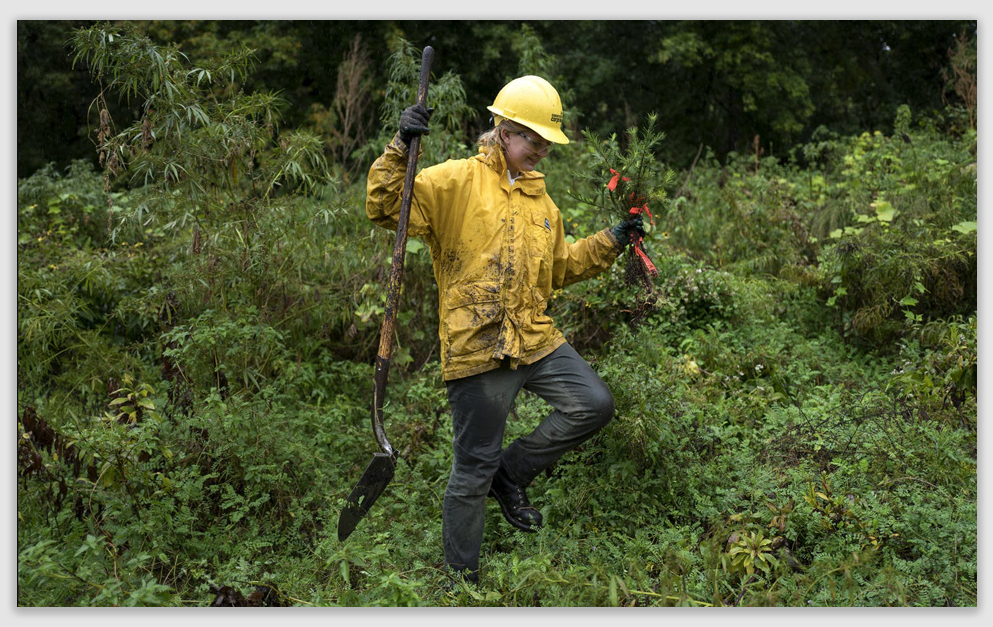
As Minnesota’s ash trees fall to the invasion of emerald ash borer in the next decade, the forest that borders the 72-mile stretch of the Mississippi River in the Twin Cities metro area is expected to lose one-fifth of its canopy. Tums out that’s not all bad. Conservation groups that work in the 54, 000-acre Mississippi National River and Recreation Area are using that environmental disaster to thwart a much larger one on the way – climate change. By replacing ash with other kinds of trees, as well as bushes and other plants, they hope to establish a for est that is more likely to thrive in a future of higher average temperatures and much more erratic precipitation. “We thought we could stack the deck,” said Katie Nyberg, executive director of the Mississippi Park Connection, the nonprofit advocacy and fundraising partner with the federal recreation area. “Rather than waiting for the [ash] trees to die and the buckthorn to come in, and saying ‘Oh, what do we do now?'” In fact, the impending ash borer crisis has brought together government land managers and conservation groups all along the river to share resources and think about the for est of the future, she said…
A Rochester man was killed Friday when he was struck by a tree while working at a job site, police said. Urban Tree Service employee Keith Hussey, 44, died at the 11 Garrison Lane scene, police said. Emergency workers were called to the home about 11:30 a.m. The Occupational Safety and Health Administration was notified and is investigating. A representative of Urban Tree Service issued a statement on the death, but did not comment on the investigation or the details of the accident. “On Friday we did lose an important and valued member of our family at Urban Tree Service and right now we are mourning his passing and offering condolences to his family and loved ones. At this moment we are not commenting beyond this,” the representative said…
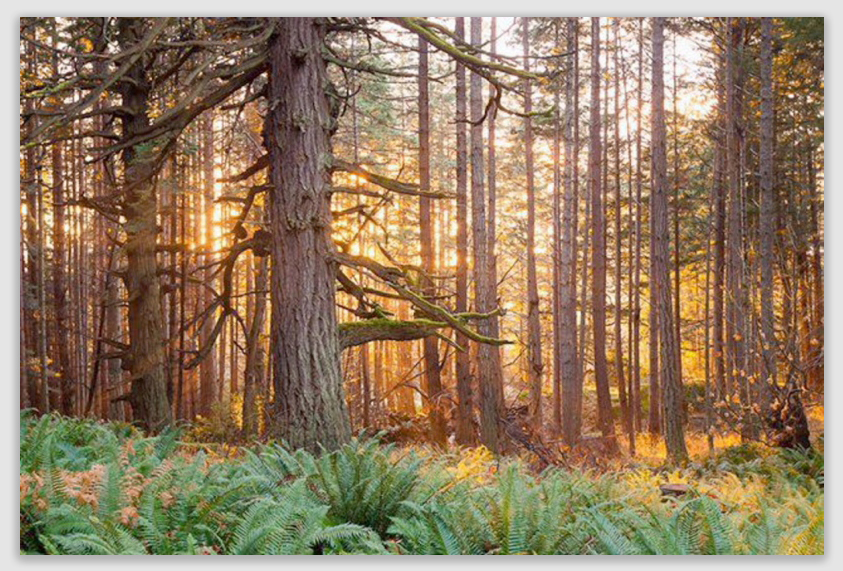 Victoria, British Columbia, Sept. 23, 2018: High-value theft target: trees
This year, a resident of the Olympic Peninsula was sentenced to 30 days in jail for felling and stealing a bigleaf maple on federal land near Olympic National Park. The theft was one of many tree thefts in Washington state since demand for the shimmering, curly-grain pattern found in some bigleaf maple wood skyrocketed about 15 years ago. The patterned wood, called ripple or flame maple, is sought by makers of fine furniture and of guitars, mandolins, violins and other wooden musical instruments. The highest-quality wood can sell for as much as $200 for a half-meter-square, 10-centimeter-thick slab. British Columbia sees its own share of such thefts from parks, Crown lands and private property. The problem was getting so bad that, in 2007, police started cracking down on mills that accepted and processed curly maple wood. By educating mill owners and managers, the police made it difficult for tree poachers to move and process the wood. Once cut, the trees must be processed within two days or the wood loses its valuable characteristics…
As I drove home one summer night down West Wesley Road, a large dark shadow swooped in front of our car. “Wow!” shrieked my 5- and 6 year-old boys from the backseat. “Did you see that?” It was a huge owl – probably with a wingspan of 6 feet or more. We added it to the animal bingo board game we play, not realizing not realizing that some of the bird’s habitat in our neighborhood was about to be obliterated. In our neighborhood of Margaret Mitchell, it’s not uncommon to see deer, foxes, owls, snakes, hawks and more – sometimes all in the same day. This is what makes Atlanta special and unique – the lush tree canopy that is home to these beautiful creatures within just miles of a major metropolitan center. I admit, growing up here, this is something I took for granted and never really thought about. Out-of-town friends always marveled at the lush vegetation, and I just assumed all cities were like ours until I started traveling and lived elsewhere – now I know it’s unique – but also in grave danger of disappearing. My rude awakening from this oblivion was two months ago. Driving to drop the boys at summer camp early one morning, the three of us witnessed a sight I’ll never forget: A wooded lot, of 2 acres or more, on West Wesley being bulldozed out of the blue. Huge, healthy oak and pine trees crashed to the ground one after another. By the time I picked the kids up that afternoon, every tree was gone. The stretch of forest we passed every day and assumed would always be there was now a huge gaping hole of red clay. It was shocking, devastating and left us all speechless…
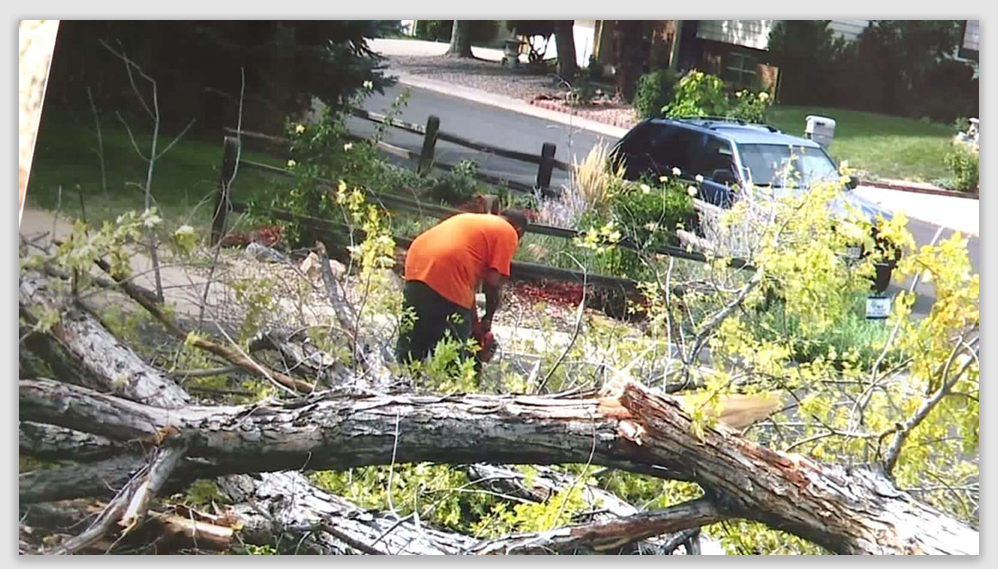
A homeowner said a tree removal company tried to scam her into paying more money to remove a tree from her yard after she already paid for the job up front. A FOX31 investigation found customers reporting similar complaints to the Better Business Bureau. Virginia Schneck said Bernard’s Landscaping and Tree Removal was going door-to-door in her neighborhood. She was interested in getting branches removed from the silver maple tree in her front yard and agreed to hire the company. According to her contract, Schneck paid $1,400 for the tree’s removal. It said in the contract that there would be no additional costs outside the specified amount in the contract. The document shows both Schneck and the company’s owner, Anthony Bernard, signed the contract. Schneck took pictures as the crew began cutting down the tree in her front yard. Schneck said about 10 feet of the tree are still planted in the ground and logs are piled up on the grass, Bernard checked back in and said he didn’t have the right saw for the job. She said he asked her to pay an additional $200 and he’d return in a few weeks to complete the work…
A man’s leg was partially amputated in an incident with tree removal equipment Saturday. At 1:54 p.m., the Crystal Lake Fire Rescue Department responded to the 6900 block of New Hampshire Trail in Nunda Township, where someone reported that a man had suffered a traumatic injury, Battalion Chief Chris Kopera said. McHenry County Sheriff’s Deputy Sandra Rogers said one person had been using a stump grinder while another was holding a tension rope as a tree was cut down. The man holding the rope moved, and the slack from the line got pulled from the grinder. The rope then wrapped around the man’s leg, which got pulled into the grinder, causing the lower part of the leg to be amputated, Rogers said…
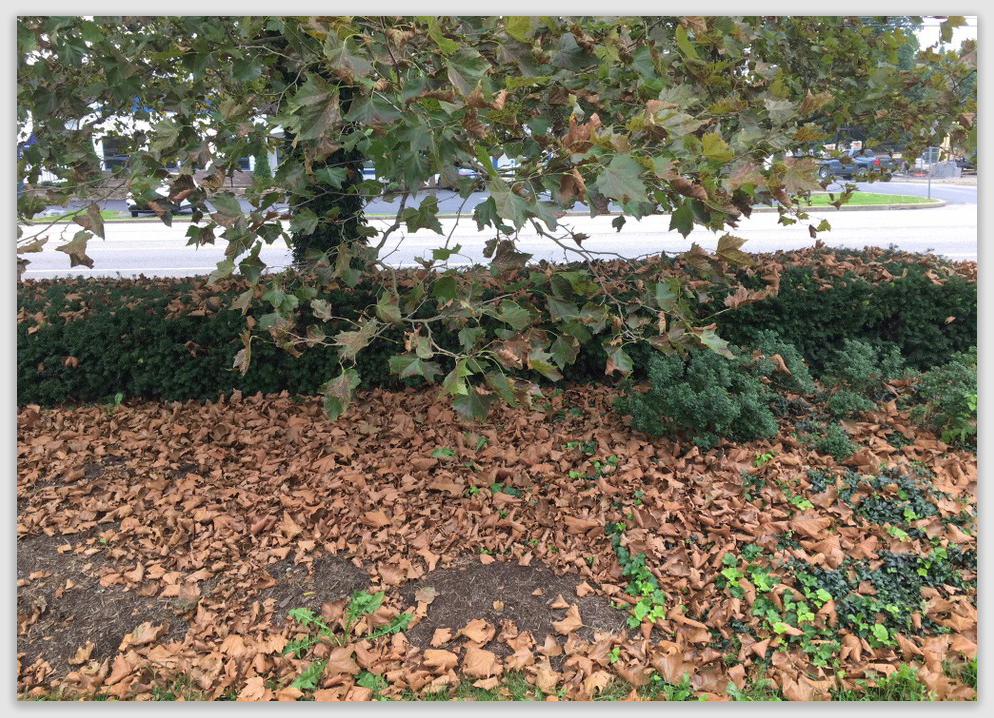 Pennlive.com, Sept. 20, 2018: Why are so many trees dropping their leaves already?
Yes, it’s almost officially autumn, but no, our trees shouldn’t be dropping their leaves yet. The falling leaves and baring trees aren’t a case of Mother Nature confusing September with October. Blame it on this season’s rain-fueled diseases that have caused leaves to discolor and drop prematurely. Fungal diseases such as rust, leaf spot, mildew, and anthracnose thrive in warm, humid summer weather. They cause leaves to spot, splotch, and yellow, and when the damage is bad enough, the trees shed the useless leaves. Crabapples, serviceberries, birch, cherries, sycamore, and oaks are among those that have been shedding lots of leaves since August. Many dogwoods and some pears aren’t looking the greatest either…
Last March, falling trees toppled more than 2,000 utility poles and over 100,000 miles of power lines in New Jersey, leaving more than 1 million customers without power, some for up to 11 days. It led the state Board of Public Utilities to recommend in a post-storm analysis a more proactive approach to cutting down and trimming trees to avert widespread outages, typically the primary reason that customers lose power. Yesterday, the Assembly Telecommunications and Utilities Committee took action to achieve that goal by approving a bill (A-2558) to allow more aggressive tree-trimming and vegetation management by the state’s four electric utilities. “We can’t do everything to prevent storm damage, but we can do what’s smart to protect our energy infrastructure,’’ said Assemblyman Wayne DeAngelo (D-Mercer), chairman of the panel and sponsor of the bill. “Making sure our trees and shrubs are properly maintained around energy infrastructure is quite simply common sense.’’ It also, however, is quite controversial. Homeowners and local shade-tree commissions often try to block vegetation management, particularly when utilities try to trim trees outside their rights of way…
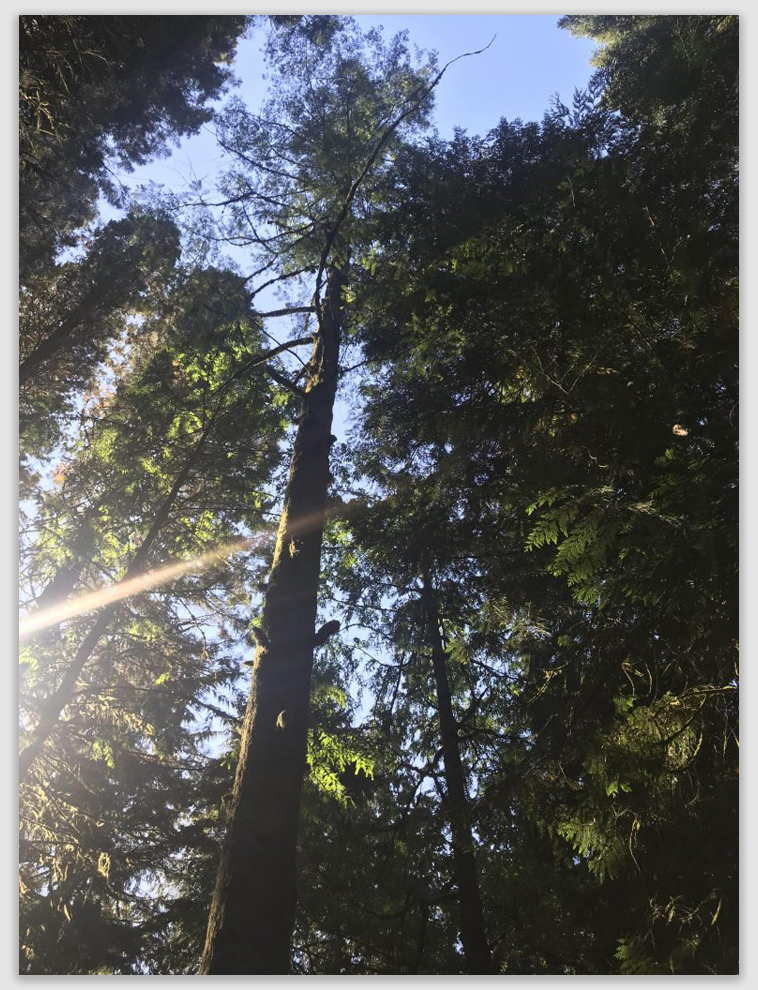
Could climate change take forests back in time? Kenai Peninsula residents and scientists see evidence that warmer weather is bringing back at least one tree that hasn’t populated Alaska for millions of years. Across the street from Homer’s Pratt Museum, there’s a small tree growing on the side of the road. You’d probably miss it if it wasn’t for the wooden placard proclaiming it a “metasequoia.” “Just for your listeners, right now it looks 11 inches high,” Geoff Cobal said as he stood next to the tree off Bartlett street. Cobal planted the sapling about three years ago. It’s also known as a dawn redwood and can grow to be 100 feet tall. “But it looks like it might be 1 inch higher then when I planted it. Well, it looks like it’s about the same height as when I planted it. So, it’s not like doing great,” Cobal said as he laughed…
Richmond, Kentucky, Register, Sept. 20, 2018: Tips to properly maintain trees
David Seals has been as busy as a bee the entire year taking care of trees, and there are several tips he has for area homeowners to stay ahead of the game. “From early spring to early winter, it’s a busy time,” said Seals, of Absolute Tree Service. “We have, you know, ups and downs through summer, but it stays pretty steady. “This year, it’s been primarily storm damage stuff, and the other thing is, once you have a few storms that we’ve had and severe weather, then people really start to notice their trees, especially ones that are really big or really close to structures, or ones that have some kind of compromise, like a rotten limb.” And in order to take care of trees when they do become compromised, there are two things Seals said are important to do. One is for people who have trees in their yards to always be aware. “If they have big trees in their yard, just having someone inspecting them, making sure there’s nothing abnormal or issues with the tree, like if they see a lot of insects on them … or they maybe notice discoloring or the leaves are dying too soon,” Seals said…
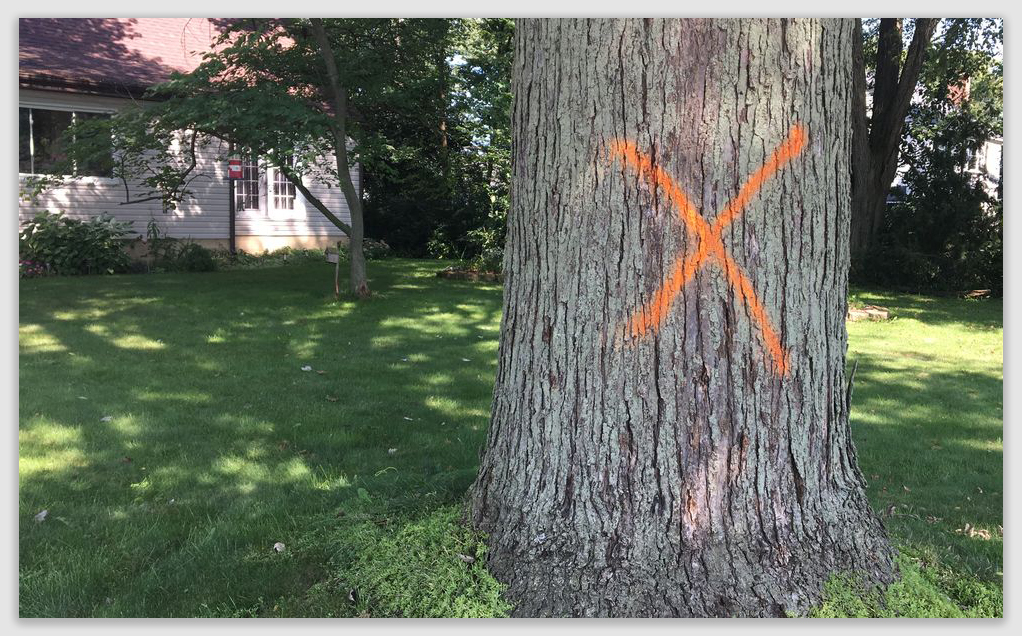
A North Ridgeville woman says she’s getting conflicting messages from the city about a tree in her yard. First, a city worker told her it had to come down, but that the city would pay for it. Now, she’s gotten a certified letter in the mail, telling her she has to foot the bill, and threatening her with a crime if she doesn’t get it done quickly. It started in August, after Kathryn Corbin says a storm caused some branches from a large tree in her yard to fall onto Lorain Road. Before she could have them removed, the city did it, and then placed a note on her door. When Corbin called City Hall, she says a city worker informed her they were condemning the tree, and it would have to come down. “I said, ‘Well, how much is it going to cost me?’ He said, ‘Nothing. The city will take care of it…”
The state has paid $150,000 to the estate of a man who died instantly when a tree fell across the Historic Columbia River Highway and onto his car. Jorge Figueroa, 27, had been visiting the Columbia River Gorge from the Seattle area on June 28, 2015, when the tree came crashing down onto the Saturn sedan he was driving. A lawsuit filed by Figueroa’s family said the tree was decaying and its trunk was marred by woodpecker holes that were “easily visible” from the scenic highway. The family faulted the Oregon Department of Transportation for failing to remove the tree, saying it posed a significant risk to the public at the “busy tourist destination” just east of Latourell Falls near Corbett. The case had been scheduled to go to trial this week in Multnomah County Circuit Court, but was dismissed last month after Figueroa’s family and the state reached a settlement…

Homeowners should make tree health assessments now, while those trees still have their leaves, officials said Wednesday. After several years of drought and invasive forest pests, Connecticut’s oak and ash trees have taken a toll. The Department of Consumer Protection and the Department of Energy and Environmental Protection put out a news release explaining what residents can do to ensure the areas around their homes are safe from any possible falling trees in the future. Homeowners will notice a hardwood tree is dead or dying if it loses its leaves before the end of September or if it never produced any this season. “The lack of greenery during the growing season is clear indication a tree is dead and should be removed if it a threat to property,” the news release said. “Now is the time to identify and make a plan for those dead trees that may pose a risk to your home and yard,” said Chris Martin, the director of DEEP’s Forestry Division. “Tree removal contractors are very busy these days and you could be place on a long waiting list…”
A woman living in a tent at a Bucks County, Pennsylvania homeless camp died when her son cut down a tree that fell on her, Bristol Township police said. The woman was lying face down in her tent Tuesday at 6:40 p.m. when her son began trying to cut down a dead tree and send it away from the camp, which is in the wooded area between Bristol Pike and Dixon Avenue. Instead, the 50-foot-tall tree fell the opposite way, bouncing off a nearby tree on the way down and landing on his mother’s tent. The woman died due to blunt trauma to her chest. Police called the death accidental…
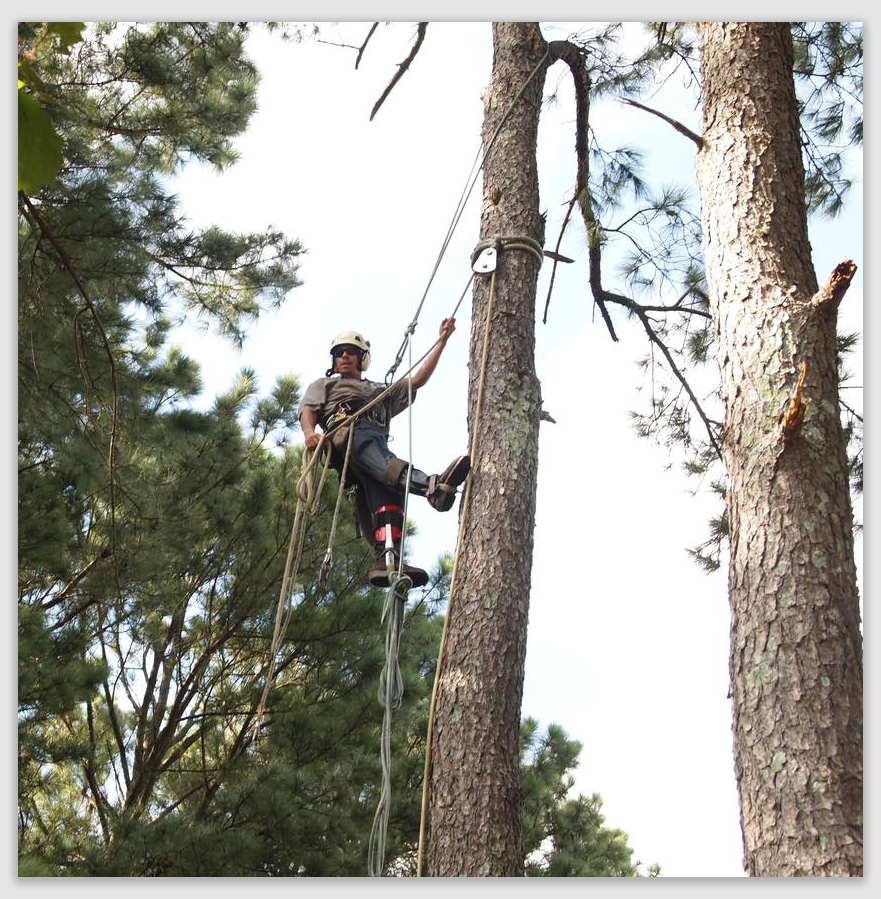
Kathy Matthews awoke around 4:15 a.m. Monday to a tremendous crash and leapt to her window to find an 80-foot pine only feet from her face and barging into her kitchen. Six hours later, Umberto Castillo was on the other side of the window, astride the trunk, trying to figure out what to do about it with his chainsaw. It would take a crew of eight men, four trucks and a crane to get the pine off the Matthews’ house and into the street where it could be chopped up and hauled away. For Jimmy Everett, it was one of three houses in the Triangle his tree service handled Monday, whiling away the day on local jobs while waiting for the call to head down east. Everett Tree Service has two crews working in Fayetteville and this one in the Triangle, but their real work will begin when insurance claims start coming in from Jacksonville and Wilmington. Everett was hoping to have been down there as early as Saturday night, but the slow movement of Hurricane Florence and blocked and flooded roads have conspired to push that back. And back. And back…
An Indianapolis mother has a clean yard days after calling RTV6 to help figure out who’s responsible for removing a tree she says was dumped there. Ashley Lamb says the tree on her property fell on power lines near Kenwood Avenue and West 32nd Street a few weeks ago. Indianapolis Power and Lights came out to fix the power lines and trimmed the tree, throwing the debris in Lamb’s yard. She reached out to RTV6’s Graham Hunter last week to get help cleaning it up, saying she didn’t believe it was her responsibility because it was IPL’s mess. A spokesperson from IPL told RTV6 their crew trimmed the tree and left the debris because it was an “emergency situation” and state regulations say they don’t have to clean it up. And it wasn’t IPL that came to the rescue. “I woke up this morning and met with the gas company, and he said that by 11 it would be cleaned up and sure enough, they came out and within 35-40 minutes it was all gone,” said Lamb. A Citizen’s Energy crew that fixed a gas line in the area from the incident came back out Tuesday morning and took care of the tree, even though it wasn’t their responsibility…
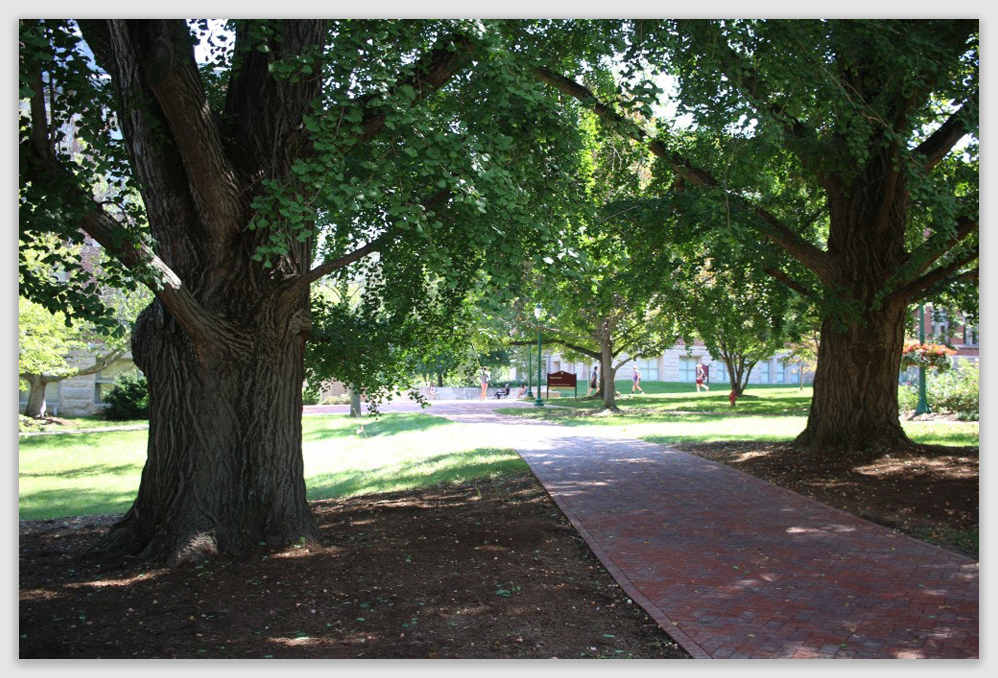
Less than a week away, IU’s fall comes with a distinct and rather unpleasant reminder that it has officially arrived. If you have walked past Maxwell Hall or the Student Building in the later months of the year, your senses have likely been overwhelmed by an obnoxious odor. The source of the smell is not from someone who forgot to clean up after their furry friend, but rather IU’s infamous Ginkgo trees. “I had a class near them, and I purposely walked out of my way to avoid them,” sophomore Niki Pizzato said. “The Ginkgo trees are the worst and should be nowhere near here.” Adorned with fan-shaped leaves, these trees stand tall and mighty near the Dunn’s Woods. The smelly giants are hard to miss mixed in among the American Beech and Red Maple trees. “The female trees are the ones that give off the smelly fruits in the fall,” said John Lemon, Jordan Hall Greenhouse supervisor. When stepped on or left to rot on the ground, these apricot-like fruits emit an odor that has been likened to the smell of vomit, dead fish or canine droppings…
Several burr oak trees believed to be remnants of a 19th century savanna will remain standing — for now — on a piece of privately owned Park Ridge property following a vote by aldermen Monday night. The City Council voted to reject an appeal filed by 819 Busse Highway LLC that sought the removal of four trees at the northeast corner of Busse Highway and Shibley Avenue, property that has been dubbed “Shibley oaks” by residents. Initially, the property owner had applied to have all 15 trees on the largely vacant, .75-acre site cut down, but only three were approved by Park Ridge’s city forester, city documents showed. Later, 819 Busse amended its request to be allowed to remove five of the 12 remaining trees, but, at Monday’s appeal hearing before the City Council, that number was further reduced to four after additional testing occurred. Aldermen, following the two-hour appeal process, unanimously rejected the removal of three trees and voted 5-2 against the removal of a fourth tree that stands partially in the path of a sidewalk. In the case of the sidewalk tree, aldermen Nicholas Milissis and Marc Mazzuca noted that the studies suggested the tree actually is in a poor enough condition to warrant removal…
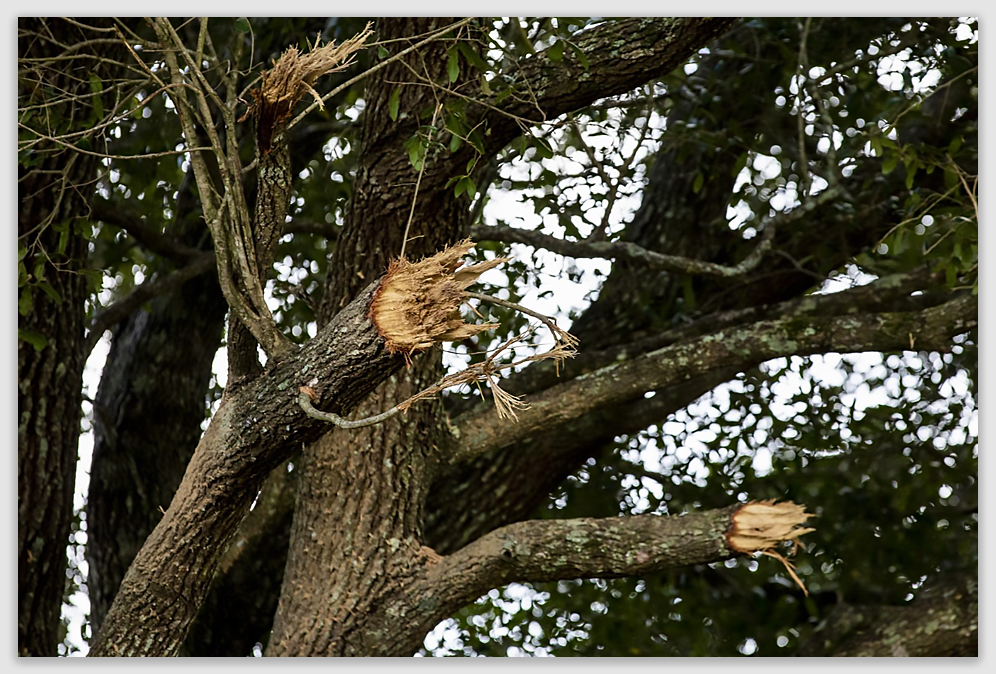 Gainesville, Florida, Sun, Sept. 17, 2018: Tree-cutting methods decried and defended
Leslie Evans said she understands why trees need to pruned near where she lives on Northwest 78th Avenue outside of Gainesville. “We appreciate it because we have limbs down,” Evans said. “They fall on people, cause property damage.” But Evans was alarmed when she looked outside her window over the weekend and saw how the oak trees were being cut on the stretch of Northwest 78th Avenue from County Road 235 to County Road 241. “Never before have we seen trees cut like this,” she said. Evans took cellphone photos as evidence of limbs being shredded indiscriminately. By not making straight cuts, Evans said, the oaks run the risk for possible disease. “It’s just terrible seeing the canopy being cut that way,” Evans said. Alachua County Engineer and Public Works Director Ramon Gavarrete said the trees were cut due to public safety concerns for drivers who use the road…
An Indianapolis woman won’t be facing a fine over a downed tree left on her property, but she’s probably going to have to clean it up herself. The tree was initially on the woman’s property when it fell on power lines near Kenwood Avenue and West 32nd Street a few weeks ago. Indianapolis Power and Lights came out to fix the powerlines and trimmed the tree, throwing the debris in the woman’s yard. She reached out to RTV6’s Graham Hunter last week to get help cleaning it up, saying she didn’t believe it was her responsibility because it was IPL’s mess. A spokesperson from IPL says their crews trimmed the tree and left the debris because it was an “emergency situation” and state regulations say they don’t have to clean it up. Initially, the Marion County Health Department had issued a notice to the family saying they had 12 days to clean the tree up or they could face fines up to $2,500 per day. But the health department says they decided to close the case after finding out that IPL had trimmed the tree and left it in the family’s yard…
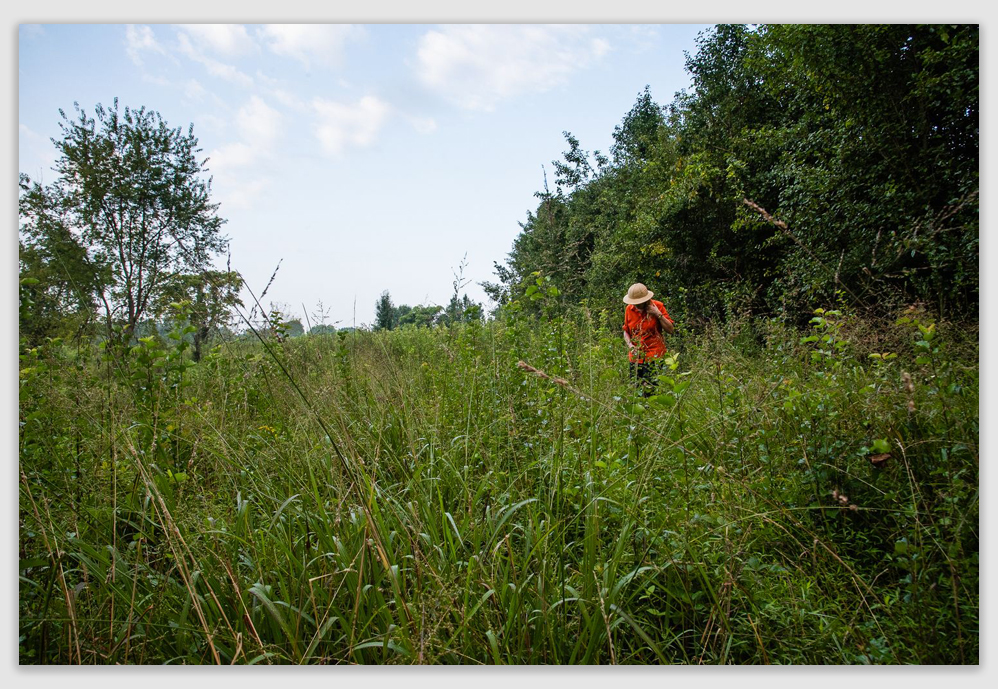
Carole Bergmann pulls her small parks department SUV into an aging 1980s subdivision in Germantown, Maryland, and takes me to the edge of an expansive meadow. A dense screen of charcoal-gray trees stands between the open ground and the backyards of several houses. The trees are callery pears, the escaped offspring of landscape specimens and street trees from the neighborhood. With no gardener to guide them, the spindly wildlings form an impenetrable thicket of dark twigs with three-inch thorns. Bergmann, a field botanist for the Montgomery County Parks Department, extricates herself from the thicket and in the meadow shows me that what I take to be blades of grass are actually shoots of trees, mowed to a few inches high. There are countless thousands, hiding in plain sight in Great Seneca Stream Valley Park. If it were not cut back once a year, the meadow would become like the adjacent screen, wall upon wall, acre upon acre of black-limbed, armored trees worthy of Sleeping Beauty’s castle. “You can’t mow this once and walk away,” said Bergmann, who began her 25-year career in the department as a forest ecologist but has been consumed by an ever-pressing need to address the escape of the Bradford pear and other variants of callery pear, a species that originated in China, along with other invasive exotics…
The city is considering new rules aimed at preventing removal of trees at development sites and expanding the Forest City’s tree canopy.
The rules are part of legislation now before Cleveland City Council. They would require developers to submit tree preservation plans before development projects could proceed and provide for civil penalties for damaging trees or removing them without approval. “This gives the urban forestry the authority, the ability, to put a dollar value on our trees,” Councilman Matt Zone, one of the ordinance’s sponsors, said in an interview. The ordinance would require tree preservation plans be prepared before development projects on one acre or more of land and any development project for four or more apartments, condominiums or townhomes on any sized lot…
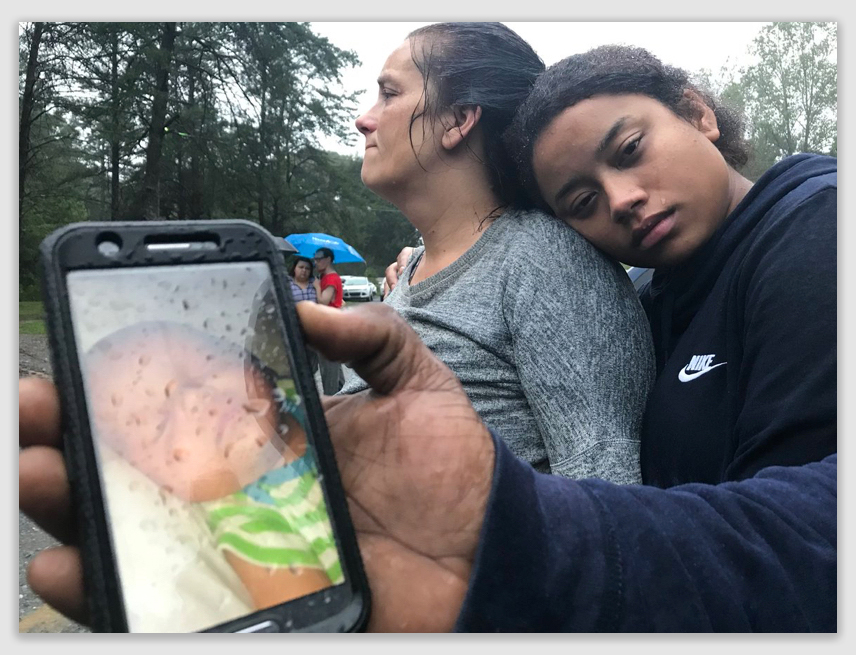
A 3-month-old boy died when a saturated pine tree fell and crushed a mobile home in Gaston County. Police said the tree landed on the home on Moses Court near Dallas around 12:45 p.m. Sunday. The child, identified by his family as Kade Gill, was taken to the hospital where he was pronounced dead. The family was home in the living room when the tree landed on the home, family members said. “He was unresponsive,” father Olen Gill said. “As I approached the room, I see them pumping on his chest, and that time, I knew that it wasn’t good.” Olen Gill said his wife Tammy Gill was holding Kade on the couch when they were struck by the tree. “The tree had divided us,” Olen Gill said. “I’m in the kitchen and she’s in the living room on the couch…”
Odessa, Texas, American, Sept. 16, 2018: Tree roots pose little risk to home foundation
Fortunately, trees roots are lazy. Despite the hype, they usually pose no real risk to your home’s foundation when the trunk is at least a modest distance away from the structure. Generally, the minimum tree planting distance from a foundation is ten feet. However, to ensure that you can sleep well at night, you could plant it just a few feet further away. Still, when planting a tree only six feet from your home, your home will probably not experience any foundation damage. It’s difficult for homeowners to find solid information on the risk factors. The disagreement among good arborists is probably due to individual experiences, their understanding of how roots grow and historic differences between building codes. Roots grow where conditions are favorable. They’ll almost always grow away from solid objects. This tends to benefit homeowners when it comes to foundations. Most building codes require foundations to be poured at least twelve inches deep. Roots can easily lift sidewalks, driveways, and other shallow concrete structures as opposed to a foot-deep foundation supporting the substantial weight of an eight-foot brick wall buttressed by other walls…
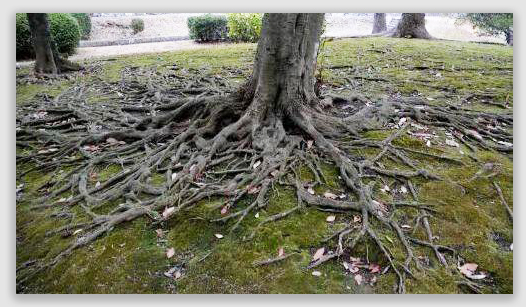 San Diego, Union-Tribune, Sept. 16, 2018: The march of the tree root marauders
One of the great surprises in community mediation is how much distress trees cause in neighborhoods. And the tree problems you cannot see are usually more vexing than the ones you can. Above ground, a tree is a resplendent gift from nature. If it starts growing too large for its surroundings, there usually is ample time to anticipate the damage and plan on mitigation. Below ground, tree roots can be marauders that destroy infrastructures where no one is looking. By the time wreckage becomes apparent, repair bills could be substantial – and they won’t get any smaller with the passage of time. An early step in any conflict management is to reframe the dispute as a shared problem the parties can tackle together. When we pool ideas and assets, we can generate solutions that wouldn’t surface in us-vs.-them legal channels. Such cooperation is useful when grappling with invasive trees because the rules of this game are jumbled. Assigning individual liability can be as bewildering as it is contentious. California tree laws are clear about one thing: The health of a live tree takes precedence over the property rights of a person. From there, the legal landscape gets tangled…
The growth rings in tree trunks are synchronized on a planetary level, according to recent findings by scientists at Italy’s National Research Council (CNR) and Padua University. Thanks to a four-year study named COSMIC, the scientists said they now have a precise method for dating past atmospheric events that occurred on a global scale, and can equip themselves in case they repeat in the future. “Year after year, plants record everything that happens on the planet,” researcher Mauro Bernabei from the CNR Institute of Tree and Timber (IVALSA) told Xinhua. “We discovered that there are no holes in this chronological sequence…”
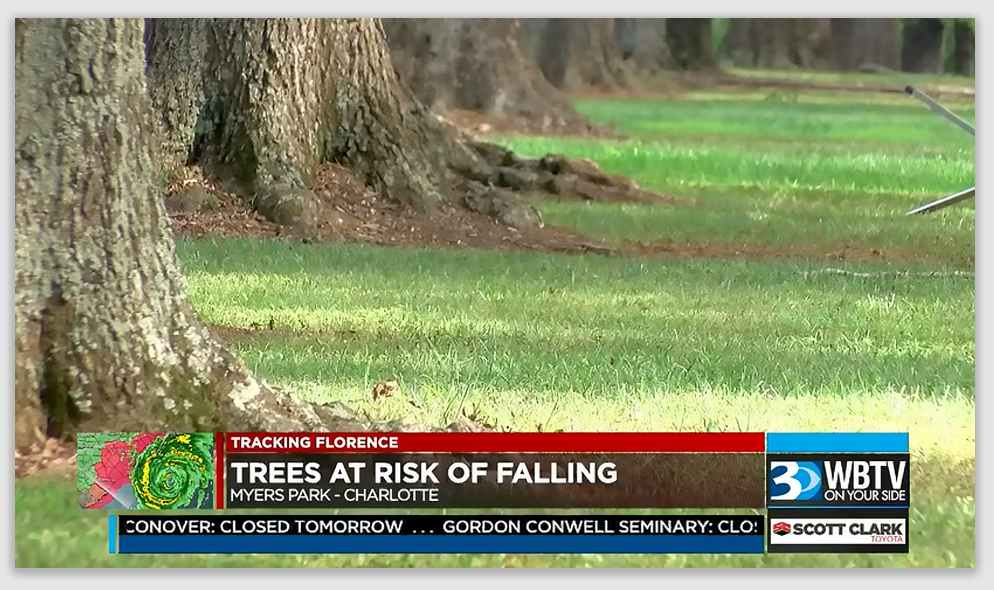 Charlotte, North Carolina, WBTV, Sept. 13, 2018: Charlotte’s tree canopy problematic during Florence
If you drive down almost any road in Myers Park, the first thing that may strike you is the large tree canopy. “This is the whole reason Myers Park exists is tree canopy,” said Ed McLamb, a Myers Park resident. “We feel like the canopy defines the neighborhood,” said Mary Engle, who lives along Queens Road West. Although beautiful, during storms, the big trees can cause major problems if they come down. Many trees in Myers Park are well over 100 years old, and with saturated ground, many won’t be able to remain standing. “If we have a significant amount of wind, more are going to blow over,” said McLamb. He remembers Hurricane Hugo. “We lost a huge tree in our backyard. Trees were all over the road. You couldn’t go anywhere,” said McLamb. Residents like Mary Engle do their best to care for the trees year round. “We have our trees checked every year. We check for dead limbs and the health of the tree because if it falls, it will probably fall right on the house,” said Engle…
Washington, D.C., WJLA-TV, Sept. 13, 2018: Warning signs your trees are at risk
Crews with Adirondack Tree Experts were busy on Thursday. “We probably have had more people calling saying, ‘Hey, I’ve had a dead tree on my property for quite some time and now I’m concerned that the hurricane is coming and it’s going to fall on my house,” said owner, John Anna. Anna started Adirondack Tree Experts in 1994. He says the more rain we get, the more that homeowners need to be aware of their trees. “Any tree is a concern when the ground is wet,” he said. “Any tree.” He says taking care of your trees and keep a close eye on them is crucial…
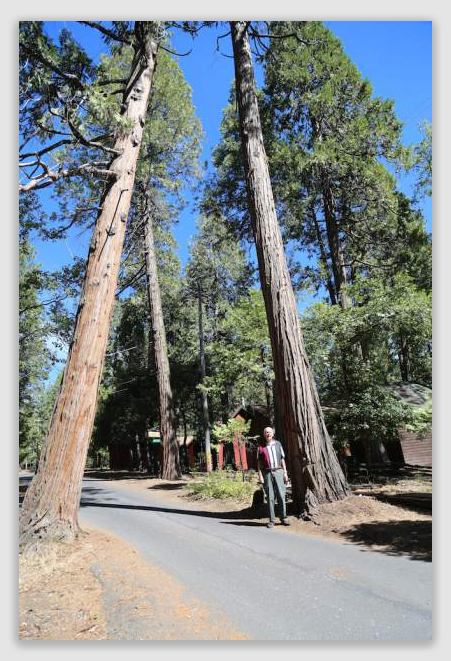
Pacific Gas and Electric’s accelerated wildfire risk reduction program, with more than 100 contractors trimming trees and cutting down trees near power lines in numerous neighborhoods in Tuolumne County, have raised concerns this week among Twain Harte residents. Jim Johnson, vice president of Twain Harte Homeowners, showed where at least 17 trees have been marked for trimming or removal on a neighbor’s property near his place on Strauch Drive just north of Twain Harte Golf Club. “These are healthy trees,” Johnson said Thursday. “Half of them are cedars, which beetles don’t like. The sad thing is a tree like this, a healthy 150-foot Ponderosa, there doesn’t seem a need to cut that.” Twain Harte Homeowners have about 800 members in the Twain Harte area, Johnson said. On Wednesday, John Kinsfather, the president of Twain Harte Homeowners, sent an email to Alisha Lomeli, a vegetation management representative with PG&E…
Scientific American, Sept. 13, 2018: New tree species discovered — and declared extinct
Sometimes you don’t know what you’ve got until it’s gone. In 1951 a member of the Nigerian Forestry Service collected specimens of a rare tree in the highlands of northwestern Cameroon. It was soon identified as a member of the Vepris genus, a group of 80 or so large tree species that range throughout the African continent and the islands of Madagascar and Zanzibar. Unfortunately, the specimens were incomplete, and full identification of the species was not, at the time, achieved. Now, nearly 70 years later, the species has been named—just in time to etch that name on its tombstone. A paper published Aug. 24 in the journal Willdenowia identifies the species as Vepris bali and declares its likely extinction due to agricultural development in the tree’s only known habitat, the Bali Ngemba Forest Reserve. Researchers examined the original specimens and used molecular phylogenetic studies to identify the new species. The authors—from Royal Botanical Gardens, Kew and the University of Yaoundé I—note that previous attempts to locate this species and complete the 1951 specimen, including “repeated targeted efforts” between the years 2000 and 2004 and at least six other studies, failed to turn up any sign that the tree still exists…

An 18-year-old college freshman has died after the car she was riding in was crushed by a falling tree. Sydney Kleptach died Monday at an Akron hospital, one day after the tree fell onto the car driven by her father. Kleptach and her father, Brian Kleptach, 48, were traveling in a 2017 Chevrolet Malibu around 4:15 p.m. Sunday when the car was struck by a falling tree in the 3700 block of Everhard Road NW in Stark County. Sydney was a 2018 graduate of GlenOak High School and a student at the University of Mount Union, where she was majoring in biology and French and on the women’s soccer team. According to her team biography, she was the president of GlenOak’s National Honor Society, lettered twice in soccer and earned four academic letters, and served as a student ambassador and board of education representative. She also earned several academic and athletic awards. And logged more than 900 hours of community service while in high school…
While it’s likely too late to get trees near your home removed, there are some things you should do now to prepare. “We’re getting a lot of phone calls. I’ve got five people in the office answering phones, and they have been busy all day today,” Patrick George, owner of Heartwood Tree service said. “Everybody wants their tree that they’ve been worried about for months and months taken down today (Monday) or tomorrow (Tuesday).” But unfortunately, George says theirs is not a same-day industry. “Our crews are booked it for several weeks out,” he said. But there are some things you can do now. “Prune your trees to make them a little bit smaller,” George suggested. “That gives them the same amount of strength but less weight that they have to hold up and less wind resistance.” George said he’s admittedly worried about this hurricane season in particular. “We’ve had good regular rainfall; we haven’t had that much serious heat, so the trees have been growing like crazy, they’ve got these giant sails that pick up all this wind…”
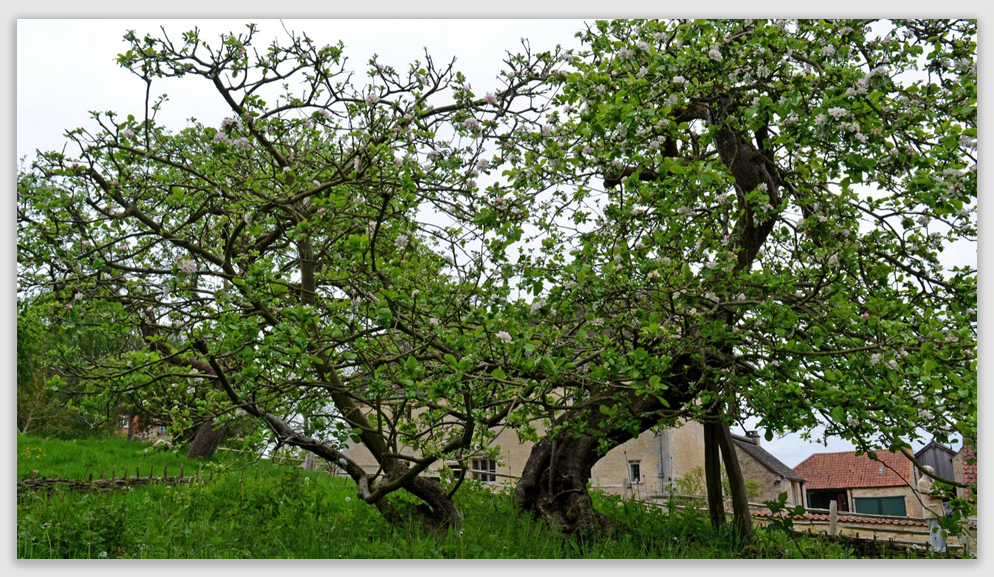 Curiosity.com, Sept. 12, 2018: You Can Find Clones of Isaac Newton’s Apple Tree All Over the World
History is full of apocryphal stories — tales like the one of George Washington and the cherry tree, or Marie Antoinette and her infamous dessert suggestion. In all likelihood, they aren’t actually true, even if they play an important role in how we understand these historical figures. Probably the most famous apocryphal tale from science is that of Isaac Newton and the falling apple that inspired the theory of gravity. As it turns out, that story might be more legit than you’d expect. And the proof is in a scattered forest of apple trees growing all over the world to this very day…
Sixteen historic trees skirted death Tuesday night when commissioners took city staff’s recommendation and told the developer of a property off Old Mission Road to find a way to save them. The vote was 4-1. “Sorry, gentlemen,” Mayor Jim Hathaway told officials representing KWD 43 Investments, “you’re going to have to come back with another plan.” The Coral Gables-based land owner had asked permission to tear down the oaks on their property at the corner of Old Mission Road and Eslinger Road before they build on the parcel that sits south of State Road 44. The site, according to a historic tree removal application, has 55 such trees on the property. Staff recommended leaders deny the developer’s request and require a change in design to save at least some of the trees…
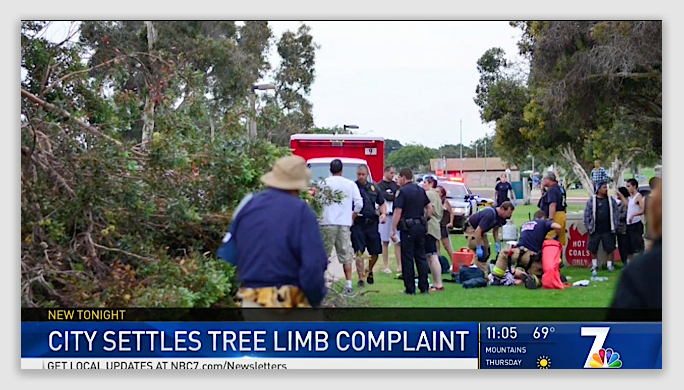
The San Diego City Council approved a $750,000 settlement Tuesday for a woman who was crushed by a falling two-ton tree branch five years ago at De Anza Cove in Mission Bay. Witnesses say 32-year-old Lorin Toeppe was walking with her husband when a ten-foot section of the tree suddenly snapped and fell. Her boyfriend and several park visitors scrambled to find her in the pile of debris. Lorin’s attorney Daniel Balaban told NBC 7 her leg was crushed, her back was fractured and she suffered other crush injuries that damaged her nerves. “[Her injuries] really impacted her ability to get along in this world from every standpoint,” Balaban said. Balaban argued the city failed to properly maintain the tree in question. According to Balaban, the city originally argued it did nothing wrong and that with millions of trees it can’t possibly foresee every potential hazard. Lorin’s case actually changed state law. While you still walk park paths at your own risk, state and local governments can now be held liable for failing to maintain surrounding trees…
Before Hurricane Florence makes landfall later this week, tree-trimming crews hopped from job to job across the Triangle on Tuesday, trying to eliminate as many potential hazards as possible. Tim Robbins and his crew from Arbormax felled some 100-foot-tall trees, using cranes to lower them to the ground safely. “It’s a different feeling. We call it ‘hurricane mode,'” said Robbins, who ticked off the list of storms he’s responded to. “Andrew, Fran, Floyd, Isabelle, Irene, Katrina, Rita, Wilma, Matthew,” he said. “I think that this is going to be as bad as any of them.” Arbormax normally gets 30 to 40 calls a day, but Robbins said it’s been getting more than 100 calls a day right now as people seek to prevent trees from hitting their homes…
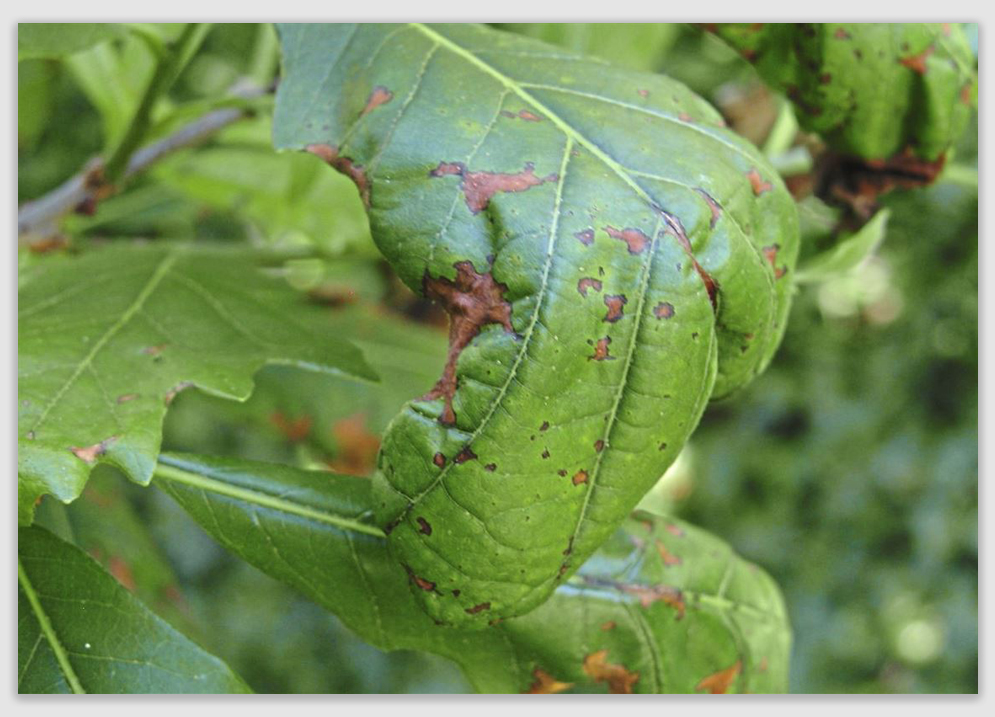
It began to look like fall in August, with dead leaves on the ground way ahead of schedule in Pittsburgh and many areas across Pennsylvania. But it’s not a seasonal change. The soggy weather is a pain in a lot of ways, and now you can add a less vibrant autumn to the list. An unusually wet year created an opportune environment for anthracnose, or fungi that is plaguing our greenery. “Anthracnose is kind of a fancy name for leaf spot or leaf blight,” said Linda Johnson, assistant professor of sustainability and environment at Chatham University. Because of the heavy rainfall we’ve had since the trees began budding several species-specific fungi under the umbrella term anthracnose are hitting trees not usually affected by blight…
A tree stood for 250 years, covered in gnarly vines and dripping in moss. It stood by as the land next to it was developed and then abandoned. It stood by as a new owner, Lee Malis, 59, carefully tended to a garden out front and cleaned up the yard. And when the tree was threatened, Malis stood by it. The live oak that looks over Malis’ backyard on Northwest Seventh Terrace has garnered more attention than he ever expected. The 5-foot-in-diameter, 250-year-old heritage live oak was supposed to be chopped down to make room for The Reef, a new apartment complex, in the northeast Gainesville neighborhood, Malis said. But then, a court case and fundraiser rallied around saving the tree…
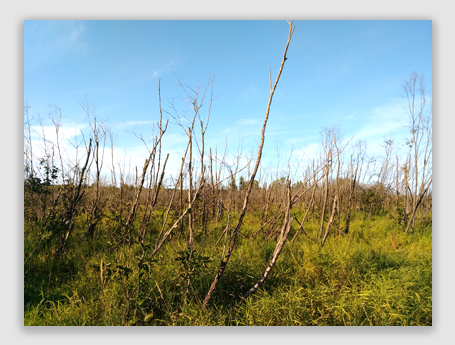
The alder trees of Lake Superior wetlands are having problems, dying off en masse since around 2015. Walkers along the Nara Nature Park boardwalk may have guessed insects or invasives were to blame for the groves of dead shrubs. However, as it turns out, water levels are at fault. The sustained high water levels on Lake Superior are making their habitat too wet and leading to the die off. Though more dramatic than usual, the sudden loss of the alders is a normal part of a wetland life cycle. “This is a natural process, I’m not alarmed. It’s just changing,” said Michigan Tech ecologist and wetland researcher Rodney Chimner. He says he’s never seen such a dramatic die-off before. “When the Great Lakes go up and down, the Great Lakes expand and contract,” he said…
When Hurricane Florence arrives later this week, its heavy winds and constant rains could pose problems for electricity, including more than 10,000 miles of power lines on Duke Energy’s tree trimming waitlist. Records filed with the North Carolina Utilities Commission in January show Duke Energy Carolinas has a more than 10,000-mile backlog in its vegetation management program. “The Company would not need to address the 10,000 mile back-log if a proper, cyclical vegetation management program had been in use by the Company prior to 2013,” the state filing said. As a result of that state meeting earlier this year, Duke Power Carolinas agreed to invest more resources in tree trimming. Duke Energy spokesperson Randy Wheeless said the company is increasing its funding for tree trimming by 25 percent or $20 million this year…
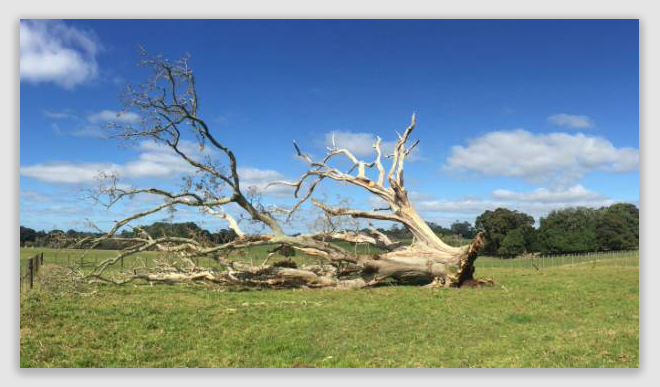
New Zealand’s oldest oak has come crashing down, nearly 200 years after it was planted in the Bay of Islands. It was around for the Northern Wars military settlement, the signing of the Treaty of Waitangi and the growth of Te Waimate Mission, but New Zealand’s oldest oak which stood tall among the Waimate North vista toppled over around midday on Sunday. The oak was planted in Paihia in 1824 from an acorn brought from England by missionary Richard Davis. Davis later transplanted the sapling to Te Waimate across the road from the Mission House in 1831. Property owner Natasha Baird said the oak’s downfall sounded like a car crash. “We were outside and heard it crash, the cows got a major fright, it was really sad,” Baird said…
A Twentynine Palms man was given the maximum sentence of five years in federal prison on Monday for lighting a fire that destroyed parts of a natural oasis near Joshua Tree National Park earlier this year, official said. George William Graham, 26, was also ordered to pay more than $21,000 in restitution to the National Park Service, the U.S. Attorney’s Office for the Central District of California said in a news release. The March 26 blaze at the Oasis of Mara — which sits behind the Joshua Tree Oasis Visitor Center in Twentynine Palms — destroyed seven California fan palms and scores of other plants, and had forced the attraction to shut down. The 26-year-old was found watching the flames’ progress by Park Service rangers, who subsequently arrested him…
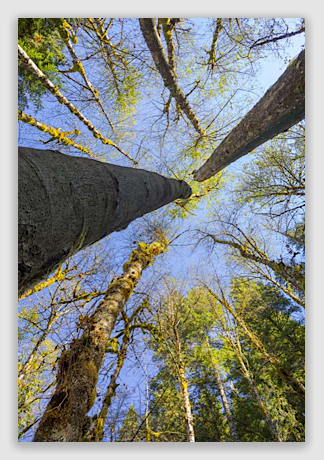
Fall is almost here, and with it some beautiful shift in foliage. But that doesn’t mean all of the trees in Washington are doing OK. In fact, something seems to be killing the bigleaf maples in the state — and scientists aren’t sure exactly what it is. “We’ve looked for everything we can possibly think of and what people smarter than us can think of,” Amy Ramsey, a forest pathologist with the state Department of Natural Resources, said to The Tacoma News Tribune, who initially reported the issue. “The public had questions, and we didn’t have answers.” Though bigleaf maples represent Washington’s biggest broadleaf tree, they appear all along the West Coast, from Vancouver to California. And through the entire population, strands of the maples are dying. Although several agencies have been studying the deaths — the DNR, U.S. Forest Service, and University of Washington among them — the culprit remains elusive. And the issue extends beyond losing a majestic tree: The bigleaf maple provides shade for salmon-bearing streams, flowers for pollinators, and seeds for animals. For humans, the tree is often used for everything from cabinetry to piano frames…
Lockport, New York, Journal, Sept. 9, 2018: Taxing the trees on your land
“I think that I shall never see a poem lovely as a tree.” In some strange perversion, those immortal words from Joyce Kilmer have taken on another meaning. They have become a battle cry for some assessors in New York. In their version the word “poem” is replaced with “taxable asset,” as some have taken advantage of state law to tax property owners for the trees on their property. Under this practice, tax assessors, with guidance from the state’s Office of Real Property Tax Services, analyze woodlots and forests to determine the market value of the timber were the land to be logged. This value is then applied to the assessment the same way that a capital item like a house would be. It can now be said quite literally that many municipalities are “sticking” it to landowners by considering a naturally-occurring tree a man-induced investment…
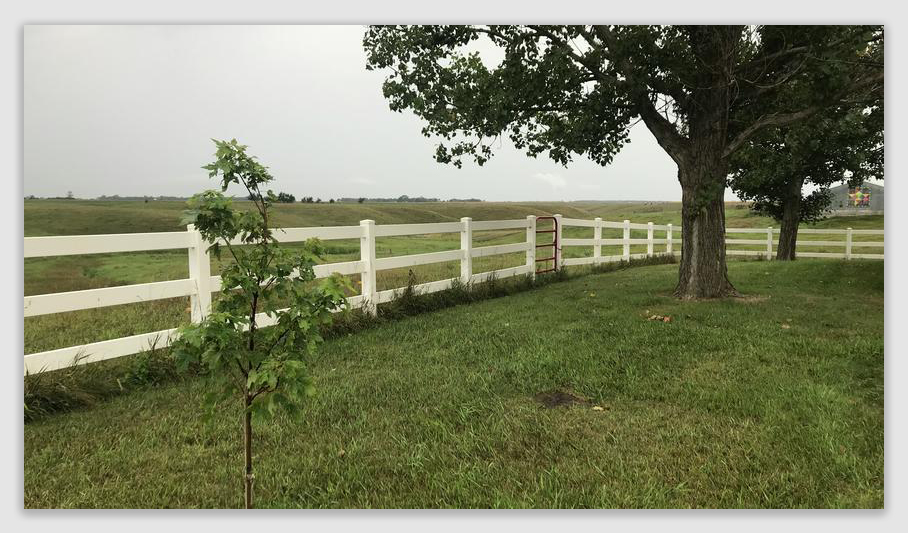 Salem, Oregon, AgWeek, Sept. 9, 2018: No more ash, no more maple. Which trees should we plant?
As summer transitions into fall, it’s a good time to plant trees before winter hits. Whether planting a line of trees for a shelter belt or just a few for eye appeal in front of the house, there are some important considerations when it comes to selecting the type of trees to add to the landscape. John Ball, a forest health specialist at South Dakota State University, recently addressed this topic at the 2018 South Dakota State Fair in Huron. Balls says a lack of diversity in the landscape has left trees vulnerable to the threat of disease. Instead of choosing the popular ash, maple or Austrian and Scotch pine trees, he offered some safe alternatives to consider planting this fall. “We need to discontinue planting ash due to the eventual loss (within the next 15-20 years) to emerald ash borer,” Ball said. Emerald ash borer originates from Asia and is thought to have entered the U.S. on wooden packing materials from China. The U.S. is home to 7 billion to 9 billion ash trees, according to the Arbor Day Foundation, and to date, the emerald ash borer has destroyed 40 million ash trees in Michigan alone and tens of thousands throughout the Midwest and Canada…
Trees provide many benefits for our homes with shade, beauty and improved air quality as just a few, however, if a tree has defects which could lead to a failure, your shade tree could become a liability. It is important to understand that tree owners have a legal duty to inspect and maintain their trees. All property owners should take reasonable steps to protect themselves and others by taking a look at trees around the property on a regular basis. Here are some suggestions to consider in making your trees safer for everyone. In general, the law obligates tree owners to periodically inspect their property and take reasonable care to maintain it and this includes trees. Routine inspections also exhibit that the tree owner is actively managing their property and trees and thereby reduces their liability if a failure does occur…
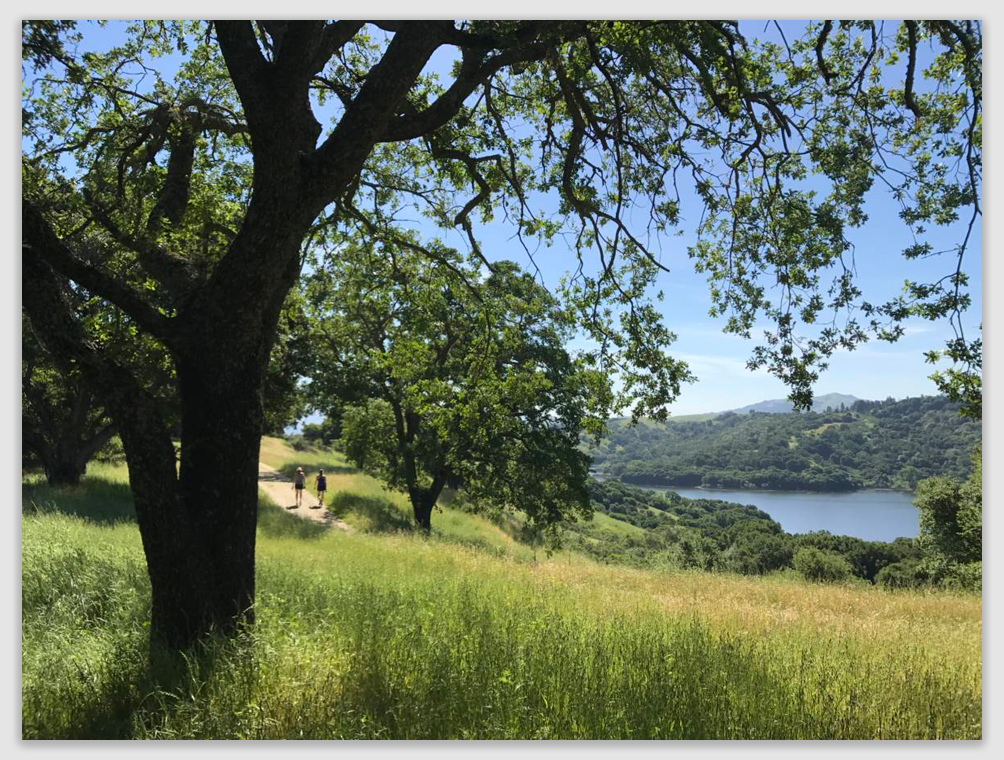
A September 10 special meeting organized by the Lafayette City council that would discuss a controversial plan by PG&E to uproot hundreds of trees, has drawn ire from residents who want the trees to remain. The pending tree removal is part of the utility company’s Community Pipeline Safety Initiative, a statewide effort aimed at improving public safety by clearing structures that could stand in the way of first responders attempting to access gas transmission lines. Tree roots also corrode the underground pipelines, which can lead to hazardous leaks, according to PG&E. The trees that are scheduled for removal include 207 on public property and 245 in Briones Regional Park. Critics of the plan say that removing hundreds of trees threatens local wildlife and significantly impairs the character of the neighborhood. They say the city should have conducted an environmental assessment before authorizing the plan in 2017…
Philadelphia, Pennsylvania, WHYY-FM, Sept. 6, 2018: Enemy No. 1 for Puerto Rico’s utility: trees
Nine months after Hurricane Maria, Julio Alvarado Feliciano was still working hard to restore power to Tanama, a community in the central Puerto Rican mountains. Feliciano is a technician with the island’s power utility, PREPA. His team reinstalled fallen utility poles and unspooled fresh cable on the ground. Then, the workers tried to haul the lines up from the ground. “We’re going little by little by little, raising them, raising, raising,” he said. But the work here is complicated, slow. It’s remote. More than that, it’s full of trees. Where a cleared corridor should run under the transmission lines, grows an orange orchard. Somewhere in the trees, a worker untangled the cable from the branches. Another man, mid-air in a bucket truck, cranked the cable tighter on the utility pole, elevating it. Hurricane Maria brought down about 80 percent of the island’s transmission lines — those are the cables that transport energy long distances from the power plants to more localized distribution lines and, eventually, to customers. PREPA’s infrastructure was old and poorly maintained, but much of the damage during the storm came from trees falling and blowing into lines and towers. Turns out, one of the most complicated pieces of technology – the power grid – is no match for a tree…
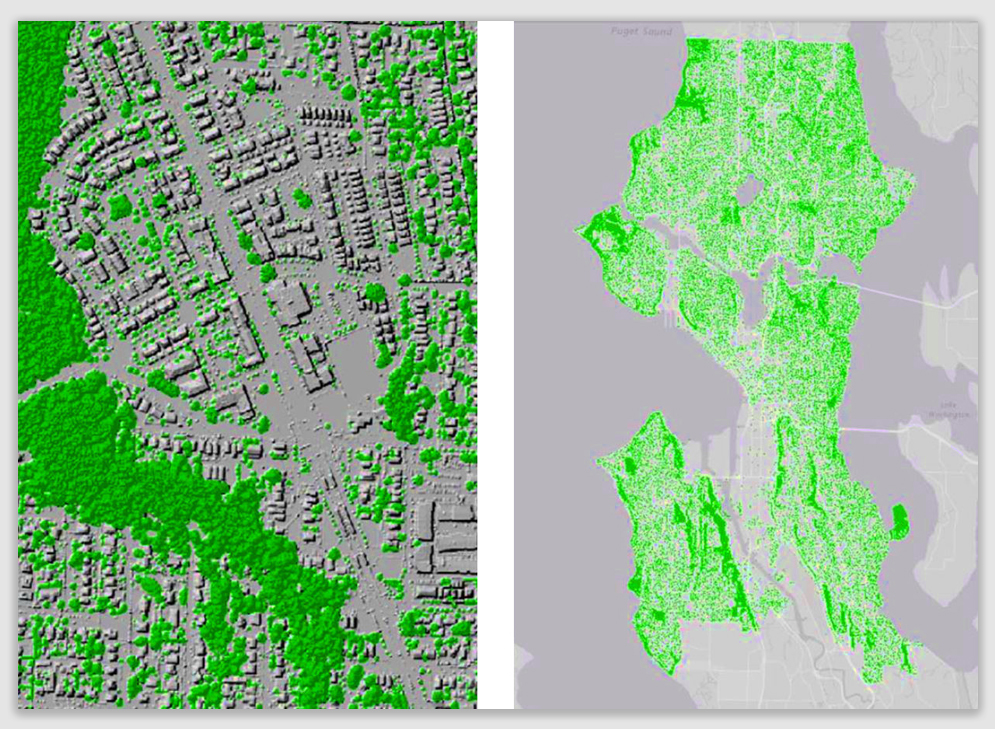
Since the end of the last recession, Seattle has consistently ranked among the fastest growing major US cities. Is all that growth leaving the Emerald City less emerald? Not really. Seattle’s best new data on the change in tree canopy over time does show a 6 percent decline between 2007 and 2015. Here’s the catch, though: most of the confirmed tree loss happened on land reserved for detached houses, the single-family zones that cover over half the city but where population has barely budged for decades. Meanwhile, the same study found no statistically significant change in tree canopy where the growth actually has been happening: the land zoned for commercial buildings and multifamily housing that absorbed the vast majority of Seattle’s new apartments, offices, and stores. From 2007 to 2015, all that construction helped make room for 76,000 additional residentsand 65,000 new jobs—like adding about half of the neighboring city of Bellevue. It’s a remarkable success story: Seattle increased its stock of homes by 14 percent, confined almost completely to the 18 percent of city land where multifamily housing is allowed—with no measurable impact on trees…
Gainesville, Florida, The Sun, Sept. 6, 2018: ‘One tree saved’ — developer will spare live oak
It appears as if a centuries-old live oak will continue to live. The nearly 60-inch-wide tree is the center of a dispute between homeowner Lee Malis, who contends all but a bulge of the tree was within his backyard fence at 311 NW Seventh Terrace, and the developer of an apartment complex on adjoining property who planned to chop up the tree. Malis and six others on Thursday afternoon asked the Gainesville City Commission to halt the project until the dispute could be sorted out. Afterward a city official said the developer will submit new design plans that will preserve the oak. Malis credited the community’s response to his effort the save the tree and coverage of the issue in The Sun as the turning point. “The publicity and the community coming together — it’s just incredible. I was alone a week ago and now I have the whole city behind me in one week,” Malis said outside the commission meeting. “It’s a beautiful thing and I thank the people who helped me…We did well. We did win. The tree is not coming down. It’s one tree saved…”

The iconic “swing tree” near Mirror Lake at UConn Storrs is undergoing special treatment to help preserve its health, after experts determined recently that it wasn’t absorbing enough water at the roots. The tree has been home to two wooden swings since about 2010, and has become a popular spot for people who want to relax with friends or jot down their thoughts anonymously in the journal that makes its home in a nearby mailbox. The swings recently were taken down and will be put up again soon on another tree, at least temporarily – with the location still being determined – while experts treat the swing tree’s immediate problems and work on a long-term plan to maintain its health. UConn President Susan Herbst told faculty, staff, and students in her recent welcome-back message that arborists confirmed the tree is sick, and are taking steps to address the problems. “We have many special trees on our beautiful campuses, but this one stands out and we would hate to lose it,” she wrote. “So if you see work going on there or it is temporarily roped off, that’s why…”
Johnny Hicks says one 6-year-old girl from Arkansas survived a tragedy that nobody should ever have to go through. In an interview with Fox16, Hicks said he was with his family on Saturday afternoon when a tree suddenly crashed on a nearby mobile home in Russellville. That accident killed 9-year-old Landon Huggins and his mother, Alisha Huggins, according to an obituary for the boy. Hicks recalled what he saw in the aftermath of the deadly accident as he tried to help. “A 6-year-old daughter just witnessed her brother being crushed by a tree,” he told Fox16, “(and) her mom’s screaming ‘help I’m dying’ from underneath…”
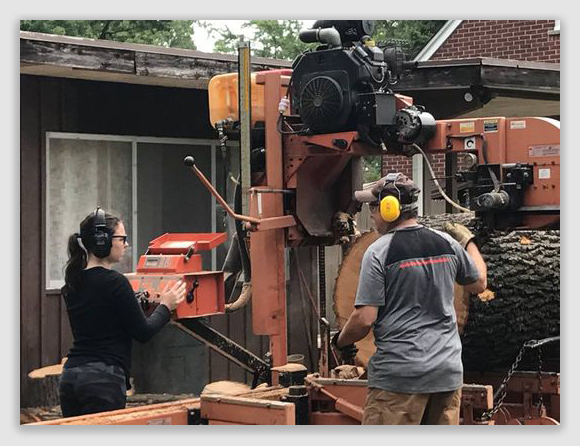
When a 12-inch-thick limb came crashing down into the back yard of his Ferndale home, John Fielder knew it was a sign of trouble. Further investigation proved it: The 78-foot-tall white oak tree, which had more than 275 rings, was infested with carpenter ants. The tree had to come down. Fielder grew up in the shade of this great oak, in a home that his grandparents had built in 1953. His grandfather was a carpenter. Fielder himself had spent five years working in hurricane-torn parts of Texas and the East Coast, serving with firefighters in the U.S. Forestry Service, removing fallen trees for cleanup and to reach victims, and taking care of trees to prevent fires and other dangerous situations. So he climbed the tree in his backyard and saw the branches weakened by tunnels made by the ants. He knew the importance of trees to communities, and the value within his own heart. But he also knew it would have to come down before causing major damage…
Two Israeli researchers have launched an initiative that has transformed the way we understand the meaning of extinction and created a collaborative platform for Arabs and Israelis to explore. In fact, scientists throughout the Middle East, including in Jerusalem, Riyadh and Marrakesh, are looking to J-Date to solve global challenges. This J-Date, however, isn’t the well-known Jewish dating website, but an ancient variety of Judean date palm that vanished two thousand years ago when the Romans drove the ancient Israelites out of their homeland. In 2004, Sarah Sallon, a Hadassah Medical Center expert in Middle Eastern plants, contemplated an idea that some would call insane: bringing ancient seeds back to life to examine their value in healing human disease. Over the past few decades, a number of reports in scientific journals and popular newspapers have suggested that scientists could germinate ancient seeds. Many were myths. A few are true. No one, however, had ever brought an extinct plant back to life. In 72 CE, Jewish rebels under siege committed mass suicide at Masada – Herod the Great’s ancient cliff-top fortress – choosing death over Roman bondage. Nearly two thousand years later, in November 1963, a team of archeologists dug through the rubble and found evidence of widespread destruction: shattered frescoes, charred beams, gold coins, bronze arrows, ragged clothing – and containers of ancient seeds. In 2004 Sallon secured a few seeds from Israel’s Antiquities Authority, then contacted Elaine Solowey, one of the country’s foremost experts in sustainable agriculture. When Sallon broached her resurrection idea, Solowey’s initial response was disbelief, but she agreed to try and hatched a plan to draw the seeds out of dormancy…
 Insurance Business, Sept. 4, 2018: California’s 129 million dead trees pose a major wildfire hazard
California’s current wildfire season – already its worst on record – is about to get even worse, as a new report reveals that the state currently has 129 million dead trees that could fuel the largest conflagrations. Spread across 8.9 million acres of land, the number of dead trees in California is 6,450 times the number of trees in Central Park – a metric California Department of Forestry and Fire Protection (CalFire) spokesperson Heather Williams has described as “astronomical.” The current wildfire season in California has seen more than 876,000 acres burn, compared to 228,000 for the same period last year, and the Mendocino Complex Fire that erupted this year is considered the single largest fire in state record, having burned more than 459,000 acres. As devastating as the current wildfire season is, experts believe it is just going to get worse – the recent fires have barely consumed the accumulation of dead trees and much more remain to stoke the next big fire, CalFire warned…
Kumba Saho thought she was getting a good deal on a tree removal service. She was trying to help a friend, a widowed veteran in poor health, when she called Eckard’s Tree Removal. “The tree was dead and she was scared for the tree not to fall on her house or onto the neighbor’s house,” Saho said of her neighbor. Saho says Eckard’s owner Brad Eckard told her he could do the job for $1,200. She said she signed a contract and gave a down payment of $700 in June, but then Eckard disappeared. “He never calls me back or texts me back,” she said. Weeks went by before Eckard finally sent a text. “I will not be able to do it. You probably have to find someone else. I said OK, I need my money,” Saho said. “He said I will mail you a check tonight. The check never arrived…”
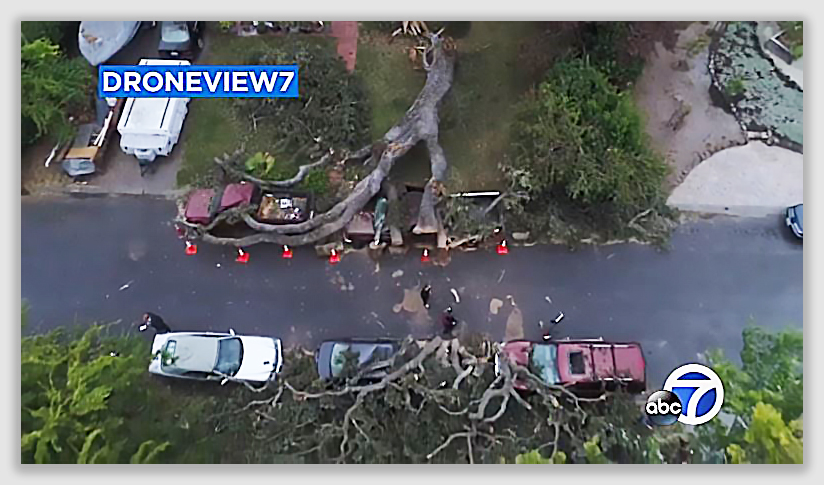 Auto Evolution, Sept. 4, 2018: Massive, 350-Year-Old Oak Tree Snaps, Crushes 7 Cars in California
The City of Pleasant Hill recognized a 350-year-old, massive oak tree as part of the heritage and named it Emma. Last week, a giant limb snapped off Emma and crushed 7 cars – and the city is refusing to cover any of the damage. According to homeowner Andra Cudd, speaking to ABC7, the moment she heard the thunder-like sound and the crash in the dead of night, she knew what had happened. As it turns out, everyone on her street knew the day would come when the tree would snap or fall down altogether, and they all feared the worst. “So my husband and I jumped up, I’m like it’s the tree it’s the tree! It was so surreal when we opened the door,” Andra Cudd tells the media outlet. Luckily, no one was hurt, but the giant limb did crush 7 cars on both sides of the street, 4 of them belonging to the Cudd family. Mr. Cudd still has some humor left to recognize the irony in the situation, as all his adult children had come over for a visit and parked their cars near the house. His own was parked farther down the road and was spared any damage by Emma. Andra Cudd tells ABC7 that the City recognized the tree and refused to do anything about it until this accident. All of her petitions to trim it were denied except one, and neither she nor any other homeowner was allowed to cut it down…
Dallas, Texas, Morning News, Sept. 4, 2018: 5 mistakes not to make when planting new trees this fall
Although trees can be planted year-round, the optimal time (fall) is around the corner. Let’s look at my recommendations from a different angle today: Here’s what you should not do when planting your new trees. Mistake No. 1: Not establishing the true top and height of the root ball: Whether balled and burlapped (B&B) or containerized, there is almost always excess soil on top of the true ball that needs to be completely removed. Assuming the growers and nurseries have the plant at the correct height is almost always untrue. Once the true ball height has been determined, measure it so the planting hole can be dug to the right height. Mistake No. 2: Planting the tree in a small, smooth-sided hole: Commonly heard bad instruction is to dig the planting hole the same depth and width as the root ball. The truth is that the planting hole should be about three times wider than the root ball and have rough, not smooth, sides…
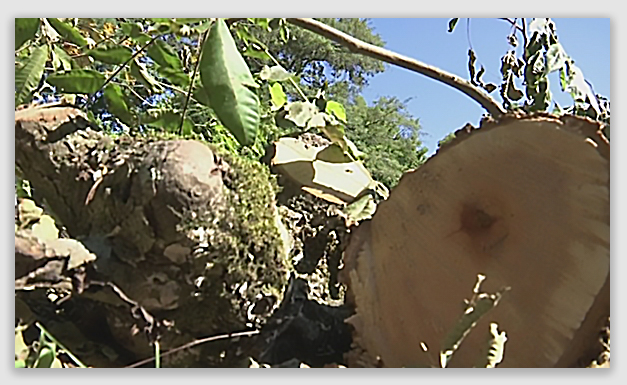
A group of local residents is outraged. Some calling it a “slaughter” and a “hack-of-a-job” after subcontractors with a utility company cut several trees along streets in Aiken. “And to see it so being shabbily treated now by a public utility is just more than I can comprehend,” Board member of the Aiken Land Conservancy Rob Johnston told NewsChannel 6’s Shawn Cabbagestalk. Johnston grew up in the All America City. “Back through the mid-50’s and through high school,” he said. He remembers the landscape from years ago. “This was always such a beautiful urban forest I was so proud of,” he added.Johnston and other citizens of the area grew concerned after a local utility company pruned some of the trees in the historic city. Sampson is the president of the Aiken Land Conservancy. She says when looking at the trees along Colleton Avenue you can see the devastation. “For these trees to live, their canopy is equal to the root base and they just slit the canopy in half,” she said…
A Newburgh man died of electrocution while trimming a tree Monday morning on Maple Road, police said. John B. Nuzzolo, 39, was electrocuted when he came into contact with a live power line adjacent to the tree he was cutting about 9:17 a.m., according to a news release from Cornwall-on-Hudson police. Nuzzolo was sub-contracted by Simply Stump Grinding and Tree Removal Co. out of Newburgh to help with removing a large tree at 29 Maple Road, police said. Upon hearing reports of the electrocution, Central Hudson utilities de-energized the line by shutting off power to the area from 9:30 to 10 a.m., affecting 2,570 customers, CenHud spokesman John Maserjian said…
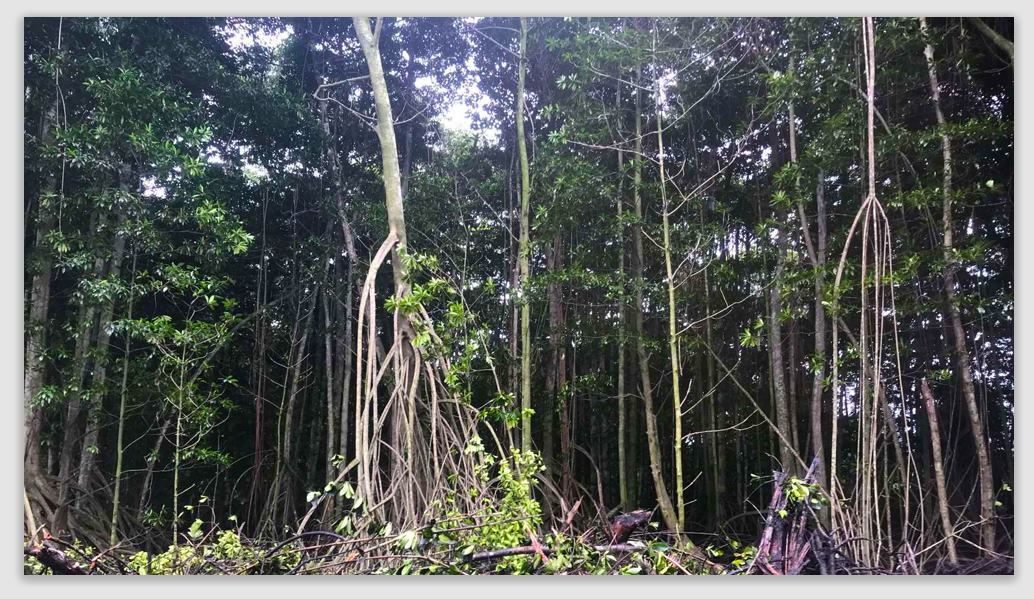 Gizmodo Australia, September 3, 2018: Why Hawaii is burning its massive Mangrove trees
All over the world, from Florida to Thailand, efforts are underway to restore mangrove forests. These ecosystems have been in serious decline for the last 10 years, and sea level rise is set to threaten them further. In Hawaii, however, heavy efforts are underway to eradicate the trees. In fact, the islands might be the only place where ecologists are trying to permanently remove mangroves. They’re invasive here — and they’re pushing out native flora and fauna that have called these islands home for much longer than the mangrove has. Seeing the towering trees along the eastern coast of Oahu in He‘eia, Hawaii, for the first time was an awe-inspiring experience. While the tallest mangroves exist in the African country of Gabon and along the Pacific coast of Colombia, Hawaii’s red mangroves are definitely impressive. But that doesn’t mean that the mangroves belong there. In fact, these trees came over in the early 1900s with the sugar industry, which hoped they’d help retain sediment during the heavy rains…
Providing shade and beauty, trees are a joy to behold, but some trees require more maintenance and upkeep than homeowners are willing to give. Invasive or messy, smelly or short-lived, some trees may not be worth planting. Big, mature trees are a sound investment, said certified arborist Tom Tyler of Bartlett Tree Experts in Bolingbrook, Illinois. Strategically placed trees are energy savers and can cut up to 56 percent of annual air conditioning costs and reduce heating needs by 20 to 50 percent in winter, according to the U.S. Department of Agriculture Forest Service. “They cut wind, are aesthetically pleasing, catch rainfall and minimize runoff, which is a serious issue. They provide habitat for birds and wildlife,” Tyler said. However, some trees are known for their undesirable qualities. Think twice before planting these varieties…

A mammoth oak tree split and collapsed early Thursday, destroying six cars on a neighborhood street and damaging a seventh. Nobody was injured, but many on Hardy Circle were awoken from their sleeps after part of the approximately 100-foot high tree came down around 12:30 a.m., dropping branches as thick as the trunks on some other smaller trees in the neighborhood. Tree workers estimated it to be between 300 and 350 years old and between 75 and 100 feet high. Even after the collapse, the tree stood above almost all the others on the street and even loomed over the backyards of at least one house on nearby Soule Avenue…
Dating back to 1720, the Liberty Tree (located behind Bank of America at the corner of Quaker Church Road and Center Grove Road) is the last tree left living in Randolph since the Revolutionary War. The almost 300-year old tree is one of 26 designated historic landmarks in town, but unfortunately, Friday August 31 will be its last day standing. In recent years, the tree has been slowly dying. This summer an evaluation determined the tree had deteriorated to the point to where it could easily be knocked down in a storm. The recommendation was made that it should be removed to protect health and safety. Several years ago the Township’s Landmarks Committee contacted Dr. Tom Ombrello, a professor at Union County College specializing in propagating old trees. Dr. Ombrello volunteered his services to assist the committee with an effort to grow a new tree from the acorn of the original tree. The effort resulted in a seedling that is currently growing in a greenhouse overseen by Dr. Ombrello…
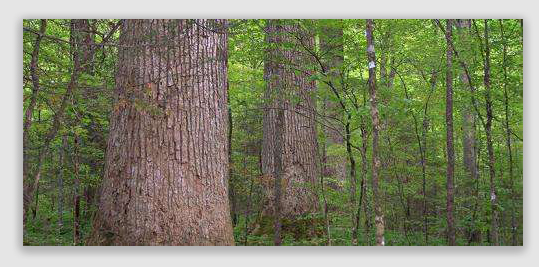 Phys.org, Aug. 29, 2018: Are trees on farms the future for the timber industry?
A multi-disciplinary research team is developing new models for growing trees on farms to help meet the needs of landholders, investors and the timber industry. Project leader Professor Rod Keenan said the need for wood is increasing to meet future timber demands of Australian housing. “The increasing use of wood in construction for design and environmental benefits will increase this demand as will the substantial push for renewable and sustainable products to replace plastics,” Prof Keenan said. “We are examining whether timber industry investment in trees on farms can provide their wood needs and also provide shade, shelter, carbon, water and biodiversity benefits. A survey mailed to selected owners and managers of land in south-west Victoria and Gippsland asks about current agricultural activities, views on planting trees for harvest in the future and the importance of different factors when considering integrating trees with other land uses. “We are working with industry, landholders and the finance community to develop innovative ways to provide benefits to farming and the environment, and meet demand for timber and wood products,” Professor Keenan said…
Tampa, Florida, Tampa Bay Times, Aug. 30, 2018: A truce on Tampa’s trees? It looks likely.
Plenty of people at Thursday’s Tampa City Council meeting said what was happening was historic. For decades, builders and tree advocates had been foes, battling over the city’s tree canopy. Advocates said builders wanted to weaken the city’s nearly half-century old tree ordinance to make it easier to chop down trees, especially on smaller lots, to build houses. Builders said even a tree smack dab in the middle of a lot was expensive and time-consuming to remove, with a review board making the final call. They wanted to streamline the process. On Thursday, a deal looked done. Neighborhood groups, including Tree Something, Say Something, backed a compromise that allowed trees to be saved by adjusting setbacks on other parts of a lot. And they backed a plan to keep better track of a city trust fund set up to keep money from builders who cut down trees on lots that don’t have enough space to plant a replacement. Builders praised advocates’ willingness to compromise. They urged council members to take action instead of waiting for a complete overhaul of the ordinance, scheduled for early next year…
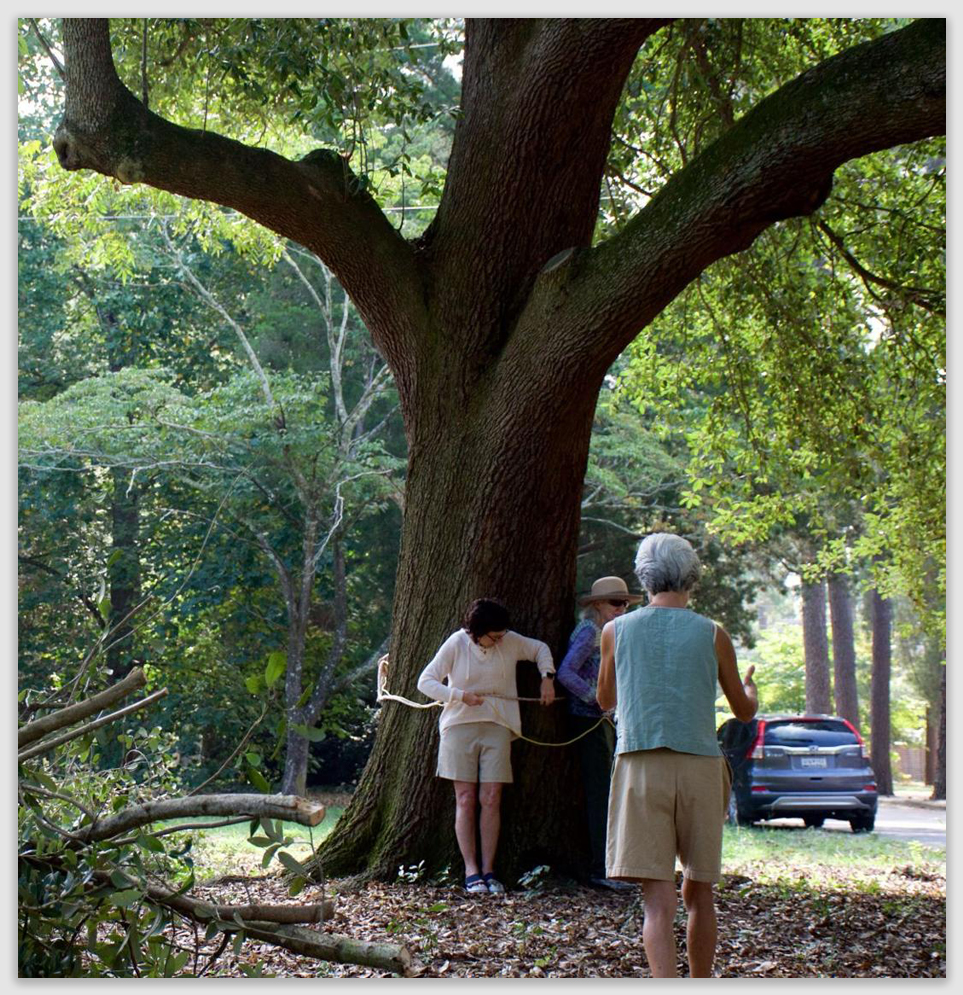
A contingent of Aiken residents gathered along a Colleton Avenue parkway on Wednesday morning to decry the latest round of tree trimming in the area. The trimming – pruning limbs away from power lines, as companies and crews are allowed and instructed to do – was described by group members as “slaughter,” a “butcher” job and, at several points, “rape.” The group, comprising six or seven people, was seemingly led by Joanna Samson, the president of the Aiken Land Conservancy. “I’m miserable about it,” Samson said, standing beside a pile of branches. “I was out here crying.” Samson and the others did not take issue with the fact that trees need to be cut back. Samson acknowledged trimming’s public safety applications, and she did not blame the crews doing the work. It was the way the cutting was done, and how much was removed, that proved to be the flashpoint…
Neighbors in San Francisco are outraged after a mistake by a contractor damaged the roots of 10 trees in a North Beach park badly enough that they have to be removed. According to city officials, the damaged roots have made the trees too unstable. Public Works said a contractor damaged the trees’ roots during the construction of a playground at Washington Square Park in North Beach. Angry residents say the city needs to do a better job supervising its contractors. While not much has changed in the park for the last 60 years, its playground recently had a major renovation. Unfortunately, the renovation is coming at a huge cost that can’t be measured in dollars. Ken Maley of the organization Friends of Washington Square is heartbroken. In a matter of days, 9 Canary Island pines and one olive tree that have stood on the corner of the park since the late 1950’s are coming down because they have become a safety hazard…
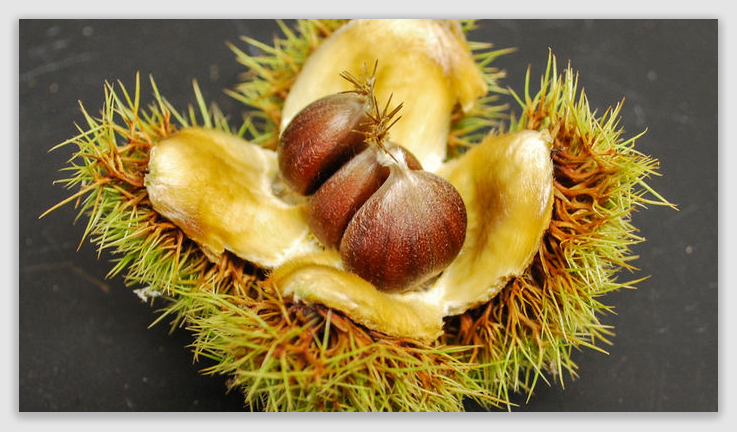
Two deer-fenced plots here contain some of the world’s most highly regulated trees. Each summer researchers double-bag every flower the trees produce. One bag, made of breathable plastic, keeps them from spreading pollen. The second, an aluminum mesh screen added a few weeks later, prevents squirrels from stealing the spiky green fruits that emerge from pollinated flowers. The researchers report their every move to regulators with the U.S. Department of Agriculture (USDA). “We tell them when we plant and where we plant and how many we plant,” says Andrew Newhouse, a biologist at the nearby State University of New York College of Environmental Science and Forestry (SUNY ESF). These American chestnut trees (Castanea dentata) are under such tight security because they are genetically modified (GM) organisms, engineered to resist a deadly blight that has all but erased the once widespread species from North American forests. Now, Newhouse and his colleagues hope to use the GM chestnuts to restore the tree to its former home. In the coming weeks, they plan to formally ask U.S. regulators for approval to breed their trees with nonengineered relatives and plant them in forests…
Washington, D.C., Post, August 29, 2018: 5 toxic plants you should know — and avoid
Plants cannot run from existential threats. They have to sit there silently and take a licking. But they’re not stupid. Many grow armor of sorts — though how deer can devour rose thorns without leaving a trail of blood has always puzzled me. More insidiously, some plants produce chemicals that either assault your skin or make you sick if you eat them. As a result, many pose risks to those who stumble across them, whether in the garden, the city park or some of the beautiful mountain trails that lace the central Virginia Piedmont. This is the domain of Alfred Goossens, a retired flavor chemist whose Madison County home has a view of the Blue Ridge Mountains. He is close to Old Rag, a favorite hiking mountain for folks across the region. But you don’t have to go on a three-hour country walk to find plants that want to bite you. The other day, I joined Goossens and Don Hearl, both Virginia Master Naturalists, in a stroll of Goossens’s own 14-acre property…
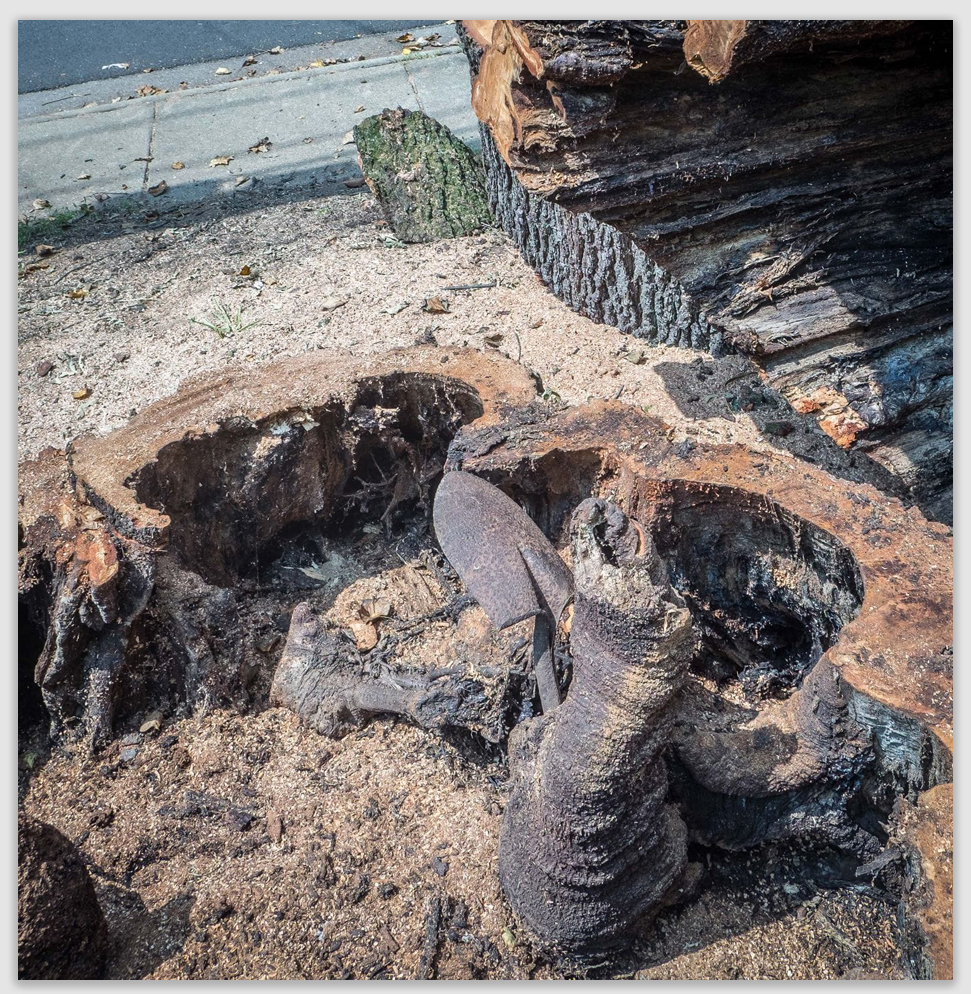
It took five days to disassemble the massive black oak that towered over Lanier Drive in Silver Spring — 60 feet tall, the trunk close to eight feet across — and when it was finally down, this was the question on everyone’s mind: Where did that shovel come from? The big tree was hollow on the inside — distressingly so — and sticking up from the void at the center was a rusty shovel, the shaft of its upward-pointing blade entombed in a woody stalagmite. “We were standing here looking at it, scratching our heads,” said Bob Freedman, who lives two houses down. “I’ve never seen anything like it before,” said Mark Mendez, who lives around the corner. “It’s a mystery,” said Suzel, the woman in whose front yard the tree once stood…
Austin, Texas, KXAN-TV, Aug. 28, 2018: Tree trimmer hit by driverless truck killed in Bastrop
A man is dead after being hit by a truck while trimming trees in Bastrop County Tuesday morning. Bastrop County ESD No. 2 says crews were dispatched to the corner of Makaha and Ahumoa Drive at 8:25 a.m. That’s in the Tahitian Village. When they arrived, a man in his 50s was pronounced dead. The man worked for a local tree trimming company; officials have not released the name of the company. Officials say the man was trimming trees, trying to clear the right of way, when a truck somehow went over the barrier, veered off the road and hit the man. “I saw it was coming fast and just…drew to the left,” said eyewitness Gelacio Merac. Merac says construction crews have been out in his neighborhood off and on over the last few weeks preparing to pave the steep hills leading to their homes. This, however, was the first time a tree company was out clearing the sides of the road. Merac says they had just started for the day. Neighbors tell KXAN the truck, which had a wood chipper on the back, didn’t roll that far before hitting the man, but picked up speed quickly. They say the man was working on the side of the road when the truck hit him and pushed him to the bottom of the hill. “He was working hard, and now he is dead and it’s like, life just changed too quick,” Merac said…
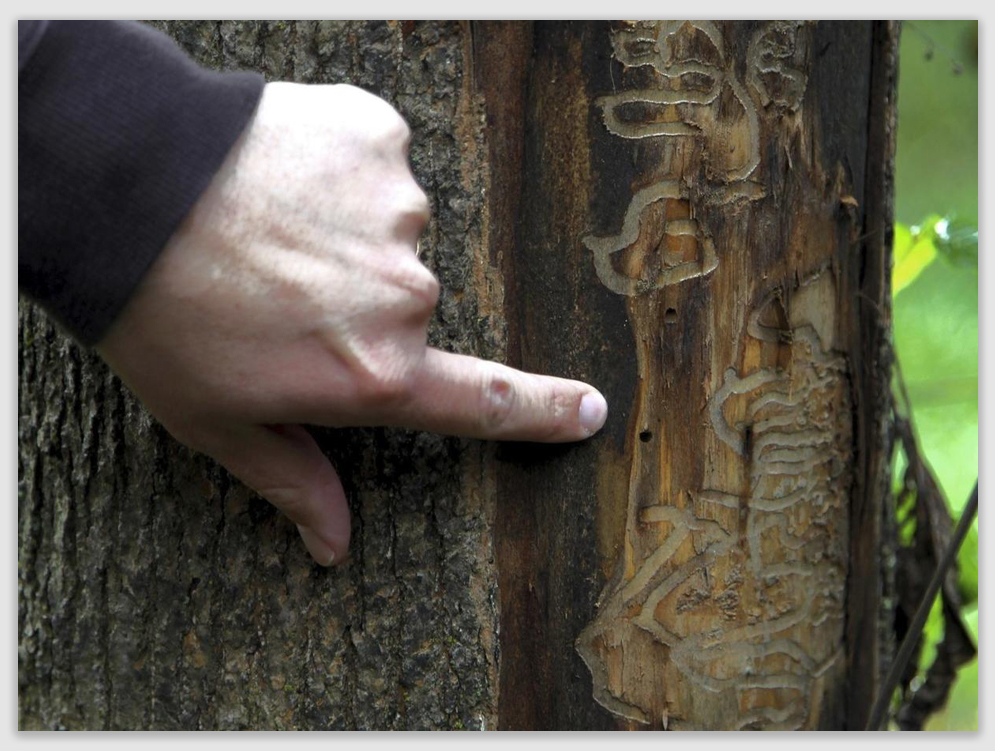
West Dundee has gained “much-needed ground” in ridding the village of its ash tree population. Since 2012, more than 1,000 parkway trees infested by the emerald ash borer beetle have been cut down, West Dundee Public Works Director Eric Babcock. “It was a huge task when it first started and we’re getting to a point where we’re almost done,” he said. The emerald ash borer is a small, metallic green pest whose larvae feeds under the bark of ash trees, cutting off nutrient flow essential for a healthy tree, according to the Illinois Department of Agriculture. It was first discovered in Kane County in June 2006. The number of trees slated for removal in West Dundee continues to dwindle. In 2016, 160 affected trees were taken down. That number dropped to 126 trees in 2017. This year, only 40 parkway trees were identified for removal. “Some towns with big budgets were able to go through and get rid of them all right away,” Babcock said. “The approach we took was more piece by piece based on a growth criteria…”
A tree came down on University Avenue and it certainly made a sound. The city of Berkeley has reprimanded the owners of 1698 University Ave., at McGee, after construction work on the property led to the removal of three redwood trees and four acacias last week. The trees were chopped down beginning Friday evening, after concerns over their stability prompted the city to clear the site, evacuate neighbors and require the removal. In a notice of violation issued Monday, the city said owner United Commonwealth Business Holdings failed to meet multiple conditions of its project permit, including the preservation of the trees. “Our immediate focus was on ensuring the safety of workers on the site and neighbors,” said Berkeley spokesman Matthai Chakko in an email. “With that complete, on Monday, we issued a notice of violation.” According to planning and code enforcement staff, the property owner not only failed to keep the trees intact, as was required by the use permit, but also neglected to make mandated status updates, submit noise and traffic control plans, and install required safety barriers around the construction site…
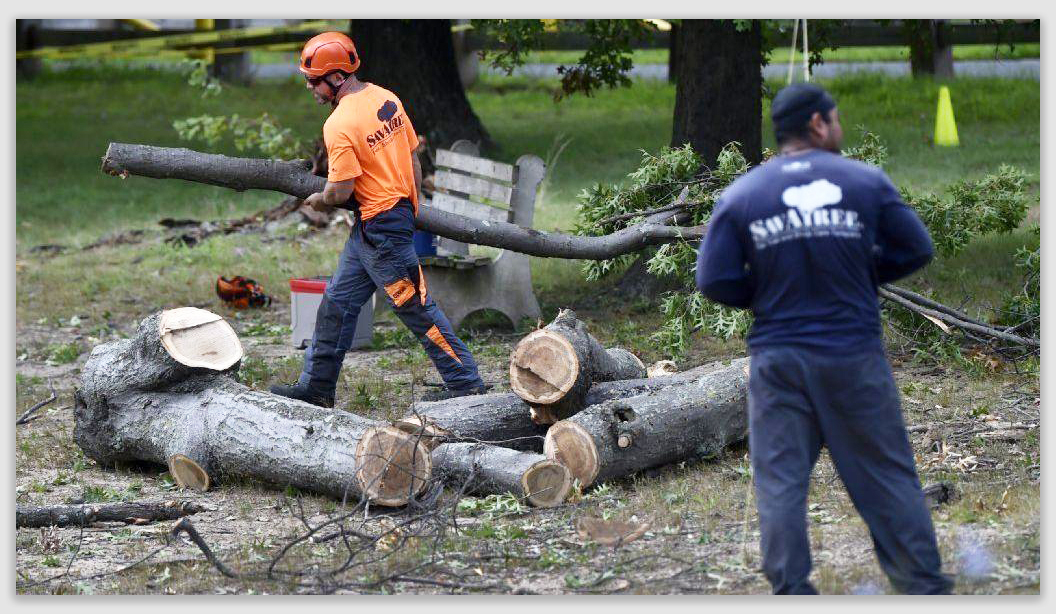
In Wolcott, the problem is ash trees killed by the Emerald ash borer. Essex is losing 200-year-old white oaks from drought and gypsy moths. Lyme is seeing trees “dying at a rate we’ve never known before,” according to one local official. “The volume’s overwhelming,” Lyme Tree Warden Lars Anderson said last week of the trees in his town that were badly damaged by multiple years of drought and plagues of invasive insects. Local officials in many cities and towns across Connecticut are being pushed to the limit as they try to find the resources to deal with growing numbers of trees threatening to topple onto roads, sidewalks, parks and school grounds. Lebanon spent about $80,000 last year hiring contractors and using town workers to remove potentially dangerous trees, according to Jay Tuttle, the town’s highway foreman and tree warden. His initial budget for tree work in 2017-18 was $16,500…
Boulder, Colorado, Broomfield Enterprise, Aug. 27, 2018: Tree selection and planting basics
We moved into a new neighborhood a couple of months ago. One of the main attractions of this particular house was the very private and park-like backyard. Well, a few weeks after we moved in, we woke up on a Saturday morning to the sound of saws. One of the neighbors behind us were cutting down 20-year-old pine and spruce trees. These were healthy, beautiful and very large trees! The house behind us sits higher on a hill than we do. Prior to the removal of those trees, we couldn’t see their house, not even the roof line. All of the sudden, we have a full view — not only their entire house, but the whole of their backyard to-boot. I literally stood on the deck and cried. You know how it is when you finally get settled into your new house, then all the unexpected challenges start to pile up? It wasn’t just the loss of the privacy that upset me. It was the loss of large mature landscaping. Colorado has not proven to me to be the easiest place to sustain a beautiful yard. After crying over spilled milk for three weeks, I came to a conclusion. Yes, the neighbors had the right to cut down those trees, but we also had the right to plant some of our own…
When Seattle City Council member Rob Johnson set out to pass a long-stalled strengthening of Seattle’s tree-protection ordinance, fans of the urban forest called it wonderful news. They said his move last fall was far overdue considering how Seattle’s development boom is reducing the leafy canopy that gave “The Emerald City” its nickname. But when Johnson aides recently released their third suggestion this year for how to update the city law, the pro-trees people said that despite Johnson’s claims to the contrary, the changes would be unlikely to save more trees. In addition, they say, Johnson’s proposal appears to remove important existing protections for big trees, which studies show shade and cool streets while helping neutralize air and water pollution and reduce residents’ stress levels while improving cardiovascular health. “This is going backwards. It isn’t getting stronger,” said Steve Zemke, a pro-tree activist and member of the Urban Forestry Commission, which advises the City Council. “Who’s it going to benefit most? The development community…”
Throughout the alluvial plains of Amazonia, there are immense forests that are flooded for almost half the year. These Amazonian wetlands encompass a wide array of types of vegetation in or near stream gullies, including blackwater and whitewater inundation forests, swamps, white sand savannas, and mangrove types. According to a new study, the region’s wetlands are inhabited by 3,615 tree species—three times more than previously estimated, making these the world’s most diverse wetland forests in terms of tree species richness. The results published in the journal PLOS ONE include the most comprehensive list of wetland tree species produced to date. The authors compiled data available from tree inventories and botanical collections covering the nine countries spanned by the Amazon Basin. “The list with the names of all the species is the main contribution made by this survey, which is open access. It will serve as a basis for future studies to fill the gap in botanical knowledge of the region’s wetlands, especially on tributaries of the Solimões and Amazon rivers. If there were more inventories, the number of species could quickly triple again,” said Bruno Garcia Luize, first author of the article and a doctoral researcher at São Paulo State University’s Bioscience Institute (IB-UNESP) in Rio Claro, Brazil…
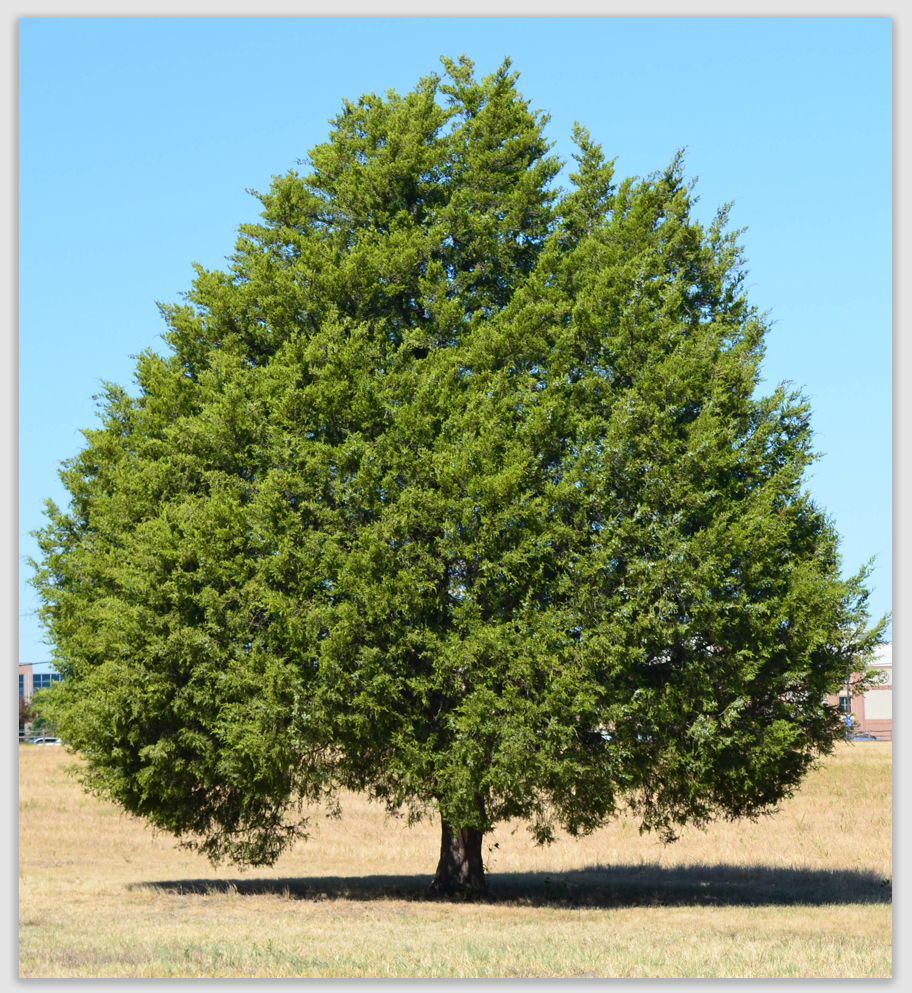 Associated Press, Aug. 26, 2018: Nebraska lawmakers to address fast-spreading tree problem
Nebraska lawmakers are looking for new ways to fight a fast-spreading tree species that crowds out other plants, destroys valuable ranchland and threatens the Great Plains from Texas to the Dakotas. Eastern red cedar trees are native to the Plains but have spread out of control without the natural prairie fires that kept them in check centuries ago. The trees suck up sunlight and groundwater at the expense of other native plants and turn grasslands into barren patches of dirt.The issue has caught the attention of state lawmakers, who will convene a hearing Friday at the Capitol to brainstorm ways to keep the problem from worsening. “Once they get established, they just spread and choke out everything,” said Sen. Dan Hughes, of Venango, who is conducting a legislative study to see what the state can do. “It can cut your available rangeland by 60 to 70 percent, but you’re still paying property taxes on those acres. It has a pretty significant economic impact…”
Lima, Ohio, limaohio.com, Aug. 25, 2018: State urges residents to report signs of beech tree disease
State officials are urging Ohio residents to report any signs of a disease affecting beech trees that’s been found in nine Ohio counties. Ohio’s Department of Natural Resources says beech leaf disease affects American and possibly non-native beech trees. It was discovered in Lake County in 2012. The disease has spread to other northeastern Ohio counties and has been found in parts of New York, Pennsylvania, and Ontario, Canada. Researchers are trying to determine the cause. Officials say no infected tree has been known to recover. Symptoms include dark striping or banding on leaves; shriveled, discolored or deformed leaves; and reduced leaf and bud production…
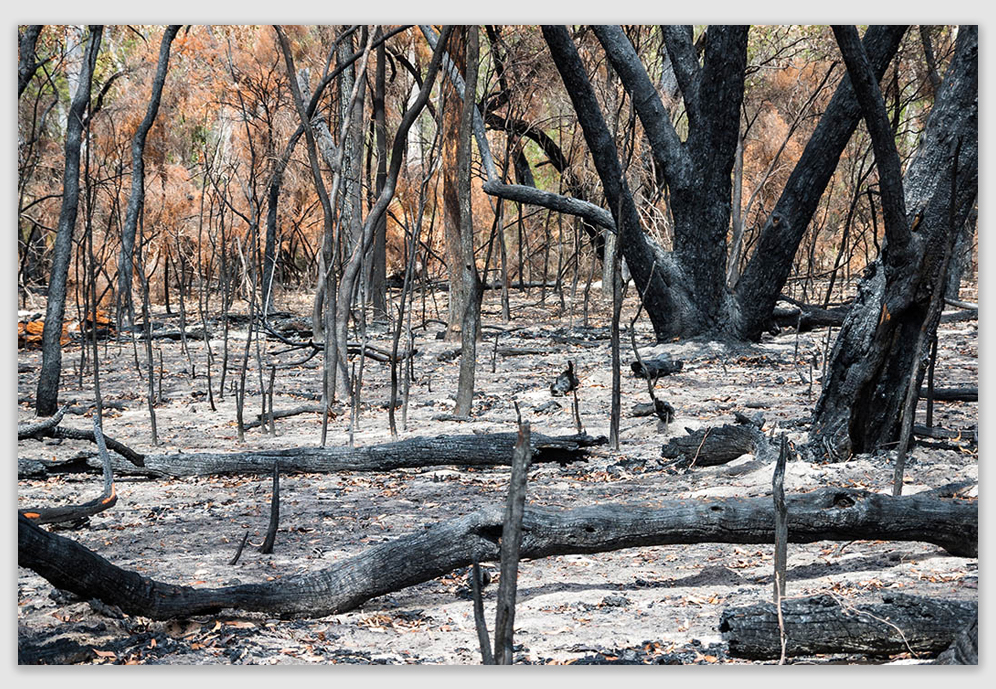 JSTOR Daily, Aug. 23, 2018: How Eucalyptus trees stoke wildfires
News reports about wildfires in California —currently battling its largest fire ever — and Portugal, which has also been battling huge fires in recent years, highlight the dangers posed by eucalyptus trees. But why, when eucalypts are native to Australia and neighboring islands? Fire certainly wasn’t on the minds of those who spread eucalypts around the world. As geographer Robin Doughty details it, eucalypts were taken from Australia after Europeans first arrived in the late eighteenth century. He describes a combination of “push” and “pull” factors. The pull was the appeal of exotic, ornamental plants by botanists, royals, and other estate owners. The push factor was originally a single individual. The German-born botanist Ferdinand Jacob Heinrich von Mueller migrated to Australia in 1847. Within a decade, he was the world’s leading evangelist for eucalypts. Through books, correspondence, and, rather more to the point, the mailing of seeds, this Johnny Eucalyptus helped spread the tree around the world. The best place to see eucalypts in the United States is in the southern half of California. One of von Mueller’s correspondents was the president of Santa Barbara College, who joined the eucalyptus cult in the 1870s. The region between San Diego and the Bay Area was the locus of a veritable boom in Australian trees. The re-forestation was sold as a get-rich-quick scheme, harvested as lumber for fuel and furniture, with a sideline in miraculous eucalyptus oil. By 1900, Berkeley had fourteen species growing within its boundary; another one hundred and fifty species were being tested in the state. But the speculative boom, as so many others, went bust. For one thing, petroleum was the up-and-coming fuel. And it turned out that the best lumber was from mature trees, not the quickly harvested plantation types. A glut of eucalyptus oil meant that if often went rancid before marketing…
Intensifying drought is increasingly linked to global forest diebacks. Improved understanding of drought impacts on individual trees has provided limited insight into drought vulnerability in part because tree moisture access and depletion is difficult to quantify. In forests, moisture reservoir depletion occurs through water use by the trees themselves. Here we show that drought impacts on tree fitness and demographic performance can be predicted by tracking the moisture reservoir available to trees as a mass balance, estimated in a hierarchical state-space framework. We apply this model to multiple seasonal droughts with tree transpiration measurements to demonstrate how species and size differences modulate moisture availability across landscapes. The depletion of individual moisture reservoirs can be tracked over the course of droughts and linked to biomass growth and reproductive output. This mass balance approach can predict individual moisture deficit, tree demographic performance, and drought vulnerability throughout forest stands based on measurements from a sample of trees…
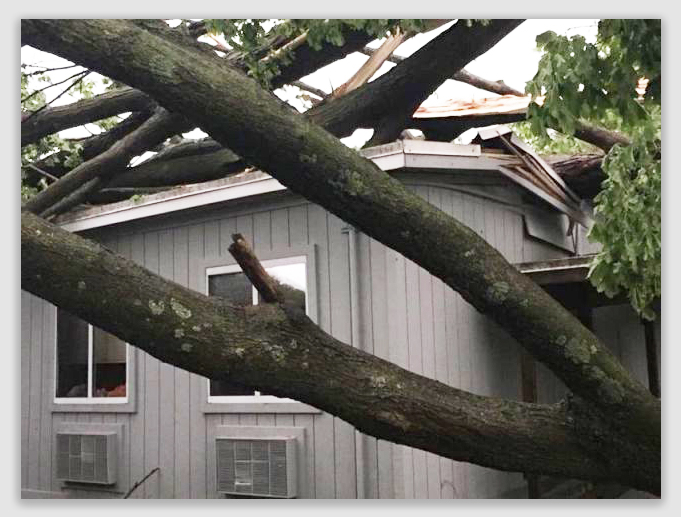
Officials said the state is plagued by millions of dead or dying trees at risk of falling, potentially putting the public at risk. Local media reports many of the trees are suffering from years of drought and damage from invasive insects such as the gypsy moth and emerald ash borer. Local officials and private tree-care companies are trying to take down the trees most at risk of falling, but the large number is creating a backlog and some municipalities are running out of funding for tree removals…
Highland, Indiana, Aug. 26, 2018: Highland commissions branch out to include tree board
The list of boards and commissions working under the Town Council has branched out to include the Tree Advisory Board. It was officially created in February after being recommended by the 2017 Highland Urban Forest Management Plan. A passage in the related ordinance says the board “will serve as an advocacy and advisory group to become a catalyst for active urban forest resource management within the community.” Combining its own opinions with research, forestry experts and Highland department heads, the board will make recommendations to the Town Council for annual updates of the forestry plan. Among its functions, the board will monitor the enforcement of codes that regulate trees on residential parkways and town-owned property, said new board member and former Highland Town Manager Richard Underkofler…
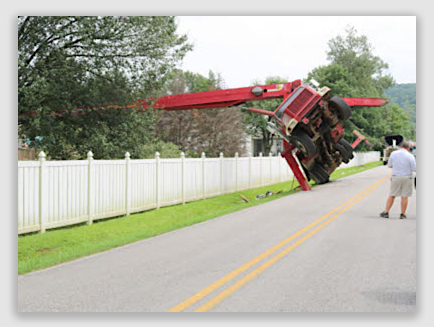
A crane operated by Big Woody’s tree trimming business toppled on top of some townhomes in the Jackson Square subdivision in the 1700 block of E. Boy Scout Road around 2 p.m. on Wednesday. Fortunately, no one was injured. Chattanooga firefighters and police officers responded to the scene and promptly shut down E. Boy Scout Road to protect the general public. After determining a course of action, two wreckers with Doug Yates Towing and Recovery were brought in to lift and remove the crane from the townhomes. It was a tricky operation as precautions had to be taken so that an underground gas line and high-voltage power transmission lines above were not adversely impacted. The wrecker operators worked in tandem to slowly lift and remove the crane. Shortly after 6 p.m., the operation was completed…
Q: Our property, consisting of 6 acres, was completely burned. The fire burned through areas with significantly varying results. Some areas were left with nothing more than black sticks of manzanita. The fate of those areas are obvious. Other areas are much less obvious and the core of my question. Will an oak tree with a small percentage of green leaf survive? What about one with nothing but dead leaf? Are different types of oak trees more or less capable of coming back than others? How about manzanita or other types of common indigenous plants?
A: You are correct in thinking that in the areas where all that is left are black sticks the plants are not going to recover but in the other areas you may see plants return to normal growth next spring. The good news is that oak, pine and chaparral — which includes plants like manzanita, buckbrush and toyon — are relatively resilient in terms of potential for recovery after wildfire. The most important factor for oak tree recovery is the extent and depth of damage to the cambium the layer of tissue just under the bark that supports the structures that carry water and minerals from the roots through the tree. Oak trees with white- or pink-colored cambium under burned bark likely will survive, but dark or yellowish/caramel looking cambium tissue indicates it is also damaged and lessens the likelihood of survival…
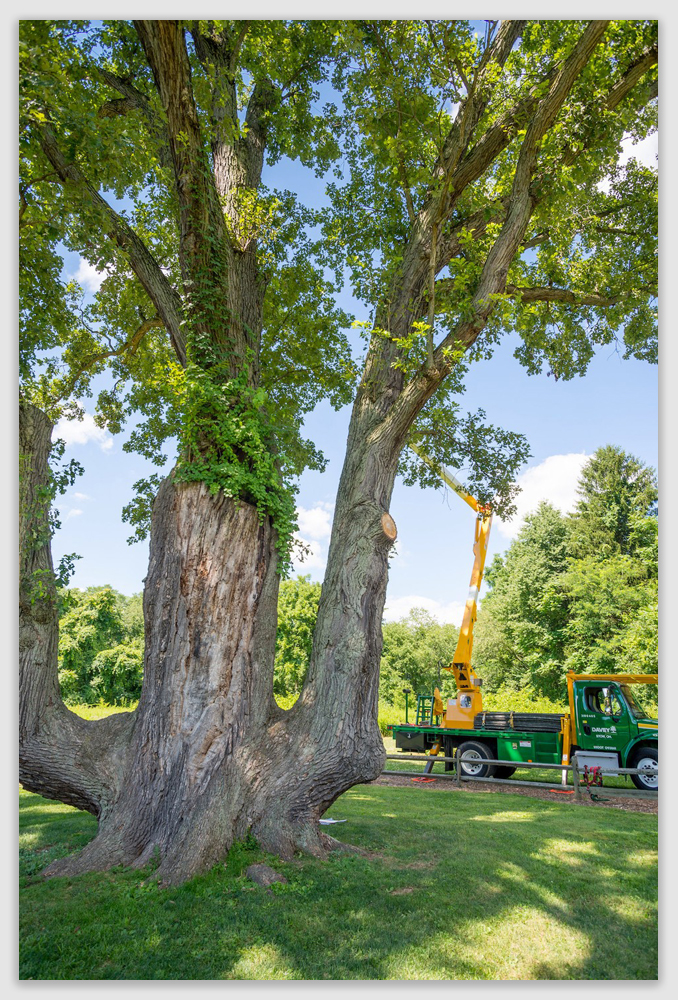
The Davey Tree Expert Co. will “adopt” Akron’s centuries-old Signal Tree for the next five years to ensure the tree receives proper care, the company said in a news release. The iconic Signal Tree, in Summit Metro Parks Cascade Valley Metro Park, is a burr oak believed to be more than 300 years old. Davey Tree has helped provide care for the tree for more than 40 years. The adoption means the Kent-based company will now provide regular maintenance, and conduct annual assessments of the tree. While no one knows for sure why the tree is shaped with three tongs, legend holds that American Indians shaped the tree to provide direction for transportation routes. According to Metro Parks Chief of Natural Resources Mike Johnson, officials are sure the tree signaled something. But with Delaware, Mingo, Seneca, Erie and Shawnee tribes all active in this region, the tree could indicate anything from a favorite hunting site to a spiritual gathering place…
A University of Montana researcher has discovered that mountain pine beetles may avoid certain trees within a population they normally would kill due to genetics in the trees. UM Professor Diana Six made the discovery after studying mature whitebark and lodgepole trees that were the age and size that mountain pine beetle prefer, but had somehow escaped attack during the recent outbreak. After DNA screening, survivor trees all contained a similar genetic makeup that was distinctly different from the general population that were mostly susceptible to the beetle. “Our findings suggest that survivorship is genetically based and, thus, heritable,” Six said, “which is what gives us hope.” In western North America, whitebark pine, a high elevation keystone species recommended for listing as an endangered species, and lodgepole pine, a widespread ecologically and economically important tree, have experienced extensive mortality in recent climate-driven outbreaks of the mountain pine beetle…
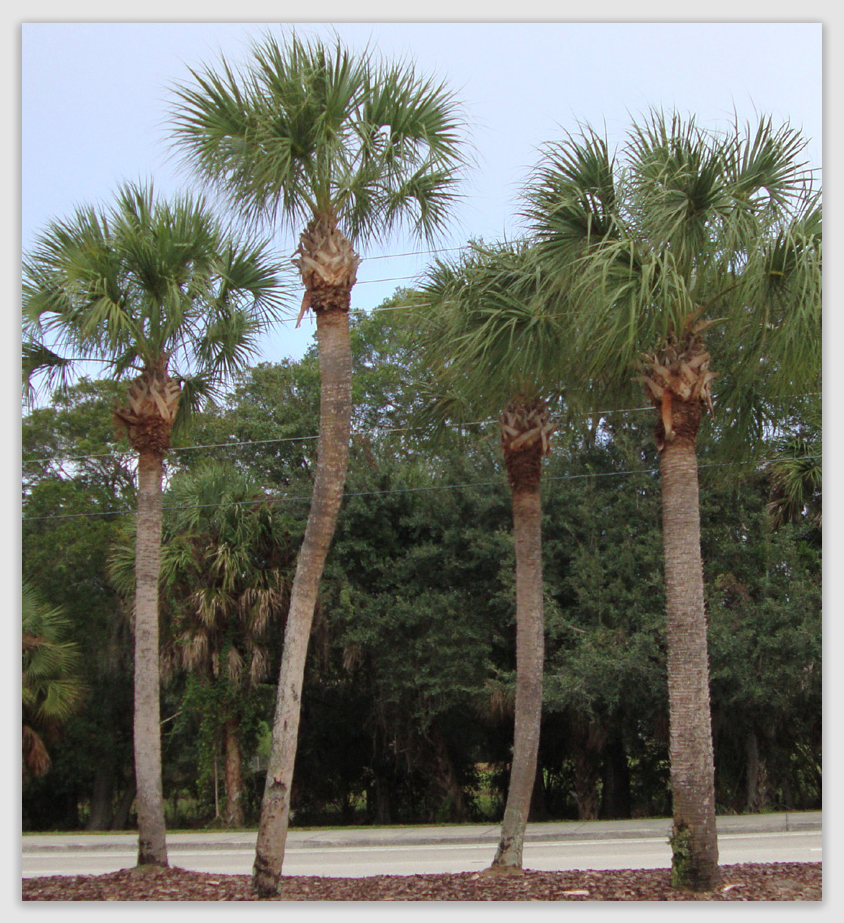
Cabbage palms are a part of the native landscape of the southeastern United States, standing tall as the official state tree for both Florida and South Carolina. Because it’s a native species, the cabbage palm is important from both an ecological and environmental perspective. The fruits of the tree serve as an important food source for native wildlife and some species of birds will nest in the canopy But cabbage palms across South Florida are dying from a diseased called lethal bronzing. “This disease is caused by a type of bacteria that can only survive in a plant or insect host, sort of like a virus,” said Brian Bahder, of the University of Florida Agricultural Extension Office in Davie. The bacteria is introduced into the trees by an insect that feeds on the leaves of cabbage palms. “And the bacteria is present in the saliva of this bug and it gets injected into the palm … (It) eventually causes symptoms and eventual death of the palm itself,” Bahder said. At the University of Florida’s Institute of Food and Agricultural Services, researchers are attacking the problem from multiple angles…
Police arrested a man Tuesday for reportedly vandalizing a giant oak tree at the corner of Mills Gap and Sweeten Creek roads. The department said Asheville resident Steven Barry McGuinness, 59, was arrested and charged on one misdemeanor count of injury to real property this week. It is in connection to a tree that was spray-painted with red and yellow paint over the weekend, forming cross signs. The tree also had been cut three-quarters of the way through, which a Duke Energy official said put it at risk for damaging power lines on Mills Gap. Duke worked with N.C. Department of Transportation crews to remove the tree Monday. It briefly snarled traffic as crews closed the intersection during rush hour to remove it…
 Missoula, Montana, Missoulian, August 15, 2018: Tree thinning project proposed for Pattee Canyon
An order to remove wildfire fuels on 1,725 acres in the Pattee Canyon Recreation Area this fall will be implemented without a current environmental assessment, which is allowed under legislation passed earlier this year. The massive 2018 Omnibus Spending Bill contained an amendment to the Healthy Forests Restoration Act, which allows for “categorical exclusions” that don’t need to go through the full-blown and lengthy environmental impact statement process or the smaller environmental assessment effort for two reasons. The projects must be for fuel reduction purposes on less than 3,000 acres, and be within the Wildland Urban Interface. “Because of the presence of homes and development, these areas are priority fuel reduction locations for the Missoula Ranger District,” Boyd Hartwig, a communications officer, wrote in a press release. “Reducing fuels mitigates the potential for costly and high-intensity wildfire and can also reduce the exposure to firefighters during future fire events…”
Southern Living, August 15, 2018: So many suckers!
When you plant a tree or shrub, it’s supposed to stay where you put it, right? It isn’t supposed to sprout little shoots in the lawn 12 feet away. Alas, some plants have a bad habit of doing just that, which infuriates my faithful readers. Let’s review the cases of four common offenders, before Grumpy gives you a solution you probably won’t like. Southerners looooooove their crepe myrtles, until shoots with reddish leaves start popping up through the grass all around. Why does this happen? Root damage. Any time you sever a root while digging or throwing the javelin, the root doesn’t die. No, it decides to grow a brand new crepe myrtle and sends up root suckers. Removing or transplanting a big crepe myrtle can result in hundreds of suckers. Solution: Be careful where you plant a crepe myrtle, so you won’t need to transplant it. Plant anything that’s going underneath or beside it at the same time, so you won’t cut roots. If it’s already too late, you can try two things. First, apply Bayer Advanced Brush Killer to the shoots according to label directions. Don’t get any on plants you don’t want to kill. Or just keep cutting off the suckers at ground level. Without leaves to make food, the suckers eventually starve…
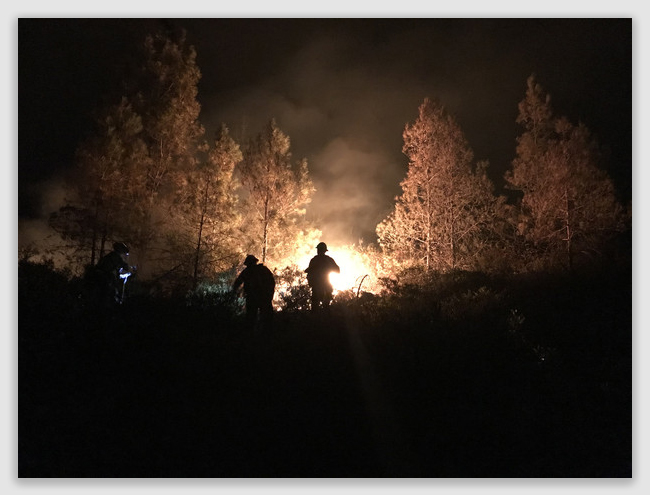
City officials say a Draper firefighter died after a tree fell on him as he battled the Mendocino Complex Fire in California Monday. Draper Fire Battalion Chief Matt Burchett, 42, died in a hospital after sustaining injuries while fighting the blaze north of San Francisco, Draper Mayor Troy Walker said during an early-morning news conference. Burchett was struck by a falling tree and was airlifted within 40 minutes to a medical center after other firefighters administered medical aid, according to the Associated Press. He died soon after. Three other firefighters were also injured when the tree fell Monday, though officials have not yet confirmed where those firefighters were from. Burchett was one of five Draper firefighters sent to California to help fight the fire. Burchett was the crew’s task force leader…
Only three days after half of Cleveland’s west side lost power, thanks partially to a backup line that’s been out of service since 2016, we commemorate the 15 year anniversary of the time Northeast Ohio killed power for more than 50 million people in the United States and Canada. The Northeast Blackout of 2003 began when tree limbs in the Cleveland area irritated powerlines, tripping circuits that led the system to draw large amounts of power from electric lines around Lake Erie to fill the gap. FirstEnergy’s alarm system intended to alert staff in Akron of the problem failed due to a technical bug, and a domino effect of blackouts followed suit. Investigators later reported FirstEnergy could have prevented the outage by monitoring and shutting down power to a limited region. What should have been a manageable, local blackout cascaded into collapse of the entire electric grid…
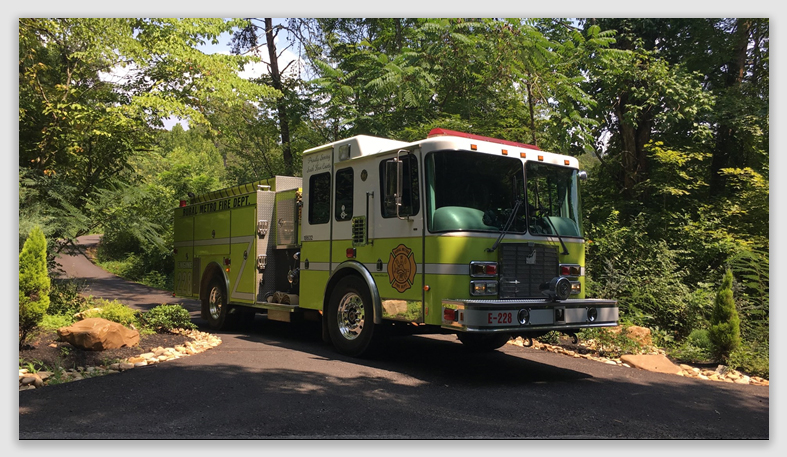
A tree service worker escaped with only minor injuries after being pinned by a falling branch while suspended about 50 feet off the ground in South Knoxville. The worker, whose name was not available, was removing the tree piece by piece outside a residence Tuesday afternoon when he tried to cut off a branch and it buckled over, pinning his leg as he hung in a safety harness. The Knoxville Volunteer Rescue Squad’s vertical team and Rural Metro firefighters responded to the scene on the 3500 block of Maloney Road. The worker, however, was able to cut the branch loose and free himself. Rescue crews then threw the man a line, which he secured to the tree so they could lower him to the ground. “What made it easy was the rope skills of the climber,” said Rural Metro spokesman Jeff Bagwell. “The climber knew what to do…”
Chattanooga, Tennessee, Times-Free Press, August 14, 2018: Tree now at center of development debate
A tall, old tree is at the center of a debate between Mountain Creek residents living near the old Quarry golf course on Reads Lake Road and a developer who wants to turn his property into homes and apartments. Just how large the tree measures was a crucial point for residents attempting to prove the post oak was either a state or national champion that shouldn’t be cut down due to its historic classification. It was not, and developer James Pratt with Pratt Home Builders believes residents are trying to throw any excuse at him to stop the development. But some residents still say they believe saving the tree is crucial for the area, and they hope Pratt takes that into consideration when developing the property. “I think when we recognize that we have something like this, we should do what we can to preserve it,” resident Lorraine Forman said…
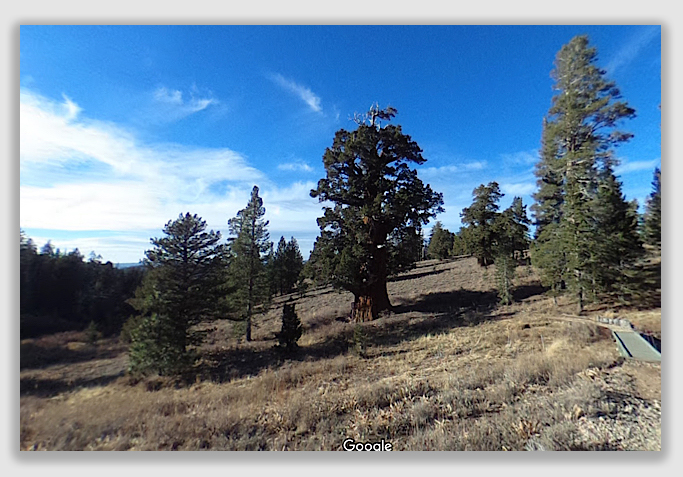 August 13, 2018: California fire map: 2,000-year-old Bennett Juniper threatened
The Bennett Juniper, largest juniper tree in the United States, is in the path of the Donnell Fire in California’s Sierra Nevada. Firefighters were building hand lines to attempt to contain the southern edge of the fire before it reached the tree and nearby structures in the Stanislaus National Forest. The Bennett Juniper is 82 feet tall. Its trunk at 5 feet off the ground is 14 feet in diameter, according to its steward, the Save the Redwoods League. The age has been hard to ascertain because of rotting wood at the heart of its core. The more conservative estimates put it around 2,000 years old. Some botanists believed it to be close to 6,000 years old, making it the oldest living tree on earth, the Save the Redwoods League said…
The Denison City Council recently approved a new ordinance aimed at protecting the city’s native trees from clear-cutting and widespread removal during what has become period of growth and development. In addition to banning clear-cutting of protected trees 18-inches in radius or larger for larger developments, the new tree preservation ordinance also sets ways to mitigate the damage from tree removal. The motion to approve the new ordinance passed in a unanimous 6-0 vote with council member Kris Spiegel absent for the meeting. “The original idea behind this ordinance was to prevent clear-cutting,” Planning and Zoning Manager Steven Doss said during the meeting. “This ordinance does that, but then it kind of has grown into something different. Through our conversations with the (Planning and Zoning) commission, there was a desire to go one step further and not only prevent clear-cutting but also to set standards. If we aren’t going to allow clear-cutting, what are we going to allow?” City officials said the ordinance is primarily focused on larger developments, and does not apply to single-family residential lots of less than 10 acres…
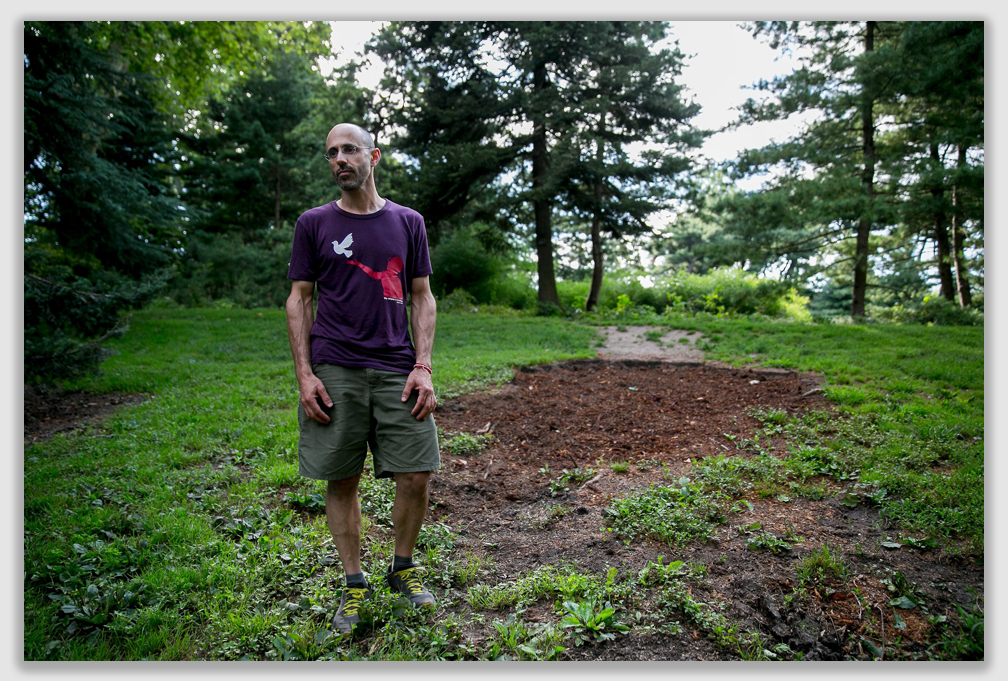 New York City, The New York Times, August 10, 2018: He spoke for the tree. Then he got fired.
On a little hillside in the Brooklyn Botanic Garden, there is a patch of brown mulch that, until very recently, was a tree. It was not a rare kind of tree. It was not even a whole tree. It was the 10-foot-high living stump of what was once a mighty London plane tree, with a hollow inside big enough for people to stand in. The hollow tree had friends and fans. Children played in it. Adults stood in it and contemplated the inside-out view of the landscape. It served as shelter in downpours. People called it the treehouse tree. But according to the garden’s management, the treehouse tree was an accident waiting to happen. It had sprouted a bushy head of new branches that it could not support in the long run. Playing inside it was against the garden’s rules. The garden wanted to take the tree down to make room for a “vigorous young tree” that would help “make for a much healthier collection overall,” it said in a letter to members…
Tree roots breathe in oxygen and breathe out carbon dioxide. They obtain the oxygen they need from the tiny air spaces in the soil. Because of this need, 85 percent or more of a tree’s roots are located in the upper 12 inches of soil where oxygen levels are highest. Many people are not aware of how shallow tree root systems are, and assume they must grow deep into the soil. With that attitude, they think applying fill over the roots should not make that much difference. Knowing that the roots are shallow due to their need for oxygen makes it easy to see why fill can kill trees. If you apply too much fill over the roots of a tree, it blocks the ability of new oxygen to filter down into the soil. The roots use up the oxygen, and when it is not replenished, the roots suffocate and die. As they die, they stop absorbing the water the tree needs, and the tree eventually dies of thirst…
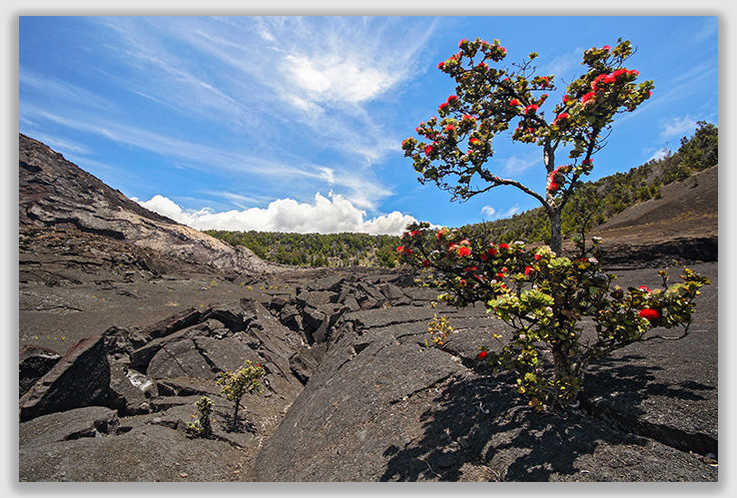
Hawaii’s red-blossomed ‘ōhi’a is tough enough to colonize recent lava flows, but until this summer the iconic native tree seemed doomed. Four years ago, an invasive fungus began to kill ‘ōhi’a (Metrosideros polymorpha) on the island of Hawaii; by now, the blight has spread across 800 square kilometers. The news got worse in May, when dying trees tested positive for the fungus on the neighboring island of Kauai, fueling fears that rapid ‘ōhi’a death (ROD) would span the state. But the picture brightened at a meeting on Oahu late last month. Aerial surveys and studies on land and in the lab now suggest that some ‘ōhi’a will survive. The killer fungus turns out to be two distantly related species, one of them less deadly to ‘ōhi’a, and some trees seem to have a native resistance to both strains. Management practices such as fencing out animals also appear to slow the spread of the fungus. “We are not going to see an extinction of ‘ōhi’a,” predicts Flint Hughes of the U.S. Forest Service’s Pacific Southwest Research Station in Hilo, who is coordinating ROD research. “As we understand it more, our management tools are improving and we are learning about the potential weak points of the fungus and the strengths of ‘ōhi’a”…
Discover magazine, August 8, 2018: Despite deforestation, earth is gaining trees as land use changes
Scientists like simplicity as much as anyone. Elegant equations take up less room, well-designed experiments reduce clutter and Occam’s razor generally advises to keep things simple (within reason). But how far can you take it? Say you want to know the exact amount of tree loss Earth has seen over time — can you look at a bunch of old satellite photos and just compare the greener areas? Well, according to a Nature paper out today, yes we can! The authors did almost exactly that, analyzing 35 years of satellite data to determine the changes in land cover. And while the methods may sound straightforward, the results are a bit less intuitive: It turns out Earth is actually gaining tree cover and losing bare ground cover. It’s sort of good news, and will help scientists better understand and model our planet’s changing climate…
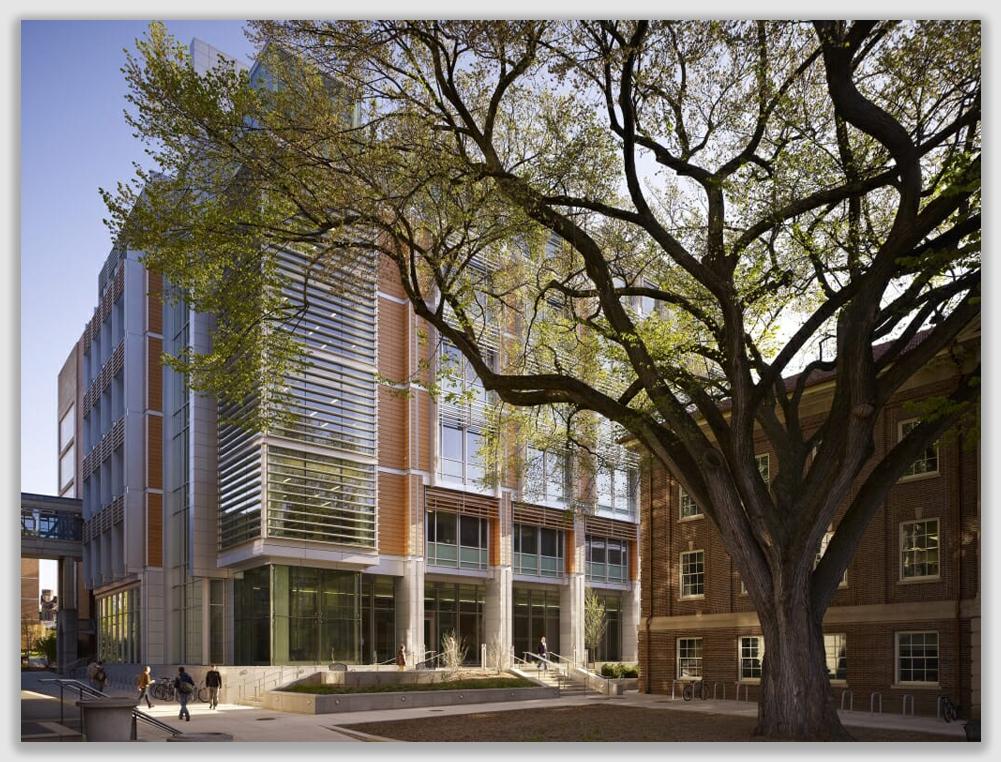
The University of Wisconsin–Madison campus is saying goodbye to a beloved natural landmark. An elm tree that has stood for more than 100 years fell victim to Dutch elm disease and is in the process of being removed from the Hector F. DeLuca (HFD) Biochemical Sciences Complex by UW–Madison grounds staff. The tree – often known informally as Elmer – has a rich past with the Department of Biochemistry and surrounding departments in the College of Agricultural and Life Sciences (CALS), such as the Department of Horticulture. Thousands of students who have taken biochemistry courses or frequented that area of campus have gazed up at the old elm or enjoyed breaks in the shade it provided…
Victorville, California, Daily Press, August 9, 2018: How to remove a tree stump
So you removed that old or diseased tree from your property. That’s one problem solved … but now you’re left with a second dilemma: How to remove the tree stump? Check out this list of practical solutions. First: Why remove a stump? The question “How to remove that tree stump?” is best answered with another question. Why remove the stump? Your reasons will help determine the removal method you’ll use. Common motivations for getting rid of a tree stump are (1) Improve the appearance of your property. An ugly old stump has negative curb appeal; (2) Make it easier to cut the grass. You’ll also avoid accidental damage to your mower and other lawn care tools…
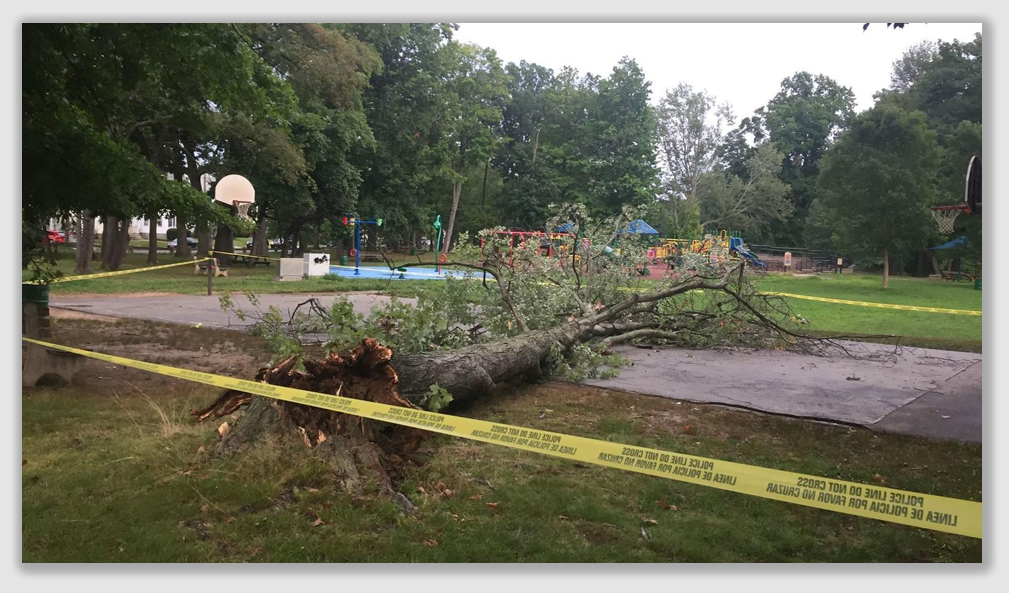
A large tree that fell Tuesday night at Goodwin Park, sending an 11-year-old boy to the hospital, had been flagged for removal last week by Hartford officials who waited 10 days to see if any residents objected to it being cut down. City officials said that the tree was identified as a problem on July 27, but was spared by the municipal ordinance requiring the waiting period so residents may challenge the decision. The ordinance allows for a tree to be removed immediately if city workers determine it’s an immediate danger. Officials said that was not the case with this tree. The tree, which stood next to a basketball court at the public park, came down on its own, apparently splitting at the base. A group of children playing basketball on the South End court heard it snap…
Huntington, West Virginia, WSAZ-TV, August 8, 2018: Trim your tree or pay the price
One village is going to great lengths to trim trees blocking the road. But if you don’t do it yourself in Oak Hill, Ohio, you’re going to be sent a bill. It’s the latest as cities and communities across the Tri-State and Kanawha Valley look to tidy up their town. Officials said it’s a safety issue they can’t afford to ignore any longer, for more ways than one. There’s a few spots that make drivers swerve, as long as someone isn’t in the other lane. We took a drive with Mayor Rob Leonard Wednesday afternoon. Even just pulling out of City Hall shows the problem. He said it’s the cause of multiple wrecks in recent years, including at least one involving a school bus. Tom Miller has lived in Oak Hill his entire life. “They need to trim them back, and I think it’d help a lot,” Miller said. The City Council will have a final reading to its tree trimming ordinance Tuesday, putting some teeth into its current ordinance for residents who don’t comply…
With summer in full swing, most people aren’t thinking about Christmas yet. But for the people tasked with choosing a national Christmas tree, the deadline is fast approaching, and they’re looking to the Willamette National Forest. Oregon is known for its trees, so you’d think finding a Christmas tree here would be a simple task… right? Not so much, says Jim Kaufmann, director of the Capitol Grounds and Arboretum at the Architect Capitol. “It’s almost like finding a needle in a haystack,” Kaufmann said. This isn’t the first year the Capitol Christmas Tree has come from Oregon. In 2002, the Capitol Tree came from the Umpqua National Forest. This year’s tree is coming from the Willamette National Forest. Kaufmann says it’s his job to choose the tree that will stand on the Capitol’s west lawn…
A southern Minnesota homeowner was charged with a felony for shooting and killing a dog because he believed it was peeing on his trees. Brian J. Johnson, 63, of Good Thunder, was charged in Blue Earth County District Court last week with animal cruelty and is scheduled to appear in court on Aug. 30. “I have mixed feelings, but I want justice for my dog and what he did,” said Carrie Dolsen, who adopted Diesel as a rescue puppy about four years ago. “He was our kid.” Jim Kuettner, Johnson’s attorney, said, “The dog was repeatedly coming onto Mr. Johnson’s property and [urinating], and the owner was not doing anything about it.” According to the criminal complaint, a witness approached a police officer midafternoon on June 3 and said there was a dog on Willard Street that appeared to be ill. The officer found the dog vomiting and took the dog to its home. Two days later, police were notified by the Dolsen family that the dog had died, and a week later they were told that Diesel had been shot in the abdomen with a pellet gun…
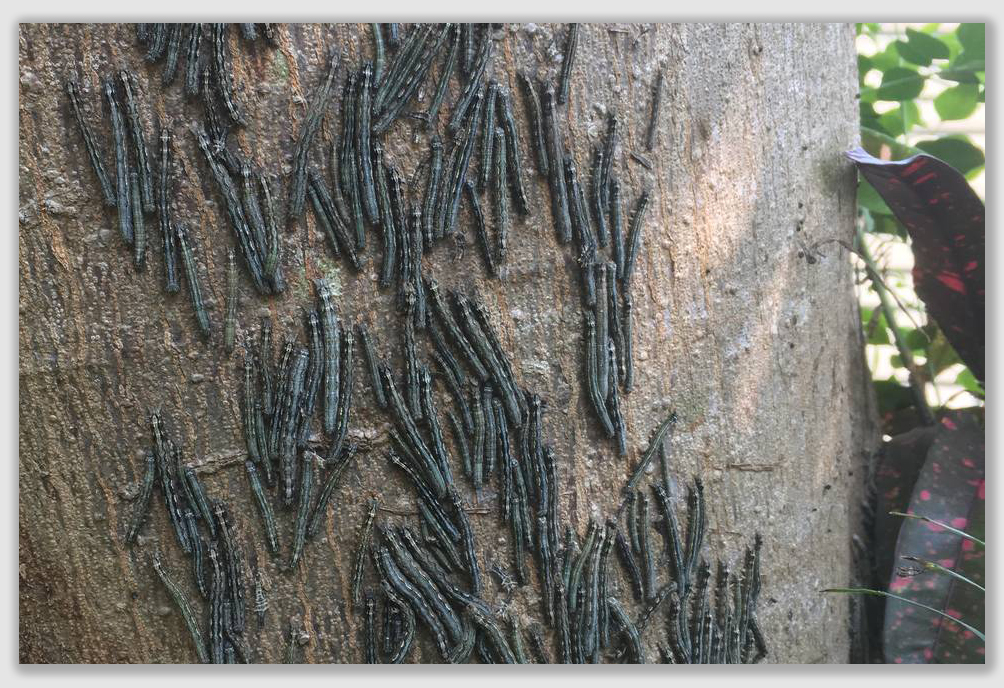 Miami, Florida, Herald, August 7, 2018: Key West’s official tree is being devoured by caterpillars
Key West’s majestic Royal Poinciana trees, with their fiery orange-red blooms and sprawling branches and roots, are under siege by a caterpillar that feeds on them at night. The Royal Poinciana, which the city earlier this year crowned the official tree of Key West even though it is invasive, attracts a stubborn type of caterpillar that wildlife experts simply call the Royal Poinciana caterpillar. At just under two inches long, the caterpillar is coated with black and brown stripes. Rare for a member of the cutworm species, these caterpillars climb high trees and hide during the day in dirt, mulch or opened seed pods, according to Michelle Leonard-Mularz, of the Monroe County Extension Services, part of the University of Florida’s Institute of Food and Agricultural Sciences. And they are gobbling up Poinciana canopies around town…
Citrus trees in Mobile and Baldwin counties are facing a threat from a pesky pest. The disease known as “Citrus Greening” which is causing problems around the world could wreak havoc here in Southern Alabama after being first spotted last year. “Citrus greening is a death sentence for citrus trees,” said Dr. David Battiste, an Assistant Professor at the University of South Alabama. A tiny bug called the Asian Citrus Psyllid is causing big problems. “Florida has lost 70 percent of its citrus trees over the last 10 years to the citrus greening disease,” Battiste said. So far, it has been spotted in multiple states in the U.S…

For many furniture companies, success is measured by the number of pieces sold or net profit. While those things are important at Urbn Timber, the fast-growing South Side business has another, higher goal. “For us, it’s about this: How many trees can we save,” said Treg Sherman, one of three partners in the business. Founded in 2016 by Sherman, Tyler Hillyard and Tyler Sirak, Urbn Timber collaborates with Columbus arborists Jacob Sauer Tree Care, Joseph Tree Service and Russell Tree Experts to salvage trees that have been removed because of storm damage, to make way for new construction or are hazardous because of disease or death. Urbn Timber then transforms the wood into “live edge” slabs. “It’s almost like a granite shop,” Hillyard said. “You pick your slab, take it home, or we can custom-build (tables) for you,” Sherman said. The idea for the business originated with Hillyard, who as the son of a homebuilder spent the summers and weekends of his boyhood working on projects with his father and brother. “I saw the value of wood,” Hillyard said. “When I was 16 or 17, I knew I wanted my own mill…”
Houses and cars can be smashed and people can be seriously injured and even killed by a strange tree action — a curious natural “pruning” that is happening right now in North Texas. Big limbs just fall out of the blue with a loud “crack.” Often these failed limbs curiously reveal no obvious external defects, and the inner wood is broken bluntly, with no sharp splintering. The absence of obvious visual warning signs like cracks and color changes make this danger hard to predict. This scary tree reaction is usually a complete surprise. It is called “sudden branch drop,” “high temperature limb drop” and “summer branch drop.” Theories about the cause include branch movement and tissue shrinkage, internal cracking, internal moisture changes, gas releases inside limbs, and microscopic changes in cell wall structure. Consistent warning signs are lacking and there are still no definite answers. Trees that are subject to sudden drop are usually mature, with limbs that are very large, mostly horizontal, sweep upward toward the end and extend out beyond the main canopy. Mostly these failures occur on hot, still days with no wind. My best theory is that this is a tree’s response to demands when transpiration exceeds the capacity of the roots and vascular system. This imbalance of moisture causes the tree to abort limbs…
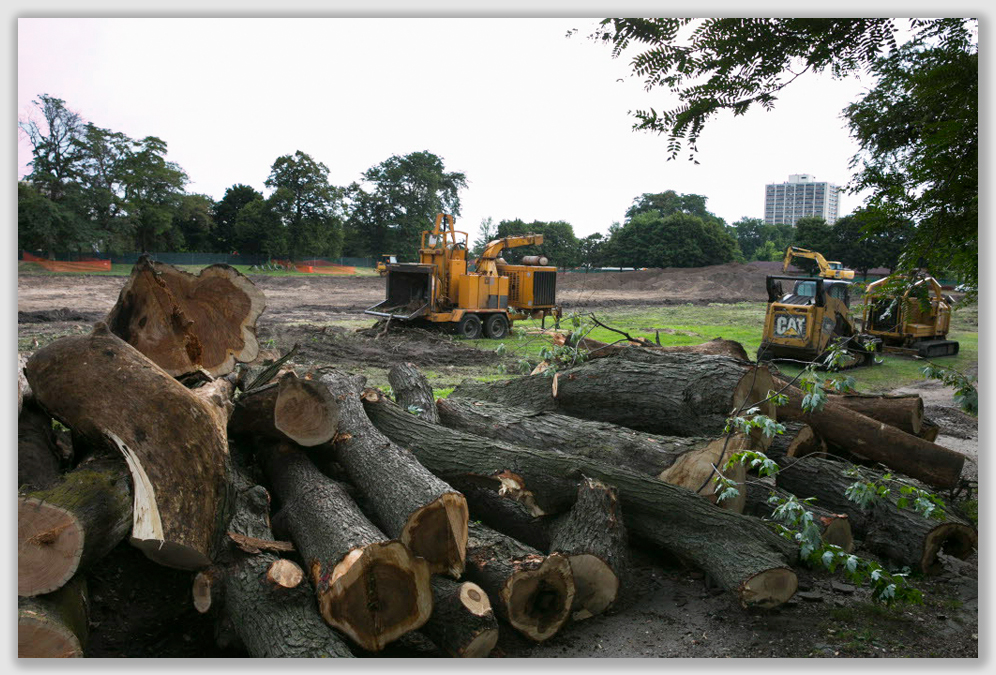
The city and Chicago Park District are cutting down trees in Jackson Park – in a project related to the Obama Presidential Center – despite a pending lawsuit, and city and federal approvals still needed and a pledge from the Obama Foundation CEO to keep trees intactuntil the permitting process is complete. The Chicago Park District is digging up baseball fields in Jackson Park south of the proposed Obama Center complex. The reason? The diamonds are being removed to make room for a track field displaced by the Obama Center, to be located on 19.3 acres carved out of Jackson Park. The Obama Foundation is paying the Chicago Park District up to $3.5 million to fund a new multisport athletic field on the baseball site. That’s because the field is being bumped for the Obama Foundation. The projects are inextricably connected…
Jacksonville Beach police say a tree trimmer died from injuries after falling about 20 feet as wasps swarmed him after he disturbed a nest Saturday afternoon. Joseph English, 57, sustained severe head trauma, a broken back and other injuries when he fell off a ladder onto a brick pathway next to a driveway of a home about 2:30 p.m. in the unit block of 28th Avenue South, police said. English died Sunday at Memorial Hospital. He was employed by Daddy and Girls landscaping service. Company owner Larry Lyles told police he was working with English when the accident happened. He said English was on a ladder trimming a palm tree when he apparently disturbed a wasp nests and the insects attacked him, according to the incident report. A co-worker said she heard English yell and when she looked up, she saw him drop a hand saw he’d been using. English was trying to come down the ladder rungs when he appeared to let go and fell backward, she told police…
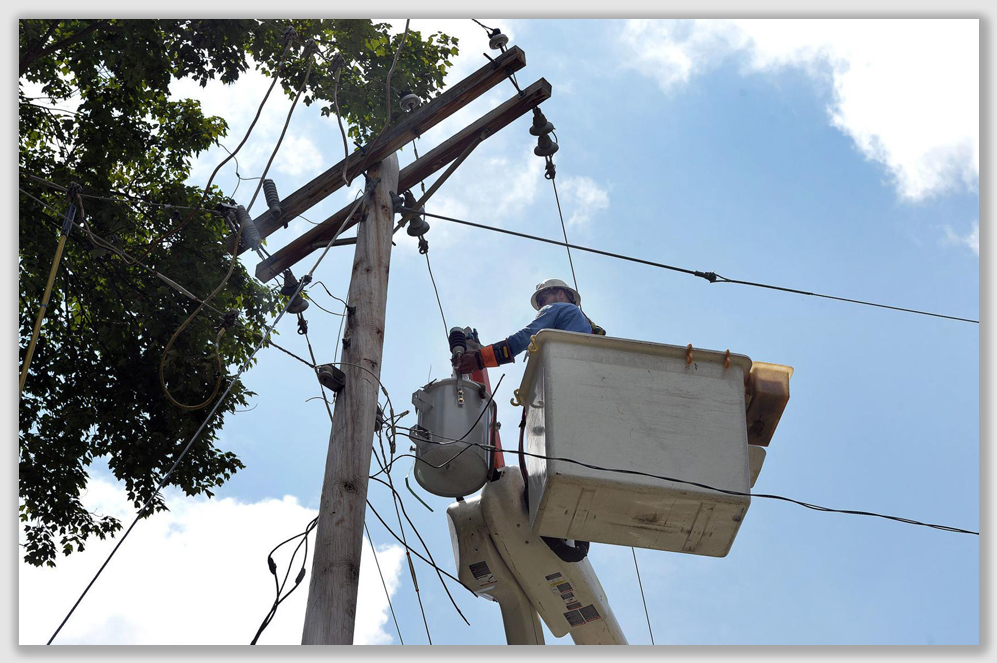
As the state Public Service Commission mulls how utilities like Appalachian Power should use their federal tax savings, members of its independent staff have raised issue with a program the electric company wants millions of those newfound savings to go toward. Appalachian Power’s Vegetation Management Program (VMP) began in 2014. The company used to remove vegetation from right-of-ways as needed, but changed its approach and implemented the program after the 2012 derecho caused widespread power outages in the state. Philip Wright, the company’s vice president of distribution operations, said in testimony earlier this year that managing vegetation can involve pruning trees with equipment or ground crews, removing “danger trees,” applying herbicide, clearing brush and widening rights-of-way. The PSC sought increased service reliability and reduced recovery time for weather-related service disruptions when it approved the proactive program. The program, though, comes at a cost to customers…
Aberdeen, South Dakota, News, August 6, 2018: Common tree diseases, and how to fight them
It is not uncommon to start seeing various leaf diseases on trees and plants this time of year. Many of these diseases can reoccur annually, and some depend on what kind of weather we are having in the spring and summer. Apple scab is a common ailment that affects apple and crabapple trees. It appears on leaves as dull, brown, irregular spots and can change to light green velvety spots. These leaves will normally start to fall off the tree in various degrees. The best way to manage this disease is to plant varieties that are resistant to apple scab. There are treatments available, but they are very timely and aren’t always successful. Fireblight is another apple disease which quickly turns leaves brown/black and they do not drop to the ground. The bark in this area will look shriveled and also turn brownish/black. There is no effective treatment for this disease other than pruning out the infected branches…
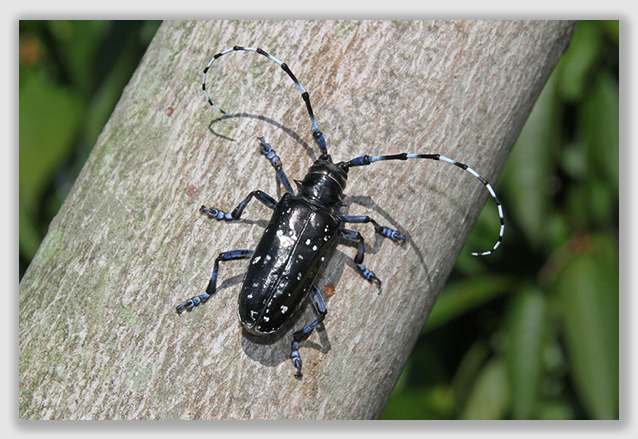
An Asian insect pest, which threatens maple trees and other hardwoods in North America, has been found on Kentucky’s doorstep. Multiple infestations of the Asian Long-Horned Beetle (Anoplophora glabripennis) were found beginning in 2012 in southern Ohio’s Clermont County, just east of Cincinnati. While there have been no reports of infestations in the Kentucky counties to the south, just across the Ohio River, state forestry officials are on alert. “We’re hoping this is one (insect pest) that we don’t have to deal with,” said Abe Nielsen, Forest Health Specialist with the Kentucky Division of Forestry. “It’s important that landowners are educated about the beetle so they can be on the lookout for signs of infestation.” Federal and state forestry officials have been effective in keeping the infestations from expanding, but there is still a lot of active management going on in southern Ohio. “With more than $2.5 billion in standing maple timber and a $5 billion dollar nursery industry that employs nearly 240,000 people, it is vital we do all we can to keep this tree-killing pest from spreading across Ohio,” said David Daniels, director of the Ohio Department of Agriculture…
Bloomberg News, August 2, 2018: Lumber producer sees Canada-U.S. tussle over trees dragging on
The odds of settling a long-running dispute between the U.S. and Canada over lumber are looking pretty bleak, according to a key producer. There’s been no progress to settle the Canada-U.S. fight over softwood lumber as governments have been more focused on renegotiating the North American Free Trade Agreement, said Yves Laflamme, chief executive officer of Montreal-based Resolute Forest Products. The company is currently paying about $80 million a year in tariffs, and it’s likely Canada’s legal battle to fight the U.S. restrictions through the World Trade Organization will drag on for another four years, he said. “I’m not optimistic at all on lumber,” Laflamme said Thursday in an interview following the company’s second quarter earnings call. “I’m not expecting any settlement…”
 Washington, D.C., Post, August 3, 2018: 10-year-old girl dies after tree falls on home in Virginia
A 10-year-old girl died after a tree fell on her house in Virginia following days of heavy rain, authorities said. The Fauquier County Sheriff’s Office said Lydia Gherghis died after the tree toppled into her home in the 6200 block of Highmeadow Place off U.S. Highway 15 in Warrenton, Va., around 10:30 p.m. Wednesday. A person called 911 and said “someone may be trapped inside” the home, according to authorities. The tree had fallen into the bedroom area and trapped the young girl underneath. She was unresponsive, officials said, and was pronounced dead “a short time later.” Officials said it is not known what caused the tree to collapse, but “due to the recent rainfall and ground saturation all possibilities are being investigated,” officials said in a statement…
Salem, Oregon, Capital Press Ag Weekly, August 2, 2018: Christmas trees need a boost
No ag industry is under greater threat than Christmas tree growers. Fake trees have established a beach head in the marketplace, as more consumers are “going plastic” and buying Chinese-made artificial trees in a box. Or consumers are skipping the tradition altogether. No ag industry is under greater threat than Christmas tree growers. Fake trees have established a beach head in the marketplace, as more consumers are “going plastic” and buying Chinese-made artificial trees in a box. Or they are skipping the tradition altogether. The challenges cannot be ignored. That’s why we were surprised that a recent checkoff vote by Christmas tree growers was so close. Fifty-one percent of growers supported continuing the industry checkoff, while 49 percent opposed it. If opponents have a problem with the current ad and marketing campaign they need to fix it, not abandon it and leave the industry defenseless. With aggressive foreign competition chipping away at the market, U.S. tree growers have no choice but to tell their story and remind consumers of a classic and classy Christmas tradition. They need to talk about tradition, about family, and about memories that for many people represent the most precious time of the year…
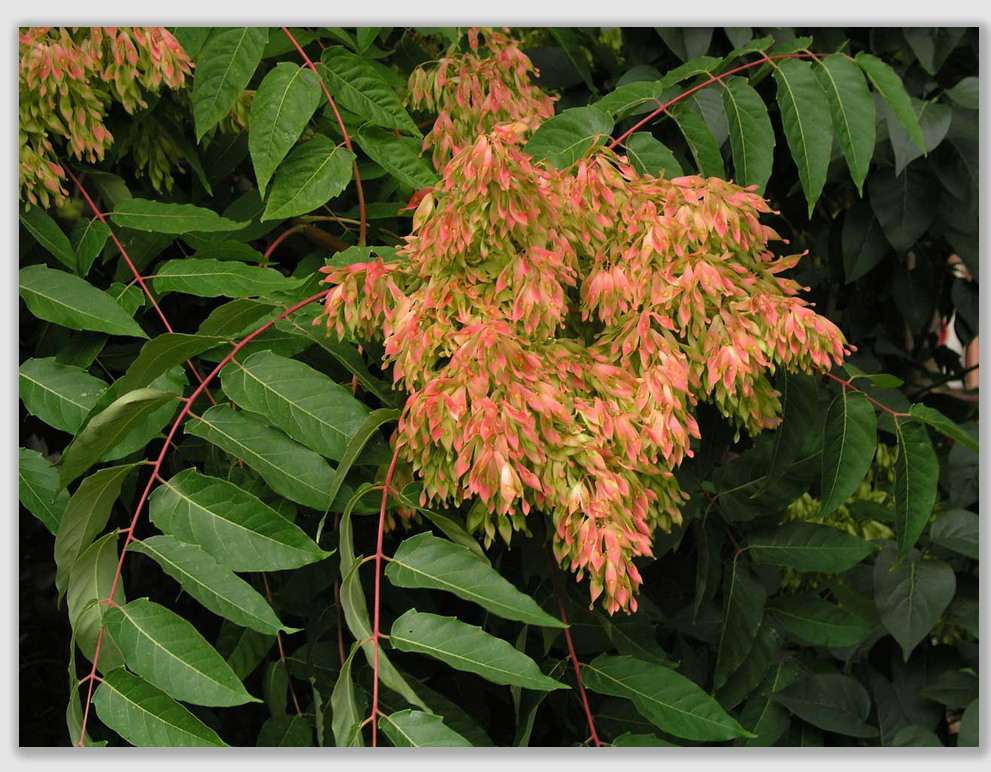
Santa Fe, New Mexico, New Mexican, August 1, 2018: Tree of heaven or hell?
Here in the high desert, gardeners and nature lovers learn to regard almost anything that grows well on its own with respect and admiration. But there are exceptions. When a non-native plant is so adaptable that it spreads with abandon, sucking up nutrients and water and crowding out less robust species, it threatens native habitats and is a nuisance in gardens: it becomes “invasive.” Santa Fe has its share of invasive trees, notoriously Siberian elm, but also Russian olive, salt cedar (or tamarisk), and the ultra-aggressive tree of heaven, Ailanthus altissima. Like many invasive species, ailanthus was introduced as an ornamental before its less desirable features became apparent. Sometimes called “stink tree,” this native of China was brought to the United States via Europe in 1784 and soon escaped cultivation. It looks a lot like our native sumac, but its flowers and leaves emit a fetid odor, unlike those belonging to the Rhus genus. Tree of heaven is fast-growing, quickly shading out other plants. Though an individual specimen is relatively short-lived, ailanthus is very difficult to control because it spreads not only by seeds but also by root sprouts, clones of the mother tree that prolong its life indefinitely. It’s seen in weedy colonies along roadsides and in Santa Fe neighborhoods…
Several large oak trees dot the landscape along what residents call little Glenshire Bayou in southwest Houston. The trees are located on private property that was recently sold to a land developer, and the residents said they are a big part of their community. When neighbors saw some trees on the property being cut down, they immediately contacted the Brays Oaks Management District. Sheri Cortex said she reached out to the new land owner on behalf of her community and said he seemed open to talking. “Upon hanging up the phone with him, however, he decided to contact the demo gentleman and said (to) level the property, put up no trespassing signs, we’re not saving anything,” Cortez said. Cortez said she has tried to make further contact with the land owner since their initial phone conversation, but hasn’t had success…

New Jersey officials have instituted a quarantine for three counties in the hopes of stopping a tree-destroying insect from spreading to other parts of the Garden State. The quarantine in Warren, Mercer and Hunterdon counties is similar to ones ordered in recent years in nearby eastern Pennsylvania where the spotted lanternfly — a native of Asia — was discovered in the U.S in 2014. But despite a quarantine, the spotted lanternfly has spread rapidly in Pennsylvania from five counties last year to 13 this year. Still, Gov. Phil Murphy’s administration is hopeful this will work. “The spotted lanternfly is an excellent hitchhiker, with the ability travel on all types of vehicles as well as various landscaping, wood-based materials and agricultural produce,” Department of Agriculture Secretary Douglas Fisher said. “It’s imperative that we stop the movement of this pest before it can make an impact on New Jersey.” Under the quarantine, businesses and residents in the three counties are required to inspect any outdoor items such as camping equipment, sports equipment, patio furniture, building materials and garden items before moving them out of the area…
Cleveland, Ohio, WJW-TV, August 1, 2018: Tree trimming causing outrage in Tremont neighborhood
Residents in Cleveland’s Tremont neighborhood are up in arms after recent tree trimming along West 14th Street, Scranton Road, University Road, and many other side streets. “I think that’s a shame because if you could see how they trimmed them, those trees are probably going to die in a few years,” said Tremont resident, Wally Skoropos. “I was furious. It’s gonna take years for those trees to grow back. Our neighborhood has to look at them,” Ward 3 Councilman Kerry McCormack told Fox 8. McCormack says the trimming was done by contractors hired by First Energy to prevent future power outages. “It looks like they were in a hurry and didn’t care. They could have easily have shaped it differently,” said Denys Morgan, resident. Councilman McCormack says he will voice those concerns when he meets with First Energy officials Thursday…
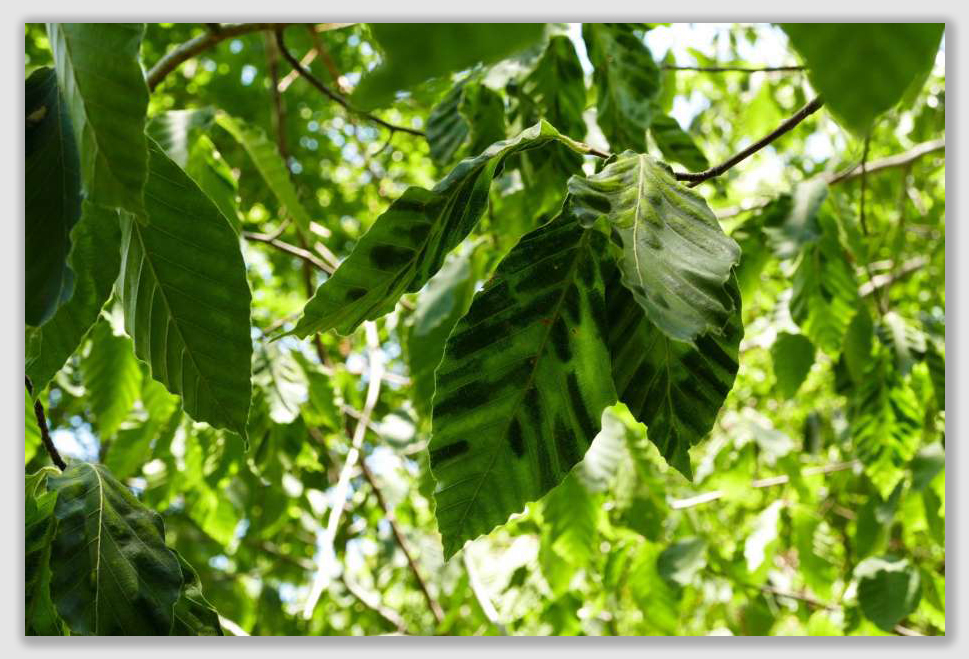 San Francisco, California, July 31, 2018: What is making U.S. beech trees sick?
Ohio biologist John Pogacnik admits to mixed feelings about having discovered the latest disease imperiling a major American tree. Pogacnik first noticed American beech trees with striped and shriveled leaves in 2012 during a routine survey of forests owned by his employer, Lake Metroparks. He didn’t think much of it at first: Just a few trees looked sick, and it had been a strange year, with an unusually warm winter and dry spring. By the next summer, Pogacnik was seeing ailing trees throughout the six-county region in northeast Ohio where his agency manages more than 35 parks. He alerted colleagues at the Ohio Division of Forestry and the U.S. Forest Service. “I’m glad to have found it, to just put it out there and let people know,” he said. “But it’s still not the greatest feeling in the world.” Beech leaf disease has now popped up in nine Ohio counties, two other states and Canada, and its spread shows no sign of slowing. The disease has already felled young saplings; mature trees, some hundreds of years old, appear to be on the brink of death. Scientists fear the beech could soon face a plague as serious as those that have devastated chestnut, elm, hemlock and ash trees. “It has all the signs of a significant, emerging pathogen,” said Constance Hausman, a biologist at Cleveland Metroparks…
The self-described guardian of a massive, 300-year-old red oak tree in Toronto is celebrating after city council voted in favour of buying the property that is home to the heritage tree. “For me what happened at city hall, personally, all the stars aligned after 12 years,” Edith George, who has been fighting to protect the tree, told As It Happens guest host Piya Chattopadhyay. Toronto city council voted Monday to move forward with negotiations to buy the North York home where the tree — believed to be the oldest in Toronto — resides. The tree is protected by the city, which requires homeowners to get approval before chopping it down. Back in 2015, city council voted to explore how to buy the tree and build a parkette around it but nothing came to fruition. In April, George, who lives in the neighborhood and is an adviser to the Canadian Urban Forest Council, learned that the owners who bought the property in 2015 planned to put it back up for sale and could try to have the tree removed in the process…
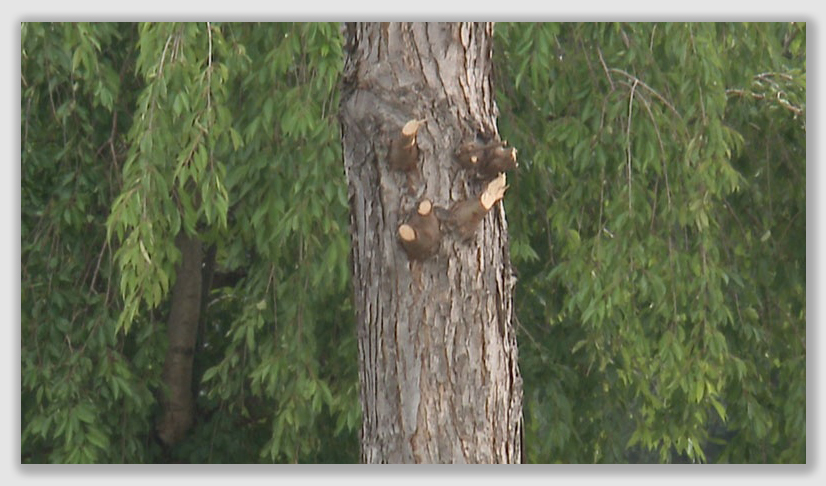
Some Oak Creek homeowners want to know who’s hacking their trees at night. It’s happening in the Glen Crossing subdivision near 13th Street and Glen Crossing Drive. One resident said his son saw a man last week trimming the trees in front of their home, but when the son tried to approach him, the mystery man ran off. “Why would a person come out and trim branches, leave them there laying neatly around each tree. I find that very strange,” Rob Johnston said. Neighbors said the man goes around at night trimming trees and leaving limbs behind. They know it isn’t professionally done because they’ve checked with the city, and no one has gone out there. Plus, the job isn’t well done. “This looks like someone who didn’t know what they were doing. The city would not leave that. They would have cut this,” Johnston said. Some neighbors have even seen the man in action, usually after 10 p.m., but they’ve never caught him on camera…
Vancouver, Washington, Columbian, July 31, 2018: Is your tree too big?
I am often asked to evaluate a situation where home owners want to drastically reduce the size of a large tree. When I ask them why they want to reduce a mature tree’s size, the response is often “It is just too big. We didn’t realize it was going to get this big when we planted it.” They are often worried about what might happen if the wind blew the tree over. I start by explaining that the tree is just growing to its natural height. The maximum size reduction that should be made in a tree is 20 to 25%. When properly pruned by that much it normally takes 2 years until it regrows to its former natural height with strong branches. Home owners or unscrupulous arborists will sometimes prune a tree more than 25%, but the damage done to the tree destroys its natural growth and often kills the tree within a few years. The worst type of pruning that can be done is to stub back all major branches to an arbitrary height. This is referred to as “topping”. Topped trees typically regrow many slender, weak branches. A mild wind storm will often snap a number of branches and they end up littering the ground. The tree will still regrow to its former size in 2 years or less. The major wounds made by shortening large branches are often infected with damaging insects or diseases…

The white mulberry overhung our gravel driveway when my husband and I moved into our Cambridge house 20 years ago. It was a large tree; tall, leafy and fertile. Each year, on a day in early summer, we would awaken to a huge squawk and rush outside. Every bird in the city seemed to have landed on our mulberry tree. The fruit was ripe. For weeks, we watched cardinals, robins, catbirds, blue jays, chickadees, goldfinches, doves — and, once, a Baltimore oriole — gorging themselves on mulberries. After eating, they flitted to our backyard to wash up in the birdbath and see what else was on offer in the garden. Many hung around all season. Some, with later broods, nested. We became birdwatchers without leaving our backyard. Our neighbors hated this tree, which overhung their driveway as well. We couldn’t really blame them. The berries formed an unsightly squishy mat on the gravel. Within weeks, the fruit would sprout into a forest of junior mulberry trees which had to be weeded out. Worst of all, a rancid stench would rise from the stones as the berries fermented in the sun…
County Councilman David Marks is calling on Baltimore County to replace the trees it took down last year on the site of a former fire station in Towson. Under the proposal, drafted by the Green Towson Alliance, a green-space advocacy group, and passed on to the county by Marks, the county would plant 112 trees around downtown Towson. The trees would replace the 30 that the county removed on the site at the corner of York Road and Bosley Avenue on April 1, 2017. “The trees were removed contrary to a County Council resolution,” Marks said. “I think this is a good way of bringing closure.” Beth Miller, a Green Towson Alliance member, said planting trees around downtown would bring many benefits: They would cool the streets, clean the air and absorb stormwater. “And then, they just look nice,” Miller said. “They’re just beautiful…”
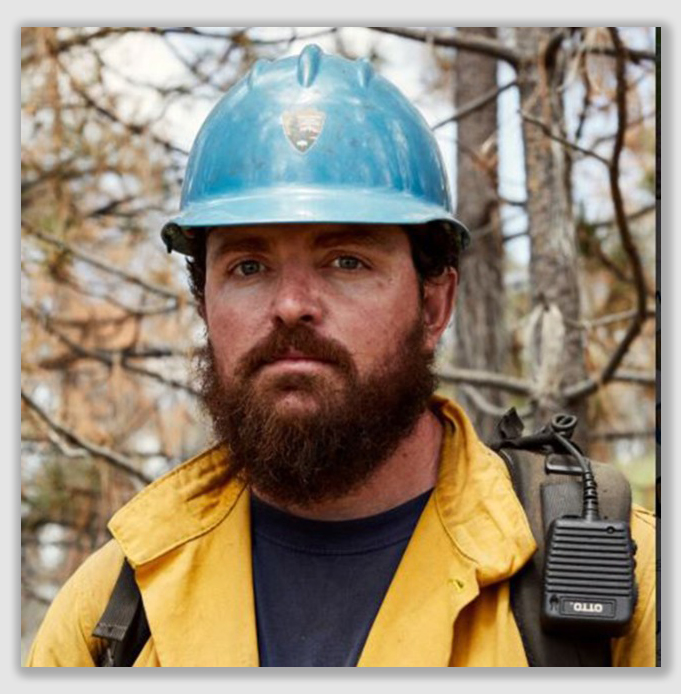 Firehouse, July 30, 2018: Hotshot killed by fallen tree at California wildfire
A firefighter was killed Sunday morning battling the massive Ferguson fire near Yosemite National Park, marking the second firefighting death in Mariposa County and the eighth fire-related death as more than a dozen wildfires rage across the state. Brian Hughes, captain of the Arrowhead Interagency Hotshots, was killed when he was struck by a tree while working with his crew to set a back fire — a tactic designed to limit a fire’s spread — on the east side of the fire, according to the National Park Service. He was treated at the scene but died before he could be taken to a hospital. He was 33. “The team at Sequoia and Kings National Parks is devastated by this terrible news,” parks Supt. Woody Smeck said in a statement. “Our deepest condolences go out to the firefighter’s family and loved ones. We grieve this loss with you.” Hughes, who was originally from Hilo, Hawaii, had worked with the Arrowhead hotshots for four years. They are an elite crew of 20 firefighters based at Sequoia and Kings Canyon National Parks…
Let this not deflate you, City Manager Darin Atteberry. The same with you, Colorado State University President Tony Frank with all your collegiate heft. You as well, CSU football coach Mike Bobo, though we hoist much on your shoulders, new stadium and all. None of you is the most important man in Fort Collins. That person would be Ralph Zentz. And I promise you, he was not seeking the title. Zentz is the city’s senior urban forester. All that’s weighing on his mortal frame is one-third of the shade cover in this city, and a lot of the beauty and enjoyment. That certainly applies in my house, where three tremendous ash trees guard our front yard and two provide the backyard canopy that makes our deck so luscious. Ashes make up 15 percent of Fort Collins’ urban forest. They are now threatened by the emerald ash borer, or EAB, which is reaping devastation in Boulder and Longmont and has been detected as far north along the Front Range as Lyons…
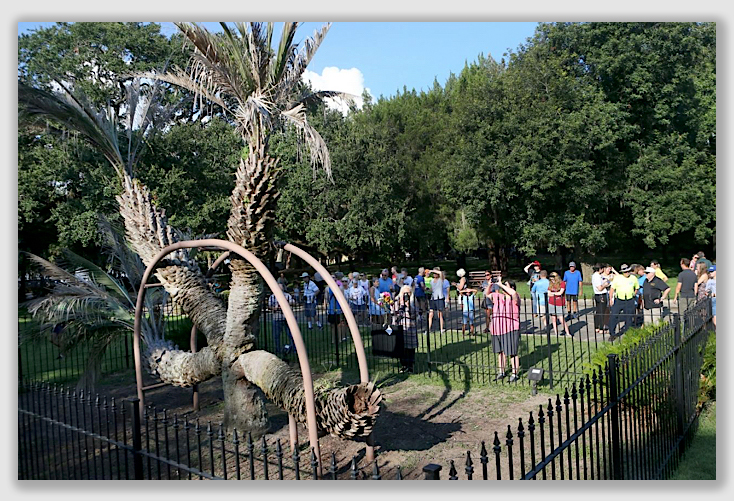 Panama City, Florida, News Herald, July 26, 2018: World’s only 4-headed palm tree cut down
When the chainsaw revved to life, a small gasp ran through the crowd gathered around the world’s only known four-headed pindo palm. This was it. The iconic St. Andrews tree really was about to be cut down. “It’s like watching history collapse,” said John Dunn, as he watched the tree fall. “It stings.” For the past two years, park visitors have watched the palm’s green fronds slowly fade to brown despite Panama City’s attempt to save the popular photo spot. Experts have been flown in, chemical treatments and injections tried, and maintenance made a priority, but a study sent to the city by Bartlett Tree Experts spelled it out — no matter what the city did, the tree would be dead within three years. With that grim prognosis in mind, the city decided to remove the tree while there was a chance the wood was solid enough to be used to create commemorative plaques. So early Wednesday, Gulf Coast Tree Service dismantled the tree limb by limb, sending each “head” soaring through the air by crane before landing with a thud in a waiting truck…
The siege of moist air, torrential rain and flooding is about to come to something of a pause in time for the weekend. But it does so with a grand finale of sorts, from strong to severe showers and thunderstorms ahead of an approaching cold front on Friday. The most likely time for strong to severe thunderstorms should focus on Friday afternoon into early evening. Some of the storms could be intense, with the threat of flash flooding, intense lightning, large hail and damaging wind gusts. Additionally, given the overabundance of rainfall and fully saturated soil across the region, many tree root systems are stressed and weak. Already in recent days, there have been news reports of trees toppling over in the muddy, wet ground, with nothing more than mild breezes pushing against them. Thankfully, these reports have been spotty…
 Traverse City, Michigan, Record-Eagle, July 26, 2018: Study: Tree cover receding
A nationwide loss of tree cover includes all the Great Lakes states but Minnesota, according to a new study. Reasons for the changes include development, storms, disease, fire, pests and property owner choices on what to do with their land. On the plus side of the equation are planting efforts, tree growth and natural regeneration, the study said. “This trend will likely continue into the future unless forest management and/or urban development policies are altered, particularly given the threats to urban trees associated with development, climate change, insects and diseases, and fire,” the study reported. For example, the invasive emerald ash borer has devastated tens of millions of ash in Michigan, many of them street trees that had been planted to replace elms previously killed by Dutch elm disease, said Kevin Sayers, the state urban forestry coordinator at the Department of Natural Resources. “It’s like a series of waves,” Sayers said, adding that the new worry is the Asian long-horned beetle. That wood-boring invader threatens maple, birch, elm, willow and other hardwood species, according to the National Invasive Species Information Center. Michigan was the first Great Lakes state to report the emerald ash borer in 2002. It lost 0.8 percent of its urban and community tree cover between 2009 and 2014, the study said…
Savannah, Georgia, Savannah Morning News, July 26, 2018: Tree lawns keeping Savannah green
Savannah is boosting its green infrastructure by requiring that tree lawns — the space between the sidewalk and the curb — be replaced when commercial buildings are built or rehabbed. An amendment covering tree lawns passed more than a year ago, but is just now starting to bear fruit. “We try to encourage the continuation of the historical precedent of planting trees,” said Ted Buckley, a landscape architect with the city’s Greenscapes Department. “Oglethorpe started that process essentially when the city was first founded; I think somebody told me once upon a time that we’re on our fourth forest since then.” Squares and parks figure into that forest, but so do tree lawns. Savannah adopted a tree lawn amendment to its Landscape and Tree Protection Ordinance in February 2017. It requires construction of a tree lawn when a property is developed, rehabilitated, or improved for non-residential or multifamily purposes anywhere “they existed historically or exist in the current nearby context.” In practice that means in the historic districts north of Victory Drive, Buckley said. Downtown resident Philip Perrone, a native New Yorker who moved here about seven years ago, pushed for the changes when he noticed how many trees lawns had been swallowed by parking or sidewalks. As a member of the Park and Tree Commission, he documented examples of lost tree lawns and lobbied for the amendment. He expects to see a “profound effect…”
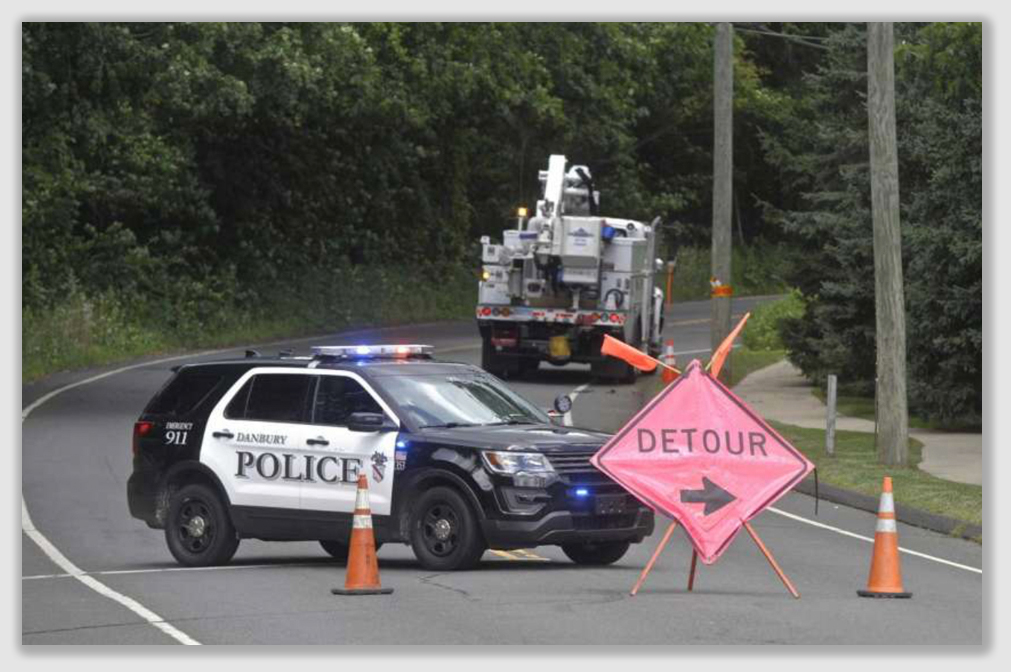
Local foresters are examining dozens of potentially dangerous trees across Danbury after a massive tree fell and killed a 45-year-old man Tuesday along Padanaram Road. The city’s forestry division has identified 46 trees along city roads this summer that could pose a risk and need to be removed, Public Works Director Antonio Iadarola said Wednesday morning. Crews are in the process of removing those trees this week, in addition to 40 others that were taken down shortly after severe thunderstorms rolled through the area in May causing a macroburst and a tornado that toppled hundreds of trees, damaged dozens of homes and killed two, he added.
But officials are still trying to determine who has responsibility for the large tree — which was at least 3 feet in diameter — that fell on a pickup truck on Padanaram Road around 9 a.m. Tuesday killing the passenger, Walter Cardenas Salinas. Padanaram is owned by the state of Connecticut and doesn’t fall under the city’s responsibility, Iadarola stressed. Kevin Nursick, a spokesman for the state Department of Transportation, said state officials are aware of the accident and investigating whether the tree was on the state’s right of way or if it was located on private property…
A Connecticut man was arrested in New York last week after allegedly impersonating Boston Bruins owner Jeremy Jacobs multiple times in efforts to get special treatment for removing a fallen tree, police said. Jeffrey Jacobs, 37, allegedly called a tree company during a storm in February 2017 to request that it move a tree that had fallen on his Wilton, Conn., home. Jacobs told the company he was the owner of the Bruins, Wilton police Captain Rob Cipolla said. Months later, when Jacobs had not yet paid his bill, the tree company sent the outstanding charge to the Bruins owner himself. Staff for Jeremy Jacobs — knowing that the Bruins owner did not have any connection to the Connecticut home — alerted police. Police found Jeffrey Jacobs at his Wilton, Conn., home and gave him a warning, considering the outstanding debt to the tree company a civil issue, rather than criminal, Cipolla said. But just a few months later, in November 2017, Jacobs was stopped by a Wilton police officer for a stop sign violation, and he once again tried skirting the ticket by impersonating Jeremy Jacobs…
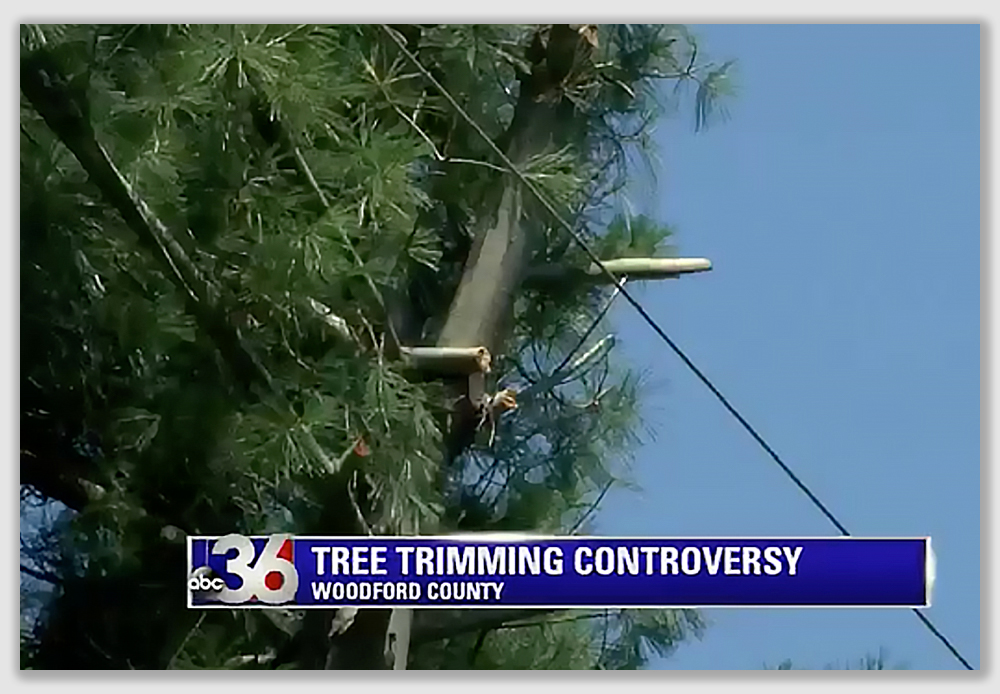
Kentucky Utilities says all power knocked out in Friday’s storm is back on but one woman says crews did more harm than good. Sammi Hazen says her farm in Versailles was hit hard during Friday’s storm. “We had some trees down and two big trees down over there. Some branches and some of that,” said Hazen, owner of PlayMor Farm. Hazen says it took days for her to get all the debris cleaned up but finally by Tuesday things were getting back to normal until she came home to find this. “I drove in. I stopped. I couldn’t believe it,” said Hazen. Hazen says while she was out a crew contracted by Kentucky Utilities came onto her property to make sure the power was working but then started cutting branches off a line of her trees. “They said that the trees were touching the lines and that they were trimming them. I don’t consider that trimming them. That’s a butcher job,” said Hazen. Hazen says she’s furious because she had just put the farm on the market, now with the trees cut she doesn’t know how she’s going to be able to sell it…
Managing downed, bent or damaged trees can be something of a perennial task in Arkansas, but in the wake of recent, wide-spread storms, experts with the University of Arkansas System Division of Agriculture are urging Arkansans to employ caution and good judgment when considering “problem” trees in their vicinity. Tamara Walkingstick, associate professor of Extension Forestry and associate director for the Division of Agriculture’s Arkansas Forest Resources Center, said that in the wake of a storm, the most important thing to keep in mind is that unless a damaged tree is on a power line, it can probably wait. “You don’t need to immediately do something,” Walkingstick said. “If you do have damage to your power lines, don’t try to deal with it yourself. Let the professionals at the electric company deal with it.” Once property can be toured safely, homeowners should conduct a visual assessment of what sort of tree damage they have. This can range from split trunks and injured limbs, down to large or small debris on the property. Walkingstick said one of the most common question she — along with Cooperative Extension Service agents around the state — receives is whether a split tree can be fixed. “The answer is really ‘no,’” Walkingstick said. “A tree is essentially dead once it has been split — you can’t tie, screw or tape a split branch or trunk back to the main part of the tree. If more than 50 percent of a tree’s crown — the portion of a tree that produces leaves — is damaged, it will likely not recover, and a homeowner should consider removing the tree, she said…
In the middle of record summer heat, at least one Killeen resident is irked that the city is cutting down shade trees in her neighborhood as part of a sidewalk project. “This situation is so devastating because now the whole block has no trees,” said Lucinda Frazier, a resident of the northeast Killeen neighborhood. “Why would anyone want to destroy so many trees?” Frazier said folks walking in the neighborhood including Gray Drive and Culp Avenue would stop under the trees during walks to cool off. The trees are in the right-of-way belonging to the city, but Frazier and her mother had become attached to the trees they could see out of the living room window. “Now Mom doesn’t want to even look outside,” she said. Frazier said the city did not give residents advanced notice or an explanation: People just looked outside and realized stumps had taken the place of trees. “It’s probably so no one would be able to state their opinion or ask questions to stop this,” Frazier said. “This is a sad situation in my opinion…”
Omaha, Nebraska, WOWT-TV, July 24, 2018: South Omaha man accused of using pipe bombs to blow up tree
A south Omaha man is accused of making and using pipe bombs to blow up a tree in his yard. Details in a search warrant affidavit said the man did this because the tree was dropping sap on his vehicle. 6 News is not identifying the man because police have not arrested him or charged him with anything. The first pipe bomb was discovered near the end of June by one of the man’s neighbors. Ron Evans found the detonated pipe bomb in his yard. “I’ve been finding pieces. The first one I found was the whole pipe bomb. The second one was just a whole bunch of pieces, and they were pieces of different sized pipe bombs,” Evans said. Evans reported it to police, and told officers he believed it was his neighbor. About two weeks after Evans’ report, police received a second report from a home about a mile away. Patrick Foster found a detonated pipe bomb near the front door of his house… The woman then told police the man makes the pipe bombs and places them in the tree in front of the home in an attempt to blow it up because “the tree drops sap on his vehicle,” the affidavit said. “Maybe call an arborist or something rather than trying to blow up your own tree,” Foster said when he heard about the man’s attempts…
 Los Angeles, California, KCRW Radio, July 24, 2018: LA removes street trees to repair sidewalks
The Department of Public Works voted this morning to remove 18 Indian Laurel Fig – a variety of Ficus trees – and the canopy they provide on Hollywood’s North Cherokee Avenue. Those particular trees have outgrown that area and they’re creating an unsafe situation and condition for people, pedestrians, wheelchair users, along that corridor. And so the board today made the decision to remove those trees and replace them with others that would provide a safer passageway,” said Elena Stern, spokesperson for the Department of Public Works. Urban forestry advocates say there are other ways to make streets safer without ripping out old trees. The city says it’s impossible, because of the way the roots of the ficus trees have spread too far and torn up sidewalk. Old trees provide great beauty to LA’s streets. But there are also environmental reasons for creating and preserving tree canopy — they provide shade and help keep cities cooler and reduce the heat island effect. They can then keep people’s air conditioning bills down…
Washington, D.C., WJLA-TV, July 24, 2018: Arborist offers tips on tree safety after heavy rain
Chris Miller, a certified arborist at Rock Creek Tree, Turf & Landscape, says, so far, emergency calls about downed trees following this week’s heavy rain have trickled in. “If this event had higher winds, I think we would have been off the charts,” he said. He says during this storm, they have taken calls from concerned customers. “They’ve just been worried about it, ‘Hey, the soils are really wet, I know that I’ve been worrying about this tree for a long time and this is kind of heightening my concern,’” Miller said, describing the calls they’ve gotten. He says there are red flags that homeowners can look out for. “Pretty quickly, you should be able to notice if it’s a really dangerous event, the ground is cracking or there is mounding, especially on the upper side or the backside of the tree…”
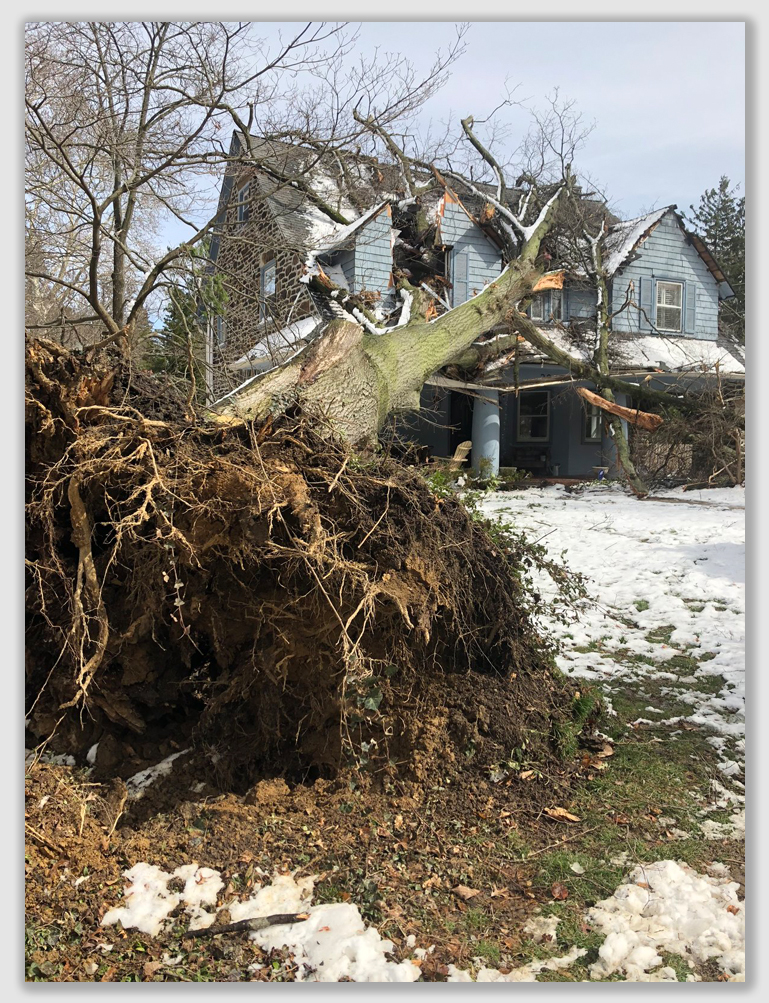 Philadelphia, Pennsylvania, Inquirer, July 24, 2018: What to do if a tree falls on your house
Here’s some advice I would give others whose home is damaged in a natural disaster: Leave the house and property as soon as possible, and call emergency services to check the safety of the house and gas and electrical lines. Don’t do what I did and walk around snapping pictures. Photo documentation is important, but it can wait. Just get out. Call your insurance company and document what happened. Consider hiring a private adjuster to advocate for you and make all the required phone calls. (The process can become a second full-time job.) Make sure the adjuster is licensed and reputable and be clear on the commission. If you’re able to factor in funds for a designer for the rebuild, hire one. Otherwise, brace yourself for an overwhelming number of rebuild decisions: flooring, fixtures, and finishes, for instance. If you don’t already know a contractor, seek recommendations from friends who have done renovations…
Rochester, Minnesota, Post-Bulletin, July 23, 2018: Toxic tree takes toll on garden
The pepper, tomato and eggplants struggled to grow, turned yellow and eventually were snatched away by unseen, evil Machiavellian hands. Similar plant types have faded away for no apparent reason during the past few years. An apple tree located a few feet away from the garden died last year. An unbiased observer easily identified the culprit when his opinion was sought. “You’ve got Juglone toxicity,’’ he said. “Your problem is that tree.’’ The tree is a walnut growing a few feet from the garden’s edge. It had started life as a struggling twig, which needed mulch and water to survive. I learned to love the tree variety from my father, who collected several gunny sacks of walnuts and butter nuts each fall before squirrels hustled them away. The nuts were left to dry on a shed’s low roof. Dad cracked them in winter and mother used their meat to make fruitcake, cookies and pumpkin bread. From its humble origin, as a nut buried by a forgetful squirrel, the tree has grown to more than 40 feet with a near-perfect canopy. The poison secreted by a tree of that height can reach 80 feet, which effectively covers the garden…
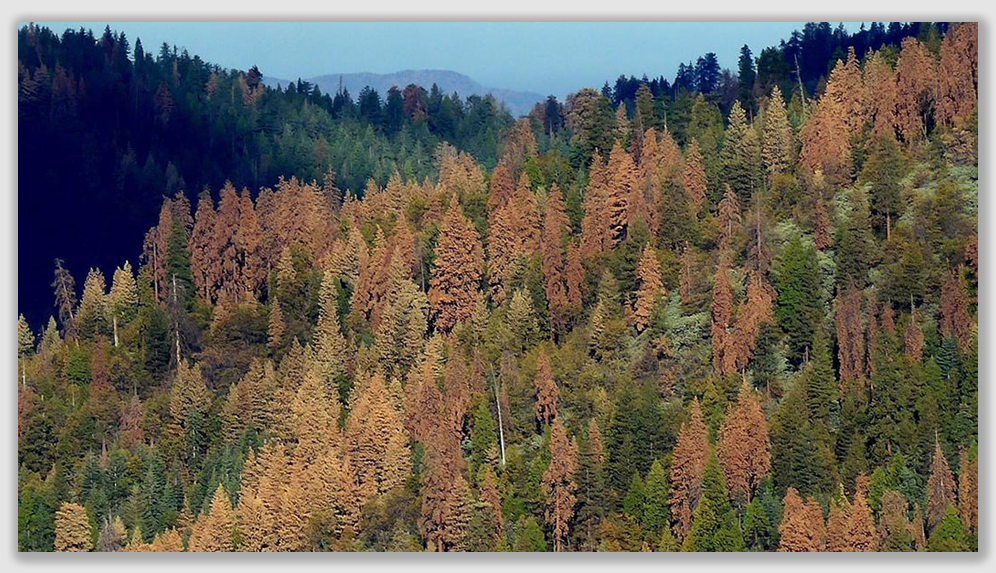
As a series of catastrophic droughts over the past few years has made clear, a future of increasingly extreme weather events will make life harder for the world’s trees. A growing body of research is illustrating exactly why that is. A new paper in the journal Nature, co-authored by Yale’s Craig Brodersen, highlights an emerging scientific field that uses 3D imaging and other technologies to better understand the inner workings of plants and trees — and what its findings have revealed about the vulnerabilities of these living organisms. Brodersen, an assistant professor of plant physiology ecology at the Yale School of Forestry & Environmental Studies, has been at the forefront of this field, developing techniques to describe the hydraulic systems of plants and predict how a warming planet will likely affect these functions. In an interview, Brodersen describes some of the important insights this field has revealed over the past two decades and the potential consequences for the world’s forests…
Managing downed, bent or damaged trees can be something of a perennial task in Arkansas, but in the wake of recent, wide-spread storms, experts with the University of Arkansas System Division of Agriculture are urging Arkansans to employ caution and good judgment when considering “problem” trees in their vicinity. In the wake of a storm, the most important thing to keep in mind is that unless a damaged tree is on a power line, it can probably wait, said Tamara Walkingstick, associate professor of Extension Forestry and associate director for the Division of Agriculture’s Arkansas Forest Resources Center. “You don’t need to immediately do something,” Walkingstick said. “If you do have damage to your power lines, don’t try to deal with it yourself. Let the professionals at the electric company deal with it.” Once property can be toured safely, homeowners should conduct a visual assessment of what sort of tree damage they actually have. This can range from split trunks and injured limbs, down to large or small debris on the property…

An Evanston tree trimmer was critically injured after a large tree branch fell on him Saturday afternoon. Firefighters said a large branch fell on the man, knocking him unconscious and leaving him hanging in a large tree at about 3 p.m. in the 2700-block of Princeton Avenue. Getting him down from the tree required a joint effort. “The Evanston people with six or seven vehicles were able to get up there, but they required the Skokie ladder to come from the other side, forming a ‘V’ so that they could reach the man and bring him down safely,” said neighbor John Morrison. Fire officials said the tree trimmer was trapped more than 20 feet in the air. He was transported to an Evanston hospital in critical condition…
Hammering out a tree ordinance for St. Simons Island has not been as easy as it seems like it should have been, but it is done. The Glynn County Commission recently took an important step toward preserving not only the trees on St. Simons Island, but also the character and charm of the place. A special committee and the two planning commissions have been working out the details of the new ordinance since 2015. It was not always smooth sailing. It looked like the ordinance would pass in April of 2017. It did not. From then, it took more than a year and several more meetings to get something together that commissioners agreed would do what is necessary to save roughly 50 percent of the remaining tree canopy…
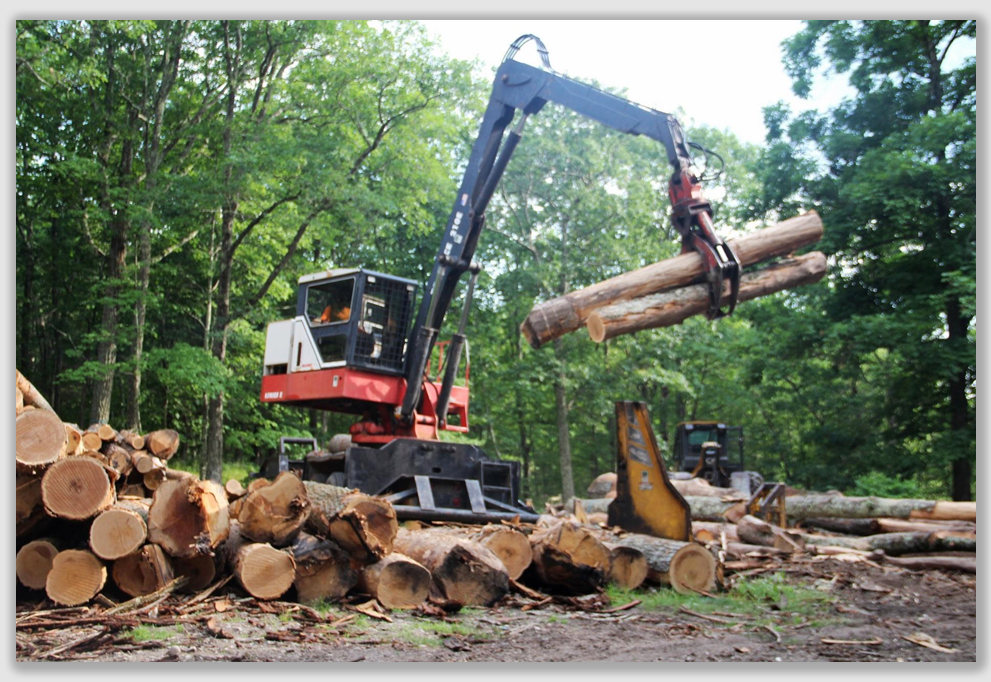
Loggers are taking down 911 trees in Deerpark’s Boemler Park, according to forester Laurie Raskin of DHW Forest Consulting, LLC, who is overseeing the project. The Deerpark Town Board approved the logging last summer. “Forest management is long overdue,” said Town Supervisor Gary Spears. “It opens the canopy and allows the sun in for regeneration. We had several bids and chose the logger with the best management practices, price and time frame, so they get in and out and people can use the property.” The logging is expected to generate $100,000 for the town, which will help lower taxes, he said. Bill Malzahn, a park neighbor, is upset. He has hiked and fished for decades in the 500 acres of woods and pond off Peenpack Trail. He contends the town bought the land from William Boemler for $10 in 1971 on the condition that it not be “touched” for 99 years. “There was no mailing to let us know,” said Malzahn…
Not all trees are created equal. While most trees that cover our landscapes provide us with aesthetic and ecological benefits, there are a few that probably do not belong here. Some trees can be invasive, some are insect and disease prone, and others may not grow well in our eastern North Carolina environment. I have come up with five trees that I will caution you to plant. As a disclaimer, I am not telling you what to plant or not plant. This article is based on research, observation and experience. I know I am not the first one to raise an issue with Bradford pear trees, and I certainly won’t be the last. Back in March, Mark Rutledge wrote a column in The Daily Reflector titled “Celebrate National ‘Cut Down’ Your Neighbor’s Bradford Pear Week,” and it remains one of my favorite newspaper columns of the year by far. Though Mark has several humorous remarks throughout the column, he touches on several great points. Bradford pear trees are a cultivated ornamental pear that originated in China. These trees have since cross-pollinated with native pear trees throughout the U.S., producing offspring at a rapid rate. A rate so rapid that these trees are considered invasive. The branches of Bradford pear trees are rather weak, and broken branches will only become more common as the tree matures. These trees are also highly susceptible to a disease called fire blight…

A city worker in Manchester was taken to a hospital Thursday morning after he was stung hundreds of times on Beech Street. Officials said a crew from the Park and Recreation Department was cutting down a tree that had been damaged during a recent storm when a worker in a bucket truck disturbed a bee hive while cutting into the tree. The worker was unable to get out of the bucket until a neighbor ran out to help pull him free, officials said. That resident, Randy Graham, was stung about 20 times. “(The worker) immediately got stung by hundreds of bees, and he was stuck in the bucket,” District Fire Chief Al Poulin said. “A neighbor came over and assisted the gentleman out of the bucket. He was strapped in at the time, so he wasn’t able to get himself out of the bucket…”
Christmas tree farmers have narrowly approved a national checkoff program that raises about $1.8 million a year to promote and research the crop. Though 51 percent of growers voted in favor of continuing the Christmas Tree Promotion Board during a recent referendum, the program continues to face uncertainty. Another referendum would normally be required in seven years, but the USDA — which oversees the research and promotion checkoff — has announced that growers will again vote on its continuation in about one year. The agency hasn’t specified why another vote will occur so soon, but a referendum may be held at the request of the secretary of the USDA, the Christmas Tree Promotion Board or by more than 10 percent of eligible farmers. Roughly 1,500 Christmas tree growers across the U.S. who sell more than 500 trees a year and pay 15 cents per tree to fund the program are eligible to vote in the referendum…
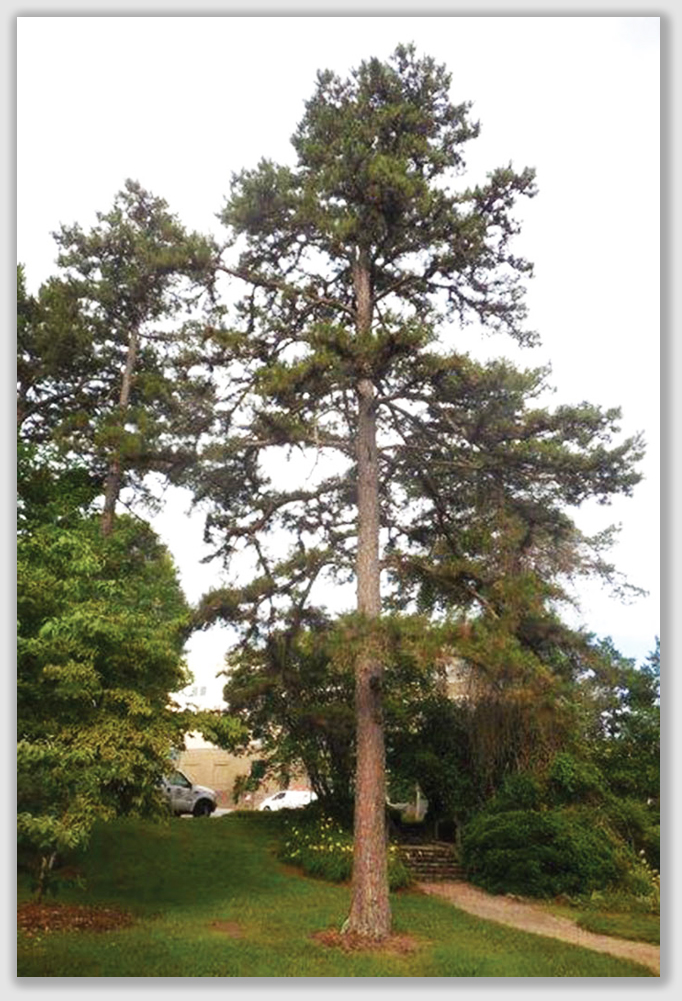 Salisbury, North Carolina, Post, July 19, 2018: All hail the mighty pine tree
Do you know what the state tree of North Carolina is? If you said the pine tree, you are correct. In 1963 the pine tree was designated the state tree of North Carolina, but did you know it goes further back than that? Since the early 1700s through the late 1800s North Carolina was the world’s leading producer of turpentine, pitch and tar, all used in the naval industry, this is why North Carolina is called the Tar Heel State. During this era pine products were more valuable than gold… There are eight types of pine trees that are considered native to North Carolina — the Eastern White Pine, Loblolly Pine, Longleaf Pine, Pitch Pine, Pond Pine, Shortleaf Pine, Table Mountain Pine and Virginia Pine. Pine trees are a member of the conifer family and are considered evergreens, meaning they keep their needles all year long. Pine trees can get very large and very old depending on the type of pine tree. By today’s standards, a large pine tree is 3 feet in diameter, but in the 1800s, 6 to eight feet in diameter and 250-300 years old was normal. Redwood trees are in the same conifer family as the pine tree…
Metro Detroit is expecting thunderstorms this weekend, which means many residents will be holding their breath, hoping the power doesn’t go out. DTE Energy officials said power outages are mainly caused by fallen trees. One Southfield resident has been waiting for months after a storm forced a tree down on his line, and nobody came back to clean it up. Warren Newton called Local 4 consumer investigator Hank Winchester to solve the problem. Thousands of Metro Detroit residents lost power in March. There were downed power lines and tree branches everywhere. The storm knocked down a pine tree onto Newton’s power lines, and four months later, it’s still on the ground. “I haven’t heard from anyone,” Newton said. Crews came out in March to trim the tree so the lines could be restored, but once it was down, nobody came back. “They promised within a week they would haul it away,” Newton said. “Nothing. No results. No response…”
 Science Daily, July 18, 2018: 5,000 percent increase in native trees on rat-free Palmyra atoll
In one of only a few studies of its kind, scientists measured the effects of rat removal on the tropical Pisonia grandis forest at Palmyra Atoll, which provides critical seabird nesting habitat. Before removal, no seedlings of native Pisonia grandis trees were found in research plots. Immediately following removal of invasive rats, seedlings proliferated and plots had an average of 8 seedlings per square meter. For five native tree species, including Pisonia grandis, fewer than 150 seedlings were counted in the presence of rats, and more than 7700 seedlings were counted five years after rats were removed. Lead scientist Coral Wolf from Island Conservation said: “Once rats were gone, changes became immediately apparent. We were so excited to walk into a forest stand of towering Pisonia trees and find a mat of tiny seedlings carpeting the forest floor — something that hadn’t been observed at Palmyra in recent decades as far as we know.” Palmyra’s tropical rainforest also provides important habitat for a native gecko, insects, crabs and other rare species…
Some of you have emailed us asking if power companies can come onto your property to trim trees. Flint Energies is one company that says long tree limbs interfere with the power lines. If a homeowner likes a tree just the way it is, can a power company trim it anyway? 13WMAZ talked to the Georgia Urban Forest Council and Marion McLemore at Flint Energies to learn the policies. Haratio Griffith spends his day sitting outside with his friend in the front yard. He says the tree limbs provide shade but they can grow pretty long. “He has them under control, but you see the power lines, you still have limbs that’s growing through there,” Griffith said. Griffith says he tries to trim his own trees if an electric company doesn’t come out to do it. “If it falls down on your power lines, you might be out of the phones or you might be out of lights for a couple of days,” Griffith said…
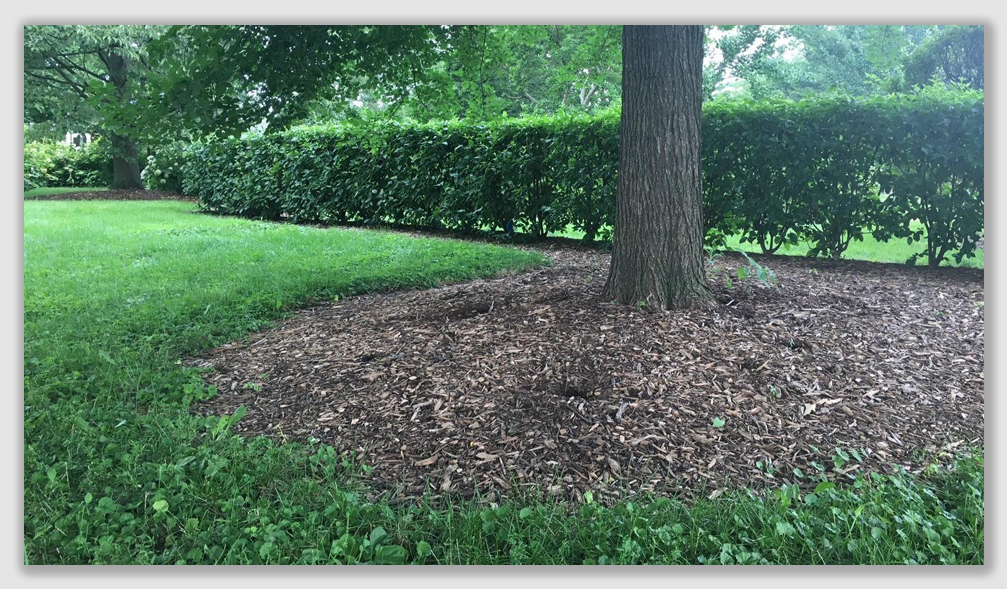 Chicago, Illinois, Tribune, July 18, 2018: Shield trees from lawn mower nicks with ample mulch
Many of us have trees growing in the middle of our lawns. Trees and grass aren’t natural companions, but you can make it easier for them to live together, according to Dave Lane, lawn supervisor at The Morton Arboretum in Lisle. For starters, put the tree first. “You always want to watch out for the health of the tree,” Lane said. “Turf is secondary.” A lawn can be established from sod or seed in a few weeks, but it takes decades to grow a tree. Think of it as an investment in curb appeal and property values: Studies have shown that mature trees can add thousands of dollars to the price of a home. One serious danger to trees isn’t the grass itself, but the lawn mowers and string trimmers we use to keep it tidy. If these power tools come near a tree’s trunk, they can easily damage its bark. That can be devastating for the tree because the life-giving vessels that distribute water and nutrients are in the bark’s inner layer. They can be severed if a lawnmower bangs the trunk or a string trimmer gets too close and scalps off the bark…
Although it’s something I’ve written about many times before, having just recently looked at a tree growing butt-up against a building, I thought I would, once again, tackle the subject of trees next to structures, and what to do about them… I recently looked at a pretty large pecan tree, and by large I mean a more than 30-inch diameter trunk, which is growing up against a building. In this particular instance, in the struggle for space and footprint, between the tree and the building, the tree is winning, hence the request for a quote on removal. The reason this particular tree makes such a good example for a column about trees against structures, is because removing it will be a very tedious job. It’s large, it’s tall, it’s over the building, the area behind the building it’s pushing against contains more buildings/infrastructure, and there are also electric and other utility wires involved. As removals go, it’s not that complicated, there’s just a lot of it, and there will be a lot of “piecing out,” which means a lot of time. In short, the removal of this tree is going to cost several thousand dollars. I’m not sure how old this particular tree is, but I’m willing to bet that at any time during the first 20 years of its life, removing it would not have been nearly the expensive proposition it currently presents. Now, I’m a guy, so I understand all about procrastination, but even I view a couple of decades as plenty of time to deal with a problem before it gets out of hand. Not only that, but in its first few years, taking out that tree could have been accomplished in just a few minutes…
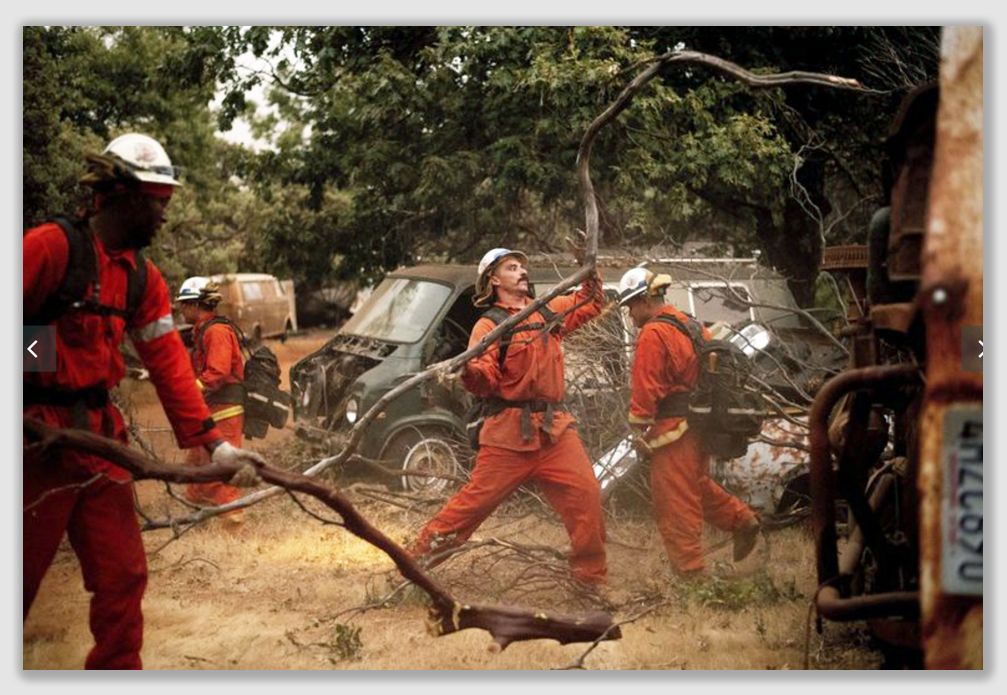
The Ferguson fire burning through Mariposa County has already charred nearly 10,000 acres and killed a firefighter working the front lines. But its true destructiveness might lie ahead as it burns a path through a tinderbox already primed for disaster. On either side of the Merced River, hillsides are filled with trees that have been killed by five years of drought and a bark beetle infestation, according to state maps. The ground is carpeted with bone-dry pine needles, which are highly combustible. These conditions, combined with dry, hot weather, have officials fearful that the fire could grow far worse as it burns near Yosemite National Park. Fire “moves very fast through dead needles, and dead trees produce a lot of dead needles,” said Mike Beasley, a fire behavior analyst for the U.S. Forest Service. “The dead pine needles, no matter where they end up, whether they’re still in the tree or draped in some old, decadent brush, or laying on the ground, they contribute significantly to rapid rates of spread…”
It’s typical to see trees scattered across the Lowcountry after a hurricane, but a local business is working to get rid of the branches ahead of the storm. “It’s tedious,” said Gren Winthrop, owner of Winthrop Tree Service. “It’s hard especially for the guys working in the field.” Winthrop said this hurricane season is keeping his five field crews as busy as they’ve ever been, even though a major storm hasn’t hit the Lowcountry. “I would say this is about as busy as we get. We’re working six days a week and barely keeping up with the phone calls,” Winthrop added. He said his crews are pruning about 100 trees a week, and pulling up to 50 dead and dying trees straight out of the ground in some weeks. A report from the South Carolina Department of Insurance shows huge losses to residential property after the last two hurricane seasons. Across the state, the department issued a combined payout of more than $200 million after Hurricane Matthew in 2016 and Tropical Storm Irma in 2017…
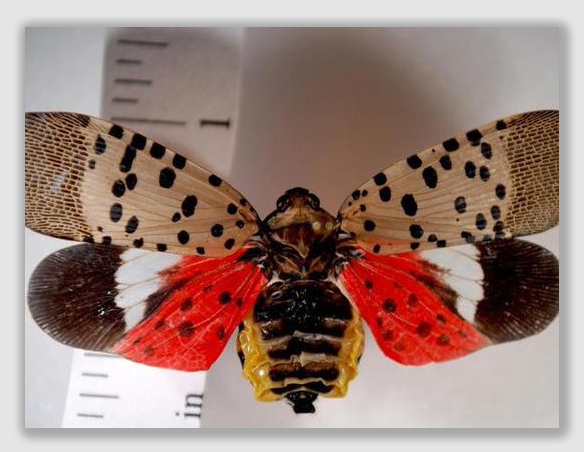 Bergen County, New Jersey, Record, July 18, 2018: New tree-destroying bug found in New Jersey
A colorful bug that is a major threat to fruit and hardwood trees has been discovered in New Jersey, state officials said Tuesday. An invasive species that hops from plant to plant, the spotted lanternfly was found recently in Warren County after spreading throughout 13 counties in eastern Pennsylvania despite a quarantine there. The bug was found in late June on its preferred host – a tree of heaven. But it is known to feed on the bark and leaves of more than 70 plant and tree species including willows, maples, poplars, tulip poplars, birch and ash. “I don’t know if you can stop this from spreading,” said Bob O’Rourke, a district manager for The Davey Tree Expert Company in Morris Plains. “They’re great hitchhikers. They can get on any smooth surface like the underside of a car and be moved rather easily…”
A homeowner cutting tree roots in his lawn next to his sidewalk in the 500 block of Oneida Street punctured a natural gas line Tuesday evening, causing the Pierre Fire Department and Police Department to evacuate several homes nearby and barricade a block or more in each direction. No one was hurt. The man had concrete for a new sidewalk poured earlier Tuesday and he was trying to clean up some tree roots exposed by the sidewalk work. He was using a trowel and an electric saw, he said. When the saw cut through the yellow plastic gas line, it was obvious from the sound and smell what had happened. “I got the hell out of there,” the man told the two men working to put a temporary shut down on the gas line until a permanent fix can be made. For about 45 minutes the block was cordoned off as a crew clamped down on the 2-inch gas line on the other side of the sidewalk. It appeared the gas line was not the required 12 inches below the surface of the ground on the lawn side of the sidewalk where the man had cut into it…
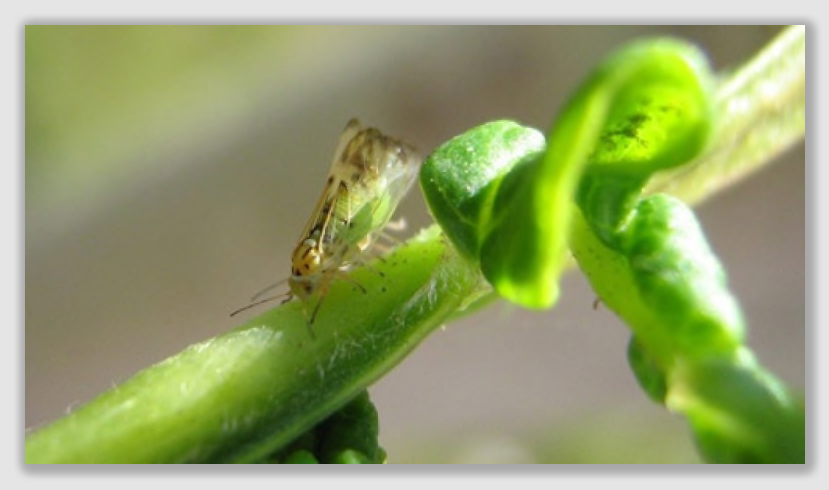
Beleaguered Winnipeg trees are under a fresh attack from a new foe this season: the cottony ash psyllid, also known as jumping tree lice. The tiny, yellow-and-black bugs were first spotted in city trees last year, but their impact was considered low at the time, said city forester Martha Barwinsky. That changed this year thanks to a dry season, she said, although city tree experts are still determining the extent of the infestation. “This spring, of course, a lot of the black ash trees were very late to leaf out, much like last year. But as they started to leaf out, the impact was even greater,” she said. “We’re finding, actually, much more advanced stages of the cottony ash psyllid this year…”
The state’s high court has weighed in on what it calls a “distinctly neighborly” dispute over a 100-foot-tall sugar oak tree near the property line of a Randolph home. The Supreme Judicial Court on Monday upheld the decision of a lower court that had dismissed a lawsuit filed by Mary Shiel against her neighbors, Keli-Jo and John Rowell, claiming that the couple’s tree had caused algae build up on her home. Shiel had demanded money to pay for the damage to her roof and an injunction requiring that branches overhanging her property be removed. The court said in its decision that it saw no reason to “uproot” long-established Massachusetts law that prevents landowners from holding their neighbors legally responsible for damage caused by their healthy trees. It also noted that the law allows property owners like Shield to remove any part of a tree that hangs over their property…
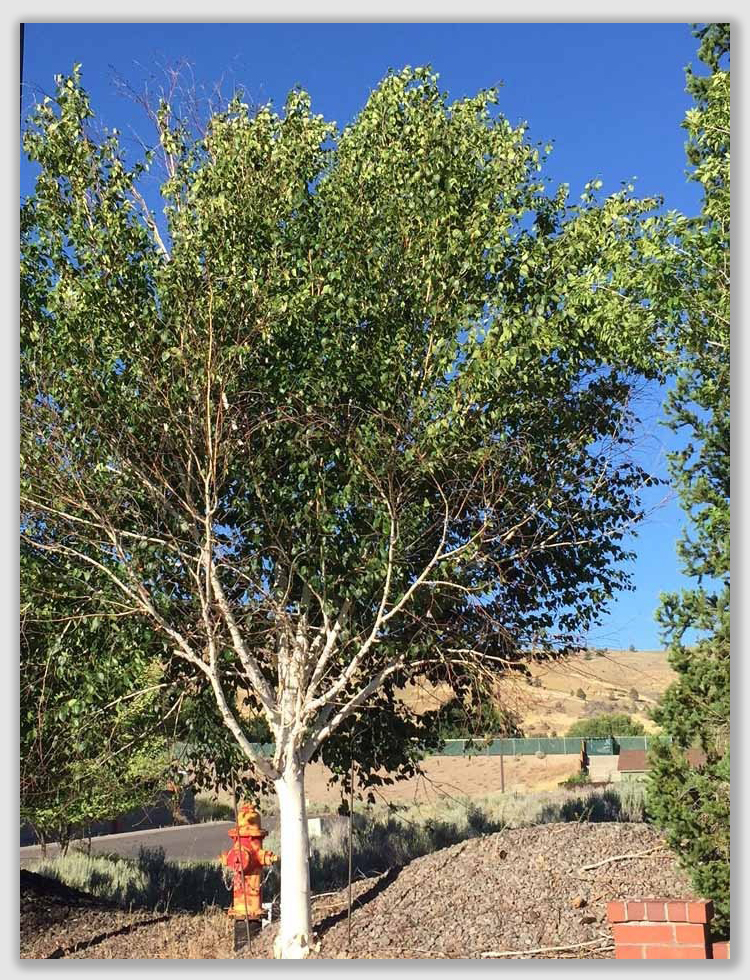 Portland, Oregon, The Oregonian, July 16, 2018: Beware voracious borers picking off birch trees
A voracious insect – the bronze birch borer – is picking off beloved birch trees throughout Oregon. Common for many years in Eastern Oregon, the hard-to-control beetle first showed up west of the Cascades in 2003 in Portland, where it has killed hundreds of trees. It slowly migrated and is now found in abundance as far south as Klamath Falls, according to Nicole Sanchez, a horticulturist with Oregon State University Extension Service. Sanchez has cowritten a detailed fact sheet on the problem called Homeowner Guide to Managing Bronze Birch Borer in the Upper Klamath Basin. The information is relevant for the entire state. The first sign of infestation is flagging branches with sparse, stunted and yellowing leaves at the tree canopy, she said. Twigs will fall and eventually the branches lose their leaves. Ultimately – often before a homeowner notices – the tree will have so much damage it’s impossible to save. Caught in early stages, death can be averted. “If you don’t know you have an infestation, it’s usually too late,” said Sanchez. “Then you have to take the tree out, which is expensive…”
Miami, Florida, WSVN-TV, July 16, 2018: Tree Trouble
Government officials tell us to prepare our homes for hurricane season, but storm preps got residents of one South Florida in big trouble with city hall. 7’s Brian Entin has more on the “Tree Trouble. Richard Masone makes a point to stroll around his neighborhood to keep an eye on things. He is the president of the Hallandale Village Homeowners Association. Richard Masone, Hallandale Village HOA: “Pretty much managing, yes. I want to see where all our money is going towards, want to keep the place up, so our property value stays up.” The association’s insurance company told him to get the trees trimmed to protect the property from hurricanes, so he hired the same licensed company the community has used for years. Richard Masone: “They came, they trimmed the trees beautifully. Our insurance company is happy.” But Hallandale Beach Code Enforcement officers weren’t so happy with the tree trimming. Roger Carlton, City of Hallandale Beach: “We are on this. It’s unacceptable behavior. They enormously exceeded any reasonable amount of trimming…”
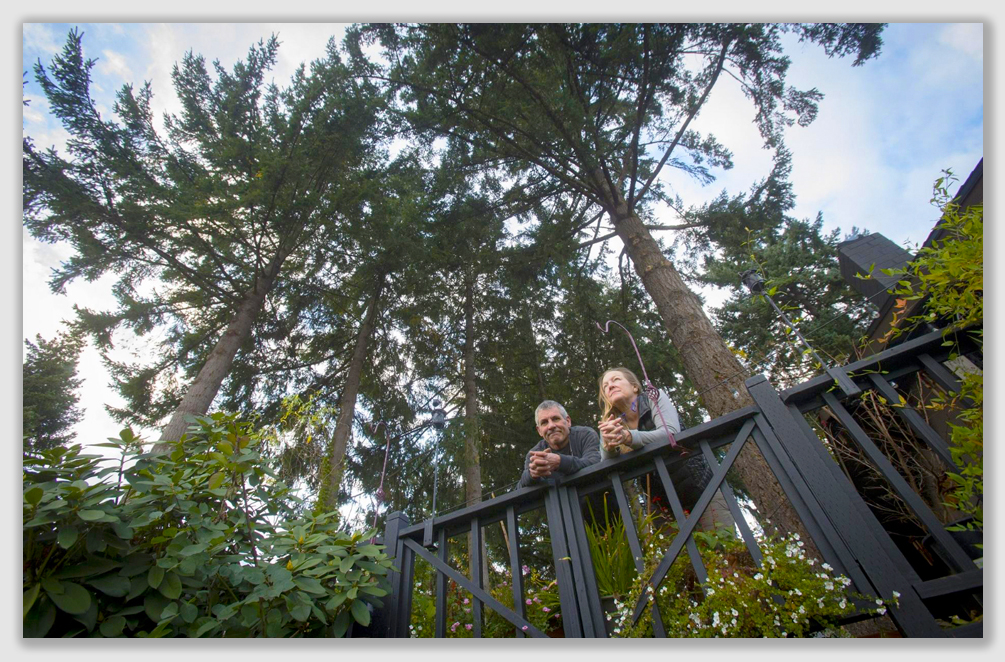 Eugene, Oregon, Register-Guard, July 13, 2018: Southwest Eugene neighbors settle tall tree lawsuit
A long-running legal dispute among neighbors over view-obstructing tall trees in southwest Eugene is over. The two sides reached a settlement earlier this week that requires two homeowners to cut down at their expense about half of the 23 trees that were at issue in the case. Following a 2½-day trial in February, Lane County Circuit Judge Mustafa Kasubhai had ruled that homeowners Jeff Bauer and Tom Heyler violated a Hawkins Heights subdivision covenant — unique in Eugene — that prohibits owners from allowing trees and shrubbery to “unreasonably interfere with the view from other lots.” The neighborhood is south of West 18th Avenue and east of Bailey Hill Road. Heyler had attempted to exempt his property from the view covenant by securing signatures from surrounding homeowners. But Heyler said he decided that the cost wasn’t worth the fight. “We did what we had to do,” said Heyler, who estimated that he and Bauer have incurred a total of about $60,000 in legal fees. Heyler said he’s glad the case is over but other than that, “I have no good things to say about it.” Todd Johnston, the lawyer for the uphill neighbors, said they appreciated “all of the court’s effort in analyzing this issue and are obviously happy with the result…”
A 40-foot tree limb came crashing down onto a man at the Elk Grove Summerfest. He was rushed into emergency surgery. It happened at the Elk Grove Park Saturday in a grove of oak trees. “It’s like getting struck by lightning. You can’t really prevent it,” said Scott Shipley, who was just 10 feet away when it happened. Shipley was in the crowd enjoying live music when the branch snapped. “I hear a crack behind me and I turned around and there’s a big old tree branch right on the ground with a gentleman laying next to it,” he said. “He was just flat on his back, out cold.” Shipley was a medic in the Air Force and stabilized the victim until paramedics arrived…

For years, there has been a movement in California to restore floodplains, by moving levees back from rivers and planting trees, shrubs and grasses in the low-lying land between. The goal has been to go back in time, to bring back some of the habitat for birds, animals and fish that existed before the state was developed. But in addition to recreating the past, floodplain restoration is increasingly seen as a way of coping with the future — one of human-induced climate change. The reclaimed lands will flood more readily, and that will help protect cities and towns from the more frequent and larger inundations that scientists say are likely as California continues to warm. “We thought we were just going to plant some trees out here and get some birds to move in,” said Julie Rentner, executive vice president of River Partners, a conservation group that is restoring hundreds of acres of farmland on the outskirts of Modesto in the Central Valley, where agriculture has overwhelmed the natural environment. “Now we’ve got this whole much larger public benefit thing going on.” Researchers say it is unclear whether climate change will make California drier or wetter on average. What is more certain is that the state will increasingly whipsaw between extremes, with drier dry years, wetter wet ones and a rising frequency of intense periods of precipitation…
Redding, California, Record Searchlight, July 13, 2018: Redding needs a tree ordinance now
The City of Redding needs a tree ordinance that will protect many of our native trees which are currently being cut with little regard to alternatives that would save them or require planting replacement trees elsewhere. Many people think Redding has a tree ordinance, but it doesn’t. Instead, it has a tree management ordinance which is basically a series of guidelines with no enforcement powers to prevent clear-cutting of every native oak tree on every undeveloped parcel in Redding should a developer so choose, and the Redding Planning Department agrees. Our current ordinance was put together in 2006 with a committee of real estate developers, city staff and a minority of just two members representing the public. The result is a toothless ordinance with many loopholes allowing tree protections to be waived or ignored. The result has been devastating for preserving our native trees, especially native oaks. Last year, 700 oak trees on Churn Creek Road at South Bonnyview Road were cut down, with only three oak trees being spared…
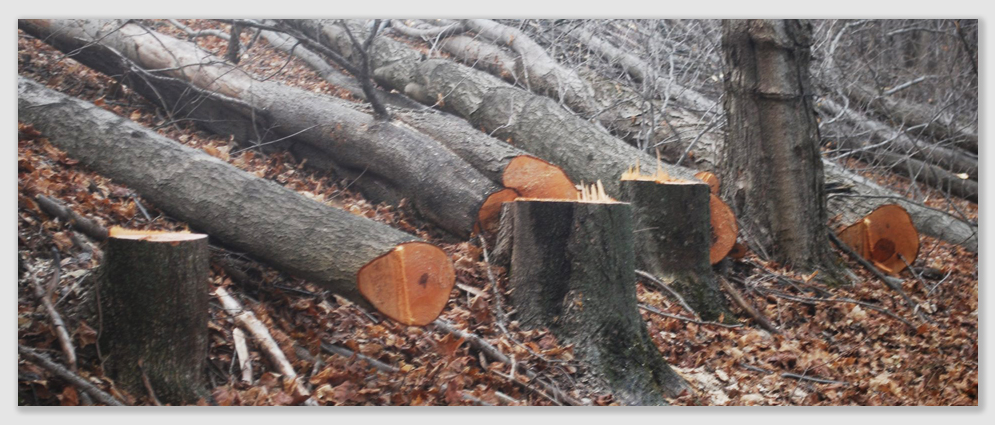
A Pennsylvania family that lost more than 500 trees to make way for the stalled Constitution Pipeline project asked a court on Thursday to dissolve an injunction that gave the company access to their property, and to determine compensation that remains unpaid. The Hollerans of New Milford Township in Susquehanna County argue that the pipeline will never be built after it was blocked by New York state environmental regulators, and say they have not received compensation more than two years after chain-saw crews felled the trees before the natural gas pipeline received all its needed permits. The family received widespread media attention when federal marshals armed with semi-automatic weapons and wearing bulletproof vests patrolled the isolated 23-acre farm in early March 2016 in an attempt to protect the tree-cutting crews from a handful of protesters. Twenty-eight months later, the Hollerans are asking a judge to overturn the injunction that allowed Constitution, operated by the Williams Companies, possession of about five acres of their property on which to build the pipeline…
As we all know, trees falling on power lines is very common during storms. It’s why TECO does year-round tree trimming, but several people in one Tampa neighborhood are complaining their trees are being “butchered,” comparing contractors hired by TECO to trim trees to a bad hairdresser. “You want it trimmed, but you don’t want to take off too much,” one neighbor said. “I’m all for it because my electricity goes out when the storm comes, but the power is at the top and my tree is now gone at the sides.” Bill Rogers said he liked his trees blocking his neighbors’ view of his yard. Now it’s left in an odd shape with hardly any branches. He says his palm tree looks more like a skeleton. “I didn’t particularly like how they butchered up the palm trees. It didn’t look like they trimmed them carefully,” he said…
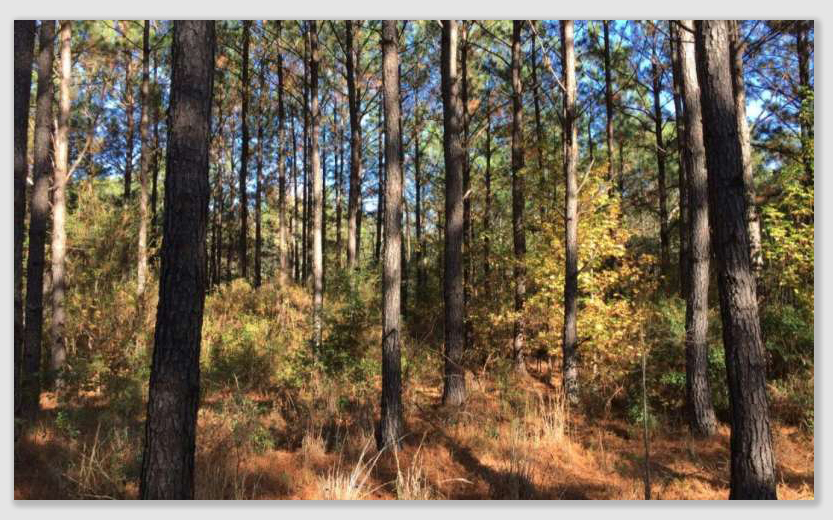 New York City, Queens Chronicle, July 12, 2018: Problematic tree has to go, Avella says
In his many years as an elected official, state Sen. Tony Avella (D-Bayside) hasn’t seen another arbor-related situation like the invasive roots from a tree on 13th Avenue just feet west of 162nd Street in Beechhurst. “We’ve always come across situations where city tree roots, obviously, uplift the sidewalk and then go on to the private property, which the city refuses to address,” the senator said during a press conference at the site Monday. “In this case though, the roots of this tree have literally taken over the property of these two houses.” The tree roots have caused problems for the yards of adjacent homes at 12-44 162 St. and 160-37 13 Ave. And a property across the street has started to experience its own problems from the roots. They’re visible on much of the ground around the homes — including a lawn and a garden, which has a fountain that’s off-balance because of the roots. Those are far from the only problems. “Our sewer was crushed from the tree roots,” Virginia Centrillo, who lives in the 13th Avenue home, said at Avella’s press conference in reference to her home’s private sewer system. She said she’s already spent tens of thousands of dollars getting her sewer system fixed, and she expects it to cost her as much as $60,000…
Phys.org, July 12, 2018: Study forecasts growth rates of loblolly pine trees
The ability to predict weather patterns has helped us make clothing choices and travel plans, and even saved lives. Now, researchers in Virginia Tech’s College of Natural Resources and Environment are using similar predictive methods to forecast the growth of trees. In a study published in Ecological Applications, researchers used ecological forecasting to predict how changes in temperature, water, and concentrations of carbon in the atmosphere in the Southeastern United States may affect the future growth rates of trees. The paper brings together efforts from two projects funded by the U.S. Department of Agriculture. In the first, known as PINEMAP, hundreds of researchers collected forest growth data from the past 35 years and developed mathematical models to quantify how pine forests may respond to climate change. The second project, led by R. Quinn Thomas, assistant professor of forest dynamics and ecosystem modeling in Virginia Tech’s Department of Forest Resources and Environmental Conservation, focused on quantifying uncertainties in how climate models predict how forest and agricultural ecosystems, along with decisions like the timing of crop or forest harvest rotations, influence climate temperature and precipitation patterns…
 Sacramento, California, KCRA-TV, July 11, 2018: Heads Up: Summertime tree limb drop is here
As temperatures hover in the mid-90s for the foreseeable future, arborists say you can bank on more tree limbs to drop suddenly. The phenomenon is likely to occur more in the days ahead, according to Stacy Barker, an arborist with Bud’s Tree Service. “We absolutely can bank on it,” he said. “Whenever we see the temperatures rise above 90-95 (degrees), especially for consecutive days as we’re seeing next week, we can just about bank on we’re going to be answering emergency calls like this.” In West Sacramento, a 30-foot eucalyptus branch toppled a fence at the U.S. Army Corps of Engineers construction field office. It fell from a height of about 12 feet, Barker estimated. “We do know that the phenomenon is particularly common in several different species of trees, eucalyptus being one of them. Oaks, ash, willow and elm to name a few [more]…
Strong storms are the norm in the Tampa Bay area and large Live oak trees fell recently, causing significant damage, but a local arborist said there are key signs help spot unhealthy trees. Two massive Live oaks came crashing down in Clearwater Tuesday and in Seminole Heights on the 4th of July, damaging homes and smashing vehicles. Frank Roder, owner of the home that was damaged in Seminole Heights said he believes lightning struck the tree, which is one of the largest in the neighborhood. “We found some paperwork when the house was built 100 years ago, there was talk about it being built under this grand ole oak tree, so God knows how old that tree was,” Roder said. He isn’t 100 percent sure that lightning was the sole cause but he said the tree appeared to be healthy. Landscapers in Clearwater said the tree that toppled over there likely fell due to unseen issues with the root system rooting away. “They decay through age, disease or really a lot of rain and soft soil,” said Greg Chew with Good Views Garden and Landscape. Hillsborough County forester Rob Northrop is encouraging homeowners to hire a certified arborist to check large trees…
 Denton, Texas, Record-Chronicle, July 11, 2018: Scientist finds beauty in dusty oak trees
University of North Texas geography professor Alexandra Ponette-González sees oak trees as big dust collectors. As it turns out, they are pretty good at it. Two years ago, Ponette-González began a major research project to figure out just how well some of the city’s trees could filter soot from the air. She received a five-year grant from the National Science Foundation to help pay for the work. “It’s been a topic in the [scientific] literature and the general conversation for a while,” she said. But until now, few scientists have set out to measure how much soot trees actually take out of the air and send back in the ground. The idea is important because doctors know that it’s bad for people and animals to breathe in soot, or more specifically, black carbon. The compound sticks to lung tissue and damages it. Coal miners, for example, can get deadly black lung disease from breathing black carbon. Most soot in the atmosphere comes from vehicle exhaust, cooking fires and other burning…
While the entire attention has been on the trees earmarked to be chopped down to facilitate redevelopment of colonies, no one has paid much attention to trees falling during the gales the capital has recently seen. A small group of NGOS, RWAs and green activists are, however, making it their mission to “rescue” such trees and replant them — a task blighted by low survival rates. On Monday, NGO Greencircle of Delhi and the New Delhi Municipal Council used ropes and a JCB truck to replant a rohida tree (Tecomella undulata)uprooted by a storm in Lodhi Garden. The NDMC staff dug a pit close to the fallen tree and a JCB and tractor move the tree into the pit. Precautionary spraying of insecticides and pesticides was followed by the erection of two supporting wooden legs on the tree trunk. The staff carried out a similar procedure last month to save an Amaltas. Suhas Borker, founding member of Greencircle of Delhi, said the idea was to send a message that each tree counted and efforts had to be made to save every single one of them. “The rohida is considered a community tree. People bathe under it in the belief that it will rid your skin of diseases. People even hang their clothes on the tree for its medicinal properties,” said Borker, who has long been working to save these trees in Lodhi Garden. NDMC officials pointed at the new leaves that the replanted Amaltas was sprouting, symbol of success in reviving uprooted trees. Saving trees, however, is not an activity that can be planned at leisure. Experts point out that there is a window of a few hours after which the chances of survival of a replanted tree goes down drastically…
 T&D World, July 11, 2018: Five things to know about tree growth regulators
Tree growth regulators (TGRs) increasingly are being integrated into vegetation management programs across the U.S. and changing the way trees are cared for under power lines, around them, and along rights-of-way. For those who are not familiar with TGRs — and even for those who are — there may be a few things about them that are surprising to learn. From reducing maintenance costs to improving crew safety to creating better customer relationships, TGRs do more than just regulate tree growth. While they are becoming more commonplace in utility vegetation management programs, there are some aspects of TGRs even professionals may not know… Broadly defined, a growth regulator is simply any chemical used to alter the growth of a plant or a part of the plant. While one could technically argue water and nutrients are chemicals that alter the growth of plants, growth regulators more specifically work with plant hormones to achieve their result. There are growth regulators that can stimulate accelerated growth by promoting the formation of auxins, decrease fruit production by affecting the formation of cytokinins and ripen fruit by increasing ethylene…
Dallas, Texas, KXAS-TV, July 10, 2018: East Dallas effort succeeds in stalling tree removal
In East Dallas, a movement to stop the removal of decades old trees has stalled a developer’s plans. A petition now has more than 1,200 signatures asking EDENS, the developers of Casa Linda Plaza, not to move forward with a plan to remove five trees that have shaded the land for nearly 60 years. According to Dallas City Councilman Mark Clayton, EDENS requested permits to do so in May in order to pave more parking. He said they told him they planned to do so in order to widen the current sidewalks to make them more pedestrian friendly. In addition, he said, EDENS already had a plan in place to more than replace what was scheduled to be removed. “There is always the fear when a tree is removed that everything is going to be scraped and the only thing left is concrete. The city has a tree mitigation plan and they are doing more than the city even requires them to do,” wrote Clayton…
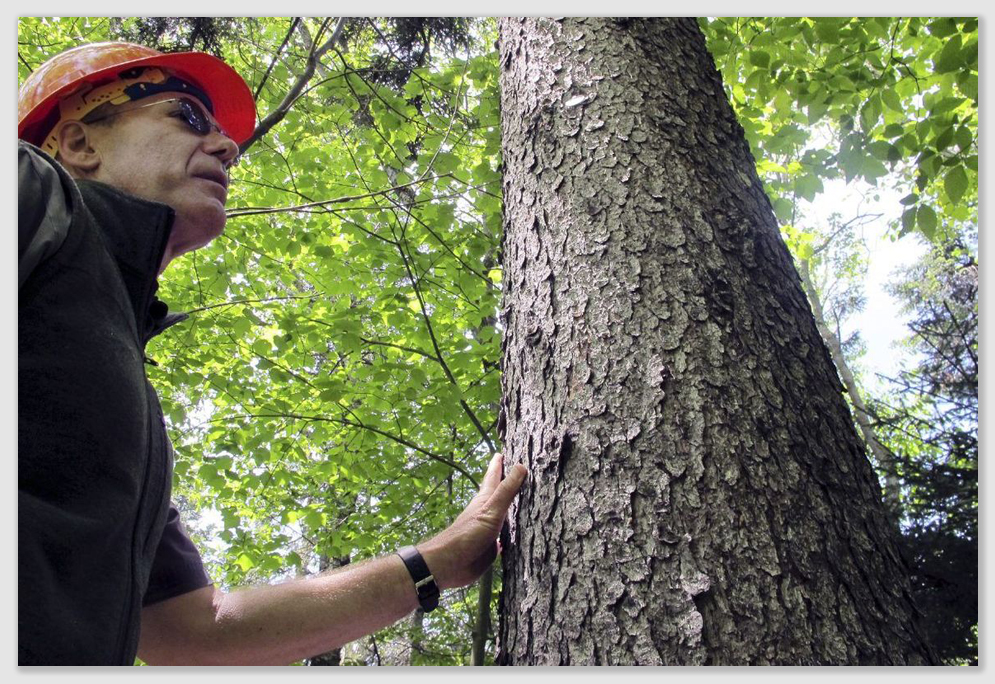 Associated Press, July 11, 2018: Pollution controls help red spruce rebound from acid rain
The gray trunks of red spruce trees killed by acid rain once heavily scarred the mountain forests of the Northeast. Now those forests are mostly green, with the crowns of red spruce peeking out of the canopy and saplings thriving below. A main reason, scientists say, is a government-enforced reduction in the kind of air pollution that triggers acid rain. “We’ve seen it go full arc from declining for some unknown reason, to figuring out the reason, to them doing something about the cause and then the tree responding and rebounding again,” said Paul Schaberg, a plant physiologist with the U.S. Forest Service and a co-author of a new study on red spruce who has been researching the species since the 1980s. “It’s just an amazing science arc.” In the 1960s through the 1980s, pollution — mostly from coal-powered plants in the Midwest and car emissions carried by the wind and deposited as acidic rain, snow and fog — devastated Northeast forests and lakes, leaching nutrients from soil and killing aquatic life. Red spruce are particularly sensitive to acid rain and, at the height of the die-off, some forests lost 50 percent of them. But decades later, not all the environmental damage is turning around at the pace of the red spruce…
Susan Stone planted a cedar tree a few years ago and it grew to be taller than she is. “I’ve been watching it grow for three to four years, and now it’s gone,” Stone told Call 12 for Action. “It just made me sad.” The tree was mistakenly removed by a local tree service Stone hired to trim a different tree and remove four shrubs. The company got rid of the shrubs months ago but left three of the stumps. “I asked her when they would be back out,” Stone recalled. “[An employee of the tree service] said they completed the job and I said no, that they hadn’t.” Stone said she marked the stumps with red ribbons so when the crew returned, they would know exactly what to remove. But instead of grinding the stumps, the tree service cut down Stone’s cedar tree, a small fir tree and another shrub. “I was pretty much hysterical,” Stone said. Then Stone was double-billed for the work. The invoice totaled $900. “I don’t believe it’s my responsibility to pay for work that they messed up,” she said…
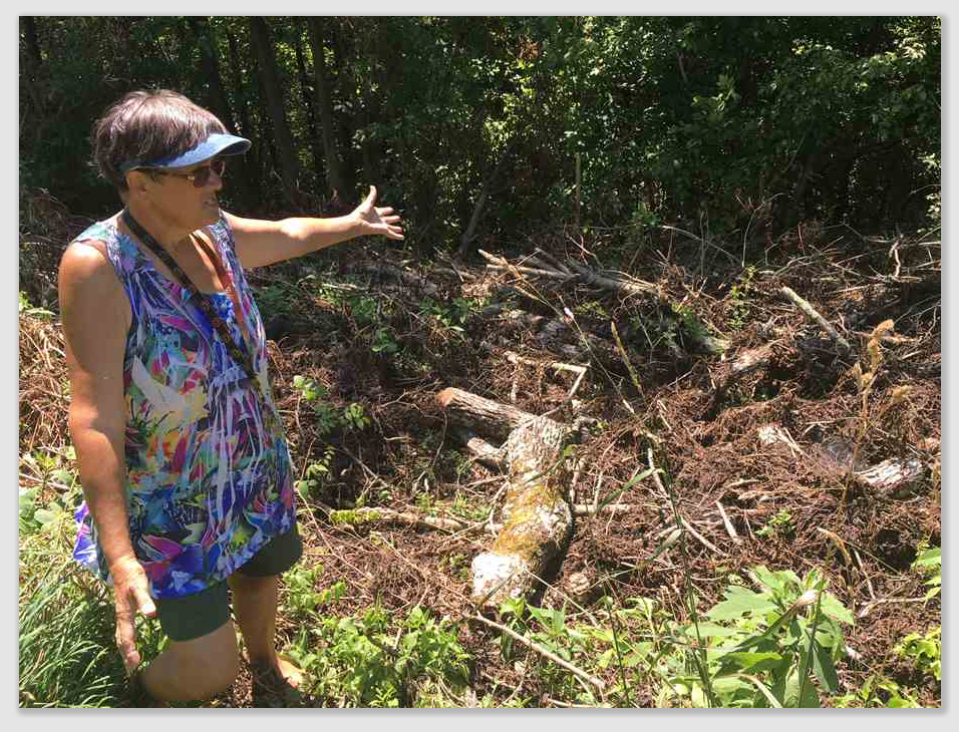 Kingsport, Tennessee, Times-News, July 9, 2018: Bloomingdale couple upset about tree trimming debris
American Electric Power kicked off a new program in Kingsport earlier this year whereby trees, limbs and brush near and under power lines would be trimmed every four years. The idea is this type of routine maintenance would increase AEP’s reliability and decrease the number of outages due to high winds and storms. But for one Bloomingdale couple, the tree trimming work that recently took place on their property has not been the most pleasant of experiences. Jerry and Vickie Foulk live on Bancroft Chapel Road. In early June, a private company — hired by AEP — came to their home to trim the trees away from the power line that ran across their backyard. The Foulks’ home sits on about six acres. The backyard slopes down an embankment and is mostly wooded and undeveloped. When the trimming was done, the company left all the cut limbs and logs lying in the backyard…
A towering oak tree has been cut down in western Illinois after a huge branch fell and killed two men watching a fireworks show. Sixty-one-year-old Daniel Mendoza Sr. of Rock Island and 72-year-old Lawrence Anderson of Moline were killed July 3 outside the county courthouse in Rock Island. Rock Island County Sheriff Gerry Bustos gave part of the tree to family members Saturday. He says the tree was considered dangerous after the deaths and needed to come down. Witnesses said they heard a cracking sound; some assumed it was fireworks from the show. Daniela Mendoza says her family plans to use wood from the tree to make memorials for her father and Anderson…

Over the weekend, part of a tree crash landed on a San Jose playground. And while no one was injured, plenty of parents were panicked. It happened early Saturday at River Glen Park. A Chinese Pistache tree split and fell, landing right on a children’s playground. “You want to believe that the trees that are at the park which are so beautiful (it’s what makes this park so great) that they’re safe. So it’s alarming,” said parent Bonnie Hennum. It may be alarming, but it’s not uncommon. Witnesses say a large tree branch fell next to the playground at Fleming Park two months ago. And in October of 2016 a tree limb fell at Happy Hollow Park and Zoo crushing a bunch of empty strollers. San Jose’s arborist estimates there are about 1000 limb failures on city trees each year. “We know we are underfunded. We just do not have enough to do all the tree work we would need to do on an annual basis,” said Russell Hansen, the San Jose City arborist…
UC Riverside scientists are investigating whether dwarfed citrus trees can help citrus growers to save time, money, fertilizers, pesticides, water and labor. In 1998, as part of a series of preliminary Citrus Research Board (CRB)-supported trials, navel orange trees treated with a dwarfing agent were planted at the Lindcove Research and Extension Research Center (LREC). The dwarfing agent used in these trials, a small RNA molecule named “Transmissible small nuclear Ribonucleic acid” (TsnRNA”) resulted in a dramatic reduction in tree size. Most importantly for citrus growers, fruit yield per canopy volume and fruit quality (size, color, sugar/acid ratio) of these TsnRNA-treated trees was not affected while double number of trees could be planted in the same land surface (up to 400 trees per acre). Almost 20 years after planting, the threat of HLB brought about a renewed interest in this potential technology. When growers saw the dramatic reduction in size of these trees during a visit to LREC in November 2014, they expressed a strong desire to explore this technology. Production of commercial dwarfed trees is key to the successful development of high-density plantings (potentially under protected screens – CUPS), which will be critical to meet future citrus production challenges. To assess the potential savings offered by the employment of this application, UC Riverside scientists are investigating nitrogen fertilizer requirements, nutrient uptake efficiency, water-use efficiency, pesticide application efficiency and savings in labor time for several horticultural operations such as hedging, spraying, fruit harvesting, and tree inspections…
 New York City, WABC-TV, July 5, 2018: Tree branch almost falls on Wisconsin newlyweds
A newlywed couple in Wisconsin was sharing how they fell in love when a tree almost fell on them. Taping an interview while sitting at a picnic, Cheyenne and Lucas Kopeschka barely escaped as a tree branch came crashing down onto their table. The new bride suffered minor injuries, but was able to finish the interview and later said that “our love is forever going to be stronger than that tree… ”
Denver, Colorado, KDVR-TV, July 5, 2018: Tree trimmer dies following chainsaw injury in Thornton
A man trimming trees in Thornton who was injured by a chainsaw Thursday afternoon has died from his injuries, according to a spokesperson with St. Anthony Hospital in Lakewood. Authorities dispatched a medical helicopter to the 9200 block of High Street in Thornton in an effort to save the man’s life. Some of the accounts of the incident might be considered graphic for some readers. The man was stuck in a tree just behind a home. Witnesses described injuries to his arm and midsection as severe. Much of what happened in the tree is a bit of a mystery to the public and news media. Authorities in Thornton remained mum on details. “I heard somebody screaming hit me, hit me again,” neighbor Ron Miller said. “I assumed they were down there fighting.” Whether it was a fight or a tragic accident– witnesses say a chainsaw was involved. A medical helicopter was needed to get the injured man to a hospital…
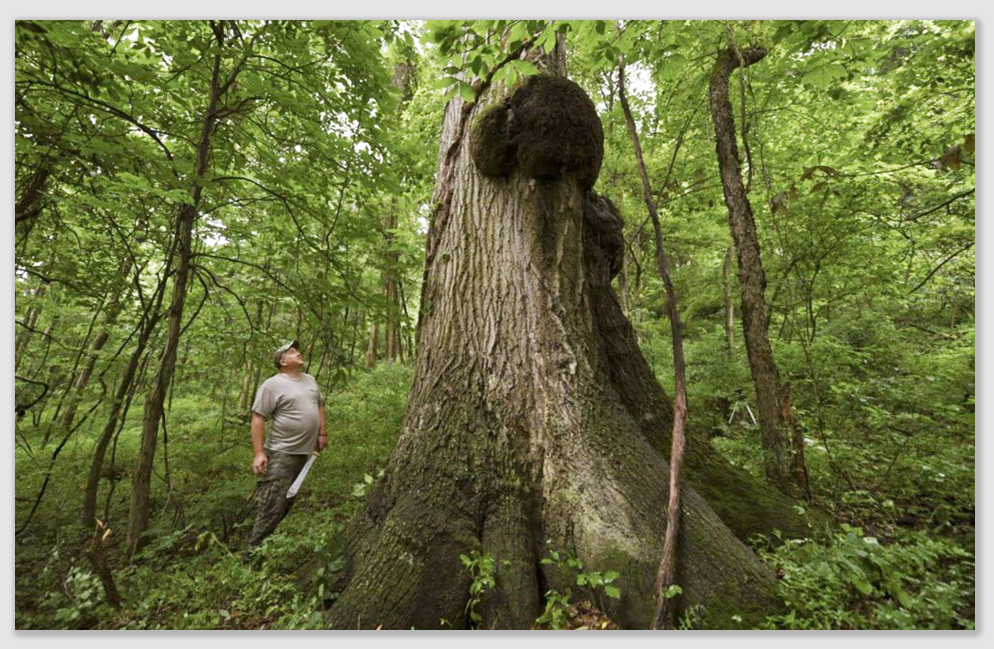
For a forester in Pennsylvania, finding a red oak tree with a circumference of about 26 feet and a height of 120 feet is about as likely as seeing Bigfoot. But a giant does exist just beyond the fields of a Bell Township farm, rivaling some of the largest red oaks in the state, according to preliminary measurements. And it probably has been there for 400 years. Tom McQuaide of Torrance, a forester with Pennsylvania Forest Management, is in the process of submitting the tree’s measurements for inclusion in the Champion Trees of Pennsylvania, a registry of the state’s largest trees measured by several factors, including height and girth. The largest red oak in the state is in Delaware County. It has an 18-foot circumference, smaller than the Bell Township specimen’s, but it is 145 feet tall, according to the Champion Trees website. “Let’s just say, 100 years ago, there wasn’t equipment in the state to cut down this tree — it was too big to handle,” said McQuaide, a burly man who looks diminutive next to the base of the red oak, which could hide half a dozen men McQuaide’s size. Not that he is looking to cut it down…
Young trees are very fragile and intense heat like the Wabash Valley has been dealing with can damage trees soon after you plant them. Tree experts say taking care of a tree begins with how you plant it. They say nearby plants can take much-needed water away from the tree you are trying to grow. “It is important to be sure that the root zone is free of competitive plants that are going to take away the water even grass takes away water from your tree. Trees don’t really prefer grass they like mulch like they have in the forest.” ISU grounds manager Stephanie Krull says. A Vigo County Parks Department tree expert showed me how to properly situate a healthy tree and what its surroundings should look like. “So we’ve planted this tree and unfortunately we didn’t get to mulching the tree immediately and so what we wanted to do and what we’ve done here is strip the sod layer off around the tree so we don’t have any competition growing and we’re not throwing that mulch on top of the sod or grass layer” Adam Grossman with Vigo County Parks Department says…
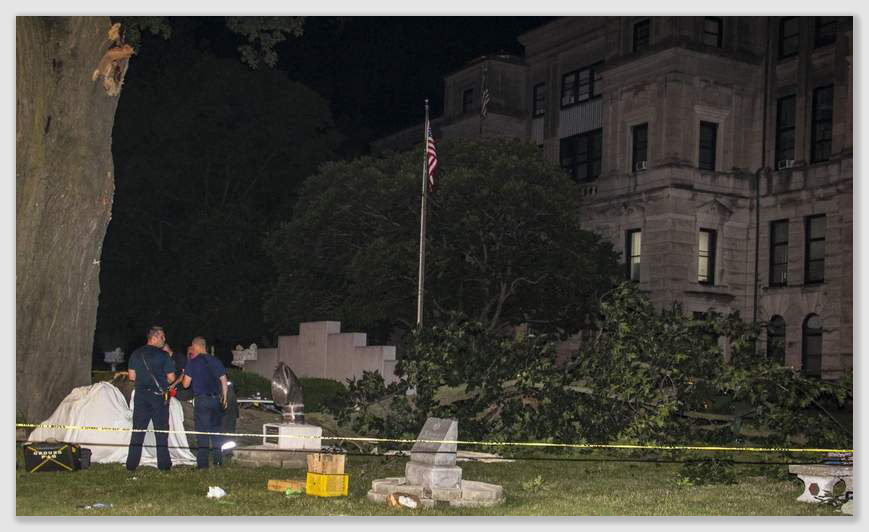
Two men died late Tuesday from injuries suffered when a huge tree branch fell while people watched fireworks outdoors at the Rock Island County Courthouse. Daniel Ortiz Mendoza, 61, of Rock Island, was pronounced dead at the scene about 10:30 p.m., and Lawrence Anderson, 72, of Moline, was pronounced dead at 11:32 p.m. Tuesday, according to Rock Island County coroner Brian Gustafson. Both died from “multiple traumatic crushing injuries” after the limb from the huge oak tree at the courthouse fell and struck them, said Gustafson, who performed autopsies on both men this morning in Ogle County in Oregon, Illinois. Gustafson said his deputy arrived at the scene first, and Gustafson arrived later. Also injured was a 21-year-old pregnant woman from East Moline, who was reported to be near full term, according to a news release from Rock Island Sheriff’s Office. She was taken to Unity Point where the baby was delivered and the baby and mother are both in good health. Also at the scene was Dave and VanLandegen, of Rock Island, retired director of court services for Rock Island County. He and his wife, Cindy, always watch the fireworks from that area, he said. VanLandegen heard “an ungodly sound … a crashing,” he said. “We were about 20 feet away. You could feel the wind when (the limb) came down…”
The Rock Island County Sheriff has launched an investigation into what caused a large tree branch to collapse at Red, White and Boom in Rock Island Tuesday killing two people. The branch was 8′ 2” in circumference at its base, and 45 feet long, according to Sheriff Gerald Bustos. “The oak tree that we are talking about, I believe to be about 100 years old,” Bustos said. “It has been on the courthouse lawn for every picture I can find going back in history.” The ongoing investigation will include an arborist to look for any potential cause of the collapse. The sheriff, and locally trained arborist, Mickey Covert, say the tree appears healthy. “This is a healthy tree,” Covert said. “Many trees have dead on it and on the tips.” Covert told KWQC that based on his training, he believes that water and moisture got gathered in the area where the branch met the tree. “What we have here is what we call the branch collar,” Covert said demonstrating his belief on a tree across from the Rock Island County Courthouse… “The weight of the lead affected all the moisture and stuff that was gathering right here. It started with water and moisture gathering…”
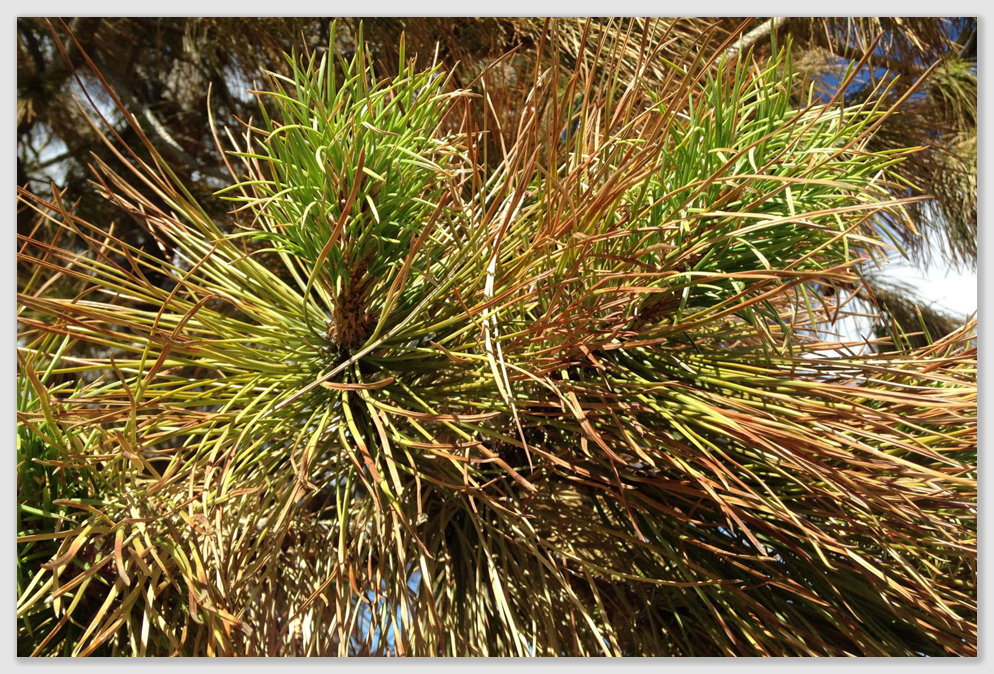 Choteau, Montana, Acantha, July 4, 2018: Watch for tree illnesses caused by moisture
… With all the moisture we have been getting this spring and early summer, I am expecting to start seeing signs of several diseases in trees. If your apple or other fruit-bearing trees suddenly start having the tips of branches and leaves die, the tree is probably being attacked by the a bacterial disease called Fire Blight. Prevention is difficult. Other than planting resistant varieties, we are mostly limited to pruning out dead wood in the fall or early spring. Pruning out diseased limbs during the hot summer months generally only spreads the disease further into the tree. If you have bur oak trees, you may at some point see some large blisters appearing on the leaves that eventually die. This disease is a fungal infection called Oak Leaf Blister. Some trees can look terrible, but basically you just need to sweep up all those leaves in the fall and get them away from the tree. The final one I have seen around the county is a fungal infection of ponderosa pines called Dothistroma Needle Blight. If the outside half of the needle is dead and turns orange or red, and the inside half of the needle stays green, that is what you have. Repeated years of re-infection can ultimately kill even fairly large trees. With this disease, if two years of needles are infected, the tree needs to be treated by a professional arborist…
Chicago, Illinois, Tribune, July 3, 2018: What does scorching heat mean for trees and plants?
The summer has just begun and already it’s a scorcher, with stretches of 90-degree-plus days beginning in May. What does that mean for trees and garden plants? “Plants can cool themselves as long as they have water,” said Sharon Yiesla, plant knowledge specialist at the Plant Clinic of The Morton Arboretum in Lisle. Their cooling mechanism is to draw water up from their roots and let it evaporate through tiny holes in their leaves. When water changes from liquid to vapor, it dissipates heat. Think of the cool sensation you get when water evaporates from your skin at the beach. “Fortunately for plants, we’ve had plenty of rain so far this year,” Yiesla said. According to the office of the Illinois State Water Survey, most places in northeastern Illinois have had twice or three times as much rain in recent weeks as the long-term average. That rainwater has soaked into the soil where plants’ roots can absorb it and pass it up to their leaves for cooling purposes. That doesn’t mean we can afford to let all plants fend for themselves. Some plants, such as those in containers, still need to be watered — and in hot weather they need watering more often…
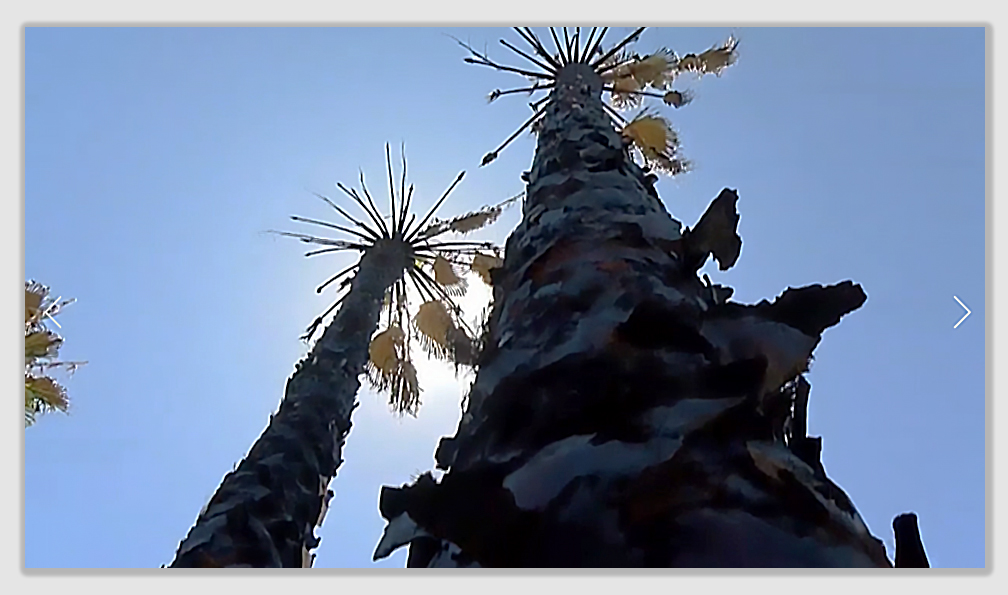 Las Vegas, Nevada, KSNV-TV, July 2, 2018: Illegal fireworks blamed for Vegas tree fire
A neighbor shooting off illegal fireworks on Saturday caught Robert Arvizu’s palm trees on fire. The flames spread to the lawn and the front of the house. “The neighbor told us ‘sorry, but we caught your house on fire,” said Arvizu. Arvizu’s first thought was to get his family to safety. “The scariest part? We have a 2-month old baby,” said Arvizu. “It smelled like smoke. She couldn’t stay here last night. “ This is exactly what local police and firefighters are trying to prevent this 4th of July. The website ISpyFireworks.com is giving people an outlet to report illegal fireworks. The northeast portion of the valley sees much of the activity. “The website gives us an idea of trouble areas,” said LVMPD Officer Laura Meltzer. “And we can use that information to plan for next year.” In the meantime, over at Rainbow Boulevard and Ann Road, UNLV Rodeo is hoping to raise a little cash selling safe and sane fireworks…
A Hawkins County man was charged with felony vandalism Friday for allegedly cutting down a tree last week that fell through the roof of his girlfriend’s daughter’s mobile home, causing a reported $10,000 worth of damage. The victim’s mother, Linda Goodman, reportedly told Hawkins County Sheriff’s Office Deputy Adam Bledsoe Friday that her boyfriend, Jerry Wayne Mowell, cut down the tree because “he was worried that it was going to fall.” The victim, Jennifer Hickman, resides on Gillian Road off Ebbing and Flowing Spring Road near Rogersville. Hickman told Bledsoe she suspected the tree cutting was related to an ongoing dispute between her and her boyfriend, Roger Reed, and Goodman and Mowell, who live on the same road. On June 23, Goodman was charged with simple assault related to an incident involving Reed. Hickman reported the tree cutting on Friday June 29, but she stated the last time she was home was on June 25, so the cutting occurred between June 26-28. When Bledsoe arrived at the residence Friday morning, he observed a large tree resting on the roof of the home that appeared to have been intentionally cut down, as well as a branch that had gone through the roof into a bedroom…
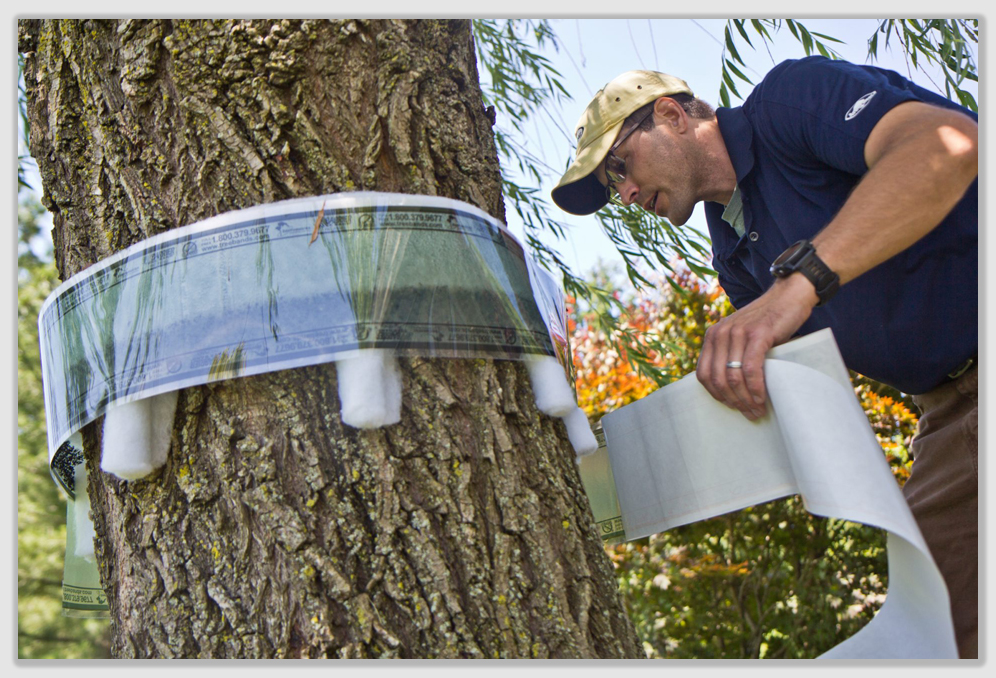
International trade brings in fruits and vegetables, computers and cars. But a downside to imports includes fighting against an onslaught of invasive species that hitch rides on wooden pallets, shipping containers, boxes and produce. The spotted lanternfly, a brightly colored red and black moth and one of the latest invaders, landed in Pennsylvania’s Berks County around 2012 and has munched its way across 13 counties, threatening grapes, orchards and hardwood trees. State and federal officials want to stop it, and they’ve spent about $20 million this year on research and eradication efforts. “We’ll go in with all of our force to try to eliminate that population before it can expand further and impact other businesses and industries outside of the region,” said Leo Donovall, the spotted lanternfly program director in Pennsylvania for the U.S. Department of Agriculture. “The ultimate goal is that we can potentially shrink this population down to the point where it is manageable or even potentially to eradicate it.” Donovall helped identify the pest when it was first discovered in Berks County in 2014. He says in 2016, the lantern fly infestation covered about 174 square miles. By the end of 2017, more than 3,000 square miles in southeastern Pennsylvania had spotted lanternflies, primarily in Berks, Montgomery, Northampton and Lehigh counties. The USDA will hire about 100 people this summer and spend $17.5 million to stop its spread…
Worcester, Massachusetts, Business Journal, July 2, 2018: Group highlights recent tree worker deaths
A local coalition focused on worker safety is calling attention to the safety needs of tree workers in the wake of two recent deaths. MassCOSH, a local coalition for occupational safety and health, said on Friday that the death of David Bova, 34, who fell 50 feet from a tree while working outside a home in Rowley, should prompt enhanced safety measures among employers. An Occupational Safety and Health Administration official said an investigation into Bova’s death is underway. “Over the years, we have seen too many tree workers die needlessly on the job,” Jodi Sugerman-Brozan, executive director of MassCOSH, said in a statement. “We demand employers in this field use every safety precaution to keep their workers safe.” On June 11, Lewis Umbenhower, 38, fell to his death as he was working on a tree in Medway. MassCOSH also said that in October of 2010, Bova, who was from Salem, New Hampshire, was involved in a separate yet similar accident, where he fell 40 feet from a pine tree and was airlifted to a local hospital. MassCOSH described tree work as an “increasing problem” due to increased demand associated with impacts of extreme weather…
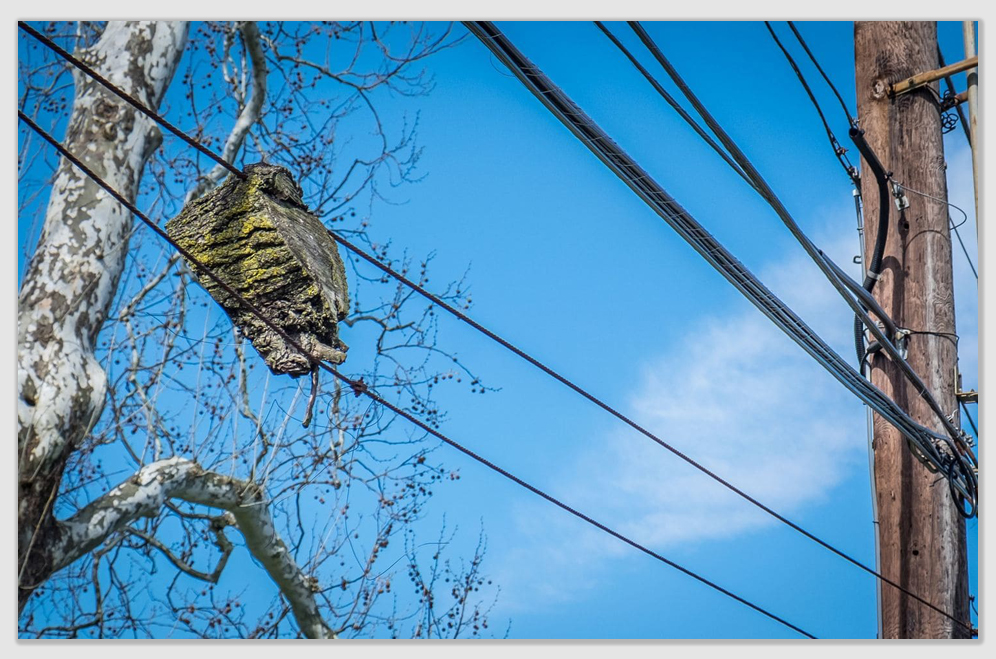
Why is the sky blue? Why is water wet? Why is there a tree branch hanging from that electrical wire? That last one has obsessed Answer Man for years: rough sections of wood about the size of a football or basketball completely around a wire on a telephone pole. Once he started noticing them, Answer Man started seeing them everywhere. Did anyone else even care? “I personally call them ‘tree chunks,’ ” said Mike Hyland, senior vice president of engineering services at the American Public Power Association in Arlington. Before we get to what tree chunks are and why they exist, it’s useful to get a crash course in what is now called the utility pole. Of course, it started out as a telegraph pole, holding up the wires that spider-webbed across the country in the middle of the 19th century. They often followed railroad line rights of way…
Cedar Rapids, Iowa, Gazette, July 1, 2018: Meet Iowa’s big-tree hunter
Trees that survive storms, disease, pests and development, rising through several human generations to become the biggest of their kinds, have a way of putting our lives into perspective. Mark Rouw has been finding and documenting the state’s largest trees for more than 40 years to help Iowans learn more about the natural environment and to provide some protection for the quiet giants. “I call him the ‘Rain Man’ of trees,” University of Iowa Arborist Andy Dahl said of Rouw, referring to Rouw’s near-perfect recall of the locations of big trees throughout the state. “It’s just amazing what he does.” Rouw, 61, of Des Moines, maintains Iowa’s list of state champion trees and their runners-up as an unpaid volunteer, updating an ever-changing spreadsheet of the state’s largest trees of species from Balsam Fir to Rusty Blackhaw. He drives out to river bottoms and uplands to measure newly-discovered big trees and make sure state champions still are standing. “It’s a little bit like birders, who are searching for a new bird on their life list,” Rouw said. “If I find a big tree, the next step is to find one that is even bigger…”

At ArchDaily, José Tomás Franco walks us through the cut patterns that are most used to saw wood into different shapes & sizes. The lumber we use to build is extracted from the trunks of more than 2000 tree species worldwide, each with different densities and humidity levels. In addition to these factors, the way in which the trunk is cut establishes the functionality and final characteristics of each wood section. Let’s review the most-used cuts. Each cut pattern produces wood with grain patterns and composition that makes it more or less suited to particular uses. For instance, the “interlocked cut” produces thin boards that are “quite resistant to deformation”…
The town of Berthoud, which celebrated 35 years as a “Tree City USA” this Arbor Day, is piloting a $15,000 program to help its residents proactively battle an invasive species bent on destroying a significant portion of the town’s tree canopy. Ash trees currently comprise about 25 percent of the town’s tree population, according to Town Forester Josh Embrey. The trees are mostly located in what is considered Old Town Berthoud, and all are at risk of a mass die-off due to the emerald ash borer, a destructive, non-native beetle responsible for killing more than 100 million ash trees throughout the United States. “We’re trying to save as many of these trees as possible,” said Pat Karspeck, vice chair of the Berthoud Tree Advisory Committee. “It’s not the homeowner’s fault; they usually bought the property with 30- to 75-year-old ash trees…”
 USA Today, June 28, 2018: Deadly ‘zombie trees’ pose risk nearly year after Hurricane Harvey
Arborists say that 10 months post Hurricane Harvey, they’re just beginning to see many trees showing signs that they didn’t survive. Paul Johnson, the urban and community forestry program leader with the Texas A&M Forest Service, said although many trees showed signs of life since Harvey, they might have just been exhaling their final breath. “A lot of these trees left out here looked OK,” Johnson explained, “and then, over the last month or so, they really started to drop their leaves and they’re dying back.” He’s been inspecting trees at Bear Creek Park in Texas this week. “You can almost consider them a zombie tree,” he said. “They are dead but they just don’t know it yet.” Weak trees can pose dangers to people and property. In the past 30 days at least three people have been killed in the US by falling trees, including a teen who was attending a Boy Scout summer camp in Georgia and two journalists in South Carolina who were covering storms in Polk County, Florida, this week…
A woman said she was scammed by a tree trimmer who was previously convicted for fraud after he took money from clients without finishing the job. Large pieces of a chopped-up tree lie on the side of the road in front of Ray’s home. She said it has been there since last week. “He (Ayers) said he would take it down for $175, and he said that he would come back on Monday,” Ray said. But Ayers never returned, Ray said. So Ray tried calling Ayers. “One of the phone numbers isn’t even working, and the other number, nobody ever answers,” Ray said. News4Jax reached out to Ayers for comment by phone, but there was no answer. Shelly Ray told News4Jax she filed a complaint to the city over Arthur Ayers. Ray said she knew something was wrong when she Googled Ayers’ name and found previous News4Jax articles on Ayers…
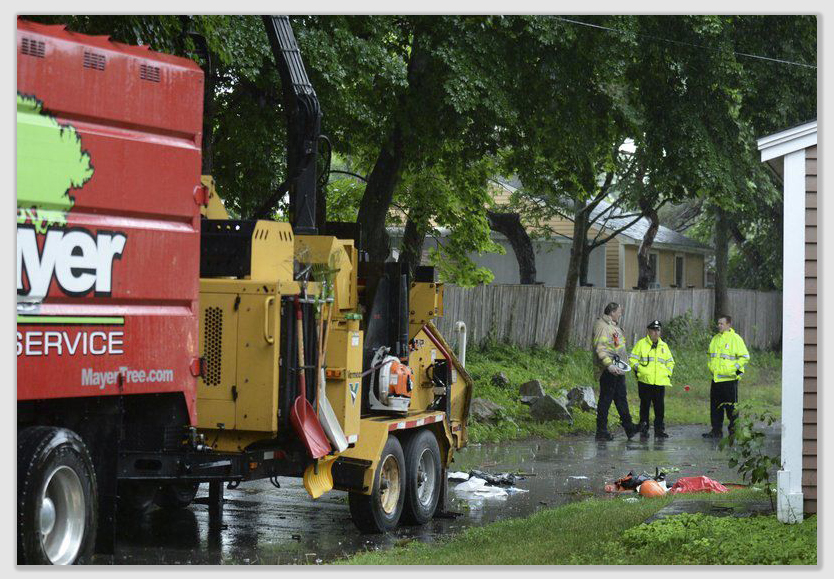 Haverhill, Massachusetts, Eagle-Tribune, June 28, 2018: Salem man dies after 50-foot fall
Federal investigators are looking into the death of a worker from Salem, New Hampshire who died after falling from a tree in Rowley Thursday morning. The Essex District Attorney’s Office said 34-year-old David Bova was working on a crew from Mayer Tree Service of Essex at a private residence at 29 Main St., Rowley, mid-morning Thursday. Bova was in the tree preparing to remove a branch when he suddenly fell from about 50 feet up. He was taken to Anna Jacques Hospital where he was pronounced dead, the statement from the DA’s Office said. While foul play is not suspected, the matter remains under investigation by the Essex State Police Detective Unit and the Rowley Police Department. In October 2010, Bova fell 40 or 50 feet from a pine tree and was airlifted to a Boston area hospital by medical helicopter. Bova was working on a 60-foot pine at 180 Jackson St., Methuen, when that accident occurred, according to Methuen police…
San Francisco, Chronicle, June 28, 2018: It’s official: Giant Ogden walnut tree is largest in Utah
A little more than 100 years ago, the owners of a new white brick bungalow with a welcoming porch planted an English walnut tree in their backyard. The home and the neighborhood are gone, but the tree is still growing. State officials confirmed recently that it holds the record for the largest English walnut in Utah. Turns out, it’s remarkably old, too. Utah State University Professor Mike Kuhns, who first noticed the tree earlier this year, took a corer to it last week, but the tree is so large he was only able to collect rings back to 1969. “My increment corer only went in 16 inches and we would need a core more than twice that long to get to its center,” he said. Michael Kuhns, Wildland Resources Department Head at Utah State University, found the tree in downtown Ogden that turned out to be the largest English walnut in the state. The tree is located off Park Boulevard and is currently owned by Ogden City. Assuming the tree kept growing at the same rate over the years, Kuhns calculates the tree is 104 years old. “Very few trees in urban areas make it to 100 years old, and most only live for 15 to 20 years,” he said. “It is not only a tremendous biological and environmental resource because it is large, but it is likely a cultural and historic resource because of its age…”
 US News & World Report, June 27, 2018: Boy who lost leg during camping trip gets $47.5 M settlement
A boy who lost his leg and part of his pelvis after a tree fell on his tent during a camping trip at a public park will receive $47.5 million from a California municipality and utility in a lawsuit settlement, an attorney said Wednesday. Zachary Rowe was a 12-year-old camping with his family in San Mateo County Memorial Park in 2012, when a rotten 72-foot-tall tanoak tree fell and crushed his tent while he slept. Doctors determined the only way to save his life was to amputate his right leg, buttock and pelvis. He underwent 30 surgeries and initially spent six months in a hospital. San Mateo County and its contractor, Davey Tree, will pay $30 million to settle the case, while a contractor for Pacific Gas & Electric Co., Western Environmental Consultants, will pay $17.5 million, attorney Tim Tietjen said. The boy sued San Mateo County, alleging a dangerous condition of public property and negligence by Davey Tree, which the county had hired in 2007 to inspect its campsites for hazardous trees. He also sued PG&E and its vegetation-management contractor, WECI, for negligence in failing to maintain the area around its power lines…
Greensboro, North Carolina, WFMY-TV, Greensboro woman fights with tree removal company
When you hire someone to do work at your home, doing your homework is key. A Greensboro woman says it could’ve saved her a lot time and trouble. Nancy Sutphin hired a local company to remove trees from her yard, but was left with a huge mess. She and her husband are out more than $7,000. They turned to WFMY News 2’s Taheshah Moise for help. We’ve chosen not name the company, because the couple is still working with the business to resolve the issue. Nancy says she hired a company last Tuesday to remove six trees in her yard because they offered the best deal and could get the job started the next day. Nancy says her first mistake was not looking them up through the BBB. “They have an F rating with the Better Business Bureau,” she found out. A day later, she says they took down three trees and hauled some of the wood away…
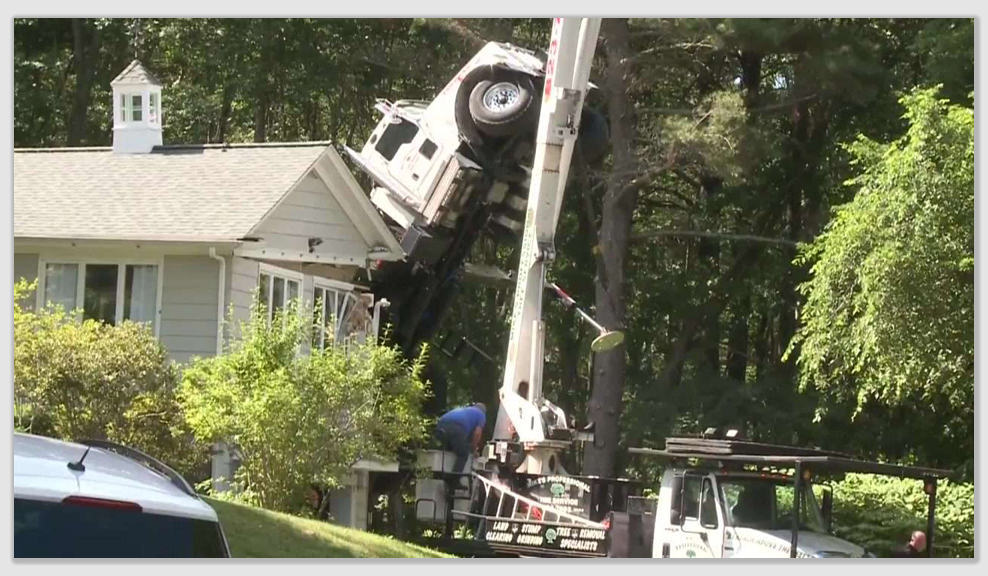
A Rhode Island homeowner says he was sitting in his family room with his wife Monday when a massive tree service crane toppled over and crashed through the roof. A tree company was working in Jack Fandetti’s North Smithfield yard when the crane suddenly came crashing down. “It was like someone threw a hand grenade through your family room and the wall just exploded,” he said. “We didn’t know what to do. We jumped over the sofa and ran out of the house.” The front of the truck lifted completely off the ground and its front tires went up into the air. The crane shattered several windows and destroyed half of the home…
The Laguna Beach City Council unanimously passed the second and final reading Tuesday of an ordinance that will levy stiff fines for illegal removal of trees. The regulation, first approved in May, provides for penalties ranging from $1,000 to $30,000 for removing a tree without authorization. In addition, the ordinance would levy a “citation fee” ranging from $100 to $500, along with to-be-determined recouping of city costs in enforcing the ordinance. The biggest fines would be for repeat offenses and taking out “heritage” trees, defined as distinctive trees that because of their size, age or special features promote the city’s beauty, character and sense of history. The ordinance also protects privately maintained trees in the public right of way and trees that are part of a landscape plan that went through a design review process…
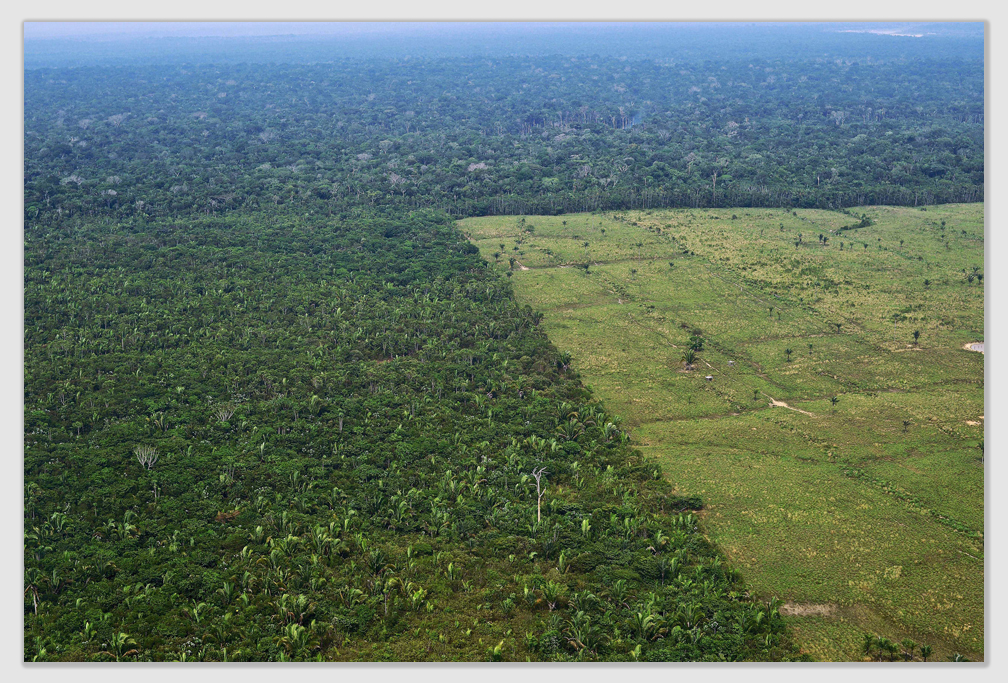
In Brazil, forest fires set by farmers and ranchers to clear land for agriculture raged out of control last year, wiping out more than 3 million acres of trees as a severe drought gripped the region. Those losses undermined Brazil’s recent efforts to protect its rain forests. In Colombia, a landmark peace deal between the government and the country’s largest rebel group paved the way for a rush of mining, logging and farming that caused deforestation in the nation’s Amazon region to spike last year. And in the Caribbean, Hurricanes Irma and Maria flattened nearly one-third of the forests in Dominica and a wide swath of trees in Puerto Rico last summer. In all, the world’s tropical forests lost roughly 39 million acres of trees last year, an area roughly the size of Bangladesh, according to a report Wednesday by Global Forest Watch that used new satellite data from the University of Maryland…
On paper, the municipality of Princeton’s policy for preserving shade trees sounds good. But for at least one resident, the policy has been worthless in practice when it comes to a local developer’s activities. Hawthorne Avenue resident Galina Chernaya has been trying to protect her mature shade trees from being destroyed ever since she found out a developer received approvals to tear down the house next to her property this winter.In January, Chernaya met with Princeton mayor Liz Lempert to find out what could be done to protect her maple trees, which are located near the border of 260 Hawthorne Avenue, a neighboring property that was bought by RB Homes. Chernaya said she was assured that there was a protocol that must be followed before trees are removed on the other property or work is done bordering her property near the roots of her trees…
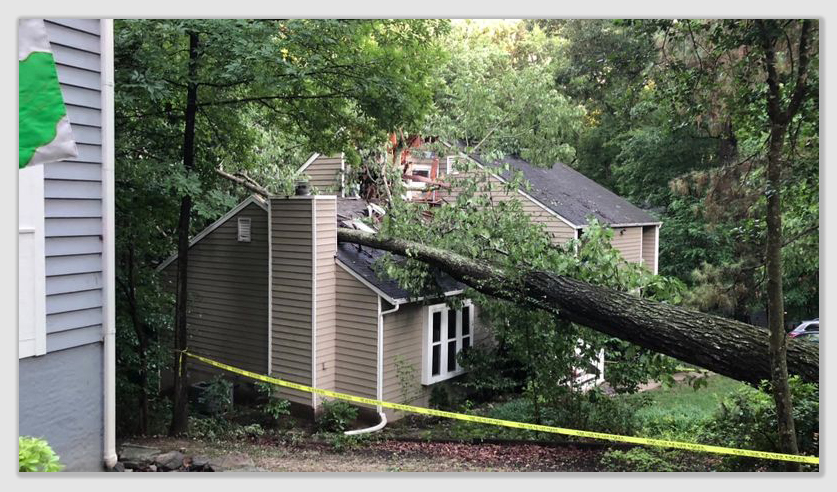
A Chesterfield couple is out of a home after storms caused a massive tree to crash right into it. Even though the tree belonged to their next door neighbor, the couple with the damaged property has to foot the bill. It’s the scenic trees of this neighborhood off Ferncreek Place in Chesterfield that drew Bill and Jamie Hiner to their home five years ago. “It was almost like being in the country, but you still had the closeness of neighbors,” said Bill Hiner. After Sunday’s storms, their idyllic dwelling is looking a lot worse. “There was this horrific noise and a thud and the house shook,” said Bill Hiner. “Our entire living room, our entire dining room, our entire foyer, our kitchen, our second floor loft was damaged,” said Jamie Hiner. Even though it was their neighbor’s tree, the thousands-of-dollars worth of damage will come out of the Hiners’ pocket. That’s because if a healthy tree falls and damages property, it is considered an Act of God…
Columbia, Tennessee, Daily Herald, June 27, 2018: West 7th tree trimming mishap ‘will be fixed’
A mishap last week involving a Tennessee Department of Transportation employee trimming along West 7th Street resulted in damage to branches and excess debris, along with a knocked out power line. TDOT conducts annual tree trimming along state road rights of way, but typically not in the summer months when leaves are in bloom and the chance for excess debris is much higher. City staff members, including Mayor Dean Dickey, Assistant City Manager Thad Jablonski and Director of Development Services, were joined by State Rep. Michael Curcio (R-Dickson), Caledonian Financial CEO Montee Sneed and Columbia Main Street Executive Director Kristi Martin on Monday to assess the damage, and discuss if a solution could be found. Jablonski said the incident happened due to a relatively new TDOT employee who was “trying to impress his supervisor” by taking the initiative in response to a citizen complaint. He didn’t realize until it was too late that the trimming was actually causing more harm than good. “We walked down as soon as we heard about what happened to the trees on West 7th, and that was the trees had been damaged after a cutting maintenance truck had come through to cut branches. Several of us walked down and saw the debris in the road and it was pretty clear what had happened,” Jablonski said. “He had gone all the way down West 7th, which affected our trees between South Garden Street and the Polk Home, and just kept going down Trotwood and hit a phone line…”
A 14-year-old Boy Scout from Texas was killed Monday at the Bert Adams Boy Scout Camp in Newton County. The CEO of the Atlanta Council of Boy Scouts of America, Tracy Techau, said it was a weather-related incident where a tree fell on the boy during a storm. Jeff Alexander, a spokesperson for the Newton County Sheriff’s Office, said the boy was in his tent along with his bunkmate when a tree crashed down onto him just minutes after a weather alert was issued. “This is a very difficult time for our Scouting family,” Techau said in a statement sent to FOX 5 Atlanta. “We offer our deepest condolences to the victim and his family, and we will support them in any way that we can. Please join us in keeping all those affected in your thoughts and prayers.” Officials said the Boy Scout was attending the fourth and final week of summer camp. The name of the boy has not yet been released…
Robert Paden’s team of eight is prepared to answer as many calls as possible following a busy few days. Paden allowed Channel 3 to tag along for his call on Signal Mountain Monday. He says most jobs require more than what a property owner expects. “We had three big trees fall, and they got hung up into two other pines, that are in close proximity to the house, and those pines have an immediate threat to the house now,” says owner Robert Paden of Paden Tree People. What started as a job to remove three downed trees quickly turned into a five tree job. Paden uses machinery that can lift up to 900 pounds. With more storms in the forecast for Monday and this week, he expects the phone calls to continue every day. “We do 24/7 around the clock work, so if I get a call at 10:30 at night, and something needs to be done, we’ll rally the crew and get out there,” adds Paden. Here is how he prioritizes…
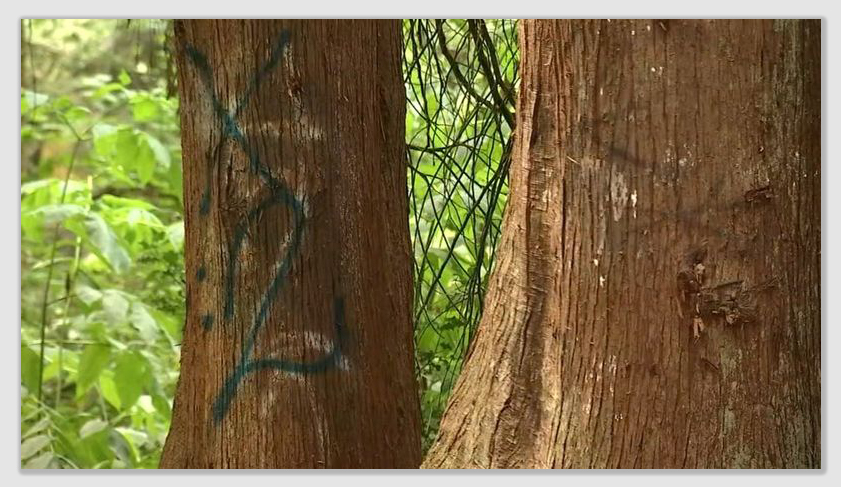 Portland, Oregon, KPTV, June 25, 2018: Vandals tagging trees at Hillsboro natural area
Neighbors of a Hillsboro natural area say trees are being tagged with spray paint and they want it to stop. Walking through Jackson School Woods Natural Area, it’s quickly apparent that someone has spray-painted quite a few trees. One neighbor estimates close to 100 trees have been tagged with graffiti. Police aren’t sure who is doing, but officers guess it could be kids or teens living in the area. Police tell us they were called to the area in April on a report of graffiti on several trees. Since then much of it had faded or been painted over. According to neighbors, it appears someone recently came back and tagged more trees…
Australia’s New South Wales (NSW) state is cultivating the rare Wollemi Pine or the “Dinosaur Tree” as an “insurance policy” for the sustenance of the fragile species, researchers said on Monday. Previously thought to have been extinct for 2 million years and only known from fossil records, Wollemi Pine was discovered in 1994 at a remote canyon in the state’s Blue Mountains region, reports Xinhua news agency. “It’s one of the world’s oldest and rarest plants from the time of the dinosaurs and there are less than 100 trees left in the wild,” NSW Environment Minister Gabrielle Upton said. The new population of ancient trees translocated by the NSW Office of Environment and Heritage, acts as an “insurance policy” for the original group. “Creating a self-sustaining insurance population will ultimately boost numbers to secure species in the wild,” Upton said…
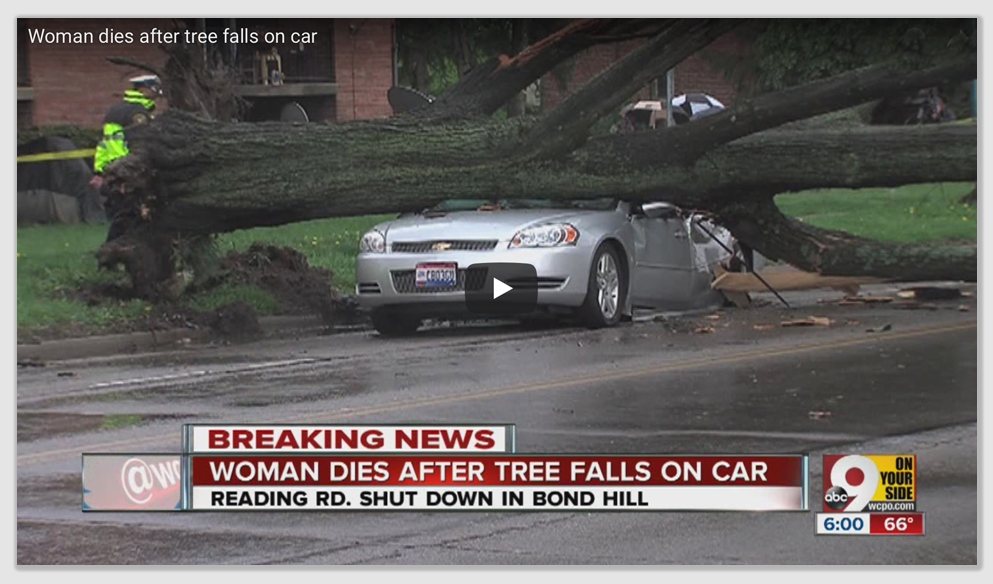
Every Sunday for nearly three years, Errol Carr Sr. stood along Reading Road with a sign. It said “Justice for Jackie.” Carr wanted to make sure people knew where a city tree had fallen and killed his wife of 17 years. And he wanted Cincinnati’s Park Board to do something so it wouldn’t happen again. His son, Errol Carr Jr., recalled his father’s dedication: “Every Sunday with a sign, ‘Justice for Jackie.’ The last three years have been devoted to her and to resolve this situation with the city.” He never got to see that wish come true: Carr Sr. died of a heart attack on April 17. He was 71 years old. His obituary called Jacqueline Carr the “love of his life.” A WCPO I-Team investigation found the problems that may have led to her death still haven’t been fixed…
Muskogee, Oklahoma, Phoenix, June 24, 2018: Protect tree trunks during the summer
As many homeowners know, trees are an important aspect of any landscape. They also are a significant investment. Keeping them healthy through proper management and care ensures they’ll be around for many years. Unfortunately, one of the most common stresses to urban trees is caused by humans, one that can easily be avoided. The trunk of a tree not only provides support to the branches and leaves, it’s the main conduit for water and nutrients up and down the tree between the leaves and root system. The cambium layer, which lies just below the bark, is a thin area responsible for this movement. If damaged, the movement of this vital solution up and down the tree is hindered. Now that we’re in the height of summer, the lawnmower and weed trimmer are getting a good workout. However, if you’re not careful, you can easily damage your trees with these pieces of lawn care equipment. This stress often is referred to as lawnmower or string trimmer blight – mechanical injury to the trunk of the tree by careless use of equipment near the trunk. This injury usually results in wounds that can eventually be fatal to a tree, depending on severity of the damage and how often it occurs…
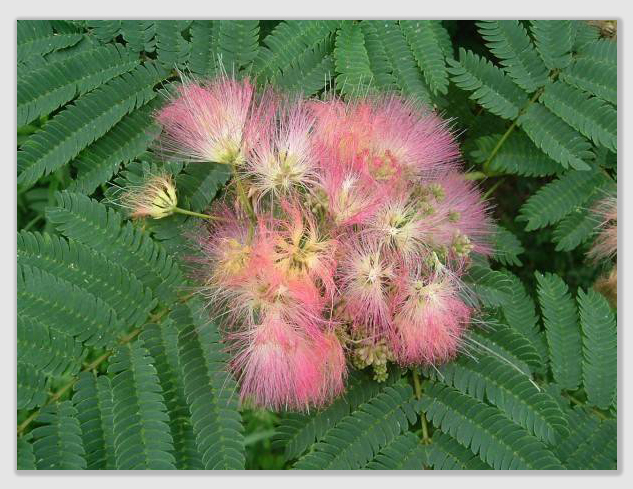 Southern Living, June 24, 2018: 6 Trees You Should Never, Ever Plant
Fall is the best time of the year to plant a tree, but look before you leap. Some trees are nice. Others are monsters. Here are six monsters you should never, ever plant in a residential neighborhood, lest you earn your neighbor’s hatred and Grumpy’s scorn. Terrible Tree #1 — Mimosa (Albizia julibrissin) What’s wrong with it: Weedy, short-lived, insect- and disease-prone, invasive roots, unattractive most of the year. Yes, I know. You grew up with mimosas in the yard (sniff), they remind you of Meemaw’s garden (sniff, sniff), and they’re so pretty when their fluffy pink flowers open in early summer. But let’s get real. The flowers last about two weeks. Then they’re replaced by scads of these large, ugly, brown seed pods that hang there until the next spring. So for two weeks of beauty you get 50 weeks of gross. Plus, seedlings from your tree will sprout in everyone’s yard within a quarter-mile…
Mumbai, India, Times of India, June 22, 2018: How toxic air is causing malnutrition in trees
Besides affecting human health, air pollution is also causing malnutrition in trees by harming a fungi that is important for providing mineral nutrients to tree roots, finds a new study. Mycorrhizae fungi is hosted by the trees in their roots to receive nutrients from the soil. These fungi provide essential nutrients like nitrogen, phosphorus and potassium from soil in exchange for carbon from the tree. This plant-fungal symbiotic relationship is crucial for the health of the tree. However, high levels of the nutrition elements like nitrogen and phosphorus in the mycorrhizae changes them to act as pollutants rather than nutrients, the findings showed. The signs of malnutrition can be seen in the form of discolored leaves and excessive falling of leaves. “There is an alarming trend of tree malnutrition across Europe, which leaves forests vulnerable to pests, disease and climate change,” said lead researcher Martin Bidartondo from Imperial College London…
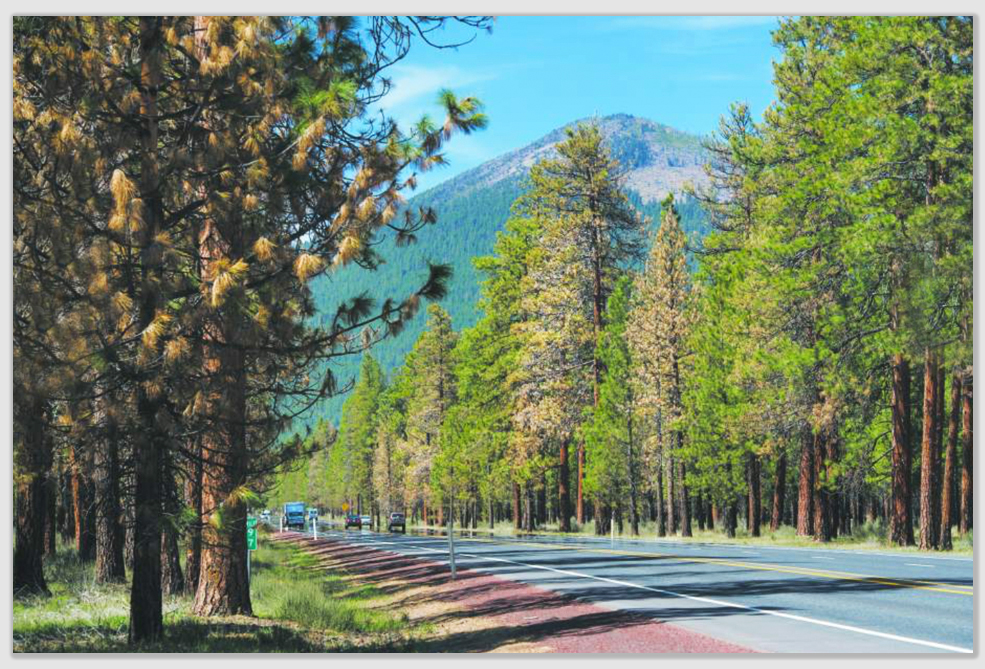
After an improperly applied herbicide killed hundreds of ponderosa pine trees near Sisters, a number of environmental advocates are arguing that the Oregon Department of Transportation, or its contractors, should have known better than to apply the weedkiller in the first place. “Had a private company done that, every entity in the country would have been on their doorstep,” said Dan Harshbarger, a La Pine resident who lost trees on his property in a similar incident. During the comment period for a U.S. Forest Service project to remove dead and dying trees along a 12-mile stretch of U.S. Highway 20 to the northwest of Sisters, the agency received comments from environmentalists arguing that the various agencies involved in the project didn’t abide by instructions from the Environmental Protection Agency posted on the chosen herbicide label. Representatives from the Oregon Department of Transportation and the Forest Service argued that the agencies didn’t violate instructions on the label, but acknowledged that there had been a serious mistake. “We just collectively dropped the ball on that, and it’s unfortunate,” said Ian Reid, Sisters district ranger for the Deschutes National Forest…
Their killer hasn’t hit town yet, but Fort Collins’ ash tree population is already dwindling. The city’s forestry department will have removed and replaced about 350 ash trees by the end of 2018, and foresters are asking for a major funding boost to take out another 750 by the end of 2020. And they’re just getting started. The end game is a remodeled urban forest: Thousands of trees throughout the city will vanish, replaced by young trees that aren’t imperiled by the emerald ash borer. The glittering green beetle will destroy all untreated ash trees when it inevitably arrives in Fort Collins. Ash trees, once revered for their hardiness and bountiful branches, make up about 15 percent of our urban forest and provide one-third of tree shade in the city. About 5,600 ash trees slated for removal and replacement remain on city property. City foresters hope to uproot and replace as many as they can before the ash borer gets here. To that end, the department is requesting about $700,000 from the city’s 2019-20 budget — nearly four times its current funding for ash borer prevention measures…
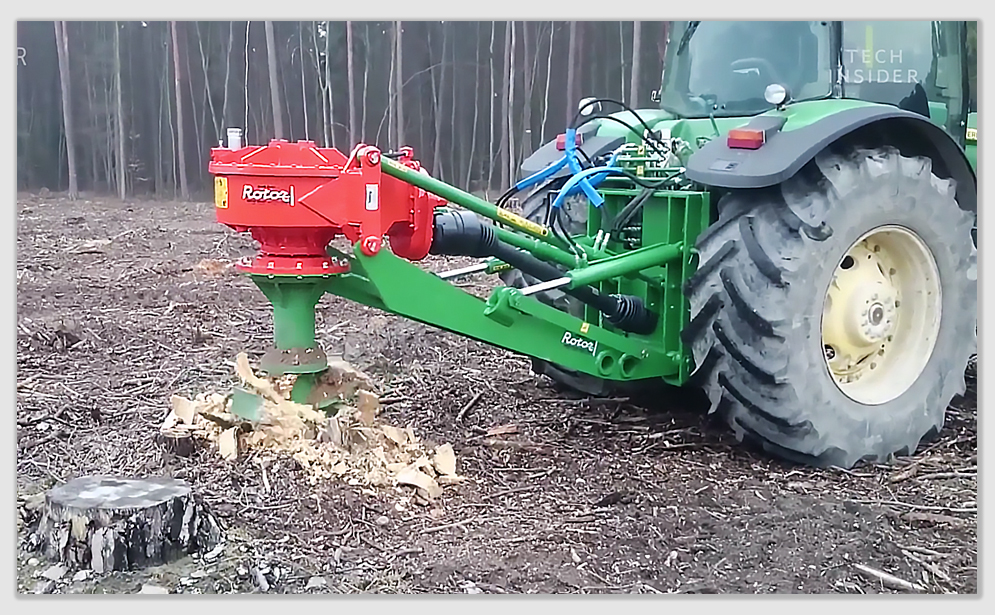 Business Insider, June 21, 2018: This machine can dig up a tree stump in seconds
This machine can dig up a tree stump in seconds. The Rotor Stump Grinder is available in 8 different models, using either power-take off or hydraulics and featuring a drill or cylinder attachment. These grinders can weigh up to 2,500 kg. The cylinder can easily remove the whole stump, these stumps can then be cleaned and used as fuel. It can extract stumps up to 70 cm wide in one piece or can remove larger stumps in pieces. These tools can all easily be attached to a tractor or a hydraulic arm, and they can chop up to 100 stumps an hour…
London, UK, Daily Mail, June 21, 2018: Around the world in 80 trees
The first time Jonathan Drori saw his father cry was when a spectacular old Cedar of Lebanon near their home was struck by lightning. Watching its dead trunk and limbs being sawn up, the young Drori ‘thought about the huge, heavy, beautiful thing that was hundreds of years old and that I had thought invincible, and wasn’t, and my father, who I had always thought would be in benign control of everything, and wasn’t’. After a long career at the BBC — during which he produced more than 50 science documentaries — Drori has returned to the subject of trees, and our relationships with them, to produce one of the most quietly beautiful books of the year…
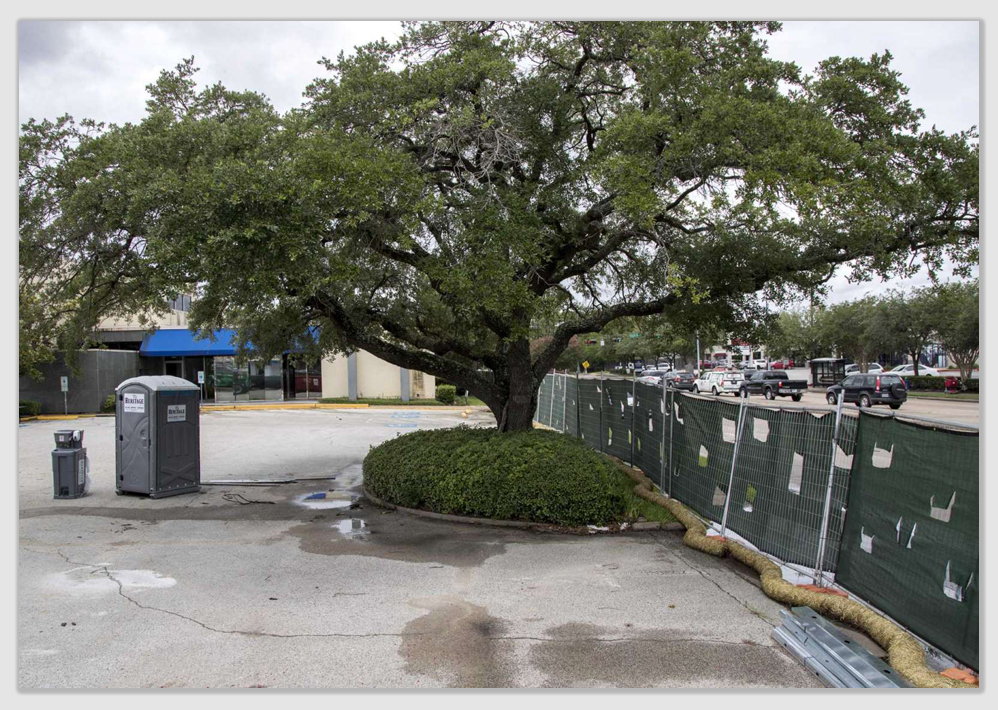 Houston, Texas, MSN, June 20, 2018: After 57 years, Meyerland ‘hero tree’ is struggling
For more than half a century, the live oak has sprawled gracefully along the northern side of the Meyerland Plaza shopping center. It rises from a sea of concrete, its trunk crammed between a vast parking lot and the cracked sidewalk that lines Beechnut Street. A marker at its base declares it the “Hero Tree” — dedicated in 1961 to Gary Herod, a man who sacrificed his life to save others. Everyone had heard the story back then — how Herod, an Air Force pilot, crash-landed his jet one night in an open field near Brays Bayou so his plane wouldn’t land in a neighborhood full of unsuspecting families. The chamber of commerce dedicated a tree in the new, popular Meyerland Plaza so everyone could see the tree and appreciate it. A few years later, Houston ISD named a school Herod Elementary. Fifty-seven years later, as Herod’s story is starting to fade, so is the tree. It’s hidden behind a construction fence now, a few dozen yards away from where a closed BBVA Compass Bank will soon be torn down to make way for a new H-E-B. An arborist has declared the live oak to be “in decline,” strangled by concrete and likely not strong enough to handle the stress of new construction…
As the invasive spotted lanternfly (Lycorma delicatula) has begun to spread in the eastern United States, entomologists, pest management professionals, and government agencies have gone into high gear in an effort to stop it before it marches across the country. While enlisting the public’s help in spotting and reporting the pest, research is also underway to examine its biology and behavior and the management practices that will aid in preventing its spread. Because the spotted lanternfly’s primary target is Tree of Heaven (Ailanthus altissima)—though it will also feed more than 70 other plant species, including grapes, hops, and fruit trees—one of the first questions asked was how infested wood should best be handled. A study published this month in the open-access Journal of Insect Science provides an official answer: chipping. The spotted lanternfly lays its eggs in small masses, which resemble splotches of mud, often on tree trunks and limbs. In 2015, shortly after the invasive insect was first discovered in Berks County, Pennsylvania, researchers at the U.S. Department of Agriculture’s Animal and Plant Health Inspection Service (USDA-APHIS) and the Pennsylvania Department of Agriculture began a study on whether putting infested woody debris through a wood chipper would destroy spotted lanternfly egg masses. The results were clear: In 11 trees’ worth of woody debris infested with spotted lanternfly egg masses, not a single nymph emerged after chipping…
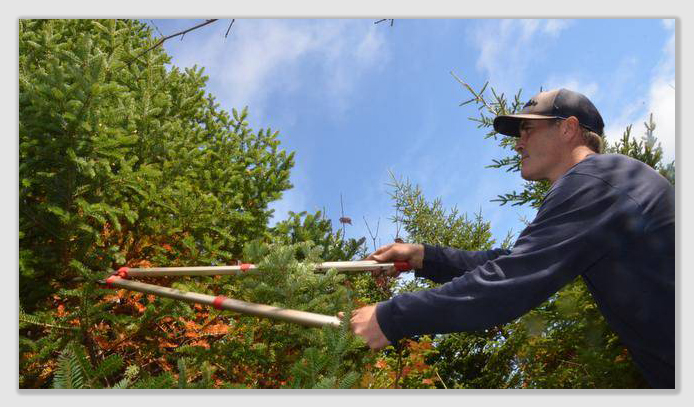
Freezes and frosts have damaged more than half of the Christmas tree crop in some parts of Nova Scotia this spring. “The trees that were slated to be harvested this year, they’re estimating that half of them just won’t recover in time to be harvested,” said Angus Bonnyman, executive director of the Christmas Tree Council of Nova Scotia, in an interview Tuesday. “It takes eight to 10 years to have a marketable tree so it’s quite a loss.” The council has been talking with the provincial Agriculture Department and the Federation of Agriculture on possible emergency funding to help growers. Bonnyman didn’t have a damage estimate but noted that Nova Scotia growers export at least $15 million in trees each year. There is no provincial crop damage program for the Christmas tree industry, nor is there anyone in the government dedicated to Christmas tree industry issues, he said. “We want to be on record as saying there was significant damage and we’re talking now…”
Salisbury, Maryland, WBOC-TV, June 20, 2018: Replenishing trees in Pocomoke City
Earlier this year, Pocomoke City got rid of more than 70 trees for safety reasons. Marc Scher has worked downtown for more than 50 years, he was sad when the city got rid of the trees. “I’m glad they’re replacing the trees, we will get our trees back,” says Scher Ruth Copes runs errands downtown, she agrees saying Pocomoke is not the same without it’s trees. “Pocomoke City, it looks like a ghost town,” says Copes. City officials say the overgrown trees were a safety hazard, forcing the city to knock them down. Neighbors like Steve Cooper say the town actually looks better with no trees. “I like Pocomoke like this, everything is open and it looks good, it’s nice and clean, where the trees block everything,” says Cooper…
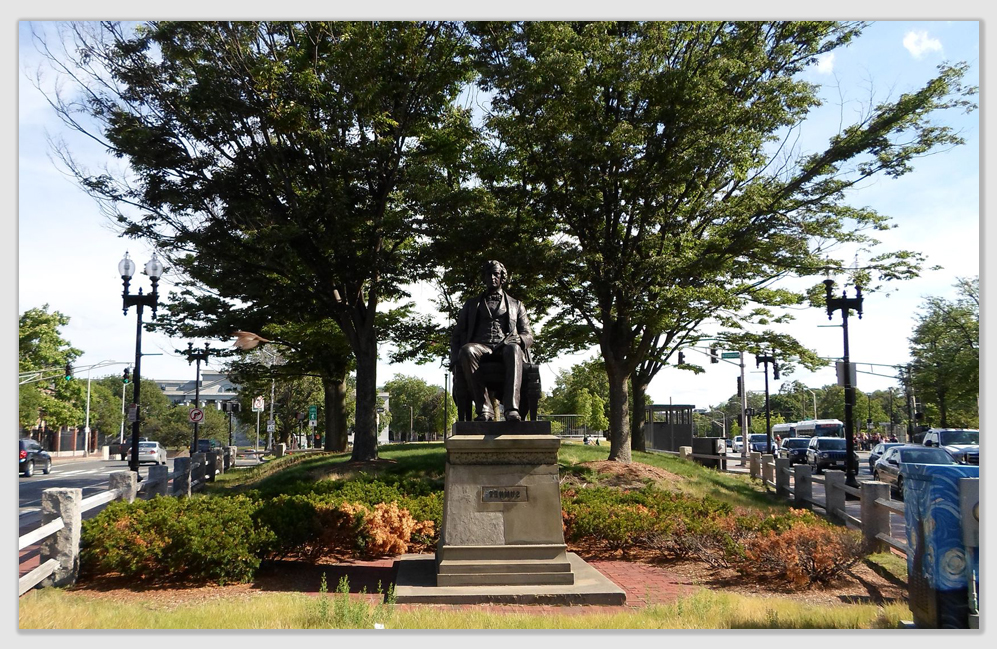
Cambridge’s tree canopy is in such precipitous decline, according to one City Council member, that the city has to take an immediate action that will impact private property owners. In an op-ed for Cambridge Day, Councilor Quinton Zondervan writes that Cambridge’s tree canopy declined 7 percent from 2009 to 2014. He also notes that an imminent assessment “will show even further loss.” To stem the trend, Zondervan is proposing that Cambridge amend its tree ordinance to require that private property owners acquire a permit to cut down a healthy, sizable tree—or one of at least 8 inches in diameter and 4 feet high (per the current ordinance). The permit would not carry a fee, and, Zondervan writes, “would be granted … under most circumstances.” The idea, he writes, is to get a dialogue going about Cambridge’s canopy, one that Boston is starting to have across the Charles River. Boston is falling woefully short of a goal set last decade to expand its canopy 20 percent by 2020…
Western Farm Press, June 19, 2018: Pressure bombs help with crucial tree nut watering decisions
A device whose concept was born in the 1960s has become a key part of the water-saving toolbox for many California tree nut growers. The pressure bomb, or pressure chamber, has advanced in sophistication over the years, but its purpose is essentially the same: to tell a grower whether a tree is stressed by too little, or too much, water. University of California farm advisors who’ve been promoting the device in recent years say it’s essentially a blood pressure test for tree leaves. By testing a leaf with the device, a grower can see how well a tree is pulling water up from the soil, and can plan to provide irrigation when the tree really needs it. The device has also helped with research. Ken Shackel, UC-Davis plant scientist, says the pressure bomb and other monitoring devices most recently helped researchers determine that it’s better to hold back on irrigating walnut trees in the spring rather than in the summer…
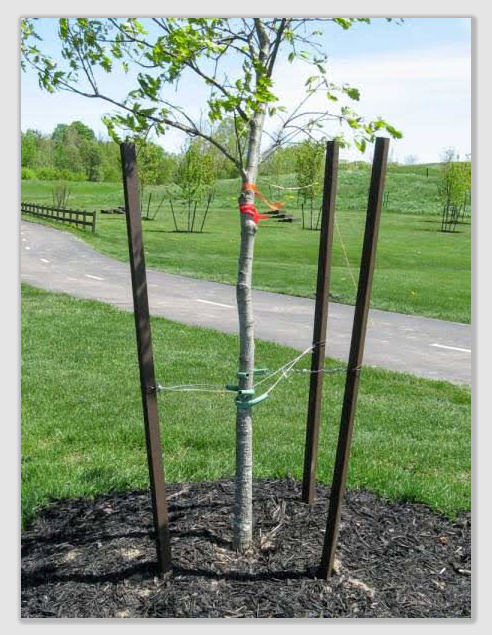 Mankato, Minnesota, Free Press, June 19, 2018: Staking young trees results in a healthier tree
Summer storms are plentiful so far this year. The recently removed stakes (fence post) around my apple trees will soon be going back in place. Heavy winds have rocked my young trees from their upright stance. I should have waited one more year, but mowing around the stakes can be a pain and I was impatient. Staking trees is critical when trees are young or newly planted. Older trees that are established are difficult if not impossible to correct. When staking trees, using the correct materials are important. I prefer to use a fairly stiff wire/cable threaded through a piece of old garden hose secured to steel fence post. Slide the piece of protective hose into place so that it makes direct contact with the tree. A bare wire or cable will easily cut through and destroy bark, as a tree moves and sways in the wind. There are other types of strapping material available as well. At least two stakes should be used for each tree, giving support in two directions for more stability. Three stakes even better! A tree may need the stakes in place one to three years depending on how crooked it was to start with. You may need to readjust and tighten your system once or more a year. If your tree is recently planted, overwatering can result in tipping over. Try re-setting it, cut back on the excessive watering, and no staking may be needed…
West Palm Beach, Florida, WPTV, June 19, 2018: Tiny bug can help you preserve your citrus trees
With Florida citrus production at its lowest level in decades, scientists are doing what they can to find ways to slow citrus greening, which right now as no cure, and has killed thousands of trees. Lyn Marino shows the signs of citrus greening in her Port St. Lucie backyard. “See it there, that’s when they’re inside the leaf,” says Marino as she points at a wilted leaf on a lemon tree. This master gardener then learned of a new program from the University of Florida’s St. Lucie County Extension Office. Urban Horticulture Agent Kate Rotindo says they’re working with the State Department of Agriculture to release tamaraxia wasps. The wasp is a natural predator of the Asian citrus psyllid, that has crippled the citrus industry. “The female lays its eggs in the nymph stage of the citrus psyllid and the female actually eats the nymph stage or the small stage of the psyllid,” said Rotindo…
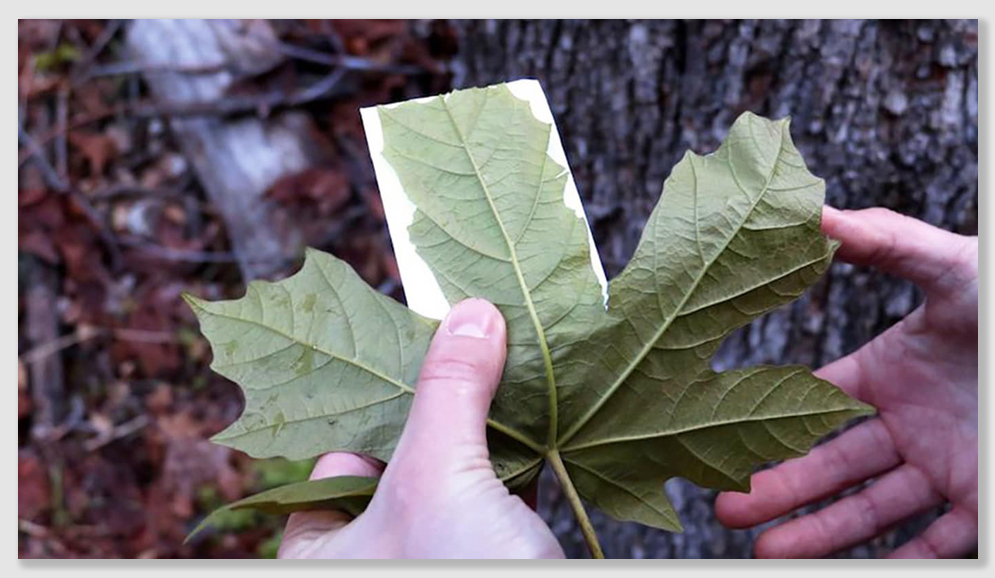 Fast Company, June 18, 2018: This DNA database for trees will help track illegal logging
On his vacation over Memorial Day weekend, Jakub Bednarek headed into the forest near his home in Leavenworth, Washington, and collected samples of maple leaves to send to a lab for DNA analysis. Bednarek, who also works as a biologist in his day job, is one of 150 volunteers in a project this summer that stretches along the Pacific Coast. The project’s aim: to create a genetic map of a particular species of maple, which can then be used to help identify illegally harvested wood. DNA testing has been used on black market timber in the past–in a case in 2015, for example, when a sawmill owner was convicted of trading illegal wood, scientists used DNA analysis to identify the exact stumps of the trees that had been cut down. But it can also be used at a broader level; by mapping how the genetics of a particular species of tree changes by region, it’s possible to identify where particular timber came from. The current project is studying one particular species, the Bigleaf maple, which are prized for their patterned wood and often illegally harvested. “The goal with this is that we have enough samples distributed widely enough across this geographic range that we can say we’re pretty sure that this was sample from a national forest in Washington,” says Meaghan Parker-Forney, a science officer at the nonprofit World Resources Institute’s Forest Legality Initiative, one of several partners on the project. “If somebody’s claiming it came from Northern California, we can say no, that’s actually not true…”
Concerns over the Emerald Ash Borer continue as it threatens the existence of hundreds of thousands of trees in South Dakota. Tree and lawn care experts are being bombarded with business as they work to save thousands of ash trees. “It seems ridiculous for us to cut them down when I know that they are treatable,” Sioux Falls Resident Jessica Miller said. Throw a rock anywhere in Sioux Falls and you’ll probably hit an ash tree. With 85,000 ash trees in the city, the Parks and Recreation department said the trees are very common. “At this point we know already we have way too many ash trees in Sioux Falls regardless if the Emerald Ash Borer was in Sioux Falls or not,” Sioux Falls Parks Operations Manager, Kelby Mieras said. To deal with the infestation the city of Sioux Falls plans to remove trees next year instead of treating them. “Our target is about 3,800 trees both on public property, parks, and other public property and also street trees,” Mieras said…
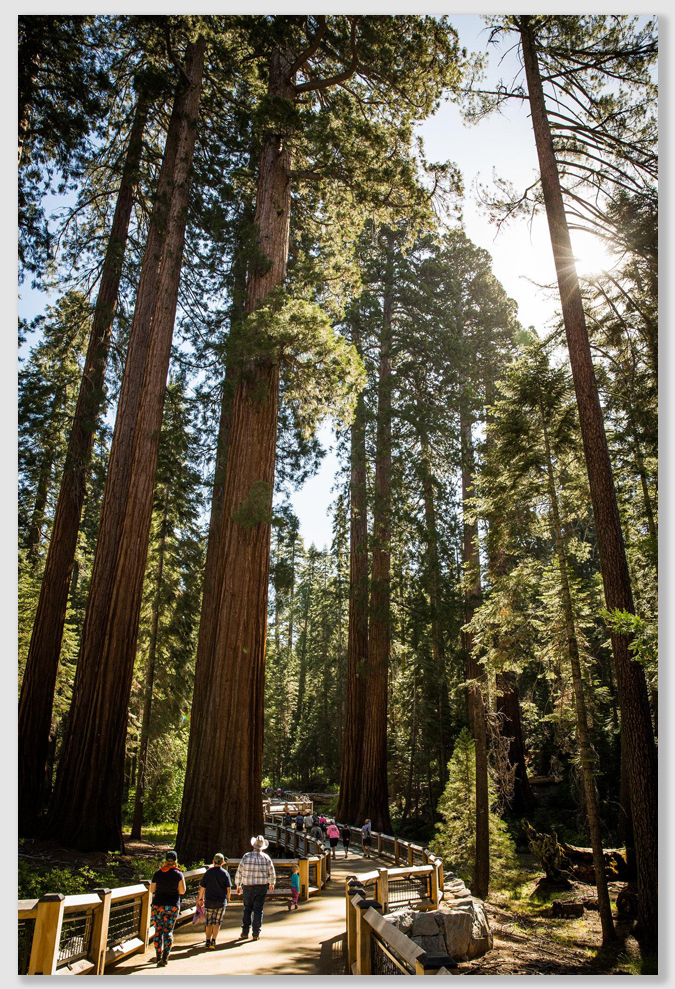 New York City, New York Times, June 18, 2018: A renewed view of some of the world’s oldest trees
John Muir, the naturalist who was most at home sleeping outdoors on a bed of pine needles in the Sierra Nevada, called giant sequoias the “noblest of God’s trees.” For three years, some of the most striking examples of these towering marvels were off limits to visitors in Yosemite National Park. After a $40 million renovation — the largest restoration project in the park’s history — the Mariposa Grove, a collection of around 500 mature giant sequoias, reopened last week. What Muir called a “forest masterpiece” is now back on display. The renovation addressed a problem that the park has struggled with for years. On the busiest summer days, more than 7,000 cars may converge on the park, which is about a four-hour drive from San Francisco. The gridlock they create amid the stunning chutes of water running down the steep granite slopes of Yosemite’s glacier-carved valley results in a kind of drive-by naturalism that frustrates many. In the Mariposa grove, which is a 45-minute drive from the Yosemite Valley floor, the traffic brought exhaust fumes and engine noise to the foot of some of the world’s oldest living things. Park rangers feared that the asphalt covering the root systems of the trees could damage them…
Boston, Massachusetts, Globe, June 18, 2018: City grapples with equity in its tree canopy
City councilors, acknowledging Boston has fallen dramatically short of its goal of planting 100,000 trees by 2020, discussed Monday the need for additional funding to keep trees alive and add new ones to streets and parks. At the hearing, Councilor Ayanna Pressley also stressed the importance of tree equity across its neighborhoods, underscoring how trees should be available to everyone in the city, not just certain neighborhoods where planting has been prioritized. “We need to continue to fight to make sure it’s reflected in the . . . budget so that we have the staffing resources necessary to ensure preserving tree health, to ensure we’re keeping pace with our planting goals in order to achieve equity in tree canopies,” Pressley said in an interview after the hearing. Thomas M. Menino, Boston’s former mayor, pledged a decade ago to expand the city’s tree canopy by 20 percent, or about 100,000 trees. But the city has planted fewer than 10,000 street trees since 2007, and it removed nearly 6,000 in that time period. Bottom of FormThe last time the city performed a flyover to evaluate Boston’s tree canopy — the total leaves and branches in the city — there was 27 percent coverage. That 2017 report found that a further 41 percent of land in Boston could be modified to accommodate the tree canopy…
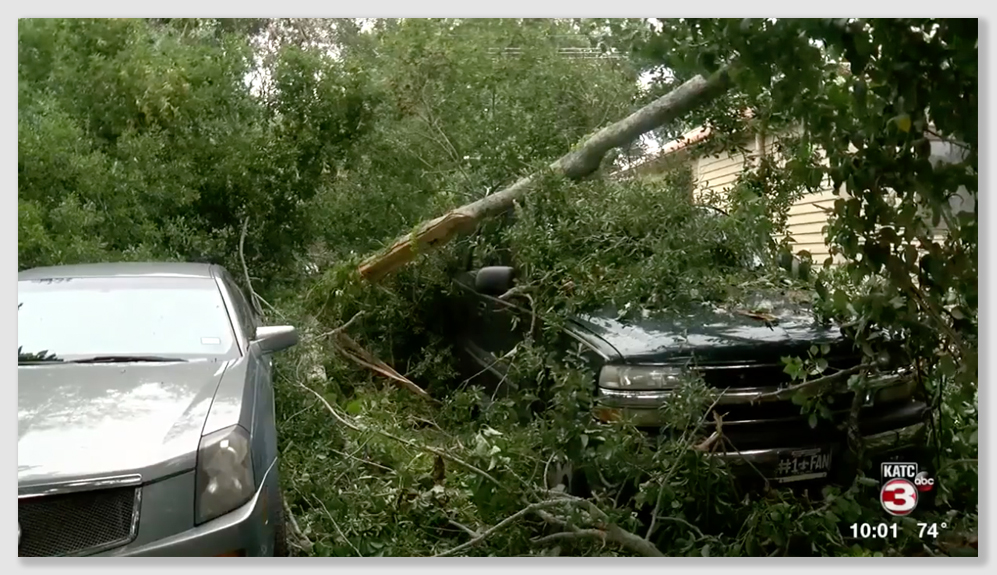
What started out as a birthday celebration ended with three children in the hospital after a tree fell on them. Family and friends have identified the children as 10-year-old Tyrik Garlow, 13-year-old Quantravion Guillory, and 11-year-old Aaron Washington. It happened on East South Street in Opelousas. As of Sunday night, we’re told Tyrik was transported to a hospital in Baton Rouge is in critical condition, Quantravion is in surgery, and Aaron is in stable condition. “All of a sudden, we just heard ‘boom,’ and the tree fell,” said Louise Washington, whose granddaughter was celebrating her birthday. Another man at the party was struck by a branch but was treated at the scene with minor injuries. “It knocked me out first, and all I saw was a little boy. He tried to talk, and I told him, ‘Don’t talk; just be quiet,’ and I lifted him up. And, I just picked him up, and I just threw the branch to the other side, and I lifted him up and threw him in my dad’s truck,” he said. At the time, wind gusts were nearly 40 miles per hour in Opelousas…
A tree trimmer was rescued Saturday after becoming stuck in a palm tree. Riverside County Fire officials said the incident was reported at 12:06 p.m. in the 40200 block of Barrington Drive. Ten firefighters were dispatched to rescue the man who was stuck about 30 to 40 feet at the top of the palm tree, officials said. The tree trimmer was rescued and brought to the ground without injuries, officials said…
 Live Oak, Florida, Democrat, June 17, 2018: Council approves heritage tree removal
The Live Oak City Council agreed to allow the removal of a heritage tree within the city limits at Tuesday night’s meeting. According to the staff report in the council’s packet, the large live oak tree at 520 Santa Fe St. SE was described as a “(d)anger to house — roots interfering with foundation. Large tree hanging over top of house — will completely destroy house if any of these limbs hit house.” The tree, which is around 48 to 52 inches in diameter is located just seven feet away from the 1980s era house. Planning and Zoning Director George Curtis said staff recommended the removal based on those safety concerns. Paul Williams, the senior forester for Suwannee County with the Florida Forest Service, reviewed the site in May and determined it was a heritage tree and also recommended its removal. “My recommendation is to approve the removal based on safety issues and the high probability of foundation and roof damage to the house in the future,” Paul Williams said in the findings included in the packet. “Also, the tree has signs of heart rot from past pruning that did not heal over correctly…”
Richard Jordan’s heart stopped for 15 minutes March 6. The paramedics had stopped administering CPR after the 48-year-old tree trimmer from Middleburg was electrocuted with 7,200 volts of electricity, but then a miracle happened. Jordan’s heart started beating again, a full quarter-hour following the accident. Three months and 12 days later, Jordan is recovering, stunning everybody. He returned home April 19, a little more than six weeks after the accident. “They thought I was going to be brain dead, they thought I was going to be a vegetable,” said Jordan, the owner of Jordan Tree Trimming. “I got a lot of exercising to do. They say it’s going to take a long time. Hopefully it comes sooner than later… Jordan and his crew were working at the corner of East Market and East Willow streets in Middleburg. It was only supposed to be two trees — a 15-minute job — but Jordan and the owner had discussed doing a third tree that was touching the high voltage lines. While up in the bucket truck at approximately 10:45 a.m., the electricity arced over to him like a bolt of lighting despite never coming in contact with the wire, Jordan said. It takes 50 milliamps of electricity to stop a human heart, which could be the electricity coursing through a 7.5-watt light bulb or Christmas lights, according to information provided by PPL at various safety events around the Valley…”
 Eugene, Oregon, Register-Guard, June 14, 2018: Legal dispute over tall trees grows more divisive
After 15 months and a trial verdict, the legal dispute among neighbors in southwest Eugene over tall trees continues to grow in complexity and divisiveness. Following a 2½-day trial in February, Lane County Circuit Judge Mustafa Kasubhai ruled that two Eugene homeowners likely would need to trim or remove some of their tall trees as they unreasonably block the views of uphill neighbors. The ruling was a victory by the uphill neighbors and plaintiffs in the case, Frederick and Diana Koors, Carol Philips, Svend and Lois Toftemark, and John and Glenda Van Geem. Kasubhai concluded that the two downhill homeowners, Jeff Bauer and Tom Heyler, violated a property restriction in a covenant — unique in Eugene — on homes in the Hawkins Heights subdivision that prohibits owners from allowing trees and shrubbery to “unreasonably interfere with the view from other lots.” The neighborhood is south of West 18th Avenue and east of Bailey Hill Road. Residents Barbara West and Aurora Fiorintina also are defendants in the case. The judge ruled that the one tree on their rental property didn’t violate the view covenant, but they haven’t been dismissed as defendants. Kasubhai left it to the two sides and their attorneys to figure out how to bring Bauer and Heyler in compliance with the restriction on view-limiting trees…
Salisbury, North Carolina, Post, June 15, 2018: How to hire a qualified tree care professional
Have you ever asked yourself, “Who can I call if I need tree work done on my property?” “How can I be sure that the person I call is going to provide the best quality service at a fair price?” Trees provide beauty, shade and clean air, among other benefits and add real value to your property. If two people show up on your doorstep after a storm and tell you that your trees need work, how can you be sure they are legitimate? There are many factors that will determine a good choice. It may depend on what kind of tree work you need. Do you need pruning, pest control or possibly removal? Is the tree close to people, structures or cars or is it clear of obstacles? If your tree is in a local historic district you may need approval. Is the company insured and is the insurance sufficient enough to cover accidents? Do you feel comfortable with this company working for you? It’s the same as when you have a car accident — it’s best to get a number of quotes for the work. Ask for references of work completed, ask if the company has International Society of Arboriculture (ISA) Certified Arborists on staff or any other professional qualifications and ask for a copy of these documents…
 Akron, Ohio, West Side Leader, June 14, 2018: Wilt disease threatens oak trees
Oak wilt is a serious and often deadly vascular disease of oaks. The fungal pathogen, Ceratocystis fagacearum, is believed to be native to the United States and has been reported throughout the Midwest and Texas, including Ohio. Oaks in the red oak group, including black oak, northern red oak, northern pin oak and others with pointed leaf edges, are most easily infected by this disease. Oaks in the white oak group, including white oak, swamp white oak, bur oak and others with rounded leaf edges, are less susceptible. Signs of the disease include leaves of oak trees usually beginning to wither in the upper canopy, producing “flags.” Flags are whole branches or crown portions turning red-brown. Leaves of red oaks typically show yellowing and browning of the leaf margins. To properly manage oak wilt, it is essential to understand its life cycle. The pathogen spreads from diseased to healthy trees in two ways: above ground and underground. The above ground disease is spread mainly by sap-feeding beetles known as picnic beetles (Coleoptera: Nitidulidae) on fresh pruning cuts…
An effort is underway to improve tree care in Fort Smith. The tree committee of the Fort Smith Parks and Recreation Commission on Wednesday approved a motion to invite the staff of Fort Smith Development Services to come to a future meeting of the commission. Parks Commissioner Lacey Jennen, said Fort Smith has been a Tree City, a member of Tree City USA, for about 12 years. One of the requirements for a Tree City is having a tree ordinance. Fort Smith has a tree ordinance, but it only pertains to the city parks. “It is not anything that affects anything else within the city, new developments, residential or commercial or industrial,” Jennen said. “It doesn’t affect anything like that, just within our parks, and of course, our parks do an excellent job of doing the best that they can for tree care.” Jennen said she thought, to be in line with other cities in the state and elsewhere, the committee needed to further discuss possible options to enhance better tree care, to consider the trees in Fort Smith as an integral part of its infrastructure…

After hearing public outcry over their decision to remove the tree canopy near the entrance of downtown Newburgh, town leaders have consulted an arborist. The arborist’s findings are good news to those who want to see the canopy remain. “There is no reason, in my professional opinion, to remove the entire canopy,” said Larry Caplan, owner of Maple Grove Tree Appraisals. But that doesn’t mean the canopy can stay the way it is, he added. There are several trees that are already dead and should be removed immediately, he said. And there are places where the canopy’s limbs hang low enough that passing semi trucks and buses hit them. “It will need some corrective pruning to remove the hazards,” Caplan said. “But I see no reason why they can’t keep the tree canopy.” The town leadership was concerned that because the canopy comprised volunteer trees that were not purposefully planted, they may have weaker roots or shorter lifespans, said Town Manager Christy Powell. But Caplan said this is not true. “Just because a tree started from seed doesn’t make it any more dangerous than those that were planted,” Caplan said. “They’re all wild trees, but if you look at a forest those are all wild trees, too…”
South Carolina Electric and Gas (SCE&G) will be pruning trees in Mount Pleasant beginning Thursday, June 14, as part of its five-year cycle to maintain public safety and electric system reliability. SCE&G will conduct aerial trimming along transmission right-of-way within the next two weeks. Most of the work will occur near Laurel Hill County Park, a few islands off the Wando River, and possibly a remote section in the back of the Snowden Community. “Tree trimming is a key factor in the overall safety and resiliency of our system,” said SCE&G Forester Mark Branham. “Residents in the area may see helicopters at low altitudes near our poles and lines while this critical work is being completed.” The Public Service Commission of South Carolina recognizes the importance of properly maintaining vegetation around power lines and requires that such maintenance be performed. Vegetation, including trees, brush and vines, can threaten the safety of residents and of SCE&G crews if they grow too close to power lines. Vegetation also causes power outages and limits SCE&G’s access to its lines to make necessary repairs. SCE&G follows the American National Standard for Tree Care Operations (ANSI A300) for tree trimming—supported by arborists and other tree care experts. This method helps direct future growth away from power lines while leaving remaining limbs intact. It is a standard supported by the International Society of Arboriculture and has been adopted by the American National Standards Institute (ANSI). SCE&G has certified arborists on staff to advise its contractors on how best to utilize ANSI A300 trimming. Proper trimming also minimizes the scale and duration of outages caused by storms…
If you stare out your windows and look at the trees with contempt, wishing you could just show them all who’s boss, we’ve got your golden ticket right here, Charlie. This is a Galotrax 800 forestry mulcher and at the time of this video a couple of years ago it was the world’s heaviest machine of this type. The rotating drum absolutely mangles everything in its path. That path is intended to be filled with trees that need to be cleared but if you had a VW, a small building, or perhaps an invading army, it would reduce the effectiveness of those things about as well as it stops trees from being trees. Land clearing is still a huge business. As tightly packed as we are in the large cities of this country, there are still vast swaths of property that are privately owned and people are building on in the countryside. Needs to clear a one mile driveway into your new dream home building site? You can hire loggers to come in, fell the trees, pull the logs out and leave you stumps to bulldoze or you can hire one of these style rigs that knocks over the trees as it is vaporizing them and chews the laid over trunk and branches to dust when it is done. The biggest of these guys is a 57,000lb, 765hp beast that likely looks just like the one you will see in this video…
Davis, California, Enterprise, June 13, 2018: Here’s how to care for trees during the summer
Ready or not, the summer months are upon us and that means dry and hot weather. This not only affects us, but also the trees planted at our homes and in our community. The City’s Urban Forestry Division works hard to ensure our local tree canopy stays healthy, managing more than 16,000 trees. However, we can’t do it alone. Proper and sufficient watering of trees is vital to the health of our tree canopy. Is your tree still young and staked? If so, give the tree 10 gallons of water once a week. This can be easily done with a 5-gallon bucket or a hose. Once the roots are established and staking is no longer needed, weekly water is no longer necessary. Is your tree mature? Supplemental water is only needed once a month during hot and dry weather, twice a month during prolonged heat waves. Drip or flood irrigation over the critical root zone is best. Avoid overhead spray, if possible. If overhead spray is the only option, do not allow water to spray the tree trunk…
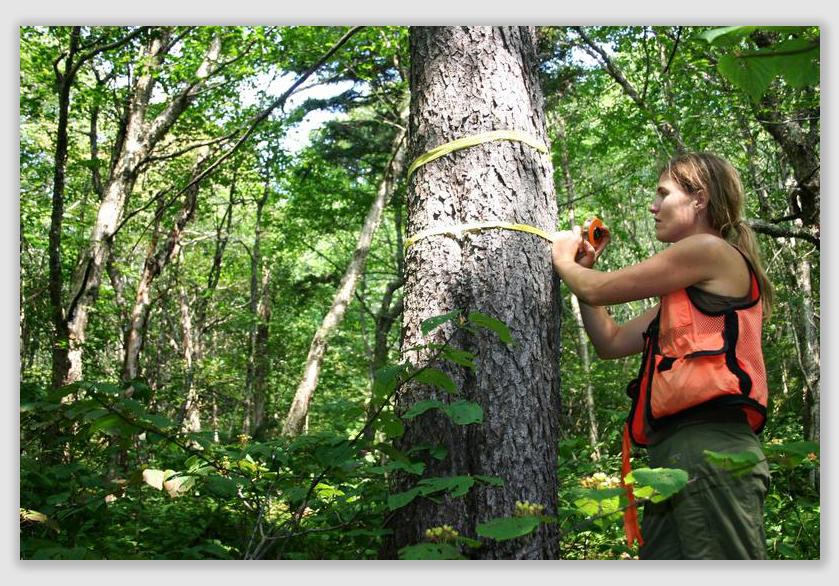
A University of Vermont researcher says red spruce forests in the Northeast that were once damaged by acid rain are recovering, thanks to stronger pollution controls. In the early days of acid rain research, red spruce trees on Camel’s Hump in Vermont were seen as the canaries in the coal mine. The conifers were dying from acid rain, caused by pollutants released mainly by Midwest fossil fuel power plants. The late UVM scientist Hubert “Hub” Vogelmann documented the trees’ decline on Camel’s Hump. His research provided compelling evidence of the environmental impact of acid rain. But 1990 amendments to the federal Clean Air Act limited nitrous oxide and sulfur dioxide emissions. And now the trees are recovering…
The West Fargo Park District is on a mission to find a vandal who cut down tree limbs at North Elmwood Park Monday, June 11. According to the park district, the vandal used the rain as cover during Monday’s torrential downpour. The park district says it happened sometime between 7 and 10 a.m. Monday—when the storm was at its worst. The park district believes the vandal tore down the limbs using a chainsaw and left a mess afterwards in the parks shelter belt. “It’s not only so much the trees,” said Barb Erbstoesser, executive director of the West Fargo Park District. “It’s somebody using a saw or chainsaw or whatever device in public property. That is dangerous.” Erbstoesser says they’ve had vandalism in the past, but nothing to this extent. “Somebody just came in and took this into their own hands and did it,” said Erbstoeser. “I was just kind of puzzled. I thought maybe it was a mistake…”
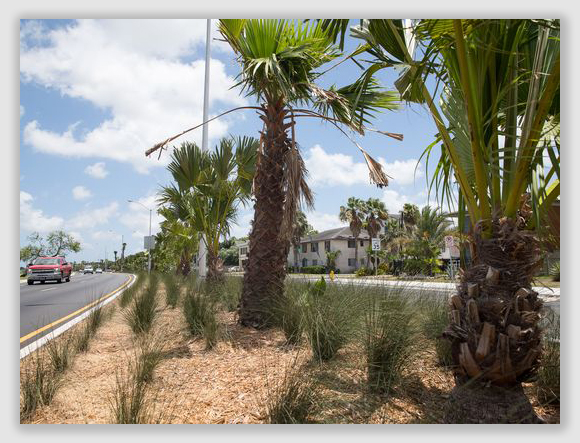
Ongoing frustrations about landscaping on Corpus Christi’s Ocean Drive led a woman to bring a bag of dead cockroaches to a City Council meeting. Patricia Polastri, assistant professor for management and technology at Texas A&M University-Kingsville, lives on Ocean Drive. For months, she and her neighbors have made presentations and spoke during public comment at council meetings. But on Tuesday, she brought something to illustrate their complaints of the growing number of rodents and insects that she claims have been brought by newly planted palm trees between Ayers Street and Louisiana Avenue on Ocean Drive. “What does that look like to you, Mr. (Keith) Selman,” Polastri asked after handing a small plastic bag to the interim city manager. “Roaches.” Selman placed the bag on the table that he shares with city attorney Miles Risley. He did not respond to Polastri, and Mayor Joe McComb told her to direct her comments to council. Polastri said there’s no reason that 156 palm trees should be planted on five blocks of the bayside road. She said it not only ruins the view of the Corpus Christi Bay, but also brings more brush, trash and rodents to the area…
Boston, Massachusetts, WCVB-TV, June 12, 2018: Worker dies after falling 30 feet from tree
An Athol resident died in Medway on Monday after apparently falling from a tree, the Milford Daily News reported. Lewis P. Umbenhower III, 38, died as a result of his injuries at Milford Regional Medical Center, according to a statement released by the town. The Medway Police and Fire Communications Center received a 911 emergency call stating a man at 27 Broken Tree Road fell approximately 30 feet out of a tree, according to the statement. He was cutting a portion of a tree when he fell. Emergency medical aid was administered by first responders from Medway and he was transported to the medical center by Medway Fire & Hopedale Fire Paramedics. The incident is under investigation by members of the Medway Police Department assisted by the CPAC unit out of the Norfolk County District Attorney’s Office and investigators from Occupational Safety & Health Administration…
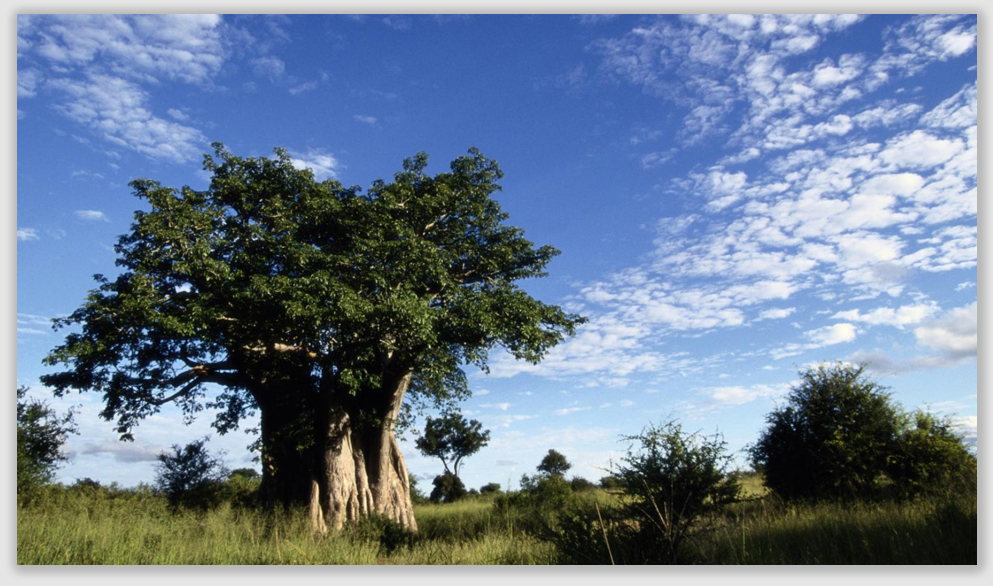 National Geographic, June 11, 2018: Africa’s oldest trees are dying, and scientists are stumped
In South Africa’s Limpopo province, a baobab tree once grew so large and stood so strong that its human neighbors decided to do the obvious: They built a pub inside the living tree’s thousand-year-old hollow trunk, which measured more than 150 feet around and enclosed two interconnected cavities. For two decades, the Sunland baobab attracted tourists wanting to knock back a pint in a tree. But in August 2016, one of the monster stems forming the interior wall cracked and collapsed. Eight months later, another huge chunk toppled over, and now, five of the giant Sunland stems have collapsed and died, leaving only half of the tree standing.Though the Sunland tree’s demise could sound like a consequence of human visitation, part of an alarming trend: A startlingly high percentage of the oldest, largest baobabs in Africa have died within the last 12 years, scientists report today in the journal Nature Plants…
Treehugger, June 11, 2018: How dogs could save the avocado industry
We all know that dogs are humankind’s best friend … and that was before we knew they might save avocado toast. Here’s how disease-sniffing canines might rescue a threatened avocado industry. In 2002, the pesky redbay ambrosia beetle was found in Savannah, Georgia’s Port Wentworth – the invasive species likely hitched a ride from Asia in untreated wooden packing material. Unfortunately, the ambrosia beetle does not bring the food of the gods with it, but rather, brings a fungus, Raffaelea lauricola, that causes mayhem for laurel trees. Known as laurel wilt disease, it has caused the death of more than 300 million laurel trees in the United States alone. Guess what family the avocado tree is in? Yes, the laurel gang. A few years after the beetles were discovered in Georgia, they made their way to Florida, home of an avocado crop that brings in about $65 million wholesale each year. It is the second largest tree crop in Florida after citrus. The disease has had a devastating effect on the industry in South Florida in past harvest seasons, and even larger two avocado industries in Mexico and California are concerned that the disease could wipe out their crops…
 Denver, Colorado, KDVR-TV, June 11, 2018: Cottonwood tree carnival in Colorado
If you’ve noticed the Denver metro area cottonwood trees dumping a lot of white stuff all over the place, you’re not alone. They actually are. While Bing Crosby maybe listening to the murmur of the cottonwood trees, here in Colorado we’re getting bombarded by them. And no, it’s not pollen that’s falling. It’s actually the fruit of the female cottonwood tree just looking for love. The cotton seed from the cottonwood tree is an usually high this year. No Spring frost, good moisture, and high winds assure a leafy love connection with the male cottonwood tree. Only time will tell if cute little baby cottonwoods fill up the nursery…
Goshen, Indiana, The Goshen News, June 11, 2018: Bagworms destroy tree foliage
About 15 years ago, I received a call from a Nappanee resident who described “moving pinecones” on his windbreak of arborvitae trees. At that moment, I knew that bagworms had finally migrated to Elkhart County. Prior to the 1980s, bagworms had not been able to survive northern Indiana winters and were generally found no farther north than Kokomo. Bagworms are caterpillars that live inside spindle-shaped bags which they construct to protect themselves against birds and other enemies. These bags, composed of silken threads and bits of foliage, look so much like a part of the tree that they may go unnoticed until extensive damage has occurred. I know there are some people now thinking, “We’ve had bagworms at my place in Elkhart County for years.” Most of the insects known as “bagworms” over the years in Elkhart County are actually fall webworms, which make huge webs in the trees, particularly locust and walnut, in the fall of the year. Because the webs occur in the fall, toward the end of the season, the damage is actually minimal, because the leaves are just weeks from falling to the ground anyway…

Two trucks, one hauling a flatbed trailer with a dozen or so balled-and-burlapped trees, pull up next to a small, mostly barren triangle of land in Northwest Washington. Five men in chartreuse shirts descend with shovels, dig five holes in the brown clay and muscle 10-foot-tall overcup oak saplings into them. The workers sweat in the late-morning sun and banter about who’s going to buy lunch. “It’s the only way to make the day go by,” said Marcus Pinkney, the crew leader. The oaks are among 30 trees the crew and others were to plant that day at sites throughout the city. “I like it because it’s fast-paced, but sometimes it can be hectic,” said Bridget Cantwell, an urban forester with the District’s Urban Forestry Administration (UFA) who is overseeing the plantings. Cantwell and her colleagues, along with other city agencies and nonprofits, add more than 10,000 trees annually to the District’s arboreal family…
Annapolis, Maryland, Capital Gazette, June 10, 2018: Worker dies while trimming tree in Annapolis
A worker died when he was struck and pinned by a branch from a tree he was trimming in Annapolis, Anne Arundel County Fire spokesman Lt. Erik Kornmeyer said Sunday. Fire and police were called at 3:35 p.m. to the 100 block of Sunset Drive to find the man who was still harnessed 8 feet up in the tree after he died from his injuries, Kornmeyer said. About an hour later, the special operations unit removed the unnamed man from the tree…

The Village of Muttontown has fined a resident almost $23,000 for having seven trees removed from his front yard two months after superstorm Sandy. Pericles Linardos, 53, said he has spent five years filing court motions and appeals in an effort to get the code violations case dismissed. Village attorney Steven Leventhal said Linardos didn’t obtain the proper permit for the tree removal. On May 30, Linardos appealed a village justice court decision imposing the fines to the state Supreme Court Second Appellate Division. On Jan. 2, 2013, village arborist Tony Toscano visited Linardos’ Chelmsford Drive house after a neighbor notified the village about a tree removal company in the neighborhood. Three men were chopping logs into a size that could be fed into a woodchipper, according to court documents. Toscano said they had no permit for the work…
Science Alert, June 10, 2018: This Tree Is So Toxic, You Can’t Stand Under It When It Rains
In 1999, radiologist Nicola Strickland went on a holiday to the Caribbean island of Tobago, a tropical paradise complete with idyllic, deserted beaches. On her first morning there, she went foraging for shells and corals in the white sand, when the holiday quickly took a turn for the worse. Scattered amongst the coconuts and mangoes on the beach, Strickland and her friend found some sweet-smelling green fruit that looked much like small crabapples. Both foolishly decided to take a bite, and within moments the pleasant, sweet taste was overwhelmed by a peppery, burning feeling and an excruciating tightness in the throat that gradually got so bad they could barely swallow. The fruit in question belonged to the manchineel tree (Hippomane mancinella), sometimes referred to as ‘beach apple’ or ‘poison guava’…
A tree dies in Brooklyn. A celebrity chef with a warped sense of going green poisoned a neighbor’s giant silver maple tree because it blocked sunlight from the solar panels on his Windsor Terrace home, the Brooklyn District Attorney’s Office says. Adam Harvey, 33, was arrested in May after neighbors spotted him drilling 11 holes into the trunk of the seven-story tree and filling it with herbicide, prosecutors say. The former “Top Chef” contestant, who owns the Gowanus restaurant Bar Salumi, was arraigned on May 15 with two misdemeanors charges: criminal mischief and criminal trespass. A judge also issued an order of protection against the foliage fiend, barring him from going near the tree’s owner. Meanwhile, the sprawling, majestic maple — which is more than 60 years old, measures 53 inches in diameter and resides in the backyard of a Seeley St. home — is clinging to life. Half of its leaves have wilted since the April 30 attack. An arborist who inspected the tree told its owner that it’s a matter of waiting…
After a Greenwood woman was killed last week by a falling branch while jogging on a trail at Eagle Creek Park, questions have been raised about who’s responsible for keeping the area safe. Kathryne McCammon died when she was jogging in the park and a sudden wind came up, her mother said. McCammon jumped under a tree at the wrong time. A man found her and tried to revive her, but it was too late. So which organization is responsible for maintaining the trees? We first checked with the parks department, who sent us to the Indianapolis Metropolitan Police Department. IMPD sent us back to Indy Parks. Then, we reached out to the Business and Neighborhood Services, who has a forestry division. That organization referred us to DPW, saying, “DPW’s Urban Forestry manages tree issues along more than 3,700 miles of Right-of-Way, within parkland covering more than 11,000 acres, and on any other City-owned public spaces of the 370+ square miles of Marion County.” So we checked with DPW, who referred us back to Indy Parks, saying anything inside park boundaries is the responsibility of the parks department…
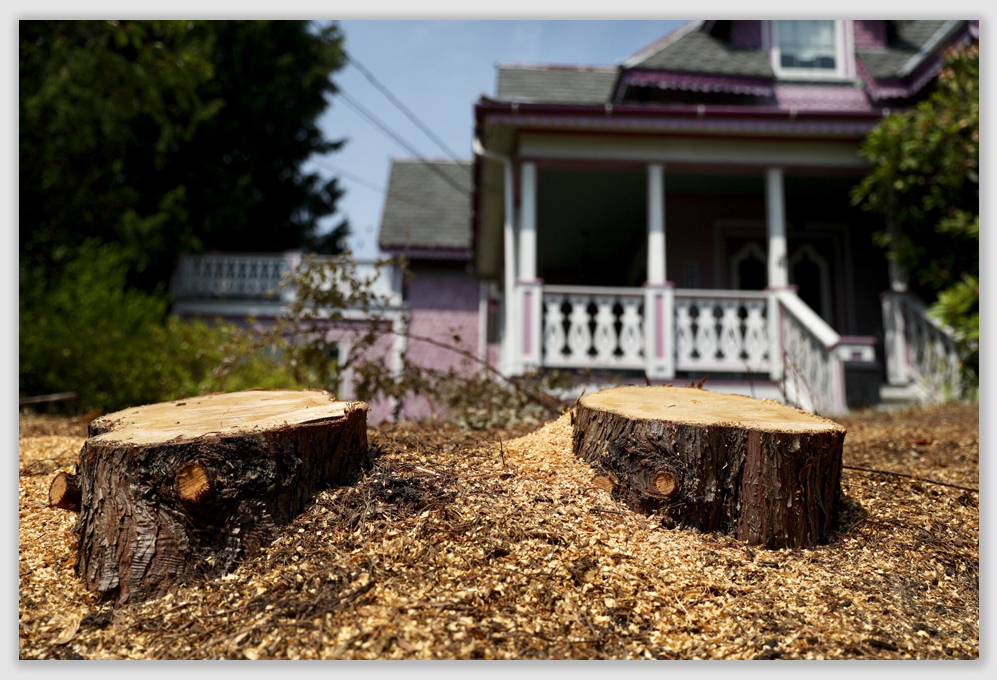 Seattle, Washington, Crosscut.com, June 7, 2018: Can Seattle’s trees survive its boom?
If you want to chop down a tree in this city, not much is going to stop you — and the city of Seattle says that’s becoming a problem for many reasons. Homeowners are limited to cutting down three trees per year and cannot remove larger, high-quality trees called exceptional trees unless they are diseased or deemed a hazard to a home or to a person’s safety. But enforcement relies on people seeing and submitting violations and it’s easy enough to get a tree classified as hazardous, whether true or not. Regulations are even looser for developers. They can wipe a lot clear of trees if any, in the city’s words, “would prevent a project from meeting the development potential of the zone.” In some zones, developers are required to use a city scoresheet called Green Factor to calculate requirements for replacing trees removed, but the tool has been flagged time and again by the city’s Urban Forestry Commission and others as insufficient. Other types of vegetation can be used to satisfy the replacement requirement…
Tree roots have ruined a running track in Oakmont’s Riverside Park that the community and Riverview School District athletes use, but the district and municipality aren’t sure who will pay to repair it or how much it will cost. Roots growing out of the ground have created several bumps in the first two lanes of the track. Officials said five of the roughly 25 trees in the lower portion of the park are the source of the intruding roots. Riverview High School’s track team went without a home meet this season because of the unsafe track conditions. “I’d hate to see the same problem happen again in four to five years,” district Athletic Director Mario Rometo said. “I’d like to see the trees removed and the track resurfaced from an athletic standpoint to ensure that we have the best and safest running surface for our student athletes…”
 Los Angeles, California, Curbed LA, June 6, 2018: Who will save LA’s trees?
The Ficus microcarpa trees along Hollywood’s Cherokee Street create a majestic arch. Walking beneath them is an almost otherworldly experience. In the impenetrable shade, as birds chirp high in the deep green canopy above, the air is unmistakably cooler. Trees are critical for cooling down warming cities like Los Angeles, where temperatures are expected to increase an average of 4 to 5 degrees Fahrenheit by 2050. The shade that trees produce can cool surfaces like soil and pavement. But trees can also lower the surrounding daytime summer air temperature up to 10 degrees, thanks to water evaporating from their leaves. That’s why preserving mature trees that form a canopy should be LA’s priority, says Glynn Hulley, a scientist in the carbon cycle and ecosystems group at NASA’s Jet Propulsion Laboratory. “It’s a pretty precious resource in cities, and you don’t want to take them down—you want to be adding to them,” he says. Instead, since 2000, many neighborhoods in the LA region have seen a tree canopy reduction of 14 to 55 percent, according to a University of Southern California study published in 2017…
Along with the patterned sidewalks, sculptures and seating, the refurbished Nicollet Mall features a veritable urban forest of nearly 250 birches, oaks, cedars, serviceberries and elms. Less than a year after they were planted, some of those trees aren’t doing so hot. The city is watching about two dozen trees that are already wilting across the 12-block area running through the center of downtown Minneapolis. Some are dead. Others are barely hanging on, and city staff will work to keep them alive. “We’ll know a little more in the summer which ones just aren’t going to make it,” said Don Elwood, director of transportation, engineering and design for Minneapolis…

A man who put a safety harness on backward, fell 35 feet out of a tree and had to have a leg amputated can keep suing the maker of that harness, a state Superior Court panel has decided. That ruling overturns a dismissal of the case by an Elk County judge who concluded that sending James Zimmerman’s product liability lawsuit to a jury “would be a waste of time.” Not so, Judge Mary Jane Bowes countered in the state court’s opinion reviving Zimmerman’s complaint against FallTech. She found that a jury should decide whether FallTech, based in Wisconsin, is liable for the injuries Zimmerman suffered in 2008 while cutting down a dead tree for a buddy. That friend, Jim Shanks, gave Zimmerman the safety harness, which Shanks got from a friend who had never used it, Bowes noted. Zimmerman had never used such a harness, either, she added, and did not thoroughly read the instruction manual that came with it…
Boulder, Colorado, Daily Camera, June 6, 2018: Fire blight, deadly to trees, runs rampant
Pulling into my drive, I noticed the honeycrisp apple tree we love didn’t look quite right. From a small distance away, wilt was evident around its branches and a sinking feeling settled in my stomach. Upon closer inspection, my worst fears were confirmed: This tree has fire blight. To have an apple tree is to risk infection from this deadly disease, one that includes oozing bacteria, curled, brown leaves, inedible fruit, and spreading cankers. This year, with several hail storms coming just as the tree was in bloom proved fatal. Temperatures and moisture played a role in the infestation and my tree is entirely engulfed and without hope for recovery. My tree isn’t alone. In the past week, samples and emails have been brought to our office by people in similar situations, conversations sound more like support groups, and the disease is everywhere I look. My mind cues up the dramatic, Hitchcockesque music each time I see another blighted tree. It’s a banner season for fire blight, a bacterial disease that is especially destructive to apple, pear, quince and crabapple. It attacks in spring, when temperatures reach 65 degrees and frequent rain occurs. Bacteria overwintered in cankers on the tree resume activity, multiplying rapidly. Hail drives the bacteria around and into woody tissues…
 Seattle, Washington, KING-TV, June 5, 2018: Seattle explores new tree-cutting rules
A framework of rules for protecting trees in Seattle would require landowners to obtain a permit to cut down a tree larger than a foot in diameter, and take steps to plant a new tree somewhere else. The plan is meant to allow the city’s canopy to keep pace with growth and higher density, as well as plant more trees in neighborhoods that lack them, according to an informational web page published by Councilmember Rob Johnson, who came up with the framework. A new citywide website would streamline permitting. Currently, nine different city departments manage trees, creating confusion for people trying to figure out which permit they might need, the document states. Any tree larger than 12 inches in diameter, or trees designated to have special value, would require a permit for removal. The landowner would be responsible for replanting the tree nearby or contributing to a “tree offset” fund, which pays for the city to replant a tree elsewhere. “We are in favor of the proposal and think it needs to be strengthened. Other cities are doing much stronger protection, and we think Seattle needs to join them,” said Steve Zemke, a homeowner with the Coalition for a Stronger Tree Ordinance…
A man employed by a tree care company died at York Hospital on Monday after a tree fell on him in northern York County, according to York County Coroner Pam Gay. Despite efforts to save his life, Jason Covert-Kohler, 35, of the first block of North Main Street, Dover, died at the hospital at 3:42 p.m. the same day, Gay said. Covert-Kohler, along with other employees of Out on a Limb Tree Care Inc., of Dover, was working in the 1000 block of Twin Lakes Road, Warrington Township, when a tree fell on him about 2:30 p.m., Gay said. An ambulance crew arrived and transported an unresponsive Covert-Kohler to the hospital. Gay said Covert-Kohler’s cause of death was blunt force head and neck trauma and his manner of death was accidental. There will be no autopsy, she said…
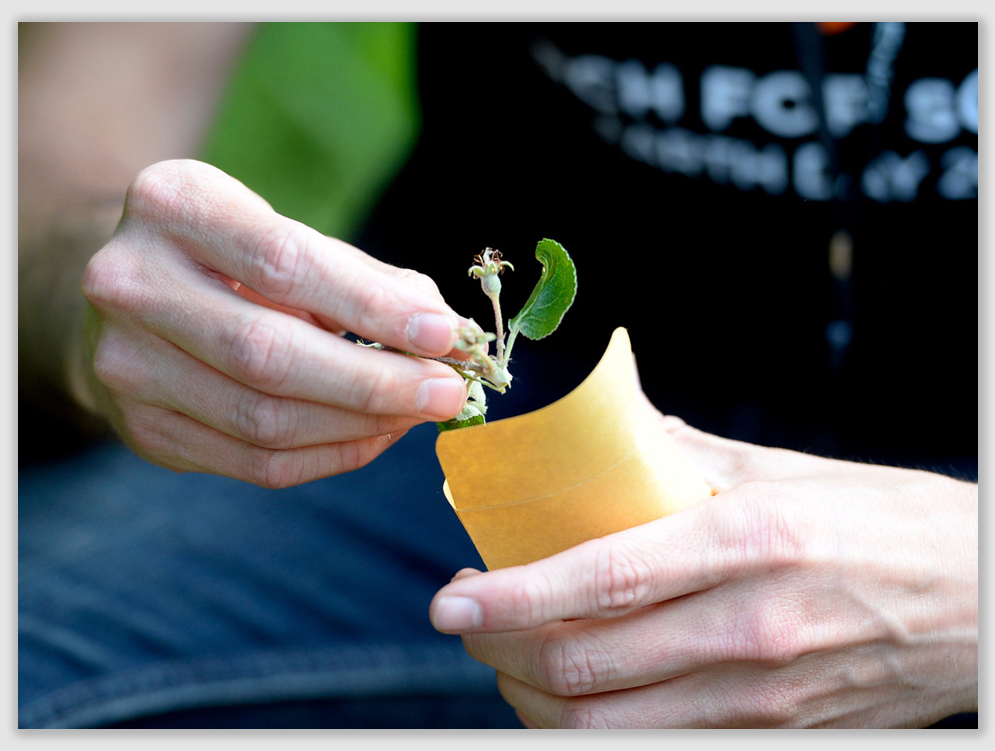
In a chilly wing of a Boulder greenhouse, apple trees have begun to sprout. The growing trees are the focus of the Boulder Apple Tree Project, which aims to identify, study and preserve historic apple trees planted in Boulder and the region. They could also be the key to learning more about how plants survive in Colorado’s climate. Last fall, a group of University of Colorado researchers began fanning out across the community to map the straggling survivors of Boulder’s apple orchards, which thrived in the late 1800s. They collected samples from the trees and grafted them onto healthy rootstock last month. Now, many of the fledgling trees have turned green and leafy in plastic pots in the Ecology and Evolutionary Biology Greenhouse on 30th Street. “It’s interesting that a lot of settlers that came to the Boulder region actually brought apple trees from wherever they came from,” said Katharine Suding, the lead investigator and a CU EBIO professor. “A lot of the apple trees that are planted in a particular homestead reflect the region where the pioneer came from…”
He stood, legs crossed, on the log, arm resting on a post of the homemade cart as he talked to the crowd and his coworkers for the past six years, a pair of draft horses. Scott Stephens had been invited to the forests of Byram to talk about logging with horses, something that has become relatively uncommon in New Jersey’s north woods, but still has a niche among the modern machines that can cut a tree, de-limb it and saw the trunk into cord-length pieces in just seconds. Stephens, who owns Sawmill and Horse Logging of Brodheadsville, Pa., was among the presenters Friday on the property of the Stag Lake Corporation for the annual Tree Farm Day, which gathers experts in various facets of forest management and the ecology of the woods for a day of walking tours, demonstrations and lectures. The homemade cart that Stephens uses is a way to lift the front of the log a short distance off the ground. “You drag a dozen logs over the same place, it’ll leave a rut 12 inches deep,” he said. “With this, the logs don’t dig in and, it’s easier on the horses…”
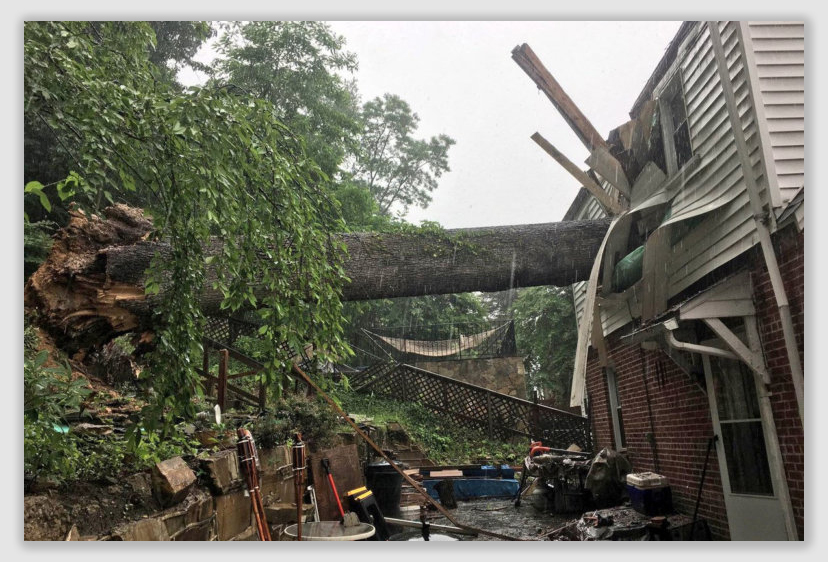
Trees are coming down all over the D.C. area, and an arborist with the National Arboretum warns the situation could get worse before it gets better. In Prince George’s County, Maryland, the citizen call center received 33 tree removal requests between Friday and Monday afternoon. Montgomery County had road closures in 10 spots due to downed trees over the weekend. Lanes on the Capital Beltway were blocked Sunday in three different counties by fallen trees. One tree coming down can cause a domino effect. “All of the trees that are growing roadside have their roots sort of interconnected,” said Scott Aker, head of horticulture and education at the U.S. National Arboretum. So, Aker said, if one tree goes down, the root system of its neighbors could be compromised. Also, when an open patch is created by the downed tree, neighboring trees are exposed to wind they’ve never dealt with before…
Four days after storms ripped through Kentuckiana, one west Louisville homeowner is frustrated, claiming the damage to his home could have been avoided. It’s been a long weekend for 66-year-old Anthony Wade. He spent it tearing up the tree that tore up his roof, Thursday afternoon during the storms. “If I didn’t have the slightest clue about trees or working on houses I really would be in the dark,” Wade said. He said he knows what landed on his property is his responsibility. He also said he knows this shouldn’t have happened. “The act of God is one thing, I understand that, the act of nature, it’s no one’s fault but this could have been avoided,” Wade said. Wade has worried about this tree for years. He even called the city to report his concerns. The city has a record of that call, it was August 2015. An urban forester inspected the tree soon after and found it was “dead”…
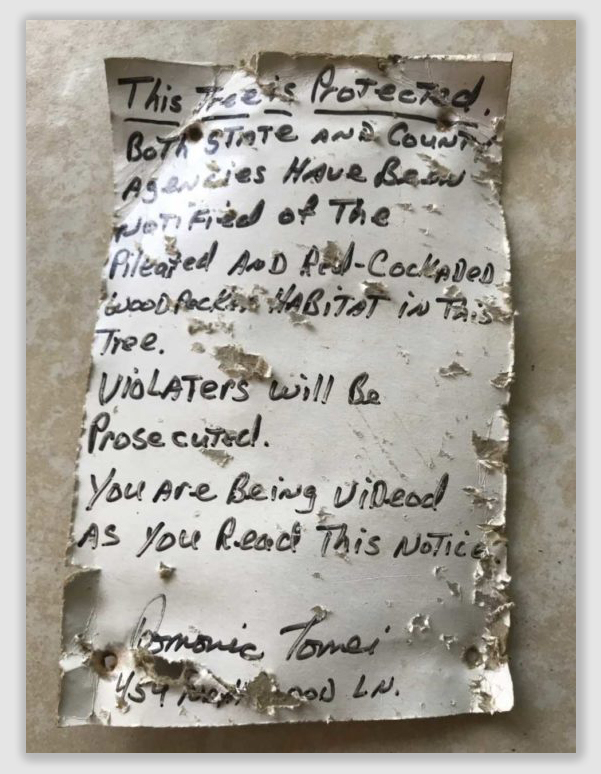
A growing controversy over plants in the Naples Estates is stirring up trouble among residents. After Hurricane Irma, neighbors say their property manager removed 100-year-old oak trees. But it turned out management removed them to keep the community safe during future storms. It was a nightmare for the Tomei family after the hurricane. Men with chainsaws circled their home trying to cut down the pride of their rental property. “They just insisted. They showed up three or four different times thinking we weren’t home to cut the tree down,” said Dominic Tomei. The Tomei family say they’re not tree-huggers, but wildlife enthusiasts. They hand-feed the many squirrels and birds that visit their backyard. So when the family learned the woodpeckers they loved could lose their home, they did everything they could to put a stop to it. They even tacked a note onto the tree itself. “Thank you lord we were here or it would have been gone,” said Toni Tomei…
Columbus, Ohio, Dispatch, June 3, 2018: Immigrant worker cap creates labor crisis for landscapers
Landscaping companies are feeling the heat. And it’s not because of what recently has been a warmer-than-typical spring. Many landscaping businesses in Ohio say they are short on workers this year. That reflects in part a national unemployment rate now at an 18-year low of 3.8 percent. But the businesses say they also are unable to bring in enough legal immigrants, predominantly from Mexico, using a long-established federal visa program designed to fill seasonal low-skill jobs. The government no longer is granting exemptions to the visa program that had made thousands more returning migrant workers available in previous seasons, the landscapers said. “I feel so angry right now,” said Joe Chiera, owner of Impact Landscape & Maintenance in Boston Heights. “It’s affected our business. … I’m all fired up about this. No one wants to hear me. No one cares. It is what it is…”
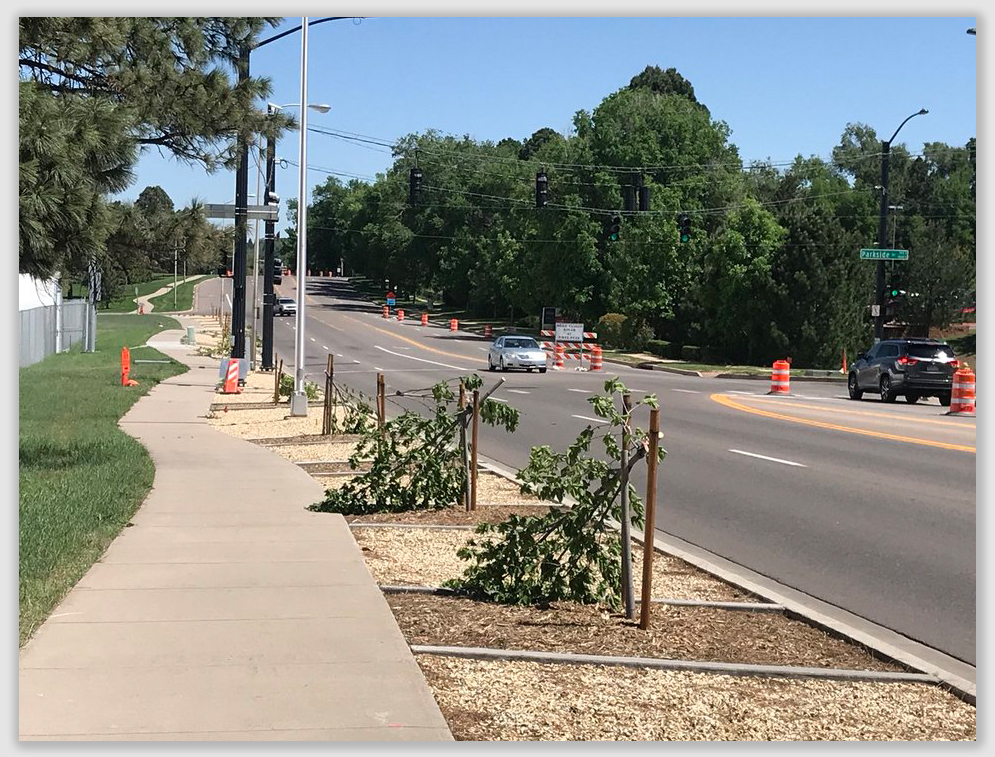
Colorado Springs police are looking for whoever destroyed dozens of trees at Memorial Park overnight. It happened along Union Avenue across from the new peace officers memorial. Bordering a busy Memorial Park… “It’s one of the strangest things I’ve seen, it seems senseless,” Eric Jackson, a neighbor said. Covering more than 600 feet of sidewalk…. “That’s the worst damage I’ve ever seen, that sort of really hits you home,” Bernard Osborne, a park visitor said. 20 trees slashed in half and left to die sometime on Sunday night. “I don’t know how they got away with it, it must have been really early in the morning with no traffic around, I mean to cut 20 trees, it’s unbelievable!” Osborne said. But this, wasn’t the first time…
Washington, D.C., Times, June 3, 2018: Turtle dogs trained to locate reclusive reptiles
Before you can study turtles, you have to first find them, and in an environment of hardwood forests, densely covered ground and damp bottomlands such as those at Oak Openings and some of the other Metroparks, that can make for a very lengthy session of hide and seek for biologists. But bring a team of Boykin spaniels into the picture, and suddenly the playing field shifts in favor of the researchers. These dogs, from a breed known for its ability to retrieve waterfowl in swampy habitat, have been trained to pick up the scent of a turtle on the move, track the animal down, and gently bring it to their handler. The “turtle dogs” were at work here recently, locating Eastern box turtles as part of a research project by the Toledo Zoo and Metroparks Toledo. The zoo has been supporting box turtle research since 2012 and started its own such program in 2016. Matt Cross, conservation biologist at the zoo, first used the turtle dogs as part of his doctoral research work in Oak Openings four years ago. In this current project, many of the box turtles that were found by the Boykin spaniels will be outfitted with transmitters and GPS trackers as part of a long-term study of the species. Cross said the dogs are game-changers when it comes to locating turtles, whose splotchy shells are easily disguised among the leaf litter…
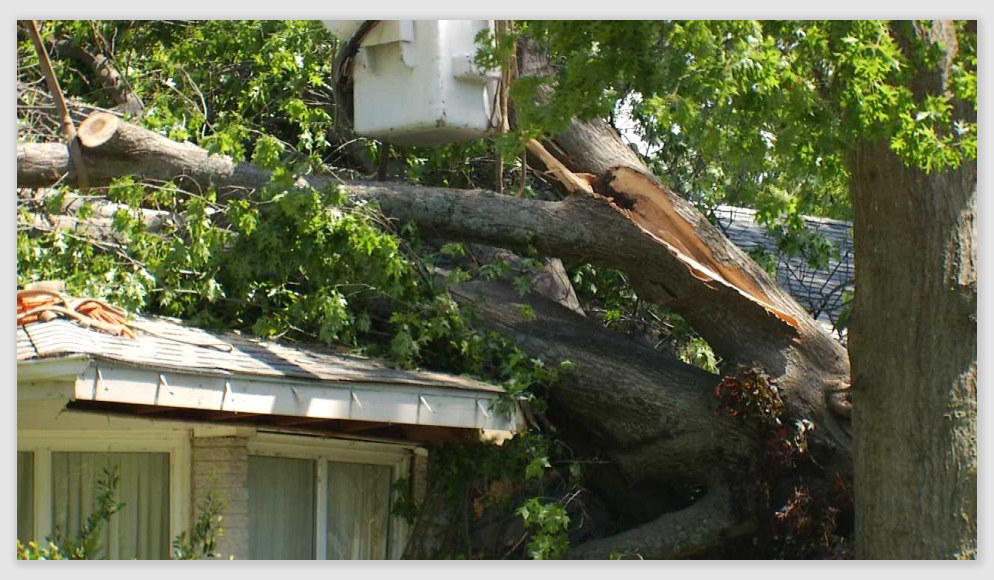
His stairwell: smashed. The floor: soaked. Heavy rains earlier this afternoon wreaked havoc at a Southeast DC home where a man is lucky to be alive. That man is 73-year-old Dr. Robert Coleman. “You have to give very close attention to your trees because your trees will get out-of-whack in a minute,” Coleman said in a very serious voice. He’s speaking from experience. During Sunday afternoon’s heavy rains, a large tree fell from his backyard onto his house on the 3400 block of Texas Ave. SE. The tree’s weight crushed part of the top floor. Inside, you could see tree limbs poking through his stairwell. Parts of his ceiling where punched out. The rain outside was dripping inside, soaking items already crushed in the Southeast DC home…
A man is demanding answers from University City officials after his home was destroyed by a tree last Sunday. The tree was on public property and LB Douglas and one of his neighbors said they reported the dead tree a few times to the city weeks before it fell but no one came out to inspect it. According to a University City spokesperson, they’ve been proactive about removing trees that have been reported dead. In the last year, they told 5 On Your Side 297 trees had removed. However, when we asked if the tree that damaged Douglas’ house had been reported, City Manager, Gregory Rose, said the city is still trying to determine that. Rose also said residents can report damage to property caused by city trees but as of May 29 he hadn’t received any such reports for anyone. Douglas said he filed his report right after it happened…
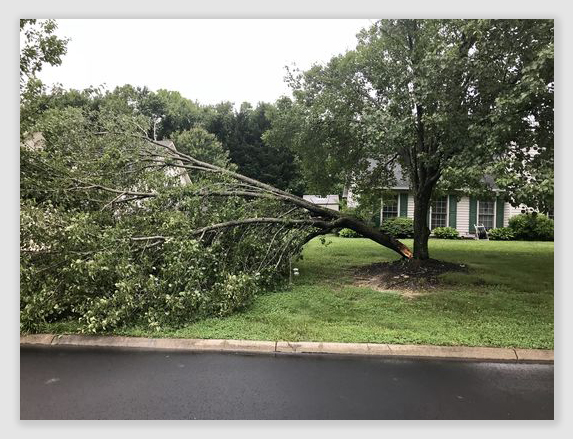 Asheville, North Carolina, Citizen-Times, June 3, 2018: Can I cut down my neighbor’s leaning tree?
Q: One of my neighbor’s trees is leaning precariously over my property. Can I legally remove it? Or can I force him to remove it? If it falls on my property, is he responsible for the damages, or do I have to file an insurance claim with my company?
A: John D. Noor, an attorney with Roberts & Stevens in Asheville, took this one on, offering a keen mix of legal and practical advice — and mentioning beer, a particularly astute judicial approach here in Asheville. “I tell clients that the best thing to do in these situations is to start by talking with your neighbor,” Noor said. “It’s amazing the amount of trouble that can be avoided by discussing a problem over a beer. The key being that you share ‘a’ beer and not a case.” Sure, you could roll the dice and make a new drinking buddy over a case, but trust the lawyer and me on this one: Don’t down a case and then bring up that pesky tree. That could lead to a different kind of case. “If your neighbor isn’t willing to talk, or a shared beer is more likely to lead to a fist fight than you both singing kumbaya, I’d recommend that the concerned property owner politely let his neighbor know in writing that the tree poses a hazard and ask that it be removed,” Noor said. “If the concerned property owner is particularly wise, she or he might even offer to help with the cost of removing the tree. Paying for part of the tree removal is almost always cheaper and less of a hassle than dealing with the tree after it’s fallen on your home…”
Warren, Ohio, Tribune-Chronicle, June 3, 2018: Falls schools plan timber harvesting
With the Newton Falls Exempted School District facing difficult financial times, school officials are trying a new way to generate funds by having timber harvesting on 42 acres of primeval forest the district owns on the school campus. An auction is set 9 a.m. July 3 at the board of education meeting room at the junior high school for timber harvesting bids from interested vendors who will be asked to outline plans of their harvest, size of tree to be taken, method of payment and how the ground will be restored from hauling of trees. School Treasurer Jonathan Pusateri said selective harvesting is when only trees of a certain diameter and harvest are taken. ‘“They will only take a certain amount of trees. With the estimates we have seen, we have to take a look at this type of project because of the financial state we are in,” Pusateri said. “I have never done this before, so I spoke to other places where trees are harvested to get an idea. Not many school districts have ever done this. It is new, and we are taking a lot of things into consideration and seeing what is best for the enviroment. We will need a detailed plan on the number and size of trees,” Pusateri said…
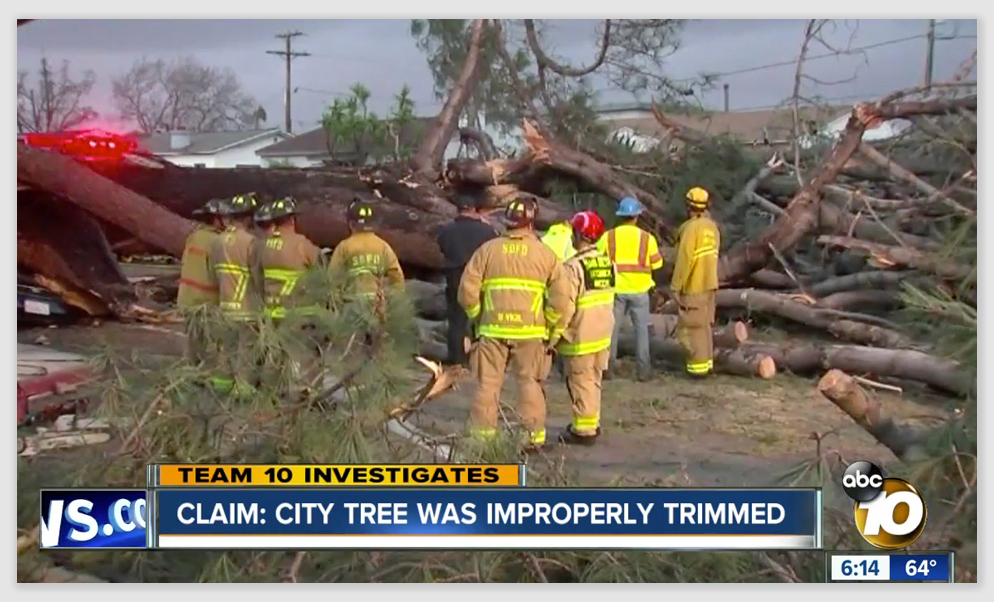 A beautification project in Baton Rouge launched more than a decade ago has grown into an eyesore for some homeowners who live off Stumberg Lane. They claim the cypress trees are ruining their property, and they want the city to remove them. There’s no question Donna Belanger’s property is well maintained. Her 40-year-old family home is shaded by several fully-grown trees, but there are six cypress trees just beyond her property line that have created an eyesore in her yard. “I knew what it was and they first invaded my little flower bed here and I’d dig them up, go around it, clip one side, pull them up. I thought, oh well, I got rid of that one, but then they started multiplying like rabbits,” Belanger said. The stumps, or cypress knees, Belanger is referring to are well known to a lot of people in Louisiana. She has spraypainted them orange to make them stand out. They grow up out of the ground, sometimes far away from the tree itself. There are so many of them, Belanger says she stopped counting a long time ago…
A family is warning people after a falling tree branch killed their baby in Sacramento the day before Mother’s Day in Tahoe Park. When the incident occurred, the family was celebrating a birthday. “It was just warming up, but there was just a nice breeze going,” said Catherine Elton. “We had the close friends over and family members.” Catherine Elton is Jessica Flynn’s cousin. Flynn was visiting with her 3-month-old son Xavier from Idaho when it happened. “I just walked in to probably the worst thing you could walk into as any adult or parent,” Elton said. Xavier was hit by a falling tree branch. His face was down on the concrete. “What happened was that the tree let go of a branch and without warning from about 100 feet up,” Elton said. “The force of the impact was on Xavier’s back of his head.” A spokesperson for Sacramento Fire said they responded to the call and took Xavier to the hospital. His family confirmed he died of his injuries at UC Davis Medical Center. “The world felt ominous,” Elton said. “A little scary…”
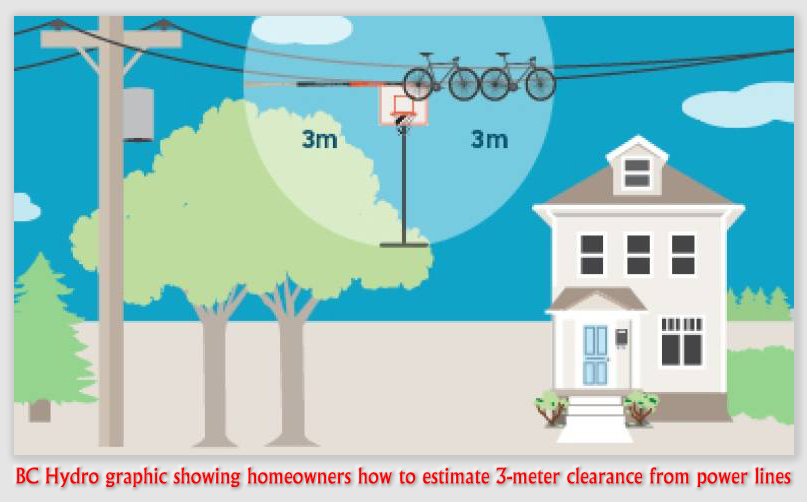
BC Hydro says British Columbians are still not being as safe as they could be while gardening around power lines.A recent survey conducted by the utility found 80 per cent don’t know how far tools should be from overhead power lines and 60 per cent trim trees, bushes and hedges near lines without professional assistance. Hydro says these “weekend loggers” have been involved in 400 accidents since 2013 and estimates there may have been up to 7,500 unreported incidents during that time. “The bottom line is it’s three metres. We need you to be three metres away from a power line when you’re trimming the foliage,” BC Hydro’s Jonny Knowles said…
Science Daily, May 31, 2018: Cool weather can amplify attacks of tree-killing bark beetle
As a warming climate invites the destructive southern pine beetle to expand its northern range, the cooler weather in this new habitat can potentially increase the lethality of the insect’s assault on trees, according to a new study from Dartmouth College. The research demonstrates how climate change can create a destructive, one-two punch for forests that are already under attack, and another mechanism by which weather can influence the abundance of insect pests. In the study, the Dartmouth research team shows how the colder fall and winter temperatures encountered in northern latitudes influences the growth and development of immature southern pine beetles, leading to a more synchronized emergence of adults once the weather warms. The behavior detailed in the research raises the risk for pine forests because the emerging beetles kill trees by attacking in large numbers. The more beetles that are active at the same time, the better the chance they will overwhelm tree defenses and produce even more beetles for the next generation of attacks…
San Diego, California, KGTV, May 30, 2018: Trial over fallen tree branch moved to September
A trial has been moved to September in a dangerous condition of public property case against the city of San Diego. The trial had been scheduled to start on Friday. Lorin Toeppe says a tree branch fell in 2013 striking her as she and her boyfriend were walking through Mission Bay Park. “There’s so much I’ve lost that I can’t get back,” Toeppe said. Toeppe claims on the day she was injured, the walkway at the park was crowded. She says she moved off the path to avoid people skateboarding. “We moved over, and I moved further into the grass, and that’s when I heard the crack of the tree,” she said…
Harrisonburg, Virginia, WHSV-TV, May 30, 2018: Saturated ground could lead to trees falling
May has brought us nearly record-breaking rain, leaving the ground completely saturated. On top of the flooding concerns here in the valley, trees falling because of the saturated soil is also a big issue. Dry River Tree Service in Dayton says it has already responded to almost 10 calls of trees falling because of the saturated ground in the past two weeks. They say conifers — like White Pine trees — are the most susceptible because their root system is relatively small and they tend to grow in wet areas to begin with. Larger trees are also more vulnerable, especially ones that already lean or are heavy with more branches on one side. They say if you have a tree you’re concerned about you shouldn’t wait to see if it could be dangerous…
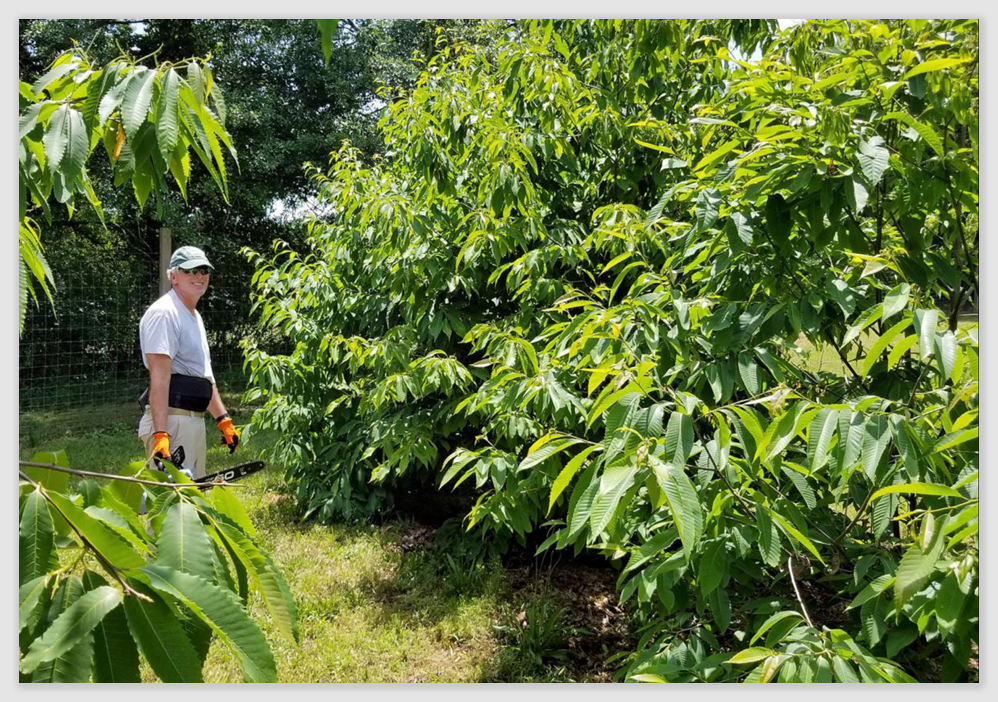
The American chestnut tree was virtually wiped out by a blight nearly a century ago but researchers led by Marty Cipollini at Berry College and others are working diligently to revive the species through painstaking development of blight-resistant trees. The late Ralph Henry, who lived on a mountain between Rome and Summerville, used to love to roast chestnuts and those that weren’t eaten were frequently used as hand warmers inside clothing during the cold winter months. When he found out about the research going on at Berry years ago, he contracted with the college and the Georgia chapter of the American Chestnut Foundation to allow a research orchard to be developed on his property. That orchard is now one of the largest and most significant research sites not only in Georgia, but all of the Southeastern United States…
Albany, New York, Post-Star, May 30, 2018: Tree thief makes off with 130 saplings from Warren County
Someone who appears to have an affinity for evergreen trees snatched about 130 saplings from the Warren County Soil and Water Conservation District earlier this month. The seedlings were part of the district’s annual tree and shrub sale this spring. District Manager Jim Lieberum said 13 bundles of 10 trees — balsam firs, Canaan firs and blue spruce — were taken out of the ground around the weekend of May 12 next to the district’s offices on Schroon River Road in Warrensburg. The saplings, Lieberum said at the district’s board meeting Tuesday, cost the district around $100 to $120. Board members joked that they should inspect local Christmas tree farms based on the kinds of species that were stolen…
 Bend, Oregon, The Bend Bulletin, May 29, 2018: Company accidentally cuts down Redmond Christmas tree
In a unique case of mistaken identity, a massive spruce tree slated to become the Redmond Christmas tree was accidentally cut down in March. Last week, the city of Redmond filed a lawsuit against Fagen Tree & Chips, a Bend-based tree removal company, alleging that employees trespassed on land owned by the city and removed a tree that was intended to be part of a park expansion near Redmond’s city hall. The suit seeks $62,000 in damages, invoking an obscure Oregon statute that says that anyone who unlawfully removes a tree on someone else’s property is liable for three times the cost of the damage. Wade Fagen, the owner of the tree-removal company, said the removal was an honest mistake and criticized the city for taking legal action against his small business…
A North Hollywood woman’s battle with the Department of Water and Power over a troublesome tree causing a big water leak may be coming to an end. DWP work crews are finally shutting off water that’s been gushing for days from a hole in the half-a-century-old tree. The tree’s roots apparently punctured a pipe, sending water gushing into the street last Thursday. Paula Glickstein estimates 100,000 gallons of water by now have flowed from the ruptured pipe connected to her North Hollywood property before she could get the DWP to respond. She says she called DWP as soon as she noticed the leak, but hit nothing but roadblocks when trying to get permission to cut the roots of the city-owned tree. Work crews showed up after she contacted Eyewitness News and the story aired over the weekend. DWP officials say they will not saddle Glickstein with what would be a massive water bill…
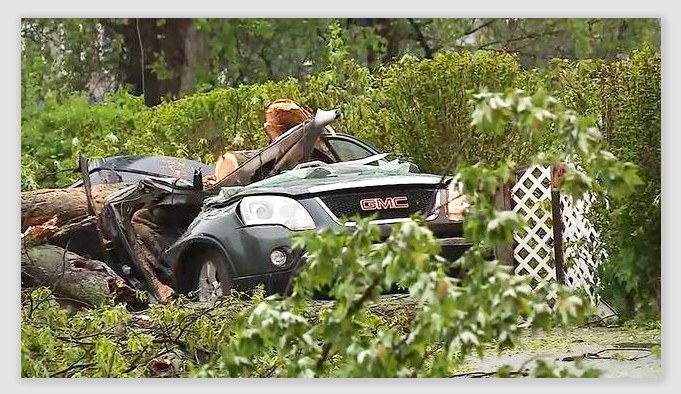 Jacksonville, Florida, WJAX-TV, May 29, 2018: Why some trees fall while others stand tall in storms
Wet soil and high winds make trees dangerous in storms but pruning and other factors can make some trees safer than others. The deaths of a reporter and photographer in North Carolina on the fringe of Subtropical Storm Alberto reminds us about the danger of topping trees in high wind storms. Both men were killed in their news van when a tree crashed to the ground. Gene Bushor with Bushor’s Tree Surgeons has owned the Jacksonville business for over 50 years. He can’t talk specifically about what happened to the news crew in North Carolina, but talked about how tree roots weaken during heavy rain. “The roots themselves are stationary, but when you get the saturation of so much rain and a combination of the limbs being one-sided, the tree can fall without wind just for no reason whatsoever because there’s no anchor in roots,” Bushor said…
Chattanooga, Tennessee, WRCB-TV, May 29, 2018: Landscaper killed by falling tree at Dunlap home
A landscaper was killed by a falling tree on Tuesday afternoon in Dunlap. It happened around 2:40 p.m. at a home in the 100 block of Carpenter Road. Sequatchie County Sheriff Ronnie Hitchcock confirms the fall and says his deputies assisted Dunlap police at the scene. Dunlap fire officials say the victim was trapped under the tree. Fire officials say the man was removed from beneath the tree by the time fire crews arrived at the home. He was taken to a local hospital where he died from his injuries…

For centuries, trees have provided mankind with daily necessities such as paper and rubber, now, scientists in Japan have discovered a new use for trees: developing alcoholic beverages. Since 2009, researchers at Japan’s Forestry and Forest Products Research Institute have been testing environmentally-friendly ways to disintegrate and ferment wood to make fuel, or alcohol, without using chemicals or heat. They discovered the process could be done entirely with food additives, which led them to the idea of drinkable alcohol. Yuichiro Otsuka, a researcher at the institute, explained the process involves fermenting pulverised wood with water, yeast and enzyme and can be done in ten days, producing beverages resembling alcohol that have aged inside wooden barrels. So far, drinks have been produced from cherry blossom, cedar and white birch tree
WYFF News 4 anchor Mike McCormick and WYFF News 4 photojournalist Aaron Smeltzer died Monday when a tree fell on their SUV. The accident happened on Highway 176 in Polk County while they were covering the impact of heavy rain in that area. Tryon Fire Chief Geoffrey Tennant said the engine of the SUV was running and the transmission was in drive when authorities arrived at the scene about 2:30 p.m. He said the tree that fell on the SUV was about 3 feet in diameter and had stood back off the road. Tennant said the ground was saturated and the tree’s root system failed…
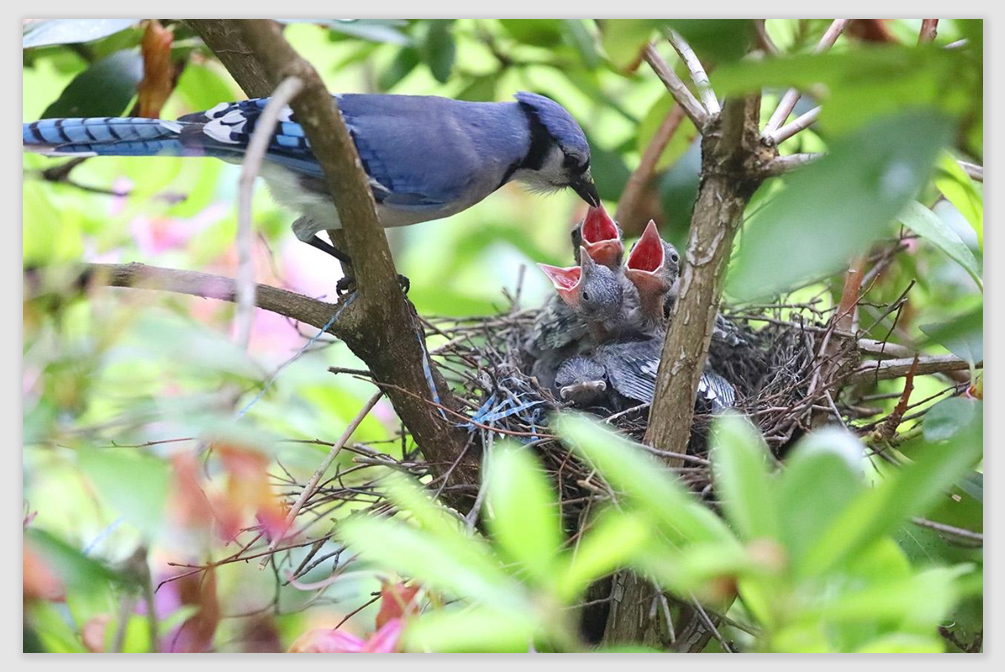 Columbus, Ohio, Dispatch, May 27, 2018: Sound the alarm if you hear noises coming from boxwoods
My family and I were relaxing in the courtyard of a local museum when we gradually became aware of a low but steady noise. “Um, does anybody else hear that — that — well, sort of like a buzzing sound?” I asked. “It’s more of a crackling noise,” one of the kids chimed in. Curiosity was now piqued. “It’s definitely something electrical,” one of the older boys said, searching for wires or signs of a camouflaged sound system. “No, it’s sympathetic vibration from the wind blowing past the building,” a sibling countered. “Put your ear next to the boxwood,” I ordered, pointing to the manicured hedges. As everyone leaned closer to the boxwood, expressions of amazement spread across faces. The mysterious sound was indeed emanating from the shrubbery — and we learned later that the culprit was a tiny, non-native pest known as boxwood leafminer…
A North Hollywood homeowner is trying to stop a leak near her home that was caused by the roots of a tree, but she’s been struggling with the Los Angeles Department of Water and Power and the city. Paula Glickstein said the pipe, which sits under 50-year-old tree roots, has been leaking since Thursday. She estimates about 82,000 gallons of water have been wasted since the leak started. LADWP told her she needed to fix it, but the crew she hired to fix the problem said no. “The tree belongs to the city of Los Angeles, if we cut the roots there’s all sorts of potential problems,” she said. The tree could die, or fall, or both and cause damage, which is a liability. “I don’t think it’s appropriate that I should be held liable to the city when it’s not my tree,” she said…
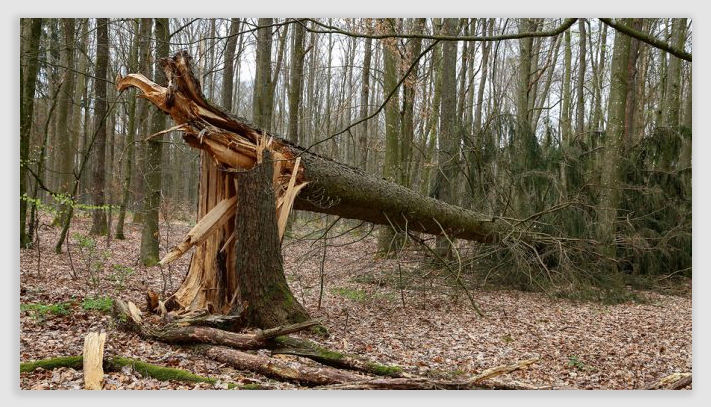
Large trees are an important and beautiful part of the landscape, but landowners should keep an eye on trees to ensure they are a benefit and don’t pose a danger. Jennifer Behnken, a community forester with the Missouri Department of Conservation (MDC), says there are important signs to look for to determine if a tree is safe. “The last thing anyone wants is for someone to get hurt by a falling limb, or even a whole tree that simply gives out and falls,” Behnken said. “Also, a dying tree in the woods has its benefits for decomposers and cavity nesters, but by your house or in your background poses a hazard.” Behnken said when considering what to do about dying trees in communities and urban areas, safety is the bigger priority. When evaluating the safety of a tree, first look at it from a distance and take note if it is leaning, has any dead branches, has sections missing leaves, or if the tree has thin leaf cover. If it has any of these symptoms, it could be dying and at risk of falling. “Next, look at the base of the tree from up close and check to see if the soil is raised or cracked, or if there’s an abundance of fungus,” she said. “These can be signs of root decay, which can put the tree in danger of falling over…
Moline, Illinois, WQAD-TV, May 24, 2018: Homeowners don’t recommend using this tree service
Some Quad City homeowners say they have been left hanging by a local tree guy. They say has not delivered what they paid for.
“We were hustled. As careful as we are at getting bids, we reacted so quickly because of his fast talk, that it was over. He had us,” said Bonnie Engelman of Rock Island. The Engelmans say Scott Evans knocked on their door and said one of the trees in their front yard was “diseased” and should be taken down. They paid him $1,200 with the promise of taking down the tree and removing the stump. He also said he would be planting another new tree for an additional $400. “Immediately, his truck came and immediately, he started cutting it down. Before we could change our minds. When the tree was down he wanted his check and he said he’d be back in a week to remove the stump and plant a new tree. We wrote the check, he cashed it in an hour, and never came back,” Engelman said…
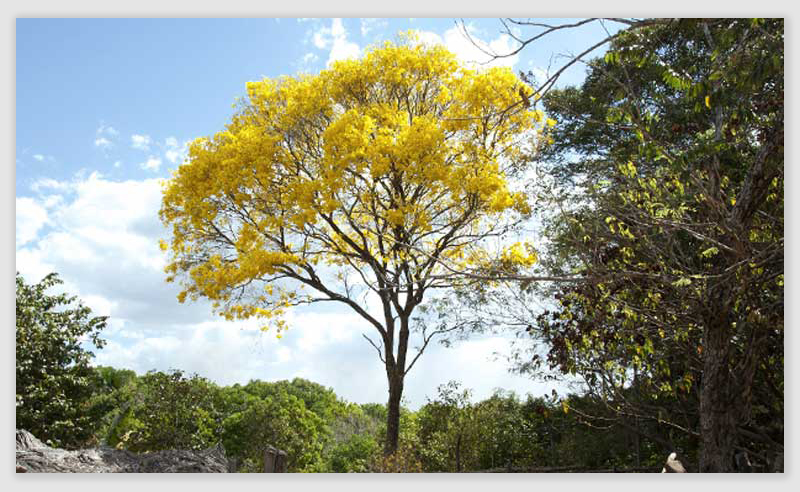 Mongabay.com, May 24, 2018: Illegal loggers ‘cook the books’ to harvest Amazon’s most valuable tree
Brazil’s Ipê tree is one of the most valuable tree species in the world, and a chief target for illicit deforestation, with primary export markets for its illegally harvested timber especially found in the U.S. and Europe. In the past, a weak licensing system, along with continued indiscriminate, illicit logging of Ipê (formerly Tabebuia spp., but reclassified as Handroanthus spp.), has caused serious damage to the Amazon rainforest according to a Greenpeace Brazil investigation. The high value of Ipê wood — which made into flooring or decking can sell for up to US $2,500 per cubic meter at Brazilian export terminals — makes it very profitable for loggers, even though they must penetrate deep into forests to harvest the trees.mThe resulting environmental harm is severely impacting the Brazilian Amazon, says the report, with deep encroachment by illegal roads, increased forest degradation and fragmentation, harm to biodiversity, and intensification of violence in rural areas…
Madison’s Greenspace Commission is hoping to finalize a new tree ordinance proposal, which may call for private property owners to obtain a permit before cutting down or removing trees, by the next regular meeting in June. The Greenspace Commissioners discussed the evolving ordinance proposal at the May regular meeting last week. “Our hope is to have a few more committee meetings before the next Greenspace Commission meeting in June and iron out all the details and tweak it at that meeting to firm it all up and have everything in place so we can send it on to the Mayor and City Council,” said Rick Crown, Greenspace Commission member. According to Crown, the Greenspace Commission has been working for years off and on to come up with a new ordinance to enhance tree protection and educate the public on desired and undesired new tree plantings. “There are concerns and some trepidation of regulating people’s private property with this, but we really want to protect the green canopy and our urban forest that we all benefit from so much,” explained Crown. Some of the ideas for the new ordinance include requiring a permit to cut down or remove trees on residential properties and for property owners to maintain a minimum tree count on their property. The minimum tree count would require every lot to maintain one canopy tree and one understory tree per quarter acre…
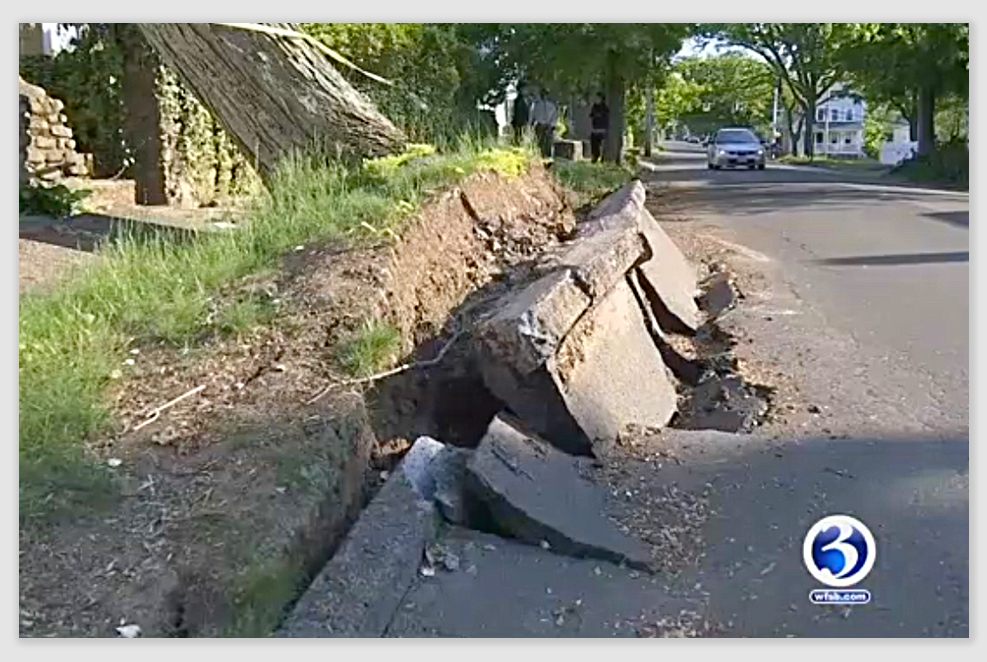
There’s still a long way to go before things get back to normal after last week’s deadly storms. In Wallingford, one family is living with a huge tree on the side of their home and they’re blaming the town, saying they’ve been given the run-around when it comes to the cleanup. The family knows that once the tree went into their property, it became their problem. They’re upset they didn’t get a clear message from the town communicating that to them. Eight days after dangerous storms rolled through Wallingford, Jeffrey Baker’s home on union street looks exactly the way it did last week. “There’s some visible damage to the exterior, the roof,” said Baker. Wallingford’s Engineering Department confirms the tree belongs to the town, but as Channel 3 reported Tuesday night, even if the tree doesn’t belong to you, once it falls on your property, it becomes your problem and the responsibility for the cleanup falls on your shoulders. Baker is familiar with the rule now, but he doesn’t agree with it. “In my life experience, that’s not how responsibility works. The town was responsible for planting that tree, maintaining that tree,” said Baker…
Dallas, Texas, KXAS-TV, May 23, 2018: Dallas neighborhood questions tree trimming tactics
Some Oak Cliff homeowners say the character of their neighborhood is being damaged by overly aggressive tree trimming. “One of the great things about our neighborhood is we have beautiful old trees that go with our beautiful old houses,” Dottie Brashear, who lives in Winnetka Heights, said. Brashear moderates the North Oak Cliff Neighbors Facebook page, which was recently flooded with complaints about Oncor tree trimming. “It was a problem for multiple homes,” Brashear explained. One of those was Dallas City Councilman Scott Griggs, who in a Facebook post, questioned Oncor’s tactics and notifications. Some of us got notices in January. Some people got no notice,” Vivan Yates Skinner, who also lives in Winnetka Heights, said. “There was no date given. They show up four months later.” NBC 5 asked arborist, Burton Knight, to walk a Winnetka Heights alley to assess whether the trees were trimmed properly. “It’s kind of a thankless job,” Knight said. “Sometimes the trees have just gotten so big that it’s gotta be drastic and that’s unfortunate…”
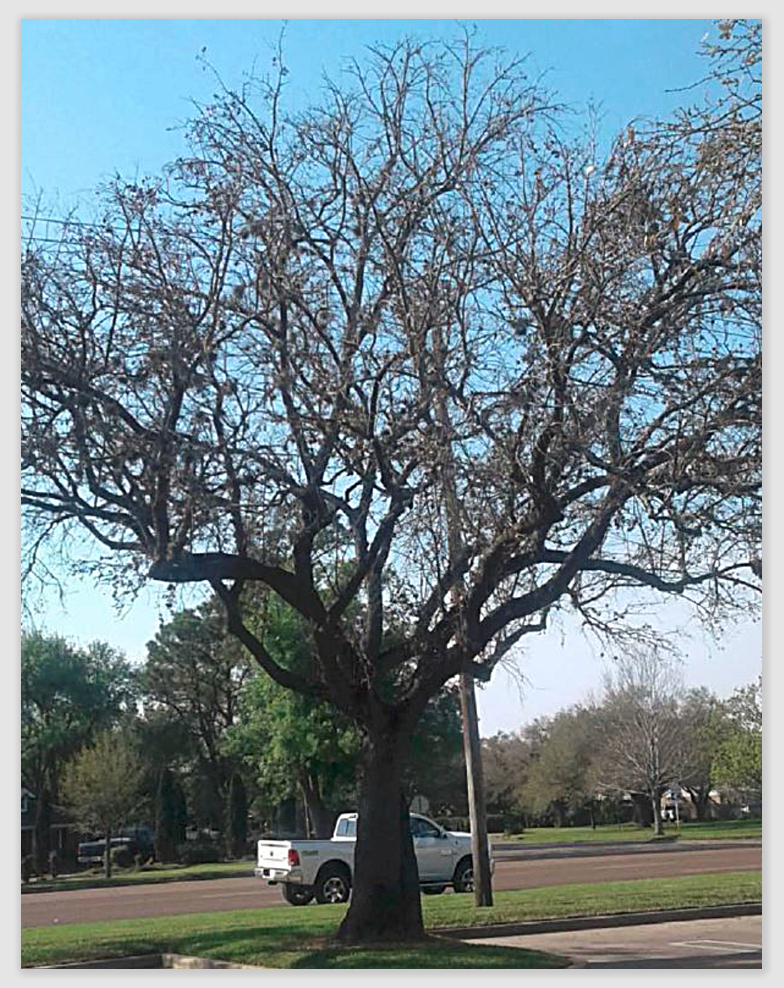
The owner of Heritage Mark office building is offering a $10,000 reward for information leading to the arrest of whoever is responsible for poisoning several 25-year-old live oak trees on the property. Four trees are completely dead and three others appear to be poisoned as well, according to a news release from the Heritage Mark, 5606 N. Navarro St. Police have been notified. Property management first noticed the trees in distress on March 1 during a routine grounds check. Three trees had brown leaves and circles of dead grass around the trunks with soil that smelled like diesel. Property management questioned groundskeepers, consulted local specialists and sent soil samples to Analytical Pesticide Technology Laboratories in Pennsylvania to identify the chemical used, according to the news release…
East Baton Rouge Parish leaders plan to start identifying and cracking down on tree services that fail to haul away the trees and limbs they cut down, instead passing on the expensive disposal cost to the city-parish. Some tree services are leaving the “woody waste” by the curbs of the homes of their customers, hoping the city-parish will haul the debris away and pay the hefty fee to have a landfill accept the waste. That disposal fee, for just one large tree, can often be “several hundred dollars,” a representative of Republic Services said during Wednesday’s metro council meeting. Republic is contracted by the city-parish to haul away woody waste left in front of homes in the parish. Richard Speer, director of environmental services for the city-parish, said during Wednesday’s metro council meeting he gets reports “daily” of professional tree services leaving cut trees and limbs behind. Speer said when it’s suspected debris has been left behind by a professional service, an inspector is sent out to investigate. However, he admits it’s often hard to prove otherwise when homeowners say they cut the trees themselves. Professional tree services often tell customers to falsely claim they personally cut the trees in order to lower the cost of the job, the Republic representative told the council…
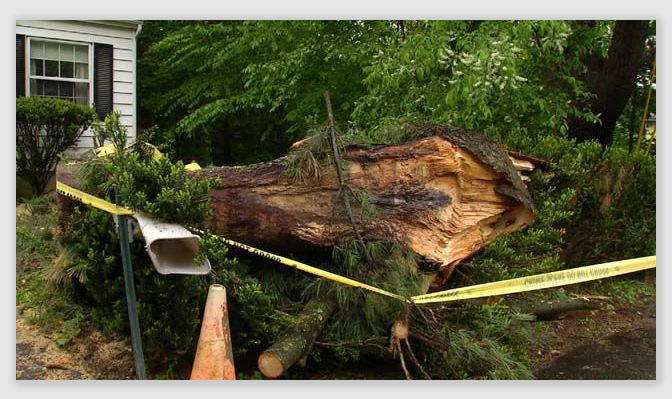 Hartford, Connecticut, WFSB-TV, May 22, 2018: Neighbors question who downed tree belongs to
It’s been a week since deadly storms moved through the state, knocking down many trees in the process. Now, many homeowners have questions about the cleanup, especially when it comes to trees that don’t belong to them. In Naugatuck, a resident had a tree come down, causing damage in her yard. “I saw the tree crack. I heard it, it fell down and all I could say was ‘please don’t put a hole in my roof, please don’t put a hole in my roof’,” said Kim DiMarco, of Naugatuck. It didn’t damage her home, but the force from the pine during last week’s deadly storms crushed the mailbox and came several feet from her front door on Brook Street. The tree is on the boundary between her property and her neighbor’s, and it’s close enough to the road where it might belong to the town. She didn’t know who would be responsible for removal, so she called the town of Naugatuck. “Why shell out the money if it’s not my tree,” she said…
For the sake of trimmed trees, many Utahns are unintentionally killing a lot of baby birds and leaving “oodles” homeless.
Screech owls have a reason to screech when a careless tree trimmer cuts down their nest. “This is exactly the wrong time of year to be doing this,” said DaLyn Marthaler, executive director of the Wildlife Rehabilitation Center of Northern Utah, a nonprofit based in Ogden. “This is very bad for the baby birds.” A lot of the baby birds (and squirrels) don’t survive the impact when their nests hit the ground. But the center has been receiving up to 40 birds a day, which “feels like more this year than other years,” she said. “And it doesn’t have to be happening. This is not the right time of year to be trimming trees.” That’s a chore best left for the fall, long after baby birds have flown their nests…
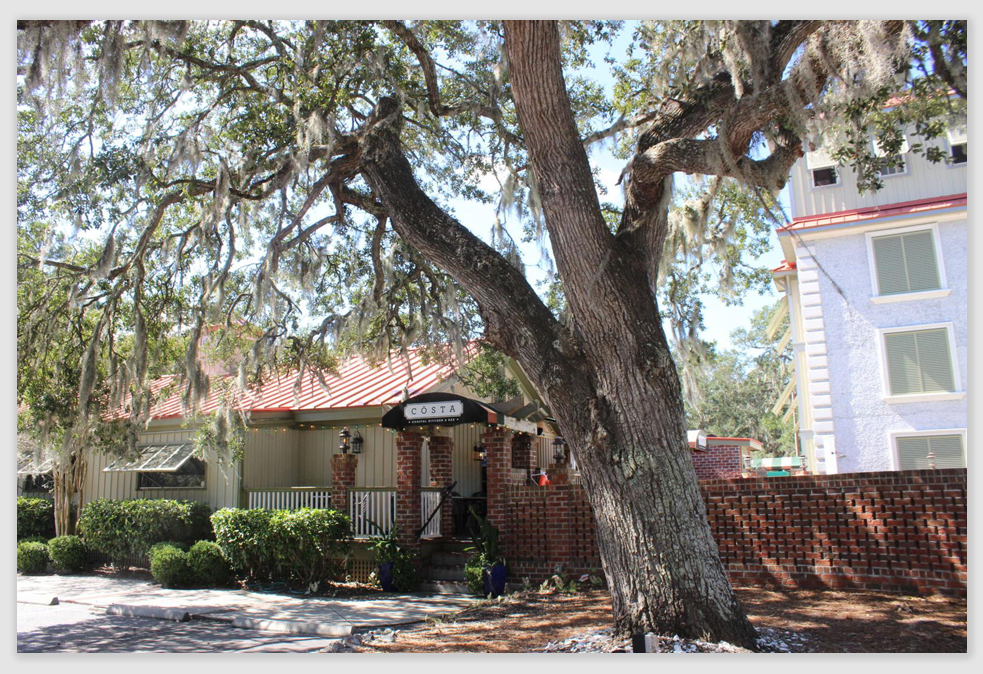
If proposed changes to the county’s tree ordinance go forward, county officials say more types of trees will be protected and developers and some residents may have to get permission from the county to remove large trees on their own property. The county Planning Commission heard proposed changes to the tree ordinance, in draft form, from planning staff during its May 17 meeting. The Planning Commission will consider a recommendation for the ordinance changes at its next meeting on June 21 and then County Council will consider the changes in three readings, starting at its June 26 or July 10 meeting. Planning Director Boyd Johnson told the commission the changes to the tree protection ordinance are significant, including regulations against developers clear cutting trees, protecting trees mostly based on size rather than type and creating overlay zones where different rules apply. “We are actually recommending two overlay zones: one for the urban area, on the Waccamaw Neck, and one for the rural area, which is on this side along the river,” Johnson said. “Basically, occupied has been exempt, so if someone lives in the house, the tree ordinance does not apply. What we are proposing in the Waccamaw Neck overlay zone is that it now does (apply), but only to protect the ‘grand trees…'”
Great Bend, Kansas, Tribune, May 22, 2018: Who pays for damage caused by downed trees?
Strong spring storms across Kansas can bring high winds, toppling trees onto homes and vehicles. But, once the storm passes and clean up begins, what may not be clear is who pays for repairs. “The wild weather we often face in Kansas this time of the year is an important reminder that anyone in any part of the state may be vulnerable to wind-related damages to their home or vehicle,” says Alex Greig, Insurance Manager for AAA Kansas. “It is important to understand what your insurance policy does and does not cover to avoid unexpected financial hardship.” AAA Kansas tips on insurance coverage for vehicles and homes vehicles:
• Physical damage to a car caused by heavy wind or fallen tree limbs is covered under the optional comprehensive portion of an auto policy.
• If your car is damaged by a fallen tree or limbs, you would need to file a claim using your vehicle policy’s comprehensive coverage.
• If your tree falls on your house, your insurance will cover removal of the tree and home repairs due to damage.
• If your tree falls on your neighbor’s house, your neighbor’s homeowner’s policy would provide insurance coverage. The same holds true if your neighbor’s tree falls on your home; you would file a claim with your own insurance company.
• If a tree falls in your yard, but doesn’t hit anything, you would pay for its removal in most cases. Additionally, if a tree on your property is weak, damaged, or decayed, but you do nothing about it, and it crashes down on a neighbor’s home (or vehicle), you could be held liable for damages…
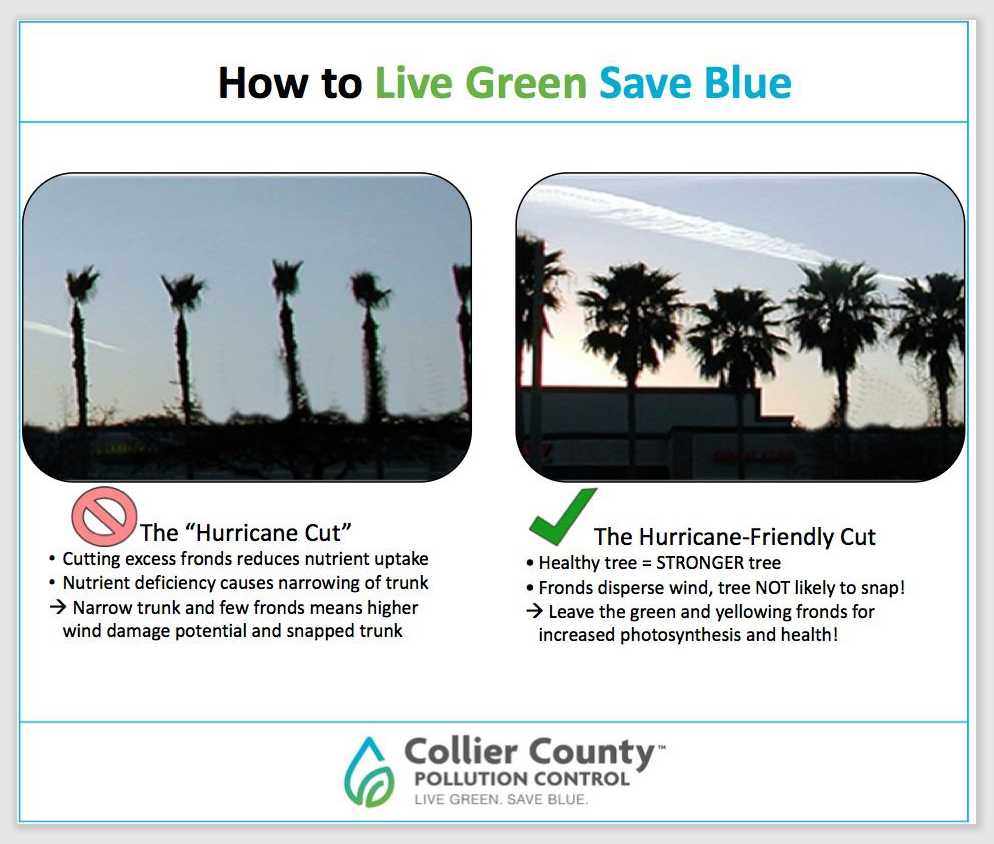
Collier County issued a warning to residents to manage their palm trees ahead of hurricane season. Many neighbors in Regent Park do their own landscaping. Steve Watts—who caught a lucky break before Irma—noticed trees dangling too close to power lines in his backyard. “I got my ladder out and cut those down. After the hurricane, most of that tree landed on those wires and it was almost down to the fence line,” Watts said. Dealing with trees during storms is a part of life in SWFL. But if you’re over-pruning palm trees, Collier County says you’re doing it wrong. “It’s a double edged sword. You want to protect yourself but also not have it be a damaging situation,” Watts said. Tree experts say what you’re looking to avoid is what they call the “hurricane haircut.” It’s what happens when you cut the palm fronds too sparsely, leaving the trunks thin. Many people think this will save their homes during a strong storm, but it actually makes the trees themselves weaker…”
Eureka, California, Times-Standard, May 21, 2018: Miserly neighbors and dangerous trees
…Our next-door neighbors who inherited the house from their parents. Soon after moving in, their lack of respect for a lovely old home, its well-maintained yard and several tall eucalyptus trees which had always been carefully trimmed became all too evident. The trees are in a straight row — leaning toward our property, with large branches coming over our fence, which is on the property line. We both have horses and corrals near the property line. When it is windy, the trees bend over, and we have been afraid that one will snap and crash down. To address this issue, we paid a licensed arborist who met with all of us and gave her opinion as to the danger presented by the eucalyptus trees. Her written report — which our neighbors have — stated that the trees are top-heavy; many show evidence of disease which weakens them, so that even a modest storm creates an imminent risk of splitting in two, crashing down on both of our homes and should be trimmed or removed immediately. Even though the dangerous trees are on their property, we offered to pay half to eliminate the risk, but they didn’t want to spend the money…
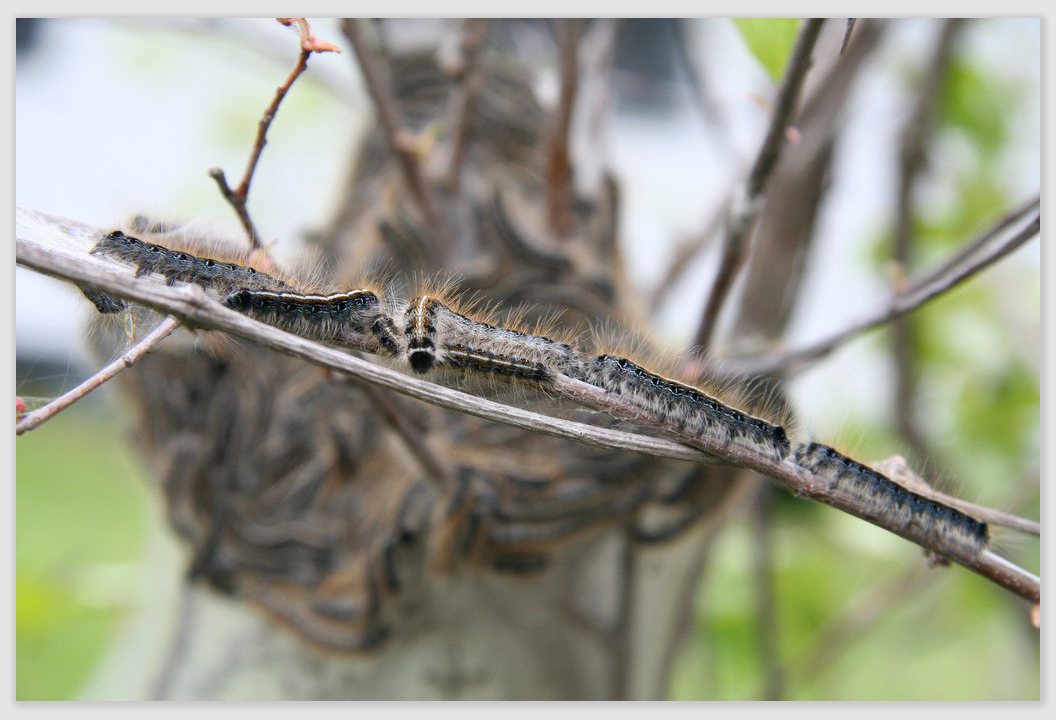
A decennial pest species called the forest tent caterpillar is midway through an outbreak in Vermont this year, and egg masses have just begun to hatch, according to state officials. The caterpillar is native to Vermont and every 10 years or so an outbreak of the species will defoliate large areas of deciduous trees. The last big outbreak in Vermont began in 2004 and continued for about three years, stripping foliage from more than 300,000 acres of forest. Maple sugar makers are among those keeping a wary eye out for the bugs as summer fast approaches. “Everything looks good right now — the leaves look fantastic,” said Peter Purinton, owner of Purinton Maple in Huntington. But, as is the case in any agricultural operation, he said, “when you think things look good, look out, because something’s after you.” Purinton said he’s been hit more than once by forest tent caterpillar outbreaks since he began his sugarbush in the late 1970s. The most recent infestation before this one was around 2010. “They just eat the leaves and leave the trees with no leaves,” he said. “The first of July, it’s like it’s January…”
Missoula, Montana, KPAX-TV, May 21, 2018: Dead trees pose real threat to people
There are many dangers that Montanans may face in the wilderness. Bringing enough water, supplies and bear spray all steps people can take to make sure they’re safe though. But what does a person do when the threat in the forest is the very trees themselves? A tree snag is defined as any standing tree that is dead or dying. Snags are a natural part of a forest’s life cycle and provide habitats for many wildlife. However, by being a snag it means that the tree’s structure is compromised and will eventually fall. When a tree falls, depending on its size, it can bring hundreds or even thousands of pounds of force with it. Jay Hedrick is a 10 year veteran forester who works for the USDA Forest Service. Hedrick says he’s seen firsthand just how dangerous a tree snag can be. “No matter how long you’ve been doing it, it is a pretty frightening situation especially if you’re witnessing these trees come down,” says Hedrick…
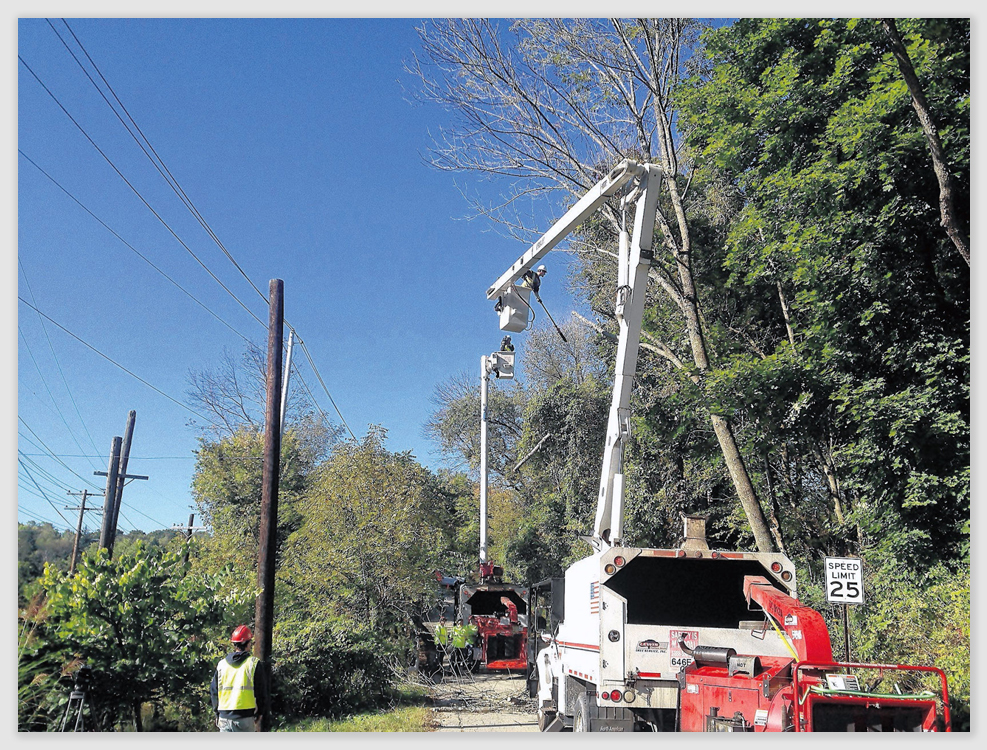
Potomac Edison will be sending crews this summer to trim more trees near power lines in Western Maryland and the Eastern Panhandle of West Virginia as part of its parent company’s $33.7 million vegetation-management program for 2018. The trees are being cut back because “branches coming in contact with lines is one of the top causes of (power) outages,” said FirstEnergy spokesman Todd Meyers. FirstEnergy is the parent company of Potomac Edison… “In Maryland, we do the cycle once every five years, so we get about 20 percent of the system per year,” Meyers said. “It’s like painting a battleship; it’s never done…”
Elko, Nevada, Daily Free Press, May 20, 2018: The science of elm trees
Trees in Elko County are a rarity. When lucky enough to have a few on your property you pamper them like children, hoping they make something of themselves someday. As the leaves begin budding out this time of year you say keep going and growing – do your job. Here in Ryndon a tree is something one is not careless about. Settling down from California 20 years ago I was determined, by gum, to make this barren landscape into a fruited plain. With the precision of a passionate architect I dug holes that first spring of my arrival and began seriously planting as many different types of trees as possible. Buying stock of all kinds from the old Builders Mart (now Ross, Petco and JoAnn) I forged a grand experiment that taught a deep yet sad lesson in dendrology – the study of trees. I don’t want you to think that I willy-nilly planted any tree that was offered. In researching the “Hardiness Zone” listed on description tags I made a rule that as a minimum the plant would have to withstand at least negative 30 degrees Fahrenheit, a rarity yet a potential possibility. Although the list became shorter with such a specification, I purchased willow, apple, pear, cherry, ash, locust, birch, maple, cottonwoods and quaking aspens. All eventually died except the last two, and now after two decades the cottonwoods are slowly giving up their ghosts…
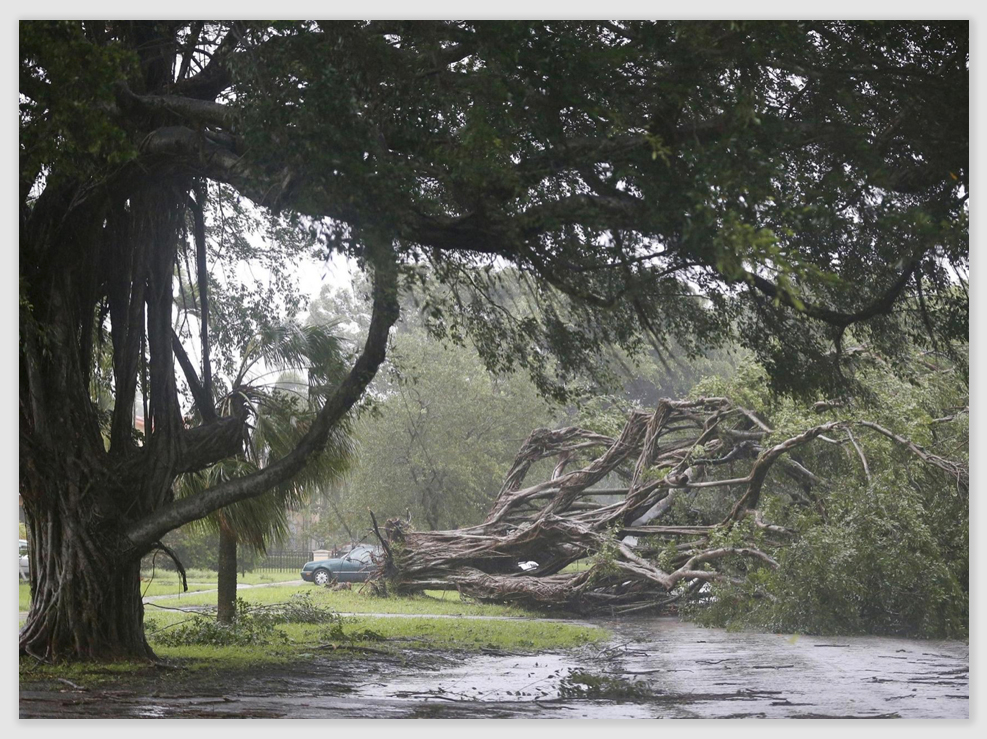 St. Augustine, Florida, Record, May 20, 2018: UF study: Termites can weaken trees before hurricanes
Nobody likes a termite. Except for mongooses. And bats. And other predators. But termites aren’t loved in Florida. The Asian subterranean termite, though, as made a home for itself in the southeast part of the state by way of human maritime operations. And they’re taking down and killing trees, according to a study done by a University of Florida assistant professor. Thomas Chouvenc, an assistant professor of urban entomology, with former UF student Jeremiah Foley published in the journal Florida Entomologist that the Asian subterranean termite, originally from India, can hollow out oak trees and stress pine trees from the outside. The hollowed oak trees then become at risk for falling during hurricanes. During Hurricane Irma last year, Chouvenc said, some trees that had fallen had been eaten from the inside by these termites. Slash pine trees have a hard, sappy core, Chouvenc said, so it’s hard for termites to get into. Instead, the research found, the termites stay along the outer ring of the tree, in dead bark, and eat around the tree, girdling and eventually killing it. The termite, the article states, has the potential to “irreversibly alter the urban forest composition…”
Have a home with a yard? Then you might be pining to plant something to make it lush. Only problem is, many homeowners are at sea in big-box garden centers, selecting species that just won’t thrive—or even survive—in their yards. To the rescue, we’ve asked some green thumb experts for the biggest mistakes people make planting (and caring for) trees and shrubs. Read up on these bloopers to avoid before you dig in! Swaying palm trees channel a vacation vibe, and you’ll see them everywhere in Los Angeles, Florida, and other warm-weather areas, but here’s a little secret: They aren’t native to these areas—and can even be dangerous if you plant them near your home. “I wish homeowners would not plant this tree,” laments Cassy Aoyagi, president of FormLA Landscaping. Many palms, particularly the Washington fan variety, are highly flammable, so when brush fires pass nearby, they can bake these plants from down below and cause them to burst and rain fiery embers underneath…
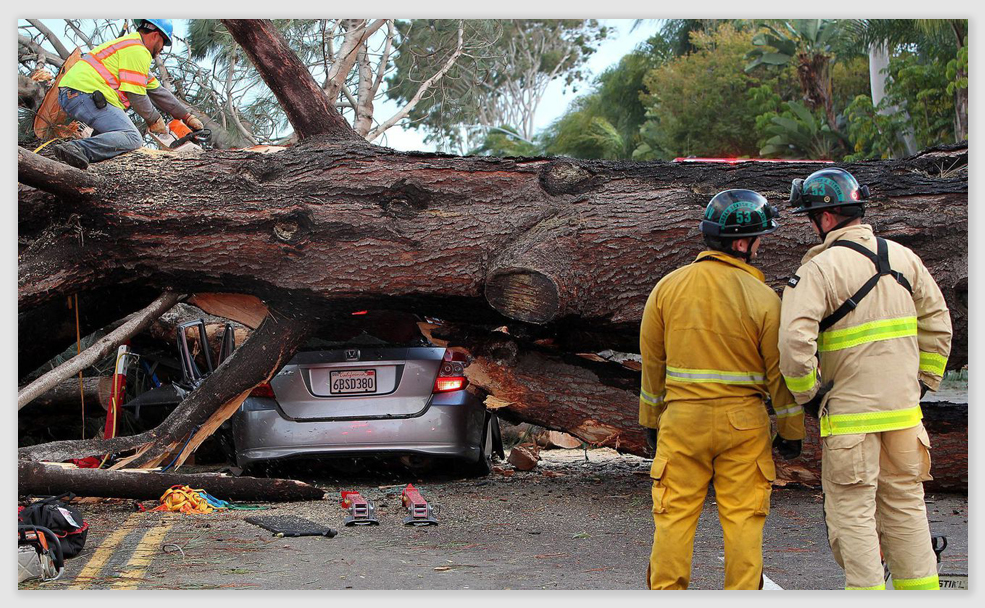
The parents of a San Diego musician who died after a giant tree fell on her car settled their lawsuit against the city for $700,000, officials confirmed Thursday. The tree, estimated to be 100 feet tall, 6 feet wide and more than 50 years old, fell across Ingraham Street near Fortuna Avenue during a powerful storm on Jan. 31, 2016. It crushed three parked vehicles and a passing car driven by Nicki Lyn Carano. She died before she could be taken to a hospital. Her parents, filed a wrongful death lawsuit alleging city authorities had “actual and/or constructive knowledge” that there was a defect in the tree that caused their daughter’s death. They also claimed the city had a duty to inspect trees near the roadway for flaws and have a hazardous tree management plan in place. They contended the city failed in its duties to keep the area safe and warn the public of any hidden danger…
Westchester, New York, Journal News, May 17, 2018: When a tree falls, who’s responsible?
Tuesday’s storm hit the Lower Hudson Valley hard. It wasn’t particularly wet, but wind gusts were as high as 63 miles per hour and two tornadoes, with winds of 100 mph, touched down in Putnam County. The winds knocked down trees, caused widespread power outages and even temporarily shut down Metro-North. And the cleanup? Here’s what you need to know about trees felled by a storm. It’s up to you to get rid of it. Whether it started on your property or not. “Basically, it’s the homeowner’s responsibility,” said Greenburgh Town Supervisor Paul Feiner. Feiner said sometimes the town will recommend a resident get rid of a tree, but on private property they can’t force anybody to remove anything. Your homeowner’s insurance could cover a portion of removal and replacement, according to the Insurance Information Institute…
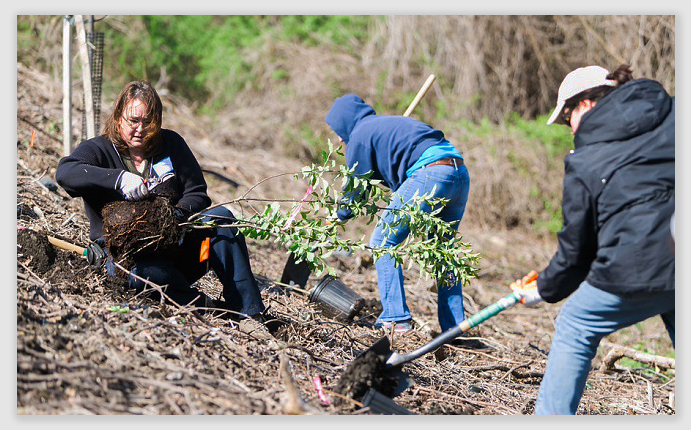
From tree-lined streets to our beautiful parks, Pittsburgh has its share of leafy shade. In fact, in 2013, we were cited by National Geographic for the city’s impressive amount of urban tree cover, coming out ahead of cities including Portland, Austin and New York. But a disturbing report from Tree Pittsburgh shows that the tree canopy in our region is suffering. Allegheny County lost 10,000 acres of its tree canopy between 2011-2015, according to the report. A two percent change from 2010 (56 percent canopy coverage) to 2015 (54 percent) may not sound like much, and yet it is. In more vivid terms, our county lost the equivalent of more than 7,500 football fields of trees. The city alone lost six percent of its canopy coverage. Some trees were lost to the emerald ash borer, a non-native pest that arrived in Pittsburgh around 2009. Others died in an oak wilt fungus outbreak that spread in Schenley Park. Around 3 to 5 percent was due to the removal of trees that were naturally aging and dying. But much of the loss is man-made…
Washington, D.C., WTOP Radio, May 17, 2018: Why some trees are more likely to topple than others
Much like it’s easy for you to slip on a wet floor — tree roots can slip out of the ground when there’s wet soil. And, some species are more susceptible than others. Trees with shallow root systems that are more likely to topple include the tulip poplar, magnolias, some maples and Bradford pears, according to an expert arborist. “They have strange, ropy root systems that don’t have a lot of root hairs and because they don’t have as much surface area, they sometimes are not as well anchored as some other species,” head of horticulture and education at the U.S. National Arboretum Scott Aker said. Trees that are more likely to come down also include those that are unbalanced from the loss of branches on one side, that are leaning from recent wind storms or have damaged roots…
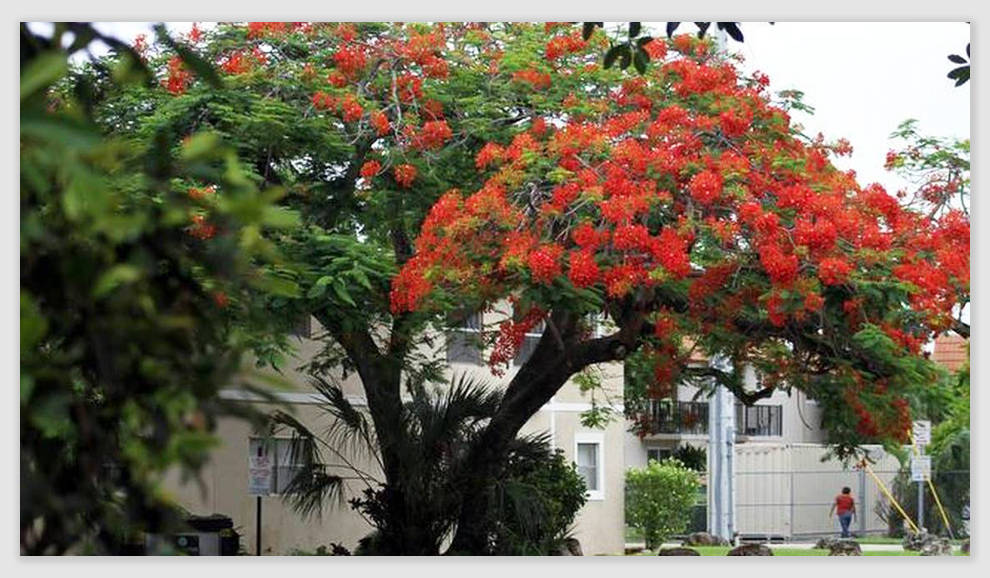
What’s invasive, notoriously messy and prone to termite infestations? The new official tree of Key West: the Royal Poinciana, known for its fiery orange-red blooms that dapple across the island this time of year with their wide-spreading branches. The Royal Poinciana has its problems and its detractors, but it also has a strong fan base in Key West, where locals and tourists enjoy its beauty. “The Royal Poinciana is perfect for Key West,” said local photographer Ralph De Palma. “It’s one of the first trees that stunned me with its natural beauty.” “My parents loved this tree. My grandparents loved this tree,” said Mayor Craig Cates, who presented the item to the City Commission on Tuesday night. “The whole idea is to preserve the tree and encourage people to replant this tree.” Cates said he knows hundreds of locals who support naming the Royal Poinciana Key West’s official tree. If the city continues its rate of replanting the tree, there are local children who will never get to see one, Cates added…
Fremont, Nebraska, Tribune, May 16, 2018: Mulch volcanoes compromise tree health
You’ve seen this before—mulch piled so high around a tree that it resembles a volcano with a stick coming out of the center. So goes the plight of trees trying to survive under such conditions. Despite the research indicating how bad this is for trees, we see it time and again. Exactly how do mulch volcanoes compromise tree health? There are two compelling reasons. First, tree roots need oxygen to survive. In most soils, oxygen is found in the top 18 inches or so of the soil. It’s no accident, then, that roots readily exist, thrive and grow in the top 18 inches of soil. When mulch is heaped around trees, this puts the lowest tree roots out of the range of oxygen penetration. Under these conditions, roots begin to die back, slowing tree growth and potentially causing tree death. The second reason mulch volcanoes are a bad thing has to do with the tree trunk itself. To explain this, a better understanding of plant function is necessary…
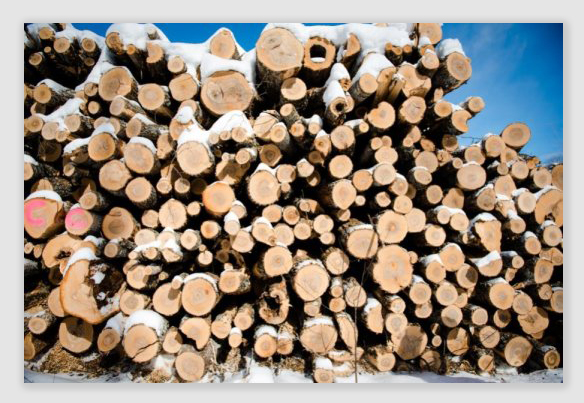 Science Daily, May 16, 2018: Whole-tree logging may not hinder plant biodiversity
As much as we love our two-by-fours and toilet paper, many of us have mixed feelings about logging. Those feelings can morph into straight-out hostility when it comes to removing the branches and treetops, which are increasingly chipped and burned for electrical power generation. “People think, ‘It’s bad enough to log, and now you are going to take away the branches that decay and then nurture the ecosystem?'” says Robert Froese, a forest scientist at Michigan Technological University. “But we wondered, what really is the role of branches?” So, with funding from the National Council for Air and Stream Improvement and Weyerhauser, Froese’s team decided to find out. What they discovered surprised them: when it comes to plant diversity, harvesting the whole tree does not have dire consequences. The results of their study have been published in the journal Forest Ecology and Management…
As homeowners clean up after Tuesday’s devastating storm that brought tree-toppling winds to the lower Hudson Valley, many are left to assess the risk of trees on their own property. “We live in a county where there are a lot of trees that are bigger than the houses that they’re around,” said Jerry Giordano, a senior horticulture consultant at the Cornell Cooperative Extension’s office in Westchester County. “Are we going to take all those trees down? Probably not, people like trees, but you have to decide the degree of risk you’re willing to live with,” he said. If a tree is injured by a storm, the next step is to call a professional to gauge the damage and come up with a plan, Giordano said. Hanging or cracked branches can be a hazard. Giordano said cabling, or tying an injured branch to a healthy limb, is a viable option to reinforce a damaged tree — although experts debate whether this contributes to the long-term health of the injured branch…
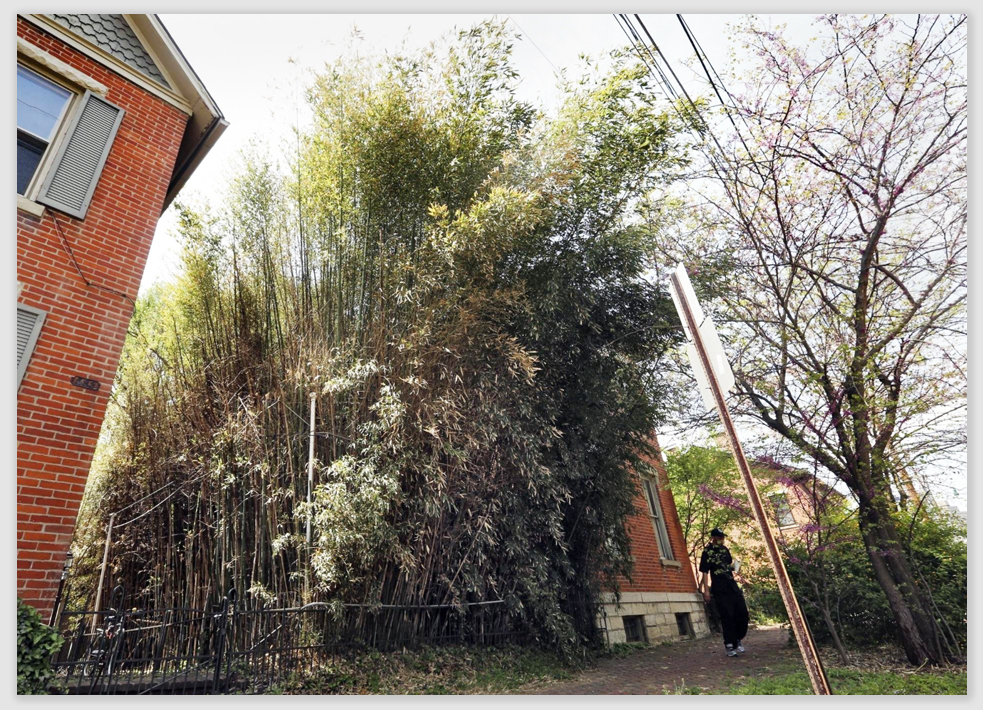
The hundreds of bamboo stalks tower 30 to 40 feet over Juanita Furuta’s rented brick home next door in German Village, packed together so tightly that it makes her neighbor’s front yard as impenetrable as a jungle. The rhizomes, or roots, also have invaded her yard, shooting under her fence from her neighbor’s yard and up through her flower bed, with one at least 6 feet tall. “That is the worst case I’ve ever seen. It’s unbelievable,” said Steve Eberly, Furuta’s landscaper, who has futilely sprayed and cut the bamboo as it spreads. Furuta said she spent $400 to cut the bamboo back from her gutter. She’s afraid it will crack the foundation of her house. “We cut it down; we cut it back,” Furuta said. She said she has taped notices to neighbor Scott Kuentz’s front door asking him to cut back the bamboo. Nothing. She’s been able to talk to him in person about the problem just once in 3 1/2 years. Nothing happened. Kuentz could not be reached by The Dispatch for comment…
Almost a month after a wind storm ripped up trees and debris throughout the metro-area, a family in Westminster is still waiting for damage to be fixed. A large tree fell through their fence nearly hitting the mother and son. The family contacted the FOX31 Problem Solvers to get answers. “She called me and she was in tears,” said Doug Ratcliffe, resident. Doug’s wife Jennifer and their 2-year-old son narrowly escaped death when a huge tree came crashing down almost a month ago from strong winds. “I heard a cracking noise and the tree literally came down within inches of me and my 20-month-old,” said Jennifer. Although the two dodged injury, the family is dealing with clean up nearly 30 days later. The Ratcliffes rent this condo from a private owner. Their landlord tells them he has been unable to get in touch with the Homeowners’ Association about fixing the fence…
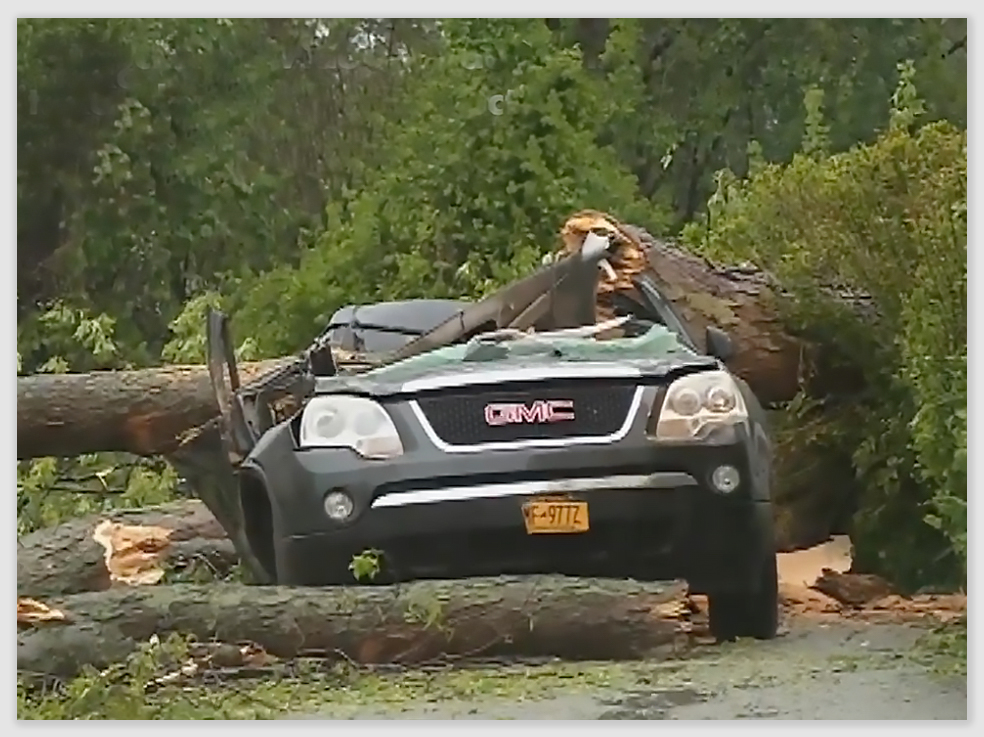 Tampa, Florida, Tribune, May 15, 2018: New York girl killed when tree topples onto car during storm
An 11-year-old New York girl was killed when a tree toppled onto the car she was in as a line of strong storms moved through the area. Police in Newburgh say the girl and her mother had arrived home and were unloading the car when wind knocked the tree onto the vehicle. The girl was pulled from the car and taken to a hospital where she was pronounced dead. The mother suffered minor injuries. States of emergencies were declared in Putnam, Dutchess, Orange and Sullivan counties, which were hit by strong winds and marble-sized hail…
After severe weather, particularly tropical storms and hurricanes, the startling sight of uprooted, toppled-over trees that have smashed into nearby homes is not uncommon. In many cases, these incidents are fatal for the residents trapped inside. Hurricane-force winds can pack a mean punch, and when taking preventative measures to protect your family, it’s important to consider that some tree species are more wind resistant than others. Windthrow, which occurs when strong winds uproot and overthrow trees, is one of the primary factors contributing to trees falling over during storms, according to Australia-based gardening expert Jane Clarke. “Taller trees are more susceptible to windthrow,” Clarke said. “The tree trunk acts as a lever, so the force applied to the roots and trunk increases with height.” Another factor is that urban areas don’t allow for extensive root development, which trees need for stability…
 Quincy, Illinois, WGEM-TV, May 14, 2018: Quincy treats trees for Emerald Ash Borer
The City of Quincy took preventative steps to stop the spread of the tree-killing Emerald Ash Borer. The Department of Planning and Development said the city council approved a contract with the company Trees “R” Us, to treat more than 300 ash trees this spring and next. City officials said the cost of the project would be more than 33-thousand dollars. A crew from Trees “R” Us was treating trees Monday and Tuesday in hopes to protect them from the destructive insect…
A Missouri tree and lawn care company has been ordered to repay $1,000 to a Kansas consumer after violating Kansas consumer protection laws, Attorney General Derek Schmidt said. Five-Star Tree & Lawn, LLC, of Lexington, Mo., was ordered to refund the consumer, and comply with Kansas consumer protection laws in the future. District Judge Franklin Theis approved the consent judgment last week in Shawnee County District Court. In addition to the consumer restitution, the company was ordered to comply with all Kansas consumer protection laws in the future and to repay the attorney general’s office for the cost of the investigation…
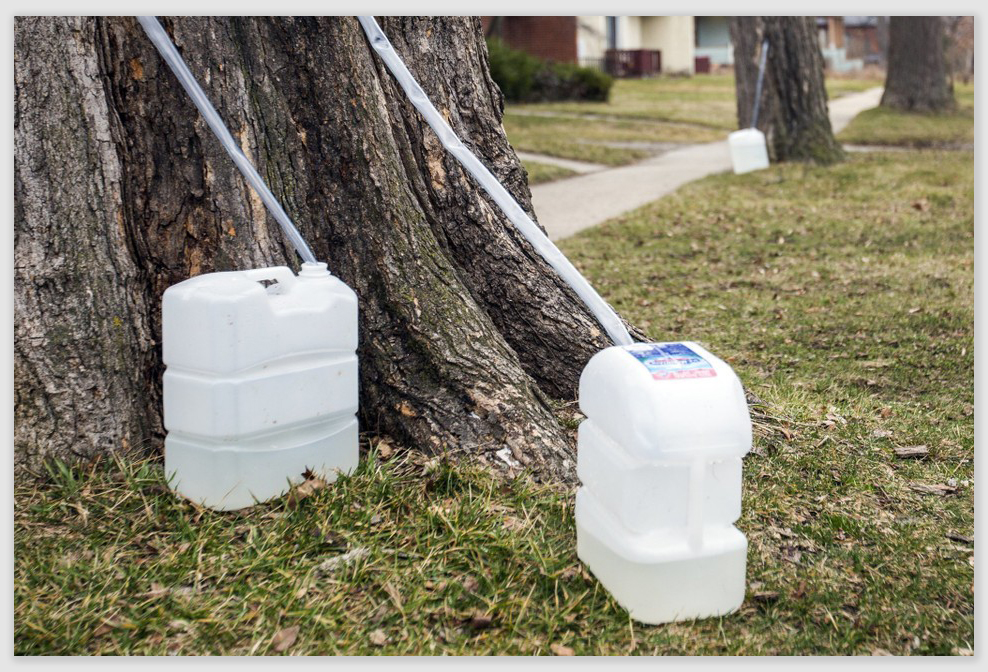
Nothing says “Pure Michigan” like homemade maple syrup, but the City of Ann Arbor is warning local residents to leave trees on public property alone. The city posted on its Facebook page May 9 urging residents to not to tap trees on city streets or in city parks, which is illegal. Tree tapping is the practice of tapping a small hole into a tree, usually maple, to acquire some of the sap running inside of it. This practice is somewhat common around Ann Arbor, according to the city. But doing so can harm the trees and leaves them susceptible to insects and diseases, according to the city…
A Stratford Hills resident took the website Nextdoor to voice concern over a tree cut down by Dominion Energy contractors. Crews were in the neighborhood over the past couple of days trimming back and cutting down trees that could cause damage to power lines during severe weather. Photos with the Nextdoor post show a tree had been cut down and shaped into logs. The poster wrote crews cut down the tree, left it in there yard, and knocked over a street sign along the road. The CBS 6 Problem Solvers were curious who is responsible for removing the tree debris after Dominion crews complete their tree trimming work. “If we were to come in, cut a tree, and take it away with us, we’d be essentially taking their property. That`s just not right,” said Janell Hancock with Dominion Energy. “What we’ll do is we`ll notify a customer ahead of time, we’re going to be coming through and doing some trimming. This is going to remain on your property for you. We’ll cut it really small so that it is easy for it to be hauled away. The customer can hold onto it and make it into firewood or they can sell it, or they can reach out to their locality to ask about the bulk collection process to take it away…”

Overnight on May 5, a microburst toppled several trees in sections of Durham, knocking out power to almost 400 homes. The homes were among almost 25,000 outages statewide from the wind storm that pushed through the region, requiring crews from Eversource and other utilities to remove the felled trees, replace poles and restore power. That outage is emblematic of why Eversource is embarking on its biggest effort yet to ease the threat trees pose to utility lines and poles. A one-two-three combination of punches from droughts, insect infestation and severe weather has made trees, particularly the state’s vast white pine population, vulnerable to blow downs and lost limbs. That becomes a threat not only to homes but to the utility infrastructure. “The drought plaguing the region over the last several years may have ended, but the effects are long-lasting and took a toll on trees around the state,” said Bob Allen, vegetation management manager for Eversource…
For as beautiful as Caleb Stroh’s property is now, you should’ve seen it before. “It was great,” said Stroh. “This is a two-acre parcel of property. It was a complete green screen. Trees, vegetation, shrubbery. The whole point of purchasing this property for us was the seclusion.” You couldn’t even see his home from the road. Fourteen months ago, Kaysville City started a project where most of the trees in his front yard were removed. “To have that then taken away in such a violent way is very hard for us,” Stroh said…
 Gillette, Wyoming, News Record, May 13, 2018: Are your trees sick? Don’t miss the signs
Storms can wreak havoc on the trees in your yard, breaking limbs, felling them and causing all sorts of general harm. Even quick storms can cause significant and lasting damage — even property damage or personal injury — so be prepared and have a plan in place. “Keeping trees healthy, pruned and structurally sound helps minimize accidents before, during and after the storm. Once a storm subsides, make it a priority to check landscape trees, or better yet, contact a qualified, certified arborist to take a closer look,” said R.J. Laverne, manager of education and training at Davey Tree. Trees maintained throughout the year are less likely to break apart in storms because weak branches are identified and carefully removed before the storm can break them, Laverne said. Poorly maintained trees can become a problem. Regularly check for broken, damaged or leaning trunks, branches or limbs. Some maintenance is best left to the professionals…
When damaging insects attack a tree or shrub, pest control by an ISA Certified Arborist may be required. It’s important for homeowners to know the signs of some of the most destructive insects in the Philadelphia area. The experts at Giroud Tree & Lawn share the Top 5 Damaging Insects that homeowners need to look for right now on trees & shrubs. There’s no mistaking Eastern Tent Caterpillars, these creepy crawlies, by the signature tent-like webs, which are constructed in the crotches of tree branches. Eastern Tent Caterpillars have a taste for a wide variety of trees, so homeowners need to be on the lookout in spring time for signs of an infestation. Not only are the webs unsightly, Eastern Tent Caterpillars can severely defoliate a tree. Defoliation will weaken the tree, making it more susceptible to invasion by secondary pests and diseases. Treatment for these caterpillars is most critical early in the season. Emerald Ash Borers, beautiful yet deadly insects, are a 100% Fatal Pest, and they are decimating Ash trees all across the country. The adult beetles swarm the trees and leave their larvae underneath the bark. The larvae then feed on the tree, cutting off water circulation throughout the tree…
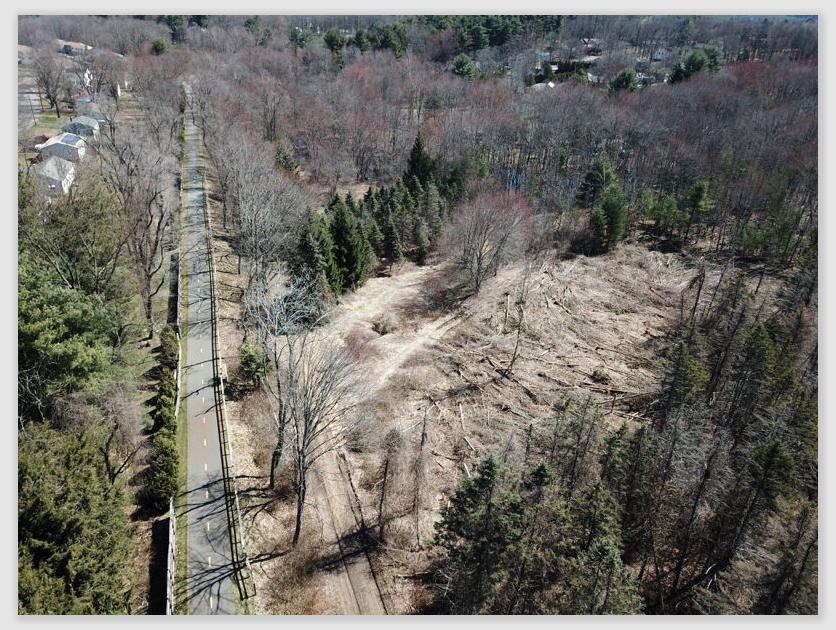
Local property owners David and Marilyn Cernak must restore and replace damaged wetlands after they wrongly cut trees near the Manhan Rail Trail to accommodate a proposed solar farm. The Conservation Commission on April 6 ordered the Cernaks to hire a wetlands scientist to fully construct, plant, and stabilize damaged resource areas on their land, a former Christmas tree farm. The “replacement and replication” zones must be monitored for two additional growing seasons. The consultant must delineate riverfront, wetland, and buffer zones that existed before the trees were cut. By May 21, a “restoration and replication plan” is due. By June 28, the damaged areas must be “fully constructed, planted, and stabilized,” according to the enforcement order. The work must comply with state wetland restoration guidelines – including treatment of soils, replacement plantings, and monitoring – that were established by the Massachusetts Department of Environmental Protection in 2002…
Richmond, Virginia, WWBT-TV, May 10, 2018: Tree falls, kills man while he was hiking at park
One man is dead in a freak accident after severe storms moved through Central Virginia Thursday. It happened at Pump House Park along the James. Two people were hiking when authorities say a tree fell on a man during the storm. Authorities say the hiker was already in cardiac arrest when they arrived to the scene. “I always come out here to run about four or five times a week. I just waited today until after the storm to come down,” said Kyle Donovon. Donovon stumbled upon a startling scene when he showed up to Pump House Park. “I saw the police [and] fire department ambulance. I had no idea what was going on,” Donovon said. It was just before 5 p.m. Thursday, at the height of a severe thunderstorm which prompted NBC12 to issue a First Alert Weather Day. Two people were walking in the park when a tree fell to the ground – hitting a hiker in the head. The man died…
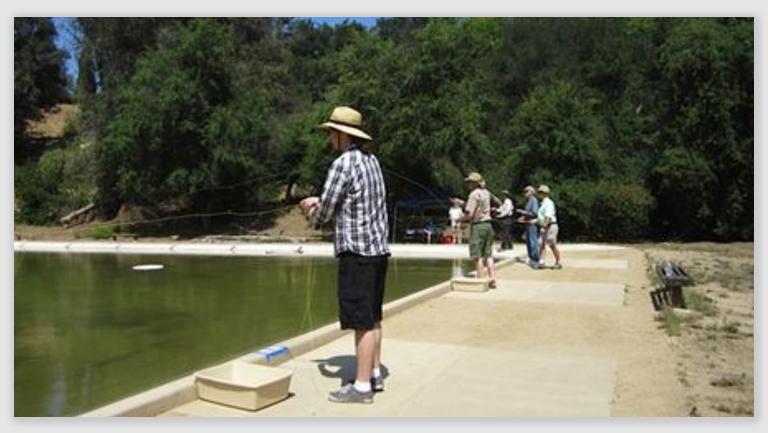 Pasadena, California, Pasadena Now, May 10, 2018: Oak Trees Spared in the Lower Arroyo
A nearly 25-year-old grove of eight Coast Live Oak, Quercus agrifolia, trees in the Lower Arroyo was spared the axe Wednesday in a vote by the City Urban Forestry Advisory Committee. The committee voted 3-2 to uphold a Department of Public Works recommendation that the trees be retained. Speakers representing both the Arroyo Advisory Group (“One Arroyo”), and the Arroyo Seco Foundation argued before the Committee against the trees’ removal. According to the Public Works Staff Report, the Department received a public tree removal request for the eight trees from the Pasadena Casting Club (PCC) on March 20. The trees are approximately 30 to 100 feet south of the casting pond. In its request, the Pasadena Casting Club asserted that the subject trees inhibit use of the casting pond, specifically, long distance casting which requires approximately 90 feet of unobstructed space to back-cast. “Long distance casting is an activity that the PCC desires in order to further their goals of promoting and providing instruction for fly fishing, as well as hosting tournament competition,” said the request. Public Works responded in its report that the subject trees should be retained, as “the trees do not reasonably inhibit the other activities of the PCC, such as regular casting classes and events. Additionally, the goal of balancing the natural preservation of the Arroyo with appropriate recreational activities is consistent with the Lower Arroyo Master Plan…”
Chattanooga, Tennessee, The Chattanoogan, May 10, 2018: Lecanium scale discovered on area trees
A Public Works official has discovered an infestation of Lecanium Scale on many of the willow oak trees in the Central Business District. The scale lives on the branches of the tree and sucks the sap out of the trees, which keeps the them from getting water and vital nutrients the tree needs. If left untreated, infestation will shorten the service life of trees and kill others. Additionally, the insect secretes a clear droplet of sticky fluid called, “honeydew,” that can drip onto cars and the pavement. The total number of trees impacted is about 500 and are located on both Broad and Market Streets between M.L. King Boulevard and Aquarium Way. The other infested area is on Riverfront Parkway at Ross’s Landing. Most of the species involved are willow oak with only a small amount of overcup oak and water oak. “Thanks to the discovery and quick action made by Gene Hyde, our city forester, we hope to be able to contain the infestation and not have to endure the cost of replacing dozens to hundreds of trees,” said Justin Holland, Public Works administrator. “We’ll review bids once they are in and have confidence that in whoever we choose will help eliminate the scale and restore the trees health…”

Removing trees in Laguna Beach without permission is poised to become a painful endeavor for offenders. The City Council on Tuesday unanimously approved the first reading of an ordinance that seeks to prevent property owners from illegally removing three types of trees — ones on the city’s “heritage” list; those that are part of a landscape plan that went through a design review process; and ones that are privately maintained but located in a public right of way such as a sidewalk. Removing a tree without authorization would incur an administrative penalty ranging from $1,000 to $30,000. Larger trees would bring higher penalties, as would heritage trees and repeat offenses…
Hundreds of downtown Chattanooga trees that should be turning green this time of year are starting to turn yellow. The condition is called chlorosis. The oaks are not getting the nutrients they need, making them more susceptible to insects and making it more likely that taxpayers have to spend a lot of money to replace them. City Forester Gene Hyde says the “streetscaping” that revitalized the downtown area may now be creating the problem. He has noticed that trees neatly surrounded by bricks and concrete just aren’t growing like the others. “They languish, they start to fade away, they die out, and then I’ve got to replace them…”
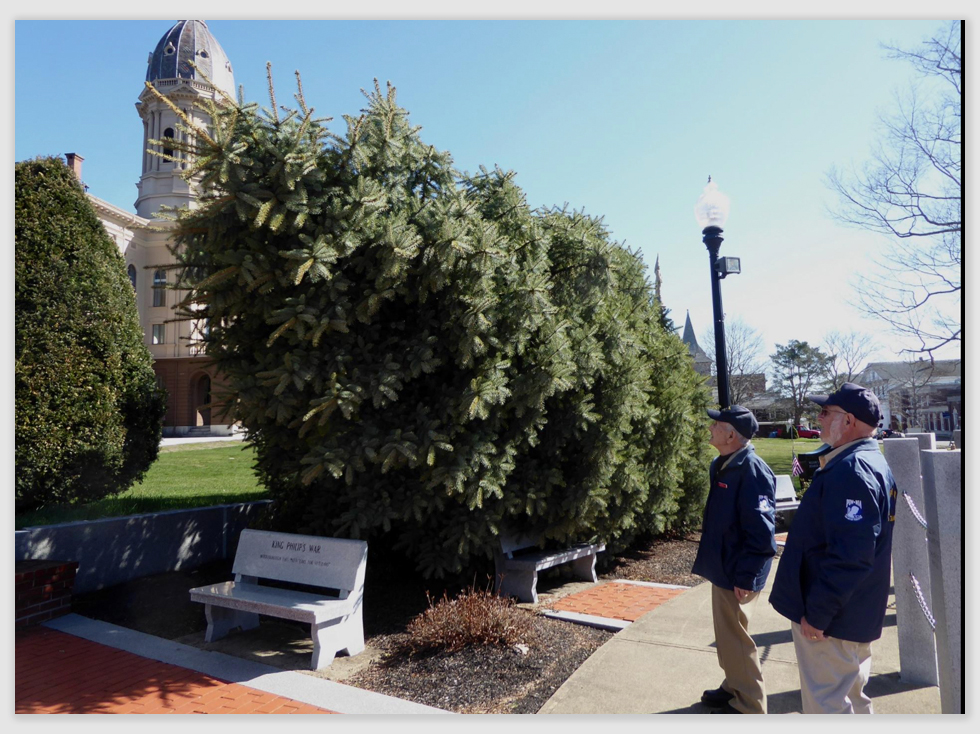
A large spruce tree at the Veterans Memorial Park at Middleboro Town Hall, a memorial to one of two Medal of Honor recipients from Middleoboro, was uprooted during a winter storm in March and has been waiting for a fix since. Last week, a crew from Mockingbird Hill Tree and Lawn Service in Lakeville confirmed soil conditions around the tree were agreeable – significantly dried out from the soggy conditions that led to the tree coming down – and the tree was finally uprighted and re-planted, and just in time for Memorial Day. The spruce was dedicated on Memorial Day 2006 to the memory of WW1 Medal of Honor recipient Army Lieutenant Patrick J. Regan of Middleboro. The Lessard family of Middleboro had grown the spruce and donated the tree to the veterans’ park in memory of Lt. Regan. Lt. Regan is one of two Medal of Honor recipients highlighted at the park…
Scottsbluff, Nebraska, Gering Courier, May 9, 2018: Successful tree planting is a process
Warmer days have arrived, this has signaled the chokecherries, plums and serviceberries to begin blooming; another growing season is upon us. This scene always triggers a desire in me to start thinking about planting trees. My dad was born on Arbor Day and we often planted a tree for him on his birthday. Some of the trees we planted survived and some did not. As a child this frustrated me, we went to all the effort to plant a tree (generally in the cold and rain) and in a few years we had nothing to show for our effort except for the dead stick in the ground. Interestingly, we were not alone in our failures, in a study on urban tree mortality it was reported that for every 100 trees planted 21 died within five years of planting and one additional death each successive year of the study. Why do we encounter failure of almost 30 percent in our tree plantings? Poor planning followed by improper planting practices are two of the main reasons that our tree plantings fail. In order for your tree plantings to be more successful than the plantings of my youth, there is a series of actions or steps that should be taken in order to achieve tree establishment…
 Brunswick, Georgia, The Brunswick News, May 8, 2018: City tree ordinance taking root
An effort to establish a tree-protection ordinance in Brunswick is gaining renewed attention after several live oaks were recently torn down at a development site along Glynn Avenue. Crews are building a dialysis clinic at 3150 Glynn Avenue across from Goodyear Elementary School, and in the process took down a dozen trees with diameters greater than 24 inches, according to John Hunter, city planner. The developer, Texas-based MGB Development, has agreed to replace the trees with 31 canopy and understory varieties, but Commissioner Johnny Cason at last week’s city commission meeting expressed his disappointment with the process. “… We have allowed the trees to be taken off that property, and I’m going to tell you what: I’m offended by it. I really am,” said Cason. “Those trees should be there today.” Offended as Cason may be, there is no city law that would have prevented the developer from removing the trees — not yet, at least…
Fear of oak wilt, a tree fungus that eats trees from the inside out, has unexpectedly closed the McGraft Park disc golf course. Chains and baskets associated with the sport were removed before any signs were posted regarding the indefinite closure. Kevin Santos with the City of Muskegon says they shut down the course to protect the oak tree population from being damaged by players’ discs. “It’s a tough thing to do, because it’s such a heavily used park for disc golf, and we didn’t make this decision lightly,” Santos said. Santos says the course was closed because discs had the potential for damaging the park’s red and black oak population, leaving them susceptible to the spores of oak wilt, which spreads on the backs of certain beetle species. “The disease hits the trees and decimates them,” Santos said. “There’s treatment options available, but they’re really expensive and there’s no guarantee that the options work. So we’re doing our due diligence to protect the trees…”
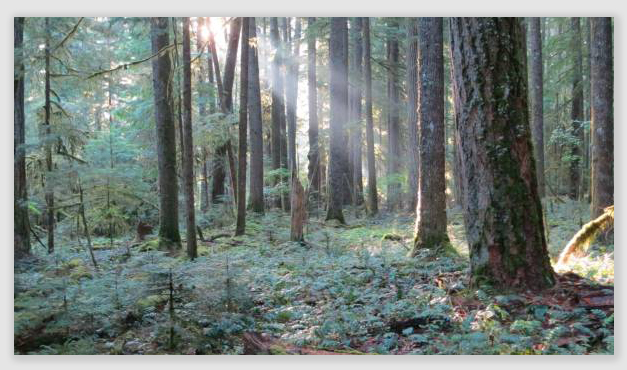 Science News, May 8, 2018: Inequality is normal: dominance of the big trees
The top 1% of the forest has been sharing some vital information with researchers. Ninety-eight scientists and thousands of field staff have concluded the largest study undertaken to date with the Smithsonian Forest Global Earth Observatory (ForestGEO), and what they have found will have profound implications toward ecological theories and carbon storage in forests. Rather than examining tree species diversity in temperate and tropical ecosystems, this global study emphasized forest structure over a vast scale. Using large forest plots from 21 countries and territories, Utah State researchers found that, on average, the largest 1% of trees in mature and older forests comprised 50% of forest biomass worldwide. Furthermore, the amount of carbon that forests can sequester depends mostly on the abundance of big trees. The size of the largest trees was found to be even more important to forest biomass than high densities of small and medium trees. Lead author Jim Lutz, Assistant Professor at Utah State University said, “Big trees provide functions that cannot be duplicated by small or medium-sized trees. They provide unique habitat, strongly influence the forest around them, and store large amounts of carbon…”
Racine, Wisconsin, Journal Times, May 8, 2018: Blue Sky Science: Do trees get viruses?
There’s a wide range of different plant viruses that infect not only trees but other types of plants as well: vegetables, fruits, herbaceous ornamentals. We see viruses on pretty much any type of plant. But actually, the most important types of organisms that cause disease in plants are fungi. One common fungus during the spring is cedar apple rust. This appears in mid-May to mid-June and forms huge, orange gelatinous masses on junipers, particularly red cedar. It’s very visual and very pretty. Fungi are much more complex than viruses. They form a variety of different structures that are often visible to the naked eye. In contrast, viruses are quite simple. They’re basically just a piece of genetic material encapsulated in a protein coat. If you put a virus on an inert surface like a tabletop, it won’t do anything; it just sits there. The only way it’s able to make more virus particles is if it infects its host, such as a plant…

A new study has found that US metropolitan areas are losing about 36 million trees every year across the entire country. That’s equivalent to 175,000 acres of tree cover in central, suburban and exurban fringes. Just as a growing number of Americans are choosing to live in cities, scientists have begun to discover the importance of living near trees for our health and wellbeing. The problem is obvious, and only made worse when urban forests and green spaces in the US are being decimated at such an alarming rate. To give some context, Central Park in New York City is about 840 acres. This means that every year, US cities are losing over 208 Central Parks. The value of this loss is roughly equivalent to about US$96 million in benefits, according to lead author David Nowak of the US Forest Service (USFS). And that number is quite conservative. Nowak said the final figure was based on “only a few of the benefits that we know about…”
Newsdeeply.com, May 7, 2018: Fewer trees, more water: Study finds runoff boost from forest thinning
A century of fire suppression has left Western forests overgrown. That has interrupted nature’s regular fire cycle and means that when fires do happen, they become catastrophic because there is plentiful fuel to burn. It also means forests are sucking up more water than they did historically. How much more water? That’s always been difficult to estimate. But making this calculation could go a long way toward fixing the overgrown forest problem. If we know how much water could be freed up by thinning forests to reduce fire danger, it could create a new financing mechanism to do the expensive work of cutting trees and staging controlled burns. A team of scientists from the University of California and the National Park Service now has some answers. In a new study, they combined sensors that measure evapotranspiration – how much water trees exhale – with satellite images of “greenness” on the landscape to estimate the additional freshwater runoff that could be created by thinning overgrown forests…
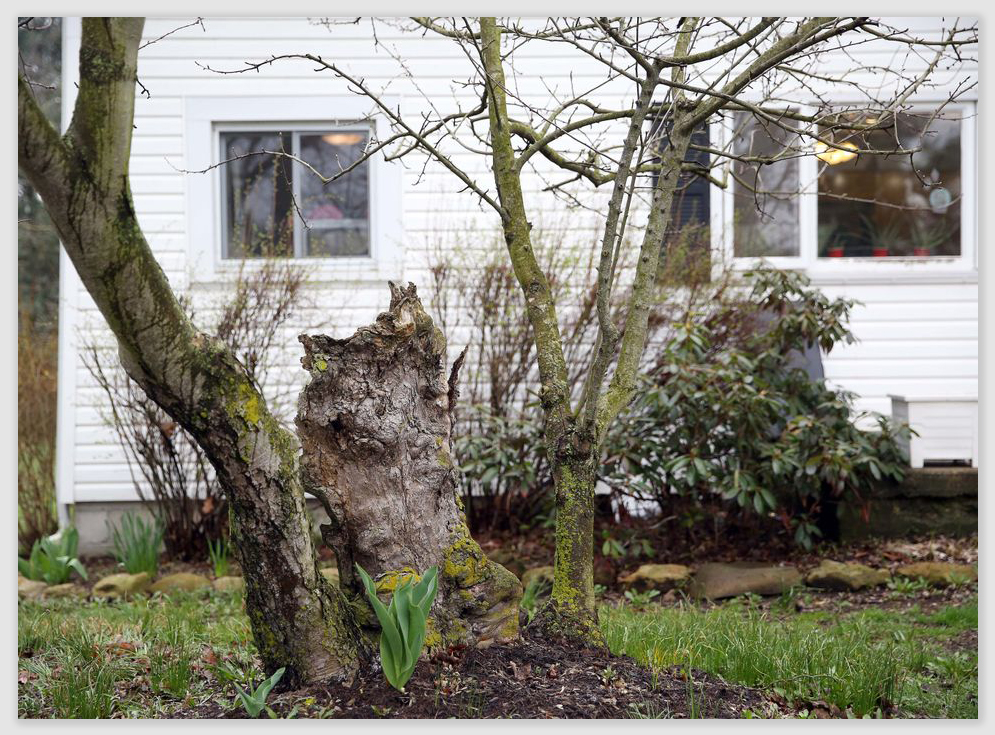
Measuring a bit more than a square half-mile, the northern Ashland County village of Savannah has one restaurant, a tiny park and one other thing – a gnarled apple tree that is certified as the last survivor of the thousands planted by Johnny Appleseed more than 150 years ago. And it’s still producing apples, sometimes too many. “It gives us tons of apples,” said Barbara Morgan, a descendant of John Harvey who bought the land almost two centuries ago. “Last summer we had to cut some branches off and prop others up with poles because we feared the weight of the apples would break the branches.” Another family member, Dick Algeo, 91, remembers how his grandmother used to tell stories about how John Chapman, who became known as Johnny Appleseed, planted several apple orchards in the area around Savannah. Chapman even stayed on their farm, though he slept in the corn crib because he disliked sleeping indoors…
A proposal to cut down 42 trees in Tiburon has been rejected, but for public safety, town officials have agreed on an approximately $36,700 tree maintenance plan. The Town Council last week voted unanimously to follow a staff recommendation to remove dead and ailing trees and prune a handful of others in a grove near McKegney Green soccer field off Tiburon Boulevard. The move also required a $7,240 budget adjustment. The 15 trees slated for the ax were rated in poor condition or at moderate risk of falling, according to an arborist’s risk assessment report by HortScience Inc. of Pleasanton, costing the town $3,500. “I actually think that our biggest focus here has to be safety,” Councilwoman Holli Thier said. “HortScience saw that these trees would eventually become a danger. I think it’s better to get rid of them now.” Councilman Jon Welner said “It eliminates the immediate dangers. I think that’s a good option.” Five other trees are due for pruning, and another tree risk assessment will be scheduled in five years, under the approved plan. The original proposal to remove 42 trees was submitted by residents Ron and Duffy Hurwin. That plan called for the removal of 21 eucalyptus, 15 Italian stone pine and six Monterey pine trees on the knoll…
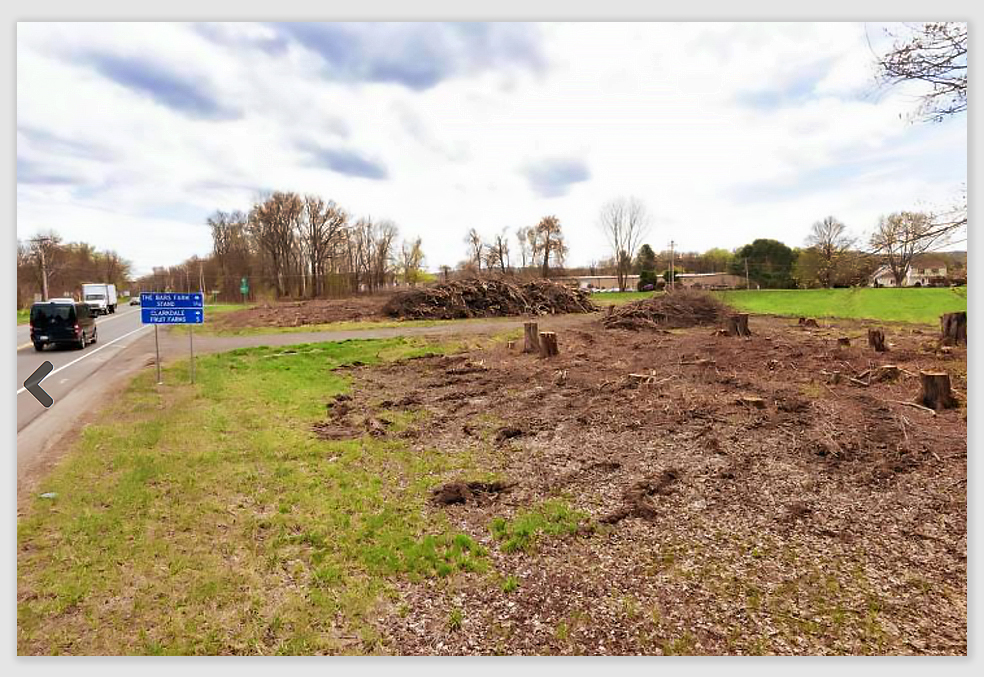
Trees on state land that were cleared from a property on Mill Village Road and routes 5 and 10 were cut without a permit, the Massachusetts Department of Transportation has confirmed, following a dispute of the facts by the property owner. A week ago, Gregory Gardner cleared dozens of trees lining his property bordering condominiums and adjacent to the Rock, Fossil and Dinosaur Shop. He said Thursday he had a permit to cut down the trees, directly from MassDOT, which has the authority over those trees. Gardner hopes to open a discount variety store on the property. Gardner called it a “miscommunication and misunderstanding,” and expressed his frustration about conversations on Facebook that said he illegally cut down the trees. “How does it get blown out of proportion?” Gardner said. “Because people like to make up fake news.” When first contacted on Wednesday, before a Selectboard meeting that addressed the dispute, MassDOT’s spokesman Patrick Marvin said in a statement the it did not issue a permit for tree removal work along the state road. Marvin added MassDOT has notified the owner of the property and will be issuing a formal notice of violation…
Associated Press, May 6, 2018: Maine to release parasitic flies to stop tree-killing moths
The Maine Forest Service is readying to release parasitic flies to help control the pesky winter moth population. Entomologists with the state buried flies as cocoons in a cage in South Portland last fall, and adults are now emerging. The state says the adult flies will be released into the forest Wednesday as part of an effort to curb the spread of moths. The flies are attracted to the oak leaves that are damaged by the winter moths. The flies are expected to lay eggs on the leaves, where they will be eaten by moth caterpillars. The fly eggs will then hatch in the gut of winter moth caterpillars and parasitize them…
Kenosha resident Tim Garland’s concern about dozens of new trees planted downtown has poked a hornet’s nest surrounding the recent Sixth Avenue revitalization project. In this week’s Curious Kenosha, Garland demands to know why the city would choose to line downtown sidewalks with invasive ornamental pear trees. Garland, 60, is a licensed landscape architect and owner of Garland Alliance Inc. The Milwaukee native said the ornamental pear trees create a variety of issues — prickly thorns, weak branches and rotten smell — which have resulted in their banning in several states. Illinois does not allow the import, export or planting of the species, according to Garland. “Being a landscape architect, I’d hope they would’ve consulted with someone before planting these,” Garland said. “I strongly encourage the public not to plant these type of trees…”
Lincoln, Nebraska, Journal Star, May 6, 2018: What to know before treating ash trees
I heard a radio spot last week stating the city of Lincoln is recommending homeowners begin treating trees for Emerald Ash Borer control. Well, you definitely don’t want to believe everything you hear in commercials. Here are five important things you need to understand about Emerald Ash Borer (EAB) to help you make an informed decision about when, and if, to treat your ash trees. The Nebraska Forest Service recommends not beginning to treat your trees until your property is within 15 miles of an EAB confirmed site. The 15-mile recommendation strikes a balance between protecting valuable trees and limiting the negative effects of unnecessary treatments. Injection and implant insecticide applications provide the best control in large trees, those 45-inch circumference and over (measured at 4 feet above the ground), but they do have drawbacks — specifically they cause damage to the tree. Most are applied by drilling holes into the tree’s trunk, which opens up the trunk to insect pests and decay fungi. Drilling may also break through internal barriers, created by the tree within the trunk, to wall off internal decay. Breaking this barrier allows decay to spread into healthy wood. In addition, the pesticide itself can cause internal damage that may accumulate over years of repeated injections and potentially kill the tree, even if the pest is controlled…
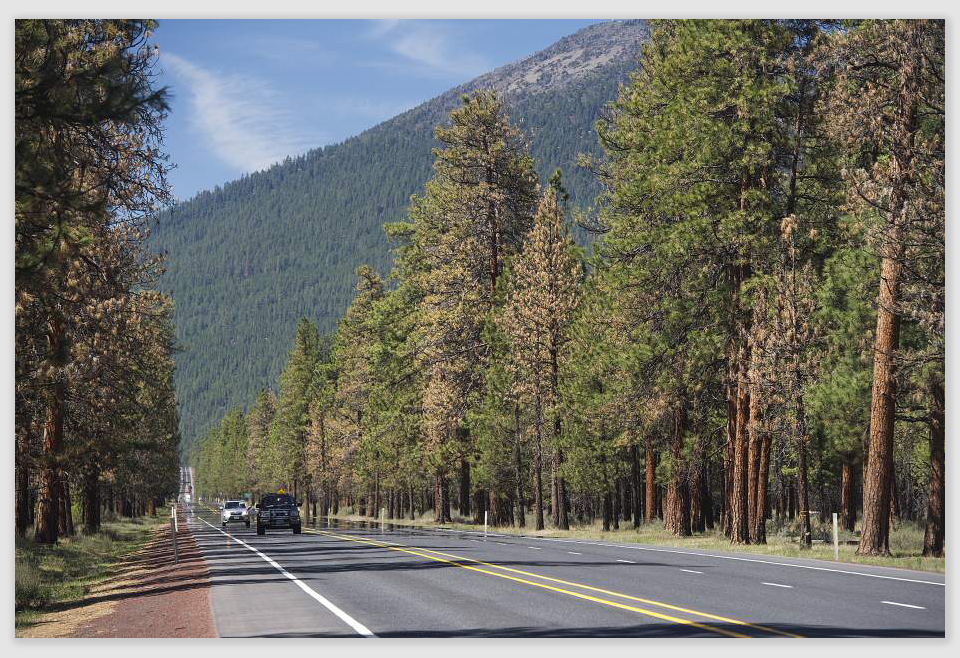 Bend, Oregon, Bulletin, May 3, 2018: Hundreds of trees accidentally killed by herbicide
A weed killer used to manage plants along U.S. Highway 20 left the Deschutes National Forest with hundreds of standing but dead ponderosa pine trees. While trees in serious danger of falling onto the highway can be chopped down, a full-scale effort to remove them may not begin until 2019. The U.S. Forest Service is seeking public comment on a plan to remove the trees, along an approximately 12-mile segment of the highway near Sisters. Forestry officials believe the trees were killed by an unhealthy dose of Perspective, the brand name of a herbicide used in the area for several years. The herbicide, administered by contractors working for the Oregon Department of Transportation, was intended to kill the broad-leaf weeds and other flammable plants, but also killed more than 1,000 trees — the majority of which are ponderosas — in the surrounding area…
Bullhead City, Arizona, The Mojave Daily, May 3, 2018: Tree may be history
A tree in Bullhead Community Park might end up coming down as soon as next week to accommodate the long-anticipated new home for the Colorado River Heritage Museum. The large eucalyptus tree on the outer perimeter of the park is highly visible from Highway 95 and stands so high that there are concerns a piece of it — or the entire tree itself — could topple over onto a future museum building and cause it, and possibly its occupants, harm. Bullhead City resident Rick DePompa has expressed concern about the tree potentially being taken down. An orange, spray-painted “X” is hard to miss on the tree’s substantial trunk from inside the park. It was marked this week. “The tree has a lot of history,” DePompa said. “It’s just a sad situation. It’s not sick and it’s a good shade tree. I hate to see it have to be destroyed…”
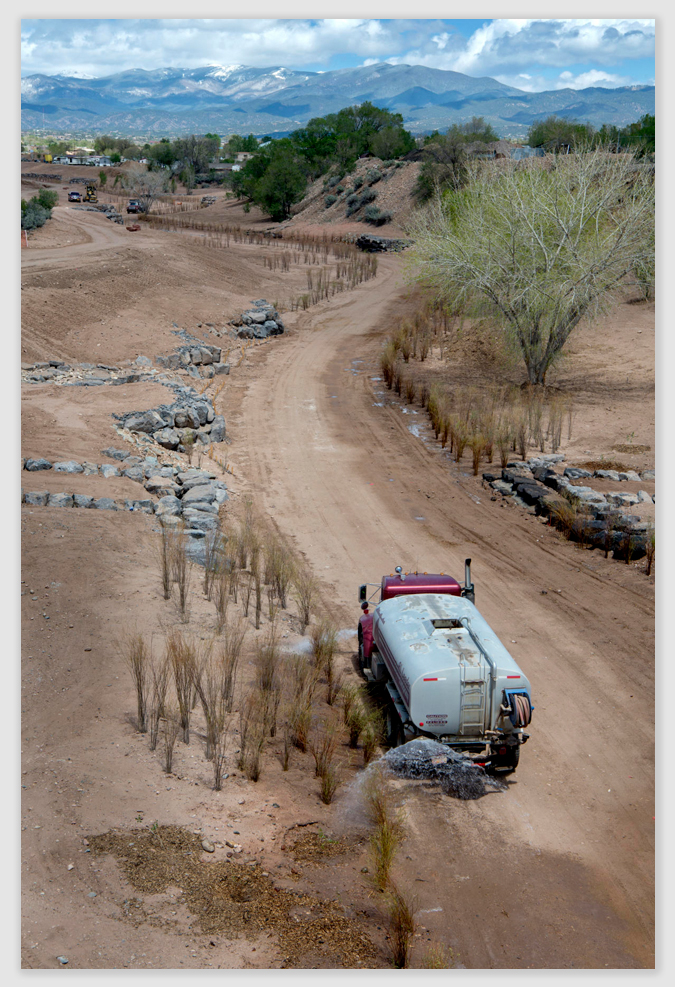 Albuquerque, New Mexico, Journal, May 3, 2018: Extreme drought threatens 3,000 trees
The lives of 3,000 recently transplanted willow clumps and 142 cottonwood trees along the Santa Fe River could be in jeopardy because there may not be enough water flowing down the river this year. The vegetation was planted along the river between Frenchy’s Field and Siler Road about a month ago as part of the Santa Fe Greenway Project, a joint effort between the city and Santa Fe County intended to restore the river using natural materials and native plants. “They are all in bloom and doing well so far,” Scott Kaseman, the county’s project manager for the Greenway Project, said of the plants. “We just need a good flow to soak the river channel to give them their best chance at survival.” But that flow may not be coming due to a dry winter that could prevent an adequate amount of river water reaching the area where the plants are trying to take root…
A Titusville resident was seriously injured on Thursday and transported to Holmes Regional by helicopter after falling 20-30 feet while trimming trees, according to a spokesperson with the Titusville Fire Department. Titusville officials say at around 9:14 a.m. they received a call about a person who fell. After officials arrived, they worked on stabilizing the patient as a helicopter transport was en-route. Titusville Fire Department credits the early call for a helicopter transport by officials for giving the patient the best chance at recovery…
Standing in the garden in front of her home on Willoughby Avenue in Ridgewood, Alice Mackenzie is surrounded by a variety of plants so expansive that there is no room in the ground for more. Yet, dozens more are growing from pots around the garden and on the covered patio behind the house. Mackenzie is a self-professed lover of plants, but standing tall behind her are three huge trees that could be slowly crumbling the foundation of her home. According to a study performed by Robert Wolfson of RW Technical Engineering Services in 2017 — whom Mackenzie hired to figure out why so much moisture was getting into her home — the three trees and their root structures need to be removed. Standing at an estimated 75 feet tall, two of the trees are less than five feet away from the foundation wall of the house and “are causing damage to the integrity of both the building’s foundation walls as well as that of the retaining wall behind the property…”
Jacksonville, Florida, WJAX-TV, May 2, 2018: Tree trimming seen as key as hurricane season nears
As the state prepares for the 2018 hurricane season, utility regulators might look at who dictates tree trimming. Fallen trees and uncollected debris stacked along roads were among the biggest impediments — along with traffic, wind and flooding — to power restoration following Hurricane Irma, according to officials from Florida Power & Light, Duke Energy Florida, Tampa Electric, Gulf Power and the Florida Municipal Electric Association on Wednesday. The officials attended the opening of a two-day workshop held by the state Public Service Commission on storm preparedness and restoration. Several billion dollars have been spent to harden the various power systems from Key West to Pensacola over the past decade, which helped lessen the amount of time most Floridians were without power after Hurricane Irma plowed across the state in September, the officials said…
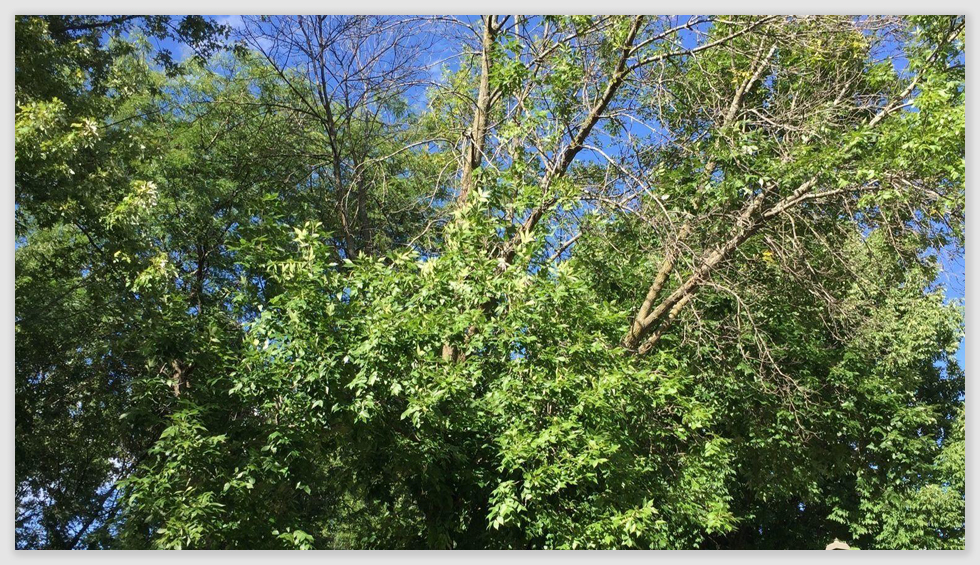
Naperville residents will begin splitting the cost of replacing dead parkway trees with city later this year, replacing a service that had once been free. The cost-sharing program, enacted this fall as a result of the 2018 budget cuts, includes planting and will cost residents $165 per tree. The city pays $330 for each replacement tree through a contract it has with The Fields on Caton Farm in Crest Hill, according to city documents. It is “important for residents to know this is a big change in our policy,” Councilwoman Judy Brodhead said, because no longer will parkway replacement trees be planted for free. Naperville City Council members Tuesday voted 8-1 to approve the cost-sharing move, with Councilman John Krummen voting “no.” When the program kicks in this fall, it won’t be mandatory. People can choose not to replace the tree, which was also an option when trees were replaced at no cost, said Dick Dublinski, director of the public works department…
The Biddeford City Council is using eminent domain to cut or trim trees that are getting in the way of flight paths at the municipal airport. Federal, state and city officials said for years that the tree were a safety risk, but four property owners did not agree to voluntarily give the city avigation easements, prompting the city to take them by eminent domain. Avigation easements provide the legal right to clear airspace over private properties. “We’re not taking the property, we’re taking the rights to cut trees,” Rick Laverriere, chairman of the Airport Commission, said at the City Council meeting. Airport manager Christopher Reynolds said trimming the trees will not mean pilots will fly lower or “buzz” houses, but it will allow them to approach the runway at a safer angle and avoid clipping tall trees. “The last thing I would like to see is an incident occur because we decide not to remove an obstruction that all parties know is existing,” he said…
Like so many things, it often takes a cataclysmic event to bring change. Let’s hope that change is now in the works as Fort Worth council members and the city staff look at ways to strengthen the urban forestry ordinance and hold developers accountable when they violate building permits. The pivotal event in this case was D.R. Horton’s unauthorized clear-cutting of 51 acres on heavily-wooded Randol Mill Road, a remaining pocket of the ancient Cross Timbers forest. Area residents registered outrage. Star-Telegram reporter Sandy Baker reported the travesty and the city’s decision not to fine the developer, but to instead require the company to plant five times the number of trees erroneously removed…
A Dumont man has been sentenced to probation for cutting down trees along the Rolling Prairie recreational trail. According to authorities, one black walnut tree in the trail area was cut down sometime between the fall of 2016 and the spring of 2017. The tree was left at the scene. Then on April 27, 2017, Butler County sheriff’s deputies were at a farm next to the trail that was controlled by Dennis Dillon Quigley while they were investigating illegal tire disposal when authorities found four black walnut logs and one black cherry log near and outbuilding. The logs matched trees that had been cut from the trail area, court records state. The valued of the trees was estimated at $1,947. Quigley, 31, was arrested for second-degree possession of stolen property and third-degree criminal mischief. The theft charge was dismissed, an on March 7 he was sentenced to up to two years probation for the criminal mischief charge, according to court records. He was also ordered to sign a statement acknowledging that the fence line is the boundary for the trail unless he hired a survey team that determines another boundary. He also agreed to forfeit the logs and pay $812 in restitution to the Butler County Conservation Board…
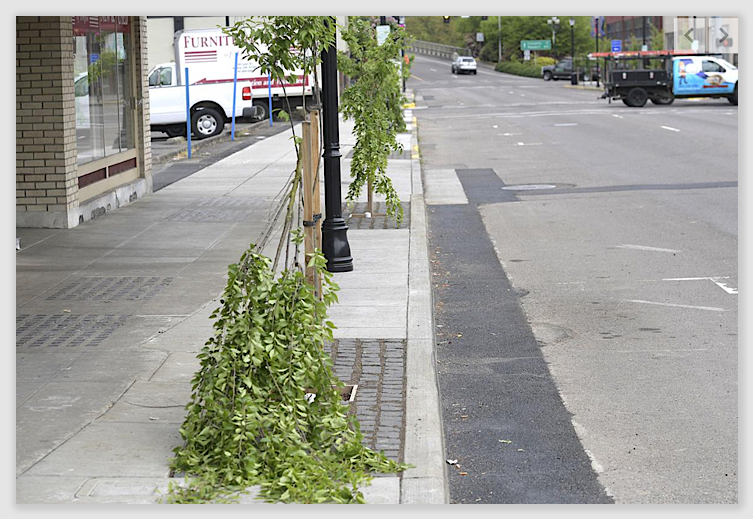 Albany, Oregon, Democrat-Herald, May 1, 2018: City to replace vandalized trees
Albany city officials will be working this week to remove trees downtown that were damaged by vandalism over the weekend, likely at the cost of a few hundred dollars per tree. Rick Barnett, the city’s park and facilities manager, said city staffers will be talking to the downtown streetscape contractor later this week on how the trees will be replaced. “There are at least 11 trees on Lyon Street that are damaged beyond repair and when we get in to look closely there may be more,” Barnett said. “The number we typically use when setting a value on young trees like these that were destroyed is $250 a tree, which covers removal, replacement tree, planting and related expenses,” he went on. “These trees have pavers that will have to be reset as well, so the cost may be more like $400 per tree…”
Grand Rapids, Michigan, Press, May 1, 2018: Man dies in tree cutting accident
A 73-year-old Vandalia man died after he was struck by two falling trees while cutting wood, police said. Cass County sheriff’s deputies said Robert Wright was cutting wood Tuesday, May 1 on property in Penn Township in the 58000 block of White Temple Road. He was cutting down a tree when it fell onto a second tree. The second tree uprooted itself and both trees then struck Wright, police said. The impact caused extreme injuries, police said…

US President Donald Trump and French President Emmanuel Macron planted a tree at the White House on April 23rd in a friendship ceremony. But the tree quickly went missing, and some people started to wonder if a conspiracy was afoot. But there’s no grand conspiracy. The tree, which was brought from France, is simply in quarantine. A Reuters photographer was the first to notice that the tree was missing. Originally planted on the South Lawn of the White House, the spot is now just a patch of sickly yellow grass. The Associated Press even ran a story over the weekend asking what happened to the tree, because for some reason the White House wouldn’t say. People on Twitter joked that perhaps the tree was sent to Gitmo, the US prison camp that has been continually denounced by international humanitarian organizations for torture. But the answer isn’t quite so gross. What really happened to the tree? According to HuffPost’s French bureau, the oak sapling was “planted” in front of the media, but was removed to be quarantined under normal regulations for imported trees…
With 80-degree temperatures in the forecast, it can be easy to forget about the winter storm that knocked out power to 300,000 DTE Energy customers in Metro Detroit this month. But on Monday night, an Oakland County couple said the mess left behind is creating a dangerous situation. A massive tree limb that knocked out power is still sitting on utility lines, and so far, nobody is taking responsibility for the cleanup. The limb is so large it’s almost a small tree. A tree trimmer said the limb likely weighs more than 2,000 pounds and is a public safety issue. DTE officials disagree, and said their crews didn’t find anything wrong with the situation. “I’m getting nowhere,” resident Debbee Lotito said. “I feel like I’m running in circles.” Lotito said the tree limb came down during the winter storm two weeks ago and left her without power for days. When DTE crews got to the home in Lathrup VIllage, power was restored, but the mess was left behind. “I asked him, ‘What about the rest of this?'” Lotito said. “They said, ‘Call the cable company…'”
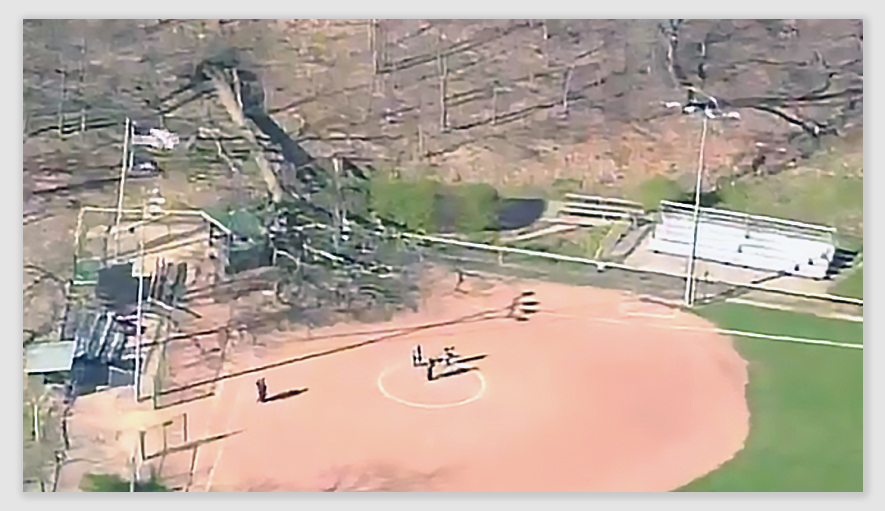
A total of ten people were hurt Monday afternoon when a huge tree was uprooted and toppled onto the softball field – near the home bench and press box – at the Northgate Middle/Senior High School complex in Bellevue. A girls softball game was going on at the time. The weather was breezy, and it was sunny. Of the injured, four of them were children and two were adults. They were treated at different hospitals. The most serious injury one of the adults suffered what paramedics described as a moderate-to-severe head injury. Police and paramedics rushed to the scene. “We had no idea what the extent of the injuries were or how many people were actually affected by the tree collapse, so the county MCI was activated, regional MCI at Level One was activated, which brings units from all over the county to assist us with transporting patients,” Keith Jankowski, head of the Northwest EMS, said…
A local expert is telling NBC Charlotte your family could be in danger and you should prepare your home now. This comes after a massive tree fell into the middle of a softball game at a school. “It just takes a mild wind,” said Don Gardener, a Charlotte tree expert. Across the Carolinas, fallen trees are all-too-familiar sights followed by an all-too-familiar sound. Less than a month ago, a massive tree trampled a wagon full of people at a zoo in Iredell County. “All of the sudden we heard a loud cracking noise then all of the sudden the tree started falling on us,” said Owen Parker, a witness. County officials said the large tree that fell was 100 years old. At least five people were hurt and a woman was airlifted to a hospital after suffering a head injury…
A Columbus woman fell in love with two towering trees on the right-of-way in front of her Lynda Lane home nearly 50 years ago, but that’s all gone now. What Celie Helman felt for her trees has been chopped and trimmed away by line crews keeping the trees from damaging the power lines in the 2900 block of the street. The trees have gone from lovely to dreadful over the past 10 years as crews removed the entire treetops and gutted them of branches up the middle. An inspection by city arborist and Urban Forestry and Beautification Division Manager Scott Jones noted half of the trees’ branches are gone and they should be cut down. “What we have to do in situations like that we have to really kind of make the call on the condition of the tree…
New York State Police, April 29, 2018: Man arrested after trimming trees at Burger King
State Police in Brunswick arrested 79 year old Henry F. Crobok for Criminal Mischief 4th Degree at the Brunswick Dunkin Donuts. Troopers received a report of an elderly man, later identified as Crobok, cutting branches off a tree on the Burger King property located next to the Duncan Donuts. The man had fled prior to Troopers arriving but was quickly located at the Duncan Donuts in his vehicle. A Burger King employee had approached Crobok and asked why he was cutting the branches from the tree. Crobok told the employee that the branches were blocking his view of deer located in the field behind the Burger King…
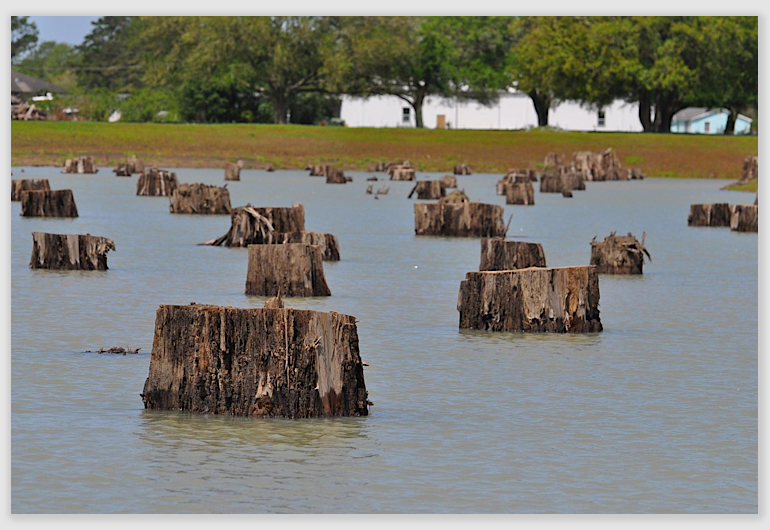
Nicholls State University’s Center for Bayou Studies is studying recently discovered samples of cypress trees found near the Thibodaux campus that officials say could date back thousands of years. The center was invited to two separate cypress forest sites by two community leaders, Jake Giardina and Tommy Rouse. Rouse is clearing a former sugar cane plot for development near Bayou Lafourche adjacent to the Nicholls campus, and within a pond he unearthed a cypress forest. During an excavation closer to the Thibodaux Country Club, Giardina uncovered cypress trees with root material as deep as 25 feet below the present ground level. Center Director Gary LaFleur said the tree samples give the program a unique opportunity for research. “This project is not just about aging some old trees, as much more significant is the trees’ relation to the geologic layer at which they were found. That is connected to our understanding the hydrology of the delta lobes (section of land) as they moved over the last 7,000 years. And that is also connected to the sociology of what peoples lived here while these trees lived here,” LaFleur said. “The Center for Bayou Studies seeks to bring together complex stories such as this, and lead scholarly research that can benefit Nicholls and others…”
Insects can certainly be pests, but one invasive group is threatening to wipe out a ubiquitous species of trees in Western North Carolina, a process conservation groups are fighting to stop. The hemlock woolly adelgid arrived in the U.S. from Japan in the 1920s. The pest feeds off sap or starches in the hemlock tree. An adelgid stays stationary, disrupting the flow of nutrients to a tree’s needles and causing the hemlock to die within four to 10 years, according to the Foothills Conservancy of North Carolina. The woolly adelgid cannot move on its own and relies on wind, animals, people and traffic to propel it. The woolly adelgids were first spotted in the Great Smoky Mountains National Park in the early 2000s, according to the Hemlock Restoration Initiative’s Sara Defosset. The program is part of Asheville-based WNC Communities and was created in 2014 through money from the N.C. Department of Agriculture and Consumer Services and the U.S. Forestry Service…
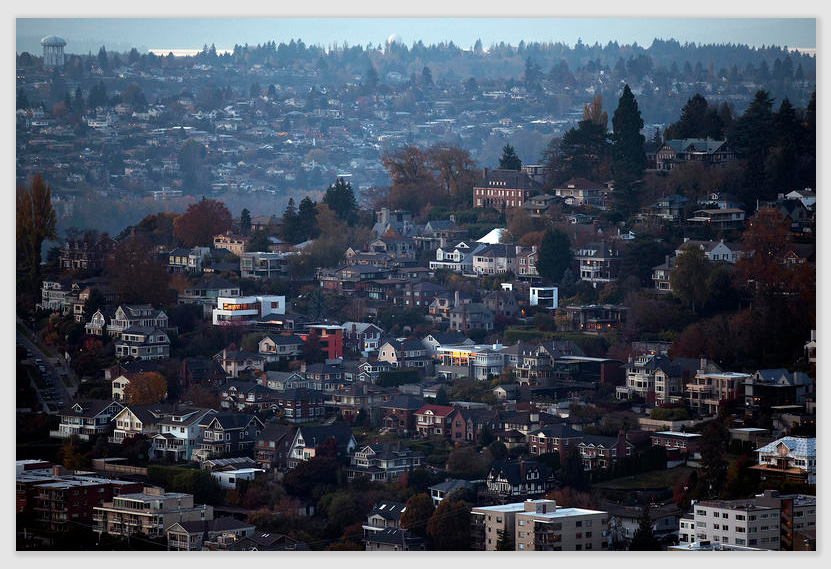
Many cities require permits to cut down trees on private property. Currently Seattle isn’t one of them. But a new proposal would create that system, to track and put a price on tree loss. Seattle City Councilmember Rob Johnson said as development booms in Seattle, homeowners and builders are cutting down trees with little city oversight. “Folks are taking down trees willy-nilly and single-family neighborhoods account for more than 60 percent of the city’s tree canopy,” he said. “So if we’re going to really keep our tree canopy we’ve got to do a better job of asking those folks to get a permit to take down trees.” Over the coming months Johnson plans to develop a permitting system with a sliding scale based on the age and health of the tree. Cutting down an “exceptional” healthy tree could cost the property owner up to $10,000, including the actual tree removal service…
Burlington, Vermont, WCAX-TV, April 26, 2018: Tree-trimming truck flips over onto house
Whoa– take a look at this! Not a great day at work. We’re told a tree-trimming truck ended up on a building in Morrisville. It happened on Washington Highway. No word yet on exactly how it flipped. A police dispatcher says no one was injured. The building is currently vacant…
 Yankton, South Dakota, Daily Press & Dakotan, April 26, 2018: Residents barking about tree removal
When it comes to trees, Yankton city officials are branching out. But the latest round of tree removals has left them out on a limb with some residents. Critics are raising objections about the current tree removal, particularly the downtown trees on Walnut Street and Second Street. Under the two city street projects, 44 trees are being removed, with a large majority of them ash trees. In response, city officials say the action has been well planned and well publicized, including a number of public meetings. The tree removals around Yankton are necessary for various reasons, they say, ranging from disease and aesthetics to interference with infrastructure. “This (current round of tree removals) is something that should have been done for years,” City Manager Amy Nelson told the Press & Dakotan. “In some cases, we’ve had property owners contact us about removing trees (on public land) because it was creating problems for them…”
You might notice the trees planted around your home aren’t thriving as they once did. Trees planted in cities, towns and along roadways tend to live decades shorter than those that grow in forests due to many potential sources of stress to which they can be exposed. Younger trees tend to be more vulnerable to mechanical bark damage, be it environmental or human-caused, said Gena Lorainne, horticulturist and plants expert at Fantastic Services. “Some species of trees are also more sensitive to rapid climate change than others,” Lorainne added. Human-caused and environmental stress factors may include pests that attack a tree or feed on the leaves; fungal problems; viral and bacterial issues; an overabundance or lack of water; extreme temperature swings; a change in soil level; excessive pruning; and root damage or compaction, according to Mark Chisholm, a professional arborist and spokesperson for outdoor power equipment manufacturer Stihl…
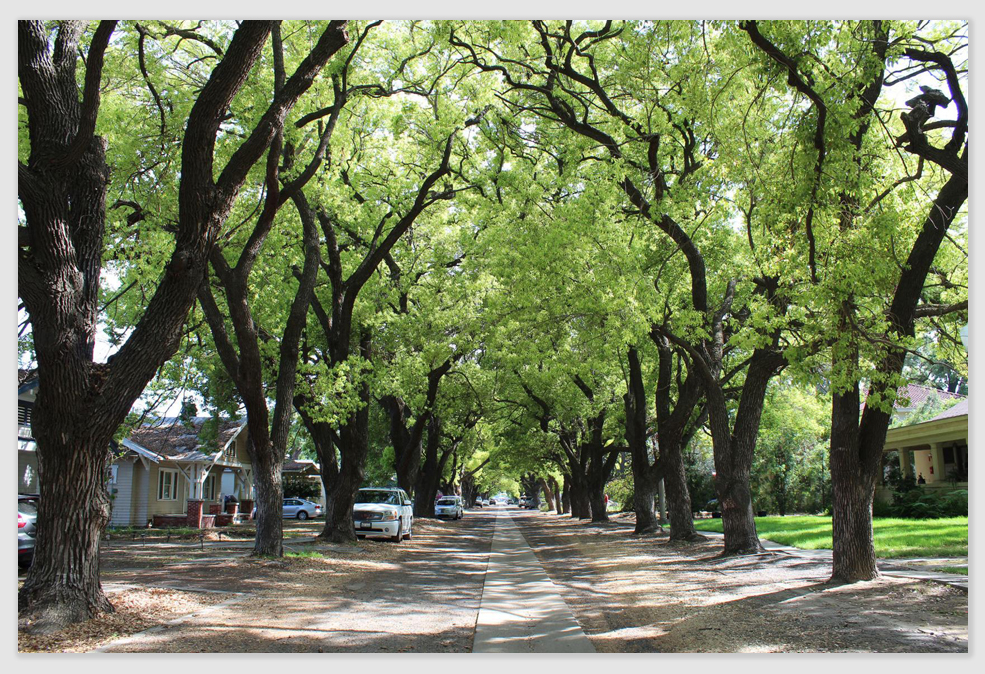 Kingsburg, California, The Kingsburg Recorder, April 25, 2018: Trees to be saved on 21st Avenue
Even if you don’t live on 21st Avenue in Kingsburg, you may have referred to it as Shady Lane as it’s lined with 100-year-old camphor trees that create a cool canopy for passersby and residents. The problem is that over the decades, the trees’ roots have raised the streets and sidewalks making the path hazardous for pedestrians.“These trees, when they were planted, were sticks,” City engineer Dave Peters said. “That was 102 years ago and they’re very big trees now.” Since the narrow road measures only 26 feet across, residents were concerned that if improvements were made, they may lose those treasured trees. “We couldn’t just take out the broken concrete and reconstruct it because those roots were protruding upward into the sidewalk. You’d have to cut the roots and that would be detrimental to the trees,” Peters said…
A settlement has been reached in a wrongful death lawsuit against the city of San Diego for the death of a woman who was killed by a falling tree in Pacific Beach. The giant tree uprooted during a winter storm in 2016 and fell all the way across Ingraham Street. The sheer mass of it crushed local musician Nicki Carano’s car as she drove and killed her instantly. Carano’s parents pushed for a trial by jury but ended up settling the case with the city last Friday. The accident happened right in front of her parent’s home… In the lawsuit filed eight months after Nicki’s death, parents Carol and Anthony claimed there was a known defect in the tree that made it hazardous, and the city was responsible for maintaining it…
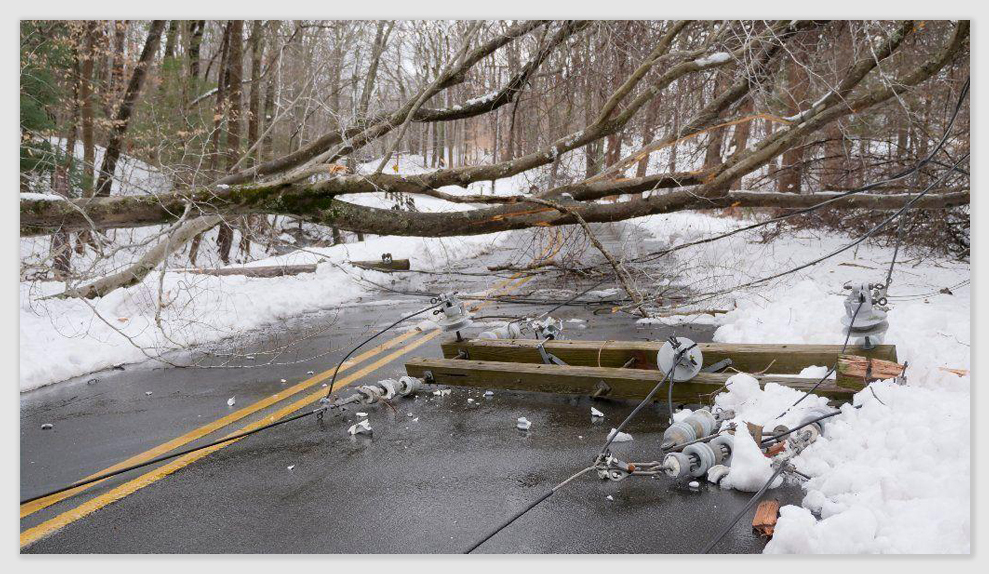 Omaha, Nebraska, World-Herald, April 25, 2018: Nothing heavenly about these invasive trees
The Bellevue Tree Board is waging war against a foreign invader whose ability to reproduce itself above and below ground is daunting. It’s a tree of Chinese origin known as the Tree of Heaven, sometimes disparaged as the Tree of Hell for both its uselessness as lumber or mulch, a structural weakness that causes branches to cleave away as it grows larger, and prolific growth and reproduction rates that threaten to inundate Jewell Park and other wooded areas around Bellevue. Dave Anson, a member of the Bellevue Tree Board, said Ailanthus altissima, as the species is formally known, is an ingenious foe. The tree, which can produce up to 100,000 seeds during a season, also resists removal by felling. A cut tree, he said, promptly sends out thousands of new underground roots which can themselves become new trees…
Eversource is trimming back trees along 4,000 miles of power lines after swaths of Connecticut were left without power from violent winter storms. Connecticut’s largest energy company said Wednesday it will pay $80 million to cut back trees in 121 towns, with the most extensive pruning being done in Woodstock, Haddam, Danbury and Greenwich — all areas that were without power for days when nor’easters buffeted the state this winter. Utility companies regularly pare back trees that brush up against with power lines. Sean Redding, Eversource’s vegetation management manager, said a recent drought, coupled with infestations from gypsy moths and emerald ash borers, had weakened Connecticut’s trees, causing limbs to break and damage power lines. “Identifying and removing hazardous trees is vital,” Redding said. In a statement, Eversource said it was “carefully balancing the need for electric reliability with community aesthetics…”
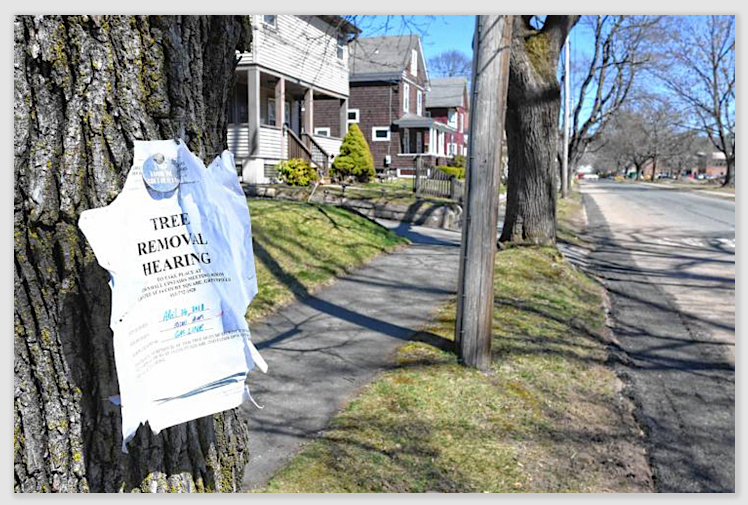
Some residents who want to protect shade trees are bringing the city to court over a plan to chop down healthy trees in a residential neighborhood so Berkshire Gas can more easily install gas lines. A hearing on a request for a preliminary injunction to stop the tree removal is scheduled for Monday, April 30, in Franklin County Superior Court. The case comes as residents have attempted to stop Greenfield from removing seven trees on Norwood Street where Berkshire Gas is replacing gas lines. “These are healthy trees,” complained Glen Ayers of 254 Davis St., who filed the complaint against the city with 21 others. “The only reason for removal of these trees is to facilitate the installation of a gas line.” According to Ayers’ partner, Mary Chicoine, the removal of trees is affecting the public benefit that the trees provide, including improved cooling of homes and decreased flooding and storm water run off by the absorption of water through root systems, branches and leaves…
Saint Edna Catholic Church in west suburban Arlington Heights has announced expansion plans that endanger a very old tree. The parish will add a building and more parking in order to expand programs at the church. The plan presented to the village would also plant 46 new trees and remove 14, including a 125-year-old silver maple. “It’s a tree that changes with the seasons and it’s a maple tree. It’s very very colorful,” said Keith Grossich, parishioner and neighbor. Grossich actually supports the expansion, but not removing what he called the “majestic maple. One of the things that a little bit unsettling to me is it seems think they could try a little bit harder,” he said…
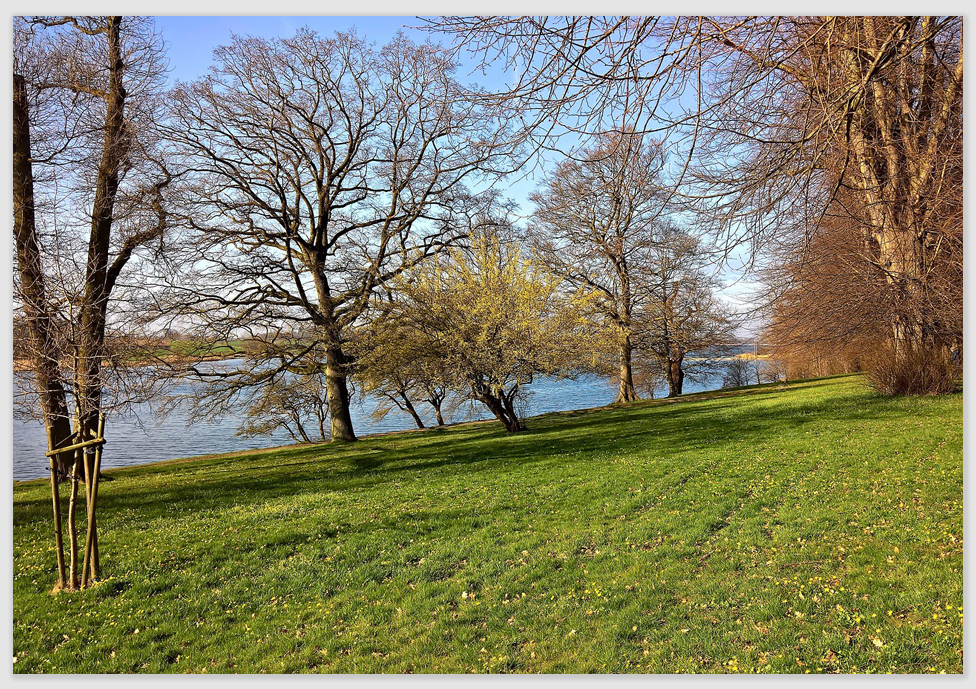 Realty Biz News, April 24, 2018: Boosting property value: What types of trees affect your home value
When most people consider upgrading their homes to boost their property value, they are thinking about the house itself. Often, the yard and landscaping gets neglected. However, adding landscaping and trees to your house can actually give you a solid return on your investment, even more so than anything interior. According to HGTV, studies have actually shown that homeowners get a 100 percent or more return on their money when they invest in landscaping, particularly in trees. But before you jump up and run to your nearest gardening supply store, you need to understand that the opposite can hold true as well. Some trees can negatively affect your home’s value and need to be avoided. So how do you know which ones to plant and which ones to steer clear of? Here is a helpful explanation. Not only do they look pretty, but flowering and leafy trees give off more oxygen, making their surroundings naturally healthier. They also provide shade from the heat, helping your home weather the sun’s intense rays better and prolonging inevitable upkeep. In some cases, trees can even protect your home from fires…
Environment & Energy News, April 24, 2018: Trees might cool things down more than scientists thought
It’s a well-established fact that forests are some of the world’s most important assets in the fight against climate change. They store vast amounts of carbon, while degrading or destroying them can release that carbon back into the atmosphere. But research suggests global forests protect the climate in another way, as well — they can actually help cool down their environment. “This is also important and comes into play when it comes to considering replanting forests and so on,” said Quentin Lejeune of the Berlin-based climate science nonprofit Climate Analytics. “It’s not only the carbon, but it can also influence the local climate.” A new study, led by Lejeune and just published in the journal Nature Climate Change, suggests that deforestation in the Northern Hemisphere has upset that cooling effect and helped make hot days even more intense. That’s on top of the influence of ongoing human-caused climate change…
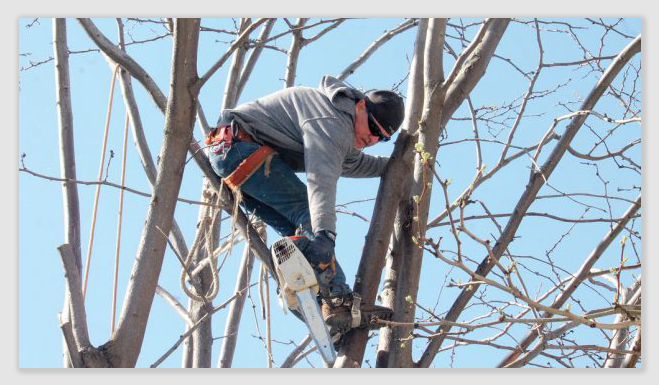
Main Street will look slightly less green for a little while as the City of Winchester has recently removed invasive trees from the sidewalks. Donnie Campbell of T&T Tree Service said a crew worked Saturday morning to remove the last of five trees — two from North Main Street and three from South Main Street. Crews cut the trees and then ground out the stumps. Shanda Cecil, Winchester Tree Board chairman, said the trees were removed because the roots were growing into the sidewalks causing upheaval of the pavement. However, the trees will be replaced with more appropriate trees once some repairs can be made to the sidewalks, she said. “When we are able to replace the trees, we will be using some new technology that will improve the condition of the trees downtown,” Cecil said…
An Iron Range man will pay a fine and restitution for cutting down and stealing roughly 1,200 birch trees from state land in northern Minnesota. It marks the first case of “timber trespass” involving birch trees yielding a charge above a misdemeanor, state officials said. David A. Lawrence, 41, of Aurora, pleaded guilty last week in St. Louis County District Court to timber trespass on state lands, a gross misdemeanor, in connection with stealing the paper-barked trees, which are a popular form of home decor and the target of illegal harvesting in Minnesota and Wisconsin. The agreement calls for Lawrence to serve one year of unsupervised probation, pay a $900 fine and make restitution for the damage he inflicted over a few days in March 2017 southwest of Embarrass in woods off Tower Biwabik Road. The felled trees were valued at roughly $3,400, which includes the trees and the cost to repair the damage to the woodlands, according to the Minnesota Department of Natural Resources (DNR). A harvester can generally sell each tree, referred to as a pole, for about $1…
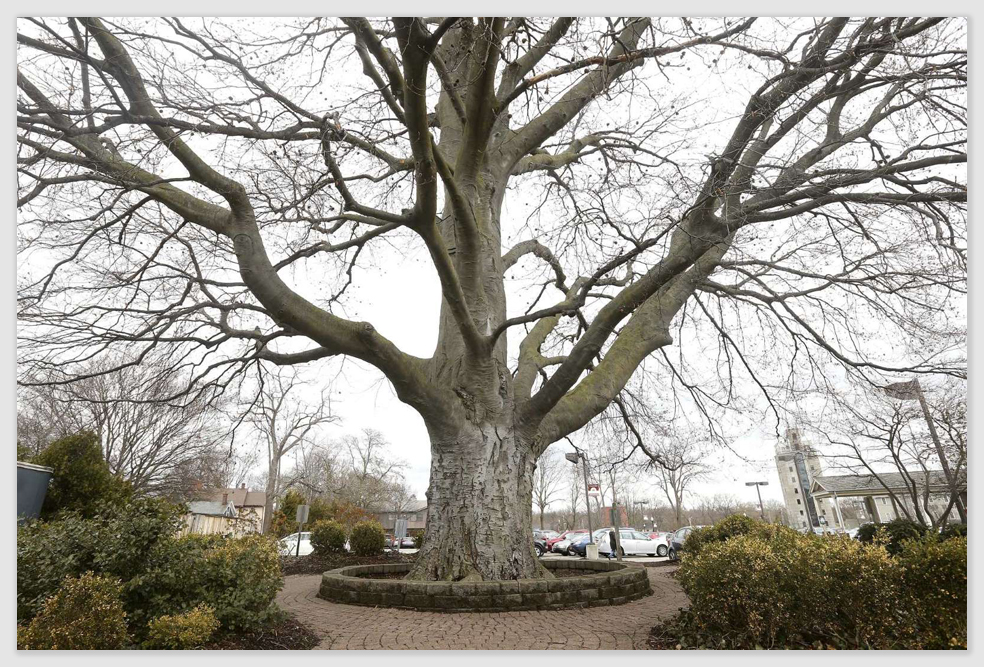
Officials in a western New York town are bidding a sad farewell to an iconic 200-year-old tree. A public ceremony is planned Monday evening to commemorate the tree that towers over Copper Beech Park in the Rochester suburb of Pittsford. It’s dying from a devastating fungus. Town Supervisor Bill Smith tells WHEC that a lot of people think of the copper beech as a dear old friend. It’s even used in the town’s logo. Before it’s cut down, officials plan to photograph initials carved into its smooth bark by generations of young people. But pieces of the tree will live on. Cuttings have sprouted into more than 100 saplings that will be planted around town — but not in Copper Beech Park, where the soil is contaminated with the fungus…
Trees planted Monday at St. Nicholas Picnic Grounds might have extra help in becoming healthy and robust. Half of the 12 trees received biochar, charcoal that is added to the soil to improve fertility and plant hydration. It is believed that biochar will give the trees a better chance at a longer life. “It has a lot of benefits for tree growth,” Frank Snyder, volunteer with the Schuylkill County Conservancy and retired state forester, said, adding that includes absorbing moisture and holding in nutrients. The trees that were planted are about 10 feet tall and 4 to 5 years old. All of the trees were pin oaks except one — a honey locust. The trees could live between 150 to 200 years, Snyder said. Snyder said it is a controlled study to see if the biochar produces noticeable positive results for the trees. However, time is needed for the tree to re-establish a home at a new location, he said…

Drive around Indiana, or anywhere in the Midwest, and you’re likely to see some trees that turn green early and have a beautiful white bloom early in spring. They’re likely Bradford pears, but state officials aren’t big fans and are asking residents to avoid planting them. Megan Abraham, director of the Department of Natural Resources says they’ve become very popular because they’re inexpensive and grow quickly. The problem is they’ve become invasive, taking over space where native grasses and plants, along with oak, maple or hickory trees should be. When Bradford pears first came on the market it was thought that they were sterile, but then they started cross-pollinating, and new varieties started flowering. “Which meant that the birds could feed off of them, and the birds are moving them now to some areas that aren’t forested where they’re able to out-compete some of the native trees and forbs and grasses, changing some of these ecosystems around us,” she explains. Abraham says millions of dollars a year are spent on pear trees in Indiana, and not only are they harming native vegetation, they’re not very sturdy and snap easily because they grow so fast…
With spring in full swing, native trees such as dogwoods are starting to bloom in the area, attracting locals and nonlocals alike to witness their natural beauty. Flowering dogwood, the official tree of Missouri, has become a popular sight for thousands of visitors traveling to its native habitat in the southwest region. Local cities have organized dogwood tours for years to introduce people to the tree’s unique allure. Neosho, which calls itself the Flower Box City, has held annual dogwood tours for 57 years, with people coming from as far as Wichita, Kansas, and Omaha, Nebraska, just to see the trees in bloom. Roy Shaver, a member of the Neosho Rotary Club, said the tours began as a civic effort to draw attention to the city’s beauty. He believes the tour became popular in Neosho because there is an abundance of dogwoods in town; the city has mostly white dogwoods, although a few pink trees pop up in certain areas. “It’s just a bank of beauty,” Shaver said…
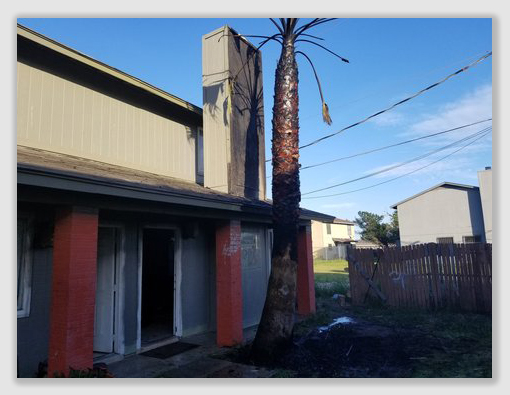
Authorities arrested an 18-year-old man suspected of setting a tree on fire in northeast Austin Sunday evening, said the Austin Fire Department. It happened at about 6:37 p.m. in the 6900 block of Wentworth Drive near the Travis County Expo Center. When firefighters arrived, they found a tree on fire next to a two-story fourplex and a wooden privacy fence, AFD said. They said the fire was extinguished in less than 20 minutes and there were no injuries. Investigators determined the blaze was intentionally set, and the 18-year-old man was taken into custody…
Lodi, California, News-Sentinel, April 22, 2018: Green deed appears to backfire for Lodi trees
Someone looking to keep Lodi green apparently has a black thumb. According to Caltrans Project Manager John Oliva, in May of 2017 the City of Lodi, Caltrans and Love Lodi volunteers partnered together to plant 70 crepe myrtle trees for a beautification project on the eastbound side of Kettleman Lane between the Union Pacific railroad overpass and Stockton Street. A couple of months after the trees were planted, someone put high concentrations of fertilizer on the trees, causing damage to many. Caltrans ended up removing 41 damaged trees and replanting them. However, last week it was discovered that someone applied what Oliva described as an oil based substance onto the trees, and as a result some of the trees are starting to show signs of defoliation. “We’re hoping the trees will be OK, but it appears that somebody may be trying to do something good, but it’s actually not good,” Oliva said…
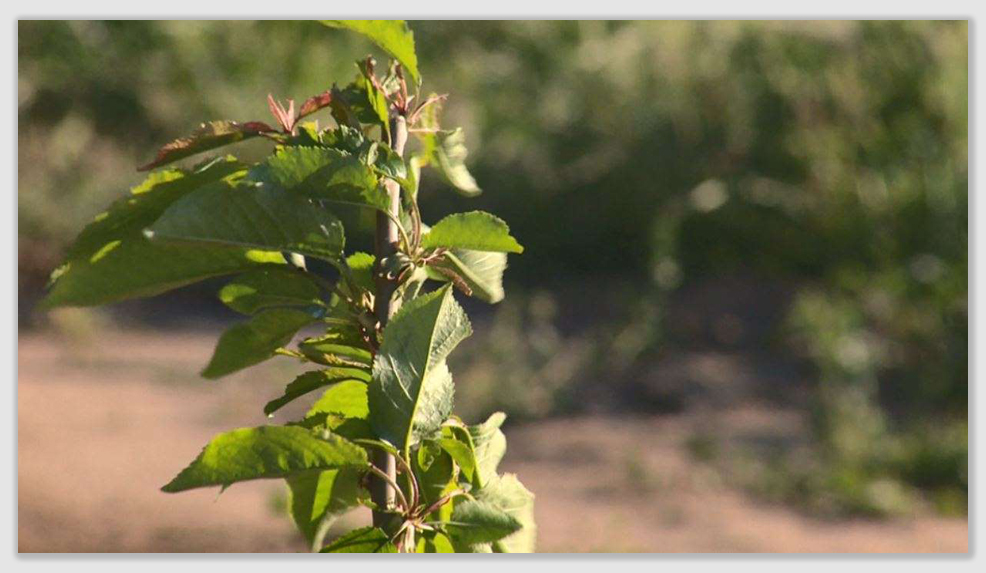
A Stanislaus County orchard is missing dozens of cherry trees after someone trespassed and ripped them out of the ground. Paul Van Konynenburg said he was taking stock of his Salida orchard Tuesday after a heavy rain when he noticed part of his new orchard was in disarray. He soon discovered bike tracks and believes a trespasser yanked out the trees one by one. Some were already too established to come up, while others came out. “This is going to cost me thousands of dollars, and literally the (thief) is probably going to make 15, 20 bucks at best — and so it’s just such a waste,” Van Konynenburg said. After filing a report with the Stanislaus County Sheriff’s Department and sharing his story online, a fellow farmer discovered a lead: Someone was selling identical cherry trees. The farmer bought two for $10 and returned them to Van Konynenburg…
Don’t blow off tree care in the aftermath of hurricane-force winds that rocked the Front Range on April 17, advised Denver’s City Forester Rob Davis. In the midst of emergency inspection of the city’s trees shaken by the windstorm, Davis granted a telephone interview:
Q. Which trees were hardest hit by the windstorm?
A. Conifers had the most damage and the majority of complete failures with the whole root plate upended. Some silver maples and other trees were damaged, but a lot of Colorado blue spruces — our state tree — had the most damage, and some evergreens and pines. We had 90-feet-tall spruces down. We lost some big trees.
Q. What exactly happened to the trees?
A. In the majority of failures we saw, the tree just fell over with its big ball of roots sticking out of the ground. Some trees did snap at the base; the roots didn’t fail. It’s OK to see a tree swaying within the canopy. They have some movement, but this was quite an ordeal.
Q. Even if trees aren’t altogether toppled or suffering obviously broken trunks or limbs, they may have sustained more subtle damage in those high winds. How can people determine whether trees got too shaken by the storm?
A. Take a look around the base of the trunk and look for soil disturbance — any soil moving up or down. Look for fractures in the soil around the root plate. If you see ground around the base of a tree lifted or shifted, that indicates failure in the root system; and that’s cause for concern…
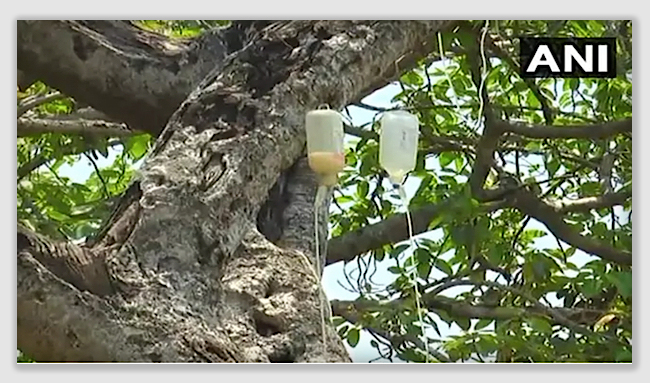 Hyderabad, India, The Times of India, April 16, 2018: Saline drip for a 700-year-old in Telangana
The world’s second largest Banyan tree in Pillalamarri of Mahabubnagardistrict in Telangana is on ‘saline drip’ now as part of the rejuvenation of the tree that is almost dying. The 700-year-old ficus tree is now given treatment by injecting a diluted chemical to kill termite population that infested the tree. As pumping of chemical into the stem failed, forest officials are infusing the chemical solution drop by drop using saline bottles similar to a saline drip given to patients in the hospital. Termites had affected almost entire tree due to which parts of it are fallen, and it closed for tourists in December 2017. Officials have put the saline drip of diluted chemical Chloropyrifos bottles numbering few hundreds for every two metres of the giant banyan tree…
Low humidity and high winds can lead to grass fires. With conditions such as these, the ability of power lines to contribute to fires is increased as well. Power companies are constantly working to prevent problems, and you can help. When trees, branches, and debris come into contact with power lines, they could cause a spark or fire. Sometimes, the wire never even needs to be touched. Electricity can arc between the lines and nearby limbs and vegetation. “With all the dry leaves, one little spark can start those at these humidity levels, which otherwise, you’d never know.”, says ECCA Volunteer Fire Department’s Gary Young. That’s why companies like AEP and Taylor Electric Cooperative both work to keep their lines clear of debris. “One of our major goals in 2017 was to create our own tree trimming crews and maintenance programs.” says Elizabeth McVey of Taylor Electric. “They’ve been established for years, but we really amped it up. We’re always trying to make sure power lines are clear of debris and trees, and anything that might cause a problem…”

A palm tree may seem like a harmless symbol of sunshine, but getting tangled up in one can be deadly. Tucson firefighters were able to prevent that tragedy Wednesday when they rescued a tree trimmer in danger of being crushed to death by fallen branches. Tucson Fire Department only gets a couple calls a year for palm tree rescues, and the incidents often are fatal, Capt. Andy Skaggs said. “When palm fronds come down on a worker, it is very rare that they live to tell about it. The fronds are extremely heavy and will do traumatic things to the body,’ he said…
Pittsburgh, Pennsylvania, KDKA-TV, April 18, 2018: Tree threatened to smash cancer patient’s home
A local woman battling cancer had a giant tree dangling perilously over her home. She had no where to turn, so she turned to KDKA’s Marty Griffin and Get Marty. “I am a 66-year-old cancer patient on social security. I have a tree leaning toward my house. It could fall at any time and would probably destroy my house. I don’t have relatives or anyone to help.” That’s the e-mail sent to Get Marty by Judy Linhart. “When its windy out. I can see it out my bedroom going back and forth. I cant sleep at night. It’s the Lord who kept the tree from standing this long,” says Judy. Judy is fighting kidney cancer. She lives off of social security. She had several tree companies bid on the project. All of them told her it would cost seveal thousand dollars to removed the dead 120-foot tall tree from her property. “I just couldn’t afford it. I had to hope it wouldn’t fall…”
 Yakima, Washington, Herald, April 18, 2018: Apple controversy: Who can sell Cosmic Crisp trees?
It’s an apple that could upset the cart. Or at least disrupt it a bit. Washington growers are so excited about the Cosmic Crisp’s potential, they already planted a half-million trees and plan to add another 5 million this year. Consumers will have to wait until fall of 2019 before these new apples hit the marketplace. But behind the scenes, there’s a courtroom battle brewing between one of the state’s major universities and a Seattle agricultural technology company over who has the right to sell the trees. But whatever happens, it’s not dampening growers’ enthusiasm for what they see as a game-changing variety of apple. “I’m excited to see how it will disrupt the apple market,” said Mark Hanrahan, a Buena grower who has planted the trees…
Phys.org, April 18, 2018: Cities and communities in the US losing 36 million trees a year
Scientists with the USDA Forest Service estimate that between 2009 and 2014, tree cover in the Nation’s urban/community areas declined by 0.7 percent, which translates to losing an estimated 36 million trees or approximately 175,000 acres of tree cover annually. Pavement and other impervious cover increased at a rate of about 167,000 acres a year during the same period, according to research by USDA Forest Service scientists. Nationally, urban/community tree cover declined from 42.9 percent to 42.2 percent. Twenty-three states had a statistically significant decrease in tree cover, with a total of 45 states showing a net decline. Trees improve air and water quality, reduce summer energy costs by cooling homes, reduce noise, mitigate runoff and flooding, and enhance human health and well-being, making them important to human health and urban and community infrastructure. The annual benefits derived from U.S. urban forests due to air pollution removal, carbon sequestration, and lowered building energy use and consequent altered power plant emissions are estimated at $18 billion. The study by Dave Nowak and Eric Greenfield of the USDA Forest Service’s Northern Research Station, “Declining urban and community tree cover in the United States,” was published in the journal Urban Forestry and Urban Greening…
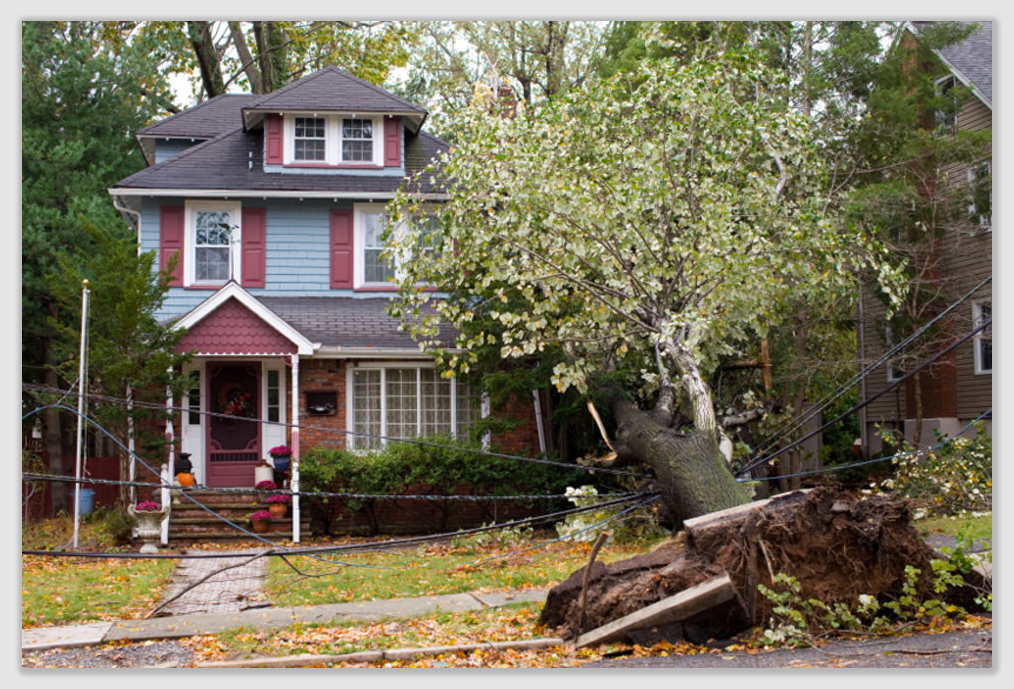 US News & World Report, April 17, 2018: How to safely remove damaged trees in your yard
Winter isn’t an easy time for trees – winter storms can cause severe damage. Although trees are built to survive the cold season, one will occasionally crack under pressure. When this happens, you may need to remove it, so it doesn’t fall and cause more damage to your roof, car or even a person. Trees at risk of falling certainly present safety concerns, but so does cutting them down. Without proper precaution, branches or entire trees that fall and strike someone can cause severe injury. The tools you use, such as chainsaws and axes, can be dangerous, too, if you don’t use them safely. The Tree Care Industry Association reports 129 tree care-related occupational incidents in occurred in 2017, 72 of which were fatal. The safest option for removing a tree is to hire a professional tree removal service…Whether you’re a professional or a homeowner, be sure to follow these five tips for safe tree removal…
Property owners here have one more opportunity to cooperate with the village’s effort to remove infected ash trees before it seeks abatement warrants to take the trees down at a higher cost. More than 360 dead or dying ash trees infested by the emerald ash borer have already been removed through the village’s ash tree program, which covered 50 percent of the cost. The deadline for that program was Dec. 31. “They had two-plus years to address the problem, with village assistance,” village president Terry Burns said. Administrator Tim Popanda said a tree inspection conducted in February found 85 trees that need to be removed. “Time is up,” Popanda said, adding the trees pose a public safety hazard. “We have to get these trees down…”

The Missouri Department of Conservation is urging the public not to plant Bradford Pear trees because they are an invasive species. The tree blooms white flowers this time of year and is pyramid-shaped. At Sunny Hills Garden Center in Kirbyville, you won’t find the Bradford Pear. “I get phone calls left and right in the Spring for Bradford Pears and I tell them, ‘We don’t sell them,'” Owner Jeni Sheldon-Albert said. That’s because Bradfords can be bad for native species. Missouri Department of Conservation Resource Forester Stephen Short says the trees bloom in early Spring. “It usually has a light green, waxy leaf, a simple leaf, and a grayish colored bark,” Short said. Bradfords spread easily and quickly. “What they do is just start shading out other species, wildflowers is the main thing,” Short said…
Denver, Colorado, KUSA-TV, April 17, 2018: Here’s what to do about your downed trees in Denver
The wind toppled trees across the Denver metro area on Tuesday afternoon. While some landed on homes, others fell in yards and streets. “We’ve probably had 250 calls or more come in,” said Denver City Forester Rob Davis. “But we only have a handful of contractors to try and get through this and were trying to move through it as fast as we can.” Davis advises any homeowners dealing with fallen trees and limbs to stay within “their comfort level” to fix the problem. “If it’s an obvious, small branch down and you can clear it out, that’s great if people can do that themselves. If it’s something up in the air, a tree that’s broken and its swaying and its moving, anything larger that people don’t feel comfortable with, go to a licensed professional or licensed contractor,” he said…
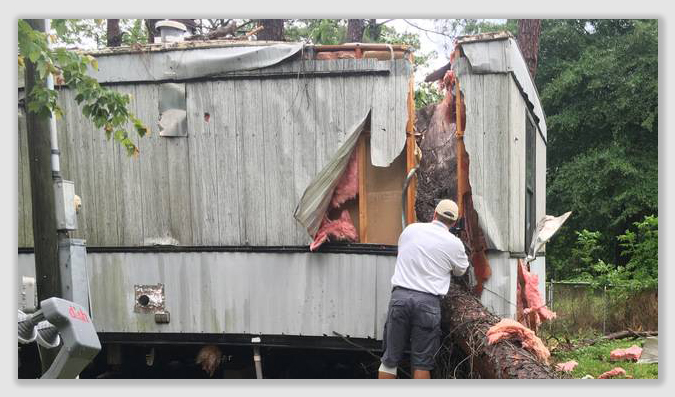
A Jacksonville woman said she feels lucky to be alive after wind gusts split a pine tree in half Sunday afternoon and the tree came crashing down on top of her as she lay in the bedroom of her Westside mobile home. Misty Powell has been released from the hospital after rescue workers had to cut into her home with the Jaws of Life just to free her from under the tree. “I had some guardian angels watching over me,” Powell said. “The thing in my neck, they say if it had been an inch or more deeper, it would have hit my artery.” Powell said she was lying down in bed but was awake when the tree toppled onto her about 2:30 p.m. as the wind and rain started to pick up Sunday. Her husband and 2-year-old daughter were also in the Noroad mobile home but were on the other side of the trailer. “I was glad I told my daughter to stay out in the living room because mom wasn’t feeling good, because she normally comes to lay down with me,” Powell said. On Monday, the tree that nearly crushed Powell could be seen cut up outside the mobile home. Powell said she now plans on getting a lawyer because the tree was known to have problems. “We even told our landlord it was going to happen,” Powell said. “That it was even going to land on our bedroom or the trailer next door…”
The latest round of wild weather has been a hardship for many around northeastern and central Pennsylvania. For folks in the tree removal business, this promises to be a very busy week. As blue skies and sunshine poked out near Dickson City Monday morning, dark clouds and rain hovered over other parts of Lackawanna County. Strong winds sent a bail of hay for a spin towards Route 107 near Lackawanna State Park. A nearby road sign didn’t stand a chance. Neither did a storage structure down the road. Near Dalton, Titan Tree Service was removing the top of a tree from a roof. The company started getting calls before sunrise. “Very hectic,” Alec Senofonte of Titan Tree Service said. “Calls started coming in around 5 o’clock this morning. I’ve been running around ever since. We have crews up north, crews in the Scranton area, trying to get to the priority stuff: trees on structures, trees on cars, things like that.” The brave man up in the bucket, assigned with cutting the tree into pieces during the steady rainfall? That was Robert Tanner’s job. He’s been doing this since the early 2000s. “We see how bad it is, then we got to put up ropes so it doesn’t hit the house,” Tanner said. Then I go up and take all the excess off that I can. Then I cut it in half, the ropes bring it back off the house, don’t touch nothing. You got to be careful. It’s dangerous, but I live for it…”
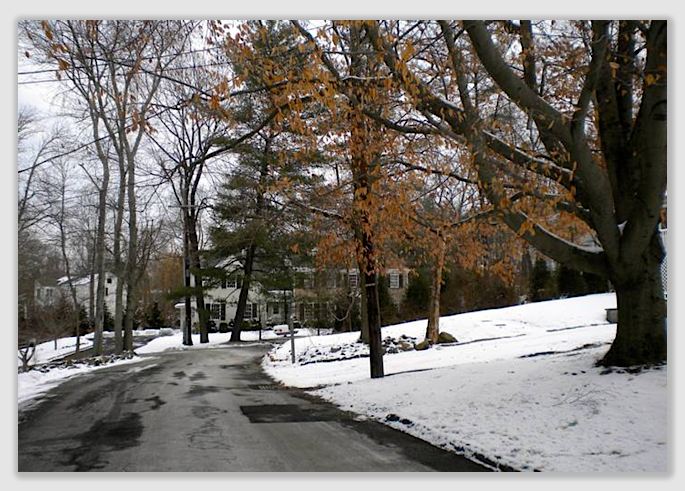
The Chatham Township Committee took what was described as a “balanced” approach when it voted unanimously to introduce an ordinance that will help preserve tree street-scapes and address complaints of quaint neighborhood streets being disrupted by builders at its regular meeting held last Thursday. The “Tree Management Ordinance” will be up for adoption when the public hearing is held April 26. Among the highlights outlined by committee member Kevin Sullivan, who also serves on the planning board, are steps to protect tree density. “One of the major points of this ordinance is the fact that we have a conceptual lot plan pre-application,” Sullivan said. “Before someone comes in to do any work, if they are going to do major demolition work, they have to submit a pre-application plan to show us exactly what they are going to do with the entire lot with the perspective of the trees…”
Coastal redwoods and giant sequoia are iconic symbols of California. The species have endured major ecological changes from logging, development and political threats over the past 200 years. Today, the trees are doing better in some respects, but are also facing some of their most significant challenges yet. These are the findings produced in an unprecedented State of the Redwoods Conservation report – the first comprehensive look at the state’s current status of more than 1.6 million acres of coastal redwood forests and giant sequoia. The hope of the report? To show that the trees’ conservation status warrants caution and requires action. The 26-page report was paid for and compiled by the San Francisco-based Save the Redwoods League, a nonprofit celebrating its 100th anniversary. The information collected over two years will now provide a baseline for the state of the trees…
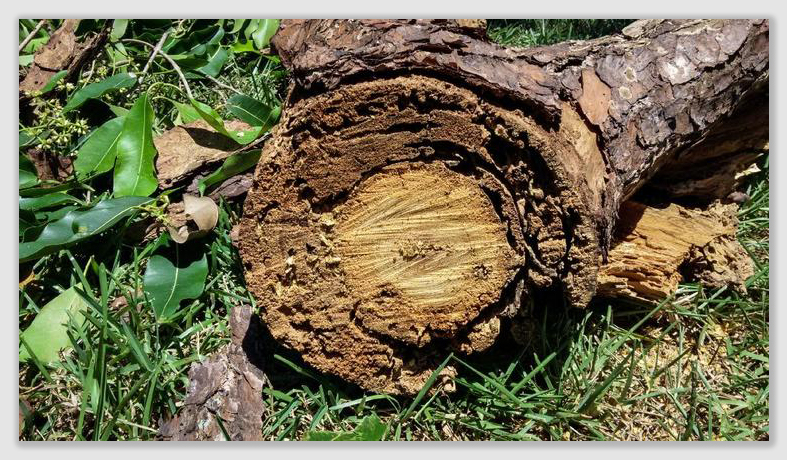
Many South Florida slash pines have stood for a century, providing shade, oxygen and wildlife habitat, as cities rose around them. Now they face a mortal threat from swarms of tiny, wood-eating insects. The Asian subterranean termite, which has been chewing its way through the local housing stock for 20 years, has turned out to have a taste for native trees, with a particularly lethal manner of attacking slash pines, according to a new study from the University of Florida. The study, which looked at about 400 slash pines in Fort Lauderdale, found that these termites had killed 12 percent of residential trees and three percent of trees in city parks over the past five years. Another 46 percent of the residential trees were infested, with the termites likely to cause deadly damage, according to the study, published in the journal Florida Entomologist…
A man died from his injuries after falling from a tree he was removing. Police said an employee worker of a local tree removal company died Saturday 9 a.m. after falling from a tree that he was removing from the property of a Pinewood Trail home. The man was wearing a safety harness as he climbed the about 45 feet up the tree, according to police. As he began removing the top portion of the tree, when the tree broke off at its base and fell to the ground. His coworkers called 911 and attempted to assist him…
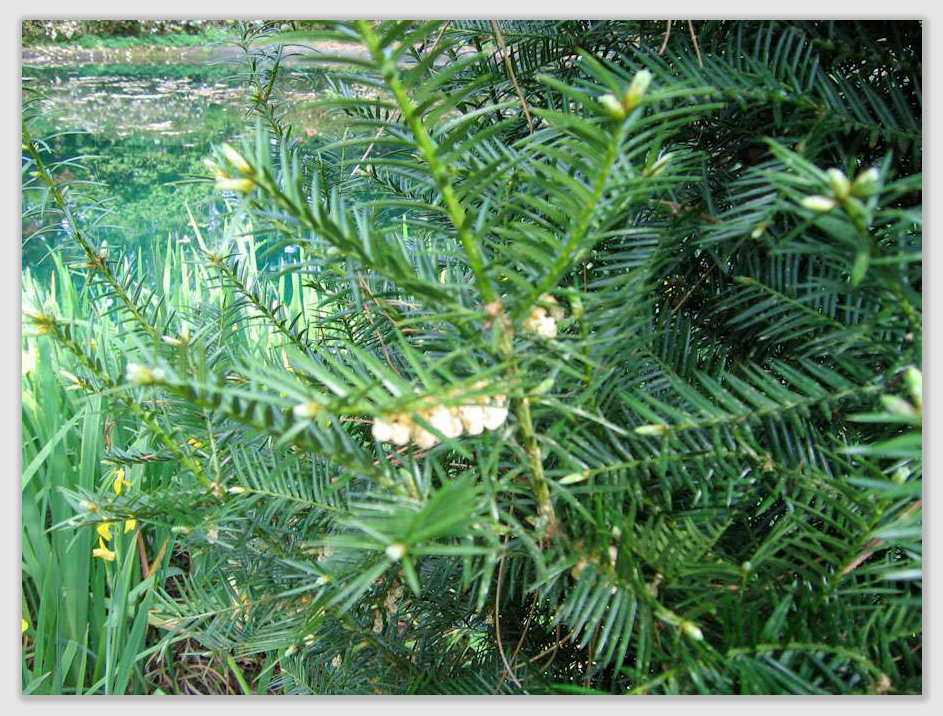
There’s an effort underway to save a Florida tree from extinction. The Florida torreya tree is a conifer found primarily in the Panhandle near the Apalachicola River. Fewer than 800 are believed to remain in existence. Jason Smith of the University of Florida says a fungus is behind its decline. “It causes a lesion in the stem that causes the tree to die. Basically we think the species is on a very rapid trajectory toward extinction. It’s likely that within the next 50 years the population will go extinct.” Researchers are considering whether the tree could be genetically altered to resist the fungus. In the meantime they are working to preserve it in places like the Atlanta Botanical Garden…
Leah R. Johnson, an assistant professor in the Department of Statistics, part of the Virginia Tech College of Science, is using a $700,000 National Science Foundation CAREER grant to improve mathematical and statistical models to help fight deadly diseases. The vector-borne diseases that Johnson is targeting include dengue in humans and huanglongbing, commonly known as citrus greening, in fruit trees. The dengue virus, according to the U.S. Centers for Disease Control and Prevention, is spread by mosquitos and infects 400 million people per year, mostly in tropical and subtropical climates. Huanglongbing — translated as “yellow dragon disease” — is a bacterial infection of citrus trees spread by small insects that cause leaves to wilt and, as the name indicates, fruit to become discolored. “I’ve been working on models for vector-borne diseases for a few years now, focusing on improving how we include environmental factors, such as temperature, into mechanistic models of disease spread,” said Johnson. “Mostly I’ve concentrated on expanding existing simple models and better incorporating sources of uncertainty…”
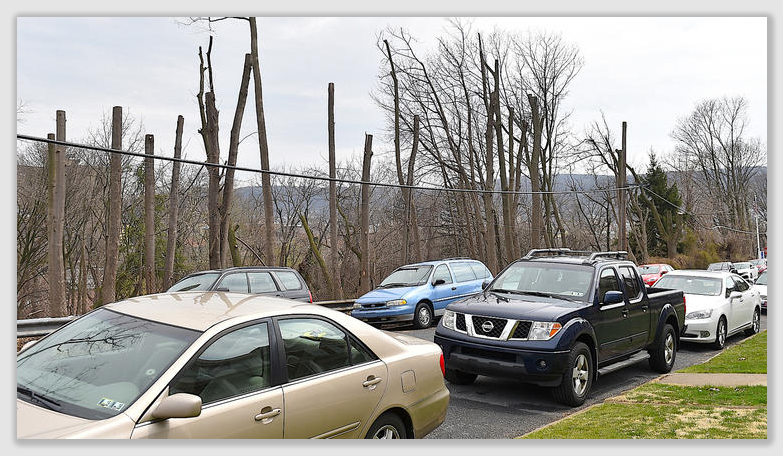
Jill Stark loves her house on First Avenue in Bethlehem, a stone’s throw from the monument that commemorates some 500 soldiers buried in the area during the Revolutionary War. Route 378 passes by a few hundred feet away, but Stark said she never cared much because the busy highway was well-hidden by a buffer of trees. Until now. PennDOT has been taking down trees in its right-of-way on the west side of 378, primarily to remove deadwood that could fall onto the highway. There was, evidently, an enormous amount of it. Workers have eliminated dozens of trees, including some that residents say didn’t show any obvious signs of distress. Now the stretch has long, treeless gaps, and will look even more naked before the project is done in a few weeks…
Tree felling for the Mountain Valley Pipeline continued Thursday in Roanoke County, moving closer to a tree sitter who is protesting the project. The woman, who identifies herself as “Red,” has occupied the tree stand on her family’s property for almost two weeks. Roanoke County police were there early Thursday, warning the woman she was violating state law, and urging her to come down. Crews wielding chainsaws took down trees on both sides of the tree stand, but there was no attempt to remove the woman from her perch. Late in the day, she was still there. MVP crews and police played a waiting game, while Red’s supporters offered encouragement. “Having to face off against MVP security, and law enforcement on private property I think gets people’s blood boiling a little bit, tensions up,” said pipeline opponent Russell Chisholm, “so I think we just wanted to have as many people out here today to stand and keep an eye on things and help Red feel a little bit better…”
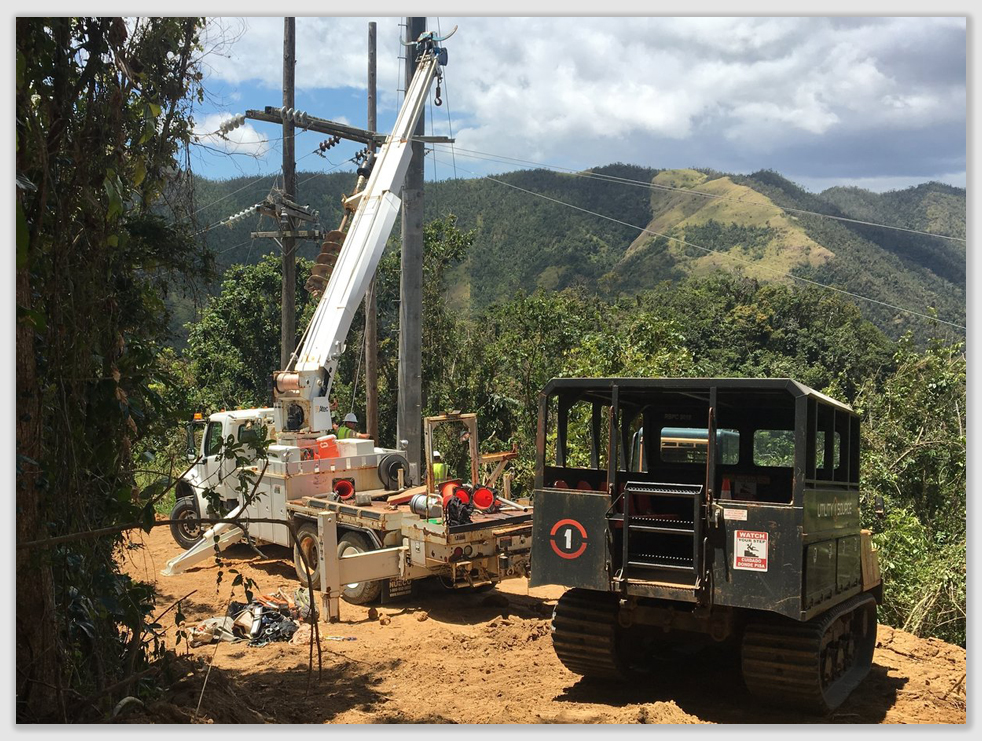 National Public Radio, April 12, 2018: A tree falls in Puerto Rico, and 840,000 customers lose power
One tree was all it took. Around 12:30 p.m. on Thursday, a wayward trunk tumbled over onto a major transmission line in Puerto Rico’s still-fragile electrical grid and cut power to roughly 840,000 customers, affecting more than half of the island’s population. Officials from the island’s electric utility company – PREPA — said the accident occurred in the region of Cayey, where crews were working to restore power to people still waiting nearly seven months after Hurricane Maria. Increasingly, that work requires clearing away heavily forested mountainsides to gain access to the large utility poles that carry transmission lines from one mountain peak to the next. It was during that kind of work that a tree falling toward the ground made contact with the power line instead… It would seem remarkable that a single tree could plunge more than half of the commonwealth’s population into darkness. But it was so, and PREPA even tweeted a picture of the tree. Karla Iglesias, an engineer who has worked on Puerto Rico’s electrical grid, said it has everything to do with the fact that the line the tree made contact with – known as line 50900 — connects two of the island’s main power plants, Palo Seco and Aguirre…
From his white pickup truck, Shawn Cox scans the tall oaks, delicate dogwoods and slender Japanese maples that line Statesville’s streets every day. Decked out in steel-toed boots and a neon-green vest, the Statesville city and utility arborist carries out his mission to ensure that trees and people co-exist safely. As temperatures warm and Statesville awakens from its winter dormancy, Cox makes sure the city’s trees aren’t putting people at risk. Cox does that by assessing each tree the same way. First, he keeps an eye out for sprouts growing out of tree limbs that have been chopped off and reduced to stubs. “I tell people God shaped the trees fine,” Cox said as he pointed out an oak tree on Walnut Street. “He didn’t need any help.” Sprouts growing out of tree stubs indicate that someone has attempted to top or shape a tree, which is “bad language,” Cox added. “Topping and heading cuts are bad,” he said. “They are the worst things you can do to a tree because they open up avenues of decay to go through the entire tree. They allow decay and other diseases in, but they also weaken the structure of the tree…”
IU began removing the famous Sweetheart Tree inside the Chemistry Building on Wednesday morning, University spokesman Chuck Carney said. The tree’s health had been declining for years, but suspicions of rot led the University to finally remove the legendary American Beech. After soil has been replenished, IU intends to plant a new tree as a replacement. “It was something that had to be done,” Carney. “There wasn’t any way to save it.” Campus lore alleges when the Dunn family sold land to IU, they mandated the tree be protected because their oldest daughter and her sweetheart carved their initials into the tree’s bark. However, according to a story posted on IU’s pride and traditions page in January, “the deed to Dunn’s Woods indicates that the Dunns never mandated the protection of the Sweetheart Tree.” The tree has stood outside the Chemistry Building since its construction in 1931, according to the traditions website, and when an addition to the building was constructed in the 1980s, architects decided to build around the beloved beech…
Mentor-on-the-Lake leaders are addressing tree hazards in an ongoing attempt to update local laws. City Council this week approved updating its trimming and removal law, “so that it is clear that the owner of a parcel of land in the city is required to maintain trees that are on their property or on the contiguous tree lawn or contiguous road right of way so that such trees do not create a hazard to the street or sidewalk or road right of ways … “ “Over the last several months, we have had cars damaged driving through the city during high winds with tree branches falling,” Mayor David Eva said. “Our service department can come out and inspect trees on private property and require dead tree branches be trimmed to reduce these incidents. “Residents would receive a letter first if a hazard is identified and given reasonable time to correct this…”
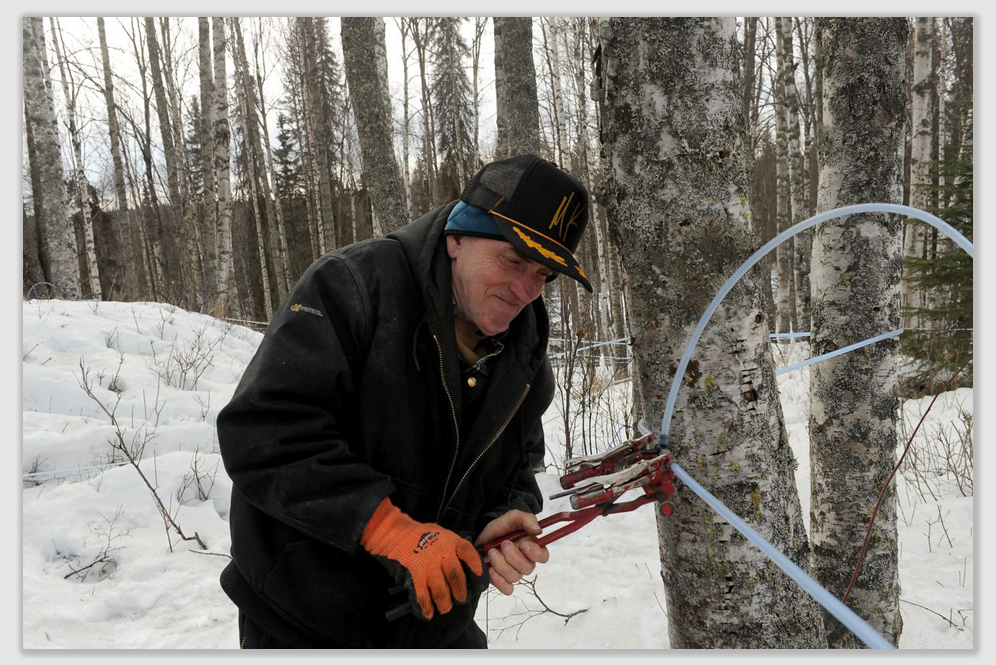 Birch sap will soon be running as the weather warms up in Mat-Su. Gerald Keene is getting his sap lines in shape north of Wasilla at his 4 Trees Birch Syrup property. Keene tapped 635 birch trees last year and collected 2,000 gallons of sap. That was boiled down to 20 gallons of syrup by Kahiltna Birchworks in Talkeetna. Keene is adding 25 trees for this year’s harvest. Gravity pulls the syrup to the bottom of his sloping property between the Parks Highway and the Alaska Railroad tracks, where it flows into tanks…
Not everyone sees landscaping the same way. However, it seems the city and D.R. Horton home construction company are narrowing the gap. During its Tuesday work session, the Fort Worth City Council received an informal report updating them on the controversy involving the urban forestry ordinance violations at D.R. Horton’s Trinity Oaks development near the 8100 block of Randol Mill Road. The company over-cleared over 60,000 square feet, resulting in the destruction of numerous trees. “They had a bulldozer operator who didn’t know where to bulldoze and didn’t get clear instructions from their team,” said Fort Worth Director of Planning and Development Randle Harwood. D.R. Horton and the city have now entered into a formal settlement. Terms of the agreement include replacement of a tree canopy the company over-cleared, and additional planting equal to five times the canopy removed illegally (total additional planting of 365,112 square feet)…
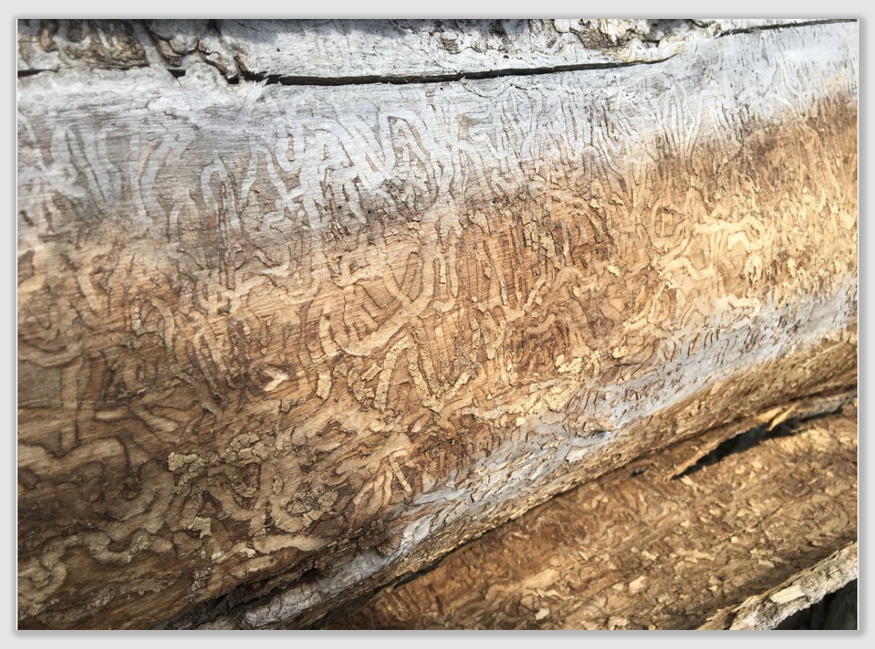
There are around 700 weakened or dying ash trees in Niagara Falls. They have to be taken down, but the city is struggling to find the money to deal with the problem. “We can’t keep up,” Joseph Urso, the city forester, said Tuesday. “I think we’re probably about a few seasons, maybe fall or next year, where you start to see major failure of these trees.” The emerald ash borer, an invasive beetle, is to blame for these dying trees. Urso says once a tree is infected it usually only survives four or five years. That’s a big concern, since hundreds of these trees line city streets close to homes and cars. People and property could be in the way should one of the dying ash trees comes down during a storm or due to rot…
Salt Lake City, Utah, University of Utah, April 10, 2018: Leafing through tree research
Utah’s early residents would be surprised to see the canopy of trees that covers the Salt Lake Valley today. Few trees are native to the valley, which means that most of the trees present there today are imported. It’s a much different situation from a natural forest, which is shaped by climate, water availability and biodiversity. So, what factors shape the formation of a new urban forest? University of Utah professor Diane Pataki and former U postdoctoral scholar Meghan Avolio (now a professor at Johns Hopkins University) took this question on, along with colleagues from Utah State University and the University of Delaware. Their survey of tree species diversity in the Salt Lake Valley is published in Ecological Monographs as “Biodiverse cities: the nursery industry, homeowners, and neighborhood differences drive urban tree composition.” They found that tree species diversity can be shaped by the species available in nurseries, the preferences of the homeowners and even the tree selections of their neighbors…

Have an oak tree on your property? To keep it healthy, don’t prune it from mid-April through the summer. That’s a key time for infection with oak wilt, a serious disease that can weaken white oaks and kill red oak trees within weeks. Oak wilt, caused by a fungus, has been reported throughout the Midwest, including Michigan, said Ryan Wheeler, invasive species biologist with the Michigan Department of Natural Resources. Red oaks are most susceptible to the disease. These trees have leaves with pointed tips and include black oak, northern red oak and northern pin oak. Trees in the white oak group have rounded leaf edges and include white oak and swamp white oak. They are less susceptible. Symptoms most often appear from June until September. “Affected trees will suddenly begin to wilt from the top down, rapidly dropping leaves, which can be green, brown or a combination of both colors,” Wheeler said. Oak wilt is spread above ground mainly by sap-feeding beetles that carry the disease spores from an infected tree, or wood cut from an infected tree, to fresh wounds, including pruning cuts, on healthy trees. The infection also spreads below ground, through root grafts among neighboring trees…
Long-awaited signs of spring offer hope in the front yard of Shawn and Jacqueline Tenpas. “The flowers are coming up and we’ll be keeping the lawn nice,” explains Jacqueline. But overshadowing the vibrant, seasonal colors are three half-butchered trees. “It’s embarrassing,” says the Glen Allen woman, “You know? I’ve had neighbors ask oh did you just cut it down so it will regrow?” She says last November, they hired the Jamie Swenson Tree Service to take down the trees. Jacqueline adds the owner and his workers started the job but never finished. Now the couple is living with three eyesores in their yard. One tree that stands maybe 20 feet tall has no branches or leaves. Another was cut down to about 4 feet. The third is a tall 2-foot stump. “About this far into the project he asked for the check and I thought for sure nobody would leave this and so went ahead and paid him and he promised to come back and then he disappeared and we never saw him again,” says Jacqueline…
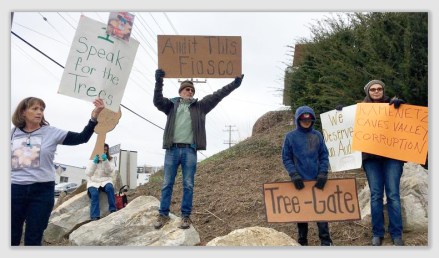 The Baltimore County Council will discuss at a work session on Tuesday whether to lower the sale price for a county-owned property in Towson that’s the site of a controversial redevelopment plan. The property at the corner of York Road and Bosley Avenue had housed a fire station and public works facility, but County Executive Kevin Kamenetz decided to put it up for sale in 2012. The winning bid was from Towson-based developer Caves Valley Partners, which offered $8.3 million to buy the land and turn it into a commercial development with one-story retail shops and a Royal Farms gas station and convenience store. After years of protest from neighbors, Caves Valley agreed to drop the convenience store and gas station but sought to renegotiate the sale price… The Kamenetz administration estimates it has spent nearly $170,000 readying the property for sale, including relocating fiber optic cables, commissioning appraisals, demolishing structures and removing trees. The county also spent $7.6 million to build a new fire station elsewhere in Towson. The tree removal last April angered some neighbors who said it was in violation of a resolution governing development at the site that was in effect at the time. Last week, dozens of demonstrators marked the anniversary of the felling of the trees — which they dubbed “tree-gate” — by chanting and waving signs at rush hour…
Berea City Councilcould amend its codified ordinances by adding problematic or dangerous trees to the list of private property nuisance conditions for which the city can take action. Director of Law and Public Safety Barb Jones told council members April 2 that the amendments have everything to do with resident safety. “Our ordinances as they exist today do not give the city any jurisdiction over trees on private property unless they are hanging over a public right-of-way or obstruct a view of traffic,” Jones explained. “Based on the express desire to take a look at trees that pose a safety risk to others, we looked at amending our ordinance to include private property trees…”
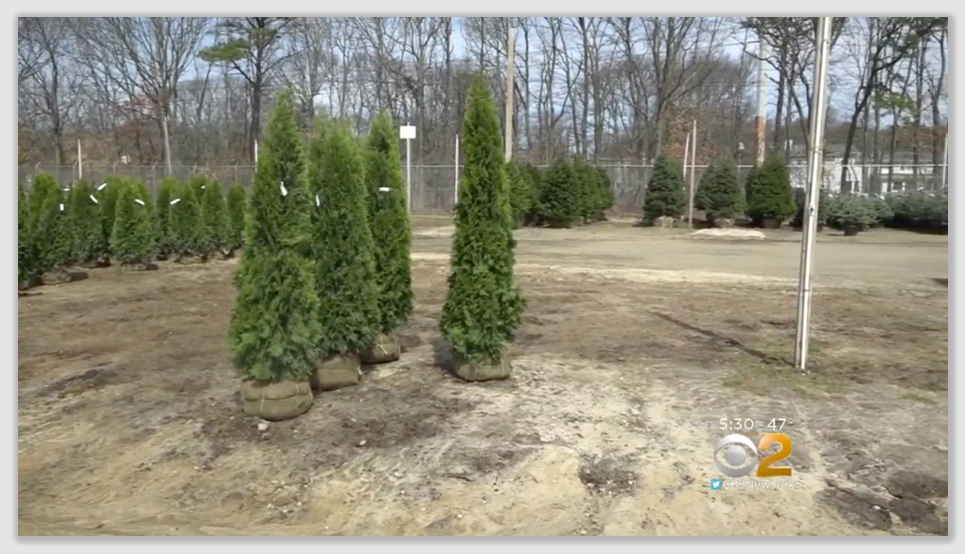 New York City, WCBS-TV, April 9, 2018: $10,000 worth of trees stolen from Suffolk County nursery
They took eight years to grow, but just a couple hours to steal. Police are trying to figure out who pilfered roughly 100 trees from a nursery in Suffolk County, CBS2’s John Dias reported Monday. At some point over the weekend, thieves broke through the fence at Cheap Sam’s in Holtsville and used a pick-up truck or another large vehicle to rob the establishment of $10,000 worth of Thuja Emerald Green Trees, Dias reported. They left just four behind. Manager Santiago Rivera says the thieves cut a hole through their fence and backed up a large truck, driving right onto and through their property. Workers believe they scoped out the area before. “Maybe they have a big job or something and sell them to somebody,” Rivera said. Office Manager Frank Bottone says the thieves hurt their bottom line while business was already struggling. “They came and took them probably at the worst time,” he said. “We had a rough go at it. The spring to begin with, it’s been cold…”
For nearly 30 years, researchers at the State University of New York College of Environmental Science and Forestry have been studying the disease that wiped out four billion American chestnut trees in the 1900s, in hopes of reestablishing the population of the majestic tree with the help of modern science. A century ago, one out of four trees in heavily populated areas of the East Coast were American chestnut trees. But the chestnut population from northern Georgia to Maine was decimated by a destructive pathogenic fungus identified in 1904 thought to have arrived with the importation of Chinese chestnut trees. “It was a very important tree to our history, to the economy in the past,” said SUNY ESF professor William Powell, co-founder of the American Chestnut Research and Restoration Project. Powell’s team first worked to identify the genome that could protect the historically significant trees from blight. Next came the first plantings of genetically modified seeds; now the team is seeking for approvals from the federal government and preparing to distribute 10,000 blight-resistant American chestnut trees to jump start the effort to restore the tree to its native range in North America…
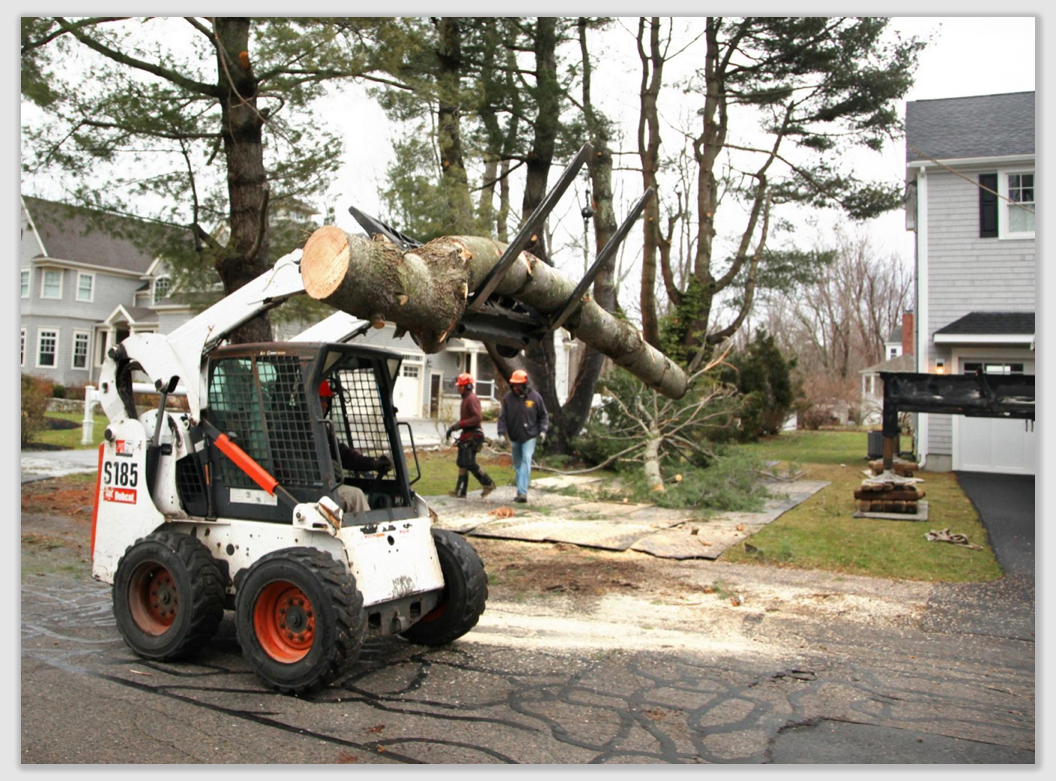
The calls, as many 100 to 150 each day, started coming in as soon as the snow started falling on March 3. “It starts on Monday and goes through till Sunday. The phone just never stops ringing,” Chris Glynn, owner of Glynn’s Tree Experts in Hanover, said. “It could be ten more before you return a few calls.” The March 3 winter storm that kicked off a month of bad weather brought flooding, extensive power outages and snow. Downed trees across the East Coast knocked out power lines and were responsible for multiple deaths, including a Plympton man who was driving when a tree fell on his truck. Coastal communities such as those on the South Shore were some of the hardest hit due to flooding and high winds. Glynn said the number of tree removal calls he receives have finally started to taper off a bit after more than a month, but his company is still reeling from the aftermath of March’s four nor’easters. Glynn said he has only had one day off since February 28…
Recently our City of Edmonds horticulturist Debra Dill shared the names of some of her favorite trees. She also let us know about some trees to avoid. I am hoping some My Edmonds News readers may have these trees growing in their gardens and would be willing to have me take a picture. Or perhaps you have pictures of your trees. The trees include Zelkova serrata (“City Sprite”), Koelreuteria paniculata (”Coral Sun”), and Parrotia persica (”Persian Spire”)…
April might bring showers and May flowers, but it also brings bloom to some of Ohio’s native trees. If a tree also has four-season interest, it’s certainly one to consider for the home landscape. Such a tree is Amelanchier laevis, the Allegheny serviceberry. There are about 25 species of Amelanchier worldwide. Of those, 20 are found in the United States, with at least one native to every state except Hawaii. There’s much folklore about the common names for them in this country. Depending on where they grow, they may be called serviceberry, Juneberry, shadbush or shadblow. Serviceberry goes back to when winter travel was difficult, and weddings, baptisms and memorial services were delayed until spring. Serviceberry’s flowers marked the time when circuit-riding preachers could begin their rounds again and perform these ceremonies. Another idea is that the flowers marked when the ground had thawed and graves could be dug…
Cincinnati, Ohio, WKRC Radio, April 8, 2018: How trees coexist
The local environment of a tree strongly determines its productivity, meaning that tree individuals growing in a species-rich neighborhood produce more wood than those surrounded by neighbors of the same species. “Particularly impressive is the finding that the interrelations of a tree with its immediate neighbors induce higher productivity of the entire tree community (i.e. the forest stand), and that such local neighborhood interactions explain more than 50% of the total forest stand productivity,” says forest ecologist Dr. Andreas Fichtner. The importance of local neighborhood interactions in regulating forest stand productivity increases as forest stands were richer in tree species. These findings show that the coexistence of neighboring trees and their small-scale interactions are substantial in explaining the productivity of species-rich mixed forests…
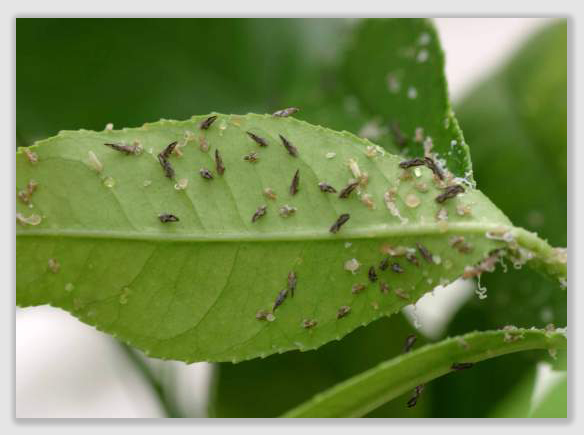 Santa Ana, California, New Santa Ana, April 5, 2018: Deadly citrus tree disease found in Santa Ana
An incurable plant disease called Huanglongbing (HLB) that infects and kills all types of citrus trees has been found in residential citrus trees in Santa Ana. HLB has no cure and is spread by a small pest called the Asian citrus psyllid as it feeds on leaves and stems of citrus trees. Once a tree is infected, it will die and must be removed. The best way to protect citrus trees from the disease is to prevent the spread of the psyllid. California homeowners – 60 percent of whom own citrus trees – play an important role in protecting citrus in our state and are being asked to protect their backyard trees by searching for signs of the pest and disease. To prevent the spread of the Asian citrus psyllid and protect citrus trees from HLB, citrus tree owners in Santa Ana should follow these tips…
Montgomery, Alabama, Advertiser, April 5, 2018: Coke Ellington: Tree lover now has reservations
I grew up in a pine forest and loved trees long before I ever heard the term “tree-hugger.” My father borrowed money from his grandfather to buy some acreage near Moultrie, Georgia, before he was married. He had a wife and three children when he eventually moved there. One brother and I were born there as numbers four and five. The family home was built on one corner the property and the rest became Pine Valley subdivision. I had hiked and camped on the property before many houses were built. When my and I wife moved to our current home in 2007, there were two dominant trees on the small lot, a mature Bradford pear tree in the front yard and a large hackberry tree in the back. May 2009 added the weather term “derecho” to our vocabulary. Derechos are straight-line winds of 58 mph or more. Tree surgery from a bucket truck was required to remove a large hackberry limb that the wind bent back toward the trunk. At the tree surgeon’s instruction I filled some hollow spots at the trunk with material from an aerosol can…
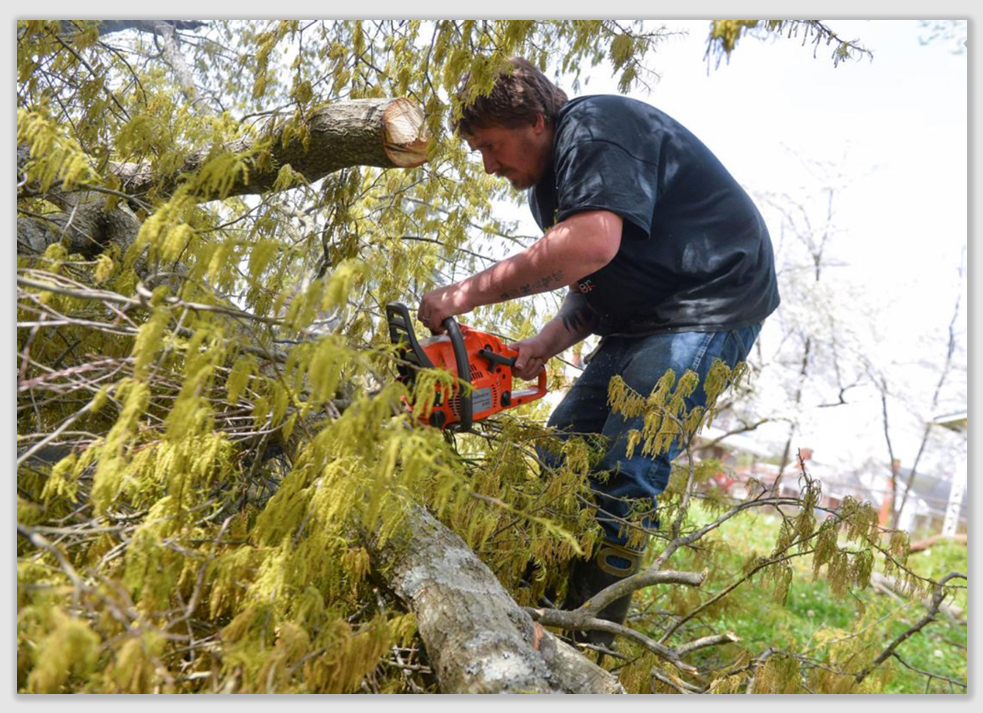
Homeowners who have large toppled trees cut into smaller portions and set on the curb may be in violation of city code, a Decatur official said. Rickey Terry, street and environmental services director, said homeowners should be prepared to pay a contractor to cut the trees and haul the debris off. He said the city code for curbside pickup by city crews is for the trees to be a maximum of 5 feet in length and “about 4 to 5 inches in diameter. The residents need to hire a licensed contractor to cut the tree and haul it to the county landfill,” Terry said. “If the tree parts they set on the curb are too big, we’ll try to talk to the homeowner or the people living at the house. But they must understand we will not pick up anything out of code.” He said licensed contractors should know the code. He said city crews will know the homeowner didn’t hire a licensed contractor if large cut portions of a downed tree are on the curb waiting for pickup…
White Bear Lake, Minnesota, North Oaks News, April 5, 2018: Learn to help your trees thrive
For over 20 years I have been working with homeowners to protect their trees (their investment). Trees continue to increase property values and are worth the investment. In this article I will share some of what I have learned and continue to learn. Mark Stennes taught me that trees are either thriving or declining. I had never thought of it that way, but it is true. We are seeing many evergreens, especially pine and spruce in decline due to the range of temperatures we have had the last few years. When we have mild temperatures in the winter, the evergreens think it is time to come out of dormancy; freezing temperatures can come again causing small points of frost injury. The declining tree then allows insects and diseases to take hold because the tree doesn’t have enough energy to defend itself. Depending on the amount of decline, we can sometimes help the trees recover; however, it is best to help prevent the decline before it begins. Trees have stored energy. They don’t react quickly to stress or damage. For example, it can take 12-36 months for a mature tree to show decline from root damage…
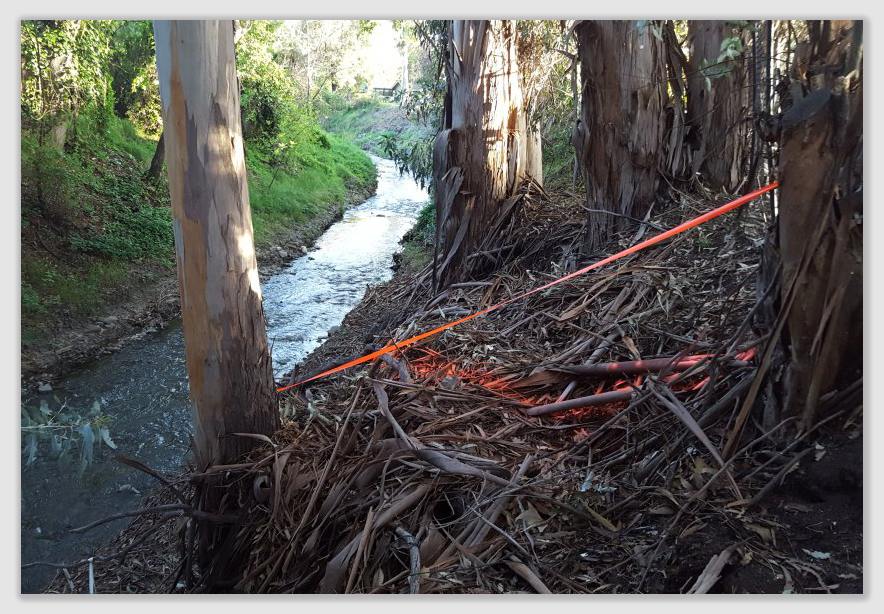
Weakened by drought, as many as 30 eucalyptus trees along Saratoga Creek are being cut down over the next few weeks because they pose a public safety hazard. “The drought allowed pathogens and pests like beetles to take hold in the trees,” said John Chapman, arborist for the Santa Clara Valley Water District in charge of the tree removal project. “Their canopies are starting to die out and a couple have fungi, which is indicative of root disease.” Chapman is overseeing the project between Cox Avenue and Prospect Road. He said the area is difficult to maintain because it’s “landlocked” by private properties. He also described the work area as ‘sensitive’. “Working in a creek environment is tough — we can’t muddy the water and we have to avoid nesting birds,” Chapman said. “We’ve had biologists out there who have identified bird nesting areas and we can’t knock down active nests. Our contractors know to contact us if they have any wildlife concerns.” Nearby residents aren’t opposed to removing the trees, Chapman said, but are concerned about wildlife…
Warrensburg, Missouri, Daily Star-Journal, April 4, 2018: What to do with ‘trash trees”
I’m going to assume that most of the folks who read this column on a regular basis are gardeners. You know, “workers of the earth,” and, as such, have at one time or another planted a tree or two. Here’s another thing I’m going to assume, everybody has an opinion. Well, what does being a gardener and having an opinion have to do with this month’s article? Simple. I’m going to list my top five “trash trees” and if you have one that didn’t make the list, I’m hoping you’ll let me know. With no particular order – they’re all terrible trees – Black Walnut gets to go first. Besides poisoning the surrounding ground to limit plant competition; the fall crop of ball bearings can seriously ruin your day. Don’t plant this tree anywhere close to your house – you’ll regret it. On the other hand, if you have tons of acreage, planting walnut for a cash crop is not a bad idea. Have you ever seen the marvelous Mimosa tree in full pink bloom? Awesome, right? You have been blessed beyond measure for having seen the only redeeming characteristic of this weed…
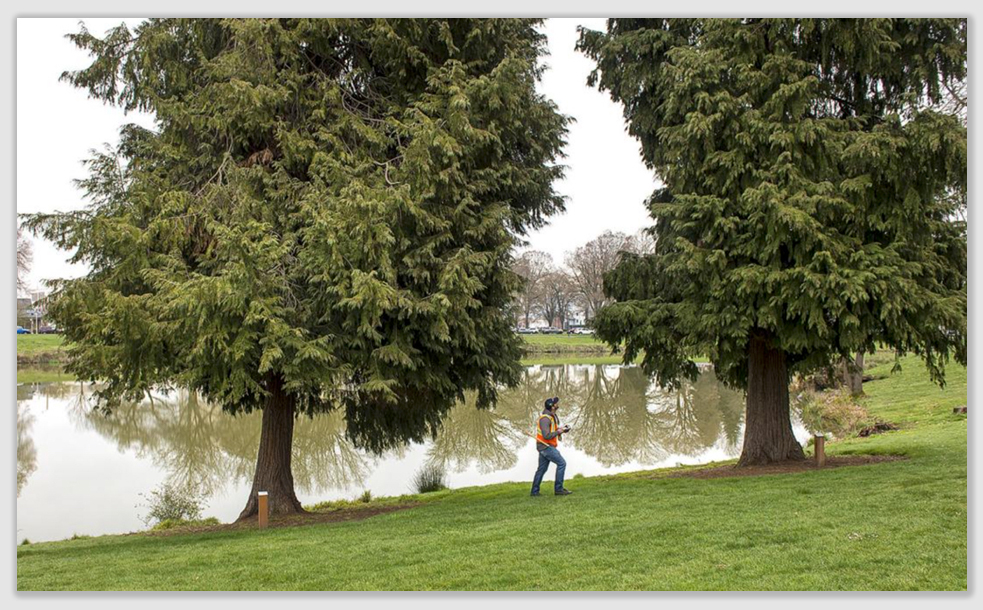
The City of Longview is proud of its designation as a Tree City USA. But a comprehensive survey of the city’s 14,000 trees is nearly 30 years old. For the next couple months, the city will pay Colorado-based contractor Plan-It Geo LLC $68,000 to examine and record the type, condition, size, location, health and potential hazards for each city tree, whether it be in a park, median or parking strip. “It will be nice to have (an inventory) that is accurate, up to date and valid,” Longview arborist Curt Nedved said Monday. “There’s plenty of mistakes in the current inventory.” Longview has been designated a Tree City USA for 33 years thanks to its dedication to maintaining an urban forest, which city officials say makes the air cleaner, provides shade, blocks winds, increases property values and absorbs storm water runoff. But the last time the city conducted a comprehensive survey of its trees was in 1990…
Winston-Salem, North Carolina, Journal, April 4, 2018: Does Duke Energy clear trees they cut?
Q: I live in Yadkin County in a private neighborhood. Duke Energy trimmed an entire path of trees on a neighbor’s property and left all the debris which looks terrible. Several months have passed, and the mess is still there. Is Duke Energy required to clean up the cut limbs?
A: Duke Energy will remove smaller pieces of wood or debris, but leaves the bigger pieces for homeowners to dispose of. “In maintained or landscape settings, our policy is to chip and haul off limbs and brush,” said Jimmy Flythe, a spokesman for Duke Energy Carolinas. Larger pieces of wood, typically larger than 6 inches in diameter, are cut into 24-to-36-inch logs and left for the property owner. The property owner can also request larger sections of wood, according to Flythe. “The crew supervisor will discuss leaving wood with the property owner before work is performed,” he said. “In non-landscaped sites, pruned vegetation and wood are left in place to biodegrade…”
 Atlantic, April 3, 2018: Scientists still can’t decide how to define a tree
Several years ago, after Thanksgiving dinner at my parents’ house in Vermont, lightning struck a backyard maple tree. There was a ferocious crack and the darkness outside the kitchen windows briefly turned day-bright. It wasn’t until spring that we knew for certain the tree was dead. This maple was a youngster, its trunk the diameter of a salad plate. Were its life not cut short by catastrophe, the tree might have lived 300 years. But death by disaster is surprisingly common in trees. Sometimes it results from a tragic human blunder, as with the 3,500-year-old Florida bald cypress that was killed in 2012 by an intentionally lit fire. More often, calamity strikes via extreme weather—drought, wind, fire, or ice. Of course, trees also are susceptible to pests and disease; adversaries like wood-decaying fungi can significantly shorten a tree’s life. But the ones that manage to evade such foes can live for an incredibly long time. If one is pressed to describe what makes a tree a tree, long life is right up there with wood and height. While many plants have a predictably limited life span (what scientists call programmed senescence), trees don’t, and many persist for centuries. In fact, that trait—indefinite growth—could be science’s tidiest demarcation of tree-ness, even more than woodiness. Yet it’s only helpful to a point. We think we know what trees are, but they slip through the fingers when we try to define them…
The Trump tax cuts are expected to generate $14 million in savings to NorthWestern Energy, which is proposing giving a portion of the money to customers, while spending the rest on tree trimming. The tax savings stem from the Republican Tax Cuts and Jobs Act, which Congress passed in December and was signed into law by President Donald Trump. Federal corporate tax rates fell from 35 percent to 21 percent. NorthWestern is proposing that its natural gas customers receive direct refunds for the entire $3.154 million in tax breaks associated with the utility’s natural gas business. The company’s electric customers would receive half of the $10.8 million in tax breaks associated with NorthWestern’s electric business. Half the money would be spent removing hazard trees that pose a fire or outage risk…
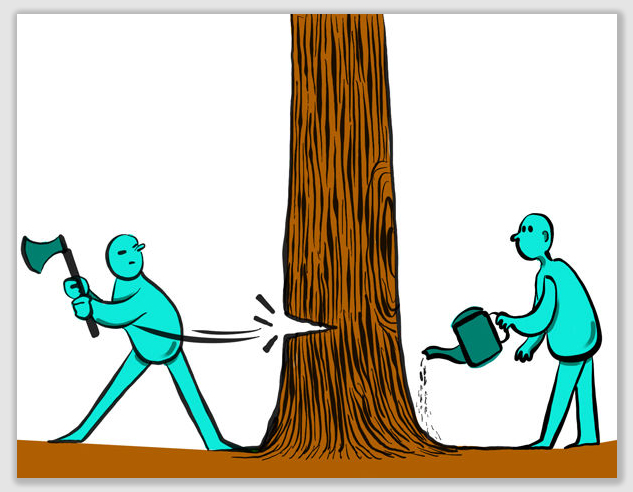
Researchers at the University of Nebraska-Lincoln found the spread of eastern red cedar trees in Nebraska will continue due to a contradiction between policy and science, according to a Nebraska Today article. Eastern red cedars have been identified as one of the major natural threats to resources by the Nebraska Invasive Species Advisory Council, according to the article. Yet state and federal agencies have promoted the tree by planting over 300,000 trees annually since 2001, while simultaneously providing financial incentives to remove the trees. “We know red cedar causes a lot of problems,” Caleb Roberts, an applied ecology graduate student at UNL, said in the article. . . “But our management hasn’t caught up with it.” According to Roberts, lead author on the study published in the Public Library of Science One journal, science and policy have not yet identified how to handle the species of trees because it is valuable in some places, but invasive in others. Eastern red cedars serve well as a windbreak, but when left unmanaged, they can overtake and wipe out entire grassland areas, remove wildlife habitats and increase wildfire risk…
Forests News, April 4, 2018: Agroforestry: Why don’t farmers plant more trees?
In communities around the world, agroforestry – which involves growing trees among or around food crops – has been a proven method for farmers to cultivate more diverse, productive and profitable crops. What’s more, it helps protect the environment by preventing soil erosion and reducing reliance on forests. As such, agroforestry can make a key contribution to the UN’s Zero Hunger Challenge, which aims to end global hunger, eliminate malnutrition and build sustainable food systems. Feeding into this larger challenge, agroforestry can particularly help achieve the Sustainable Development Goals’ bid to double small-scale farmer food production by 2030. Agroforestry provides a number of benefits for smallholder tree farmers, ranging from financial to socio-economical and ecological too…
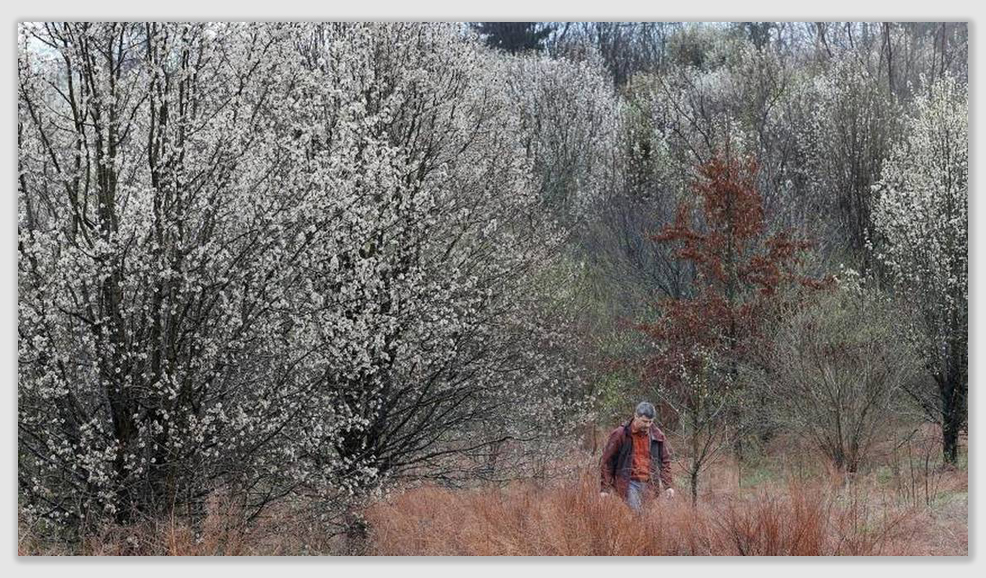
To have lived in the ‘80s and ‘90s was to see the heyday of the ornamental pear tree. The beauteous trees erupted each spring in a cloud of white puff. The trees grew in the poor soil upon which many quickly constructed housing developments were built. They were cheap and easily available at big-box stores Pear trees were also notoriously weak-wooded, splintering in wind. In 2008, Lexington recommended that homeowners plant other, stronger street trees more in accordance with Kentucky’s climate. But the pear trees, although out of favor, would not pack up. Their seeds were easily carried by birds, and the trees, now considered invasive, are all over central Kentucky. Now they’re considered up there with invasive botanical pests such as honeysuckle and kudzu…
Over 100,000 trees have been removed in Tuolumne County over the past few years related to the tree mortality epidemic. On Mother Lode Views over the weekend, Assistant County Administrator Tracie Riggs broke down the numbers, noting that Tuolumne County government has been involved in directly removing 5,000 trees. In addition, “Our partner PG&E has removed well over 80,000 trees in Tuolumne County, which is a huge number. Caltrans has removed well over 25,000. When you look at it cumulatively, we have removed 100,000 to 150,000 trees in Tuolumne County.” She adds, “The pilot project for the state of California happened here, it was Leisure Pines. We did that in partnership with CAL OES and CAL Fire. We brought the entire state task force in, and had state department heads, and they were able to watch trees be removed and see the impacts on homeowners and their safety…”
 Palm Beach Florida, WPBF-TV, April 2, 2018: City to remove invasive trees in West Palm Beach
The city of West Palm Beach is gearing up to start removing Australian Pines west of I-95 in West Palm Beach. Crews are expected to start taking out the invasive trees in three spots along Brandywine Road, in the Village neighborhood. City officials presented the plans to residents back in November. Records show the $800,000 project will replace the pines with native vegetation like palm trees and sea grapes. City officials say the work will bring-in construction vehicles and could impact traffic…
Neighbors are upset with the city of Albuquerque because they believe the city is wrongfully trying to remove all 33 elm trees on Laguna Boulevard. “Give us a more reasonable plan for replacing these trees that won’t destroy the character of this neighborhood,” said Janet Lipham, who lives in the neighborhood. Janet Lipham is one of many people who live in the Huning Castle neighborhood near Central Avenue and Laguna Boulevard who are fighting to keep dozens of decades-old elm trees in their street’s median. Paul Reardon is another. “I think it would change the feel of this neighborhood. I think events like Run for the Zoo [and the] Duke City Marathon would have a whole different feel,” said Reardon. Laguna Boulevard is known and loved for the vast canopy the elm trees create. About two weeks ago, the City of Albuquerque told neighbors they had to remove nine trees because they were a safety hazard, citing termite and wind damage…
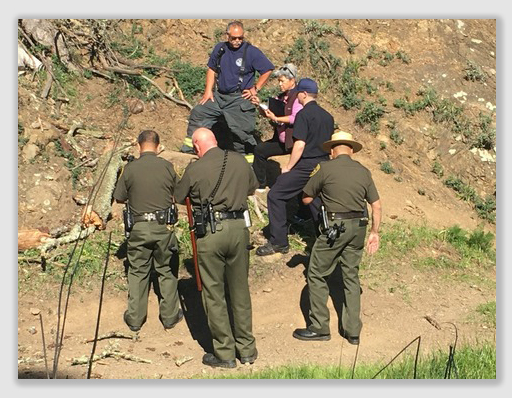
San Francisco firefighters rescued an elderly man Sunday afternoon after a tree reportedly fell on him in John McLaren Park. The man called 911 and said he was trapped underneath a fallen tree at about 3 p.m. Firefighters did not know his location but found him soon after. The man had serious injuries, according to San Francisco fire, and he was taken to the hospital at about 4 p.m. but was released after a few hours. The man was sitting under a tree, listening to music, when he was hit. Park Rangers spent several hours investigating the scene, but have not made their findings public. Some hikers in the area believe the fallen branch does not put them at risk, the accident wasn’t enough to deter their Sunday evening hike…
St. Louis, Missouri, KPLR-TV, April 1, 2018: Local apple trees ready for warmer weather
The apple trees at Hermans Farm Orchard in St. Charles County are ready to take off, according to longtime owner Tom Goeke. He described his trees as having a winter clock that’s running out of time. “What’s going to happen this year is once that ground temperatures hits about 50 degrees these things are going to explode,” Goeke said. He said the quick budding will be a challenge for his spraying season because it will be condensed. Different sprays are used during different times of the budding process. Sprays that have the best results when spread out over time could end up interacting with each other because of the condensed schedule. “You could actually lose some of your bud crop or all of it, so we have to be really careful,” said Goeke. He said another factor this year has been a lack of sun recently. Cloudy conditions have kept some of his tomato plants growing inside a hothouse from looking their best…
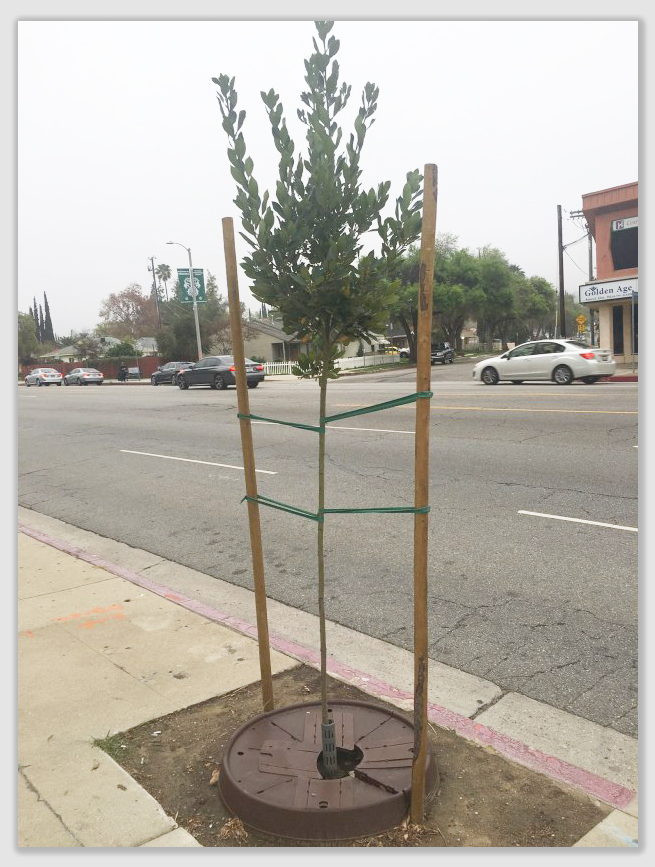
Newly planted trees need a steady supply of water and this reality presents a special challenge when the trees in question are planted in parkways along city streets. In Los Angeles, the concrete parkway sidewalks and asphalt streets that border or surround such trees reflect light and radiate heat onto the freshly planted trees, causing them considerable heat stress. It appears, however, that a solution for this dilemma is at hand. Just the other day, driving west on Ventura Boulevard in Tarzana, as I approached Reseda Boulevard, I noticed brown plastic doughnuts encircling young parkway trees to my right. Upon closer inspection, I saw that “treepans.com” was stamped on the doughnuts. I contacted the company through the website and was informed by Ben Brown that these TreePans, as they are called, had been installed by the Los Angeles Conservation Corps. Brown also expanded on their purpose. “Water that evaporates from the soil around the tree condenses on the underside of the top of the tree pan,” he explained, “and then drips back onto the soil. This keeps the ground moist and serves the same function as mulch in preventing evaporative water loss from the soil…”
Tulsa, Oklahoma, Tulsa World, March 31, 2018: White flowering Bradford pear trees have dark side
Q: What are these beautiful trees I am seeing all over town with the white blossoms? TP
A: You are probably referring to the Bradford pear. While they are beautiful and quite popular, they have a dark side. But first, let’s talk about what they are and how they got here. The Bradford Pear (Pyrus calleryana “Bradford”) was first introduced to the United States in the early 1900s as a way to help control fire blight of the common pear. By the ’80s, it had become the second-most popular tree in America, primarily as an ornamental tree. The Bradford grows rapidly (12- to 15-foot increase in height over an 8- to 10-year period), to a height of 30 to 50 feet tall and 20-30 feet wide with a short to moderate life span of 15 to 25 years (less if we get an ice storm). Most people are attracted to the Bradford Pear for its showy white flowers that appear in spring. The flowers are beautiful but, unfortunately, have an unpleasant fragrance. Early spring flowering can last two weeks, but late frosts may reduce bloom time. Sounds like a great tree. Well, that’s what many of us thought until we got to know its dark side. Although the Bradford pear was originally bred to be sterile and thornless, they easily cross-pollinate and produce fruit. These fruits are like tiny, hard apples, round, ½-inch in diameter, greenish-yellow flecked with whitish spots, inedible, with 2-4 black seeds. After it freezes in the fall, the fruit softens and becomes palatable to birds that help spread the tree…
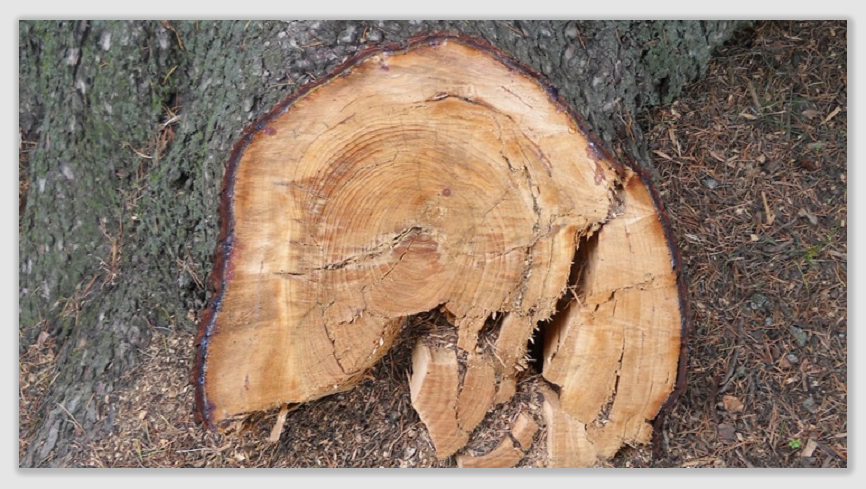
On Monday, the Pasadena City Council stopped short of amending an existing ordinance to increase fees, fines and penalties associated with injuring or damaging protected trees without notice or permits. Instead, it was pulled and sent back for revision, according to a city spokesperson. The deliberations over ratcheting up penalties have come in the wake of incidents in which developers have destroyed or injured protected trees, the most ironic of which, perhaps, was the destruction of two 35-feet-tall Canary Palm trees that once towered side-by-side over Twin Palms restaurant at the corner of South DeLacey Avenue and West Green Street in 2016. The amendment now includes increased civil penalties and allows the city to recover financial losses that result from violations. It would authorize the city manager to “prepare and update tree protection guidelines and the tree replacement matrix.” The existing ordinance provides for such offenses to be misdemeanors or infractions with fines set by the state—$1,000 or six months in jail or $250, respectively. Pasadena has fines and other costs it can — and does — impose on violators, but the report does not specify how much those fines currently are or if they will be raised…
Residents of Sterling Place in this town of Lloyd hamlet were surprised and outraged Thursday by the discovery that the town Highway Department was cutting down trees that lined their street. Eric Walter said he heard the sounds of chain saws as he started his day. “I thought they were trimming trees,” Walter said. “I looked out the door and there was four trees gone.” “They came like a herd of locusts and just started cutting,” said Karen D’Aprix, a Sterling Place resident who said she rushed home from work and parked her car under a tree outside her townhouse to protect it from highway workers. As word spread that the town was cutting down the Bradford pear trees that line Sterling Place, more residents of the Bridgeview townhouse complex, which is just west of the Mid-Hudson Bridge, began taking to the streets, parking their cars under the trees and confronting workers…
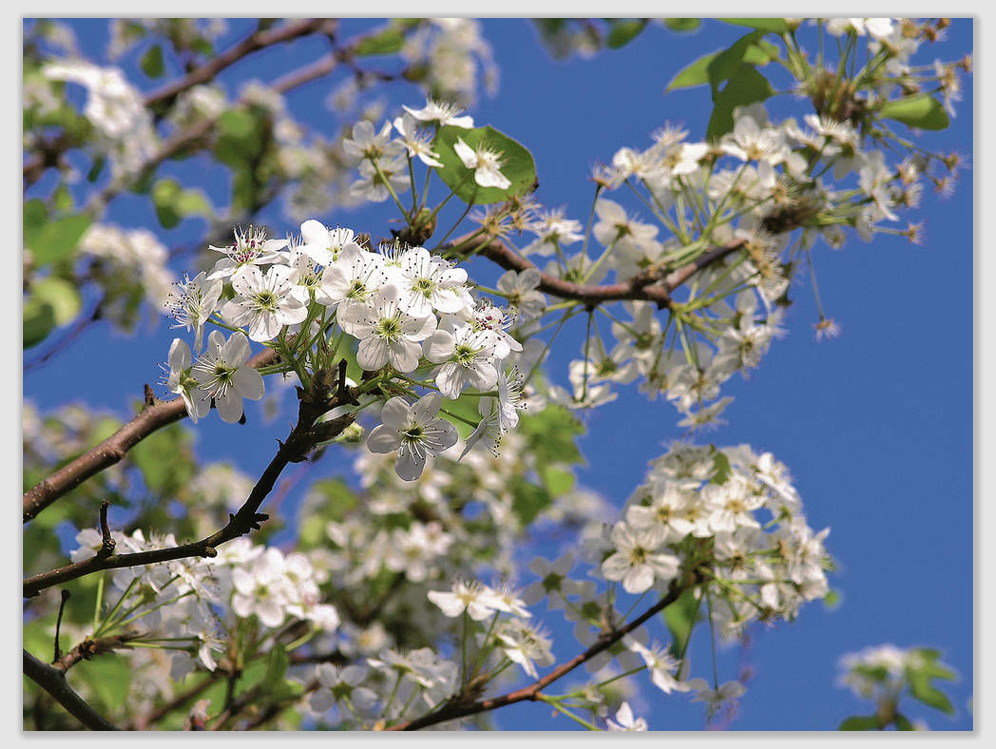 Santa Fe, New Mexico, The New Mexican, March 29, 2018: Time to prune fruit trees and shrubs
There’s nothing prettier in the spring than Santa Fe’s bountiful fruit trees in bloom. The landscape gets painted in pastels and jewel tones as the town prepares for an exciting new season filled with visitors and fun outdoor activities. Living in Northern New Mexico has its own reality, however, and hard frosts are still possible for another few months. Each year, gardeners and farmers alike pray for a gentle spring, one where their prized fruit trees escape the treacheries of harsh freezes that have disastrous effects on the fruit. So, we keep our fingers crossed, hoping this spring will be a warmer one filled with much-needed precipitation that our mercurial winter so lacked. How nice it would be to enjoy the view and have the opportunity to eat good fruit later in the season. One thing we can do to help our fruit trees is to prune them this month. This is very important, especially for young trees. Pruning helps establish thick stems, opens up a canopy for light to promote flowering and minimizes the rubbing or crossing of branches. The goal of a fruit tree’s first few years is to survive and establish in order to maximize root growth for uptake of water and nutrients. Fruit trees often do not produce fruit for several years until their root system is established, so caring for your tree early on is the best way to ensure future health and production…
Galveston, Texas, News, March 29, 2018: Residents accuse CenterPoint of over-trimming trees
Some residents in tree-centric Galveston are upset about how CenterPoint Energy cut large oak trees surrounding the historic Menard House, 1605 33rd St. The trees look unusually thin and crews were sloppy about how they trimmed them, Alice Watford said. “They are cutting out massive amounts of branches within the middle of the oak trees,” she said. You can see the middle of the trees. It’s absolutely unbelievable how much they are taking out of the middle.” While tree trimming trees is a sensitive issue, it’s necessary for public safety, CenterPoint Energy spokeswoman Alicia Dixon said. “The single largest cause of power outages results from trees contacting power lines, so CenterPoint Energy trims trees away from power lines to help maintain reliable electric service,” she said. “We understand people may be surprised by the appearance of the trees after we trimmed them. We’re sorry for any disappointment it may cause, but our trimming decisions are made in the best interest of the community and the trees…”
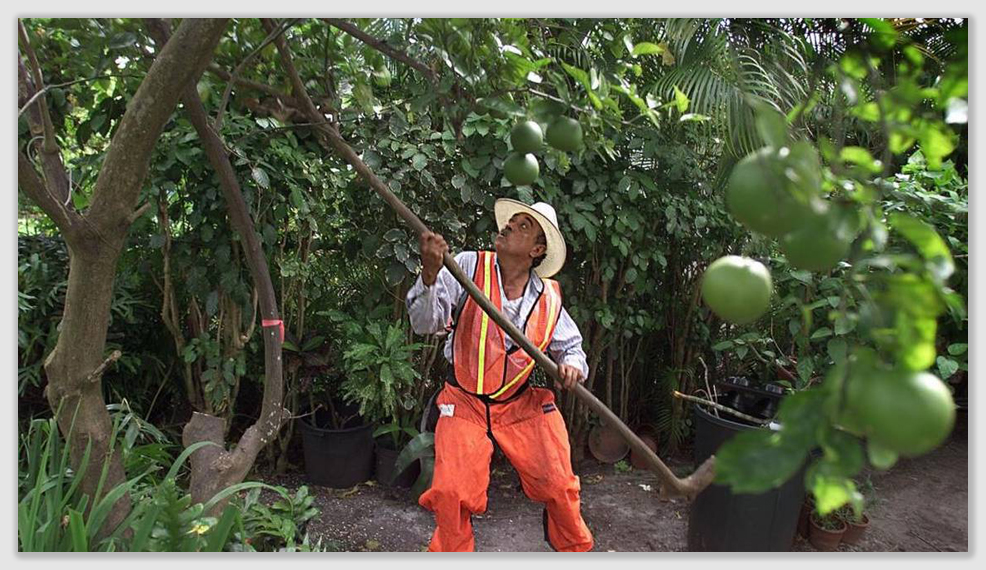
Agriculture Commissioner Adam Putnam, the front-running Republican candidate for governor, faces a court order to pay millions of dollars in damages to 12,000 homeowners in southwest Florida whose citrus trees were confiscated and destroyed under Florida’s citrus canker eradication program. If Putnam doesn’t pay the Lee County homeowners after 15 years of litigation, a judge is ordering that homeowners can force Putnam to make a list of state assets he must sell to pay damages and legal fees that now total nearly $17 million. Every day the case drags on, the interest owed by taxpayers goes up by another $2,199. In a scathing decision, Circuit Judge Keith Kyle in Fort Myers criticized Putnam for “rationalizations and excuses” that are “without merit and wholly unacceptable…”
The Federal Energy Regulatory Commission Wednesday denied the resumption of tree felling operations for the Atlantic Coast Pipeline. Builders of the pipeline had asked to resume tree felling until May 15. But a letter to a Dominion Energy official on Wednesday indicated concerns about potential impact on migratory bird species and threatened and endangered species. Despite the ruling, Aaron Ruby, a spokesman for Dominion Energy and the Atlantic Coast Pipeline, said there is a way to start pipeline construction once FERC gives its final approval for the project. “We have a path forward to begin construction this spring and complete the project by the end of 2019,” Ruby said in a statement. “As of today, we’ve completed tree felling on more than 200 miles of the 600-mile route. While that’s less than we planned for this year, we will have a productive construction season…”
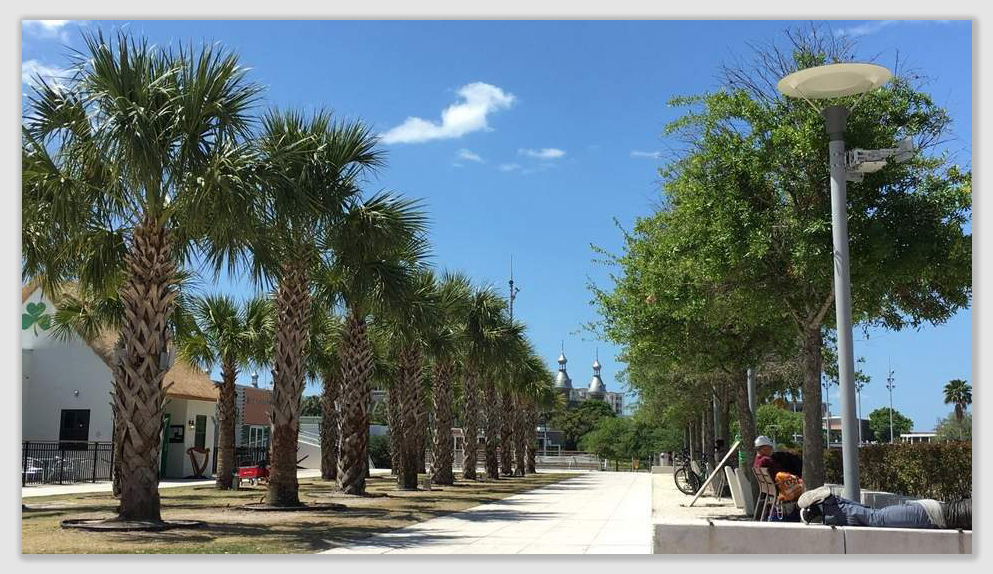
In 1972, one of Joe Chillura’s first acts as a city council member was to draft an ordinance aimed at turning downtown Tampa more green. Now, some 46 years later, that tree ordinance has helped Tampa garner worldwide recognition as the best tree city on Earth, according to a study by the website Treepedia. Treepedia, run from an MIT lab, uses Google Street View data to measure and compare the green canopy in cities around the world, according to its website. Treepedia recently announced Tampa has the best green canopy of all the 27 cities ranked. Chillura, an architect who was the mastermind behind the ordinance to make Tampa more green, said he was thrilled to learn about the ranking. “I was elated. Not so proud that I wrote the ordinance, but proud that the community got behind it and made it happen,” Chillura said. “This is something that can’t happen without community support…
Muncie, Indiana, Star-Press, March 28, 2018: How soon will the trees bud this spring?
Some early signs of spring such as the sight of robins returning to the yard or the sound of frogs chirping in the woods are obvious and welcome. Other signs like the swelling tree buds are more subtle. We usually notice them first with itchy eyes or a dripping nose. Wildlife survives winter by migrating, hibernating or toughing it out. Trees, however, go dormant, a process triggered in the fall by decreasing daylight. Leaves drop, branches harden off and the flow of water and sugars subsides. A midwinter warm spell does not wake the tree from dormancy. The tree waits until it has experienced a sufficient number of chilling hours and then forcing (or warming) hours before beginning the process of waking from dormancy. The timing is different for each tree species. These environmental cues, chilling and forcing, alter the balance of hormones that keep a tree dormant or signals growth. This evolutionary process helps a tree to take advantage of favorable spring growing conditions while avoiding tissue damage from late frosts…
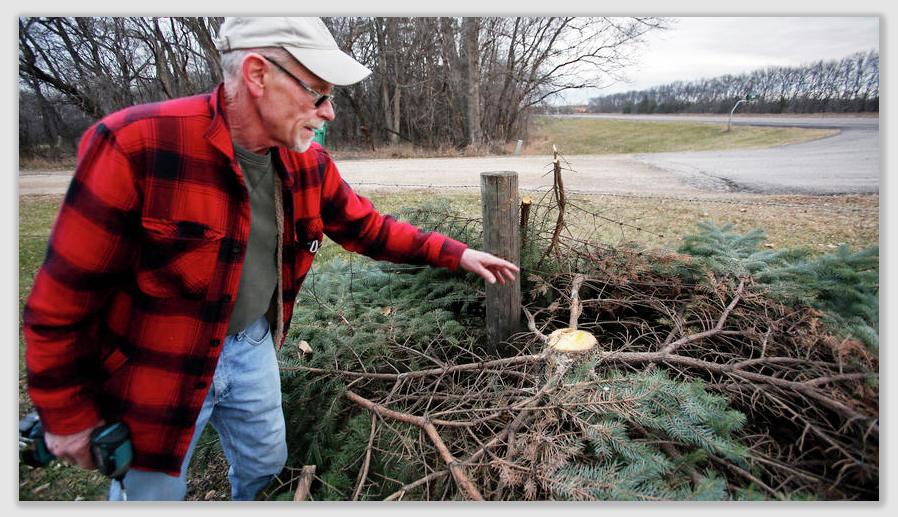
It was four weeks before Christmas. Three young men equipped with a saw blade went out in north Fargo in the middle of the night and, like the Grinch, took a sentimental tree, newly filed court documents say. Paul Vogel reported the theft, but took the law into his own hands. “I had my suspicion of where it might be,” he said. “When somebody does something like that to you, you feel really violated.” Vogel, 65, said he now has some closure since the three men were each charged Tuesday, March 27, in Cass County District Court with conspiracy to commit criminal mischief, a Class A misdemeanor. Benjamin Shepherd, 20, and Brett Braseth, 19, of Fargo and Kyle Braaten, 19, of Portland, N.D., are all charged as co-conspirators by willfully damaging a tree belonging to Vogel and recklessly causing loss in excess of $2,000 or intentionally causing a loss more than $100…
The City of Fort Myers beautification advisory board voted Tuesday afternoon not to remove a tree in Snell Family Park. Controversy began after the city discussed cutting down the 100-year-old ficus tree in 2017 to make way for a new home to be built on the land. Fort Myers resident Karen Cooper held a ceremony Saturday to marry the tree in an attempt to protect and preserve it. “I told other people if they cut this tree down, then I’m going to be a widow,” Cooper said…

Concerned citizens in Towson area planning what they are calling a “Treegate Anniversary Protest Rally.” The event will draw attention to Baltimore County’s removal of 30 mature trees at the corner of York Road and Bosley Avenue in 2017. Protesters plan to chant and vow “Never again,” regarding the removal of the trees from the site of the controversial Towson Gateway project, where Baltimore County broke its agreement to preserve the trees until construction began. Caves Valley Partners had planned to purchase the property, where the old fire station was, and build a Royal Farms gas station there. However, the property had to be rezoned for such a use, and community members rallied against the change, which they said would generate more traffic than the area could handle. Citizens said that the county removed the trees in April 2017 at taxpayers’ expense to benefit a developer…
As part of its effort to reduce wildfire risks, Pacific Gas and Electric Company (PG&E) customers in some areas will see increased work to prune or remove trees, as well as reduce vegetation and brush near and under PG&E power lines. This work is being done to enhance fire safety, as a precautionary measure intended to reduce the risk of wildfires and to comply with new state regulations in high fire-threat areas. New fire-safety regulations, adopted by the California Public Utilities Commission (CPUC)in December 2017, require utilities to maintain greater minimum vegetation clearances to increase the safety of overhead power lines in high fire-threat areas. The new standard requires 4 feet minimum distance between trees and power lines in these areas year-round, where previously this was required only during fire season. In some cases, the 4 feet of minimum clearance is an increase from the previous requirement of 1.5 feet… PG&E contract arborists will inspect vegetation for compliance with the new state regulations and schedule any necessary tree work. During these field inspections, PG&E contractors routinely notify customers regarding work to be performed, including those who live in areas with the increased clearance requirements. This may require PG&E to prune and cut back tree limbs or remove trees the company has not previously worked on as part of its vegetation management program…
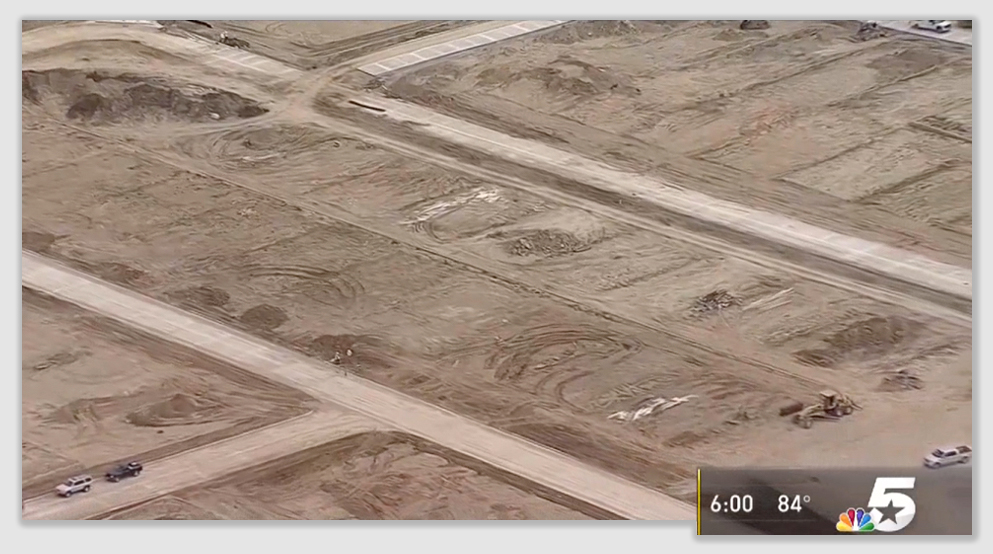 Fort Worth, Texas, WDFW-TV, March 26, 2018: Developer avoids fine after bulldozing Fort Worth trees
A developer that bulldozed trees to make way for a new Fort Worth subdivision has apologized and agreed to plant five times as many new trees as it destroyed and maintain them for two years, city officials said. The agreement means the company, D.L. Horton, will not have to pay a $296,000 fine, said Fort Worth Planning and Development director Randle Harwood. Harwood noted that city staff is still reviewing the agreement and it has not been finalized. “We have received the detailed plans and are in the process of reviewing those plans,” Harwood said. He said it appeared Horton has been honoring the deal to plant new trees in exchange for the city dropping the fine. “The cash fine is off the table,” Harwood said…
A tree service company formerly based in Plaistow will have to reimburse a customer more than $1,000 for services it never performed. In a statement issued Monday, Attorney General Gordon J. MacDonald announced that the state’s Consumer Protection and Antitrust Bureau resolved allegations of violations of the Consumer Protection Act by Quality Tree Service, which currently operates at 76 D South Main St. in Newton. The state investigation began when a Quality Tree Service customer filed a consumer complaint saying they paid an initial deposit of $1,350 for tree work on her property, which she said the company never performed but kept the deposit. The company signed an Assurance of Discontinuance with the attorney general to resolve the allegations. As part of the agreement, Quality Tree Service must fully reimburse the customer by May 1…
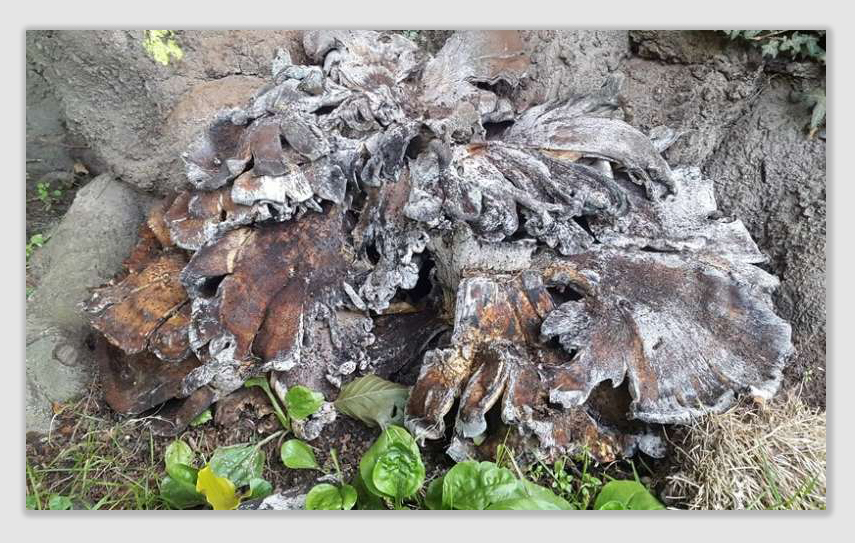 Phys.org, March 26, 2018: New book on fungal diseases of urban trees
Trees can get sick too. In urban areas, this usually means that the infested tree has to be felled for safety reasons. Empa researcher Francis Schwarze is familiar with wood and fungal pathogens and has developed methods to assess trees without damaging procedures and, if necessary, to heal them with selected antagonists. He has now published his knowledge on this topic in a new book. If a tree is attacked by wood-decomposing fungi, the wood inside the tree is decomposed over a period of many years until in the worst case it falls down. If this happens in the forest, it’s usually not a big deal—but it can have devastating effects in urban areas. For this reason, municipal offices are obliged to carry out annual visual inspections on their trees. If there is a well-founded suspicion of damage—for example, if so-called fungal fruiting bodies are recognizable—an expert examination is necessary. For these analyses, however, diagnostic methods are often used that injure the tree (e.g. drill resistance and sound velocity measurements or a drill core removal). The expert can then measure the extent of wood decomposition. In many cases, however, the wounds caused represent entry points for further fungal infections. Or the fungus can spread faster (from an infested tree)…
An insect infestation in Vermont is now worse than previously thought. Vermont agriculture and forestry officials announced Monday that the emerald ash borer, a pest that kills ash trees, has now been detected in three of the state’s counties. Last month, the invasive beetle was found in Orange County, in the town of Orange. New surveys have recently detected the insect in the Caledonia County town of Groton, and the Washington County communities of Plainfield and Barre, Vermont’s agriculture secretary, Anson Tebbetts, announced. “We’re trying to determine the scope of the infestation, and the results of those surveys will assist us in making some decisions, including management recommendations and the implementation of a quarantine,” Tebbetts said…
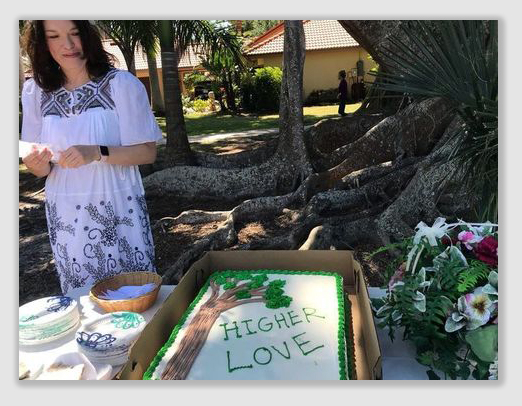 Jacksonville, Florida, WJAX-TV, March 25, 2018: Fort Myers woman marries a tree
Karen Cooper was ready to go out on a limb to save her beloved, so she got married – to a tree. Specifically, a giant ficus that’s shaded Snell Family Park in Fort Myers for more than a century. The tree became the center of a neighborhood controversy when city staff began discussing cutting it down last year. Cooper, who lives nearby, began mobilizing to save it. The News-Press reports effort that culminated with the waterfront nuptials Saturday, complete with flowers, music, a tree-decorated wedding cake and a canine ring-bearer named Little Bear. Though rooted on city property, some of the Indian laurel’s 8,000-square-foot canopy and root system extends to a neighboring lot, for sale for $1 million. After a site visit last December, the city’s public works department OK’ed the tree’s removal after the beautification board had been notified… Once neighbors got wind of those plans, the protests started: phone calls, posters, fliers and, most recently, Cooper’s wedding, during which she and several other white-dressed women vowed to honor and protect it before some 50 onlookers…
Crews are already cutting trees in Northampton and Robeson counties to make way for the Atlantic Coast Pipeline, the 600-mile-long delivery system that will carry natural gas from West Virginia, across Virginia, and through North Carolina. The pipeline will cut an eight-county, 200-mile-long path across the Tar Heel State with supporters and opponents all along the route. Mavis Exum Edmundson, 71, and her sister, Barbara Exum, 65, grew up on their family’s Wilson County farm in eastern North Carolina, amid fields of tobacco, corn, cotton and fruit trees. “I’m country through and through. This is the happiest place I’ve ever known,” Edmundson said… The Exum family, however, owns one of the roughly 1,000 North Carolina properties from which the pipeline developers must acquire an easement. “You just see a lot of landowners being squeezed out of their property for the benefit of big business,” Barbara Exum said. The Exums initially were offered $1,000 by the ACP’s developers to secure the 50-foot right-of-way needed to construct the pipeline. That offer has since been increased to $10,000. “None of us have signed, and we don’t intend to sign, you know we’re going to keep fighting this,” Exum added…
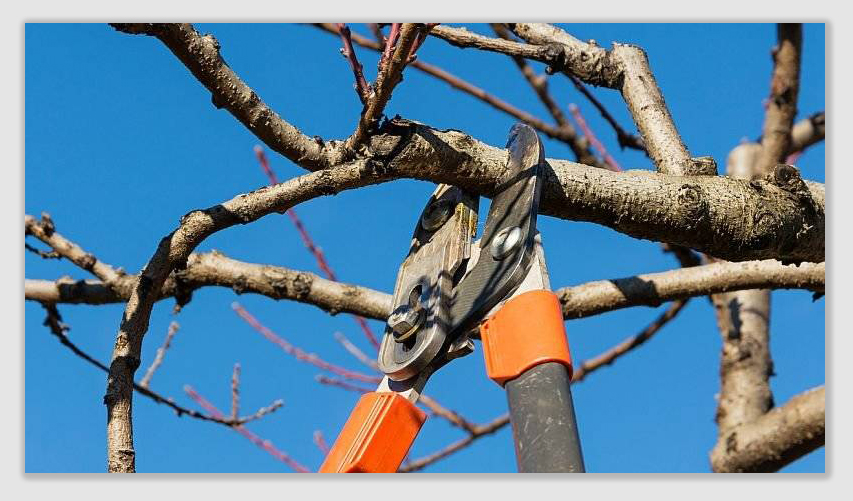 Health Magazine, March 25, 2018: For Tree Workers, Stronger Storms Pose Deadly Hazards
Tree care workers have one of the nation’s most perilous jobs, and the danger could grow as climate change increases the risk to trees from major storms, diseases, insects, drought and fire, experts warn. Better training and safety in tree care operations are essential, according to researchers from Rutgers University in New Brunswick, N.J. Every year, about 80 tree care workers die and at least 23,000 chainsaw-related injuries are treated in U.S. emergency rooms. Many of those injuries stem from poor training and equipment, according to Rutgers experts who have studied risks to tree care workers since Hurricane Sandy in 2012. In the last month, the northeast and mid-Atlantic states have gone through four nor’easters resulting in further widespread tree damage from heavy snow. “There is a popular misconception that tree removal is low-skill work, but nothing could be further from the truth,” researcher Michele Ochsner said in a university news release. “Handling storm-downed trees without injury to people or property involves an array of technical skills and knowledge of how different species of trees respond in different seasons and weather conditions,” she explained. Ochsner formerly worked in Rutgers’ School of Management and Labor Relations…
When I hear the phrase “trap tree,” an image of Charlie Brown’s kite-eating tree in the Peanuts comic strip comes immediately to mind. But trap trees, or sentinel trees, are meant to nab a much smaller airborne object, the emerald ash borer (EAB). The idea is to make certain ash trees more attractive to EAB, to serve both as a monitoring tool and as a means of slowing the rate of ash death. Early in the growing season, a chosen ash tree is girdled, which stresses it and induces it to create certain phenols and alcohols not present in healthy trees. It is on this chemical signature that the adult emerald ash borers home in. According to Aaron Barrigar, a Forest Conservation Technician with the Saint Regis Mohawk Tribe Environment Division, “Girdling ash by removing the bark and phloem around the entire circumference of the trunk creates an effective attractant for emerald ash borer. EAB adults lay more eggs on stressed ash trees than on healthy trees, which is why girdled ash are effective detection tools for the insect…”
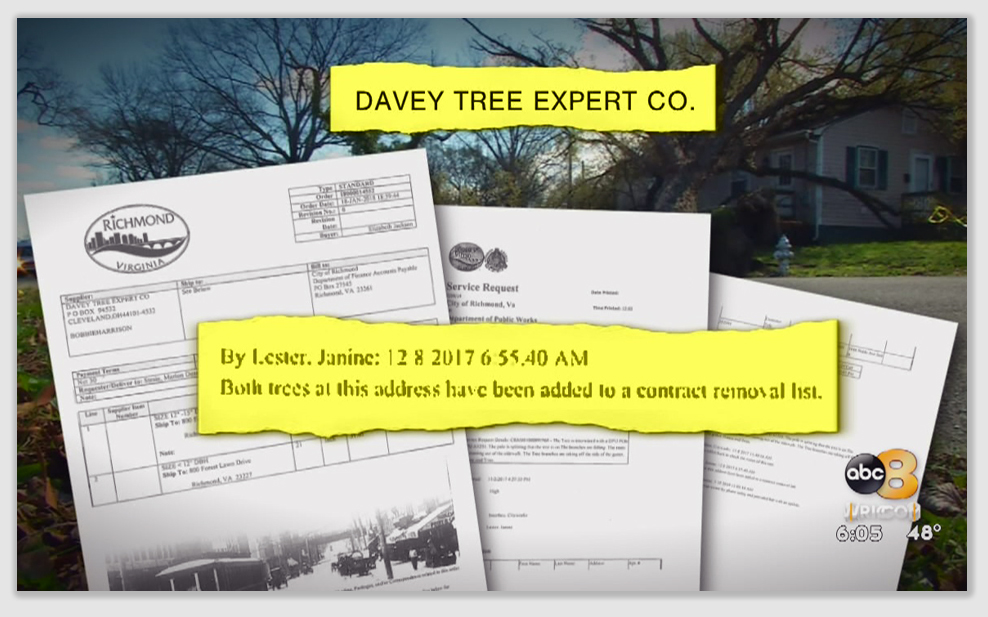
New documents show a city tree that fell onto a Richmond home was scheduled to be removed. “I let them know that this elm tree was dying and that it was dropping large branches onto the fence and the yard, the footpath here and this heavily trafficked Bainbridge,” said Lisa Williamson, the property owner. Williamson called the city back in November reporting issues with the tree. New documents obtained by 8News confirm the City of Richmond hired Davey Tree Expert to remove the trees and repair the utility pole. According to the documents, including the purchase order submitted to Davey Tree Expert Co., the tree removal list and service request, the trees were put on a removal list on December 8, 2017, by City Arborist Janine Lester. Williamson says Lester came to the property and inspected the trees herself last year. “She concurred that they did need to come down…”
Fresno, California, KFSN-TV, March 22, 2018: How to tell if your tree is about to fall over
There has been a lot of rain lately which is good for our environment, but too much could be dangerous, causing trees to fall over. Robert Willmott, Orchard Technician at Fresno State, explained some of the warning signs. “If the tree starts to lean excessively and the weight is on one side, that is going to increase the probability of it falling,” said Willmott. Willmott says that’s only one of the warning signs of a falling tree. Excessive rain could mean over-saturated soil, which can weaken the roots of a tree. “Trees with a… shallow root systems are probably going to be more affected, especially when all that ground is saturated,” said Willmott. Add strong winds and it can push a tree over. Willmott says similar situations could be prevented through proper drainage…
 Cleveland, Ohio, Plain Dealer, 250-year-old Moses Cleaveland tree cut down in Lakewood due to decay
Lakewood lost a part of history today. A 250-year-old Moses Cleaveland tree was cut down by the city due to increasing amounts of decay. Reports say city officials have been watching the White Oak tree on Summit Avenue for decades, and had to make the tough decision to cut it down after the decay worsened over the past few years, creating a safety hazard. Moses Cleaveland trees mark the time his party landed at the mouth of the Cuyahoga River on July 22, 1796. In 1946, the Cleveland Sesquicentennial Commission sought to discover and label 150 native trees over the age of 150 years growing in Cuyahoga County. The committee chair was Arthur B. Williams, curator of education at the Cleveland Museum of Natural History. The Cleveland Sesquicentennial Commission hosted local ceremonies, where trees were labeled with a 5-inch by 10-inch aluminum plaque reading “This is a Moses Cleaveland Tree. It was standing here as part of the original forest when Moses Cleaveland landed at the Mouth of the Cuyahoga River, July 22, 1796. Let us preserve it as a living memorial to the first settlers of the Western Reserve…”
Sandy Oxley and Shirley Sanders have been best friends since they became neighbors 15 years ago. They consider each other family and say they’ve been through it all. Shirley, 81, lives alone after losing her husband a few years ago. Sandy lost her boyfriend and has been by Shirley’s side through both of their losses. Despite this, they both have the best disposition and outlook on life. Shirley is an active woman with no plans of letting age slow her down. Back in the day, she borrowed her husband’s table saw to build cabinets and closet spaces. Today, Shirley uses her industrial sewing machine. She has enough colored spool to make Martha Stewart quit her day job. Sandy is a handy-woman herself and keeps busy with outside projects, including mowing, raking and gathering leaves in Shirley’s backyard. That’s when she discovered something alarming. “There’s this big oak tree that’s uprooting and experts have told me it could fall at any moment,” Oxley said. “I’m worried because it will fall directly on her house and it could kill her, I need to keep her around.” Unfortunately, Shirley couldn’t afford the $4,500 to $6,200 price tag to remove the century-old oak. She lives on a fixed-income. That’s why Sandy enlisted her daughter to create a GoFundMe account and reached out to different local tree removal businesses for help. “I managed to find a company, Watt’s Tree Removal Services, they’re going to take down the tree at however much we raise,” she said…
 Atlas Obscura, March 21, 2018: Where will palm trees grow in a warming world?
FIFTY-THREE MILLION YEARS AGO, ANTARCTICA wasn’t an unpleasant place for a midwinter sojourn. Back then, its shores and hills were ruffled with palm trees, beeches, and conifers. Winter temperatures hovered near 50 degrees Fahrenheit, so the region wasn’t frost-nipped, even if it was blanketed by near-constant darkness. Today, of course, the landscape is harsher and notably empty of palms. The trees’ notorious intolerance to chilly conditions makes them useful proxies for estimating historical temperatures. The places fanned by fronds have varied over time. When they turn up in the fossil record, researchers can infer that the region’s temperatures probably once fluctuated within a fairly specific range. In a new paper published in Nature Scientific Reports, researchers from Columbia University’s Lamont-Doherty Earth Observatory, Brandon University, and the University of Saskatchewan sifted through thousands of data points to untangle the relationship between temperature and distribution of palm trees, and offer hints about where the trees could put down roots in a warming world…
A resident seeking a compromise with the city about a large oak tree leaning significantly onto his property received just that during Tuesday night’s regular meeting of the La Cañada Flintridge City Council. Eric Rustigan, who lives at 4843 Hampton Road, applied last year for a permit to remove his neighbor’s protected oak tree at 4847 Hampton Road. The Planning Commission denied the permit request in November and Rustigan appealed that decision to the City Council. The oak tree has a 36-inch trunk, is tall, in good health and, according to officials, represents low risk. However, Rustigan said the significant lean of the tree from his neighbor’s property onto his still potentially targets his home and presents a future safety hazard. “This is a unique situation with my neighbor and myself,” Rustigan told the council during the appeal hearing. “My neighbor and I are both in agreement to remove the tree.” An arborist’s report submitted with Rustigan’s application cited concerns about limbs breaking off and falling on his newly remodeled home, cars or his children who play in the driveway. Even though the oak tree was rated by the arborist as “low risk,” there is still a possibility of the tree falling. City staff conducted a site visit prior to the Planning Commission’s decision and found the tree to be healthy and strong enough to warrant denying its removal…
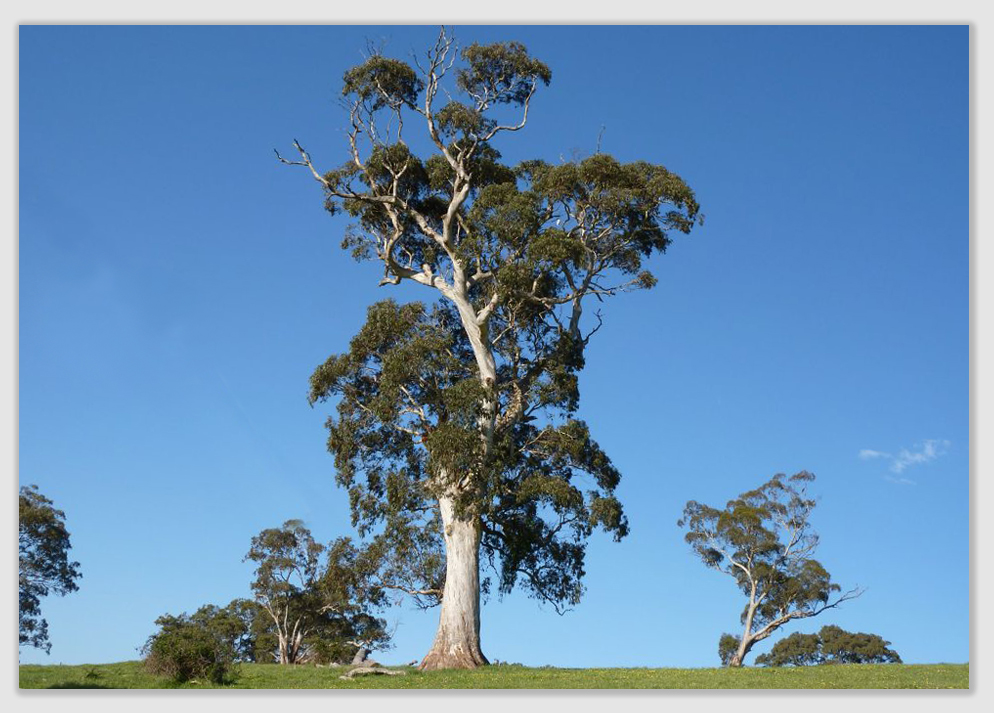
The fate of three blue gum eucalyptus trees might stand in the way of Carpinteria Sanitary District’s proposal to build a new office to replace the trailers the special district has occupied at 5300 6th Street since 1991. While the city’s architectural review board voted on March 15 to advance the sanitary district’s proposal to the planning commission (4-0, boardmember Jim Reginato recusal), the ARB attached its own comments and lengthy public comment to its recommendation for approval. The planning commission will now have to contend with public opposition to removing the trees and neighbor demand to scale down the 4,118-square-foot office building. The March 15 ARB hearing followed a similarly contentious meeting on Jan. 25, during which the board continued its decision in order to allow the sanitary district and Blackbird Architects to consider comments. In response to those comments, the applicants reoriented the building to be parallel with the street, rather than its originally askance position, but maintained that removal of the three eucalyptuses, along with four palms and two sycamore sucklings, was necessary due to liability. The towering eucalyptus trees pose a risk of sudden limb drop, but according to numerous members of the public they are critical habitat for raptors and butterflies…
Richmond, Kentucky, Register, March 21, 2018: What should I do with my trees?
After the heavy snow last week, many of our trees and shrubs are looking pretty rough. I have seen countless Bradford pears which have split! Below are some first aid tips for your landscape. First, don’t try to do it all yourself. If large limbs are broken or hanging, or if high climbing or overhead chainsaw work is needed, hire a professional arborist. Second, take safety precautions. Look up and down. Be on the alert for downed power lines, hanging branches and broken limbs. Stay away from any downed utility lines, low-voltage telephone and cable lines. Fence wires can also become electrically charged. Third, remove any broken branches still attached to the tree. Removing the jagged remains of smaller-sized broken limbs is a common repair that, if done properly, reduces the risk of tree decay. Smaller branches should be pruned at the point where they join larger ones. Fourth, repair torn bark. Carefully use a chisel or sharp knife to smooth the edges of wounds where bark has been torn away. Limit cambium (greenish inner bark) exposure, as these fragile layers contain food and water lifelines between roots and leaves…
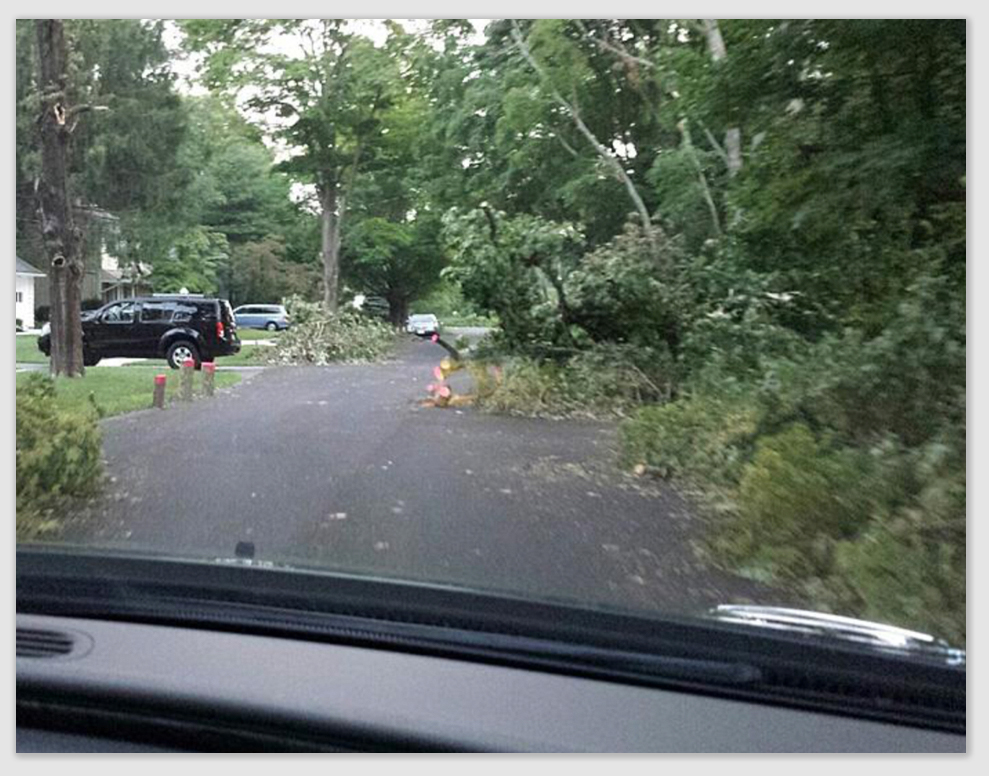 Trenton, New Jersey, WKXW-FM, March 20, 2018: Tree care workers have a sometimes-deadly job
As another big storm hits New Jersey, with the possibility of trees falling and causing damage, a new Rutgers study done after Superstorm Sandy underscores the importance of safety training and protective equipment for tree-care workers. Elizabeth Marshall, an environmental and occupational epidemiologist with the Rutgers School of Public Health, says many in the industry do a great job with safety training and equipment. “There are, for example, over 800 landscaping companies in New Jersey. It is a large workforce that may be involved in tree care, either as part of the tree care industry, where you have people licensed to do tree trimming and removal, and then also some landscapers may end up working in this field, especially under storm conditions, when consumers are desperate for somebody to cut their tree down,” she said. Marshall says even with good training and the proper equipment, tree care is still a dangerous job. After Sandy, seven workers died. She does worry about workers who are brought in as “extra helpers.” who “may or may not have had much training or experience in this field.” The study found about 80 workers are killed and there are 23,000 chainsaw injuries in the industry annually…
Vick Malone didn’t flinch when the courtroom clerk read that he was found guilty of killing his neighbor’s boyfriend and the attempted murder of another man. The jury of seven women and five men found Malone, 66, guilty Tuesday morning of first-degree murder for the death of Ernest H. McMurry Jr., 50, who was killed Nov. 21, 2016, in the 2300 block of 80th Avenue. Malone also was found guilty of the attempted murder of the man’s uncle. The jury deliberated for about a day and a half. The three men got into an argument over tree trimmings, ending when McMurry was shot in the head by Malone. McMurry had parked his car in his girlfriend’s driveway next to Malone’s property. Malone began doing yard work, using a hedge trimmer to trim a tree, the clippings of which fell onto McMurry’s car…

Why do some tropical trees survive extensive droughts and others do not? Scientists took up this question in a three-month study of various tropical saplings. Their results suggest that species that avoid dehydration have traits that favor water storage, allowing them to retain a water reservoir during the drought. Further, the trees reduce their root surface area, suggesting a role for root abscission in preventing water loss from roots to soil during severe drought. Tropical trees are part of globally vital, climatically sensitive, and poorly understood ecosystems. This study offers insights into how these trees respond to droughts. It highlights mechanisms and processes that control tree survival, which influences carbon dioxide levels. To test the ability of different species of tropical tree saplings to avoid dehydration during severe droughts, scientists subjected potted saplings to three months without water. The response of the saplings was compared to that of well-watered trees. After the simulated drought, some species had a 100 percent survival rate. These trees had a water status similar to well-watered plants…
A 29-year-old from Oxnard was identified as the man who died Friday while trimming a palm tree in Camarillo. The Ventura County Medical Examiner’s Office said Tuesday that Eduardo Sampayo Jimenez was electrocuted while working near power lines in the 500 block of McLeod Rondo. The incident occurred at approximately 2:30 p.m., and power needed to be cut in the area to allow public safety crews to reach Jimenez. Power was cut and rerouted by 6 p.m., at which time crews reached the man, who was pronounced dead at the scene…
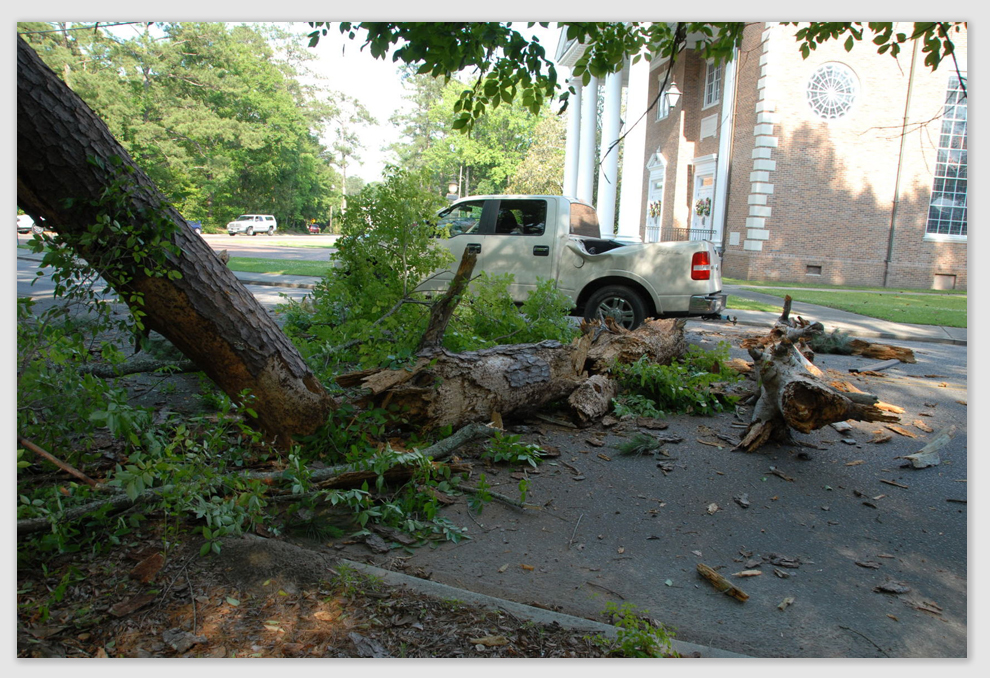
If you have a dead tree on your property in a high-traffic area, you might want to take note. A Dorchester County jury recently awarded Summerville veterinarian Donald Gamble more than $1.25 million after a dead pine tree collapsed onto his pickup truck nearly three years ago while he was stopped at a traffic light adjacent to rental property. The tree on West Carolina Avenue had been dead three to five years before the incident, according to Gamble’s attorneys, Douglas Jennings and David Lail of Charleston. Property owner and defendant David Beal claimed to be unaware the tree was dead and said the tenant never reported it to him, according to Gamble’s attorneys. Beal’s attorneys, Morgan Templeton and Tommy Boger, said in court documents that the tree’s demise was an act of nature for which the property owner was not responsible…
Associated Press, March 19, 2018: Researchers: Tree removal could spread invasive grasses
A recent study by an Oregon State University researcher questions the effectiveness of some juniper removal and suggests it could be contributing to the spread of non-native grass species. The Argus Observer reports postdoctoral researcher Jacob Dittel, in a story written by Chris Branam, of the Oregon State Extension Service, says his concern is instead of reducing competition to native shrubs and grasses with juniper by cutting it, removal may be swapping competitors by increasing invasive grasses. Branam wrote the spread of juniper has pushed sagebrush out of rangeland across the Northern Great Basin, as the trees have taken up water to the loss of sagebrush…
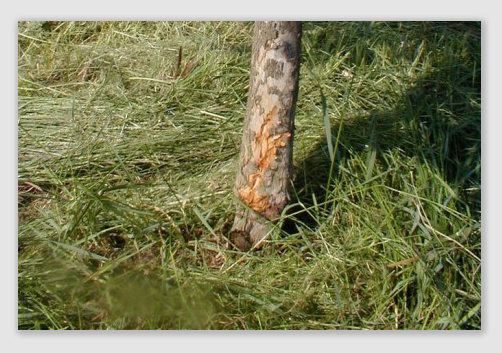
Some might think it is being caused by a new disease infecting the root systems. Others think it could be another invasive insect boring into the wood or chewing the leaves that make food for the plant. The real culprit is us and our wonderful power tools that are used to cut grass. If there is grass growing close to your young tree, then there is the potential for your tree to become inflicted with “moweritis”. Whenever we use string trimmers or weed whackers to cut grass around trees, those flailing blades or plastic strings repeatedly wound the trunk of a young tree, tearing bark away that protects the important vascular, or water and food conducting tissues found just under the bark. I know we all think of tree trunks as wood, a very tough material, but trees are very vulnerable to wounds because their most important growth tissue, called cambium is just under the young thin bark. As the string trimmer nicks and beats off the bark in a circle around the circumference of the trunk, the tree will become girdled and the vascular tissue in the stem will die. Once the vascular tissue and the cambium (the thin layer of growth cells that creates new wood) is dead, the tree can no longer get water up to the leaves there it is needed to make food, or transport food down to the roots where it is needed to grow new roots. In essence, the tree dies because we wounded its trunk while cutting grass…
After a yearlong investigation, the former arborist for Springdale has been arrested and accused of cutting down more than a dozen trees around the town’s hall and causing more than $10,000 in damage to town property in an apparent disgruntled rage. Shane Curtis Lowery, 52, of Hurricane, was arrested Monday for investigation of criminal mischief. Another man, Steven James Stone, 41, of Hurricane, was charged Monday with criminal mischief, a second-degree felony, for allegedly driving Lowery that night. The investigation began on March 12, 2017, when Springdale police discovered more than $10,000 in vandalism at several locations near the town hall, according to a search warrant affidavit filed a year ago in 5th District Court. Among the damage found by police, 18 trees had been chopped down, the warrant states…
 Yahoo News, March 18, 2018: Latin America’s ‘magic tree’ slowly coming back to life
The guaimaro, a highly prized tree bearing nutritious fruit, once abundant throughout South America, is slowly being coaxed back from near extinction in Colombia. Widely adaptable, the tree is resistant to drought — though not, sadly, to man. Deforestation has decimated the bountiful tree, whose leaves and fruit have for centuries sustained animals and humans alike. “Without trees, there is no water, and without water, there are no trees. People cut it, burn it for cultivation, for their livestock. Wood is scarce and the rivers are drying up,” lamented Manuel Duran. With a weary hand, the 61-year-old farmer raised his straw hat and wiped the sweat from his brow. A searing sun beat down on the dry forest near Duran’s home outside Dibulla, in the foothills of the majestic Sierra Nevada de Santa Marta mountains. Here, in Colombia’s northeastern Guajira region, new life is being breathed back into stocks of the beloved tree. More than 900 kilometers (560 miles) away, in Medellin, hundreds of global experts are gathered around the planet’s sickbed this week. The Intergovernmental Platform on Biodiversity and Ecosystem Services (IPBES) will make its diagnosis later this month on the health of the world’s fauna, flora and soil…
Norfolk, Virginia, Pilot, March 18, 2018: Developers want more time for pipeline tree clearing
Developers of the proposed Atlantic Coast Pipeline have asked federal regulators for more time to cut down trees along the project’s route, saying they likely can’t finish the work under an initial deadline designed to protect birds and bats. The request, which drew criticism from pipeline opponents, was made in a letter to the Federal Energy Regulatory Commission posted online Friday. “Despite their best efforts, it now appears that Atlantic and (Dominion Energy Transmission Inc.) will be unable to complete the scheduled tree felling” in West Virginia, Virginia and North Carolina on time, the letter said. It seeks approval to continue cutting trees to clear the way for construction of the 600-mile natural gas pipeline until May 15, with certain exceptions. The proposed modification would still provide “equal or greater” environmental protection, the letter said. Developers initially agreed to the tree-felling restrictions to protect migratory birds, and threatened and endangered species – two types of bats, in this case. The time restrictions vary from state to state but generally prohibit tree cutting between mid-March or early April through mid-September or mid-November…
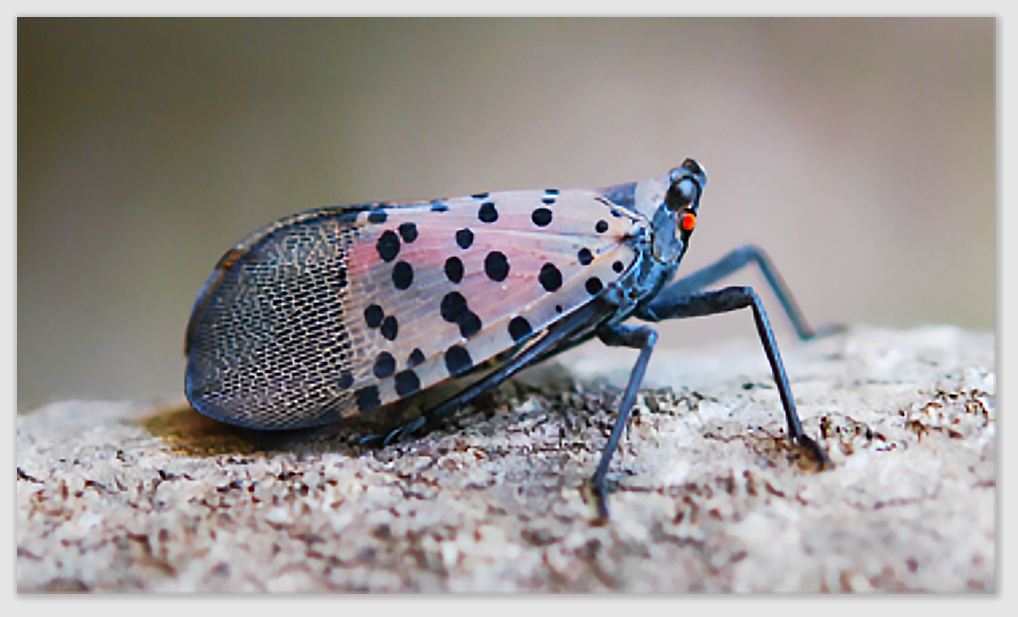 Ewing, New Jersey, WKXW-FM, March 18, 2018: NJ needs your help keeping out tree-killing lantern fly
New Jersey agriculture officials continue to keep a wary eye out for the spotted lantern fly, a pest from Asia that has found its way to nearby Pennsylvania counties. Joe Zolkowski, director of the Division of Plant Industry at the New Jersey Department of Agriculture, says the bug destroys crops and trees by sucking out their sap. “There is a nymphal stage: They are really distinctive looking when they first hatch out, they are black, jet black, with white spots on their back. Then as they get older, they become red with white spots on the back. Around June/July, as they become adults with wings, they are plant hoppers. “They do not chew on things, but they suck the sap out of trees and vegetables and crops, especially grapes. Besides degrading the crop, they also produce large amounts of honey dew, which acts as a source for sooty mold to grow on.” Zolkowski says they are trying to proactively spot the little hitchhiker before it arrives here…
Thousands of Florida homeowners who had healthy citrus trees cut down by the state are finally going to get paid for their losses. Gov. Rick Scott on Friday approved a new state budget that includes more than $52 million to pay homeowners in Broward and Palm Beach counties whose trees were removed more than a decade ago in a failed attempt to eradicate citrus canker. The homeowners were part of class action lawsuits against the state. Scott’s decision was surprising since last year he vetoed more than $37 million in payments that legislators had approved for homeowners in Broward and Lee counties. In a last-ditch attempt to battle contamination, the state in 2000 ordered the destruction of even healthy citrus trees within 1,900 feet of an infected tree with or without the owner’s permission…

Gwinnett, Georgia, Daily Post, March 15, 2018: Tripp Halstead, 7, dies five years after being struck by tree limb, severe brain injury
Tripp Halstead, the toddler whose story captured the hearts and prayers of people near and far after he was seriously injured when a tree limb fell on him at his daycare center five years ago, has died. He was 7-years-old. “There are no words to express how Bill and I are feeling at this moment,” Tripp’s mother Stacy said on the ‘Tripp Halstead Updates’ Facebook page Thursday night. “We are beyond devastated and honestly I believe I am in shock. Our amazing, perfect, beautiful miracle of a son, Tripp Hughes Halstead passed away at 5:47 pm today. He was our whole world.” Tripp was outside his Winder daycare center when winds from Hurricane Sandy caused a limb from a tree fell, hitting him in the head. He suffered severe brain injuries and spent months recovering at Children’s Healthcare of Atlanta. He also underwent several surgeries over the ensuing years. “The world as we knew it stopped on Oct 29, 2012,” Stacy said in a Facebook post last year…
Associated Press, March 15, 2018: Lumberjack Beaver Chews Tree, Turns Out Lights in Kentucky
An electric utility says a beaver had gnawed a tree that fell on a power line and caused an outage affecting roughly 1,000 customers in Kentucky. Kentucky Power says in a statement that the customers’ electricity was out for roughly half an hour Thursday after the tree fell near Pippa Passes in Knott County. The company’s reliability manager, Mike Lasslo, says animals cause outages often but that snakes, birds and squirrels are more frequent culprits than beavers. Kentucky Power says animal guards have been placed atop transformers and also behind fencing at some substations to protect equipment and limit outages, but that not much can be done to deter beavers…
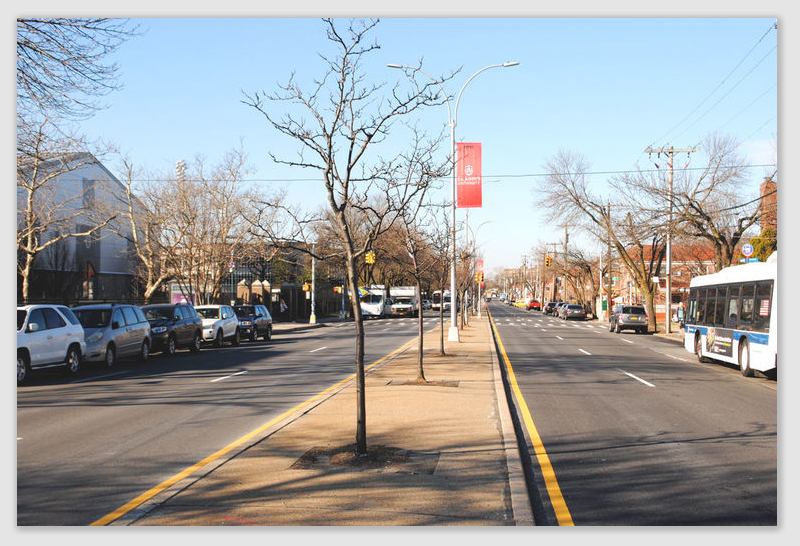 Queens, New York, Queens Chronicle, March 15, 2018: Activist: Dead trees on Union should go
According to Hollis Hills activist Louis Lapolla, the city has got to remove the dead trees on the median of Union Turnpike between Main Street and Winchester Boulevard. “A tree is not coming back,” he told the Chronicle. “And they have the machinery, they have the manpower.” Lapolla, who is on the board of directors of the Hollis Hills Civic Association, estimates that 80 trees are dead on the turnpike’s median between Main and Winchester. He says that after the now-dead trees were planted, “they never really took root” and “died almost immediately.” State Sen. Tony Avella (D-Bayside), a longtime critic of the Parks Department, agrees with the Hollis Hills activist about the need for action. “If there are dead trees, they should be removed,” he said. “The Parks Department used to remove dead trees within, I remember, 60 days, and they were pretty good about that…”
Vancouver Water District and two B.C. arborists, alleging they were negligent in dealing with dangerous trees near their property. Jill Calder was asleep in her Alpine Drive home at around 6:30 a.m. on March 10, 2016 when a powerful windstorm sent a hemlock tree crashing through the roof and into the master bedroom, killing the 57-year-old. Now, Calder’s sons are suing the district and VanArbor Vegetation Consulting Ltd.—a company that provides advice on how to manage forested landscapes—saying they could have done more to protect residents in the wooded area. The second arborist is not named in the suit. In the lawsuit, they allege their father had raised concerns at least twice about the trees nearby, including the hemlock, before it fell onto the house. The suit alleges the district sent crews to examine the trees on both occasions, but none was felled…

They are everywhere this week. Beautiful white blooms sprouting out of trees, but don’t be fooled by this short-term sight. Many say the tree that’s now blooming is, in fact, the worst tree in the world. Bradford Pear trees are prolific, but their spring blooms also bring out a chorus of committed haters. “We don’t have any Bradford Pears here,” said Dave Forehand, the vice president of gardens at the Dallas Arboretum. Forehand is a person who loves plants, but even he has no love for the dreaded Bradford. “No! ‘Cause I like success, and this tree is prone with troubles,” he said. What kind of troubles? Well, for one, they’re an invasive variety that hurts other pear species and other native plants. They also are known for their foul smell, which many say smells like rotten fish. They don’t even produce pears. And worst of all? Their brittle branches and strange growing structure make them a big hazard. “It’s a tree that’s notorious for breaking apart in a windstorm,” said Forehand. “Ice storms? Almost guaranteed to split…”
Evansville, Indiana, WEHT-TV, March 14, 2018: Tree canopy will come down in Newburgh
The Newburgh Town Council made a tough decision Wednesday, voting to take down some historic trees. It’s a vote some council members say is devastating, but needed to be done. When you drive into Newburgh, it’s the first thing you might see. “When you come into the town of Newburgh going through the tree canopy kind of brings you like you’re back home,” Melinda Mitchell says. The branches and stumps, something the town has become very attached to. But the tree canopy standing on the North side of State Road 662 will not be standing for much longer. The trees were topped by Vectren last fall because the limbs were getting tangled in transmission lines. Now there is a concern about the trees falling in the roadway, causing a public safety hazard…
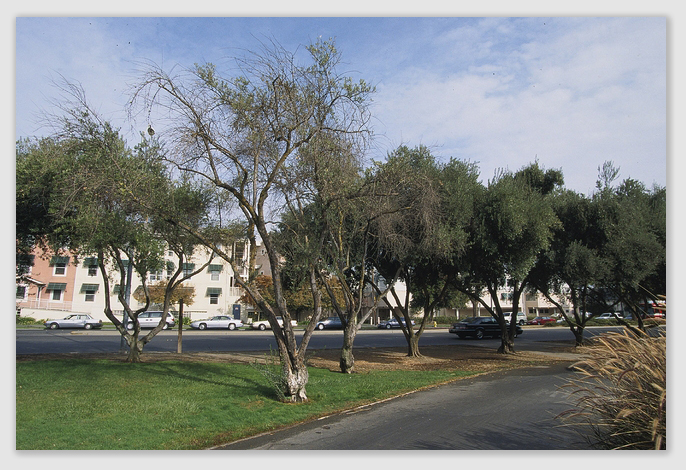
Most disorders impacting landscape trees result from abiotic (non-living) disorders rather than attacks from biotic (living) pests like plant pathogens, insects, and vertebrates. Damage caused by abiotic and biotic disorders can appear similar, making diagnosis difficult at times. For example, discolored leaves on a Ficus nitida tree could be due to drought stress, a fungus, or a nutrient toxicity or deficiency. In some cases, biotic injury may be obvious and abiotic disorders can be ruled out. For instance, many insects and diseases are often restricted to a single plant species and will not affect multiple plant species in the area. To determine if damage is the result of an abiotic disorder, look at the landscape as a whole. Are symptoms exhibited by a single plant species or by a wide array of species? Usually, uniform damage to multiple species within a limited area of the landscape signifies one or more abiotic factors are to blame. Below are several common landscape disorders encountered around home landscapes and ways to prevent them or remedy problems once they occur…
When it comes to the health of trees, what happens in the soil is more important than what happens aboveground. That was the message last week at the Trees Virginia, Virginia Urban Forest Council, workshop at Virginia Western Community College in Roanoke. Lindsey Purcell, an urban forestry specialist for Purdue University, said humans have been planting trees for more than 2,000 years, but we still aren’t very good at it. In urban areas, the soil is often poisoned, compacted, too alkaline or filled with all kinds of solid waste including bricks, concrete, glass and trash. Soil should be a mixture of sand, loam and clay. “In urban areas, it’s called crap,” Purcell said…
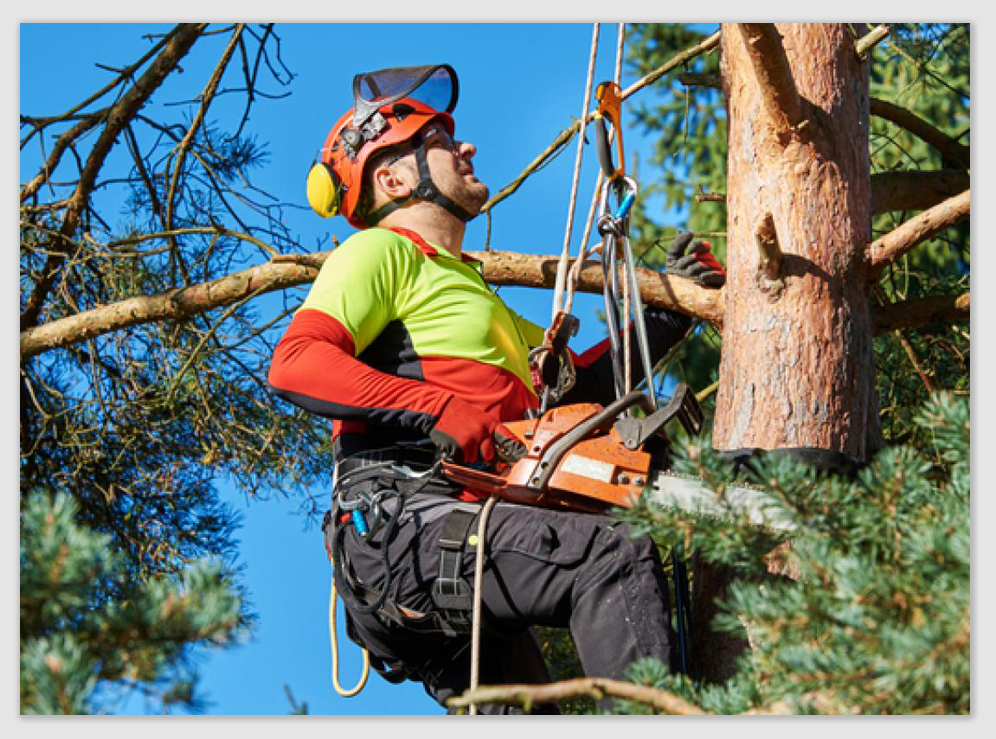 T&D World, March 13, 2018: Complacency rather than ignorance likely cause of tree care incidents
The Tree Care Industry Association has released its report on tree care-related occupational incidents* for 2017. The association reported that it had learned about 129 incidents. Seventy-two of them were fatal. Comparing 2017 to previous years, TCIA reported 81, 92 and 92 occupational fatalities in 2014, 2015 and 2016 respectively. The youngest victim recorded was 20, the oldest was 71. The average age of the victim (all incidents) was 43. This relatively high average age suggests that complacency rather than ignorance plays a significant role in these incidents. Supporting this claim: The typical fall victim was unsecured; The typical struck-by victim remained in the drop zone; The typical electrocution victim violated MAD and made contact through a conductive tool/object. For those accounts in which an employer was identified, 22 percent of all incidents occurred with TCIA member companies, and 78 percent occurred with non-members…
Houston, Texas, Houston Heights patch, March 13, 2018: Houston tree pollen worst in the nation
Good news for Houston is that the breathing comfort is good. The not-so-good news is that tree pollen in the Bayou City is wickedly off the charts. According to The Weather Channel, Houston has the highest tree pollen count in the country, almost double that of Waco, which is No. 2 in America. Whereas the national TV channel calls Houston’s pollen count “very high,” the City of Houston Health Department calls it “extremely heavy” with 3,483 cubic meter air. Oak tops the count with pine right behind it…
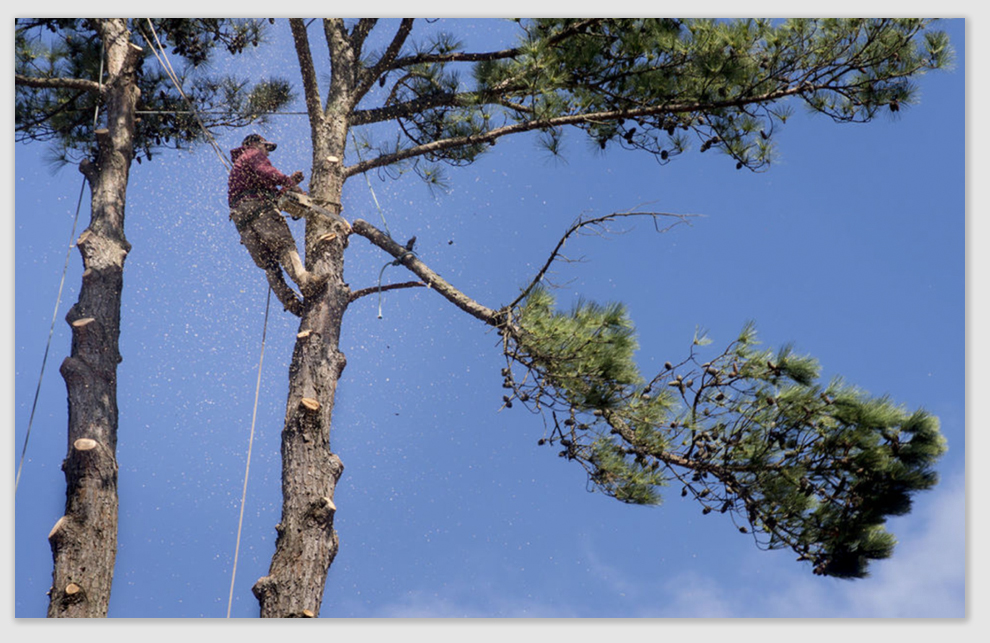 Longview, Texas, News-Journal, March 13, 2018: Homeowners can limit storm damage with tree care
Trees can improve the aesthetics for homes along with shedding their leaves for the sun to warm houses in winter and shade from the summer heat. However, if left untended, they can fall down on houses, become entangled with power lines, block emergency vehicles and smash cars if a storm blows them over. And in worst cases, a fallen tree can be fatal, such as what happened early Sunday when a tree blew over a Longview mobile home and killed its owner, Angel Rocha, 41, of Henderson. Also on Sunday, Mary Pinney, 40, of Mont Belvieu died at a campground in Lake O’ the Pines when high winds toppled trees onto her campsite. While people cannot control Mother Nature, they can take steps to lessen the dangers of trees crashing through their roofs, according to the owner of a tree service company and a contractor who repairs storm damage…
Associated Press, March 14, 2018: Volunteer firefighter killed, wind toppled tree on his truck
A Georgia volunteer firefighter was killed when winds toppled a tree onto his truck. Fannin County Fire Chief Larry Thomas tells news outlets that 47-year-old Stanley Henson had been driving his personal truck in Dawson County to his other job Monday afternoon. State Patrol Trooper Chris Jones says Henson died at the scene and that his death was an accident based on the weather. Thomas says Henson worked with him at a car crash hours before he died. Henson was with the department for several years and was set to be promoted as a lieutenant next month…
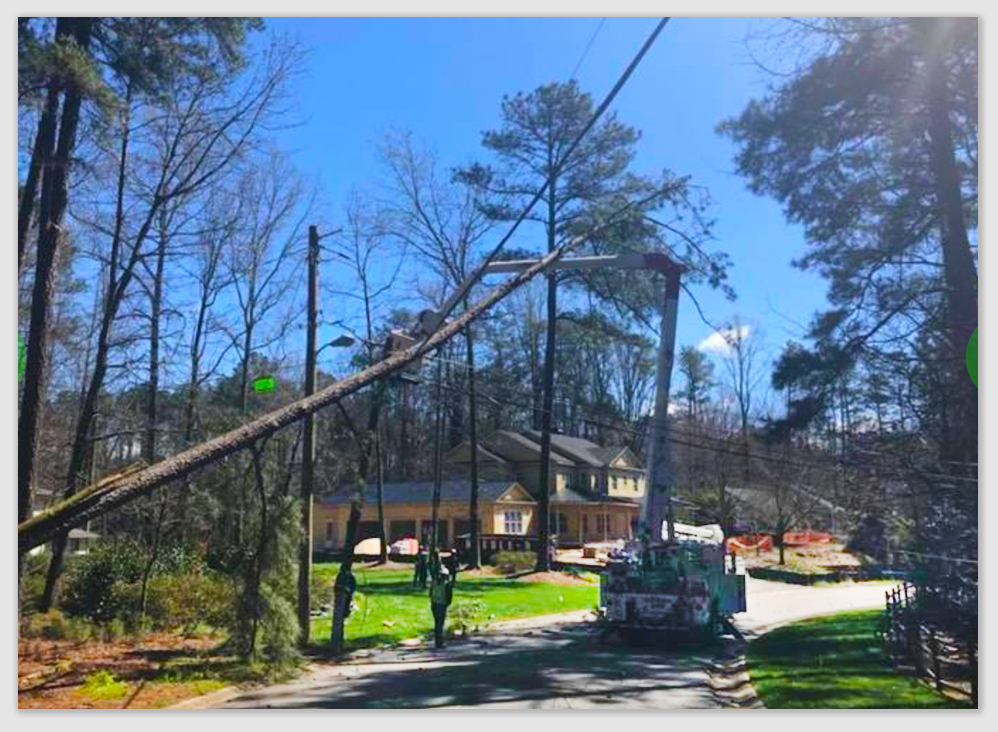
A Georgia Power employee is OK after a tree fell and struck the bucket he was using to perform utility work Monday afternoon in Sandy Springs. The incident occurred March 12 outside a residence along Twin Branch Road near Spalding Drive. City spokesperson Sharon Kraun said the company was able to lower the employee to safety after the incident. However, power lines were also snagged in the fall, so some customers were without electricity, Kraun added. Georgia Power spokesperson Craig Bell said the employee was transported to an area hospital for treatment…
Labroots.com, March 12, 2018: Are all the trees dying?
A new study published in New Phytologist suggests that trees are dying fast than before, up to two times faster! The study, which looked at trees over almost all regions of the world, determined that trees in the tropics are at great risk due to a mish-mash of climate change-related factors. The team of scientists analyzed trees throughout Asia, South America, and Africa in order to figure out how rising temperatures, carbon dioxide levels, drought, fires, more potent storms, insect infestation, and the abundance of lianas are impacting them. Most trees in the tropics are confronted with all of these threats, but the scientists found that the conditions that cause tree mortality most frequently are “carbon starvation” and “hydraulic failure” – in other words, not enough food or water. You might ask, but if there’s more CO2in the atmosphere with climate change, why are trees suffering from carbon starvation? Turns out it’s because higher temperatures limit trees’ ability to absorb CO2. That’s because trees will automatically close their stomata when temperatures rise in an effort to conserve water – but doing so also closes off their ability to take in carbon dioxide. If stomata are closed for long enough, a plant can experience carbon starvation…
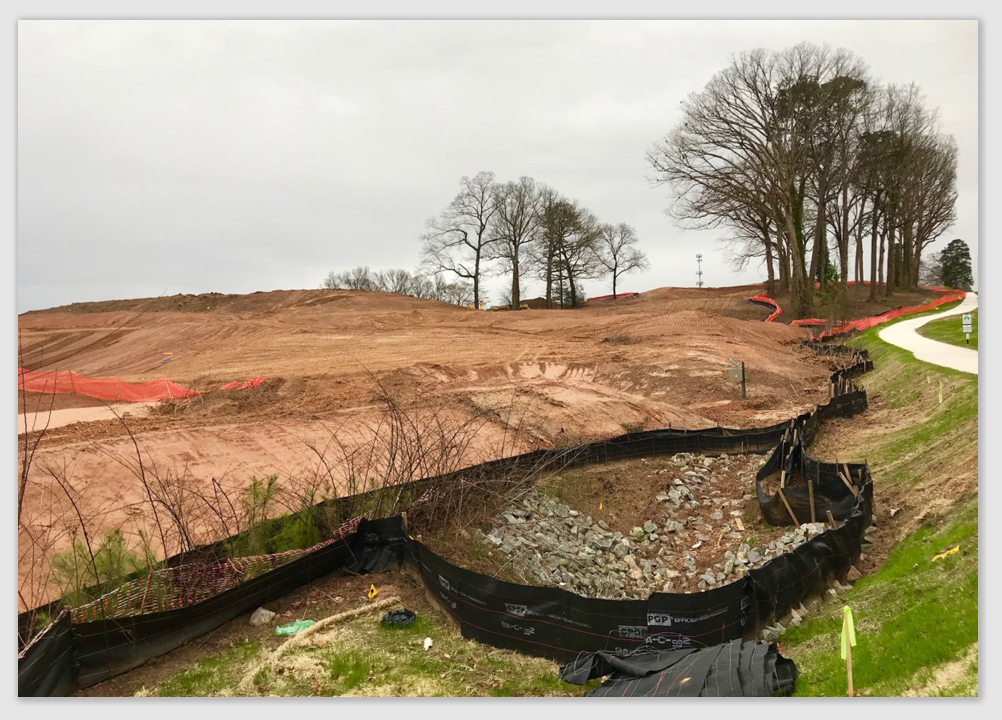
Back during the Civil War, the land that is now known as the Bobby Jones Golf Course was a battlefield witnessed one of the bloodiest battles of the Atlanta Campaign. Today, the Bobby Jones Golf Course has become a battlefield once again. But this time, the casualties were more than 800 trees that were cut down to make way for a redeveloped Bobby Jones Golf Course. Sadly, the Bobby Jones Golf Foundation – the entity that is leasing the property from the state and is redeveloping the course from one with 18 holes to one with nine holes and a driving range – did not have to comply with Atlanta’s tree ordinance or stream buffer requirements. Why? The State of Georgia acquired the property in November, 2016 through a land swap with the City of Atlanta, which wanted possession of a state-owned parking garage next to Underground Atlanta. State law does not require the state to comply with local laws, and even an attorney with the City of Atlanta agreed that the Bobby Jones Golf Course would “enjoy” the same exemption through its lease with the state. So now we are left with 130 acres that the Foundation has referred to as “a blank canvas” to create the new Bobby Dodd Golf Course…
Greenwich, Connecticut, Sentinel, March 12, 2018: Trees “Doing What Trees Do Naturally”
Greenwich’s Tree Warden, Bruce Spaman, ruled against a resident’s request to remove two trees located in the northwest section of a park in Cos Cob, on Bible Street, last week, according to a statement released from the Department of Parks and Recreation. The two trees, a Swamp White Oak and a Pin Oak, measure 2-2 ½ in caliper measurement. They were planted in the summer of 2017 by the Greenwich Youth Conservation Program, and sponsored and administered by the Greenwich Department of Human Services. At a public hearing back on Feb. 22, Elaine Baruno cited several concerns about the impacts the trees would have on her property, located adjacent from the trees. Baruno noted that: the trees drop many leaves on the property; acorns may be hazardous underfoot and attract Lyme Disease infected mice and deer; cleaning up leaves and acorns would become a financial burden; damage to the property could be incurred as a result of branches extending over the yard and house; the tree root systems may become invasive and damage stonework on the property; vegetable gardening may be diminished due to lack of sunlight. Since the town’s tree ordinance in the town code was revised in 2009, Greenwich has adhered to a stated policy in section 5 that, “Trees are not to be removed ‘for doing what trees do naturally.’ Trees are not to be removed for shedding fruit, nuts, leaves, twigs and small branches, or for sheltering wildlife…
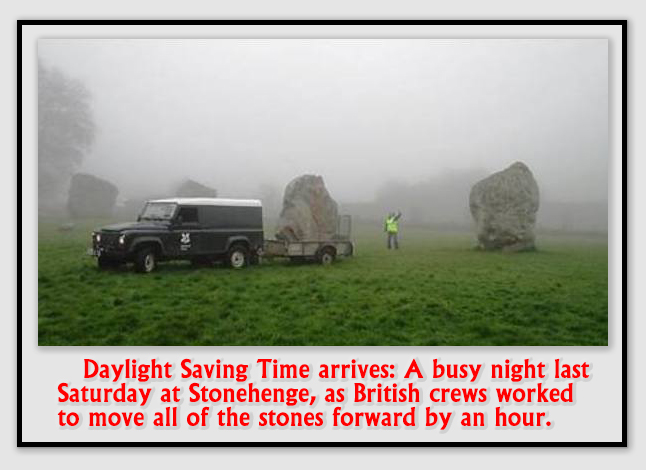
Located high on Peters Mountain, a group of pipeline protesters have stationed themselves in trees against the elements and now against court action in an attempt to stop the Mountain Valley Pipeline from crossing the mountain. The group, with Appalachians Against Pipelines, has caught the ire of pipeline interests who asked a Monroe County judge for restraining orders against seven of the members. Last week, a temporary order was given, with a hearing scheduled Tuesday in Union. “They’ve been up there for a couple weeks now, I guess,” said local Monroe County farmer Maury Johnson. “They had 70 miles an hour winds there on the mountain Thursday before last. There’s snow on the mountain right now. I’m expecting probably 10 inches, up to a foot of snow on the mountain in the next day or two.” Johnson, also against the pipeline, has been up to the mountain himself a couple of times since the protesters placed themselves there and also countless times in his life. He said he feels for the protesters exposed to the elements…
Thousands of Sheffield’s trees have been felled as part of a controversial £2billion resurfacing plan, leading to clashes with protesters. Now it has emerged Sheffield Council planned to chop down nearly half of the 36,000 trees along the city’s streets – despite previously insisting it did not have a target. The revelation is the latest development in a six-year battle that has seen the council pitted against campaigners who are seeking to save the city’s trees from the chop. While officials say they have removed only dangerous, diseased or dead trees, campaigners say the felling has been only to make resurfacing easier. The council, which is working with contractor Amey to cut down the trees, has previously insisted that it did not have a specific target for tree removal and refused to disclose how many of the city’s 36,000 ‘highway trees’ were under threat. However newly-published information, revealing 17,500 trees are at risk, came to light after the Information Commissioner ordered the council to make its documents public…
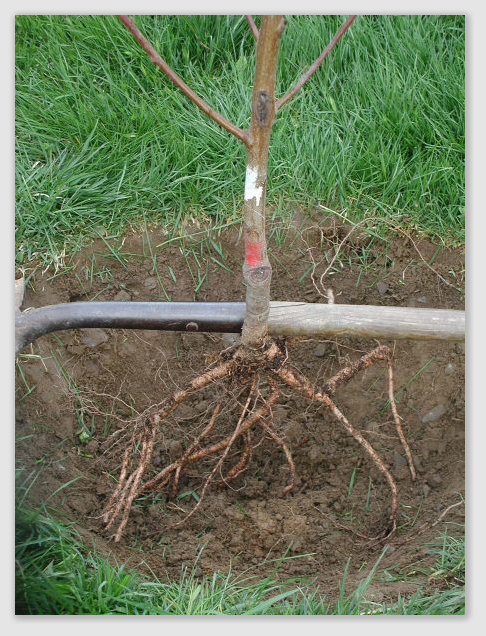 Waterbury, Connecticut, Republican-American, March 11, 2018: Bare root trees repay meticulous care
I got a look of disbelief when I told a friend I had planted a tree that had been shipped from a nursery 2,000 miles away. As I went on to explain that the tree had been sent “bare-root,” I could see him shudder. But then I showed off my robust young plant in its second year of growth. Bare-root trees are so named because the plants are dug from the ground when dormant (leafless), and then their roots are shaken free of soil. Kept cool, with their roots packed in some moist material, bare-root plants are easy to store or ship in good condition. They’re usually less expensive and are available in greater variety than potted or balled-and-burlapped trees. Of course, it’s not only the plant’s quality that was responsible for the good growth of my bare-root tree. Proper siting, care on arrival and planting were equally important. Two threats to a bare-root tree before it is planted are that it is kept too warm and that its roots dry out. Immediately after I receive a bare-root tree, whether it has been shipped or brought home from a nursery, I soak the roots in a bucket of water for eight hours…
Off-the-Grid News, March 11, 2018: How to make pancake syrup … from birch trees
Birch syrup is an alternative to maple syrup that is commonly grown across the northern United States, Canada and in northern Europe. While other birch products such as birch beer might seem more commonplace, birch syrup is a hot commodity, fetching over $30 per 250ml bottle in some locations. It is high in vitamins and minerals, and even can be used as a tonic. Birch syrup can be easily produced on any homestead with an abundance of birch trees, and if you’re already tapping maples, you don’t need to give that up. The two can be tapped concurrently, and the equipment needed is identical for both. Birch tapping generally follows the maple sugar season, in mid-March to mid-April. This depends, of course, on the weather, as sap begins to run before the buds on the trees change to leaves. Nights must be below freezing while days must rise well above freezing, usually around 40 or 50 degrees. Although this freeze-thaw cycle is the same as what is required for maple trees, maples don’t require daytime temperatures to rise quite as much. The best birch trees are ones that live in an isolated area. Try not to tap trees that have been exposed to pesticides or other contaminants, such as those that are growing alongside the road. These trees can carry unwanted toxins in their sap…
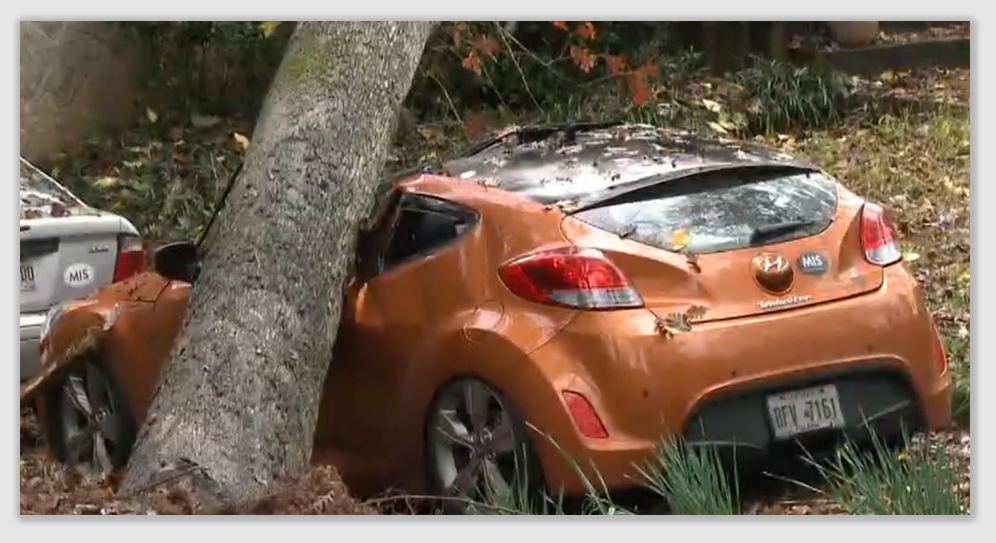
The estate of a couple killed on the Westport section of the Merritt Parkway in 2007 after a tree hit their Volvo are about to receive a $2.5 million stipulated judgment from the state. The legislature’s Judiciary Committee is scheduled on Friday to consider — and likely approve — the court settlement for the estates of Joseph J. Stavola and Jeanne C. Serocke, and John Stavola, guardian of James and William Stavola. Dr. Joseph Stavola, 46, and his wife, Jeanne Serocke, 44, both from Pelham Manor, N.Y., were riding in their Volvo when a 70-foot tree fell and struck the front of their car at about 9:15 a.m. Their sons, at the time 9 and 7 years old, were in the backseat of the car and survived the accident. After a decade of court cases and claims — the deaths occurred on state property and the family held the state liable — worked their way through various state and judicial systems, the judiciary committee is finally poised to resolve the case and authorize a settlement…
March is Woman’s History month, and I would like to honor two extraordinary women who transformed and beautified our nation’s capital. This spring will mark the 106th anniversary of two women who, on a cold March day, planted the first cherry tree saplings along the north edge of the Tidal Basin in Washington, D.C. It all started with a dream of Eliza Ruhamah Scidmore (1856-1928) pronounced (SID-more). A native of Clinton, Iowa, she attended Oberlin College and took a keen interest in traveling with her brother, Hawthorne Scidmore, a U.S. diplomat who served in the Far East from 1884-1922. It was these trips with her brother that gave Eliza Scidmore entrée into regions inaccessible to ordinary travelers. She would later become an American writer, photographer, geographer and the first female board member of the National Geographic Society. It was on one of her return trips in the 1880s that she came up with the idea of planting Japanese cherry trees in and around the nation’s capital. She had fallen in love with the cherry tree blossoms while visiting Japan. And it was one letter from Scidmore to first lady Helen Taft that helped make this dream a reality – a dream of a living testament of friendship between Japan and the United States…
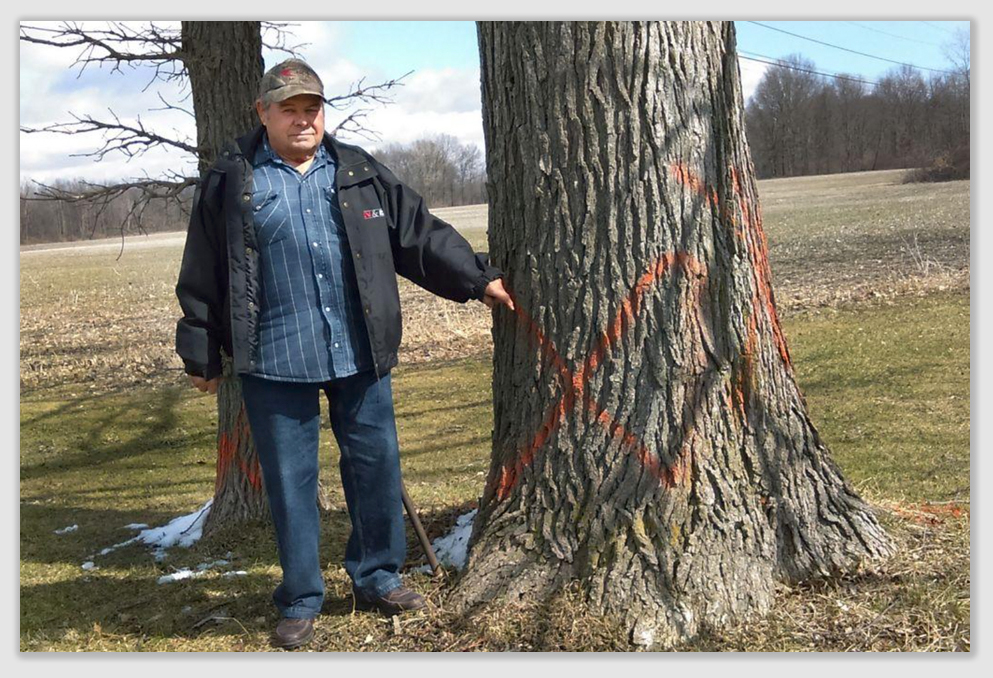
Sunoco Pipeline representatives say dozens of trees have to come down. Jerry Janssens isn’t happy with that decision. Jerry and Diane Janssens have lived in Frenchtown Township for 50 years and nobody has ever threatened to cut down their tall trees until this year. Today, he is fighting Sunoco Pipeline L.P., which wants to remove any trees it considers an encroachment to its right-of-way easement to underground pipes. Last month, the Janssenses found a letter in their mailbox notifying them that the company would begin removing trees or any “overgrowth” on their property off Steiner Rd. in March. The letter included a phone number that Janssens could call if he had any questions or concerns. He called the number, but only got referred to another office in Philadelphia, that didn’t respond to his opposition to taking the trees down…
The region’s latest storm has downed trees, power outages and damaged property. The aftermath of a strong winter storm brings new challenges and AAA Mid-Atlantic Insurance experts are offering tips on how to deal with the damage. “This week’s severe weather impacted quite a bit of AAA Mid-Atlantic’s territory,” said Tracy Noble, spokesperson for AAA Mid-Atlantic. “No matter how often storms roll through the area, dealing with heavy snow and downed trees can be a financial hardship that not everyone is prepared for.” AAA Insurance offers the following tips when dealing with auto insurance and homeowners insurance coverage and claims questions in the aftermath of a severe storm: Physical damage to a car caused by heavy wind or fallen tree limbs is covered under the optional comprehensive portion of an auto policy. If your car is damaged by a fallen tree or limbs, you would need to file a claim using your vehicle policy’s comprehensive coverage…
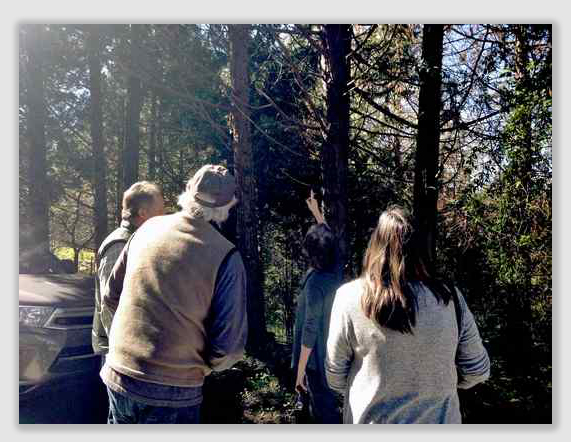
Not far from the border between the city of Santa Cruz and its unincorporated neighbor, 20-year Ocean Street Extension resident Allen Hasty parked his vehicle on the side of the road with a purpose Wednesday morning. Hasty chose a spot directly beneath eight cedar trees scheduled for the chopping block as part of Pacific Gas & Electric’s Community Pipeline Safety Initiative. Word of the trees’ pending removal had spread quickly Tuesday night among Ocean St. Extension Neighborhood Association members and beyond, who are opposed to the tree removals without clarification on a number of issues. “I gave them a written warning that unless we get some answers, we’re asking you not to proceed,” Hasty said. “We’re getting all this conflicting information about what the city did or should have permitted.” The utility was scheduled to remove the eight private-property trees, per a deal negotiated with the land owner about a year ago, plus 13 more on nearby public land, but its contractors ended up leaving without completing the work. Per the program’s description, the tree removal is designed primarily to ensure emergency responder access to the large natural gas pipelines, and secondarily to address tree root intrusion…
What do you see when you look at a dead tree or dead sections in live trees? If you were a chickadee or a carpenter bee, you would see a potential home. If you were a woodpecker, you might see dinner. Most of us value live trees, but not everyone sees the value of a dead tree. In fact, some see them as eyesores. Dead wood, whether snags (standing dead trees), logs (fallen dead trees) or dead parts of living trees are an important wildlife habitat. Tree cavities in live or dead trees are used by 35 species of birds and 20 species of mammals. Ecologists believe dead wood is one of the greatest resources for animal species in the forest. Snags provide food for insects and other invertebrates that then become a food source for birds and mammals. Insects, salamanders, snakes, mice, and shrews seek refuge in rotting logs. Skunks, bears, and woodpeckers repeatedly return to these excellent sources of food. Larger hollow logs can provide shelter for mammals such as shrews, chipmunks, and bears. Foxes and coyotes may use logs for dens. For some mammals, including deer mice, chipmunks, and squirrels, log tops are highways over the forest floor…
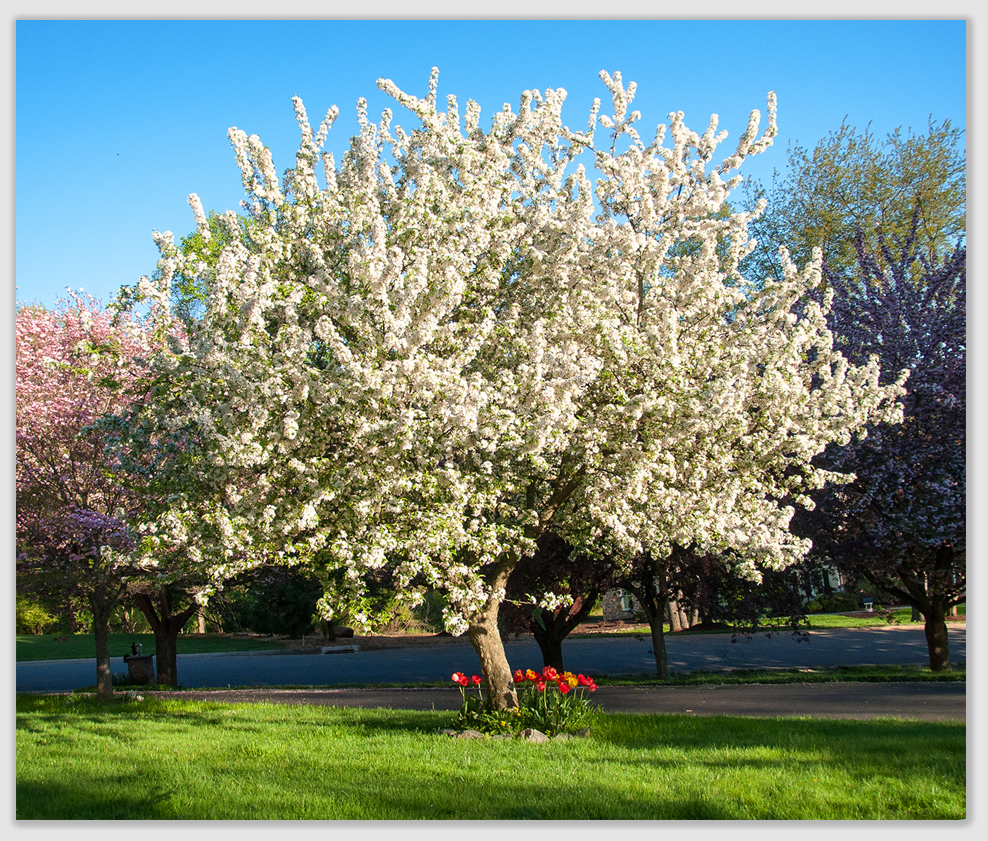 Des Moines, Iowa, Patch, March 7, 2018: Memorial tree planted with Mom’s ashes yanked for playground
Michelle Eash scattered some of her mother’s ashes with a crabapple tree planted five years ago to remember her at Des Moines Water Works Park. Her mother is buried many miles away, so the popular park, where 1,200 flowering crab trees bloom in a glorious canopy of pink every spring, is a special place for quiet reflection for Eash. Her mother’s tree is one of 180 memorial flowering crabs in the park that will be torn out of the ground later this month to make way for an amphitheater and playground. The families who purchased the $100 remembrance trees were notified in a letter that they would be removed. Eash is beside herself. She expected the tree to outlive her. “It upsets me that it’s not going to be relocated, or it can’t be relocated,” she told KCCI-TV. “My mom is buried two and a half hours away, and this is where I come to talk to her…”
Forests are more than just a collection of trees growing in close proximity to each other. Much like an organism, a forest and experiences a wide range of changes as it grows and ages. And as it goes through its particular lifecycle, a forest can serve both people and animals in a variety of ways. “A park-like forest populated with older trees that are spread far apart may be perfect for people to hike, camp and bird-watch, but it’s not necessarily ideal for wildlife,” said Matt Pedigo, chair of the Michigan Wildlife Council. “Many types of animals prefer younger, denser woods for the cover and food resources they provide. It takes effective management to make sure there are a variety of forest types that can be enjoyed by humans and also make good homes for wildlife.” The Michigan Wildlife Council is dedicated to increasing public understanding of the important role wildlife management plays in the conservation of the state’s natural resources. The management of Michigan’s wildlife and natural resources is primarily funded through the purchase of hunting and fishing licenses and equipment – not state taxes…
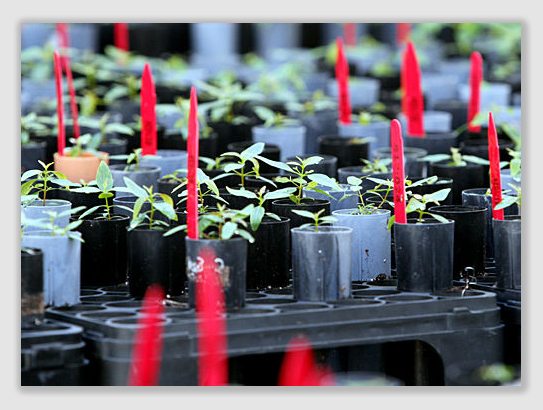
When South Carolina opened its first tree nursery 90 years ago, the government started growing the seedlings that would reforest its farmland because no one else would. At its peak, the state was churning out trees by the million. As late as the 1980s, the S.C. Forestry Commission sold 78 million seedlings a year, according to Tim Adams, its director of resource development. But the heyday is long gone. The private sector has chipped away at tree sales for decades, and now, the state is getting out of the seedling business all together – at least temporarily…
A tree trimmer electrocuted with 7,200 volts of electricity while working in Middleburg on Tuesday morning is in critical condition at Lehigh Valley hospital in Allentown. Richard Jordan, 47, owner of Jordan Tree Trimming in Middleburg, hit a power line around 10:45 a.m. Tuesday while trimming a tree at a property at the corner of East Market and East Willow streets. His co-workers, Shannele Smith and John Shaffer, said they watched Jordan start having seizures after contact with the power line, fall out of the bucket into the tree and then fall onto the ground more than 20 feet below. “I was trying to climb up to get him,” Shaffer said. “I should have stayed on the ground, I could have caught him.” It takes 50 milliamps of electricity to stop a human heart, which could be the electricity coursing through a 7.5-watt light bulb or Christmas lights, according to information provided by PPL at various safety events around the Valley…
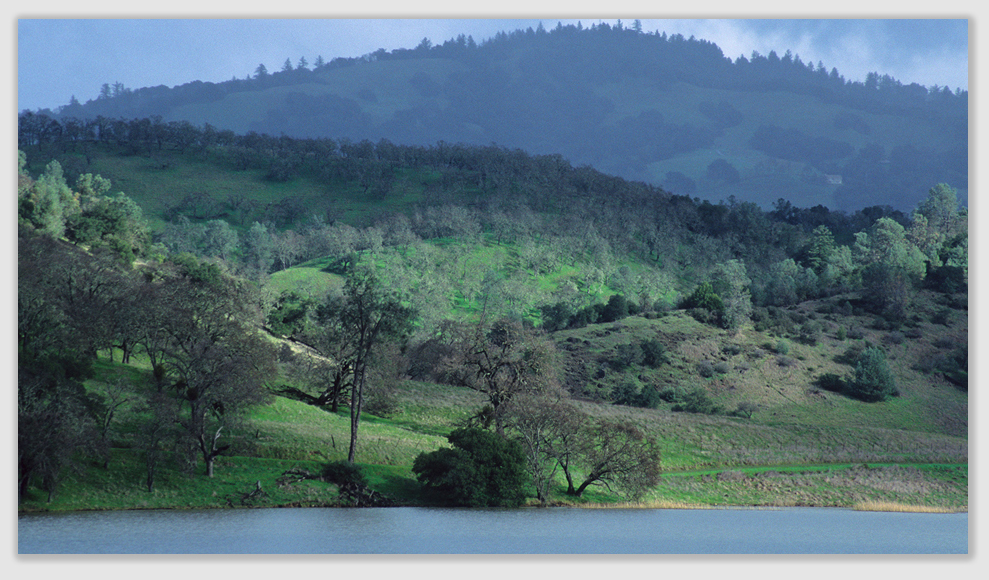 Wine Spectator, March 6, 2018: Does Napa Need to Choose Between Grapevines and Oak Trees?
Napa Valley is known for both its gorgeous acres of vineyards and its rugged, oak-covered hillsides. But do residents need to choose between vines and trees? Napa residents will vote on Measure C, also known as the “Napa County Watershed and Oak Woodland Protection Initiative of 2018” in June. Its goal, according to its proponents, is to amend the county’s zoning rules to further protect Napa’s streams, watersheds, wetlands and oak forests. Seems like a no-brainer on paper: Defend the splendor of Napa’s hillsides. Opponents, including many of the local wine-industry trade groups, fear the initiative will needlessly restrict hillside vineyard development. It’s a pivotal issue for a county that thrives on both maintaining its natural beauty and a $50 billion wine industry. The measure is sparking angry disagreement, especially given the altered environment following the devastating fires in October; and the debate will only get uglier by election day…
City leaders in Lakeland may be forced to make an unpopular decision soon on the fate of the historic Lovers Oak Tree. The 100-year-old Lakeland landmark was deemed a hazard to public safety by two certified arborists and an outside consultant, but the city has hired Joe Samnik, a well-known Florida arborists in the state to give his opinion. Samnik conducted tests on Monday to detect the level of decay and cracks, if any, and will advise city officials on his findings once the testing is complete. Either the tree will need to be removed, or it can stay with treatments and procedures to ensure “safety, health and welfare to the public,” he said in a statement…

An invasive plant from central Asia and southern Russia is sucking wetlands in northern New Mexico dry and officials in the area want to see the tree gone. Officials from the Santa Fe Botanical Garden recently removed 6.5 acres (.02 square kilometers) of Russian olive trees from the Leonora Curtin Wetland Preserve as part of a long-term preservation effort, the Santa Fe New Mexican reported. “Our biggest intent with tackling the Russian olive is to keep the ciénega (wetlands) wet,” said Botanical Garden Director of Horticulture Scott Canning. “When they leap out in the spring, the water table drops 4 feet,” he added, noting the trees “are notorious for removing water from the ground.” Russian olives are also a problem in the Santa Fe National Forest. The trees grow in midrange elevations, including along the Jemez River, where they compete for water with native trees. Cecil Rich of the U.S. Forest Service said the federal government would like to do something to control the Russian olive, adding that could be done by pulling them up by the roots or with herbicides…
Trees demolished homes and crushed cars Friday, leaving many people in Northern Virginia just thankful to be alive. Now that the shock is over, it’s time to assess the damage. One of the most pressing questions Crystal Insurance Agency in D.C. is getting is about who’s responsible when a neighbor’s tree damages your car or home in Maryland, D.C. or Virginia. Dilone said the only way your neighbor would be responsible is if their tree was diseased or damaged and you had documented that you had asked them to take care of it before Friday’s storm…
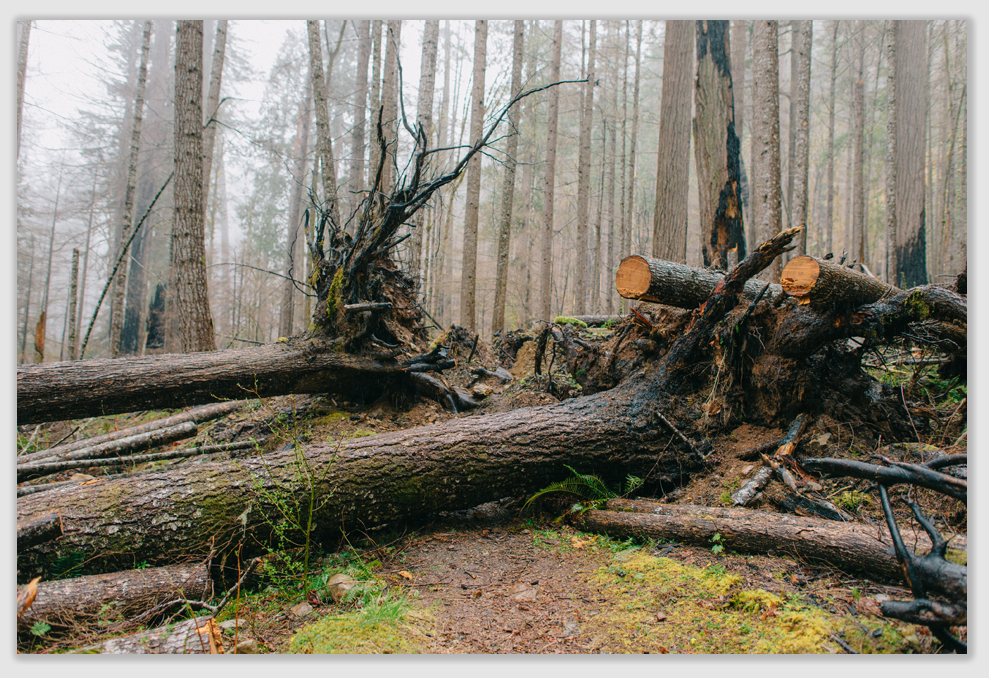
Hikers and trail users regularly go into the woods prepared for managing risks. They carry the 10 essentials. They’re ready for stormy weather, minor mishaps or meeting wildlife. But one often-overlooked safety hazard are trees themselves. Trees do fall in the woods all the time. When it happens you don’t want to be standing too close. When it comes to staying safe from the hazards of falling trees or branches, we turned to some of the situational awareness strategies used by WTA’s trail maintenance team. Here are some of the tips and guidelines they use to keep volunteers safe in the forest. The first step to being safe in a forest is to be aware of the conditions that will increase the likelihood of falling trees before you step out of the door…
Galveston, Texas, The Daily News, March 6, 2018: Loss of an oak has tree advocates talking change
Lovers of the iconic oak trees represented on League City’s official seal lost a battle Friday against the city’s ever-increasing growth. That pending loss of a historically significant oak tree on a school campus has local advocates worried about the remaining canopy and talking about stepping up preservation efforts. Efforts to save a historic oak tree at League City Elementary School fell short of raising enough money to move the tree from a construction zone, supporters said. The Friends of “Mr. Elementree” by a Friday deadline had raised only $4,500 toward moving the 110-year-old oak tree from a site where Clear Creek Independent School District plans to put a parking lot to serve a rebuilt school. Moving and replanting the tree would have cost about $200,000, officials said…
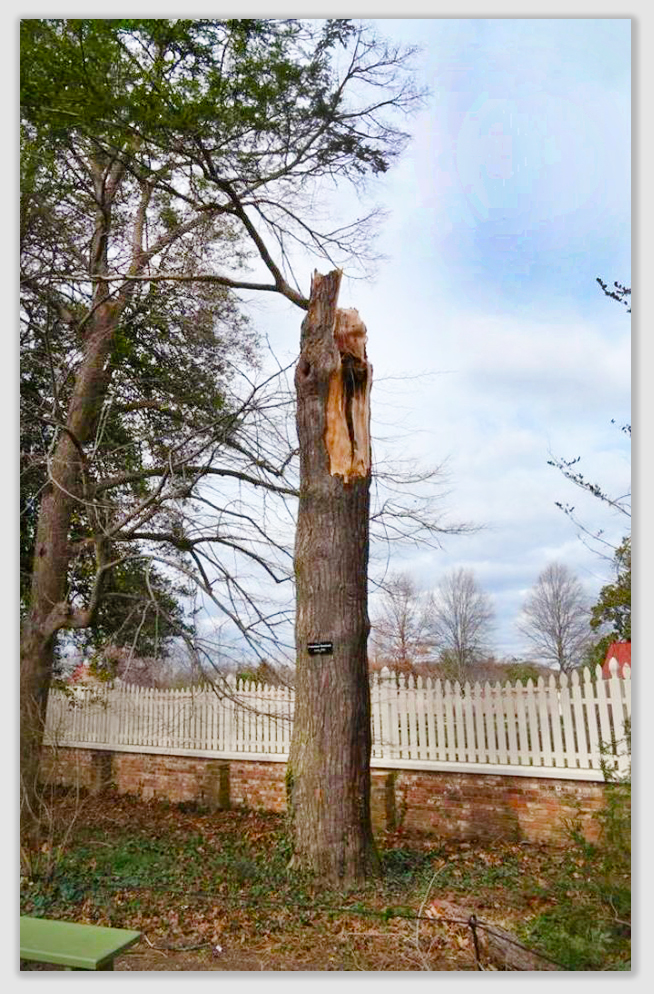
A tree at George Washington’s Mount Vernon – said to be planted by the first president himself – was knocked down Friday by the powerful nor’easter that struck the U.S. “Today at Mount Vernon, strong winds brought down a 227-year-old Canadian Hemlock, as well as a Virginia Cedar that stood watch over Washington’s tomb for many years,” the historical landmark posted on Facebook. Mount Vernon was the location of George Washington’s plantation along the Potomac River in Fairfax County, Virginia. The tree was planted by Washington in 1791, according to the estate’s director of horticulture. It was the site’s “best documented tree on the property arriving in a half whiskey barrel” from New York’s then-governor, George Clinton. Mount Vernon’s senior vice president of visitor engagement, Rob Shenk, tweeted that while “The DC area lost a lot of #trees yesterday” there were “maybe none more significant than this 1791 Canadian Hemlock.” Shenk said “George Washington himself likely knew” of the tree…
LaPorte, Indiana, Herald-Argus, March 4, 2018: Time for spring tree removal
I almost thought there for a moment that we were already in spring. Turns out we were just experiencing spring-like temperatures. However, I have been hearing of robin sightings, so it can’t be that far away, right? Out at the farm we have been clearing areas for more goat fencing and trying to be selective when deciding which trees will go. My favorite tree species in the whole wide world are the many varieties of oaks. They always appear so strong and majestic, and rarely do you see one topple over in a storm. Well, unless it was a hurricane or tornado that came through, then forget it. All trees will most likely be damaged. The main rule at my house is to not cut any of the oaks down. Where our house and farm sit was established back in 1903. So folks have been working this property, picking up sticks, planting trees, for more than 115 years. In my book that counts as close to forever as most of us will ever get. While the wooded area looks to be where it was timber harvested a few decades ago, new saplings are coming up in the open spaces. The fruit trees that have been here for who knows how long are getting ready for their beautiful spring showing of flowers…
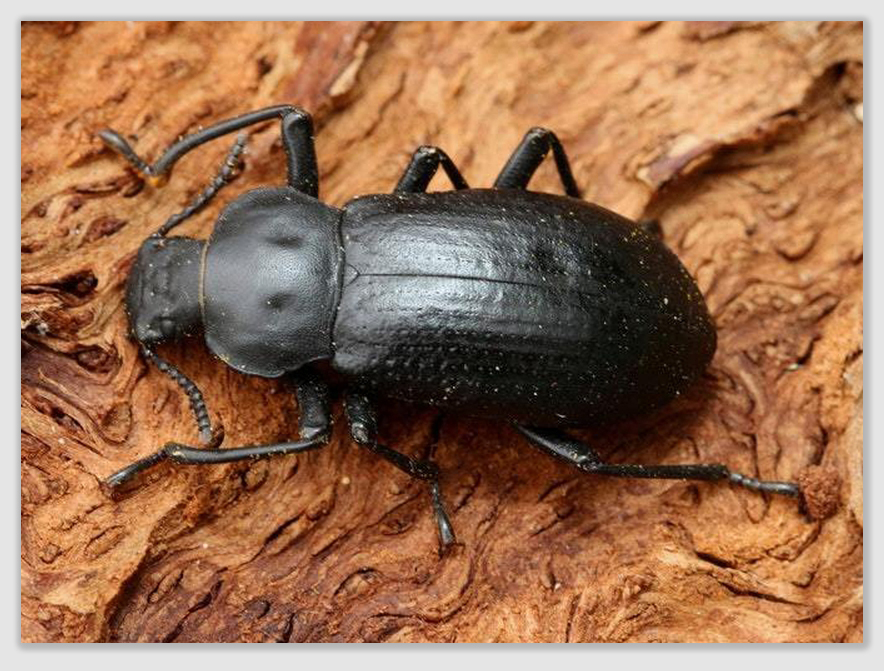
Almost a fifth of Europe’s wood-dependent beetles are at risk of extinction as a result of ongoing losses of large old trees, conservationists have warned. Saproxylic beetles depend on dead and decaying wood for at least a part of their life cycle and are important for recycling nutrients, as a food source for birds and mammals – and some are even involved in pollination. A study by the International Union for Conservation of Nature (IUCN) of how almost 700 species of the beetles were doing in Europe, including the UK, found 18% of them are at risk of extinction. Because they are reliant on dead and dying wood, the main driver of their declines is the loss of trees…
Both allergy and asthma are epidemic in many urban environments. Asthma, once rare, is now one of the most common chronic childhood diseases in Canada, Australia, the UK and the U.S. In the U.S. today, an estimated 30% of adults and 40% of children suffer from allergies. Studies show that allergies lower the test scores of schoolchildren. Worldwide, some 250,000 people die from asthma each year. Experts suggest links to a number of modern trends: too much time indoors with electronic gadgets, too much junk food, not enough exercise, overly clean homes, overuse of antibacterial soaps. Much less well known is the role of highly allergenic trees and shrubs we are planting with abandon in our yards and along our city streets. Many species of trees and shrubs used in modern city landscapes are dioecious, meaning that individual plants are either male or female. In my experience, horticulturists almost always grow these plants as males. And many species that have both male and female flowers on the same plant are propagated only from all-male branches. Even with street trees that still have flowers of both sexes, the modern trend is toward selecting trees that are more male and less female…

Washington’s beloved cherry trees signal the unofficial start of spring in the region. And it appears that for the third year in a row, spring will come early. The National Park Service announced Thursday that the blossoms are expected to reach peak bloom between March 17 and March 20. The historical average peak bloom date is April 4, said Mike Litterst, a spokesman for the Park Service. If conditions are optimal — mild temperatures and no high wind or heavy rain — the blossoms could stay on trees for a week to 10 days, Litterst said. “They’re very fragile,” he said. “That’s one of the reasons they’re such an attraction. If they came out and they stayed on the trees for a month, it wouldn’t be nearly as big a deal.” This weekend’s heavy winds might break some branches, Litterst said…
Associated Press, March 1, 2018: Honolulu to pay $1M to woman injured by coconut tree
The Honolulu City Council has approved a $1 million settlement with a woman who sued the city for injuries she sustained when a coconut tree struck her in 2012. The Honolulu Star-Advertiser reported Thursday that Ana Krogh-Doyle was a competitive surfer before being struck by the tree at Kuhio Beach Park. The then-44-year-old received fractures to her spine, ribs and face and sustained a head injury. Krogh-Doyle’s attorney, Wayne Kekina, says the tree fell and hit the roof of a restroom, then rolled off the roof and crushed his client…
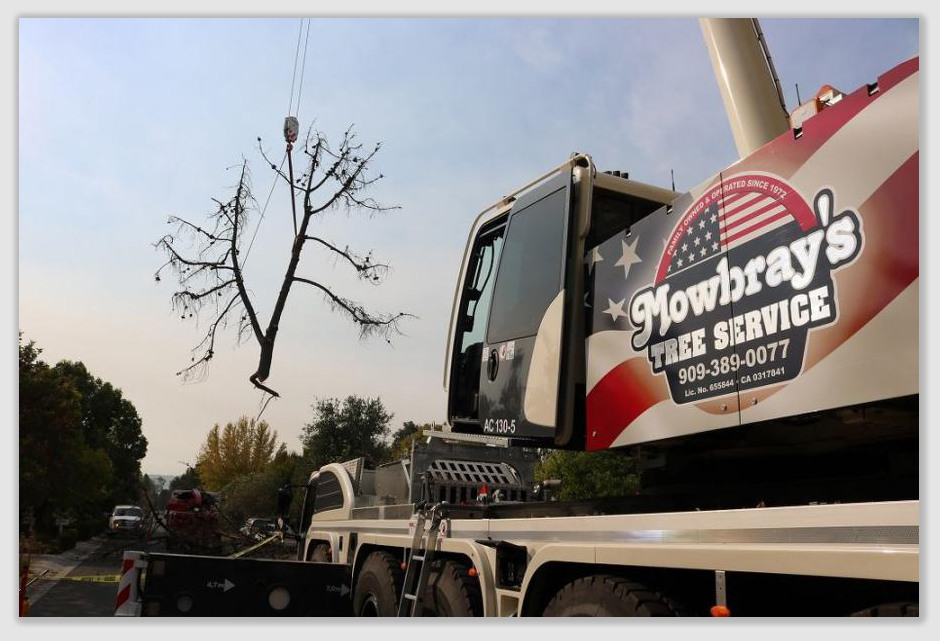
An estimated 112 million dead trees perilously populate the Sierra Nevada Mountains. The combination of unprecedented drought over the past four years coupled with significant bark beetle infestation has decimated trees throughout the mountain range in California. The severity of the problem pressed Gov. Jerry Brown of California to issue an emergency proclamation in October of 2015 for the removal of dead/dying trees in high hazard zones. Local, state and federal agencies are in a rush to remove the trees, as the drought-stricken trees serve as kindling for the quick spread of forest fires. However, “It’s slow and difficult work, as many of these trees are unsafe to climb for removal,” said Ricky Mowbray, crane operation supervisor of Mowbray’s Tree Service of San Bernardino, Calif. Jesse Sanchez, director of safety of Mowbray’s Tree Service, added, “Dead trees create various hazards, as they are weak and have the potential to fail more easily than a live tree. The longer a dead tree stands, the more unstable it becomes…”
When it comes to the subject of trees in this tree-loving town, the politics are often difficult. But the City Council on Thursday decided action beats more delay and voted to send county planners a streamlined version of the city’s nearly half-century old tree ordinance, an action that could make it easier to remove trees from private property. The 4-2 vote came after more than two hours of public comment and debate, with council members Harry Cohen and Charlie Miranda voting against the modified proposal by the Tampa Bay Builders Association. Council member Frank Reddick had left the meeting by the time the vote was taken. About a dozen residents pleaded with council members not to give preliminary approval to the plan, saying the builders’ proposal amounted to clear cutting, endangering the city’s cherished tree canopy. And they complained that the proposal had surfaced too quickly in a move many decried as sneaky…
 Kenosha, Wisconsin, News, February 28, 2018: Kenosha County tree removal project nets award
Saving big bucks in a progressive approach to remove emerald ash borer-affected trees earned Kenosha County recognition recently from the Department of Natural Resources and Wisconsin Urban Forestry Council. The key was contracting with a logging company not only to remove the trees but, in addition, to own and market the lumber, according to Parks Director Matthew Collins. “We got this work done at an average of $15.44 per tree,” Collins said Wednesday. “Our highest bid came to over $1 million if we used a traditional forestry company. By using a logging company, we got it done for $62,445.” Several companies submitted bids, but forestry companies “were nowhere near as competitive,” he said…
A judge is scheduled to hear arguments next month in a tree-cutting dispute between Keene officials and several residents of the city’s Edgewood neighborhood. The residents hope to block the city’s plans to remove trees in a patch of woods between their homes and the municipal airport. The hearing, which will be in Cheshire County Superior Court in Keene, could lead to the case being resolved without it going to trial, according to court documents. The civil lawsuit is one outgrowth of a years-long conflict between city officials and some Edgewood residents. The neighborhood, on the southern edge of Keene, is just north of the city-owned Dillant-Hopkins Airport in North Swanzey…

Detectives with the Lake Oswego Police Department are trying to figure out who cut down dozens of trees on a family’s private land. “You don’t do something like that,” said property owner Luis Pacheco. “It’s shocking.” The Pacheco family bought the land as an investment in 1981. The Pachecos do not live on the property, but they check it often. During a check in mid-February they noticed that more than 30 trees had been cut down without their permission. “They were stacked on each other so badly we could only count a couple of them at the time,” said Pacheco. “It ends up being 35 total.” A lot of the toppled trees are decades old. Others were planted by the Pacheco family…
A Baird Street resident sought a $6,349 reimbursement Monday from the village of Burton for work on a lateral sewer line replacement that the resident said was needed after the village planted a tree on her property. Resident Pat Linn told council that the roots of the Freeman maple tree planted around 20 years ago by the village had infiltrated her lateral sewer line, causing an unneeded expense for her and her husband, James, and creating an unhealthy environment in their home…

While Alabama trees wait their turn to bloom, their non-native cousin, the Bradford pear, is already turning thoughts to spring. “They start very early,” says Dr. Rudy Pacumbaba, Extension Specialist at the Alabama Cooperative Extension System. But looks can be deceiving. “In the state of Alabama it already is classified as an invasive species,” Pacumbaba says. The Alabama Forestry Commission wants you to “say no” to Bradford pear trees, and even go a step further to help it eradicate the trees. A Facebook post by the commission says the trees began to cross-pollinate and produce “abundant amounts of fruit” spread by birds. That post says the trees should be cut to stumps and immediately treated with herbicides to eliminate a sprouting response…
Washington, D.C., Post, February 27, 2018: Why do some male trees turn female?
It’s not often that a scientist reaches into fantasy literature for the perfect analogy. “Usually trees take a long time to respond to their environment,” botanist Jennifer Blake-Mahmud said. “Remember the Ents in ‘Lord of the Rings’? It takes them a long time to say anything in Entish!” Some things — or people or Ents — just don’t want to rush it. Most trees don’t rush anything, especially when it comes time to bloom. A lot of trees have some type of flower, which contains their sexual organs. The showier plants, such as cherry, magnolia and dogwood, flaunt their sexuality. But for many trees, you can barely notice or see their blossoms. All this blossoming usually takes months to fully develop, sometimes as long as 11 months, but it’s usually set in motion during the winter for their spring appearance. Only when the trees bloom can you figure out their sex. Lots of trees are hermaphroditic — that is, their flowers contain both male and female reproductive parts. Other species have male trees and female trees, which you can tell apart by looking at their flowers: The male reproductive parts are the pollen-laden stamen; the female parts their egg-holding pistils. Acer pensylvanicum, a striped maple found in the northeast United States and southeastern Canada, is that rarest of species: Not only can it take a mere three weeks to bloom (a nanosecond in arboreal terms), but an individual tree can switch sexes, from male to female. Blake-Mahmud announced the discovery, along with Lena Struwe, in the journal Trees: Structure and Function…
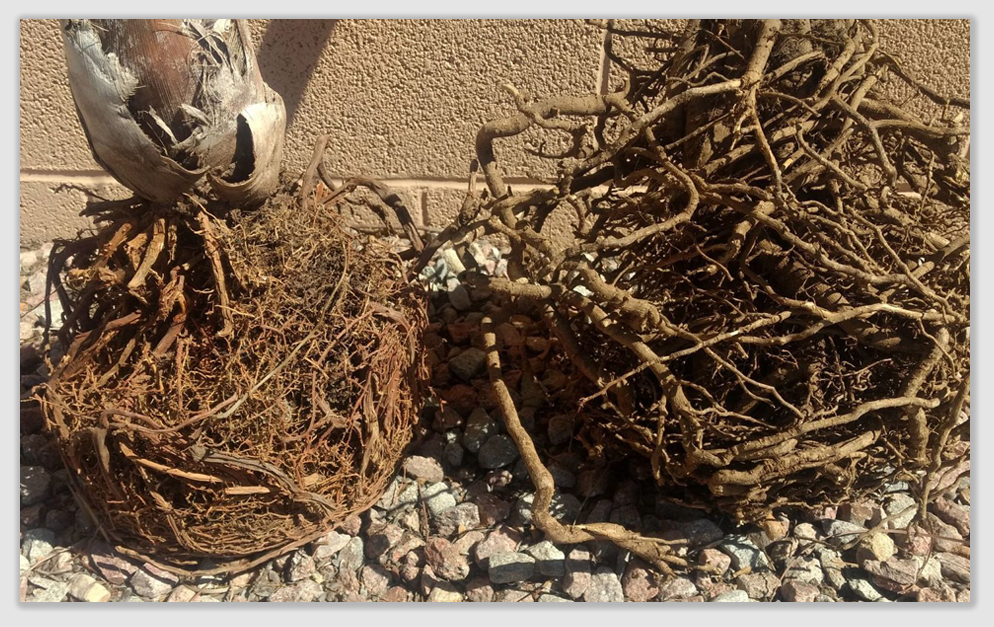
Small, constricted root systems are a major cause of death in landscape plants. When summer heat, low humidity, and lack of water begin to stress trees and shrubs, plant failure is common. In many cases, the death of plants can be traced back to small, constricted root systems. The best way to ensure good plant health, especially for trees and shrubs, is to start with good plants, put them into the ground correctly, and then give them good care afterwards. Here are some tips to consider. First, many problems experienced by plants growing under desert conditions can be avoided if we start with good quality plants. The next major hurdle is to get it planted correctly. Plants that start off weak or end up with damaged root systems, even if planted correctly, will find it tough going under desert conditions. It is much better to invest a little more time, money, and care now than it is to lose that new tree because of problems at planting…
A state Supreme Court Judge lifted a restraining order Monday on tree-clearing at the Legoland New York site that had been in effect for 42 days. But attorneys for Legoland opponents said they’ll be in appeals court in Brooklyn Wednesday, seeking a new restraining order. A contractor started site clearing Jan. 3 at the roughly 500-acre site in the Town of Goshen, aimed at clearing 97 acres, the first step toward construction. But on Jan. 16, an appeals court judge issued a temporary restraining order to stop the clearing until a state Supreme Court judge could rule on Legoland opponents’ push for an injunction to stop the clearing. On Feb. 6, an appeals court panel extended that restraining order. On Monday, state Supreme Court Judge James Brands, who sits in Poughkeepsie, denied the injunction. That meant the restraining order was lifted and clearing could proceed, said Jonathan Goldman, an associate with Sussman & Associates in Goshen, which is representing Legoland opponents…
 ABC, February 26, 2018: Mother of 3 hit by giant tree says, ‘Our lives are forever altered’
A mother of three who was hit by a 3,000-pound falling tree in New York City’s Central Park is speaking out for the first time about the incident and why she plans to file a $200 million lawsuit. “Our lives are forever altered by what happened,” Anne Monoky, 39, told ABC News’ Adrienne Bankert of the moment last August when the tree fell on her and her three young sons. “It was, like, a beautiful sunny day. I went to the park, and that’s all I remember,” she said. “The next thing I know I was in the ICU.” Monoky was pushing two of her children, then 4 and 2, in a stroller in Central Park while carrying her newborn son in a carrier on her chest. Monoky said her 2-year-old son suffered a skull fracture in the Aug. 15, 2017, incident. While her other two children did not suffer major injuries, Monoky said she suffered four fractures in her neck… Monoky and Goldman told ABC News they plan today to file a $200 million lawsuit against the city of New York, the Central Park Conservancy and several companies charged with maintaining the park’s trees. The Central Park Conservancy is a private, non-profit organization that manages Central Park “under a contract with the City of New York,” according to its website. The couple’s lawyers claim negligence and allege that the trees were not properly maintained…
A man who died after being electrocuted by power lines while trimming a tree this afternoon in San Jose was not a PG&E employee, a company spokeswoman confirmed. “Our thoughts and prayers go out to the deceased as well as his friends and family. Preliminary investigation shows that the man was not a PG&E contractor,” PG&E spokeswoman Tamar Sarkissian said. Sarkissian also said that PG&E shut off the electricity so that law enforcement could work at the scene. As of about 5 p.m., 953 people were without power and, Sarkissian said, power would be restored once the investigation into the electrocution is complete. The electrocution was first reported at 1:38 p.m. after neighbors on Page Mill Drive said a tree trimmer appeared to be stuck and could not get down, Fire Capt. Daniel Vega said. When fire crews arrived on scene, they realized that the man had been continuously electrocuted for an extended period of time when he cut a branch that hit a high-tension power line, according to Vega…
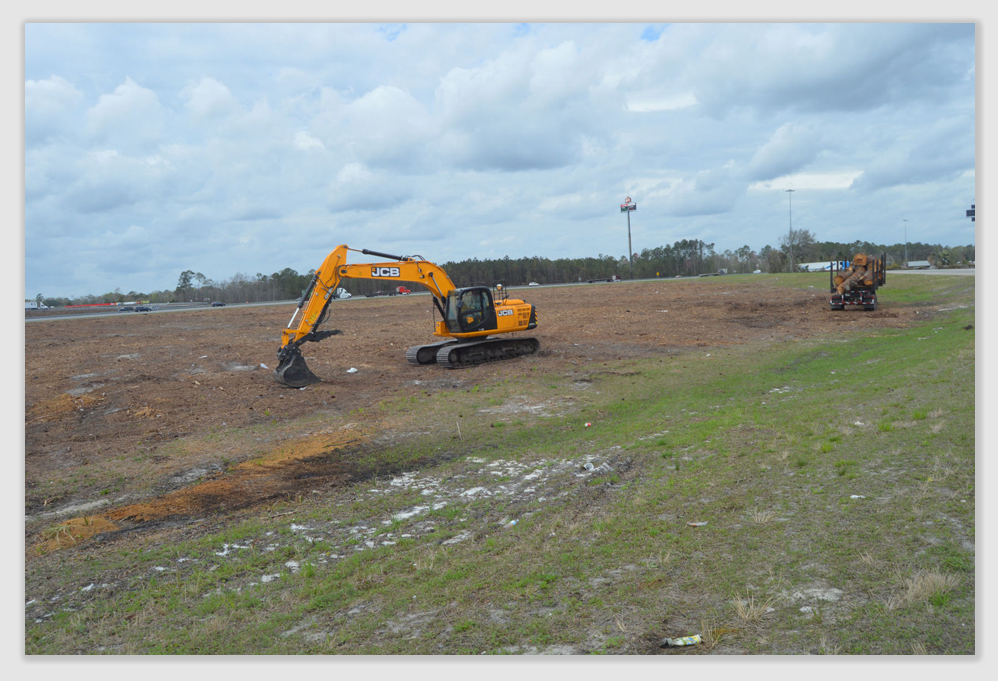 Brunswick, Georgia, The Brunswick News, February 26, 2018: GDOT backtracks on tree harvesting
If a tree falls by an interstate highway, it will be heard. Indeed, that was one of the reasons given by state Rep. Jason Spencer, R-Woodbine, in contacting the state Department of Transportation to halt its tree harvesting along I-95 near the state line with Florida, and along I-16, which runs from Savannah to Macon. In place of where trees once were, GDOT is to implement beautification plans. “This effort comes after an overwhelming outcry and demand from the public for more answers as to why the state transportation department would execute such an unsightly, massive and ill-informed project without any public input from the taxpayers or local officials and how it would affect residents,” Spencer said in a statement. Spencer said he was thankful about upcoming community meetings — which have yet to be scheduled — but is still looking for answers on how to reduce noise for residents who live near interstates…
Months after a sentimental spruce tree was stolen from his driveway, Paul Vogel said authorities are getting ready to pursue charges stemming to the Christmas theft. “Every time I go in there it breaks my heart all over again,” Vogel said. “When I planted it, it was just a tiny little stick was all it was… It turned into a beautiful tree.” Cass County Sgt. Tim Briggeman said Monday, Feb. 26, that detectives are nearly finished with the investigation and will soon be submitting recommendations to the state’s attorney’s office. Probable charges could include felony or misdemeanor levels of trespassing, theft and criminal mischief, he added. Detectives have been in communication with Vogel and those who they believe are responsible, but Briggeman could not confirm if the party has confessed to the crime… He had a hunch. Vogel said a similar incident happened many years ago around Christmas near his house when someone cut the top off a tall evergreen. After the most recent theft, he followed leads on Facebook and said he recovered pieces of the tree at a dumping site in north Fargo where the stolen tree had markings from a stand. That evidence Vogel tracked down was brought over to North Dakota State University for a lab comparison to a tree ring from the stump…
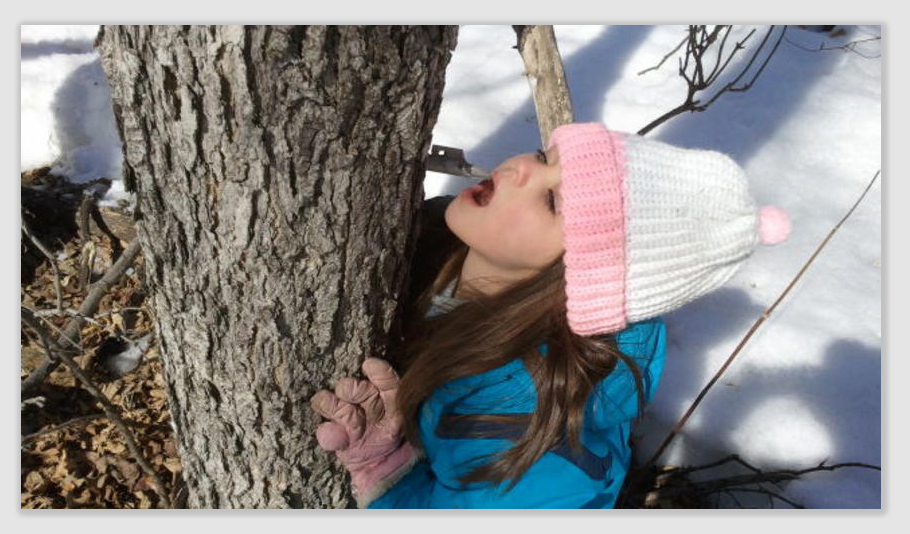
As the end of February approaches, and frigid winter temperatures start to warm, maple syrup producers in the Vergas area are beginning to place taps on their maple trees, signaling the start of syrup season — and the community has established a local competition to see if someone can guess the exact date and time the sap will start to flow. “Our mayor, Dean Haarstick, issued a proclamation designating an Official Maple Tree for the city of Vergas,” says Sherri Hanson, a member of the Vergas Maple Syrup Festival planning committee. “The tree was tapped on Feb. 15, and we’re having a contest to see when the bucket (placed underneath the tap) will overflow with sap.” “Many years ago, when the Maple Syrup Festival started, that was something they used to do every year,” says local syrup producer Dennis Pausch, who markets his own products under the name Papa’s Maple Syrup. “We just decided to bring it back this year.” Pausch says the Vergas area is a particularly popular one for maple syrup production, due mainly to its location. “The Vergas area is on the westernmost edge of the maple forest,” he explained. “If you go west of us, you don’t really see any maple trees…”
If there’s no hard freeze between now and the middle of April, there should be a bumper crop of early-variety peaches in May. But that’s a big if. Orchards across Edgefield County are in full bloom, with almost a week still left in February. “We’re over one hurdle – chill hours. The next hurdle is frost or freeze,” said Sonny Yonce, the owner of Big Smile peaches in Johnston. The cold weather provided “well over” a thousand hours of chill, which fruit trees need to produce a good harvest. After the last couple of weeks, with temperatures as high as the 80s, the trees are wide awake, many already past bud stage. Soon the blooms will fall and tiny, delicate fruit will start to appear. The blooms and the fruit to come are completely unprotected from a freeze, which Yonce has seen come as late as April 20…
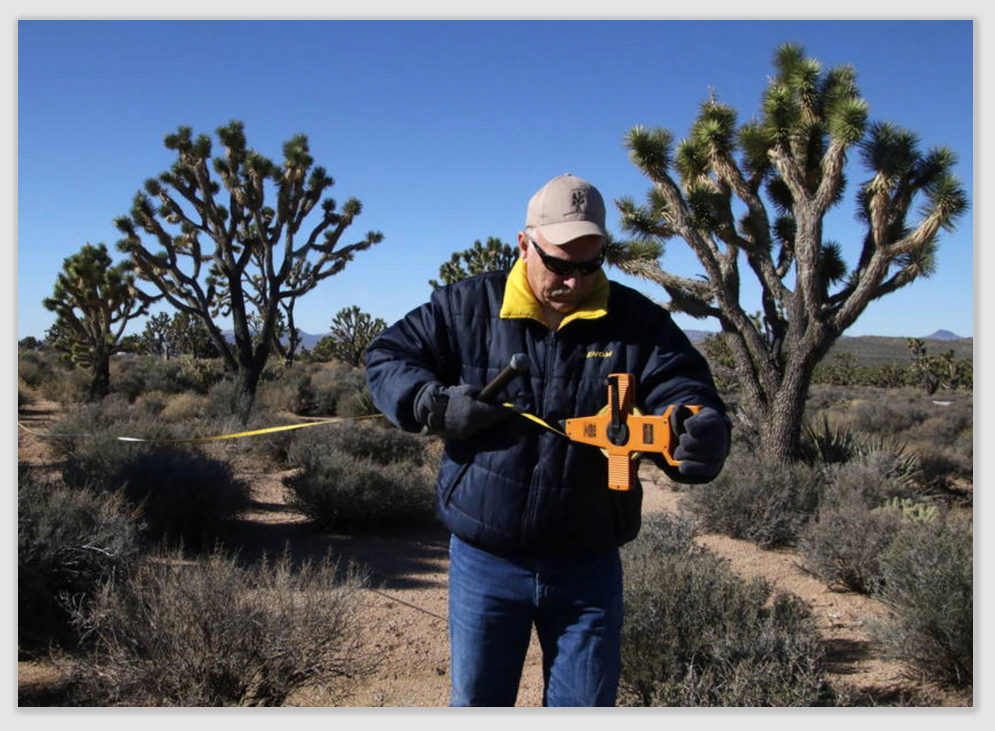
They are enduring symbols of the vast Mojave Desert, but Joshua trees don’t grow everywhere. Even here in the Grapevine Mesa Joshua Tree Forest, a National Natural Landmark since 1967, you can see where the trees thin out and stop as the land rises sharply to the east. Now a team of researchers has come up with an innovative way to determine exactly where the trees live and where they might live in the future. As it turns out, the distinctive spiny plants can be spotted from orbit and counted with a computer screen. “You can see Joshua trees with Google Earth,” said Todd Esque, a Henderson-based ecologist with the U.S. Geological Survey. “At least you can see the big ones.” Using satellite and aerial imagery already widely available on the internet, Esque and company hope to compile landscape-scale data on the presence and absence of Joshua trees across their native range in California, Nevada, Arizona and Utah…
Beech trees are dominating the woodlands of the northeastern United States as the climate changes, and that could be bad news for the forests and people who work in them, according to a group of scientists. The scientists say the move toward beech-heavy forests is associated with higher temperatures and precipitation. They say their 30-year study, published in the peer-reviewed Journal of Applied Ecology, is one of the first to look at such broad changes over a long time period in the northeastern U.S. and southeastern Canada. The changes could have major negative ramifications for forest ecosystems and industries that rely on them, said Dr. Aaron Weiskittel, a University of Maine associate professor of forest biometrics and modeling and one of the authors. Beech, often used for firewood, is of much less commercial value than some species of birch and maple trees that can be used to make furniture and flooring…

Collectively, Chicago region forest preserves, including those in Lake and Cook counties, spend more than $1 million annually to eradicate buckthorn and honeysuckle, two of the area’s most invasive plants, according to the Chicago Region Trees Initiative. But the population of these species, especially buckthorn, continues to expand, said Matt Ueltzen, a restoration ecologist with the Lake County Forest Preserves. Indeed, 42 percent of Lake County’s tree landscape is buckthorn, the highest percentage in the region, with Cook County coming in second at 32 percent, according to the initiative. Those figures include not only the natural areas managed for the public by forest preserve districts and others, but also land owned by parks, businesses and homeowners. Seventy percent of the trees in our region are on private land, according to Lydia Scott, director of the Chicago Region Trees Initiative, which focuses on Cook, DuPage, Kane, Kendall, Lake, McHenry and Will counties…
Angola, Indiana, Herald-Republican, February 22, 2018: Man injured in tree work mishap dies
A Fremont man has died as a result of injuries he suffered in a Feb. 6 tree-trimming accident in Bethel Township in Branch County, Michigan, on Tuesday. Brian Thompson, 56, sustained a fractured skull in the accident, Branch County Sheriff’s Office authorities say, after he was hit in the head by a falling tree the afternoon of Feb. 6. Thompson was flown from the scene off of Clearwater Road near Cranson Road by an air ambulance and was taken to Parkview Regional Medical Center for treatment. Thompson died at Parkview. Thompson was a farmer and had worked at Dexter Axle, Fremont…
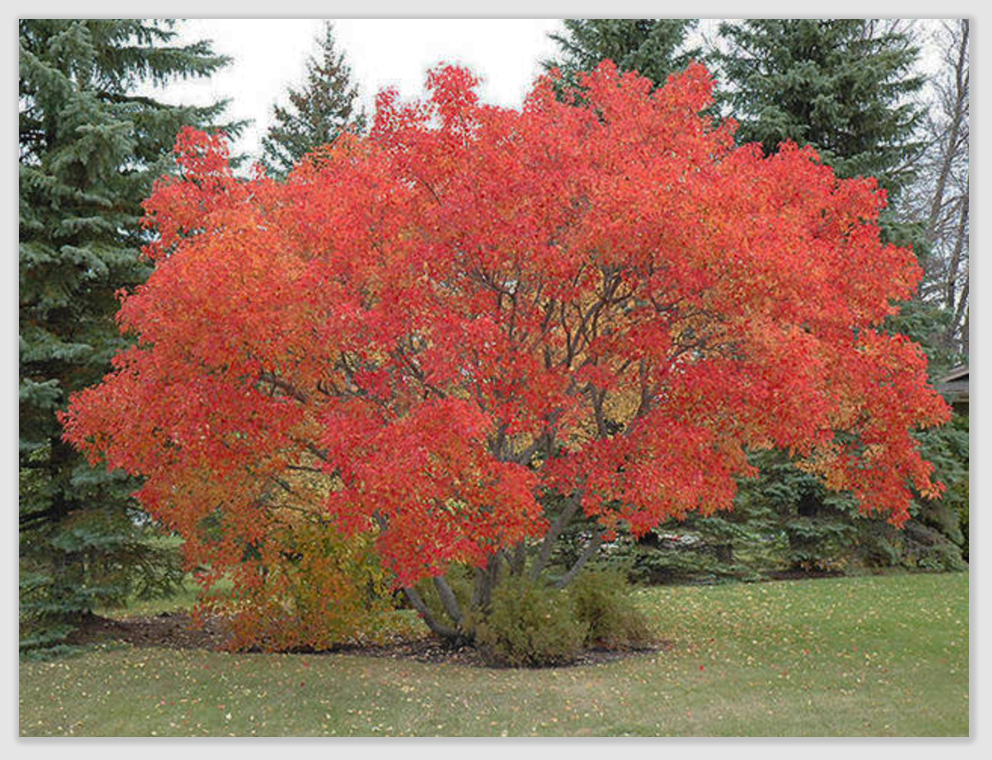
A few years ago, Rutgers researcher Jennifer Blake-Mahmud was working on a botany project in Virginia when colleagues pointed out a striped maple, a common tree in the understory of mountain forests from Nova Scotia to Georgia. “They told me, ‘We think it switches sex from year to year, but we don’t know why,’ and I said, ‘No way! How can that be?’ Blake-Mahmud said. “And that was when I decided I needed to find out what was going on.” In research published in the journal Trees: Structure and Function, Blake-Mahmud reports that striped maples not only change their sex periodically, but that they can wait until the last minute – three weeks before flowering – to do it. The switch appears to be triggered by physical damage, which can prompt a branch to flower female if it’s cut off a male tree…
Flathead County Commissioner Phil Mitchell is scheduled to stand trial in June, nearly a year after he was charged with felony criminal mischief for allegedly killing six cottonwood trees at a public park near his home on Whitefish Lake. Mitchell was previously set to stand trial this month, but prosecutors and the defense filed a motion to reschedule the trial for June as they continue to prepare their cases… According to court records, on July 11, a Flathead County Parks and Recreation Department employee found six dying or dead cottonwood trees in a half-acre county-owned park known as Lake Park Addition just south of Whitefish Lake State Park. The trees appeared to be girdled, a tactic that involves removing a thick strip of bark ringing the tree’s circumference, causing the tree to die. The Flathead County Sheriff’s Office opened an investigation into the destruction in July and retained an arborist who determined it would cost more than $30,000 to replace the trees…
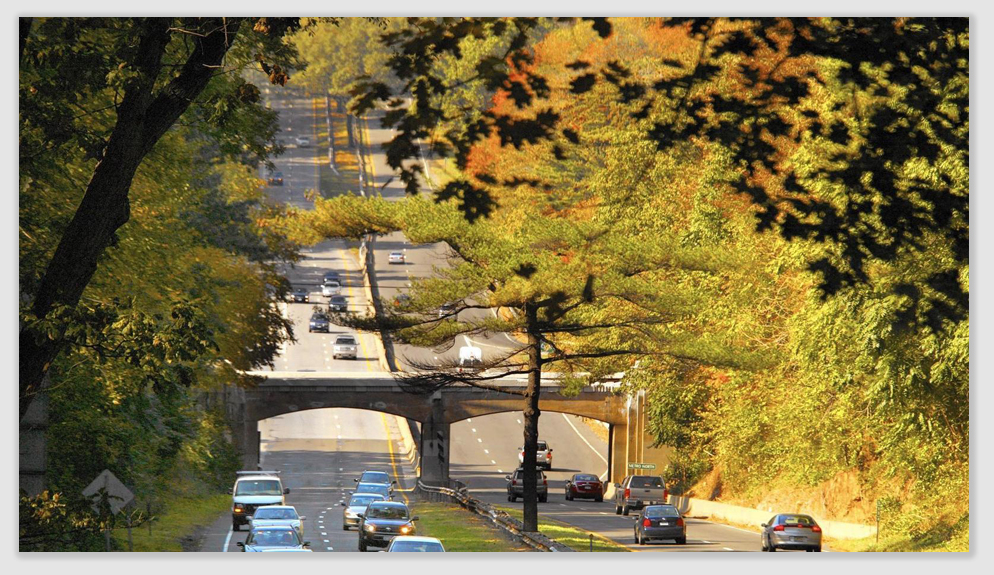
State officials have agreed to pay a $6.25 million settlement to end a decade-old legal case arising from the deaths of physician Joseph Stavola and his wife, attorney Jeanne Serocke-Stavola, on June 9, 2007, when a 70-foot tree fell on their Volvo as they drove on the Merritt Parkway in Westport. Their sons, then 9 and 7, witnessed their parents’ deaths from the back seat. A three-page settlement agreement of a pending Superior Court lawsuit against the state was filed with the General Assembly Tuesday by the office of Attorney General George Jepsen. It was signed by lawyers for the state and the family of the surviving sons, James and William Stavola — who after the tragedy were brought up by Joseph Stavola’s brother and sister-in-law in the Hartford area. Tuesday’s filing starts a formal approval process under which the state House and Senate will have three alternatives: vote to endorse the settlement; reject it by a three-fifths vote in each chamber; or do nothing, which would result in automatic approval of the settlement after 30 days…
A task force says it is working on eradicating albizia trees on the east side of Big Island within the next several weeks. The Hawaii Tribune-Herald reported Monday that the Hawaii Island Albizia Task Force has planned four control projects costing $1 million. Big Island Invasive Species Committee Manager Springer Kaye says the first project is nearly complete. The first project targeted all albizia within 328 feet (100 meters) of a 1-mile (1.6-kilometer) stretch of the Puainako Extension where the more 100 feet (30.5 meters) tall trees have caused significant traffic hazards…
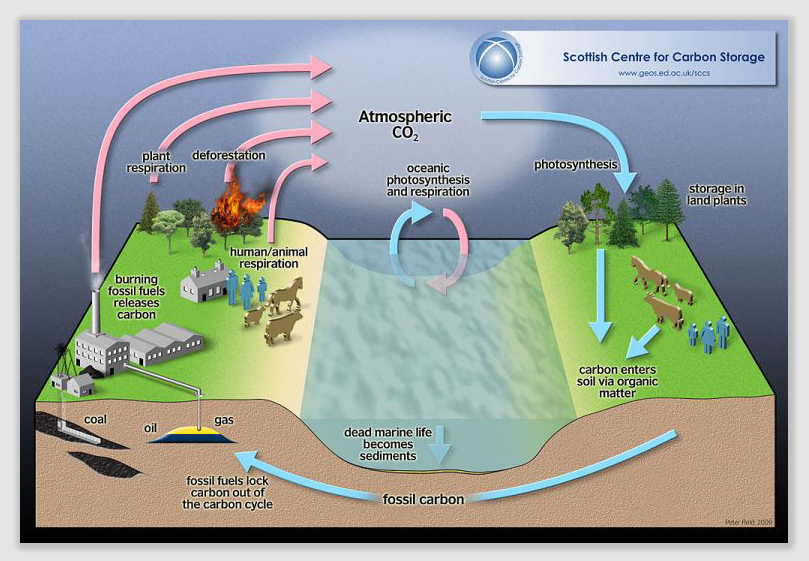
Tropical trees in the Amazon Rainforest may be more drought resistant than previously thought, according to a new study by researchers at the University of California, Riverside. That’s good news, since the Amazon stores about 20 percent of all carbon in the Earth’s biomass, which helps reduce global warming by lowering the planet’s greenhouse gas levels. In a study published Monday in the journal New Phytologist, a team led by Louis Santiago, a professor of Botany & Plant Sciences, found that tropical trees in Paracou, French Guiana have developed an unusual way to protect themselves from damage caused by drought. The trees make use of an abundance of living cells around their xylem to conserve and redistribute water in drought conditions. The xylem (the scientific name for wood) is the non-living tissue of a plant that transports water and nutrients from the soil to the stems and leaves. Santiago said studying drought in one of the wettest places on Earth might seem counterintuitive, but recent droughts, including record heat and drought during the 2015-16 El Niño, are already threatening the Amazon Rainforest. If trees die because of those droughts, the carbon they store will be released into the atmosphere, where it will further exacerbate global warming…
King, North Carolina, The Stokes News, February 21, 2018: Frustration of a tree farmer
I have been a tree farmer for over 50 years. I am approaching the age of 77 and I remember reading “Weekly Reader” as required reading when I was in the fifth grade. One of the frequent articles in the “Weekly” was about how good it was to plant trees and the amount of money you could make off thinning pulpwood and cutting of saw timber. It encouraged young people to be good conservationist like the President encouraged with the WPA and CCC programs, during the Great Depression. I have never been so disappointed at anything I have ever done as to plant trees and lose four percent per year so the economic royalist can profit from the creation of the oversupply of trees resulting in cheap prices of trees and allowing great profits going to the saw and pulp mills. President Trump has made an effort to reduce “dumping” of timber and lumber from Canada into the United States in an effort to reduce the oversupply. As a result of the lobbying efforts of the mills, the tree farmer has been given more regulations and fines if we don’t plant trees. Many mills have sold off their tree farming lands because it is easier to pay lobbyist to force the private landowner to grow trees at a loss than to grow it themselves. Once a landowner plants trees, it takes 40 years or more to grow merchantable timber. Some small amount of pulpwood may be cut after 20 to 25 years. A tree farmer can’t decide to get out of their tree crop after one year for they make a commitment for 40 years until the trees are mature. Most tree farmers will have one timber harvest in a lifetime and are not fully informed of what is happening to them…
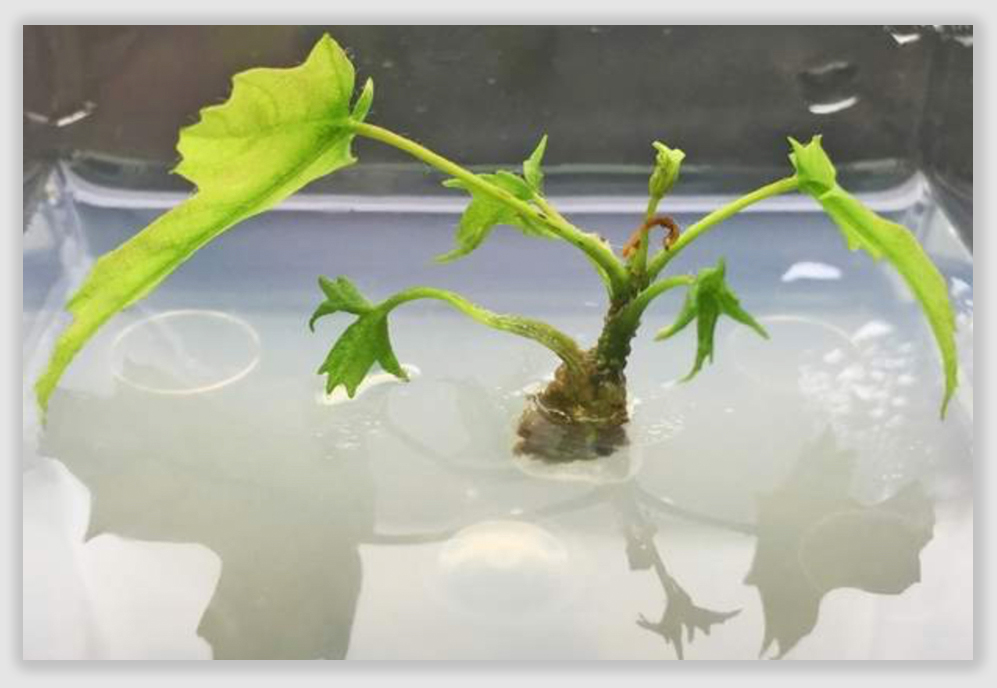
Could cloning create “sweeter” maple trees that could ultimately reduce the cost to produce syrup? That’s what maple researchers here are trying to find out, using funding from the Northern New York Agricultural Development Program. “If producers can plant and harvest from trees with naturally higher sugar sap concentrations, productivity would increase and costs would decrease,” Cornell University plant pathologist Keith L. Perry, director of the Uihlein Foundation Seed Potato Farm in Lake Placid, said in a release. “If we can clonally propagate what are known as ‘sweet trees,’ there would be an opportunity to establish a nursery crop industry as well.” “We’re glad we have the support of the senators to do this kind of work up north,” added Michele E. Ledoux, coordinator of the Northern New York Agricultural Development Program, which is funded through the state Senate and administered through the state Department of Agriculture and Markets. “The potential for maple sugar in Northern New York is phenomenal.” Mrs. Ledoux, also executive director at Cornell Cooperative Extension of Lewis County, said the research project, while unique for maple, is similar to research done here and elsewhere on potatoes and other plants and trees to improve production…
In response to the question about using a dead white ash tree for firewood: Winter is a good time to remove large dead ash trees, as well as do some pruning, as there will be less impact on the garden since the ground is frozen and perennials are dormant. Perennials right next to the stump may get damaged when the stump is ground out. If you plan to plant perennials or small shrubs in the same spot as the stump, ask the vendor to grind the stump extra deep. Remove the resulting wood chips and replace with garden soil when the weather permits. Dig the whole stump out if you want to plant a replacement tree in the exact same spot. Otherwise, shift the new tree over a bit to save on digging the stump out. Another thing to consider is the increase in sunlight once the trees are removed. Some of the existing garden plants may need to be moved to a shadier spot in the garden, while others that were struggling in the shade may perform considerably better with the additional sun. Your white ash was likely killed by an insect called the emerald ash borer that has decimated the ash tree population in the Chicago region over the last few years, with white ash (Fraxinus americana) being the last to go. Very few ashes will survive the damage caused by this insect unless the tree is being treated with an insecticide. It is best to remove the dead ash tree in your garden this winter as the potential for falling limbs increases quickly for ash trees once they die. You will be able to use the wood from dead ashes in your fireplace, but do not transport the ash logs out of Illinois. Let your arborist know that you would like the logs cut into firewood length. Consider renting a log splitter if there is a large volume of wood to split…
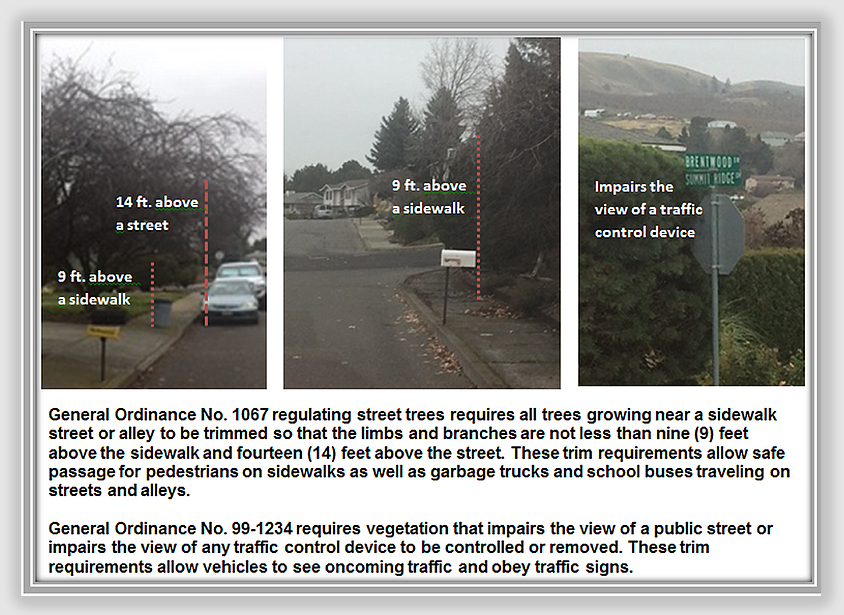 The Dalles, Oregon, Chronicle, February 20, 2018: City: Good time to trim trees, bushes
The City of The Dalles is encouraging residents to trim trees on or near their properties that block public walkways and streets. Except in the downtown area, property owners or occupants, not city staff, are responsible for trees on their property or on the right-of-way next to their property, according to information provided by the city. Check trees and shrubs that extend over sidewalks, streets and alleys. Mid-February through mid-March is a good time of year to make your property safe, city staff said. Proper pruning is important for the health of trees and shrubs. The Arbor Day Foundation offers a series of “Ask an Arborist” how-to videos to demonstrating the ABCs of pruning. Other resources can be found on the internet or by consulting professionals…
Savannah, Georgia, WSAV-TV, February 20, 2018: Tree cutting on I-16 and I-95 helps driver safety
You may have noticed trees being cleared from the medians along I-16 and I-95. According to the Georgia Department of Transportation, the goal is driver safety. “Over the last three years, we have seen 472 fatalities from striking trees which we consider fixed objects,” says GDOT spokesperson Jill Nagel. “Sixty percent of fatalities is motorists leaving their lane and crashing and fifty percent are hitting fixed objects.” Removing these trees Nagel says will save lives. “We are trying to clear the road ways so when someone departs from their lane, we are giving them more room of a clear zone.” But cutting was not the original idea.“We were talking about maybe thinning out. But because of the age of these mainly pine trees, we couldn’t thin them out because the root systems are all grown together…”
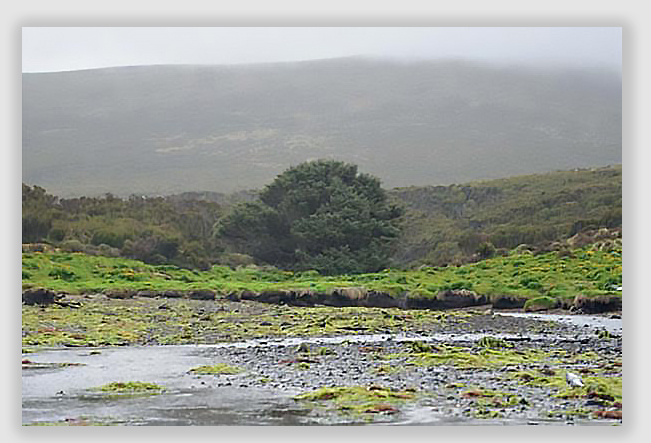
Scientists have discovered evidence of the beginning of the Anthropocene, the newest geological epoch. The evidence came in the form of a “golden spike” found in the heartwood of the “loneliest tree in the world.” Though scientists have shown that humans have been influencing the planet’s ecosystems for thousands of years, many consider the sudden spike in radioactive carbon caused by the testing of nuclear weapons in 1950s and 1960s the mark of humanity’s newly dominant role as chief driver of climatic change. Now, scientists have found direct evidence of that golden spike in a lone tree, a Sitka spruce found on Campbell Island, which lies in the middle of the South Ocean. The spruce is called the loneliest tree in the world because the next nearest tree lies 125 miles away in the Auckland islands. “The impact that humanity’s nuclear weapons testing has had on the Earth’s atmosphere provides a global signal that unambiguously demonstrates that humans have become the major agent of change on the planet,” Christopher Fogwill, a professor of glaciology and palaeoclimatology at Keele University, said in a news release. “This is an important, yet worrying finding…”
Neighbors who live on Lincoln Street near 30th said a large tree that fell should have been removed months ago. Alissa Miller said she was in the shower around 11:00 am Sunday when she heard the news. “My roommates’ boyfriend was banging on the door, ‘hey there’s a tree on your car,’ are you kidding me?” Miller said. The large tree and many broken branches landed on top of two cars parked in the street. ‘The wind took it is what broke it today,” Miller said. Miller and her roommates said the city marked the tree with a green “X”, meaning it should be removed, and had even put up a warning sign last fall. “Eventually it blew away and the city never came back to take the tree down,” Lilly Pitts said…
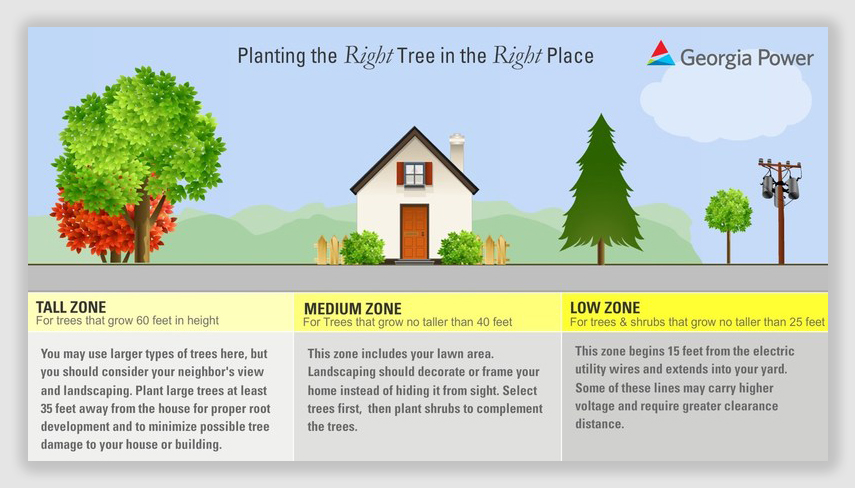 Yahoo Finance, February 19, 2018: Plant the right tree in the right place this spring
Georgia Power works every day to keep reliability high across the state and, with Georgia Arbor Day marking the start of the spring planting season this month, the company encourages customers to make the right landscaping choices around homes and businesses. Planting the right tree in the right place may help decrease the likelihood of a power outage in the event of a storm while ensuring that power lines are clear of trees and brush provides also easier access to the company’s power lines, which means quicker power restoration after a storm. Georgia Power recommends dividing your yard into three specific planting zones – the Tall Zone (trees 60 feet or higher), the Medium Zone (trees no taller than 40 feet), and the Low Zone (trees and shrubs no taller than 25 feet). Trees and shrubs in the Low Zone may be planted 15 feet from electric utility wires. In addition to helping customers select the right trees to plant, Georgia Power maintains 160,000 line acres and 24,000 miles of transmission and distribution lines under guidelines set by the Federal Energy Regulatory Commission (FERC) and the North American Electric Reliability Corporation (NERC). These maintenance activities are an essential piece of the company’s commitment to ensuring reliable service for 2.5 million customers in every corner of the state…
The city of Centralia announced Friday it would close the Fort Borst Park playground as of this afternoon, citing concerns from an arborist regarding the stability of two ailing Douglas firs and forecasted stormy weather for the weekend. “The area will be taped off for public safety,” city attorney Shannon Murphy-Olson wrote in an email. “The city is in the process of contacting a tree removal company to make arrangements for topping of the tree(s) of concern.” Certified arborist Ray Gleason, of Cascade Tree Experts, spoke in the public comment portion of Tuesday’s Centralia City Council meeting expressing grave concern for the safety of children at the playground, along with frustration at a perceived lack of interest in the problem on the part of city staff. “I’m extremely concerned and I hope that everyone is,” he said Tuesday. “There’s probably greater than 50 branches directly on top of that swing set … I cannot believe this has been allowed…”
 Mother Nature Network, February 15, 2018: Tree rings reveal our past — and our future
Trees are timekeepers. Count the concentric growth rings circling the heartwood of a chopped log and you’ll know a tree’s age. It’s a fun fact, for sure, but tree-ring dating (technically known as dendrochronology) goes far beyond determining how old a tree is. Trees are also meticulous record keepers of climatic conditions. By unraveling the rich data stored in tree rings, scientists can do everything from dating archaeological sites and preventing forest fires to documenting planetary history and offering a crystal ball into our environmental future. “Trees are natural archives of information,” says Ronald Towner, an associate professor of dendrochronology and anthropology at the Laboratory of Tree-Ring Research at the University of Arizona in Tucson. “They stand in one place for a long time, sort of recording in their rings the environment around them. Anything that affects a tree — precipitation, temperature, nutrients in the soil, fires, injuries — can show up in the rings…”
Nearby colleges and universities commonly have football team rivalries, but in Humboldt County they compete to have the largest growing tree on campus. College of the Redwoods and Humboldt State University don’t compete athletically but the CR Forestry and Natural Resources program is coming after HSU’s claim last year that they have the world’s tallest tree on a college campus. This week, CR students measured what could be the largest tree by diameter on a college campus in the United States. However, these things are hard to keep track of because there’s not a Guinness World Record for the tallest or largest by diameter trees on college campuses, CR forestry professor Tim Baker said. “Basically, we don’t know,” he said about the largest on-campus tree designation. “We were throwing it out there in response to HSU saying they had the world’s tallest tree [on a college campus] because they don’t know either…”
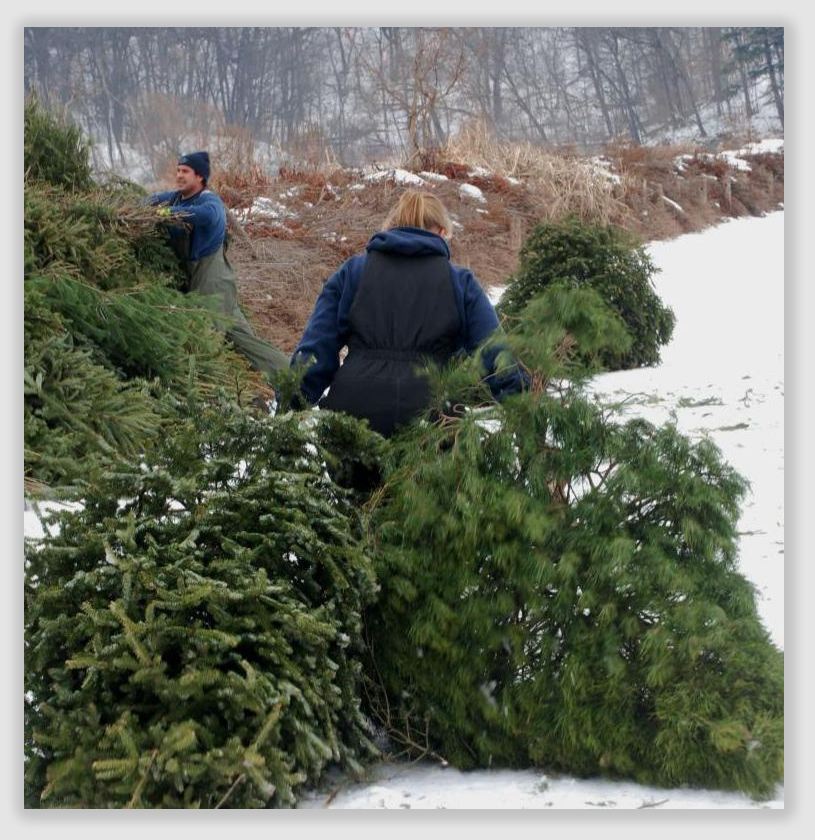 Great Lakes Echo, February 15, 2018: Discarded Christmas trees a weapon against Asian carp
Canada’s Royal Botanical Gardens sit near the western end of Lake Ontario, just a short drive from the U.S. border. When the weather is warm, visitors come to see acres of gardens with roses, lilacs and other collections in bloom. In the winter, it’s much quieter. But scientists stay busy, protecting wetlands from destructive carp. And they’re using an unusual weapon: Christmas trees. Ecologist Andrea Court walks across Grindstone Creek, which is frozen solid. In each hand is a discarded Christmas tree stripped of all of its festive ornaments. Holding the base of the trunks, she drags the trees behind her, leaving a pathway of twigs, pine needles and pieces of brown bark. Her face is red from exposure to temperatures that hover near the freezing mark. “This job is very weather-dependent, so you go when you can,” she says…
London, UK, Daily Mail, February 15, 2018: Researchers use new laser scanning tech to `weigh´ trees
New laser scanning technology is being used to “weigh” trees, in a project which could help more accurately assess the role forests can play in tackling climate change. Lasers are used to collect hundreds of thousands of points of data a second from the canopy, which are processed to build a three-dimensional picture of the tree revealing its structure and its volume, which allows estimates of mass. For example, one sycamore tree in Wytham Woods near Oxford was found to have nearly 11km (6.8 miles) of branches, double that of much taller tropical trees measured as part of the study, the researchers said. It is hoped the information will give a more accurate picture of the amount of carbon absorbed by forests, as part of efforts to reduce greenhouse gases, as well as help predict how trees might respond to climate change…
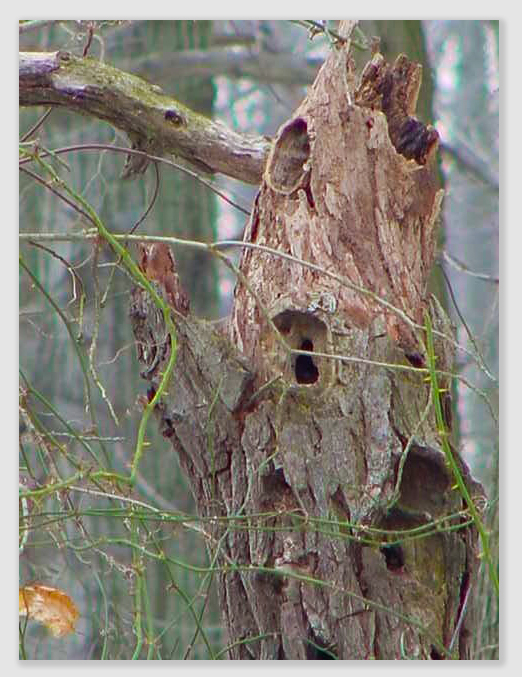
In natural woodlands, fallen and decaying trees are much more noticeable in winter than in summer when surrounding vegetation distracts attention. Though these trees are no longer alive, they provide shelter and sustenance for many other organisms in the woodlands. In natural environments, dead trees and other decaying plant materials play a vital role in the recycling of nutrients and the development of topsoil that is necessary for a forest to go through a natural succession of ecosystems. Even before they fall to the ground, most dead trees are already serving as an apartment for a wide variety of life, from micro-organisms to vertebrates. The start of a tree’s downfall often begins when the bark is damaged, allowing fungi and bacteria to enter. The dead heartwood in the center of a tree is often exploited by these decomposers. In many cases, the center of a healthy-looking tree is almost entirely hollowed out many years before it dies…
Barf Blog, February 14, 2018: Risk assessment ‘tolerable’ for tree that killed woman
Risk assessments are fraught with value judgements scientists make when choosing the upper and lower boundaries of numerical ranges and the assumptions made, especially those involving human behavior. Conrad Brunk (right) and co-authors explored this in the 1991 book, Value Judgements in Risk Assessment. For the many food safety risk assessors and analysts out there, a New Zealand tree may offer a lesson. A tree in Rotorua, known as Spencer’s Oak, was deemed to be of a “tolerable” level of risk when it came down in a Jan. 2018 storm and killed a woman. The 150-year-old oak, believed to be around 23m tall, blocked Amohia St, trapped 56-year-old Trish Butterworth in her car. She died at the scene. The risk assessment of the tree has been revealed in documents released by Rotorua Lakes Council to Stuff under the Local Government Official Information and Meetings Act. Benn Bathgate reports that in a tree assessment report from an arboricultural contractor dated February 28, 2017, Spencer’s Oak and a second tree were assessed. “The assessed risk levels for these trees all fall the tolerable level,” the report said…
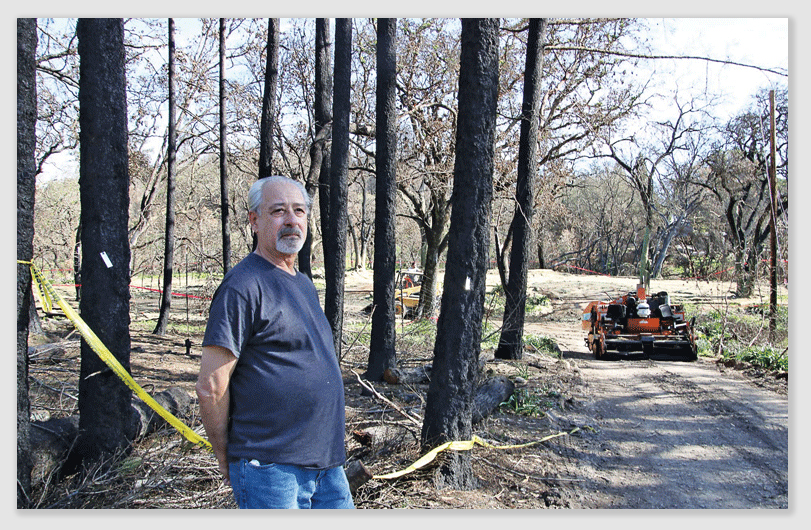
As PG&E is looking to wind down its aggressive post-fire tree culling program, Sonoma County is ramping up a federally-funded project that aims to take down fire-damaged trees along 90 miles of roads if they pose a danger of falling into county roadways. While the initial survey for the program is finished, the number of trees targeted is not yet available. Adobe Canyon Road homeowner Patti Everett became aware of the county project when a survey crew showed up at her home – the last house before the Sugarloaf State Park entrance – and put aluminum tags on many of her second- and third-growth redwoods surrounding an auxiliary structure that burned in the October fire. Her home is intact. “It’s very, very sad,” Everett said, noting that redwood trees are fire resilient and that many of those tagged by the county’s consulting firm, ACRT, don’t seem to be damaged or even in the county’s right of way. “I want to make sure that none of them are taken down by accident,” Everett said…
Forbes, February 14, 2018: Tax-favored money grows on trees
A tree entrepreneur profiled in Forbes inspired me to look for publicly traded firms in the same line of work. There are more than a few, and they tend to be organized as real estate investment trusts. If you want growth in your portfolio, standing timber is not a bad way to get it. Lumber barons get to treat their profits from harvesting wood as low-taxed capital gains. That cushy deal extends to shareholders in forest-product companies organized as REITs. Potlatch (PCH), for example, paid out $1.53 a share last year, all of it classified as long-term gain. When it completes a pending acquisition, this REIT will have 1.9 million acres of timberland and ample opportunity to make that dividend greener. Rayonier (RYN), another tree REIT, owns, leases or manages 2.7 million acres. Its $1 dividend last year was 100% capital gain…
Trees are a nice addition to any city, but they can occasionally be the subject of a dispute. To that end, City Council’s Service Committee met Monday evening to discuss a change in procedure regarding tree-centered disputes. In the past, if there was a problem concerning a tree on public property, the city’s arborist, Dean Grida, would make a decision on the matter. The committee, however, recommended to a full council vote a change that would have the nine-member South Euclid Tree Commission resolve such disputes. Committee chairperson and Ward 4 Councilwoman Jane Goodman said the amendment came about because of a recent incident. “A resident in the Cedar Center neighborhood who loves trees and lives on a corner lot decided she would plant an orchard of fruit trees on her tree lawn,” Goodman said. “That creates a hazard…”
A proposal to cut down 42 trees in Tiburon seems to be headed to the chopping block. The Tiburon Parks, Open Space and Trails Commission on Monday voted 4-0 to recommend that the Town Council deny the proposal, and to instead come up with a compromise to save some of the trees. Commissioner Philip Feldman was absent. The proposal to remove 21 blue-gum eucalyptus, 15 Italian stone pine and six Monterey pine trees near the McKegney Green soccer field off Tiburon Boulevard was pitched as a fire risk and safety solution. Residents Ron and Duffy Hurwin, who applied for the tree removal as the McKegney Green Knoll Native Tree and Plant Restoration Project group, pointed to the Oakland Hills fire of 1991 as an example of how eucalyptus trees fuel wildfire. They also argue that limbs from eucalyptus trees fall without warning and are dangerous in an area frequented by youth. Commissioner Jim Wood said while that testimony is compelling, the method is “extreme. It has to be denied just on the pure love of trees…”
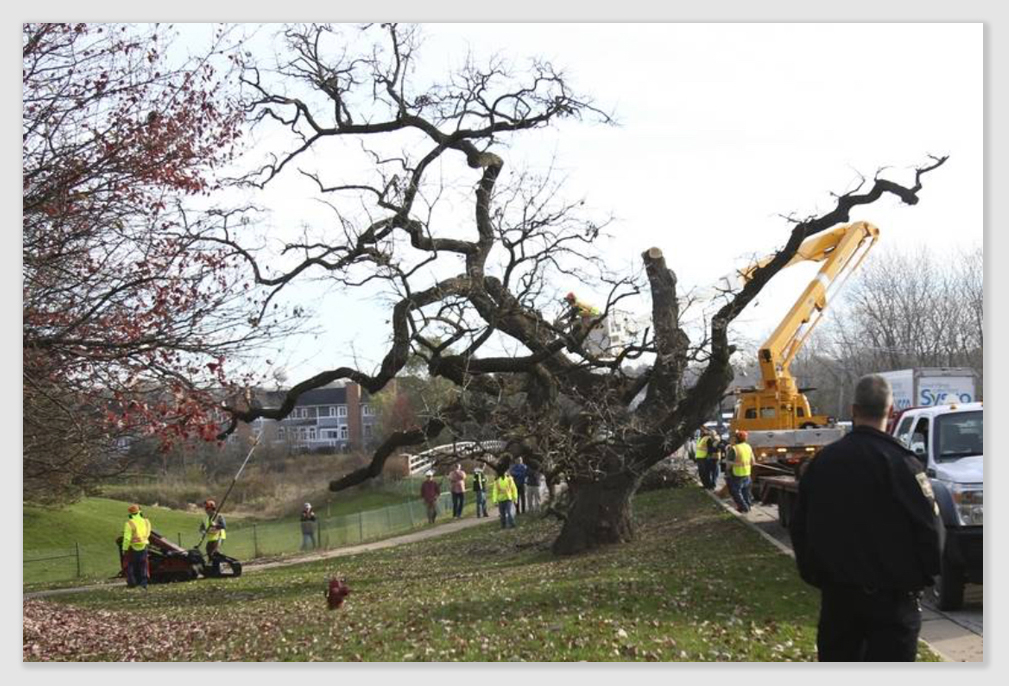
Creative types who want to join the ranks of the woodworkers, furniture producers, guitar makers and brewers who are carrying on the legacy of a 250-year-old tree can get a piece of it on Saturday. The Naperville Parks Foundation, which is leading an art-based preservation project featuring the former Hobson Oak, is offering kiln-dried wood from the tree from 9:30 to 11:30 a.m. at 224 N. Washington St. in Naperville. Artists who commit to create pieces of art or furniture for charity auctions beginning this fall can pick up their raw material for free during Saturday’s event. The wood is part of the second batch to be kiln-dried after the tree was cut down in November 2016, said Mary Lou Wehrli, a Naperville Parks Foundation board member…
The giants have been felled in Lancaster County Central Park and its neighbor, D.F. Buchmiller County Park. About 180 large and doomed ash trees were taken down in a salvage cut that has resulted in a startling change in appearance to the popular Central Park. Large yellow stumps dusted with sawdust and shorn at ground level now border roads, playgrounds, pavilions and picnic tables throughout the 544-acre Central Park on the southeast edge of Lancaster city. The smaller 79-acre Buchmiller Park, along Willow Street Pike, had a handful of ash trees removed. The trees that have been cut over the past two months are the ones deemed to be a safety hazard to park users and motorists…
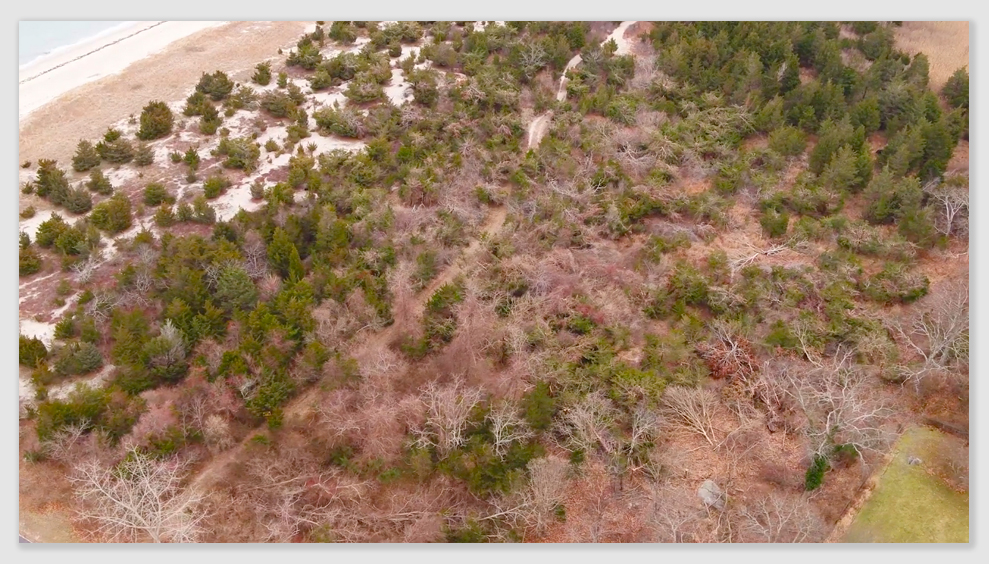
Investigators are working to find who is responsible for illegally chopping down trees on Suffolk County park land on Shelter Island. Jean Lawless, a resident of the area for 50 years, tells News 12 that she made the discovery one day back in mid-January as she walked her dog. She saw that trees had been cut down in the area of Hay Beach, and she immediately alerted the authorities. Drone footage shows the affected swath of forest, from the area of Menhaden Lane down to the bay. Some of the affected trees had their tops cut off, while others were completely felled. “Some of them are 40-year-old cedar trees, Russian olive, all of which feed the birds and animals there,” Lawless says. “Whoever did it, whoever’s responsible, they’ve just really destroyed a beautiful forest.” It amounts to about 4 acres of coastal forest, all felled with a chain saw. Lawless says she counted more than 100 affected cedar trees…
The Skagit County Sheriff’s Office and Skagit County Parks and Recreation are investigating the illegal cutting of trees at Sauk Park south of Rockport and along the Cascade Trail east of Hamilton. Dozens of trees have been cut down since at least December, Skagit County park ranger Shelby O’Malley said. More than $14,000 worth of timber has been taken at Sauk Park alone. O’Malley said the investigation is ongoing and the dollar figure continues to grow as she documents stumps and sections of cut trees. “It’s unfortunate. It’s illegal and we want it to stop,” she said…
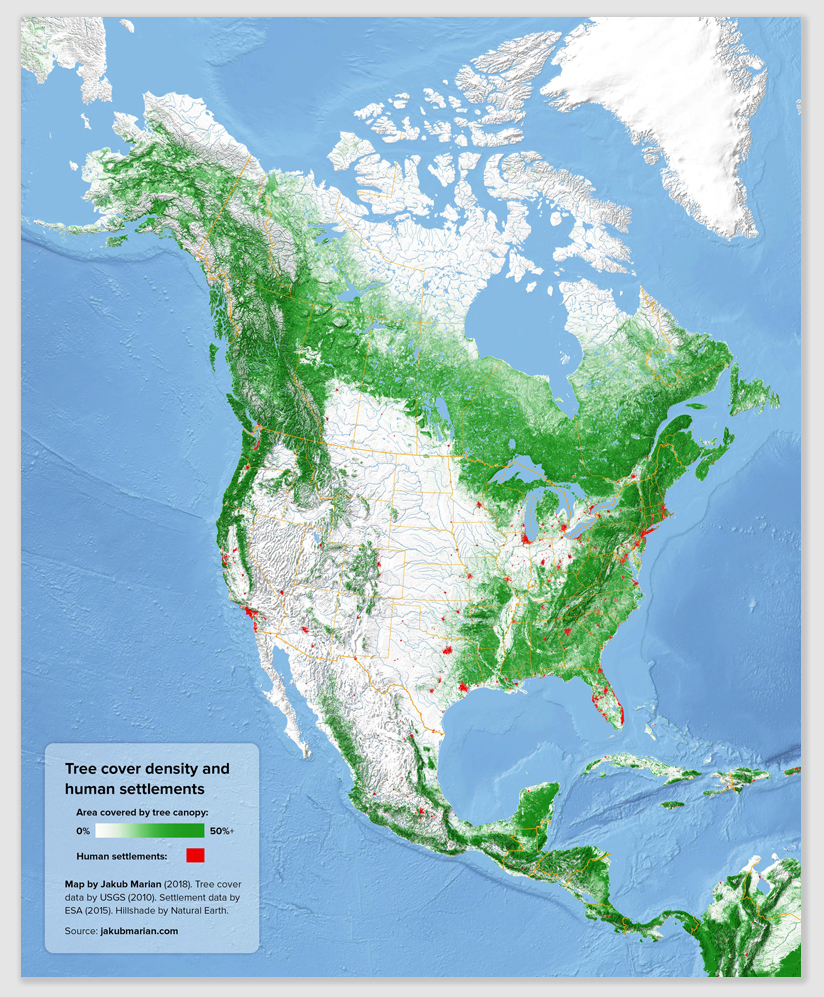 Jakubmarian.com, February 12, 2018: Tree cover of North America
The map shows the percentage of surface (green) covered by tree canopy (based on data by the U.S. Geological Survey from 2010) together with man-made structures (red, based on data by ESA) and major rivers (blue). Areas that are neither red nor green represent other types of land cover, such as crops, grass, shrubs, bare rocks, and (obviously) water. Most of Canada is covered by boreal forest (consisting of conifers), while Eastern United States is covered predominantly with temperate deciduous forest. Forests in Central America are mainly tropical rain forests. It is worth noting that the algorithm of the USGS seems to distinguish between trees and shrubs, and only sufficiently large trees are represented as “trees” in their data…
More than 100 trees are expected to be cut down along a stretch of Mast Road north of the city of Dexter because drivers are going off the road and hitting them. Webster Township resident Carl Schneider said he’s concerned about the impending loss of “a number of historic giant trees,” including oaks he believes may be around 200 to 300 years old. “If you travel down Mast, you will see pink spray paint on the trees about to meet their doom,” he said, suggesting a guardrail would be a better option to improve safety without losing the trees. The Washtenaw County Road Commission, which is undertaking the project, reports there have been at least six crashes involving vehicles leaving Mast Road and hitting trees between North Territorial and Strawberry Lake Road since 2012. “Of those six, one was a fatality when a car struck a tree and one was a type-B injury, meaning the person suffered severe injuries and was hospitalized,” said Road Commission spokeswoman Emily Kizer, noting crash stats for 2017 aren’t available yet…
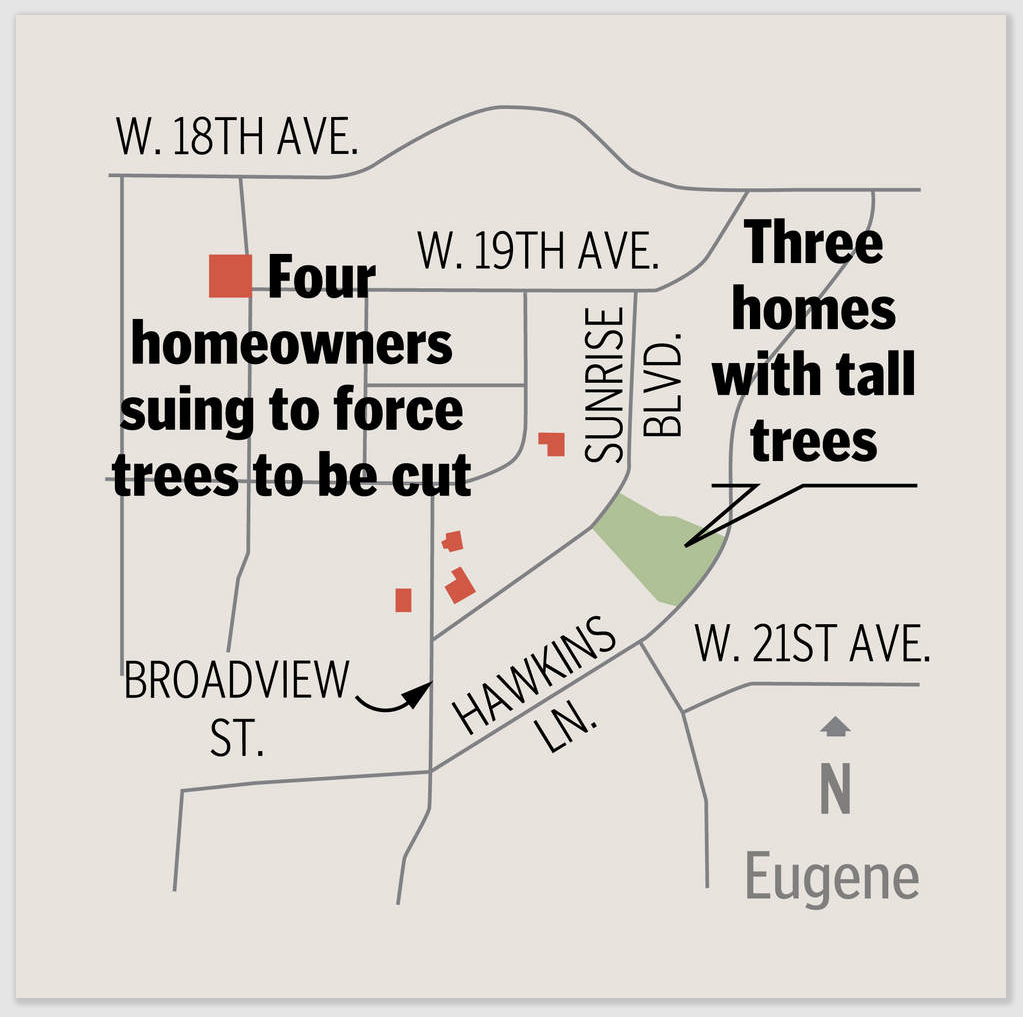
A dispute between two groups of neighbors over tall trees in southwest Eugene apparently is headed to trial this week. A group of homeowners — three married couples and a single woman — living atop the Hawkins Heights subdivision near the Willamette Christian Center claim in their lawsuit that the tall trees owned by their four downhill neighbors block their views and violate their subdivision’s view protection covenant that is unique in Eugene. They seek a judge’s order requiring the downhill neighbors to remove or trim the two dozen or so trees. Barring a last-minute settlement, the bench trial is scheduled to begin at 9:30 a.m. Tuesday in Lane County Circuit Court. Karen Anderson, the lawyer representing two of the defendants, Barbara West and Aurora Fiorintina, said Thursday the chances of a settlement are “pretty low” this close to trial…
For years, people living in a quiet neighborhood in the Northland ignored the invoices that arrived in their mail demanding payment to a homeowners association. “Just want to let you know it’s a scam,” Tony Navarro said he was told when he moved to the Summerfield subdivision. “This is not an HOA neighborhood at all. There are no monthly fees.” But then, just before Christmas, a $445 lien was filed against Navarro’s home and more than 30 others. The reason? For not paying dues to the Summerfield Homeowners Association. An HOA that has no board and provides no services. If you call the phone number for the company that runs the HOA — Column’s Park LLC: “It’s some random guy that answers,” neighbor Jesse Kaucher said. “He told me he had the number for five years,” Kaucher said. “He asked me to let the community know it’s not him. That’s how you know it’s a scam…”
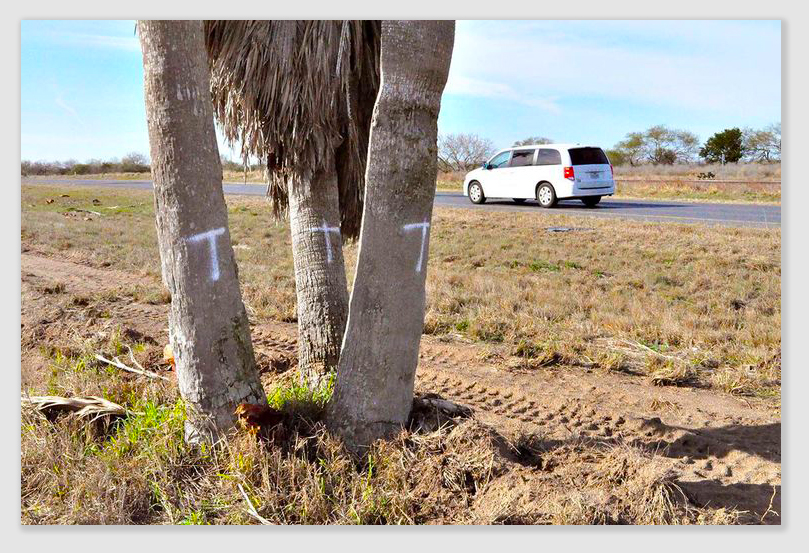 Harlingen, Texas, Morning Star, February 11, 2018: ‘Save our palm trees’ trending with activists
As issues go, opinion is definitely swaying in favor of the trees. TxDOT’s announcement 11 days ago that construction along I-69E/U.S. 77 in northern Willacy County will mean the removal of hundreds of stately palm trees has energized a resistance in the Rio Grande Valley. A petition at www.change.org has received around 35,000 signatures to stop the removal of the trees, even though TxDOT says it will transplant 273 of the healthiest palms to the interstate median in Raymondville. “I-69E/US 77 Palm trees have been an iconic part of the Rio Grande Valley welcoming locals back home and bringing memories to those who have left home to pursue higher education, a career or create families of their own,” the petition reads. “This project will not only remove a piece of our roots but tamper with the environment, although they plan on relocating them, the chances of approximately 200 trees scheduled to be moved may not survive. Please help us in reaching our local representatives find alternatives to this project and saving our eager to see Palm Trees when returning home…”
Davenport, Iowa, Quad Cities Times, February 11, 2018: 4 good choices for trees
As the emerald ash borer continues to kill ash trees and different diseases and pests threaten others, homeowners may wonder what is left to plant. The good news from Jeff Iles, chairman of the horticulture department at Iowa State University, Ames, is that there is lots left… Iles’ first tree-planting advice is a caution about maples. A variety called “Autumn Blaze” has been widely planted in both new subdivisions and older neighborhoods and anytime a plant becomes prevalent, there is the risk that if it becomes the target of a new disease or pest, a sizeable portion of the landscape could be wiped out, he said. So diversity is the key. Here are four of his suggestions…
 Seattle, Washington, KUOW Radio, February 8, 2018: Seattle needs more trees. But who’s counting?
Tree advocates say if Seattle wants to do a better job counting and preserving trees, it should follow the lead of its suburbs. Right now, the city is running on a complaint-based system. Carolyn Rodenberg said financial penalties for violations come too late. “We need to get it to where we’re protecting the trees while they’re still standing,” she said. One example: the notorious “arborcide” in West Seattle, where a group of West Seattle homeowners were accused of cutting down city-owned trees to enhance their views. This week the city reached a settlement in which they paid the city $800,000 – in total — for the loss of more than 150 trees on a slope at risk for landslides. Rodenberg is the chair of Seattle advocacy group 150 Trees and Me, which is pressing the city to include specific acknowledgement of its climate goals in any new tree ordinance, and to factor in carbon sequestration and other aspects when putting a dollar value on trees. Seattle’s climate goals emphasize the need to grow the city’s tree canopy beyond the current 28 percent, especially in industrial and commercial areas. But despite these goals, city officials say they don’t have the ability to track how many trees are being removed on private land amidst the development boom…
Since issuing information attempting to locate fraud suspect John Mark, the Carson City Sheriff’s Office Investigation Division has received additional information on the suspect. John Mark has attempted construction related fraud in Carson City and Douglas County. John Mark was last seen driving an older white Ford pickup truck in Douglas County where he attempted to defraud an elderly couple on asphalt and deck construction. John Mark may also be in the Reno/Sparks area. The Carson City Sheriff’s Office is seeking to identify a person who is soliciting home owners for tree service in Carson City. On Jan. 19 a male subject approached an elderly home owner on the 800 block Kingsley Lane in Carson City and offered to trim the trees on the property. After collecting payment, the subject promised to return with his crew and tools to start work. The subject never returned. The male identified himself as John Mark with John Mark Tree Service. The male is described as a white male, in his mid-30s, with dark hair. The subject was driving a silver or gray pick-up truck with no company logo…
 Global Plant Council, February 8, 2018: Increased UV from ozone depletion sterilizes trees
Pine trees become temporarily sterile when exposed to ultraviolet radiation as intense as some scientists believe the Earth experienced 252 million years ago during the planet’s largest mass extinction, lending support to the theory that ozone depletion contributed to the crisis. The effect of high UV on conifers and potentially other trees also suggests caution today in introducing chemicals that deplete Earth’s ozone layer, which has yet to recover after a global ban on chlorofluorocarbon refrigerants in the 1980s instituted after ozone holes developed over the poles. Some industrial chemicals also destroy atmospheric ozone, which is the planet’s sunscreen, protecting all life from excessive UV rays, in particular UV-B wavelengths, which causes mutations in DNA. Results of the experiment, which was conducted by University of California, Berkeley graduate student Jeffrey Benca, was published in the online journal Science Advances. Benca irradiated 18-inch-tall, bonsai-like pines with UV-B dosages up to 13 times stronger than on Earth today, simulating the effects of ozone depletion caused by immense volcanic eruptions that occurred at the end of the Permian Period. During the two-month experiment, none of the trees died but all seed cones, or pine cones, shriveled up only days after emerging, leaving the trees sterile…
A neighborhood in Fort Myers is reeling over plans to remove trees in order to make room for a road project. It’s all part of the Estero Blvd project happening on Fort Myers Beach. The city says it can salvage the trees if community members are willing to foot the bill. Of the 45 trees and plants tagged for removal off Hercules Drive, a dozen are in Maurice Kabili’s yard. “All these years we’ve been planting trees on our own—non-stop you know year after year to the point we feel we have enough trees. And now we’re going to lose a lot of them,” Kabili said Fort Myers Beach is working to install new water and sewage pipes off Hercules Drive, and say the tagged trees are in the right of way—property which belongs to the city. “We’re going to try to avoid as many trees as possible, but there’s just some trees right in the middle where the storm drain is going to go—and we’ve got to have them removed,” said project spokeswoman Kaye Molnar…
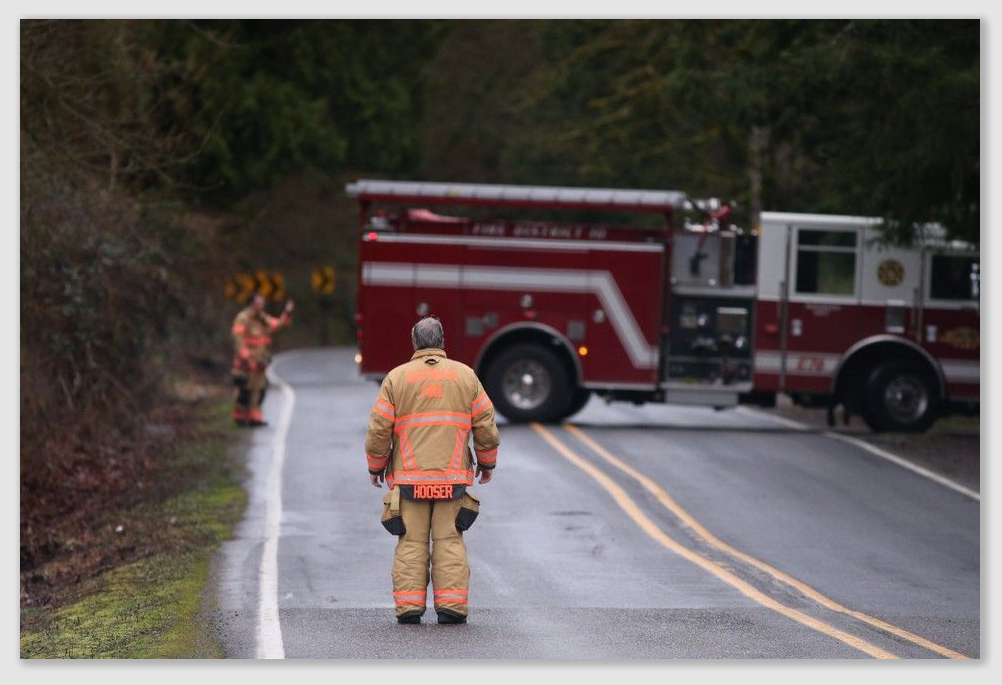
The estate of a 30-year-old pregnant woman who died when a large cedar fell onto her SUV has filed a $9.5 million lawsuit against the owners of the rural east Multnomah County land where the tree grew. The estate of Kristi Leigh Oliver also is suing the county, alleging that the landowners had tried to get the necessary permission from the county to cut down the tree because they could see it was rotting, but the county wouldn’t give it. A county spokesman, Mike Pullen, hadn’t seen the lawsuit and said he couldn’t immediately comment. Oliver was four months pregnant when she died on March 1, 2016. The 100-foot-tall cedar crashed onto the driver’s side of her 2001 Ford Explorer about 6:30 a.m. She was driving to work along Southeast Oxbow Drive, just east of Gresham. “She probably never had a clue it was coming,” Mike Traeger, a Gresham fire battalion chief, said at the time…
Pennsylvania’s state tree is under attack, and the state’s Department of Conservation and Natural Resources wants as many people as possible to know. The hemlock woolly adelgid, an invasive insect native to eastern Asia, was first identified in Pennsylvania in 1973, and in Westmoreland County in 2006. It has also been discovered in Oregon, California, Virginia, Delaware, Maryland, New York, Pennsylvania, New Jersey, Connecticut, Rhode Island, West Virginia, North Carolina, South Carolina, Georgia, Maine, Vermont, New Hampshire, Tennessee, and Kentucky, according to the Penn State Agricultural Extension. The insects’ namesake white, woolly overwintering sacks are visible in winter and early spring on the underside of hemlock branches…
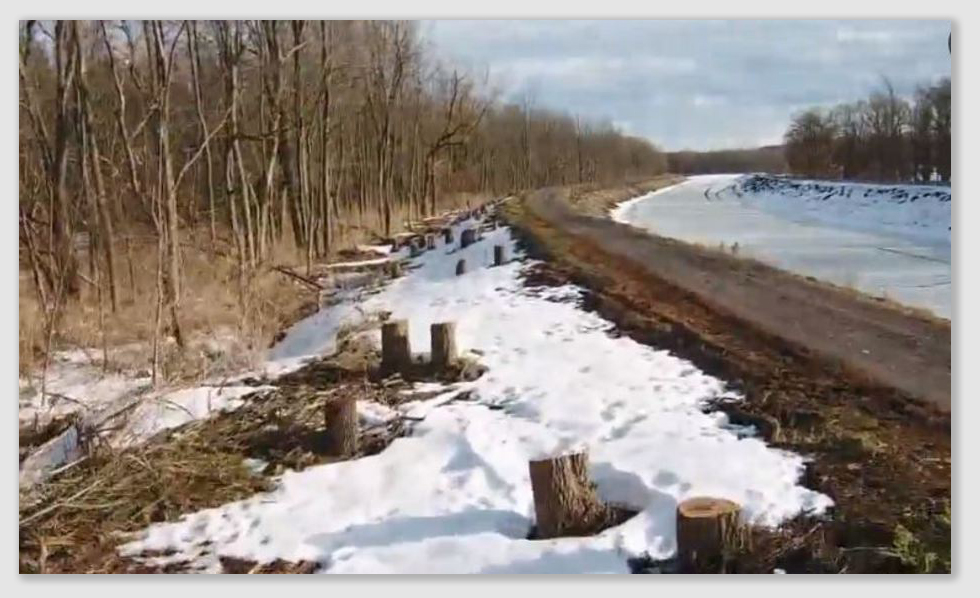
The towns of Pittsford, Brighton and Perinton are suing to stop the clearing of trees along the Erie Canal. A lawsuit was filed in New York State Supreme Court February 5 – just weeks after both sides had agreed to a compromise. “They were literally going to clear-cut 155 acres of land. They were proposing to do this without any real environmental oversight,” Brighton Town Supervisor Bill Moehle told 13WHAM’s Jane Flasch. The Canal Corporation says roots of mature trees are threatening the structure of the canal’s cement walls. Clear cutting is taking out every tree in a direct path. It has already been completed in Orleans County and Brockport in Monroe County. After Rochester’s east side towns came together in protest, it appeared a compromise had been reached. Both sides signed an agreement to slow down, consider selective cutting and make sure all actions moving forward were subject to New York’s environmental review laws…
Erik Gustafson’s office at the city of Chico receives several calls a week about sidewalk problems. That’s hundreds of calls in a year. And he’s only seeing that number increase. Ninety percent of those calls, he says, are related to street trees. “Sidewalk repair hasn’t been a priority from a budget or funding perspective,” Gustafson, Public Works director-operations and maintenance, told the CN&R. “Now we need to shift priorities. The frequency of calls is getting to a point where we need to do something long-term.” The biggest issue? Money. But therein lies a conundrum. In most circumstances, property owners are responsible for repairing adjacent sidewalks. When the damage is caused by a city street tree, however, the responsibility is cloudy. “That’s kind of the root of the problem, if you will,” Gustafson said. That’s why he presented the Internal Affairs Committee with three options at Monday’s meeting (Feb. 5). Option 1: Fund a program to fix sidewalks damaged by city trees, to the tune of $300,000 per year; Option 2: Implement a cost-share program in which the city and property owner would each pay half the cost; Option 3: Pin it all on the property owner…
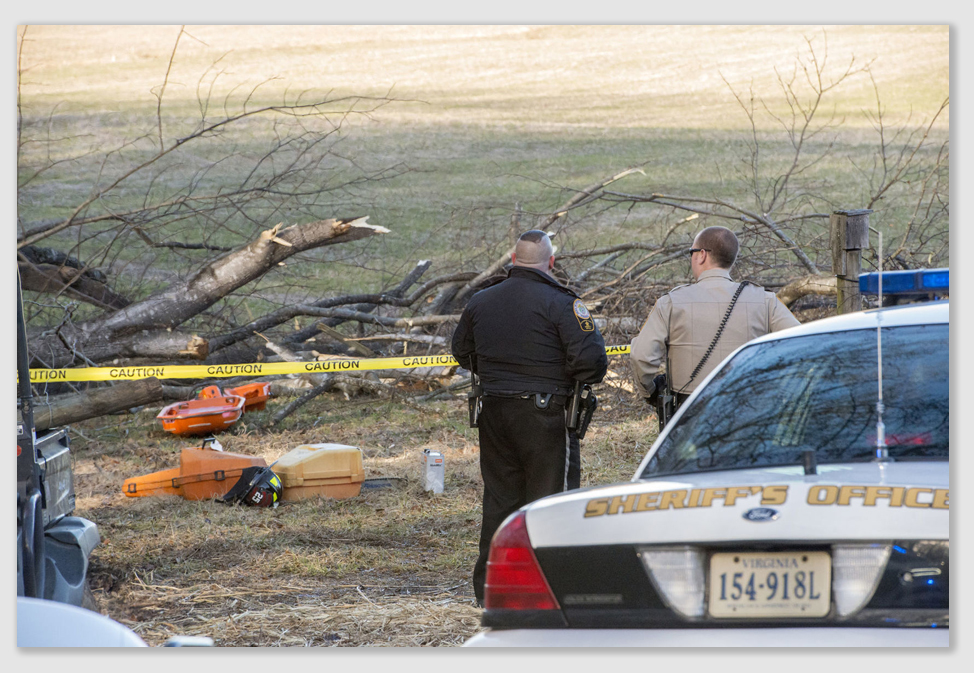
Stuart Sutphin was stuck, and he was wounded. Suphin, who has more than 40 years of experience as an arborist and a forester, said he was pinned by a falling tree Monday after a removal job went wrong. Tree removal experts in the Dan River Region say even decades of experience can’t prevent the dangers of the job, after a falling tree killed a Pittsylvania County man on Monday. “There are so many ways to get hurt,” said Sutphin, who is an extension agent with the Danville branch of the Virginia Cooperative Extension. Robert Pollock, of Dry Fork, was killed while attempting to cut down a tree at a farm in the 1600 block of Clearview Drive, reports the Pittsylvania County Sherriff’s Office. A portion of the tree fell on the man. “It was just an accident,” said Pittsylvania County Sherriff Michael Taylor…
Members of the Board of Selectmen at their most recent meeting voted unanimously to approve a contract with a well-established, local tree care company to address what officials say has become a safety concern along a heavily used road and public park. Hutchinson Tree Care Specialists Inc. will prune a long row of tall pine trees fronting Irwin Park along Wahackme Road following a 3-0 vote at the board’s Jan. 23 meeting. Bob Horan told the board that he’s been watching the trees for a while. “The trees are loaded with dead and broken branches and more importantly there are a lot of invasive vines growing up in the crowns of the trees,” Horan said at the meeting, held in Town Hall. “For safety, for the future health of the trees and aesthetically, it’s a project that I have been kind of keeping an eye on…”
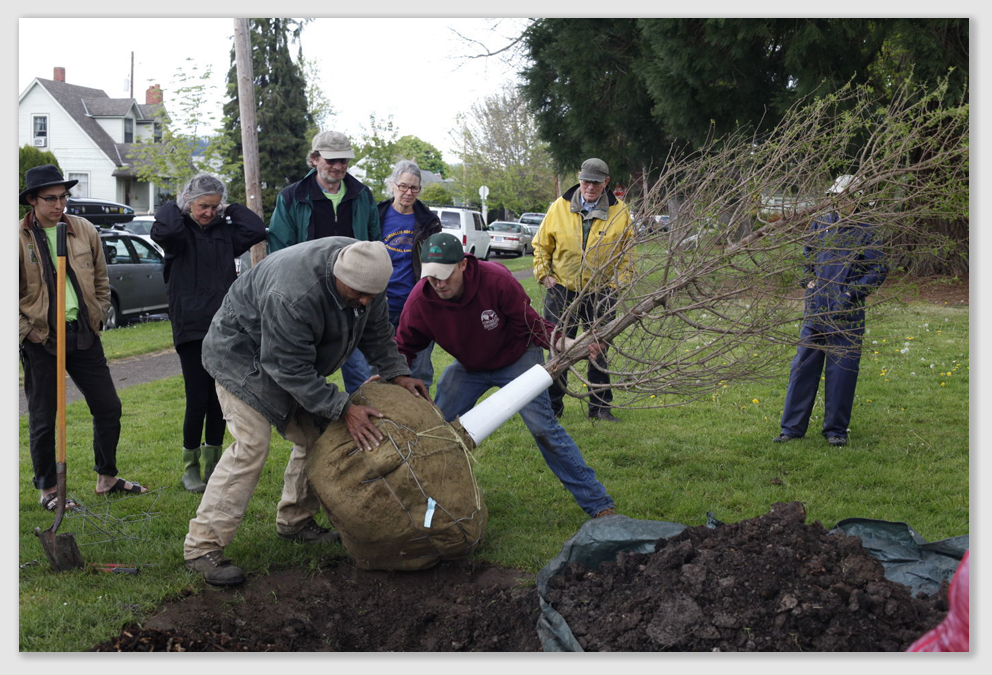
The city of Corvallis has unveiled a new program that will involve residents in the care and maintenance of city-owned trees. The neighborhood tree steward program begins with a 9 a.m. to noon training program Saturday at the Parks and Recreation Department, 1310 SW Avery Park Drive. Folks interested in participating should contact urban forestry outreach specialist Jennifer Killian by Wednesday at 541-740-3186… “The major goals of the program are to get community members engaged in the urban forests and with volunteer effort, help reduce watering and pruning load for city staff,” Killian said. “Each volunteer will be assigned a small subset of city trees to manage over the next few months. Working with staff and homeowners, they will help with weekly watering, structural pruning and other maintenance activities. These extra sets of eyes in the urban forest will help urban forestry staff get ahead of potential tree issues…”
Punxsutawney Phil, the winter forecasting groundhog, saw his shadow and has predicted six more weeks of winter. I was not surprised by his prediction, but still not entirely sure you can really take a groundhog seriously. There are still winter chores to complete, and now you have more time (maybe). There are a couple of plants besides citrus that seem to have taken a punch from our recent mid-teens weather. Agapanthus is one. You know it as Lily of the Nile or African lily. It is a native of South Africa and widely planted in the lower south. The plants I have seen have melted from freeze damage, and the leaves have turned mushy. I think they will come back; usually they will survive down to between 10-15 degrees. I would go ahead and remove the damaged foliage to allow new growth a pathway toward sunlight. I have also had a number of inquiries about Sago palms. Almost all of the ones I have seen — including my own — have damaged leaves that have turned tan. I would cut those damaged leaves off in early spring. You should get new growth from the center of the plant after the weather warms up…

The city has settled the second of two lawsuits against West Seattle homeowners. The city alleged the homeowners hired people to cut trees in a greenbelt in late 2015 or early 2016 to improve views. The lawsuit named nine defendants. The city said the defendants have agreed to pay the city $360,000 to resolve the matter. Another lawsuit was settled in 2017 for $440,000. The city says the unpermitted tree cutting was near the 3200 block of 35th Avenue South. In two cuttings, 153 trees were taken down, the city says…
Miami, Florida, WSVN-TV, February 5, 2018: Tree tearing up sidewalk
This could be you. A tree, near the sidewalk in front of your home, lifting the sidewalk up, making it dangerous for anyone walking by. Now, who has to pay to repair the sidewalk and determine what to do with the tree? It depends on where you live — and it’s why one South Florida homeowner needed help from Help Me Howard with Patrick Fraser. When Rafael Sosa moved into his house 34 years ago, he was a little younger. So was the tree in front of the home. Rafael Sosa, tree vs sidewalk: “Yeah, my friend, the tree has been here for 30-something years, so I see the tree growing from this circumference to this tree.” As the black olive tree has grown, so has his appreciation for it…
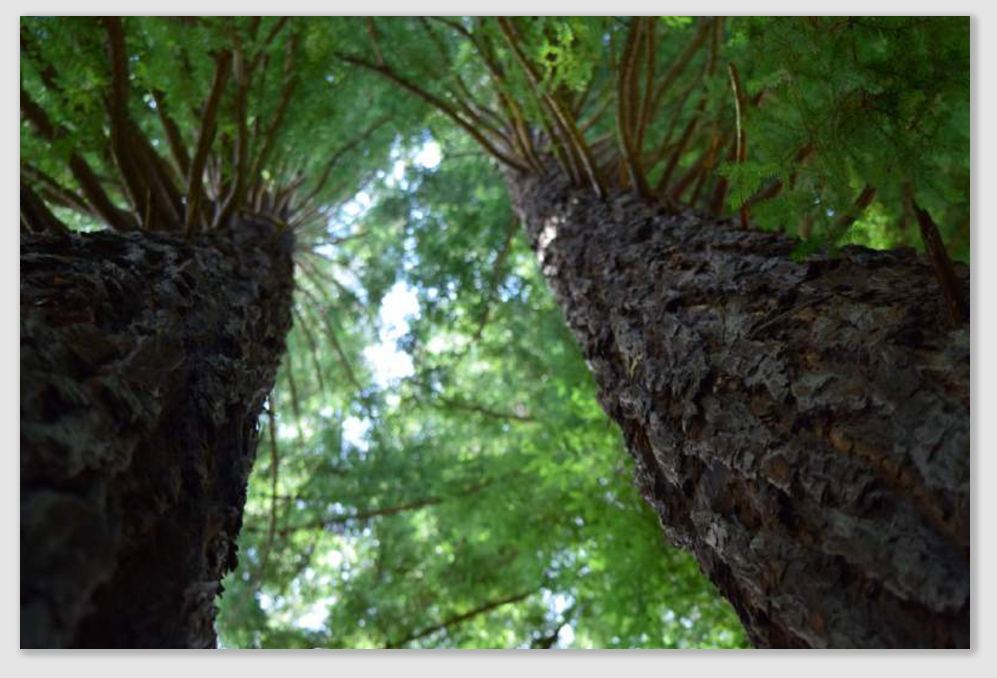
California worker-safety regulators on Monday said they fined a Napa Valley company after the death of a 24-year-old member of a tree-trimming crew last summer. California Division of Occupational Safety and Health (Cal/OSHA) said it cited Gorilla Tree Service for serious and accident-related workplace safety violations following an investigation of a brush-chipper accident in Napa that killed the man. An investigation found that the Napa-based company was unable to certify it had properly trained the worker, who had been employed at the company for about six months, the agency said.On Aug. 15, the employee was working on the ground as part of a two-person crew removing limbs from a liquidambar tree in Napa, when a rope used to lower limbs from an aerial bucket was caught in the chipper and pulled in, strangling him. “Tree work is a high-risk industry, and safety requirements are in place to protect workers from known hazards,” said agency Chief Juliann Sum in the announcement. “Employers must ensure that workers are effectively trained to use brush chippers and other dangerous machinery safely…”
Pacific Gas & Electric’s ongoing effort to remove Santa Cruz County trees it considers safety hazards is targeting 11 of Santa Cruz’s heritage trees this month. The city zoning administrator will hear proposals at 10 a.m. on Feb. 21 for the removal of heritage trees measuring 14 inches or more in diameter along the utility’s major natural gas transmission lines in the public right-of-way, as part of PG&E’s Community Pipeline Safety Initiative program. These trees are located throughout the city: on East Cliff Drive, Washington Street, Pacific Avenue, Ocean View Avenue, Blackburn Street and Jenne Street. The work, particularly in front of Santa Cruz Memorial Park cemetery, has put Ocean St. Extension Neighborhood Association on edge, raising fears of capriciousness and increased erosion risk. In a Jan. 29 email sent to Mayor David Terrazas and copied to the Sentinel, the group sought immediate attention to PG&E’s planned tree removal in their neighborhood. The group’s letter warned that “clear cutting along the pipeline without any CEQA (California Environmental Quality Act) review is not an intelligent nor safe solution…”
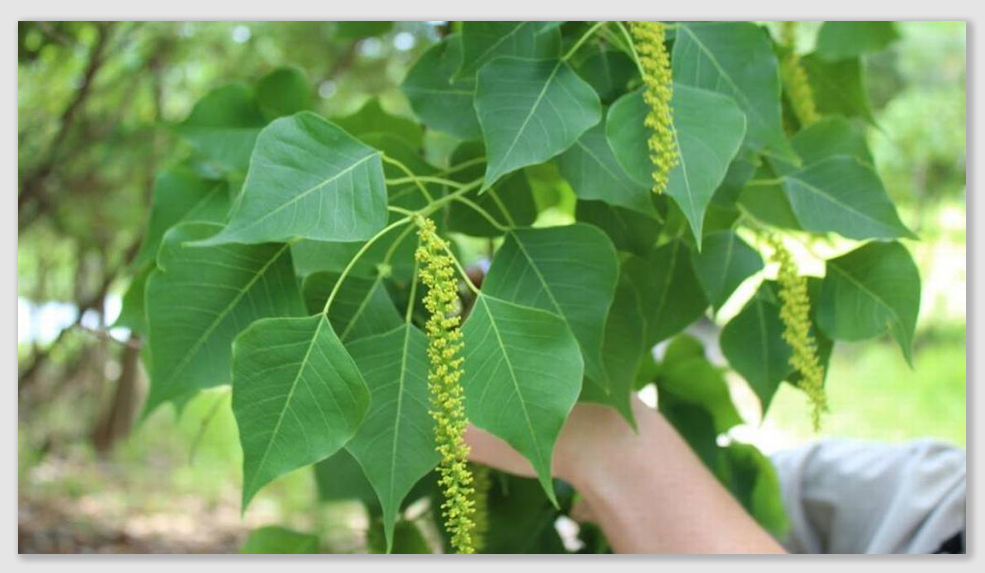
Chicken tree, Candleberry tree, Florida Aspen. Ever heard of them? You might know this tree best by its popular local name, the Popcorn tree, or more appropriately the Chinese Tallow. Never has one imported tree so threatened the forests and coastal plains of Mississippi. Yet, it is an agriculturally useful and horticulturally beautiful tree. It just doesn’t belong in Mississippi, or the Gulf South, or the United States, for that matter. If finger pointing is correct, American statesman Benjamin Franklin is among the culprits to introduce this native Chinese tree around 1776, although some histories credit the first to the Carolinas…
Houston, Texas, KXXV-TV, February 4, 2018: Effort underway to save century-old suburban Houston tree
A 100-year-old tree scheduled to be cut down for a school parking lot in suburban Houston has been given a month-long reprieve so people opposed to its removal can try to raise up to $200,000 to save it. The century-old live oak near the League City Elementary School — known as Mr. Elementree — was supposed to come down last week. Clear Creek Independent School District officials tell The Galveston County Daily News they’ll now wait until March 1. City Councilman Greg Gripon says the tree has historic value to League City and generations of former students. The school is being rebuilt stands in the way of a planned parking lot…
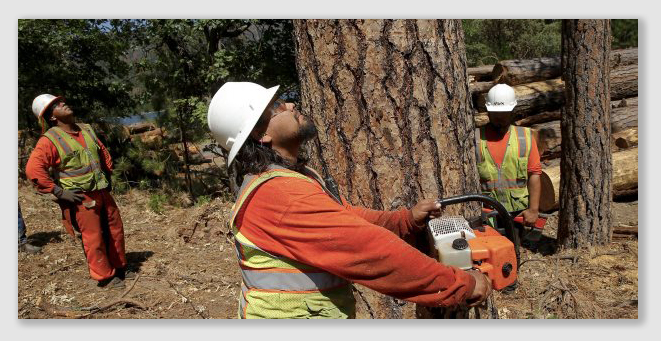 Occupational Health & Safety, February 4, 2018: California grant speeds up tree removal
CAL FIRE recently announced that $6 million has been awarded in a one-time grant to help high-priority counties with the evaluation, identification, removal, and disposal of dead trees that threaten public rights-of-ways and infrastructure. The state is trying to find ways to clear millions of dead trees — between 2010 and 2018, 129 million trees statewide have died through a combination of drought stress and bark beetle infestation, according to CAL FIRE. The agency’s Local Assistance for Tree Mortality (LATM) Grant Program will provide the matching funds for counties to be able to tap into the California Disaster Assistance Act, which is administered by the California Office of Emergency Services. The LATM Grant Program will work cooperatively with the CDAA program to increase reimbursement to high-priority counties to remove or fell dead and dying trees threatening public infrastructure such as roads and buildings. Since 2015, more than 1 million of the dead trees have been removed or felled in high-priority counties through the efforts of the Tree Mortality Task Force, according to the agency, which said the goal of the LATM Grant Program is to increase the number of trees removed or felled by increasing the pace and scale of tree mortality projects in these key counties…
Pennlive.com, February 2, 2018: Prune trees, start seeds, easy on the salt
February is a good month to prune leafless, dormant trees – especially ones that “bleed” a lot if you wait to prune them until the sap starts flowing in early spring. Maples and birches are two examples of trees that are ideally thinned and shaped in winter when the cuts aren’t “sappy.” Oaks, most shade trees, and most fruit trees (apples, pears, cherries, etc.) also can be pruned in February, when weather allows. Pruning wounds typically heal well in winter – especially if you’ve made clean cuts with sharp tools – and they don’t draw potential pest bugs now that may be active in spring or summer. Get rid of dead or damaged wood first. Then remove any unwanted low-hanging branches, cut out wood to eliminate crossing branches and/or excess wood, and finish by shortening the “keeper” branches as needed…
 Citi Io, February 1, 2018: Top 15 cities with the most trees
There’s a global movement encouraging cities to grow more trees and plan more parks. But which ones have the most green space today? To find out, MIT’s Senseable Lab partnered with the World Economic Forum (WEF) to create Treepedia, a site with interactive maps that show the density of greenery in major cities around the world. The researchers used information from Google Street View to determine what they call the “Green View Index,” a rating that quantifies each city’s percentage of canopy coverage based on aerial images. When the project launched in 2016, Treepedia featured 10 cities, but the team has since added 13 more to the list. The goal of Treepedia is to make urban planning more accessible to those outside the field, MIT’s Carlo Ratti said in a press release…
Thunderstorms can leave plenty of damage and often they bring something else: Fraudulent businesses that prey on damage victims. A Sagamore Hills man hired a alleged “tree removal” company to help him clean up from a storm, investigators say that unlicensed company’s shoddy work caused a tree to fall on his home. It nearly cost the man his life. “I went back up to the house, was standing by my deck and I hear this CRACK CRACK CRACK and thought, ‘uh-oh, that tree is ready to come’.” And it did come. Down on George Homa’s Sagamore Hills home, and on George. He tripped trying to get away. The 82-year old was seriously hurt…
 San Diego, California, Union-Tribune, February 1, 2018: Triple threat for trees
Trees are facing tremendous challenges in our region. Drive down any major street or through any neighborhood and you’ll see brown, dead trees standing on nearly every block. Trees have been seriously weakened by years of drought, and now three major pests are wreaking havoc with the ornamental and fruit trees that remain. Here is what you need to know about protecting trees from this trifecta of tree pests in your community. Invasive Shot Hole Borers, aka Ambrosia Beetles, are tiny, flying Asian beetles — no bigger than a sesame seed — that cause big problems for more than 300 kinds of fruiting and ornamental trees and shrubs throughout the region. County of San Diego entomologist Tracy Ellis says there are several kinds of shot hole borers, all lumped into a group referred to as “ambrosia beetles.” What they do: Pregnant female beetles burrow through the tree or shrub’s bark and into its sapwood as they carve out tiny tunnels (known as “galleries”) to lay their eggs. Each beetle inoculates her tunnels with spores of a fungus that the eggs will feed on once they hatch. Adult beetles eat the fungus, too. After the fungus begins to grow, the female returns to lay up to 10 eggs per tunnel…
Sonora, California, KVML Radio, February 1, 2018: Famous fallen ‘Tunnel Tree’ study to begin
The famous Pioneer Cabin Tunnel Tree came crashing down a year ago in Calaveras Big Trees State Park, now state parks officials hope the rings will help chronicle its life. California State Parks, Save the Redwoods League and Humboldt State University have come up with a plan to use the fallen giant sequoia to collect fire and climate data. Senior Environmental Scientist at Calaveras Big Trees State Park Heather Reith explains, “Dendrochronologist, Allyson Carroll, will study the rings of the trees to determine the different fire intervals so we know how many years in between to put fire back on the ground for any of our prescribed burns. It will also help us to see any climatic changes that are happening and hopefully that will help us in the future to manage the giant sequoias during these changes.” A nearly 7 ½’ by 3 ½’ section of the trunk, which was broken into two pieces, was cut out using a large saw, as can be seen in the picture in the image box. The process took about ten hours total including cutting and moving to a park building to allow the specimens to dry out for at least six months. Reith adds that the pieces will be set up as park displays with markers detailing the different rings, noting, “The reason for two pieces is because they are working on the park’s ‘Three Senses Trail’ and we hope to use braille on one of the pieces as well…”
 Techspot, January 31, 2018: New tree-planting drones can plant 100,000 trees in a single day
While the traditional uses of drones are typically commercial or recreational, one UK-based company is using them to help the environment. BioCarbon Engineering has teamed up with drone manufacturer Parrot to create a system for autonomously planting trees to fight deforestation. According to the World Economic Forum, the world cuts down roughly 15 billion trees but only plants 9 billion. This is in part because replanting manually is very slow and expensive. The drone-based system on the other hand is able to plant trees ten times faster than humans, for 85% less money, and in places humans can’t reach. The drones are organized in fleets of 6 drones each. Each fleet will first use GPS and computer vision techniques to create a 3D map of the terrain to be reforested. The drones will then come back and shoot germinated seed pods in pre-defined areas of the terrain. They can fire the seeds at roughly one every second for a total of 100,000 each day. The drones can also carry different seed types to help create a more diverse ecosystem…
Legislation aimed at abolishing local tree protections is getting a cool reception from state lawmakers. The bill sponsored by Sarasota GOP state Sen. Greg Steube — staunchly opposed by environmental advocates and many cities and counties — underwent a major overhaul in the House this week. The House version no longer strips cities and counties of the ability to regulate trees. It was scaled back dramatically to focus only on tree trimming and vegetation maintenance in right-of-ways owned by government agencies. The bill bans municipalities from blocking other government agencies, such as a water management district or flood control districts, from clearing vegetation in a right-of-way, or requiring fees, permits or mitigation for such activities. The amended bill cleared the House Local, Federal & Veterans Affairs Subcommittee with bipartisan support this week. The Senate version of the bill still abolishes all local tree regulations. But it has yet to receive a committee hearing as Florida’s 60-day legislative session nears the halfway point…
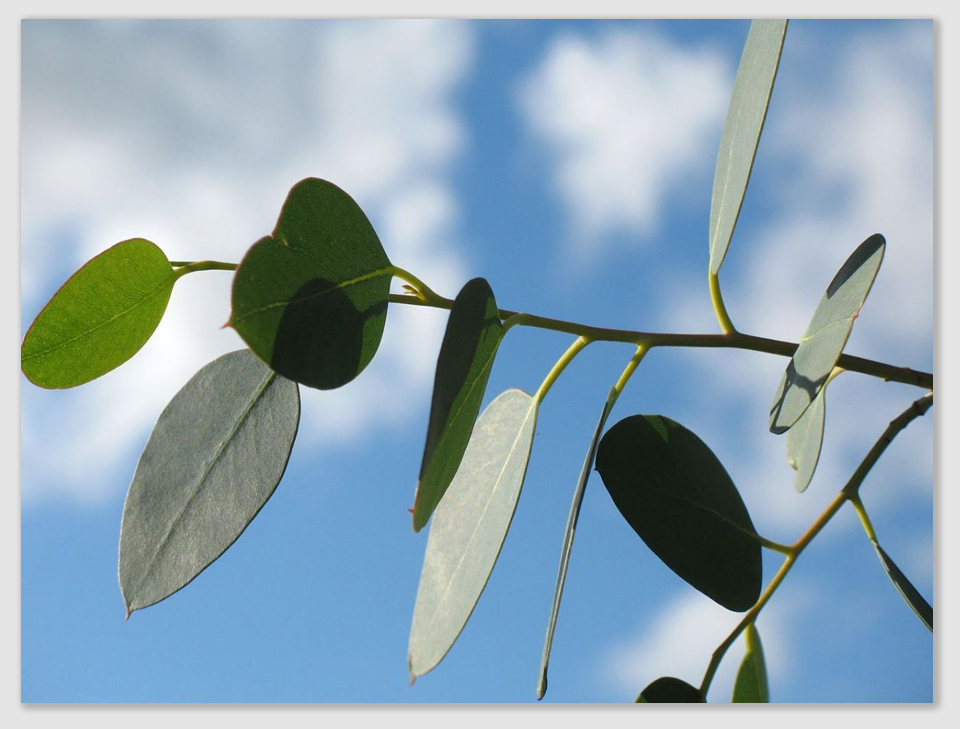 Futurism, January 31, 2018: In extreme heat, trees stop sucking carbon from the air
Researchers in Australia have made a strange new observation about how trees respond to extreme temperatures. After observing trees in the country for a full year, scientists from the University of Western Sydney’s Hawkesbury Institute for the Environment found that, in extreme heat, leaves “sweat” to survive. Until now, it was believed that photosynthesis and transpiration (the process of water release) couldn’t occur without each other. The new study, published in the journal Global Change Biology, showed that during extreme heatwaves trees temporarily stop capturing carbon — even as they continue to release water through their leaves. The “sweating” action helps to keep trees cool, but the observations regarding carbon capture have raised concerns about what will happen as global warming progresses…
Authorities Wednesday identified a young man who was electrocuted when the basket of a tree-trimming boom in which he was working came into contact with a power line and became electrified in South Los Angeles. The accident occurred about 6:50 p.m. Tuesday in the 300 block of 87th Place, said Amy Bastman of the Los Angeles Fire Department. Juan Figueroa, 22, died at the scene, the coroner’s office reported. His home town was not known. A 17-year-old boy who was working in the basket with Figueroa jumped onto a corrugated metal building 15 to 20 feet below and was hospitalized in fair condition, Bastman said…
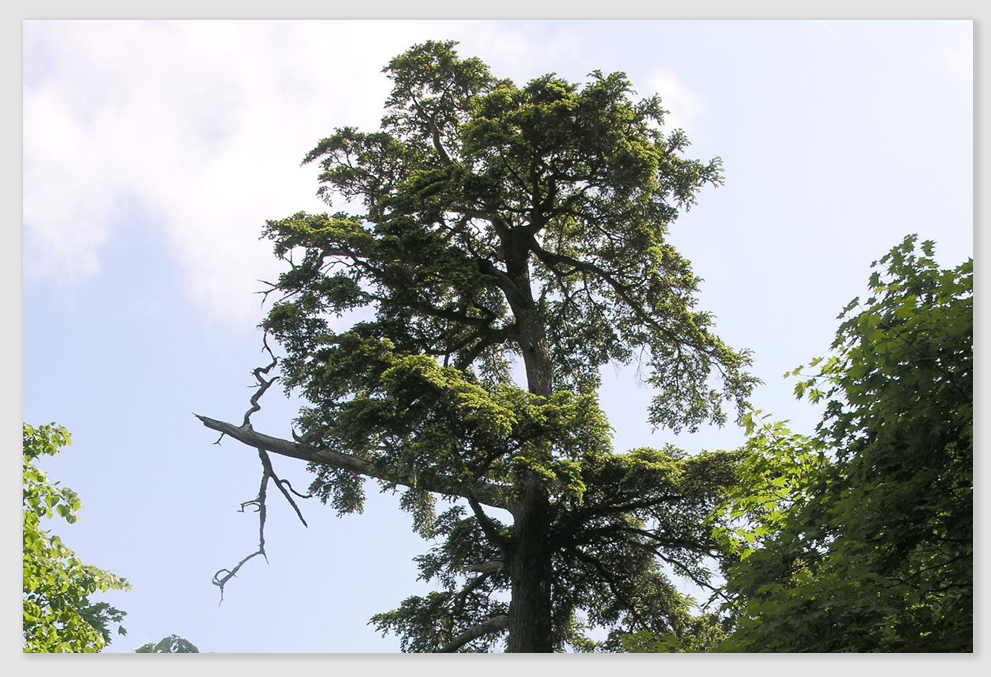
It’s not every day—or even every decade—that a new species of conifer is found in the world’s temperate forests. But late last year, researchers announced a new species of hemlock tree from Korea, proving that even our best-studied forests still hold surprises. The new tree could help save one of its better-known cousins—a North American hemlock species being annihilated by a voracious insect. But the new find is so rare that it’s already being considered for an endangered-species listing itself. “It’s probably the rarest woody plant in Korea, if not the world,” says Peter Del Tredici, a botanist at Harvard University’s Arnold Arboretum in Boston, who was on the team that discovered the tree. Hemlocks—no relation to the carrot-family plant that killed Socrates—are large evergreen trees native to North America and eastern Asia. Their small, soft needles grow thick and lush, creating a sort of waterfall of green. In the rain-soaked forests of Oregon and Washington they can grow to 270 feet tall, but in most other places they top out well below 200…
Volunteers who don’t mind being outdoors in winter, live near Indiana Dunes National Lakeshore and are available in the late afternoon are needed for a research project focused on sugar maple trees. Joshua Rapp, of the University of Massachusetts, is investigating how climate affects the culture and ecology of sugar maples, according to a news release. Indiana Dunes National Lakeshore and the Great Lakes Research and Education Center are looking for volunteers to help collect data for the project…
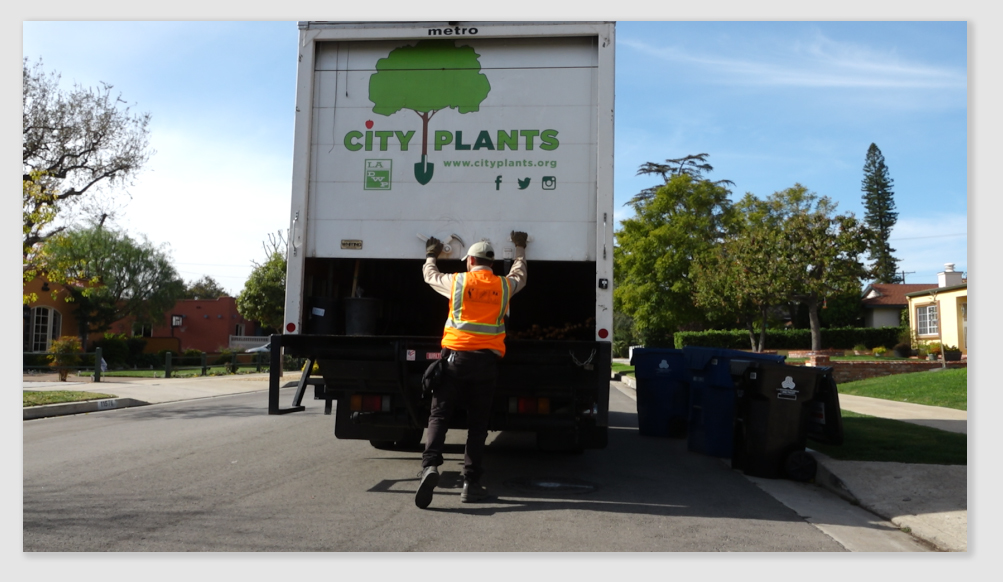 Circa.com, January 30, 2018: Los Angeles is trying to cool the city by giving residents free trees
Los Angeles is a hot city, and it’s not just because of its latitudinal location. Its lack of trees could be playing a big role, too. “We know that having trees—they help us save energy by shading buildings from the hot L.A. sun,” said Elizabeth Skrzat, executive director of City Plants, a nonprofit that’s trying to do something about the lack of trees. City Plants and the Los Angeles Department of Water and Transportation are giving trees to residents for free to help the city cool down. “We want to grow a greener more sustainable future for Los Angeles,” says Skrzat. L.A. is so hot that the mayor has pledged to reduce the average temperature in the city by 3 degrees over the next 20 years. One way to do that is with tree canopies. According to the most recent data from the U.S. Department of Agriculture, 21 percent of L.A. is covered by trees. The national average is 27%…
Mark Vitosh, with the Iowa Department of Natural Resources, wants Muscatine residents to make informed decisions when they plant trees on their properties this year. Muscatine Branching Out will host its 26th annual tree care workshop Saturday, featuring breakfast and a presentation from 9 a.m. to noon by Vitosh, a district forester with the Iowa DNR. The event, to be held at the Environmental Learning Center, 3300 Cedar St., and is free and open to the public. Vitosh, who visits college campuses and hosts educational seminars across the district, is working to prepare Iowans for the loss of certain tree species. He said the concern, regarding trees being destroyed by invasive species or disease, dates back to the 1960s, when Dutch elm disease began ravaging millions of trees. “In that case, we lost millions and millions of our elm trees and after Dutch elm, people wanted fast growing trees,” Vitosh said. “And the trees they planted were ash and maple. And we know in Iowa from studies we’ve done, that especially in public areas, we have about 17 percent ash and about 37 percent maple trees…”
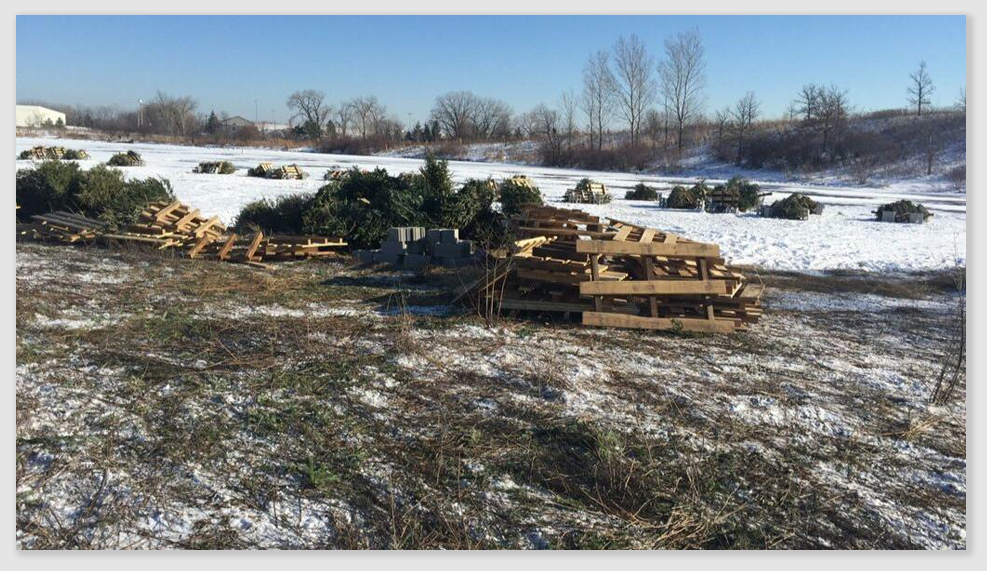
Christmas trees that once stood in residents’ homes adorned with lights and ornaments will soon sleep with the fishes of Lake Glenview. Pine trees tied to pallets were recently pushed out onto icy Lake Glenview with the idea that they will create a new habitat for the lake’s fish population, officials said. Bricks were tied to each pallet so that the trees sink to the bottom of the lake when the ice melts, said Robyn Flakne, the village’s natural resources manager. The pallets were strategically placed in areas where the water depth is great enough to entirely cover the trees, said Glenview Park District Spokeswoman Michele Fiore in an email. Lake Glenview is a man-made lake created in 2000. The trees create a new home for the fish and other organisms that live in the lake, Flakne said…
Jacksonville, Florida, WJAX-TV, January 29, 2018: House panel moves forward with tree trimming bill
Amid concerns from cities and environmental groups, a House panel Monday approved a bill that would prevent local governments from placing restrictions on tree trimming or tree removal in certain areas. The issue has drawn widespread attention because of a Senate version (SB 574) that would bar local governments from restricting private landowners from trimming or removing trees. But House sponsor Katie Edwards-Walpole, D-Plantation, tried to ease concerns Monday before the House Local, Federal & Veterans Affairs Subcommittee voted 11-1 to support her version of the bill (HB 521). She said the measure is aimed at addressing drainage and flood-control problems caused by growth of trees and vegetation.The bill, in part, would prevent local governments from prohibiting or restricting tree trimming or removal on rights of way maintained by agencies such as water-management districts and water-control districts…
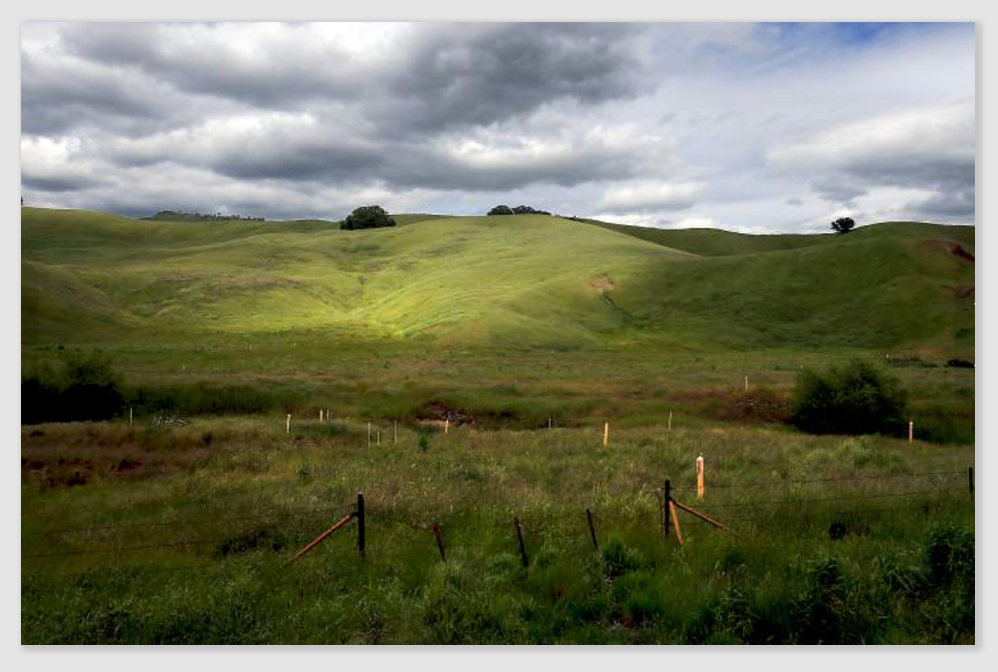
It’s literally an uphill battle. As new vineyards spread from the crowded Napa Valley floor to the hillsides, environmentalists have succeeded in getting enough votes to qualify for the June 5 ballot that aims to protect the county’s watershed and oak woodlands by placing restrictions on the number of trees cut down. The Watershed Protection Committee, authors of the initiative, say expansion or creation of new vineyards into oak and other woodlands in California’s premier winegrowing region is adversely affecting fish and wildlife. The Oak Woodland Protection Initiative would establish buffer zones along streams to protect water quality and limit destruction of oak woodlands, they say. The initiative garnered 6,300 petition signatures, more than the 3,800 needed, and on Jan. 30, the Napa County Board of Supervisors is set to consider placing it on the ballot, adopting it, or ordering more study of the issue…
Did you notice browned areas on your evergreens at the end of last winter? You may still be able to do something to prevent a repeat performance of this condition, winter burn, which happens when evergreen leaves lose too much water in winter. No need to worry about deciduous trees and shrubs in winter because, without leaves, they lose little moisture. Antitranspirants, also called antidesiccants, are materials that slow water loss from plant leaves. (”Wilt-Pruf” is a common brand, but there are others.) Sprayed on leaves, these materials help plants when their roots can’t take up enough water to replace that lost from leaves. Evergreens sometimes find themselves in this thirsty predicament in winter, especially when bright sun, wind and temperatures above freezing suck water out of the leaves, yet the soil remains so deeply frozen that roots can’t absorb sufficient moisture. To protect a plant in winter with an antitranspirant, spray the leaves in late fall and then again toward the end of winter. Spray only when temperatures are above freezing, and wash out the sprayer with warm, soapy water immediately after application…
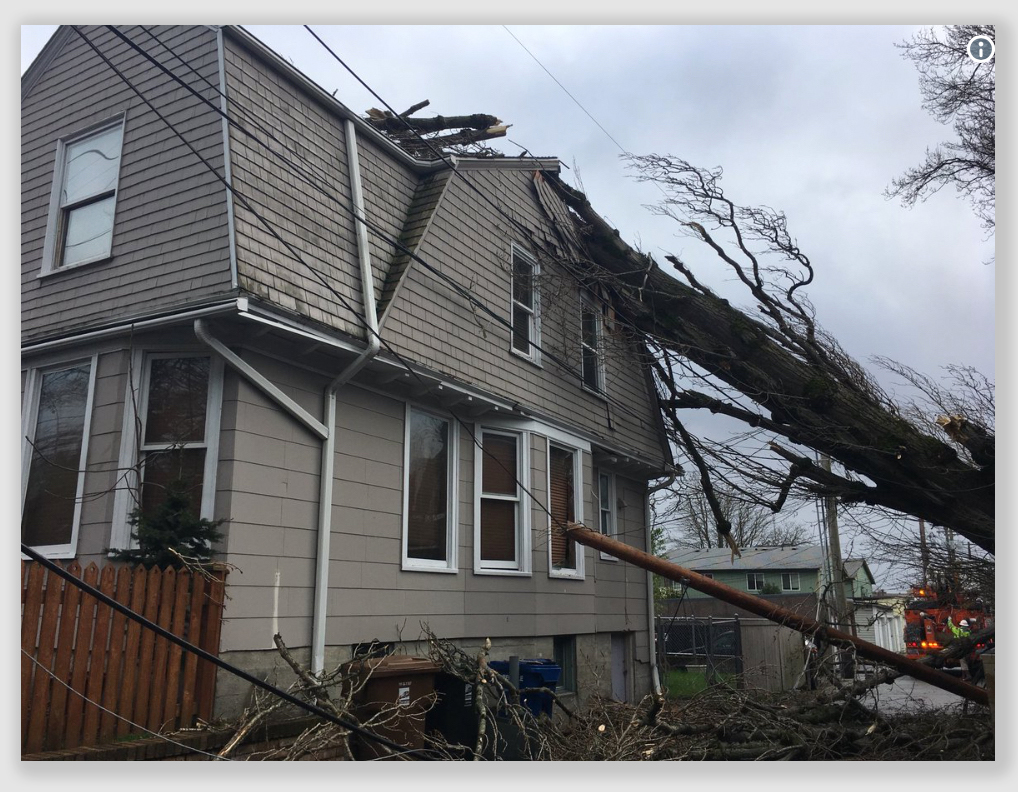
Stormy weather hit Western Washington on Saturday, bringing down trees and knocking out power. For Tacoma homeowner Devon, her house was not spared from the weather as a large tree toppled onto her roof on Saturday. Devon, who did not want to give her last name, was in the second floor restroom when a tree suddenly fell through the roof. Luckily, she wasn’t hurt. “I heard a really large crash,” she said. “It went on about 10 seconds and shook the entire house. It was really scary.”
The Occupational Safety and Health Administration has opened an investigation into Nelson’s Tree Service LLC, after one of its employees fell from a tree and had to be hospitalized. OSHA spokesperson Scott Allen said the incident happened Jan. 23 and was reported by the company the next day. Allen said the incident happened in Columbia, but did not have a more specific location. The extent of the employee’s injuries are unknown at this time. OSHA will now work to determine what caused the employee to fall out of the tree by interviewing potential witnesses and speaking with the company to see if there were any violations, Allen said…
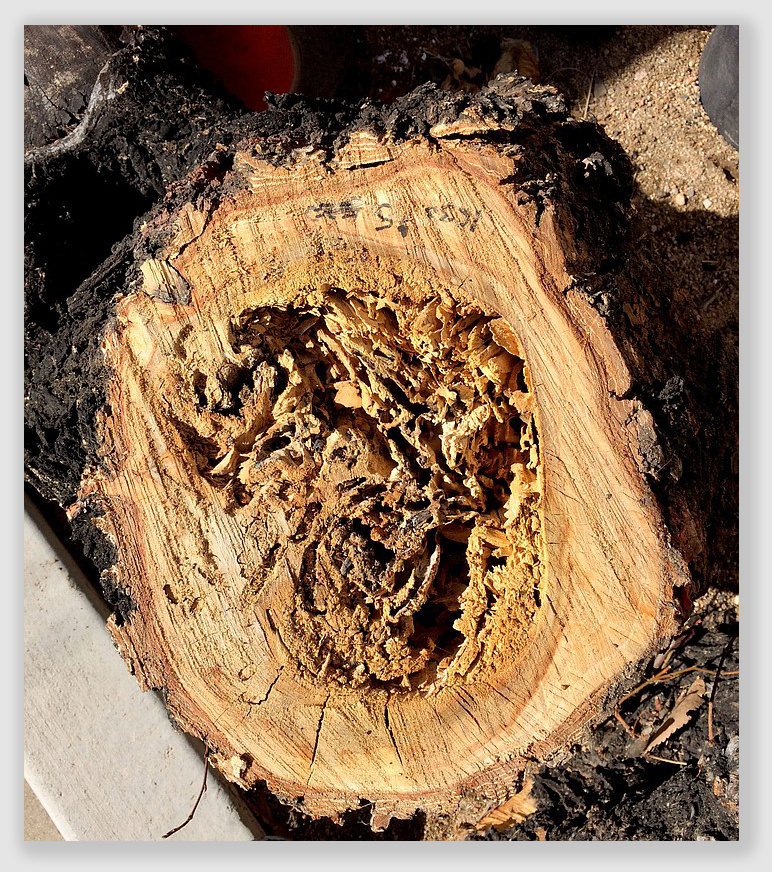 Prescott, Arizona, Daily Courier, January 28, 2018: County deals with 19 sick trees on the plaza
Something is rotten in the American and Liberty elm trees downtown, their colleagues are stressed, and the concrete is cracking up. But Yavapai County Facilities Director Kenny Van Keuren doesn’t find the state of the courthouse plaza, and its trees, funny. The nearly 4.5-acre plaza contains 164 trees, most planted 90 to 100 years ago, Van Keuren said. The large elms are not native, and while they can live to 150 to 300 years in their natural habitat, overcrowding and the compacted soils of the plaza reduce their lifespan to about 100 to 120 years. “They were all planted at the same time; they all die at the same time. We gotta’ get moving on this,” Van Keuren said…
Q: Can you please tell me why the leaves and seeds have stayed on the maple trees so long this year? We have noticed the same thing happening all around us. No matter how much snow and wind we have had, the leaves still remain.
A: There are two reasons why trees may retain their leaves. The first, and the one that applies to maples, is weather-related. Most deciduous trees are programmed to drop their leaves each fall in a carefully orchestrated sequence of events. First is the color change, caused by the death of the chlorophyll in the leaves. Chlorophyll, if you remember your high school science, is the material in the plant that produces the food for the plant as well as leaves’ green color. It absorbs sunlight as energy, which is used to convert the carbon dioxide in the air and water into a usable food. As the amount and intensity of the sunlight decreases, the chlorophyll breaks down. This makes it possible to see the other pigments in the leaves — carotenes and xanthophyll, and, in some plants, the production of the red pigments, anthocyans. At the same time, there is another change. At the base of each leaf, a single layer of cells begins to grow across the stem. When completed, it crosses the entire leaf stem and cuts off the food stream to each leaf. This causes the leaves to die and eventually fall…
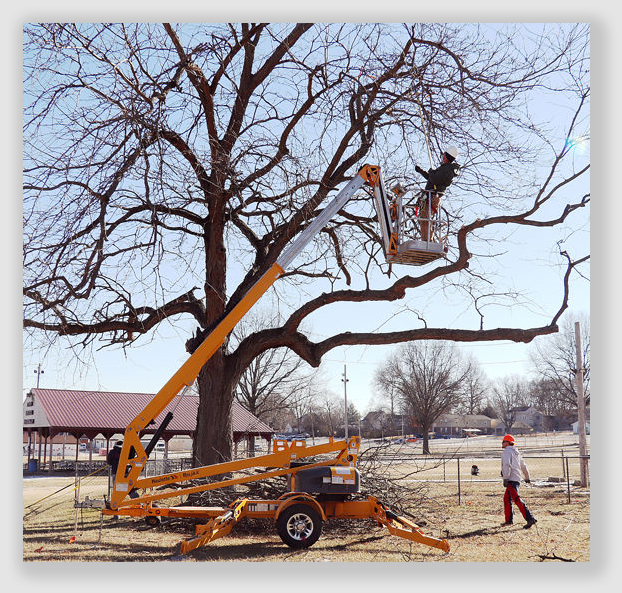 Washington, Missouri, eMissourian, January 25, 2018: Union: Steps taken to save locust tree
Steps to save a large locust tree near the horseshoe pit at the Union Fairgrounds have been completed. A crew removed dead limbs from the locust tree and installed a cabling system from the two strongest branches to help those with less strength. Parks Director Angela Sullivan said that during a tour of the parks system, she identified three large trees in poor condition that were potential hazards. “Professionals were contacted to evaluate each of them and determine the next step,” Sullivan explained. “Craig’s Tree Service was the only bid that recommended preserving the locust tree at the fairgrounds with proper thinning, removal of dead wood and adding a cable system for added support.” The company also donated and planted two 15- to 20-foot trees adjacent to the locust tree that will provide added shade to the area in the future…
Sarasota, Florida, Observer, January 25, 2018: City lobbies to retain tree regulation power
Who should decide when and how a property owner can remove a tree from their land? According to state Sen. Greg Steube, nobody but that property owner. He introduced a bill to the Legislature this month prohibiting local regulation of private tree removal. If approved, the bill would eliminate tree protection laws in cities and counties throughout Florida. That’s a source of concern for Sarasota city officials. The city’s tree ordinance determines which trees residents are allowed to remove from their properties. It requires property owners to obtain permits before cutting down a tree, and it requires them to plant another tree or pay money if they want to remove a tree officials have deemed valuable…
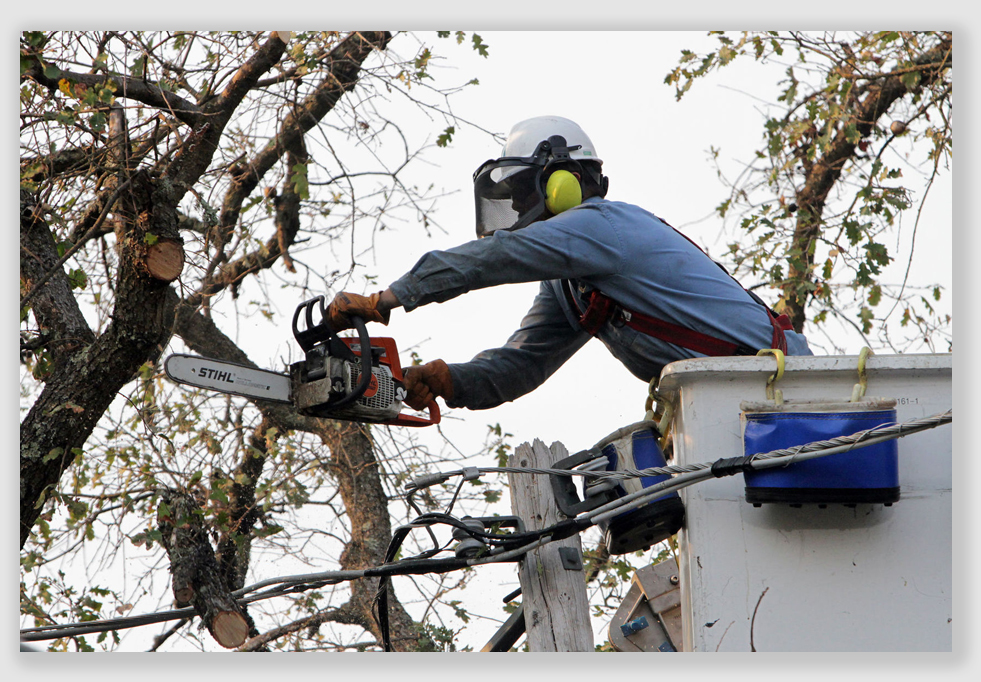
Pacific Gas & Electric Co. has trimmed or cut down more than 30,000 damaged trees in 13 Northern and Central California counties, nearly completing a post-fire campaign to remove scorched trees that posed a threat to the utility’s power lines. The effort is 99 percent complete in Sonoma and Napa counties, where contract tree-cutting crews dealt with about 10,500 and 13,400 trees, respectively, said Deanna Contreras, a PG&E spokeswoman. The only work remaining in Sonoma County, where the October wildfires covered 137 square miles, is related to trees near temporary overhead power lines being erected in Santa Rosa’s Coffey Park and Hidden Valley neighborhoods, she said. In Mendocino County, about 4,400 trees were trimmed or felled, with about 130 in Lake County. Overall, the work is about 96 percent complete, Contreras said, but affected landowners may still ask PG&E to cut down and remove burned wood from their property at no cost…
Austin, Texas, KXAN-TV, January 25, 2018: Trees torn down along South MoPac will be replaced
When construction crews started tearing down trees along South MoPac at Slaughter Lane this week to clear the area for new lanes and a revamped intersection, people started raising concerns about the removal of the greenery. When homeowners said it seemed like the contractor had marked too many trees for removal, they contacted the Texas Department of Transportation before it was too late. TxDOT determined too many trees were earmarked for removal and stopped the crews before any damage was done. While construction requires trees to be uprooted, TxDOT says there’s a plan to replace what gets uprooted. The agency and the Lady Bird Johnson Wildflower Center have the Green Ribbon Program in place to make sure native vegetation is restored once all the construction is completed. TxDOT implemented the program to transform concrete-dominated landscapes into ribbons of green. The program covers landscape improvements, like planting trees and shrubs, enriching soil and installing irrigation…
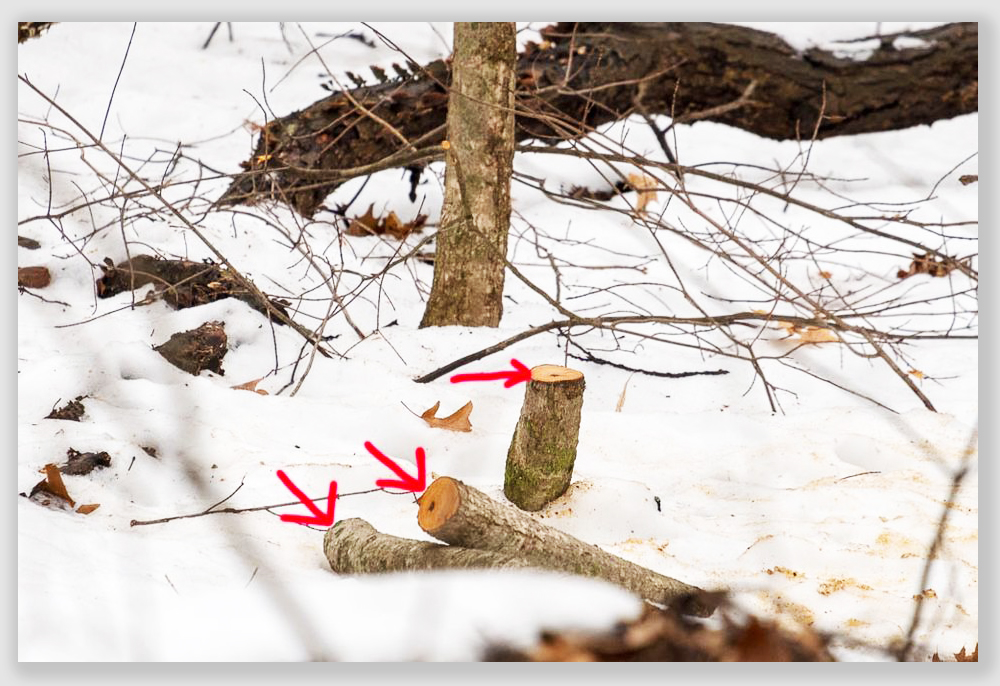
Protecting the city’s natural areas is cited by Ann Arbor officials as a primary reason for bringing in sharpshooters to kill hundreds of deer in the city. Deer are causing too much damage to native vegetation such as oak seedlings with their eating habits, city officials argue. And if there’s too much destructive munching, which city officials believe to be the case, it can potentially hinder forest regeneration and biodiversity. But in order to protect the city’s forests, city officials acknowledged this week the city is cutting down trees to clear areas to shoot deer. The city’s third-annual deer cull is underway and some residents are concerned about seeing trees reduced to stumps where shooting is occurring. “I find it ironic that one of the reasons for the cull is stated to be to ‘protect the understory from the deer,’ yet the shooters hired by the city are destroying the understory with chainsaws and apparently with abandon,” said Terry Abrams, a member of Friends of Ann Arbor Wildlife in Nature, a group that opposes the cull…
Dallas, Texas, Dallas News, January 24, 2018: How to protect your trees from winter sunscald
Summer sunscald happens on trees when bark gets too hot. This happens on young tree trunks or young branches of older trees. Bark gets so hot that cells die. Winter sunscald happens in colder weather when the warm sun heats up the bark during the day, followed by a sudden drop to low temperatures at night. Rapid temperature changes cause damage to cells in the bark. Both types of sunscald cause lesions or breaks in the bark. Over time, these can open up into large damaged areas that attract insect pests and diseases. This damage to bark tissue happens primarily on weak trees. Some arborists and horticulturists recommend protecting young tree trunks, especially red oaks, with paper or tape wraps. These wraps are supposed to protect trees from physical injury, frost cracking and sunscald, borer and other insect attacks, and from dying out. It’s bad advice…
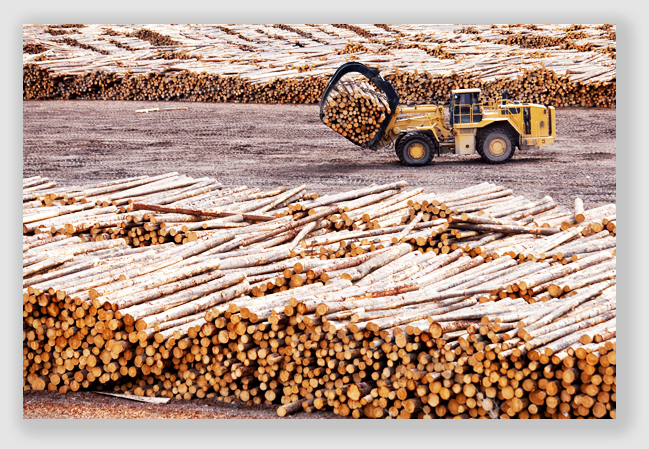
The European Union is raising the bar for renewable energy goals, but some climate change experts say the new targets could do more harm than good. A new report from MIT Sloan professor John Sterman supports the growing argument that burning wood pellets for power is worse for the climate than burning coal, because of the short-term effects and the “potentially irreversible impacts that may arise before the long-run benefits are realized.” “Because combustion and processing efficiencies for wood are less than coal, the immediate impact of substituting wood for coal is an increase in atmospheric (carbon dioxide) relative to coal,” the report stated. “The payback time for this carbon debt ranges from 44-104 years after clear-cut, depending on forest type — assuming the land remains forest…”
Crews are removing large trees from along Interstate 95 starting in Camden County to help make the roads safer. Currently, there are two tree removal projects going on in Camden County. Two more are expected to start sometime soon, and those will continue into Glynn County. Georgia DOT says research has shown that this will make a difference and improve the safety on I-95. The Department of Transportation projects are beginning at the Florida/Georgia state line and will continue heading farther north into the state. The state says when it gets right down to it, trees on the side of the interstate do pose a risk. They say 51% of fatalities in Georgia involve single vehicle crashes. In many of these cases, they say the driver runs off the road and hits something like a tree…
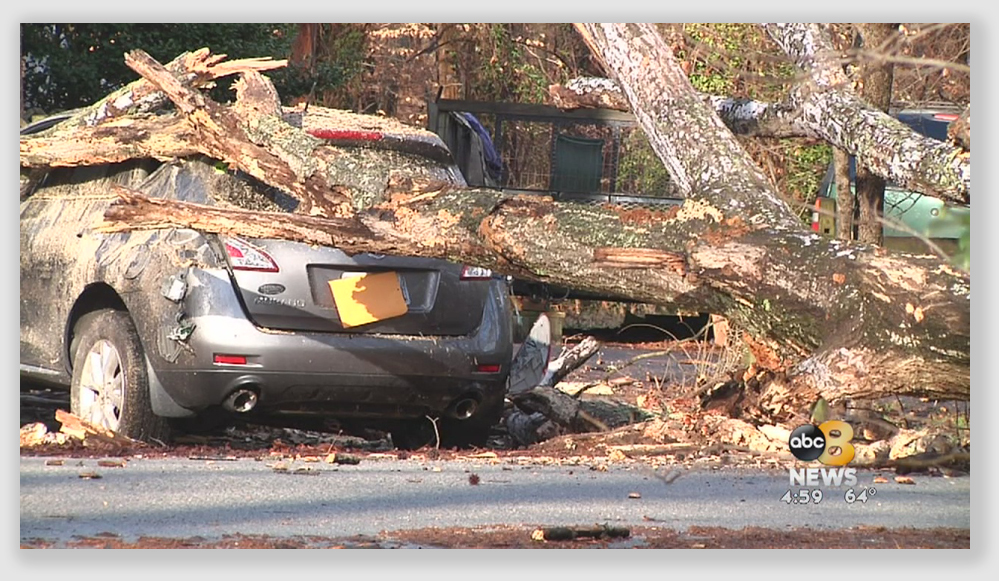
A Chesterfield County woman was killed after she was struck by a falling tree while standing in her driveway Tuesday morning. Lt. Jason Elmore with Chesterfield Fire told 8News that a falling tree struck the woman in the 8400 block of Bayfield Drive, near the Powhite Parkway. The victim, who has been identified as 38-year-old Susan E. Darnell, was rushed to an area hospital in cardiac arrest where she was later pronounced dead. Sources at the scene told 8News that the victim had two children and that it was her daughter who called 911. Neighbors told 8News they heard the sirens, but initially were unsure what had happened. “I just assumed that it was one of those accidents that happened,” neighbor Ed Leslie said. “A lot of old trees in this neighborhood and they come down when it’s windy or wet, so I just thought it was that type of situation…”
New York City, Columbia University, January 23, 2018: So much depends on a tree guard
In a big city, trees, like people, like their space. In a new study, researchers at Columbia University found that street trees protected by guards that stopped passersby from trampling the surrounding soil absorbed runoff water more quickly than trees in unprotected pits. The results are published online in the journal Ecological Engineering. Comparing the infiltration rate of street trees with and without guards in Manhattan’s Morningside Heights neighborhood, the researchers found that trees in protected pits absorbed water six times faster on average than tree pits without guards —3 millimeters versus 0.5 millimeters per minute. The researchers hypothesize that the guards improve infiltration by limiting soil compaction in tree pits. “Placing guards around tree pits allows urban trees to absorb more storm water runoff, taking pressure off the city sewer system,” said the study’s senior author, Patricia Culligan, a professor at Columbia Engineering and a member of Columbia’s Earth Institute and Data Science Institute. The researchers were surprised at what a difference the guards made, and how little mulch or additional vegetation improved results. City-recommended tree guards cost about $1,000, depending on their style and size of the tree pit, but an improvised $20 fence can work just as well, said the study’s lead author Robert Elliott, a recent graduate of Columbia Engineering and cofounder of Urban Leaf, a New York City startup helping city dwellers grow food at home…
 Auckland, New Zealand, NewsHub, January 23, 2018: Famous Wanaka tree harmed by climbers
Wanaka’s famous willow is a popular photo stop for tourists, but trying to get that perfect selfie is starting to damage the tree. Lake Wanaka Tourism is asking tourists not to climb the tree to get photos, after a branch fell off before Christmas. “The loss of a branch is a big concern as it takes longer for this particular tree to regenerate,” a Queenstown Lakes District Council spokesman told NZ Newswire. “It’s quite a small tree growing in a challenging environment with its roots often completely submerged in alpine lake water. “When bark falls off, which is more likely if people climb on it, the wound can be a focus for decay fungi and other diseases,” he said…
A local man is expected in court next month after allegedly threatening a tree cutting crew outside of an apartment building in the Queen City, according to police. Officers were called to a Massabesic Street apartment building after workers alleged that they were threatened by Joseph Montello Fernald, 22, on Jan. 22, 2018, according to Lt. Brian O’Keefe of the Manchester Police Department. The owner of the building hired the company to work at the home but one of the tenants – a woman – reportedly exchanged words with some of the workers. Then, her son, Fernald, reportedly got involved. “(He) exited the first-floor apartment and engaged in an argument with several of the workers,” O’Keefe alleged. “The tree crew said Fernald retreated into the apartment immediately after pointing a black handgun at them. The tree service foreman felt threatened, so he reported the incident to police. Police spoke to Fernald and after stepping out of the apartment and speaking with police, he was arrested and charged with criminal threatening and possession of a dangerous weapon – two sets of brass knuckles, that were allegedly found inside of his pockets, and a BB gun reportedly found inside his apartment…”
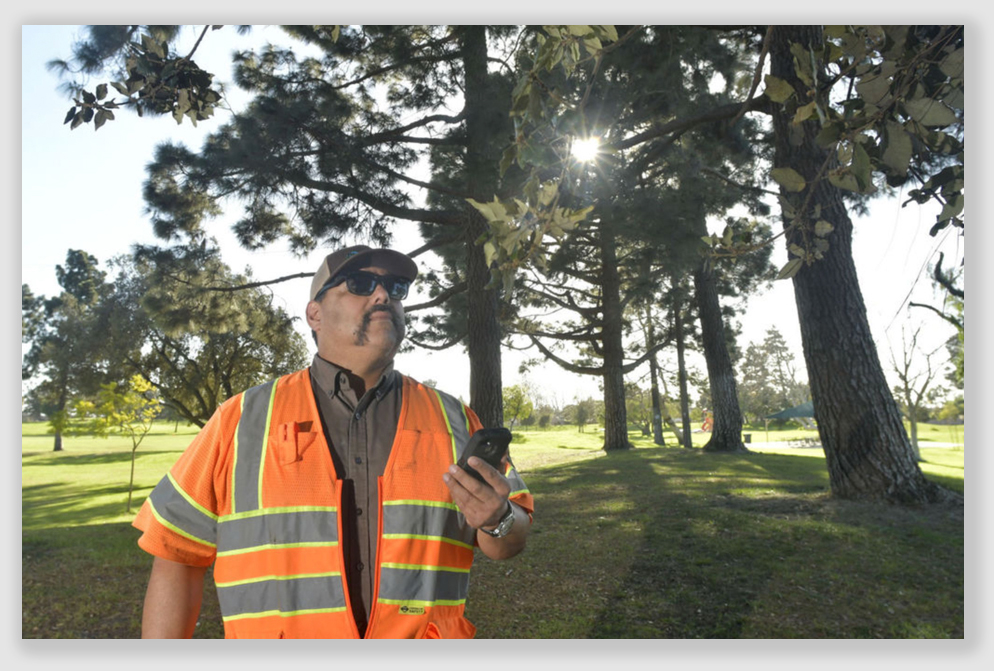
The city of Santa Maria soon will begin plotting every tree within its limits, using global positioning technology, in an effort to manage its urban forest and reduce the risk of fire. The project, a first of its type for Santa Maria, will cost $259,000 and will be paid for by Cal Fire, which provides grants to municipalities in order to maintain healthy trees and cut down the chance of wildfire. The information gathered will be used to plan how to grow or treat the city’s more than 40,000 trees. “During the inventory process, which will take a couple of years, locations of missing trees and potential tree planting sites will be identified,” explained Dennis Smitherman, management analyst for the city’s Recreation and Parks Department…
The large Northern Red Oak located in the center of Goodyear Park is slated to be removed in the coming days, according to City of Cedartown officials. The Oak, estimated to be 80 to 120 years old, suffered extensive damage during the heavy snowfall of December 2017 when a large branch broke off and fell from the tree’s canopy. Prior to the damage sustained last month, the tree had been struck by lightning. A certified arborist was called to assess the damage after the snow event, and several concerns were noted. According to the arborist’s report: The tree’s canopy contains decayed wood. The trunk shows signs of sap blockage and lightning strike damage, and the tree’s root flare has fungal growth and cracking. The arborist’s main concern is the tree’s heartwood exposure and the cavity created by the recent branch break. The Cedartown Tree Commission met Jan. 16 to discuss the tree and subsequent safety concerns. After reviewing the arborist’s report, the commission voted regrettably but unanimously to have the tree removed…

Citrus trees like lemon, orange and kumquat thrive under the warm conditions of the tropics. Most of the time, that means they’re right at home in south Louisiana. Not this winter. Citrus trees this season have had to deal this month with sleet and snow — even in southern Plaquemines Parish — plus several nights in a row below freezing that produced subzero wind chills as far south as Hammond. In other words, anything but tropical. And for a lot of those trees, one expert says, the conditions may have been more than tough — they may have been terminal. “You could be looking at a radically different-looking landscape,” said Lee Heyl, chief operating officer of Windmill Nursery, the largest wholesale grower on the north shore…
Hundreds of trees are falling as Dominion Energy started tree felling over the weekend for the proposed Atlantic Coast Pipeline. People who live in Buckingham County were surprised to see the work starting so soon, not even a day after the utility company received approval from the Federal Energy Regulatory Commission. “It’s a tragic situation,” said Kenda Hanuman, a Buckingham County resident. Hanuman is one of the many people who live in Buckingham County that are against the pipeline. “We know that they’re very eager to proceed since they’re behind schedule right now,” she said. The pipeline received a conditional approval from FERC in October, and on Friday, the pipeline received another approval to begin tree felling. “We’ve had crews standing by so that they’re ready to begin as soon as we received approval from the agency,” said Aaron Ruby, a Dominion spokesman. Ruby said tree felling is different from the actual construction of the pipeline itself. He also said Dominion is not trespassing. “We’re not uprooting the stumps, we’re not disturbing the soil or the land, we’re not removing the trees from the right of way,” said Ruby. “We’re only doing this on land where we’ve reached an agreement with the landowner…”
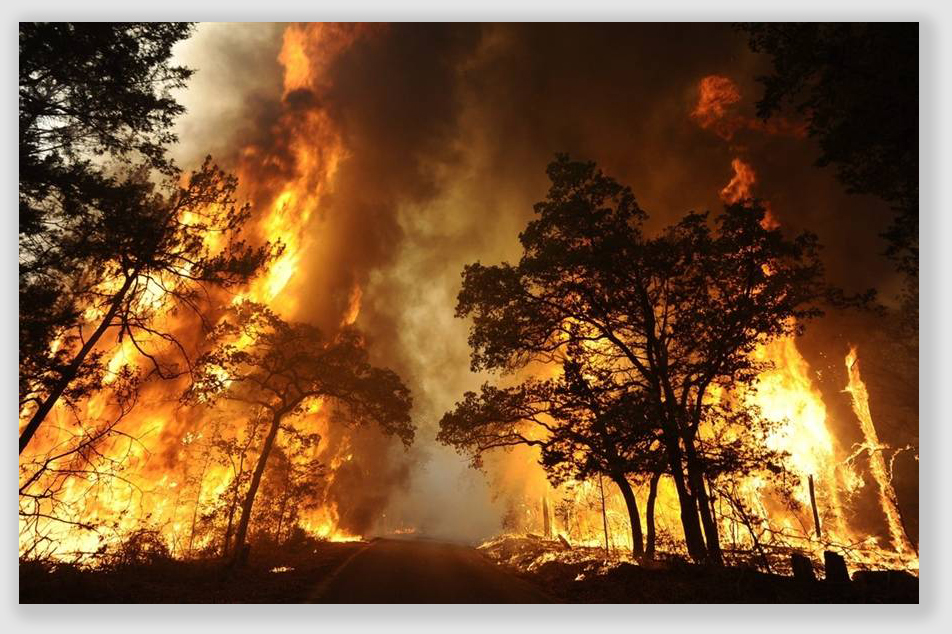
Texas Attorney General Ken Paxton and the Texas Parks and Wildlife Department on Friday joined hundreds of other people in suing a tree-trimming company they blame for the 2011 fire that ravaged Bastrop State Park and Bastrop County. Asplundh Tree Expert Co., the lawsuit argues, diverted crews away from tree-trimming along the power lines it was responsible for clearing and put them on more profitable jobs, even as drought conditions reached historic proportions. “Nothing can be done to erase what happened, but Asplundh should have to contribute to the recovery,” says the lawsuit filed Friday in the state District Court in Bastrop. Phone calls to multiple Asplundh offices in Texas and Pennsylvania went unanswered Friday. The fire, the most destructive in Texas history, raged after trees falling on power lines started two fires Sept. 4, 2011, just west of Texas 21 and near Schwantz Ranch Road. The fires merged near Cardinal Drive and swept south, killing two people, destroying 1,700 homes and burning 34,000 acres…
Wiscasset Ambulance Service and Westport Fire Department and EMS aided a man struck by a tree off Westport Island’s Main Road Sunday afternoon, Westport Fire Department officials said. Wiscasset Ambulance Service took the unidentified man to Wiscasset Municipal Airport, where he was put on a LifeFlight helicopter for transport to a hospital, Fire Chief Bob Mooney and Fire Captain and emergency medical technician Stacey Hutchison said in phone interviews Sunday night. The man was apparently cutting trees when one tree of unknown size and species fell on him, injuring his head, officials said; he drove a tractor toward a house on the property, officials said. They said he was conscious when crews arrived and remained conscious when loaded onto the ambulance. They had no additional information on the man’s condition. The Wiscasset Newspaper was not immediately able to confirm which hospital he went to…
 Tacoma, Washington, Patch.com, January 21, 2018: Olympic National Park Tree Thief Gets Jail Time
Federal officials say a man will spend 30 days in prison for cutting down and stealing a big leaf maple tree near Olympic National Park. The U.S. Attorney’s Office says 63-year-old Michael Welches was sentenced Friday in U.S. District Court in Tacoma to 30 days in prison. Welches pleaded guilty to depredation of government property in October. Court records say on Nov. 11, 2013, the Park Service was notified that a neighbor saw people wearing headlamps and heard chain saws in the middle of the night. Documents say the next night the neighbor alerted a ranger to activity which resulted in the arrests of Welches and two other men as they were cutting and loading a maple…
Is your yard a bit bare and lacking character? Trees to the rescue! Early spring is a good time to plant new trees, and now is a good time to plan for them. Whether you decide to plant a tree for aesthetics, to increase your property value, to save energy through shading, or to provide food and shelter for the birds, it is important to plan for your planting. The first step is to think critically about where you’d like to plant your tree, The conditions of your desired planting site can help you determine what type of tree might be the most successful in that location, that is assuming your desired location can actually support a tree…

Foresters and provincial officials are burning tens of thousands of trees east of Jasper National Park to try to slow the spread of mountain pine beetles. “There’s a lot more activity in the Edson-Hinton region, higher than past years, as we deal with some of this immigration that’s occurring,” said Mike Underschulz of Alberta Agriculture. The province expects to cut and burn up to 90,000 trees killed by the beetles this year throughout the province, Underschulz said. Fully half of them will be in the Edson-Hinton region, where smoke from the burning obscured parts of the Yellowhead Highway earlier this week. The area has seen a huge influx of the pests from the park. Beetle infestation in Jasper is considered rampant and uncontrollable, and foresters along its edge saw a tenfold increase in the problem in just months last year. “We’re trying to limit the damage,” Underschulz said. “We’re trying to buy some time…”
Salem, Massachusetts, News, January 18, 2018: Tree ordinance reintroduced in Salem
A proposed ordinance aimed at protecting city trees has been revived. Ward 5 Councilor Josh Turiel reintroduced the 26-page draft ordinance, which also provides guidelines for planting new trees, at the City Council meeting last Thursday. It is headed to the council’s ordinance committee first. The draft was created by the city’s LORAX task force — a reference to the Dr. Seuss book that stands for “Leaf-Oriented Resiliency and Arboricultural Expansion — which spent nearly two years preparing the document. It died on the vine last year in the council’s ordinance committee, when Ward 7 Councilor Steve Dibble, also a task force member, objected to suspending the council’s rules that would have allowed the proposal to carry over to the beginning of the new year. “Unfortunately, due to a bunch of hullabaloo it didn’t wind up getting officially submitted last month, but it’s getting submitted now,” Turiel said…
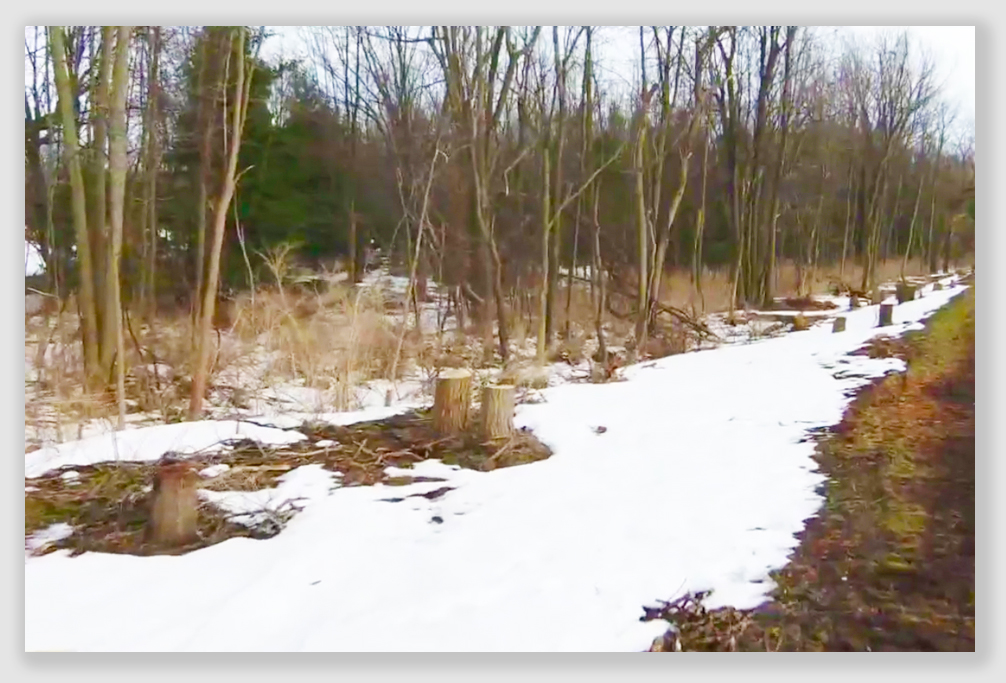
The New York State Canal Corporation is changing its plans in regard to a controversial tree-cutting plan along sections of the Erie Canal. During a special informational meeting Thursday in the Town of Pittsford, the corporation announced it was scaling back on its original plan, instead focusing on clearing dead trees and underbrush. This, it said, would be done to identify any current weaknesses or issues with embankments. The corporation says it will also be working with property owners and members of the affected communities to address any concerns going forward. The goal of the project was to remove trees and other vegetation from along certain stretches of the canal. The corporation said the presence of some plant life could endanger embankments – which could, in turn, result in damage to which could, in turn, result in damage to property or loss of life. The plan was criticized by many, who said the project would have a detrimental result on quality of life and tourism. Three towns had joined together in pursuing legal action in order for a comprehensive environmental study to be conducted…
Despite a relatively small amount of precipitation falling recently, the most recent U.S. Drought Monitor map indicates that nearly all of Colorado is currently experiencing some level of drought. Trees in urban and community settings throughout this region are dormant now, but still require occasional watering during dry winters to remain in top health. Keith Wood, urban and community forestry manager for the Colorado State Forest Service, says planted trees in Colorado, especially at lower elevations, often require additional watering in the winter months during extended dry periods (e.g., more than two weeks without lasting snow cover).”Adequately watering your trees is the best way to ensure optimum health and vigor that will carry through to the growing season,” said Wood. “Overly dry trees become susceptible to root and branch die-back, and subsequent insect and disease problems…”
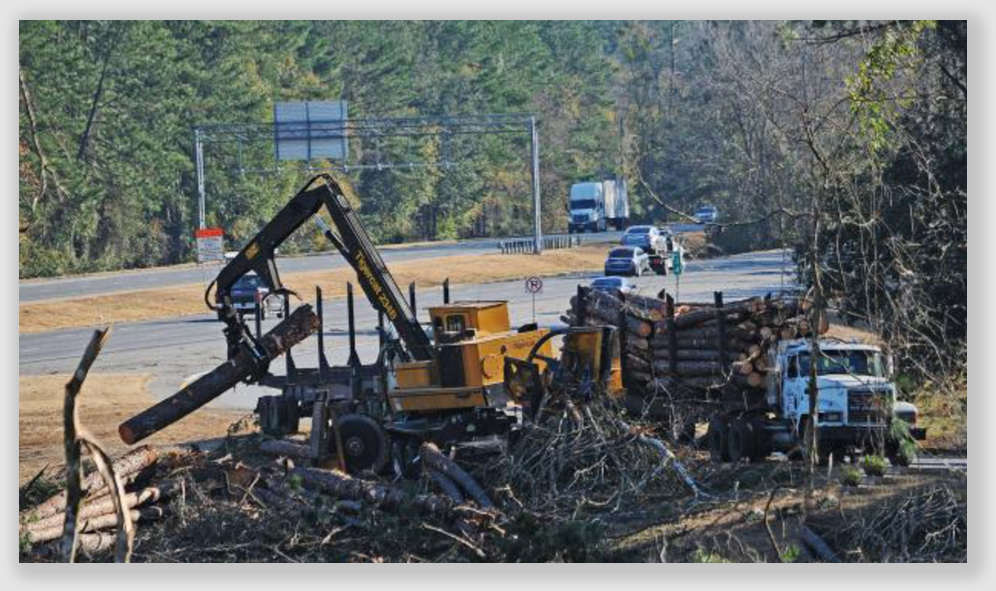
The drive along Interstate 95 in Georgia gets uglier by the day as trees are taken down, but state transportation officials say the clear cutting will improve safety. The “vegetative management projects” along I-95 are aimed at reducing the number of traffic fatalities and serious injuries along the interstate corridors in the state’s coastal region, said Jill Nagel, spokeswoman for the DOT’s District 5 office in Jesup. The projects incorporate safety features to keep vehicles on the road and widen the “clear zone,” the unobstructed area off the edge of the pavement, to give drivers time to stop or regain control of their vehicles, Nagel said in an email. The work is based on data that show 51 percent of single-vehicle fatalities in Georgia occur from striking a fixed object, such as a tree or bridge, she said…
Farms.com, January 17, 2018: Plant disease control possible through tree pruning
Homeowners and landowners looking over their property should take quick action if their trees and shrubs are observed to have wilted branches or dieback. “It is important to closely monitor landscape trees and shrubs for symptoms of disease,” said Robert Bourne, Bryan County Extension director and agricultural educator. “Quick action can possibly save the plant.” Diseased limbs should be pruned at least 10 inches from the dieback and into healthy wood, according to recommendations from Oklahoma State University’s Division of Agricultural Sciences and Natural Resources, of which the Oklahoma Cooperative Extension Service is a part. “With fast-spreading diseases such as fire blight, it is better to prune 12 to 18 inches below the discolored sites,” Bourne said. “If the symptoms have reached the main trunk, it may not be possible to save the plant.” When pruning, it is best to prune plants when it is dry and when weather is expected to be dry for the next three or four days. Bourne reminds landscape managers that sanitation is critical for preventing the spread of plant diseases…
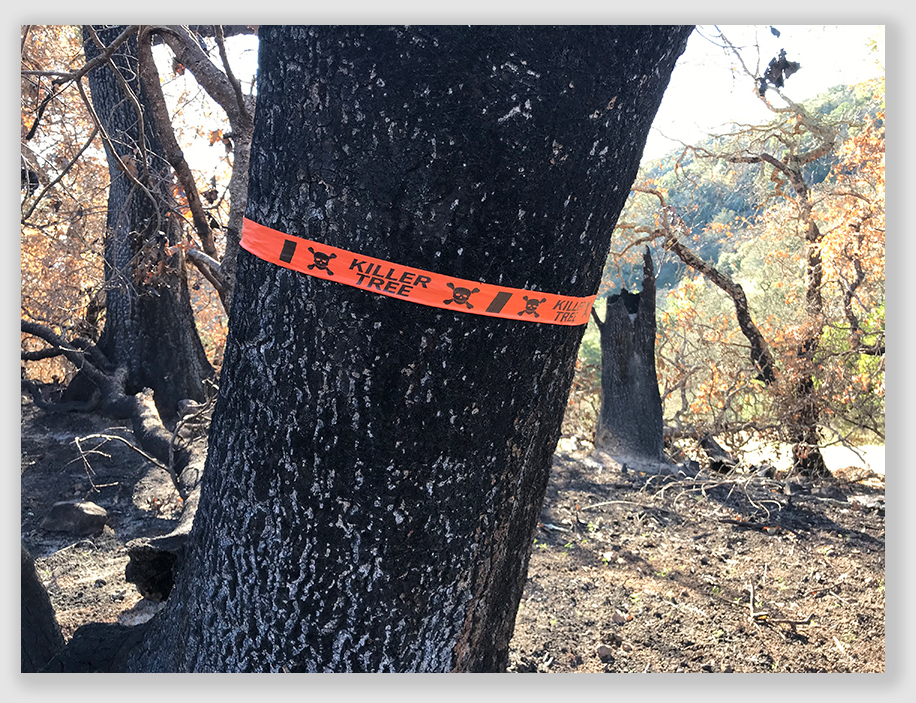 Do Bianchi, January 17, 2018: Killer trees and a long road to recovery in California wine country
Beyond the myriad hand-painted posters thanking first responders for their efforts during the October wildfires, there weren’t a lot of signs that Sonoma wine country had been devastated by a natural disaster when I visited last month. But when winemaker Sam Coturri invited me to jump into one of his company’s off-road trucks and we headed “up the mountain,” it didn’t take long for us to come upon blackened areas and “killer trees,” like the one above. State recovery crews, he told me, remove some of the most dangerous burned-out trees. But many property owners are left to clear out the precarious “snags” as they are known in wildfire terminology. The government team marks them for you. But you have to remove them yourself. Burned out trees and acre upon acre marred by damaged fences and cattle guards were just some of the issues that Sam was dealing with the day we visited in early December…
Sacramento, California, Bee, January 17, 2018: California needs smart solutions to dead trees
Last month the U.S. Forest Service released astonishing estimates that the number of trees killed by drought and pine beetles in California has risen to 129 million in the past five years. Rather than respond in a way driven by science, ecological values and common sense, state and local agencies continue to seek ways to remove dead trees. The first option they turn to is to burn dead trees in dirty incinerators. The logging industry is chomping at the bit for new land in remote areas. This is a misplaced approach. Dead trees are vital components of the forest ecosystem and should be removed only when necessary. A dead tree near a home, power line or other infrastructure is downright dangerous, but there are not 129 million trees in this category…
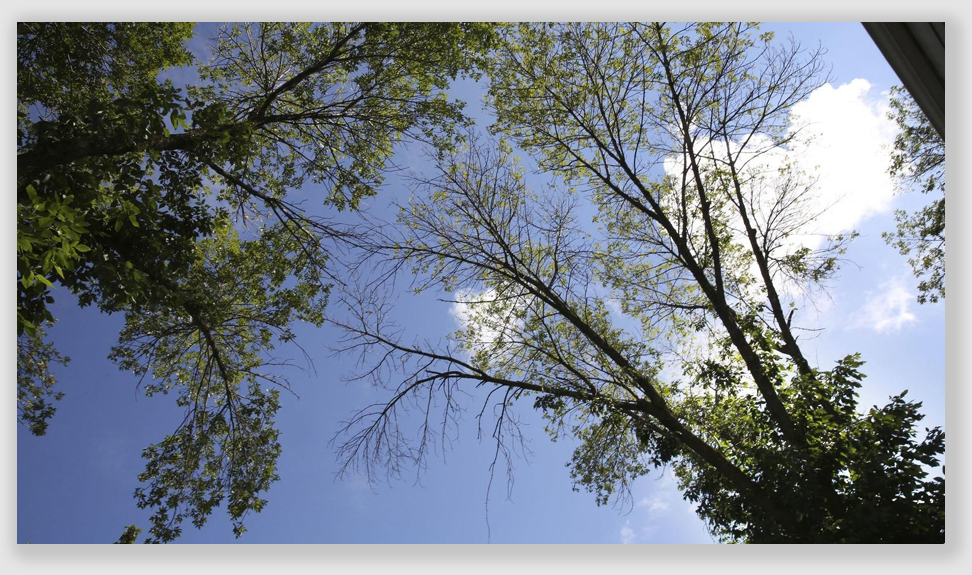
We have a next-door neighbor who has a very large, tall cypress tree on her property. The tree overhangs three adjacent properties and homes, including ours. Over the years, we, along with the other property owners, have all trimmed branches and limbs that overhang our properties. These were all done with city permits, taking into account the health and structure of the tree. The tree owner has done nothing in the last 15 years to care for her tree. There is a fair amount of dead wood in this tree. Last October, a windstorm twisted off a very large live limb, which fell into the property directly behind the tree owner’s property, just missing the house, but smashing the fence between the houses… The storm also left a number of partially broken limbs hanging up in the tree. We consulted two local arborists about the tree, concerned there was real danger of the tree throwing more limbs. They said it could cost up to $10,000 to deal with all the issues they could see from the ground, but there could well be more, once they got up into the tree to investigate…
A symbolic tree planted in the middle of downtown Goldsboro is facing demolition because it could stand in the way of the next phase of the city’s downtown development. The Willow Oak tree on the edge of Downtown Goldsboro was planted over four decades ago by then Mayor Tommy Gibson to honor Air Force Captain Peter Cleary and other missing United States troops. “The tree was only about two feet, three feet. it was a twig.” Former Mayor Gibson said. “God has blessed us with its growth and health. The potential for losing this tree is a very real possibility…”
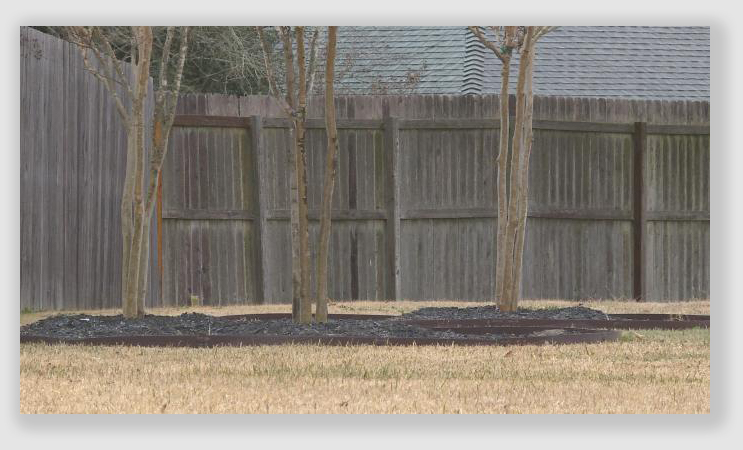 College Station, Texas, KBTX-TV, January 16, 2018: How colder weather affects your trees
Freezing temperatures don’t just make us cold, they also affect the trees. Zaina Gates with the Texas A&M Forest Service said different trees react to the colder weather in a number of ways. “If you have a native tree that’s meant to grow here then you should be fine. If the tree has been in the ground for three years or longer planted it’s established. It should be fine. It should tolerate the weather that we have,” said Gates. For those younger or newly planted trees there are ways you can protect them. “You can mulch around the trees roots to help insulate and also water the night before. It freezes to help insulate the roots.” For non-native trees the forest service recommends wrapping and covering them…
The millions of trees that died in the Sierra Nevada during California’s five-year drought may have actually helped the state’s water supply once the historic dry spell finally ended, according to a new study. Scientists led by UC Merced’s Sierra Nevada Research Institute examined how much water was being absorbed by plant life in 1 million acres of Sierra forest along the watershed that feeds into the Kings River east of Fresno. The study, published Friday in the journal Scientific Reports, spanned the years before, during and after the drought, which officially ended last year. Federal forestry officials estimate that during that time, more than 100 million trees in the central and southern Sierra died before the drought ended. So many trees died from wildfire and bark beetles in the study area that once the rains returned, potentially as much as 217,000 acre-feet more water ended up in the Kings River basin than it would have otherwise. The reason? After they’d died, the trees were no longer sucking water up through their roots, leaving more in the watershed, said Roger Bales, the study’s lead author at the Sierra Nevada Research Institute…
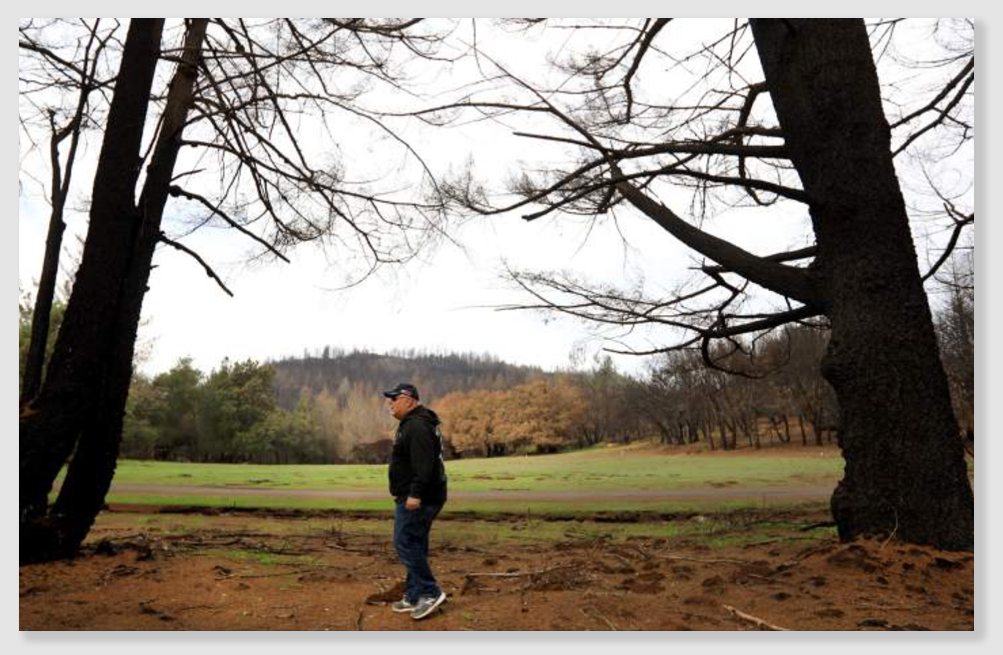
Michael Wagner doesn’t like the idea of cutting down trees on his 71-acre Santa Rosa ranch, blackened by October wildfires. But if he has to do it to rebuild his damaged house, he will. And he welcomes emergency measures from state officials that could make the job easier — and possibly put money in his pocket. “It’s kind of like you’re putting the old horse down,” said Wagner, whose Blue Gate Road property was in the path of the Tubbs fire. “You don’t want to do it unless you absolutely have to.” Under a proposal that could benefit Wagner and other fire victims, the state Board of Forestry and Fire Protection has agreed to waive its requirement that residents file costly timber harvest plans before removing scorched trees to be sold for lumber. The waiver would apply to stands within 300 feet of damaged or destroyed structures and would be in place for at least six months, speeding recovery and saving land owners up to $40,000 for the cost of timber plans…
It would be too easy to blame Queen Victoria. And certainly the aging monarch played her part. But she couldn’t have known the end result of sending a European beech sapling to Halifax in 1897 to celebrate her half-century on the throne would end in the near elimination of this province’s most plentiful hardwood. Because that little sapling planted dutifully by her subjects in Halifax’s Public Gardens had a little critter in it — a sapsucking insect the size of an aphid that punctures a little hole in the bark where it lays its eggs. Alone, the insect would have been a minor nuisance, but the little holes it pricked with its stylus were the perfect entrance point into beech’s thin bark for a fungus. Though the queen’s European beech was immune, our American beech weren’t. Within five years American beech trees around Halifax were dying…
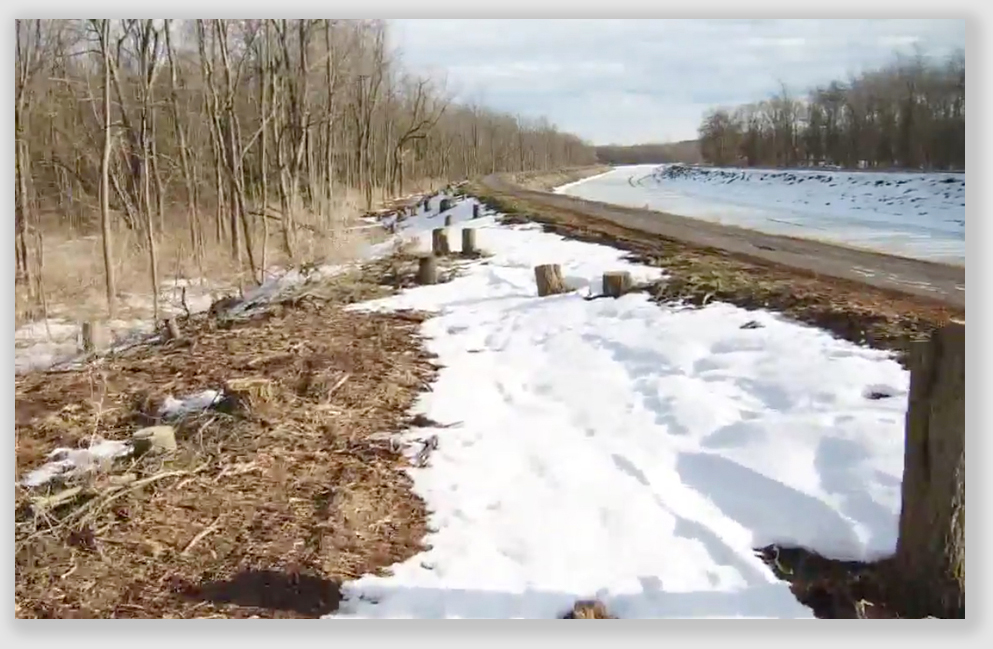
After public outcry, the Canal Corporation agreed to temporarily stop clearing trees and brush from various areas of the Erie Canal’s embankments. The cutting started in Medina and was slated to end in Fairport, but the corporation stopped the project near the Village of Ogden after the push-back. However, many west of Ogden are living with the aftermath of the canal’s project. Cody Butlin bought his home on Quarry St. in Brockport eight years ago. He says he never would’ve purchased the property there had he known this project would ever occur. “We bought it because it was right up against the canal and it was beautiful,” said Butlin. “Now it’s completely visible, where it was complete privacy in the past.” Butlin says “hundreds” of trees were cut in the matter of hours from canal embankment bordering his property last month…
Norfolk, Virginia, The Virginian-Pilot, January 15, 2018: Before you prune your trees, read this
It’s January and your trees are bare of leaves. Is the time right to prune? There’s more to consider than timing, said certified arborist Brendon Phillips of Phillips Family Tree Care in Western Branch. The chief factor: Is pruning necessary at all? “You don’t prune trees just to prune them. They have thousands of years of practice and do fine on their own,” Phillips said. Topping – cutting off all of a tree’s upper branches or even the upper portion of the main trunk – is a common example of over-pruning. “It’s a terrible practice. If the tree doesn’t die, the stuff that grows back is only half as strong (as what was removed),” Phillips said. “The biggest reason I’m called in to take out a hazardous tree is from over-pruning years ago…”
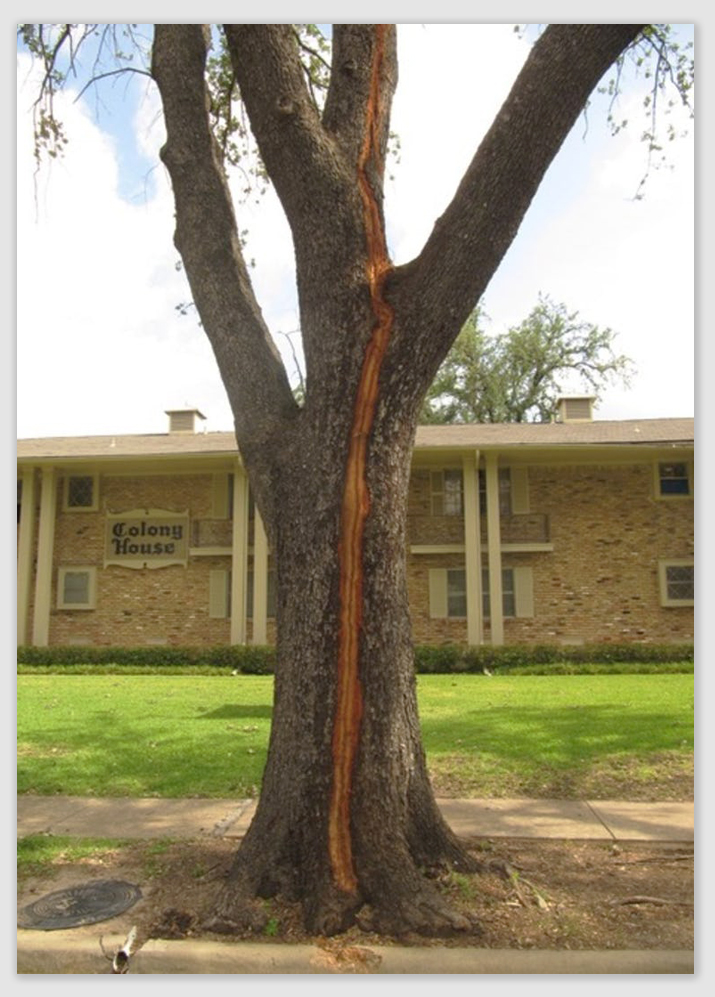
Trees struck by lightning can show several symptoms and have a range of damage. In general, when lightning hits a tree, the water in the cells beneath the bark is heated and boils. Steam causes an explosion that knocks the bark off. A continuous groove of bark stripped along the entire length of the trunk or main branch is common. A crack that does not run the length of the trunk may indicate a side flash of lightning that strikes the tree, travels down the trunk, then jumps to an object with less electrical resistance. If lightning strikes a bit deeper into the trunk, the entire tree may blow apart, or all the bark will blow off. The tree may or may not have blackened or charred areas on the trunk. In some cases, the internal wood may be burned without obvious external symptoms. This wide range of damage is related such factors as intensity of the strike, moisture content on and in the tree, and the type and structure of the tree…
Redmond, Oregon, KTVZ-TV, January 11, 2018: ‘Tree City USA’ Sisters cracks down on tree-cutters
The city of Sisters, known as a “Tree City USA,” is cracking down on people cutting down city-owned Ponderosa pines. Some homeowners are in trouble when it comes to trimming or cutting down trees. Sisters resident Jack Lincke didn’t want to go on camera, but he told NewsChannel 21 Thursday he reached out to city officials about concerns he had about some trees in front of his house that he feared could damage his home if they fell. Lincke said someone from the city came out to his home on November 2016 to evaluate the trees but never followed up with him. This month, he hired a tree service to cut down several large Ponderosas. Lincke said the tree service told him he didn’t need permission from the city to cut down the trees. Adrienne Brown, a neighbor who lives across the street, said she was upset those healthy trees would be cut down without the city giving the green light. “He made a mistake by not going through the proper channels,” she said. “And the trees — the nine trees were all healthy, and all of us are upset, because they were beautiful trees, and they have to be checked out by professionals before they are cut down by homeowners…”
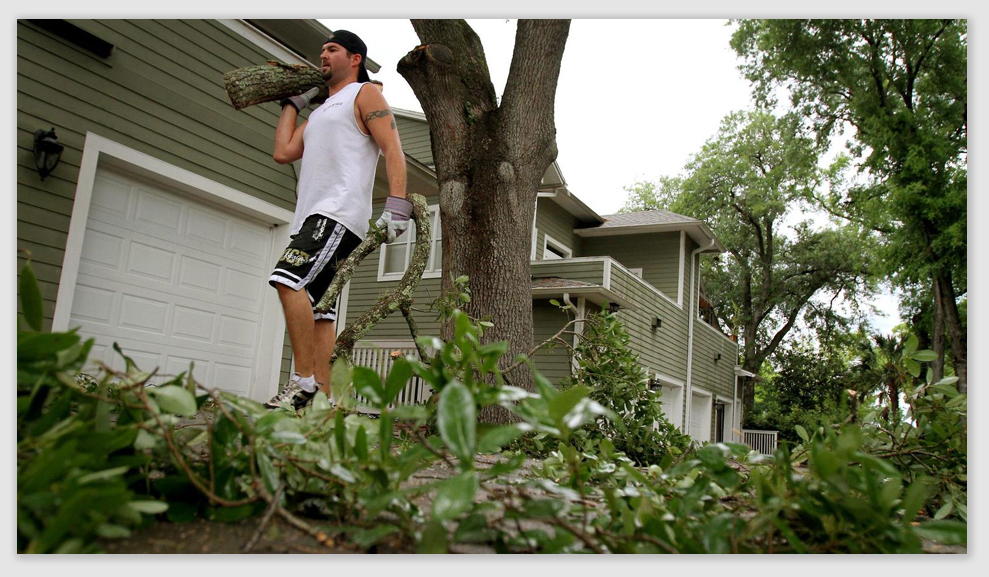
America’s Founders understood unmistakably that private property is the foundation, not only of prosperity, but of freedom itself. Therefore, through the common law, state law and the Constitution, they protected our property rights — the rights of people to freely acquire, use and dispose of property. Thomas Jefferson said, “The true foundation of republican government is the equal right of every citizen in his person and property and in their management.” However, in recent years we have seen these basic rights infringed by local governments in everything from renting your property to trees. According to the Florida Constitution, it is a basic right of all natural persons in our state to acquire, possess and protect property. (See Article I, Section 2 of the Florida Constitution.) Many cities and counties in this state require you to obtain permission from them, the government, in the form of a permit, to cut down a tree, your tree, on your property. To me that flies in the face of your constitutional rights. As a property owner, you should not be required to obtain permission from the government — i.e., a privilege — to remove a tree, on your property. It’s your tree, not the government’s tree…
There seems to be a lot of dead trees on the right of way that need to come down. Does the city do that? The Department of Central Services has a forestry crew that handles tree removal, as well as trimming of trees that are on city rights of way. In 2017, the forestry crew closed 865 tickets, according to Central Services records. This includes tree trimming and tree and stump removal, as well as other tree and other cleanup-related issues. Director of Central Services Kevin McClean said the best way for a resident to notify the city about a tree that should be removed is by contacting an alderman, who passes it along to Central Services. Aldermen contact information is on the city’s website, quincyil.gov. In the case of the city’s emerald ash borer management plan, it has hired private contractors to remove some larger ash trees that are not being treated with an injectable pesticide…
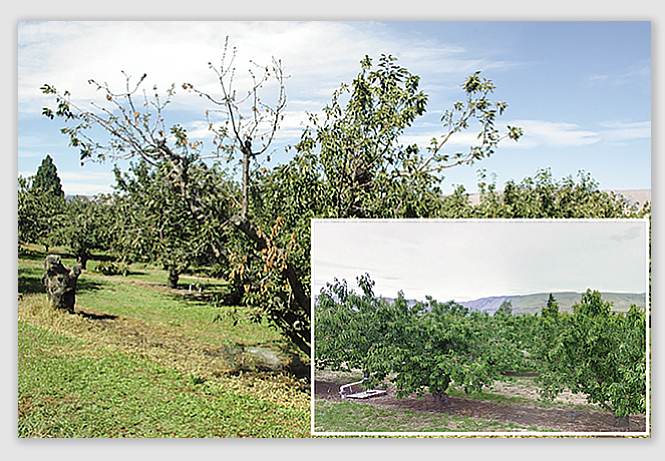 Hood River, Oregon, Hood River News, January 10, 2018: Tree virus found in Gorge region
Cherry Leaf Roll virus has been found in The Dalles and Oregon State University officials want growers to stop its spread by removing infected trees this spring. Also making an appearance in local orchards is Little Cherry Disease, already in play in the Willamette Valley and in Washington State. In addition, several viruses transmitted by microscopic worms, including Tomato ringspot and Tobacco ringspot, have been discovered in Hood River, The Dalles and Grand Ronde Valley orchards and vineyards. “I think if we get on top of the situation we can minimize the spread of the problems,” said Dr. Jay W. Pscheidt, an OSU professor and a plant pathology specialist. He said eliminating the problems is essential to the industry since Oregon is one of the top producers of sweet cherries in the United States, supplying about 10 percent of the total market. “For most growers and field representatives, the world of cherry viruses is a confusing bowl of alphabet soup,” said Pscheidt…
City Hall is once again pondering the protection of trees on private property after at least 20 mature trees were removed from a Murphy Road lot. The grove of hardwoods was cut behind the Brothers of St. Louis property at 1316 Murphy Rd. The property owner, Steeves & Rozema, also owns the adjacent Twin Lakes Terrace long-term care home. CEO John Scotland said some of the trees were diseased and posed a risk to nearby buildings. The “cut back” also eliminated cover for vandals that frequented the property, he said. “They’re not being cleared, and we’re also doing everything we can to maintain a healthy separation between our neighbours, which are residential lots to the north and to the east,” he said…
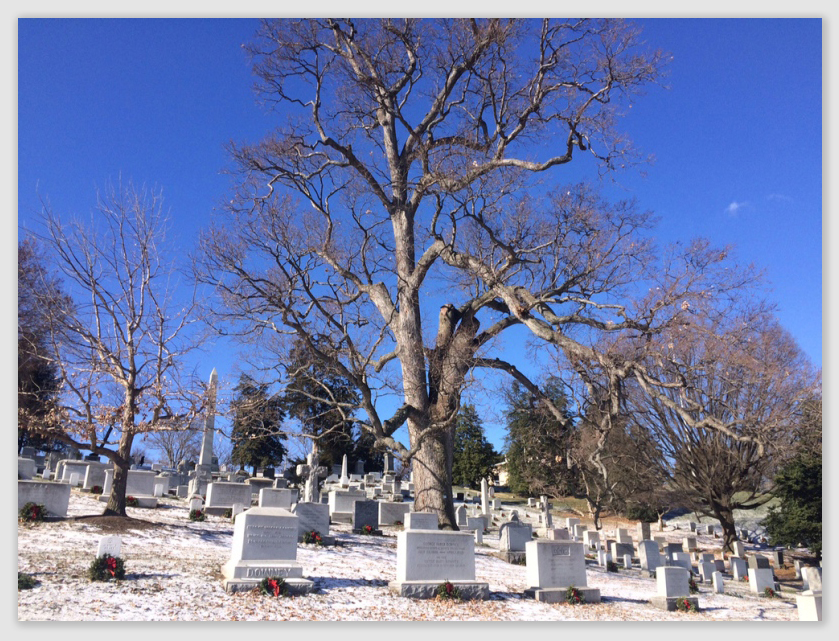
Old magnolias never die, they just fade away. That seems to be the fate of the most historic tree at the White House, a Southern magnolia planted by Andrew Jackson and now so ancient and fragile that part of it was dismantled last month. The decision to take down or at least dismember an old tree is neither easy nor always objective, but professional arborists are guided by a risk assessment protocol that brings a rationality to the process. The evaluation assesses the tree’s vigor, the thickness of its sapwood shell, its disease stresses, the state of the roots and the like. Arborists also consider its location and the proximity to what they call “targets” — property and people. “A tree in the middle of the woods is not a problem,” said arborist Paul Wolfe of Integrated Plant Care in Rockville, Md. “In an urban area, that’s some problem…”
State officials have revised a quarantine of some walnut products intended to protect Michigan trees from a fatal disease. The Michigan Department of Agriculture and Rural Development is trying to ward off an outbreak of thousand cankers disease, which has killed numerous walnut trees in the western U.S. The quarantine generally prohibits shipment of walnut nursery stock, certain walnut timber products and hardwood firewood into Michigan from infested states. Walnut furniture, veneer, kiln-dried walnut lumber without bark and walnut nuts and nutmeats are exempt…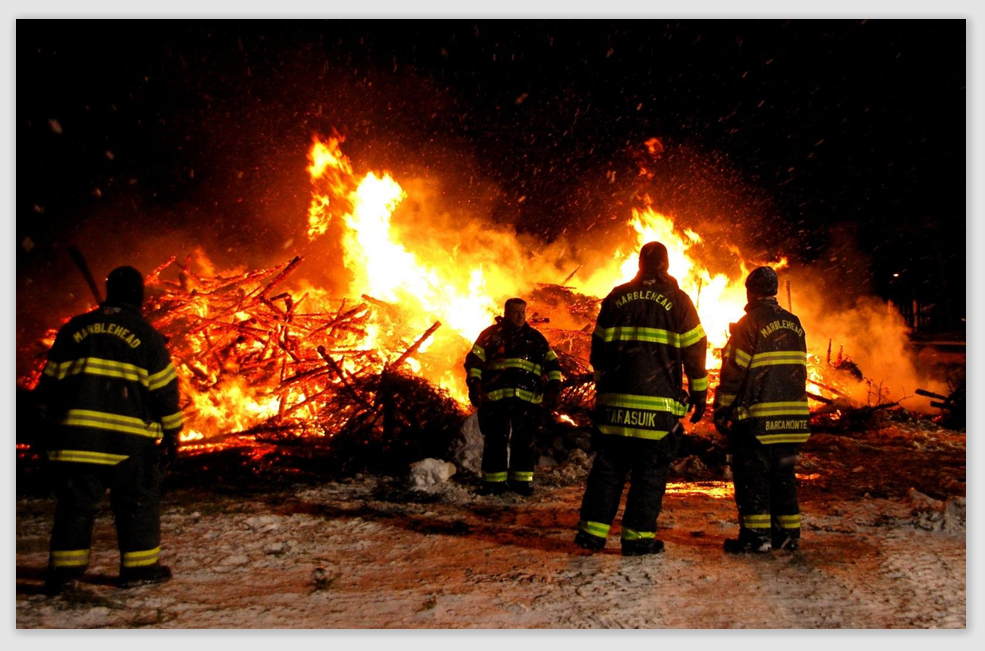 Gloucester, Massachusetts, Wicked Local, January 9, 2018: Tree burning warms Marblehead’s community spirit
A collective reaction of astonishment from spectators commenced as a 25-foot pile of holiday pine trees went up in flames during the annual Epiphany Tree Burning at Marblehead’s Riverhead Beach Monday evening. “It’s just astounding,” observed Ann Whittier, who grew up in Marblehead and has attended the event since she was a kid. “I’m over 60 and I live in Salem now. What I don’t like about (Salem’s) bonfire is it’s so far away (from viewers). Here, we’re so close. I think it’s nice that people are able to get up closer to the bonfire. But you wait and see, people will start to back away once it goes off. It’s beautiful and a great way to end the (holiday) season.” About 200 people turned out Monday and once the trees were lit, a blaze quickly erupted like a glowing inferno rising into the night sky. On an evening when temperatures were below freezing with a stiff wind and light snow coming down, the heat was a welcome comfort. “It’s an impressive blaze and it’s a little intimidating,” said Jason Whittier, Ann’s son. “You can really feel the heat from a great distance…”
Bored Panda, January 9, 2018: Woman returns a Christmas tree on January 4th because “It’s dead”
Christmas is over so it’s time to take down your Christmas tree… or return it to the shop that sold it to you? A woman has decided to do just that. On the 4th of January, she demanded Costo a refund because her Christmas tree “is dead” and one eye-witness has documented the entire thing. After he shared the ridiculous story on the internet, people can’t make up their minds if the shot responded accordingly or if they’re totally nuts. To give you some background, Costco Wholesale Corporation, trading as Costco, is an American multinational corporation which operates a chain of membership-only warehouse clubs. As of 2015, Costco was the second largest retailer in the world (after Walmart), and it guarantees almost all of their products with a full refund. Whether she really needed the money or because of some other reason, scroll down to read how the customer tried to abuse Costco’s refund policy and let us know what you think about it in the comments…
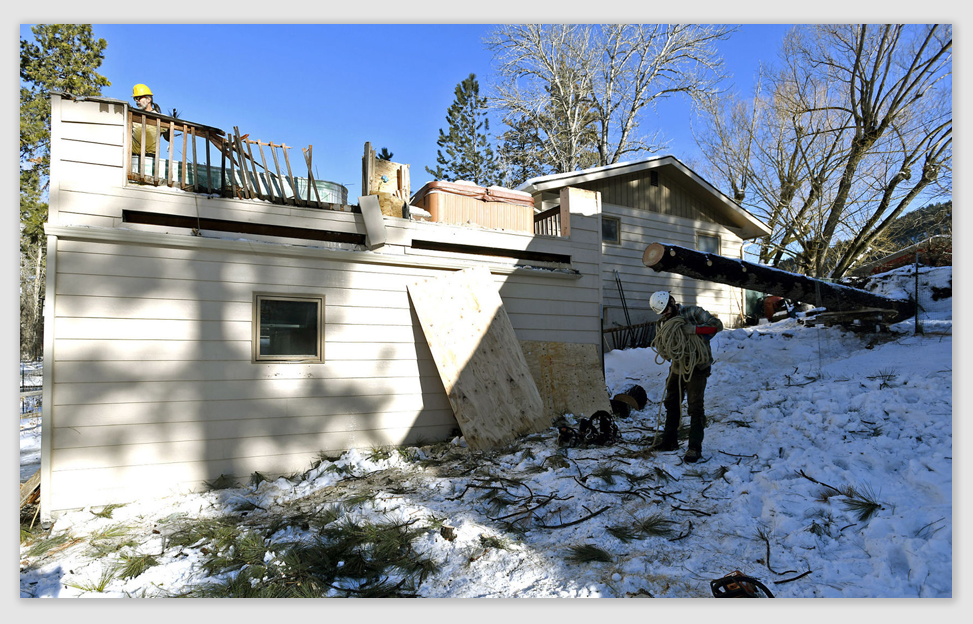
If a tree growing on private property gets knocked down during a storm – as happened around the Rattlesnake last week – it’s up to the homeowner to clean it up, according to the city of Missoula’s urban forester Chris Boza. That is, unless it falls into the public right-of-way, or onto power lines. Then, the city or utility company clears that portion of the problem. The recent snowstorm hit the Rattlesnake area particularly hard, with several trees landing on or near homes; including one that partially blocked a roadway. When a street is blocked, Boza said the Urban Forestry Department is dispatched to deal with the debris, so long as there are no downed power lines or other utility hazards…
Battle Ground, Washington, The Reflector, January 9, 2018: Do trees need attention in the winter?
Yes, your trees need care throughout the winter to maintain their health. Even though urban trees are now going into dormancy, they require attention throughout the winter to stay strong. Here are four tips to follow: (1) Wrap the trunk: Some recently planted, thin-barked trees like honey locust, ash, maple and linden, are susceptible to bark-damaging sunscald and frost cracks when temperatures fluctuate in fall and winter. Wrap trunks of younger trees up to the first branches using commercial tree wrap to protect the bark. Remember to take the wrap off once weather warms in the spring. (2) Use mulch: Two to four inches of wood chips, bark, or other organic mulch spread over the root system of the tree will help reduce soil evaporation, improve water absorption, and insulate against temperature extremes. To prevent rodent damage and the possibility of rot, make sure that mulch does not rest against the trunk of the tree. Consider layering leaves around the base of each tree as natural mulch…
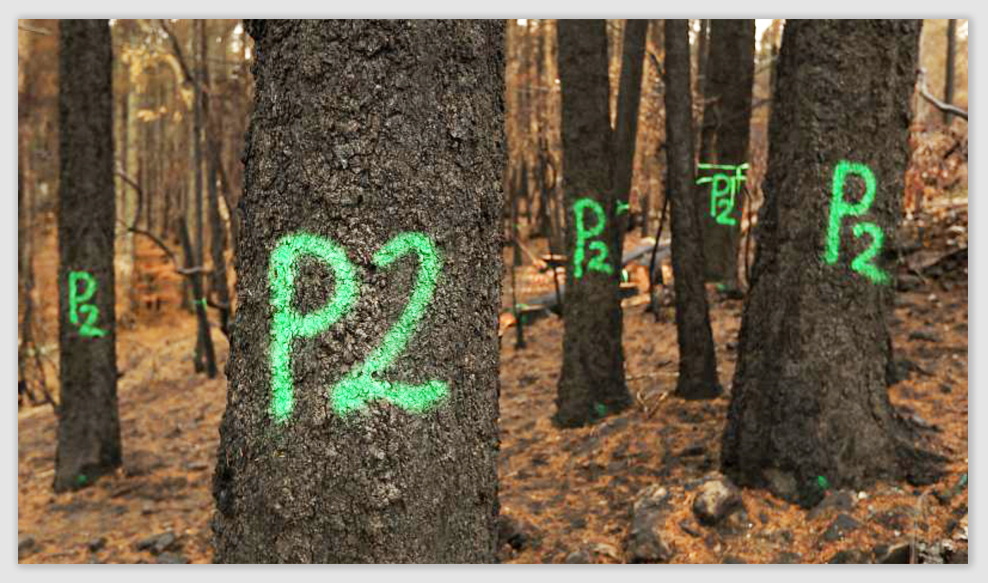
A state board announced this morning it will cut regulations to speed removal of dead or dying trees on property damaged by wildfires in three counties. The California Board of Forestry and Fire Protection stated an emergency regulation which takes effect Jan. 22 allows for the cutting or removing of dead and dying trees around damaged or destroyed legally permitted structures. It describe the change as allowing applicant notify the board using “expedited” notification rather than go through the process of preparing a timber harvest plan. The emergency regulation applies to Mendocino, Napa and Sonoma counties. The North Bay Wildfires were the deadliest and some of the costliest wildfires in California history. The largest of the fires burned approximately 185,000 acres, destroyed approximately 9,200 homes, and damaged approximately 790 additional structures…
Washington Court House, Ohio, Record Herald, January 8, 2018: Walnut trees: Blessing or curse?
Most people think of Black Walnut trees as an asset, even if they don’t take the trouble to gather and shell the plentiful nut harvest under them. Walnut is a prized hardwood traditionally used for gun stocks and fine furniture, so walnut trees have a special status even if they’re not particularly attractive as landscape trees. Black Walnut trees present a special challenge in the landscape, because they secrete a substance that is toxic to many plants. Known as “juglone” this poison is secreted by walnut roots, which can extend 50 feet from the trunk of a mature walnut tree. This means that homeowners need to pay special attention when planting or landscaping anywhere near an existing walnut tree…
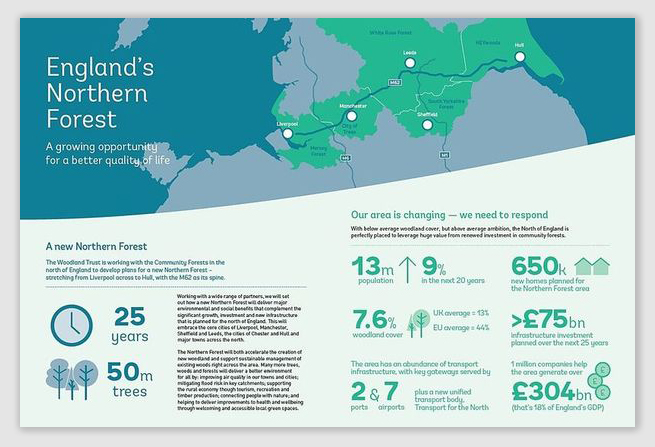
Plans to plant 50 million trees to create a “Northern Forest” along a key motorway have been backed with £5.7 million from the Government. Planting is planned over the next 25 years to turn a 120-mile stretch of the M26 between Liverpool and Hull into a refuge for wildlife including birds and bats, protect species such as the red squirrel. It would also boost northern England’s sparse woodlands for millions of people living in the area. The Woodland Trust , in partnership with the Community Forest Trust and five community forests, aims to plant woodland totalling 25,000 hectares (62,000 acres), in a project which is forecast to cost £500 million over 25 years. It could generate an estimated £2 billion for the economy in growth in tourism and visits to the area, boosting rural businesses and generating jobs, increasing property values, and reducing the economic impacts of flooding, the scheme’s backers say…
The Emergency Citrus Disease Response Act, which was included in the recently-signed tax cut bill, will provide immediate aid to help Florida citrus farmers replace damaged trees, allowing a 100 percent deduction in the first year instead of depreciating the cost over 14 years. A coalition of Florida orange farmers and agriculture groups said the new law authored by Congressman Vern Buchanan will help the state’s beleaguered citrus industry bounce back from crop disease and Hurricane Irma…
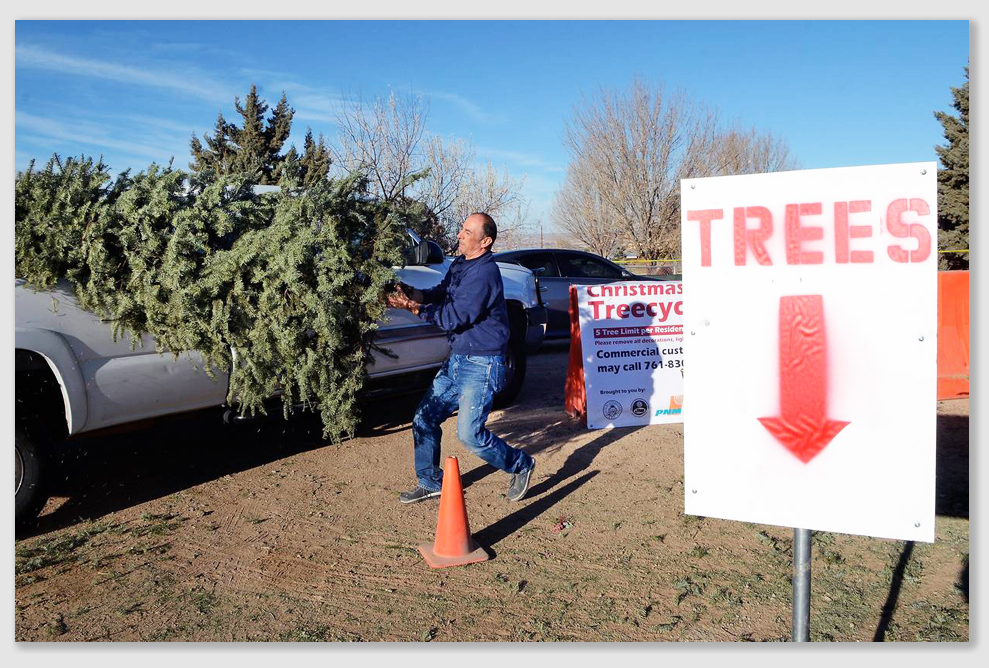
What goes up must come down, and in the next few days, that could include as many as 30 million fresh Christmas trees that briefly perfumed homes before being stripped of ornaments and tossed to the curb. The National Christmas Tree Association, a trade group, estimates that Americans bought 27.4 million real Christmas trees in 2016, spending $2.04 billion. In comparison, an estimated 18.6 million artificial trees were purchased for $1.86 billion. (Fewer artificial trees are bought in any given year, but because they are reused, many more are on display.) The figures are from an annual poll commissioned by the association and conducted by Nielsen. This year’s survey, which will provide data for 2017, isn’t finished, but based on conversations with growers and retailers, the association anticipates the numbers will increase…
Lockport, New York, Journal, January 7, 2018: Tree backlog likely to persist until end of 2019
City leaders have made a recent push to clear the long-standing backlog of trees to trim or remove, but residents with problem trees should remain patient. The backlog likely won’t be cleared until the end of 2019, city officials say. “It took a long time for this problem to develop,” said 4th Ward Alderman David Wohleben. “I think it will take a long time for us to get a handle on the problem and get it resolved.” In October, Mayor Anne McCaffrey announced city highway employees had merged several lists of trees residents had complained about, into a single list of 936 trees, and was working at rating them. A tree’s rating determines whether it will need to be removed, trimmed or left alone. Of those 936, about 200 trees will require removal, while more than 475 need a trimming…
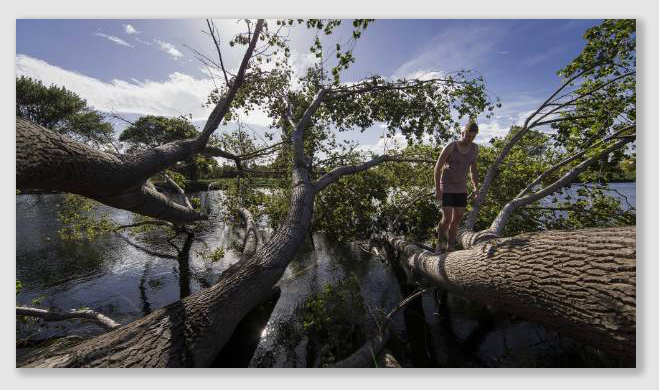
A teenage rowing coach plunged into the water to rescue his crew after a 30-metre tree toppled onto – and sank – their rowing boat on Christchurch’s Avon River. Firefighters described scene, at the New Brighton Rd and Locksley Ave intersection at 5pm on Monday, as one of the “most unusual” they had attended in recent times, Fire Service spokesman Andrew Norris said. The 30m poplar tree, which was believed to have rotten roots, fell from the Avonside Drive side of the river just as the boat carrying the Shirley Boys’ High School under 15 squad of Reuben Bannon, Finley Ocheduszko Brown, Cameron Maughan, Liam Whitaker and David Brown rowed underneath. Rowing coaches James Alexander and Josh Dolan, both 18, were cycling along the edge of the river watching the crew train when they heard a “loud crack” from the nearby tree…
A former National Park Service official who improperly helped Washington Redskins owner Daniel Snyder cut down more than 130 trees to improve a river view at his Potomac, Md., estate has been chosen by the Trump administration to be one of the agency’s highest-ranking leaders. According to an internal email circulated at the Department of the Interior, Daniel Smith will assume the agency’s deputy director position Monday. He is expected to replace acting director Mike Reynolds, whose 300-day term has expired… “We have a new political appointee,” Lori Mashburn, Interior’s White House liaison, announced in the email obtained by The Washington Post. “Dan should be a familiar face at NPS. He most recently served as Superintendent of Colonial National Historical Park.” Before that superintendent’s role, Smith was a special assistant to the Park Service director. And it was in that position that he intervened in 2004 to help Snyder remove the trees from a hillside between his estate and the C&O Canal and plant saplings to improve Snyder’s view of the Potomac River. Smith pressured lower-level officials to approve a deal that disregarded federal environmental laws, harmed the Chesapeake & Ohio Canal National Historical Park and left the agency vulnerable to charges of favoritism, according to an Inspector General report…
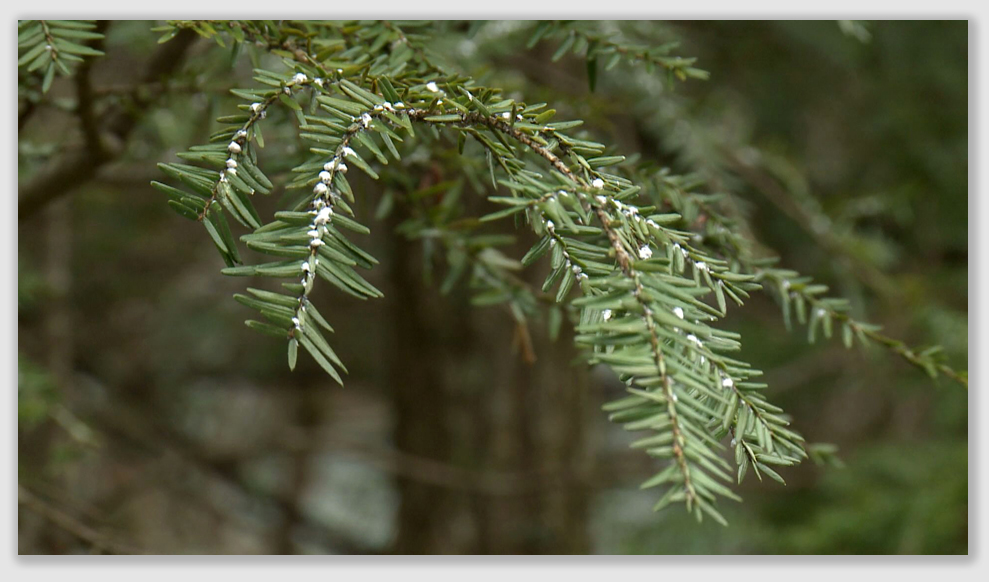
Biologists in the Great Smoky Mountains say there is a bright side to the recent spell of frigid temperatures. The deep freeze is a life-saver for some of the mightiest hemlock trees in the Smokies. “Definitely, these cold extremes help with the invasive hemlock woolly adelgid,” said NPS forester Jesse Webster. “It will not get rid of them completely, but we will take every bit of help we can get.” The hemlock woolly adelgid (HWA) invaded the Great Smoky Mountains National Park in 2002. The tiny insect from Asia has killed millions of hemlock trees in the Eastern U.S. The pest gets its name from the white woolly coating that surrounds and protects the nymphs while they feast on hemlock trees in the winter…
Agfax, January 4, 2018: California: Tree crops take major hit from Thomas fire
As firefighters in Southern California worked to achieve full containment on the Thomas Fire, agricultural officials in Ventura County issued their first estimate of damage to crops and farm structures, reporting that losses will exceed $171 million, with more than 70,000 acres of cropland and rangeland affected. The Ventura County agricultural commissioner’s office based its initial assessment on information about agricultural locations within the perimeter of the fire, which started on Dec. 4 and grew into the state’s largest wildfire, burning nearly 282,000 acres as of late last week. In a preliminary disaster report to the U.S. Department of Agriculture, Ventura County Agricultural Commissioner Henry Gonzales estimated more than 10,289 acres of irrigated cropland and another 60,000 acres of rangeland in the county had been affected by the fire. He estimated the cost of the damage to current and future crops, machinery and equipment, dwellings, service buildings and other structures at nearly $171.3 million, with avocados and citrus crops suffering the highest losses…
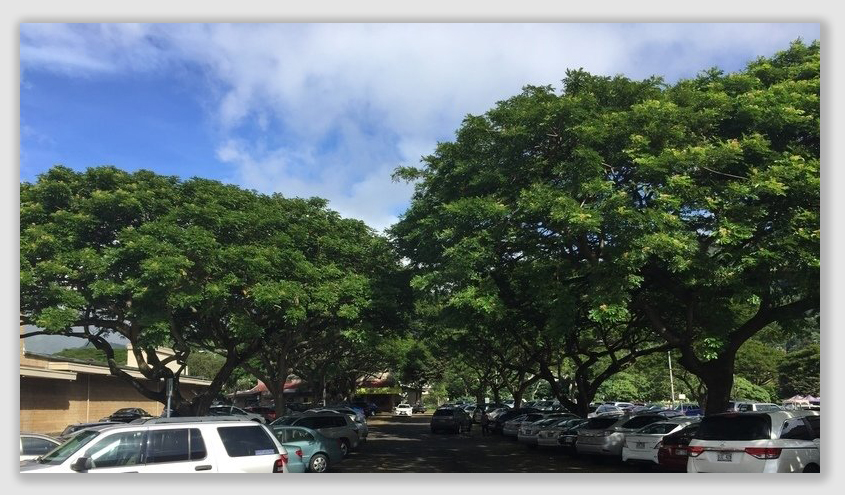
A plan to cut down several trees in Manoa Marketplace is not sitting well with some residents. Manoa Alliance started a petition Monday to stop owner Alexander and Baldwin from cutting down seven trees and relocating two others. A&B says it’s received complaints that the trees are creating a safety hazard in the parking lot. But Manoa Alliance says it was told the trees are being removed to create more parking. “They initially said that the reason they want to cut down the trees is to create more parking. They want to squeeze in 57 more parking stalls, but as you can see there’s really not a parking problem,” said Neil Bond with Manoa Alliance…
Abilene, Texas, Reporter News, January 3, 2018: Trees under attack fight back
As a tree guy, I get a lot of questions about cavities, or “hollows” in trees. Naturally, when homeowners notice a hollow spot on a tree, especially if it is oozing an ooky looking black liquid, they become curious. Frankly, voids in trees are an issue (no rocket scientist needed to figure that one out), and the real question isn’t so much “is it a problem?” as it is “how big of a problem?” Hollows in trees can be caused by many things. Be-that-as-it-may, most of the time, whatever the original cause of the trouble might have been, the upshot is that something wanted to digest part of the tree, and had some success. One ability trees lack is running away from things that want to eat them, so essentially, successful species of trees are ones which developed a decent ability to handle damage. When you see a cavity in a tree, what you are looking at is a spot where the tree was attacked by a tree “predator” of some kind. The predator has taken, or is taking, a hunk out of the tree, and the tree is defending itself (the plant world is every bit as brutal and competitive as the animal world, it’s just quieter about it). Sometimes that defense is successful, sometimes it’s not…
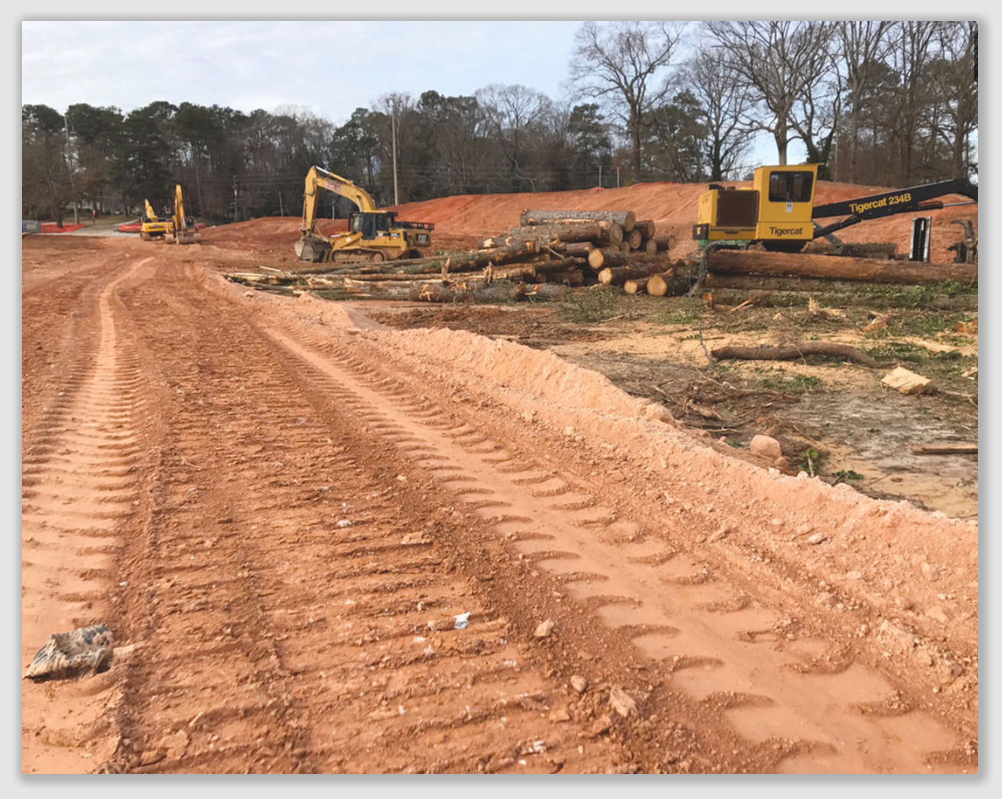
Nearly two months into the year-long project to refurbish the Bobby Jones Golf Course in Buckhead, residents and others have raised concerns over the number of trees being torn down as part of the plan. “It’s horrific. It’s raping the whole land,” said Liles Nickerson, who lives on Whitmore Drive, within about 25 yards of the north end of the course. “… Couldn’t they have worked with what they had here instead of ruining the whole topography?” The 144-acre course, located within Atlanta Memorial Park, was built in 1932 as a tribute to golf legend Robert Tyre “Bobby” Jones Jr. It was sold by the city of Atlanta to the state in 2016 as part of a plan to reconfigure the course from an 18-hole one to a nine-hole reversible one…
Stockton, California, Record, January 3, 2018: One million more dead trees in Calaveras
Another 1 million-plus trees died in Calaveras County alone last year, despite abundant rainfall which protects the trees from the ravages of bark beetles. As large as last year’s death toll was, it marked an improvement from 2016, when nearly 1.9 million trees died in Calaveras. In total, since the beetle outbreak intensified in 2014, the county has lost about 3.3 million trees. California as a whole has lost 129 million, a “staggering” sum spread across an area larger than the state of Maryland, state and federal officials announced recently. “It is apparent from our survey flights this year that California’s trees have not yet recovered from the drought,” Randy Moore, a regional forester with the U.S. Forest Service, said in December. Water helps shield trees by thinning out their sap, which allows trees to expel bark beetles through their tiny burrow holes. So why did so many trees die after a winter that saw moderate flooding? For one thing, it takes a couple of years for beetles to inflict their full damage, said Nancy Muleady-Mecham, a naturalist and tree expert who lives in Calaveras County. The trees that died last year were already in the process of being invaded. “We’ll see it (tree mortality) for another couple of years, even if we get record rainfall,” she said Wednesday…
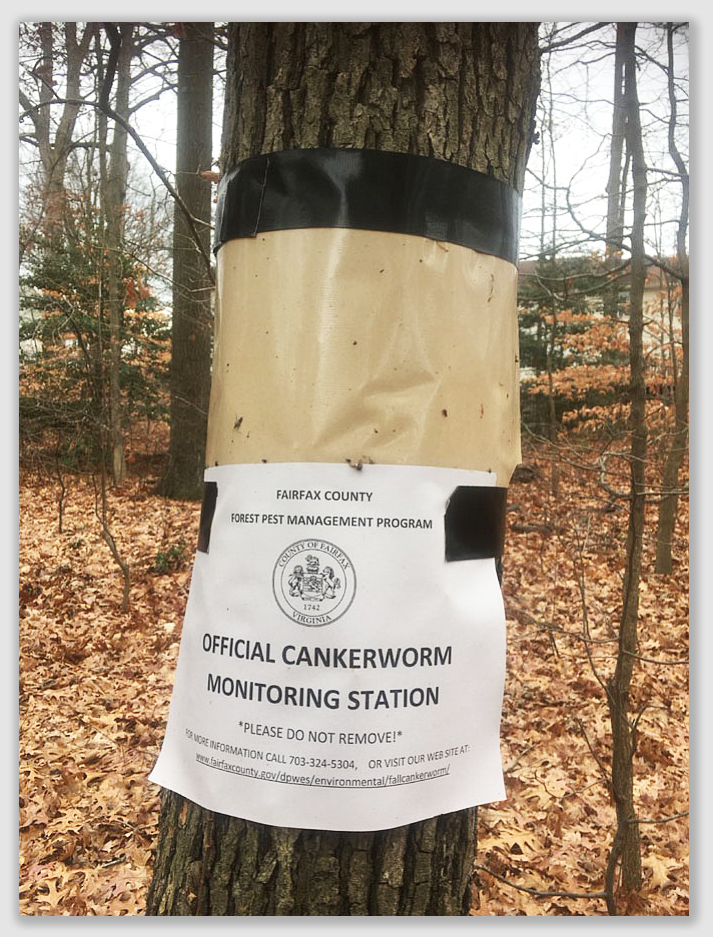
The odds are against trees in Fairfax County in terms of soil compaction, construction, air pollution and insects as the Urban Forest Management Division sets its sights on cankerworms this winter. Unlike the emerald ash borer that went for the trunk and branches of ash trees, the cankerworm goes for the leaves in the canopy. “The cankerworm larvae (caterpillars) feed on the leaves of a wide variety of trees,” said Troy Shaw, coordinator of the Forest Pest Program in the Fairfax County Urban Forest Management division. Shaw said the cankerworms target the first set of leaves, causing the trees to produce another set of leaves, which depletes the tree’s stored food reserves. The Urban Forest Management are currently trapping the females with a brown band of treated paper wrapped around trunks of trees that is “coated with a glue-like material that is intended to capture female cankerworm moths as they climb the tree in the winter months,” Shaw said. “We use the data collected from these traps to try to predict where defoliation is going to occur the following spring,” he added. The cankerworm is not fatal to every tree it defoliates but defoliation may cause tree mortality, and the county is targeting the Lee and Mount Vernon districts this winter. In the past, up to 5,000 acres in the county have been defoliated by cankerworms…
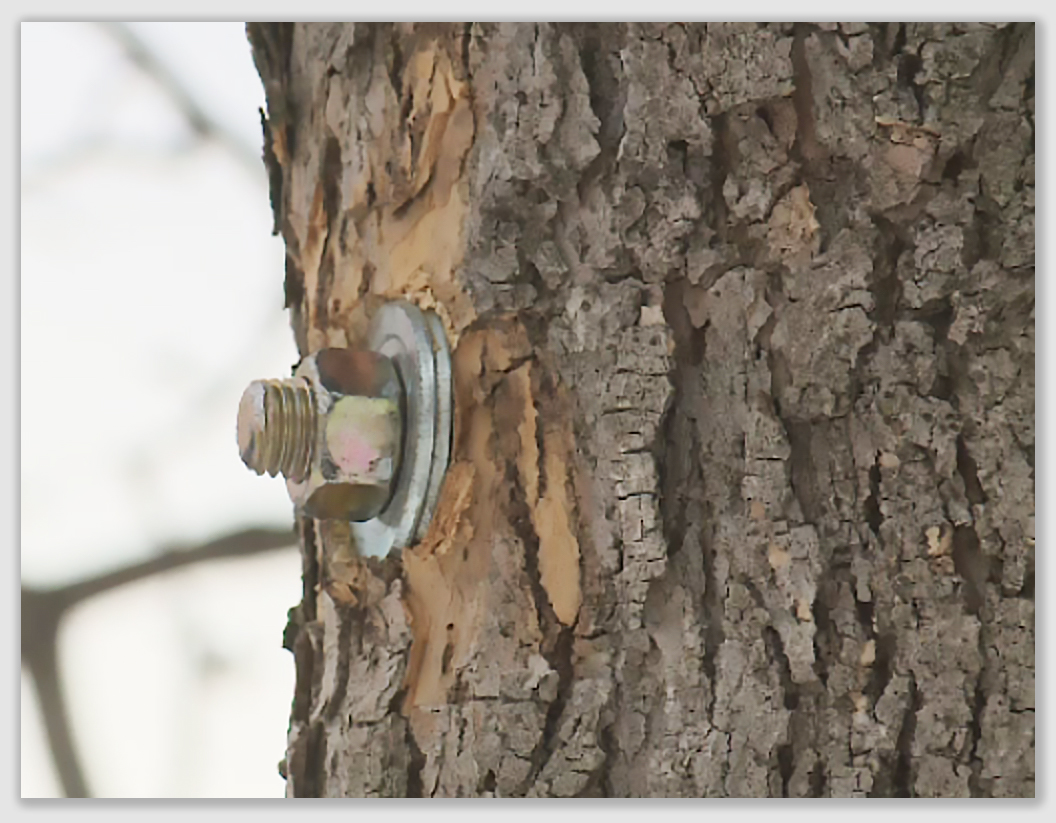 Regina, Saskatchewan, January 3, 2018: City installing bolts on splitting trees
The City of Regina is trying to keep a number of trees from splitting by installing bolts into the trees to pull them back together. Frost cracks over the past two weeks have caused a number of green ash and elm trees to break in half. Wind chills have reached into the -30 C and -40 C range over the past few weeks. “We’ll go out and assist a tree and determine the health,” said Ray Morgan, the city’s director of parks and open spaces. “Typically we’ll put a bolt —maybe two bolts, maybe three bolts —to help secure it and ensure that it is safe for the public…”

January 2017 began with Winter Storm Jupiter wreaking havoc on the area by dumping snow and covering everything with thick ice, especially trees and other shrubbery in the city, a great deal of which suffered a lot of damage. Colder weather is upon the area and with that, it is important for trees to be trimmed to help prevent some of that damage from happening again. “It helps beautify the city, it helps avoid damage to power lines and houses and fences, which could all cost a lot of money to fix after a big storm like what we saw in January,” Roger Wharran, owner of Wharran Landscaping, said. “A lot of it is to help beautify the city and beautify the property. If they take care of them properly and have a professional do the work, that’s the right way to do that.” “As an arborist, we look for bad angles on trees and those bad angles, if they’re too narrow, that can cause someone to not see the break or decay and if it’s too wide, it can get too much weight on that branch from ice and snow and then break,” Vicky Brunkhardt, owner of DV Enterprises, LLC added. “That’s one of the biggest things we look at as far as making sure a tree is healthy…
Temperatures hit the magic number of -40 across northern Minnesota in the past week. Forestry experts like Lee Frelich at the University of Minnesota say -40 is a magic number for Minnesota forests. Temperatures of -40 produce high insect mortality rates. That means those little pine bark beetles that can decimate our northern forests took a big hit last week. So even though you can’t feel your face, there are benefits to this extreme cold. Silver linings, people…
 Coos Bay, Oregon, The World, January 2, 2018: Piling leaves against trunks can harm trees
After autumn’s end comes the problem of what to do with all those fallen leaves. Far too often, homeowners rake the leaves into big piles surrounding the trunks of their street and yard trees. Some of these piles resemble leaf volcanoes. Unfortunately for trees, those piles can be just as destructive as a volcano, according to Oregon Department of Forestry Community Assistance Forester Katie Lompa. “Leaf volcanoes trap moisture against a tree’s trunk, allowing fungi to flourish,” said Lompa. “Peel back wet leaves that have been left against a tree trunk and you may see tell-tale white patches revealing the initial stages of rot.” The solution? “Leave a ring at least three or four inches from the trunk free of leaves,” said Lompa…
Flowing Data, January 2, 2018: Mapping perceived canopy tree cover in major cities
Treepedia, from the MIT Senseable City Lab, estimates perceived tree cover at the street level. They used panorama views from Google Street View to form a “Green View Index”, which they then mapped for major cities. Treepedia measures the canopy cover in cities. Rather than count the individual number of trees, we’ve developed a scaleable and universally applicable method by analyzing the amount of green perceived while walking down the street. The visualization maps street-level perception only, so your favorite parks aren’t included! Presented here is preliminary selection of global cities…

 Tree and Neighbor Law For Homeowners and Professionals