

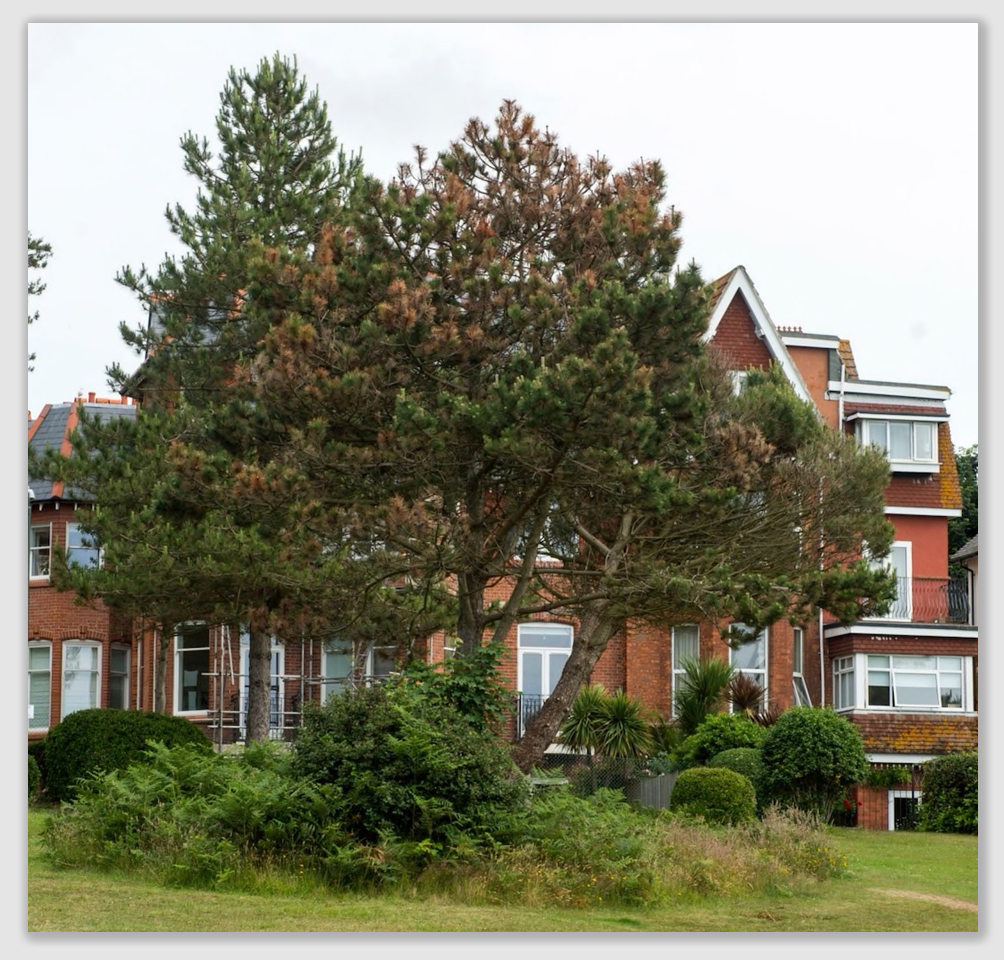
A vicar has resigned as chair of a residents association, accusing home owners of endorsing vandalism because they want to remove a series of poisoned trees. It is the latest twist in a long-running saga in the picturesque West Cliff area of Bournemouth, Dorset, that began when two mature trees were drilled into and poisoned in an attack believed to have been committed by a homeowner in order to improve their sea view. Saplings planted next to them were also sabotaged. Reverend Chris Colledge said that by taking down the dishevelled, rotting trees, they would be playing right into the culprit’s hands. “It would appear the majority of residents would like all the poisoned trees to be taken down, as well as others, and there to be no fencing,” he said…
Trees have been planted on President Trump’s West Palm Beach golf course where earlier in the week CNN cameras captured him golfing and were subsequently blocked from filming by what appeared to be a strategically placed truck obstructing their camera’s view of the course. The white truck blocking CNN’s view of the West Palm Beach, Fla., course appeared earlier this week after the channel promoted an exclusive video of the president golfing. A CNN producer, Noah Gray, tweeted a picture of the truck in front of hedges adjacent to the golf course blocking their cameras view on Wednesday, an opening that is being re-landscaped, according to CNN’s Ana Cabrera…

The only pine tree that survived the 2011 tsunami on a beach here and became a symbol of resilience was cut down on Dec. 27. A ceremony was held on the beach in the city’s Kashima district to bid farewell to “the lone pine of Kashima.” “We received great strength and moral support from you,” Kazuo Goga, 77, leader of a volunteer group that worked to preserve the tree, said in a speech at the ceremony. The tree was one of tens of thousands planted along the beach for 3 kilometers north to south as a windbreak forest. However, the Great East Japan Earthquake spawned a tsunami that washed away many of the trees on March 11, 2011. Other trees later died after being submerged in seawater for a prolonged period. The sole survivor itself was visibly growing weaker…
The city of Lawrence is using its Christmas trees to provide a habitat for wildlife where an old landfill used to sit. The city’s Christmas tree recycling program began in the early 1990s, the Lawrence Journal-World reported . As many as 50,000 trees have been saved from the city’s new landfill and brought to the site, according to Craig Pruett, operations supervisor for the city’s solid waste division.”They don’t weight a lot, but do take up space,” Pruett said. “It’s just one less thing that is going to the landfill.” The old landfill was abandoned decades ago and is located in what’s now Riverfront Park near the Kansas River. Pruett said trees are deposited into rows to create a wildlife habitat. “So there is this long tube of Christmas trees that are compressed and pushed up against each other,” he said. “And so that creates a bit of a barrier for a larger animal to try to get into. Birds can fly in there or rabbits may make their bedding in the areas underneath…”
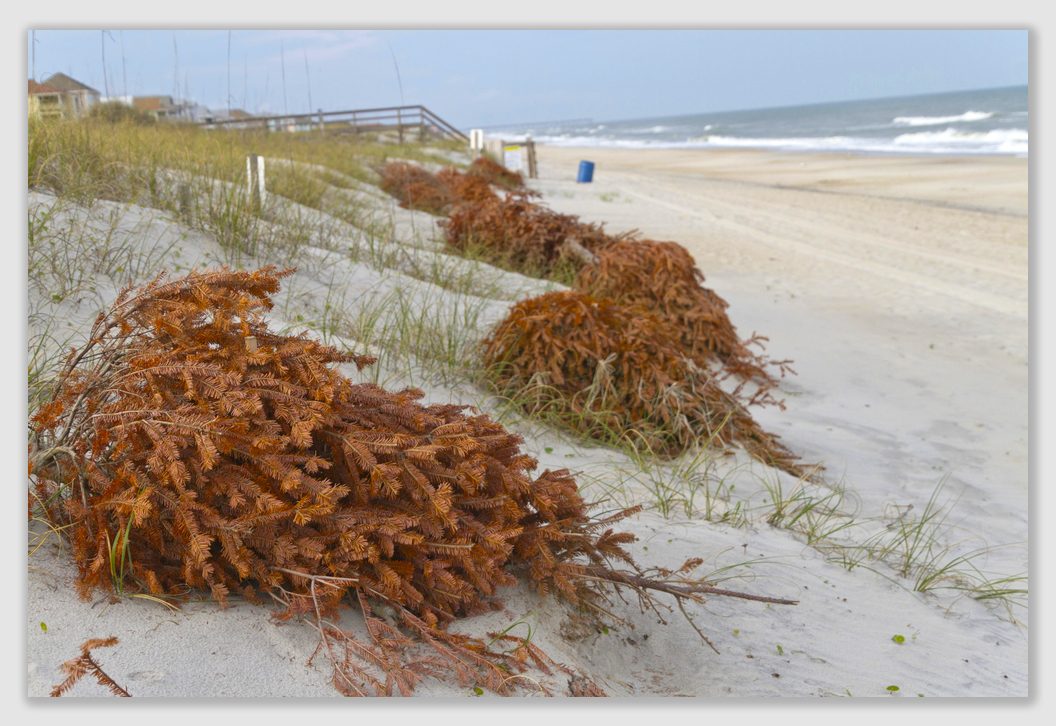
What will you do with your live Christmas tree after the holidays? At the end of the Christmas season when all of the decorations are packed away, you have to find something to do with the live Christmas tree. The best way to get rid of the tree is to recycle it. Christmas trees are not a major landfill problem, but sometimes tree disposal is a concern for those not knowing the alternatives. There are several recycle options for people to choose from. Many communities have a recycling program for discarded Christmas trees. Many cities chip up trees and use them for mulch or compost. This technique is most cost-effective. Other recycling programs include using discarded trees for erosion control on beaches, as a habitat for fish in ponds and lakes and as fuel in electrical power generators…
Mendon Community Schools Superintendent Roger Rathburn fell from a ladder and died while trying to trim trees Tuesday at a nearby golf course, police say. Rathburn, 55, was on a ladder on Dec. 26, at the Sauganash Golf Course at 61270 Lutz Road, about two miles south of Three Rivers, when the incident occurred, they say. “Based on the investigation there, he was trimming trees along the golf course,” said Trooper John Hoffmeister. “He was on a ladder approximately 20 feet in the air cutting a larger tree limb down.” The trooper said Rathburn was on a metal, extendable ladder, using a chain saw. He was above the large tree limb that he was cutting. “At some point in the process, the limb that he was cutting struck the ladder,” Hoffmeister said. “As it was making its fall, it struck the ladder causing Mr. Rathburn to fall, with him striking the (golf) cart path…”
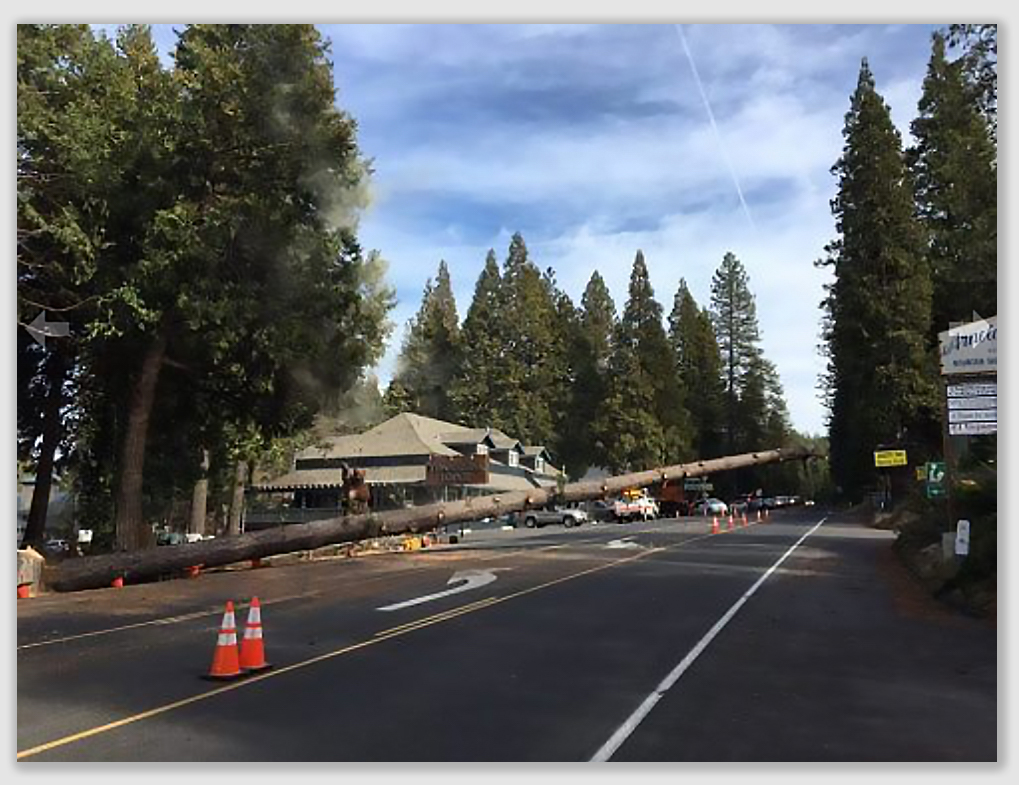 Sonora, California, KVML Radio, December 28, 2017: Huge hazard tree felled across Highway 4
One might call it a high-profile take down. Yesterday, along Highway 4 in Arnold a faller from Camp Connell and an Altaville-based tree crew topped off and felled a 100-year-old bark-beetle killed ponderosa pine in a series of moves after Caltrans spotters noted its precarious condition and close proximity within the highway’s strike zone. The pictures Caltrans captured of the job, viewable in the image box slideshow, clearly reflects the vital work fraught with potential perils that tree crews are continuing to do across the Mother Lode — much of it away from ready public view — as public and private entities deal with the thousands of tree casualties of California’s five-year drought and beetle infestations that have ensued. For Caltrans part, District 10 spokesperson Warren Alford shares, “Our crews are always looking to determine where the most immediate need is and wanted to get [the identified hazard tree] out of there before it became a problem and to make sure that the public was safe.” Providing more details of the operation, which centered close to the Timberline Lodge, he recounts, “As you know it was right in the middle of town — and it is a holiday week — so we wanted to make sure we could clean it up quick…”
New Delhi, India, Live Mint, December 29, 2017: How sensors can help protect trees
On 11 November, six armed men felled and took away two sandalwood trees from the Malleswaram, Bengaluru residence of the late C.V. Raman. Two security guards were posted there, but they could only watch helplessly as the men overpowered them and made away with the wooden logs. This is no isolated incident; illegal chopping and theft of the expensive, scented wood has been a constant headache in Karnataka and the neighbouring states where the trees are cultivated. If a pilot project involving an internet of things (IoT) solution that uses sensors on the trees to monitor and analyse their well-being is anything to go by, tracking down the thieves and recovering the stolen wood from them would become easier in the future… “Nearly 50 trees on IWST premises have been fitted with sensors and the alerts generated from the data captured can be sent to the mobiles or smartphones of the guards and higher-level officers,” says Surendra Kumar, director, IWST. He adds that the IoT solution would make it possible to protect the trees more cost-effectively, as fewer guards would now be needed to do the rounds…
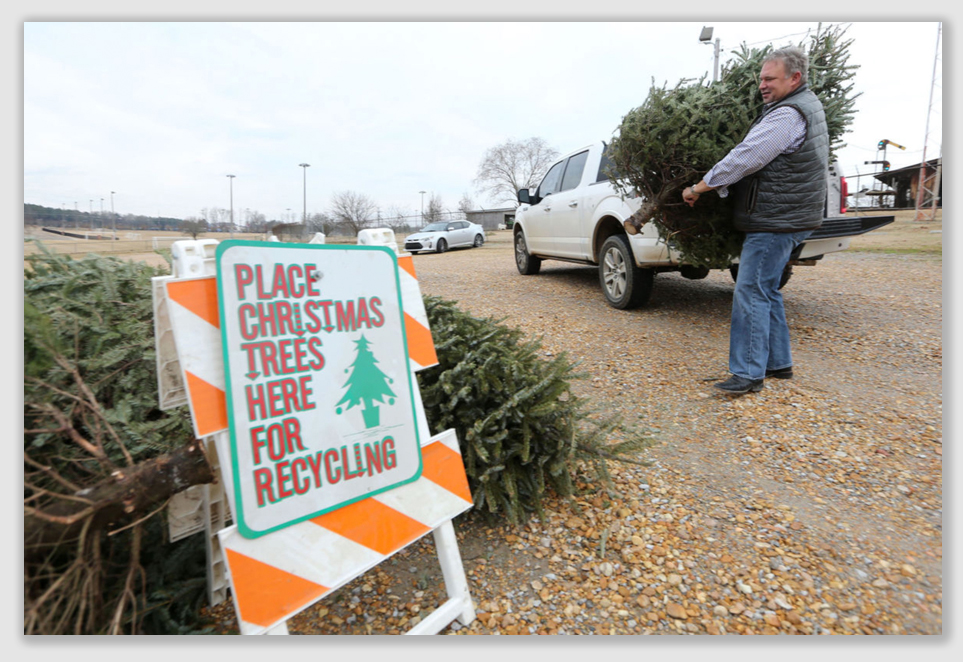
Just because the presents are opened and Christmas Day has passed, that doesn’t mean the tree is no longer useful. Live Christmas trees can have a second life, so to speak, through the Tupelo Public Works department tree recycling program. The annual program began Wednesday. But for folks who want to enjoy their trees through Epiphany (Jan. 6) or longer, there is still plenty of time to drop off their trees. The annual program will run through the end of January. Most of the 1,500 or more trees expected to be dropped off at one of five locations around town will end up underwater as breeding habitat in one of the state’s fishing lakes. The city partners with the U.S. Army Corps of Engineers to create fish habitats across the state. “We will send most of them to Sardis Lake, where they will be sunk and provide a natural habitat for fish,” said Public Works horticulture superintendent David Knight. “You never know how many we’ll get or how many they will want for the lake…
It was a story that made headlines all over the West: A Christmas tree shortage resulting in higher prices, and possibly, a chance many families would go without one this year. However, that wasn’t the case for some tree lot owners. Several local owners tell KTVB that last year they sold out, while this year they have hundreds of unsold trees. Jordan Risch, owner of Jordan’s Christmas Tree Lot, tells KTVB there was still a shortage of Christmas trees; the difference this year though was everyone knew about the shortage. Risch says what he saw in his lot was many people buying their Christmas trees earlier in the season, in anticipation that many trees would be gone. Risch says halfway through the season they looked and their sales and decided to bring in more to ensure they had some up until Christmas…

You look out the window and find that your favorite tree is dead all of a sudden. It didn’t seem to have any problems, so you are asking: Why did my tree suddenly die? Why is my tree dead? If this is your situation, read on for information on the reasons for sudden tree death. Some tree species live longer than others. Those that grow slowest generally have longer life spans than trees with rapid growth. When you are selecting a tree for your garden or backyard, you’ll want to include life span in the equation. When you ask questions like “why did my tree suddenly die,” you’ll want to first determine the tree’s natural life span. It may simply have died of natural causes. Most trees exhibit symptoms before dying. These can include curled up leaves, dying leaves or wilting leaves. Trees that develop root rot from sitting in excess water usually have limbs that die and leaves that brown before the tree itself dies. Likewise, if you give your tree too much fertilizer, the tree’s roots are not able to take in sufficient water to keep the tree healthy. But you are likely to see symptoms like leaf wilting well before the tree dies. Other nutrient deficiencies also show up in leaf color. If your trees show yellowing leaves, you should take notice. Then you can avoid having to ask: why is my tree dead?
Tree cutting on town open space — a few years ago — has resulted in an $85,000 settlement that will benefit town conservation efforts. “Open space off Mamanasco Road, we had trees cut down,” First Selectman Rudy Marconi said. “We’ve reached a settlement, $85,000.” The Board of Selectmen discussed the matter briefly before voting to accept the settlement, which came from an insurance company for the homeowner who cut the trees. “The $85,000 will go to replace the trees?” asked Selectwoman Maureen Kozlark. “It won’t get lost in our fund balance?” The money — or the $65,000 left after $20,000 goes to cover legal bills stemming from the case — will go to the Conservation Commission, Marconi said. “They want to replant,” he said. “It opened up a big area…”
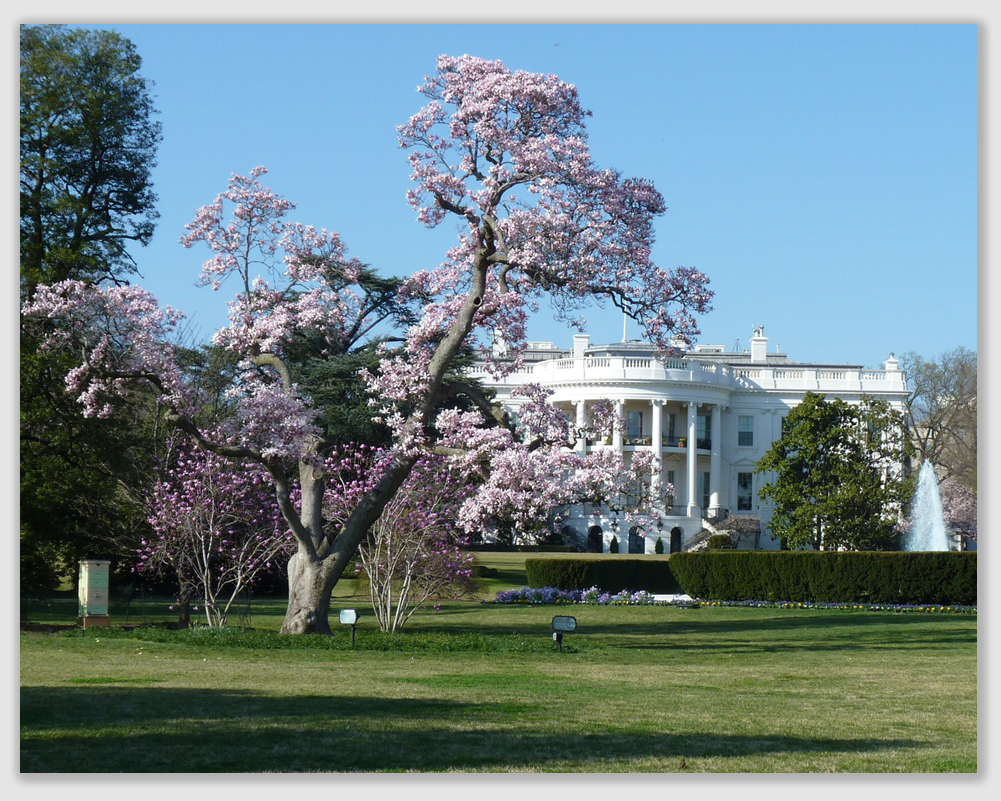
CNN, December 26, 2017: Iconic White House tree to be cut down
The south facade of the White House will undergo a dramatic change this week: the historic Jackson Magnolia, a tree that has been in place since the 1800s, is scheduled to be cut down and removed. The enormous magnolia, one of three on the west side of the White House and the oldest on the White House grounds, extends from the ground floor, up past the front of the windows of the State Dining Room on the first floor and beyond the second-level executive residence. The tree has had a long and storied life, yet has now been deemed too damaged and decayed to remain in place. Specialists at the United States National Arboretum were brought in by the White House to assess the Magnolia grandiflora, as it is specifically termed. According to documents obtained exclusively by CNN, the tree must be removed, and quickly, despite efforts to preserve it over several decades…
After all the time you spent hunting for the perfect Christmas tree, untangling lights and hanging ornaments in such a way that’s both symmetrical and not too much of a temptation to your mischievous toddler and/or curious cat, you’re probably not in too much of a rush to strip the thing down and toss it away when the holiday is over. Alas, no evergreen stays green forever (not once it’s been chopped down and put in a stand, anyway). So when should you throw away your Christmas tree? You might think there are no hard and fast rules when it comes to ditching your decorative centerpiece, but there are in fact certain guidelines that we’re meant to follow — both traditionally and (perhaps more importantly) from a safety standpoint. Let’s start with the traditional stuff. If you thought The Twelve Days of Christmas was just a song about a whole lot of different types of birds (hens, doves, swans, a partridge…what’s the deal??), you might be surprised to hear that there’s a little more to it, involving a customary farewell to your fir…
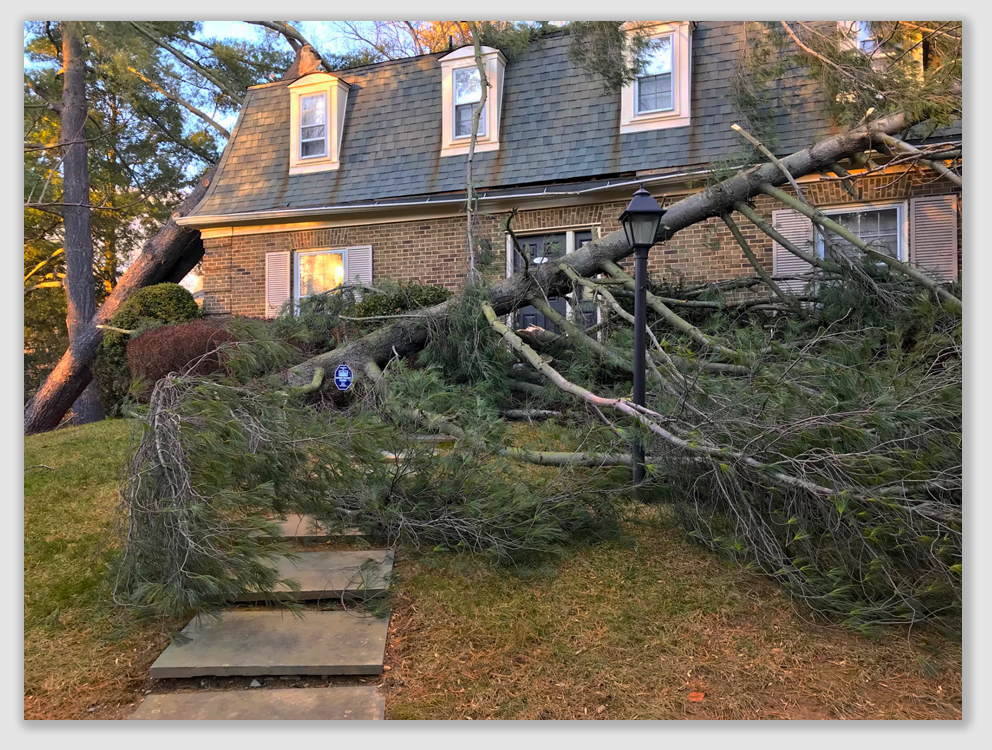 Washington, D.C., WJLA-TV, December 25, 2017: Gas line breaks after tree falls on house in Bethesda
A gas line broke after a tree fell on a house in Bethesda on Christmas afternoon Monday, according to officials. Officials say the tree fell on a home in the 7600 block of Edenwood Court a bit after 2 p.m. According to officials, the house didn’t receive any major damage and owners were awaiting a gas company to check the broken line. They were not home at the time and there were no injuries, police say…
Many Boulder County residents will once again have an annual post-Christmas opportunity to take their holiday trees to tree-recycling collection locations provided by their local governments or solid waste haulers. In Longmont alone, the city collected 2,937 trees at its Waste Diversion Center and satellite drop-off locations during last year’s holiday season, said Charles Kamenides, the city’s sanitation manager. In the 2015 holiday season, Longmont collected 2,581 trees at those sites. Kamenides said most of the trees dropped off by Longmont residents are ground up and used to make mulch, but about 150 or so will be used by the city’s Natural Resources Division to add fish habitat at Golden Ponds and McCall Lake…

The city of Stockton is moving slowly in approving a request by Brookside homeowners to cut down 159 Sycamore trees that line Riverbrook Drive. That has prompted the Brookside Master Association to file a lawsuit demanding a quicker response, because tree roots continue to damage homes in the neighborhood. Homeowners say the huge roots are cracking patios and getting into the foundations of their houses. “You can see them inching their way to the foundation,” said homeowner Tari Hocker. “Something has to be done because you’re going to lose houses.” One city official said he’s never seen a permit request to cut down so many trees. In this case, mature trees 30 to 40 feet tall. The homeowner group have arborist assessments in hand saying the trees should be removed before damage occurs and will pay for the removal and replacement if the trees. The city says it has approved permits to remove 30 trees and is in talks with the homeowners association on how to proceed. A court hearing on the lawsuit scheduled for Feb. 9 could be avoided with a resolution of the dispute…
No sooner had workers hoisted a 72-foot tall Norway spruce in Rome’s central Piazza Venezia this month than the mocking began. The tree was quickly nicknamed Spelacchio, or Mangy, because so many of its dead needles were dropping off, leaving the tree looking a bit bare. Chatter spread quickly on social media where Romans traded jokes about the spruce and criticized its sad appearance. Insults quickly turned to intrigue as the Italian media plumbed the tree’s costs, questioned how it had been transported to the city and analyzed its state of health. “It has clearly been traumatized,” one expert declared…
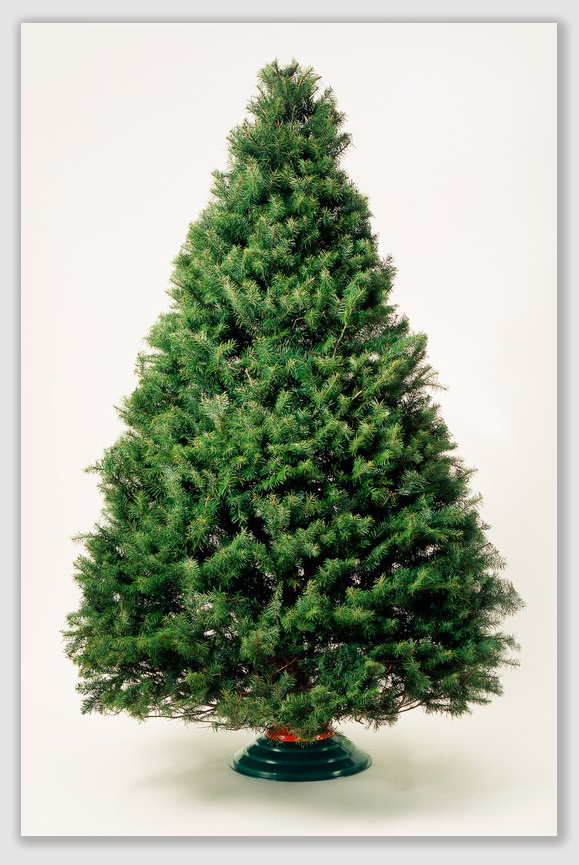 Wired, December 20, 2017: Using genetics to make a more perfect Christmas tree
With today’s sequencing and computational biology tools, you may never get stuck with a sad Charlie Brown specimen again. In fact, at this very moment, scientists are sifting through 1,200 gigabytes of genetic data, taken from hundreds of Christmas trees growing all over the world, to figure out what separates the best needle-holders from the worst. They’re also looking for the genetic signals that confer resistance to devastating molds from the genus Phytophtora, Greek for “plant destroyer.” Although some fungicides can reduce its severity, the root rot still costs the US Christmas tree industry hundreds of millions of dollars each year. Unlike America’s other commercial crops, very little is known about what goes on inside a Christmas tree’s genome. For centuries growers have had to rely only on traditional methods of selecting and breeding for desirable traits. But soon, thanks to a small cadre of scientists who’ve dedicated their careers to unraveling the conifers’ secrets, they’ll be able to use genetics to make a more perfect Christmas tree. One maybe even I would want in my apartment…
Bend, Oregon, KTVZ-TV, December 20, 2017: Storm aftermath: How to know if your trees are at risk
High winds knocked down several trees in Bend on Tuesday, falling on power lines, houses, streets and parking lots. On Wednesday, crews were busy cutting up and clearing out the downed trees. NewsChannel 21 reached out to a couple of arborists to find out how to tell whether your trees could be dangerous. In general: 1. If it’s co-dominant or has a split top, the tree could split into two separate stems; 2. The tree has a lean. Not all leans are bad, but if the tree has a lean it didn’t used to have, watch out; 3. There’s a deformed trunk on a pine tree. If the trunk has a bulge, the tree could have Western Gall Rust; 4. The base of the tree is rotten or decayed. This could be caused by standing water or insects; or 5. The tree or its limbs and needles are dead. But there’s another man-made reason trees could fall, and that’s urban development…
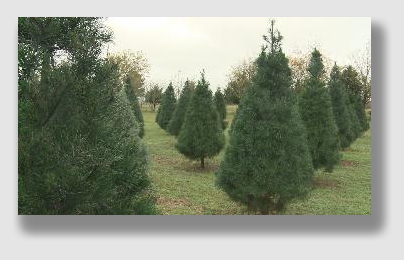 Washington, D.C., Times, December 19, 2017: For tree farmers, season lasts beyond the holidays
After a night with the family eating turkey and stuffing, many families drive out to the local tree farm to make their selection for the holiday season. Grohmann’s Christmas Tree Farm in Gilson is no stranger to this tradition, as they see their business spike during the weekend after every Thanksgiving. Tina Grohmann, one of the founders of the farm, has been in the business since 1986 and says this is the way things go every year. “Thanksgiving always brings families out,” she said. “We are always ready for the rush.” The Grohmann farm has growing seasons of other varieties as well, including corn, soybeans and sheep. The tree aspect was started in 1986 to supplement the income during the colder months. To start with, the profits were few, due to the initial growing period to start the farm. With an eight- to 10-year growing cycle for Scotch pines, their most stocked trees, sales can fluctuate year to year. In 2008, during the peak of the recession, the Christmas tree business took a large hit in sales. Because of the economic downturn, many families avoided the costs of a traditional tree. That caused many farms to destroy surplus and cut back. Now, the effects of that growing season are beginning to linger, as many farms are in the lower portion of their growing cycle…
The Palm Springs city council, California, said in a meeting Sunday, that a row of trees which blocks a historic African-American community from a city-owned golf course, will be removed. According to a report by the Atlanta Journal-Constitution, at an informal meeting with residents Sunday, Mayor of Palm Springs Robert Moon, along with a council member J.R. Roberts and other city officials, promised they will be removing the tamarisk trees and a chain link fence along the Crossley Tract (the African-American neighborhood) borders as quickly as possible. A September report by the Desert Sun, a local daily newspaper in Palm Springs, said residents who live in the Lawrence Crossley neighborhood perceived the trees as “an enduring symbol of racism and inequality.” They wanted the city of Palm Springs to remove the trees which separates their community from the Tahquitz Creek Golf Resort. The report stated that the trees were initially planted in the early 1960s, during the time the Civil Rights Movement was gathering pace throughout the nation. These trees were planted to block the black neighborhood from the white community who used the gold course on the other side…

Anti-pigeon spikes installed on trees to protect “expensive” cars have been branded “idiotic” by wildlife campaigners. The clear spikes, usually used to stop birds roosting on buildings, were installed on the branches of a tree in Clifton, Bristol, to deter pigeons from resting on it. They were reportedly erected by the management company of a nearby “prestigious development” of flats in order to protect residents’ cars from damage caused by bird poo. But they have caught the attention of wildlife campaigners and experts, who have criticised the decision. Nature writers Jennifer Garrett and James Common took to Twitter to express their outrage. Ms Garrett described it as a “war on wildlife” and Mr Common said the spikes were “quite possible the most idiotic thing I’ve ever seen”. Wildlife reporter Mike Dilger told the BBC it was “another example of a small number of people who live in the city and want the city aseptic and void of wildlife. They’re anaesthetised to nature…”
Natural News, December 19, 2017: Research finds urban trees are growing faster worldwide
Climate change alarmists are quick to point out what they perceive to be the negative effects of warmer temperatures, including droughts on one hand and excessive rainfall on the other. What they are not so quick to point out are the advantages of a warmer climate. One of these advantages was recently highlighted in a study conducted by researchers from the Technical University of Munich (TUM), which found that urban trees – which are exposed to warmer temperatures – are growing at a considerably faster rate than rural trees. Urban areas are subject to what is known as the urban heat island (UHI) effect. Increased human activity in a confined area causes metropolitan areas to be considerably warmer than their surrounding rural neighbors. This increase in temperature can be as little as 3 degrees or as much as 10 degrees Fahrenheit. With urban areas worldwide bursting at the seams and growing at an exponential rate, the research team, led by Professor Hans Pretzsch, wanted to examine the effects of the UHI effect on trees in these crowded environments. The scientists collected heartwood samples from 1,400 mature trees in cities in different climate zones across the planet, including Cape Town, Hanoi, Berlin, Brisbane, Paris, Munich, Houston, Santiago de Chile, Prince George and Sapporo. “We can show that urban trees of the same age are larger on average than rural trees because urban trees grow faster,” said Professor Pretzsch. “Further observation showed that the relative difference in size between urban and rural trees decreases with increasing age, but still remains relevant. While the difference amounts to about a quarter at the age of 50, it is still just under 20 percent at a hundred years of age…”

Carolers and holiday melodies gave way to the growl of a chain saw in the State House rotunda Monday as the desiccated remains of the official state Christmas tree was cut down and replaced with a smaller, healthier specimen. Not for the first time, the State House tree became a source of alarm and unwanted publicity late last week, in this case when it began to rapidly shed needles and start to bare its lower branches. After resisting initial calls to replace the tree over the weekend, Gov. Gina Raimondo reversed course Monday as the condition of the original tree continued to deteriorate. “People were calling the fire marshal,” said spokesman David Ortiz on the decision to replace the tree with a fresh one…
A Cobb County woman was nearly killed when a falling tree limb hit her while she was walking with her family, looking at the snow. Kennesaw Police told the Atlanta Journal-Constitution that Jennifer Lane was hit in the back of the head and neck on Friday afternoon. The mother of three was walking with her husband and one of her sons on a trail in the Legacy Park neighborhood. The family had stopped to take a picture of the snow when the limb fell, police spokesman Officer Scott Luther told the paper…

A North Dakota tree habitat project involving the state, the oil and gas industry and private landowners will plant about 55,000 trees in the state over the next few years. The Bismarck Tribune reports that the North Dakota Industrial Commission approved $108,000 in grant funding last week to support the Planting for the Future project. The plan was proposed by the North Dakota Petroleum Council and will involve 30 tree planting projects. Private landowners will help plant, water and maintain the trees. The Public Service Commission requires companies to replace two trees for every one removed during pipeline construction. Oneok is a company that gathers and processes natural gas in western North Dakota. They will plant 20,000 of the project’s trees to satisfy the requirement…
Atherton’s City Council members asked in November how much they’d have to spend to redesign parts of the new civic center to save 13 heritage trees scheduled to be cut down as part of the project. They have their answer – it ranges from $35,000 to $425,000 per tree, and could take up to 10 months. Now council members must decide how much time and money they’re willing to spend to save the trees. When the council meets on Wednesday, Dec. 20, members will have another tree-related decision to make – whether saving one tree and the pruning of 11 others is worth adding 10- to 15-foot taller poles on the Caltrain tracks? The town says 18 heritage trees, with a 48 inch or greater circumference at 4 feet above the ground, must be removed to make way for the civic center. There are 15 oaks, two redwoods and a carob. Arborists say five unhealthy trees should be removed, and the civic center architects have already found a way to save three trees previously scheduled for removal…
 Cincinnati, Ohio, Enquirer, December 18, 2017: Mistletoe, the tree thief
Once autumn leaves have fallen, mistletoe becomes highly visible on large trees throughout Kentucky. Phoradendron, the scientific name for Kentucky’s most common variety of this parasitic plant, means “tree thief.” These small leafy plants are commonly found on twigs and branches of many hardwood species in the southern United States. Mistletoe extract – steals – water, mineral elements and food from tree hosts; hence the name. Mistletoe use in holiday traditions has roots in pagan times. The appearance of a live parasitic plant while the host tree appears dead led some to believe mistletoe mysteriously held the life of the tree during winter. Druids harvested mistletoe in a special rite, never allowing the plant to touch the ground, and then hung it in their homes for good luck…
Q: I’ve owned my home in a local subdivision for about 11 years. Before I moved in my neighbor planted a willow tree right on the property line between our homes. When I moved in it was just a little tree but has since grown to be about 25 feet high. The branches hang way over on my side and rest on my roof. The branches are tearing apart my shingles and have all but eliminated the light coming through the windows on that side of my home. When I asked my neighbor to cut the branches, he not only refused but threatened to call the police if I touched them. I even offered to hire a professional tree trimmer but he claims that cutting them back will kill the tree. Is there anything I can do?
A: Yes. This is an all-too common problem in subdivisions. You have an absolute right to cut the branches back to the property line. That right doesn’t stem from any particular ordinance but rather from the long-established concept that when a neighbor, or any of his belongings, intrudes onto your property he is trespassing. The one possible exception is you can’t cut the branches in a manner that will make the tree unsafe. For example; if cutting all the branches on your side might cause the tree to fall over…
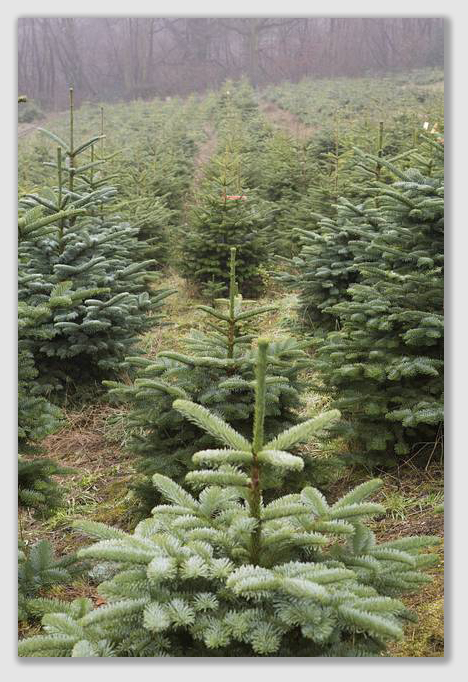 New York City, Wall Street Journal, December 14, 2017: You’re a good plant, Charlie Brown
In the movie, Charlie Brown’s sad little Christmas tree saves the day, showing the Peanuts gang the true meaning of the season. My family planted a similar lowly tree when I was growing up, but the only thing it taught me at the time was that fourth grade was too young to operate heavy machinery. The nursery had given us the scrawny seedling free, sure that it wasn’t long for this world. What the staff there couldn’t know was how strongly dad identified with underdogs, the long shots in life. Dad had previously planted a thick perimeter of pine trees around our house, and he began to confuse their flourishing for his skill as an arborist. So he took the scraggly tree home and scouted out a prominent place for it in our yard. Once planted, the tree stretched heavenward like a gnarled finger. Without stakes, it couldn’t even stand upright long enough for its roots to take. In my memory, the foreshadowing is obvious. “It’s hideous,” mom said flatly…
Providence, Rhode Island, December 17, 2017: RI to award grants to support programs to grow trees
The state is awarding grants to support community programs to grow trees. The Rhode Island Department of Environmental Management says $30,000 is available in matching grants. It’s working in partnership with the United States Forest Service and the Rhode Island Tree Council. The grants covers 40 percent of the cost for urban forestry efforts, including tree plantings, community forestry planning, invasive species management and related education and outreach. DEM is hosting an informational workshop at 2 p.m. Wednesday at its headquarters in Providence…
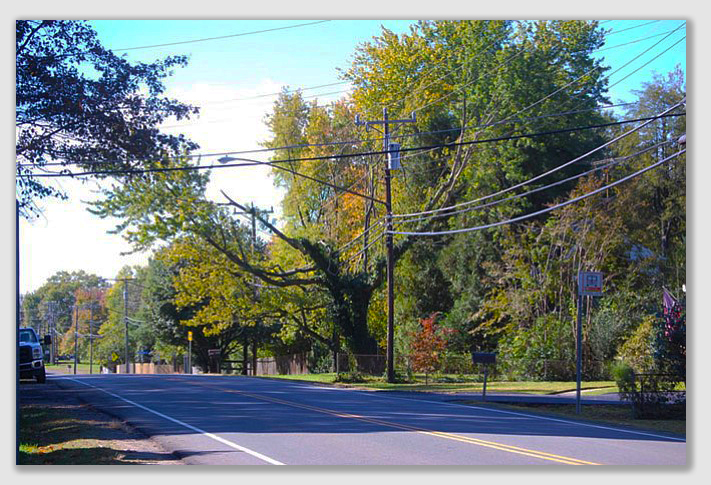
“I saw Dominion Energy’s contractor, Asplundh, while they were ‘trimming’ the trees on Parkers Lane,” Williamsburg Manor resident Greg Crider recalled recently. “I’ve seen the company do reasonable trimming in the past, but they really butchered the trees this time.” One of the trees Crider mentioned is near the point where Collingwood Road becomes Parker’s Lane close to the Justice-Snowden/Bock Farm in Mount Vernon. It’s been pruned so severely, and in a seemingly unnatural manner, that it appears to be raising its limbs in search of salvation from the tree gods. Mimi Friedman of River/Briary Farms, offered her reaction to the same tree: “We gasp when we pass the one across from the farm on Parkers.” Crider and Friedman join many others on one side of a multisided debate/argument about how power suppliers keep tree limbs from interfering with their overhead lines. The target of the residents’ ire, at least in the Mount Vernon area, is Dominion Energy and its tree-trimming contractors. Dominion’s Jay Griles, manager of the company’s Distribution
Forestry Division, and company spokesman Chuck Penn explained Dominion’s challenges…
The city of Saco and the developer behind an ambitious plan to transform Saco Island have reached an agreement to resolve a notice of violation issued after the property was cleared of trees in violation of the city’s shoreland zoning standards. The notice of violation and stop-work order were issued Nov. 3 by code enforcement officer Richard Lambert after trees were cleared from 30,000 to 70,000 square feet of the 6-acre lot adjacent to the Saco River in downtown Saco. Developer Bernie Saulnier in July announced plans for a $40 million mixed-use project on Saco Island that will include apartments, a hotel and a marina. The agreement reached this week calls for Saulnier, of J&B Partners, to immediately install erosion and sediment controls throughout the property to prevent potential storm water runoff from carrying soil into the river. A mitigation plan must also be submitted to the city for review and approval that will indicate how the property will be restored if the development does not occur, according to city officials. The city will not issue fines in connection with the violation. Saulnier has said he had sumac and other overgrowth removed from the property to clean it up while surveying and testing is being done…
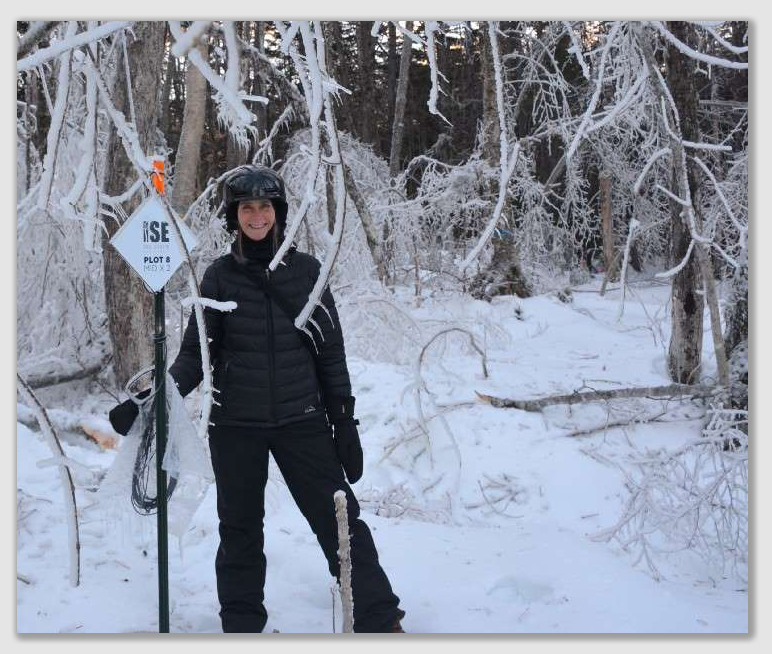
Lindsey Rustad is an ice sculptor. But she doesn’t make the swans you see at weddings or corporate events. She makes ice storms in forests. Her designs, like those in nature, glisten and evoke wonder. But they also foretell danger. With increasing evidence that climate change is driving more frequent and severe weather events, likely including ice storms, she wants to find out what that means for the health of the forest. Ice storms can be immensely destructive. Frozen limbs, dragged down by the weight of ice, can break, landing on cars, power lines, homes and people. In the United States, ice storms cause an estimated 60 percent of winter storm losses, and – here and in Canada – billions of dollars in damage. In January 1998, a massive ice storm devastated part of northern New England, northern New York and southeast Canada, and a 2008 ice storm in China killed 129 people. But scientists still don’t know the long-term impact of ice storms on forests. “Our forests are tremendously resilient,’ said Rustad, an ecologist with USDA’s Forest Service. “We can recover from a light icing, but extreme icing or repeat icing might exceed their capacity to recover…”
A Texas A&M AgriLife Extension Service specialist in family and community health offers tips on Christmas tree safety. Joyce Cavanagh, the extension specialist, said fires started by Christmas trees are rare, but cautions homeowners and renters to take precautions. – Provide a direct water source for your tree, or water it frequently to keep it from drying out. – Keep the tree at least 3 feet away from any heat source — a fireplace, stove, radiator or candle. – Make sure the tree is not blocking your path to your door…
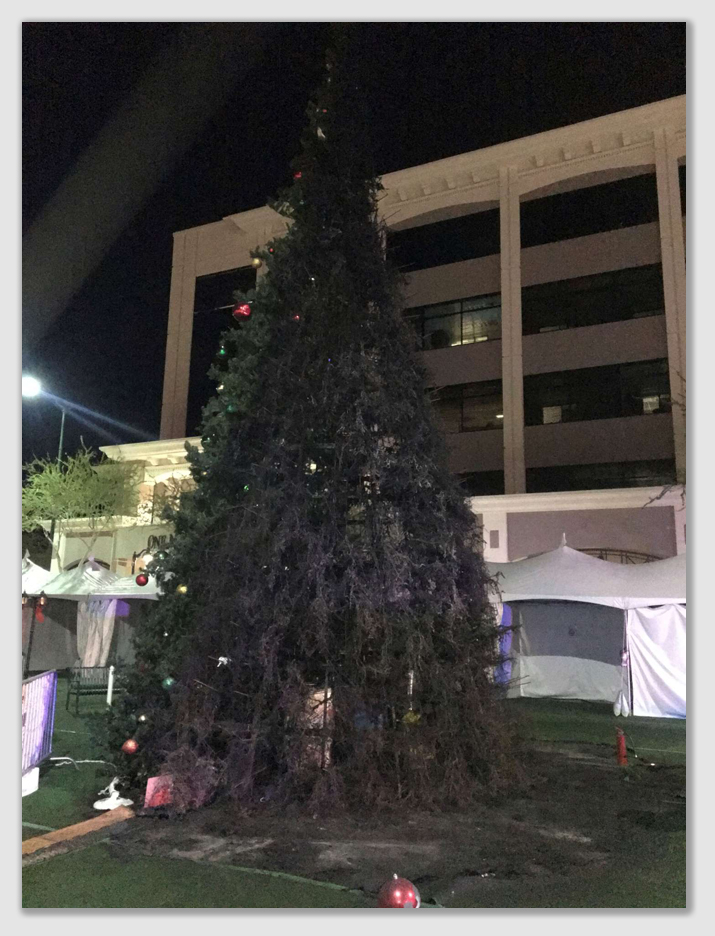 Associated Press, December 13, 2017: Man accused of burning Phoenix suburb’s $40K Christmas tree
Police in the city of Mesa near Phoenix say a man has been arrested on suspicion of arson and criminal damage for allegedly burning the city’s $40,000 Christmas tree. The nearly four-story tall tree is the focal point of Mesa’s annual Christmas celebration. It was destroyed by a fire early Wednesday that police say was intentionally set. Police say 34-year-old Samuel Antone Johnson was found nearby and allegedly admitted to setting the “Merry Main Christmas Tree” on fire with a book of matches. Police say the man did not disclose a motive. Johnson has been booked into jail on two felonies. It’s unclear if he has a lawyer yet. City officials say they’re trying to quickly find a replacement tree to erect for the rest of the holiday season…
Once the wrapping paper has been thrown away and the last drop of egg nog has been consumed, few people have a use for that evergreen tree that graced their home during the holiday season. The Arkansas Game and Fish Commission has a new job for those leftover trees – as fish habitat. The AGFC has drop-off locations across the state to let your old Christmas tree have a second life as underwater cover. Clint Coleman, assistant coordinator for the AGFC’s Family and Community Fishing Program, says the Christmas tree program functions just like a “take-a-penny, leave-a-penny” tray, except it’s for fish. “Anyone who wants to drop off a natural tree can place it at a location on the list, and anyone who wants to sink a few trees to create their own little honey hole can do that as well,” Coleman said. “You just need to bring your own parachute cord, wire, rope and cinder blocks to sink the trees…”
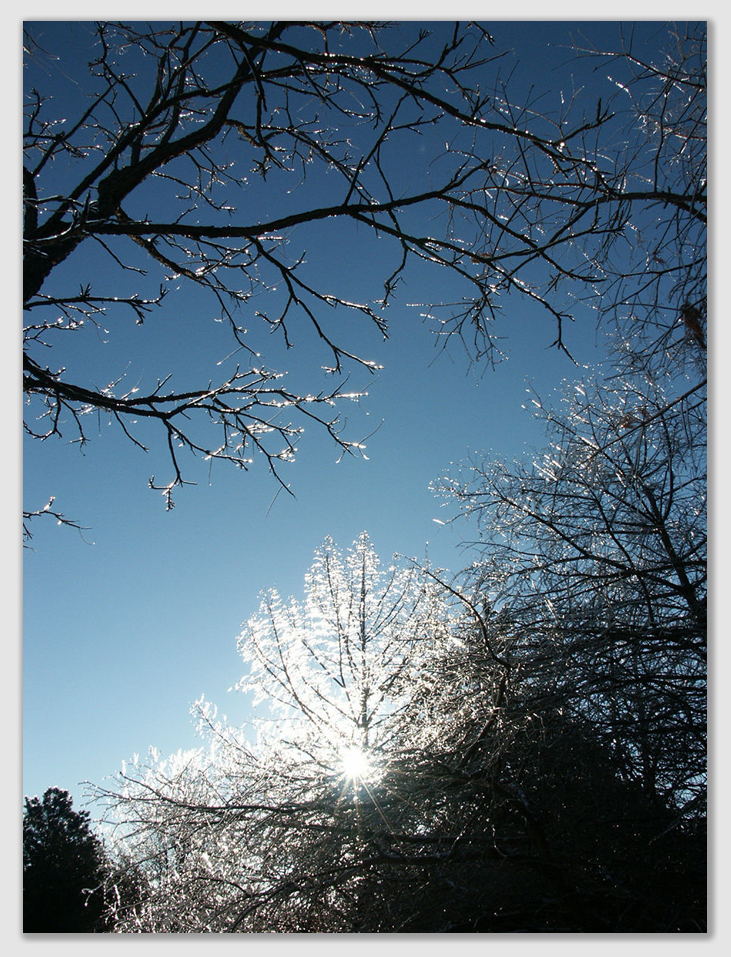 David City, Nebraska, Banner Press, December 13, 2017: Winterizing trees
If you didn’t have time for tree care this year, it’s not too late. Fall is the ideal time of the year to prepare woody plants for harsh weather ahead. The winter dormancy of trees is dramatic and often misunderstood. A common myth is that trees shut down and essentially go to sleep for winter after leaf drop. In reality trees experience some of their most dramatic growth and vigor from September through December, most of it occurring invisibly below ground, but of critical importance to spring growth. With dry winds, subzero temperatures and potential fluctuations of 50 degrees on any given day, trees face a harsh environment. Food reserves stored in twigs, branches and roots must be carefully conserved, as well as moisture, which is also consumed and necessary all winter long. What can you do to help your trees through the Nebraska winter ahead of us?
Lompoc, California, Record, December 13, 2017: Letter: Trees on Orcutt street should be topped
We who live up on Valley View Drive in Orcutt wish the tree maintenance included topping. The county has the opinion of an arborist that the best maintenance is to grow the trees constantly higher and never top. It used to be a tunnel driving on Valley View. People came just to drive the street. The bus and truck traffic, of course, does a nice job of shaping such a tunnel. Jumping to Santa Barbara (bunny trail) these same trees have been grown tall enough to make the tract homes look like miniature match boxes. Looking at Santa Barbara we can see where our street is headed? Check out Ashdale and Baxter streets across from San Marcos High School. The effect of tall growth is painful to look at. The county destroyed the beauty these trees offer by not topping. That same management is destroying the beauty on Valley View in Orcutt. How bad is it in real world measurement? Property values drop dramatically as visual eye candy drops. Make no mistake in viewing older pictures of Valley View, it was indeed eye candy. Drive up the street today and something looks strange. Monstrously tall trees out of sync with the homes. Don’t try to talk to the county. The arborist that signed off on ridiculously tall trees to accommodate Waste Management trucks inadvertently locked the county into a mindset that destroys natural beauty. “Oh … the trees have to be cut this way for trash pick-up.” The opposite is true. A natural tunnel was loved by all and remembered by most. The county is working against aesthetic beauty. These trees should be topped heavily and allowed to regain their natural beauty…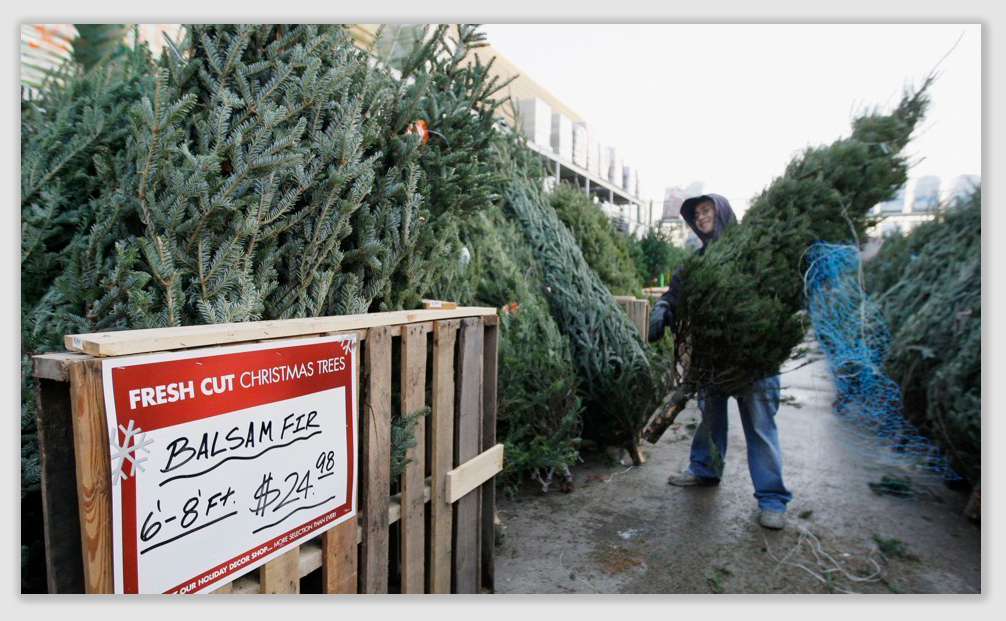 The Atlantic, December 12, 2017: The Christmas-Tree Shortage Could Last for Years
This was a smaller season than Silver Bells has known in the past: The farm, which once shipped about 100,000 trees annually, downsized from 700 to 400 acres of Christmas trees in recent years. The reduction is part of a trend that has played out across the Pacific Northwest—the country’s leading Christmas tree–growing region, with Oregon the highest-producing state and Washington the fifth—and is the long-realized product of overzealous planting 20 years ago. That was a period, Casey Grogan explains, when prices were favorable, land and labor were affordable, and trendy new crops like hazelnuts, wine grapes, and blueberries hadn’t yet lured some farmers away from more traditional choices such as Christmas trees and grass seed. “I don’t think [farmers] realized how many trees were being planted compared to what demand was,” says Grogan, who sits on the board of the Pacific Northwest Christmas Tree Association (PNWCTA), a regional trade group. The Northwest’s most popular variety, the noble fir, can take eight to 12 years to reach holiday height, which means that that spurt of over-planting two decades ago led to oversupply about 10 years ago. It was especially poor timing because this flooding of the market coincided with the Great Recession, when many people were scaling back their Christmas spending. “Prices fell off the roof and growers were losing money, so they didn’t have the incentive—and in some cases they didn’t have the equity—to invest in planting seedlings,” says Tim O’Connor, the executive director of the National Christmas Tree Association (NCTA), a Colorado-based industry organization. Another 10 years on, the effects of that under-planting are now being felt around the country, in the form of shortages and higher prices. Grogan says that shoppers in the regions supplied by the Northwest can expect to pay 10 percent more for a tree this year and that those who wait to pick out a tree may not have many to choose from…
Lynchburg, Virginia, News Advance, December 12, 2017: Trees have their own form of hibernation
In “The Hidden Life of Trees,” author Peter Wohlleben offers a whole new look at these amazing plants. One of my favorite chapters is about trees hibernating in winter. While some readers criticize Wohlleben for giving trees animal, and even human, characteristics, I like the way he finds commonalities between the two main kingdoms of life. He compares trees to bears, which pack in as much food as possible in the summer to make it through a long, cold winter. Rather than eating nuts and berries, however, trees fuel themselves with energy from the sun, which they turn into sugars and other compounds they store in their tissues until spring. While bears eat for as long as they can and get fatter and fatter, trees store a finite amount of food under their bark and in their roots. Once they are “full,” they start shutting down, some in late summer…

An Alberta ski resort will face a hefty fine after pleading guilty to cutting down endangered trees. The Lake Louise Ski Resort, located in Banff National Park, is a well-respected destination for skiers from around the world but recently came under legal scrutiny when it was found that employees had cut down a cluster of trees along the edge of a ski run in 2013. The trees were endangered whitebark pine, and at least 39 were chopped down, a violation of the Species At Risk Act and the Canada National Parks Act. “The first count is . . . for cutting down whitebark pine in a national park, and the second count is . . . for harming flora in a national park without a permit,” Erin Eacott, a federal prosecutor, told the Canadian Press. The case was to go to trial this week, but since the resort pleaded guilty, the two sides must now negotiate on a penalty. Fines for cutting down endangered trees can be substantial. Eacott said that the maximum fine under the Species At Risk Act for each tree destroyed is $300,000. The maximum per tree is $250,000 under the national parks act…
The city’s urban forest, under the care and direction of the Shade Tree and Beautification Commission, is doing well. Commission members Jim Brown and Kate Burley updated council members on Monday about the commission’s 2017 activities and also looked ahead to 2018. A tree inventory in 2016 showed 500 trees that either needed removed, pruned or that are dead or dying. The commission removed some trees in 2016; another 246 were removed this year. Brown said the tree removal program is on a four-year cycle for completion. “A lot of our risk and problem trees will be gone by then,” he said. The commission is starting a new program called Tree City Partners. Brown said that the commission runs into trouble in the fall with making sure the trees get watered. “Not enough people are taking the job,” he said. “The pay is not that great, and the kids go back to school…”
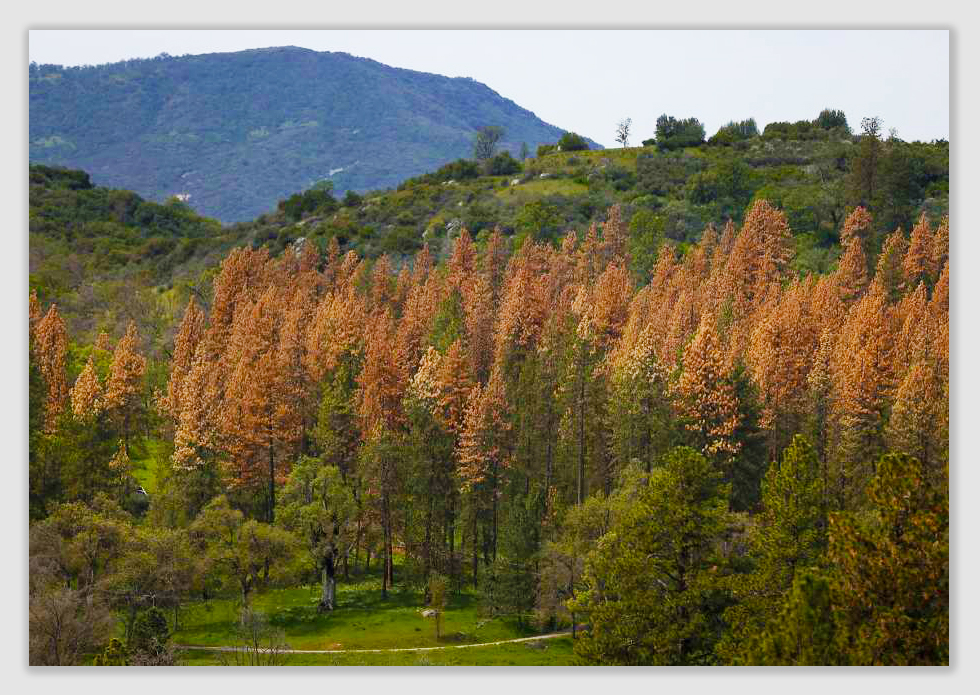
California’s forests are seeing a continued die-off of trees even a year after last year’s heavy rains ended the state’s crippling drought. The U.S. Forest Service announced Monday that 27 million trees died over the past 13 months after five dry years left them severely dehydrated and vulnerable to bark beetle attack. The unprecedented casualties, which run rampant across the Sierra Nevada as well as parts of the coast, have turned patches of forest into a somber rust color for mile after mile. The mortality is so great in some places that foresters have closed roads and campgrounds for fear of the dried-out, lifeless trees falling on people. Tourists to Yosemite and Sequoia national parks, meanwhile, have been stunned by the unexpectedly grim views. State officials also worry about dead groves becoming easy tinder for the lethal wildfires that have plagued California in recent years. Efforts to remove hazardous stands have been slow due to the sheer volume of death. An estimated 129 million trees across some 8.9 million acres have died since 2010, according to the Forest Service…
Steve Dibble was among more than a dozen Salem residents and environmental advocates who led the city’s LORAX task force and created rules protecting city trees for more than a year and a half. But on Thursday night, the Ward 7 city councilor single-handedly killed the task force’s body of work without any room for discussion, and with no apparent forewarning or explanation, when he lodged an objection to approving the newly drafted ordinance. Now, the issue is in front of the City Council’s ordinance committee where it will just disappear at the end of the year if no further action is taken on the matter. “It’s obvious this committee did a ton of work,” Ward 1 Councilor Bob McCarthy said Thursday. “He’s going to make this whole thing die right now — that’s the way I read it — because, if it doesn’t carry over, it does nothing.” McCarthy pushed for Dibble to explain his objection. He did not. Ward 4 Councilor David Eppley defied orders from the council president as he tried to fight what was happening, even at one point moving to overrule the president’s authority. All the while, Dibble remained silent…
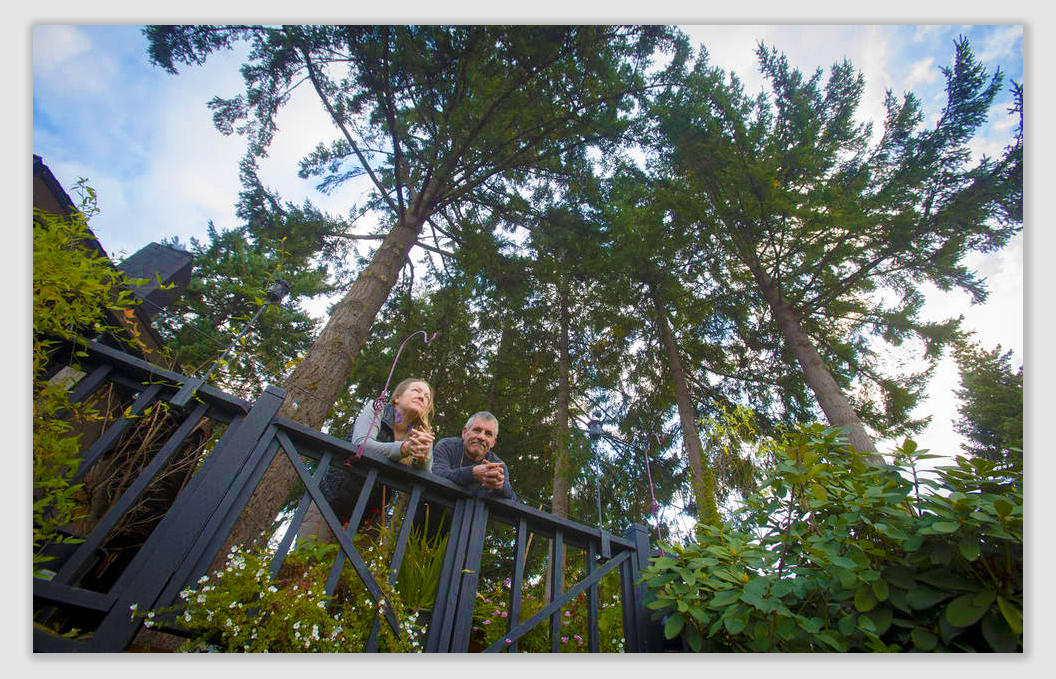
A visitor stepping into Carol Philips’ backyard in southwest Eugene is greeted on clear days with a sweeping view. Toward the left are Skinner Butte and Autzen Stadium. PeaceHealth Sacred Heart Medical Center at RiverBend is barely visible. Toward the right is downtown Eugene and Kelly Butte in Springfield. Philips said that on those mornings she can watch from her bed as the sun rises over the Three Sisters. When she bought the home four years ago, selling her riverfront house in Springfield, Philips told herself she was moving “from the river to the sky.” Downhill, about 800 feet away, a visitor stepping into Tom Heyler’s backyard is greeted by the silent sentinels of the Earth. About six feet from his back door rests the massive trunk of a 100-year-old Douglas fir that rises up at least 80 feet, backed by more tall firs. Heyler and his wife say the trees offer privacy, shade and a connection to the environment. “We love our trees, and a lot of the people have big trees, and they love their trees, too,” he said…
Helicopters have patrolled 1,400 miles of transmission lines to look for damaged wires and hardware problems, and tree contractors have completed trimming nearly 3,000 circuit miles of electric lines in anticipation of the winter-weather season. Potomac Edison contractors are making sure that equipment is ready to meet the rigors of winter to minimize damage from electric outages in the area. “If we trim trees, we have fewer outages in the winter, and when outages do occur, it’s easier for our crew members to get out there and make the repair,” Potomac Edison spokesman Todd Meyers said. Electricians at local substations also are inspecting batteries used to help prevent service interruptions or limit their size and scope. “The tree-trimming aspect is now only important preparing for the winter season, but it’s also ongoing and of vital importance,” Meyers said. “Ice and snow is going to bring trees down into the lines, and it can be very dangerous…”
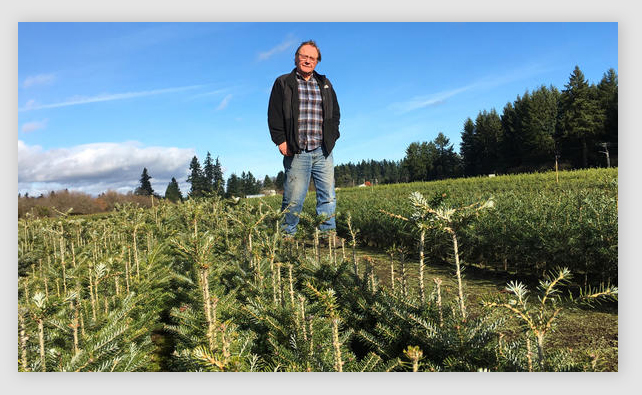
You might be in the market for a Christmas tree right about now, but have you thought about what type of Christmas tree you want in eight years? Believe it or not, it might be hard to find one. That’s because of a tree seedling shortage happening right now across the West. The repercussions are being felt across the region, including by Darryl Smith, the owner of S&S Evergreen U-Cut. He estimates he’ll sell about 200 Douglas firs and Noble firs in the next couple weeks. He’s just not sure how he’s going to find 200 replacement seedlings for a Christmas eight years down the road. “Right now all you can do in this business is keep plugging along,” Smith said. “I don’t want to just give up. I got enough trees to get me by for a couple more years or so and then hopefully we’ll have the seedling issue back under control…” The seedling shortage appears to be nationwide, although it’s more acute in states like in Washington and Oregon. That’s according to Diane Haase, the head seedling nursery expert for the USDA Forest Service in the West and Pacific islands…
The developer behind a proposed development on Saco Island was issued a notice of violation and stop work order after he clear-cut trees on the property in violation of shoreland zoning regulations. The notice of violation was issued Nov. 3 by code enforcement officer Richard Lambert after trees were cleared from 30,000 to 70,000 square foot of the 6-acre lot adjacent to the Saco River in downtown Saco. The stop work order has since been lifted to allow property owner Bernie Saulnier to do erosion control work. On Monday, Saulnier, city officials, the Saco River Corridor Commission and the Attorney General’s Office will meet to discuss the final resolution of the tree issue. Lambert said that outcome could include a fine or a mitigation plan for replanting trees. “It was a misstep that happened and we don’t want to get off on the wrong foot (with Saulnier),” Lambert said…
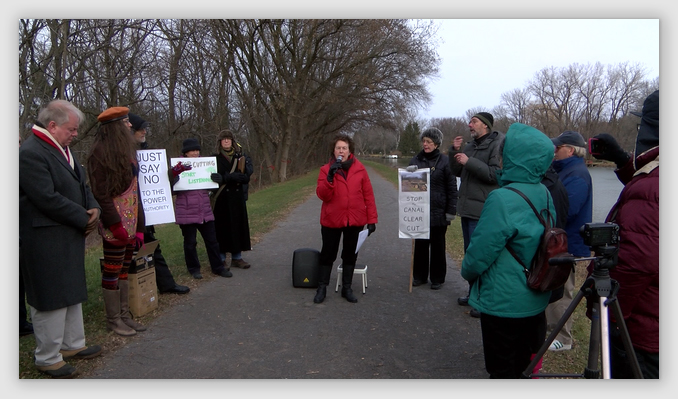 Rochester, New York, WROC-TV, December 10, 2017: Local group protests Erie Canal tree removal
Opponents of an Erie Canal tree cutting project organized on Sunday to put a stop to the State Canal Corporation’s plan to remove 145 acres of vegetation. The rally even got the attention of local leaders. Pittsford Town Supervisor, Bill Smith said, “I am inspired by one of the signed I see this morning. There is never only one way to solve a problem.” According to the Canal Corporation, vegetation is being removed that could potentially weaken embankments to the point of failure but many homeowners question their solution. Ginny Maier said, “There hasn’t been one breech yet in the canal that was due to a tree malfunction or failure due to the integrity of the canal.” Maier hopes the state will reconsider their plans…
The forestry community continually monitors and inventories the forests of Michigan, the federal inventory units collect data across the entire state, the DNR constantly updates the state forestland inventory and public and forest owners use their own status tools for private forest holdings. Many methods and resources are necessary to count trees. Sometimes we think that forests are static resources that are the same from year to year. In the short-term, this may be true in some ways, however, by reading the forest, almost everyone will see constant change because trees grow, die, reproduce and are harvested and converted to other land uses in some areas. Non-forest areas can even grow trees once again in certain places. Michigan has about 20 million acres of forest, which is more now than at any other time over the past few decades. The many characteristics vary widely across Michigan especially when comparing the sets of changes in the western Upper Peninsula and the changes that most people see in the southern Lower Peninsula. The amount of forest data and definitions is overwhelming and can be challenging to sort through…
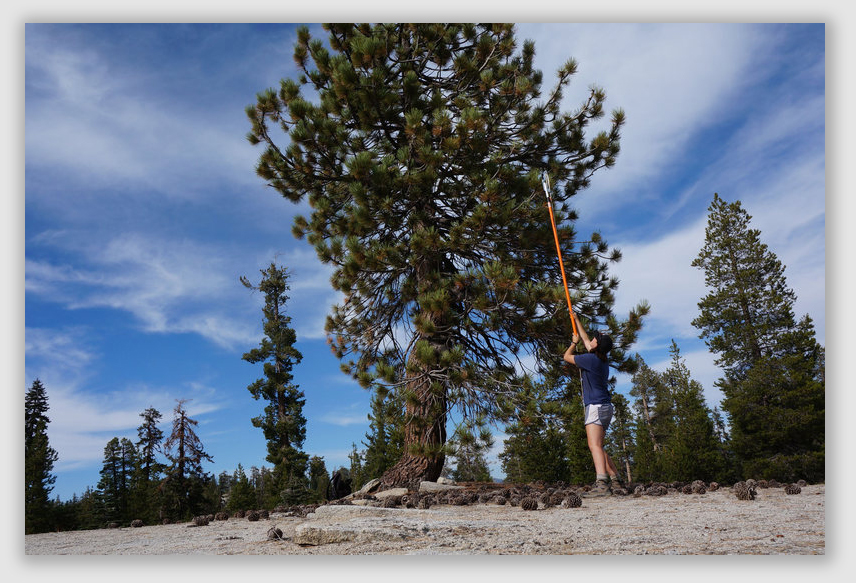 Atlas Obscura, December 7, 2017: Mountain trees love dust
Up in the atmosphere there are millions of tons of dust moving long distances across the globe. It’s akin to the way that rain clouds move around the world, but while rain gets our attention, most of time we don’t notice when dust is falling. In 2014, a group of scientists decided to find out how much dust, exactly, falls in the Sierra Nevadas. Over a few months they collected dust from a site on the mountain range’s western slope, and they were surprised how thickly it was being deposited. As much as 45 percent of it was coming from across the ocean in Asia. Clouds of dust can carry nutrients long distances, and some places are known to depend on dust deposits for survival. The Amazon, for instance, depends on dust from the Sahara to provide its nutrients. But mountains were thought to be mostly self-sufficient. In fact, no one had thought much at all about the impact of dust on mountainous ecosystems. But a new report, published today in Science Advances, suggests that dust may be contributing more to mountains than scientists had realized. Mountains tend to have rich soil that’s created locally as bedrock erodes. Scientists had assumed that bedrock soil was providing most of the nutrients those mountain ecosystems might need. But after the discovery of just how much dust was falling on the Sierra Nevadas, a group of scientists from the University of Wyoming and the University of Michigan, three of whom worked on the earlier report, decided to dig deeper. Were the mountains’ plants actually using the nutrients that blew in with the dust? And where else might there be more dust than expected?
San Diego, California, KSWB-TV, December 7, 2017: Man killed by falling tree branch
A man in his 70s was killed by a branch that fell from a eucalyptus tree in Carlsbad Thursday as high winds lashed the region, a city official said. The man was getting out of his car around 10:30 a.m. at Holiday Park when he was struck by an 8-inch-diameter branch, city spokeswoman Kristina Ray said. The park, at Chestnut Avenue and Pio Pico, is the one visible to drivers just east of Interstate 5. According to Ray, a witness called 911 and responding firefighters tried lifesaving measures, but the man was pronounced dead around 15 minutes later. His name was withheld pending notification of his family…
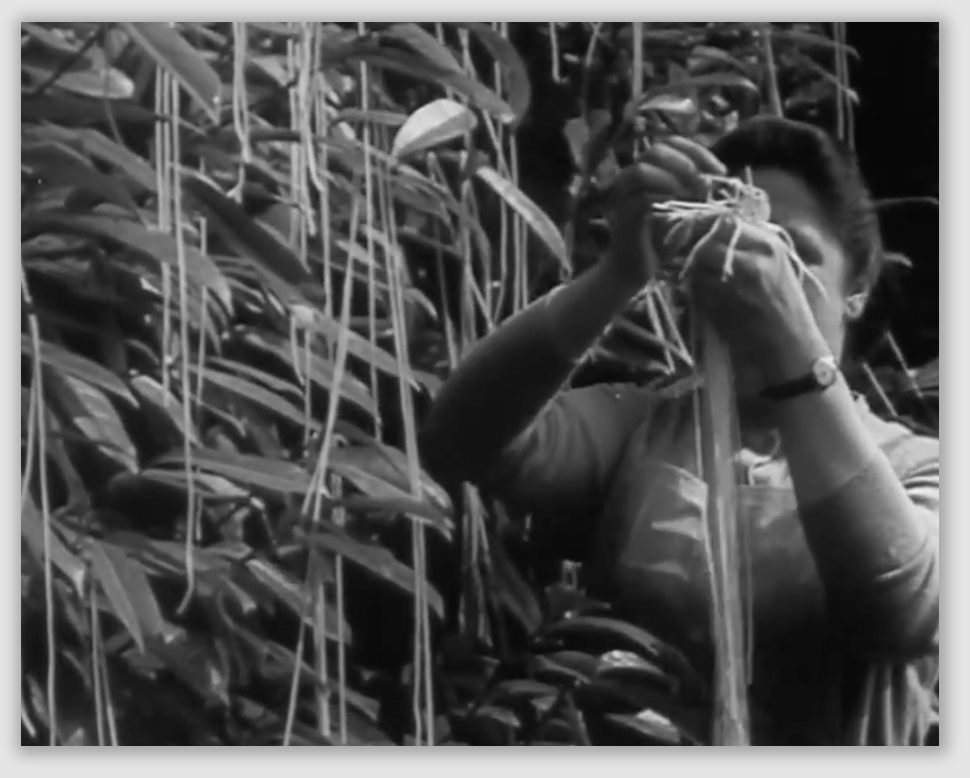 All That Is Interesting, December 7, 2017: BBC once convinced people that a spaghetti tree existed
In 1957, the BBC pulled off what is arguably the greatest April Fools joke of all time. It was so good, and so believable in fact, that BBC staff members were convinced, and had to research the topic to confirm that it was a hoax. On April 1, 1957, BBC’s broadcasting network aired a three-minute video segment, which showed farmers “harvesting” a rare delicacy from a grove of trees — spaghetti. The video featured groups of farmers, working in pairs, removing spaghetti noodles from branches, and lying them out in the sun in large baskets to dry. The announcer, Richard Dimbleby, noted that the spaghetti harvest would be particularly bountiful that year, thanks to the almost complete eradication of the spaghetti tree’s main predator, the spaghetti weevil…
One of the best things about living in the suburbs is the abundance of trees. Many of the roads in the suburban town I grew up in are lined with beautiful trees, which is one of my favorite things about the neighborhood. Residents in Mineola, New York, (which is not far from my previously mentioned hometown) apparently agree. When neighbors came home from work one day, they found that three of the trees that lined their street had been chopped down to stumps. They were immediately confused and angry. They found out that town officials had ordered the trees be chopped down for road work. Many of the neighbors believed this was unnecessary, though, so they took action. According to News 12 Long Island, residents of the street remember actually planting those trees themselves. Neighbors lined up on the street with signs appealing to the mayor, telling him he’s “barking up the wrong tree.” Some residents even parked their cars in front of the trees to prevent workers from cutting them down…
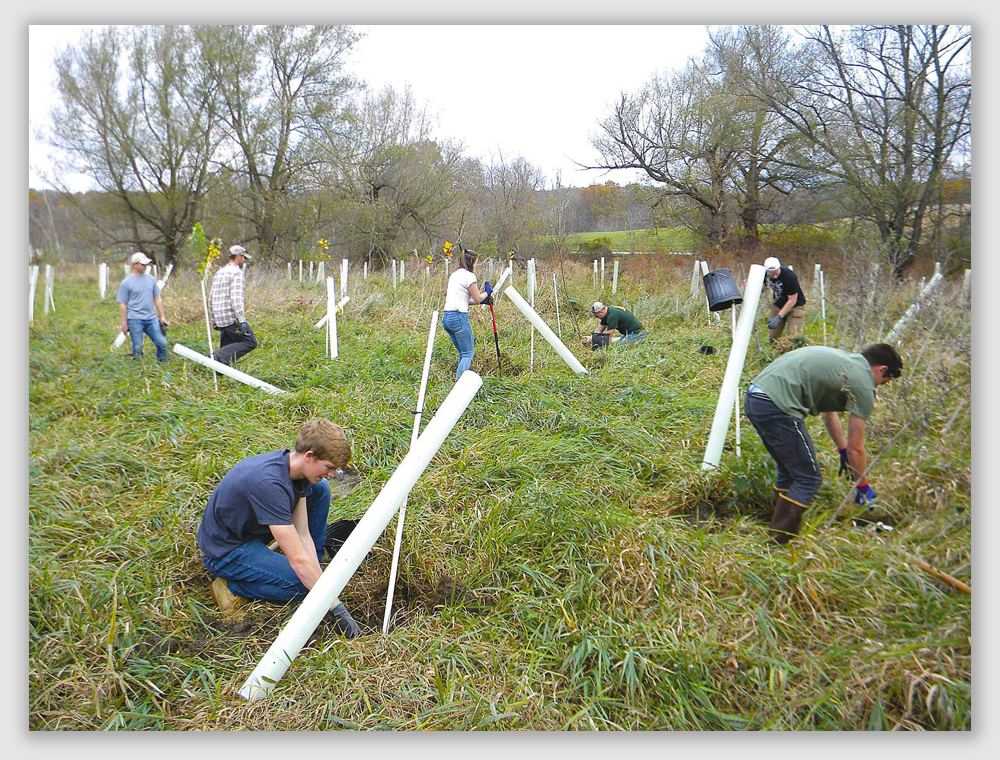
Reed canary grass, which can grow as high as six feet, is an invasive species that lines the banks of many water sources in Sussex County, including the Papakating Creek in Wantage. The successful invader shades native plants and “chokes out” their roots, according to the National Park Service, so the Sussex County Municipal Utilities Authority and the Wallkill River Watershed Management Group have taken on the task, among other projects, to combat the species by planting native trees. According to the park service, planting trees will “shade out” the canary grass, preventing it from growing and spreading. Often with a community-based approach with many of their projects, the Wallkill River Watershed Management Group, under the direction of Nathaniel Sadjak, collaborated with 10 High Point Regional High School advanced placement environmental science students and their teacher, Aaron Baker, and planted 150 trees along the west branch of the Papakating Creek…
Warren, Ohio, Tribune Chronicle, December 6, 2017: Tree cutting policy unclear in Niles
If a tree is in a devil strip, is the city authorized to cut it down if a resident asks? It all depends on who you ask, and since there isn’t a clear answer, City Council President Bob Marino asked Law Director Terry Swauger during a Wednesday City Council meeting to draft legislation making the city’s policy crystal-clear. After a resident questioned why the city recently cut down a tree in front of a Niles home, it became apparent those on council and the superintendent of the light department have differing perspectives on the answer. “It’s been our policy since I started working here 25 years ago that if someone asks you to cut down a tree in the devil strip, you take it down,” Jim Newbrough, superintendent of the light department said. “All you’ve got to do is ask. As long as it’s feasible we’ll take it down, but we won’t come on private property.” Councilman Steven Mientkiewicz, D-2nd Ward, questioned this response. “If the tree comes down because it’s in the power lines, it’s the homeowner’s responsibility to remove the stump,” Mientkiewicz said. “That was my impression of our policy, but now it’s different?”
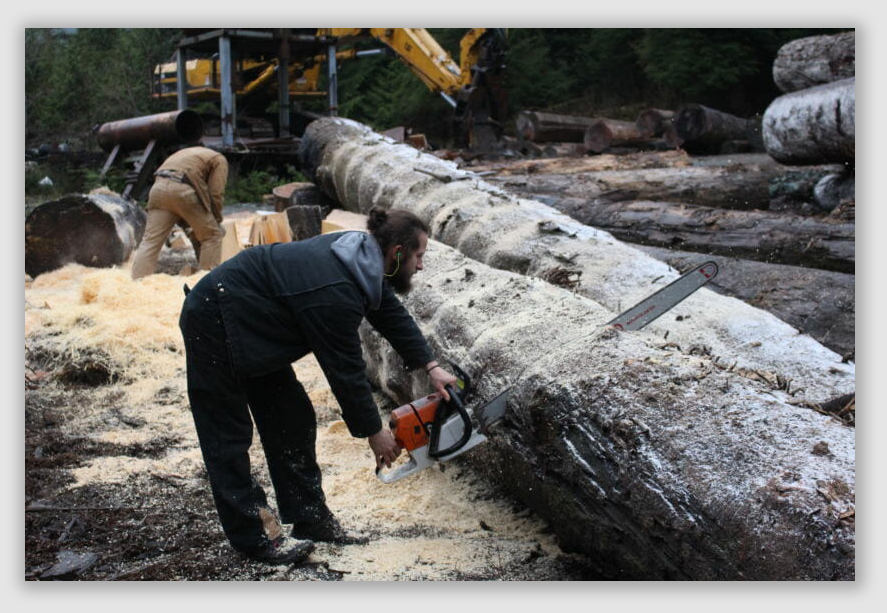
The last sizable timber mill in the state has struggled to find enough trees to keep the saws running. But down the road, a small mom and pop operation is thriving with a unique business model. Alaska Specialty Woods uses salvaged trees to make instrument tops, which are shipped all around the world. But this sustainable company still wants the timber industry to stick around. Near the end of windy gravel road, Brent Cole Jr. fires up a chainsaw. With his dark hair piled into a bun, he runs the blade through an enormous log sitting on the ground. His brother is next to him, cutting the section into smaller and smaller chunks. The tree they’re slicing has been dead for decades. It’s salvaged from an old logging raft that was used to transport heavy machinery in a bygone era. This is how the family business gets its wood: from bridges no longer used on old logging roads to trees that have been blown down or are dead standing. Cole says there are millions of acres in the Tongass National Forest, and finding these trees can be like a scavenger hunt…
Forestry specialists armed attending landowners, residents and various county and reservation employees, during a two-part workshop Tuesday, with hours of information on best grazing, logging and tree-care practices. The idea for workshops – sponsored by the Montana State University Extension, U.S. Department of Agriculture and Hill County Conservation District – was sparked by the damage caused and the trail of questions raised after this year’s East Fork Fire and the Oct. 2-3 record-setting snowstorm. Peter Kolb, Ph.D., a Montana State University Extension forestry specialist and Matt Ricketts, Natural Resources Conservation Service state forester, spoke to people in the Timmons Room of the Hill County Courthouse about how best to resuscitate grazing grass and forests after a fire has been through, including tree differences, logging and lifespan and how to identify a tree that will survive a fire, among many other things. After that session, Kolb and Ricketts took people on site in the Bear Paw Mountains to apply what had been taught…
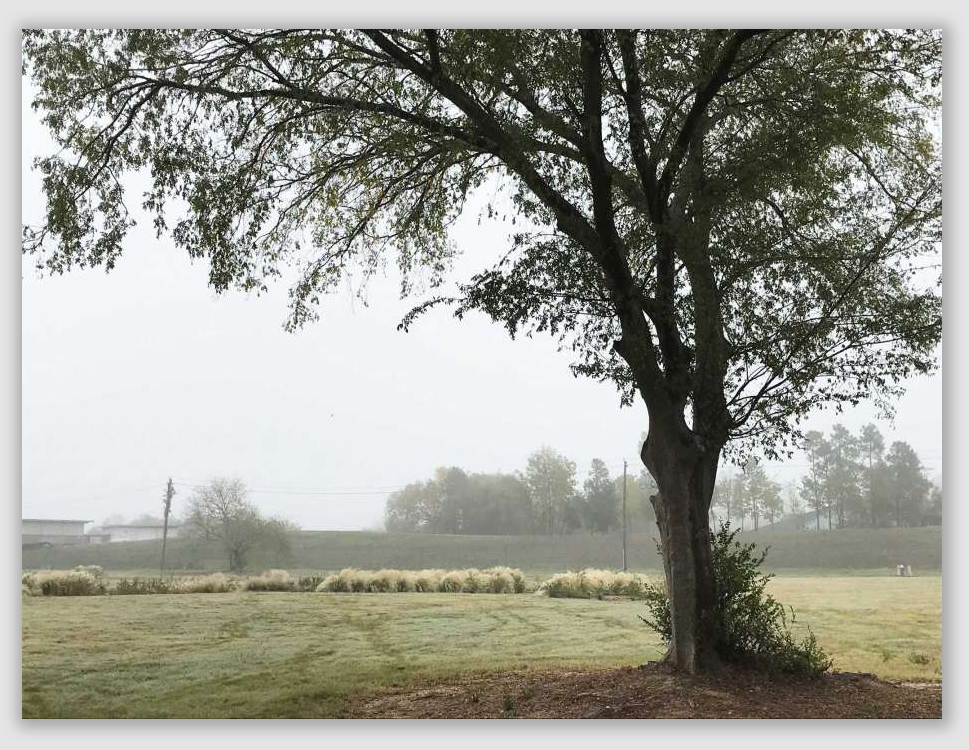 Houston, Texas, Chronicle, December 5, 2017: Trees fight flooding. Houston needs a lot more.
When cities have healthy trees, they have healthy people. The universal need for nature is evidenced across all cultures and demographics. Study after study demonstrates the positive effect of trees on every aspect of human emotional and physical health, including obesity and asthma. One can, and should, think of our city’s trees as forest therapy. As much as trees do for our health, they make just as much sense when thought of as living infrastructure. They act as sound walls, water and air filters, and shade structures. They reduce cooling bills, slow down floodwater, fight erosion, make our summer streets more walkable and increase our property values. That’s why every city should look to plant as many trees as they can – and that is especially true in Houston…
Cleveland, Ohio, WJW-TV, December 5, 2017: I TEAM: residents unhappy with payouts for tree damage
The FOX 8 I TEAM has uncovered new fallout from storm damage caused by trees which should have been cut down by city crews. We’ve shown you the city of Cleveland is behind on taking down thousands of dead or dangerous trees. We’ve reviewed several payouts from the city to victims of damage to a car and homes from those trees. But the payouts aren’t what the victims expected. A year ago, a big tree blew into the house where Ronnie Foster lives on West 122nd. The damage came from a dead city tree that had not been cut down in time even though Foster says he complained about it. Now, the city’s Moral Claims Commission has approved a payout of $1500 for the damage. Foster described the process saying, “It’s a joke.” He added, “It’s nothing I can do about it. It’s take it or leave it. The payouts just approved by the Moral Claims Commission ranged from $100-$1500…
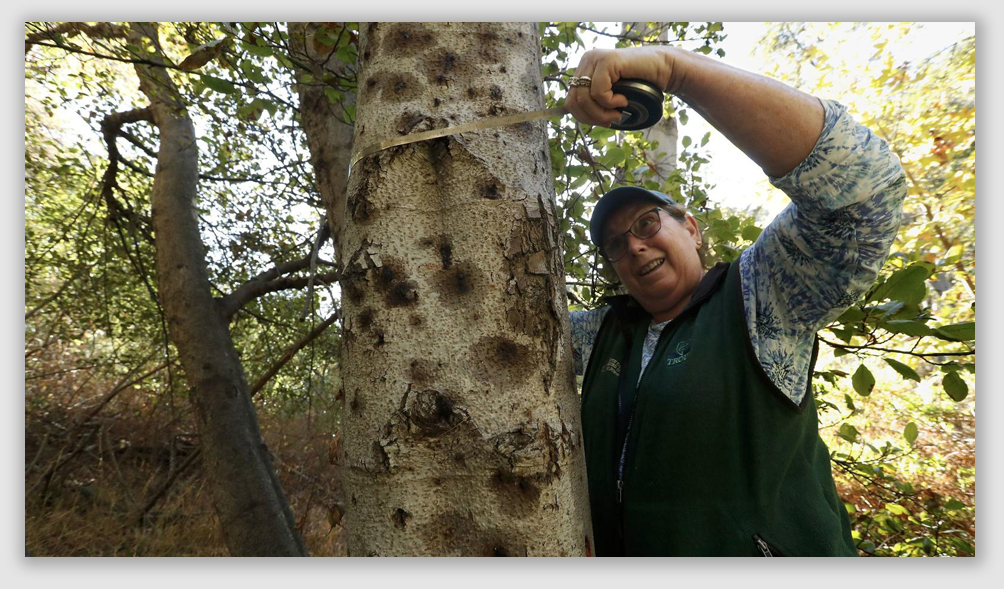
When biologist Rosi Dagit wants to give people a glimpse of the urgency of the problem afflicting trees in the Santa Monica Mountains, she takes them to a withering oasis in Topanga Canyon where hundreds of sycamores, alders and willows are dead and dying. Just six years ago, the creek offered all the arboreal comforts needed for frogs, newts and protected fish such Arroyo chubs and steelhead trout to avoid extinction: leafy canopies to control water temperature and prevent algae blooms, and willows buzzing with insects for nourishment. Now, streamside trees weakened by drought are being ravaged by fungal diseases and swarms of insects the size of sesame seeds — imperiling not only the lush canopy but all the creatures that live in the stream…
A few days after decorating their Christmas tree, a family discovered specks all over there floor. Upon further inspection, they were mites, and they were coming from the tree. “According to Safer Brand, there could be up to 25,000 different pests in a tree, most commonly aphids, spiders can get in, beetles,” said Sasa Milenkovic, owner of Pest Czar. The family has had live trees for the past 40 years, and in the last three years, they’ve experienced two bug breakouts from trees that came from two different businesses. “Once introduced into a warm environment such as a house they tend to reactivate and wreak havoc around the Christmas tree,” said Milenkovic…
 Brunswick, Georgia, The Brunswick News, December 4, 2017: Newly-planted trees will need a determined buddy
For the next year, Don and Tiffany Towne will have to haul 15 gallons of water from their house in Brunswick to the Glynn County Courthouse, three times a week. Nobody is forcing them to do this and they will not get paid a dime. Their herculean efforts are being poured — quite literally — into a single, little tree. Your tree, their tree, our tree. Heck, Don Towne talks as if Keep Golden Isles Beautiful is doing the couple a favor, letting them toil over this oak sapling on the courthouse grounds well into 2018. “It’s a great opportunity for us,” Towne said. “We really enjoy it. Tiffany and I go out there and just do it.” Lea King-Badnya, Executive Director of Keep Golden Isles Beautiful, could use more go-getters like the Townes. With a $10,000 grant and help from Glynn County public works, the environmentally minded nonprofit organization recently planted 52 oak trees in Brunswick, on St. Simons Island and throughout the county. Obtained through a Keep America Beautiful Grant, these trees were planted in response to the hundreds of trees lost to the ravages of Hurricane Irma in September, as well as Hurricane Matthew in October of 2016, King-Badyna said. Those young trees will need help sprouting that first year. Those trees will need a buddy. Keep Golden Isles Beautiful’s Tree Buddy program seeks volunteers who will commit to keeping a young tree sufficiently watered for one year…
Duluth, Minnesota, Perfect Duluth Day, December 4, 2017: How tall trees feed themselves
A faculty member at the University of Minnesota Duluth’s Biology Department has conducted research on tall trees that has been published in Nature Plants and will be highlighted in the journal Nature. Assistant Professor Jessica Savage has been teaching at UMD for about a year and is the lead author of a paper detailing the process tall trees use to transport sugar or feed themselves. The article, “Maintenance of Carbohydrate Transport in Tall Trees,” was published today on nature.com. An online subscription is required to fully nerd out and read the work, but a 277-word abstract is available for free. Savage and a group of colleagues studied the anatomy of tall trees and saw dramatic changes as the trees grew taller. The new research demonstrated that as trees grow in height the phloem at the base of the trunk doesn’t just expand in length, it changes throughout and grows wider at the base. “This is significant because it changes how we think about growth in trees and the factors that contribute to tree height. And this new knowledge could be applied to other areas of research including crop production,” Savage said in a news release. “It’s amazing that plants are able to transport sugar so efficiently even when they are tall…”

Most California forests have too many trees, so carefully selecting pines, cedars or firs in natural areas to enjoy for the Christmas season is good for the mountain landscape. “It’s a great idea to cut down young trees for fire safety and vegetation management,” said Susie Kocher, UC Cooperative Extension forestry advisor in the Central Sierra. “The earlier you do it, the less work it is to manage the trees in the long run.” Kocher lives and works in Lake Tahoe. Every year, she gathers her family and friends to find forest-fresh Christmas trees in the Lake Tahoe Management Area. Of the 18 national forests in California, 11 allow Christmas tree cutting with the purchase of a $10 permit. (See the list below.) People who own mountain cabins or other forestland may invite family and friends to help thin trees on their personal property, which can then be used for the holiday season. However, never harvest trees on public or private property without permission. “We have a lot of small trees on public and private forest lands because of fire suppression,” Kocher said. “They’re all competing with one another and many will ultimately die. A smart harvest of Christmas trees can improve the forest by helping with thinning…”
On the same evening the City Council introduced an ordinance to help maintain Jersey City’s trees, residents from Society Hill asked the council to save 86 trees along the Newark Bay walkway along the western side of Society Hill and Droyer’s Point in Jersey City. The walkway is open to the public daily from dawn to dusk. But it is maintained by the neighborhood association, and the city was asked to determine if it can intervene to save the trees, since both developments are considered private gated communities. Tree roots reportedly have caused parts of the concrete walkway to rise, creating a hazardous condition. The uneven walkway could cause people to trip, s well as increase the cost of regular repairs. An arborist hired by the association determined that trimming the roots would not solve the problem and has recommended that the trees be removed. Resident Denise Bailey said she and various groups that include the city-wide parks coalition want to save the trees. “The arborist said trimming the roots would make the trees unstable,” she said…
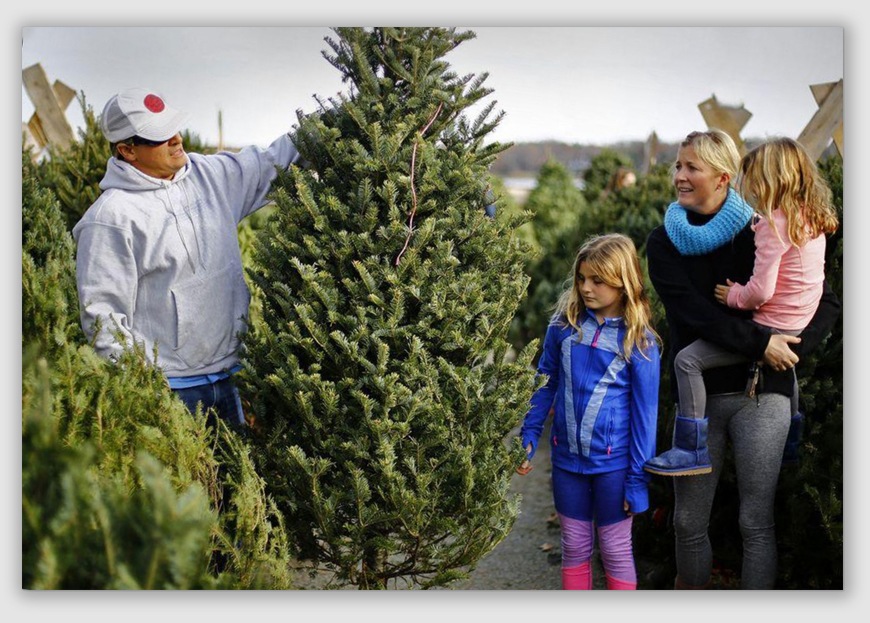
The Trojano family has a Christmas-tree-picking tradition: they always choose it in the first weekend in December, they always decorate it the same afternoon, and they always buy it from the Hingham Congregational Church’s tree lot at the town’s bathing beach. But having a routine doesn’t necessarily make the all-important search for the perfect tree any easier. “The main thing we look for, which is the hardest thing to find, is agreement,” Peter Trojano said, laughing while holding up the family’s 7-foot pick. “We do like comparing the different trees and we love the smell it brings into the house.” Most people who buy a live Christmas tree make their choices by the first weekend in December, making the past two weekends the busiest times at local tree lots. Lot owners say customers will likely see steady prices for the same type of trees they bought last year, and that despite increasing options for artificial trees – fresh is still the way to go for many New Englanders. “We had a woman yesterday who came up and said ‘I put up my artificial tree today and I looked at it and just said no,’” Mark Minister, who was running the Hingham lot on Sunday, said. “I’m surprised. You keep thinking that with the cost and the mess people would go artificial, but they love the smell and the tradition…”
PR Newswire, December 3, 2017: Stabilizer invented for trees
Two inventors from Hialeah, Fla., were looking for a better way to assure their trees would grow upright than the methods currently used that often harmed rather than helped. Thanks to their creative thinking, there is now a much safer and more aesthetically appealing way to preserve trees. They developed a prototype for the patent-pending TREE HUGGER to provide stability for a weak or structurally deficient tree, branch or plant. As such, it eliminates the need to drive nails into a tree to attach a wood support base. As a result, it improves the appearance of the landscape. Furthermore, this novel lawn and garden accessory is durable, reusable and environmentally friendly. Not only does it save time and effort, it is also convenient, effective and affordably priced. The inventors’ personal experience inspired the idea. “I saw that my trees sustained damage from having wood supports nailed into them and by other harmful methods used to stabilize them,” one of them said…
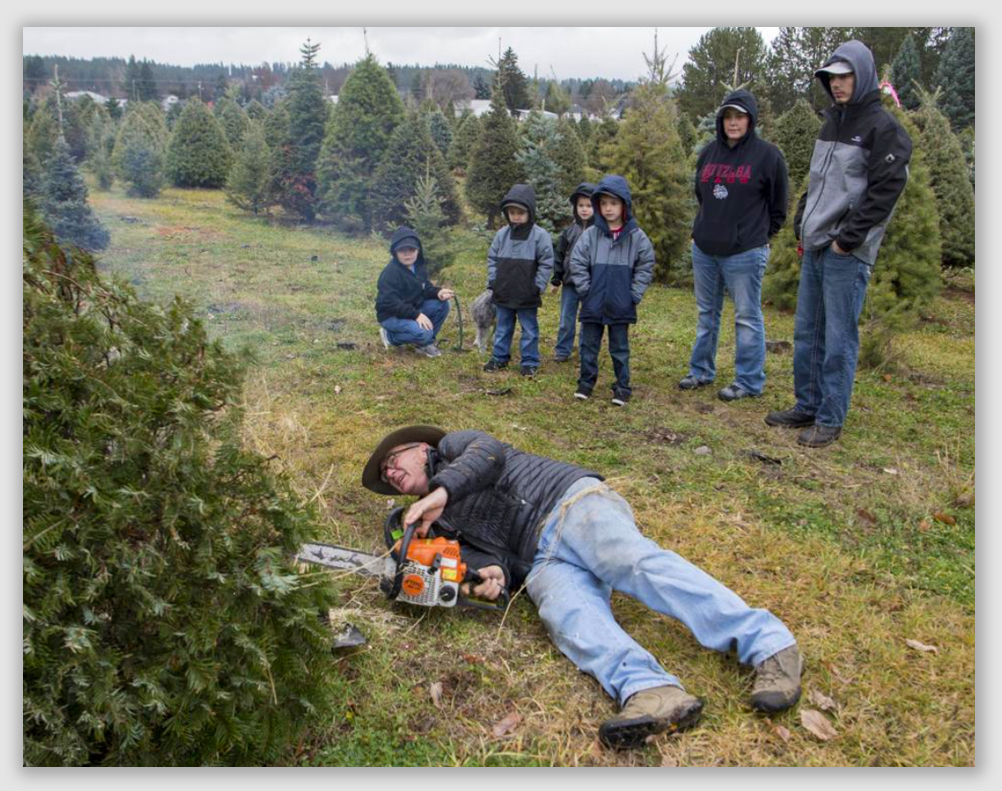
The tree, like the others surrounding it in acres of neat rows, is the last of its kind – at least around these parts. For years, it sat anchored at Bergman’s Tree Farm in Spokane Valley, gathering sunlight and nutrients, growing branch by branch, needle by needle, until the Ough family picked it out. Soon it would be covered in ornaments and wrapped in lights, and would stand vigil over a cascade of colorful presents. Its aroma would waft through the halls. At the end of the season, sometime between Christmas and New Year’s Eve (if the Oughs are diligent enough), its life would come to an end. And, for the first time since 1983, so too would the farm it grew up on…
Organizers of a charity tree sale at Archbishop Williams High School said some of the tree were stolen and the loft was left vandalized. Parent volunteer Mike Parsons arrived at the tree sale to raise money for the high school when he noticed the unwelcome scene. “Somebody had driven through the barrier here, pushed these two stands back about 10-15 feet, taken six trees and moved away,” Parsons said. He added that the trees had a value of $300. Wreaths from the stand were tossed all over the lot and some lights had been smashed. “That’s kind of sad because this is for the school,” said customer Kaitlin Pain…
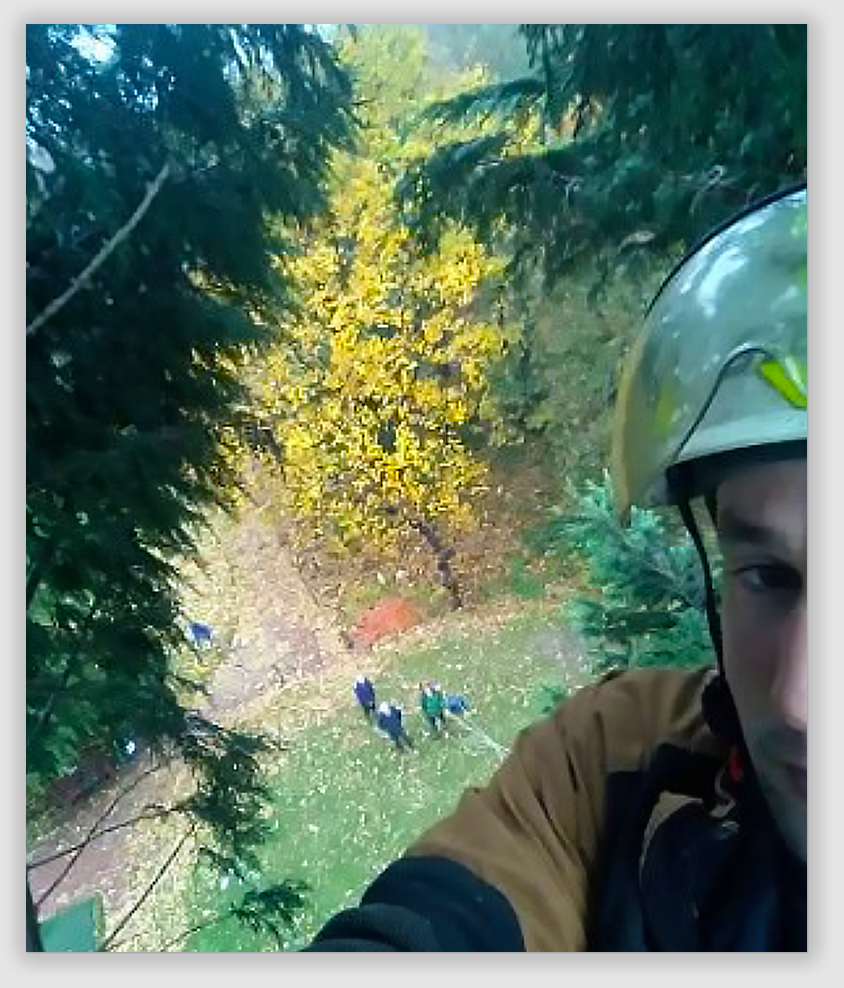
A tree surgeon took a selfie as he clutched hold of a 75ft conifer a day before he fell to his death before he joked with his mother that the job would ‘kill him’, an inquest heard. Paul Daniels, 36, had taken a photograph while cutting an enormous hedgerow at upmarket Hazel Grove golf club in Stockport, Greater Manchester, in November 2016. The father of two was tasked with pruning 76 trees in just four days when it is thought his safety rope was not hooked up properly. As he cut away the tip of the tree, the branches suddenly fell on top of Mr Daniels and dragged him up to 60 feet to the ground below…
As part of its response to California’s tree mortality crisis, Pacific Gas and Electric Company (PG&E) will conduct aerial patrols via helicopter in Humboldt County on Thursday, Nov. 30, to identify dead trees that could pose a wildfire or other public safety risk. “Even with the wet winter last year and recent rains here in Humboldt County, five years of drought in California have caused millions of trees to die or become structurally compromised,” Carl Schoenhofer, senior manager of PG&E’s Humboldt Division said. “That’s why we’ve added enhanced measures to help keep the communities we serve safe. Every year, PG&E inspects and monitors every overhead electric transmission and distribution line, with some locations patrolled multiple times. Since the tree mortality crisis began, the energy company has increased foot and aerial patrols in high fire-risk areas to twice a year and up to four times a year in some locations. Last year, PG&E conducted secondary patrols on 61 percent of power lines, and in 2017, expects to patrol 65 percent of lines a second time…
 Bryan, Texas, Eagle, December 1, 2017: Transplant trees while they’re still dormant
All woody plants should be dug and transplanted when they’re totally dormant. That means after they’ve been exposed to at least one hard freeze, and before they start budding out in the spring. We’ll soon be there in most of Texas. Try to get it all done by mid-February. Dig established plants carefully, and hold as much soil as you can around each plant’s root system. Dig the new hole only as deep and wide as needed to accommodate the soil ball. Set the plant at the same depth at which it was growing originally, and thin and trim it by 40 to 50 percent to compensate for the roots it will lose in the digging. If you’re moving a tree, stake and guy it to hold it perfectly upright…
This is not a story about the Grinch who stole Christmas. It’s a story about a Grinch who stole Christmas trees. A lot of Christmas trees … along with the livelihoods of two best friends. Pete Elliot and Scott Reidel have been best friends since high school. They both own Santa’s tree lot and Tree Land Christmas trees in Westminster. Thursday morning, they were in for the surprise of their lives. “How could someone do this? You know we are selling Christmas trees to make families happy,” Said Scott Reidel. Overnight, at both of their lots, over 700 Christmas trees were stolen. That’s 700 Christmas trees. It hit the partners hard. The trees that were not stolen were pushed over and their tops chopped off, making them worthless. Westminster police say Reidel’s wife, a practicing dentist in Westminster, admitted to orchestrating the theft…
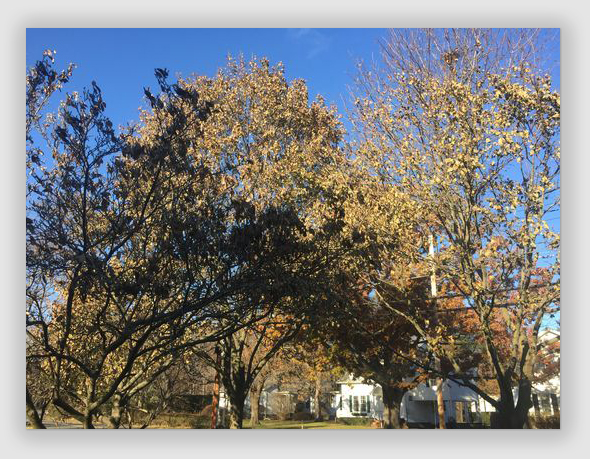
What gives, or doesn’t give, with our trees? You may have noticed that the trees have been holding on to their leaves for dear life, not letting them drop, not letting them be raked up, picked up, taken away to wherever leaves go. Look up if you need proof. Withered, brown, the leaves hang from their branches, rustle in the wind. To steal from Shakespeare, many of the bare ruin’d choirs where late the sweet birds sang are not bare ruin’d at all. The year 2017 will be remembered forever as the year of leaf retention. You read it here first… I check things out with Walt Nelson, the horticulture program leader for Cornell Cooperative Extension in Monroe County. He confirms my suspicions about the leaves not letting go. It’s happened in his yard, everywhere, and he knows why. Typically, September and October bring shorter days and cooler temperature that trigger the process that leads, eventually, to trees dropping their leaves, he says. We had the shorter days, as always during early fall, but not the cooler temperatures…
There’s tree trouble on Long Island’s east end. Thousands have been cut down, ravaged by the invasive southern pine beetle. What’s worse, homeowners are now paying for it. Contractors hired by the Town of East Hampton are working overtime to cut down more than 7,000 trees just discovered to be infested by the insect. “We flagged every single infested tree that we had found, and we had found that it had more than doubled in 12 days,” said environmental analyst Andrew Drake. The alarming increase led to an emergency being declared…
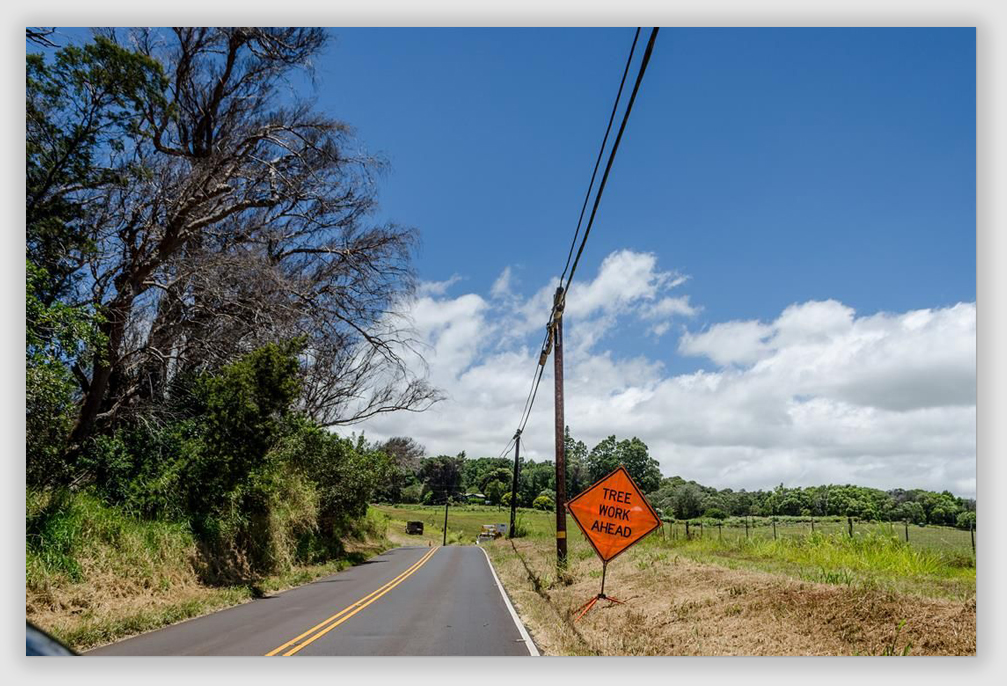
Safety concerns prompted acting Maui Mayor Keith Regan to sign an emergency proclamation Wednesday that would remove hundreds of dead trees in Makawao. Maui County said over 400 dead or dying eucalyptus along Piiholo Road will be chopped. The dead trees, standing nearly 70 to 100 ft tall, pose a safety risk for the community, especially with the upcoming rainy season, officials said. “We know more rain will fall, which will further soften the ground so we need to move quickly,” Acting Mayor Regan said. Large eucalyptus trees have toppled over in the past due to strong winds or heavy rains. Earlier this year, 20 trees were removed after a 70 foot eucalyptus tree fell and landed on a Makawao man’s truck. He was reportedly hospitalized with minor injuries…
The new Stanislaus National Forest supervisor has been on the job since October and he and his family have spent every weekend exploring the area he calls “heaven sent.” Jason Kuiken said they “can’t believe our luck.” “Sonora Pass a couple weeks ago, Pinecrest. It was nice to be there in late October. It was sunny and gorgeous. We’ve been up the Highway 4 corridor a ways, to Calaveras Big Trees,” he said. Kuiken, 38, is a native of Wausau, Wisconsin, and he grew up fishing, canoeing and camping in the Sylvania Wilderness, part of the Ottawa National Forest in northwest Michigan. From age 4 to 18, he also went hiking and camping with an uncle in the Arapaho and Roosevelt national forests in Colorado…
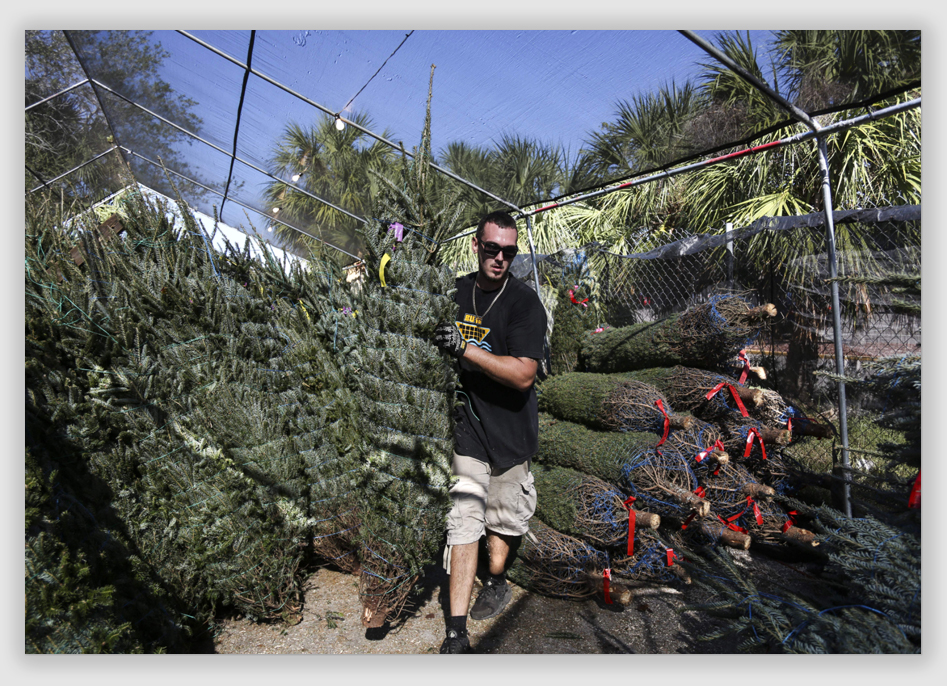
Johnny and Kathy Schultz perused the artificial tree displays at Lowe’s, eyeing the pre-adorned lights and glossy price tags with careful consideration. Choosing a manufactured tree in the air conditioning of a big box store was new for the couple. Since they were married 26 years ago, they’ve been Real Tree people, enamored with the smell. But this year, they arrived at their usual lot to find a price hike from the previous year that made Johnny Schultz turn around and walk out. The couple had heard about a Christmas tree shortage on the news. “Maybe it’s time to convert,” he thought to himself. The nationwide shortage, which the National Christmas Tree Association says is a delayed result of the Great Recession a decade ago, is driving up prices and cutting supplies, including for some Tampa Bay area vendors. “Christmas tree sales were off 10 years ago,” said Doug Hundley, spokesman for the association, which represents growers around the country. “We didn’t harvest as many trees, so they didn’t have the space to plant back young ones…”
Each Christmas season brings a massive tree to the steps of the New Bedford Free Public Library on Pleasant Street. This year was no different. The tree, which took its place on the library steps Tuesday, will shine just as bright and bring just as many smiles to South Coast faces as any other. However, this tree’s journey was a little more challenging than most. With less than two weeks until Thanksgiving, the city was tree-less and getting a bit nervous. To the rescue was a New Bedford native, now living in Freetown, who saw the city’s need for a tree in a Standard-Times article. The man, who wished to remain anonymous, notified the city of a 40-foot tree sitting in his front yard. The tree checked off every requirement the city had: a pine tree or similar, at least 30 feet tall and easily accessible…
The wife of a 38-year-old man is suing the Chicago Park District for allegedly failing to maintain an art installation featuring a dead tree after he was reportedly killed by one of its downed tree branches, according to court documents. A lawsuit filed Tuesday by Micaela Guzman alleges her husband, Manuel Guzman, was posing for a picture underneath an ornate tree at 31st Street Beach on Aug. 8, when a branch snapped and struck Guzman in the head and torso, the lawsuit says. Guzman, who was attending a salsa dancing party at the beach pier that night, was taken to Northwestern Memorial Hospital, where he was pronounced dead at 11:23 p.m. that night, according to police and court documents…
There may be a price to pay for the mild weather we enjoyed in the late summer and early fall. The combination of shorter days and cooler temperatures cause a chemical change in leaves that gives them their autumn colors before they fall to the ground. But the ‘cooler temperature’ part of that equation was missing this year as we had an unusually warm September and October in the Rochester region and much of New York. With many trees still holding onto their leaves, an expert at Cornell Cooperative Extension is concerned that a heavy snowfall could cause some damage. Meteorologist Josh Nichols is forecasting wintry weather after December 7. “If we were going to get six or eight inches of good, wet, sloppy white stuff with those leaves still in many of those trees, that white stuff is going to stick on the leaves, add weight, and there’s going to be branch breakage; there’s going to be significant damage, ” said Walt Nelson, the Extension’s horticulture program leader. He’s hoping the strong winds forecast for the next few days will take down some of the leaves…
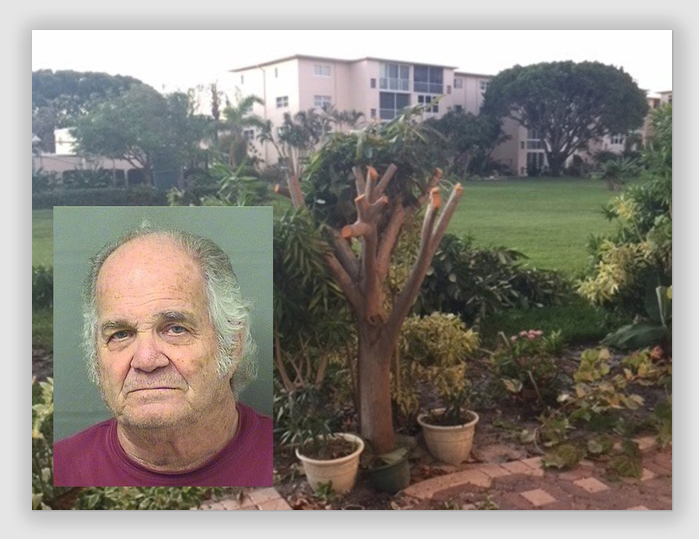
A Boynton Beach man is accused of cutting down two mango trees without permission in a neighborhood. He’s facing one count of felony criminal mischief for cutting down those trees. Boynton Beach Police say a woman reported Harvey Matlin cutting down two mango trees with a lawn service company in the Royal on the Green community on Nov. 25. The woman said she watched Matlin direct the lawn service workers to the back of the building and could see him moving branches as they fell when the workers cut the trees. All that remains of the two 8-year-old mango trees are the stumps and a couple of offshoots. The community vice president told officers Matlin’s wife called the day before to request the trees be cut down. His wife was told she did not have permission to cut them down, the arrest report states…
Ahhh there’s nothing quite like the smell of a real Christmas tree. But did you realize that beautiful tree you just brought into your home could be swarming with thousands of bugs? Pest control company Safer Brand says as many as 25,000 bugs can live in one tree. The company says most of the bugs aren’t dangerous and will eventually die. But aphids, spiders, mites, adelgids, praying mantises, bark beetles and sawflies are among the list of bugs that can survive in your home. Safer Brand says it’s important to examine your tree for bug nests before buying it and bringing it into your home. They also recommend leaving the tree in your garage for a few days and shaking it out to dislodge any bugs…
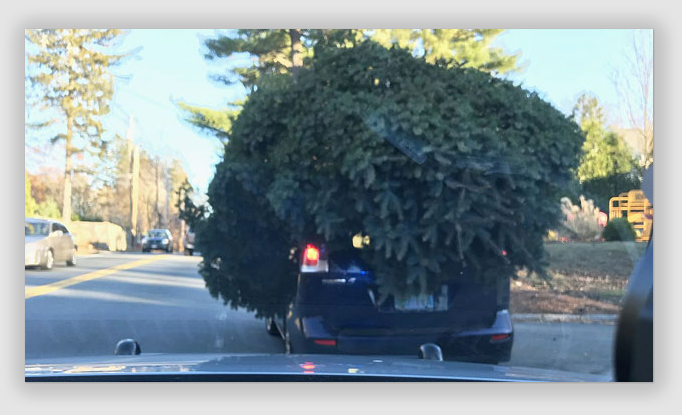
Police in Sudbury are reminding the public to be careful when bringing your Christmas trees home. The announcement was made after an officer pulled over a car because the tree on its roof was spilling over to both sides and the back of the car. “Transport your holiday trees responsibly,” said the department in a Facebook post. The picture was taken three days ago on Route 20…
Sword and Scale, November 27, 2017: Christmas Tree farm ransacked
The holiday season has only just begun, but there are already reports of Grinches on the loose. In a story coming out of California, a family reports that their Christmas tree farm has been ransacked. For 40 years, residents in the Placerville-area have looked to the family-run Cedar Ravine Tree Farm to provide them with the trees that will be the focal point of holiday celebrations. This year will be the first year many families will have to look elsewhere after thieves made off with tools and other items necessary for the family to live on and work on the farm. “They clearly busted in the door, they broke off the steel bar and huge padlock that was on here,” Erik Schoennauer told CBS 13. “They’re monsters,” Gary Schoennauer added. “They truly are.” A cabin on the property was completely cleared out, as well as a tool shed. A television, chainsaws, and even the family’s truck had been stolen when the Schoennauers arrived to open up shop…
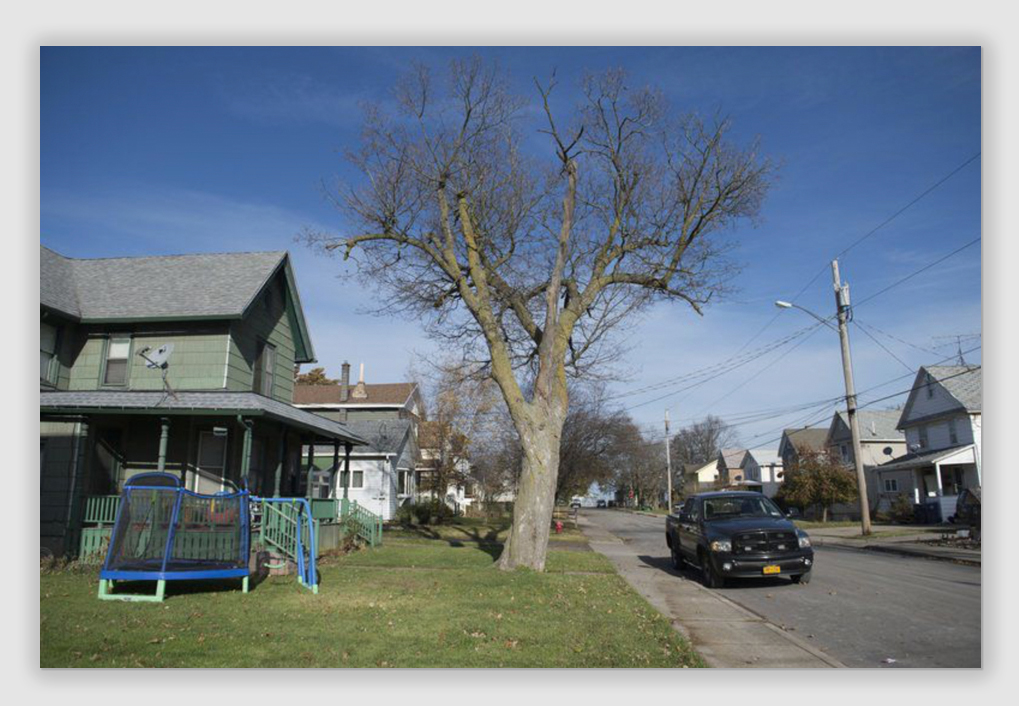 Lockport, New York, Journal, November 26, 2017: Residents fed up with tree complaint backlog
Carol Horton has been complaining about a problem with a tree in front of her property for years. The Church Street resident said the tree is dead and losing branches with every storm. She credits the roots of the tree with causing damage, which she says has contributed to flooding in her basement, which required her to call a plumber. Horton said she first reported the tree to Lockport city officials back in 2001. “They haven’t done anything. They keep laying people off,” she said. She believes the city “has a tree problem” and more should be done to address the issue, especially with the dead or dying trees. Her answer: Hire more people to do the cutting and trimming…
Tommy Jones is back visiting the area where his 16-year-old daughter died. Sierria “Sierra” Jones was killed in a car crash six months ago. Tommy says she was getting a ride home from a party when the car she was riding in went off the road and hit a large tree. It happened along a curve near the intersection of Griggstown Road at Salyer Creek Road in Marshall County. Neighbors say they can count on two hands the number of vehicles that crashed near that same spot. “There’s been a lot of people that hit that tree,” says Tommy. “There have been a lot of people that died and a lot of people that survived. I just feel like if it wouldn’t have been there, she might have had a chance.” For Tommy, the tree was a constant reminder of the worst day of his life. Then just a few days ago, when Tommy came home from work, the tree was gone. “I never actually found out who cut it down,” says Tommy…

Activists opposed to the planned logging of about 1,700 trees in a southern Indiana forest have marked hundreds of additional trees in a bid to delay the cutting. The trees at Yellowwood State Forest were spray-painted with blue paint like that marking nearby trees slated for logging. The action came days after the Indiana Department of Natural Resources sold the rights to log about 1,700 trees in the forest near Nashville…
Tree trimmers cut away dead or excess branches from trees or shrubs to maintain right-of-way for roads, sidewalks or utilities, or to improve appearance, health and value of trees. This report looks at what is required to run one’s own tree trimming business. Seven states require tree trimmers to obtain licenses. On average, these laws require $325 in fees, over one and a half years (574 days) of education and experience, and around two exams—the 19th most burdensome requirements of the 102 occupations studied here. However, because so few states license tree trimmers, the occupation only ranks as the 83rd most widely and onerously licensed. Two of the licenses—California’s and Hawaii’s—are much more burdensome than the rest, requiring four years (1,460 days) of experience. These are contractor licenses that apply only to tree trimming jobs at or above $500 and $1,000, respectively…

Global night light is getting bigger and brighter, blotting out the stars of the Milky Way for one-third of humankind, according to a new study of federal satellite data measuring outdoor lighting. Spurred by a shift to more energy-efficient illumination in many areas, artificial night lighting world-wide has been expanding steadily, with potential consequences for human health, wildlife and foliage, scientists led by the GFZ German Research Center for Geosciences in Potsdam reported Wednesday in the journal Science Advances. “Earth’s night is getting brighter,” said study lead author Christopher Kyba, a physicist at the GFZ German Research Center who studies the ecological impact of light. By their calculations, artificial outdoor lighting world-wide grew in both area and intensity by 2.2% a year between 2012 and 2016. They took advantage of data collected by an orbital sensor normally used by the National Oceanic and Atmospheric Administration to track cloud patterns for weather forecasts. The sensor is sensitive to many of the same wavelengths of light as the human eye…
Denver, Colorado, KCNC-TV, November 23, 3027: National Christmas Tree shortage could affect price
Your trip to the Christmas tree lot this year could be met with some sticker shock, thanks in part to a nationwide Christmas tree shortage. Pete Elliot and his family have been operating Treeland Christmas trees for years. Most recently they set up shop just off of Santa Fe Drive. “This lot here is the largest one in Colorado,” Elliot said. This year a portion of their lot is unavoidably vacant. “That open space is where some of the trees should be, that we haven’t got yet,” Elliot said. According to the National Christmas Tree Association, a 7 to 8 foot tree takes about 10 years to grow. Doug Hundley, a spokesman for the organization, says if you go back 10 years to 2007 the country was in the beginning of a recession…
 New Yorker, November 24, 2017: A brief history of time
The lifetime of a tree in a multi-panel cartoon…
A second tree trimmer electrocuted while trimming trees has died. Jessica Richmond, 46, was pronounced dead Sunday, the Summit County Medical Examiner’s Office said. Richmond was trimming trees in Akron with 38-year-old George F. Csikos when they were both electrocuted just after 1 p.m. on Coventry Street near Clinton Avenue, authorities said. Csikos was pronounced dead at the scene. The couple was hired by a homeowner to trim trees, police said. They were in a lift bucket when they hit an electrical wire. The electrocution threw Richmond from the lift bucket, police said…
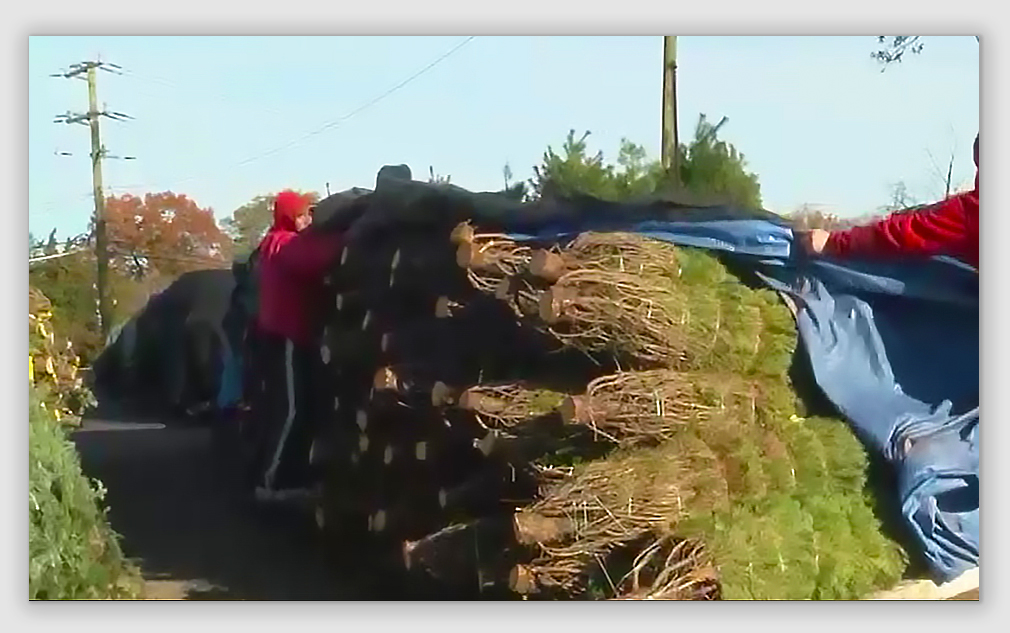
Can you image waking up Christmas morning without a Christmas tree? Well that might not be exactly the nightmare before Christmas local farms and nurseries are up against, but they say there is definitely a shortage of furs and pines this holiday season. “I’ve had vendors I’ve worked with for 30 years, even 35 years that called me this year and said they’re out of trees,” said Ron Meadows, the owner of Meadows Farms Nurseries and Landscape. The National Christmas Tree Association says the recession we experienced a decade ago and low sales are impacting this year’s harvest of Christmas trees across the country…
Athens, Ohio, News, November 21, 2017: Outfit turns dying ash trees into desirable commodity
The emerald ash borer is turning all the ash trees in our region into lemons but Chris Fox is doing all he can to make lemonade. For several years the ash borer has been eating its way through the Northeast, Midwest and northern Appalachia, killing off these trees by the hundreds of thousands. Nobody can do anything about that but Fox can save the wood ahead of the destruction. Fox operates Fox Natural Building Company in New Marshfield. His motto is “Specializing in the art of building with sustainably harvested Appalachian hardwoods.” He cuts down trees, carefully hauls them out of the woods, saws them up in special ways, and constructs unique and beautiful structures. Stop by Village Bakery and Café in Athens and look at their front porch to see one of his projects. Careful inspection will reveal the “mortise and tenon” method of framing, his specialty. This type of construction ensures extra-strong joints for the structure…
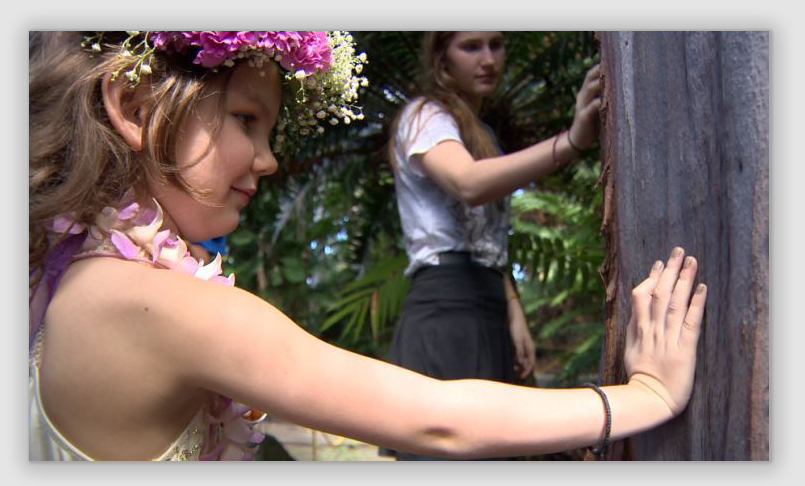
Every child’s wish should be filled, but we think you’ll agree this one is special. When the Make-a-Wish Foundation asked 6-year-old Markella Spiropoulos, of Palmer, Alaska, what she wanted most in the world, her answer was surprising: She wanted to see a rainbow eucalyptus tree in person. Her mom, Carmen, said the wish was born out of Markella’s active imagination. When the two got on the internet to try to narrow down spots to visit, Markella saw the tree and knew — she needed to see one up close. So the folks at Make-a-Wish in Alaska searched for a rainbow eucalyptus tree and they found one in a spot that’s pretty nice to visit anyway: Foster Botanical Garden. Markella, her parents and other members of the family visited Tuesday and the 6-year-old, wearing a princess dress, lei and a haku, laid her hand gingerly on the rainbow eucalyptus, not saying a word. “To her, it was something magical,” said her mom. “She was convinced that there would be fairies there or something…”
Eco-Business, November 21, 2017: Growing urban warmth helps city trees thrive
City trees are feeling the heat – and loving it. As the global climate changes, trees worldwide are growing briskly, but those basking in the warmth of urban heat islands are growing even faster. Their root space may be more cramped, their leaves may be assaulted by more pollution, but the limes along Unter den Linden in Berlin, and the London planes of Paris, France are flourishing, to make life a little better for the citizens who walk in their shade. “We can show that urban trees of the same age are larger on average than rural trees because urban trees grow faster”, said Hans Pretzsch, a forester at the Technical University of Munich, who led the study that uncovered the trees’ behaviour. “While the difference amounts to about a quarter at the age of 50, it is still just under 20 per cent at a hundred years of age…”

L.A.’s iconic Mexican fan palms get a lot of attention, but the coast live oak has long been the unsung hero of our urban forest. The area’s most common native tree, it sustained indigenous inhabitants with its edible acorns, and early settlers used its wood to (quite literally) fuel L.A.’s development. Even today, the oak, which can live more than 250 years, doesn’t just pretty up the cityscape. Here, we get to the root of one of L.A.’s most venerable trees. Accustomed to going without rainfall for almost nine months a year, the evergreen has evolved some innovative water-saving techniques. Its thick leaves are small and cupped inward to reduce exposure to the sun, and downy hairs on their undersides help hold on to precious moisture. Encased in a silvery outer layer that grows, on average, an inch thick, the oak is able to withstand most low- to medium-intensity fires with its vital inner tissue intact, enabling new branches to sprout later…
Harrisonburg, Virginia, WHSV-TV, November 20, 2017: Christmas tree season begins
It’s the time of year when families head out to get their Christmas trees, but before getting a tree, make sure it will last throughout the entire season. Laura Wolfe, owner of Evergreen Tree Farm in Rockingham County, says this is her and her husband’s first tree season. Wolfe suggests when people purchase a tree, they should put it into water right away. If you can’t get it into water within the first eight hours, cut the stump again and then place it into water. The tree should get at least two quarts of water each day…
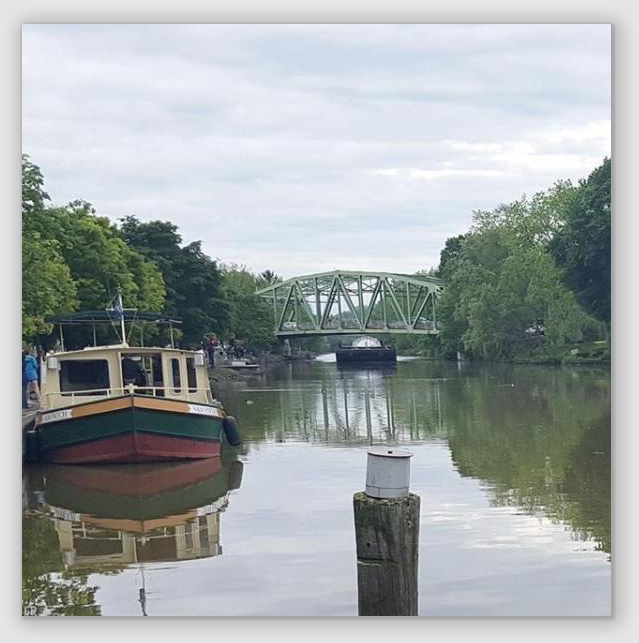 Rochester, New York, WXXI-TV, November 20, 2017: Parts of canal will soon see less trees
Some changes will be hitting the Erie Canal in Brighton and Pittsford soon. In order to maintain erosion and embankment security, Executive Deputy Director at the State Canal Corporation John Callaghan says trees and brush along the canal must be removed. “Large vegetation such as trees can have extensive root structures which could weaken the embankment, increasing a risk of failure.” Callaghan says there is no imminent risk to properties along the canal, but embankments need to be maintained to avoid possible flooding…
A family on the northeast is dealing with a mess on their property. They say city-owned trees keep falling onto their power lines and backyard. Each time, the family of five is left without power or electricity for days. Despite contacting the city, nothing has been done to fix the situation. Cassie Evans and her husband bought a home in April 2016 and thought they had found the perfect place for their young family. But now, all they in their backyard is frustration. “This beautiful wooded area that’s so hard to find in the city has just rained down on us and cost us more expense than it’s been worth honestly,” said Cassie Evans. Branches and even large tree logs litter their property. “At this point, I can’t let my kids come out here and play,” Evans said. “It’s not safe. There’s holes in the ground…”

More than half a million trees could disappear in southwestern Boulder County if the final federal permit for Denver Water’s proposed expansion of Gross Reservoir is approved. The Federal Energy Regulatory Commission is expected to rule early next year on what would be the biggest public works project in Boulder County history, exceeding the original construction of the Gross Reservoir Dam, which was completed in 1954. The tree removal plan outlined in Denver Water’s FERC application states that all trees and their associated debris on about 430 acres along 12.5 miles of shoreline will have to be removed in the course of the expansion, which is envisioned as being completed by 2025…
Cattaraugus County lawmakers are expected to approve a bid Tuesday for ash trees on a 200-acre tract of county forest in the town of Portville. It is the first of several timber sales expected on county forest properties with large inventories of ash trees threatened by the fast-moving emerald ash borer. The invasive pest was first discovered in New York in Randolph in July 2009. It is also the first management activity in any of the more than 2,000 acres of county forests in more than 15 years…
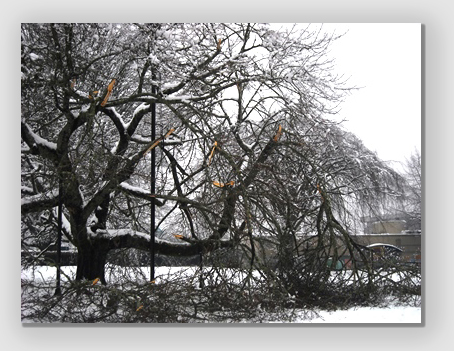 Washington, D.C. DNR, November 19, 2017: Do trees need attention in the winter? You bet they do
Yes, your trees need care throughout the winter to maintain their health, but you need to start now before a big freeze. Even though urban trees are now going into dormancy, they require attention throughout the winter to stay strong. Here are four tips to follow: • Wrap the trunk. Some recently planted, thin-barked trees like honey locust, ash, maple and linden, are susceptible to bark-damaging sunscald and frost cracks when temperatures fluctuate in fall and winter. Wrap trunks of younger trees up to the first branches using commercial tree wrap to protect the bark. Remember to take the wrap off once weather warms in the spring…
The window is rapidly closing. You know the one I mean. While it’s true that I’ve been lugging a bucket of soapy water around the house all week, along with some rags and a squeegee, this isn’t a household hints column and I can’t tell you how to avoid streaks. The window I’m referring to is that brief span of time between Indian summer and the first hard freeze when the garden isn’t entirely off-limits. With daytime temperatures in the 40s, I can still perform chores that I’ll be thankful I can cross off the to-do list come spring. Pruning is generally over and done with in midsummer, but once your plants have gone dormant, you can cut them back and get a head start for planting season. I’m thinking especially of clematis vines, the ones that grow back from the roots and bloom on new wood. In my garden that means the sprawling and desicated top-growth of Huldine, Jackman, tangutica, sweet autumn and many others will go bye-bye. I’ll leave a few inches of stem above ground, mainly to remind me that the plant is there, but also to help it develop new leaves quickly, before overhead trees or neighboring plants block sunlight to lower parts of the vine…
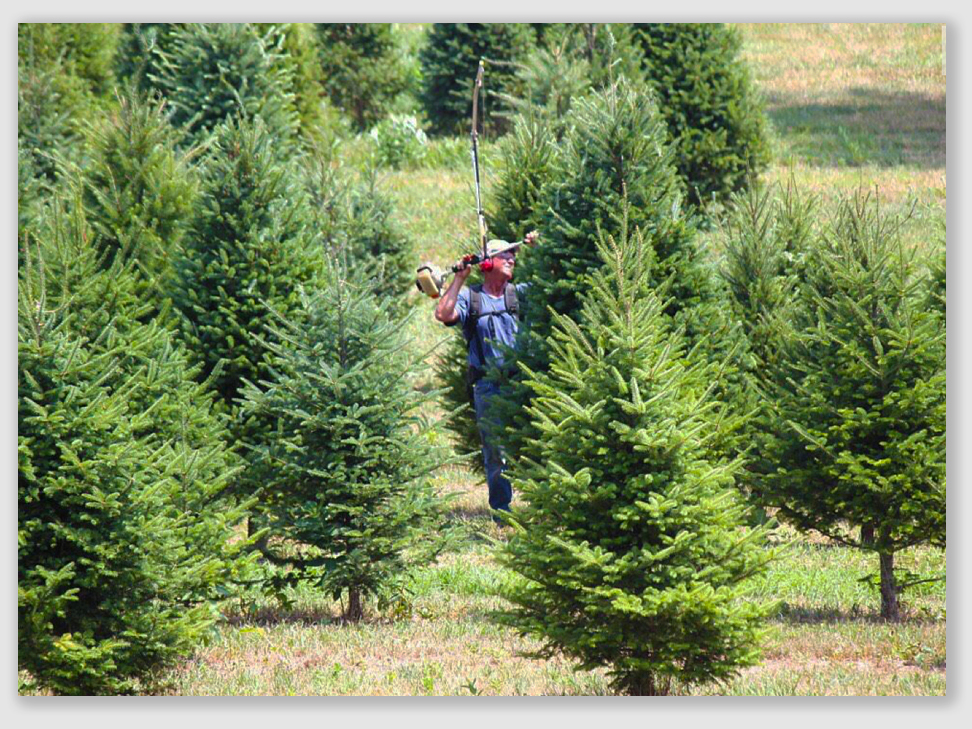
For the past three decades, Bill and Sharon Forbes have tended thousands of trees in the small hamlet of Emerson in the Cayuga County town of Conquest. From Douglas and balsam Firs to white and Scotch pines, the family spent every fall and winter trimming the trees on their land and making wreaths in their barn. But this Christmas season will be much calmer for the Forbeses, as they’ve decided to retire. The idea to grow Christmas trees on their land first sprouted in the mid-1980s, when the Forbes inherited the land from Bill’s father. Bill, who worked full-time as a corrections officer at Auburn Correctional Facility, wanted to put the land to good use, but he wanted to do it part-time. “We were trying to figure out what to do with the land … and he just thought that (growing Christmas trees) was the best use we could get out of it,” Sharon said…
Kansas City, Missouri, Dos Mundos, November 16, 2017: Pests might be hiding on your Christmas tree
There could be more than just presents hiding beneath your Christmas tree this year. After all, “’tis the season for wintertime pest infestations.” This holiday season, be on the lookout for aphids, which are ant-sized insects that can spread more than 150 different plant viruses. Although harmless to humans, these pests can be formidable foes to many types of vegetation, including tomatoes, cucumbers and rose bushes. While aphids are often associated with outdoor gardens, during the winter months they can make a home inside by hitching a ride aboard foliage, shrubbery and, most commonly, Christmas trees. Once inside the warmer air of your home, these pests believe it’s spring and begin rapidly reproducing. Knowing how to identify and prevent aphids with these tips from Orkin Entomologist Glen Ramsey can help you protect your home, and Christmas tree, this holiday season. Although aphids are small, they are usually visible to the naked eye. When looking for aphids, look for soft-bodied insects with long legs and antennae. These insects vary in color, ranging from green to red or black, but all share a distinctive, pear-like shape and tend to hang out in dense groups alongside Christmas tree trunks or plant stems…
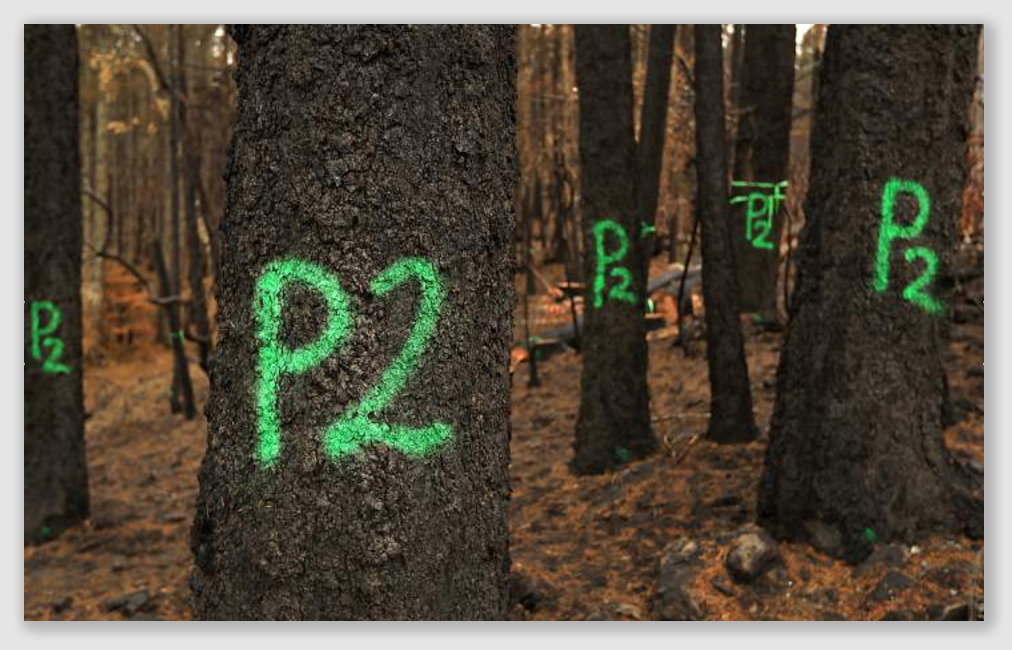
PG&E aims to cut down up to 25,000 fire-damaged trees in an urgent effort to protect power lines in 13 counties across Northern and Central California, including Sonoma, where last month’s wildfires scorched 137 square miles. Residents in fire areas may have noticed bright green spray-painted marks at the base of trunks on trees near power lines. They were left by PG&E arborists and foresters who are assessing the trees’ post-fire condition, company representatives said. Trees marked P1 are deemed dead or dying and designated for immediate removal to prevent damage to power lines, while those marked P2 have secondary priority. Trees with an FP 1 or 2 mark will be trimmed…
An existing fine for cutting down a tree without a permit will stay on the books in Park Ridge — for now — after aldermen failed to reach an agreement on a new, lower charge for transgressors. The City Council on Nov. 13 considered two motions related to reducing the fine from the current $500 per diameter inch of the fallen tree. One motion called for the fine to be a minimum of $150 per diameter inch, while the other set the fine at $250 per diameter inch. In both cases, the new fines were voted down 4-3. Aldermen Nicholas Milissis, Roger Shubert and Marc Mazzuca cast the three “yes” votes on both motions. Under city ordinance, any tree on private property that has a trunk diameter of 10 inches or more requires a city permit in order for it to be removed, said City Forester Brandon Naser. This includes dead trees, he added…

The trees on your property may be worth some money, but the Illinois Department of Natural Resources is warning homeowners to be careful. Scammers will offer to buy your trees for thousands of dollars less than what they’re worth, officials said. If you are thinking about selling your trees, the DNR advises homeowners to contact them or a forester to find out what they’re worth. “Black walnut, white oak, red oak, and then ash and hickory and cherry are pretty good in the market right now,” said DNR Forester Paul Deizman. “Oak and walnut drive the market a lot of the time in Illinois and right now those prices are very high…”
Representatives from Connecticut’s two major electric utilities told state lawmakers Wednesday that falling trees and limbs continue to wreak havoc on power lines, despite years of tree-trimming and tree-removal efforts. “If we solve the tree problem, we mitigate a lot of damage,” said Joseph Thomas, vice president of electric systems operations at United Illuminating Co., which serves the New Haven and Bridgeport areas. Thomas said 82 percent of UI’s tree-related outages that occurred during the Oct. 29-30 wind and rain storm happened in areas where UI has not yet finished creating “utility protection zones” where trees have been trimmed away from power lines and heavier-duty infrastructure has been installed. It’s part of a 12-year, $162 million trimming and clearing program. Meanwhile, Peter Clarke, Eversource’s senior vice president of emergency preparedness, told lawmakers that three years of drought conditions and heavy rains led to the large number of fallen trees, noting how the ground was saturated with water before the high winds arrived…

Sylvan lands at the University must be resilient, and able to withstand the pollution, human activity, compacted soil, poisonous salt, increased heat, and lack of water that accompanies big-city living. “It is a challenge because urban trees have a much shorter life expectancy, so it takes a lot of extra care to really help them survive,” says Chloe Cerwinka, a landscape planner in the Office of the University Architect in the Division of Facilities and Real Estate Services (FRES). “Urban trees can have a 15-year life expectancy compared to maybe a hundred years for trees in a natural setting.” Since 2015, the Office of the University Architect has been partnering with the Morris Arboretum on a tree donation program in which specific species of trees from the garden are planted on Penn’s campus—an arboretum itself—in order to determine how particular trees fare in an urban environment and protect University forestry from pests and diseases as the area experiences climate change. Close to 20 unique, young specimens have been planted since the program began, including live oak trees, Chinese ash, cherry, and Jefferson elms. Planted in March or April, the trees are placed in the ground when they are between five and 10 years old, and put in protected, interior locations on campus away from vehicular traffic, such as on College Green, Locust Walk, and by Claudia Cohen Hall…
Urban trees are growing faster than rural trees across the world, according to a major new study covering 10 different cities, and the urban heat island effect could be one of the reasons why. With rising temperatures across the globe as well as increased urbanization, it’s important to understand how the heat trapped by cities is affecting our trees, and vice versa. To take a closer look, a team from the Technical University of Munich (TUM) in Germany used samples to study the growth of 1,383 trees over the past 150 years. They found that while urban trees are winning the race overall, it also depends on where in the world they are. “While the effects of climate change on tree growth in forests have been extensively studied, there is little information available so far for urban trees,” says one of the team, forest scientist Hans Pretzsch…
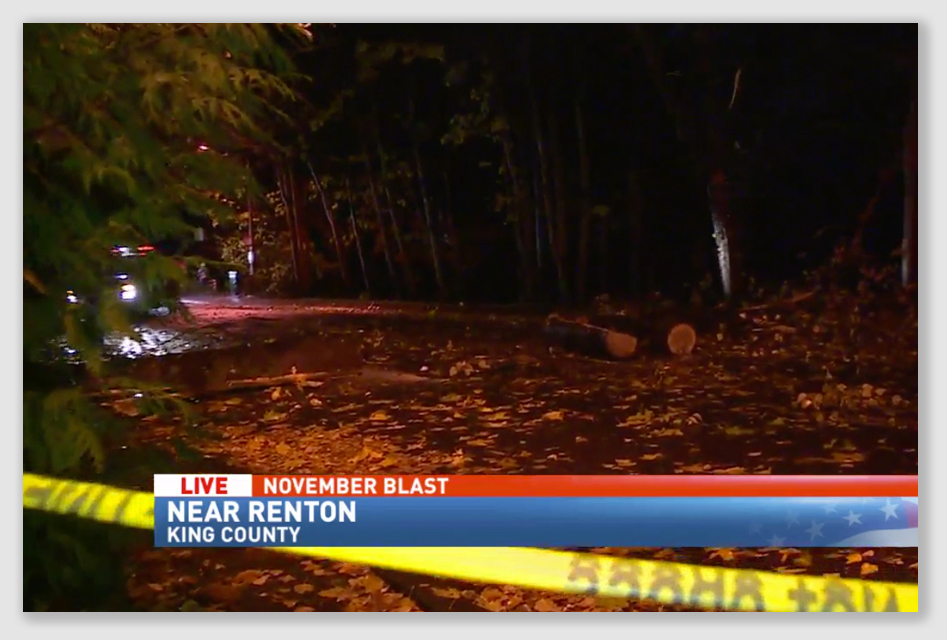
A 33-year-old Renton woman was killed and her 33-year-old sister was seriously injured during Monday’s wind storm when a tree fell on a car near Renton. The 4-year-old daughter of the deceased woman was in the back seat of the car but suffered only minor injuries. The woman who died was the driver. She and her sister were both trapped inside the car by the fallen tree, and rescuers had to cut the tree off the car and then cut through the car roof to free them. The injured sister sustained leg injuries and possible internal injuries. She was taken to Harborview Medical Center in Seattle. The young girl was taken to Valley Medical Center…
In a misguided response to Hurricane Irma’s power outages, the Florida Legislature is being asked to take a wood chipper to local tree protections. Because wind-whipped trees were largely responsible for toppled power lines, two lawmakers are pushing bills that would kill local tree ordinances they say make it too hard to fire up chainsaws. Surprisingly, Rep. Katie Edwards, a Democrat from Plantation, is one of them. Edwards says city and county tree regulations cause confusion and unnecessary permitting costs for property owners trying to trim or cut down trees. She says she filed House Bill 521 as a way to create statewide tree standards that help Florida better prepare for future storms. She says she doesn’t want to destroy the tree canopy, simply make it easier for people to trim and remove trees. She also wants to encourage people to plant trees better suited to withstand high winds…
Forests and trees play a major role on water cycles and cooler temperatures, contributing to food security and climate change adaptation. In recent decades, the climate change discourse has looked at forests and trees mostly as carbon stocks and carbon sinks, but now scientists are calling for more attention on the relation between trees and water in climate change. Scientists suggest that the global conversation on trees, forests and climate needs to be turned on its head: the direct effects of trees on climate through rainfall and cooling may be more important than their well-studied capacity of storing carbon. A new publication and a symposium try to shed new light on the debate. The research paper Trees, forests and water: Cool insights for a hot world compiles older knowledge and new research findings pointing at the important effects of trees on helping to retain water on the ground and to produce cooling moisture, which in turn have a positive impact on food security and climate change adaptation…
A Bradenton neighborhood that was devastated after vandals cut down 77 trees in May will have them all replaced in a replanting event on Wednesday. Mirabella Florida, a gated “active adult” community, has named Nov. 15 “Tree Planting Day – In Memory of Dick Frasier.” At the event, trees in the neighborhood that were cut down will be replanted and each will be named after residents in the community, said Marshall Gobuty, Mirabella’s developer. Residents say the replanting and naming helps turn the unfortunate event into something positive. “We were all shocked to find the trees had been cut down in the community,” Gobuty said. “They were chosen specifically as opposed to fencing and unsightly barriers, a part of our eco-conscious approach to the entire community. We remain hopeful that the vandals will be found, but more importantly, that replanting the trees will return a sense of closure to our otherwise calm neighborhood…”
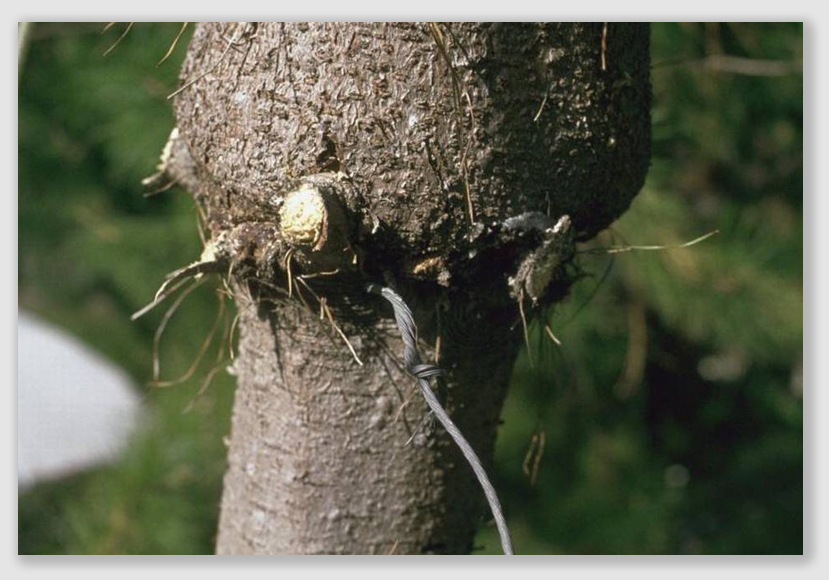 San Luis Obispo, California, Tribune, November 12, 2017: How to stake a new tree the right way
Staking trees is a controversial topic. Current research encourages home gardeners to avoid staking new trees whenever possible. It’s best to allow a tree’s lower trunk to move a bit, deepening its roots; this results in stronger trees. Furthermore, staked trees are frequently damaged by rubbing and girdling. Their vertical growth and root development are slowed, and trunks may become stressed where the stake is attached and be more susceptible to breaking. Trees that can stand by themselves or don’t need protection from excessive wind don’t need to be staked. Most conifers, trees with upright growth habits and bare-root trees don’t need additional staking…
Demand for fresh-cut Virginia Christmas trees continues to increase, and some growers are coming up short. “There is definitely a big-time shortage of trees this year,” remarked Rodney Richardson, owner of Mt. Rogers Tree Farm in Grayson County where he grows nearly 200 acres of Fraser firs for wholesale and retail sales. “We’ve had a lot of calls from the Midwest. There’s an undersupply due to a long dry spell and wildfires out West. We just don’t have the trees to sell them. Everyone has a shortage, including me.” Each year the Richardson family harvests close to 15,000 trees. They sell to a few mom-and-pop operations, but the majority of their income is from sales to Kroger stores in the mid-Atlantic region. “There was an oversupply a few years back. The price of trees dropped for a while and some farms went out of business. Now we have an undersupply. Wholesale and retail prices will definitely increase this year. We will have a price increase of $2 to $3 over last year,” Richardson said…
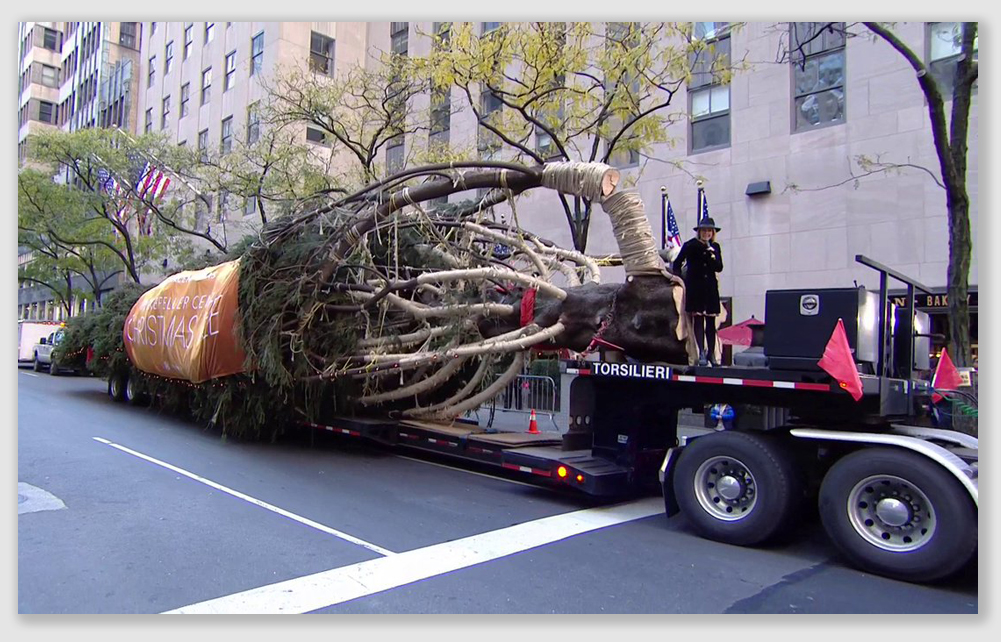
The Christmas season has officially begun with the arrival of New York’s Rockefeller Center Christmas Tree on Saturday morning. The 75-foot-tall Norway spruce arrived by truck from State College, Pennsylvania, and will be decorated with more than 50,000 lights in time for its nationally broadcast illumination from Rockefeller Center Plaza on November 29. The head gardener for Rockefeller Center, Erik Pauze, said Thursday when it was cut down that he has had his eye on this particular tree for almost seven years.While visiting State College in September 2010 for a high school football game, Pauze spotted the tree and knew it would be perfect for New York’s Christmas display…
Sonoma, California, Napa Valley Register, November 12, 2017: Planting bare-root trees
Now is the perfect time to prepare to plant bare-root fruit trees, or to transplant them from a pot into the ground. The University of California’s Division of Agriculture and Natural Resources (ANR) provides guidelines to help home gardeners and orchardists understand what fruit trees need: how to plant them and care for them so that harvest is simplified and safe. But first, think carefully about what fruit trees you want to plant, because you’re the one who will nurture them and reap the harvest. Do you like apples? Peaches or nectarines? Pomegranates or persimmons? Kiwis or plums? Figs or nuts? The first step in fruit-tree selection is deciding what fruits you enjoy eating fresh and whether you also enjoy them canned, frozen or dehydrated. Make a list of the fruits you would most like to harvest at home. At the nursery, you will need to choose cultivars (varieties) of the fruits on your list. Before committing, read what experts have to say about each variety’s flavor and ripening time. For help, consult UC ANR publication 8261: “Selecting Fruit, Nut, and Berry Crops.” It is available online…

A group of activists is asking Governor Eric Holcomb to stop future logging in the back country area of Yellowwood State Forest after the Division of Forestry auctioned off timber from that area this morning. Echoes of chanting bounced off the trees as protesters held signs reading “a forest is community not a commodity” and “save our trees.” Protesters hoped to discourage the auctioning of about 1,700 trees, including some from an old-growth area of the forest. David Seastrom was among the protesters. He hoped Governor Eric Holcomb would stop the sale, which he says is about power. “It feels vindictive. It feels like the DNR has targeted this area specifically to flex their muscles and to demonstrate that they are the ones in charge,” Seastrom says…
Honolulu, Hawaii, Hawaii News Now, November 9, 2017: The $4 million tree … that just keeps on giving
They say money doesn’t grow on trees but a famous monkeypod tree at Moanalua Gardens is generating millions. Since 1975, the towering, century-old monkeypod has served as the advertising logo for Japanese electronics giant Hitachi. It’s one of the most beloved corporate symbols in Japan, as witnessed by the busloads of Japanese tourists that visit the iconic, umbrella-shaped plant each day. It’s so well known that people in Japan learn the Hitachi advertising jingle as children. “Everyone knows this tree,” said Yoshihiro Takashima of Aichi Prefecture, Japan. Added Abner Undan, whose company Trees of Hawaii Inc. takes care of the tree: “We’ve been doing the maintenance on this tree for over 20 years, maybe a thousand people a day come and visit this tree,” he said…
 Grants, New Mexico, Cibola Beacon, November 9, 2017: Pests might be hiding on your Christmas tree
There could be more than just presents hiding beneath your Christmas tree this year. After all, “’tis the season for wintertime pest infestations.” This holiday season, be on the lookout for aphids, which are ant-sized insects that can spread more than 150 different plant viruses. Although harmless to humans, these pests can be formidable foes to many types of vegetation, including tomatoes, cucumbers and rose bushes. While aphids are often associated with outdoor gardens, during the winter months they can make a home inside by hitching a ride aboard foliage, shrubbery and, most commonly, Christmas trees. Once inside the warmer air of your home, these pests believe it’s spring and begin rapidly reproducing. Knowing how to identify and prevent aphids with these tips from Orkin Entomologist Glen Ramsey can help you protect your home, and Christmas tree, this holiday season…
Anaheim, California, Orange County Register, November 9, 2017: 5 trees with a ‘wow!’ factor
Trees are the ultimate landscape accent pieces to set the tone of your outdoor space. And now is the ideal time to plant them and their smaller cousins, shrubs. While standards such as oaks, maples and birches provide shade and sanctuary, don’t forget to add varieties that lay the foundation for future wow-worthy displays. These sometimes forgotten additions can add gorgeous foliage, flowers and fruit. Monrovia Nursery suggests these that are appropriate for Southern California…

Among Yosemite’s emerald forests, parched brown timber poke out like matchsticks waiting for a spark. There are 2.4 million dead trees within about 131,000 acres of the national park, according the latest fall count, says park spokesperson Scott Gediman. “As long as these things have been tracked, it’s the most dead trees we’ve seen in the park,” Gediman says. Dead trees can pose a danger to humans; a falling pine killed a Yosemite employee in March. They also can fall on roads, hotels, cabins and tents. “Our first concern is the health and safety of the park visitors,” he says…
Lebanon, Tennessee, Democrat, November 8, 2017: Tree topping hurts trees
A homeowner recently called me because he was concerned about the health of a tree in his yard. It was immediately apparent the tree was “topped” in the past, and due to this practice, had succumbed to disease and insect damage. The practice of topping is so widespread that many people believe it is the proper way to prune trees. However, topping causes a variety of problems in trees that create future maintenance and growth dilemmas for homeowners. Tree topping is the excessive and arbitrary removal of all parts of the tree above and beyond a certain height with no regard for the structure or growth of the tree. The vertical stem or main leader and the upper primary limbs on trees are cut back to stubs at a uniform height. Pruning on the other hand is the selective removal of certain limbs based on the structure, crown form and growth of the tree. Topping removes too many branches and leaves which reduces photosynthesis or the food-making potential of the tree and causes depletion of the tree’s stored reserves needed for maintenance and growth. Excessive removal of crown will cause a like reduction of roots, because there is not enough leaf area or food-making capacity to sustain the amount of roots present…
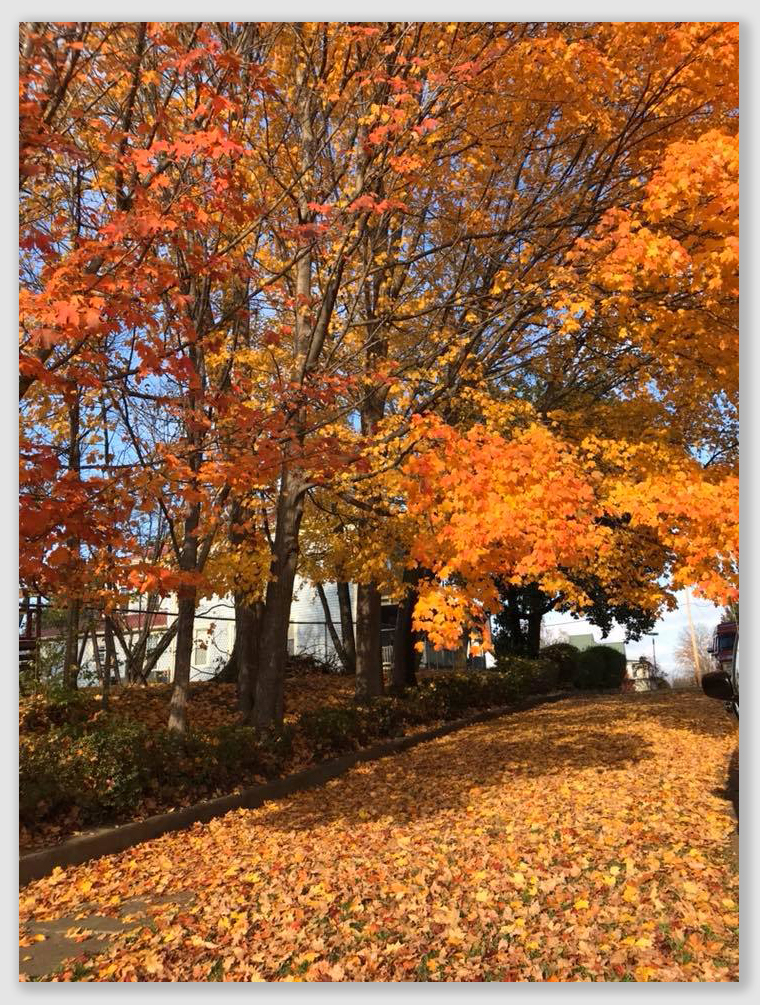 EarthSky, November 8, 2017: Why trees shed their leaves
In temperate forests across the Northern Hemisphere, trees shed their leaves during autumn as cold weather approaches. In tropical and subtropical forests, trees shed their leaves at the onset of the dry season. Many types of trees shed their leaves as a strategy to survive harsh weather conditions. Trees that lose all of their leaves for part of the year are known as deciduous trees. Those that don’t are called evergreen trees. Common deciduous trees in the Northern Hemisphere include several species of ash, aspen, beech, birch, cherry, elm, hickory, hornbeam, maple, oak, poplar and willow. In tropical and subtropical regions, deciduous trees include several species of acacia, baobab, roble, ceiba, chaca and guanacaste. Most deciduous trees have broad leaves that are susceptible to being damaged during cold or dry weather. In contrast, most evergreen trees either live in warm, wet climates or they have weather-resistant needles for leaves. However, there are exceptions in nature, such as tamarack trees that shed their needles every autumn and live oaks that retain their broad leaves for the entire year even in relatively cool climates…
Council candidate Jonathan Gandolfo is in a three-way runoff election to settle Tuesday’s vote. At the same time, the city government is moving forward with the prosecution of two misdemeanor charges against him that resulted in his arrest for violating the tree ordinance. In a separate civil action, the city is seeking $80,000 from Gandolfo for cutting down two trees that were considered significant, said his attorney, Frank Cornely. The penalty includes the cost of replacement trees, he said. Gandolfo was required to first get a city permit before cutting down the trees…

Rutgers University plant biologist Tom Molnar has bred a blight-resistant hazelnut tree to help address a worldwide hazelnut shortage, the university recently announced. The new tree introduces a new cash crop to New Jersey. It is resistant to eastern filbert blight, the fungus that has prevented hazelnuts from being grown in New Jersey. Most hazelnuts sold commercially are grown in Turkey and Oregon’s Willamette Valley. About a quarter of the hazelnut supply — more than 100,000 tons — goes into making the cocoa and hazelnut spread called Nutella each year, Rutgers said, and demand is soon expected to exceed supply…
NBC News, November 7, 2017: not in my backyard: Neighbor disputes happen to more than just Rand Paul
Neighbor disputes often stem from small things: unwieldy tree branches, garbage that’s piling up, a barking dog. They happen all the time, experts say — but they don’t often end in broken ribs, like the one between between Kentucky Sen. Rand Paul and the homeowner who lives next door did. “Normally it’s verbal abuse,” Victor Merullo, a Columbus, Ohio, based attorney specializing in tree and neighbor law, said. “To drive someone to a physical assault has to be something significant.” Paul was mowing his lawn in his gated community in Bowling Green, Kentucky, last Friday while wearing headphones when he was allegedly attacked by Rene Boucher, a 59-year-old doctor who has lived next door to Paul for 17 years, sources told NBC News…
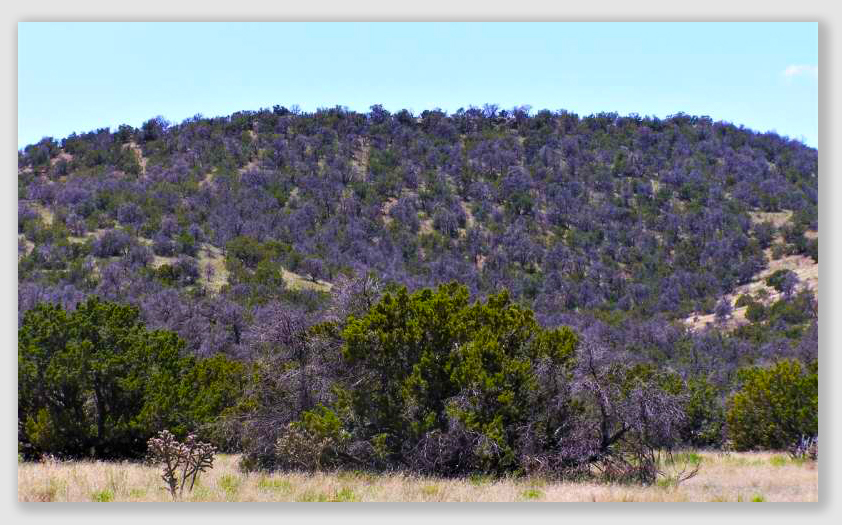 Phys.org, November 7, 2017: It takes a microclimate to raise a pinyon tree
With all the discussion about global climate change effects, new research shows that another kind of climate is an important factor in regional pinyon pine tree recovery after drought events – the microclimate. Microclimates are localized climates found within a larger one, like that of a cool canyon in the desert Southwest. These microclimates occur because of local differences in the landscape and existing vegetation that control temperature, wind patterns, humidity, and available water. The physical subtleties create smaller ground level environments called microsites, which are often necessary to support individual life forms like a pinyon pine tree. Pinyon pine trees are integral in processes that control water and energy fluctuations across the Southwest. The trees also store large amounts of carbon for the region. Pinyon pine has long provided food —pine nuts, used to make pesto—shelter and other products for people and animals. “Recent droughts have resulted in widespread pinyon pine mortality throughout much of the southwestern U.S.,” said Miranda Redmond, CSU assistant professor and lead author of the study. “Our team was really interested in whether or not these woodlands were going to come back and how local environmental factors influence their recovery…”
Chipley, Florida, Foster Folly News, November 7, 2017: An easily preventable tree planting problem
Trees are a landscape asset for many homeowners. When a new tree is installed in our landscapes, we can’t wait for it to mature to provide shade or landscape interest. The heartbreak for many homeowners comes when this important part of their landscape, begins to decline five to ten years after establishment. We often consider a pest as the cause. The common culprit is often hidden below the mulch and soil and is easily preventable. When larger specimen trees are installed in residential and commercial landscapes, they may be delivered with materials that help hold the rootball in place. Strapping often runs over the rootball and when trees are young is several inches away from the trunk. Installers or homeowners often do not cut the strapping during installation. Over the years, tree trunks will grow in diameter and eventually reach the strapping. Because the strapping is still firmly in place, it can cut into a growing tree, resulting in girdling. Although many trees try to overcome the injured area by forming new wood over and around the girdling, this is a major stress that interferes with water and food movement in the plant. What we see is a tree that may be slower to leaf out in the spring, a thinning canopy, and twig dieback. These symptoms may be confused with another cause since the strapping is normally hidden from view…
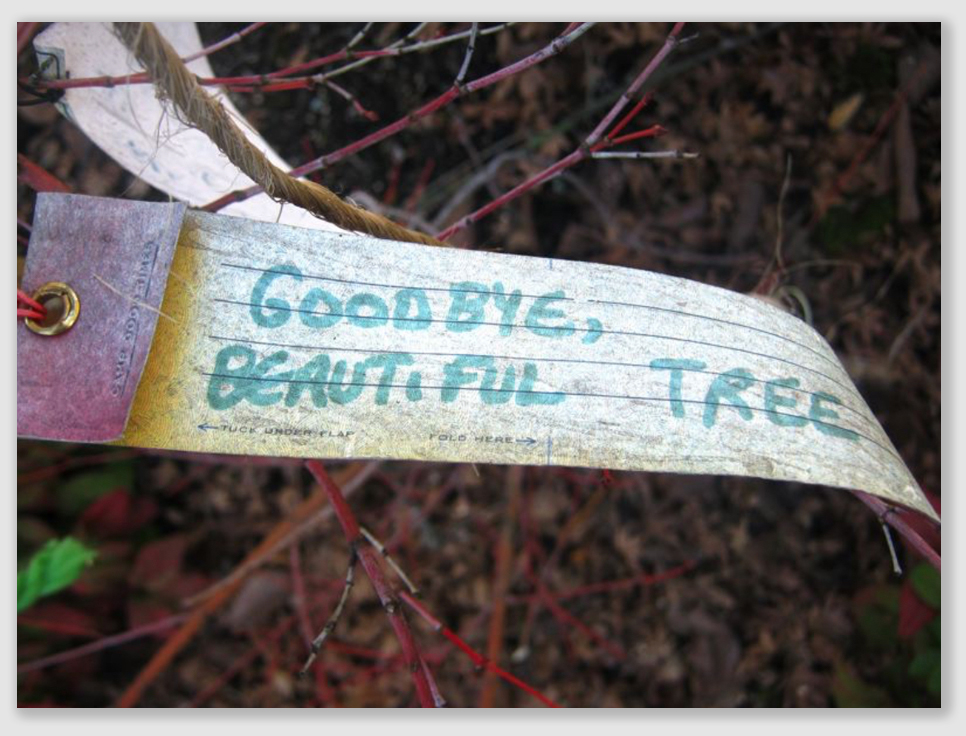
Wendy March and Jubal Prevatte were devastated when they called an arborist this spring to have four 100-year-old trees inoculated against Dutch elm disease. The Northeast Portland couple found it was too late: Two of the elm trees already were dead and the other two likely were infected. Then they were stunned to discover the city of Portland no longer takes responsibility for removing them. “It never occurred to me to look at street tree maintenance as part of the cost of owning a home,” said March, originally from England. “I didn’t even know that was a thing.” A very expensive thing…
City and county rules protecting trees are the next battleground in the rolling fight between local governments and the Florida Legislature over local regulations viewed by critics as too onerous. The Legislature has tried to prevent cities and counties from adopting new regulations governing everything from lawn fertilizer to short-term vacation rentals in recent years. Now state Sen. Greg Steube, R-Sarasota, is taking aim at tree ordinances, saying rules limiting the trimming and removal of trees infringe on property rights. Steube’s bill would prohibit local governments from regulating the “trimming, removal, or harvesting of tree and timber on private property.” That would nullify dozens of tree ordinances across the state. Only the state Legislature would be able to regulate trees. “I think you’ve seen a lot of instances where local governments are, in my opinion, going way above and beyond what they should be doing,” said Steube, who also has been behind the push to limit local regulations of short-term vacation rentals. The tree bill, SB 574, was inspired by complaints Steube heard from property owners and the building industry, along with his own personal experience…
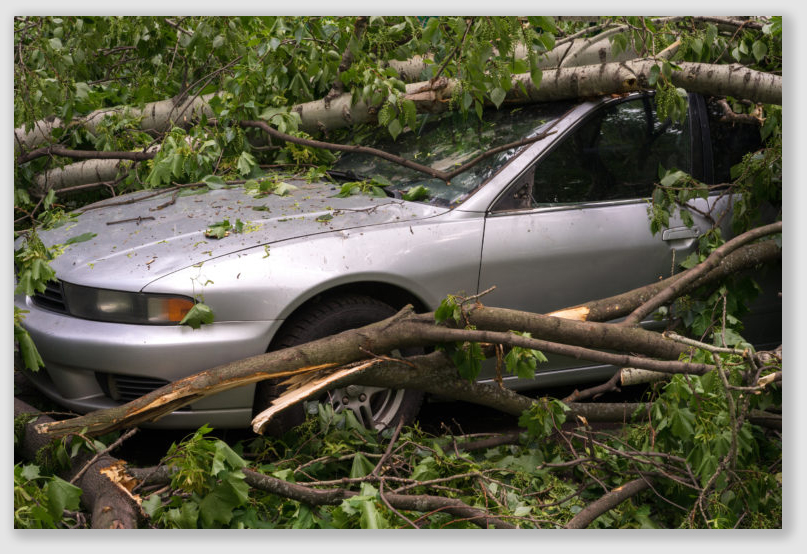 Insurance Journal, November 6, 2017: Does a CPP Cover Trees Knocked Over by a Hurricane?
When a hurricane blows through, it isn’t just the trees on a homeowner’s property that could be damaged. There could be trees on a business’ property that are damaged as well. Does the commercial property policy provide coverage there? For this discussion, we’ll be using an ISO CP 00 10 10 12 Building and Personal Property Coverage form with CP 10 30 06 07 Causes of Loss – Special Form attached to it. Your carriers might be using a different edition date, a coverage form that they wrote, or other carrier specific endorsements. Make sure that you’re checking the specific policy forms that you’re using. It’s worth noting here that I didn’t use the word policy right here. I intentionally avoided that word because we’re only dealing with two specific forms that make up the policy, not the whole policy. One is a coverage form and the other is a causes of loss form. Alone, they can’t form a whole policy. Commercial policies are fun like that. We have to address the attached causes of loss form because our coverage form will have us refer back to it. The coverage form itself doesn’t tell us what causes of loss are included. Here’s the first statement that it makes about causes of loss on the first page of the form. Coverage: We will pay for direct physical loss of or damage to Covered Property at the premises described in the Declarations caused by or resulting from any Covered Cause of Loss: That seems simple, right? Let’s look at one more place on the coverage form to find out why it isn’t as simple as we want it to be. Covered Causes of Loss: See applicable Causes of Loss form as shown in the Declarations: That forces us to leave this form alone to validate whether we’re dealing with a covered cause of loss. Remember that we were talking about trees felled by windstorm. Of course, you still remember which causes of loss form we are working with (it’s the CP 10 30 Causes of Loss – Special Form). So, what does that tell us about Windstorm and Hail as a covered Cause of Loss…
Phys.org, November 6, 2017: Tiny bees play big part in secret sex lives of trees
When it comes to sex between plants, tiny bees the size of ladybugs play a critical role in promoting long-distance pairings. That’s what scientists at The University of Texas at Austin discovered after one of the most detailed paternity tests in wild trees ever conducted. The research gives new insight into how tiny pollinating animals promote genetic diversity that is essential for plants’ adaptation in the face of disease, climate change and other threats relevant for agriculture and reforestation efforts worldwide.In a study published this week in the Proceedings of the National Academy of Sciences, researchers identified the pathways that hundreds of wild bees traveled to and from the trees they pollinated across a forest area of more than 2.5 square miles (690 hectares). To the biologists’ surprise, the smallest bees managed to cover distances just as far as their larger pollinating cousins, frequently acting as tiny matchmakers for trees separated by more than a mile (>2 km). In fact, in half of the cases where a pair of trees separated by a significant distance created a fruit together, the pollen had been carried by a bee no bigger than a grain of rice. “Size isn’t everything,” said Shalene Jha, an associate professor of integrative biology and the primary investigator on the study. “These little bees are responsible for major beneficial impacts in terms of reproduction and gene flow…”
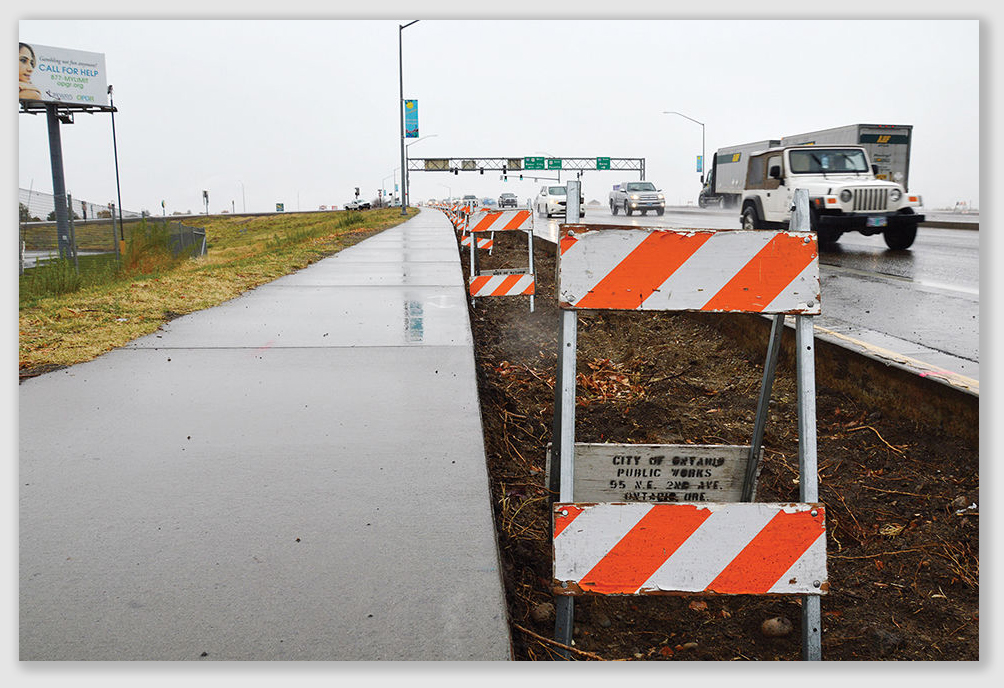 Ontario, Oregon, Argus Observer, November 5, 2017: Rapid weather change delays tree planting
Although the rest of the project remains on schedule, tree planting between East Lane and the Snake River, and subsequent phases of tree planting near Love’s Travel Stop, has been delayed. The original plan had the City of Ontario’s public works department, CH2M, tearing out and installing new trees in late September. According to Cliff Leeper, public works director, what prompted the delay was a caution from the city’s tree vendor for the project about not guaranteeing warranties should the trees die. This was coupled with a caution from the city’s arborist regarding sudden temperature drops, snow, ice and magnesium chloride application (used to remove snow and ice from the roadways) and their effect on tree survivability, prompted the delay. “The temperature change was pretty quick,” said Ontario City Manager Adam Brown. “It’s been tough weather to predict.” Tree replacement was necessary, Leeper said, because the former trees were dying, old and infested with beetle borers…
Salt Lake City, Utah, KSL-TV. November 5, 2017: Environmental groups oppose tree removal projects
Environmental groups are opposing efforts to remove pinyon-juniper in Utah’s Hamblin Valley, arguing their mechanical destruction would vaporize trees that are centuries-old. The Bureau of Land Management projects involving 192,000 acres in the Great Basin are designed to boost rangeland health of imperiled greater sage grouse, wildlife and wild horses and burros. But the Southern Utah Wilderness Alliance, joined by Wild Utah Project, said the federal agency failed to take a “hard look” at the impacts of chaining or using techniques like a bull-hog, a mastication machine that uproots and mulches trees. A federal court hearing was held on the matter Friday. The BLM approved a general plan of pinyon-juniper tree removal in a 2014 environmental assessment, which was not opposed by SUWA at the time. The analysis found there would be no “significant impact” from using mechanical means to clear pinyon-juniper…
 Watertown, New York, Daily Times, November 5, 2017: An ecologist speaks for old-growth trees
The vista from the steps of Arlington House offers one of the most spectacular views of the nation’s capital. The scene unfurls from the sloping lawns of Arlington National Cemetery, which surround the former home of Confederate Gen. Robert E. Lee, down to Memorial Bridge, the Lincoln Memorial and on to the Mall. The architectural geometry is leavened by the snaking Potomac River. But I have huffed and puffed my way up to this high ground to see something more ancient and, in its own way, defining of the nation’s history. Joan Maloof is waiting to show me the other side of the mansion, a pocket of forest known as the Arlington Woods. Only 12 acres remain of what was once a sylvan 600 acres, part of the 1,100-acre estate owned by G.W.P. Custis, the adopted grandson of George Washington (and Lee’s father-in-law). Entering the woodland is tricky; there are no easy trails, and we have to leap across a drainage swale. But once we are in the heart of this forested dell, the sounds of the riding mowers and the tour trams and even the passenger jets are muted. They are replaced with shrieks of blue jays and the white-noise rustle of the wind through the leaves…
The carpenter framing a new home on your street. The ironworker erecting that massive office building downtown. The roofer hauling and laying shingle after shingle to repair a historic church. The road-crew worker filling potholes on the highway. Construction workers in Ohio were seven times more likely to die of an opioid overdose last year than were workers in other professions, according to a Plain Dealer analysis that included records from more than 12,000 opioid drug overdose deaths in the state from 2010 through 2016. As an industry, construction had the most deaths. Some singular occupations did stand out, however. Tree trimmers had an opioid overdose fatality rate higher than all the rest, putting them at the top of the list…
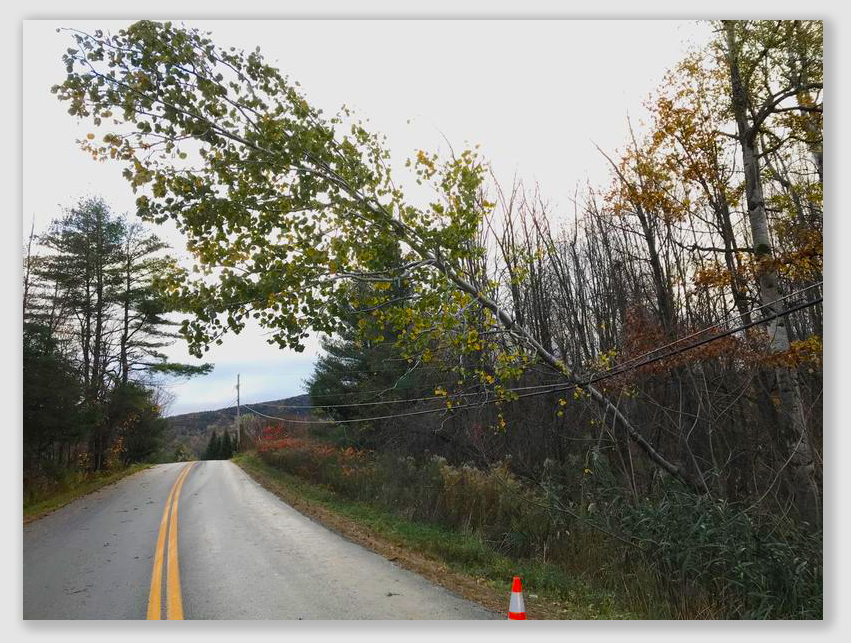
Every year, electric utilities clear trees and vegetation around power lines. With several thousand homes and business in Vermont still without power after Sunday’s windstorm, could more clearing prevented these lengthy outages? According to Jim Porter, director of public advocacy for the Department of Public Service, electric utilities’ tree-clearing plans are approved by the Public Utilities Commission, and updated every three years. “Every time there is an outage that is caused for various reasons, including if a tree comes down on a power line, that is reported to the department,” he said. “Those reports are calculated and they are also considered in the next trimming plan.” Porter said that generally, utilities do a good job with their tree maintenance, and that he didn’t think there was much that the utilities could have reasonably done to prepare for this recent storm. “This was really a somewhat unprecedented storm,” Porter said. “You have a huge amount of wind and you still had some leaves on the trees — I actually had a tree come down on my house…”
A North Carolina man hunting with family in Idaho’s Salmon-Challis National Forest died Wednesday after a tree fell on him. Lawrence Larry Horton, 67, was asleep around 1:30 p.m. when a large dead tree called a SNAG fell on his chest, according to a news release from Custer County Search and Rescue. Horton received a severe chest injury and had trouble breathing. The Custer County Sheriff’s Office received a 911 call from Rawhide Outfitters in Salmon, where Horton was a client, notifying them of the injury. Challis Ambulance Service, a Saint Luke’s Air Ambulance from Boise and the Custer County Search & Rescue Challis Unit all responded to the scene. Efforts were made to help Horton, but he only had minutes left. Guides and family watched on helplessly as Horton struggled to survive, the news release says…
 Greenwich, Connecticut, Time, November 2, 2017: The most awesome tree in Greenwich
The Greenwich Tree Conservancy will announce winners for its “Awesome Tree Contest” this weekend. The free awards ceremony will begin at 3 p.m. Sunday at the Bruce Museum with light refreshments. “There will be beautiful paintings and photos of the trees of Greenwich, as well as poems and stories of trees, to be seen and heard,” said Miriam Mennin of the Tree Conservancy. More than 100 submissions were accepted into five categories, designed to express appreciation for trees creatively — through writing, photography, drawing and other media. Awards will be presented for first, second and third prizes and for honorable mentions…
Greenwood, South Carolina, Index-Journal, November 2, 2017: Clemson Extension: Tree and turf
A frequent question I get each year is: “How do I get grass to grow under the shade of my trees?” Most turf grasses grown in the Lakelands are warm season grasses, such as Centipede, Bermuda, Zoysia or St. Augustine. Even though some, such as St. Augustine, tolerate a limited amount of shade, all turf grasses mentioned above need sunlight, water and nutrients for good growth and performance. Trees compete with turf grasses for all their needs. Another complication when discussing growing grass in shade is the level of light versus shade, which is often related to individual tree characteristics. Things such as tree species, size, and spread of the tree, density of foliage, and height to the first branches affect the amount of light that reaches turf at ground level. Pruning branches of large, older trees to allow more sunlight is difficult, often expensive and can create large wounds on the tree. This work is best left to professional tree companies. Where younger, smaller trees are planted within turf areas, a better approach to both trees and turf is possible. This begins with creating a mulch ring around the young tree to reduce grass competition while it grows. The mulch ring will eliminate the need to use mowers or weedeaters near the base of young trees that are easily damaged…

One hundred years later, Nova Scotia is still saying thank you. Officials from Nova Scotia’s Department of Natural Resources announced Monday that a 53-foot-tall white spruce has been selected for the annual holiday-lighting ceremony on Boston Common and will be chopped down next month to mark the centennial of the Halifax Explosion of 1917, when nearly 2,000 people were killed and 9,000 more were injured. Following the devastating incident, which was caused by a collision between a French cargo ship with explosives on board and a Norwegian vessel in Halifax Harbor, Boston quickly dispatched medical personnel and supplies to the region for assistance. The tree is meant to represent the strong bond formed between the two communities in the aftermath of the horrific event. Nova Scotia has been bringing the trees to Boston each year for the celebration since 1971…
A call for action over a tree service business that didn’t finish the job spurred News 3 to dig into whether lawn care companies are regulated at all. Pat Williams called for action after she paid $4,000 up front for a tree to be removed from her yard. Three months later, the company never finished the job. The Department of Agriculture, Trade and Consumer Protection says lawn care companies are not regulated or required to have a license other than a commercial license for using pesticides. The Better Business Bureau says there are ways to make sure you’re picking your lawn care service carefully…
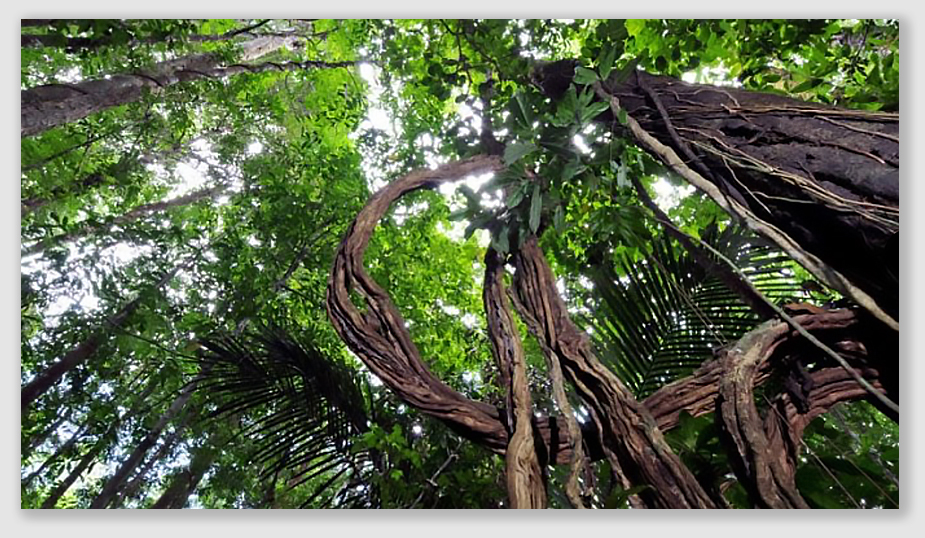 Fast Company, Ocgober 31, 2017: The largest ever tropical reforestation is planting 73 million trees
There are more habitable planets in our galaxy than humans living on planet Earth. But the nearest one is about 70 trillion miles away, which means that, for now, and for the foreseeable future, Earth is the only life-supporting rock hurtling through infinite space we’ll ever know. It’s really not the best idea to let it burn up–and key to keeping it cool are the massive rainforests of the Amazon. Sadly, we’ve had a hard time not cutting them down. A new project should help prevent–or at least slow down–that hot future. If all goes to plan over the next six years, a project led by Conservation International will become the largest tropical reforestation project in history. Seventy-three million trees will sprout up across what’s known as the “arc of deforestation,” in the Brazilian states of Amazonas, Acre, Pará, Rondônia, and throughout the Xingu watershed. The short-term plan is to restore 70,000 acres (the area of 30,000 soccer fields) that have been cleared for pastureland to their former forested glory…
Bend Oregon, Bulletin, October 31, 2017: Fossils show Earth’s oldest trees ripped themselves apart
Scientists have discovered 374-million-year-old tree fossils from the dawn of Earth’s forests — and found that these strange plants literally had to rip themselves apart as they grew. The fossils, described in the Proceedings of the National Academy of Sciences, shed light on the nature of ancient forests and the evolution of the Earth’s climate. The Xinicaulis lignescens fossils, discovered in Xinjiang, China, are part of a group of species known as Cladoxylopsida — plants that have no known descendants but are thought to be related to the ancestors of today’s ferns and horsetails. They could grow about 30 to 40 feet tall and 3 feet wide at the base; their branches popped out of the top of the trunk, giving it a shape similar to today’s palms. These branches sprouted further, tinier appendages that were not yet true leaves…
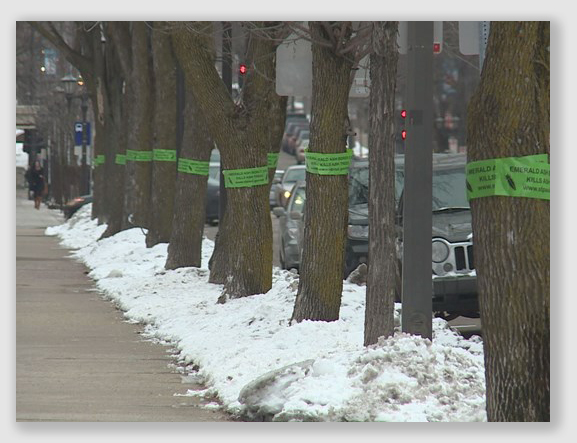 Minneapolis, Minnesota, KARE-TV, October 30, 2017: Ash trees in Minnesota critically endangered
Officials believe the Emerald Ash Borer came to Minnesota in 2009, and as it spreads across the state, experts say almost all of our ash tree population is now considered to be critically endangered. “Overall the population of ash trees are going to become extinct,” said Travis McDonald, district manager for the Davey Expert Tree Company. “Especially with Emerald Ash Borer moving throughout the United States.” Of our forests in Minnesota, nearly 40 percent of the trees are ash. The only type of ash tree that is not currently seeing the deadly effects of the Emerald Ash Borer (EAB) in Minnesota is the Mountain Ash, which only lives in the northern part of the state. If you have ash trees in your yard, there are ways you can treat to either prevent or destroy the EAB living inside. “Contact a certified arborist to come out, evaluate the tree, to see where it stands on the health and to see if a treatment can take place,” McDonald said.
Rockford, Illinois, WIFR-TV, October 30, 2017: City of Rockford announces tree removal loan program
Rockford launches a new program to get rid of dying trees in city neighborhoods. The Tree Removal Loan Program approved earlier this month by city council now begins allowing homeowners who make less than $70,000 to have dying trees removed from their property. The city says Emerald Ash Borer left many trees dead and the trees are now considered a safety hazard. Residents will commit to a repayment plan based on the loan amount. Payments will be made over 12 months for $750 loans, 2 years for a $1,500 loan, and a schedule will be negotiated for loans above $1,500 repaid with monthly water bills…
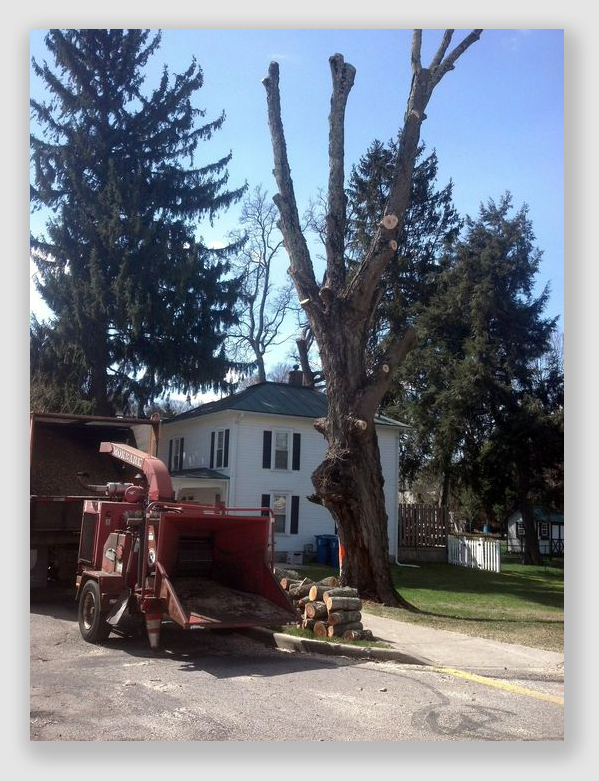
When a storm hits, it’s too late. You have to be proactive to avoid damage. The sound of chainsaws filled the air. Just hours before, rain and wind brought the trees down. On Longhill Street, a large tree fell across the road. The tree was previously dead. There was a landscaping company there to clean up the tree, but before they could get to work, they waited on word from the Springfield Police who checked to see if the tree fell on live electrical wires. “Here we’re going to take the chainsaws, cut it up into smaller section, load it into our truck, take it back to the shop and put it through the chipper and then take it to a farm and get rid of it,” Conor Murphy, Operations Manager at Gleason Johndrow Landscaping said. To know if a tree is vulnerable, check for lost bark, rotting, insects, soft or hollow spots or shallow roots. Bill Metzger, Chief Operations Officer at Gleason Johndrow Landscaping told 22News about the fallen tree’s condition and location. “Where their footing is. If it is on an embankment, if there is not much soil or support or if there is erosion around it. Anything along those lines is all stuff to look at.” Once you’ve identified a problem tree, take action. If the base is on your property, you are responsible. If it’s your neighbors, make them aware of your concern…
Hermiston, Oregon, East Oregonian, October 30, 2017: Hermiston teen stable after tree accident
Community members are raising money for a Hermiston girl who was injured by a falling tree on Friday. Jordan Larson, a 15-year-old Hermiston High School sophomore, was taken to Kadlec Regional Medical Center in Richland on Friday afternoon after a tree fell on her. She was then transported to Seattle for further medical treatment, where she remained as of Monday. A friend of the family said Larson’s condition has improved, and she is now stable. “They had her in an induced coma,” said Irene Zaragoza, a friend of Larson’s mother Ivy Coons. “She had tubes in her brain to prevent blood clots. She’s had two brain surgeries, and had multiple skull fractures and facial fractures.” Zaragoza said Larson has been more responsive in the past few days, and has tried to talk and make noise…
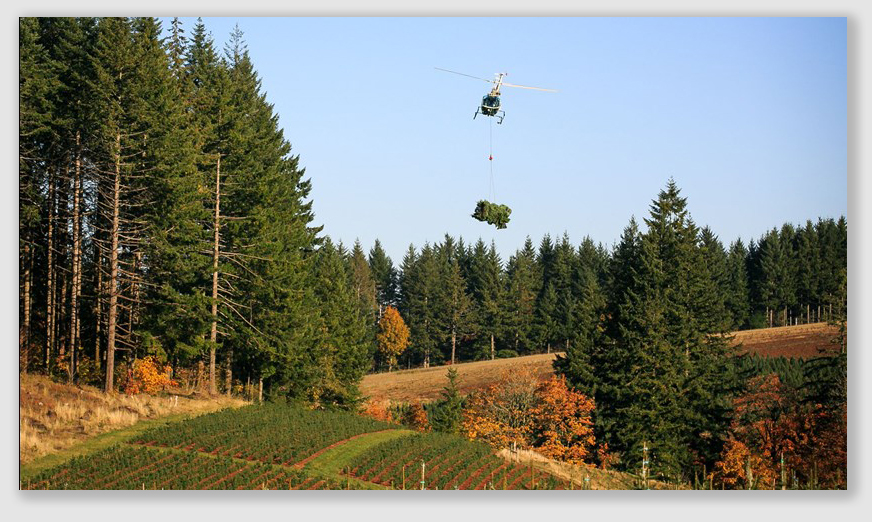 Salem, Oregon, Statesman Journal, October 27, 2017: Christmas trees will be more expensive this year amid shortages in Oregon, North Carolina
Americans will pay more for pre-cut Christmas trees this year as shortages deepen from the country’s top two producers, Oregon and North Carolina. Joe Territo sells Oregon trees in San Jose, California. But he’s becoming increasingly frustrated with rising costs, from the trees to labor. Territo says the only figure going down is profit. “It seems like every year, it’s harder and harder,” Territo said. He expects to sell 6-foot Noble firs for about $75 a piece this season, up from about $69 last year. The problem is one of supply. Christmas tree growers are coming up short as their 2017 harvest enters its critical period, with trees being shipped coast-to-coast and abroad. Around the time of the Great Recession, growers had an oversupply of trees after planting too many in the early 2000s. Subsequent low prices forced many farmers out of the Christmas tree business, leaving other growers to tend to the market. But now, with only so many trees to go around, remaining farmers can’t keep up with demand — and they might not catch up for years. It can take nine years before some trees are ready to be cut and sold…
A personnel shake-up at a Duke Energy tree-trimming subcontractor came at the worst possible time for residents of the Tampa Bay-area. Weeks before Hurricane Irma, Asplundh Tree Expert Co., a “vegetation management” vendor fired its Florida chief. Now the company is accusing him of using his experience — in violation of a noncompete clause — to siphon off dozens of employees to work for a competitor. Those defections came at a bad time for Asplundh, leaving it short-handed as they faced fallen trees and debris all over the region from Irma. Asplundh — Swedish for “grove of aspen trees” — is a family-owned vegetation-management firm that employs about 35,000 people. The 90-year-old Pennsylvania-based company offers tree trimming and other infrastructure services to utilities across U.S., Canada, Australia and New Zealand. Among Asplundh’s Florida clients are Duke Energy and Florida Power & Light…
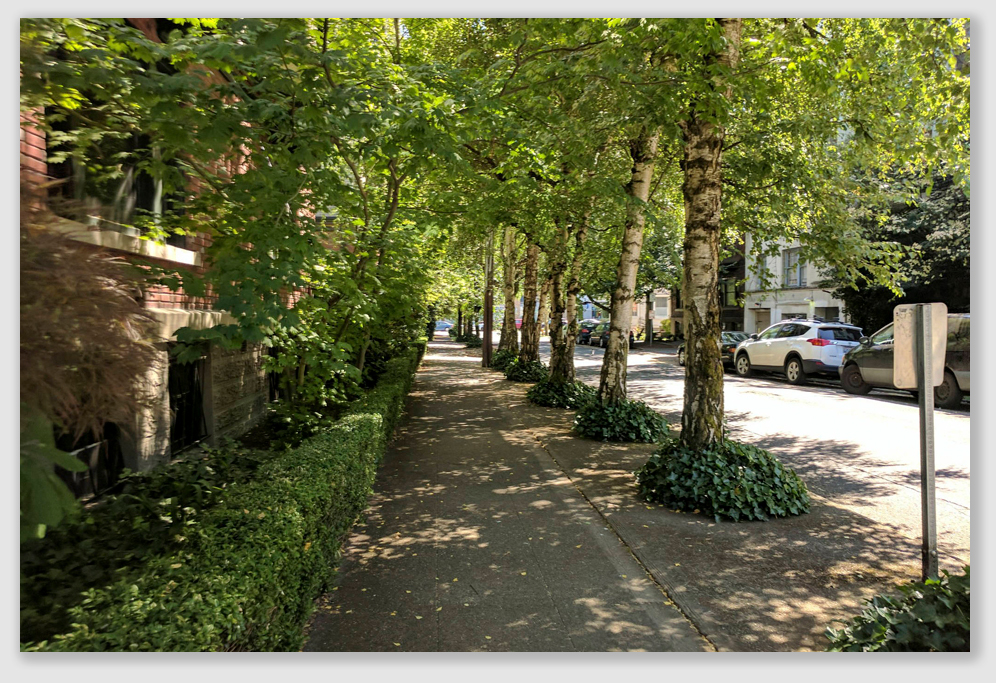
It’s been nearly a decade since the City of Seattle set out to protect the pollution-catching, health-promoting tree canopy that gave the town the nickname “The Emerald City.” But little actually happened. Meanwhile, a post-recession building boom unleashed a torrent of development that chipped away at the city’s leafy umbrella. The results are not pretty. Seattle’s current canopy-preservation system is “not supporting tree protection,” according to a city report quietly completed earlier this year. But things may finally be changing. In recent weeks officials began signaling that they are ready to take some steps to keep the Emerald City green. For starters, Mayor Tim Burgess issued an order for city departments to look hard at longstanding recommendations from the city’s volunteer Urban Forestry Commission, which have long mostly languished in obscurity. Measures the commission has recommended include some pretty basic stuff, such as tracking how many trees are actually removed when a property is redeveloped. Burgess also, significantly, told staffers to look into updating requirements for developers to plant trees as part of the city’s Housing and Livability Agenda…
If you take a drive through Peru or Chazy, you’re likely to see orchards with their rows upon rows of apple trees. While these orchards used to mostly consist of very large trees, you may notice that some newer orchards are being planted with small trees in rows very close together. Rather than standing on their own, these trees are being supported with wires and posts. While these new, high density orchards may look more like vineyards than a traditional orchard, they are becoming more prominent across the county for many good reasons. Growing small apple trees on a trellis allows a new orchard to begin producing fruit much sooner than an orchard with large trees. Before an orchard can begin to produce its maximum yields, the trees must first grow enough to completely fill their allotted space within the orchard. For large trees, this process can take eight years or more before they begin to produce a full crop. Small trees planted close together have less space to fill per each individual tree, so these trees can fill in their space in only a year or two, allowing a full crop to be produced in the third year after planting…
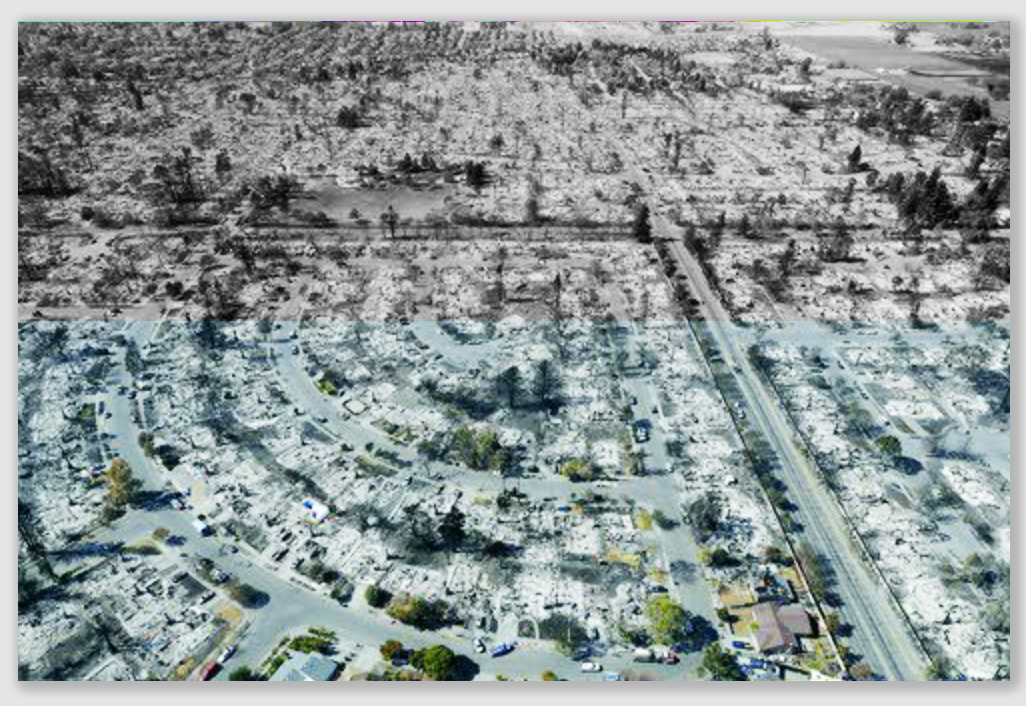 Lewiston, Idaho, Tribune, October 27, 2017: GOP targets tree cutting after wildfires
House Republicans are targeting environmental rules to allow faster approval for tree cutting in national forests in response to the deadly wildfires in California. Majority Leader Kevin McCarthy, R-Calif., said lawmakers will vote next week on a bill to loosen environmental regulations for forest-thinning projects on federal lands. The GOP argues the actions will reduce the risk of fire. The Republican bill “includes reforms to keep our forests healthy and less susceptible to the types of fires that ravaged our state this month,” McCarthy said Thursday. California has declared a public health emergency in the northern part of the state, where fires that began Oct. 8 have killed at least 42 people, making them the deadliest series of wildfires in state history. Authorities have warned residents returning to the ruins of their homes to beware of possible hazardous residues in the ashes, and required them to sign forms acknowledging the danger. The GOP bill is one of at least three being considered in Congress to address wildfires. Republicans and the timber industry have long complained about environmental rules that make it difficult to cut down trees to reduce fire risk. Plans to harvest trees on federal lands can take years to win approval…
Imagine trees as a drug to prevent heart disease. Aruni Bhatnagar, a medical professor at the University of Louisville, does – along with a team that’s unveiling a $14.5 million research project in Louisville on Thursday. “We think (trees) might be more effective than statins,” the air pollution expert said of the widely prescribed class of drugs used to lower blood cholesterol, a risk factor for heart disease and stroke. The Green Heart project, as it’s called, involves the University of Louisville, The Nature Conservancy, The Institute for Healthy Air, Land and Soil and other partners who will transform four South Louisville neighborhoods with as many as 8,000 trees and other plantings. The area is roughly between Churchill Downs, Iroquois Park and Louisville International Airport. It’s home to about 22,000 Louisvillians…
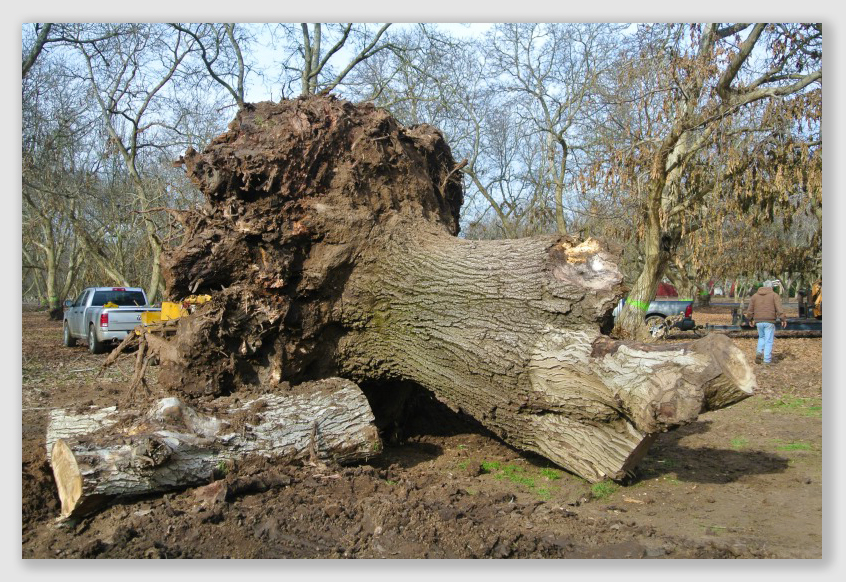
Steve Farrington says black walnuts still cover his relative’s yard in Syracuse, but many of the trees came down earlier this month. “You got six down and they probably hauled away three to four,” he says, pointing at a stump. Now, he’s wondering “who” hauled them away. “Talked to my daughter, she said they came along and said that the trees were toxic and they were here to help her out and cut the trees down.” According to Farrington’s daughter, she agreed to let someone cut down the trees after a Google search suggested the trees could be toxic. Besides, she says the men told her there would be no charge, so she didn’t think there was anything to lose. “There’s not any toxicity to people. It’s one of the most delicious tasting nuts in the world,” says SUNY ESF Professor Don Leopold. There’s a large black walnut tree on campus, not far from Leopold’s office. He’s not shy about grabbing one from the ground for a treat…
The wet woods bordering Marshyhope Creek on Maryland’s Eastern Shore exuded their usual lush green in mid-September, with only a trace of the colors that autumn would soon bring to the thick foliage. All seemed normal. But catastrophe is on the way, in the form of a little green beetle from Asia that’s wiping out ash trees by the hundreds of millions across the United States. The voracious invaders, emerald ash borers, were spotted a couple of years ago just 20 miles away in Cambridge, so the ash trees lining this stretch of the Marshyhope are almost sure to become infested and die in the next several years. When they do, they’ll leave behind a ghost forest of leafless branches, drastically altering the vast wooded marshlands bordering the Marshyhope and its receiving river, the Nanticoke. Habitat for fish and wildlife could be affected, as could water quality in one of the Chesapeake Bay’s healthiest tributaries. “It’s a huge ecological problem,” said Michael Raupp, an entomologist with the University of Maryland College Park. Ash are the dominant trees along the Nanticoke and many other rivers, and many species associated with them are also at risk — about 40 different insects are intimately associated with ash trees. “It’s not just ash that goes down the toilet,” he concluded, “it’s many other species…”

Code enforcement officers for Manatee County have cited a land trust controlled by homebuilder Carlos Beruff for not clearing tree debris from a 32.6-acre site at the northeast corner of Whitfield Avenue and Lockwood Ridge Road. Residents who live in and near the Palm Aire neighborhoods say they have complained about the large piles of fallen trees for months. Allison Aubuchon, a spokesperson for Beruff’s Medallion Home, previously told the Herald-Tribune the land was cleared to create additional cattle pasture on the agriculturally zoned property. “Medallion Home is reviewing debris removal alternatives,” she added, “since there is no area on the property where an open burn can safely take place within state requirements.” County officials said the land trust has two months to clear the property or it will be subject to a hearing before a special magistrate, who can assess financial penalties…
Hamden, Connecticut, Quinnipiac University Chronicle, October 24, 2017: A tree tragedy
Planting trees just isn’t enough to fight climate change anymore as a recent study shocks many environmentalists. The amount of acres of trees needed to make a significant impact on the projected climate trends would be catastrophic for the planet’s ecosystems and food supply, according to research published in the science journal, Earth’s Future. To reduce carbon emissions by three billion tons annually, 1.7 billion acres of newly-planted trees would be needed, and that would only cover 10 percent of our total carbon output. While this would certainly have a positive influence on global warming and would yield a reduction of greenhouse gasses, 1.7 billion acres is roughly the size of the continental US, which represents half the worldwide agricultural land area…
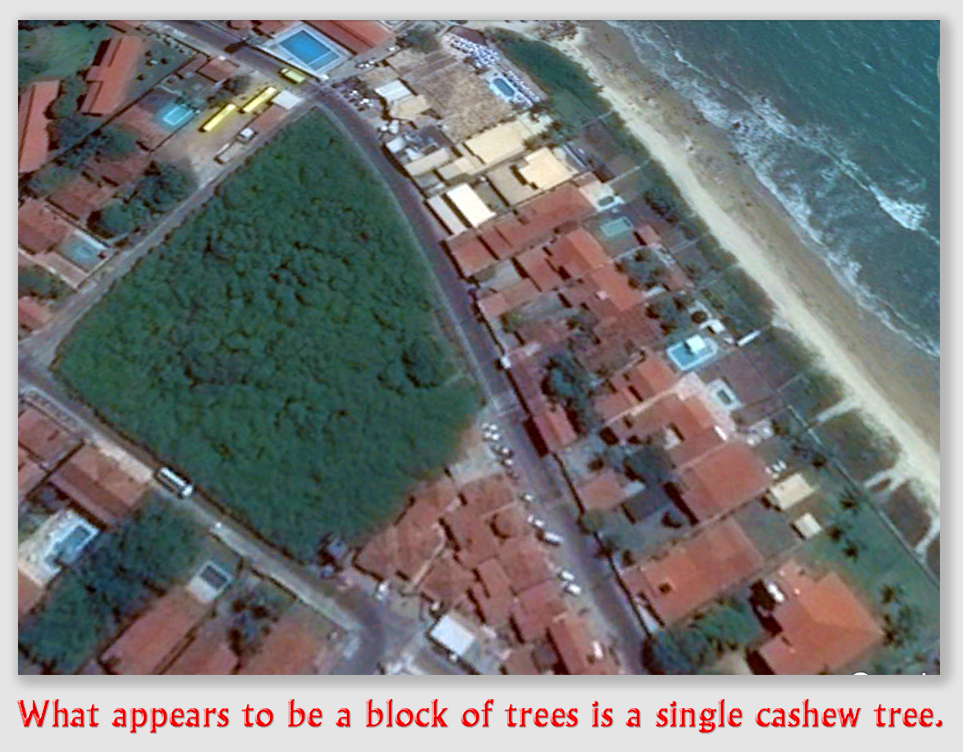 Commonplace, October 24, 2017: The size of this cashew tree is just nutty
There is more to the world’s largest cashew tree than what you see on first glance. That’s because it takes way more than one glance to see it. This one, single tree, occupies a space of about two acres — about the size of two American football fields. Known as the Cashew Tree of Pirangi, it is located in Pirangi do Norte, Rio Grande do Norte, Brazil, and from the air, it appears to be a small forest, instead of one plant. The tree grows in such a way that the branches go sideways, instead of upwards. As a branch gets large enough, its weight causes it to touch the ground, where it takes root and spreads as if it were a new tree. The result is that one can walk into the canopy under the tree and look around at what appears to be multiple trees. Closer examination shows that all of them are joined together as one organism. The tree produces more than 60,000 fruits each year…
Phys.org, October 24, 2017: Solving how a complex disease threatens oak trees
Teamwork between Forest Research, Bangor University and others has for the first time, tracked down the cause of the stem bleeding symptoms of this newly identified threat to the native oak. From 2008 onwards Forest Research, part of the Forestry Commission, were receiving increasing reports of a serious disease of native oak in many parts of the UK, particularly East Anglia, the Midlands, Welsh Borders and south east Wales. This complex disease, identified as acute oak decline (AOD), appears on the tree stem as patches of black fluid weeping from bark cracks, which cover over rotting tissue. In severe cases the stem rot can ring almost the entire girth of trees, preventing them from using water and nutrients essential for growth. The trees become weak and can die. The study, recently published in the ISME Journal, concludes that a mixture of different bacterial species cause the stem bleed in AOD. The authors explain that the complex nature of the disease makes identifying the cause of it challenging. A number of complementary scientific methods were used to discover the cause of the stem weeping and rot typical of the disease, providing a new means of identifying and studying complex plant diseases. Now that the causes of the stem weeping symptoms AOD have been established, scientists can work towards finding ways to halt the disease. This new means of identifying complex plant diseases can now also be used in other contexts…
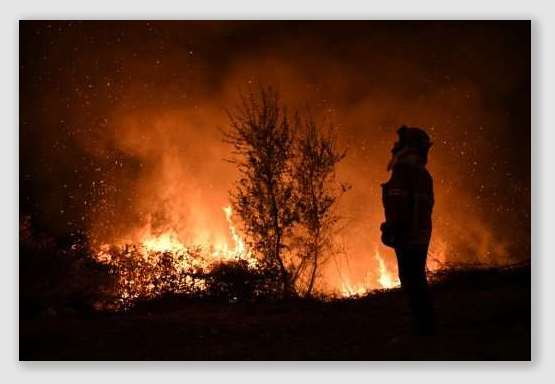 Phys.org, October 23, 2017: Forest fires contributed to record global tree cover loss
A sharp increase in forest fires stoked record losses in global forest cover equivalent to the area of New Zealand in 2016, a Global Forest Watch report said Monday. The alarming pace of destruction—51 percent higher than the prior year with a loss of 73.4 million acres (29.7 million hectares), according to data from the University of Maryland—was partially due to climate change that has increased the risks and intensity of wildfires by triggering temperature rise and drought in some places, the monitor said. The 2015-2016 weather phenomenon El Nino, one of the strongest on record, also played a role, having created particularly dry conditions in the tropics. Many of those tropical areas are not naturally prone to catching fire—but vulnerability increased due to poor management and was exacerbated by El Nino. Deadly blazes in Brazil and Indonesia were among those contributing to the loss. This year, deadly blazes have again devastated regions of Portugal as well as California…
San Luis Obispo, California, University of California, October 23, 2017: Staking trees
Staking trees is a controversial topic. Current research encourages home gardeners to avoid staking new trees whenever possible. Trunk movement signals the lower trunk and roots to produce growth and results in stronger trees. On the other hand, staked trees are frequently damaged by rubbing and girdling. Vertical growth and root development are slowed. Trunks may become stressed at the point of stake attachment and be more susceptible to breaking. Trees that can stand by themselves or don’t need protection from excessive wind do not need to be staked. Most conifers, trees with upright growth habits and bare-root trees do not need additional staking. Supportive staking may be required if a tree is not strong enough to stand upright or to return to an upright position after being deflected. Staking should be done at the time of planting…
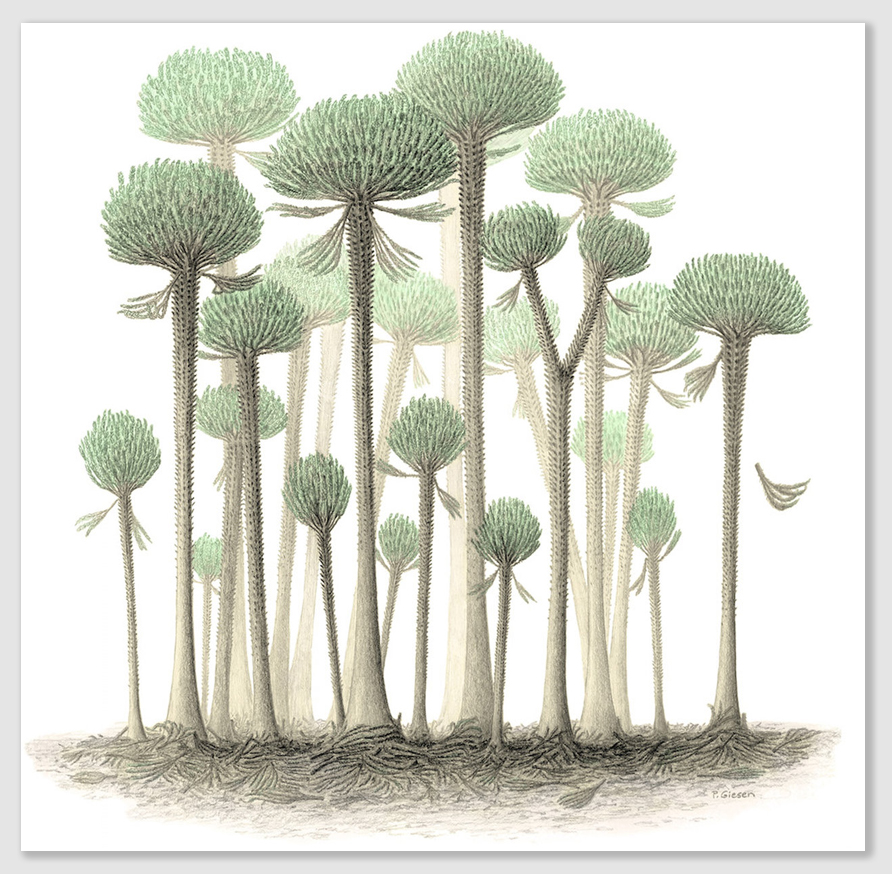
Earth’s first trees had hundreds of tree-like structures within them, making them exceedingly more intricate than the insides of modern trees, a new study finds. Researchers made the discovery after studying the fossils of 374-million-year-old trees found in northwest China. The fossils showed that these ancient trees had an interconnected mesh of woody strands, the researchers found. “It’s just bizarre,” said study co-researcher Christopher Berry, a senior lecturer of paleobotany at Cardiff University in the United Kingdom. The two specimens were found in 2012 and 2015 in Xinjiang, China, by study lead researcher Hong-He Xu, of the Nanjing Institute of Geology and Palaeontology at the Chinese Academy of Sciences. The specimens belong to a group of trees known as cladoxylopsids, which are known to have existed from the Middle Devonian to the Early Carboniferous periods, from about 393 million to 320 million years ago, long before dinosaurs walked the Earth…
Living Green Frugally, October 23, 2017: 4 Ways to remove tree stumps
Tree stumps can be referred to as the esthetic blemishes present in the garden/home landscape. The systems/methods used to remove/eliminate any tree stump depends largely on the size and age of the tree. Luckily, there are various methods that can be used to remove a range of tree stumps present in your home garden, without any need to experience the cost of a professional/skilled tree stump removal. If you recently cut down any tree in your yard, there are many ways you can use to get rid of the stumps that are unpleasant. You can dig it up by hand, use the grinding method, burning method, chemical stump remover method. It is advisable to use the method/technique that works best for the root system you’re dealing with…
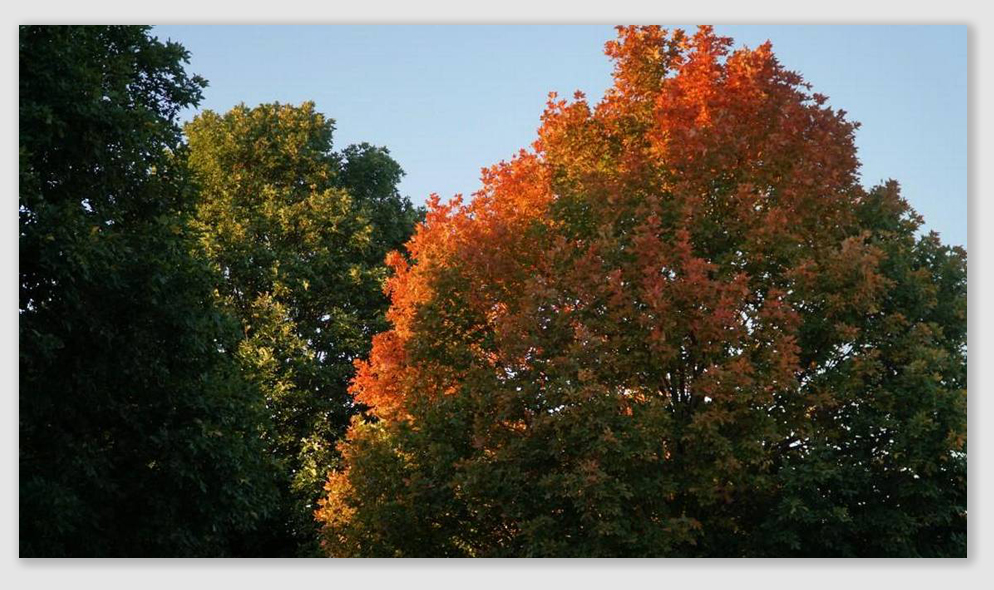
If you have been eagerly awaiting the fall season to fully embrace cooler temperatures, pumpkins and hot apple cider, you are probably a tad-bit disappointed in the lack of vibrant fall foliage topping Wichita’s trees. If trees were the only indicator of what season we are in, it would be obvious fall has not yet come to Wichita. You can blame mother nature — or Kansas. “In a lot of areas people will already be seeing fall colors at this time,” Matthew McKernan, Sedgwick County’s horticulture extension agent, said. “But it’s important for us to define normal for Kansas…”
Many areas across the metro area experienced rain and storms on Saturday evening. Several local companies are bracing for another busy week of cleanup efforts depending on how strong these storms become. The owner of Dooley Brothers Tree Service says his employees have been busy helping with cleanup since last Saturday’s storms. That storm system hit many places in the Northland hard, knocking trees onto homes and businesses. Dooley also works as a firefighter and says much like in his day job, the goal with his company is to help keep people safe. If you notice damage to your property, in some cases it’s best to call for help from professionals. “Make sure that their structure is safe first of all of course and to get out if they need to but probably try to call a professional instead of trying to do it themselves, it’s really dangerous and I hate to see people get hurt trying to do this stuff,” said Anthony Dooley, Owner of Dooley Brothers Tree Service…
About two dozen tree and shrub planters gathered Saturday at Fonner Park to help with the Re-Tree the Family Fun Zone project. The goal was to plant 70 trees and shrubs. Terri James, an extension educator who oversees the statewide Master Gardener program, gave a hands-on demonstration on tree selection, tree planting and tree care. In 2016 the emerald ash borer, an insect that destroys ash trees, was starting to appear in Nebraska. “There is no confirmation of it in the Grand Island area yet, but it is likely to come,” said Jaime Parr, the Nebraska State Fair facility manager…
About 15 years ago, Cindy Siewert and her husband Rick were faced with removing an ash tree from their Minneapolis yard. The roots were growing into the foundation of the house. “The tree had to be cut down,” Cindy Siewert said. “We were remodeling. And we had an idea to use the lumber in the floor.” It didn’t happen. However, the experience planted the seed of what has become a growing tree-reclamation business that’s approaching $1 million in annual revenue and much more for folks who care about making beautiful, functional goods from what otherwise might be discarded. In 2008, Cindy Siewert started Wood From the Hood, which uses diseased and downed city trees. Logs that otherwise would be landfilled or chipped become tables, flooring, benches, customized cutting boards and other wood products…
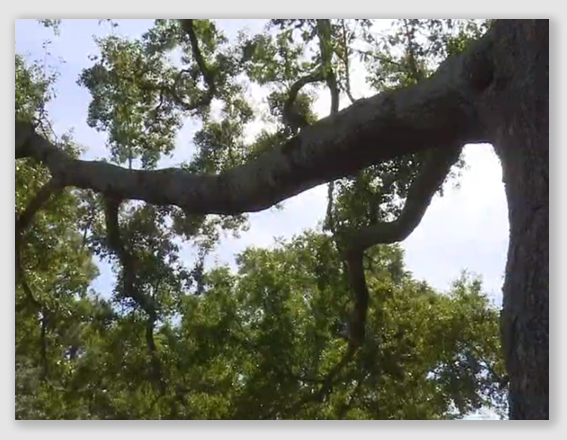
Slowpokes coffee shop in Oak Forest is the perfect spot to sit back and get that daily caffeine kick. “We were named by the Houston Press Best Coffee Shop in Houston last week,” said JC Rubiralta. Rubiralta is the owner at Slowpokes. He opened the shop almost one year ago. He’s the only other tenant in this dilapidated strip center of West 34th Street. “We did a lot of improvements when we came in. We showed it a lot of love,” Rubiralta said. Since then, business has been brewing along. Their brand new patio and green space brings in customers every afternoon. “This part of the low was overgrown. They cleaned it. Now families love coming here, adults love coming here,” said Kerin Mayne. They come for the coffee, but stay for the 100-year-old oak tree. It’s a tree slated to be chopped down Saturday. The landlord wants to turn this wants to turn this patio space into more parking for his property. “Everybody is very disappointed that this may go through,” Rubiralta said…
Grand Forks, North Dakota, Herald, October 19, 2017: Minnesota tree removal company banned in N.D.
A Becker, Minn., tree removal company has been banned from “engaging in contracting” in North Dakota, Attorney General Wayne Stenehjem’s office said Thursday, Oct. 19. The attorney general’s office received a complaint from a North Dakota homeowner regarding Chris Gustafson, doing business as Nature’s Way Tree and Landscape, and started an investigation in August. The homeowner said he paid Gustafson $7,000 to remove trees and other work, but he didn’t complete the work and damaged the home. Investigators found that Gustafson wasn’t a licensed contractor in North Dakota and appeared to be engaging in false advertising. He responded to initial communications from investigators but ignored subsequent efforts to contact him…

Firefighters Thursday morning extinguished a series of tree fires that erupted in a North Hollywood neighborhood. Four fires were reported in the area of Irvine Avenue and Califa Street, near Oxnard Street, between 5:35 a.m. and 5:53 a.m., according to a Los Angeles Fire Department spokesman. The fires spread to six cars before crews knocked down the flames. There were no reported injuries. Security video obtained from a neighbor appeared to show a person setting one of the fires and then fleeing. LAPD and LAFD arson detectives were investigating…
In the wake of the Emerald Ash Borer beetle invasion that claimed more than 1,200 trees in Bensenville, the village is in the midst of a long-term project to both restore its urban canopy and make it bigger and stronger. The village next week will continue its ongoing program to plant 60 to 70 parkway trees each spring and fall to offset the loss of all those ash trees that fell victim to the borer. The tiny bug left a giant path of destruction in every community where ash trees — with their resistance to road salt and ability to withstand the toughest weather conditions — had become a go-to choice for parkway plantings. Now, as Bensenville moves to replenish its canopy, officials say the village is working smarter to ensure a wider variety of parkway plantings that won’t fall prey to a single plague like Dutch Elm Disease in the 1970s or, more recently, the ash borer…

Heads-up Honeycrisp apple fans. There’s a new temptation on the tree. It’s called EverCrisp, born of a wildly popular Honeycrisp mother and Fuji father, and inheriting the fabulously explosive taste and texture of each. It’s taken 20 years of painstaking breeding in Midwest orchards just to get EverCrisp into stores. “It’s like raising a child,” says Bill Dodd of Hillcrest Orchards in Amherst. The Lorain County grower is head of the Midwest Apple Improvement Association, a group so keen on finding a more perfect apple, each member coughed up $100 seed money, hand-pollinated hundreds of trees, and shipped saplings out to test growers in six nearby states. “Ninety percent of the apples that resulted were terrible,” said Dodd. “You just have to find the perfect child…”
A 5-year-old boy died Tuesday evening in Sherburne County when a tree fell on him as he was playing in his back yard, authorities said Wednesday. Edward Joseph Michalek was playing on a hammock with other children in Big Lake Township when a 7-foot-tall tree to which one end of the hammock was tied uprooted, fell and hit the boy on the head, according to Sheriff Joel Brott. Edward died at the scene. “This was a freak accident that led to the tragic loss of a young life,” Brott said. “Our thoughts are with Edward’s family during this difficult time.” Friends have set up a GoFundMe page to help the family with the child’s funeral expenses…
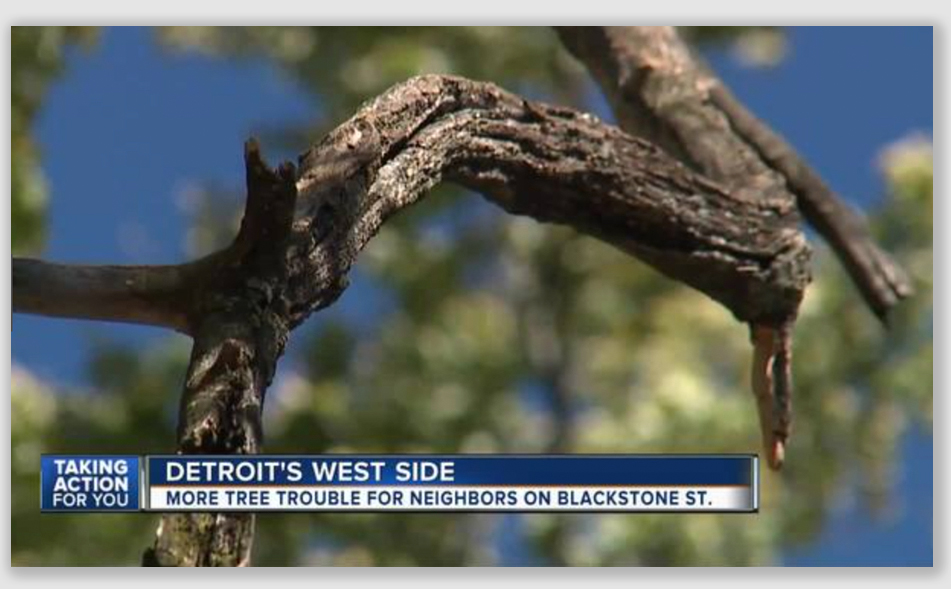
“It’s basically a hazard to this whole entire block,” said Sheila Martin of a branches that have fallen from the same tree for the second time in a week. The first time, it completely blocked off Blackstone, near i-96 and outer drive, making it so cars couldn’t pass. But what really alarmed neighbors is the fact that it almost struck a man who had been riding nearby on a bike. The city came out the first time and cleaned up the mess. At that point, they were told the city would return and pull the entire tree down two weeks later. But the tree didn’t make it a full week without falling again. Neighbors say they reached out to Channel 7 out of concern for safety after being unable to get through to the city…
Ask Metafilter, October 18, 2017: Neighbor’s tree on utilities- no one cares
Our neighbor has a huge cedar tree right next to the property line. This tree has been topped in the past, is rotten inside, and subsequently has a heavy broken branch being held up by the telephone line. I can’t get anyone to take action- what can I do to get this cleared up? I’ve sent messages to AT&T, to PG&E, to Oakland DPW, to my city council member. The agencies all say they’ve checked it out and either that it is fine-which it’s clearly not- or that it is not their problem because the tree is on private property. We’re talking about a heavy mass of branches from at least a 12″ diameter main branch, split from the tree but still growing (ie getting heavier). Our neighbor is not a particularly nice person, and when we brought it up to him he said something like “well who knows whose property it’s on?” (it’s on theirs.) He doesn’t live in the house and is currently doing work to sell it, which complicates things- we’d like to try to buy the house and don’t want to antagonize him. However my limited, and possibly incorrect, reading of California law is that utilities are ultimately responsible for keeping trees away. In light of the recent fires I’m trying to get this solved again. How can I escalate this problem so that someone pays attention…
Usually the parking lot at Brookings’ harbor is filled with boat trailers, rusty pickup trucks and tourists. But this day in late August is not a usual day. There’s a wildfire burning five miles from town – and the vehicles coming through are much, much larger. Jesse Dubuque, a resource advisor for the Chetco Bar Fire, directs the driver of a fire truck to a large shallow pool, about 6-inches deep with metal tracks leading in and out. “Vehicles that have been up on the fire or going up to the fire, they come and they drive up on to it,” she says. It’s called a weed wash. “There’s a pressurized water system that sprays all the contaminants (and) dirt,” Dubuque says. This is the front line in preventing the spread of sudden oak death, a plant disease that is killing trees by the thousands along Oregon’s south coast. Tanoaks are the primary species affected, although there are dozens of the plants and shrubs that can be carriers…
Members of the California State Chico chapter of fraternity Pi Kappa Alpha have been sentenced for illegally cutting down 32 trees and damaging 15 in Lassen National Forest. The trees were allegedly cut down as part of an initiation ceremony around April 21 at the Deer Creek Trailhead campground, the San Francisco Chronicle reported, citing a criminal complaint. Evan Clinton Jossey, the chapter’s former president, was sentenced to court probation and issued a $1,000 fine. The chapter must also pay $4,400 in restitution to the national forest. The group also must perform 9,800 hours of community service. The student newspaper, the Orion, published a photo from social media that showed scattered trash and damaged trees. About 80 students were present at the time of the photo…
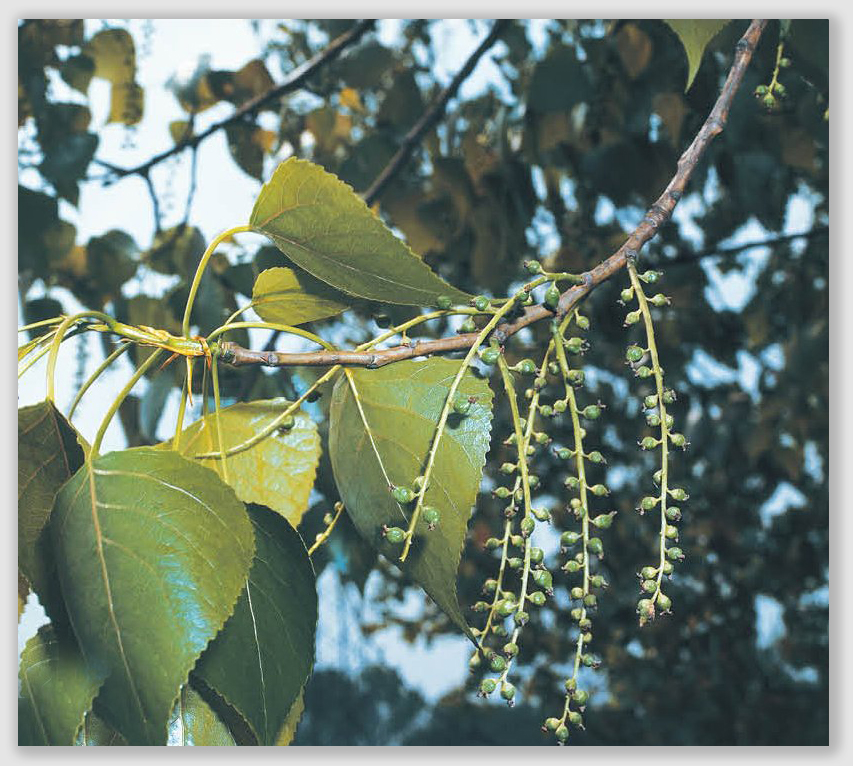 Scientific American, October 17, 2017: Treating toxins with tree microbes
Groundwater pollution might have a new nemesis: trees with a boosted microbiome. Scientists recently harvested a particularly effective strain of toxin-degrading bacteria from a specific poplar tree and transferred it to others. This improved the trees’ natural ability to break down the carcinogen trichloroethylene (TCE)—an industrial solvent that has leached into underground sources near waste sites across the U.S. Study results, published in September in Environmental Science & Technology, suggest such trees could be planted over areas of heavily tainted groundwater as an efficient and affordable cleanup method. Ordinary poplars are sometimes planted to help remove TCE from lightly contaminated groundwater. But that does not always degrade the chemical fully, and heavier cleanups may require bioremediation machines that involve often prohibitive sums between $700,000 and $3 million for installation alone. In earlier research, Sharon Doty, a plant microbiologist at the University of Washington, and her colleagues had genetically modified a poplar to cope with high TCE levels. Like all GM plants, however, it required lengthy environmental impact testing that deterred potential planters…
Sonora, California, Union-Democrat, October 17, 2017: Tree worker dies in accident east of Groveland
A tree worker died Monday morning in an accident outside a home east of Groveland. Jason Alan Stuart, 35, was a resident of Bay Point, an East Bay community in Contra Costa County, according to staff at Terzich & Wilson Funeral Home of Sonora. A call about the incident came in at 10:45 a.m. and the accident location was 21925 Big Creek Shaft Road, a residence, said Sgt. Andrea Benson with the Tuolumne County Sheriff’s Office. The company is local, from Groveland, and it’s called Down to Earth Construction. Workers were doing tree work and according to the company owner, Stuart was about 80 to 100 feet up a large Ponderosa tree.
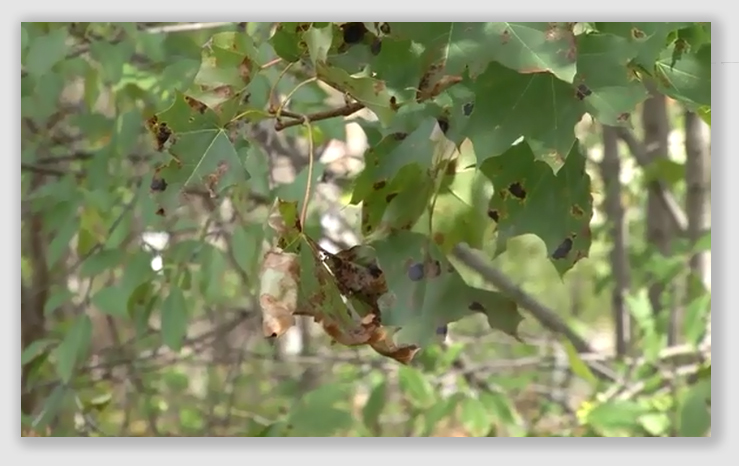 Bangor, Maine, WABI-TV, October 16, 2017: Black tar fungus affects trees in the State of Maine
Allison Kanoti, Forest Entomologist said, “The leaves are the energy factories of the trees, so when those energy factors are impacted, it impacts the tree’s ability to maintain itself.” In the fall season, most folks are looking at how beautiful the foliage is…but if you ever looked closely at the leaves, some have black blotches. The culprit? The Black Tar Fungus. “The black tar is a structure that is created by the fungus. The fungus affects the leaf tissue and then creates the black stoma on the leaf surface. It’s part of the fungal body” The fungus is native to our region…the disease is severe in many places in Maine. We’re told Bangor is worse than most areas. “Could be something to do with the early spring weather, really cool, wet, may really foster the infection of the leaves as they developed and really by the end of July you’re starting to see the leaves brown and curl.” The Norway Maple came from Europe…that’s why the tree is most susceptible to the fungus. Some have probably noticed more leaves on the ground…
A frantic effort is underway to stop what’s being called the greatest threat ever facing Long Island’s Pine Barrens. The Southern pine beetle is responsible for destroying 5,000 acres of pine trees of the Pine Barrens’ 100,000 acres. Another 6 acres of infested trees were recently discovered in East Hampton. The beetle burrows into tree bark, causing “bullet holes” and killing the trees within a matter of months. Forest specialist John Wernet is an environmental conservation officer for the state who has been working with a DEC team for the past three years, cutting down infected trees. He says warmer temperatures caused by climate change have caused the Southern pine beetle to migrate up the Atlantic Coast. “The only thing that really does kill the beetle is by cutting the tree down. We increase the likelihood it will be killed by either cold or heat,” Wernet says…
 Bob Vila, October 16, 2017: Solved! What to do when a tree falls on the house
Q: We just experienced a strong thunderstorm, during which a tree blew over on our house! We have no experience with this sort of thing. What should we do now? Help!
A: A tree falling on a home—for any reason, whether due to high winds, an ice storm, or a rotted tree simply toppling—can cause extensive structural damage. Immediately get your family out of harm’s way, and then focus on minimizing additional damage and having the damage repaired. Call 911 and the electrical company if power lines are down. When a tree falls on the house, there’s always a chance it’ll take electrical power lines down with it. This creates a hazardous situation with an increased risk of fire or deadly electrical shock. Signs that a power line is down include no electrical power in the house or flickering lights. From outside, you may be able to actually see if a power line is trapped in the fallen tree. In some cases, a downed line may still be functioning, but it still creates a risk, so shut off the power at your breaker box if you know or even suspect that the tree took a line down with it. Call the authorities and your local electrical company. If you smell smoke, get your family out of the house and call from your neighbor’s. The electrical company will dispatch technicians to repair the lines. Local law enforcement may need to block traffic on your street, and the fire department may send a unit to stand by as a precaution until safety is restored…
A tree towering near a Ft. Wright reception hall fell, without warning, killing a bridesmaid and severely injuring the maid of honor Friday. Heather McNamara, a bridesmaid, was pronounced dead on the scene. Rebecca Wright, the maid of honor and sister of the bride, was pinned under the tree, but survived. The bride and groom said after decorating the Lookout Heights Civic club, some members of the wedding party walked outside to take a break. With no warning, a tree on a hillside behind the hall, towering eight to 10 stories above it, suddenly cracked and came crashing to the ground. McNamara and Wright were sitting under a canopy and we’re told that even if they had heard the noise, they couldn’t have seen the tree coming…
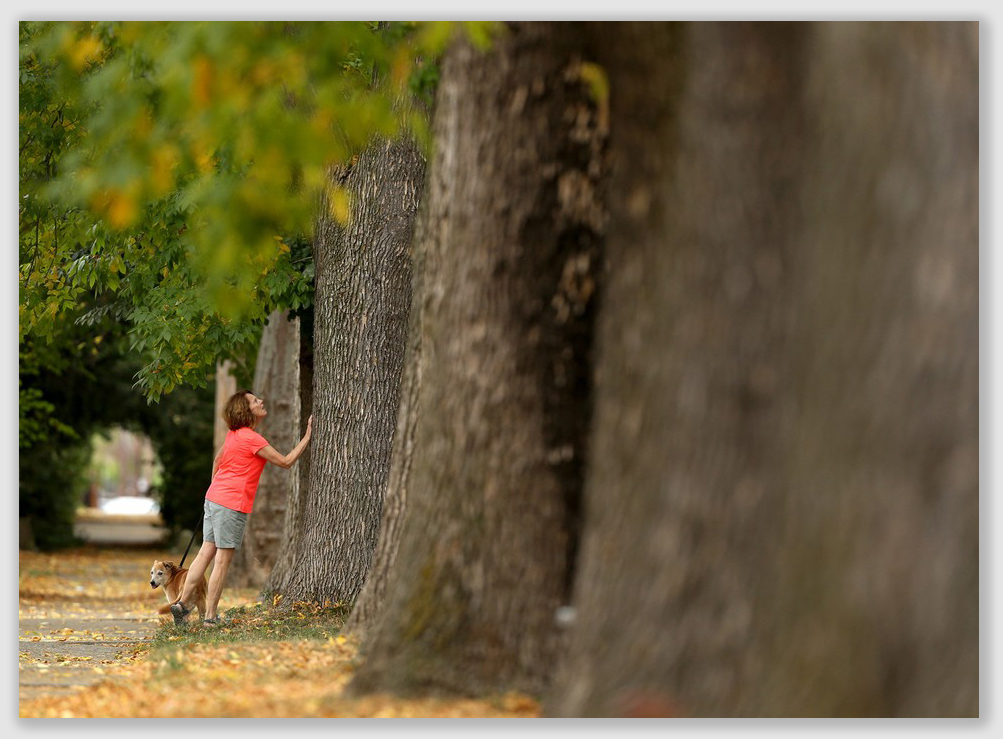
The emerald ash borer, a metallic green beetle from Asia, has devastated Ohio’s native ash trees over the past decade, killing millions of them in the state. But some neighborhood groups in Northeast Ohio aren’t surrendering without a fight. Other cities are beginning to calculate the value of their ash trees, and the economic benefits of saving them with insecticide treatments, versus chopping them down. Scientific studies have shown that healthy landscape trees typically increase property values; provide shade and reduce air-conditioning bills; and contribute to the quality of life in a neighborhood. The larger the trees, the greater the economic benefits Neighborhoods across Ohio are facing this dilemma: Should they spend the money to save their ash trees, or spend the money to cut them down? The emerald ash borer has no natural predators, and ash species in North America have no defense against it. If left alone, there is nothing to prevent the beetles from burrowing into every ash tree in North America, causing certain death in three to five years…
Davenport, Iowa, Quad City Times, October 15, 2017: Newly planted trees need care through winter
Newly planted trees need care over winter to make sure their growth isn’t delayed or derailed. Here are some questions about new trees with answers from horticulturists at Iowa State University Extension & Outreach. To have additional questions answered, contact the ISU Hortline at 515-294-3108 or hortline@iastate.edu.
Q: How long should I continue to water newly planted trees?
A: The roots of trees continue to grow until the ground freezes in winter. If the weather is dry, continue to water newly planted trees until the soil freezes. Small trees usually require watering for one or two growing seasons. It may be necessary to periodically water large trees for three or four years…
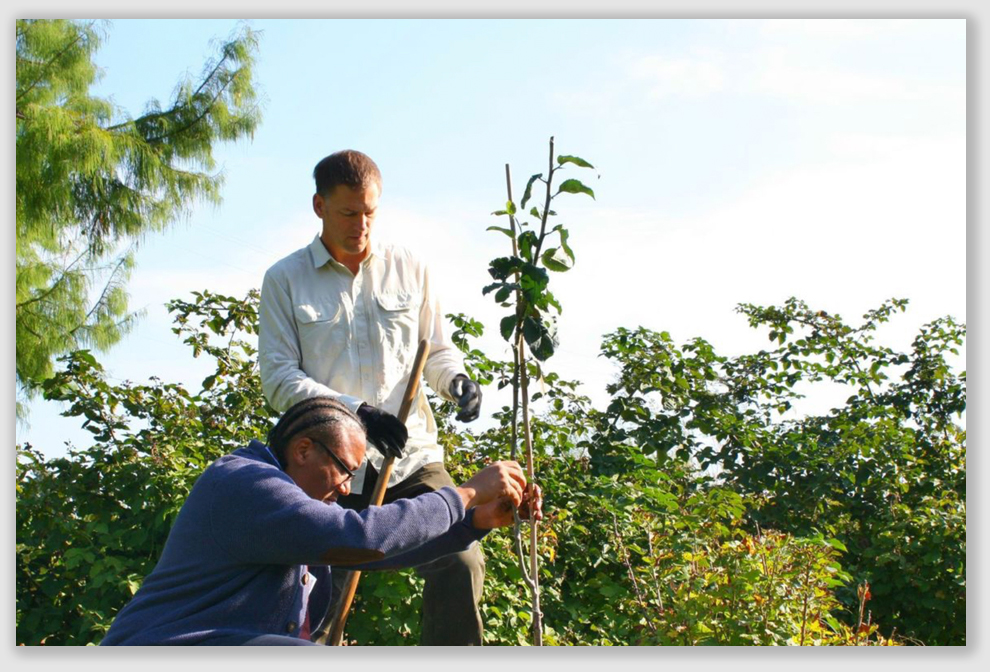
Johnny Appleseed has taken root in Normal. A sapling grafted from the last known surviving tree planted by John Chapman, or Johnny Appleseed, was planted Friday in the Refuge Food Forest in Normal. The Illinois State Historical Society acquired enough saplings for each county in the state. The McLean County Museum of History purchased a tree to commemorate the state’s bicentennial anniversary in 2018. “Johnny Appleseed is sort of an iconic character. We assume oftentimes he’s just legend and lore, but he was an actual, historical character and he did come through Illinois,” said Bill Kemp, archivist and librarian at the museum. According to the Starhill Forest Arboretum, Chapman planted apple nurseries in the early 19th century in Illinois, Indiana and Ohio, using apple seeds from a cider mill near his hometown in Pennsylvania. He sold trees to settlers and planted seeds during his travels across the Midwest. The last known surviving tree planted by Johnny Appleseed was in Nova, Ohio, which is where the Normal sapling was grafted…
This is an interesting video because there are two very stark sides to it. The first side is a rough one and it becomes immediately apparent within about 15 seconds of the video starting. Something is killing lots of pine trees in California. The drone shot over looking lots of the very tall trees reveals a sea of browned out trees and that’s bad. Those are dead and they aren’t coming back. We’re not sure if it is disease, a pest, or what but it is a pretty sorry state of affairs. The other side of the story is the amazing work being done by the crews of arborists highlighted in the video working for a customer who is having them remove some trees. These things are very, very tall and there is very little room for these guys to operate in. They cannot fell the trees in the traditional manner and they are not using helicopters to top them and remove the pieces. Nope, these guys are hardcore, they use rigging techniques and the other trees they are taking down to get the chunks to the ground. One of the most awesome cuts in the whole video is when one of the climbers is way up on the tree and he cuts about 20-30ft out of it and just lets the whole thing drop to the ground where it falls tightly to the trunk… Watch the video…
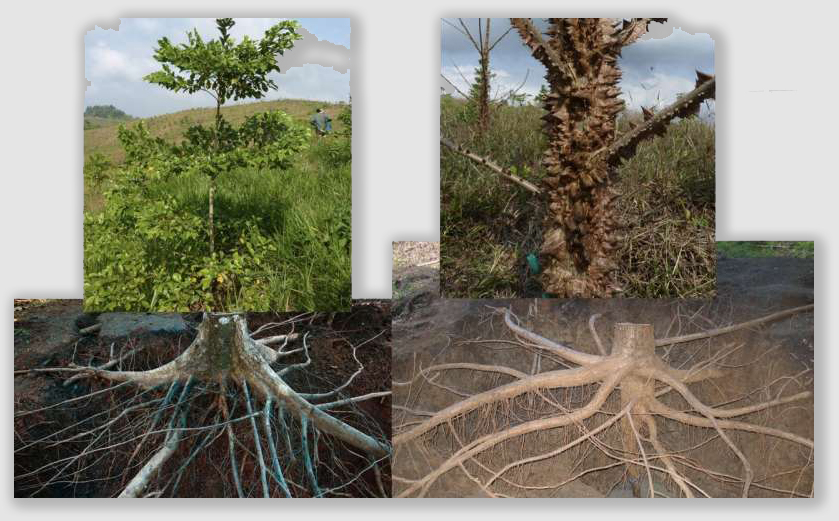 Phys.org, October 12, 2017: Tropical tree roots represent an underappreciated carbon pool
Ask someone to draw a tree and he or she will invariably draw a trunk and branches—leaving the roots out of the picture. In a unique study of tropical tree roots at the Smithsonian Tropical Research Institute published in PLOS ONE, roots accounted for almost 30 percent of the total biomass of young trees. The authors hope that future estimates of carbon storage and water-use by tropical forests will include information on root biomass and architecture. “Studies like the article published by Baccini et al in the Sept. 28 issue of Science use satellite data to measure aboveground carbon density,” said Jefferson Hall, director of the Smithsonian’s Panama Canal Watershed (Agua Salud) experiment. “It is fairly common practice to calculate forest carbon storage either incorporating root mass via a fudge-factor, or leaving it out altogether. What percentage of a tree is underground? How does this change with climate, soil fertility, and over time? The answers to these questions will refine our ability to understand how forests respond to global change…”
The state Supreme Court has cleared the way for a 12-year-old boy, who was nearly killed when a 72-foot tree fell on his tent at a San Mateo County park, to sue the county for road-building and construction activities that allegedly helped to cause the collapse. The court denied review Wednesday of the county’s appeal of a lower-court ruling allowing the suit to proceed. Justices Ming Chin and Carol Corrigan removed themselves from the case, for unstated reasons, and none of the other five Supreme Court justices voted to take up the appeal. The tan oak tree toppled onto a tent where Zachary Rowe was sleeping on a camping trip with his family at Memorial Park, east of Pescadero, in July 2012. The boy’s pelvis was crushed, his internal organs were injured, and his right leg had to be amputated. Investigators later found that a fungal disease had weakened the tree and caused it to fall…
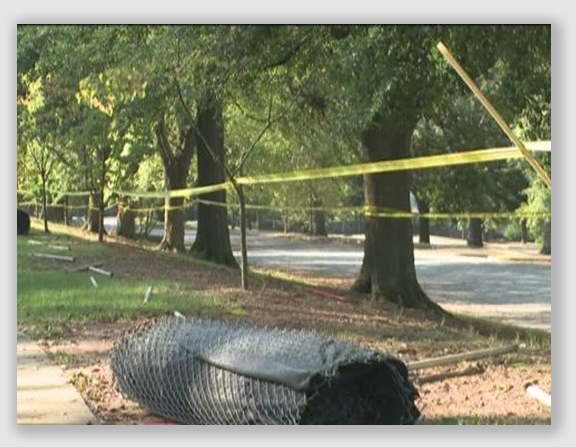
The owner of a Hilton Head Island tree service company has been charged with grand larceny and malicious injury to property after DNA evidence linked him to the scene of an incident in June where property of a competing tree service company was damaged. Leonard Mink, 38, was charged on Monday and taken to the Beaufort County Detention Center, according to detention center records, in connection with an incident that happened between 7 p.m. on June 21 and 7:45 a.m. on June 22 near Hilton Head Island Town Hall. According to a Beaufort County Sheriff’s Office report, on June 22, the owner of a competing tree service company reported that his employees arrived to work around 7:30 a.m. and found that multiple chainsaws were missing and that the work vehicles and trailers the company owned had flattened tires and other damage. The vehicles had been locked and left in their normal storage location on Town Center Court overnight, the report said…
Atlanta, Georgia, WXIA-TV, October 12, 2017: Grant Park neighbors concerned about tree cutting
Kevin Ward loves living in the city in the forest. “It’s old growth, it’s lots of shade, big trees, spaces between the trees,” said Ward. “It’s a real treasure for the city of Atlanta.” His Grant Park neighborhood offers all of that and more, but fences, caution tape, and trees with “X”s put the community on alert of what they could lose. Ward and others are concerned that two projects will mean the removal of some 250 trees in the area that he says are mature and healthy…
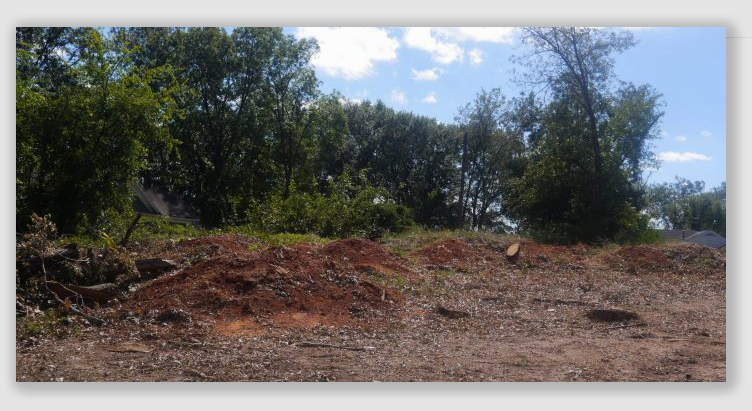
There used to be trees across the street from Portia Webb’s house. She’s lived in the Atlanta neighborhood of Reynoldstown for 50 years, she says. There was a big old house on the lot across the street. And up until a few years ago a ministry that was around the corner would bring kids to the lot to play. “When they’d get out of school. Plant little veggie gardens over there,” she says. “A lot of habitat lived over there. The squirrels and the hawks.” The ministry that worked with the kids has moved; now there are townhomes on that spot around the corner. And the trees in the lot across the street are gone, too…
As soybean and cotton farmers across the Midwest and South continue to see their crops ravaged from the weed killer dicamba, new complaints have pointed to the herbicide as a factor in widespread damage to oak trees. Monsanto and BASF, two of agriculture’s largest seed and pesticide providers, released versions of the dicamba this growing season. The new versions came several months after Monsanto released its latest cotton and soybean seeds genetically engineered to resist dicamba in 2016. Since then, farmers across the Midwest and South have blamed drift from dicamba for ruining millions of acres of soybeans and cotton produced by older versions of seeds. Now, complaints have emerged that the misuse of dicamba may be responsible for damage to oak trees in Iowa, Illinois and Tennessee…

Fairfax County Police are investigating a company accused of targeting elderly homeowners and using scare tactics to get them to buy services they don’t need. Rose Mikus, of Reston, Virginia, and Deborah Deutschendorf, of Springfield, got unsolicited visits from a company called Savannah’s Tree & Yard Experts. Both said a person identifying himself as Johnny Walker told them he noticed they had dead trees in their yard and said he and his crew could remove them. “Starting at $3,800,” Mikus said. “The whole amount was almost $10,000,” Deutschendorf said…
Two Dyker Heights businesses claim that a tree is affecting their sales. Joseph Caria would love to show off his 13th Avenue shop, Luca Salon, after spending a month renovating it, but he says that’s not quite possible. “We can’t because we have this tree in front of our store,” he says. “It’s actually blocking the awning; people don’t know we’re here.” “It totally blocks both of our stores, the names, you can’t see the signs,” says Trudy Wisner, owner of also-affected shop Paws R Us. “And now it’s hanging down so low you can’t even see in from the outside.” The city Parks Department tells News 12 that “risk is determined by the likelihood of a branch hitting a target and the consequence of that impact. This tree was found to be low risk and in good condition following two recent inspections…”
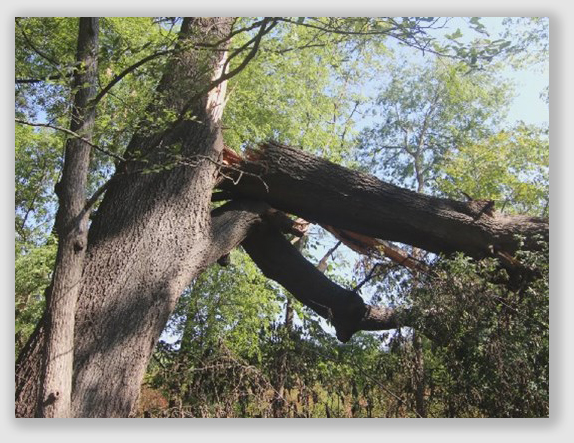
A Monroe family says they’re afraid of a large tree behind their property, which is splitting. They’re convinced the tree will come down at some point and they are asking the developer who owns the land behind them to step in and take care of the tree he owns. The family was so worried, they decided to “Get McGinty” to help remedy this issue. Noelle Brockway said, “every day that crack gets larger.” Noelle says that huge tree used to provide plenty of beauty and shade, then one calm quiet non-stormy night, it split with thunderous force at 4 a.m. Noelle’s husband went to investigate the crash and said, “it wasn’t until he went behind the fence he saw the tree had just busted apart.” Since then, the Brockway’s have noticed what looks like a split in the tree’s center. They’re not arborists but added this doesn’t look good or bodes well for what might happen…
A St. Petersburg mobile home park, Sawgrass Lake Estates, promised Better Call Behnken two weeks ago that it would take down a massive tree looming over a home. That still hasn’t happened and Kimberly Lyle says management told her it might not come down at all, even after a local tree company offered to take it down for free. “Why would you turn down free?” Lyle asked. “What’s the problem?” Lyle says Hurricane Irma caused the tree to lean. She says an arborist estimated the tree at near 100 feet tall. “A big wind and that tree’s coming down,” Lyle said. Lyle owns her home at Sawgrass Lake Estates. She rents the land and the tree is the responsibility of management. Lyle claims she’s never seen anyone maintain the tree and it just grew out of control…

A dead tree hanging on Verizon cables along Butler Road has led to a dispute between Mount Gretna emergency personnel and Verizon, according to West Cornwall Township police. The tree is sagging against wires just north of Old Mine Road, police say. West Cornwall police say they’ve called Verizon several times to alert them about the tree, as have members of the Mount Gretna Fire Department and local residents. But, police say, Verizon has told them it will not remove the tree unless it brings down the wires. The Mount Gretna Fire Department says it can’t remove the tree because it’s touching the utility lines. Police say the tree is a safety hazard to motorists along Butler Road, but efforts to resolve the situation “have so far been futile…”
Dave Zucconi knows he isn’t going to make everyone happy. Check that: He knows he probably won’t make anyone happy. His job, after all, is to determine which ash trees in the city’s park system live, and which ones get the ax. “I’ll probably face a lot of criticism at different points in this project,” said Zucconi, who is the city of Tulsa’s urban forester. The city is preparing for the arrival of the emerald ash borer, a tiny, tenacious bug that kills ash trees. According to the preliminary findings in Up With Trees’ Urban Forest Master Plan, Tulsa has about 200,000 ash trees. Zucconi has identified a total 947 ash trees in 80 of the city’s 134 parks and two city-owned golf courses. The figure includes only those ash trees within the “mowed and maintained” areas of the parks. In total, the park system has about 14,000 trees in its mowed and maintained areas, according to a 2004-2005 survey…
 New York City, WCBS-TV, October 9, 2017: Oak wilt fungus spreads to oak trees in New York City area
Another tree-killing fungus has been found in the Tri-State Area. As CBS2’s Elise Finch reported Monday, the oak wilt fungus until recently was only impacting trees in upstate New York. But now, trees on Long Island and in Brooklyn are dying. First it was ash trees and then pine, but now with the oak wilt fungus, the mighty oak is under attack. “Oak wilt is a fungal pathogen that gets into the vascular system of oak trees — specifically red oak trees,” said plant pathologist Karen Snover-Clift, “and it doesn’t allow nutrients to move back and forth within the tree.” Snover-Clift is the director of the plant disease diagnostic clinic at Cornell University. She said dozens of oak trees in the New York City area were tested, and at least five oak wilt cases were confirmed. Among the trees affected was one at the Green-Wood Cemetery in Park Slope, Brooklyn. The tree had to come down…
Oskaloosa, Oklahoma, Herald, October 9, 2017: City to axe 70 dead, dying trees
The landscape in Oskaloosa will see some changes over the next two months. On Monday, Oct. 2, the Oskaloosa City Council approved a plan to remove 70 dead or dying ash trees that are located in city right-of-ways by Dec. 15. “That’s a lot of trees in a couple months,” Mayor David Krutzfeldt said. During the meeting, Krutzfeldt reported that over the past three years, approximately 75 ash trees have been removed from city right-of-ways in anticipation of the arrival of the emerald ash borer. “In this past year, the deterioration of ash trees throughout Oskaloosa has accelerated substantially,” he said. As a result, officials with the city Public Works Department identified 70 dead or dying trees as a “priority one” removals…
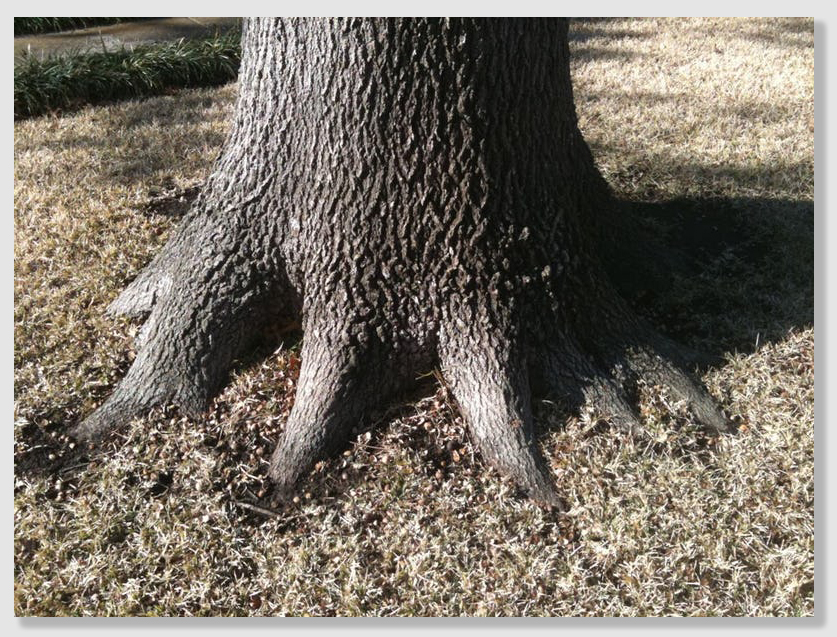
Some people probably get tired of me talking about exposing tree flares as much as I do. There’s a reason why I do: It is simply the most important thing to do for your trees. Of the many questions I get about insect issues, diseases, damage by sap suckers, overabundance of galls and other tree concerns, the most common cause of them all is trees being too deep in the ground. The best and most effective solution is the removal of soil, mulch and other things from the flare. As most know, I recommend the Sick Tree Treatment often, and the first and most important step of the procedure is removing the soil and mulch from the bases of the trees. Almost all trees and other woody plants have been planted too deeply. They are usually too deep in the containers when purchased from the nurseries, get planted too low, and then have too much mulch added on top. The result is severely buried flares…
Thumbtack, October 9, 2017: How much does tree trimming cost?
Tree trimming services are available for any type and size of tree. Clients can request ongoing maintenance or a one-time service to address a particular concern. Many variables affect the cost of tree trimming services. Tree trimming companies often charge by the hour, with variable hourly rates reflecting the skill, equipment or extra measures required for trimming a particular tree. Because each job can be so unique, most companies do not have set rates, but instead—like Rudy’s Tree Service—provide free estimates for the total cost of a particular job. Heaven’s Gate Tree Service, on the other hand, charges $150 per hour for basic tree trimming. Hourly rates for tree trimming can be as much as $300 per hour. The harder the wood, the thicker the branches and the more overgrown the limbs are, the more it can cost to trim a tree. Smaller trees with thinner branches require less time and technical expertise than an older, taller tree and will therefore cost less…
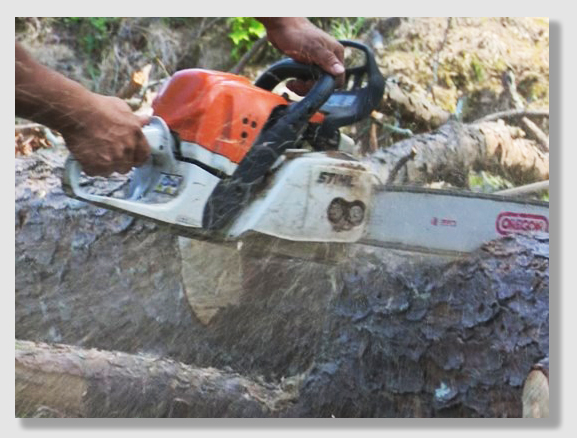 Macon, Georgia, WMAZ-TV, October 5, 2017: Tree services deal with storm damage from Irma
Local tree services are out clearing trees that are at risk of falling over, and according to Gray Brothers Tree Service’s Marnie Gray, it’s not always the trees you expect that are the most vulnerable. “I had a customer yesterday who said ‘that dead tree didn’t even move during the storm,’ because the wind blew right through it,” said Gray. “You might lose a limb here and there from a dead tree, but the majority of trees that come up and over are live just because they catch so much more wind.” With the added surface area of leaves, those lives trees can come under more stress during high winds than their dead counterparts. One actual sign your tree could need attention is a beetle infestation. Gray says you can spot them by looking for sawdust at the base of your trees. When beetles burrow into trunks, they leave telltale sawdust at the base of the tree. Tree rot can also cause problems. But if you’re noticing problems now and need help in the next few days you might be out of luck. Most tree services are still slammed with work from Irma…
The Supreme Court declined Monday to hear a dispute between New Mexico and the federal government. The issue dates back to 2001 when New Mexico passed a law saying the U.S. Forest Service had failed to reduce the threat of forest fires by not clearing undergrowth and removing trees on Forest Service land. The law then gave counties in the state permission to do the work. When Otero County moved to cut trees on land in the Lincoln National Forest without federal approval in 2011, the United States government sued. Lower courts sided with the federal government…
 Scientific American, October 5, 2017: Scientists root out the killers
In a corner of Sequoia National Park in California, Sierra redwoods stick out like colossal cinnamon sticks among the more common pines, firs and incense cedars. Nate Stephenson, a U.S. Geological Survey ecologist, makes his way up a hill, stepping over fallen logs. He stops in front of a small, dead red fir, which a hanging metal tag identifies as “189.” Stephenson points out a section of its trunk where the USGS field crew cut away the bark, revealing the squiggly signature of the fir engraver beetle scrawled across the brown sapwood. Number 189 is just one of the more than 100 million trees researchers estimate died during California’s five-year drought, which ended this spring. The drought—one of the state’s worst in centuries—devastated the park’s forests. The dead trees raise a series of questions for Stephenson: Why did some trees perish when others lived? Why did some parts of the forest suffer more than others? Why 189 and not its neighbor? “It’s a detective game,” he says. As the world warms, the answers could be critical in helping save forests struck by increasingly severe droughts. To predict the effects of these extreme events, scientists need to better understand how forests work normally—and for ecologists like Stephenson, that means figuring out why trees die…
Athens, Georgia, Banner-Herald, October 5, 2017: Athens tree service worker falls to his death
A 57-year-old Athens man was killed Wednesday afternoon when he fell while cutting limbs on a tree in the 600 block of Holman Avenue, Athens-Clarke County police said. John Curtis Conaway, a Parkway Drive resident, was working for a tree service that had been hired to clear trees to make way for a house the property owner planned to build, according to police. Conaway fell nearly 80 feet and was pronounced dead at the scene by the county coroner, according to police. A police report of the incident noted that Conaway had secured himself to a tree limb with a safety rope, but as he was cutting, the limb came down and pulled him to the ground with it…
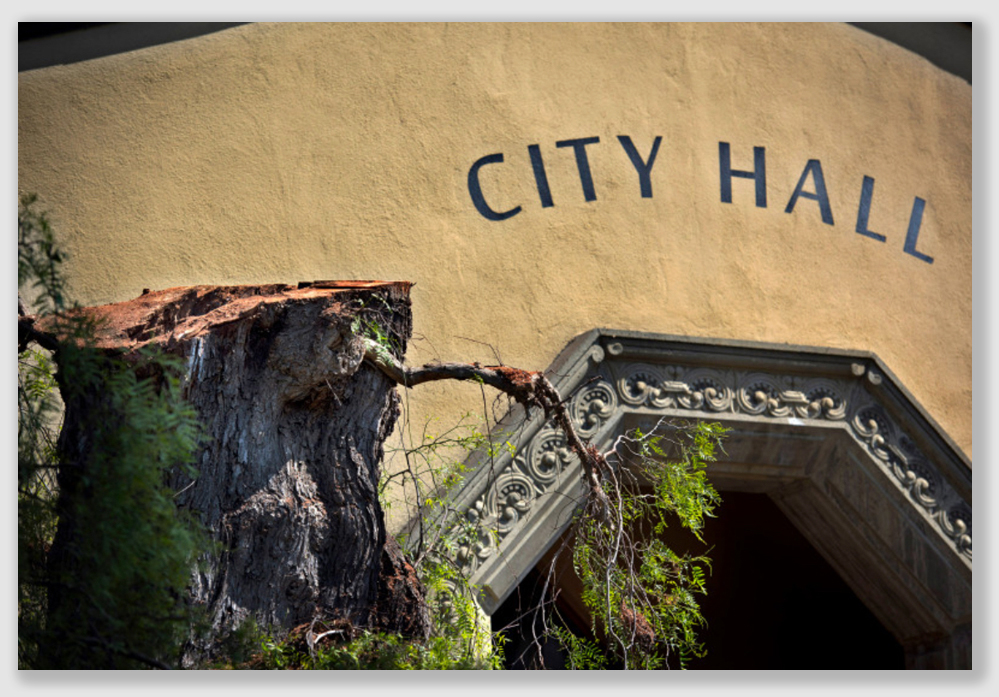
With whirring power saws and a huge crane, a crew reduced the 135-year-old landmark pepper tree in front of Laguna Beach City Hall to a 12-foot stump. The chop-down Wednesday, Oct. 4 started promptly at 7 a.m. and was overseen by staff from the city’s Public Works Department. “It was very solemn,” said Shohreh Dupuis, director of Public Works. “It was hard to see it come down.” The tree removal wasn’t publicized by City Hall, but those who were in the area when it happened — morning walkers, people doing business at City Hall and residents in their cars on their way out of town — stopped to watch… But the tree was removed because it had become diseased and was nearly 90 percent hollow. City officials had surrounded the tree with a white picket fence to guard against parts of it dropping onto passersby or nearby parked vehicles. Cuttings to clone the tree were taken and are already on their way to Shannon Still, curator and director of Plant Conservation at the UC Davis Arboretum and Public Garden, Dupuis said. The City Council approved the $3,000 project on Sept. 26…
Joseph Valenti wants to turn hazardous albizia trees into a useful building material to help ease Hawaii’s housing crisis. The 30-year-old won the University of Hawaii President’s Green Project Implementation Award in 2016. His vision is starting to take shape with the first structural arch for the project now on display outside the Honolulu Museum of Art School. “We have this potential material that’s abundantly being disposed of, so if we can turn this into something positive, and if that can solve or at least help to mitigate our housing crisis, that was the intention,” he said. Albizia trees have caused problems statewide, including major damage in Puna during Tropical Storm Iselle. Supporters of The Albizia Project said they’re working to overcome misconceptions…
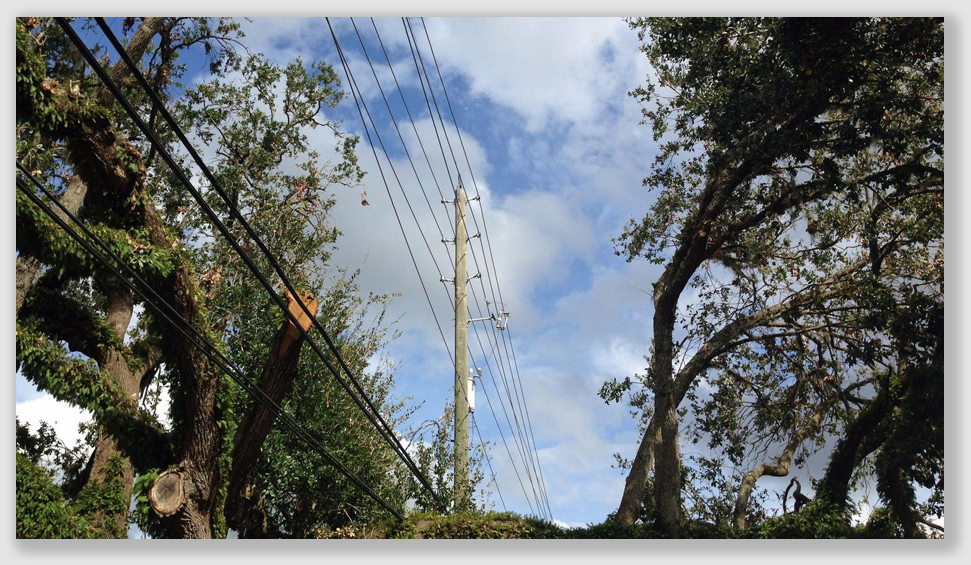 Orlando, Florida, Sentinel, October 4, 2017: OUC butchers trees
College Park is a lovely, old section of town, with beautiful live oaks lining the streets, providing shade and restful beauty to its residents. That idyllic scene gets violently shattered every couple years by the invasion of giant tree-service trucks hired by Orlando Utilities Commission. Equipped with grinding jaws designed to chew up the branches of the butchered trees, they patrol the streets looking for their next target — majestic live oaks. The trucks arrived this week to complete their assignment in my yard. With no apparent consideration for aesthetics and no limitations on how much destruction they could cause, they gutted the tree to its present grotesque shape. Even the tree-service worker had to admit they had cut “too much.” The cuts, much more extensive than ever before, extended way beyond necessary. Result? The streets of College Park are lined with deformed trees…
Technology.org, October 4, 2017: New report reviews role of trees in flood alleviation
Acknowledging ongoing debates around the evidence for tree cover as an effective flood mitigation measure, the UK’s Centre for Ecology & Hydrology has published results of a systematic review of the current evidence. Its findings will inform policy and planning decisions, and identify knowledge gaps and areas for priority research. The review, conducted in collaboration with Forest Research, the National Farmers’ Union (NFU), National Trust, Woodland Trust, WWF-UK, Environment Agency, Coed Cymru and Lancaster University Environment Centre, looked specifically at the influence of trees in a catchment on flood peak (the maximum river discharge recorded during a flood event). Based on the 71 studies examined by the authors, there is broad support for the conclusion that increased tree cover in catchments results in decreasing flood peaks, while decreased tree cover results in increasing flood peaks. Considering just observational studies (approximately half of the total number of studies), the authors note that the difference between the numbers of studies reporting an influence and those reporting no influence of trees on flood peak becomes less clear. Analysis of the small number of observational studies that differentiate on the basis of flood magnitude suggests that whilst there is strong evidence of an influence during small floods, the majority of observational studies relating to large floods report that trees have no observable influence on flood peak…

Common occurrences sometimes have uncommon consequences. When the city of Rockingham went to do routine improvements to Scales Street on June 8, 2012, it came at the expense of an oak tree that had grown between six and eight inches out into the city’s right-of-way for the sidewalk. Property owner Beverly Crouse says the city cut into the roots of the tree — which was at least 90 years old — removing the part that was overgrown and went ahead with their work on the sidewalk. Five years later, the tree is dead and has become a danger to tenants — one limb already having fallen off, causing $350 in damage to the house on the property, and others limbs look threatening…
Houston, Texas, Chronicle, Oct. 4, 2017: Collecting tree data is part of global scientific effort
Deep in the woods of Brown County, Mark Sheehan and Peyton Joachim don vests full of equipment and hike up hills and scurry down ravines. They stop on the uphill side of almost every tree to measure its diameter using a special measuring tape, and then either check an existing tag or place a new aluminum tag around the base of each tree. They are working in 90-degree heat, with insects buzzing around their heads, to document all the trees in the five plots, called quadrats, that remain. In all, there are 625 20-meter quadrats within the 62 acres that are being studied as part of a Smithsonian Institution-funded project that is collecting data from forests around the world for scientists to study. The project, Forest Global Earth Observatories network or ForestGEO, has 51 long-term forest study sites in 22 countries around the world. At each site, the same precise measurements are taken of trees, with that data being compiled by researchers at the site and then uploaded to a database. From June through August, Sheehan, a technician in the Indiana University biology department, led a four-person team that cataloged each tree with a diameter of 1 centimeter or more at breast height, which is 4.5 feet from the uphill side of the tree’s base. Since classes at IU began in late August, it’s been Sheehan, Joachim and a few others who are working to complete the project. Sheehan expects to finish the final quadrat today…
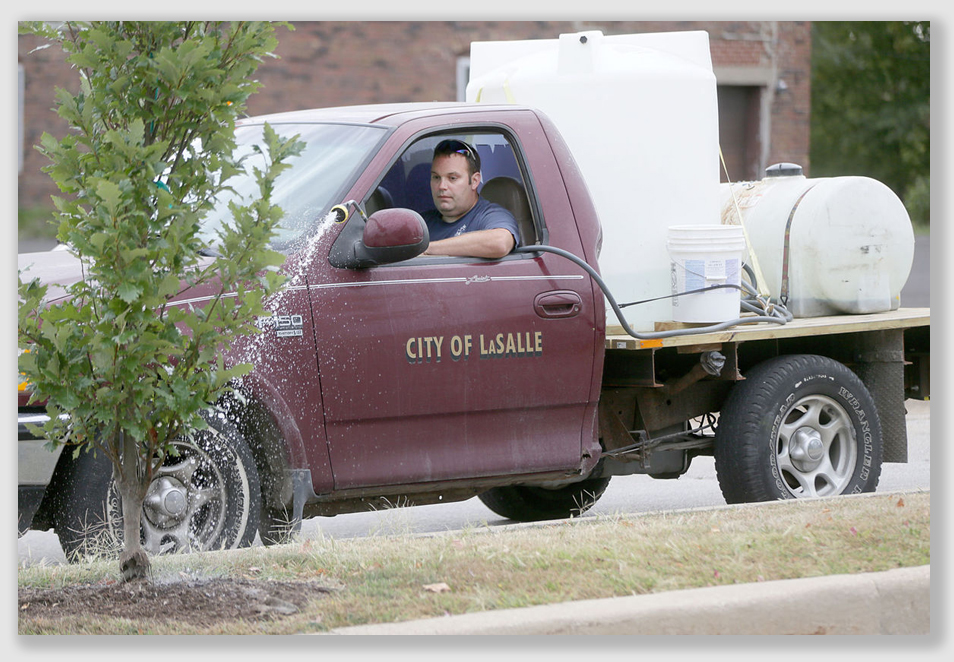 LaSalle, Illinois, News-Tribune, October 3, 2017: Are your trees in trouble?
Have you been crabbing about your ornamental crabapple having fruit but no leaves? Are your maple’s leaves turning red two weeks earlier than usual and falling off? Have four straight weeks with no rain killed your tree? “It doesn’t necessarily mean these trees are dying,” says Starved Rock Foundation officer John Muir, who fields nature questions at the state park visitor center. Deciduous trees are going to drop their leaves in October or November no matter what, and an abnormally dry September caused some mature trees to start that cycle early, Muir said…
Wooster, Ohio, Daily Record, October 3, 2017: Arborists suggest watering young trees before winter
A lack of rain over the summer will require an extra need for homeowners to water the young trees in their yard before the winter cold settles in. “The younger trees need more water, at least twice a week, so they don’t die come winter,” said Brian Bannavong, a certified arborist for Wooster Tree Care. Water is necessary to produce a type of antifreeze in the tree that will protect it from the weathering effects like expansion in hot and cold temperatures, according to Bannavong. The antifreeze product helps the tree heal itself. The arborist also recommends homeowners look for fungus on their trees’ trunks, which can be signs of disease or decay. Rotting in the middle of the tree can put the tree at risk during an ice storm. Homeowners should take into consideration the health of tree branches before pruning them back. Joe Cochran, director/curator of the Secrest Arboretum at the OARDC, suggests not doing any structural pruning until late winter or early spring…
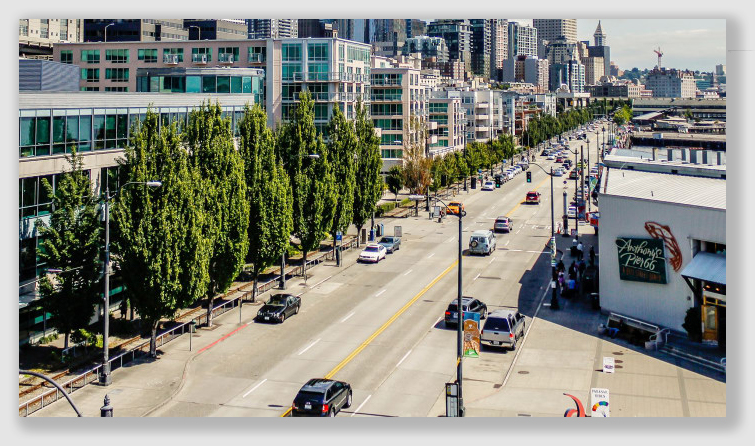 Fast Company, , October 2, 2017: Cities should think about trees as public health infrastructure
Think of a tree-lined street in the midst of a busy city. It feels like something of a treasure: hushed, cool, and sheltered from noise and sidewalk glare. These leafy streets cannot afford to be seen as a luxury, argues a new report from The Nature Conservancy. Trees are sustainability power tools: They clean and cool the air, regulate temperatures, counteract the urban “heat island” effect, and support water quality and manage flow. Yes, they look pretty, but they also deliver measurable mental and physical health benefits to concrete-fatigued city dwellers. So with evidence to back up all the benefits of urban greenery, TNC set out to answer, in this report, the question of how cities can develop innovative financial structures and policies to plant more trees.…
Neighbors call it “wanton destruction.” They say a tree cutting contractor hired by Alabama Power left a mess in their yards. I-Team Consumer Investigator, Cynthia Gould, took their concerns to the power company. “It took two hours for me to get calmed down; I was shaking so bad,” recalls E. Frank Smith of Roebuck. He says he returned home one day last month to find two of his fig trees cut down. Those trees were planted 38 years ago. “I’ve had total strangers stop by and ask if they can get figs for jams and jellies,” remarks Smith…
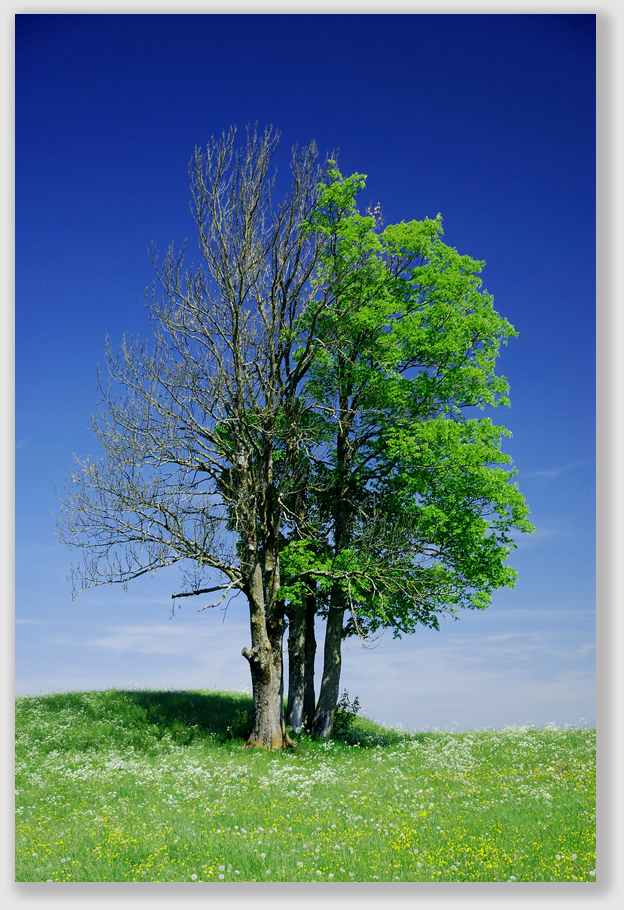
You look out the window and find that your favorite tree is dead all of a sudden. It didn’t seem to have any problems, so you are asking: Why did my tree suddenly die? Why is my tree dead? If this is your situation, read on for information on the reasons for sudden tree death. Some tree species live longer than others. Those that grow slowest generally have longer life spans than trees with rapid growth. When you are selecting a tree for your garden or backyard, you’ll want to include life span in the equation. When you ask questions like “why did my tree suddenly die,” you’ll want to first determine the tree’s natural life span. It may simply have died of natural causes…
Phys.org, October 2, 2017: Spectral library reveals how boreal trees reflect solar radiation
The number of Earth observation satellites monitoring the environment is growing fast. New satellites are capable of distinguishing increasingly narrow bands of wavelengths and making increasingly frequent observations of forests globally. This opens up new opportunities in monitoring the state of forests and any changes in it. However, measurements on the capability of different types of trees or plants to reflect solar radiation are required from the Earth’s surface as reference material to support the interpretations. Reference material can partly be replaced by physical models for which information on the optical properties of the basic components, leaves and needles, is needed. The researchers of Aalto University’s spectral laboratory have now compiled an internationally significant spectral library on the optical properties of the tree species in the boreal (northern) coniferous forests…

They are the sultry, swaying backdrop to countless films, posters and music videos, an effective way to announce: this is Los Angeles. Palm trees greet you outside the LAX airport, they line Hollywood Boulevard, stand guard over the Pacific and crisscross neighborhoods poor and rich, a botanical army of stems and fronds which symbolize the world’s entertainment capital. Apparently not for much longer. LA’s palm trees are dying. And most won’t be replaced. A beetle known as the South American palm weevil and a fungus called Fusarium are killing palm trees across southern California. Others are dying of old age. “It’ll change the overall aesthetic because palm trees are so distinctive. It’s the look and feel of Los Angeles,” said Carol Bornstein, director of the nature gardens at the Natural History Museum of Los Angeles. A city tally in 1990 estimated the number of palms on city streets at 75,000, a number which has not been updated but is destined to plunge in coming decades, the Los Angeles Times reported this week, citing officials…
Along the 14th fairway of Palm Springs’ Tahquitz Creek Golf Course stands a long row of tamarisk trees, a 50-foot-tall wall of dense foliage seen nowhere else on the course. This species of tree, which guzzles water and leaves large deposits of salt, is so invasive that the U.S. Department of Agriculture has categorized it as a pest. But residents living for decades on the other side of this thicket, in the Lawrence Crossley neighborhood, see the tamarisks as something far worse than a horticultural nuisance. They see the trees as an enduring symbol of racism and inequality – and they want them removed by the city of Palm Springs, which owns the golf course. The tamarisks were originally planted in the early 1960s, as the Civil Rights Movement was gaining momentum around the country, to block off the historically black neighborhood from the affluent white patrons of the golf course on the other side. While properties around the city have accrued value, adding to the wealth of their owners and their families, the residents in the shadow of these trees – which obstruct their view of the San Jacinto Mountain Range and the golf course – say they have not seen the same increase in property values. Data shows they could be right…

If plants could be superheroes, the Moringa (Moringa oleifera) tree would be one of them. Although native to the foothills of the Himalayas in India, moringa can thrive in most tropical and subtropical regions. It is drought tolerant, grows rapidly, has leaves that can be used as a biofertiliser, and has seeds that can help purify water. Today, moringa is most commonly found in India and the Philippines but its cultivation is increasing throughout Asia, Africa, Central America, and the Caribbean. Even more interesting about this tree, is that it’s a food, a vegetable, and a medicine. Every part of the tree can be consumed; leaves and young fruits (pods) as food; and the seeds, bark, flowers, and roots as medicine. The leaves are highly nutritious. Once harvested and dried, they contain30% protein, all essential amino acids, and have abundant levels of vitamins and minerals. The trees have a natural defence mechanism against environmental stress and pests. These are unique chemical compounds, known as phytochemicals, which include antioxidants and defence compounds. When consumed these compounds they also protect people against various conditions and diseases…
Colorado’s forests are a living graveyard where 834 million dead linger among the survivors. Death’s growing share makes up 1 in 15 standing trees on Colorado’s 24.4 million forested acres, a testament to the lethal whirlwind of overpopulation and the forces of nature. Death is a part of life. But not like this. The influence of the lingering dead — the product of decades of misguided forest management — trickles down to nearly every Colorado resident. It puts the state in the crosshairs of devastating wildfire and compromises the delicate relationship between forests and the people who rely on them for clean and plentiful water. The forests that coat Colorado’s western terrain tell a story of loss, both past and future: the High Park Fire and beetle kills, smoky skies and barren branches. But as the dead fall and the young grow stronger, these forests tell a story of hope, too…
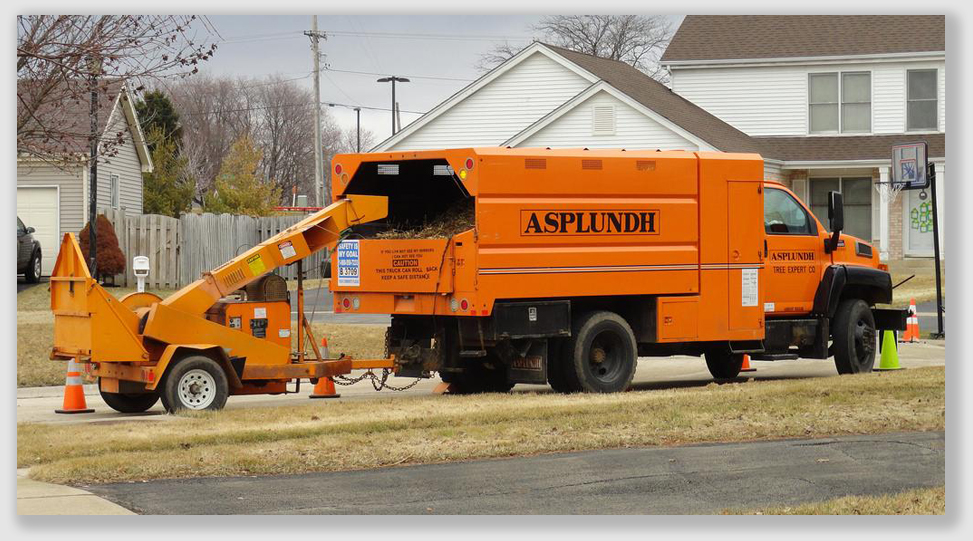 Fox Business News, Sept. 28, 2017: Tree company to pay record fine for immigration practices
A suburban Philadelphia tree-trimming company whose orange trucks are a familiar sight in communities throughout the United States will pay a record fine after pleading guilty in a scheme to employ thousands of people in the country illegally. Asplundh Tree Expert Co. of Willow Grove, a utility contractor best known for pruning and removing trees around power lines, pleaded guilty Thursday to a federal criminal charge and was ordered to pay a total of $95 million. Prosecutors called it the largest monetary penalty ever levied in an immigration case. The U.S. attorney’s office in Philadelphia said Asplundh employed thousands of unauthorized workers between 2010 and 2014, its top management remaining “willfully blind” while lower-level supervisors hired people they knew were in the country illegally. In some cases, the supervisors rehired workers who’d already been let go by the company due to their immigration status…
The Atlanta Tree Conservation Commission Wednesday denied an appeal to the city’s plan to cut down upwards of a hundred Grant Park trees. Residents packed the room to oppose plans that call for the removal of at least 131 trees to build the Grant Park Gateway, a $48 million, 1,000-space parking garage for the park and Zoo Atlanta. The decision from the city-appointed citizen board came after nearly three hours of discussion in a standing room-only space at City Hall. It was the second appeal hearing regarding the same issue. The commission previously upheld the first appeal, asking city officials to demonstrate they’d done everything possible to save any number of trees. Plans filed the next day did not include modifications to preserve any trees…

An Idaho woman who acted as a good samaritan last Sunday when a child was stuck inside a burning truck could face charges – all over a fire extinguisher. Tequila Isaacson jumped in to help when the pickup truck went up in flames near a Washington State DOT restroom building on Snoqualmie Pass. Isaacson broke a coffee shop window to gain access to a fire extinguisher. “We turned around and the whole vehicle was on fire,” said Isaacson. “There were flames shooting between the cab and the bed of the truck – taller than the truck.” The boy’s parents worked to get him out as Isaacson frantically searched for a fire extinguisher. “I pulled a post out of the bed of my truck and hit the door to get to the fire extinguisher,” said Isaacson. When first responders arrived, the 34-year-old told authorities she broke the glass door to get the extinguisher. But, Isaacson said the Washington State Patrol Trooper told her “that using a fire extinguisher that doesn’t belong to me is theft and you’re not allowed to steal it, no matter how good your intentions…”
Five eucalyptus trees may be posing a risk to the area on and around Heath Ranch Park in Carpinteria. One will be cut down immediately. The park is off El Carro Lane by Chaparral Drive. The Carpinteria City Council received a 43-page report on the trees that date back to the 1850’s. City Park Director Matt Robert said many efforts have been made to evaluate the grove, and determine if there is a risk to the public. The city has determined there is a liability that may be present. One tree is showing signs of aging and already one attempt to prune off a large section at the top has been made. But that’s not considered to be enough for a tree that is capable of coming down where people walk and cars are parked…
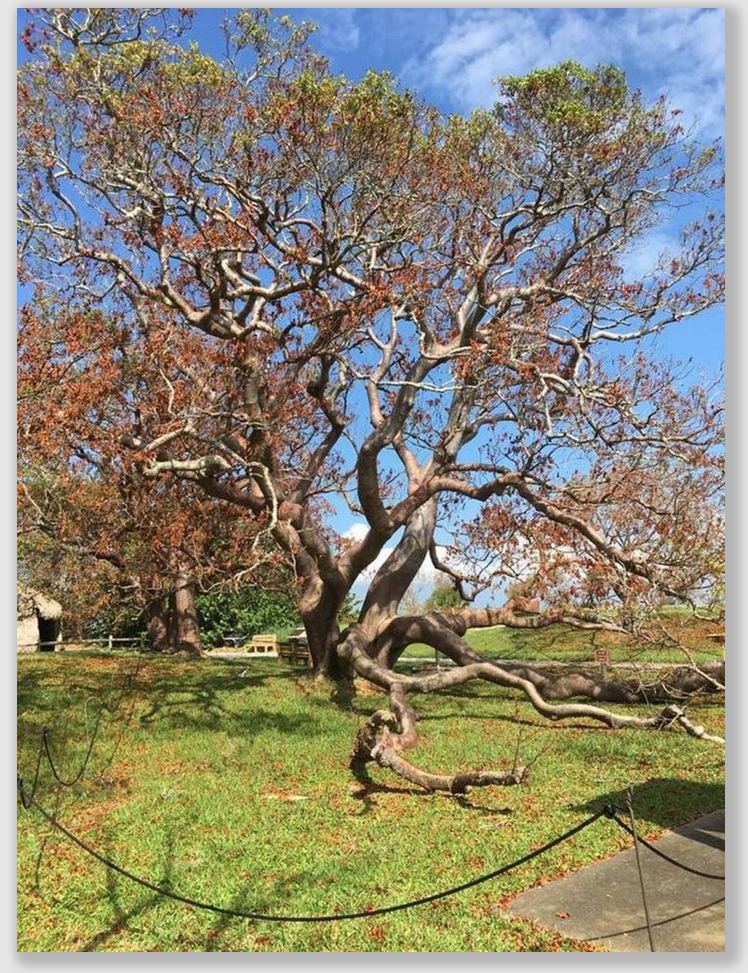
The largest known gumbo limbo tree in the United States sustained damage due to Hurricane Irma. None of the limbs fell from the 80-year-old Bursera sumaruba as Irma swept through the area as a Category 2 storm, but arborists found two new cracks on its trunk on Sept. 21. In 2007 this tree was given the title of an American Forests Champion Tree, which is a designation for the biggest of its species in the country. It is 45 feet tall, about 16 feet around its trunk and could weigh about 50,000 pounds…
Green Mountain Power (GMP), Burlington Electric Department, Vermont Electric Co-op and Washington Electric Co-op are joining together in response to an increase in unsafe digging and tree trimming near live power lines. Incidents have prompted the companies to remind Vermonters always to dig safe and never to perform work, even routine yard maintenance, around power lines. Coming into contact with electrical lines—whether they’re buried or above ground—is extremely dangerous and can be lethal. GMP is alarmed to report that the company has received a growing number of reports of Vermonters entering unsafe proximity to its power lines. “Whether you are working around your home or working in construction, please survey your space before you begin work,” says Mary Powell, GMP CEO and President. “If you’re going to be digging, be sure to call Dig Safe at 811 in advance to identify any underground lines. If you must perform work in close proximity to power lines, call GMP first to be sure it is safe. Our top priority is keeping customers and employees safe,” she added…
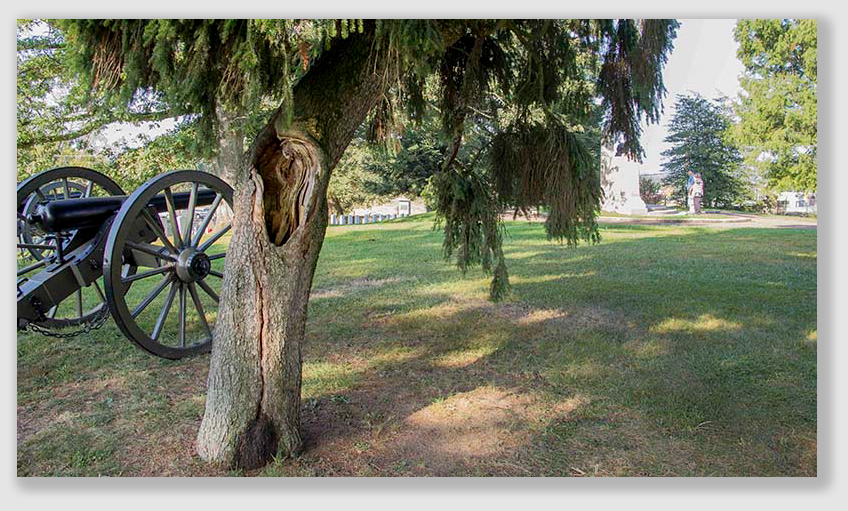
Gettysburg National Military Park (NMP) has contracted with Bartlett Tree Experts to remove several trees from the Soldiers’ National Cemetery that have been identified as potentially hazardous. This is one phase in a multi-phase project to ensure that the trees in the National Cemetery are preserved for as many years as possible. The ten trees identified for removal have aged beyond the point where they can be preserved and must be removed to ensure the safety of visitors, staff, cemetery infrastructure such as structures, walls, and fences, adjoining power lines, roads, and vehicular traffic. Work will begin on Monday, October 2, 2017 and will conclude by Friday, October 6, 2017. The initial assessment and inventory took place in May, 2017. This work included identifying trees and assigning each a number; identifying the trees’ condition, health, and vigor; recommending risk evaluations and removals of appropriate trees; recommending tree care, soil care and fertilization, structural support, and pest management treatments to promote tree safety, health, appearance, and longevity; and mapping the trees using GPSr hardware and Geographic Information System (GIS)…
TMZ, Sept. 27, 2017: ‘Scandal’ star ‘won’t leaf me alone about his trees…’ claims neighbor
Josh Malina’s smack in the middle of a real-life scandal with a neighbor — who says the actor’s accusing him of having a vendetta … against Josh’s landscaping. Malina, who plays David Rosen on “Scandal,” has allegedly been harassing one of his Malibu neighbors … accusing the guy of poisoning trees on his property. It’s gotten so nasty … the neighbor, Jarod Lam, just filed for a restraining order against Josh. According to the docs, Malina once came to Lam’s door and cussed at Lam’s wife, saying … “You better not f**king cut my tree!” Lam claims the actor got in his wife’s face and started to come into their home…
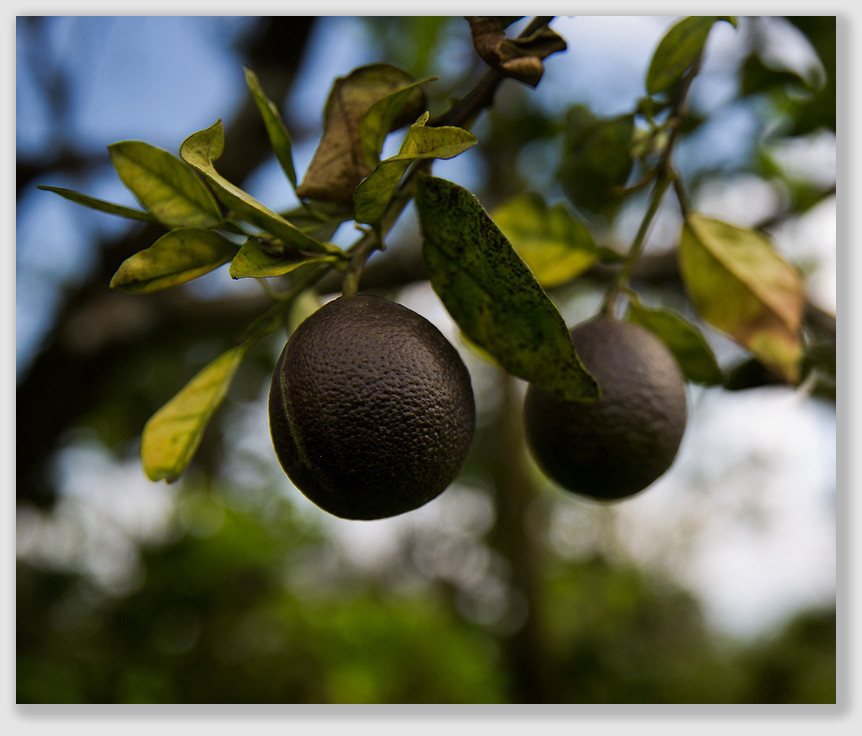
Florida is synonymous with oranges. They’re on the state license plate. At the product’s heyday in 1977, the state boasted 53 orange juice processing plants. Today, beset by bacteria, hurricanes and international competition, there are seven. A disease called “citrus greening” is pushing Florida’s orange juice industry toward the brink of collapse. Greening starts at the leaves and works its way through the tree like a hardening of the arteries, blocking nutrients and water. Oranges drop off branches unripe and unusable. This year’s crop will likely be the smallest since the 1940s. So miserable is the condition of Florida’s orange industry that farmers are banking on inventing a genetically engineered orange that will be ready for sale—at the earliest—in 2022…
It may be months before Christmas, but five teens allegedly decided to take down some trees early at the Shady Pond Tree Farm in Pearl River. The teens, described as bored and under the influence of marijuana, embarked on “tree tackling” on two occasions this month, destroying 10 Christmas trees and damaging 53 others, authorities said Tuesday (Sept. 26). The damage is estimated at nearly $6,000. Four of the five have been booked on various charges; the fifth was expected to turn himself in, the Louisiana Department of Agriculture & Forestry said in a news release. “I view it as an assault on our traditions,” farm owner Clarke Gernon said. “I view it as an assault on Christmas. “What they were doing was beyond the boundaries that any reasonable person would have…”
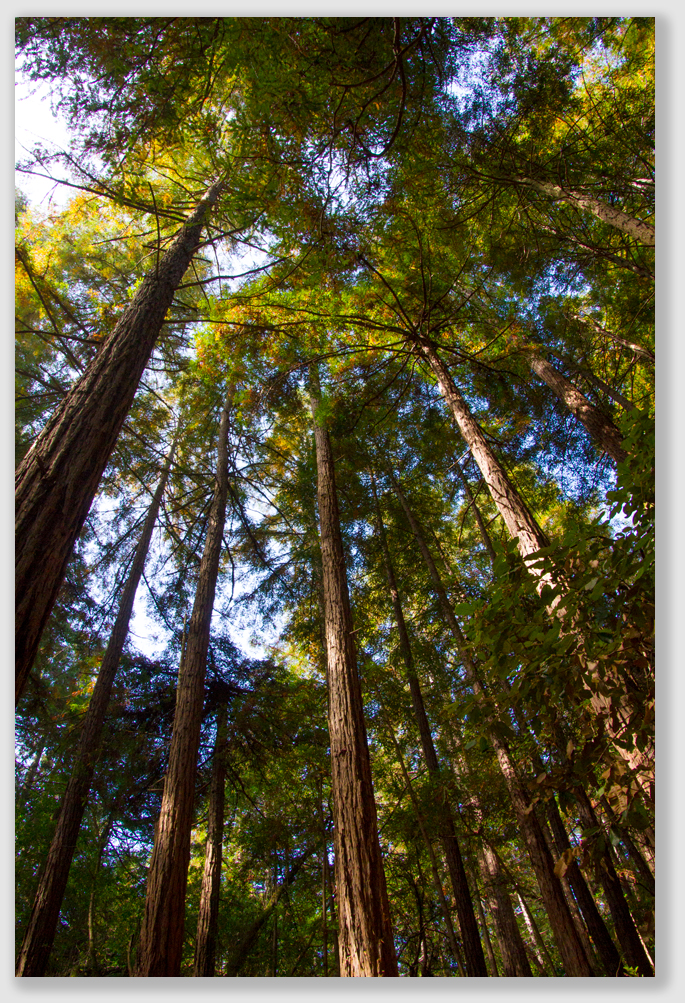
The operating instructions for nature’s tallest and biggest trees have long been hidden inside their tiny seeds — until now. On Tuesday, scientists announced an ambitious plan to decode the full genetic sequences of California’s two most iconic trees — the coast redwood and giant sequoia — to better understand and protect California’s grandest forests. Why are some trees more resilient than others? Could they offer hope for future generations? That’s what the $2.6 million project, a partnership between UC Davis, Johns Hopkins University and the San Francisco-based Save the Redwoods League, aims to discover. The two related species are stressed by loss of habitat and changing environmental conditions. Environmentalists have fought to protect forests and combat climate change. But now it’s time for the next step — Conservation 2.0: Revealing the DNA of the hardiest trees could guide a rescue strategy for troubled forests…
Sisters, Oregon, Nugget News, Sept. 26, 2017: City orders halt to tree cutting project
The City of Sisters issued a stop-work order to the Sisters School District last Thursday, ordering them to cease tree removal on the District’s campuses. The City asserts that the District project has removed too many trees. “It has come to the City’s attention that the School District has not complied with the Urban Forest Board’s (UFB) approval to remove trees on the District’s properties,” the notice read. “Due to this violation of the approval granted by the UFB, per SDD 1.4.700, we are ordering any further removal of Significant Trees on School District property to stop immediately. No tree removal related activity or work shall commence until further notice.” The stop-work order was initiated by City Manager Brant Kucera after being notified by UFB member Gerry Bertagna that the tree removal at the middle school allegedly exceeded the agreed-upon protocol by the UFB, the District, contractor Dave Vitelle of Bear Mountain Fire, and City Forester Dan Galecki. Kucera consulted with the Community Development Department after talking with Bertagna…
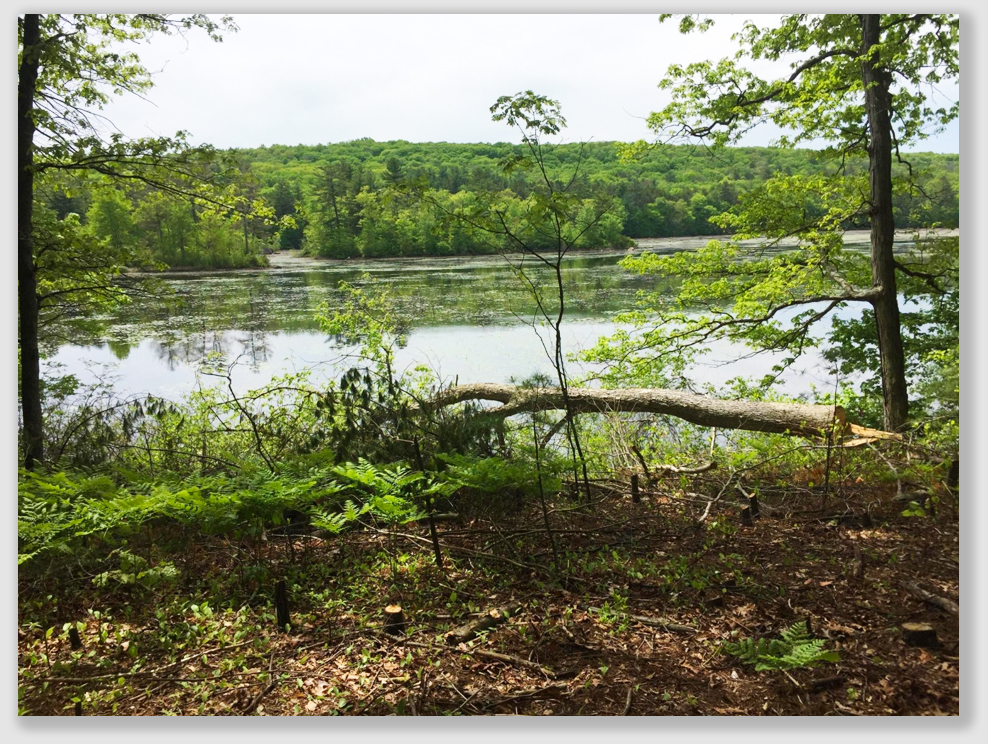 Milford, Massachusetts, Daily News, Sept. 25, 2017: Hopedale tree-cutting fix could cost up to $80K
Officials say it could cost up to $80,000 to bring back trees to an area of the town’s historic parklands that was illegally destroyed earlier this year. Rebuilding efforts would require continuous care over the course of a few years, Park Commissioners said at a recent meeting. They have withheld the identity of the person responsible for chopping approximately 100 small trees near Cutler Street, first discovered by officials in May. But commissioners said they have since served that person legal papers and have ordered the person behind the axing to stop. “We are doing everything we can and as you can imagine, it is a slow-turning wheel,” Parks Commissioner Donald Howes said during a meeting last week. “It is a lot of work. I … guestimate I have 60 hours in this project. I would certainly invest more before I let it go…”
Ukiah, California, Daily Journal, Sept. 25, 2017: Tree Talk: Tree stumps prevent bird droppings
Here is one more note on trees, or the lack of trees, in our parking lots and along our streets. Pinky Kushner sent an open letter to the parking lot committee, asking why trees were not included in the list of needed improvements, which was circulated as a result of the recent workshop. Here is the response she received from Council member Maureen Mulheren: “ I am the City Council representative to the Ukiah Main Street Program as well as a Downtown Business Owner… Many people feel the parking lots have adequate shade and others actually complain about the trees and the birds over their car…” I hope there are other people in this town who do not mind wiping away a few bird droppings in exchange for the services that trees provide, such as the evaporative cooling, water retention, and air cleaning — and the pleasure of listening to bird songs. And I hope more people demand that the City (and some private business owners) replace cut trees within a year. Looking around town gives the impression that tree stumps are the preferred adornment of our public spaces…
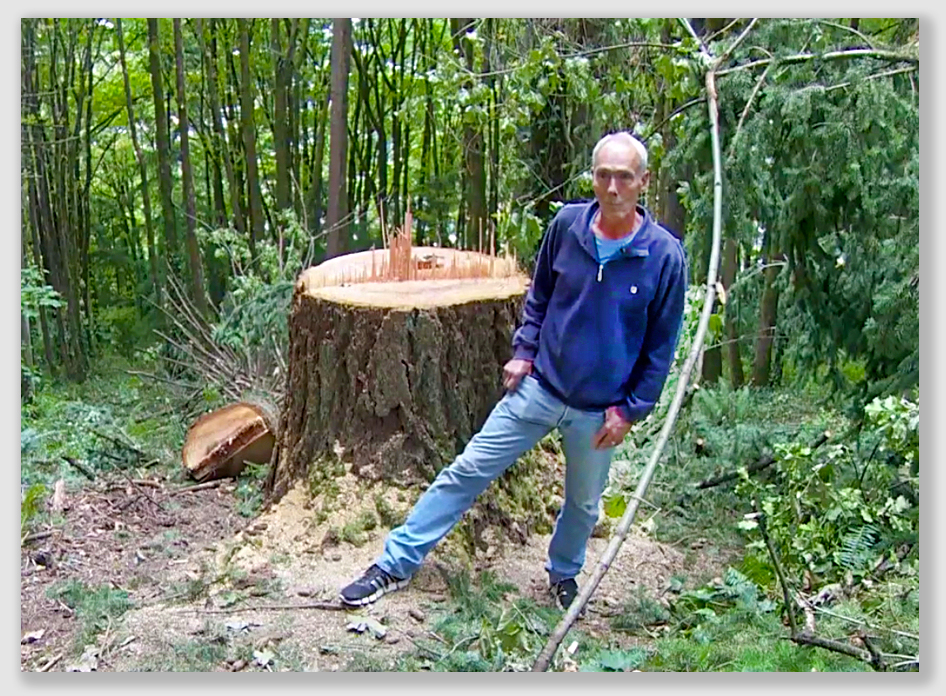 Portland, Oregon, KATU-TV, Sept. 25, 2017: City felling trees on Rocky Butte to improve views
A man who’s lived on Rocky Butte for nearly his entire 66 years says he can’t believe what the city of Portland has done. Steve Cornell says he was walking his dogs on a trail he uses all the time when he saw a 100-year-old Douglas fir cut down. Later, he found several other trees in the area felled as well, covering the trail and making it impassable. His question: What’s going on here? “It just seemed kind of odd in a city that is so concerned about preserving its trees that here we have the city of Portland cutting down what appeared to me to be very good, healthy trees,” Cornell said…
Los Angeles, California, Daily News, Sept. 25, 2017: Arsonist sets Palmdale trees on fire
Authorities today were looking for the person or persons who set a series of tree fires this morning near Sierra Highway in Palmdale. The three fires appeared to have been set in five-minute intervals starting at 12:30 a.m. around Sierra Highway and Avenue P-12, said Los Angeles County Fire Department Dispatch Supervisor Ed Pickett. The fires were put out quickly with minimal damage and no injuries to firefighters or civilians, Pickett said. Investigators were considering the fires as possible arson, he said…
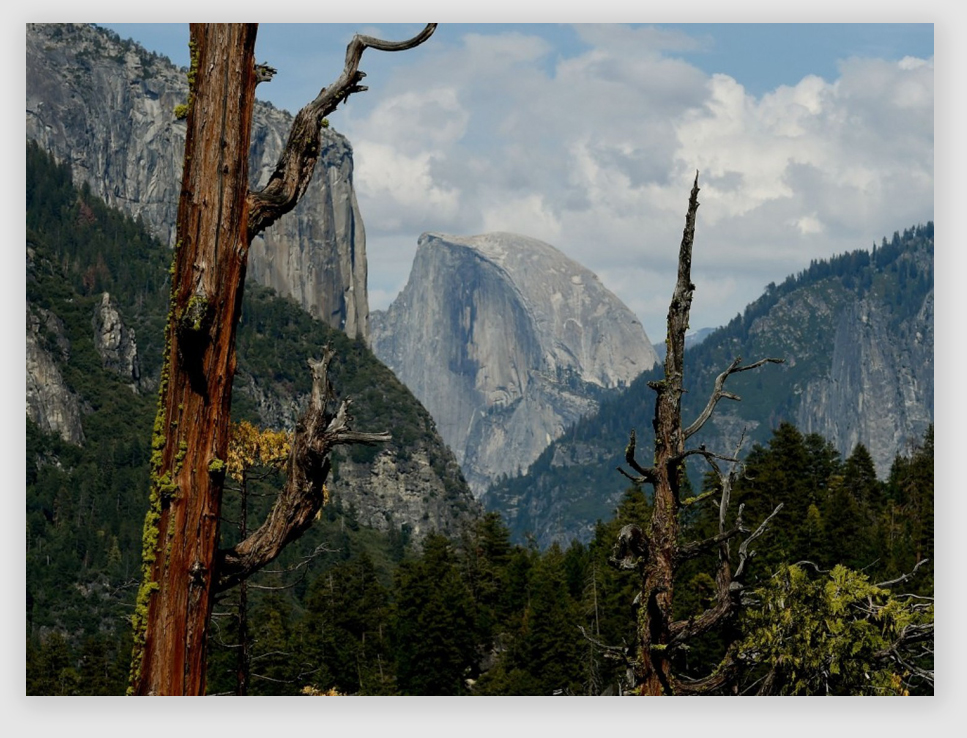
Deep in California, in the Sierra National Forest, there are more dead trees than live ones. And figuring out what do with them is a towering task. Forest Supervisor Dean Gould sees the evidence every day of the state’s massive tree die-off, a crisis that’s claimed more than 102-million trees over eight million acres in the past seven years. “It’s unprecedented. A whole variety of conditions had to happen simultaneously and they did,” Gould said. The biggest culprit: a severe drought, which left the trees vulnerable to beetles. And all those dead trees are creating other concerns. “Now we have a lot of fuel on the ground,” Gould explained…
Tampa, Florida, WTSP-TV, Sept. 24, 2017: Tree worker dies while working near live powerline
A tree worker was has died while working near a live power line in Siesta Key on Sunday afternoon, Sarasota County Fire Rescue says. Authorities say the man was in the bucket part of his vehicle and trimming trees in a residential area along the 600 block of Freeling Dr. when he hit a live wire. First responders had to wait until Florida Power and Light could come shut down the grid before they could reach the man…
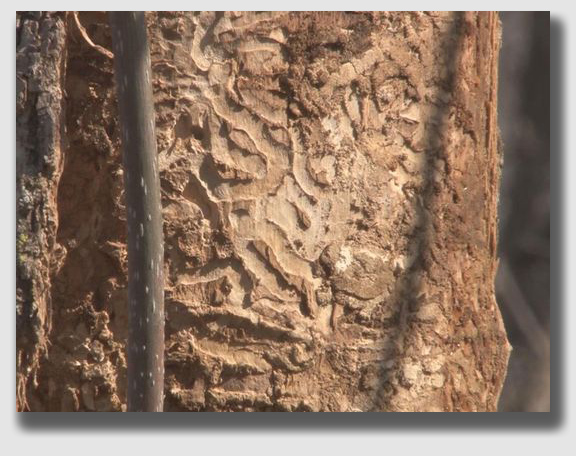
Emerald Ash Borers kill Ash trees in as little as 1-3 years. The signs of this fatal pest’s destruction can be seen throughout the Philadelphia region. A video by Rob Nagy, ISA Certified Arborist at Giroud Tree and Lawn, shows a street in Northeast Philadelphia that is lined with Ash trees. While several are dead or showing signs of decline from Emerald Ash Borers, two Ash trees continue to thrive. “The contrast is startling,” says Rob Nagy. “These Ash trees are growing side by side and Emerald Ash Borers are killing them all except for the two that have been protected with TreeAge trunk injection treatments.” In a quest to find the best treatment options, researchers have exhaustively studied EAB. “Insecticide Options for Protecting Ash Trees from Emerald Ash,” presents conclusions from over a decade of research by four universities. This research confirms that: “Emamectin benzoate consistently provides at least two years of EAB control with a single application, even in large and very large trees under intense pest pressure. It also provided a higher level of control than other products in side-by-side studies…
Palm Beach, Florida, Post, Sept. 24, 2017: Time to rethink placement of hardwood trees
It appeared to me that most of the damage during the recent storm was done by falling trees and tree branches. But with few exceptions, palms were not the problem. Hardwood trees were. In my community, the standard set by Palm Beach County for a typical 5,000 square-foot property is followed, and that calls for one palm tree and two hardwood trees. Whatever the reason for county regulations requiring the planting of hardwood trees, it should be modified so they are kept at a safe distance from the roofs of homes and other structures, from roadways and, most importantly, from power lines. It is not enough to require Florida Power & Light to properly prune hardwoods near power lines. They shouldn’t be there in the first place. And planting them on grass medians in the middle of roadways is asking for trouble…

It took less than two days. An I-TEAM investigation that began Tuesday ended Thursday afternoon with the State Attorney’s Office directing the arrest of a local tree trimmer — a man with a lengthy criminal history. Shawn Curtis Albin, who has been arrested by the Jacksonville Sheriff’s Office 22 times since 2003, is now behind bars accused of stealing from a Hurricane Irma storm victim. Our investigation began immediately after Army veteran Greg James contacted the I-TEAM asking for help for his mom. He told us the day after Irma hit, his mother — Wyannette Ephron — paid a $700 down payment to Albin to take care of trees damaged by the hurricane. But, both mother and son say Albin did not do the work. “I just want to get justice for my mom,” James told us…
As Atlanta city officials look to revamp the city’s tree ordinance, Trees Atlanta is hosting more than 100 folks at a conference where they are slated to hear practical advice on how to become effective advocates for the city’s tree canopy. The two-day event, Atlanta Canopy Conference: Giving Voice to Tree Protection, started Thursday evening with a presentation by the US Forest Service’s acting assistant director, Alice Ewen. This event marks a return to Atlanta for Ewen, whose first job with Trees Atlanta was to plant trees for the 1996 Summer Olympic Games. After three years with Trees Atlanta, she worked for two tree advocacy organizations before joining the US Forest Service in 2011 as national program for the Urban and Community Forestry Program. On Thursday, Ewen was slated to deliver a presentation, How to be Effective Now in Environmental Advocacy. On Friday, Ewen is listed as the closing speaker at the conference and is to draw from her personal history of advocacy to urge tree advocates to speak with an organized, cohesive voice when discussing tree conservation efforts…
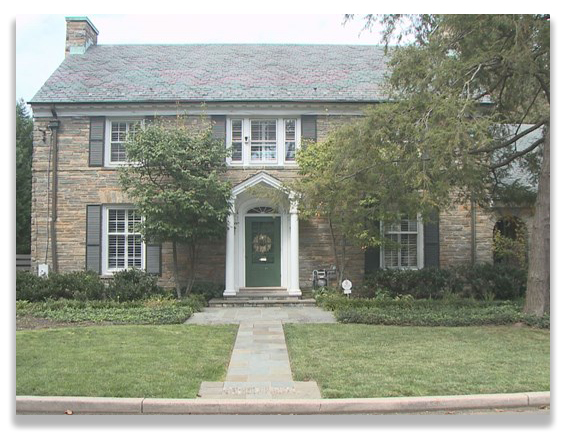
It’s a fight over a tree. D.C. wants to plant more. Charley Pereira of NW D.C. says “not in my front yard.” Problem is, that’s exactly where the District wants to dig. “Just another example of government abuse of power,” said Periera. Periera lives in the Crestwood neighborhood. He bought the home in 2009. He lives there with his wife and kids. They like their front yard the way it is. On Wednesday, Perieria says they got a visit from DC Arborist Shaun McKim. “He said ‘I’ve decided I’m going to put a tree right here in your front yard.’ Well, what do you mean?…’Well, I’m the D.C. arborist and I decide where all trees are going to go in Washington, D.C.” Periera says McKim told him his family has no say in the matter…
A U.S. District Court Judge has once again declined to rule on whether or not to allow tree cutting to take place on the Georgetown Branch Trail as part of Purple Line construction. The Friends of the Capital Crescent Trail are currently seeking a preliminary injunction to prevent trees from being cut down on the trail, which runs from Bethesda to Silver Spring. However, this lack of a decision can be seen as a win for the Purple Line. A spokesperson for the project said they will resume clearing work on Monday. For now, the Georgetown Branch Trail remains closed to the public and is considered an active construction zone…
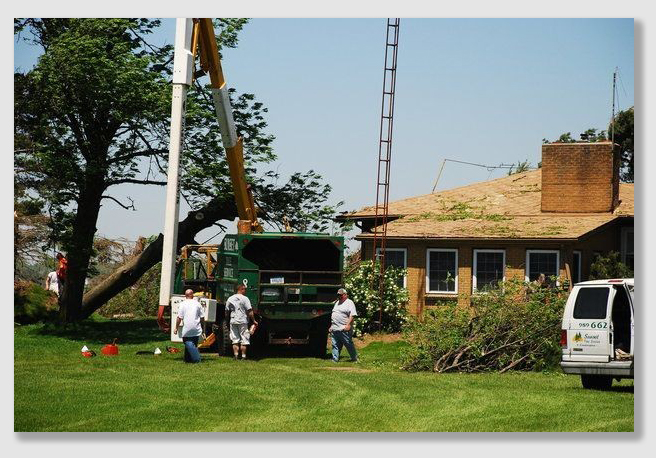
A judge has ordered a Bay County tree service to cease certain operations after it allegedly ignored orders from the state to address multiple job-site hazards and violations. On Monday, Sept. 18, Bay County Circuit Court Judge Joseph Sheeran ordered Sunset Tree Service and Landscaping to stop several operations of its business until it complies with abatement requirements issued earlier this year by the Michigan Occupational Safety and Health Administration (MIOSHA). Specifically, the company agreed in court to not use its Bandit Chipper, engage in any work that requires the implementation of traffic control devices, and to employ any workers that have not received training in the hazards of tree trimming operations. Owner Chad Nichols told The Bay City Times-MLive he’s still in business and that he won’t be using the chipper until its repaired and up to safety standards…
With the first day of autumn right around the corner, experts predict recent weather conditions in Wisconsin could mean fall colors will be less vibrant. Colleen Matula, a forestry specialist with the Wisconsin Department of Natural Resources in Ashland, said forest health, temperature, precipitation and cloud coverage can all affect how quickly leaves turn color and how vibrant that color is. She told Wisconsin Public Radio that increased rain this year means many trees are getting fungal diseases on the leaves. Matula said fungal diseases can affect the color and volume of leaves. Southwest Wisconsin is dealing with a different type of weather problem. National Weather Service officials in La Crosse said southwest Wisconsin recently has had abnormally dry conditions…
Everybody loves popcorn, right? Depends. If by popcorn, you mean the fluffy, buttery, salted puffs of popped corn that we gorge on at the movies, yes. If you mean the trees that produce seeds that look just like popcorn, not so much. Popcorn trees, also known as Chinese tallow trees, or Triadica sebifera, are an invasive species in Mississippi and many other Southern states, from Texas to the Carolinas. In fact, the trees were imported decades ago from eastern Asia. Now, the Mississippi Forest Commission is trying to get a handle on just how many popcorn trees are in the state. An online map at helpstopthepop.com/tallowtree/#home lets anyone report popcorn tree sightings throughout the state…
Los Angeles, California, Times, Sept. 20, 2017: Laguna Beach barks up the wrong pepper tree
For a city whose DNA instinctively says no, why did Laguna Beach so easily say yes to cloning a dying, dangerous pepper tree? The City Council is inexplicably spending way too much time and money on a tree. Granted, it serves as the annual Christmas tree and is sentimental to some. But it’s 135 years old and has “serious” structural defects. Over the years it’s been filled with concrete and foam in order to extend its life. It’s time to let it go. Instead, we have costly heroics. The latest is a $13,000 cloning experiment, which the City Council appears willing to endorse. If this weren’t so troubling, it would be laughable…

A popular tree in Lakeland that’s scheduled to be removed is still standing after Hurricane Irma. City officials determined “Lover’s Oak” is decaying and is a risk to people’s safety after a big branch fell on a car a few months ago. “That’s not a good sign,” Parks and Recreation Director Bob Donahay said. “That tells you something’s going on.” The tree got its name because two separate oak trees intertwined and became one. The tree, or trees, survived Irma, while several trees around it didn’t. People are pointing out the irony, and someone even put up a sign that says, “I survived Irma only to be doomed by city hall…”
Dayton, Ohio, WHIO-TV, Sept. 20, 2017: Middletown police: Beware tree-trimming scam
Middletown police are warning residents of “unscrupulous tree trimmers” who have been taking advantage of elderly people. The police department posted its warning Tuesday on its Facebook page. One incident was thwarted, but the culprits were paid in another incident. Police remind residents that door-to-door solicitors need a permit in the city. Call police if tree trimmers knock on your door uninvited. Ohio Attorney General Mike DeWine offers tips to avoid tree-trimming scams. Beware of a tree trimmer who…
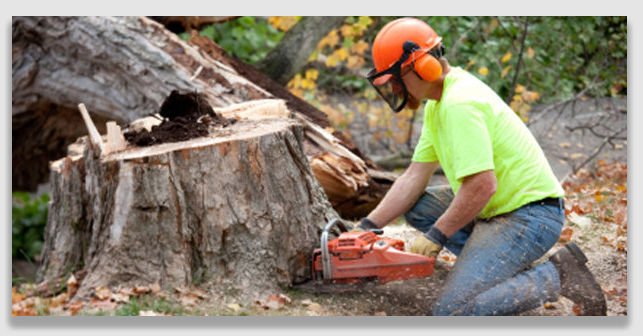 Icas Network, Sept. 19, 2017: Tree removal – What you should know
Getting rid of a tree can be a risky and complex task if you do not know how to do it in a correct manner. It is something that should never be endeavoured by someone who is not skilled in tree removal to prevent serious accidents. If you flop the tree removal it could lead in a re-growth of the tree from a stub that was not managed in a proper manner. It could also lead to destruction to cars, power lines, homes, and people. In case, you have a tree that needs to be detached there are some groups that give support to help pay for the tree to be removed. Furthermore, some groups charge no fees at all. Tree removal begins with a tree valuation and the location of the tree. To be sure that the tree is taken out in a safe manner the tree trimmer needs to chalk out the procedure. They need to safeguard that it is done with least harm to the objects around it. If the tree is close to power lines or a home the path of the fall of the tree must be calculated accurately…
Here comes Santa Claus … and a sleigh full of confusion about Christmas trees. Better to buy real or better to buy artificial? Popular myths are that real trees are bad for the environment, artificial trees make more financial sense and real trees are just a hassle, but read on for some facts that will set the record straight and some thoughts that might turn your head on some of the more subjective sides of the debate. If your No. 1 concern is the environment, your No. 1 choice should be a real tree. Growing, using and recycling real Christmas trees is good for the environment. Research shows that when compared on an annual basis, the artificial tree has three times more impacts on climate change and resource depletion than the natural tree. Real Christmas trees are biodegradable and can even be recycled or reused for mulch, and every year the circle of life continues. Artificial trees are petroleum-based products and most are imported from overseas. Many are thrown away seven to 10 years after they’re purchased, and every year the landfills where they will stay (literally for centuries) get a little bit bigger…
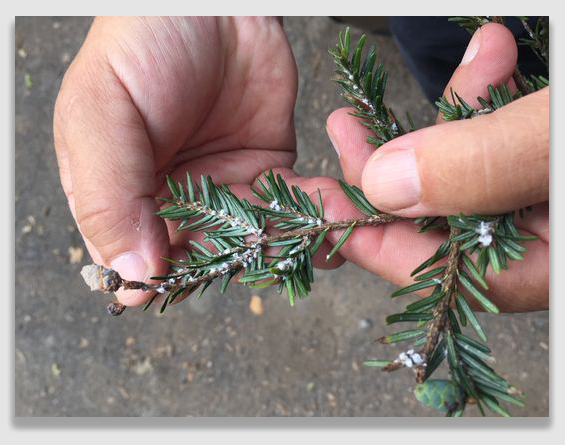
The dabs of white on the twigs of hemlock trees could be fresh, wind-driven snow. But they’re nothing so benign. Instead, they’re the telltale signs of tiny insects that are slowly sucking the life out of the hemlocks on which they’re found. Hemlock woolly adelgids, aphid-like insects that create the white egg sacs, are a conspicuous entry on a growing list of invasive species that are threatening or outright killing western New York trees. Joining them in the rogue’s gallery are fungi, beetles, moths, planthoppers and other insects — all of them foreign to our region, some ushered into New York by rising temperatures associated with climate change. “There’s just a lot of stuff that’s popping up. It’s now become an epidemic. It seems like we’re dealing with more diseases and more pests,” said Gary Koplun, a forester with the state Department of Environmental Conservation in Avon, Livingston County. Hemlock woolly adelgids, which are smaller than a poppy seed, first appeared in the Rochester region a decade ago, having slowly migrated northward as warmer winters made local forests a hospitable winter habitat…
Toledo, Ohio, Blade, Sept. 18, 2017: Unsightly black spots on maple trees mostly cosmetic
We live in a crisis-a-day world where television news seems obligated to give us at least one story each cycle that is dripping with fear and angst so it produces cardio-vascular tremors: cyber security threats, gas price spikes, hundred-year storms, race issues, terrorism, and antibiotic resistant bugs — all legitimate concerns and they are all out there, dressed like the grim reaper. There also are plenty of things we worry about that often are not as bad as they initially appear to be: The arrival of Y2K, colorful weather radar images, professional hockey in Arizona, retirement party speeches, family reunions, and the open-all-night drive-thru. Across the local landscape, a frightening-looking scourge has hit many of our maple trees and although this initially appears to be a leaf version of leprosy that certainly has to be a killer, it actually is the fungal version of a sheep in wolves’ garb. To accompany its dreadful appearance, this malady has an equally unsettling name — tar spot — and its large, dark lesions are quite menacing looking. But this is not the plague many homeowners fretting about their landscaping perceive it to be…
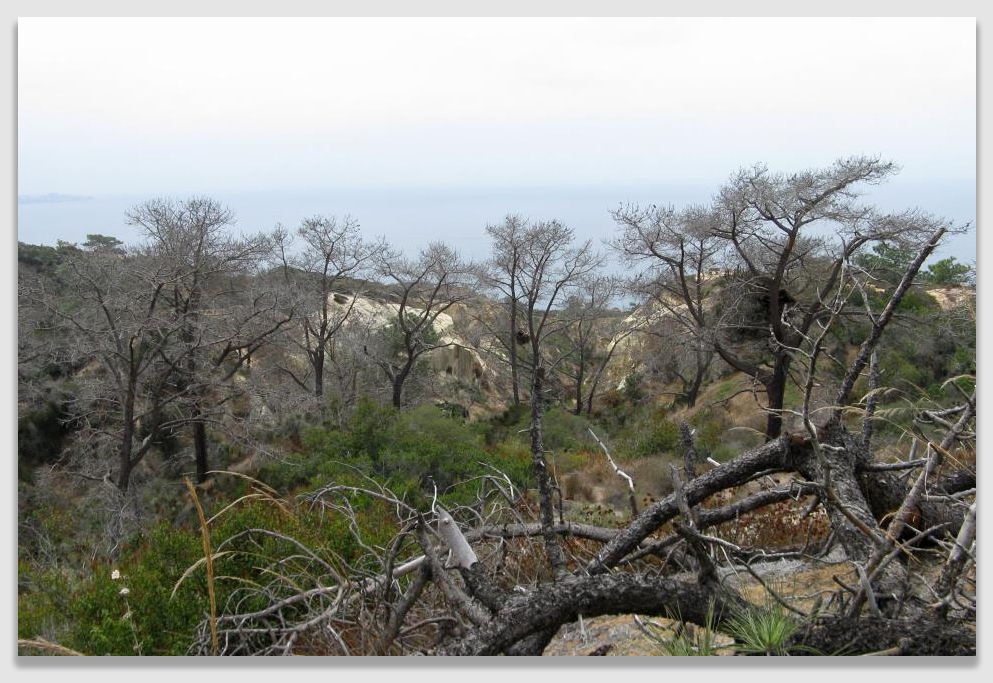
Torrey Pines State Natural Reserve just north of San Diego is a majestic wilderness with views to the ocean, scenic sandstone cliffs and is home to one of the world’s rarest pine trees, the Torrey Pine. Anyone who has visited Torrey Pines Reserve in the past two years will have seen the large numbers of trees that died. You see them along both sides of the main road to the visitor center, along Guy Fleming Trail, and several other locations. As I watched them die, I wondered why nobody was testing the soil, analyzing tree samples, or doing anything that might help determine the cause. I wanted to do something but didn’t know what. The media reported that the die-off was due to drought and beetles, but Torrey Pine trees were dying on the irrigated Torrey Pines Golf Course too, which is right next to the Reserve. Drought couldn’t be the cause of their deaths. I started doing my own investigation and found the aluminum level in tree bark was high. The analysis showed 418 parts per million (ppm) of aluminum…
New York City, News12, Sept. 18, 2017: Woodlawn homeowners frustrated with city over hazardous tree
Homeowners in Woodlawn are frustrated about a city-owned tree that they say has mangled their sidewalk. The McCarthy family has lived on the corner of Kepler Avenue and 239th Street for over three decades. They say in recent years they have been battling the city to repair the sidewalk in front of their home. Technically they can patch up the sidewalk on their own, but they say the city won’t allow them to touch the tree that is causing the problem. They say they are worried the tree, which also has a large detached branch, could harm a home or someone walking through the Woodlawn neighborhood…
 St. Paul, Minnesota, KSTP-TV, Sept. 17, 2017: Minnesota seeing growing number of sick maple trees
Many maple trees across the Minneapolis area are sick and have been turning color and dropping leaves before the official start of autumn. Alan Branhagen is the director of operations at the Minnesota Landscape Arboretum. He told the Star Tribune that the arboretum has been flooded with questions about the early leaf drop. “It’s becoming epidemic,” he said of the distressed, yellow-leafed maples, some already with bare branches that have raised curiosity and concern this growing season. Branhagen said rot may be causing the maples to decline. Irrigation systems and thick mulch can result in conditions that are too soggy for the trees. “Sugar maples like it moist but not wet,” Branhagen said…
An assistant professor is working on creating a new regional and community forestry degree program at the University of Nebraska-Lincoln. Eric North tells The Lincoln Journal Star that he’s trying to coin the term ‘Treehuskers’ for the students who participate because UNL students are known as Cornhuskers. North is working in a position funded through the U.S. Forest Service and the School of Natural Resources. North said faculty are busy designing courses and curriculum to create the degree program. It’ll train everyone from urban arborists to conservationists to scale trees safely and efficiently. The program will give students hands-on experiences, such as learn planting, pruning and diagnosing tree problems on an East Campus grove that will double as a learning lab and recruiting tool. “If we could just name the major, it would be ‘People in trees,'” North said. “That’s really what urban forestry and horticulture is about, the human-tree interaction and teaching people how to work with both…”
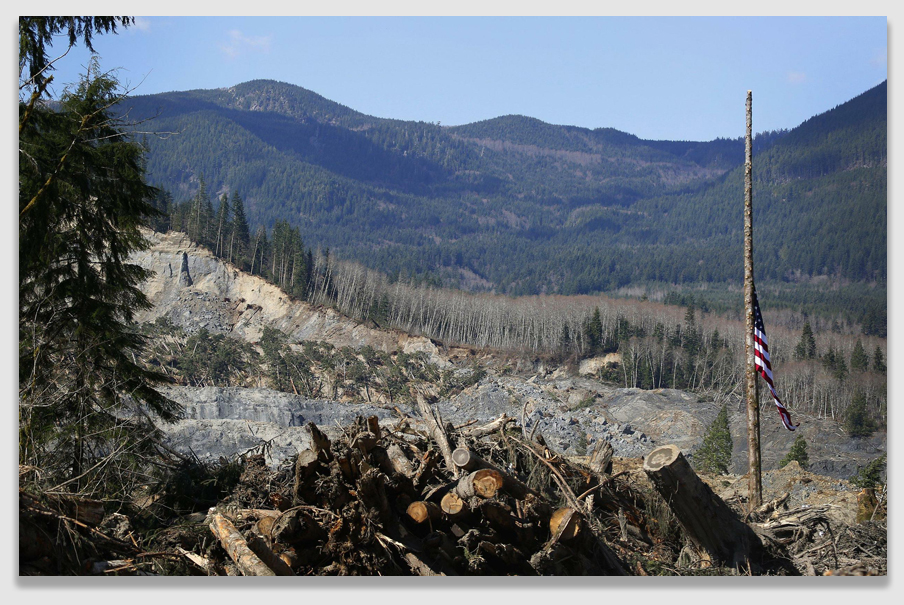
In healing, there are seasons. There are moments of strength and moments of loss. For nearly three and a half years, the damaged Sitka spruce has stood guard at the site of the Oso mudslide. More than 100 feet tall, it was the largest tree to withstand the force of the mud. The spruce was buried some two stories deep. As it was uncovered, local carver Bruce Blacker helped fashion a sign from a cedar plank. It reads: “Oso. 10:45 a.m. 3/22/14.” For those who were part of the recovery effort, the tree and the sign have been reminders of resilience. The sight stayed constant while the land changed around them. The mud eventually dried into hillocks. Seed was spread, and the earth turned green again. Now, the grass is waist-high and there are saplings in the distance, closer to the scarp. Some say it’s getting harder to remember what the neighborhood looked like before, when there were gardens kept and children raised and fish pulled from the river. It doesn’t change, the catch in your throat, even if you drive past every day. Chad White owns Oso’s Evolution Tree Experts. He’d limbed the spruce long before the slide, for the previous owner. He and others have known for a long time the tree wasn’t going to make it. He believes it was suffocated by the mud…
A massive extinction event is unfolding before our eyes in the heart of America’s Amazon, where a fungus carried by an invasive beetle from China is wiping out the native redbay, one of the most common trees in wetlands across Alabama and the southeastern United States. Redbay trees, common from Virginia to Louisiana, are succumbing to a disease known as laurel wilt, characterized by the sudden transformation of the tree’s glossy dark green leaves. Once stricken, all of the leaves on the tree wilt on the stems, turning a deep mahogany color as the tree chokes to death. The disease showed up in the Mobile-Tensaw Delta, the famed America’s Amazon, in recent months, and has spread with gathering speed. A survey cruise by AL.com through our coastal rivers and the Delta revealed dead trees along every waterway, and in every wetland. Laurel wilt, as the disease is known, has shown up with a vengeance in the last few months. It hits members of the laurel family, which also includes both sassafras and avocado trees. So far, there appears to be no way to stop it. That’s a frightening prospect for another reason, as sassafras roots are used to make root beer. In one fell swoop, a single disease could potentially wipe out redbay, and threaten U.S. production of both guacamole and root beer…
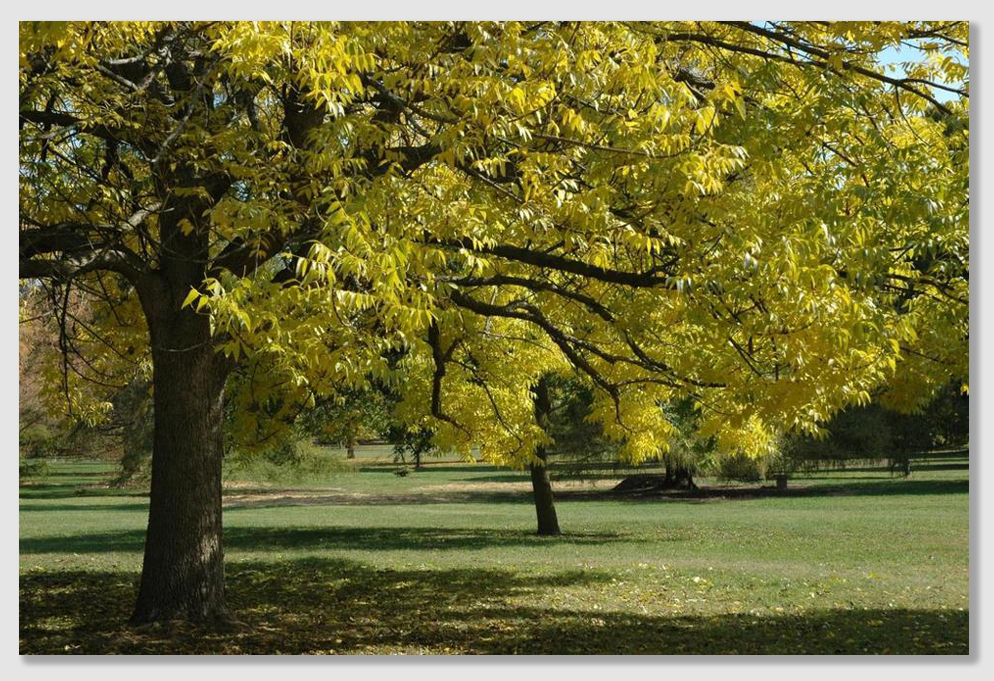 US News and Report, Sept. 14, 2017: Scientists: Ash tree species pushed to brink of extinction
A scientific group says five prominent species of ash tree in the eastern U.S. have been driven to the brink of extinction from years of lethal attack by a beetle. The International Union for Conservation of Nature says tens of millions of trees in the U.S. and Canada have already succumbed, and the toll may eventually reach more than 8 billion. The pest is the emerald ash borer, which was accidentally introduced to North America in the late 1990s. On Thursday, the scientific group classified the green, black, white, pumpkin and blue ash as “critically endangered…”
Darin Beasley says his wife planted a pine tree that once stood in his front yard nearly 50 years ago. When Irma came through Anderson County, the tree toppled over from the winds. It took out a transformer and blocked the road for 24 hours. “If it was dead, I’d cut it down,” said Beasley. “But it was alive so I was going to let it live.” Many trees crashed down around the Upstate. Some because of the winds like Beasley’s pine, but others may have been dead. Dr. Steven Jeffers is a professor of plant pathology and extension specialist at Clemson University. He specializes in disease in plants, and says those dying trees are accidents waiting to happen. “Most trees do not give you any evidence that they’re weak or about ready to fall,” said Dr. Jeffers…
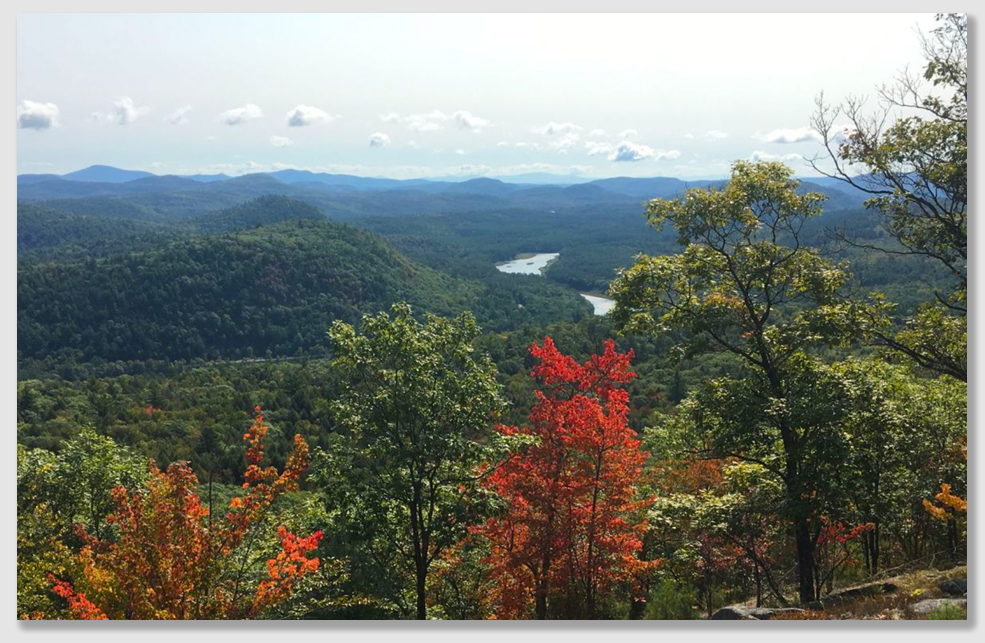
Those who enjoy looking at fall foliage should see better color this year than the past couple of years, and it may come a little sooner for some types of trees. A drought that plagued the Northeast for nearly two years stressed trees in many areas, causing them to drop leaves prematurely and show little color change. This year, though, lots of rain in spring and early summer ended the drought and made for a more normal summer for color-producing trees. Some maple trees, though, are turning early for reasons that are not clear. Pete Olesheski, senior naturalist at Up Yonda Farm in Bolton, said conditions are setting up for a better fall of leaf peeping this year than the past couple of years. Trees are not stressed by the weather as they were in 2015 and 2016, he said. “I think there will be better colors,” he said. “When it was so dry, some of the leaves just turned brown…”
Thousands of trees fell down after Irma swept through Georgia. Josh Marotta with Atlanta Arbor has been inundated with calls. Homeowners are confused with what they are responsible for. “A lot of insurance won’t cover it unless it’s on your house, shed, driveway shed, garage, car [or] something like that,” says Marotta. But here is the tricky part — when a tree falls over onto a neighbor’s property, a homeowner is often left to wonder if he or she is liable. Most people assume that they are liable since it is their tree. However, this is not always true. “Wherever a tree lands is where the ownership lies of the tree, so if your tree falls on my house, I have to take responsibility of it” says Marotta…
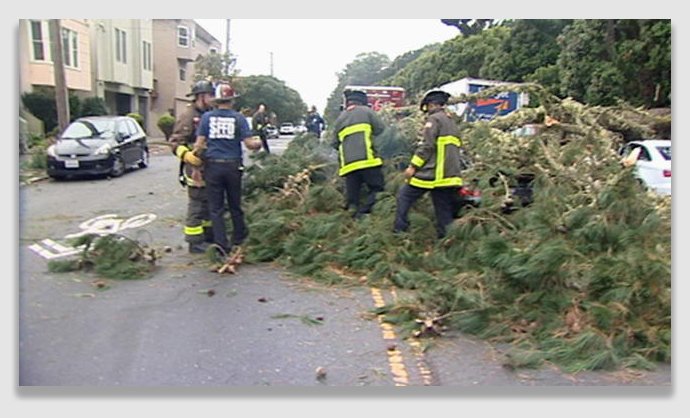
Fire crews on Wednesday responded to a fallen section of a tree on some parked cars in San Francisco, according to the San Francisco Fire Department. A section of a large tree toppled at Clement and 38th Avenue a little before 3:30 p.m., and there was one man trapped inside a vehicle, a fire official said. Firefighters at the scene said the man appeared to be OK. They were able to extricate him by about 3:55 p.m. No injuries were reported…
The bristlecone pine tree, famous for its wind-beaten, gnarly limbs and having the longest lifespan on Earth, is losing a race to the top of mountains throughout the Western United States, putting future generations in peril, researchers said Wednesday. Driven by climate change, a cousin of the tree, the limber pine, is leapfrogging up mountainsides, taking root in warmer, more favorable temperatures and leaving no room for the late-coming bristlecone, a study finds. Researchers compare the competing tree species to a pair of old men in a slow-motion race up a mountainside taking thousands of years, and climate change is the starting gun. “Limber pine is taking all the good spots,” said Brian Smithers, a Ph.D. candidate at the University of California, Davis, who led the research. “It’s jarring…”
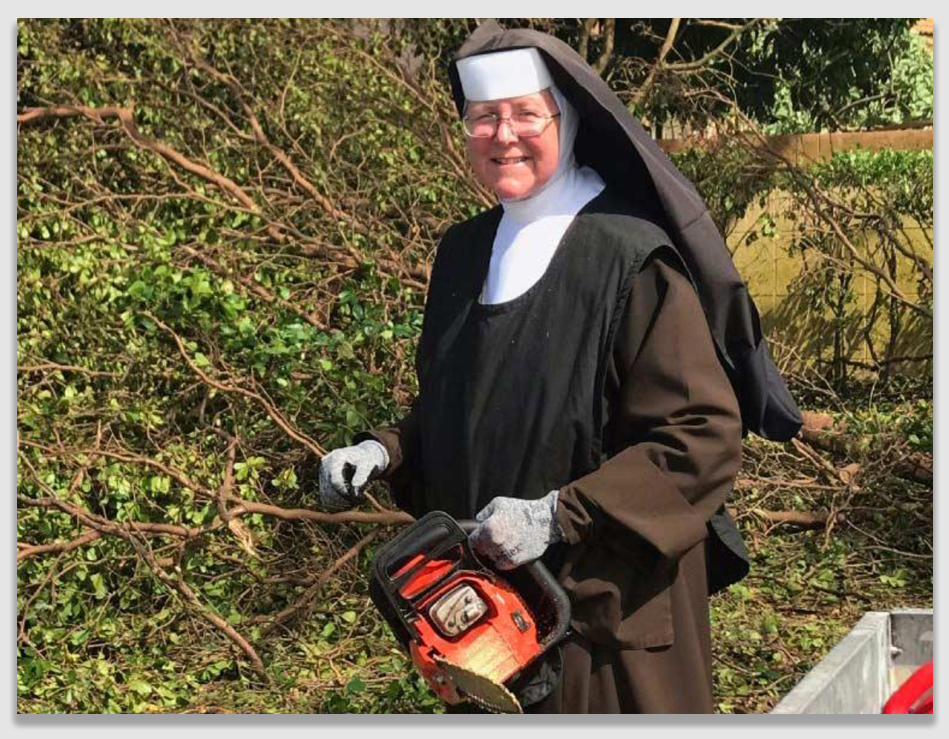
A Florida nun is pitching in on the cleanup efforts following Hurricane Irma by taking a chain saw to downed trees while dressed in her full habit. Miami-Dade police posted video of Sister Margaret Ann at work on social media taken by an off-duty officer who came across her. Police said the nun was cutting trees to clear the roadways around Archbishop Coleman Carrol High School near Miami. Sister Margaret Ann is the school’s principal, according to its website. Police said “acts of kindness” like Sister Margaret Ann’s remind residents that they’re all part of the same community…
“I’m scared to open up my front door,” Denton Bailey said while climbing under, over, and through tree limbs that fell during Hurricane Irma just to reach his house. The roof and ceiling in his Ida Street home in Northwest Jacksonville have caved in after the storm. The two-story home is invisible from the street. “That’s the city tree that fell down on top of my house here,” Bailey said while pointing to a giant fallen tree whose limbs, entangled with other trees, engulf his home. “That’s a city tree! It’s on city property line,” Bailey exclaimed. What has Bailey and his neighbors particularly upset is that they claim to have warned the City of Jacksonville on multiple occasions that the tree was dead, dangerous and could come down at any time…
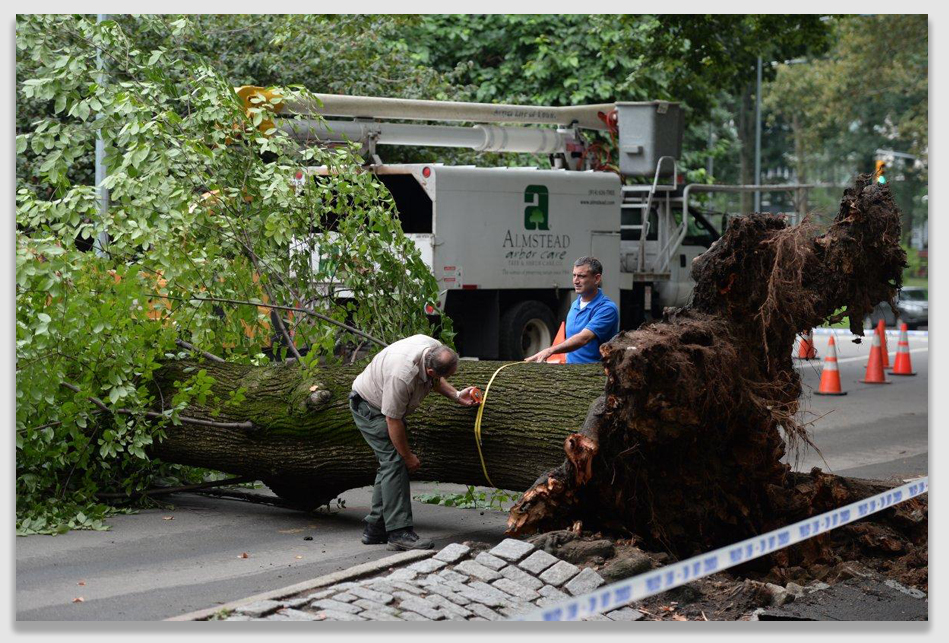
A mother who was badly hurt trying to protect her kids from a falling tree in Central Park plans to file notice Wednesday of a $200 million lawsuit against the city, her lawyer said. Anne Monoky Goldman fractured her C-1 vertebra on Aug. 15 while protecting her three children from the toppling tree on West Drive near W. 62nd St., attorney Jordan Merson said. Her 2-year-old son, Grant, suffered a concussion and bleeding around his brain. “A whole family’s lives have been turned upside down,” Merson said. The 39-year-old mother, who works in social media for the fashion company Tory Burch, faces a grueling recovery. “She’s not allowed to move her neck for at least two to three months — that is a form of torture,” Merson said. “She can’t pick up her baby, she can’t breastfeed, she can’t do her job…
Fence contractors and tree-removal companies are overwhelmed with calls in Central Florida after Hurricane Irma. Beaver Tree Service in West Orlando posted a notice on Facebook that customers should text them with a photo of their problem instead of calling. Owner Tim Jennings said he had 231 photos texted before noon Tuesday. “We are prioritizing based on quality-of-life issues before inconveniences,” the company said in its post. Trees were lying on houses, fences, roads and cars. Even more serious, some huge trees were leaning and still in danger of falling into homes. Several state agencies warned consumers that contractors from across the nation would descend on Florida, and that not all of them would be qualified — or honest. The most important thing is to verify the person you hire has a proper license to operate in Florida, which you can do on the state’s website at myfloridalicense.com…
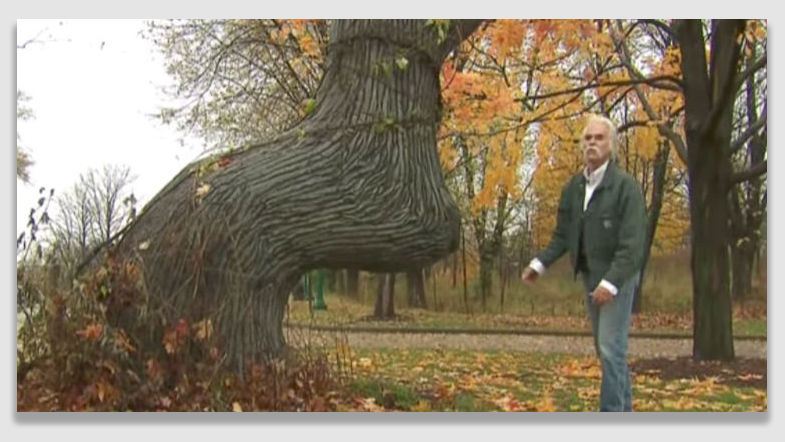
Nature is capable of doing countless things. Plants and trees can survive stark conditions and grow in all sorts of directions just to get more sunlight and thrive better. And if you see a tree bent in the woods, you’d probably just assume it just grew like that for some reason. But that presumption might not just be wrong, it could be unfortunate. American Forests, a non-profit that is more than 100 years old and still works to conserve the landscape of our great country, revealed that bent trees might have a much more significant meaning. Learn what it is below. Bent trees in the woods are sometimes “landmarks that helped guide indigenous people on their way,” American Forests’ former managing editor, Katrina Marland, said. “Native Americans would bend young trees to create permanent trail markers, designating safe paths through rough country and pointing travelers toward water, food or other important landmarks.” Because these trailer markers happened centuries or decades ago, the trees are much bigger than their sapling former selves…
Some Atlanta homeowners say the city makes it too hard to cut down danger trees. Log by log, David Packwood cleaned up storm debris outside his home on Tuesday. It’s a chore he’s grown used to for years. “Since I’ve lived here, I’ve seen the street closed 10 times at least from trees down…there’s always something,” he said. As Irma passed through the area on Monday, trees knocked out electricity on Packwood’s street. Packwood believes the city’s tree ordinance exacerbates the problem. The city requires homeowners to get permission before cutting any tree down. “I’m all for preserving the trees, it’s what makes Morningside beautiful,” he said. “But it’s becoming a little bit of a problem…”
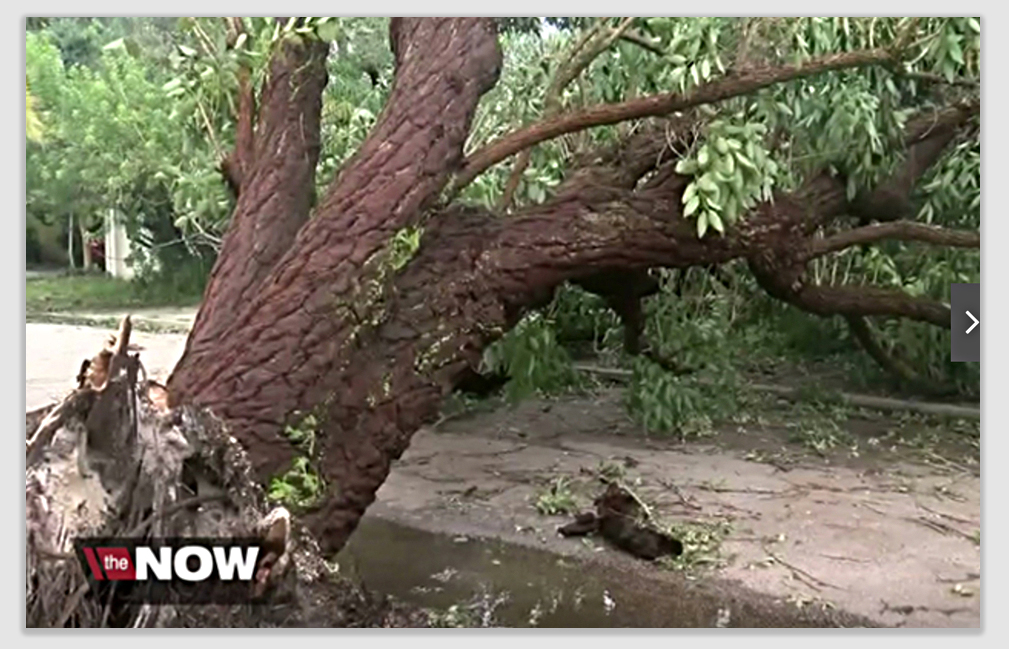 Phoenix, Arizona, KNXV-TV, Sept. 11, 2017: Tampa residents removing trees, not water, after Irma
In South Tampa, close to the Hillsborough Bay, people didn’t get the flooding that usually comes with heavy rain. Instead they are dealing with the aftermath of high wind; downed trees and branches. The sound of saws cutting through bark will become a familiar one in the next few days, as people try to get rid of the trees uprooted by Irma. Nancy Callahan might not be excited about the work, but would choose it over a different outcome. “My son and his three-year-old and his friend were up in the attic space which is a big big room and bathroom,” Callahan explains. “And if it had gone across the house they could’ve been killed…”
Chicago, Illinois, WLS-TV, Sept. 11, 2017: Tree cut down after Highland Park neighbor dispute
A Northshore family no longer has to worry about a giant tree looming over their home. Worried that a tree would crash through their home, the Tang family contacted the ABC7 I-Team after their neighbors refused to remove it and the city of Highland Park was unable to help much. Now they hope a petition will help others with similar tree troubles. Elizabeth Tang and her family are thankful for the sounds of chainsaws, but it came months after months of concern. Last spring, a storm caused huge branches of a Norway maple tree to damage the roof over their daughter’s bedroom. “The morning that the heavy tree branches fell on our home, some of the tree branches barricaded our home shut,” Tang said. “That tree branch could have easily snapped the main power line we would have been trapped in a burning house…”

Sixteen years after September 11, the Twin Towers may no longer be standing, but in their place is a testament to the unbreakable strength of the human spirit: the Survivor Tree. To memorialize the nearly 3,000 people who lost their lives that day stands a tree whose tale mirrors America’s own quest for peace after a tragedy. “During the attacks in 2001, the World Trade Center, when it collapsed it feel on the tree and it decapitated it. When they were doing the clean-up at the World Trade, somebody noticed it amongst the rubble,” Richie Cabo, a horticulturist and manager of the Citywide Nursery said. The 8-foot tree, was moved to Van Cortlandt Park in the Bronx, in a state that Robert Zappala, the former manager of Citywide Nursery, describes as “mortally wounded.” “All the upper branches on this tree was [sic] shattered and torn off,” Zappala says…
The last weeks of summer were unseasonably cold this year, but why are some Waltham trees’ leaves changing colors or turning brown already? The cause has nothing to do with out-of-the-ordinary temperatures, and everything to do with a pair of diseases hitting invasive Norway maples, one of the more widespread trees in Boston-area suburbs, according to University of Massachusetts Extension School plant pathologist Nick Brazee. ″[Norway maples] were heavily planted in municipalities in and around Boston after Dutch elm disease spread through,” he said. “There wasn’t a lot of diversity in what could be purchased from nurseries at the time. Now, they are at an age where they look terrible.” Add disease to the trees’ already-ragged state and the impact of a disease becomes a lot more noticeable…

Tree crews from around the country were still arriving at the Georgia National Fairgrounds late Sunday in preparation for Hurricane Irma cleanup to the south. Hundreds of bucket trucks had parked in straight lines and were ready for deployment, likely after the storm has passed on Tuesday. One crew had used duct tape to send the storm a message: “Irma, here we come.” “It’s amazing what they have done in the last 48 hours,” said Philip Gentry Jr., agricultural director for the fairgrounds. “It’s a mini city over there.” Perry is a city about 30 minutes south of Macon and near the center of Georgia and two hour’s drive from the Florida line. Gentry’s team set up a temporary lounge in the goat and sheep lounge for the tree crews, complete with big-screen TVs…
Salem, Oregon, Capital Press, Sept. 10, 2017: Web blight emerges as concern in Christmas trees
A disease that infects Christmas trees erupted in some Pacific Northwest tree plantations last year, leading to tree loss and triggering a renewed round of research into better understanding the disease. The disease, web blight, has been a sporadic, but relatively minor problem in Christmas trees since it was first identified in the Northwest in the late 1990s. “I suspect that one of the reasons it was so severe this past year was because of all of the wet weather that we’ve had,” said Washington State University plant pathologist Gary Chastagner. “That provides an environment that is super conducive for spread of the pathogen…

Clarke Gernon has seen multiple generations return as customers during the 35 years he’s been growing Christmas trees at Shady Pond Farm near Pearl River, but he’s also seen another kind of return visitor: vandals out to destroy his trees. Over the years, he said, the tree farm has been hit about 20 times by vandals, although no one has ever been arrested. Now, about three years after the last wave of vandalism, it’s happened again. Sometime over the Labor Day weekend, nine Carolina Sapphire cypress trees were destroyed by vandals who broke their trunks. The 3-year-old trees would have been harvested this year, he said, and amounted to an $855 loss. But for Gernon, the crime doesn’t only cut financially. The perpetrators are destroying a living thing, he said. To him, that’s just one step removed from harming an animal…
Pasadena, California, Star-News, Sept. 10, 2017: Fate of 227 Alhambra trees to be discussed Monday
The Alhambra City Council could decide Monday whether to allow a development that would see 227 trees axed. The owners of the Sunnyview Care Center — once part of the Scripps Kensington Retirement Community at 1428 S. Marengo Ave. — TAG-2 Medical Investments LLC, is proposing to raze 227 of the 268 mature trees on site to make way for a 126-unit condominium complex, a smaller skilled nursing facility, a medical office building and shops. Without ordinances protecting trees or preserving historic resources, Alhambra had no way to mandate that the trees or chapel be saved, Councilman Jeff Maloney said in August. “The developer was under no legal obligation to preserve trees or chapel,” Maloney said. “All we can do is ask them to work with us at this point.” Maloney said creating rules for trees out of anger over one development would be irresponsible governance. He also said creating a new rule would be unfair to the owner of the property that’s still in the middle of its application process with the city…
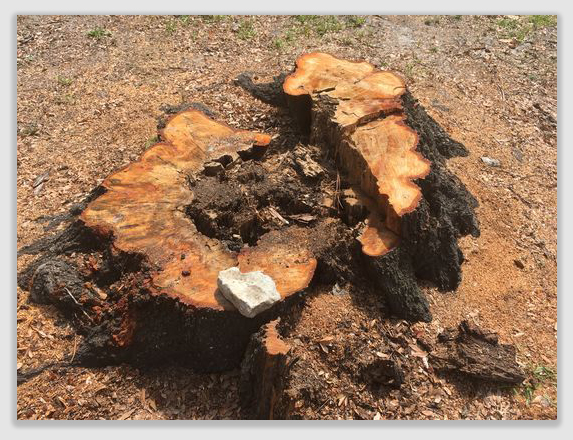
Homes throughout Florida are under constant siege by termites, but homes are not the only target these pests are attacking. Termites are wood feeding insects that live in large colonies like honey bees and ants. In forests, termite colonies play an important role in nature by feeding on decaying wood found on the soil floor. In addition to feeding on fallen trees and logs in forests, termites will also feed on wood building materials found in houses. Termites have the potential to cause extensive damage to a house if given the opportunity. It is estimated that soil dwelling termites cause an estimated $11 billion in damages per year in the United States. Pest control companies have long been battling termites in Florida, but an invasive termite from Asia has been particularly troublesome, not only in Florida but the rest of the Southern United States. This invasive termite, called the Formosan termite, was first introduced into Florida at Hallandale Beach in 1981…
Tree trimming companies are busy taking down dead trees before the big storm. Stephen Nadeau has a dead tree in his yard. “I scheduled this for the next week or the week after and because of the storm they squeezed up in like two weeks early,” he said. Jeff Trent is a certified arborist with “Tree Care by Robert Miller.” He says knowing the difference between the trees that help protect your home and the ones that could hurt it, is key. Some signs that your tree is dead and needs cut down are (1) brown leaves that don’t fall off; (2) big limbs that do fall off; and (3) ferns or mushrooms are growing out of the base of the trunk. The tree care company says there’s a lot of misinformation out there too…
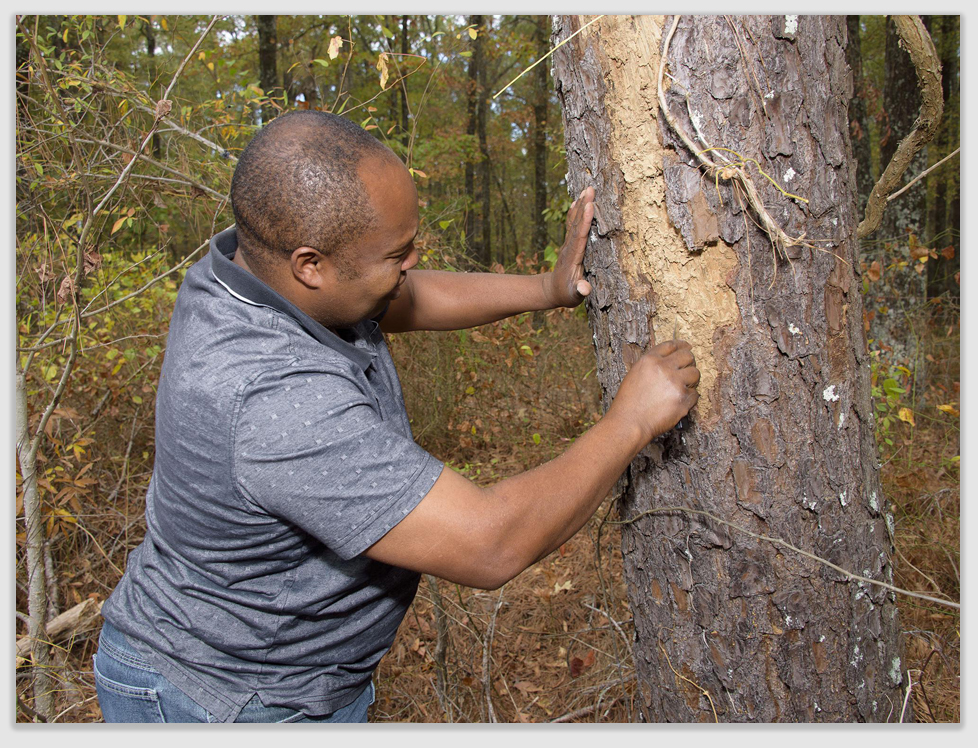
Mississippi is having a breakout of tiny beetles that use pheromones to gather sufficient numbers of reinforcements to overwhelm healthy trees. Current Mississippi Forestry Commission flyovers indicate nearly 5,000 separate Southern pine bark beetle outbreaks across the state. Outbreaks can range from just a few trees to more than an acre of infested and dying pines. Outbreaks are especially bad on national forestland, but homeowners and private landowners are also experiencing the problem. Thomas Legiandenyi, Mississippi State University Extension Service agent in Oktibbeha County, said he has had at least 10 calls in the last year from owners of small tracts of land who are wondering what is wrong with their pine trees. “My advice to homeowners is to frequently inspect your trees, not only for Southern pine beetles, but for any other problem on the trees,” Legiandenyi said. “If you have trees in your yard that have any disease, they become hazardous, as they could fall on your house, vehicles or even on people. Call a specialist when you see a problem…”
Chemical & Engineering News, Sept. 7, 2017: Trees with a probiotic boost clean up a carcinogen
Planting poplar trees that harbor a secret weapon—pollutant-busting microbes—could help clean up sites contaminated with the carcinogen trichloroethylene, a new study shows (Environ. Sci. Technol. 2017). In the first field trial of this approach at a Superfund hazardous waste site, poplar trees boosted by bacteria within their tissues brought groundwater concentrations of TCE to below the maximum contaminant level for drinking water set by the U.S. Environmental Protection Agency. TCE is used as a solvent and degreaser in industrial processes, and was recently declared a human carcinogen. It contaminates the soil or water of more than 1,000 Superfund sites around the U.S. Current methods to remove it from groundwater include sorbing it onto activated carbon or driving the pollutant out of water with a stream of air. But these methods are so expensive, says Sharon L. Doty of the University of Washington, that many site managers choose to monitor and isolate polluted areas instead of cleaning them up. Now she and her colleagues have developed a much cheaper approach. Using plants to soak up pollutants—a method called phytoremediation—can remove a variety of contaminants from soil and groundwater. Introducing symbiotic, pollutant-destroying bacteria to the plants has shown even more promise in lab tests, because carrying the bacteria seems to help plants stay healthier during the process and remove more pollutants. But so far, this probiotic approach has had mixed results in the field, sometimes because the introduced bacteria are outcompeted by naturally present soil microbes…
 Phys.org, Sept. 7, 2017: Billions of dead trees force US fire crews to shift tactics
Vast stands of dead timber in the Western U.S. have forced firefighters to shift tactics, trying to stay out of the shadow of lifeless, unstable trees that could come crashing down with deadly force. About 6.3 billion dead trees are still standing in 11 Western states, up from 5.8 billion five years ago, according to U.S. Forest Service statistics compiled for The Associated Press. Since 2010, a massive infestation of beetles has been the leading cause of tree mortality in the West and now accounts for about 20 percent of the standing dead trees, the Forest Service said. The rest were killed by drought, disease, fire or other causes. Researchers have long disagreed on whether beetle infestations have made wildfires worse, and this year’s ferocious fire season has renewed the debate, with multiple fires burning in forests with beetle-killed trees…
See also US News, Sept. 7, 2017: State-by-state look at standing dead trees in Western US
Local tree service companies say they have been inundated with calls from Charlotte homeowners concerned about the impact Hurricane Irma could have local trees. Arborists say many neighborhoods have a lot of old oak trees, the kind they say could become very dangerous during the storm. Certified arborist Tim Young remembers the devastation Hurricane Hugo caused in Charlotte in 1989. He’s concerned powerful Irma could do the same, and said people have been calling his tree service sharing their concerns…
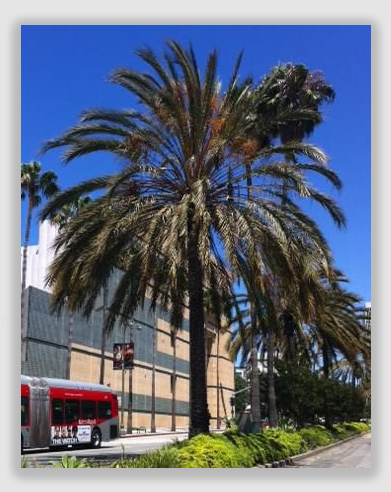 Lompoc, California, Record, Sept. 6, 2017: Streetwise about street trees
There is no such thing as a perfect tree. All trees have foliage that, one way or another, eventually falls to the ground. All trees have roots that might try to displace something that gets in their way. Many trees are messy in bloom. Some make messy fruit. Except for palms, all trees have branches that can be broken by wind. Just about any tree can be blown over if the wind is strong enough. This is why the selection of trees that are appropriate to each particular application is so important. Finding trees that provide enough shade, obscure an unwanted view or perform any specific function is one thing. Finding trees that behave while performing their assigned tasks is something else. There are always compromises. A certain degree of bad behavior will likely be tolerated. Street trees for a park strip between the curb and sidewalk can be the most challenging trees to select. There are so many variables to consider. Many neighborhoods have saved us the trouble of selection by prescribing a specific tree, or maybe limiting the choices to only a few species, whether or not they are actually appropriate. Otherwise, we are on our own, to select whatever we like…
Manchester, Vermont, Journal, Sept. 6, 2017: Restitution ordered for cut trees
A judge has ordered an Arlington man who admitted to cutting down a property owner’s trees without permission during a logging job to pay $28,000 in restitution. Jason P. Morse was charged after he cut down nearly five acres of trees on a Farm Road property two years ago during a logging operation that crossed property lines. In June, Morse, 36, pleaded guilty in Vermont Superior Court Bennington Criminal Division to a felony count of unlawful taking of tangible property. He received a two-year deferred sentence and was ordered to pay restitution. Judge William D. Cohen said during a recent hearing that the $28,000 would compensate the New Jersey property owner for damages from the unlawful taking of trees: A $25,000 loss in value to the 11-acre parcel and $3,000 to clean up the property. Vermont State Police were called in October 2015 after a Farm Road property owner found a logging trail and several acres where trees had been cut down. A logging operation crossed over the property line by several hundred yards. Neighboring property owners had hired Morse to remove trees from their property; they told police they had become worried Morse was taking trees from beyond their property line…
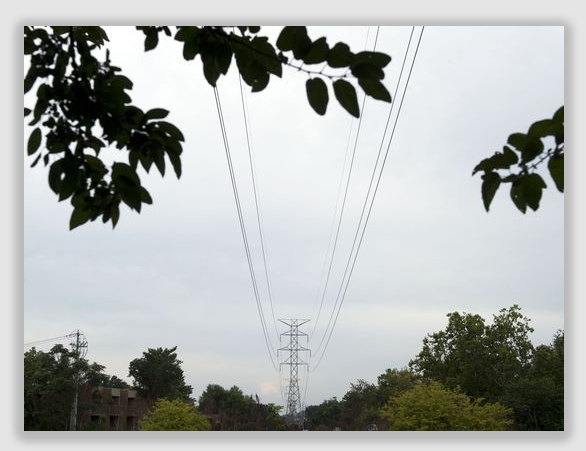 Knoxville, Tennessee, News Sentinel, Sept. 5, 2017: TVA obscures tree-cutting compliance on website
What is a “prominent location” on the TVA website to post an injunction order from federal court as required in that order? This came from Judge Thomas Varlan on July 31 to TVA on a case involving its tree-cutting practices. On Aug. 30, TVA filed a notice of compliance saying the order had been published on its website. However, if you go to the main page of http://www.tva.gov, you will not find it. There are no clues on how to find it. One must guess and do trial by error to stumble upon the posted injunction. Only when one goes to the energy section, then tries the transmission section will one ultimately discover the injunction, which was embarrassing to TVA. This is the case where TVA’s tree-cutting practices under power lines were held to violate federal environmental impact review requirements…
Santa Barbara, California, KEYT, Sept. 5, 2017: Man electrocuted after falling tree hits power lines
A man is in critical condition after he was electrocuted by a downed power line in Santa Barbara. It happened on San Pascual Street and Sutton Avenue just after midnight Tuesday. Part of a massive ficus tree fell and took down a power pole. The power pole and tree caught fire. Power lines were arcing on the ground. “We heard a huge bang, and saw flashing lights,” said resident Amanda Schneiderman. “We knew where it was coming from.” Schneiderman was shooting video and taking pictures with her cell phone when she noticed someone was on the ground…
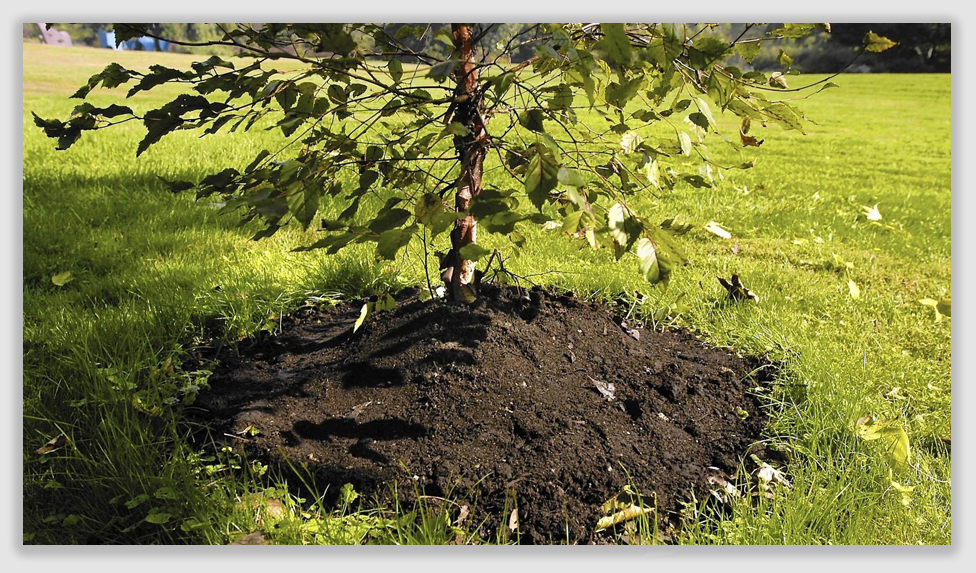 Chicago, Illinois, Tribune, Sept. 5, 2017: Too much soil or mulch at tree’s base can spell decay
Routine annual edging of tree rings often results in soil building up around the base of a tree, as soil that is cut from increasing the size of the saucer is put back around the tree year after year. Over time, the soil from the edging will mix with the mulch and build up around the trunk. Excess soil from the edging should be removed to prevent this from occurring. The situation is made even worse when a tree is planted too deeply. A tree trunk that resembles a telephone pole coming out of the ground is likely too deep. The trunk flare should be visible. The trunk flare is the point where the base of the tree widens out just before roots begin. In heavy clay soils, I prefer to plant trees high, with the trunk flare 2 to 4 inches above grade. Trees that are planted too deep quickly become buried with routine mulching and edging. Piling mulch up against the trunk of a tree is a bad maintenance practice and can cause problems for a tree. The landscape industry has a name for this practice: volcano mulching. The mulch will hold excessive moisture against the bark, creating favorable conditions for the bark to decay, which provides opportunity for fungi, bacteria and insects to get under the bark and damage the tree internally. The bark needs to be exposed to the air to function properly and protect the trunk. Excessive mulch also provides cover for mice and meadow voles, which can eat the bark and kill the tree as the flow of water and nutrients between the roots and canopy is blocked. Insects can also be attracted to bark that is softening or partially decomposing from excess mulch…
Why are my crabapples looking so bad? This question has been asked repeatedly by folks contacting the Michigan State University Extension Lawn and Garden Hotline this summer. The fungus, Venturia inaequalis, known as apple scab, is a leaf spot disease that can cause serious leaf drop on susceptible crabapple trees. Lengthy periods of rain this past May provided conditions for apple scab spores to develop. Scab-infected leaves from the previous season, left on the ground around the tree are the source of fungal spores that can infect the crabapple the next spring. Spores from these old leaves are carried on air currents to new developing leaves. This primary infection produces olive colored spots on leaves. As the fungus grows on the leaves, new spores are produced starting a secondary infection of leaves and fruit. Damaged leaves become curled and yellowish with lesions, eventually turning brown. Heavy disease pressure leads to premature leaf drop. Fruit infected by apple scab develops raised scab-like lesions and severely infected fruit will drop from the tree…
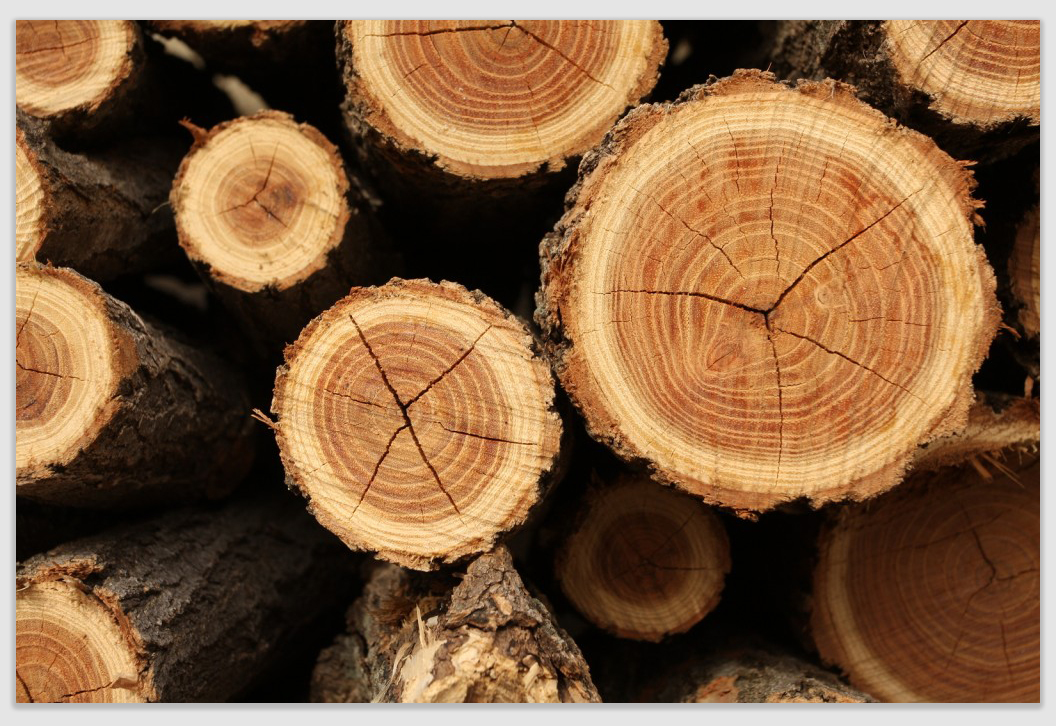
A judge has ordered an Arlington man who admitted cutting down a property owner’s trees without permission to pay $28,000 in restitution. Jason P. Morse was charged after he cut down nearly 5 acres of trees on a property two years ago during a logging operation that crossed property lines. In June, Morse, 36, pleaded guilty in Bennington County Superior Court to a felony count of unlawful taking of tangible property. He received a two-year deferred sentence and was ordered to pay restitution. Judge William D. Cohen said during a recent hearing that the $28,000 would compensate the New Jersey property owner for damages from the unlawful taking of trees: A $25,000 loss in value to the 11 acre parcel and $3,000 to clean up the property. Vermont State Police were called in October 2015 after a Farm Road property owner found a logging trail and several acres where trees had been cut down. A logging operation crossed over the property line by several hundred yards. Neighboring property owners had hired Morse to remove trees; they told police they had become worried Morse was taking trees from beyond their property line…
Atlanta’s Grant Park is full of historic trees, but many near the main road are marked with orange Xs. Leigh Finlayson lives across the street from a row of trees on Boulevard Street, many of which are more than 50 years old, where a semi-underground three-story parking deck is planned. He’s leading the campaign to save some of the 131 trees on the chopping block by calling for the city of Atlanta to build a smaller parking deck and move it further inside the park. Finlayson has filed a tree conservation appeal with the city to save some of the trees, WABE Radio reported . “This is a late-life conversion, if you will,” said Finlayson, a criminal defense lawyer. “I was a Boy Scout as a kid, I spent a lot of time in the wilderness, but this was never my calling or mission until it just came to my front yard. Now it’s become a priority.” Finlayson questions why the parking deck has to be so large. “Why this deck has to be 1,000 spaces makes no sense,” he said. “I think there are good people that mean well here, but this is a no brainer. If it could be limited in a way, at least save the trees on Boulevard, I could probably stomach it better…”

Whether a city ordinance aimed at preserving trees planted before San Carlos’ 1925 incorporation will continue to protect eucalyptus trees lining San Carlos Avenue between Sycamore Street and Dartmouth Avenue has sparked concerns among residents hoping the trees will be maintained as a city landmark and key part of the city’s tree canopy. After heavy storms this winter caused a eucalyptus tree to fall near Arundel Elementary School at 200 Arundel Road in January, city officials have been focused on studying the safety of 44 of the non-native tree species on the 1.3-mile stretch of the corridor. The Planning Commission is now set to consider whether the city’s founder’s tree designation, which protects 30 of the 44 trees from removal, should be removed from the city’s municipal code at its Tuesday meeting. City planner Lisa Costa Sanders said by removing the founder’s tree designation from the city’s code, officials would not be putting other protected tree species in danger of removal as they would be protected by their size and species. Though 30 eucalyptus trees are believed to have been planted in the late 1800s, prior to the city’s incorporation in 1925, four were removed in July after they were deemed to be dangerous with several others pegged as potential hazards, according to a staff report. “It’s hard to predict trees, you don’t know when they’re going to come down,” said Costa Sanders. “It’s not an exact science…”
The individual trees in the Amazon rainforest play a crucial role in keeping the rainforest intact. Not just because the trees together create the forest, but also because – together – they create the climate (through something called the shallow moisture convection pump). Take home message: in order to preserve the Amazon, deforestation really has to stop completely. A ‘meeting in the middle’ compromise does not work – as (amplified by global climate change) that promotes devastating droughts in the remaining part of the forest. As we’ve learned in this series, in face of the Anthropocene Extinction tree species are (probably) even more threatened than birds, amphibians and mammals. That naturally brings us to the Amazon – the largest terrestrial hotspot of biodiversity, and an ecosystem with huge significance to the global climate system. It is also the ecosystem with the largest number on endemic-only tree species…
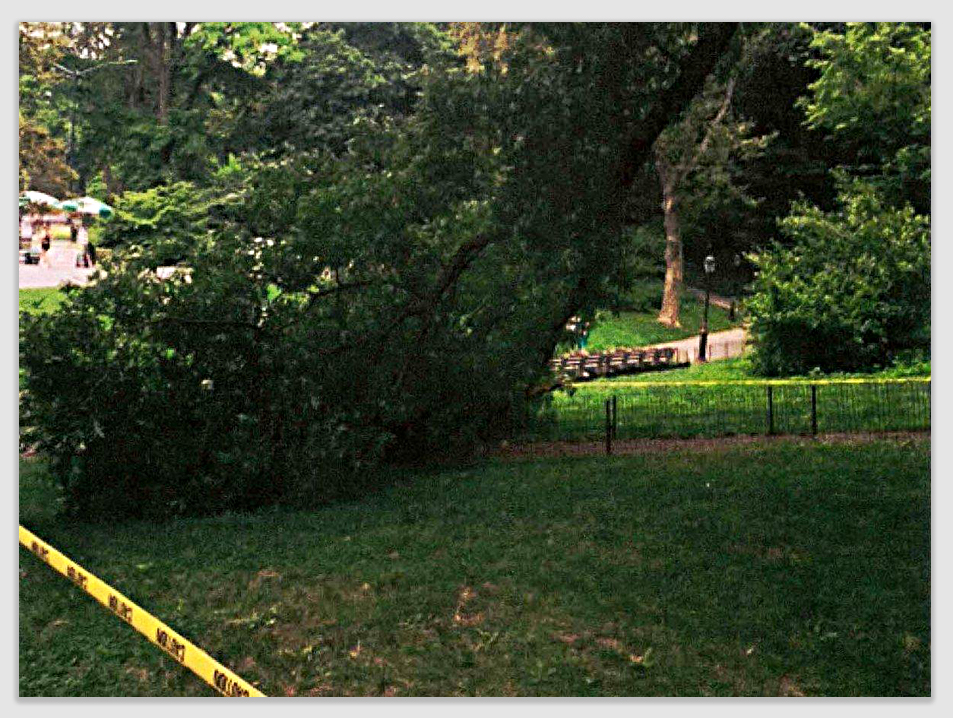
An Upper East Side woman struck by a falling tree branch in Central Park sued the city Thursday, saying she has “severe and permanent” injuries. Heleyn Frumin, 64, charges in the suit — filed in Manhattan Supreme Court — that a plummeting tree limb fractured her ribs and injured her head, left elbow, right knee and right foot on W. 74th St. on July 18, 2016. Photos included in court papers show a massive, leafy branch roughly the width of a trash can lid strewn across a wide path in the park. Frumin declined to comment. A city Law Department spokeswoman said they are reviewing the complaint. The Central Park Conservancy declined to comment, citing pending litigation…
Flathead County Commissioner Phil Mitchell pleaded not guilty to a felony criminal mischief charge after allegedly killing six cottonwood trees at a public park near his home on Whitefish Lake. Mitchell appeared at an arraignment on Aug. 31 in Flathead County District Court before Judge Heidi Ulbricht. Mitchell is scheduled to stand trial in January. As a condition of Mitchell’s release, county prosecutor Ed Corrigan asked the commissioner to stay out of the park near his residence until the case is resolved. According to court records, on July 11, a Flathead County Parks and Recreation Department employee found six dying or dead cottonwood trees in a half-acre county-owned park known as Lake Park Addition just south of Whitefish Lake State Park. The trees appeared to be girdled, a tactic that involves removing a thick strip of bark ringing the tree’s circumference, causing the tree to die…
 Mother Nature Network, August 31, 2017: An ancient tree that stared down Hurricane Harvey has become an unlikely hero
While much of Texas reels from the aftermath of Hurricane Harvey, one very old resident remains unbowed. In fact, while younger, lesser trees in Goose Island State Park were left shattered in the storm’s wake, a mighty oak, — affectionately dubbed “the Big Tree” by locals — remains unbroken. Earlier this week, Texas Parks and Wildlife posted a telling photo to its Facebook page. The scene — mulched, broken branches scattered everywhere — suggests a postcard from some arboreal apocalypse. And on the back of that postcard? Harvey was here…
Aberdeen, South Dakota, Farm Forum, August 31, 2017: Tree facts: Understanding Dutch elm disease
The American elm was formerly considered to be the ideal street tree because it was graceful, long-lived, fast growing, and tolerant of compacted soils and air pollution. The Dutch elm disease (DED) fungus was first introduced to the U.S. on diseased elm logs from Europe prior to 1930 and began devastating the elm population. It has now spread throughout North America and has destroyed over half the elm trees in the northern United States. The disease has been reported in all states except the desert Southwest. DED symptoms are the result of a fungus infecting the water conducting system of the tree. Once the fungus is established within a tree, it spreads rapidly through the water-conducting vessels. The tree forms gums clogging up these vessels causing the tree to wilt and eventually die. Infected elm trees show wilting, curling and yellowing of leaves on one or more branches and usually the sapwood has brown streaks. DED is spread by two kinds of bark beetles that attack elm trees: the smaller European elm bark beetle and the native elm bark beetle. They are elm pests because they carry the DED fungus as they move from infected breeding sites to feed on healthy elm trees. The numbers of the European species are reduced by cold winters while the Native species is more common and important in the spread of DED. Most emerging beetles feed on healthy elms within 1,000-1,500 feet of where they hatched. However, beetles may rise to altitudes of several hundred feet and are carried by air currents for many miles…
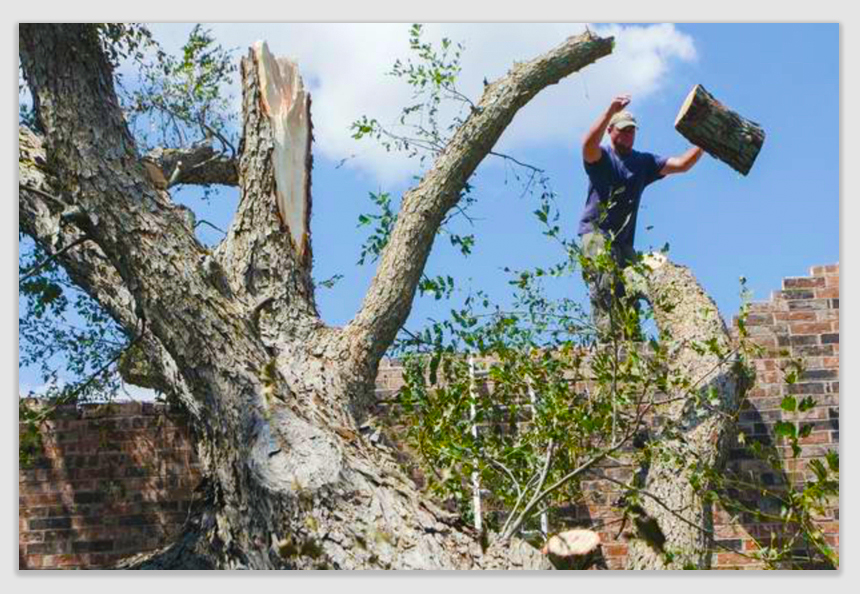 Victoria, Texas, Advocate, August 30, 2017: Tree trimming companies bogged down with calls
Joseph Forrest is from the Killeen area, but came to Victoria Sunday night to offer his landscaping services. As owner of the small business, Rock Bottom Landscaping, he has been driving around Victoria providing written estimates to customers on the spot. There are many Victoria area tree-service businesses available, but owners say they are inundated with calls because of the damage from Hurricane Harvey. Tree trimming and removal does not require any city permit nor does fence building. Many businesses welcome the help, but hope out-of-area businesses aren’t taking advantage of their customers…
Dayton, Ohio, WHIO-TV, August 30, 2017: Repeat walnut tree thief sentenced to more prison time
A Tipp City man already serving prison time and facing orders for restitution totaling more than $100,000 for stealing walnut trees in Miami and Greene counties was back in court Tuesday, Aug. 29, to face additional theft charges, this time involving trees owned by the city of Tipp City. Daniel Padgett, 29, pleaded guilty in Miami County Common Pleas Court to a fourth-degree felony theft charge for the theft of trees in the area of the Tipp City Nature Center near the Great Miami River. The theft occurred between Dec. 25 and Jan. 29, according to court paperwork. He pleaded this spring in the same courtroom to theft of walnut trees on private property owned by two individuals and the Tipp City Eagles and to selling the wood without permission. He initially was sentenced to $94,500 restitution and 60 days in the county jail but was returned to court the following day after a deputy found a bottle of urine taped to his leg while taking him to jail following the sentencing. He then was sentenced to nine months in prison…
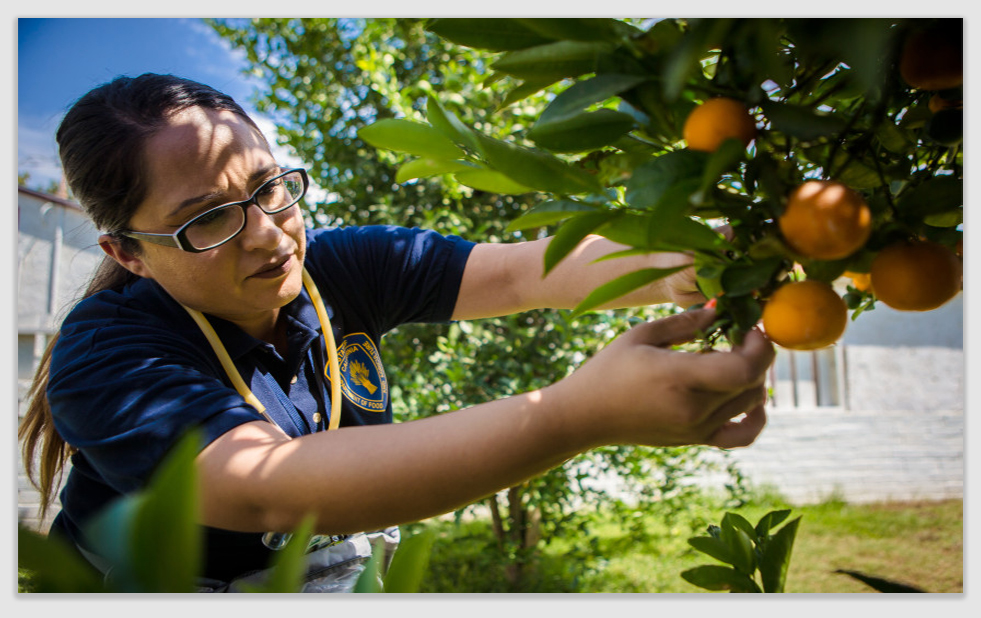
A second Riverside tree has been identified with citrus greening disease. Agriculture officials said they received notice of a positive test late Monday for an orange tree on a property adjacent to the one where the first tree to test positive for citrus greening was found earlier this summer. Both trees are near the 60/91/215 freeway interchange. The second tree was removed Wednesday. Citrus greening, which first showed up in Southern California in 2012, has decimated citrus groves in other parts of the country. It is carried by the aphid-like Asian citrus psyllid. Infected trees exhibit mottled leaves and fruit that is misshapen and fails to ripen, remaining green. The fruit also tastes bitter. There is no known treatment for the disease and trees usually die within three to five years…
Douglas fir trees that survived the recent Frye Fire in the Pinaleño Mountains near Safford are prime habitat for endangered Mount Graham red squirrels — but those trees are threatened by tree-killing bark beetles. What to do? Bring on the pheromones. Members of a national forest Burned Area Emergency Response (BAER) team plan to treat 300 acres of unburned Douglas fir forest in the fire area with MCH pheromone. MCH duplicates the natural pheromone emitted by male bark beetles — a pheromone that sends a signal to other male beetles that a tree is already taken…

A 2-year-old girl was critically injured Tuesday when a massive eucalyptus tree limb crashed onto a playground at a day-care facility in Pasadena, officials said. The incident occurred about noon, when more than a dozen children were playing outside at Linda Vista Children’s Center, said Pasadena Fire Department spokeswoman Lisa Derderian. Two other children, a 3-year-old and a 4-year-old, were treated for minor injuries caused by the fallen 20-foot tree limb. Parents were notified of the incident, and some picked up their children early, Derderian said. The school will remain open until 6 p.m. Social workers were on hand in case any children showed signs of emotional distress. Officials are investigating what caused the limb to fall. “We really maintain our trees on a routine basis, but Mother Nature sometimes has its own plans with things like this,” she said…
New analysis of centuries-old trees in South America has revealed a strong correlation between wildfires and periods of warming. The history of Earth’s climate features frequent fluctuations in global temperatures, including many periods of warming. In modern history, periods of warming have occurred more frequently — interrupted by shorter and shorter periods of more and more moderate cooling. By comparing evidence of wildfire scarring among tree rings with climate records, scientists can tease out the relationship between fire and climate change. In the most recent study, researchers at Portland State University surveyed evidence of wildfire scarring among 1,767 trees spread across 97 South American sites, including trees from a range of ecosystems. The evidence revealed a strengthening relationship between periods of warming and wildfire frequency…
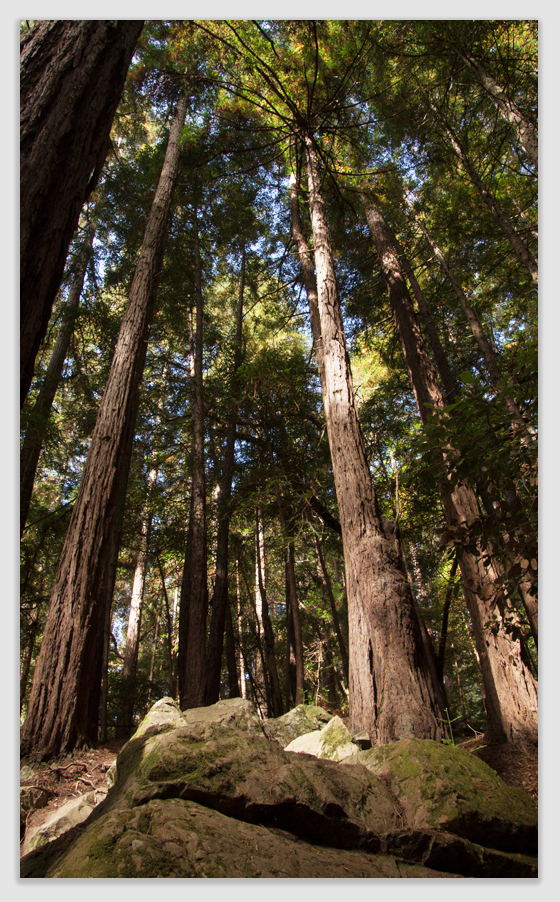 Treehugger, August 29, 2017: 11 facts about coast redwoods, the tallest trees in the world
Before the 1850s, coast redwoods (Sequoia sempervirens) luxuriated amongst some 2 million acres of California’s coast, stretching from south of Big Sur to just over the Oregon border. One of three members of the Sequoioideae subfamily of cypress trees, the coast redwoods and their cousins, the giant sequoias (Sequoiadendron giganteum), hold the records for tallest and largest trees in the world, respectively. For thousands of years the people of the area managed to live in harmony with these ancient trees, understanding the importance of their unique forest ecosystem. And then the gold rush happened. With the arrival of hundreds of thousands of gold-seekers starting in 1849, the redwoods were doomed. Logged into near oblivion to keep up with the demand for lumber, today, only 5 percent of the original old-growth coast redwood forest remains, fewer than 100,000 acres dotted along the coast. The loss is heartbreaking … and gives all the more reason to sing the praises of these supertrees. And praise is easy, considering how spectacular they are. Consider the following…
The name is terribly misleading — if of heaven, how so bad? Originally from Eastern China, Japanese observed how fast the tree grew, especially on the ridges exposed to sunshine. They said it was growing to heaven. Local nurseries loved the name and it stuck — the most ridiculous marketing tag ever foisted on an unsuspecting public. Maybe we should stop using Tree or Heaven and call it by the scientific name Ailanthus altissima. For those of us who battle the tree three times each week, this is the “tree from hell.” The name makes it an uphill battle. Let’s move from the world of marketing fiction to facts. The Trees Coalition designate the Tree of Heaven as the No. 1 plague for native trees in Spartanburg. We are not alone. The Clemson Cooperative Extension and South Carolina Exotic Pest Plant Council (SC-EPPC) publish a pamphlet that lists various invasive species in South Carolina. They use a severity classification: Severe, Significant, and Emerging. Tree of Heaven (TOH) receives the worse rating: “Severe…”
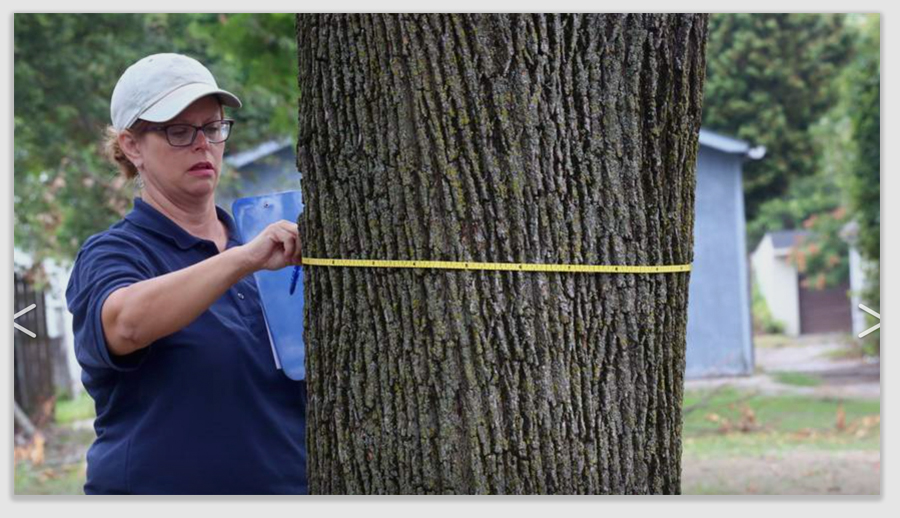 Toledo, Ohio, Blade, August 28, 2017: Five-decade tree study continues in Toledo
Data was collected in Toledo again Monday for a little-known tree study that has been done in five Ohio cities the past 50 years. Called the Street Tree Evaluation Project, the ongoing study generates information every decade about the health and growth of city trees in Toledo, Columbus, Cincinnati, Cleveland, and Wooster. In each city, select residences have been part of the study since it began in 1967. Once every 10 years, officials from the Ohio Department of Natural Resources’ Division of Forestry and Ohio State University Extension revisit the neighborhoods to assess trees in the middle and to the left and right of chosen addresses. They measure diameter, height, and canopy while also making visual observations about how, if at all, neighborhoods have changed. They also take photographs and make general observations about tree health…
Hurricane Harvey has claimed another victim after a woman was killed Monday when a tree fell on her home as she slept, Montgomery County officials say. The Montgomery County Sheriff’s Office said they were dispatched to a mobile home on the 17400 block of Louis Lane in Porter after a massive oak tree fell onto a home with a resident trapped inside. After walking through flood waters, deputies arrived at the woman’s home and spoke with her husband. He told police he was sitting inside the home when the tree toppled over. He said he screamed for his wife, who was napping in the bedroom, but that he was unable to get to her or to help her. The man said he then left the home to try to find help…
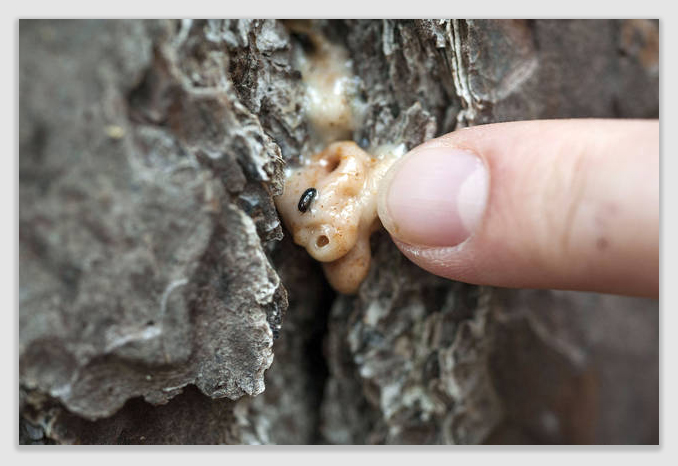 New York City, New York Times, August 28, 2017: Tree-eating beetles march north as winters warm
For lovers of the stately pine forests of the Northeast, sightings of a destructive tree-eating beetle in recent years have been nothing short of alarming. Now, new research from climatologists at Columbia University confirms what ecologists feared: Warmer winters mean the southern pine beetle is here to stay, and is set to march ever northward as temperatures rise. Historically, the tiny beetles, which starve evergreens to death, were largely unheard-of north of Delaware. The Northeast’s cold winters killed off any intruders. The winters are no longer cold enough. Over the last 50 years, average annual temperatures in the northeastern United States have warmed by about 1 degree Fahrenheit. But crucially for the beetles, the year’s coldest nights — which determine whether they survive the winter — have warmed by as much as 7 degrees Fahrenheit…
The city Parks Department is partnering with two forestry and conservation groups on a project that is aimed at helping to restore American elm trees to the Connecticut River Valley decades after being devastated by Dutch elm disease. Approximately 130 disease-resistant elm tree saplings, now being grown inside University of Massachusetts greenhouses in Amherst, are slated to be relocated and replanted at the Forest Park nursery in September under the new elm tree restoration collaboration, officials said. Half of the trees, once mature, will be planted as urban trees on the streets of Springfield, and the other half will be planted in areas along the Connecticut River, said Christian Marks, a representative of The Nature Conservancy, one of the participating groups…
 Lansing, Michigan, State Journal, August 27, 2017: McCarthy: Tax policy and trees go hand in hand
Fall will be arriving shortly. When it does, Washington’s attention will turn to overhauling the tax code. I will be glad to see a simpler, more streamlined tax code. But Congressional leaders, like my own Rep. Mike Bishop (MI-8), must consider how taxes impact Michigan’s family forest owners. Michigan counts on forests for clean air, clean water, $14.6 billion in economic revenue, and 154,000 jobs. What’s more, families and individuals own 45% of these forests, more than the government or corporations…
A falling tree left three people, including an infant, injured at Twin Falls State Park in North Bend Sunday morning. Officials say a father, in his 30s, was in critical condition. His 16-month-old son, who was in a child carrier, was also in critical condition. “The father took the child off the carrier and handed it over to a different person, who then ran to the trailhead to get it to aid immediately while they were calling 911,” said Dep. Daniel Arvidson of the King County Sheriff’s Office…
 St. Thomas, USVI, The Source, August 27, 2017: Senate holds bill aiming to protect heritage trees
A bill to protect individual trees with historic or cultural value was unanimously held Friday for further consideration and amendment. The vote on the bill, No. 32-0062, occurred at a hearing of the 32nd Legislature’s Committee on Government Affairs, Veterans, Energy and Environmental Protection. In addition to establishing a framework for the protection of “heritage trees,” the bill, sponsored by Senate President Myron Jackson, sets guidelines for the management of trees in public spaces, as well as some trees on private property, including those that pose a public hazard or nuisance. If passed, the regulations proposed by the bill will be added to the V.I. Code under the title “The Community and Heritage Tree Law of the Virgin Islands…”
A downed tree on River Road this past week totaled a BMW and nearly took the life of the driver, according to Planning Board member James Whitin. In response, Whitin brought a petition to selectmen with 35 signatures asking for more attention from the town toward removing downed trees, limbs or dead trees that have been destroyed by gypsy moths or other insects. The latter issue has especially led to trees falling in the roadways, according to Whitin, who said River Road and the Westport Harbor area are especially susceptible to the problem. “It’s causing a health hazard to motorists driving by,” Whitin said…
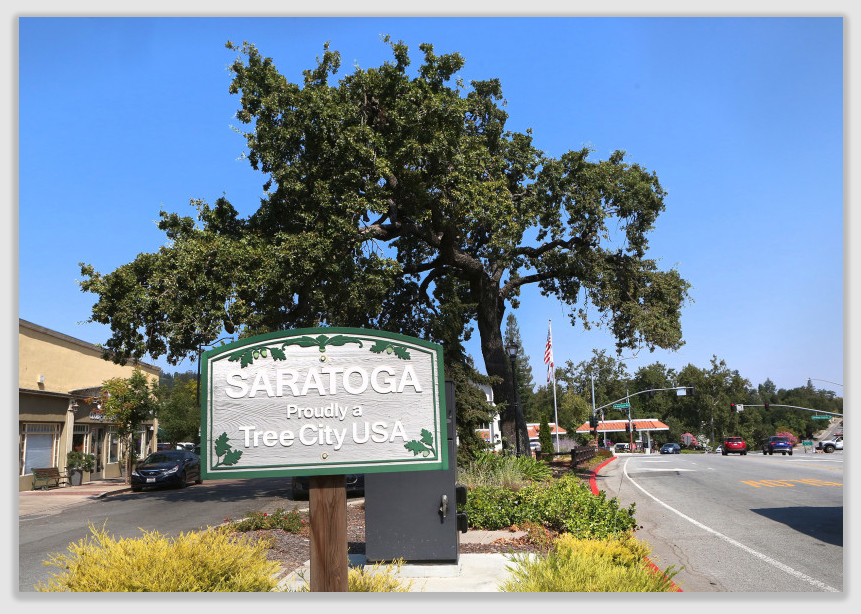
Saratoga Planning Commission’s ideas for potential changes to the city’s tree ordinance were met with push-back from the city council and Heritage Tree Society’s Jill Hunter. Ultimately, the council decided that the city’s tree regulations are fine as they stand, but offered to implement some of the the commission’s ideas in other ways. City Arborist Kate Bear presented three of the commission’s suggested changes as part of Saratoga’s 2017 work plan: excluding certain species that are invasive (like blue gum eucalyptus), mark trees in the open when story poles are installed; and make requirements for tree replacement projects more consistent. Current requirements for replacing removed trees vary depending on whether the tree is removed in conjunction with a project or via tree-removal permit. Planning commissioners said it’s easier for residents to do the former, since they’re allowed to add to their homes and pay a fee in lieu of planting new trees…
Giovanna Gambino says she loves her home on Ionia Avenue, but hates the city tree in her front lawn. “I’ve been battling the city for over a year. I’ve spent more than a thousand dollars on repairing my pipes,” Gambino said. “I’m done.” PIX11 reached out to the Parks Department and a spokesperson responded, “NYC Parks Forestry inspected this city tree today and spoke with the homeowner. We will be sending a crew to prune the tree for dead wood and branches within a week.” They also say the city does not reimburse home owners for plumbing repairs—tree roots cannot invade a pipe unless there is a pre-existing hole leaking water and sewage into the soil, which is illegal. Tree roots will follow water flow toward the source to exploit the nutrients…
 Cortez, Colorado, The Journal, August 23, 2017: Centuries-old Ute Council Tree becomes unstable
A cottonwood tree that provided shade for the Ute tribes of western Colorado before the arrival of white settlers has grown rotten and unstable and must be trimmed into a memorial that recognizes its once-imposing stature. The Ute Council Tree in the western Colorado town of Delta is believed to be about 215 years old. But the cottonwood can no longer be considered safe, The (Grand Junction) Daily Sentinel reported. The Ute tribes whose forebears lived in western Colorado before 1881, when the region was opened up for settlement, will be consulted about what steps to take next, Jim Wetzel, director of the Delta County Historical Society Museum, said Friday…
A Lincoln resident has filed a claim against the town after a rotting tree on town property allegedly fell on him while he stood in his driveway, causing several fractures in his leg. A claim from resident Roland Demers, filed through the Thomas E. Sparks Attorney at Law office, reads that on June 18, Demers was standing in his driveway on Preserved Arnold Court when the rotting tree fell on and injured him. The claim reads, “As a result, Mr. Demers suffered multiple fractures to his left leg which have required medical care.” The amount claimed is “to be determined upon the completion of medical treatment,” and the document states that the town is responsible for the expenses…

A tree cutting job went dangerously wrong on Tuesday morning. A company showed up to chop down a tree only to have it crash the wrong way onto a house. Someone was inside at the time. Luckily they weren’t hurt, but there’s significant damage to the home. Now, NBC Charlotte is looking into your rights as a homeowner. The tree that crashed through the roof looks like something you might see after a severe storm, but the homeowner blames a couple of workers next door. “It sounded like everything was crashing,” says Donita Hoffler, who was inside the home at the time…
It is a memorial in honor of the two lives lost a month ago. Eighteen-year-old Isaiah Basham and his 15-year-old girlfriend crashed into a tree on Herr Lane at Westport Village.”Touching on the tree, it feels like you are connected with him,” Imani Thompson said. Thompson comes to the tree to remember her lifelong friendship with Basham. But, the tree could be coming down soon.A spokesperson for Westport Village says its health and integrity were compromised after the crash. Thompson says that’s not enough reason to get rid of it. “Of course, nobody will ever understand, especially people wanting to cut the tree down because it’s not their family,” she told WHAS11…
 Organic Life, August 22, 2017: 4 things you need to know to plant a new tree
Planting a tree. It seems simple, right? For all intents and purposes your task is clear: dig a hole and stick your tree in it, leaf side up. However, there are lots of insidious pitfalls to this process, all waiting to ruin this—your tree’s crowning moment. Planting your tree with care, properly, will set it up to flourish long years into the future. Here’s how to do it. More than the hole digging, more than the years of watering ahead, site selection is the single most important part of your tree planting story. Envisioning a beautiful blossomer smack dab in the middle of your hot and sweaty yard? Pick a tree that will luxuriate in that heat and not languish away. Similarly, if there’s a shady back corner of the garden you want to see lit up with fruits or flowers, choose something that can tolerate those conditions (magnolias can be great for part shade)…
Jason Writz, owner of Mountview Tree Experts based in Fort Collins, Colorado, decided to kill two birds with one stone when he started up FreeWoodChips.net. As a tree-trimming company, Writz was often stuck with a truck full of wood chips that he would have to take to a dump site and pay to get rid of. However, he also knew that wood chips serve as a good organic mulch. Building his website from the ground up, he created FreeWoodChips.net, which connects tree services looking for locations to dump chips with homeowners in search of some fresh mulch. “Knowing the industry, tree businesses are always looking for convenient places to dump,” he told the Reporter-Herald. Writz has often been called by homeowners asking for any wood chips they happen to have and he says using organic mulch “is the single best thing you can do for your plants’ health…”

Invasive earthworms from Europe that came over with early settlers and have been moving across North America ever since are causing sugar maple trees to decline in northern Minnesota forests. That was the conclusion of a research project published in the latest issue of the journal Biological Invasions — the second major project in as many years pointing to earthworms as the culprit in northern Minnesota forest problems. Scientists in the latest study, led by Michigan Technological University biologist Tara Bal, looked at plots of maples in Michigan’s Upper Peninsula, Northeastern Minnesota’s Superior National Forest and northern Wisconsin, and found maple trees experiencing “dieback” due to disturbances on the forest floor. That disturbance was worms eating the leaves. Dieback is when top branches that should be full of leaves instead had bare spots. That’s a sign of tree decline, where trees stop growing or die. In some areas, timber companies said maples were dying and becoming worthless even before they could be harvested…
Rochester, New York, Spectrum News, August 21, 2017: Majestic trees no longer line Kings Highway
More than 40 trees along Kings Highway in Irondequoit, all infested with Emerald Ash borer, were taken down by the town to the dismay and resignation of neighbors. Town Supervisor Dave Seeley says there just isn’t time or money for alternative methods to deal with the problem. The town has identified dozens and dozens of sick trees, and is chopping them down for safety and to contain the invasive species. “You do it with a heavy heart because these trees are beautiful and that’s why the spread of the Emerald Ash Borer is tragic really in so many sense,” said Seeley. “You never want to see them go but we always make an effort to replant them when they come down.” A stump grinder will do away with the stumps and roots, as every trace of the tree must go. Since it’s a county road, it’s up to the county to determine what if any trees will replace those fallen…
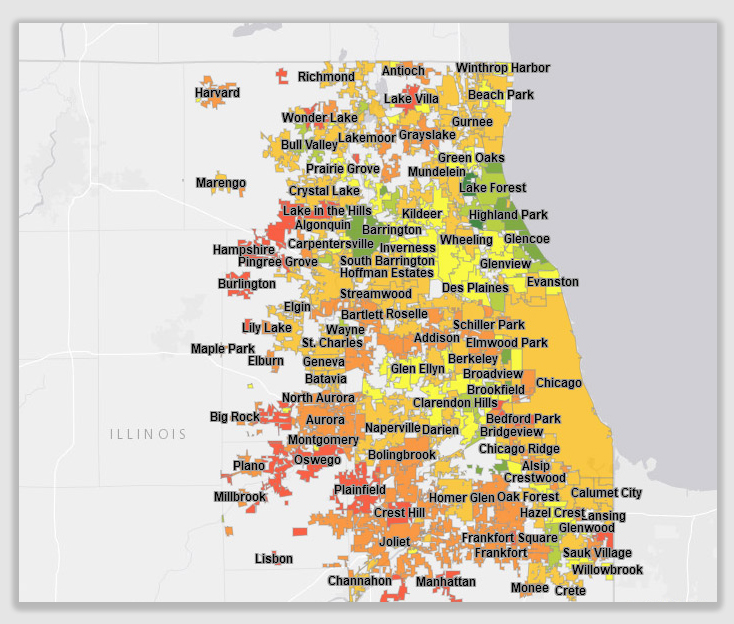 Free Thought Blogs, August 21, 2017: The intertwining of trees and crime
There’s been some very interesting research happening in Chicago, and it turns out that trees reduce crime. I don’t find this surprising at all, but I’m a “must be attached to the land” person. When your environment is bleak and desolate, you end up with bleak, desolate, desperate people. We need to be aware of our earth, we need to be connected to our planet. In urban environments, the best way to restore that connection is with trees. Yes, they are a long-term investment, but that’s good, because it means people are thinking the right way, generations ahead of themselves. In June, the Chicago Regional Tree Initiative and Morton Arboretum released what they say is the most comprehensive tree canopy data set of any region in the U.S., covering 284 municipalities in the Chicago area. Now, that data is helping neighborhoods improve their environments and assist their communities. “When we go to talk to communities,” says Lydia Scott, director of the CRTI, “We say ‘trees reduce crime.’ And then they go, ‘Explain to me how that could possibly be, because that’s the most bizarre thing I’ve ever heard…’”
Last Friday, as is customary almost 52 Fridays every year, I was driving east toward Chillicothe on the George Washington Highway, otherwise known as U.S. Route 50… I was traversing the George By God Washington Coast to Coast Highway across these here United States. And I was duly offended. Why? Glad you asked. For one thing, it was the trees dotting the roadside landscape from west to east. There were white oaks, red oaks, black walnuts and yellow poplars. I may have even seen an Asian beetle or two. How, pray tell, after 241 years as a United States of America, did we get to this point where even our trees are defined along potentially racial divides? Forget about tearing down historic monuments that pay understandable homage to the Washingtons, Jeffersons, Hamiltons, Jacksons, Lincolns and Lees. We have a far more serious crisis with the naming of our national trees. And don’t even get me started on the Canada goose, that noble black-and-white brant (yes, it is black, and it is white) with its loud, trumpeting call…
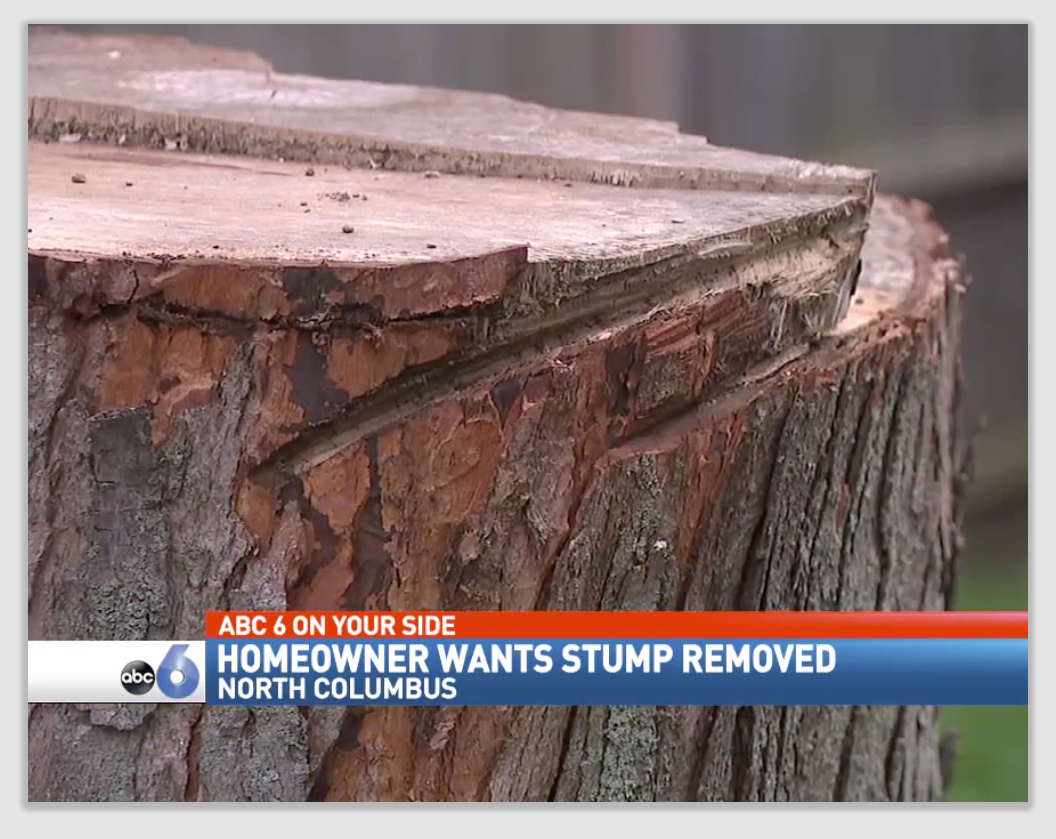
A homeowner says a tree service didn’t finish a job after he paid most of the bill. Jeff Ludwig reached out to ABC6/FOX28 to get answers from Lumberjack Tree Specialist. We reached out to the company and a sales rep told us by phone he’d be out Saturday to finish the work. Ludwig says he isn’t counting on it. His backyard patio sits feet from an eyesore. “It’s not a very good table but I’d rather just have grass,” said Ludwig. Ludwig is stumped about what to do about it. “I probably don’t have the funds to get somebody else to come out and finish the job,” said Ludwig. Ludwig says he agreed to pay Lumberjack Tree Specialist $1,350 to remove a more than 20-year old silver maple from his backyard…
As the West Virginia Turnpike gains in age, the highway is starting to experience problems maintenance crews have never had to deal with. The most conspicuous is taller trees starting to fall across the roadway. The problem is particularly pronounced in the narrow and remote stretch between the Mossy and Mahan exits of the highway. “During the original construction in the 50’s and in the 70’s and 80’s when it was widened those trees were removed,” said Turnpike Consulting Engineer Randy Epperly. “Now they’ve started growing back and in 40 years they’ve gotten to be substantial sized trees.” The taller trees have reached a point when they fall in a storm, they are long enough to cause an obstruction in the roadway. The concrete median barrier there has made missing some of them impossible and downed trees have been the catalyst for a number of lane closures this summer…
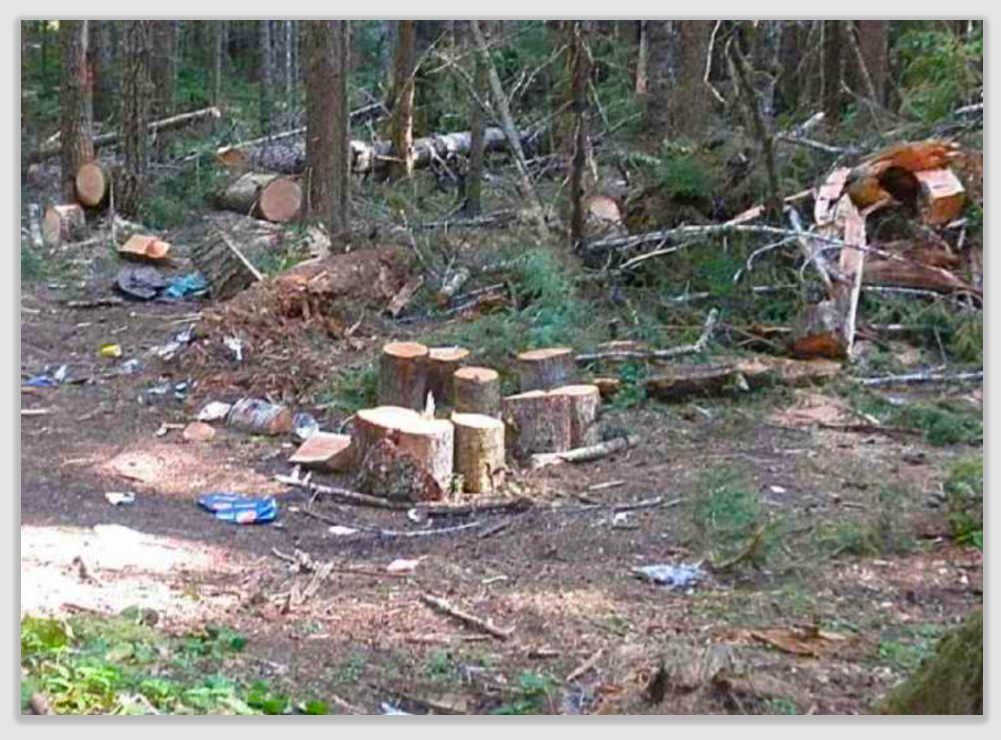
“To live outside the law, you must be honest.” That was Bob Dylan’s poetic-if-inscrutable advice to those disinclined to walk the line. Here’s some guidance that, for one Washington man at least, would’ve been a little more useful: To get hammered on Mike’s Hard Lemonade while stealing trees, you must not leave the receipt with your empties. Douglas fir poacher Richard Ivan Huggins learned that lesson the hard way after U.S. Forest Service rangers found his trash pile. Huggins, 32, left a Walmart receipt for his 12-pack of Mike’s amidst the stumps in the Olympic National Forest. Huggins, a longtime Olympic Peninsula resident, was spared jail and sentenced Friday to probation. He previously pleaded guilty to degradation of government property…
The U.S. Department of Agriculture’s Animal and Plant Health Inspection Service (APHIS) wants to remind the public that August is Tree Check Month. This is the best time to spot the round, drill-like holes made by the Asian longhorned beetle (ALB), a highly destructive, invasive pest that destroys trees. It has not yet been confirmed in Florida but we are on the lookout for it. Asian longhorned beetle has the potential to destroy millions of acres of America’s treasured hardwoods, including maple, birch, elm, willow, ash and poplar trees. Unfortunately, there is currently no cure to save infested trees. Infected trees will need to be removed to keep the beetle from spreading to nearby trees, as well as to protect homes and other personal property, since infested trees will die and can drop branches. The beetle is slow to spread on its own during the early stages of an infestation, so early detection and reporting is critical to containing it. People can also help by not moving firewood from areas quarantined because of the ALB, which can transport the beetle hidden inside to new locations…
“The summer is the most unfavorable time to plant,” a young mom writes down in a small notebook as her pigtailed toddler stomps on the gravel between the white Canyon Snow Irises and the Asclepias speciosa. The latter is better known as “Showy Milkweed”—a common host plant for the endangered Monarch Butterfly, and a source of food, fiber and medicine regularly used by the Native Americans. “The soil gets too warm because of hot temperatures, and more often than not, the plants don’t survive after being transplanted into the ground at their new home,” says her friend who just finished speaking to an employee of the Tree of Life Nursery (TOLN), where the two women are shopping. “Apparently, planting in the fall is the best time for increased chances of germination if you’re growing from a seed. There’s also a better chance for survival after transplanting into soil during fall, too. Spring is the next best time to plant.” A young couple walks past Casa La Paz, a gift shop loaded with literature by naturalist authors such as John Muir and Henry David Thoreau, other educational books on California mushrooms and how to cook with honey, and open-air style paintings of California landscapes done by local artists. They walk along a dirt path and wander over a small bridge past a sign warning of the possible presence of rattlesnakes…
It’s mystical, medicinal and beloved — and likely the only one of its kind in South Florida. The end is seemingly near for a venerable dragon blood tree in downtown Fort Lauderdale, across from city hall. The distinct tree’s origins are in Yemen but the city’s stately specimen stands on a grassy 3.5-acre city-owned lot on the west side of Andrews Avenue between Northwest Second and Fourth streets. After a large rotted portion of the rare dragon blood tree — so named for its crimson red sap — split and toppled in June, a city forester recommended its removal. But before that happens, David Crosby, a tree lover in Plantation, wants to adopt it…
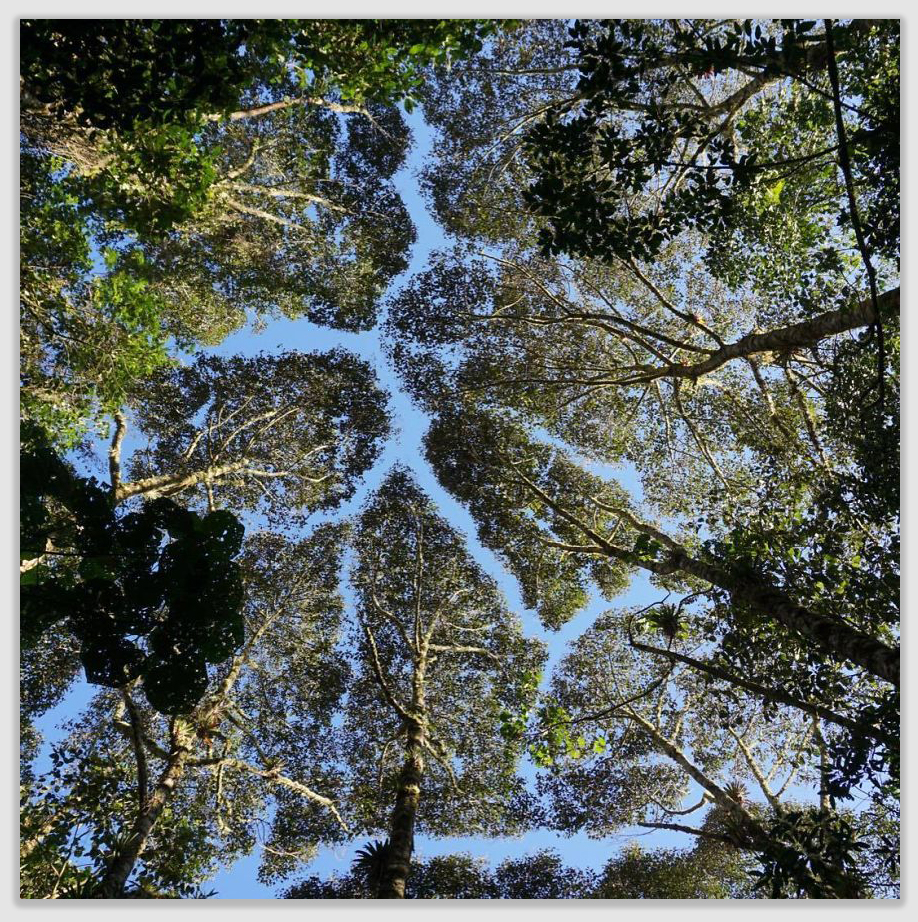
Humans may be the most intelligent of all species, but we cannot really deny that all forms of life are intelligent and it does not mean only the little animals and bugs but also fungi and plants. One of the most beautiful phenomena that you will witness in nature is the “Crown Shyness” that lets little cracks of light reach the ground through the thickest of forests because the tree tops refuse to touch each other. The phenomenon, also known as canopy disengagement, occurs mostly with plants of the same species when crowns do not touch each other, but it can also be seen among different species. Crown shyness was documented in scientific literature around the 1920s and then gave rise to many theories, but so far there is no agreement on what is the exact cause of this phenomenon…
Austin, Texas, KXAN-TV, August 17, 2017: Private property tree removal fees restricted in new law
Property owners now have added protections when it comes to removing trees in Texas. Gov. Greg Abbott signed HB 7 Wednesday, which creates limits on local tree ordinances. The goal is to restrict “overagressive” tree removal fees, and directs municipalities to offer private property owners tree planting credits to offset those removal fees. “Texas families that work hard for the dream of one day owning their own property should be able to do what they want with it,” Abbott wrote in a press release. Abbott vetoed a similar bill during the legislative session, and during the special session called for the Legislature to take up the issue again and axe nearly all local tree-cutting ordinances…
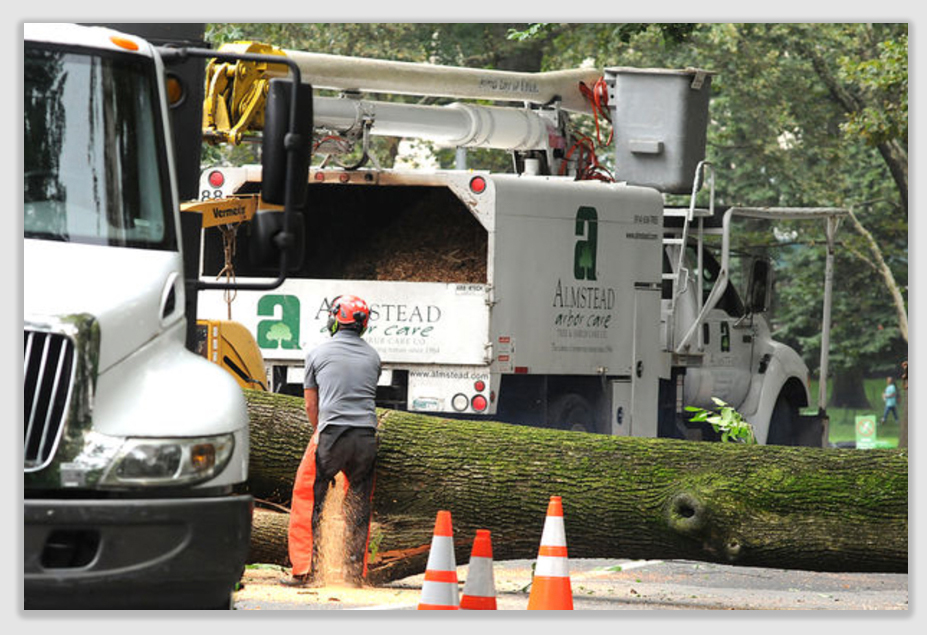
The tree that collapsed in Central Park on Tuesday, nearly killing a mother and her three children, was rotted at the roots, according to the private company charged with maintain the park. The American elm tree toppled over as a “result of decay in the root system beneath the surrounding pavement,” according to the Central Park Conservancy, which is tasked with maintaining the park’s 20,000 trees On Tuesday, the tree’s upper branches crashed on top of 39-year-old Anne Monoky Goldman while her infant was strapped to her chest and she was pushing her two other young boys in a stroller on West Driver near 59th Street, officials said. “The tree had been inspected annually over the last six years, most recently in November 2016, and there were no visible signs of decay or disease,” the Conservancy said in a statement Wednesday…
Penn Hills council has placed four members onto its newly formed Shade Tree Commission. Mayor Sara Kuhn said that granting the appointments was a real pleasure. “Any well-groomed community with trees and shrubbery, when people ride through, it just makes your community look so inviting, so warm and so taken care of,” Kuhn said before council voted to approve a list of appointees at a recent meeting. Shade Tree Commission President and owner of Raborn Landscape Design, Kathy Raborn, found four other members in June when council approved of the commission. She presented the mayor and council members with the resumes of four Penn Hills residents. The members share a wide range of experience…
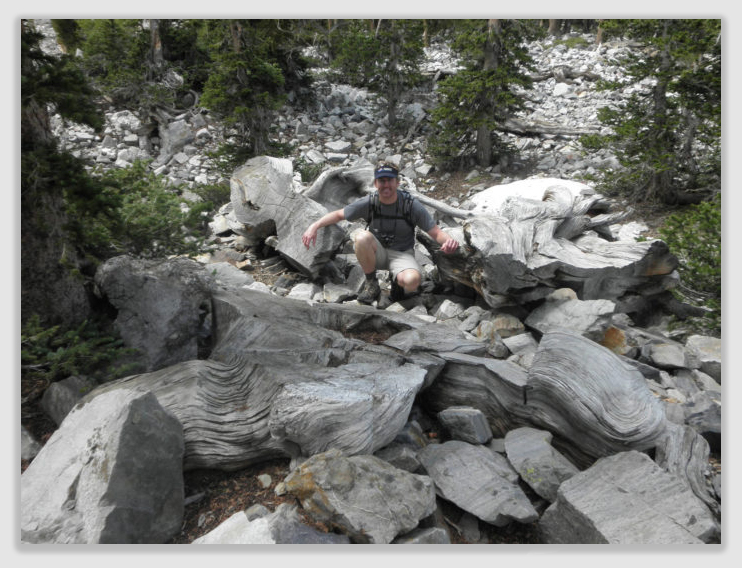
The Great Basin National Park is home to one of the world’s oldest living tree: the Bristlecone Pine. Back in 1960, a researcher was studying the great Prometheus tree and after getting his sampling bore caught in the trunk, proceeded to cut down the magnificent tree, subsequently dated as being the oldest living organism in the world. Today, Prometheus—the world’s oldest tree stump—sits below Nevada’s Wheeler Peak. Prometheus is located in Nevada’s Great Basin National Park in eastern Nevada by the Utah border. In 1960, a graduate student searching for the world’s oldest trees received permission to take a sample from Prometheus. His drill bore got stuck in the tree’s massive trunk, and, tragically, he cut it down to retrieve his tool. Upon doing so, he realized his huge mistake. After counting the rings, he determined that he had felled, perhaps, the oldest tree in the world. Prometheus was dated as having lived 4,862 years – longer than any other single organism…
The spotted lantern fly is a growing threat to fruit trees and grape vines in the region. State officials are still trying to develop an effective way to stop it. The invasive insect is a large colorful bug that was first detected in Berks County in 2014 and can endanger apple and peach trees, grapes and hardwoods. “This insect lands on a tree and it inserts its piercing sucking mouth parts into the tree and it sucks out the juice of the tree,” said Amy Korman, from the Penn State Extension Service. Korman says in that process it lays a sticky substance that promotes growth of a black, sooty mold that can endanger a tree’s leaves. “We have some scientific evidence from Asia that it can kill plants by doing this,” she said…
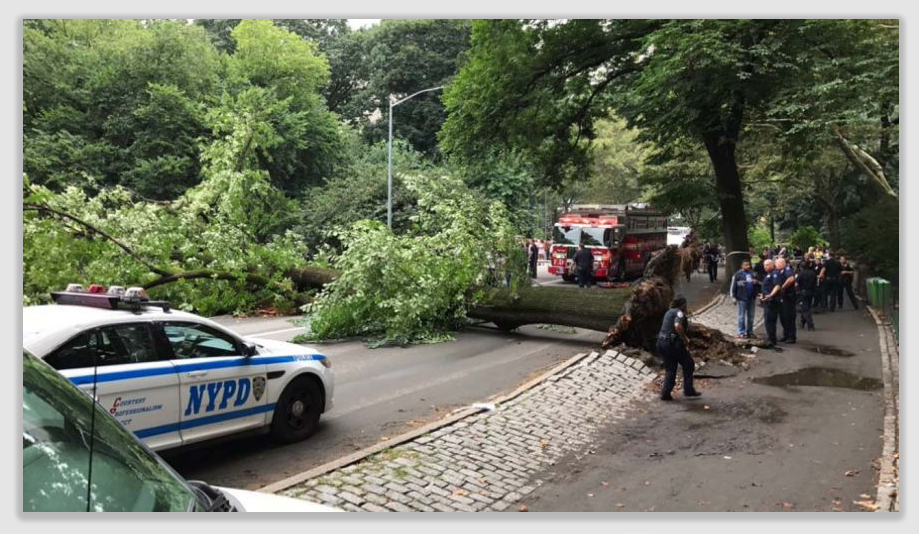
A New York City mom on Tuesday was hailed a hero after she shielded her three children–including a 41-day-old– from a massive tree that fell on them during a stroll in Central Park. Anne Monoky Goldman, 39, broke her neck and her son Grant, 2, suffered a fractured skull, The New York Post reported. A witness told the paper that if not for the mother’s quick action, all three children could have been killed. “It was terrifying,’’ Jamie Brown, 42, a Virginia tourist, told the paper. “You heard the tree fall and didn’t know what happened, and then you hear a baby scream.’’ The Post reported that the mom was walking along West Drive near West 62nd Street with her 1-and-a-half-month-old infant, James, strapped to her chest and Grant and his 4-year-old brother, Will, in a stroller when the towering elm toppled on them at about 10 a.m…
Dallas, Texas, KTVT, August 16, 2017: Texas Legislature OKs scaled-back anti-tree ordinance bill
The Texas Legislature has approved new limits on local tree ordinances, but they aren’t as sweeping as original proposals to virtually wipe out all such ordinances statewide. The House voted 119-23 on Tuesday to send a bill allowing property owners to plant new trees to offset municipal fees for removing old ones to Gov. Greg Abbott’s desk. There’s no guarantee he’ll sign it, though. A similar measure cleared the Legislature during the regular legislative session, but Abbott vetoed it. He then convened a special session, asking lawmakers to axe nearly all local tree-cutting ordinances. The Senate passed a broad anti-tree ordinance bill, but eventually scaled it back enough for the House to accept. Abbott will have to call a second special session if he wants to revive the issue…
 Bergen, New Jersey, Record, August 16, 2017: New Milford planners mulling fate of sycamore trees
Witnesses representing a developer that wants to build a bank and supermarket on the 14-acre Suez tract substantially finished direct testimony in front of the Planning Board on Tuesday, but a key component of the project remains unresolved. Board members must decide whether River Road should be widened to accommodate what some fear may be a significant increase in traffic. To do so would require lumberers to fell seven mature sycamore trees on the west side of the roadway. The trees tower over the street, providing not only shade, but a sense of splendor. “Honestly, it’s very likely that, if you don’t make this improvement today,” the developer’s attorney, Antimo DelVecchio, said to board members about widening the road, “you’ll never make it.” He added, “That opportunity won’t arise again. Traffic isn’t getting better…”
An employee of a city-contracted tree trimming service was hospitalized with serious injuries following an incident in west Napa on Tuesday, according to officials. The 24-year-old man, whose identity has not been released, was working on a neighborhood improvement project on Karen Drive when he was injured. The man was taken to Queen of the Valley Medical Center in critical condition, according to Napa City Fire. Napa Police advised residents to avoid Karen Drive between Sutro and Malone drives due to “police activity” via a Nixle alert at about 1:20 p.m…
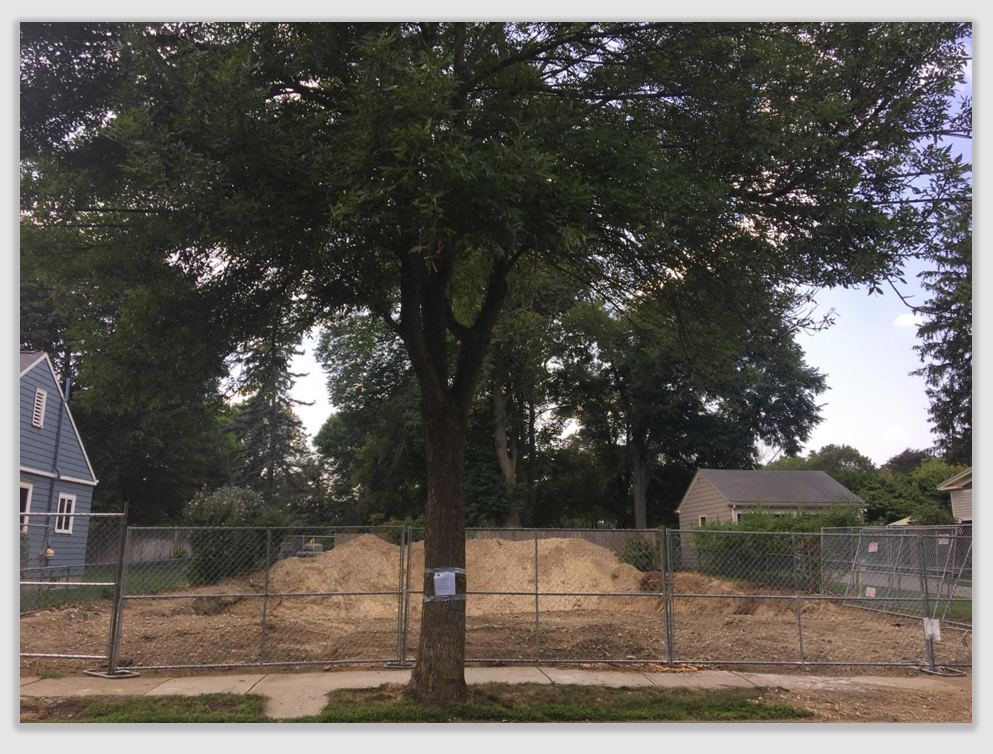
Over the past decade, the neighborhood surrounding Webcowet Road has seen a boom in development. Five teardowns of single family homes have introduced duplexes and, neighbors say, put street trees in jeopardy. Developer Keith Lombardi is constructing another duplex at 40 Webcowet Road and has petitioned to remove a street tree from in front of the lot in order to build a driveway. The tree is an ash tree, according to the town of Arlington’s recent tree inventory, and is in good condition. “We went from walking down the street, a nice leafy street, and now we’re getting less and less trees. So when this one got posted, it was the straw that broke the camel’s back,” said Linda Annear, a resident of Webcowet Road. She and her neighbors are trying to save the nearly 60-year-old tree from being removed by Lombardi…
You’ve probably seen them in the past two months, at the intersections of Marengo Avenue and Valley Boulevard, Garfield Avenue and Main Street, in front of City Hall — dozens of residents carrying signs reading “Save the trees!” For two months, these residents have been pushing the City Council to block a proposed development that would see most of the Sunnyview Care Center — once part of the Scripps Kensington Retirement Community — razed so the property owner can build a 126-unit condominium complex, a smaller skilled nursing facility, a medical office building and spaces for retail. The first plan presented would have seen 229 of the 268 trees on the property at 1428 South Marengo Avenue removed, and a 91-year-old former chapel building demolished. Without ordinances protecting trees or preserving historic resources, Alhambra had no way to mandate that the trees or chapel be saved, said Councilman Jeff Maloney…
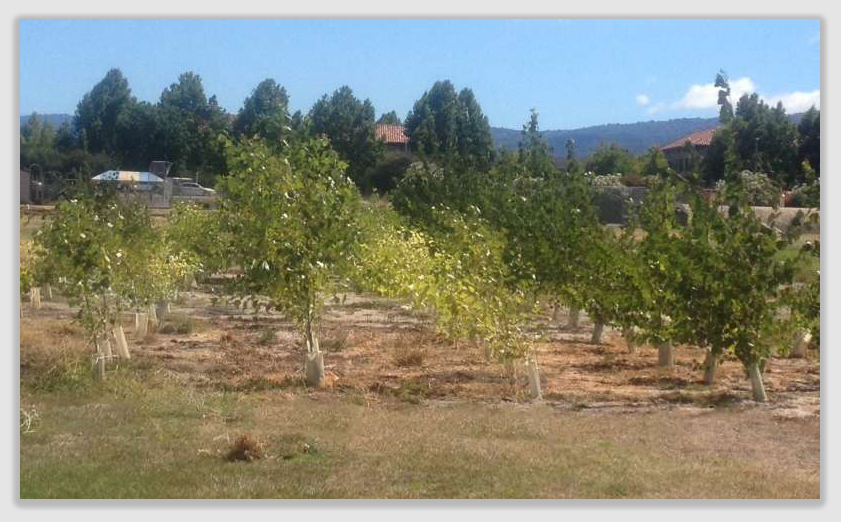 Phys.org, August 14, 2017: Probiotics help poplar trees clean up toxins in Superfund sites
Trees have the ability to capture and remove pollutants from the soil and degrade them through natural processes in the plant. It’s a feat of nature companies have used to help clean up polluted sites, though only in small-scale projects. Now, a probiotic bacteria for trees can boost the speed and effectiveness of this natural cycle, providing a microbial partner to help protect trees from the toxic effects of the pollutants and break down the toxins plants bring in from contaminated groundwater. Researchers from the University of Washington and several small companies have conducted the first large-scale experiment on a Superfund site using poplar trees fortified with a probiotic—or natural microbe—to clean up groundwater contaminated with trichloroethylene (TCE), a common pollutant found in industrial areas that is harmful to humans when ingested through water or inhaled from the air. Their results were published in final version Aug. 11 in the journal Environmental Science & Technology. The successful field trial could be a game changer to quickly and effectively clean up Superfund sites around the country and polluted sites abroad that have high levels of TCE, the authors say…
Fire safety is on everyone’s mind these days — including Union Pacific Railroad. The rail operator cleared out overgrown brush along its line in Lodi last week, but some neighbors say they went too far. Twenty-nine trees were cut down. Neighbors say the grass near their Mokelumne Village condominium complex say it was about time for the dry brush and grass to be removed because their homes would be in danger if a fire was sparked by a nearby train track. “They actually did a beautiful job cleaning it all up,” resident Nancy Campbell said. “The next day they came along and cut the rest of the trees down. All of them.” Six of the 29 trees that were cut down were redwoods planted in the 80s. Campbell said homeowners should have been notified the trees would be removed. A Union Pacific spokesperson told FOX40 the city requested they remove all fire hazards. The railroad determined the trees endangered homes…
 Dave’s Garden, August 14, 2017: Trees’ vascular system: The big suck
Imagine being handed a very long straw, and told to lean out of a 35-storey building and drink from a glass on the sidewalk below. Sounds like a challenge? Well if you are a California redwood, it’s just part of everyday life. Reaching as much as 350 feet in the air, and so just as far down for water, these are the tallest trees on the planet. Even for relative dwarfs like western hemlock, or ponderosa pine, where the tallest are a mere 250 feet tall, the task is daunting. The basic problem is easy to see. We could take a tall tube, with the lower part standing in water, and attached the top to a pump to remove the air. Even if we create a perfect vacuum at the top of the tube, the water will rise a mere 33.8 feet, before stopping. This is because, with a vacuum at the top, the water is lifted by the pressure of the atmosphere, which at sea level is normally 14.7 pounds per square inch. That is sufficient pressure to lift water 34 feet up, but no more. So how do these majestic trees manage to draw water up to such extraordinary heights, despite this apparent limitation? Ever since botanists began to look at the workings of plants, this problem has been apparent. Following the discovery of human circulation, a similar concept was accepted for plants, although there was no physical equivalent of the pumping heart driving fluids around our bodies. As late as 1905, it was thought that plants had an active function – of an unknown nature – pumping water and sap around the tree. Professor E.J. Ewart, an Australian botanist, climbed 300-foot Australian mountain ash (Eucalyptus regnans) to measure the pressure inside branches. This tree rivals the Redwood for height, and Ewart concluded that the ability to lift water to those heights required living wood, and thus some activity by the tree that was only possible in life – the exercise of a ‘vital force’…
In the wake of Governor Abbot’s agenda for one of the state’s most precious assets, city’s rights to their trees have been hanging in the balance. As you have probably seen posted this summer during this 85th Texas Legislature’s Special Session (week of July 14, 2017), Abbot’s “Ax Bill” as it has been referred, House Bill 70 (and Senate Bill 14), landed back in the house with neither side satisfied. Abbot’s agenda has been to gut, deregulate, and abolish cities’ ordinances for what property owners can do to act, or not act, on private land concerning trees, essentially at the risk of losing citizen’s say to what happens collectively to their city’s trees as a whole. Some recent articles say Abbot is mad because his current city’s ordinance in Austin is not in agreement with his pocketbook when he wanted to chop down a pecan tree on his more than two-acre property. A number of Texas municipalities who currently have the protection ordinances under their jurisdiction are having to fight back Abbot’s efforts to remove their power that is provided them by the home rule charter under the State of Texas. The ordinances vary from city to city. Some cover the types and size of trees regulated, including other conditions affecting property owners who want to remove trees…
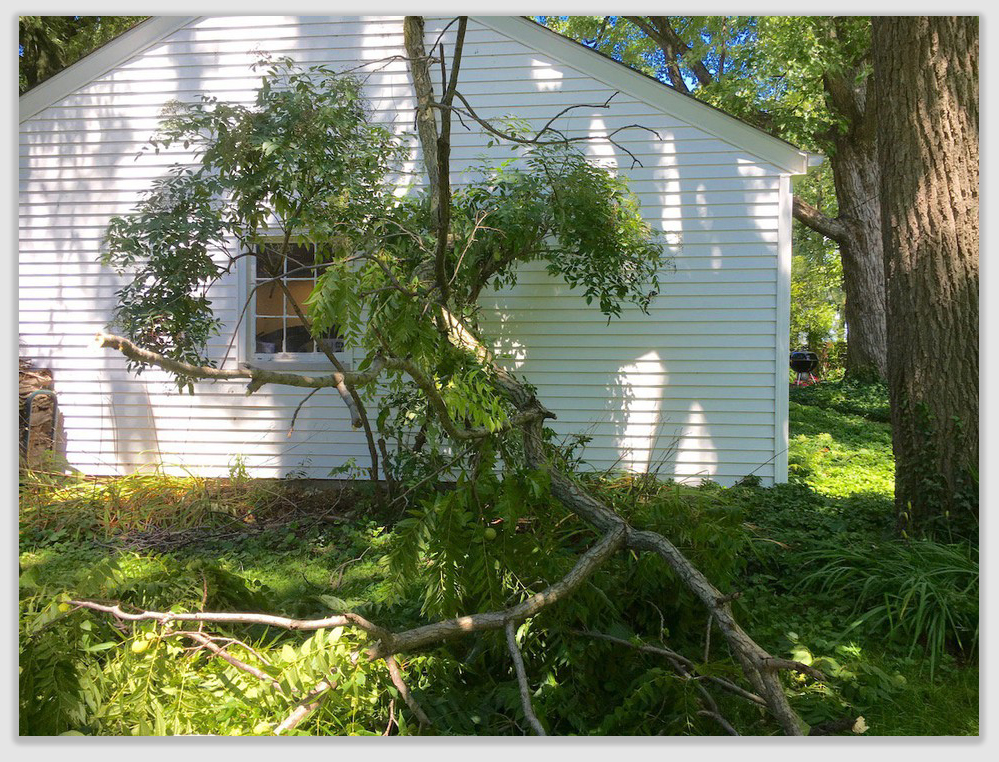
Had a little accident with the chainsaw over the weekend. “Little” is such an inappropriate word when referring to a tool that cuts through hardwood like butter. But there was minimal blood – just a few scrapes from a bark encounter – and a bit of vaudeville. I even laughed right after it happened. It wasn’t funny. The good things I learned: Read up on a power tool the first time you use it. Watch a You Tube video, something safety oriented. Have someone else there. They might talk some sense into you. Listen to your instincts. Especially when you find a black walnut limb resting against your house after a big storm…
Off The Grid News, August 13, 2017: It’s the quirky medicinal tree that pharmaceutical companies use
The tamarack tree is an oddity. It is the duck-billed platypus of the tree world, refusing to be solidly classified into any one category. Part softwood, part hardwood, and completely unique, the tamarack is a distinctive component of the northern forest. It’s useful for everyone from off-gridders to pharmaceutical companies and – not surprisingly – Native Americans made use of it, too. Tamaracks are native to North America, primarily in Canada and in the United States, from the northern Great Lakes region to the Northeast. It has more than one name, often even within in the same region. Its Latin nomenclature is Larix laricina, and it is also known as a larch — eastern, black, red or American — or a hackmatack. The word “tamarack” is said to be derived from a Native American word, but there are several theories as to the meaning, ranging from an Algonkian word meaning “snowshoe wood” to an Ojibwa word meaning “swamp tree.” Whichever origin is correct, both meanings are accurately descriptive of the tamarack tree…
Planning for a small residential subdivision on the west side of Butterfield Road in Libertyville will proceed, but village officials made it clear that saving trees is a priority. Whether a developer guarantees to fix any future flooding that impacts neighbors is another issue to be addressed before officials grant final approval the proposed North Pointe Estates. Mount Prospect developer Paul Swanson wants to build 15 homes on a 7.6-acre triangular property bordered by Butterfield Road, the North Shore bike path just south of Route 176 and Victory Drive. Originated last fall, the proposal has been reviewed at four public hearings and at one point was recommended for denial by Libertyville’s advisory plan commission. Swanson proceeded to the village board, but the plan was sent back to the advisory group for revisions. Among them was dedicating a wooded area at the tip of the triangle furthest from Butterfield Road as open space. The area would be maintained by a homeowner association, but the village also wants it available to residents living outside the subdivision…
It’s something that can be seen happening all around Broome County. “The tree was green and then we got back from vacation in a matter of four or five days the leaves were already starting to turn brown and we were worried that we were going to lose the tree,” said town of Union resident Dave Tidick. Many people are noticing their maple trees are becoming bare, as the leaves turn brown and fall off. “We’ve had a lot of fungal disease and the trees, the leaves have become infected due to the wet conditions we had this spring,” said Extension Educator for Cornell Cooperative Extension of Broome County Kevin Mathers. “Now those infections are getting severe enough that the leaves are falling off the trees.” Mathers said the good news is the maple trees aren’t dead. Mathers also said there is something people can do. “Rake up the leaves, try not to leave them there,” explained Mathers. “The real problem is if you leave the leaves on the ground all winter long, next spring those leaves are a source of infection for the disease which gets started early in the spring…”
Diana Kaiser stood in her yard at 9:30 a.m. on Aug. 10. She was wearing a fleece pullover — it was an unseasonably cool morning — and holding a cigarette loosely in one hand. As she watched, branches cracked, buckled and fell from the colossal silver maple, which has been feet from her house on Colorado Street since the day she moved in. She had been alternately laughing and crying all morning. After years of fear, sadness and desperation, the tree was finally coming down. “We were always worried it was going to fall,” she said. During the last big windstorm in Prior Lake, she’d watched the whole crown shake, like it was headbanging at a metal concert, and just hoped that it wouldn’t topple onto her son’s bedroom directly beneath it. For a long time, her husband, Byron, had wanted to cart the thing away. But three-and-a-half years ago, Bryon had been diagnosed with cancer. Before that, she’d been battling breast cancer herself, and before that diagnosis, her father had died. “So, things haven’t been real easy,” she said. A little less than a year ago, Byron died. For years, they’d been struggling with treatment, and with grief, and all the while, the tree had been put on the back burner. It was after he passed away that Diana decided something had to be done about the tree. It was a looming threat over her son’s bedroom, and the close-by power lines, but there was another reason besides that. She wanted to get rid of the tree for Byron…
The city has been inoculating trees since 2010 but has switched this year to the fungicide Arbotetc 2020-S, which is believed to be more effective than the previous product the municipality had used, says Beth Hoar, Charlottetown’s parkland conservationist. Morgan Laverty, a Dutch elm disease technician, was treating an American elm tree on Hillsborough Street Thursday morning. The tree, which stands about 85 feet tall and is at least 100 years old, is the eighth tree Laverty has treated this year in Charlottetown. He is looking to do one or two more this year, notes Hoar. She says the treatment lasts for three years. The city plans to treat another set of elm trees next year at an average cost of $360 per tree…
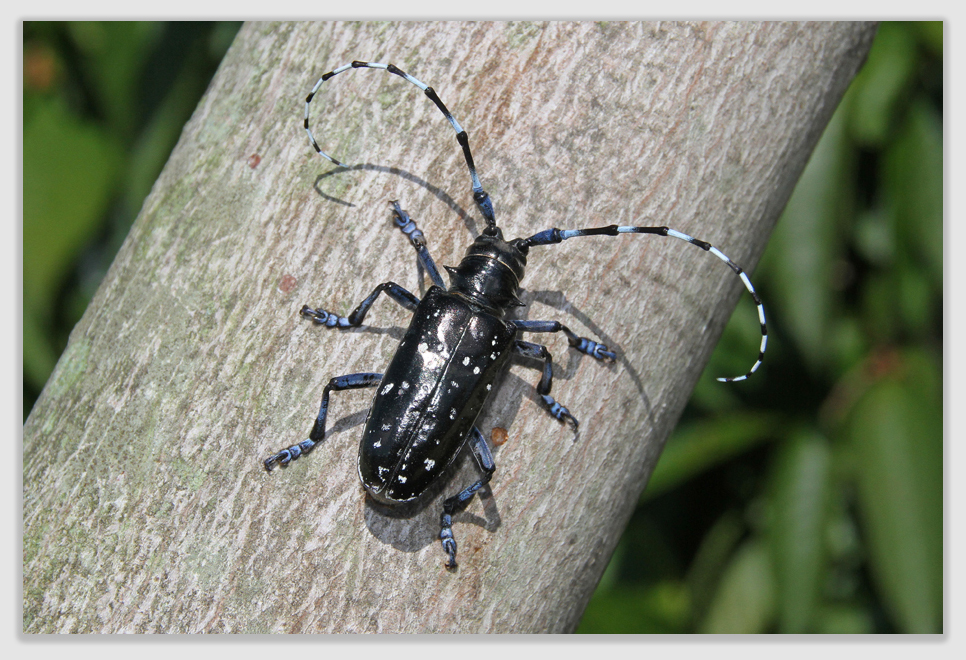
Have trees around your house? Take a few minutes to check them for an invasive beetle. The request comes from the U.S. Department of Agriculture, which has designated August as National Tree Check Month. In Michigan, officials are primarily worried about the Asian longhorned beetle. The distinctively large, shiny black beetles have random white blotches or spots. They turned up in the U.S. more than 20 years ago and likely came from Asia in wood packing materials. They haven’t been spotted in Michigan but have been found in neighboring Ohio. The beetle eats its way through the insides of trees, damaging and often killing them. It prefer maples but also will infest other hardwoods…
A Portland industrial shop has been court ordered to pay nearly $300,000 for failing to trim tree branches that blocked a stop sign and contributed to a fatal car crash. In June 2013, driver Jason Rodriguez ran the stop sign and ended up crashing into cross-traffic, killing one of his passengers, 33-year-old Michael Dominguez. The Oregonian/OregonLive reports Dominguez’s family sued Rodriguez for poor driving and Portland Engine Rebuilders for failing to keep the leaves on a tree bordering its property from obscuring the stop sign. A jury ordered Rodriguez to pay $678,000 and the industrial company to pay $291,000 to the family…
 Lubbock, Texas, KFDA-TV, August 9, 2017: BBB alerting residents of tree-trimming scammers
Homeowners in need of yard work following recent storms in the area are being targeted by scammers. According to the Amarillo Better Business Bureau, scammers target homes after storms because it’s when people need help in their yard the most. The Better Business Bureau has received several calls from residents who paid workers to trim their trees. They say they took their money and never finished the job. A local landscaping company says there are some red flags to watch for before hiring someone to help with your yard. “You just want to watch out for people looking to receive your money upfront before any work is done. [Also] any individuals in unmarked cars, unmarked clothing,” said Tye Debord of Krause Landscaping…
DieHard Survivor, August 9, 2017: 15 Types of trees to never have in a front or backyard
The trees covered below are not just trees to avoid if you are planning your homestead or survival location layout; they all possess either a very shallow root system, produce toxins to other plants, attract pests, suck up a disproportionate amount of water/nutrients or have very weak wood. If they already are present, you should consider removing them or altering your plans to accommodate for their weaknesses…

The Palmetto Dunes Property Owners Association should have known a tree in its resort posed a danger before a limb broke off and fell on a 10-year-old boy, resulting in over $285,000 in medical expenses, a lawsuit alleges. The suit, filed July 28 in Beaufort County Circuit Court, said the son of Christopher and Heather LeCroy, who are residents of Pickens County, was walking with a friend along a leisure path in Palmetto Dunes Resort in April 2014 when a loblolly pine tree limb fell about 50 feet, landing on the child’s buttocks, back and lower portion of the right leg. The lawsuit claims that “one could clearly see a great deal of evidence of prior limb breakage,” and a “reasonable inspection” of the tree would have caused the Palmetto Dunes Property Owners Association to notice a 20-foot “split” in the trunk of the tree along with other limb breakage “directly above the leisure pedestrian pathway.” Andrew Schumacher, the association’s chief executive officer, said this week he could not comment on the suit. The attorney for the LeCroys did not immediately respond to multiple requests for comment…
Ecosalon, August 8, 2017: You’re not the only one with insomnia: City trees don’t sleep well, either
Streetlights and everything else that makes a city hustle and bustle are messing up trees’ sleep cycle. Peter Wohlleben, author and forester, wrote a book, “The Hidden Life of Trees: What They Feel, How They Communicate – Discoveries from a Secret World”, about this disturbing modern reality. Wohlleben has studied forests since 1987 and has built on his knowledge ever since. The book, which came out in 2016, isn’t the only bit of literature to discover this finding. For example, a recent (2016) European Commission funded study published in the Journal of Ecology found that artificial light affected when trees’ spring buds burst, leaves’ coloring, and when trees shed leaves. “[The] study concluded that changes in trees’ annual rhythm of producing leaves and blossom attributed to artificial light ‘may have significant effects on [their] health, survival, and reproduction’”, The Times of London reports…

Mount Pleasant Town Council will discuss an issue regarding routine tree trimming to keep limps away from power lines. This discussion comes after several people complained to the council, and the News 2 I-Team, about the way the contractors cut the trees. During a full council meeting Tuesday night, members will discuss and vote on a new ordinance that would allow home owners to remove the trees they believe are damaged without the required mitigation. That means the homeowner will not have to replace the tree. In June, Leigh Rowe was one of the Mount Pleasant residents who complained to the I-Team about the tree cutting. SCE&G contracted crews to perform the maintenance, but she was not happy with the way contractors performed the work. “The tree guys showed up and just kind of chopped down the middle of it,” Rowe said…
TD World, August 8, 2017: Crews track danger trees in new mobile application
Every electric utility across North America has one central mission — to keep the lights on for its customers. Overgrown vegetation and danger trees, however, can inflict unplanned outages for line crews. Case in point: the 2003 blackout can be traced back to vegetation management issues on a transmission right-of-way (ROW) in Ohio. Because of this event, the North American Electric Reliability Corporation (NERC) developed a special focus on transmission vegetation management and its impact on reliability. Utilities responded to this focus by redoubling their on-ROW vegetation management efforts and implementing technologies that enhance their ability to detect and mitigate so-called danger trees at and beyond the edges of transmission ROW. The New York Power Authority (NYPA), for example, has implemented an aerial mapping technology called light detection and ranging (LiDAR) that can identify vegetation, including danger trees that could pose a danger to transmission lines. NYPA, which manages 1400 circuit miles of transmission lines, has been using LiDAR to survey its facilities for years, but it just recently started including danger trees in its measurements. In the near future, line crews will start using an advanced mobile application to pinpoint which LiDAR-identified trees off a ROW need to be cut down…
 Red Bank, New Jersey, Red Bank Green, August 8, 2017: Fair Haven: Outcry halts tree cutdown
Fair Haven’s elected officials faced a storm of criticism by residents Monday night over a plan to cut down 10 mature trees alongside the borough’s main ballfields. By the end of the semimonthly council meeting, the governing body had decided to put the plan on hold and “go back to square one,” in the words of Mayor Ben Lucarelli. The plan, which came to widespread attention in recent days and was scheduled to begin August 15, called for removal of the sweetgum trees, which line Third Street and Cedar Avenue, to clear the way for a cinder walking path and other improvements around the Community Center Ballfields. The trees, some of which are 50 feet tall, were to be replaced by a dozen saplings. Outraged homeowners in the area complained they’d gotten no notice of the plan, whose details had not been made generally known as it made its way through committees toward a funding vote. Even the Shade Tree Commission was caught off guard, said two members of that advisory group…
Environment Guru, August 7, 2017: How to identify tree ailments
Plant diseases can cause a loss in yield of the crop or damage to the aesthetics of the plant itself. To make matters worse, these issues can also weaken the integrity of a tree. In this instance, hazardous situations may occur in which property damage or even serious bodily injury could result from falling branches or even the toppling of the tree itself. In order to avoid such hazards, it is important that you are able to recognize the telltale signs of common tree diseases so that you may take the necessary actions to remedy the issues. Disease outbreaks are often seasonal, regional, and species specific. The following list are some tree ailments that you may encounter, but infestations and disease will vary from location to location. AnthracnoseAnthracnose is one of the leading plant diseases in trees and shrubs. This condition stems from a fungus that attacks the leaves, twigs, flowers, and fruits of several different species. It is commonly found throughout North America, with sycamore and flowering dogwood being the most heavily impacted species. The symptoms of this condition vary by the pathogen as well as the host species. Nonetheless, some of the common indicators include premature leaf defoliation and twig blight that presents as witch’s broom – a deformity that causes shoots to densely grow in one spot…
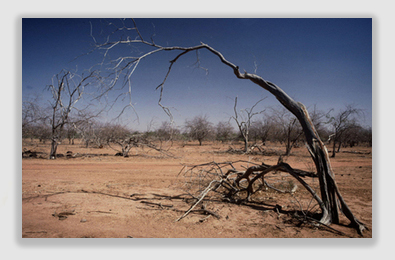 Technology.org, August 7, 2017: What’s killing trees during droughts? Scientists have new answers
As the number of droughts increases globally, scientists are working to develop predictions of how future parched conditions will affect plants, especially trees. New results published today in the journal Nature Ecology and Evolution by 62 scientists, led by Henry Adams at Oklahoma State University, synthesized research from drought manipulation studies and revealed the mechanisms by which tree deaths happen. “Understanding drought is critical to managing our nation’s forests,” says Lina Patino, a section head in the National Science Foundation’s (NSF) Division of Earth Sciences, which co-funded the study through its Critical Zone Observatories program. “This research will help us more accurately predict how trees will respond to environmental stresses, whether drought, insect damage or disease.” Adds Liz Blood, director of NSF’s MacroSystems Biology program, which co-funded the research, “Droughts are simultaneously happening over large regions of the globe, affecting forests with very different trees. The discovery of how droughts cause mortality in trees, regardless of the type of tree, allows us to make better regional-scale predictions of droughts’ effects on forests…”
Well, if you can’t afford to buy a house in a pricey neighborhood, you should buy the whole street. A $14-a-year tax property bill not paid for three decades, resulting in a wealthy neighborhood owing the city $994 in back taxes, has allowed Tina Lam and Michael Cheng to make a mind boggling investment. The couple paid $90,000 for Presidio Terrace, a San Francisco street in an upscale part of town, where houses frequently sell in the $35 million range. The deal includes the long block street and sidewalks, well-coiffed garden islands and palm trees. The posh enclave contains a total of 35 mansions, a gated and guarded community at the end of Washington Street, just off Arguello Boulevard and down the hill from the Presidio – a park that is part of the Golden Gate National Recreation Area…
 Plano, Texas, Leader, August 6, 2017: Flower Mound releases information on tree trimming
Oncor will continue trimming trees away from the power lines along Old Settlers, Cross Timbers and McKamy Creek roads. Other areas Oncor has targeted for trimming include Wichita Trail as well as portions of Hide-A-Way Lane, Peninsula Drive, Quail Run and Beckworth Drive. Crews have already trimmed the trees in the Morriss and Cross Timbers Road area since starting earlier this week. An arborist is part of the crew trimming trees to ensure the trees are being cut properly. Electric utilities strive to provide safe and reliable service, making it necessary to manage trees near power lines and Oncor has the legal right to maintain its equipment. This includes entering private property to trim trees. By Texas law, only professionals who are authorized by the wires companies are allowed to prune or remove trees closer than 6 feet to high voltage power lines. Always call your wires companies for assistance. Here are some quick facts about why Oncor conducts periodic tree trimming: Oncor typically trims the trees away from the power lines once every five years. It has been seven years since crews were in Flower Mound…
Minutes before a huge limb snapped off a heritage oak tree on Menlo College’s Atherton campus Saturday, dozens of adults and children sat under its shade. They were there for a company picnic with Riverbed Technologies, a cloud business based in San Francisco. The afternoon was bright and breezy, and tables filled with food and an inflated bounce house were set up on the college’s quad. But when the 50-foot-long branch snapped at 2:22 p.m., only a half-dozen people were hit. Miraculously, Fire Department officials said, only two adults and a toddler sustained minor injuries. “This whole thing is unbelievable,” said Menlo Park Fire Chief Harold Schapelhouman. “It’s amazing there weren’t more people injured. There were 300 people at this event. It could have been much, much worse…”
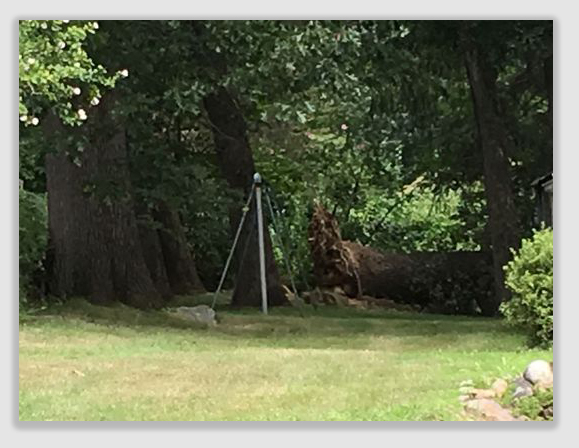 Bergen, New Jersey, Record, August 6, 2017: Tree falls, killing North Haledon boy, neighbors say
A 4-year-old boy was killed Saturday afternoon when a tree fell on him, neighbors and friends of the family said. News 12 reported that the boy had been driving a toy electric car near his home on Lotz Street. North Haledon Mayor Randolph George declined on Sunday to comment or even confirm that the incident had occurred. He added that he had instructed borough police not to comment. The incident stunned members of the small, tight-knit community. Some neighbors declined to comment, and one said she was too upset to talk about it. Resident Joe LaBarck said he was at home when he heard about the incident. “You don’t expect to see something like this in a small, tight-knit community,” LaBarck said. “We’ll get through it. But it will hurt…”
After watching a lifetime of court dramas, I know just enough about the law to be dangerous; however, I do know there is such a thing as a “Statute of Limitations,” and after a certain period of time, you cannot be held responsible for certain crimes. Many construction people must act with a statute of limitation mind set when it comes to saving established trees around their construction sites. First of all, the way we recommend to save a tree on a construction site is to build a fence around the tree and prevent any type of construction activity inside the fenced area. The distance the fence must be placed from the trunk of the tree will astound most people. It is at minimum the height of the tree from the trunk, and if the tree is really important, twice the height of the tree from the trunk. We recommend this because the roots of a tree can go outward once and up to twice the height of a tree. Next, if an irrigation system, electric line or any type of underground line must be installed, either do not go within the fenced area, or dig the trench like a spoke of a wheel toward the trunk but never closer than six feet of the trunk…

A teen ballet dancer sitting in a hammock was killed when a tree in a Kentucky backyard collapsed and crushed her. Michelle Chalk, 15, was spending time with a friend outside a home in Ford Thomas Tuesday night when one of the trees holding up the hammock she’d been sitting in gave way. First responders found Chalk dead on the scene minutes after the accident. A friend who was sitting with her at the time was not seriously injured, according to the news station. The tree was described as old, but it was not immediately clear what caused it to fall. Authorities ruled her death an accident. Chalk, who was expected to start classes at Highlands High School later this month, was a well-known dancer with the Cincinnati Ballet…
Jackson, Tennessee, Sun, August 3, 2017: Is your tree problem terminal? Diagnosis is key
The leaves are browning, or already dropped from the tree. A call is made to the county agent who asks for photos, and gets closeups of the browning leaves. Argh! This tells little — and the photos are sent to me, and I’m supposed to know what to do. Sometimes I am tempted to just name a product that is cheap and easy to spell and can be found at the first store entered. It should take just one sprinkle or spray and the problem goes away forever and ever. That’d be nice, but I actually care about putting out good information, so I undertake the work at hand. I have questions. Is it a recently established planting? Planted this year, even last year, it is still getting established and could be several things. It could have been planted too deep, or plants stuck in the ground without loosening roots to help them get integrated into the soil. It could be the wrong site for the plant, and it has decided to give up. Maybe it was not watered enough, or too much. If it is a long established plant going suddenly into decline, that’s a new set of questions. I first try to rule out abiotic factors — those things that could have “happened” to physically injure the plant or change its environment. No? Then insect damage is next in the line of possibilities to be investigated, and lastly comes disease…
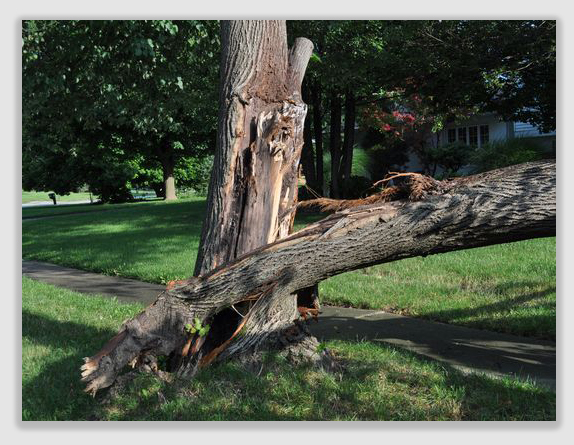
Dear Dr. Dirt: During one of the many recent rain storms, lightning struck an oak tree in the yard, tearing out a strip about three inches wide and two inches deep from near the top to the bottom of the tree. The wound has been covered with tree dressing, which blends in well with the bark. Is there anything else to be done? — Wayne, Indianapolis
Dear Reader: Lightning can beautiful to watch during the night, but it can be dangerous and deadly. Summer is the time when we enjoy the outdoors until a rain storm comes along. Then, it is only natural to take cover under a tree or trees when golfing or picnicking. Lightning tends to strike the highest point (trees). Thus, indoors is the safest shelter. The damage to trees varies greatly. They can be reduced to splinters or show no obvious damage. If your homeowners insurance covers trees, it would be wise to send them a letter documenting the date the tree was struck. If the tree eventually dies, the insurance company will check the local weather records to make sure there was a storm. Last summer, a neighbor’s tree was hit by lightning and pieces of bark were found a block away. This year, the tree appears to have survived and looks normal. In your situation, just wait and see what happens…
A Santa Clara County Superior Court Judge shot down a Gilroy woman’s attempt to prevent the city from cutting down 235 trees, which she says are healthy. Judge Helen Williams sided with the city, saying that because some trees have fallen and damaged property, the city should be allowed to cut trees it deems dangerous. Gilroy resident Camille McCormack invested $15,000 of her own money to fund a suit asking the city to stop cutting the trees. She hired an arborist, Moki Smith, to assess the trees the city was planning to fell and he found that only one was truly dead. The others could be revived with watering, fertilizer and trimming, he said. However, that didn’t weigh in the judge’s decision. Williams agreed that cutting the trees could do irreparable harm to McCormack and the city, however, she didn’t grant the restraining order because she didn’t think McCormack could win the case in court. It’s a decision that shows how difficult it can be to get a preliminary injunction, said McCormack’s attorney, Laura Beaton…
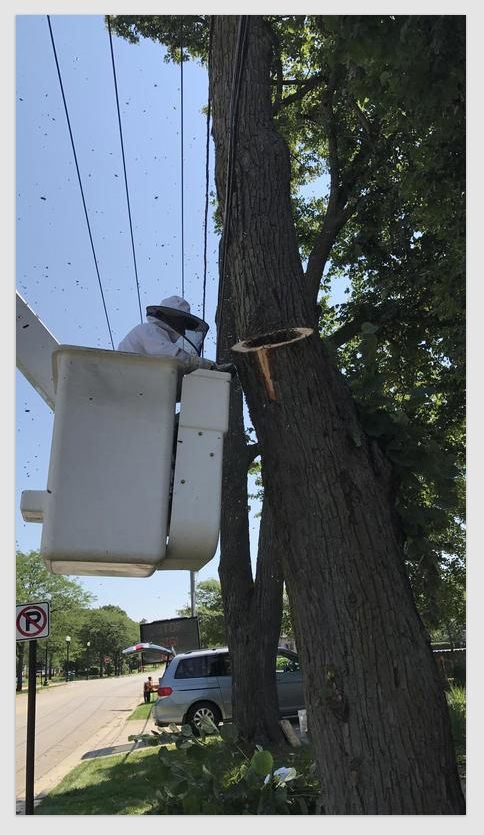
Elgin City Engineer Ron Rudd used his skills as a home beekeeper to help save bees that were living high up in a tree on Elgin’s northeast side until a storm severely damaged the insects’ home. “We knew the tree was hollow and held bees,” Rudd said. “Lo and behold, with the storm, a branch broke off and got hung up in utility wires (exposing the colony),” Rudd said. Rudd said he knew about the hive because a resident called the city’s 311 department a few years ago about the tree in a city parkway after noticing the bees and hive above. “She understood the issue with honey bees, and as long as they weren’t stinging anyone she was fine with them being there,” Rudd said…
Tree advocates from all across Texas met at the Capitol today to stand against legislation that they say puts trees in danger. This after Governor Abbott called for legislators to consider laws that would pre-empt all local tree ordinances to protect property owners’ rights. “There are at least, as we’ve counted, over 110 ordinances across the State of Texas. I think a lot of people think that this is an Austin thing, but it’s places like Weatherford, Allen, Orange, Mineral Wells, we found this week, all across the State of Texas. So this isn’t a Republican, Democrat, Liberal, Conservative, big city or small thing, this is about common sense protections,” Andrew Dobbs, Legislative Director, Texas Campaign for the Environment. Several people delivered copies of the books to House members encouraging them to vote against laws that would allow the state to control tree ordinances, specifically House Bill 70…
 Richmond, Virginia, WTVR, August 2, 2017: Northside homeowner wants city to pay for tree removal
A Richmond woman said a dead tree branch broke off over the weekend and totaled her car. Lauren Rice believes when it comes to her car she just can’t win. These pictures show her brand new Audi in 2013, with an alleged $17,000 in damage after a branch from this tree near her north Richmond home fell on it. She said she didn’t know to contact the city to file a claim. A year or so after, Rice said she contacted the city to request an assessment on the tree that she suspected was dying. She still doesn’t know if they city came by for that. Then last week, another branch from the same tree fall on her car again…
Phys.org, August 2, 2017: Tree-of-heaven’s prolific seed production adds to its invasive potential
Tree-of-heaven—or Ailanthus—is an invasive triple threat, according to a team of plant pathologists. The species produces seeds early in its lifespan, tends to make millions of viable seeds during its life, and continues to produce seeds for decades and, in some cases, for more than a century. In a study, researchers, who report their findings in the current issue of Forests, found that an Ailanthus tree that lives around 40 years can produce approximately 10 million seeds during its lifetime, while Ailanthus trees that live over a 100 years can produce about 52 million seeds. Little was known about the actual lifespan and seed viability—the percentage of seeds that germinate—of Ailanthus, a species that is now considered a growing invasive threat in numerous spots in the United States, according to Matt Kasson, assistant professor of forest pathology, West Virginia University, who began his study of Ailanthus at Penn State. He added that the species’ prolific ability to reproduce is thought to be key to its invasive success. “What really got us interested in the seed production of these trees is trying to determine what is the cumulative impact of Ailanthus—what’s the cumulative seed production and output that could eventually lead to secondary invasions,” said Kasson. “Knowing how many seeds can be produced is really only half the story. It’s important, but we needed to know something about viability of the tree because if a tree was producing a million seeds, but only 3 percent are viable, then it doesn’t pose as much of a threat…”
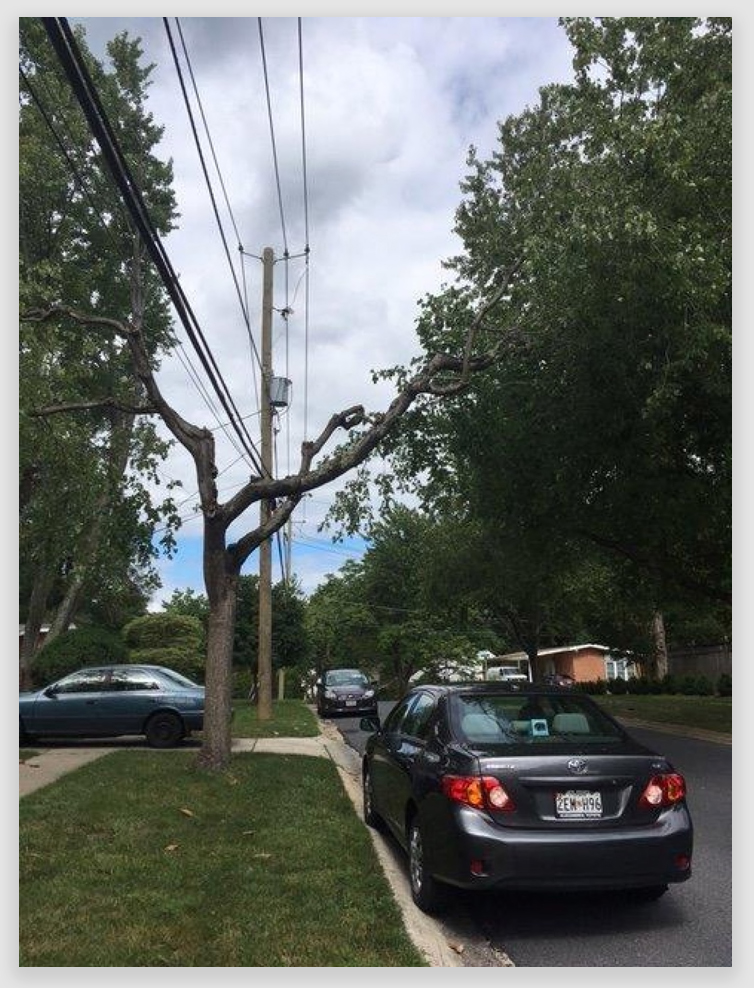
When the bright orange trucks returned to her neighborhood of Kemp Mill Estates, Maria Honeycutt knew to expect weeks of tree-trimming. The familiar vehicles were manned by Asplundh Tree Expert and contracted by Pepco to cut down branches and limbs snaking through overhead power lines. Honeycutt, 43, had “applauded” past efforts by Pepco to reduce power outages in Silver Spring, especially after her family had lost power for five days following the 2012 derecho, one of the most destructive thunderstorms ever to sweep through the D.C. area. But this time, Honeycutt was shaken by the “butchering” of her neighborhood’s maples and oaks. Workers cut down healthy branches nowhere near the power lines, she said, but ignored dead limbs hovering dangerously over the sidewalk. A geologist who has lived in her home for 12 years, Honeycutt sternly challenged the Asplundh workers on which limbs they were pruning until the crew summoned its cherry picker down from above and moved to the next house…
Changes to policy regarding protection of designated heritage trees and the construction of tiny homes in Ridgefield were chief among discussions with the city council last week, though a final vote on both issues has been postponed until the finer points get sketched out. Ridgefield’s City Council discussed the approval of the two ordinances during its public meeting July 27. Although originally up for a final vote at the meeting, City Manager Steve Stuart said after public hearings on the ordinances “it became clear to staff that we were not hitting the mark … with the proposed ordinance(s) for what the council had asked us to look into.” Given that, no vote was taken, but several key focuses for both ordinances were addressed. The heritage tree ordinance would require a permit from the city to remove designated trees, according to documents provided to the council…

Trees that suck up sunlight and groundwater at the expense of other prairie plants are creating new headaches throughout the Plains, including Nebraska. The eastern red cedar tree spreads so quickly that it catches many landowners off-guard, consuming huge areas of productive ranchland and threatening many of the area’s original prairies. At one point in Nebraska, the trees expanded at a pace of nearly 40,000 acres a year — an area roughly half the size of Omaha — until conservationists joined forces with local ranchers to conduct more brush-clearing burns. Conservationists call it a “green glacier” that started in Texas and Oklahoma and swept north across the Plains into Kansas, Nebraska, western Iowa and the Dakotas. “It gets worse every day,” said John Ortmann, a rangeland ecologist in Ord who has worked with conservation groups to thin the eastern red cedar population. “Some people say, ‘Wait until it’s a problem.’ That’s like saying, ‘I’m not going to change my oil until the engine blows up…'”
Ruidoso, New Mexico, News, August 1, 2017: Out on a Limb: Tree trimming is big business
A mere speck on the tall pine at back center, Jason Swanner certainly isn’t afraid of heights as he cuts dead limbs in Ruidoso. Swanner can manage a smile secured high in a pine tree. Tree trimming is big business in Ruidoso, a village surrounded by federal forest land and considered at high risk for wildfire…
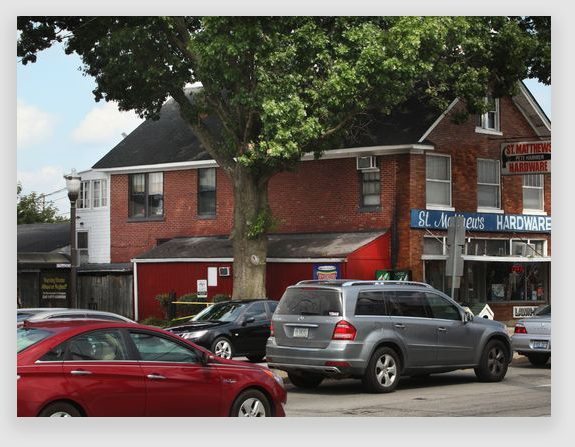
A Kentucky lawmaker wants a bank to pay for removing a majestic oak tree that stood watch over downtown St. Matthews for decades but was removed recently to make way for a new branch office. “In most cases, cutting down a healthy oak tree that’s about 100 years old is extremely short-sighted,” said Rep. Steve Riggs, whose legislative district covers part of St. Matthews. “It’s a shame we won’t have the tree anymore in the heart of St. Matthews, especially since Louisville already has an insufficient tree canopy that we’re trying to improve.” Riggs said in a press release Monday morning that he sent an email to Independence Bank officials, calling for the institution to make a donation to cover the cost of planting of 100 trees or more. The Owensboro-based bank’s Louisville vice president disputed the age of the tree, saying it was likely no more than about 50 years old. “The new Independence Bank location will be one of the greenest corners in St. Matthews,” added Louis Straub II, the bank executive. “I am a fifth-generation Louisvillian and have served on multiple community boards, including Brightside Inc. (which) strives to keep our city beautiful and green,” he said in a written statement Monday. “No one at Independence Bank was in favor of losing the tree, least of all, me. We will be a leader in efforts to beautify and improve St. Matthews, going well beyond the planting of trees, just as we do in all of the communities we serve…”
Miami, Florida, WSVN(TV), July 31, 2017: Tree grows into power lines
Trees are beautiful, but planted under power lines, they can be dangerous. The problem: Who has the power to cut the trees down before they rip down the power lines? It’s why one woman called Help Me Howard with Patrick Fraser. Yudit Hernandez: “All of our orchids, all of our stuff. I hope to make a pool one day.” Yudit Hernandez has a nice, big backyard — filled with trees. Yudit Hernandez “I have a mango tree, I have a grapefruit tree, I have a guanabana tree. I don’t know how you say that one in English, though. I just love trees. Yudit likes trees, but she’s realistic about where they should be planted. And she says, “My neighbor planted a royal poinciana right underneath the FPL wires, and it has grown into the live wires.” The royal poinciana is pretty, and it’s pretty clear it’s become a royal pain…

A new Indiana Parks Alliance initiative will help preserve the state’s ash trees. The IPA projects that the mortality rate for ash trees infested with the emerald ash borer will reach 95% within the next decade. The beetles drill into the tree near the roots, disrupting the flow of nutrients causing the tree to slowly die. But a special insecticide can be injected into the base of the tree to prevent the beetles from invading, according to IPA President Tom Hohman. It costs about $200 to treat a single tree with the insecticide for three years. The IPA is hoping to raise $20,000 – enough money to treat about 100 trees…
Watertown, New York, Daily Times, July 31, 2017: Watertown tree survey begins
For the next month, a consultant will work on completing a street tree inventory for the city. Starting today, Davey Resource Group, a division of the Davey Tree Expert Company, will conduct the tree inventory during the month of August. Residents will observe certified arborists, wearing high visibility clothing, inspecting and evaluating street trees between the hours of 7 a.m. and 6 p.m. Inventory efforts will focus on street trees and potential planting sites within the city’s rights-of-way. The inventory will obtain an accurate depiction of the city’s street tree population. A $25,000 grant will pay for the work. The collected data will help determine tree species composition and condition, potential planting sites, required maintenance needs, as well as the environmental, economic and aesthetic benefits. It’s been 18 years since the last time a tree inventory was completed…
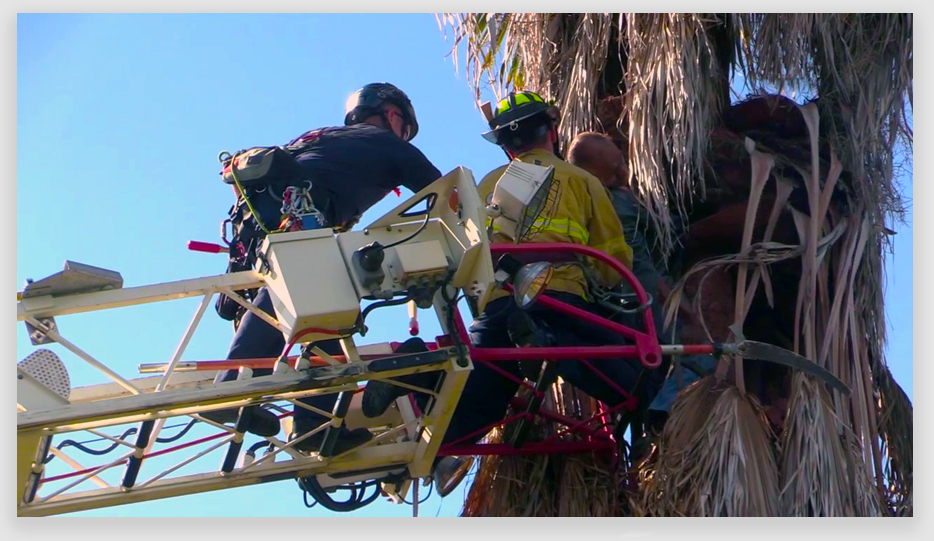
A tree-trimmer who became stranded near the top of a tall palm tree in Rancho Bernardo was rescued Thursday in a heart-dropping operation by the San Diego Fire-Rescue Department. Video from several television helicopters at the scene showed that as firefighters cut the man’s harness in a final bid to pull him to safety, the man hung suspended about 50 feet in the air with his legs wrapped around the palm and his upper body on a fire engine ladder. “This was an extreme technical rescue,” SDFRD Battalion Chief Glenn Holder said. “These things don’t always have good outcomes.” Emergency crews responded to the scene about 8:45 a.m. in the backyard of a residence on the Country Club-Rancho Bernardo golf course, a SDFRD spokesman said. He was pulled to safety more than an hour later at 9:55 a.m. The tree-trimmer was “alive, breathing and stable” after the rescue, Holder said. He was placed on a stretcher once he reached the ground and was being taken to a hospital for treatment…
Root Simple Home Tech, July 27, 2017: What tree should I plant? Cal Poly’s SelecTree has the answer
Tree knowledge is not one of my stronger skills. Thankfully Cal Poly San Luis Obispo has us tree ignorant Californians covered with an extensive, searchable tree database called SelecTree that will help you find the right tree for your yard. Or, let’s say, you’re bored with hours spent adding movies to your Netlix queue that you never plan to watch (one of my vices). How about searching for oddball trees instead? What about a California native tree with favorable fire resistance, low root damage potential that produces edible fruit? The database came up with two options, the hollyleaf cherry (Prunus ilicifolia) and the saguaro cactus (Carnegiea gigantea). Let me also put in a plug for our favorite tree, the Fuerte avocado (Persea americana ‘Fuerte’)…
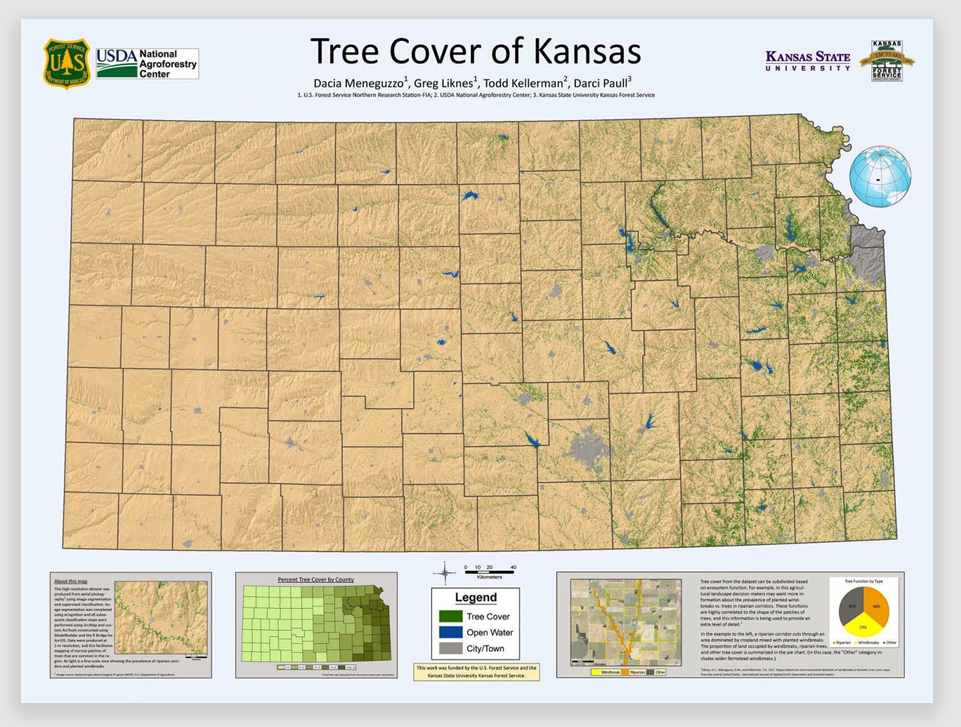
Kansas recently became one of the few states in the U.S., and the first state in the Great Plains, to successfully map its rural tree canopy. The Kansas Forest Service partnered with the United States Forest Service-Northern Research Station to develop the geospatial layer. The USFS-NRS provided funding and methodology expertise, while the Kansas Forest Service geographic information system team did the legwork to map trees in all 105 Kansas counties. Kansas Forest Service GIS specialist, Darci Paull and two Kansas State University students worked on the project for 11 months. Student workers Jakob Whitson and Abbey Marcotte started the mapping work, and Tanner Finney was recently hired after Whitson graduated. The mapping began in June 2016 using specialized software and was published in June 2017. The GIS team is currently inventorying windbreaks statewide using a tool developed by the U.S. Forest Service, Paull said. The tool creates a grid and the team maps each windbreak that crosses an intersect for two different years (2005 and 2015). The USFS-NRS is analyzing the initial data to see what changes have occurred over time…
Cleveland, Ohio, WKYC-TV, July 27, 2017: Akron’s biggest mystery: The Signal Tree
It stands alone, its branches like arms outstretched, near the Cuyahoga River on Akron’s north side. Its massive trunk, its age-stained bark. Its scars of the past. The Signal Tree is a spectacular sight, but it swirls in mystery. Who was it that “forced” its growth pattern? If age estimates of 350-560 years are to be believed, it may have been Native Americans that traveled through the area in that time frame, well before settlers came to the Western Reserve. The famous “Portage Path” is in the area, a few miles away, where American Indians portaged their canoes between the north-flowing Cuyahoga River to the south-flowing Tuscarawas River. Indigenous peoples are known to use strangely shaped trees as boundary markers or directional landmarks, and as gathering places for ceremonies…
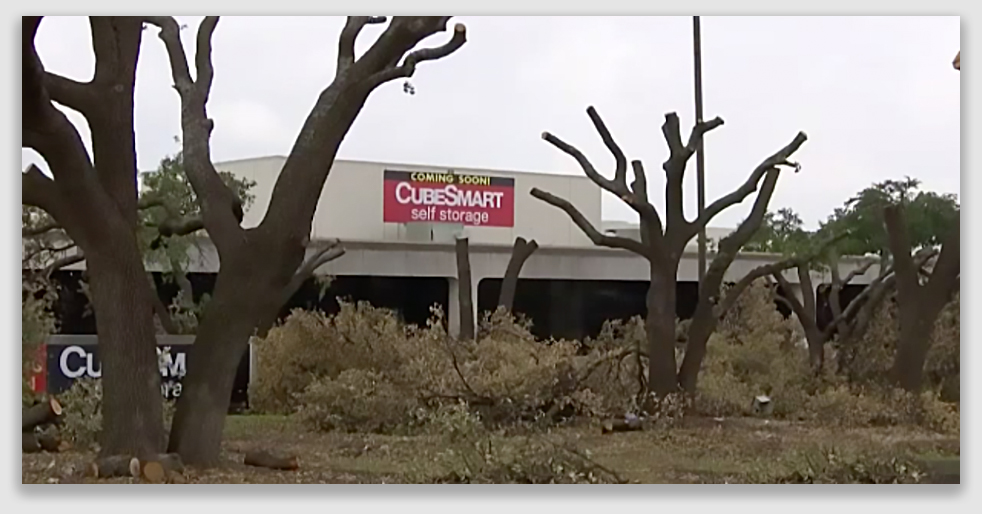 Austin, Texas, Statesman, July 26, 2017: Bill to ban tree ordinances passes Texas Senate
When Texans buy property, they buy the trees that come on it, and have the right to do whatever they please with them, the Texas Senate said Wednesday in a 17-14 vote on a bill to ban local tree ordinances. If passed by the Texas House and signed, Senate Bill 14 would overturn ordinances in Austin and at least 90 other Texas cities and counties that provide varying protections to trees. The measure affects only regulations of residential property and still allows counties to ban clear-cutting in unincorporated areas. It is one of nine items Gov. Greg Abbott directed for the Texas Legislature’s special session that take aim at city policies in general and Austin policies in particular. The order to overturn tree ordinances came, Abbott said in a radio interview, at least partially from his own experience trying to cut down a pecan tree at his Austin home…
The iconic tree growing out of the Decatur County courthouse roof has been covered by scaffolding as a repair project takes place. Community members expressed concern about the health of the landmark, but city officials said the tree is healthy. The scaffolding was placed in order to repair stone on the tower of the courthouse. “There’s leaking. There’s rain water. There is water coming in somewhere,” said Janet Chadwell, county auditor. “Tree is very fine. It’s healthy.” Crews said they aren’t sure if the stone damaged is linked to the tree’s roots, but Chadwell said the city wants to preserve the tree…
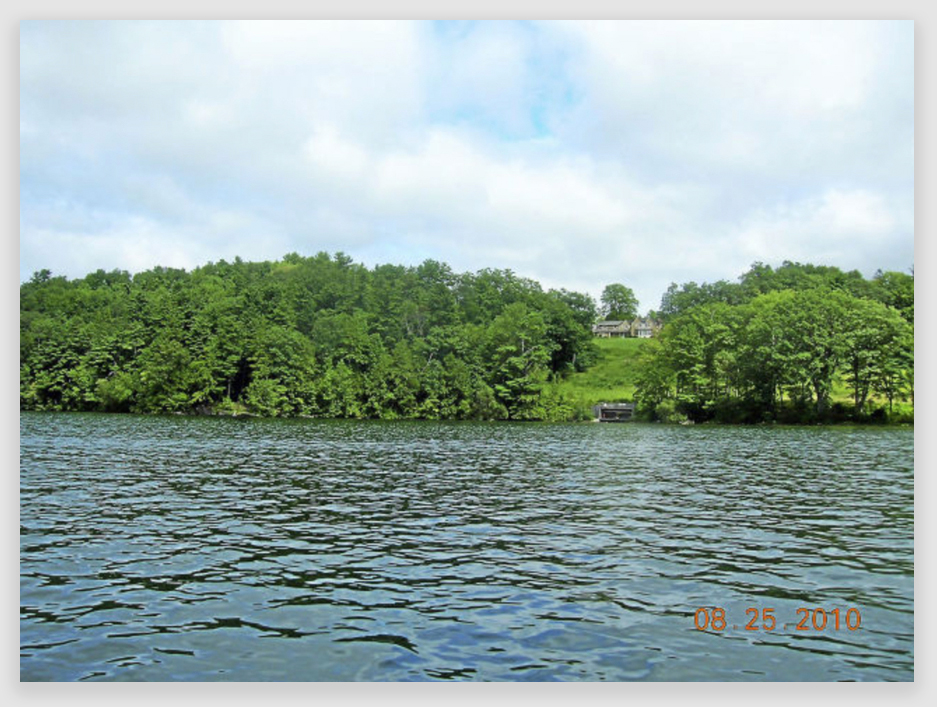
A property owner’s clearing of a large number of trees from his lakefront property recently caused concern among the Lake Wononscopomuc community, but steps are being taken by local officials to prevent a similar situation from reoccurring. According to William Littauer, president of the Lake Wononscopomuc Association, the property owner of 209 Sharon Road, Quentin Vandooseleare, had recently removed trees located within the 75-foot lake setback zone on more than an acre of his waterfront property without first receiving permission from the town of Salisbury. “I think he went too far,” Littauer said last week. “It’s a little extreme. But his contention was that no permit was required and he did nothing wrong. He just wanted a better view of the lake.” Littauer said the question that remains to be answered is whether or not a law presently exists that declares the action to be illegal. “If regulations are in place, they’re not clear,” he said…
Gov. Paul LePage has ordered the Maine Forest Service to work with municipal officials to review properties enrolled in the state’s tree growth tax program to root out potential abuses. The program offers landowners property tax breaks when they promise to actively manage their woodlands with regular harvesting activities. The law was originally created to help keep timber flowing to the state’s wood products industries including lumber and paper mills but LePage and others have said they believe the program is being misused or even abused by some woodland owners. “… the failure of some woodland owners to follow their forest management plan under the Tree Growth Tax Law Program jeopardizes the credibility of the program and creates perennial uncertainty about the program’s stability among the large percentage of woodland owners who are fulfilling their responsibilities under their forest management plans;” the governor’s executive order reads in part. Under the order, forest service foresters will help municipalities review the properties benefiting from the program in order to help identify landowners who may not be following adequate management plans…
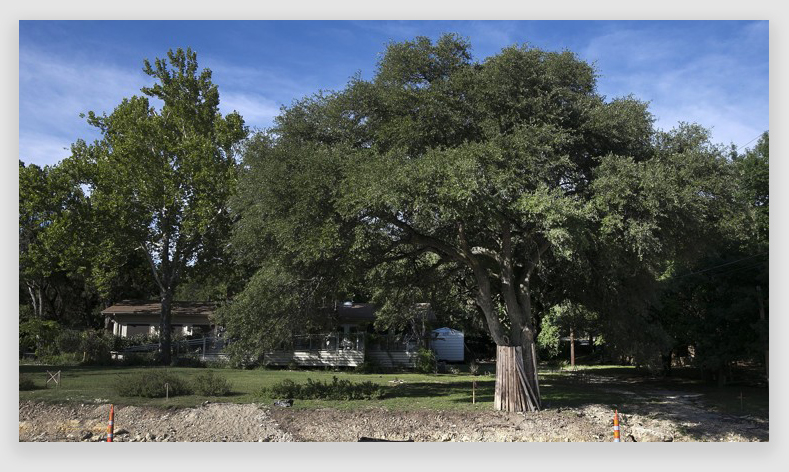 Austin, Texas, Statesman, July 25, 2017: Dozens of people tell House committee to scrap tree bill
Dozens of Texans told the House Urban Affairs Committee on Tuesday to let their own communities set local tree and land use regulations. The panel heard testimony for more than five hours on three bills. House Bill 77 by state Rep. Drew Darby, R-San Angelo, would require cities to allow builders to have the option to pay a fee instead of dedicating parkland “as a condition of approval for the development of real property.” Darby said the intent behind the bill is to give builders a choice, especially when dedicating parkland is not feasible. Supporters of the bill, builders in particular, said a fee option would allow them to get the most out of their land. But opponents, mostly city officials not wanting the state to preempt local rules and residents who like trees and parks say such local ordinances contribute to quality of life…
Springfield leaders have warned residents to look out for unlicensed tree workers after weekend storms caused damage in local neighborhoods. Early morning storms tore down trees and damaged roofs in the Northern Estates neighborhood on Saturday. A 52-year-old tree in Xena Haley’s front yard had limbs thrown from it. It had to be torn down immediately because it was a hazard, Haley said. “My tree had full branches hanging down off my tree, big branches,” she said. But she didn’t want to hire just anyone to do the job, she said. She made sure the company was licensed…

Plans to raze a 92-year-old church and remove 229 mature shade trees to make way for a townhome project prompted a march with signs and songs of protest at the steps of City Hall on Monday night. Waving signs that read, “Represent us, not lobbyists” and “Save Our Trees,” the 25-person group wanted the City Council to order a rigorous environmental review of the project, as well as an arborist’s report with the aim of saving as many trees as possible. Owner TAG 2 Medical Investment and its developer, St. Clair Partners in Irvine, are seeking approval from the city to knock down the church, most of the trees and rows of older cottages — once part of the Scripps Kensington Retirement Community — to build attached housing and office buildings on the 12-acre property at 1428 S. Marengo Ave. After the City Council gave its initial blessing June 12, opponents were surprised when two weeks later, the council pulled the project from its agenda when it came back for a second reading…
What is a forest? And how do you restore one? These seemingly simple questions were interrogated – with a focus on solutions – during a panel discussion at the 2017 Association for Tropical Biology and Conservation Meeting, recently concluded in Merida, Mexico. A group of experts on Latin American forests examined both the conservation and restoration of secondary forests from a variety of angles, including the ecological, political and social dimensions of such spaces. Beginning with the premise that “secondary forest regrowth following agricultural land use represents a major component of human modified landscapes across the tropics”, the panel emphasized the essential role of secondary forests for humans living in proximity, as well as for restoration initiatives and international goals, such as the United Nations Aichi Biodiversity Targets…
After another potential victim called News4Jax to sound off on a local lawn business accused of ripping off elderly women, the I-TEAM discovered that this line of work is largely uncontrolled in Florida. For weeks, more people who paid Hilton Long Lawn and Tree Service to do work have come forward, saying he took their money and never completed the work.On the business card, Hilton Long Law and Tree Service offers its license number. But the I-TEAM went to track that down and learned the number just proves that the company paid city taxes and is allowed to do business in Jacksonville. But the I-TEAM also uncovered the legitimacy of the business and many like it are regulated by no one. “He talked about what good Christians they were and how reliable their work was going to be, gave me his insurance certificate,” Linda Milford said. “I thought I’d done everything I should.”Milford is one of several local women who called the I-TEAM to complain about unfinished or damaging work by Hilton Long Lawn and Tree Service…
The largest business organization in Louisville won’t be taking a position on a proposed tree protection ordinance. Greater Louisville Inc., the metro chamber of commerce, had been urging voluntary approaches to grow and protect the city’s tree canopy, instead of a new ordinance designed to better protect street trees in Louisville. But it has recently decided to be neutral on the proposed ordinance, said Sarah Davasher-Wisdom, chief operating officer of GLI, in a written statement. That news comes as the Louisville Metro Council’s Public Works, Parks, Sustainability and Transportation Committee will hold a public hearing on the proposed ordinance… Councilwoman Cindi Fowler, D-14th District, chairs the committee and said she wants to hear from the public, whether they support or oppose the ordinance. The ordinance has been designed to help Louisville restore a tree canopy that’s been devastated by storms, age, disease and insects — and to help reduce urban heat and fight air pollution…
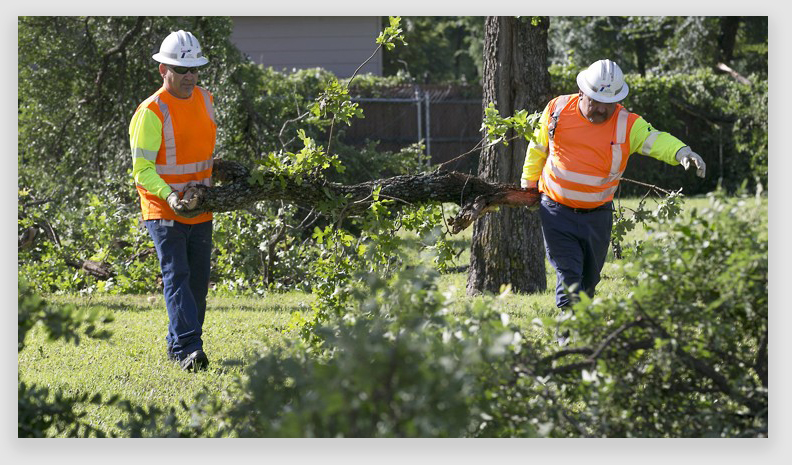
During the current special session, the Texas Legislature will address the seemingly simple question: Who owns the tree in your backyard? Nearly 50 municipalities in Texas have ordinances preventing landowners from removing trees from their private property without receiving the city’s permission — and they often require property owners to pay a fee to mitigate the loss of trees. Gov. Greg Abbott made restricting these local ordinances a priority. But such tree ordinances already have questionable legality. The Texas Constitution has a provision — the Takings Clause, which echoes the Fifth Amendment to the U.S. Constitution — that states when government takes private property for a public use, it must pay just compensation to the landowner. Municipalities with these tree ordinances have trampled the constitutional commitment to private property rights. In their efforts to regulate trees on private property, these cities have prevented Texans from making full use of their private land by requiring them to keep trees on their property against their will. This establishes a government taking for a public use, though these cities have not provided their citizens with just compensation, as constitutionally required…
Snowbrains.com, July 24, 2017: Lake Tahoe tree deaths double since 2015
The Tahoe Fund today announced a campaign to raise $36,000 to support a project designed by UC Davis scientists to improve forest health in the Basin. Despite the record-breaking snowfall in Tahoe this past winter, tree mortality remains a major issue. Due to drought and bark beetle infestations, tree mortality more than doubled from 35,000 in 2015 to 72,000 in 2016. Tahoe Fund is partnering with scientists at UC Davis Tahoe Environmental Research Center to help repopulate the hardest hit areas along the north shore of Tahoe with native sugar pine trees. “While a lot of attention goes to our beautiful lake, Tahoe would not be the same without our fabulous forests,” says Amy Berry, Tahoe Fund CEO. “It is heartbreaking to see our mountains turning red with dying trees. With the support of donors, we have the opportunity to help by replanting sugar pines to provide diversity and stability to our forests.” Scientists at UC Davis Tahoe Environmental Research Center plan to collect seeds from more than 100 different sugar pine trees around Tahoe. Over the course of the next year they will grow these seeds into 10,000 seedlings that can be planted in areas with the greatest mortality rates. The 10,000 seedlings will be distributed to public agencies to be planted along the north shore in both California and Nevada. The program also includes distribution of thousands of seedlings to private homeowners who have experienced tree loss…
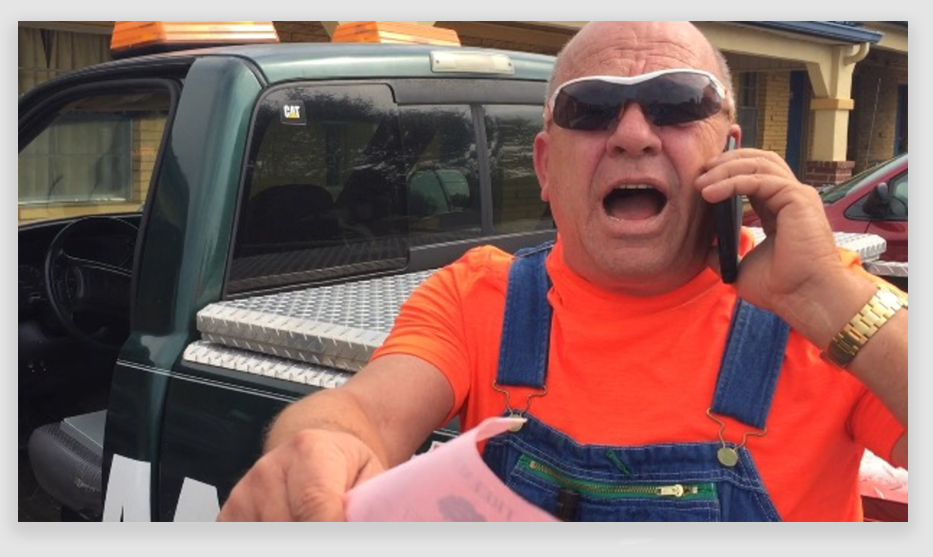
Benton motel room three weeks ago. And to no one’s surprise…Omar has failed to keep his word. And since our first story on June 30th we have learned of another homeowner who says he paid Omar Rivers only to never see him again. “You ain’t gonna put me on TV, are you?” a surprised Rivers asked back in June. “Maybe.” “Huh?” “Maybe.” “Don’t do that now,” pleaded Rivers. “It depends on what happens in this case.” “Oh yeah…I’ll get the job done,” pledged Rivers. “I get the job done don’t put me on TV. Deal? (laughs)…”
Houston, Texas, Chronicle, July 23, 2017: Senate panel okays tree-cutting proposal
A bill designed to obliterate local tree-cutting ordinances was approved Sunday by a Texas Senate committee after members exempted homeowners associations from having to comply. Even so, opponents said the measure would likely prohibit Houston’s highly touted new tree district from taking effect. “If you have communities that are named after trees, I would be concerned,” said state Sen. John Whitmire, D-Houston, after a revised version of the bill was taken up for approval by the Senate Business and Commerce Committee during a rare Sunday meeting. Whitmire said he thinks that property owners in local communities should have the ability to make the call on what trees can be trimmed or cut down, rather than “people in Wichita Falls, in East Texas” — a reference to other senators on the committee who voted for the bill…
The Franklin County hilltown pf Warwick hosts a rare black gum swamp, and now the plant habitat will be protected. State Senate President Stan Rosenberg, D-Amherst, on Friday announced $100,000 to expand the Warwick Town Forest by 97 acres, ensuring that the tree species and its surrounding ecosystem will prosper. Black gum, also known as black tupelo or sourgum, tends to grow in acidic peat bogs, often alongside red maples. The slow-growing tree with furrowed bark produces small flowers and a tiny sour fruit. However, it generally reproduces through root and stump sprouts. Some of the trees can be 300 to 500 years old, according to the Massachusetts Division of Fisheries and Wildlife. In 1925, Warwick voted to purchase 100 acres at the corner of Hockanum and Wendell roads, creating the town forest. Nearly a century later, the North Quabbin region, stretching into New Hampshire, is known for its large, unbroken areas of forest habitat…
Clemson, South Carolina, Extension Service, July 23, 2017: Never bury the roots or bark of trees
One of the least favorite sentences to come out of my mouth is “You damaged/killed your tree.” This past week I visited a home where they had a large beautiful dogwood in center of their front yard, but now it has a few large dead limbs. About a year ago they moved a few inches of soil in a fairly large circle around the trunk of the tree and planted roses. What they did not realize is that bark and roots need to breathe and even large trees have shallow root systems. Tree roots are near the soil surface so they can breathe and if you add more soil on top you are in fact drowning the tree roots. Usually it takes a few years for a tree to decline but their dogwood was old, faced the heavy rains of the last couple of years, and was in direct full sun. Dogwoods like partial shade, moist but not wet soil, and older trees (like me) cannot take the stress they did when they were young. Another very poor horticultural practice, volcano mulching or the piling of mulch at the trunk of a trees, can be seen all over Florence. I call volcano mulching the pink flamingo of gardening because it is out in your front yard signaling to everyone that passes that you don’t really know much about gardening…
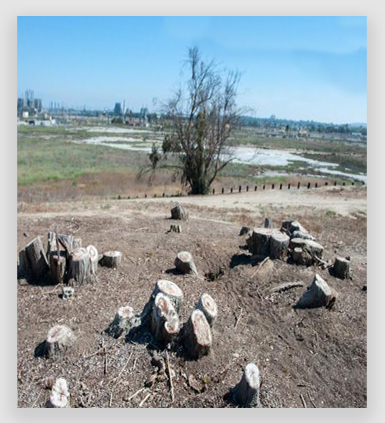
Seal Beach resident Rocky Gentner has agreed to pay the city $250,000 to settle its lawsuit over the destruction of 153 trees in Gum Grove Park last year. On March 19, 2016, tree trimmers hired by Gentner mowed down the Brazilian pepper trees behind his home on Crestview Avenue, a residential street bordering the 11-acre park. In a brief telephone interview with the Orange County Register after the demolition, Gentner said, “They weren’t trees, they were bushes – and they were dead.” But Seal Beach City Attorney Craig Steele disputed that assessment, saying the “trees were alive when they were cut.” “It’s just total disregard for the park,” said Mike Varipapa, the councilman who represents the neighborhood. Last summer, the city sent Gentner a letter demanding reimbursement for the “unpermitted, illegal” clearing of trees — some of which were small offshoots of mature trees…
Since Cariati Developers planted palm trees along its building earlier this summer, president Donnie Cariati says the public has shown a lot of interest. “People seem to really enjoy them,” Cariati said. “They’re stopping and taking pictures. It adds character and it’s different.” The company planted about 18 palm trees along the perimeter of its property at 70 N. Plains Industrial Road. Cariati said he planted the palm trees to meet landscaping requirements imposed by the Planning and Zoning Commission. As a condition for a special permit last year, the company was required to improve landscaping on the property, including planting trees. When someone applies for a special permit, the commission will sometimes approve the permit on the condition that the applicant updates its landscaping…

Piecemeal sidewalk repairs and tree maintenance isn’t cutting it, but it might be necessary while the city makes a long-term plan, city officials said July 18. Deliberations about a large maple tree at 220 Main St. have stretched over several City Council meetings. Douglas Beitler, who bought the property this month, has asked to have it removed because of rot. The council, which has a history of trying to save shade trees, was hesitant to declare the tree finished after conflicting advice from arborists who said, despite a seam of rot on the side facing away from the street, the roughly 150-year-old tree is still strong. Green’s Tree Service submitted a quote to remove the tree for $5,000. The city’s tree maintenance budget is up this year to $11,000 from $8,000, but several councilors argued that won’t be nearly enough considering the number of trees of the same age as the one in question…
Wrangell, Alaska, Sentinel, July 20, 2017: Newly found fungus could threaten Southeast Alaska trees
A fungus that damages trees is making its way through the state of Alaska. The fungus, spruce bud blight, has left damage in Southcentral and Interior Alaska, and now has been discovered for the first time in the southeast part of the state. The infection was discovered in Southeast Alaska in late June, the first reported sighting in the region, CoastAlaska News reported Thursday. The blight infects Sitka spruce, one of the most common trees in Southeast Alaska’s rainforest…
If you live in San Francisco and have a tree in front of your house, you know how expensive it can be to maintain it and the sidewalk, which can buckle when roots grow out of hand. For the first time, the city is picking up the tab to keep residents’ trees trimmed and sidewalks fixed at a cost of $19 million a year. On Wednesday, in sunny Noe Valley, tree trimming crews stood by with a cherry picker, wood chipper and harnesses as Public Works rolled out its “Street Tree SF” program, a voter-backed initiative that places the maintenance of the city’s 125,000 street trees under city care. Vince Shortino lives on 23rd Street near Castro Street where crews got busy trimming his 25-foot-tall Chinese elm tree which has fanned out so much, it’s entangled in power lines. To trim it himself, would have cost at least $500. “Now it’s starting to damage the sidewalk a bit, maybe the street, could be some sewer lines under there we’re not sure,” said Shortino. In the past, he, along with hundreds of other homeowners, would have had to have coughed up more than ten thousand dollars to repair buckled sidewalks and sewer lines pierced by invasive roots…
 Sacramento, California, KXTV, July 19, 2017: The Detwiler fire X factor: dead trees
The Detwiler Fire exploded in size over the last few days, but this fire may behave differently because of what it is burning. Let’s go back to the beginning of the 2011 winter season to understand what is happening. Following the last big rain and snow season in 2010-11, the Sierra and California had all the water it needed, and life was good. Beginning the following season, the pattern changed and we began a four-year major drought. The Central and Southern Sierra was hit especially hard with very warm temps and dry conditions. This was the bark beetle’s opportunity to take off and it did. Various droughts and warm winters are allowing the bark beetle in the Sierra and Rockies a rare opportunity to grow it’s population. Cold wet winters will cut the populations down, but we have seen the same thing all over the west. The bark beetles burrow into the trees and kill pines and other species. The result is a patchwork of healthy forests with millions of dead and dying trees intermixed, making the problem difficult to manage…
After more outages than usual, Consumers Energy will trim trees around power lines on Battle Creek’s south side. In a news release, the city of Battle Creek said the affected area — between Capital Avenue Southwest and Riverside Drive near Beckley Road — has seen four tree-related power outages since April. That’s compared to a total of six outages in the prior two years. The company’s contractor may begin trimming at the end of the week, the city said. The work is expected to take a week to complete. Most of the work will take place south of East Hamilton Lane. Neighbors in these areas already should have received notification of the work, the city said…
 Phys.org, July 19, 2017: Growing better trees faster
A new research collaboration could significantly increase the quality and economic productivity of one of the UK’s largest crop outputs, Sitka spruce conifer trees. Using a breeding technique called ‘genomic selection’, researchers from the Universities of Oxford and Edinburgh and from Forest Research, an agency of the Forestry Commission, hope to accurately identify, at a very early age, fast growing trees with superior timber quality. In doing so, the ‘Sitka Spruced’ research initiative could improve the economic value of future spruce plantations in the UK. In addition, by enhancing the quality of the wood, harvests are more likely to meet the changing construction specifications required to build our houses. The Sitka spruce is the UK’s primary timber species, with over 35 million Sitka trees planted in the UK each year. It is the third largest crop by area of cultivation in the UK, after wheat and barley, and accounts for around £1bn of the industry’s £2bn annual revenue. Fast growing and suited to the moist climate of western and northern Britain, the species produces a versatile white wood, with uses from paper making, to building construction. It takes around 40 years from planting before most Sitka spruce trees are harvested, and only a proportion of those trees meet the stronger, higher value construction grades. The project will scan hundreds of trees for variations in their DNA and then match those variations with fast-growing trees that produce superior timber. This will enable scientists to screen the DNA of the trees, to identify the fastest growing, with the best quality timber…
Grit, July 19, 2017: What you should know before planting fruit trees
Growing your own food is a fulfilling and delicious process. Having fruit trees means that you have the opportunity to enjoy fresh, sweet fruit during harvest time and then throughout the year, assuming you can or jelly your fruits for later. Planting fruit trees can be a relatively simple process as long as you are informed and educated about the trees that grow best in your area. Below are a few things to know before planting fruit trees so that you can successfully grow and harvest fruit. One of the best things about deciding to plant fruit trees is that you get to choose what types of fruit you want to grow. Make a list of your favorites, then ask your family what their favorites are. Once you have a list, figure out which trees you can plant in your area. Different fruit trees thrive in different areas, so picking the right type of fruit tree will ensure a bountiful harvest. The USDA Plant Hardiness Zone Map gives you the information you’ll need to pick the right trees for your area…
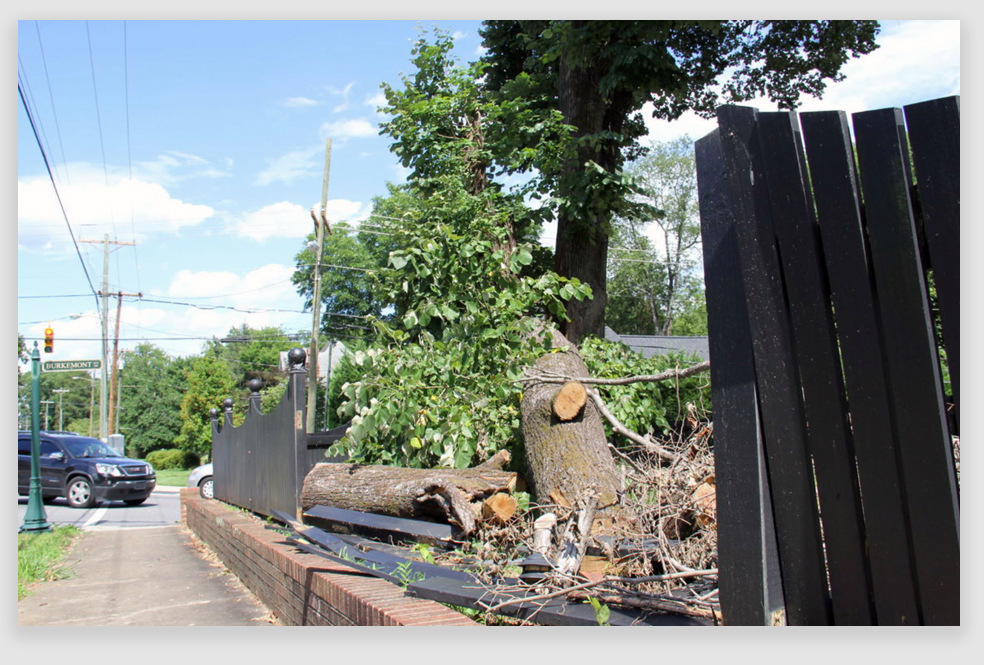
Luscious trees are among the many qualities that help give Morganton its nickname “Nature’s Playground.” But with Mother Nature likely to come through town with storms throughout the summer, the possibility of trees falling may be increased. But if a tree falls and causes damage to your property or someone else’s, who is at fault? Certified Insurance Counselor Dalton Walters recently explained who would be responsible in multiple tree-falling scenarios at Mimosa Insurance Agency in Morganton. “There are so many questions about them in North Carolina from almost every angle,” Walters said…
Flowering cherry trees stretching half-a-mile along the median of Edmondson Avenue in Catonsville were found deliberately damaged this week and Baltimore County police say they have no suspects. Five of the 32 Kwanzan trees planted by the Catonsville Tree Canopy Project were dead when James Himel, the group’s director, arrived with a fellow volunteer Monday morning to water them. Himel said he called the police after he determined every tree had been hit. The other 27 trees are “severely injured,” but still alive, he said, although 10 are showing signs of poisoning…

As residents drive along Interstate 575 headed into Cherokee, they will notice a pile of trees on the side of the highway headed for the chipper. The talk of the town in Cherokee County has been, “What is happening to all of the trees?” But according to the Georgia Department of Transportation, it is just “routine maintenance.” “Georgia DOT is currently conducting, or planning, overgrown vegetation management work along all of Georgia’s interstates, including I-575 in Cherokee County,” said GDOT spokesman Mohamed Arafa. “This work is intended to improve visibility and enhance safety along the interstate.” Arafa said the work that will be done along the interstate includes removing overgrown vegetation that encroaches on the shoulders and slopes, reducing trees and bushes within rights of way to safeguard motorists and provide adequate room for vehicle recovery if someone leaves the roadway and ensuring the visibility of warning, informational and instructional signs…
Washington, D.C., DNR, July 18, 2017: Have you watered your trees lately?
The dog days of summer are upon us, so it’s a good thing we have trees to help keep us cool! Summer is a great time to kick back, relax, and enjoy the nice weather. But this month and next can be hard on trees, and they can use our help. Don’t be fooled by cloudy weather, because it does not necessarily mean moisture. In Washington, most of the annual accumulation of moisture comes in three seasons, fall, winter and spring. Summer is typically very dry. This weather pattern is great for vacations and back yard barbecues, but difficult for trees – particularly newly planted trees. When we do get moisture, it may not be enough for our leafy friends, especially those planted within the last year or two. Even if you are watering your lawn on a regular basis, your trees might not be getting enough to drink. Grass roots, after all, only grow to a depth of several inches. In contrast, trees roots are deeper, from about 18” to 24” deep…
 Austin, Texas, Monitor, July 17, 2017: City of Austin welcomes Texas AG opinion on local tree rules
In Austin, and in about 60 other Texas cities, you need to get a permit before you cut down some large or historic trees. Opponents of those tree preservation rules – including Gov. Greg Abbott – call them a violation of property rights. Now, Attorney General Ken Paxton has weighed in, and those opponents may not be happy with his opinion. The opinion says tree preservation rules could lead to so-called “regulatory takings.” That means if a landowner can make their case in court, they might be owed compensation for being required to keep a tree on their lot. That could seem like a win for people who want the rules thrown out. But the opinion stops short of saying there’s anything unconstitutional about the rules. “There’s lots of ways that could seem ominous to towns and cities who are thinking about these kinds of ordinances,” said David Spence, a professor of law, politics and regulation at the University of Texas. “But it doesn’t change the constitutional law at issue…”
There are times it seems when only Steve Thomas and his Tree Doctor 911 crew can save a sick or dying tree. Around the world, from diagnosing ailing trees from the back of an elephant in Thailand to administering first aid to a severely wounded Russian olive tree in Eldorado, Thomas said he “almost never loses” a tree. Thomas, the son of a Clovis nursery owner and tree healer, works out of offices in Albuquerque and his major-projects center in Bijagua, in Costa Rica’s Guanacaste province. However, he has been spending more time of late in Santa Fe, where he says “they have a great heart to save trees. … People here are more tree-friendly than they are in other parts of the state.” Thomas plans to open a Santa Fe office sooner than later, and push the City Council toward supporting tree-preservation measures…

People adore their own trees but often vilify the trees of neighbors that block views, drop leaves or limbs, topple and smash cars, or buckle driveways with intrusive roots. Conflicts over trees can rage months or years with great intensity. Sometimes the fight swirls around damage and liability. Other times, overgrown egos clash and trees become an excuse for battle. Larry Ellison, founder and chairman of Oracle with 2017 net worth estimated at more than $60 billion, bought a 10,000-square-foot home in San Francisco’s Pacific Heights. His neighbors, Jane and Bernard von Bothmer, had a pair of redwoods that grew to shield their privacy from Ellison’s frequent parties — and block Ellison’s view of the bay. The business titan tried to buy the von Bothmer home for $15 million; they said no. Eventually Ellison sued, demanding that the neighbors trim the redwoods. With trial set for June 2011, the case settled and the von Bothmers agreed to trim trees. Then Ellison bought the house next door, 22 bedrooms for $40 million, further ensuring his view…
The state Department of Transportation acted legally when it felled three “grand trees” on Maybank Highway without seeking Charleston County’s permission, the state Court of Appeals ruled. The county argued that the DOT should replace the trees or pay into a county tree fund, something that the agency refused to do. A circuit judge ruled against the county, which prompted the appeal. The county has not decided whether to challenge the Court of Appeals decision to the S.C. Supreme Court…
 Chino, California, Champion, July 15, 2017: Pruning practice endangers trees
A row of eucalyptus trees at 14635 Pipeline Ave. in Chino Hills are suffering after having been “topped,” a pruning practice known to be harmful. Sean O’Connor, maintenance and operations manager for Chino Hills, said the topping has caused sunburn damage to the trunks of the red iron bark eucalyptus, turning them black. “This is one of a number of reasons that trees should not be topped,” said Mr. O’Connor, a certified arborist. “Topping is not an accepted arboriculture practice and this pruning has caused significant damage.” The trees are not owned by the city but belong to the Montessori School parcel. Mr. O’Connor pointed out the shoots, or suckers, growing from the wounds of the trees, which is the result of a sudden loss of leaves. He provided a link to the International Society of Arboriculture that describes topping as perhaps the “most harmful tree pruning practice known, despite more than 25 years of literature and seminars explaining its harmful effects…”
Let the civics lessons begin. Nearly half of Gov. Greg Abbott’s 20-item checklist for the special legislative session that starts Tuesday consists of proposals to clamp down on what he calls “a patchwork quilt of regulations” and undisciplined spending by localities. Let the civics lessons begin. Nearly half of Gov. Greg Abbott’s 20-item checklist for the special legislative session that starts Tuesday consists of proposals to clamp down on what he calls “a patchwork quilt of regulations” and undisciplined spending by localities…
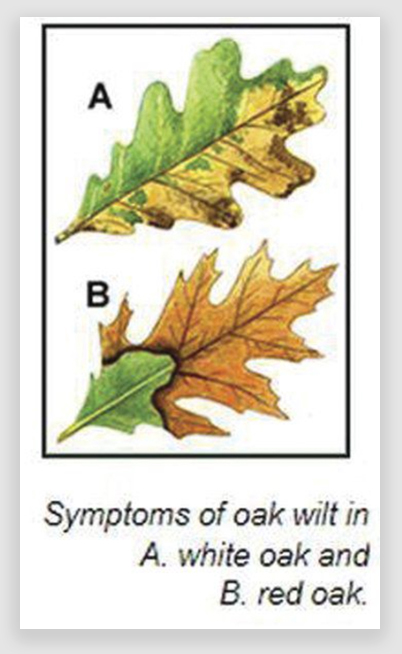
Reporting oak trees that lose some or all of their leaves in July or August is the goal of a new oak wilt awareness campaign by the New York State Department of Environmental Conservation. DEC Commissioner Basil Seggos recently announced plans to manage the spread of the invasive species that causes oak wilt. Oak wilt is a serious tree disease in the eastern United States, killing thousands of oaks each year in forests, woodlots, and home landscapes. Oak wilt is caused by a fungus, Ceratocystis fagacearum, which grows in the water conducting vessels of host trees, plugging up these vessels and preventing water transport. As water movement within the tree is slowed, the leaves wilt and drop off…
I have received several calls about split bark, or vertical cracks along the trunk of young trees. This condition most commonly occurs on thin-barked trees such as dogwood, elm, maple, plum and cherry. These cracks can become long-term open wounds that are susceptible to insects, diseases and wood decay. Unfortunately, after this damage has occurred, there is no help we can provide the tree. Prevention is the best solutions and can be done with a little planning before planting. Thin-barked trees planted in hot sites with full sun exposure in the afternoon are highly susceptible to a disorder known as sunscald. Sunscald can occur when the cambium cells – active, growing tissues under the bark – heat up too rapidly during sunny fall or winter days. Extremely cold temperatures following warm periods can also kill cambium cells in the trunk. Research has shown that the south side of a tree can be as much as 77 degrees warmer on a cold winter day than the north side of the tree. The newly activated cells lose some of their cold-hardiness and are injured when temperatures drop below freezing during the nighttime hours. The portions of trunks and branches facing south and southwest warm the most because they get the most direct sun and because they get sun later in the day when air temperatures are warmest…
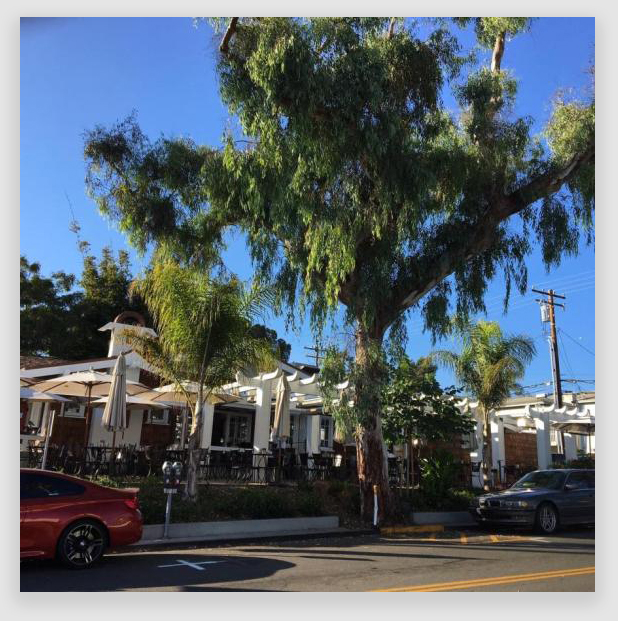 Public trees that are failing or pose risk and are six inches or less in diameter will no longer require a public meeting and arborist reports for removal. The Laguna Beach City Council on Tuesday, July 11, came to this decision while reviewing the city’s policies on its public tree inventory, now at more than 2,600. Council members agreed it was likely trees of this size would not be historic or “trees of any significance.” They agreed that ailing or dead trees would not need public vetting but that city staff would notify City Manager John Pietig and the council on any tree requiring removal. The council also reviewed its annual and biennial tree maintenance program which included setting a schedule for city trees based on their location and species. They also considered who pays if a resident wants a public tree laced or cut for aesthetic reasons outside the city’s scheduled trimming rotation. A plan for private trees will be reviewed by the council at a later date…
Total Landscape Care, July 13, 2017: Choosing the best trees for commercial landscapes
As a landscaper, you better than anyone know that creating a beautiful landscape is important, but more important than that is to find beautiful plants that can thrive in the environment in which they are planted. This is even more true when dealing with trees planted near commercial buildings. While landscaping for homes comes with its own set of challenges, landscaping for businesses is no walk in the park. Commercial businesses can be some of the greatest assets to the landscaping industry because they are interested in investing in attractive looks for their campuses. This gives you the ability to be creative in design and lets you encourage more green looks in the realm of big business. With commercial landscapes, however, you have to think about exposures, the public’s use of the site and vehicular traffic. Maintaining trees for commercial landscapes can take a bit more planning as well because the trees must be irrigated, cared for and pruned often in places where there is high public traffic and in parking lots…
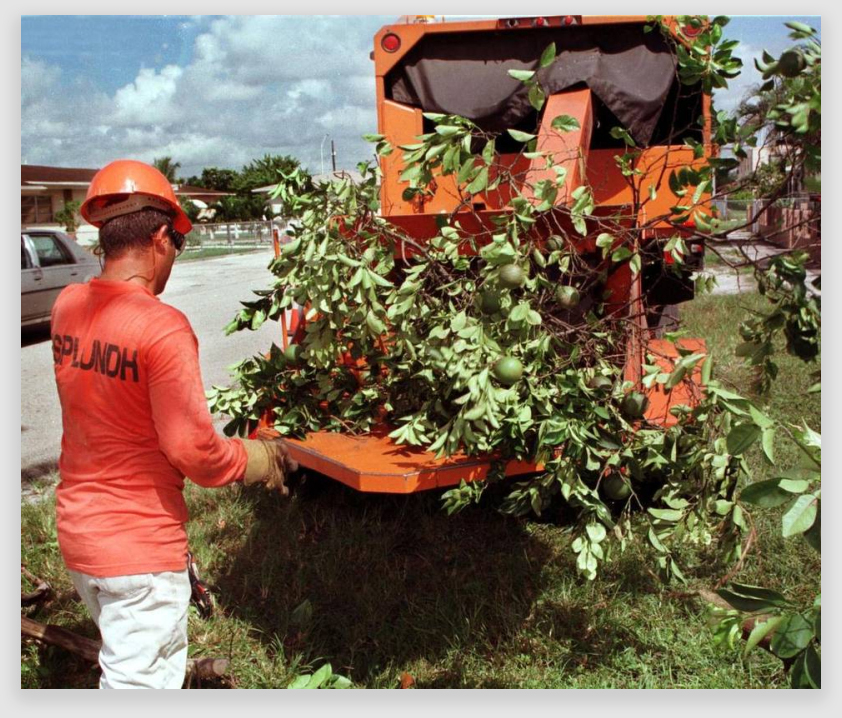
Homeowners in Broward and Lee counties who lost their citrus trees to canker were told by Florida’s highest court Thursday that because of the governor’s veto, they’ll have to go back to court to get the money. The 6-1 ruling by the Florida Supreme Court continues the legal limbo that has trapped homeowners for the last decade as they try to get redress after the state destroyed their healthy citrus trees as part of its ailed Citrus Canker Eradication Program between 2000 and 2006. After years of litigation, the Legislature for the first time set aside the money in June — $20.9 million to 70,036 Broward tree owners and $16.4 million to 167,677 homeowners in Lee County. But Gov. Rick Scott vetoed the $37.3 million, ignoring the order by the court that the state pay the money on the grounds that destroying the trees without adequate compensation was an unconstitutional “taking” and instead argued that the veto was warranted “because of ongoing litigation…”
Lancaster, Pennsylvania, Eagle Gazette, July 13, 2017: Nothing divine about the tree-of-heaven
I can understand why the first city planners and horticulturists believed they hit the jackpot when they introduced the tree-of-heaven (Ailanthus altissima) from China into North American cities and countrysides. From afar, the tree has a graceful appearance. Its long, weeping leaves are pinnately compound, and a single leaf, comprised of paired leaflets running linearly parallel, may reach a length of over two feet. Tree-of-heaven grows fast and can put down roots in almost any soil condition, sidewalk crack, or sometimes even bare rock, which made it a natural choice for the contaminated dirt found in many large metropolitan areas. Unfortunately, these growth characteristics that seemed ideal during the tree’s introduction, have now become the thing of ecologists’ nightmares as tremendous amounts of effort and dollars is being spent trying to control rogue populations from taking over the landscape and ruining fragile ecosystems. Though somewhat shade intolerant, and typically found in full sun, they will quickly colonize any disturbed area, and are especially adept at taking over temporary openings in forests caused by fires, wind or human activity. Once established, they produce an allelopathic substance called ailanthone which acts as a natural herbicide to suppress or eliminate any competing plants growing near the tree-of-heaven…
An unusual forest-restoration project – involving a significant amount of tree-cutting as well as tree-planting – is about to get under way in eastern West Seattle’s Puget Park, after three years of planning. The project leader says it’s work that will have benefits for decades and centuries to come – but it’s a project unlike any other they’ve undertaken, and they want people to understand why it will require taking out hundreds of trees (an estimated 600 “stems” – some trees have more than one). We went to a weekend briefing to find out more firsthand. It’s a Seattle Parks project under the umbrella of the Green Seattle Partnership, which will have 1,500 acres in restoration citywide by year’s end. The challenge here is that the area has an “unnaturally dense hardwood canopy” – far out of balance with evergreens, and bringing them back requires removing some of that dense canopy…
Napa, California, Register, July 12, 2017: St. Helena Council disbands Tree Committee
The St. Helena City Council agreed Tuesday to disband the city’s Tree Committee due to a lack of members. The council will authorize city staff to take action on tree permits that previously came before the committee, which was established in 1995. Staff’s decisions may be appealed to the council. As of July 1, only two out of the Tree Committee’s seven seats were filled, so it was unable to muster a quorum necessary to hold a meeting. With several tree removal permits pending and no applicants responding to the city’s recruitment efforts, city staff recommended that the committee be disbanded…
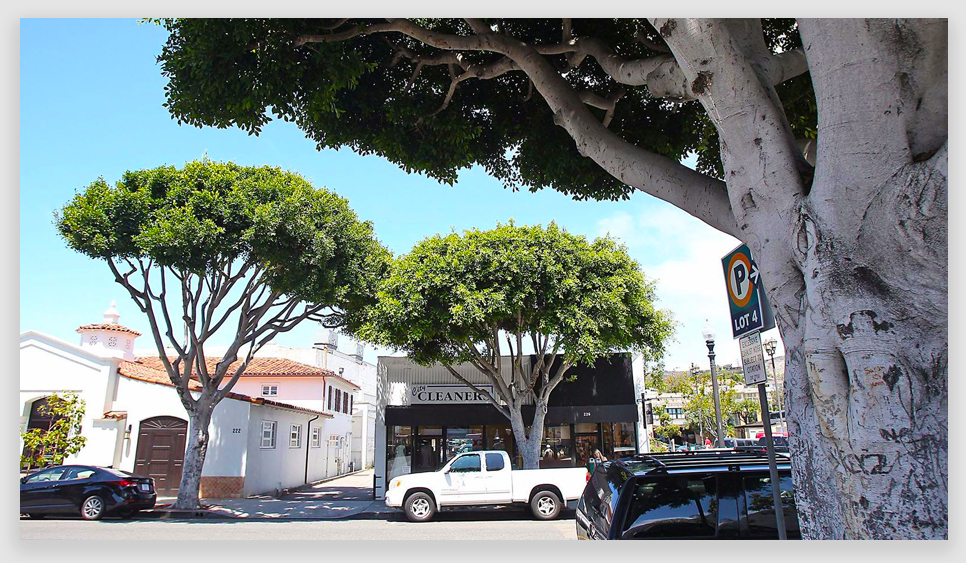
On-site meetings with arborists will no longer be required when considering whether to remove dead trees or trees of 6 inches in diameter or less on public property in Laguna Beach. The City Council on Tuesday unanimously approved revisions to current policies regarding the city’s stock of 2,647 trees. Council members agreed with staff’s recommendation that trees of 6 inches or less in diameter that are damaged, in serious decline and/or dying do not need arborist reports, peer review of the reports or meetings. The city cited cost concerns regarding the aforementioned steps, which can lead to fees exceeding $3,500 for one tree, according to a staff report…
Of all the hundreds (nay, thousands) of mistakes I have made in the half century or more of gardening, the most lasting and harmful have been in choosing trees. Pick a wrong annual and the problem can be corrected the next year, or even in the same year. With perennials, the time element is a bit more troublesome, and with shrubs, even more time is potentially lost on a sorry choice. Trees, however, by their very nature, don’t gain enough stature to prove their mettle, or lack of it, in less than 10 years or so, and sometimes it is twice or thrice that. Some trees that drop messy fruit don’t even start to bear until they are 20 or more years old. Perfect case in point: The gingko tree, a prehistoric relic from China, makes up into a beautiful shade tree that can reach 100 feet tall, produces fruit on female trees only. The mushy orbs, that resemble persimmons, drop in fall and create a sickening stink. It has been described as a cross between vomit and dirty baby diapers. It is at least that bad…
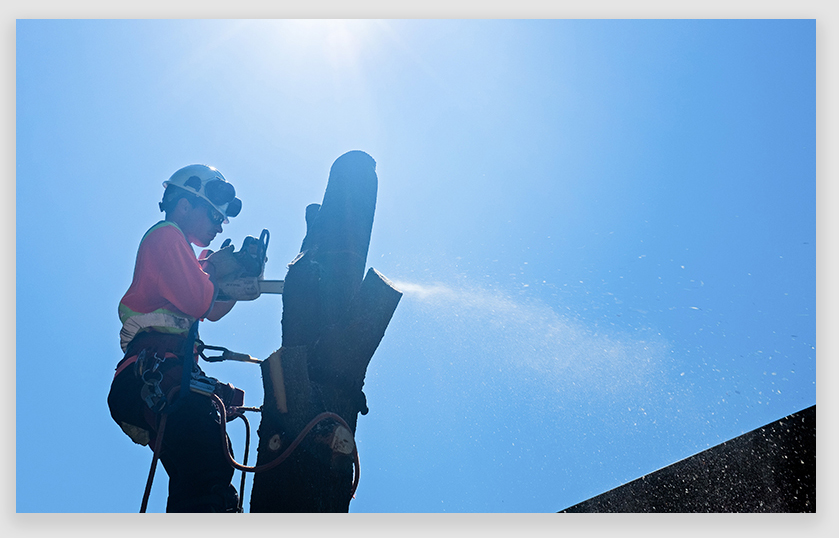
A local arborist says city residents have every reason to be upset by Sarnia’s proposed tree bylaw, which he calls an overreach by local government that will also hurt businesses like his own. “When you come into a dictatorship of what you can and can’t do on your property legally, you run into a problem,” said Ron Campbell, owner of Lambton Tree Service. The draft bylaw, which is out for public review and comment, would require every property owner in the urban area who wants to remove a tree to first obtain a permit. Obtaining a permit would require a written application and a plan or drawing of the property. The property owner must also pay an as-yet unspecified fee, and, possibly obtain a report from an arborist at his or her expense…
Tree Removal Permit is proud to announce its launch. Created to address tree removal needs, Tree Removal Permit collects, details and outlines the tree removal permit process, providing a streamlined information source for the removal of dead, dying, injured or hazardous trees. The goal is nothing less than to greatly streamline the process of tree removal for homeowners and business owners across the nation, as they often do not know the proper information when the need arises to remove hazardous trees. Tree Removal Permit analyzes and extracts relevant local tree ordinances so homeowners are aware of their respective regulations and corresponding city departments. Additionally, Tree Removal Permit provides easy to understand information regarding emergency tree removal from private property, as well information on how to address power line interfering nuisance trees and trees of public property. Instructions and PDFs for any permit application are now readily available through http://www.treeremovalpermit.com. A wealth of information is also available through the company blog and Facebook page. Currently, Tree Removal Permit is in the process of compiling its extensive tree removal database. The aim is to provide key information on the tree removal process for each major city in all 50 states. Tree Removal Permit visitors will have access to everything from city hotlines and local power companies to local arborists, city government departments and emergency tree removal companies…
 Technology.org, July 11, 2017: Chemical fingerprints against illegally harvested trees
Scientists from Oregon USDA Forest Service’s Pacific Northwest Research Station have developed a method of determining where a piece of wood comes from, based on its unique chemical signature. This is a break through to fight against illegally harvested trees from protected areas. Off-course imported lumber is accompanied by documents that state its geographic origin, but unfortunately it can easily be forged. The researchers used a technique known as DART-TOFMS (direct analysis in real time time-of-flight mass spectrometry), that allows them to detect the presence and relative abundance of various chemicals in the annual growth rings of wood samples. The samples are tiny, and could be made ready for analysis in 15 seconds. These analysis shows that trees from the same population shared the same unique chemical fingerprint. Those chemical fingerprints differs between two populations, which are located less than 100 km apart. It has to be determined if those differences are due to genetic factors, environmental factors, or a combination of the two. In comparing samples taken from 188 trees, the scientists were able to determine which of the populations each sample came from with an accuracy rate of 70 percent that could be improved as the technology is refined…
Officials have uncovered one of the Pennsylvania’s largest illegal marijuana growing operations in state forest, where 100-year-old trees were cut down to make way for the gardens. A Juniata couple arrested on charges of growing pot in their home face charges in connection with the case, the Public Opinion in Chambersburg reported. About two acres of trees were cut down in the Tuscarora State Forest in Mifflin County to grow about 1,000 marijuana plants, officials stated. Some of the timber had been used to make raised beds for the grow operation, the paper reported. “We were especially disappointed that one large conifer was cut down,” Steve Wacker, assistant district forester at Tuscarora told the news site. “A couple of trees were well over 100 years old. We’re trying to assess the dollar-value of the trees…”
Southern Living, July 11, 2017: Why trees change color & why they don’t
Fall makes me happy because it’s the grand consummation of what people and plants have been laboring for all year. People harvest alfalfa, soybeans, sweet potatoes, and apples. Fall flowers bloom to set seed to beget a new generation next year. Trees and shrubs glow school bus-yellow, pumpkin-orange, and stoplight-red as they retrieve nutrients made in their leaves that summer. But it’s the same fall color that drives me nuts. Every year at Southern Living, we zoom all over the South, trying to capture beautiful images of fall foliage at its peak. And no one — and I mean no one — can tell you if the fall color will be good this year and when the peak will happen. There’s no more sinking feeling than flying somewhere to photograph fall foliage, come in for the landing, look out the window, and see nothing but green, green, green…
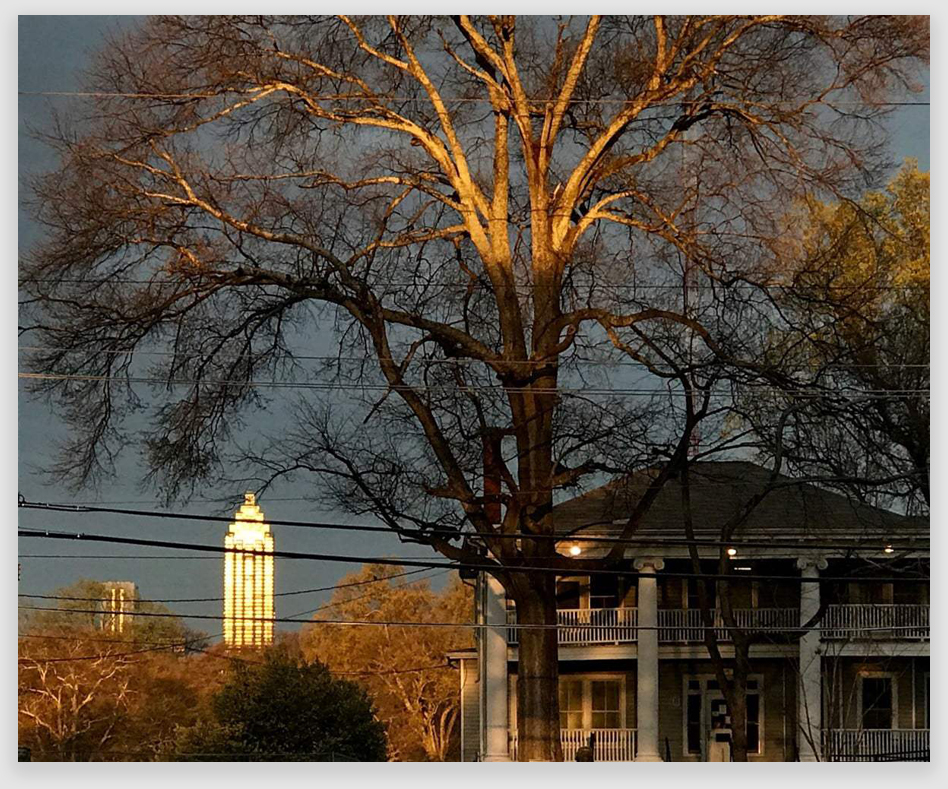
A groundswell of community leaders are doing all they can to make sure Joni Mitchell’s song “Big Yellow Taxi” doesn’t become Atlanta’s reality.
The song’s chorus feels all too familiar… Atlanta is uniquely positioned as a city in a forest, and there is a movement afoot to make sure it stays that way. “It’s clear to me there is more concern today about tree loss than I’ve seen in 20 years,” said Greg Levine, Trees Atlanta’s co-executive director and chief program officer. “It could be a paradigm shift.” Kathryn Kolb, an expert on Atlanta’s old growth forests and director of Eco-Addendum, said this could be our city’s defining moment. “The opportunity is here to turn the tide on how we develop our city,” Kolb said. “If we turn the tide, Atlanta will be an international model on how to have dense development and retain the natural landscape and our green amenities. “If we don’t, Atlanta will not be a pleasant place to live…”
Total Landscape Care, July 10, 2017: Banned Japanese barberry tree to be sold in New York once again
The Japanese barberry tree, a popular landscaping shrub with attractive flowers, was banned from sale in the state of New York in the spring of 2015. The Japanese barberry tree is one of the 11 plants on the state’s banned invasives list, but it will soon be returning to nurseries because of research done by the University of Connecticut. The return will likely take place in the next year. The research states that without seeds, the plant is unable to spread and therefore renders new variants of the plant sterile. Barberries, scientifically known as Berberis thundbergii, are attractive spiny shrubs that are easy to grow and popular among many homeowners and landscapers, according to the Times Union. Recently, New York State’s Department of Environmental Conservation approved the sale of four sterile versions of the Japanese barberry plant, along with two versions of winter creeper and Chinese silvergrass…
 Seattle, Washington, Times, July 10, 2017: Sustainable forestry: It’s more than just planting trees
The forestry industry has come a long way since the mid-19th century. Working forests are now an important part of our landscape because they support the economy and provide habitat and protect clean water while the trees grow for 40-60 years before the next harvest cycle. When managed responsibly, sustainable forestry can meet a wide range of needs for people and the planet forever. “Sustainable forestry involves a renewable cycle of harvesting what we plant,” says Mark Doumit, Washington Forest Protection Association. “It means caring for our forest resources, providing fish and wildlife habitat, and protecting clean air and water. At the same time, we provide jobs for rural economies and renewable wood products.” The first American Tree Farm was designated in 1941, near Montesano, Washington, to promote a renewable cycle of sustainable forestry. Today, nearly all harvested logs are from second- or third-growth forest…
Atchison, Kansas, Globe, July 10, 2017: Summer tree care
Summer has hit with a vengeance. Once adequate soil moisture levels have been reduced and summer rains in many areas have thus far been inadequate to meet the needs of landscape plants. Watering is key towards maintaining trees in our landscape. While most mature trees will have an adequate root system to explore moisture from a wide enough area to keep them nice and green, younger trees do not and will likely require some special care. For example, newly transplanted trees need at least 10 gallons of water a week to keep them going. Two and three-year-old trees that are still getting established may require even more. The challenge: getting water where it needs to be. Trees perform best when they have deep, but infrequent water applications. Try to get water to soak deeply in to the soil. This keeps evaporation levels low, making water available to trees over a longer period. Try using a small hole in a five-gallon bucket or a perforated soaker hose (water distribution can be helped with these hoses by hooking both ends together with a Y-adapter to equalize pressure) to allow for slower applications that can soak in to the soil’s subsurface layer. If soil is hard, consider a light tillage of some sort to rough up the surface, with an eye towards increasing infiltration. If even these slow watering methods result in surface runoff, consider reducing the watering rate even further or building a berm around the base of the tree (make sure it’s at least 4 feet in diameter) to allow water to percolate in to the soil profile before running off…
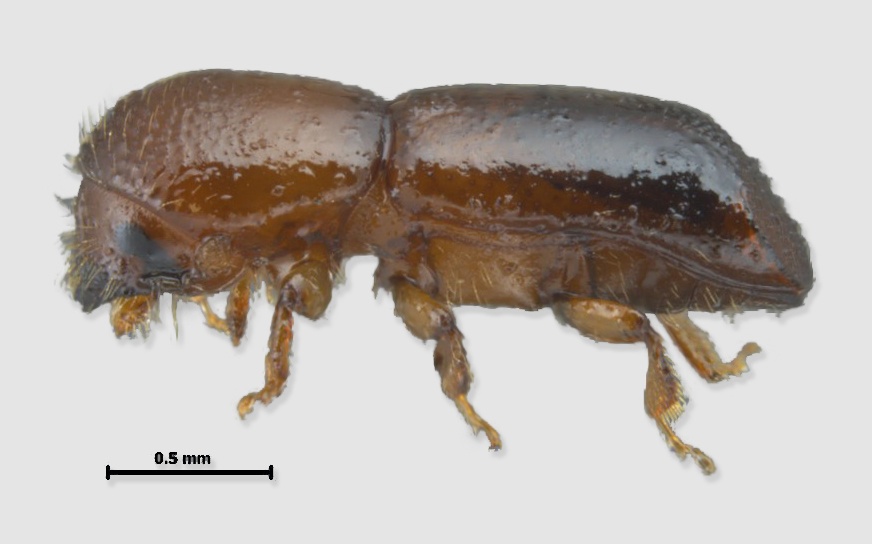 Palm Beach, Florida, Post, July 9, 2017: 1 beetle may have brought lethal tree disease now across SE
A lone female fungus-farming beetle inadvertently imported to Georgia may have been the source of a disease that has killed some 300 million redbay trees and threatens Florida’s avocado groves, researchers from Mississippi and Florida say. Clones of the beetle and her fungus have spread west into Texas and north to North Carolina over the past 15 years, said researcher John Riggins of the Mississippi State University Extension Service. He said they could spread nearly to Canada on sassafras, the source of the powder used to thicken filé gumbo. “Filé and guacamole could definitely be endangered,” Riggins said Wednesday. Bay leaves used for cooking could also face problems if this species gets into the Mediterranean areas where bay laurels are cultivated and grow wild, say Jason Smith and other University of Florida researchers…
Trees generally grow in soil, but a Burien biotech startup thinks they just might grow better in gel. Phytelligence has developed a way for trees, most commonly fruit trees, to grow during their early days in a nutrient rich gel. It provides a sterile environment to cut down on viruses that might attack the plant and to make sure that all trees of one variety are uniform. Orchards can be a risky business that take a long time to reach fruition — often taking 10 years, said Phytelligence CEO Ken Hunt. Trees grown in soil and sold to farmers can also become damaged during transplanting. Phytelligence’s technology aims to cut down on tree-mortality rates and make it easier for farmers to grow more plants, more quickly in gel with custom nutrients for each plant variety…
 Reuters, July 10, 2017: British forest pumped full of CO2 to test tree absorption
Researchers at a British University have embarked on a decade-long experiment that will pump a forest full of carbon dioxide to measure how it copes with rising levels of the gas – a key driver of climate change. The Free Air Carbon Dioxide Enrichment (FACE) experiment at the University of Birmingham’s Institute of Forest Research (BIFoR) will expose a fenced-off section of mature woodland – in Norbury Park in Staffordshire, West Midlands – to levels of CO2 that experts predict will be prevalent in 2050. Scientists aim to measure the forest’s capacity to capture carbon released by fossil fuel burning, and answer questions about their capacity to absorb carbon pollution long-term. “(Forests) happily take a bit more CO2 because that’s their main nutrient. But we don’t know how much more and whether they can do that indefinitely”, BIFoR co-director Michael Tausz told Reuters…
Better Homes & Gardens, July 10, 2017: 10 Outstanding Evergreen Trees for Privacy
They’re friendlier than a stockade fence, cheaper than a wall, and prettier than lattice. What are they? Evergreens. You’ll find they offer plenty of privacy…and a whole lot more. Here are 10 great conifer candidates for evergreen landscaping…
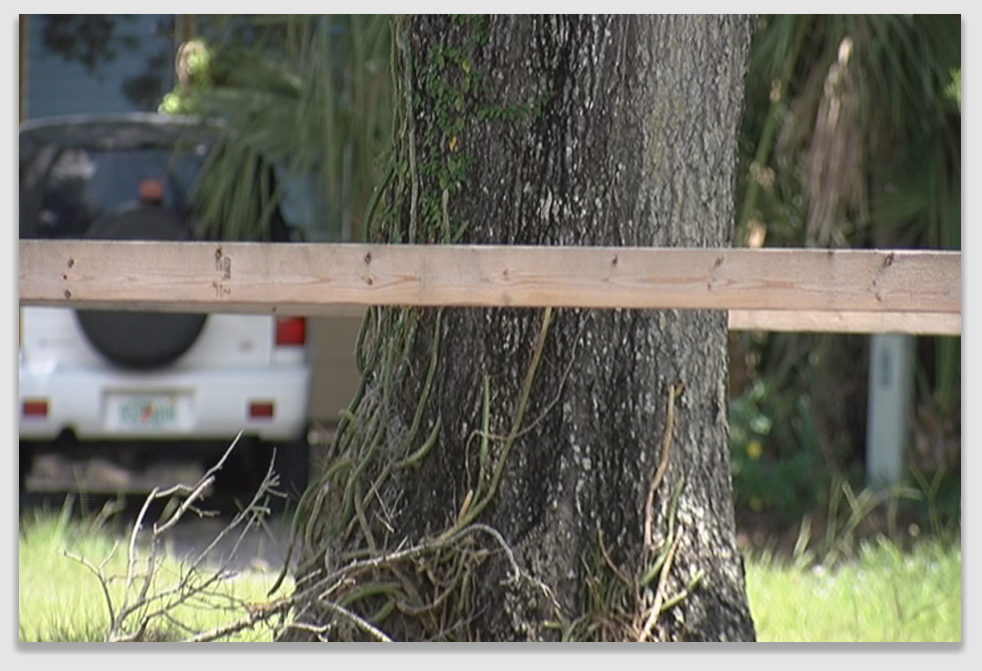
In Tammy Kovar’s Sarasota office of her company Biological Tree Services, you’ll find two binders: one for city of Sarasota tree ordinances, and another for every other city and county. “The city of Sarasota is pretty well known for its extensive library of code,” says Kovar. However, that library still has no answer to appease residents, who feel the code is too light on tree removal, and builders who often feel the code is too strict. “Every tree is different and every location of every tree is different, and there are a lot of factors to consider when you’re looking at a piece of property,” adds Kovar. “I think the trees need a voice.” The new voice for the trees will be a team of seven locals to revamp their code on tree mitigation and other rules. The team will consist of two neighborhood leaders, two people with development interests, a downtown core resident, a chamber of commerce member or business owner, and an arborist…
A county funded community collaboration in Hawaii aims to find new solutions to a fungal disease that is attacking and killing ohia, the most abundant native tree in the state. The Malama Ohia initiative is in its preliminary stages, starting with a research project investigating effects of applying a spray of indigenous microorganisms to ohia trees to see whether the spray boosts a tree’s resistance to the Ceratocystis fungus that causes rapid ohia death. Rapid ohia death has affected more than 117 sq. miles (303 sq. kilometers) of trees on the main island of Hawaii, the Hawaii Tribune-Herald reported. Researchers continue working on several initiatives to understand how Ceratocystis moves through individual trees and spreads throughout forests…
 Richmond, Virginia, WTVR-TV, July 6, 2017: Richmond woman frustrated by neighbor’s overgrown tree
A Richmond woman contacted the CBS 6 Problem Solvers about her neighbor’s overgrown tree, that she said has created several safety issues. Felicia Whitaker lives off Mechanicsville Turnpike. She said the limbs from her neighbor’s tree have grown so long that they droop to the ground in her back yard. Not only does it take up space, she said that in the past year she’s had to pay money to manage the mess. She is worried about her son’s safety and she’s concerned that the power flickers on and off when it’s windy “because tree limbs are entangled in the wires. I’ve had to have the roof replaced and had holes in the roof because of the branches that fall on top of my home,” Whitaker said. “Right now my back yard is unusable, it’s overgrown from neighbor’s back yard.” Whitaker said after several attempts to get her neighbor to cut the limbs, he sent a crew to do the work but they only cut limbs over his property, not hers…
A judge granted a motion to dismiss a complaint against a golf company in the South Hill Bluff tree lawsuit. In April, a mile stretch of road was bulldozed near the Qualchan Golf Course. Avista, the City of Spokane parks department and a golf organization called First Tee were involved in this project, but each has denied giving the go ahead for the tree removal. Some of the land bulldozed belonged to private owners who filed a lawsuit against the contractors who did the work. The contractor turned around and filed a third party complaint naming First Tee in the suit. It was revealed today that the judge granted a motion to dismiss the complaint against the golf company…
Salisbury, North Carolina, Post, July 6, 2017: Want to start a tree farm? Some tips
North Carolina is blessed with abundant forest land that makes valuable contributions to the quality of life and the state’s economy. More than 90 percent of these forests are privately owned; private, non-industrial landowners own roughly 75 percent of these forests. Tree farms are more than pine plantations or Christmas tree farms. Tree farms are varied in nature and contain many different habitats and stages of forest regeneration, from seedlings to mature timber. The American Tree Farming System (ATFS) was established in response to concerns that America’s private forests were being cut at unsustainable rates without reforestation. It all began in 1941 when the first tree farm was designated in Washington State. The tree farm’s purpose was to demonstrate sound forest management practices to area landowners…
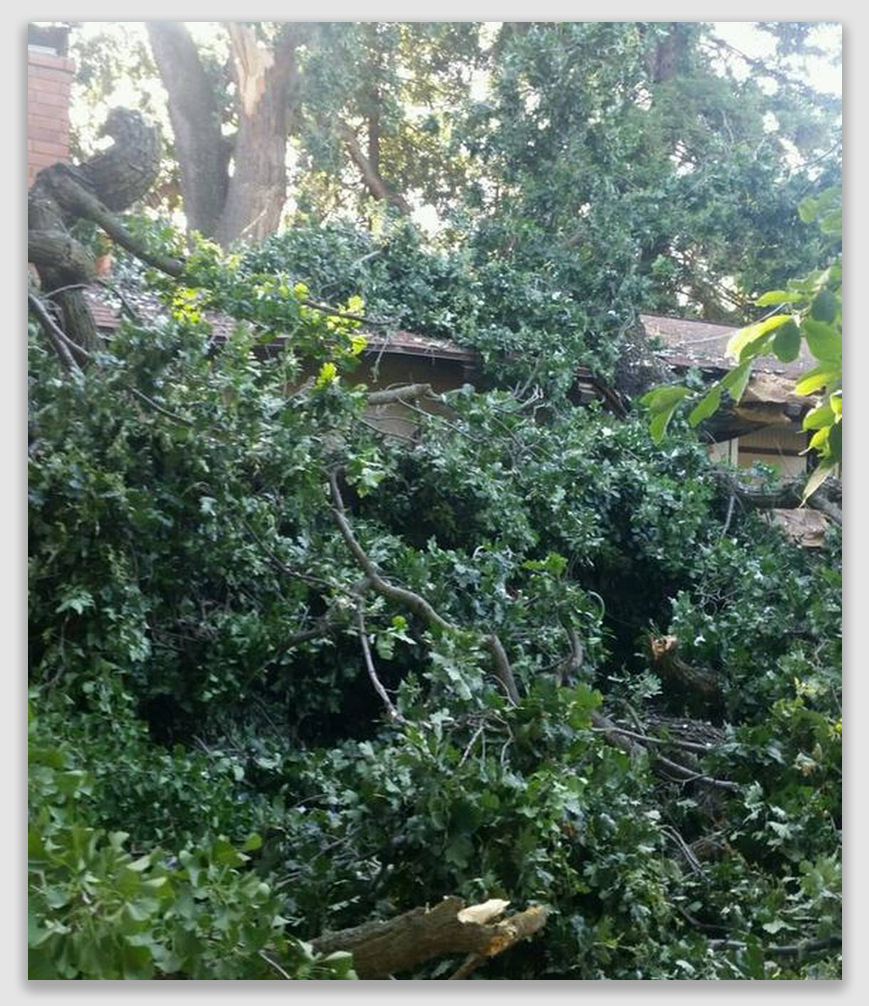
A hot windless summer morning. A really loud crashing sound. The street behind our house is completely blocked by a huge oak branch that has just fallen, crushing a parked car. Neighbors and I walk up to the shattered branch to take a look. The limb is enormous – at least 20 feet long and 3 to 4 feet in diameter. The valley oak tree that the limb fell from is over 30 feet tall and appears to be healthy (green leaves, no branch or tip dieback). The branch had broken off about 5 feet from the trunk and it wasn’t a clean break. Both ends of the oak limb are jagged and torn. No signs of disease, insects or rot. Sudden limb drop, sometimes called summer branch drop, is common in our climate zone. On hot windless days, large heavy branches from mature trees (especially oaks, Southern magnolias and eucalyptus) will suddenly crash to the ground with no apparent cause. The breaks typically are not clean – the branch splits unevenly, 3 to 12 feet from the trunk. Long horizontal branches drop most often. No definitive cause for sudden limb drop has been discovered yet. Theories on possible causes include loss or movement of water within the tree and higher concentrations of ethylene gas…
Technology.org, July 5, 2017: Tree pump system can drive robots of the future
Just as humans have arteries and veins that transport blood from the heart out to tissue and back again, plants have two types of tissues that transport water up to the leaves—and nutrients down to the roots. However, unlike humans, plants do not have a pumping muscle. Other physical principles must therefore come into play in order to produce the same effect. Together with researchers from MIT and Cornell University, Associate Professor Kaare Hartvig Jensen from DTU Physics has described a new model in the journal Nature Plants, explaining where the considerable forces required to transport water in a tree come from. By means of photosynthesis in the leaves, sunlight, CO2 from the air, and water from the roots combine to produce the sugars the tree needs for nourishment. The waste product is the oxygen we breathe. Following photosynthesis, the substances have to be transported around the vascular system. Small plants have small membrane pumps in their cells which use energy to pump the sugar into the tissue. “Trees, however, do not, and given their size, you would expect them to need pumps capable of creating extremely high pressure,” says Kaare Hartvig Jensen. To explain this phenomenon, the researchers have created a chip that imitates the tree’s ‘pump mechanism’, which is a purely physical process—namely diffusion…

An East Lansing resident isn’t pleased with her newly chopped trees. But she’s angrier about the wood chunks and logs left behind. Elaine Kristelis, a resident of the Whitehills Neighborhood, said tree trimming crews working for the Lansing Board of Water & Light cut trees lining her backyard Tuesday and left piles of wood and logs behind. BWL provided a list of wood salvagers, Kristelis said, but none of them needed the logs. “They’re passing the buck and the expense and their responsibility and all the grief that goes with it,” Kristelis said. BWL spokeswoman Amy Adamy said crews chip branches smaller than a 4 inches in diameter. But anything larger is cut into manageable sizes and left where the tree was cut…
A reddish patch of forestland high above Ashland is a scarlet example that, when it comes to burning, foresters still have some learning to do. The 65-acre patch intentionally set off June 6 as part of the Ashland Forest Resiliency Stewardship Project burned hotter than intended, resulting in scorched portions of the forest canopy and an unknown number of dead or dying trees that the controlled burn was supposed to enhance, authorities said. Those dead trees include some large “legacy trees” whose progress has been under study here in the Rogue River-Siskiyou National Forest near Horn Gap, in an area visible to hikers and mountain bikers on Forest Service Road 400 along the No-Candies Trail — and even to motorists on Interstate 5. “We got more scorched trees than we wanted,” said Don Boucher, Ashland Forest Resiliency Stewardship Project manager. “Some will live. Some will die.” The scorched area represents about one-fourth of the nearly 250 acres burned this spring as part of the AFR project, which used fire, logging and commercial brush-thinning to improve nearly 7,600 acres of the Ashland watershed while reducing wildfire threats…
Mental Floss, July 3, 2017: Washington, D.C. residents pay tribute to fallen 325-year-old oak tree
 Washington, D.C. is perhaps most famous for its historic monuments and buildings, but residents of the city’s Northwest quadrant recently took time to mourn the death of a centuries-old tree, according to NPR. The sturdy red oak in D.C.’s Shepherd Park neighborhood was 75 feet tall and its trunk was 5.5 feet wide, with sweeping branches that soared over the porch of an adjacent home. Experts believe it first took root in the late 1600s, making it around 325 years old. Washington, D.C. wasn’t founded until 1790, so the tree predated the creation of the city. Over the centuries, it stood tall amid countless wars, presidents, and national triumphs and tragedies—but it recently fell victim to the ravages of time and gravity when a large section of its cracked trunk splintered off and fell to the ground. Nobody was injured and property damage was minimal, but the arduous cleanup process took a six-member crew eight hours to complete, according to The Washington Post. They deployed a 100-ton crane to remove the tree—a job that cost $12,000, as two of the tree’s base parts weighed 17,000 pounds and 14,000 pounds, respectively…
Wildfire Today, July 2, 2017: Tree falling on dozer starts fire in Colorado
The Mill Creek Fire in Colorado started Saturday when a tree fell on a bulldozer that was working in the area, according to a spokesperson from the West Routt Fire Protection District. The dozer was destroyed as the blaze spread northwest of Pilot Knob near Routt County Road 80. The fire is 13 miles northeast of Hayden and 20 miles northwest of Steamboat Springs. As of Saturday night 116 acres had burned. Steamboat Today reported that two hotshot crews will be assigned on Sunday…

An invasive beetle that crossed from Mexico into southern San Diego County more than five years ago is continuing to head north, threatening widespread destruction of ornamental palm trees and date palms that could add up to millions of dollars in damage. “It has already killed hundreds of Canary Island date palms in Tijuana and parts of San Diego County,” Mark Hoddle, director of the Center for Invasive Species Research at UC Riverside, said in a statement this past week. “We are on the verge of a major crisis for California’s palms.” The South American Palm Weevil can now be found as far north as Bonita and along the border with Mexico as far east as Texas, according to San Diego County officials. The financial harm this flying pest inflicts would rise significantly if it reaches date farms in the Imperial and Coachella valleys, Hoddle said. The weevil can wreak havoc on date palms, Canary Island date palms, coconut palms, African oil palms, sago palms and Washingtonia fan palms…
Trees usually don’t need much pruning, but when they do it should be done properly. Most pruning is done for your benefit, not for the tree. If limbs are against the house, in your way, or if more light is needed for plants under trees, OK. But don’t be fooled into thinking that it is always good for the tree. Landscape trees rarely need much pruning. When a tree is drastically thinned, artificially lifted or severely cut back, damage is done. A good rule of thumb for trimming trees is to preserve the natural character. Pruning a tree into an artificial shape is a waste of money, has ugly results, and is usually detrimental to the health of the plant. If you can’t decide whether to trim or not, don’t…
 Perryville, Missouri, Republic Monitor, June 28, 2017: Trees, saws, ladders don’t mix
In February 2016, a homeowner was seriously injured after falling from a ladder while trimming branches from a tree in Frederick, Okla. The man was using a chain saw to trim broken limbs from the trees around his home. One of the limbs he severed fell into his ladder, knocking it over and causing the man to fall 12 feet to the ground. The man was discovered by a neighbor, lying face down in the yard beneath the tree. The badly bent ladder and chain saw were strewn on the ground nearby. He was taken by helicopter to OU Medical Center due to the nature of his injuries. “This story is, unfortunately, not an isolated incident” says Tchukki Andersen, Board Certified Master Arborist, Certified Tree Safety Professional and staff arborist for the Tree Care Industry Association. “There are many stories in the news media each year depicting the sad details of homeowners getting severely injured or killed by attempting to manage large tree limbs on their own. “Tree work, while appearing fairly straightforward and simple, is actually extremely complicated and technical. There is so much to understand about removing live or hanging tree branches, and it is not at all like cutting up firewood on the ground with a chain saw…”
Gov. Greg Abbott announced Wednesday that he has tapped State Sen. Bob Hall and State Rep. Paul Workman to write a law that would “prevent cities from regulating what property owners do with trees on private land.” Austin city leaders responded to this announcement saying they opposed the law and felt that other issues should take priority. During his announcement of the special session, Gov. Abbott identified curbing municipal tree removal regulations as one of the 20 items to be added to the special session agenda. “Tree removal is important in Texas because we are a conservative state and we believe in people’s individual liberties and part of that is private property rights,” said Rep. Workman, whose district covers western and southern Travis County. “And so we believe that people should have that right to remove a tree off their own property, the government shouldn’t be interfering with their property and their ability to do what they choose…”
 Baker City, Oregon, Herald, June 28, 2017: Massive tree taken down
A tree that might have been a seedling when the first wagon train of emigrants traveled through the Baker Valley on the Oregon Trail came down Tuesday. The severely rotted cottonwood, which might have been as old as 180 years, stood at the corner of Resort and Campbell streets, next to the Baker County Library’s parking lot. Ed Adamson, the library district’s facilities maintenance manager, said he had initially hoped to stabilize the tree. But the techniques he’s used to repair a birch tree, involving concrete and wires, were not suitable for the much taller and thicker cottonwood, Adamson said. Baker City’s Tree Board, along with two certified arborists, examined the cottonwood in May after Adamson asked the city about the library district’s options, said Jennifer Murphy of the city staff. Workers inserted metal rebar into a cavity in the tree’s main trunk, and the rebar penetrated at least one foot. In addition, bores made into two of the tree’s other trunks showed significant amounts of rot…
Lafayette residents who claim workers trimming trees for LUS are improperly trimming trees on their property. On Tuesday, concerned Lafayette residents voiced their concerns at a Town Hall Meeting. The Director of Lafayette Utility System, Terry Huval says the utility system is strong because the trimming program removes trees limbs from power lines. Trimming provides the best impact towards the reliability of the system. Huval says he heard the concerns of residents and will work towards a resolution. The president of the Sterling Grove Neighborhood Association, Dr. Olivier Chatelain de Pronville of S.G.N.A describes how the trees have been trimmed in his neighborhood. “It used to be a canopy over the street you know,” says Dr. Chatelain de Pronville of Lafayette. Dr. Chatelain de Pronville says he heard about the suspension of tree trimming services in the Saint Street areas and other Oak Tree populated neighborhoods — until something can be figured out. “We’ll look it’s half. Look how far it goes on one side. That tree used to be over the street and now it’s just that left,” explains Dr. Chatelain de Pronville…
Experts with a company working to save trees from an invasive tree beetle injected a special treatment into sycamore trees outside Baldwin Park City Hall Wednesday. The treatment is expected to provide protection against the polyphagous shot hole borer for up to two years. Made up of Propizol (propiconazole), a systemic fungicide, and TREE-age (emamectin benzoate), a general use pesticide, the treatment is injected directly into a tree’s vascular system and not in the air or soil. The treatment was developed and provided free to the city by the Massachusetts-based company Arborjet. The polyphagous shot hole borer is an invasive, tiny beetle about 0.05 to 0.1 inch in length that tunnels into trees and creates fusarium euwallacea, a fungus that blocks the flow of water and nutrients in the tree, leading to canopy die-off or death by starvation. The beetle attacks many species of trees, including sycamores, maples, oaks, willows, alders and avocado trees…
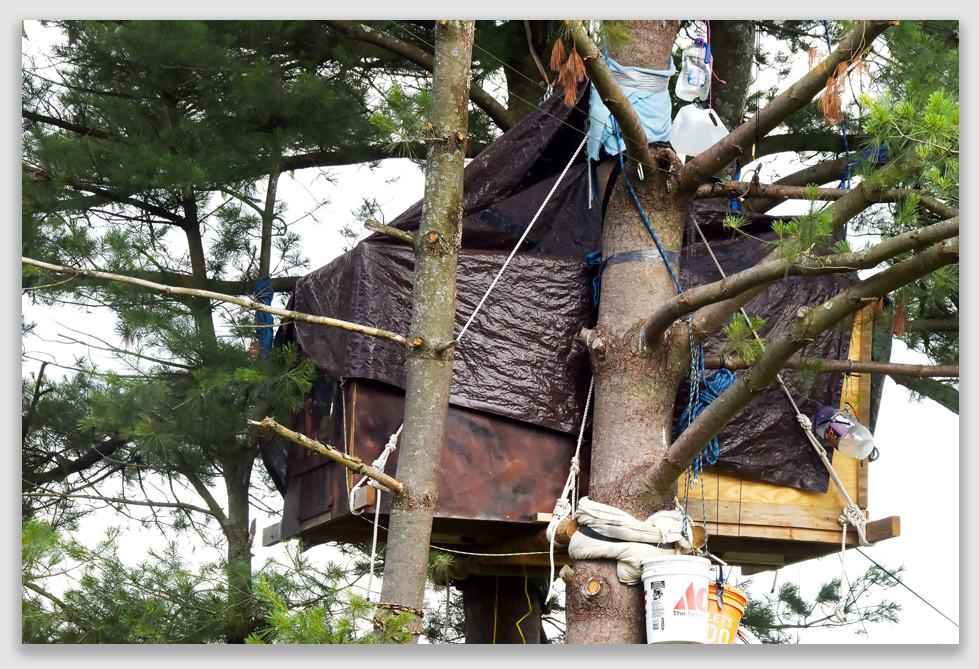
Since March, tree sitters on Ellen and Stephen Gerhart’s 27-acre wood lot have been perched on their piney platforms, 50 feet in the air, to protest, oppose and block construction of Sunoco’s Mariner East 2 pipeline. They might be coming down soon if Sunoco has its way. On Tuesday morning, Sunoco attorney Alan Boynton asked Huntingdon County Common Pleas Court Judge George Zanic for an injunction that would allow the company to call in county sheriffs to remove the protesters and their tree stands. Mr. Boynton told the court that it is the clear intent of pipeline opponents to block construction. Judge Zanic said he would rule on the injunction request within 48 hours. If granted, the injunction would restrain the Gerharts and their supporters at what has been dubbed “Camp White Pine” from interfering with clearcutting on the 3.2 acre right-of-way and installation of two 24-inch pipelines on the easement Sunoco acquired through an eminent domain claim in January 2016…
Time Magazine, June 27, 2017: Republican lawmaker blames ‘Tree Huggers’ for raging wildfire in Utah
Insisting that logging could have cleaned up dead, bug-infested trees that are fueling a Utah wildfire, a Republican state lawmaker blamed federal mismanagement and lawsuits by “tree hugger” environmentalists for the blaze that has burned 13 homes and forced the evacuation of 1,500 people. A conservation group called that contention “shameful” and misleading, saying it fails to take into account climate change and drought. In addition, a U.S. Forest Service researcher said logging probably would not have made a big difference in the high-altitude fire that is sending embers from tree-to-tree over long distances — normal for the ecosystem…
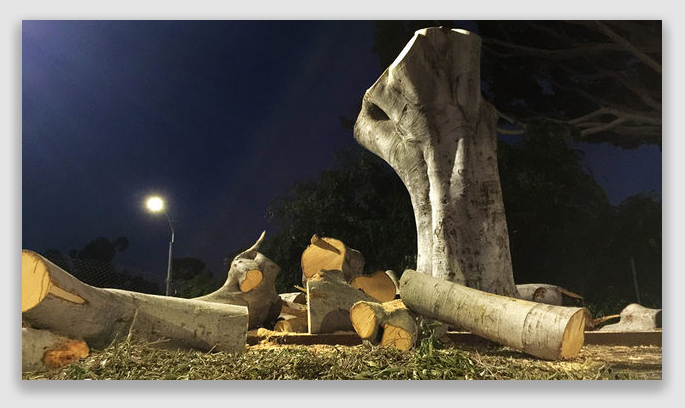
A controversial landscaping project in Goleta had the city crying foul. Cajun Kitchen, a highly popular breakfast and lunch local chain, recently acquired the old Rusty’s Pizza property near the intersection of Fairview Avenue and Calle Real. As part of the business’ landscaping project, a ficus tree deemed dangerous and damaging to the property by the owners of Cajun Kitchen was removed with two other trees expected to come down soon after. However, BeAnne Dato, a Goleta resident who lives nearby and said she has admired those ficus trees every day, reported the tree cut down to Goleta city officials who immediately intervened…
Tens of thousands of ficus trees throughout Southern California are susceptible to a new, deadly fungal strain that kills at alarming speed and threatens to destroy the urban forest in older cities known for their tree-lined streets, scientists say. Branch dieback disease caused by botryosphaeria fungus already has infected more than 25 percent of the region’s ficus trees, also know as Indian laurel-leaf fig, said Donald Hodel, researcher and horticultural adviser for the University of California Cooperative Extension in Los Angeles. Because of the disease’s rapid spread, all of the region’s ficus trees could die in 10 to 30 years, leaving cities with the incredibly expensive task of removing them and planting new trees. More importantly, the wiping out of ficus microcarpa would end a 70-year legacy of mature shade trees at a time when scientists say global warming is sending temperatures to record highs…
Troy, Alabama, Messenger, June 27, 2017: Sutton stumped by stolen trees
Nothing much surprises John Sutton of Brundidge. But when he found that several trees in his pecan orchard had been stolen this weekend, he could only scratch his head and wonder: who and why? He felt a little “ill at ease” calling the Brundidge Police Station to report a theft of property on Sunday morning, after discovering that four trees had been stolen from his carefully cultivated pecan orchard on Highway 10. Normally, he would have been angry but he was more puzzled – maybe even amused – and almost hesitant to report that someone had stolen his pecan trees. Sutton said when he made the report the response was “they’ll steal anything these days…”

A large sequoia tree with a history rooted in conservation was standing in the way of progress. So, on Sunday, it was moved. More than a century after it was planted as a sapling in a doctor’s yard in Boise, Idaho, the 10-story tree was shifted across the street to make way for a hospital expansion. The tree reached its new turf Sunday morning. Crews started rolling the tree down Fort Street at 1 a.m., said Anita Kissée, a spokeswoman for St. Luke’s Health System. Once it reached its destination, crews had a bit of trouble because the inflation tubes that carried it were too long for the hole that had been dug, Kissée said. They made the hole bigger and placed the tree in at about 11:15 a.m. The movers plan to let the tree settle overnight and work on leveling it on Monday, she said. They’ll also move a lot of the soil from the original site to help the tree adapt, she said…
Gilroy, California, Dispatch, June 26, 2017: Tree hugging
None of the trees the City of Gilroy wants to cut down need to be immediately removed, according to a local certified arborist who reviewed the city’s list of 235 trees it has identified for felling due to public safety reasons. The statement, by Moki Smith, founder and lead arborist for Smith Tree Specialists, Inc., which serves over 1,500 customers in the tri-county area, was part of a declaration submitted in support of a preliminary injunction filed with Santa Clara County Superior Court on June 14. “Of the trees that I was able to identify from the city’s list, my opinion is that none of them posed an immediate threat to public health or safety, particularly to human pedestrians or vehicles,” the statement reads. “Indeed after significant rainfall, which would cause high soil liquefaction, and high winds, in March and April, the trees on the city’s list were still standing when I surveyed them.” Attorney Laura Beaton, who represents Gilroy resident, Camille McCormack, in the lawsuit against the City, City Council and business contractor, West Coast Arborists, Inc., over its plan to remove the trees in Christmas Hill Park and citywide, said they had asked the city to halt its removal plan until the court case could be decided, but got nowhere…
 Los Angeles, California, KTTV, June 26, 2017: Roman candle sparks palm tree fire
Nothing draws the neighbors out like a big palm tree fire. This one went up in flames like a ‘roman candle’ over the weekend at St Louis Street and Boyle Street in Boyle Heights. Caryn Garcia – the person who shot this video on her cell phone, and sent it to FOX 11 says the fire was started by fireworks…
Charlotte, North Carolina, Charlotte Magazine, June 26, 2017: Why we need Charlotte’s tree canopy
Charlotte is revered by many for its lush urban tree canopy. In fact, it’s recognized as one of the best urban forests in the nation. As you stroll or drive through the majestic willow oak-lined Queens Road West in Myers Park, you’re experiencing an important part of our city’s towering canopy. Other neighborhoods boast similar tree-lined streets, contributing to conservation group American Forests’ 2013 recognition of Charlotte as one of the top 10 cities based on the trees’ health, the city government’s strategies for dealing with trees, and civic engagement to help preserve the canopy. We Charlotteans love our trees, and our trees seem to be happy here. But our tree canopy does a lot more than simply sit there and look pretty (though their good looks haveincreased residential property values by more than $4 million). Having urban trees helps reduce air pollution, improve air quality, lower energy costs, and reduce storm water runoff. Some fast facts…
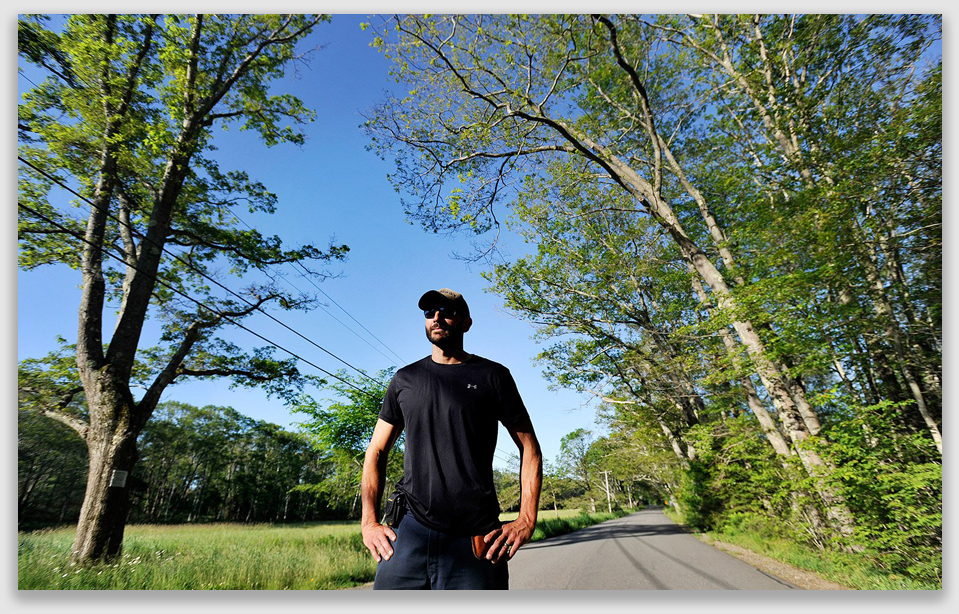
The destruction wreaked by winter moth caterpillars is readily visible along many roads in this rural seaside town, especially along Route 77 as it sweeps by Ram Island Farm, Crescent Beach State Park and Kettle Cove. What normally would be a thick green canopy over Charles E. Jordan Road, near the historic Sprague Hall Grange, is a lacy wisp of tattered leaves that allows early morning sunshine to beat on the black pavement. The leaves are so damaged, trimmed to their veins and midribs, Todd Robbins, the town’s newly appointed tree warden, must examine the bark of each tree before confirming that they are oaks. “It’s a dire situation,” Robbins said. “Thousands of trees are affected here and it’s its way into South Portland and Scarborough…”
Metro Park Police are investigating a giant maple tree that was illegally chopped down in Cleveland Park, The tree was valued at more than $1,000, meaning whoever is responsible will likely face felony vandalism charges. The tree sat at the north end of Cleveland Park, next to a sidewalk at the end of North 8th Street. Within 40 feet of the tree sits two homes under construction at 1101 North 8th St. The property is owned by Tom Keesee who also owns a construction company and is building the houses. Neighbors are questioning whether Keesee is responsible for chopping down the tree because it obstructed the Nashville skyline view from his two homes…
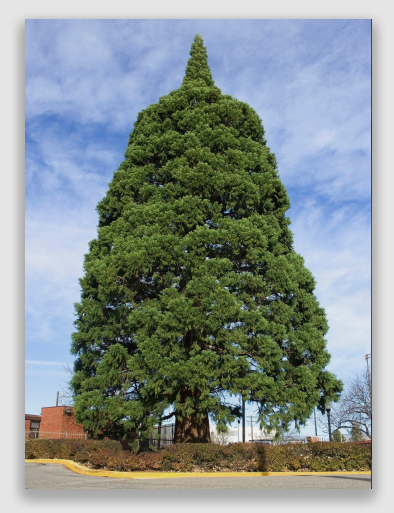 Fox Business News, June 22, 2017: Rolling sequoia: Idaho tree tied to John Muir set for move
Not very often does a 10-story-tall, 800,000-pound landmark change locations. Especially one that’s alive. But workers in Idaho will attempt just that starting Friday. A massive sequoia sent to Boise as a small seedling by naturalist John Muir more than a century ago is now in the way of a hospital’s expansion and plans are to move it two blocks away to city property. “We’ve all got our fingers crossed that the tree is going to make it to its new location,” said Mary Grandjean, the granddaughter of an Idaho forester who received the sequoia seedlings from Muir around 1912…
There are too many things to write about this week, and not enough space to string them together, so let me abruptly jump around a bit. First, we just finished “invasive weed week” in Alaska and this is as good a time as any to scold, berate and excoriate those of you who are still of the mind that it is OK to plant or even maintain mayday trees … officially known as Prunus padus and, informally, European bird cherry. What? Stop immediately! This is an invasive tree. Period. It is a bully. Yes, it can be called beautiful, but so what? Stop planting them. They take over riparian areas. They produce chemicals that can kill moose. They push out native plants…
Science, June 22, 2017: Tallying the tropical toll on trees from lightning
Lightning strikes on trees are different in the tropics. When lightning hits a pine in Kentucky, where Steve Yanoviak works as a biologist at the University of Louisville, it tends to blow off the bark and sear a blackened scar into the trunk, and is nearly always fatal. But it rarely leaves a visible trace on a tropical tree. Still, lightning—many times more common in tropical than in temperate forests—does kill tropical trees in slow motion and could play a major role in rainforest health. This summer Yanoviak is back on Barro Colorado Island in the middle of the Panama Canal, armed with a network of video cameras and other sensors, to study the effects of tropical forest lightning strikes, which threaten to kill more and more trees if climate change makes thunderstorms in the region even more frequent…
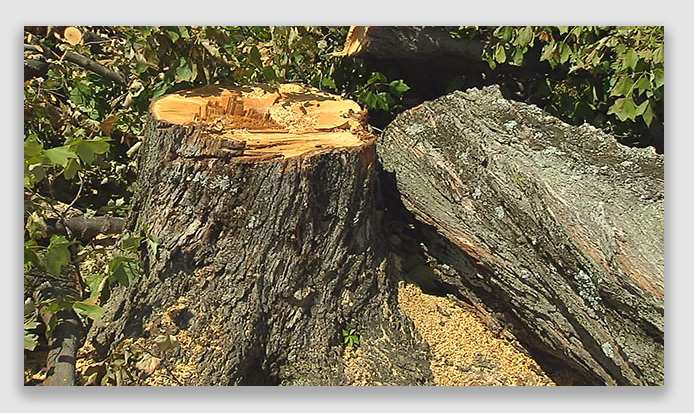
A tree was cut down in a Metro park, and fingers are being pointed at a local developer. News 2 received the tip Monday that a large, sugar maple tree had been chopped down in Cleveland Park. The rumor was that a developer had cut down the tree so he could have unobstructed views of the Nashville skyline from a house he was building. We reached out to the Metro Parks department, which said it first became aware of the incident on Monday. However, Metro’s horticulturalist Randall Lantz received an email warning them that a tree might be cut down days before the incident took place…
Cut down a tree without permission and go to jail. Sounds a little dramatic, but that’s the warning in San Francisco. San Francisco resident Gene Kelly is one of dozens of Noe Valley neighbors who were shocked to see the building owners at 610 Clipper Street illegally chop down an old Cypress tree in front of his apartment complex. The owners may be on the hook for $8,000, the assessed value of the Cypress tree they cut down. The city is saying pay the bill or spend time behind bars. Kelly said, “It was a very prestigious and majestic tree…”
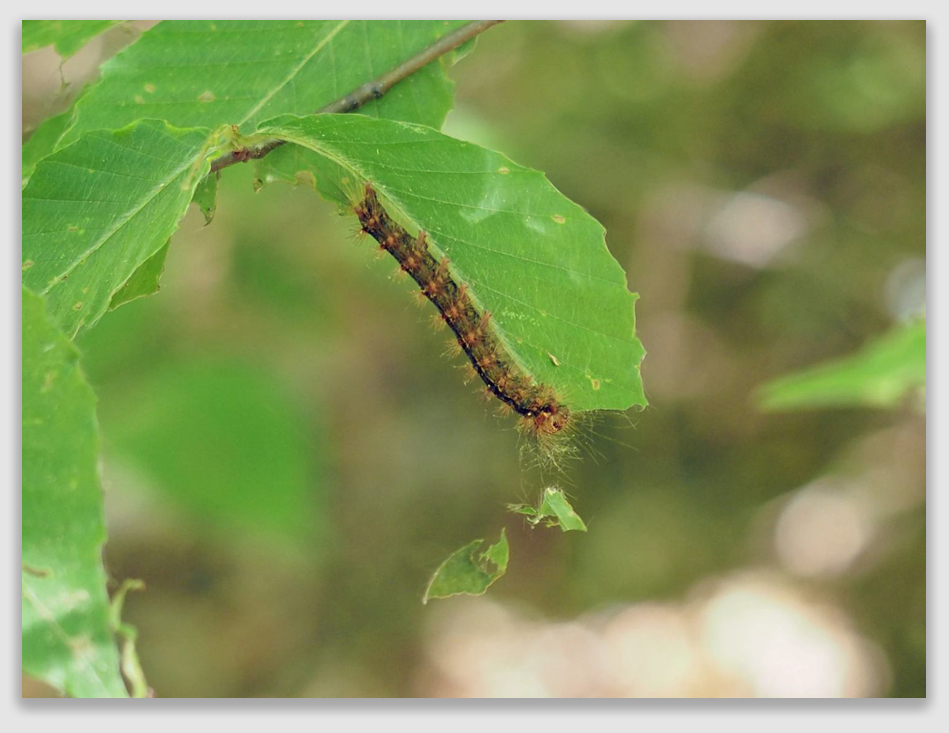
Connecticut’s Department of Energy and Environmental Protection said gypsy moth caterpillars continue to hit oaks hard in parts of eastern and central Connecticut. As their larvae deplete the oaks, they are moving on to feed on other tree species, such as maples and witch hazel, according to DEEP. DEEP said the maimaiga fungus has been reported in several towns, with initial reports of some beginning levels of die-off of the gypsy moths. The major die-off expected from the fungus has not yet been observed, but it is anticipated shortly. The cool weather earlier in the spring appears to have slowed the growth rate of the caterpillars and so delayed their moving in large numbers from the crowns of the trees down into the soil, where they will encounter the fungal spores…
San Francisco, California, Chronicle, June 21, 2017: Trees retard, don’t spread, wildfire
In September 2013, the U.S. Forest Service published an opinion that said logging eucalyptus trees would increase the risk of fire in the East Bay hills. Last year, the Federal Emergency Management Agency rescinded its $5.7 million funding to UC Berkeley and the city of Oakland for logging eucalyptus, Monterey pine and Acacia trees in our hills after a pro-eucalyptus group sued. Yet the proponents of cutting down non-native trees like blue gum eucalyptus who claim they present an extreme fire hazard continue to try to implement logging projects in the Bay Area by joining local taxpayer-funded, vegetation management groups. What they advocate will make our East Bay hills more fire prone, waste taxpayers dollars to implement fire mitigation plans that would turn our hills into the same grass-and-brush terrain that was swept over the last few years by wildland fires, such as the Rocky, Valley and Butte fires. All trees, no matter their species, reduce the risk of fire because their leaves collect moisture from the air and drip on the ground beneath. They provide shade that slow the sun’s heat from drying this moisture. They act as windbreaks, which slow down wind-whipped fire…
If you have a container garden planted in soil, the roots are going to suffer from lack of drainage. But so will large trees in yards, when the ground gets too saturated for their roots to hold on. With the constant bombardment of rain over days, trees and some gardens will have difficulty draining enough before the next wave of rain comes in. Large trees can suffer root compromise and topple if the ground around them is so wet the roots can’t keep it stable. “Whenever the ground gets saturated like this, it’s like sitting in a bowl of water. The roots don’t have anything to hold onto,” said Ben Kahlmus, with Fulgham’s Tree Preservation and Consultants. “The trees become top-heavy and the slightest wind can push them over.” Kahlmus and Kevin Hall, Pascagoula’s landscape and beautification expert, talked with the Sun Herald about what the Coast is facing over the next few days…
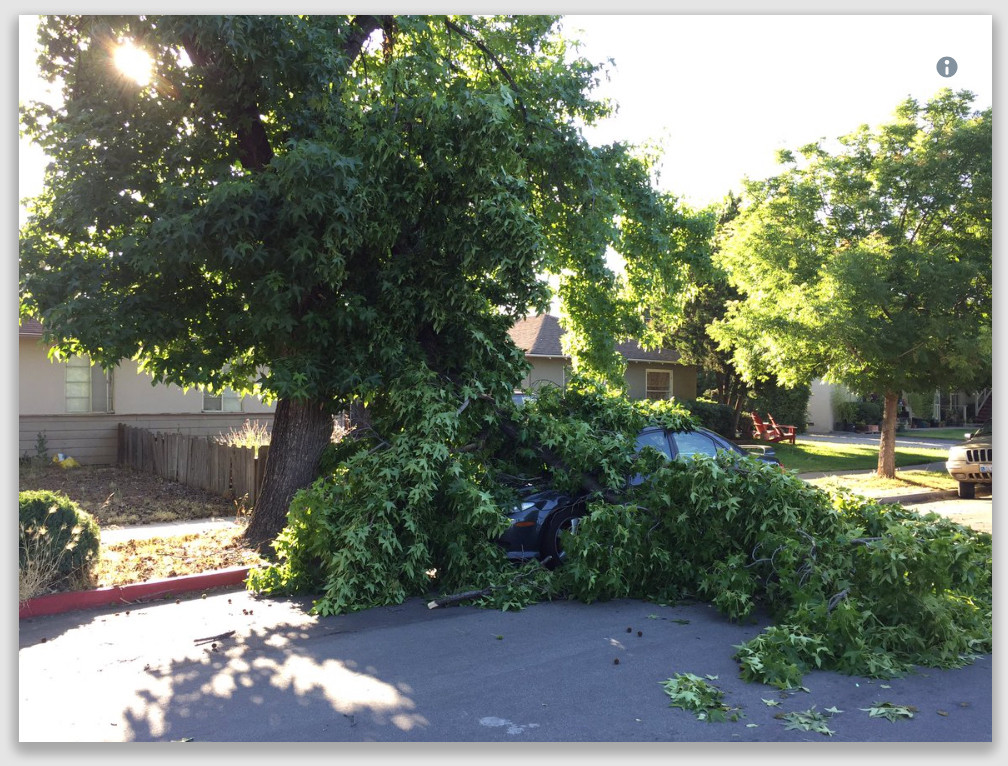
Scorching temperatures across the Bay Area are not only sparking fires and power outages, but also affecting trees. It doesn’t take a big branch to fall and hurt someone or damage your property, and hot weather brings more limbs down than winter storms. A certified arborist told NBC Bay Area that when it’s really hot, the trees pull in as much water as they can and then can’t release it quickly enough through their leaves. The branches get heavy and that’s when they snap. The phenomenon is called evapotranspiration. Michael Young of Urban Tree Managements says that homeowners can take down branches that they can reach from the ground, but anything over 20 feet up should be left to an expert…
Wilkes-Barre, Pennsylvania, Citizens Voice, June 20, 2017: Logger dies after being struck by tree
An 84-year-old Pennsylvania logger has been killed after part of a 30-inch diameter tree he was cutting fell onto him. The Luzerne County coroner says William Burger died of trauma injuries about 2 p.m. Monday. Sugarloaf Township Fire Chief Duane Hildebrand says Burger was an experienced logger who was working with his son when the tree split and part of it fell on him. The Citizens Voice reported that emergency workers had to hike to Burger and his son were after driving as far as they could on a mud-clogged logging road thanks to Monday’s storms…

New York officials say they are taking aggressive steps to fight the spread of a devastating fungus that kills oak trees. Oak wilt has been found on trees in different parts of the state since it was first spotted in 2008 in the Albany area. The state Department of Environmental Conservation says it is dedicating four additional staffers to monitor oak wilt this summer. The agency will conduct aerial surveys in July and September over the lower Hudson Valley and the Southern Tier. There is no known treatment for oak wilt fungus other than to remove the infected trees…
Montgomery, Pennsylvania, News, June 20, 2017: Trees — a surprising answer to surging stormwater
A few months back, I was interviewing Kay Sykora, Roxborough resident and former executive director of the Manayunk Development Corp. and founder of the MDC’s Destination Schuylkill River project. We were talking about Roxborough Green, an effort in which she has been actively engaged, a community-led project to plant trees and gardens in Roxborough neighborhoods, especially in the front yards of neighbors needing advice and volunteer labor. And she noted something interesting, that Roxborough residents had long been hesitant to plant trees — their leaves fall in the autumn and their flowers drop in the spring, causing us to have to rake and bag them, and branches can fall and hit things. So Roxborough is, surprisingly, not quite as green as Manayunk below us or Chestnut Hill above us. But I’ve been meditating on another long-standing Roxborough issue, the scourge of stormwater pouring down our streets, especially in neighborhoods like Upper Roxborough where there are precious few storm drains — water flows down the edges of these streets like streams, sometimes, especially during the increasingly frequent summer thunderstorms, like whitewater. As the drama of the proposed development of the 7519 Ridge Ave. site plays out — too much density on too small a plot of land (sound familiar?) — stormwater is one of the concerns highlighted by neighbors and residents opposed to this site’s over-development. Are you, like so many in Roxborough, concerned about stormwater? If you are, here is one easy solution: Plant trees. Seriously…
 New York City, The Bronx Times, June 20, 2017: Tree planting left homeowner in the pits
Residents of a Spencer Estate home are looking for compensation from the city after an attempt to plant a sidewalk tree led to thousands of dollars in home damages. The owner at 1630 Research Avenue said they knew not to dig beneath the sidewalk in front of the multi-family home, due to the fact that the underground sewer line ran close to the surface. So when a NYC Parks-hired contractor began breaking up the concrete to install a tree bed, Abiezer Moto, who lives in the second floor apartment, said he filed a 311 complaint, but said it fell on deaf ears. “The [contractor] wrote a letter back, saying the city had researched [the location] thoroughly, and it was a good place for a tree,” he said. Before a sidewalk tree is planted several city agencies and utility companies survey the site for the location of underground lines. On Thursday, May 25, just a few days after the work had been completed, the ground floor tenant started getting a sewage backup into their apartment from the toilet…
A former McKinney City Council member is now in a fight against the very City Hall he used to represent, and it’s all over trees. McKinney Entertainment LLC, which is managed by former council member Don Day, is suing the city’s board of adjustment over a $44,800 fine the company was issued for cutting down 18 trees on property it owns at College Street and El Dorado Parkway. The trees were cut down as part of a trash and underbrush removal project at the site, but their removal apparently violated McKinney’s tree preservation ordinance. “No quality trees were removed and the ordinance was followed,” Day said Monday. “MELLC followed the ordinances exactly as it is published on the city website…”

A field crew is working to track the rapid ohia death fungal disease that has killed thousands of trees in Hawaii. The Hawaii Tribune-Herald reports the team visited the Hilo Forest Reserve Wednesday as a high priority portion of their mapping efforts. They say mapping is the first step toward understanding and eliminating rapid ohia death. The report says the disease has stretched over about 75,000 acres of endemic ohia trees. According to researchers, the disease has killed more than 200,000 ohia trees in the past two years. Once infected, the fungus spread through the trees’ vascular systems and cuts off access to nutrients and water. Researchers say symptoms can take months to manifest, and can kill trees in a matter of weeks once they do…
Austin, Texas, KXAN-TV, June 19, 2017: Hutto residents upset about Oncor’s tree removal
The big trees behind her backyard is the reason Jolene James moved to the new Carmel Creek Subdivision in Hutto a few months ago. The two trees behind James’ backyard were there Monday morning and when she came home for her lunch break, they were gone. “It’s extremely frustrating and it sickens me,” said James. James says Oncor started removing trees last week. The utility company is clearing a path to get all the greenery away from one of their highest-powered transmission lines. “In order to make sure this line stays safe and the people around it stay safe, is to make sure everything underneath this line which is actually within the Oncor easement, is clear,” said Kris Spears, Oncor spokesman. “We need to make sure that in the event of severe weather, there’s no potential of trees or any type of vegetation interfering with this line…”
Firefighters and Xcel workers are working together to help recover the body of an arborist who died after being electrocuted in a Littleton tree. Littleton Fire Rescue officials said they responded to reports of an electrocution at 6897 South Prince Circle just after 10 a.m. Monday morning. They announced at 11 a.m. an arborist who was working in a tree died from contact with an electrical current. Rescuers said they put out a call for help to find a bucket truck, and soon after, other arborists came to help. “It looked like he had all the safety gear on, he had a helmet and was tied to the tree appropriately,” Jackie Erwin, the Littleton Fire Rescue emergency manager, said…
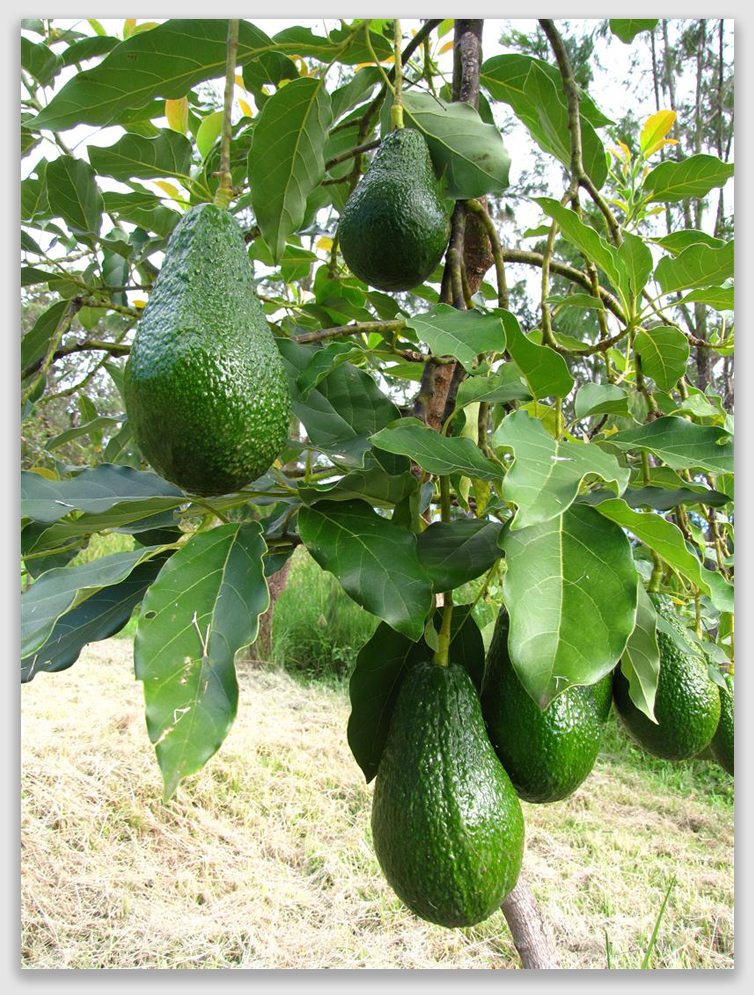 Fox News, June 16, 2017: Grand theft avocado: 3 arrested in $300K California theft
That’s a lot of Guacamole dip. Three California men are behind bars on grand theft avocado charges. They are accused of selling $300,000 worth of avocados without authorization from a ripening facility where they worked, according to the Ventura County Sheriff’s Department. Joseph Valenzuela, 38, Carlos Chavez, 28, and Rahim Leblanc, 30, are being held on $250,000 bail each. They were arrested Wednesday. The sheriff’s guac cops began investigating the men in May after getting a tip that they were conducting unauthorized cash sales of avocados from a Mission Produce plant in the city of Oxnard. “Everybody loves avocados,” Ventura County Sgt. John Franchi told the LA Times, adding, “We take these kinds of thefts seriously.” Officials began investigating the suspects in May, when the company’s president, Steve Barnard, was tipped off to potential thefts via customers and surveillance footage, the Times reported…
Laguna Beach, California, Indy, June 19, 2017: City to cut historic pepper tree
At its Tuesday meeting, the Laguna Beach City Council voted to cut the 135-year old tree to a “tall stump” to prevent it from falling and to plant an additional pepper tree at a cost of $40,000 on the grounds to fill the space. “I tell you this breaks my heart, and I am sure everybody in this room feels the same way,” said consulting landscape architect Bob Borthwick. In an emotional discussion over the tree’s fate, the council listened to evidence from city staff detailing the tree’s instability. Public works officials told the council that sonic tomography testing, or testing done to measure solid mass with sound waves, shows the tree is now 90% hollow. Arborists brought in to asses the tree’s health recommended it be removed to prevent it from spontaneously toppling and injuring someone…

Like a lot of trees on the Cal Poly campus here, the Cook pine was tall and beautiful but not especially remarkable. At least not at first glance. But as Matt Ritter and I got a little closer, it became obvious that there was something odd about this tree. It was bent. It actually bowed slightly toward the south. Not only that, but Ritter, a Cal Poly biology professor, has recently discovered that all Cook pines, which are native to New Caledonia, a blip in the South Pacific, lean toward the equator no matter where they grow. “This has never before been seen in plants,” said Ritter, 42, a botanist who specializes in trees. But once he started looking at Cook pines, he saw them leaning everywhere, he said. “And I thought, you know, that’s weird. No trees lean to the south. It doesn’t make sense…”
A 12-year-old girl was rescued Saturday after her leg became wedged in a tree and local firefighters used the jaws of life to get her out. On Saturday afternoon Erica Groot was playing with her sister Alicia and some neighbourhood friends in the backyard of Greenwood Public School said she and her mother Piper Lee Frech. The kids call the game ‘Grounder’— one person is ‘it’ and with their eyes closed and arms out they try to tag another player and guess their name. In the game people can hide off the ground on objects like playground equipment but if the person who’s ‘it’ says ‘grounder’ they become ‘it’. Groot said she was hiding up a tree to get away from her sister, who was getting close, and as she descended to evade her she slipped and, under the force of her falling body, the lower part of her leg got stuck at the base of the tree where two sections of trunk met in a V-shape…
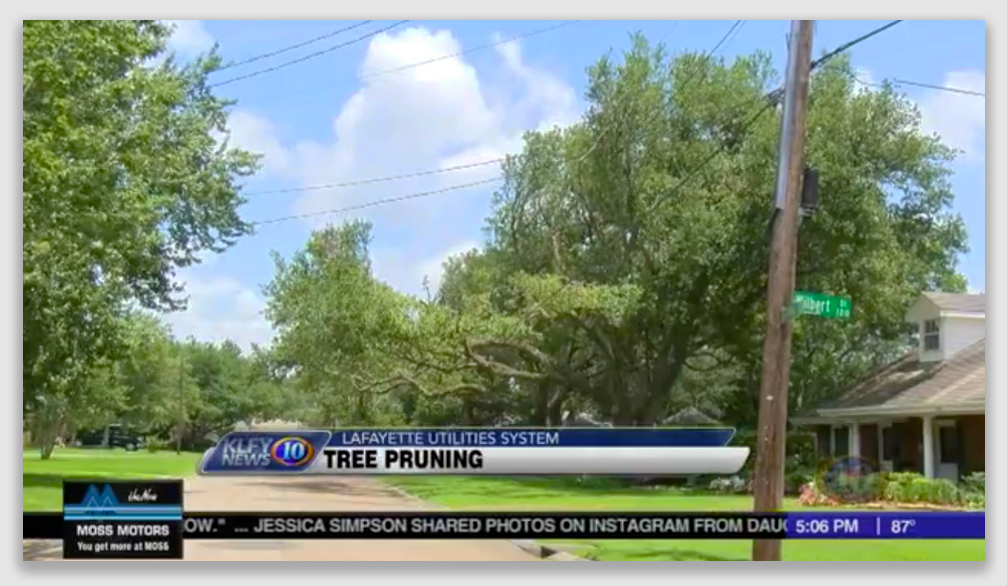
Hurricane season is upon us and that means Lafayette Utilities System is out pruning branches of trees that may cause problems to power lines during severe weather. But residents in the Oaklawn subdivision aren’t too happy about their trees being trimmed “There has been pruning in the past, but never has it been so radical as of this year”, says Herman Mhire, Oaklawn Subdivision. Mhire has lived in Oaklawn Subdivision for more than 25 years. One of his concerns with the tree pruning is the trees not being symmetrical and being blown over during storms. “Sometimes up to 50% of the tree is removed. Usually, it’s on the street side. Where does that leave all the weight? It’s on the side of the tree facing the house…”
Just two weeks ago the southwest corner of Marvin D. Love Freeway and Ledbetter Drive, a few minutes’ drive south of downtown, was a long, bucolic stretch of lush green — trees that, from the road, looked like a forest that stretched into forever but actually backed up to a row of homes along tranquil Dove Creek Way. Today, it’s nothing but an expanse of shattered stumps, the result of illegal clear-cutting… Though the item wasn’t on their agenda, City Council nevertheless spent about half an hour fretting over the damage done without a permit and a plan to replace them — and the destruction looming over the horizon if Gov. Greg Abbott gets his way in the coming special session and state lawmakers vote to outlaw more than 50 Texas cities’ laws protecting trees on private property…

Sarnia is preparing to bring in a tree bylaw, and residents have several ways to weigh in. Input for the controversial proposal is being gathered by city staff through public consultations, focus groups and the municipal planning website. Though Lambton County has a bylaw that covers trees in bushlots of one hectare or larger, nothing currently exists to protect individual trees or smaller lots within the city. Some residents are eager for City Hall to bring in rules to save trees from being destroyed on private property and to help expand the urban tree canopy. Others say telling homeowners what they can do with their own trees is an infringement on private property rights…
Denver, Colorado, Post, June 15, 2017: That big tree in your yard? Should it stay or should it go?
Planted in a new back yard or a revamped landscape, staked and wrapped against the elements, young trees embody optimism: some day, this twig will be big enough to cast shade. Then, just like children, they grow. You wake up to discover your baby is a 6-foot-tall high-school sophomore and your scrawny tree tops your roofline. Just like children, the bigger trees are, the more expensive their problems become. Removing a mature shade tree is a full-day job with a price tag in the thousands and permanent consequences. “It changes your landscape forever,” said Keith Timm, an arborist and landscape consultant with Swingle Lawn, Tree and Landscape Care…
Tallahassee, Florida, Democrat, June 15, 2017: Is my tree safe? Check for danger signs
In Florida, the first day of June is greeted with trepidation, as it is the first day of hurricane season. As this date approaches, seasoned veterans of hurricanes past re-stock their emergency storm supplies and worry about the trees around their houses. While Tallahassee residents appreciate the city’s abundant canopy coverage, they remember the wreckage caused by tree debris during Hurricane Hermine. Tree damage is inevitable with any major storm event, but preventative tree care can minimize this. The first step in prevention is to identify and correct an issue before it can cause a failure. These are some of the items to look for in the trees around your house…
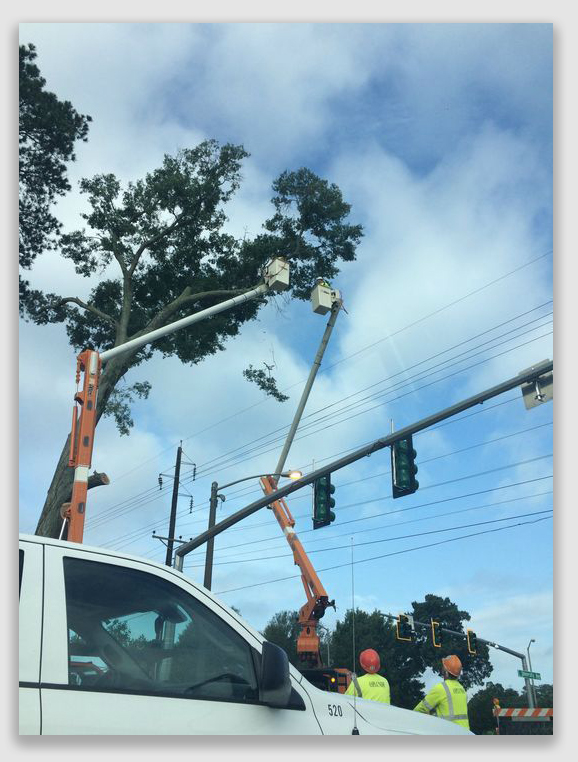 Lafayette, Louisiana, Advertiser, June 14, 2017: Tree trimming suspended after residents complain
Residents in some Lafayette neighborhoods are so upset over the way their trees are being trimmed by a utility system contractor that a special town hall meeting is set to discuss the situation. A tree trimming service contracted by Lafayette Utilities System, has been —aggressively, some say — cutting tree branches and limbs away from electrical lines. Residents, especially those with very old, large oak trees, took to social media over the past week upset over the way their trees were cut. “The trimming that I’m seeing this year is more drastic, certainly in Oaklawn,” resident Herman Mhire told The Daily Advertiser. In some cases, he said, as much as half the leaves and foliage of live oak trees is being removed…
Cincinnati, Ohio, Enquirer, June 14, 2017: Tips on selecting a tree specialist
An arborist is an individual trained in tree care. An arborist may provide services like tree removal, pruning, fertilization, pest management, and risk assessment. In order to be a certified arborist, an individual must achieve a level of knowledge about tree care through experience and by passing a comprehensive examination developed by the nation’s leading experts on tree care. In order to retain certification, an arborist must continue one’s education in tree care and thus, are more likely to be up to date on best management practices and techniques. A certified arborist may be a member of a professional association like the International Society of Arboriculture (ISA), the American Society of Consulting Arborists (ASCA), and the Tree Care Industry Association (TCIA). An arborist should only perform industry-accepted practices. Improper practices like tree topping, excessive removal of live wood, and the use of climbing spikes on trees which are not being removed violate industry standards. When selecting an arborist ask and verify proof of insurance and request and check references of clients who were provided similar services by the arborist…

A trail of destruction was left behind at a community park in west Phoenix after someone decided to play lumberjack and chop down several trees. It happened near 103rd Avenue and Lower Buckeye Road in the Country Place master planned community sometime between Sunday night and Monday morning. “Four of the trees in this area, they were mature Ash trees were actually chopped down,” said Mary Ehlers, block watch co-leader. That’s not all. Ehlers says irrigation lines were dug up and they found broken glass beer bottles mixed in with the sand in the playground area. “I mean it’s just pure destruction and just spitefulness. It’s hard for me to comprehend,” Ehlers said…
United Green Alliance, June 14, 2017: How to spike trees
(Editor’s Note: We do not condone this type of conduct, but you ought to know what information is out there for the use of people who appoint themselves Guardians of the Galaxy, because they know more than you or I do)
Firstly, I must begin this article with a disclaimer to ensure that I do not find myself on a NSA watchlist. I do not condone the use of tree spiking unless it is absolutely necessary in defending the integrity of a forest. These techniques must be used very sparingly, or else one is bound to face legal troubles, or even jail time. Depending on where you are located, getting caught spiking trees can land you up to three years in the pen. This means that I would normally discourage this technique. However, when one is desperate, one must do everything within one’s power to protect the Earth. This may or may not involve the deliberate insertion of spikes into prospective trees to deter loggers from cutting that area. Secondly, I must say that there is one reason that we environmental activists spike trees, and one reason only. That reason is to deter foresters from logging old-growth trees. The reason that foresters would want to stray away from spiked trees would be because it is very dangerous and possibly damaging to both sawmills and chainsaws to attempt to cut into a tree that has a six inch metal spike hidden inside of it. This being said, a wise company would be unwilling to begin logging on a forest that they are very aware is spiked, Therefore, it is for the benefit of the trees that we spike them. It is for the protection of the natural world from the industrial empire that we, as environmentalists must learn this useful skill…
Studies on tree communities have demonstrated that species diversity can enhance forest productivity, but the driving mechanisms at the local neighbourhood level remain poorly understood. Here, we use data from a large-scale biodiversity experiment with 24 subtropical tree species to show that neighbourhood tree species richness generally promotes individual tree productivity. We found that the underlying mechanisms depend on a focal tree’s functional traits: For species with a conservative resource-use strategy diversity effects were brought about by facilitation, and for species with acquisitive traits by competitive reduction. Moreover, positive diversity effects were strongest under low competition intensity (quantified as the total basal area of neighbours) for acquisitive species, and under high competition intensity for conservative species. Our findings demonstrate that net biodiversity effects in tree communities can vary over small spatial scales, emphasising the need to consider variation in local neighbourhood interactions to better understand effects at the community level…
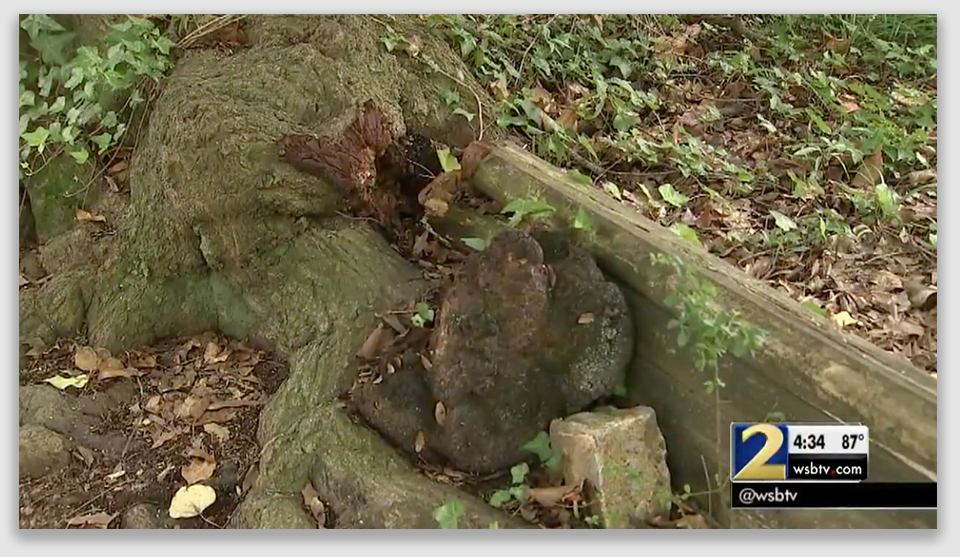 Atlanta, Georgia, WSB-TV, June 13, 2017: Weeks of heavy rain make trees more likely to topple
At the start of the year, nearly 50 percent of Georgia was in extreme drought. Today, none of the state is. Arborist Christy Bryant, of Gunnison Tree Service, said any drought-related impacts from last year’s drought are still at least a couple of years away. “We didn’t see trees come down until 2010 and 2011 after the historic drought of 2007. This is way too soon for these trees to be affected by the drought,” Bryant said. Trees have been toppling across metro Atlanta over the last few weeks and it’s actually been because of too much rain, Bryant said. Severe Weather Team 2 meteorologist Brian Monahan met with Bryant in a neighborhood under the dense tree canopy of southeast Atlanta. Bryant pointed to a tree covered in ivy…
Before he became governor of Texas, Greg Abbott was asked to replant trees on his property in Austin after a protected pecan tree there died — a regulation he has set out to axe during the upcoming special session of the Texas Legislature. Last week, Abbott called on lawmakers to prevent cities from regulating what property owners do with trees on private land as one of 20 items for a special session that will begin July 18. In interviews and public appearances, Abbott has repeatedly railed against the local regulations as a violation of private property rights, and he has pointed to his own experience as a homeowner in Austin as an impetus for the bill. “I wanted to cut down a common pecan tree in my yard, and the city of Austin told me, no, I could not cut it down and I had to pay money to the city of Austin to add more trees to my yard because I wanted to cut down one very common tree that was in a bad location,” Abbott said on WBAP Morning News last week…
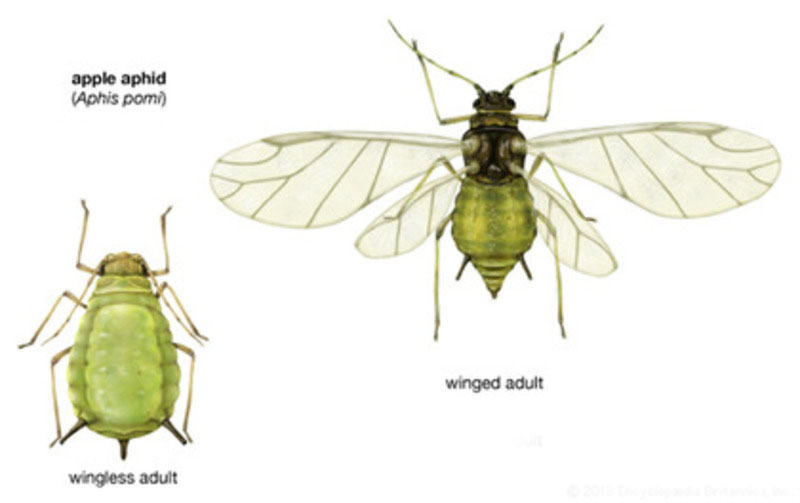 The Green Sheet Farm Forum, June 13, 2017: Tree Facts: Aphids can be a problem on your trees
There are dozens of types of aphids sometimes called plant lice that can be found on shade trees. Aphids are small insects, usually about an eighth of an inch long that range in color from bright orange or red to dull gray. They feed on plants by sucking plant sap from the leaves, twigs or stems. If present in high numbers large quantities of sap are removed, reducing plant growth and vigor. Aphids feeding on new leaves can produce leaf curl injuries especially on ash trees. Most aphids excrete large quantities of a sweet, sticky substance called honeydew. At times, excessive honeydew dropping from trees can be an extreme nuisance. Sooty mold fungus may grow on the honeydew, producing a gray, unattractive covering of the leaves. Normally sooty mold does not do damage to the trees but can when it covers leaves and reduces photosynthesis. Ants are attracted to the honeydew and feed on it. Ants may even tend aphids, protecting them from natural enemies such as lady beetles and lacewings. Often the presence of ants crawling up trees or on foliage indicates that large numbers of aphids or other honeydew producers also are on the plants…
Visitors to the Wallowa-Whitman National Forest can expect to see crews hard at work removing burned trees from two wildfire areas in the Whitman Ranger District. The Eagle Complex, which was sparked by lightning in 2015, spread over 12,763 acres about 20 miles northwest of Richland in Baker County, while the Rail Fire swept over 41,716 acres near Unity last summer. Crews are now working to remove damaged trees that may pose a risk to hikers and campers near forest roads and trails. “Removing dangerous trees near roads and trails is part of our commitment to public safety,” said Jeff Tomac, district ranger. “We appreciate everyone’s patience while our crews are working to make post-fire areas safer for public use.” Burned areas will remain open, though visitors may experience some delays and traffic, which will be heaviest during weekdays…

People were outraged after a developer butchered a slew of live oak trees on Forest Lane in northwest Dallas earlier this month. The property owner, Platinum Construction based in Fate, Texas, did not file a tree removal permit with the city of Dallas, The Dallas Morning News reports. But, if Gov. Greg Abbott has his way in the special session, the city wouldn’t be involved. Among the items for state lawmakers to tackle in July include deciding if cities like Dallas and Austin, which both have local tree ordinances in place, should continue what Abbott calls, “micromanaging what property owners do with trees on their private land…”
Directions Magazine, June 12, 2017: Bluesky launches tree failure risk tool
In partnership with the UK’s University of Lancaster, aerial mapping company Bluesky has launched a new tool which can be used to predict the likelihood of trees falling on essential infrastructure such as roads, railways and power lines. Using complex wind analysis techniques combined with geographic data from Bluesky, the model assigns a level of risk to individual trees. Accessible via a web based application, users of the TREEFALL (Tree Risk Evaluation Environment for Failure and Limb Loss) tool are expected to include transport infrastructure managers, utility companies and Local Authorities…
 Redding, California, Searchlight, June 12, 2017: Loss of trees leave some stumping for stronger law
Redding has been a Tree City USA for more than 35 years. But some local environmental and nature groups say you wouldn’t know it due to the number of trees being felled here for the sake of possible development. Although they say they are not opposed to development, they also say Redding leaders need to strengthen the city’s tree ordinance to better protect its native and urban trees, which help to beautify the city. “I think pretty matters,” said Dan Greaney chairman of the Wintu Audubon Society…
Treehugger.com, June 12, 2017: City trees suffer from not getting enough sleep
From the “Trees, They’re Just Like Us!” department, my favorite forester has weighed in on an issue I have long suspected: Urban trees, like much of the natural world, have a hard time when the lights are left on all night. “They also have to sleep at night,” Peter Wohlleben told the audience at the Hay Festival of Literature in Wales. “Research shows that trees near street lights die earlier. Like burning a lamp in your bedroom at night, it is not good for you.” And if anyone knows trees – and embraces anthropomorphising them – it’s Wohlleben. The German forester and best-selling author doesn’t shy away from talking about trees as if they were people. “I use a very human language,” he says. “Scientific language removes all the emotion, and people don’t understand it anymore. When I say, ‘Trees suckle their children,’ everyone knows immediately what I mean…”
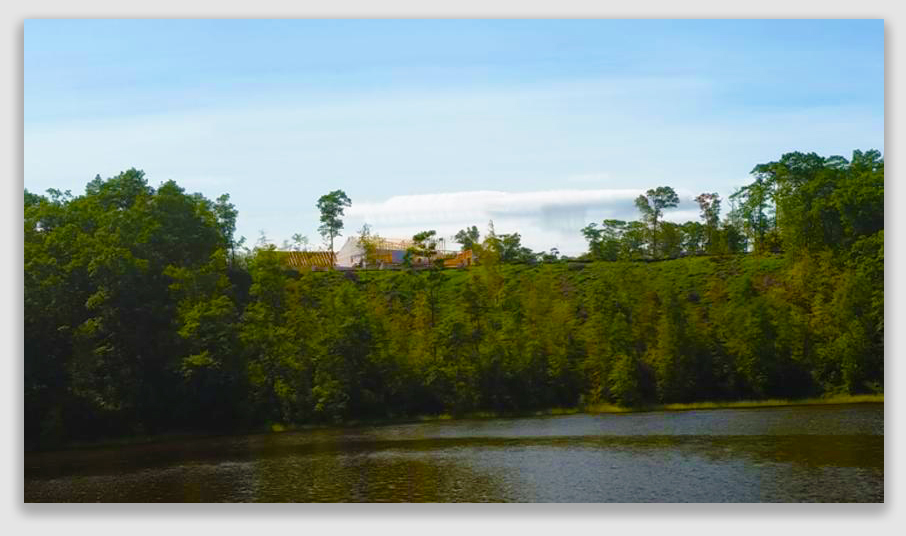
Pontoon cruises along one of the wildest stretches of the Mississippi River are a pastime of Lawrence and Marian Severt. Homeowners for 15 years on a lake connected to the river—Rice—the couple makes a habit of meandering to the northeast against the gentle current of the iconic waterway. They’ve come to know the arrival and departure times of migrating birds, the wild rice beds preferred by harvesters and the best spots to view bald eagle families in their nests. “It’s like almost going into another century, because things are so wild from here north,” Lawrence Severt said. On one of these trips last summer, the Severts said they were shocked to see a swath of mature trees cleared along the banks, revealing a home under construction at the pinnacle of a steep bluff. The cleared area stood in stark contrast to the landscape surrounding it. “It was clear-cut,” said Lawrence Severt. “On either side, it wasn’t touched…”
Bend, Oregon, KTVZ-TV, June 11, 2017: USFS closes Cultus Lake Campground due to hazard trees
The Deschutes National Forest said Sunday it has closed the Cultus Lake Campground and Day-Use area for the summer due to a large number of dead or diseased trees that pose a serious public safety hazard. The boat launch is still being evaluated for potential opening, a decision that’s expected to be made on Monday, officials said. “An in-depth review of tree stand health at the Cultus Lake Campground, Day-Use and boat launch areas by Hoodoo Recreation and the Forest Service uncovered at least 160 dead hazard trees and 300 diseased ‘green’ trees that might fall on a family or individual camping or recreating in the area,” the forest’s announcement said. Removing that number of trees in the Cultus Lake area will be a large project that requires an environmental analysis, officials said. A factor in the environmental analysis will be that the Cultus Lake area is within habitat identified for the northern spotted owl…
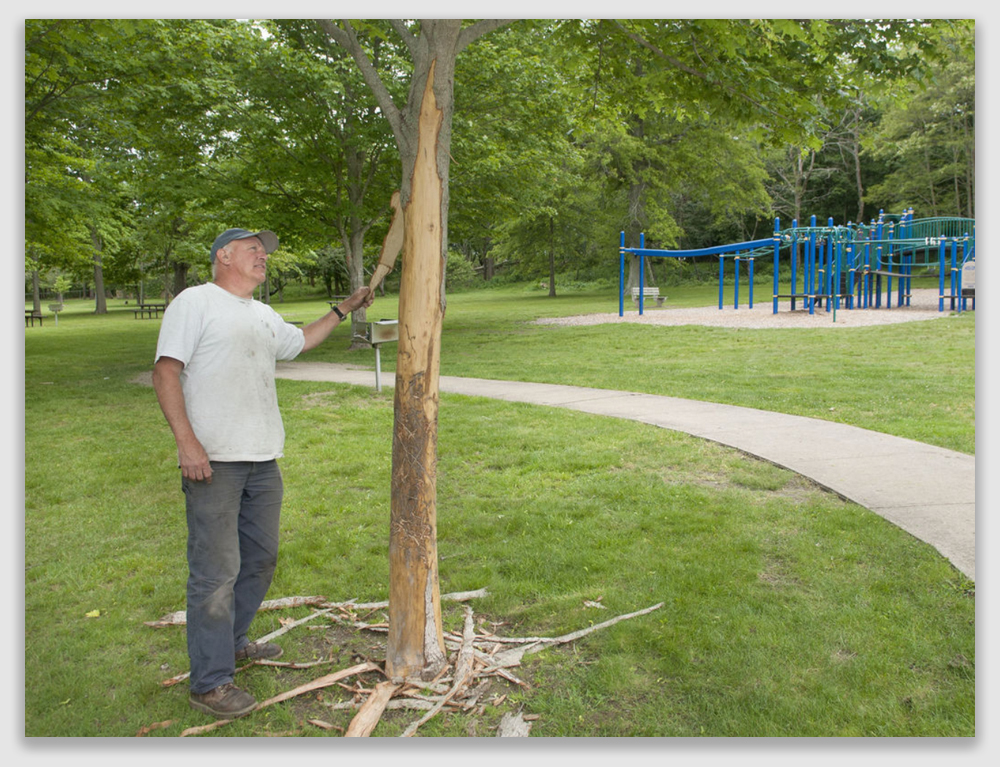 Newport, Rhode Island, Daily News, June 11, 2017: Trees stripped of bark in Miantonomi Park
Newport police are investigating the vandalism of two maple trees near the Miantonomi Memorial Park playground on the Hillside Avenue entrance that were stripped of their bark. It is not clear when the vandalism occurred; The Daily News received a call Wednesday afternoon from a member of the Tree and Open Space Commission notifying the paper of the vandalism. A similar case of vandalism took place in late May near the Aquidneck Elementary School playground in Middletown, where several maple trees were stripped clean of their bark. That investigation is still ongoing. On Friday, Newport Police Sgt. Joe Carroll said there was no information available on the case as it is still being investigated. “They were talking with Middletown detectives, but I don’t know what the status of that is,” he said…
Deep Green Permaculture, June 11, 2017: How to Kill a Tree Stump Without Poisonous Chemicals
Sometimes we need to cut down trees to remove them, but chopping trees down to the ground does not stop them putting out new growth from the stump or from the roots and eventually turning back into full sized trees again. In fact, the technique of cutting trees down to a stump and letting them regrow is called coppicing, it’s a traditional woodland management technique and many trees can be coppiced for timber harvesting or other reasons and successfully regrow. To get rid of a tree stump, you don’t need to chop or dig it out of the ground, use expensive machine or poisonous chemicals. Why avoid chemicals marketed as “Blackberry & Brush Killer” or “Tree & Blackberry Weed Killer”? You seriously do not want to contaminate your garden with these persistent poisons…
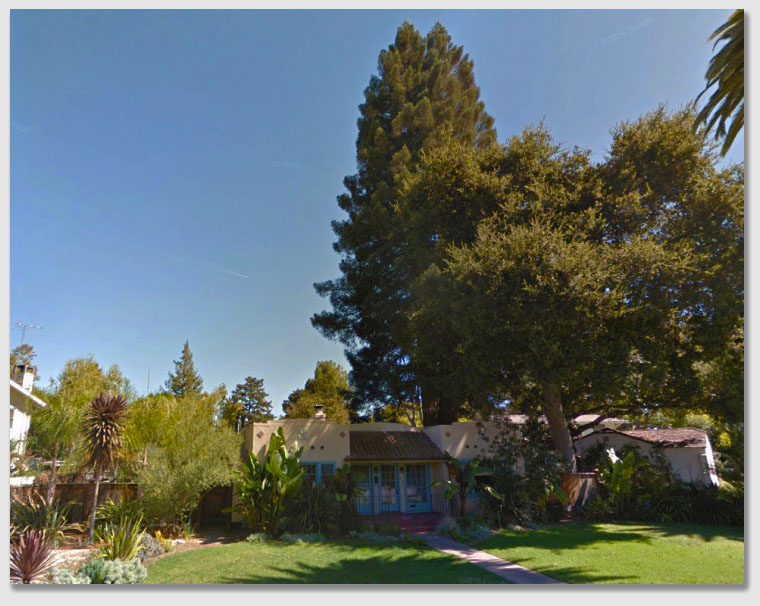 San Jose, California, Mercury News, June 8, 2017: Removal of 110-foot tree denied by city
Menlo Park’s heritage tree ordinance survived a test this week. The City Council on Tuesday upheld the Environmental Quality Commission’s January decision that a tree at 318 Pope St. in The Willows neighborhood cannot be cut down. The Cole family had appealed the commission’s decision, arguing that the 110-foot-tall coastal redwood tree in their backyard isn’t safe. Backed by three arborists, they said the tree is so structurally damaged that large chunks could fall at any time, causing property damage and injuries to them and adjacent neighbors. Estimated to be 80 years old, the tree at an early age began growing upward in three segments instead of one, which are now possibly pushing against one another. “Trees deemed dangerous should be removed, and the time to remove them is before they kill people and destroy homes,” said Isabelle Cole, who also wants to raze a one-story home on the lot and replace it with a two-story house.
This winter took a toll on our trees. In fact, the city of Seattle has tagged 4,500 trees they say may need to come down. The crews will start in Lincoln Park and five other parks: Seward, Schmitz, Discovery, Carkeek, and Interlaken. “Everything is gorgeous about Lincoln Park,” said grandmother Lou Largent. That’s why Largent brought her grandkids from the playground to the waterfront to the staggering trees. This is a gem of a park. “They need to keep this place safe, because it’s so beautiful and there are so many trees,” said Largent. That’s why Seattle Parks plans to cut down 91 trees in Lincoln Park. Arborist Michael Oxman says he’s spent years trying to get the city to do that more. “That defect could be grounds for concerns,” said Oxman…
 Brownsville, Texas, KRGV-TV, June 8, 2017: Tree branches overtaking power lines in Hidalgo Co.
A Hidalgo County man with disabilities is concerned for his health after his neighbor’s tree keeps growing dangerously close to his power line. Mercedes resident Domingo Hernandez told Channel 5 News he sustained injuries to his arm, back, eyes and nose during a water heater explosion incident. Hernandez said after 17 surgeries and seven medical specialists, having electricity to power his air conditioning unit is a necessity. “If I get too dehydrated my kidneys could shut down,” he said. Hernandez said branches from his neighbor’s tree are putting his power in jeopardy. He fears a storm could cause the branches to disconnect his power…
Grand Rapids, Michigan, WOOD Radio, June 8, 2017: GR looks at ways to whittle dangerous tree problem
The tree on city property between the street and sidewalk in front of Dennis Frasier’s northeast Grand Rapids home has seen better days. A good wind will send its dead limbs onto his driveway from time to time. After a number of calls from Frasier, the city tagged it for removal last summer. “The city said. ‘This is a danger, it is a high priority, it has to be removed and it will be within 90 days,’” Frasier said, reading from the tag the city left on his door. But one year later, the tree is still standing. Dead and dying trees can more than just a nuisance. In May, high winds brought down a branch in Riverside Park, injuring a woman and a small child…

Turns out tree rings can do more than just tell you how old a tree is. Researchers have found they can also help track Pacific storms over centuries. That could help out water managers and climate modelers. To get that data, first Erika Wise had to collect core samples of more than 200 ponderosa pines in Washington’s Columbia Basin. “Some of the ponderosa pine trees date back to the 1400s,” Wise said. “They’re incredibly old trees, and they’re on these ridges with this view of Yakima down below.” Wise is an associate professor of geography at the University of North Carolina at Chapel Hill and the lead author of the report. It was published in Science Advances…
Greensboro, North Carolina, WFMY-TV, June 7, 2017: BBB: Beware of this tree trimmer
Consumers say they paid Jim or James Shrewsbury upfront for trimming trees, grinding stumps and removing limbs. But they say he either didn’t finish the work or never even started the jobs. In total, BBB has six complaints against the business since October 2016. The business did not responded to any of the complaints. The BBB has reason to believe Arbor Tech may be linked to Curb Appeal Custom Tree Care. BBB has eight unanswered complaints from 2016 alone about Curb Appeal Custom Tree Care…
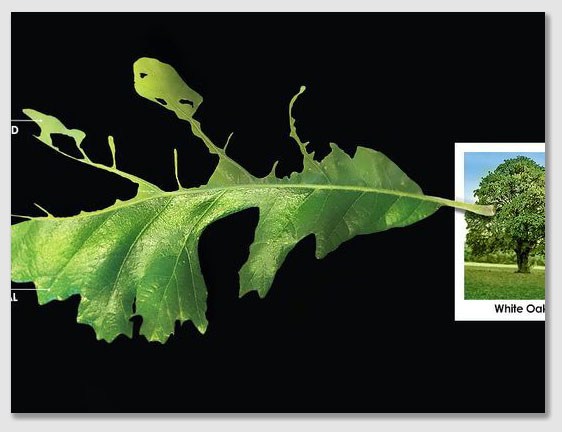
Iowa’s state tree is under stress. Visible damage to oak trees in recent years may be caused by farm chemicals, forestry experts say. Nearly a thousand Iowans have contacted the Iowa Department of Natural Resources this spring after noticing the leaves on their oaks appear to be eaten by insects nearly down to the veins, a problem exacerbated this year because of weather fluctuations. The good news: the trouble isn’t with insects. The bad news: There’s not much you can do about it, unless herbicide applied to corn and soybean fields is stopped, according to a DNR district forester. “If that chemical was not there, this wouldn’t happen, if you believe the research,” said Mark Vitosh, who is based in Johnson County…
Barry Cullison stared at a 3-foot-wide tree stump that once bore the weight of a pine at least six stories tall. Across the historic Chase Knolls Garden Apartments where he lives, dozens of other mature trees were being cut down: eucalyptus, ficus, liquidambar, jacaranda, magnolia and more. “It’s heartbreaking,” said Cullison, 70, a retired actor who has lived at the Chase Knolls complex for 21 years. “This can’t be undone. They’ve decimated the trees. The trees are coming down. And all we can do is listen to the chain saws…”
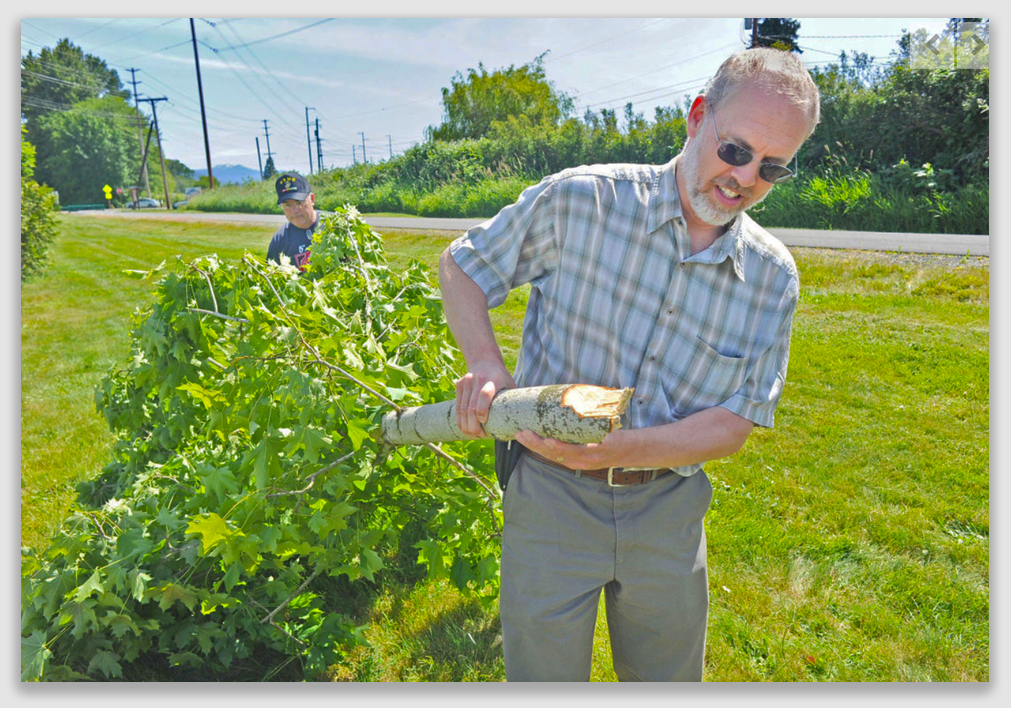
Sedro-Woolley police are seeking tips after a tree along the Cascade Trail just outside Sedro-Woolley was chopped down over the weekend. The felled maple tree, which was hacked with an ax, had been planted in memory of George C. Bricka Jr. Bricka was a well-respected member of the community, Sedro-Woolley Mayor Keith Wagoner said. “It’s a despicable and cowardly act,” Wagoner said of the incident. “Whether it was targeted or not, it’s equivalent to grave desecration because it’s a memorial. We don’t want to see anything more like this.” Trees were planted along the trail about five years ago by members of the Sedro-Woolley Rotary Club, said Larry Campbell, who planted the trees and has cared for them since…
Northbrook committee recently recommended that one man be allowed to cut down five protected “landmark trees” to build a house and a swimming pool, while recommending denying another man permission to remove a protected tree he said provides shade for mosquitoes to breed. The first man, Ross Freeman, will have to pay more than $12,000 to solve his construction-space problems and build his pool, and Muhammad A. Zeeshan, the second man, has been promised $3,500 from the village to help him drain his yard and cut down the mosquito population. Village officials also said Zeeshan has already cut down 17 of the 18 trees in his backyard. The tree recommendations came in a Northbrook Village Board Public Works Committee session scheduled to handle the two tree protection and preservation ordinance appeals. Zeeshan, of the 2000 block of Illinois Road, had asked in 2015, and again a few months ago, to cut down a 20-inch-thick American linden tree that stands in the center of his backyard. He was rejected two years ago, and advised to trim, but not cut down, the tree, estimated to be nearly 100 years old. Otherwise, he would have to pay $3,000 —$150 per inch — to take it down. He wanted to cut it down and have the fee waived…
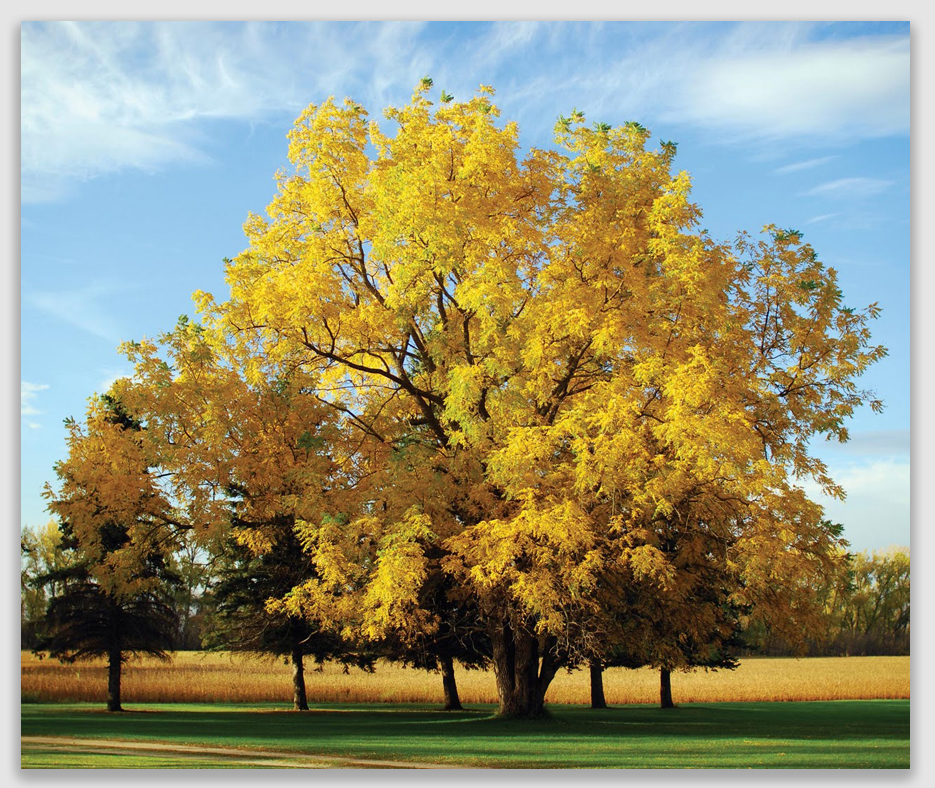 Outdoor News, June 6, 2017: Two charged with felony for theft of trees in Iowa
Are no trees safe in the Northland? If it’s not emerald ash borers destroying ash trees across the Upper Midwest — and beyond — it’s people illegally cutting down and stealing birch trees. And now walnut trees. According to a news release by the Iowa DNR, its Natural Resources Law Enforcement Bureau recently charged two men with cutting down and selling walnut trees from a state-owned park. Bradley Lynn Hagerman, 38, of Pisgah, Iowa, and Eric Robert Freihage, 30, of Council Bluffs, are both charged with one count of second-degree theft, a class D Felony, Iowa Code 714.2(2); timber buyer – bond or accounting violation, a serious misdemeanor, Iowa Code 456A.36(5); and timber buyer violation, a serious misdemeanor, Iowa Code 456A.36(3). Hagerman and Freihage admitted to a DNR conservation officer that they transported and sold nine walnut trees between January 24, 2017 and January 30, 2017. The live trees were cut down by Freihage and Hagerman at Loess Hills State Forest, a state-owned and DNR-managed park near Pisgah…
Salina, Kansas, Journal, June 6, 2017: How to tell if a tree is healthy
Trees continue to be a hot topic with gardeners and homeowners in 2017, and with good reason. Damage still is appearing and in many cases worsening from past environmental stresses trees have encountered. This may be seen as branches dying back, tops of trees dying or a slow decline in tree appearance and health.Even if a tree isn’t showing any symptoms of decline it is a good idea to be aware of what clues can be used to tell if a tree is healthy or under stress. One of the most important clues in determining the health of trees is the amount of new growth the tree produces. June is a great time to check since the initial spring flush of growth has already happened for most trees. A healthy tree should have a minimum of 4 to 6 inches of new growth each year. Check branches with the tips in the open and not shaded by the tree itself. Anything less than 4 inches on the majority of branches suggests the tree is under a great deal of stress…
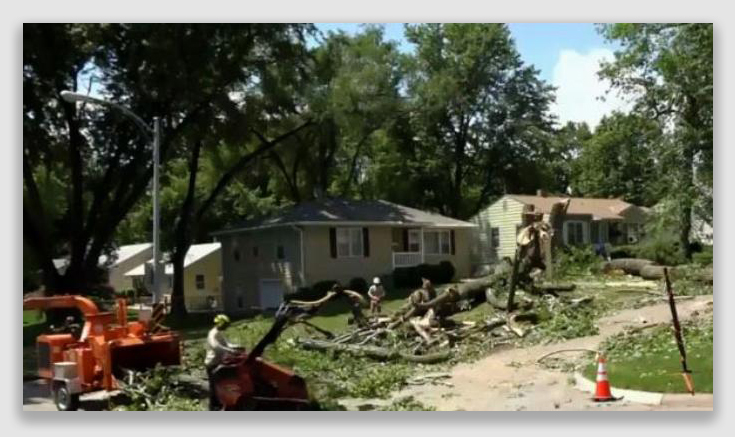 Omaha, Nebraska, WOWT-TV, June 5, 2017: Tree removal job doesn’t cut it with city
A huge, but dying cottonwood that cast a shadow of danger in a south mid-town Omaha neighborhood has been cut down by a private tree contractor. The way the contractor went about it raised concerns for city inspectors and utilities. It’s a lesson in notification for all contractors. Long before “timber” — a tree contractor should provide warnings that a neighbor told city inspectors she never got. Michelle Wing said, “They don’t talk to neighbors or ask permission. They don’t tell us they’re going to drop things into the street.” While Tree Services of Omaha removed a hollow cottonwood, a roped branch swung over and knocked the top off the next door neighbors chimney. Michelle Wing said, “I had six kids in my house, what would have happened if that came through my roof.” The next day another large branch being cut down landed across the street smashing part of another neighbors fence that Tree Services of Omaha quickly repaired. But city officials, who license arborists and tree services, arrived on scene to investigate…
After storms swept across East Tennessee over Memorial Day weekend, tree service companies have been swamped with requests. “Basically if you’ve got a truck and chainsaw you can go get work, there’s plenty of it,” Mencer’s Tree Service owner Miles Mencer joked. Mencer’s company averages 60-100 new calls each day. “You prioritize, you sit there and you know the people with trees through their house or no power, can’t get out of their driveway, those are first,” Mencer said. After four days of hard work, his team cleaned up Knox County’s The Cove at Concord Park, which sustained an estimated $150,000 of damage…
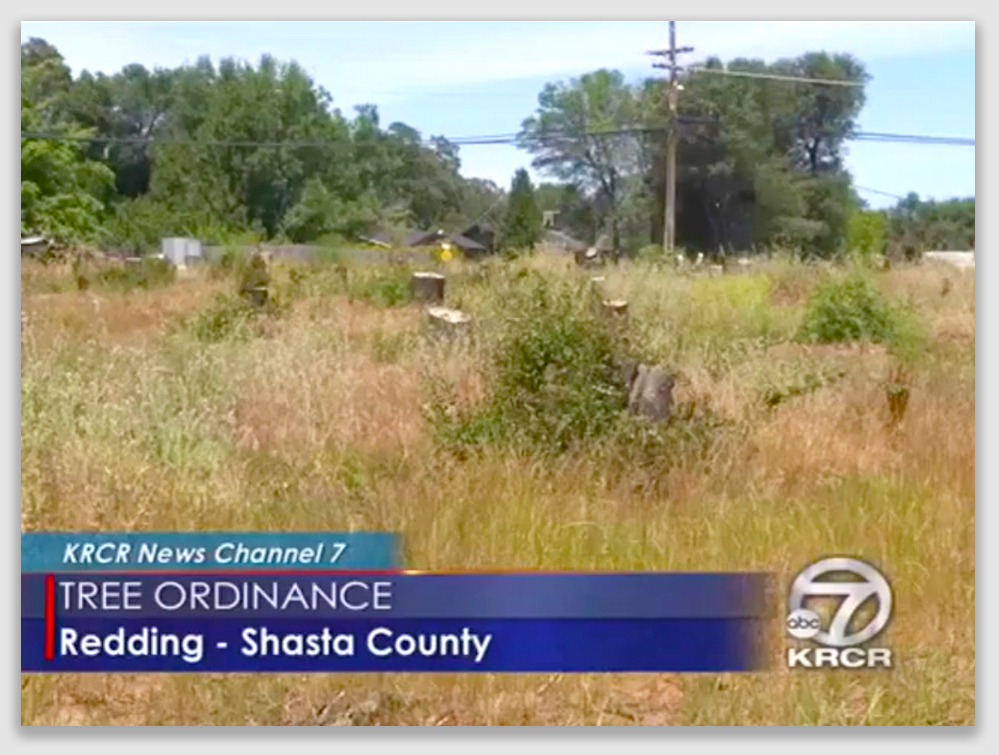
A group of people will address the Redding City Council Tuesday night about a number of trees being cut down in the city. Representatives from Shasta Chapter of California Native Plants Society, Shasta Group of Sierra Club, and Wintu Audubon will be making statements about the lack of enforcement of the Redding Tree Ordinance at least in regards to the spirit of the ordinance if not the letter of the ordinance. Other individuals may also be making statements. The representatives said they want to educate the City Council members on not letting dollar signs cloud their vision in relation to protecting trees and to respect the spirit of the city’s tree ordinance. They added hundreds of oak trees were practically clear-cut to make way for the Churn Creek Marketplace Shopping Center on Churn Creek Road near South Bonnyview Road. “They cut down about 700 trees and only preserved three. So that’s like less than one-half of one percent of the trees, so we want to see more trees preserved,” said David Ledger with the California Native Plant Society…
Maple syrup producers have an ever-growing arsenal of high-tech tools to draw more and more sap out of the trees. Now, scientists at the University of Vermont are doing a long-term study to see if modern tapping systems are affecting the health of maple trees. Modern vacuum systems draw out about twice the amount of sap that traditional buckets collect. Abby van den Berg, an associate professor at UVM’s Proctor Maple Center, says there are no indications that modern tapping techniques hurt the trees, but researchers still want to dig deeper. “We don’t really think that we’re doing anything very much more impactful than we have always been doing, but we don’t know if we’re taking some critical component at a time that’s critical for the tree,” says van den Berg. “Those are the more detailed questions that really need to be looked at and refined…”
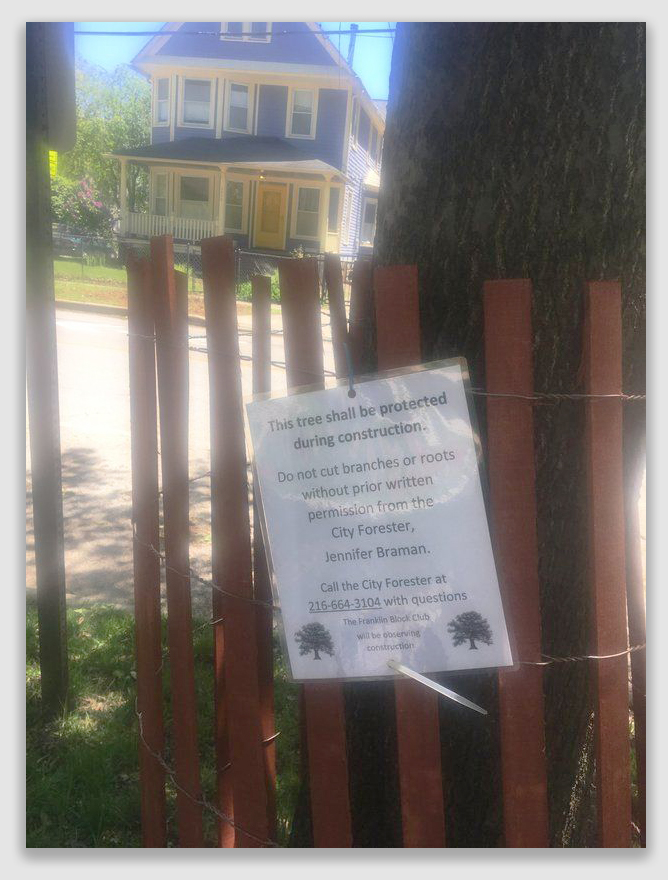
Welcome to Cleveland, the deforested city. Remember when we were called the Forest City? When we deserved it? We don’t anymore. The canopy in Cleveland is down to 19 percent. Pittsburgh and Cincinnati have double that. The satellite view of “The Land” looks like the Badlands. We’re in desperate need of some shade. Trees do all kinds of good for our health and the health of the environment. They filter pollution. Produce oxygen. Even improve our mental health. And they add character to our urban neighborhoods. It’s good that City Hall appears to be paying attention to that now. Cleveland’s urban forestry department is growing and the Cleveland Tree Plan passed by council last year calls for aggressive planting. Just last month, Mayor Frank Jackson announced a canopy goal of 30 percent by 2040. Do nothing, and it’s expected to be 14 percent by then. Planting is a great idea. But it’s just as important to save the trees we already have…
Columbus, Nebraska, Telegram, June 4, 2017: Common tree issues
Bark falling off of trees, suckers growing from the base of trees, and surface roots that make it hard to mow or even grow grass. These are common tree issues I receive questions about. Bark falling off of trunks is being reported across the state. We refer to this as bark blasting or sloughing. Ornamental pears, maples, lindens and crabapples are most affected, but we are also seeing it in other tree species. Bark falling off of otherwise healthy trees is likely due to sudden cold temperature injury to the trunk. Bark sloughing we are seeing now is most likely due to the sudden cold spell back in November 2014. At that time, we had a warm fall and then a night of sudden cold of about 5 degrees Fahrenheit. Trees were not fully dormant and the cambium layer just beneath the bark was injured by cold temperatures. If a tree is killed by a disease, such as fire blight, this too can lead to bark sloughing…
Dallas, Texas, KXAS-TV, June 2, 2017: Expert says ‘irreparable harm’ done to 75 Live Oak Trees
Workers spent the day Friday grinding up branches of what were 75 large live oak trees outside a Northwest Dallas office building. Aerial photos of the site taken earlier show dense green foliage that surrounded the building in front of a Home Depot store in the 2800 block of Forest Lane near Interstate 635 LBJ Freeway. “That’s one of the beautiful things about this area, is those trees when you come into the Home Depot parking lot,” said neighbor Rick Sanders. “Those are just beautiful, magnificent trees.” Neighbors are sad and upset about the drastic change in the appearance of those trees over the past few days. It looks like a tornado stripped all the foliage, but it was no act of nature. It was intentional work arranged by the property owner. “And the issue was, according to them, people would not be able to see the property because of the trees. And so this was their solution to it,” neighbor Justin Huse Huse said. “Anybody who knows anything about trees knows they could have pruned them from the bottom up. Keep the canopy and they would have been able to see the property just fine…”
Stump Blog, June 5, 2017: Factors that influence the price of tree removal
Trees are definitely essential for having a healthy environment around your house. But due to many reasons, a need may arise to remove a certain tree of a set of trees. Dead or dying trees, storm-damaged trees and others which hinder the appeal, safety or function of a property need to be removed. In most cases, it is necessary to remove some trees due to these reasons. The cost of tree removal varies according to the type of job to be done. Following is a general guide to tree-removal costs. If your tree is causing structural damage to your property or the surrounding properties, it definitely needs to be removed. In case it is causing a safety or navigational hazard, it should also be removed. Another hint is when you notice that your tree is sick, dying or already dead, call the tree removal serviced to remove it. The prices might seem outrageous to you, but do not worry over it. Good, reputable companies provide free estimates and consultation on tree removal. There are some factors to be considered for estimating the cost for the job…

A couple paid $100 to have a dead tree removed from their north Modesto front yard on Memorial Day. They now expect the botched job to cost them a few thousand. Because the itinerant tree trimmer who came by Monday – proffering a business card that reads “Integrity Tree Service, owner and operator Miguel Morales” – apparently didn’t know much about the work he was doing. The man “offered to fell our dead tree. He did … onto our house and car,” Fernview Drive resident Jack Styer posted on Nextdoor, the private social network for neighborhoods. Styer said he pointed out to Morales (we’ll call him that since it’s the name on the card) a landscape rock and a yard sprinkler and said he wanted the tree felled between them. “I told him, ‘I can fall it there, so I expect you to fall it there, or I won’t pay you.’ ” But even when the job went awry and a house gutter and the Mercedes ML350 SUV sitting in the driveway were damaged, the Styers paid Morales the $100 he’d asked…
Lowell, Massachusetts, Sun, June 1, 2017: Man hurt in fall from tree in Westford
A man fell approximately 30 feet from a tree Thursday afternoon, according to police scanner reports. The incident was reported at 15 Boutwell Hill Road. The victim appears to have suffered a fractured femur and blunt force chest trauma. He was transported via medical helicopter…
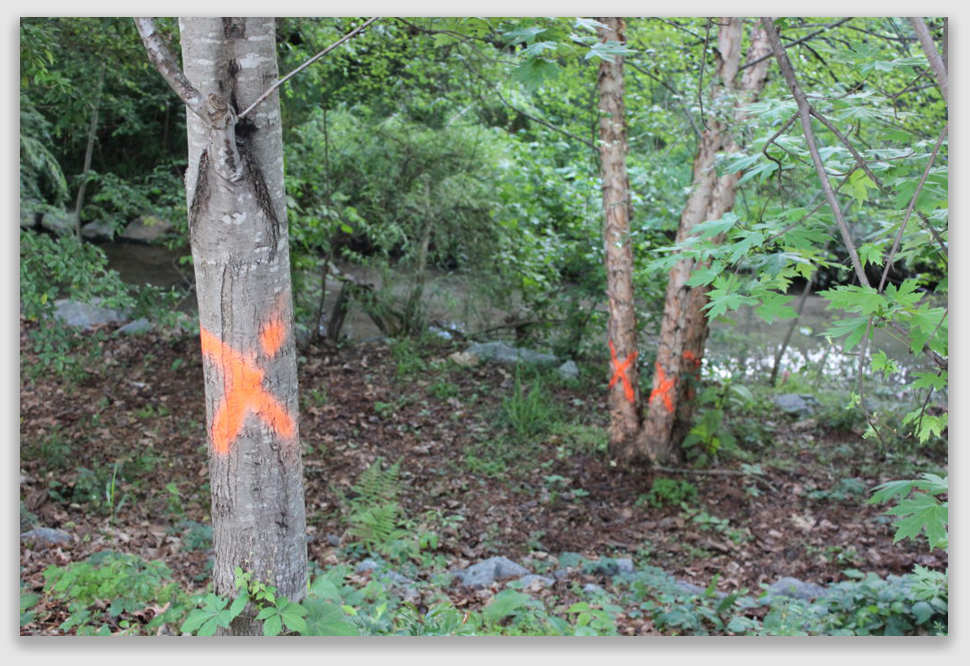 Atlanta, Georgia, Intown Paper, June 1, 2017: Plans for new city tree ordinance in the works
Plans for a new city tree ordinance are in the works in order to address problems with the current ordinance and make it easier to understand, Department of City Planning Commissioner Tim Keane said. “We absolutely have to determine how to protect old-growth forest and tree canopy,” Keane said. Tree advocates say the current law’s problems were highlighted in a recent decision to allow trees to be cut down in Peachtree Hills Park. Keane’s department has put together a team of consultants and is working on funding for a 12-month study on what the new ordinance should encompass. The team includes stakeholders from all points of view, including developers and advocates for tree protection…
Hays, Kansas, Daily News, June 1, 2017: Drought, insects can take toll on trees
Looks can be deceiving when it comes to the health of trees. That’s one thing Mike Mills, owner of Mills Engineering, pointed out Wednesday afternoon as he removed a large cottonwood from a property on Pine Street. Part of the tree had fallen and caused damage to the house. Years of drought and insect invasions, followed by the recent rains, weakened the tree, Mills said. “What happens is these trees are hollowed out and they’re dry. There’s no core to them,” he said, showing numerous limbs he’d cut that were hollow through and through. He likened the tree to a sponge that is allowed to dry out and hardens, then gets exposed to water again. “It starts to bend in the wind and now our hard, dry wood is wet and soft and flexible, and it breaks off and falls over,” he said…
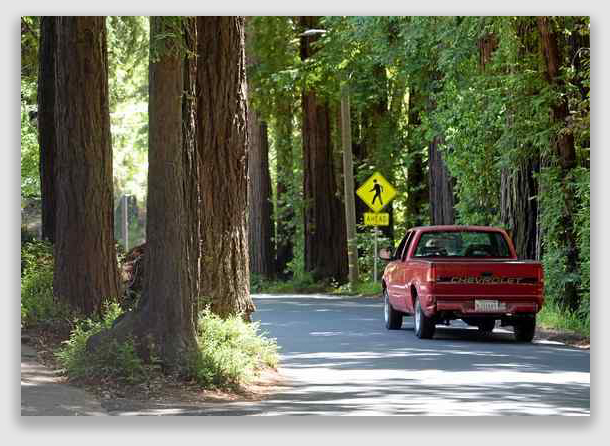
Mill Valley residents who cut down trees without permission could end up paying a heavy price. A change to the city’s tree ordinance, which takes effect Thursday, June 1, requires illegal tree-cutters to pay a fine of $1,000 or the value of the tree, whichever is greater. There is a heftier penalty of $5,000 — or value of the tree — for heritage trees, a special class of large redwoods, oaks and madrones protected by the city’s code. “There hasn’t been one act or instance,” nor a spike of illegal tree removals, said Kari Svanstrom, city planner. “It’s an ongoing issue that we’ve been wanting to address, and the Planning Commission has been looking at it for some time.” Since 2005, the city has treated illegal tree removal as a simple municipal code violation subject to a $100 fine for a first offense. That wasn’t enough to deter people from illegally topping large redwoods, or cutting out groups of smaller, non-heritage trees, Svanstrom said. On average, the city responds to about one complaint of illegal tree removal a month, she said…
A tree ordinance is the talk of the town in Surfside Beach. At Wednesday’s town council meeting, residents and council members debated the topic for nearly an hour. “We have a pretty strict tree ordinance in effect right now,” said Surfside Beach Mayor Bob Childs. “There were some that thought maybe it was too restrictive and that’s why it came back up and that’s why council is trying to deal with it.” Mayor Childs says right now if a town resident wants to trim or cut down a tree on their own property, that community member would have to get a permit. “That’s one of the sticking issues to try to come up with something that everybody’s comfortable with,” the mayor explains. Some residents said the current ordinance is too restrictive and they support the amended ordinance, which gives people more freedom to cut and trim trees on their own property…
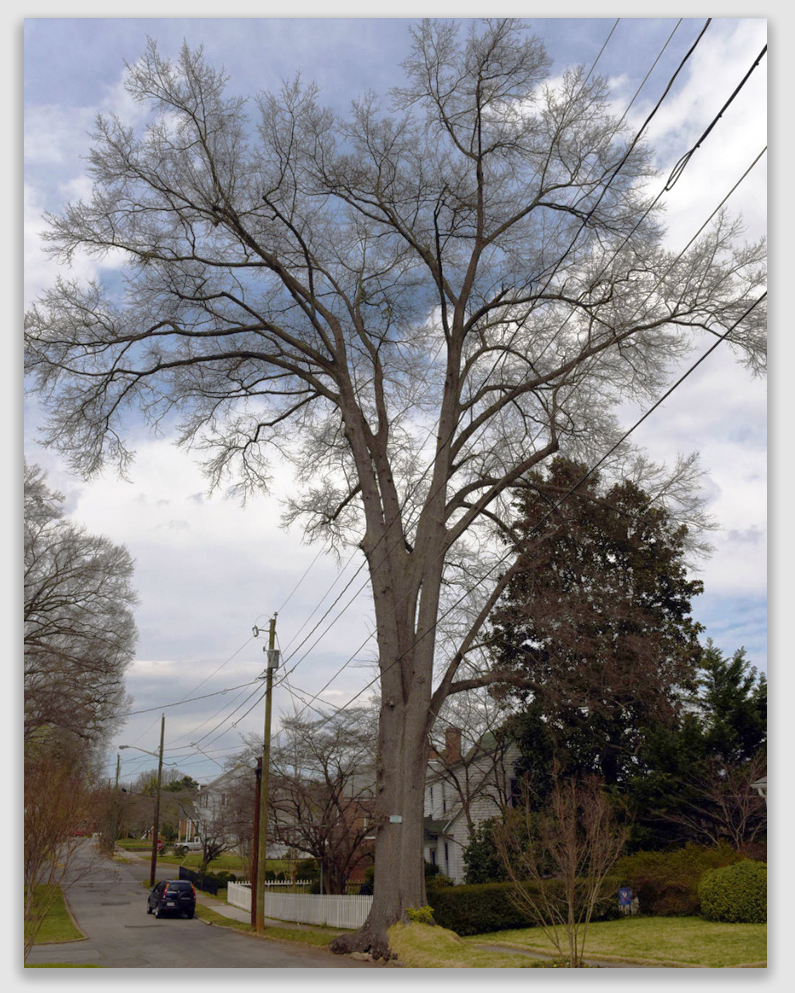 Danville, Virginia, Register-Bee, May 31, 2017: Aging trees become hazards in West Main Street area
Trees are coming down in Danville. The city has been getting rid of some of the older trees in the area around West Main Street because they are dying and becoming a hazard, said Danville Public Works Director Rick Drazenovich. “We have a lot of large oak trees that are now starting to reach the end of their life span,” Many of the trees were planted in the early part of the last century and are starting to develop root diseases. Some are in narrow grass strips between the curb and sidewalk — the wrong location for trees that can grow up to 90 feet tall. They don’t have good root structure, Drazenovich said…
In theory, maple and pine trees would be ideal for creating a beautiful landscape across the new Portneuf Wellness Complex, which is exactly what everyone thought during the landscaping phase of the project. However, out of the numerous contractors and project managers involved in designing the facility’s landscape, nobody predicted the unexpectedly wet and windy conditions that hit eastern Idaho hard this year, which was too much for those trees to handle. Bannock County Events Director Aaron Greenwell said the county wasn’t involved in the landscaping or design aspects of the facility, however, it’s the county’s responsibility to keep it maintained. Now, the county’s responsible for footing the bill to have 180 of those dead trees replaced…

The parents of a 3-year-old boy killed three years ago by a falling tree limb in an Irmo park have settled a lawsuit for $3.6 million. The settlement was reached last week, just days before the third anniversary of Jacoby Latta’s death. He was killed May 31, 2014. His parents, Stuart and Xaviera, filed a wrongful death lawsuit alleging negligence by Town Hall and six companies that designed and built Irmo Community Park, court records say. Most of the money will be paid by companies involved in creating the park and the playground where the tragedy occurred. The town of Irmo is paying $400,000, with the remainder coming from the companies in varying amounts, records show…
Greensboro, North Carolina, WGHP-TV, May 30, 2017: Greensboro woman warns of tree trimming scam
On March 7, Linda Ueland decided to get some work done in her backyard. “We wanted to go ahead and get our trees trimmed,” Ueland said. “I pulled the flyer out and made the call to this person’s number on here.” She called a man named Jim Shrewsbury who approached her in her yard a few weeks earlier, claiming to own the tree trimming service Arbor Tech Custom Tree Care. “We walked around the yard,” she said. “We wrote down a few things I wanted to have done.” Ueland got a quote for $170 dollars. She paid the full amount up front, in cash. “I was just eager to get it done,” she said. But Ueland says the workers never showed up that day…
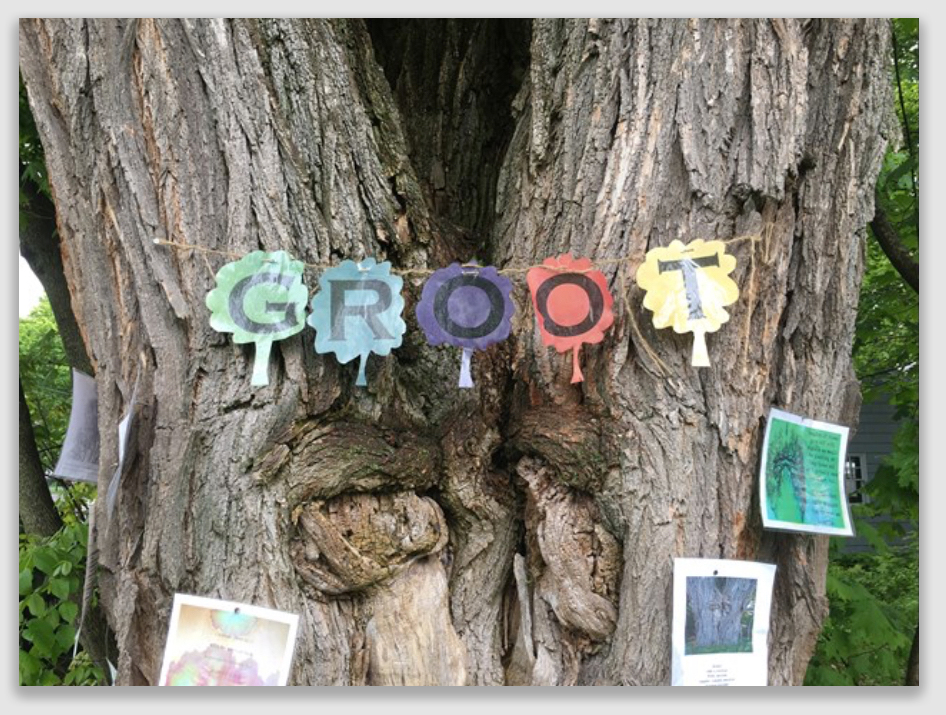
A woman took matters into her own hands Tuesday morning when she climbed into a tree slated for removal in her South Portland neighborhood. Jamie Howard lives at 18 Coolidge Ave., just one house away from a small empty lot covered in trees, including a large one affectionately named ‘Groot’ by neighborhood boys. The name comes from a comic book movie featuring a superhero tree. “Trees make our property and our street beautiful,” Howard says. “These trees are my view. Cutting down these trees, from my point of view, is equivalent to removing…my ocean view.” Howard says after the tree got its name, she decided to get involved. She contacted Jeff Walker, the realtor who had put the lot up for sale. Howard says she has been working for a while to find out more about what her community can do to prevent the cutting down of the trees. Howard says she understands that real estate in her area is in high demand at the moment. But for non-conforming lots like the one that houses the tree in question, the city of South Portland told Howard, a hearing is required and approval from the city. There is an ordinance that puts restrictions on developing non-conforming lots…
They say good fences make good neighbors, except one Las Vegas valley family would have to disagree. An olive tree in the yard neighboring Jose Morales’ near Charleston and Nellis boulevards has leaned over onto his property, and it’s causing a multitude of problems. Even dealing with a language barrier, Morales wanted to show us how the tree has become a nuisance for him. Hundreds of the small fruits have fallen into his yard. Many of them are rotting too… The house and tree are owned by King Futts PFM, a property management company. Daniel Morales says every time he’s tried to contact them, he’s been given the runaround…

Goodbye, ash trees. Hello, Kentucky coffeetrees. Take a look around and you’ll see that St. Paul’s treescape is changing. The city plans to remove 1,350 ash trees from boulevards this year as a result of the invasive emerald ash borer taking root, and a separate program will mean 1,800 new trees in select neighborhoods. The city has a 5-year rotating cycle that determines which neighborhoods get new boulevard trees. This year, spring planting takes place in the West Seventh, North End and Greater East Side neighborhoods. Those blocks getting new trees may see a caravan of workers putting them in. On Thursday, crews were traveling up and down a section of the North End, with one vehicle dropping off the trees, followed by a crew that dug a hole and dropped in the tree, another that moved soil and watered the tree, and one more that added mulch. “It’s like an assembly line,” said Lauren Stufft, an urban forester for St. Paul…
Pittsburgh, Pennsylvania, KDKA-TV, May 29, 2017: Man struck, killed by falling tree he cut down
Authorities say a western Pennsylvania man was killed when a tree he was cutting down fell on top of him. The Cambria County coroner’s office said 37-year-old Jesse Snyder was using a chain saw to cut the tree on his Susquehanna Township property shortly after noon Saturday. Coroner Jeffrey Lees said the tree began to fall but hit a nearby branch and was redirected toward Snyder, hitting him on the head. Lees said he pronounced Snyder dead at the scene due to a head injury. The death was ruled accidental…
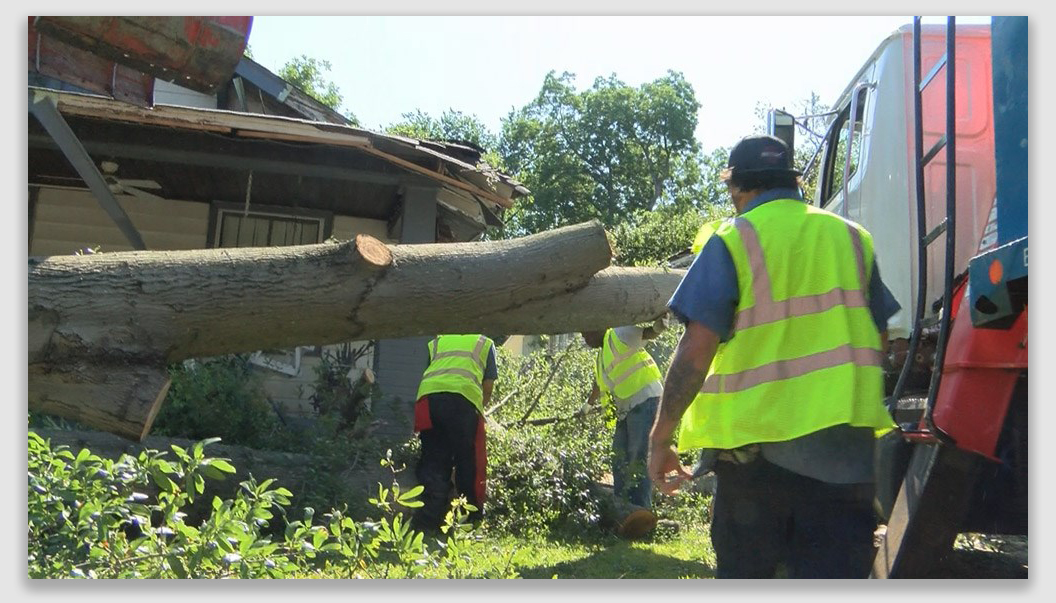
A quick evening thunderstorm Sunday night left an overwhelming amount of wreckage for two Columbia homes. A tree from Patty Humble’s yard on Wallace Street in downtown Columbia is now in pieces in her front yard. Her next door neighbor’s porch is demolished and Humble’s bedroom wall has a new gaping hole. “We heard this extremely loud boom and the house shook. We ran out to the front and saw the tree and looked to the left and saw our neighbor’s entire front porch was gone.” A strong evening storm caused the tree to go down, but Humble believes the damage was done months before the tree fell…
Memphis, Tennessee, WHBQ-TV, May 29, 2017: How to find the right tree contractor after severe storms
Is the person you’re hiring to remove trees reputable? Because if not, you may lose a lot of money. Kevin Smith from Red’s Tree Service Inc. went out with his crew as they removed a tree from a house in the Sherwood Forest area. Kevin told FOX13 you must ensure the tree removal company has Workmen’s Compensation associated with it. “If they get hurt on your property and they don’t have insurance, you could be held responsible,” Smith said. Smith also told FOX13, you must have a contract in writing. “That shows the amount that they are going to charge you and what they are going to do for the services. Make sure you don’t pay any money upfront until they complete the services,” Smith said…
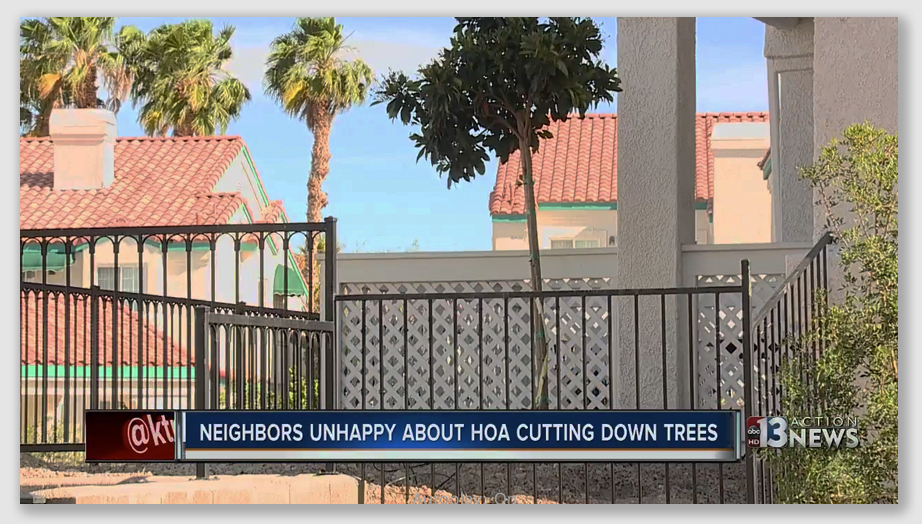 Las Vegas, Nevada, KNTV, May 25, 2017: Tree removal angers neighbors in Henderson community
Neighbors in a Henderson community are fighting over trees, or a lack thereof. Driving into the Charlemont Condo complex in Green Valley, you can clearly see changes are happening. There is a dumpster in the front parking lot full of yard waste and landscaping rock filling several parking spaces. Not everyone is happy about the changes. “I cried the whole time,” Teresa Prater said of watching two large trees outside her condo. This as she and other neighbors are working to stop the landscaping changes that led to more than a dozen trees being cut down…
Duluth, Minnesota, WDIO-TV, May 25, 2017: More illegal tree cutting in Cook County
There have been more reports of birch trees being cut illegally in Northern Minnesota. According to the Cook County Sheriff’s Office, a blue van was spotted with three to four men cutting down trees in the Tom Lake area in Cook County. Witnesses told authorities that approximately 25 trees had been put in a pile. The trees are typically small birch trees which are sold to craft companies. “Unfortunately, it seems there is a highly profitable market for these trees and bark,” Sheriff Pat Eliasen said in a press release. “Conservation officers are reporting an alarming rate of illegal cutting of birch trees across Minnesota and Wisconsin for use in decorating and sales to craft companies. This activity is damaging to our wilderness and wildlife, and these trees can take up to a decade or more to regenerate.” The punishment for cutting down white birch trees on public land varies, from a substantial fine to even jail time. Birch trees can be harvested from public property in Minnesota, but only with written permission or a permit…
 New Scientist, May 25, 2017: Tree-climbing goats spit out and disperse valuable argan seeds
In south-western Morocco, acrobatic goats climb argan trees to eat their fruit and leaves. A tree full of goats is a striking sight, but the goats’ widely overlooked habit of regurgitating and spitting out the nuts may be important to the life of these forests. Goat herders lead their flocks through the argan (Argania spinosa) forests, where the animals can clamber up trees 8 to 10 metres high and strip them nearly bare. Popular accounts say the goats defecate the nuts of argan fruits, which can then be retrieved from the goats’ manure. Cracking these nuts open is the first step in making argan oil, a valuable export to richer countries where it is used in beauty products and foods. People may also harvest the fruits directly, but the goats save them a step. “Some scientists have accepted the defecation hypothesis, probably because they did not speak to the herders,” says Miguel Delibes, a biologist at Doñana Biological Station in Seville, Spain. The herders say the goats mostly spit the seeds out…
Indianapolis, Indiana, Star, May 25, 2017: Galls cause little or no damage to host trees
Dear Dr. Dirt: There are several oak trees growing in our lawn. As a result, there is always something falling out of the trees. In early May, it was little green balls ranging from pea size to golf balls. Any idea what is causing the balls? — Pat, Indianapolis
Dear Reader: There are many kinds of galls, which are made by insects like aphids and wasps as well as mites. Maple bladder gall, which is common on Silver maples, is noted for its tiny, red growths. Of all the trees, the oaks are the most likely to be attacked by the gall makers. There are perhaps over 100 different galls that are found on oaks, and most of them are caused by tiny wasps. They sting or injure the foliage as it is developing rapidly. Fortunately, the galls cause little or no damage to the host trees. In this particular case, the balls are probably those of the oak apple gall…
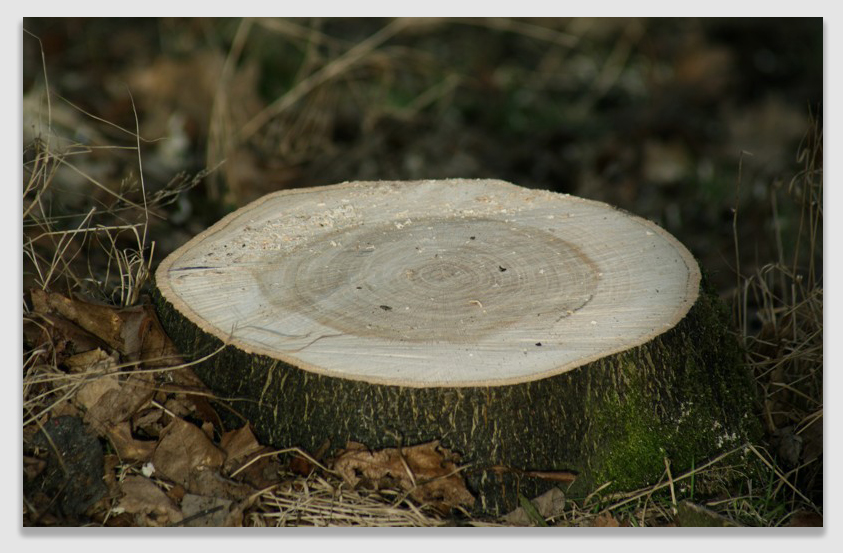
If you cut down a tree without permission in Snellville, expect to pay a heavy price in the near future. That’s the word from city officials who, following two tree-cutting sprees committed by shopping plaza owners, are in the process of adding more teeth to an already existing ordinance designed to prevent unwarranted tree removal by commercial property owners. “In spite of Snellville’s long-standing ordinances prohibiting the arbitrary removal of trees, we have recently had some violations of those ordinances,” said Councilman Dave Emanuel. “While some violators plead ignorance, I believe they were in fact subscribing to the philosophy that it’s easier to ask for forgiveness than permission. It may be easier, but it will become a lot more expensive.” Currently the fee for cutting down trees without permission is a minimum of $356 per tree per day. Under the new measure, which still awaits formal review and approval, violators would pay $995 per tree per day. Also under the proposed ordinance removal of any tree without the approval from the city’s Planning Director is prohibited…
Oakland, Michigan, Press, May 24, 2017: Strange slime on your cedar tree is a type of fungus
Q: I just looked at my evergreens that I was told are Eastern red cedars. I don’t think these trees are supposed to get flowers but right after it rained, some orange floppy flowerlike things appeared on the branches. Then, they got sort of slippery and now look like light orange octopi drooping off the branches. What is this stuff?
A: You have just met Cedar-Apple Rust which forms woody, deformed galls on eastern red cedars. In the spring, these galls sprout wonderfully slimy tentacles, called telial horns. These are essentially reproductive structures. When the slimy horns dry up, the spores float away, looking for an apple or crabapple to call home…

Once Mark Somers and Farah Tengra shared their stories with NewsChannel 9, more complaints about Holbrook arrived on the Your Stories lines. Worried about falling limbs, Lucien LeFebvre says he gave Mark Holbrook a $1,600 deposit to cut down six trees and trim four more. “He trimmed the tree right up to the top and just let it stand there, with the rope on it,” LeFebvre explains. “So, I said, well, I don’t think he is going to come back.” LeFebvre says Holbrook did come back at one point– to ask for another $800. Then “…Never answered the phone, so I said… I’m dead. He scammed me,” LeFebvre adds. His story is no surprise to Carrie Dunn. She says Holbrook never finished a job for her after a down payment of more than $3,000…
One incredibly wet winter will not rid the West of the beetle infestation that has devastated forests, especially in California where more than 102 million trees have died since 2010. “Bark beetles are still there. They will hatch and fly in early summer. Then we’ll expect to see additional mortality, but at what rate is anyone’s guess,” Chris Anthony, CalFire division chief, told Lake Tahoe News. What to do with all that fuel remains an unknown. Leaving it in the forests creates a fire hazard. Removing it is a financial conundrum. Even the wood that can be harvested doesn’t necessarily then have a home. Trees that come off federal or state land cannot be sold oversees unless they have been milled to a certain dimension prior to exporting. That in itself can be cost prohibitive. According to the regional U.S. Forest Service office, lots of people in California have looked into the export issue and potential legislation, but the agency could not provide any new information. This is a federal issue. No one from Rep. Tom McClintock’s office responded to an inquiry. He is the Republican congressman representing Lake Tahoe and a large swath of the Sierra in the House…
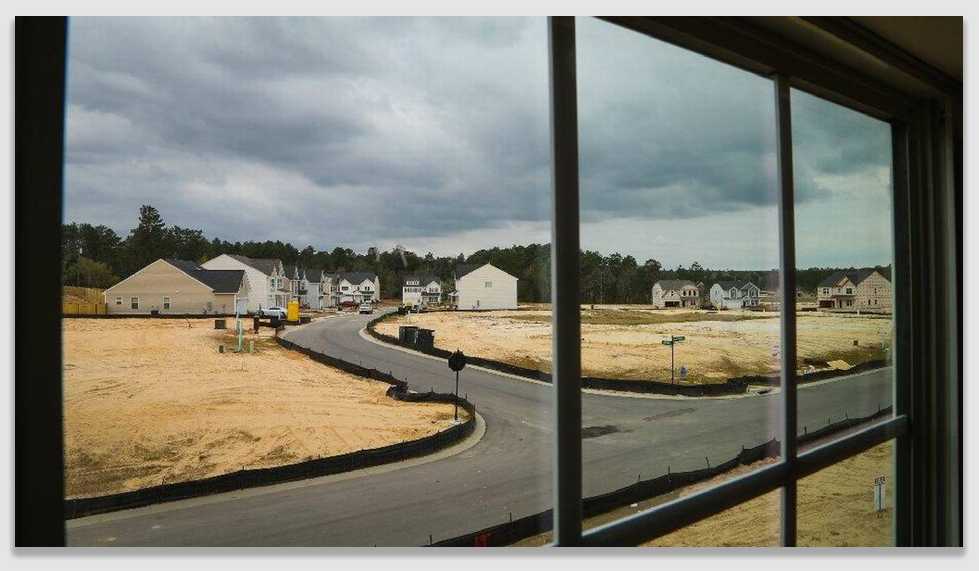
Lexington County leaders are looking to save more trees as new neighborhoods sprout. County Council took the first step toward that goal Tuesday in agreeing to consider requiring developers to establish a landscape buffer around the edges of new subdivisions. The plan would limit clear-cutting of tracts for homes, a practice that stirs complaints because of lost foliage in the steadily growing county. Council members didn’t settle on a buffer size, although some of the nine members said a 20-foot width seems sufficient without inconveniencing builders. Requiring buffers would preserve scenery and reduce erosion that can lead to pollution in streams and lakes, Councilwoman Erin Long Bergeson of Chapin said. Some developers voluntarily include buffers in the design of new neighborhoods. But it’s time to stop “knocking down big trees” to make it easier to build, Councilman Darrell Hudson of Lexington said…
Indiana officials are urging homeowners and landscapers to stop planting ornamental pear trees because they are an invasive species that’s crowding out native trees. The state Department of Natural Resources says the trees, commonly known as Bradford pears, may be a popular landscaping tree but they’re also a nuisance that can spread. Megan Abraham is the director of the DNR’s Division of Entomology & Plant Pathology. She says that over time the different varieties of the ornamental pear trees have cross-pollinated and that’s allowed them “to rapidly spread into our natural resources…”

Critics of Gov. Jerry Brown’s revisions to the 2017-2018 state budget say he’s proposing to cut millions of dollars desperately needed to fight fires and fund tree mortality projects across the state. Brown’s updated budget, released last week, cuts funds for local tree mortality efforts from $52.7 million to just $2 million, critics said in a prepared release. They said that is less than 4% of similar funds allotted in January of this year. CalFire would also see a huge cut if the Governor’s budget is approved, critics said. Funding for the extended fire season, increased firefighter surge capacity, Conservation Corps fire suppression crews, and aerial assets is set to be slashed by nearly half – from $91 million to $41.7 million. “The drought may be officially over, but the tree mortality crisis is not,” said Jim Patterson, Assemblyman (R-23rd). “Trees are still dying and the need to fund local efforts is greater than ever. Now is not the time to slash and burn these vital programs…”
Los Alamos, New Mexico, Daily Post, May 23, 2017: What happens when a tree falls?
As I am writing this column and watching the snow fly in mid-May, I’m willing to bet my phone is going to ring and someone is going to tell me their big, beautiful tree just came crashing down. Snow is heavy this time of year. So how will your insurance respond? Let’s take a look. 1. Your homeowners insurance likely covers tree removal and damage repairs for your home and other insured structures, such as fences. A tree falls on your property and damages one or more insured structures. What now? Your homeowners insurance will likely help with the cost of removing the tree and repairing the damage. That’s once you pay your deductible, of course. Examples of covered incidents can include strong winds knocking a tree over onto your roof or lightning striking a tree, causing it to fall on your fence. Keep in mind there is little to any coverage for the tree itself. However, if a tree falls due to neglect, you may not receive any coverage. So keep your trees in good shape, and ask your neighbors to do the same…

Those traveling through the Butte Fire burn scar should continue being cautious as burnt hazard tree removal continues – including over much of the Memorial Day three-day weekend holiday. According to Calaveras County government spokesperson Sharon Torrence, crews continue toiling along the public rights-of-way and private properties. She notes that currently there are well over 8,200 trees on the ground. “The location and complexity of the remaining trees makes the job of taking them down more difficult and time consuming,” Torrence emphasizes. “Hauling crews have removed 51 percent of debris and logs left by the cutting crews — and that material was taken to Wallace to be chipped, then transported to Chinese Camp to a Biomass waste-to-energy plant…”
Castle Dale, Utah, Emery County Progress, May 22, 2017: Ask an Expert: Three tips for tree planting
Trees are an integral part of landscaping, and it’s important to know the basics of starting them out right so they will flourish for many years to come. Here are answers to three frequently asked questions about tree planting… Trees are best planted when they are still dormant with tight, unopened buds in the early to mid-spring after the soil has thawed. Cool temperatures and good soil moisture in the spring help trees get established. Fall planting also works well for many species, though watering is critical if the fall is dry. Summer planting of balled-and-burlapped and container plants can be successful, though hot temperatures, dry conditions and non-dormant trees make good care especially important and survival less sure. Bare-root trees should only be planted in spring while still dormant…
 LaCrosse, Wisconsin, WKBT-TV, May 22, 2017: Falling tree accident leaves woman in critical condition
Officials in an eastern Minnesota city are working with businesses and property owners to remove trees in danger of falling after a woman was critically injured when a tree fell onto a restaurant’s patio this month. KARE-TV reports that Micki Scott was injured when a large tree fell onto her while she was at Punch Pizza in Wayzata on May 6. Her husband says she’s been in intensive care for two weeks. City officials brought in an arborist to examine the forest area near the restaurant. City Manager Jeffrey Dahl says the arborist reported that the tree appeared to be diseased. The city has removed additional trees that posed as a threat. Dahl says the city has submitted a claim with its insurance company and they’re reviewing the information…
Savannah, Georgia, WSAV-TV, May 22, 2017: Trees cause visibility issues with traffic lights
The tree canopy in the Hostess City is a trade mark of character, ambiance, and charm of Savannah. But the natural beauty and shade of the tree comes at a cost as the live oaks limbs, draped with Spanish Moss, can grow to block motorists view of traffic signals. There’s an example of this particular problem on the western side of the intersection of Bee Road and Victory Drive. Michelle Gavin, Public Information Officer for Savannah, says it’s a problem people should report as soon as possible. “If a citizen notices that a tree is hanging low or the Spanish Moss is hanging down obscuring a traffic light, they need to immediately call 311.” said Gavin. She says when the public shares information about trees posing public safety hazards, those reports are bumped up to the top of the list of problems the city needs to fix. “That’s a priority one call for our Park & Tree Department, to go out, observe the area, and if it does in fact need to be trimmed, they will get on that right away, within 48 hours.” Gavin said…
 Miami, Florida, Herald. May 21, 2017: Nebraska farmers plant trees to protect their property
Spring planting season involves more than corn and soybeans for some Nebraska farmers. It’s also a time to plant trees and shrubs as windbreaks that protect farmsteads, fields and livestock facilities, and add native grasses to create wildlife habitat on corners of pivot-irrigated cropland. “We need to keep these trees growing, keep conservation projects going,” farmer Marshall Paulsen said during a driving tour of projects he’s undertaken the past 21 years on his farm southeast of Minden. They include re-purposing pivot corners in 1996, 2002 and 2007 in cooperation with the Holdrege-based Tri-Basin Natural Resources District and Pheasants Forever, and planting windbreaks in 2005 and 2015…
A Harrison High School student who was injured when a tree fell on her Friday during a camping trip in Bartow County was pronounced dead midday Sunday. Joelle Dalgleish, 16, was hurt when the tree holding the hammock in which she was sleeping snapped and fell on her around 11:30 p.m. at Red Top Mountain State Park. “Joelle was one of the sweetest and happiest people you will ever meet,” said Harrison track coach Kent Simmons, for whom Dalgleish had run track since she was a freshman in 2015. “She laughed easily and loved cracking a joke. Everyone loved her spirit and the way she could make you immediately feel comfortable around her…
 Kokomo, Indiana, Perspective, May 21, 2017: How to plant a tree for successful growth
More sunlight and warm temperatures inspire homeowners to spend more time in the outdoors. Outdoor projects often top homeowners’ to-do lists in spring and summer, with gardens and landscapes taking center stage. Planting more trees around the yard is one project that can improve property value and benefit the environment… Visit a garden center or nursery and select a tree that will be hardy in your planting zone. Choosing native trees can increase the likelihood that the new tree will adapt to its surroundings. Also, inspect trees to determine if they’re healthy before taking them home. Look for evidence of root girdling, which occurs when the roots circle around the perimeter of the container and surround the trunk. Trees should not have any dead or dormant branches…
A 70-year-old man has been sentenced to three years of probation for stealing thousands of tree tops from black spruce in the Chippewa National Forest. Joseph Leon Edminster was also ordered to pay $24,199 in restitution to the U.S. Forest Service and complete 200 hours of community service. He was sentenced in federal court Friday. Edminster pleaded guilty to one count of government theft in January. Assistant U.S. Attorney Laura Provinzino says Edminster’s punishment would have been more severe had he not taken responsibility for his actions. Prosecutors say Edminster admitted to cutting more than 2,700 tree tops from October 2008 to October 2014. He sold the tree tops to wholesalers for use as Christmas decorations…
A Chico State University fraternity faces federal criminal charges that its members cut 32 trees in a Lassen National Forest campground during an initiation ceremony for new pledges. A complaint filed Tuesday in the Redding office of U.S. District Court charges Pi Kappa Alpha, Chico State chapter, and its president, Evan Jossey, with 32 violations of cutting or damaging federal timber, illegal possession of a firearm and conspiracy. The charges stem from a fraternity event over the April 21 weekend at an informal U.S. Forest Service campsite on Deer Creek near Butte Meadows. About 80 people were gathered in what the federal investigating officer called a fraternity initiation ceremony. John Elam, who had been camping nearby, reported to Tehama County sheriff’s officials that he saw and heard trees being cut down and people shooting firearms. He had previously met Jossey, who introduced himself and said the fraternity would be holding “the final states of initiation” over the weekend. Elam’s April 28 report to the Tehama County Sheriff’s Office noted “large volumes of litter” as well as felled trees. In an interview with a Tehama County sheriff’s deputy, Jossey acknowledged the fraternity retreat but “denied cutting down trees or shooting any firearms or seeing any members cut down any trees or shoot firearms,” according to an affidavit filed by the Forest Service investigator…
Goshen, Indiana, News, May 18, 2017: Nappanee’s tree nursery in the ground
An idea that had taken root in the mind of current tree board president Donny Aleo’s mind a couple of years ago has finally come to fruition with the establishment of Nappanee’s first tree nursery. Seventy-seven saplings have been planted in root balls on McCormick Creek Golf Course near the 10th green behind the old clubhouse. Aleo presented the idea a couple of years ago when he was still park superintendent and a suggestion was made to turn the former Fred’s Flowers property into a temporary nursery. The city acquired that property via the redevelopment commission. Although Aleo appreciated the offer, he preferred to have the trees on park land where it wouldn’t have to be moved. “We thought it’d be more efficient to have it on park land, close to resources and also help to green up the golf course,” Aleo said…
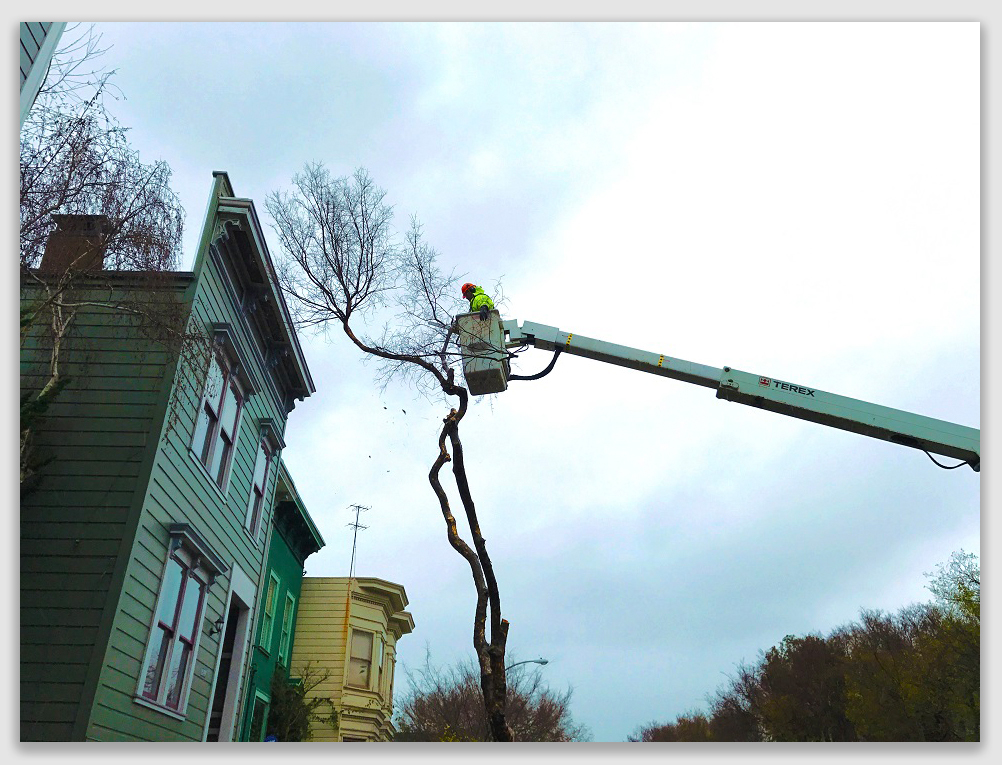
When Proposition E passed last November with nearly 80 percent of voter approval, care of San Francisco’s approximately 125,000 street trees reverted back to the city, starting July 1st. Currently, San Francisco manages 40,000 of those trees, while the rest were maintained by property owners. Now, San Francisco Public Works is looking at the implementation of the $19 million tree maintenance initiative. According to Public Works director Mohammed Nuru at a May 16th community meeting held at Richmond Station, the agency will need three years to ramp up their staff. The agency is already in the process of hiring contractors to augment existing crews for the larger workload that will begin in July…
Nature, May 18, 2017: Trees in eastern US head west as climate changes
Ecologists have long predicted that climate change will send plants and animals uphill and towards the poles in search of familiar temperatures. Such movements have increasingly been documented around the world. But a study now shows that changing rainfall patterns may be driving some tree species in the eastern United States west, not north. Songlin Fei, a forest ecologist at Purdue University in West Lafayette, Indiana, and his colleagues tracked the shifting distributions of 86 types of trees using data collected by the US Forest Service’s Forest Inventory and Analysis Program during two periods: from 1980 to 1995 and between 2013 and 2015 for all states. They found more species heading west than north, probably partly because of changing precipitation patterns, the team reported on 17 May in Science Advances1. “That was a huge surprise for us,” says Fei. This study suggests that, in the near-term, trees are responding to changes in water availability more than to temperature changes, he says…
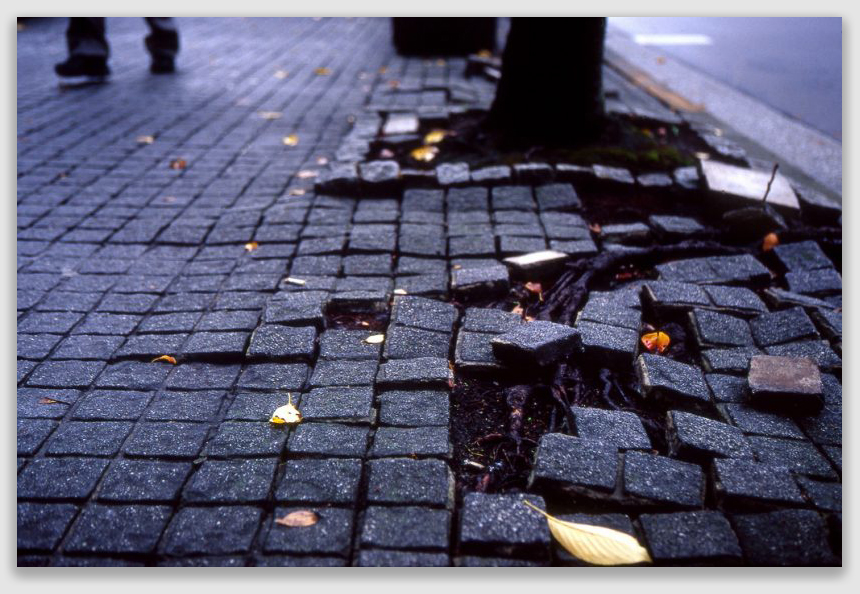 Total Landscape care, May 16, 2017: Methods for remediating tree and sidewalk conflicts
A majority of people have probably tripped over a buckled sidewalk at least once in their life and often the culprits are industrious tree roots that have set out to invade new territory as they search for nutrients. The number one way to prevent trees from warping sidewalks and driveways is to follow the wise practice of planting the right tree for the right place. According to the Georgia Forestry Commission, tree root systems extend about one to one-and-a-half feet out from the trunk for every inch of trunk diameter measured about four feet above the ground. This means that a 12-inch diameter tree will have roots spreading 12 to 15 feet out in every direction. Roots grow in search of water and one good way to keep roots out of the way is to encourage deep growth by watering longer and less frequently, soaking several feet of soil instead of just the surface. If sidewalk replacement or other work will be regular and root cutting is expected, the Arbor Day Foundation says that Norway maple, ginkgo, hackberry, hawthorns, cherries and river birch are more tolerant of root damage. Also, the City of Portland has a list of trees that are suitable for streets based on their height and presence of power lines…
London, UK, BBC, May 16, 2017: Cities need ‘hedges rather than trees’ for environment
Hedges are often better than trees at soaking up air pollution among tall buildings, research has suggested. A paper in the journal Atmospheric Environment says tall trees are good at absorbing pollution in more open areas. But hedges can trap toxins at exhaust pipe level, so reduce people’s direct exposure to harmful pollutants. Lead author Prof Prashant Kumar said councils should try to plant low hedges between pedestrians and the street if pavements are wide enough…
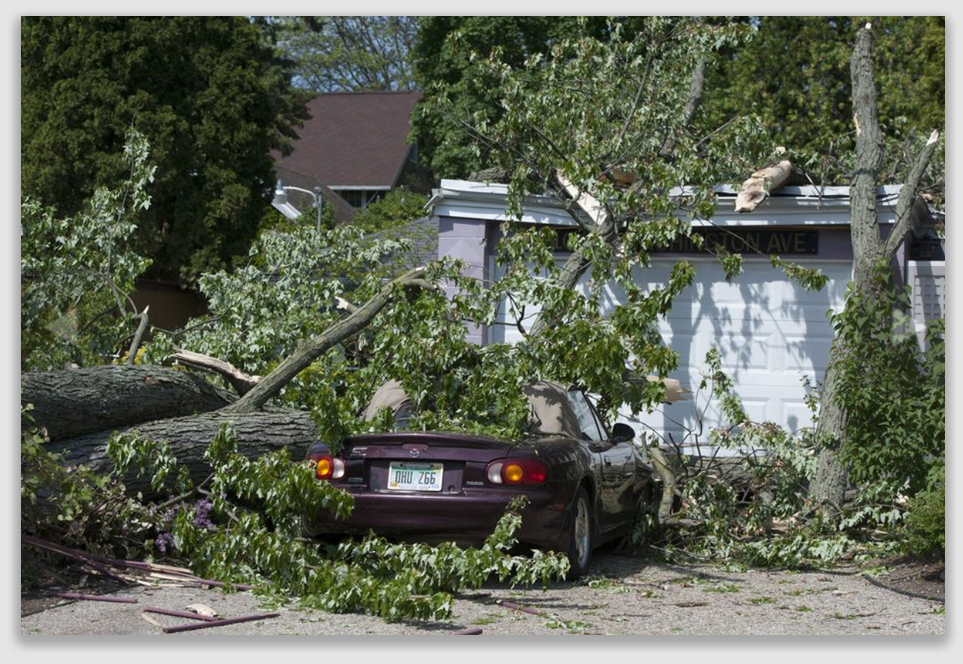
Bambi McCabe wouldn’t sleep in the corner bedroom of her home during storms. She knew the large tree in the city right-of-way in front of the house was coming down any day. It did around midnight Tuesday, May 16. The tree totaled McCabe’s 2000 Mazda Miata, destroyed her garage and damaged her 1920’s-built home and patio on Washington Avenue at Bowen Street. While she was in the bedroom near the tree, nobody was injured. “The dog woke me up, I heard a crack and it came for the house and the windows,” McCabe said. “I jumped over the bed and got the hay out of there.” McCabe said she had alerted the city numerous times about the tree. A large section fell in the other direction during the March windstorm, causing a gas leak across the street, sparking power outages and scattering debris…
Geneva, New York, Finger Lakes Times, May 16, 2017, Tree pest quarantine expanded to 43 counties
The emerald ash borer quarantine has expanded to 43 counties, including Ontario, Seneca, Wayne and Yates. Last year, the quarantine zone only included the town of Canandaigua and seven other restricted zones outside the Finger Lakes. The state Department of Environmental Conservation and state Department of Agriculture & Markets said the eight existing merged ash borer restricted zones have been expanded and merged into a single restricted zone of all or part of 43 counties. The emerald ash borer is a serious invasive tree pest in the United States, killing hundred of millions of ash trees in forests, yards and neighborhoods.The beetles’ larvae feed on the cambium layer just below the bark of the ash tree, affecting the transport of water and nutrients into the crown and killing the tree…
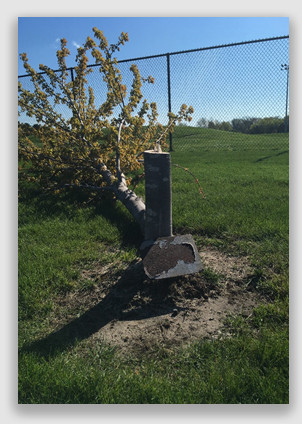 Minneapolis, Minnesota, KARE-TV, May 15, 2017: Teens suspected of cutting Faribault memorial tree
For eight years, overlooking the beautiful Faribault soccer complex was an 8 year old Red Maple. It was a tree that brought some comfort to Don Paulson and many others who loved his son Nicolas, nicknamed Ginger. “And I almost think some kids didn’t know his name was Nicolas. They just thought his name was Ginger,” Paulson fondly remembers. Nicholas Paulson, eight years ago, died by suicide at age 16. “Completely off guard. Never seen it coming,” Don Paulson said. The tree was planted as a memorial, with a remembrance plaque placed below. And it stood until earlier this month, when a group of vandals chopped it down. “Kind of a disturbing act of vandalism,” said Faribault Police Chief Andy Bohlen. Bohlen said the vandals sawed or chopped down at least 5 different trees on city or school property. The value tops $5000, according to Bohlen, likely making the crime a felony…
Goshen, Indiana, News, May 15, 2017: The poem is true, ‘Only God can make a tree’
This has long been a favorite poem of mine. Each spring it resonates once again when I witness all the new growth of green vegetation in our trees. Spring is an awakening for all plants and trees that I yearn for. It starts early when buds start to form on trees and peeks of green, yellow, pink and red make their first appearance setting the trees aglow. Following this, a chain reaction starts with tiny shoots bursting into miniature tender leaves that will eventually mature into full-blown leaves. I first started taking notice of this transformation when I was 16-year-old youngster. Our yearly trips to the woods of northern Michigan on our quest for mushrooms took us deep into the state forests. On the first of several trips, the trees were devoid of vegetation and the forest floor was just awakening with patches of wild onions. A week later, it had progressed into minor leaf activity that provided a moderate amount of shade and the forest floor was starting to turn green plant life. A third trip was often, but not always, skipped because the leaf canopy made it dark enough that unless you had bright sunshine, it was nearly impossible to see and the forest floor became alive with plant life of all kinds…
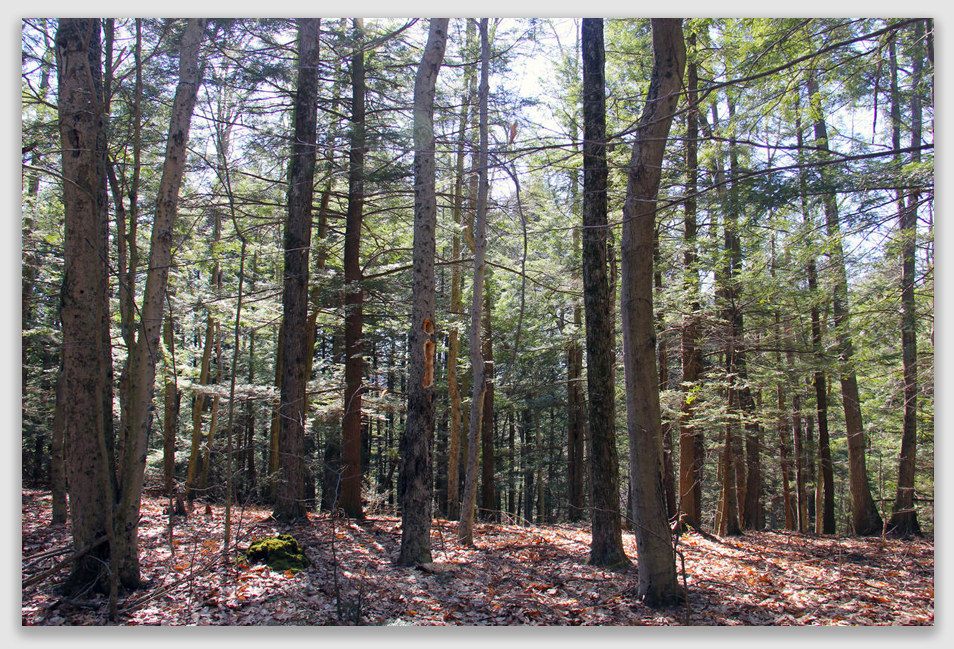
In the northeast U.S., there is less than 1 percent of old growth forest left. A new University of Vermont study finds that harvesting trees in a way that mimics old growth forests not only restores critical habitat, but also stores a surprising amount of carbon. For a forest to be considered “old growth,” it must grow largely undisturbed, usually for several centuries. These ancient forests help foster biodiversity of plants, animal and even fungi — and can help mitigate flooding. But UVM forest ecologist Bill Keeton wanted to see if he could take a “middle-aged” New England forest and “nudge” the forest ecosystem into old growth conditions…
A city recognized by Tree City USA should do better. Commissioner Carol Soustek wants the city to find ways to protect trees. A short supply of shade in Holmes Beach prompted Soustek to bring up discussion of tree protection regulations May 9. “Our city is kind of trying to be the Tree City of the USA but we’re not protecting anything here,” Soustek said. Construction of a single-family home in Holmes Beach does not include permitting for tree removal. “They don’t have to apply for any kind of landscaping permits to knock down these trees,” Soustek said…
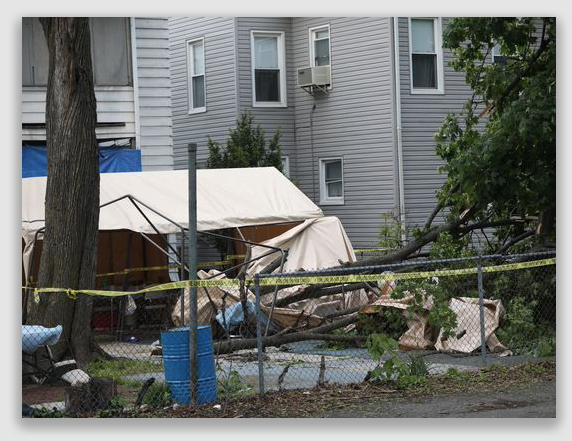 Hackensack, New Jersey, Record, May 14, 2017: Falling tree kills Passaic man during Mother’s Day BBQ
A man was killed and six others were injured after lightning struck a tree and a limb fell into a backyard during a Mother’s Day barbecue on Paulison Avenue. Lightning hit the tree at 4:58 p.m., causing a tree limb to fall in the backyard of 375 Paulison Ave., where a family was having a barbecue, Lt. Jonathan Schaer said. “It’s an act of God, as unfortunate as it is,” Schaer said. The event was a family barbecue celebrating a birthday and Mother’s Day. The 28-year-old man died from his injures. Schaer said his name was being withheld pending family notification…
Brunswick, Georgia, Golden Isles News, May 14, 2017: Tree ordinance goes back to drawing board
The committee assembled to create a new tree ordinance, which would only apply to St. Simons Island, will be meeting on Tuesday to resume the task after the Glynn County Commission decided not to adopt the ordinance at a meeting on May 5. It took the committee roughly two years to create the ordinance that was being considered, hearing from developers and arborists along the way, among others. Multiple town halls and commission meetings were held to get input from the public and county officials during that time. Despite that, the Islands Planning Commission saw fit to recommend that the proposed amendment be sent back to the drawing board, and that the committee be expanded to include a wider range of county residents. The county commission agreed with the IPC’s recommendation, making the final decision to have the ordinance sent back to the committee for tweaking and refinement…
 Indianapolis, Indiana, Star, May 14, 2017: Why Ball State chopped down ‘gum tree’
For more than a decade, Ball State University students have been sticking their used gum to a small tree in the middle of campus. To some it was art. To others it was disgusting. Either way, the quirky and even beloved tradition stuck.That is, until this weekend when the university apparently chopped it down. Students discovered a stump where the full gum tree once stood, near Bracken Library on the west side of the Emens Auditorium parking garage…
Norwalk, Ohio Refletor, May 13, 2017: Woodlot tactics that work
I love woodlots. I hunt in them, enjoy wildlife in them, gather wild foods like walnuts and hickory nuts in them, and sometimes just walk around and let stress ooze out of my feet into rich woodland soil. Huron County and surrounding territory has lots of woodlots, and I’ve enjoyed some more than others. Some have been ruthlessly gutted of all usable timber leaving only treetops and brush, and some have majestic trees and lots of wild game that returns year after year. If you own a woodlot, have relatives who own one, or friends that let you roam in their acres, you can improve almost any woodlot with minimum effort – if the landowner doesn’t mind or you have time to work on your own acres. One of the first things you might do is remove all “weed trees” and make them into nice little brushpiles that rabbits and small animals can use for protection. Weed trees like hackberry, slippery elm, witch hazel, and others of that ilk are not worth having for firewood, wildlife food, or any other purpose. They simply take up sunlight that other trees need, and pull nutrients from the soil to no good purpose. But do leave the beech since their trunks hollow readily for wild creatures homes, and the beechnuts are used by everything from raccoons and squirrels to deer and wild turkeys…
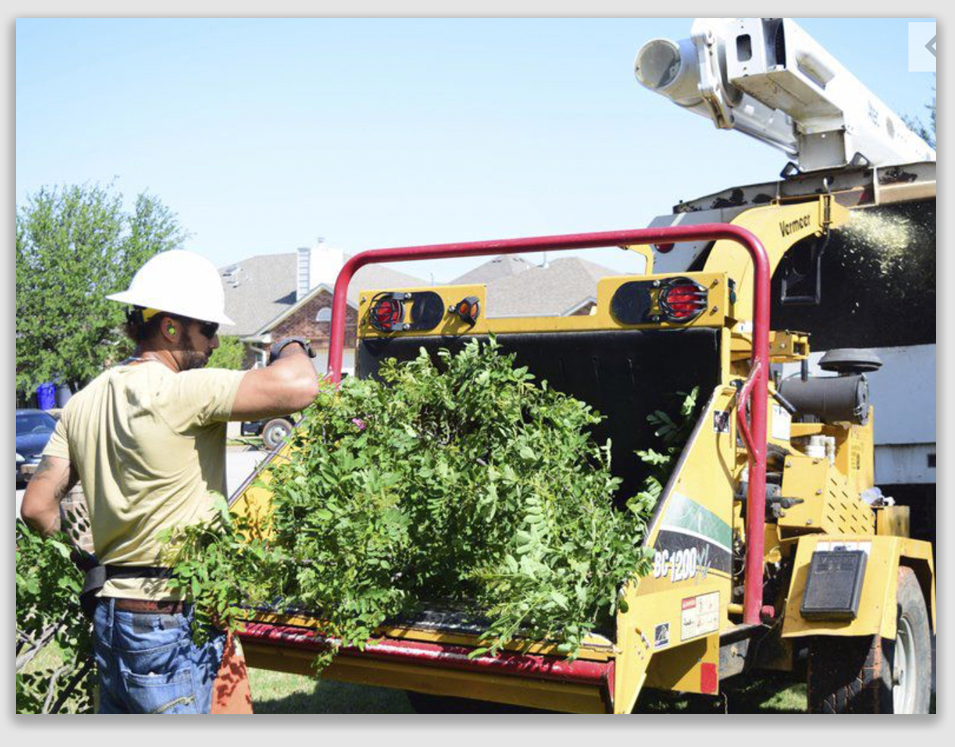
When a tree falls in the woods, it makes a sound, but it’s nothing compared to the noise that’s raised when a tree gets cut down in Norman. As Norman is a tree city — a designation granted by the Arbor Foundation — it may not be surprising that many Norman residents feel strongly about protecting them. But some east-side residents were surprised when contractors hired by Western Farmers Electric Cooperative showed up in the Royal Oaks neighborhood this week and started lopping of limbs and grinding stumps. “They said we should’ve known where the easement was when we bought this house. They said we should have known that this would happen,” Resident Terrence Shaw said. “Why would I look at a 20-year-old tree and think it’s going to get cut down someday? These aren’t new trees. It’s not like we just planted them.” Shaw said the most frustrating part was the lack of communication. He said he attempted to contact Western Farmers Electric Cooperative many times but ran into voicemail inboxes and a phone portal that led nowhere…
Des Moines, Iowa, KCCI-TV, May 11, 2017: Thousands of ash trees without issues to be cut down
Thousands of ash trees all across the city are being cut down. The reason: the emerald ash borer. The city hopes the project will improve the quality of trees here in the future — But most of the trees don’t actually have any issues. It’s all as a preventative measure. Out of the nearly 3,000 trees cut down, only one has been found to have the emerald ash borer. Seven-thousand trees in total will be removed and some Des Moines residents are not happy to see them go…
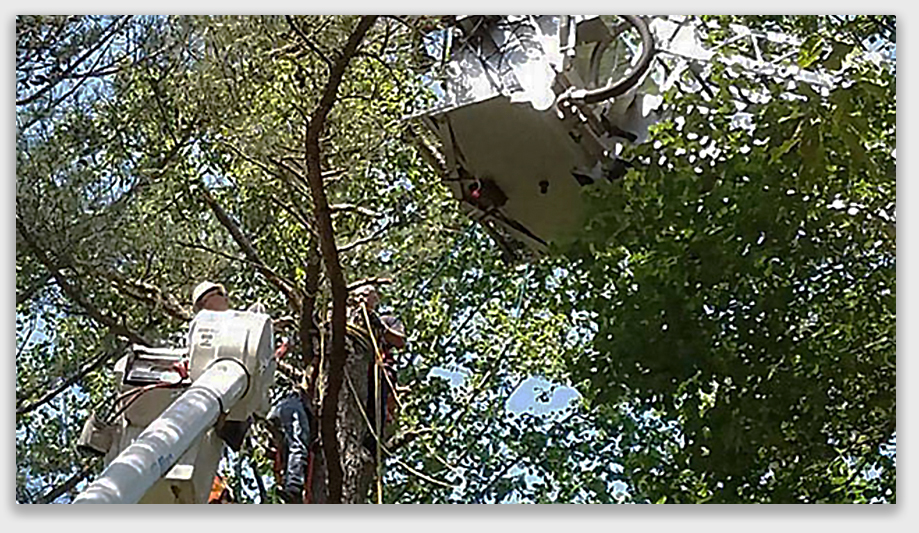 Atlanta, Georgia, WGCL-TV, May 11, 2017: Man gets stuck 40 ft. high trying to trim tree
A man had to be airlifted to the hospital after getting stuck in a tree he was trying to trim in Carroll County. A spokesperson with Carroll County Fire Rescue said crews responded to Oakwood Mobile Home Park just after 10:30 a.m. Thursday after being told a man was pinned 40 feet high in the tree. Officials say the 45-year-old man was trying to trim the tree with a chain saw when a section of the tree fell on him, wedging his arm into a fork in the tree. Several agencies were called to help rescue the man, who was eventually brought down just before noon…
Women’s Health, May 1, 2017: Staking a Young Tree
When a tree is in the young stages, one of the most vital things you need to provide for it in addition to water and nutrients is support. If you don’t hold up the tree somehow, it might end up bending in a certain direction and growing extremely crooked for the rest of its life. So no matter what, you should always have some kind of support. The most popular method of keeping young trees upright is to put long stakes into the ground on either side, and tie loops around the tree. Each loop should be fairly loose to allow for further expanding of the trunk. Lots of people just have a stake on one side of the tree, but this is not a good practice because it generally doesn’t allow for further growth of the tree. You should only be staking your tree if you think that wind and other forces might be literally moving the ball of roots within the ground. Your staking should prevent all of this movement, because this is the most harmful thing that can happen to a young tree. It causes the roots to be in motion too much and not be able to properly get a hold on the soil so that the tree can develop normally. Before you stake a tree, you should be completely sure that it needs it. If you constrict the movement and growth of a tree that doesn’t need to be tethered down, you could harm it beyond repair. For example, the staking mechanism you use could cause abrasion or “rashes” on the trunk. This will happen anyways, but why have it happen needlessly, Also, staking gives your yard an unnatural look and can present a hazard for people walking or running across the yard…
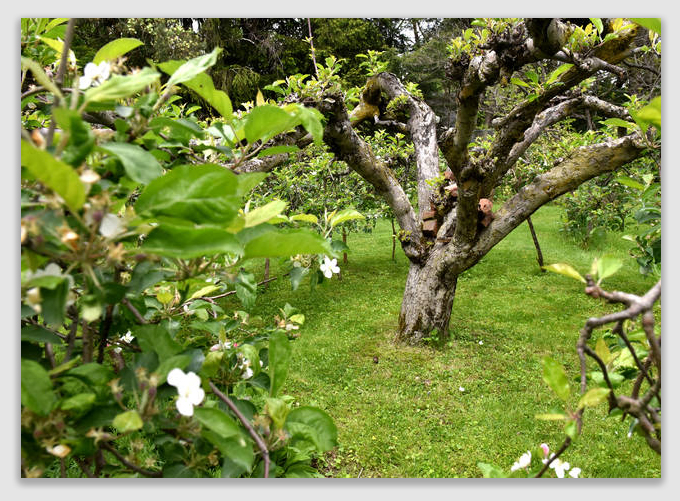 The Weekender, May 10, 2017, 47-year-old apple tree still bearing plenty of fruit in Pringle
The apple tree in Dennis Kachmarsky’s yard on Pringle Hill was planted by him 47 years ago and judging by the number of blossoms and buds, it will once again produce hundreds of Empire apples. The dwarf tree is old by apple tree standards, as evidenced by the many wooden stakes needed to prop up the branches to keep them from the ground. The center of the tree looks like it was cracked open by a lightning bolt. Large gaping holes can be seen in the main branches. Yet the tree remains productive. The tree is — pardon the pun — the apple of Kachmarsky’s eye. And just like the tree, Kachmarsky, who will turn 89 in August, uses a wooden stick to help him navigate around and under the apple tree. He was wearing a T-shirt that read, “Pringle Hill, PA,” under his flannel shirt. “We won’t have any apples until October,” Kachmarsky said. “And we have to watch that the deer don’t get to them like they did last year…”
Farmington, Maine, Daily Bulldog, May 10, 2017: Broadway pine tree coming down
The Board of Selectmen voted unanimously to have an old white pine tree on Broadway taken down Tuesday evening, after reviewing a report that indicated its extensive internal damage could put surrounding property and people at risk. According to the report, the tree was likely struck by lightning years ago, leaving a long, jagged exit wound. That internal damage was not fully contained by solid wood, the arborist’s report indicated, resulting in decay in the trunk. As the tree’s canopy was above the weakened, hollowing section, the report concluded, the tree was at risk of simply snapping in half in a windstorm. The Board of Selectman last seriously considered cutting down the tree in 1996, after a large limb fell during a winter storm, damaging private property. The tree was also slated for destruction in 1990, as part of a sidewalk project, but was spared thanks to the actions of the “Pine Tree Six;” local middle school students that famously stood in a circle around the trunk. This most recent damage was discovered last year, after an arborist was hired to limb up the pine…
The Alabama Forestry Commission is keeping a close eye on a beetle that can cause serious damage to trees. On Wednesday morning, CBS42 news reporter Matt Fernandez went up in the air with AFC pilot Phillip Montgomery and Warrior Work Unit manager Brad Lang looking for damage caused by the Southern Pine Beetle. The team was on the lookout for signs of damage done by southern pine beetles, which are smaller than a grain of rice. Lang said that once a tree becomes stressed by things like wildfires or the drought, these Beetles will attack and kill the trees. The WWU manager told CBS42 that you could tell the tree was damaged if the tree top is turning yellow, brown, yellow or lime greenish. Pine Beetles can do some serious damage…
Public CEO, May 10, 2017: This Winter Has Not Erased Sierra Tree Deaths
Tree mortality has not gone away with the wet winter we’ve had and neither have the dangers it presents for many California counties. We still have millions of dead trees and some of them still pose direct hazards to homes and infrastructure. The potential for a wildfire in those stands of dead trees is enough to keep me awake at night. California has many issues to deal with, but this one should stay near the top of the list. Please keep reading to find more about what’s happening in my home county of Amador, and also to hear from Mariposa County Supervisor Kevin Cann, Tulare County Supervisor Steve Worthley, and Tuolumne County Supervisor Randy Hanvelt. Amador County is fortunate to have important lessons learned from other counties that had significant tree mortality years before the issue really hit our county. We hired a County Coordinator and a Registered Professional Forester to administer projects. Following dead and dying tree removal by PG&E, the county selected a firm to perform tree removal in county rights-of-way. We have four initial projects that are either in planning phases or with actual tree removal in process…
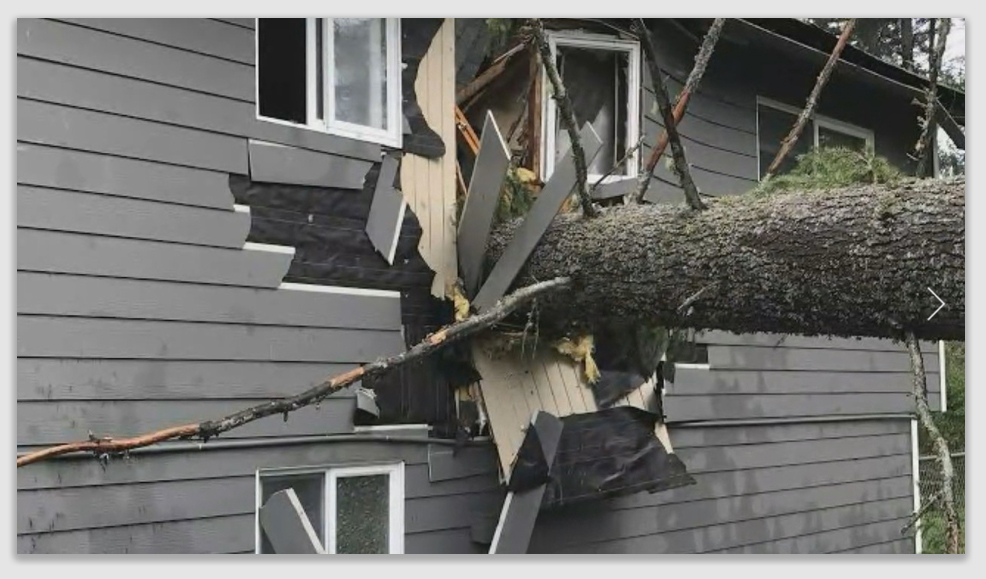
A Thurston County family is thankful their little boy didn’t get crushed by a tree that sliced their home in half. It happened in Tenino during the monster storm last Thursday. By the size of it you can tell the tree could have been deadly as it fell into Karen Nelson’s home. As she stood in her demolished living room she said, “I’m very blessed. That we are very blessed that we weren’t trapped in the bedroom or we weren’t crushed downstairs.” It was from the series of thunder storms that roared through Olympia and Lacey late Thursday afternoon bringing a light show and a windstorm that knocked down hundreds of trees…
Total landscape and Lawncare, May 9, 2017: Michigan tree company ordered to cease operations again
The Michigan Department of Licensing and Regulatory Affairs has ordered Sunset Tree Service & Landscaping in Bay County to suspend its business activities once more.Twelve citations were issued, totaling $222,000 in penalties, and the Michigan Occupational Safety and Health Administration (MIOSHA) director Shelly Edgerton announced that the company was served a Cease Operations Order because of the hazards present on the job site. According to MLive Michigan, there were six total violations reported, such as having no cover on the access panel for the Bandit Chipper; employees not being trained on tree trimming operations and safeguards; inadequate guard/distance for feeding rolls on the Bandit Chipper; not utilizing control devices while employees were working in and close to the road; having operator safety bars tied back with rope and wire, which keeps the device on the Bandit Chipper from being effective; and having an unguarded shaft with hex flange projections on the Bandit Chipper…
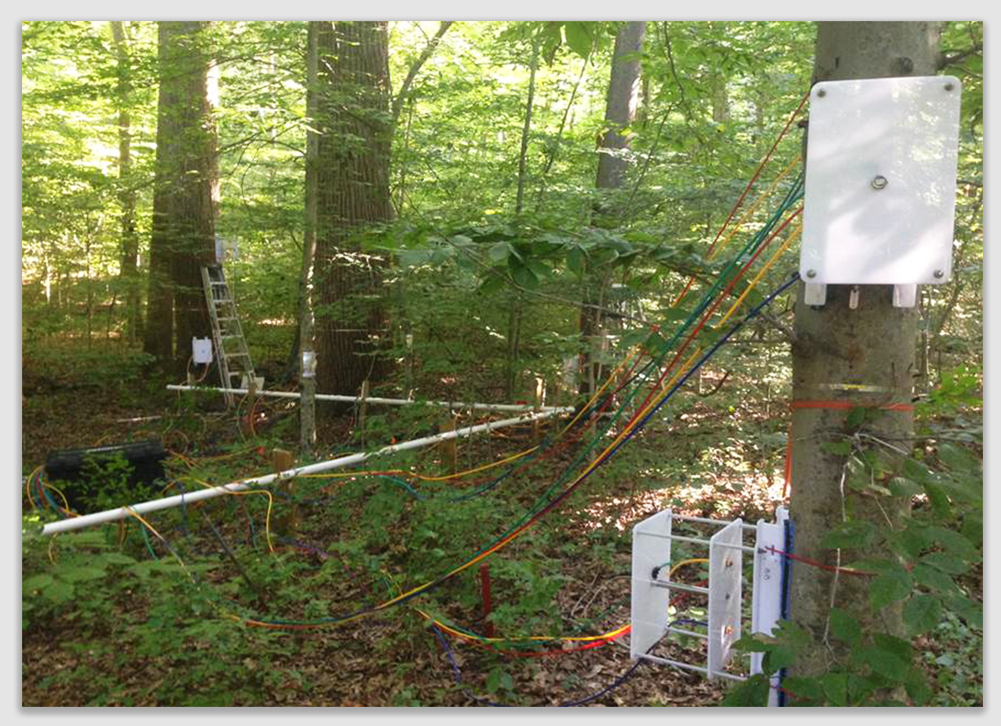
Rainbow-colored tubes snake through the undergrowth. White acrylic chambers sit mounted to tree trunks like giant bleached snails. At first glance, it’s not quite clear what the heck is going on. Cryptic as it may seem, these tubes and chambers are the key to a recent study showing that trees in upland forests are capable of emitting the planet-warming greenhouse gas, methane. Scientists have long considered upland forests to be methane sinks due to the presence of methane-hungry microbes called methanotrophs in their soils. But new research by Pat Megonigal, an ecosystem ecologist who heads up the Biogeochemistry Lab at the Smithsonian Environmental Research Center (SERC),and Scott Pitz, a graduate student from Johns Hopkins, has shown that when it comes to upland forest methane cycling, soil isn’t the only game in town. Trees and their emissions are part of the equation too. In a recently published study in New Phytologist, Megonigal and Pitz found that trees in upland forests are actually capable of emitting methane through their trunks. This means that some of the methane absorbed by methanotrophs in the forest soils may be offset by tree emissions…
Gardening Know How, May 9, 2017: Propagating Windmill Palms: How to propagate a Windmill Palm Tree
Few plants are as stately and impressive as windmill palms. These remarkably adaptable plants can be grown from seed with just a few tips. Of course, propagating windmill palms requires the plant to flower and produce healthy seed. You can encourage the plant to produce seeds with proper care and feeding. The following article can help you learn how to propagate a windmill palm tree from its own seed with tricks even a novice gardener can learn. You may also find success growing palm trees from cuttings. Every palm tree is different and their propagation methods and chances of success outside their native range will vary as well. Windmill palm propagation requires a male and a female plant to produce viable seeds. Short of lifting the plant’s skirts, it can be difficult to identify the plant’s gender without a professional. However, once blooming commences, the problem becomes more clear. Males develop huge yellow sweeping flower clusters that do not fruit and females have smaller greenish blooms that will develop into fruit…
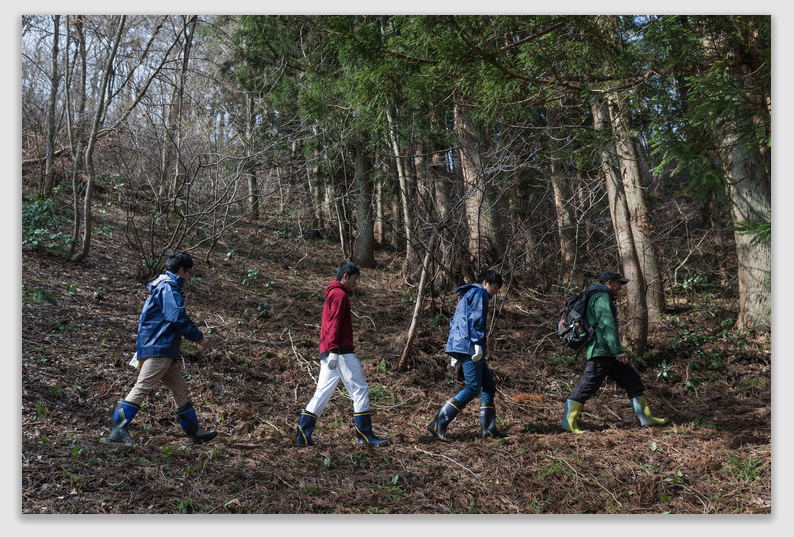 New York City, Wall Street Journal, May 8, 2017: Tree therapy? ‘Forest bathers’ say it helps
On a trek through a snowy western mountain range, a forest guide points to a grove of evergreen Japanese red cedar trees, and hikers gather around to take deep breaths. They call themselves forest bathers, part of a growing movement that believes immersing oneself in nature and in the chemicals plants and trees emit has unexpected medical benefits. The trip is part of their orientation as new employees of a maker of power devices…
A woman was killed in Henrico County on Friday night when a falling tree limb hit her as she was getting out of her car, police said Sunday. The limb also smashed into the roof of her vehicle in the 300 block of Confederate Run Court in eastern Henrico. She was taken to VCU Medical Center about 9 p.m. after emergency responders performed CPR. She was pronounced dead after arriving at the hospital…
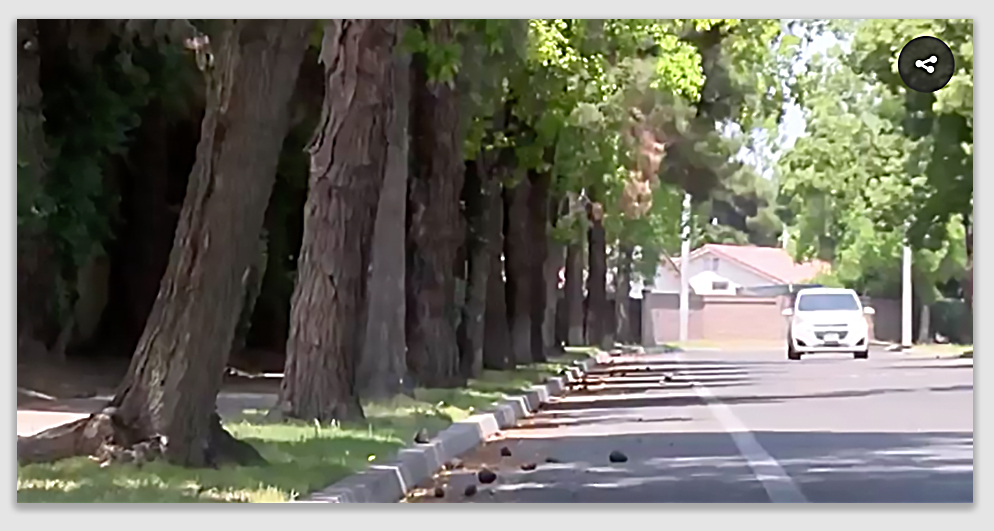
Trees have become a concern along a popular street in a South Valley Neighborhood. The roots are causing major damage along Fox Street in Lemoore. City officials said at least 70 trees must go but not everyone is on board with that plan. “It’s a beautiful area, we appreciate the shade,” Tony Cervantes, a Lemoore resident, said. Cervantes has lived in Lemoore for years but he’s new to the neighborhood. He said his family loves taking walks down the scenic Fox Street. But the trees he appreciates, will soon be gone. “There’s sidewalk issues a little bit, I mean they are lifted up a little bit but I mean there’s ways around it, you can dig out the roots and recement it,” Cervantes said. “This area here you can see it’s been repaired once, it’s been grounded down and (it’s) lifting again for someone to trip on,” Nathan Olson, public works director for the City of Lemoore, said. Olson said doing what Cervantes suggest, is not that easy…
Science Daily, May 8, 2017: The evolutionary story of the birch tree, told through 80 genomes
Forests of silver birch stretch across Europe, and they are a wonder to behold: stands of slender, white-barked trees sheltering vast swathes of earth. But these woodlands also have value beyond their beauty: They are an economic asset, generating raw material for papermaking, construction, furniture-building and more. A new study illuminates the evolutionary history of birch, a tree that has not been studied much by scientists despite its commercial value. “Birch is one of the major trees for forest products in the Northern Hemisphere. Others, like spruce, pine and poplar, all have genome sequences, but birch did not — until now,” says University at Buffalo biologist Victor Albert, who co-led the Finnish-funded project…
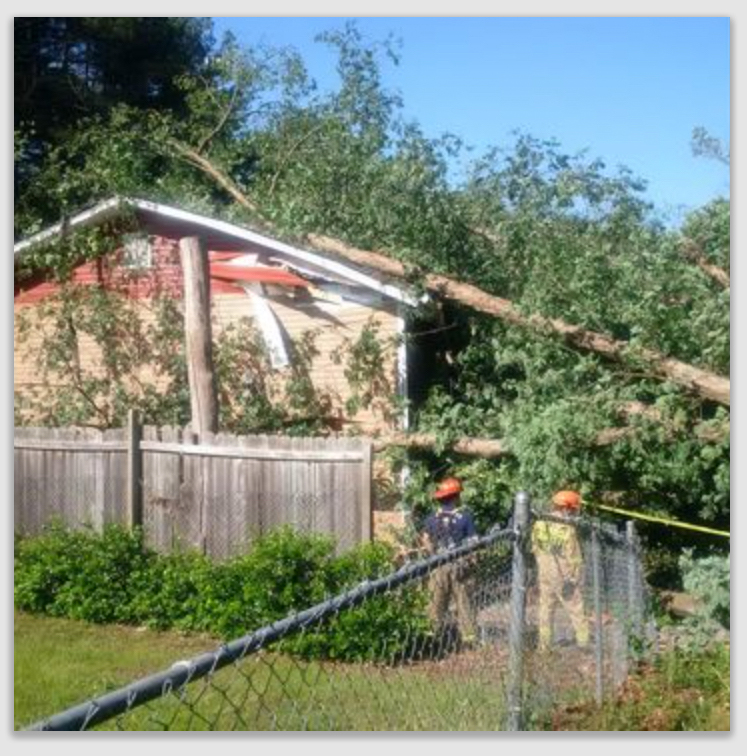 Atlanta, Georgia, WAGA-TV, May 7, 2017: Tree falls on Norcross apartment building
Several people have been displaced after a tree fell on an apartment building in Norcross, according to the Gwinnett Fire Department. Firefighters responded around 4pm to a tree down in the 3200 block of Windscape Village Lane. Crews found a large tree that had fallen over the roof on the left-side of an 8-unit apartment building. The tree damaged part of the truss roof system and punctured the sheetrock in two top floor apartments. There were no injuries reported, according to officials…
The town official who oversees trees along New Canaan’s public roads is planning to improve the grass verge that runs along Cherry Street as it approaches Main with three sycamores. Behind what’s known as the Telephone Building—on the north side of Cherry Street before the curve at Club Sandwich—the grass strip had trees in the past but they’ve been cut down “for various reasons,” according to Tree Warden Bob Horan. “This is a good, open spot where we want to have tree-lined streets in the center of town,” said Horan, a Connecticut licensed arborist since 1981 who also is president of Pauley Tree & Lawn Care…
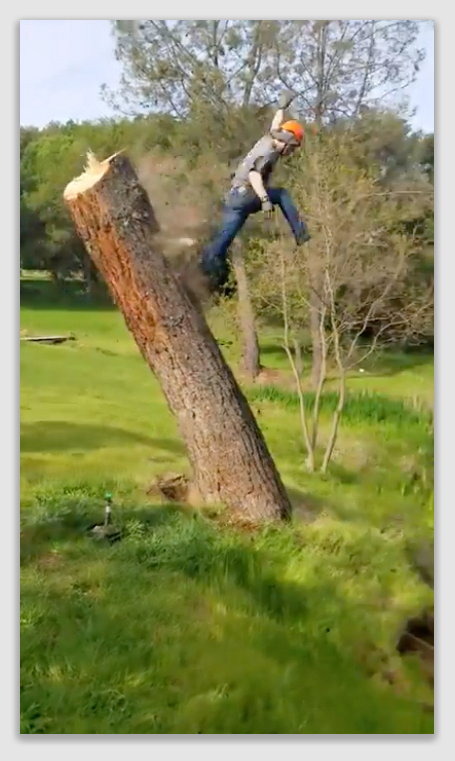 Unofficial Networks, May 7, 2017: Arborists catapult friend using downed tree…
There’s plenty of people in our audience that work in the defensible space industry or forestry in general to pad the piggy bank for a winter spent with optimal hill time. Share this around if you know anyone handy with a chainsaw that might get a chuckle…
Garden City, Kansas, KSNW-TV, May 7, 2017: Storm tree cleanup proceedings announced in Garden City
The city of Garden City announced through their website that the Public Works Department will be conducting the Storm Tree Cleanup beginning May 9. Because of the large amount of damage, city crews are unable to give a definite schedule at this time. To accommodate the needs of residents, as well as the city collection crews, the city has been divided into eight collection areas to be serviced throughout the cleanup…
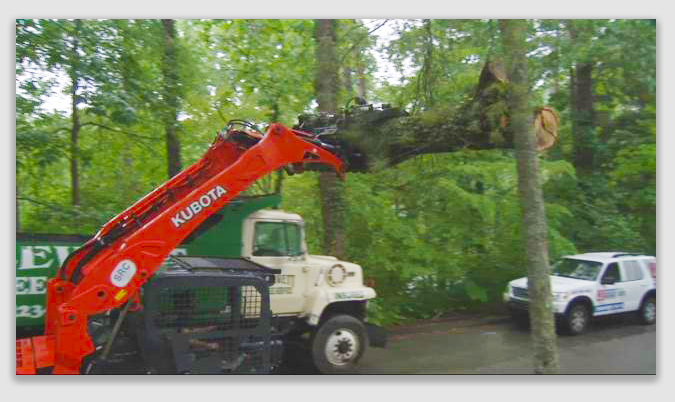 Birmingham, Alabama, WRGB-TV, May 4, 2017: Tree on your ride: Will insurance cover the cost?
After a long dry spell across the Tennessee Valley, heavy spring rains and strong winds have kept tree services and insurance companies busy. More rain on Thursday didn’t keep Blewett Tree Service from finishing a job in north Chattanooga. Trees blocked a portion of Minnekahda Place after a recent storm blew them down. Owner Dustin Blewett says he and his crew are thankful for the extra business even though they are working a lot of overtime. “We’re just trying to deal with everybody we can. It’s been long days without a day off,” says Blewett. They’ve been helping customers who have trees in their yards and on their homes. If a tree falls onto your home, state farm agent Kerry Smith says your homeowner’s policy will likely cover the damages…
Youngstown, Ohio, WFMJ-TV, May 4, 2017: Eliminate potential tree hazards
Three or four days after storms rolled through the valley tree service companies are still busy Thursday cleaning up the mess left behind. Arborists say leaves make trees a little heavier so high winds can help blow them down. But is there anything you can do about it? Pruning your trees can make a difference. “A tree can grow right next to a house and it will be fine you just have to make sure it’s not damaged or diseased and it’s safe to be there,” said Daniel Yoho from Davey Tree Care. Taking weight off the top of the tree and pruning can allow wind to pass through rather than creating a giant sail. That’s usually the big problem with pine trees as well…
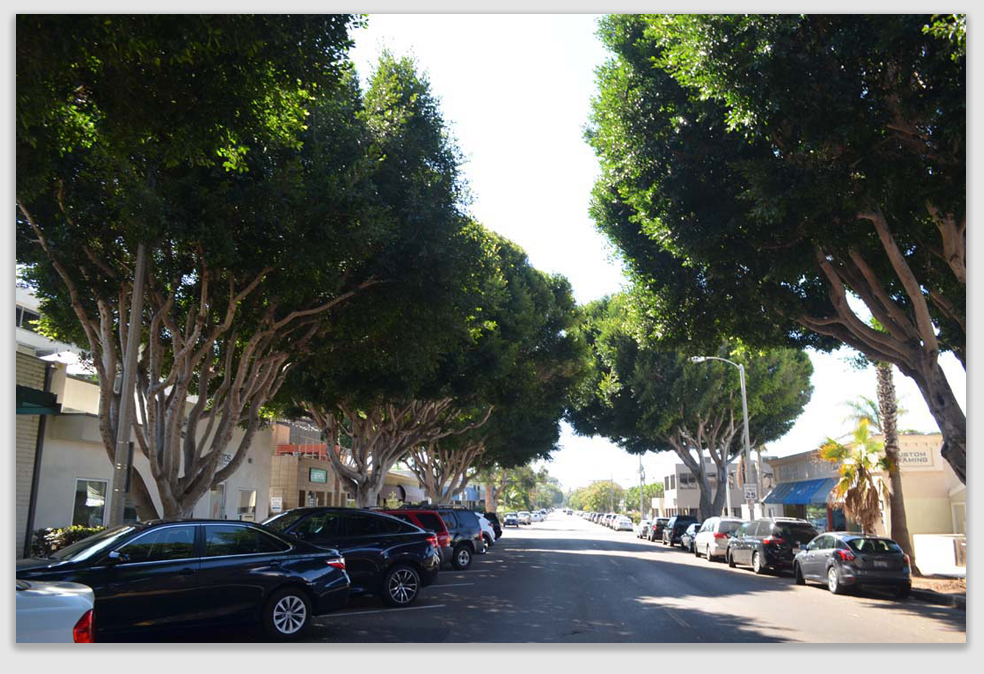 Encinitas, California, The Coast News, May 4, 2017: Tree ordinance receives Council OK
After years of discussion and re-writes, the Encinitas City Council has approved a set of regulations aimed at protecting Encinitas’ publicly planted trees and other venerable trees. The City Council unanimously adopted the first reading of the new municipal tree ordinance on April 26, but the swift approval belies the yearlong journey it took for the council to arrive to this point. A council subcommittee comprised of former Councilwoman Lisa Shaffer and current Deputy Mayor Tony Kranz crafted the new regulations for more than a year and introduced them in November 2016, just before Shaffer stepped down from the council. Since then, the council has tabled approval of the ordinance at least four times over various concerns from residents and council members. The municipal tree ordinance gives added protection to so-called “heritage trees” — trees that have certain historical or cultural significance or are the oldest or largest of its species. Under the new regulations, those trees can only be removed with the approval of the planning commission. It also requires that the city arborist, a position for which the city is currently recruiting, OK the removal of any trees planted on public right of way…
With the city way behind on answering requests to plant trees in parkways, frustrated residents could just go ahead and plant the trees themselves to avoid all the hassles, right? Think again. While residents can simply call 311 and ask for free trees to be planted on public property like parkways (the space between the sidewalk and the curb), it can take years for those requests to be filled. That leaves many homeowners and property managers asking in the meantime: “Can’t I just do it myself?” Yes, would be the technical answer, but, like most matters in the city, it requires a permit. The $20 permits, which are ultimately waived because there is no mechanism through which the money is collected, are issued through the Department of Streets and Sanitation’s Bureau of Forestry…

When Europeans first immigrated to the New World, they faced an uncertain future in an untamed land. Things could go sour at the drop of a hat if they weren’t careful. To help immigrants as they arrived in Massachusetts, English Puritan John Endicott set out to make the terrain as inviting as possible. While no one could’ve expected such a gesture, it’s what he did next that would continue on as a legacy for hundreds of years… The pear tree survived numerous snowstorms and severe hurricanes, but in 1964, it was struck by a human catastrophe. Vandals attacked the tree overnight, leaving nothing but a jagged stump, but that wasn’t the end of the story…
The family of a woman and her adult son killed when a tree along the Garden State Parkway fell onto their car in 2008 can’t sue the operator of the toll road, an appeals court ruled Monday. A three-judge panel ruled that the New Jersey Turnpike Authority, which operates the Parkway, couldn’t have known that the 80-foot hickory tree might fall. Joel Baudouin, 42, of Arlington, Mass., and his mother Marie Vernet, 72, were killed when the tree crashed down on his Volkswagen Passat on Christmas morning in 2008. Baudouin’s two daughters, then 13 and 8, were seated in the back and injured…

Runner Kara Lamprey was dealt a big setback Tuesday night when a large tree limb fell on her while she jogged the Rockingham Recreational Trail. Lamprey, who is training for upcoming 5K road races, says the weather was calm when she set out on her run. “I heard a crack and when I looked up it was too late. The whole branch was coming down on me,” she said Wednesday, as she prepared for surgery at Portsmouth Regional Hospital. Lamprey, 30, suffered a broken right tibia. The impact of the bough – estimated to be at least 12 inches in diameter – caused her fibula to bend and lacerated her leg…
Milford, Connecticut, Connecticut Bulletin, May 3, 2017: Tree-cutting utilities hit on debris
Area municipal leaders are sick of cleaning up after utility companies that leave stumps — and sometimes tree trunks — just lying there after workers take down trees as part of their work to maintain power lines. The South Central Regional Council of Governments recently voted to send a letter to United Illuminating, Eversource Energy and the Public Utilities Regulatory Authority, calling on UI and Eversource to clean up their acts, after East Haven Mayor Joseph Maturo Jr. raised the issue. The council, made up of the chief elected officials or their designees from 15 Greater New Haven cities and towns, voted 10-1 to send the letter, with only Meriden City Manager Guy Scaife voting against it…
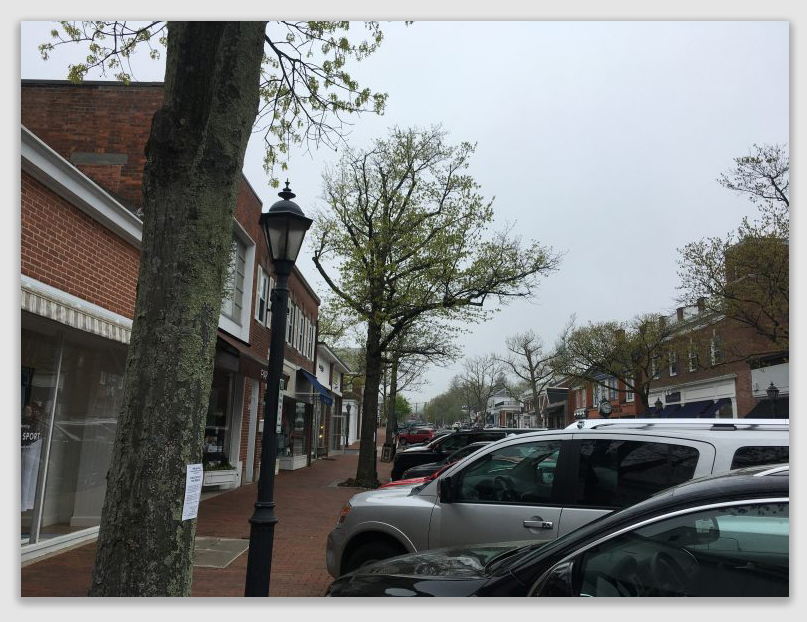
New Canaan’s tree warden has posted four dying pin oak trees on the first block of Elm Street downtown and plans to replace them with disease-resistant American elms. The “New Harmony” variety is crossbred with other resistant elms and “it’s the same branch pattern as an American elm, same type of shade tree as an American elm,” Tree Warden Bob Horan told NewCanaanite.com. “They will be a decent size tree, probably somewhere in a 3.5- to 4-inch caliper and what’s nice about these trees it will put elm trees back on Elm. It’s a straight trunk with that vase-shaped arching pattern, easily pruned so we can get some height out of them, so we won’t be hiding the storefronts down the road. So we are taking all of this into consideration…”
Troy, Ohio, Daily News, May 2, 2017: Council amends tree policies
On Monday, the Tipp City council approved an ordinance revising the city’s tree maintenance guidelines, allowing property owners to opt out of tree replacement. The ordinance amends several sections of Chapter 97 in the Tipp City Code of Ordinances in order to keep it up to date with current rules and regulations. The most significant change allows a property owner the ability to opt out of replacing trees that had been removed from the public right-of-way. Council approved the ordinance 5-1, with Mayor Pat Hale voting no. Council President Joe Gibson was absent. Hale said he could not vote for the ordinance in its current form, saying the way it’s written might allow property owners to object to new trees being planted as part of a streetscape program. “I don’t have a problem with this from the standpoint of a citizen that currently has a tree and then we go in and do work and tear it out, or it dies and gets torn out, giving somebody the opportunity to say, ‘Hey, it’s out, it’s gone. I really don’t want another tree there,” Hale said…

KIRO 7 went out to investigate when we heard trees along the Burke Gilman Trail in Kenmore painted blue 5 years ago were dying and people wondered if the blue paint was to blame. In 2012, 40 birch trees were painted blue as part of an art installation to raise awareness of deforestation. KIRO 7 crew noticed that less than half of the trees are still standing. And the remaining ones are dying. “It’s ugly to look at right out my front door,” Darcy Uphouse said. Uphouse lives across the street from the trees along the Burke Gilman Trail. “I see kids just walking by, pushing them over,” Uphouse added. “Over half are gone. Dead.” “It’s almost certainly caused by an insect called the bronze birch borer that has been attacking European white birch trees through Washington state for a number of years,” said arborist Steve Lambert with Lambert Tree Care…
Roseburg, Oregon, News Review, May 2, 2017: The technology behind growing trees
The wood products industry has implemented technological advances into each step of the process, from growing seedlings to monitoring tree health, and from milling to creating finished boards. “With forestry, our technology is amazing because it’s always changing,” said Casey Roscoe, senior vice president of public relations for Seneca Jones Timber Company. “We are always trying to figure out the best way to do things, whether it’s the technology that helps rivers thrive or technology that helps foresters do their jobs.” Learning how to best grow trees from seed onward is a constant endeavor, according to Jake Gibbs, director of external affairs for Lone Rock Resources. The Roseburg-based company sources its seeds locally to ensure it plants seedlings in the places they originated. “The technology of nurseries has improved, so now they are more consistent and they grow a healthy little tree that meets the specifications of each landowner,” Gibbs said…
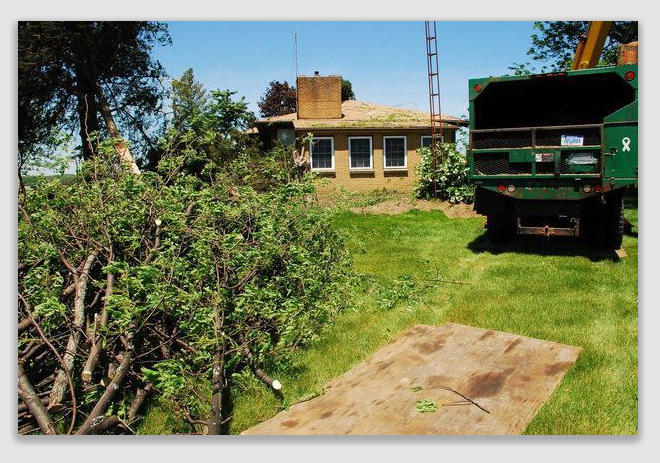
A Bay County landscaping company has been ordered to suspend its business activities by the Michigan Department of Licensing and Regulatory Affair. MIOSHA Director Shelly Edgerton announced Monday, May 1, that Monitor Township-based Sunset Tree Service & Landscaping, 2776 E. Fisher Road, was served a Cease Operations Order for “continuing to operate without abating hazards on the jobsite. MIOSHA also issued 12 citations totaling $222,000 in penalties. The agency ordered the business come to a halt due to a number of unresolved safety issues…
An Oregon man has been charged with attempted murder after being accused of trying to shove a coworker at a tree service company into a running wood chipper. Scott Edward Iverson, 26, of Stayton, is also charged with fourth-degree assault, according to Marion County Jail records. He is being held without bond. Keizer police officials told KPTV in Portland that Iverson and several other workers were working at a job site Thursday when he approached the victim, who was loading brush into the wood chipper, from behind. Iverson is accused of putting the man in a choke hold and pushing his upper torso onto the feed table of the machine. The victim, 22, told police he struggled with Iverson, who made a second attempt to throw him headfirst into the machine before another employee saw the struggle and pulled Iverson off of the man, KPTV reported. Iverson walked away from the scene, but police found him the following afternoon at a restaurant in nearby Stayton, which is located about 12 miles southeast of Salem…
 Nashville, Tennessee, WTVF, May 1, 2017: Arborists say toppling trees can be prevented
Strong storms have blown through the south including in Middle Tennessee, knocking over trees, and making many homeowners nervous as they look outside to see their trees swaying in the wind. “We’ve had an enormous amount of storms this year, seems like they’re getting worse all the time,” Dean Glascock of Arbor Art Tree Care, said. Many trees can look healthy, but have problems that can make them more likely to fall or break in storms. “It’s really important that you call somebody that knows what they’re doing,” Glascock explained, adding that an arborist can spot issues due to their specialized training and education. “There could be fractures in the structure you wouldn’t know anything about. We have an eye for all of that…”
An ongoing power struggle between state and local officials has made its way into Texans’ yards. State lawmakers on Monday took public input on one of several bills filed this year that would restrict the ability of cities to ban residents from cutting down trees on their properties. About 50 Texas cities have enacted such “tree protection” ordinances in an effort to preserve a natural aesthetic or protect property values — among other reasons. Republican lawmakers view the regulations as an assault on private property rights. But several city officials said they reflect the values of citizens in their communities and that whether to enact such rules is a decision best made at the local level. They also said House Bill 1572 could have unintended consequences. The legislation, filed by Austin Republican Paul Workman, would prohibit Texas cities from passing or enforcing ordinances that ban residents from removing trees they think pose a fire risk…
 Ashland, Massachusetts, Wicked Local, April 30, 2017: 100 trees in Ashland to come down
More than 100 trees along downtown and scenic streets will come down as the result of a Planning Board vote Thursday. The ruling also said that Eversource should replace 10 trees with saplings, grind 10 stumps, or any combination of the two. Only a handful of trees were spared as the result of a lengthy, multi-day public hearing on the proposal, submitted by Eversource, the town’s utility provider. The trees were pegged for removal either because they were dying and in danger of falling, or near utility lines. Before the board voted, a debate ensued over whether to have Eversource replace trees or grind dangerous stumps. Eversource arborist Chris Gonzalez said he was prepared to plant 10 saplings to replace downed trees in especially scenic or environmentally beneficial locations. Kathy Rooney, member of the Forest Committee, argued that trees in Stone Park should certainly be replaced, and that areas left without canopy should take first priority. More sun invites more weed and invasive species, she said…
Albuquerque, New Mexico, KRQE-TV, April 29, 2017: Trees planted for Earth Day vandalized
The community came together in Albuquerque’s Wells Park neighborhood in mid-April to plant more than 100 trees for Earth Day, only to have them uprooted by vandals. Project organizers tell KRQE News 13 some of those trees have been ripped up. Two larger trees were taken, while five smaller ones were left on the ground next to the holes. There is no word on whether there are plans to replant the trees…
 Mother Nature Network, April 30, 2017: 15 astounding facts about trees
It’s hard to overstate the importance of trees. Their debut more than 300 million years ago was a turning point for Earth, helping transform its surface into a bustling utopia for land animals. Trees have fed, housed and otherwise nurtured countless creatures over time — including our own arboreal ancestors. Modern humans rarely live in trees, but that doesn’t mean we can live without them. About 3 trillion trees currently exist, enriching habitats from old-growth forests to city streets. Yet despite our deep-rooted reliance on trees, we tend to take them for granted. People clear millions of forested acres every year, often for short-term rewards despite long-term risks like desertification, wildlife declines and climate change. Science is helping us learn to use trees’ resources more sustainably, and to protect vulnerable forests more effectively, but we still have a long way to go. Earth now has 46 percent fewer trees than it did 12,000 years ago, when agriculture was in its infancy. Yet despite all the deforestation since then, humans still can’t shake an instinctive fondness for trees. Their mere presence has been shown to make us calmer, happier and more creative, and often boosts our appraisal of property value. Trees hold deep symbolism in many religions, and cultures around the planet have long appreciated what a walk in the woods can do…
Authorities say a tree fell across two campers in a Pennsylvania campground, killing a 10-year-old girl in one of the vehicles. LNP newspapers reports that emergency crews n Lancaster County were called to Oma’s Family Campground in Colerain Township at about 8:30 a.m. Sunday. Quarryville fire chief Joel Neff said emergency personnel had to cut the tree and the camper to reach the trapped girl, but found her unconscious and not breathing. Neff called it “a freak accident.” Dr. Steven Diamantoni, the Lancaster County coroner, said he believed the girl was from Perry County and she was the only one inside the camper. He said he believed her mother was sitting outside when the tree came down…
 CBS News, April 27, 2017: Beloved 600-year old tree that witnessed history is taken down
Memories are all that remain of a 600-year-old white oak tree that was believed to be among the oldest of its kind in the nation. Workers finished removing the tree — which had a circumference of 18 feet and a branch spread of roughly 150 feet wide — from the grounds of the Basking Ridge Presbyterian Church in Bernards on Wednesday. About 50 people clapped and cheered and the church’s bells rang as the tree’s large stump was pulled out. The tree was declared dead after it began showing rot and weakness during the last couple of years. When it’s life cycle ran out, the church began taking down the tree to prevent it from falling on its own and damaging the Revolutionary War headstones below it…
Columbia, Missouri, KOMU-TV, April 27, 2017: Owner of “Big Tree” says vandalization is hurting it
Boone County’s iconic “Big Tree” is being damaged by vandals spray painting its base, according to its owner, John Williamson. Chemicals in the paint can damage the tree, but Williamson said taking it sometimes causes more damage to the tree than the spray paint itself. “Unfortunately, there’s no good way to take that off. It would really be harder on the tree to remove any paint or anything like that.” That hasn’t stopped Williamson and friends from covering up the spray paint. He and a friend, Ana Lopez, put mud over the spray paint to keep the tree looking in its best shape possible. “It’s a constant battle of educating people,” Lopez said on how to prevent future vandalizing of the tree. “That’s all we can really try to do, is educate people. Hopefully people will want to keep the tree alive a little longer and not continue to abuse on it.” Big Tree, which sits just south of the small town of McBane, is more than 300 years old. At 74 feet tall and 294 inches in circumference, it is the biggest bur oak tree in North America. It is not known how much longer the tree has until it dies…
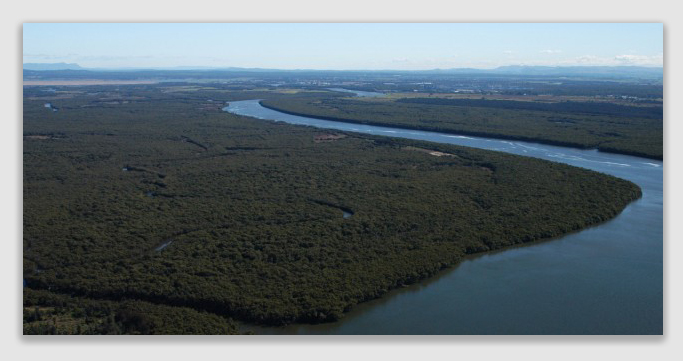
April 28 is Arbor Day, and experts report that tree species are vanishing at a rate of 1 out of 10. Recently, Botanic Gardens Conservation International (BGCI) released two years of research that found there are 60,065 tree species left in the world and that more than half of all tree species only occur in a single country. This lack of biodiversity could become catastrophic for the survival of trees species, that we depend on to maintain life on our planet. We talk about efforts to save many of the world’s trees from extinction with Nicole Cavender, vice president of Research and Conservation and Murphy Westwood is director of Global Tree Conservation at Morton Arboretum…
San Jose, California, Mercury News, April 27, 2017: Menlo Park: Hundreds of trees face PG&E’s ax
As many as 560 trees in Menlo Park could face the ax through a PG&E pipeline safety program. While roughly 200 trees on private properties are still being assessed, at least 100 in the public right of way are slated for removal, as well as approximately 262 on private lots. Of those private trees, 93 are heritage trees. Public Works Director Justin Murphy said none of the 200 trees being assessed are heritage trees. PG&E is offering to pay the city up to $327,500 for the trees’ removal — $1,500 per street tree, $1,000 per heritage tree and $500 per non-heritage private property tree. Murphy said he didn’t know how the prices were arrived at, but they came out of discussions between city and PG&E officials…
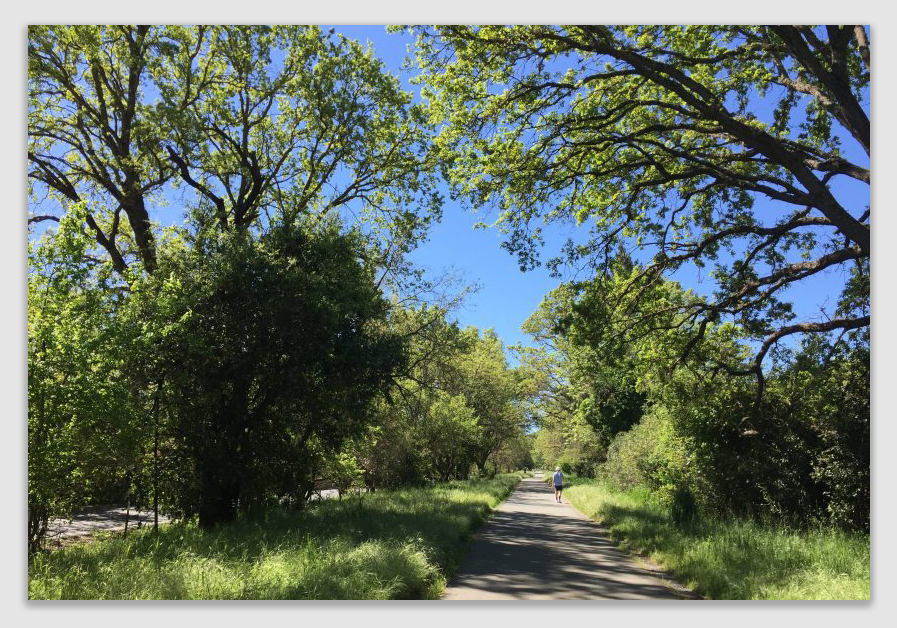
A group of residents is pushing back against a deal between the city and Pacific Gas & Electric allowing for the removal of hundreds of trees on public and private property. Arguing the tree removals will impact Lafayette’s environment “for generations,” Save Lafayette Trees is asking the city, PG&E and the East Bay Regional Park District to create a plan to shield the gas pipeline along the Lafayette-Moraga Regional Trail, or move it so the trees won’t have to be cut down. About 500 supporters have signed the group’s Change.org petition asking the city council and PG&E to take action. The group wants the utility to release a detailed map of all 272 trees in Lafayette the utility plans to cut down, and post removal signs on the trees for 60 days. It also wants the city to notify each resident with an affected tree on their property that “they’re under no legal obligation to sign removal agreements with PG&E under state law…”
Midland, Texas, KMID-TV, April 26, 2017: Tree pollen stuffing Basin residents
High winds not too fun at a rapid speed and they can cause more problems than just blowing away possessions despite West Texas not having many trees. “The wide open spaces allow the wind to carry that pollen further. So, we’re all susceptible,” says Dr. David Davison. Dr. Davison knows the effects high amounts of tree pollen can have on the human body. “I like to think of it as starting at the top of the body and working down. The first area would be your eyes. Tree pollen can cause allergic conjunctivitis,” says Dr. Davidson. Pollen then moves to cause irritation in your nose, mouth and chest. Dr. Davison say’s that over the counter drugs such as Benedryl and Claritin can help treat allergy symptoms. Those with asthma should have their inhalers with them at all times. “A severe level would mean you really do have trouble breathing and you should get to the nearest emergency room if that happens,” says Davison…
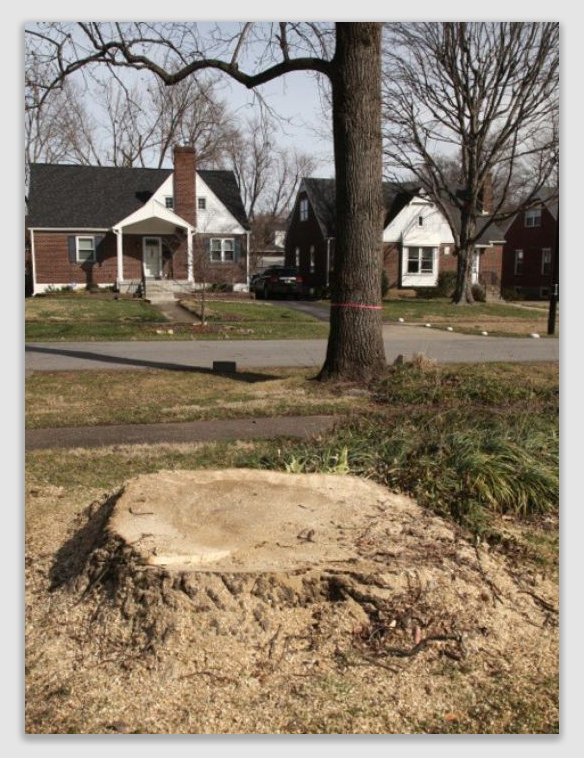
Louisville has reached a $235,000 deal with airport officials to permanently sell airspace over part of Seneca Park, forever limiting tree and building heights extending from the end of two runways at Bowman Field. The new airspace easement and agreement covers an area off Pee Wee Reese Road, and a portion of the golf course for a total of about 30 acres, officials said. It also allows for trimming and removal of trees along city rights of ways on portions of Alanmede Road, Carson Way, Drayton Drive, Seneca Boulevard and Taylorsville Road and is part of what airport officials call their Bowman Field Airport Safety Program.City and airport officials described the deal as beneficial to both…
Forbes magazine, April 26, 2017: Where the streets are paved with green: Counting urban trees
I am a big fan of trees. Apart from the fact that they are beautiful, they also offer multiple benefits to cities (as I mentioned in a previous article). For a start, they lower the ambient temperature by absorbing shortwave radiation, and using much of it to evaporate water from their leaves…. A very useful thing at a time when the ‘urban heat island’ effect is putting unparalleled demand on energy supplies (mainly for air-con). Of course, trees also absorb CO2 from the atmosphere and produce oxygen, and their roots can help mitigate flooding during storms. In addition, there is widespread scientific consensus that green spaces have a positive impact on the health and well-being of a city’s residents. In short, cities need more trees. This isn’t news to anyone – in fact in in 2015, the World Economic Forum’s Council on the Future of Cities included ‘increasing green canopies’ in urban areas as a priority for the coming years. So now they’ve teamed up with researchers at MIT’s Senseable City Lab, to build an online database of urban trees, called Treepedia…
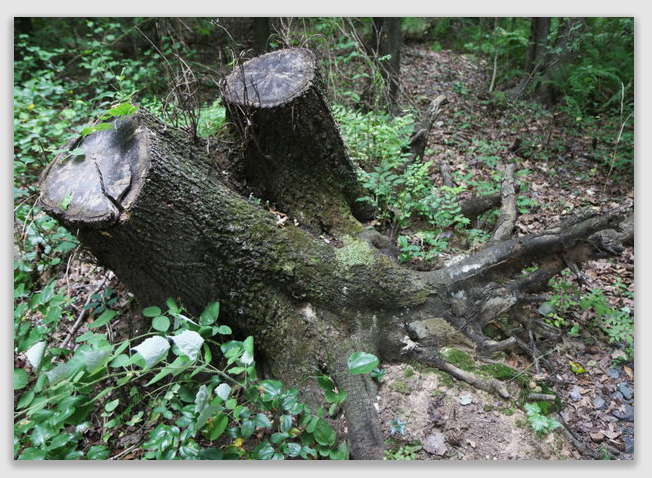 New York City, Staten Island Advance, April 25, 2017: More tree-sparency under new city law
Talk about tree-sparency. The Parks Department post information about tree pruning, removals, planting and tree-related sidewalk inspections and repairs online under a bill from Minority Leader Steven Matteo that was signed into law by Mayor Bill de Blasio on Tuesday. De Blasio said the law will help “make government more effective.” “We’re making government more responsive, more efficient and a little more transparent,” Matteo (R-Mid-Island) added. The city’s pruning program is responsible for some 650,000 street trees citywide, including roughly 76,400 on Staten Island. The Parks Department must post quarterly reports on tree maintenance under the new law, including where and when the city plants and prunes trees or removes stumps, as well as the status of that work…
Survival situations require that you use whatever is at your disposal to gain control of and master your situation. During a survival situation, it is highly likely that you will have a very difficult time getting the nutrients, protein, vitamins and minerals you need to stay healthy. Other routine items we take for granted, like shelter, bedding and basic medicine will also become very difficult to secure. Luckily, in just about every area of the world, nature has given us an extremely versatile resource that addresses much of the above: the pine tree. Pine is prevalent virtually everywhere in North America and it can serve as many different survival and everyday functions if utilized properly…
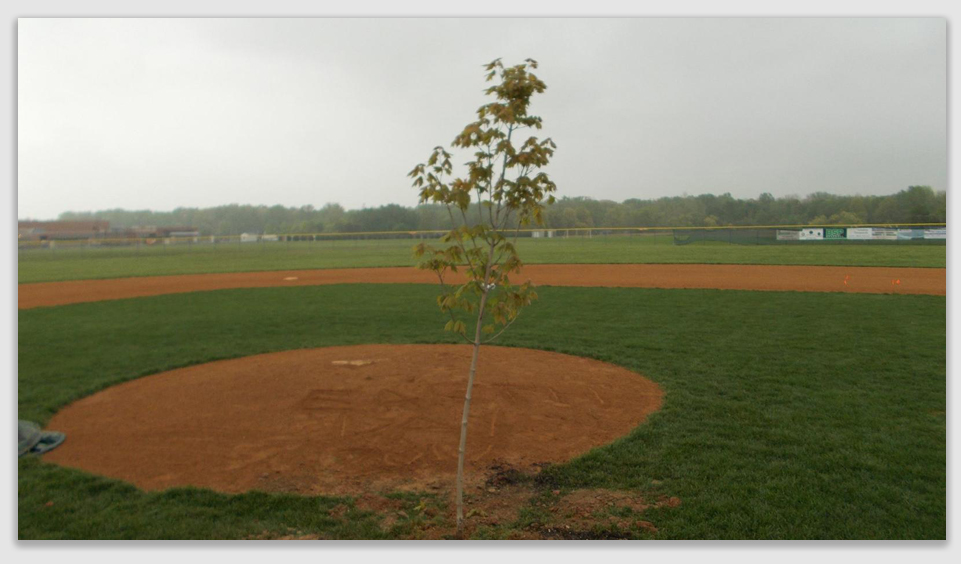
Authorities on Maryland’s Eastern Shore say someone planted a tree and scratched “Earth Day 2017” in the dirt on the pitcher’s mound of a high school baseball field in what may be a senior prank. The Queen Anne’s County sheriff’s office said in a statement on its Facebook site that the incident was noticed Saturday at Queen Anne’s County High School in Centreville. They say the tree sapling still had the $139.99 price tag attached. Police say the field has since been repaired and they are investigating the planting as a senior prank. They initially said the damage to the field could amount to more than $2,000…
Heavy rain has caused flooding and brought down trees across the Piedmont. Tree removal professionals say now may be a good time to consider cutting down dead or diseased trees before heavy rain brings them down. They say a tree risk assessment will allow them to see if trees in your yard are at risk of falling. Colfax-based company Dillon Lawn and Tree Service spent part of Tuesday removing at-risk trees from Tom Harrison’s home in Greensboro. “There was just too much potential danger for falling on the house or a car, or God forbid some child [could] be walking by and get hit by a tree,” Harrison said…
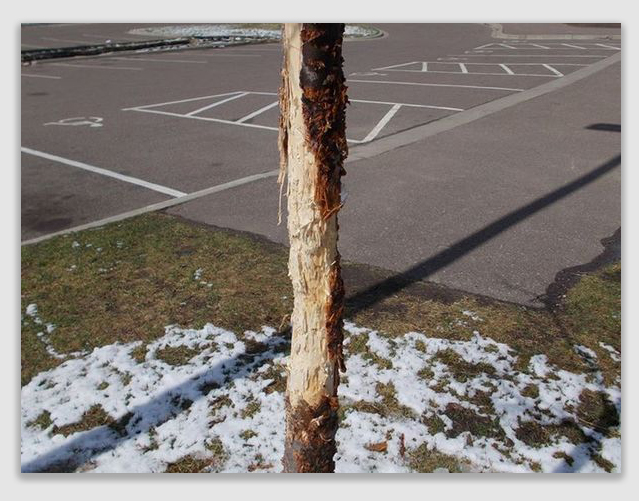 St. Louis Park, Minnesota, Patch, April 23, 2017: More tree vandalism in the Twin Cities reported
City officials in the Minneapolis suburb of Robbinsdale have discovered several trees that they say have been intentionally damaged in Lakeview Terrace Park. At least one of the damaged trees will likely not survive, according to authorities. “The City takes pride in maintaining an urban canopy and doesn’t take the crime lightly,” officials said in a statement. “We ask that if residents see something, say something by calling 911.” Since March, the Dakota County Sheriff’s Office has been investigating recent damage to several large, mature black cherry trees in Eagan’s Lebanon Hills Regional Park…
For hundreds of years, an imposing white oak tree has watched over a New Jersey community and a church, providing protection from the blazing summer sun, and serving as a scenic backdrop for thousands of photos. According to legend, it was once a picnic site for George Washington and the Marquis de Lafayette. But the tree — believed to be among the oldest in the nation — is not long for its place in the church graveyard that it’s called home for 600 years. Crews are due Monday at the Basking Ridge Presbyterian Church in Bernards to begin removing the tree. The two to three days of chopping and pulling will draw attention from residents of a bedroom community about 30 miles west of New York that has long celebrated its white oak. It’s been the place to go for formal photos, a landmark for driving directions, and a remarkable piece of natural history…
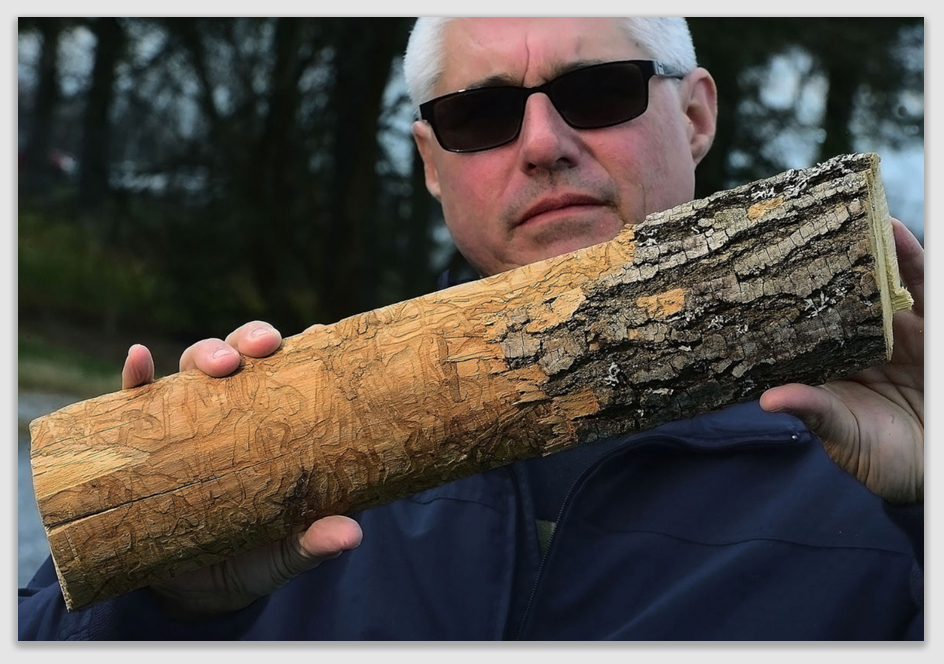
Across the Tri-State area in the coming months, residents can expect to see continued efforts by Potomac Edison to trim trees away from power lines as part of the company’s approximately $39 million vegetation-management program, officials said. The electric company works to clear limbs from power lines to help reduce tree-related outages, company officials said. Since the beginning of the year, tree contractors have cut limbs away from more than 600 miles of distribution and transmission lines, according to a news release from the power company. The work is being planned for another 2,250 miles of lines by the end of the year, the release said…
As a young lobbyist for the Builders Association of Greater Tampa, one of Bob Buckhorn’s first tasks in the mid 1980s was to work on the city’s evolving tree code — a subject that rarely fails to combine technical detail with passionate advocacy. Today, three decades later, Buckhorn is still working on it. An update of the city’s tree and landscape code is headed to a City Council workshop Thursday, about a year behind the schedule City Hall set in late 2015. “It’s a complicated process, and we wanted to make sure we did it right,” Buckhorn said, “but, yes, it did take longer than I had hoped.” In 2012, an Economic Competitiveness Committee appointed by Buckhorn called Tampa’s tree code vague and unorganized, with unrealistic, inflexible and unnecessarily expensive rules. But before officials rewrote the code, they commissioned a $200,000 update of the city’s tree canopy study. Done by University of Florida and University of South Florida forestry experts, the study found that Tampa’s tree canopy is “very young,” with a small percentage of trees with large-diameter trunks, said Bob McDonaugh, the city’s top economic development official. And there’s not a lot of diversity, making the canopy more susceptible to storm damage, disease and pests…
A large, double-trunk oak tree came crashing down on Jackson’s west side Thursday afternoon, crushing a handful of garages along N. Brown Street. Firefighters with the Jackson Fire Department responded to the 200 block of N. Brown Street just before 4 p.m. April 20, where the towering tree, which had split down the middle, had obliterated one resident’s garage and severely or partially damaged three others. Jackson Fire Capt. Bob Walkowicz, who was on scene with city inspectors around, confirmed three of the structures hit by the falling tree had been condemned by the city. “The inspection department is taking pictures and they’ve already condemned the three structures, the three garages,” Walkowicz said. “They will need further attention (but) we have secured the power to … two garages, where they’re not any threat; the power’s not still on to them…”
New Orleans, Louisiana, WWL-TV, April 20, 2017: Thieves pulling trees out of the ground in Broadmoor
Tuesday, four olive trees were reported stolen, uprooted right from the ground from South Prieur, and General Taylor. Just two blocks down, the same thing had happened to Karen Chustz’s magnolia trees. “One day I’m picking up trash something looks different, and I see a huge hole,” Chustz’s said. “So somebody had stolen three of my trees right out of the ground and left two.” Angered, she gave the other plants to neighbors so thieves wouldn’t have a chance to finish the job. “At the time they had been planted for a year and a half, and so they were so so high,” she said. Of course, some might say, they’re just plants, it’s not a big deal. Owners like Chustz say they’re still personal property and they mean something…

From coast to coast, American elms were the tree of choice to line Main Street USA because of their spreading canopies that gracefully arched across roadways and shaded residents below. “Cedar Point Road aboard NAS Patuxent River was also once lined with American elm trees from Route 235 to the water, and along Millstone Road from Cedar Point to Millstone Landing,” said Kyle Rambo, Pax River’s conservation director. “They were a very common tree here, but we’ve lost hundreds of them on the installation due to Dutch elm disease.” Dutch elm disease is a lethal fungus that was introduced in the United States by accident in the 1930s via infected logs from Europe. Spread by bark beetles, it has been responsible for the deaths of American elm trees by the hundreds of thousands throughout the country. “We’ve been watching them go and it’s a painful thing to see; like a piece of America that’s disappearing,” Rambo said. “There are some elms left on Cedar Point Road but you can tell they’re sick. They’re bigger, gnarly-looking trees with dead limbs and sap weeping down the sides of the trunk. There are some expensive treatments, but once the fungus has spread within them, it’s really a losing battle…”
A Belen man was arrested Monday afternoon after he says he was trying to save trees from being cut down in his neighborhood. Pete Armstrong, 69, a member of the city’s planning and zoning commission, a member of the Belen Rotary Club and a past president of the Greater Belen Chamber of Commerce, was taken into custody by Belen police and has been charged with one count of assault, a petty misdemeanor. Armstrong brought a piece of one of the trees that were cut down by a company contracted by the city to cut down trees to Monday’s city council meeting. He told the council he would do it again if he could save just one more tree. “There is nothing wrong with it,” Armstrong told the councilors Monday as he held up the large piece of tree for them to see. “It was in front of my neighbor’s yard.” Armstrong, a retired landscaper, told the councilors about his arrest, saying he was talking to the contractor that the city hired to take down trees in his neighborhood. He said it was the eighth large tree that the city had cut down in a week…

The city of Seattle is taking a stand against cutting down city-owned trees. Now, West Seattle homeowners who admitted to chopping down dozens of green space trees will have to pay. That price tag for two families is $440,000 as part of a settlement agreement announced Wednesday. The more 70 trees, each about six inches in diameter, used to grow on a steep slope above Admiral Way in West Seattle. The city says the neighbors simply wanted a better view. Trees are a vital resource,” says City Attorney Pete Holmes, “and this settlement puts people on notice that we will not allow any unauthorized cutting of city-owned trees.” This is the partial city view from the front deck view that Marty and Karrie Riemer have at their home where 35th Avenue SW dead ends into the green space. The neighbors across the street, Stanley and Mary Harrelson, face the identical penalties. No one was home at either house when Q13 News reached out for reaction to the settlement. In what amounts to about $6,000 per chopped down tree, it’s a price the city attorney Pete Holmes says is actually a good deal. Holmes says they would have levied much larger fines against the homeowners if the two families didn’t name 11 other neighbors who may have been a part of this and another separate clearing of trees nearby. The second clearing of trees brings the felled tree count to a total of around 150. These 11 neighbors now face similar charges and fines in a new revised legal complaint…
Canandaigua, New York, Daily Messenger, April 19, 2017: Trees to take root in Victor
The tree-killing emerald ash borer made its way into Victor Municipal Park, damaging numerous ash trees in the 47-acre park. Now that crews with the town and village have removed those diseased trees, the ground is ready for planting. On Saturday, April 29, volunteers will dig in for the annual Village of Victor Arbor Day celebration. As in previous events, everyone is invited to join in. Forty trees will be ready to take root in the park on Paparone Drive. The mix of new trees will include: European larch, concolor fir, Norway spruce, London planetree, swamp oak, catalpa, river birch, dawn redwood, elm, Kentucky coffeetree and hackberry…
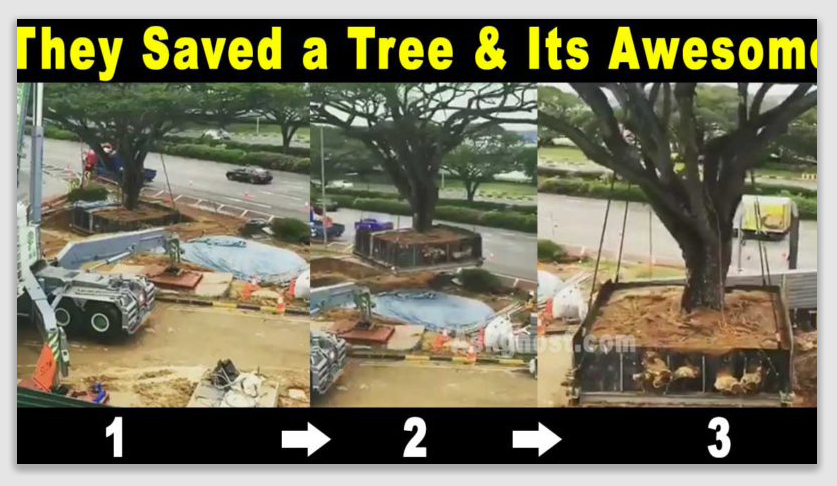 Ask Ghost, April 19, 2017: How is this even possible, giant tree relocated in India
Finding it hard to digest this VIDEO asGiant Tree Relocated in INDIA is the craziest thing I have ever seen. India is well known for its love for nature, but this time they raised the standards to next level by saving this old tree. This tree in India grew old and helped countless citizens of Nagpur City. But when Nagpur Metro Train route crossed the land already occupied by this amazing tree, Nagpur metro rail corporation limited (NMRCL) decided to do something unthinkable for this amazing tree. Instead of killing or chopping it down for the standing between the Metro Train Route. NMRCL decided to relocate the tree to a nearby spot…
Let’s clear up misconceptions first: Los Angeles is not a desert. Los Angeles is a semi-arid zone with a Mediterranean climate. The distinction may sound small, almost semantic, but when you look to the hills or the undeveloped lands north of the Valley you don’t see sand dunes, you see oak trees and chaparral. Los Angeles and the rest of Southern California has spent the better part of a century building up its vegetation (a drive down the tree-canopied streets of Bel Air or Pasadena’s Oak Knoll will make this readily apparent), but all that may be changing. The Southland is in the midst of a massive tree die-off. “We’re witnessing a transition to a post-oasis landscape in Southern California,” Greg McPherson, supervisory research forester at the U.S. Forest Service, said, notes the Los Angeles Times. “Many of the trees we grow evolved in temperate climates and can’t tolerate the stress of drought, water restrictions, higher salinity levels in recycled water, wind and new pests that arrive almost daily via global trade and tourism, local transportation systems, nurseries and the movement of infected firewood.” One of these pests is the polyphagous shot hole borer beetle, already found in parts of the Southland. McPherson conducted a recent survey that concluded that the effects of this single beetle could kill off 38% (27 million) of trees throughout Los Angeles, Orange, San Bernardino, and Riverside counties, causing irrecoverable losses to the ecosystem and some $36 billion in economic damages…
 CBS News, April 18, 2017: Capitol Hill worker killed by falling branch
A freak accident has taken the life of a Capitol Hill worker. “It is with deep sorrow that we announce the passing of Architect of the Capitol employee, Matthew McClanahan, following an accident on the U.S. Capitol Grounds,” Stephen T. Ayers, the architect of the Capitol, said in a statement Tuesday afternoon. “A large branch of an American Elm fell and struck Matt, who was working nearby on an irrigation pipe. Matt was a talented, dedicated pipefitter in the Maintenance Division of Capitol Grounds. Please keep his family, friends and colleagues in your thoughts and prayers during this difficult time.” McClanahan is survived by his wife, Lauren, and their children Evie and Andrew. He was transferred to a local hospital after being removed from under the tree by the fire department employees and EMS technicians, according to WUSA. The accident happened around 9:15 a.m…
Candle holders, coffee tables, coat racks and even bed frames all made of white birch are fueling a bizarre case of tree thefts– primarily in northern Wisconsin and Minnesota. Parks, forests and even private lands have fallen victim. “Most likely it’s going to lodges, cabins, more rustic feeling homes,” said Scottie’s Interiors owner Lecia Marks-Franson. Harvesting the white birch trees without a permit or on land that isn’t owned by the harvester, is illegal. Wisconsin Department of Natural Resources Warden Supervisor Dave Walz said incidents of birch theft cases are on the rise…
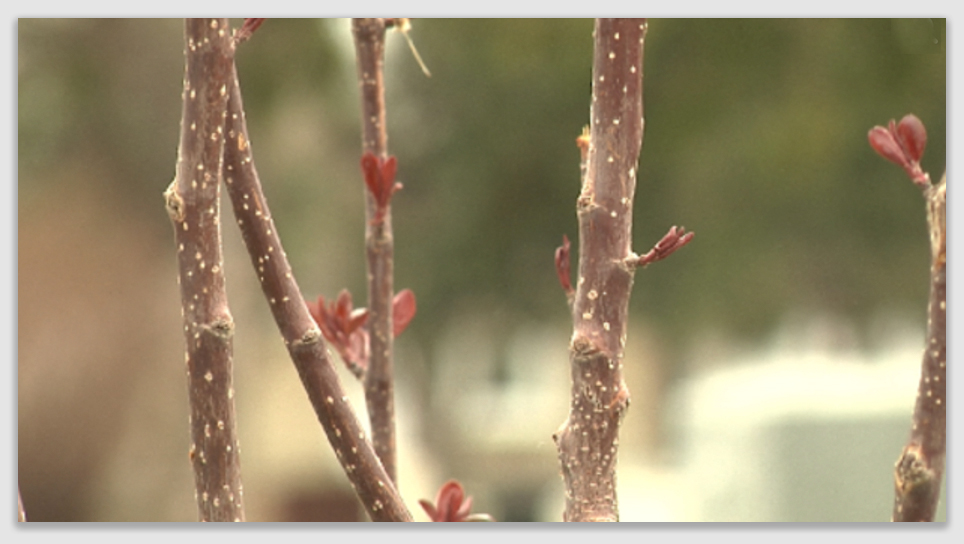
“Can’t complain about getting free trees,” says Williston City Forester, Bruce Johnson. And cities like Minot, Bismarck, Dickinson and Williston will be getting plenty of them. As part of a tree study conducted by the NDSU Extension Service, 20 tree varieties will be planted to test whether they will survive in the region. In Williston, homeowners who have previously had a diseased boulevard tree removed from their home will get priority. “This year, we want to use our open boulevards. Trees that were lost to Dutch Elm disease over the last 15-20 years. That way the homeowners don’t have to come up with any money themselves and plant trees in the boulevard,” says Johnson…
Chesapeake, Virginia, AP, April 18, 2017: Tree trimmer dies after being shocked by power line
Police say a tree trimmer has died after being shocked by a power line. WAVY-TV reported Tuesday that the man was suspended in a tree removing some limbs Monday afternoon. One of the branches was touching the man when it also struck a live wire. Police in Chesapeake confirmed the death on Tuesday. Authorities identified him as 39-year-old Muhammad Yahya Abdur-Raheem. He lived in Newport News. Dominion Virginia Power says he worked for Lucas Tree Experts, which the agency contracted for removal services. WAVY said the company has not responded to a request for further comment…
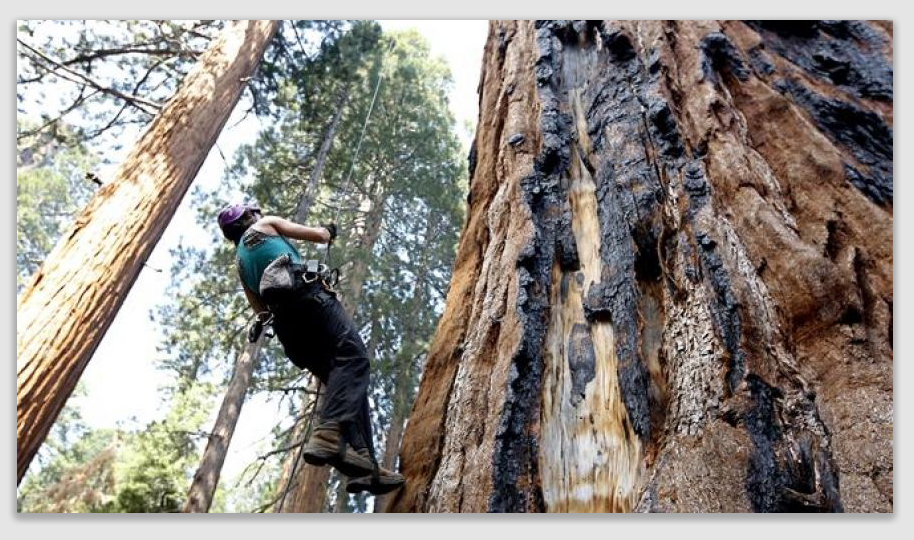 Fox News, April 17, 2017: New database gives tree scientists an important first
Tree lovers, take note: A new database called GlobalTreeSearch has for the first time provided a tally of all the world’s tree species. The answer: 60,065. Scientists from Botanic Gardens Conservation International in the UK spent two years compiling the database, relying on information from 500 published sources and from local experts around the world, reports NPR. In an article in the Journal of Sustainable Forestry, they note that it’s the first overview of all known tree species by scientific name. The database will be “hugely useful for us in prioritizing which ones we need to do conservation action on and which ones we need to do assessments to find out what their status is,” says BGCI exec Paul Smith. Among their findings: Brazil is home to the highest number of species at 8,715, and 58% of trees grow in just one nation, making them vulnerable if whatever country that happens to be is lax on protection…
Among the many interesting things about trees is how deeply rooted in the ground they often are. You’d think this would dissuade people from attempting to yank them out of the ground with anything other than a backhoe, but the world still is filled with many people who throw common sense to the wind. In a video recently uploaded to YouTube by Khaled A., someone can be seen attempting to tow a tree out of the ground with an SUV, and it goes about as well as you’d expect. After putting up with the vehicle’s persistent nagging, the tree finally fights back…
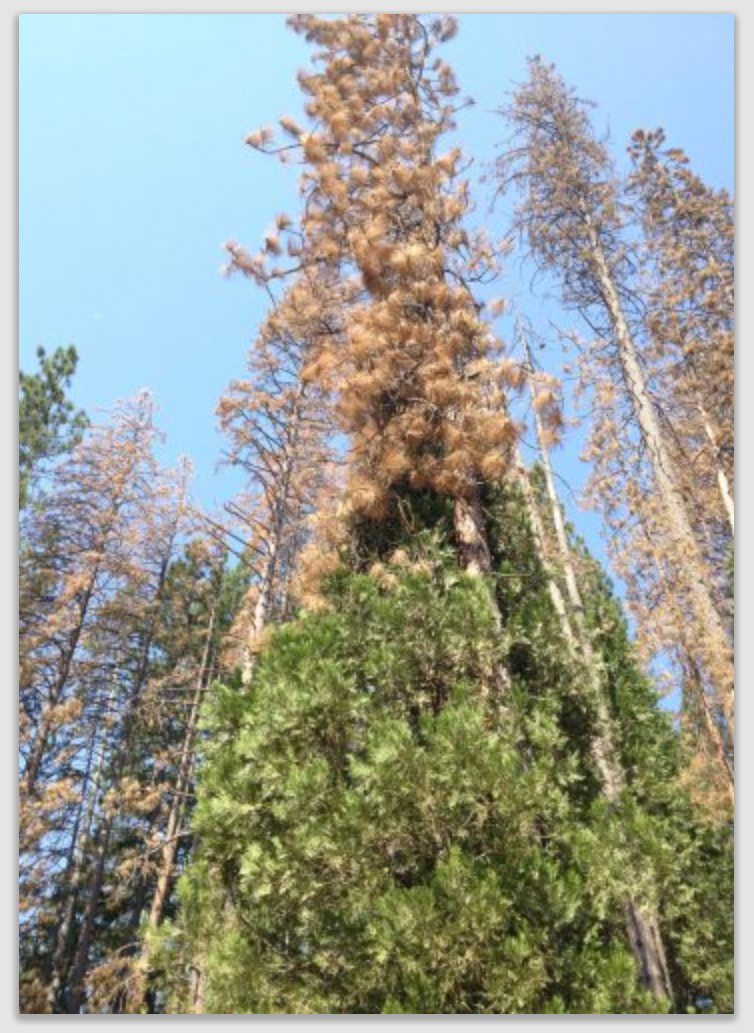 Sonora, California, myMotherlode.com, April 17, 2017: What To Replant After The Trees Die
The Sierra Nevada in is experiencing an unprecedented die off of trees on both private and public lands. Removing dead trees from your landscape is important, especially around the home, to prevent damage from falling trees to homes and infrastructure. Dead trees will also eventually fall to become large fuels on the forest floor leading to more intense fires. It is important to assess what is left after tree removal before considering replanting, as there is often a lot of live vegetation remaining. If you have a significant number of trees left, you may not need to replant. Make a survey of your property; map what is growing and where. Ponderosa pines grow well only in sunny conditions and do not tolerate shade. You may find young pines growing in sunny gaps created by canopy trees dying. Incense cedar and white fir tolerate shade and are often found growing in the understory. Oaks may be doing well where nearby conifers have died. Oaks have the ability to drop leaves during drought and can also re-sprout if their tops are killed. So, even oaks that look dead may be able to rebound. You may want to promote the smaller trees left after the dead ones have been removed. Thin trees out so that available sun and soil moisture is focused on the healthiest individuals. (Some watering of these trees in the summer may help counter stress caused by increased solar radiation.) Consider clearing out shrubs, grass and other competition. Digging up natural conifer seedlings and moving them is NOT recommended as this can harm the tree’s already developed root system…
Spokane City Council members Breean Beggs and Lori Kinnear are seeking answers after dozens of trees along the South Hill bluff were bulldozed by mistake. A contractor bulldozed a road and removed the trees near the Qualchan Golf Course. As of Friday evening, no involved party has taken responsibility for approving the removal of trees on the bluff. The Parks Department and Avista confirmed that they never gave authorization to a logging company for destruction of the landscape and tree cutting…
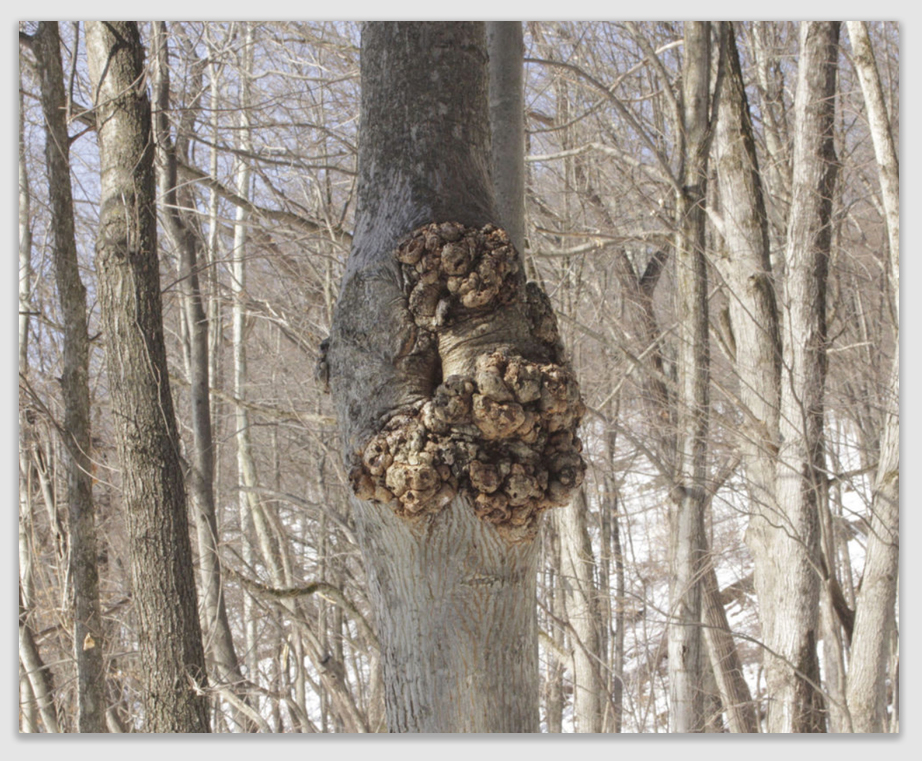 AP, April 16, 2017: For tree lovers and woodworkers, there’s beauty in a burl
As you glance up into tree limbs, perhaps searching for some sign of spring in a swelling flower bud, your sight might be arrested by fat, rounded growths on the bark. On some trees, these hard, woody outgrowths — called burls — stand out on an otherwise clear trunk like a goiter. On other trees, the whole trunk might be covered with these masses. If you’ve never noticed these growths before, don’t be alarmed. They cause little or no harm to the tree. That said, burls might — just might — indicate that the tree has been under stress. All sorts of things have been implicated as the cause of burls. For instance, a burl could grow in response to a limb rubbing against the bark, to chewing by insects or some other physical injury. Perhaps the tree experienced or is experiencing some environmental stress — temperatures too cold or too hot, not enough food or not enough sunlight, for example. Diseases have also been held responsible for burls. However, no pathogens are found inside burls when they are cut open. Still, a pathogen could have done its job of inducing a burl, and then skipped on to other adventures. We could also blame genetics, because some tree species are more prone to developing burls than others. Redwoods are renowned for their burls, which are often sold as souvenirs…
An Ipswich Department of Public Works employee was injured by a falling tree Sunday, according to Ipswich Police Chief Paul Nikas. At approximately 10:20 a.m., Acting Fire Chief Jeff French called into the Ipswich Communications Center requesting a medical helicopter to transport an injured Ipswich DPW worker who had been struck by a falling tree. Ipswich firefighters, along with members from the Massachusetts Bureau of Forest Fire Control and Ipswich DPW crews, were conducting overhaul operations in the forests off Pineswamp Road and Linebrook Road in Ipswich. The overhaul operations are designed to seek out and wet down hot spots left over from Saturday’s forest fires, which 14 area fire departments were called in to extinguish. Fire crews remained on scene conducting overhaul operations later Sunday…
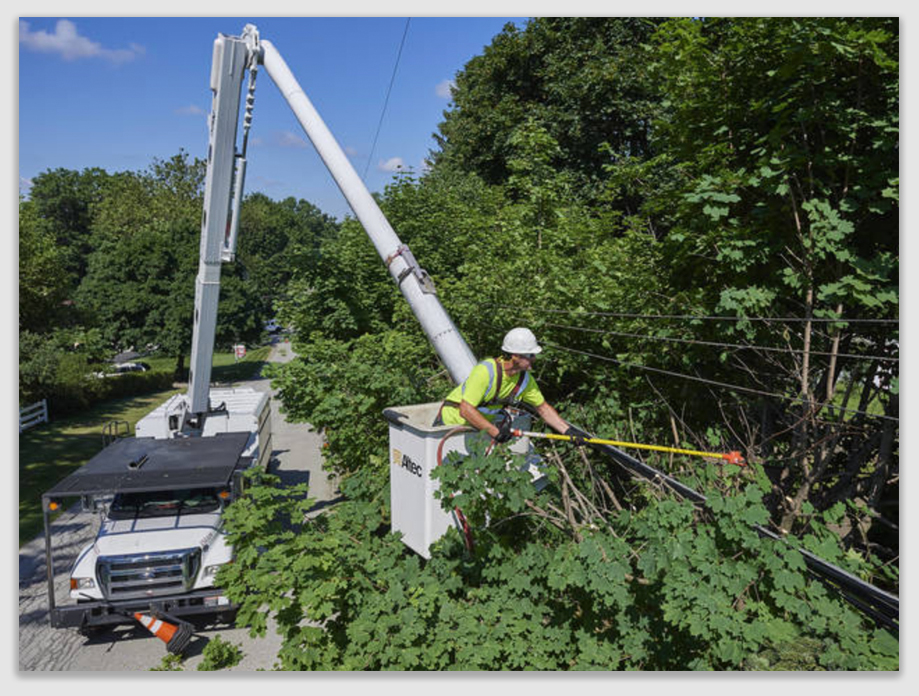
Jersey Central Power & Light (JCP&L) plans to spend nearly $34 million in 2017 to trim trees along 3,600 miles of power lines to maintain proper clearances around electrical equipment and help prevent tree-related outages. During April and May, the work is being performed in nearly 80 municipalities across JCP&L’s 13-county northern and central New Jersey service areas.“Proper tree trimming helps reduce the frequency and duration of power outages,” said Mark Jones, vice president, Operations, JCP&L. “Our foresters and certified tree experts work year-round to properly maintain trees and vegetation. This work pays dividends in fewer service disruptions, particularly during severe storms that can do tremendous damage to trees, which then have the potential to damage our equipment.” JCP&L’s tree trimming program, conducted by certified forestry contractors under the company’s direction, includes inspecting vegetation near the lines to ensure trees are pruned in a manner that helps preserve the health of the tree, while also maintaining safety near electric facilities. Trees that present a danger or are diseased may also be removed. As part of the notification process, JCP&L works with municipalities to inform them of vegetation management schedules. In addition, customers living in areas along company rights-of-way are notified prior to work being performed. To further decrease tree-related outages, JCP&L’s foresters also are working to educate residents who live near company equipment about the importance of properly maintaining the trees on their own property…
University of Florida researchers say they’ve found more beetles that can carry a disease threatening avocado trees. The redbay ambrosia beetle considered the main carrier of laurel wilt is rare in avocado groves. But in a new study in the Journal of Economic Entomology, plant pathology professor Randy Ploetz said scientists found three more beetles that can carry the tree-killing disease. Ploetz says the study shows that focusing on redbay ambrosia beetles may not save avocado trees from laurel wilt. Jonathan Crane at the university’s Tropical Research and Education Center in Homestead says avocado growers “have known for some time that other ambrosia beetle species” can spread disease in their groves…
 St. George, Utah, Independent, April 13, 2017: Topping hurts trees
Every year, there are beautiful trees whose lives will be cut short by improper pruning. The indiscriminate cutting of tree branches can ruin your trees. St. George is a unique city in the desert southwest. We are a community with a wonderful urban forest. Our downtown streets are lined with shade trees. We as a community take pride in our “oasis” in the desert. Our trees provide shade and relief from our hot summer sun. The practice of topping causes a tree to go into stress mode. When a tree is topped, 50 to 100 percent of leafed branches are removed, taking away the tree’s food source. Trees store carbohydrates or “food” in their branches, trunks, and roots. Topping a tree can remove valuable energy stores and a tree’s ability to perform photosynthesis. When all of a tree’s leaves are removed, a tree will sprout water suckers from dormant buds along the remaining branches. Water suckers are fast growing branches that have a weak attachment to the tree’s trunk. These branches are where future branch failures can and will occur…
It is the time we wait for all winter, as spring’s first green leaves unfurl. The joy we feel is the thrill of a new season, kicked off by the masterful work of trees. Trees, it turns out, are up to far more marvelous things than we ordinarily think. Mute, passive, unmoving, solitary? Actually, no. Trees talk. Move. Breathe. So numerous are their abilities, and so embedded in a continuum of thrumming life are trees, that to know even one well is to be dazzled. I learned this from one tree, in particular: a big oak I got to know over the better part of two years, from the tossed sunlit glory of its airy crown, to the small skitter of busy lives in the soil at its roots. It all started by working with a scientist and his research crew, probing deeply into the lives of trees at Harvard Forest, a 4,000-acre laboratory of mostly scrappy third-growth trees, on former pastures and farms west of Boston. I was interested as a journalist in looking for new and better ways to tell the story of our changing climate. It has been a yawner for too many — a distant debate about treaties, dueling science and doomsday scenarios. The stakes are high: the function of natural processes; the viability of habitats; even the survival of species, including our own. But the facts won’t matter if we can’t get anyone to pay attention…

A tough truth about Apple is making headlines this week, and you’d better hold on to your butts, because it is salacious. Apparently, Apple is snatching up all the very best trees for its new campus, leaving local tree purchasers scrambling for solutions. The scoop was buried in a recent San Francisco Chronicle story about construction of the Transbay Transit Center in San Francisco. One of the futuristic travel station’s highlights is a 5.4-acre green roof which will eventually feature 469 trees (nice). The paper’s J.K. Dineen reports on the struggle to find all those trees: Buying trees is a surprisingly cutthroat business. And it’s been especially challenging to locate desirable specimens because Apple has been buying up 3,000 trees for its new Cupertino headquarters. When Greenspan and Trollip found a tree they fancied they would “tag it” with a locking yellow tag, so that nobody else — like Apple — could get it. Eventually all the tagged trees were moved to a nursery in Sunol, where the transbay project team leased 4 acres. Whoa, Greenspan and Trollip are taking this very seriously. And they should be…
For more than 50 years, trees took root and grease built up inside DeKalb County sewer lines. These blocked pipes caused repeated sewage spills and threatened the county’s ability to grow. The DeKalb Board of Commissioners voted 7-0 on Tuesday to clean congested sewer trunk lines for the first time in decades. Government officials hope the $7.2 million cleaning contract will allow the county to add sewer capacity without having to spend far more money on new infrastructure…
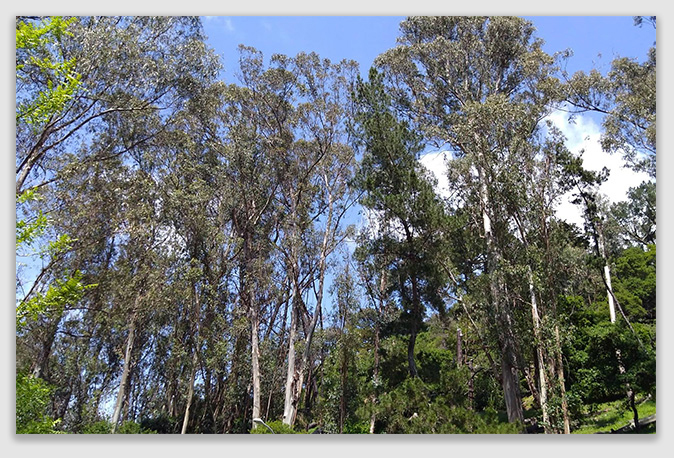
If you’re relatively new to the Bay Area, and particularly if you’ve never lived or spent much time in the East Bay, it will be news to you that a great many people passionately despise the eucalyptus trees that are clustered throughout the Oakland and Berkeley hills, and around the UC Berkeley campus. The bath-shop-scented, stripe-barked, tall beauties, technically called Tasmanian blue gum trees, have elongated leaves that create a pleasant hushed rustling in the breeze. But they are not native to the Bay Area, and they’ve long been pointed to as a primary culprit in the Oakland Hills Fire of 1991. Many people still love them, have tied themselves naked to their trunks to protect them, and they deny that they have any special flammability and see them as vital habitat for birds and other species. These eucalyptus lovers also don’t think that whatever could be planted to replace them will be any less of a fire hazard in what is already a fire-prone region. The Chronicle’s East Bay columnist Chip Johnson came down on the side of “chop them all down” in a 2015 column about the trees, arguing that “human life tops the list” of things we should be worried about preserving. At the time, a project was set to begin with the help of a $4.6 million federal grant to thin the forest along a 20-mile stretch of the East Bay ridgeline, cutting down eucalyptus trees along with diseased or dying Monterey pines and other non-native species. Johnson quotes a UC Berkeley professor of fire sciences, Scott Stephens, who says the eucalyptus trees are absolutely a hazard even if they aren’t close by. He points to the university’s effort to clear trees on the upper slopes surrounding the campus because the trees can burn at such high intensity that they can deposit embers more than a mile downslope from them. “Given the conditions of the hills and the vulnerabilities of the people living in the area, it’s the right thing to do,” Stephens said, “and the next time we get a great, big fire, we’re going to be happy that we did this…”
Syracuse, New York, WSYR Radio, April 12, 2017: Syracuse Man Arrested For Tree Vandalism
A Syracuse man has been arrested after city police say he caused more than 25 thousand dollars in damage in several city parks. 30 year old David Thomas is accused of using his car to run down over 60 tree at those parks. The parks that were hit include McChesney Park, Schiller Park and Rose Hill Cemetery. Thomas has now been charged with criminal mischief and city police say they don’t know the reason Thomas wanted to damage the trees. Most of the small trees were completely uprooted and damaged to the point that they are now expected to survive if they were replanted…

Wondering how many kinds of trees there are? There’s now a database that can answer that. Scientists from the U.K.-based Botanic Gardens Conservation International say they have compiled the first-ever comprehensive list of all known tree species, totaling 60,065 different kinds. The database includes information about where each species is found geographically. More than half of those species are only found in one country, the researchers wrote in the Journal of Sustainable Forestry. And many of them are threatened with extinction. The researchers hope the database, called GlobalTreeSearch, will provide a practical tool for conservationists. It could help to develop “species-specific action” for threatened trees, they stated, “as individual tree species face threats that are unique to that species…
A worker died from injuries received while operating logging equipment on the Snoqualmie Tree Farm. On Tuesday at about 2 p.m., firefighters from the Snoqualmie Fire Department were called to a report that a logging worker had been seriously hurt while on the job at a site 26 miles into the tree farm. Fire crews were escorted to the site by the Campbell Global Timber Management security division. The trip took about an hour because of the rough terrain. When crews arrived, they found the victim about 500 yards down a steep embankment…
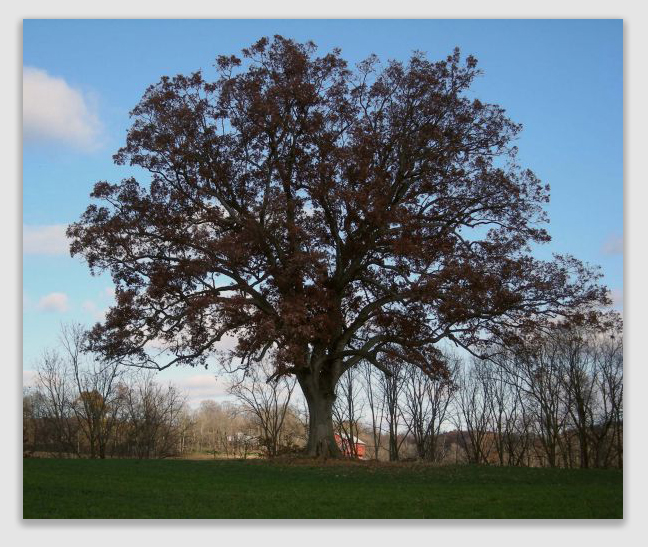
The last remaining vestiges of the tall oak tree beloved by fans of “The Shawshank Redemption” was taken down Saturday by a co-owner of the field in which it stood. Dan Dees said it was time for what was left of the damaged tree, on Pleasant Valley Road, near Malabar Farm State Park, to disappear. His father would like to farm that land, he said. The huge oak tree was featured in a scene in which Red (Morgan Freeman), paroled from prison, walked along a hayfield and removed stones from a rock wall where Andy (Tim Robbins) had buried money embezzled by the warden. The big oak. located a little east of the entrance to Malabar Farm State Park, was a popular stop on the Richland County Convention and Visitors Bureau’s “Shawshank Trail” driving tour, which took advantage of the movie’s wide popularity, encouraging tourists to visit some of the sites where “Shawshank” was filmed…
Agri-news, September 10, 2017: 10 steps to successful tree planting
Successful tree planting depends on a well-planned and executed approach. Lenny Farlee, Extension forester at Purdue University, shared advice about planting trees and shrubs for conservation purposes. “When we think about conservation planting, a lot of it started in the 1920s and ’30s in Indiana,” he said. “It was in relation to some pretty bad choices we had made in terms of landscape management. “There were a lot of agricultural practices done on land that couldn’t sustain those practices. It ended up in a lot of erosion.” Now trees often are planted to provide wildlife habitats, improve environmental quality, provide future timber production, sequester carbon and more. Farlee shared 10 tips for planting trees…

A Hydro One official said Tuesday 100 “danger trees” will be cut down within a six-kilometre high-voltage transmission corridor between LaSalle and Windsor but denies there would be any clear-cutting. LaSalle Mayor Ken Antaya said he heard clear-cutting was the plan for the corridor linking Brunet Park to Windsor’s Keith transmission station, a route which slices through the town’s environmentally sensitive LaSalle Woodlot. “The character of the entire woodlot would be destroyed,” Antaya said, who has called on Hydro One to handle the situation in its right-of-way “in an accountable way.” On Tuesday, the utility was trying to allay concerns. It held a morning news conference followed by an afternoon meeting with Antaya and town councillors to explain its intent. Hydro One area superintendent Jake Zink told the Star there is no plan to clear-cut and create a meadow through the corridor, which runs for two kilometres in LaSalle, from Brunet Park to Todd Lane, and four kilometres in Windsor from Todd Lane to the transmission station. Zink said a total of about 100 “danger trees” need to be taken down, 60 to 65 of them in LaSalle…
The Santa Barbara County Sheriff’s Office has identified 38-year-old Carpinteria resident Marcelino Gorostieta as the man tragically killed in Monday’s tree trimming accident at Hollister Ranch near Gaviota. The Santa Barbara County Fire Department was dispatched to the ranch at 10 a.m. but medical personnel pronounced the man dead at the scene, according to Santa Barbara County Fire Capt. Dave Zaniboni. The victim has not been identified pending next-of-kin notification. The Santa Barbara County Sheriff’s Coroner’s Office is investigating the death…
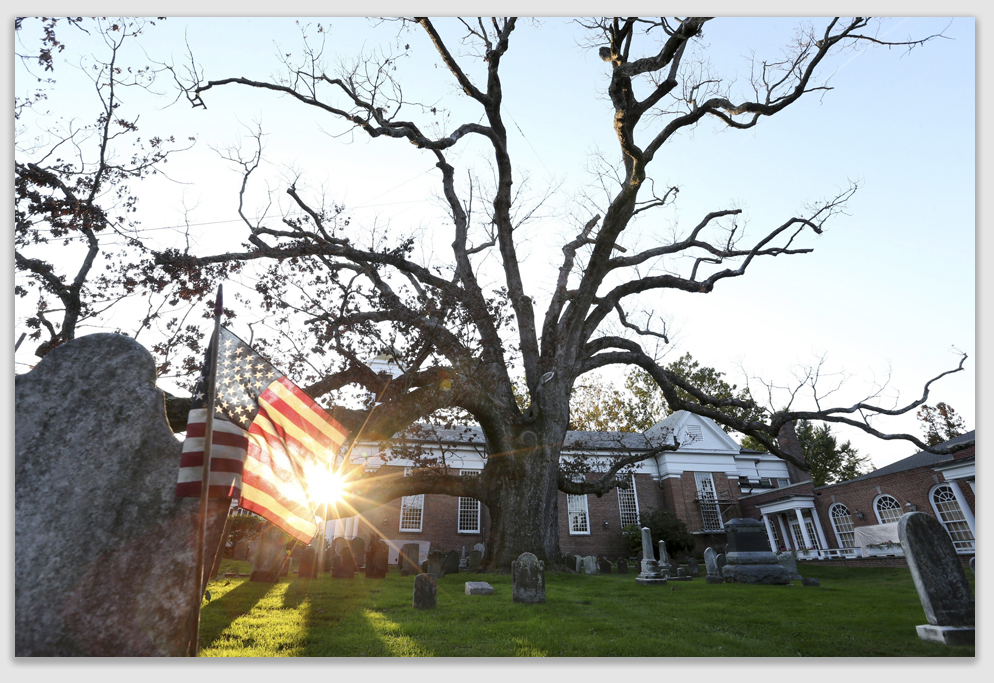 New York City The Wall Street Journal, April 9, 2017: The oak that shaded George Washington
In a few weeks, my town will bid farewell to its eldest resident, departing this world at age 600. Or 550 or 500—no one knows for sure. The great white oak standing beside the Presbyterian Church in the center of town is one of the oldest of its kind in North America. Even before the announcement last fall that the ailing tree could not be saved, visitors had been arriving in steady streams to gaze at the barren branches, trimmed and truncated—the remains of a once-massive canopy shading the tombstones of 35 Revolutionary War veterans. It’s strange that a tree could elicit feelings normally reserved for a loved one. But that’s exactly the way many think of the great oak: as a beloved figure around which the town grew from a small log cabin built 300 years ago…
Days after an EF-0 tornado hopped around the Tidal Basin, a path of destruction is left behind. Twisted branches are scattered, cordoned off by yellow caution tape. Tree trunks are snapped like matchwood. Debris is piled up, among the sawed-off remains of giant trunks. “Mother Nature’s a beast,” says Dan Marcy, a visitor from New York state. “This is a little surprising. I was unaware a tornado that came through last week.” The shriek of chainsaws and the roar of wood chippers echoed across the basin Friday. The National Park Service says nine trees were damaged or destroyed by the storm. Four of them were cherry trees…
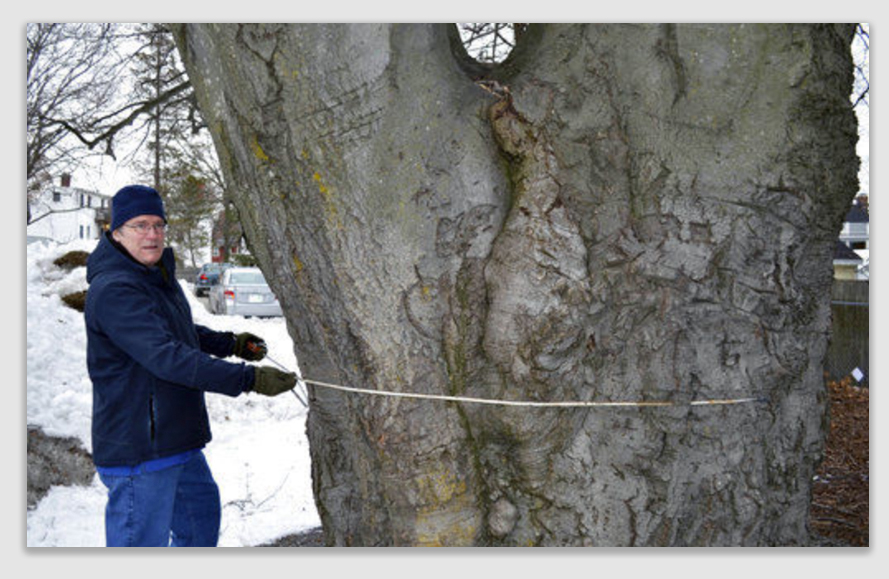 AP, April 10, 2017: Forget roses and birds. These folks like their big trees
A program in New Hampshire is working to protect the state’s vast forests, one tree at a time. Known as the New Hampshire Big Tree Program, it encourages residents to search the city’s streets, backyards and woods for the state’s largest trees. Then, a team of volunteers goes out to measure a tree’s circumference, height and crown to determine if they are county or state champs — or just leafy pretenders. More than 700 champions so far have been identified, including 10 that are the biggest in the country. The hope is that by searching for champions, residents will be motivated to protect forests from threats like development and forest pests…
Outdoor News, April 10, 2017, Wisconsin birch trees axed by thieves
People with axes and chain saws are plundering parks, forests and private land in Wisconsin’s Northwoods to cut down thousands of white birch trees. The Wisconsin Department of Natural Resources held a meeting late last week for law enforcement agencies, county foresters and others to address the issue, the Journal Sentinel reported. A story documenting similar activity in northern Minnesota, too, appeared last week on the Outdoor Newswebsite. And, it appears, the incidents are driven by the same thing. Natural resources department warden David Zebro said that many of the trees are sold to decorate homes, businesses and weddings. “It appears to be all market-driven,” Zebro said. “The ornamental market people are paying a lot of money for these types of birch trees. We didn’t see this type of issue a year or two ago, but it’s certainly here now…” Middletown, New York, Times-Herald, April 9, 2017: Residents angry over tree-clearing in Woodbury Junction development
Jaime Walker used to have a line of trees and bushes as a screen of privacy behind the new house she bought four years ago in the partially built Woodbury Junction development. That all disappeared one Saturday last month while she wasn’t home. At the builder’s behest, tree cutters mowed down all vegetation across the hill behind her backyard. They took down some trees on her property as collateral damage and also cleared part of what was supposed to be protected green space. Construction has resumed in earnest at Woodbury Junction, just a little over a year after a Brooklyn developer paid $35.5 million for 327 undeveloped building lots in the stalled, 451-home project. Building permits have been issued for the next dozen homes, roads are being built, and formerly empty houses and vacant building lots have been sold. But residents who moved there before the project changed hands have watched with mounting frustration as old problems with the development persist and new ones – like the unexpected tree clearing – crop up…
Waterloo, Iowa, KWWL-TV, April 9, 2017: Cedar Falls stops ash tree removal to seek borer treatment
The city of Cedar Falls is halting its removal of healthy ash trees to consider treatment alternatives in the wake of destruction by an invasive insect. City director of municipal operations Mark Ripplinger tells the Waterloo-Cedar Falls Courier that he recently suspended the removal of healthy ash trees after learning of advancements in treatment of trees infected by the emerald ash borer. Ripplinger says his staff will present a plan by May 1 to the council to allow property owners to treat ash trees in the right of way adjacent to their property at their own expense. So far, the city has removed about 900 ash trees…

California’s extraordinarily wet winter didn’t just end the drought. It’s likely to mean a turnaround for the state’s dying forests. After five years of dry weather unleashed unparalleled havoc on trees from Yosemite to the Central Coast — leaving vast stands of pine too parched to fight pests and reducing entire mountainsides to browning wastelands — a forecast by the U.S. Forest Service suggests the die-off will slow this year. The projection, made public earlier this year, is short on specifics. But it mirrors the opinion of many forestry experts who say fewer trees will perish as rainy weather helps California’s woodlands regain their natural defenses against the ravenous bark beetle. “When we’ve had huge precipitation years, the mortality declines in the same or next year,” said Sheri Smith, a regional entomologist for the Forest Service. “It’s not like there isn’t going to be any new mortality, but we’re going to see a tremendous drop…”
Gardening Know How, April 9, 2017: Oak tree gall mites: learn how to get rid of oak mites
Oak leaf gall mites are more of a problem for humans than for oak trees. These insects live inside the galls on oak leaves. If they leave the galls in search of other food, they can be a true nuisance. Their bites are itchy and painful. So exactly what are oak leaf mites? What is effective in treating for oak mites? If you want more information on how to get rid of oak mites, also called oak leaf itch mites, read on. Oak tree gall mites are tiny parasites that attack gall larvae on oak leaves. When we say tiny, we mean tiny! You may not be able to spot one of these mites without a magnifying glass. The female and male oak tree gall mites mate. Once the females are fertilized, they enter the gall and paralyze the larvae with their venom. The female mites then feed on the larvae until their offspring emerge. An entire generation of oak mites can emerge in a single week, which means that the mite population can swell rapidly. Once the oak tree gall mites have eaten the gall larvae, they leave in search of other food…
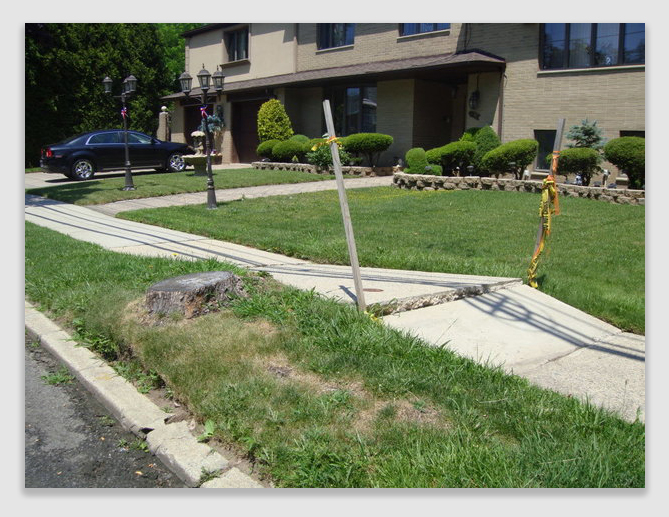 Staten Island Live, April 6, 2017: City tree maintenance will get more transparent
City tree maintenance won’t be a mys-tree anymore. The Parks Department will have to post information about tree pruning, removals, planting and tree-related sidewalk inspections and repairs online under a bill from Minority Leader Steven Matteo that passed the Council on Wednesday. The city’s pruning program is responsible for some 650,000 street trees citywide, including roughly 76,400 on Staten Island. “This legislation will bring more accountability and predictability to a tree and sidewalk repair program that frankly has been opaque and seemingly arbitrary,” Matteo (R-Mid-Island) said in a statement. “The public has a right to know where and when these repairs are taking place, and that the City is properly managing our resources to reduce the risk of personal injury and property damage from falling branches, loose stumps or broken sidewalks…”
The village has told the owners of four properties to have dying trees cut down — at their own expense. The trees, which village officials say are at risk of losing large branches, are at 32 Chestnut St., 46 Livingston St., 36 Mulberry St. and 47 Mulberry St. “They were brought to our attention by the Highway Department as safety hazards,” said village Tree Commission Chairwoman Meg Crawford. Crawford said woodpeckers have been “going after these trees … because they have a lot of insects inside them, which indicates rot inside the tree.” Members of the Village Board said Dave’s Tree Service has provided an estimate of $3,700 to take down all four trees but that it will be up to property owners to decide who does the work…

Annoyed homeowners say “Pokémon Go” players have gone too far in their quest to master the smartphone game—and they want the company behind the hit application to be held responsible. A federal judge is poised to decide if a lawsuit alleging the game’s developer violated trespass and negligence laws can go forward, a ruling that could have broader implications for makers of games or other software that send users to specific locations. “Pokémon Go,” based on the Japanese franchise popularized by Nintendo Co. in the 1990s, sends millions of players each day searching for Pokémon characters on a digital map. Players gain points by catching the monsters, which appear superimposed into the real world through location-tracking technology and augmented reality. The court decision is expected in the coming weeks in a case brought by residents in New Jersey, Florida and Michigan. They say the popular game caused hordes of people to physically trespass on their land. They also say the game violates their rights by placing virtual game pieces on or near their private property without their permission…
UPI, April 6, 2017: Laser sensors spot trees with larch disease
Researchers are using laser sensors to locate trees threatened by deadly larch tree disease. Scientists at Leicester University partnered with aerial mapping company Bluesky to conduct a series of laser scanning surveys, or LiDAR surveys, in England and Scotland. Larch tree disease is caused by the fungus-like pathogen Phytophthora ramorum. The disease can affect a variety of tree and plant species. In Britain, the pathogen has proved particularly deadly to Japanese larch trees — hints the name. In the United States, particularly in Oregon and Washington, the disease is called sudden oak death, named for its most common victim. The pathogen was first identified in Britain in 2002 and has since infected several high-profile forests, including Epping Forest and the Forest of Dean…
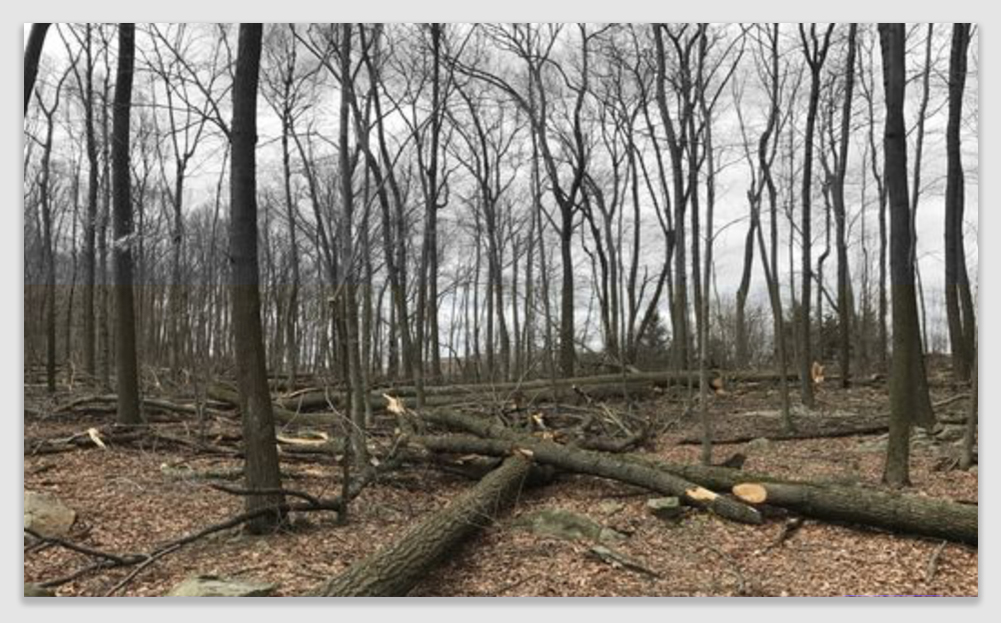 Parsippany, New Jersey, Daily Record, April 5, 2017: Denville tree-farm harvest alarms neighbors
A rare harvest last week at a Denville tree farm alarmed some neighboring residents along Zeek Road, some fearing a developer had started to clear acreage for a construction project they had not been informed about. The culling, however, was a state-authorized selective harvest of oaks and poplars on the long-established, 22-acre farm-assessed property just south of Route 10, the existence of which some residents may have been unaware of, according to Denville Administrator Steven Ward. “We received numerous calls from concerned residents about trees being cut down there,” Ward said. “But that property is in fact assessed as a tree farm. Apparently there had not been a harvest there for several years, and some people were jumping to conclusions that they were putting up housing or something like that. That is simply not the case.” Ward and Tim Schrak, owner of Deer Spring Farm, differ on the details, but the harvest resumed on Monday, even as neighbors continued to speculate about possible development there on Facebook. Some claimed that 1,200 units of low-income housing were going in there, while others debated if the property was in Denville or Parsippany…
Milwaukee, Wisconsin, Journal-Sentinel, April 5, 2017: Tree thief in Brookfield surrenders to police
A dozen arborvitae trees that separated two businesses in Brookfield disappeared several days ago and when police examined security video they saw two men had dug up the fragrant conifers in the dead of night before driving away. The tree heist happened around 2 a.m. on March 27 between Lee’s Dairy Treat, 14040 W. Greenfield Ave. and an acupuncture business. The thieves were careful to swivel a security camera away from the scene while they spent almost two hours uprooting 12 arborvitaes and two flowering trees and stacking them on a small trailer. But when one of the thieves pushed the security camera back to its original position he didn’t know about a second camera which recorded their actions as they drove away around 3:45 a.m. “It’s kind of an odd theft. I can’t tell you the last time landscape items were removed like this,” said City of Brookfield Police Capt. Tom Vento…
 Bergen County, New Jersey, Record, April 5, 2017: Wyckoff adds penalties for tree removal violations
The Township Committee approved an ordinance Tuesday that encourages tree preservation during construction and imposes fines for violations. A second ordinance setting similar guidelines for trees in the area of a sewer project was sent to the Board of Health for review. Both ordinances set procedures to identify and preserve trees with diameters of six inches or greater. The guidelines adopted Tuesday would require submission of a landscaping plan showing “all existing and proposed trees and vegetation.” Preservation method details for all existing trees, such as protective fencing, would have to be shown on the plan. Soil cannot be stockpiled in a tree-protection zone. Protective barriers would have to be in place prior to the start of construction, and must be maintained throughout the project’s length…
Columbus, Georgia, Ledger-Enquirer, April 5, 2017: If a tree lands on your house, who pays for it?
The violent weather we’re seeing this week raises a question. If a tree falls and hits your house, are you covered by insurance? Most homeowner insurance policies are fairly straightforward, says the Insurance Information Institute (III). If a tree hits your house or other covered structure on your property, standard policies generally provide coverage for the damage the tree inflicts. It also is irrelevant whether or not you own the tree, the III says. If it hits your house, you can file a claim with your insurance company. Now, if the tree was on a neighbor’s property, your insurer may try to collect some damages from the neighbor’s insurance company, but that’s between them. This often happens if the neighbor’s tree was in poor health or poorly maintained…
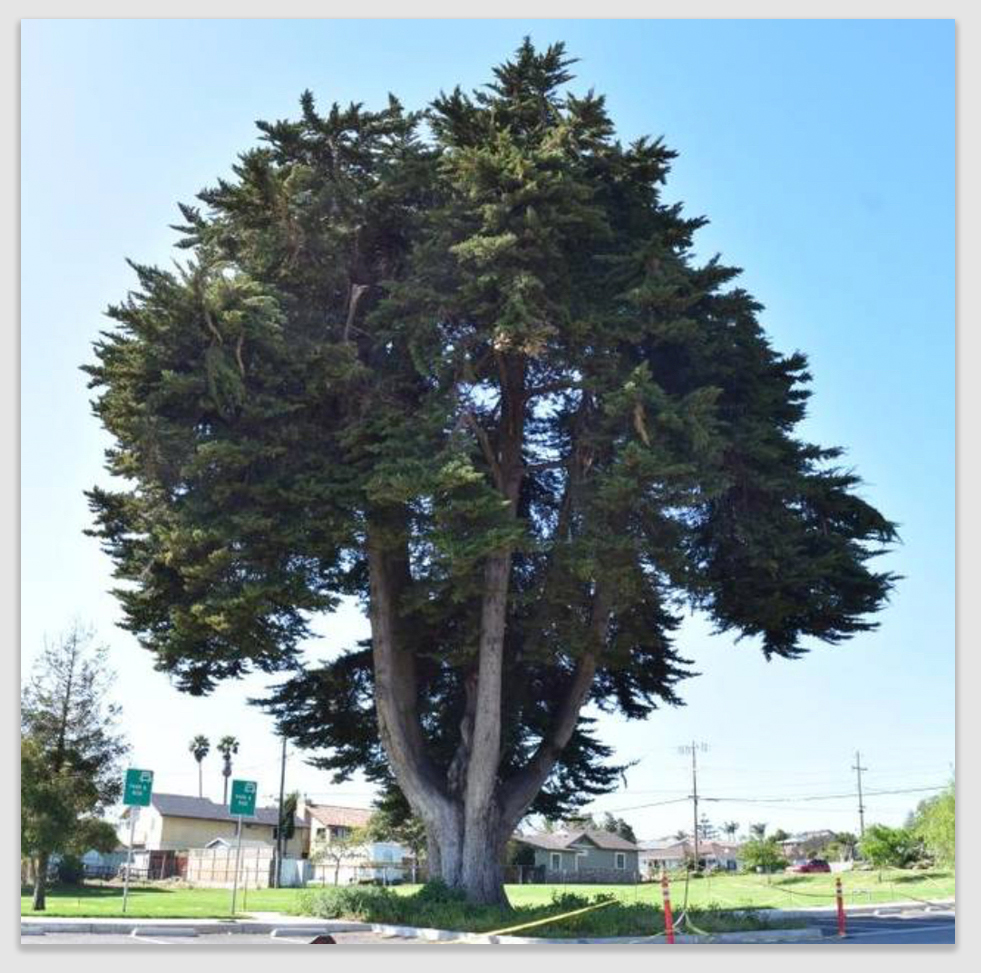
It was a short-lived reprieve. A week after Grover Beach announced it would remove a 90-foot Monterey cypress tree from Ramona Garden Park and then just as quickly delayed that decision amid resident pushback, it looks like the tree will once again be on the chopping block at the end of the month. The Grover Beach City Council on Monday directed staff to tentatively go through with removing the tree, unless a second arborist’s review can prove the tree does not pose a public safety risk. “Look, public safety is our top priority,” Mayor John Shoals said. “We have an arborist saying this tree is diseased and poses a threat and risk. I could not live with myself if something happened to anyone that’s in that park, walking under that tree, who lives on that street. So we’re going to move forward with expediency.” An arborist hired by the city examined the tree in August and found signs of decay throughout the massive tree. According to the arborist’s report, the decay increases the risk of falling branches. Because of that, the arborist recommended removing the tree…
Dallas, Texas, News, April 4, 2017: 20-year-old electrocuted while trimming trees in Colleyville
A 20-year-old man died after reportedly being electrocuted while trimming trees in Colleyville on Monday afternoon. Luis Calderon of Carrollton died just after 5 p.m., according to the Tarrant County medical examiner. Calderon was harnessed in a tree to trim branches when the saw touched a power line, police told the Fort Worth Star-Telegram. He immediately lost consciousness, and other workers pulled him down as they called for help…

In Poland’s Krzywy Las, or Crooked Forest, the pine trees look like potbellied stick figures. On some 400 trees, the trunks buckle out 90 degrees, creating bark-covered bellies that drag just above the earth, oddly, all pointing in the same direction — north. No one knows for certain what caused this unusual stand of trees in a protected forest, just outside the town of Gryfino, Poland. The town was mostly destroyed during World War II, and the truth of the forest was lost with it. Strangely bent trees exist in other parts of the world, but not in such great numbers nor as neatly arranged as in Poland’s Crooked Forest. You can visit this little patch of land in northwest Poland any time, but the cusp of spring is the perfect chance to see the trees in winter’s bare-boned attire, without its bitter temperatures…
The Atlantic, April 4, 2017: Trees have their own songs
Just as birders can identify birds by their melodious calls, David George Haskell can distinguish trees by their sounds. The task is especially easy when it rains, as it so often does in the Ecuadorian rainforest. Depending on the shapes and sizes of their leaves, the different plants react to falling drops by producing “a splatter of metallic sparks” or “a low, clean, woody thump” or “a speed-typist’s clatter.” Every species has its own song. Train your ears (and abandon the distracting echoes of a plastic rain jacket) and you can carry out a botanical census through sound alone. “I’ve taught ornithology to students for many years,” says Haskell, a natural history writer and professor of biology at Sewanee. “And I challenge my students: Okay, now that you’ve learned the songs of 100 birds, your task is to learn the sounds of 20 trees. Can you tell an oak from a maple by ear? I have them go out, pour their attention into their ears, and harvest sounds. It’s an almost meditative experience. And from that, you realize that trees sound different, and they have amazing sounds coming from them. Our unaided ears can hear how a maple tree changes its voice as a soft leaves of early spring change into the dying one of autumn…”
 San Jose, California, Mercury News, April 3, 2017: PG&E tree pruning not as reckless as feared
Question: On my way home today, driving down Oak Grove Road, I was dismayed to see Davey tree service trucks and evidence of heavy tree pruning. I stopped and asked who had contracted the company, and was told it was PG&E. Who at PG&E would have authorized extensive tree pruning at this time of year? Winter is basically over, and we are now into the middle of nesting season. Could they not have done this much earlier in the year or later?
Answer: I was disheartened to hear about this, but what I found out might surprise and please you. It did me. I spoke with Tamar Sarkissian, spokeswoman for PG&E, who said a lot of thought and caution go into what the company calls its vegetation management. First of all, she says, all contractors receive annual training on how trees should be trimmed and what precautions to take. Before any tree is pruned, it is inspected for nests. If active nests are found, pruning is canceled immediately and rescheduled for the autumn, when nesting season ends…
Dallas, Texas, KXAS-TV, April 3, 2017: Neighbors in Lake Highlands help save a decades-old tree
A fight over a decades-old tree in a Dallas neighborhood leaves one man in handcuffs.The tree in the Lake Highlands area has long served as a photo opportunity for neighbors. “It provided this great horizontal bench that everyone sat on for pictures and the children climbed on it,” said Amy Martin, who lives in the area. On Thursday, neighbors said a man with a chainsaw began buzzing his way through the place that served as a playground for so many. Martin said neighbors confronted the man, 65-year-old Albert Santos, and told him to stop…
 Wall Street Journal, April 3, 2017: Hey, You! Stop eating my yard!
In late April, Tim Marks’s 40 acres of Maine forest land faces an infestation: fiddlehead foragers. The retired state trooper spots dozens of them traipsing across his property, stuffing burlap sacks with the greens to sell at farmers markets. He has shooed them off, and even put up trail cameras. But they’ll go as far as to sneak back in at night, with headlamps. “I’m a victim of fiddlehead theft,” he sighed. “It’s ridiculous.” Such tensions are becoming more common in Maine, where the rise in popularity of wild vegetation like fiddleheads, ramps, mushrooms and seaweed for uses from gourmet cooking to nutritional supplements is causing friction between foragers and landowners. It is also threatening the state’s unusual and centuries-old tradition of allowing public access to private property…
City crews will complete the first phase of an effort to remove 6,000 dead trees by the end of 2017. The second batch of 3,000 dead trees will begin coming down in July. City of Detroit General Services Department crews will remove the last of 3,000 dead trees located on city property they began removing last August. The work was not expected to be completed until early this summer, but is being finished ahead of schedule. Another 3,000 dead trees, also lost to disease and age, will begin coming down in July…
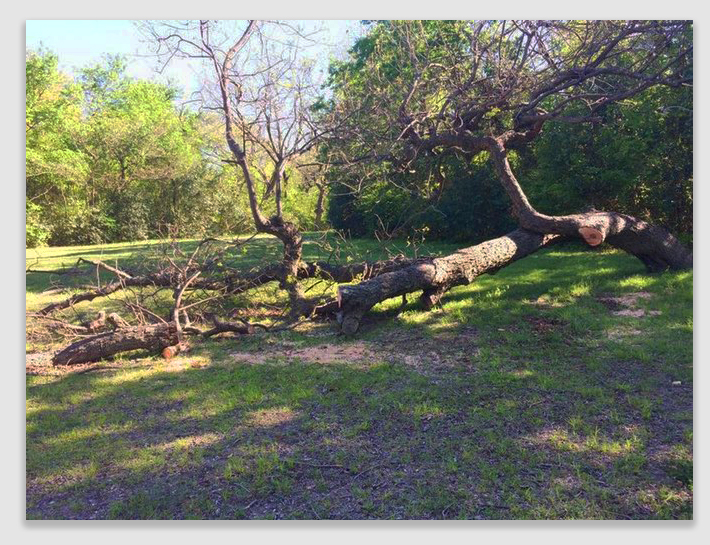
Neighbors in the White Rock area of Dallas stepped in Thursday to stop a man who was spotted taking a chainsaw to a beloved tree. A woman passing by saw the man cutting up an old pecan tree in the 900 block of Peavy Road, near Lake Highlands Drive, and loading the wood into a trailer, according to a post from a neighbor on Nextdoor. The woman told him what he was doing was illegal and called the police. Seeing what was happening, a man used his car to block in the man’s pickup until the police came, the post said. The man reportedly told police that he had permission from the city to cut trees downed by the storm, but had no paperwork…
Denver, Colorado, KDVR-TV, April 2, 2017: Controversial tree in Longmont to get the ax on Monday
A controversial tree in Longmont is scheduled to be cut down on Monday. Homeowners planted the cottonwood in the city’s right-of-way back in 1977. They said when they bought it from a local nursery, it was a male and didn’t produce cotton. But over time it switched genders, as trees can do, and it now produces cotton. And it’s about 60-feet-tall. An effort by neighbors led the city to decide to cut it down. City leaders cited two ordinances that deal with nuisance trees and cotton-producing trees. But the homeowners, their children and a group of supporters fought to stop the city from cutting down the tree…
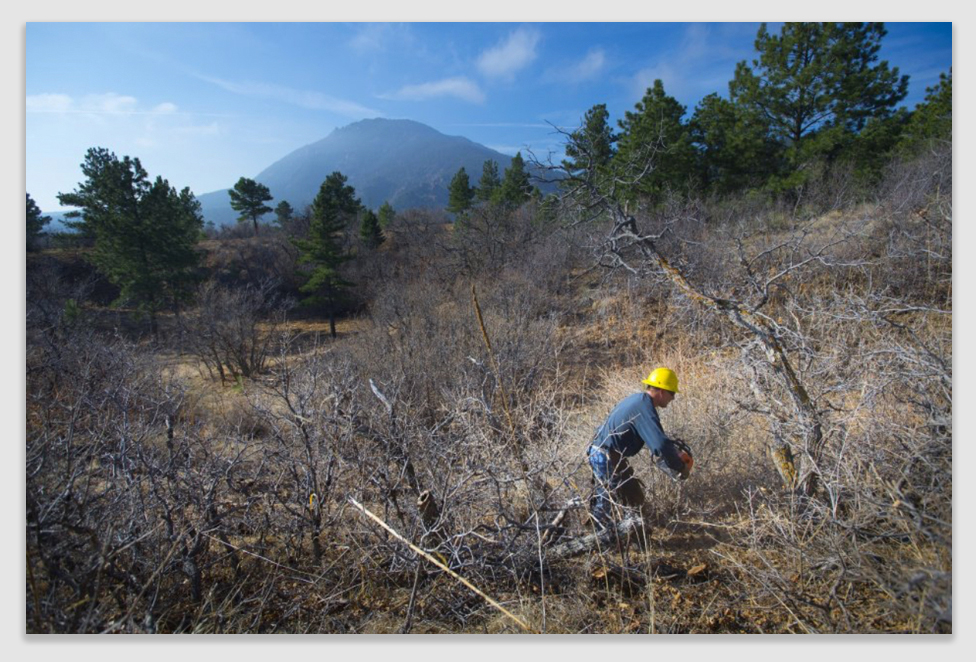
Amid the wreckage Dennis Will pleads his case. This is his doing: this forest that feels less like a forest, with paths lined by once proud trunks of ponderosa pine and Douglas fir. The hillsides used to be covered by oak brush. Now the chipped remnants are scattered about with green needles and broken branches. “This is ground zero of what folks don’t like,” says Will, the Colorado Springs forester examining the site of his latest dirty deed that he’d like people to know is necessary. He’s having to explain this project more than any of the others he’s overseen with the city. It is, after all, the largest tree removal project in Springs history, spanning 103 acres in Stratton Open Space. And some frequent hikers and bikers of this popular area don’t appreciate the facelift…
Thieves are illegally cutting down thousands of birch trees in northern Minnesota and Wisconsin to make a quick buck off city dwellers who love the paper-white logs, limbs and twigs in their home decor. The thefts have caught county sheriffs and state natural resource officials by surprise over the past few months, sending them scrambling to determine how big the problem is and how to keep it from getting worse. In the meantime, the thieves are leaving gaps in the northern landscape that will take at least a decade to refill with birch. Chief Deputy Mike Richter with the Washburn County Sheriff’s Office in Wisconsin was among those scratching their heads when word spread that swaths of birch saplings were being felled by crooks. “And then I learned some stuff about the market,” he said…
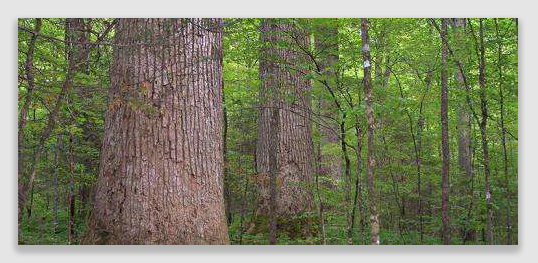 Phys.org, March 30, 2017: Researchers discover tree trunks act as methane source in upland forests
A new study from the University of Delaware is one of the first in the world to show that tree trunks in upland forests actually emit methane rather than store it, representing a new, previously unaccounted source of this powerful greenhouse gas. Methane is about 25 times stronger than carbon dioxide, with some estimates as high as 33 times stronger due to its effects when it is in the atmosphere. Because of methane’s global warming potential, identifying the sources and “sinks” or storehouses of this greenhouse gas is critical for measuring and understanding its implications across ecosystems. Upland forest soils usually take up and store methane, but this effect can be counteracted by methane emissions from tree trunks, the research team from UD’s College of Agriculture and Natural Resources found. Their work is published in the scientific journal Ecosystems…
Jackson, Mississippi, WJTV, March 30, 2017: What makes a tree a threat during severe weather?
During severe storms, there’s a potential for trees and their limbs to fall. Brian Haley at Mid State Tree Service says you should keep an eye on trees, dead and alive. When pine trees die, the straw turns brown and bark falls off. Oaks often show their rot on the outside. Haley says some of these oaks along Highway 468 in Rankin County are dead or have dead limbs. He says oak roots are often shallow. “So when the ground is real wet they tend to get blown over,” He said. “They uproot real easy. Of course any tree dead is a threat at any time, much less in a storm…”
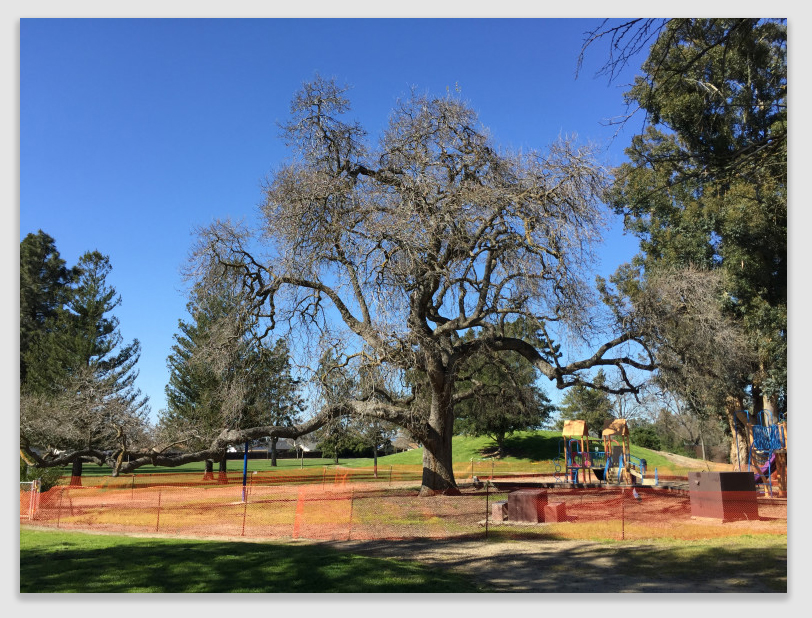
A 300-year-old oak tree will live to see another day. The Livermore Area and Recreation Park District agreed Wednesday to let the ailing tree at Sunset Park stand. But the decision comes with a sacrifice: The playground set under the tree will have to be removed, and will cost $1.2 million to relocate and replace. The valley oak may have had chainsaws in its future if it were not for some neighbors who caused a stir. When residents Nischal Belthangady, Terry McCune and others found out the park district was considering chopping down the tree, they organized a petition that gathered 500 signatures against the plan. “All of us have been eating, drinking and sleeping this oak for many months, so it’s nice to have it come to an end,” McCune said. “It is absolutely wonderful. They did the right thing…”
Bedlam Farm, March 30, 2017: Walk In The Woods: Trees Age And Die Gracefully
I walked in the deep woods this morning for the first time in months, there is still some snow up there. To mark the occasion – we love these woods (Petzval lens) I read a chapter from Peter Wohllenben’s wonderful book The Hidden Life Of Trees. Appropriately enough, I turned to chapter ll, Trees Age Gracefully. I can’t even count the number of truths about trees than I can relate to, I am a tree lover and a tree-hugger now. Wohllenben tell us that trees age like us, only at a different pace. As our hair thins, their crown thinks. They widen and add fat to help themselves against the cold. They get wrinkles, sometimes they are painful. Trees, he says, are not capable of maintaining their mature height for long because its energy levels diminish slowly over the years (a tree ages much more slowly than humans, many live for hundreds of years. At first, the tree can no longer manage to feed its topmost twigs, and these die off…
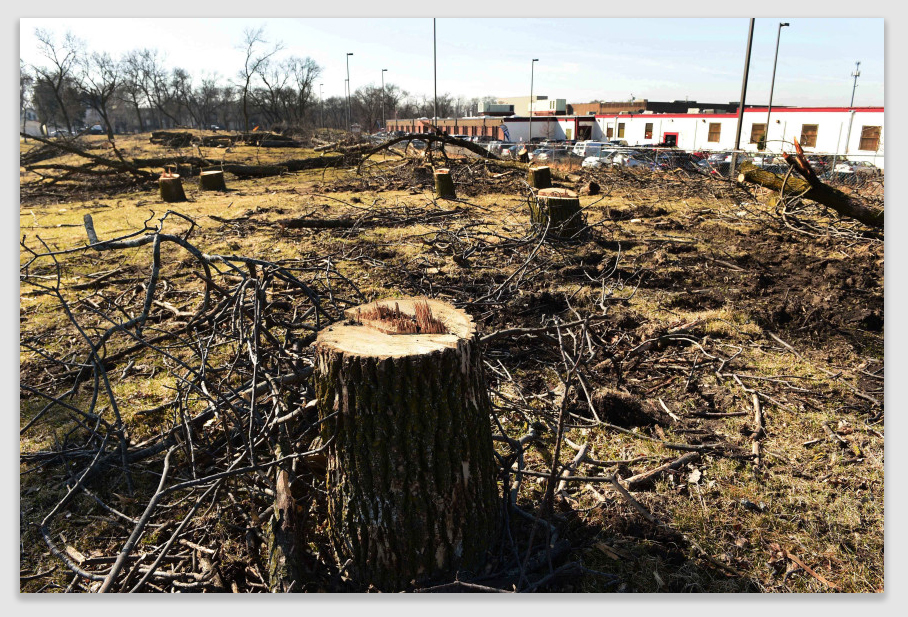
Unlicensed tree trimmers removing a grove for a parking lot expansion at the Hmong Village Shopping Center bit off more than they were allowed to chew in early March. A and A Tree Service advertised their services on metal stands and handed out brochures offering Hmong customers a 10 percent discount — and then removed 22 city-owned trees near Johnson Parkway that were not in their “scope of work” or project area, according to St. Paul city staff. On March 8, an inspector with the Department of Safety and Inspections ordered them to cease operations. “We told them they can’t operate in St. Paul,” said Robert Humphrey, a spokesman for the Department of Safety and Inspections. “We license tree trimmers, and there’s a good reason for that — to make sure they’re bonded and insured…”
Training Daily Advisor, March 29, 2017: Tree-trimming safety training
As spring blooms across the country, outdoor work becomes more common. Today, we consider how a tree-trimming accident led to a fatality and OSHA’s safety recommendations for tree-trimming activities. Several years ago, a 42-year-old employee of a real estate company was struck and killed by a large section of a 60-foot (ft)-tall eucalyptus tree he was helping to remove from the employer’s property. Cal/OSHA investigated the incident and found that neither he nor any of the other construction laborers employed by the company had the experience or training to safely cut down a tree of that size, leading to nearly $92,000 in fines for his employer. The company was cited with 13 violations, eight of which were classified as serious. According to Cal/OSHA, the company failed to employ a qualified tree worker, which is required by law to direct all work related to tree trimming, tree repair, or removal of trees exceeding 15 ft in height. In addition, workers were not trained to use the aerial lift that elevated them to cut the tree, and were not provided with eye protection or a fall protection harness while working on the lift. “Workers at construction sites are frequently exposed to serious hazards, and safety training is essential to prevent serious injuries and fatalities. This incident is a vivid reminder of what can go wrong when employers don’t have proper safety procedures in place,” said Christine Baker, director of California’s Department of Industrial Relations…

One of the hardest hit areas during overnight storms was near White Rock Lake in East Dallas. More than 80 mph winds were reported in that area. “That’s what woke me up,” said Kelly Secker, who said she and her husband heard a loud bang and jumped out of bed. “It was like an explosion sound,” she said. “I had no idea until we came up to the window.” Secker said she couldn’t believe it when she saw her neighbors tree on top of her house. “The bath and shower were destroyed and the rest of the tree came through the attic and punched holes,” she said. “My husband and I were up there with buckets trying to catch the rain…”
The state Department of Agriculture says a small number of residential pecan trees are being affected by pecan weevil in five eastern New Mexico cities. Pecan weevil is a significant insect pest of pecan and is not recognized as being established in New Mexico commercial orchards. Recently, pecan weevil has been identified in residential trees in Clovis, Roswell and Lovington. Additional pecan trees were identified with pecan weevil in Artesia and Hobbs. As a result, the agriculture department has extended the original 60-day quarantine, adding an additional 90 days…
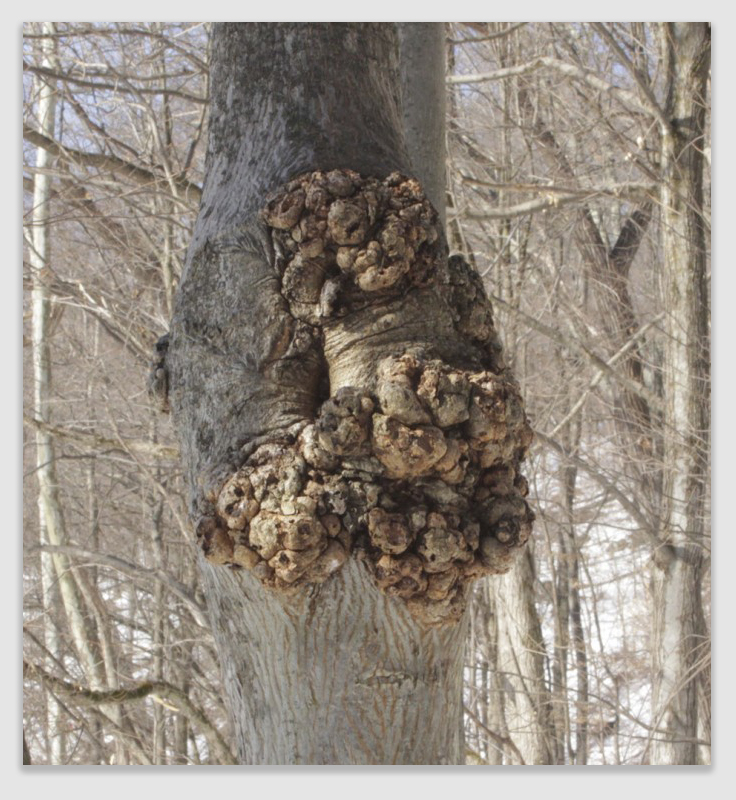 Washington, D.C., Post, March 28, 2017: For tree lovers and woodworkers, there’s beauty in a burl
As you glance up into tree limbs, perhaps searching for some sign of spring in a swelling flower bud, your sight might be arrested by fat, rounded growths on the bark. On some trees, these hard, woody outgrowths — called burls — stand out on an otherwise clear trunk like a goiter. On other trees, the whole trunk might be covered with these masses. If you’ve never noticed these growths before, don’t be alarmed. They cause little or no harm to the tree. That said, burls might — just might — indicate that the tree has been under stress. All sorts of things have been implicated as the cause of burls. For instance, a burl could grow in response to a limb rubbing against the bark, to chewing by insects or some other physical injury. Perhaps the tree experienced or is experiencing some environmental stress — temperatures too cold or too hot, not enough food or not enough sunlight, for example…
One man died and a second was seriously injured Tuesday morning after making contact with ComEd power lines while cutting limbs from a tree near Villa and Myrick avenues in Addison. Killed in the accident was Jose Fulgencio-Hueramo, 51, of Melrose Park.Authorities said Fulgencio-Hueramo was knocked off a ladder and fell to the ground. He was in cardiac arrest when authorities arrived. He was taken to the emergency room at Adventist GlenOaks Hospital in Glendale Heights where he was pronounced dead at 11:48 a.m., the DuPage County coroner’s office said…
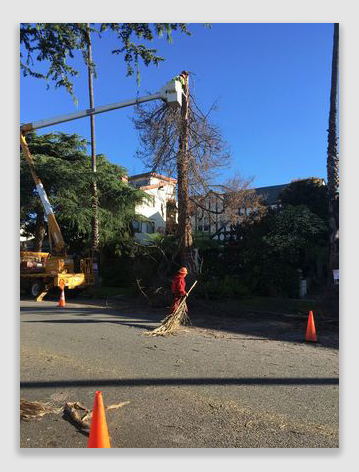
As Ecclesiastes said, there is a time for everything under heaven; a time to be born and a time to die. An old growth Redwood tree finally had to be taken down on 9th street. It had died during the drought, 18 or so months ago, and had become a hazard to the neighborhood. The City of Santa Monica, which has an active tree removal department called “Community forestry,” red tagged the tree on October 7, 2016. Several residents appealed the decision. On October 31st, we called the community forester’s office. Peter Provenzale, Urban Forest Supervisor, City of Santa Monica told us “We received another appeal last week as well. The adoration of the neighbors and the charm of the tree, the urban forestry division has decided to leave the redwood standing at this time. The tree is in decline and has significant dieback. We will re-inspect the tree in March 2017. At that point we will reassess the health and its overall vigor.” On March 28, 2017, on a day of high winds, a private crew came to take the tree down. The redwood was undeniably brown, a victim of the drought…
Gwinnett, Georgia, Daily Post, March 28, 2017: Dealing with storm damaged trees
Recently, there have been many news reports about trees causing damage to property as of the result of storms. They have brought down power lines, damaged vehicles, closed roads and even caused a few fatalities. The excessive rains of the past few weeks have saturated the soil increasing the susceptibility of the trees being damaged by high winds. The high-stress levels they have been under in recent years as a result of the prolonged drought, construction activities, and pest infestations have increased the chances of trees suffering damage. What should you do if you have trees damaged and blown down as a result of the storms? First and foremost, take the necessary safety precautions. Storm damaged trees can present dangers to homeowners. The trees could be in contact with electrical wires. Anyone touching the tree could be electrocuted. Contact your local power provider so they can assess the situation. Trees that are down or partially blown over can quickly shift position due to the uneven weight distribution. Avoid climbing on the tree or pulling on any limbs. You may be tempted to begin removing the damaged tree yourself. However, doing so can lead to serious injury or death. If large sections of the tree are broken or hanging, or if the work will require the use of a ladder or chainsaw overhead, then a certified arborist should be consulted…
 Salem, Massachusetts, News, March 27, 2017: Danvers condo owners take stand against tree clearing
A group of owners at the Royal Park Condominiums at 147 Sylvan St. are taking a stand after a contractor for the Tennessee Gas Pipeline Company cut down at least seven trees at the front of their building to clear the right-of-way of an existing high-pressure natural gas pipeline. The residents were so upset about what happened last Tuesday that on Wednesday morning, around 6 a.m., they used their vehicles to block the driveway to keep out work crews. “They came in and in the first hour, they took down seven trees,” said Jennifer Fraser, one of the three trustees for the condominium association. On Tuesday, she said, the company cut down mature maple and pine trees and a cherry blossom tree. “It looks like a war zone,” Fraser said. She said the company plans to remove another 25 trees along the pipeline easement, which runs roughly parallel to the front of the long, two-story, 49-unit condominium building that dates to 1975. This area includes a wooded turnaround with parking spaces…
Hartford, Connecticut, Courant, March 27, 2017: Canterbury man killed in tree-cutting accident
A 32-year-old man cutting down a tree was killed when it fell on him Saturday afternoon, police said. Matthew Veloce was using a chainsaw to cut down a tree outside his home on Goodwin Road 2 when the accident happened, Sgt. Eric Haglund reported. Veloce was alone at the time. His wife found him trapped under the tree and called for help, police said. Quinnebaug Valley Emergency Communications got a report of a serious accident at 3:59 p.m. and dispatched an ambulance and firefighters. They sent a radio message at 4:13 that they’d freed the victim, but 11 minutes later reported that he had been pronounced dead…
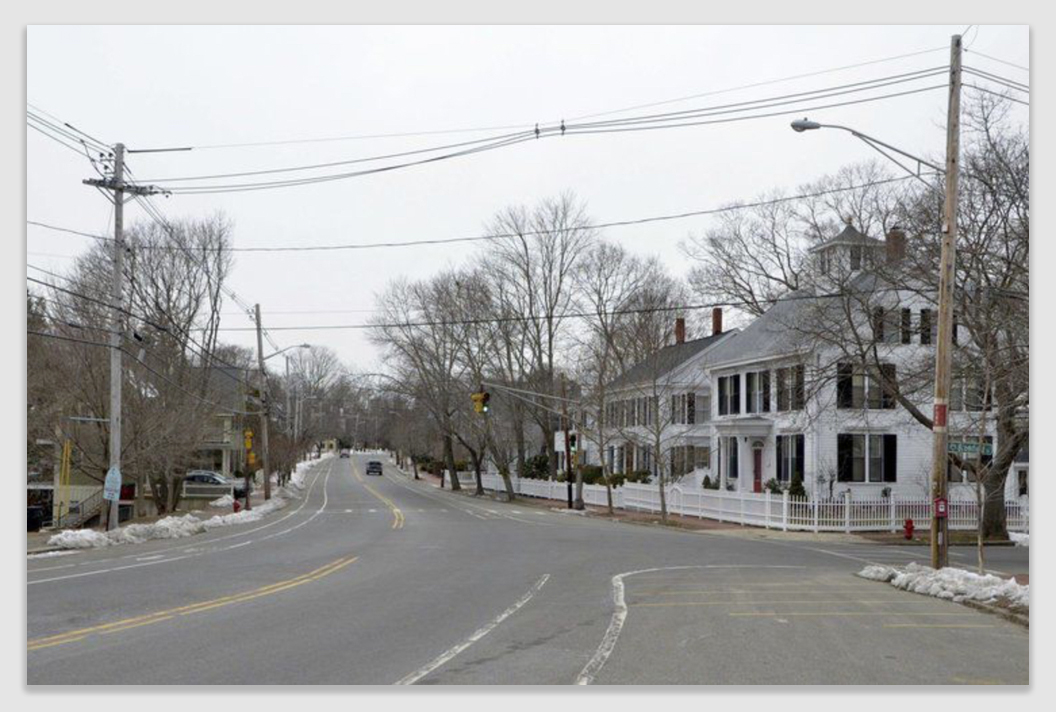
Spring is here! Although we lost many trees to disease, old age and nor’easters this winter, they are slowly but surely being replaced, thanks to generous contributions and increased funding to the Tree Commission budget. You’ll soon see Jim McCarthy of Saltbox Financials on the corner of Route 1 and Pond Street planting two October Glory maples. Five Cents Savings Bank on State Street will have a new honey locust. Four more cherry trees will suddenly appear magically, planted by little elves (Friends of Newburyport Trees and Tree Commission volunteers) at Bartlet Mall and a copper beech will provide a shady spot for sitting by the Frog Pond where the old willow once stood. Twenty new trees are projected to be planted on High Street between Atkinson Common and the Newbury line, 19 more in spring 2018. Seventy more sites have been selected to complete the gateway project on High Street within five years. And finally, coming this spring to Fair, Kent, Merrill, Forrester, the corner of Washington and Olive streets are 14 different varieties of cherry, maple, gingko, elm, hornbeam, oak, honey locust and Ivory Silk lilac trees. For each new tree planted, the Tree Commission must budget $250 for its purchase, $150 for planting and $240 for a 2-year service provided by a watering contractor every week from May 15 through Sept. 15. Friends of Battis Grove, the Newburyport Horticultural Society and the Newburyport Garden Club have also gifted money to FoNT to help make this possible. At its March meeting, the Budget and Finance Committee of the City Council approved $10,000 free cash to go toward the purchase of more street trees. The Tree Commission has requested an increase for the FY 2018 tree budget to $20,000, up from $15,000. Without these increases, all or at least part of the spring and fall 2018 neighborhood planting programs would have to be suspended…
The National Park Service says Washington’s famous cherry trees reached peak bloom over the weekend. The National Park Service says on its website that peak bloom was reached Saturday. This year’s bloom was different from in the past because cold weather killed half of the blossoms on the famous trees just as they were reaching peak bloom. Peak bloom is normally defined as the day when 70 percent of the blossoms are open on the Yoshino cherry trees around the Tidal Basin. But that didn’t happen this year because half of those blossoms were killed as a result of the cold. Officials defined peak bloom as the day 70 percent of the remaining blossoms were open…
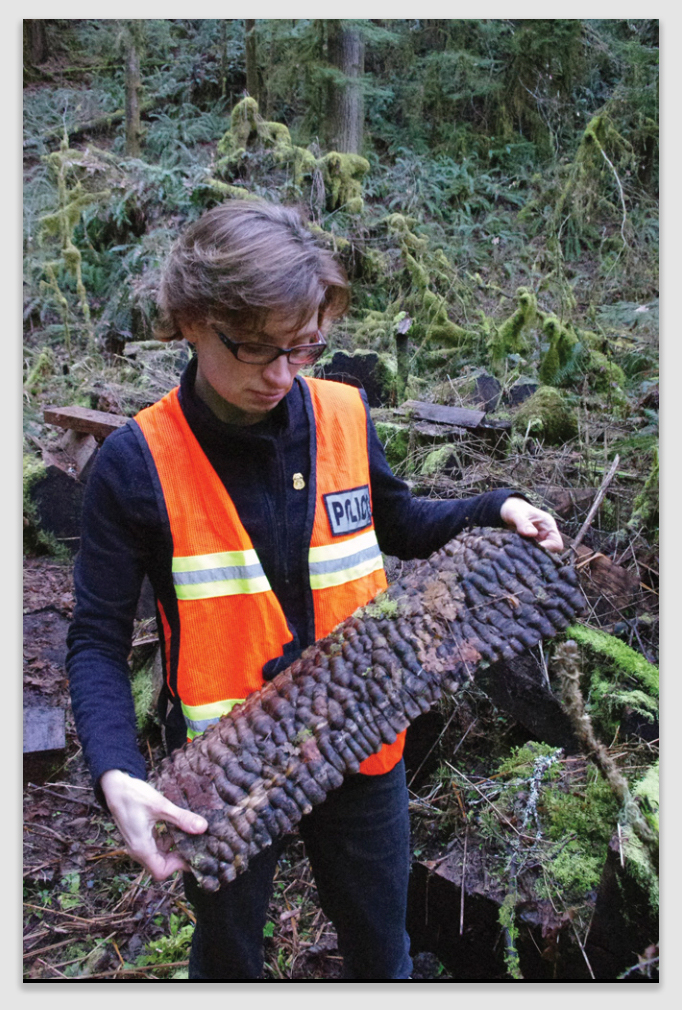 Paonia, Colorado, High Country News, March 20, 2017: Busting the tree ring
The clearing that tree poachers call the Slaughterhouse lies in the northwest corner of Washington’s Gifford Pinchot National Forest, concealed behind the wall of hemlock and cedar that edges Forest Road 25. Ron Malamphy first visited the Slaughterhouse on a damp day near the end of winter in 2012. When he pushed into the glade, he found the scene matched the moniker. A jumble of felled bigleaf maple, chain-sawed into rough chunks, littered the forest floor, heartwood exposed to the chilly air. The most valuable wedges had been crudely hacked out, the rest left to rot. A patina of sawdust coated the moss and ferns. It looked, a federal prosecutor would say later, like a bomb had gone off. Cutting bigleaf maple is generally legal, with the right permits, on private and state land in Washington. In national forests, however, protections on old growth keep the tree strictly off-limits. But in Gifford Pinchot, the law’s arm didn’t reach too far…
Swarthmore College — a fancypants, politically-correct hothouse bursting at the seams with wealthy white kids — has announced that it may punish five students for their role in a four-hour takeover of an administrative office last month. The students facing the prospect of punishment for breaking school rules have reacted with disappointment and confusion.The demonstrating students are part of Swarthmore’s Mountain Justice group, a campus organization which is perpetually demanding that Swarthmore’s trustees sell all the fossil-fuel stocks in the school’s luxurious $1.9 billion endowment portfolio…
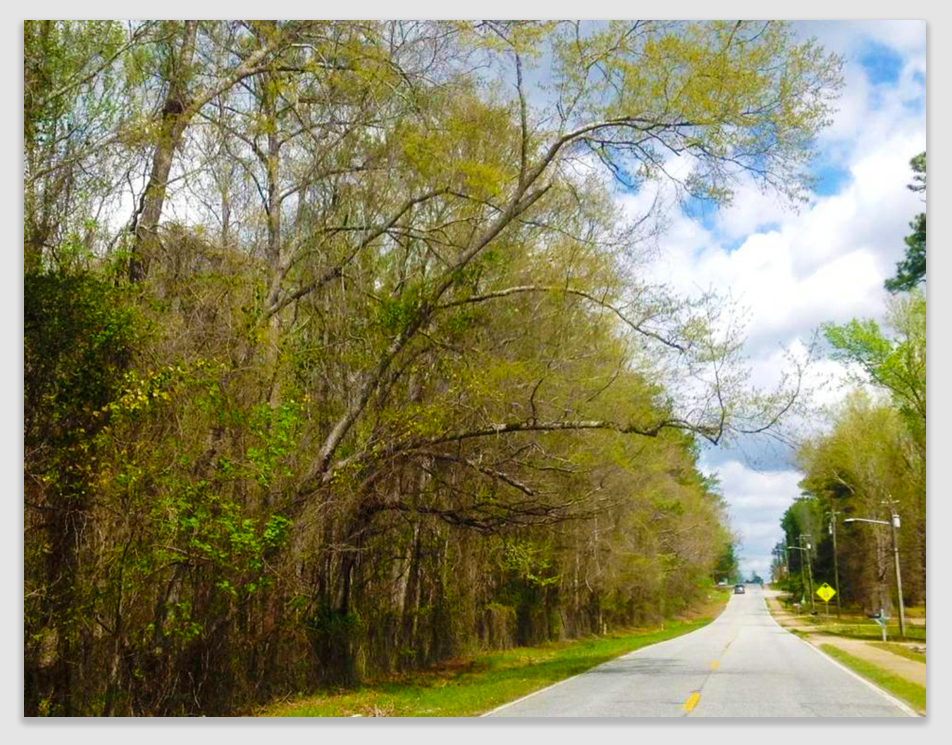 Columbus, Georgia, Ledger-Enquirer, March 26, 2017: Not as simple as, ‘Hey, cut this tree down’
“The tree gives shade even to him who cuts off its boughs.” ― Sri Chaitanya, spiritual leader, circa 1500. I hope Sri’s right, because we’ve been cutting some boughs lately and are apt to be cutting more before it’s over. We wrote last week about a potentially dangerous situation on the back side of the tennis center at Cooper Creek Park. (More on that later.) The column got the attention of Concerned Reader Michael, who is alarmed about the condition of some trees along Lynch road between the Bull Creek Golf Course entrance and Matthew’s Elementary School down the road. “The trees along Bull Creek Golf Course, going along Lynch Road, all the way to Mathews Elementary, are some of the most dangerous looking trees in town,” Michael wrote. “Not sure if the golf course or the city is responsible/liable when something bad happens, but something must be done...”
Individuals often plant trees close to their house because of the shade they provide. In addition to relaxing underneath a shade tree on a hot summer day, the leaves on a tree also provide shade for the house, and this makes it cooler inside. When trees that are growing close to the house become dangerous, it’s time to contact professional tree cutting services in Bronx NY. Trees that are in close proximity to a house can fall on the structure if they’re hit by lightning or damaged by high winds. If branches on the tree are unhealthy and die, they can also fall on the house and cause damage to the roof. If a limb falls straight down with enough force, it can penetrate the roofing materials and cause a hole in the roof. If a tree becomes damaged, homeowners should have it cut down by professionals before it falls…

A Boulder District Court judge ruled against a Longmont family trying to save the cottonwood tree in front of their home. The family said the shade from the tree was the only thing keeping their house cool because they can’t afford air conditioning. The city said the tree is on city property and it planned to cut it down after complaints for decades from neighbors regarding people’s health and other hazards.The tree was planted by Kent and Patty McDonald 38 years ago in honor of their three daughters.”This re presents family to her,” Quinn Finn, one of the McDonalds’ daughters, said…
A 26-year-old woman was critically injured when a 100-foot-tall tree fell on her car on Ramapo Valley Road, police said. Officers provided first aid to the Oakland resident, who suffered “critical injuries” on her face and internally, said Police Chief James N. Batelli. The crash occurred near 888 Ramapo Valley Road and the woman was reportedly going south when the Hyundai Elantra was struck. Wind gusts were about 35 to 40 mph when the tree fell, Batelli said. The Mahwah Volunteer Ambulance Corps and paramedics from Valley Hospital took the woman to Hackensack University Medical Center…
 Hartford, Connecticut, Courant, Match 22, 2017: Tree limb falls on school bus, killing driver
A school bus driver died Wednesday when a large tree limb fell on his school bus, causing him to crash, police said. No students were on board. The freak accident happened on Country Club Road near Tamara Circle in Avon about 8:50 a.m. as the driver was returning to the bus depot. It was a windy morning, and a large tree branch apparently fell on the roof over the cab of the bus, police said. The male driver lost control, and the bus struck a utility pole. He was only a short distance from the depot at the time of the accident, Lt. John Schmalberger said…
The Tallahassee City Commission held a workshop Wednesday to discuss an Urban Forest Master Plan. This, after the Commission moved to develop a UFMP at its annual retreat in January. The idea is to create a plan for the City’s urban forest that tailors to the needs of the community. The urban forest is any and all trees and vegetation on public and private land within city boundaries. An Urban Forest Master Plan considers the current state, how the public feels, what they want from the trees and how to manage them internally; plus, it develops a path forward for achieving goals. To create this, staff recommended the Commission do four things. The first is to issue an RFP for a consultant to perform an Urban Tree Canopy Analysis, as well as direct a public engagement program. Secondly, to modify some of the policies regarding the electric utility tree trimming program. Third, to create a Storm Preparedness Pilot Program, which would offer loans to residents for tree removal of specific tree. And finally, to consider underground utility conversion in specific areas of the city…
 Voice of America, March 21, 2017: Put rainfall, air conditioning back into trees, scientists say
International climate and environment agreements have a flaw which may jeopardize attempts to curb global warming quickly: they do not highlight the role trees play in creating rainfall and cooling the earth’s surface, 22 scientists said on Tuesday. Traditionally, international agreements have focused on how trees affect carbon levels in the atmosphere — living trees absorb carbon dioxide and deforestation releases carbon. While that is important, it should not be the priority, the scientists said, while presenting results of their research at a virtual forestry symposium…
“It’s starting to get warm, there’s no more snow, hopefully there won’t be more snow,” Gilbert Sierra said. That warmer weather has Sierra and his son, GG Sierra out enjoying the first couple days of spring. “Just enjoying the weather, just you know going bike riding, going running, you know hopefully it’ll get a lot more warmer and then we can do more things outside you know,” Gilbert Sierra said. For GG, though, springtime brings seasonal allergies. “Just like a runny nose every once in a while and having to wipe it constantly,” GG Sierra said…
Trees and plants have their own hydraulic pump system through that water travels up to the leaves from the roots and the sugar and the nutrients that the leaves produce travel down to the roots. The pumping mechanism is carried out through a system of tissues called xylem and phloem. Mimicking the pumping mechanism inside trees and plants, a group of MIT engineers have designed a microfluidic chip that they have termed as “tree-on-a-chip.” The newly designed chip works almost the same as the natural pumps inside trees and does not require any external pump or mechanical part, reported Phys.org. The microfluidic chip is able to move fluids through the chip at a steady flow rate for several days. Notably, researchers had developed the same tree-inspired pump systems before. However, they found that the designs would stop pumping within just a few minutes. In order to make the chip, the researchers put together two plastic slides and drilled small channels through the slides to represent xylem and phloem. They filled water in the xylem channel and water and sugar in the phloem channel. Next, they used a semipermeable material to separate the two slides to mimic the membrane between xylem and phloem, as noted by MIT News…
It’s a testimony to how tricky it is to grow plants in a doctor’s office that you hardly ever see them there. In fact, I cannot remember the last time I saw plants in a doctor’s office. Decades ago, when Bombeck, who authored a widely syndicated, humorous column on daily living, had her say on this subject, it provided a good laugh. At the same time (remember: in those days, most people read newspapers!), it had a chilling effect on growing greenery in health-care environments. Despite there being a boatload of literature on how beneficial it is, health-wise, to be surrounded by oxygenating and pollutant filtering indoor plants, hospital rooms and doctor offices have largely become greenery-free zones. While doctors can be excused for not wanting to fuss with plant care, what about us? These days, the most eye-catching words you can use to promote any plant species are “low maintenance.” Let’s be clear, however, that despite my own, all too frequent verbal obeisance to this imaginary concept, there is really no such thing as a low-maintenance plant — at least not in an urban environment…

A controversial timber harvesting project at a popular central Maine wildlife area is likely ahead of schedule, with more work planned for this summer. The project at the roughly 1,000-acre Jamies Pond Wildlife Management Area in Hallowell, Manchester and Farmingdale began in August and is roughly 75 percent complete, an official with the Department of Inland Fisheries & Wildlife said during a Hallowell Conservation Commission meeting. It’s the first timber harvesting project at Jamies Pond in more than a decade. “We’ve had really good operating conditions, and we haven’t had significant challenges because we had a very dry fall,” said G. Keel Kemper, a regional wildlife biologist for the wildlife agency, which is overseeing the project. “We feel pretty good about it.” The timber harvesting effort includes the removal of certain trees to allow other, younger trees to flourish, thus increasing foraging opportunities for deer, snowshoe hare and turkey. In addition, work is designed to improve a deer wintering area to increase openings in aspen-dominated sections to provide habitat for grouse and woodcock. The agency also built roads for vehicles and equipment. The roads are for temporary use but are essentially permanent by footprint…
Greenville, North Carolina, WHNS-TV, March 20, 2017: New tree initiative launched in Asheville
Asheville’s Parks & Recreation Department, along with Asheville GreenWorks, has launched a new initiative to plant trees over the course of the next three years at the city’s 74 recreation facilities. According to the City, to start off the initiative, the department announced the “30 Trees in 30 Days” program. Members of the Parks & Recreation Department, volunteers with Asheville GreenWorks and community members will gather at 4 p.m. on Mar. 8 at the Shiloh Complex to plant the first three trees. “Through this three-year tree initiative, the Parks and Recreation Department demonstrates its commitment to improving the appearance of our community and our environment. Planting these trees at our parks and facilities creates a lasting legacy.” Said Roderick Simmons, Parks & Recreation Director. In Jan. 2016, the Asheville City Council created a 20-year vision for the city. Part of this vision included a dedication to a clean and healthy environment…
 Mother Nature Network, March 20, 2017: Why do the leaves of some trees turn brown but not drop?
Have you noticed a tree around town that holds its brown leaves all winter instead of dropping them? There’s a term for this curious leaf-retention phenomenon. It’s called marcescence. And if it’s a conical-shaped understory tree with bleached, light tan leaves, it’s probably an American beech (Fagus grandiflora). “Basically, that means that things hold onto stuff,” said Jim Finley, a Pennsylvania Extension Service forester who is also a professor of forest resources and director of the Center for Private Forests at Penn State. Marcescence occurs in other trees beyond beech trees. Leaf retention also occurs in many oak species, witch hazel, hornbeam (musclewood) and hophornbeam (ironwood), said Finley, who added that it’s more common with smaller trees, or more apparent on the lower branches of larger trees. What’s interesting is that scientists haven’t figured out exactly why some trees retain their leaves. “It’s all speculation,” sad Finley, who said there appears to be little new literature about the topic in recent years…
Keep your trees and shrubs happy, healthy and handsome with the tips and techniques you’ll learn at a proper-pruning instructional session, 10 a.m. Monday at Pensacola State College, Milton campus. Florida Master Gardener Mike Burba will lead the one-hour presentation of the proper techniques for pruning of trees and shrubs, including the use of the right tools. If weather allows, a demonstration will take place in the garden. The presentation is part of the “Mondays in the Gardens” series, a free gardening program at the UF Milton Gardens under the direction of UF/IFAS Extension Santa Rosa County Master Gardeners. No pre-registration is required. Follow the signs on the Pensacola State College, Milton campus to find the UF Milton Gardens. The gardens are free and open to the public from 8 a.m. to 5 p.m. every day the campus is open. Both self-guided and guided tours are available. Changing seasonal gardens feature a multitude of horticultural displays including shade, formal, children’s and water gardens, bulbs, roses, shrubs, trees and perennials…

Urban tree huggers rejoice. This concrete jungle is home to nearly 125,000 trees and a staggering 628 species and cultivars. San Francisco’s tree population is even more diverse than its citizenry. Following a yearlong citywide tree inventory, officials with the SF Urban Forest Map painstakingly recorded every tree in San Francisco. The map was last updated in 2010, using data primarily from the Department of Public Works. Combining data from the Friends of the Urban Forest, the City of San Francisco, businesses, and citizen scientists, this year’s update reported 35,000 more trees than the previous iteration. A typical city hosts 80-100 different tree species, according to a statement on the Urban Forest Map’s website. San Francisco’s diversity of species aids the plants in warding off pests and diseases, and the data helps forest managers plan future tree plantings…
Baraboo, Wisconsin, News, March 19, 2017: Program to discuss tree fire scars
The Baraboo Range Preservation Association will hold the Cabin Fever Lecture Series program, Fire on the Landscape: Historical Evidence at Pine Bluff from 7-9 p.m. Wednesday at the University of Wisconsin-Baraboo/Sauk County science facility, 1006 Connie Road, Baraboo. Wisconsin DNR Fire Ecologist, Jed Meunier will discuss fire scars found in tree stumps at BRPA conservation easement property owned by Toni Ankenbrandt. Learn about the frequency of fire from this red pine relic as part of the larger historical record for the Baraboo Hills. Cross sections of stumps collected on location will be on display…
Carlisle, Pennsylvania, The Sentinel, March 19, 2017: Winter storm stalls bud growth in fruit trees
The winter storm had arrived just when David Peters needed a change in the business climate. Warm temperatures this winter forced him to keep a close eye on the fruit trees that make up his livelihood. The concern was the warmer temperatures could fool the trees into coming out of dormancy too early, putting the blossoms that bear the fruit at risk of being damaged by a subsequent dip in the mercury. “It came at a very good time for us,” said Peters, manager and part-owner of Peters Orchards of Adams County, which has a few hundred acres along the border with South Middleton Township in Cumberland County. The cold temperatures and heavy snow that came with the storm delayed any further development of buds on most of the fruit trees, putting the plants back on a normal seasonal pattern…
US News, March 19, 2017: Changing climate threatens New Mexico’s pinon trees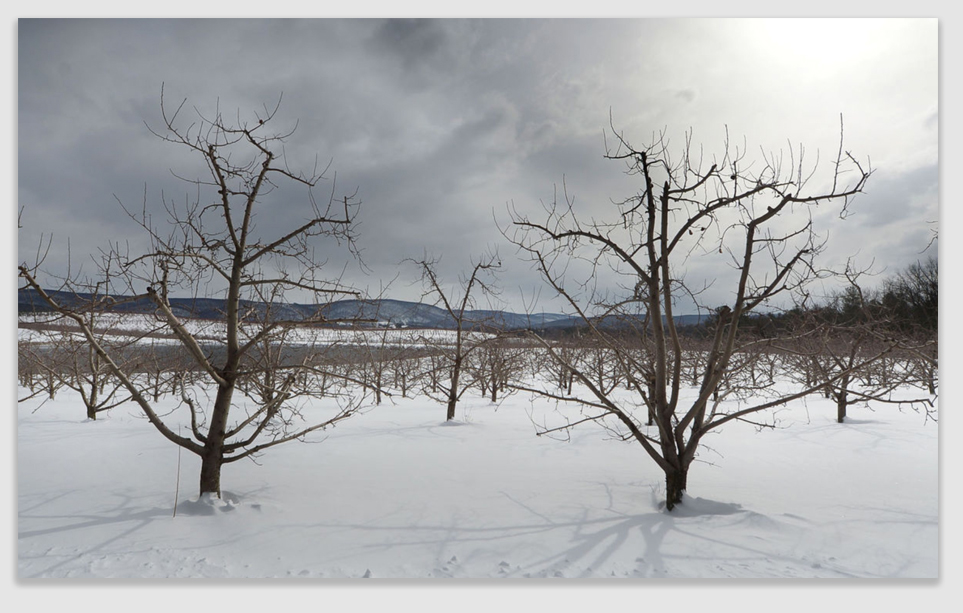
New Mexico’s official state tree is under threat from the region’s warming and drying climate, scientists say. The pinon pine is known for its nuts and its distinctive smell when used as firewood. But state scientists and botanists are warning that pinon trees across northern New Mexico and other areas of the state may be under increasing strain this year, The Santa Fe New Mexican reports. The changing climate can leave the tree vulnerable to pest infestation and disease, and it isn’t clear yet how severe the problem could become, according to scientists. “Pine needle scale is all over Santa Fe,” said Scott Canning, director of horticulture for the Santa Fe Botanical Garden. “Last year, it was widespread; this year it is even more widespread…”
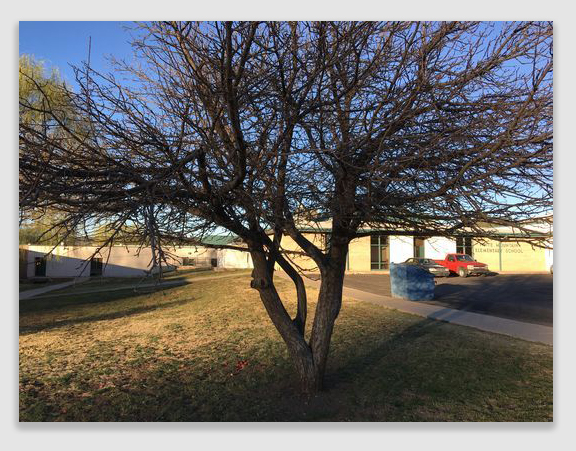 Ruidoso, New Mexico, News, March 15, 2017: First-graders beg principal to save lone apple tree
We’re a long way from the picking season, but the lone apple tree next to the White Mountain Elementary school cafeteria driveway is producing some very rich fruit right now anyway. First graders at nearby Sierra Vista Primary school learned that because of its location, the tree might be doomed when the backhoes arrive next month to begin construction of the Nob Hill replacement project. The students took pens in hand last week to compose a petition to Principal Jeremy Green, explaining how important the tree is and asking him to find a way to save it. “I did have the class write me a nice letter talking about their concern with the tree,” Green said Wednesday. “It’s a sort of cornerstone for them. They talked about the apples and the shade it provides…”
Gwinnett County cops are looking for a Flowery Branch man they believe has scammed 14 people out of $9,000 with a fake tree-cutting business. Andrew Mosley, 22, is wanted on 13 counts of misdemeanor theft by conversion and one count of felony theft by conversion. Mosley posed as a tree-cutting and removal service provider in Gwinnett County starting in December, taking advance payment to trim or remove trees, but not completing jobs. Several of Mosley’s alleged victims are elderly, in their 70s and 80s, police said. Mosely is believed to have operated under the company names of B&M Tree Services, Mosley Tree Service and United Tree Service.“We highly anticipate additional victims,” police said. Customers can avoid potential scammers by checking whether a company is registered with the Secretary of State’s office or asking for proof of insurance…
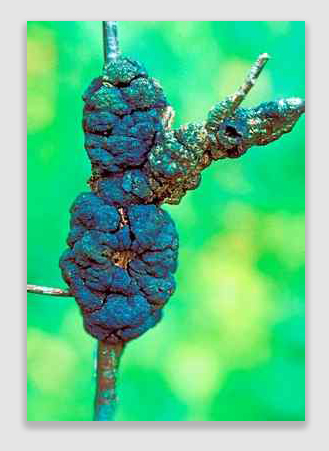 Oakland, Michigan, Press, March 15, 2017: There is no cure for black knot fungus on your tree
Q: I just love those purple leaf plum trees. I have one now and it appears to have tumors on the branches. It has black corky material on various branches that make them lumpy and I have no idea when this happened. And there has never been any fruit on this tree but it has had flowers. So, what’s happening?
A: A fungal problem called black knot is happening. This is a chronic problem with many members of the prunus family, especially purple leaf plum or sand cherry. It is known by both names. The branches develop black galls that cut off the flow of nutrients to the branches. But this nonsense did not occur recently. It takes at least two years to develop the blackened, swollen growths. The first year, they are small, light brown, smooth swellings on twigs. These develop on the current or last year’s growth. The next year during the growing season, the lumps become olive green and velvety in appearance. Then, they turn black and corky by the end of the growing season. The twigs could become curved or elbowed by the strange growths…
Most of us appreciate the beauty of tree-lined streets and the shade they give on hot summer days. Trees, however, provide many more benefits we often fail to recognize, including filtering pollutants out of the air and water, absorbing stormwater, improving mental and physical health, and increasing tax revenue and property values. The importance of tree canopies to urban revitalization was the focus of a workshop in Roanoke last week by Trees Virginia, the Virginia Urban Forest Council, a nonprofit organization that works to improve quality of life through tree stewardship. Speaker Karen Firehock, executive director of the Green Infrastructure Center in Charlottesville, said trees can reduce urban runoff between 2 and 7 percent, noting developers should not rip out trees to install rain gardens…
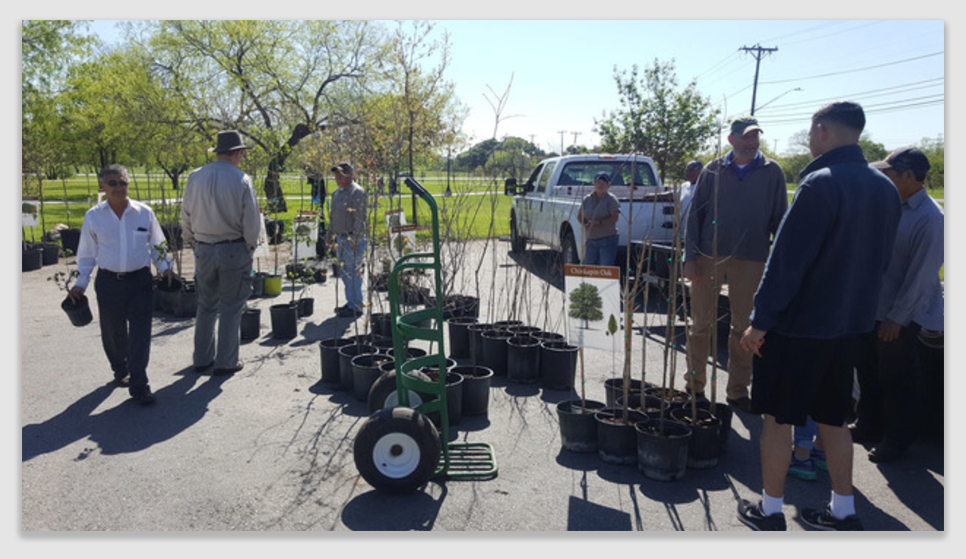
It’s about to get a lot more green in the neighborhoods impacted by the serious storms and tornadoes a little more than three weeks ago. On Tuesday, employees from the city of San Antonio’s Parks and Recreation Department began implementing a tree recovery initiative. “We lost all of our trees,” said Jesse Solano, a Linda Drive resident. Solano has lived on Linda Drive for 12 years. He and his family are expecting a higher utility bill when they move back home. That’s because big, beautiful shade trees that once stood in their front and back yards are now gone, lost to the EF-2 tornado that ripped down the street. Thanks to tree mitigation funds from the city, and some helpful Parks and Recreation employees, Solano and others affected by the storms were able to pick out two trees of their choice to plant at home free of charge. The initiative will also plant large trees at eligible homes. “We hope and pray that with nurturing, they’re going to grow up real nice and pretty,” Solano said…
Davenport arborist Chris Johnson’s eyes widened, and he had to take a step back as he tried to explain the effect of the emerald ash borer to members of the Davenport City Council. The tiny, green invasive species originating from Asia was discovered in Rock Island County in 2013, but it was suspected to have been in the area for six to seven years prior. Two years later, it surfaced in Davenport. Now, the ash borer is damaging trees at an alarming rate with removal of hazardous and unhealthy ash trees more than tripling since its discovery in Davenport. “Once the infestations kind of bloom and explode, you find it all the time,” Johnson said. “That’s the case that’s going on now with all of our ash removal. We’re essentially finding it in every ash tree we remove…”
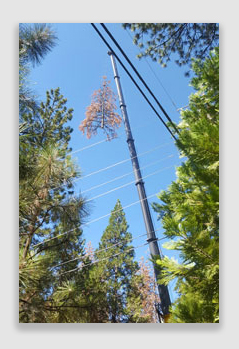
You don’t have to travel far into the Sierra Nevada foothills to see the devastation. In California, 6.1 million trees died per month between October 2015 and November 2016, bringing the total to 102 million since 2010 from more than five years of drought and bark beetle infestation. As a result of PG&E patrols, the energy company removed 236,000 dead or dying trees last year. Since California’s tree mortality crisis began, PG&E has worked to protect its infrastructure, and the customers and communities it serves, from wildfires and other public safety threats. Last week (March 8), PG&E representatives appeared before the California Board of Forestry and Fire Protection to discuss how the energy company has been combating the threat. That includes additional, extraordinary measures to its regular tree maintenance program that prunes or removes about 1.2 million trees each year, said Kamran Rasheed, PG&E vegetation management manager…
Lafayette, Louisiana, KATC-TV, March 14, 2017: Sunny, cool with a good chance of tree pollen
It’s that time of year again in Acadiana…pleasant weather with the main chance of something falling from the sky, or the trees rather, is pollen. That’s what the forecast holds for Acadiana as trees continue to reveal there spring foliage while rain chances are expected to remain slim to none at least over the next week. According to pollen.com oak and ash pollen are the currently the top allergens in the area…with the forecast for high tree pollen to continue for the rest of the week. Expect sunny skies to continue for our Wednesday with temperatures warming into the low-mid 60s after a chilly start mostly in the lower 40s…
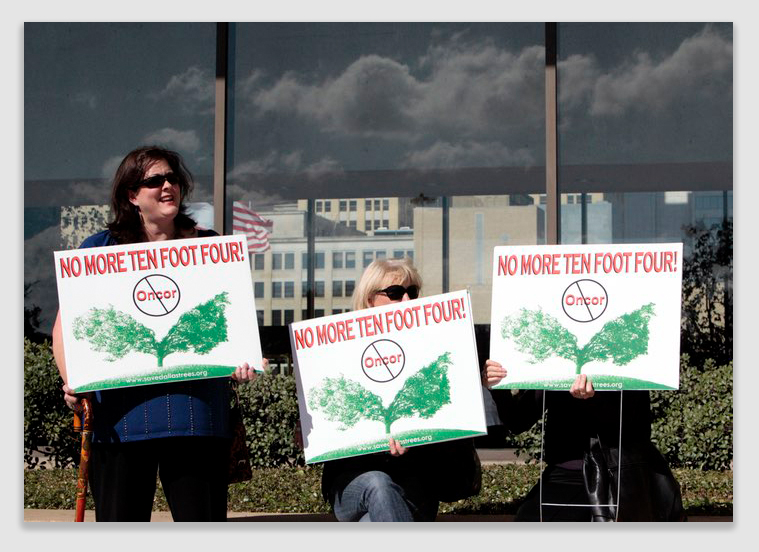
A 67-year-old woman climbed a tree outside her Lakewood home on Monday morning in an effort to keep it from being cut down. Jeri Huber went up the tree around 11 a.m., KXAS-TV (NBC5) reported, and only came down when she learned that workers would come back with a restraining order against her. Huber told the station that the incident in the 7100 block of Westlake Avenue, near Winsted Drive, stemmed from a dispute with Oncor about a pole that had been left leaning onto her property. A Dallas County constable served papers at Huber’s home Monday afternoon, WFAA-TV (Channel 8) reported, and the tree-trimming crew returned. In 2010 — armed with a pellet gun — she climbed a tree in an attempt to stop the company’s crews from trimming its branches. Oncor eventually got a restraining order against her.…
Anderson, Indiana, Independent Mail, March 13, 2017: Tree removal closes Anderson’s South Boulevard
The removal of a 105-year-old tree that likely had been part of the Anderson University landscape at its inception is expected to block traffic on South Boulevard for parts of the next three days. Traffic was blocked most of the day Monday as cranes moved into position for the removal. The road will be blocked in front of Anderson University again from 8 a.m. to noon Tuesday and Wednesday. Arbortech crews began work Monday morning on the removal of a large red oak tree that stood near the road. Arborist Phil Pierce said the 120-foot tree was likely a young one in the spring of 1912, a few months before the college opened its doors for the first time…
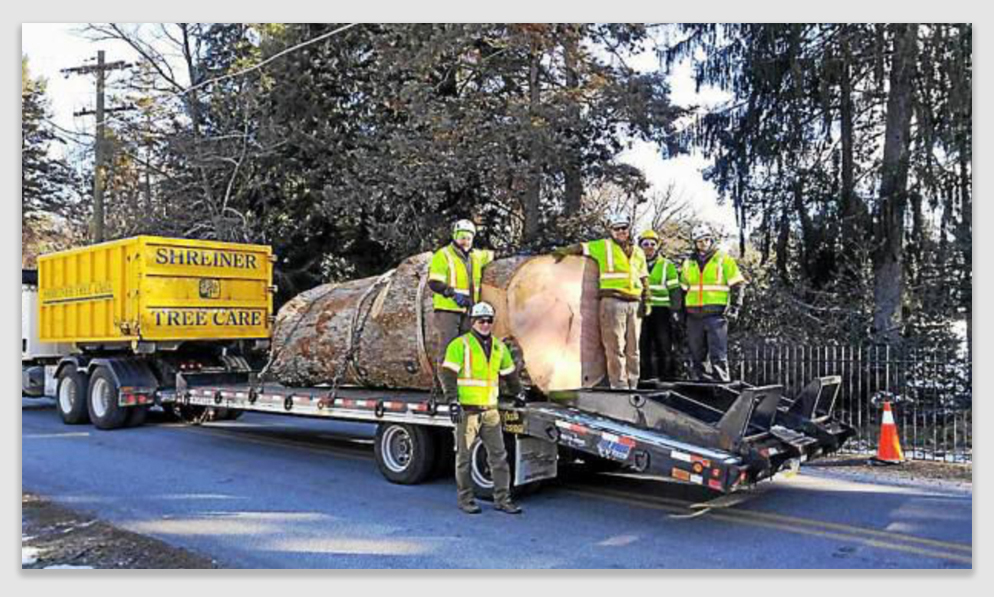
The carved wooden rabbits statue that has been a landmark along County Line at Spring Mill roads in Villanova was removed two weeks ago as crews delicately disassembled the roadside attraction to make room for a new one that will be carved in the in the next month or so. The statue was carved decades ago and was beginning to deteriorate, so officials and crews from the Natural Lands Trust, which now owns the Stoneleigh estate property where the rabbits stood, decided to have Marty Long, the man who originally carved it, make a new one. Last Saturday, the decayed base was replaced by a new white oak tree trunk installed by crews from Shreiner Tree Care. The 4,500-pound decayed trunk was removed by crane, and carefully replaced with the 26,000 pound white oak trunk. Long, will recreate another bunny sculpture over the next couple of weeks…
Labroots, March 13, 2017: Tree rings predicting volcanic eruptions?
Geographers and dendrochronologists teamed up in a cross-disciplinary study to look at the correlation between tree rings and volcanic eruptions, reports the Swiss Federal Institute for Forest, Snow and Landscape Research WSL and the ETH Zurich. Their results gathered from Mount Etna’s west flank which erupted in January, 1974, state evidence that tree rings may be able to predict eruptions. Scientists know that tree rings can provide a lot of of environmental information. For instance, the ring width reflects the tree’s growth conditions, which are a combination of the temperature, precipitation and nutrient conditions during a given growing season, explains ScienceDaily. But this new study, published in Scientific Reports, makes it clear that tree rings may provide even more information than previously thought. “The ring width may also be influenced by volcanic activity on Mount Etna and in other volcanic regions,” states geographer Ruedi Seiler, a PhD student at WSL…

Family and friends are grieving the loss of 17-year-old Diana Olidinchuk who died in after a tree fell on her in one of their local parks. It has some concerned about the safety of the trees in Meadowdale Beach Park where a makeshift memorial for the teen is at the hike’s entrance. “I was at work yesterday and my friend called me and I was in shock,” said Angelina Plutenko. She came to the memorial with her sister Evelina the day after she learned about her friend. “I was in shock for the whole day…”
Lincoln, Nebraska, Journal Star, March 12, 2017: March is a great time for tree pruning
Late winter is an excellent time to prune deciduous trees. Branches are easier to remove when not weighed down by leaves and the tree’s branching structure is easier to see. Proper tree pruning is essential in developing trees with strong structures and desirable form. Young trees that receive appropriate pruning require little corrective pruning as they mature. Pruning can be done at any time during the year, but growth is maximized and wound closure is fastest if it takes place just before spring growth. However, flowering trees, like Japanese lilac and magnolia, should be pruned right after they finish blooming to prevent the removal of flower buds during pruning. Pruning should be done with an understanding of how trees respond to each cut. Improper pruning can cause damage that will last for the life of the tree, or worse, shorten the tree’s life…
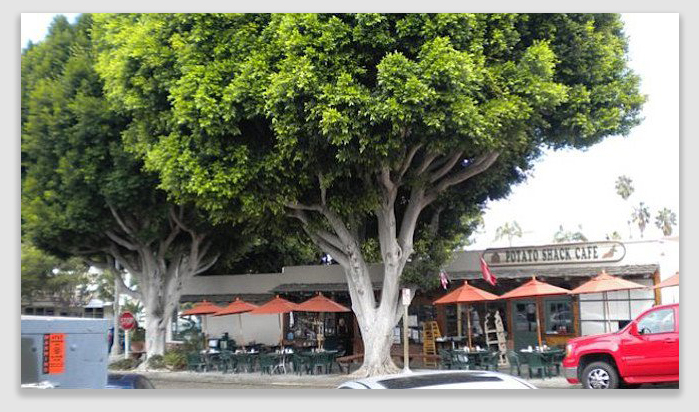 San Diego, California, Reader, March 12, 2017: Encinitas’ love/hate for a certain tree
An attempt to pass a tree ordinance in Encinitas drew a slew of people to a meeting Wednesday night (March 8). Besides being generally interested in protecting publicly owned trees, people wanted to talk about the four ficus trees the city planned to cut down last year. The city aborted the plan amid public protest and is now trying to control the trees’ growth so their roots stop damaging streets, sidewalks, and sewer connections. The proposed ordinance is more broad and general, allowing the city to declare trees “heritage trees,” which triggers greater protections for them. The ordinance only applies to city-owned trees, not to private property. The city already has a tree ordinance (approved in 2011) and was recognized as a “Tree City” in 2012. But the “safety net” for trees has failed several times since then, and the city is exploring hiring a contract arborist as its tree expert…
City crews this week will replant four palm trees downtown. The crews removed the palms from the sidewalk along the east side of Orange Street north of Redlands Boulevard to relieve crowding of the trees against storefronts and create a wider walkway for pedestrians. The palms are currently being stored and watered in anticipation of replanting. Two palms will be relocated to vacant tree wells in the sidewalk in front of the Redlands Mall. The other two trees will be relocated into newly constructed bulb-out tree wells near their current location along Orange Street…
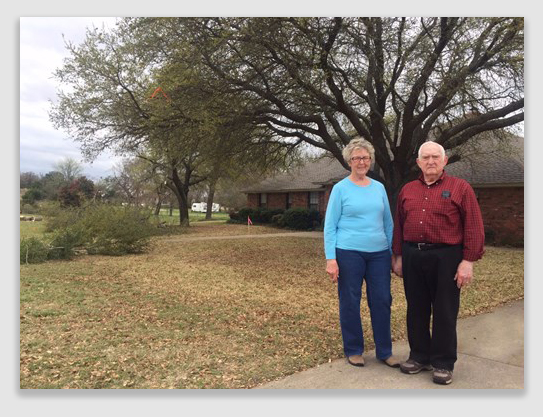 Dallas, Texas, WFAA-TV, March 9, 2017: Neighbors take a stand against Oncor crews cutting down trees
Most mornings Juanita Erwin makes a cup of coffee and looks out at her oak tree in the front yard of her Weatherford home. She’s been doing the same morning routine for 30 years. “My husband planted the tree himself. Grew it from an acorn,” Erwin said. Thursday, helicopters flew over as Erwin’s neighbors stood in front of that tree, blocking crews from Oncor from cutting it down. “We told them they had to leave and get a permit,” Arthur Erwin said, Juanita’s husband. Oncor says it was doing “vegetation management” clearing trees and plants that pose a risk to the vital electric infrastructure.” In a written statement from the power company, Oncor says it chose trees and plants based on their height and proximity to the high voltage lines…
A 36-year-old man clearing land on his own property east of Kalama died Tuesday morning after a tree fell on him. Stewart Lee Osborn was cutting down a tree when the trunk split, kicked back and landed on top of him, according to the Cowlitz County Coroner’s Office. He died instantly. An autopsy determined the man died of blunt force trauma to the neck and chest, according to the Coroner’s Office. Cowlitz County Sheriff’s Capt. Corey Huffine said Osborn had recently purchased the property. Cowlitz County sheriff’s deputies and Fire District 5 responded to the 911 call at 11:46 a.m. at 727 Italian Creek Road. He was pronounced dead at the scene at 11:55 a.m., said Chief Deputy Coroner Brett Dundas…
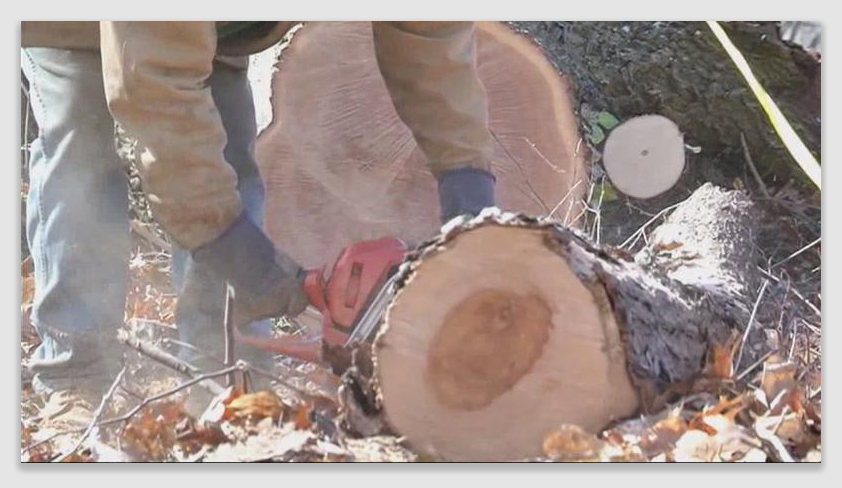 Rochester, New York, WHEC-TV, March 9, 2017: Tree removal companies have a big job ahead
They’re barely done with the cleanup from last week’s chaos, but now they’re fielding record numbers of calls as winds continue to topple trees and crush homes. All day we’ve seen violent winds knock down trees and power lines across our area. Just last week, we spoke with Cindi Johnson of East Rochester after a large tree crashed into her living room. For Johnson, the sound of wild winds whipping reminds her of when a red oak tree pierced through her home. “The front dormer was ripped off and there was a tree in here and coming through the ceiling,” she says. Her yard was filled with limbs that took about five hours to clean up. “I’m just concerned about the winds that we’re going to get tonight,” Johnson adds…
Mount Pleasant, Michigan mLive, March 9, 2017: Two dead after heavy winds blow tree onto moving car
Heavy winds claimed the lives of two people in Clare County when a tree fell onto their moving vehicle. On Wednesday afternoon, March 8, Maxwell Muessig, 20, was driving a Mini Cooper east on M-115 Highway through Clare County’s Freeman Township. In the car with him was 23-year-old Margaretta Potter. As they neared the border between Clare and Osceola counties, a large tree fell on the Mini Cooper’s roof. The tree had been blown over by high winds, according to Michigan State Police troopers. Troopers from the Mount Pleasant Post responded to the crash site at about 4:25 p.m. Medical personnel pronounced both Muessig and Potter deceased at the scene…
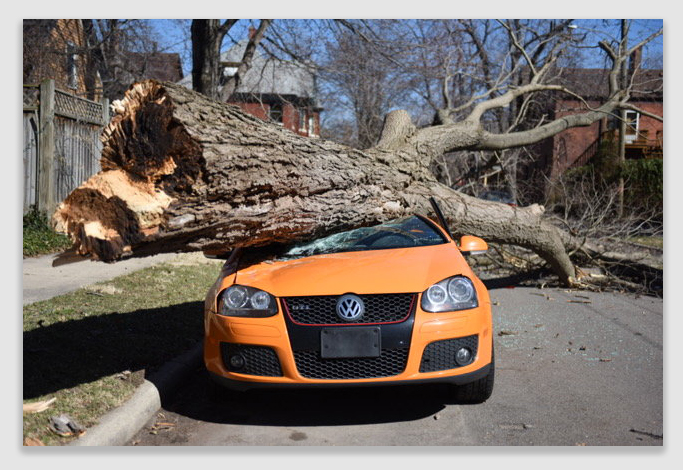 Detroit, Michigan, mLive, March 8, 2017: Tree crushes Volkswagen amid destructive winds in Detroit
A Detroit man is going to come home from Montreal to a destroyed car after extraordinarily strong and sustained winds knocked down trees and power lines across southeast Michigan on Wednesday. Brian Ambrozy said he got a text from his wife at 12:20 p.m. with a picture of his roommate’s limited edition Volkswagen smashed by a downed tree in Detroit’s Woodbridge neighborhood. He said he believes the car is a limited edition 2006 Volkswagen Golf GTI. Ambrozy said his roommate flew to New Jersey to buy and drive the car back to Detroit about six months ago…
In Northwest D.C.’s Kent neighborhood, a battle is brewing over a large coffeetree. The Chain Bridge Road Preservation Committee, a 501(c)(3) charitable organization, has filed an appeal with the District’s Board of Zoning Adjustment to stop the planned construction of three single-family homes on University Terrace NW — on part of a 6-acre estate formerly owned by a DuPont heiress and her husband. The group said in its filing that construction of the homes, which will range from 3,886 square feet to 5,623 square feet plus “substantial” driveways and swimming pools, will kill the heritage Kentucky Coffeetree. The group also argues any tree removal on the property’s subdivided lots is prohibited, and that tree preservation rules created in the 1990s via the Chain Bridge Road/University Terrace Overlay zone bans large scale tree transplanting. The appeal asks that Department of Consumer and Regulatory Affairs revoke the building permits it issued in January. “The scale of the proposed development is substantial and can only be pursued based on ‘heroic’ and costly tree preservation efforts,” the appeal states. There is no margin for error or failure, it continues, and there is “no reasonable basis to conclude” that tree preservation will be successful…
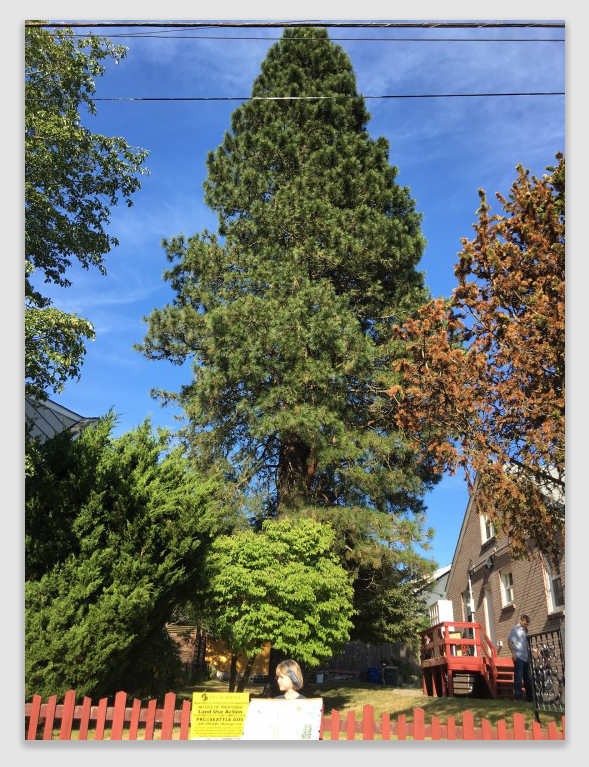
A tree-cutting crew is preparing to take down the “exceptional tree” at 3036 39th SW that had been at the heart of a neighborhood battle – it’s the ~100-foot Ponderosa Pine growing in the middle of a lot where the new owner intends to build a house. Here’s how the tree looked when we first reported on it nine months ago, interviewing a young neighbor who wanted to save it. Our most-recent update was three weeks ago, when nearby resident Lisa Parriott announced she was taking the fight to court, after the city Hearing Examiner ruled in favor of property owner Cliff Low in January. Court records show Parriott’s Land Use Petition in the case is scheduled for a hearing on March 31st – more than three weeks away. But the tree that neighbors dubbed the “Silent Giant” will apparently be long gone by then. Crews from Ballard Tree Service first cut a smaller tree on the lot this morning and are getting ready to take down the pine tree, with an offduty police officer hired to provide security on site…
In the days before Hurricane Matthew, researchers used satellite maps of soil moisture to help forecast where the power would go out along the East Coast. At the American Geophysical Union meeting this week, they report that their method worked with 91 percent accuracy. The project aims to curtail outages by helping power companies allocate equipment and crews in advance of storms, said Steven Quiring, professor of atmospheric sciences at The Ohio State University.
Healthy trees that receive just the right amount of moisture are less prone to storm damage, he explained, so soil moisture is a good indicator of where outage crews will be needed. “We see increased numbers of outages at both ends of the spectrum—wherever soils are too wet or too dry,” Quiring said. “Drought makes tree branches more likely to snap off, and over-saturation makes trees more likely to be uprooted…”
 New York City, Post, March 7, 2017: Sean Lennon settles tree lawsuit with Marisa Tomei’s parents
Sean Lennon finally gave peace a chance, settling a $10 million lawsuit over a rotting tree with his Greenwich Village neighbors who are actress Marisa Tomei’s parents. The details of the agreement are confidential but Gary Tomei told The Post that the 60-foot ailanthus tree finally came down last month after two years in court. “I’m just happy it’s over,” Tomei said. Roots from the diseased tree had cracked the Tomeis’ W. 13th Street stoop, crept into their basement and even compromised their foundation, according to the suit filed by Gary and his wife Addie…
Gardening Knowhow, March 7, 2017: Aspen tree information: Learn about Aspen trees in landscapes
Aspen trees are a popular addition to landscapes in Canada and the northern parts of the United States. The trees are beautiful with white bark and leaves that turn a striking shade of yellow in the autumn, but they can be finicky in a few different ways. One problem that many people come up against when growing aspen trees is their short lifespan. And it’s true – aspen trees in landscapes usually only live between 5 and 15 years. This is usually due to pests and diseases, which can be a real problem and sometimes have no treatment. If you notice your aspen becoming sick or infested, the best thing to do is often to cut the offending tree down. Don’t worry, you won’t be killing the tree. Aspens have large underground root systems that continually put up new suckers that will grow into large trunks if they have the space and the sunlight. In fact, if you see several aspens growing near each other, odds are good that they’re actually all parts of the same organism. These root systems are a fascinating element of the aspen tree. They allow the trees to survive forest fires and other aboveground problems. One aspen tree colony in Utah is thought to be over 80,000 years old…
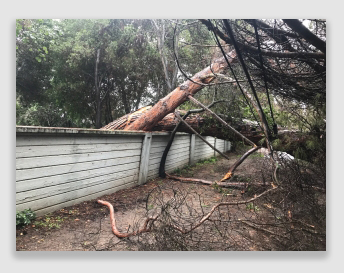
If a tree falls in Atherton, who pays to get it out of the road? That question was pondered by Atherton’s City Council at a March 1 study session.City Attorney Bill Connors had recommended the town continue a practice begun last November of charging the owners of fallen trees in roadways all the costs of clearing them. But council members favored finding a way to revert to the town’s previous practice. The town had cleared trees from roadways at public expense, leaving the homeowner to pay for removing the rest of the tree from the roadside. Reverting to that policy might require changing town laws, the council was told…
Las Vegas, Nevada, KLAS-TV, March 7, 2017: Winds whip up business for tree service companies
Some homeowners have spent Monday getting everything cleaned up following a wild windstorm Sunday. It’s not often winds that strong are felt in the Las Vegas valley. Some neighborhoods were waking up to the sound of a cacophony of cleanup crews Monday morning cleaning downed trees. Wild winds whipping through the valley were enough to knock over power poles along Koval, just east of the Las Vegas Strip. “This weekend, there was a lot of wind, so we got a lot of emergency calls,” said Luis Martinez, Vegas Best Tree Service…
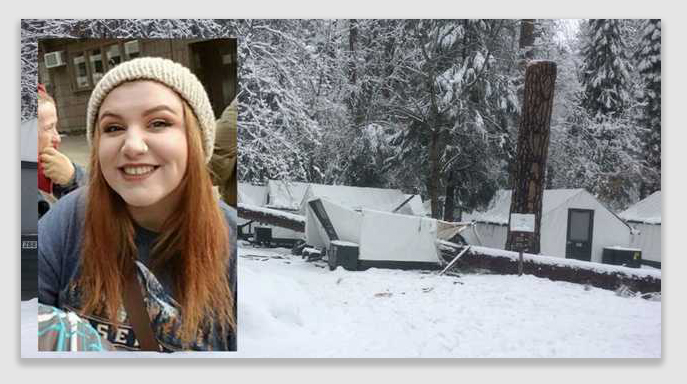
A 21-year-old woman was killed Sunday by a falling tree at Half Dome Village in Yosemite National Park. Park spokesman Scott Gediman told Sacramento television station KCRA that the accident happened about 11 a.m. in the area formerly known as Curry Village. No other information about the victim was made public. A windy, cold storm was sweeping through Northern California and dumped hail. Scattered showers were forecast for the region through Sunday. Gediman says rangers closed the village and had visitors leave the area after the accident. Weather conditions were improving Sunday afternoon, and rangers expected to reopen the area later in the day…
EurekAlert, March 6, 2017: Tree growth model assists breeding for more wood
A meeting in a forest between a biologist and a mathematician could lead to thicker, faster growing trees. “Mathematicians like translating biological processes into numbers,” said Andrei Smertenko, assistant professor in Washington State University’s Institute of Biological Chemistry. “I’m a biologist, and I want to help grow stronger, better trees.” Breeding trees is a time-consuming and imprecise field, with breeders relying on a few genetic markers and what they can see. It takes years before they see the traits they’re looking for in a young tree. To help speed things up, Smertenko and his WSU Department of Mathematics colleagues Vladyslav Oles and Alexander Panchenko have developed a new model that could help make tree breeding much easier…
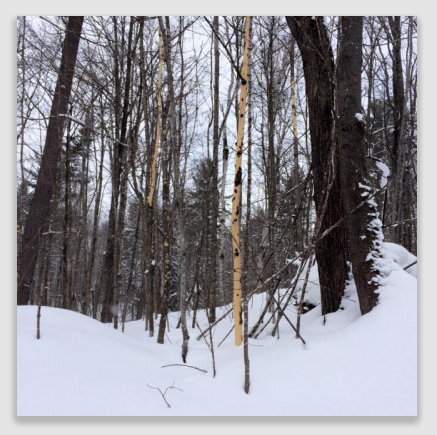 Michigan State University Extension, March 6, 2017: Tree damage from squirrels can be severe during winter months
There are a number of wildlife species who utilize tree bark as a food source. Beavers cut down trees to get to the twigs and limbs. Porcupines have a varied diet, but strip bark from upper branches of trees through winter months when bark, twigs and needles make up most of their diet. Mice, voles and rabbits will gnaw the bark of younger shrubs and trees during winter. Usually mice and vole damage will be under the snow, while rabbit chomping will be above snow level. If this feeding encircles the trunk it prohibits all sap flow and the affected tree will either die or sprout from below the damage. Many individuals think of squirrel as nut or seed eaters. It varies with species, but squirrels are a more opportunistic feeder imagined. In addition to nuts and seeds, they utilize small fruit, field crops like corn, insects, and mushrooms and are active visitors to bird feeders. Fox and eastern grey squirrels have been found to strip and apparently feed on inner tree bark as well. In the northern regions, this bark gnawing activity is most evident in the late winter months, but there have been reports of different tree species being affected throughout the seasons. There are several theories as to why squirrels do this, but no hard evidence has been presented as an explanation…
Basking Ridge Presbyterian Church officials will wait to see the quality of wood remaining from the iconic 600-year-old white oak tree that will be cut down during the week of April 24 before deciding how to preserve portions of the tree for its historic significance, said Jon Klippel, a member of the church’s Planning Council. The landmark tree, which has called the Basking Ridge Presbyterian Church home for centuries and has watched over parishioners and the adjacent graveyard for the past 300 years, has died and will be cut down. George Washington once picnicked under the iconic tree. “We’ve received a number of ideas, including using some of the wood in future building projects, but everything depends on what we find when we take the tree down,” said Klippel. “Decades ago, a large amount of concrete was implanted in the tree and we don’t know the internal location of that concrete and the degree of decay and rot that has occurred…”
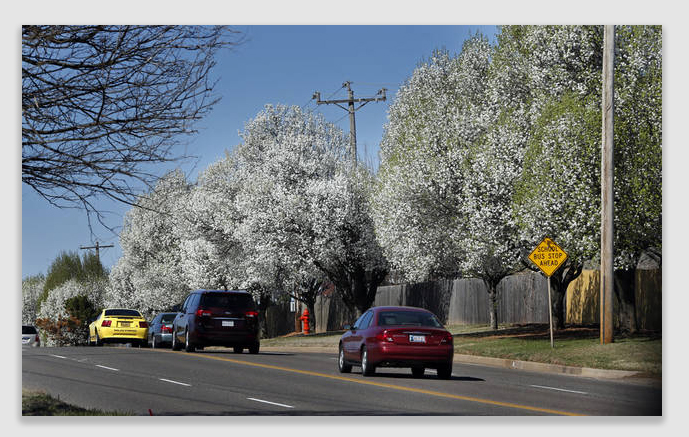 Oklahoma City, Oklahoma, The Oklahoman, March 5, 2017: The Bradford pear: Oklahoma’s worst tree or just misunderstood?
Cursed for its dense yet brittle branches that break off after ice storms and blamed for springtime allergies, the Bradford pear may be one of Oklahoma’s most despised trees. The ornamental blooming trees with sour-smelling flowers were initially thought to be sterile, but the Bradford has since become an invasive species in Oklahoma, sprouting up in clumps along fence lines and in fields. Wild Bradford pear started to be a problem in Oklahoma about 10 years ago and are rapidly expanding beyond shopping mall parking lots and suburban front lawns, said Karen Hickman, professor of Natural Resource Ecology and Management at Oklahoma State University. Hickman is also a founding member and past-president of the Oklahoma Invasive Plant Council. “It’s escaped and now it’s running rampant,” Hickman said. “Some people consider it as bad as eastern red cedar — it’s another person’s feral hog…”
Authorities identified the woman who was killed in Andover when a tree fell on a car Saturday as 58-year-old Elizabeth Roszkowski of North Reading. Massachusetts State Police troopers were called to Route 125 in Andover Saturday around 2:15 p.m. and discovered that a fallen tree had struck a 2007 Toyota Camry and the two occupants were trapped inside. Roszkowski’s husband, who is also 58, was driving. He was seriously hurt and taken to Lawrence General Hospital with life-threatening injuries, according to State Police…
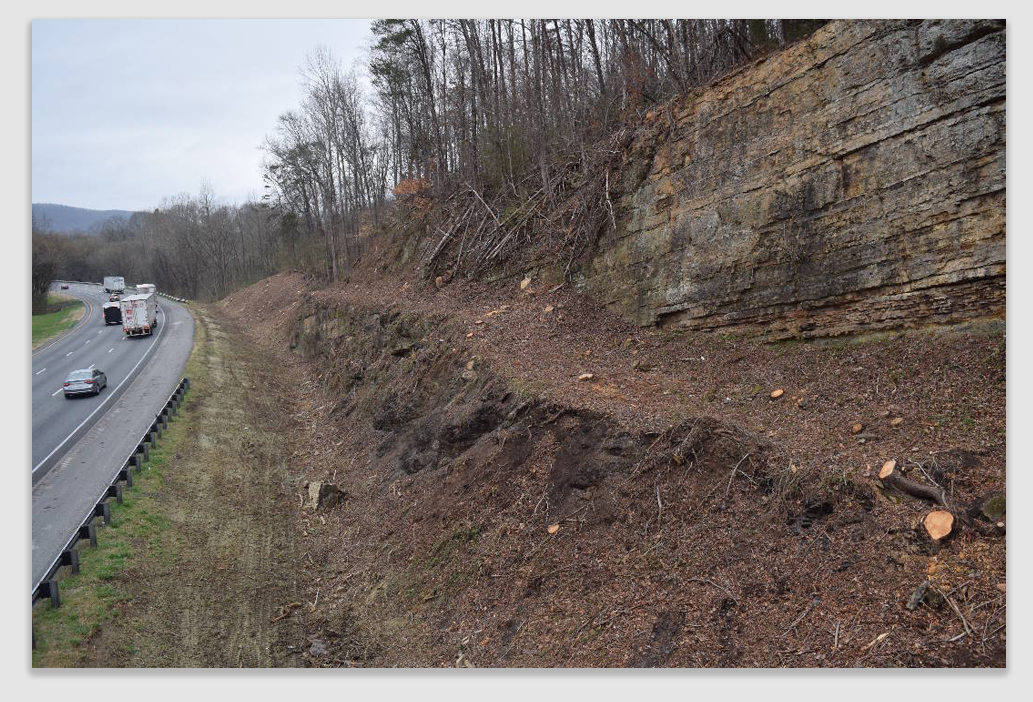
Motorists who regularly travel Interstate 24 west of Chattanooga have noticed by now the trees on Georgia’s curvy stretch of highway along the state border have been cut back for a longer view. Maj. Tommy Bradford with the Dade County, Ga., Sheriff’s Department has patrolled the county for almost a quarter of a century and says heavy traffic through the corridor is dangerous. “The biggest problem is there’s so much traffic coming through there for a two-lane that it stays congested,” Bradford said. “Before, when we would have one wreck and traffic starts backing up on that and you’d get into those curves, you usually have another wreck back behind that.” While the hidden curves remain, the longer view should allow “more warning to be able to see in time,” Bradford said…
Mother Nature Network, March 5, 2017: How to transplant a tree
Do you have an “oops” tree in your yard? An oops in this case means the tree needs to be transplanted. Maybe it was planted in the wrong place. Maybe it’s in the way of your long-awaited new addition. Or, maybe “all of a sudden you have a news flash and you think ‘Oh my goodness, this thing is going to eat my house, and I need to move it before I have a problem,’” says Sheri Dorn, Extension horticulturalist and the Georgia Master Gardener Coordinator in the Department of Horticulture at the University of Georgia in Griffin. Whatever the reason, the tree needs to be transplanted. Worse, as you look at it and contemplate where you should move it, how you’re going to safely dig it up, carry it to its new home and re-plant it, you may have a sudden sinking feeling that you don’t have a clue about how to transplant it without doing harm. If you’re in that predicament, you’re in luck. Here’s Dorn’s step-by-step suggestions for transplanting a tree and how to determine if your efforts were successful…
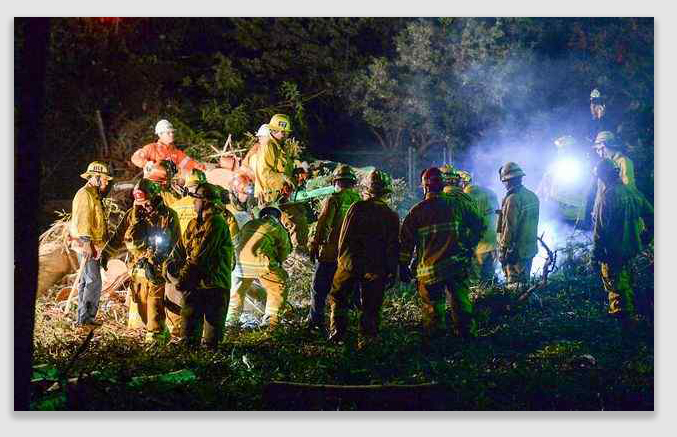
Family members of a 61-year-old grandmother who was killed when a massive eucalyptus tree toppled onto their wedding party at Penn Park in December could soon file a lawsuit blaming the city for the deadly collapse, according to the family’s attorney. Brian Leinbach, the attorney for five family members of Margarita Mojarro, along with 18 others who said they were injured when the tree fell, said the family will seek millions of dollars in the lawsuit. “You have wrongful death, brain damage and a litany of serious injuries — we’re talking about a multiple well over $10 million,” he said. In a unanimous vote Tuesday, the Whittier City Council denied the family’s claim, along with two others, one by an assistant to the wedding photographers and another by the father of the groom…
Tree-thinning intended to help heal the West’s ailing forests has become an essential part of providing water for city-dwellers: Denver Water, state and federal officials on Monday renewed a $33 million deal for work on 40,000 acres of public land and also on more than 5,000 acres of private land. The “Forests to Faucets” deal signed by Denver Water, the Colorado State Forest Service, Natural Resources Conservation Service and U.S. Forest Service builds on a $33 million 2010 initiative that led to thinning on 48,000 acres of public land, utility officials said. “We’ve seen tremendous results during the first five years of this partnership and we are excited to now expand the program to include private lands,” Denver Water manager Jim Lochhead said. Logging contractors enlisted in the effort clear trees from beetle-ravaged forests where large wildfires and erosion threaten water supplies. Denver Water officials have said investing in forest health helps avoid having to un-clog reservoirs and water delivery systems later at far greater cost…
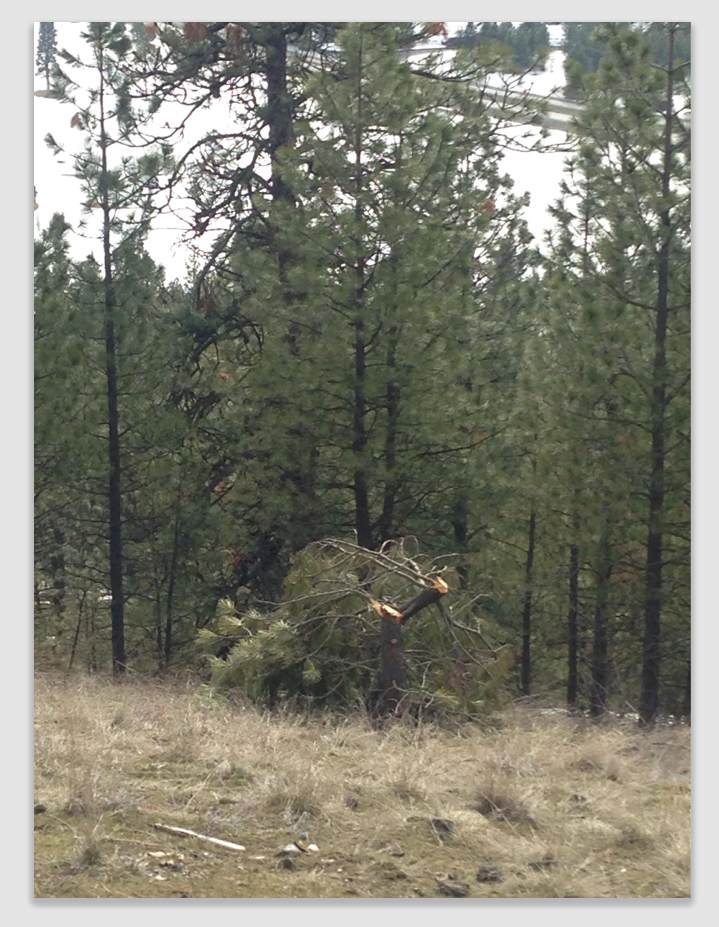 Spokane, Washington, Spokesman-Review, March 2, 2017: South Hill Bluff tree slasher shows up again
Picking up from some unofficial tree hacking in 2015, someone has begun unauthorized cutting of ponderosa pine trees on the city-owned South Hill Bluff below High Drive. Planned tree thinning has been done on the bluff to reduce fire danger. But as you can see, this is random, unplanned, unnecessary and illegal. Report the vandal to the police if you get a sighting…
Reuters, March 3, 2017: Ancient human tree cultivation shaped Amazon landscape
Ancient indigenous peoples had a far more profound impact on the composition of the vast Amazon rainforest than previously known, according to a study showing how tree species domesticated by humans long ago still dominate big swathes of the wilderness. Researchers said on Thursday many tree species populating the Amazon region appear to be abundant because they were cultivated by people who populated the area before Europeans arrived more than five centuries ago. These include the Brazil nut, cacao, acai palm, rubber, caimito, cashew and tucuma palm. “So the Amazon is not nearly as untouched as it may seem,” said study researcher Hans ter Steege, a forest community ecologist at the Naturalis Biodiversity Center in the Netherlands and Free University of Amsterdam. The researchers used data on the tree composition of forests at 1,170 sites throughout the Amazon and compared it to a map of more than 3,000 known archaeological sites representing past human settlements…
Until the modern era, the human mark on the northernmost forests of North America, Europe, and Asia was light. Human populations in these challenging environments were too small to make a big impact through agriculture or timber harvests. But increasing evidence indicates people influenced the northern forests indirectly, by igniting or suppressing fires. Distinguishing human from climatic influence on historical fire patterns is critical to forest management planning, which is guided by historical patterns of fire frequency, size, and intensity. A boreal forest nature reserve in southern Norway offered a unique opportunity to reconstruct past events, as scientists from the Norwegian Institute of Bioeconomy Research (NIBIO) demonstrated in a report published online ahead of print in the Ecological Society of America’s journal Ecological Monographs. The trees told a story of a surge in human-instigated fires during the 17th and 18th centuries, followed by fire suppression after AD 1800, as economic motivations changed…
A man who is accused of taking money for multiple tree-trimming jobs that were not completed pleaded not guilty on Wednesday. Arthur Ayers is being held in the Duval County detention center on $15,000 bond. He is scheduled to be arraigned on March 14. A woman who lives on Jacksonville’s Westside said she paid Ayers for services that were not completed. The new allegations against Ayers, who runs a tree trimming service, come less than a year after two different customers told News4Jax that they were ripped off when Ayers took their money without finishing the work. A News4Jax investigation led to Ayers being convicted of multiple counts of fraud in Duval County and sentenced to prison in 2011…
A tree has uprooted the healthy relationship among neighbors on Montclair Terrace in San Francisco’s Russian Hill neighborhood. Meri Jaye, 96, is fighting for landmark status for the redwood tree that she planted in her backyard in the early 1960s, in memory of her husband and two children who died in a tragic plane accident. “My husband proposed marriage to me in Muir Woods,” Jaye said at the city’s Landmark Tree Committee’s nomination hearing last October. “When I lost my husband and my children, I wanted a memorial that would mean the strength that I needed to carry on.” Jaye hopes that her personal story will not be the only thing that convinces others of the tree’s need to be a landmark. “It is a giant, beautiful and healthy redwood tree in the heart of the city. It is extraordinary,” Jaye said…
Duluth, Minnesota, News-Tribune, March 1, 2017: Why forests with more tree types grow better, faster
It’s been known for years that forests with lots of different tree species grow better and faster than forests with just one kind of tree. Now, for the first time, scientists say they know why. It’s shapes. It turns out trees of different species find a way to get along with their neighbors by spreading branches out to fill in gaps where sunlight is available — they play off each other’s shape. And that maximizes their combined ability to soak up the sun falling on a particular plot of land. The new information could not just help foresters provide more fiber for the region’s wood products industry, it could also help reduce climate-changing effects of greenhouse gases…

A Johnston County tree trimmer was killed when he was thrown from a bucket truck Monday morning. Family members said Kenneth Earl Vick, 65, was working with his brother at a home at 402 Dixie Drive in Selma when a gust of wind caused the top of the tree he was cutting to crash into the lift truck, throwing him about 65 feet to the ground. A rented machine also toppled to the ground during the incident, family members said. Family members said Vick was the co-owner of Country Boy Tree Service and was well-known in Johnston, Wilson and Wayne counties. He was also the co-owner of Kenly Appliances in Kenley…
During his 30-years as an allergist, Dr. Juan Sotomayor has learned a little about pollen. “There is really no way to escape it. So, if you are sensitized, you are going to get hit,” he says. The doctor says tree pollen allergies generally hit his patients first and this year’s warm February could speed up symptoms. “If you have medicines like nasal steroids and antihistamines, you want to get those started as soon as the symptoms hit. Typically I start people mid-March. So, we are starting to see tree pollen. We might tell them to start a little earlier…”
That pretty, white-flowering Bradford pear tree in your yard is a Trojan Horse for an invasion set on despoiling Oklahoma’s grasslands and rooting itself as a thorny, value-decreasing problem on acreage that is left fallow. An arborist with 35 years experience in the Tulsa County area is trying to spread the word that a few weeks of pretty blooms each spring isn’t worth the future destruction. Now that the trees are blooming, he urges people to take a look around Tulsa County and notice all the white-flowering trees in people yards, in the ditches, along the riverbanks, and turning up as white patches here and there in pastures, grasslands and at forest edges. Some native trees, such as plums and dogwoods, also have white flowers but they’re not yet in bloom. On Monday morning, Don Massey stood in a field off 121st Street near Yale Avenue, where a fallow pasture that once was mostly native bluestem broomsedge grasses now is a nearly solid 15 acres of Callery pear trees. The ground beneath the dense patch is barren, save a few remaining strips and patches of the grasses. “Don’t plant them,” he said. “There is no such thing as a good pear tree, unless it’s one that actually bears fruit…”
Last month, a snowboarder’s death in Washington state once again focused attention on the backcountry danger posed by tree wells. It was reported that Nathan Redberg died after falling head-first into a tree well at the 49 Degrees North ski area north of Spokane. Redberg and his 9-year-old son were reportedly about 100 feet from a groomed ski run at the time of the incident. The son, who unsuccessfully attempted to extricate his father, sought ski patrol assistance; but, even with a quick response and a defibrillator, Redberg could not be revived. Snow Immersion Suffocation (SIS) can occur quickly when a victim plunges head-first into a tree well. Tree wells form around the bases of evergreen trees when overhanging limbs interfere with the natural deposition of falling snow, and the resulting cavities can be deadly. The cavity created around the tree will partially fill with loose, unconsolidated snow. Like quicksand, these traps can swallow a person in an instant. Such an accident can be compounded by snow adhering to overhanging limbs, which will often be dislodged on impact, further burying the victim…
Virginia delights many residents for its four seasons. And as a winter month, February boasts the highest average snowfall. Not this year. Temperatures this month — which have topped 70 on seven days in Lynchburg, six days in Roanoke and twice in Blacksburg — by and large have had people tugging off their sweaters and pulling on their shorts. “Really our whole area has been seeing this warm weather,” said meteorologist Patrick Wilson with the National Weather Service in Blacksburg. “This is the warmest February on record if things continue this way until the end of the month.” That might be good news for residents who love warm weather, but it has some area orchard farmers on edge. “It’s affecting us, and it will continue to,” said Danny Johnson, owner of Johnson’s Orchard and Peaks of Otter Winery in Bedford…
The widow of a Thonotosassa man who died after falling while trying to trim a palm tree is blaming the landscape company for failing to provide adequate instruction and safety equipment. Gray, Georgia resident Bonnie Beatrice Roberts, the surviving spouse of Darryl James Roberts has filed suit against Total Scapes Inc., doing business as Tampa landscape company Totalscape Solutions. Totalscape Solutions is founded, owned and managed by 45-year-old Mark Anthony Gonzalez, and is located at 1717 E. Busch Blvd. in Tampa. Darryl Roberts, formerly known as Darryl James Babilius, was a 48-year-old Thonotosassa resident working at Totalscape Solutions when he died Aug. 11, 2015, leaving behind three children, six grandchildren and Bonnie Beatrice, his wife of two years…
Spotting a Christmas tree at the end of February is unusual but even more so when one is perched some 50 metres above Halifax. The evergreen was placed on the Macdonald Bridge this past weekend to celebrate the final segment of the Big Lift redecking project — tradition in ironworking known as a topping out ceremony. For those unaware of the practice, the sight of a tree high above the harbor was puzzling. “I’m kind of at a loss as to why the tree is generating so much interest,” said George MacDougall, business manager for Ironworkers Local 752. His union did the bulk of the work on the project for the last two years…
Petoskey, Michigan, News, February 27, 2017: Orders for annual tree sale accepted
Orders for the Emmet Conservation District Spring Tree Sale is under way. The district has a diverse selection of conifer seedlings and transplants, hardwoods, fruit trees, shrubs and seedling packages for sale. Most of the species offered are native to the area and should grow well with proper selection and care. But, the Emmet Conservation District cautions about matching plants with the proper planting sites. When deciding what to plant, keep in mind the phrase, “right plant, right place.” Native trees planted in an appropriate site are usually the best option. Trees planted on unsuitable sites suffer high mortality, poor growth and are more susceptible to disease and pests. To help ensure a successful planting, consider and evaluate the soil composition before trees are purchased and planted. Tree growth is most rapid where soil drainage is good and competing grasses, shrubs and weeds are controlled. Also, a look to see what is already successfully growing at the proposed planting site is helpful. Most conifers, which include pines and spruces, are more commonly planted on drier, coarser-textured and less fertile soils. However, white spruce and the deciduous conifer known as American larch/tamarack will also do well in moist soils. Hardwoods or deciduous trees are usually better suited to loamy and clay/loam soil types where soil moisture and fertility are generally higher…

We haven’t had much of a “winter” in Washington, and spring is almost here — though I could argue it already arrived. The plants are obviously going to leave their dormancy early (the crocuses are up!), which has us wondering about the cherry blossoms. Last month was the second-warmest January since the year 2000, and the 12th-warmest January since records began in Washington. It didn’t drop below freezing for 19 days in a row, which is not only a record-warm streak for the month, but also just plain strange; January is typically the coldest month in the capital. And the weird continues. Washington is one day short of the longest streak of days at or above 60 degrees in February, and 70s are in the forecast later this week. If you’re trying to make blossom plans, this year might prove to be a challenge. At the Tidal Basin, the cherry trees are already sprouting buds. It’s not obscenely early, but still much earlier than average. It suggests we’re probably going to hit peak bloom well before the average date of April 4…
More than 60 cottonwood trees lining entrances to the Lake Valley and North Rim neighborhoods southwest of Longmont will be sent through a wood chipper next week. A quote for the tree removal prepared by Longmont-based Parker Tree Service stated that the trees suffer from structural defects, lack strong root flare and lean toward the roadway, making them a liability to the Homeowners Association. “The probability of one of these trees impacting a moving vehicle is somewhat possible,” the document stated…

Avoid working in the rain or walking over the root zone of a tree when the soil is soft and wet. Disinfect your tools with Lysol disinfectant or a solution of nine parts water to one part bleach after completing each tree and after each pruning cut if a tree has diseased branches. A general goal of pruning a fruit tree is to thin the canopy in order to increase sunlight and improve air circulation, which in turn will increase fruit production and help reduce diseases. First, remove all dead or diseased branches. These are easy to spot, since the wood is generally darker than healthy wood. Then thin the canopy by first focusing on pruning out branches that grow toward the center of the tree rather than out away from the center…
Reuters, February 27, 2017: In ‘special message’, Taliban leader urges Afghans to plant more trees
The Taliban group in Afghanistan on Sunday used a rare public statement in the name of its leader, Haibatullah Akhundzada, to call on Afghans to plant more trees for worldly and other-worldly good. Official Taliban outlets released the “special message” under Akhundzada’s name, an uncommon move for the group that has recently published unsigned statements on a range of issues such as civilian casualties, upcoming military operations, and the anniversary of the withdrawal of Soviet troops in the 1980s. Akhundzada, a cleric, is believed to have been in hiding since becoming Taliban leader in May 2016 following the death of his predecessor in a U.S. drone strike in Pakistan. In the statement, he urged Afghan civilians and Taliban fighters to “plant one or several fruit or non-fruit trees for the beautification of Earth and the benefit of almighty Allah’s creations…”
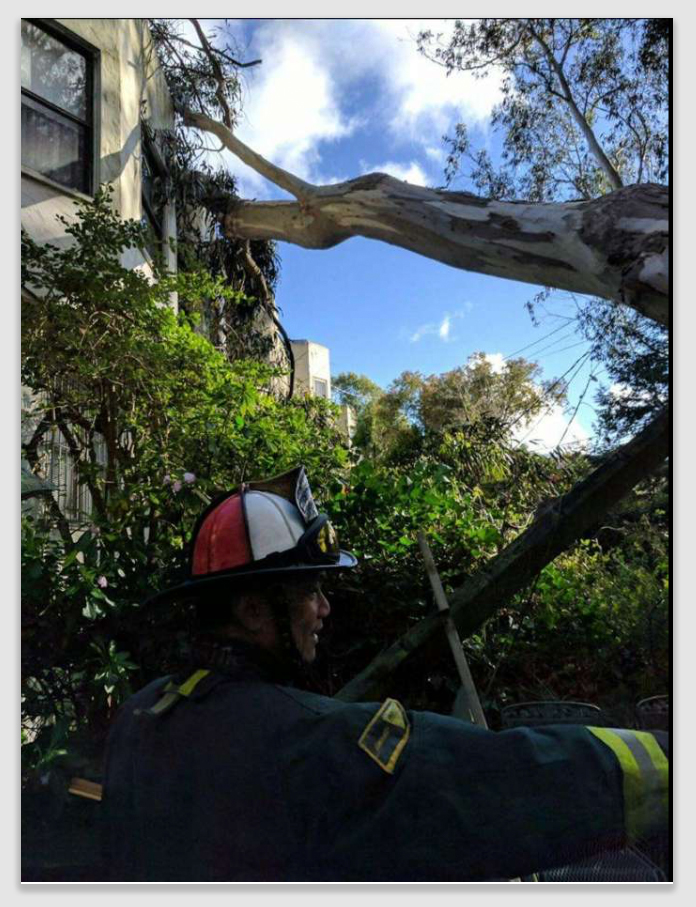
A 100-foot tree toppled over in the West Portal neighborhood of San Francisco Wednesday afternoon, hitting a building but causing little damage, officials said. The West Portal building is a residential structure, said to Lt. Jonathan Baxter, a spokesman for the San Francisco Fire Department. The tree fell just before 4 p.m. in the 100 block of Ardenwood Way. There are no injuries or significant structure damage, but the tree did bring down several high voltage power lines. A crew from the Pacific Gas and Electric Company was sent to the scene to repair the downed power lines…
Yahoo.com, February 22, 2017: Hug a tree while you still can: U.S. forests are disappearing
The Amazon rainforest and Indonesia’s peat swamps aren’t the only places suffering from deforestation. On the mainland U.S., swaths of forests are steadily disappearing, too. It’s not just that we’re losing trees. The forests themselves are growing farther and farther apart, researchers say. A new study found that the average distance between forest patches increased by nearly 1,690 feet — or about 14 percent — between 1992 and 2001. That’s bad news for biodiversity. Think of each forest patch as a sanctuary or transit hub for migratory animals and other species. When forests are closely knit together, the wildlife, plants and soil can share nutrients and thrive. When trees are few and far between, these connections break down…

An endangered species of magnolia that only grows in the Florida Panhandle has been named the 2017 plant of the year by the Garden Club of America. The timing couldn’t be better, says Gary Knox, professor of environmental horticulture with the University of Florida Institute of Food and Agricultural Sciences. For the last three years, Knox and a team of researchers at the UF/IFAS North Florida Research and Education Center in Quincy, Florida, have been studying the Ashe magnolia to try to figure out why it’s so rare and how it may be conserved. Ashe magnolias are grown commercially as landscaping plants, and their large flowers and leaves make them popular among gardeners. The white and purple blossoms are the size of dinner plates, and the leaves grow up to two feet long. “This is what we call a ‘charismatic’ plant,” Knox said…
A Mississippi sheriff says a naked man has been rescued from a tree, where he was hanging head-down from a cable. Union County Sheriff Jimmy Edwards says Shawn Treadaway told a deputy he’d climbed the tree while looking for a dog, and fell. Edwards says he doesn’t know why Treadaway carried the cable. The sheriff told The Associated Press on Wednesday (Feb. 22) that he believes branches tore off most of Treadaway’s clothes as he fell, and rescuers cut off the remaining rags. New Albany Fire Chief Steve Coker tells WTVA-TV crews had to cut some trees out of the way Tuesday and then rig some rescue ropes to keep Treadaway safe while he was freed from the cable and brought down…
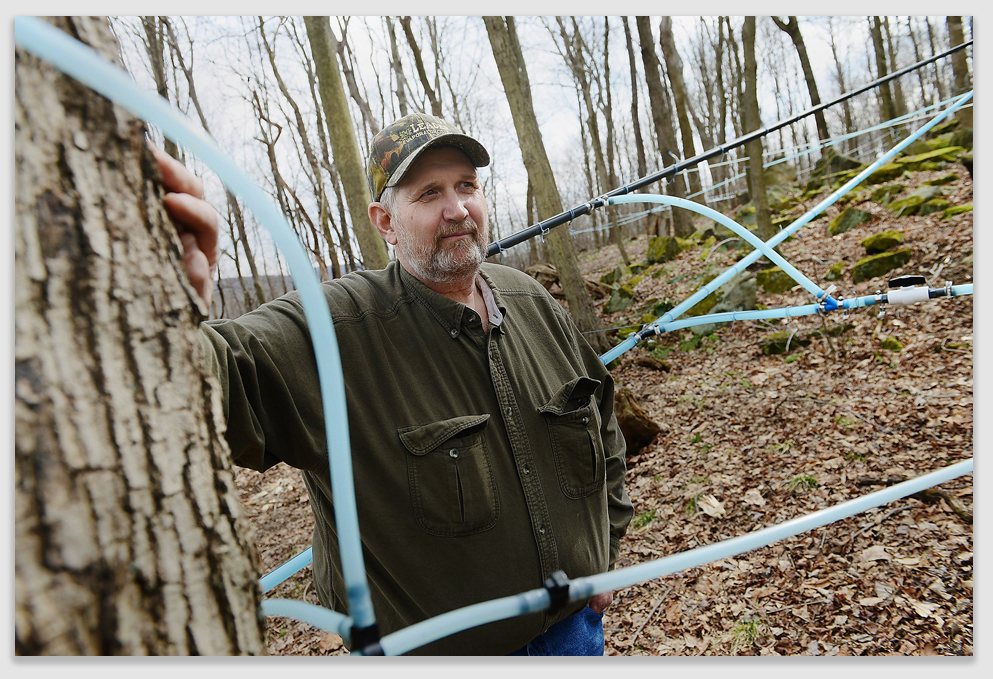
On the rocky Laurel Highlands knob that is Duck’s Maple Farm, long, spaghetti-like strands of blue plastic tubing criss-cross the woods, linking more than 2,200 maple trees to Don and Sherry Hess’ syrup cooker. The maple sap, what Mr. Hess refers to as “sugar water,” or just “water,” started flowing from the maples and through the Rube Goldberg-like configuration of collection tubes in mid-January, a full month earlier than normal, due to an early and extended stretch of warm weather. Getting an early start on sap collection and syrup cooking isn’t necessarily a bad thing. But due to the unseasonably warm weather continuing this month, Mr. Hess and the state’s other 250 maple syrup producers can be added to skiers, sledders and snowman makers on the short list of Pennsylvanians hoping for a return of cold winter weather. Or any winter weather. “For the sap to keep running we need warm days followed by cold nights, below freezing, to drive the sap down and keep the trees from budding,” said Mr. Hess, 58, a retired road construction worker. “If it doesn’t get cold again, I’m done…”
Following complaints about tree and vegetation removal at the site of Mobile’s Midtown Publix shopping center, the city has issued a notice of possible violation and a stop-work order on the project. The issue apparently began on Monday, when some residents of nearby neighborhoods began to raise concerns that contractors had gone too far in removing vegetation, particularly trees on the southeastern portion of the site. The shopping center will occupy land that formerly was the site of the Augusta Evans School, near the intersection of Florida Street and Old Shell Road. Developers succeeded in winning approval of the plan last year, but only after extensive back-and-forth with critics who questioned whether enough was being done to preserve the character of nearby residential neighborhoods and the general aesthetics laid out in the city’s Map for Mobile development plan. The upshot was that the approved site plan included some very specific agreements on fencing and buffer zones, including a wooded area on its southeastern boundary. At Tuesday’s city council meeting, District 6 Councilwoman Bess Rich said she was concerned about the possibility that the agreement had been violated…
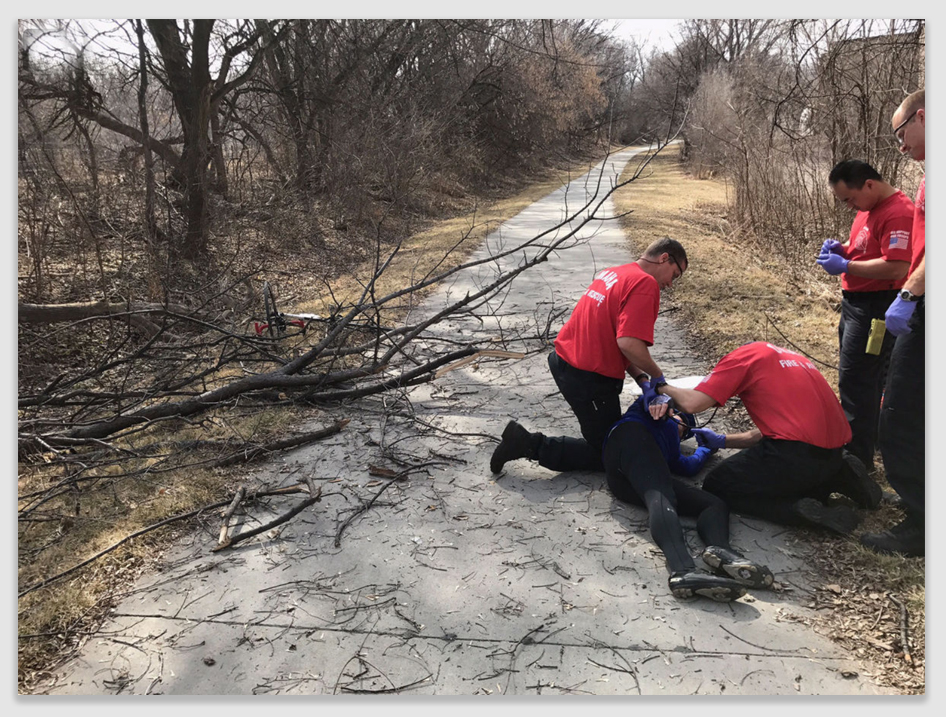
A Papillion woman heard only “a loud cracking sound” a split second before a large tree limb crashed down and hit her Sunday while biking the South Omaha Trail. Judy Black, 70, said she was riding about 12:30 p.m. near 45th and H Streets with a group of 20 cyclists. Emergency medical personnel from the Omaha Fire Department took Black to Bergan Mercy Medical Center, where she was treated and released. Black said she feels lucky to have escaped without any broken bones. She is, however, “bruised everywhere” and her cycling helmet was broken. “When (the branch) came down there was a loud cracking sound. I felt like it broke my back because it hurt so much,” Black said Wednesday. “Other than black and blue marks all over, I’m doing fine.” Omaha Parks and Recreation director Brook Bench said the city’s forester is investigating the incident. The city tries to regularly inspect all its trees, he said…
A 70-year-old Siberian Elm tree will live on after a clash between neighbours about whether it should be cut down ended with a warning that police would be called if the man who wanted to chop it down was caught trespassing. The 86-centimetre diameter tree is on the boundary of two bordering properties — one on Ellis Park Rd. and the other on Ellis Ave. — by a ravine near High Park. David Sher, whose family has lived in the home on Ellis Park Rd. since the 1970s, filed an application in November to remove the tree after the trunk’s growth started to crush the gutter of his garage. But neighbour JeanAnn Stewart and her husband Eric Poot said the tree has an important esthetic effect on the entire neighbourhood’s tree canopy and is on her side property line…
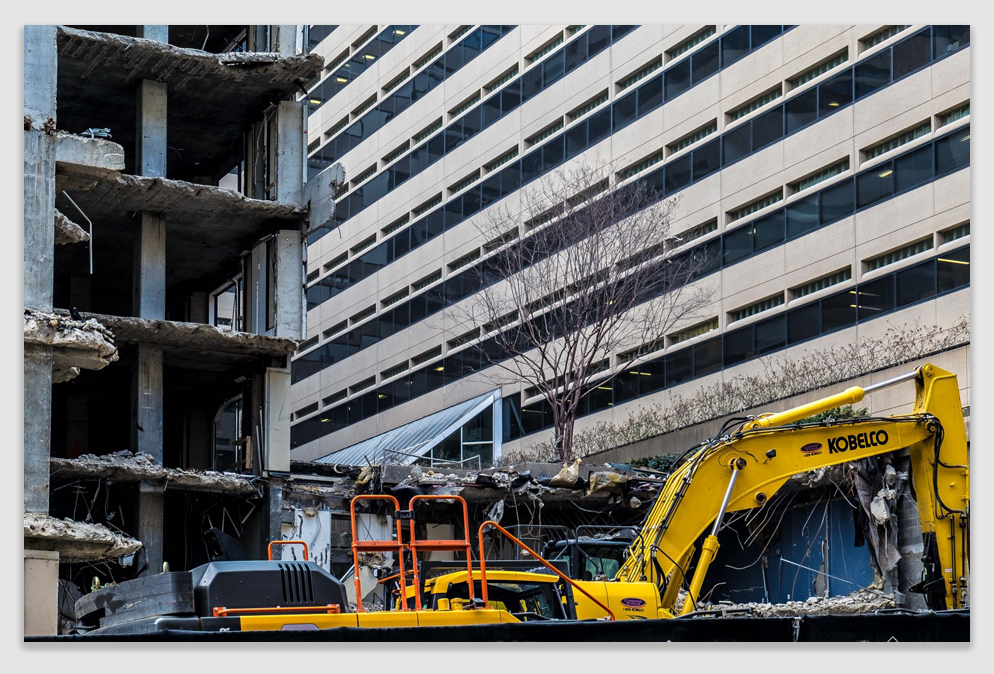
“C’mon, little tree,” I say every time I walk along 14th Street NW between Pennsylvania Avenue and F Street. “Hang in there.” The tree has become a symbol to me, an inspiration even. I’m pulling for it, just as I’m pulling for a lot of things these days. I’m not even sure what kind of tree it is. A myrtle of some sort? What I do know is that it is growing in what has become one of the most precarious spots in Washington. The tree sits between National Place to the north and 1301 Pennsylvania Ave. NW to the south. It’s on a raised terrace between the two buildings, a story or two up from the sidewalk. National Place, an office building that’s also home to a food court beloved by school tour groups, will stay. But 1301 Pennsylvania is in the process of being demolished — really demolished…
Aberdeen, South Dakota, Farm Forum, February 21, 2017: Tree facts: Healthy roots and healthy trees
Most folks do not think about the important functions performed by tree roots. During the winter, roots provide food reserves to the tree for life functions and in the spring for producing spring foliage. Roots absorb water and minerals from the soil and transport them to the rest of the tree. Roots also serve as an anchor for the tree keeping it in a stable upright position for growth. The root system of a tree takes up a large area, typically extending outward two to four times the diameter of the average tree’s crown. Root systems are made up of large long-lived roots and smaller short-lived feeder roots. The large woody tree roots can grow very large in length and girth. The majority of the long lived roots are in the upper two feet of the soil and normally do not grow deeper than 3 to 7 feet. The feeder roots are small averaging only 1/16 inch in diameter but make up a majority of the surface area of the root system. These roots grow out from the large roots near the soil surface…
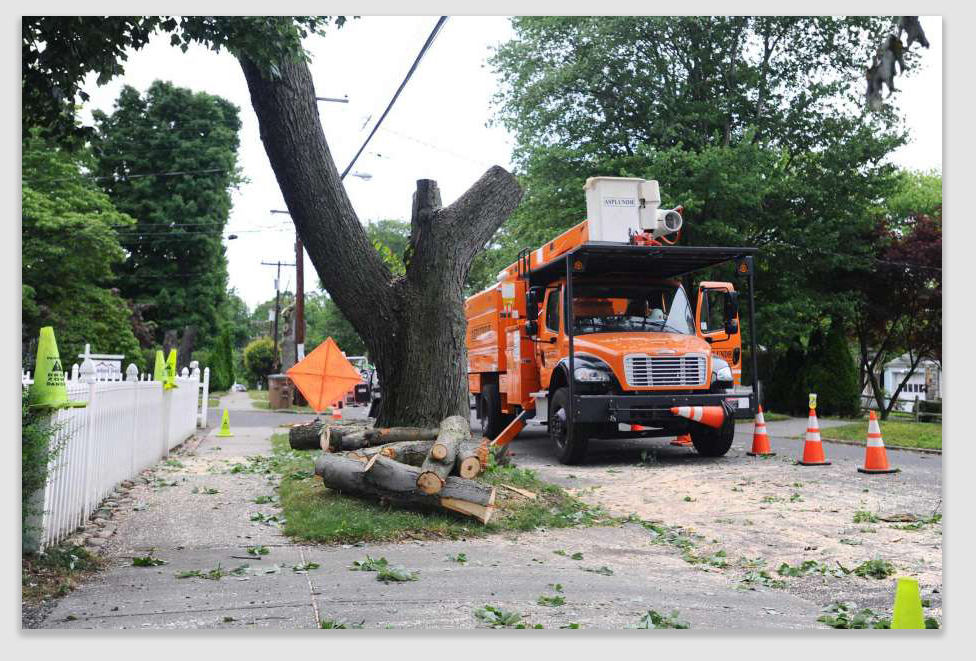
Eversource has announced details of its tree-trimming plan for 2017 along hundreds of miles in southwestern Connecticut. In all, Eversource will be trimming trees along more than 4,200 miles of overhead lines around the state. Among the 131 communities where tree trimming will be performed this year, some of the most extensive work will be done in Wilton along 132 miles of electric lines and 111 miles in Stamford. In addition, pruning will be completed in Ridgefield. Eversource notifies customers in advance if trimming is necessary on their property. The extensive trimming work is caused in part by prolonged drought conditions that has significantly weaken trees and branches, especially those that are decaying or diseased. Most of Connecticut remains in a severe drought. A part of northern Fairfield County and nearly all of Litchfield County is under an extreme drought, according to U.S. Drought Monitor…
A better model to predict timing of tree fruit blossoms and new models for best honeybee foraging and fruit size will be tested this year by Washington State University. The improved and new models of WSU’s Decision Aid System (DAS) for tree fruit growers will be used for the first time by 13 out of 250 system users. It’s sort of a road test of the models by growers, independent consultants and fieldmen of tree fruit companies, chemical dealers and organizations, said Vince Jones, DAS director and entomologist and behavioral ecologist at the WSU Tree Fruit Research and Extension Center in Wenatchee. Jones, former center director and entomologist Jay Brunner and Gary Grove, WSU plant pathologist, developed DAS and launched it 10 years ago…
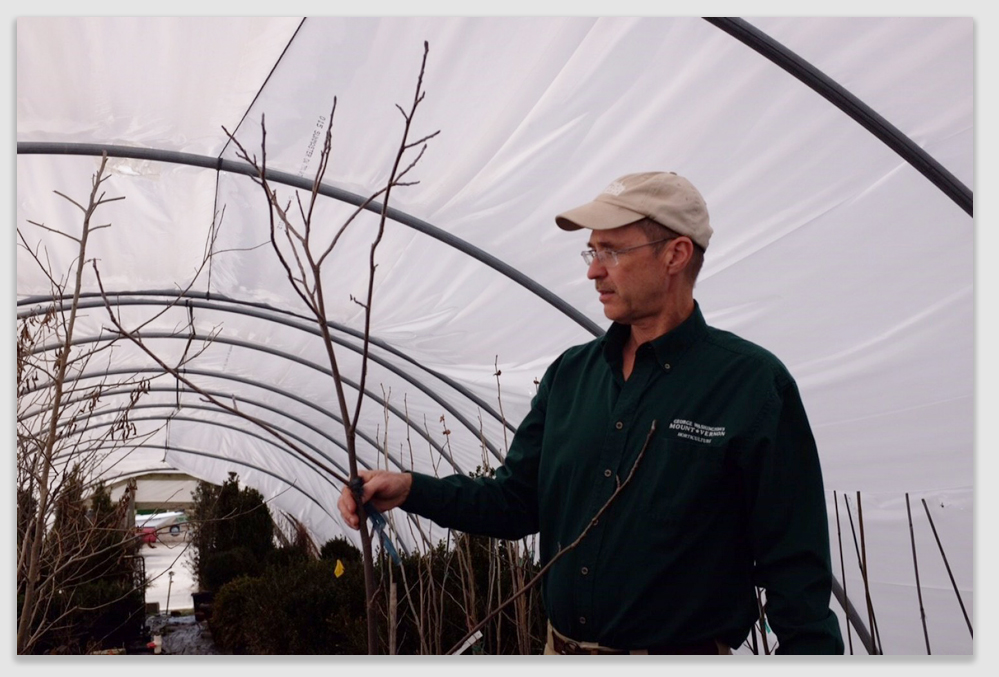
George Washington was supposed to have cut down a cherry tree — that was fake news, folks, because it is well documented that our first president loved trees. In the late 18th century at his Mount Vernon plantation, Washington supervised the planting of hundreds of trees — trees for shade, for beauty, for fruit and for timber. On his travels, he brought trees back to plant at Mount Vernon. When Washington remade his garden and grounds after the Revolutionary War, he took a special interest in developing the bowling green, the expansive, bell-shaped lawn to the west of the mansion, bounded by serpentine paths that he proceeded to line with trees and shrubs. The paths were made of gravel hauled by slaves from the banks of the Potomac River. Today, only four trees survive from Washington’s time — he died at Mount Vernon in 1799. Scattered around the bowling green are two tulip poplars and a hemlock, native plants that grow wild in Virginia. The fourth is a white mulberry, the Chinese tree essential to the silk worm industry. How much longer these trees will live is anybody’s guess. The mulberry, planted on the outside of the Upper Garden, is a sorry-looking specimen. It has two trunks, but they have been beaten back and split, perhaps by lightning…
Jefferson City, Missouri, KMIZ, February 20, 2017: Abnormal warmth leads to early tree budding
Mid-Missourians have enjoyed quite a treat for Mother Nature this month, with the springlike weather. Temperatures have been nearly 20-30 degrees above average tricking many trees into budding earlier than normal. The early budding could come at a cost, as winter is far from over and many forecasting models still hint at the return of arctic air through the next month. “We’re beginning to worry about having an early spring,” state forestry extension specialist Hank Stelzer said. It’s his concern that this early spring tease will likely rival 2007, when trees began to bloom and then winter returned, killing everything. “We just don’t want to see a repeat of 2007, when we had that Easter freeze,” Stelzer said. “It’s one thing for things to break bud now, but then we can’t have any really cold temperatures behind it…”
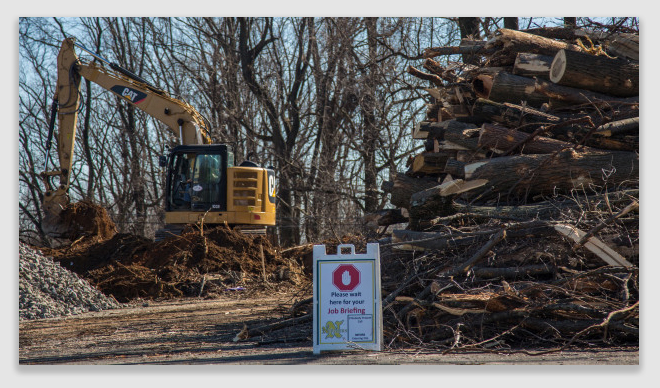
Preliminary construction work for the Mariner East 2 natural gas liquids pipeline took place in Delaware and Huntingdon Counties on Monday, a week after state officials issued the final permits for the controversial cross-state project. Workers cleared trees and built drill pads in Aston in Delaware County and Raystown Lake in Huntingdon County, the first two sites to see construction activity along the 350-mile route from southwest Pennsylvania to Marcus Hook near Philadelphia, according to Jeff Shields, a spokesman for Sunoco Logistics, which will build and operate the line. Monday’s activities followed some preparatory work last week, Shields said. At the Aston location on Monday afternoon, a backhoe was clearing tree trunks and branches while a mechanical scoop was building a base for a drill pad that will create an underground path for part of the line. A stack of previously cut trees lay nearby…
His job title — “city forester” — may sound like a contradiction. But Steve McConnell, who’s been on the job for the city of Billings for about six weeks, has a good idea how he can help build on Billings’ long history of caring for and about its estimated 90,000 trees. “Trees are part of the infrastructure of a city, and people take them for granted,” McConnell said Tuesday from his cubicle far from any trees, at the Billings Operations Center. “They are an essential part of our green infrastructure, as opposed to our gray infrastructure,” such as roads, bridges and pipes. McConnell, who has a doctorate in forestry from the University of Idaho, also studied forestry at the University of Washington and Virginia Tech…
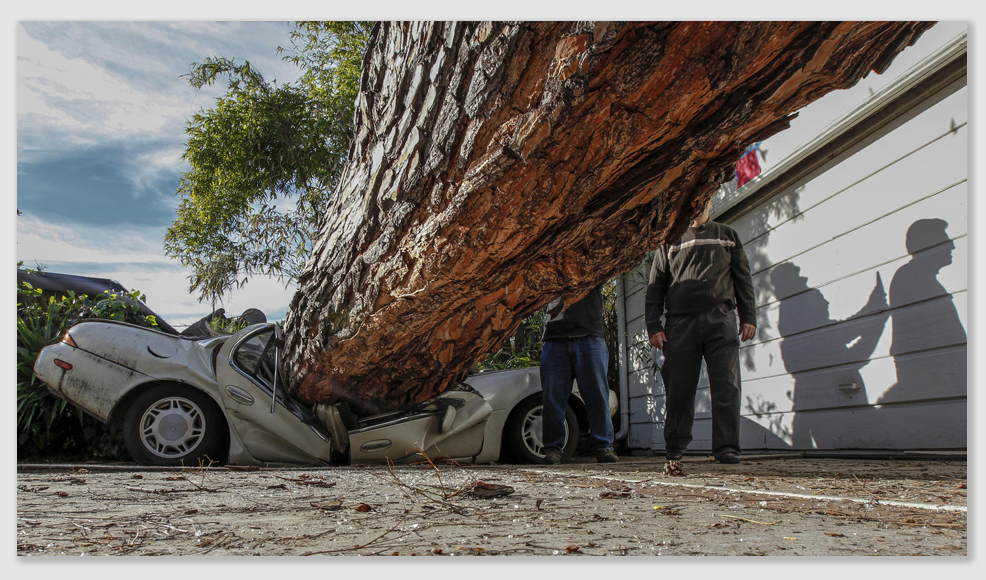
At Elysian Park near Dodger Stadium last weekend, hikers walked their dogs along the popular hiking trail, unconcerned by a recently toppled tree. But with more winter storms predicted, and news of a 100-year-old pine tree falling on a house and car in Pasadena on Tuesday, it’s hard for homeowners to be equally nonchalant. Extended drought followed by heavy rains are causing root instability. Trees aren’t just failing, they are falling over. “The ground can become like Jell-o once the soil gets to field capacity,” says Daniel Goyette, principal arborist for the Huntington Library, Art Collections, and Botanical Gardens. “It can no longer hold any more water. That’s where you get movement in the soil. It’s why trees are toppling — the soil does not have the rigidity that it usually does…”
Grand County authorities have identified the 17-year-old Texas girl who died Wednesday after skiing into a tree on an intermediate trail at Winter Park Resort. Alicyn Mitcham, from Colmesneil, Texas, was pronounced dead at Denver Health East Grand ER after efforts to revive her failed, according to county Coroner Brenda Bock.Bock said an autopsy on Alicyn, who lived in a small town outside of Houston near the Texas-Louisiana border, will be completed Thursday. According to Bock, Alicyn was not wearing a helmet. The ski area says the crash happened at about 12:30 p.m. on Forget-Me-Not, a run in the resort’s Parsenn Bowl. Alicyn is the fourth person to die in a ski crash — the third involving a tree — on Colorado’s slopes this season. Three of those have been men who died at Breckenridge Ski Resort…
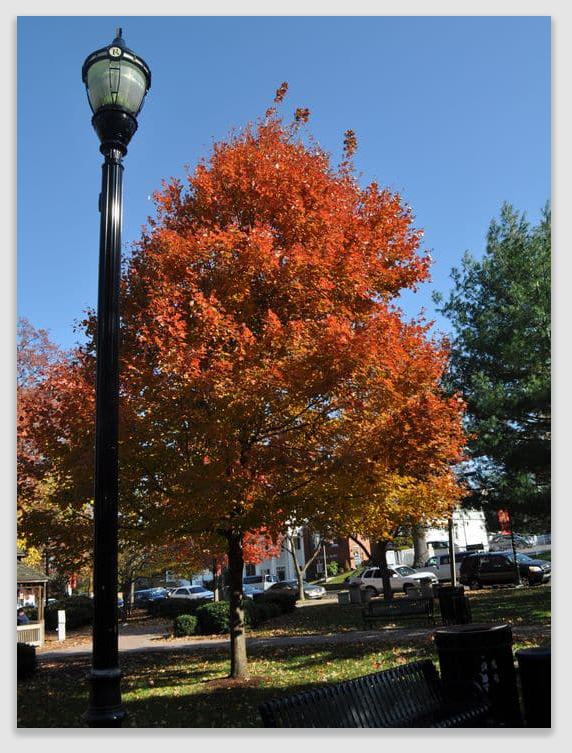
About 40 trees cultivated at the nursery have been dug up in preparation for planting and relocation for the placement of the newly-purchased trees. Greg Goumas, Tree Supervisor for Rutherford’s DPW, explained the trees are in a dormant state. Once the weather permits and snow cover melts, those determined ready for transplant on borough streets and parks will be added to the dead end of Riverview Avenue and in Memorial Park by the Passaic River bank. Last count, 15 residents had requested trees to be planted by their homes, he said. Six trees in the nursery were found to have been planted without root bags during the last round of plantings about three years ago, meaning they cannot be transplanted, Goumas added. When asked how many whips, or younger trees, would be purchased for planting in the nursery this year, Addeo said that they could not commit to a number since the 2017 municipal budget was not finalized. Money for whip purchases would come from within the DPW budget…
Walnut tree health, production, and crop quality are closely tied to irrigation management. Bruce Lampinen, integrated orchard management walnut and almond specialist with the University of California, Davis, says delaying irrigation initiation in the spring may provide benefits in water savings, increased rooting depth, and improved tree health. Lampinen has conducted research on deficit irrigation in walnuts, and examined delays in the initial irrigation, basing the decision on pressure chamber readings. The pressure chamber can also help growers avoid overwatering trees which if it occurs can have an adverse impact on tree health. “There are strategies to save water and not impact crop returns,” Lampinen told growers during the Tri-County Walnut Day event held in Visalia, Calif…
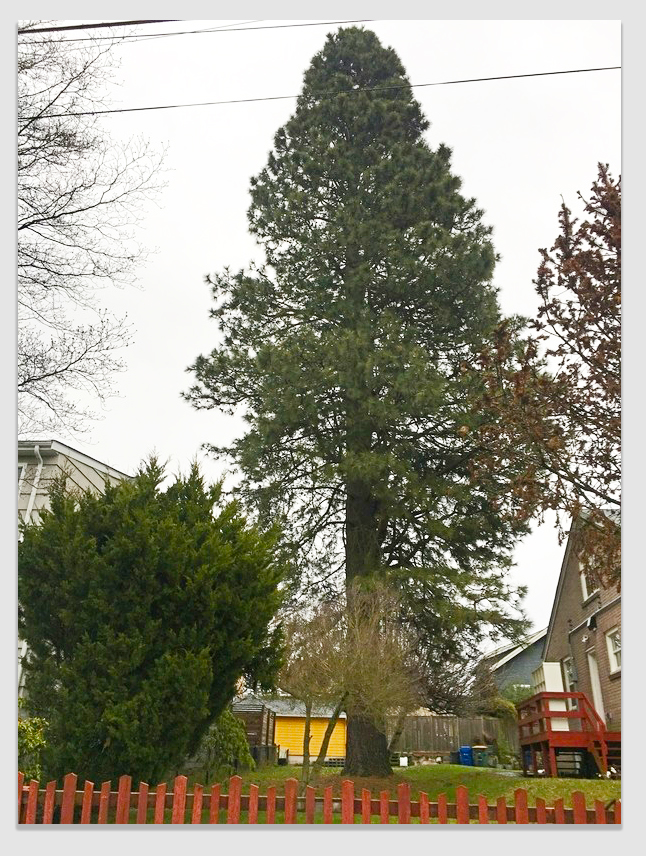
Three weeks ago, after city Hearing Examiner Sue Tanner ruled against the neighbor-filed appeal in the Admiral tree-vs.-house case, appellant Lisa Parriott was still considering what to do next. Now, she tells WSB she’s taking the case to court. And she revealed she’s reached a settlement with the city regarding the fees they sought to charge related to her appeal. First, the basic backstory if you haven’t been following this: The tree is a 100-ish-foot Ponderosa Pine growing at 3036 39th SW, on what the neighborhood had long seen as the side yard for the house next door. Real-estate investor Cliff Low bought the property – house, tree, and all – in late 2015 and sought a city opinion to confirm that the side with the tree was a buildable lot. The city said it was. He filed for permits to build a two-story house with a two-vehicle garage. Neighbors launched a save-the-tree campaign. When the city formally said OK last October, both Parriott and the Seattle Green Spaces Coalition filed appeals, though ultimately Tanner only allowed Parriott’s case – and only in part – to proceed. A hearing was held on January 12; the ruling came in January 25th . That is considered the city’s final say in the matter, so any challenge has to be taken to Superior Court, and that’s what Parriott has done, filing a Land Use Petition and Complaint. You can read the document in its entirety here; the contentions include the same argument at the heart of the case taken to the Hearing Examiner, that the site doesn’t qualify for a Historic Lot Exception because there is nothing on record suggesting it was considered a separate building lot. Parriott’s action also seeks an injunction to keep the tree from being cut and house from being built while this plays out; city files show the building permit for the house was issued two weeks ago, on February 2nd…
London, UK, BBC, February 15, 2017: Tree surgeon dies of ‘chainsaw injury’ in south London
A tree surgeon has died after reportedly injuring himself with a chainsaw in south London. The man, believed to be in his thirties, suffered neck injuries and was pronounced dead at the scene outside Southwark Park Primary School. One witness tweeted he saw “a lot of blood” in the area after the accident at Banyard Road at around 11:00 GMT. A Met Police spokesman said the incident had been referred to the Health and Safety Executive. Another witness, Charlie Brenland said he saw police cordon off the road, adding: “Witnesses and the police said there had been an accident with a worker on one of the trees. “Someone there said one of the tree surgeons had an accident with a chainsaw.” Emergency services, including a London Air Ambulance attended the scene shortly after 11:00 GMT but were unable to save the man…

Our planet is naturally beautiful. From the beautiful northern lights to the Zhangye Danxia Landform Geological Park in China—the planet has a lot to offer. Today, one of nature’s art is once again revealed to the world. The Rainbow Eucalyptus or Eucalyptus Deglupta, which is often found in the Philippines, sheds its bark annually, revealing a colourful bark—that almost seems like a painting that has come to life. The tree is like a colourful palette, with dozens of colors mixed in the tree’s trunk. Its barks are very delicate, which can be peeled off like paper. And when in its native rainforests in the Philippines, it can even grow up to 250 feet! The beautifully majestic trees are often found in Mindanao in the Philippines, but are now known to have grown in Hawaii, California, Texas, and Florida…
Chicago, Illinois, Tribune, February 25, 2017: Hinsdale man victim of tree-trimming ruse
Hinsdale man reported $150 was missing from his house due to an apparent scam. The resident said a stranger came to his home on the 100 block of North Vine Street at about 2:35 p.m. Feb. 11 and offered to trim trees in his backyard. The stranger asked the resident to accompany him outside so he could show him which trees should be trimmed. When the resident returned to the house, he saw two other men leaving his house. The man went inside where he discovered $150 was missing. It appeared as though the house had been searched, police said…
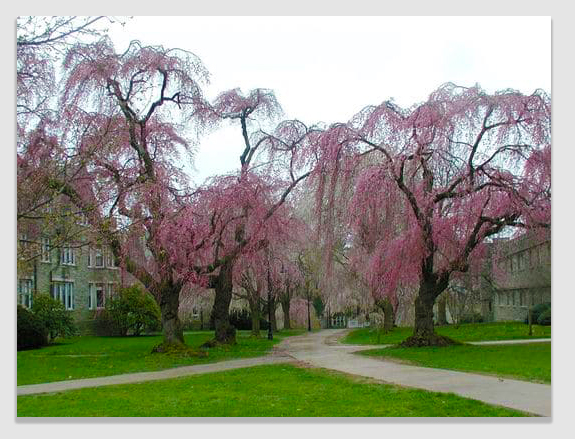 Detroit, Michigan, Free Press, February 14, 2017: What kind of cherry tree did Washington fell
Washington’s birthday is a good time to think about cherry trees. But rather than questioning whether George really chopped down the tree and then admitted to it, I find myself wondering what kind of a cherry it could have been. (The story, incidentally, may be apocryphal. It was reported by Mason Locke “Parsons” Weems for his 1802 book, “Life of George Washington: With Curious Anecdotes, Equally Honorable to Himself and Exemplary to his Young Countrymen,” but has never been decisively confirmed.) That cherry tree could well have been something akin to the sweet cherries we can buy or grow today. Sweet cherries (Prunus avium), sometimes called bird cherries or, in their wilder state, mazzard cherries, were among the plants ordered from Europe by the Massachusetts Bay colony in 1629. By 1650, there was a cherry orchard in Yonkers, New York, and before the end of that century, there were plantings in Rhode Island, Maryland and Virginia…
Question: I have property in downtown New Braunfels that is in horrible condition and has a bamboo issue. And there are two beautiful trees that seem really old. Well, I was taking the fifth lesson of your course, Trees #2, and came to the part about woodpeckers knowing where the sugar is concentrated in a sick tree. I have heard a woodpecker on the big tree on this property. Turns out this tree is dramatically sick. And I’m afraid I may be too late. Yet I will do everything I can to try to save it. These are the major problems: 1. It has these huge wounds on it that are wet, and it looks like sugar is coming out. They may have been caused by deer or just from being sick; 2. The bamboo around it has been choking out the roots and growing near the root flare; 3. The property flooded in 1998, and I think this is why the flare may have been covered up by debris and sediment. When I began digging there was a lot of glass, rocks, metal and other trash mixed in with the dirt. One part is pure gray clay and the other is rocky; 4. There was a huge amount of moisture at bottom of tree…
 London, UK, BBC, February 14, 2017: Tree planting ‘threatening’ Scotland’s grand vistas
Mountaineering Scotland and the Scottish Gamekeepers Association have jointly written to Scotland’s environment secretary. The Scottish government wants woodland cover to go from 17% to 25% by 2050.It said there would be “appropriate consideration of Scotland’s distinctive upland landscapes.” Scottish Natural Heritage said Scotland had a low percentage of woodland cover compared with other European countries. A commitment to plant 10,000 extra hectares of trees between now and 2022 was made in the government’s draft Climate Plan. But, in an unusual alliance, Mountaineering Scotland and the Scottish Gamekeepers Association (SGA), said they were concerned about the impact of the Scottish government’s forestry targets on wild moorland…
Auburn wants to make the famed entrance to the university at the corner of College Street and Magnolia Avenue “whole again.” The tree on Magnolia Avenue was damaged in September when Jochen Wiest lit it on fire. With work to remove and install new oak trees at Toomer’s Corner starting Saturday at 6 a.m., Auburn professor of horticulture Gary Keever held a press conference from the location to discuss plans for the location, which also includes replacing the tree on College Street. “This (College Street) tree was one of the original replacement trees for the Toomer’s Oaks that was removed in 2013,” Keever said. “It was a very large tree. It’s gone through a gradual decline since it was installed on Valentine’s Day in 2015. There’s very little foliage in the canopy. It’s simply signs that the tree is not doing well…”
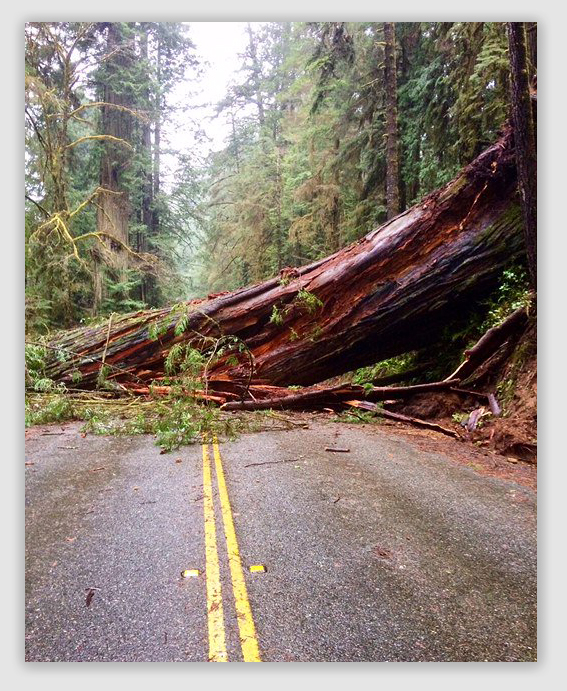
The Newton B. Drury Scenic Parkway is closed after a giant redwood crashed across the road. According to the Redwood National and State Park service, there is still “[a]ccess to the visitor center & trails from the south end (exit 753). One commentator wrote “big redwoods are brittle and shatter. That’s why timber fellers lay out a bed for them when they cut them, to minimize shattering…”
Vancouver, British Columbia, February 5, 2017: How the Douglas-fir tree put Vancouver on the map
Long before Vancouver’s Shangri-La and Harbour Centre defined the city’s skyline, giant evergreen trees towered over those who dared step foot inside the rugged wilderness. The Douglas-fir was king. “We grew some of the tallest trees on earth,” said Vancouver’s own “tree guy” David Tracey. In fact, the massive trees are what put Vancouver on the map. Tracey says when the first Europeans arrived in the 18th century, they were astonished by the magnitude of the giant, 1,000-year-old Douglas-fir trees…
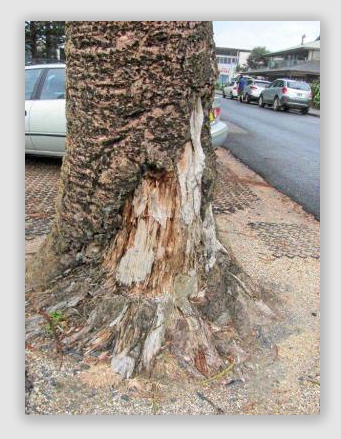 Lismore, Australia, Northern Star, February 6, 2017: Dangerous tree to be cut down
Repeated hits from careless drivers have damaged a landmark leaning Norfolk Pine beyond saving at the Byron beachfront. A report from an independent firm of arborists told Council the cause of the tree’s deterioration was likely due to past physical damage from repeated vehicle impacts to the trunk when Bay St was two-way. A 3m sapling will be planted in its place. Situated in Apex Park opposite the Beach Hotel in Bay Street, Byron Bay, the tree will be removed due to deterioration and safety concerns sometime in mid-February, weather permitting. Byron Shire Council’s director of infrastructure services, Phil Holloway, said concerns over the leaning tree had seen a recent independent arborist inspection take place…
If Rachel Roat, a tree law attorney, had her way, power lines would be buried and utilities wouldn’t butcher homeowners’ trees. People who have trees in their yards would revere them for the asset they are. They would responsibly maintain them with care and willingly pick up the occasional fallen branch and rake leaves in the fall without complaining. “I hate to see a tree that’s cut down,” says Roat, 64…
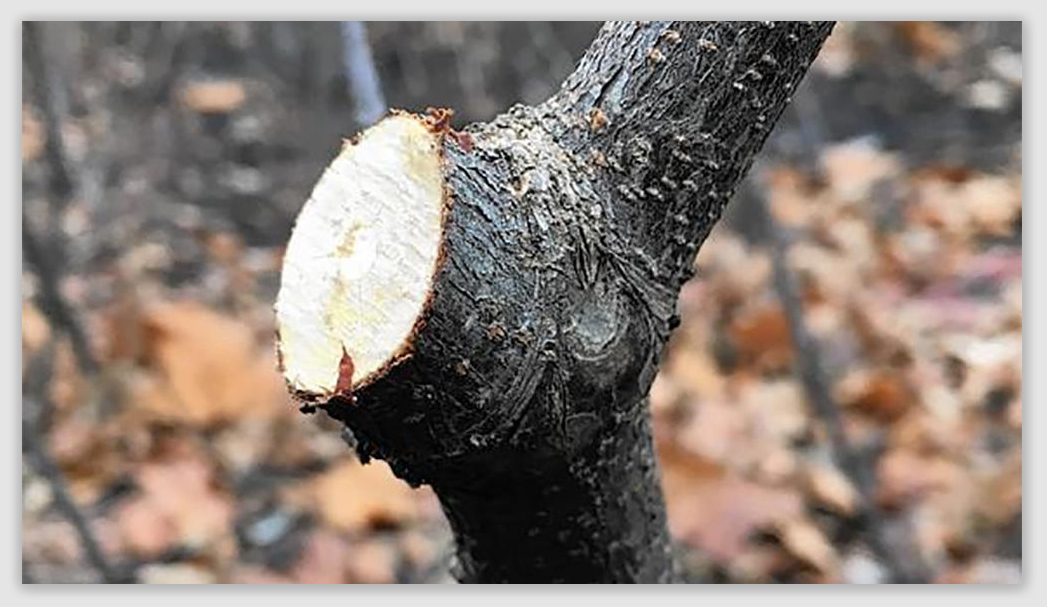 Chicago, Illinois, Tribune, February 2, 2017: How to properly prune young trees
Every young tree in our communities needs guidance to grow up healthy and resilient. Right now, while the tree is still dormant during the winter, is the time to provide that guiding hand by pruning. “The idea is to create a strong structure that will prevent damage in storms and increase the longevity of the tree,” said Katrina Lewin, horticulturist at The Morton Arboretum in Lisle. Some branches, because of the way they grow or are attached to the trunk, are weak points in the tree. Remove them from a young tree, and they won’t grow into big problems. “You can get away with a lot less pruning when the tree is mature if you catch structural problems early,” Lewin said. Here are her tips for pruning a young tree. She demonstrates the technique in a video at www.mortonarb.org/pruning-trees. Wait for the right time. After you plant the tree, hold off for a year. Then prune some each year until it has grown too tall to prune…
Shreveport, Louisiana, Times, February 2, 2017: St. Mark’s Cathedral cuts down 100-year-old tree
A 100-year-old oak tree on the property of St. Mark’s Cathedral in Shreveport was cut down Thursday afternoon to make leaving its new pre-k facility safer to exit. The tree, located in the northwest part of the church’s property near Fairfield Avenue, was removed after months of working with neighbors to find another solution. “We sincerely regret the necessity of cutting down the tree,” Chris Carter with St. Mark’s said. The removal happened Thursday morning. The tree was situated to the left of a driveway. But, St. Mark’s needed to build an exit driveway to its pre-K facility. Carter said the tree was blocking the view necessary to turn onto Fairfield. “It was exceedingly dangerous because you couldn’t see cars coming from north of the school on Fairfield,” he said…
 Houston, Texas, Chronicle, February 2, 2017: How a Texas town is moving a historic 425-ton tree
For the most part, trees have been around much longer than most humans have been alive. Unfortunately, under threat of being chopped down for construction, trees don’t get to play the “first come, first serve” card. Breaking from the norm, a small Texas suburb near the state’s capital is undergoing an expensive and complicated effort to save an aging and historical member of the community, according to the Austin American-Statesman. A 260-year-old, 425-ton oak tree is being moved by the residents of Buda, Texas, a small town with a population of roughly 7,300…
Savannah, Georgia, WJCL-TV, February 2, 2017: Falling tree limb kills Beaufort man
A Beaufort man died Wednesday morning in a tree clearing accident on Spring Island. The Beaufort County Coroner said 47-year-old Samuel Whatley died of blunt force trauma to the head, neck and torso. The Beaufort County Sheriff’s Office said Whatley was working for the Spring Island Property Owners Association, clearing debris from a lot. Deputies say he was cutting a dead tree when part of the tree fell on him. The accident occurred at 3 Old Boathouse Lane on Spring Island in Okatie…
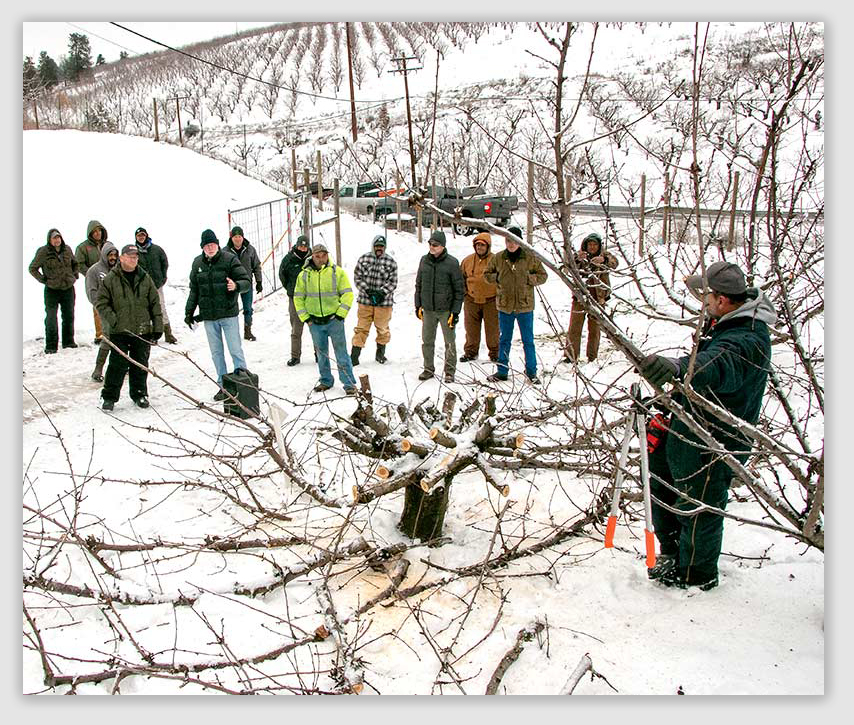 Good Fruit Grower, February 1, 2017: Researchers advocate whole tree renewal pruning
With a rev of his chain saw, Antonio Santillan whacked all the limbs of a 13-year-old KGB Chelan cherry tree down to nubs, leaving behind a waist-high clump of branches surrounded by a litter of cuttings in the snow. “Beautiful,” said Oregon State University Extension horticulturist Lynn Long to a chorus of laughter from a crowd of 30 or so growers at his winter pruning workshop Dec. 13, 2016, in John Byers’ orchard in The Dalles, Oregon. Santillan’s hard-core tree trimming demonstration provided attendees a close-up view of whole tree renewal, an experimental method of winter pruning that starts an entire tree over at one time. “This is an option we need to be considering,” Long said…
Energy Harvesting Journal, February 2, 2017: Money doesn’t grow on trees, but electricity might
Money doesn’t grow on trees, but electricity might someday. Iowa State University scientists have built a device that mimics the branches and leaves of a cottonwood tree and generates electricity when its artificial leaves sway in the wind. Michael McCloskey, an associate professor of genetics, development and cell biology who led the design of the device, said the concept won’t replace wind turbines, but the technology could spawn a niche market for small and visually unobtrusive machines that turn wind into electricity. “The possible advantages here are aesthetics and its smaller scale, which may allow off-grid energy harvesting,” McCloskey said recently in his ISU laboratory. “We set out to answer the question of whether you can get useful amounts of electrical power out of something that looks like a plant. The answer is ‘possibly,’ but the idea will require further development…”
 Hutchinson, Kansas, Leader, February 1, 2017:Tree and shrub pruning time has arrived
This winter has been a swing of temperatures and everything from well below 0°F to unseasonably warm weather. Now that February has arrived it is time to consider pruning your trees and shrubs. An old rule of thumb was to prune in winter while the plant was dormant; well for best results we need to be a bit more specific than that. When to prune depends on the species, but for most, late winter into early spring is the best time to prune. Pruning near the end of the dormant season has several advantages, including: 1) Limited time remaining before the tree or shrub will begin its spring growth and healing process, 2) Avoid certain disease and pests, 3) Provides easier sight and access without deciduous foliage. Oak wilt can be a devastating disease and continues to spread throughout Minnesota and therefore oak trees should not be pruned during April, May, or June. If an oak tree is damaged or wounded during this time period it is best to mask the cut with a wound dressing material to help minimize the attraction of pests that may spread the disease…
A pensioner is to face trial for ‘illegally digging up some soil’ in the latest twist of a bitter neighbour dispute in an idyllic village that has lasted nearly 20 years. Valerie Vivian was led away by police in October after she was allegedly spotted digging up soil laid by her neighbours in a jointly-owned communal garden in Bathampton, Somerset. Her neighbours had laid the soil over a gravel path she had allegedly put down in a ‘land-grab’ without planning permission, which harks back to a planning dispute that started in 2001. Vivian’s neighbours previously accused her of planting a ‘barricade’ of 50ft leylandii trees on her land to block their views of Solsbury Hill in ‘an act of revenge’ after they opposed her application to build on the land…

Every pair of parents is different. Some like to know the gender of their child. Others prefer to be surprised when the little one is born. But this lumberjack and his lumberjane are eager to find out what kind of bun they have in the oven. However, instead of a normal gender-reveal video, he decides to spice things up by cutting down a tree. And when he sees what is inside, he couldn’t be happier. Finding out the gender of the child usually happens after the 20th week although it could be a bit sooner or a bit later, depending on the pregnancy. And learning what you’re going to have is a big deal. Check out the unique and creative way this plaid-toting couple figured out how to reveal the gender of their baby. But first…let’s go cut down a tree [watch video]…
Indiana, Pennsylvania, Gazette, January 31, 2017: Area tree farmers set sights on resurgence
You may visit one every year in November or December to find the perfect fit for your Christmas decor, choosing among spruce, fir or pine. In Indiana County, you have ample choice of Christmas tree farms to make your selection. Christmas tree farming is a near $1 million industry in the county, ranking fifth in the state and 36th in the U.S., according to U.S. Department of Agriculture statistics from 2012, the most recent data available. While the industry locally is not as big as it used to be, with as many as 200 members belonging to the Indiana County Christmas Tree Growers’ Association in the 1960s, it’s still alive and doing well, according to Dave Johnston, of Johnston Nurseries in Creekside. “Today there is probably 25. It seems as though the younger people, the next generation, have found something else to do,” Johnston said. “A lot of people were hobby growers in the ’60s even. I’m going to say that those people that like to work don’t exist or they’re doing something else…”
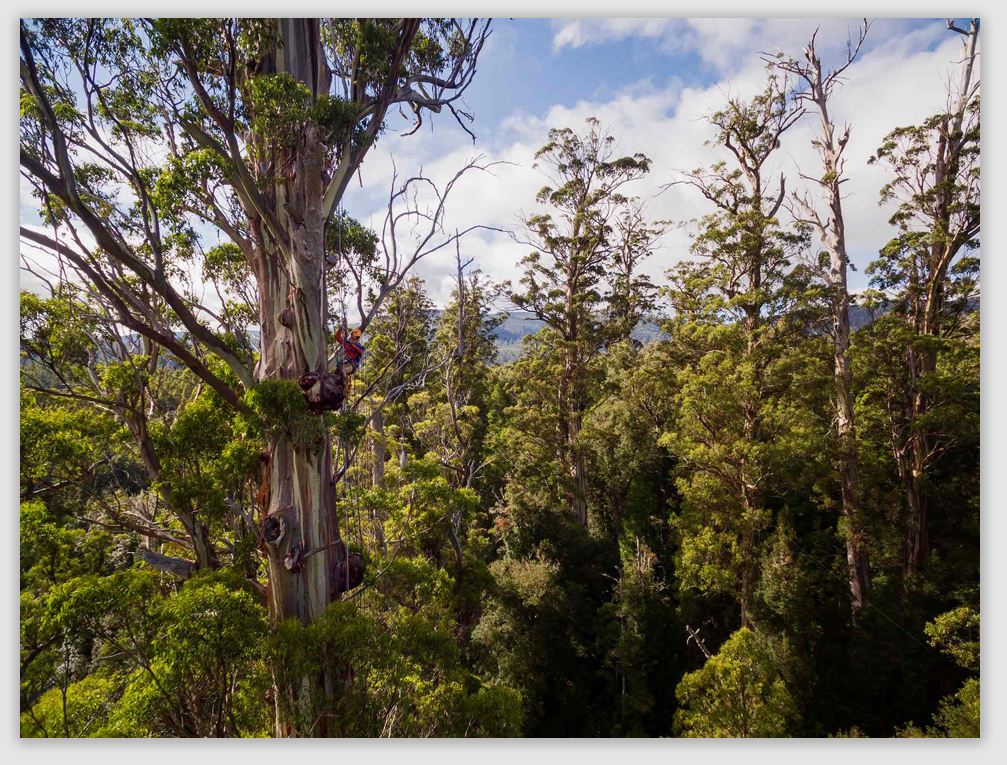
The Tree Projects team spent 67 days documenting one eucalyptus regnans in the Styx valley of Tasmania. Using a combination of tree-climbing and elaborate arboreal rigging techniques, they produced an intimate portrait from an impossible perspective of one of the world’s largest individual flowering trees, which goes by several common names. Their photos document the process that resulted in an extraordinary ultra high-definition photograph. They used special camera rigs that travelled the height of the tree in the free space between them to create an 87-image composite. Wild weather made the process even more difficult. Photographer Steven Pearce says he had to wait 11 days to get the final few images, meeting ‘the mental challenge of being patient and believing it would happen’…
A New Milford man has filed suit against the owners of an apartment building, claiming he suffered serious injuries after tripping over a Christmas tree left for trash collectors. Kyu Taik Chung, 73, claims in court papers he was injured March 12, 2015 on the sidewalk at 501 Linwood Avenue, where a co-op is located. The business owners are listed as 1170 Apartment Corporation, according to the suit filed Jan. 20 in Bergen County Superior Court. The suit accuses the landlord and/or maintenance personnel of “recklessly, carelessly and/or negligently” allowing an unsafe hazard to remain on the premises – the discarded Christmas tree. “The plaintiff suffered severe and permanent injuries; was disabled and disfigured; has suffered and will continue to suffer great pain and torment, both mental and physical,” Chung’s attorney, Albert H. Wunsch III, claims in the suit…
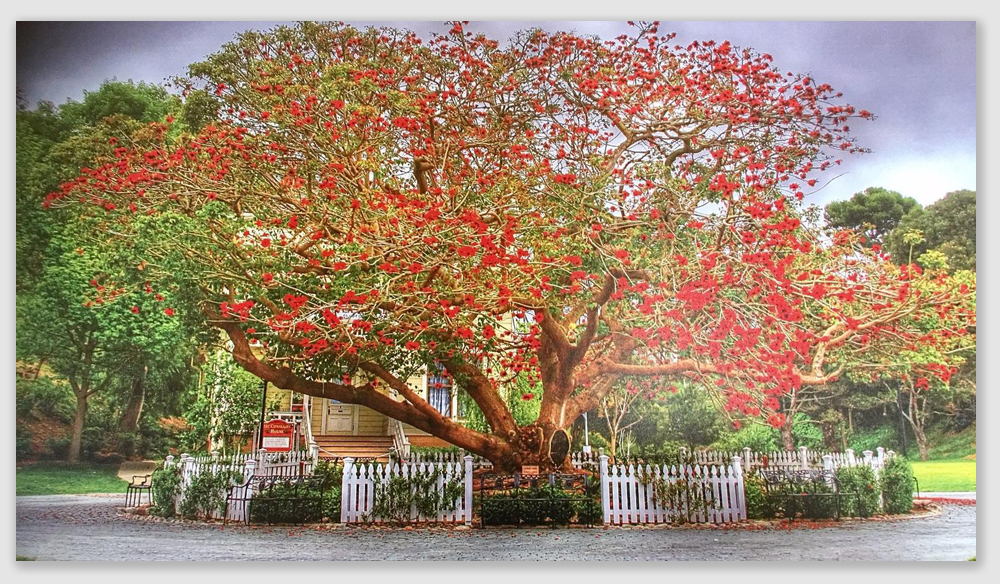
The Coral Tree Tea House in Old Town’s Heritage Park is open for business as usual, but the iconic coral tree that inspired its name has disappeared. Former state Sen. Larry Stirling, who lives nearby, calls his discovery of the missing tree like “being hit with a cold bucket of water while sleeping.” He did some sleuthing to learn the fate of the flowering coral, the park’s centerpiece for more than six decades. After his queries to Supervisor Ron Roberts went unanswered, Stirling invoked the public records act to request county documents from county CAO Helen Robbins-Meyer. The mystery is solved, thanks to an enlightening response from county Department of Parks and Recreation Director Brian Albright…
Mansfield, Ohio, News Journal, January 30, 2017: What you may or may not know about trees
Trees are a big subject. The largest trees in the world grow in California. It is the giant Sequoia, growing in the Sequoia National Park at Three Rivers in California. While not the tallest or broadest, this tree is named General Sherman. It has the largest volume. The trunk is wider than three elephants lined up in front. What is the age of General Sherman — only 2,200 years! While Ohio tree planting begins in late March and ends in late October, now is a good time to do some homework for future tree plantings. The more homework completed, the better the outcome of the tree planting. For a small tree, plant multiple trees if space permits. For example, plant three small trees and space 5 to 6 feet apart. Combined, three trees will have a much greater impact…

The future of gin is safe, according to horticultural experts who have collected juniper seeds from across the country to help conserve the declining tree species. Juniper berries, which take two years to mature slowly on the plant, help give the popular alcoholic drink its distinctive flavour, but the native UK species is in decline. The UK National Tree Seed Project has been set up by the Royal Botanic Gardens, Kew, to collect seeds from juniper and other UK tree species and store them in the Millennium Seed Bank to ensure they do not vanish from the countryside. The project has “banked” 5.8 million seeds from 6,500 UK trees since May 2013, with the aim of collecting seeds from all native woody plants, and juniper is the first species to be fully collected and saved…
Chicago, Illinois, Tribune, January 30, 2017: Want to plant a tree this year? Rev up your research
As this wet winter flows toward spring, it’s already time to ask: What trees can I plant? Start your research now if you want to be ready to plant trees and shrubs starting in April. “Planning is important to make sure you choose the right species or variety for the conditions of your site.” said Sharon Yiesla, plant knowledge specialist at The Morton Arboretum in Lisle. Planting the wrong tree can lead to long-term problems, such as a crowded yard; an unhealthy, unattractive tree; branches that collide with the house or break in storms; or neighborhoods where trees are more vulnerable to disease and insects. Here are some tips from Yiesla for selecting a tree that will bring beauty to your yard and your community for years to come…
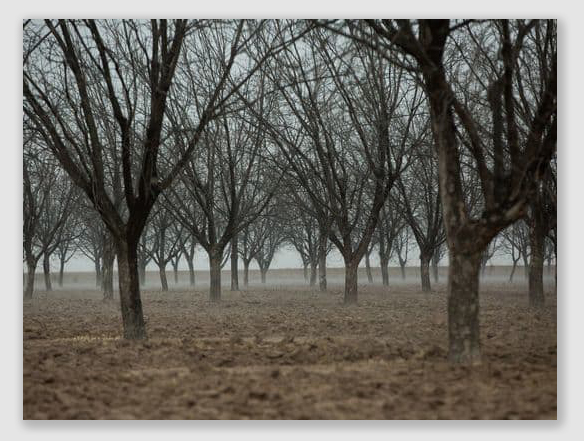 Carlsbad, New Mexico, Current-Argus, January 29, 2017: Tree pruning
We’ve talked about the value of trees and decided it was worth learning how to water and fertilize trees. This week, we are discussing pruning. Why prune a tree? There are some basic reasons on why one must prune a tree: (1)To remove dead and dying branches or branches with disease; (2) To promote growth; (3) To reduce the opportunity for accidents; (4) To make it more pleasing to the eye; or (5) If it was planted in the wrong place to start with and you want to extend its misery. The question I often receive is, “When is the best time to prune?” I asked this of a professor when I was in school. His reply was ‘when your knife is sharp’. He implied that if you have to use a saw, you waited too long. Over the last 30 some odd years, I’ve come to the conclusion that his answer is too simple. There are times you want to let a branch get big enough that you have to use a saw to prune it out. That said, you don’t want to wait too long either. Dead, dying or diseased branches can be pruned anytime of the year and should be as soon as they are noticed…
After the ice storm that struck Kansas last weekend, many people – especially in the middle of the state – are dealing with damaged trees. Ward Upham, extension associate for Kansas State University, said tree damage often leaves homeowners with a decision about whether a tree can be saved. For those facing that choice, as well as cleaning up plenty of fallen limbs, the first step is to wait until all the ice has melted. “Slippery ice and chainsaws don’t mix,” said Upham, home horticulture rapid response coordinator for extension agents across Kansas and the state extension Master Gardener coordinator. “Check for downed power lines or hanging branches. Don’t venture under the tree until it is safe. If large limbs are hanging precariously, a certified arborist has the tools, training and knowledge to do the work safely.” The next step is to remove debris to avoid tripping over it…
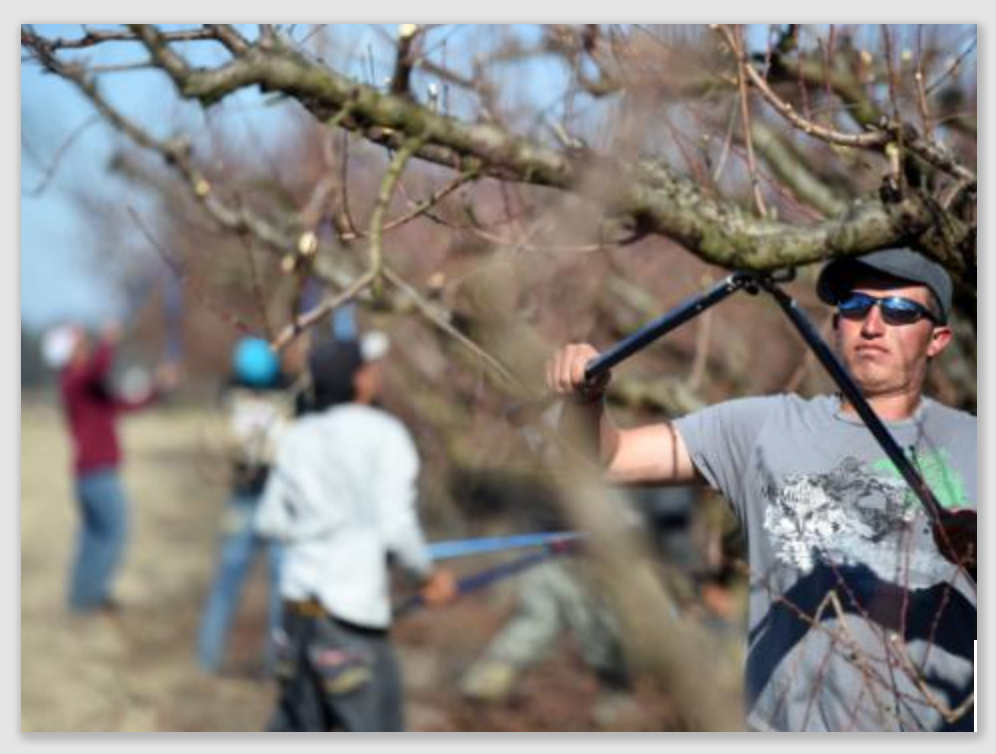 Augusta, Georgia, Chronicle, January 28, 2017: Peach tree growers hoping for cooler weather
Despite seeing springlike temperatures for most of January, Jason Rodgers isn’t fretting over the peach crop. “It’s still early,” said Rodgers, vice president of operations at Titan Farms in Ridge Spring, S.C. “Sure, it’s been pretty warm lately, but our trees haven’t been asleep long enough to wake up yet. We’re not too concerned right now.” Between mid-November and late February, peach farms need between 800 and 1,000 hours of temperatures below 45 degrees to maximize potential growth. As of Jan. 25, Titan Farms had around 570 hours of dormancy. “We’re pretty much on schedule with last year,” Rodgers said. “At this point in 2016, we had around 600 hours, so we’re not far off…”
The ponderosa pine had taken root decades before the Revolutionary War, making a stately stand on this western Sierra Nevada slope for some 300 years, Nate Stephenson figures. Then came the beetle blitzkrieg. Now the tree is a dab in the gray and rusty death stain smeared across the mountain range. At the base of its massive trunk, a piece of bark has been cut off, revealing an etched swirl of insect trails. Higher up, naked branches reach out, as if from a many-armed scarecrow. “This was alive until the drought killed it,” Stephenson says mournfully. The U.S. Forest Service estimates that since 2010, more than 102 million drought-stressed and beetle-ravaged trees have died across 7.7 million acres of California forest. More than half of those died last year alone…
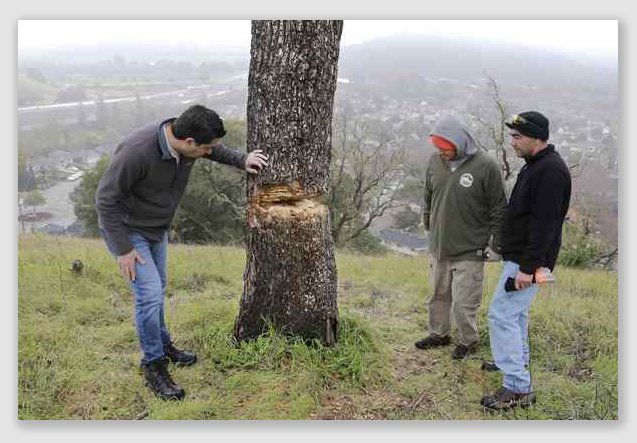
An oak tree in Marinwood open space whose trunk was cut almost all the way through is dangerous and must be taken down, an official said. “About 85-90 percent of the trunk is gone, so we’re going to have to cut it down,” said Shane DeMarta, recreation director for the Marinwood Community Services District. “It’s sad because we’ve lost about 10 oak trees in the last month because of storm damage.” The tree, located on Grasshopper Hill above Highway 101 just north of the Lucas Valley exit, was attacked by a vandal with an ax over a period of several weeks, DeMarta said. If it were to fall in the wrong direction, it could slide down the hill and damage residents’ back yards, he said…
Arlington, Virginia, Connection, January 26, 2017: Tree Stewards gather to celebrate new year
For a Tree Steward, having fun while protecting local trees is important. It’s just that for a Tree Steward, fun means something a little different. At their annual potluck celebration of the new year, on Jan. 17, the Tree Stewards of Arlington and Alexandria planned some entertainment: There was wine, mulled cider, food, and speeches: Master Gardener Scott Ford, demonstrated how to use a whetstone to clean and sharpen bypass pruners, loppers, shovels and other gardening tools. Ford harked back to his grandparents’ farm and how tools were sharpened back in the day. He demonstrated on the family shovel which has been in the Ford family for four generations. The Tree Stewards kicked off their First Tree Steward Prognosticator Contest. Participants would predict whether or not the groundhog will see its shadow, and what the last frost date will be at National Airport. Next on the agenda was Matthew Barker, Alexandria city arborist, providing a talk on “Champion and Notable Trees.” Barker is on a mission: to find more champion and notable trees in this area. “Did you know there are 200 species of tree which do not have a champion? Or that 75 percent of champion trees are found on private property (like your back yard)?” he asked. That champion or notable tree is out there waiting for a local resident to find it, he said, and suggested a website on the ways a tree qualifies and an interactive website on where the trees are that have been identified…
 NASA, January 26, 2017: Tree rings provide snapshots of Earth’s past climate
If you look out the window, you can tell if it’s rainy or sunny right now, but that doesn’t say very much about your region’s climate—the area’s average weather conditions over a long period of time (30 years or more). However, that big tree in your backyard has been keeping a detailed climate record for decades. Trees can live for hundreds—and sometimes even thousands—of years. Over this long lifetime, a tree can experience a variety of environmental conditions: wet years, dry years, cold years, hot years, early frosts, forest fires and more. If you’ve ever seen a tree stump, you’ve probably noticed that the top of a stump has a series of concentric rings. These rings can tell us how old the tree is, and what the weather was like during each year of the tree’s life. The light-colored rings represent wood that grew in the spring and early summer, while the dark rings represent wood that grew in the late summer and fall. One light ring plus one dark ring equals one year of the tree’s life. But how do trees keep track of this information?
It towers above downtown Delray’s tallest buildings, glows with holiday lights and draws thousands of visitors during Christmastime. But Delray’s iconic 100-foot Christmas tree is also not safe enough to to go up next year, city leaders learned this week. Now Delray Beach is faced with costly options to replace the tree in time to keep the 20-plus year tradition alive this coming Christmas. Structural engineers hired to sign off on the tree’s structural integrity would not give the OK, city officials said Tuesday. “That means that we have been very lucky in putting up a tree that is structurally unsound … ” Mayor Cary Glickstein said. “We all feel that the tree is certainly iconic, the tradition is important, but we’ve got public safety issues…”

Imagine having to wait five years to see what color your child’s eyes would be. That was the situation faced by Rutgers University plant biologists who were intent on breeding a deep pink dogwood tree in time for the university’s 250th anniversary. For years they’d been meticulously cross-breeding dogwoods with the goal of producing a hardy, fast-growing plant with blossoms of deep pink – a shade of pink that wouldn’t exist in nature without man’s help. Young dogwood trees usually take five years to produce blossoms, which means the average horticulturalist will see only a handful of “generations” during a career. They are planted and monitored in one of Cook College’s nurseries…
Jason Montagino has seen coastal erosion displace his neighbors and hurt the fishing business in the Jean Lafitte area for as long as he can remember. “The land means a lot. You don’t want to see it erode away,” Montagino said. “When the land erodes away, then the people don’t have a place to live.” Louisiana’s coastline has lost an area the size of Delaware, about 1,900 square miles, since the 1930s, according to the U.S. Geological Survey. That’s a rate of a football field’s worth of land every 38 minutes. One popular and seasonal state project, however, is not only stopping erosion but rebuilding the coast. The Christmas tree marsh restoration project takes Christmas trees that Jefferson Parish residents leave curbside and builds them into barriers to break the waves caused by tides and boats, limiting how much the water erodes the land…
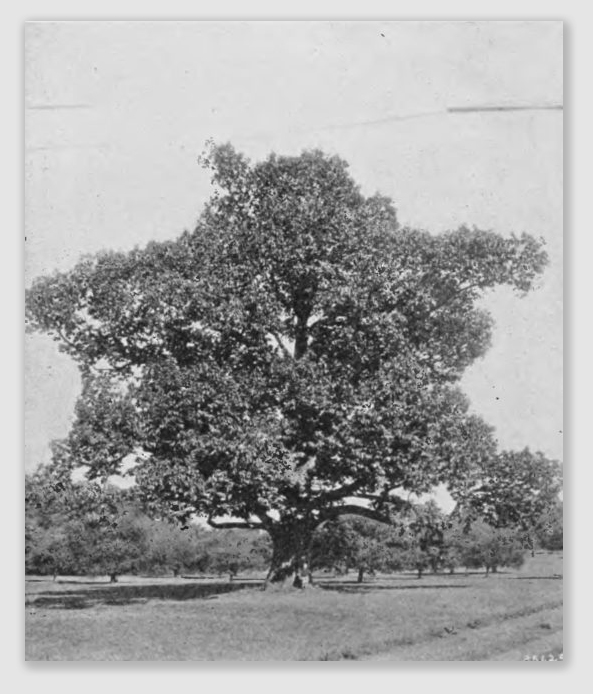 Science Line, Jan. 25, 2017: The American chestnut tree has a good shot at making a comeback
Henry David Thoreau’s description of a hike in the woods near Walden Pond includes a tribute to “boundless chestnut woods” and the pleasure he takes in harvesting a bushel of chestnuts, which he calls a “good substitute for bread.” But this delight is scarcely available to hikers in the Massachusetts towns of Lincoln and Concord today. Few mature American chestnut trees remain in this region and across the whole of eastern North America. The tree species, part of the beech family of trees, fell victim to a fungal disease introduced by a foreign chestnut species in the early 20th century. Although many stumps remain in the wild and send up new shoots of green, they can only re-sprout so many times before they completely succumb to the Cryphonectria parasitica fungus and die away. When Europeans first settled the eastern United States 200 years ago, the American chestnut covered 25 percent of the surrounding forests and served as an important food source for animals such as bears and birds. The trees also yield a highly rot-resistant wood that settlers fashioned into furniture, housewares and boxes ranging “from cradle to grave,” says Brian McCarthy, a forest ecologist at Ohio University…
NPR, Jan. 25, 2017: If these trees don’t get time to chill, farmers will be out on a limb
Tom Coleman is busy pruning branches off pistachio trees that aren’t budding at an orchard just north of Fresno, Calif. He farms and manages more than 8,000 acres of pistachios across the state. “Here’s an example of some hanging down nuts from last year that just wouldn’t come off because of the position on the tree, so we want to remove that,” says Coleman. Coleman worries these trees won’t get enough sleep this winter. Crops like pistachios, peaches and almonds need a certain amount of cold weather every year. This is what the agricultural industry refers to as chill hours…
The $35 wooden mailbox Keith Strong bought in 2009 seemed charming and functional for the home he shared with his wife in a posh golf community in the suburbs of Washington. It was a newer version of the mailbox the homeowners association previously approved and had sat at the end of their driveway since the couple moved to their Bowie-area home four years earlier. But no more than two months after Strong installed his new mailbox, he received an order to dump it — for a $500 mailbox upgrade. The board of the homeowners association voted to require all residents in the Woodmore golf community to buy metal mailboxes, monogrammed with the letter “W” and mounted on a decorative post. The $500 mailbox mandate angered Strong and others in the community, launching him into a seven-year fight that finally ended this month when a Prince George’s County judge signed, sealed and delivered a ruling that the board of the Pleasant Prospect Home Owners’ Association overstepped its bounds with its postal pronouncements…
Neighborhoods in San Diego, especially those in low-income and urban areas, would get significantly more trees under a five-year “urban forestry” plan the City Council unanimously approved on Tuesday. The proposal aims to help the city meet the goals of its ambitious climate action plan, which calls for increasing the percentage of San Diego covered by trees from 13 percent to 35 percent over the next two decades. Supporters said the 32-page plan would also boost property values, improve air quality, enhance wildlife habitat and shrink energy costs by reducing the need for air conditioning. Increasing a city’s tree canopy has also been shown to reduce storm water runoff, lower crime rates, boost public health and strengthen communities, city officials said…
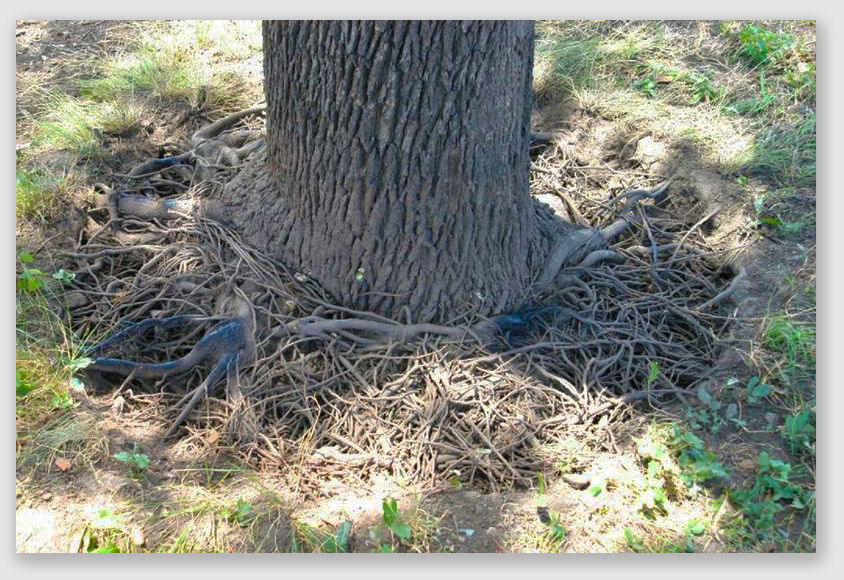
Question: I have a 15-year-old live oak that appears to be planted incorrectly and with the wire mesh still wrapped around it. I have carefully started to expose the root flare. However, I am uncovering a mess of roots and I think it could be due to the wire mesh. The roots have seemed to mushroom upward due to this. The tree has always appeared in good health but I know root flare exposure is important for the long haul. Have you ever encountered a planted tree where the wire mesh was still wrapped around it? How aggressive can I be at removing the mangled roots? They are almost like wood blocks grown together. Please note, I have used a hand blower and broom to great success with other trees, but this one just seems so odd and I want to do the right thing.
Answer: Sounds like you are doing a great job. Those “bird’s nest” or “spaghetti” roots are artificially trying to grow up to get air. All of that should be cut off. Don’t worry that it will hurt the tree. Go ahead and be aggressive. Also remove as much of the wire and burlap as you can. This is the perfect time to do the work…
Investigators were still trying to figure out on Tuesday why a 70-foot-tall oak tree toppled on a quiet street in east Ukiah, smashing through the roof of a single-story home and crushing to death a 35-year old woman who was lying asleep in bed. Erika Tyler was killed in the predawn hours on Saturday when the enormous tree, about 7 feet in diameter, plunged to earth. Tyler’s mother, Connie Tyler, told reporters that her daughter and her daughter’s boyfriend, Kyle Jones, feared the tree would fall and had asked their landlord to remove it. “They were scared of that tree all the time,” Connie Tyler told the Santa Rosa Press Democrat. Jones, who had been sleeping in the same bed beside Tyler, escaped unharmed…
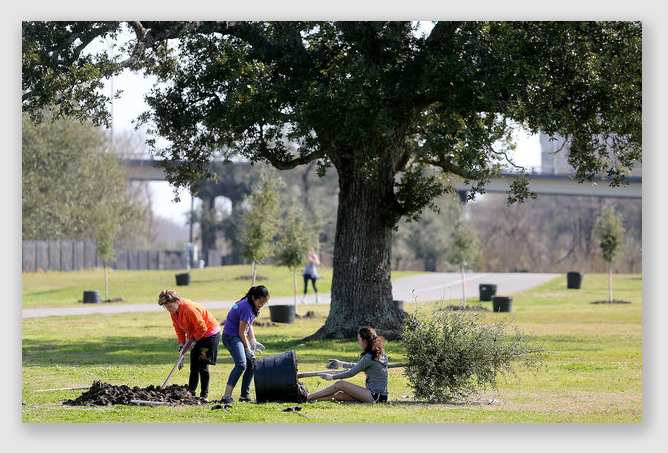
Last Friday (Jan. 20) was Arbor Day in Louisiana, the traditional time to celebrate trees by planting them. And plant them we should. Trees provide a wide variety of benefits to our outdoor environment. Before you head out to the nursery, though, there are some important things you need to consider. Selecting the right trees requires careful deliberation. There is a common mistake people make in selecting trees. They try to pick a tree without considering the purpose it will serve or the growing conditions where it will be planted. In all earnestness, people often ask me to recommend “a good shade tree.” Asking a horticulturist to recommend a good shade tree is like walking into a shoe store and asking the salesperson to recommend a good pair of shoes. Without knowing your shoe size, your taste, your budget and a variety of other factors, the salesperson won’t have a clue how to help you…
New York, N.Y., January 23, 2017: Man dies after getting head stuck between car and tree in Brooklyn
A 52-year-old man driving in reverse on a Brooklyn street was killed Monday morning when he accidentally wedged his head between his car and a tree, police sources said. The bizarre incident happened on W. 7th St., near Kings Highway, at about 9:45 a.m. Sources said Xin Xheng Lin had moments earlier stuck his head out the window but did not see the tree as he reversed his 2004 Toyota minivan.
 Boston, Massachusetts, Globe, January 19, 2017: When trees fall, no one listens
A week after taking ownership of 637 Hale St. in Beverly last August, David Hayes brought in a tree service to remove multiple trees on his property and 14 more on a right of way shared with a neighbor. “I went out to Rockport and 4½ hours later, I returned to find 14 trees, including a 75-year-old maple, on my [side of the] right of way cut down,” said Nathalie Majorek, the abutter. “There was no warning, no permit, just devastation. I could not believe my eyes. I cried.” According to Majorek, her story should be a warning to other homeowners that cities and towns across the region offer little protection for trees. To make the situation more frustrating, “The consequences for builders or developers that remove them without permits are so minimal, many just figure it as part of the cost of doing business,” Majorek said. Philip Klimowicz, Beverly’s forestry and grounds foreman, backed up Majorek’s perception. “We rarely pursue fines because it is too expensive to take the builders to court,” he said…
Sun Prairie, Wisconsin, Star, January 23, 2017: ‘Reserve’ plan OK’d with trees
Following nearly two hours of public input and official discussion, the Sun Prairie City Council on Tuesday Jan. 17 gave conditional approval to The Reserve, a 313-unit single family neighborhood on the city’s northwest side that includes a site for a new elementary school and a new city park site. Among the conditions placed on developer Matt Elsing were that the developer plant five evergreens — either white cedar or arbor vitae — per lot. The trees will be planted as close to the northern edge of the property utility easement — provided all utility easement users agree — in each lot backing up to current homes along Stonehaven Drive in the Shonas Highlands, Hickory Grove and Ridge Crest neighborhoods as far east as one lot east of Broadway Drive. Trees will not be planted in drainage easements as determined by city staff, according to the condition. Like last week’s Sun Prairie Plan Commission meeting, this week, neighbors also showed up to oppose the plan. Most of those opposed said the developer did not work with neighbors to come up with his proposal to plant pine trees along the property lines of Shonas Highlands homeowners. The owners of eight homes in Shonas complained about the loss of greenspace north of their homes and requested the commission require additional greenspace…

Trees outnumber people 300 to 1 in the United States, with woodlands covering one-third of the country in the U.S. Forest Service’s latest census. Only trees at least 5 inches in diameter are counted in the U.S. Forest Service Forest Inventory and Analysis National Program, which has continuously counted the forest population since 1930. An acre with at least 10 percent tree canopy qualifies are a forest for purposes of the census, reports Jo Craven McGinty in the Wall St. Journal. Dennis May, a U.S. Forest Service program manager, tells McGinty the census was established to answer the question, “Are we wisely using the forest without impacting its health, condition and stature.” The U.S. exported $8.7 billion in forest products in 2016 – lumber, paper, logs, veneer, pulp, wood pellets, casegoods and other items – putting the sector right up there with soy beans and corn…
At the edge of a short dead-end street, at the bottom of a hill in the city of Delray Beach, a sausage tree grows 30 feet high, with red blossoms, green leaves and thick, sturdy vines. It’s African in origin, ornamental to boot, a home for birds and iguanas, growing long oval fruit. Michael Sebastian owns more than an acre and has plans to build homes. So he needed the street to continue, right through the tree. But all of the eight homeowners who live on the block want to see the tree live, preferably in the same spot. “The tree should never have been there in the first place,” Sebastian said. It sits on top of sewer lines and in the path of the road. It was improperly planted and the city planned for the street “years and years ago,” he said. But Sebastian isn’t the “big, bad developer” some residents see, he said. He’s an avid nature photographer and at first didn’t want the through-street, he said…
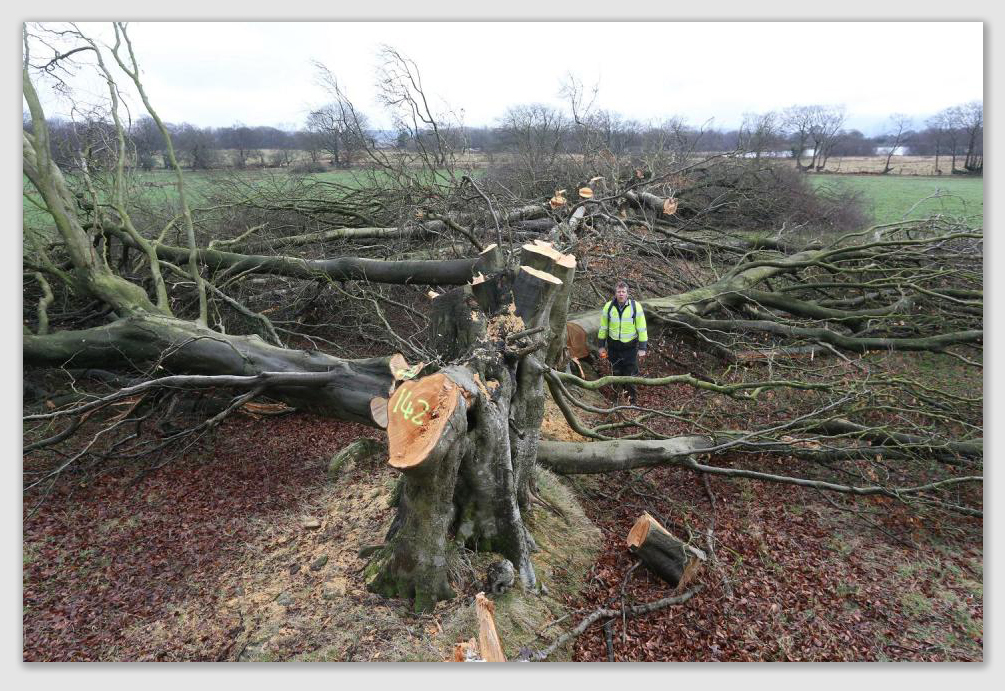
A MYSTERY tree feller chopped down around 200 ancient beeches – leaving horrified environment bosses stumped. The hedgerow beeches are thought to be around 150-200 years old and their felling has been called “devastating”. Inspectors were visiting countryside in Blackwood, near Caerphilly, South Wales, when they came across a field of the stumps. Natural Resources Wales have launched an investigation into the felling, and have said anyone wanting to chop down so many veteran trees would need a license…
A small crowd walked through Oakwood Park on Saturday afternoon to see and hear about the condition of the trees that are slated to be removed. Safety-Service Director Dan Given said he called the meeting as a way for City Council and residents to see that many of the remaining trees are past their useful life as they get closer to 100 years of age. Parks and Recreation Crew Leader and city arborist Mark McIlwaine said the pin oaks throughout the park have a similar lifespan to that of a human — anywhere from 70 to 100 years — but there’s no way to tell when the end will actually come. “Just because you don’t necessarily see rot in the trunk when you cut a tree down, doesn’t mean it’s not getting ready to die,” he said. “If the tree is leaning or if you can see rot in the branches, that’s a pretty good indication that the process has already begun though…”

The Advocate Tree, a 1,000-year-old landmark redwood tree in the Forest of Nisene Marks State Park, was toppled by last week’s storms. On Monday, hikers clambered over a slick log jam in Aptos Creek to pay their respects to the 260-foot goliath, which lay broken into several monumental pieces. A bouquet of red roses rested on the tree’s 40-foot-tall root ball. “This was my favorite tree. I used to come here all the time,” said Eric Chitwood of Aptos, who had brought his children and their friends out to see the fallen redwood. The Advocate Tree grew at the bottom of a steep slope on the Old Growth Trail, roughly half a mile from the state park’s entrance station parking lot…
A Green Bay family is keeping their Christmas Tree up while the packers are winning. Tyler and Hilary Krueger put the tree up the weekend the Packers beat the Eagles on November 28th. Since then team has won eight straight games. “We’re as confident as we were last week. This a magical season and as long as the magic tree is up, the packers will keep it up,” said Tyler Kueger…
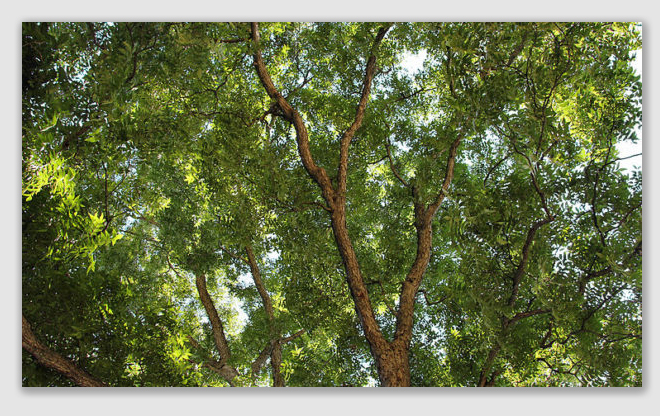 Austin, Texas, Monitor, January 19, 2017: Developer, city arborist agree on heritage tree removal
In a rare exception to the city’s 95 percent preservation rate for heritage trees, the Planning Commission approved staff’s recommendation of a variance during its Jan. 10 meeting that would permit applicant Stantec Inc. to remove two heritage trees in order to construct a new hotel at 400 Josephine St. In fact, the applicant plans to remove a total of five heritage trees, but the other three do not have any stems greater than 30 inches in diameter, so their removal can be approved administratively by the city. The other two heritage trees, pecan trees #908 and #919, are large enough that a variance was required. Zach Hunter, the landscape architect on the project, said that multiple building layouts were drafted to determine which design would have the least harmful effect. “The layout that we have affects the two trees that we found to be in the least healthy condition,” he said at the meeting…
Angus, Scotland, BBC, January 19, 2017: Man killed felling tree was ‘a genuine tragic accident’
The death of a man killed when he was crushed by a tree he was cutting down has been ruled “a genuine tragic accident” by a sheriff. John Phillips died aged 29 on land in Angus owned by the family of his life-long friend, David Cochrane. The two men were felling trees beside a road at Auchindorie Farm, near Kirriemuir, on 14 March, 2013 when the incident happened. Sheriff Gregor Murray said that the accident “could not have been avoided.” In a written judgement following a fatal accident inquiry last December, Sheriff Murray said: “Self-evidently, tree felling is an inherently dangerous process…
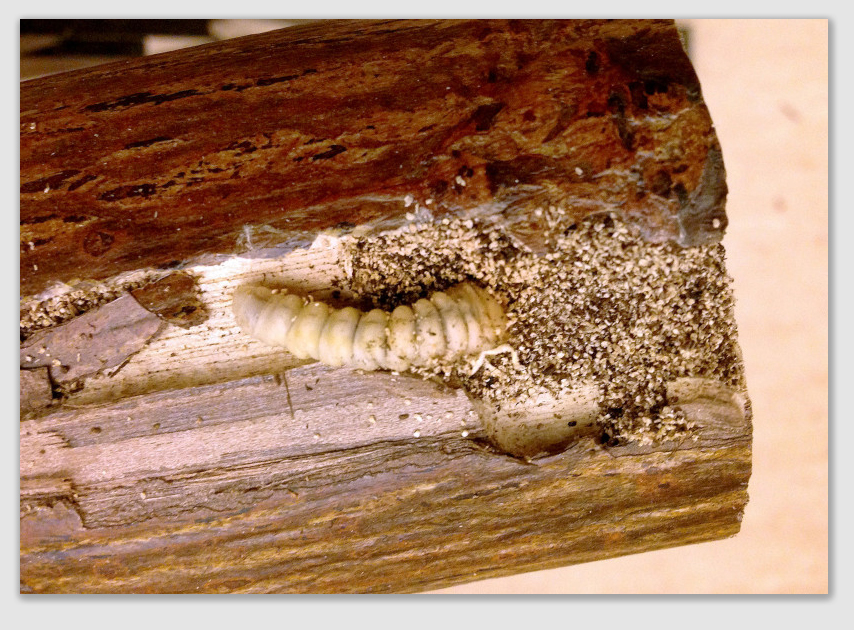
Rustic log furniture imported from China into Minnesota and Wisconsin has been found to be infested with invasive insects that could damage native trees. Both states’ agriculture departments on Tuesday confirmed multiple incidents of two different species of Chinese bugs hitchhiking on rustic, whole-log furniture in 2016. The brown fir beetle was found in rustic pine log furniture imported from China, while the velvet longhorned beetle was discovered in rustic walnut log furniture, wrongly described as hickory, also from China. “We’ve had invasive insects imported into the state in other material, but this is pretty much a first with furniture,” said Mark Abrahamson, an entomologist with the Minnesota Department of Agriculture…
Oxford, Mississippi, Eagle, January 18, 2017: Tree farmers center of landscape ordinance discussion
As the city of Oxford continues to eye land further out in Lafayette County for annexation, city leaders are being met with obstacles on how much to require large landowners to meet current city ordinances dealing with tree removal and mitigation. Before the Oxford Board of Aldermen voted on approving an amendment to the city’s Landscaping and Tree Preservation code during Tuesday’s regular board meeting, Mayor Pat Patterson brought up a concern shared by himself and Alderman John Morgan in regards to tree farmers, who are currently outside of city limits, and the kind of hardships they could encounter if annexed into the city…
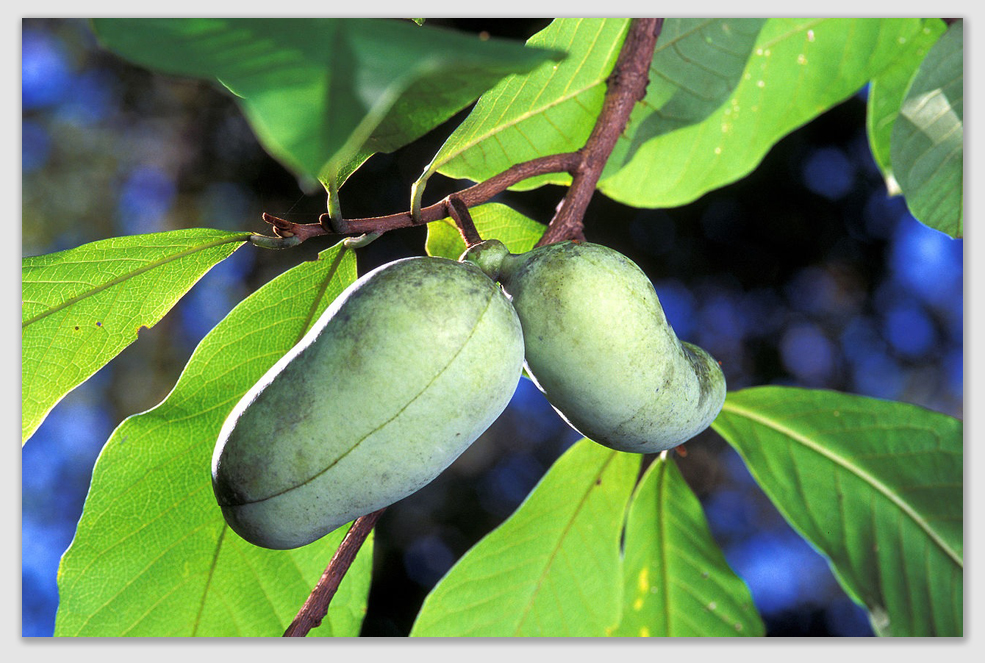 Appalachian Magazine, January 18, 2017: America’s forgotten fruit tree: The Appalachian Banana
It’s difficult to even begin to comprehend the amount of mountain knowledge that has been lost over the past half-century in the hills of Appalachia — so many of the basic skills for simply surviving have vanished with the dying off of our region’s old timers and many fear we have lost basic skill sets that will take generations to re-learn. Today, very few people living in the mountains of Appalachia even know how to identify sassafras, let alone make it into a tea. Same thing goes for a dozen other effective home remedies that are now ancient history, tucked away in some dusty book one seldom reads. One of the greatest losses of mountain knowledge over the past generation is, in my opinion, how our country simply forgot about what was once upon a time its favorite fruit tree: The Paw Paw. The largest edible fruit to grow in the United States, the paw paw was often referred to as “the poor man’s banana” and is native to 26 different states…
Emergency responders on Wednesday afternoon recovered the body of a man who fell to his death while trimming trees off the side of Signal Mountain earlier in the day. Shortly before 3 p.m., a team of firefighters and rescue personnel could be seen from the road near the east-facing bluff, working together to hoist the body with a rope system at the scene in the on Forest Park Drive. Four men heaved solemnly on the rope between the trees, walking several yards back through the woods until the body had been pulled high enough to carry it to a nearby ambulance. Recovery efforts were underway by early afternoon after an employee of Big Woody’s Tree Service reported at 11:22 a.m. the man had fallen about 150 feet while working on private property, according to a news release…
 Hamilton, Bermuda, Royal Gazette, January 17, 2017: Look after your tree, it will grow on you
Trees: we often take them for granted, without any thought of their value and usefulness. They are found on the coastline, along roads in woodlands and, of course, our gardens, and yet do we ever stop to think how and why they got there and what is their purpose? Trees improve spaces by bringing aesthetic value, especially in areas of hard landscaping; they delineate spaces of differing use. They can assist in circulation and guide movement in both vehicular and pedestrian areas, to inform direction and destination. In Bermuda, they are ideal for giving shade. The main factors to consider when selecting trees are location, reason for planting and type of tree. Most properties do not have the area of land for planting medium or large trees; only larger properties and open spaces have the capacity to accommodate such species. Trees around buildings are likely to cause problems, especially from the extensive root zones found on trees. The “rule of thumb” is that they equal the top growth at the drip line of foliage. Pruning back branches does nothing in prohibiting root growth, so the exercise is a waste of time…
Greenville, S.C., News, January 17, 2017: Outdated landscape practices
Landscape practices and techniques evolve over time. I remember back in the Dark Ages when I first got my feet wet in the glorious world of landscaping, old timers were full of advice for me about the best way to do things. Some of these ancient practices are tried and true, and are some of the best methods ever devised for successful gardening. However, time has proven that other of these practices have turned out to be somewhat less than desirable. Take pruning paint, for instance. Apparently, sometime back in the forties, it was the rage to paint all your pruning cuts with a black tar-like sealer. I’m only guessing this ancient practice began in the forties. Believe it or not, I wasn’t even born then. I suppose this practice began in the forties because in the seventies literature began to appear in scientific publications that pruning paint provided no benefit. However, to a young twenty-something way back then, old timers who learned their techniques in the forties thought that it was sacrilegious to make a pruning cut without applying a liberal dose of tar to the wound. The argument was that pruning paint would seal the cut and keep insects at bay…
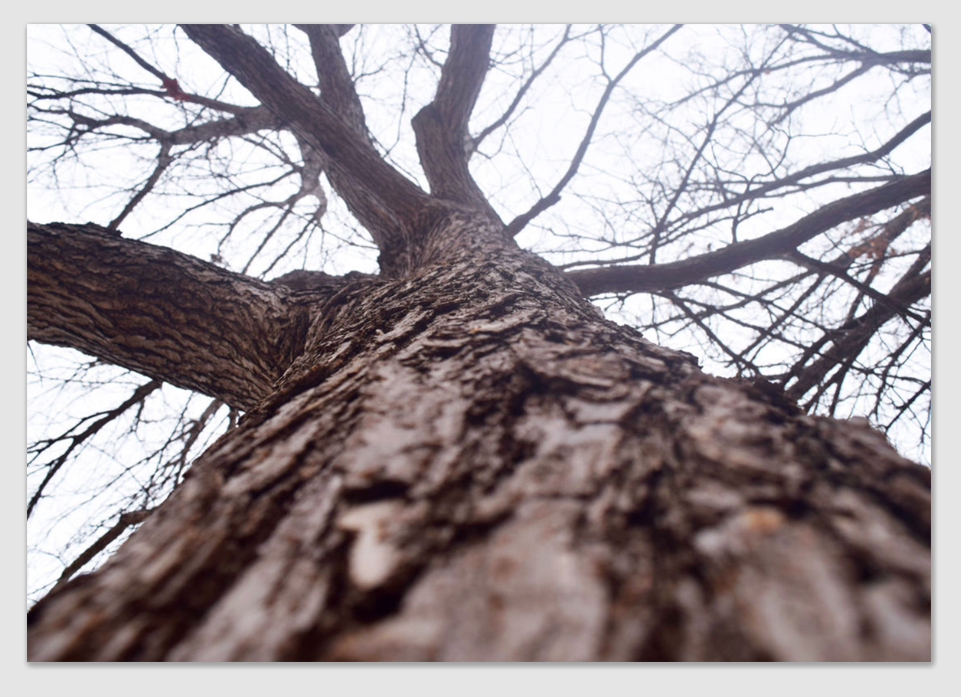 Lincoln, Nebraska, Daily Nebraskan, January 17, 2017: UNL creates strategy for tree infestation
UNL’s City and East campuses have a combination of 9,000 trees—368 of which are ash trees. That population is in danger of the Emerald Ash Borer, a beetle that has infested ash trees across the country since 2002 and now poses a threat to ash trees in Nebraska. “It’s a discreet little insect; it’s not something that you’ll see everywhere,” said Jeff Culbertson, assistant director of operations in Landscape Services. “The damage done to the trees takes some time, it doesn’t happen overnight. It’s kind of a slow death for the ash. In preparation for that, we’ve come up with a plan.” Culbertson has aided the university in developing a strategy to deal with this issue. Initially, the university plans on using insecticide on 10 percent of the ash trees on campus, Culbertson said. After that comes taking a look at the remaining population…
Discover Wildlife, January 17, 2017: Does tree sap freeze?
When water freezes it expands, so ice formation within the confines of a tree trunk is potentially lethal. Tree heartwood, formed from annual rings of water-transporting xylem, is made of dead cells, and water can freeze within these without fatal damage (though in extreme conditions ice expansion has been known to split trunks). The real hazard comes from water freezing in the narrow zone of living cells that lie just below the bark, and are essential for the tree’s survival and regrowth in the spring. Each of these cells has a rigid, dead wall enclosing a bag of living sap that’s confined within a delicate membrane…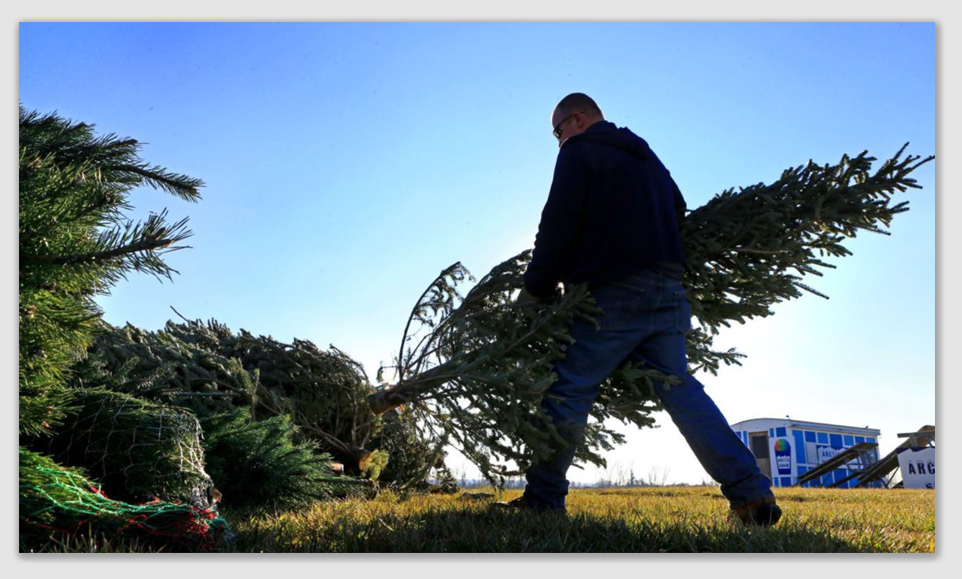 St. Louis, Missouri, Post-Dispatch, January 16, 2017: Man illegally cut thousands of tree tops from national forest land in Minnesota
A Grand Rapids man has pleaded guilty to cutting thousands of tree tops from black spruce in the Chippewa National Forest. Seventy-year-old Joseph Edminster pleaded guilty Friday in U.S. District Court to one count of theft of government property. Prosecutors say he admitted to cutting more than 2,700 tree tops from the forest from October 2008 to October 2014. He then admitted to selling the tree tops to wholesalers for use as Christmas decorations. The wholesalers then sold them to retailers in Minnesota, Iowa and Illinois. It’s estimated Edminster stole more than $24,000 worth of spruce tops from federal land since 2008…
With the wintry mix headed our way, many people are preparing for the worst. When we hear ice storm, we think rock salt and potential power loss, but something that can really be damaging is heavy or falling trees. “You could have a whole tree failure, which would be terrible,” said Laura Mele, certified arborist for Arbortech. With only a day to spare before a storm drops a wintry mix on western Massachusetts, Arbortech Tree Services is fitting in some last minute service…
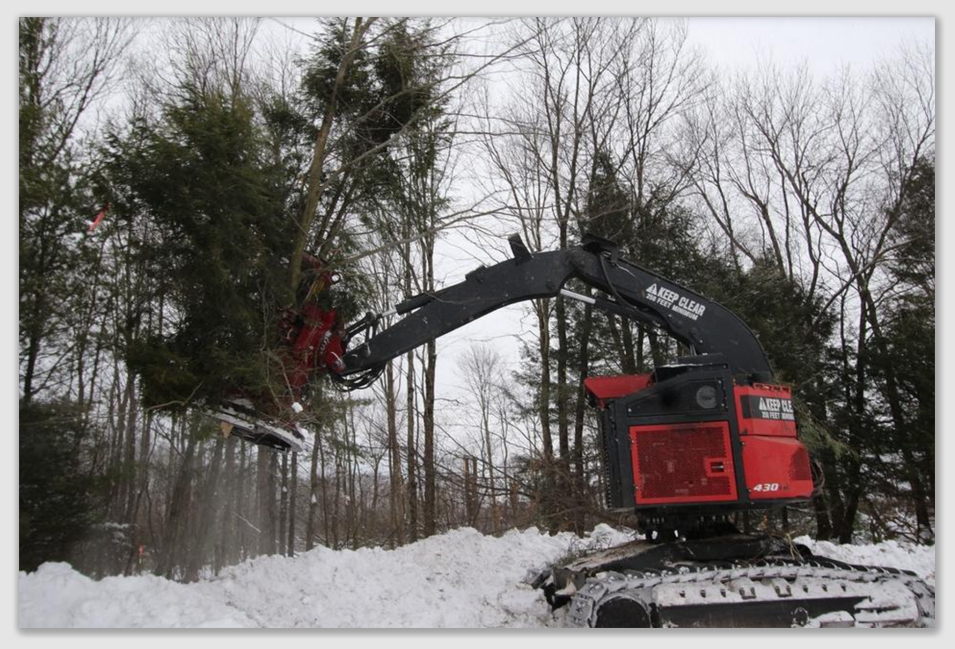
The Lorax would not be happy about this. The furry creature spoke vigorously on behalf of the trees that humans were mowing down in the 1971 Dr. Suess book bearing his name, and he’d have plenty to say about the log pile and stumps on a cleared site next to Route 17M. A group of would-be beer-makers who planned to build the Kikkerfrosch brewery there stripped the property clean a year ago to race a deadline for tree removal, but then abandoned the project seven months later without starting construction. Today, a for-sale sign for the 83 acres sits next to the road again, with a lunar landscape behind it. Each year around this time, the buzzsaws and excavators get busy, clear-cutting land for development to meet a March 31 deadline. The reason? For the next six or seven months, builders are barred from removing trees to avoid disturbing the habitat of the Indiana bat, a little animal that nestles itself under bark and in crannies and enjoys protected status as an endangered species…
Some Cleveland residents have growing safety concerns about dead trees lining city streets, trees that they aren’t allowed to take down or trim according to city law. Kate Marks told News 5 a 50-foot dead tree on her tree lawn had been threatening her home for more than three years.
Marks said she has called Cleveland’s Division of Urban Forestry numerous times time to have them take it down, but so far she’s been given nothing but promises. “I think it’s unsafe,” said Marks. “I’m waiting for someone to walk by with a stroller and get hit right on the head with a branch. This is a big tree…”
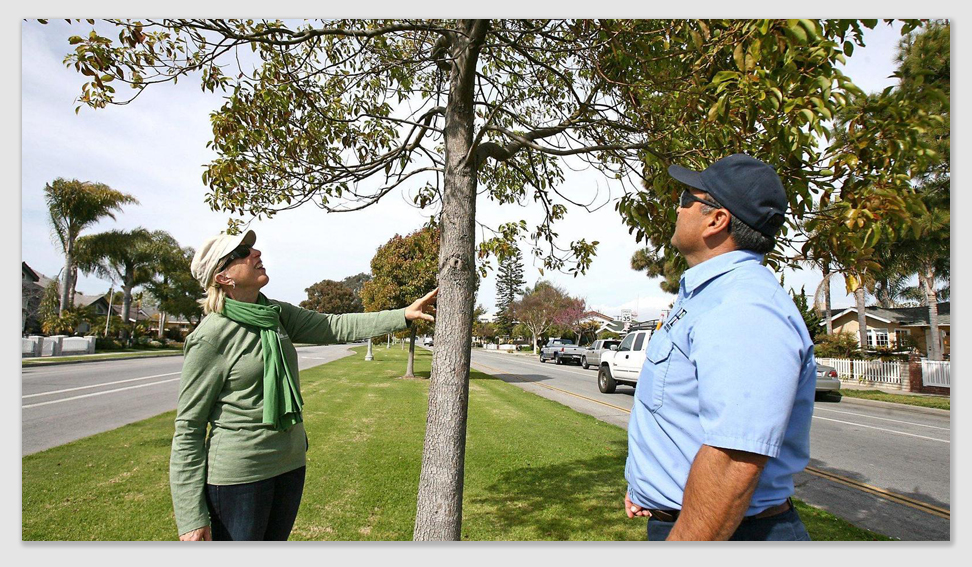 Los Angeles, California, Times, January 12, 2017: Who keeps Huntington Beach green? The Tree Society
Jean Nagy loves trees. Take a drive through Huntington Beach and many of the trees you’ll see are there because of her efforts. Nagy, a Huntington Beach resident for about 30 years, has spent decades bustling about at City Council meetings and otherwise mobilizing the community for beautification efforts. She started the nonprofit Huntington Beach Tree Society in 1998 to take the lead in those efforts. Relying on public donations and state grants, the tree society has worked with local government to develop parkland and other city properties, particularly Central Park. Nagy, 76, said the group has taken on so many projects over the years that she can’t even remember the number…
James Bond star Daniel Craig and his actress wife Rachel Weisz are at the centre of a row with their neighbours over a 50ft-tall tree. The couple, who live in a multi-million pound home in north London, face chopping the large plane tree down after its roots were blamed for causing subsidence to a neighbouring property. But despite them not challenging an application to fell it, other longstanding neighbours have described the move to destroy the tree as “unforgivable”. Margaret Crowther has lived opposite the property for more than five decades. She has opposed the application to fell it…
 American Forests, January 12, 2017: Why we no longer recommend a 40 percent urban tree canopy goal
One of the most frequent questions I receive, as American Forests’ Director of Urban Forest Programs, comes from individuals developing tree canopy goals for their jurisdiction or region. They have come across numerous references to American Forests’ recommended 40 percent tree canopy goal but cannot find a source citation to include in planning documents. The reason for that is simple: research no longer supports a universal 40 percent tree canopy recommendation, and neither does American Forests. That benchmark was established in a 1997 American Forests article “after analyzing the tree canopy in dozens of cities over the [prior] five years and working closely with the research community.” While incredibly valuable and groundbreaking at the time, technology and research have significantly evolved over the past 20 years, leading to a consensus that more nuanced approaches are necessary…
Portland, Oregon, The Oregonian, January 12, 2017: Who to call when a tree’s blocking your way
The weight of heavy snow is causing trees, branches and limbs to crash to the ground, blocking Portland streets and sidewalks. If you see a downed power line, call 9-1-1 immediately. If you encounter a fallen tree or branch on City of Portland streets, parks and properties, and it’s not near a downed power line, call Portland Parks & Recreation Urban Forestry at 503-823-TREE (503-823-8733) or email Trees@portlandoregon.gov. Dave Schamp, of Operations and Maintenance, a division of Washington County’s Department of Land Use & Transportation, says his crew is overwhelmed by calls about roads now, but “we will help anyone sort out if a tree is in a street managed by the city or county…”
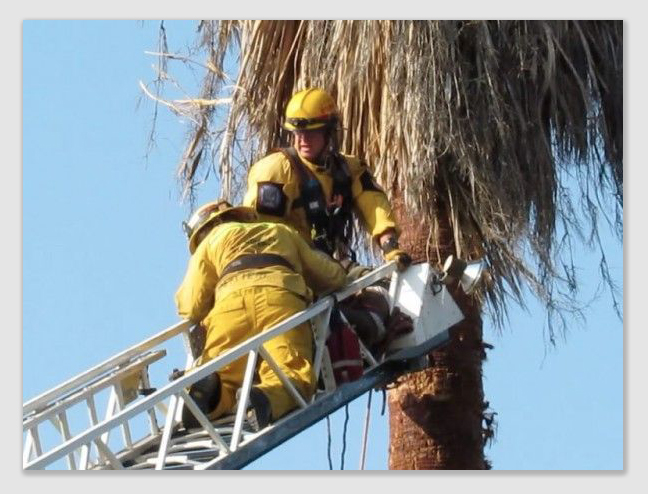
In the wake of four recent tree-trimming fatalities, including one in Los Angeles County, Cal/OSHA Wednesday launched a statewide safety awareness campaign for tree service companies, landscapers and other similar businesses. The four recent cases: (1) on Jan. 6, a worker in Los Angeles County fell about 60 feet to his death when the branch to which he was tethered broke; (2) on Dec. 1 in Mariposa County, a worker was struck by a branch and killed; (3) on Dec. 4, a worker in San Bernardino County suffocated when dry palm fronds collapsed and trapped him; and (4) on Jan. 9, a worker in Siskiyou County was struck by the tree he was cutting to clear power lines.”Cal/OSHA’s safety awareness campaign aims to protect the lives of tree service workers,” said Cal/OSHA Chief Juliann Sum. “Employers in this high-risk industry need to be aware of, and take steps to minimize, the hazards to their workers. We will cite employers that are not in compliance with safety requirements…”
It started with a tree. It’s grown into something more. Tomorrow, the city Hearing Examiner will hear arguments in the fight over whether a house will replace a 100+-foot tree at 3036 39th SW. We first wrote about it seven months ago, in early June, when a neighborhood 9-year-old was going door to door to let people know that the Ponderosa Pine’s days might be numbered. Its fate was seemingly sealed by this preliminary city opinion, sought right after the sale of the site, including an existing house at 3038 39th SW, was finalized in November 2015. Allowing a new house on a site smaller than 3,200 square feet – this one is measured at 3,166 sf – requires a “special exception.” The city announced in October that it would grant one…
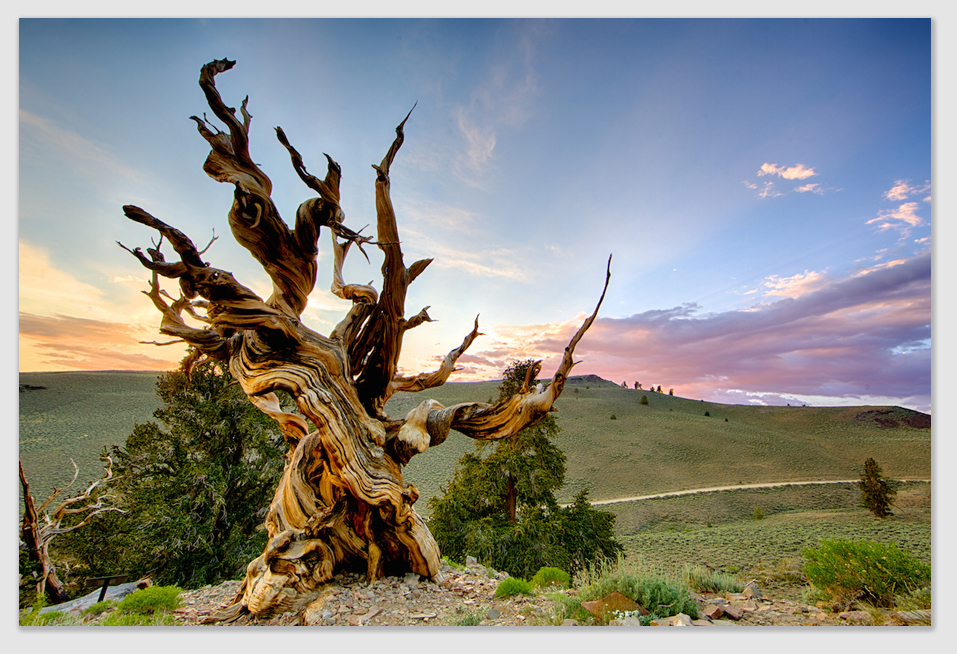
Great Basin National Park in eastern Nevada is one of the most remote and least visited of our national parks, with Wheeler Peak as its central feature at 13,063 feet. On the mountain’s flanks are ancient bristlecone pines, among the oldest living trees on earth, and it was an incident that occurred in this grove — the cutting down of a bristlecone called the Prometheus Tree — that brought the species to the world’s attention in 1965. The tree’s death sparked a worldwide reaction and was instrumental in the creation of Great Basin National Park. It also haunted the life of the scientist who had asked the Forest Service to cut the tree down. Only after the bristlecone had been felled did the scientist and Forest Service discover that what they had killed was then the world’s oldest known living thing. And we still haven’t forgiven them…
A new study has found that trees worldwide develop thicker bark when they live in fire-prone areas. The findings suggest that bark thickness could help predict which forests and savannas will survive a warmer climate in which wildfires are expected to increase in frequency. Trees in regions where fire is common, such as savannas and the forests of western North America, tend to have thicker bark, while trees in tropical rainforests have thinner bark, researchers at Princeton University and collaborating institutions reported Jan. 9 in the journal Ecology Letters. Bark protects the inside of the trunk from overheating and is one of a handful of adaptations that trees use to survive fire. “We found large-scale evidence that bark thickness is a fire-tolerance trait, and we showed this is the case not just in a particular biome such as a savanna, but across different types of forests, across regions and across continents,” said first author Adam Pellegrini, a NOAA Climate and Global Change Postdoctoral Fellow at Stanford University who led the study while a graduate student in Princeton’s Department of Ecology and Evolutionary Biology…
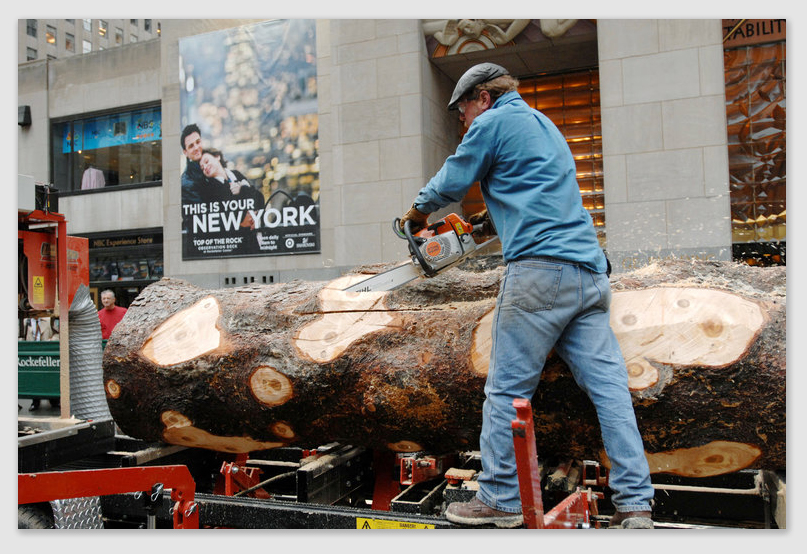
No one knows when exactly the northern California sequoia named Pioneer Cabin first put down roots. But when a storm toppled the ancient tree Sunday night, nature fans around the world mourned its death. After the Calaveras Big Tree Association announced, “The Pioneer Cabin Tree has fallen!”, Facebook users posted more than 2,700 messages with condolences on the group’s page. Pioneer Cabin belonged to the species Sequoiadendron giganteum, better known as “giant sequoias.” Though not as tall as their relatives, the Coast Redwoods, giant sequoias are more massive. In 1880, tourism promoters cut a tunnel through Pioneer Cabin’s base. Three other drive-through trees remain in California, but don’t expect any more. Most of the state’s redwoods and sequoias are now under state or federal protection. “Tunnel trees had their time and place in the early history of our national parks,” the National Parks Service writes on its website. “But today sequoias which are standing healthy and whole are worth far more…”
AP, January 10, 2017: Weakened by drought, trees are falling in rainy California
Drenching winter rains combined with the punishing effects of six years of drought are causing trees to topple across California, in some cases with deadly results. At least two people have been killed in the past month. Seemingly sturdy oaks, palm trees in Southern California and giant sequoias farther north have been collapsing. Experts say that in some instances, the dry spell had weakened or killed the roots or trunks, and the soggy soil and wind caused the trees to tip over. One woman who struck and killed by a tree while walking on a Northern California golf course Saturday. A woman posing for photographs as part of a wedding party was killed and five others were injured by a falling eucalyptus tree in Southern California last month. A towering conifer in front of Joe Lauri’s home in Fresno came crashing down during the weekend storm, giving in to shallow roots and the weight of rain-soaked pine needles. Lauri said he was relieved the damage wasn’t worse…
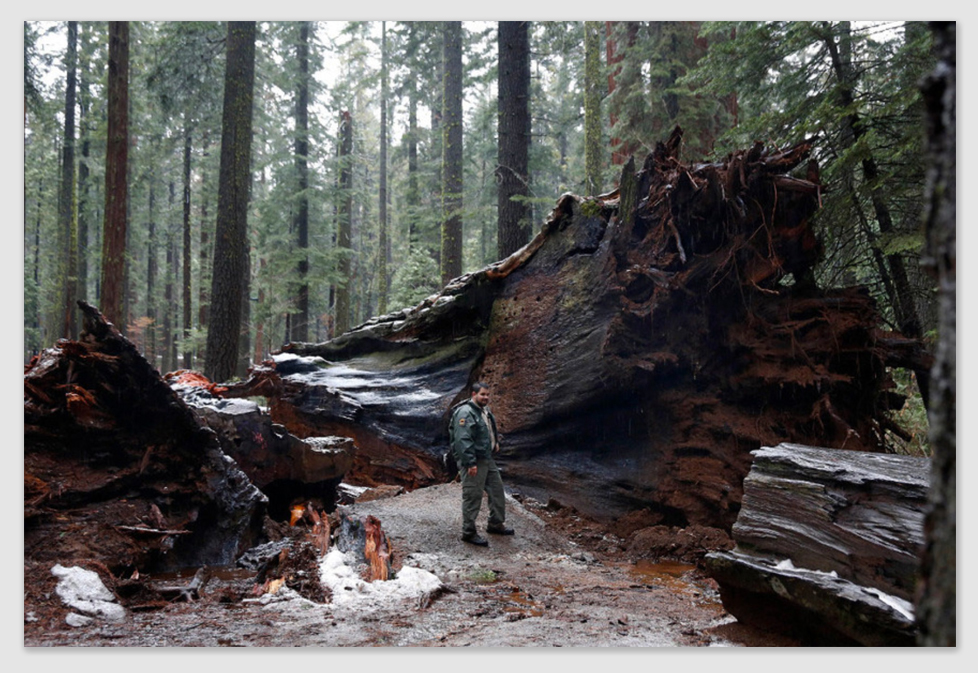
What goes up must come down. The city said goodbye this weekend to the Christmas tree at Rockefeller Center. But even though the holidays are over, the 94-foot-tall Norway spruce will continue adding light to New Yorkers’ lives. For the 10th straight year, the Rockefeller Center Christmas tree has been donated to Habitat for Humanity and will be used in the building of homes for struggling families that need affordable housing, or for people who lost their homes in natural disasters. The wood has gone to places such as upstate New York and Pascagoula, Mississippi…
Popular Mechanics, January 10, 2017: How NATO uses trees to stop tanks
The North Atlantic Treaty Organization has produced a video showing how NATO troops would stop tanks using nothing more than handful of well-placed explosives. The resulting obstacles, known since ancient times as abatis, are capable of slowing armored columns in dense terrain. Taken during NATO exercise Iron Sword last year in Lithuania, the video follows Canadian combat engineers as they attempt to slow down simulated enemy tanks. The engineers used explosives to fell trees across forest roads, creating an area difficult for armored vehicles to cross. Ideally the trees are felled in a web-like pattern, so that an attempt to push through them just piles up more trees to create a more difficult obstacle. The technique actually dates back to Roman times, when it was used to slow down foot soldiers and stop horse-driven vehicles, including chariots and wagons. Back then, tree branches were used instead of whole trees. While the weight of enemy vehicles has increased by a factor of about 30, it’s also easier to fell trees due to explosives and—if you watch the NATO video closely—Stihl chainsaws… San Francisco, California, KNTV, January 9, 2017: Winery owners ‘fortunate’ to avoid disaster after large oak tree falls onto guest house
A Napa County family dodged a disaster when a giant oak tree came crashing down their home during this past weekend’s powerful storm. The heritage oak, which was hundreds of years old, came down on the side of a guest house at White Hall Winery in Saint Helena. The damage to the home included a large hole in the ceiling of the kitchen. The home’s bedroom caught the brunt of the impact. “We’re fortunate nobody lives here full time,” White Hall Winery owner Katie Leonardini said. “We will do the best we can to make it right again…”
A dried out Christmas tree was the source of a fire Monday inside of an apartment in Valley Village, but a working fire alarm saved a mother and her daughter before serious injuries, authorities said. The blaze was reported just after 11 a.m. at 4717 Ben Avenue in Valley Village, said Los Angeles Fire Department spokesman Brian Humphrey. It was doused 15 minutes later. “They saw the tree burning,” Humphrey said, adding he had no further information about the pair. “They were amazingly able to escape with their lives…”

A large tree is leaning precariously close to an apartment building today in the 6900 block of De Celis Place in the Lake Balboa area, the Los Angeles Fire Department is reporting. Residents were asked to remain outside the structure until the city Department of Building & Safety arrives on scene, said LAFD spokesman Brian Humphrey. Humphrey wouldn’t speculate on what was making the tree lean but noted that the area has been hit with “considerable rain.” The area is north of Vanowen Street and west of Hayvenhurst Avenue and the Van Nuys Airport…
Ash trees which can resist the killer dieback fungus may be more vulnerable to attacks by insects, according to new research. Scientists from the universities of Exeter and Warwick examined trees which are resistant to ash dieback and – unexpectedly – found they had very low levels of chemicals which defend against insects. With efforts under way to protect ash trees from dieback, the scientists warn that selecting trees for fungal resistance could put them at risk from insects. Aside from ash dieback, the other major threat to European ash trees is the Emerald Ash Borer beetle, which has already devastated vast tracts of ash in the USA and is currently spreading westwards across Europe…
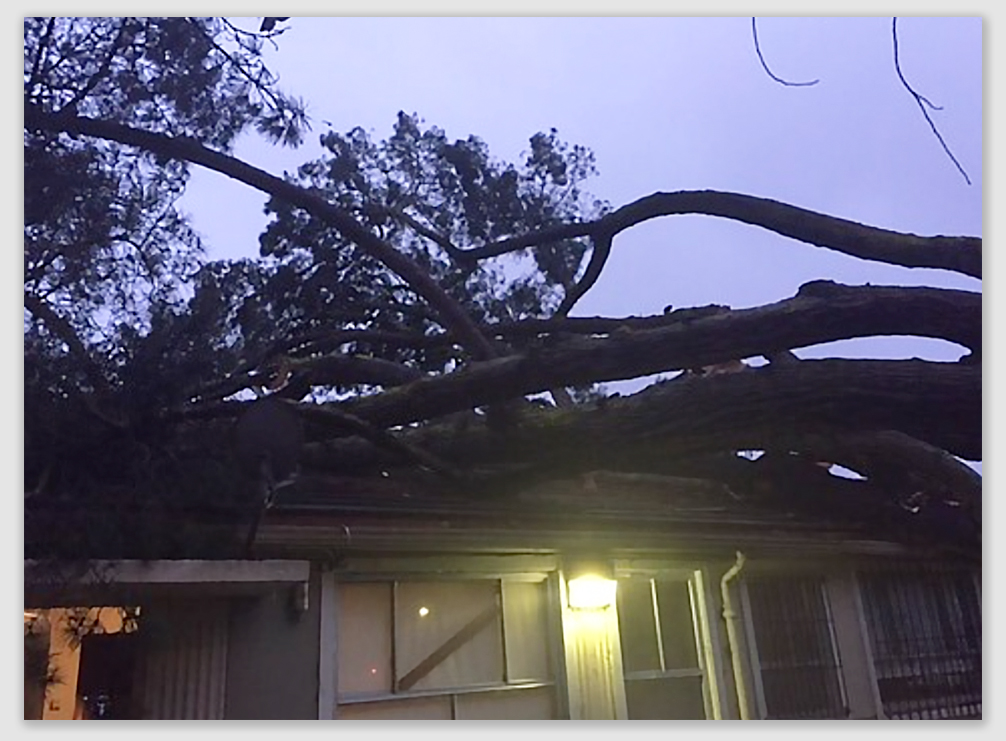 San Francisco, California, KTVU-TV, January 8, 2016: Tree crashes into San Francisco home
A tree has crashed into a San Francisco home displacing two families totaling seven people. It occurred at 166 Brookdale and San Francisco Fire reports that there are not any injuries. At around 7:30 a.m., officials with the San Francisco Fire Department reported that a tree fell onto a Visitacion Valley apartment building, located at 166 Brookdale Ave. The displaced residents included two families, according to fire officials. They’re being assisted by the American Red Cross. In anther incident, a tree reportedly fell on a man near Beach Chalet, located at 1000 Great Highway, fire officials said at around 9:40 a.m. The man appeared to be ok, however he was taken to San Francisco General Hospital with minor injuries, according to fire officials…
A woman taking a walk on an East Bay golf course Saturday morning was struck and killed by a falling tree in what authorities say may be the first casualty of the weekend storm. Emergency crews responded to the Canyon Lakes Golf Course in San Ramon just before 11 a.m. where they found a woman knocked unconscious by a downed tree, according to the San Ramon Valley Fire Protection District. The woman, who was not identified, was taken to the San Ramon Regional Medical Center where she died…
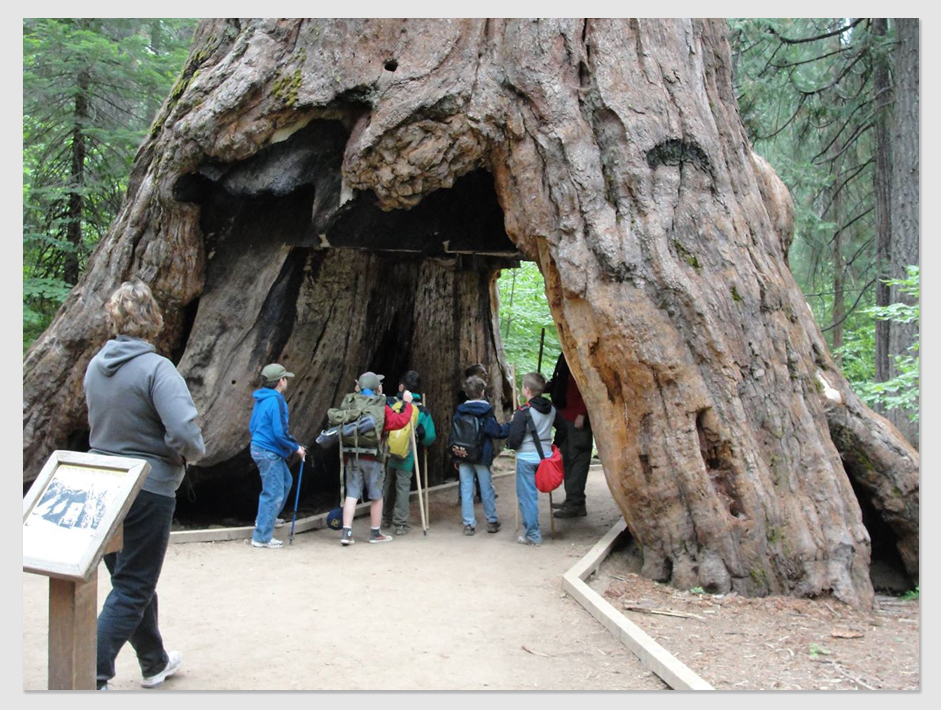
One hundred and thirty-seven years ago, well before the Calaveras North Grove was purchased by the California State Park System and renamed the Calaveras Big Trees State Park, the land’s owners carved an enormous hole in the base of one of its sequoia trees. On Sunday, that tree fell. This particular, 150-foot tall tree boasted a wide base — about 33 feet in diameter — which featured a large fire scar, an attribute that makes it easier to tunnel through. And that’s exactly what the owners created, a tunnel wide enough for an automobile to drive through. The idea of passing through an enormous tree immediately proved to be a hit. Named the Pioneer’s Cabin Tree because the created chamber exposed the trunk’s hollowness, giving it a chimney-like appearance and calling to mind the image of an old log cabin, the tree quickly became one of the park’s most popular features…
Seeker, January 7, 2017: Sound Waves Give Tropical Trees a Checkup
Like a book and a cover, you can’t always judge a tree by how it looks. Fungus can rot a living tree from the inside, leaving behind a healthy-looking but hollow trunk. Typically the rot is only seen when the tree is cut down. When a tree decays, it releases carbon dioxide back into the atmosphere, contributing to climate change. And the tropics are home to 96 percent of the world’s tree diversity, according to researchers, and those trees store a quarter of the world’s terrestrial carbon. To get a better read on the health of tropical forests, researchers are now using sound to measure decay in trees. The research, published in the journal Applications in Plant Sciences, was conducted collectively by a group of college professors, grad students and high school teachers and students, who used a new way to examine 1,800 live trees in the Republic of Panama…
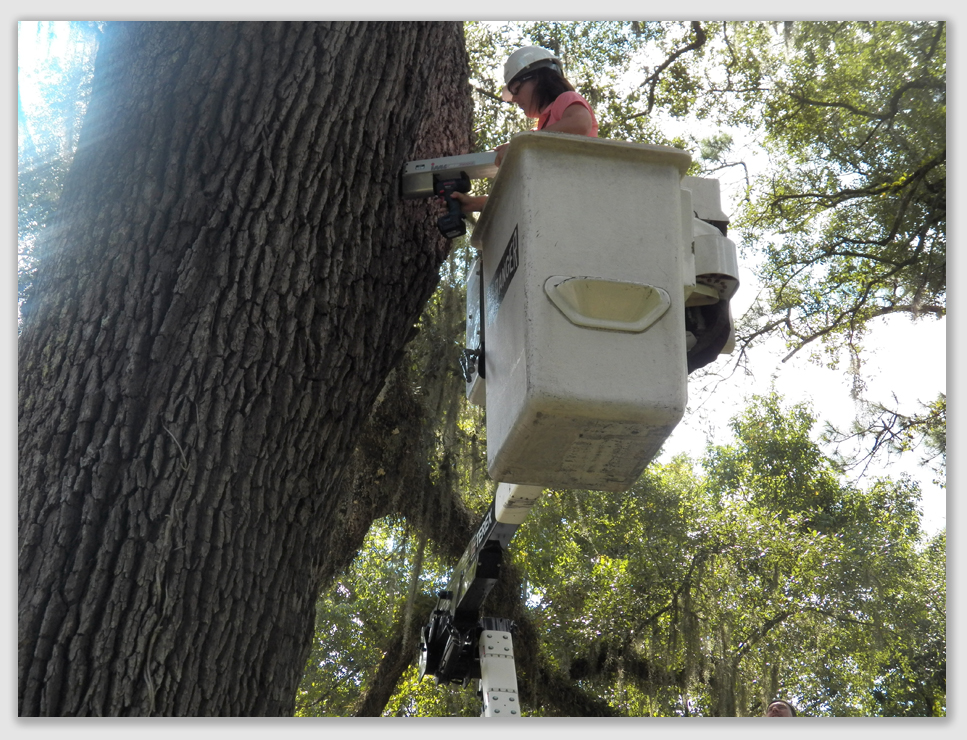 Tallahassee, Florida, Democrat, January 5, 2017: Tips for hiring a tree contractor
In my role as a municipal arborist, I receive requests from homeowners wanting advice on how to handle contracting out tree work. Similar to taking your car to a mechanic, it is an area that intimidates people. Tree work is expensive, but it is a specialized field that most people do not have a great deal of knowledge about. Attempting the work yourself can create a safety hazard. Therefore, I have put together some tips to help homeowners navigate the leafy world of contractual tree service.
Tip #1 – Budget money: As a property owner, you have a responsibility to maintain your trees for the safety and aesthetics of your residence as well as your neighbors. Regular budgeting for tree maintenance, whether it is every year or every three years, should ensure that you stay on top of trimming and corrective pruning. Pruning in a timely manner will usually prevent an unplanned tree emergency at a later date and costs far less. Keep in mind that the budgeted amount needs to be realistic to the quantity and complexity of your tree needs…
Sacramento, California, KTXL-TV, January 4, 2017: Tree service companies busy following storms
This week’s storm knocked down many trees across Northern California, keeping tree services busy. The rain water has turned soil into mud, causing some roots to cut through it like a knife through warm butter. “We have a lot of them on fences, light poles, parking lots,” said Terry Stevens, the owner of Tree Tech in South Sacramento. Stevens said far too many of his clients waited too long to take care of dead trees around their property. “You want to do maintenance on trees two to three years, depending on the type of tree… People save a lot of money if they just take care of it early,” Stevens said…
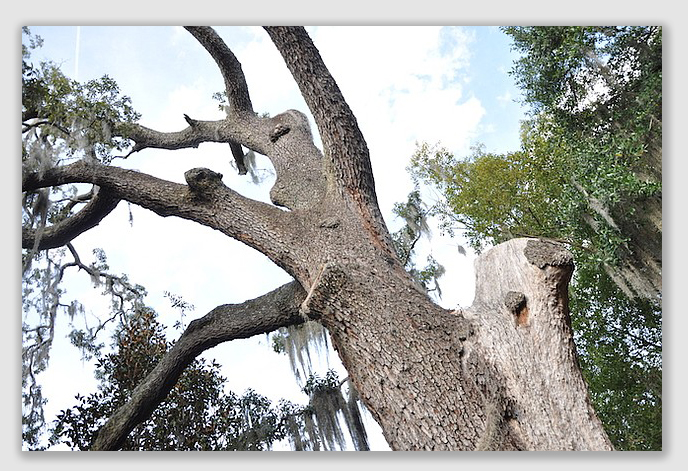 Winter Park, Florida, Observer, January 5, 2017: Tree trimmers threaten Winter Parkers with fines
A healthy tree canopy has long been a symbol of Winter Park, but one alleged tree-trimming company might be using that fact to take advantage of residents. Winter Park warned residents in a press release last week that a tree trimming company is going door-to-door and claiming work must be done on their trees, or they risk facing a fine for violating city code. The tree trimmers have reportedly claimed that the city doesn’t have its own urban forestry department, and that residents should hire them on the spot to trim their trees. Winter Park Urban Forestry Manager Dru Dennison said that the city has received about a dozen calls from residents who’ve witnessed the tree trimming scam over the past two months…
The Society of Municipal Arborists has announced its 2017 Urban Tree of the Year: the chestnut oak (Quercus montana) (syn. Q. Prinus). The 2017 SMA Urban Tree of the Year is native to much of the Eastern United States. Hikers from New York to Tennessee who ascend to dry ridges will often see the deeply furrowed, blocky barked trunks of chestnut oak (Quercus montana) (syn. Q. prinus). The bark is so distinctive, it may be the only ID feature one needs. There’s growing interest in using chestnut oak in the urban environment because it is pH-adaptable, handles dry soils and periods of drought, has a beautiful mature form, requires minimal pruning, and tends to be free of major pests and diseases…
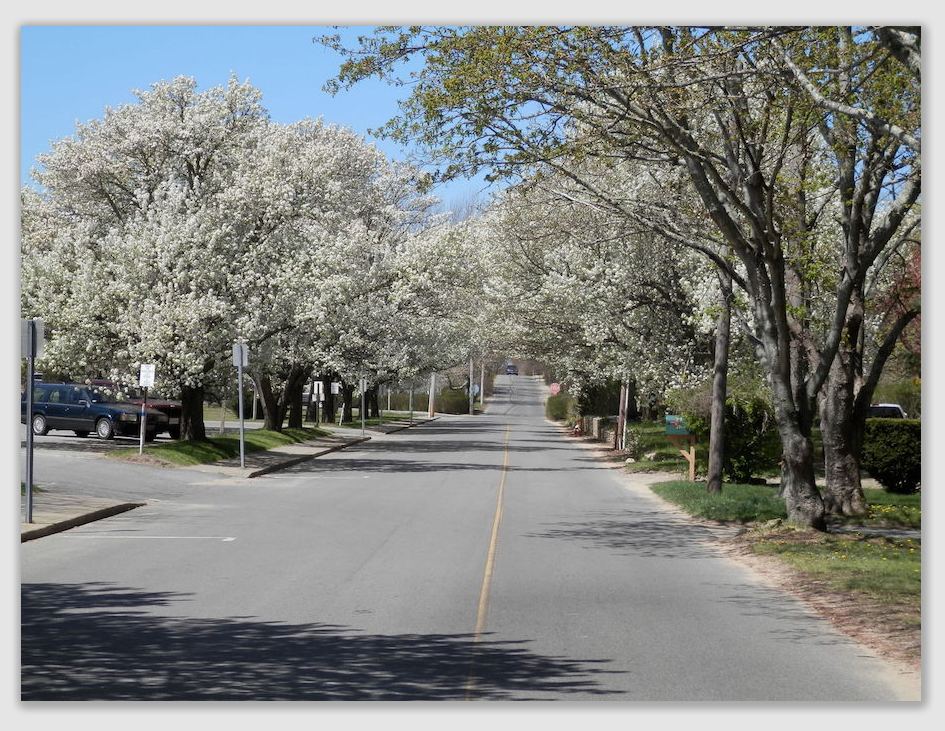
Town administrator Jay Grande told Tisbury selectmen on Tuesday that the removal of two Bradford pear trees on a property on Clough Lane in Vineyard Haven has been delayed. Mr. Grande spoke with the building contractor, and the town now has more time to find out if the trees, a variety of the Callery pear, are considered public shade trees, which would bar the property owner from cutting them down. Residents have expressed concerns about their possible removal. The public was alerted after the building contractor, who is building a guest house, requested on behalf of the property owner that the trees be cut down. “They’re going to allow us some additional time for due diligence with our town files, in terms of if there’s anything that would point us in the direction that these trees are under the shade tree jurisdiction of the tree warden,” Mr. Grande said…
Seattle, Washington, Times, January 4, 2017: Girl, 8, killed when tree crashes into Oregon home
High winds toppled a towering evergreen tree onto a house near the Oregon coast, killing an 8-year-old girl who was inside, authorities said Wednesday. Zaylee Schlect was taken to a hospital, but could not be saved. The girl’s father, a volunteer firefighter, was working Tuesday and responded to the 11:15 p.m. call with other responders in the town of Otis that a girl was trapped. Others were inside the home, and no one else was hurt. Capt. Jim Kusz of North Lincoln Fire and Rescue, which is a volunteer department, said he estimated the tree to be around 70 feet high and 42 inches across. He said it was downed by high winds that also brought down power lines and other smaller trees in the area. “We had very high winds here last night, and snow on the coast, which is a very rare event,” Kusz said over the phone…
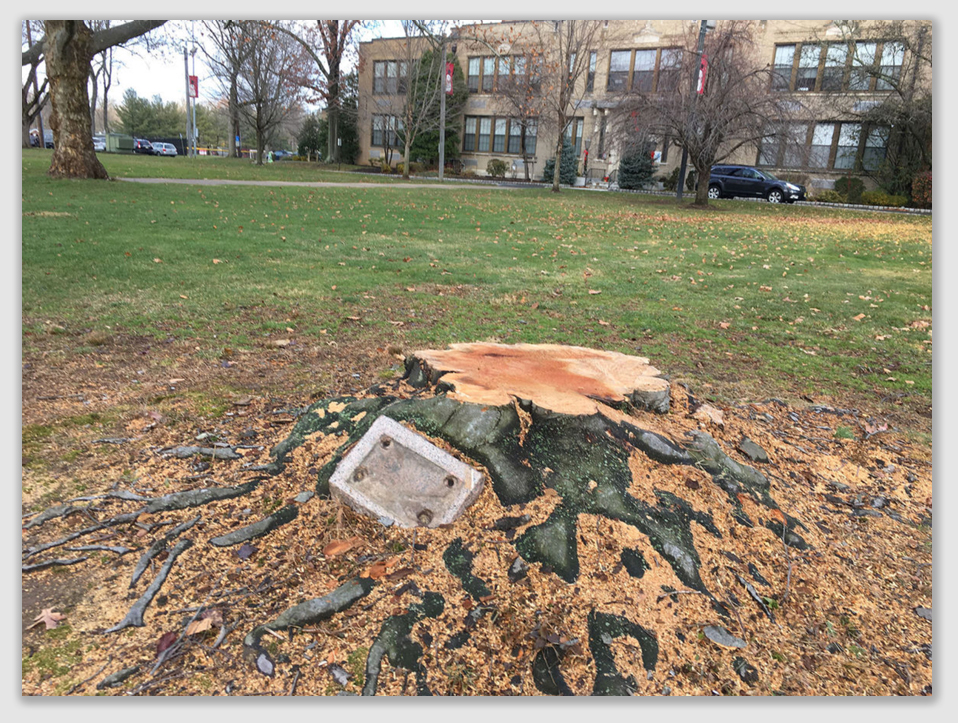 Bernardsville, New Jersey, The Progress, January 4, 2017: Commemorative tree cut down in Roseland
A commemorative tree in honor of Armella S. Kent, who taught school in Roseland from 1919 until retiring in 1961 with 42 years of service, was cut down in Roseland without the K-6 Noecker school board’s knowledge. Kent received the honor of having a copper beech tree planted in her name in front of 19 Harrison Ave. along with a commemorative plaque affixed to a granite block in front of the tree; at that time the building was the home of Harrison School, and like the preK-6 Lester C. Noecker School today located on Passaic Avenue, it was the only school in town. Kent died in 1988 at age 93, and she is remembered also at Noecker School by an interior wall plaque announcing that the Armella S. Kent Library is located through the doors to the right of where it is mounted; Noecker replaced the Harrison School in 1968. When it was noticed recently that the copper beech had been cut down and the plaque removed from the granite block, members of the school board were unaware of it when notified at their meeting Thursday, Dec. 8…
The following tips mostly assist homesteaders, but if you’re clearing a lot with the intention to construct a bug out or survival shelter this formula will also help in that situation as well. One of the most difficult parts of managing land is to make sure it’s cleared for habitation. Habitation can include clearing it for gardening, shelter, or to create a line of sight that’ll allow you to see when visitors are approaching. When it comes to the aspects of clearing land, removing tree stumps is considered one of the most time consuming and labor intensive. Especially if the tree is of any substantial size, it can be difficult work that often leads the person attempting to remove it frustrated and sore…
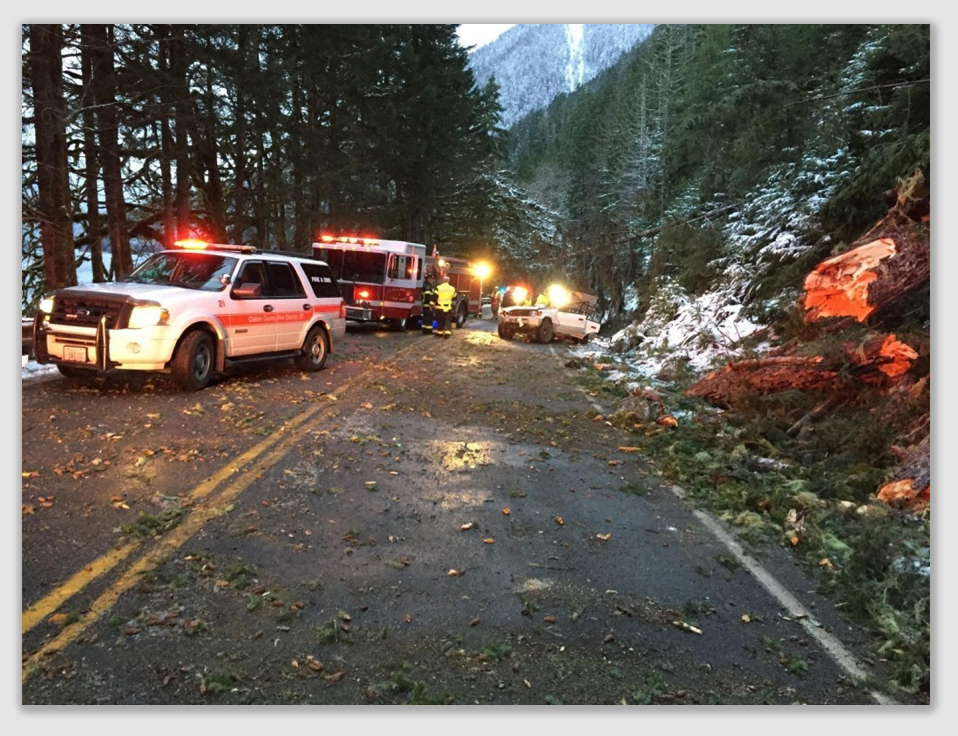
A child was killed and four people were injured when a tree crashed and struck a vehicle in Olympic National Park on New Year’s Day, authorities said. Calling the fatal incident in Washington state an “unusual accident,” Clallam 2 Fire-Rescue wrote on Facebook that responders were called to the crash site on Sunday afternoon. A “large evergreen tree” fell and struck an SUV traveling to Federal Way, Wash., according to the post. The department noted on Facebook that details were “still sketchy” but said in the Sunday night post that park rangers at the scene told firefighters that two “pediatric patients” were out of the SUV, as well as one person identified as a grandparent. A second person, also identified as a grandparent in the social media post, remained trapped in the SUV…
Four people were killed when a tree fell on a home as a tornado swept through a rural Alabama community on Monday evening, authorities said. The four were in a residence in the unincorporated community of Rehobeth when the storm struck. Crews were still working late Monday to remove the bodies from the structure, said Kris Ware, spokesman for the Houston County Emergency Management Agency. The National Weather Service reported that a tornado was in the area at the time of the incident. Its size and strength will be determined when survey crews have examined the extent of the damage. Houston County Sheriff Donald Valenza said seven people were inside the home when the storm hit…
 Wichita, Kansas, KAKE-TV, January 3, 2017: Tree service responds to mystery surrounding dog’s death
A tree service has issued a statement after a Wichita’s family’s dog was found dead following the company’s service. Westar Energy sub-contracted Wright Tree Service, based in Iowa, to clear off limbs near power lines. The Caldwells said the tree service employees entered their backyard despite a “no trespassing” and “beware of dog” sign. The Caldwells returned home to find their dog dead. Wright Tree Service issued the following statement on Friday: After a thorough investigation, Wright Tree Service has determined that our crew members played no role in causing the death of Jennifer and Tony Caldwell’s dog. All information gathered indicates that the dog was deceased prior to Wright Tree Service arriving to work in the area. Our thoughts are with the Caldwells as they mourn the loss of their dog…
The Big Apple’s ever-present Christmas tree vendors don’t go home on Dec. 26, they just head south — south Brooklyn, that is. Yuletide capitalism booms after Christmas Day in Brighton Beach because members of the Russian Orthodox church believe Jesus’ birth was Jan. 7, according to tree dealers, who hawk their post-season saplings from vans and even bodegas in the “Little Odessa” section of the neighborhood. “We’re not even here before Christmas, we sell mostly in Manhattan. Most of what we are doing here is selling off our surplus. We’ve been busy every day,” one vendor told the Brooklyn Paper, which first reported the story. To earn the last-chance cash, the self-proclaimed Tree Men stake out spots on major thoroughfares, such as Coney Island Avenue, and offer bargain-basement prices for the sometimes dried-out evergreens, vendors said…
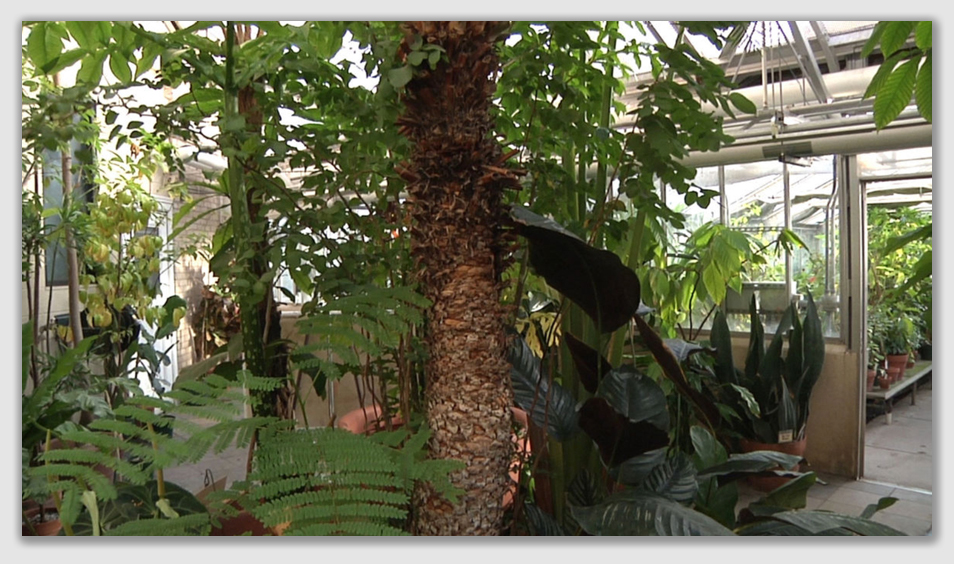
Q: How long does it take for a tree to grow in space?
A: It’s a complicated question because, while researchers have grown spruce seedlings on the International Space Station, they haven’t grown full-size trees. Using knowledge of how trees operate on Earth, scientists can guess what’s going to happen when they’re grown in space. The tallest trees on Earth are the giant redwoods that are about 300 to 400 feet tall. Gravity is the main reason those trees are not any taller. For a tree to get that massively tall, it has to be strong. Tree height is also limited because trees must draw water from the ground up to their leaves. As the water is pulled up through the plant, at some point the water column gets so long that it’ll break because of gravity. In space that problem doesn’t exist. Without gravity, plants growing on the space station grow long and thin and don’t need to lay down a lot of supportive tissue. Plants can draw water more easily — because there’s no gravity pulling on the water column — and get large without weighing anything…
The Phoenix Fire Department says a 6-year-old girl suffered burns to her hands and body after a Christmas tree fire ignited in a Phoenix home Monday. The fire was first reported around 9 a.m. at the home near Peoria and 19th avenues. Firefighters say the girl was transported to the hospital for her burns but she is expected to be OK. Two other children and two adults were also in the home but made it out without injury. Phoenix fire said the girl’s father recently passed away and the family had a remembrance candle near the Christmas tree…
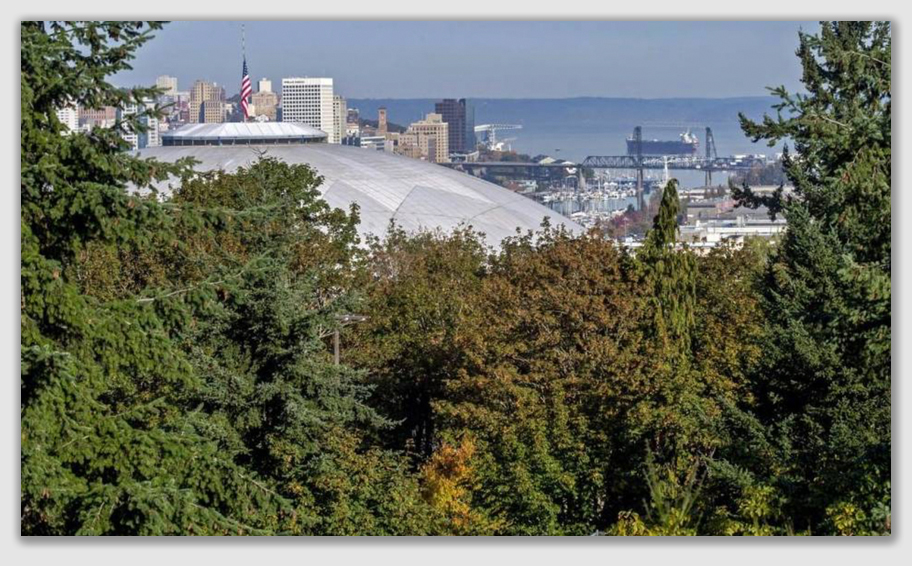
In 2011, an analysis using 2009 data indicated Tacoma’s urban tree canopy stood at 19 percent — covering 9.38 square miles of the city. That wasn’t good enough. For one, the number was below the national average for cities the size of Tacoma. Trees are important, after all, reducing greenhouse gases, cooling the air, producing oxygen, filtering storm water and increasing property values. A city’s tree canopy “is used as a proxy for environmental health,” explained Mike Carey, Tacoma’s urban forest program manager. More needed to be done to expand the City of Destiny’s urban canopy, especially since the city adopted a goal in 2010 — 30 percent canopy coverage by 2030. Goals are good. But asked this week how Tacoma will meet its vegetation aspirations, Carey begins by laughing somewhat skeptically and then details the long list of challenges…
A Christmas tree in Somerset has met a premature end after fears it was on the verge of falling over. The 20-foot tree in Wellington Square in Minehead was chopped down by fire crews after reports it was unstable. Devon and Somerset Fire and Rescue Service said it had cut down and made the tree safe after the council had disconnected the tree’s lights…

 Tree and Neighbor Law For Homeowners and Professionals