


There is a tree, nearly a quarter century old, hidden among boarded up buildings and freshly razed lots in South Fairmount. The tree is one of only 90 surviving trees like it documented in the world. And it slated to be cut down sometime in the next two years. Thousands drive by the sycamore every day at the foot of the Western Hills Viaduct. Most have probably never noticed the 30-foot tall tree, but NASA has. It’s a moon tree, specifically a second-generation moon tree, a tree whose seeds have taken the long way to find home. The journey of the tree, and others like it, started in 1971 when Apollo 14 launched from Kennedy Space Center. Alan Shepard, Edgar Mitchell and Stuart Roosa were making mankind’s third trip to the moon. Roosa was a former U.S. Forest Service smoke jumper, a firefighter that parachutes into remote forest fires. His former employer asked him to conduct an experiment and take a batch of tree seeds into space…
Yahoo News, December 29, 2016: Your unwatered Christmas Tree is a massive fire hazard
Christmas is over, and that means it’s time to take down your tree. While some people throw their tree out as soon as the holiday is over, others like to leave it up a little longer. Whatever your preference, you should know that as long as your tree remains in your house, you should water it daily. If you don’t, that tree becomes a massive fire hazard. The National Fire Protection Association has a video that demonstrates just how dangerous an unwatered tree can be. If you let your tree dry out, all those needles become potential fuel. In a matter of seconds your tree could become a raging inferno. And all it takes is one short on your massive string of lights. The NFPA estimates that over 200 fires are started each year from Christmas trees, resulting in an average of ten deaths and over $17 million in property damage…
 Atlanta, Georgia, WXIA-TV, December 29, 2016: Tree falls on Atlanta police cars
A tree crashed down on three Atlanta Police patrol cars Thursday morning. 11Alive’s Neima Abdulahi reports that the tree fell on the vehicles around 8:30 a.m on Lakewood Way. No one was in the vehicles when it happened. It was not immediately known how much damage the cars sustained. “At first glance, the damage seems pretty heave,” Atlanta Police Officer Donald Hannah said. No one was injured. “Had someone been in any of these cars, they could have been hurt,” Hannah said. “We’re very glad the cars were empty at the time it happened.” A cold front brought some strong storms into north Georgia in the early morning hours… Officials said weather likely played a role in the downed tree…
A devastating fungus disease that kills oak trees has been found in more places in New York state. Oak wilt made its first appearance in New York in 2008 in the Schenectady County town of Glenville. The Department of Environmental Conservation and U.S. Forest Service removed about 100 trees from a suburban neighborhood to keep the disease from spreading. On Thursday, the DEC announced that the disease has been detected in Brooklyn and the Suffolk County towns of Babylon, Islip, Riverhead and Southold. It was also found in Canandaigua in Ontario County earlier this year. There is no known treatment for oak wilt fungus other than to remove the infected trees, as well as any surrounding host oak trees to prevent its spread…
 Austin, Texas, Pam Penick, December 28, 2016: Losing a tree diseased by hypoxylon canker
A few days before Christmas, the front garden endured a major change: a fatally diseased live oak near our front door had to be removed. I’d had an arborist out the week before to give me a bid on general tree trimming, and he immediately spotted the sloughed-off bark and telltale whitening of hypoxylon canker affecting this tree. I’d been concerned about the tree myself for the past year, and consulted with another arborist last spring, but he dismissed the sloughed-off bark as just a normal process. I had my doubts, and my fears were confirmed with the diagnosis of late-stage hypoxylon canker, a fungal disease I’d never heard of. Oak wilt, a live-oak killer here in Texas, was the only tree disease on my radar. Hypoxylon, I learned, lurks in most healthy trees, waiting for an opportunity — a tree weakened by drought or other stress — to attack…
Lifehacker.com, December 28, 2016: Your neglected Christmas tree is a huge fire hazard
If you haven’t watered your Christmas tree since you forgot about it on the 26th, now is the time to get it out of your house. Unwatered Christmas trees are a huge fire hazard, as this video from the National Fire Protection Association clearly shows. Fires that start with a Christmas tree are also deadlier than the average house fire, according to a report by the same group. If you like keeping your tree around, though, keep it watered from the start. The second tree in the video was re-cut immediately before being put into its tree stand, and was watered routinely. It can still catch fire, but it’s a slow burn rather than an instant conflagration…
 Sonora, California, KVML Radio, December 28, 2016: Possible help for costly tree removal
With more than 29 million dead trees estimated across California due to drought and the bark beetle infestation, finding money to help private property owners remove trees can be hard to find, unless you know where to look. The funds are limited, according to the Calaveras County Tree Mortality Task Force, which acknowledges that dollars available through State and Federal Grant programs only address state and federal lands, local roads and infrastructure. For most property owners, taking down the dead and dying trees on their property is a daunting task not only physically and financially. The county provides this list of possible grants available to property owners…
Street Insider, December 28, 2016: The Forest Foundation gives 15 ways to repurpose a Christmas Tree
Christmas is over, but you hate to throw away your tree. The Forest Foundation releases 15 ways to repurpose your tree.
“Knowing that every year 77 million Christmas trees are planted and then tossed out a few weeks later, made me cringe,” said Lindsay VanLaningham, Executive Director of the local nonprofit. “Trees are biodegradable and serve many functions in nature. So before you throw it to the curb, try some of these fun and easy ways to repurpose your tree…”
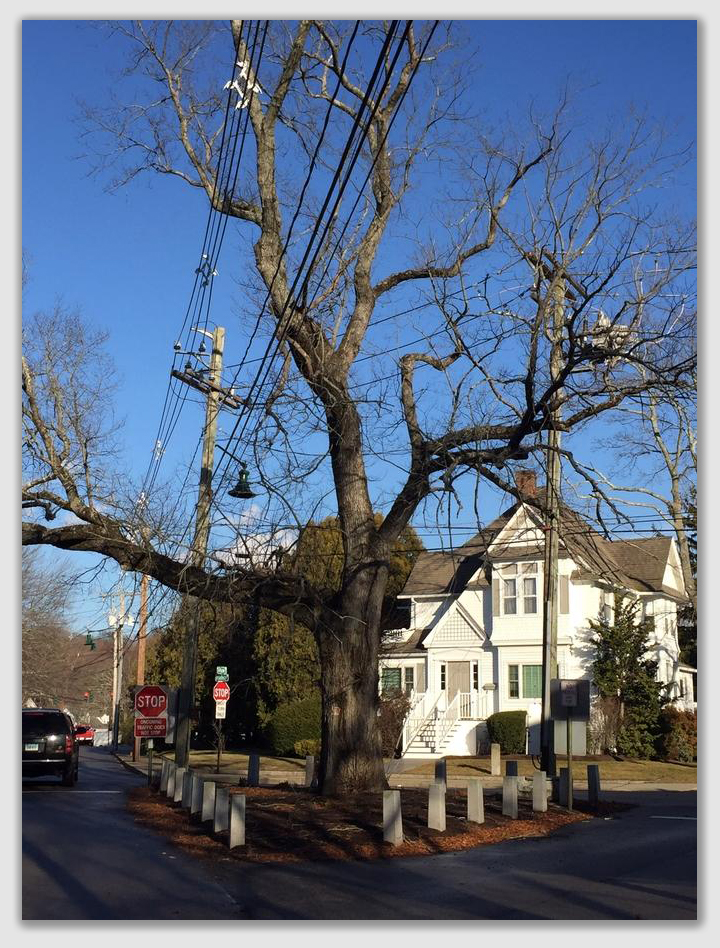 New London, Connecticut, The Day, December 27, 2016: Huge elm tree to be cut down in Mystic
A massive elm tree located in a triangular traffic island at Broadway and Willow Street will be removed in the coming days. Town of Stonington Tree Warden Dan Oliverio said Tuesday that the tree is being removed because it is dead and poses a hazard. In addition, he said Eversource would like it taken as down because its large branches loom over power lines. Oliverio said he has notified residents who live near the tree of its planned removal and has posted a notice on the tree. He said no one has opposed its removal but neighbors have requested that a new tree be planted in its place. Oliverio, a highway department employee who also serves as vice chairman of the town’s Beautification Committee, said he plans to propose to the Board of Selectmen that a new tree be planted there and the mulch be replaced with grass. He said he is researching the appropriate type of tree to plant there and said any new tree would be maintained to avoid future problems with power lines…
Springfield, Missouri, KYTV, December 28, 2016: Businesses team up to clean up shoddy tree trim mess
Nixa Tree trimmers left a huge mess in a woman’s yard. Many saw the story and wanted to help. Ryan Lawn and Tree and Pinegar Construction teamed up to make a wrong a right. Riki Lipe hired Show-Me Tree Service. They didn’t finish the job. Show-Me Tree Service has an F rating with the Better Business Bureau. The company does not have a business license to work in Springfield. Crews went door-to-door. Folks with Pinegar Construction and Ryan Lawn and Tree donated their services. “It’s not necessarily the time of year. it’s being able to help out the community and help someone who was taken advantage of,” said Sean Pinegar with Pinegar Construction…
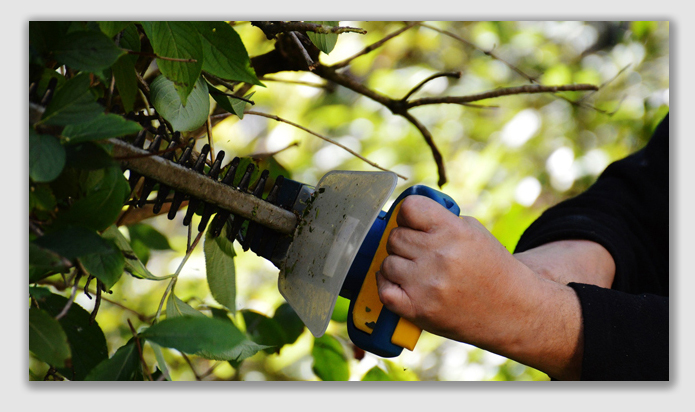
The Osceola County Sheriff’s Office is investigating a pair of burglaries involving a duo who distract their victims by offering tree trimming services. The sheriff’s office had already released information on one burglary involving an 85-year-old woman, but announced Tuesday that a second burglary the same day is believed to be connected. Both burglaries were reported Monday. The 85-year-old victim told deputies that a man showed up at her home claiming to be a tree trimmer, but instead stole nearly $400. The woman, who asked not to be identified, said she opened the door to a man who said he was cutting tree limbs for her neighbors and needed to take a look at her trees too…
Dallas, Texas, Morning News, December 27, 2016: How to hang a tree swing without damaging the tree
Question: How does the Dirt Doctor feel about attaching swings to trees? I considered getting one for the grandkids but was afraid it might damage the tree.
Answer: I have no problem with swings in trees if done correctly. Wrapping anything around limbs is bad and will definitely damage those limbs. On the other hand, connecting the swing lines, ropes or chains to bolts or large screws connected to single points does no more damage than pruning cuts. The penetrations will callus over and be compartmentalized as the tree grows. The safest thing for people is using stainless steel bolts that go all the way through the limb, but large eye screws or hooks can be good if installed properly. Note: The points of attachment need to be at exactly the same height for the swing to swing straight. If the limb is growing at an angle, a longer bolt can be used at the higher part of the limb…
 BBC, December 26, 2016: Ash tree genome sequenced for first time
The genome of the common ash (Fraxinus excelsior) has been sequenced for the first time – an important step in the battle against ash dieback disease. Researchers, writing in Nature, found UK ash trees seemed to have more tolerance than Danish trees, which were devastated by the fungal pathogen. The disease reached the UK’s wider environment in October 2012. However, the scientists warned that the species faced another serious threat – the emerald ash borer insect. “We sequenced an ash genome for the first time and… compared it to other plant genomes and we found that a quarter of the genes were unique,” explained co-author Richard Buggs from the School of Biological and Chemical Sciences at the Queen Mary University of London…
Montrose, Colorado, Press, December 23, 2016: Walnut trees may not be best choice
The possibility of growing a nut tree that will produce nuts in our area is not a straight yes or no answer. After the incredible fruit-producing year that we experienced this past season, I think we’re all excited to pick produce right from our own back yard tree, but our weather and soil conditions limit the number of nut trees that can grow here. Walnut trees have always done fairly well in our area, and I know of some fantastic, big, mature walnut trees that are doing very well up on Spring Creek. English walnuts are a bit more cold hardy than Black walnuts, but they should both do well. Here comes the “however.” Walnut trees take about 10 years to produce. That’s not all bad though. The foliage and trunk make a pretty shade tree. With that said, another drawback is a disease known as “Thousand Canker Disease”, and yes, it is as bad as it sounds! The disease is devastating, causing the death of thousands of walnut trees, all because a small Walnut Twig Beetle carries the fungus that causes the disease. So far it hasn’t been a significant problem in our area, but it has the potential of killing all of the walnut trees if it ever gets ramped up here. So I don’t think I would recommend planting a walnut tree at this time…
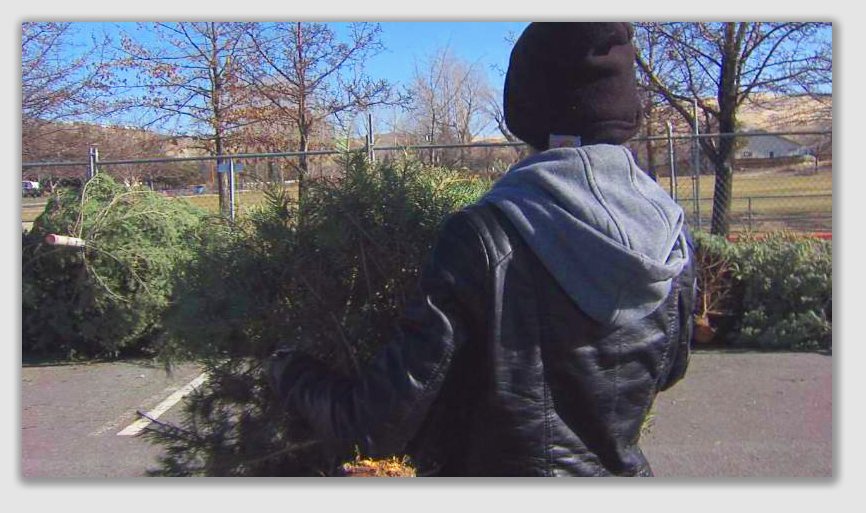 Reno, Nevada, KOLO-TV, December 26, 2016: The morning after, Christmas tree recycling underway
The morning after, Christmas 2016 is barely yet a memory, but some apparently are eager to move on. Their trees are coming down and showing up at a recycling center. “I think it’s cool,” says Tierra Smithson, a Girl Scout volunteer manning a recycling site. “I mean it’s nothing I would probably do. I like to look at my tree, but it’s cool they bring it here.” Here–in this case–is a parking lot at Shadow Mountain Park in Sparks, one of six collection sites set up each year by Keep Truckee Meadows Beautiful. It’s one of a few post-holiday fates for a Christmas tree. Some send them to the landfill, others unfortunately dump them in the desert. This is the back-to-the-environment responsible destination. “They get turned into wood chips and used throughout Reno, Sparks and Washoe County Parks and the leftovers are available to any property owner in the area to use in their yards,” says Matthew Salazar of Keep Truckee Meadows Beautiful…
Harlan, Kentucky, Daily Enterprise, December 26, 2016: Make an outside resolution
Modern living can make us too busy to relax, and I’m not the first to tell you that’s not healthy. Humans of whatever age need to play and let those stress generated hormones that make the heart race and adrenaline flow get out of our system. To many this may involve some form of exercise through various sports, but another way is to just get outside and become more attuned to what’s going on around you. It focuses you to live in the now, with no thought of past or future concerns. A connection with nature is proven to be healthy and therapeutic, yet severely lacking these days, especially with kids. So let me encourage you to resolve in 2017 to get outside a little more, to be still a little more, and enjoy and learn more about this wonderful place we live in. Here are some possibilities. Take a walk in the woods and look closer at the bark of trees. Notice that each species is different; some are smooth, some are rough with discernible patterns. With practice you can identify trees just by the bark…
 New York City, New York Times, December 22, 2016: London Plane: A tree with gritty roots
The London plane tree is able to withstand the many assaults of urban life. It is often found squeezed tightly into tree pits surrounded by impermeable asphalt and concrete, making rain absorption difficult. Despite their potential size when fully grown, the trees adapt remarkably to cramped quarters, even while overshadowed by buildings and other structures. Often, they are pruned to within an inch of their lives to fit under phone lines or to avoid streetlights. They survive not only runoff from salted roads but also a consistent barrage of raw fertilizer by neighborhood cats and dogs. And yet the London plane is everywhere throughout New York City. In fact, the last Street Tree census conducted by the city’s Department of Parks and Recreation found that more than 15 percent of all street trees were London planes. They are far more than just pretty plants; these trees provide energy savings and measurably improved air quality — to say nothing of the acres of valuable habitat they provide for people and animals alike. It is interesting to note that the London plane tree is actually a hybrid between two tree species, the American sycamore (Platanus occidentalis) and the Oriental plane tree (Platanus orientalis). The tree looks enough like its American parent that it is frequently mistaken for a sycamore, as both have smooth grayish brown bark, which exfoliates to reveal a tan or pale green trunk beneath. The basic explanation for this unusual adaptation is the bark’s lack of elasticity; it cannot expand as rapidly as the tree inside it does. But this peeling bark is a useful adaptation, which helps to eliminate harmful insects and parasites. Though the tree may look as if it suffers from a bad sunburn, the patchy, peeling bark actually works in its favor…
Lancaster, Pennsylvania, Eagle, December 22, 2016: Lancaster creates tree cost-share program
A new cost-share program through the Lancaster Tree Commission is expected to double the number of trees planted in the city next year, replacing landscapes devastated by the emerald ash borer. Lancaster Parks and Recreation Superintendent Mike Tharp Jr. said it’s become increasingly important to find ways to plant more trees since hundreds of ash trees were removed during the last few years because of the beetles. Tharp also is a member of the Tree Commission. In 2014, it was estimated there are about 9,000 trees in city parks and rights of way, with 250 to 300 of them ash trees in need of removal. “Once the beetle gets in them, it’s done,” Tharp said. “River Valley Highlands was just chock-full of them. We’ve literally taken out 100 ash trees from River Valley Highlands. Probably more…”
 Earth-Sky.org, December 22, 2016: Why pine trees smell so good
I have never met a person that did not enjoy the smell of a pine, spruce, or fir tree. Be it the Christmas tree in your home or a grove of conifer trees in the forest, they smell sharp, sweet, and refreshing. What gives conifer trees their scent? Well, most of that piney odor is due to chemical compounds called terpenes. Terpenes are composed of carbon (C) and hydrogen (H) atoms, and they are built from different numbers of isoprene molecules, which have a chemical formula of C5H8. Small terpenes, known as monoterpenes, contain two isoprene units and have a chemical formula of C10H16. Pinene, which has a piney odor, is a monoterpene. Limonene, which has citrusy odor, is also a monoterpene. These two molecules, among others, give conifer trees their distinctive scent. Larger terpenes are known as diterpenes, triterpenes, and so forth, and they can take the shape of long chains or rings. Many diverse types of organisms produce terpenes besides conifers, including insects, marine algae, and sea slugs…
Madison, Wisconsin, WISC-TV, December 22, 2016: Which trees are best, worst when selling your house
Believe it or not, the types of trees in your yard can impact your ability to sell your home. According to Realtor.org and NAR’s 2013 Profile of Buyers’ Home Feature Preferences, a home’s curb appeal was important. Of those surveyed, 17 percent said it was important to have a wooded lot with a lot of trees. Twenty-nine percent said they were willing to pay more money to have trees added to lots that seemed too bare. So what trees are buyers looking for? Find out what trees are most desirable to home buyers, and which can hinder them from buying your home, according to HouseLogic and Realtor.org. Home owners are looking for low-maintenance trees that make their lot look fuller. HouseLogic ranks these trees amongst your best options: Crape Myrtle Sugar Maple Smoke Tree Saucer Magnolia Japanese Flowering Cherry Northern Red Oak Eastern Red Cedar Fig…

Jack Lewis was known for his exuberance and adventurous spirit. The Oakland Technical High School junior was always the first to jump in the water or climb the tree, his loved ones say. Just over a year since the 16-year-old Oakland resident died in a tree-climbing accident at Lake Merritt, his family and friends on Tuesday gathered near the site of his fatal fall to talk about a lawsuit they hope will prevent similar tragedies. “The goal of the lawsuit really is to make this area safer, to change the city of Oakland’s apparent priorities,” said attorney John Winer, who filed a wrongful death lawsuit against the city of Oakland on Monday on behalf of the Lewis family…
Mobile official: Giant Christmas tree was not requested by President-Elect Donald Trump’s team
President-Elect Donald Trump’s campaign team “did not specifically demand anything” related to a Christmas tree displayed during Saturday’s rally, Chief of Staff Colby Cooper said late Tuesday. “During the stadium preparations, we discussed the President-elect’s theme and message,” said Cooper. “It was very much Christmas themed and future of America focused. I suggested the Christmas tree as a possible backdrop to coincide with his messaging and podium sign that said ‘Merry Christmas’ and ‘Thank you.'” He added, “I did this based on my professional experience supporting event preparations for a President, Secretary of State and National Security Advisor. The world was watching and we needed to do better than the aged and worn out scoreboard behind the President-Elect.” Cooper’s comments come after City Attorney Ricardo Woods, following Tuesday’s Tree Commission meeting, said it was his understanding that the Trump campaign team requested the large Christmas tree that served as a back drop to the rally…
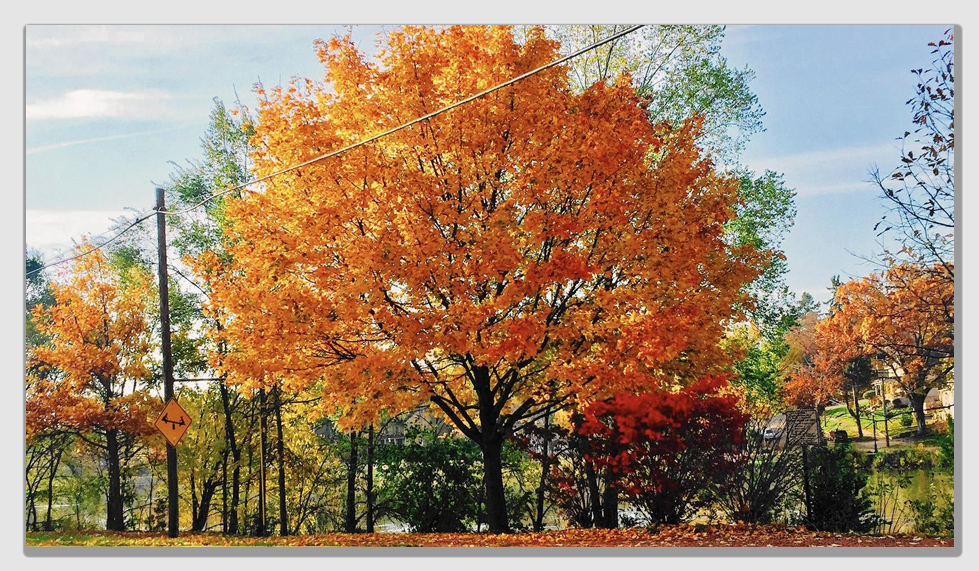
Some gifts are bright and beautiful. Some gifts are deep and lasting. We get both kinds from trees. Their beauty is obvious: The lacework of tree branches dusted with snow, the green shade they bring to summer streets and yards, the bright explosion of fall color, the grace they add to our landscape, the sense of continuity and richness they bring to our lives. Yet trees give us much more that is harder to see, says Jessica Turner-Skoff, whose role as treeologist at The Morton Arboretum is outreach about science and trees. “Countless, countless scientific studies have shown the gifts trees give to us,” she says. These aren’t abstractions; they have been studied and measured…
It happened that a certain student, full of philosophical curiosity, went to a sage, someone steeped in ancient wisdom, and complained, “I don’t understand. Why did God create a world where money is a necessity of life?” The sage paused for a moment. “The real question,” he finally answered, “is ‘Why did God create a world where food is a necessity of life?’ ” Unlike the angels, I think the sage was saying, we are not purely spiritual creatures, but have an inescapably physical side as well. I thought of this exchange between student and sage the other day when my wife, who teaches third grade, brought me a research topic from her class worksheet on trees. “Very few trees have smooth bark,” I read. “Find out why most bark is rough and has scales or cracks.” But perhaps the real question that should be asked is why bark, whether rough or smooth, is a necessity of arboreal life in the first place?

Whittier city employees surveyed Penn Park for leaning trees and broken branches, but found no safety issues, hours before a massive eucalyptus tree toppled onto a wedding party, killing a 61-year-old grandmother from San Pedro and injuring seven others. “We have been a Tree City USA for more than 30 years, and take care to manage our urban forest,” Whittier City Manager Jeff Collier said Monday following a press conference at the park. “It’s very rare that this would happen.” Witnesses reported the group was taking pictures beneath the 80- to 90-foot-tall tree at the park on Penn Street, around 4:30 p.m. Saturday when it suddenly uprooted and fell, trapping about 20 people. On Monday, arborists were inspecting the tree to determine what caused it to fall. Collier said they were checking for disease or rot, soil stability and the health of the roots. The tree was more than 50 years old and was last pruned two years ago, said Collier, who called the incident a “freakish situation…”
At least four people in California have been killed when decaying trees have snapped over the past 16 months, including an Oakland teen whose family is suing the city over his death last December while he was climbing a tree. The lawsuit filed Monday by the parents of 16-year-old Jack Lewis alleges that the tree was marked for removal because it was dead or dying, but city officials failed to remove it until after the boy’s death. The boy’s father, Michael Lewis, said it’s “terribly difficult” to get through Christmas without their son. The family’s attorney, John Winer, said shortly after the incident that Oakland city officials told the Lewis family that the tree could have been cut earlier, but arborists have many trees to monitor…
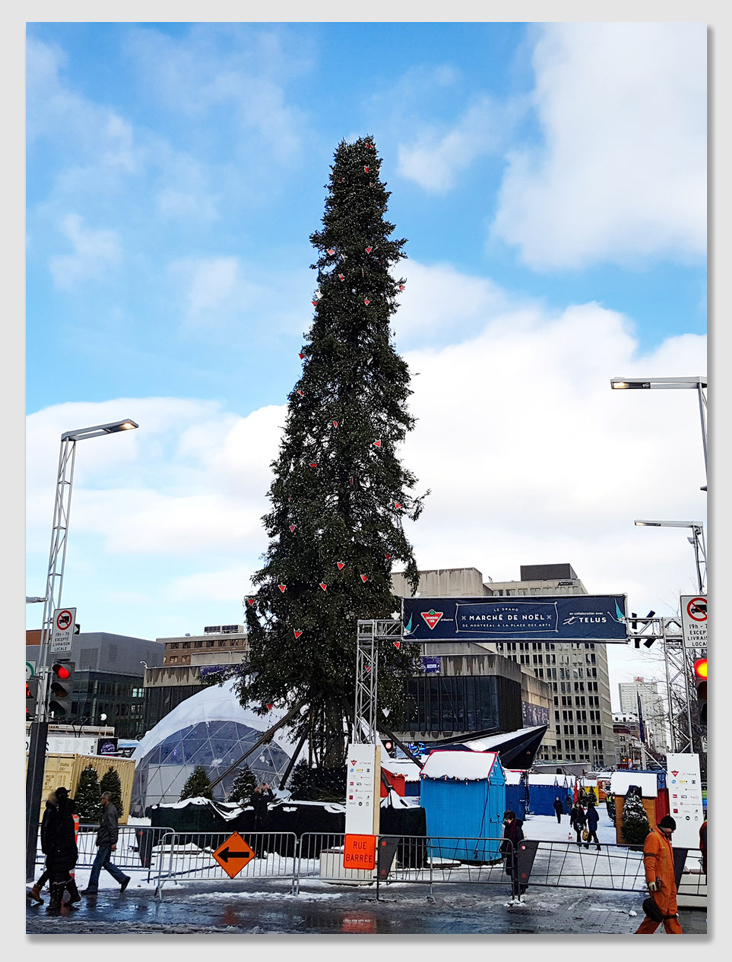 NPR, December 20, 2016: Montreal’s tall, scrawny Christmas tree evoking Charlie Brown comparisons
Montreal wanted a nice Christmas tree. A nice, tall Christmas tree. Something people would be proud to compare to the behemoth at Rockefeller Center in New York City. What they got is more than 85 feet tall, so it’s got that going for it, which is nice. But otherwise … well, it’s been described as “skinny and lopsided.” As “a pretty sad excuse for a Christmas tree.” As “scraggly,” “battered” and “dishevelled-looking.” As “not beautiful.” As — let’s not beat around the bush here — ugly. It’s even been voted the ugliest Christmas tree in Canada…
They walked away with thousands of dollars and the job still isn’t done. For decades… Riki Lipe has lived in a central Springfield home. Her late husband planted trees in their yard. “Since my husband died in July, I have been doing everything so right and keeping ahead of all the problems that could happen. I’ve been a bodacious old broad. Now I feel like a stupid old lady … a stupid old lady,” she said. She … along with her neighbors wanted honest work for honest pay. Instead, she’s left with brush piles. She was approached by Show-Me Tree Service. Riki says the man had a branch. “Supposedly that was from my tree. Which I know it wasn’t. He was showing me where there’s problems and this was going to go through my tree and get into my house … the termites,” she said…

Whittier city officials have tapped a third-party arborist to inspect the trees in Penn Park, where an 80-foot eucalyptus toppled onto a wedding party Saturday afternoon, killing the mother of the bride. The victim was identified as Margarita Mojarro, 61, of San Pedro, a coroner official said. The family identified her as the mother of the bride, according to According to state data and Los Angeles-based expert Ruben Green, who runs Evergreen Arborists Consultants, eucalyptus trees are the third-most common failing tree in California, though there are still relatively few incidents compared with the millions of trees across the state. Failing trees aren’t usual considering the countless trees in California’s cities, parks and forests. That said, there have been 5,902 tree or tree branch “fails” since 2010 in California, according to the University of California’s Tree Failure Report Program…
Mobile, Alabama, WKRG-TV, December 19, 2016: Mayor responds to Donald Trump rally tree controversy
While President-Elect Donald Trump took the stage in Mobile, for some, the large Christmas tree behind him stole the spotlight. A 50 ft. tall cedar chopped down from Public Safety Memorial Park at the request of the Mayor’s Chief of Staff Colby Cooper. “In preparing for this event, I worked closely with the advance team. In an effort to make sure every detail was covered and the expectations of the President-Elect’s team were exceeded, I became overzealous,” Cooper said in a statement. “I now know there are citizens who are upset and offended that a tree from a City park was used as part of the decorations for the event. I accept full responsibility for having this done…”
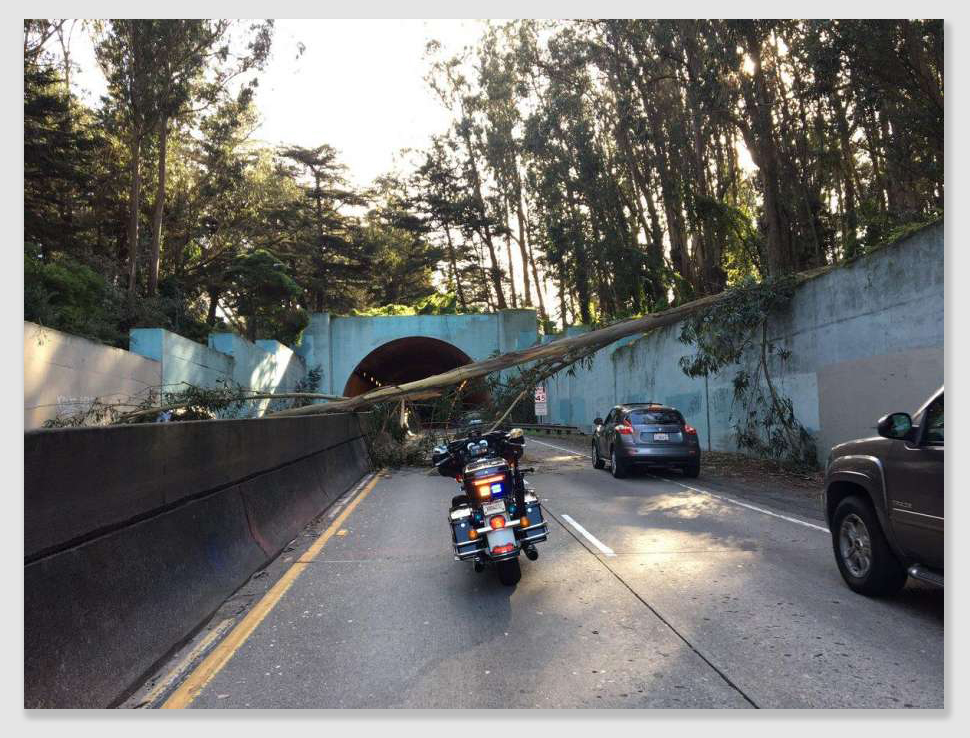
A gigantic tree fell near the Gen. Douglas MacArthur Tunnel in San Francisco’s Presidio Monday, temporarily blocking all lanes of Veterans Boulevard during the afternoon commute, officials said. Traffic came to a halt during the afternoon commute while crews brushed away branches and attempted moved the fallen tree, officials said. The tree blocked northbound and southbound lanes Veterans Boulevard in that area, according to the California Highway Patrol…
Unlike the upwards of 20,000 EWEB customers who lost power since Wednesday, several local growers of orchard fruits and hazelnuts are assessing the ice storm’s impact and figure the damage isn’t as bad as the February 2014 freeze. “This doesn’t appear to be as bad as a few years ago,” said Dwayne Bush, a third-generation hazelnut grower. He has a total of 430 acres of hazelnut trees at three farms: one on Territorial Road in Junction City, one on River Road in Eugene and one near Coburg. The freezing-rain storm was very localized, the worst of it apparently hitting much of south, east and west Eugene, and the River Road area. Many other areas of the south Willamette Valley in Lane County, for example Cottage Grove or the McKenzie River areas, escaped largely unscathed from the freezing rain. Even though the damage to orchards seems less severe than in 2014, some trees have broken limbs and a few trees are split in half, Bush said…

A large eucalyptus tree fell on a wedding party at a Whittier park Saturday, killing one woman and injuring five other people, authorities said. More than 100 firefighters responded to an emergency call about 5 p.m. at Penn Park, said Inspector Joey Marron of the Los Angeles County Fire Department. Whittier police also rushed to the scene. Several of the injured were transported to hospitals, Marron said. Among them was a 4-year-old girl in critical condition due to head trauma. Witnesses told KTLA Channel 5 and ABC7 that they saw people from the wedding party taking photos when the tree suddenly toppled. One person said the tree broke in half, landing on a number of the victims. The tree “was very old,” Marron said, adding that officials have asked an arborist to help determine what caused it to fall…
Macon, Georgia, WMAZ-TV, December 17, 2016: Bradford pear – the next worst thing since kudzu
There are two times a year when the public can really see the full extent of the Callery pear infestation of our fallow fields. And, make no mistake about this. Today’s fallow fields are tomorrow’s forests. The times when this infestation is most obvious is in the spring when these pears can be seen blooming by the millions, and in the fall when Callery pears show their red color on waxy leaves that don’t decompose. The picture of this fallow field located between two subdivisions sadly misplanted with Bradford pears illustrates this point. The wild pears depicted here are the progeny of Bradford pears. They are Callery pears, a reversion to the ancient pear trees found wild in the mountains of China. In 1918, in an effort to crossbreed wild Callery pears with fruit producing Bartlett pears, seeds were gathered by scientists from the USDA. It was hoped that cross breeding would lessen the problem desirable fruiting pears were having with the dreaded disease of fire blight…
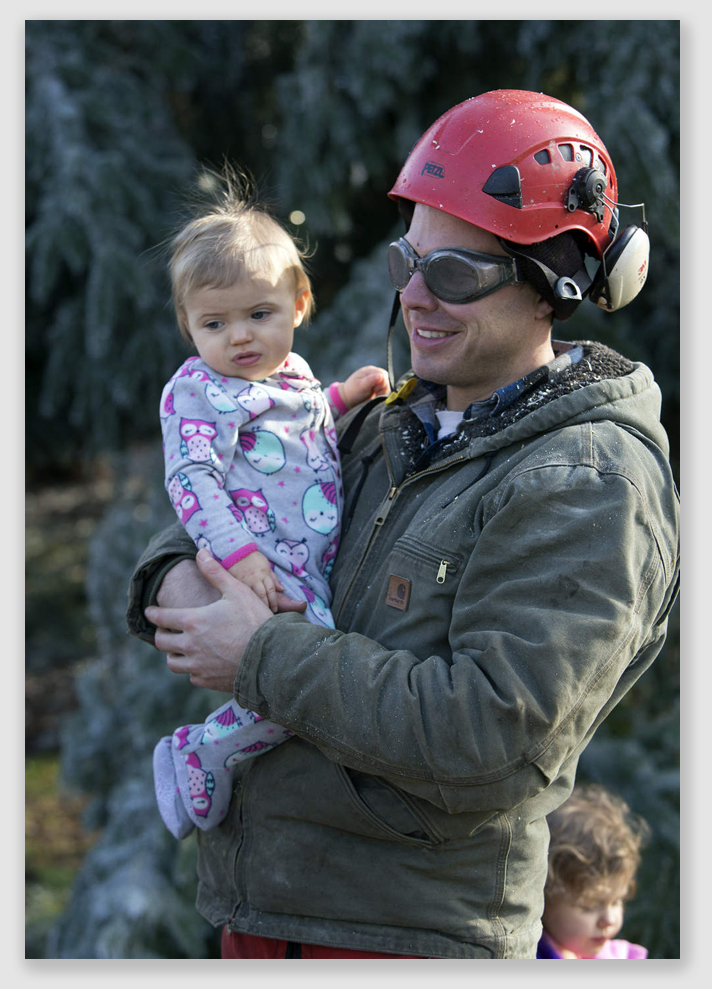
Lane Tree Doctor, a Eugene tree service, has been making house calls in this ice storm, removing fallen trees from roofs and limbs blocking driveways. “I’m a stay-at-home mom, and I’ve become a secretary,” Julie Grecian said on Friday, in between taking phone calls from customers. “It just hasn’t stopped,” she said. “I just answer calls all day long, constantly entering addresses and phone numbers. “We’re prioritizing by emergency first and the elderly first,” she said. “My husband said this is the worst (ice storm) he’s ever seen,” Grecian added…
Forbes, December 18, 2016: Rockin’ around the tree – geological applications of tree ring research
Archaeologists, climatologists, historians and geologists can learn a lot about the past studying trees. Already Italian artist and naturalist Leonardo da Vinci (1542-1519) noted that rings in a tree cut down near the city of Ravenna reflected the climate around the Italian town. A wet year caused the tree to grow well and form a broad ring. During a dry year the tree grows less forming only a thin ring. Swedish naturalist Carl Linnaeus (1707-1778) showed that temperature also can control tree growth and so thickness of single tree rings. The mathematician and astronomer Andrew Ellicott Douglass (1867-1962) was wondering in 1904 if climate is controlled by solar activity. Unfortunately at the time no climate record was long and precise enough to answer his question, as solar cycles occur slowly, over centuries or even thousands of years. But Douglass recognized the potential of trees as archives of past climate change. As every tree ring represents one year and the thickness reflects the climate in that specific year, Douglass was able to reconstruct the climate in great detail over a long time interval by measuring thousands of rings. Some trees, like the American bristlecone pine, can live for more than 4,600 years and many common European species, like pine, fir and oak, in rare case can live for 1,000 years…
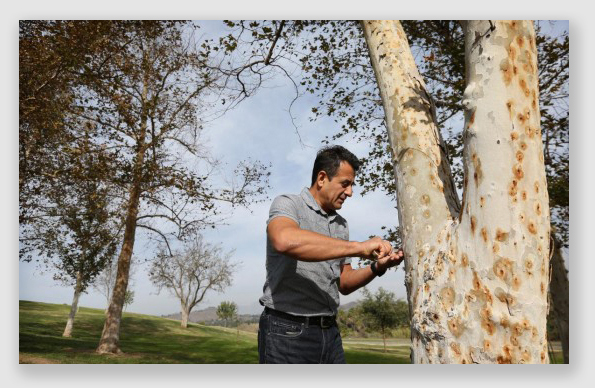
UC Riverside’s Akif Eskalen pointed to a pattern of small holes in the bark of a majestic California sycamore tree growing in a Riverside park and lamented that it will be dead in about two years. The holes are the work of invaders from Southeast Asia, beetles smaller than a sesame seed that probably hitched a ride to the Golden State in packing wood. First discovered but misidentified in 2003 in Los Angels County, the beetles have since infested at least 49 species of trees in seven Southern California counties, said Eskalen, a plant pathology professor. They also have infested avocado groves, where they don’t kill the trees but cause branches to die back…
It took mere minutes for a Christmas tree, decked with ornaments and colored lights in a makeshift living room, to become engulfed in flames outside the No. 3 Myrtle Beach Fire Station Thursday. “Today we’re doing our Christmas tree burn to kind of show people how dangerous dry Christmas trees can be,” said Lt. Jonathan Evans, a public education officer with the Myrtle Beach Fire Department. He said they wanted to show “how quickly a room can get consumed by fire” and the demonstration proved it. The flames danced up the branches and trunk of the dry Christmas tree then lapped at the ceiling of the steel cargo container converted to a burn building for training at the station as journalists in full turnout gear watched on bended knee…
 Garden Rant, December 15, 2016: A plea for trees
A friend of mine, pissed off with the continuing loss of Louisville’s trees, emailed me yesterday, after reading the front page of Louisville’s Courier-Journal. She stripped off the bark. “You know what I say to myself every time I step outdoors? I sure wish they would mow down a bunch more trees so that more motherfucking planes could fly over.” Some people in Louisville are annoyed or even unnerved by air traffic, but it’s part of the deal. Louisville is not Atlanta or Chicago, but there are a lot of United Parcel Service (UPS) transport planes coming and going, rumbling over Louisville, headed to or taking off from the huge UPS worldwide distribution Center adjacent to the Louisville International Airport. Surrounding the airport is a tree-less and blistering hot landscape with hundreds of warehouses supporting businesses that rely on easy access to UPS. And then there is the smaller historic Bowman Field, a barren 426 acres surrounded by the beautiful Olmsted firm-designed Seneca Park and adjacent neighborhoods with mature trees…
In the early 1900s, an average forested acre in California supported fewer than 50 or so trees. After a century of efforts to fight wildfires, the average has risen to more than 300 (albeit mostly smaller) trees. Some might reckon such growth wonderful, but it is a problem far more serious than, say, the fact that horses can no longer trot through areas where they once could. The extra fuel turns today’s wildfires into infernos hot enough to devastate the landscape, torching even the big older trees that typically survived fires in the old days. Beyond this, the extra trees are worsening California’s driest ever drought. “Like too many straws in a drink,” trees suck up groundwater before it can seep into streams that feed reservoirs, says David Edelson of The Nature Conservancy. The project director for the Sierra Nevada range, source of 60% of California’s consumed water, notes that as a warmer climate lengthens the growing season, trees’ thirst will only increase. This has led to a push for large numbers of trees to be cut or burned down. Overgrown forests catch more snow and rain on leaves and needles, where wind and sunlight increase the amount of moisture lost to evaporation…
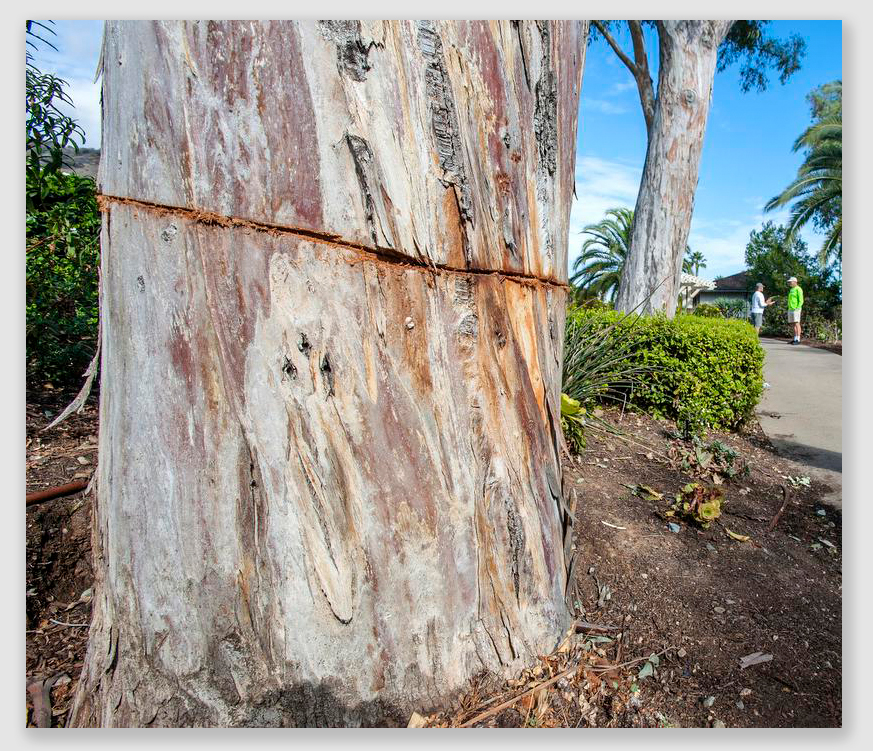
While police are asking for help in their investigation into the vandalism that left five eucalyptus trees with deep gashes at the base of their trunks at the Montage Resort, the mayor is offering a $5,000 reward for information leading to an arrest. The 40- 45-year-old trees, at South Coast Highway and Montage Resort Drive, are valued at $100,000 each, police Chief Laura Farinella said. An arborist is monitoring the trees to see if they can survive the 2-inch-deep cuts. “The cuts to the trees were deep so it must have taken someone a good amount of time,” Farinella told the City Council on Tuesday. “If they used a motorized saw, it would have made noise. If someone witnessed it, they could have dismissed it as gardeners working…”
World tree nut production forecast for 2016/17 is expected to reach 4.02 million MT, representing a 5.77% crop growth. These data refer to figures on a kernel basis, except for pistachios, which are in-shell basis. Pistachios appear to be the crop which will experience the biggest increment this season, by 34%, up to 703,700 MT. World peanut production has been forecast at 41.26 million MT, up 1.83% from the 2015/16 season (in-shell basis). World production excluding crushing for oil is expected to account for approximately 24 million MT. The estimated world production of dried fruit in 2015/16 reached more than 2.7 million MT. A 4.41% production growth has been forecasted for the 2016/17 season, up to 2.9 MT. In relative terms, dried apricots and sweetened dried cranberries are expected to register the greatest growth (12% each). The top three producers of tree nuts and dried fruits are the US, Turkey and China. As California, the world’s leading almond producer, faced fourth consecutive years of historic drought, superior economics of almonds attracted new plantings…

They help protect our privacy, provide homes for our feathered friends, and they’re perfect possies for kids’ huts. Many of us don’t give trees much thought until they’re someone else’s – and impacting on your property. Roots dislodging your foundations. Leaves blocking your gutters. Your million-dollar view turning into a leafy hundred-dollar view, lowering the value of your home while raising the blood pressure. Trees can cause neighbours considerable distress, particularly when they belong to the friendly folk over the fence, so what are your rights when it comes to the neighbour’s trees? To address any kind of tree-related tension, talk to your neighbours first. As frustrating as their trees might be, they may have no idea that they’re even an issue. So give them an opportunity to fix the problem themselves. It’s your right as a landowner to enjoy your property. However, your neighbours have this right too. Therefore, no property owner is allowed to take matters into their own hands unless the tree is on their property…
Weather Channel, December 14, 2016: Christmas Tree industry hard hit by East Coast drought
The historic drought continuing in parts of the East Coast has damaged the Christmas tree industry, but you shouldn’t have a problem getting an evergreen this season. While the trees this year may be a little shorter due to the dearth of rain, it’s the Christmases a couple years down the road that could see an evergreen deficit. “After the first shearing we only got 2-3 inches of growth instead of a foot, so we couldn’t capture that foot, so every tree out here is 8-12 inches shorter,” George Brown, owner of Valley Christmas Tree Plantation in Alabama told WHNT-TV. It’s not just the southeast that has been hard hit by drought. While the wildfires raging in the southern Appalachians has gotten most of the media attention, parts of New England have been parched as well. Over half of the counties in Massachusetts are in the midst of an “extreme drought,” according to the U.S. Drought Monitor Index. The situation is so dire in the Bay State that some tree farms are actually closed for business this holiday season because they did not get enough precipitation, reports the Huffington Post. Christmas trees, typically spruce, pine and firs, are most vulnerable during their first couple of years in the ground. Unlike older, more mature trees, their root systems are not well established and wither quickly when rains fail. Older trees, around 8-10 years of age – the ones sold as Christmas trees – are able to withstand drought better. Most of these have withstood the epic drought…
 Metro, December 13, 2016: Real or fake? Christmas tree debate heats up
“The smell.” That’s the main difference between real and artificial Christmas trees, according to Floyd Singletary, who sells Christmas trees during the holidays out of his auto shop at 27th and Poplar streets. “People walking by here always say, ‘I love the smell,'” Singletary said as he showed off his stock of Fraser Firs from North Carolina and Grand Firs from California. “They say an artificial tree will last 10 years. But people say it’s just not the same. I hear that a lot.” Nonetheless, artificial Christmas tree retailers say getting a fake tree has a wide range of benefits, and that the vast majority of Americans now get fake trees. “Artificial Christmas trees are an investment. A high quality Christmas tree can easily last for more than 20 years. This means that spending a few extra dollars can end up saving you money,” claims the American Christmas Tree Association (ACTA), a nonprofit that says it is dedicated to helping families choose the right Christmas tree. According to a 2016 survey conducted by ACTA, out of 100 million households in the U.S. with Christmas trees, 81 percent are getting artificial trees, and only 19 percent are getting real trees. But advocates for the authentic Christmas tree industry say ACTA’s is using fake stats to push artificial trees…
Troopers from the Stonington State Police Barracks are searching for a Grinch after two reports of stolen Christmas trees in the last two weeks. Trooper Jason Drumheller and Trooper Raymond Snarski III reported that the holiday conifers were taken from Campbell’s Christmas Trees on Route 61 between 8 p.m. Nov. 11 and 8:30 a.m. Nov. 30 and five were stolen from Snyder’s By the Creek on Market Street outside Sunbury between Dec. 6 and Dec. 7. The number of trees taken from Campbell’s was not specified in the police report…
 San Francisco, California, Chronicle, December 13, 2016: Nature’s remedy for blocking noise? Trees
Landscape designers in cities are creating quieter living spaces by using trees to mute loud noises like sirens and air brakes. It’s called “soundscaping,” and it aims to restore peaceful, natural sounds like wind whispering through leaves, birds chirping or rain dripping from branches. “Massive walls are often installed to quiet freeway noise in major cities, but there are more aesthetic ways to handle it,” said Tim Moloney, who teaches landscape design at the University of Missouri. “Use vegetation for minimizing the background clatter.”The denser a tree’s lower branches, the better it masks or deflects bothersome noise, Moloney said.Evergreens are the preferred vegetative sound barriers because they are densely branched and are attractive year-round. Ideally, shrubs would be a major component of any green muting mix. “The thing with shrubs is you don’t have the height of a tree but they grow more quickly,” Moloney said. “Along with density, choose vegetation having desirable landscape qualities — fruit, flowers, canopy shapes, fragrance and fall colors. And for best results, plant them on an earthen berm…”
Dallas, Texas, KXAS-TV, December 13, 2016: Keeping Christmas Trees Fresh Longer
Real Christmas trees seem to be rebounding in popularity in North Texas. “We’ve had so many people come up and say, ‘We’ve had an artificial tree for 10 years and we just decided we want a real tree,’” Flower Mound Christmas Trees owner Jan Balekain said. The challenge for those families is finding ways to keep their Christmas trees healthy and hydrated. “The key to anything, keeping it alive is just water,” Balekain said. The internet is filled with ideas and home remedies promising to prolong the tree. From putting a penny in the water to adding vodka, there are no lack of ideas. “Aspirin, sugar, syrup anything like that. The problem with adding anything other than water or something with a preservative in it is that it actually covers the bottom of the tree,” Balekain warned. Where trees are placed in the home and what is put on them could also cause the tree to die faster…
 Forbes, December 12, 2016: Pine Versus Plastic: The Numbers Behind U.S. Christmas Tree Sales
For many American families, the ritual of going out to buy the perfect Christmas tree is an essential part of the holiday season. Even though the experience of purchasing a large tree and stuffing it into the trunk of a station wagon may prove stressful, some people feel that Christmas wouldn’t be the same without it. Once that glorious smell wafts through the house from that beautifully adorned tree, surely everyone would agree that the real deal is worth the effort? … Even though real trees consistently outsell fake ones every year, many consumers consider the latter a more long-term investment. Last year, 25.9 million real trees were sold in the U.S. compared to 12.5 million fakes, according to the National Christmas Tree Association. Sales of both variations reached their peak in 2013 when 33 million real trees were sold, along with 14.7 million fakes…
Getting into the holiday spirit could come with a side of sticker shock for valley residents looking to purchase a real Christmas tree. Tree prices have risen steadily over the past decade, and a shortage of Christmas trees has exacerbated the problem. According to a survey by the USDA, fewer trees are being planted in major Christmas tree-producing states like Oregon, yielding a small harvest for sale come December…
Flixxy.com, December 12, 2016: Skilled helicopter pilot hauling Christmas Trees
A fascinating video of a skilled Oregon helicopter pilot hauling Christmas trees with incredible precision (click on link above) …

Portland, Oregon, The Oregonian, December 12, 2016: 5 worthy trees for small gardens
As cities get bigger, gardens get smaller and large trees no longer make the cut. No worries. The plant world teems with appropriately sized trees. The best place to start a search is in your own backyard. As the saying goes: “Right plant, right place.” Decide where you want a tree first and then find one that fits the site, said Chris Rusch, president of the Douglas County chapter of the Oregon State University Extension Service Master Gardener program. “You can’t just go buy a tree and then find a spot for it,” she said. “You have to get a tree that’s suitable for the site.” Take into account the amount of sun the space gets, the type of soil and whether it’s under power lines or close to a fence, patio, foundation or structure. Then do some research online, check books or ask someone at a reputable garden center to narrow down a few options that fit the criteria. And don’t forget to think about the characteristics you want. Perhaps fall color is No. 1 on your list. Or, a full-fledged display of spring flowers. Colorful, interesting bark or shapely form offer another season of enjoyment. Want it all? There are trees that fit the bill…
 Greenwich, Connecticut, Time, December 11, 2016: Next New Lebanon project concern: trees
The newest roadblock to building a new New Lebanon School might very well be trees. After planners were told that as many as 250 trees could be cut down during construction, the Greenwich Tree Conservancy requested a hearing to allow for public comment. The hearing, held last week, included a tour of the property by Bruce Spaman, the Greenwich tree warden. His report, expected Monday, should map out which trees should be cut, which saved and how developers will replace whatever greenery is needed. “I’m not going to shut down a school, but I do want to work to get the best deal for the townspeople,” Spaman, said. “There are some big trees in there…”
Farms.com, December 13, 2016: Finding The Perfect Christmas Tree
Finding the perfect Christmas tree doesn’t have to be difficult. Christmastime, and the holiday season in general, can be a stressful time for many people. There are so many holiday parties to attend, presents to buy, meals to make and decorations to set out. Out of all the decorations this holiday season, finding the perfect Christmas tree for your home should not be as stressful as some make it out to be. Norman Haley of the Alabama Cooperative Extension System has some great advice for finding the perfect tree. “I know for me and my family, we buy a precut tree every year. Yet, there are many families that cut down their own trees. Common Christmas species grown in the south and are available at ‘cut your own’ farms are: Leyland cypress, Virginia pine, Arizona cypress, eastern red cedar and white pine. The trees often found at ‘precut’ vendors include: Fraser Fur, Douglas Fur and Blue spruce. Haley said the best time to get your tree depends on if you want to buy a precut tree, or cut down your own. If you cut your own tree, Haley said to plan ahead on when to cut it. “Expect most trees to last a maximum of 3 weeks after cutting. After that, the needles begin to shed and the fragrance is gone…”
 Cedar Rapids, Iowa, Gazette, December 11, 2016: Prevent sunscald on susceptible trees this winter
Winter weather has arrived and young trees need a little TLC to avoid a common malady called sunscald. Sunscald is a common problem found in young thin barked trees, such as maples, beech, dogwood, honey locust and fruit trees. But what causes sunscald? What does sunscald look like? There are a couple schools of thought as to what causes sunscald. Dehydration may be a factor due to the direct sun or reflected sunlight from snow exposure, which could cause the bark tissue to die. Another theory suggests that when bark heats during the day, the tissues break dormancy, and the freezing temperatures at night kill the tissue, which creates an area of dead bark. Damage occurs in late winter or early spring. The bark may show as an elongated canker (areas of dead bark) that appears sunken or discolored, followed by cracking and peeling of the bark. You’ll find the damage on the south or southwest side of a tree…
QUESTION: We have a cypress tree, and, as we were raking up our lawn, we were wondering if the needles from the tree would be good mulch. We know oak leaves are good mulch, but are maple leaves also suitable? Also, is there anything you can suggest regarding the cypress knees that keep popping up all over the lawn? We’ve considered cutting the tree down, but I would like to keep it as it is very pretty. Is there any way we can trim or saw the knees?
ANSWER: Virtually all leaves are excellent for mulching or composting, including the cypress, oak and maple that you mention. Feel free to put the cypress needles in beds of shrubs, flowers or vegetables. As to the problem with knees, most cypress trees planted in well-drained landscapes do not produce knees. But once a tree starts, there is no way to make it stop. Fortunately, you can safely remove the knees without hurting the tree. Simply dig down around a knee a few inches deep, and cut the knee off horizontally below the soil surface…

It was Sept. 11, 2015, when 31-year-old Tony Gonzalez, while sitting in a feeding class at a “goat academy” three hours from his Middletown-area ranch in Northern California, got the feeling that something was very wrong. His wife, Jenna, had just texted him a photograph of a small fire some distance from the ranch. At home a couple of hours later, he checked Facebook and saw images on friends’ pages of hundreds of acres of land burning and embers flying, sparking new fires that hatched even more embers and uncanny winds propelling the flames towards his home…
Crawfordsville, Indiana, Journal Review, December 8, 2016: Expert offers tips for live tree care
Shoppers are out in droves preparing for Christmas, and one large item on the list is a live Christmas tree. Evergreen Nursery and Landscape manager Jim Frees said after a tree is selected, the buyer needs to take proper care of it so it stays fresh during the holiday season. “The first thing I would advise people is to ask the vendor where and when the tree was harvested,” Frees said. “Freshness is the key and if the tree was recently cut and shipped, then there is a better chance that the tree will last as long as it needs to.” Knowing where the tree came from is sometimes difficult to learn at a retail store. However, small business owners will know the answer since they are the ones who placed and received the greenery order…
 Huffington Post, December 8, 2016: This famous Harry Potter tree is getting surgery
We can’t leaf this tree alone! A historic tree featured in the fifth “Harry Potter” film, “Harry Potter and the Order of The Phoenix,” is in danger of toppling over. The aged cedar of Lebanon tree, located in the grounds of Blenheim Palace, is 55 feet tall and has a massive hole in the trunk. The hole makes it so that the tree could tip over at any moment. But a rescue plan is in the works. Tree surgeons ― yes, this is a thing ― are using “climbers and a cherry picker to fix cables to its larger upper branches and attach them to nearby trees” to reduce the chances of collapse…
Tallahassee, Florida, December 8, 2016: Watch for signs of citrus greening on your trees
By now, most Floridians have heard about citrus greening, but many may not totally understand what it actually is and what it means for Florida’s iconic citrus industry. Since many local residents are enjoying their citrus trees these days, I thought I should share the latest update on this disease and what citrus growers in north Florida can do to monitor for its presence. First of all, citrus greening is a bacterial disease, believed to be caused by the bacterium Candidatus Liberibacter asiaticus. Citrus greening goes by the official name Huanglongbing, or HLB, since it was first reported in southern China in 1919 (Huanglongbing translates to “yellow dragon disease”). Until 1956, when a Chinese researcher concluded it was an infectious disease, many folks thought it was associated with nutrient deficiencies or other citrus diseases. In 2005, it was discovered in south Florida and is now present in most commercial groves throughout central and south Florida. The bacterium is spread from tree to tree by a small insect, known as the Asian citrus psyllid (Diaphorina citri). The adult psyllids are about an eighth inch long and feed on the leaves with their backsides sticking up at a 30-degree angle. They spread the disease by feeding on an infected tree and moving on to a non-infected tree…
 Los Angeles, California, Times, December 7, 2016: Why your Christmas tree may cost more this year
Christmas tree shortage could have many Southern California shoppers feeling the holiday blues. Some local sellers have increased prices 10% or more on certain varieties, especially the popular Noble fir, because they have become scarce. Some buyers have returned to their usual holiday tree lots this year only to find that the sellers weren’t there. Industry experts say an oversupply of Christmas trees nearly a decade ago brought low returns, prompting many growers to stop planting trees in favor of other crops, such as hazelnuts. That has led to a shortage this year among Southern California sellers, who get trees primarily from Oregon, Washington and North Carolina…
London, UK, iNews, December 7, 2016: Christmas tree thieves make priceless error
Thieves have ripped out a rare collection of spruces at a Scottish conservation project to cash in on the Christmas tree market. It is thought the plants, native to the forests of Serbia and neighbouring Bosnia, were taken to be sold on as Christmas trees. But staff at the Perth and Kinross Countryside Trust (PKCT) say the coniferous trees have no commercial value although their genetic material is irreplaceable. Endangered spruce trees taken from collection Listed as an endangered species by the International Union for the Conservation of Nature, the five Serbian Spruces were planted as part of the Kinnoull Hill Woodland Park’s Big Tree Conifer Conservation Programme. Tom Christian, PKCT project officer, said:”Until these trees were stolen, we probably had the greatest concentration of these trees outside of their native range.” Tom Christian, PKCT project officer, told STV: “The climate and landscape of Perthshire are ideal for growing conifers and the area provides a very important safe haven for rare and endangered species from around the world…
 Live Science, December 7, 2016: California’s Long Drought Has Killed 100 Million Trees
The lingering drought in California has killed more than 100 million trees, according to the U.S. Forest Service’s latest aerial survey. The recent death count found that 62 million trees have died just this year in California, bringing the six-year total to more than 102 million. More than five years of drought are to blame for the tree deaths, scientists said, adding that tree “fatalities” increased by 100 percent in 2016. While die-off is expected under drought conditions, the rate of the forests’ death is faster than scientists expected, according to U.S. Forest Service (USFS) officials. The agency said that millions of additional trees are expected to die in the coming months and years. California’s drought has affected 7.7 million acres of forests, putting the region’s whole ecology at risk, the scientists said…
PJ Media, December 7, 2016: Now Even TREES Are Blamed For Pollution
That’s right, according to a British health watchdog, trees can actually increase pollution in a city, worsening the air people breath. According to Britain’s National Institute for Health and Care Excellence (with the Orwellian acronym NICE, as in C.S. Lewis’ That Hideous Strength), streets with leafy trees could actually contribute to pollution, rather than decreasing it. “Street trees were unlikely to reduce air pollution in most street designs and could worsen it in some cases,” NICE reported in a 60-page document issued last week. “Leaves and branches slow air currents, causing pollutants to settle out,” rather than dispersing into the general atmosphere. These findings are not unique to Britain, however. In 2012, Belgian researchers modeled a variety of real-life roadside urban vegetation to see whether the addition of greenery improved air quality. Their study concluded that trees on city streets could reduce ventilation, increasing dangerous pollution…
 Cranford, New Jersey, Patch, December 6, 2016: Real or fake: Which tree poses a greater danger?
One of the great debates of the holiday season has always been whether to invest in a fake tree or annually purchase a real tree. Let’s take a look at the safety concerns surrounding both types of trees:
The North Carolina Consumers Council, an entity that focuses on consumer awareness and support, states that real trees tend to pose the highest number of hazards to homeowners. This includes not only fires, but also pests and messes. However, the council noted that proper care for real trees, such as only purchasing those that are still alive and fresh cut, as well as keeping them adequately watered, can reduce the risk of fires.
ZME Science, a website devoted to science, argued that artificial trees have actually been found to be more hazardous to the environment both because of the pollution they create, as well as the chemicals they contain. These trees do not pose as many risks to homeowners as real ones, and are far less likely to go up in flames, but can be hazardous when manufactured in dangerous fashions. When purchasing a fake tree, read the label to ensure it will not be dangerous for kids and pets to be around…
Yahoo.com, December 6, 2016: Real Christmas trees might soon be a tradition of the past
To many, the holidays wouldn’t be the same without going out to the farm and cutting down a Christmas tree, then standing it up in your home and getting whiffs of pine for weeks to come. But since dry weather and droughts have ravaged the country this past year, it might cost way more than usual to buy these trees in upcoming seasons. “This year’s drought will have a long-lasting effect,” a farmer from Alabama named Roger Schwerman told The Huffington Post. “It might drive many farms out of the tree business.” But why? Well, the biggest problem is seedlings and young trees can’t survive in dry conditions. In fact, Massachusetts saw a 100% failure rate for growing tree seedings this year and other states saw similar numbers…

New snowmobile trails being carved through the Adirondacks violate the “forever wild” clause of the state’s constitution because tens of thousands of trees are being cut and the forest’s character is being altered, an environmental group argued before a trial level state Supreme Court judge on Monday. In a case that could clarify how much tree-cutting and land disturbance is acceptable when the Department of Environmental Conservation builds trails in the state-owned Forest Preserve, Protect the Adirondacks lawyer John Caffry said the 9-to-12-foot-wide “community connector” trails are more like roads than typical snowmobile trails and will destroy more than 31,000 trees. Under the State Land Master Plan law, snowmobile trails are supposed to be similar to foot trails. Assistant Attorney General Loretta Simon, representing the state agency, said the number of trees cut is far less because the agency counts only trees at least 3 inches in diameter. Simon also said the snowmobile trails are only a foot wider than new hiking trails…
Quartz.com, December 6, 2016: Trees could make urban pollution even worse
Contrary to common belief, city trees may actually worsen the air we breathe, a UK-based health watchdog warns. According to the National Institute for Health and Care Excellence (NICE), air quality on leafy avenues can actually worsen at street level, where vehicle sources emit pollutants and ventilation is restricted due to the overhead canopy. “Street trees were unlikely to reduce air pollution in most street designs and could worsen it in some cases,” said NICE in the 60-page draft issued on Dec. 1. “Leaves and branches slow air currents, causing pollutants to settle out.” A 2012 study by Belgian researchers also modeled a variety of real-life examples of roadside urban vegetation to see whether or not they improved air quality or increased pollution concentrations. They also concluded trees on city streets could reduce ventilation. The UK is desperately trying to improve its air quality, which causes an estimated 40,000 premature deaths a year in the country. The country’s high court held the government liable for being complacent about tackling air pollution in November this year: the case revealed that the Treasury blocked plans to charge diesel cars a fee for entering towns and cities plagued by air pollution to avoid irking motorists…
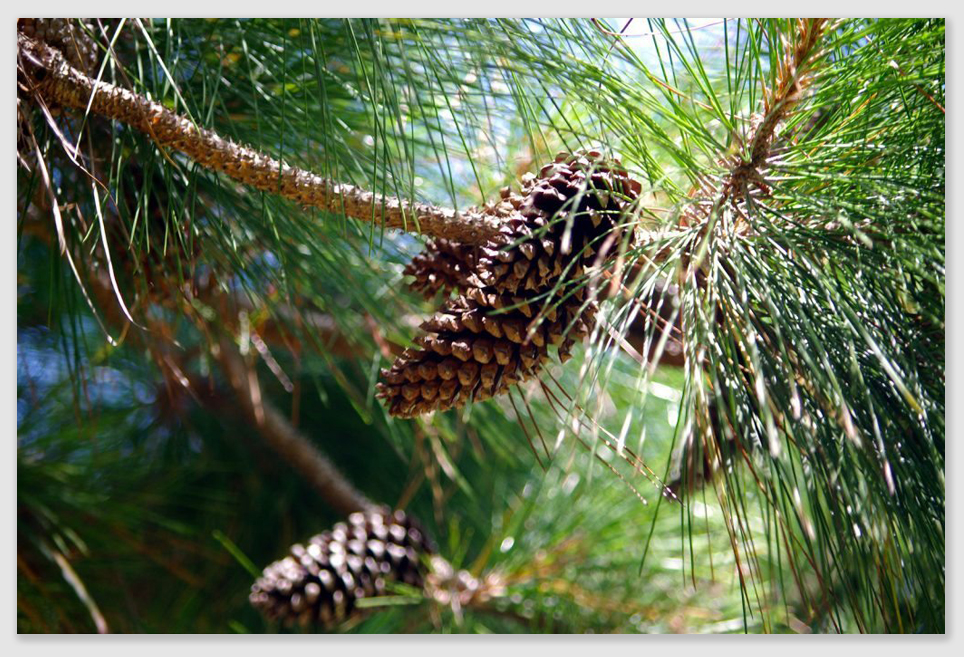 Gardening Know How, December 5, 2016: Slash Pine Tree facts: tips on planting Slash Pine Trees
What is a slash pine tree? This attractive evergreen tree, a type of yellow pine native to the southeastern United States, produces sturdy, strong wood, which makes it valuable for the area’s timber plantations and reforestation projects. Slash pine (Pinus elliottii) is known by a number of alternative names, including swamp pine, Cuban pine, yellow slash pine, southern pine and pitch pine. Read on for more slash pine tree information. Slash Pine Tree Facts Slash pine tree is suitable for growing in USDA plant hardiness zones 8 through 10. It grows at a relatively fast rate, attaining about 14 to 24 inches of growth per year. This is a good-sized tree that reaches heights of 75 to 100 feet at maturity. Slash pine is an attractive tree with a pyramidal, somewhat oval shape. The shiny, deep green needles, which are arranged in bunches that look a little like brooms, can reach lengths of up to 11 inches. The seeds, hidden in glossy brown cones, provide sustenance for a variety of wildlife, including wild turkeys and squirrels…
Two 21-year-old women will be back in court next month after allegedly stealing a Christmas tree early Friday morning from the Boy Scouts of America tree stand at Kendrick Park. Officers observed three women stealing a tree just after 1 a.m. Friday, according to police.Arrested were Lindsay I. Zappolo of Scituate and Miranda Murphy of North Attleboro. The third woman fled, police said. Zappolo and Murphy were charged with larceny under $250. Both pleaded not guilty Friday in Eastern Hampshire District Court in Belchertown. They are listed as University of Massachusetts students…

You might think deciduous trees lose their leaves because they’re trying to avoid freezing weather. But they’re actually coping with the drought conditions of winter. According to Dr. Emile DeVito, New Jersey Conservation Foundation’s staff biologist, the best clue comes from tropical forests with extended dry seasons. When the rainy season ends, soil moisture drops to near zero. Broad leaves typically evaporate lots of water, so even in the warm tropics deciduous trees shed their leaves to prevent tissue death due to drying out. New Jersey’s deciduous forests do the same thing: becoming leafless during winter for self-protection. Even during wet winters in New Jersey, water becomes nearly unavailable to tree roots when the soil freezes. Our deciduous oak, maple and birch trees shed their leaves each fall to prepare for drought…
“I’m giving them a nip and tuck.” That is how Ron Junghans described his pruning technique on this year’s Christmas tree harvest. Surrounded by some 4,000 trees on his farm at Duffy’s Forest in Terry Hills, there is no masking the pine-fresh scent of the festive season. Mr Junghans, a retired school teacher, planted his first pine radiata in 1979. The trees that will decorate people’s homes this year range from one to three metres with the smallest having taken just under five years to grow. Each tree grows about one foot (30 centimetres) a year in its early stages then grows at a faster rate as it matures. “They take quite a while to establish themselves,” Mr Junghans said. “I don’t water so they go at a smaller rate, but it makes for a better tree I think — looks a bit more natural…”
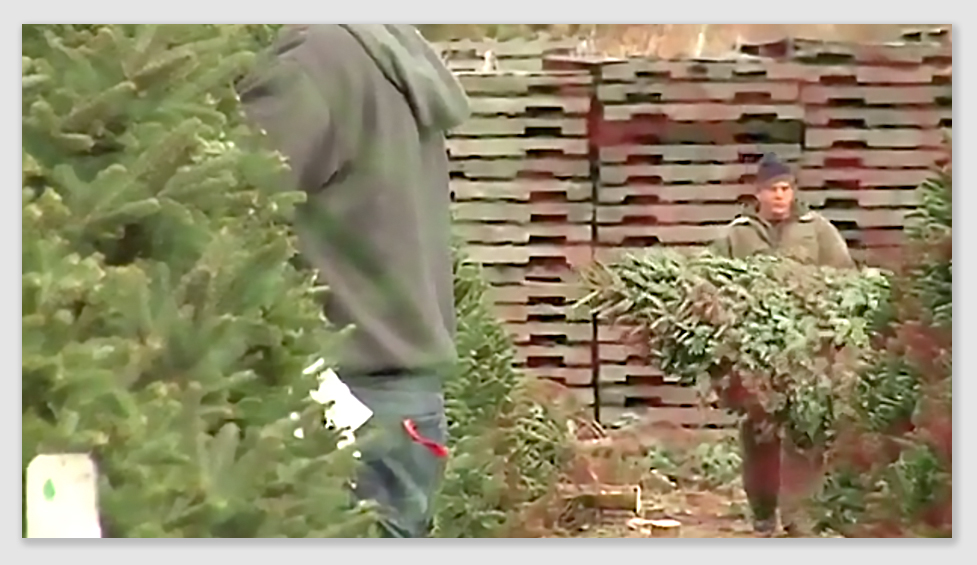 Albany, New York, WWLP-TV, December 4, 2016: Prevent Christmas tree fires with these tips
Bringing a Christmas tree into your home may be a fun holiday tradition, but can be dangerous if correct precautions aren’t taken. At Paul Bunyan’s Farm and Nursery in Chicopee, everyone who buys a tree goes home with a list of safety tips. A very important tip, they say, is to make sure the tree is watered often. According to the U.S. Fire Administration, Christmas tree fires have become more rare in recent years. The most common cases of Christmas tree fires are caused by electrical problems and by putting a tree too close to a heat source. State Fire Marshal Peter J. Ostroskey is offering holiday decorating tips this year as well: Choose from freshest trees possible – needles shouldn’t fall off or break easily; Take care of your tree – consider cutting off an inch or two off the bottom before placing it in the stand, water a live tree every day; Choose best location – use wide-legged stands to avoid tipping, keep far away from heaters, fireplaces, and candles; and decorate wisely – consider LED lights, but inspect old lights for frayed wires…
Watertown, New York, Daily Times, December 4, 2016: Pierrepont man killed when pinned by tree
A 60-year-old Pierrepont man was killed Friday when he became pinned by a tree while he was in the woods to cut firewood and hunt, according to the St. Lawrence County Sheriff’s Department. Police said a 911 call was received at 5:11 p.m. that Stanley P. Tarbox, 432 Butternut Ridge Road, had not returned home after going into the woods. With the assistance of a Border Patrol K-9 unit, deputies and personnel from other agencies found Mr. Tarbox dead at 7:14 p.m. The investigation revealed Mr. Tarbox had attempted to fell a tree that had become lodged in another tree. “While cutting another tree to free it, the first tree fell on him causing him to be pinned,” police said in a prepared statement…
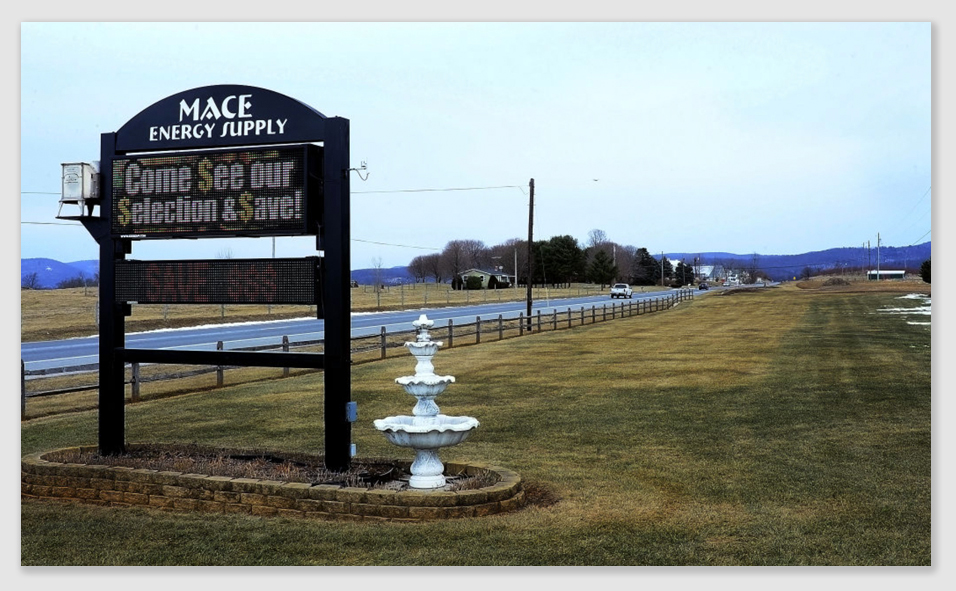
A tree might inspire a lovely poem, but the state’s plan to plant them in front of a Ringgold Pike business could inspire new legislation in the Maryland General Assembly. William A. “Tad” Tweed approached the Washington County Board of Commissioners earlier this year with concerns about the State Highway Administration’s plan to plant trees along the state’s right of way on Ringgold Pike, or Md. 418. The planting is part of the state’s Chesapeake Bay Restoration Program that treats highway runoff before it gets back into the waterway’s tributaries. The trouble is that the SHA confirmed in September that the section of Ringgold Pike right in front of Tweed’s business, Mace Energy Supply Inc., had been chosen for planting. And that, he told the commissioners Tuesday, means his business will eventually be hidden from the road…
New Orleans, Louisiana, Times-Picayune, December 4, 2016: Why won’t my citrus tree produce fruit?
QUESTION: In Metairie, I have a grapefruit tree that produces wonderful fruit every year. I have grown lots of little trees from the seeds I’ve gotten out of the fruit of that tree. I planted the seedling trees in Covington several years ago, and some of them are at least 10 feet tall. None of them have ever made grapefruits. What is wrong?
ANSWER: We don’t grow citrus trees from seeds for two reasons. As you have discovered, it takes a seedling tree a long time to begin to bloom and produce. You would expect it to take seven to nine years for fruiting to begin, and it may well take more than 10 years. When a grafted tree is purchased at the nursery, we expect it to begin producing within three to five years after planting if not sooner…

“Nugget Casino Resort, we humbly accept your congratulations and the kind words have us aglow,” according to a statement from Citadel Outlets. “We love that this festive rivalry helped spread holiday joy far and wide. If you eat your Wheaties, we’ll have quite the competition next season!” While Citadel Outlets claims to be the tallest fresh-cut Christmas tree in the world, it’s possible another one will pop up somewhere else to contend for the title. But for now, it is theirs. Most other “trees” taller than 115 feet are in fact, constructed out of thousands of smaller trees or made of metal and not an actual tree at all. A 278-foot metal Christmas “tree” in Rio de Janeiro, Brazil, was awarded the tallest floating Christmas tree in the world as it drifted around Rodrigo de Freitas lagoon in 2007 and continues that tradition each year. Citadel Outlets director of public relations also noted that their tree is adorned with 10,000 ornaments and bows and 18,000 lights, compared to the Nugget’s 3,000 LED lights. Both trees are White Firs but the Nugget’s tree came from Oregon while the Citadel’s tree came from northern California’s Shasta-Trinity National Forest…
Cedar Rapids, Iowa, KCRG-TV, December 1, 2016: Historic oak tree in Waverly coming down Friday
The bur oak located next to the civic center in Waverly actually pre-dates the community. It’s estimated to be at least 217 years old. Last summer, the city decided because the tree was dying and in danger of toppling it had to come down. On Friday, workers will begin cutting down the historic bur oak with the job expected to take two days.
The city plans to close off part of a parking lot and a walkway to accommodate the work…
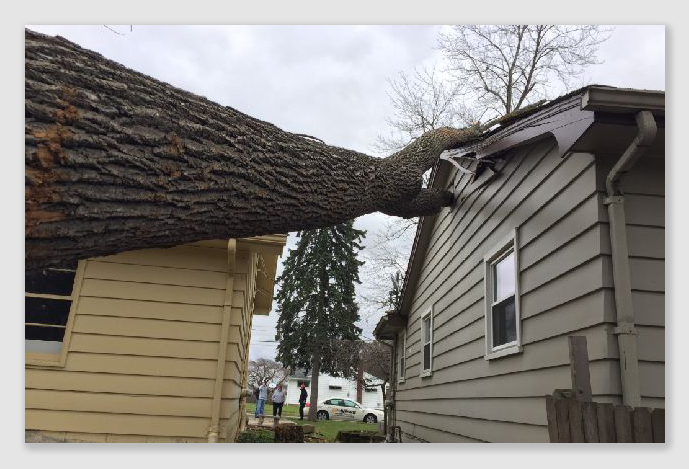 Youngstown, Ohio, WFMJ-TV, December 1, 2016: Tree topples on Youngstown home
It may have been wind, the rain or a combination of both, but a woman living on Youngstown’s West Side felt the effects of the weather on Thursday. A large tree toppled over on Cranbrook Court, damaging the roof and siding of a home. No one was injured. In spite of the high winds, FirstEnergy only reports a handful of power outages in Mahoning and Columbiana Counties…
Lowcountry trees need champions more than ever on Arbor Day this Friday. Hurricane Matthew knocked over more trees than we can count when it crossed Beaufort County as a Category 2 storm on Oct. 8. Since then, some people have been saying we had too many trees. They say county, municipal and private regulations to preserve trees need to be whittled down to the size of a No. 2 pencil so our naked fortresses can be unscathed the next time we get hit by a hurricane. These people are wrong. We are not Manhattan. Manhattan still has plenty of housing available for those who want that. But we are trying to be Central Park. Today, more than ever, we must understand our heritage and fight this new assault on it. From the beginning of recorded history, people who have discovered Beaufort County have remarked lovingly on its trees…
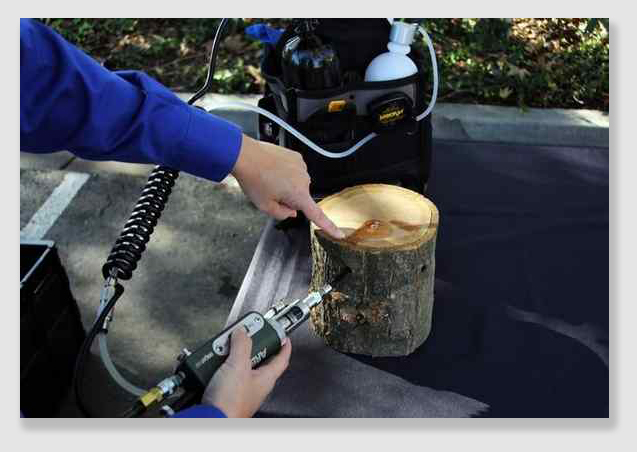
Don Grosman hooks tiny needles into the bark of a 50-foot-tall sycamore tree, injecting the tree with a medicinal cocktail to ward off Fusarium Dieback, a plague killing urban street and park trees. “We equate it to giving someone a shot for the prevention of a disease,” said Grosman, technology advancement manager and entomologist with Arborjet, Inc., a Massachusetts company that patented the combination of pesticide and fungicide that’s directly shot into a tree’s vascular system like a shot is injected into a person’s bloodstream to prevent measles or the flu. Grosman returned Tuesday to the Pomona Fairplex grounds to complete a three-year trial started in January 2014 in cooperation with researchers at UC Riverside. So far, results are promising, he said: Ninety percent of trees that received an injection of a combination of two chemicals, Propizol (propiconazole), a systemic fungicide; and TREE-age (emamectin benzoate), a general use pesticide; showed no signs of the disease…
Accuweather, November 30, 2016: Holiday hacks to keep your real Christmas tree fresh all season
Now that Thanksgiving has passed, families who decorate for Christmas might be thinking about selecting that perfect live tree for their homes. If you are choosing the real thing this year, here are some tips to keep your Christmas tree as healthy as possible this holiday season. Two simple things to keep in mind when you are preparing your tree for the indoors: Ask for a fresh cut on the trunk and make sure the tree gets water right away…

Laguna Beach police are treating cuts to the trunks of six eucalyptus trees as vandalism. On Saturday, a pedestrian in the Aliso Creek Shopping Center reported that a eucalyptus tree had a 1- to 2-inch-deep cut near its base, Sgt. Tim Kleiser said. Across South Coast Highway at the Montage Laguna Beach, five eucalyptus trees had sustained 1- to 2-inch cuts at the bases of their trunks, police said. A security guard reported the cuts to authorities on Nov. 21. Police said the damaged trees at the Montage, a luxury hotel, were located next to a walkway near the highway…
It started with a 2011 study that indicated by the turn of the century there would be no more Joshua trees in the national park named after the iconic desert plant. And likely none in California. “I was shocked when the study came out. I wanted to look at the details and change the scale,” said Cameron Barrows, a research ecologist for the UC Riverside Center for Conservation Biology in Palm Desert. The large scale of the study by Kenneth Cole, a climate scientist for the federal government’s Colorado Plateau Research Station in Flagstaff, Arizona, missed many of the geological nuances of Joshua Tree National Park and elsewhere, according to Barrows, which could ultimately mean survival for the Joshua tree species…

A San Francisco woman who was paralyzed when she was hit by a falling tree limb in Washington Square Park filed a lawsuit against the city for negligence on Monday. The Canary Island pine tree off of which a 100-pound branch splintered off and struck Emma Zhou, 36, on Aug. 12 had been “negligently pruned” in a method that “causes the rapid growth of large, heavy, and weakly attached branches that can fall and injure or kill people,” the lawsuit filed in San Francisco Superior Court stated. Zhou had been watching her young daughters play in the park’s playground before a dental appointment when the branch fractured her skull and severed her spinal cord, leaving her paralyzed below the waist. “We haven’t been served with the lawsuit, so we can’t comment on specifics about something we haven’t seen,” said John Cote, a spokesman for the city attorney. “Generally speaking, we evaluate every case we receive and decide on the best way to proceed. What happened to Ms. Zhou is heartbreaking, and our thoughts go out to her and her family…”
London, UK, BBC, November 29, 2016: Oxford tree surgeon’s chainsaw death ‘bad luck’
The death of a tree surgeon who sliced his neck open with a chainsaw was just “bad luck”, an inquest has heard. Alexander Kirkley, 32, was cutting branches from a hoist on an ash tree in Oxford on 12 February when his tool “kicked back” and hit his neck. Oxford Coroner’s Court was told he held his neck before falling unconscious. One of his colleagues tried to stop the bleeding and an ambulance was called but the arborist later died in the John Radcliffe Hospital. The Oxford-born outdoorsman had spent three years living in New Zealand where he perfected his trade. At the jury-led inquest, coroner Darren Salter read evidence from one of Mr Kirkley’s trainers Josh Paice who wrote: “To this day [Alex] was one of the most safety-conscious tree surgeons…

Trees provide many benefits, but during Georgia storms, they can fall and create a dangerous situation. The following guide will help you keep your trees from falling (when possible) and know what to do if it happens. Trees can fall during storms for a variety of reasons, including: Winds: Winds can uproot a tree, with the tree trunk acting as a lever. This is a greater problem for tall trees, because the force that’s applied to the roots and trunk is greater as the tree’s height increases, according to Scientific American. This can also happen if a tree was previously in a more forested area, protected by other trees that have since been cut down (to create a new housing lot, for example). Rain: When the ground becomes saturated from large amounts of rain, trees can topple more easily. The more wet the ground is, the less wind it will take to make it fall. Ice: During an ice storm, the weight of ice can increase the weight of branches by 30 times…
Warm weather is helping to boost Christmas tree sales, according to area growers, making business this year so far as good or better than last year. “We have seen that more people and their families are coming out to because it’s been warmer than usual,” said Doug Elliot, son of owner Bill Elliott of Elliott’s Christmas Trees, Willow Hill. “It’s great to not have cold weather because the trees will last longer.” Dennis Kauffman, co-owner of Kauffman Family Christmas Tree Farm in Waynesboro, believes this year could be his best year ever. “Currently we are equal to or better than last year, which was our best year ever,” he said. “So this season could definitely be as good as we have ever done…”
 Davenport, Iowa, The Quad Cities Times, November 28, 2016: Christmas tree farmers ready for rush
Apparently, people don’t cut down their own Christmas trees in Texas. So, Moline native Tyggenn White, who now lives in Dallas, decided to reunite with her family this month in the Quad-Cities to share the experience with her young daughter. “It’s just not something people do there,” said White, who traveled back to the chilly Midwest with her mother, husband and daughter. “It’s a harsh homecoming weather-wise.” Handed a saw and measuring stick, the family of nine, including three little ones, battled chilling winds to find the “greatest tree” the old-fashioned way at Wyffels Tree Farm in Moline…
People ready for some holiday cheer can celebrate a healthy 2016 Christmas tree supply with plenty of choices in size and species, said Daniel Cassens, a Purdue University professor of forestry and natural resources and Purdue Extension wood products specialist. A dry summer and wet autumn initially caused some worries, said Cassens, who has grown and sold Christmas trees for 38 years at his farm at 5038 Morehouse Road, West Lafayette. “Conifers don’t like wet feet and we had a wet August,” he said. “And the dry June and July were a bit scary, especially for seedlings. But we’ve seen no lasting effects from weather and no significant insect or fungal problems either. The trees look very healthy.” Cassens, a member of the National Christmas Tree Association and the Indiana Christmas Tree Growers Association, said that while most tree shopping typically happens after Thanksgiving, some consumers had already started purchasing their trees by mid-November. Prices for Christmas trees typically vary according to the species, quality and size of the tree, with smaller trees selling for less than larger or more exotic ones…
 Portland, Oregon, KOIN-TV, November 28, 2016: ‘Big Tree’ in Gifford Pinchot Forest dies
One of the oldest and tallest ponderosa pines in the Pacific Northwest has died with little fanfare after hundreds of years. The Columbian says the so-called “Big Tree” was a well-known attraction for tourists driving through the Columbia River Gorge. The 213-foot-tall ponderosa near Trout Lake in the Gifford Pinchot National Forest in southwest Washington died last year but its demise was not made public. The Big Tree contained about 22,000 board feet of lumber – enough wood to frame almost one and a half 2,400-square-foot homes. No one knows exactly how old it was, but guesses range from 370 years old to more than 500 years old…
Realtor.com, November 28, 2016: Did Christmas Tree bugs hitch a ride into your house?
Picking the perfect live Christmas tree from a farm or lot is a tradition many people love—there’s nothing like the scent of a freshly cut pine tree to usher in the holiday spirit. Still, with a live tree comes the possibility of bringing home some unwelcome guests: namely Christmas tree bugs hitching a ride into your house. These tree-dwelling insects tend to go dormant during the cold months, but as soon as you bring your tree indoors and the bugs warm up, they can spring right back to life. That means that in addition to cleaning up pine needles, you might also have to deal with a whole party of crawly critters, too. Christmas chaos! Don’t worry, though—it’s relatively easy to kick ’em out. The best way to rid your Christmas tree of bugs is to shake it off—with a mechanical tree shaker, that is. Many lots and farms have a shaking service… Toledo, Ohio, Blade, November 27, 2016: Oh, Christmas tree! Tips to keep your fir fit for the holidays
The Thanksgiving dishes are back in the cupboard, and the long table has been stowed away for another month. Now, it is time to get serious about decorating for Christmas. The tree is the typical focal point. Let’s cut through some of the facts and fiction when it comes to your tree. Fact: If you are a faux tree fan, invest in a tree that is pre-lit to save on the frustration of stringing it with lights. Fiction: Drilling holes at the base of your real tree will help it take up water. (In fact, the tree’s trunk has millions of tiny straw-like cavities that take up water and drilling one hole doesn’t open them back up again once they have been clogged.) Fact: Always give your real tree a fresh cut at the bottom, then immediately put it in water so it will keep taking up water for weeks to come. Fiction: You should give your tree hot water. (Actually, scientists say the water can be any temperature. Warmer water doesn’t go up any faster than cold)…
Mason City, Iowa, KIMT-TV, November 27, 2016: Tree limb-cutting leads to fire response
Firefighters responded to what was thought to be a house fire in Clear Lake Sunday afternoon, only to find that the smoke was coming from a wood-clearing project. According to a statement from the Clear Lake Fire Department, the report was called in at around 4 p.m., when smoke was seen coming from 1605 1st Avenue North. Two pumper trumps, one rescue unit, and 13 firefighters converged on the home, where they found the smoke was coming from an “occupant cutting down tree limbs.” Firefighters say limbs knocked down power lines in front of the home, which led to current shooting back into the house. That produced smoke in the basement. Firefighters used a fan to pull smoke from the basement level of the home. No injuries were reported…

Tyler Wilbricht was driving on the rural outskirts of Madison, Wis., last spring when he spotted the perfect gift for his brother’s wedding: a soggy maple tree lying in massive sections on the side of the road near a dairy farm. Mr. Wilbricht’s brother, Nick, is a devotee of Hammerschlagen—or Stump, as some call it—a game that is increasingly popular at tailgate parties, outdoor concerts, beer festivals and family barbecues. The game is simple: players compete to hammer nails into a circular wood surface. In Stump, players typically must flip the hammer in the air before striking their opponents’ nails; the player with the last nail standing wins. In Hammerschlagen (German for hammer strike, a nod to its supposed Bavarian origins), each player strikes his own nail. The task demands strength, dexterity, focus and, often, a lot of beer. Above all, it requires a tree stump. And good stumps aren’t easy to come by…
Newton, New Jersey, New Jersey Herald, November 27, 2016: How to choose a fresh Christmas tree
Selecting a fresh Christmas tree is a beloved tradition for many of us. Sadly, all trees, including evergreens, have been severely stressed by this year’s drought. Here are some tips for choosing a tree that will hold onto its needles and look its best for the holidays. Choose a tree that has been grown locally. Many local Christmas tree farms will have precut trees ready on the weekends and generally cut their trees just a day or too before. Precut trees trucked in from New England, New York, or Pennsylvania — where they also suffered a drought — have been cut and drying out for a week or more and will not last as long. Look carefully at the needles on the tree. Avoid any trees with needles tipped with yellow or brown. The American Christmas Tree Association advises these methods for assessing a tree’s freshness: “Grasp a branch in your hand, about a foot from the end, and pull your hand back, letting the branch slip through your fingers. The needles should stay attached to the branch, and not come off in your hand. You can also grasp the tree by the trunk and tap the base of it against the ground. If a cloud of needles falls to the ground, then the tree is well on its way to being dead. The needles and branches should also be flexible when bent. If they break or don’t spring back into shape, the tree is drying out. Another way to tell if a tree is still fresh and lively is by smelling the branches and trunk. If it still has that sappy, earthy smell, then the tree will probably last for several more weeks. If it’s odorless, then you should give it a pass…”

Rob Kennedy, owner of Kennedy Tree Farm in Painesville Township, said his business offers a festive Christmas tree-hunting experience, with carols playing, a fire going, and hot chocolate and goodies for patrons. But he suspects that something else may keep some customers coming back: Braylee. “She’s a 5-year-old yellow Lab,” said Kennedy, who bought the spot at 320 Bowhall Road a few years back. “She’s a huge hit and people literally come here to see her. “Last year a woman told me, ‘We ask the kids where they wanted to go get a tree and they said the place with the doggie…’ “
As area residents wrap up their Thanksgiving Day festivities, farms across the Valley are ready to sell thousands of Christmas trees. Alan Ard, the co-owner of Ard’s Farm in Lewisburg, said they sell 800 to 900 trees each season.
Kirk Decker, of the Decker Tree Farm in Middleburg, said his farm usually sells 3,000 trees wholesale at auction and 300 trees to retail customers at the farm. Stan Kohl, the owner of Kohls Stony Hill Tree Farm in Milton, said they will sell 2,000 to 3,000 trees. Kohl said his farm attracts customers from Maryland and New Jersey. “It impresses me that they pass countless tree lots on the way up and they still choose mine,” he said. Kohl recalls many out-of-state families seeking him out to tell him they’ve returned to get their tree from his farm. He said when it comes to the Christmas tree business, customer service always matters…

Trees in Sierra Nevada forests are dying in large numbers due to fires such as the Rim and Butte fires, drought and the ravages of bark beetles. Some of those millions of trees are even now being cut down because the trees threaten homes, power lines or roads. The number of logs far outstrips the capacity of area mills. And in some cases, conventional mill owners don’t even want the material due to insect damage or the wood’s rapid decay after the trees die. Ultimately, most of it may be chipped or burned. Yet some area artisans are finding ways to make use of that timber, including the so-called “blue stained” wood from trees that have been standing dead for a year or more. Diane Winsby of Calaveras Lumber in Angels Camp said she has seen an increase in orders for blue stained wood that she believes it will increase as more people become aware of its uses. Right now, she said, Calaveras Lumber does not stock blue stained wood but the company will take special orders…
Why does a tree suddenly begin to wilt and die? What could cause one tree to suffer while others nearby remain healthy? In recent years, trees in our area have been under high-stress levels as a result of droughts, construction activities, storms, insects, and diseases. Often the symptoms do not become apparent until months or even years after the affliction has begun. If any trees on your property are of concern, consider hiring a Certified Arborist to do a thorough assessment of the tree. Certified Arborists are professionals who have passed a special licensing exam and have met certain requirements through the International Society of Arboriculture (ISA). Arborists are well trained in many facets of tree care including tree health, pest management, soil fertility, assessing storm damage, and proper pruning techniques. An arborist can examine and identify the potential risks of trees on your property and recommend specific treatments, such as pruning, to maintain their health and vigor…
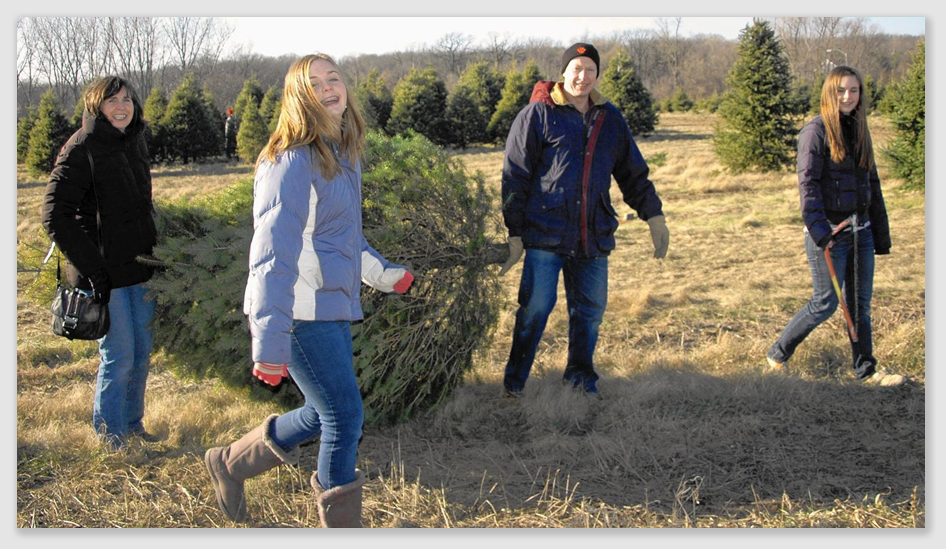
Chris Czarnowski is hoping that more people skip Black Friday shopping trips in favor of a morning spent at his family’s Christmas tree farm. They own Ben’s Tree Farm in Harvard, and he said that thanks to the rain and warm weather, they have a great looking crop of trees this year. The late Ben Czarnowski opened the tree farm in 1986. Today, it’s run by his three sons. There are also two grandsons named Ben, so the future of the farm looks bright. “We have customers who are second generation — they came as kids and now they’re married and are bringing their kids,” he said. “Especially during that retail season of Christmas, you picture all those crazy Black Friday shoppers, but it’s like a totally different thing to do that weekend. It’s a good alternative..”
A Christmas tree selected for the Rhode Island Statehouse rotunda has been removed after staff decided it was too puny. The 14-foot-tall Fraser fir was donated by a tree farm. Workers put it up Tuesday but then realized it was too small and didn’t fill the rotunda. The governor’s office says the little tree was moved outside to the statehouse steps and will be decorated and displayed there. The office has gotten a 20-foot-tall Balsam to replace it…

Tree crews working along the George Washington Memorial Parkway have removed about 70 trees from the Dyke Marsh Wildlife Preserve, upsetting activists who had raised money to protect some of those trees. National Park Service officials say the move is part of a broader effort to eliminate trees killed by the emerald ash borer, an exotic beetle, and to reduce the risk of branches or trees falling on passersby. Trees also are being removed along the parkway in Arlington, near Spout Run, as they were in the Great Falls area a year or two ago, said Aaron LaRocca, chief of staff for the superintendent of the parkway. Some diseased oak trees in the median of the parkway near Daingerfield Island in Alexandria also will be taken out soon…
October to March is the prime season for planting hardy trees in Louisiana, and November through early December is an especially good time. The soil is still warm, which encourages vigorous root growth, and trees will have several months to get established before next summer’s heat. At the same time, the weather is cool and the trees are going dormant, which reduce stress. Generous rainfall during winter makes constant attention to watering unnecessary. Planting at this time is especially beneficial for balled-and-burlapped trees because they lose so much of their root system when they are dug. The trees you plant eventually will grow much larger than the saplings you purchase and bring home from the nursery. Although it is tempting to plant more trees than you really need, years later you will realize you made a terrible mistake. No one tree is perfect tree for Louisiana. All trees have advantages and disadvantages, depending on the planting location and desired characteristics. Here are some points you need to consider…

TreesLouisville will receive a $1 million matching grant, allowing the nonprofit group formed last year to enter a new phase in its effort to help rebuild the city’s depleted tree canopy. And Metro Councilman Bill Hollander said Monday that he will introduce a long-anticipated tree protection ordinance by Dec. 5. The ordinance will regulate the protection of trees on public rights-of-ways while offering owners of private property voluntary methods of protecting their trees. Both announcements were made Monday at a news conference at Gilmore Lane Elementary School, where private donors working with TreesLouisville and Jefferson County Public Schools have already planted more than 60 news trees. Susan Barry, president & CEO of the Community Foundation of Louisville, said the foundation received $1 million to be used as a challenge for other donations to its TreesLouisville Fund. The immediate goal is to double the $1 million, which officials said came from an anonymous donor…
CNBC, November 21, 2016: Get the best Christmas tree money can buy. Here’s why
When it comes to buying a long-lasting, low-maintenance holiday tree, go with the fir and avoid the spruce. That’s the recommendation from Christmas tree experts, including the self-proclaimed “Chuck Norris of Forestry” Les Werner, a forestry professor at the University of Wisconsin-Stevens Point. “Firs will be the longest-lasting trees, and they’re the ones with the fragrance you associate with Christmas,” he said. Oscar Sloterbeck, senior managing director at investment banking firm Evercore and author of the company’s annual Christmas tree sales survey, agrees. “I’m a fan of the Douglas fir,” he said. “It holds the needles and color longer.” But don’t take their word for it. Science is on the side of the fir…

Every Tuesday when I go to the Collett Street Recreation Center for our writing group, I round the corner at the Financial Building across the street and am once again dismayed at the large gaping hole staring at me where a beautiful, healthy, maple tree once stood. My friends, Ian and Terri Robins and I tried to count the rings on the stump to see how old the tree was. Some of the rings were about an inch apart indicating fast growth because of good weather conditions, the right amount of rain, maybe a long summer like this past one. Other rings were closer together, showing the summer had been too dry for much growth. We never did get the rings counted, so we started estimating the age of the tree by its size. I think Ian came to the conclusion that the tree was about 60 years old. I thought it might be closer to 75…
It’s not quite Thanksgiving, but the Christmas tree harvest is in full swing and Virginia growers are experiencing a good one. The state’s Christmas tree industry includes thousands of growers, according to the Virginia Christmas Tree Growers Association. It is estimated that they have more than 7 million trees planted. VCTGA Vice President John Carroll grows several varieties of Christmas trees at Claybrooke Christmas Tree Farm, a choose-and-cut operation in Louisa County. “The crop is good this year,” Carroll said. “Most choose-and-cut growers are selling most of their inventory every year, and this year won’t be any exception. Seventy-five percent of sales are derived from the experience of finding the perfect tree in the field.” Most growers are sensitive to keeping their product affordable. “There will most likely be a modest increase in tree prices this season to help recoup some of the recent increases in production costs,” Carroll said…
When a fire destroyed a home she owned in town last year, Old Greenwich resident Chris Katsigiannis had no doubt she would rebuild. But while new home construction often means making changes, Katsigiannis was adamant one thing would not change. A beloved copper beech tree on the property, estimated by arborists to be at least 150 years old and 65 feet high, was pegged for removal by professionals planning the new house. “The architect is not a tree lover like me and she just kept saying, ‘The tree has to go’ and I kept saying, ‘No the tree stays. Make the house smaller instead,’” Katsigiannis said. “And here we are. The tree has stayed and while we had to trim one limb the rest is intact.” Three arborists have looked at the tree and said it has a more than 50 percent chance of survival, despite some serious challenges over the past year, she said…
WABC-TV reports that Mike Ricatto, 59, plastered trees in his Kew Gardens, Queens, neighborhood with “wanted” fliers after Donald Trump campaign signs in his front yard were stolen. Ricatto’s surveillance cameras captured a grainy picture of the thief which he put on the fliers. The Parks Department claims the staples Ricatto used to post the fliers caused damage to the trees, though the department’s own lawyer said staples don’t damage trees, according to the station. “Weeks and week later, I got visited by some Parks Department personnel and they handed me 22 summonses,” Ricatto told the station…

The city beefed up its tree-protection bylaw to preserve vast stands of trees from being cut down by developers without a permit, a city councillor says. The bylaw is in the spotlight after St. Peter’s seminary cut down 100 trees without a permit last week. “It used to be that if you had trees on private property and not on protected land, you could cut down trees,” Coun, Phil Squire said. “That led to a lot of issues where developers cut down trees and citizens were rightly upset.” Residents of Old North are upset that trees, including some stately pines and black walnuts about 100 years old, were cut down last week on the seminary property on Waterloo Street…
Norwalk, Ohio, Reflector, November 19, 2016: Tree trimmer dies from injuries in crash
A Bucyus man has died from injuries sustained in Thursday’s crash on Ohio 13 near Fitchville. Zachary T. Warner, 34, died Saturday morning at St. Vincent Medical Center in Toledo. The crash remains under investigation and charges are still pending, said troopers with the Norwalk post of the state Highway Patrol. Warner, 34, of Bucyrus, was one of three men working for Oberlander’s Tree and Landscaping of Bucyrus who were hurt in the accident. Troopers said two vehicles belonging to Oberlander’s — a 2004 International bucket truck and a 2012 Dodge pickup — were parked in the northbound lanes of Ohio 13 just north of U.S. 224 and a flagger was in place behind the vehicles just before 11 a.m. Warner and two workmates — Calvin J. Hoover, 50, of Tiffin, and Ryan A. Niedermeier, 28, of Bucyrus — were standing near the vehicles, getting ready to trim evergreens along the power lines for Firelands Cooperative Electric Co., when a northbound commercial semi-tractor failed to stop and struck both tree company vehicles and the three men, troopers said…
 New Jersey Advance, November 17, 2016: Bamboozled: After a tree fell in the driveway…
We didn’t see it coming. Or hear it happen. During a windy day last month, a 40-foot tree landed in our driveway. Right on top of the glorious Bamboozled minivan. We went outside to look, and boy, we were lucky. Only the very top branches grazed the minivan, leaving one small dent on the bumper and a couple of minor scratches. But we had a 40-foot tree laying across the driveway. The plan was to get estimates to remove the tree, but also to have someone assess the health of two trees that seemed to share their fallen brother’s root ball, and a fourth tree, some 65 feet tall, in the same planter bed. We didn’t want to see any of the trees go. Year after year, the trees were the backdrop for many family photos. They provided shade, and copious piles of leaves for the kids to play in. This quartet of trees even had an interesting survival story. During the construction of our development in the 1980s, the home’s original owner said, the builder wanted to remove the trees. It was a big fight, but the homeowner prevailed and the trees remained. But alas, it was probably time for the trees to come down before one landed on the house…
Roslyn Harbor, New York, The Island Now, November 17, 2016: Tree removal splits Harbor Board
Members of the Roslyn Harbor Board of Trustees aired disagreements last Thursday over a possible limit on a resident’s capacity to cut down trees. The difference of opinion centered on the mayor’s proposal that next-door neighbors be notified if a resident requests a permit to remove a tree that provides significant screening, or protection from outside view, for the neighbor’s property. “If the Tree Committee makes the determination that a tree removal will have a significant adverse effect on screening then it will let the neighbor know,” Mayor Louis Badolato said…

TWO gutsy pensioners were arrested by cops yesterday after council killjoys ordered the felling of eight 100-year-old trees in a dawn raid. Retired uni lecturer Jenny Hockey, 70, and ex- teacher Freda Brayshaw, 71, were seized after they raced out into the street to protest at the secret 5am operation. The pair refused to budge from one of the targeted trees to thwart council workmen armed with chainsaws but were carted away for a breach of the peace. Jenny’s husband Bob, 72, fumed: “All the neighbours were woken up at around 5am and asked to move their cars. “Jenny was straight out and said the residents had not been told that the trees would be taken down…”
Whether you have a large farming operation or merely own a few acres outside the city limits, planting the right trees in the right places can make big improvements to your land. Besides improving the aesthetics of your property, trees can also produce economic benefits for the landowner in many cases. Landowners wishing to make forestry improvements on their property can do so through the Missouri Department of Conservation’s annual tree seedling sales program, which is currently underway. Through this program, landowners can purchase bundles of seedling trees from the department’s George O. White Nursery in Licking. Bundle sizes vary, depending on the purpose of the planting, but most range between 25 and 50 plants. The ordering period will run through May 1. Orders are filled on a first come, first served basis. Because of the popularity of this program, shortages in planting stock of some species occur soon after the ordering process starts. The toll-free number listed in the order form allows customers to find out what tree types are still available. The number will be operational beginning Dec. 1…

Some residents in a suburban Phoenix neighborhood believe a spike in scorpion sightings and stings is connected to an Arizona Department of Transportation temporary nursery across the street. “It’s getting pretty bad,” said Fabian Spencer, who lives in the area.Homeowners near Pecos Road and 27th Avenue report scorpion bites to people and pets with a lot of trees, cacti and bushes now stored in the area for the construction of the South Mountain Freeway. Once it’s built, everything in the nursery will be replanted. “With me, I know it was a pretty painful experience when I got stung. I can only imagine, God forbid, something happen to my child,” said Rasheed Amoo, who lives in the area. While some homeowners have increased pest control spraying from one to three times a month, others like Rasheed Amoo are going around their property looking for scorpions daily with a flashlight. “I’m definitely a scorpion watcher right now,” said Amoo…
Larne, Ireland, BBC, November 16, 2016: ‘Eyesore’ Irish Christmas tree replaced after complaints
A Christmas tree in the centre of Larne has been replaced after complaints that it was an “eyesore”. It has been swapped for a more festive offering, ahead of the town’s annual tree light switch-on ceremony. Local people and councillors had taken to Facebook to cry bah-humbug about the “sad-looking tree.” It comes after a festive village tree in Bushmills was removed in 2014 after it was described as “one of the worst ever seen in the UK…”
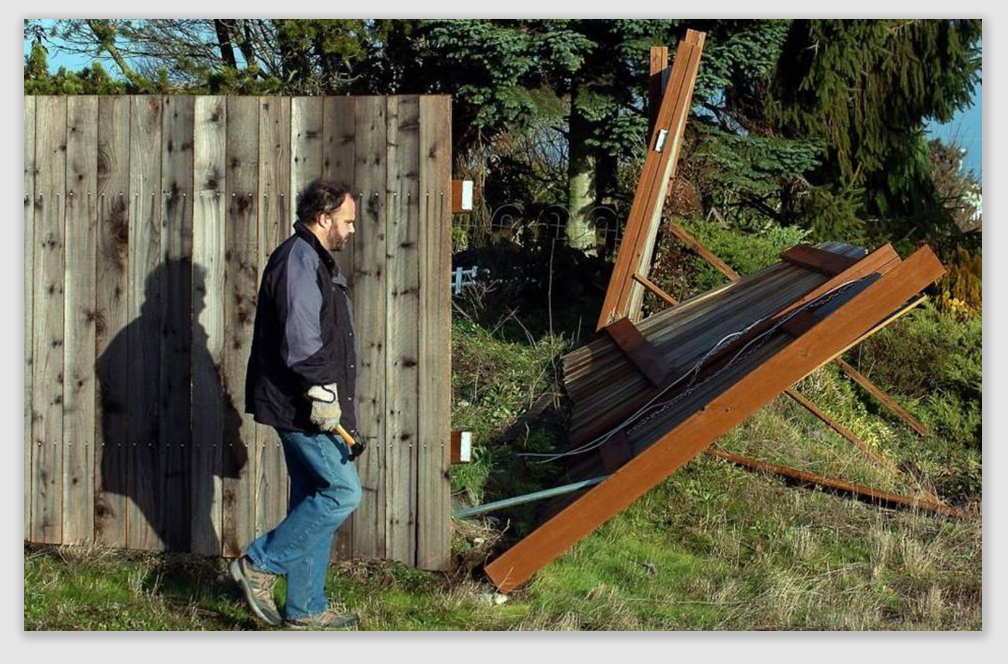
Your neighbor’s Doug fir just smashed your fence, punched a hole in your roof and turned your truck into a convertible. They have to pay for the damages, don’t they? No. You do. But that misconception is held by the vast majority of homeowners in Washington, according to a new poll by PEMCO Insurance Northwest. Just 18 percent of respondents in the June survey correctly knew they must accept responsibility for repairing a damaged fence when it gets flattened by a cedar branch or other act of nature…
Question: I have a Bradford pear tree (19 years old) that is very sick with fungus. I did the sick tree treatment, except for the zeolite, which I’ve not been able to find. The tree bark is missing from the exposed root flare up the trunk about 6 inches. It also has orange fungus-looking growth on the root flare and the roots are disintegrating in some places. I’ve given it lots of water. Would the zeolite make any difference? If this is a fungus, how likely is it to spread to my nearby trees? Is it likely that this was caused by too much water? If I have to remove the tree and am able to remove all the roots, is it possible to plant another tree in that same location? — S.K., Denton
Answer: Zeolite might be some help, the overwatering probably is the culprit, the Sick Tree Treatment is the solution, and planting other plants in this location is fine if the drainage is fixed and organic techniques are used…
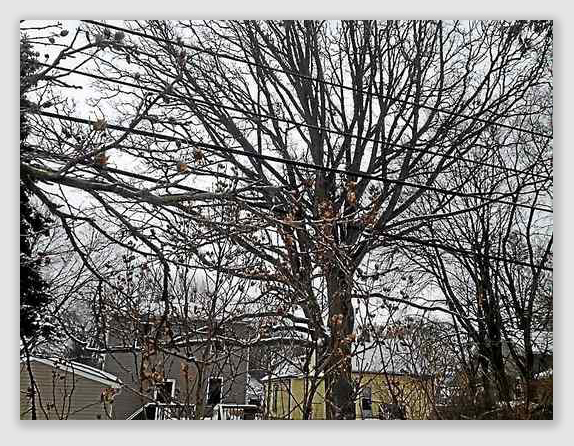
A 40-year-old Detroit man contracted to trim trees at a home in Bloomfield Hills died last week after a safety line holding him up failed, police say. At about 11:40 a.m. Nov. 10, Bloomfield Hills Public Safety Department officers were called to a home in the area of Woodward Avenue, south of Long Lake Road, after residents reported a tree trimmer fell out of a tree and was not breathing. Police and fire personnel tried life-saving techniques, but the tree trimmer was pronounced dead at the scene. Officials said it appeared the man died from head and neck trauma in the fall. Investigators said that the 40-year-old man was in a tree 40-50 feet above the ground, removing branches and vines from a large tree with a chainsaw and hand saws. Investigators in a media release stated they “found a safety line that appears to have failed and is believed to be a factor in the fall…”
Some residents in a Perrysburg neighborhood are angry after city crews cut down dozens of trees along a ditch at the edge of their backyards. “So now, you just look down Fort Meigs Road and it’s decimated. It’s like World War II happened. There’s nothing lovely about Fort Meigs Road anymore,” said Rachel Schmitz, who lives in the neighborhood. Schmitz said she wasn’t able to see Fort Meigs Road from her backyard, but that changed last week when she said she counted about 90 trees cut down by a city crew. The cut trees cleared the ditch just beyond her property line. “I’ve lost my privacy. I’ve lost my property value because when we moved in 16 years ago, there was a lovely canopy of trees,” said Schmitz…
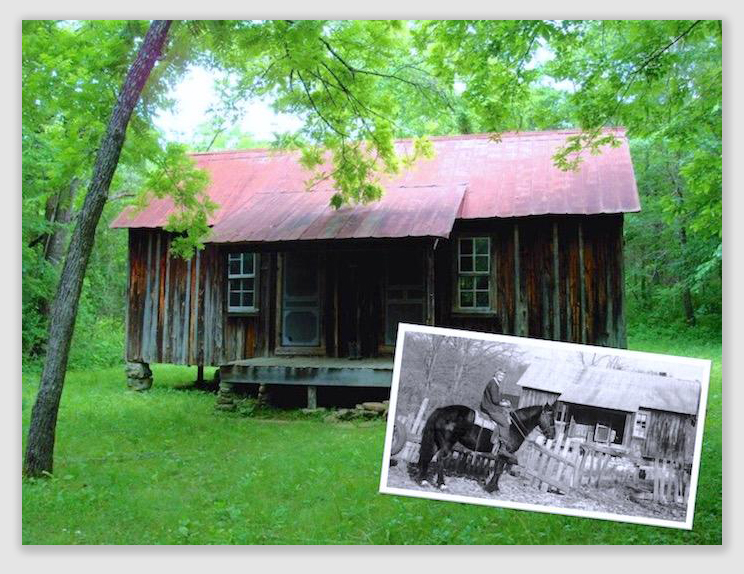
Two men who accidentally logged some 400 trees from across 31 acres of Ozark National Scenic Riverways in Missouri have paid restitution of more than $52,000 to the federal government, which declined to seek criminal charges as the men exhibited no criminal intent. The total bill paid by the men was $52,469, according to a release from the National Park Service’s Investigative Services Branch. The amount was reached in a pretrial diversion agreement between the men and the U.S. Attorney’s Office in the Eastern District of Missouri, and equals the cost of site remediation and the sale price of the erroneously-harvested timber, the release said. NPS Special Agent Les Seago said Monday morning that the men had been logging on lands outside of the park for about a year, and during their operations they didn’t realize they were taking trees from within the park boundaries. “They were cutting on private property,” he said. “They had purchased the rights for timber on this private land that butts up against National Park Service lands, and they encroached into the national park…”
While dutiful homeowners have been severely limiting — or ceasing — the watering of their lawns and gardens to comply with drought restrictions, one potential fallout is sometimes overlooked: the health of the residential tree canopy. In July, Mayor Judy Nelson of Glendora, a city that prizes its 18,000 trees, was one of the first public officials to raise this issue. Criticized for the city’s threat to fine a couple who let their lawn go brown (they said they were responding to Gov. Jerry Brown’s call to conserve water), Nelson explained, “We are very concerned that we’re going to be losing trees because people are not watering.” In fact, the region’s trees are increasingly stressed from lack of deep watering. Warning signs include premature yellowing or browning, early dropping of leaves and lack of vigorous growth. And then there is what might be called the “fading of the green”: A lack of water limits production of green chlorophyll that gives leaves their vibrancy…
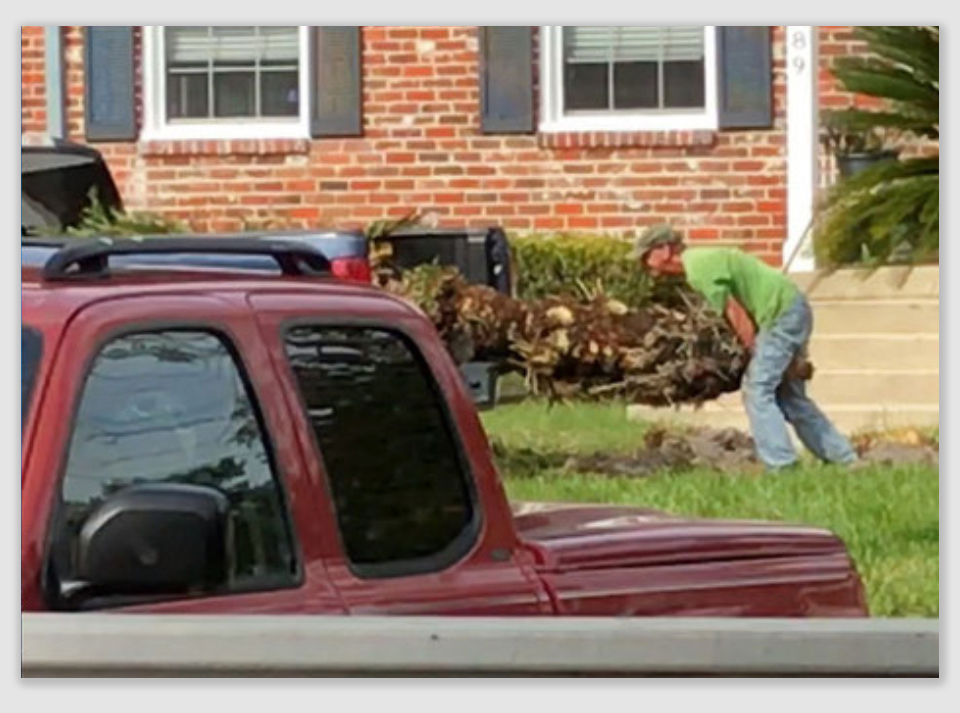 Jacksonville, Florida, WJAX-TV, November 14, 2016: Palm trees stolen from Riverside yard
While a Riverside couple was away on Saturday, someone came to their yard, dug up two of their palm trees and hauled them away in a pickup truck. A neighbor took video and pictures of the crime, not knowing at the time that it was happening without permission from the homeowners. He said it took the man hours to dig up the trees and get them in his pickup. When the couple came home, there were two big holes in the yard where their two, 3-4 foot Sabal palm trees used to sit. The neighbors thought it was funny more than sinister. Homeowner Renee Garber said she hopes that someone will recognize the man and call police.”I was hoping maybe somebody did hire him and he got the wrong address, but the mess he left in the yard,” Garber said. “I mean, you left the roots. He hacked off all the roots from the tree, so I don’t even think they’re re-plantable…”
Harry Merlo worked his way out of poverty, boxed for the Marines, married a beauty queen, founded a winery and tried to teach manners to the tennis star John McEnroe. He was equally bold in business. As chief executive of timber company Louisiana-Pacific Corp. , he invested heavily in what was then a little-known product, oriented strand board, a cheaper substitute for plywood. That mottled board now serves as wall, floor and roof panels for most new U.S. homes. The company’s directors pushed him out in 1995 when defects in a related siding product led to a barrage of lawsuits. “Yes, I have also suffered a few setbacks,” he wrote in a memoir, “but I regard these as part of a full life.” Mr. Merlo died Oct. 24 at home in Portland, Ore. He was 91 and had been suffering from leukemia…

One little girl in Winnipeg, Canada, was horribly distraught when the beloved but dying tree in her front yard was cut down. But all that changed when she returned home from errands with her mom to a very special surprise from the tree removal company. The group of men doing the tree removal had hand-carved the 4-year-old’s name, Shae, into tree “cookies” made from the stump, as well as built her a small, four-legged stool from the base of the tree to cherish forever. “It’s so amazing,” Shae’s mom, Jackie Culley, told ABC News of the men’s kind gesture. “Everybody thinks companies are just doing their job and that’s it and they just move along. They clearly took time out of their day to do something special and kind for her. “She was so happy,” Culley added. “She went from so upset, barely talking and very quiet all afternoon, to when we came home, she was just beaming, smiling from ear to ear…”
Rochester, Minnesota, Post-Bulletin, November 11, 2016: Rochester man killed by falling tree
A 59-year-old man died Saturday when the tree he was cutting down struck him when it fell, authorities said today. First responders were called at 6:01 p.m. to the 7300 block of Genoa Road Northwest, in Kalmar Township, where they found Raymond R. Phelps. His wife told officers he’d gone out about 3 p.m. to take down a tree on the property; when she returned from an errand about 5 p.m., Phelps hadn’t returned. “It looks like the tree he was cutting got caught in some other trees and snapped in half,” said Capt. Scott Behrns of the Olmsted County Sheriff’s Office. “It fell backward and hit the victim in the head…”
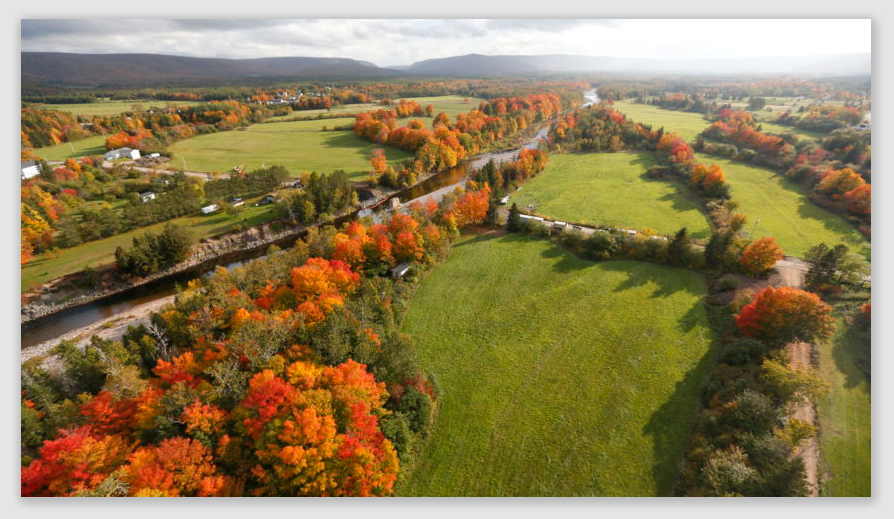
Before it is strewn with lights and illuminated amid a flurry of fireworks on the Common next month, Boston’s 2016 Christmas tree sits unassumingly off a two-lane road in a tiny Nova Scotian village. This year’s tree has a longer trip than any of its predecessors. For the first time in the 45-year tradition, an annual showing of gratitude, the tree comes from Cape Breton, the scenic, north-easternmost island region of Nova Scotia. Each year since 1971, the Canadian province has given Boston a tree as a thank you for the city’s response following the 1917 Halifax Explosion. The 47-foot white spruce is set to be cut down during a public ceremony Tuesday and will receive a public send-off Wednesday in Halifax before its 700-mile journey to Tremont Street. The tree will weave its way through downtown Boston to the Common on Friday…
The Norfield Tree, which had been slated to be cut down, has been given a reprieve. In a decision dated Nov. 11, and posted on the town of Weston’s website, Tree Warden William Lomas said the mighty red oak will remain, subject to “several risk mitigation procedures.” The decision follows a public hearing where many residents spoke in favor of saving the tree, and a peaceful demonstration by members of the Weston Garden Club who circled the tree asking for it to be spared. Lomas said he came to the decision not to uproot the tree based on “much thought and deliberation on the input provided to me by Weston town officials, Connecticut licensed arborists and concerned, informed citizens, as well as weighing safety, aesthetics and historic precedent in my best efforts to administer my duties as tree warden for the care and maintenance of all municipal trees and bushes in town…”
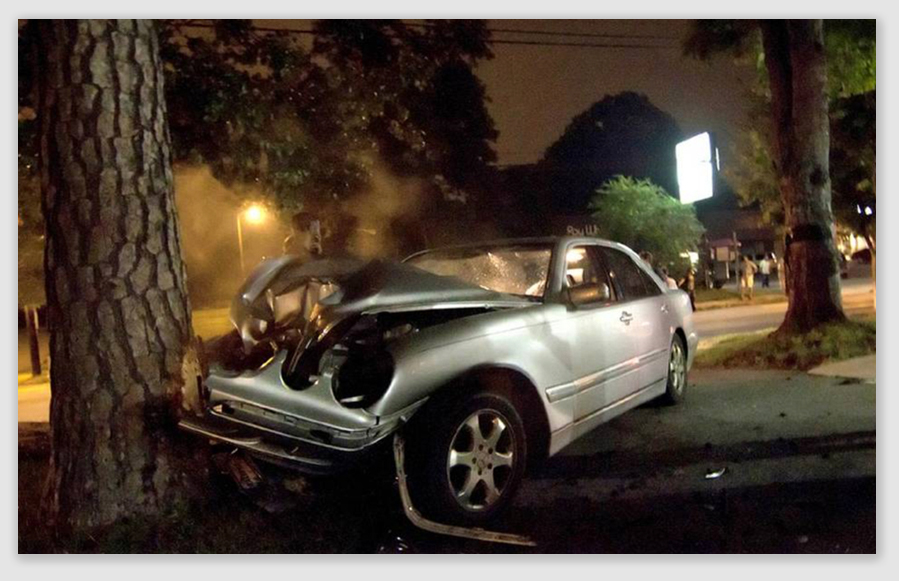 Columbia, South Carolina, The State, November 13, 2016: Want safer roads? Clear the trees
All of us have had distractions while driving — children needing assistance, spilled drinks, not paying attention, electronic devices. Even drivers who are doing everything exactly right are forced off the road by an irresponsible vehicle or circumstance beyond their control. Nearly half of S.C. traffic deaths occur when drivers run off the road. And in a fifth of those cases, the drivers die when they crash into a tree. The fact is that the safest roads have clear zones or areas of recovery so motorists who make a mistake and run off the road don’t pay for it with their lives. More than two-thirds of the land in South Carolina is forested. Most of the trees close to the roads are common pines and other insignificant woody vegetation. And as we were reminded when trees fell across so many roads during Hurricane Matthew, good clear zones would result in fewer closed roads, providing less inconvenience and more safety after a storm. Also, appropriate roadway clear zones would translate into fewer power lines being knocked down by falling trees, and a smaller number of homes losing power for long periods…
The Grinch, he did not steal the Christmas Tree in York. The people kicked the green goblin out. And just in time for Santa and his reindeer, the huge tree saved from the ax by the uproar from York residents will have $2,000 worth of new lights. The Yorkville Historical Society – riding the outcry wave that kept politicians and bureaucrats from cutting down the 100-plus foot deodar cedar at the corner of Liberty and Congress streets next to the York County Courthouse for eight decades at least – bought the lights. And the city’s fire department is putting them up. The lights will be unveiled Dec. 7 right after the city’s Christmas parade. “The people of York raised a mighty outcry and wanted to save the tree and now we will have new lights on the tree,” said Gary Gross of the Yorkville Historical Society. “And not just this year. For years to come…”,
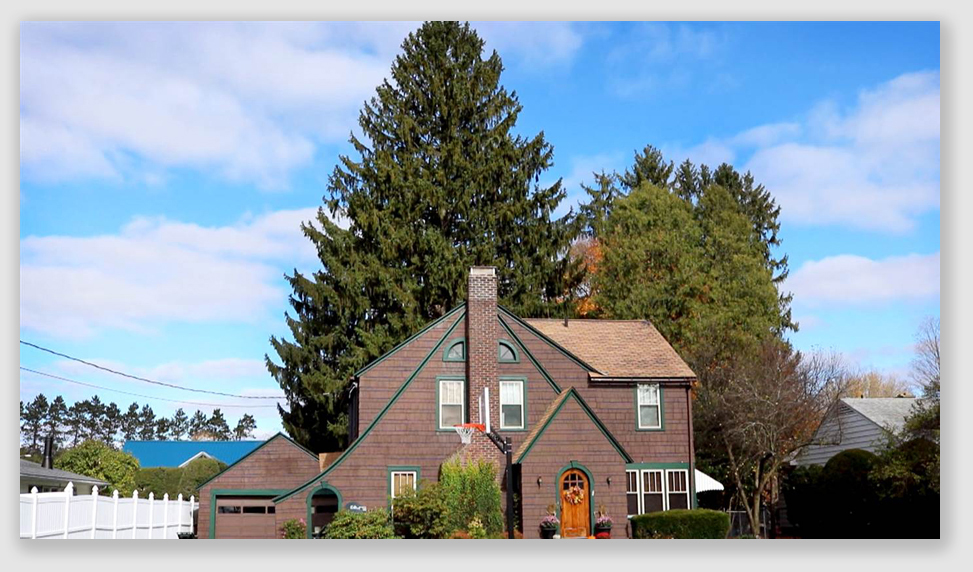
A tree that has been a fixture for the Eichler family at their New York home is going from being second base in backyard stickball games to a sight that will delight millions at Rockefeller Center this Christmas season. The 94-foot-tall, 14-ton Norway Spruce will make its way from their home in Oneonta to the big city, where it will be wrapped with five miles of multi-colored LED lights and topped with a Swarovski star made of 25,000 crystals to become this year’s Rockefeller Center Christmas tree. “We’re so thrilled and so thankful to share our tree with the world,” Angie Eichler told Dylan Dreyer on TODAY Thursday. About 800,000 people a day are expected to come see the tree after the official lighting ceremony on Nov. 30, and then it will be milled into lumber for Habitat for Humanity after Jan. 7, the last day for viewing…
A tree that stood for decades at West Rock Park and taken down without notice in February, angering many who use the park, will be replaced, according to local officials. The state Department of Energy and Environmental Protection ordered the tree removed in February, and many park users were surprised and upset to see two DEEP employees chopping it down on Feb. 2. The department took the tree down because DEEP officials determined that the field where the tree stood was better suited as a meadow that would attract birds and other wildlife, DEEP spokesman Dennis Schain said. The tree was an easy spot for predators such as hawks that feed on the wildlife to perch, he said, and also was an attraction for people and dogs that would disrupt the habitat. But after the tree was removed, many park users protested, which led to allegations that a conversation between a member of the West Rock Park Association and a DEEP commissioner ended in the commissioner using expletives. That prompted the Legislative Council to direct Mayor Curt Balzano Leng to contact Gov. Dannel P. Malloy’s office about the conversation. The DEEP is now willing to replace the tree, according to state Rep. Michael D’Agostino, D-Hamden. He and state Sen. Joseph Crisco, D-Woodbridge, have been working with the department and residents upset about the tree removal on a resolution, he said…

The Serengeti; Chobe; Kruger; the Masai Mara: in many people’s minds, savannas are Africa. This hasn’t always been true, though. About 30 million years ago, the continent was largely covered by forests. So how did Africa’s vast, tree-dotted grassy ecosystems come to be? Until now, fire has been viewed as the main protagonist. It was believed that blazes rolled back tree cover in the continent’s wetter regions and provided fire-promoting grasses with access to the light they need to thrive. This story played out around seven million years ago and is told in the fossil charcoal records and the DNA of fire-adapted savanna trees. But research my colleagues and I have conducted reveals that savanna trees hold more secrets – and that medium-sized browsing animals played a much earlier role than fire in developing savannas…
Denver, Colorado, KUSA-TV, November 10, 2016: Should I keep watering my trees this late in the year?
“I’m in no hurry to see the snow start falling, but I’m worried about my trees. Last time it stayed this warm, Denver plunged 70 degrees in one day, killing off several small trees in my neighborhood. Should I still water my small trees in this drought, or is it too late in the season? Are they are already in hibernation, even though we haven’t had a deep freeze or a cold snap?” “Any time we have a dry winter, it’s good to water your trees and shrubs,” said Sarada Krishnan, with Denver Botanic Gardens. “You can go for another week the way the weather looks.” She added that if temperatures drop, that’s out of everyone’s control. The trees will suffer then. But in the meantime, Krishnan is correct. Your numbers look good for the next several days…

The USDA is putting up federal funding for private landowners hit hard by the tree mortality epidemic. Property owners 16 Sierra Nevada counties eligible for the program, including Tuolumne, Calaveras, Amador and Mariposa. Non-industrial landowners, with properties at least an acre in size, can apply. The USDA Natural Resources Conservation Service (NRCS) has initially put up $4-million in funding, and it is available on a competitive process. Applicants with over 20-percent of their conifer forestland property covered with dead trees will receive priority funding consideration. Also, the funding cannot be used to remove trees within 100 ft. of the property owner’s home, as the tree mortality task forces in the local counties are overseeing removal of those hazard trees. Landowners will need to develop a Forest Management Plan for the property. USDA spokesperson Chris Zimny points out, “Fundamentally, NRCS works in coordination with the landowner to produce a plan. It gives the landowner an assessment of what the forest is like and perhaps the natural resource issues on the property. It helps understand what the opportunities are and comes up with a game plan to provide conservation practices for the removal of dead trees…”
A few months ago, it was announced that there was a new record for the world’s tallest tropical tree: a Yellow Meranti (Shorea faguetiana) found in Sabah, one of the two Malaysian states on the island of Borneo, that stands some 89.5 metres (about 294 feet) tall. But that record was not destined to last long. Gregory Asner of the Carnegie Institution for Science at Stanford University announced at the Heart of Borneo conference today that he had not only found a taller tropical tree, but 50 taller trees. The tallest is a towering 94.1-meter (nearly 309-foot) tree with a canopy that measures 40.3 meters (132 feet) in diameter, discovered in Sabah’s relatively undisturbed Danum Valley. Asner was able to observe the tree first-hand during a helicopter ride on Monday to the remote region. “I’ve been doing this for a solid 20 years now, and I have to say, this was one of the most moving experiences in my career,” Asner told Mongabay. The tree is in the genus Shorea, though the exact species has yet to be determined. Asner and his colleagues also found 49 other trees taller than 90 meters spread all over Sabah, and plan to visit each of them in the coming weeks…
 New York City, Post, November 6, 2016: City rids park of fatal berries after girl’s near-death tale
The city dug up and discarded a toxic bush from Asser Levy playground, two days after The Post reported a 2-year-old girl could have died after sampling a poisonous yew berry there. Parks Department workers blanketed the Kips Bay playground Tuesday and carted off the decorative but deadly shrubs. The removal is just the beginning of a search-and-destroy mission. “In the coming weeks, our horticulture staff will survey the playgrounds and develop a plan to address further,” a Parks Department spokeswoman said. The agency has admitted the city’s 30,000 acres of parks contain “innumerable uncatalogued species…”
Getting a call from your child’s daycare or school is never a good thing. But when parents started getting calls from a New Zealand daycare center in the middle of the day, they figured that their child had acted up or possibly got sick. Parents were terrified after staff from the Discoveries Educare Daycare explained that at 1:30 in the afternoon, a massive tree had fallen over on the playground where 25 of the 47 or 48 children enrolled at the center had been playing. Luckily most of the children were left unharmed, but unfortunately four had been hit. The staff immediately called for ambulances for the injured toddlers, of which one was in critical condition, one was in critical condition, and the two others had only minor injuries. The rest of the children were ushered inside where they were checked for any other injuries…
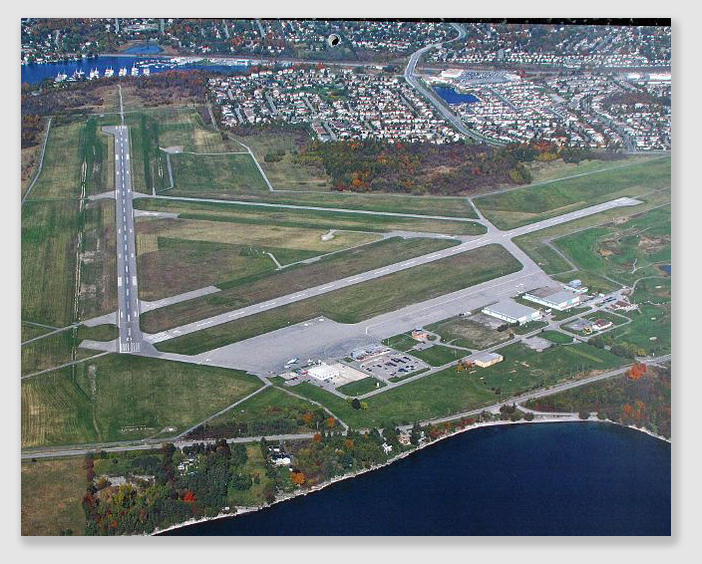 Kingston, Ontario, Whig, November 8, 2016: Tree cutting at airport alarms resident
A west-end resident is concerned with the amount of trees cut down recently on the Norman Rogers Airport property, including some tall, 30-year-old trees near his home. Cam Eckert said he was told at a public meeting in the summer that just a few trees would be cut down or the tops lopped off as part of the proposed airport expansion. His home on Compass Court is adjacent to the airport, near Runway 01-19, which runs in a south-to-north direction stretching from near the Collins Bay Marina in the north to near Lake Ontario in the south. As part of the airport expansion, the runway is to be lengthened from 5,000 to 6,000 feet at a cost of approximately $9 million. Eckert was alarmed when he heard saws cutting wood over the past few days…
Four toddlers have been injured, one critical and another in a serious condition after a large tree fell in a daycare centre playground. The children under three years old are believed to have been injured after being struck by the branches of the fallen tree at Discoveries Educare Newmarket in Auckland, on New Zealand’s North Island.The tree fell on the playground equipment trapping bicycles and the slide but luckily none of the 25 children believed to have been in the play area at the time, NZ Herald reported…
 Chicago, Illinois, Tribune, November 8, 2016: Illumination: Shining light on the value of trees
Don’t think of it as a holiday light display exactly — it’s more of a trek through an interactive winter wonderland. And trees, fittingly, play a starring role. “Illumination: Tree Lights at The Morton Arboretum” returns for its fourth year Nov. 18 and glows nightly through Jan. 2. “Fifty acres of the Arboretum’s trees are transformed for visitors as they walk a one-mile walking path,” said Anamari Dorgan, director of education for The Morton Arboretum. “The event features 10 experiences woven throughout the journey.” From Meadow Lake Magic and Tinsel Harmony to Ornament Hill and Symphony Woods, there’s a lot to take in: trees that react to touch and sound, colorful LED lights synced to music, beams of light, and chandeliers hanging in trees, are some examples. Planners hope the woodsy display inspires guests to better understand the beauty and value of trees…
Sierra Nevada is home to some of the biggest trees on earth, but only a fraction of the mighty sequoias are still standing. Scientists say man has cut down more than 90 percent of the world’s ancient trees, and pollution and climate change threaten what’s left. Now, scientists are collecting tips from branches to essentially clone the trees. The trees are being grown in a lab in Michigan until they’re large enough to plant all over the world…

The highly urbanized city may feel like it doesn’t have a lot of natural elements outside parks, but according to a recent census conducted by the NYC Parks Department, there are 666,134 trees in the city. That is a heck of a lot of natural life, and it’s not by accident—due to sustained efforts to plant more trees in NYC, the amount of them has grown by 12.5 percent since the last time a tree census was taken in 2006. A new street tree map really gives you a sense of how much urban forest there now is throughout New York. There are more than 209 species of trees living throughout New York, with the London Planetree being the most common at 88,301 trees. It’s kind of incredible how many there are and the work they do all around you while you go about your everyday life, and this map makes it easy to see. There are still room for plenty more, too—at least 200,000 additional trees, according to Jennifer Greenfeld, the park department’s assistant commissioner for forestry, horticulture and natural resources. So be kind to your local street trees and maintain them while you can, since they’re working hard to keep the city more breathable and beautiful…
Fumbleboard.com, November 7, 2016: Grow an avocado tree from an avocado pit
Avocados are one of the wonderful fruits of summer. High in nutrition and flavor, nothing signals the start of summer like a zesty lime guacamole dip with tortilla chips. The next time you’re making guacamole or slicing an avocado for a salad, try saving your pits to grow into avocado trees. It’s surprisingly easy to grow your own avocado tree from seed, and it makes a great educational project for home and classrooms. Check out our handy-dandy guide below, complete with photos, to learn how to grow an avocado tree from seed…
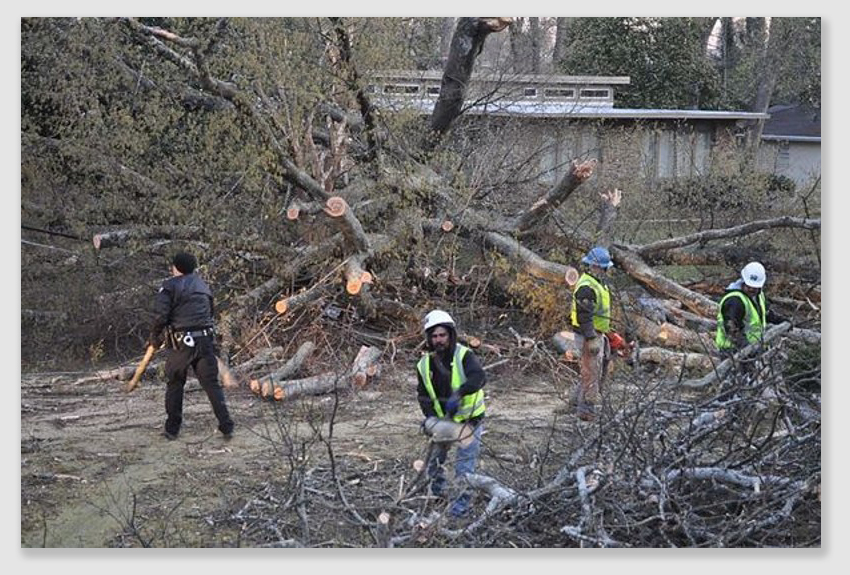
In a recent message to homeowners, Berkeley Lake Mayor Lois Salter noted trees as a passionate topic and encouraged residents to become familiar with the city’s tree removal policies. As a city committed to tree preservation, Berkeley Lake has some of the most stringent tree removal guidelines within the county. “The difficulty for our city council is always to find some rule that is a middle way, meeting the needs of people who pay for property to shape their cherished living spaces as they desire, while also honoring in a fair and reasonable way some communal vision for our city,” stated Salter…
The USDA Natural Resources Conservation Service (NRCS) in California is expanding its initiative to assist private forestland owners in addressing tree mortality and other drought-related damage to improve forest health. NRCS will provide financial assistance for landowners with dead and dying conifer forest trees in certain counties. Removing dead tree debris and other woody material will also help reduce the spread of invasive pests and reduce the threat of wildfire. “The dry conditions posed by California’s ongoing drought have increased the potential for devastating wildfires and insect-related tree mortality,” said Carlos Suarez, NRCS California state conservationist. “In the upcoming year, NRCS will continue and expand our 2016 forest recovery efforts by initially allocating $4 million for tree mortality projects. We will also provide additional forestry staff to meet the overwhelming demand for assistance.” Landowners with dead trees on non-industrial private conifer forestlands in Madera, Mariposa, El Dorado, Fresno, Kern, Lake, Los Angeles, Nevada, Placer, Riverside, San Bernardino, San Diego, Tulare and Tuolumne counties may be eligible for financial assistance…
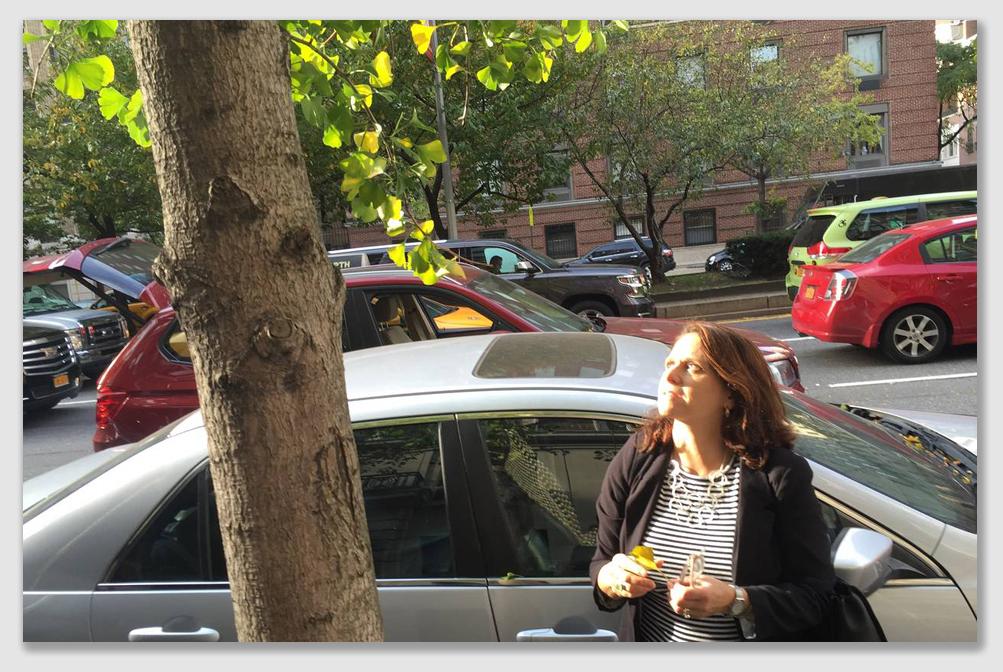
The New York City Parks Department’s tree census is out—it happens every 10 years—and the results show the city keeps getting greener. The street tree population increased 13% in the past decade. Queens is the most tree-rich borough with 242,407 of them. This is encouraging news. But I’m most interested and concerned about the health and well-being of the trees on my block. In particular, a tree I pass every day in front of a liquor store on Lexington Avenue in Manhattan that appears both recently planted and all but dead. I was looking forward to bringing the sorry specimen to the attention of Jennifer Greenfeld, the parks department’s assistant commissioner for forestry, horticulture and natural resources, when we got together to walk the neighborhood one afternoon last week…
A coroner says a Boy Scout has died when a tree fell on his tent during a camping trip in Kentucky’s Red River Gorge. Wolfe County coroner J. Frank Porter tells media outlets that 11-year-old Jack A. Rose was camping with his Boy Scout troop from Louisville when the tree fell Saturday night. Porter says the tree struck the boy in the head, killing him instantly. Two doctors who were camping nearby assisted first responders, but attempts to revive the boy were unsuccessful…

Q. Many of the branches of the trees on my Upper West Side block have been cut, presumably for safety’s sake. Ditto my favorite Osage orange tree along the outer loop inside Central Park. Who decides which trees are a safety hazard? And who decides on the amount of cutting?
A. The process of deciding who prunes New York City trees, and when, and why, all starts with a detailed count of the trees, said Jennifer Greenfeld, assistant commissioner for forestry, horticulture and natural resources with the New York City parks department.
“Every 10 years we do a census, with every tree on every street over five inches in diameter counted, so we know exactly how many trees there are, and can factor that into our tree-pruning budget,” Ms. Greenfeld said. This year’s budget is $5.5 million for the 592,130 trees in all five boroughs that were counted in 2005, she said. A census with an updated tree count was conducted in 2015 and was to appear last week; it was expected to include over 600,000 trees. (The census includes only trees that are planted on sidewalks and along streets, not the ones in parks)…
The fate of three condemned city street trees has returned to the courts. On Friday, the newly formed Save Pasadena Trees group filed a lawsuit against the city and the building owner granted a permit to remove the trees. The 19-page complaint, filed in Los Angeles County Superior Court, asks the court to grant a temporary restraining order and a preliminary injunction to prevent city and/or the business owner from removing the three parkway trees located on the west side of South Lake Avenue, between San Pasqual Street and E. California Boulevard. The group is alleging the city violated its own tree protection ordinance by agreeing in a court settlement in June to grant Rodeo Holdings LLC, owner of the properties from 497-511 S. Lake Ave., a tree removal permit without informing the public through public hearings of its Design Commission and City Council… Washington, D.C., WTOP Radio, November 2, 2016: Neighbors band together to save trees from Pepco’s saws
Pepco’s ongoing efforts to improve the reliability of its electric grid often involves removing trees that sit too close to power lines — regardless if neighbors are happy with the end result. “It seems like they’re arbitrarily just taking down trees,” said Agnieszka Traynor, a resident of Berwyn Heights, Maryland, of tree work underway between Edmonston Road and Route 201 just inside the Capital Beltway. “It leaves us very exposed to have the trees all come down.” Multiple arborists are involved in tree removal decisions, Pepco Vice President Jerry Pasternak said while discussing the protocol for removing trees from the public right of way such as along Edmonston Road between Pontiac and Seminole streets. First, a Pepco arborist reviews action plans, then the property owner’s arborist is consulted. “We meet on site with the arborist from the right of way owner — whether it’s the state or the county or the municipality, and those two arborists have to agree on the removal of a tree,” Pasternak said. “If there’s an agreement on that, we then go to the state Department of Natural Resources for them to review. And they need to concur as well in the removal of a tree…”
Storm damage following Hurricane Matthew, is still evident across the Coastal Empire and Lowcounty. There are a lot of people living with trees leaning precariously over their homes or actually resting on homes, garages, and outbuildings. One disabled veteran’s pleas in Savannah for help with just such lingering storm damage seemed to fall on deaf ears for weeks. That vet called WSAV and was connected with a national tree removal firm working in the Coastal Empire and Lowcountry. Timberwarriors answered Greig Fine’s wish: No cost professional tree removal. “I just can’t tell you how grateful I am. I thought I was gonna lose my she. that tree’s leaning. If it fell I’d probably lose part of my house. I’m just so grateful!” Fine said. That gratitude is for the work a five-man crew performed at Fine’s home on Carmel Avenue Thursday morning. The team with Timberwarriors dealt with tree removal trouble Fine’s has faced since the storm nearly a month ago. One tree rested on a vehicle at Fine’s home, another tree was on his garage, and a third tree, tilted by the winds of Matthew, loomed dangerously towards his home. Timberwarriors took care of the problem and did so at no cost to Fine. F. J. Runyon, the owner and founder of the Timberwarriors network, says cases like Fine’s allows his firm to give back to the storm ravaged communities where they work. “Mr. Fine had contributed and given and made a sacrifice to his community and to his, and to his nation and we would like to give back to him in appreciation for what he’s done and any other people just like him.” Runyon said…
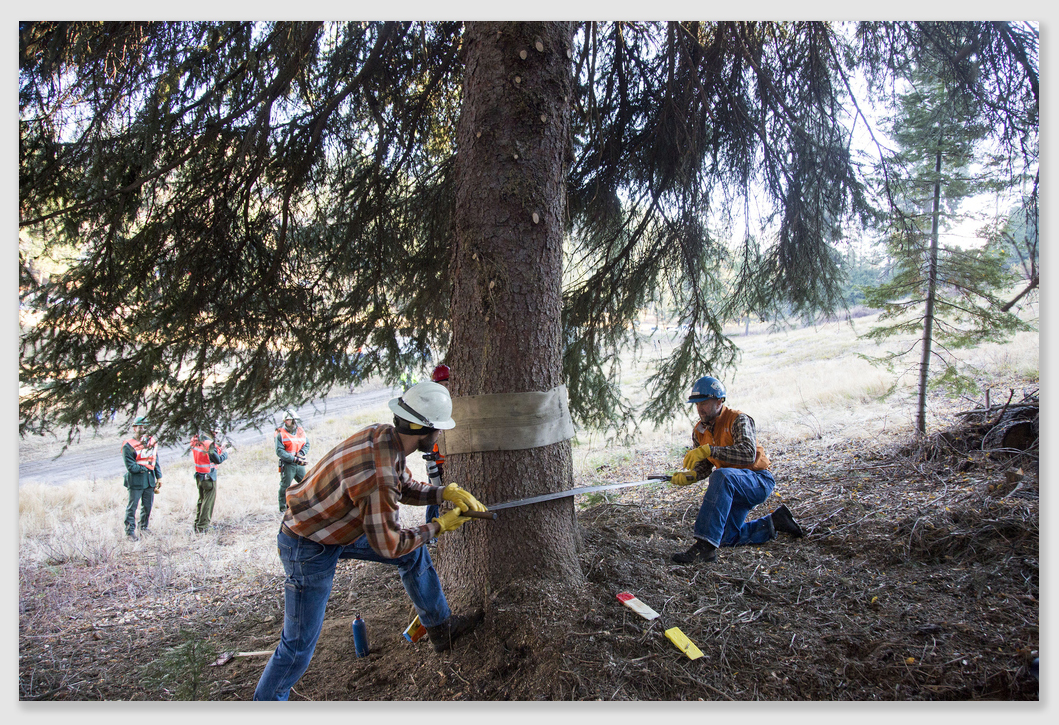 Seattle, Washington, Seattle Times, November 2, 2016: US Capitol Christmas Tree cut in Idaho forest
An 80-foot Englemann spruce has been cut down in western Idaho and is heading for Washington, D.C., to be decorated as the Capitol Christmas Tree. Workers used a traditional crosscut saw on Wednesday to bring down the tree on the Payette National Forest near the town of McCall. Cranes prevented the tree from falling, and then positioned it on a semitrailer. The tree will make several stops in Idaho and other states as it travels east. It will be placed on the west lawn of the U.S. Capitol for a lighting ceremony set for Dec. 6…
South American palm weevils, the button-size beetles, have breached the Southern California border, and they’re hungry. That spells trouble for their favorite meal, the Canary Island date palms that have been one of the region’s most enduring symbols. The weevil larvae feast on a tree’s crown, crippling its growth and, within months, killing it. “I think it will change Southern California’s landscape,” said Mark S. Hoddle, an entomologist at the University of California, Riverside, who has been studying the insects for about six years. Traditionally found in South and Central America, the weevil is believed to have showed up in Tijuana, Mexico, at least six years ago after hitching a ride north of the border. There, its population exploded and percolated into southern San Diego County…

A venerable old elm tree that’s believed to be the largest of its kind in New England has finally succumbed to Dutch elm disease in the Vermont town of Charlotte. The tree was 19 feet 4 inches in circumference and stood 109 feet tall. Dutch elm disease is the fungus that spread during the early 20th century and destroyed most of the elm trees in North America. The tree in Vermont was removed Tuesday. Property owner David Garrett says the tree, estimated at 175 to 200 years old, was a local “monument…”
Fox News, November 2, 2016: Christmas tree growers: Drought not seriously hurting crop
New England Christmas tree growers say the region’s drought is having only minor effects on their crop. New Hampshire-Vermont Christmas Tree Association Executive Director Jim Horst says some seedlings planted in the spring didn’t survive because they didn’t have deep, established roots. Jamie Jones, a sixth-generation farmer in Shelton, Connecticut, says his farm did hand-watering this year to save some younger trees, but full-size trees are in great shape and will be ready for the holidays. He says some extra-large trees also may have some problems. The oldest and youngest trees are most vulnerable to heat. The city of New Haven was forced to harvest a 65-foot tree from a municipal golf course after a donated tree for the city green was found to be too dry…

A south end homeowner who doesn’t like the look of some cedar trees in his front yard will ask council to overrule a city inspector who refused to issue a permit for removal of the trees. The rare appeal, which goes to the Nov. 7 meeting of council’s Committee of the Whole, relates to a private tree bylaw passed by council in 2010 that applies to properties larger than the typical city lot. The property at 115 Dawn Ave. is L-shaped and about 1.65 acres. Thus it exceeds the size of 0.2 hectares, or just under half an acre, that a lot must be to fall under the tree bylaw. The owner’s “aesthetic preference” isn’t a good enough reason to issue a permit for the five cedar trees to be cut down, says a city staff report, which noted the city had agreed to removal of a “dying” pine tree in the front yard…
When wet snow piles onto the branches or the winds are high, it can cause trees to fall onto the roadways, even on homes. Some trees and branches bring down power lines, plunging thousands of homes into darkness across the region. That’s why it’s important to have any weak trees taken down before winter’s worst. So, how can you tell if your tree needs to come down? Look for splits or cracks. Another good thing to look at, cavities or dead branches on the trees…
 Smithsonian magazine, November 1, 2016: Why Public Health Researchers are Looking to Urban Trees
For all its comforts and conveniences, urban living can be hard on your lungs. Around three million people around the world die prematurely due to the effects of air pollution every year according to the UN, and studies suggest that number could grow to 6.2 million people per year by 2050. Most of these deaths are occurring in China, India and Pakistan, where cities are growing fast—but the problem extends to crowded cities globally, from London to Los Angeles. What if there was a relatively simple, tech-free way to mitigate some of these lung-clogging effects? Public health experts seem to have found a partial solution. Introducing: Trees. A new report by environmental nonprofit The Nature Conservancy lays out how trees could pave the way to cleaner air and cooler cities. Using geospatial information on forest cover paired with air pollution data and population forecasts for 245 cities, researchers found that trees have the biggest health payoffs in densely populated, polluted cities like Delhi, Karachi and Dhaka. The Conservancy and the C40 Cities Climate Leadership Group presented the findings of their global survey this week at the American Public Health Association meeting in Denver, Colorado…
Santa Barbara, California, KEYT-TV, November 1, 2016: Water trees not lawns
A crash-course in watering was the lesson at Tuesday’s city council meeting in Santa Barbara, thanks to the city’s arborist along with a surprise drought-related announcement. “We want you to water your trees,” said Josh Haggmark, Water Resources Manager for the City of Santa Barbara. You heard right. After more than five years of drought and countless dead and dying trees, residents are now being asked to protect what’s considered a “significant investment” in our community. “Trees provide a lot of shade, cooling and other things that I think are important in Santa Barbara and important to the look of Santa Barbara and the feel of Santa Barbara,” Haggmark said…

Sometimes in the cramped environs of U.S. cities every inch counts, especially if attempting to make space for nature. City planners and urban foresters now have a resource to more precisely select tree species whose growth will be a landscaping dream instead of a maintenance nightmare. The U.S. Forest Service’s Pacific Southwest Research Station recently published a technical manual and launched the most extensive database available cataloging urban trees with their projected growth tailored to specific geographic regions. “Knowing a tree’s maximum size can avoid future conflicts between roots and sidewalks or branches and power lines,” said Greg McPherson, research forester for the Forest Service and lead author of the technical report and database. The products are a culmination of 14 years of work, analyzing more than 14,000 trees across the United States. Whereas prior growth models typically featured only a few species specific to a given city or region, the newly released database features 171 distinct species across 16 U.S. climate zones. The trees studied also spanned a range of ages with data collected from a consistent set of measurements…
An oversized backyard in Brandon has been transformed into a tree farm, and the owner says hers is one of the largest neem tree farms that will help the semi-tropical tree thrust into the spotlight in the coming years. Vickie Parsons co-owns Neem Tree Farms, which has about 10,000 trees in various stages of life right now. Her interest in the neem tree sprouted out of personal medical needs. “There are more neem trees in this warehouse than anywhere in the country,” Parsons said. “We started growing neem in 1992 because I’m chemically sensitive and it is a very nontoxic pesticide.” She also uses it to treat skin conditions in rescue dogs. But there’s a lot more to this unassuming plant than many might think…

Minneapolis already has a lot of trees. But compared to other major U.S. cities faced with rising populations, air pollution and summer heat waves, it would get a much greater bang for its public health buck by planting even more. In fact, in a ranking of how much 32 different cities would benefit from more urban forest, Minneapolis was tied for second place for the greatest impacts on reducing illness caused by air pollution, and third for the reduction in deaths and health risks from heat. “If you want healthier air, trees are part of that solution,” said Rob McDonald, a scientist at the Nature Conservancy who studies urban environments. On Monday he presented his findings from a global analysis of the financial returns to cities from trees at the American Public Health Association annual meeting in Denver…
Seattle, Washington, AP, October 31, 2016: ‘Man in tree’ gets probation through mental health court
Officials say a man who refused to come down from a giant sequoia tree in Seattle will have his charges dismissed if he complies with the terms of his probation for two years. The King County Prosecutor’s Office says Cody Lee Miller was charged in King County’s regional mental health court Friday with misdemeanor assault and malicious mischief charges. But, officials say, if he complies with conditions including mental health treatment and daily medication monitoring, the charges will be dismissed. Miller was originally charged with felonies after he climbed to the top of the tree March 22 and remained there for about 25 hours, ignoring police efforts to coax him down and throwing apples and branches at responders…
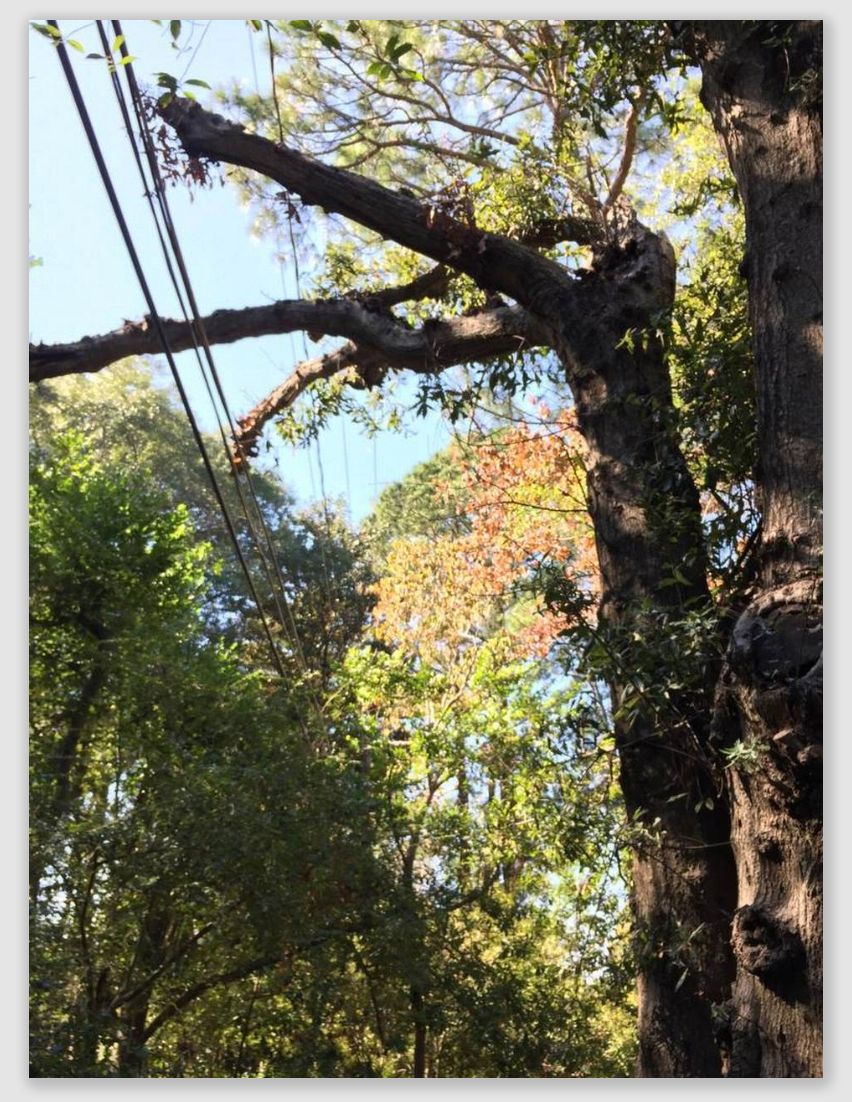 Columbus, Georgia, Ledger-Inquirer, October 31, 2016: Who knew the city had a Tree Board?
We’re back in the trees again this week. A gentleman we’ll call Doc lives in the Hilton Heights area and has a problem tree that has been severely trimmed by Georgia Power to keep it clear of the power lines. Doc said he isn’t blaming the power company. They’re just doing what they have to do to keep the lights on. But he’s concerned that the old oak has been trimmed to the point that it’s dying and may become dangerous, if it already isn’t. We talked last week with Robert Watkins of Georgia Power, but we found out that it’s not the power company that determines whether a tree on the right of way is to come down or not. That call is made by the city’s arborists, who work for the Urban Forestry division of the Public Works Department. That’s Pat Biegler’s department, so I called her. “If someone is concerned about a tree (on the right of way) they should call 311 and report it,” Biegler said. “We will send an arborist out to see if it needs to come down. If it needs to be cut down, we put it on the list. “If a tree gets to the point that it jeopardizes people, we will take it down…”
Wisconsin Farmer, October 31, 2016: Preparing trees and shrubs for winter’s common problems
As November arrives, it is time to start taking protective measures to prevent some of the winter season’s common small tree and shrub problems in the yard and garden. Each winter season, gardeners face the challenge of protecting smaller trees and shrubs from weather conditions, as well as from hungry wildlife. Here are some tips on simple things you can do to protect some of your treasured smaller trees and shrubs this season. Many gardeners assume that winter burn is a condition caused by the cold temperatures. However, winter burn can occur even when temperatures are quite mild for the season…
 Forbes Magazine, October 29, 2016: Why planting trees is never a bad idea
There’s an old proverb that states, “The oak sleeps in the acorn.” Of course, not every acorn ends up becoming a giant oak. However, no one would argue that planting a tree is ever a bad idea. Besides the beauty of watching them grow, trees also help create an ecosystem that provides habitat and food for birds and other animals. Additionally, trees release oxygen and also help absorb carbon dioxide and potentially harmful gasses, such as sulfur dioxide and carbon monoxide from the air. Amazingly, one large tree can supply a day’s supply of oxygen for four people. Fertimig Fertilizantes (Fertilizers) is an example of a business that understands that planting a tree today can pay multiple dividends in the future. The company trades and imports high-quality fertilizers used for crops and eucalyptus planting, while conducting research and development in the fertilizer industry. And as part of its ongoing commitment to a sustainable future, a company-wide environmental project called “Planting the Future” was again recently held at Fazenda Nossa Senhora da Guia, which is located not far from the tree-lined streets of Campo Grande, Brazil…
Quincy, Illinois, Whig, October 30, 2016: Enjoying the final hurrahs of a staple landscape tree
In mid-October, I walked around marveling at the outstanding color of one of our earliest trees to exhibit excellent fall color, the ash (Fraxinus spp.) And I realized, for many homeowners, this might be the last time they can enjoy the spectacular fall display of an ash tree. What I am referring to is the loss of our native ash trees to the emerald ash borer (EAB). For some, this article might seem like a horse leaving the gate before the race has even started, as you probably haven’t seen the likes of this pest in your community. And yet for others, it may be all too late. When EAB is confirmed for a county, ash trees are considered to have a 98 percent mortality rate. One option to keep your ash tree alive is to treat it with systemic insecticides. For homeowners comparing the cost of treating the tree indefinitely with the cost of cutting down the tree, many have opted for removal. So like the chestnut and elm, the ash tree will become more synonymous with a street name rather than a landscape tree. Yes, ash trees are overplanted throughout American cities, but they were selected for a reason. Ash trees perform relatively well in urban and residential conditions, and they have excellent varieties of yellow, red-purple and scarlet fall color…
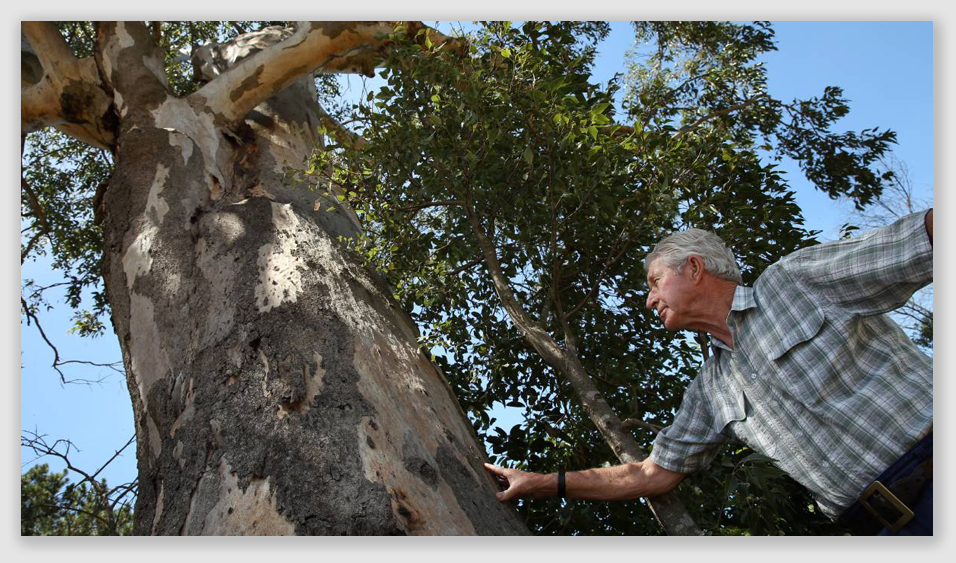
Whatever Don Cruickshanks does, he does it well.The Greta retiree has grown national champion orchids, and is known as a bit of a celebrity in the orchid world.He was a successful cow cocky for many years.Towards the end of his career, Mr Cruickshanks started work as a cattle manager at Rosemount Vineyard and ended up growing grapes. “I believe whatever you do, you put everything into it,” Mr Cruickshanks said. But it’s his latest venture that is perhaps most impressive. Mr Cruickshanks has entered 14 national champion trees on the National Big Tree register.Trees have always been a joy for Mr Cruickshanks from his work on the land…
Central Avenue’s trees are about to twinkle again in downtown Lancaster after a four-month blackout. Village crews last week put the finishing touches on restringing hundreds of miniature white lights and replacing many on the 20 trees that line both sides of the Central Avenue business district and are usually lit year-round between West Main Street and Pleasant Avenue. And by early November, all the lights in the trees should be functioning. It was not an easy feat after the stretch of Central Avenue went dark in July, as result of vandalism spilling over from the Pokemon Go craze that had followers chasing around the game’s characters in the village near West Main and the Lancaster Opera House. Pokemon Go lovers became so intense that village officials began noticing they were unplugging tree lights so they could charge their phones at the base of the curbside village trees, or even unplugging connections between strings of lights, leaving the trees either dark or just partly lit. Some tree lights were even taken…
 Kitsap, Washington, Sun, October 23, 2016: Saving sequoias at root of talk in Bremerton
With each passing year, peaceful coexistence between the city and its landmark sequoia trees becomes a little more difficult. The roadway underneath the two redwoods, on Veneta Avenue between Fourth and Fifth streets, buckles more as their roots bulge. And now, following a nearby church’s decision to build a rectory near the towering conifers, city officials fear the trees could be damaged if crews don’t exercise caution in construction. “I’m concerned for the trees,” City Councilman Greg Wheeler said. “They’re a signature of my neighborhood.” Our Lady Star of the Sea Church recently demolished two nearly century-old homes at Fifth and Veneta as it builds a new rectory. The jagged, thick roots of the Sequoias snake out into the surrounding neighborhood and are visible in a planter next to the construction site, about 40 feet from the closest of the two 150-foot tall trees, according to an arborist’s report commissioned by the city. The arborist, Kevin M. McFarland, says in his report that the trees are in good condition and that if the church follows some guidelines during construction, about one-tenth of the tree’s “critical root zone” would be affected…
Fall is a great time to plant a tree. The soil stays warm much longer than air temperatures. Fall’s cooler and wetter conditions are gentler on tree roots acclimating to their new home. And when roots awaken with spring’s warmth, they have a head start over spring-planted trees. Be sure to start with a healthy tree with roots in proportion to the leaves and no visible signs of injury to the trunk. Choose a variety of tree suitable for the site, factoring in cold hardiness, soil type and moisture levels, light conditions, and appropriate size at maturity. Plant it correctly and give it a little extra attention after planting. A tree’s death is most often a result of improper planting or care in the first couple of months. Follow these guidelines and your tree should live a long life in your landscape…
 Hinesville, Georgia, Coastal Courier, October 23, 2016: Pine beetles threatening trees again
Many landowners in southeastern Georgia have seen their pine trees die this summer. Even if you were fortunate enough that the pines on your own property were spared, you may have noticed dying pines in clusters deep in the forest, or you may have spotted an individual dying tree in a yard or on the street. If you observed the needles on these trees going from green to yellow to dead in a matter of weeks, the culprit behind these sudden deaths may have been the southern pine beetle. The SPB is a brownish to black beetle that is about the size of a grain of rice. The beetle is a major pest to pine trees in the Southeast. Both adult and larvae SPB chew their way through the tree’s phloem of the tree that moves food from the leaves down to the roots and “girdle” the tree, preventing movement of nutrients. Adult beetles also carry a fungus that clogs the xylem and prevents movement of water. Many beetles attack a single pine at once, overwhelming the tree and leading to its death…
It would be nice if I had an office that you could visit with your plant questions, but I don’t. There is one spot that I could call my office, because I get so many questions there. That place would be on the benches where I sit between the services at First Baptist Church. Last Sunday, my friend Maureen sat down beside me and showed me a photo of some trees that she and Tom have been trying to get rid of. They chop them down every year, but they just keep coming back. The answer was appropriate for the location of the question. The tree she had in question was none other than the Tree of Heaven, Ailanthus altissima…

A tree is blocking a GRTC bus stop, and one rider said the “invisible bus stop” has caused her some issues. The tree has grown over the city sidewalk and brushed up against the power lines. “I’ve missed the bus like four times,” said Teresa Jackson, who said the bus drives right past her because the drivers can’t physically see her, due to this overgrown tree. She said the tree is blocking part of the sidewalk and she can’t risk standing in the street to flag down the bus because it’s too dangerous…
Work has begun to move Idaho’s largest sequoia tree from St. Luke’s at Avenue B and Jefferson Street to a new site at nearby Fort Boise Park. The 104-year-old tree stands in the way of the hospital’s planned expansion. The hospital has hired Environmental Design Inc., a company whose expertise is moving large trees, to do the job. On Wednesday, work began to dig a trench around the sequoia and prune its roots back to a 20- to 25-foot radius. A barrier will contain the roots. A specialized watering plan will help the roots heal in preparation for the actual move in the spring of 2017. David Cox, co-founder of Environmental Design, said the company has developed a technique that involves building a steel platform to go under the tree once its roots are contained…
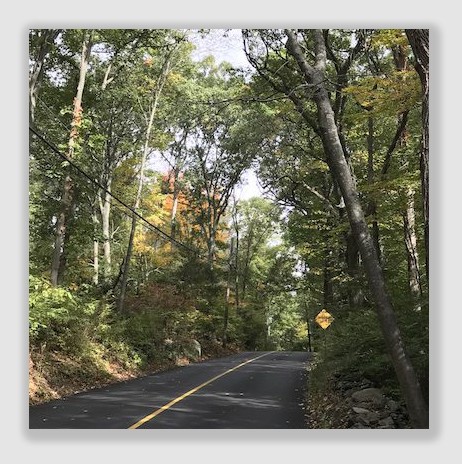 Ridgefield, Connecticut, The Wilton Bulletin, October 20, 2016: Leaning tree of Chicken Street
A reader on Chicken Street sent The Bulletin this photo of a dead tree, right, leaning over the road. Employing some geometry, he measured its tilt at 18 degrees. He is hoping it will be taken down before winter weather sends it onto the power lines…
Cutting down healthy trees in Oakville may soon become more expensive and difficult. Council voted Monday night (Oct.17) to move forward a proposal to enhance the Town’s private tree protection bylaw. An amendment to the bylaw would require property owners to get a permit if they wish to remove a private tree. They may also be required to plant a new tree as compensation. The proposed changes will come before council for final approval in early 2017 pending Budget Committee approval in December…
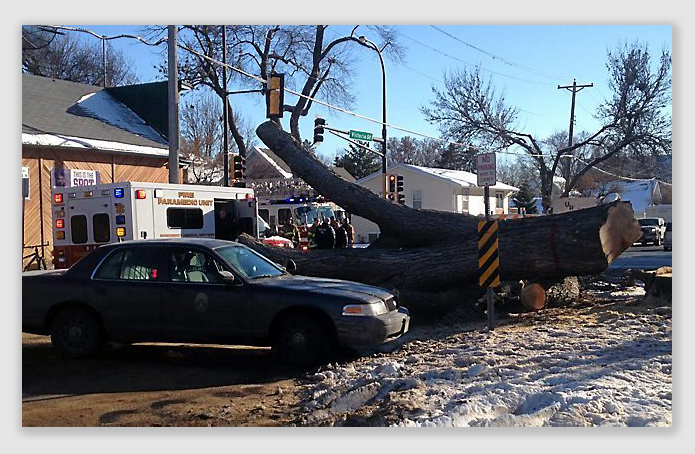
Delmer Fladwood never saw the 800-pound log careening toward him in St. Paul almost four years ago. The last things he remembers before it hit him on a winter afternoon in 2013 was leaving work, going to a neighborhood bar on West Seventh Street and stepping outside. People had gathered to watch a St. Paul forestry crew cut down a massive tree across the street. Workers had removed the tree’s upper limbs and put them in the street to create a “crash pad” for the tree’s main trunk. But when the tree toppled onto the logs, at least two of them flew across the street, striking Fladwood, then 65, in the legs, according to a lawsuit he filed against the city of St. Paul…
Phoenix, Arizona, KSAZ-TV, October 19, 2016: Burglary suspects pose as tree trimmers, assault couple
“They are scumbags was my first thought and I got to get rid of them.” Linda Norman is talking about two men caught on surveillance video trying to get inside of her home. The same men they say is the reason why her 88-year-old husband, Richard, is all bandaged up. It started out as a typical Tuesday for them last week. “I had a doctor’s appointment and I picked them up from school.” Richard was outside with his walker pulling weeds when two men pulled up and said they needed to trim the trees because of power lines — but there are no power lines near the Norman’s home.”I told them no you’re not gonna trim my tree.”The men went around the back of the home. Video shows them snooping all around the home, knocking on the back door. That’s when they met Linda and their story started changing…
 Toronto, Ontario, Star, October 19, 2016: Toronto council calls for crackdown on tree removals
The city’s settlement with a developer who clear-cut 40 trees without approval is outrageously insufficient, says the local councillor calling for a crackdown on tree killers. “This sends the message to developers that illegally cutting trees is a cost of doing business, a slap on the wrist,” said Councillor Jaye Robinson after the parks department revealed a $155,064 fee paid by the Format Group. “I don’t fault (city) staff because this is the system now, but my residents will not be satisfied and people across Toronto will not be satisfied at this cost for a shocking removal of trees, including city trees on city property.” Bayview Ridge residents were enraged in July when the developer bulldozed a heavily treed lot at the corner of Bayview Ave., south of York Mills Rd., without the required approvals under Toronto’s tree bylaw…
Miami, Florida, Herald, October 19, 2016: Tree-trimming company fined $133K over worker’s death
A South Florida tree-trimming company is facing a fine of about $133,600 after federal officials say it failed to prevent a worker’s death. The Miami Herald reports that the Occupational Safety and Health Administration announced the fine Tuesday. The agency says Fort Lauderdale-based Monster Tree Service didn’t take proper precautions while 34-year-old Anthony Donahue worked around overhead power lines in April. Investigators found that Donahue was using an aluminum pole saw too close to a power line while trimming a palm tree near a Fort Lauderdale home. Monster Tree’s owner, Ray Carolan, says he plans to contest the fine. He says a fiberglass ladder and fiberglass pole saw were at the work site, but Donahue was using metal tools, despite numerous safety meetings…

San Francisco, already one of the least-leafy major cities in the U.S., is losing trees faster than it’s planting them. Years of neglect of street trees have resulted in a dangerous environment in which unhealthy trees regularly drop branches or topple altogether, especially during windy or rainy weather. Our sidewalks are also in terrible shape; more than 6,000 of them are cracked, buckled and uneven. Unrepaired sidewalk damage causes dangerous walking conditions, especially for seniors and people with disabilities. Trees are by far the biggest contributors to The City’s broken sidewalks. Trip-and-fall injuries are the top cause of injury-related hospitalizations and death for seniors. Both of these problems are the result of a longtime policy failure that could be corrected in one fell swoop. This failure has provoked public outcry recently, as The City has made budget-based decisions to transfer responsibility for the maintenance of thousands of street trees and sidewalks to the adjacent property owners — many of whom don’t have the knowledge or means to provide such maintenance, and some of whom don’t even realize The City holds them responsible for it. Even prior to this deeply unpopular program of “relinquishment,” tree and sidewalk maintenance has been completely inconsistent: a mish-mash in which The City has maintained some of them and expected homeowners to maintain the others…
FEMA’s recent decision to cancel grants to UC Berkeley and the city of Oakland to destroy tens of thousands of trees was a fitting commemoration of the 25th anniversary of the 1991 fire in the East Bay Hills. FEMA’s decision reminds us that the 1991 fire was not caused by trees and that destroying them would not reduce fire hazards. Like most fires in California, the 1991 Oakland fire started in grasses, the very sort of vegetation that would colonize the hills if the trees were destroyed. In 1908, the University of California funded a study that concluded that eucalyptus trees help reduce the risk of fire. It specifically noted that the denser the trees, the lower the risk. It cautioned against thinning the trees, noting that when they are thinned, “their crowns are unable to form a canopy that will shade the ground enough” to stop the spread of highly flammable grasses. Shade is the most benign method of controlling weeds, far less damaging to the environment than the herbicides that are commonly used…

Two women suffered minor injuries Tuesday afternoon when a large maple tree fell on the outdoor table where they were eating in the Exchange Street alley. The tree, its trunk about 18 inches around, snapped off about eight feet from its base, the majority of the tree tumbling onto a table where four people were eating lunch. “We’re lucky,” said Andrew Wert, a Connecticut resident who was among the four eating when the tree broke off. “My wife yelled and we were able to jump out of the way…”
Sunbury, Pennsylvania, Daily Item, October 18, 2016: 83-years-old and still trimming trees
George Long filled his pickup truck with one-half cord of firewood Monday afternoon in Middleburg and delivered it to a customer in Coudersport more than 100 miles away the same day. It may not sound like much of a chore unless you know Long has been in the tree service business for 65 years. At 83 years of age, “and a couple of months,” the owner of Apache Tree Service is still cutting down trees, chopping wood and removing tree stumps. “Once I get up the tree, I have it made,” said Long, who prefers to climb with spikes, saddle and rope rather than use a truck bucket…
 Washington, D.C., Post, October 17, 2016: How to find a good tree service
It’s easy to think that trees are among the few great things in life that are free. They increase our property values, provide shade, give us autumn scenery and help create the air we breathe. But sometimes there may be a price. To keep your trees healthy or to get rid of dying ones, you may want the benefit of professional advice, skill and labor. That is especially important as winter approaches. Falling tree limbs can cause great damage to your home. To help you find this help, nonprofit consumer group Washington Consumers’ Checkbook magazine and Checkbook.org have surveyed their members and Consumer Reports subscribers about their experiences with area tree-care services. For the next month, Checkbook is offering free access to its ratings of tree care services to Washington Post readers via this link: www.checkbook.org/washingtonpost/tree-care…
A man contacted 10 On Your Side for help after a tree fell on his fence during Hurricane Matthew, a week ago. A tree line sits behind his property, so he wants the City of Chesapeake to cut it down and fix the damage. However, a city spokeswoman says a city worker went to the home on Monarch Reach Monday, but couldn’t determine who the tree belongs to. “Originally, it didn’t look as bad. I just thought it was a bunch of the bushes and maybe one limb. But once the rain kind of died down about 3 to 4 hours later, I went back out and to investigate the damage,” Karl Shannon said. This isn’t the first time. Shannon says trees from behind his home have damaged his property twice before; once during a snow storm, another time on a windy day…

While some Beaufort County residents have received expensive estimates for tree removal — some reportedly as high as $50,000 — the S.C. Attorney General’s Office has not sought any price-gouging charges statewide in connection with Hurricane Matthew. Contacted Monday by The Island Packet and The Beaufort Gazette, Hayley Thrift Bledsoe, spokeswoman for Attorney General Alan Wilson, said the office has received a total of more than 350 reports of alleged price gouging in the 14 days since Gov. Nikki Haley declared a state of emergency for South Carolina and the anti-price-gouging statute took effect. But investigating potential offenders could take time, given that the office is still “collecting information” and working with local law enforcement and the State Law Enforcement Division, Thrift Bledsoe said…
City officials are reporting Emerald Mountain is becoming a safer place for bikers, hikers and equestrians thanks to the recent removal of thousands of dead and hazardous trees. But the logging project is running behind schedule. Craig Robinson, the city’s parks and open space manager, told the Parks and Recreation Commission Wednesday the work was 60 percent complete, and the bulk of the hardest work was done. In late September, a helicopter removed close to 1,000 hazardous trees in eight hours…
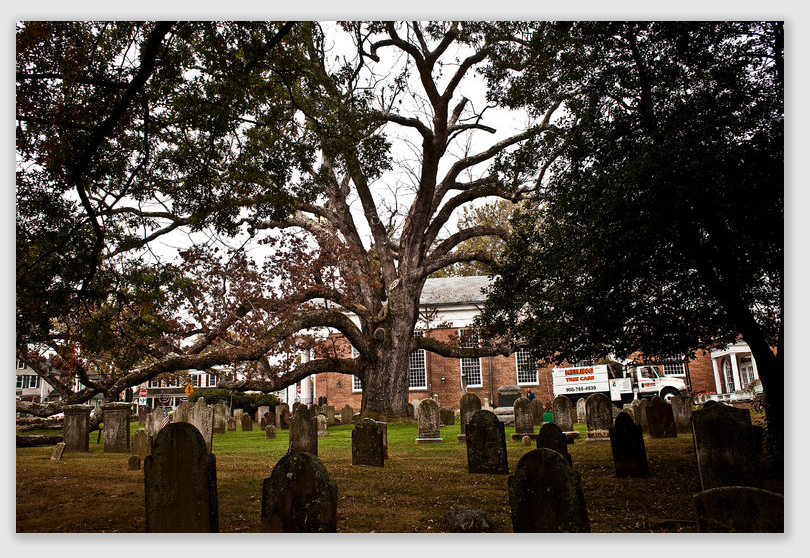 New York City, New York Times, October 16, 2016: A 600-year-old oak tree finally succumbs
The locals say that George Washington and the Marquis de Lafayette — the Frenchman who bankrolled the American patriots with cold, hard cash — picnicked in the shade it provided. Rank-and-file soldiers are said to have rested under it, gathering strength before going on to beat the redcoats. It is a huge oak tree, now estimated to be 600 years old. Arborists such as Rob Gillies consider it one of the oldest in North America. It is a local landmark, right there in the cemetery of the Basking Ridge Presbyterian Church. On Thursday, Mr. Gillies sliced into it with a chain saw…
Is the city responsible for the death of a 21-year old college student killed when a tree fell on her as she walked through a city park? The woman’s father believes so. Brian Schmidt of Bethlehem Township is suing Massillon for recklessness and negligence in the September 2014 death of Rachel Schmidt. The dad is seeking at least $25,000 in damages, according to court papers, and alleges the city failed to properly maintain and inspect the condition of trees located near the walking paths in South Sippo Park, where his daughter, a student at Kent State University at Stark, died two years ago. In addition, he alleges the city failed to watch and detect potential hazards created by rotted or dead trees near the trails. On the afternoon of Sept. 21, 2014, Rachel Schmidt had decided to take a study break and left her Perry Township home to take a walk in the park. She was struck by a large tree that fell across the walking path on the windy day. She died of injuries to her head and body from the impact and sustained internal injuries, according to a Stark County Coroner’s Office report…
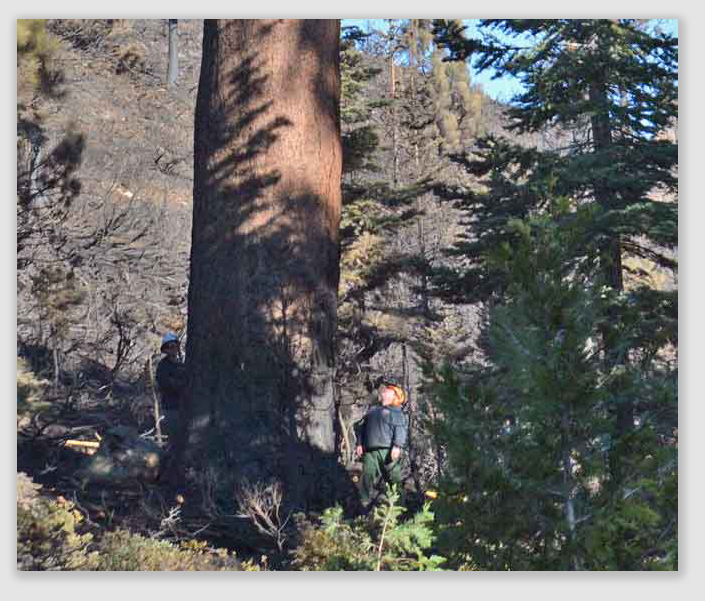 Wildfire Today, October 16, 2016: Hazardous tree on the Emerald Fire
CAL FIRE described this as one of the “many enormous hazard trees on the Emerald Fire. This tree has nearly an eight-foot diameter.” The Emerald Fire burned 176 acres on the south end of Lake Tahoe near Emerald Bay in California when it started on October 14. After being pushed initially by very strong winds gusting up to 55 mph the spread has been stopped by firefighters — and heavy precipitation. The removal of hazardous trees from Highway 89 and around residences is ongoing. Debris continues to impact the roadway due to the high winds and torrential rains…
A 52-year-old tree trimmer died Friday morning after he was electrocuted while working in a Deltona backyard, authorities said. The man was Arthur Grimes of Osteen, the Volusia County Sheriff’s Office reported. He was unresponsive and taken to Central Florida Regional Hospital in Sanford, where he was pronounced dead, said sheriff’s spokesman Gary Davidson. Friday’s accident marks the fifth death in Volusia County in Hurricane Matthew-related incidents. Davidson said the tree worker was hired by a resident to do work in backyard at 883 Leeward Drive. At some point, witnesses heard Grimes scream and found him slumped in the bucket of a lift, Davidson said. The incident was reported at 10:56 a.m., according to a dispatcher’s call log. The residents shouted at Grimes and banged on the frame of the lift but the tree worker did not respond. At first, the residents thought Grimes had just passed out but paramedics determined the victim had been electrocuted, Davidson said…
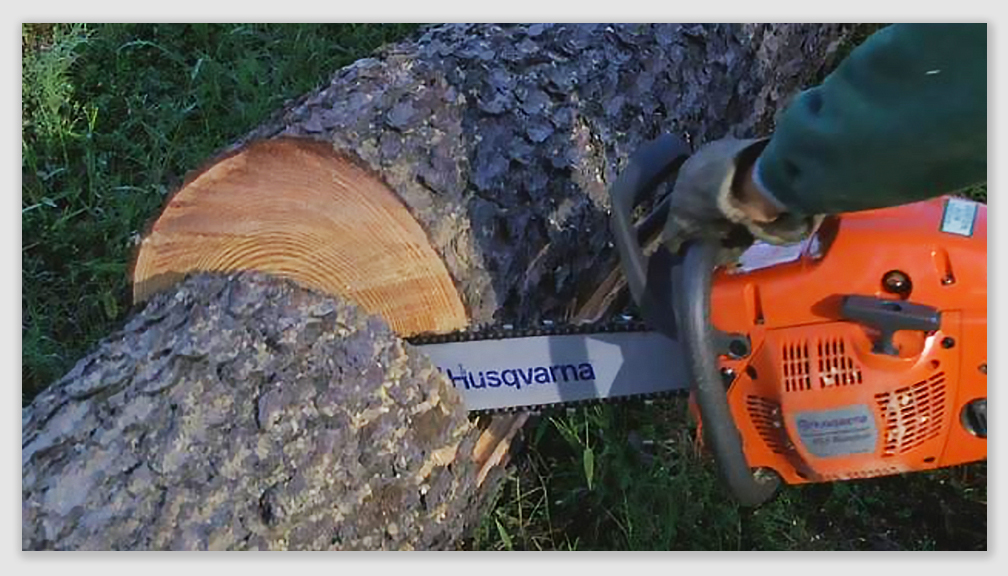
A man in Dillon County is dead after doing what many of you may be planning to do this weekend: cleaning up your yard. Horry County Fire Rescue met with WMBF News reporter Meredith Helline to teach everyone how to safely cut down trees if you plan to do it yourself. First, the fire department highly recommends people hire a professional tree service to remove large trees. Tree removal is a highly hazardous task. However, if you’re determined to do it yourself or have to remove a smaller tree, here are some tips. Cpt. Timothy Rainbolt has been with the fire department for almost 20 years. He’s also part of the wildfire crew, in charge of sawing trees. He said to have the proper gear is a must before you cut. “Safety things we want to stress…which obviously starts with PPE [personal protective equipment] – the chaps I’m wearing right now, Leather gloves, chaps, eye protection, helmet and ear protection I’ll put on when we start to saw,” Cpt. Rainbolt said. He said be sure to survey the area around you. Many times after a storm, stray branches may still be stuck high in trees. With a small wind gust, they can come tumbling to the ground. The fire department calls those branches ‘widow makers’ for a reason. “If they fall and hit you, it’s probably not going to be a very good outcome,” he said…
A Ladson man has been arrested and charged after he allegedly broke into the yard of a tree trimming business Wednesday and stole more than $43,000 in equipment. Justin Heath Chesser, 39, was arrested on suspicion of two counts of grand larceny, and for breaking an entering a locked yard after 6 p.m., said Chief Deputy Mike Cochran, a spokesman for the Berkeley County Sheriff’s Office. Chesser was also wanted on probation-related charges at the time of his arrest, Cochran said. He was taken to a state prison in lieu of being booked into the Hill Finklea Detention Center. Sheriff’s deputies were called at 10:55 p.m. Wednesday to Mike’s Tree Service, 134 Crosswatch Drive, in Ladson, according to the incident report…

A tractor-trailer uprooted a tree on West 43rd Street Tuesday evening, drawing neighbors and passers-by who stopped to watch as firefighters sawed it apart and removed it piece by piece. The truck was traveling westbound on the street between Ninth and 10th avenues just after 4:30 p.m. when one of the tree’s branches got caught between the tractor and trailer portions of the truck, actor John Michael Bolger, who lives in nearby Manhattan Plaza, told DNAinfo. The truck “lifted the tree straight up” and knocked it over, he said. The FDNY received a call about the truck hitting the tree at 4:41 p.m. Nobody was injured when it fell, a spokesman said…
The world’s forests constitute the most varied and diverse terrestrial ecosystems on the planet, and are home to thousands of species of plants, animals and micro-organisms. A new study coordinated and co-authored by West Virginia University researchers says that conserving these diverse forests not only retains a species-rich environment, but also maintains the forests’ output and services for future generations. The study, which will be published in Science tomorrow (October 14), reveals that biodiversity – the variety of living things on Earth – in forests promotes productivity. In other words, when the number of tree species increases, so does the amount of timber that can be harvested. They also found the opposite to be true – a decline in biodiversity would result in an accelerating decline in forest productivity…
 Marietta, Georgia, Times, October 12, 2016: Huge tree worries resident
Nestled near the railroad which used to service Harmar Village, sits a home with generations of memories beneath the looming reach of an ancient sycamore tree. “We moved in with my grandfather when my grandma died,” said Bill Beardmore, 67, owner of 121 Barber St.. “The tree was big then, but now it’s huge.” The tree, though, has become problematic according to residents, who say the city hasn’t done enough to solve the safety issues. Tree commission members say the tree has been inspected and will be again soon…
Oneota, New York, The Daily Star, October 12, 2016: Police: Woman set tree on fire
A local woman has been charged with arson after allegedly setting a tree on fire, Oneonta city police said. Misty Widmer, 32, of Cooperstown, was charged Sept. 29 with fifth-degree arson, a misdemeanor, city police said. She was released on recognizance. Widmer is accused of setting a tree on fire in Huntington Park at about 11:20 p.m. Sept. 3, police said, and someone from the Red Apple convenience store ran across the street with a fire extinguisher and put out the fire. The fire department wasn’t called, police said, and the tree was minimally damaged…

You could be forgiven for thinking this monster of a machine is the new evil overlord in the next Transformers movie. But the beast is merely a giant robotic arm that turns trees into logs. Still, the enormous machines cuts through the forest with such ruthless and brutal efficiency it would not look out of place as a villainous weapon in the latest science fiction flick…
Memphis, Tennessee, Commercia-Appeal, October 12, 2016: Man killed by falling tree
The Shelby County Sheriff’s Office is investigating after a man was apparently killed by a falling tree Wednesday, officials said. The incident happened a little after noon on property owned by the University of Memphis off Cuba Millington Road, the SCSO said. Darrell VanVickle was clearing trees with his son when the son left for a while. When the son returned, the SCSO said, he found that a tree was on top of his father, who was still behind the wheel of a tractor. The cause of the accident was uncertain Wednesday, the SCSO said…
 Fox News, October 11, 2016: Savannah’s signature tree canopy gets bushwhacked by Matthew
Behind the bronze statue of Revolutionary War hero Sgt. William Jasper clutching a fatal bullet wound in his side, there’s a new casualty in Madison Square — a mighty live oak tree crashed onto the ground, its roots wrenched from the soil with such force they dislodged chunks of a brick walkway. Hurricane Matthew bushwhacked Georgia’s oldest city, leaving arboreal carnage everywhere. A tangle of century-old limbs littered Forsyth Park at the edge of the downtown historic district, while debris carpeted the lanes of Victory Drive where an avenue of palms was planted after World War I. “To see it as trashed as it is, it’s heartbreaking,” said Taylor Henderson, who sat on a park bench Monday in Forsyth Park, where shattered tree trunks and branches cluttered grounds typically kept as neat as a championship golf course. “These trees are so old and they’ve just been uprooted. It’s amazing to think that’s even possible…”
Daytona Beach, Florida, WESH-TV, October 11, 2016: Man falls 50 feet in tree-trimming accident
Cleaning up the aftermath of Hurricane Matthew turned dangerous, yet again. After a man died while cutting trees in Volusia County on Monday, a tree trimmer took a terrifying tumble in Brevard County on Tuesday. Fire officials said the worker was near the Searstown Mall in Titusville when he fell 50 feet from a bucket truck. There’s a lot of tree removal work to be done around Titusville. It’s a risky occupation. Fire department officials said the man was in a bucket truck working to pull a tree upwards, when something gave way and let go. Something hit the bottom of the bucket, causing the man to fall 50 feet to the ground…
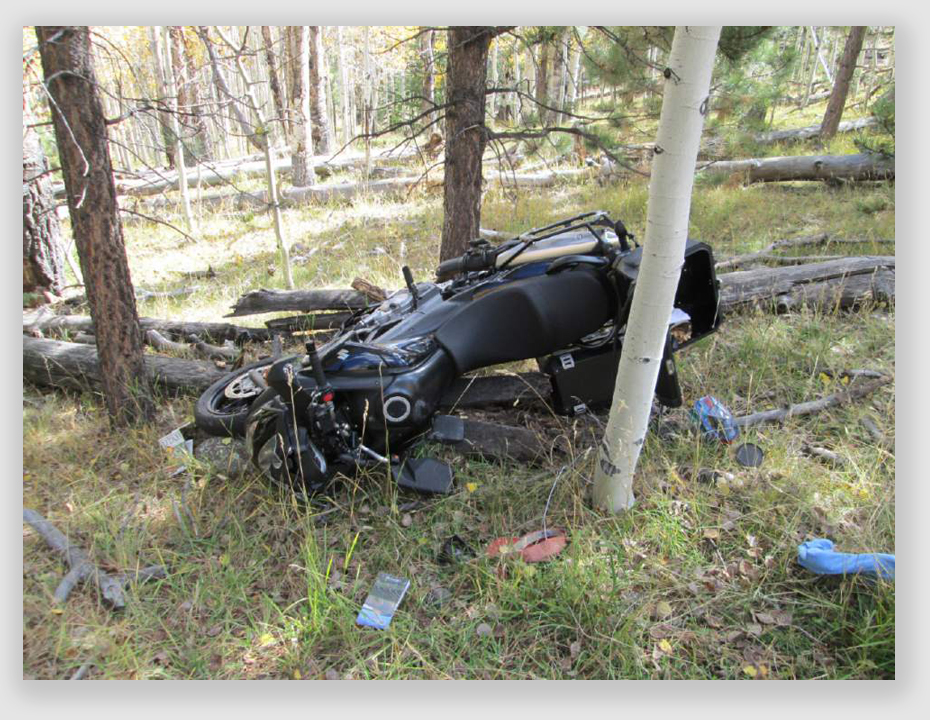
Family members of a motorcyclist who was killed when a tree cut down by Boy Scouts fell on him as he drove on Utah’s State Route 12 have filed suit over his death.In the lawsuit, Edgar Riecke’s son and two daughters — along with their father’s estate — accuse Boy Scouts of America and The Church of Jesus Christ of Latter-day Saints of negligence. The church chartered the Fruit Heights troop that was cutting and gathering firewood, the suit says. Also named as defendants are the Trapper Trails Council, which the suit says is responsible for overseeing youth and Scout leaders in Kaysville and Fruit Heights; five troop leaders; and the two Scouts, then 14 and 17, who cut down the tree. In addition, the parents of the then-14-year-old Scout are being sued because he has not turned 18, making them responsible for his actions, according to the suit…
New York City, WABC-TV, October 11, 2016: NJ man electrocuted while cutting tree limbs
Authorities say a man who died while cutting tree limbs at a friend’s home apparently was electrocuted. Warren County prosecutors say Sean Loprinzi was on a crane Saturday afternoon when he likely touched an electrical wire with a gas-powered pole saw. But it’s still not clear what may have caused that to happen. The 48-year-old Oxford Township man was taken to a hospital but died there a short time later. No other injuries were reported in the incident…
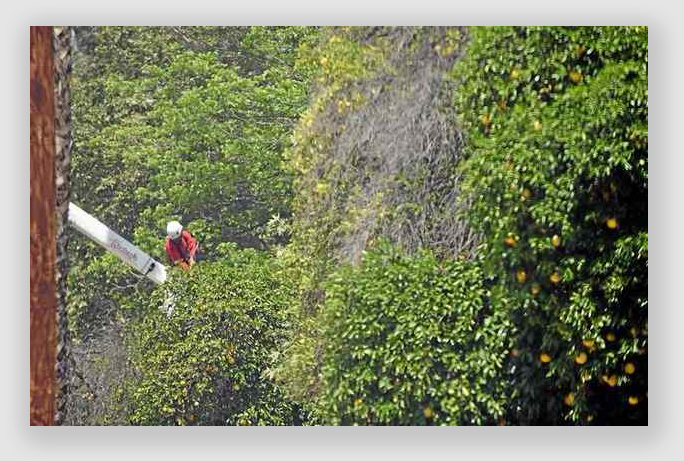
The city’s in-house tree trimming crew will get new equipment to assist in maintaining city trees. The city is buying a new wheel loader for $113,698 to replace an obsolete piece of equipment, which is expected to increase efficiency and effectiveness, according to a city staff report. “It’s a great idea,” said Councilman Paul Barich, who is also liaison to the Street Tree Committee, during last week’s City Council meeting. “One of the biggest things that people ask about is tree trimming and this enhances that.” The crew was formed in 2015 using existing parks employees. The city then contracted out various parks mowing duties…
WESH 2 News is investigating a fourth death related to Hurricane Matthew. A worker clearing debris in the storm’s aftermath was killed by a falling tree. It happened at a home on Tano Drive in a neighborhood along Old Dixie Highway.Hurricane Matthew’s mess in Volusia County took the life of a worker cleaning it up. The man was trimming one of the many large oaks that the storm tore from the ground on Tano Drive when some of the debris he was working on toppled onto him, pinning him underneath. A neighbor spotted him and yelled for help. His co-workers removed the log. Someone started CPR, but it was too late…
 Reading, Pennsylvania, Eagle, October 10, 2016: No repeat of Charlie Brown Christmas tree in Reading
Reading Pennsylvania mayor Wally Scott has reluctantly signed off on a plan to erect a 35-foot tall artificial tree to avoid a “Charlie Brown” Christmas tree controversy like one that erupted two years ago. Scott is a fan of natural trees but wanted to avoid the stir caused when city workers erected a scraggly real tree two years ago. The tree was first ridiculed then embraced by residents when it was likened to the scrawny tree featured in “A Charlie Brown Christmas.” The artificial tree will boast 1,250 ornaments, more than 1,900 lights and a 5-foot star…
Hartford, Connecticut, WFSB-TV, October 10, 2016: Tree clearing concerns Gastonbury neighbors
Numerous Glastonbury residents blamed Eversource Energy for cutting down trees in their neighborhood. The company’s plan to strip hundreds of trees is one it said must be done to comply with regulations protecting the power grid. “Their intention is to leave an acre of stumps for me,” Peter Hickey, of Glastonbury, said. For four decades, Hickey has called Johnny Cake Lane his home. In late August, Hickey said he got word that Eversource, which has easement rights for a lengthy space along his property, planned to do some clearing. “They had the right to come into the property and clear-cut,” Hickey said. “And after the work were completed that they would discuss what they would do to restore the property…”

Environmentalists have expressed concerns over proposed clear cutting of 21 acres of forest at East Hampton Airport. A meeting to discuss the issue will be held Thursday night at East Hampton Town Hall at 6:30 p.m. “The East Hampton Environmental Coalition is deeply concerned about the serious disruption of the vegetative cover of our single source aquifer the Town of East Hampton’s proposal for clear cutting of 21 acres of mature forest at East Hampton Airport represents,” a statement read. The group’s membership is “uniformly opposed to this alteration of our woodlands without a scientific analysis of the consequences of this deforestation, without a frank assessment of the presumed benefits to the safety and efficiency of the operation of the airport, and without a balanced assessment of the interests of our citizens in preservation of our natural woodlands versus the expansion of aviation operations at our airport,” said Jim Matthews, EHEC co-chair. Trimming of trees expected to pierce the glide plane for certain types of aircraft was identified in the town’s adopted Airport Master Plan in 2010, although it does not appear on the town’s project list; nowhere in the Master Plan was clearing 21 acres of mature forest anticipated or studied, the group said in a release…
People who have lived in Redlands long enough know something huge is missing from the intersection of Orange Street and Citrus Avenue. “This is the first that I’ve seen that it’s gone,” Sharon Cole said. “It’s been lovely shade for people to sit on the corner.” Cole is talking about the Triangle Park oak tree, which has been here for at least 100 years. Last week, workers hired by Frontier Communications mistakenly destroyed it. “It was extremely irresponsible for Frontier to do something like (that),” Jane Myers said. “I am upset about it…”
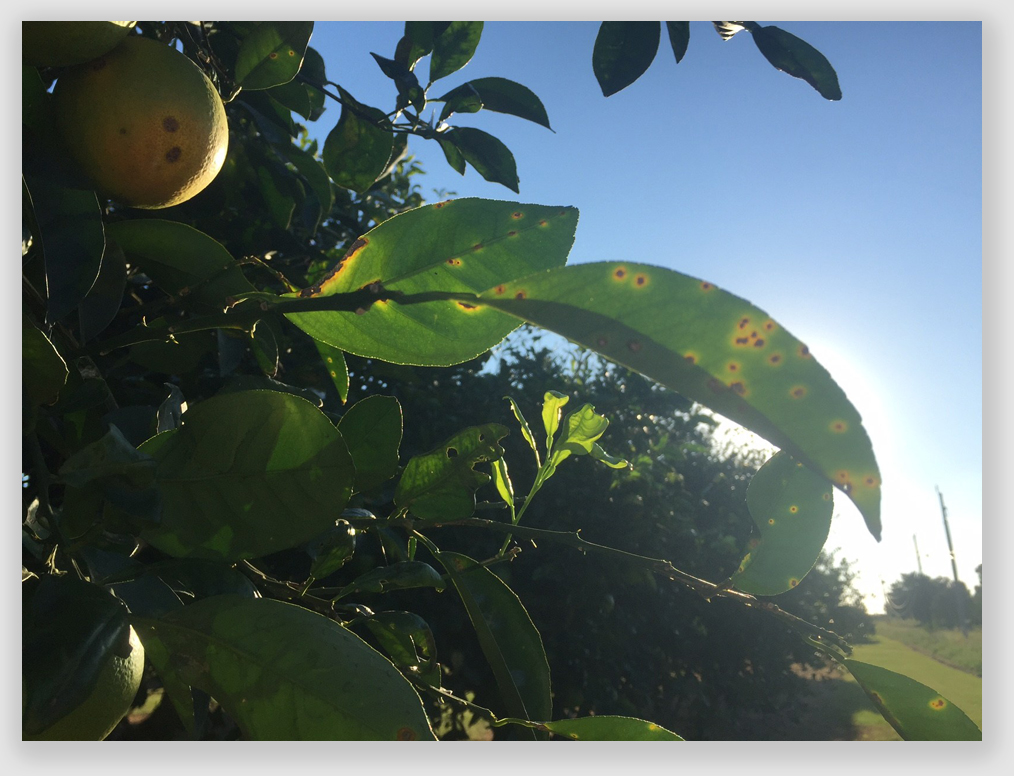
Spread through the rain – and even the wind – citrus canker latches on to citrus trees and slowly eats away at them. “It is sort of taking a toll,” LSU Ag Center horticulturalist Anna Pimmerman said. “It’s a slow-motion disaster.” Citrus canker is a bacteria found on leaves and citrus fruit across South Louisiana. It has zero effect on humans. It’s only cosmetic, and the fruit that trees yield is completely safe to eat. But over time, the bacteria can destroy an entire orchard. “At this point, we don’t have a cure,” Pimmerman said. “We recommend the trees with the disease be removed.” The bacteria has been found in Plaquemines, St. John the Baptist, St. Bernard, Orleans, Lafourche, St. Charles and portions of Jefferson Parish…
New Hyde Park, New York, Herald Courier, October 6, 2016: NHP weighing tree law changes
The Village of New Hyde Park is looking to extensively rewrite its village code governing trees in the coming weeks as it aims to become more tree-friendly. The village Board of Trustees will hold a public hearing Oct. 18 on a new law replacing its current 77-year-old code that will bring it more in line with other local villages, Mayor Robert Lofaro said. “I thought that ours was grossly inadequate,” Lofaro said. Village officials are still finalizing the new law, but it will address in detail topics such as why the village plants trees, which species of trees it allows and regulations and fees for removing trees, Lofaro said…
 Richmond, Virginia, WTVR-TV, October 5, 2016: Tree trimmers busy ahead of Hurricane Matthew
“It’ll get pretty again,” said Pat Harden, sentimental over an enormous tree in her back yard. “The last time we had this trimmed, our daughter was married right there, in the middle of that tree, in 2011,” said Harden. She had a change of heart after recent summer storms. “We all woke up the next morning,” she said. “And it was like a war zone. They were uprooted… you know… hundreds of years old trees across the streets… everywhere. You couldn’t get through for a couple of days.” Now, with Hurricane Matthew in the headlines, locals have been proactive – though the latest track indicates Richmond is clear of its path…
A Three Rivers man fell to his death while trimming a tree Monday, in Schoolcraft. Newschannel 3 spoke with family members and the Kalamazoo County Sheriff, to find out what they say caused the victim to fall. Ron Phillips ran Phillips Tree Service with his family. Witnesses say while he was up in the tree, they heard a snap and a scream. Phillips died suddenly Monday, when deputies say he was knocked to the ground. “He was about 55 feet in the air. At some point one of the limbs he was working on or near had made the bucket tip, and he fell out of the bucket,” said Kalamazoo County Sheriff Richard Fuller…
 UPI, October 5, 2016: Tree growth slows as cities heat up
There’s evidence that global warming is having a “greening” effect on large portions of the planet. And some scientists have suggested an uptick in carbon will encourage photosynthesis — for better or worse. But that’s not case in cities, new research shows. When scientists at North Carolina State University tracked tree growth throughout the city of Raleigh, they found urban warming curbs both tree growth and photosynthesis. They also found pests, including scale insects and spider mites, were more abundant among trees at warmer sites. Over the course of two years, researchers measured tree trunk and branch growth, as well as photosynthesis rates, of 40 willow oak trees, Quercus phellos. Scientists found a strong correlation between pest populations and temperatures. The warmer it got, the more insects invaded. But their measurements prove rising temperatures curtailed the growth of city trees with or without pests…
When people think about scenic drives to see fall colors, it’s often the East Coast that comes to mind. But here in the Pacific Northwest we have something special to brag about: the Western larch. It’s an oddity, as one of the few cone-bearing trees that sheds its needles in winter. For a short time in the fall — usually around mid-October — larches turn brilliant yellow, dotting the high mountains with intense bursts of color that seem to glow in the sun. Hunting for these trees at the height of their turn is an annual rite for many in our region — a tradition known as the Larch March. What’s so addictive is the thrill of the hunt. Larches are usually found in small pockets above 5,000 feet east of the Cascade crest. They will change at different rates at different elevations, and early winter storms can erase whole groves of color in a single day…

Settling into homes with gold-plated views is the goal for many who come to West Seattle. And so headlines blared when residents learned that some neighbors, seeking a better view than they already had, had hacked down more nearly an acre and a half of trees along a public greenbelt. The unpermitted choppings on the city-owned West Duwamish Greenbelt – which is prone to landslides and relies on trees to stabilize the soil – destroyed more than 150 big-leaf maple trees and Scouler willows. As fall begins, a riot of rotting log carcasses and gnarly moss-draped limbs are still strewn about the site. There are deep pockmarks, too, and gashes left by the wholesale clear-cut. The discovery in March by a team of city investigators sparked outrage. One anonymous commenter, reported The Stranger, suggested the city “chop the [culprit] to pieces and see how it feels”. Now, Seattle city attorney Pete Holmes has filed civil suits against several couples who police say were involved in the tree-cutting caper, seeking an unprecedented $1.6m in damages and fines…
Total Landscape Care, October 4, 2016: Ever wonder how much a tree is really worth?
Trees have been given credit for bettering the environment and society in many different ways, and now there is a way to put an estimated price on these benefits. Davey Tree Expert, Casey Trees, the Arbor Day Foundation, the U.S. Forestry Service, the Society of Municipal Arborists, and the International Society of Arboriculture all joined in a cooperative initiative known as i-Tree. As part of that initiative, Davey Tree Expert and Casey Trees created a national Tree Benefit Calculator. This allows individuals to evaluate the trees on their property and become aware of all the ways they’re helping. Users simply enter their zip code or the location of the tree they are estimating, the species and the diameter to receive an estimation of economic value of the tree along with a breakdown of its different environmental benefits. For example, a black oak with a 30-inch diameter oak tree at a single family home will provide around $270 benefits a year. It can intercept 11,264 gallons of stormwater runoff a year with its root system and conserve 247 kilowatt-hours of electricity for cooling. It will also be able to absorb 1,113 pounds of carbon dioxide from the atmosphere…
 Kalamazoo Gazette, October 4, 2016: South Haven re-evaluates tree cutting plan, spares 7 old trees
The felling of trees in South Haven begins the week of Oct. 3 as the city begins its North Shore Drive upgrade. But after some people decried the felling of many old trees, city officials and consultants did a walk-through with residents and reevaluated the plan, city engineer Larry Larry Halberstadt said. The upshot– instead of cutting 30 trees, it is likely the city will be removing only 23, which includes 11 found to be too diseased or damaged to salvage, he said. The felling of trees in South Haven begins the week of Oct. 3 as the city begins its North Shore Drive upgrade. But after some people decried the felling of many old trees, city officials and consultants did a walk-through with residents and reevaluated the plan, city engineer Larry Halberstadt said. The upshot– instead of cutting 30 trees, it is likely the city will be removing only 23, which includes 11 found to be too diseased or damaged to salvage, he said…
City officials may have to decide which is more important – safe sidewalks, or city trees. The Centerville City Council is holding an open house Oct. 5 from 6-8 p.m. at Centerville City Hall to share the results of a citywide sidewalk survey performed this past summer. The survey identified hundreds of damaged sidewalks throughout the city, raising the issue of whether the city should remove the trees from park strips and other areas that are damaging the sidewalks in the first place. “It will be a touchy issue,” said Centerville City Manager Steve Thacker. “I don’t know anyone who doesn’t love trees.” He added that the council plans to start a long discussion period, both among themselves and with the public, about what to do with the tree issue and how to fund the sidewalk repairs that will cost at least $500,000. The Oct. 5 meeting, however, isn’t the beginning of that discussion – it will focus exclusively on informing residents about the survey and the results. “We’ve been concerned for the last few years that we haven’t been able to keep up with sidewalk defects in the city,” said Thacker. “Our insurer has also encouraged us to become more active in addressing vertical defects in the sidewalks…”

Livingston Development Corp. has agreed to stop cutting down trees on part of the Glen Cove property it is developing for luxury condominiums until a lawsuit that aims to halt the project is resolved. A tree-removal company hired by Queens-based Livingston chopped down about 50 trees on a hillside south of downtown until Nassau County State Supreme Court Judge George Peck on Sept. 13 ordered a stop to the tree removal until he could rule on a request for a preliminary injunction against the tree-cutting. Roni Epstein, a plaintiff in the lawsuit against the project, had asked for the injunction. She and fellow plaintiff Marsha Silverman live above where the trees were being cut down. Their attorney, Amy Marion, argued the permit the city issued for the tree removal is not valid…
CBS News, October 3, 2016: Visitor to New Mexico national monument killed by falling tree
Authorities at New Mexico’s Bandelier National Monument say a female park visitor has been killed by a falling tree. Park rangers were notified of the incident about 2:30 p.m. Monday. Rangers responded to the scene along with the Los Alamos County Fire Department and the Los Alamos County Police Department. It’s not immediately clear what cause the tree to fall…
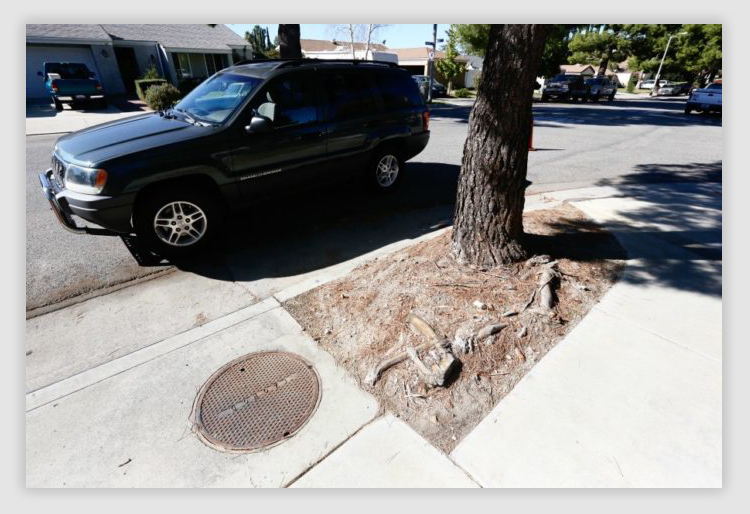 Santa Clarita, California, Signal, October 3, 2016: City tree cutting angers Canyon Country resident
The resident of a “beautiful tree-lined” street in Canyon Country was moved to anger Monday morning when he saw city crews cutting down two towering pines near his home. City officials said they removed the trees on Ermine Street for safety reasons since the roots of the pines were lifting up the sidewalk and part of an “ADA ramp” – a wheelchair access ramp built according to the standards set out by the Americans with Disabilities Act of 1990. For Gary Marshall, however, who lives across the street on Ermine west of Whites Canyon Road, the removal diminishes the character of the neighborhood. “Our beautiful tree-lined drive has two less trees and is now down to less than a dozen trees,” he said. “This is wrong, and it makes the neighborhood look like hell…”
Lower Merion Board of Commissioners gave final approval last week to a revised landscaping plan for a Gladwyne property despite about two dozen trees being improperly removed. The move followed a lengthy discussion at the Sept. 14 Building and Planning Committee meeting during which some of the commissioners expressed their concerns as to why trees on the original plan were taken out. During the discussion, Ross Weiss, attorney for property owner Billy Cunningham, said the issue was being blown out of proportion by the township. The discussion began at the Building and Planning Committee meeting when Chris Leswing, assistant director of Building and Planning, explained the project was originally approved by the township about five years ago. “As construction commenced on the project, there were some trees that were originally proposed to stay [that] were removed,” said Leswing. He described the area as heavily wooded and when the contractors went in to do the work, approximately 20 trees that should have been kept were cut. “To the applicant’s credit, while they did remove 24 trees they were also in that process able to save four trees that were proposed to be removed. So the net is 20 trees,” Leswing said…
 Parkersburg, West Virginia, News & Sentinel, October 2, 2016: Monongahela Power removing ash trees to help prevent outages
Thousands of ash trees damaged by the emerald ash borer located near power lines and other equipment are being removed by Monongahela Power to help prevent electric service interruptions and enhance system reliability for customers. Tree crews have taken down nearly 16,000 dead and dying ash trees at a cost of nearly $2 million in the Mon Power service area, which includes Wood and surrounding counties, so far this year. Ash tree removal is part of Mon Power’s overall $63 million enhanced vegetation management program for 2016, which includes plans to trim trees and control vegetation to help maintain proper clearances along nearly 4,400 miles of distribution and transmission lines throughout the company’s service area, with nearly 2,800 miles completed year-to-date.“Ash trees pose a growing risk to our electric system as they quickly succumb to the emerald ash borer and have the potential to fall and damage our power lines, utility poles and other equipment,” said Holly Kauffman, president of FirstEnergy’s West Virginia Operations. “We are addressing this problem proactively and aggressively by removing the damaged ash trees before they disrupt electric service to our customers…”
After five years of punishing drought, I am more fearful than ever that increasingly destructive and unpredictable fires will exceed our capacity to put them out quickly and protect the lives and property of Californians. And the odds are high that the state will continue to grapple with extreme fire seasons long after the current drought ends. During my travels in California, I have seen firsthand the enormous number of trees that have been killed by drought and bark beetle infestations. The U.S. Forest Service estimates that there are 66 million dead trees on our state’s public lands, half of which are concentrated in the Sequoia, Sierra and Stanislaus national forests. The lack of water, combined with the proliferation of tree-killing beetles that thrive in dry conditions, has created a tree mortality crisis unlike any we’ve seen in recent decades. But this growing public-safety threat has not received the attention or resources it deserves. That needs to change…
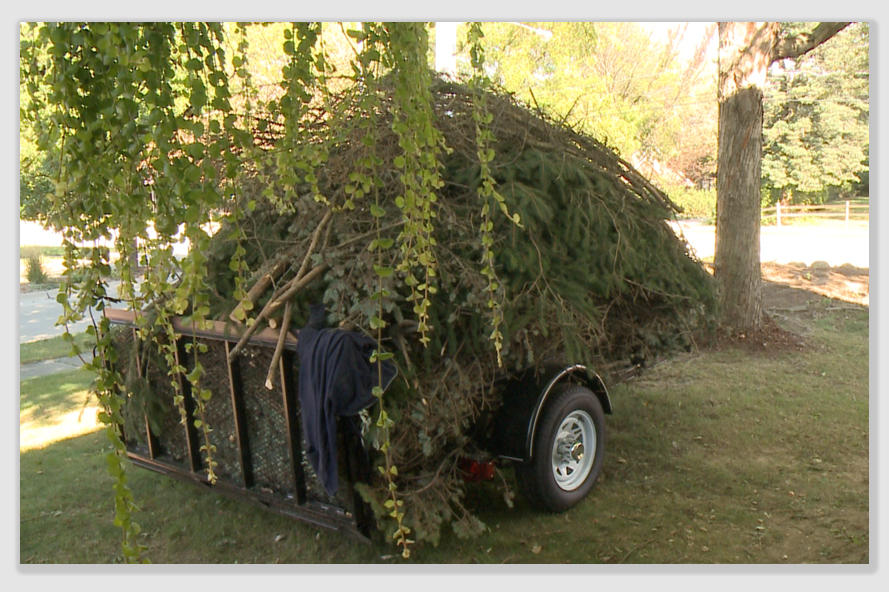 Des Moines, Iowa, WHO-TV, October 2, 2016: Des Moines residents warn of tree scammer
Numerous residents of the Metro are speaking out after they say a tree trimmer scammed them, taking off before the job was done and cashing the check before they could stop him. Dawn Solis Toledo is the latest to claim Eric Mitchell, of Residential Services, agreed to cut down some dead trees in her yard, only to cut out before the job was done. “So, we had these four giant trees laying in the grass, so we had to get them cut down by ourselves,” she said. “So yeah, pretty crappy.” Solis Toledo says Mitchell stuck a flyer in her door, advertising his services. Originally quoting the job to cut down seven trees at $2,500, he quickly negotiated down to $600 when Solis Toledo says she and her family weren’t interested…
Pueblo, Colorado, Chieftain, October 2, 2016: Hit or myth? Aspen spawn some tree-mendous tales
Tales of the aspen tree’s magical and mystical properties have been told by cultures around the world. The ancient Greeks believed that the aspen (a different species from North America’s aspen, but aspen nonetheless) was sacred to Persephone, daughter of the goddess Demeter, who was carried off by the lord of the underworld. Persephone rose from the kingdom of the dead each spring only to return to the netherworld in autumn with the coming of the cold. It was said that warriors and heroes could gain her protection by wearing a crown of aspen leaves. The Celts also believed in the protective properties of aspen, crafting battle shields from its wood and planting aspens in fields and gardens to ward off thieves. Some Native Americans say that the leaves of the aspen first began to tremble because of a chief’s tender feet. When his braves became careless about unrolling a protective mat of reeds for their leader to walk on, the chief cut his tootsies on sharp fragments of stone discarded by tribal members who had been chipping arrowheads. His cries of pain so frightened a nearby aspen that the trees have been quaking ever since…
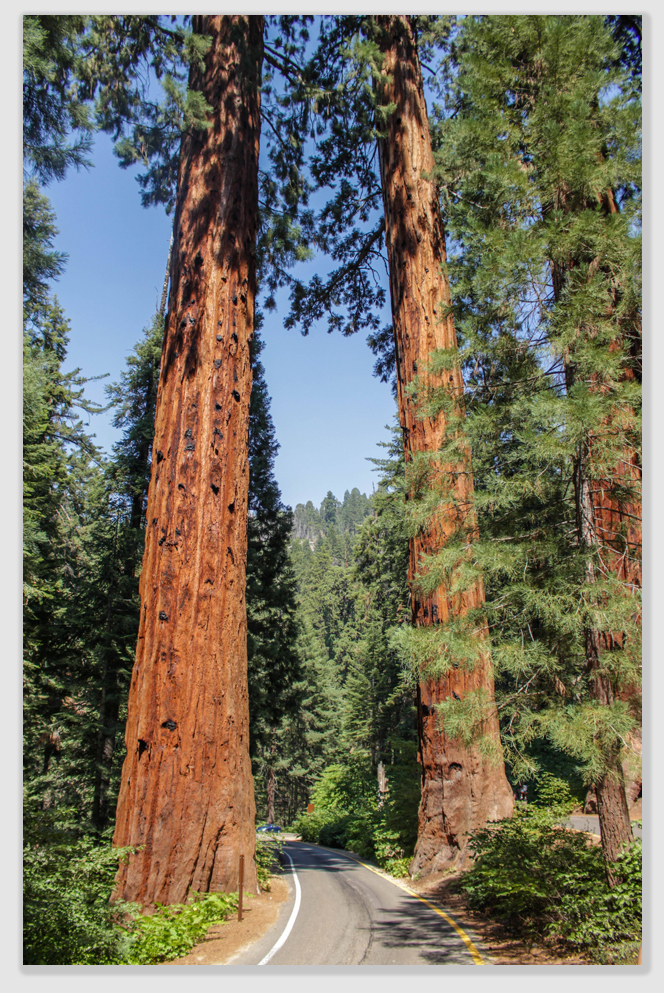
For more than two hours, speakers at last Tuesday’s Town Board meeting weighed in on the proposed tree ordinance, with the night’s last speaker urging council members to consider the comments and revise the law accordingly. With a few exceptions, they didn’t, approving the law only minutes later by a 4-1 vote. After the meeting, Tree Conservation Advisory Commission member Dale Saltzman characterized the board’s actions as “pitiful.” Supervisor Michael Grace, however, said the Town Board called for the public hearing only after fine-tuning the law at several lengthy work sessions. Present at the sessions was a drafter of the original 2010 law, which the board repealed, and the chair of the tree commission…
Lexington, Kentucky, WKYT-TV, September 28, 2016: Police Looking For Men Selling Bad Trees
Police are on the lookout for two men selling trees from the back of a truck. Several of the duo’s customers In Clark County are out hundreds of dollars and are stuck with dead or dying trees. Charles Fuller told LEX 18 that the Evergreens he bought lasted three weeks. He said in early August, two guys showed up in a pick-up truck with left-over trees from another project. He bought seven trees for about $400. The trees were guaranteed for two years. “The business card they gave me had a number scratched out and someone answered on that one, and they were not very friendly they cussed me out and told me to call the Casey County Sheriff Office,” said Fuller…

Wisconsin’s tree care industry needs more skilled workers, and now, the state is getting involved to help. Employers say there are plenty of jobs to be had, but they need qualified employees to apply. Luke Volbrecht didn’t know he wanted to be an arborist — but he always had a passion for the outdoors. “As a child, my parents had a garden and I enjoyed being outside — camping, fishing,” said Volbrecht. He admits he had misconceptions about the industry… “I thought it was a forestry logging-type career. There is more to it than just cutting down trees,” said Volbrecht…
While Auburn University deals with the aftermath of last weekend’s tree fire at Toomer’s Corner, it continues to receive minimum monthly payments of $100 from Harvey Updyke for poisoning the original oaks in 2010. After Updyke pleaded guilty to the crime, Circuit Judge Jacob A. Walker III ordered Updyke to pay $796,731.98 in restitution in 2013 to help the university replace the trees and make up for lost revenue due to their removal. A representative at the Elmore County Clerk’s Office told AL.com Wednesday that Updyke still owes $793,852.98, meaning he has paid off just 0.361 percent of the balance. He made payments of $100 every month in 2016 except in June and August. He made a double payment in September, so is behind by one. With court costs and legal fees added in, Updyke currently owes $813,378.48 in total. He is on supervised probation after serving six months of jail time for the crime and has an upcoming hearing Oct. 18…
Placer County has approved the removal of 1,800 trees that are dead or dying from a bark beetle infestation. The county will pay about $1,700 per tree or a total of three million dollars. John McEldowney with the Placer County Office of Emergency Services, says the trees will be removed to reduce fire risk. “We’ll probably end up hiring tree-removal companies -contractors to come in and cut them down and either haul them off, take them away to a storage location or some other facility to be determined or possibly chipped on site depending on what’s the best situation, the best use of the material for the county…”
 Weston, Connecticut, Forum, September 28, 2016: Notice of removal posted on Norfield Tree in Weston
Weston’s tree warden Bill Lomas posted a notice of removal for the Norfield Tree on Monday, Sept. 26. Once the notice is officially posted, state ordinance says there is a 10-day period where the public can write to Lomas and object to the removal of the tree. Lomas will be receiving objections until Thursday, Oct. 6. After that 10-day period, a public hearing will be set up where Lomas will give full details of his assessments of the tree and give time to the public to present their objections. Lomas will weigh objections, both presented at the meeting and written, into his final decision.Three days after the hearing, Lomas will make the ultimate decision on whether the tree will come down…
Recycled Things, September 28, 2016: Recycled tree trunks
Can anyone think that tree trunks can be transformed into beautiful things and crafts? Well, we are here to show you that! You can now reuse and recycle tree trunks to craft good-looking projects. The ideas and concepts are a little bit complicated and tough as well as hard work is required. You must have the right tools to make these crafts and things. If you are new to deal with tree trunks then you must have guidance from a carpenter or wood worker. These are ecological ideas and also cost-effective. Many of you would like and adore our concepts. Can anyone think that tree trunks can be transformed into beautiful things and crafts? Well, we are here to show you that! You can now reuse and recycle tree trunks to craft good-looking projects. The ideas and concepts are a little bit complicated and tough as well as hard work is required. You must have the right tools to make these crafts and things. If you are new to deal with tree trunks then you must have guidance from a carpenter or wood worker. These are ecological ideas and also cost-effective. Many of you would like and adore our concepts…
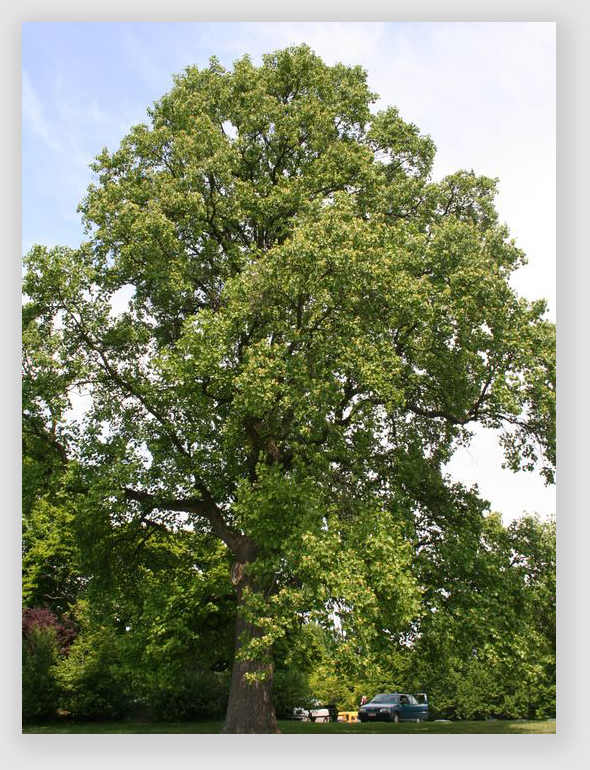
The Clarksville Tree Board is happy to announce that they are starting a “Big Tree” contest, previously known as “Champion Tree”. The contest aims to involve the public in developing our large tree inventory, while raising awareness of the benefits trees provide to our area. Trees reduce air and water pollution and help increase the beauty and livability of our community. The winner of the contest will be awarded a Certificate from the City Forester and/or the State Forester, as well as bragging rights. There will be a winner awarded for each species of tree nominated. Example of the species can be found on the nomination form located on the Clarksville Tree Board’s Facebook site…
Gardeners World, September 28, 2016: Six ways to help trees and shrubs establish quickly
When planting a new plant, it’s important to follow some key rules if you want them to survive and establish well. The aim is to get new roots to grow as quickly as possible so they can support the leaves, shoots and flowers at the top of the plant during the growing season. Roots are able to grow underground in the winter, even when the top growth is dormant. Watch our No Fuss Guide to planting shrubs. The dormant season (from November to March) is a great time to plant pot-grown and bare-root trees, as long as they are fully hardy and deciduous. If they are borderline hardy or evergreen, wait until late April or May, when there is less risk of severe frost. Whatever the time of year, avoid planting in extreme conditions, such as very cold or very hot weather. Mild, damp conditions are best. When digging the planting hole, make sure that it is deep enough to accommodate the roots comfortably and at least 10cm wider all the way around the rootball. Use a border fork to loosen the base and sides of the hole to allow the roots to grow into the surrounding soil. As you back fill the hole with compost, firm it down gently with your foot…
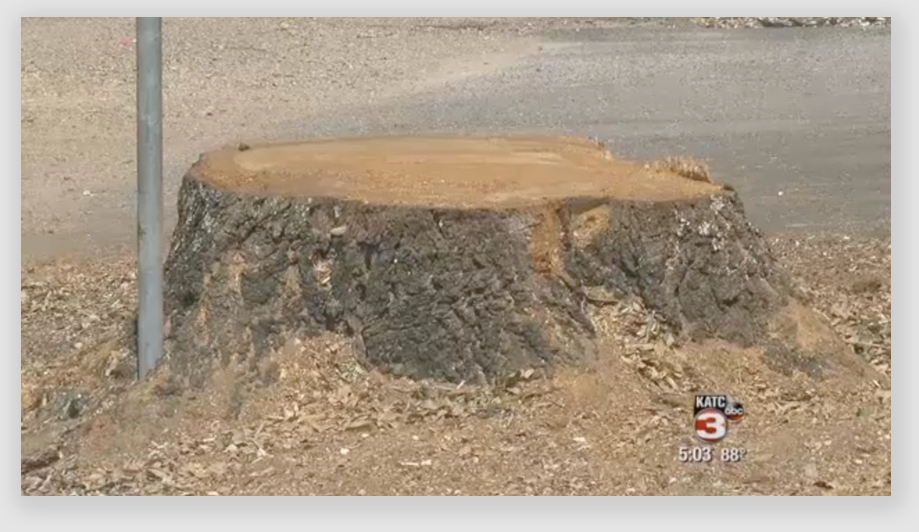 Lafayette, Louisiana, KATC-TV, September 27, 2016: Live oak tree in Mire cut down
A decades-old live oak tree in Mire, considered by many to be a landmark, has been cut down. The tree used to cast its shade along Hwy. 95. DOTD spokesperson Deidra Druilhet said, “Based on examining the tree, one of the things that we recommended was to basically prune the tree, prune back some of the branches from over the roadway for safety reasons. Over a week ago, DOTD received complaints about the tree being a safety hazard, officials with the department said…
Denver, Colorado, KMGH-TV, September 27, 2016: Fruit tree harvest amid Colorado bear season
Winter is coming, and hungry bears are scrounging around trying to prepare — and ripened fruit is on their list. Boulder County authorities are warning those with fruit trees to be mindful of the animals. The fruit is just beginning to ripen as Colorado’s bear season kicks off. Bears love fruit and are looking for an easy food source as they prepare for hibernation. Boulder Police tweeted that residents should pick the fruit before the bears begin to wander into the neighborhood. Fruit Rescue in Boulder organizes neighborhood harvests of public and private fruit trees. The group was harvesting apples near Palo Park in Boulder Tuesday…
 Hobby Farms, September 27, 2016: The tools you need for trimming trees
I won’t try to deny it—I love trimming trees. I always enjoy the process of carefully pruning branches to give trees a beautiful, stately and clean appearance, and I love how trimming just a handful of trees can completely transform an area, giving it a much more manicured look. If you have trees on your farm—or better yet, a wooded area on the edge of your fields—you might be amazed at how rapidly you can upgrade the appearance of your trees by pruning off their messy lower branches. If you haven’t already, I highly recommend that you dive in and get started, but first, here’s a checklist of items that you’ll want to have on hand…
The president of the Conneaut Tree Commission resigned at Monday night’s City Council meeting, blaming the city for the lack of upkeep at its largest park. Rod Raker, who has served on the tree commission for more than 20 years, recently sought volunteers willing to tackle the weeds at the Dorothy Shumake Arboretum inside Malek Park — a place he’s spent much time and money. Before the meeting began, Raker gave a three-page letter to each member of City Council describing his frustration with city officials. Before the meeting, Council President Nic Church told Raker he would not allow him to “criticize me, City Council or the manager” during the meeting. Raker called it “constructive criticism…”

The 55-foot culprit with its stocky trunk lurks high above the block wall separating their home from a neighborhood park in Eastside Costa Mesa. It makes a sticky mess of their backyard, kills their plants and destroys thousands of dollars worth of patio furniture. It’s even a potential threat to their children, they insist. The culprit’s name is Pinus canariensis, more commonly known as the Canary Island pine. It’s endemic to the outer Canary Islands, but this particular pine has put down 30-year-old roots in Jordan Park. And, following a decision reached Thursday by the city’s Parks and Recreation Commission, that’s where it will continue to grow for the foreseeable future. But for Jonathan and Michelle Knox one word sums up their thoughts about the pine: nuisance…
The fire endured by one of the young oak trees at Toomer’s Corner late Saturday night in Auburn has left the fate of the plant and the tradition of rolling it up in the air. Auburn University professor of horticulture Gary Keever told reporters on Sunday that the damage goes beyond the tree itself. “The fire melted the vertical (irrigation) piping that runs up the trunk,” Keever said. “That’s going to replaced beginning tomorrow. There’s about 180 feet of drip irrigation too that circles around the base of the tree inside the low fence that’s going to be checked out. A replacement vertical pipe is going to be put in the canopy and we’re going to continue to use between 11 a.m. to 5 p.m. to cool the canopy of the trees.” The fire occurred after Auburn’s 18-13 win over LSU Saturday night when a man walked up to the tree facing W. Magnolia Ave. and lit a piece of toilet paper on fire. Auburn police later arrested 29-year-old Jochen Wiest on charges of desecration of a venerable object. The case is still under investigation…
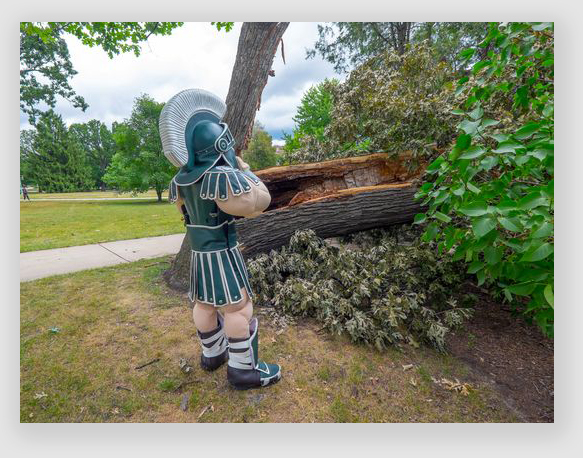 USA Today, September 26, 2016: Michigan State campus toppled tree at least 350 years old
A massive white oak tree that fell in a summer thunderstorm stood tall for close to 200 years before what is now Michigan State University began growing up around it. The toppled tree is likely 350 to 400 years old. Every person to ever visit campus could have walked by the massive tree, said Frank Telewski, a plant biology professor at Michigan State University. “It’s amazing when you think about it,” he said. It could have first sprouted before the Pilgrims landed on Plymouth Rock in 1620. A small portion of the centuries-old tree remains between the Michigan State University Museum and Linton Hall in the West Circle area of campus. It previously shaded a stone water fountain dedicated by the class of 1900, which served both humans and the horses they rode to campus. Before that, Native American tribes occupied the land around what is now West Circle, Telewski said…
An international study, which includes a researcher from the University of Calgary, has found that two trees in Alberta and British Columbia use the same genes to adapt to different climates — a discovery that could have practical applications for the forestry industry. The research, published Friday in the journal Science, studied lodgepole pine and interior spruce to determine which genes helped the trees adapt to varying climates throughout the two provinces. “We sequenced genomes from many different species across the ranges,” said Sam Yeaman, an assistant professor in the U of C’s faculty of science who’s a co-author on the study. “We found that there were about 47 genes that were specifically helping these trees adapt to their environment in both pine and spruce. “There were other genes that were involved that were unique to one or the other, but seeing the same 47 come up over and over again was really surprising and interesting…”

Police in Auburn, Ala. have arrested a suspect in the burning of an oak tree at Toomer’s Corner. According to a police report, the suspect is a 29-year-old Auburn man, Jochen Wiest, who is not affiliated with Auburn University. He was taken to the Lee County Detention Center and has been charged with desecration of a venerable object. His bond has been set at $1,000. It was at 12:15 a.m. Sunday when Auburn police and fire divisions were sent to the intersection of West Magnolia Avenue and College Street because toilet paper was burning on one of the oak trees following an Auburn football victory over LSU. Within minutes the fire was extinguished…
Thanks for nothin’, Mayor. An East Village couple is furious that heedless contractors working on a condo building next door mistakenly chopped down their beloved, six-story-tall backyard Norway Maple — and they say Mayor de Blasio only added insult to injury with an empty promise to help. Alexander Poma, 50, and Leslie Steven, 60, of East Seventh Street, say they got a bureaucratic runaround from the NYPD, Parks Department and Department of Buildings before dialing into the mayor’s call-in show on WNYC Friday to complain about the blunder by a subcontractor of L&M Development, which is building a high-rise next door. On the show, the mayor personally promised to help them. “I did get a call from the Mayor’s Office from someone who didn’t understand the problem,” Steven said. “She said, ‘I’m glad your electricity is back up.’ ” Replacing the tree would cost $150,000, Steven said an appraiser told her…

The trees are dying. The forests are not. This distinction is getting lost in all the angst over the tree die-off in the central Sierra, coastal ranges and other forests of California. Players ranging from the Forest Service to CalFire to Sen. Dianne Feinstein and other public officials are ignoring this key fact in their rush to do something, anything, about the dying trees. Feinstein, in a recent letter to Agriculture Secretary Tom Vilsack, urged him to transfer the tidy sum of $38 million to the Forest Service so that it could immediately harvest thousands of red-needled pine and other dead trees in “high hazard” areas in the Sequoia, Sierra and Stanislaus national forests. “After five years of historic drought,” she argued, “which has led to the death of an estimated 66 million trees in California alone, my state and its people face a heightened and potentially catastrophic risk of wildfire this year and for years to come…”
Tullahoma, Tennessee, News, September 25, 2016: Once popular pear trees disappearing
Coffee County officials have decided that it is time for the Bradford pear trees planted 20 years ago at the Coffee County Administrative Plaza (CCAP) to be removed. This follows the recommendation of Steve Harris, director of the UT-TSU Coffee County Extension Office. The county will soon remove about 20 Bradford pears from the front of the CCAP building, which were donated to the county about 20 years ago, according to county officials. “They are 20 years old and they have reached their life expectancy,” County Commissioner Tim Morris said. “They are dying from the crown. They have been cut back; they have been butchered.” Those who conduct an online search for Bradford pear trees will find articles that include words such as “hate,” “curse” and “nuisance” in the titles…
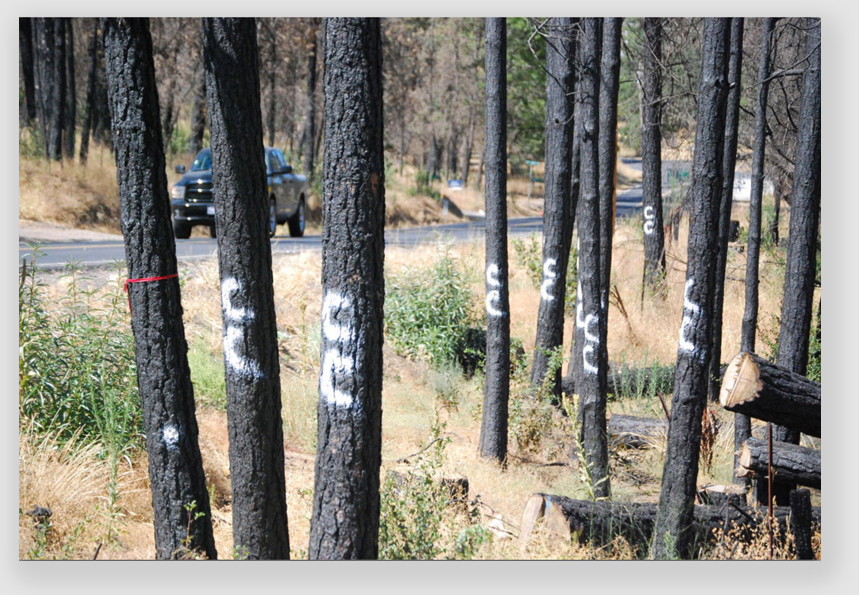
A squabble between an obscure state agency and the Federal Emergency Management Agency over possible American Indian sites is delaying work to remove 8,500 dead and dying trees that pose threats to public roads in the Butte Fire burn scar. Meanwhile, the Calaveras County Board of Supervisors on Tuesday is scheduled to consider paying nearly $1.6 million for observers and archaeologists to stand and watch as workers remove the trees. The observers and archeologists will be watching for American Indian cultural and burial sites and for habitat and wildlife such as the California red-legged frog, which is listed as an endangered species. The latest delay could push the first tree removal out to mid-October, said Public Works Director Jeff Crovitz. “This is out of our hands now,” Crovitz said. “We’re bystanders while this is sorted out…”
Tree trimmers have been out in force in Taylor in recent weeks, trimming back trees from around power lines. Host Dr. Paul Reeves, City Director of Communications and Marketing Karl Ziomek, Department of Public Services Director Keith Boc and DPS Deputy Director Glenn Nogiec addressed DTE tree trimming policies on his weekly podcast for the week of Sept. 19. The program, which was announced last year, is ongoing. Currently the company is focusing on areas north of Wick, between Beech Daly and Pelham roads. There is a portion south of Wick between Pine and Pardee that is being worked on. According to DTE, about two-thirds of the power outages in Taylor are caused by trees that are overgrown and damage power lines. Trees growing too close to power lines are a safety concern, according to DTE. Tree trimming is a common sense solution to the issue. The company’s strategy involves contacting all residents affected by the program by mail and marking the trees clearly…
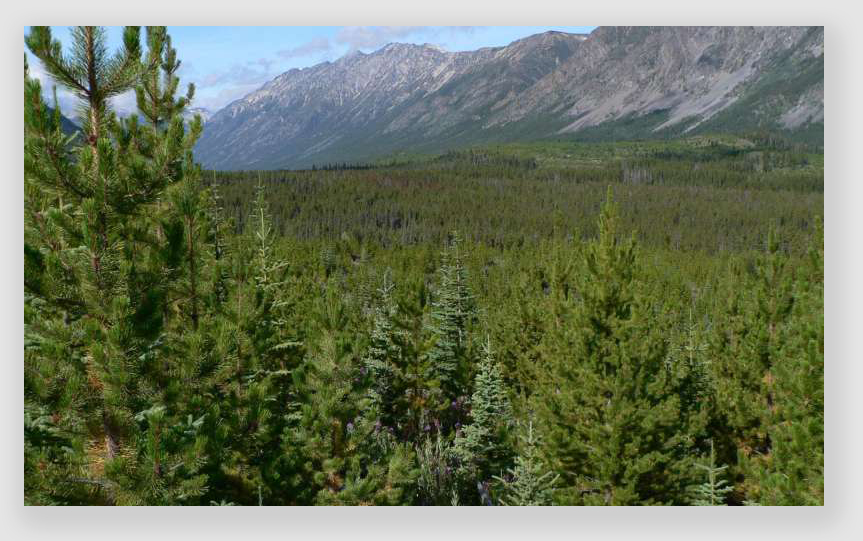 Phys.org, September 22, 2016: Different tree species use the same genes to adapt to climate change
An international research team from six universities, including Virginia Tech, works to better understand how trees – one of Earth’s most vital renewable resources – adapt to changing climates. Recently the team discovered that two distantly related tree species use the same genes to adapt to the range of temperatures in their geographical region. Their results were published Thursday in the journal Science. Jason Holliday, an associate professor of forest resources and environmental conservation in the College of Natural Resources and Environment and a Fralin Life Science Institute affiliate, as well as Haktan Suren, a Ph.D. candidate from the same department in the Genetics, Bioinformatics and Computational Biology program, are part of the team investigating how trees adapt to different climatic conditions. “A central question in biology is: how repeatable is the evolutionary process? One way to address this question is to study different species adapting to similar environments, and ask whether the same genetic solutions enable that adaptation,” said Holliday, who is also one of the study’s co-authors, along with Suren…
Detroit, Michigan, Free Press, September 22, 2016: Tree trimmer dies after fall in Warren
Authorities say a 46-year-old tree trimmer has died after he fell about 35 feet while working on a tree in Warren. Warren police Detective Sgt. Stephen Mills says the man was cutting branches near utility power lines on Monday when he fell. The Macomb Daily of Mount Clemens reports the man was taken to a hospital, where he was pronounced dead. Detroit-based DTE Energy Co. contracts tree trimmers to perform such work. DTE spokeswoman Stephanie Beres says in a statement: “Our hearts and prayers go out to the family during his difficult time.” She says the safety of workers is “our number one priority at all times…”
 Stockton, California, Record, September 20, 2016: Stately Stockton pine splits, falls in park
A stately Italian stone pine took an unexpected nosedive in one of Stockton’s many tree-studded neighborhood parks last weekend, splitting apart some 6 to 8 feet up its trunk. A police officer on patrol around Constitution Park at North Union and East Fremont streets first spotted the downed evergreen and reported it to the city’s Tree Division, a unit of the Department of Public Works. City Hall spokeswoman Connie Cochran said no one was injured when the tree fell, and no damage other than to the tree was reported. After speaking with a city tree specialist this week, Cochran said, “he doesn’t know why it split like that. It didn’t have a lot of sap. The needles were still green…”
For years, a pair of apple trees that stand on the grounds of the National Research Council’s sprawling headquarters outside downtown Ottawa have been considered descendants of the tree that famously led Isaac Newton to come up with his universal law of gravity. Now, some scientific sleuthing has thrown shade on that pedigree by revealing that the Ottawa trees may be imposters. “I felt like I opened a can of worms and it was my obligation to follow it through,” said Dick Bourgeois-Doyle, who inadvertently exposed the historic faux pommes while working on a book project celebrating the organization’s centennial. Mr. Bourgeois-Doyle who is the NRC’s secretary-general, joked that his discovery is akin to “killing Bambi’s mother.” He then added: “That’s not too much of an exaggeration.” But while the revelation has dealt a blow to a cherished piece of institutional lore, it has also prompted one Canadian scientist to rush to the rescue with a genuine descendant of the illustrious Newton tree…

A Balsam fir grown by Dave and Mary VanderVelven of Whispering Pines Tree Farm has been selected for the official White House Christmas display. White House officials were in Oconto Tuesday to select the tree, which stands at a whopping 18 and a half feet. It will be presented to First Lady Michelle Obama the day after Thanksgiving. Whispering Pines co-owner Dave VanderVelden has submitted trees for display for the past four years , and this year his efforts finally paid off. VanderVelden was quick to credit all of his employees for the winning effort…
Autumn foliage may be a sign of summer’s end, but Denver Parks & Recreation is using the explosion of color as a way to motivate people to care for the long-term health of their trees. “If you look back at late-1880s pictures of what Denver looked like, it’s clear that people built this urban forest,” said Rob Davis, city forester for Denver Parks & Recreation. “And trees have inherent value beyond just looking pretty by contributing to stormwater management, cooling, reduced energy use, air and water quality and increased property value.” Davis and his co-workers received a notice as to the value of Denver’s urban forest after the emerald ash borer moved into Colorado. The green, metallic-colored beetle native to Asia has destroyed tens of millions of ash trees in the U.S. and Canada, and damage is estimated in the billions of dollars…

The City of Seattle is suing people it says are responsible for illegally cutting 150 trees in West Seattle. City Attorney Pete Holmes says the city is seeking $1.6 million in damages. The tree cutting happened in January on 1.5 acres of city property along the 3200 block of 35th Avenue Southwest. The neighborhood is mostly view property that looks back on downtown Seattle, the Cascades, and Mount Rainier. The city says someone took a chainsaw to 150 trees, leaving parts of the trunks standing. Their branches were left strewn in every direction. “No one has yet come forward to give the City the full story of what happened despite SPD’s best efforts and extensive investigation. However, we are satisfied that we now know enough to proceed with civil lawsuits,” said Holmes in a statement. Holmes says he expects more people involved will be found. The city is alleging those responsible should have known it was illegal to cut down trees that are on city property, and that no permits were obtained…
The tree’s once-thick canopy has been gone for a while now, replaced by countless bare, spindly branches where green leafy limbs once were abundant. The thinning started a year or two ago. Who can say, exactly? Like anything or anyone in declining health, you don’t always know the moment the descent has begun, but you know when it’s in full force. So when the ash tree in the parkway at our house failed to bring leafy branches this past spring, we knew the end was near. The Emerald Ash Borer – or EAB as it’s known – first appeared in Naperville in 2008. Since then, the city has undertaken an aggressive treatment program to save as many parkway ashes as possible. Throughout Naperville you can find mature, healthy ashes that remain seemingly unaffected. They’re among the 87 percent of trees whose treatments have been successful since 2012, according to city statistics. But not all trees are so lucky…
 The Dalles, Oregon, Chronicle, September 20, 2016: Dying fir, pine trees dot horizon
It is not unusual to see orange, rust and brown foliage dotting the landscape during the fall months, but when evergreens start changing colors, it’s indicative of a problem, Oregon Forestry Department officials say. Chet Behling, stewardship forester for ODF’s office in The Dalles, said the agency protects about 148,000 acres from fire in Wasco County. This year, 12,300 acres were mapped as being affected by drought-related stress and/or bark beetles, he said. That is nearly double the 6,700 acres affected in 2015 and ODF is now asking that landowners with tracts of Douglas fir and Ponderosa pines help fight the problem by removing damaged and dying trees. “The affected areas vary greatly in severity,” said Behling. “Some may have 50 dead trees per acre or more, while others may have only a couple dead trees per acre…”
The city electrical utility cut down a Black Locust tree in our back alley that was growing into the power lines. Before you clutch your pearls, this is a fast-growing, invasive tree that is considered a weed in my region (Seattle, King County, Washington), so getting rid of it is a good thing. I have also planted a couple of other, nicer, trees. The problem is that the stump is multiply and rapidly sprouting and it has a violent will to survive. How do I deal with the stump and its sprouts so that I don’t end up with 15 additional locust trees? They are showing up elsewhere in the alley and the yard and even the neighbor’s yard. I asked an arborist, who recommended stump grinding, but I am skeptical because that solution doesn’t address the fact that the sprouts will just make new trees elsewhere. Online resources recommend treatment with glyphosate herbicide, but I would want to have a professional do that because I’m concerned about chemical hazard. Other resources recommend covering it with a tarp for a couple of years to cut off sunlight, but that’s not ideal for a variety of reasons…

A San Francisco woman who was paralyzed when she was hit by a falling tree limb in Washington Square has filed a claim against the city for negligence. Emma Zhou, 36, was watching her daughters play in the park’s playground before a dentist appointment last month when she was hit by a 100-pound branch that splintered off a Canary Island pine tree. She sustained a brain injury and severed spinal cord, and is now paralyzed below the waist. In a release, Zhou’s attorney said the tree, which was maintained by the city’s Recreation and Park Department, was improperly pruned using a “tree topping” method. The upper part of the 50-foot-tall tree was removed, allowing its lateral branches to grow more quickly, the statement said. “The city … knowingly failed to warn of, eliminate or protect the public from these known risks,” the claim stated. “While the city has reported that the trees are healthy, and described this particular incident as a ‘freak accident,’ it is unknown whether the city has looked for and eliminated other hazardous branches created by the topping.” Doctors estimate that Zhou will need to spend another 16 months in the hospital for rehabilitation. Her husband, Tony Tan, said it has been a major hardship for the family as medical bills mount. Last month, the family launched a GoFundMe to raise $50,000 for Zhou’s care…
Los Altos, California, Nancy Carlson’s Real Estate News, September 19, 2016: Tree lives matter
Trees help to beautify neighborhoods, increase property values, provide oxygen, and provide shade during summer months. But the prolonged drought has affected trees throughout Santa Clara County, and homeowners need to be aware that their efforts to save water may be contributing to the death of their trees. The Department of Agriculture’s Forest Service reports that red turpentine beetles (“bark beetles”) specifically target pine and oak trees species stressed by factors such as drought. Basically all of Santa Clara County has been hit with this issue. Listed below are a few tips to ensure that your trees will be able to thrive and withstand both the drought and bark beetle infestation…
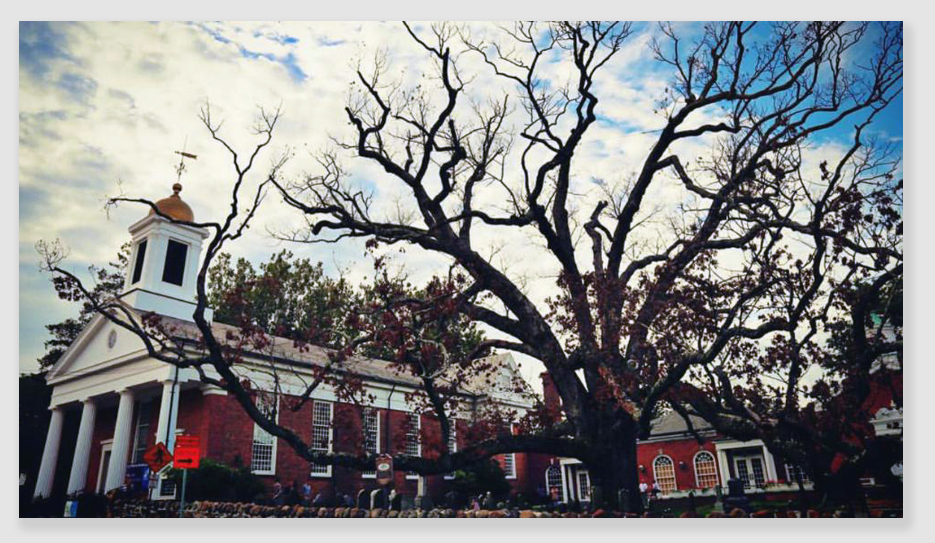
Residents of Basking Ridge, New Jersey, are mourning the imminent loss of North America’s oldest white oak tree. For at least 300 years, the magnificent tree shaded the Basking Ridge Presbyterian Church, which was built intentionally beside the tree. The 600-year-old tree known as the “Holy Oak” is an integral part of the community. “Everybody that has ever lived here has recognized that tree as sort of a symbol of home,” parishioner John Klippel told CBS News. According to NJ.com, the tree has been a witness to our country’s history. It predates Christopher Columbus. George Washington picnicked under its shade and famous English evangelists James Davenport and George Whitefield preached to more than 3,000 people beneath the tree in 1740/ The tree, which has withstood wars and weathered thousands of storms, stands about 100 feet and the circumference of its trunk is 18 feet. It has a branch spread of about 130 feet side to side. For years, tree experts tried to prolong the oak’s life. During a devastating drought in the 1970s, residents were told they could not water their lawns, but the tree continued to be watered, according to the Washington Post. Now the experts say there may be nothing more they can do…
Cleveland, Ohio, Plain Dealer, September 19, 2016: Trees disappear from homeowner’s lawn
A woman arrived home to find that a tree in her yard had been cut down and removed without her consent or knowledge. The homeowner told police that she was going to contact the power company and Olmsted Falls city government to find out if either entity was involved in the tree’s removal…

Twigged where you’ve seen this sycamore before? It’s the one that starred in Robin Hood: Prince of Thieves, and it’s up for Tree of the Year. The Sycamore Gap tree, which grows in a dramatic dip by Hadrian’s Wall in Northumberland, featured in the 1991 film starring Kevin Costner. It’s been nominated alongside the original Bramley apple tree in Southwell, Notts, planted from a pip over 200 years ago. Cuttings were taken to grow in a nursery in 1856 on condition they were named Bramley’s Seedling…
A New York state lawmaker is proposing help for property owners who must pay to remove trees infested with an invasive beetle. Buffalo-area legislator Sen. Tim Kennedy is proposing a 50 percent tax credit for the removal of trees on private property that have been damaged by the emerald ash borer. He also wants to require municipalities that are planting new trees to vary the species to avoid widespread damage by any one disease or insect invasion. Under Kennedy’s proposal, an urban tree population would consist of no more than 10 percent of a specific species…
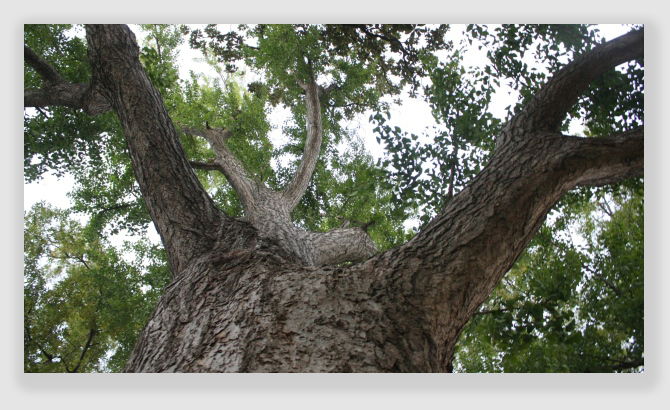
Have you ever taken a stroll down a tree-lined street in the fall in Vancouver only to stop and wonder, “Wow, what is that smell?” The odds are you walked past a gingko biloba tree — one of the most popular urban trees in Vancouver. Each fall, the trees produce edible nuts, and according to ‘Tree Guy’ David Tracey, they’re rumored to have certain medicinal properties. But they smell bad. Like, really bad. “When they rot on the ground … some people say it smells like dog droppings, some people say it smells like vomit.” But Tracey says you shouldn’t let the smell distract you. The trees are living legends. Gingko biloba trees have grown for nearly 270 million years — they’re one of the oldest living species of trees on Earth. They predate the dinosaurs, which started taking strides tens of millions of years later…
It’s a massive pile of trees, growing since summer storms started in June and now one North Dakota city is finding a solution for it, but it comes with a price-tag. The trees were damaged and knocked over during storms and the City of Grafton is storing them off of Highway 81. Contractors recently gave bids to the city for removal estimated to cost about $30,000. If the bid is accepted the funds would hit the city’s coffers. It’s an issue causing many areas to tap into their emergency funds. “Smaller communities, you know they don’t have large budgets to operate with to start with so when you get a lot of unexpected costs, a lot of costs you didn’t plan in the budget, you know those are hard on those cities,” said Brent Nelson, Walsh County Emergency Manager.The Walsh County Emergency Manager recommends taking care of any damaged trees on your property before winter hits…

A potential safety issue at Nut Tree Airport in Vacaville has resulted in the removal of 1,000 trees. The plan was approved by the board of supervisors on Tuesday, and work has already begun. Nut Tree Airport manager Dave Daly says the removal is critical and has been in the works for years. Daly is certain that by taking away this existing hazard, it will provide for safer flying experiences for pilots and the public. Pilot Alan Johnson has been flying out of Nut Tree Airport for about eight months and has certainly noticed a red flag. Johnson, who was checking on his Piper Cherokee Warrior on Wednesday, says the trees that line the runway can threaten the pilots’ ability to land…
The College Park City Council unanimously voted Tuesday to remove trees that residents said led to excessive noise and sewer line interference on Wichita Avenue. The city planted the trees without resident approval in 1999, according to council records. But the council rejected a 2013 proposal to remove the trees because of opposition from the city’s Tree and Landscape Board, according to a Sept. 6 mayoral update. “I think the city made a mistake in this situation [17] years ago when we planted those trees, and that we failed to consult with the residents to see if that was what they really wanted,” Wojahn said. Residents told the council that the tree species, Zelkova, is the issue, District 3 Councilwoman Stephanie Stullich said. There are only four Zelkova trees planted in College Park, Stullich said, all of which are located on Wichita Avenue…
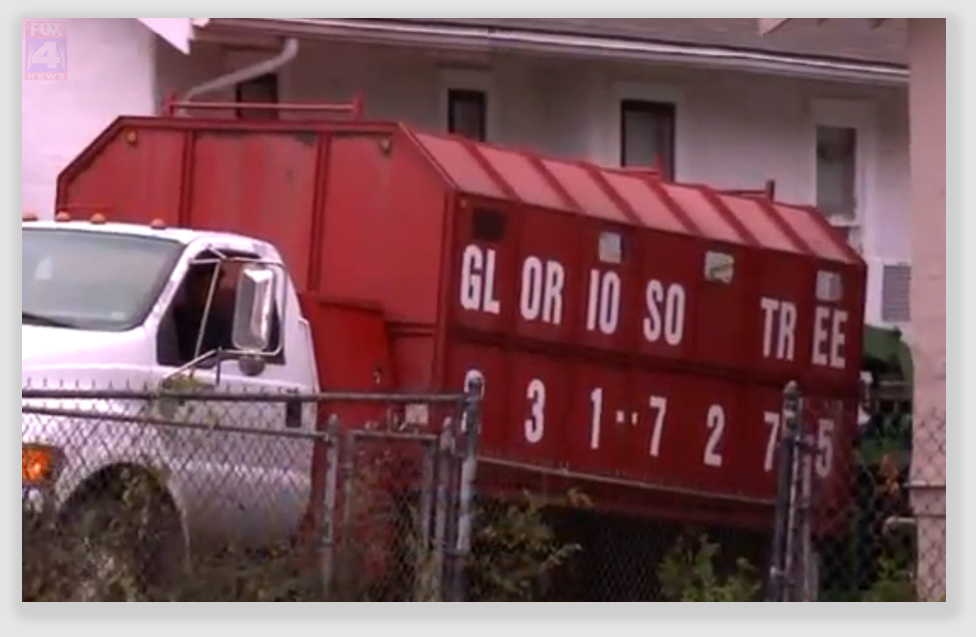
The sound of a chain saw. That’s a beautiful noise to Stella Turner. “Oh I feel great, great, great,” said Turner. Which is far different than she was feeling last week when a different tree company took her money, but never did the work — leaving the 80-year-old Turner in a bind. When Glorioso Tree Service heard what happened it volunteered to do the work for free, trimming one large tree and removing a dead one. “I don’t enjoy seeing elderly people or any people for that matter get scammed by a couple of bad people that put a bad name on the industry as far as tree service,” said Vincent Glorioso. Glorioso offered a few tips on how not to get taken by a bad tree company. For starters, never pay for a tree trimming job upfront. As with many legitimate tree companies, Glorioso Tree Service won’t accept a dime until after the job is done…
Public outcry has brought an abrupt stop to a tree removal project at Chico High School. The trees are making a serious mess of the school’s new football field and track. Removal of eight sycamore trees was put to a stop immediately after the Chico Unified School District received complaints from neighbors. But it was too late. “Three were removed before we were able to stop them,” said Chico Unified School District Construction Manager Julie Kistle. The school district approved to remove the trees surrounding the new Chico High football field on Aug. 24…

The Laguna Beach City Council on Tuesday delayed voting on whether to add to existing rules regarding the trimming and removal of trees deemed the responsibility of the city until it knows more about the associated costs. The council, though, appeared receptive in theory to two staff recommendations. One focuses on requests for maintenance of trees in areas identified on maps but not deemed official city property. This could prove costly if it involves title searches and surveys to determine who owns the land. The second proposal concerns requests for the removal or trimming of a city tree that the complaining party says is blocking his or her view of the surrounding landscape. This could prove costly because, as Councilman Bob Whalen said, there would be ongoing maintenance costs to keep the tree from growing back into sightlines. In the latter case, if excessive trimming is required, an arborist would be called in. According to the suggested policy, the requester would pay the bill, which the city said could range from $1,000 to $5,000 depending on the type of tree, its age and size…
Whole Foods Magazine, September 14, 2016: Woodman, spare that tree
I recently witnessed a small tree that was still alive and thriving being cut down in a very uncaring manner. Apparently, someone feared its roots would damage the foundation of the house. As a fan of eco-feminism popularized by Vandava Shiva, I was horrified to see an act of deforestation right in my own front yard. Today’s top global political issue, second only to terrorism and war, is climate change and global warming. The destruction of world forests and their accompanying biospheres has been found to be a major cause of the widespread global environmental problems most pessimistically described by the world’s environmental pundits. Conversely, reforestation is a major focus in developing countries and throughout the world to combat climate change. Here are a few facts and tips to remind us of the importance and benefits of protecting trees…
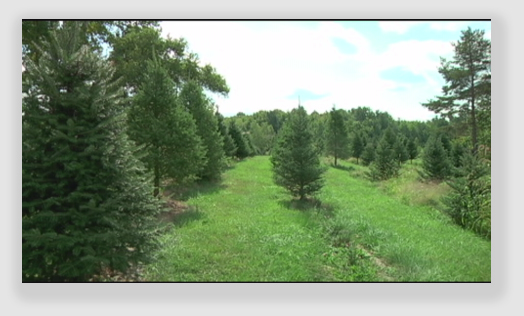
It’s no secret that we’ve had a shortage of rain this summer and we are still below average. This affects all farms across Upstate New York, including Christmas tree farms, which don’t often come to mind when thinking of summer crops. While some around the Southern Tier are worried their summer plants may suffer under the dry and hot conditions this season, some local Christmas tree farmers are worried this drought may put a damper on their holiday plans…
Western Farm Press, September 14, 2016: Over-irrigation can cause walnut tree damage during drought
It may be difficult to think of over-irrigation as a likely culprit for damage to walnut trees during a drought. But that’s exactly what two University of California (UC) researchers believe occurred in some Tulare County walnut orchards. Not only did they find foliar chlorosis they blame on over-irrigation in some walnut blocks in the county in late May and early June. They also came across foliar scorch in August believed caused by standing water that reflected extreme heat, much as heat reflected from a lake can give you a sunburned face despite you wearing a broad-brimmed hat…

It’s time for “Maxwell’s Silver Hammer” to come down on Sean Lennon’s tree. A Manhattan judge has ordered the musician to “remove as immediately as practicable” the 70-year-old Ailanthus tree that is rooted in his front yard but leaning into the stoop of his neighbors, the parents of actress Marisa Tomei. The Greenwich Village soap opera on West 13th St. has been broiling for years as the tree — leaning toward the sun to the west — has slowly twisted and dislodged the wrought iron handrail on the stoop of the Tomei townhouse. Unable for years to communicate directly with Lennon, who bought his townhouse in 2008 but only recently started to renovate, Gary Tomei, the actress’ father, sued Lennon last year for $10 million…
Oconee County officials said a man was seriously injured in an equipment accident on Tuesday. Fire chief Charlie King said the incident occurred on Cody Road when a commercial tree-trimming crew was working along the roadway. King said a large tractor with a saw on the end of it used to trim tree limbs backed over a company employee. The victim was airlifted to Greenville Memorial Hospital. Family identified him as Christopher Carranza is in the intensive care unit and is stable but sedated. He reportedly has bleeding in his brain…
 The Ground Report, September 13, 2016: When tree lopping is a must
While many people point out the disadvantages of tree lopping, there are more people including arborists and homeowners who highlight its advantages. You, as the homeowner, have to decide which camp you fall into, so to speak, after considering the instances when tree lopping or trimming is a must. Even trees require looking after especially in residential areas. Tree lopping professional trim the trees of their unhealthy, damaged, or dead boughs and branches in both young and old trees as a way to promote their optimum health. This is because unhealthy boughs and branches can encourage the fast growth of microorganisms in them that, in turn, will have adverse effects on the healthy parts. Otherwise, your trees will have an unhealthy look, no thanks to the obviously dead branches and wilted leaves, which will take away from the overall beauty of your garden. Tree loping also facilitates the exposure of the live limbs (i.e., healthy branches) to sunlight and the free flow of air especially near the canopy. Keep in mind that trees require a sufficient amount of sunlight for photosynthesis, the process by which plants manufacturer food, and air for survival…
I have a huge, old ponderosa pine in my front garden in Vancouver, Washington. With all the news reports about trees falling during storms, I have worried if my tree is at risk of being next. And many of my neighbors have large, native Douglas firs or cedars in their yards. Here in the Pacific Northwest we have ideal conditions for growing trees. Our native trees grow big here—that is what they do. It is frightening sometimes to hear news reports of downed trees during our winter storms. You may start to ask yourself questions like: Should I concerned about the stability of my trees? Could mine be next? Am I in danger? I began doing some research and discovered there are usually clear warning signs that a tree is potentially unstable. A tree doesn’t just fall over. There is almost always an underlying condition that led to the tree’s failure, though this isn’t always reported on by the media. Being a careful observer and noticing changed in your trees, especially over time, helps to reduce risks or problems…

“I took him back there myself and showed him that rotten tree,” said Mildred Davis about the dangerous tree she showed Lamar Harris who purchased the property next door in November of 2015. “I said get this tree cut down because I don’t want it to fall on my porch.” But Davis says Harris told her he was busy with multiple other properties. And just like Davis feared, a large part of the tree fell onto her home Saturday night…
One of the better known sweeteners today is maple syrup. It is a 100% characteristic sweetener that is guaranteed to be more nutritious and more beneficial than sugar. There are numerous cases about maple syrup all over, yet we should isolate the truths from the fiction. According to health.com, maple syrup is produced using the sugary flowing liquid (sap) of maple trees. It can support your invulnerable framework, age-confirmation your skin, and quiet tummy inconveniences. What might flapjacks be without the succulent integrity of maple syrup? The nectar of the treat divine beings makes it a fixing you ought to have on deck at all times. On the off chance that you have ever thought about how to make your own, here goes. To start with discover a maple tree and bore an opening the same width as the tap you are utilizing at an upward edge. It ought to be around three crawls profound ideally. Embed the tap, and run the hose to your container, or a 6-gallon container…
Thirst is harder for trees to endure than hunger, because they can satisfy their hunger whenever they want. Like a baker who always has enough bread, a tree can satisfy a rumbling stomach right away using photosynthesis. But even the best baker cannot bake without water, and the same goes for a tree: without moisture, food production stops. A mature beech tree can send more than 130 gallons of water a day coursing through its branches and leaves, and this is what it does as long as it can draw enough water up from below. However, the moisture in the soil would soon run out if the tree were to do that every day in summer. In the warmer seasons, it doesn’t rain nearly enough to replenish water levels in the desiccated soil. Therefore, the tree stockpiles water in winter…
Science Daily, September 12, 2016: Trees recognize roe deer by saliva
In order to protect themselves against roe deer browsing, trees purposely put up a fight. By studying young beeches (Fagus sylvatica) and maples (Acer pseudoplatanus), biologists from the Leipzig University and the German Centre for Integrative Biodiversity Research (iDiv) have now found out that trees are able to recognise precisely whether a branch or bud has been purposefully nibbled off by a roe deer — or just randomly torn off by a storm or other mechanical disturbance. The saliva of the animals gives them the signal. If a deer feeds on a tree and leaves its saliva behind, the tree will increase its production of salicylic acid. This hormone, in turn, signals to the plant to increase the production of specific tannins. It is known for some of these substances that they influence the feeding behaviour of roe deer, with the result that the deer lose their appetite for the shoots and buds. In addition, the saplings increase their concentrations of other plant hormones, growth hormones in particular. These hormones enhance the growth of the remaining buds to compensate for the lost ones. “On the other hand, if a leaf or a bud snaps off without a roe deer being involved, the tree stimulates neither its production of the salicylic acid signal hormone nor the tannic substances. Instead, it predominantly produces wound hormones,” explains Bettina Ohse, lead author of the study. The scientists reached their conclusions by outsmarting the saplings: They simulated a roe deer feeding on them by cutting off buds or leaves and trickling real roe deer saliva on the cut surface from a pipette. Shortly after, they recorded the concentrations of the hormones and tannins in the saplings…
The Weather Channel, September 10, 2016: This isn’t how he planned it
Video of do-it-yourselfer homeowner with an ax, who suffers an enormous fail when he decides to cut down a tree in his front yard…
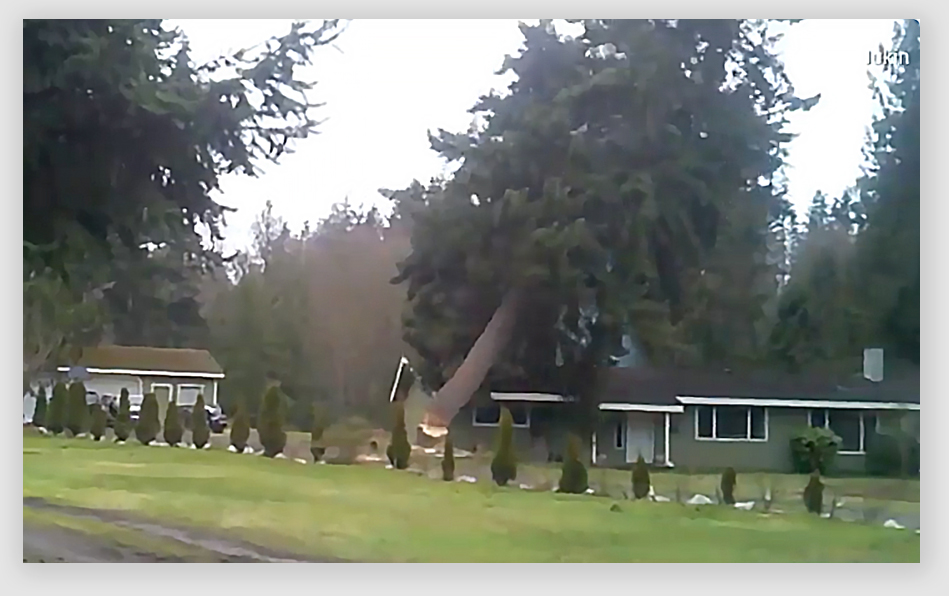
Frederick, Maryland, News Post, September 10, 2016: Chlorotic condition of oak tree
The foliage of most trees is a deep shade of green. When leaves deviate from this, it could be the result of an insect, disease, or environmental condition that is impacting the tree. When the leaves of acid-loving plants like pin oak, red oak, or holly are more yellow, this is known as a “chlorotic” condition. In most cases, this is the result of the plant growing in a soil with a basic pH, where the essential element, iron, is unavailable. Iron is necessary for the green chlorophyll that leaves need to get their energy from the sun; when this element is absent, leaves have a yellowish, “chlorotic,” cast to them, and the plant suffers from a lack of energy. Conditions that limit air movement in the soil, such as too much water, compaction, and impervious material covering the soil, can also result in chlorotic conditions…
 London, UK, Telegraph, September 12, 2016: Do trees have feelings too? One expert says they do
Years ago, I stumbled across a patch of strange-looking mossy stones in one of the preserves of old beech trees in the forest I manage. Carefully, I lifted the moss on one and found tree bark. These were not stones, after all, but old wood; it was obviously attached to the ground in some way. I scraped away some of the bark until I got down to a greenish layer. This indicated the presence of chlorophyll, which makes new leaves green: this piece of wood was still alive! I suddenly noticed that the remaining “stones” were arranged in a circle. I had stumbled on the gnarled remains of an enormous ancient tree stump. The interior had rotted long ago – a clear indication that the tree must have been felled at least four or five hundred years earlier. But how could the remains have clung on to life for so long? It was clear that the surrounding beeches were pumping sugar to the stump to keep it alive. Trees share food with their own species for the same reasons as human communities: there are advantages to working together. On its own, a tree cannot establish a consistent local climate. It is at the mercy of wind and weather. But together, many trees create an ecosystem that moderates extremes of heat and cold, stores a great deal of water and generates a great deal of humidity. And in this protected environment, trees can live to be very old…
Columbia, Missouri, Tribune, September 11, 2016: City leaders looking at tree saving policy
After trees on scenic Rock Quarry Road were cut down instead of trimmed, city leaders will review tree-cutting policies for scenic Columbia areas. Earlier this month, trees along Rock Quarry Road just south of Stadium Boulevard were “clear cut” instead of given a standard trim by city employees, said Barbara Hoppe, a member of the city’s Rock Quarry Road Scenic Roadway Stakeholder Advisory Group. Rock Quarry Road is the only road in Columbia which has been granted a “scenic roadway” overlay, which is a designation intended to promote conservation and enhancement of the scenic views and natural beauty of the landscape. “They were supposed to come in and do some trimming, but that’s not really what happened,” said Hoppe, who also is a former Sixth Ward councilwoman. “What needs to be done is some replanting” of the trees “and to put some sort of policy in place so this doesn’t happen again…” Tampa, Florida, WFTS-TV, September 1, 2016: Warning signs your trees are at danger of falling
Even before Hermine became a hurricane, a massive tree branch had crashed down into a home in Seminole Heights in Tampa. Thankfully, all seven people inside escaped unharmed, but neighbors tell ABC Action News that there were warning signs ahead of time. Other big branches from the same tree had also fallen recently, and tree trimmers say that usually means there’s more danger to come. “It’ll look healthy on the outside, and you would never think. But it’s no good in the center,” explains Devin Wilson. Wilson runs his family’s tree trimming business, Dwayne Wilson Tree Services, in Tampa. Even when there’s little wind, says Wilson, just a lot of rain can ruin a tree. “A lot of times you get a ‘V’ in a tree, and it collects water down in the ‘V’” explains Wilson. “Eventually over time the water rots the center of the tree out. After that, a lot more rain can weigh down a branch until it falls…
An ordinance establishing new tree removal and forest management guidelines in Hopewell Township was recently discussed by officials during the latest committee meeting. The changes, which were introduced during the Aug. 22 meeting, deals primarily with utility-line construction. Included in the ordinance are new provisions to address performance and maintenance guarantees, according to Township Administrator Paul Pogorzelski. “With this particular ordinance, we went through the environmental commission,” Mr. Pogorzelski said. “They made some changes, and (the administration) made some new changes to help us manage our forests going forward.” When Township Committeewoman Julie Blake asked if there was anything else about the ordinance that the general public should be aware of, Mr. Pogorzelski said the impetus behind the ordinance stemmed from past issues with easements. “What we’ve seen is a situation where we had a 280-foot wide power line easement, and it’s only half cleared, so we have all this other wooded area,” he said. “Whether it’s new electric power lines or new pipelines or whatever, it makes sense when you are going through major forested (areas) that there be a protective measure for that…”

Break out the mums! No, sorry, we don’t mean the Mumm champagne. We’re talking fall flowers here. Mums always seem like the official flower of autumn. But there are many other ways to beautify your home’s exterior with greenery during the season of harvest. “We usually think of planting only in spring, but fall is an ideal time to plant native shrubs and trees, to allow them to concentrate on building their root structure over the winter,” said Sally Stovall, an Oak Park resident and one of the co-founders of local environmental advocate Green Community Connections and the One Earth Film Festival. Green Community Connections and another environmental advocate, West Cook Wild Ones, are making it easy to plant to your heart’s desire and also create habitats that will attract birds, butterflies and other beneficial pollinators to your yard by planting native trees and shrubs. The two organizations are holding a fall native tree and shrub sale online at wild-ones-west-cook.myshopify.com through Sept. 18…
Two decades ago, while researching her doctoral thesis, ecologist Suzanne Simard discovered that trees communicate their needs and send each other nutrients via a network of latticed fungi buried in the soil – in other words, she found, they “talk” to each other. Since then, Simard, now at the University of British Columbia, has pioneered further research into how trees converse, including how these fungal filigrees help trees send warning signals about environmental change, search for kin, and transfer their nutrients to neighboring plants before they die. By using phrases like “forest wisdom” and “mother trees” when she speaks about this elaborate system, which she compares to neural networks in human brains, Simard’s work has helped change how scientists define interactions between plants. “A forest is a cooperative system,” she said in an interview with Yale Environment 360. “To me, using the language of ‘communication’ made more sense because we were looking at not just resource transfers, but things like defense signaling and kin recognition signaling. We as human beings can relate to this better. If we can relate to it, then we’re going to care about it more. If we care about it more, then we’re going to do a better job of stewarding our landscapes…”

Schembri moved to Rutherford about eight years ago. He renovated his house on East Pierrepont Avenue, adding a picture window that looked out on a row of oak trees. “I don’t know trees that well, but they were certainly some of the biggest trees in the neighborhood,” he said. But about two weeks ago, the trees were gone. The lot where the trees had stood on the corner of East Pierrepont and Wheaton Place had been cleared, not only of the oaks but of the old house that stood there. The owner listed in tax records did not return a call seeking comment. Schembri says has never met him, and neither have his neighbors, but he feels the neighborhood is worse off. “Now when I look out I see everybody’s garages,” he said. The Rutherford Shade Tree Commission, which was only formed in March and has sway only over trees located on public property or the public right-of-way, says it has no control over trees on private property. Steve Addeo, the chairman of the commission, said some kind of ordinance governing private trees was warranted in Rutherford, which calls itself the ‘Borough of Trees.’ But since the commission is so new, it might be a while until it’s put togetherSteve Addeo, the chairman of the commission, said some kind of ordinance governing private trees was warranted in Rutherford, which calls itself the ‘Borough of Trees.’ But since the commission is so new, it might be a while until it’s put together…
This summer, there seems to be an increase in trees that are showing signs of yellow or pale green leaves, either occurring on a few branches or distributed over the entire crown. Usually the leaves are greenest along the leaves’ larger veins, then growing paler in between them. This chlorophyll loss is a primary symptom of chlorosis. In extreme cases, leaf edges may appear “scorched,” or leaves may drop prematurely. Species that are most susceptible to chlorosis in Michigan are pin or white oak, white pine, birches and red maple. Many conditions can cause chlorosis in trees. The most common are various nutrient deficiencies, extreme pH levels or drought. Sometimes these conditions can combine to create more favorable conditions for chlorosis, and this past July’s heat and drought may have contributed to an increase in these occurrences. Some nutrients that trees need to produce chlorophyll, including iron and manganese, may be deficient or depleted in the soils of some local areas. In other cases, excess potassium or phosphorus may actually limit accessibility of these critical nutrients. A principal cause of nutrient availability, however, is soil pH. Soils can be either acidic or alkaline, typically ranging from extremes of 7.5 (highly alkaline) to 4.5 (highly acidic) on an overall scale of 0 to 14. Urban soils in particular are more likely to be more alkaline, as are areas of the state with limestone bedrock. Sandy soils and special features like bogs are more acidic. In either case, if soils are above 6.5 or below 5.0, the nutrients needed for healthy chlorophyll production may be limited. The Morton Arboretum’s site contains more information on important soil characteristics…

A tree grows in Willcox. Or at least it did – for some 88 years. A rather sad-looking tree in Railroad Park became a topic of conversation recently on the local social media group “Willcox AZ Matters,” when its administrator, Susie Alexander, asked what the community could do to save it. “I am heartbroken to see it in this condition,” she said in her post. Contacted last week, Willcox City Manager Ted Soltis said that staff has been monitoring the condition of the tree in question — a Siberian Elm – for a long time now. “It is really heartbreaking,” he told the Range News. “Although the City paid a professional tree expert to trim the trees two years ago in hopes of prolonging the life of the trees, at least one of the trees will more than likely have to be cut down as it now poses a safety hazard,” he said last Wednesday. “We are, however, in contact with the tree expert who has trimmed the trees several times in the past to see if there is anything we can do to prolong the life of the tree. We all want to see them live the longest life possible.” The ailing tree was cut down on Monday…
A man arrested this week on suspicion of damaging trees in West Jordan allegedly admitted to the destruction, but told police that “the trees hurt him first.” Wesley James Pettis, 24, of West Jordan was arrested Sunday, after police were called to an apartment complex on a report of a male who was acting suspiciously and noted that he closely resembled the description of the person suspected in a recent string of tree vandalism. Pettis admitted to intentionally damaging trees, but told officers “the branches were low and hurting him, so he would break them,” according to a probable cause statement filed with the Salt Lake County jail, where Pettis was booked. “While breaking the branches, it would hurt his hands, so he damaged more of them,” Pettis allegedly told police…

Marcelino Cruz took the same route each evening, driving along Rock Creek Parkway in Northwest Washington on the way home from his job at a tree-service company in Fairfax, his family said. But Monday afternoon, as he was driving in his 2013 Toyota Corolla, a massive tree fell on the car, crushing the roof and trapping Cruz inside. He was rescued when about 30 bystanders and police lifted the tree and pushed the car out from under it. Cruz remained hospitalized Tuesday with multiple injuries. The tree, which landed on the windshield, was estimated to be about two to three feet in diameter, according to those who helped move it. According to his son, Cruz, who is 45 years old, came from El Salvador in the late 1980s and has worked in the tree-service business for nearly 30 years…
The UA has plenty of special features to offer, but one of its more overlooked aspects is its abundant plant life—specifically, that of the Laboratory of Tree-ring Research. UA’s tree-ring lab right is one of the best in the country, and the only only one located throughout the entire southwest, at that. “This is the biggest and most diverse lab in the country,” said Ronald Towner, Ph.D., associate professor of anthropology. “We do a tremendous range of activity in this lab revolving around trees. Most other labs in the Western Hemisphere were started here.” The lab studies dendrochronology, otherwise known as tree-dating, which is the study of discovering the age of a tree based on its inner rings. Towner said that scientist Andrew E. Douglass, the founder of the lab, actually started the study of tree rings right here in the Grand Canyon State. One could argue there is an essential beauty that lies behind tree-ring research…
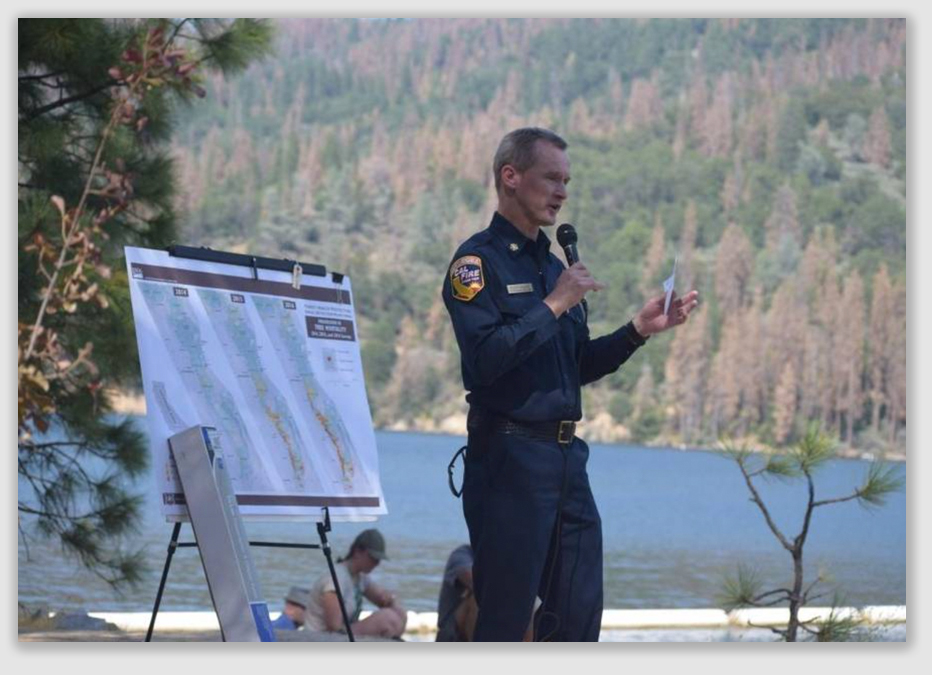
As the nation celebrated the Centennial of the National Park Service last week, the California Society of American Foresters was celebrating its own 100-year anniversary, but with a more somber tone. Instead of outdoor concerts or joyous historical presentations, the foresters spent two days surrounded by dead trees in Eastern Madera County. “Welcome to ground zero,” Madera County Supervisor Tom Wheeler told the crowd of around 90 as he waved towards all the dead trees around Bass Lake’s Wishon Point Campground. “This is it. It’s absolutely devastating to all of us, and you can see for yourself how huge of a problem it is.” The foresters society, or SAF, spent two days based at Chukchansi Gold Resort & Casino, with a tour of the Calvin Crest and Bass Lake areas on Friday for presentations such as the spread of tree mortality, and how to prevent it…
Eversource is trimming trees in an effort to prevent power outages caused by tree limbs weakened by the ongoing drought. The utility company said some customers have lost power because trees are falling for no apparent reason other than the drought. On Thursday, a tree fell in Franklin on a sunny day with low wind, causing an outage. Eversource said the dry, hot weather was to blame. The company said the drought has weakened trees and left the earth so dry that root systems have no moisture to cling to. Eversource said it hired a team of arborists to examine the trees along the power lines to try to spot trouble from the drought before it leads to a power outage. “Our contract arborists are going around doing the regular trimming, but they’re briefed and trained to look for and spot the impact drought is having on trees. What we are seeing is some trees changing colors, loosing leaves and branches. It’s only August, late August, but that could be a sign that the tree is dead or dying from the drought,” Eversource spokesman Martin Murray said…
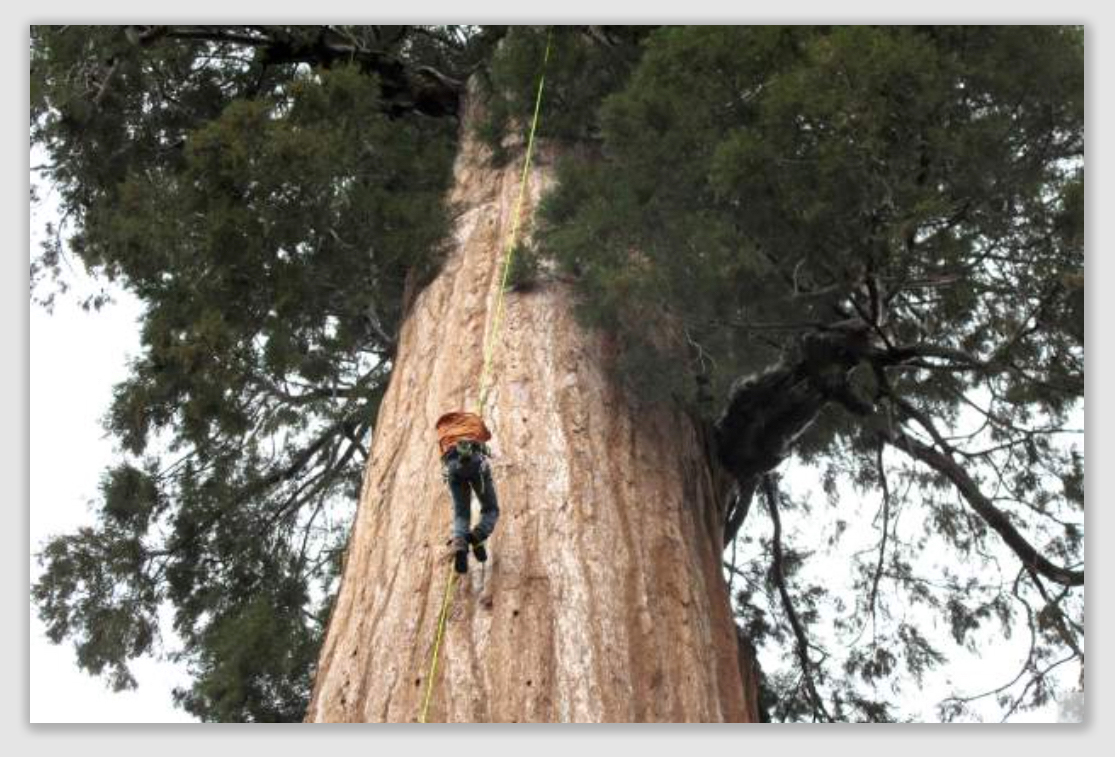
At the height of California’s fierce wildfire season, the Sierra Nevada and North Coast forests are choked with tens of millions of dead and dying trees, from gnarly oaks to elegant pines that are turning leafy chapels into tinderboxes of highly combustible debris. Ground crews wielding chain saws, axes and wood chippers are braving the intense summer heat in the Sierra’s lower elevations, where most of the pine trees have died. The devastation and danger are greatest in the central and southern Sierra Nevada, where the estimated number of dead trees since 2010 is a staggering 66 million. Scientists say rarely is one culprit to blame for the escalation in the state’s tree deaths, and the resulting fire hazard. Rather, destruction on such a broad scale is nearly always the result of a complex convergence of threats to forest ecosystems. Chief among them is a severe, sustained drought in the Sierra Nevada that is stressing trees and disabling their natural defenses. Climate change is raising temperatures, making for warmer winters. No longer kept in check by winter’s freeze, bark beetle populations are growing. Separately, a nonnative, potent plant pathogen is thriving in the moist areas of the North Coast, introduced to California soil by global trade. Opportunistic fungi are standing by, ready to finish the kill…
Salt Lake City, Utah, KSTU-TV, August 29, 2016: Man arrested in West Jordan tree vandalism case
Officers have arrested 24-year-old Wesley J. Pettis in a string of tree vandalism in West Jordan. Authorities said they went to investigate calls of a man acting suspiciously at the Willow Cove Apartments near 9300 S. Redwood Rd. Sunday. They spoke to Pettis and realized he resembled a suspect in a recent case of tree vandalism. Officers say they have connected Pettis to at least four of the damaged trees and he could be responsible for others as well. Police say at least 50 trees have been destroyed in the recent vandalism. Officials said it has cost the city about $35,000…
 Pueblo, Colorado, Chieftain, August 29, 2016: Cloning group making a tree-mendous effort
At the foot of a giant sequoia in California’s Sierra Nevada, two arborists stepped into harnesses and then inched up ropes more than 20 stories into the dizzying canopy of a tree that has survived for thousands of years, enduring drought, wildfire and disease. There, the arborists clipped off tips of young branches to be hand-delivered across the country, cloned in a lab and eventually planted in a forest in some other part of the world. The two are part of a cadre of modern-day Johnny Appleseeds who believe California’s giant sequoias and coastal redwoods are blessed with some of the heartiest genetics of any trees on Earth — and that propagating them will help reverse climate change, at least in a small way. “It’s a biological miracle,” said tree climber Jim Clark, firmly back on the ground and holding a green sprig to his lips as if to kiss it. “This piece of tissue . . . can be rooted, and we have a miniature 3,000-year-old tree…”
Beech Mountain — a more pleasant town name than “Deadwood,” no doubt. But in a matter of only a few years, there may in fact be quite a bit of dead wood in the mountaintop community, as its signature beech trees are under siege by an invasion of Beech Bark Disease. Town leaders, with assistance from Avery County Cooperative Extension staff and local arborists, have launched a fight to preserve their namesake trees. Avery County Extension Director Jerry Moody and local arborist Lear Powell spent much of the past week spraying beech trees in Beech Mountain and surrounding areas hoping to find a chemical combination to stop the disease, which has devastated American beech trees for the past century while slowly making its way south from Nova Scotia. “This is a major concern,” said Kate Gavenus, Beech Mountain’s director of tourism and economic development. “The tree is what the town is named after…”
 Sebring, Florida, Highlands Today, August 28, 2016: How to care for palm trees
To understand the problems palms can have, it helps to know a bit about their makeup. Palms are not true trees. Actually, they are more closely related to grass. The trunk of a palm is a tightly packed vascular bundle, which unlike woody trees, does not produce limbs or branches. All palm tree growth takes place in the upper area where the fronds are produced. This topmost area is called the heart of the palm or the meristem, and is also where the “cabbage” is in a cabbage palm. It is a tender spot that can be harvested sliced and cooked like potatoes. It tastes sort of like potatoes, too, at least to me. I like lots of butter on mine. If this meristem gets too cold, the palm dies. There are several cold sensitive palms used in landscaping but all you need to do to protect these sensitive palms is the meristem, or heart near the top. A string of Christmas lights works well wrapped around the meristem to keep it warm during a frost…
An increase in tree mortality in the Lake Tahoe Basin due to drought conditions and growing bark beetle populations has local experts teaming up to figure out a course of action. Forest service and fire management officials presented the facts and outlined an action plan at the Tahoe Regional Planning Agency governing board meeting on Aug. 24. “Presently, there are more than 66 million dead trees in the state of California,” said Mike Vollmer, environmental improvement program manager at TRPA. “Even though the hardest hit areas in the Sierra are to our south, you can see how the outbreak has been moving north — and it now poses a threat to the forests here in Lake Tahoe.” The issue? Drought conditions that are providing an ideal environment for the increased propagation of bark beetles. “These guys actually carry biological warfare along with them. When they attack a tree they not only send out a pheromone signal to signal other beetles also to attack the tree, but they are also carrying a fungus that infects the tree and helps to overwhelm the tree,” explained Vollmer. “The beetles in our forest right now are native species and they do play an important role in forest dynamics and nutrient cycling and a lot of different things, and under normal conditions they attack sick, old and weakened trees…
 Philadelphia, Pennsylvania, Inquirer, August 28, 2016: Finding a good tree care service
It’s easy to think that trees are among the few great things in life that are free. They increase our property values, provide shade, create autumn scenery, and help create the air we breathe. But sometimes, there may be a price. To keep your trees healthy or to get rid of dying ones, you may want the benefit of professional advice, skill, and labor. To help you find this help, nonprofit consumer group Delaware Valley Consumers’ Checkbook magazine and Checkbook.org surveyed members and Consumer Reports subscribers about their experiences with area tree-care services. Through Sept. 30, Checkbook is offering free access to its ratings of tree-care services to Inquirer readers through a weblink…
Clearbrook Park’s towering birch and maple trees cast cool shadows on Ken Snowden as he walks beneath the forest canopy. To a casual observer, the forest looks healthy and vibrant. But Snowden, Abbotsford’s urban forester, is less pleased with what he sees. Years ago, towering 200-year-old evergreens would have dominated here, but today the park is dominated by non-native “pioneer” trees that sprung up after the area was logged and today are nearing the end of their lives. “These are not long-lived trees,” Snowden says. “We don’t expect this forest to be looking the way it does now in 20 years.” The hope is that the park will one day revert to its natural state, but of the few smaller trees poking up from the forest floor, few are of the Douglas fir and western hemlock that should naturally dominate such a park…
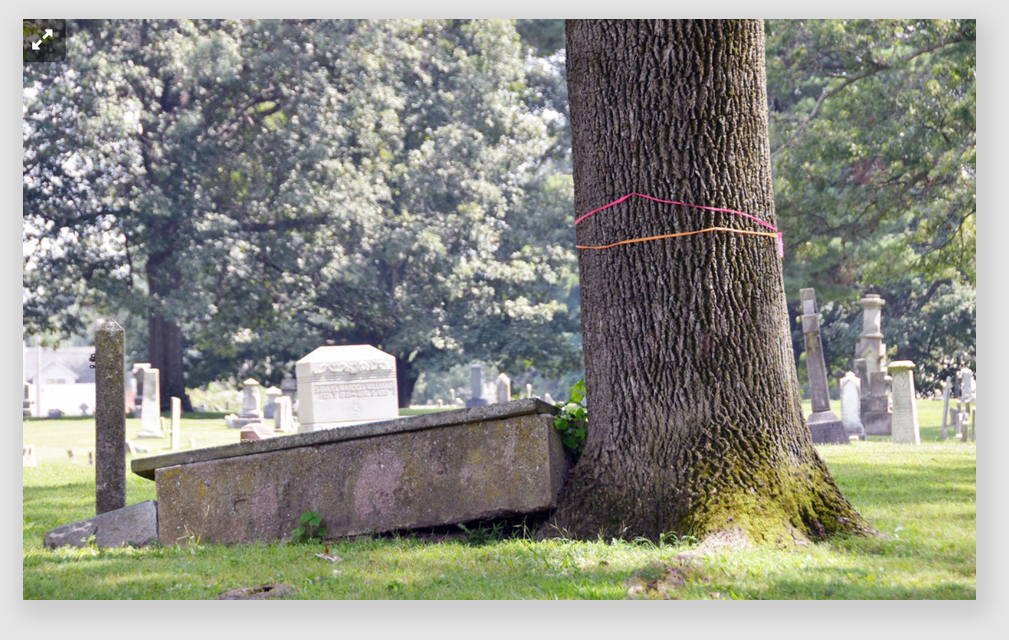
It’s been more than two years since members of the city’s Tree Board were told to go to forth and chop down at least 50 city-owned ash trees ahead of the anticipated invasion of the emerald ash borer. And while it’s close, the little bug with a destructively-voracious appetite still hasn’t made its debut locally. “We’re surrounded on all sides,” said Ryan Lough, a Tree Board member and director of operations for Perk-A-Lawn Gardens, 2470 Maranatha Lane. “It’s in most of the counties around us, but I don’t think it’s been located here yet. “We’ve all done a really good job in working together,” he said. “We’re really pushing back, and I think that will be seen in the length of time it takes (the emerald ash borer) to get here…”
Mason City, Iowa, Globe Gazette, August 25, 2016: Tree trunks grow, so do tree roots
As the diameter of a tree trunk grows, it’s only natural that the tree’s roots gain girth, too. Eventually, the roots may push up above the soil surface, where they’re likely to be scraped by mowers, trip passersby, or even buckle the sidewalk. These surface tree roots are a common but difficult landscape challenge. If you cover the protruding roots with a little more soil, they will soon reappear. If you pile on a deeper layer of soil, you could suffocate the tree. Any attempt to shave off the offending roots can kill the tree, too…
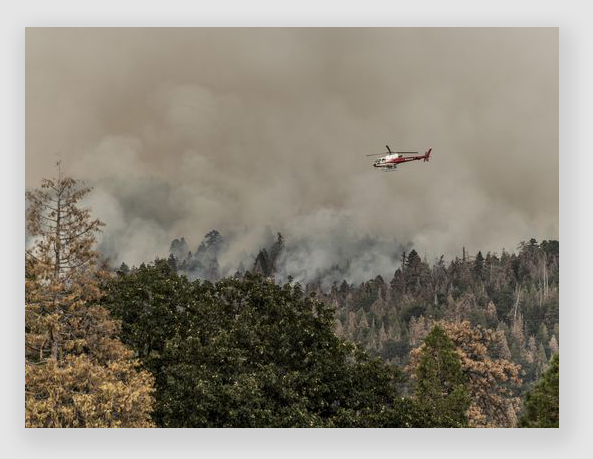 Visalia, California, Times Delta, August 25, 2016: Officials respond to the threat of tree mortality
A voluntary evacuation notice sent some residents fleeing from their homes after the Cedar Fire threatened homes near Johnsondale. The fire, burning west of Kernville, has grown to nearly 30,000 acres since Wednesday and has already destroyed six cabins. Tulare County Sheriff’s deputies have evacuated more than a dozen campgrounds without any issues from the public, said Teresa Douglass, a Tulare County sheriff’s public information officer… The number of dead trees has made it extremely difficult to control the blaze, Tulare County officials said.Supervisor Steve Worthley said the estimated number of dead and dying trees in the county’s mountains makes for a prime spot for wildland fires. “One of our problems is the abundance of trees,” he said. “We have so much fuel on the ground.” Based on a survey completed in June, it’s estimated there are more than 8.1 million dead trees in Tulare County…
The Yorktown Town Board is in the throes of rewriting the town’s tree ordinance, saying the current law is too convoluted and unenforceable, though the Tree Conservation Advisory Commission begs to differ. Members of the Tree Conservation Advisory Commission said they worry that the revised code will not put enough emphasis on preservation, but Supervisor Michael Grace assured them that the commission would play a vital role in deciding how the town would manage its tree population. “We’re going to empower the tree commission to do a lot more master planning for the local canopy and forest,” Grace said. With the commission’s assistance, Grace said, he hopes to create an effective management plan for the town’s overall tree population, from street trees to forests. However, Bill Kellner, chair of the Tree Conservation Advisory Commission, said that Yorktown’s tree law is unique in that it sets clear goals for woodland preservation and has tight restrictions on tree cutting. He worried that a revised version will not. He said that the current law acknowledges property restrictions “in a helpful way…”
 CNN, August 24, 2016: Bark beetles: How tiny tree killers have worsened California’s wildfires
A decade ago, Ben Ray had hoped to ease into retirement at his two-story wooden house nestled in the heart of the Sequoia National Forest. But the 79-year-old central California general contractor, who built homes for his future neighbors in Sierra Nevada Mountain communities such as Ponderosa and Pierpont, and his wife, Michelle, haven’t had the luxury of relaxation. That’s because hundreds of once verdant pine and cedar trees, stretching far beyond their 5 acre spread, have perished at a rate so fast he’s lost count of the carnage.”I don’t know what to do,” said Ray, a rugged heavyset man whose eyes wet behind his tinted sunglasses as he speaks of the destruction. “It’s just devastating to see our forest dying like this.” The pine and cedar trees that have died on Ben and Michelle’s property are among the 66 million trees in California that have died since 2010, according to the US Forest Service. Over the past six years, thousands of fires have raged throughout the state’s lush forests, turning tens of millions of pine trees a charred shade of black. The disastrous drought conditions in California have turned forests into tinderboxes, resulting in record levels of tree deaths during that time…
A man trimming a tree over the rear of an apartment building in the Elmwood Village was injured Wednesday morning when the limb he was hanging from snapped and he and the limb tumbled to the edge of the roof below, Buffalo fire officials said. “The limb pinned him to the roof,” said Battalion Chief Steve Keohane. Firefighters were called at about 10:30 a.m. to 353 Elmwood Avenue for a report of a man trapped on a roof, he said. They used the bucket of a ladder truck to reach the man and provide emergency medical care, he said. “It was kind of a tough angle and a tough location,” Keohane said. “We couldn’t do anything from the ground…”
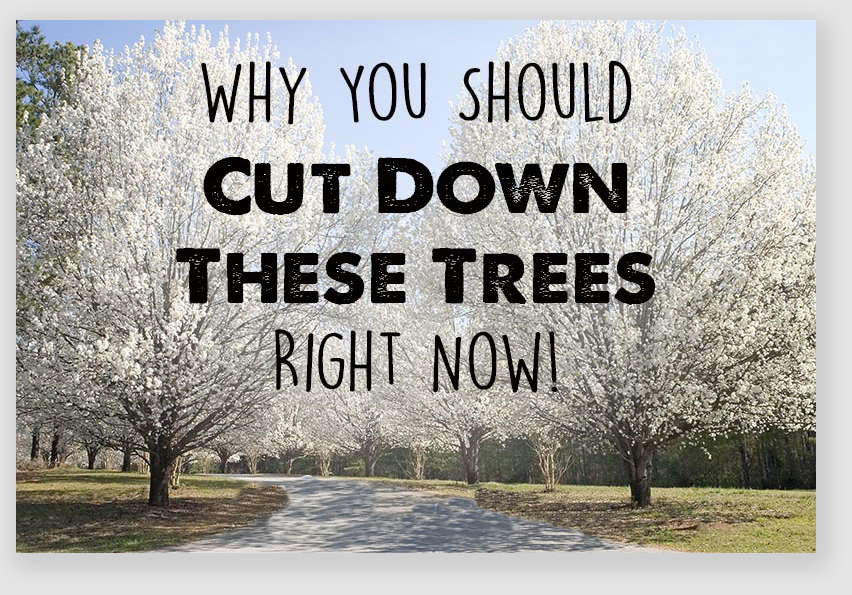 Wellness Mama, August 24, 2016: The bizarre reason to cut down your Bradford Pear Tree
When I started blogging many years ago and began chronicling my experiences making homemade deodorant and other sundries, I never thought I’d write a passionate post about why you should immediately cut down any Bradford Pear trees… but here we are. I know that is a strong statement: Go cut down any Bradford Pear Trees you have right now and never plant another one! But why? They are so pretty with their gorgeous white flowers. Sure, they smell something fierce when they bloom, but they are so pretty! You know what else is pretty? Dingo puppies and Mountain Laurel flowers. But both of those can kill you. Those cute little wild puppies will bite your throat when they grow up. Those delicate little flowers can drop your blood pressure low enough to kill you. Just being pretty doesn’t mean something is good or beneficial and while the harmless-looking Bradford Pear Tree may not bite your throat like a Dingo or lower your blood pressure dangerously like the Mountain Laurel, it is certainly problematic in its own way. In fact, they’ve even been called an environmental disaster…
Charlotte City Council voted on Monday to change an ordinance meant to save trees that some said was putting neighborhoods in jeopardy by exposing them to over-development. The tree-save ordinance is meant to protect trees in new developments, by requiring developers to save a percentage of trees on new building sites. But some neighbors, especially off Randolph Road, raised concerns that the ordinance was being used to let developers build too many houses on lots in existing neighborhoods. Now, the law will only apply only to larger new residential subdivisions, not existing lots. City Council voted to approve the change 7 to 1, with John Autry, a Democrat, voting against the measure. He said he had supported moving quickly, but needed more time. “I would have liked a little more time to digest this information and chew on it,” said Autry…

The clean-up continues in West Michigan, after tornadoes moved through the area during the weekend. For some homeowners, it meant dealing with insurance claims. Jason Allen from AAA spent the day, Monday, Aug. 22, surveying the damage. He says if there is no damage, insurance will likely not get involved. If there is, the insurance from the homeowner whose property was damaged, will take care of it. “If we had a situation where the neighbors tree fell onto your property, AAA would pay to remove that tree off your property,” Allen said. First, homeowners should leave the home and protect it from the elements. Often times, your insurance company can provide you with temporary funds, if necessary…
La Jolla, California, Patch, August 23, 2016: Controversial OB Torrey Pine tree comes down
A 73-foot-tall tree in Ocean Beach that became the focal point in a test of wills between municipal government and community activists was removed Monday. City officials contended the nearly century-old Torrey pine at 4652 Saratoga Ave. was in danger of falling and planned to cut it down 10 days ago, but area residents convinced them to have the tree examined further by outside experts. According to Jeremy Barrick, a board-certified master arborist and the city’s urban forester program manager, three arborists affiliated with the city agreed the tree had to come down while two hired by residents split in their opinion. Area resident Bill Posey told NBC San Diego that one of the experts hired by the community found the tree to be of low risk for falling…
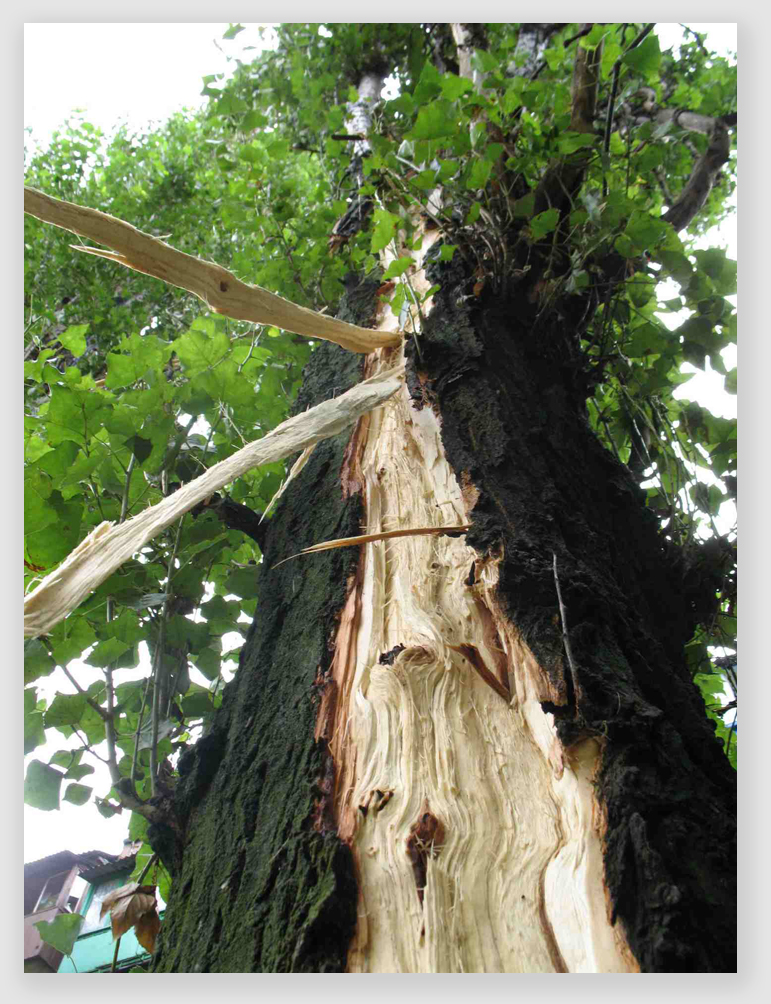 Laidback Gardener, August 23, 2016: When lightning strikes a tree
Lightning often strikes the highest object of a given sector… and that is often a tree. Trees most likely to be hit are those that stand alone, rise about other trees or are close to water. Oaks, elms, pines, spruce, poplars, maples and ashes are considered most likely to receive a lightning hit. This is in spite of the fact that wood is not good conductor of electricity. However, the sap just under the bark certainly is. Lightning then descends inside the trunk, from the top down and into the roots, carrying up to 100 million volts of electricity and heating the sap until it vaporizes and literally explodes. When a tree is struck by lightning, it may simply be blown apart when the sap expands, but generally the damage is much more discreet. You’ll often see a long strip of bark ripped off and maybe an equally long split in the trunk, but sometimes there is no outward sign of damage except a few branches whose leaves wilt over the following days… unless the tree simply dies, which case all the leaves will wilt and dry up. Some trees recover from a lightning strike, but most do die, sometimes directly, but often from “secondary trauma”. The open wound becomes infested with fungi or insects (borers are attracted in large numbers when a tree is struck by lightning), which can lead to a slow death that can take several years…
Delaware, Ohio, Gazette, August 23, 2016: Tree maintenance responsibility debated
The city of Delaware’s Shade Tree Commission will consider tonight whether to update an existing zoning code about the responsibility of street-tree maintenance. Ted Miller, city parks and natural resources director, said in a memo to the commission that there ”has been some debate about the maintenance practice of pruning street tree in the City of Delaware… The City of Delaware policy is to maintain and have control of trees in the tree lawn or right of way.” The Cheshire Crossing Subdivision’s homeowners association made a declaration that requires each lot owner to care for their street trees…
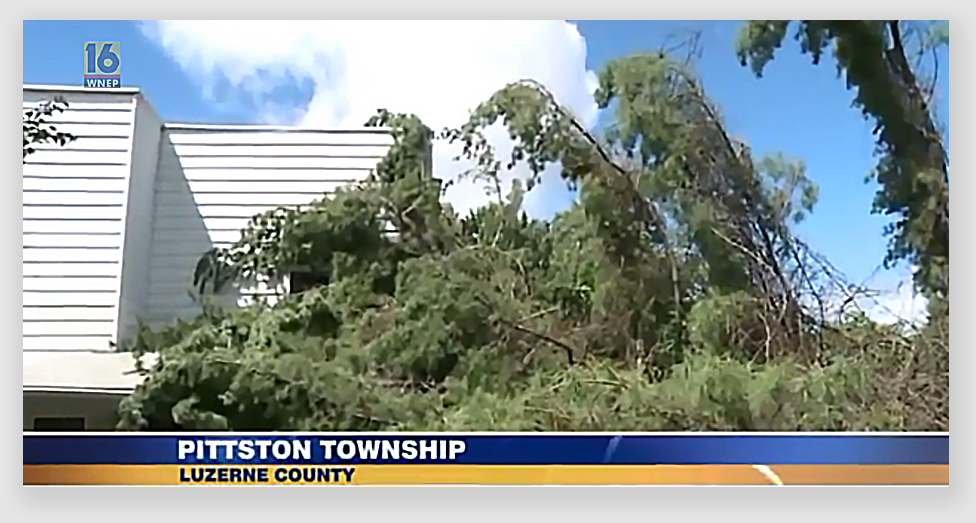
A man in Luzerne County grabbed a chainsaw over the weekend and cut down his neighbor’s tree that he thought was ruining his car. The tree fell the wrong way and crashed into his own apartment house. Authorities closed the building on Oak Street because a man who lived there was upset about a big tree. The tree sat in his neighbor’s yard, but it had branches above his parking space. Those branches would drip sap onto his car. So Saturday afternoon, the man picked up a chainsaw and cut through the 36-inch wide trunk, knocking the tree right into part of the apartment house. “He decided it was the best thing to do, to get rid of the tree, where he thought it was going to go, I don’t know,” said Terry Best, a Pittston Township code enforcement officer…
A tree worker has been hurt while cleaning up debris from the tornado that hit Concord Monday morning. The worker was doing private work for a homeowner on Lexington Road, one of the hardest hit areas. He suffered lacerations to his face when parts of a tree shot out of a wood chipper. “He was struck in the head to the best of my knowledge. He was transported to Lahey Clinic,” said Assistant Chief Thomas Judge of the Concord Fire Department. The worker was part of a significant number of crews doing incredibly risky work in an effort to clean up the aftermath of the tornado…

This summer Duluth Tree Service crews have worked 50 percent more hours per week than their usual workload. Amberjack Tree Service crews are working 50 to 60 hours per week. Estimators who usually take sales calls at Rick’s Tree and Stump Removal joined tree removal crews to help with the extra work. Not surprisingly, the summer of 2016 has not been an average summer for Duluth-area tree removal services. Jim Hakala, owner of Amberjack Tree Service, said he had 500 calls asking for tree services before noon the day of the July 21 storm that knocked down countless trees in Duluth and surrounding communities. Five calls per day is a more regular total, he said. “I’ve never had anywhere near this many calls since we’ve been in business,” he said. “You can only respond to so many…”
A Racine man is worried that half of an enormous tree, left standing after a recent storm, is putting his home in danger, and he said We Energies is to blame. The tree was split in half and fell down almost a month ago. The homeowner said We Energies left the tree unstable, but the utility company said that’s not the whole story.”I said, ‘You can’t just cut all the weight off of one side and expect that it’s not going to fall,'” homeowner Mark Valade said. Valade said he saw it coming, and now can’t afford to clear away the tree that fell across his fence into his yard, or take down the rest of it still hanging over his home. He thinks it should be someone else’s responsibility…
 Lincoln, Nebraska, Journal Star, August 21, 2016: Visit an ash tree while you still can
If this summer’s heat, humidity and insects have kept you indoors, take heart: cooler, drier days are just around the corner. I encourage you to plan a woodland or neighborhood expedition this fall to identify an ash tree. Even if you have never given much thought to specific trees, now is the time to see an ash tree up close. In the same way that an artist achieves greater recognition after his or her death, the praises of the ash tree will be sung most poignantly as these giants succumb to the Asian emerald ash borer. The emerald ash borer was identified in July 2002 in southeastern Michigan. Evidence suggested that it had been established in that area for at least six to 10 years before discovery. Tree experts are now advising both for and against treatment. The cost of treatment and eventual removal of large, dead ash trees is no doubt troubling many private and public owners of these trees…
One child was killed and a second hospitalized in rural Oregon Friday after a tree fell on a family who were out camping. The family – who are not being named by police – were camping by Fall Creek when the tree broke and fell at around 6:20pm, KVLA reported. A nine-year-old child died at the scene, while an eight-year-old was helicoptered to hospital. No others were injured in the accident…
 USA Today, August 21, 2016: Rains doom 400-year-old sugar maple tree
A nearly 400-year-old sugar maple tree in Ontario, Wayne County, said to be the largest in the state, will come down soon after a massive branch fell during heavy rains. The tree stands on the property of the Heritage Square Museum, run by the Town of Ontario Historical and Landmark Preservation Society, on Ontario Center Road. Arborists measured it and took samples years ago to determine the tree’s age, said Ann Welker, vice president of the historical society. The tree was 79 feet tall and 18 feet in girth in 1996, and officially unseated another sugar maple in Chautauqua County at the time for the honor of being the state’s largest sugar maple tree. The sugar maple is New York’s official state tree, designated in 1956…
In the highlands of northern Greece lives a Bosnian pine tree — Europe’s oldest living thing. Scientists from Sweden’s Stockholm University, Germany’s University of Mainz and the University of Arizona in the U.S. announced Friday that the tree is more than 1,075 years old. “It is quite remarkable that this large, complex and impressive organism has survived so long in such an inhospitable environment, in a land that has been civilized for over 3,000 years,” Swedish dendrochronologist and leader of the expedition, Paul J. Krusic, said in a statement. The tree was found in a forest in the Pindos mountains near Greece’s border with Albania. Researchers took a core of its wood and counted the rings to determine the tree’s age.
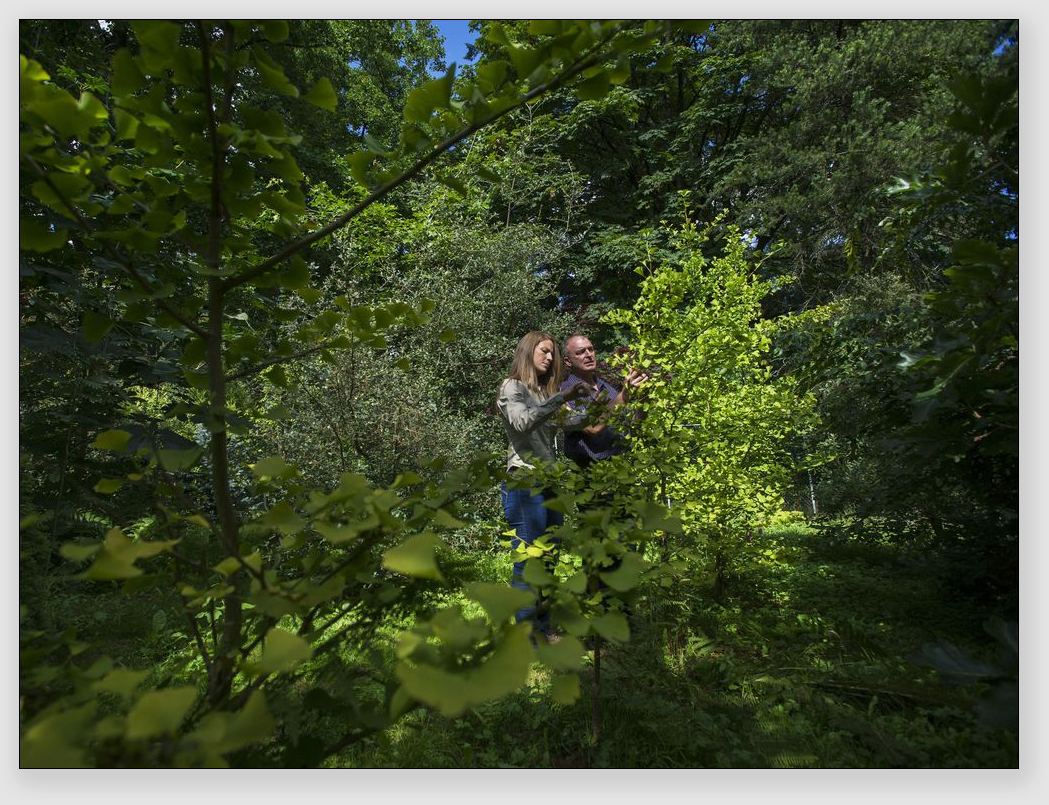
Yes to ash, beech and elm. No to banana, palm and laceleaf maple. Yes to dogwood, birch and hornbeam. No to topiaries, espaliers, cedar hedging and weeping cherry trees. If you’re a Greater Vancouver homeowner, you should know that if you plan to cut down a perfectly healthy tree on your property, you’ll be expected to replace it with something just as good, if not better. But let’s be clear about one other thing — August is definitely not the right time to be planting a new tree…
Experts may never figure out why a large oak tree on the Capitol Square that had just been inspected and deemed healthy broke in half Tuesday evening, injuring two men who were walking near it, a Madison arborist said. “It will be declared an act of God,” said Briana Frank, the owner of Tree Health Management, LLC. The men were pulled free by witnesses and taken to a hospital after parts of the tree fell on them in calm weather conditions at about 6:30 p.m. on the Carroll Street side of Capitol Square at West Washington Avenue, according to Madison Fire Department spokeswoman Cynthia Schuster. Schuster identified the two men as Casey Wittmann and Emmett Strohfeldt. She did not include ages or addresses for the two men…
 bioGraphic Magazine, August 18, 2016: The tree that ate the west
No animal is more emblematic of the sagebrush steppe in trouble than the greater sage-grouse (Centrocercus urophasianus). These iconic western birds, about the size of barnyard hens, gather each spring in groups called “leks.” Here, the males inflate yellow air sacs in their chests, spread their fanlike tails, and dance for the approval and attention of the females—a display so show-stopping that many people have dubbed them America’s birds of paradise. Unfortunately, these reproductive spectacles have become increasingly rare as the species’ population has plummeted 80 percent since 1960, primarily due to habitat loss. The sage-grouse is a kind of indicator species, signaling the health—or lack thereof—of the ecosystem it inhabits. As its name suggests, the sage-grouse depends on sagebrush for food and nesting cover. A number of factors in addition to the juniper invasion have contributed to the bird’s shrinking habitat, including energy development, invasive weeds, drought, and urban expansion. But juniper’s impacts on grouse go beyond the loss of sagebrush: Grouse have evolved to give a wide berth to any tree more than four feet tall, because anything taller than a sage bush represents a potential perch for a predatory hawk. When mature juniper cover reaches just 4 percent—picture taking a standard checkerboard and filling in just two and a half of the squares—sage-grouse abandon their leks…
Oklahoma City, Oklahoma, OK Gazette, August 18, 2016: Chicken-fried news: Treasured trees
Some people just really love trees, and some just don’t like it when companies come onto their property and cut down their trees without asking. Southwest Oklahoma City property owner Dave Moore told KOCO 5 News he was astonished to come home one day and find 10 trees on his property were cut down and ground up. There is also no way it was a case of mistaken tree-dentity either, he said, because clearing crews hopped an electric fence with their equipment in order to do it. “They took down some of our most valued trees with absolutely no notice,” Moore said. OG&E said a contractor had been leaving the Moores notes on their fence for two weeks, but Moore said he didn’t receive them. The power company explained that the trees were in the way of an easement under power lines and it hired the contractor to take care of the problem…
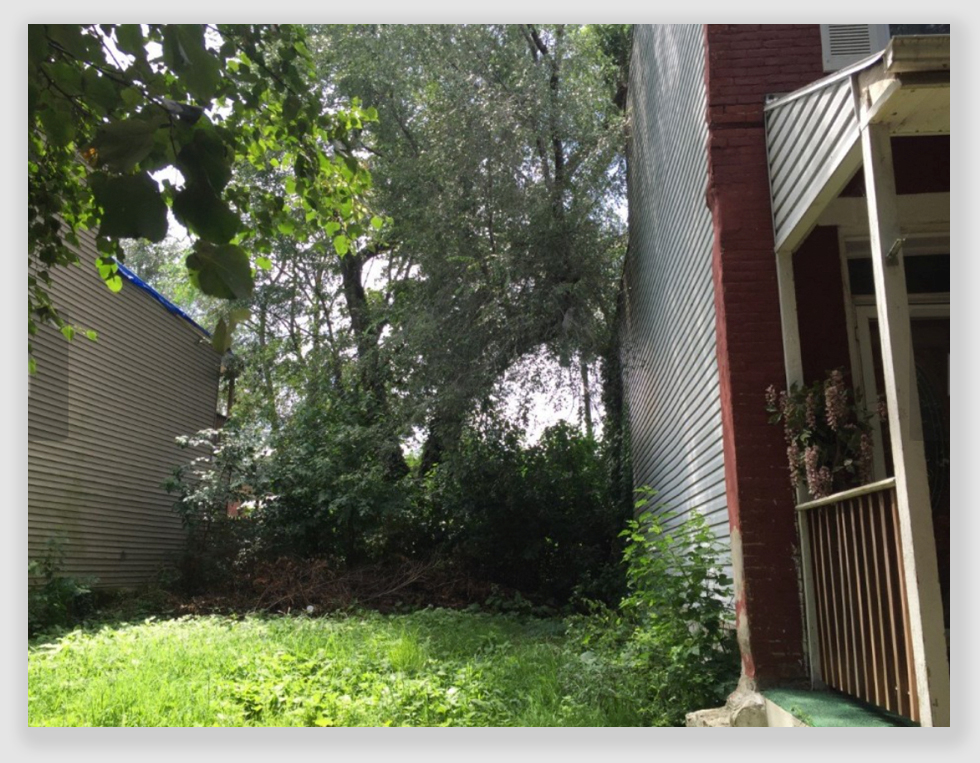
Angel Layton bought a home in Harrisburg 10 years ago next to a vacant lot with a single tree on it. Now that tree has exploded into a 70-foot tall sprawling menace that has dislodged the awning covering her back porch, ripped holes in the roof and obscured her balcony. Broken limbs drop onto her home during rain and snowstorms and others limbs dangle precariously above her home in the 200 block of North 15th Street. She’s worried the entire tree could come crashing down at any time, hurting her or her 1-year-old baby. “It’s just gotten so out of control,” she said. “It scares me.” Layton tried to trim the tree herself or hire laborers in previous years. But the tree “grows like wildfire” and lately she hasn’t been able to afford it. She also doesn’t think she should have to pay to repeatedly prune a tree owned by someone else…
Calgary’s most notorious tree thief pleaded guilty on Wednesday, admitting to stealing two Japanese maples worth $1,000. Ryan Duguay and his reluctant accomplice, Lucy the Jack Russell terrier, were caught on CCTV outside the Royal Brasserie last week, taking the two trees from planters outside the restaurant. Provincial Court Judge Harry Van Harten threw Duguay a bone and released the 31-year-old, agreeing with defense counsel that time served was a sufficient sentence. Duguay’s crime was a “really profoundly juvenile theft,” said prosecutor Meagan Blake. The video of the Aug. 8 theft was posted to social media last week to Inspector Gadget music and quickly went viral, prompting an anonymous tip that led officers to a home in Calgary’s Lower Mount Royal neighborhood on Thursday…

If a tree from a nearby property falls onto your land, who is responsible for paying for its removal? It’s a question that a Kirkwood man was forced to answer recently when a tree belonging to a private school next door fell onto his driveway. Homeowner Bob Nelson told News 4 the school should be the one to pay for removal. However, experts say the condition of the tree determines who pays, Insurance Agent Julie Price said if the tree is alive and healthy, then the owner of the land that the tree came from is not responsible for any damages or removal fees. The tree that fell on Nelson’s property appears to be healthy, meaning he is responsible for removal costs…
Detroit, Michigan, Free Press, August 17, 2016: Police investigate man’s death while cutting a tree
Police are investigating the death of an Ogemaw County man, killed in an apparent tree-removal accident. About 3 p.m. on Monday, Aug. 15., Michigan State Police troopers responded to the site in West Branch Township. Jared Kaltenbach, 24, was working with an assistant on a tree-removal job, troopers report. Kaltenbach was wearing a climbing harness and a hard hat and was secured to the tree about 50 feet above the ground. “When attempting to fell the tree, the tree trunk broke and struck Mr. Kaltenbach,” troopers wrote in a press release. The incident caused fatal injuries to Kaltenbach…
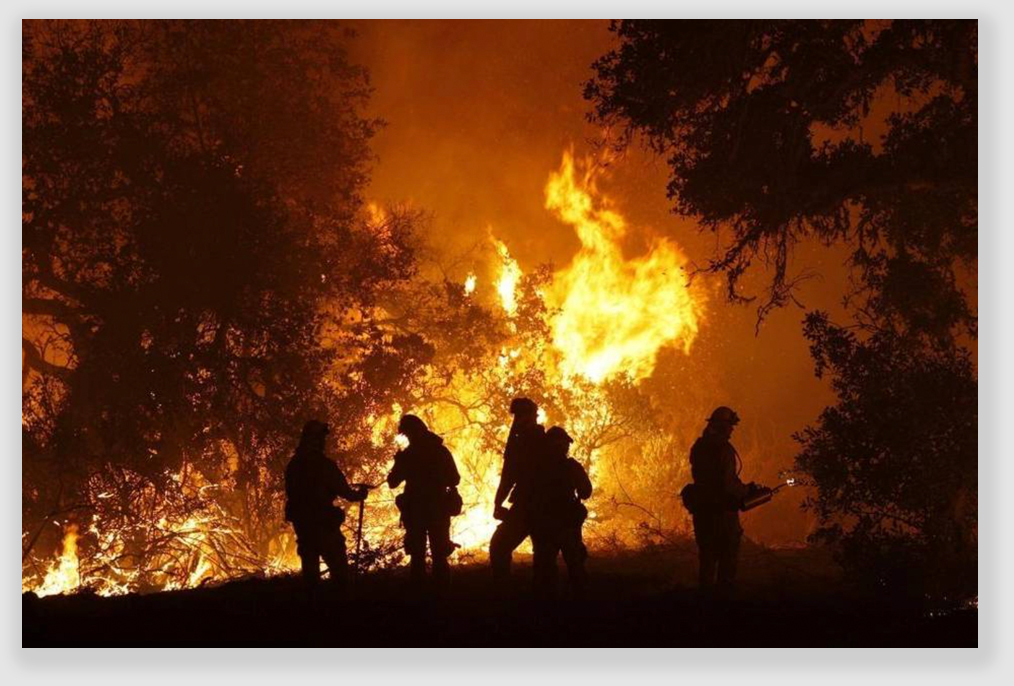
In an odd twist of politics, Western lawmakers might soon benefit as a bright green beetle spreads across upstate New York, threatening the trees used to produce bats for Major League Baseball. The pest, called the emerald ash borer, is a particular headache for New York Democratic Sen. Chuck Schumer. During a recent visit to the Rawlings Adirondack Bat Factory in Dolgeville, N.Y., Schumer said the infestation could kill millions of ash trees and that “America’s favorite pastime has also taken a hit.” He wants Congress to respond but complained that federal money to fight the beetle has been diverted to pay for the rising costs of fighting wildfires. Schumer’s frustration has sparked an unusual alliance with Idaho Republican Sen. Mike Crapo and Oregon Democratic Sen. Ron Wyden, who for years have sponsored a bill to get Congress to treat wildfires as national disasters. That would make them eligible for emergency funding, ending the practice of “fire borrowing,” in which the U.S. Forest Service is forced to transfer money from other programs to pay for the added expense of wildfires. While the legislation has fizzled since 2013, proponents say it will have a much greater chance of passing when Congress returns from its summer break, aided by Schumer’s political muscle. It’s an example of the coalition-building done by Crapo and Wyden as they seek to make the issue a national concern…
Oxford University researchers say that trees which grew during intense radiation bursts in the past have ‘time-markers’ in their tree-rings that could help archaeologists date events from thousands of years ago. In a new paper, the authors explain how harvesting such data could revolutionize the study of ancient civilizations such as the Egyptian and Mayan worlds. Until now scholars have had only vague evidence for dating when events happened during the earliest periods of civilization, with estimates being within hundreds of years. However, the unusually high levels of the radioactive isotope carbon-14 found in tree-rings laid down during the radiation bursts could help reliably pinpoint dates. The distinct spikes act as time-markers like secret clocks contained in timber, papyri, baskets made from living plants or other organic materials, says the paper published in the Proceedings of the Royal Society. Scholars believe that intense solar storms caused major bursts of radiation to strike the Earth in 775 and 994AD, which resulted in distinct spikes in the concentration of radiocarbon in trees growing at that time. The events are precisely datable because the tree-rings belong to archives in which the growth year of each tree-ring is exactly known. In the new research, the authors outline how they could detect similar spikes elsewhere within the thousands of years of available tree-ring material from across the world. They say even a handful of these time-markers could allow them to piece together a reliable dating framework for important civilizations. The crucial point is that the time-markers will also be present in every living plant or tree that grew at the time of a radiation surge, including in the timber used in ancient buildings or other artifacts fashioned from the plants…

A Vinita Park woman is lamenting the demise of two trees in front of her house after a company hired by the city cut them down Tuesday. Verna Gremaud, 83, said Tuesday the trees had been planted in front of her house in 1979 as a part of tree planting program. But the tree’s roots had started to create unevenness in the sidewalk. Gremaud said she wanted the sidewalk fixed but the city’s board voted to cut down the trees instead at a meeting Monday by a 5-1 vote. The one person who voted against the move was Gremaud’s son. “I protested loudly,” Gremaud said of her opposition to the decision to cut down the trees. Gremaud has lived in the area since 1958 and acknowledged often being critical of the local municipality. Vinita Park Mayor James McGee said the move to cut down the trees shouldn’t have come as a surprise after weeks of discussions. He said the decision to cut them down was ultimately about safety. The city’s board voted to cut down two other trees in the area as well…
A father and well-known youth baseball coach was killed while cleaning debris left behind by a tornado in Yulee, Florida. Family said Christopher “Adam” Nichols, 33, had two sons and his wife is 13 weeks pregnant with twins. The business owner was killed in a tree-trimming accident at a home on Scarlet Oaks Court on Saturday. Nichols was working with two of his employees when a large pine tree began to fall toward him. Witnesses said Nichols tried to push the tree and slipped. He fell and the tree fell on him…
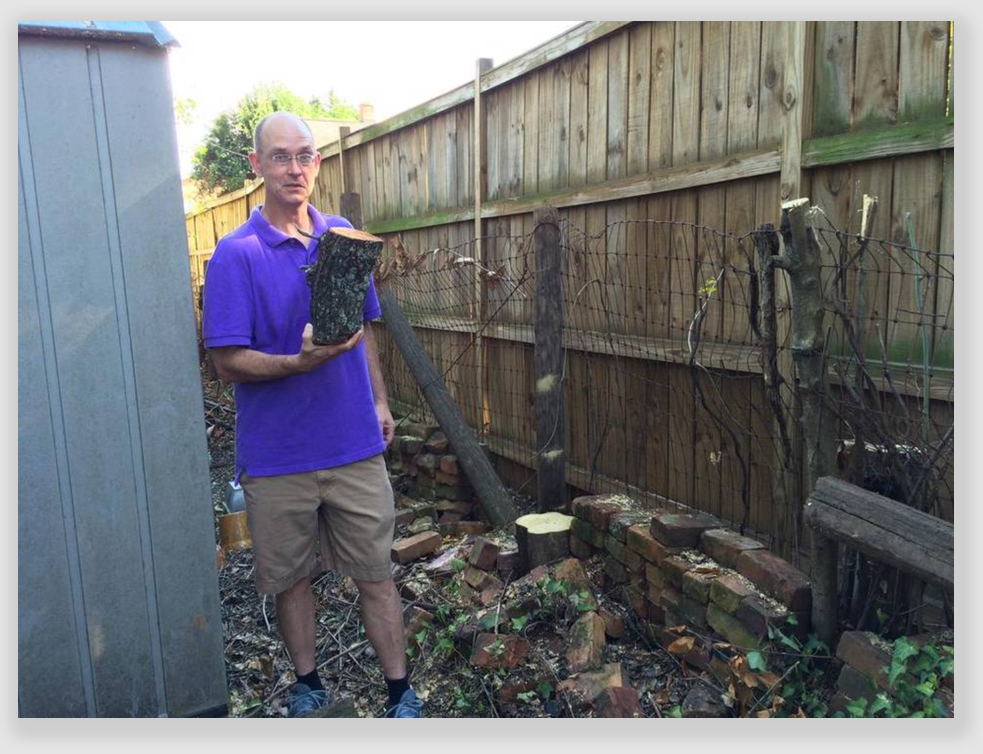
Arts professor Virginia Scotchie is angry that tree timmers hired by SCE&G leveled a tree she planted eight years ago in memory of her murdered brother. “It was just my way of coming to terms with it,” the University of South Carolina professor said Monday of the shooting death in Asheville of her brother, Tom Scotchie. “I think a lot of people plant trees in memory of people they’ve lost.” Virginia Scotchie was among about 60 residents of Hollywood Rosehill, Wales Garden and Shandon who gathered under a large shade tree to protest South Carolina Electric & Gas Co.’s tree trimming practices. She called it “tree butchery.” The chaste tree that reminded her of her brother is now a stump, Scotchie said. She was among several people who objected to the utility company’s practices during an outdoor protest and walking tour along South Saluda and Tugaloo avenues. Protesters took turns railing against the tree-trimming company the utility hired, Trees, Inc., whose employees entered their yards without permission, who don’t care about the appearance of their neighborhoods or who damaged their property while clearing trees and tree limbs from power lines…
More than 100 property owners may just say “no” to Calaveras County’s offer to bear the cost of removing trees on private property killed during the Butte Fire that now pose threats to public roads. The reason: attorneys who represent Butte Fire victims say they are advising their clients not to sign forms that grant permission for county-hired contractors to go onto private property and do the tree-removal work. “The county’s trying to victimize these people again,” said attorney Steve Campora, whose Sacramento-based firm represents a number of Butte Fire victims. County officials disagree. They say that the form contains standard language. They said that if contractors make mistakes, then the contractors will be responsible for repairing damage or compensating property owners for the losses. “It is a standard cross-indemnification clause,” said Assistant County Counsel David Sirias. “The outcome in a court of law is going to be exactly the same. We cover for our mistakes. They cover for their mistakes…”

The punishing Southern California drought is claiming its latest victim: Christmas Tree Lane. The 96-year-old tradition of colorful holiday lights draped over the outstretched branches of 150 deodar cedar trees that line both sides of historic Santa Rosa Avenue may be in trouble. That’s because 17 percent of the famous trees imported from the western Himalayas in 1885 are stressed and face imminent death unless they receive water quickly, according to the Los Angeles County Department of Public Works Tree Maintenance Department. The county has identified 26 sickly specimens out of 150 deodar cedar trees (cedrus deodara) stretching across Santa Rosa between Altadena Drive and Woodbury Avenue for about 0.7 miles, forming the basis of the oldest outdoor Christmas lighting spectacle in the United States, listed on the National Register of Historic Places…
Neighbors have given up their fight to save a nearly century-old Torrey Pine in Ocean Beach after an independent arborist determined the behemoth tree is diseased, dying and at risk of falling over. On Sunday night about two dozen neighbors gathered around the 73-foot tree at 4652 Saratoga Ave. for a candlelight vigil, a sage ceremony and some final goodbyes. “It’s sad, it’s like losing a family member almost,” said Kristi Castrogiovani, who has lived on the street for 16 years. The tree is named Esperanza, or Elvis, depending on who you ask. The old tree had neighbors divided between those who feared it would fall and wanted it removed and those who thought the tree should stay…
 Laid Back Gardener blog, August 14, 2016: Free your tree
One of the damages professional arborists see the most frequently on trees is strangulation. Someone long ago staked the tree and simply never removed the wire. Or installed a hammock or a clothesline between two trees using a rope and now the rope is eating into the bark. There are dozens of other reasons why someone might think wrapping a restricting device around a tree might be a good idea, but the fact remains: this is never good for woody plants and could eventually kill the tree. It is important to understand that tree trunks increase in diameter as they grow. So do branches. So if a cord, a wire or even a supposedly safe tree tie is attached around a trunk or branch and stays in place too long, it will cause damage. The bark will start to grow around it, leaving a permanent mark. Worse, if left too long, the restriction will keep sap from flowing through the tree, eventually killing all growth above the constricted part. This is especially annoying in that it can take years to finally kill the tree and losing a long-established tree is not something anyone wants to see happen…
Temecula, California, Valley News, August 14, 2016: Nature’s air conditioners
If you have ever escaped from blazing hot sun in a shady spot under a tree, you know how these natural air conditioners can make you feel more comfortable. A mature shade tree can block up to 90 percent of solar radiation, which could translate to a significant reduction in your home cooling cost. A Pennsylvania study found that air conditioning needs could be reduced by up to 75 percent by shading a house with trees. Computer models devised by the U.S. Department of Energy predict that the proper placement of as few as three shade trees will save an average household $100 to $250 in energy costs each year – and that study was done before energy costs soared. On hot days, some large trees can pull hundreds of gallons of water through their leaves. This water evaporates, keeping the tree and its immediate surroundings cool. With the less-than-efficient use of fossil fuels for heating and cooling our buildings, it only makes good sense to take advantage of the following principles…
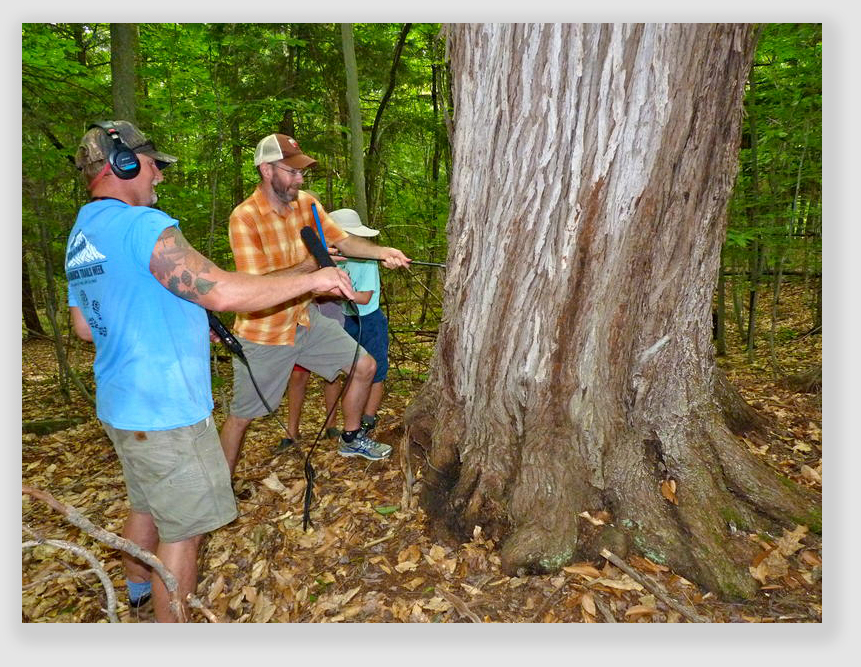 New Hampshire Public Radio, August 14, 2016: Something wild: Learning from a tree core
How do you determine the age of a tree? Just count the rings, of course! One ring equals one year of growth. If you’ve ever stumbled upon a tree stump you may have even done it yourself. But if you’re counting rings on a stump, the life of that tree is over. So how do you count those rings while the tree is alive? Experts use a special tool called an “increment borer,” a tool used to extract a small core from a tree, allowing a dendrochronologist to count its rings without having to cut it down. This T-shaped device has been used for centuries. The cross of the T is the handle, which is connected to a long, hollow tube that has a drill on the end. Line up the drill with the trunk of the tree and start twisting like a screwdriver. The core is captured in that hollow tube, resulting in a long straw of wood to be examined…
The city will review the condition of all trees at Washington Square after a limb from a pine tree fell and hit a woman Friday, sending her to the hospital with life-threatening injuries, Mayor Ed Lee said over the weekend. The 36-year-old was walking with her children, ages 5 and 6, at the North Beach park around 3 p.m. when a roughly 100-pound branch dropped on her head from 50 feet above, authorities said. The woman, whose identity has not been released, remained in critical condition Sunday at San Francisco General Hospital. The mayor released a statement saying city officials are investigating the incident and that crews would be sent to the park to inspect the trees…

The tree at the centre of a fatal accident in Trinity Bellwoods Park was flagged as a potential hazard almost two years ago, documents obtained by Metro show. The Siberian elm was at risk for disease or decay if left untreated, according to an audit of trees done after the 2013 ice storm. On June 17 of this year, a bough snapped, falling about 12 metres and hitting a man who had been lying on the grass with his wife. However, there’s no evidence the issue identified with the Siberian elm caused the bough to fall, Matthew Cutler, the city’s Parks, Forestry and Recreation department spokesman, said in an email. An inspection after the accident “didn’t find any rot or any disease,” and city staff has been “systematically” inspecting all trees at Trinity Bellwoods since, he said. The same report found 97 other trees in the park had “more serious defects,” including cracked limbs and dead wood, that needed to be addressed as soon as possible…
The city of San Diego announced Thursday that a 73-foot-tall tree in Ocean Beach, which has become the focal point in a test of wills between municipal government and community activists, is scheduled to be removed Friday. City officials contend the nearly century-old Torrey pine at 4652 Saratoga Ave. is in danger of falling, but opponents contend the city hasn’t adequately explained why the tree has to be taken out. Last week, Crystal Rose Speros, a 19-year-old Ocean Beach woman, climbed the tree and stayed there to prevent a removal attempt, while a handful of people on the ground offered their support. Ocean Beach activists have put out a call for opponents of the tree removal to gather at the site Friday morning…

Despite an impassioned plea from the property owners, resort officials this week denied an appeal that might have saved a decades-old pine tree in the south end of town that hangs over the public sidewalk. On Tuesday, the Mayor and Council heard an appeal from property owners Frank and Dee Rubinic, whose pine tree in front of their house on St. Louis Avenue in the area of 1st Street partially hangs over the sidewalk. The tree’s upper branches have been trimmed back on multiple occasions by the property owners, but the thick trunk is crooked and bends toward the sidewalk closest to the property line. Responding to a complaint, the Recreation and Parks Department inspected the tree and found it to be in violation of tree encroachment over the sidewalk impeding the public right-of-way for passage. The city’s guidelines call for trees overhanging public sidewalks to have a seven-foot clearance, but because of its crooked trunk that bends toward the walkway, achieving the seven-foot clearance would likely force the property owners to remove it. After the initial complaint was filed, the Rubinics trimmed the tree again, but a follow-up inspection by the Beautification Committee revealed the trunk still partially hung over the sidewalk and the tree would likely have to be removed. The property owners filed an appeal to the Mayor and Council that was heard on Tuesday to no avail…
Calaveras, California, Enterprise, August 11, 2016: First of hazardous trees set to fall soon
A contractor by early September will begin removing dead trees from along public road rights of way in the Butte Fire area, Calaveras County Public Works Director Jeff Crovitz reported Tuesday.“ My current estimate is that in three to four weeks we will have boots on the ground and trees hauled out of the fire area,” Crovitz told the board of supervisors. The board approved a $9.78 million contract on Aug. 2 with Phillips and Jordan Inc., a national disaster remediation company headquartered in Knoxville, Tenn. The contract pays for hazardous tree removal, sorting, storage and traffic management for an estimated 8,300 dead or mortally injured trees associated with the Butte Fire and that pose threats to public roads. Trees will also be removed with owners’ consent from private land, as well as along public rights of way. County officials are still seeking to have property owners sign forms granting permission for the work on private land, which means the first tree removal is likely to be only in the public rights of way…

With Massachusetts hit by drought, it’s not just lawns that are suffering. The region’s trees — and the people who look after them — are also under duress. After a winter with little snow, this summer’s dry heat has been taking a particular toll on the urban canopy, according to local tree wardens. “If trees have already been under stress, this is the year that puts them over the edge,” Waltham tree warden Kevin Thompson said Tuesday. The US Drought Monitor, a partnership of federal and university authorities, last week categorized much of Massachusetts as having severe drought conditions. More than 140 communities have issued restrictions on non-essential outdoor water use…
Dallas, Texas, Morning News, August 10, 2016: Looking for a maple tree? Try these three varieties.
Question: I know that you recommend bigtooth maple. I have a maple tree that needs to be replaced. It has sunscald on the west side and has struggled since day one. Is the bigtooth maple a good replacement?
Answer: The hybrid maples commonly have sunscald and other issues. I learned the hard way years ago after putting several of them on commercial projects. Bigtooth maple is far superior and will do very well here. It will be a little hard to find but worth the effort. Others worth considering include trident maple and Shantung maple…
 Observer.com, August 10, 2016: Mass murder of America’s trees must stop
In 1996, after an unknown culprit drove a car over 30 saplings in a New York City park, the parks commissioner Henry Stern labeled such destruction “arbicide” and the city made the crime punishable by up to a year in prison. Today, however, our Parks Department presides over the slow slaughter of thousands of city-owned trees. This mass arbicide also occurs in many other cities. Today, trees are being killed by means slower and subtler than driving over them, but just as lethal: Burying the bottoms of their trunks. The bottom of the trunk, where it flares out to join the roots, is the “root collar.” While the roots must of course be buried, the root collar has a different cellular structure that, when buried, can readily rot or get invaded by boring insects. When that happens, the tree gradually weakens and dies over a period of years. That is why the instructions for planting trees say never, ever plant them any deeper than they grew in the nursery and the Arbor Day Foundation’s website says “Keep the mulch from touching the trunk of the tree…”
Visalia, California, Times Delta, August 10, 2016: Supervisors approve dead-tree removal projects
Two projects seeking to remove more than 1,300 dead and dying trees near Tulare County roads may start as early as next week. The Board of Supervisors approved Tuesday a request from the county’s Task Force Tree Removal Project, finally starting on an issue officials are calling catastrophic. “The problem is just immense,” Supervisors’ Board Chairman Mike Ennis said. “It’s a huge problem.” As presented to the supervisors, the trees have become a hazard as they have become unstable. With the tourist season in full swing, the trees may fall and block roads used by visitors and locals…
Major changes are in the works for a north Napa neighborhood where 40-year-old street trees from China have turned the sidewalks into broken shards of concrete. Since late July, city workers have been uprooting dozens of trees fringing Moffitt Drive, Mosswood Drive and Sandalwood Street. A-frame barricades and yellow tape have kept pedestrians away from curb strips where yellow placards mark the trunks of Chinese zelkovas for removal by the city Parks and Recreation Services department. The repairs and replanting are the opening stage of a city project that will smooth out 600 cubic yards of walking paths, then will repave 2½ miles of streets, according to Dave Perazzo, Napa’s parks, trees and facilities manager. Construction is expected to be complete by the end of fall. The work is taking place as a result of two city maintenance programs, through which Napa aims to resurface 10 miles of streets and repair 1,200 cubic yards of sidewalks each year…
Maricopa, Arizona, inMaricopa, August 9, 2016: Choosing the right tree for yard shade
This is the time of year we would be grateful for some shade in our yards. Consider planting one or two hardy desert trees that will give you pleasant results next year. There is more to picking the right tree than low-water consumption, rapid growth or frost tolerance. Other important considerations are the ultimate size, shape, leaf style and color. It’s hard to visualize what a five-gallon or a 15-gallon plant will look like when it reaches maturity. Some other questions you need to ask yourself are:
• What will be under it, over it and around it?
• Do you want multiple branches and low limbs?
• Do you want to screen out ugly views?
• Are you willing to put up with thorns?
• Do you need something around your pool?
• Does your homeowners association have restrictions of certain trees? Answers to these questions will help you make the right choices. I have been told by a Realtor that a mature desert tree will increase your property value by $500 to $1,000…
 Princeton, New Jersey, WKXW-FM, August 9, 2016: NJ’s state tree threatened by fatal fungus
A tree-killing fungus has been on New Jersey’s radar for years, given its presence in neighboring states. But now it’s too close for comfort, and state officials are keeping an eye out for signs that it’s made its way to the Garden State. Last week, officials in New York confirmed a breakout of oak wilt disease on Long Island. “Long Island, being so much closer than other detections, definitely heightens our awareness,” said Rosa Yoo of the New Jersey Forest Service within the state Department of Environmental Protection. Oak wilt has never been detected in New Jersey. But it can be spread by insects, as well as the transport of wood from one location to another, as the fungus can stay alive in dead wood for several months…
Working with homeowners and businesses in communities across Michigan, Consumers Energy is focusing on delivering energy reliably by clearing trees away from power lines. “Over 500 workers are in the field right now, clearing limbs and branches away from power lines,” said Guy Packard, Consumers Energy’s vice president of electric operations. “Trees are a leading cause of power outages, so our forestry program is an effective way to keep the lights on for homes and businesses in all conditions.” Consumers Energy spent more than $45 million on forestry statewide last year. Projects across the state focus on where the most good can be done, based on which of the energy provider’s 2,000 electric circuits are most affected by tree-related outages. Consumers Energy works with communities where work takes place, sharing in advance of the actual work. Planners walk circuits where work is scheduled, talking to people in person or leaving contact information, and marking trees that will be trimmed. Letters also are mailed to all homeowners and businesses along circuits where work will take place…
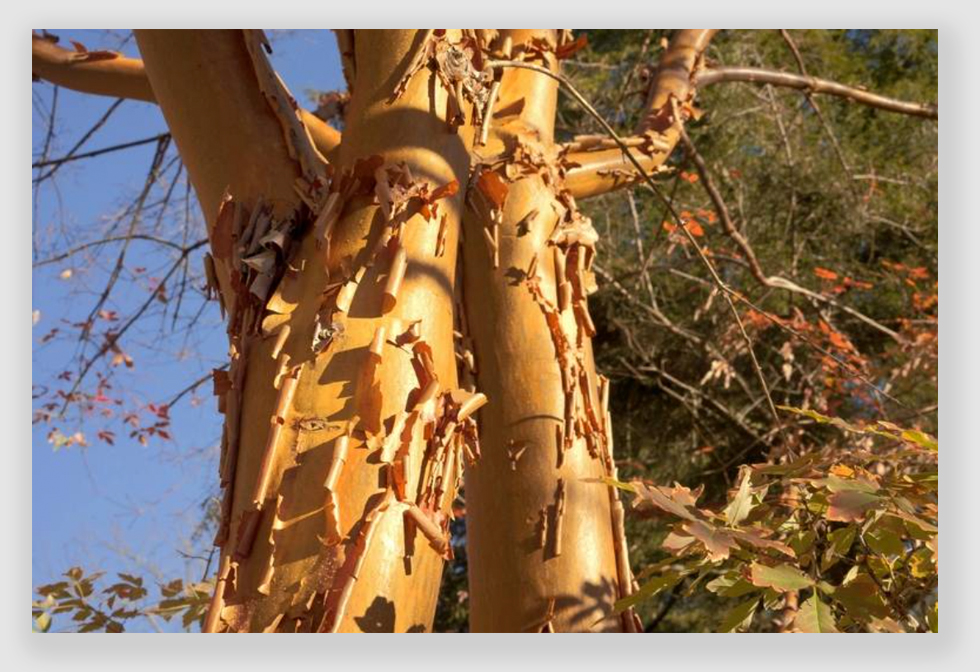 Washington, D.C., Post, August 6, 2016: Branch out and give this unique tree a try
When I look at the paperbark maple tree outside my window, I see a choice ornamental plant whose peeling, cinnamon-colored bark will only get more beautiful with age (sort of like me, ha-ha). When Tony Aiello looks at his home-garden specimens, he sees the giant panda of the plant kingdom. Like the panda, this species is running out of individuals in its native habitat in central China, and it may come down to those in our little plant zoos — that is, mine, Tony’s and yours, if you have one — to help bring the wild Acer griseum back from the brink. No one is knocking on my door for pollen or seed at the moment, but the idea that I’m growing a tree that is imperiled is sort of exciting and decidedly unexpected…
The recent drought may have played a role in the tree coming down in Webster. When the tree fell, it knocked out power for over a dozen residents on Gaywood Lane. Lynn Watterson says that she was setting up for a garage sale at her Webster home Saturday morning when she heard what she describes as a big crack. She says the tree showed no signs of rotting and fell on her property, taking down power lines and knocking out power to more than a dozen residents in her neighborhood…
 Edmonton, Alberta, News, August 6, 2016: Dealing with tree deformity and disease
Q: Our five-year-old Norway spruce trees in the backyard have deformed or brown and curling leaders. We have seen white worms on them that could be weevils. We have cut the leaders off. We would be happy to replace them with a spruce variety that is not prone. We have a five-year-old Fat Albert spruce in the front yard that seems fine, and two young Colorado spruces next to the diseased ones. How much should we worry about them? What can we do to protect them?
A: Young spruce trees are typical hosts for the white pine weevil, and it certainly sounds like this might be the culprit. The adult is a small brown beetle with a rather long snout. Adults are rarely seen, but the larvae are the ones that do the damage and can be seen. Their favorite feeding zone is the top of the tree or the leader, as you have noticed. The female weevil lays eggs in wounds in the leader in the spring, and the grubs hatch and spend the summer feeding on the tissue within the leader. This causes the leader to die. The telltale sign is the leader turning brown and bending over in a ‘shepherd’s crook’ shape…
The statewide watering restrictions may have had unintended consequences on one of the city’s most beloved assets — its trees. City officials and tree advocates in town have been educating residents on the need to keep watering their trees, while continuing to cut back on watering their lawns during the drought. “First they’re being told to cut water and now they’re being told to water their trees. But it can be both,” said Linda Richards, a member of the city’s Street Tree Committee. “One thing that people might not realize,” she added, “is that hand watering with a hose or letting your hose run, that’s not restricted. That can be done any day of the week…”
On Friday, August 5, the City of Long Beach will begin removing some dead and dying trees in the City’s parks that are increasingly prone to toppling over or limbs falling. The City must remove them to ensure the public’s safety and, consequently, support the growth of healthy trees. Many trees at City parks are nearing the end of their life cycle. The severe, multi-year drought, bark beetle infestation and warmer temperatures have led to accelerated levels of trees dying. “We are always saddened to see any of our beloved trees removed, but as these specific trees die and pose a significant safety risk, our priority is to ensure that our parks are safe and the rest of our trees are as healthy as possible,” said Marie Knight, Director of Long Beach Parks, Recreation and Marine. In recent months significant tree or limb failure has occurred in almost every City park, with a high concentration in El Dorado Regional, Heartwell, Wardlow and Houghton Parks…
A family in southwest Oklahoma City said they were devastated to come home Wednesday afternoon and find 10 trees had been cut down in their yard. The family told KOCO 5 that a crew contracted by Oklahoma Gas and Electric went on to the family’s private property and cut down their trees without permission. “It was quite the shock,” said Dave Moore, the owner of the home. “When we came home, the trees were gone. The crew had already ground them up.” Moore said some of the family’s trees were valued at $2,000…
 Duluth, Minnesota, KDLH-TV, August 4, 2016: Damaged trees find new life
Hundreds of trees were ripped from the ground in Duluth during the July 21st windstorm. As the cleanup effort continues we run into a problem. Where are all those trees going? The sounds of chainsaws buzzed throughout Duluth neighborhoods in the days following the fierce winds that toppled hundreds of big, beautiful trees. Cutting up those fallen trees, however, was just the start of the cleanup process, “The plan is that wood debris will be processed by the city of Duluth and then truck down to our Hibbard renewable energy center in Duluth…”
It’s like a scene from a movie. On one side there are bare and dead avocado trees. On the other, there are freshly planted and seemingly healthy avocado trees – some bearing the large green fruit we love to squish and turn into guacamole. The contrast paints a picture of the effects of laurel wilt, a fungal disease spread by the non-native Redbay ambrosia beetle. South Florida tropical fruit farmers have been dealing with the disease, since 2012, after the first recorded case of laurel wilt was found in a commercial avocado tree. Mary Ostlund, a farmer from Brooks Tropicals LLC farm in Homestead, faces the threat of laurel wilt every day. “We keep a keen eye on the trees. We look and see for any dead branches or insects, or anything that might bring this disease to our grove,” she said…

In the City of Trees, a new ordinance might put more bite in protecting our bark. The Sacramento City Council may vote Thursday on hotly contested new rules for safeguarding, maintaining and removing trees on both private and public land. The vote follows two years of contentious negotiations that failed to bring consensus. Backers of the new ordinance say it will add protections for about 25,000 trees now excluded from city purview and create a long-term plan for preserving the leafy canopy of 100,000 trees viewed as a defining characteristic of the city…
Although deforestation continues unabated in tropical forests, a new study has revealed some unexpected good news: tree cover on agricultural land is increasing across the globe, capturing nearly 0.75 Gigatonnes (billion tonnes) carbon dioxide every year. “Remote sensing data show that in 2010, 43% of all agricultural land globally had at least 10% tree cover, up from eight percent in the preceding decade,” said Robert Zomer of the World Agroforestry Centre, lead author of the study. “Given the vast amount of land under agriculture, agroforestry may already significantly contribute to global carbon budgets…”
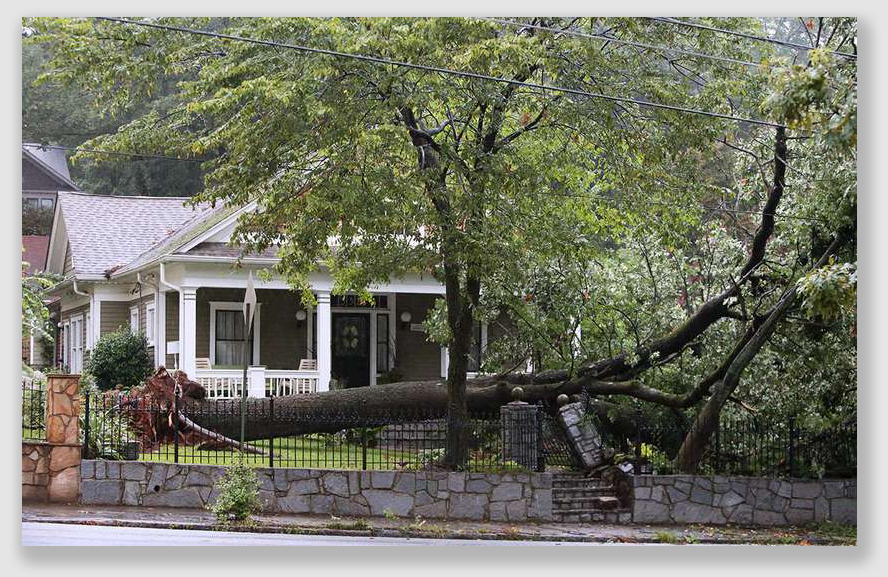
If a tree falls in your yard, what you do next could save you money, a limb and maybe even your life. According to Trees Atlanta, the metro area has the nation’s highest “urban tree canopy,” defined as the layer of leaves, branches and stems of trees that cover the ground when viewed from above. During the stormy summer months, fallen trees are fixtures in metro Atlanta’s landscape. The steps you take after a tree falls can mean the difference between headache and heartache…
San Jose, California, Mercury-News, August 3, 2016: Menlo Oaks seeks stronger tree protections
An activist group from “Menlo Park’s most oak-filled neighborhood” is pushing the county to better enforce rules that aim to protect heritage trees. Menlo Oaks, an unincorporated neighborhood between Menlo Park and Atherton, is home to roughly 300 households, most of them on large lots with thick canopies of mature oaks, redwoods and evergreens. Members of Menlo Oaks Tree Advocacy say trees are being chopped down with regularity as lots are redeveloped. For instance, the group said, a developer purchased a lot at 799 Berkeley Ave. in the spring with plans to subdivide it into two parcels and no protection plan for six heritage trees. The group said even after complaining to county staff and receiving assurances that the trees would be protected, some were removed in April, prompting it to take the issue to the San Mateo County Board of Supervisors…
 Farm Futures, August 2, 2016: It’s time to check your trees for Asian longhorned beetle
August is Tree Check Month, the peak time of year when the Asian longhorned beetle (ALB) can be found, and the U.S. Department of Agriculture’s Animal and Plant Health Inspection Service (APHIS) is asking residents to help eradicate this invasive pest by looking for signs in their trees. APHIS and local agricultural departments need to be made aware of any infested trees and new outbreaks so they can be quickly contained to keep the beetle from spreading. The Asian longhorned beetle has the potential to destroy millions of acres of America’s treasured hardwoods, including maple, birch, elm, willow, ash and poplar trees, and others. The beetle is slow to spread on its own during the early stages of an infestation, so early detection and reporting is critical to containing it. People can also help by not moving firewood, which can transport the beetle hidden inside to new areas…
Southside resident Philip Wemhoff, who was part of the neighborhood effort to plant the trees about 20 years ago, found 56 out of about 1,000 trees cut to the ground last Monday, with even more badly damaged from pruning.
It was his last straw of dealing with FDOT, the city of Jacksonville and maintenance crews on the proper way to care for the trees. They were planted in 2003, after the neighborhood spent seven years convincing Florida Department of Transportation to plant trees on the side and center medians around their subdivisions along Southside Boulevard. “For years we’ve tried to get FDOT and the city to landscape that area to protect the neighborhood from the noise and the sight of blight on Southside Boulevard,” said Wemhoff. “And they’ve done nothing. So this was a citizen initiative to get these trees on Southside Boulevard.” Wemhoff said the trees provide a buffer from the noise and sight of blight in the boulevard’s commercial areas. However, he’s been in a constant battle to get the trees properly maintained. He said crews who prune the trees often due more harm than good. On one occasion, a crew ran over a row of young trees in the center median with a tractor lawnmower. After seeing the extensive devastation last Monday, he immediately took pictures and notified the city. That Wednesday, city forester Richard Leon responded. After examining the site himself, he told Wemhoff that all the trees that were cut to the ground will be replaced. He also told him that no other tree limbs will be cut, and crews will only trim any weeds or invasive plants around or on the trees…
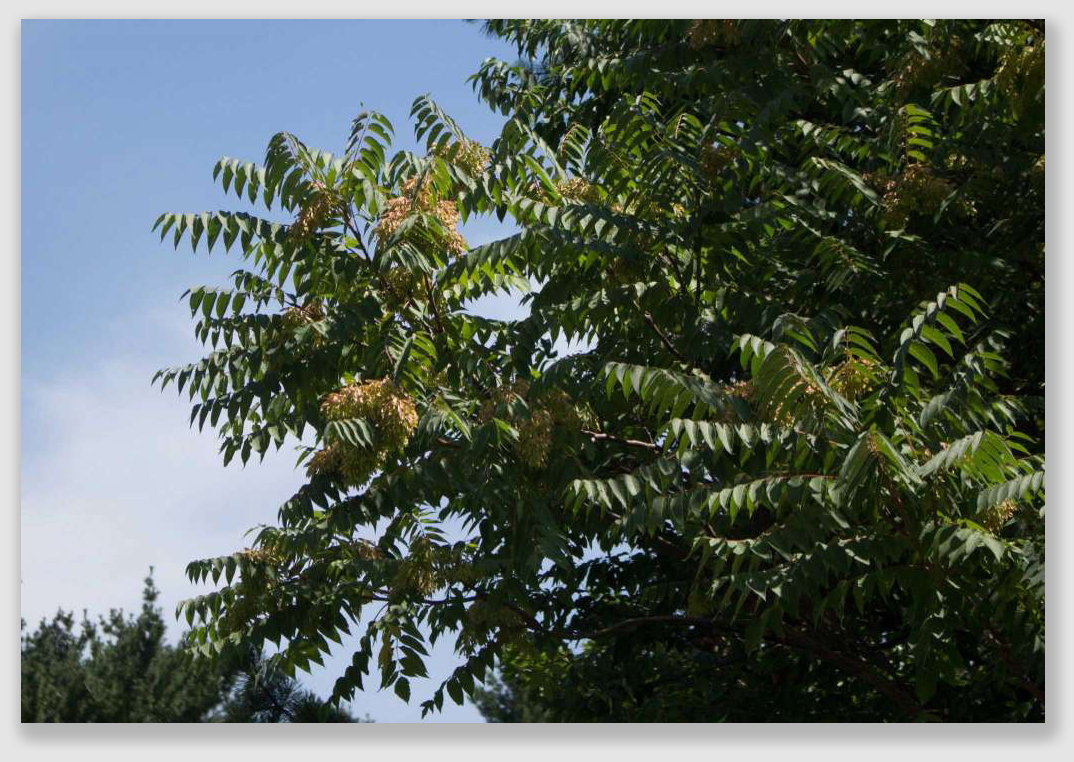 Greenwich, Connecticut, Time, August 2, 2016: A stately weed: Tree-of-heaven isn’t so heavenly
It’s thumbs up or thumbs down for tree-of-heaven (Ailanthus altissima), now standing out among the general greenery for the mops of yellowish or orangeish seeds capping its stout branches? With compound leaves and coarse, chubby limbs, this tree could have been mistaken for staghorn sumac or black walnut earlier in the season, before the seeds became prominent. (The peanut-y aroma of crushed tree-of-heaven leaves or stems easily distinguishes this tree from the others any time of year.) And those seedheads are one of the problems with tree-of-heaven: It is extremely fecund, each tree potentially casting over 300,000 seeds to the wind. Each seed has wings that ensure it doesn’t drop to the ground before first hitch-hiking a ride on the slightest breeze. Another reason tree-of-heaven is snubbed as a weed: Cut it down and it won’t go away. New sprouts enthusiastically pop up from the cut stump, even after years of re-cutting. What’s more, the spreading roots send up sprouts that eventually can grow into full-size trees at some distance from the mother plants. “Full-size” for tree-of-heaven means 40 to 60 feet or more…
A couple whose conservatory was undermined by the roots of an oak tree have won a test case fight for £25,000 compensation. Cracks in Richard and Nicola Burge’s conservatory eventually became so bad that the whole structure had to be demolished and rebuilt. The couple blamed South Gloucestershire Council, which refused to let them fell the tree. The oak stands almost 40 feet tall, is outside the couple’s property and is subject to a tree preservation order…

Life can be nasty, brutish and short for Edmonton’s street trees, stuck growing in small tree pits between a sidewalk and a heavily-compacted road. Starved of space to spread their roots, 85 trees on 124 Street died in the past three years alone, 40 per cent of the tree canopy. The others are scrawny. Planted years ago, they still give almost no shade or any of the other benefits that come with a mature canopy such as cleaner air, increased oxygen and reduced stormwater runoff. Fortunately, new technology is starting to make a difference elsewhere. Small plastic tables stacked underground and filled with good, un-compacted soil can give the trees the space they need, even under the sidewalk or parking space. Edmonton made a new commitment this spring to at least triple the amount of soil it requires for street trees in city projects. All that’s needed now is the will to make that upfront investment. “To me, this is a slam dunk,” said Coun. Scott McKeen, who asked for an update on the soil cells for council. Trees buffer pedestrians from the street traffic, he said. “They add a certain majesty to the street. We need some nature around us…”
Tacoma, Washington, Send2Press, August 1, 2016: Don’t put off summer tree maintenance
When you’re busy with summer projects like painting, staining the deck, or inspecting your roof, don’t forget about your property’s trees, says Family Tree Care. A little tree service now can prevent winter trouble later. Summer can be hard on your trees. When the heat kicks in, your trees might be under duress, so summer is an ideal time to prune, check for stability, and do insecticide treatments. In summer, the weather is clear and tree work can be done quickly and efficiently before rainy season and school begin. “August is an ideal time to prune, fertilize, and inspect your trees for the coming winter,” says Jay Brock of Family Tree Care. FTC is offering an August special. Schedule an appointment through August 31 to do a “summer tree maintenance check,” and they will give you a 10 percent discount on any needed service…
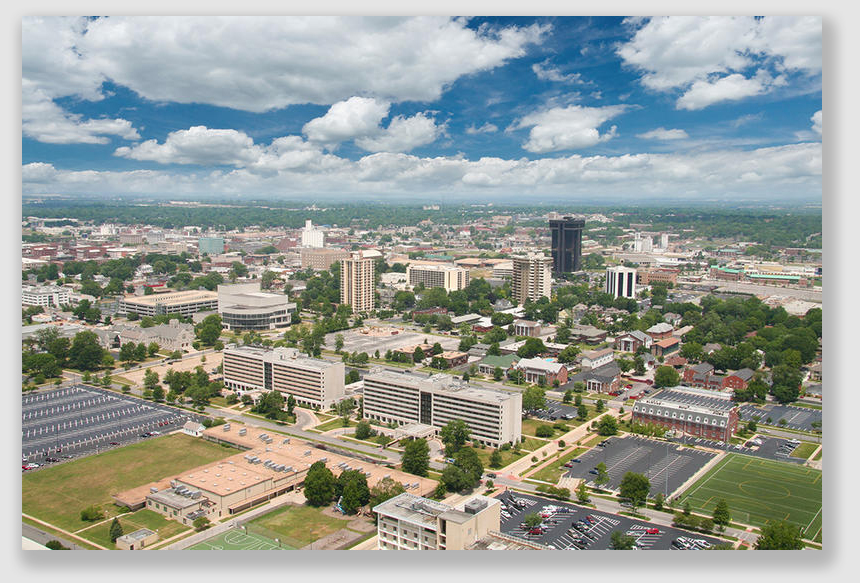 Springfield, Missouri, KSMU Radio, August 1, 2016: Urban forests: How trees affect our city
This week on Making Democracy Work host Debbie Good speaks with Urban Forester Casey Jo Kellner regarding our local tree resources and how an urban forest affects our lives here in the Springfield, Missouri, area. Audio program…
Once a captivating landmark along Interstate 84 in Eastern Oregon, the Boardman Tree Farm is quickly disappearing to make way for more conventional crops and cows. GreenWood Resources, headquartered in Portland, sold the land earlier this year and already large swaths of poplars have been cut down and replaced with irrigation pivots. Approximately one-third of the 25,000-acre property is slated to become a dairy farm — permit pending — while the rest was purchased by AgriNorthwest, based in the Tri-Cities. Will Evans, division controller for AgriNorthwest, said the plan is to convert all acreage into cropland as the remaining trees are harvested. Evans said the transition has gone better than expected since the company took over in February. “It’s a beautiful piece of property,” he said. “This is a great place to farm.” Terms of the deal, which included both the land and water rights from the Columbia River, were not disclosed. AgriNorthwest grows a variety of local staples, including potatoes, corn, wheat and carrots. Don Rice, director of North American operations for GreenWood Resources, said it will likely be a few years before all the trees are gone. Part of the wait, he said, is to allow younger trees to finish growing before they are ready to be processed. Another part is based on what the markets will bear…
 New Orleans, Louisiana, Times Picayune, August 1, 2016: How to get rid of banana trees
Question: I would appreciate information on how to get rid of banana trees. They are coming from my neighbor’s yard and taking over an area of my backyard. We have chopped them down, but they pop right up again. We’ve tried hot water and weed killer to kill them. Any help would be great.
Answer: Digging out the stumps, rhizomes and roots is the best way to get rid of banana plants. Cut the trunks down to the ground and dig out the rest. This is a lot of work, but necessary. You may miss some small pieces. Watch the area and promptly remove any stray shoots you see come up. In the future, watch for new shoots growing up on your side of the fence, and promptly dig them out…
Chicago, Illinois, Tribune, July 31, 2016: What can a tree do for your overworked air conditioner?
The shade of a tree can cool you on a hot day — and it can do the same for your air conditioner. The cooling system won’t have to work as hard if shady trees keep your home from heating up as much in the first place, according to Beth Corrigan, Community Trees Program specialist at The Morton Arboretum in Lisle. That can save you money. If you have central air conditioning, trees and shrubs are a good way to shade the compressor — the big, blocky, sometimes noisy piece of machinery outside your house. A compressor that sits out in the hot sun has to cool itself as well as the air it draws from inside the house. A shaded compressor stays cooler, so it will work more efficiently at lower cost and have a longer life. And when you’re sitting out on the patio, green plants are a more pleasant sight than a big metal box…
 Reading, Pennsylvania, Eagle, August 1, 2016: Staking trees: Do it only if needed
To stake or not to stake? Too many gardeners answer this question in the affirmative. Who doesn’t want to lend support to a wispy, young tree? And there are situations when a tree can use some mechanical aid, but not as often as you might imagine. Even when staking is beneficial, it is usually so only for a relatively brief period of time. Staking a tree that does not need it can do more harm than good. The trunk’s natural movement helps bulk it up, strengthening it, and also stimulates root growth. A staked tree might grow taller than its unstaked counterpart, but it will have a weaker trunk and sparser roots. Incorrect staking can cause further problems. The tie could girdle the trunk or cause abrasion, and movement above the tie can make the trunk grow thicker there or cause the top of the tree to blow off. Guy wires could trip you as you dash across your yard. And face it: Staking looks unnatural…
The recent high temperatures and drought conditions have taken their toll on plants as well as humans. Here are some steps to take in order to minimize permanent damage to our yards and gardens. Container plantings have had a really tough time with the heat and dry conditions. They need to be kept watered in some cases twice a day. By this time in the season, a good watering with a water soluble fertilizer such as Miracle Grow will give them a boost. Deadhead the spent blooms in order to keep the plant producing new flowers. If the mulch in your containers and beds has begun to thin, reapply it to a depth of three to four inches; This conserves moisture and prevents weeds…
 Aspen, Colorado, Aspen Daily News, July 28, 2016: City cuts down poisoned Hunter Creek trees
Scores of trees that were poisoned at the Hunter Creek condominiums last fall were felled this week after they failed to bounce back from exposure to herbicide. Ben Carlsen, city of Aspen forester, said Wednesday that 30 trees brought down mainly consisted of cottonwoods, with a smattering of aspens. City officials had hoped the trees would rebound and wouldn’t have to be removed. The poisoning was first reported in early October. Several years ago, dozens of trees near the Hunter Creek condos were poisoned with the same herbicide used in the 2015 incident, though the city didn’t disclose the exact chemical involved. Those trees are still standing…
A man died on Thursday morning in Botetourt County after falling about 30 feet, according to Botetourt County Sheriff Ronnie Sprinkle. At about 11:42 a.m., the Botetourt County 911 Communications Center received a call to the 100 block of Taylor Lane in Trouville after a man fell out of a bucket truck. He was trimming trees when he fell and was pinned by several logs that had fallen on top of him, according to Sprinkle. When Botetourt County Fire, EMS and sheriff’s deputies arrived at the scene, the man was dead. The initial report says that the tree-trimming crew was trimming trees damaged by lightning on Wednesday…

Model Claudia Schiffer is at the center of an extraordinary court probe over claims she and her film producer husband had two pines trees belonging to a multi-millionaire neighbor chopped down because they were blocking their view. Willi Weber, ex manager of legendary F1 racing driver Michael Schumacher, is reportedly suing the German beauty and British husband Matthew Vaughn after discovering the trees had been removed. He claims that a specialist hired by the couple trespassed on his land after ignoring a warning to leave the trees alone and took them away with him after using a chainsaw to chop them down, according to local reports…
Monroe, Louisiana, News-Star, July 28, 2016: Shade trees can help reduce utility bills
When you think of shade trees in your landscape, you most likely focus on the shade they create outside. It would be hard to do anything on a patio or deck this time of the year unless it was shaded. But trees that shade our homes also help hold down inside temperatures far better than curtains or blinds. And this lowers the cost of summer air conditioning. Trees that shade the house during summer lower air conditioning bills by blocking the sun from windows, exterior walls and roofs. Air conditioners cooling a fully shaded house have been shown to work only half as much as those in a house that has its walls and roof exposed to the sun. Other research reports show that shade trees can reduce heat gains by 40 percent to 80 percent, depending upon their placement and density. Even a sparse shade tree may be a better energy saver than an interior curtain…
 Boise, Idaho, Statesman, July 27, 2016: Tree torts in the City of Trees are rarely successful
In a way, it’s surprising how few people file tort claims against the city of Boise because tree branches fell on their cars or houses. Over the 12 months between the beginning of last July and the end of June, the city received 18 tree-related tort claims. That puts trees among the most common causes for torts, but the number pales when you consider Boise has 40,000 to 50,000 trees in public rights-of-way. Tort claims are legal notices that a plaintiff intends to sue a governing body. The city received more than 130 between July 2015 and June 2016. Besides tree issues, other common causes for these notices include sewer lines backing up into people’s basements, accidents involving police and other city-owned vehicles, as well as pedestrians tripping on sidewalks. Boise rarely pays out on legal action stemming from branches that fall from trees. Since 2010, tree-related tort claims led to just four payments from the city totaling $6,260, risk specialist Jonny Bush said. That’s out of around 100 total tree-related claims during that time…
Tawny Bates knows the trees in her neighborhood well. She points them out as she walks down the street on a recent afternoon — the big leaf maple, a chestnut, a willow, a blue spruce. These towering trees, she says, are in the crosshairs of development — eight of them, each roughly 40 feet tall, in a three-block radius in her little corner of Wallingford alone. “You know, we used to have majestic old forests here,” she says, resting one hand reverently on a massive willow while holding a big binder containing highlighted sections of the Seattle Land Use Code in the other. She speaks in a calm but impassioned voice as she describes the benefits that mature trees provide: they fight air and water pollution, cool the neighborhood and buffer residents from the urban din. Bates and her fellow members of the Wallingford Community Council fear that those benefits could soon be lost as the city adopts new development plans that they feel threaten to diminish Seattle’s tree canopy…

With so many downed trees across the Northland, there is ample work ahead for tree removal companies. In the Morley Heights neighborhood, homeowners have been receiving flyers from companies, most of which are from out of town. Gerry Johnson showed us his pile of flyers. He had a 100 foot tree come down and land on a car in the street. Thankfully, it didn’t hit his home or hurt anyone. “I had a friend from the Range help me cut it up. But if he wasn’t available, I would have called Rick’s,” he told us.” Rick’s Tree and Stump Removal crews were next door at his neighbor’s, Joanne Camelon. “I’ve used Rick’s for years. I did get quotes from other companies, and in my mind, they were outrageous. Buy local, because these people want your business,” she said. We met up with Rick Hanson, owner of Rick’s. They’ve been swamped for weeks, since the first storms in July did a number on Island Lake. Now it’s even busier. “We are focusing on the trees that hit homes first, so contractors can seal the roofs. Then it will be garages, and then yards. We are working as fast as we can,” he said…
Tree limbs brought down by recent summer storms have been the cause of lot of damage and power outages across the Garden State. Tree experts say that there are some ways homeowners can prevent major damage from happening on their property during a severe storm. “We’ve seen a lot of trees on top of cars…those branches on top of the roof of the houses from trees that have not been maintained,” says Maurcio Fallas, owner of Amazing Tree Services. Fallas says that preventative tree pruning can help prevent a disaster. He says his company helps homeowners remove tree limbs that are hanging over houses and power lines. He says that he also helps make trees stronger…

The tree surgeon was in an elevated lift, sawing limbs off a towering deodar pine tree on a Saturday morning in Pomona, when the first police car pulled up. A second followed. Then a code enforcement vehicle. A neighbor was begging that the tree be saved. Another was filming on her phone. “It was like something out of a movie,” homeowner Christian Irias marveled later. Irias showed everyone his permit, issued by City Hall, which satisfied police and the first code enforcement officer, who reportedly signaled the surgeon to start up his chain saw. Then a second code enforcement vehicle arrived. That officer shut down the job until City Hall reopened Monday and the situation could be straightened out…
Land managers, forestry professionals and conservationists seek to predict how trees will grow so they can better manage existing forests and regrow forests after logging operations. Previous tree growth models can reasonably predict how trees grow once they are about 20 years old and achieve “crown closure” with the trees in the forest around them. Crown closure occurs when trees in a specific area grow wide and tall enough that their canopies connect. Now, University of Missouri researchers have created a new statistical model that accurately predicts tree growth from when they are first planted until they reach crown closure. For their study, Lance Vickers, a former doctoral student at MU, and his adviser David Larsen, a professor of forestry in the MU College of Agriculture, Food and Natural Resources, built tree growth statistical equations that describe the process of early tree growth. Larsen says being able to accurately predict how a stand of trees will grow as soon as they are planted is important for forest managers to effectively grow and maintain forests. He says the model can be applied to forests in any climate zone. “Only about 10 percent of planted saplings will survive to reach crown closure when they are about 20 years old,” Larsen said. “If forest managers can accurately predict which 200 out of 2,000 saplings will survive in a given acre of forest, those managers can spend their time more efficiently by protecting those trees and cutting back trees that will not survive, but still compete with surviving trees for resources…”
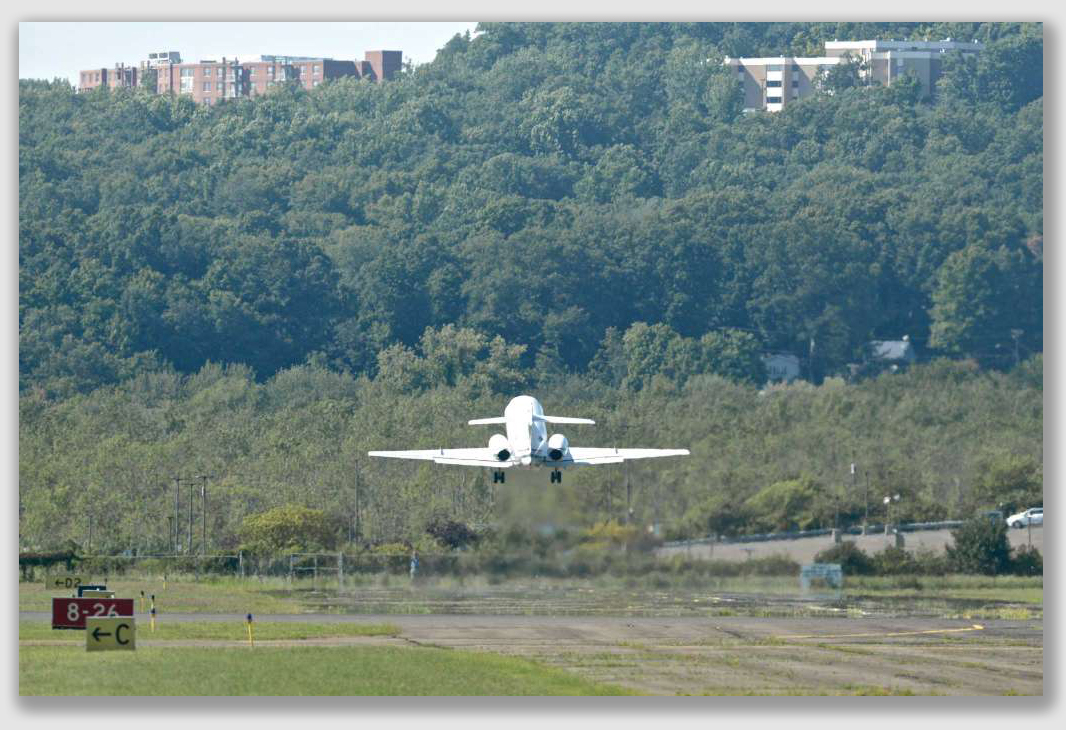
The surveyors who are evaluating trees in a high-elevation neighborhood west of Danbury Airport are not to be confused with vegetation managers working across greater Danbury to clear branches from power lines. The surveyors seen on Briar Ridge Road and Miry Brook Road are part of an expensive and complicated mission to remove trees that have grown into the western approach of Danbury Airport’s Runway 8. The problem trees – one dozen stands of them on eight private properties – have become such hazards that the Federal Aviation Administration has banned all bad-weather night landings at Danbury until the obstructions are removed. Since the city cannot cut back the problem trees without property owners’ permission, it is negotiating with homeowners to buy the rights…
It pre-dates electricity in our homes and cars on our roads. It even came before the days of the civil war. Thanks to a modern day treatment, however, a tree that is estimated to be at least 175 years old, and certainly wide enough to be the new state champion green ash tree, should stand for years to come. Located in the rolling farmland of southern Spencer County, the behemoth of an ash tree is protected from the destructive, invasive emerald ash borer. With a circumference of nearly 20 feet and a height likely exceeding 90 feet, the giant green ash tree on the front lawn of Monica Daming’s home is truly a sight to behold. “The first thing [Trugreen] did was take a picture [with their 6’3” employee] next to it,” Daming said. “Then, I knew they thought it was pretty big.” For Tony Rainey, the service manager for Trugreen’s Evansville location, it was an honor. Rainey, who has treated hundreds of ash trees throughout his career, was awestruck. “This is by far the biggest ash tree I have ever seen,” Rainey said…
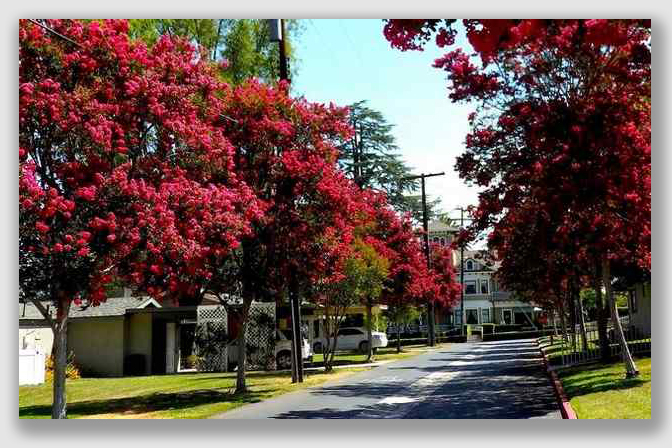 Redlands, California, Daily Facts, July 25, 2016: Crape myrtle trees are blooming in Redlands
You can tell it’s summer in Redlands when the blooms of the crape myrtle trees, Lagersgtroemia indica, appear. Each summer, these deciduous trees put on a colorful eye-catching show. Brilliant clusters of red, purple, pink, lavender and white crinkly-edged flowers that look like crepe paper seem to fill the trees to overflowing. And the show goes on and on. This tree has one of the longest flowering periods in existence — from 60 to 120 days. It seems to bloom all summer long. The Lagerstroemia indica or crape myrtle tree is not a myrtle but a member of the Lythraceae family, named for a German woman, Myrtle von Lagerstroem…
San Bernardino, California, Sun, July 25, 2016: City tree falls on San Bernardino home, car
A tree fell on a woman’s house and car early Monday morning in what she says is an ongoing issue with city trees in her neighborhood. “I heard it and it sounded just the way it sounds like when a tree falls in the movies, like cracking and breaking wood,” said Linda Estrada, 47, who lives at the home in the 1500 block of W. Home Avenue in San Bernardino. “Then I heard the boom when it hit the house and then I heard my car alarm go off.” It was about 4 a.m. when the large tree which sits outside Estrada’s home cracked in two, sending the entire top portion on top of her home, car and into her yard. Branches even blocked her neighbor’s home. “She couldn’t get into her house,” said Estrada. Police were called out soon after the tree fell, but Estrada said it took until about 1 p.m. for San Bernardino city crews to show up to remove the debris from both her property and that of her neighbor…
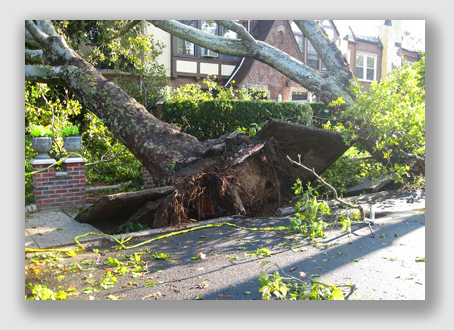
If your place of business has been affected by a severe storm or disaster, it’s important to formulate a plan before and after the event occurs. After severe storms rocked parts of northern Minnesota in recent weeks, it has become increasingly important for business owners to be aware of what actions should be taken before and after a disaster hits. If a Doppler radar shows a tornado, heavy winds or strong thunderstorm approaching, Minnesota Department of Commerce spokesperson Julia Miller suggests making sure the office space or store is well kept and all valuables are secured before leaving. Additionally, before locking the doors, take pictures of both the interior and exterior of the building. “That way, in case there is damage, you have something recent to compare when filing an insurance claim,” she said. Furthermore, double check what type of damage is covered under the insurance policy for your place of business. “We encourage everyone to talk with their insurance agents to figure out what coverage is appropriate for them,” Miller said. “Because, as a business owner, you don’t want to be either under-insured or over-insured…”
It was almost two years ago when Emerald Ash Borer first showed up in Olmsted County. Now, the city is working to get ahead of the problem before its too late, taking a different route than what was once used to stop the spread. Originally, the idea was to remove and replace ash trees. Now, there’s a new way of thinking. “With technology and improved chemicals, it’s quite inexpensive to retain a tree and because of the benefit we receive from a community back from the trees we found treatments are economically viable options,” said City Forester Jeff Haberman. In March, the approved a strategic plan for the infestation. For the next 20 years, Rochester has committed to treating trees by injecting a chemical called TREE-äge. At about $1,000 a tree, that total comes to just more than $5 million for the city. “It’s cheaper to treat a tree than it is to remove and replace. In fact, you can treat a tree for about 20 years right now with today’s technology for what it costs to remove and replace a 20-inch ash tree,” said Haberman…

The schedule to cut down dangerous trees along Jasper County’s stretch of I-95 is slipping further behind as the S.C. Department of Transportation works to avoid miscalculations, cost overruns — and perhaps a political firestorm — that a similar tree-cutting project sparked in 2010 near Charleston. While DOT originally estimated the Jasper County work could begin this year, its construction phase is now slated to begin at the end of the summer of 2017. The delay increases the odds that more lives will be lost along the dangerous stretch of road. Since DOT originally announced plans to remove trees along the interstate’s edges and median, at least six drivers have died in tree-related crashes, according to the Office of Highway Safety. More drivers are fatally striking trees on I-95 in Jasper County than in any other S.C. county the interstate touches, according to a 2015 analysis by The Island Packet and The Beaufort Gazette. This despite Jasper being only the fifth most likely county to have a crash, according to the review. Roughly 36 percent of all tree-related fatalities — 25 deaths from 2010 through 2015 — occurred in the relatively short stretch of the interstate that runs through Jasper County, according to the papers’ analysis. That’s because some Jasper County trees are within 15 or 20 feet from the edge of the interstate — a violation of a former highway safety guideline that recommends a 30-foot clear zone. More recent national research recommends even greater distances…
Seattle, Washington, KOMO-TV, July 24, 2016: Another ‘man in tree’ arrested in Seattle
Police arrested a man on Sunday after he spent nearly 12 hours perched in a tree in Seattle’s Lake City neighborhood. Officers were called to the scene around 2:45 a.m., when the man climbed onto the roof of an apartment building near 32nd Avenue Northeast and Northeast 137th Street, then crawled across some power lines and made his way into a nearby tree. Police say it started with some sort of domestic dispute. The man was wanted for domestic violence vandalism and also had warrants out for his arrest. He refused to come down from the tree until about 1:30 p.m. No one was hurt and the man was taken into police custody…
 Omaha, Nebraska, WOWT-TV, July 24, 2016: Homeowner order for tree trim on public right of way
An investigation into a tall order might surprise many property owners. A dangerous limb that was spotted by a city inspector was cut and now the closest homeowner has been told to pay. The woman told WOWT 6 News it’s not fair because of where the tree stands. Cheryl Weston lives along Emmet Street; she said a tree with dead branched posed a danger for those walking near the area. “I’m concerned about the tree because we have kids in the neighborhood who walk up and down the street and those can fall out of the blue, there doesn’t have to be a storm,” said Weston. A tree stands in public right of way in front of Shelly Brown’s home. “Its not my tree, its the city’s tree,” Brown told Six On Your Side. But the city’s Chief Field Inspector Dave Austin said many property owners don’t realize that trees located in public right of way are the responsibility of the adjacent property owner. Brown got a notice with a deadline of next month, but city’s inspector says he’s flexible. “If it got to the point our crews came and removed the dead wood out of the tree, you’d get a bill for it and have until the end of the year to pay it,” Austin said…
Pittsfield, Massachusetts, Berkshire Eagle, July 24, 2016: Drought hits Northeast; could last months
At Lavoie’s Farm in New Hampshire, beans and corn haven’t broken through the ground yet and fields of strawberries are stunted. The drought that has taken hold in the Northeast is especially felt at John Lavoie’s farm in Hollis, presenting him with some tough choices. Irrigation ponds are drying up, forcing him to choose between tomatoes and berries or apple and peach trees. Lavoie decided to hold off watering the fruit trees so he could quench the tomato and berry plants before they succumb to the heat. “We need some rain pretty quick,” Lavoie said. “There is just some corn that won’t make it. A lot of things we would like to give water to, we can’t.” The dry blast in New Hampshire is being felt throughout the Northeast, from Maine to Pennsylvania, driven by a second year of below-average rainfall. Though not as dire as the West Coast drought of five-years running, the dry, hot weather has stressed farms and gardens, prompted water restrictions and bans in many towns and threatened to bring more wildfires than usual…

The folks at Crystal Spring Tree Farm in Carbon County, Pa., are used to attention. The farm has won the privilege of supplying trees to the White House four times for the Christmas season. This weekend the farm off Route 902 in Mahoning Township will host the 2016 Pennsylvania Christmas Tree Growers Association Summer Meeting — a gathering of more than 150 growers. Farm co-founder Margaret Botek said it is more than an honor. “Let’s put it this way. It’s a commitment,” she said Wednesday. “You have all these people coming and you have to be ready. There’s lots of works to be done.” Margaret and Francis Botek celebrated 50 years in business in 2014, the last year one of their fir trees graced the Blue Room of the White House in Washington, D.C. Margaret Botek said growers will converge on the farm Friday night for a meet and greet, then spend all day Saturday sharing ideas and meeting with vendors and one another…
A Boston attorney has filed a $400,000 wrongful death claim against the town for the estates of a Whitman couple killed when a large, rotted tree fell onto their moving car. The April 3 accident killed Manuela Teixeira, 51, and Franklin Teixeira, 49, when the towering tree fell onto their BMW as they were traveling along Rockland Street in Abington. Attorney Nicholas Carter of the Boston law firm Todd & Weld LLP, representing the Teixeiras’ estates, sent a letter to Town Manager Richard LaFond and Town Clerk Leanne Adams making a claim “arising from the negligence of the Town of Abington, for pain and suffering and wrongful deaths of our clients,” the letter states. The letter, dated June 30 and received by the town on July 5, alleges the tree was on Abington town property when it fell onto the Teixeiras’ BMW, killing the couple…

Looks can be misleading. If you go out to any forest hereabout, you are sure to come upon some individual trees that tower way above the other trees. These forest giants are so huge at their base that it takes a multitude of people to join hands and encircle the tree. These are cottonwoods trees. That is what cottonwood trees do — grow tall and fat. You can be forgiven if you make the assumption that it would take a span of a hundred years for cottonwood trees to reach such an immense size. Here’s a little hint, however: These are actually the youngsters in the forest. Like I said, looks can be misleading. Cottonwoods grow tall in a short number of years. There is a price to be paid, however, for such a rapid growth spurt; the cottonwood trees are weak and are easily susceptible to wind damage. Add to that the fact that cottonwood trees, for some odd reason, insist on punching their crowns far and away above the tops of the other trees in the forest. As a result, the tops of the cottonwood trees catch the full brunt of the incessant winds, much like the sails on the central masts of an oceangoing ship. Wind shear can twist off large portions of the cottonwood tree…
Science Daily, July 21, 2016: Trees’ surprising role in the boreal water cycle quantified
Approximately 25 to 50 percent of a living tree is made up of water, depending on the species and time of year. The water stored in trees has previously been considered just a minor part of the water cycle, but a new study by University of Alaska Fairbanks scientists shows otherwise. Research published this week in Nature Scientific Reports is the first to show that the uptake of snowmelt water by deciduous trees represents a large and previously overlooked aspect of the water balance in boreal watersheds. The study was led by Jessica Young-Robertson, who worked with other scientists from the National Weather Service and UAF’s International Arctic Research Center and Geophysical Institute. The results are critical for understanding boreal forest hydrology and ecology, including soil moisture, the availability of freshwater, tree health and the ways trees influence regional weather, particularly thunderstorms. All of these factors are important for understanding the frequency and severity of wildland fires. Like a straw, trees draw water up from the soil and eventually release it into the atmosphere through leaves or needles. The scientists measured the water content in both deciduous and evergreen trees in several locations at different times of the year. They found that deciduous trees took up a surprisingly large amount of water in the period between snowmelt and leaf-out. These trees absorbed 21 to 25 percent of the available snowmelt water — to the point of being completely saturated. For the boreal forest of Alaska and Western Canada, this equates to about 17-20 billion cubic meters of water per year. That is roughly equivalent to 8 million Olympic-sized swimming pools or 8-10 percent of the Yukon River’s annual discharge…

It’s been a while since Priscilla Rafuse would play in Brattle Brook Park under the giant American elm tree. She grew up on Dillon Street with the tree behind her house. Back then her last name was Fisher. She used to paint pictures of it or hang out with her dad in its shade. It was always in the background as she grew older, running through the park with her friends. Even though she moved away in 1979, Rafuse still has fond memories of the tree. So from her home on Cape Cod, where she still has a photograph of the tree hanging on a wall, she recently donated about $800 to Elm Watch for a medical procedure to prevent the tree from becoming infected with Dutch elm disease. “I want that tree to outlive me,” Rafuse said. So Wednesday morning, specialists with the Haupt Tree Co. inserted more than 90 taps at the base of the tree and injected about 60 gallons of a specialized treatment that traveled throughout the tree on a dry, windy day…
Sonora, California, KVML Radio, July 20, 2016: Mustering tree mortality aid for those in need
A homegrown multi-agency effort spearheaded by civic groups soon plans to help fund dead tree removal projects for those who cannot afford to tackle them on their own. As Tuolumne County, among an increasing number of counties, remains under a pervasive tree mortality emergency due to drought-induced, spreading bug-related infestations, the Sonora Lions Club has impressively stepped up to organize efforts. They are specifically targeting to help fill a daunting, doughnut hole-sized funding gap by providing private property owners without essential means a hand-up in helping remove dangerously close tree hazards that might otherwise destroy their primary residence or threaten their lives. A centennial project of Sonora Lions Club Tuolumne County, the Tree Mortality Aid Program, which will become better known in the coming months as TMAP, holds as its mission to improve the health and safety of low income seniors and disabled homeowners in Tuolumne County. This collaboration, with public and private partners, will provide resources, support, and assistance in the removal of hazardous, dead and dying trees as a result of catastrophic tree mortality…
 Associated Press, July 20, 2016: Northern Michigan group clones California forest giants
At the foot of a giant sequoia in California’s Sierra Nevada, two arborists stepped into harnesses then inched up ropes more than 20 stories into the dizzying canopy of a tree that survived thousands of years, enduring drought, wildfire and disease. There, the arborists clipped off tips of young branches to be hand-delivered across the country, cloned in a lab and eventually planted in a forest in some other part of the world. The two are among a cadre of modern day Johnny Appleseeds who believe California’s giant sequoias and coastal redwoods are blessed with some of the heartiest genetics of any trees on Earth — and that propagating them will help reverse climate change, at least in a small way…
Actress Marisa Tomei’s dad had a “My Cousin Vinny” moment in a Manhattan courthouse Tuesday when he stood up in the middle of a proceeding about a dispute with his neighbor Sean Lennon and asked to represent himself. “I’m still a registered attorney,” Gary Tomei snapped, while jumping up and pushing his own lawyer to the side. Tomei was frustrated with his lawyer’s performance during a hearing over a 60-foot ailanthus tree on Lennon’s property that has invaded Tomei’s W. 13th Street townhouse. “I’m in a dilemma,” Tomei told Judge Debra James. John Lennon and Yoko Ono’s son lives next door to the Tomeis in Greenwich Village. The Tomeis are asking the court to order the celebrity scion to chop down his tree because the roots have cracked their stoop and their basement walls.“I can’t fix my property. I would cut the tree as it encroaches onto my stoop. If I cut it, the damaged tree will die,” he said…

Eking out the greatest potential from your homestead may seem like quite a challenge. Acreage is at a premium, so how can it best be utilized to produce what is needed to make a homestead more self-sufficient or even produce additional income to reinvest in the land? These are common questions, with no definite right or wrong answers. There are many good ideas to try and implement — one of which is adding a stand of willows on your land. Have you considered growing willows? The trees and shrubs that make up the Salix family are varied, including the ornamental varieties popular in modern landscaping and the supple basket willows used in ages past for creating baskets of all kinds, furniture and fences. Willows, when properly maintained, can be a wonderful addition, such as to the edge of streams and low-lying areas that retain a lot of moisture on the homestead. They can provide fuel and medicine, act as a living fence, be harvested for wickerwork or even be harvested and sold as a cash crop for biofuel energy plants…
Whether voters in Holmes Beach will be asked to weigh in on an unpermitted, beachfront tree house is in the hands of 12th Circuit Judge Don T. Hall. After an hour of courtroom arguments July 15 in Bradenton, the judge asked attorney Jim Dye, representing the city of Holmes Beach, and David Levin, representing tree house owners Lynn Tran and Richard Hazen, to prepare proposed orders for his consideration. Dye rested his argument on state law, which provides “an initiative or referendum process in regard to any development order is prohibited.” What constitutes a development order or permit is “the nut we’re here to crack,” Dye told the judge…
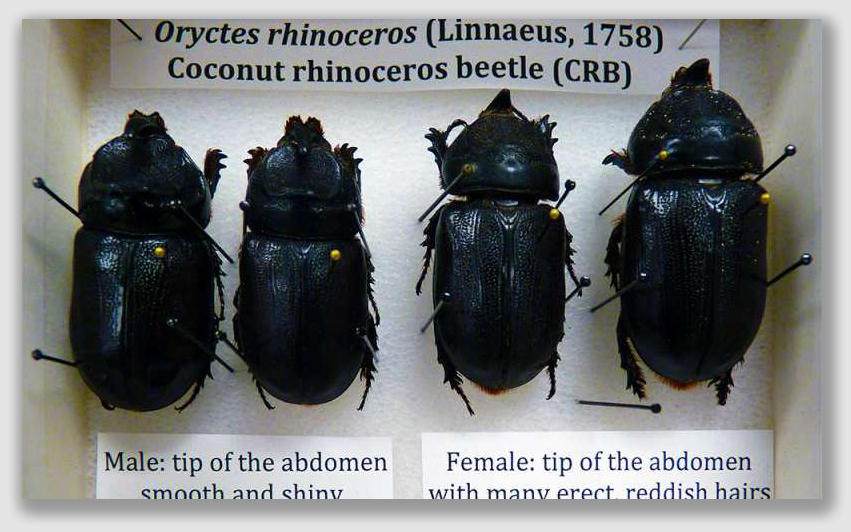 Phys.org, July 19, 2016: Group works to save the destruction of the iconic palm tree
When a monster beetle arrived in Hawaii and began chomping down palm trees, students with Wichita State University’s Bug Lab took action. Oryctes rhinoceros, also known as coconut rhinoceros beetles, have already decimated 50 percent of coconut palms in Guam. It’s an ecological and economic disaster that has now spread to Oahu in Hawaii and is likely to continue its march to other nearby tropical areas. But WSU graduate students Josh Dunlap, Jackie Baum and Emmy Engasser – guided by assistant entomology professor Mary Liz Jameson – hope to stop the spread of this destructive species through the creation of a website and mobile app that helps the public identify the invasive pests and notify proper authorities. The website and Hawaiian Scarab ID app, available for iPhone or Android, were developed in partnership with the U.S. Department of Agriculture. They were the brainchild of Dunlap as part of his master’s thesis. Dunlap graduated from WSU in May and has since been hired full time at the USDA…
Rapid City, South Dakota, Journal, July 19, 2016: City council rejects expanding tree removal
The Rapid City Council Monday night rejected the proposed dead and diseased tree removal ordinance. The original ordinance, established to deal only with mountain pine beetle infested and damaged trees, was up for expansion to include all diseased and dead trees. But the city council voted it down for several reasons. Proposed changes included city financial aid to low-income property owners needing help to get rid of troubled trees. Several council members said the revised ordinance did not take care of safety issues as envisioned. Alderman John Roberts adamantly opposed the updated ordinance saying he would, “like to see it die.” He called its possible passage tantamount to opening “a can of worms,” where they are going to make more problems for homeowners who possibly can’t afford tree removal on their own by limiting their options to city-approved contractors on city terms…

Rhonda Berry, a South Bay nonprofit director who earns a living planting trees, got a frantic phone call Friday morning and raced out the door to find the worst case of vandalism she’s seen in 25 years. And then the tears started flowing. “These trees were basically hanging without their feet touching the ground,” Berry explained. Someone had sawed off the bottoms of 23 trees along Meridian Avenue overnight Thursday and Berry watched Monday as their still-green but lifeless limbs now swayed in the morning wind. “It would be like 23 people getting their feet cut off and hanging,” Berry said. “It appeared to be very premeditated. There was something so mean in the way it was done.” Berry, the CEO of Our City Forest, a San Jose nonprofit that planted the trees along the busy thoroughfare, has seen plenty of vandalism in her career. But nothing compares to this. Her organization plans to contact police about what she believes is a criminal act…
Phys.org, July 18, 2016: Trees rely on a range of strategies to hunt for nutrient hot spots
On the surface, trees may look stationary, but underground their roots—aided by their fungal allies—are constantly on the hunt and using a surprising number of strategies to find food, according to an international team of researchers. The precision of the nutrient-seeking strategies that help trees grow in temperate forests may be related to the thickness of the trees’ roots and the type of fungi they use, according to David Eissenstat, professor of woody plant physiology, Penn State. The tree must use a variety of strategies because nutrients often collect in pockets—or hot spots—in the soil, he added. “What we found is that different species get nutrients in different ways and that depends both on that species’ type of root—whether it’s thin or thick—and that species’ type of mycorrhizal fungi, which is a symbiotic fungus,” said Eissenstat. “What we show is that you really can’t understand this process without thinking about the roots and the mycorrhizal fungi together.” Tree species with thicker roots—for example, the tulip poplar and pine – avoid actively seeking nutrient hot spots and instead send out more permanent, longer-lasting roots. On the other hand, some trees with thinner roots search for nutrients by selectively growing roots that are more temporary, or by using their fungal allies to find hot spots…

Is a rule meant to save trees putting neighborhoods in jeopardy? That was the question Monday night, as Charlotte City Council considered modifying a regulation intended to preserve trees that some neighbors say developers are using as a loophole to subdivide and over-build on single-family residential lots. Known as the tree-save ordinance, the regulation requiring developers to preserve a certain percentage of trees on new building sites was first adopted in 1978. In 2002, City Council revised the ordinance, allowing developers to build more houses on smaller lots in single-family areas – if they agreed to save more trees. The idea is simple: Let developers build on smaller lots so that a larger percentage of the site – more than the minimum 10 percent requirement – can be put aside as a tree-save area. The incentive was intended to preserve open spaces in large, new subdivisions. But the revised ordinance doesn’t distinguish between new subdivisions and existing lots in established neighborhoods. That means that builders can also reduce their minimum lot sizes by preserving more than 10 percent of the area as tree-save space when they build on existing lots in established neighborhood…
A June 5 storm that wreaked havoc on Racine County also brought a pair of damage claims against the city. The claims, made by residents Viola Ellis and Ciara Watkins, totaled nearly $5,000, with nearly all of that coming from Ellis’ claim. The Finance and Personnel Committee accepted City Attorney Scott Letteney’s recommendation to deny the claims last week, and the City Council is likely to do the same Tuesday. The storm took out power to nearly 4,000 residents in the county, with roughly 75 percent of those residents living in Racine. Ellis claimed reimbursement for $4,811.43 after a tree branch allegedly fell on her parked car, while Watkins claimed $67.20 for a branch falling on her fence. Ellis’ vehicle sustained significant roof and window damage, which Letteney described as “substantial” and “pretty bad.” However, Letteney recommended both claims be denied since Wisconsin state law frees the city from responsibility…

Iowa’s thirst for new farmland helped drive the loss of 97,000 acres of woodlands in just five years, a new federal report shows. It’s the first time in nearly 40 years that the state has seen a net loss of forested land, a disturbing development that experts fear is contributing to Iowa’s problems with farm runoff and poor water quality. Record-high prices for corn and soybeans in 2012 fueled much of Iowa’s woodland losses, as farmers put more land into production to reap bigger profits, according to the U.S. Department of Agriculture’s Forest Service report. “People are going in and bulldozing trees for farming, leaving behind gigantic piles of walnuts, oaks, elms,” said Shannon Ramsay, CEO of Trees Forever, who called the clearing of trees across the state heartbreaking. Overall, 192,000 acres of trees were felled in Iowa from 2009 to 2013. But the state added 95,000 acres of woodland, the report showed…
A plaque at its base proclaims the tree as one of the 50 greatest in Britain. But the 200-year-old plant which gave rise to the Bramley cooking apple now stands neglected, its bark peeling as it succumbs to infection. The historic tree, in the overgrown garden of a Nottinghamshire cottage, sprang up from a seed set by a girl called Mary Ann Brailsford some time between 1809 and 1815 and survived a lightning strike at the dawn of the 20th century. But now the Southwell cottage lies empty after the death of the elderly resident, Nancy Harrison, who had been the tree’s custodian. It is now ravaged by honey fungus. Professor Ted Cocking, from Nottingham University’s school of biosciences, said Miss Harrison had been ‘passionate about the tree’…
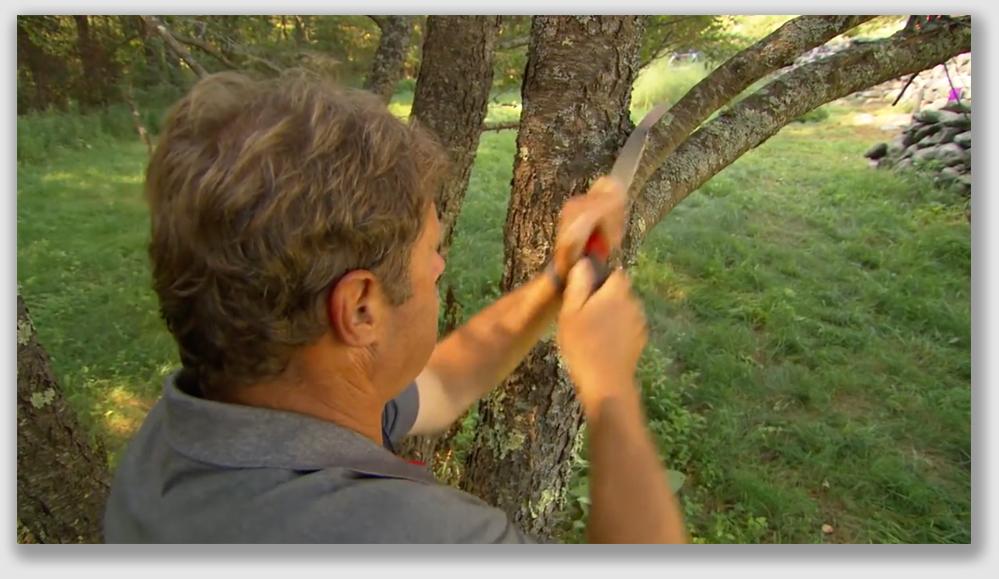 Lifehacker.com, July 17, 2016: The safe way to prune a branch without damaging the tree
When you need to cut off a dead tree branch you might think you can just hack away until it falls off, but properly caring for you trees requires a little more finesse. In this video from This Old House, we learn how to prune a branch without damaging the tree.If you try to cut directly through the top of the branch, as seems logical, the weight of the branch might end up snapping the limb without a clean cut. That can rip the bark in a way that will make it difficult for the tree to heal. As Roger Cook demonstrates in the video, it’s better to start about a foot away from where the branch meets the tree with an undercut that goes about 1/3 through the branch. Then, a few inches further out, you cut through the top of the branch until it snaps off…
Health magazine, July 17, 2016: Some tree trimming best left to the pros
Trimming or removing trees should be done with caution, particularly near power lines, the U.S. Occupational Safety and Health Administration (OSHA) says. In many cases, such work is probably best left to the professionals. For instance, any tree work within 10 feet of a power line must only be performed by experienced and trained line-clearance tree trimmers. At least two people must perform the work and must be within normal voice communication range, the agency explained in a news release. Always assume all power lines are energized. Contact the utility companies to find out if they need to de-energize and ground or shield power lines before tree work begins, OSHA said. Power lines aren’t the only hazard facing tree workers, OSHA noted…
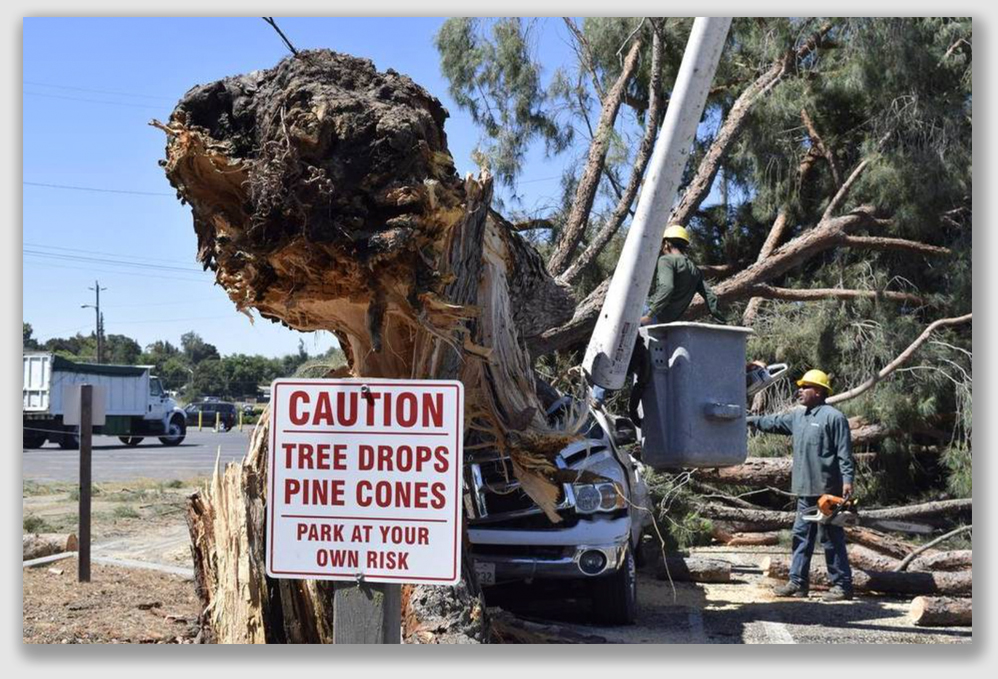
Ram tough. That’s what Dodge would say about Donnie Wright’s 2006 Ram 2500 pickup. And Wright agrees it was a great truck. Key word: “was.” Because it was no match for the roughly 60-foot Italian stone pine that fell on it Thursday morning at the Oakdale Golf and Country Club.Sonora resident Wright, a 30-year member, arrived about 7 a.m. and was on the driving range 10 minutes later when he heard a crack and looked over to see the tree falling. “Well, that’s my truck gone,” he recalled saying to a fellow golfer. For a guy who realized that if he’d arrived at the course minutes later – or lingered in his truck – he might not be around to talk about it, Wright was taking the situation well. “My son-in-law will laugh like hell about this,” he said as he sat in the clubhouse late Thursday morning, while a Grover Tree Service crew worked to carve up, grind up and haul away the tree…
Business Insurance, July 14, 2016: OSHA looks to prune tree care standards to improve safety
The U.S. Occupational Safety and Health Administration has started laying the groundwork for a potential regulatory standard aimed at reducing fatalities and injuries in the tree care industry. The industry experiences an average of 70 deaths each year — an “unacceptable” fatality rate — usually because workers are not provided with the proper protective equipment or trained on how to do the job safely, David Michaels, assistant secretary of Labor for Occupational Safety and Health, said at an informal stakeholder meeting to discuss the hazard and a potential rulemaking in Washington on Wednesday. It will be important for OSHA to make clear in a potential rule that providing, training on and maintaining personal protective equipment is the responsibility of the employer, as that is something often in dispute, said Julie Tremblay, global marketing manager for engineering firm 3M Co. in St. Paul, Minnesota…

Don’t get me wrong, this energy-drink fueled young man was pleasant and perky. He simply talked at a pace about three times faster than my ability to comprehend. “It looks like you have some carpet on your windshield,” the young man observed. He was talking about the blonde tufts of tree fur that had fallen from the mimosa tree.
I had not yet noticed the tawny flakes of mimosa tree waste, even though it had created a fur collar around the bottom of my car windshield. Mr. Chipper suggested I hop on the freeway and let it blow away. I resisted the urge to turn on my windshield wipers right then and there. Also known as the silk tree, or the Latin name Albizia julibrissin, I really dislike this tree. In early summer the flowers look like soft pink pom-poms. When they fade a willowy, light-brown blanket of tree gunk covers the yard. The barista noticed the tree trash on my car after only one night parked in my driveway. But wait, there’s more…
State officials say an invasive insect that kills ash trees has been discovered western Iowa, raising the total to 35 counties. The Iowa Department of Agriculture said Thursday that an emerald ash borer was found in the Harrison County community of Missouri Valley. The insects were first detected in Iowa in 2010. The insects have killed tens of millions of ash trees in 27 states. It is native to Asia and was first reported in the U.S. in Michigan in 2002…

If Pokémon Go players think catching 151 different pocket monsters on their smartphones is tough, imagine trying to collect more than 15,000. That’s what botanists studying the trees of the Amazon rain forest have been attempting for more than 300 years. So far, intrepid explorers have found a total of 11,676 different tree species, a new study reports. After analyzing more than 500,000 digitized samples taken of fruits, flowers and leaves, a team of ecologists has compiled what they call the first list of every known tree type in the Amazon. They published their findings Wednesday in the journal Scientific Reports…
Tampa, Florida, WFTS-TV, July 13, 2016: Protecting yourself against unlicensed tree trimmers
Two tree trimmers shocked when their 32-foot ladder hit a power line remain in the hospital Wednesday, seriously injured. While it’s unclear if the two tree trimmers were insured when the accident happened, the Better Business Bureau serving West Florida says homeowners can open themselves up to big risks if an uninsured tree trimmer is injured while working on your property. Ralph Campbell, owner of Bay Area Maintenance & Tree Care in Tampa, said his workers have a nickname for power lines. “The power lines are always a problem,” he said. “In fact, they call them the widow makers.” But he says many uninsured tree trimmers will come knocking on your door, promising a cheap price and a quick job…
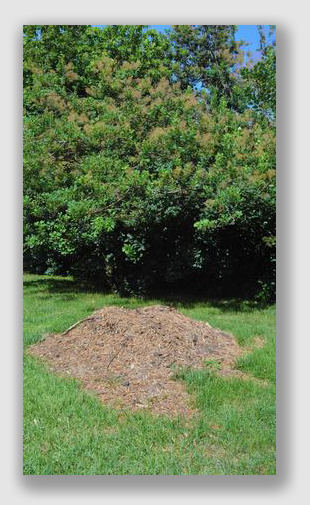
Once it was a favorite tree. Now it’s just a pile of wood chips where a stump was ground out. Many homeowners are eager to replace a tree that had to be removed because of emerald ash borer or other causes. But don’t rush to replant in the same spot, said Meghan Midgley, soil scientist at the Morton Arboretum in Lisle. “That’s not likely to be the best place for your new tree to succeed,” she said. Wood chips are not the right environment for tree roots, she said. They won’t provide enough structure to anchor the tree. As they decay, the tree will sink. And new roots are likely to keep circling within the loose zone of wood chips, where it’s easy to find gaps, instead of pushing out into the soil where they need to go. Remember that a healthy, mature tree spreads its roots far out, often 30 to 50 feet or more. “Your new tree needs a lot more space than the small circle you see where the old trunk was,” Midgley said. She recommends that you find a different location to replant. If the new site is within a few feet of the old one, be prepared to cut and remove a lot of big roots from the old tree as you dig. It’s likely to be a struggle…
It was not a question of whether a large tree near Deer Run and Rosewood in Hannibal needs to be trimmed, it was just a matter of who the city’s Traffic Committee would ask to do the work during its Tuesday morning meeting at City Hall. The five committee members present agreed that something needs to be done. “It’s massive,” said Susan Osterhout of the tree. “It totally blocks the view of oncoming traffic.” “It’s a line-of-sight issue,” said Jeff LaGarce. Because the tree is located on city right-of-way, Street Department personnel could be used to perform the task. LaGarce, however, expressed reservations about using city forces. “I’d hate to have to go in and hack on their (property owners’) tree,” he said. The committee agreed to have a letter sent in behalf of the city to make a “friendly request” of the property owners to trim the tree approximately 6 feet up from the ground…
 Danvers, Massachusetts, Herald, July 12, 2016: Danvers tree debate branches out
A tree on Grapevine Road that’s been the center of some controversy gets to live another day. The problem is, trees planted along local streets many years ago have grown and in some cases, like the Norway maple in front of 4 Grapevine Road, have raised the sidewalk as the roots grew and stretched under the sidewalks. The Department of Public Works would like to remove the maple in front of 4 Grapevine Road, replace it with two or three young trees that would not grow as large as the maple, and repair the sidewalk. The owners of 4 Grapevine Road, Timothy and Danielle Hawke, want the tree saved as it provides shade for their front lawn. The five selectmen, presented with this disagreement, were split between four different options during their discussion about the tree on June 21…
Corpus Christi, Texas, KRIS-TV, July 12, 2016: Tree service equipment stolen
Thousands of dollars of equipment was stolen from an area family business, and friends are helping to keep the business going with a few generous gifts. Miller Navarro of Gregory-Portland started the M&S Tree Service in 1995. On July 3rd Navarro’s tree equipment was stolen from his storage shed on the 800 block of Wildcat Dr. Navarro said he went to work on Independence Day and noticed the door to the shed was damaged and all his equipment was gone. Hours after the crime, Navarro wondered how his tree service business would survive with no equipment. “At that point, I really didn’t know what I was going to do. This is how I make my money; this how I help the community and feed my family,” said Navarro. More than $3,500 worth of equipment was stolen, but Navarro had a big surprise a few days later when his old high school friend Jimmy Myrick came to the rescue by donating a few items to help keep his business running. “I really appreciate everything Myrick got for me. I had lost a lot of tools so anything helps,” said Navarro…
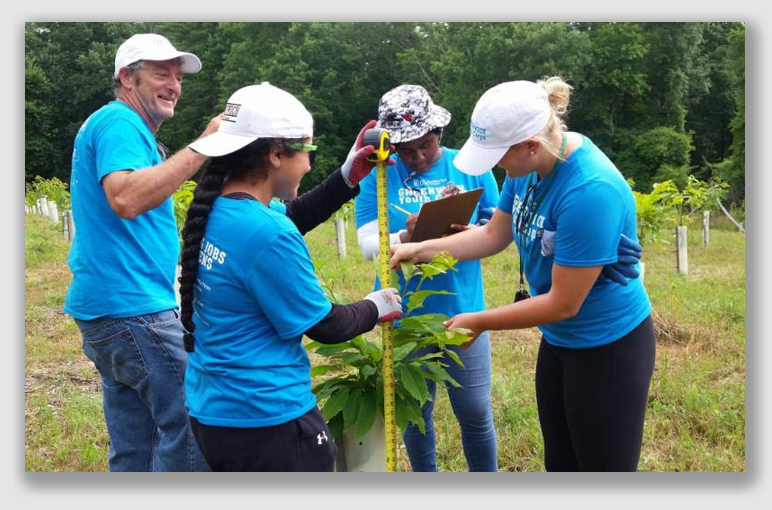
In 2014, Greenwich Land Trust (GLT) joined the Greenwich Tree Conservancy in establishing the first American chestnut tree orchard in Fairfield County. This project’s goal is to grow blight resistant American chestnuts in the Greenwich area. Working with the American Chestnut Foundation, GLT planted 400 of ACF’s seedlings on a permanently preserved property in central Greenwich. For almost two years, the chestnuts have been adapting and growing. Join the Greenwich Land Trust on Wednesday, July 20, from 3-4:30 p.m. for a presentation by representatives of the GLT and the American Chestnut Foundation’s CT chapter at the chestnut site. Learn about how GLT’s chestnuts are doing and how other projects along the East Coast are faring as well…
A proposed plan to incentivize home owners to remove dead and diseased trees from their property continues to be debated by city government. The Public Works Committee voted to send the discussion over the program to the full council without recommendation at its next meeting. The current plan calls for a two–tiered system that will reimburse part of the cost of tree removal to homeowners based on their income. Ward 5 Alderman Brad Estes agrees there is a need for the program, but he would like to see some adjustments. “I’m not sure that I am in favor of the two–tiered process right now, because the last tree program treated everyone evenly, and I would like to have the new program speak to those that will go by the abatement route”, said Estes…
 Lincoln, Nebraska, NET, July 12, 2016: Nebraska gears up for tree-killing insect
On a steamy summer morning, Jim Haas strides across a lush lawn to a tall ash tree. He carries a big, pronged ruler. He’s evaluating the tree on a quiet residential street in Lincoln. “I’m going to measure this ash tree, get the diameter at breast height, to get an idea of how much product we need to put in the tree if we’re going to inject this for emerald ash borer,” said Haas, president of Lincoln Tree Service. With a broad, leafy canopy, few signs of decay, pronounced root flares and well-calloused pruning scars, Haas determines the tree is quite healthy. “This is a great candidate for injection,” he tells homeowner Brenda Zitek. She called Haas to see about treatment for her tree. “You read all the time about the ash borer entering into Nebraska. We live in a neighborhood full of mature trees and I just want to make sure that this tree gets every chance to survive,” Zitek said…
A Hancock Park woman who said she had to go to the media to get trees removed because the roots were damaging her property to the point that she couldn’t use her sinks or toilets filed suit Monday, alleging the city failed to pay for extensive repairs. Margaret Wendt’s Los Angeles Superior Court lawsuit alleges negligence, premises liability, dangerous condition of public property, trespass and nuisance. She’s seeking at least $175,000 in damages. Wendt also is asking a judge to find responsibility in connection with the damage done by the trees, which she said forced her to join a health spa to use the facility’s showers and bathrooms. She says the ficus roots penetrated and blocked a sewer line, leaving her unable to use her sinks or flush her toilets…

When you burn a tree, it releases carbon gas, which causes climate change. But if you plant a new tree in the old one’s place, the idea goes, it’ll grow and suck up that carbon. “So there’s not adding any greenhouse gas emissions over the whole life cycle of that species, of that plant,” says David Murphy, who researches renewable energy for St. Lawrence University. But now, some scientists and environmentalists are challenging the “renewability” of biomass. “It’s absolutely true that we’re becoming, as a whole, a lot more skeptical of biomass’ ability to deliver large amounts of electricity in a sustainable fashion,” says John Coequyt, director of federal and international climate campaigns with the Sierra Club. The debate is over how sustainable logging is defined. The industry and many forestry experts insist biomass plants burn mostly forest and farm leftovers. According to Bob Cleaves of the Biomass Power Association, the operations are using materials like “orchard prunings and rice hulls, tops and limbs from forestry operations, bark, sawdust.” Plants don’t have economic incentive to burn anything but low-value material, Cleaves says. “There’s no question that it would be a very different calculation if you were to take mature trees and you were to cause deforestation or cause land use changes in the United States, but that’s not happening in the power sector today,” he says…
Peoria, Illinois, Journal-Star, July 11, 2016: Drought impacts trees for years to come
I continue to get calls about large, old trees that are in major decline. Many of these are just now showing symptoms from the severe drought of 2012. Major weather events have a detrimental long term effect on landscape plants. Many people feel that large trees won’t be harmed by drought because they have large root systems. This is not the case. Instead we often see substantial tree dieback and death due to the drought over the next several years. The tree continues to use up its reserves, and is not able to fully recover water and nutrients needed for long term growth. Many trees will take three years to die, and some will hang on until five years after the drought. As these trees decline, they are more susceptible to insect and disease infestations. Unfortunately, there is very little that can be done to save many of these old trees. Some arborists are finding initial success using a growth regulator treatment. The growth regulator slows the tree’s output of new growth and fruit production, thus reverting its energy production back to its reserves which are so severely depleted from major weather events the past 3-5 years. Regrettably, this is a very expensive treatment without sufficient data to prove its long term effectiveness…
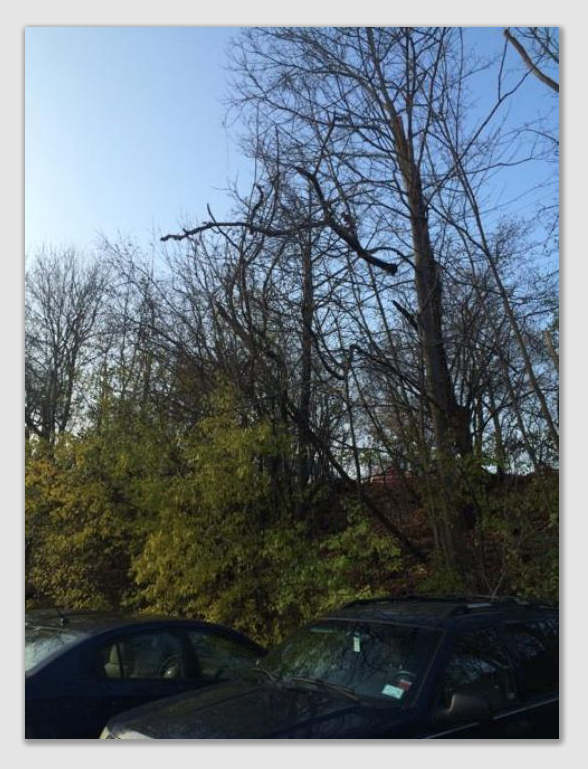 Poughkeepsie, New York, Journal, July 8, 2016: When a tree falls in parking lot, who’s responsible?
“I wanted to share my story with you in hopes that you might help shed some light on a dangerous situation in the Beacon station parking lot,” Susan Weiss wrote. “I’m trying to find the right person to take some responsibility for extremely hazardous tree conditions. So far, no luck.” According to Weiss, on Oct. 28, 2015 a tree at the southern edge of the river side of the lot by Red Flynn Drive had fallen on her year-old Subaru Impreza, causing much damage. Seeking reimbursement of $2,500 (the amount needed for the down payment on a new car lease), she was “passed around” from the City of Beacon to Metro-North to LAZ Parking, the company that manages the lot. “Each claimed no responsibility for ownership or maintenance of that property,” she wrote. “They started off saying it was an act of God, but when faced with the fact that it was a completely rotten dead tree that should not have been there and fell during a simple rainstorm, they changed their story to all claiming not to own or maintain that property.” Weiss later sent photos of tree limbs tangled in vines hanging over parked cars and a branch that had fallen between two parked vehicles, as well as a sign stating that the area was railroad property. “They closed off spots but never fixed any of the trees!” she wrote, adding that the Dutchess County records office had told her Conrail was listed as owner of the property. Conrail’s real estate department told her it had been sold to the MTA in 1995…
ZME Science, July 8, 2016: Light pollution causes spring to come earlier
We often talk about all types of pollution, but light rarely gets the spotlight. Most cities are very bright in the night, and this light can cause significant adverse effects on both human and animal bodies. However, the biggest sufferers could actually be the ones who rely on light the most: plants. If trees are exposed to light every night, then they start blooming faster, and this triggers a whole cascade of other effects. Many creatures base their lifecycles on trees. “Our finding that the timing of bud burst of woodland tree species may be affected by light pollution suggests that smaller plants growing below the height of street lights are even more likely to be affected,” said Professor Richard ffrench-Constant of the Department of Biosciences based at the University of Exeter’s Penryn (U.K.) campus. “Such results highlight the need to carry out experimental investigation into the impact of artificial night-time lighting on phenology and species interactions.” This isn’t exactly unexpected news, but it once again shows that we don’t truly understand the effects of light pollution. Of course, switching lights off when they’re not needed is generally a good idea, but researchers also suggest that using other wavelengths could make a big difference…
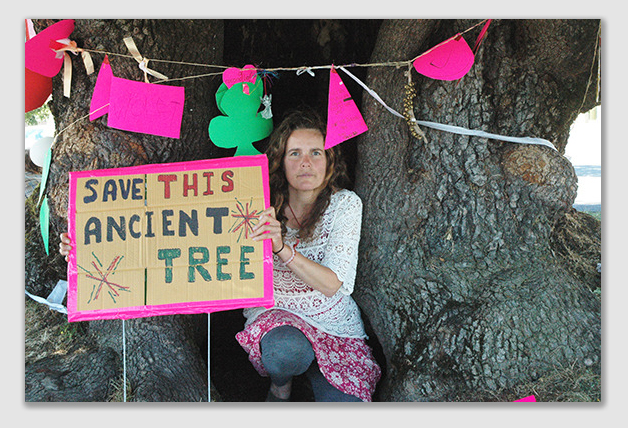
She’s ba-a-a-ck …
Defenders of the old maple tree on James Street want to see the arborist’s report on the tree before the community gathering on its fate that will be held on July 11. The tree, estimated to be up to 200 years old, was scheduled to be cut down last week as part of the plans by the Island Savings Centre to upgrade its parking lot. An independent arborist completed a report on the health of the tree, which is hollow in its centre, in which it’s concluded that the tree should be removed because it poses a threat to public safety. However, many in the community have rallied to save the tree and prevented work crews from cutting it down. As a result, the Cowichan Valley Regional District decided to postpone plans to take the tree down until a “community conversation” is held on the issue on July 11. The CVRD leases the centre’s property from the Municipality of North Cowichan. Many of the tree’s defenders want to see the arborist’s report on the tree in preparation for Monday’s community gathering at the Island Savings Centre, but have been denied. “We feel public disclosure has been side-stepped and feel it’s only fair and just to have access to the CVRD’s tree report so we are able to better prepare and educate ourselves before the community gathering,” Lindy Kennedy said…
Pembroke, Georgia, Bryan County News, July 9, 2016: Don’t spend money trying to save a dead tree
Summer storms bring the crackle of lightning and the rolling boom of thunder. If it’s coastal Georgia in summer, watch for those 3 p.m. thundershowers. Sometimes the lightning strikes trees. Many times, the strike may not harm the tree at all. Sometimes the strike will explode a tree into toothpicks. Lightning can do almost anything or nothing. How much injury a tree suffers from a strike depends on the nutrition of the tree, the growth phase it is in at the time, the weather and the strength of the discharge. What to do after a strike depends on tree species and the severity of injury to the tree. You ask, “Gee, Don, what does that mean to me?” It means there is no single answer to cover what to do after a lightning strike to a tree. There are some general guidelines that usually apply and things you can watch for. So think of this as a “what every homeowner should know about lightning-struck trees primer.” First, if the strike didn’t blow out all the electronics in your home, enjoy your good luck. Second, if the tree has broken or collapsed limbs and branches hanging in it, you will probably want to have those removed soon, unless you can keep people and pets out of the area for the next month. If it is safe to approach the tree, look for the course of the strike. If the trunk is split by the strike, removal is probably indicated. If the bark has been blown off half way around the tree at any point, the tree will likely die…
 Fort Myers, Florida, WINK-TV, July 7, 2016: Spotted in Cape Coral: An alligator in a tree?
Can alligators climb trees? Ronald Saracino of Cape Coral certainly thinks so! Although he’s lived in Southwest Forida for eight years he was shocked at what he says he found up in a tree near Viscaya Parkway and 9th Lane. “Saw something in a tree, at first I thought maybe it was a lizard,” Saracino said. “The more I looked at it, the more I thought it was actually probably a 5-foot gator.” He added, “I know people are not going to believe it, but I 100 percent believe it was a gator!” “They are more agile than people give them credit for,” explained Amy Sera, an educator at the Calusa Nature Center in Fort Myers. Sera says it’s common for gators to climb things, such as fences, if they need to. “I’ve seen picture of crocodiles doing that behavior. It gives them a little bit better view of their territory,” Sera said. “Cold blooded animals get their energy from the sun and the warmth. So, they are more active in the summer…”
When a number of trees were removed on the property at 10 South Chestnut Street in New Paltz, it was members of the village’s Shade Tree Commission that pushed for replacements to be planted. The most prominent tree that was taken out — the mulberry which was growing along the road right near Bacchus — is technically not part of those legal procedures, and it’s also not dead. That particular tree was removed by Central Hudson employees who were replacing the adjacent utility pole, which is why taking it down didn’t run afoul of village tree laws. As to why it’s not dead, that’s thanks to Jason Rosenberg…

Adam Routledge’s blood-soaked, steel-capped work boots are testimony to the moment that a stump grinder kicked back on him yesterday. Mr Routledge was grinding the stump of a tree on a semirural block on Alpine Tce about 11.30am when both his feet were caught by the teeth of the machine. The homeowner who had employed the Tamborine tree lopper said he heard screams and rushed to help. “I helped him wrap it all up with some towels – he was wearing boots,” said the man, in his 50s, who did not want to give his name. The stump grinder tore the steelcaps off the safety boots with the homeowner saying he could not see the extent of the injuries clearly because of the amount of blood…
Battle Creek, Michigan, Enquirer, July 7, 2016: Tree harvest at city’s Metcalf Lake draws opposition
Tree-cutting at city of Battle Creek-owned property in Barry County has drawn concerns from some residents who said they worry plans to keep it as a nature preserve are being ignored. The city since 1999 has owned 160 acres of land that surrounds Metcalf Lake, near North Avenue and Baseline Road. It went untouched for years because of Battle Creek’s decreasing Parks and Recreation budget until the city entered into a lease agreement last year with the Calhoun Conservation District. Now, the group has come under fire for harvesting walnut trees and others at the property — a move its officials say is necessary to give room for younger trees to grow. An “uneven aged forest” also could protect trees that may be damaged and taken down during strong winds or an ice storm, Calhoun Conservation District Executive Director Tracy Bronson said…
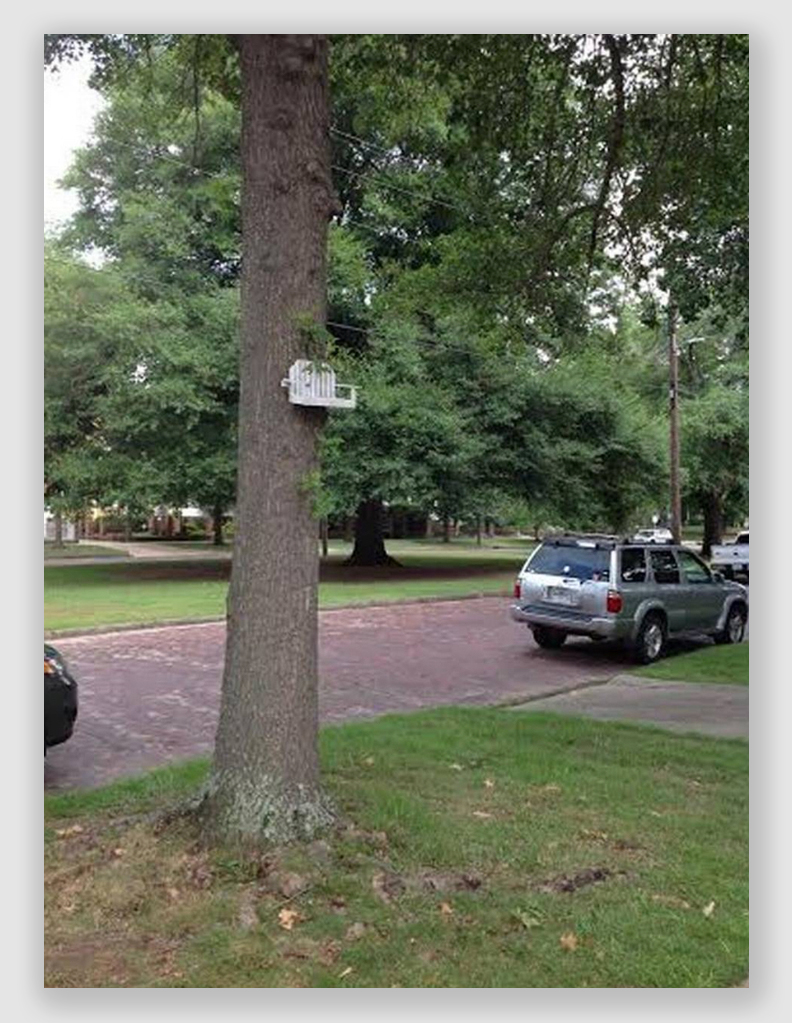
Don’t you just love it when city government “swings” into action? Meet Eric Gansauer, the city of Columbus’ forestry administrator. He has been a busy man in recent weeks working the lower end of Broadway in the Historic District. Using the city’s Tree Preservation and Protection Ordinance as his sword, Mr. Gansauer has been a diligent public servant. His job is to enforce the tree ordinance.
And he takes his job seriously. Kind of the way Barney Fife took his job seriously in the fictional town of Mayberry. “The tree ordinance does not allow you to attach or hang anything on a city tree,” Mr. Gansauer said on Tuesday. No, it doesn’t, sir. Seems like about a half a dozen folks in the Historic District are treating city trees in the right of way and the median as if they own them. Big mistake. One couple hung a baby’s seat swing — you know, the cute hard plastic pink ones — from a tree limb. Somebody else has erected two well-crafted rope swings in the 500 block median. Others, flaunting the city law and sticking it to the man, have put up squirrel feeders and bird houses. Things are going to hell fast down here, I’m here to tell you. But it will be OK. We promise. Mr. Gansauer is in charge. Seems like the week before the Fourth of July, he took it upon himself with the power vested in him and threatened to cite and take people to court if they did not remove the objects in 15 days…
Salina, Kansas, Journal, July 6, 2016: Is my tree likely to join me in the dining room?
Have a tree you are worried will come through your roof? “If you can’t sleep at night because you’re worried about that, I would get rid of it,” said Steve Blue, Salina’s city forester. But if you want professional advice, Blue said he or Jason Graves, horticulture agent for the Central Kansas District office of K-State Research and Extension, or any tree care professional could assess the health of your tree. Blue said if you’ve recently cut tree roots to pour a driveway, repair a broken sidewalk or replace a sewer line, you need to pay attention to the tree. “If you’ve cut a bunch of roots on one side of the tree, that tends to affect it pretty severely,” he said. “That’s typically where we get concerned.” He said a tree’s root system typically spreads about twice as far as the tree is tall, with 80 percent of the root system being in the top 18 inches of soil…

The soaring copper beech that has shaded the front of the Bridgewater Public Library for almost 80 years may not live to a ripe old age of 100 years or more. The tree is sick with a fungal disease. It’s not exactly on life support and has a few more years left in it. It’s also not considered a public safety hazard – not yet, at least – although it dropped a huge limb this past spring. A few years ago, library trustees talked about whether or not to cut it down. They called in a tree company to top it and selectively prune it from time to time. “It looks like right now, we’re going to try to preserve it,” Bridgewater Library Director C. Sean Daley said. Bridgewater Tree Warden William Maltby said the tree, whose scientific name is fagus sylvatica f. purpurea, is suffering from the same ailment that has been plaguing copper beeches all over town. A few other specimens have already come down, he said…
Science Blog, July 6, 2016: Drought stalls tree growth and shuts down Amazon carbon sink
A recent drought completely shut down the Amazon Basin’s carbon sink, by killing trees and slowing their growth, a ground-breaking study led by researchers at the Universities of Exeter and Leeds has found. Previous research has suggested that the Amazon -the most extensive tropical forest on Earth and one of the “green lungs” of the planet — may be gradually losing its capacity to take carbon from the atmosphere. This new study, the most extensive land-based study of the effect of drought on Amazonian rainforests to date, paints a more complex picture, with forests responding dynamically to an increasingly variable climate. The study made use of two large-scale droughts occurring just five years apart, in 2005 and 2010, to improve understanding of how drought affects tree growth, and therefore the rate of uptake by trees of carbon dioxide from the atmosphere. In the first basin-wide study of the impact of the 2010 drought and its interaction with previous droughts, the international team of researchers found that tree growth was markedly slowed by drought across the vast forests of the Amazon…
 NPR, July 5, 2016: From tree to tap: Maple water makes a splash
Kate Weiler was in Mount Tremblant, Quebec, when she found bottled maple water in a local coffee shop. With one sip, she was hooked on the single-ingredient water with a hint of sweetness. “I loved the idea that it was natural, plant-based hydration from a local, sustainable source that tasted great,” says Weiler. Maple water wasn’t sold in her hometown of Saint Albans, Vt. In the process of searching for — and failing to find — a source where she could order it, Weiler decided to launch a business to bring the functional beverage to market. Drinkmaple hit store shelves in 2014. Around the same time, several other brands of maple water came online. Weiler welcomed the competition because she believed it brought attention to the category. The drinks usually retail for about $3 to $5 for a 12- to 17-ounce bottle. “People have been drinking maple water from buckets on sap farms for hundreds of years,” she says. “We like to say that the un-trendiest beverage is now trending…”
Oconee County coroner Karl Addis has determined that 57-year-old David Wayne Vaughn’s death on Monday was an accident caused by “positional asphyxiation.” Vaughn, an arborist from Walhalla, was working alone on Monday trimming high branches in a tree on private property. The property’s owner told authorities he went outside to check on Vaugn after he realized he didn’t hear the sound of the saw any more. He found that Vaughn, who had started the job about 8 a.m., trapped high in the tree; One of his legs was wedged in a fork of tree limbs. It took Vaughn an hour to free himself and remove his climbing spikes in preparation to rappel down to the ground, Addis said in a news release. The property owner said Vaughn now appeared disoriented and a short time later, Vaughn was unresponsive while still hanging in the tree, suspended by his climbing harness and ropes between 60 and 70 feet off the ground…

Everyone in Basking Ridge hoping that tree experts will be able to save a 600-year-old tree that’s on the critical list. The iconic white oak — believed to be the oldest in the country — is in the yard of the Basking Ridge Presbyterian Church. How long has it stood? When George Washington enjoyed its shade, it was already hundreds of years old. Jon Klippel, with the church’s planning council, says Washington “was traveling from Morristown, down south toward the Princeton area, and found this to be an ideal place to stop on his route.” Klippel says arborists would probably project that white oak trees, if they are healthy and everything goes right, to be anywhere from 300 to 450, “and if you are beyond 450, you have really done well.” He says the church has been giving it really intense supervision for the past century. Around 1924, when church members noticed that the tree was struggling a little bit, Klippel says, tree care surgeons came in and provided some careful, strategic pruning— and then they took care of rot that they saw in the center core of the trunk. He says they hollowed out an area that four men were able to stand in, and then they filled that with concrete…
Q: If a tree branch falls and injures me, what issues are there with suing whoever is responsible?
A: Here’s a few: Whose property were you on when the injury occurred? Is it public or private? Who had the responsibility for maintaining the tree? Were you acting carelessly in some manner that may mitigate your claim? Such a claim is akin to premises liability. Property owners typically have a duty to keep their premises reasonably safe for people who are lawfully there. But, if it is a rural area that perhaps is heavily wooded, that owner likely is not going to be held responsible for ensuring the safety of every tree, or to remove dead branches right away. Thus, the key elements of a claim are: • The duty of the property owner to maintain the premises in a reasonably safe condition; • Breach of that duty by failing to either take care of a dangerous condition or at least warn of it; • The property owner knew or should have known of the dangerous condition; • The injuries were caused by the property owner’s breach of duty…
 Bend, Oregon, Bulletin, July 5, 2016: Building a neighborhood among trees
A new neighborhood is budding after years of planning. It’s beyond the borders of Bend’s city limits off Skyliners Road. Roads are being paved in The Tree Farm development, and soon houses will start to go up. “We started negotiating with the Miller family back in 2013, and our agreement was appealed by Central Oregon Land Watch Commission, and the Wildland Urban Interface who wanted to make sure there would be a detailed plan for wildlife protection, along with plans to reduce the threat of wildfire,” explained Tree Farm Project Manager for Brooks Resources Romy Mortensen. “We reached an agreement with these organizations and the Deschutes County commissioners in February of this year, and I believe this neighborhood has undergone an unprecedented amount of detail in every planning stage.” From the start of negotiations, the Miller family, owners of property since 1955, wanted to make sure the developer, West Bend Property Co. 2 — a partnership between Brooks Resources Corp. and Syliners TWS, LLC — understood their vision and desire to respect the land. “Miller lumber began in 1911 with my grandfather Harry who served as Mayor of Bend. Then my father Bill started Central Oregon Pumice and bought the Miller Tree Farm in 1955. He also served as a mayor of Bend twice,” explained son, Charley Miller, at an unveiling of the newest neighborhood earlier this summer. “It was important to us, as a family, to preserve the land as much as possible because this land is the core of the community. It’s a special place, and we wanted forested land to be kept in perpetuity forever,” Charley Miller said…
Portland, Oregon, KOIN-TV, July 4, 2016: Tree removal part of plan to revitalize Lents Park
If you’ve been to Lents Park recently you may have noticed some trees with special markings. They’re designated for removal by the city as part of a years-long plan to revitalize the park and provide more ways for the community to use the space. The handful of trees sit in a 38-acre layout just south of newly-refurbished Walker Stadium where the Portland Pickles baseball team currently plays. Portland Parks & Recreation has been working to revitalize the park for years. Part of their plan involves moving the current soccer at the park field slightly north to make way for the installation of a synthetic soccer field. In an email to KOIN 6 News, Mark Ross with PP&R said the tree removal is part of the Lents Park master plan going back to 2011. He says the idea was put in motion 5 years ago with what he describes as “extensive public involvement” through the city council and other public forums. About a half dozen trees would need to be cut down for the new soccer field, which Ross says would result in a larger amount of uses and programming at the park…

Nebraska State Patrol Trooper Manuel Jimenez has confirmed that one of the victims in an accident at Lake Minatare Sunday has died of his injuries. The Nebraska Game and Parks Commission reports that a 49-year-old Loveland, Colorado, man died after a tree fell. Jimenez said that the person’s identity is not being announced to allow the notification of family. At about 12:30 p.m., emergency personnel were called to Lake Minatare after a report of a tree falling and trapping people underneath it, as they sat at a picnic area near the south gate entrance. Nebraska State Patrol troopers at the scene said that eyewitness reported that they heard a loud pop and a tree fell. One person was able to free himself on his own and a good Samaritan is reported to have brought a tractor to lift up the tree and free the other two people…
The supervisors voted 3-2 at its July 22 meeting to advertise a proposed ordinance to regulate a homeowners planting of bamboo and other invasive species. Several Bucks County municipalities, including Doylestown and New Britain Townships, as well as Yardley Borough, recently have enacted such measures, and neighboring Lower Makefield Township is already drafting a similar ordinance. But Newtown Township’s legislation is different from the other measures in that it only would regulate the planting of bamboo and other invasive species if it would encroach on public right-of-ways, such as township-owned land and roads, as well as utilities. However, the proposed township ordinance would not protect private property owners from each other, although homeowners would still have a right to go to court themselves if there is a dispute. “We just wanted to keep it away from township property,” said Supervisor Dix, “not private property owners’ land…”
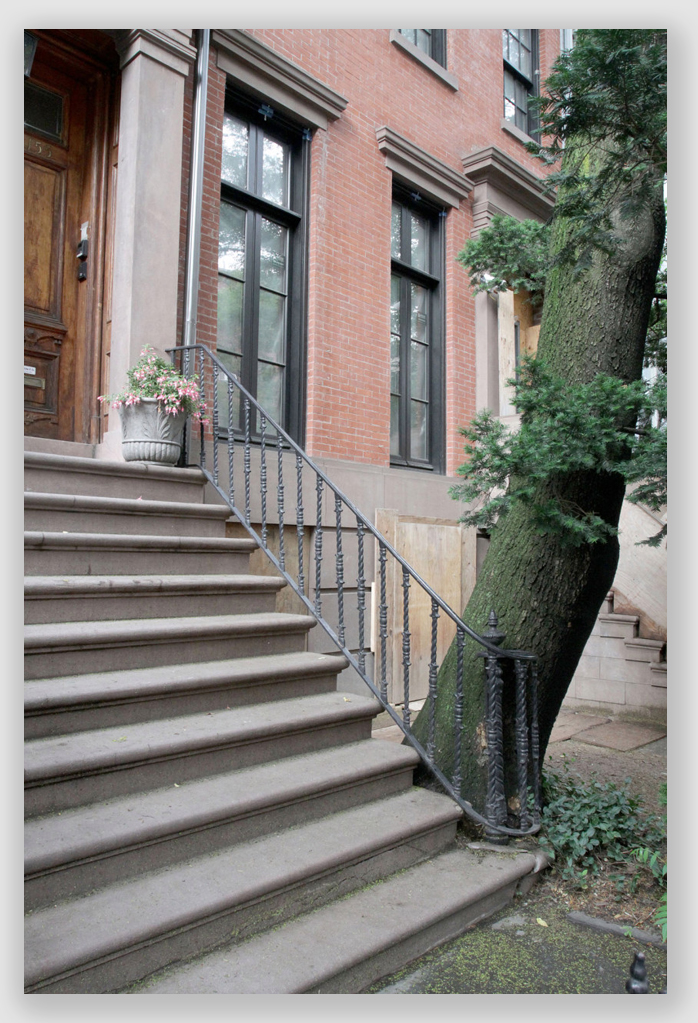
What started as a neighbor-vs.-neighbor tiff over a tree has grown into a months-long, only-in-New York legal battle pitting actress Marisa Tomei’s parents against the son of John Lennon and Yoko Ono. Gary and Addie Tomei, who live in a stately town house at 155 W. 13th St. in Greenwich Village, say in their $10 million lawsuit that Sean Lennon, owner of 153 W. 13th St., won’t give peace a chance. Instead, the lawsuit says, he’s “arrogantly” demanding that the Tomeis alter the entrance to their landmarked brownstone in Greenwich Village’s historic district so he can save a diseased ailanthus tree on his property that has encroached on their house. “To suggest that [the Tomeis] forever transform their 170-year-old property so that [Lennon] may temporarily enjoy viewing its tree is absurd,” the couple’s lawyer, Gerald Walters, says in court papers filed this week in Manhattan Supreme Court. The Tomeis are asking a judge to force Lennon, 40, to remove the 24-inch-diameter, 60-foot-tall rotting tree from in front of his home. They say the roots have cracked their stoop, crept into their basement and compromised their foundation…
Albany, Georgia, WALB-TV, June 30, 2016: Woman says tree trimming on property excessive
A Mitchell County woman said that she’s disgusted to see how Georgia Power is handling trees and nature on her property. The utility giant has a 150 foot easement on about seven acres of her land, but she said they’re “mutilating” the trees. Judy McClellan believes the trimming of the trees around power lines on and near her property is excessive, and is trying to prevent more trees from being stripped. Georgia Power said that they don’t have a choice. A month ago, McClellan said she was notified by a man with the tree cutting business contracted by Georgia Power, that they would be starting their trimming process in the next several days. But she had no idea to what extent. “The rest of the easement, our property, they have already stripped it,” said McClellan. “I mean stripped it. I am horrified.” McClellan said that her parents bought this land back in 1973. She said, about a year before, Georgia Power purchased a 150 foot easement on the land. “These trees were there before the powerlines were there. For the last 50 years, all they have done was come out and trimmed,” explained McClellan. “They’ve never ever cut these trees as far back as they are demanding to now…”
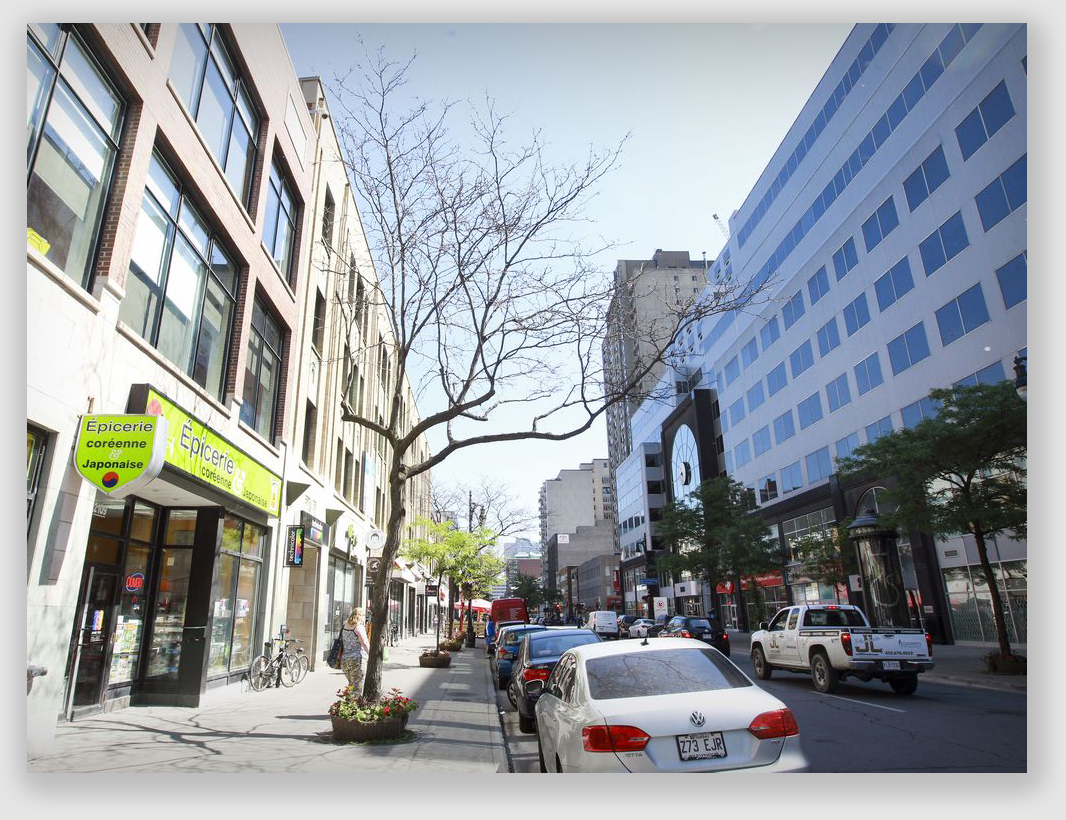 Montreal, Quebec, Canada.com, June 30, 2016: The streets are mean for Montreal’s sidewalk trees
It’s not easy being a tree in the big city. Especially if that city is Montreal. While all urban trees are subject to an undue amount of strife brought on by pollution, the weight of automobiles and people crushing their roots, and the indignities of human contact that include too much handling and bike locks damaging their bark, Montreal’s trees are also victim to two particularly noxious threats: snowplows, which break their skin, and salt, which poisons their circulatory systems. Saplings are raised for about 10 years in a nursery before they’re considered ready to tackle the pressures of city life, at which point they’re typically shoehorned into a too-small plot of earth in the sidewalk wholly unsuited to a healthy upbringing. The result is the majority of trees downtown or on busy thoroughfares are young, spindly and doomed, more reminiscent of a Charlie Brown Christmas than the shade-bearing guardians that elevate the grand urban boulevards of cities like Paris, Barcelona, Washington and Chicago. The average life expectancy of a tree once it’s planted downtown is five to 10 years. It’s only two to three years for those with the misfortune to be transplanted to Ste-Catherine Street…
Science Daily, June 28, 2016: Trees with altered lignin are better for biofuels, study shows
Lignin is a natural component of plant cell walls, the scaffolding that surrounds each cell and plays a pivotal role in plants’ ability to grow against gravity and reach heights ranging from stubbly grasses to the sky-scraping splendor of redwoods. But lignin is a problem for scientists interested in converting plant biomass to biofuels and other sustainable bio-based products. Lignin makes it hard to break down the plant matter so its carbon-rich building blocks can be converted into forms suitable for generating energy or running automobiles. A simple solution might be to engineer plants with less lignin. But previous attempts to do this have often resulted in weaker plants and stunted growth-essentially putting the brakes on biomass production. Now, by engineering a novel enzyme involved in lignin synthesis, scientists at the U.S. Department of Energy’s Brookhaven National Laboratory and collaborators have altered the lignin in aspen trees in a way that increases access to biofuel building blocks without inhibiting plant growth. Their research, described in Nature Communications, resulted in an almost 50 percent increase in ethanol yield from healthy aspen trees whose woody biomass released 62 percent more simple sugars than native plants…

An old maple tree targeted for removal could possibly become the focus of legal proceedings today. The tree, estimated to be hundreds of years old, is located next to the Island Saving Centre’s parking lot on James Street and was scheduled to be taken down on Tuesday as part of the centre’s plan to upgrade the parking lot. But when workers arrived Tuesday morning to take the tree down protester Seairra Courtemanche had chained herself to it. The RCMP were unable to convince her to end her protest, and the plan to remove the tree was postponed. The Cowichan Valley Regional District, which leases the Centre’s property from the Municipality of North Cowichan, has indicated it may apply for a court order today to have Courtemanche and any other protesters removed from the site for their own safety. Courtemanche said the tree is older than Duncan and has been an iconic attraction on James Street for decades, and many people are expressing support for her cause…
A New Jersey community is trying to save a piece of the past as what is believed to be the oldest white oak tree in the country shows signs of decay. The giant white oak tree is located on Oak Street next to the Basking Ridge Presbyterian Church and Cemetery, where Revolutionary War veterans are buried. Arborists believe the tree has stood there long before the church was founded in 1717. “The tree has been here for over 600 years,” Rev. Dennis Jones said. “It is believed to be either the oldest white oak in North America or possibly in the entire world…”
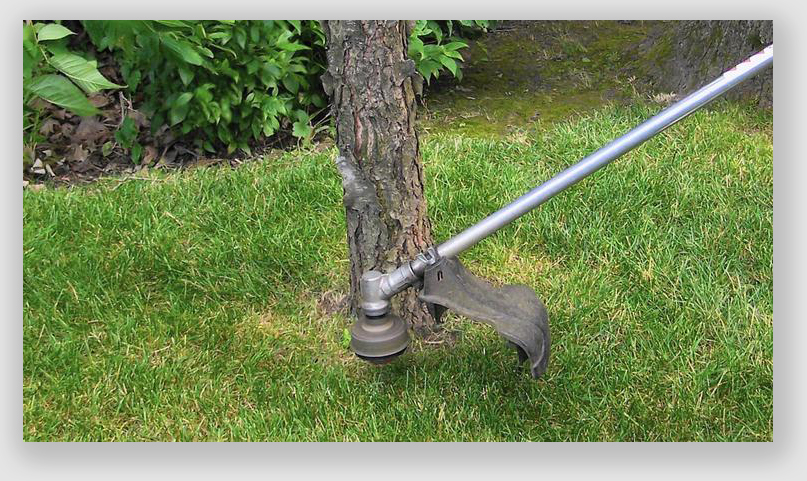 Chicago, Illinois, Tribune, June 29, 2016: String trimmers: Handy tools or tree killers?
String trimmers make it easy to put a clean, tidy edge on the lawn. Unfortunately, they also make it easy to do serious damage to trees and shrubs, according to Doris Taylor, Plant Clinic manager at The Morton Arboretum in Lisle. “That plastic line can slice right through the bark,” she says. “Even older trees with thick bark aren’t safe from a string trimmer.” Look around the base of trees along any street, and you likely will see some with scars in the bark that were gashed by power tools. The problem is that some of the most critical organs of a tree — the vessels that transport water and fluids from the roots to the leaves — are right beneath the bark, Taylor says. If they are cut so the tree can’t move water up into its crown, leaves and branches will dry out. When the bark is a damaged all the way around the trunk, a tree may die…
Leonard Keating of Villanova has had a lifelong interest in the American Chestnut Tree. The interest was passed on to him from his father and he is hoping to pass it on to his pre-kindergarten-age grandsons. Now his interest is part of a larger project to save the blight-ravaged trees that were nearing extinction over the past century. In nurturing that interest, Riverbend Environmental Education Center unveiled its new American Chestnut Tree grove from a donation Keating gave to honor his parents. In a formal ceremony Friday, June 17, Michelle and Leonard Keating Jr. donated the money for the new grove in memory of Leonard J. Keating and Lydia M. Keating. Keating said his family got interested in the plight of the American Chestnut Tree because his father became interested in them…

Well before Columbus sailed to the New World and even before Gutenberg invented the printing press, there grew a great oak tree in a land that would one day be called New Jersey. The oak was already old when farmers built a church beside it in 1717. And when the people came and kept coming, a town called Basking Ridge was built around the church that was built beside the tree. Town and tree would always be inseparable, or so the people thought. In 1740, English evangelists James Davenport and George Whitefield preached beneath the tree, spreading the word of the “Great Awakening” to more than 3,000 people. George Washington’s troops drilled on the village green in view of the ancient oak, and the general picnicked beneath it with his friend the Marquis de Lafayette. On his way to the Battle of Yorktown, Gen. Jean-Baptiste Rochambeau marched 5,500 French soldiers past the oak and into history — and soon after the tree shaded the graves of 35 veterans of the revolution. Through war and natural disaster and a thousand storms or more, the tree survived. In the 1920s, four men scooped out part of its rotted trunk and then stood inside it, amazed at its girth, before pouring concrete into the cavity to save the oak. They also added cables and “crutches” to ease the weight of the branches grown longer than the tree was tall…
Federal Highway 200 snakes some fourteen hundred miles down the Pacific coast of Mexico, past volcanoes, craggy mountains, pitchfork cacti, and cattle ranches with skulls on their barbed-wire fences. Somewhere between Tepic and Tapachula, the road reaches Nueva Agua Caliente, a town named for its hot springs, which bubble into a stream at the center of a deep valley. On the western margin of Agua Caliente, Mark Olson, a professor of evolutionary biology at the National Autonomous University of Mexico, has a farm. “It may look like a shitty little field with runty little trees in a random little town, but it’s an amazing scientific resource,” Olson said, as he led me through the hilly, hardscrabble acre that constitutes the International Moringa Germplasm Collection. This is the world’s largest and most diverse aggregate of trees from the genus Moringa, which Olson believes are “uniquely suited to feeding poor and undernourished populations of the dryland tropics, especially in the era of climate change…”

More than 60 million dead trees in the Sierra Nevada mean mountain forests are changing. Air and water quality, forest composition and wildlife habitat are all susceptible, but there is no consensus on how bad it might get. Federal forest custodians, researchers, advocates, environmentalists and people who work in the timber industry are all watching closely for not only what the dead trees mean today but also what it could mean over generations…
A very large, old maple tree toppled onto the roof of a Kansas City, Missouri, home early Tuesday morning and the root cause is atypical for such an event. “Well to me it looks like carpenter ants,” said Mitch Shipman, owner of Blue Beetle Termite and Pest Management. “Carpenter ants could’ve been there for 20 years,” he said. Often confused with termites and hard to detect, carpenter ants are very common in the metro. They colonize trees and over several years weaken the tree’s stability if untreated. “If you see black, large ants going inside and outside of that tree, eventually there will be an issue. It may take many years. They will erode that tree … you’ll see some cracking. You’ll see it start bending over and some cracking in the base of the tree,” he said. But does such an unusual event require special homeowners insurance to cover the damages? Possibly…
 Pasadena, California, NASA JPL, June 27, 2016: NASA maps California drought effects on Sierra trees
A new map created with measurements from an airborne instrument developed by NASA’s Jet Propulsion Laboratory, Pasadena, California, reveals the devastating effect of California’s ongoing drought on Sierra Nevada conifer forests. The map will be used to help the U.S. Forest Service assess and respond to the impacts of increased tree mortality caused by the drought, particularly where wildlands meet urban areas within the Sierra National Forest. After several years of extreme drought, the highly stressed conifers (trees that produce cones and are usually green year-round) of the Sierra Nevada are now more susceptible to bark beetles (Dendroctonus spp.). While bark beetles killing trees in the Sierra Nevada is a natural phenomenon, the scale of mortality in the last couple of years is far greater than previously observed. The U.S. Forest Service is using recent airborne spectroscopic measurements from NASA’s Airborne Visible/Infrared Imaging Spectrometer (AVIRIS) instrument aboard NASA’s ER-2 aircraft, together with new advanced algorithms, to quantify this impact over this large region of rugged terrain. The high-altitude ER-2 aircraft is based at NASA’s Armstrong Flight Research Center, Edwards, California…
A backyard view of rolling hills, a small pond and trees sold Jill Alcantara on a move from Plano to McKinney. “It’s a totally, totally different atmosphere than every city around us,” said Alcantara, a former landscape designer. “And I sought it out.” For years, the city has defined itself by these hills, streams and trees, stamping the slogan “Unique by Nature” on city vehicles, water towers and brochures. Now, city leaders are working to balance that identity with ever-increasing development. A split city council is mulling loosening tree survey requirements after an engineering firm involved in a housing development in McKinney’s largely undeveloped northwest section pointed out inefficiencies with the current process…

Officials in northern Idaho are stumped by how and why a bicycle keeps ending up 60 feet into the same tree. For more than a decade, about once a year, employees with the Coeur d’Alene Parks and Recreation Department speculate as to who the culprit is and why a bike is hoisted into the same tree, The Coeur d’Alene Press reported. “Somebody really, really likes to keep putting them up there,” said Urban Forestry Coordinator Katie Kosanke. “Before it was always a little road bike, but this one is a bigger, chunky mountain bike. We’ve talked about pruning the tree so there’s less branches to climb, but it would probably just show up in another tree.” The city’s cherry picker does not reach the location of the tree where the bike is often chained. In the past, Kosanke said they’ve had to call the fire department. This year, the city will pay a private contractor an extra $165 to get the bike down while the company is at City Park to remove a dead tree. Kosanke said the recurring prank may seem harmless, but it is actually a safety hazard and bad for the tree. The chain used to hold the bike in place can cut the flow of water and nutrients to the upper part of the tree, which could potentially kill it. Replacing such a large tree could cost more than $1,000…
London, UK, Telegraph, June 27, 2016: Company fakes beaver attacks to produce aspen tree seeds
A company is pursuing desperate measures to trick aspen trees into producing seeds to prevent a shortage of its seeds as other breeds have been affected by an ash disease originating in Europe, it has emerged. A firm in Shropshire is faking beaver attacks against the trees as experts believe there is a direct correlation between the attacks and the increase on seed production. Aspen trees have traditionally struggle to grow in the UK because of a shortage of seeds but given the rise in ash dieback, a disease of ash trees caused by a type of fungus, firms have been forced to look for alternatives. Rob Lees of Forestart, a tree producer, said the company was also looking to produce more aspen trees so it was less dependent on exporting trees from Europe…
A proposed tree ordinance that a majority of St. James City Council members favored last month was voted down at the June council meeting after new information came to the council’s attention. Councilman John Huster had initially recommended approving the ordinance, No. 16-1082, saying it would return the power of managing trees on city property in St. James back to the city. Huster had said that the forestry board could pick and choose which trees to remove or save, while the ordinance would have given that power to the city. However, Huster said at the Monday, June 13, council meeting that City Administrator Harold Selby found language in the existing city codes that already addressed Huster’s concerns. “We don’t have to change a thing,” Huster said last week. “We found out the city already has that power…”
Providence, Rhode Island, WJAR-TV, Vandals destroy trees planted outside Providence school
Providence Police are searching for suspects who caused more than $1,000 worth of damage to five tulip trees at Mount Pleasant High School. The tulip trees were planted about three weeks ago by the Rhode Island Tree Council and cost about $250 each. “This was just a really egregious act, I’ve never seen vandalism of this type,” said John Campanini the technical advisor for the Rhode Island Tree Council. “It really takes an awful lot of energy and hard work to do what they did.” Campanini discovered the damaged trees Friday when he went to the high school to water the plants. He filed a report with the Providence Police who are looking at surveillance video from the high school but there are no suspects at this time, according to Campanini. The tulip trees were only about 12 feet tall when they were destroyed but can grow to well over 80 feet tall…
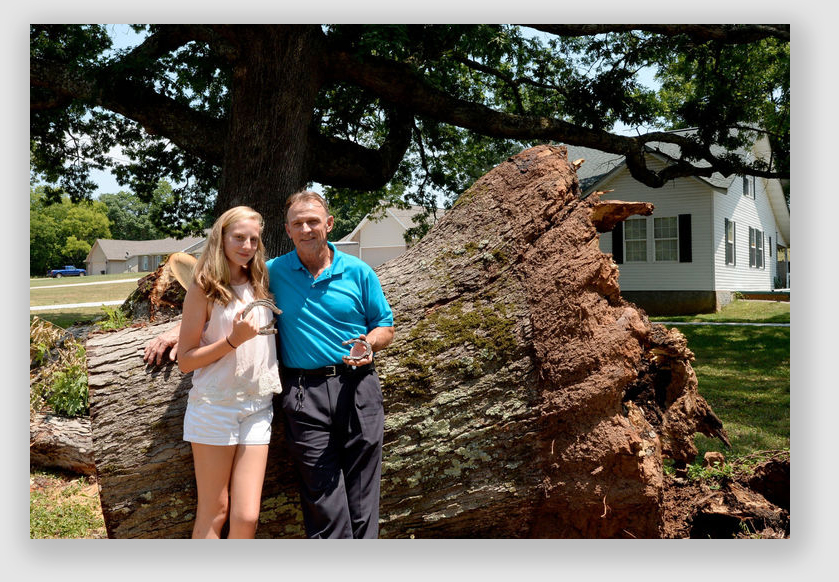
When the middle tree of the three big white oaks standing in Ron Broyles’ yard fell across Big Springs Road on Father’s Day, a significant piece of U.S. history was reduced to little more than scrap and kindling. “I’ve got plenty of firewood now,” Broyles said with a wry chuckle, surveying the massive remnants of the base of the downed tree, some eight to 10 feet in diameter, lying in his yard next to a huge hole. Just across the way, on the other side of Big Springs Road, the remains of the uppermost portions of the tree are still lying in state, clusters of branches and leaves and smaller logs heaped beneath a recently restored power line. What made the tree special, beyond its age (over 200 years) and its obvious natural beauty, was its provenance. Broyles, a tall, trim fellow in his late 50s, explains that when he purchased his neat, white home on the 2500 block of Big Springs Road in 2010, he was much taken by the trio of oaks in the front yard. “I didn’t know the history, yet, I just loved those beautiful trees,” he said. His appreciation turned to curiosity when the home’s previous owner explained the significance of the trees, which date to 1797, when President John Adams sent a survey group led by Benjamin Hawkins to set a hard boundary between U.S. territory and that of the native-American Cherokee…
Once a booming industry, biomass, producing electricity by burning trees or other organic matter, is getting hammered by low electricity prices and growing questions over whether it is renewable after all. According to U.S. energy data, biomass produces more renewable energy in the U.S. than solar panels, comprising 1.6% of nationwide electricity production compared to 0.6% for solar. But the biomass industry is shrinking these days, not growing. A couple months ago, ReEnergy Holdings’ biomass plant in Lyonsdale, N.Y. went offline, in large part due to low electricity prices. But the company was also concerned about its product’s standing as a renewable energy source. According to state data, New York paid biomass producers $52 million in renewable energy incentives since 2004. But now, New York is writing a new renewable energy plan, and nationwide, there’s a growing debate over whether biomass deserves that “green” label. Much of that debate revolves around logging practices for the wood that fires biomass plants…

Leafy Lake Oswego has one of the area’s most stringent tree-preservation codes. In fact, most of those surveyed consider it too stringent. City Council, to its credit, launched a code-review project last year with the intention of reducing the regulatory burden for property owners and the administrative burden for city staff. The recommendations of the volunteer code-review committee are now before Council, which would best address the frustrations of local homeowners by adopting the minority report. The current code treats trees differently according to their size. Little trees — those less than 5 inches in diameter at breast height — may be cut down without the city’s say-so. Medium trees — 5 inches to 10 inches in diameter — may be cut down without much bother. However, homeowners generally may cut down only two such trees per year. Finally, big trees — those over 10 inches in diameter — are afforded sweeping protections. Homeowners may cut down dead trees, hazardous trees, and they may cut down large trees in the pursuit of a landscape-management plan. But in most cases, big trees are sacrosanct. You can’t even chop one down to preserve a view for which you may have paid a premium…
Lafayette., Louisiana, KLFY-TV, June 23, 2016: 2 wanted in Lafayette tree cutting scam
Police are searching for a man and woman who allegedly posed as tree cutters and scammed Lafayette residents out of money. Sgt. Kyle Soriez said the suspects, Chasity Touchet, 36, and Daniel Littlejohn, 32, approached residents offering to trim or remove trees and asked for a payment up front. Touchet and Littlejohn allegedly told then the victims they needed to buy more tools or pick up another worker then leave without performing any work, according to police. The two suspects have been seen in both light and dark colored pickup trucks with an open trailer attached…

Some have called it the city that fun forgot, but it’s clear Calgary is a pure joy for the kind of people who love to gripe, whine and tattle about their neighbors. The latest victims of a complaint system that turns Calgary bylaw into a personal police force for bellyachers and busybodies are two young sisters, who dared enjoy an old-fashioned swing made by their dad and tied to a tree outside their front yard in Bridgeland. “Illegal swing attached to a city owned tree on city owned property Please have owner remove it before some child gets hurt and sues the city,” reads the actual complaint to the city, filed Sunday via an iPhone using the online 311 application. The mind boggles to think of the kind of pucker-lipped sourpuss who’d call the city to squeal on two kids having a little fun outside, using the city’s largely-anonymous 311 application to avoid actually confronting the neighbor in person…
Salisbury, Maryland, Post, June 24, 2016: How to correct aggressive tree roots
Trees are hardy plants, and their roots fight back against manmade limits around them. In the urban and suburban landscape, tree roots often are forced to grow between buildings or under driveways and walkways. As roots grow, they can break walls, pipes and patios, causing damage to properties. “Before you plant a new tree in your yard, you need to understand how a tree could damage your property and take appropriate measures to prevent that damage,” advises Tchukki Andersen, board certified master arborist, CTSP and staff arborist with the Tree Care Industry Association (TCIA). Woody tree roots thicken as they grow, gradually pushing shallow roots toward the surface. Since soil near the surface is best suited for root growth, most tree roots are just below the surface — putting them in conflict with man-made obstacles. Where the soil is covered by a solid driveway or patio, upward growing roots don’t experience the normal signals (increased light and air) that tell them they are reaching the surface. As a result, they often grow against the underside of pavement and become intrusive…

There was some good news this week for the “Lucky Tree.” The well-known cottonwood on K-96, midway between Maize and Halstead Road, is still in good health. That’s according to an arborist who examined it after the tree – which has nearly 5,000 followers on Facebook – was damaged by a recent storm. Chance Martinez with Integrity Tree Service in Wichita examined the tree and looked for clues for what may have caused some of its limbs to fall during last weekend’s storms. He determined the tree was actually much older than many of its fans thought. He estimates it is between 120 and 150 years old, judging from the furrows of the tree bark. If the tree is that old, it would have been a sapling when the state was barely a decade old, Sedgwick County was scrambling to become a county and Wichita was a cowtown…
The California drought is carving an unprecedented path of ruin through Sierra forests, killing trees by the millions and setting the stage for a potentially devastating wildfire season that’s already burning homes and closing freeways in the southern half of the state. Using aerial surveys that revealed stark bands of browning trees amid once-healthy green forests, the U.S. Forest Service estimated Wednesday that at least 26 million trees died between October and May, bringing the total statewide die-off to 66 million trees since 2010. The vast stands of lifeless timber from the High Sierra to Mount Shasta are largely the result of severe water loss amid a fifth year of drought, amplified by rising temperatures and infestations of bark beetles that feast on the weakened trees. The carnage is not expected to let up soon…

City officials say it’s time to start getting rid of the most common kind of tree on St. Louis streets: the ash. On Thursday, the city will start chopping down thousands of ash trees at risk of infection by the tiny green and much-feared ash borer, a bug that showed up in St. Louis last year. This large-scale removal of the trees will happen over the course of five years. The city will also start injecting 1,000 more with a kind of organic botanical treatment to try to stop the bugs, which only feed on ash trees, from spreading. The loss of those trees will deal a significant financial blow. Ash trees provide the city $817,000 in benefits every year, according to the city’s website…
Ithaca, New York, Journal, June 22, 2016: Near unprecendented drought endangers trees
Question: Which landscape plants should get watering priority?
Answer: The drought we are currently experiencing is almost unprecedented here. As someone whose husband invested in a sophisticated weather station, I can quote you exact numbers: 0.3 inches of rain in mid-May, and only 1 inch since then, at our location just north of West Danby. This drought is endangering woody plants, especially evergreens, just when some of them need to grow new foliage. The erratic winter temperatures caused the plants to lose their winter acclimation. Then the early April single digits resulted in needle death on many evergreens — dwarf Alberta spruce, Japanese umbrella pine, and arborvitae, among others. The arborvitae across from Flat Rock were still showing damage a week ago. Plants that haven’t been in the ground long need watering, too. This means anything planted this spring, anything planted last fall, and maybe anything planted any time last year. Watering needs depend on the size and species of the plant, its rootball, the plant’s exposure (sun, shade, protected, windy?), the type of soil you have, and whether you mulched the plant or not…
 Muncie, Indiana, Star-Press, June 21, 2016: If a tree falls, who is liable?
I’ve been looking around Muncie observing ash trees that are dead, or nearly dead, from emerald ash borer. It’s an insect that began killing ash trees several years ago just north of us in Michigan, and has made its way south ever since. All of the standing dead ash has me concerned, because they are not going to be standing for longer, and many of them have what arborists call “targets” near them. As you might have guessed, that means something for them to crash into, and if you are the owner of the tree that causes damage or hurts someone, you could be liable. Some things to consider are: • Indiana law imposes on all landowners the obligation to use reasonable care when periodically inspecting and attending to trees, that by virtue of their location or condition, may pose a risk of harm to persons or structures on neighboring land. • Indiana law also imposes on landowners the obligation to periodically inspect and attend to trees, that by virtue of their location or condition, may pose a risk or harm to persons using the public roads. • Ownership of a tree is clearly defined by law, and the location of the trunk is the determining factor. Joint ownership occurs due to a tree trunk straddling the property line and consent between both owners much be reached before any actions can be taken on that tree. • Judges usually expect reasonable communication to occur between neighbors before actions are taken in regards to tree care that affect both neighbors…
A restraining order filed last week by Fellow Mortals Wildlife Hospital has delayed a power company’s plans to cut the woods in front of its property. Steven and Yvonne Wallace Blane, owners of Fellow Mortals, filed the order against American Transmission Co., and a hearing is set for Monday in Walworth County Circuit Court. “Due to pending legal issues, the vegetation management work on the Fellow Mortals Wildlife Hospital property is currently on hold,” said Mary Carpenter, ATC local relations, in an email Friday. She declined to comment further, stating it is ATC’s policy not to comment on pending legal issues. Previously, Carpenter said ATC wanted to start removing trees and vegetation in front of the hospital on Monday. The Blanes believe ATC’s plan will harm their sensitive wildlife operations at Fellow Mortals. They want ATC to trim, not remove, the trees and vegetation because it creates a natural buffer which blocks traffic noise and conceals wildlife…
 Shreveport, Louisiana, KTAL-TV, June 21, 2016: Mulching trees needs to be done right
Piling mulch too deeply around the base of trees can lead to problems, according to an LSU AgCenter expert. “One of the tendencies in landscapes now is to make piles of mulch – sometimes resembling the shape of a volcano or fire ant mound – around the base of trees,” said AgCenter horticulturist Allen Owings. Oaks and other trees, especially small flowering trees, such as crape myrtles, are commonly over-mulched in residential landscapes, Owings said. Mulch should be spread out horizontally instead of piled up vertically, he said. Trees normally should be mulched to a depth of 3 to 4 inches. It’s important to keep the transition area between the root and the trunk free of mulch. “Do not bury the tops of the roots that flare out from the trunk,” he said…
Piedmont leaders Tuesday mulled requiring tree cutters to haul limbs away or to pay the city to do it. During their regular Tuesday meeting, Piedmont City ] Council members requested the mayor provide them proposed changes to the city’s residential tree removal law. Piedmont officials say removing limbs left by tree trimming businesses is wearing out city equipment and taking time away from other city work. Mayor Bill Baker said he’d create proposed changes for the council to review during its next meeting. “These businesses are coming in to take a tree down, then having the city take it up,” Baker said after the meeting. “We feel they should be paying.” Baker said the city once required tree removal businesses to haul limbs away. The previous council changed the law, requiring the city to remove those limbs like it would other clippings or brush left by residents, he said. “We can’t have it all just lying there in the street,” Baker said of tree limbs…
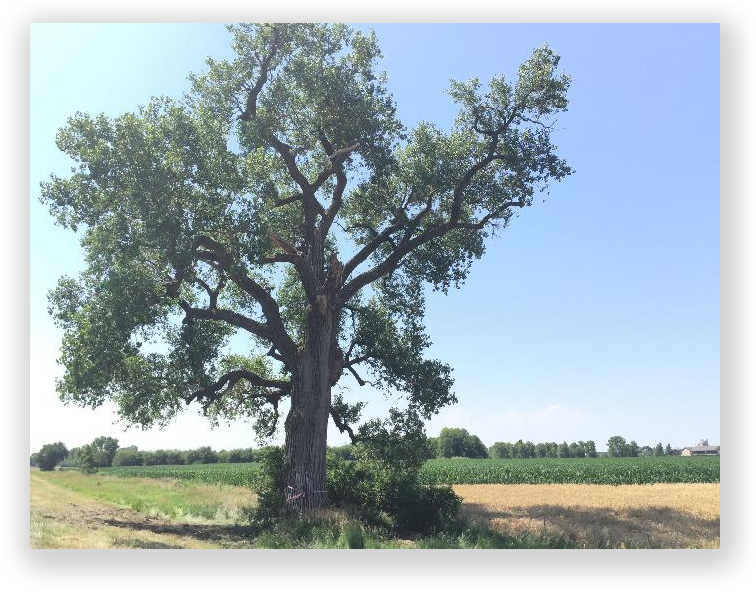 Wichita, Kansas, KWCH-TV, June 20, 2016: ‘Lucky Tree’ off K96 damaged over the weekend
The future of a tradition, that some say has been around for decades, could be in jeopardy because of Mother Nature. Just off K-96, near Maize, there’s a large cottonwood tree. There are those that know this tree and believe in it. It goes by many names, the Lucky Tree, the Hugging Tree, the Kissing Tree. Regardless of the name, its fans are concerned because it was recently damaged. Trees are not usually this popular. At least, not popular enough to be honked at, cared about or have a Facebook group dedicated to it with more than 4,600 members. The history of the tree is a little murky, with several versions about how the cottonwood got it’s name and fame. Recent posts to the Facebook page show there are a lot of people who are worried about damage done over the weekend to the tree. Tree branches and limbs were snapped off. For a tree that some say goes back nearly 100 years, it’s hard to think about how many storms it’s seen…
Columbia, South Carolina, WLTX-TV, June 20, 2016: Severe weather tree damage tips
With the recent severe weather bringing down a lot of trees and causing damage, insurance experts have some tips on what you can do to keep your family safe this summer. The South Carolina Insurance Association said most insurance policies will cover damage resulting from trees hitting homes. Director Russ Dubisky suggests removing dead trees or limbs before a storm hits. Not only will this help prevent damage, but it can also save you money since tree trimming prices go up after storms. “Survey any rotting or dead trees, if you see some fungus or mushrooms growing in them, that might be a sign of poor health or decay,” Dubisky said. “You want to go ahead and have those taken care of so they don’t become an object that could fall on and damage your house…”

A draft version of a highly controversial report on the city’s urban forest has identified 273 dead trees. The four-page report found that city’s most common tree species, Sweetgum trees, has been infected with Xylella, a deadly bacterium. It also outlines recommendations the city should take, such as developing a young tree care policy, monitoring its aging Grevillea and California pepper trees — the latter of which can be found along Euclid Avenue. The report has 40 pages of attachments, listing the trees that are dead as well prioritizing on a scale from 9 to 12 the condition of a trees. The higher the scale, the greater the severity and the need to be removed. The Inland Urban Forest Group does note several issues impacting the various tree species in Upland. On Euclid Avenue, which has been the focus of much of the public discourse, the report says the California pepper trees on the median are “aging and have quite a bit of trunk decay.” But the level of damage was not enough to rise to the level of 9, which on the grading scale poses the lowest threat to the public. “We noted generally that long limbs and heavy crowns of the pepper trees present a risk,” the report states…
London, Kentucky, Sentinel-Echo, June 20, 2016: Area arborist works to save trees, educate community
More days than not, Joey Hampton of Corbin is up a tree. The arborist could be pruning the tree, or bracing it to keep it from falling on a building, or checking the tree’s condition. Above all, he strives to do his without harming the tree. You see, saving trees is not only Hampton’s job, it is his passion. “We want to keep our trees,” he said. “We want to keep them healthy.” Hampton, owner of Straight Cut Tree Services in Corbin, works on trees in Knox, Whitley and Laurel counties. Getting the word out about how to properly care for trees is important to Hampton. This coming Monday, Hampton will be sharing his passion, and his knowledge, at a talk at the Laurel County Public Library. A subject that especially sparks Hampton’s desire to educate is the topping of trees, a practice that Hampton says should never be done. “It’s ugly and it kills the trees,” Hampton said…
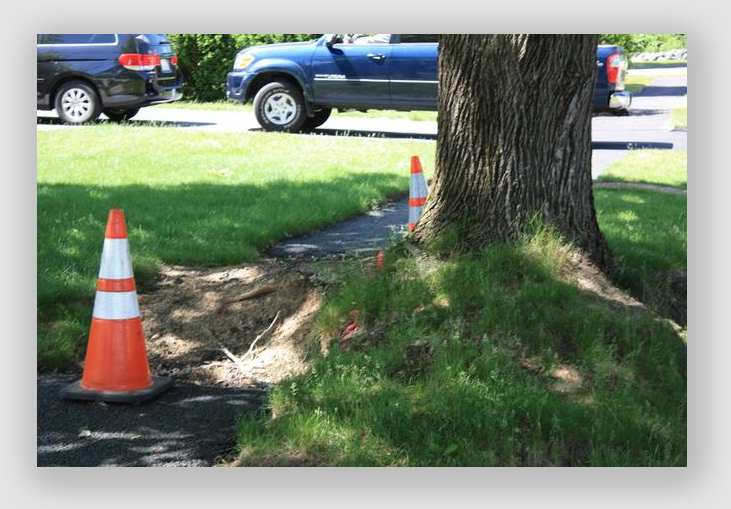 Danvers, Massachusetts, Wicked Local, June 19, 2016: Tree removal debated in Danvers
A debate about taking down a tree on Grapevine Road led to discussion about the town’s sidewalks and the bylaws regulating them at the selectmen’s meeting on May 7. As part of the town’s sidewalk maintenance program, the Department of Public Works in the last month has been replacing the sidewalks on Whitfield and Grapevine roads, a small neighborhood off Conant and Burley streets. DPW Director David Lane said they had worked with neighbors in trying to keep as many of the trees as possible but that some trees in the neighborhood had to be removed to allow the sidewalk to be properly replaced. In those cases, a compromise was reached with the neighbor abutting the tree. But no compromise was reached about the 40- to 45-foot Norway maple in front of 4 Grapevine Road. “It’s a big beautiful tree,” said Lane. “Unfortunately, we cannot build the sidewalk unless the tree is removed.” The problem with the tree, located in narrow green space between the road and the sidewalk, is the root ball…
California’s drought and a bark beetle epidemic have caused the largest die-off of Sierra Nevada forests in modern history, raising fears that trees could come crashing down on people or fuel deadly wildfires that could wipe out mountain communities. Aerial images show vast forests that have turned a rust-color. The epidemic has killed an estimated 40 million trees since 2010 in the central and southern Sierra, and it’s spreading north. Officials who are cutting down and stacking the most dangerous trees in piles across six counties, however, say they are stumped by how to get rid of them all. One solution is to fire up a fleet of 10 large, mechanized incinerators the state recently purchased. Promoters say they burn so hot that they spew little if any smoke, making them environmentally friendly. Environmentalists contend the burners undercut an emergency order by Gov. Jerry Brown — considered a global leader in the fight against climate change — who called for sending the trees to biomass plants and converting them into energy…
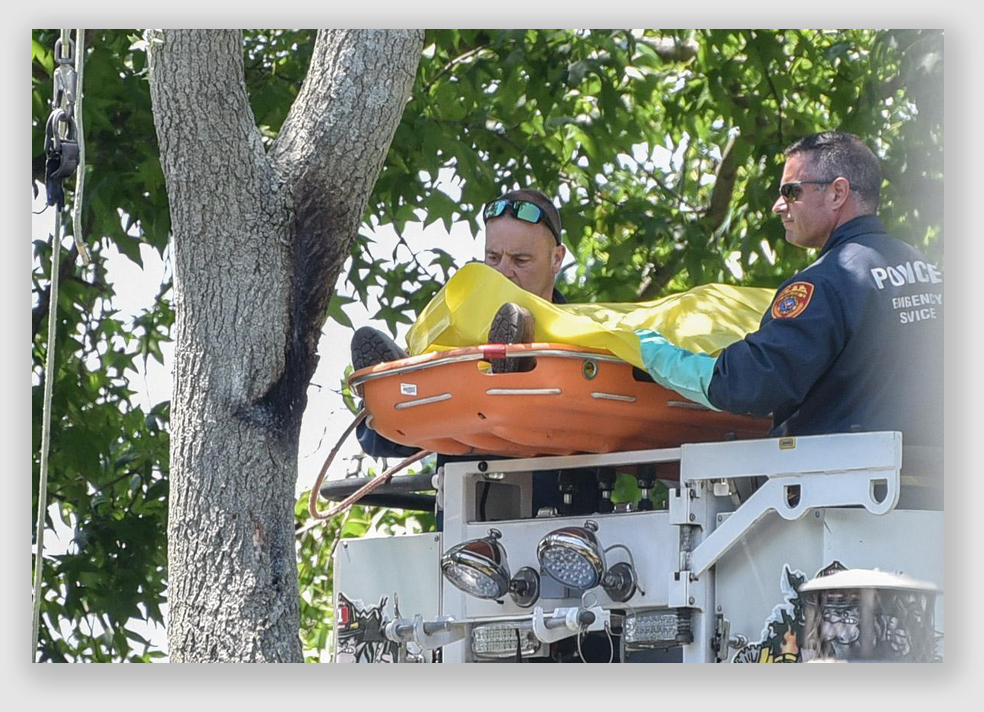
A Brentwood man was electrocuted and died Sunday morning while trimming a tree in front of a Commack house, Suffolk police said. Oscar Díaz, 39, a father of four and stepfather of three, was harnessed to a tree at about 10:30 a.m. on Roberta Lane when a safety line attached to him made contact with the uninsulated high-voltage line, said Suffolk County police Sgt. Jim Messina. A medical examiner pronounced Díaz dead at the scene. Power lines weave through the trees on the street. PSEG Long Island spokesman Jeff Weir said nearly 100 customers temporarily lost power. Díaz’s sister-in-law, Norma Velasquez, 36, of Brentwood, said the family had planned a Father’s Day barbecue in Díaz’s honor for Sunday afternoon. She said Díaz’s wife, Geydi Díaz, urged him not work on Sunday, but he said he needed to complete an unfinished trimming job…
Oak wilt is a fungal disease that can be fatal to oak trees, especially red oaks, but there are ways to minimize the risk. Christian Siewert, owner of the New Buffalo-based C&A Arborists tree care business, talked about the condition at the Three Oaks Township Library on Friday, June 10. Siewert said Oak Wilt is relatively difficult to diagnose, but the main symptom when it strikes red oaks is rapid wilting and falling of leaves with death normally taking 30 to 120 days. The ceratocystis fagacearum fungus causes Oak Wilt by attacking a tree’s vascular tissue underneath the bark. Not all oaks react the same. The infection can run its course in several months, two years, or in the case of white oaks, up to decades. Burr oaks have a susceptibility level somewhere in between (one to seven years). “In late July or August, if you have an oak tree in your yard that was previously perfectly green and all of a sudden that oak tree is aggressively shedding leaves … you’re raking leaves on a daily basis. That’s most likely a sign that you’re going to want to call a professional in, you’re probably dealing with Oak Wilt…”
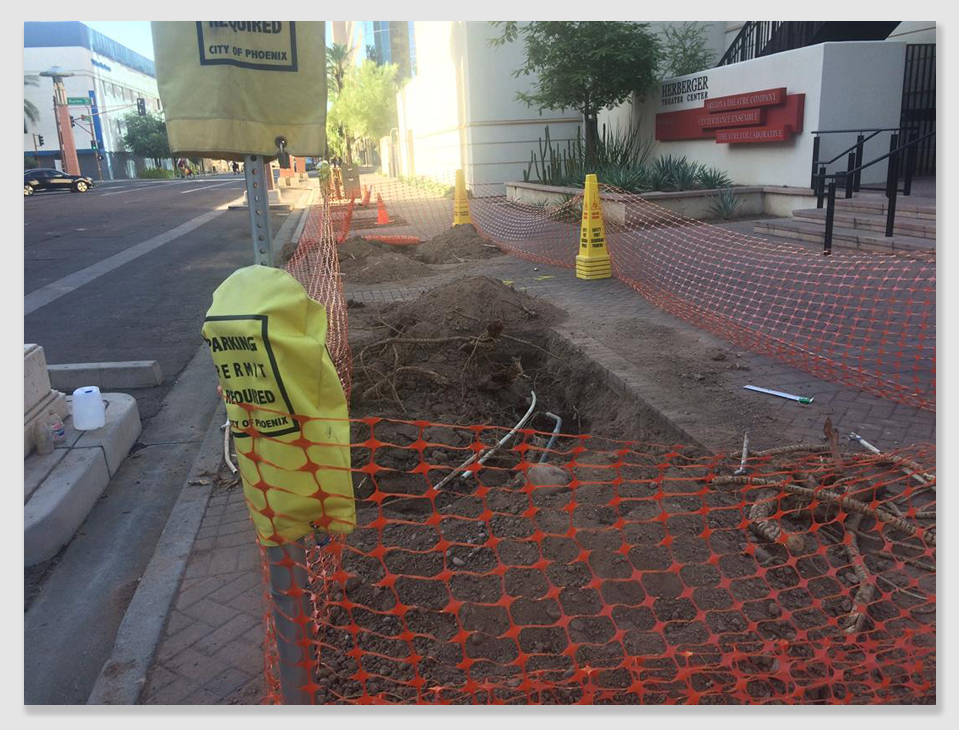
The shade trees once adorning the street outside the Herberger Theater downtown have been removed, prompting barks and less-than-chipper messages on social media “[O]mg, horrible!” one person commented on an image of a series of tree stumps on Second Street near Monroe Street. “Crime against nature,” another user wrote. The trees were removed this week, but this street won’t be treeless for long. The Downtown Phoenix Partnership is replacing the trees with a different species, one they say will eventually offer more shade and be better-suited for the urban environment. “With a lot of the desert trees, they need a wide area to grow in and branches tend to be fragile,” said Dan Klocke of the Downtown Phoenix Partnership. “When monsoons come into downtown, they frequently crack off big branches. They’re really a hazard.” Several of the trees on Second Street were showing signs of decay and needed to be removed, he said. Within the next week, the barren patches of dirt in the sidewalk will be replaced with a deciduous tree that can take a storm, doesn’t need much water, but also provides a canopy of shade, Klocke said. The Partnership, a nonprofit organization funded by a tax on downtown property owners, is using either Red Push Pistaches or Sissoos…
Science Daily, June 16, 2016: Canadian forests a refuge as warming creeps north
In the Canadian province of Quebec, a study of more than 26,000 trees across an area the size of Spain forecasts potential winners and losers in a changing climate. The study, published today in the journal Science, shows that boreal forests in far-northern latitudes may one day act as a climate refuge for black spruce, the foundational tree for the northwoods ecosystem — a major source of the world’s paper; home to caribou, snowshoe hare, lynx, and sable; and nesting site for dozens of migratory bird species. “During this century, the northwoods will experience some of Earth’s largest increases in temperature,” says Loïc D’Orangeville, postdoctoral researcher at Université du Québec à Montréal and Indiana University, who led the collaboration of scientists from six institutions in the U.S. and Canada. Northern boreal forests are a crucial part of the global climate puzzle, comprising nearly 30 percent of Earth’s forested area and storing at least 20 percent of its carbon. The study’s tree ring analysis revealed these forests’ sensitivity to changes in temperature and precipitation. “A warming climate increases the amount of water boreal forests need to survive,” explains D’Orangeville. “It’s possible that only a relatively small part of North America’s boreal forest will have enough water to compensate for the increased demand…”
 Reuters, June 16, 2016: Oak tree sits in middle of soccer pitch, what would Ronaldinho do?
While soccer greats show off their skills in France for UEFA Euro 2016, children at a soccer camp in the Baltic state of Estonia learn how to use an oak tree which sits in the middle of their pitch, to gain an advantage. The more than 150 year-old oak tree has kept center stage since the park was made into a sports ground in the late 1940s, in the coastal town of Orissaare on the Island of Saaremaa. The tree remains despite an attempt by two Soviet tractors to pull it down. The cables broke, the tree stood strong. The oak, which is about 15 meters high, won the European Tree of the Year vote in 2015 with over 50,000 votes. It dominates one half of the pitch. “I think it might be a strange sight for others, a tree in the middle of the soccer field,” said local coach Mati Ruutel. “I have been here since my childhood, so for me it is perfectly ordinary that it is in the middle of the pitch…”
Duluth, Minnesota, KSDS-TV, June 16, 2016: Tree climbing aerial workshop
Imagine being a tree care professional and getting caught in a dangerous situation. Typically, another crew member would respond, one who would need to know how to help in an emergency situation. Two professional instructors taught roughly 20 people how to check equipment and clear utility lines during live rescue demonstrations. Louise Levy, Event Organizer for Levy Tree Care says, “When we have another set of eyes on our gear, that allows us to take care of our co-workers.” The goal of the Tree Climbing Aerial Rescue Workshop, is to prepare tree care professionals and rescue agencies mentally, so these accidents can be prevented or quickly responded to. Levy added, “Our profession has a lot of risk; in fact we have on of the highest workers comp. insurance rates for any industry because what we do is so risky…”
A Lake Byron resident accused of misconduct in a dispute over tree trimming has pleaded no contest to an aggravated assault charge. Authorities say 68-year-old Greg Johnson pointed a shotgun at workers who were trimming tree branches from power lines, and also became combative with Beadle County Sheriff Doug Solem. KOKK radio reports that Johnson initially was charged with aggravated assault and simple assault on a law officer. Prosecutor Mike Moore says a plea agreement was reached in which Johnson pleaded no contest Tuesday to the aggravated assault count…
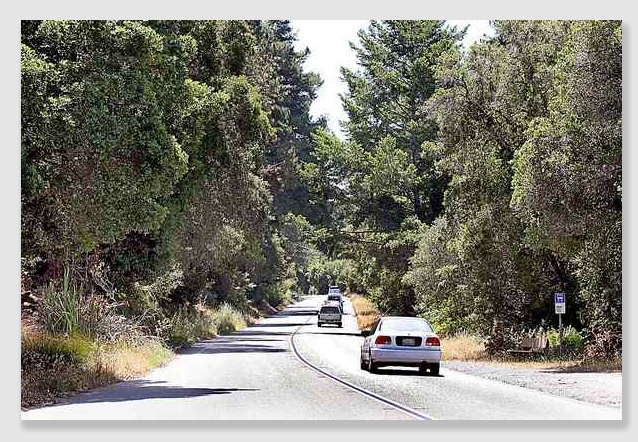 Santa Cruz, California, Sentinel, June 15, 2016: PG&E tree removal in Santa Cruz County on hold
An initiative by PG&E Co. to remove 300 trees along Graham Hill Road between Santa Cruz and Felton in the name of pipeline safety is on hold. Santa Cruz County supervisors unanimously supported a recommendation Tuesday to reach a “framework agreement” with PG&E to comply with local and state environmental regulations before the chainsaws come out. That recommendation came from supervisors Bruce McPherson and John Leopold. Among the issues they raised are (1) a chance to review the science used to conclude that trees threaten gas pipes and to see if trees have inhibited pipeline access; (2) lack of an assessment of trees on county property or within the county right-of-way; (3) potential impacts on water, road stability, air, wildlife and long term health and safety; and (4) possible mitigations that could affect riparian corridors, a county park and federally protected sandhill habitat…
Montpelier, Vermont, WPTZ-TV, June 15, 32016: Montpelier man arrested after pipeline protest in tree
A Montpelier man protesting a Vermont Gas pipeline came down from a tree Tuesday and was arrested in Monkton, police said. Samuel Jessup, 31, was arrested at 4:38 p.m. after occupying a platform in a tree on private property since June 8. He came down voluntarily and was arrested on charges of unlawful trespass and resisting arrest, according to Vermont State Police. Jessup is part of a group called Rising Tide Vermont, which is trying to halt construction of the pipeline. “As we continue to effectively halt pipeline construction, we are seeing an escalation in tactics from the police in their response,” Rising Tide Vermont spokesman Will Bennington said in a written statement. “AT&T has reported to us that Sam’s phone was disconnected from nearby cell towers, and state troopers confirmed that they had ‘other tricks up our sleeves’ to disrupt the action, including interfering with the cellphone…”
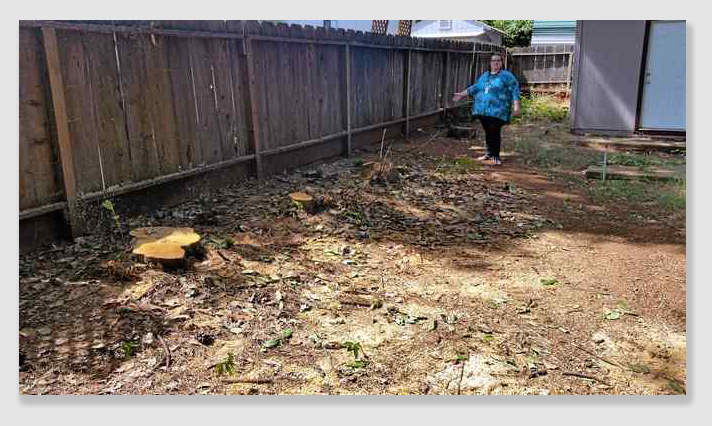
A neighborly dispute over trees has gotten the town of Paradise and the Paradise police involved. Paradise resident Victoria Sinclair came home last Monday to find three laurel trees in her yard gone. She admits her trees were hanging over the fence into neighbor David Saul’s yard. Saul said he knocked on Sinclair’s door to ask if she would trim them. According to Saul, “She said, ‘Are you going to pay for it?’ I said, ‘No.’ She said, ‘Goodbye,’ and slammed the door in my face.” Saul conceded he should pay for the trim job since it is his fence. He called Paradise Tree Service owner Ron Logan to come and take a look. Logan said they would have to get permission from Sinclair, and left her a note indicating Saul would like to remove the trees. Sinclair said when she got home she called Paradise Tree Service and explicitly said not to cut the trees down, she said. But Saul and Logan both say they got permission to remove the trees…
The Princeton Shade Tree Commission (STC) and the Town Council are teaming up to combat an infestation of the Emerald Ash Borer (EAB), a beetle that has killed hundreds of millions of ash trees in 25 states since its arrival in the U.S. in 2002. At Monday’s Council meeting, the STC presented an extensive report, providing information on the tree population, the state’s recommended management options, and cost projections to address the EAB outbreak. “It’s a huge concern, not just for Princeton, but for the whole United States,” stated Princeton Mayor Liz Lempert. “It will have a huge impact on our ecosystem.” The STC will hold an information session on the EAB for Princeton residents on Thursday, June 23 at 7 p.m. in the Main Meeting Room of the Municipal Complex. The emerald ash borer has been found in one ash tree in Princeton and in ash trees in several other nearby communities. It spreads easily to neighboring trees, and all residents are urged to check their ash trees for symptoms of infestation…
A ten-year-old-boy from Indiana has been killed after a branch fell from a tree and crashed through a tent where his family were camping. The youngster,Blaike P. Glassburn, from Mishawaka, was with his mom and two brothers at an Indiana Beach campground when things suddenly turned tragic, on Tuesday morning. The incident happened as a thunderstorm passed through the area. The wild weather dislodged a loose portion of a tree, sending a branch crashing to the ground landing straight on top of the tent below. White County police were called to the campground at around 8:25 a.m. Police say that the branch had pierced through the canvas of the family’s tent while they were still inside. The branch ultimately struck the boy who was not breathing when the emergency services arrived…
A leaning tree has residents in one Westfield neighborhood concerned. They said that the tree is leaning towards Sandy Hill Road and with a bad storm, it’s just a matter of time before the tree will come down. Marge Slinsky has lived in the Westfield neighborhood for about 35 years and said that the tree has always been an issue. The tree can visibly be seen leaning on its side. “When there’s a lot of snow on those branches they’re sagging very low and it’s kind of crazy to see how low they are,” said Slinsky. Slinsky contacted the City of Westfield a few years ago, but was told the tree could only be taken down if it were dead. However, now other neighbors are speaking up, afraid the tree will come down on these power lines with one gust of wind or a really bad storm…
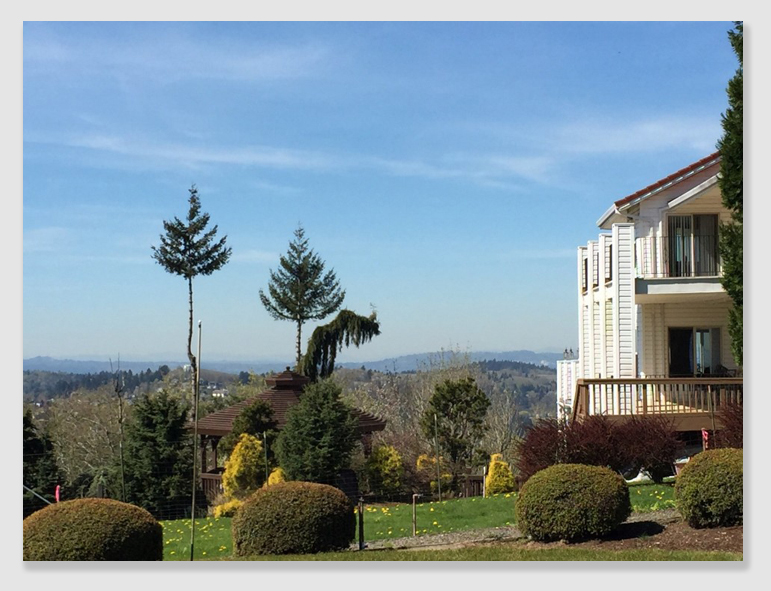
Two Gresham couples who face a $661,000 lawsuit filed by Metro say they didn’t mow down or damage 44 trees in a protected natural area to improve their views. In a response filed last week, David and Alyce Hadeed El-Khal said they cut only “2 or 3 worthless dead and decayed trees” that had fallen onto their property, damaging their fence and a grapevine canopy. They removed the trees last September because Metro “ignored” their requests to clean up the mess, they said. The El-Khals are asking a Multnomah County Circuit judge to order that Metro pay their attorney’s fees for defending them against what they believe is a groundless lawsuit. The El-Khals live next door to Stephen and Judith Brugh, who also are listed as defendants in the suit. Both the El-Khals and the Brughs live atop Gresham Butte, with homes that look west and offer sweeping views of Multnomah County and Portland. The homes also are above the Springwater Corridor Trail and next to the protected Chastain Creek Natural Area. Metro, the regional government, used voter-approved bond money to buy the natural area in 1999. Metro filed suit against the couples in March, claiming that the El-Khals’ home value jumped by more than $79,000 and the Brugh’s home value rose by at least $39,000 after they removed a 400-foot swath of mostly “large and mature trees” below their homes…
Vallejo, California, UPI, June 14, 2016: California’s urban trees offer $1 billion in benefits
California is growing money trees. That’s what a quick scan of the latest issue of Urban Forestry and Urban Greening suggests, anyway. According to a study by scientists with the U.S. Forest Service’s Pacific Southwest Research Station, the trees lining California’s streets provide the state and its citizens with more than $1 billion in benefits. Scientists with the Forest Service used i-Tree, an online tree inventory, to plot the species, size and location of the Sunshine State’s urban trees — or “street trees.” Researchers used the information to tally the value of services provided by the trees. Some of the most lucrative services provided by trees include: carbon storage, worth $10.32 million; air pollutant filtering, worth $18.15 million; and energy savings, worth $101.15 million. Trees also bolster property values by $838.94 million. “We’ve calculated for every $1 spent on planting or maintaining a street tree, that tree returns, on average, $5.82 in benefits,” lead author Greg McPherson, a researcher with the USFS, said in a news release. “These trees are benefiting their communities 24 hours a day, 365 days a year…”
 New York City, Wall Street Journal, June 13, 2016: Why Oakmont waged a war on trees
The transformation of Oakmont Country Club began in the cloak of darkness. During the mid-1990s, a dozen groundskeepers would set out at 4 a.m. most days and take aim at a tree. Guided only by the headlights of a cart, they would cut the tree down, grind the stump, conceal the area with sod and remove all evidence of what they had just done. This was how touchy the issue of tree removal was: It began in near-secrecy and continued even as members of the venerable Pittsburgh-area club threatened lawsuits to stop it. But when the U.S. Open returns to Oakmont for a record ninth time this week, it will represent a closing bookend in the case of chainsaw v. trees. The wooded areas that lined the storied course for decades are virtually all gone, casualties of an effort to restore the course to its original, links-style design. And the only squirrel left is the one that adorns the club’s logo. Roughly 7,500 trees have been cleared since the U.S. Open was last held there in 2007, bringing the total victim count to nearly 15,000, by some estimates…
Salt Lake City, Utah,KSTU-TV, June 13, 2016: Uniquely Utah – 200-year-old tree is state’s largest
In the heart of Utah’s red rock county, there’s something very big and green. The largest tree in the state was recently documented in Castle Valley, a small town east of Moab. Crews from Atlas Tree Service of Salt Lake City were working in the town and couldn’t help but notice the Freemont Cottonwood with its massive trunk. They gave the tree a voluntary inspection and found the tree, which is approximately 200 years old, to be in surprisingly good health. They also measured the tree, and determined it is indeed Utah’s largest. There are other trees in Utah that are taller, or have a wider canopy, but official measurements take into account a combination of measurements to come up with a final score…
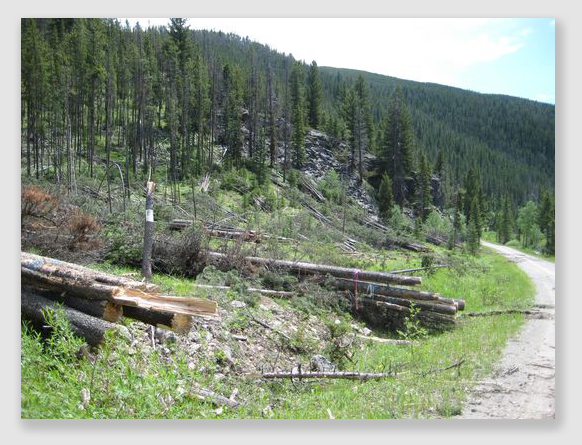 Great Falls, Montana, Tribune, June 13, 2016: Dead trees in forest logged to reduce hazard
Trees killed by mountain pine beetle that are now hazardous are being logged in Helena-Lewis and Clark National Forest.
RY Timber began work last week along Moose Creek Road, also known as Forest Road 204, which is 20 miles north of White Sulphur Springs. “We’re not clear-cutting the roadsides,” said Carol Hatfield, the ranger for the forest’s Belt Creek and White Sulphur Springs districts. “We’re just targeting the hazard trees.” In 2014, the forest approved a hazard tree removal project for 200 miles of road in the Little Belt Mountains totaling 146 acres to address the mountain pine beetle epidemic that swept through Montana’s forests. Two- to five-acre patches with high levels of mortality are being targeted, Hatfield said. “The purpose of the project was due to the insects and disease hitting all the trees, especially along the roadsides,” Hatfield said. “The main reason is for public safety…”
Toledo, Ohio, Blade, June 13, 2016: Street life tough on downtown’s trees; 30% dead
Downtown Toledo is apparently unsafe for trees. Dead and dying trees line the streets of the central businesses district. Some have stood dead for more than a year — little more than large, dried sticks with faded orange tags placed by city workers months or even years earlier to mark them for removal. Lisa Ward, Toledo’s acting commissioner of parks and forestry, said 30 percent of the trees downtown are dead. Some streets are devoid of trees. Several mayors’ administrations have planted trees, only to have them die and need replacement soon after. Salt during winter weather is part of the high mortality rate, but poorly designed tree wells also contribute to the deaths. “They need to be wider and deeper,” Ms. Ward said of the wells. “Most trees don’t do well when you surround them by cement…”
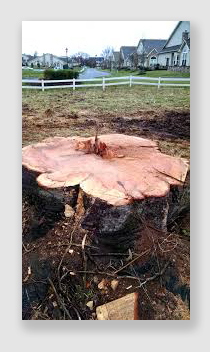
Bucks County Judge has thrown out a legal action filed last year by the board of supervisors against McGrath Homes seeking $85,500 in damages for cutting down a large copper beech tree at the entrance to the Villas of Newtown development. On June 2, Common Pleas Judge Diane Gibbons issued a one-page order granting the developer’s motion to have the township’s ‘confessed judgment’ claim seeking compensation for the tree dismissed. A ‘confession of judgment’ is an expedited legal action in which a party to an agreement, in this case, Newtown Township, can seek monetary damages without having to file a traditional civil lawsuit involving the usual array of depositions and paperwork. The process is usually used by lenders who want to collect delinquent payments from consumers In its court action, the township claimed cutting down the tree, estimated to be about 120-years-old, was in apparent violation of a 2006 court-sanctioned settlement to preserve both the tree and the adjoining historic farmhouse, as well as an Improvement Agreement reached by both sides in early 2007…
Sonora, California, Union-Democrat, June 10, 2016: Tackling tree mortality
Jacee Vallelunga, 7, stood with her friend, Mary McCrory, 6, outside her family’s Leisure Pines home Thursday morning watching as a hazard-tree specialist across the narrow street was hoisted 100 feet in the air by a 200-ton crane. Vallelunga’s mother, Melissa, was standing next to the girls using her cell phone to film the scene as the specialist fired up his chainsaw and began cutting into the trunk of a 120-foot-tall pine tree that’s brown hue stood out from the green ones around it. The pine was one of more than 750 that have died in the Leisure Pines neighborhood off Highway 108, east of Twain Harte. At least 29 million trees are believed to be dead throughout the Sierra Nevada, a result of a bark beetle epidemic made worse by four consecutive years of drought. “We really started to notice it last summer,” Melissa Vallelunga said. “You would see the trees start to lose their color and then, within three days, they were dead…”
 New Zealand Gardener, June 13, 2016: Fruit tree in the wrong place? Move it!
(1) Choose Your Time: This applies both for the age of the tree – any older than three years may be difficult to transplant – and the time of year. Winter is the best time to relocate deciduous fruit trees, when the leaves have fallen, the tips of the branches are no longer green and the tree is not actively growing. Most fruit trees are grown by nurseries in the ground, and are lifted and despatched to garden centres during winter – so it is normal horticultural practice to transplant trees during this season …
Q: We planted 17 ‘Emerald’ arborvitae in May. We broke apart the root ball at the suggestion of an employee at the retailer. I’ve since learned that this is bad to do. We are watering regularly and have covered the area with mulch to retain moisture, but our trees seem to be yellowing slightly. What can we do to encourage survival? I’m worried we may have shocked them too much. Any type of fertilizer we can use to encourage root growth and provide nutrients?
A: Poor planting is by far the No. 1 problem with all trees for many years after planting. Surprisingly, it is better to correct bad planting by re-digging and replanting trees for up to 18 months after poor planting. That said, be aware that healthy new growth for arborvitae is light green to yellow-green in color, and will darken considerably as the season progresses. So don’t panic yet. See if the yellowing tips are new growth; if last year’s growth is yellowing and begins to turn brown and dry, that is the indication that you have a problem…
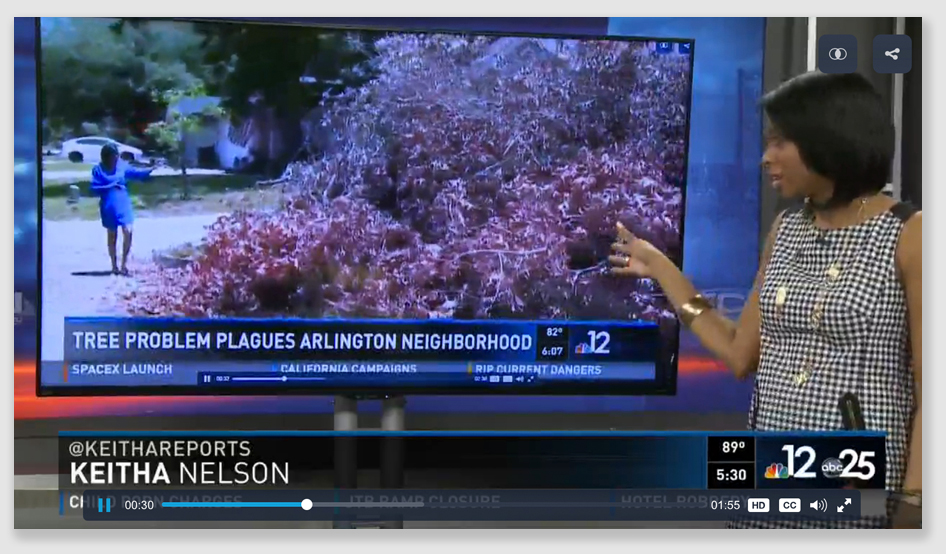 Jacksonville, Florida, WTLV, June 9, 2016: Tree trimming customer: ‘They took the money and ran’
An elderly Jacksonville woman says she’s learned a valuable lesson – the hard way. She claims a tree cutting service took her money and ran, leaving behind a huge mess and not finishing a job she paid for in full. On May 27, 2016 the owner of Upper-Cut Tree Services, Tyler Dyal agreed to partially refund his dissatisfied customer. But nearly three weeks later she has yet to see that money. The huge pile of limbs and cut down trees that stood about 9 feet tall has been cleared from in front of Diane Jones’ East Arlington home.Nearly three weeks later only a few trash bags remain. Its removal cost Jones’ neighbor $800. Jones said she and a few of her neighbors paid Upper-Cut Tree Services in Hilliard, Fla. thousands of dollars combined for services that were not completed. “I only wanted some branches cut down which didn’t get done,” said Jones. “So I don’t know what else to tell you other than they took the money and ran.” Jones said she received an email from the company’s owner, Tyler Dyal stating that he did finish the job and she kept adding on more work…
The emerald ash borer, believed to be the most destructive insect to afflict trees in North America, has been found for the first time in Nebraska. The Nebraska Department of Agriculture confirmed Wednesday that the invasive beetle is in Pulaski Park in South Omaha. The infestation is probably in its early stages, because foresters and arborists have been searching for signs of the beetle for several years and haven’t found any, said Graham Herbst, the eastern Nebraska community forester for the Nebraska Forest Service. How established the beetle is matters, because that will determine how quickly the infestation marches through metro Omaha…

The township supervisors have decided to seek advice from a second attorney on whether they should appeal a recent Bucks County Court decision regarding an old beech tree at the Villas of Newtown age-restricted housing development that was cut down illegally by workers for the developer, McGrath Homes. Felling the tree, which was estimated to be at least 100 years old, violated an agreement between McGrath Homes and the township that was signed when the homes were built in 2006. The township filed a lawsuit against the developer in August seeking damages of $85,000, the value of the tree as determined by a forensic arborologist. However, county Judge Diane Gibbons ruled against the township earlier this month, stating in an order that McGrath does not have to pay anything for the tree. While Gibbons’ ruling is not accompanied by an explanation or opinion, Joseph Caracappa — the attorney representing Newtown Township in the matter — offered his theory in an email to township Manager Kurt Ferguson and Assistant Manager Micah Lewis obtained by the news organization…
New legislation to protect forests and trees from development in Annapolis could set a standard of no net loss thanks to a proposed amendment that would require developers to replant everything they cut down. The amendment proposed by Alderman Jared Littmann, D-Ward 5, would require developers to replace trees one to one. The amendment is attached to the city’s new version of its Forest Conservation Act legislation, which has been in the works for years.
Annapolis has not had its own law and instead has referenced the state’s law when approving developments. The city’s legislation seeks to strengthen protection of its forests from development while still giving developers some leeway when building near streams, cutting down trees and submitting plans to the city. The new version of the law also requires public meetings on impacted forests and allows the city’s Planning Commission to consider forest conservation plans when making decisions on developments…
 Windsor, Ontario, CBC, June 8, 2016: ‘Tree gator’ bags help keep Windsor trees watered
The bases of several young trees in Windsor are being covered by thick, green plastic bags. It’s part of a program to make sure they get enough water. Crews are outfitting the base of newly-planted trees on public property with the “tree-gator” watering bags. With more than 70,000 trees listed in the city’s tree registry, it’s a massive job keeping all the young trees watered, Paul Giroux, the city’s manager of forestry and natural areas, told Radio-Canada. Giroux said a contractor can fill each bag in about a minute, meaning part of the job of keeping Windsor’s trees watered becomes more efficient…
Gov. Dannel P. Malloy has signed into law a bill that requires utilities to give more notification when they plan to take down trees around power lines; the author of the legislation sees the possibility that in the future it will expand to include the state Department of Transportation. State Rep. Michael D’Agostino, D-Hamden, drafted and proposed the legislation earlier this year after complaints arose in recent years over what some residents saw as overly-aggressive tree trimming and removal programs implemented in the wake of severe storms that left thousands in the dark for as much as a week or more. The main cause of the outages after storms like Superstorm Sandy and Tropical Storm Irene, utilities and other officials determined, was trees taking down wires, so utilities set out to eliminate that possibility before the next severe storm hits. But when residents saw rows of trees removed or severely trimmed, they protested the work, claiming they didn’t know in advance it would be happening. The legislation expands on the notification requirements to municipalities…
 Paris, Tennessee, Post-Intelligencer, June 8, 2016: Smoking is in again, at least on our smoke trees
Smoking is in again, at least for a while, and not just in Japan. Not the nasty kind, but the bushy kind. I don’t think I have ever dwelt at any length here on the smoke trees, those plants that produce the frothy cumulus clouds of pink, maroon and shades in between, along with varied colors of foliage on some kinds. They’ve been visible of late around town, in those mentioned shades. When out of bloom, they don’t catch your attention like they do when the smoky clouds arise from extension growth. Smoke trees are in the genus Cotinus, and hail from overseas as well as from our own country. The American one is Cotinus obovatus, and, though seldom seen in the wild hereabouts, makes up into a fine little tree indeed…
Laredo, Texas, KGNO-TV, June 8, 2016: Possible changes to Tree Preservation Ordinance
An item that was discussed a month ago at city council to perverse trees is now being looked over by city committees. At Wednesday night’s Building Development Services Department meeting the item to amend the current city of Laredo tree preservation ordinance was discussed. Committee officials say they will look over the situation but the Environmental Services Department will also be discuss the topic at its next meeting…
Looking for an older news story we featured on this page? Check our Prior News Links page.
 New Scientist, June 7, 2016: Tallest known tropical tree discovered in Malaysia’s lost world
Behold the giant. The world’s tallest known tropical tree has been discovered in a rainforest in Malaysia, measuring a whopping 89.5 metres. Gaming enthusiasts may be familiar with the species of tree – Yellow Meranti (Shorea faguetiana) – which can be grown in Minecraft. David Coomes of the University of Cambridge and his colleagues discovered the behemoth in one of Malaysia’s last remaining pristine wildernesses – the Maliau Basin Conservation Area, known as Sabah’s Lost World. Measuring the height of the tree was a big task. A local tree-climber clambered to the top with a tape measure to check it. While still at the top, he sent a text message to the researchers waiting at the bottom: “I don’t have time to take photos using a good camera because there’s an eagle around that keeps trying to attack me and also lots of bees flying around…”
Homeowner Janet Stennis won her appeal. The tree’s getting snuffed. The Board of Aldermen unanimously voted to let her cut a cedar tree crowding the driveway in her yard in the 600 block of Jackson Avenue. Stennis will plant two cedars to take its place, each at least 4 inches in diameter. The city Tree Protection Committee had ruled against Stennis’ request suggesting she redesign her driveway. But on Tuesday night, her alderman, Matt McDonnell said that would be too much to ask of her and would take up too much of her yard. Stennis, who said she has lived in the home three years and made many improvements to it, said after the meeting she was grateful. Stennis has a narrow, shell driveway and the cedar tree made widening it difficult to impossible…

To stake or not to stake? Too many gardeners answer this question in the affirmative. Who doesn’t want to lend support to a wispy young tree? And there are situations when a tree can use some mechanical aid — but not as often as you might imagine. Even when staking is beneficial, it is usually so only for a relatively brief period. Staking a tree that does not need it can do more harm than good. The trunk’s natural movement helps bulk it up, strengthening it, and also stimulates root growth. A staked tree might grow taller than its unstaked counterpart, but it will have a weaker trunk and sparser roots. Incorrect staking can cause further problems. The tie could girdle the trunk or cause abrasion, and movement above the tie can make the trunk grow thicker there or cause the top of the tree to blow off. Guy wires could trip you as you dash across your yard. And face it: Staking looks unnatural…
A 50-year-old Albany man working for a private tree-trimming service was seriously injured Tuesday after falling from a bucket truck about 75 feet to the ground. Dane County Sheriff’s Office Lt. Krista Ewers-Hayes said the tree trimming service was set up in the 3700 block of Rutland-Dunn Town Line Road in the town of Dunn when the incident occurred at about 1:10 p.m. An initial investigation showed the arm of the bucket truck was fully extended when it broke off near the truck end for unknown reasons, authorities said, causing the arm and the bucket, with the man inside it, to fall to the ground and apparently knocking him unconscious. As it fell, the bucket also took down power lines, but there was no evidence the man was electrocuted, Ewers-Hayes said. When deputies and Stoughton EMS first responders arrived, the man was unconscious and without a pulse…
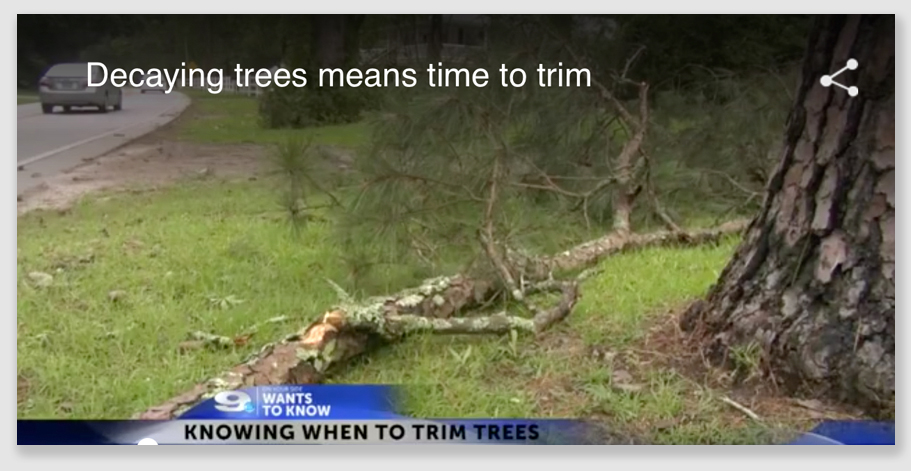
Tropical Storm Colin is the second storm coming from the Tropics in two weeks. With the onset hurricane season, both coastal and inland counties could see more strong winds. Tree trimmers urge homeowners to stay ahead of the storms by cutting down loose limbs. Sunday night in Vanceboro, trees fell across the road and many limbs scattered across yards. William Lilly, a tree trimmer, was responsible for clearing the roadway Monday morning. “The storm has come through it’s a lot of damage, trees down everywhere, limbs everywhere,” said Lilly. He said it becomes a safety hazard to people and property if you don’t take care of your trees ahead of time. Lilly recommends dealing with trees closest to your home first…
Johnson City, Tennessee, Press, June 6, 2016: Man injured in tree trimming accident
A Jonesborough man was injured in a tree trimming accident in Carter County on Friday. Deputy Tracie Phipps of the Carter County Sheriff’s Department said the accident took place at 131 Melodi Lane at 11 a.m. Phipps said when she arrived, she found a 2013 Ford 750 bucket truck parked on Bridges Road. She said the truck had turned onto its passenger side and was angled down a hill. Phipps said a worker was lying unconscious and still strapped inside the bucket. The worker was identified as Greg L. Carver, 39. Responders from the Carter County Rescue Squad released Carver from the straps. Phipps spoke with Carver’s coworker, David Lowe Calloway, Dalewood Road. Calloway said Carver had positioned the truck and placed riggers. He said the truck was in a stationary position while Carver cut limbs out of trees. Calloway said they took a 15-minute break and went back to work at the same spot…
 Waterbury, Connecticut, Republican-American, June 6, 2016: Suit eyed over loss of trees
Brian Willenbring and Susan Pease hired someone to remove close to a dozen trees behind their raised ranch at 204 Scout Road, but the trees were not on their property. The cutting occurred on town-owned Lakeside Open Space, close to five acres near Lake Zoar. The Southbury Board of Selectmen voted to pursue legal action against the Peases for cutting down trees on town land. The property sits next to the Lake Zoar Wildlife Area…
Apple computers, the rock band U2, “Rocky” and two national football teams — of all the things that turn 40 in 2016, none have transformed the American landscape as definitively and beautifully as the Arbor Day Foundation’s Tree City USA program. Since its inception with partners from the National Association of State Foresters and the United States Forest Service in 1976, the program has supported and recognized tree sustainability programs in more than 3,400 American cities, inhabited by more than 135 million people. The thousands of Tree City USA municipalities meet core standards of sound urban forestry management, including: * Having a tree board or department charged with caring for the community’s trees; * Adopting a tree ordinance that provides clear guidance for planting, maintaining and removing trees in public spaces like parks and along streets; * Spending at least $2 per citizen on a community forestry program; and * Observing Arbor Day with a formalized Arbor Day celebration. “Meeting these core standards means a community is committed to keeping its trees healthy and public spaces green,” says Dan Lambe, president of the Arbor Day Foundation. “Everyone benefits when elected officials, volunteers and committed citizens make smart investments in urban forests. Trees bring shade to our homes and beauty to our neighborhoods, along with numerous economic, social and environmental benefits …”
Walking the dog near her west side neighborhood on a recent morning, Petaluma’s Lynn King recalled how the established trees now shading her street were just an idea 16 years ago. Unlike the leafy urban landscape in much of Petaluma, King said, the stretch along 6th Street was a sun-baked span before neighbors came together in an effort to bring new trees to the roadside. With help from the city, the Petaluma Tree Advisory Committee and funding from the Sonoma County Community Foundation, the road is now cooled under the canopy of crepe myrtles, pistaches and Japanese pagodas. Yet King said some of those neighbors, and others in Petaluma, are now expressing concern that new efforts around a city requirement for property owners to maintain their adjacent sidewalks could ultimately be putting those trees and more on the chopping block. “You don’t want to lose the benefit of all these trees. They provide shade, and a canopy over the street, and all kinds of visual appeal, and a habitat. Those are the things we were going for, and it feels like the sidewalk ordinance is sabotaging that,” she said. King argued that the repair requirement, common for many cities in California, exists in a state of tension with decades-long municipal efforts to plant trees throughout Petaluma’s public corridors. The city more than 15 years ago waived permitting fees and facilitated wholesale purchasing for the trees that now line her block, she said …
Q: I have a very old maple that is starting to lose huge chunks of bark and is discolored underneath. It is the southwest side of the tree. Is this sun scald? It looks more like a fungus underneath to me. This is also near a place where a large root was cut during a street and sidewalk replacement project.
A:Sun scald is more commonly seen on thin-barked trees and shrubs, or young, newly planted trees that have not yet developed the thick, deeply fissured bark that one might see on a mature tree like a very old maple. Wounds that are harboring internal decay fungus can have many causes. Damage from sidewalk replacement projects certainly could be one such cause, but virtually any other physical injury experienced over the life of the tree could have been the catalyst. The important issue is that now there is a tree that has a reduced and compromised root system, as well as an indeterminable amount of internal decay that cannot be treated. In effect, it’s a tree in declining health that is susceptible to toppling during strong storms and whose internal decay is likely to impact its structural integrity in the future, if that has not already occurred…
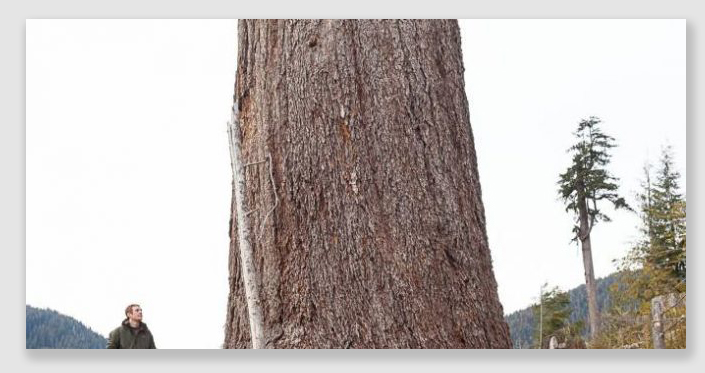
The world’s largest Douglas-fir tree is the Red Creek Fir, located just 20 kilometers to the east of Big Lonely Doug in the San Juan River Valley, and is 13.28 meters (44 feet) in circumference, 4.3 meters (14 feet) in diameter, 73.8 meters (242 feet) tall, and has 784 AFA points. Conservationists estimate that Big Lonely Doug may be 1000 years old, judging by nearby 2 meter wide Douglas-fir stumps in the same clearcut with growth rings of 500 years. Big Lonely Doug grows in the Gordon River Valley near the coastal town of Port Renfrew on southern Vancouver Island, known as the “Tall Trees Capital” of Canada. It stands on Crown lands in Tree Farm Licence 46 in the traditional territory of the Pacheedaht First Nation band. Conservationists are calling for provincial legislation to protect BC’s biggest trees, monumental groves, and endangered old-growth forests…
The emerald ash borer is literally taking a bite out of the trees at Tyler State Park. The insect is an exotic invasive forest pest that infests all ash species. The larva live and feed just under the tree bark. The damage disrupts the transport of water and nutrients between the roots, leaves and growing tissues causing a rapid decline and death of the tree. The structural traits of ash – those that make ash an excellent wood for baseball bats – render dying trees hazardous. When branches break off or trees come down, it is often quick and unpredictable — resembling a baseball bat shattering. To remove dead and dying trees that have become hazardous, the park has scheduled a salvage harvest this spring targeting high public use areas of the park, including picnic areas, as well as an area on the south side of the park near Fisherman’s Lot, according to the state Department of Conservation and Natural Resources…
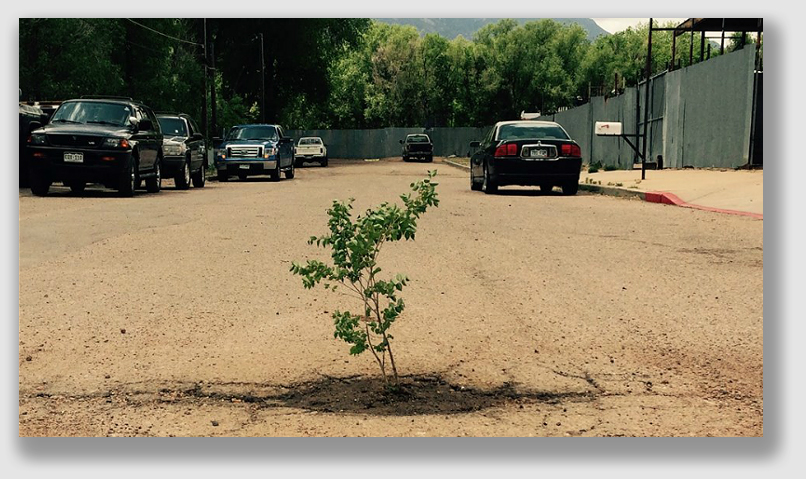
No street in Colorado is immune from them — and around this time each year, their numbers seem to grow at the same pace as the frustration of drivers and property owners. So credit Colorado Springs’s Bryan Ford with doing something about them. After the city allegedly failed to respond to complaints about a pothole outside his business, Ford reportedly decided to make his point about the situation in a very nature-friendly way — by planting a tree in it. The story definitely struck a chord among Colorado Springs media, and no wonder. Indeed, one television station in the area, KKTV, actually boasts a “Policing Potholes” page, featuring a graphic that shows the worst potholes in the area according to viewers …
NPR, June 2, 2016: National Park enlists predator beetle to stop hemlock-killing insect
If you’re in North Carolina or Tennessee and you drive into Great Smoky Mountains National Park, you might be awed by the trees. The forest glows in vibrant green. But many of those trees are actually sick, infected by deadly invasive pests. It’s midafternoon, about 70 degrees outside, and we are hiking off-trail on the Tennessee side of Great Smoky Mountains National Park – uphill, over logs and through thick patches of brush. This is an easy hike for Matt Moore and the park’s vegetation crew, veg crew for short. They’re wearing backpacks and carrying 5-gallon buckets filled with drills, tubing, pumps and pesticides, some of the many medical supplies of this nationally protected forest. The tree we hiked all the way up here for is – well, a tree. It’s tall, but not particularly big. You could wrap your arms around it and still clasp hands. We’ll get into the specific species and all of that stuff in a bit. But for now, let’s do what we’re here to do – treat this tree. For this kind of treatment, the veg crew drills about six tiny holes into the tree around its base …

MSU’s Abbott Road entrance, a historical area between Campbell Hall and the Union, is currently covered in fencing and construction equipment. 21 Norway Maple trees were removed due to declining health, the project to rejuvenate the entrance area is one of many areas on campus. The project that began on May 25 is expected to be completed by June 17. MSU Campus Arborist Paul Swartz said the Campus Planning Maintenance and Design, the group that makes decisions on campus landscape, meets regularly and discusses improvements that can be made throughout campus. He said a team of experts comes together to distinguish the specific rejuvenations and renovation on campus. “They were nearing the end of their life expectancy,” Swartz said. “They had extensive trunk decay and an issue called girdling roots …”
Entomology Today, June 2, 2016: Can genetically modified trees save American forests?
Yesterday I attended the sixth North American Forest Insect Work Conference, a meeting that has been held every five years since 1991. This one is taking place in Washington, DC and ends on Friday, June 3, 2016. The meeting brings together regional forestry groups, including many from the USDA Forest Service, whom I estimate represent about 25 percent of the participants. Tom Tidwell, chief of the USDA Forest Service kicked off the event during his keynote address about why the work of forest entomologists and others is so important. “Why should Americans care about healthy forests and grasslands?” he asked. “Well, if you don’t breathe air or drink water, then you shouldn’t care. But if you do breathe air and drink water, then you should. If you want clean air and water, you have to have healthy forests and grasslands.” Forests also have recreational value for campers, hunters, and hikers, not to mention the economic value that is generated by these activities and the jobs that they create. Unfortunately, according to Dr. Tidwell, the threats posed by invasive insects and diseases will inevitably increase in the future due to increased international trade and climate change …

Homebuilders, developers and other applicants have chosen to pay a $250 tree replacement fee instead of planting a tree themselves 88 percent of the time since Montgomery County’s Tree Canopy Law took effect in March 2014. According to an annual county report released in May, the county has used only a small percentage of the $907,250 in fees it received to plant 532 of the 3,629 trees paid for, and many have been planted in different ZIP codes than the projects that triggered the requirements. In the Bethesda 20817 ZIP code, where home teardown projects are most prevalent, applicants have planted just 65 trees on project lots while making the $250 payment for 1,250 replacement trees required by the law …
Red Bluff, California, Capital Press, June 1, 2016: Calif. walnut acreage, tree sales jumped in 2015
Four years of drought in California and a moderate price slide apparently haven’t halted a trend of increasing walnut acreage and nursery sales, at least yet. California’s estimated 360,000 overall acres in 2015 were up 12 percent from 2013 levels, according to the National Agricultural Statistics Service in Sacramento. The Golden State’s 300,000 bearing acreage during the most recent harvest was up from 290,000 acres in 2014, continuing an annual climb from the 218,000 acres that bore nuts in 2008, the agency reported. Combined sales of walnut trees to California growers accounted for 18,021 acres during the last crop year, according to a separate NASS report. That’s up from 17,076 acres of new trees in 2014 and 15,720 acres of first-year plantings in 2013, NASS observed …
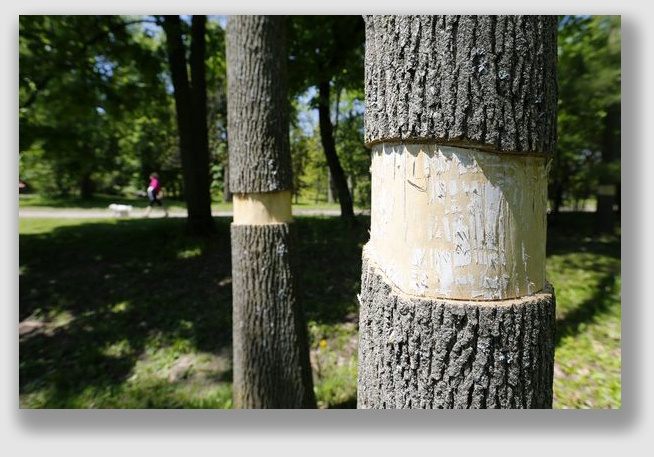
When Todd Robinson returned home from the Vietnam War in 1968, he recalled the shock of driving down Richmond Avenue and seeing the devastation. “The elm trees were all cut down,” Robinson recalled. “It looked like a barren wasteland. … I saw just stumps.” That was the effect of Dutch elm disease that stripped Northeastern cities of the stately elm. Now another all-American tree species – the ash – is falling victim to another intruder. The emerald ash borer – a voracious wood-boring beetle introduced to this country on a wooden palette of automobile parts shipped from China in the 1990s – is responsible for killing millions of ash trees in 25 states as far west as Colorado. Their infestation includes Erie County, where one in five trees is an ash …
Two tree trimmers received medical treatment Wednesday after feeling an electrical shock while working west of the city, Palm Beach County Fire Rescue said. The incident took place in the 1700 block of Skees Road, south of Okeechobee Boulevard and west of Florida’s Turnpike. A limb strike the wires while the workers trimmed the trees from a bucket truck, said Capt. Albert Borroto, Fire Rescue spokesman …

Clear-cutting entire residential lots may soon be prohibited locally now that Southold Town officials are looking into the feasibility of restricting tree removal. During Tuesday’s Town Board work session, Supervisor Scott Russell said he believes tree removal legislation should be drafted through the lens of the town’s drainage code, since clear-cutting properties affects the ground’s ability to absorb stormwater. “Tree-clearing has community impacts — it’s not just private property rights,” he said …
Weatherford, Texas, Democrat, May 31, 2016: City settles tree lawsuit
The Weatherford City Council has agreed to settle a lawsuit with a couple who sued the city over allegations that the city violated its tree preservation ordinance. The terms of the settlement had not been provided to the Democrat by the city as of Friday though the couple’s attorney told the court Wednesday that they had resolved their dispute with the city. Jeff and Anna Stone alleged in court filings that the city illegally allowed developers to cut down trees behind their home off Sherry Trail. According to the lawsuit, the couple had a heavily wooded creek bed behind their home that was bulldozed and deforested up to and past their property line, causing them to lose the natural light and noise barrier between the properties. The Stones argued that the developers were required by city ordinance to obtain a tree removal permit in addition to a site development permit from the city, though the city argued
that a tree removal permit was not required …
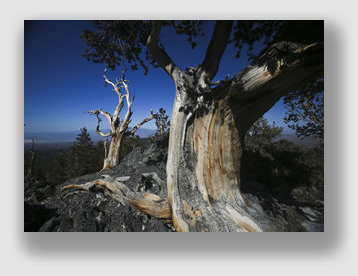
On the fourth floor of a research facility at the University of Arizona, the remnants of a famous Nevada tree anchors a display on one of modern science’s most notorious blunders. Arizona’s Laboratory of Tree-Ring Research calls it the Currey Tree after Donald Currey, the researcher at the center of the controversy. But most people know the beloved bristlecone pine by another name: Prometheus. Currey was a graduate student in the summer of 1964 when he came to eastern Nevada’s Snake Mountains to study ancient trees and prehistoric climate change, the Las Vegas Review-Journal reported. During his fieldwork, he persuaded the U.S. Forest Service to cut down a large bristlecone near the tree line on Wheeler Peak so he could count its rings and chart its history. Currey’s casualty turned out to be approximately 4,900 years old, making it the oldest known tree on Earth at the time …
Reading, Pennsylvania, Eagle, June 1, 2016: Will the chestnut tree make a comeback?
Seventy years ago, when Nat “King” Cole first regaled us about roasted chestnuts in The Christmas Song, not many Americans could actually enjoy the treat because American chestnut trees were in dire straits. The predominant tree in Eastern American forests was nearing the tail end of a 50-year blight that killed an astonishing three to five billion trees, making the species functionally extinct. Now, however, researchers supported by the U.S. Department of Agriculture’s National Institute of Food and Agriculture are working to restore the American chestnut and may be only a few years away from bringing back the iconic tree. Chestnut restoration efforts have been ongoing since the 1980s without much success, but Dr. William Powell and his team at the State University of New York’s College of Environmental Science and Forestry recently turned a corner with the creation of an American chestnut variety that is resistant to the blight …
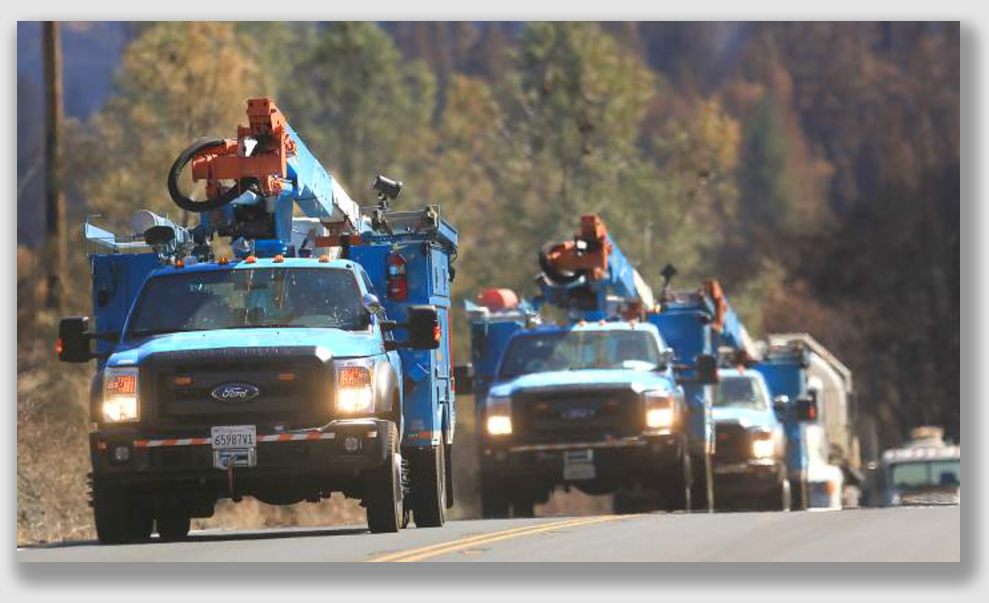
PG&E’s campaign to remove trees that could block emergency access to the utility’s natural gas transmission lines is ramping up in Santa Rosa, company officials said. The effort involves collaboration with city officials and private property owners to determine how many trees — from an initial list of nearly 2,000 — are actually close enough to underground gas lines to interfere with the need to quickly cut off the flow of gas in an emergency, said Jeff Smith, a PG&E spokesman. Smith likened the concept to prohibitions against parking in front of a fire hydrant: It may be used rarely, but when it’s needed the hydrant — or the gas line — must be easy to get at. “When it happens, you need immediate access,” Smith said. To shut off a pipeline, emergency crews need to dig into the ground to access the metal pipe, then squeeze it closed with a special tool, he said. PG&E is sending letters this week to 139 property owners in six areas of Santa Rosa where aerial surveys have identified 993 trees on private property that could be problematic. Trees within five feet of either side of a gas transmission line typically need to be removed, Smith said …
Houston, Texas, Chronicle, May 30, 2016: Teen, 16, killed by falling tree limb in Brenham
A 16-year-old boy in Brenham, Washington County, was killed Monday when he was struck by a falling tree limb. Det. John Snowden of the Brenham Police Department said the young man was part of a youth group from St. Mary’s Catholic Church cleaning up yard debris for neighbors whose properties were inundated after the weekend storm. A large pine branch had fallen and snagged on some wires. It fell to the ground just as the young man was walking under it. The tragedy occurred on Progress Drive on the south side of town. “It was just a terrible, tragic accident,” Snowden said. Police declined to release the name of the teen …
 Sonoma, California, News, May 30, 2016: Palm tree goes into extra innings
It’s a classic “facepalm” situation, with a tropical twist. For the second time in less than a month, a beloved local tree living on a school campus has been saved from the chipper. Remember “Save the Flowery tree” from a few weeks ago? Well, this time it’s a palm tree at the Sonoma Charter School – smack dab in the middle of the K-8 campus’s soon-to-be upgraded athletic area. According to SCS Principal Kevin Kassebaum, the school will continue to make do with the large palm, despite its prominent position in center field. As of last Thursday, an online petition had gathered just over 150 signatures in protest of the tree’s alleged destruction, though Kassebaum said at that time that no petition had been presented to school officials …
Over the past year, scientists have studied California’s trees from the air, the ground and even using X-ray technology. Each time, they have arrived at some version of a similar dreary conclusion: The state’s ongoing drought is wreaking havoc on forests, killing millions more trees at each check. But a study published recently online in the Open Journal of Forestry offered a refreshing and counterintuitive piece of good news. A NASA research scientist found the drought did not stop trees, shrubs and other foliage from regenerating in areas ravaged by wildfires. “I think a lot of people were expecting that we’d see trees dying even in the Santa Cruz Mountains because the reservoirs there were really low. But they were pretty much undaunted by [drought] in their growth,” said Christopher Potter, the author of the study …

A haunting curtain of smoke rose from the dry New Mexico ground in 2011, covering the horizon with dark soot and ash. The Las Conchas fire burned hot and fast that summer. In its six-week run across northern New Mexico, the unusually intense blaze turned more than 150,000 acres of Ponderosa pine and other dry forest into a virtual moonscape, frosted in places with ankle-deep ash. But it’s what came next that really galvanized Laura McCarthy, a Santa Fe-based conservation director for The Nature Conservancy. Like many that summer, McCarthy watched the fire with a sinking feeling. Shortly after the fire quit its rampage, thunderstorms erupted over the burned earth, unleashing debris slides that wreaked havoc on irrigation systems and turned the Rio Grande river so black that the city of Albuquerque abandoned its river water and reverted to groundwater for more than a month …
Lined with thousands of trees – some more than 100 years old – Euclid Avenue is one of the most picturesque streets in the Inland Empire. “They are just revered by the people in this community and revered by people all over the area,” said Rusty Cushing of Upland. “It’s a really historic area and historic site.” But a closer look reveals an orange blemish on some of the historic trees. Neighbors say the city marked 120 trees for removal without asking, consulting, or even notifying the people who love them so dearly. Now, these neighbors are banding together, hanging lawn signs, fighting to keep any healthy trees they can. “If a tree, and there’s a really big if, really is diseased or really has a major problem, then yeah, it probably should be removed, but it has to be replaced,” said Rick Rohn, another Upland resident …
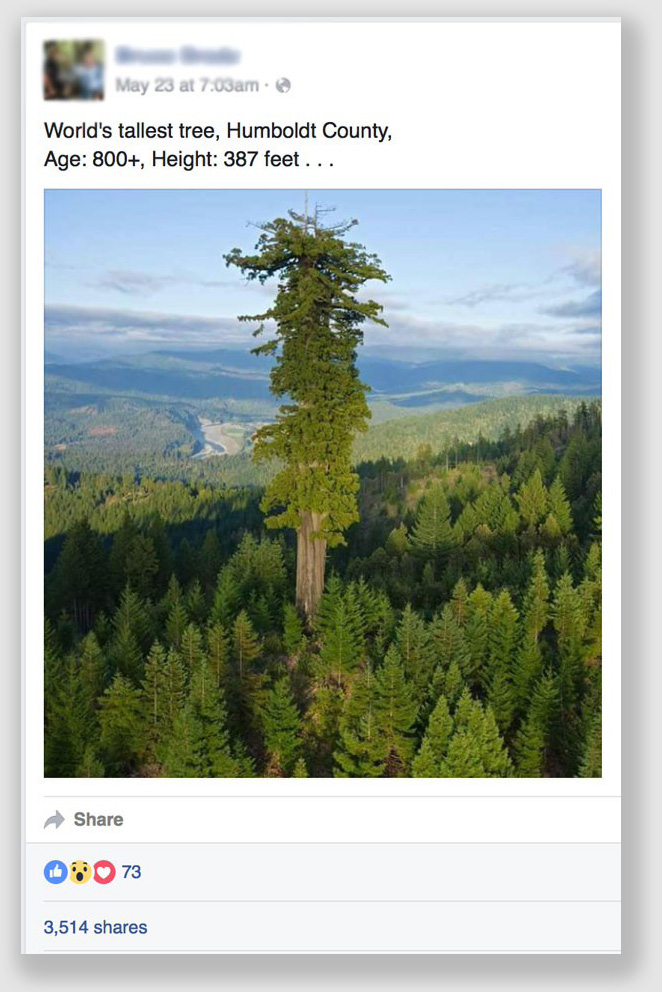 Eureka, California, North Coast Journal, May 26, 2016: That’s not the world’s tallest tree
If you’ve logged on to Facebook in the last couple days, you’ve probably seen that photo to the right. It’s real, it’s beautiful and it’s in Humboldt County. It’s not, however, the tallest tree in the world. For whatever reason, the picture has been circulating like crazy lately, and it seems to always be accompanied by a misleading or flat-out wrong caption. There could be a whole study of the virality of images and misinformation conducted about it, but, being stuffy, old truth-seekers, we just wanted to set the record straight…
Green Bay, Wisconsin, WBAY-TV, May 26, 2016: Tree trimmer electrocuted
A 25-year-old man died from electrocution on Tuesday after performing tree trimming work on private property. New Holstein police said authorities responded to the 2000 block of Van Buren Street at about 11:25 a.m. Tuesday for a report of an unconscious person in a tree. Micah Gifford, a Greenleaf resident, died at the scene after a branch came in contact with a power line, police said. Gifford was an employee of Nelson Tree Service … Davenport, Iowa, Quad City Times, May 25, 2016: Stingless wasps imported to fight emerald ash borer
Thousands of stingless wasps are being enlisted to slow the onslaught of an imported pest attacking Iowa’s ash trees. Officials with the Iowa Department of Agriculture and Land Stewardship say they are turning to stingless, parasitic wasps that are natural enemies of the emerald ash borer, a highly destructive pest of ash trees that was accidentally introduced into North America from Asia and now is present in 31 Iowa counties, including the Quad-City area. Mike Kintner, the department’s ash borer and gypsy moth coordinator, said the “biocontrol” effort will begin Thursday with the release of several thousand wasps at Whitham Woods near Fairfield. It will not be a “silver bullet” to rid Iowa of the ash borer infestation but the introduction of natural enemies will serve as a long-term management strategy to lessen the borer’s adverse impact, he said. “They seek out the emerald ash borer larva, and then the larva of these wasps actually will feed on the emerald ash borer so they basically become a parasite,” said Laura Jesse, an extension and outreach entomologist at Iowa State University’s Plant and Insect Diagnostic Clinic…
A pensioner has said she would risk jail by felling a mature tree next to her house. Kathleen Cann, 69, has been at loggerheads with council chiefs and another neighbour over the tree for almost two decades. She said the branches on the tree are wildly out of control, block natural light streaming into her home and left her brother John, who is blind, frightened to visit. ‘It would be an offence if I cut it down myself. But I am getting to the point where I am so sick of it I am willing to risk jail’, she said. Standing in her way is her neighbour Janet Russell, 45, who desperately wants to save the tree. Her desire to keep the tree in the street has meant the council have only pruned it – rather than removing it…
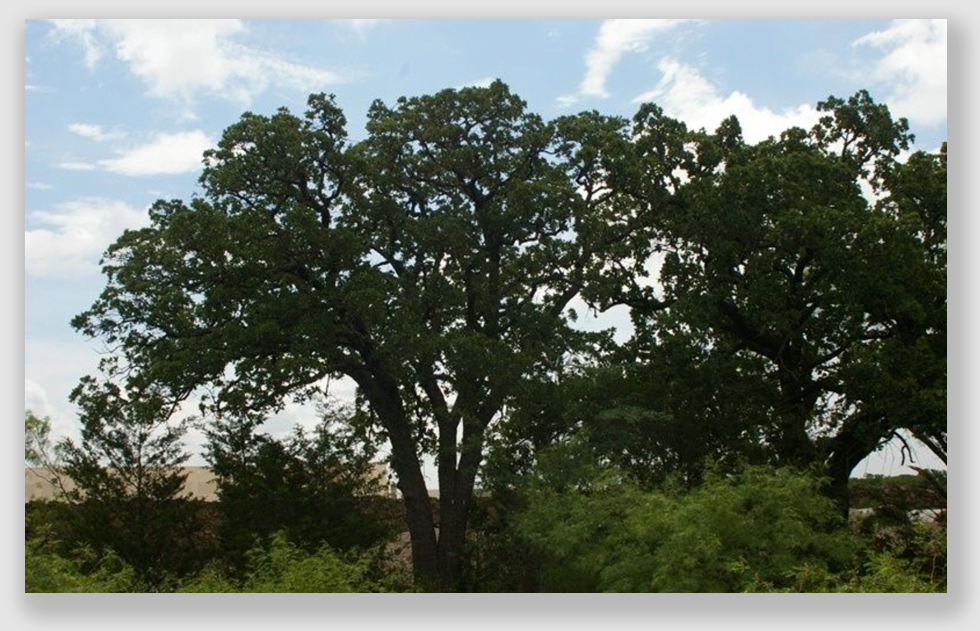
The Flower Mound Town Council is about to be faced with a decision on how to strike a balance between tree preservation and development. The council is expected to vote on amendments to the town’s tree ordinance June 6. The proposed amendments are the result of multiple meetings involving the town staff and the Environmental Conservation Commission (ECC) and one joint work session with the council. One of the goals of the amendments is to protect the town’s tree canopy by further incentivizing developers to preserve trees. Flower Mound’s Planning and Zoning Commission recommended approval of the amendments at Monday’s meeting, where members of the development community voiced concern over some of the changes. The main change being proposed is reducing the specimen size of post oak trees from 25 caliper inches to 19 caliper inches. That would broaden the number of trees required to be preserved …
Sidney, Montana, Herald, May 25, 2016: More to the tree story
Earlier this month I helped with a tree workshop focused primarily on landscape trees where the goal is to increase property value and aesthetics. Today, thanks to the NDSU crop and pest report, and to NDSU pesticide specialist Andrew A. Thostenson, the focus is on trees in a shelterbelt and the benefits they give in addition to providing a windbreak. “Tree shelterbelts were planted to reduce near-surface wind speed, to decrease soil erosion or control snow drifting. They are most effective when the wind blows perpendicular to them. For dense shelterbelts with little through-flow, winds are reduced greatly near the windbreak, but wind speed fully recovers at about 15 times the height of the trees downwind. More open shelterbelts (single tree rows) allow more through-flow so wind speed is reduced less near the trees, but the downwind effect persists for about 30 times the shelterbelt height. Wind speed in both cases also is reduced upwind for a distance equal to three to four times the tree height. Reduced wind speed near shelterbelts causes reduced air turbulence or mixing day and night. As a result, daytime surface and air temperatures in sheltered areas are greater, compared with those in open areas. However, when the surface is cooling at night, reduced mixing causes lower minimum temperatures, compared with open areas…
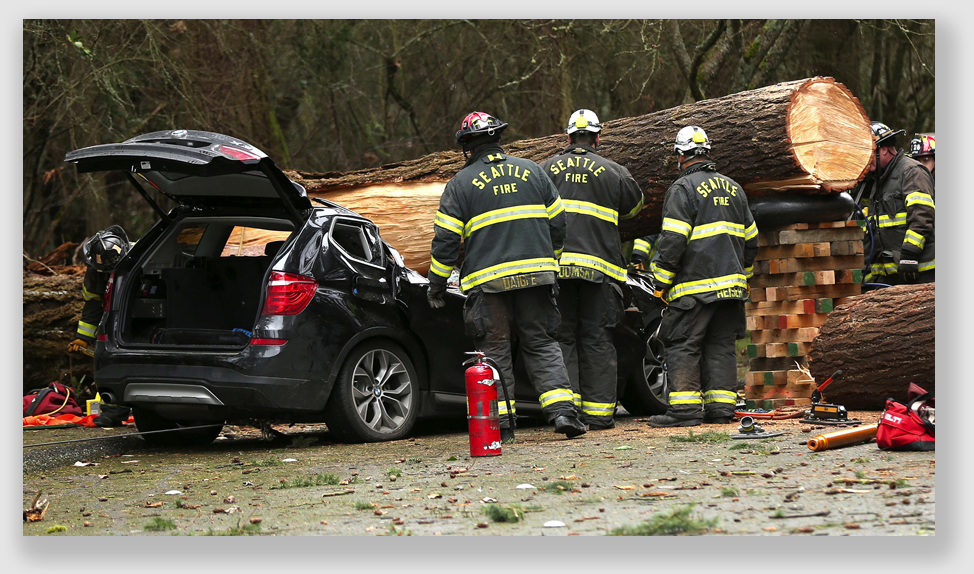
More than two months after a wind-toppled tree killed a man in Seward Park, the city’s parks department Monday released a one-page investigation report that offers little new to what parks officials already have said about the fatal incident: That wind and wet soil caused the big tree to collapse. “After the fact, we can say that the tree failed due to a combination of natural conditions including a combination of wet soils and very strong winds,” the report concludes. “Parks did not know that the tree’s condition presented any particular risk of failure prior to the incident.” The city’s report also acknowledges the tree had “internal decay near the base,” but it doesn’t indicate whether or not that rot contributed to the tree’s failure. The report — which amounts to a four-paragraph memo with a photograph of the tree on the reverse side — noted the review found no record of city maintenance or reports of concern about the big Douglas fir that fell during a March 13 windstorm, crushing an occupied sport-utility vehicle parked nearby…
San Diego, California, Reader, May 24, 2016: Coronado Street Tree Committee loosens up
Four and a half years after Coronado resident Paul Richardson asked the city if he could remove the five fern pine trees in front of his house — the droppings from which tangled up his wheelchair — his request was recently granted. “I think the only reason they finally gave in is that I’m in a wheelchair and the Americans with Disabilities Act says ground surfaces have to be clear,” he said. “It’s a bad tree for sidewalks because the female tree drops golf-ball-size fruit on the sidewalks.” Before he could get the trees removed — his first application to the city’s Street Tree Committee was in late 2011 — Richardson had to wait several years to see if the city’s attempts at “birth control” for the female trees would work. It took numerous trips to the city council and the tree committee to challenge and appeal, according to city documents…
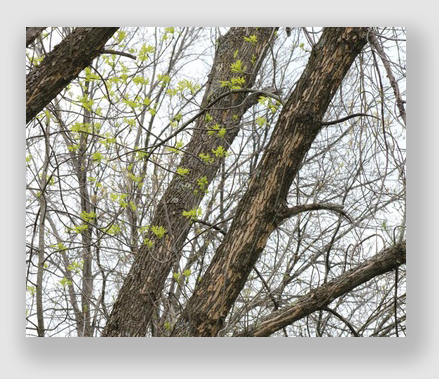
An invasive beetle species known to kill ash trees has been descending on towns in the area – but Mercer County officials have a plan. The county park commission announced Tuesday that they will start monitoring ash trees in the area with purple ribbons, looking for signs of the emerald ash borer beetle (EAB), which lays larvae in the bark of ash trees. As the larvae grow, they consume the wood beneath the bark and adult beetles eat the tree’s leaves. They essentially kill the tree over a few years and move on to another ash tree…
A popular Pikes Peak region recreation area will be closed heading into the Memorial Day weekend and the foreseeable future. Pikes Peak Ranger District forest ranger Oscar Martinez said Tuesday that spruce trees in the Crags area are at risk of falling. Forest Road 383 was closed late last week, and will remain closed for “the next several weeks,” cutting off access to the Crags campgrounds and its trails, as well as the popular Devils Playground, Martinez said. “Timing is not good because we’re right at the middle of the summer season,” Martinez said. “But this is just one of those works of nature we need to address differently than we were anticipating… ”
 Visalia, California, Times-Delta, May 23, 2016: County considering dead tree removal plan
There are likely millions of dead and dying trees in the county’s foothills that need to be cut down, and that number is growing as the Valley continues into its fifth year of drought, according to county officials. But for now, those officials are setting priorities as to which trees in the county’s areas of responsibility should be cut down first — specifically about 29,300 along 60 miles of roads in county’s northern and southern foothills… But dealing with this problem is something Tulare County and other California counties with large numbers of dead and dying trees can’t afford to do alone, said Eric Coyne, project director for the Tulare County Tree Mortality Task Force. As such, he’ll be asking the Tulare County Board of Supervisors to approve the county’s first-ever Tree Mortality Removal Plan …
San Diego, California, KGTV, May 23, 2016: Imperial Beach residents upset over iconic tree removal
Imperial Beach residents are starting to notice a void in their city. A developer had a crew chop down a 66-year-old iconic pine tree on 7th and Palm Avenue. Some residents say the crew cut it down in the middle of the night early Friday morning. They noticed it was gone the next day. “I have to admit, I cried most of the day when I found out,” said resident Ann Price. “This is a piece of IB that’s gone forever...”

Robin Miller has spent virtually all of his adult life working around trees. For many years, he harvested them as a logger, providing building materials for thousands of homes across North America. And for the last 40 years, he’s grown them, nurturing thousands of Douglas fir and Valley Ponderosa pine trees — many of them as seedlings planted with his own hands — on a 107-acre hillside between Holley and Crawfordsville. And he wants the public to know that small woodland owners like himself most often use selective harvesting methods to ensure the long-term health and sustainability of their timber stands. Clear cuts, often the center of controversy, are saved for when stands of trees have reached maturity, the Albany Democrat-Herald reported. “My dad originally owned this property,” the 76-year-old Miller said before a day of tree-thinning on a recent sunny spring day. “It was mostly brush and he ended up basically giving it away. I was always a tree person, so for me, it was a sad day.” But in 1974, Miller got an opportunity to buy the property, and he jumped at the chance. “There were no hand-planted trees on the place until I came around,” Miller said, adding that the stand was poor and interspersed with hardwoods…
A local wildlife sanctuary is bracing for a fight because a nearby power company wants to cut down scores of trees in their area. If the trees go, the wildlife center may go as well. “We have a lot of wildlife on this road,” said Yvonne Wallace Blaine of Fellow Mortals Wildlife Hospital. Blaine cares for hundreds of animals at a time at her Fellow Mortals Wildlife Hospital. She said the natural environment there helps to rehabilitate and return the animals to the wild. A buffer of tall trees helps shield the sanctuary from the road and human contact. “It’s about keeping them from being habituated to human things, human sounds, like cars,” Blaine said. But they could soon be gone. American Transmission Co. wants to cut down the trees on the easement near its overhead power lines instead of just trimming them as in the past, for safety reasons, and to ensure better power service…
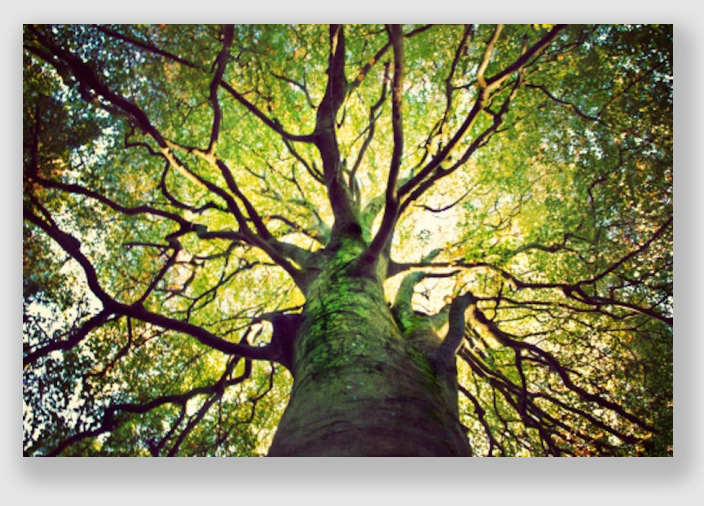
Scientists have long known that bacteria in and on the human body are essential for health, playing a role in nutrition, obesity and disease protection. However, only recently have experts begun to examine the role of the microbiome of plants and their role in symbiosis. A new study by University of Washington researchers reveals that poplar trees in rocky, inhospitable terrain possess bacteria inside them that fertilize them and likely help them grow through the provision of valuable nutrients. Furthermore, these microbial communities are very diverse, with significant variation observed between each plant. “This variability made it especially difficult to quantify the activity, but is the key to the biology since it is probably only specific groupings of microorganisms that are working together to provide this nutrient to the host,” said Sharon Doty of the University of Washington and lead author of the study …
Looks like the state’s fifth largest live oak tree has been granted amnesty, according to a memo sent to the City Council on May 16. The live oak is likely hundreds of years old and sits along a section of Portsmouth Boulevard that is set to be expanded from two to four lanes. A retention pond in the original construction plans would have required removal of the tree. In the memo, Eric Martin, the city’s director of public works, noted a Virginian-Pilot story about the tree that ran recently. “Staff has since directed the design consultant to redesign the retention area to preserve the tree,” he wrote. “Additionally, the construction contract will require monitoring of the tree by a certified arborist throughout construction.” “Awesome!” said Gary Williamson by phone on May 16. He was one of two volunteers who measured and nominated the live oak for Virginia Tech’s big tree program six years ago …
 Bangor, Maine, Daily News, May 22, 2016: Can Maine grow more fruit with smaller trees?
After a mild winter, it should be a good year for apple trees in northern Maine, according to Renae Moran, a pomologist with the University of Maine Cooperative Extension. That’s not the case in southern Maine and other parts of the Northeast, though, due in part to the funky winter, said Moran, who works at the extension’s Highmoor Farm in Monmouth. “Budding started early and reached a stage where they did not have the hardiness to survive. We had a deep freeze in early April that killed flower buds [in southern Maine]. It hasn’t devastated the crop, but parts farther south have been devastated.” Moran was in Caribou on May 7, visiting Circle B Farm’s 650-tree orchard for an open house and apple growing class with owner Sam Blackstone and to check up on some trees she’s researching …
The Maryland Department of Natural Resources’ Forest Service advises residents to watch for signs of thousand cankers disease, which primarily affects black walnut trees. “Even though the disease is not rapidly spreading in the East, our black walnuts are still at risk, especially those that are in poor health or planted off site,” DNR project forester Donna Davis said. According to the Maryland Department of Agriculture, thousand cankers disease has not been identified on black walnut trees in Carroll County, but the disease has been confirmed in numerous Western states and in Tennessee. In January 2015, the Maryland Secretary of Agriculture issued a quarantine to minimize the risk of moving infested material out of the limited action area in Cecil County, and to provide confidence in Maryland walnut products moving into neighboring states from nonquarantined areas …

Extreme weather, compacted soil, and wayward vehicles make it tough to be a tree on the streets of South Jersey. Age takes its toll as well, particularly in the signature canopies of older communities such as Haddonfield, Moorestown, and Woodbury, where even mighty oaks can’t live forever. Diseases such as “ash yellows” and “bacterial leaf scorch” are decimating certain tree populations in some places. And as if all those woes aren’t bad enough, there’s the emerald ash borer. This pernicious insect, whose larvae are sucking the life from tens of millions of ash trees in the eastern United States, showed up about two years ago in Somerset County. “Last November, one of our tree crew gave me a call and said, ‘Guess what I found,’ ” John Gibson, chairman of Moorestown’s tree planting and preservation committee, recalls. The township has about 8,400 street trees …
The U.S. tree nut industry’s golden run may be winding down as it prepares to absorb a significant increase in supply in the face of weakening global demand and softer prices, according to a new research report from CoBank. Growers’ margins should remain positive through 2017, but operating profitably after that will become increasingly challenging. Fueled by soaring nut prices over the past 15 years, growers worked to fill a seemingly insatiable demand for U.S. nuts, resulting in thousands of acres of newly planted trees that will soon begin bearing nuts. It is estimated that by 2020 as much as an additional 1.2 to 1.3 billion pounds of walnuts, almonds and pistachios could enter the market—up 35 to 38 percent from the 2015 crop. “The key question is whether the market can accommodate this projected increase in supply,” said Christine Lensing, senior economist with CoBank’s Knowledge Exchange Division. “Prices may need to ratchet lower to adjust to the growth in supply, resulting in margin compression for U.S. nut growers… ”
 Forbes, May 19, 2016: How trees are fueling a biomaterials renaissance
“When you make pulp [from harvesting a tree], you’re extracting about half of the content of the wood,” said Juan Carlos Bueno, EVP of Stora Enso’s Biomaterials Division. “The other half has various components mixed in, which are burnt for fuel used at the pulp mill, or at integrated factories that make paper and packaging. Our aim is to find innovative ways to make a difference in a world dominated by non-renewable resources.” That’s intriguing stuff coming from one of the world’s largest and oldest paper manufacturers (it has been in the paper & pulp business since the late 1800s). It’s also not surprising, since the transition to digital communications has put significant, and likely irreversible price pressure on the paper sales that constitute a large portion of the company’s business. Bueno was recruited in 2011 to help the company rethink its approach to business and growth …
Akron, Ohio, West Side Leader, May 19, 2016: Advice offered on preventing cicada tree damage
Q: When should I take action to protect my young ornamental tree against damage from the 17-year cicadas that are supposed to appear this year? What should I use?
A: Yours is a great question, and timely too. Quick answer to your question — now! Cicadas wreak havoc on young branch and twig growth. Don’t delay to cover any beloved ornamentals. A cicada is a large flying insect that lives most of its 17-year life underground. They have already been spotted in Southern Ohio and will appear in Northeast Ohio any day now. Below are excerpts from a periodical written by Grzegorz Krawczyk, extension tree fruit entomologist at Pennsylvania State University, regarding the periodical cicada and damage to fruit trees. However, this information also is valuable in general to protect ornamental and young trees from cicadas. Beginning about the third week in May and continuing into June, mature nymphs, or young cicadas, dig themselves out of the ground in great numbers, crawl to the nearest tree trunk, shrub or other vertical surface, and climb several inches up. The nymph’s skin then splits down the back, and the winged, sexually mature adult emerges at about 1.5-inches long, mostly black, with red eyes and other reddish markings. The wings are large and clear except for orange-red veins. Males are capable of producing an ear-splitting, high-pitched whine. This “song” is music at its finest to the female cicadas, which produce no sound, and they are attracted to the males to mate …
 New Scientist, May 18, 2016: Trees seen resting branches while ‘asleep’ for the first time
They don’t snore, but might creak during their slumbers. For the first time, trees have been shown to undergo physical changes at night that can be likened to sleep, or at least to day-night cycles that have been observed experimentally in smaller plants. Branches of birch trees have now been seen drooping by as much as 10 centimetres at the tips towards the end of the night. “It was a very clear effect, and applied to the whole tree,” says András Zlinszky of the Centre for Ecological Research in Tihany, Hungary. “No one has observed this effect before at the scale of whole trees, and I was surprised by the extent of the changes.” Zlinszky and his colleagues scanned trees in Austria and Finland with laser beams between sunset and sunrise. From the time it takes beams to bounce back from branches and leaves, they could measure the movements of each tree, in three dimensions and at resolutions of centimetres…
I’m trying to save a tree. Again. There are more than three dozen ponderosas surrounding my house, from a few that are 5 feet tall to the big guy just outside my front door that’s more than 100 feet tall and has a base diameter of 9 feet 5 inches. I love these trees. I know that a lot of people take these native giants for granted and don’t especially appreciate them, most notably in the fall when they shed needles like crazy. But they are hardy and important, and I take it very personally when one of mine dies or has to be taken down. We already lost several from the ice storm of 1996. Two big ones in our front yard also had to be removed many years ago when an undetected-for-too-long underground water leak made the ground so soggy that the side-by-side trees, already leaning far in one direction, became unstable and had to come down. And two others in the backyard were removed due to disease and what an arborist termed a kind of failure to thrive. We tried first to save all of them, but it became clear that our efforts were not going to be successful…

Nightmares over a Lowell teenager’s death in one of his wood chippers last year have kept Jon Crawford awake at night and prevent him from even thinking about cranking up a chainsaw ever again. But the Belmont man who owned Crawford Tree Service and Stump Grinding Service says he will dispute a $39,200 fine the state’s Division of Occupational Safety and Health Administration levied against him this week over the December death of 19-year-old Mason Scott Cox. “It’s devastated me. I’m sleeping again at night, but I don’t think I’ll be sleeping any more,” Crawford said. “I can still see Mason.” State labor investigators claim a lower “feed stop bar” had been disabled on the 2006 brush chipper Cox was killed in, leaving workers exposed to being caught by the chipper feed rollers and cut by the cutter drum. The hazard was “likely to cause death or serious injury,” leading labor investigators to label the violation as “willful serious” and account for $28,000 of the total fine…
While the so-called “June drop” of nuts in almond orchards may be the most visible to growers, the losses then are likely to be the lowest of three periods of crop loss that regularly occur in orchards. David Doll, University of California farm advisor in Merced County, says since “the nuts have size” at that point, the growers spot the losses. But Doll says there are greater losses at another stage during the second drop, caused by the loss of flowers that are not pollinated or fertilized. The June drop is triggered, he said, by resource competition. In a blog, Doll explained the three periods of nut drop. He noted that not all flowers on a tree set a nut. The amount that does can range between 15-40 percent, with the average around 25 percent …
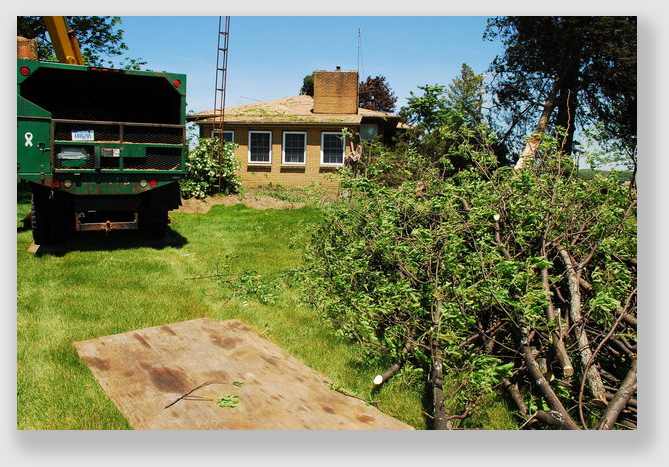
A Bay County tree-cutting and landscaping company has been served a cease-operation order by the Michigan Occupational Safety and Health Administration after officials reported numerous hazards on the job site that they say compromised the safety of the company’s employees. Monitor Township-based Sunset Tree Service and Landscaping was served the order — the strongest enforcement action MIOSHA can take against an employer — due to a lack of personal protective equipment, rescue procedures, maintaining minimum working distances to energized conductors and a written hazard communication program. “MIOSHA is committed to working collaboratively with employers to ensure worker protections, but when a company fails to correct previously identified hazards and continues to put workers in harm’s way, we will take the appropriate enforcement measures,” the state agency said in a statement. Chad Nichols, owner of the tree service company, admitted his company was at fault for the reported citations, but said there have been issues with sending and receiving compliance documents with MIOSHA. “We do take full blame, but we have corrected the problems,” Nichols said. “We have corrected everything, we have everything documented — we have done everything they have asked in order to be in compliance, but they’re telling us they don’t have the documents…”
Roanoke, Virginia, Times, May 17, 2016: Tree-service worker killed in Bedford County accident ID’d
A 67-year-old retired diesel engine mechanic who served in the Army in the Vietnam War has been identified as the tree service worker killed in a work site accident Friday in Bedford County. Henry Loving Litchford lived in Madison Heights, according to a news release from the Bedford County Sheriff’s Office. He was part of a crew working in the 1800 block of Turkey Foot Road Friday morning when he was struck by a company truck and killed. Landowner Philip Crist said Friday he had hired Viewpoint Tree Service to remove trees. The sheriff’s office news release said there does not appear to be anything suspicious about the incident. An investigation is being conducted by the medical examiner’s office…
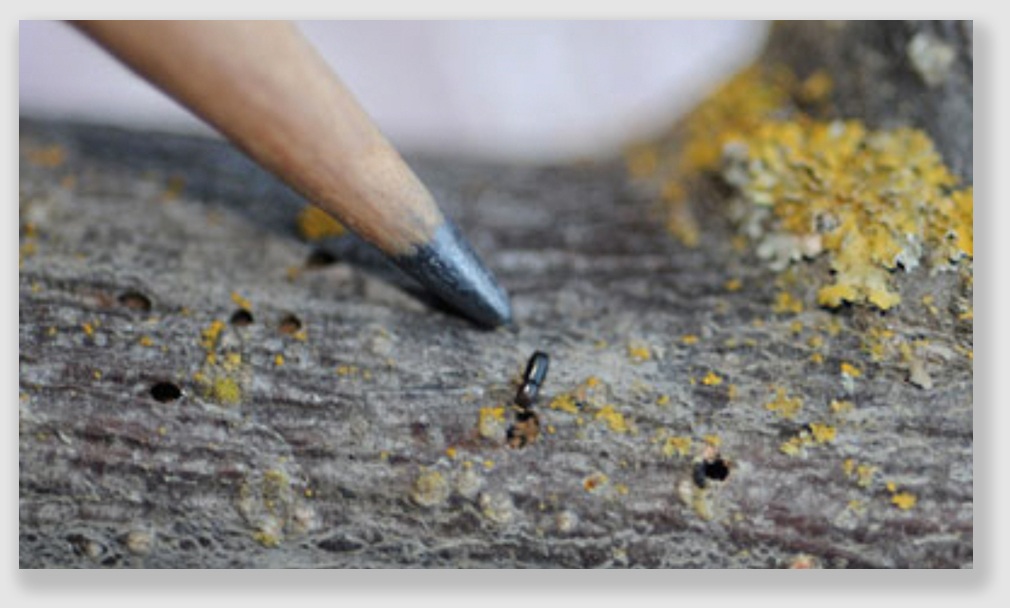
American black walnut is a wood that’s prized by many. It’s relatively stable, easy on the eyes and has that beautiful chocolate-y color that looks so good that I sometimes want to eat it. It’s no surprise that it’s become the go-to wood for many a furniture designer, and Shannon Rogers, the man behind our latest Introduction to Wood Species series, reports that recently boatbuilders have even been using it to replace teak for interior trimwork. (While pricey, walnut is still cheaper than teak.) Like many wood species, walnut is susceptible to bugs. Certain types of bugs like to burrow into trees, eating the sugary goodness inside and laying eggs. This can be disastrous when said bugs are carrying disruptive payloads. Walnut is susceptible to an ailment bearing the attractive name of Thousand Cankers Disease, or TCD, which can be spread when Walnut Twig Beetles have picked up a dusting of spores from a fungus called Geosmithia Morbida. As the beetles burrow into the tree, they thoughtfully carry the spores inside with them. The fungus then begins colonizing the tree, disrupting its natural internal processes …
Taos, New Mexico, News, May 17, 2016: The small miracle — and wonder — of tree grafting
Gordon Tooley thumbs through the worn pages of an old book — an apple encyclopedia really — sitting on a table in his greenhouse. Tooley is the proprietor of Tooley’s Trees, a nursery based in Truchas that grows uncommon varieties of fruit trees. He finds the page with a description for Crimson Beauty and reads it aloud: “It’s a red striped fruit. Juicy white flesh. Nice tart flavor. Good for sauce and cooking. Productive. Early bearing tree. Ripens very early. Hearty to minus-50 degrees.” Tooley says there are probably 1,200 descriptions of apples in this book alone. And there are more books in his house that have thousands of descriptions of other apples. There is a whole world of apples out there and he appreciates them all. “Why is that so important?” Tooley asks. “Aren’t we satisfied with Fuji, Gala and Braeburn — the Holy Trinity of apples?” Tooley is not. In order to do his part in perpetuating these unique strains, he grafts. With fruit trees, planting seeds is a gamble: The seeds from a delicious apple might grow a tree with lousy fruit. “If you planted the 10-to-20 seeds that are in an apple, you are going to get 10- to-20 apple trees, but each one is going to be different from the next because of cross pollination”, Tooley explains. “To be sure of the exact characteristics you have to graft…”
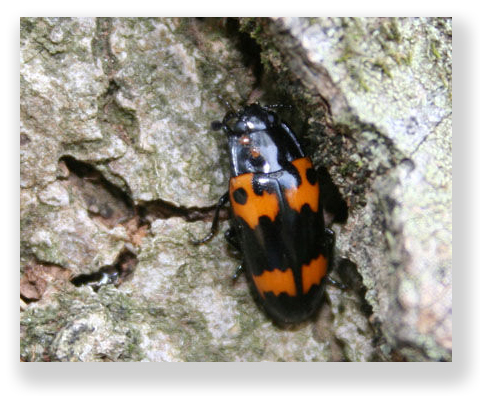
The tree of life is a motif widely depicted in artwork across many centuries and cultures. It is usually shown as a large, lush tree with branches full of reptiles, animals, birds and insects. Who knew this phenomenon really exists in nature, although not in quite the way it is usually imagined? In elementary school, we learn of the circle of life, and we are told that death is as important in ecology as life. After all, this is what returns nutrients back into the soil so that plants and other creatures can benefit from them. But when we garden, we are always tidying up and cleaning, removing anything that might rot. However, the dead stuff is so important to having a healthy garden that is a benefit to our environment. It creates important habitats and will bring in some fascinating creatures to your yard for you to enjoy. Think about a big, old tree that has died. I would like to challenge you — if the tree is not a safety hazard — to leave it there and watch it as it decomposes …
Hartford, Connecticut, Courant, May 16, 2016: Tree trimming in Glastonbury through June
Eversource will be trimming and removing trees along five miles of utility lines across town through June. Work will take place on the following roads: Shallowbrook Lane, Indian Hill Trail, Mountain Road, Line Street, Manchester Road (Route 83), Natchaug Drive, Timrod Trail, Woodhaven Road and Minnechaug Drive. Asplundh Tree Expert Co. will perform the work. “With trees being the number one cause of power outages,” spokesman Mitch Gross said, “especially during severe weather, Eversource works yearround to trim and remove trees that threaten the electric system. The company invests millions of dollars in vegetation management every year …”
 Albany, New York, Democrat & Chronicle, May 16, 2016: Three must-know tree trimming safety tips
As you head outside this spring for lawn care projects, it’s important to keep safety in mind. A Gates man was killed in a tree trimming accident last week. Danny Baierschmitt was wearing safety goggles and gloves at the time. Police said he had been using a chainsaw to cut a limb off a tree when the branch snapped and hit him in the head. Photographer Tina MacIntyre- Yee interviewed Jacob Young with The Davey Tree Expert Co. for these three must-know tips …
Evansville, Indiana, WEHT, May 16, 2016: Tree trimming can prevent outages
Utility companies often need to alter trees near power lines to avoid dangerous power outages. While some residents aren’t thrilled with how their trees look afterwards, utility officials insist its for safety. “It’s definitely our number one outage prevention, is trimming up trees and keeping the vegetation off the power lines,” said Vectren official Natalie Hedde. Companies like Vectren often hire contractors to make necessary adjustments. “So, we always try to trim trees in a way that is not only going to keep them away from our power lines, but also at specific angles, if you will, to ensure that the tree remains safe and of course continue to grow just as it should,” Hedde said …
 Turlock, California, Journal, May 12, 2016: City adopts new street tree list
For almost a year, the City of Turlock has been tackling the issue of the many broken sidewalks and overgrown and diseased trees that have become hazards for Turlock’s residents. The Street Tree and Sidewalk ad hoc committee finished its work on Tuesday, by presenting a revised Street Tree Theme and Map that addresses some of the issues that arise with different tree varieties. This revised list of approved street trees comes after the City Council adopted a new ordinance in December that requires notification of property owners’ maintenance obligations related to street trees and sidewalk areas with every sale or transfer of property. The City of Turlock Municipal Code requires every property owner and every person occupying property within the city to maintain street trees in the parkway or planting easement on or adjacent to his or her property. According to Parks, Recreation and Public Facilities Manager Erik Schulze, over the past three years, City staff has seen an increase in the number of property owners requesting to remove and replace their street trees due to root problems or disease …
Indianapolis, Indiana, WISH-TV, May 14, 2016: Police ID teen killed in tree stump grinder accident
A teenager died after an accident involving a tree stump grinder Saturday in Blackford County. Blackford County Coroner Tod Waters said 18-year-old Cody Bronnenberg of Yorktown was working with his uncle at a home on County Road 200 North east of State Road 3. The uncle, who owns Homeland Tree Service, was operating a tree stump grinder when Bronnenberg became “entangled” in the machinery around 4:30 p.m., according to Waters. Bronnenberg was pronounced dead at the scene of multiple traumatic injuries, the coroner said. A third man working on the site was not involved …
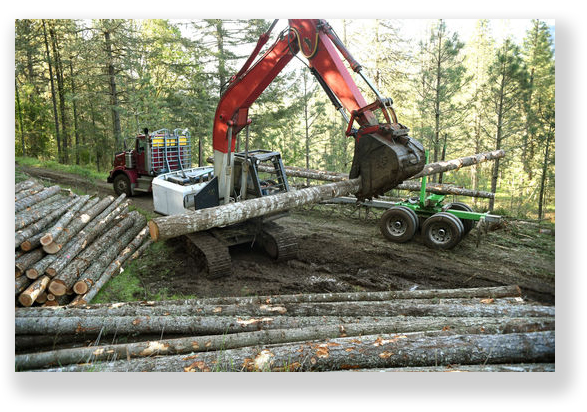
Robin Miller has spent virtually all of his adult life working around trees. For many years, he harvested them as a logger, providing building materials for thousands of homes across North America. And for the last 40 years, he’s grown them, nurturing thousands of Douglas fir and Valley Ponderosa pine trees — many of them as seedlings planted with his own hands — on a 107-acre hillside between Holley and Crawfordsville. And he wants the public to know that small woodland owners like himself most often use selective harvesting methods to ensure the long-term health and sustainability of their timber stands. Clear cuts, often the center of controversy, are saved for when stands of trees have reached maturity …
Srinagar, Kashmir, Greaterkashmir.com: Russian poplar species a public nuisance: High Court
Observing that poplars of Russian species are public nuisance, the Jammu and Kashmir High Court has sought compliance of its orders on their chopping in Kashmir. “All the Deputy Commissioners of the valley, at the first instance, are required to file the compliance report by or before May 20, 2016,” a bench of Justice Muhammad Yaqoob Mir said in its order. “Enormous plantation and growth of poplar trees of Russian Species are allegedly proving catastrophic and a big health hazard. Can such a nuisance be allowed to exist totally to the discomfort of the human beings? Answer has to be no,” the bench observed, while seeking compliance of its earlier orders on cutting of Russian species Poplars in Kashmir. The court observed that the “trees which are proving dangerous and threat to the healthy life can be categorized as being public nuisance. People are voicing concern against the violent and allergic affects of poplar seeds as the cottony pollen has created panic and has made the living of human beings, more particularly of the elders and the children uncomfortable,” the bench said and added that due to alleged pollen allergy all the elderly people and children are coughing. Underscoring their potential threat to human health, the court in its order of May 12, 2015 had directed all Deputy Commissioners to issue appropriate orders for immediate removal of poplar trees of Russian species from across the Valley…

Fairfax County spent more than $6,000 last year to plant trees on a vacant lot it slated for apartment construction less than six months later. The lot, on the corner of Columbia Pike and Moncure Avenue in the Bailey’s Crossroads area, is the proposed home of 375 mid-rise, market-rate apartments. Fairfax County’s Board of Supervisors approved a land deal in February that would make way for the construction after the county spent $6,034 to plant red maples, red oak and willow oak at the site the previous fall. The Annandale Blog was the first to report on the expenditure. After a fire station in Bailey’s Crossroads was damaged in 2010, a temporary building on the vacant lot housed the station until 2014. When that building was removed, the lot had to be restored to its original condition, despite the fact it was likely to be …
One year ago, Adam Lazar was living in Los Angeles amid a period of unprecedented drought. For him, it was a water wake-up call. “We need to start rethinking sources of water in the world,” he thought. The Cos Cob resident is now reinventing water, one drop at a time, with his naturally tree-drawn water company, Asarasi. Instead of waiting for someone else to rethink the industry, Lazar committed himself to creating a natural, renewable water resource. With mild carbonation and a sweet finish, his sparkling tree water is produced from the sap-flowing sugar maple trees of the northeastern United States and Canada. Lazar was inspired by a 2008 visit to a maple-producing farm. As he observed the farmers, he noticed they wasted much of tapping process’ byproduct, water. Removing the sugar for syrup, they discarded everything else. Every 50 gallons of sap only produces one gallon of maple syrup, he explained. The other 49 gallons comprises tree-filtered water byproduct, which has been mostly untapped up until now. This trip, coupled with his status as a “wantrepreneur,” prompted him to investigate further and eventually reimagine water as a farm-to-table product …

Whether it’s a giant white pine lording over acres of forestland or an ancient maple in your neighbor’s front yard, there’s something fascinating about a big tree. These towering sentinels, their bark weathered and roots twisted, speak of decades, perhaps even centuries of patient, slow growth. This summer, people will be seeking out these special trees all over Penobscot County for the first ever Penobscot County Big Tree Contest, a friendly countywide competition co-sponsored by the Maine Forest Service and Penobscot County Soil and Water Conservation District. “It’s open to anyone. If you’re out in the middle of the woods and you see a tree, you can nominate it,” Amy Polyot, district manager for the Penobscot County Soil and Water Conservation District, said …
Recently, trees bordering state Route 61 across from Coal Creek Commerce Center were cut down. The sight of the clear-cut hillside concerned local municipal officials, including Roland Price, the borough manager of Saint Clair, and Kimberly Lutzkanin, secretary for New Castle Township. “We don’t know what that was all about. That’s the biggest question. Everybody’s asking ‘What’s going on?’ People who are going to Dunkin’ Donuts there and look across the street and see what’s going on, they’re asking us. And we don’t know. Some people say it’s near an access road to a quarry up there,” Price said Tuesday. “It’s kind of a mystery,” Lutzkanin said Wednesday …
 Warren, New Jersey, The Reporter, May 11, 2016: How the chestnut tree is making a comeback
Seventh and eighth-graders at Pohatcong Township Elementary School observe as Tom Pugel and Les Nicolas from the American Chestnut Foundation plant trees on school property. The Chestnut Trees are saplings from Penn State and part of the American Chestnut Restoration organization. In the classroom, students learned about genetics but outside, they learned how scientists cross breed trees to build resistance to blight, which devastated the chestnut tree population in the area …
An arborist hired by the city of Richmond Hill in 2014 to determine the condition of the centuries-old oaks at the intersection of Highways 144 and 17 and to suggest abatement options to save the trees determined that the oaks were damaged beyond repair and should be removed. “It is the professional opinion and recommendation of this arborist that abatement options cannot reduce the hazard situations presented; therefore, these trees should be removed,” Jerry Holcomb wrote in his March 20, 2014, report. A certified arborist from the Georgia Department of Transportation concurred with Holcomb’s report in June 2014. Holcomb gave both trees a “hazard rating” of 10. A 12 is considered the most severe score. He wrote that the scores mean “both trees have been determined to have potential structural injury and defects that could cause the trees to fail …”
 Cleveland, Ohio, WOIO-TV, May 11, 2016: Fairview Park tree committee plans for the future
The City of Fairview Park has relaunched a committee dedicated to tree planting and preservation. Mary Alice Mastrovito and Mike Varga are both members of Fairview Park Shade Tree Advisory Committee that reviews and makes recommendations regarding the situation of trees in the city. “Trees become kind of invisible in a sense because we’re just so used to having them around we don’t see each individual one but they’re kind of like our invisible allies. We’re not breathing clean air without them we’re not experiencing drinking clear water without them,” Mastrovito said. The committee is working replace trees in the city that have been lost to damage and disease …
HealthAim, May 11, 2016: The best stress reliever? Look at trees
The best stress reliever? Look at trees. It has helped people become less stressed and being around in more trees have increased positive effects. A new study published in Environment and Behavior has confirmed that spending time looking at the trees and immersing yourself with nature can significantly reduce psychological stress. The study is the latest in research that validated nature’s positive and cooling effect on people. The combined research team from the University of Illinois and University of Hong Kong subjected 158 volunteers to mildly stressful scenarios such as preparing a speech and delivering it to a group of people. They were also asked to perform a subtraction task in front of judges and a video camera. If that is not stress enough …
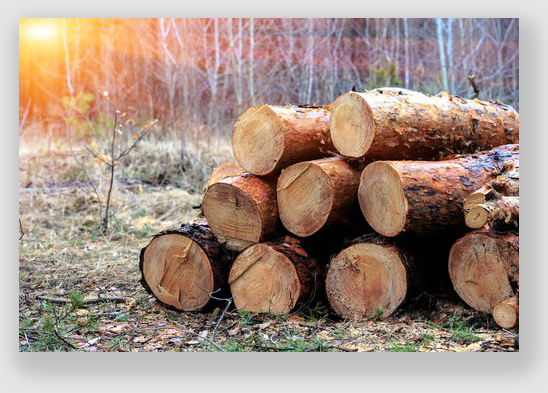
Today in tree news: Michael Crick just wants to cut down his damn trees. Although Crick purchased a Bellevue city permit to cut down 67 unwieldy Douglas Firs surrounding his property, the Bridal Falls resident’s neighbors are putting up a fight, KOMO reports. “I’m not clear-cutting the property. I’m leaving half the trees in a heavily-wooded space,” Crick told reporters. Unlike a group of West Seattle homeowners who hired contractors to illegally hack down some 150 trees that were obstructing their precious hilltop view, Crick sought to do his tree-cutting in a reasonable way. According to KOMO, Crick met with city arborists who confirmed that the trees he wanted to cut down were “structurally compromised or diseased.” Crick worries that the trees could fall on his house during a windstorm and kill his family, but his neighbors disagree …
St. James, Missouri, Leader Journal, May 10, 2016: St. James City Council debates tree ordinance
A proposed tree ordinance that one St. James City Council member says would return the power of managing trees on city property in St. James “back to the city where it belongs” was debated at length during Monday evening’s council meeting. The discussion, which was spirited at times, ended with the council voting 5-3 to approve a first reading of the tree ordinance. Voting for the first reading were council members John Huster, Robert Smith, David Watkins, Greg Edwards and Carol Weatherly. Voting against the first reading were council members Nathaniel Mitchell, Alan Sachs and Shane Anselm. A second reading and final vote will take place at the council’s June 13 meeting. Ordinance No. 16-1082, which among other things, would replace the current forestry board with a city tree board. However, the makeup of the board will likely not change, as St. James Mayor Jim White said he planned to reappoint the existing members of the forestry board to the new city tree board, if approved…

We have to ask: Was the Chinese Flame Tree on Voltaire needlessly cut down on May 3rd by the City? At the time of the cutting, locals who inquired of the crews doing the work were told that the tree was causing cracks in the sidewalk and needed to be removed. This particular tree was 17 years old and had been planted along with other Chinese Flames, as well as other types of trees, along Voltaire as part of a project sponsored by then-Councilman Byron Wear. The problem with the explanation is that there are numerous trees along that block of Voltaire that have apparently caused similar cracks in the asphalt or concrete, or that exhibit lifts to the sidewalk, or that have patch jobs around them …
Transmission & Distribution World, May 10, 2016: FirstEnergy’s 2016 tree trimming program underway
FirstEnergy Corp. continues to conduct tree trimming work in communities across the Metropolitan Edison Company (Met-Ed) service area in Pennsylvania as part of its ongoing efforts to help enhance service reliability. Since the beginning of the year, contractors have trimmed trees along more than 330 miles of distribution and transmission lines in the Met-Ed area as part of the more than $14.7 million vegetation management program for 2016, with an additional 2,270 miles expected to be completed by year end. “Tree trimming is one of the most important things we do every year to help maintain our electric system,” said Ed Shuttleworth, regional president, Met-Ed. “The work we have done over the past several years has made a positive difference in reducing the number of tree-related outages. Our goal is to reduce outages and enhance service reliability even more by protecting our wires and other infrastructure from tree-related damage …”
 San Diego, California, KGTV, May 9, 2016: Elderly woman wins reprieve for beloved tree
A 91-year-old Allied Gardens woman has won a reprieve in her efforts to save a tree that is a beloved reminder of her late husband. Marie Ostwald told 10News that she was willing to stand in front of the tree that she and her husband planted nearly 60 years ago until Mayor Kevin Faulconer steps in. On Sunday, Ostwald took to Facebook to ask other moms to help her. “I just wanted a tree there, and it survived this long and I don’t know why they want to yank it up,” she said of the tree on Mission Gorge Road …
Raleigh, North Carolina, WRDW-TV, May 9, 2016: Building smart and keeping trees
Our fastest growing county wants to make sure it isn’t overshadowed by its Garden City neighbor as more buildings pop up. The goal: to keep the trees in Columbia County. As spring blooms transition to full greenery, the signs of summer approaching, it’s hard not to notice all the nature. But in some places, it’s hard not to notice the lack of trees. A common construction formula: piles of stump are cleared, then replaced with wooden slabs, and then homes are built. Local Sierra Club Co-Chair Sam Booher says while some builders are thoughtful, many are not. “There are people who really don’t care so they just go in and clear cut the lots and build houses,” he said, “These are speculative builders, and then they clear the lot build the house and people are expected to come in and buy a house that’s like in the middle of a desert. The trees are valuable. I mean, they’re valuable for a number of reasons,” said Frank Carl, Conservation Chair for Sierra Club …
Mature trees increase property value by as much as 10 percent, according to the U.S. Forest Service. But a tree can shift from asset to liability when branches, trunks or roots suffer an injury and threaten to cause property or personal damage. Insects and disease are also potential threats to valuable trees. There are several steps you can take to ensure that your established trees will thrive for years to come. Use this five-step checklist from Lance Walheim, lawn and garden care expert for Bayer Advanced, to help achieve optimal springtime tree health: 1. Renew Mulch. Mulching is one of the best things you can do for your trees – and one of the easier garden chores to tackle. Two-to-three inches of organic mulch conserves water, reduces compaction and helps control weeds. It’s best placed in a ring that extends outward from the trunk at least 3-6 feet. 2. Be Cautious with Water. Make sure you don’t overwater. Unless there have been prolonged dry spells or exceptionally warm weather, most established trees may not need water until mid-to-late spring. Overwatering in spring can weaken trees and promote disease …
 Savannah. Georgia, Morning News, May 9, 2016: Oak trees at Richmond Hill crossroads to come down
The live oak trees that were standing at the “Crossroads,” now the corner of U.S. 17 and Ga. 144 (Ford Avenue) in Richmond Hill, 150 years when Gen. William T. Sherman’s Union forces marched from King’s Landing down Bryan Neck on their way to capture Fort McAllister won’t be around a lot longer. Following a recommendation from two certified arborists commissioned by both the city of Richmond Hill and Georgia Department of Transportation, the two oak trees at the intersection of U.S. 17 and Ford Avenue (Ga. 144) will be removed. Both arborists concur that the trees, which are located on a Georgia Department of Transportation right-of-way, exhibit signs of internal rot and decay and present a safety hazard. “While we are devastated by the loss of these majestic oak trees, their removal is necessary for the safety of Richmond Hill residents,” said Mayor Harold Fowler. “However, we will continue to beautify the area and expand the intersection project initially funded by the GATEway grant …”

It was a banner night for the Edmonds horticultural community Thursday as the Edmonds Tree Board brought noted author, arborist, teacher and speaker Cass Turnbull — otherwise known as the “Princess of Pruning” — to town to share her knowledge of the right way to plant and care for trees. Founder of Plant Amnesty, Turnbull is a tireless crusader for ending what she describes as “the senseless torture and mutilation of trees and shrubs caused by mal-pruning.“ Speaking to a group of more than 40 interested attendees, Turnbull blasted common misconceptions about trees and how to care for them. Weaving in science, botany, plant anatomy and plant physiology, she explained in lay terms how plants grow and how they react to right — and wrong — pruning techniques and care. “Bad pruning is a crime against nature,” she said, citing tree-topping as arguably the worst offense committed against our landscape. “It’s just awful,” she added …
Rapid City, South Dakota, Journal, May 8, 2016: Editorial: New tree ordinance unnecessary
Whenever government wants to branch out with new programs, more rules and use taxpayer money as an incentive, council members should be prepared to ask tough questions before giving their support. On Monday, the Rapid City Council voted unanimously to have the Department of Parks and Recreation rework a proposed tree-removal ordinance that included giving those who qualify as much as $700. In making his pitch to the City Council, the city’s Urban Forester, Andy Bernard, said dead trees are an “insurmountable” problem and pose a fire threat. In addition to offering a subsidy, the rejected ordinance said that “corporations, organizations, entities or groups that own property” would be eligible to apply for the funds along with homeowners. When one studies the list of steps that need to be taken to get the subsidy, it is reasonable to expect that larger organizations are in a better position to take advantage of the program. First, the trees need to be inspected by city forestry staff; then applicants need bids from two city-approved contractors; the city then issues a removal permit, which requires that the stump be cut to the ground; the forestry staff then needs to inspect again — and then after paying the entire price of tree removal, the city will reimburse no more than $175 apiece for four trees, leaving the property owner to cover hundreds of dollars of the total project cost …
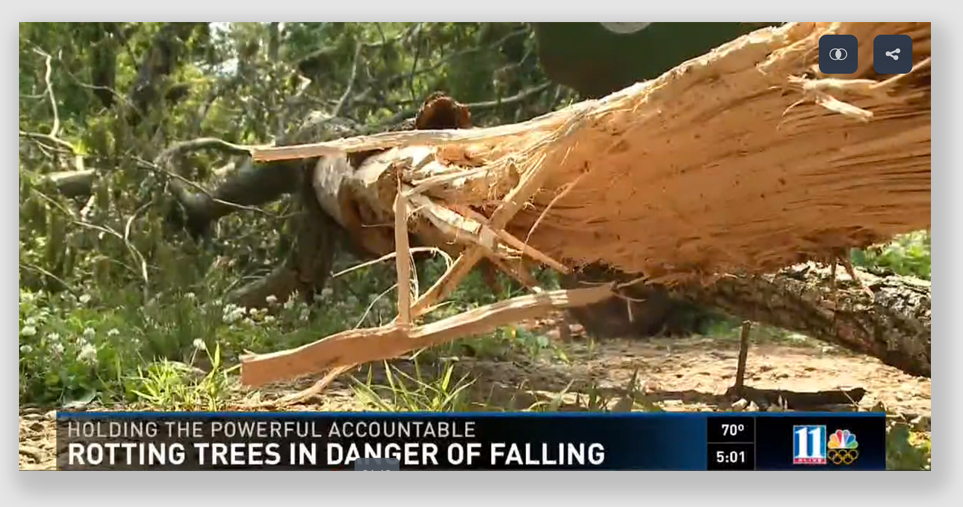 Atlanta, Georgia, WXIA-TV, May 6, 2016: Arborists: Weakened trees could fall at any second
Arborists are expressing concern about the health of trees in metro Atlanta in recent weeks, given the amount of moisture in the soil. They are pointing out that as a result, many weakened trees are in a precarious state and any number of them could fall at any point, as evidenced by the tree that fell in northwest Atlanta Thursday afternoon, trapping two people for several hours. Other trees fell in and around metro Atlanta on Thursday, including one that fell on a home in Canton and another that fell on an elderly woman’s property, smashing her dog house and leaving her dog in critical condition. “I worry about it when the wind blowing and rainy, yes I am,” said Martha Tuggles. “I be scared to go to bed.” Tuggles says she is fearful of falling trees surrounding her home. In the past week, three residents in her community have had near-misses. Two doors down, a large oak fell on top of a sedan, trapping two people inside for several hours. The other close call was in her own yard. “You see that wall right there?” she said. A 75-foot tree fell from the abandoned property next door. When it came down, it crushed her dog house. A friend’s dog was inside, and is now fighting to stay alive. While she is grateful the tree did not fall on her house, she is still stuck with a $4,000 bill …
Victoria, Texas, Advocate, May 8, 2016: Tree trimmers do hatchet job on woman’s trees
Like someone whose child or spouse pleads and begs on and on with all kinds of reasoning and explanations and more reasons and even presents some problems that will arise if you don’t give in, I gave in to the tree trimmers who were clearing out branches for the power company. I truly understand that we don’t want branches on the power lines, but there has to be a better answer than to make a homeowner cry and have the neighbors comment that it looks like the trees have been gang raped or slaughtered. I can’t do anything but warn others to set rules for the trimmers on what you want, and stick to them no matter what. Or have your trees trimmed by someone recommended by your favorite plant and tree people …
 Bridgeport, Connecticut, Post, May 5, 2016: Greenwich sued by man struck by tree on town property
A plumbing contractor who suffered a fractured skull and other major injuries is suing the town of Greenwich for negligence after a tree on town property struck him last September. A lawyer for Todd Collins, a Milford resident who was working on a job at a Benjamin Street residence in Old Greenwich when he was struck, says the town was negligent for not removing a dead tree which it had been warned about. The lawsuit in State Superior Court, filed against the town late last week, seeks unspecified damages. The lawsuit says that the town had been told the large red maple was dying and “will become a hazard soon” by a Benjamin Street resident in 2010. The resident contacted the town’s tree department again in 2012, according to the lawsuit. A determination was made that the tree was situated on municipal property in October of 2012, according to court papers, and that it should be chopped down. “Despite the determination on Oct. 22, 2012, that the subject tree posed a safety hazard, the town of Greenwich did not inspect, maintain, monitor or evaluate the subject tree,” the lawsuit states …
New Haven, Connecticut, Register, May 5, 2016: Connecticut tree cutting notification bill advances
A bill that has passed the General Assembly could require utility companies to inform tree wardens about planned tree or shrub removal near utility lines with enough time for the public to comment about environmental maintenance plans. The measure was approved by the House Wednesday. “I am pleased the bill has now been approved by the full General Assembly and appreciate the bipartisan support for the legislation,” said state Rep. Mike D’Agostino, D-Hamden, an author and sponsor of the bill. “While I am very happy with the provisions we passed — including the notice requirement to towns — I still want us to do more in terms of overseeing and stopping the wholesale deforestation that the Department of Transportation is conducting on our state roads.” The bill requires utility companies to provide plans for tree and shrub trimming and removal at the beginning of every year to municipal tree wardens and, within two weeks of receiving the plan, the wardens must make the plans public for at least one year. The bill also places the responsibility of debris removal in the hands of the utilities …
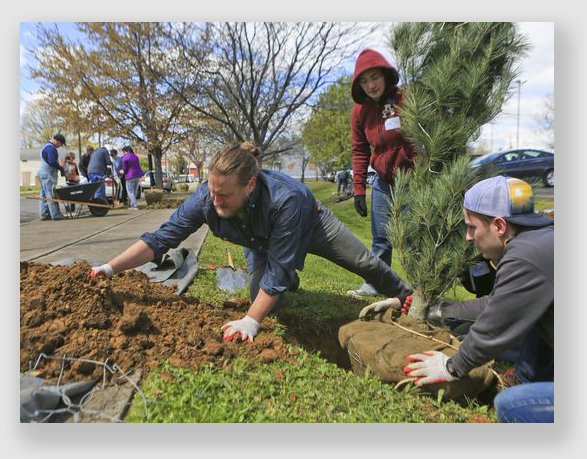 Louisville, Kentucky, Courier-Journal, May 5, 2016: GLI opposes ‘regulatory’ approach to trees
Tree canopy study done. Check. Urban heat study made public. Check. Next up in Louisville’s struggle to agree on what to do about trees could be its first real tree-protection ordinance. “We can’t sit around on our hands anymore,” said Chris Chandler, director of urban conservation for the Kentucky Chapter of The Nature Conservancy. “We’ve got good science.” On this, Greater Louisville Inc., representing 1,600 member businesses, and tree advocates agree: The city still needs to do more to grow and protect its tree canopy. But they differ on approaches, with GLI opposing new mandates. The city’s newest tree push began about five years ago, after The Courier-Journal found that Louisville’s trees were fighting a losing battle to storms, invasive pests, neglect and age – and that the mighty oaks, maples and ash that once towered over parkways, neighborhood streets, parks and backyards were not being replaced. Four years ago on the Sunday after the Kentucky Derby, the newspaper first reported on the alarming research of Georgia Tech professor Brian Stone Jr., who found Louisville was getting hotter faster when compared to surrounding rural areas than many other large U.S. cities …
Bergen, New Jersey, Record, May 5, 2016: Towns embark on tree canopy plans
As spring finally starts to settle into South Bergen, the local public works crews have set their sights on their respective town’s tree canopies, maintaining existing trees and replacing those lost – due in large part to past storms and the way the roots lift up sidewalks. Carlstadt plants trees in the fall. Hawthorne-based Downes Tree Service was retained by Carlstadt last September to be part of a tree-planting and sidewalk replacement blitz. The cost breaks down to $360 per tree for 100 trees. The intention was to replace trees first in locations where trees had to be removed. Carlstadt had lost trees, mostly red maples, due to disease, storm-related damage and removal due to sidewalk lifting. Aside from replacing lost trees, additional trees were planted in strategic areas that could use some greening.. “We had a list of trees that needed to be replaced based on resident requests. We drove down each street and picked the locations that we felt were lacking a shade tree, and we had them planted in those openings,” said Borough Operations Manager Joe Crifasi. Tentative plans are to plant another 100 trees in autumn …
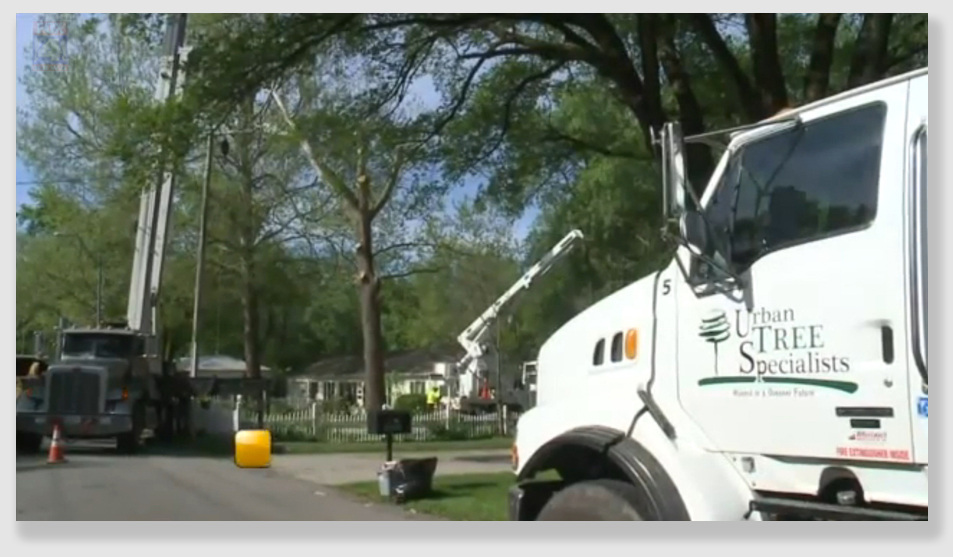
A local tree trimmer is recovering after an accident left him unconscious and dangling nearly 30 feet in the air. The crew had trained for this exact scenario just last week. Firefighters were called out Tuesday morning to 6708 North Bell, where tree trimmer Cory Fryman was knocked unconscious when a branch fell and struck him in the head. Fryman was climbing an old ash tree in the backyard of the house when the branch hit him, knocking him out. Luckily, he was wearing his helmet and all of his safety gear. Police say that, along with his crew’s quick response, possibly saved his life. The company, Urban Tree Specialists, had trained its employees for this exact scenario last week. The crew jumped into action, lowered Cory to the ground and got him stable until paramedics could rush him to a hospital…
Albany, New York, WNYT-TV, May 4, 2016: Tree cutter dies in freak Guilderland accident
A Guilderland man has died in a freak accident while cutting trees. Police say the 23-year-old man, who works for Countryside Tree Service, got entangled in a tree grinder on Placid Drive around 1:15 Wednesday afternoon. Police have not released his name.They continue to investigate…

The large swaths of green that ring Fort McMurray are made up of trees that have adapted over time to depend on fire for growth.
Natural Resources Canada says that in the boreal forest fire “is as crucial to forest renewal as the sun and rain.” During a Tuesday press conference in Fort McMurray, Bernie Schmitte from Alberta Forestry elaborated on why the region is going up in smoke. “Spruce trees, pine trees, they like to burn. They have to burn to regenerate themselves. Those species have adapted to fire. Their cones have adapted to open up after the fire. The trees have adapted so that once they’re old enough, and decadent and need to be replaced, they are available to fire so they burn.” He called the black spruce, white spruce and aspen trees “volatile fuels” in the fire-dependent ecosystem. Black spruce, which grows across the continent from Newfoundland to Alaska, can grow as high as 30 metres in areas with well-drained mineral soils. According to the U.S. Fire Service, even the arrangement of the black spruce’s branches and cones help spur “easy ignition and torching,” all the while protecting the tree’s seeds from fire. The tree’s cones also release seeds soon after a blaze. After a fire burns through the moss or lichen layers atop the soil, it’s easier for the seeds to thrive in burn sites …
Redmond, Oregon, KTVZ, May 4, 2016: Crews scramble to remove trees downed by C. Oregon winter
Forest managers in central Oregon are racing to clean up trees downed by wind and snow this winter. Steve Bigby, roads manager for the Deschutes National Forest Bend-Fort Rock Ranger District, told The Bulletin that workers have cleared trees from most of the primary roads but are still cleaning up the damage on smaller routes. He says high winds and accumulated snow caused most of the toppled and snapped trees, but soil may have played a role as well. Bigby says the soil didn’t seem to freeze as solidly as usual this year, meaning roots were less stable. He’s been working in the district for 21 years and says this is the worst year he’s seen in terms of trees being blown down …

A spindly pine tree standing all alone in a tiny backyard became an official landmark Tuesday in San Francisco, a city that boasts such picturesque sights as the Golden Gate Bridge and Fisherman’s Wharf. City leaders voted unanimously to grant the status to a Norfolk pine hybrid after it was championed by residents who said it gives their neighborhood its beauty and a sense of home. The owner of the property where it stands wanted to tear it down. His lawyer said the 100-foot-tall tree was dangerous and too large for the small parcel. “It’s a good example of a community standing up to protect the environment,” Eric Mar, a member of the Board of Supervisors, said after the vote. The tree is not common in San Francisco and its age is in dispute, with proponents saying it was planted more than a century ago and others saying it only dates back to the 1940s. Neighbors and others have been trying to save it for a year, saying it’s an important part of the landscape. A biology professor submitted testimony that it probably provides a resting spot for raptors and other birds making their way to Golden Gate Park …
Great Bend, Kansas, Tribune, May 3, 2016: City Council vents anger over tree removal
It was a furious Great Bend City Council that scolded Central Kansas Library System Director Harry Willems Monday night over the cutting down last week of a tree that blocked the view of the new CKLS sign. The 20-year-old ash at the corner of Broadway and Stone stood on city property but permission from the city was not sought. In response, the council approved billing the library for the cost of having the value of the old tree evaluated, the cost of a new three-inch tree, and the cost of having it planted and the old stump removed. In addition, a police report was taken and there is a possibility of a criminal damage to property charge. “I am not very happy about losing a tree,” Mayor Mike Allison said. “Why and what are you going to do about it.” Several council members grilled Willems, asking him why he didn’t come to them first. “It’s our tree,” Councilman Joel Jackson said. “I’m going to come to your property and cut a tree down, what do you think?” Councilwoman Allene Owen said. “I didn’t know that was the protocol,” Willems said …
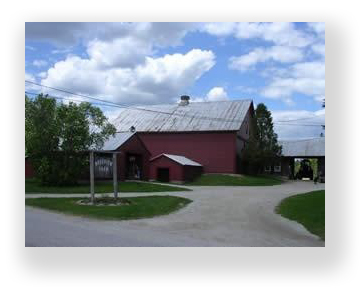
A judge has ruled that the owner of a popular New Hampshire Christmas tree farm can continue leasing the land from his parents despite their insistence that he stop. The Concord Monitor reported that last week’s decision ends one chapter in a family feud that has kept the 600-acre Rossview Farm shuttered for two winters. The judge ruled that Don Ross has the right to lease the land and manage its crops, which include blueberries and strawberries. The judge also ruled that Ross owns nearly all of the farm’s 8,100 Christmas trees. The farm shut down in 2014 during a legal dispute between Ross and his parents, Wayne and Ruth Ross. The couple moved to evict their son in 2013, claiming that he never paid $21,000 owed in a lease agreement …
If you haven’t heard about Sudden Oak Death, it’s a fungal disease that can wipe out a variety of California’s tree species, it’s spread by wind and rain, and after first becoming an epidemic here in 2002, it’s now gotten to the point where any efforts to stop it will likely not help. SFist first wrote about the problem in 2004 (in the first year this site existed) when the disease, with the Latin pathogenic name of Phytophthora ramorum, was first recorded in Golden Gate Park, killing trees in the AIDS Memorial Grove. As the Washington Post now reports in a disturbing update, California’s coastal forests, especially those north of Monterey County, are all affected now, with whole areas of California bay laurel, oak, and tanoak trees either dead or dying — and becoming crispy tinder for potential wildfires in the process.Fortunately, not all trees are susceptible, but it’s still an upsetting site and a major threat to Northern California as another fire season approaches…
 Louisville, Kentucky, Courier-Journal, May 2, 2016: Bowman Field tree cutting could cost extra $1M
If Louisville airport officials walk away from an environmental review of expanded tree cutting near Bowman Field, they would need to reimburse the federal government up $1 million grant money that’s helped pay for the study, the Federal Aviation Administration says. That cost would be in addition to a loss of about $2 million in federal funds to help pay for new tree trimming and removal, the Louisville Regional Airport Authority acknowledged Monday. Bowman Field area residents last month were told in a letter that airport managers are prepared to go ahead and acquire additional airspace easements and trim or remove more trees on their own, “without federal funds and without waiting for the completion of FAA evaluations.” The trigger, airport officials said, will be if the FAA fails to meet its most current schedule for completing the studies – finishing all cultural and environmental reviews and signing off on the project by July 14. Last week, Skip Miller, the airport authority’s executive director, expressed frustration with FAA delays, saying that safety needs were paramount, and pilots are complaining. It’s been more than five years since the authority first announced it wanted to clear additional airspace. Authority spokeswoman Trish Burke on Monday confirmed that any reimbursement of review costs would be in addition to the $2 million in potential grant losses Miller discussed last week …
Kelowna, British Columbia, Castanet, May 2, 2016: Record cherry forecast
B.C. Tree Fruits is forecasting a record cherry crop this year. And, for the second consecutive year, an early harvest is predicted. “Because of another early and very warm spring … cherries will be in stores (in) early June,” B.C. Tree Fruits marketing manager Chris Pollock said in a press release, Monday. Fruit lovers will be able to indulge their sweet tooth with an estimated 12-million pound harvest this summer. That’s up from 10.5 million pounds in 2015. And that’s not all. Across other tree fruits, an estimated 20 to 25 per cent increase in yield is forecast throughout the Okanagan. “Mother Nature has provided our growers with very warm spring days leading up to bloom, resulting in another early start to the summer fruit season this year,” said Pollock. “We expect to start harvesting early season varieties of B.C. Tree Fruits cherries in early June, with the fruit hitting retail shelves very soon after …”
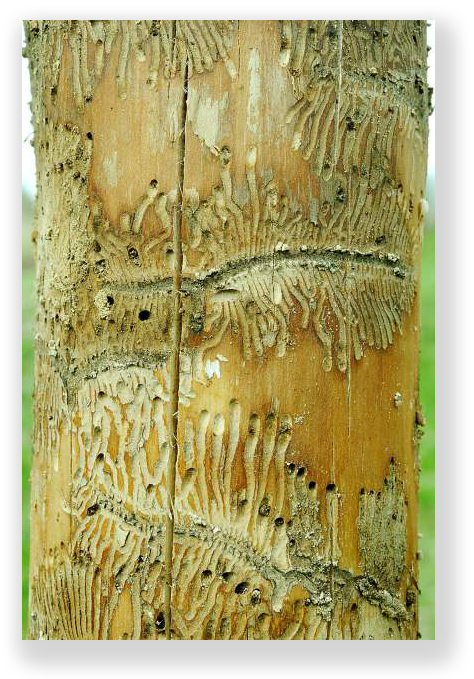
Twenty-eight million. That’s the estimated number of trees in California that were dead or dying in 2015 as a result of the ongoing drought, according to the U.S. Department of Agriculture. The 28 million figure is not only a record-high for the state, it’s roughly 10 times more dead trees than were recorded in 2014 — just one year prior — by the U.S. Forest Service Aerial Survey team. In other words, California’s tree mortality is rising at a historic rate and showing no signs of slowing down. “We’ve had four years of drought, and it’s just compounded year after year,” said Rita Mustatia, a silviculturist (a person who looks after trees in the forest) with the U.S. Forest Service Lake Tahoe Basin Management Unit. “We need a couple normal winters in a row — similar to this year — to bring us back to some sense of normalcy …”
Denver, Colorado, KCNC-TV, May 2, 2016: ‘Be A Smart Ash’ Campaign Designed To Protect Trees
An insect threatening to kill hundreds of trees in Colorado has gotten the attention of Denver Mayor Michael Hancock who wants to get ahead of the problem. The Emerald Ash Borer has been an epidemic in the Midwest with tens of thousands of trees wiped out from the invasive beetle. The EAB is a non-native, wood boring beetle that, along with its larvae, attacks all true ash tree species, including the white ash in Colorado. Forestry staff first discovered the bug in Boulder in 2013. EAB causes thinning of tree branches, loss of leaves and creates vertical splits in the bark before eventually killing the tree. In the City of Denver, one-sixth of the trees are ash trees, with 400 of them located in City Park. Hancock said the effects of the Emerald Ash Borer will be devastating but the city will try to be proactive. This year $3 million is budgeted to combat the problem. The campaign called “Be A Smart Ash” will begin with private land owners finding out if they have an ash tree on their property or their neighbor’s property. “The vast majority of ash trees in Denver are on private property. The city’s strategy is to educate our residents,” said said Denver Forester Rob Davis …
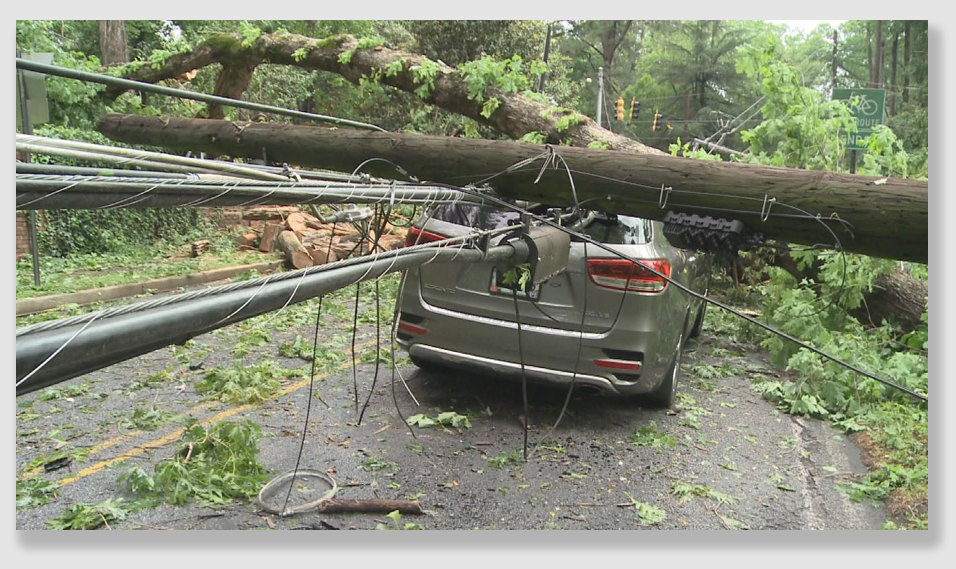
It was a messy Sunday morning for a lot of metro-Atlanta residents, especially for those in the northwest part of the city where branches and limbs littered the roadways after Saturday night storms. West Paces Ferry was particularly hard hit – a tree fell down across the road and knocked down power lines, and caused outages to a number of residents throughout that area. Cleanup after the storm continued on well into Sunday afternoon. In the immediate aftermath of the Saturday’s storms, the sounds of chainsaws hacking at downed trees are familiar, but the stories are rarely the same. For one Atlanta man, his story begins and ends with a little divine intervention. “Christ spared all of us,” Don Whitney, told 11Alive’s Chris Hopper. Whitney had been sitting at the intersection of Moores Mill and West Wesley in northwest Atlanta Saturday night, when he said something just wasn’t quite right. “I had a quiet prayer very quickly because I just knew something I just felt like something was coming,” he recalled. What happened next is certainly not lost on this man of faith. A giant tree came crashing down across Moores Mill, in between two vehicles, just feet from Whitney as he sat in the driver’s seat …

What happened in the North Admiral neighborhood is striking but apparently very easy to miss. “I didn’t notice that the view was being obstructed,” said Cheryl Rioux, who has lived in the neighborhood since last July. “And then when I got the thing in the mail, I thought this was really weird.” “I thought they were talking about Duwamish,” said her neighbor, Anne DeRham. “I didn’t even read it.” Did they think it was about their neighborhood? “No, of course not,” said DeRham. Rioux agreed. “Because it (the trees) wasn’t high.” So it came as a surprise when these North Admiral neighbors spotted a gap in the trees. When they looked more closely, it is obvious the trees were cut down. “Right, they shouldn’t be touching that property,” said Rioux …
Oklahoma knows severe weather, and Bill Preaus knows trees. He’s an arborist with a degree in horticulture, and he has been in business with his brother for 38 years. When severe weather season hits, he knows what to do. “Well, it would be better to do the maintenance before the storm to be honest with you, because a lot of the post-storm damage could have been avoided you know, with proper pruning.” Preaus said if you pay attention, you could prevent a big event – like a tree falling into your house.“Some trees are just accidents waiting to happen,” Preaus said. “You know, there’s a lot of indicators and red flags.”Those red flags are ones a trained arborist can find pretty easily. “Determine whether it’s got loss of structural integrity or root rot, co-dominant stems that are prone to splitting, large deadwood, so the first step is proper maintenance,” Preaus said. He said if you have questions or concerns about your trees to contact someone before it’s too late or risk an even more expensive cleanup later …
Rolla, Missouri, Daily News, May 1, 2016: It’s all about the trees
Silly, I know, but I am so proud of one of my little dogwood trees. For more than 30 years, Theodore was a 3-foot native planted on a rocky ledge in front of my house. I would measure him every spring, at first. Then I settled for making sure he wasn’t whipped to shreds with my weed eater and marked him off as a bonsai tree. After all, I was told wild dogwoods were hard enough to plant, let alone on a limestone hill with little to no soil but I tried anyway. I wanted to have a dogwood tree blooming outside my living room window. About 5 years ago, I didn’t trip over Theodore and realized he had grown a foot. This year he actually stands almost 8 feet tall, a testament to plant perseverance. And I thought I could be stubborn. Dogwoods are the state tree in Missouri. They are also one of the hallmarks of spring, dotting Missouri’s countryside with swaths of white before the rest of the trees turn green. John Powell used to tell me dogwoods were Missouri’s “weed tree” and insisted they all had to be removed from his sizeable tree farm …
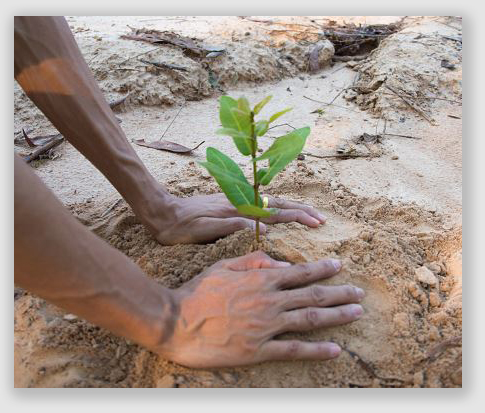
Cleveland is facing a budding crisis. Trees are being lost at a rapid and drastic rate, according to a 25-year plan adopted by the Cleveland City Planning Commission. It means Clevelanders are breathing dirty air, losing value on their homes, and losing out on an estimated $28 million in benefits a year. “It’s drastic. We’re kind of at that tipping point,” said Colby Sattler, a certified arborist with the Western Reserve Land Conservancy. The Cleveland Tree Plan is a $75,000 document that is the product of a collaborative effort among the city of Cleveland, the Western Reserve Land Conservancy, LAND Studio, the Holden Arboretum, and Cleveland Neighborhood Progress. “This, literally, is one of the issues of our time. The importance is so far-reaching,” Sattler said. When Cleveland’s tree canopy or tree coverage is compared to other major cities, it ranks near the bottom …
Some years tree pollen explodes like a sudden thunderstorm, while other years it disperses itself more gradually. Allergy sufferers may find this shocking, but there has been no real outburst of tree pollen this year. Instead, it has entered the air in two distinct but rather moderate waves, and its peak level this April ranks among the lowest on record. The weather took tree pollen counts on a roller coaster ride this spring but ultimately moderated their extremes …

Cities routinely rake up tens of millions of dollars from their urban forests annually in ways that are not always obvious. Leafy canopies lower summer air conditioning bills, but more shade also means less blade to maintain thousands of acres of grass. Health-wise, trees contribute to lower asthma rates and birth defects by removing air pollutants. Across the nation this Arbor Day, city foresters should celebrate trees as economic drivers and get past the false dichotomy of economy versus environment. Portland, New York City, Milwaukee and Atlanta are among the cities that have quantified the payoff from pines and palms, olives and oaks. It’s part of a breakthrough in thinking among city planners in recent decades who now realize that a city runs not just on engineering, but on biology and ecology as well …
Bancroft, Ontario, This Week, April 28, 2016: Healthy beech trees may soon disappear
“We may be the last generation to see any stands of healthy beech trees in our forests.” This was the dire prediction of Ernie Demuth, past president of the Bancroft Area Forest Industry Association (BAFIA), in his presentation to its annual meeting last week. Most people are familiar with Dutch Elm disease, which wiped out 80 per cent of Ontario’s elm trees in the seventies and eighties. And a majority of people have also heard of the recent threat posed by the emerald ash borer, which kills almost all the ash trees in an infected area; this threat is now spreading across southern Ontario. But few have heard about beech bark disease, which is now attacking large swathes of forests in our area. The disease is a ‘double-whammy’; an insect opens holes in the bark, which in turn open the door to the nectria fungus. This fungus eventually rots the tree, producing many small cankers and red fruiting bodies. The tree is so starved that it can easily snap off in a high wind …
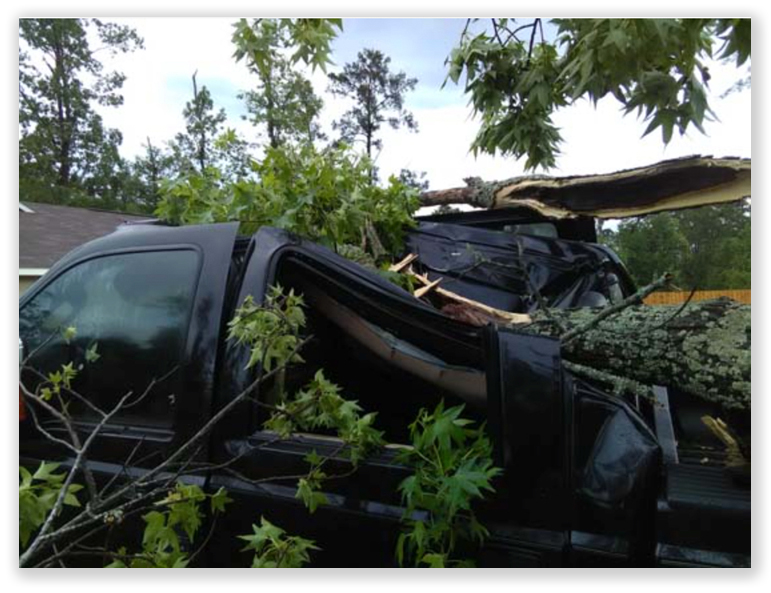 Houston, Texas, KTRK-TV, April 27, 2016: Another deadly storm pummels Houston area
Falling trees turned deadly and destructive in the Willow Oaks subdivision in Tomball. Resident Meggan Wolanin was asleep when the powerful storms forced dozens of trees down Wednesday morning. A large tree sliced through Wolanin’s home, jolting her out of bed. The tree missed her by just inches. “Somebody’s looking out for you today. Maybe,” she said. Meggan’s dad was closer to the falling tree. He looked out the screen door, when the tree came down. “The tree just went,” Eric Wolanin said …
San Francisco, California, Chronicle, April 26, 2016: Big trees, little view, no suit
You can sue the government for bulldozing your home, or for tearing up the only road that leads to it. Or for installing a sewage plant or a jet runway nearby that makes the place unlivable. But not for planting trees on public property that, over time, grow so tall that they block your scenic view and reduce your property value. Homeowners “do not have a property right to an unobstructed view,” the state’s Second District Court of Appeal in Los Angeles said Tuesday in upholding a judge’s dismissal of a suit by a group of Beverly Hills residents. When they moved in, the owners said, they had a clear view from their backyards of the surrounding hills, the Los Angeles basin and the Hollywood sign, and, on a clear day, Mount Baldy 50 miles away. But in 1989 the city of Beverly Hills planted about 30 Sequoia redwoods, the world’s tallest trees, in nearby Roxbury Park, and as they’ve grown over the years they’ve started to get in the way. The lawsuit accused the city of “taking” private property without compensation. The U.S. Constitution forbids government confiscation of private property, and California defines “taking” to include not just invading or damaging someone’s property but also “intangible intrusions” that impose a “burden” on the property …

An eastern Kentucky college community took a giant step recently in helping to bring a species back from the brink of extinction, when faculty, staff and students were joined by The American Chestnut Foundation and government officials near the university’s Richmond, Kentucky campus. The volunteers of Eastern Kentucky University planted approximately 1,200 chestnut saplings at a site near the area’s Taylor Fork Ecological Area in an effort by the TACF to restore the iconic tree as a staple in eastern forests, benefiting the environment, wildlife and society while creating a template for the restoration of other tree and plant species. At the turn of the 20th century, an estimated four billion American chestnut trees thrived in the forests of the United States. The large tree often grew to a height of 100 feet and ten feet in diameter and its timber was light, straight-grained and rot-resistant, making it an indispensable building material. The tree also produced large nuts annually which served as a food source for human, wildlife and livestock. But an Asian fungus, also known as the blight, introduced in the early 20th century all but wiped out the species by the middle of the century. “While American chestnuts were valued across their range, in the southern Appalachians, the trees were particularly important,” Dr. Jennifer Koslow, EKU assistant professor of biological sciences, said. “Early settlers of southern Appalachia, including most of EKU’s service region in eastern Kentucky, were able to use the abundance of chestnuts to supplement both their diets and their incomes. The chestnuts were so abundant at one time that it was common practice to let pigs and livestock loose in the woods to fatten them up on chestnuts instead of needing to find or purchase other feed …”
A 78-year-old company manager, who claimed his house has become unsellable since his next-door neighbour cut down a row of 50-year-old trees, has been awarded almost €50,000 damages in the Circuit Civil Court. Circuit Court President Mr Justice Raymond Groarke, awarding Dermot McArdle compensation against neighbour Colin Kilgannon, said Kilgannon should have sought a court order against McArdle permitting removal of the 50-feet high trees if he thought they had been causing structural damage to his house. Judge Groarke said that sadly, Mr Kilgannon, of Sans Souci, Kilgobbin Road, Stepaside, Dublin, decided to take the law into his own hands and foolishly trespassed on McArdle’s property, Pine Trees, Kilgobbin Road, Stepaside, and cut down the trees himself when his neighbour was away. The judge said Kilgannon could not have felled the trees at a worse time as Mr McArdle had been trying to sell his house. The court was satisfied Mr Kilgannon’s thoughtless and unjustified behaviour had caused the loss of a sale at the time as there had been a bid in place and considerable interest was being shown in the Pine Trees property. The judge ruled last month that Kilgannon “most regrettably” failed to follow the advice of his legal team to discuss with Mr McArdle where the boundary between their properties lay. The issue of damages had been adjourned until today …

Personnel from the Kentucky Department of Highways District 10 have noticed an increasing number of elm trees along state right of way that have had the bark stripped from them. In addition to being an illegal act of trespassing, vandalism and theft of state property, this action will result in the trees dying, requiring state forces to cut them before they become a safety hazard. “When all the bark is removed from a tree’s trunk, it will kill the tree,” said Dustin Gumm, agronomist for District 10. “When these trees die, they are susceptible to falling into the roadway, causing problems for drivers. Our personnel will have to cut these trees, which results in unnecessary costs to the taxpayers. Since these trees are on state right of way, they are the property of the Commonwealth of Kentucky, and the stripping of their bark is considered vandalism and theft …”
Havre. Maryland, Daily News, April 26, 2016: Trimming for tree health
In a tree pruning workshop at Montana State University’s Northern Agricultural Research Center March 19, Research Associate Roger Hybner offered tips on pruning practices for healthy trees. Trees and shrubs are pruned for safety, plant health and aesthetic reasons, Hybner said. In other words, sometimes branches are trimmed to keep them from damaging property or people, or blocking a path or view. Sometimes the plant itself needs the help because a branch is growing in a direction that will end up weakening the structure or because a part of the plant is diseased or dead. Other times, a tree or shrub is trimmed to make it looked more balanced or to shape it. Pests, Mother Nature and poor management can kill trees, Hybner said, but given their regenerative properties, “a tree is a plant that should never die …”

She has survived the Industrial Revolution, withstood two World Wars and grown steadily through the reigns of nine British monarchs and the premierships of 69 Prime Ministers. So perhaps it is unsurprising that ‘Betty’, the 200-year-old ash tree, has also emerged unscathed from the latest challenge to befall Britain – deadly Ash Dieback. While others around her withered and died from the seemingly unstoppable fungus which swept through Ashwellthorpe Wood, in Norfolk, Betty remained green and healthy. Now after genetic testing, scientists have found that she has an unusually high tolerance to the disease, raising hopes that trees with similar genes can be grown and planted to regenerate Britain’s ailing ash populations …
Four men were ordered to appear in federal court after park rangers caught them vandalizing public property at Joshua Tree National Park nearly two weeks ago, officials said. At around 2:30 p.m. April 15, park visitors reported seeing and smelling fresh paint in the Oyster Bar area. They provided the license plate numbers of two other vehicles in the area’s parking lot, park officials said. A park ranger found nine men in their mid-twenties in the area. The ranger, who also found a can of spray paint, questioned the men and two of them admitted to defacing public property, according to officials …
 Electric Coop Today, April 25, 2016: Linemen rescue skydiver from trees
They’re used to outages, but linemen at one Florida electric cooperative found themselves answering a more unusual call: A skydiver stuck atop some pine trees. When Walton County Fire Rescue needed a hand getting the woman out of her predicament, they called CHELCO. Linemen BJ Ealum and Kale Gomillion headed out to the scene in Paxton. Like all CHELCO linemen, they participate in bucket truck rescue training, but rarely get to put the skills into action. On April 17, opportunity called.
“Being a part of CHELCO is something I take pride in daily, but especially when I get to use the safety and rescue trainings to help our local firefighters and a young lady from a dangerous situation,” said Ealum. “We’re just all glad she is OK.” Ealum and Gomillion used two bucket trucks to reach the skydiver, cut her out of her harness, and get her down safely. She wasn’t hurt …
Phys.org, April 25, 2016: Can mountain-climbing bears rescue cherry trees from global warming?
As the planet warms, one way for plants and animals to find their way to cooler territory is to move up higher into the mountains. Now, researchers reporting in the Cell Press journal Current Biology on April 25 have found that cherry trees are indeed making their way to the mountaintops with help from an unexpected source: mountain-climbing bears. “The most important implication of our study on a warming planet is that seed dispersal direction can be asymmetric,” says Shoji Naoe of the Forestry and Forest Products Research Institute in Ibaraki, Japan. “Most previous studies have predicted future plant distributions under global warming based on the simple relationships between present plant distribution and environmental factors there, assuming that there are no seed dispersal limitations and no bias in dispersal direction. However, our study indicates that predicting future plant distributions can be very uncertain without considering the seed dispersal process that determines plant movement.” In the case of cherry trees, it’s all about the bears. If the goal is to seek cooler temperatures, then moving to higher altitudes is a rather useful strategy, the researchers explain. That’s because the temperature change with increasing altitude is about 100 to 1,000 times greater than can be obtained by moving the same distance to the north or south. The researchers spent 3 years, from 2010 to 2013, studying the movement of wild cherry tree seeds in the dung of Asiatic black bears and small mammals known as Japanese martens. The bears accounted for the bulk of seed movement by mammals, according to their study …

Lydia Scott logged more than 600 miles in her hybrid SUV last year, identifying tree species, measuring them and estimating their maturity on green patches from Chicago’s South Side to far-flung Harvard. She is both foot soldier and field general in the most comprehensive tree census of any large U.S. metropolitan area. The review, which also used aerial laser scanning, found that more than 157 million trees are growing in the seven-county Chicago region, a number that translates to about 21 percent of the area covered in trees and shrubs — well below the national average of 27 percent. All that counting and cataloging reveal a somewhat bleak past for woody plants in the region, which is emerging from the emerald ash borer scourge that experts say will have wiped out 13 million trees by the time it moves downstate. Adding to that devastation is the European buckthorn — the area’s most dominant tree, accounting for nearly 30 percent of all species — an invasive plant that shoves out the state’s native oak …
South Bend, Indiana, Tribune, April 25, 2016: Volunteers protecting trees along Wabash River
Tree stumps line the Wabash River’s bank along Little Turtle Waterway in Logansport, their tops covered in teeth marks angling up to a point. “It’s amazing how quick they can cut them down,” said Ralph Sherrill, a volunteer for the waterway. He’s referring to beavers and how their increased presence in the area has led to a decreased presence of vegetation the nonprofit responsible for the waterway would like to preserve. Volunteers have been executing a plan to safeguard trees without evicting the river rodents. “We want to protect anything that has any kind of berries on it for the bird population we have,” Sherrill said, like wild cherry trees. Patrick Mayer, north region private land supervisor with the Indiana Department of Natural Resources Division of Fish and Wildlife, said beavers can grow 3 to 4 feet long and weigh 30 to 70 pounds. They use their webbed back feet to swim while using their broad tails as a rudder to steer …
 Cincinnati, Ohio, Enquirer, April 24, 2016: Here’s the right way to plant a tree
This is a great time to plant trees and shrubs that have been grown in pots or containers, plus those which are balled and burlapped (B&B). March and early April are a safer time to plant bare-root plants received from mail-order companies. Although some trees and shrubs are better planted in the fall for added root growth before hot weather, spring is advantageous because you avoid cold damage that would have occurred through the previous winter. Diameter of the planting hole is especially important. The hole should be at least 2-3 times the diameter of the soil ball, or even wider if the landscape soil is heavy clay. You should never plant the tree or shrub any deeper than it previously grew, so don’t make the hole any deeper than the height of the root ball or container. If the plant is balled and burlapped, you can usually use the soil line on the trunk as an indicator of how deeply to plant it, but it’s good to actually find the upper layer of roots in the ball and treat that as the top of the root ball. Roots need to stay shallow so they get oxygen …
Davenport, Iowa, Quad Cities Times, April 24, 2016: In planting tree, make sure it’s not too deep
Thinking of adding a tree to your yard? Trees have many benefits – shade, beauty and ability to clean the air are just a few. But because trees are something of an investment, you’ll want to plant it correctly so that it has the best chance of surviving. Here are questions about tree planting with answers from horticulturists at Iowa State University Extension and Outreach, Ames …
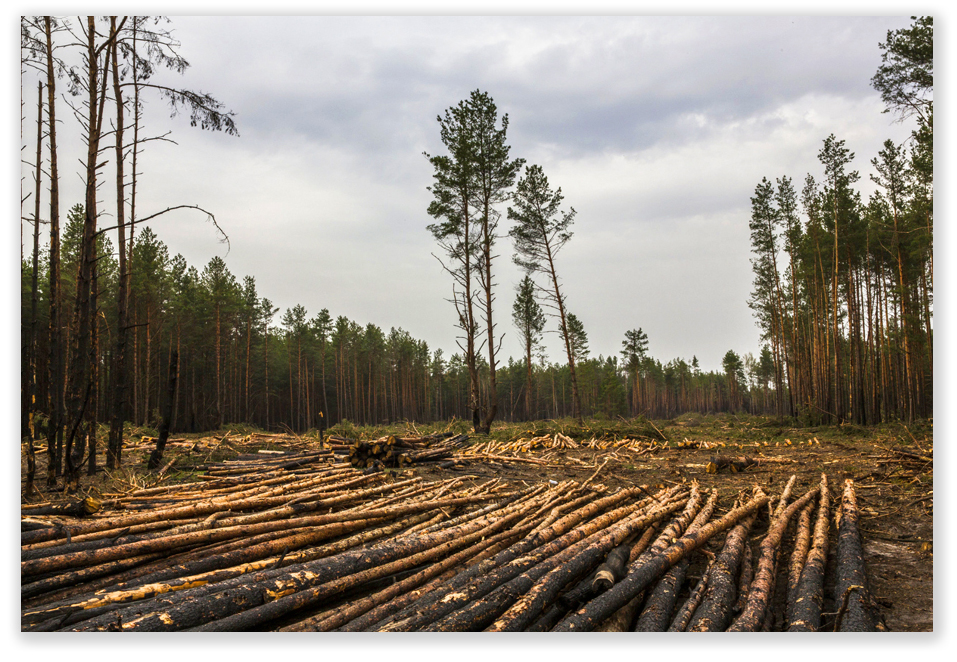
The road through the forest, abandoned, is at times barely discernible, covered with the debris of fallen tree limbs, vines, leaves and moss pushing up through cracks in the crumbling asphalt. The moss is best avoided, says our guide, Artur N. Kalmykov, a young Ukrainian who has made a hobby of coming here to the exclusion zone surrounding the nuclear reactor at Chernobyl, set aside in perpetuity after the catastrophe in 1986. It can be radioactive, having carried buried radiation to the surface as it grew. Above all, he says, watch out for windblown dust, which could well be laced with deadly plutonium. Despite the dangers — which are actually minimal these days, except when the wind is howling — and the risk of arrest, Mr. Kalmykov is at home here. “In Kiev my head is full,” he said. “Here I can relax. I could hang out in Kiev. But this is more interesting.” What Mr. Kalmykov and fellow unofficial explorers of the Chernobyl zone, members of a peculiar subculture who are in their 20s and call themselves “the stalkers,” have found is more interesting still: vast tracts of clear-cutting in the ostensibly protected forest …
A Port Angeles arborist left three children after falling more than 30 feet with a portion of a tree he was topping on Peterson Street in Sequim, a friend said. Lyle Lyster, who was the owner of West Coast Tree Service of Port Angeles, was pronounced dead at the scene after Clallam County sheriff’s deputies and firefighters with Clallam Fire District No. 3 arrived at 10:45 a.m. Thursday. Lyster, 41, was a 1993 graduate of Port Angeles High School, said friend Jessica Edwards. Members of the Lyster family could not be reached for comment. Edwards said Lyster loved working outdoors and was not the kind of person to sit indoors when weather encroached on his tree business. Lyster was employed with a construction company before starting his tree service about three years ago, she said. A safety compliance officer with the state Department of Labor and Industries said that equipment used incorrectly contributed to Lyster’s death. Rick White, a Labor and Industries safety compliance officer, said Lyster was wearing spurs and was fully dug into the tree about 30 feet up when it fell, taking him down with it …
Two construction workers who cut down a tree in Newport Beach containing baby birds — killing half of them — have pleaded guilty to misdemeanor charges. Stephen Esser of Dana Point and David Stanley of Downey entered pleas Wednesday to destruction of a nest and unlawful taking of migratory birds. They were sentenced to 120 hours of community service and have paid thousands of dollars in fines and restitution. The men used a backhoe last May to cut down a ficus tree during a home demolition. Prosecutors say they ignored pleas by neighbors to spare the tree because snowy egrets and black-crowned night herons were nesting there. A dozen nestlings fell out of the tree. Five died …
 Examiner.com, April 22, 2016: Why tree removal is sometimes necessary
Trees can do so much for your property. They can improve the aesthetic appeal of your home and provide shade where your family can relax. However, you need to know that they can be a hazard sometimes. An expanding tree for instance is worth your attention and probably immediate action. If you feel that the tree pose a danger to your family then may as well look for a good trimming and removal service that you can hire. However, not everyone may want to contact a tree removal service right away. If the tree has been there for long, it may already have some sentimental value making you feel a little remorse about the thought that you are putting away old memories that comes along with this tree as well. There are many reasons for cutting a tree. A damaged tree may destroy a sewer underneath. Its roots can dig deep into the ground, causing the plumbing system to be pulled out of its original location. If this is not addressed, it can lead to a costly damage …
FirstEnergy Corp. continues to conduct tree trimming work in communities across West Penn Power’s 24-county service area in central and western Pennsylvania as part of its ongoing efforts to help enhance system reliability. Since the beginning of the year, tree contractors have trimmed about 1,200 miles of distribution and transmission lines in the West Penn Power area as part of the approximately $27.4 million vegetation management spend for 2016, with an additional 3,500 miles expected to be completed by year end. The work is done to help maintain proper clearances around electrical equipment and help protect against tree-related outages. “The tree trimming we have done over the past several years continues to make a noticeable difference keeping the lights on for our customers,” said David W. McDonald, president of West Penn Power. “In 2010, trees accounted for one in three power interruptions for West Penn Power customers. By 2015, tree-related outages had been reduced to about one in every five outages. We intend to build on that positive performance to further enhance service reliability for our customers through timely and thorough vegetation management along our rights-of-way, which also includes proactively removing thousands of deteriorated ash trees bordering our electric distribution lines that have been killed or weakened by the Emerald Ash Borer.” The 2016 tree trimming work includes about $3 million to remove dead and dying ash trees. As of early April, nearly 8,000 ash and other trees that could affect electric equipment have been removed …

Hoopa man Kenneth A. Williams fell more than 50 feet to his death in December while trimming a bay laurel tree in Weitchpec, and now the state’s occupational safety division, known as Cal/OSHA, has cited Williams’ employer for serious safety violations. Cal/OSHA has cited Wright Tree Service of the West, Inc. for safety violations following an investigation into a fatal tree-trimming accident in Humboldt County near Weitchpec. The proposed penalties total $31,750. On December 30, 2015, Kenneth A. Williams, a foreman with Wright Tree Services of the West, died while trimming a bay laurel tree on Rock Ranch Road. Although Williams was using a flipline lanyard to secure himself to the tree, it had only one point of attachment when regulations require two. Williams was killed when he accidentally cut the lanyard with the chainsaw he was operating and fell 54 feet …
State Sen. Phil Jensen has lost his bid to have a tree removal bill cut in half. At Monday’s City Council meeting, the council denied the appeal by Jensen, R-Rapid City, to have a $1,292 bill from the city for the removal of two dead trees from his property cut in half. Jensen did not speak at the meeting and the motion to reject his appeal passed by unanimous consent. The City Attorney’s office had reported that Jensen was issued a violation for having a dead tree on his property in September. After several months, the tree remained on the property. In February, the city hired a contractor to remove the tree. While at the property, the city code enforcement officer ordered an additional dead tree be removed …

A family in the Rock Creek area is afraid in their own home, but not of crime. This threat is from a stand of towering trees. They want the parks district to do something before one of those trees crashes into their house again. Their home, and others on Northwest Northshore Court by NW 185TH Avenue and NW Union Road are right next to trees, and a wetland. On March 1st, a massive cottonwood tree crushed a section of Bob Adams’ house. The house, at the time, was empty. Today, the family is still picking up the pieces. And this isn’t the first time this has happened. Adams said another cottonwood tree fell on the home, back in 2009. That time, he says, his son was in the house. Adams and neighbors want the Tualatin Hills Park and Recreation District to remove trees they feel are dangerous, and that could fall on homes. A draft report recommends crews cut down leaning trees, but leave healthy ones alone. The Adams family says that’s not enough. “None of the trees that hit our house are unhealthy. Or leaning. And, they have left behind trees that are healthy that would easily crush our house,” he said …
Yakima, Washington, April 20, 2016: Moxee trees may be taken out because of sidewalk damage
More than 30 trees along Moxee’s East Seattle Avenue are likely to get the ax to prevent further sidewalk damage. City Council members are expected to vote next week on a plan for addressing the damage the trees are causing to the sidewalk and street, but City Supervisor Byron Adams said felling them may be the best option. At least one resident believes the trees should not be sacrificed because city officials did not plant them properly. “They should have been mitigating this problem 15 years ago,” said Dennis Pierce in a telephone call to the Herald-Republic. Pierce accused city officials of trying to eliminate all the trees. But Adams said if the trees are removed, they will be replaced with a variety that will be less destructive. About 35 honey locust trees were planted along East Seattle Avenue 20 years ago, Adams said. Over time, as the trees have grown, their root systems have caused nearby sidewalks to buckle ….

A longtime Huntersville resident is not happy that several trees have been cut down along Interstate 77. Jon Ross lives just minutes from I-77 in Huntersville. Toll lane construction on the interstate has been underway since the end of 2015. Ross told WBTV that Monday he noticed many of the trees along the Interstate near Exit 25 had been cut down. “It looked like we were having a flood but instead of water, it was trees coming over the top,” said Ross. Ross said he hasn’t been a fan of the toll lane project to begin with, and the tree issue is just making him more frustrated. “It looks horrible. It’s like going from a beautiful ocean of trees to a desert,” said Ross. WBTV noticed that many of trees near Exit 25 had been cut down and stacked in large piles along the interstate. “Why do you have to take all the trees out?” questioned Ross. “There’s plenty of room for trees so leave them in there. I don’t understand it. I just don’t understand it …”
Researchers from the University of Basel in Switzerland reveal that trees trade nutrients via underground web. The trees are linked by mycorrhiza, a fungus that empowers the roots to free up nutrients from the soil which are then absorbed by other tree roots. The sugar also helps nutrients to be taken up by the tree roots. Science Daily reports that the study was published in the journal Science. Trees and some green plants aid photosynthesis to change carbon dioxide (CO2) into cellulose, sugar and other carbon-containing carbohydrates needed for growth and food. The researchers, led by Dr. Rolf Siegwolf of Paul Scherrer Institute (PSI), Prof. Christian Korner and Dr. Tamir Klein of the University of Basel, said that the transport of sugar goes further than earlier thought …
 Allentown, Pennsylvania, Express-Times, April 19, 2016: Explosion of tree pollen looms: What you can do to cope
Allergy experts say tree pollen is going to be a significant issue for allergy-sufferers starting this week in the Lehigh Valley region. The good news is those sensitive to the minuscule menace can find relief in over-the-counter medications, by following pollen counts to plan outdoor activities and, increasingly, with technology available on their mobile phone. Dr. Eric Schenkel, an allergist who studies pollen from his Emrick Boulevard office in Bethlehem Township, said Monday he anticipates a “blast of pollen” from late-pollinating trees, followed in about two weeks by grass pollen that peaks around Memorial Day …
“That’s where the trees are and, unfortunately, that’s where the power lines are too,” concerned community member Marilyn Burton said. Work to protect electrical lines in the Upper Peninsula is troubling some homeowners there. Cloverland Electric Co-Op is trimming trees in Sault Ste. Marie to ensure safe and reliable service. 9 & 10’s Blayke Roznowski and photojournalist Erin Malone have more details on why the trimming has to be done and why some people are upset about it. “I don’t mind if they trim them,” Burton said. “I just don’t want them decimated and taken down. “I don’t want to come out and find a stump in the yard.” “We have over 3,400 miles of distribution line that were responsible for maintaining in a safe and reliable fashion,” Cloverland Electric Co-Op president and CEO Dan Dasho said. “That means trimming the trees and keeping the trees away from the lines.” Cloverland Electric Co-Op tree maintenance in the city of Sault Ste. Marie has brought some concerns. “People just don’t, I think they’re in shock when they find out maintenance meant,” Burton said. “Cutting the trees down, coming onto your property …”
 Chicago, Illinois, Tribune, April 19, 2016: Neighbors rally to save ash trees in Arlington Heights
More than 80 residents of the Northgate neighborhood in Arlington Heights are pooling their cash to pay for treatments needed to try and save ash trees from the deadly Emerald ash borer. “We have neighbors who don’t even have ash trees, but they’re participating in our treatment program,” said Seth Eisner, a member of the Northgate Civic Association and chairman of its tree effort. “In many ways, we might seem like something of a throwback because in our neighborhood, there are a large number of local homeowners who do things that benefit the whole community.” The neighborhood stepped up after village officials last fall ended a 50/50 Cost Share program, which gave residents up to $50 if they had their parkway ash trees treated by trunk injection. The program, which had been extended in 2014, was never intended to be permanent …
Birmingham, Alabama, News, April 19, 2016: The awakening dance of our trees
Spring is all around us. Green is the color of the month. Even with the pollen, everyone seems to want to get outside and enjoy the warmth. Many of my northern friends are still dealing with an occasional snowfall and cabin fever, but for the majority of the county Spring has sprung! We are blessed in the Deep South with a long growing season. In Mobile and Dothan, some winters only last a few weeks or a month, but here in Birmingham we are assured cold, garden sleeping weather from Veteran’s Day until Tax Day. As a forester, I work through the cold, and heat, the sunshine and rain. My patients, our trees, have just wakened from their long winter’s nap. Late last fall the trees knew that the next few months of sunshine would be at a minimum, so they dropped their leaves, and prepared to hunker down for a few months sleep. After a couple of months, late in January, I can see some activity in the woods. First the maples begin to redden up. Their flowers emerge sending its pollen skyward. Maples are our first trees to awaken, just as they are up North. Those who love real maple syrup on their pancakes can thank the Sugar Maples of the Northeast and Lake States and the men and women who tap these trees from February to April. After the maples the elms begin to awaken from winter’s slumber, soon green ash joins the chorus too. In March a whole host of trees give us a Good Morning shout casting their yellow pollen on everything below. Southern pines, red and white oaks, hickories, and cherries have all in one accord made the hills alive with the sounds of spring …

People in the Tri-State area are enjoying a gorgeous stretch of beautiful weather as an incredible burst of spring takes over the region. However, with rising barometric pressures, a pollen explosion will also hit the area, experts said. Dr. Leonard Bielory with Rutgers University said there was a mild discharge of elm, cedar, and maple during a warm spell in late winter, WCBS 880’s Sean Adams reported …
Science Codex, April 18, 2016: Trees’ internal water pipes predict which species survive drought
Massive tree die-offs due to drought have ravaged forests across the American West and left ecologists struggling to predict how and when tree deaths will happen, and how rising temperatures due to climate change might affect the health of forests. In a new study, a team including Princeton University researchers has identified the traits that best protect trees against death from drought. Published online this week in the Proceedings of the National Academy of Sciences, the study found that the species most resistant to drought are those that are better at withstanding stress to the water transport system — composed of internal pipes known as xylem — that carries water from the roots to the crown. Better understanding the susceptibility of trees to drought could help forestry experts create early-warning systems and take precautionary steps, such as planting more resilient species or thinning overcrowded forests to reduce a forest’s vulnerability to drought, the researchers report …
 Cape Girardeau, Missouri, April 18, 2016: ‘Hanging tree’ in county courthouse square taken down
The so-called hanging tree in uptown Jackson once used for executions in Cape Girardeau County was cut down Sunday. County officials ordered the tree removed after determining it no longer was healthy enough to continue standing. “It was just structurally … it was really bad,” said Gary Hill, owner of Quality Tree Services in Jackson, who removed the tree. “It had gotten to the point where it was a liability,” he said. The mulberry tree near the Cape Girardeau County courthouse was used in the hanging of condemned criminals. Missouri stopped executing people by hanging in 1937 …

70 percent of trees in the U.S. are found in urban areas. And where there are people there are bound to be disputes. Sometimes those disputes end up before Columbus attorney Victor Merullo who specializes in tree law. Two years ago a family living near Bexley learned that their neighbor planned to have a 100-year-old tree, which was mostly on their property, cut down. “It was a great big, every bit of 50 feet, this tree was. And the kids used to hang on it and everything,” says Edward Scocco. He says he talked to his neighbor and sent her several certified letters. “We told her, “No.” I told her if she cuts the tree down I’m going to call the police and I am going to sue her,” Scocco says. But one day the Scoccos came home to find the tree was gone. Ed’s wife Kelly got on the internet to find an attorney. “I was pleasantly surprised to see that probably one of the best tree attorneys in the country was located right here in Columbus, Ohio,” Kelly Scocco says …
 Middletown, New Jersey, Patch, April 17, 2016:Tree trimming to prevent power outages
Jersey Central Power & Light (JCP&L) is currently trimming trees along 3,400 power lines in New Jersey, the company announced this week. Regular tree trimming helps prevent power outages, said Anthony Hurley, JCP&L vice president of Operations. JCP&L contractors are inspecting trees that grow along power lines, making sure they are pruned so branches stay away from lines. Trees that present a danger of falling on lines, or are diseased, may also be removed. “In 2015, we saw an 11% decrease in tree-related outages compared to the previous year. It’s important that we continue tree trimming practices that help reduce the frequency and duration of power outages,” he said …
Phys.org, April 17, 2016: California campus is one big laboratory to fight tree-killing beetle
When the first few sycamores began dying in Aldrich Park at the University of California, Irvine, in late 2014, the victims numbered in the dozens. But over the next several months, hundreds of cottonwood, native willow, golden rain and coral trees met the same fate. “We’ve seen infestations of pests, but nothing to this extent,” said Richard Demerjian, director of the university’s Office of Environmental Planning and Sustainability. “It came as quite a shock.” It was the work of the polyphagous shot hole borer, an invasive beetle that’s been attacking and killing an astonishing range of trees throughout Southern California. Plant pathologists are overmatched. The beetle isn’t native to the area and has no natural predators here. When it strikes, the only thing to do is to try to contain it before it spreads. As the beetle has spread farther into five counties, even that has seemed like a losing strategy. But the UC Irvine outbreak presented scientists with an opportunity to change that – by turning the leafy grounds into a giant outdoor research lab …
 Bend, Oregon, Bulletin, April 17, 2016: Hazardous trees to be removed west of Sisters
Many trees along U.S. Highway 20 west of Sisters have been affected by a herbicide no longer in use by the Oregon Department of Transportation, according to state and federal officials. The U.S. Forest Service and ODOT analyzed the trees and believe the herbicide used along the highway up until 2014 probably is the main reason that the normally green pine needles have begun turning brown on the trees. The agencies also concluded the brown needles might be a result of recent drought conditions in combination with the herbicide. Peter Murphy, an ODOT spokesman, said the affected trees are showing distress but may not be dying and could still recover. The Department of Transportation will be monitoring them for the next few years …
Denver, Colorado, Post, April 17, 2016: 100-year-old tree collapses on house in Lakewood
A 100-year-old tree collapsed on a home in Lakewood Sunday morning, West Metro Fire Rescue officials said. Crews were notified of the incident, which occurred on South Upham Street, about 10:30 a.m. The tree collapsed under the weight of the snow, causing the roof to buckle. There were people inside the house when the tree fell, but no one was injured. West Metro Fire Rescue crews were unable to remove the tree, so they enlisted the help of a crane. By 5:10 p.m., they had finished chopping up the tree and removed it from the structure …
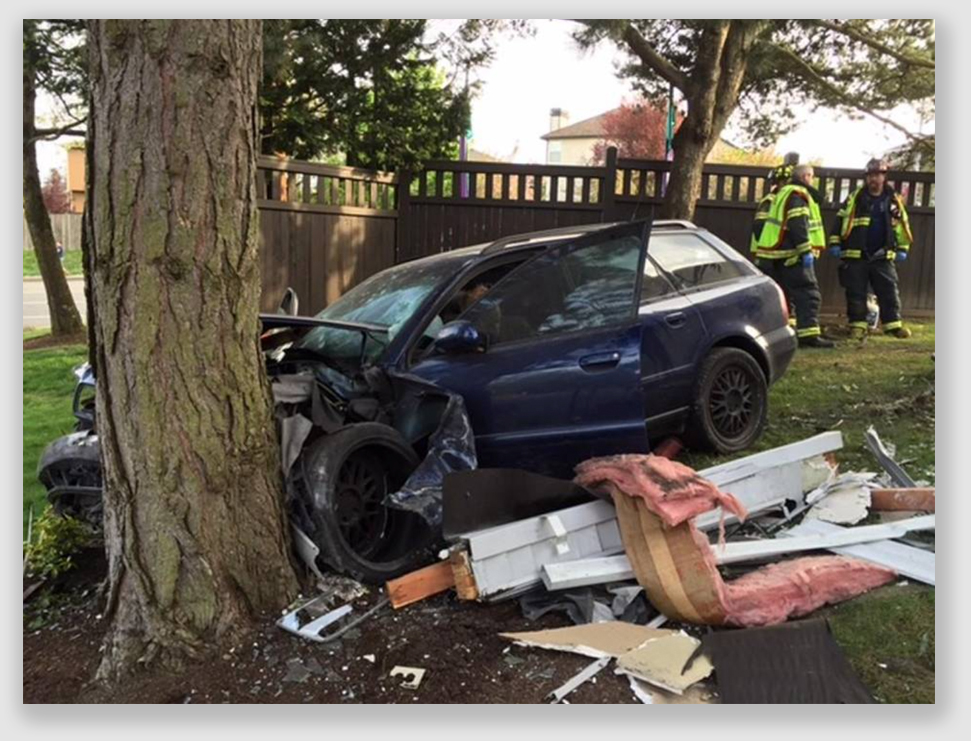 Tacoma, Washington, News-Tribune, April 14, 2016: Car crashes through Kent apartment, hits tree
A station wagon hit an SUV, a fence, an apartment building and a tree in Kent on Wednesday afternoon before coming to a stop, according to the Kent Regional Fire Authority. The woman driving the SUV, whose vehicle was struck from behind in the 12700 block of Southeast 240th Street, was taken to the hospital with minor injuries, according to a news release. The male driver and passenger in the station wagon declined medical aid. According to the release: The resident of the apartment was 10 feet away from where the car hit and was hit with flying glass, but he did not need to be taken to a hospital. The building was in need of shoring up. Debris went for 100 feet from where the station wagon hit the building …
A 26-year-old tree company worker passed away last week after he fell roughly 50 feet out of his bucket truck while cutting down a tree at a North Leominster home. Leominster Police Lt. Richard Kinney told the Associated Press that Nicholas Kallio of Ashburnham, who worked for Affordable Tree and Landscape in Westminster, was in a bucket truck around 3 p.m. Thursday, April 7 when a tree limb he was cutting at Dennis Owen’s home on Flaggler Road swung back toward him. “It hit, and it came back towards the bucket,” Owen told WFXT-TV. “It hit the edge of the bucket, and it pulled the bucket down, and then the tree fell and the bucket sprung him right out.” Kallio fell 55 feet to the ground, according to reports. He was pronounced dead at Leominster Hospital. Owen said he wanted the pine tree taken down because it had cracked and he was concerned it would fall. “I was afraid it was going to hurt somebody,” he told WFXT-TV. “And this had to happen. … It was just a freak accident …”

Someone cut down at least three gray pines, six live oaks and an Oregon ash along the Sacramento River Trail, and the city wants to find out who did it and why. The young, healthy trees grew behind a row of Lake Redding Drive homes whose backyards face the Sacramento River Trail. The native trees were on the forest grounds between the trail and Sacramento River, where volunteers removed underbrush and other non-native plants in 2014 and early 2015. Sometime this month, the 10 trees were toppled. Local conservationists discovered the debris last Friday. The discovery prompted a flurry of emails from conservationists and trail advocates questioning how this could happen on public property and whether a neighbor wanted to secure an unobstructed view to the river …
A Hessmer man convicted of cutting down more than 100 trees on the Spring Bayou Wildlife Management Area avoided jail, but was slapped with other penalties, according to a release. Keith Savoy, 49, was found guilty on March 2 of simple criminal damage to property between $500 and $50,000. He had been arrested almost a year earlier after a four-month investigation by the Louisiana Department of Wildlife and Fisheries and other agencies. At the time, officials said Savoy had cut down the trees to block access to an area known as “the fields,” where he regularly hunted. The trees he cut down ranged from 10- to 30-inches in diameter. Some were up to 50 feet tall and included cypress, oak and willow. On Monday, 12th Judicial District Judge William Bennett sentenced Savoy to a two-year prison term, which was suspended, and a $15,000 fine to be paid to Wildlife and Fisheries. He also was ordered to pay court costs …
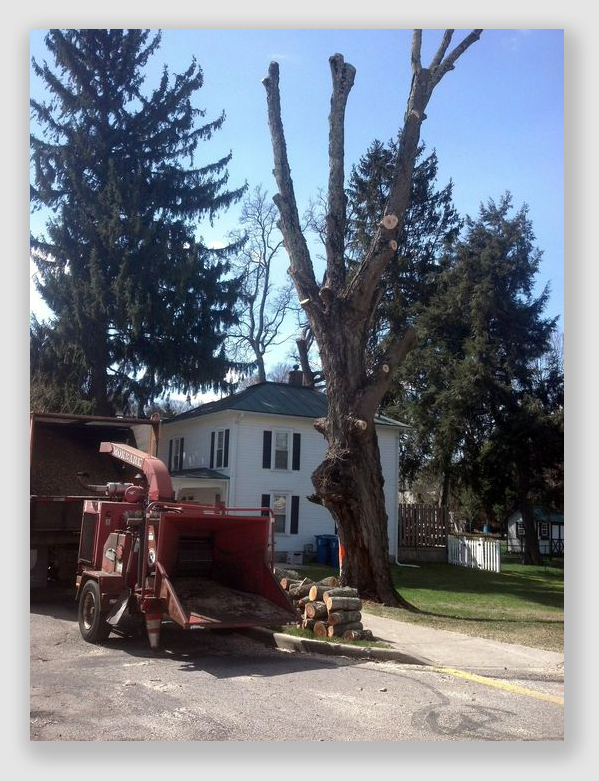 Newark, Ohio, Advocate, April 13, 2016: Maple tree with sentimental ties for many comes down
A Sunshine Street maple tree that for years provided not just syrup, but learning opportunities for Granville Elementary School Students, recently came down. Jessica Martin Wilson, second grade teacher, said it became apparent the ancient tree had reached the end of its lifespan and was becoming a safety hazard. Wilson, now in her 10th year of teaching at the school, has for the past nine years worked closely with the Granville Kiwanis Club to maintain a longstanding maple syrup project made possible by the tree. “We would go out and tap that sugar maple tree, then hang buckets to collect the syrup,” Wilson said …
A man filed a lawsuit against a city, claiming that it should have done something to prevent a tree from falling onto his car, according to court documents in Japan. The man of Nara, filed the lawsuit against the city of Toyama, after the fallen tree destroyed his Toyota 2000GT and injured his friend who drove the car. The man is seeking 39 million yen ($350,000), 35 million yen ($320,000) for the cost of the car and 4 million yen ($36,500) to pay the medical bills of his friend. According to the lawsuit, the tree fell and hit the classic car along Route 156. The owner of the car bought it three months before the incident. The Toyota 2000GT is a rare sports car that was sold in the country in 1960. The owner of the car told the court that the city could have predicted the chances of the tree falling down and it should have taken preventive measures …

U.S. Sen. Elizabeth Warren, D-Massachusetts, has asked the U.S. Fish & Wildlife Service to deny a request from Tennessee Gas Pipeline Co. to cut down trees past a spring deadline for its Connecticut Expansion pipeline —” a project that would cut through southern Berkshire County to serve three natural gas utilities in Connecticut. The Kinder Morgan subsidiary won federal approval for the project on March 11, and had hoped to have the pipeline in place by November, but won’t be able to meet that goal if it can’t cut down trees along the proposed corridor through April and May, Tennessee has stated. “I am writing to urge you to reject Kinder Morgan’s request for an exemption to the March 31 deadline for tree-clearing for the Connecticut Expansion Project,” Warren wrote in an April 7 letter to the federal agency’s Northeast regional director. “I am troubled by Kinder Morgan’s attempts to circumvent federal and state requirements and demand hasty approval of tree-clearing and other potentially damaging activities …”
Chicago, Illinois, Tribune, April 13, 2016: Planting trees and shrubs: How to find the right moment
What’s the best time to plant trees and shrubs, spring or fall? The short answer is “it depends,” according to Sharon Yiesla, plant knowledge specialist at The Morton Arboretum in Lisle. Spring is an obvious time, since most homeowners are active in the garden now anyway. They’re amending and sowing vegetable beds, dividing and planting perennials, and reseeding the lawn. The garden centers and nurseries are full of shrubs and trees. Most new gardens are installed in spring, it’s logical to plant the trees and shrubs first, and there’s usually abundant rain. “Spring is a great time for tree planting, but we have to choose a good day to ensure success,” Yiesla says. It can be hard to find a good weekend for tree planting during the rainiest season of the year. “You don’t want to dig a big hole when the soil is wet,” she says …
 Denver, Colorado, Post, April 7, 2016: Westminster looks to strengthen urban tree canopy
Westminster wants to go green and is practically giving away trees so residents will plant them and add to the urban tree canopy. This year, the city decided to join with public and private organizations across the state in partnering with the Colorado Tree Coalition in offering a range of trees for $55 when ordered by May 4. Westminster city forester John Kasza said the purpose of the ReLeaf program is to encourage tree planting and a diversity of trees that are affordable and small enough for a homeowner to handle. The city has 12 types of trees available, including small ornamentals and large shade trees Arborists say planting a diverse set of trees acts as a buffer for the city’s tree canopy, at risk of suffering from a pest that’s killed millions of ash trees across the country …
Just south of the Trinity River Audubon Center, across a footbridge and down a concrete trail that snakes along an east-west jaunt of the river, you’ll come to what was once one of Steve Smith’s favorite spots in the Great Trinity Forest. “Go into the [Google Earth] aerial photos from 10 years ago, what you’ll see is a beautiful row of pecan trees and a lawn there,” he says. On foot, the scene was even more majestic, a little sylvan paradise right in the middle of Dallas. The scene is different now. The pecan trees are still there, but they’re obscured by a dense thicket of ash trees and other plants. “What’s happened is, the floods that we have had have brought in some species and trees and other things like that that really should not be there,” Smith says. Passing by on the trail, you can no longer see the trees for the forest. Smith ha s been down in the forest often recently. “I need to have a way to get people into the forest there,” he says. “I was trying to figure out how to do that in the right way.” He was also trying to get it done quickly. The Trinity Forest Golf Club will open in a few months and he wants to be sure that visiting golfers will have an opportunity to take in the natural beauty. But poring over city codes, he found he could not find a pathway to get it done in the right amount of time. “I thought, well, if this is going to be a 2016 thing, I just need to go ahead and build a path in there. So I did.” The rumors that quickly spread through the tight-knit community of environmentalists that bird-dog the Great Trinity Forest had Smith out there with a chainsaw clearing a huge swath of trees, a description Smith contests. He wasn’t using a chainsaw but a battery-powered limb-trimmer that happened to be equipped with a chain. As far as he can see, the damage, which extends over 100 yards, is minimal. “The ‘trees’ that were taken out are 1, 2 inches in diameter. The vast majority I cut with a lopper…”
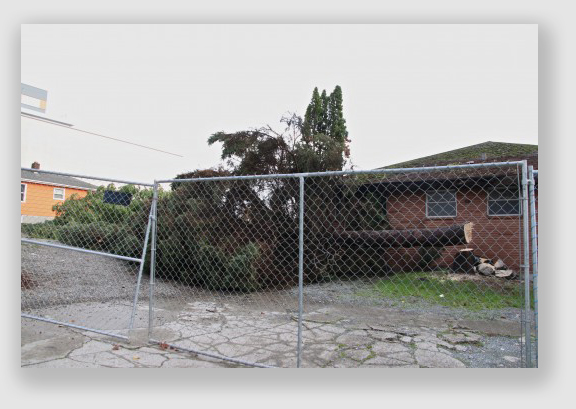
One of the discussion threads woven through the West Seattle tree-cutting case these past two weeks has been the monetary value of a tree. In another West Seattle case, it appears that value has been set at $11,000. You might recall the reader video last November 15th showing a big red cedar cut on a Sunday morning on the future site of the 4532 42nd SW mixed-use development (immediately north of the Junction QFC). That was a week and a half after a Southwest Design Review Board meeting regarding the project, in which board members said they’d like to see the development preserve the tree; the team working for developer Mark Braseth disagreed, and Braseth went on to take down the tree, saying when we asked for comment that it and two others were allowed to be removed without a permit because they weren’t “exceptional.” (The cedar had been measured at just under the 30″ baseline.) Four weeks later, the city told WSB they had determined that Braseth had violated city law by removing 6″-or-greater trees on an undeveloped lot without a permit. From there, the issue was to be what the penalty would be …
Houston, Texas, KTRK-TV, Girl rescued from top of 40-foot tree by firefighters
Firefighters were called to rescue a nine-year-old girl after she became stuck in one very tall tree. Arrabella Freeman found herself stuck 40 feet in the air after showing off her climbing skills. The little girl made her way up the tree, but then couldn’t figure out how to get down. “I was trying to go all the way to the top and then climb down, but then I got stuck on that branch right there,” Arrabella says. Neighbors grabbed her dad, who didn’t even see Arrabella at first. “And she said she’s way up at the top, ‘Look,’ and I see her poke her head around the bush, and she said, ‘Hi!'” Quinn Freeman says. But then, the concern kicked in …
 New Orleans, Louisiana, WDSU-TV, April 10, 2016: Neighbors want nuisance tree removed
Termites and a swarm of bees are becoming a nuisance to residents in a New Orleans East neighborhood because of a rotten tree they have been waiting on the city to cut down. One resident said she called to have the tree removed in July of 2015. Nearly nine months later she is still waiting and concerned about the growing hazard. “I have a small child, I have a small dog, my son he likes to ride outside on his bike, and I don’t want it to fall on anyone,” said Tiffanie Stokes. Stokes said she called the city to have the tree which sits on the city right of way in front of her house removed because of serious termite damage …
South Bend, Indiana, WSBT-TV, April 10, 2016: Man killed while cutting down tree in Fulton County
Police say a Rochester man was killed Saturday afternoon by a tree that he was cutting down. This happened just before 4:30 p.m. Carl Andrew Richard, 55, and two other men were cutting the tree down on a farm in the area of 3700 W. 500 N. Police say he was unable to get out of the way of the tree as it fell and was struck by one of its limbs. Richard died from blunt force trauma to the head, according to Fulton County Coroner Darin Beeker. The initial ruling is the death was an accident …

A man who fell to his death from a cherry-picker bucket while working at a Flaggler Road home on Thursday was not wearing a safety harness or belt as required by law, police said Friday. The worker was identified as Nicholas Kallio, 26, of Fitchburg by a spokesman for Worcester County District Attorney Joseph D. Early Jr. The accident occurred after Kallio, who was standing in a bucket more than 50 feet above the ground, had just finished cutting the top of a pine tree in the backyard of a home at 79 Flaggler Road at about 12:20 p.m. Thursday. Homeowner Dennis Owen, who was watching the work, said that as the treetop began to fall it struck the bucket and catapulted Kallio to the ground below. Owen said Kallio was not breathing after the fall but began taking “shallow” breaths after a neighbor began CPR until EMS personnel arrived …
Youngstown, Ohio, Vindicator, April 10, 2016: Trees to avoid
Planting trees can spruce up your home landscape, but choosing the wrong tree can cause some major headaches. Here are five species you might want to avoid when planting a tree: Black walnuts are often grown for their shade and edible nuts, but their buds, roots and nut hulls release significant levels of juglone, a chemical that robs sensitive plants of needed energy. Garden vegetables planted in close proximity to black walnut trees are highly prone to wilting and eventual death. Vulnerable vegetables include tomatoes, peppers, asparagus, cabbage, eggplant, potatoes and rhubarb. Trees affected by black walnuts include apple, pear, crabapple and pine. Lilies, petunias and some chrysanthemums are also vulnerable, as are blackberry and raspberry bushes. The Bradford pear tree is sensitive to leaf scorch and fire blight, but branch splitting remains the biggest problem. Bradford pears are top heavy and have a v-shaped crotch, which makes them prone to splitting. It’s not uncommon for the Bradford pear tree to split in half, especially during severe weather …
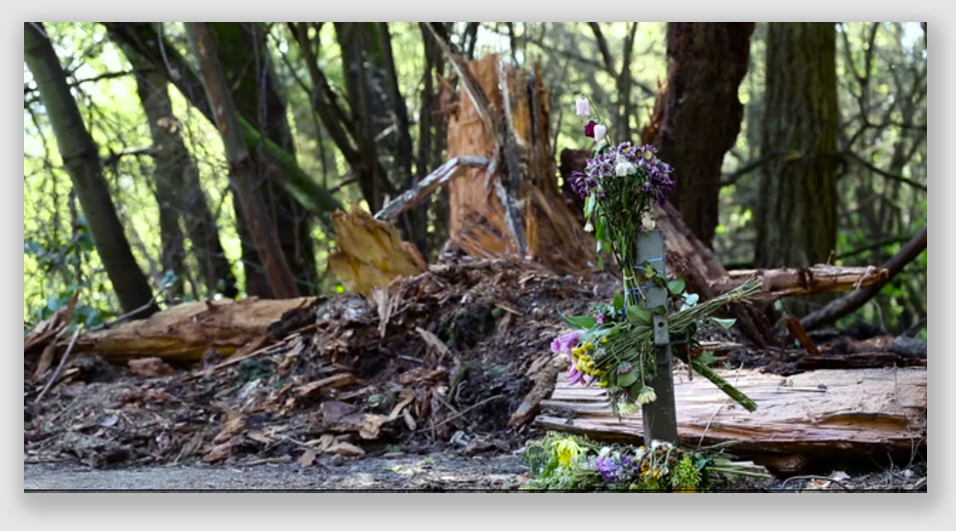
The Douglas fir that toppled onto a car and killed a man in Seward Park during last month’s big windstorm was nearly completely rotten at its base, the point where the tree failed, according to a professional arborist who independently examined the tree. Favero Greenforest, a certified arborist since 1992 who inspected the tree’s stump and snapped-off top that remain at the park, estimated the tree “was 90 to 95 percent rotten at the base” when high winds struck March 13. “What I think happened is the wind blew strong enough that it tipped up the root plate, partly because of the wet soil, but also because there was so much rot in the roots,” Greenforest said. “Then, as the tree tilted, there was no strength at the base, so the tree just buckled and fell.” The internal decay likely wasn’t outwardly noticeable, but it contributed to the tree fall that killed 42-year-old Eric Medalle, Greenforest said. The arborist’s opinion appears to contradict what two park officials told The Seattle Times last month about why the tree came down …
Augusta, Georgia, WRDW-TV, April 7, 2016: Tree service worker dies after knocked unconscious
The Aiken County Coroner’s Office says the tree service worker knocked unconscious has died. The man’s next of kin has not been notified at this time. According to North Augusta Department of Public Safety, a tree service was doing work on Pinon Road, off West Five Notch, and the wind either shifted a limb or a worker. The worker was initially knocked unconscious …

Seattle City Council member Lisa Herbold suggested a sly deterrent Thursday morning for stopping homeowners from illegally chopping down trees: replacing them with a billboard. “Sidney, (Australia) I think actually puts view-blocking signs,” she said. “It’s a very creative way to make sure that there’s a deterrent and people can’t just pay the fine and get the view in exchange.” This discussion stems from the now-infamous West Seattle tree-cutting case, where homeowners hired a tree-cutter who removed 150 trees. Although the homeowners claim it was an accident, some legal experts disagree and the City Attorney’s office says they may face felony charges. Some have speculated that the homeowners figured the fine from the city would be less than the gain in value of their homes, which now feature a pristine view. The City Council committee didn’t adopt Herbold’s suggestion as a new city ordinance, but certainly discussed it …
Rapid City, South Dakota, Journal, April 7, 2016: City to plant 160 trees, remove dead ones
Although the giant cottonwoods that tower over Jackson Park, providing shade for residents and respite for traveling birds, appear healthy, some have rotted to the core, and a heavy rainstorm or high winds could topple them. That’s why the Parks and Recreation Department has been working on removing diseased or dead trees across the city, most recently taking down 16 from Jackson Park. In addition to the cottonwoods, Siberian elms and willows were also removed from the park. “As trees mature, they start to decline if they are exposed to stresses and environmental impacts,” Andy Bernard, urban forester for the city, said. A fallen tree or limb poses a safety risk to residents. “Because Jackson Park is a public and high use area,” Bernard said, “the city is liable for any damage the trees can cause …”
 Dayton, Ohio, WDTN-TV, April 6, 2016: Wind damage brings business to tree trimmers
High wind gusts up to 44 miles per hour brought down several trees throughout the area. Just before 2pm Wednesday, Darrell Smith—owner of Aaron’s Tree & Landscaping Services–says he had as many as 6 calls for trees that were down, including a large pine tree that was reported in Dayton. The amount of calls Smith got today doesn’t quite compare to the extent of damage they saw over the weekend. He says pine and pear trees are the worst when it comes to wind damage. Also he says dead trees still in the ground, can easily get uprooted by strong winds. That’s why he says it’s important to get your trees inspected before the next round of severe weather strikes …
Des Moines, Iowa, Radio Iowa, April 6, 2016: Some green trees are turning brown with winter burn
Some Iowa trees are feeling the burn — and it has nothing to do with the presidential campaign. Tivon Feeley of the DNR says a series of warm and cold weather has caused issues for conifers, or evergreen trees. He says February had a lot of days where the air temperature got above freezing, and trees needed water. “The soil was still frozen and so that root system stayed frozen and couldn’t take up the water, but those needles used up all the water reserve they had and they started to dry out,” Feeley explains. “In the last few days when we were warm — especially a couple days ago when we up to 70 and 80 degrees — the conifers have started to brown up. And we call that winter burn,” Feeley says …
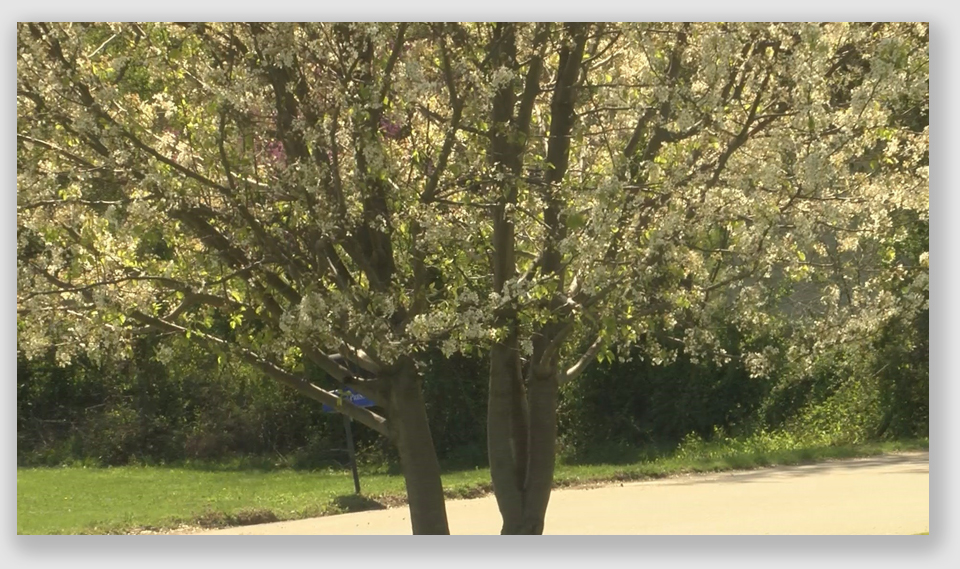 Evansville, Indiana, WFIE-TV, April 6, 2016: A familiar tree is becoming a problem across the region
The wild off-spring of a familiar tree is becoming a problem across the region. The ornamental pear tree, sometimes called the Bradford pear, has had an explosion of blooms this season. With the warmer winter this year these trees were able to get a jump start on their growth and we’ve been enjoying the beautiful white flowers. Beauty aside, this tree may be causing more harm than good …
It may be bitter cold this week, but that doesn’t mean there isn’t still plant life in bloom all over the city. To wit: The city’s botanical gardens are in the throes of cherry blossom season (yes, even on a 30-degree day), and both the Brooklyn and New York Botanical Gardens have made it easier to track the progression of the springtime blooms. In Brooklyn, the BBG has launched its annual Cherry Watch map, which shows where the garden’s cherry trees are currently flowering, and at what point in the season they’re at. Right now, for example, only a few of the trees around the Japanese Garden currently in peak bloom; expect more of the trees to reach their full potential in the coming weeks. (Especially in time for the garden’s Sakura Matsuri festival at the end of the month) …

Years before a dead, barren tree collapsed in a thunderous heap on this narrow road, residents and passersby worried that it might. On Sunday morning, their worst fears were realized. The towering tree, standing just a few feet from Rockland Street, crashed down onto a passing car, killing the couple inside. “It could have fallen at any moment,” said Bharat Agrawal, who has lived on Rockland Street for 15 years. With its empty branches and cracked bark, the tree had long been clearly rotted. Damaged by New England’s mix of cold and wind, falling trees around the region have led to at least four separate fatal accidents this year — a series of tragedies that underscores the often confusing legal and moral obligations facing homeowners and municipalities …
Birmingham, Alabama, WVTM, April 5, 2016: Trees are Enemy No. 1 on the pollen front
We’re all familiar with the yellow blanket of pollen that covers the cars and windows this time of year, but what about the allergens we can’t see.? Microscopic particles travel from your clothes to the couch and other places in your house. Oak pollen is airborne now, so if you’re allergic to oak and you ignore your symptoms, they may only get worse. “It’s like a ball rolling down a hill. Each passing year that you don’t treat your allergies very well, it takes less and less pollen to become more and more allergic.” said Dr. Weily Soong MD, Board Certified Allergist & Immunologist at the Alabama Asthma and Allergy Center. Soong suggests that people don’t self-medicate, especially if their symptoms get worse. When it comes to treating symptoms, most allergy sufferers find prescription medication more effective than over-the-counter cures. Spring allergy symptoms begin as early as February, and often earlier because of mild temperatures in the winter. Soong recommends taking prescription allergy medications two to three weeks before your symptoms normally appear to stay ahead of the symptoms …
 St. Charles, Illinois, Patch, April 6, 2016: Officials: Be careful where you plant trees this spring
Planting trees this spring? Be sure you place them carefully. Trees can provide your home with beauty and shade. However, if those trees are planted in the wrong location in your yard, they can also be expensive to maintain and even be dangerous. Tree limbs can fall during bad weather and damage the electrical wires resulting in power flickers or outages. Trees that grow 40 feet high or more should be planted at least 50 feet away from power lines …
Dashcam video caught a massive tree crashing on a two-lane roadway in New Jersey, leaving a truck with nowhere to go. Alex Conklin was driving a white pick-up truck as he crashed into the tree seconds after it fell to the ground. “It was crazy. It was like the worst amusement park ride you’ve ever been on,” he told CBS2’s Hazel Sanchez. The incident happened around 8 a.m. on a very windy Sunday morning. The dashcam on a Boonton Township police car captured the crash as it traveled in the opposite direction on Rockaway Valley Road. “I saw the tree that I hit coming down. But it came down so fast there was nothing I could do about it,” Conklin said …
 Digital Trends, April 4, 2016: Watch out, trees! This #KillerDrone has a chainsaw
We’ve already seen guns on drones, even flamethrowers, so it was really only a matter of time before someone went and attached a chainsaw. The stuff of sweat-drenched nightmares, the terrifying “chainsaw drone” is apparently the work of a pair of “crazy” Finnish farmers. In a recently posted YouTube video, the two guys that built the kit appear to want to lull us into a false sense of security with their unique contraption. There are smiles, there’s laughter, there’s even a moving soundtrack. The upbeat atmosphere continues as the chainsaw lifts off the ground, with the two friends demonstrating several sensible uses for their special drone. For example, how about trimming branches off tall trees, or sawing through icicles hanging off buildings?
Butte, Montana, Montana Standard, April 4, 2016: Tree-trimming class starts this week
Snow is melting, and our trees and shrubs are ready to wake up from a long Montana winter. In winter, woody plants go into a state of dormancy where their sap and fluids retreat to their roots. In most situations, this is the time of year where astute tree care, particularly correct pruning techniques, encourages a healthy and proper structure. How you care for a tree early in its life will impact its future shape, strength, and life span. Correct pruning is a practice of altering a plant’s form for aesthetic reasons, usually done when the plant is in a state of dormancy. Pruning can also be considered as a preventive maintenance practice to alleviate problems that can occur in a plant’s formative stages …
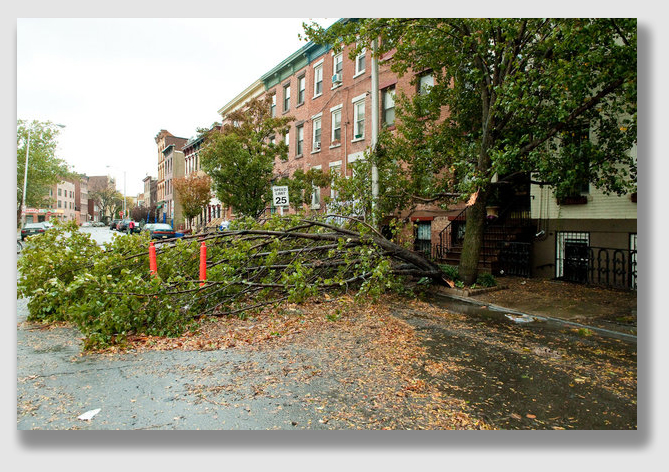
Free tree seedlings will be available to Hudson County residents as part of a state-wide effort to replace the trees that were destroyed during Hurricane Sandy. The New Jersey Tree Recovery Campaign — a partnership between Gov. Chris Christie’s administration, the New Jersey State Forest Service and the non-profit Arbor Day Foundation — will be providing seedlings for up to 2,000 trees for each municipality in the program. This will be the third year of the initiative to replace the countless trees that were destroyed and/or crippled by the strong winds of the October 2012 superstorm. The seedlings will be given out in Jersey City at Liberty State Park during Hudson County Earth Day on April 23 from 11 a.m. to 4 p.m. Seeds will also be available on April 29 at the Clarendon School courtyard on Fifth Street in Secaucus at 9 a.m. Hoboken City Hall, located at 94 Washington St., will also serve as a distribution center on April 29 at 3 p.m…
Salem, Oregon, April 4, 2016: Christmas tree checkoff raises $1.5 million
About $1.5 million has been collected from Christmas tree farmers in recent months to fund the industry’s newly established checkoff program aimed at promoting the crop. This first-ever collection of checkoff fees marks an important milestone for the Christmas Tree Promotion Board, which plans to devote much of the money to an advertising campaign for the 2016 holiday season. “It feels positive to have reached our goal,” said Betty Malone, a farmer from Philomath, Ore., and the board’s chair. The ability to effectively collect fees was one of the major uncertainties about a national checkoff program for Christmas trees. The trees are sold through many channels that are hard to track compared to other commodities, such as milk, that are received at processing and packaging facilities. “Our industry is different from all the other checkoffs in that we have no first handler,” said Malone …

A family of six was displaced after a tree fell into their home overnight, according to the American Red Cross. The family of two adults and four kids had just gone to bed when high winds sent a large tree crashing into their Centerton Road home, Red Cross spokeswoman Laura Steinmetz reported. No injuries were reported in the incident …
A man suffered life-threatening injuries while trimming a tree in St. Augustine on Sunday, according to St. Johns County Fire Rescue. The incident occurred in the 8000 block of Hardwood Landing Road. After initially suffering the injury, the man was unable to move and was stuck in a tree roughly 30 feet above the ground, officials said …

Pacific Gas & Electric will be make the rounds in Napa County in coming weeks, contacting residents who have trees and property improvements that sit over natural gas transmission lines. PG&E has been working for several years trying to ensure that their crews as well as emergency responders are able to get to underground transmission pipelines as part of their Community Pipeline Safety Initiative. The utility is concerned when access is blocked by pools, shrubs and trees, slowing response teams down, explained Jeff Smith, a representative from PG&E. When located too close to gas pipelines, these features can also damage the pipe. The company is addressing problems in unincorporated Napa County and in the city of Napa. Any trees that have been planted over these pipelines may have to be removed, Smith said …
Denver, Colorado, KMGH-TV, April 1, 2016: Why some trees are being removed at Wash Park in Denver
Nearly two dozen trees have been removed from Wash Park in Denver. Cyndi Karvaski with Denver Parks and Natural Areas told Denver7 that crews started doing a risk assessment in 2014 to determine which trees needed to be removed because they are in poor condition, a risk to park users or in danger of falling over. So far, 23 trees have been removed in 2016. Five more trees are scheduled to be removed. The trees are a combination of silver maple, honey locust and one Douglas Fir, according to Karvaski …
 Fort Collins, Colorado, Coloradoan, March 31, 2016: Spring storms send tree services scrambling
Spring is always a busy time of year for tree services in Fort Collins as they prepare the urban forest for a healthy summer. Throw in a major snowstorm and the springtime workload gets even heavier, said Brett Thomas, owner of Diamond Tree Co. The March 23 blizzard that dropped about 13 inches of heavy, wet snow across the city caused widespread damage as it brought down large limbs and entire trees. Calls for cleanup help more than doubled the company’s workload, Thomas said. “It’s kind of hard to get to everybody because of our pre-existing clients and now all of the storm damage on top of that,” he said. Lee Sonneville, owner and operator of ArboRx Tree Care, also has seen a bump in business. Sonneville said his business focuses more on treating trees to prevent damage from insects and diseases than pruning and tree removal. But when a customer needs help with storm damage, he’ll do what he can or refer the work to another company …
Greenwood, South Carolina, March 31, 2016: Clemson Extension: Favorite small tree trio
This time of year thousands of new trees are purchased and planted in the Lakelands. Those with limited space or a desire for a small or colorful tree often have a difficult choice between two natives and one oriental small tree. All three bring great joy with the arrival of spring as they color the early spring landscape with either colorful flowers or dainty colorful leaves. Since it is often difficult to make a choice, you can actually have all three if you have the right conditions and just enough growing space. The Trio I write about are our native dogwood and redbud and the non-native Japanese maples that are a great delight this time of year. All three have a place in my yard. The redbud tree in my yard was the early-bird flowering tree. Now a couple of weeks later as the redbud flowers fade and shiny green leaves emerge, several white dogwood trees have burst forth with their showy flowers. Also, green leafed and red leafed Japanese maples have unfolded their dainty bright leaves as well to join the spring flower festival …
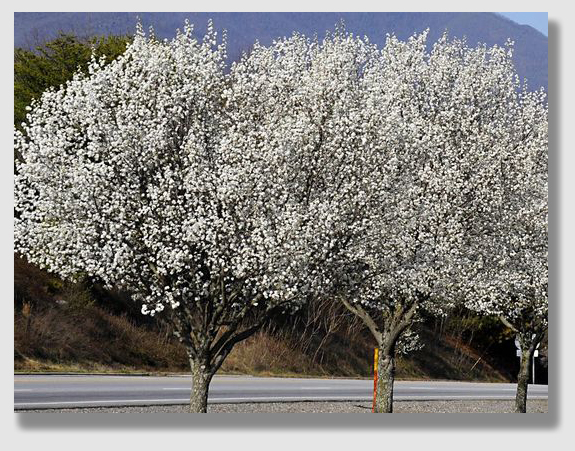 USA Today, March 30, 2016: The curse of the Bradford Pear
All those white blooming trees you see everywhere…do you think they are pretty? If you knew what they actually represent, you would choke on your morning coffee and gag on your scrambled eggs. All those white blooming trees you see now are an environmental disaster happening right before your very eyes. I’m talking about every white blooming tree right now, with only the exception of wild plums, which is a short multi-flora tree that seldom reaches over eight feet in height. All the other white flowering trees in today’s environment are an ecological nightmare, getting worse and worse every year and obliterating our wonderful native trees from the rural landscape. If it’s blooming white right now, it’s a curse. This dictum especially applies to that “charming” Bradford pear your dimwitted landscaper planted in the middle of your front yard. Indeed, lack of smarts is what has led to this disaster. Bradford pear is worse than kudzu, and the ill-conceived progeny of Bradford pear will be cursing our environment for decades or possibly centuries yet to come …
Cankerworms are back, munching on Charlotte’s tree canopy
Cankerworms have begun to hatch, slink and munch on Charlotte’s tree canopy again. The little green caterpillars typically emerge this time of the year from eggs laid by their wingless moth mamas in December. Cankerworms have been confirmed in some areas of Charlotte for at least a week to a week and a half, city arborist Tim Porter said. While cankerworms in most cases don’t kill trees, repeated defoliation can weaken trees, making them more vulnerable to age, drought, other insects and disease. They appear from Georgia to Nova Scotia and west to Texas, and Charlotte has seen severe infestations of the worms. The city conducts a tree banding grant program, working with community groups and a street tree banding program each fall and winter, Porter said. Homeowners apply a band of paper-like material around their trees and add a coat of sticky material to prevent cankerworm moths from crawling up the trees to lay their eggs. “The tree banding efforts can greatly reduce the nuisance and environmental impact the cankerworm caterpillars have when they emerge in the spring,” Porter said …

Homeowners may be facing more than just fines after hiring a tree-cutter to slice down 150 trees in West Seattle — an action they are summing up as a mistake.The trees cut down in West Seattle’s West Duwamish Greenbelt neighborhood were primarily mature big-leaf maples, some leaving stumps of about 2 feet in diameter. With the trees gone, the view for a group of homeowners has dramatically improved. And Seattle real-estate attorney Mike Spence says that’s important to understand. “It’s spring time, real estate is hot right now. There are multiple buyers. You can advertise your property as having a view, get a bidding war going, and get a whole bunch of extra money,” Spence said. “And you’ll have to pay something (like a fine), but I’m guessing these people think they will pay the city less than they made by adding value.” It is not certain that is what happened in West Seattle. Lawyer Clayton P. Graham sent a letter to the city on behalf of a client stating that the client and his or her neighbors all hired a landscaping business to top and prune the trees. The job was meant to improve their collective views. The client called the clear cut a mistake. Calling the action a “mistake” is something Spence, who also has an urban-planning degree, is familiar with. Just in the last few years, he’s worked on several cases where homeowners were accused of chopping down trees in order to gain a view. Homeowners will often say the cuttings are a mistake, but those cases often involve five or six trees …
Portland, Oregon, AP, March 31, 2016: Oregon Agency: Couples cut protected trees to improve view
Homeowners in Oregon chopped down dozens of trees in a preserve next to their property to improve the view, according to a lawsuit by a regional planning agency. The $661,000 lawsuit claims two Gresham couples cut down 44 trees in a 400-foot swatch of protected nature, The Oregonian reported. It’s not clear how the Metro planning agency found out about the downed trees because the couples live on a private drive and the area downhill from their homes doesn’t appear to be accessible from any walking trails. The couples’ side-by-side homes overlook a scenic landscape from their perch atop Gresham Butte, according to the lawsuit, filed Friday. Metro argues that the changes increased the value of David El-Khal’s and Alyce Hadeed El-Khal’s home by more than $79,000 and boosted the value of Stephen and Judith Brugh’s home by at least $39,000. According to the real estate website Redfin, the El-Khals’ seven-bedroom, eight-bathroom home is worth about $1 million and the Brughs’ three-bedroom, three-and-a-half bathroom home is worth about $493,000. David El-Khal declined to comment on Tuesday, saying his attorney said it’s too early to do so. Stephen Brugh also declined to comment when he was reached Monday …
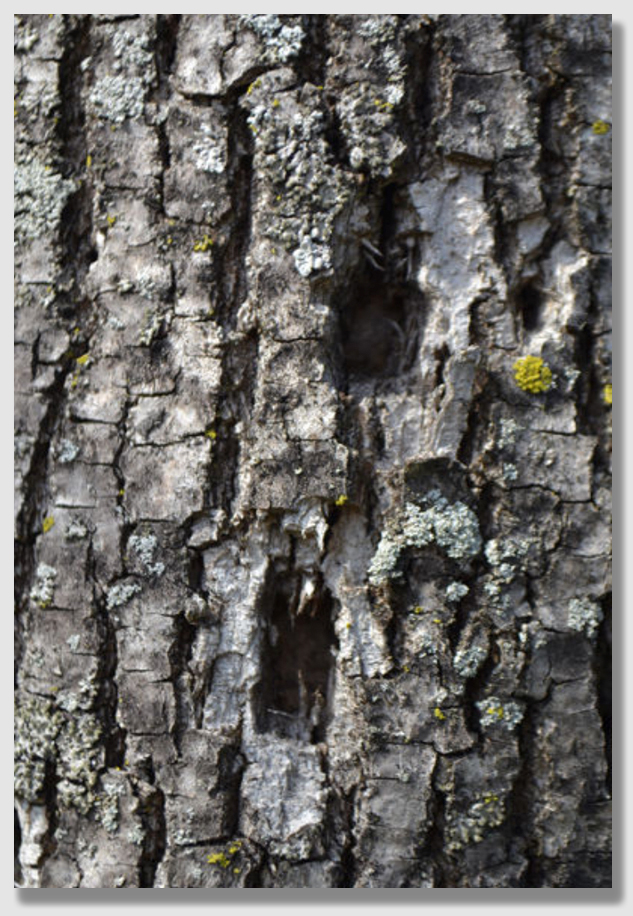 Ashland, Kentucky, Daily Independent, March 30, 2016: Tree-killing bugs in Northeast Kentucky
The emerald ash borer is a pretty little beetle, about a third of an inch long, emerald green as its name suggests, with short tapered wings. It doesn’t look at all threatening, and it isn’t — if you’re not an ash tree. But if you are a fraxinus ornus, be afraid. Be very afraid because the emerald ash borer will lay its eggs under your bark and its larvae will munch their way through the living layers underneath the bark, eventually killing you. And the voracious insects, native to Asia but considered invasive in the United States, have been detected in Northeast Kentucky — including in Ashland. That’s a big problem because the bugs are hard to detect before the larvae start their destructive feast, and getting rid of them is difficult without destroying the entire tree. And if left to their own devices, the adult borers can fly up to half a mile a day in search of new host trees ...
One of the most popular ornamental trees is actually a destructive invasive species and could be decreasing the value of public lands. Many of you have probably noticed those white blooming trees just about everywhere in the Heartland. They are Bradford Pears and, while they’re pretty to look at, they’re becoming destructive to our ecosystem. Originally from China and Taiwan, these trees can be invasive and in their own way, dangerous. If one is growing in your front yard, plant experts say you might want to consider removing it. “It was probably the number one selling tree 25, 30 years ago,” Joe Touchette, owner of Plants Plus, said. But today you won’t find a single one for sale at Plants Plus; Touchette said he removed all Bradford trees from his lot years ago. “It is one of the worst trees you can buy nowadays,” he said. “Back then then the tree was newly developed and we didn’t know what would happen to the tree when it got older. Now we are finding that they have a very weak branch structure …”
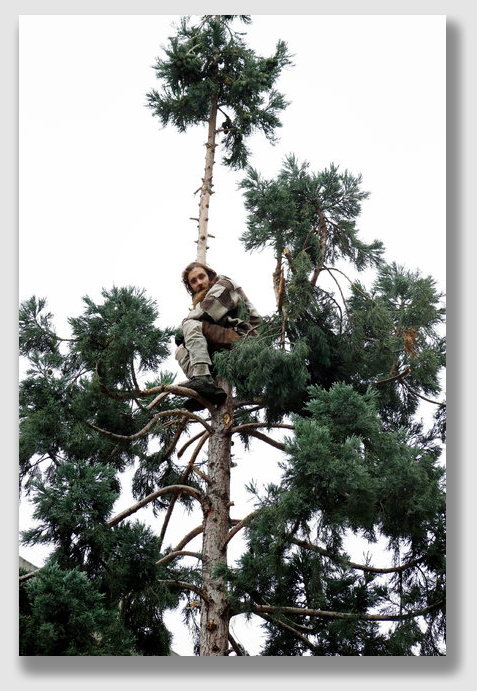
For more than 24 hours last week, Cody Lee Miller perched in a giant sequoia tree in downtown Seattle, pelting people and cars with pine cones and tearing off branches to throw like spears into the street below. Investigators said Mr. Miller harmed the 90-foot tree, and they have come up with a figure for the damage, using a complicated formula that goes far beyond the value of natural beauty. A Seattle tree expert, Darren Morgan, said Mr. Miller caused $7,800 in damage, according to court documents released this week. Investigators took into account the tree’s age, its potential life span and how much of its lush foliage was denuded. The formula, created by professional foresters, goes like this. The trunk is 34 inches in diameter at breast height, an investigators’ report said. The tree has a “95 percent species rating,” a “100 percent condition rating” and a “100 percent location rating,” Mr. Morgan was quoted as noting in his calculations …
For energy savings and comfort in the desert, trees have us covered. Most Valley residents didn’t attend the Regional Tree & Shade Summit 2.0 in Phoenix on March 9, but a full house of 180 people had their schedules highlighted in green to ensure they were there. With a keynote address by Dr. Greg McPherson, research forester for the U.S. Department of Agriculture’s Pacific Southwest Research Station in Davis, Calif., the second summit attracted public and private companies and individuals interested in local urban forests, low impact development and increasing the success of tree and shade efforts by cities and property owners. Homeowners can benefit from lifestyle enhancement and energy savings by correctly planting trees, said Anne Reichman, CSBA, program manager for the Sustainable Cities Network at GIOS. The event was held at the Downtown Phoenix ASU campus. For one, trees are important to the health, vitality and beauty of our communities. “Research shows that the prevalence of trees is linked to safer neighborhoods, less urban heat island effect and increased property values,” she said …
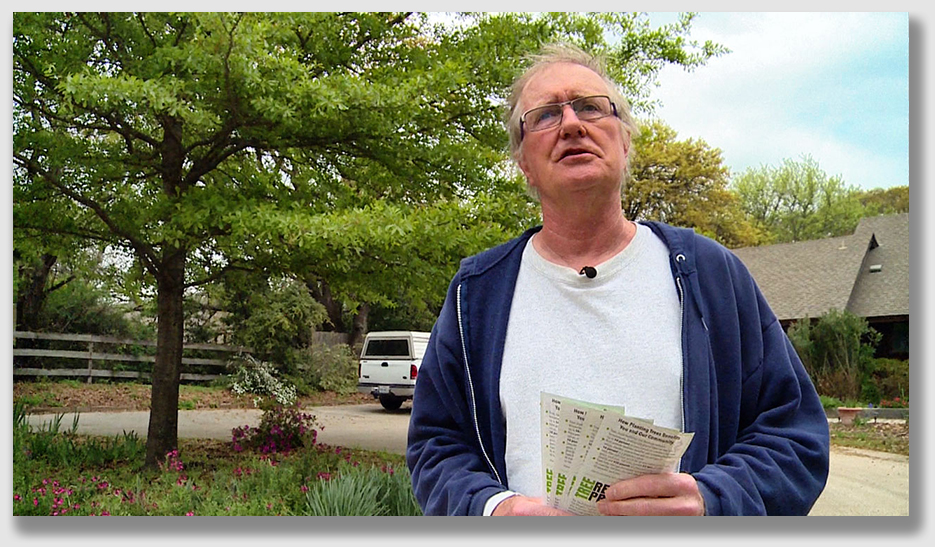 Dallas, Texas, WFAA-TV, March 29, 2016: Denton offers incentive to plant trees
When it comes to trees, Walter Hartman is somewhat of a whiz. “There’s an amazing beauty and amazing artwork in nature, what it creates,” he said. But like many North Texans in cities experiencing rapid growth, living in Denton means Hartman has to deal with a common threat. “You have mixed feelings about development any time you see it,” he said. If the city is going to move forward with major development projects, trees will have to be sacrificed. But as each tree goes, the city loses more of its aesthetic appeal. And that, in turn, can affect property values by up to 10 percent, according to city leaders. Trees also provide shade from the brutal Texas heat, and they act as noise barriers that silence traffic. That’s why the city has a plan. And it’s something Hartman just found out about at a nearby Home Depot store. “They had these coupons offering rebates for planting different types of trees,” he said …
There are tree troubles for people living in a west side neighborhood. They’ve had damage to their property and they called us for help. “It makes me feel terrible,” said resident Tim Urban. “When I bought the house, I didn’t buy the tree. It’s not my tree.” Urban is frustrated with tree problems. “It started backing water up here at the drain,” said Urban pointing out issues in his basement. He said roots clogged it up and he’s not alone. “The house over here, they’ve had plumbers out. Various neighbors have plumbers in and out all the time,” explained Urban. Shirley Banzet lives a few houses away. Her tree has messed up her sidewalk again after she fixed it years ago. She said the city isn’t helping.“They want neighborhoods to be well kept, but they don’t want to pay for it. They want you to do it,” she told us. “My biggest frustration is being accused that I will be arrested if I trim (the trees). And I’m trimming them to keep them from taking the shingles off because they rub back and forth and back and forth …”

Officials knew nearly two months ago about the unpermitted cutting down of more than 150 trees in a city-owned greenbelt next to view homes in West Seattle. A lawyer representing a homeowner responsible for the cutting wrote to Seattle Parks and Recreation Superintendent Jesús Aguirre on Feb. 5 to report the damage. The lawyer said his client wanted to work with officials to make up for the destruction. “We write to disclose tree pruning and cutting work carried out by a third party contractor on behalf of my client and others,” lawyer Clayton P. Graham wrote. “The unfortunate decision was carried out in a manner that does not reflect my client’s respect for the city or the Parks Department and while he alone was not the only participant, he feels it is appropriate to self-report this matter and work to mitigate any negative consequences,” Graham added, not directly identifying his client. More than an acre of the West Duwamish Greenbelt was decimated in the cutting on the hillside north and east of the 3200 block of 35th Avenue Southwest, and the City Attorney’s Office is heading up an investigation into the incident, The Seattle Times reported over the weekend. The 153 downed trees were mostly big-leaf maples …
The cherry blossoms have graced the nation’s capital for more than 100 years. But it’s a tradition that came close to never happening, author Dan Stone says. Some of the first cherry trees in the United States were not even planted around the Tidal Basin, but around a guy’s home in Chevy Chase, Maryland. His name was David Fairchild, and he worked for the U.S. Department of Agriculture. His job was to go around the world searching for exotic plants and crops. “The fact is that these trees would not have happened if it were not for this one man who said, ‘OK; I’ll import them to my own property,”’ says Stone. Stone is writing a book on Fairchild — “Suitcase Full of Lemons: The Life and Adventures of David Fairchild” — that is expected to publish in 2017.…

The old saying about trees goes something like this. The best time to plant a tree was 20 years ago and the next best time to plant a new tree is today. Trees are a long-term investment. It takes years for them to reach size and become a special part of the landscape that provides not only function but also beauty. Care must be taken to properly plant a tree so success and beauty can be achieved. Research has found that many trees grown in the wholesale nursery have compromised root systems. This happens as the growing trees are cultivated by throwing soil over the roots. Container-grown trees can be planted too deeply. The result of buried roots is slow establishment and growth throughout their life. This excess soil will compromise the root system once the tree is planted in our heavy clay soils. But a tree has a simple way of letting you know at what level in the soil it would like to grow. That level is called the root flare. The root flare is the point at which the first one or two roots emerge from the main trunk. Finding the root flare just takes a little careful digging. Using your fingers or a trowel gently remove the soil from around the trunk of your tree until you find this root flare. Be careful not to scrape the bark of the tree …
Greenville, South Carolina, Star, March 28, 2016: Alternatives to Bradford Pear trees
I appreciate all the responses and positive feedback I received from last week’s column on “The Curse of the Bradford Pear.” While I have been espousing the evils of this tree for years, something about last week’s column went viral and I have received replies from all over the country. The overwhelming number of responses were positive, but a few of the respondents just didn’t get it, particularly the ones who think that if something flowers, it should be worshipped. Does this principle apply to the pretty purple petals of kudzu? That’s one ironic thing about invasive species. They aren’t invasive everywhere. English laurel is illegal to grow and sell in Oregon because of the way it is dominating the Northwest woodlands. However, east of the Mississippi, English laurel is not invasive in the least. Ornamental pears also have this same type of pattern. They aren’t invasive in Tennessee. However, in a grand swath following I-85 from Atlanta and then up and into the mid-western states, these pears have proliferated by the millions. We have that fellow in Tennessee to thank for that. A lot of the responses I received were from folks who are all in favor of cutting down their pears, but who wonder what to plant in their place. There is a wide range of excellent choices available, depending on what goal you are trying to achieve in your overall landscape …
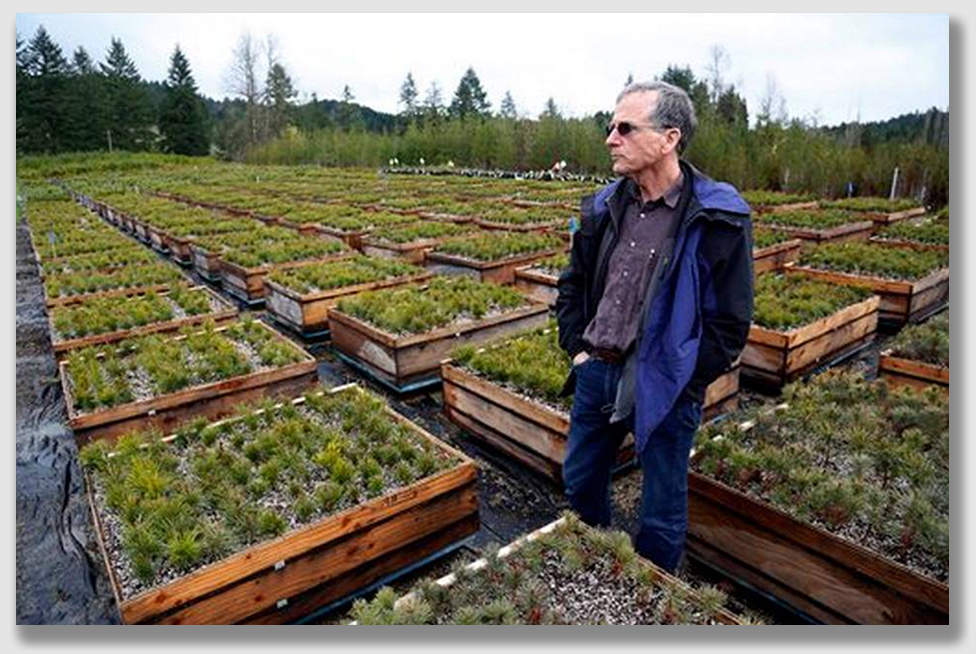 Miami, Florida, Herald, March 27, 2016: BLM research center trying to fight tree disease
Lisa Winn has given up counting the number of boxes, buckets and small earth-filled cones at the Dorena Genetic Resource Center near Cottage Grove, which contain thousands of tree seedlings grown from pine and cedar seeds collected throughout the Pacific Northwest. It’s not hard to see why Winn, the center manager, hesitates to provide a number. The vast array of tiny and not-so-tiny trees, contained in 13 greenhouses and on 150 acres of U.S. Bureau of Land Management land outside of Cottage Grove, is part of a venture that brings to the property thousands of new tree seeds every year. The center collects the seeds and nurtures them into seedlings in the hopes of identifying those most resistant to disease, in particular two specific pathogens that have wreaked havoc among certain pines and a type of cedar. When the center periodically succeeds in cultivating disease-resistant seedlings, it gives them to U.S. Forest Service nurseries for eventual planting in the wild. The center, opened in 1966, is about to celebrate half a century of operation …
“And don’t forget the trees,” would be the refrain from State Water Resources Control Board Chairwoman Felicia Marcus at the end of every meeting. Marcus wants Californians to conserve water but not at the expense of yard trees and park specimens that provide shade and reduce energy use. But sometimes the water misers give off mixed messages. “Keep Your Sprinklers Off,” says one page on saveourwater.com. Yet, finding anything on saving the trees took 10 minutes of digging on that website. Several clicks on the “Idea Gallery” revealed redundant testimonials on how to replace your lawn with native plants and decomposed granite. Nothing about the trees. If you water your lawn less — a lot less — doesn’t that kill your trees? The answer is yes. Trees need watering. Some more than others. And the kind of watering makes a huge difference. So what’s a tree-hugger or your average lounge-on-the-hammock-under-the-sycamore Joe to do? The question of tree saving becomes critical now that the warmer and drier weather is upon us and El Niño in Southern California is as one scientist put it, “El Dud-O …”
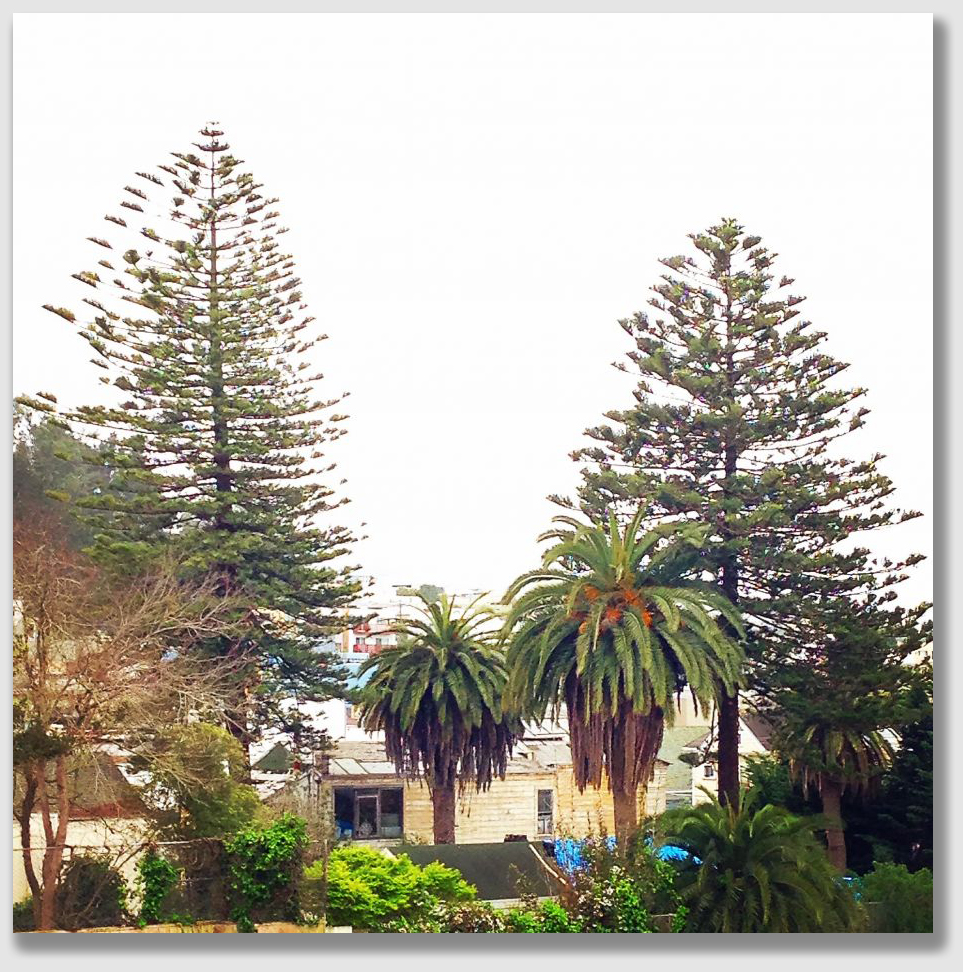
A San Francisco property owner should not be allowed to cut down a 100-foot pine tree in his backyard, a city environmental committee decided Friday, siding with neighbors who want to landmark the tree over the owner’s objections. In a 9-2 vote, the Urban Forestry Council concluded Friday that the tree should be landmarked because of its physical attributes, rarity, environmental benefits and cultural support. The question will now be forwarded to the Board of Supervisors for a vote. The board has historically followed the council’s advice. The fate of the tree had become so contentious that the owner hired a lawyer, while neighbors who wanted to preserve the tree obtained restraining orders prohibiting its removal. One side even consulted a shaman in Indonesia about the tree’s future. Some two dozen people showed up to the council’s meeting Friday to support or oppose the landmark status. If it all sounds like a wacky San Francisco story, the dispute also underscores an important question: How much say should property owners have over their land? At a meeting in January, the Urban Forestry Council deadlocked 5-5 on whether to landmark the pine tree. One member, who was not present at that meeting, voted Friday to landmark, while three members who had originally voted against landmarking changed their votes …
Residents in the greater Ann Arbor and Ypsilanti areas can expect to see a fair amount of tree trimming in the coming months.DTE Energy is planning to do a significant amount of tree trimming throughout the region, including along hundreds of miles of power lines in Washtenaw County. It’s the first major maintenance trimming to hit Ann Arbor in about six years, DTE officials told The Ann Arbor News. “This trimming that we’re talking about is going to cover kind of whole neighborhoods where the trees need trimming,” said DTE spokeswoman Lisa Bolla, adding DTE trims for safety and reliability of the power grid …
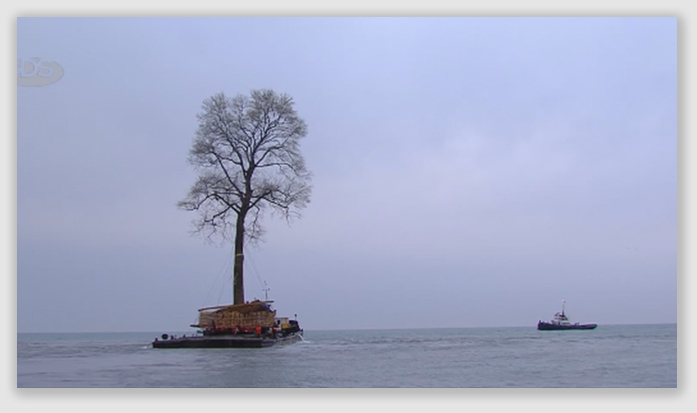 London, UK, BBC, March 24, 2016: Tree makes sea voyage for Georgia park project
The tulip tree, which is thought to be about 100 years old, is the latest to be selected for life in a new park being created by Georgia’s billionaire former Prime Minister Bidzina Ivanishvili, the Rustavi 2 channel reports. It was uprooted in the western Ajaria region on Wednesday, but transporting a 650-tonne tree complete with the entire root system was no mean feat. Its sheer weight meant workers spent much of the day just trying to get the boat started, the report says. Mr Ivanishvili’s park plans have proved controversial in some quarters, with opponents complaining that he shouldn’t be allowed to buy up historic trees and take them away. Protests erupted in the village of Tsikhisdziri in February as a number of trees were removed. “I am developing a park, where I think it is appropriate,” he told one protester, later adding that he would ensure at least 10 new trees were planted in exchange. Photos of the tulip tree floating along the coast have caused amusement for some social media users, with one dubbing it a “swimming tree” and others calling it a “surreal” sight. But while some people are impressed by the scale of the undertaking, there’s plenty of criticism from Mr Ivanishvili’s opponents; one Facebook user describes it as “idiocy …”
Denver, Colorado, KDVR-TV, March 24, 2016: Broken tree branches leave a mess for homeowners
The blizzard that blasted much of Colorado on Wednesday has left a mess for property owners, dealing with damaged trees and broken branches. “Trees that have been pruned or maintained took less of a hit,” says Luke Peters from Swingle Lawn and Tree Company. “Some of the trees that are not maintained is where we really took that hit.” Stacy Clayback’s house took a hit when damaged tree branch snapped and crashed through her roof and into her kitchen. “What do we do next?” wonders Clayback.”Before it snows again, can we get it fixed?”
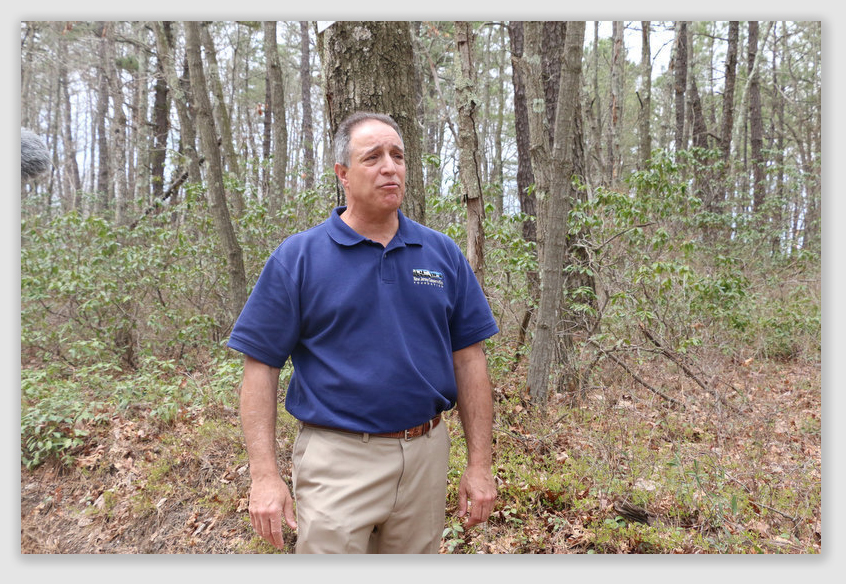
Months of meetings, dozens of hours of testimony and countless heated exchanges between the public and members of township’s planning board culminated with a unanimous vote that took less than 30 seconds. With a 9-0 vote during a special meeting Wednesday night, the planning board approved Six Flags Great Adventure’s controversial plans to construct a solar generation facility on 66 acres of existing woodlands. The vote capped months of contentious meetings that seemingly pitted area residents and environmentalists against township officials more than the applicant. Wednesday night’s meeting featured more of the same, as opponents to the project resorted to name calling multiple times to emphasize their point. After all of the testimony, cross examinations and public comment had concluded, a few members of the planning board briefly asked the applicant if they would agree to some stipulations – such as guaranteeing funding for the planting of trees and the upgrading of a culvert that carries a stream under Reed Road – which they did …
Jackson, Mississippi, Clarion-Ledger, March 24, 2016: Will tree mulch work on flower beds?
Q: The power company trimmed trees from lines in my area. They ran limbs and trees through a chipper and dumped some of the mulch on my land. Can I use this for mulch on my flower beds?
A: That raw material needs to rest at least six months before you use it as mulch. It’s too fresh right now, so pile it up and let it rot, then spread it wherever you like to a depth of about an inch. If you put it on as mulch now, it will leach nutrients from the soil underneath in the first steps of decomposition. Be patient, and you’ll be able to put it to good use next fall …
 Phys.org, March 23, 2016: Poor outlook for ash trees
The future for ash – the tree that gave us food, fuel and the Sweet Track, one of the oldest roads in the world – looks bleak, according to a new survey of its biology and ecology. The review by tree expert Dr Peter Thomas is the largest-ever survey of this much-loved tree and is published today in the Journal of Ecology. Ash (Fraxinus excelsior) is native throughout most of the British Isles. It is an important urban tree in our towns and cities, is the second most abundant tree (after oak) in woodland, and outside woods there are 2.2 million ash trees in Britain. Ash is our most common hedgerow species and the length of woody linear features (hedgerows and tree lines) composed of ash in Great Britain is almost 100,000 km. Ash had been thriving in Europe until recently thanks, paradoxically, to air pollution. Nitrogen pollution has acted as a fertiliser and climate change has also aided ash because of ash is drought tolerant, able to cope with lower rainfall, and sensitive to spring frosts and so benefits from warmer springs. But, the survey warns, ash faces several serious problems, including the immediate threat of ash dieback and the ‘potentially devastating’ emerald ash borer, which is spreading west across Europe …
Amherst, Virginia, News & Advance, March 23, 2016: Supervisors approve funds, tree stump removal
A request from Second Stage Amherst for $1,250 for a match grant received unanimous approved by the Board of Supervisors last week. Suny Monk, president of Second Stage, came before the supervisors with a similar request she brought to Amherst Town Council on March 9. She told board members of a local challenge grant supported by the Virginia Commission for the Arts, requesting $1,250 to go toward the grant. The grant program will match money raised by an organization up to $5,000, giving the potential of $10,000 to be used to encourage local governments to partner with artists, art activities and art organizations, Monk said. The money raised would be used in “Cultivate Amherst”, an effort to connect the creative arts and economic future of the region …
 Washington, D.C., VOA, March 23, 2016: Washington’s cherry blossoms signal the start of spring
The West Potomac Park in Washington, DC, lies just west of the National Mall. It is home to some of Washington’s most iconic sites, like the Jefferson Memorial, the Martin Luther King, Jr. Memorial, and the Tidal Basin. But, the park’s most famous attraction? Cherry blossoms. Thousands of cherry trees bloom around the waters of the Tidal Basin, which reflect the trees’ images. The basin was created in the late 1800s to prevent the Potomac River from flooding …
As far as trees are concerned, right now is the optimal time for pruning. And given that early spring is usually a pretty enjoyable time to be outdoors, you may tend to concur. Tree pruning is best done in the dormant season (or in late summer—more on that below), but during the four to six weeks leading up to bud-break, tree defense systems are perking up even though they have nothing to show for it on the outside. It’s sort of the best of two worlds: Trees’ growth processes remain in deep slumber, but their shields are up against infection. Plus it’s a lot nicer working outdoors now than in January or February. OK, I guess that’s three worlds. Actually, there are a lot of threes involved in proper pruning. For example, no more than a third of a tree’s live branches should be removed during any pruning cycle. (Older trees, however, and those under a lot of stress, need a lighter touch. Twenty percent is maximum for them.) This doesn’t mean you can remove a third of the leaf-bearing material each year. A typical pruning cycle for a shade tree is (surprise) three years. Another guideline is that two-thirds of a tree’s leaf area should be in the lower half of the crown. In other words, don’t clean out interior foliage or remove lower branches unless there is a compelling reason to do so, such as safety or disease management. Lower and interior branches are essential …
 Seattle, Washington, Times, March 22, 2016: Standoff continues after man climbs downtown tree
Seattle police negotiators are still trying to coax a man down from an 80-foot-tall tree outside the downtown Macy’s store, more than four hours after a passer-by called 911 to report that someone had scaled the massive conifer. “It is quite a spectacle, honestly,” police spokesman Patrick Michaud said of the incident that’s attracted onlookers, closed off downtown streets and spawned a parody Twitter account: @Man_In_Tree. “At this point, we want to make sure he’s OK and that he can get down from the tree without hurting himself or someone else,” Michaud said. “We’re on his schedule — we’re not going to rush it with someone at the top of a tall tree. If you rush it, it could become dangerous.” Police and firefighters responded to Stewart Street and Third Avenue around 11:20 a.m. Tuesday after receiving reports that the man had climbed about 70 feet up the sequoia tree in a street median …
Altoona, Pennsylvania, WTAJ-TV, March 22, 2016: Tree removal upsets homeowner
What may have taken nature hundreds of years to build took just hours to bring down today. We have more on why one woman will treasure a piece of the tree that was removed. The homeowner said she’s upset that a tree right in front of her house is being cut down. “It’s a shame. It has a lot of history to it,” says resident Pamela Lair. Lair says she played by it and remembers her mom and uncle burying a cat near it. “It was always this big! It was always this big, even from the time my mother was a child,” says Lair. “It’s the largest tree from Bigler to Kylertown.” But workers say this oak is on state right-of-way, not Lair’s property like this maple is, and they’re taking out trees to make way for road improvements. “They’re starting to reconstruct this highway through here and they have to move them out in order to get their work done,” says neighbor Wallace Kephart …
 Hastings, Nebraska, Tribune, March 22, 2016: Diverse tree plantings key amid climate concerns
When it comes to mitigating the effects of climate change and its corresponding extreme weather conditions, trees are miracle workers, say several local tree experts. Trees cool homes, streets and parks in the summer. They slow down icy winds, control snow and hold down valuable topsoil. And they do all of this while soaking up the greenhouse gas carbon dioxide and releasing life-giving oxygen. “It’s about modifying and moderating our local environment,” said Ron Seymour, University of Nebraska-Lincoln extension educator in Hastings. “The more trees we have, it’s just better all the way around.” Data indicate that extreme weather events in the state are on the rise, the Forest Service said in its annual report. Specifically, Nebraskans can expect an increase in the number and severity of wildfires that displace forests, warmer conditions that favor native and non-native insects, and more frequent and intense unusual and extreme weather events such as flooding, wild temperature swings and drought …
Riverside, California, Press-Enterprise, March 22, 2016: Tree-infesting beetle found in Riverside
A beetle that has devastated vegetation in sections of the Tijuana River Valley has been found in the Santa Ana River habitat in Riverside. The polyphagous shot hole borer, an invasive species from Asia, attacks more than 40 different kinds of trees. There is no known way to treat the pest. UCR researcher Akif Eskalen has been monitoring the riverbed near Martha McLean-Anza Narrows Park. Six months ago, he said, there was no visible sign of the tiny intruder. There is still no sign of the beetle itself, but two weeks ago, Eskalen found willow and cottonwood trees peppered with the holes the borer makes as it eats its way into trees. Look at this,” Eskalen said, pointing to a tree trunk with dark tear-drop spots on it, “willow, willow, willow, all infested. This is a forest and almost all of them are infested. We have a very big problem and this problem is spreading very fast …”
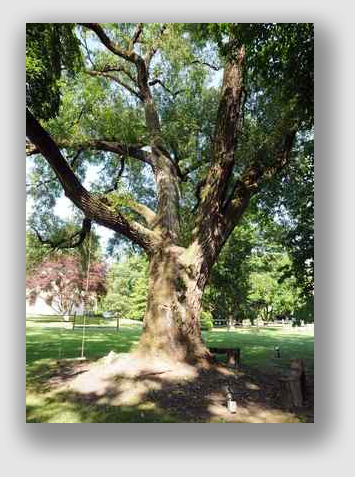
The bare branches of a large, spreading white oak tree are easily visible from the corner of Grand River and Spartan avenues. If an East Lansing developer is successful, a residential and commercial development called White Oak Place will showcase the ancient tree, estimated to be 265 years old, in a central courtyard in the 1300 block of E. Grand River Avenue. The proposed $22 million development by Joe Goodsir’s Next Generation Investment Properties would span the intersection of Grand River and Spartan, just east of downtown East Lansing …
A retired couple have been awarded a £38,000 payout after council bosses refused to chop down an enormous tree which caused thousands of pounds of damage to their home. Bill and Mary Nicholson, 79, from Derby, had pleaded with the authority to cut it down a decade ago but planners refused on the grounds that it created an ‘attractive and healthy environment’. The 58ft cedar tree’s roots ended up causing cracks in the brickwork and internal plastering of the Nicholsons’ semi-detached £400,000 home and the couple have now been awarded compensation. The pair were handed £3,000 for stress and inconvenience and their insurers £35,000 for the cost of the building work. But they still don’t know if or when the tree will be cut down. The Nicholsons have been locked in a legal battle with Derby City Council since 2006 – when the authority first blocked the couple’s attempts to fell their neighbours’ tree …

Mahwah is going to get a lot greener soon. The Mahwah Environmental Volunteers Organization (MEVO) has begun scouting locations to plant 1,000 trees throughout the township to remember “Trees” author Joyce Kilmer. The famous poet composed the well-known poem while living in Mahwah. He died during World War I. The initiative is a collaborative effort between MEVO, The Joyce Kilmer Society of Mahwah, Mayor Wiliam Laforet, the Township Council, and the township Beautification Committee …
There’s a tree in Madison Township that is one of the biggest in Michigan. So much so it earned 13-year-old Kindell Covey of Adrian the grand prize for the largest tree entered by a tree hunter 15 years old or younger in ReLeaf Michigan’s Big Tree Hunt. She and her family learned about the tree through a neighbor. Kindell first saw it when she was 10 years old. “I was thinking it would be really tall,” she said. “But when I saw it, I thought it was just really impressive.” According to ReLeaf Michigan, the tree is an American Sycamore 315 inches in circumference …
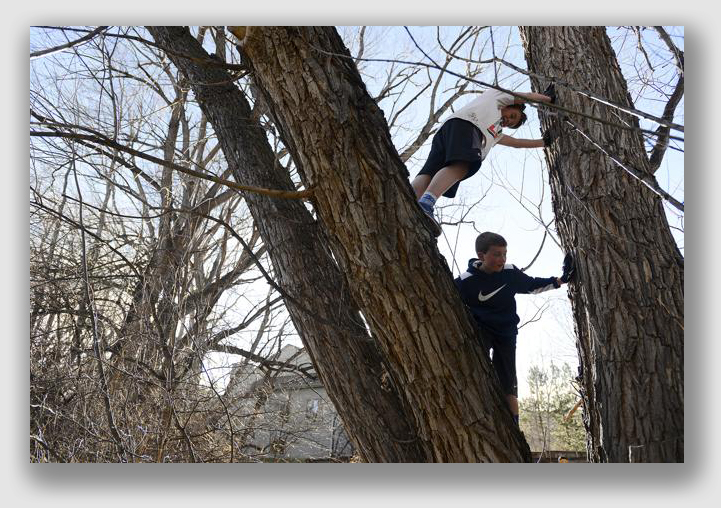
The ongoing dispute over whether a few trees in north Boulder should live or be chopped will now be settled by a lawsuit. At issue is a group of four cottonwoods and willows, some more than 100 years old, that stand along Farmers Ditch near Norwood Avenue and have for months been the subject of a conflict between the ditch company and the trees’ human neighbors. The company, which is chaired by Kim Hutton, a water resources specialist who works for the city of Boulder, wants the trees chopped because they’re allegedly encroaching on the flow on the ditch and pose a flooding risk; neighbors, horrified at the potential losses to scenery and property value that a hacking would bring about, believe the company has no scientific basis for its plan. A series of unofficial stays of execution have kept the trees upright, but in Boulder County District Court on Friday, their collective fate will be decided. Joe Taddeucci, Boulder’s Water Resources Manager, offered his take on the state of the controversy. “This has gone back and forth enough,” he said. “There’s not really a villain in this matter, and they both have understandable interests. But it’s gone on enough and the only way to resolve it is to let a judge decide …”
New York City, Wall Street Journal, March 19, 2016: Pushing back against progressive bullies
Any day now a Canadian court could force the radical environmental group Greenpeace to open up its records world-wide to scrutiny from attorneys for Resolute Forest Products . The progressive green bullies may have picked on the wrong business. Standard operating procedure for many companies faced with a protest campaign is to write a check and hope it goes away. But not at Montreal-based Resolute. CEO Richard Garneau tells us, “If you believe you’re on firm ground, you stand firm.” In 2012 Greenpeace claimed that Resolute was violating forestry practices that the company had agreed to follow. Resolute threatened legal action and so Greenpeace retracted its claims. But Resolute says that even after the retraction the environmental outfit kept publishing and broadcasting the same false claims, along with some new ones. According to the company, one Greenpeace tactic is to show video footage of trees damaged by an insect outbreak hundreds of miles away but pretend it is the forest harvested by Resolute. Greenpeace denies this …
 Boulder, Colorado, Daily Camera, March 20, 2016: Snow thwarts Louisville magnolia tree’s rare bloom
Time is running out to catch a glimpse of Louisville’s champion magnolia tree in rare form. Spurred by warm spring weather, the state’s largest saucer magnolia tree on the northwest corner of Main and Short streets is in full bloom this month. But this week’s dropping temperatures and precipitation will likely strip the tree of its pink and white flowers in the next day or two, said Chris Lichty, Louisville’s supervisor of Forestry & Horticulture. Louisville could accumulate 2 to 4 inches of snow by Friday morning, according to the National Weather Service forecast. “After this bout of weather, they’ll likely be gone,” Lichty said. “The blooms are really tender, and they’ll shrivel up and within a couple days they’ll fall to the ground.” Virginia Caranci and her husband, Eugene, have owned the home where the tree is located for nearly 50 years. Virginia Caranci said the tree was likely planted in the early 1930s after her aunt and uncle finished building the home. The tree almost always blooms in March but often sprouts only a few flowers before freezing temperatures and snow take them out, Caranci said. But this year, the tree reached its full potential before wintry weather moved in, Caranci said. “I’m looking out at snow now and thinking, ‘There it goes,'” Caranci said Thursday …
Bridgeport, West Virginia, WDTV, March 19, 2015: Maple tree farmers don’t think El Niño is so sweet
Maple syrup plays an important role in Randolph County’s economy, but mild winters like we experienced this past season, make it harder to produce this syrup locally. It’s essential for maple trees to experience a cold winter. When the trees thaw, the pressure inside the trees becomes greater and pushes the sap out of the tree. If it stays warm for several days at a time, the sap tends to dry up, ending the season early. The tapping season usually runs from mid-February until the end of March. Syrup can be drained from any maple tree, although sugar maple trees have high sugar contents and therefore are sweeter. Smells of sweet maple filled the air as the evaporator heated up, which extracts gallons of water to create a thicker consistency. When Mike goes out to tap trees, he says maple flows through his veins. The owner of Richter’s Maplehouse has been producing maple syrup for 35 years now. Richter says, “This year of course, March 1st or so, turned warm and that really hurt the season. It’s only been about a half a crop to two-thirds of a crop and that was strictly because of the long warm spell we had.” Locals expressed their appreciation for maple trees since the coal industry has dried up. “I would say that this is a major part of the economy because there’s not much going on in West Virginia at this time with the closure of the coal mines and the has industry going down, says Debra Gray. Because of the El Niño season, it caused one of the mildest and warmest winters on record. Sap began seeping out of the trees earlier this year than normal, which doesn’t make any maple tree farmer happy …
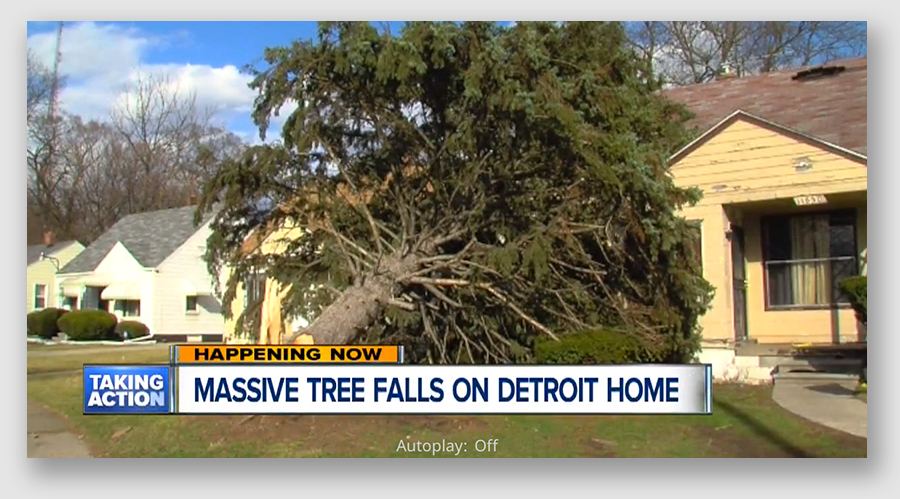 Detroit, Michigan, WXYZ-TV, March 17, 2016: Fallen tree leaves Detroit home covered in branches
Wicked winds led to a terrifying experience for a Detroit homeowner when they knocked a monster tree onto his home. Corey Walker has been living in the home for 5-years with his wife and two young kids. He says he got the scare of his life around one this afternoon when the tree, uprooted and fell onto his home. The big pine tree has left the home in the 11800 block of Pierson buried by branches. Inside, there’s even more damage. Branches pierced the drywall in the bedroom and there are debris everywhere. Corey says they will not be sleeping there tonight, just in case the wall caves in …
Thousands of homes, businesses, hospitals and other critical facilities around New Hampshire rely on Eversource’s power lines to deliver electricity every day, so protecting those lines is vital. That’s why the company’s commitment to electric reliability goes beyond maintaining the poles and wires themselves – it extends to the trees surrounding more than 11,000 miles of overhead power lines. Eversource works year-round to trim and remove tree limbs that threaten the electric system while simultaneously respecting the natural landscape. “New Hampshire is the second most forested state in the country and trees hold a special place in our hearts and landscape. But they can also have a devastating effect on the electric system, causing more than sixty percent of all power outages” said Bob Allen, Manager of Vegetation Management at Eversource. “Our standard and enhanced tree trimming programs not only improve day-to-day reliability for customers, they also allow us to identify and remove hazardous trees before Mother Nature does …”

Q: My pear trees haven’t been producing well for the past few years. The fruit seem to be getting smaller, and most of them fall off before they ripen. Why is this happening?
A: The problem is most likely being caused by a lack of pollination. European honeybee populations have been in serious decline the past decade, thereby affecting pollination. Each pear flower needs to be visited by a bee bearing pollen from the blossom of a different variety of pear at least 30 times in order to form a pear that will mature on the tree. Fortunately, a native bee is available that is an incredibly effective pollinator of fruiting trees. Orchard mason bees are little blue bees that seldom sting. They fly in cooler weather than honeybees, and they venture out only about 50 yards from nesting sites, making it possible for them to make hundreds of visits to flowers on a daily basis …
Cortez, Colorado, Journal, March 16, 2016: Making the cut: tips on pruning your trees
If there is one thing that terrifies many gardeners, it’s the thought of pruning. Yet, proper pruning is the best way to establish healthy trees. Although there are different rules of thumb depending on what kind of tree or shrubs you are dealing with, in general, now is the time to prune. This is especially true of fruit trees, which should be pruned in late winter or early spring before the blossoms open. With the warm weather during the past few weeks, it’s time to get going. The main purpose of pruning for a young fruit tree is to establish several strong scaffold branches that will end up forming the framework of the tree. Begin by carefully choose several branches that form a 45-degree angle from the trunk of the tree. Ideally these should point in different directions in order to form a frame for the future growth and these are the ones that you do not want to cut. These branches should be at least 18-36 inches from the ground and should be about 8-10 inches apart. Most of the other branches are the ones to be removed and the ones that you will cut. Do not cut the central leader. Keep in mind that any subsequent branches will sprout and grow from these main scaffold branches so make cuts just above the buds which are pointing in the best directions to support future growth …
 Louisville, Kentucky, Courier-Journal, March 16, 2016: Tree planting season brings a few questions
However, the actual process of selecting, siting and planting a tree can go off the rails in a hurry. In past columns, I’ve covered planting technique, the plague of volcano mulching and what to plant and what to avoid. So to complete the process, here are three basic “look” recommendations to help you do your civic best to be part of the Louisville area’s tree solution. Before you plant, there are three places to look… As silly as it sounds, it’s a good idea to make sure there is room for a tree to grow. The most common offender is overhead power lines. How many times have you driven past a slingshot tree – the species that is genetically programmed to grow 80’ tall, planted directly beneath power lines that run 20’ above the ground? Sure, you can prune the heck out of the tree to route the branches around the wires, but it doesn’t make much sense. Another one that seems obvious but a factor that gets missed all the time. The soil that will nourish your tree – hopefully for many, many years – has a huge influence over how your tree will perform. A heavy, clay soil in a low-lying area is a great place for a sycamore which happens to be native to river bottom areas. The same site would be a disaster for a beech or sugar maple …
A Healy man reported overdue from gathering firewood on Saturday was discovered by searchers beneath a tree he had brought down, according to Alaska State Troopers. Beryl James Palmer, 66, left his home at about 1 p.m. Friday, troopers said in a Tuesday dispatch, driving a bulldozer and carrying a chain saw. When Palmer was reported overdue at 1 a.m. Saturday, troopers began to search for him. At about 6:30 a.m., troopers and Tri-Valley medics found Palmer dead. “Investigation revealed that Beryl Palmer was crushed by a tree he was felling,” troopers wrote. “Palmer’s body was sent to the state medical examiner’s office for autopsy…”
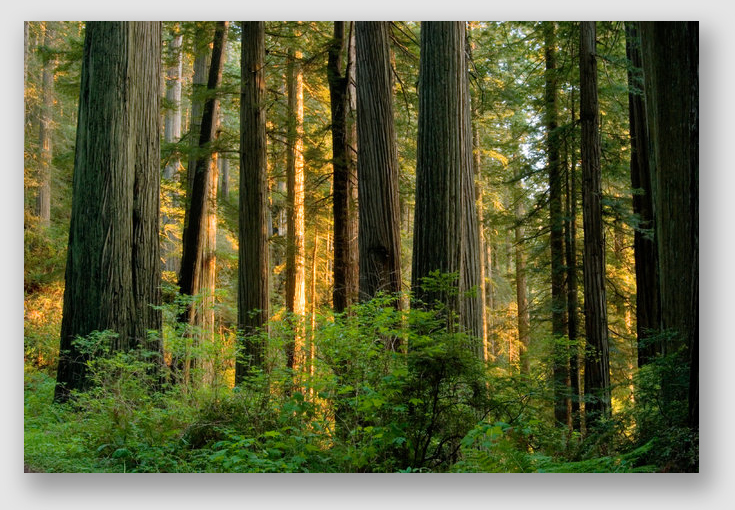 New York City, New York Times, March 16, 2016: Trees deal with climate change better than expected
The bend-don’t-break adaptability of trees extends to handling climate change, according to a new study that says forests may be able to deal with hotter temperatures and contribute less carbon dioxide to the atmosphere than scientists previously thought. In addition to taking in carbon dioxide during photosynthesis, plants also release it through a process called respiration. Globally, plant respiration contributes six times as much carbon dioxide to the atmosphere as fossil fuel emissions. Until now, most scientists have thought that a warming planet would cause plants to release more carbon dioxide into the atmosphere, which in turn would cause more warming. But in a study published Wednesday in Nature, scientists showed that plants were able to adapt their respiration to increases in temperature over long periods of time, releasing only 5 percent more carbon dioxide than they did under normal conditions …
Monterey, California, KSBW-TV, March 16, 2016: Google seeks to cut down redwood trees
As Mountain View warmly embraces high-tech giants such as Google and Microsoft, the Silicon Valley city is also poised to get rid of hundreds of other giants: Namely redwood trees, cedars and oaks. NBC Bay Area compiled a list of the top five developments – in order of tree removal permits – and discovered that of those, four high-tech companies want to get rid of about 300 trees, even though they must replace at least some of what they cut down. Google seeks to take down the most: 160 trees in all, 100 of which are deemed “heritage” because of their size and type, to pave way for a uber-modern, two-level, 595,000-square-foot office building on 2000 North Shoreline Boulevard at the current GooglePlex site. As defined in the city of Mountain View, a heritage tree must be an oak, cedar or redwood tree that stands at least 54 feet tall, and be 48 inches or more in circumference. To remove one needs a special permit from the city …
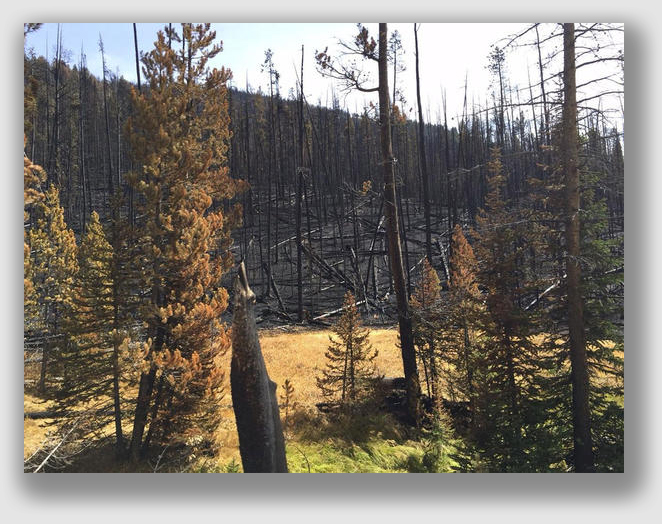
Idaho counties could declare federal forestland within their borders to be a “catastrophic public nuisance” under a measure approved by an Idaho legislative committee Tuesday. During public testimony, Idaho Freedom Foundation vice president Fred Birnbaum said the motive behind the measure is to pressure the federal government to address wildfire risk. “To the extent that the Forest Service is responsible, then let’s hold them accountable,” Birnbaum said. “Let us insist and let’s allow our county commissioners to ask the Forest Service when their counties are threatened to please abate the nuisance before it destroys communities.” Republican lawmakers suggest the way to abate this would be to increase logging or forest thinning. However, the sponsors acknowledge that state and county nuisance laws have no legal power over federal land management …
Joplin, Missouri, KSNF-TV, March 15, 2016: Downsides of pear trees:
A popular tree is in full bloom, but it might not be the best thing for our area. Pear trees are popping up all over the Four States for the last couple of weeks. Jon Skinner with the Missouri Department of Conservation says they are pretty, but their not good for our native trees. The pear trees tend to be invasive. They drop multiple seedlings and crowd out other native trees. The pear trees were imported from China back in 1917 and tend to take over. “In general, we are not encouraging people to plant these. Please pick a different ornamental tree that is native or known not to be invasive,” said Jon Skinner, Missouri Department of Conservation. Skinner suggests planting trees like maple or red buds to replace the pear trees. The pear trees should be in full bloom for another one or two weeks …

A joint City Council committee has backed a sidewalk repair plan that calls for Los Angeles to cover the cost of the first repair, then hand off the responsibility for future fixes back to the property owner. The Los Angeles Times says the new policy proposed Monday would roll back a longstanding rule that had put the city on the hook for sidewalks buckled by street trees. State law puts the burden for sidewalk repairs on the adjacent property owner, but Los Angeles took on responsibility for sidewalks damaged by street trees decades ago. Los Angeles has pledged to spend more than $1.3 billion over the next three decades to repair sidewalks, under preliminary settlement in a lawsuit. The city would then gradually hand off responsibility for future repairs, according to the new proposal …
A woman has died while skiing on a mountain near Whistler. RCMP say the woman was with her husband in the Seventh Heaven area of Blackcomb Mountain on Tuesday morning when they became separated in a treed area. Mounties say she was reported missing and a search was launched. A member of the public found the woman in a tree well, unresponsive. Blackcomb ski patrol, a mountain doctor, a paramedic and a nurse practitioner all tried to revive the woman, but she was pronounced dead at the scene. No details have been released about the woman’s identity …
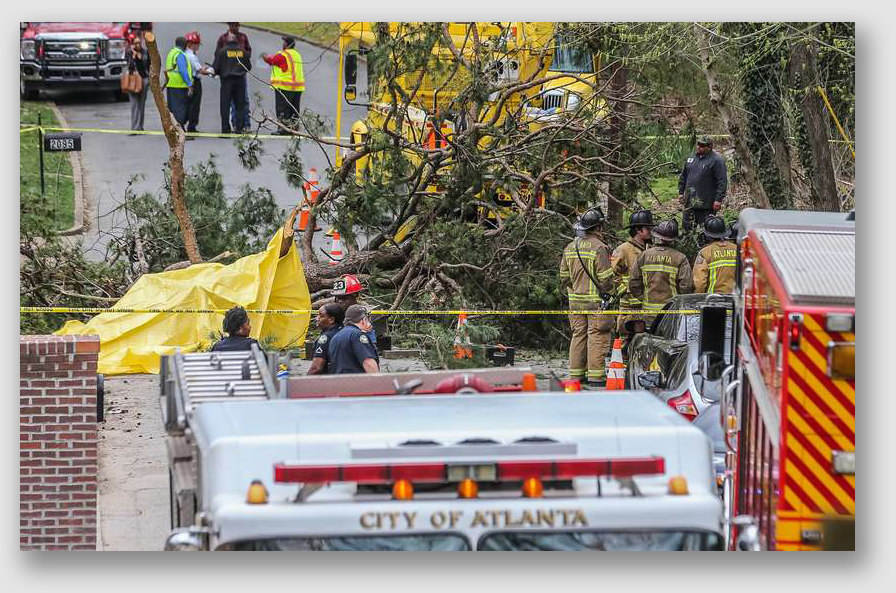
A City of Atlanta employee who was months from retirement was killed Monday morning when a tree fell on him in northwest Atlanta, a fire spokesman said. Donald Rembert was cutting down a tree limb in the 2000 block of Springlake Drive, Atlanta Fire Rescue spokesman Cortez Stafford told The Atlanta Journal-Constitution. The limb fell on Rembert, knocking him from the cherry picker he was in, Stafford said. He died on the scene. “Donald served the city of Atlanta for 29 years, and worked most recently with the forestry team in the Department of Parks and Recreation,” Mayor Kasim Reed said in a statement. “His loss is made more tragic with the knowledge that he was only a few months away from retirement …”
Cincinnati, Ohio, WXIX-TV, March 14, 2016: Tree falls over property line: Who pays and cleans up?
Today, I’m writing about a “spring” clean-up specifically when it comes to a shared yard with neighbors. We have a dead tree leaning in my home’s direction. So here’s the question I’m exploring this morning. If a neighbors tree falls over your property line, Who Pays? Who Picks Up the Pieces? What I found is actually pretty interesting and so I thought I’d pass it along to you. The first piece of advice I’m getting (if that happens) is to file an insurance claim for repairs and cleanup. No house damage? Check if chopping and hauling debris is covered. If a neighbors tree damages your property, your insurance company should pay to repair the damage, then decide whether to seek reimbursement from your neighbor (or the bank in my case). Homeowners policies cover tree damage caused by perils like wind and winter storms. Most policies cover hauling away tree debris if the mess is associated with house damage; some will cover cleanup even if no structures were harmed. Your neighbor is responsible when a tree falls over your shared property line only if you can prove he was aware that his tree was a hazard and refused to remedy the problem. Regardless, your insurance company restores your property first, and later decides whether or not to pursue reimbursement from the neighbor or his insurer if the neighbor was negligent in maintaining the tree …

A Country Club Road resident is seeking monetary damages from the town and a halt to any further tree removal or pruning on her property following what her attorneys are calling the ill-conceived and illegal removal of limbs from a tree not located in the public right-of-way, according to a civil complaint. The owner of 259 Country Club Road also is seeking statutory damages (under a state law regarding tree removal) and reimbursement of legal costs after New Canaan’s tree warden later turned down her objection to planned tree removal of two trees in a denial that “was retaliatory in nature for the plaintiff’s reaction to the [tree warden’s] mistake and errors with respect to” the first tree, according to a complaint dated Feb. 8 and received Feb. 11 by the town. On Dec. 9, following an exchange between the homeowner and tree warden regarding the posting of the tree—it was to be removed at Eversource’s request because it threatened power lines, the town official said—the utility “began to cut the limbs off of Tree One without any hearing …”
Los Angeles officials cracked down on a Brentwood developer Monday, saying he should be barred for the next five years from building on a site where three trees were illegally chopped down. Nazario Sauceda, director of the city’s Bureau of Street Services, issued a four-page letter saying Sullivan Equity Partners deliberately ripped out three “protected” trees — two live oaks and a towering western sycamore — that were supposed to be preserved on its property. Developer Sam Shakib, the company’s managing partner, had permission from the city to remove dozens of trees from the property as part of a plan for constructing two 14,948-square-foot mansions. But as part of that permit, Shakib was supposed to safeguard other trees on the sprawling 12-acre site. The three trees, Sauceda concluded, were removed not by accident “but intentionally to provide better access to the property or in some other fashion enable easier development …”
As emerald ash borers munch their way ever further into the Northland, one fact seems certain: We’re going to lose a lot of trees. But that doesn’t necessarily mean they should be laid to waste, says Brian Brashaw, who has helped assemble a handbook for how to put compromised trees to productive use. Brashaw put together the guide as an employee of the Natural Resources Research Institute in Duluth, though he now works as program manager for the Forest Products Marketing Unit of the U.S. Forest Service. Northern Minnesota is home to the highest concentration of ash trees in the nation, according to the Forest Service. While steps can be taken to slow the advance of the invasive beetle and to protect individual trees, nothing yet has been able to hold the infestation at bay …

Two people were killed Saturday morning when the crane they were using to trim palm trees in Riverside County made contact with power lines and caught fire, fire officials said. The incident occurred shortly before 11 a.m. in the unincorporated area of Thermal, according to a statement on the Riverside County Fire Department’s website. The two victims were cutting palm fronds in the 68600 block of Harrison Street when the crane’s bucket and the electrical wires made contact with one another, the department said. Meanwhile, the machine’s “lift was leaking oil which resulted in a fire.” Ten firefighters responded to the location, along with Imperial Irrigation District personnel, and the electrical power was “secured,” officials said …
This past January, Oregon was named the most popular state to move to for the third year in a row. This comes as no surprise to Portlanders. For years, the city has been publicly grappling with managing an influx of new residents — and subsequent new homes — while maintaining Portland’s affordability and keeping its character intact. One factor at this pivotal time for Portland’s urban development? Preserving the hundreds of trees that make up the city’s idyllic neighborhoods. The reasonable solution does not involve climbing trees in protest. It also won’t be accomplished by preventing builder property purchases. But, most importantly, the solution is not the “tree tax” currently proposed by the city of Portland …

Officials are usually pleased when residents tap into city resources, but there are exceptions. As spring approaches, there is growing concern in the forestry department over an increase in the tapping of street side maple trees for sap. “We’re seeing more and more of them this year than we’ve noticed in years past,” Urban Forestry & Natural Resources Planning Coordinator Kerry Gray said. “We see this every year but it’s certainly picked up this year.” Tapping any trees on city-owned property is a violation of city code and punishable by fines of up to $1,000. According to chapter 40 of the city’s ordinances “No person without written permission of the City Administrator shall plant, remove, break, spray or take any action which will injure or destroy any tree or shrub, the base of which is located in the street right-of-way or other city land.” Technically, someone could apply for a permit to tap a city-owned maple tree, but spokesman Robert Kellar said such permits would be denied …
Green Bay, Wisconsin, Press-Gazette, March 13, 2016: What to plant under a black walnut tree
For many urban gardeners, black walnut is a not-friendly tree. Though black walnut is valued for its fine quality timber, they have a detrimental property that inhibits many plant species from growing around them. The source of the black walnut toxic nature is because of a chemical compound called juglone, which is present in all of its body parts. The highest concentration of juglone in black walnut is found in its buds, roots, and nut shells. Juglone is highly persistent in the soil because of its poor water solubility nature that prevents it from leaching into the soil. This can be a nightmare for gardeners as there is no easy solution to dilute the juglone in the soil even if the tree is cut down. Beware that the decomposing roots from the cut down black walnut tree can still release juglone and can persist in the soil for multiple years. Concentration of juglone is usually higher within the canopy dripline area of the tree because of its extensive root mass distribution and from decaying leaves and shells. Hence it’s best to plant sensitive crops away from the drip line area or at least 50 feet away from the trunk of the tree …
Frederick County experiences North versus South influences, with larger temperature swings this winter than in most years. Trees and other deciduous plants developed winter buds and lost their leaves last fall, as they went into dormancy for the winter. In our area, dormancy is usually triggered by shorter days and cooler temperatures during the fall. These conditions promote bud formation, leaf fall, and the movement of water and sugars into the root system. The process of entering and exiting a dormant condition is due to the complex interaction of hormones and enzymes in a tree. Some trees, after unusually warm weather in December, were showing increased early bud development. When a tree goes into dormancy there is a buildup of abscisic acid in the twigs. This chemical causes the leaves to separate and drop off the tree; it also inhibits bud growth and development. During the winter, abscisic acid begins to break down following periods of cold. Once the tree has reached its “chill requirement” the abscisic acid is gone; it can no longer suppress bud growth and the buds begin to produce other substances like auxins, gibberellins, and cytokinins. These promote bud break, flower and leaf expansion, and the tree breaks dormancy. In essence, the tree has to withstand a specific period of cold weather before it will break bud …
 Outside magazine, March 10, 2016: What’s killing Hawaii’s trees?
Patient zero was probably in Puna, a lush, wild district not far from Volcanoes National Park on Hawaii’s Big Island. In 2010, the U.S. Forest Service and University of Hawaii started getting calls from distraught landowners in the area about ohia trees on their properties. Ohias, the bright, flowered trees that dominate nearly 50 percent of the island-state’s forests, are known for their ability to thrive nearly anywhere across the archipelago. But a swath of them had withered mysteriously and died in a matter of weeks. It perplexed Flint Hughes, a Forest Service ecologist on the Big Island. Groves of aging ohia trees, which can live for 600 years, often die off together when they reach old age, but these were young trees that had turned brown and wilted. More calls started coming in from across Puna, all reporting the same problem: the ohias were dying, fast. The Forest Service was stumped. It wasn’t until 2013, when Hughes and another ecologist checked on a particularly resplendent patch of forest owned and protected by the private Kamehameha Schools system, that the severity of the matter became apparent. The two men had been there a month earlier checking on seedling mortality. But rather than gazing at a grove of healthy trees, they stood over an ohia graveyard. The trees were alive a couple weeks ago, Hughes remembers thinking. “That was the alarm going off …”
A Dublin company manager has told a court the value of his home fell by €90,000 after a neighbour cut down seven 50ft-high trees close to their common boundary and strongly trimmed back four others. Dermot P McArdle told the Circuit Civil Court that last September he had been trying to sell his property at The Pine Trees, Kilgobbin Road, Stepaside, Dublin, and had been shocked to find his next door neighbour Colin Kilgannon, of Sans Souci, Kilgobbin Road, had carried out the tree felling. Mr McArdle told his barrister Andrew Walker that he and his wife, Margo, had been living at a different address at the time and had been unaware of Mr Kilgannon’s plans. He said that before the incident, his property had been valued at nearly €900,000, but a last purchase offer had shown the property valuation had been reduced to €810,000. Mr Kilgannon claimed Mr McArdle had given him permission to cut down the trees, the roots of which were underlying his property and causing damage to his house foundations. Mr McArdle denied having granted such permission …
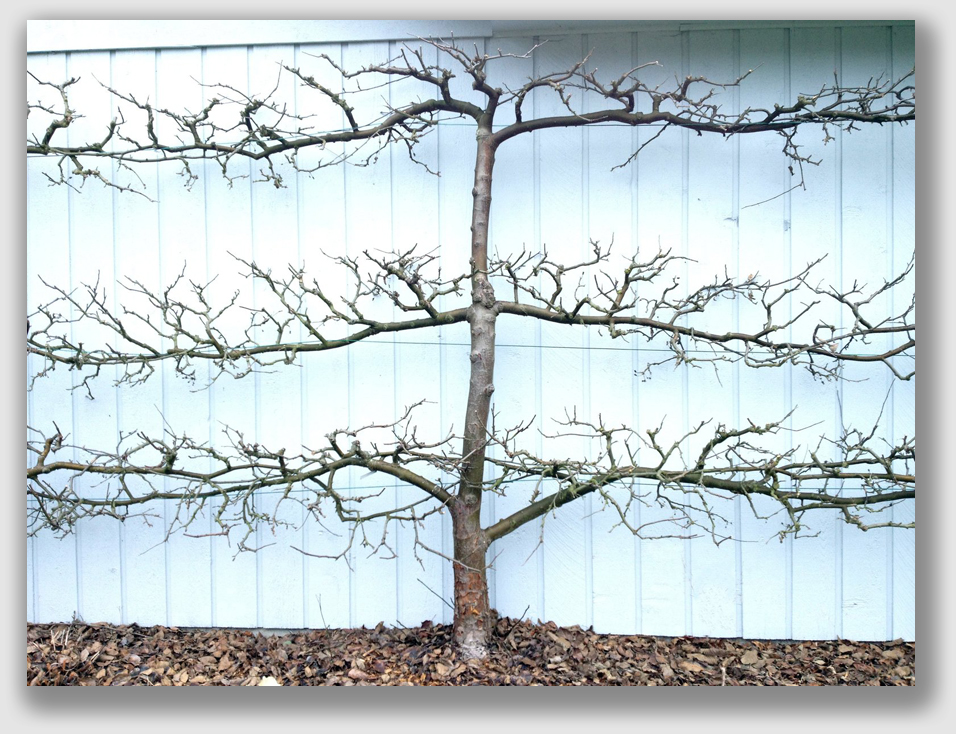
If you’re in the market for an apple or pear tree this spring, consider buying an espaliered tree. Espalier is a form of pruning where a tree is trained to grow flat, usually against a wall or fence. There are a number of forms to choose from but I find the easiest and most attractive is to train multiple tiers of branches (usually three) to grow horizontally from a single vertical trunk. There are a number of reasons I recommend espalier over growing an apple or pear tree in an upright form. First of all, espaliered trees are attractive. Once established, they are living sculptures and often become a focal point in the garden. At the same time, espaliered trees take up less space than an upright tree. They’re also easier to care for than an upright tree. In espaliered trees, the majority of the energy is concentrated in production of fruit-bearing wood. Pruning generally consists of cutting back upright growth above long-lasting fruiting buds and maintaining the desired form by removing outward-growing branches. Upright-growing trees, on the other hand — especially ones pruned hard to control for size — tend to produce gazillions of unproductive vertical shoots that must be removed on a yearly basis to allow air and light to penetrate into the canopy …
English oak trees could be devastated by a plant disease spreading through Europe, experts warn. Xylella is carried by 300 different plants and was found in Italy last year, where it has since ravaged ancient olive groves. The European Commission has described the bug, which has the full name Xylella fastidiosa, as ‘one of the most dangerous’ plant diseases world worldwide. For many, the oak tree is one of the symbols of Britain. English oak was the timber used to build Lord Nelson’s fleet, the roof of Westminster Hall, and is the symbol of the National Trust. Now a leading tree grower fears oak trees could be wiped out by the disease, which he believes could have a bigger impact than ash dieback, which is wreaking havoc on that variety of trees across the UK …
Miami, Florida, Herald, March 10, 2016: Trees fall spontaneously along Miami Springs canal
Large trees lining a quiet Miami Springs canal bank gave little warning when they cracked and fell recently along the 500 block of Esplanade Drive. “My role as the city arborist is not only to preserve trees but to also recognize and take action when there is a real potential for loss of property or imminent danger to human life,” said Public Works Director Tom Nash. “This section of canal has never been maintained and was taken over by non-native invasive trees.” Trees spontaneously cracked and fell near a section of the canal, officials said, that is frequented by joggers and bicyclists. The city “proactively” mowed down a once-lush tree canopy at the site, which borders the golf course and hugs one of Miami Springs most prominent streets, Deer Run Drive. The “invasive” tree species, Nash said, included Florida holly, melaleuca, schefflera and Norfolk Island pines. Nash added that water flow in the canal was disrupted by the trees, which in turn attracted “salmonella-carrying” rats, raccoons and iguanas. “I hate to hear bulls— that certain trees are dangerous or can attract pests,” said Don Tiff, a 30-year resident. “That is just an excuse to remove them …”
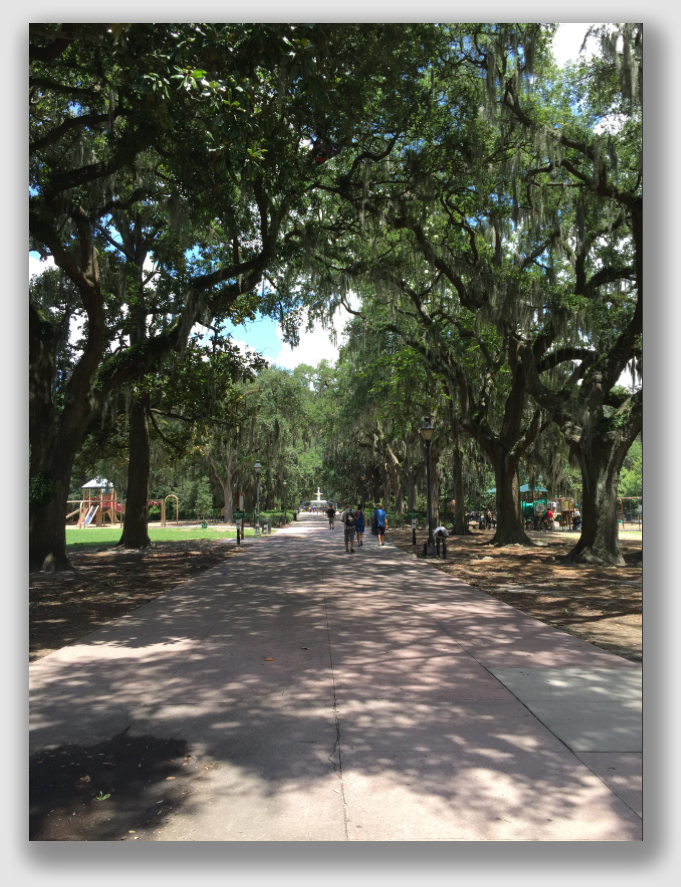 Savannah, Georgia, WJCL-TV, March 9, 2016: Tree advocates worry about state senate bill
A Georgia state senate bill is stirring up controversy. Tree advocates worry trees will be cut down if Senate Bill 383 gets passed. The Savannah Tree Foundation posted to their Facebook voicing their concerns about the bill. The group asked people to write to the Chairman of the Transportation Committee requesting he vote down the bill. If it passes, the bill will allow the state to remove and trim trees in front of businesses and signs. Right now non-profits work with the city to maintain the trees. This bill would give the Georgia Department of Transportation the authority to cut and remove trees near businesses. Sponsors of the bill say if shrubs and trees are block the view of a business, people won’t know where the it’s located. Volunteer and Board Member for the Savannah Tree Foundation Dale Thorpe worries the state doesn’t have the training to properly prune the trees. “If it’s done on a wholesale, just clear it, you’re going to lose a lot of the canopy throughout the state,” explained Thorpe, “and the canopy is the workhorse of our natural resources …”
Fresno, California, KMJ Radio, March 9, 2016: A tree falls in Fresno – Who’s at fault?
A giant Redwood came down over the weekend in Fresno. Homeowner Suzanne Crosina Sahm says it was careless trimming by the PG&E tree contractor. PG&E Spokesperson Denny Boyles says they trim two million trees each year – those that are not in compliance – or under a power transport line. With the drought and now the rains weakening roots, there’s a word of warning to homeowners — PG&E says if it’s on your property, it’s your tree …

For the first time, the U.S. Forest Service has published an urban forest assessment. The report details tree life in Austin, the capital of Texas.In 2014, as part of the USFS Forest Inventory and Analysis program, ecologists began studying tree plots in Austin and quantifying the benefits they provide the urban environment. This week’s report, over 60 pages long, is a culmination of their work. Trees help clean the air, sequester carbon and curb energy use. According to the report, the environmental benefits of Austin’s canopy is worth some $34 million. “We found that throughout the city, an estimated 33.8 million trees provide a canopy cover of 30.8 percent, which in turn provides a wide range of important benefits,” David Nowak, lead author of the new report and a research forester with the Forest Service Northern Research Station, said in a news release …
Sonora, California, KZSQ, March 9, 2016: Tree mortality community forums planned
As Tuolumne County responds to the Governor’s State of Emergency related to high tree mortality, some public forums are being planned for community residents. Tracie Riggs, Tuolumne County Office of Emergency Services Coordinator, reports that representatives from several groups will be on hand to speak at the forums and answer any questions from those in attendance. There will be officials from Tuolumne County OES, CAL Fire, TUD, county roads, US Forest Service, Sierra Resource Management, AT&T and PG&E. Tuolumne County is planning to remove thousands of trees over the coming months that are threatening roads and other public infrastructure. The high tree mortality is primarily being attributed to a combination of the drought and bark beetles …
Science magazine, March 9, 2016: World’s oldest pine tree fossil found in Canadian rock quarry
Scientists have found a 140-million-year-old pine tree fossil, the oldest known, in a Canadian rock quarry. The charred twig (seen above) has small divots where pine needle shoots once sprang forth, and analysis of the internal woody material has revealed ducts that once carried sticky resins. The fossil, just a half-a-centimeter in diameter, was found after researchers used acid to dissolve a rock sample from a gypsum quarry in Nova Scotia, Canada, they report this week in the journal Geology. Pine trees belong to the most widespread genus in the world, and scientists want to know how and when they evolved. The new find is as much as 11 million years older than the previous record holder, suggesting that pine trees came on to the scene even earlier than expected. Scientists weren’t surprised to find the fossil charred from a fire. At the time the pine tree was alive, the world was in a greenhouse, and oxygen levels and temperatures were high—prime conditions for fires. Pine trees, containing flammable resins, have evolved to aid and abet fires so that their pine cones can germinate on the charred forest floor, free of competitors …
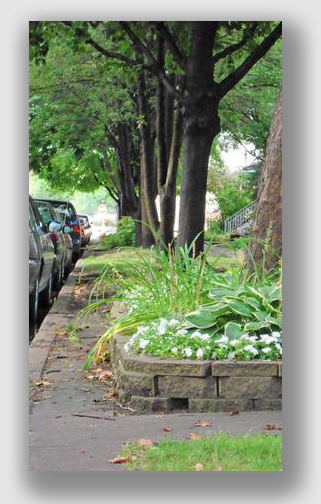 Chicago, Illinois, Chicago Tribune, March 8, 2016: Planting bed around your tree might be killing it
Gardeners may be thinking of adding some color to the garden this spring by building a planter or raised planting bed around a tree. For the tree’s sake, don’t do it, says Doris Taylor, Plant Clinic manager at The Morton Arboretum in Lisle. The planter will stress the tree, which can lead to disease, insect problems or rot, and eventually cause the tree to decline and die. “You can lose a beautiful big tree that way,” she says. The soil you pile in the planter will block air and water, and its weight will pack down the original soil, smothering the tree’s roots, she says. Desperate, the tree may send new roots up toward the surface of the planter’s soil. Those roots can wind around the tree and cut off the flow of water. “It can strangle itself,” Taylor says …
Towering poplars and oaks, some as old as a century, some 100 feet tall. Together the trees, growing on a wooded swath atop Solebury Mountain, were worth an estimated $260,000. But they were obstructing the scenic overlook from David L. Topel’s deck. So he had 22 of them felled — to the shock of neighbors. But Topel didn’t realize, he said in Bucks County Court on Tuesday, that the trees weren’t his to chop down. “I did not intend to hurt my neighbors’ property. I really didn’t,” Topel told the judge, his voice trembling. Appearing earnest and remorseful, Topel said he mistakenly thought the protected trees were on his own lot. He pleaded no contest to a felony count of criminal mischief. Topel, 62, was sentenced to five years’ probation and ordered to pay $260,000 to replace the trees on the mountain in Solebury Township, outside New Hope; 65 other counts were dropped …

Protecting the backbone of Jersey Central Power and Light and its nearly six million customers, the aerial saws used to trim trees and other vegetation along transmission corridors are praised by the company as efficient and cost-effective. First Energy has been using aerial tree-trimming since 1988, and JCP&L introduced the time-saving technology to rural parts of the state in 2013. Now, Aerial Solutions, a North Carolina-based company, covers more than 50 miles in Morris, Mercer, Monmouth, Warren, Sussex and Hunterdon counties for JCP&L as well as thousands of miles for other utilities in 24 different states. “This takes enough canopy weight off the line side so that during bad weather the tree doesn’t trip,” said Aerial Solutions General Manager Ted McAllister. Originally a task that could take weeks, the crew can clear up to 4 miles in just six hours at half the cost (see the video)…
Watertown, New York, Daily Times, March 8, 2016: Keep it together: cabling trees
No tree is perfect. Sure, saplings probably grow up leafing through Cosmopolitree magazine, hoping to look like their “Arbie” dolls someday, but often they develop imperfections. The vast majority of these are benign, but some can be dangerous. To avoid breakage of large limbs and associated flying lawsuits and debris, trees with obvious defects are often removed. But since many problems are a result of our activities, it hardly seems fair to send a mature shade tree to that great arboretum in the sky if there’s an alternative. A common but usually correctable problem is called narrow forks. This type of defect can be fixed when the union is small by a mere snip of a hand pruner. If this is not done, the defect gets weaker over time. If there is a valuable target (swing set, house, Faberge egg) that could be struck if one side splits off, corrective action is needed. Have a professional evaluate the tree. If it is in very bad shape, it may need to go, but if is healthy other than the weak union, a cable system could be installed …

Police in Roselle, Illinois, cited a driver with DUI after spotting the vehicle moving down the road with a 15-foot tree stuck in the grill. The vehicle’s airbags had also been deployed, presumably from hitting the tree. Images and video of the vehicle, taken “a few weeks ago,” were posted to the Roselle Police Department’s Facebook page …
London, UK, Metro News, March 8, 2016: Tree surgeon almost chopped his own head off with chainsaw
A man accidentally slashed his own throat with a chainsaw after slipping on a damp branch. Carl Moulton, a tree surgeon from west London, had an extremely lucky escape after the chainsaw slashed into his Adam’s apple as he slipped 15ft up a tree. The 41-year-old was convinced he was about to die and thought he would never see his kids again. Carl told the Sun: ‘I thought I was never going to see my kids again.” Yet he managed to escape with just surface cuts and a deep wound in his arm after stumbling on a damp branch on a tree at a primary school in Hammersmith, west London. The dad-of-four explained: ‘I was in a harness leaning forward and cutting when I slipped. The chainsaw came back and hit me. ‘I felt it thud into my neck. A bit harder and it would have taken my head off. It took me about ten seconds to abseil out of the tree and I was thinking, “This is it, I’m a goner …”
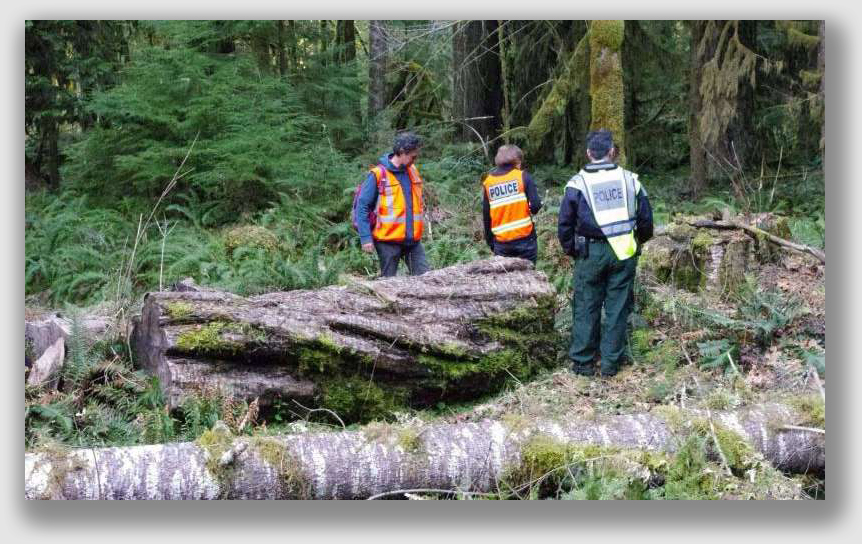 Phys.org, March 7, 2016: Genetic profiling of trees helps convict timber thieves
University of Adelaide forest DNA forensics research has helped convict National Forest timber thieves in a landmark case in the United States. Four defendants prosecuted for stealing Bigleaf maple wood from the Gifford Pinchot National Forest have pleaded guilty, in a case that marks the first time the US government has prosecuted for illegal interstate trade of wood products under the Lacey Act. The Lacey Act is a US wildlife protection law that was amended in 2008 to include plants, making it illegal to trade in illegally sourced wood products. DNA evidence developed by a consortium of experts led by the University of Adelaide was an important element of the government’s case against the timber thieves. Researchers from the University’s Environment Institute developed DNA markers for the Bigleaf maple population. They joined the US Forest Service and timber-tracking specialists Double Helix Tracking Technologies, with help from World Resources Institute, to develop the first DNA profiling reference database for the species. It’s the only one of its kind for trees that has been validated for use in court proceedings. Just like individual humans, each tree has a unique genetic fingerprint, making it possible to match pieces of sawn wood with the stumps of the trees from which they were cut, using a technique called DNA profiling …
QUESTION: I have a red maple tree in my backyard that needs trimming. Would the use of tree spikes damage the tree? I do not want to kill or damage it and then have to pay a large amount of money to have it taken down.
ANSWER: Living trees should not be climbed using tree spikes when pruning. Only dead trees or trees that are being taken down should be climbed with spikes. The spikes will not kill the tree, but they leave behind wounds in the trunk. These wounds will likely heal without problems. But we try not to wound trees needlessly as any wound is a potential source of infection …
 Watertown, New York, North Country Public Radio, March 5, 2016: When trees go over the hill
Senescence is the decline in vigor that happens to all creatures great and diminutive as they close in on the life expectancy of their species. People my age suddenly find they require reading glasses to see the phone book. Though I suppose by definition anyone still using a phone book is old enough to need glasses, right? The onset of this process varies—you probably know of families whose members frequently retain good health into their 90s, and other families where that is not the case. Of course environment is important. Eating and sleeping well, cultivating gratitude, and laughing a lot will help keep us healthier longer. But there comes a point at which even the best-preserved specimen can’t avoid the end of life. Trees also go through senescence at different rates. Each species has an approximate lifespan after which no amount of TLC can keep them alive. One of the more popular white-barked birches for landscape planting is the native gray birch. You may love your birch clump, but those trees are old at thirty years, ancient at forty—by the time they double over and kiss the ground in heavy snow or an ice storm, they may be on their way out anyway…
Detroit, Michigan, Free Press, March 4, 2016: Tree trimmer, 28, dies after fall at Ann Arbor home
Officials say a tree trimmer has died after falling from about 40 feet above the ground onto a wooden deck at an Ann Arbor home. The Ann Arbor News reports the 28-year-old man was working at a private residence on Monday when his climbing saddle broke, causing him to fall. He was taken to a hospital, where he died. The man’s name wasn’t released by state officials. The death is under investigation …
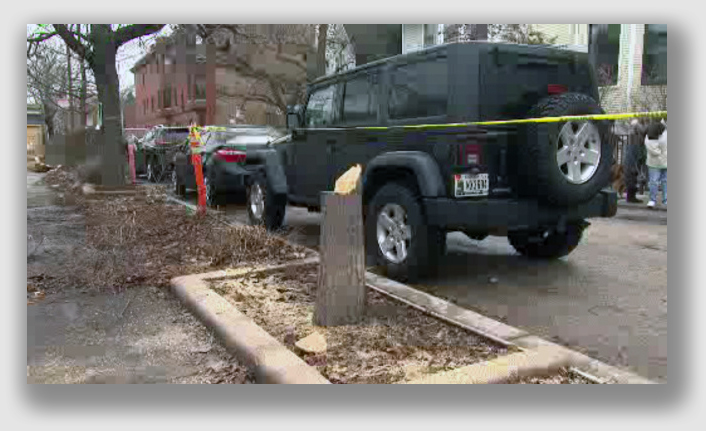
Neighbors of a block that is a Kyle Schwarber home run away from Wrigley Field are upset with the Cubs and the team’s apparent decision to cut down the trees lining their street. The signs posted just north of Wrigley Field, along the 3700 block of North Seminary, read “Tree Trimming.” But 24-year resident Tom Cascarano told CBS 2 that no one notified the neighborhood that trees would begin coming down at 8 a.m. Saturday. “I love trees,” Cascarano said. Cascarano and other neighbors said the trees add “a little warmth” to the Cubs’ Blue Lot area, former railroad right-of-way that is immediately north of the ballpark. The neighbors said some of the trees are more than 20 years old, and said the tree-cutting baffles them because they border the lot and are not in an area that is a part of the Cubs’ Wrigley Field renovations. The Chicago Cubs technically own the parking lot where crews are working …
Westerly, Rhode Island, Sun, March 6, 2016: Threat of lawsuit grinds tree cutting to a halt
A tree cutting operation slated to start Monday on properties near Westerly State Airport has been put off for one week in anticipation of legal action aimed at stopping the project. The Rhode Island Airport Corporation postponed the work for one week on properties whose owners have not yet signed documents accepting payment for easements granted to the corporation. The easements, which the corporation took by eminent domain, give the corporation authority to enter the properties at any time to cut or remove trees. The contractor hired to perform the work decided to postpone the entire project for one week to March 14, said Patti Goldstein, RIAC spokeswoman. The decision by RIAC to put the work off came after Gregory Massad, a lawyer who represents some of the affected property owners, notified the corporation of his plans to seek a court injunction to stop the work. RIAC said it expects the case to be resolved quickly and in its favor. “Due to the fundamental safety necessity of this project, i.e. a clear public need, we expect a swift and favorable legal resolution,” said Peter Frazier, RIAC interim president and CEO, in an email to town officials …
On Nov. 17, Spokane was hit with a severe windstorm that caused hundreds of trees to topple. Many homeowners are now faced with the task of replacing those trees while wondering if a windstorm of that magnitude will hit again. Angel Spell has been assessing the damage and often hears that concern. As urban forester for the city of Spokane, Spell manages the trees within the city’s parks and other public property, along with trees planted on street rights-of-way. The Parks and Recreation Department has been compiling statistics of tree failures attributed to the windstorm, and the numbers are quite interesting. “Evergreens were the predominant failures,” she said. “Sixty-five percent were pine trees, 21 percent were spruce, 9 percent were fir trees, and the remaining 5 percent were other trees hit by falling pine, spruce or fir trees during the course of the storm …”
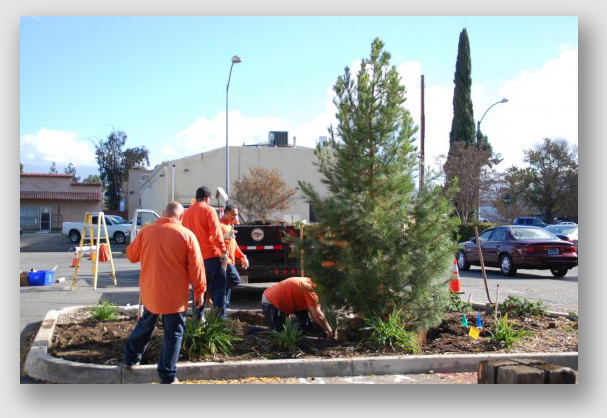
Before …
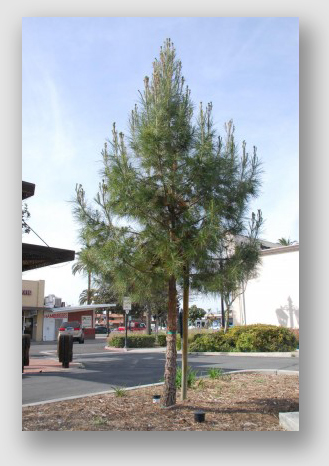
After …
Hemet, California, Press-Enterprise, March 3, 2016: Bad hair day for Hemet’s Christmas tree
Hemet attorney Dave Angeloff was confronted with a shocking sight when he pulled into a North Harvard Street parking lot before a Downtown Deli lunch. The Hemet Christmas tree he and Hemet True Value Hardware owner Rick Truskowski donated was butchered with a trim job worse than a bad haircut. “We do a good deed and look what happens,” Angeloff said of the sad-looking pine. “They chop it off. And it looks like an old scrub tree.” Branches from the lower portion of the tree in a parking lot planter were gone, eliminating its holiday shape. Botched haircuts grow out in a matter of weeks. Who knows if the pine ever will look like a Christmas tree again? “Now we have a Charlie Brown tree,” added Angeloff, clearly referencing the iconic comic strip character’s tree before Charlie’s friends dressed it up with Snoopy’s decorations. Kristen Jensen, Hemet’s public works director, understands why Angeloff would be upset. “Rightfully so,” she said. “It was an expensive tree …”
San Diego, California, KGTV, March 3, 2016: Del Mar wants to kill bark beetles on private land
Bark beetles are continuing to eat away at the beloved Torrey pine trees that line Del Mar, and the city is now considering a drastic measure to fight back. The drought conditions are hindering the trees’ ability to defend itself, and that’s opened the door to a bark beetle infestation. Currently, Del Mar appears to be winning the battle at two of its city parks. It placed bark beetle traps last year, and has so far collected 50,000 bugs — more than 10 times the amount of trees on Del Mar public property. Del Mar resident David Parkes said it helps keep the public safe. “We saw a lot of the trees started to lose limbs and stuff and so I think eventually it’ll start breaking down the tree,” he said. Private property is another issue entirely. Del Mar currently has no authority to enter someone’s land and remove a sick tree, and stop the beetles from spreading …

A spokesperson for DTE Energy has promised that homeowners in southeast Michigan will be given ample notice if any trees are trimmed or cut down on private property. “We will not remove a tree without a signed release from the customer,” said Mike Palchesko, regional manager of corporate and government affairs for DTE. “That’s something we really focused on in 2015 and will continue into 2016.” Palchesko appeared Tuesday before the village council in Beverly Hills to give an update on the company’s 2016 tree trimming program. The utility company serves an estimated 2.1 million customers in southeast Michigan. In 2015, contractors working with DTE trimmed trees along nearly 4,000 miles of power lines. Palchesko said fallen tree limbs contribute to the vast majority of power outages and that electric reliability improves by 70 percent in areas where the lines are cleared …
More than 60 of the world’s best male and female professional tree climbers representing 18 countries will compete for the title of world champion at the International Tree Climbing Championship (ITCC) on April 2 and 3 at Brackenridge Park in San Antonio. The free event–organized by the International Society of Arboriculture (ISA) and presented by The Davey Tree Expert Company– is open to the public to showcase arborists in action and help educate the community about professional tree work. The competition provides an educational opportunity for tree climbing arborists to demonstrate and learn new climbing techniques, interact with other competitors, and provide public exposure for the profession. Rules for the competition follow industry safety standards and help train climbers to work more safely when performing professional tree work …

Pine needles belong in the forest, not on a neighbor’s lawn, according to a Rhode Island lawmaker who wants to compel residents to trim unruly twigs and trees. The state Senate passed a bill Tuesday that would require homeowners to prune their shrubbery and trees or face a $500 fine if plant litter lands on someone else’s property. The bill’s sponsor, Democratic Sen. Frank Ciccone, said he introduced the legislation after listening to concerns about pine trees from residents in his Silver Lake district of Providence. Pine trees are “nice in the forest, nice in certain areas, but they shed these pine needles and sap onto adjacent vehicles and driveways,” he said. Senators voted 26-6 to pass the bill that would require homeowners to maintain and control any debris created by a tree or shrubs if it causes a nuisance to an abutting property owner. Sen. Elaine Morgan, a Republican who voted against it, said landowners shouldn’t be held responsible for raking falling leaves …
 Chicago, Illinois, WGN-TV, March 1, 2016: Suburban tree house leads to fight between neighbors
A suburban tree house has led to a physical fight between two Park Ridge neighbors. The tree house sits between the two homeowners’ homes. This tree house has been the center of a dispute between neighbors for a while now and the city has told the family it needs to come down. To show their support for the tree house a neighbor put up a sign which led to punches thrown and an arrest. The family plans on taking Park Ridge to court, and in a good faith effort to help save the tree house, their neighbors to the right put up this sign, which was not well received by one neighbor …
 Portland, Oregon, KOIN-TV, March 1, 2016: Tree crushes car, kills pregnant driver
A pregnant woman was killed Tuesday morning after a tree fell in East Multnomah County and crushed her car. Kristi Leigh Oliver, 30, was traveling westbound on Southeast Oxbow Drive a few miles south of the intersection of Southeast Division Street when the tree fell, said Lt. Steve Alexander with the Multnomah County Sheriff’s Office. She leaves behind her husband, Jeremy, and her son, 3-year-old Mikey. Mike Weber of Sandy was driving to work on SE Oxbow Drive and witnessed the crash. He was driving behind Oliver. “This tree, it just broke off out of nowhere. It looked like it had exploded. But it hit her truck, spun her truck around,” Weber tells KOIN. The tree ripped open the roof of her SUV. He stopped his car and ran to help her. He couldn’t find a pulse …
Burlington, Vermont, WCAX-TV, March 2, 2016: Traffic flagger struck by tree dies from injuries
Police say a traffic flagger who was seriously injured in Vermont last month after being struck by a tree has died. Workers were removing the tree along Godfrey Road in Thetford on Feb. 16 when it struck 77-year-old Donald Ferland of Greensboro Bend. Ferland, who was not wearing a hard hat or other protective equipment, was taken to Dartmouth Medical Center in Lebanon, New Hampshire. Police say he died from his injuries on Monday. He was employed for traffic control by New England Tree Experts of Hardwick. The crew was helping to clear for a utility line upgrade along the road …
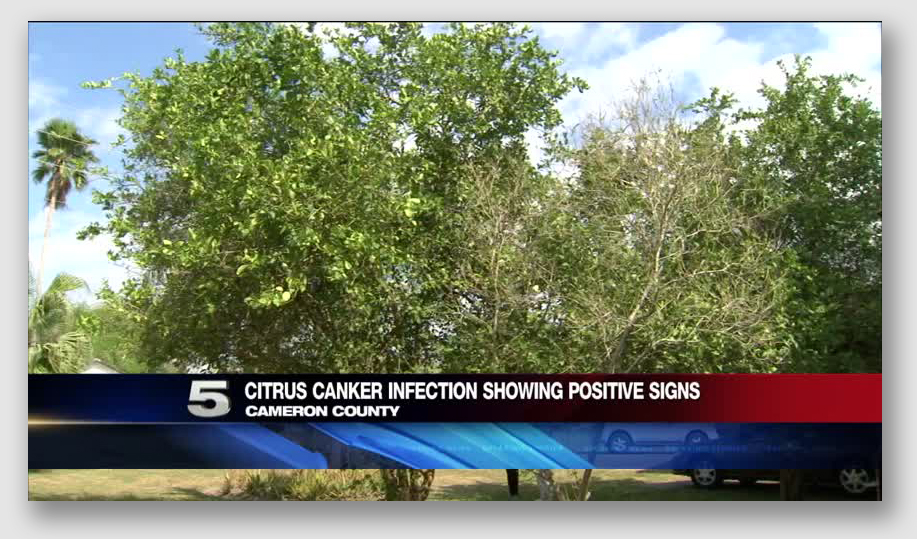 Brownsville, Texas. KRGV-TV, March 1, 2016: Resident worries about Citrus Canker affecting his trees
Citrus canker continues to plague dozens of citrus trees in Rancho Viejo. One resident said he worries his trees may be next. Roberto Jimenez has tended to his lemon and lime trees for 40 years. “One of my sons, son-in-law, he seed it for us,” Jimenez said. “He’s an engineer of agriculture in Mexico, so he put all these trees and palm trees here.” Jimenez said nothing beats the taste of home-grown fruit. “We use the limes for our own purpose, you know, lemonade,” he said. The citrus tree owner said he’s so passionate about his fruit. He said he tries to keep eliminate threats from his trees. “We try to keep it away with some pesticides,” Jimenez said about the citrus canker. Texas Citrus Mutual said a certain strand of canker only affects lemons and limes. The organization states there is no cure, and it’s very contagious …
Pine needles belong in the forest, not on a neighbor’s lawn, according to a Rhode Island lawmaker who wants to compel residents to trim unruly twigs and trees. The state Senate passed a bill Tuesday that would require homeowners to prune their shrubbery and trees or face a $500 fine if plant litter lands on someone else’s property. The bill’s sponsor, Democratic Sen. Frank Ciccone, said he introduced the legislation after listening to concerns about pine trees from residents in his Silver Lake district of Providence. Pine trees are “nice in the forest, nice in certain areas, but they shed these pine needles and sap onto adjacent vehicles and driveways,” he said. Senators voted 26-6 to pass the bill that would require homeowners to maintain and control any debris created by a tree or shrubs if it causes a nuisance to an abutting property owner …
 Springfield, Massachusetts, WWLP-TV, March 1, 2016: How to prevent tree damage in your yard
From last week’s storm to last night’s wild wind, a lot of trees and branches have been coming down. 22News is working for you with ways you can prevent damage in your yard. Trees don’t have to be old or damaged to come tumbling down, and there are ways you can tell if they’re at risk for falling. One indication that a tree is weak, is if you see mushrooms or dead areas on the tree. If you do see these clues and it’s close to your house, its better to take care of the problem before anything happens. It doesn’t take much wind to bring that tree down on your house. However, its not just weak trees that come down, healthy trees can fall under the right conditions. Joe Alexopoulous, President of Tree 413, told 22News that a storm really doesn’t have to be bad, “Not bad at all just the right circumstance, the right amount of wind, the right amount of weight on the tree, and ground saturation, can bring a tree down.” With the ground still being pretty saturated, its not firm enough to hold that tree in place …
Greensboro firefighters were out testing their tree rescue training skills. Greensboro officials say in the last year, four people have been rescued from trees. “Luckily, they’ve been able to get an aerial ladder truck to all of those rescues, but they know that the situation could present itself where they cannot do that, where they’re going to have to find other means of getting into the tree,” said Travis Vickerson, Tree Care Industry Association instructor. Tree climbing experts say the main cause of rescues are injured tree care workers and kids. Experts say every rescue is different.”If there’s a tree care company working on scene, they’re going to make sure to shut down any power equipment that’s running a chipper, stump grinders, those kinds of things. The next thing is assessing the scene, immediate signs of danger such as root upheaval, excessive lean, lightning strike conditions,” said Vickerson. After that, it’s time to climb. “They’re going to work on getting line access where they’re going to use throw lines, set the lines in the tree and then get up into the tree using their systems on their rescue harnesses,” said Vickerson. And it’s crucial for these firefighters to learn to rescue using both their own and other company’s equipment. “In the tree care industry there is no standard on the system’s guys use, so it runs the gamut on everything that’s out there. So, everything from simple systems that were 20 years ago to the newest latest and greatest to what we have,” said Vickerson …
 Omaha, Nebraska, WOWT-TV, February 29, 2016: Fontenelle Forest burns to bring new growth
The Fontenelle Forest was on fire Monday, it was all part of a master plan to help encourage new growth. The fire was set mid-morning Monday and the air here is filled with heavy smoke. Whenever forest fires are in the headlines, it’s usually bad news, but this fire is intentional. Forest officials said it’s the first step in a decades-long plan to promote the growth of oak trees. Two dozen biologists and volunteers set fire to a specific area of the forest. Fontenelle Forest’s Director of Education Elizabeth Chalen said they used leaves and brush as fuel to burn invasive trees, which are stifling the growth of the native oaks which used to dominate the landscape. “Basically the ridge tops here should have, historically, been oak trees and giant burr oak and grasses, and over the last 100 years or so they’ve had a lot of encroaching species come in and take over so we’re restoring it to the way it should be,” said Chalen. As this fire burned itself out, scorched black earth was all that was left behind. With spring on the way, the charred ground will turn into lush with regrowth including grass, wildflowers, and hopefully new baby oak trees …
When the clouds cleared from Tuesday’s tornado outbreak, Rhonda Clair made a disturbing discovery in her backyard. “I had approximately 40-foot of a tree in my yard,” she said, “And the remainder of the tree was actually resting on the line.” It was the second time in a year the Clairs had a close call with their neighbor’s trees. The last time, the top half of a tree crashed into their fence. Today, the rest of that tree still stands, dying, and according to Clair, destined to fall any minute. So she was happy to hear the contractors, hired by Cleco to remove the most recent storm damage from the power lines, wanted to do more while they were there. “They said we’re going to take down all the dead trees,” Clair recalled, “But he said, ‘Unfortunately, that one is 60 feet tall,’ and he showed me where it has numerous holes in it and it’s too dangerous to put a man up in that tree to climb …”
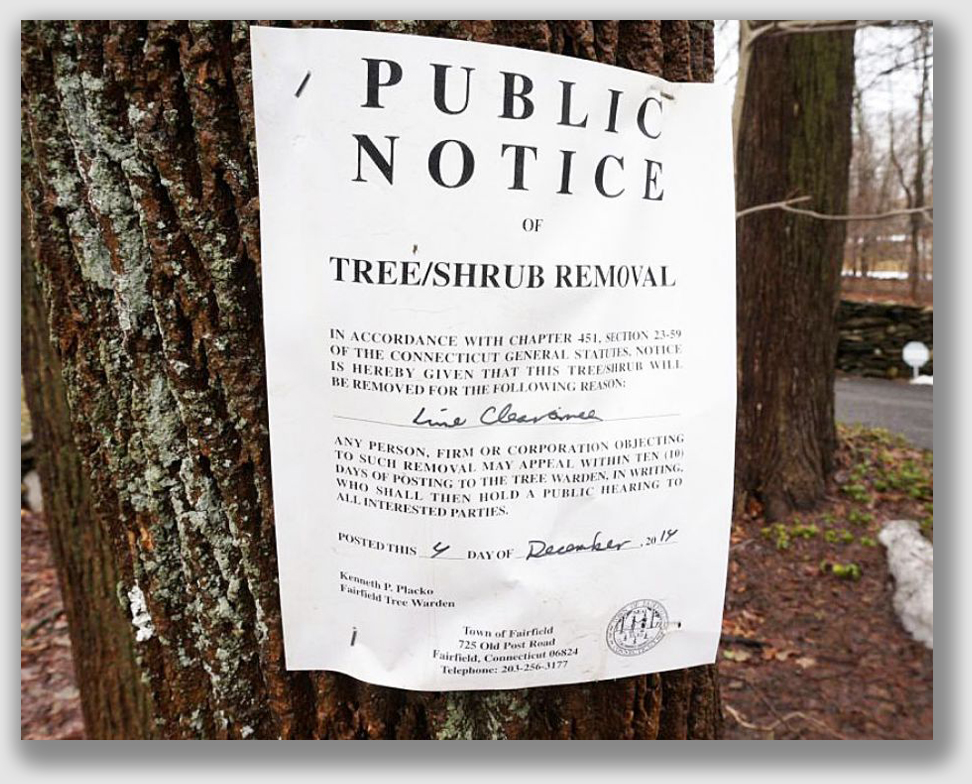
The tree-management program in Fairfield — a pilot initiative last year designed to minimize storm damage caused by falling tree limbs — continues as planners will be going door-to-door to obtain property owners’ consent to trim or remove more trees this year. The pilot program was concentrated in the Greenfield Hill and Mill Plain areas last year, and again will focus on those neighborhoods this year, according to town officials. The project is being carried out to avoid future problems like those suffered during Superstorm Sandy and Tropical Storm Irene, which caused widespread and long-term power outages locally as fallen tree limbs pulled down transmission lines. The tree-management program, overseen by United Illuminated, is expected to take place throughout town over the next five years …
The Wisconsin Department of Transportation cut down a 100-year old pine tree in the western Wisconsin city of Whitehall on Friday that residents say had irreplaceable value in the community. Residents of Whitehall gathered at the intersection of Highway 53 and the railroad tracks as state workers cut down the pine, which had served as the town’s annual Christmas tree. After planning began for a highway resurfacing project, officials determined last Fall that the large tree blocked the line of sight for motorists crossing the intersection. But Mary Richter, chair of the Save Our Tree Task Force said residents did not feel removing the beloved town landmark was necessary. “We wouldn’t have been fighting so hard if we thought it was a safety thing,” she said. “The tree was trimmed up high enough you could see under the tree.” The DOT plans to put in new lights and traffic arms at the intersection in the coming year, but Project Development Supervisor Tim Mason said these precautions are not enough. “With a mechanical device, what happens if that device fails? We just want to make sure, if possible, for people to see what’s coming,” Mason said. Mason said additional safety precautions are necessary because the railroad plans to increase its speed from 25 mph to 40 mph in that stretch of track. However, some residents said they feel the trains’ increased speed is more of a safety concern than the historic pine …
Flagstaff police are asking for tips after almost 30 trees were illegally felled near a city park. Authorities are looking for information on tree-cutting activity in the area near Buffalo Park as well as any tips on suspicious vehicles. The city has owned the 26-acre parcel for about three years, the Arizona Daily Sun reported. Suzanne Motsinger walks her dog in the area, and alerted the city when she noticed small oak trees were being cut down. She said there were track marks where the logs were dragged away. “It’s all wild land in that area and there’s a lot of wildlife habitat there,” Motsinger said. “It’s really sad because I know the city was considering putting a trail through that area because it was so nice.” Flagstaff Police Spokewoman Sgt. Margaret Bentzen says the city contacted authorities, who noticed two patches of land cleared of oak trees and another space where pine trees were felled. Cut logs were piled in one of the areas …

 Tree and Neighbor Law For Homeowners and Professionals

