Case of the Day – Friday, January 26, 2024

FOR THE LORD’S SAKE, PEOPLE… STOP!

You would think that a church could get along with its neighbors. Maybe it was the Methodist elders. Maybe the neighbor was a minion of hell. Who can tell from the abbreviated decision in today’s case, handed down by the New York Supreme Court, Appellate Division.

A word of caution here: New York is not like the rest of the world. In New York State, the Supreme Court is a trial court, the Supreme Court Appellate Division is the court of appeals, and the Court of Appeals is the supreme court. There – isn’t that easy? So the next time someone claims to sit on the New York Supreme Court, just say, “Yeah, you and a thousand other judges.”

Today’s decision involved a party wall, hardly a matter of importance to most folks. But the principle is an important one. Trespass is one of those common law torts (consider a tort to be a “wrong”) that can be committed all too easily. You don’t have to intend to commit a trespass. All you have to do is intend to step where you step. So if you trip on the sidewalk and fall onto someone’s front lawn, it’s not a trespass, but if you step off the sidewalk to avoid a puddle, it is.

What’s more, in every trespass, damages are presumed. There have been cases where people trespassed, thinking they were on their own property, and actually left the place better off than before they arrived. No matter. The law presumes they damaged it.

Obviously, this can cause all sorts of nonsensical results. For that reason, while the law will always assume damages, it won’t always order the trespass to end. Sometimes, the trespass causes so little inconvenience to the property owner and – if it were ordered to cease – would cause such injury to the trespasser, that an injunction would not make sense. The law will generally avoid ordering a result that is wasteful.

In today’s case, Mr. Kimball installed drip edge and cladding on the party wall, with a small portion of it (we’re talking inches) protruding over the Church’s vacant property. Drip edges prevent rainwater and ice melt from running under the shingles and into the wall. Cladding is a finish such as vinyl siding, covering the rather ugly concrete block wall. It protruded onto church property probably 2” beyond where the wall stood.

What would have been the point, other than sheer orneriness, of making Mr. Kimball rip the siding and drip edge off the wall? After all, those additions were needed only because the Church tore down its building, leaving a bare wall exposed to the elements. The court of appeals was not going to demand such a wasteful and damaging result.

The law is not always an ass.

Kimball v. Bay Ridge United Methodist Church, Case No. 2017-03575 (Sup.Ct. New York, Appellate Div., Jan. 24, 2028), 2018 N.Y. App. Div. LEXIS 443. Mr. Kimball and the Bay Ridge UMC owned buildings with a party wall, that is, a common wall along the property boundary that supported and was integral to both buildings.

The Lord only knows what went on between the Church and the Kimballs, but things seemed to start when the Methodists tore down their building a decade ago (leaving the party wall, of course, because it was part of Mr. Kimball’s building, too. About seven years after the church building was razed, Mr. Kimball installed cladding and a drip edge along the church side of the wall.

For reasons not clear in the opinion, Mr. Kimball sued the Church for a declaratory judgment and injunction. The Church rendered unto Caesar itself, and its lawyers counterclaimed for trespass, because Mr. Kimball’s cladding and drip edge extended however so slightly into Church airspace, on the holy side of the party wall. In addition to damages, the Church wanted an injunction requiring Mr. Kimball to tear out the cladding and drip edge.

The trial court granted the Church’s trespass complaint, awarding it damages and ordering Mr. Kimball to remove the offending installation. Mr. Kimball appealed.

Held: The appellate court agreed that there was undoubtedly a trespass, but drew the line at an injunction. New York law provided that an “action may be maintained by the owner of any legal estate in land for an injunction directing the removal of a structure encroaching on such land [but n]othing herein contained shall be construed as limiting the power of the court in such an action to award damages in an appropriate case in lieu of an injunction or to render such other judgment as the facts may justify.”

In order to obtain injunctive relief under the statute, the appellate court said, the Church was “required to demonstrate not only the existence of [an] encroachment but that the benefit to be gained by compelling its removal would outweigh the harm that would result to [the encroaching party] from granting such relief.” Here, the Methodists did not show that the “balance of equities weighed in its favor.” In other words, what it gained by having Mr. Kimball rip out the cladding and drip edge was bupkis, maybe an inch of space eight feet or so off the ground. But by tearing out the cladding and drip edge, Mr. Kimball would lose the ability to keep water from rotting his roof and joists.

So Mr. Kimball had to pay some damages (and they probably amounted to $1.98 or so), but the law would not make him rip out the cladding and drip edge to satisfy the Church elders.

– Thomas L. Root

TNLBGray140407

Case of the Day – Tuesday, January 25, 2022

CLIPPING

The Super Bowl® brand football game (which, as my old friend David Oxenford has made clear, is a registered trademark of the  NFL) will be upon us before we know it. Everyone I know is already excited beyond all reason that the Detroit Lions, who haven’t played in the Super Bowl since footballs were made of Tyrannosaur skin, are poised to be division champs (all Jared Goff has to do is go home to San Francisco and defeat the 49ers – favored by a touchdown – next week). But the season of the big games wouldn’t be the big game without my annual shameless attempt to capitalize on the media event of the year (sorry, Taylor Swift… but then, if the Chiefs beat the Ravens, you’ll be at the Super Bowl® brand championship game to watch Travis Kelce, if not the shirtless Jason).

Today, I review the old 15-yard standby, clipping. The clipping in today’s case was done not by a offensive player, but rather by an electric utility.

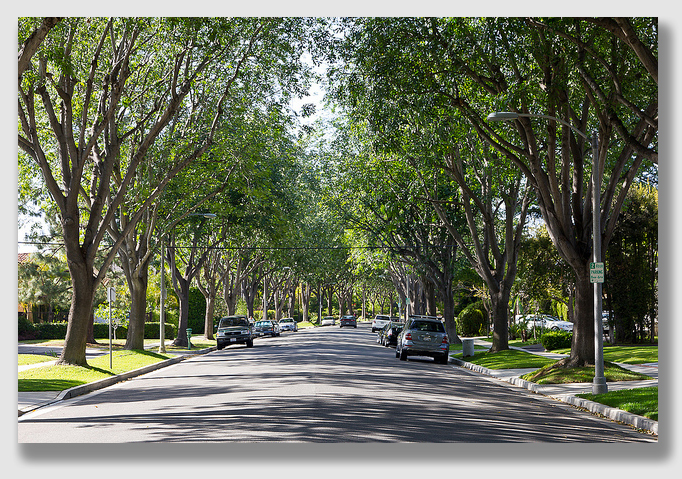
Tree trimming along and under an easement to protect power lines is typically done according to standards set by the North American Electric Reliability Corporation, known as NERC. Standards for tree trimming sound dry to you? Maybe a little looting, people trapped in elevators, and a power outage affecting 50 million people will get your attention. The great blackout of August 2003 had many contributing causes, but it all started when power lines – sagging in the heat of the day and under the load put on the system – became entangled in poorly-trimmed trees.

blackout140131OK, tree trimming is important work. And so it was in Louisiana. It seems that a road was widened, and power lines were relocated as a result. The electric utility came along to clip vegetation along the route, but ran into Mr. James, who objected to the vigorous removal of trees and brush. He kept running the crews off, until the utility sued for a ruling that it had an agreement with the city that superseded Mr. James’ complaints.

That’s where things got interesting. Mr. James and the utility signed an agreement that permitted the utility to trim back to the historical trim limits or to an established limit according to the kind of tree. No sooner was the ink dry but Mr. James argued that the utility had violated the deal. He sought all sorts of damages — even emotional distress — for the alleged violations.

The utility of course loaded up at trial with three of four experts, who carefully showed that the trees were cut back to their historical trim point and no more. The trial court found for the utility. On appeal, the Court agreed that despite all of the tort theories and general complaints alleged by Mr. James, because he had signed the deal with the utility, the only question was whether the deal had been kept. And as for that, the utility’s thundering herd of experts trumped Mr. James’ speculation.

With the new NERC reliability standards requiring more aggressive vegetation management, it is likely that clashes as to the extent to which utilities may trim will be more frequent and substantial. Thus, there are likely to be more Mr. James v. Entergy battles throughout the country.

Entergy Louisiana, Inc. v. James, 974 So.2d 838 (La.App. 2 Cir. 2008). In 1991, Highway 143 — located next to Tupaw Manor Apartments — was widened. Entergy’s distribution lines ran along Highway 143 and, with the widening of the highway, several poles were relocated. Three poles were placed so that the lines crossed the highway diagonally to the southeast corner of the apartment complex. The distribution lines at issue were contained within what Mr. James, the owner of the apartments, characterized as a “green zone” that buffers the apartment complex from the highway traffic, adding to the aesthetic value of the complex.

Tree trimming - boring. Mass panic - not so boring.

Tree trimming – boring. Mass panic – not so boring.

Entergy hired West Tree Service to trim vegetation encroaching on electrical distribution lines, the work to be done in compliance with Entergy’s “Distribution Vegetation Management Line Clearance Specifications” (“Clearance Specifications”) on file with the Louisiana Public Service Commission. During August 2004, another subcontractor sprayed the area with herbicide. Then, West cleared vegetation that had been sprayed and performed additional trimming on Mr. James’ property as per Entergy’s contract. Mr. James objected, but the West crews made several additional attempts to trim vegetation on the property. Unable to obtain consent from Mr. James, Entergy filed a petition asserting that it had an agreement with the city of West Monroe to operate electric facilities within the city and had a right-of-way easement onto Mr. James’ property for maintenance purposes. Mr. James answered and demanded damages in excess of $410,000. He claimed that Entergy engaged in the clear-cutting of trees, harvesting and removing over 200 trees, far in excess of the allowed or agreed upon width of trimming.

Prior to trial, the parties entered into a stipulated declaratory judgment in which they agreed that Entergy has the right to maintain all of its electric distribution lines and poles by trimming any encroaching trees, limbs, shrubs and other vegetation within 10 feet of Entergy’s lines in accordance with modern arboretum standards and as specifically outlined in Entergy’s Clearance Specifications, and as long as Entergy complied in good faith with the vegetation maintenance standards, Mr. James would have no right to prohibit with Entergy’s reasonable and necessary trimming of encroaching trees, limbs, shrubs and other vegetation along its distribution lines.

The Clearance Specifications provided that all trees at a minimum would be trimmed back to the previous trim point or according to a table, whichever was greater. The table provided that slow growth trees in rural settings would be trimmed to 10 feet and fast growth trees in rural settings would be trimmed to 15 feet. An exception would be made where there was a customer refusal where procedures outlined in the Clearance Specifications have been followed, provided that the exception would not result in unsafe conditions or jeopardize reliability.

Mr. James argued Entergy could only trim to an indefinite width depending on the extent to which it had actually claimed and used a right-of-way in the past or 10 feet under the Clearance Specifications. Mr. James alleged that Entergy exceeded the allowable width, causing damage to the aesthetic value of the “green zone” around the apartment complex. Mr. James filled out a Tree Cutting Refusal Form expressing his objection to having any trees removed, which he contended requires Entergy to then seek a court order to continue trimming. Entergy’s letter to Mr. James noted that the trimming was necessary to ensure safe, reliable electrical service to the area, including the apartment complex.

Entergy sued to get the court order. At trial, Entergy provided detailed testimony regarding the existence of a prior trim point, and that all trimming was within that point. Mr. James provided testimony that there were log trucks being loaded with cut trees coming and going from the property, which was contradicted by West employees. The trial court framed the issue as whether Entergy had complied with its Clearance Specifications in performing the trimming and found that Mr. James failed to carry his burden of proof and was, therefore, entitled to no damages. He appealed.

Held: Entergy had the right to trim the vegetation. The Court concluded that the stipulated declaratory judgment signed by the parties prior to trial controlled the allowable trimming width of the vegetation on the James property. Thus, the issue was whether Entergy complied with its Clearance Specifications. Entergy produced several qualified witnesses, whose testimony was thoroughly outlined by the trial judge, who found strong evidence of re-sprouts and prior trim points. The Court found no abuse of discretion. Although the Court noted that the Clearance Specifications might, in certain circumstances, lead to unauthorized, increased and unchecked trimming on private property, it concluded that under the specific facts of the case, Mr. James was bound by the stipulated declaratory judgment.

– Tom Root

TNLBGray140407

Case of the Day – Wednesday, January 24, 2024

LIFE IS A BOWL OF BERRIES

Who knows how neighbor feuds that simmer for years and years suddenly explode? Maybe Tom Schwendeman knows.

Tom lives next to the Roaches (who are people, not insects). About 14 years ago, the Roaches surrounded their property with a chainlink fence, which was clearly on their land. They even had a surveyor lay down pins before the fence went up. Since that time, the Roaches have engaged in such loathsome activities as building campfires in their backyard on as many as five, yes, FIVE occasions, and even spraying herbicide on poison ivy growing along the fence.

Oh, the humanity!

We get a sense of how things were going with the Roaches, given that grumpy neighbor Tom called the EPA to complain about the campfires (which occurred at a frequency of about one every two years – if our math skills remain sharp). Being busy creating environmental disasters of its own, the EPA apparently declined to intervene. Also, Tom liked to pick berries that grew along the fence. The herbicide on the poison ivy was the last straw for Tom. Convinced that his next blueberry smoothie would be his last, Tom tried to kick the fence down.

You, of course, have heard on countless police shows the Miranda warning. You know the schtick: “You have the right to remain silent….” Heed it well. Tom should have. As we like to tell clients, remaining silent is not just your right: usually, it’s a damn good idea, too.

Tom did not remain silent but instead vented his spleen in the presence of the deputies who responded to the call. He admitted the fence belonged to the Roaches and was on their land, but… well… the campfires! And the berries! How much is a man supposed to endure?

When it came time for Tom’s misdemeanor trial, his lawyer did not have much to work with, other than Tom’s frivolous argument that the fence was already in bad shape, and his tirade did not make it materially worse. For good measure, Tom threw in the woof story that he was only trying to get the fence off his land. The last defense might have worked… if Tom had kept his mouth shut when the cops had first shown up.

State v. Schwendeman, Case No. 17CA7 (Ct.App. Athens Co., Jan. 17, 2018) 2018 Ohio App. LEXIS 242. The state charged Tom Schwendeman with criminal damaging, a misdemeanor, because he damaged a chain-link fence between his property and that of his neighbors, Dawn and Gordon Roach.

The Roaches installed the fence about 13 years ago. One day last summer, Tom – apparently furious because the Roaches had sprayed herbicide along the fence to kill poison ivy – began yelling and kicking and showing “a lot of anger towards the fence,” as a witness put it. Someone called the sheriff, and Tom admitted to a deputy that he knew it was not his fence but that the Roaches liked to have campfires in their backyard that bothered him and that they had sprayed herbicides for poison ivy along the fence line. Tom said he picked berries along the fence.

By the time he got to trial, Tom had an explanation that was a little more congruent. He complained about his problems with the five or six fires the Roaches had built in their backyard and argued that because the fence was 12 years old, the only damage he saw to it was “wear and tear that’s happened over the period of twelve years. More than twelve years it’s been there.” He claimed that he witnessed tree branches falling on the fence and the Roaches’ children climbing the fence, causing it to come apart. On  more than one occasion, Tom claimed, the kids made “the fence pull loose and collapse…. when they were climbing it.” He said he disconnected the cyclone fence from the posts carefully because it was on his property, and he wanted to move it. Tom claimed the Roaches knew it was on his land, but they refused to move it unless Tom had the property surveyed and took them to court.

But on cross-examination, Tom admitted he was angry when he began dismantling the fence. “I had been poisoned,” Tom testified. “My berries had been poisoned… my food had been poisoned, and my next smoothie would make me very ill.” Tom admitted he did not “own” the fence, but he continued to press his claim that “it was on my property.”

Tom’s lawyer argued that children, dogs, and trees caused the damage to the Roaches’ fence. However, Tom’s defense counsel did not seek a jury instruction that Tom was exercising a privilege to remove an obstruction on his own land and did not object to the court’s jury instructions.

The jury found Tom guilty. He was ordered to pay restitution and a fine. Tom appealed.

Held: The conviction was upheld. Tom claimed on appeal he had the right to remove obstructions from his land, but he never asked the court to instruct the jury on that defense.

When a party fails to object in the trial court, generally, he or she cannot make a claim on appeal that was not raised below unless he can show “plain error” that affects substantial rights. It’s a tough standard to meet.

Ohio law does indeed hold that a landowner has the right to use self-help to remove encroachments on his property, provided the landowner acts with reasonable care. That is what is called an “affirmative defense” to the criminal damaging charges that were brought against Tom. But a defendant is not entitled to have the court give the jury that instruction unless he has come forward with at least some evidence that, if believed, raises the affirmative defense. Otherwise, the court is not permitted to give a jury instruction on the affirmative defense.

Tom testified the fence was on his land, but he didn’t offer any evidence that that was so. He could have shown a deed, a survey or even a plat map. But he had to show something. What’s more, not only did Tom offer nothing at trial, but his testimony that the fence was on his land directly contradicted his statements to two sheriff’s deputies. Without providing a rationale for the inconsistency with his prior admissions to the deputies, the Court said, Tom’s trial testimony was not credible. Because there was no credible evidence supporting his contention that he owned the land, the trial court – as a matter of law – could not properly give a jury instruction on the affirmative defense.

Tom also argued to the court of appeals that his defense attorney was a putz. The 6th Amendment to the constitution guarantees all criminal defendants effective assistance of counsel. Here, Tom fumed, his attorney was ineffective because he failed to request the jury instruction on Tom’s privilege to remove an encroachment from his land. The appellate court said no dice: based on the lack of evidence supporting the claim, the court properly would have refused to give the instruction. Tom’s trial counsel cannot be deficient for failing to request an unwarranted jury instruction. Anyway, the Court of Appeals observed, Tom’s lawyer was pursuing a “wear and tear” defense at trial, making a decision not to argue that Tom also had the right to move it off his property fairly sound trial strategy.

Trial counsel cannot be found deficient, the Court of Appeals said, for failing to request an unwarranted jury instruction or for exercising sound trial strategy.

– Tom Root

TNLBGray140407

Case of the Day – Tuesday, January 23, 2024

AGREEING TO DISAGREE

It happens more often than you’d think. Over a period of years and successive owners, everyone starts thinking that the old hawthorn tree, a big old rock, or even a crack in the curb marks the boundaries between the old homestead and the Smith house next door.

But it isn’t.

These kinds of problems could be avoided if people only hired surveyors regularly or reread their deeds and paced off all of those metes and bounds regularly. Of course, people by and large are normal, so they don’t usually do such things.

Most states have statutes that address what happens when owners jointly misunderstand their boundaries. The thinking is that if enough time elapses, there’s little to be gained by trying to unwind what everything thought was a fact. Or, given enough time, perception becomes reality.

Of course, claiming that a new boundary has been agreed to by acquiescence is fraught with peril because the other party – whose acquiescence must be shown – probably disagrees with the claimant (or they would not be in court to begin with). That’s what happened to the Guthries in today’s case.

Guthrie v. Jones, 780 N.W.2d 248 (Court of Appeals, Iowa, 2010). The Guthries’ property abutted land owned by Jones. A line of shrubs and trees ran along one side of the adjacent properties, and the Guthries had always believed that the tree line marked the property boundary.

It didn’t. Instead, a 2007 survey by neighbor Jones showed the property line to be 10 feet to the west of the line of shrubs and trees. The Guthries had gotten used to thinking they had 10 feet more room in the sideyard than they really did, so they brought suit, arguing that under Chapter 650 of the Iowa Code, the shrub and tree line – not the surveyed line – should establish the actual boundary. The Guthries claimed that the Joneses had agreed to the property line being marked by the trees, an argument known as “acquiescence.”

The trial court found that the survey established the boundary line between the two properties because the Guthries did not prove the Joneses’ acquiescence.

Held: The appellate court affirmed the trial court. Iowa law governing boundaries by acquiescence holds that “a boundary line may be established by a showing that the two adjoining landowners or their predecessors in title have recognized and acquiesced in a boundary line for a period of ten years.” The owners’ recognition may be evidenced by conduct or by claims asserted by the parties, but it must be by both parties. The acquiescence by both parties is a condition precedent for proving the existence of a boundary by acquiescence.

The party seeking to establish a boundary line that deviates from the surveyed boundary line must prove acquiescence by clear evidence. This is a higher standard than the usual civil standard of proof, which is “preponderance of the evidence” (which means, essentially, by a majority of the evidence).

In this case, the appellate court agreed with the trial court that Jones did not consent to the shrub and tree boundary line for the required 10-year period. The Guthries purchased their lot in 1979. At that time, the seller placed metal pins in the ground to mark the boundary line. Subsequently, the Guthries used the pins as a guide for mowing. Jones did not object to using the land “close to, if not over the surveyed boundary line.” However, the court reasoned that this failure to object constituted nothing more than a neighborly gesture and fell far short of showing Mr. Jones’ consent to a new boundary line.

At trial, Mr. Jones asserted that he maintained the area in question since 1989 and did not recognize the shrub and tree line as the true boundary. The Guthries didn’t have sufficient evidence to disprove this. Thus, the Guthries failed to prove their claim for acquiescence.

– Tom Root

TNLBGray140407

Case of the Day – Monday, January 22, 2024

ILLEGAL SUBSTITUTION

It’s late January and you’re fired up to watch Detroit Lions football? Never say never, my friends.

And how about the Packers’ last-second win over the 49ers? Just kidding.

It's a trick play! Interesting in football, less so in the courtroom.

It’s a trick play! Interesting in football, less so in the courtroom.

There were only four games to watch this past weekend, but we need to start brushing up now on football’s finer points. Such as the ref having to touch the ball between plays. And illegal substitution.

Trials aren’t supposed to be conducted by trickeration. Parties have a full chance to engage in discovery — seeing the other party’s documents, taking depositions of witnesses under oath, that sort of thing — well before trial.

In today’s case, a woman was killed when a tree branch broke free in a storm and struck her. Her husband sued, and he named the owner of the tree and the power company that had an easement where the tree stood, among others. He claimed that the tree hadn’t been trimmed properly and that negligence had led to his wife’s death.

At trial, the defendant called a witness to authenticate the location of the tree relative to the road. The plaintiff threw the red flag because the witness hadn’t been listed on the defendant’s expert witness list. An illegal substitution, he complained. The trial court didn’t think so but offered to adjourn the trial so that the plaintiff could take the witness’s deposition. A solution neater than Pete Carroll’s hair, you say? One might think, but the plaintiff wasn’t interested.

During the witness’s testimony, it developed that he hadn’t done the survey himself, but instead was only vouching for someone else’s survey. The defendant announced it would call the two men who had taken the survey, and the plaintiff cried foul again. The trial court noted that the location of the tree was critical, and let them testify anyway. The defendant won by a touchdown.

steelers150128Was it a blown call? The plaintiff decried it as uglier than a Pittsburgh Steelers retro uniform. The Court of Appeals — sitting up in the review booth — typically gives substantial deference to trial procedure decisions made by the trial court. It held that letting the witnesses testify was well within the trial court’s discretion. It noted that Slater could have taken the adjournment offered, and inasmuch as he didn’t, he was hard-pressed to argue he was hurt by the trial court’s decision.

C’mon, Bengals! Go Bills! And Titans, 49ers, Packers, Buccaneers, Rams and Chiefs! Keep us interested between the commercials.

Slater v. Charter Communications, Inc., 2007 Mich. App. LEXIS 2821, 2007 WL 4462396 (Mich.App., Dec. 20, 2007). The Slaters were driving on West Torch Lake Drive in Rapid City when they came upon tree branches that had fallen from a tree and were obstructing the roadway. The weather was rainy and windy. As the Slaters returned to their car after clearing the roadway, a large limb from the same tree broke off, fell onto a power line and then struck Mrs. Slater in the head. She died the following day from her injuries.

Her husband sued everyone, including bringing a negligence action against Consumers Power Company and a premises liability claim against defendant Charter Communications. Mr. Slater alleged that the tree was in Consumers’ easement and that Consumers breached its duty by failing to remove the dangerous limb from the tree. He also alleged that the tree was on Charter’s property and that Charter breached its duty to maintain the property in a safe condition by failing to remove the dangerous limb from the tree.

shell160203

The identity of the expert witness became a shell game …

Consumers moved for the case to be thrown out, asserting that the facts showed that it wasn’t responsible for trimming the tree from which the limb fell. Slater admitted that he lacked any evidence that Consumers was responsible for the tree, and in light of this, the trial court granted Consumer’s motion. At trial, Charter announced that it would call John Korr, the survey department development manager for Gosling Czubak Engineering Sciences, Inc., to authenticate a tree location survey that had been submitted to the court about one year earlier. Charter argued that the tree was not on its property but rather within the road right-of-way. Slater moved to strike Korr as a witness because Korr was not listed on the expert witness list. After the trial court indicated that it would allow Korr to testify, the court offered an adjournment to allow plaintiff to obtain an independent survey and depose Korr, but he declined.

After interviewing Korr on the third day of trial, Slater informed the trial court that he had just learned that Korr did not conduct the measurements or prepare the survey, but rather had verified the survey. The trial court then allowed Charter to call Simmerson and Anderson, the individuals who had taken the measurements and prepared the survey, to testify. Following the trial, the jury found that the tree was located in the road right of way and, therefore, judgment was entered in favor of Charter. Slater appealed.

Held: Judgment for Charter was upheld. The Court of Appeals held that the trial court properly dismissed Consumers Power from the suit, because with Slater’s admission that he had no evidence that Consumers had trimmed the tree, there was no genuine issue of fact.

The Court also ruled that the trial court had not abused its discretion by allowing Korr, Simmerson, and Anderson to testify. The decision whether to allow the late endorsement of an expert witness is reviewed for an abuse of discretion, and the rule generally is that justice is best served where an unlisted witness can be permitted to testify while the interests of the opposing party are adequately protected. Here, the trial court acknowledged that Slater had not gotten to take Korr’s deposition but noted that whether the tree was located on the plaintiff’s property or in the road right-of-way were critical factual disputes, and the existence of the survey had been known to Slater for about a year before the trial commenced. The court offered Slater an adjournment to obtain an independent survey and to depose Korr, which he declined.

That was enough, the Court of Appeals said, and, consequently, it held that the trial court had not abused its discretion.

– Tom Root

TNLBGray140407

Case of the Day – Friday, January 19, 2024

SMALL SQUABBLES, BIG PRINCIPLES

We like to deal in broad pronouncements of property law here, but the sad fact is that a lot of litigation about property rights is pretty small-minded. The parties today, Steve and Maggie, had a fairly common arrangement. Steve’s house was landlocked, but he owned an easement to cross Maggie’s place on a driveway.

The easement was 50 feet wide, but the drive itself was only 12 feet wide. We cannot tell who started the sniping. Maybe it was Steve, who piggishly demanded dominion over all 50 feet of the easement, whether he used it or not, banning Maggie from landscaping even where it did not interfere with the driveway. Maybe Maggie set out to harass Steve by installing fences, placing ornamental boulders and planting trees to crowd the driveway.

Clearly, however, things devolved to the point that both Steve and Maggie felt it was worth it to pay lawyers to slug it out in court. Not that we think that’s all bad: lawyers have to eat, too. But the law was pretty settled, and it seems that the lawyers should have dragged their respective clients by the ear into a conference room, where the facts of life (and litigation) could be explained.

Still, there’s a worthwhile principle here for the many homeowners who complain to us every year about various utilities coming through their yards, trimming or removing trees, tearing up bushes and laying waste to landscaping. The utilities invariably wave their easements at the homeowners and say, “read it and weep.” The homeowners angrily ask, “Can they do that?”

Then, we have to explain that the homeowner holds what is called a “servient estate,” which is as subordinate and groveling to the easement holder (the “dominant estate)” as the names imply. The utilities and their marauding contractors can do what is reasonable to permit them to get the benefit of the easement for which they bargained.

As well, there’s a second worthwhile principle in today’s case. If you get into a kerfuffle as a property owner or an easement holder, try to work it out. The old legal aphorism is true: a bad settlement is better than a good lawsuit.

Campbell v. Sullivan, Case No. FSTCV166028793S (Superior Ct. of Connecticut, Dec. 11, 2017) 2017 Conn. Super. LEXIS 5104: Maggie Sullivan is the homeowner at 1 Lennon Lane in Wilton. Steve Campbell owns the abutting property at 2 Lennon Lane. Steve has an easement for a 50-foot wide strip across Maggie’s property to be used as “a right of way for all lawful purposes of ingress and egress, including public utilities.” The easement is the only way Steve has to get from the street to his property.

The fifty-foot-wide right of way described by this easement contains a paved driveway about 12 feet wide known as Lennon Lane.

Steve sued Maggie, claiming that over time, she had placed rocks and erected fencing within the 50-foot right of way, as well as “allowing” trees and other overgrowth to impede ingress and egress through the easement. Maggie argued that that any actions she has taken to encroach into the easement are minimal, reasonable, and do not impede Steve’s access to 2 Lennon Lane. For her part, Maggie complained that Steve had trimmed trees and other plants within the 50-foot right of way, which are actually located on her property, without her consent. Steve responds that he is entitled to the entire 50-foot right of way as granted by the easement, and anything Maggie places within the 50 feet violates his rights.

Held: Steve and Maggie couldn’t work things out for themselves, so the court did it for them, giving each a little and taking from each a little.

To figure out the nature of Steve’s rights, the court started with the deed itself and then looked at the situation of the property and the surrounding circumstances, all in order to “ascertain the intention of the parties…” The language of the grant is given its ordinary meaning in the absence of anything in the situation or surrounding circumstances which indicates a contrary intent.

The principle is that the “holder of an easement… is entitled to use the servient estate in a manner that is reasonably necessary for the convenient enjoyment of the servitude.” This means that the easement holder can use the easement in any way reasonably necessary to fulfill the intent of the parties. The court held that the “right of way is for ingress and egress. This is broad enough to include the ability to turn around, reverse, and enter and exit safely. It does not include the right to park on the right of way. On the other hand, merely because the defendant owns the fee in the right of way, she does not have the right to obstruct the plaintiffs’ right for all lawful purposes of ingress and egress.”

The court said it was Steve’s job to maintain the easement, but his maintenance had to be reasonable. “The holder of an easement,” the court said, “is not entitled to cause unreasonable damage to the servient estate or interfere unreasonably with its enjoyment. The law is settled that the obligation of the owner of the servient estate, as regards an easement, is not to maintain it, but to refrain from doing or suffering something to be done which results in an impairment of it.

Under these circumstances, the court said, Steve has no right to compel Maggie to maintain it for his benefit. He had to do it, and do it “in a reasonable fashion.”

Steve spun a tale about expecting “prefabricated modules” that would be used as additions to his house. He said he would need at least 30 feet of the 50-foot easement for the trucks. It turned out, however, that Steve had not exactly ordered the prefabs yet, did not know when he would order them, and when he would pay for them. The court was unimpressed, saying, “As of the time of this decision, the plaintiff’s plans to remodel his home are not definitive reasons as to why… he would need access to the entire fifty-foot right of way.

The court ordered some of the rocks, fencing and bushes removed. It prohibited Steve from parking in the easement, and limited tree trimming to one area where the branches interfered with ingress.

– Tom Root

TNLBGray140407

Case of the Day – Thursday, January 18, 2024

THE SINKHOLE WAS LINED WITH GOLD AFTER ALL

When we last left our intrepid Air Force Academy cadets, they had just been rescued in the nick of time from the runaway train that was the U.S. District Court for the District of Colorado. At the same time, the dastardly Jim Nelson saw the Tenth Circuit Court of Appeals snatch the cadets’ $7.7 million (it was probably the mortgage money) from his grubby mitts.

OK, that’s both hyperbolic and fictional. The 4,400 USAFA cadets had not been sued individually, but rather the U.S. government was the defendant. What’s more, Jim was not dastardly. His hands may have been grubby, but that was because he fell into a massive sinkhole on what may or may not have been a bike path on the expansive Academy property. The District Court found the Academy management had breached a duty to Jim, whom it ruled was USAFA’s invitee (despite the bike path having signs warning against trespassing). But the Tenth Circuit Court of Appeals rode (or flew) to the Academy’s rescue, applying the Colorado Recreation User Act and holding that USAFA was immune from liability because it had opened up its bike path without charge for the public’s use, whether it intended to (or even knew it had) or not.

But the Tenth Circuit decision had a little “gotcha” right at the end. After finding the RUA applied, the appellate court remanded the case to the District Court to determine if an exception to the RUA’s liability limitations applied — whether the Air Force Academy’s actions constituted a “willful or malicious failure to guard or warn against a known dangerous condition, use, structure, or activity likely to cause harm…” Such a failure is an exception to the RUA’s broad immunity.

Last spring, the case was again in front of the District Court, which seemed just a little too enamored of the bike rider and too dismissive of USAFA management for our tastes. After all, a sinkhole big enough to swallow Jim? We’ve seen the Academy grounds, even the unimproved parts, and they are pretty wide open, sparse of trees and underbrush. How did Jim, who admitted he rode the trail regularly, miss seeing the sinkhole well before he rode into it?

Alas, we’ll never know. What we do know is that the District Court concluded that the Academy folks knew people used the trail although they were not supposed to. A USAFA employee who maintained the 40-square mile grounds saw and photographed the sinkhole a few weeks before the accident, but because he himself did not know that people were using the path despite the signs, he saw no reason to fill the sinkhole.

But thanks to the tort doctrine of respondeat superior, which is a Latin way of saying the company is to blame when its employees are negligent in the course of their employment, the District Court strung together management’s knowledge that people ignored the signs and used the path with the employee’s knowledge of the sinkhole, and found that USAFA willfully failed to guard or warn against a known dangerous condition…”

Voilà! Just like that, the Air Force Academy was back on the hot seat, and Jim rode off on his bicycle with 160 lbs. in his rucksack, which is about what $7.3 million in 100-dollar bills weigh.

Nelson v. United States, 256 F. Supp. 3d 1136 (D.Colo. 2017): James Nelson was seriously injured in a bicycle accident on September 3, 2008, when he encountered a sinkhole/washout on a bike path on United States Air Force Academy land. He sued under the Federal Tort Claims Act for damages. The Tenth Circuit previously determined that the Academy was immune from liability within the limits of Colorado’s Recreational User Act.

Prior to Jim’s accident, USAFA knew that the path existed on its property and that members of the public used the path where Jim was injured. Upkeep of the property was the Academy’s responsibility. The Academy had a Trails Management Plan that provided guidance about the proper maintenance to be performed on official trails, but the asphalt path on which the biking accident occurred was not on the Academy’s Real Property Record, so maintenance of the path did not fall within the scope of a contract the USAFA had with a maintenance company.

The sinkhole Jim encountered was the result of off-site water flowing onto Academy property that overwhelmed the culvert running under the path, causing a washout. Dr. Brian Mihlbachler, an Academy contractor responsible for grounds maintenance, testified that the sinkhole was large and readily visible during the day. However, a witness who encountered the sinkhole while jogging the morning after Jim’s accident thought the sinkhole was water until he was significantly closer to it.

Dr. Mihlbachler said the condition of the path with the sinkhole would be a safety hazard for users of the path if it were an official Academy trail. Thus, if it were an official trail, he would have reported the condition of the path to maintenance to get it repaired. He was the only Academy employee actually aware of the sinkhole before the accident and in fact, had photographed the sinkhole two weeks before Jim was injured. However, he did not report the sinkhole or to anyone else before the accident, because the trail management plan did not reference any asphalt surface trails. There was no rule or regulation in the trail management plan or otherwise, that would have required fixing a hole on an unofficial path such as the asphalt path. Dr. Mihlbachler also said the Academy’s trail management plan contained guidelines about what constitutes a safe trail for the users, and that “criteria would have applied in this situation [to the asphalt path] had I known that it was designed – . . . as a trail, yes.”

The Court held that Dr. Mihlbachler chose not to do anything about the sinkhole when he encountered it (other than to take its picture). His decision was based on his perception that it was not the Academy’s responsibility because he did not think people were using the path for recreational purposes. He “didn’t feel the Air Force Academy considered it to be a trail of any sort” and that the hole was thus unlikely to cause anyone harm.

The Court found the Academy unreasonably failed to exercise reasonable care to protect against a danger – the sinkhole on the path caused by erosion – of which it actually knew. Under the respondeat superior doctrine, “an employer or principal is liable for acts that its employee or agent commits on behalf of the employer or principal within the scope of the employment or agency… based on the theory that the employee acts on behalf of the employer when the employee is acting within the scope of his authority.” The evidence shows that Dr. Mihlbachler knew of the significant erosion problems in the immediate area of the path and its condition prior to Jim’s accident.

The RUA places the risk of injury for recreational activity upon the recreational user rather than the landowner subject to certain specifically enumerated exceptions to its limitations on landowner liability. One of these exceptions to liability is a landowner’s “willful or malicious failure to guard or warn against a known dangerous condition, use, structure, or activity likely to cause harm.”

The RUA does not define the terms “willful” or “malicious,” but the court concluded the phrase had its plain and ordinary meaning of “voluntarily, purposefully and with a conscious disregard for the consequences of the act”. Willfulness does not require that a government employee be consciously aware that his acts or omissions create danger or risk to the safety of the public. It was enough that the Academy knew that the asphalt path existed on its property and knew that persons used the path for recreational purposes, including bicycling, by invitation or with permission.

What’s more, the Court said, the Academy knew that people were using the path for recreational purposes yet chose not to communicate that to its agent Dr. Mihlbachler even though he played a safety role at the Academy in connection with his role as Trail Manager. Thus, the court concluded, Dr. Mihlbachler acted “voluntarily, intentionally, and with a conscious disregard for the consequences of the act” when he chose not to make the sinkhole a priority or to do anything to warn about it or guard against its danger.

Despite the immunity normally afforded by the RUA, the Air Force Academy was liable to Jim.

– Tom Root

TNLBGray140407