Case of the Day – Thursday, January 9, 2025

THE HORSE HAS BOLTED

Anyone wanting to witness an exercise in futility only has to examine some of the laws passed by Congress, largely meaningless gestures intended to prevent something that has already happened.

I give you TSA for example. To be sure that no one takes a utility knife (the uninitiated call them “box cutters”) onto a  plane again after 9/11, TSA makes grannies remove their shoes and uses machines that reveal your bodily imperfections to the world. This is little more than “security theater,” intended to make us feel safer despite the government’s own evidence that TSA checkpoints are weapons sieves.

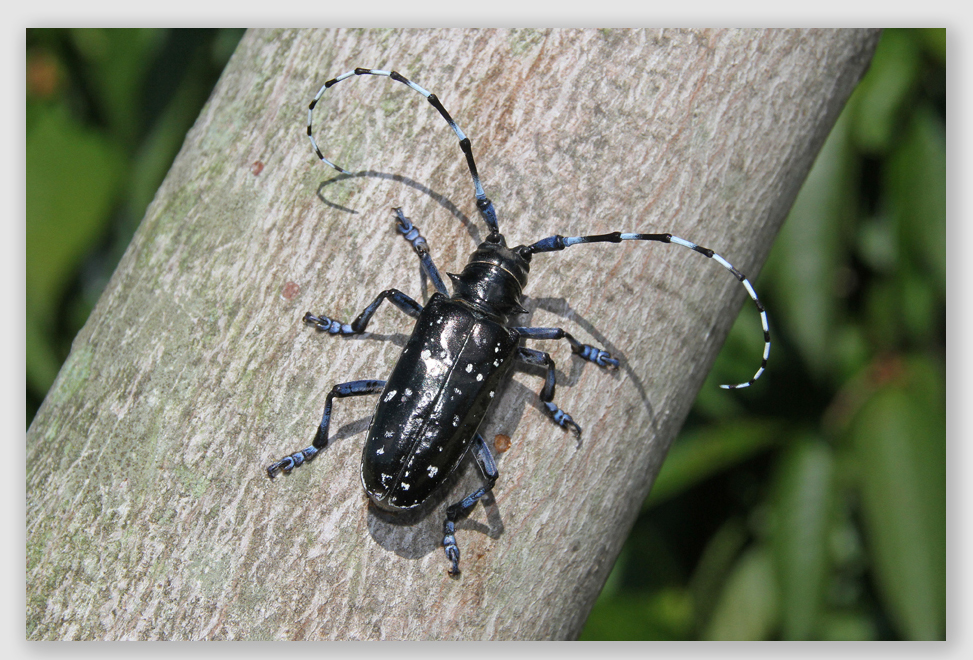
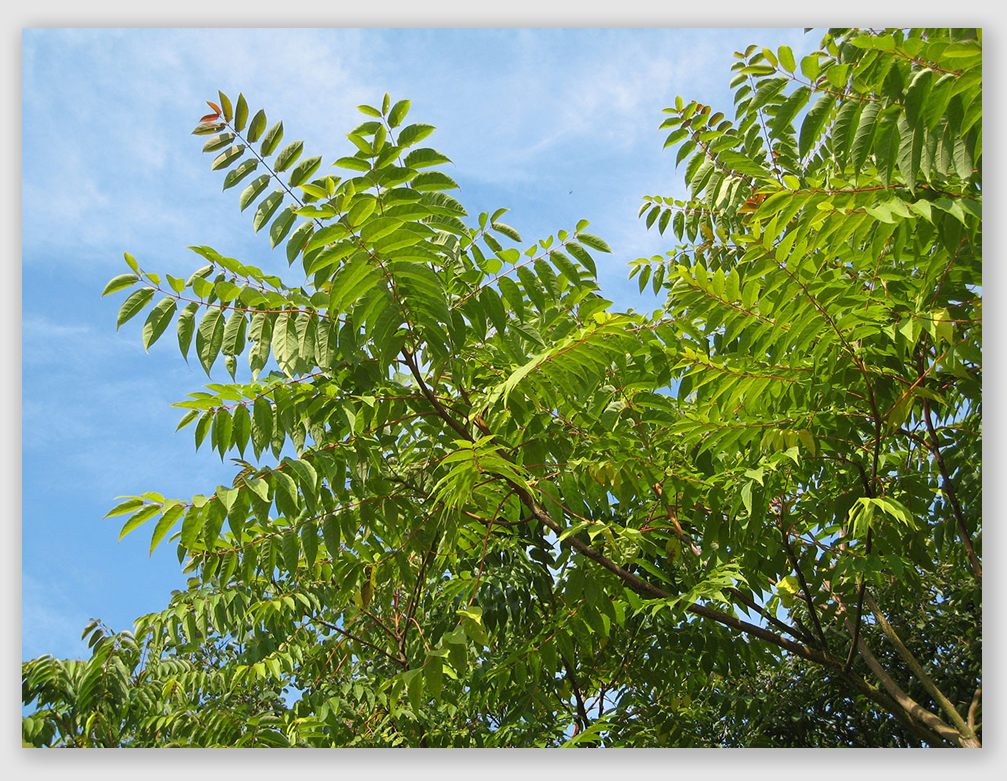
In the tree world, after the Emerald Ash Borer was already hopping amok across North America, states responded with roadside signs warning people against transporting firewood.

The Emerald Ash Borers, of course, being illiterate insects, did not read the signs. Rather, the little green destroyers continued their march unimpeded.

Sure stopped those Emerald Ash Borer critters…

When Frances Levine’s neighbor Ida decided to hack down a boundary tree, Frances got a restraining order stopping the butchery. By then, the tree was pretty much done for. The trial court, recognizing that the tree was much too far gone, declined to issue a permanent injunction against further tree removal. The tree was already beyond repair: issuing an injunction against killing it now would be futile.

Frances would not take ‘no’ for an answer… until she heard it two more times from two higher courts.

What Ida did was not right, and could get Frances some damages. But the act was done, and an order prohibiting the act would not unring the bell.

Levine v. Black, 312 Mass. 242, 44 N.E.2d 774 (Supreme Ct. Mass. 1942): A large tree was located on the property line between Frances Levine’s lot and a parcel owned by Ida Black. The boundary line ran just about through its center, which was only about two feet from Frances’ southerly wall. It was from 50 to 60 feet high and in “a reasonably healthy condition” before Ida began chopping the branches.

Ida was looking to build a new repair shop extending to the northerly boundary of their land, and finding the tree in her way, began to cut it down without Frances’ consent. Ida intended to remove the entire tree. She cut and carried away branches and limbs, some of which extended over Frances’ residence.

When Frances yelled at Ida about the arboreal butchery, Ida stopped, and thereafter a court issued a restraining order. The trunk of the tree is still standing, but the upper part has been reduced to two denuded limbs, the highest point of which is about forty feet from the ground. , “and there is an entire absence of branches and foliage.” On the south side of the trunk, there is a large scar resulting from the removal of the bark by chopping it with an axe.

Frances sued, but the trial court dismissed the action. She appealed. The appellate court ruled that both parties equally owned the tree, but Ida had damaged the tree so badly that an injunction would have served neither party. The court held that the tree would never grow back, and therefore it would have been more beneficial to both parties to have the tree chopped down. Thus, the court of appeals affirmed the trial court decree dismissing  Frances’ action for a permanent injunction to prevent Ida from cutting down a tree.

Frances appealed to the Supreme Court of Massachusetts.

Held: The court of appeals was right. The damage had been done, and an injunction should not issue.

The Court observed that where the trunk of a tree stands wholly on the land of one property owner, he is deemed the owner of the entire tree. This is true despite the fact that the Massachusetts Rule gives his or her neighbor the right to cut off limbs and roots which invade his premises. But where, as in the present case, the trunk stands across the boundary line, it has generally been said that under these circumstances both parties own the whole tree as tenants in common.

In other cases, the Court admitted, it has been held that each party has title to only that part of the tree on his side of the line but has a right to prevent his neighbor from so dealing with his part as unreasonably to injure or destroy the whole. But here, resolving inconsistencies in the two approaches is not necessary. Under either view, “it is difficult to see why either owner should have any less right to cut off branches and roots than he would have if the trunk stood entirely upon the other’s land.”

But this case, the Court ruled, it is unnecessary to determine whether “the value of a tree to one owner is to be weighed against the detriment to the other owner of being unable to use all of his land for building purposes.” That is because the overarching principle applicable here is that relief by injunction will not be granted where the granting of it would be but a futile gesture and would serve no useful purpose in protecting any substantial right or interest of the party applying for it.

Before this suit was brought, the Court said, “the tree had been reduced to a condition in which it could be of no benefit to the plaintiff from the viewpoint either of beauty or of utility. It was and still is a bare skeleton consisting of a trunk and two limbs, with no other branches or foliage whatever. There is nothing to show that the lapse of any reasonable period of time will restore it to attractiveness or value. Its removal would now appear to be advantageous to both parties and harmful to neither.”

The Court did not intend to reward Ida’s trespass, Rather, it simply recognized reality, that to deny a permanent injunction under these circumstances “is merely, in dealing solely with the question of injunctive relief, to take a practical view of an existing situation for which an injunction can afford no genuine remedy.”

– Tom Root

TNLBGray140407

Case of the Day – Wednesday, January 8, 2025

DEEP POCKETS, ONE – MASSACHUSETTS RULE, NOTHING

Nothing can skew the impartial dispensation of justice like a rich defendant. After all, the Massachusetts Rule is pretty doggone clear: self-help trumps litigation. But even where that is true, sometimes rich defendants – like hard cases – make bad law.

Take the case of Mrs. Norwood. When the tree roots of a 25-year-old oak tree planted by the City of New York invaded her sewer line, Mrs. Norwood thought that the whole deal stank. After all, the City knew the sewer line was there 25 years before, and it knew the little oak sapling it planted at that time would become a mighty and sewer-invading oak.

Dorothy always had the power in her ruby slippers to return to Kansas. Likewise, Mrs. Norwood always had the power of her diamond-studded Massachusetts Rule rights: She could have dug those roots out of her yard, and the City could not raise so much as a little stink about it.

But Mrs. Norwood couldn’t see spending a dime to take care of her property when the City, with its weighty balance sheet and untold millions of dollars in the bank, could do it for her.

She sued. The Court agreed. Massachusetts Rule, solid though it usually is, be damned! Let the government pay.

Norwood v. New York, 95 Misc. 2d 55 (Civil Ct. Queens, June 21, 1978): Back in 1953, the City of New York planted an oak tree over a sewer line leading to Delema Norwood’s home. Over time, the oak tree roots entered the joints of a sewer line, causing the pipe to burst. Delema sued, claiming that the damage was the City’s responsibility.

At trial, Delema’s expert testified that the sewer was properly designed and constructed when it was installed in ‘53.

Held: Because the sewer line was properly constructed, and the City planted a tree that had the propensity to dig into sewer lines, The City of New York, rather than Delema, was responsible for the cost of repairing the sewer line.

The question, as framed by the Court, was whether a municipality that plants an oak tree over a residential sewer line, is liable to the landowner when the roots of the tree damage the sewer line? The Court found that 25 years before, City, without the request or permission of landowner Delema Norwood, planted an oak tree at the curb line of her property over the sewer line leading from her house to the sewer in the street. An oak tree has roots that go down deep and have a propensity for entering the joints of sewer pipelines. The roots of this oak did exactly that and caused the sewer pipe to burst.

The Court found a case where the landowner was liable because the sewer line was constructed incorrectly. But that was not the case here, where the sewer was properly constructed. Delena’s expert testified that the sewer was made of vitreous clay pipe and joined with cement. He testified that this was a proper method of construction at the time the sewer was built, over 25 years ago.

In another case, the plaintiff’s complaint was dismissed because sufficient facts to establish that defendant was responsible for this damage were not alleged. That court noted that “whether the defendant can ever be held liable for the natural growth of a tree, in possession of or belonging to the city, is uncertain.”

Finally, a plaintiff alleged that roots from a defendant’s poplar tree had grown onto the plaintiff’s property, disturbing and eroding her swimming pool and the patio around it. The court there held the complaint stated a cause of action.

In this case, the Court weighed the idea that urban trees are beneficial to city dwellers and enhance the surrounding area. On the other hand, owners of property are entitled to have their sewer lines protected; the destruction of sewer lines will cause obvious discomfort not only to the landowner but to others in the area.

In balancing these interests, the Court held, at least where the sewer line is properly constructed, the municipality, rather than the landowner, should bear the cost of repairing a damaged sewer line when it plants a tree. After all, the oak was well known for having the propensity to dig into sewer lines. In this situation, it was foreseeable that sometime in the future, damage might very well occur.

The Court admitted that “while a rule imposing liability upon the municipality may tend to deter the planting of certain kinds of trees, the municipality may still safely plant other trees. Moreover, with respect to newly constructed sewer lines, the municipality should be in a position to avoid liability since a properly constructed sewer line now should be impervious to the roots of trees.”

The Court acknowledged the Massachusetts Rule, observing that “a landowner may, on his own land, resort to self-help to remove roots adversely affecting his own property.” While some argue that this is sufficient protection for a landowner and he need not be given a cause of action for damages where tree roots damage his sewer line, other jurisdictions reject this argument. But this Court ruled that it would be unrealistic to limit a landowner to a right to dig for and cut roots. “While such a limitation upon the rights of a landowner may be proper with respect to overhanging branches of a tree, the Court wrote, “such a limitation would be manifestly unfair to a landowner whose property may be directly injured by the effect of spreading roots. Unlike branches that are readily visible and which may often be cut without great difficulty, roots are not generally visible and may require considerable digging in order to remove them. Indeed, the landowner will usually not know that he has reason to cut roots until damage has occurred.”

The Court found that the City owed for the cost to repair the sewer line.

– Tom Root

TNLBGray140407

Case of the Day – Tuesday, January 7, 2025

MASSACHUSETTS RULE – THE OLD IS NEW AGAIN

Yeah, we talk about the Massachusetts Rule all the time, but really, how relevant is it to our modern, digitized, frenetic world?

Ask Pete Kirk and Bryan Johnson. These unhappy landowners did not think much of an affordable housing development going in next to their parcels. Their stated complaint was that drainage would be altered and eight Norway maples on or near the boundary lines might be harmed.

I have no reason to suspect that Pete and Bryan objected to the nature of the development, or what all of those people needing “affordable housing” might do to their property value. But they were mightily unhappy that regrading or excavation could to their trees, and they sought to get the zoning board’s approval withdrawn.

Sorry, the court said to Pete and Bryan. This being Massachusetts, the Massachusetts Rule reigns supreme. The developer had the right to do with his property as he wished, even if it cut or affected tree roots that had encroached on his land. Strangely, the Court seems to have engrafted a specific intent requirement on the developer. He could cut roots or change the grade (which would bury the roots too deep in the soil), even if he knew it would kill the trees. The only limitation is that he could not do so with the intent to kill the trees.

Come again? I have read Michalson v. Nutting repeatedly without being able to find scienter anywhere in the ruling. Is the Court saying that what you do as a landowner to exercise your self-help rights under the Massachusetts Rule is somehow regulated by the purity of your motives? Outside of the obvious difficulty in proving what the landowner intended to accomplish in any given act on his or her property, what does motive have to do with the reasonableness of an act?

Forgive me for thinking of the Tin Man in a yoga class.

Kirk v. Li, 2019 Mass. LCR LEXIS 2 (Mass. Land Ct., Jan. 7, 2019).  Developer 269 North Ave, LLC got a comprehensive permit from the Weston Zoning Board of Appeals (Board) for a 16-unit housing project on a one-and-a-half-acre parcel. The property, severely sloped in the rear, presented tough challenges to satisfying the requirement that the project not result in an increase in stormwater runoff, because all of the stormwater from 16 acres surrounding the site accumulates on the property. Because of the particularly porous soils on the property, all of this stormwater recharged into the ground, with none of it running off. Construction of the project would increase the impermeable surfaces on the property, such as buildings and parking lots, which meant a decrease in open land available to recharge stormwater.

To satisfy stormwater regulations, the developer designed a system to collect and discharge all stormwater into the ground. The Board was satisfied and issued the comprehensive permit.

Peter Kirk and Bryan Johnson owned land that abutted the developer’s property on the south and north respectively. They complained to the Board that the developer’s stormwater system would not handle the stormwater flow onto its property, resulting in flooding on their land. Additionally, Pete and Bryan argued that the housing development would harm or even kill trees that straddle the boundary or are on their properties. When the Board disagreed, they sued.

Held: The Court held that Board did not act unreasonably or arbitrarily or capriciously in accepting the developer’s stormwater management plan or its measures for protecting the trees.

This review focused only on Pete and Bryan’s complaints about their trees. Pete identified three trees on his property or on the common boundary line with the developer’s property, and Bryan cited five trees on his land or on the common boundary line they asserted would be adversely affected by the project. Their experts testified that the root systems of the eight trees, all Norway maples, would be harmed by the roots being cut or by adding more than one to three inches of soil above the existing surface grade. The cutting and grading would all take place on the developer’s property, but would – according to Pete and Bryan – harm or even kill the trees.

The Court admitted there was “no bright line delineating what unilateral actions regarding a shared tree are or are not permitted.” To be sure, a property owner cannot act to intentionally destroy a shared tree without the consent of the others who share an ownership interest therein. Yet, the growth of roots and branches into a neighbor’s land, the Court said, “no matter how essential to a tree’s survival, cannot vest in the tree’s owner some indomitable nonpossessory interest in the space the tree occupies.”

Here, the developer did not want to remove the trees. As a matter of law, the Court ruled, the developer would be entirely within his rights to pursue the project even if it has the effect of harming some of the trees’ roots. With respect to trees situated entirely on Pete’s or Bryan’s property, the Massachusetts Rule provides that the developer has an unfettered right to cut the roots and branches of such trees back to the property line. With respect to the trees situated on shared property lines, the Court held, the developer similarly has the right to cut roots and branches situated on the developer’s property. The only limitation is that the developer may not do so with the intent of killing those trees.

The Court found that the expert testimony made it clear that some level of activity within the area immediately surrounding the trunks of the trees could have the effect of killing them. “However,” the Court noted, “the testimony does not speak to where the roots of the… trees are actually located or what harms to the trees are certain or even reasonably certain… Here, where the applicable law makes it doubtful that [Pete and Bryan] have a claim to demand any protections for [their] trees, the level of speculation in the resulting harms renders these risks too remote to bear on whether the Board’s Decision was improper.

– Tom Root

TNLBGray140407

Case of the Day – Monday, January 6, 2025

COUNT YOUR SILVERWARE

You know people like this. They leave restaurants with their pockets bulging from stolen packets of sugar, jelly or ketchup. They return from a vacation with a valise full of shampoo, conditioner, soap and teabags, boosted from every hotel on their itinerary. When they move from a house, they are sure to pick it clean of light bulbs, curtains, and even the unused toilet paper rolls left on the dispensers. In rare cases, they even uproot garden plants as they leave.

When you have folks like this over for dinner, you should audit your silverware before they leave.

The late Mr. Thomas was that kind of guy, probably a man with a closet full of mini-shampoo bottles, Bob Evans jelly tubs, and McDonald’s sugar packets. He was quite a thrifty guy. Maybe there’s a better word to use than “thrifty.” A word like “light-fingered.”

However you might describe him, after he signed the deal to sell his Iowa farm to Mr. Laube, but before he surrendered possession, Mr. Thomas thought he just might thin the timber a bit by cutting down and selling about a hundred walnut trees. True, the walnuts weren’t really ready for harvest – the 20-year-old trees were only about halfway to an age where they should be harvested – but Mr. Thomas could hardly see the sense of leaving all of that nice hardwood for Mr. Laube to cash in on a couple decades after closing.

Mr. Laube sued. Sadly, while he won the case, he was butchered on damages. There was no question that Mr. Thomas was liable. After all, the contract of sale didn’t reserve any timber rights to the seller. But the issue was the value of the trees that had been removed.

Generally, there are several ways to figure damages for the loss of trees. Where the trees are for a special purpose, such as for windbreaks, shade or ornamental use, the measure is usually the difference in the value of the real estate before and after the destruction of the trees. Where the trees have no special use beyond being marketable timber, the measure of damages is the commercial market value of the trees at the time of taking. Where the trees can feasibly be replaced, the measure of damages is the reasonable cost of replacement.

The Court ruled that the value of the 100 immature walnut trees was their present-day value at the mill, despite Mr. Laube’s lament that they would have been worth so much more had they been 20 years older. The Iowa Supreme Court admitted that Mr. Laube had a point – he had been deprived of trees that had great potential value, something that just giving him present commercial value didn’t recognize. But the Court said that the law had never allowed such damages, and it didn’t intend to do so here. The Court speculated – and that’s exactly what it was – that it “was perhaps to address this criticism that the legislature provided for treble damages in Iowa Code section 658.4.”

When taking all of the lightbulbs from your just-sold house, be sure to wear gloves so as to avoid being burned. The only one who should be burned by this process is the unwitting buyer.

     When taking all of the lightbulbs from your just-sold house, be sure to wear gloves so as to avoid being burned. The only one who should be burned by this process is the unwitting buyer.

Poppycock. Punitive damages are intended to punish, not make up for deficiencies in the law of compensatory damages. Farmer Thomas did not profit from his selling of the walnut trees on his way out the door, but Mr. Laube was hardly made whole.

Laube v. Estate of Thomas, 376 N.W.2d 108 (Sup.Ct. Iowa, 1985). In 1983, the Thomases contracted to sell a farm to Mr. Laube. Possession was to pass on March 1, 1984. Although no timber rights were reserved to the Thomases, they removed about 100 walnut trees from the tract between the contract and closing. There was no question of liability; in fact, at trial, Thomases offered to confess judgment for $1,000. The offer was refused.

The trial court awarded Laube the commercial value of the trees at the time they were cut. Laube appealed.

Held: The measure of damages used by the trial court was correct.

The walnut trees were timber or forest, not used for a windbreak or ornamental purposes. The trees had stood at two sites on the farm, one a low-level area near a stream and the other in a permanent pasture. The 100 in question were smaller, presumably inferior for marketing purposes. The evidence showed that it was not a practical marketing time for the trees in question. At an age of 20 years, they would not mature so as to reach their reasonable marketing potential for another 20 years. Mr. Laube argued he should be awarded damages that took the current market price, considering the size and quality of trees 20 years hence, then discounting the figure appropriately to reach the present value.

It's he present-day value of the commercial timber that matters.

It’s the present-day value of the commercial timber that matters.

The Supreme Court admitted that “especially [in] the showing of the inappropriateness of cutting the trees at their stage of semi-maturity, there is at first blush an attractiveness in plaintiffs’ contention that a routine allowance of only log value is inadequate. On the other hand, their suggested recovery does not conform with any recognized measure of damages for loss of trees.” Where the trees were put to a special purpose, such as for windbreaks, shade or ornamental use, the measure is usually the difference in value of the realty before and after the destruction of the trees. Where the trees had no such special use, the measure is the commercial market value of the trees at the time of taking. Where the trees can be replaced, damages are the reasonable cost of replacement.

Here, the Court said, the commercial value of the trees was the appropriate measure of damages. It suggested that the law provided for treble damages in Iowa Code § 658.4 to help adjust for the unfairness of situations such as the one in this case. However, it would not take into account future value in setting compensatory damages.

– Tom Root

TNLBGray140407

Case of the Day – Friday, January 3, 2025

SELF-HELP WEEK

Quite unintentionally, 2024 (slogan “At Least It’s Not 2020”) – as it slunk out the door in well-deserved shame – is ending with an orgy of self-reliance versus resorting to the courts. On New Year’s Eve, we reviewed a Florida case, Balzer v. Maxwell, in which the court held that the fact that an aggrieved landowner has no remedy but self-help means that when he or she exercises that right, the tree owner has no claim for what might become of the tree. Yesterday, we read a Massachusetts court holding that, on the other hand, when a city takes over an abandoned property for taxes, it assumes liability for hazard trees on the property.

In today’s case, Pennsylvania applies the Massachusetts Rule principles of self-reliance to encroaching tree roots.

Keiper v. Yenser, 1967 Pa. Dist. & Cnty. Dec. LEXIS 171 (Common Pleas Ct, Carbon County, Pa., January 23, 1967). Bill and Becky Keiper complained that for more than five years, the roots of Yensers’ willow tree have been extending into their land and penetrating their sewer line, which has cost the Keipers $166.07. They seek reimbursement for the money they have spent and a court order for the permanent abatement of the root encroachment (that is, an order that the Yensers remove the roots at their expense).

The Yensers filed a demurrer; in the alternative, they argued that laches prevented the Keipers from winning, and contended that abatement should not be ordered because the Keipers had an adequate remedy at law.

Held: The Keipers claim had to be dismissed.

Pennsylvania has no statute that would permit the Keipers to claim that the Yensers’ tree was a nuisance. Nor was there any case precedent.

However, looking at other states, the Court noted that in Gostina v. Ryland, a Washington state case, the court held that “were it not for our statute of nuisances, the respondents herein would not be accorded any judicial relief”. And Michalson v. Nutting, the Court said, held in very similar circumstances that “the neighbor, though without right of appeal to the courts if harm results to him, is nevertheless, not without remedy. His right to cut off the intruding boughs and roots is well recognized. His remedy is in his own hands. The common sense of the common law has recognized that it is wiser to leave the individual to protect himself, if harm results to him from this exercise of another’s right to use his property in a reasonable way than to subject that other to the annoyance, and the public to the burden, of actions at law, which would be likely to be innumerable and, in many instances, purely vexatious.”

Thus, the Court held that while the Keipers could cut the offending roots themselves, they had no cause of action to compel the Yensers to do so. “It is a principle well settled by many adjudicated cases, that an action does not lie for a reasonable use of one’s right, though it be to the injury of another. For the lawful use of his own property, a party is not answerable in damages, unless on proof of negligence…”

– Tom Root

TNLBGray140407

Case of the Day – Thursday, January 2, 2025

SURE IT’S A NUISANCE, BUT WHOSE NUISANCE?

I live near enough to Cleveland to be aware of the blight of homes abandoned there during the Great Recession. The owners leave, the banks foreclose, the homes decay, the taxes are no longer paid, and the city tries to sell them for tax debts. Many times, the city ends up owning them.

Yet, Cleveland is an enclave of plenty compared to Detroit, where the blight covered mile after mile. A third of all homes in that bankrupt city had been foreclosed on by 2015.

Out of fairness, Detroit has made a real comeback. The Motor City has stabilized its financial condition, improved city services, reversed population losses that saw more than a million people leave since the 1950s and made progress cleaning up blight across its 139 square miles.

In October 2024, Donald Trump told the Detroit Economic Forum that “[t]he whole country will be like — you want to know the truth? It’ll be like Detroit. Our whole country will end up being like Detroit if [Kamala Harris is] your president.” He caught a lot of grief from Detroiters for that. Detroit Mayor Mike Duggan said, “Lots of cities should be like Detroit. And we did it all without Trump’s help.”

So who is responsible for the nuisances that these decaying homes (and untrimmed foliage) create? Generally, it’s the owner or the entity with the right to control the property. In today’s case, decided when I was not yet a teen, a city argued that it owned and controlled an abandoned property for some purposes, but not where abating a nuisance was concerned.

Neighbor Harry Homeowner, who was beaned on the noggin by a branch from a dead tree on the neighboring lot, disagreed. “Hey,” Harry huffed, “if you own it, you own it.”

Kurtigian v. Worcester, 203 N.E.2d 692 (Supreme Jud. Ct., Mass. 1965). Harry Kurtigian was working in his yard one windy October day in 1959 when he was struck by a limb blown from a decayed tree on adjoining property.

A large elm tree was situated in the southeast corner of the lot next to Harry’s, one which had been owned by Beatrice R. Norling. By 1954, Beatrice was dead, and the tree was soon to follow, having been afflicted with Dutch elm disease. By 1956, there were no leaves on the 35-foot tall tree at all, and the bark was peeling from the trunk by year’s end.

Two years later, a large branch fell during a summer thunderstorm, crushing Harry’s fence. He called the City, who sent an inspector to look at the tree. About 15 months later, the tree still standing undisturbed, Harry was walking in his yard when he heard a cracking sound, looked up, and saw a heavy limb falling toward him. He was knocked unconscious, suffering a skull, arm and wrist fracture.

The lot next door was undeveloped and wooded, having been acquired by the City of Worcester in 1950 for nonpayment of taxes. Harry sued the City for negligence and for maintaining a nuisance tree,

The lower court found the City was negligent, but that the tree was not a nuisance. The City appealed.

Held: The tree was a nuisance, and the City was liable to Harry.

Liability for damage caused by the defective condition of premises turns upon whether a defendant was in control, either through ownership or otherwise. The City argued that it did not have title to and control of the real estate. But the records showed that the City recorded in the registry of deeds an instrument of taking in August 1950, pursuant to law for nonpayment of taxes. Three years later, the City recorded a notice of foreclosure, and seven years after that, a “Notice of Disposal in Tax Lien Case” executed by the Land Court was recorded in the registry of deeds, noting that there had been entered in the Land Court a decree foreclosing and barring rights of redemption by the prior owners to the lot. That was enough for the Court to rule that “at all material times the city… to the extent permitted by that chapter, engaged in the operation, maintenance, control, and sale of tax title property

The City said its taking of the property pursuant to vested title, subject only to the right of the owners to redeem the property by paying the taxes, is really more in the nature of security until the right of redemption was foreclosed. In other words, the City complained it did not have absolute title, but rather would have been able to keep only the amount of its lien in the event of a taking by eminent domain. Before the right of redemption was foreclosed, the City said, it could not have collected any rents.

Harry, on the other hand, argued that G. L. c. 60, § 54 grants the City the right to possession as soon as a tax title is issued, as opposed to another statute not letting a private buyer from getting possession for two years after buying at a sale.

The Court said that dispute was irrelevant because the City acquired a tax title nine years before the branch fell so even if the two-year period applied, it had long since passed. “In any event,” the Court said, “the city’s right to possession long preceded the date of injury.”

The City, however, contended that held the property in its “governmental capacity” rather than in its “proprietary capacity.” The collection of taxes is a governmental function, the City argued, and it is not liable for the tortious acts of its officers in fulfilling a governmental function. The Court made short work of that argument. The City was maintaining a nuisance on the vacant lot, the Court ruled and “there is no such immunity, however, where there is a nuisance maintained on real estate owned or controlled by a municipality, and this principle obtains ‘even where the nuisance arises out of the performance by the municipality of a governmental duty in the interests of the general public’.”

The liability of a municipality as the owner of land for a private nuisance on the land is no different than the liability of a natural person, the Court said. Trees can be a nuisance as much as a dilapidated building. “As the limb did not overhang the plaintiff’s land,” the Court said, “we have no occasion to examine the question whether the plaintiff is limited to self-help as in Michalson v. Nutting.” What’s more, the Court said, no one has argued that there should be a distinction between trees naturally on land and those that have been planted, “even assuming it is possible to ascertain the origin of this particular tree.”

The Court held that the evidence showed that there was, as early as 1956, when the tree died, a private nuisance to Harry and his property. While not a public shade tree, the elm was on land owned by and subject to the control of the city. It was obviously decayed. A nuisance came into existence while the City was in control of the land. “Public policy in a civilized community requires that there be someone to be held responsible for a private nuisance on each piece of real estate, and, particularly in an urban area, that there be no oases of nonliability where a private nuisance may be maintained with impunity.”

– Tom Root

TNLBGray140407