Case of the Day – Wednesday, March 12, 2025

RESISTANCE IS FUTILE

One of the back room perks of running a tree law website is that we can see what kinds of searches lead readers to our little patch of the Internet. Probably the top search is some kind of encroachment issue, where a neighbor’s tree is overhanging the searcher’s property, or a dead tree next door is about to fall on the searcher’s roof… that kind of thing.

But a perennial also-ran is the irate homeowner or tree-hugger complaining about a swarm of cretins wielding chainsaws, trimming trees for the benefit of power lines exercising the same care and restraint William T. Sherman showed when he toured Georgia in the fall of 1864.

There are two immutable truisms to remember when the power company tree-trimming contractors come around. First, the odds are very high that the power company does own an easement across your property that lets Leatherface and his buddies butcher your trees. Second, if you want to stop the sylvan massacre, you will soon discovery that – as the Borg liked to say – resistance is futile.

Today’s case, from California, illustrates just how immune utilities and their contractors are to the entreaties of the homeowners whose lands the easements cross. The Sarales, who ran a walnut farm, sued to stop Pacific Gas & Electric from excessively trimming their walnut trees. The California Court of Appeals agreed with them that it had jurisdiction to determine whether PG&E’s easements across their lands were valid. But once the easements were held to be valid, the courts’ inquiry ended. Any complaint that PG&E was being unreasonable in its use of the easement, that is, in how enthusiastically it was hacking up the trees within the easement, could only be done in a proceeding before the California Public Utilities Commission.

Cutting a swath through Georgia prepared General Sherman for a career as a tree-trimming contractor for an electric company.

Such a hearing with the Commission, pitting a homeowner against a public utility before the same government agency that regulates the utility is akin to putting a mouse between two cats. But such is the law almost everywhere.

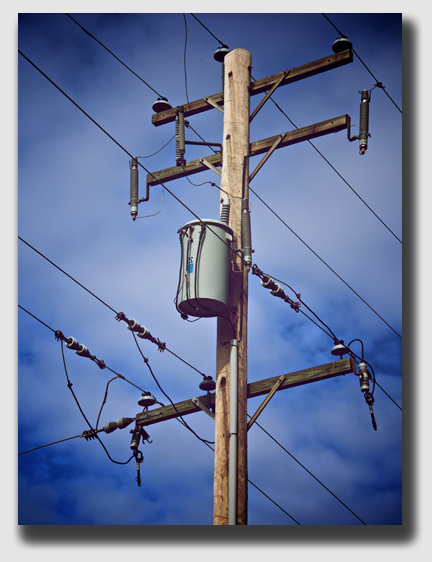
Sarale v. Pacific Gas & Electric Co., 117 Cal.Rptr.3d 24, 189 Cal.App.4th 225 (Ct.App. 3rd Dist., 2010). The Sarales own farmland across which PG&E claimed an easement for electric transmission lines pursuant to a 1915 written grant. The right-of-way gave PG&E “the right of erecting, constructing, reconstructing, replacing, repairing, maintaining and using for the transmission and distribution of electricity… and also a right of way [giving PG&E] full right and liberty of cutting and clearing away all trees and brush on either side of said center line whenever necessary or proper for the convenient use and enjoyment of the said line of towers and wires and right of way…”

Until November 2004, PG&E periodically trimmed the Sarales’ walnut trees for about 10 feet on either side of the lines. After November 2004, however, over the Sarales’ protest, PG&E began trimming the walnut trees up to 20 feet away from the lines, rendering unproductive what had been “producing trees.”

The Sarales sued PG&E, which defended by saying it was “legally mandated to take appropriate measures to maintain vegetation clearances and, accordingly, we have trimmed and continue to trim all trees that may interfere with our electric power lines-pursuant to both our rights under our easement/ right of way as well as the rules and regulations under which we are required to operate.”

The Sarales denied the existence of a utility easement on their land, but said if the easement were found to exist, PG&E should be “authorized by law to trim no further than the distance established by the court, radially measured at time of trimming and not further, without [the Sarales’] permission.” They sought an injunction preventing PG&E from “destroying vegetation or trimming crops under cultivation” and demanded damages for trespass.

PG&E responded that California Public Utilities Code § 1759 barred the court from exercising jurisdiction over the Sarales’ claims because to do so would interfere with “an ongoing supervisory or regulatory program over which the public utilities commission has sole jurisdiction.”

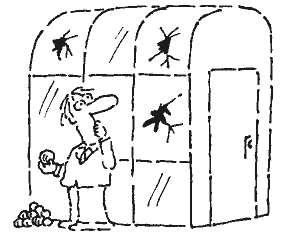
PG&E’s contractors were only reasonably managing the easement.

The trial court agreed with PG&E, reasoning that the acts alleged by the Sarales “involving and related to… PG&E’s vegetation management practices under and around its power lines fall within the commission’s regulatory jurisdiction. This court, therefore, has no jurisdiction over the Sarales’ first amended complaint… Before proceeding against PG&E in superior court… the Sarales must first seek a finding from the public utilities commission that PG&E’s vegetation management practices are excessive or otherwise out of conformance with regulations.’

Held: The Court of Appeals agreed with the trial court. The California Public Utilities Commission holds the “broad authority to ‘supervise and regulate every public utility in the State’.” Section 1759 of the Public Utilities Code bars any court action that hinders or interferes with the exercise of regulatory authority by the Commission.

This broad authority authorizes the commission to “do all things, whether specifically designated in the Public Utilities Act or in addition thereto, which are necessary and convenient in the exercise of its jurisdiction over public utilities.”

No courts in the state, except the Supreme Court and the courts of appeal, have jurisdiction to reverse a Public Utilities Commission order. Nevertheless, the state legislature has provided for a private right of action against utilities for unlawful activities and conduct. The right of action is limited to those situations in which an award of damages would not hinder or frustrate the commission’s declared supervisory and regulatory policies.

The California Supreme Court has a three-part test to determine whether an action is barred by § 1759: (1) whether the commission had the authority to adopt a regulatory policy; (2) whether the commission had exercised that authority; and (3) whether the superior court action would hinder or interfere with the commission’s exercise of regulatory authority.

Here, the Sarales conceded the commission had authority to regulate trimming distances around power lines. The commission’s authority to “supervise and regulate every public utility in the State” included the authority to require utilities to maintain its systems and equipment “in a manner so as to promote and safeguard the health and safety of its employees, passengers, customers, and the public.” The court said regulating tree trimming distances around power lines effectuated this purpose.

The commission had clearly exercised its authority. Its General Order No. 95 provided rules governing the construction of overhead electric lines. Rule 35 of General Order No. 95 specifically governed tree trimming and had been changed in 1997 to require wider trimming margins from power lines.

The court held that for purposes of applying the test, “what matters is that the commission has exercised its authority to adopt a regulatory policy relating to tree trimming around power lines…”

Finally, the court held that an action for damages against a public utility is barred by § 1759 “not only when an award of damages would directly contravene a specific order or decision of the commission, i.e., when it would ‘reverse, correct, or annul’ that order or decision, but also when an award of damages would simply have the effect of undermining a general supervisory or regulatory policy of the commission, i.e., when it would ‘hinder’ or ‘frustrate’ or ‘interfere with’ or ‘obstruct’ that policy.”

Here, the Sarales’ suit against PG&E essentially advances claims of “excessive” tree pruning based on past vegetation management practices. Section 1759 saves the commission and utility companies from defending against lawsuits every time adjustments are made to protocols for vegetation management around power lines. The record, in this case, indicates that the standards for vegetation management surrounding power lines had been revised by the commission 13 times in 57 years. “Allowing owners of land containing overhead power lines to seek individualized judicial determinations of what might be ‘necessary’ or ‘proper’ vegetation,” the court said, “would cause a regulatory nightmare for the commission that § 1759 was intended to prevent.”

– Tom Root

Case of the Day – Tuesday, March 11, 2025

DO WE DETECT SOME HOSTILITY HERE?

We’ve all heard of adverse possession, that weird and perhaps outdated legal doctrine that lets people with sufficient chutzpah get title to real property they don’t own. Want your neighbor’s house (and you know coveting it is not allowed), all you have to do is take possession of the place, and ensure that your possession is open, notorious, exclusive, and hostile continuously for a period set by statute (from five to 21 years, depending on state law).

Easy for us to say, you might be thinking. But what does it mean?

Let’s take it in steps. Today, let’s consider hostility.

We all have notions of what “hostile” means, but for purposes of adverse possession, that’s not it. In today’s case, a small cemetery association had been using a gravel road it had gotten the right to by a poorly drafted easement in an 1880 deed (the year James Garfield became president). The people who remembered the Association had an easement were still around, although about 6 feet deeper than they had been back then.

The cemetery association members had been dumping dirt on the land next to their easement, but they stopped when Calvin Coyer, the neighbor, asked them to because they wanted to be “good neighbors.” No hostility there. But they still parked cars on Cal’s land while giving Cal “permission” to graze his herds there. But at last, there came a time when the Association wanted to clean up its property lines, and – discovering it did not own the land its people had been parking on – the Association sued Cal for ownership under the doctrine of adverse possession.

Nice guys finish last. Because the Association always thought it owned the property, Cal argued, it couldn’t have possibly possessed the land with any hostility. Not so, the Court of Appeals said. The “hostility” element of the doctrine of adverse possession is satisfied where the possessor thinks he or she owns it or where he or she knows someone else owns it but intends to possess it anyway. Malcolm Forbes was right! “Contrary to the cliché, genuinely nice guys most often finish first or very near it.”

Union Cemetery Ass’n of Crawfordsville, Linn County, Oregon v. Coyer, 214 Or.App. 24, 162 P.3d 1072 (Ct.App. Oregon, 2007). The Union Cemetary Association operated a 3.69-acre cemetery surrounded by Calvin Coyer’s 81 acres of grazing land. Coyer’s land connected the cemetery to a 28-foot wide roadway that, in turn, connected to a public road by means of a 14-foot wide gravel road. The 100-year-old gravel road provides the only access from the public road to the cemetery.

The Association received a deed in 1880 for a “right of way for a wagon road” as to a portion of the gravel road back in 1880 and to another parcel of property. In the final sentence of the deed, the grantors stated that they “hereby relinquish and quitclaim all our right, title, and interest in said premises.” However, the sentence did not specify whether the described “premises” just included the “right of way” which became the gravel road or whether the “premises” consisted solely of the other property conveyed under the deed.

Before Coyer acquired his land in 1991, the Association piled dirt on the lot. Coyer asked the Association to stop doing so, and the Association complied, even posting a sign that prohibited dumping. Association members believed the Association owned the subject property and, as a good neighbor, the Association gave Coyer permission to corral cattle and park farm equipment on the property in a way that did not conflict with the use of the road by cemetery traffic.

Finally, when a dispute arose, the Association filed an action for quiet title, seeking a declaration that it owned the entire subject property in fee simple based on either a conveyance or adverse possession. After trial, the court found that, by virtue of the 1880 deed, the Association held title to an 18-foot roadway and owned the remaining 22-foot width of the subject property by adverse possession or, in the alternative, that plaintiff had established an easement by prescription over the entire subject property.

Coyer appealed, challenging the conclusion that the Association’s possession of the land was hostile.

Held: The Association owned the land by adverse possession. The Court noted that in an adverse possession action, a party seeking to establish ownership by adverse possession must prove by clear and convincing evidence that, for a 10-year period, it or its predecessors maintained actual, open, notorious, exclusive, hostile, and continuous possession of the property.

The requirement for actual use is satisfied if the plaintiff establishes a use of the land that would be made by an owner of the same type of land, taking into account the uses for which the land is suited. A use is “open and notorious” if it is of such character as to afford the owner the means of knowing of the use and the adverse claim. A use is “hostile” if the plaintiff demonstrates a subjective intent to possess the property, intending to be its owner and not in subordination to the true owner.

To establish hostility, an adverse possession claimant must show either that its possession of the disputed property was under an honest but mistaken belief of ownership or that the possessor subjectively intended to possess the property intending to be its owner. Here, the Court ruled, the testimony of the Association’s board members that they believed the Association owned the 40-foot strip of land, but as a good neighbor, gave Coyer permission to corral his cattle and park farm equipment on the strip in a way that didn’t conflict with the Association’s use of the road for cemetery traffic, was sufficient to show that the Association believed — even if mistakenly — that it owned the property. That established hostility for purposes of the adverse possession claim.

Tom RootTNLBGray140407

Case of the Day – Monday, March 10, 2025

WHAT IS THIS CASE DOING IN MY COURTROOM?

socks150311

I recall once enjoying the spectacle of a young lawyer squirming during a pretrial hearing. I couldn’t help myself – he represented the opposing party and generally was insufferable. The judge picked through the sharp young attorney’s pleadings like he was sorting a pile of smelly socks, and then demanded to know “what is this case doing in my courtroom?”

schadenfreude150311Ah, schadenfreude! Such a guilty pleasure, chiefly because I have no doubt that I myself have on many occasions given other lawyers opportunities to enjoy schadenfreude at my expense.

Still, there are a lot of cases that ought to never see the inside of a courtroom. Today’s case is a good example. A man named Klemme burned some brush one day. He carefully tended the burn pile, kept water and a phone handy lest the fire gets out of control, and checked for burning embers before he went home that night. He was on the scene the next day, too, and saw no smoldering debris. The next day, however, the wind came up, and somehow, fire burned about 400 young seedlings planted in the neighboring unimproved property, owned by the widow Zech.

The seedlings were fewer than one percent of the 62,000 seedlings planted by the Zechs pursuant to a deal they had made with a federal conservation program. They had bought seedlings for about 30¢ apiece and planted them over a period of years. Then Mr. Zech died, and after that, Mrs. Zech never visited the property. She admitted she couldn’t say for sure that it had been Klemme’s burn pile that had started the fire. She admitted that a lot of other seedlings had died of natural causes and that she hadn’t replaced the seedlings allegedly killed by the fire or the ones that had simply died. Finally, she was unable to show that the fair market value of the real estate had fallen because of the damage to about 0.66% of the seedlings on the premises.

This case was not (to use a Latin phrase), a “slam dunker” for Mrs. Zech. If she felt she had been damaged, why didn’t she spend $120.00 for 400 new seedlings? If she permitted many of the 62,000 seedlings to die without replacement, how seriously had her enjoyment of the property – which she didn’t visit because of the amount of snowfall and because it apparently evoked memories of her late husband – been compromised?

Mr. Klemme’s lawyer filed a motion for summary judgment, asking the Court to grant judgment for the defendant without a trial. Summary judgment is a useful device for economically ridding the court of a dog of a case where there is no genuine issue of fact and where one side is entitled to judgment as a matter of law. The trial court obliged him, holding that the proper measure of damages was the decrease in the value of the property and that Mrs. Zech had provided no evidence that the value of the premises had fallen.

Mrs. Zech appealed, arguing that the measure of damages should have been the replacement value of the seedlings. What, we’re talking $120.00 here? As little sense as that made, the trial court had found that the seedlings were “special purpose” trees because the Zechs were required to plant them as a condition of having the land enrolled in the CRP. Relying on that “special purpose” finding, the Court of Appeals held that the proper measure was indeed the decrease in fair market value, thus agreeing with the defendant.

A priceless Ming vase (note the clear label)

A priceless Ming vase (note the clear label)

This is a peculiarity of the law of negligence. Not only must there be a departure from the standard of care (someone has to be a klutz), but there must be harm flowing from the klutziness. If I drop your priceless Ming vase, but it bounces without breaking, you have no claim against me for negligence. If it breaks, however… that’s another story.

Was Mr. Klemme negligent? Did his burn pile spontaneously combust? We’ll never know because – whatever caused the fire – Mrs. Zech didn’t suffer any loss.

Zech v. Klemme, 803 N.W.2d 128 (Iowa App. 2011). One spring day, strong winds rekindled an ember in a burn pile located on Klemme’s property and started a grass fire that damaged trees on Zech’s property. Several days before, Klemme had burned brush and tree limbs in a burn pile located about 300 feet from the Zech property.

Klemme kept a water hose nearby and used the hose to wet down the adjacent area to prevent the fire from spreading. He also had a cellular telephone available to contact the local fire department if necessary. Klemme said he stopped burning at about 11 a.m. on April 2, and when he left his property at the end of the day, the burn pile had subsided to ashes. He worked on his property on April 3, and observed the pile throughout the day, noting no sign of any smoldering embers. Klemme also said he had no knowledge there would be any strong or sudden gusts of wind on April 4th.

fire150311Zech had enrolled the land where the fire occurred in the federal Conservation Reserve Program (CRP). The CRP required Zech to prevent erosion and provide wildlife habitat on the acreage and prohibited her from harvesting the trees or using the land for grazing livestock or raising crops. In exchange for her enrollment in CRP, Zech received an annual payment starting in 2002 and continuing through 2006. For conservation purposes, Zech and her late husband planted between 2,000 and 3,000 bare-root seedling trees each year. At the time of the fire, about 62,500 trees of various species had been planted on the CRP land.

The Zechs purchased the bare-root seedlings from the Iowa State Forest Nursery at about $0.30 each. Zech asserted that over 400 trees were damaged in the fire. In the ordinary course of nature, wildlife, insects, disease, and climatic conditions have also damaged or destroyed some of the trees on the CRP land. Zech has not removed, replaced, treated, repaired, pruned, trimmed, or cut down any of the trees that have been damaged or destroyed by the fire or by natural causes. She does not live on the CRP property, and the fire did not change her use of the land.

Zech contended in her complaint that the appearance of the burned branches on the trees she planted with her late husband has diminished her emotional enjoyment of the land. However, she did not argue that the fire has diminished the fair market value of the land. The fire did not cause Zech to incur a loss of income, nor did it cause her to incur any additional expense. She also did not argue that the damaged trees had any historic value.

Zech had no personal knowledge as to the cause or origin of the fire, and she did not contend that Klemme acted intentionally to harm the trees.

The trial court held that the trees on the land were “special purpose” trees and that the measure of damages was the decrease in the fair market value of Zech’s property. Because there was no proof of any loss of market value, there were no damages, and Klemme was granted summary judgment.

Zech appealed.

Held: The trial court properly determined what damages should be considered and correctly concluded that Zech had not been damaged.

The Court of Appeals observed that Laube v. Thomas had held 25 years before that “[i]t is impossible to state a simple, all-purpose measure of recovery for loss of trees.” Therefore, trial courts are granted a degree of discretion to select how to assess damages based on the facts of each case.

seedlings150311Zech argued that the appropriate calculation for damages should be the replacement cost of the seedling trees damaged or destroyed by the fire. Where trees can be replaced, a reasonable cost of replacement is the appropriate measurement of damages. Laube, the Court noted, involved the removal of about 100 walnut trees. The Laube court decided that the replacement cost measure “would obviously be inappropriate,” and the trial court in this case – which was dealing with about 400 trees – was likewise right that a replacement calculation would not work. Compounding the problem, Zech admitted she has not replaced or treated any of the damaged trees since the fire in 2005, nor has she expressed an intent to do so in the future.

Instead, the trial court concluded that the appropriate measure of damages for Zech’s loss should be the “special purpose” or “special use” calculation used in Laube. Where trees are put to a “special purpose” or have a “special use” – such as for windbreaks, shade, or ornamental use – damages are based upon the difference between the market value of the land before and after the destruction of the trees. The trial court viewed the conservation use of the trees as required by CRP to be a special purpose and thus concluded that any enjoyment Zech derived from the trees was incidental to the primary purpose of the CRP land. Besides, the Court of Appeals noted, while Zech herself had testified that the burned trees reduced her enjoyment of the land, she admitted she no longer regularly walks on the CRP land, citing the fact that “there has been too much snow for one thing.” She also admitted that she had ceased her custom of walking the land after her late husband passed away.

Zech also admitted that the fire did not cause her to change her use of the land. The trial court concluded that Zech’s deposition testimony did not establish a special use relating to her enjoyment of the land, nor a diminution in her enjoyment due to the fire. Using the “special purpose” market value calculation, the trial court concluded that the issue of damages entitled Klemme to summary judgment because the record did not demonstrate a loss in the market value of the land.

The Court of Appeals approved of these findings and left them undisturbed. Because Zech has not sustained any compensable economic loss as a result of the fire, the Court affirmed the trial court’s summary judgment ruling on damages.

– Tom Root

TNLBGray

Case of the Day – Friday, March 7, 2025

THE TROUBLE WITH TREBLES

No .. our troubles are with "trebles."

No .. our troubles are with “trebles.”

Most states have statutes on the books that increase the damages due for the wrongful cutting of trees when that cutting is intentional. As we have seen in Johnson v. Tyler, statutory treble damages are intended to be applied instead of punitive damages. The treble damages are meant to punish a wrongdoer and deter misconduct.

But rare is the case where Charlie Chainsaw runs amok in your backyard, cutting down trees just for the thrill of watching them fall on your house. Now that would be “willful.” Usually, things are not – forgive the pun – that clear-cut.

That’s the trouble with “treble.” The statute seems so limited in its coverage. Fortunately (that is, unless you’re the malefactor), courts have defined “willful” expansively. You might think that “willful” means “intentional.” But you would be wrong. While “willful” is certainly more than mere “inadvertence,” probably more than just “negligent,” it certainly encompasses “reckless.”

Whew! The whole concept’s kind of squishy. Listen to the Court of Appeals in today’s case: It said “willfulness” under Iowa’s treble damage statute is “under conditions that may be said to indicate something more than mere carelessness or recklessness. Of course, there was no personal malice against the owner. But there was a loose disregard for the rights of others… Certainly, there was something more than mere inadvertence.”

Got it?  Good for you, because we don’t.  More than “mere inadvertence” could be “gross negligence.” But what is “loose disregard for the rights of others?”  Generally, the law follows a continuum from strict liability – that is, liability without any fault at all – through negligence, gross negligence, recklessness, and intentional misconduct. “Loose disregard” is nowhere on the list.

We’re tempted to suspect that the Court of Appeals found Lionberger’s and Norton’s conduct sufficiently outrageous that it was unwilling to let them off for a mere $1,500.00. Perhaps it believed the legislature intended that even negligence in the identification of boundaries should give rise to punitive damages. Whatever the Court’s rationale, it provided guidance to the definition of “willful” that shows a “loose disregard” for precision.

reckless150310Drew v. Lionberger, 508 N.W.2d 83 (Iowa App. 1993). Drew owned land that was surrounded by property owned by Lionberger. Codefendant Norton Lumber Company is in the logging business. In the fall of 1989, Lionberger hired Norton to log some trees on his land. Lionberger helped Norton in determining the boundaries of his land, but Lionberger never contacted Drew about the proper boundaries between the respective properties. As a result of improperly marked boundaries, Norton logged twenty-eight trees from Drew’s land. The trees were mature, some of them being as old as 150 years.

During trial, Drew testified that he and his family used the land for hunting and hiking. He also produced testimony from an arborist that the trees were worth $17,053. Lionberger said the trees were worth between $535 and $1,500. The defendant’s expert based these figures on the market value of the lumber cut from the trees.

The trial court determined that Lionberger and Norton were jointly and severally liable for the market value of the lumber produced from the trees in the amount of $1,473.

Drew appealed, claiming the trial court erred by using the market value of the lumber produced from the trees to measure damages, by not awarding treble damages for the willful cutting of the trees, and by failing to find that codefendant Norton Lumber Company trespassed on Drew’s land and wrongfully logged trees.

Held:  The district court was correct that the current market value of the lumber produced from the trees is the correct measure of damages. However, the trial court was wrong to conclude that treble damages were not warranted.

The Court of Appeals, relying on Laube v. Thomas, held that because Drew’s trees had no special use, the measure of damages was the commercial market value of the trees at the time of taking. The Court of Appeals held that the district court’s finding that Drew was entitled to the market value of the trees – a princely sum of $1,473 – was right.

If you're dropping trees this close to the neighbor's house, you just may be in lines for paying some treble damages.

If you’re dropping trees this close to the neighbor’s house, you just may have a bill for treble damages in your future.

Drew also argued that Iowa Code § 658.4, which addresses treble damages, should have been applied. That statute provides that “[f]or willfully injuring any timber, tree, or shrub on the land of another, or in the street or highway in front of another’s cultivated ground, yard, or city lot, or on the public grounds of any city, or any land held by the state for any purpose whatever, the perpetrator shall pay treble damages at the suit of any person entitled to protect or enjoy the property.”

The Court of Appeals agreed. It found no substantial evidence to support the district court’s conclusion that Lionberger’s and Norton’s actions were not willful. The Court held that the trees were cut and removed “under conditions that may be said to indicate something more than mere carelessness or recklessness. Of course, there was no personal malice against the owner. But there was a loose disregard for the rights of others … Certainly, there was something more than mere inadvertence.”

Lionberger and Norton, on their own, had measured and marked what they thought was the Drew property. Because no boundary markers existed at the time the measurements were taken, they knew a question existed as to the boundaries of Drew’s property. Despite knowing this, the defendants never contacted Drew to determine whether or not the boundaries they measured were acceptable to him. Furthermore, neither Lionberger nor Norton communicated any intention to cut trees from the area in question to Drew prior to logging the trees.

Their failure to contact Drew or to obtain his input as to the existing boundaries before logging the trees, the Court concluded, was “clearly intentional. This conclusion is further supported by the fact that the defendants did their own measuring and then proceeded to cut the biggest and oldest trees from the area in question. Because we find the cutting of Drew’s trees to be willful in accordance with § 658.4, we conclude Drew is entitled to treble damages under the statute.”

Drew’s damage award thus went up from $1,473 to $4,418.

– Tom Root

TNLBGray140407

Case of the Day – Thursday, March 6, 2025

A DUTY TO HECTOR?

nag150327Today, we continue our consideration of the problem posed by Tracy from Pinebark, New York.

You recall Tracy’s problem from yesterday: the neighbor’s arguably dead tree fell on her car, crushing it. She and her husband are tenants, and her landlady’s insurance carrier won’t cover the damage because it says the tree was dead. The neighbors’ insurance company won’t cover the damage because it says the tree was alive. Tracy’s arborist agrees with her landlady that the tree was quite dead, and the neighbors appear to have had actual knowledge (from work done by a previous arborist they had hired) that the tree was a hazard.

Yesterday, we discussed why Tracy’s local lawyer should argue that the neighbors are liable no matter what their skinflint insurance carrier may say. But Tracy, who understandably is looking for as many deep pockets as she can find, has asked whether her landlady is liable as well because she knew the neighbor’s tree was a hazard, but she never informed the neighbor of that fact. And that raises a very interesting (and rather creative) question.

Once again, we warn Tracy that we are not New York lawyers, and we are not rendering legal advice. She should see her local attorney for that. That being said, there’s not much guidance in New York law for her problem. A landlord who holds her land open to the public is under a legal duty to exercise reasonable care under the circumstances to maintain the premises in a reasonably safe condition. This duty is usually discussed in the context of landlords who don’t keep their premises secure against reasonably foreseeable criminal acts by third parties (locked doors, security cameras, and the like). The duty “imposes a minimum level of care on landlords who ‘know or have reason to know that there is a likelihood that third parties may endanger the safety of those lawfully on the premises’.”

sign150327A landlord must anticipate the risk of harmful acts of third persons, adopting the duty of care set out in the Restatement (Second) of Torts § 344. That is, a landlord must exercise reasonable care to discover that such harmful acts are being done or are likely to be done, give an adequate warning, or otherwise protect the visitors against it.

Most of these principles address the landlord’s duty to warn tenants and invitees of harmful conditions. Even if this created a duty on the part of the landlord to warn Tracy and her husband that the neighbor’s tree might fall, it doesn’t necessarily mean that the landlady had a duty to Tracy that required her to tell the neighbors that they had a dangerous tree on their hands. We just can’t find any holdings that create such a duty.

One part of the reason might be the futility of it. Telling the neighbor that he has a “danger tree” on his land that might someday injure the landlord’s tenant doesn’t really get anyone anywhere because the landlord is without any power to remove or trim the tree herself (it was well within the neighbor’s property boundaries). The landlord might have sued the neighbor for maintaining a private nuisance and might even have won a judgment against the neighbor — especially after limbs fell from other trees last summer, causing damage to the landlord and the tenant — but the likelihood that the suit would have been successful is problematic.

Another part of the reason might be Palsgrafian causation. Just like Mrs. Palsgraf in the famous Long Island Railroad case, the causation link — the landlady’s failure to warn the neighbors led to the tree falling and the injury — is pretty tenuous.

A third problem lies in Tracy’s analysis of her status as a tenant. As a tenant, she has the exclusive right to possession of the property. If the landlady had a duty to tell the neighbor about a “danger tree” on the neighbor’s property, we would be very surprised if Tracy didn’t have as much of a right and duty as did the landlady to tell the neighbor about the tree. Likewise, we would be surprised if Tracy herself couldn’t have maintained the private nuisance action against the neighbor to force removal of the tree. Generally speaking, having the right of possession of a piece of real estate is a powerful club, one which lets the possessor wield nearly as much power as does the titleholder. In this case, we suspect that Tracy herself had the power to do what she complains her landlady didn’t. And clearly, she had as much knowledge of the tree’s condition as her landlady did.

And that brings us to the final point. Tracy makes a compelling case that the neighbors knew all about the condition of the dead tree. Their agent, the tree surgeon, certainly knew as well because he had removed a diseased bough, and that knowledge is imputed to the neighbors. If the neighbors had gotten a report from the arborist on which they refused to act, it’s pretty hard to argue convincingly that things would have changed if the landlady or Tracy had also told the neighbors what they already knew: the tree was dangerous and should be removed.

Causation and foreseeability are often wrapped in the same package. In a New York case we’ll consider today, Mr. Fleury knew that his big ol’ apple tree was pretty close to the power line running to his house. Well, nature’s bounty — a really good apple crop — caused the tree to fall over partially, and the tree touched the wires. Mr. Fleury called the power company and said, “You need to fix this!” The power company said, “Nope, it’s your wiring from the transformer to the house. You fix it.” Mr. Fleury didn’t, and within about 10 days, the tree on the wires caused a short circuit.

appletree150327But, electricity being the capricious thing it is, it didn’t hurt Mr. Fleury. Instead, a “backfeed” went through the transformer and down his neighbor’s lines, setting fire to the neighbor’s place 165 yards away. Should Mr. Fleury be liable? He would have been if it had burned down his own house. The Court said it all depended on whether Mr. Fleury could reasonably foresee that his procrastination at getting the tree trimmed might have the effect it had.

How likely is it that a court would find that the landlady’s failure to hector her neighbor about a tree the neighbor already knew was a hazard would foreseeably lead to Tracy’s car being crushed? Probably not very. Such a holding would open the floodgates, making homeowners everywhere liable to their invitees if they were deemed not to have nagged their neighbors sufficiently over conditions that the homeowner had no power to correct. For example, we live on a side street where a neighbor has a testosterone-driven teenage son. He recklessly speeds his old junker of a car up and down the street. If our houseguest gets run down by the lad, would we be liable on a claim that we had been negligent because we never complained to the boy’s mother about the kid’s speed? It seems an awful lot like “blame the victim.”

Certainly, Tracy should ask her local lawyer about her claim against the landlady. But we think it’s a stretch the courts won’t buy.

Allstate Ins. Co. v. Fleury, Case No. 5:99-CV-1261, 2007 U.S. Dist. LEXIS 29354, 2007 WL 1200137 (N.D.N.Y. Apr. 20, 2007). A fire caused substantial damage to the Thaddeus Jastrzab residence. Allstate Insurance paid the Jastrzab claim and then sued Niagara Mohawk Power Corporation and Jim Fleury, the next-door neighbor. It seems the fire started at the Jastrzab home, but it was caused by a “backfeed” from the NiMo transformer that fed both the Jastrzab and Fleury homes.

Fleury had an apple tree that had grown near the lines for years without trimming. About 10 days before the fire, a large apple crop on the tree partially uprooted it and caused a limb to contact the electric wires feeding Fleury’s house. Fleury asked NiMo to fix it, but NiMo said Fleury owned the electric wires and was responsible for their upkeep. Fleury said he was concerned that the tree limbs touching the wires might cause a fire, but he did nothing more after NiMo passed the buck.

fire150327After the Jastrzab fire, an investigation found that the backfeed was caused by a tree limb that touched the old-style two-wire system, forcing the wires into mutual contact. The contact energized the neutral line owned by NiMo, which dumped excess current through its transformer and down the electric lines supplying the Jastrzab home. The electricity caused the grounding wire to overheat and arc onto Jastrzab’s roof. The fire was intensified by the fact that Jim Fleury’s home was not adequately grounded at the time, sending the electricity to look for a ground at the Jastrzab’s place. The trial court found that neither Fleury nor NiMo liable for the damages caused by the Jastrzab fire. Allstate moved for reconsideration.

Held: Allstate loses. Allstate complained that the Court inaccurately applied the law of negligence and foreseeability to the facts in this case. It argued that the Court was wrong when it found that the fire at the Jastrzab residence was not a reasonably foreseeable consequence of Fleury’s failure to remove the apple tree limb from his power lines. Allstate argued that the “precise occurrence” did not have to be foreseeable in order for liability to be imposed on Fleury. Fleury would have been liable if the fire had started at his house, Allstate said, and therefore, liability should be imposed for the fire that started 165 yards away.

The Court disagreed. The proper focus of the inquiry is on the foreseeability of the risk. This is an essential element of a fault-based negligence cause of action because the community deems a person at fault only when the injury-producing occurrence is one that could reasonably have been anticipated. Although virtually every untoward consequence can theoretically be foreseen “with the wisdom born of the event,” the Court said, the law draws a line between remote possibilities. No person can be expected to guard against harm from events that are so unlikely to occur that the risk would commonly be disregarded.

The precise manner in which the harm occurred need not be foreseeable, but still, the Court held, liability does not attach unless the harm is within the class of reasonably foreseeable hazards that the duty requires one to try to prevent. Here, no fire took place on the Fleury property. Instead, it started 165 yards away. No one reasonably foresaw that happening.

The law draws a line between remote possibilities and those that are reasonably foreseeable. Here, the likelihood that Defendant Fleury could have foreseen the chain of events – that the tree limb touching his power lines might create an electric backfeed fire that damaged the Jastrzab residence – was too tenuous and remote to permit recovery under a negligence cause of action.

– Tom Root

TNLBGray140407

Case of the Day – Wednesday, March 5, 2025

SOMEBODY HERE OWES ME MONEY

Mailbag140924We go to the mailbag!

Today we consider an interesting problem, this one submitted by alert reader Tracy of Pinebark, New York. Tracy reports that “our neighbor’s old dead tree came down across our parking area, totaling both our cars. Their insurance company denied the claim, saying that no one notified them and that it was a live tree. My landlady’s insurance company denied the claim, saying it wasn’t her tree, so she wasn’t responsible. She knew about the problem trees on their property and didn’t notify them. I need to get some sound legal advice and the NY state statutes to show first that the neighbor should have done something and that my landlady should have notified them that they should do something. Help!! Thanks so much.”

So, someone owes Tracy money.  But who?

Now this guy played a New York lawyer on TV - but Tracy needs to get one who, while not so photogenic, has a real New York license hanging on the wall.

Now this guy played a New York lawyer on TV – but Tracy needs to get one who, while not so photogenic, has a real New York license hanging on the wall.

First, our obligatory disclaimer, Tracy. We’re not New York lawyers, and for that matter, we don’t even play them on TV. For sound New York legal advice, you should consult a local attorney. Not Sam Waterston, either. But right now, get out your yellow pad and take down a few concepts to pass on to your solicitor.

There are two problems to contemplate here. First, what responsibility do the neighbors have? And second, what liability does your landlady have?

First, the neighbors: You reported that in the past year, a branch from the tree crushed your gazebo tent and another took out part of your landlady’s shed. You also said your landlady’s insurance company adjuster said it wasn’t her responsibility because the neighbors’ tree was dead. You told us that you agree with the dead tree analysis because you had an arborist inspect the tree and arrive at the same conclusion. In fact, you reported, the neighbors have had work done on the tree before, so they had certainly had constructive notice of its precarious condition. But you say the neighbors’ insurance company asserts the tree was alive, so the neighbors aren’t liable. You think the insurers may be dissembling.

An insurance adjuster lie? Horrors!

An insurance adjuster tell a lie? Horrors!

We are shocked, shocked we say, by the suggestion that insurance companies would prevaricate! Let’s consider New York law with respect to the neighbors. In Ivancic v. Olmstead, the Ivancic boy was hurt when a branch fell from the Olmsteads’ tree. The Court held that a property owner has no duty to consistently and constantly check all trees for nonvisible decay. Rather, the decay must be readily observable in order to require a landowner to take reasonable steps to prevent harm. If visible evidence of decay is present, the failure to inspect won’t be a defense.

We don’t think you’re quite correct in your mention of “constructive notice.” “Constructive notice” means the neighbors reasonably should have known. It’s much like if you’re sitting in your windowless cube at the office, and you see 10 co-workers get off the elevator, shaking water off umbrellas and removing water-spotted raincoats. You don’t have actual notice that it’s raining, but any reasonable person should be aware it’s probably raining just based on what you’ve observed. That’s constructive notice.

She's walking down the hall carrying a wet umbrella. Might it be raining outside?

She’s walking down the hall carrying a wet umbrella. Might it be raining outside?

Your neighbors, on the other hand, probably had actual notice, which you would have if you wandered into the corner office and saw the rain falling outside the window. Because the neighbors’ tree experts had removed one side of a “y” prior to the tree falling, they undoubtedly saw the decay and heard the arborists’ report. They didn’t have to know that the tree was dead — just that it was decaying in such a manner as to create a foreseeable risk.

If we were cynical, we’d suggest the neighbors’ insurance company is “gaming” you. Perhaps the adjusters figure that if it denies ten claims, some of the claimants – say four or so – will give up.  Six will press on.  By denying everything initially, the insurance company has cut its exposure from 10 claims to six. No claims examiner gets promoted for paying claims; we might suggest if we were cynics. Which we’re not.

Your local lawyer might want to collect a good, written report with photos from your certified arborist, add to it observations that the neighbors were on notice of the tree’s condition, and write to the neighbors’ insurance company. It would be good not to feed your lawyer before he or she contacts the carrier, so he or she is especially grumpy. If that doesn’t work, your avenue for relief is going to court. We would strongly urge you to use legal counsel rather than trying to represent yourself in small claims court. It’s not that we get a commission from referring you to counsel. If we did, we’d send you to our Uncle Fred (who’s a pretty good mouthpiece). But you hired an arborist, so you already know the value of hiring people who know what they’re doing. You shouldn’t stop now.

You also asked about going after your landlady for not telling the neighbors they had a problem. That’s a fascinating question, one we’ll take up tomorrow.

Ivancic v. Olmstead, 66 N.Y.2d 349, 488 N.E.2d 72 (1985). Ivancic was working on his truck in the driveway of his parents’ home in Fultonville. Since 1970, Olmstead had owned and lived next door. A large maple tree stood near the border of the two properties, and its branches extended over the Ivancic land. During a heavy windstorm, an overhanging limb from the tree fell and struck Ivancic, causing him serious injuries. He sued, maintaining that the branches hanging over his parents’ property constituted trespass and that the Olmsteads were negligent. The trial court refused to instruct on the trespass claim, but the jury found against the Olmsteads on negligence. The Olmsteads appealed.

Held:   The verdict against the Olmsteads was reversed. The Court held that no liability attaches to a landowner whose tree falls outside of his premises and injures another unless there exists actual or constructive knowledge of the defective condition of the tree. Ivancic made no claim that the Olmsteads had actual knowledge of the defective nature of the tree and presented no evidence that the Olmsteads had constructive notice of the alleged defective condition of the tree. None of the witnesses who had observed the tree prior to the fall of the limb saw so much as a withering or dead leaf, barren branch, discoloration, or any of the other indicia of disease which would alert an observer to the possibility that the tree or one of its branches was decayed or defective.

Tracy - watch the insurance adjuster's nose carefully while he or she explains that the tree was healthy.

Tracy – watch the insurance adjuster’s nose carefully while he or she explains that the tree was healthy.

The Court held that as to adjoining landowners, a property owner has no duty to consistently and constantly check all trees for nonvisible decay. Rather, the decay must be readily observable in order to require a landowner to take reasonable steps to prevent harm. Ivancic’s expert surmised that water invaded the tree through a “limb hole” in the tree, thus causing decay and a crack occurring below. But he admitted that the limb hole was about 8 feet high and located in the crotch of the tree, which would have made it difficult, if not impossible, to see upon reasonable inspection. Although, the Court said, there may have been evidence that would have alerted an expert that the tree was diseased, there was no evidence that would put a reasonable landowner on notice of any defective condition of the tree.

Thus, the fact that Mrs. Olmstead testified that she did not inspect the tree for over 10 years was irrelevant. On the evidence presented, even if she were to have inspected the tree, there was no indication of decay or disease to put her on notice of a defective condition so as to trigger her duty as a landowner to take reasonable steps to prevent the potential harm.

As for the trespass, the Court held that the Olmsteads didn’t plant the tree, and the mere fact that they allowed what appeared to be a healthy tree to grow naturally and cross over into the Ivancic parents’ property airspace could not be viewed as an intentional act so as to constitute trespass.

– Tom Root

TNLBGray140407

Case of the Day – Tuesday, March 4, 2025

TEACH YOUR CHILDREN WELL

Evil-Spawn-1Mrs. Dahlquist and her evil spawn, Jeff Zube, lived in pretty close proximity to several neighbors, including the Careys. The constant obscenities, threats, spitting from balconies onto the neighbors, rotten eggs and lit cigarette butts got a little wearing on the Careys. They finally sought an anti-harrassment order under a California statute — Section 527.6 of the Code of Civil Procedure — to get Ma Dahlquist’s gang of two to stop.

Common law provides no remedy to restrain a neighbor who, unfortunately, has a sewer for a mouth and a tar pit for a soul, sad to say. Statutes like the California’s CCP § 527.6 are not all that common, but they are becoming more and more so, because – and here we can all bemoan the erosion of the Republic – neighbors like Joe and Dorothy (who’ll mow your lawn for you and deliver warm brownies from time to time) are getting to be scarcer, and next-door harridans like Ms. D and her whelp are becoming more common.

The lesson in today’s case is that if you’re going to be nasty to one neighbor, be sweet to the others. If you’re a jerk to everyone, expect some piling on. Not surprisingly, that happened here: complainants against Ms. Dahlquist and fil came out of the woodwork, with everyone on the block more than happy to cite the constant bird-flipping, the obscene insults, and general squalor that surrounded the harpie and her mordant boy.

CarrieDahlquist and Zube, of course, denied everything. Movie fans will remember the memorable Blues Brothers scene with Jake Blue (John Belishi) telling a gun-totin’ Mystery Woman (Carrie Fisher) that “it wasn’t my fault!” In the face of rather detailed, graphic even, descriptions of the Dahlquist/Zube misconduct by the neighborhood, the trial court didn’t believe a word of it.

BelushiThe Dahlquist/Zube gang appealed. Appellate courts expect that – winner or loser – a party will give the court a reasonably complete and balanced assessment of the record below. Not Dahlquist and Zube. If the fact didn’t fit with their worldview, they just left it out. That didn’t leave much in their recitation of the “facts.” The Court of Appeals wasn’t detained long by this creative pleading: it held that the record below amply made out a pattern of harassment that was such that it would cause a reasonable person to suffer substantial emotional distress. It certainly did for the Careys, and the Court found that under the circumstances, a three-year order was fully justified.

Carey v. Dahlquist, 2007 Cal. App. Unpub. LEXIS 10631, 2007 WL 4555793 (Cal.App. 1 Dist.)  Dahlquist and Carey live next door to each other in Sausalito, California. Dahlquisht’s 19-year-old son, Zube, lives with her. Carey filed a § 527.6 petition alleging that, among other things, her neighbor Dahlquist screamed obscenities at her and used “constant foul language, verbal comments (‘this is war’) and written threats.” Dahlquist had also “ordered tree people onto my property and cut down (removed two 30 ft high trees).” Carey requested an order that Dahlquist stay away from her and that “she not be able to come out on her deck and scream obsenities [sic] at me or my husband as I go up and down my stairs.” In addition, Carey asked the court to order that Dahlquist “not hire workmen to come onto my property and destroy my property” and that she “pay for the survey and replace the trees she removed.”

The same day, Carey filed an application for a temporary restraining order against young Zube, alleging that in a two-page list of “confrontations” with Zube, he had thrown eggs from his balcony, shouted obscenities at her husband as he came up the stairs, threw poppers onto the stairs while Carey and her husband were walking up the stairs, and made “exceptional noise” emanate from his stereo. On multiple occasion, lighted cigarette butts were found on the wooden stairs at Carey’s house. Neighbors provided affidavits complaining of similar acts.

The record also contained a declaration from Jeff Zube’s father claiming that Carey was a chronic complainer, and anyway, young Zube would be leaving soon for Santa Barbara to attend college. Nevertheless, the trial court granted the petition as to both Zube and Dahlquist, holding Zube had “an out-of-control and extremely disrespectful side of you and I’ve seen it in court, and I’ve heard it from the testimony.” The court found that Carey and her witnesses were credible and Dahlquist and Zube were not. It issued a 3-year restraining order, and Dahlquist and Zube appealed.

restraining-order1Held: The order was upheld. Section 527.6 provides that a person who has suffered harassment as defined in the statute may seek an injunction prohibiting harassment as provided in this section. “Harassment” is unlawful violence, a credible threat of violence, or a knowing and willful course of conduct directed at a specific person that seriously alarms, annoys, or harasses the person and that serves no legitimate purpose. The course of conduct must be such as would cause a reasonable person to suffer substantial emotional distress and must actually cause substantial emotional distress to the plaintiff. A “course of conduct’ is a pattern of conduct composed of a series of acts over a period of time, however short, evidencing a continuity of purpose, including following or stalking an individual, making harassing telephone calls to an individual, or sending harassing correspondence to an individual by any means, including, but not limited to, the use of public or private mails, interoffice mail, fax, or computer e-mail.

The Court decided that Carey had provided clear and convincing evidence of a knowing and willful course of conduct by Dahlquist. She described confrontations with Dahlquist in which Dahlquist threatened legal action against her and shouted obscenities at her husband as he came up the stairs. Carey found Dahlquist’s behavior threatening. Carey’s neighbor testified that he, too, had been on the receiving end of threatening and harassing behavior from Dahlquist, including her falsely accusing his wife of leaving an obscene message on her voicemail. The Court held that the trial judge had found substantial evidence on which the base the issuance of a permanent injunction.

As for Zube, the evidence established that he had thrown lighted cigarettes on the wooden stairs leading to Carey’s home, that he had spit on the deck, and had thrown poppers on the stairs while Carey was walking up them and also shouted obscenities at Carey. Neighbors confirmed that this sort of behavior had been directed at them as well. Substantial evidence, therefore, supports the trial court’s issuance of the permanent injunction. The continuing course of harassing conduct by Zube and Dahlquist left both Carey and her husband fearful and distressed. This showing was sufficient to indicate a reasonable probability that the course of conduct would continue into the future. It didn’t matter that Zube was leaving for college (think John Belushi in Animal House). The trial court found his other testimony lacked credibility, and the Court of Appeals said it was entitled to disregard his representation that he was leaving.

Even if he did, like a bad penny, he’d probably return.

– Tom Root
TNLBGray140407