Case of the Day – Tuesday, September 29, 2026

TREE HUGS CAR, THEN COURT HUGS TREE

What does the Amazon rainforest have to do with a ’77 Mercedes-Benz?

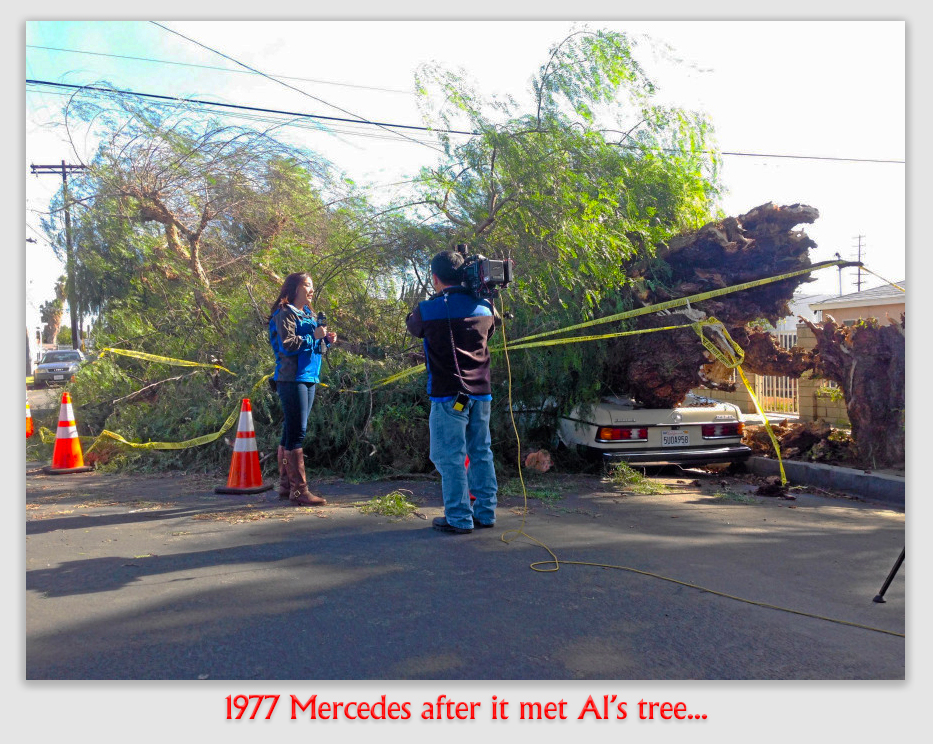
When Vic’s beautiful 1977 Benz was crushed by Al’s tree (while Vic was driving his convertible down the road), Vic knew for a fact that someone had to pay for the damage, and it wasn’t going to be him. Al should have known the tree would fall; Vic fumed in his lawsuit. That argument lasted until the neighbor, who had extricated Vic from the recently downsized roadster, provided pictures showing the tree had decayed from the inside, and a reasonable inspection would not have caught the danger.

Never mind, Vic argued, Al should be responsible for what his trees might do regardless of whether he was negligent. The concept, strict liability – sometimes called liability without fault – has some utility. If you keep a couple of pet tigers in the backyard and a great white shark in the fishpond, the courts aren’t going to waste a lot wondering if you were negligent when the jungle cats maul the neighbor boy or the great white eats the president of the garden club when she leans over the water to admire the lilies. You do something that is inherently dangerous – keeping wild animals is not just a great example, but is the genesis of the notion of strict liability – and you’re going to be liable for whatever happens.

But for keeping trees? We suspect the judge was an environmentalist on the weekend, because he mused that if landowners were strictly liable for their trees falling onto the highway, then the landowners would start cutting down trees willy-nilly, and the beautiful Virgin Islands would be denuded posthaste. The Court opined that “the community, both local and global, also has a compelling interest in the protection and preservation of the environment. The same concern and sensitivity that we are just beginning to bring to the massive problem of the destruction of the Amazon rainforest, for example, should also apply to the relatively minute and particular circumstances of this case. No reasonable gain would be derived from adopting a rule of strict liability here, particularly when weighed against the potential ecological and aesthetic implications of such a decision.”

So trees would fall like dominoes, and the earth would fry like an egg. So take that, Mercedes 450 SL. You may be fine, but the Amazon is finer.
Marrero v. Gerard, 24 V.I. 275 (Territorial Ct. Virgin Islands, 1989). Victor Marrero was driving his 1977 Mercedes-Benz along the East End Road in Estate St. Peters when a tree fell on his car. Before it fell, the tree stood on Plot 5, St. Peters, owned by Alphonso Gerard.

Norman Nielsen, one of Al’s neighbors and a co-worker with Vic, quickly arrived at the scene. The base of the tree was inside Al’s fence, but the remainder was on the road. Norm described the tree as “dry” where it broke off, “kind of rotten but green on top.” The evidence, which includes Vic’s pictures of the tree (though none showing the top of the tree where there was foliage) failed to show that an external visual inspection of the tree before the fall would have disclosed that it was rotten at its base and in danger of toppling.

Held: The court ruled that Vic had not shown Al to be negligent because there was no evidence Al had reason to know the tree was unstable or would fall. But Vic argued he didn’t have to show negligence, because Al should be strictly liable for the tree, that is, liable whether he was negligent or not. Vic based his argument on Restatement of Torts (Second) § 363(2), which holds that “a possessor of land in an urban area is subject to liability to persons using a public highway for physical harm resulting from his failure to exercise reasonable care to prevent an unreasonable risk of harm arising from the condition of trees on the land near the highway.” The explanation accompanying § 363 provides that “it requires no more than reasonable care on the part of the possessor of the land to prevent an unreasonable risk of harm to those in the highway, arising from the condition of the trees. In an urban area, where traffic is relatively frequent, land is less heavily wooded, and acreage is small, reasonable care for the protection of travelers on the highway may require the possessor to inspect all trees which may be in such dangerous condition as to endanger travelers. It will at least require him to take reasonable steps to prevent harm when he is in fact aware of the dangerous condition of the tree.”

The Court was unsure whether Al’s land was urban or rural, but it said that was irrelevant. Even if it had been urban, the Court said, the weakened condition of the tree was not apparent upon a visual inspection, “so that it matters not whether the area was urban or rural. Perhaps a core sampling of the tree would have disclosed the problem, but such an effort, particularly when weighed against the likely risk, is far too onerous a burden to place upon a landowner.”
Under the circumstances of this case, the Restatement simply does not impose strict liability, that is, liability without fault. While Restatement § 363(2) may apply a more specific standard of care to an urban landowner, the Court said that standard is still “within a negligence realm.” Vic suggested the Court should “fashion a rule of strict liability” and thereby to pronounce a previously unexpressed public policy. The Court declined, holding that “Restatement § 363 is entirely consistent with sound public policy. “A landowner should have the duty to inspect for, discover and remedy patently hazardous natural conditions on his or her property which may cause harm to others outside the land,” the Court said. “But in this instance, the rotted condition of the tree was internal, not external, and therefore not discoverable upon reasonable inspection. To impose a rule of strict liability would be to declare, in effect, that any tree large enough to fall over the boundary of one’s land will subject its owner to liability if a hidden weakness causes it to topple and cause damages off the land. Such a ruling, if widely disseminated, most likely would encourage prudent landowners to cut down large numbers of trees, thereby accelerating the already lamentable deforestation of the territory.”

The Court held that no reasonable gain would come from adopting a strict-liability rule here, especially when weighed against the potential ecological and aesthetic implications of such a decision. It, therefore, dismissed Vic’s lawsuit.

– Tom Root

TNLBGray

Case of the Day – Monday, September 28, 2026

CHUTZPAH, CONNECTICUT STYLE

So you like your wild mountain property, with its clean, sparkling streams and majestic trees? You like to think that it will always look as pristine and undeveloped as it does right now. So when you finally sell it, you place some restrictions on the deed, so that there won’t be any double-wide trailers, pre-fab A-frame chalets or tar paper shanties erected smack in the middle of heaven-on-earth.

Seems reasonable, doesn’t it? But eventually, the people you sold the land to sell it to someone else, and the someone else has a really good lawyer. “This is Connecticut!” the solicitor tells his client. “We can beat this restriction!”

And lo and behold, that’s just what he does. It seems in Connecticut, the terms on which you originally agreed to sell your land don’t matter much. In today’s case, the heirs of the original nature-lovin’ owner suffered a lot of angst when they finally sold off most of the lake property. But the buyer won them over, even agreeing to a development restriction on part of the land to preserve its natural character. A few years later, that buyer sold the land to the Williams, who had been convinced by their lawyer that the restriction wasn’t enforceable. The new owners promptly sued for a declaratory judgment that the restriction was void.

The Connecticut court agreed. It fell outside of the three traditional categories of restrictions that ran with the land. Even so, the Court said, it could be enforced under equitable principles. But it wouldn’t do that, the Court said, because it would be so unfair to the buyers of the land. After all, the Court said, it wasn’t clear who the beneficiary of the restriction was or who could enforce it. Therefore, the Court held it would be unfair to the buyers because — and we’re not making this up — they “bought the property because they thought the restriction was unenforceable. If the restriction is found enforceable, the property could only be developed for recreational purposes and would be far less valuable. Devaluing property without a clear beneficiary is not reasonable.”

The decision certainly turns common sense on its head. When a seller won’t sell unless a restriction is placed on the land, it’s hard to argue that the continuing restriction harms marketability. It’s more marketable than if the seller doesn’t sell at all. And for that matter, should the law be concerned with promoting marketability over a seller’s free will?

It seems safe to imagine that as conservation—and especially forest preservation because of “climate change” concerns—gains public policy importance, the notion of “marketability” and the free right to develop may become less of a holy grail. As it probably should.

Williams v. Almquist, 2007 Conn. Super. LEXIS 2841, 2007 WL 3380299 (Conn. Super., Oct. 30, 2007). Robert Bonynge bought a 150-acre tract of land at Lake Waramaug in 1898 and later conveyed it in several parcels. Although some of the original tracts were sold in the 1930s and some heirs owned certain parcels outright, the Bonynge heirs eventually sold a 105-acre tract to Lee and Cynthia Vance in 2001. The negotiations for that sale were a difficult and emotional process, with the primary concern of the heirs to conserve the natural condition of the property. The Vances agreed to give some of the land and a conservation easement to the Weantinoge Heritage Land Trust. Also, they agreed to a restriction on 8.9 acres of the property: “There shall be no construction or placing of any residential or commercial buildings upon this property provided that non-residential structures of less than 400 square feet may be constructed for recreational or other non-residential purposes and further provided that the property may be used for passive activities such as the installation of septic and water installations, the construction of tennis courts, swimming pools and the construction of facilities for other recreational uses.”

David and Kelly Williams bought part of the 8.9-acre tract in 2005 from the Vances, still subject to the restriction agreed upon in February 2002. Shortly thereafter, the Williams entered into an agreement with the Vances in which the Vances waived their right to enforce the restriction. The Williams then sued the Bonynge heirs for a declaratory judgment, asking the court to declare the restriction in their deed void and unenforceable.

Held: The restriction on the Williams’ land is unenforceable. The Court noted that restrictive covenants generally fall into one of three categories: (1) mutual covenants in deeds exchanged by adjoining landowners; (2) uniform covenants contained in deeds executed by the owner of a property who is dividing his property into building lots under a general development scheme; and (3) covenants exacted by a grantor from his grantee presumptively or actually for his benefit and protection of his adjoining land which he retains. Here, the restrictive covenant did not fall under the first category because it originally arose from the sale of the Bonynge heirs’ land to the Vances, not from an exchange of covenants between adjoining landowners. Likewise, the second category did not apply. Rather, that category applies under a general development scheme, where the owner of property divides it into building lots to be sold by deeds containing substantially uniform restrictions; any grantee may enforce the restrictions against any other grantee. But in this case, the Court ruled that the evidence suggested that a common plan or scheme did not exist.

conservThe restrictive covenant did not fall under the third category either. Where the owner of two adjacent parcels conveys one with a restrictive covenant and retains the other, whether the grantor’s successor in title can enforce, or release, the covenant depends on whether the covenant was made for the benefit of the land retained by the grantor in the deed containing the covenant, and the answer to that question is to be sought in the intention of the parties to the covenant expressed therein, read in light of the circumstances attending the transaction and the object of the grant. The question of intent is determined under the broader principle that a right to enforce a restriction of this kind will not be inferred to be personal when it can fairly be construed as appurtenant to the land. In that case, it will generally be construed as intended for the benefit of the land since, in most cases, it could obviously have no other purpose. The benefit to the grantor is usually a benefit to him or her as an owner of the land, so if the adjoining land retained by the grantor benefits from the restriction, it will be presumed that it was so intended.

Here, three of the Bonynge heirs retained property near the 105-acre tract but did not own property directly adjoining or overlooking the restricted tract. As such, the Court said, there was no presumption that the restriction was meant to benefit their land. The deed didn’t say as much: in fact, it didn’t indicate that the restriction was meant to benefit anyone at all. With no mention of beneficiaries in the deed and no testimony about the retaining landowners’ intent, the Court held that the restriction could not fall under the third category.

The trial court said it could properly consider equitable principles in rendering its judgment, consistent with Connecticut’s position favoring liberal construction of the declaratory judgment statute in order to effectuate its sound social purpose.

Although courts before have approved restrictive covenants where they benefited a discernable third party, the Court found that the restriction was not reasonable because it had no clear beneficiary and limited the property’s marketability. Possible beneficiaries included the Bonynge heirs, only those heirs who retained property in the Lake Waramaug area, other residents in the Lake Waramaug area, the Vances, or nature itself. Without a discernible beneficiary, the Court ruled that it was difficult to determine who could enforce the restriction and for how long.

The restriction also unreasonably limited the property’s marketability. Although restrictions are often disfavored by the law and limited in implication, restrictive covenants arose in equity to protect property value. Here, the restriction did not protect any identifiable property. The plaintiffs bought the property because they thought the restriction was unenforceable. If the restriction were enforceable, the property could be developed only for recreational purposes and would be far less valuable. The Court said that devaluing property without a clear beneficiary was not reasonable.

– Tom Root

TNLBGray

Case of the Day – Friday, September 25, 2026

A MARMOT IS A VARMINT

Cute ... but varmints

Cute … but varmints

It seems that the furry little critters called marmots dig holes and generally make pests of themselves. That’s what they say at Yosemite. And Pam Tessman would tell you they say the same in Wyoming..

She and her son spent one July 4th at a Wyoming RV park. That day, Pam walked through a field and saw a marmot hole. A few hours later, after dark, she tripped over the same hole she had seen earlier.

Of course, the fact she knew the hole was there and that the marmot probably wasn’t in the employ of the park owner didn’t matter to the limping and litigious Pam — she sued park owner Mary Berry anyway. The alliteratively named Mary Berry might tell you that Pam was something of a varmint herself. Nevertheless, the jury awarded Pam a cool quarter million dollars at trial (reduced by 25% because the jury figured that she should have remembered seeing the hole in the grassy field from earlier that day).

But the Supreme Court of Wyoming had other ideas. Before liability can attach, the Court said, there has to be a duty. In Wyoming, a landowner isn’t responsible for protecting guests from known, obvious dangers. Little furry burrowing animals tend to leave holes that are completely natural, the Court said and open and obvious. The Court said there was no reason to hold the RV park owner liable for Pam’s clumsy misfortune or to make Mary Berry pay to line Pam’s pocket.

trip150112Berry v. Tessman, 170 P.3d 1243, 2007 WY 175 (Sup. Ct. Wyo., 2007). Pam Tessman was staying at Mary Berry’s RV park. At check-in, Pam asked Mary Berry where she could take her son fishing. Mary Berry pointed Pam to a river just off the property, and Pam followed the directions. She and her son cut behind a bathhouse across several fields, over a broken-down fence and over a set of railroad tracks, to the fishing hole.

Pam saw plenty of adults and kids using the “grassy area” behind the bathhouse to get to and from the river. In fact, on the way back, Pam saw several boys playing by a marmot hole in the field behind the bathhouse. That evening, Pam was watching fireworks when she saw her son had gone up by the railroad tracks with some children who appeared to be setting off fireworks. Concerned for his safety, Pam left the lit pool area and went out into the grassy area behind the bathhouse to call him back. She stumbled into the marmot hole she had seen earlier that day and twisted her ankle.

Pam sued for compensation for her injuries. The trial court found for Pam and awarded her $259,000, which it reduced by 25% for her own negligence.

Pam appealed.

Held: The Wyoming Supreme Court reversed the trial court, and Pam got nothing.

The elements of a negligence action are a duty owed by the defendant to the plaintiff to conform to a specified standard of care and the defendant’s breach of that duty. The plaintiff must then show that the breach of the duty of care proximately caused the injury. A landowner in Wyoming owes a general duty to maintain his or her property in a reasonably safe condition, considering all the circumstances, including the likelihood of injury to another, the seriousness of the injury, and the burden of avoiding the risk. Landowners have no duty to protect others from known and obvious dangers, even those resulting from natural causes.

However, a plaintiff may prove that an otherwise naturally occurring condition does not fall within this rule by showing that the defendant-landowner created or aggravated the hazard, that the defendant-landowner knew or should have known of the hazard, and that the hazardous condition was substantially more dangerous than it would have been in its natural state. Even a naturally occurring, known and obvious hazard that the landowner had not aggravated could result in liability if the landowner were to create an expectation of heightened safety for people on the premises. The Court saw no reason the known-and-obvious-danger rule should not apply to the ubiquitous hazard posed by holes dug by burrowing animals.

slip_and_fall150112However, Pam Tessman did not show that her circumstances warranted a finding that the marmot hole she stepped in was anything other than a naturally occurring, known and obvious danger from which Mary Berry had no duty to protect her. She made no showing that Mary Berry owed her any other duty that would support a finding of negligence here. The marmot hole was not a hazard she had created. The marmots weren’t domestic animals or pets, but wild animals present in the surrounding area and on the property itself.

Simply put, the record evidence didn’t suggest that Mary aggravated the danger posed by the marmot hole. On the contrary, the trial court found that Mary tried to minimize the danger from such holes by filling them regularly and trapping the animals whenever they became a nuisance. A landowner does not have a duty to protect a guest on her property from a naturally occurring, known and obvious hazard she has not aggravated if she has not, through her own undertaking, created an expectation that guests will be protected from such a hazard.

Mary didn’t create or aggravate the marmot hole that caused Pam Tessman’s injuries, nor did Mary do anything that could have caused Pam to reasonably rely on a heightened expectation that she would be safe from marmot holes on Mary’s property. Thus, Pam collected nothing.

– Tom Root

TNLBGray

Case of the Day – Thursday, September 24, 2026

“WHOSE WOODS THESE ARE…

I do not know,” wrote Robert Frost in Stopping in the Woods on a Snowy Evening. That seems to have been precisely the problem for neighboring rural landowners in Kentucky: one held the title to the pasture, and the other owned a large glade of trees.

The neighbors, Marv and Gene, had a common boundary on the edge of the forest, populated by some pretty nice hardwood specimens. When Gene decided he wanted to cut down and sell some of the timber, he asked Marv for permission to come onto his land to cut down the first of some eight trees he wanted to sell. Marv thought the trees all straddled the boundary, and so belonged to both of them. He let Gene cut them down and haul them away, naturally believing that Gene would come back around to hand Marv a share of the cash.

Marv may have been the kind of guy who went through junior high school with a “kick me” sign taped to his back. It turned out, of course, that while there may be a Santa Claus, it wasn’t Gene. Gene came back from selling the trees and asked permission to come onto Marv’s to cut down some more trees, all without offering Marv a farthing. Still, Gene cut down four more trees before Marv gave him the heave-ho.

Unwilling to be fooled again and unwilling to let Gene get away with selling commonly-owned trees as his own, Marv sued. And here’s where he let his fury get ahead of his common sense (which was his lawyer’s job, by the way, to talk his client off the ledge when prudence dictated he get his facts straight first).

It turned out that the first four trees Gene cut down were, in fact, completely on Gene’s property, but the second four were not. After the dust settled and Marv had a definitive survey done, Gene had to pay Marv $7,168.15. That wasn’t a lot of money in 2008, at least for all the litigation that ensued. The legal bills alone were probably bigger than that.

Gene’s attorney, however, might have been worth it. He was pretty crafty, throwing plenty of legal roadblocks in the courts’ way. The appellate panel, sad to say for Gene, swept them all away, and – rather piqued at Gene’s attempts to limit his liability after selling trees that only half belonged to him – said treble damages were only Gene’s due for selling the neighbor’s trees, especially when he had just been told not to cut them.

Smith v. Unger, Case No. 2007-CA-000318-MR (Ct.App. Kentucky, June 6, 2008). Marv Unger and Gene Smith owned adjacent properties in Lincoln County, Kentucky. Unger bought his place in 1997, and Smith purchased his in 2003. Marv’s property was primarily pastureland, while Gene owned some prime woodland.

Gene removed eight trees from the area along the common boundary line, where Marv asserted partial ownership. Gene said he believed the trees were on his land when he cut them down. Marv sued Gene for trespass and demanded treble damages for wrongful cutting under KRS 364.130.

Much of the dispute arose from a fence running along the boundary between the properties. Gene and Marv agreed the fence had been there as long as Marv owned his land, but they disagreed about how many years before that the fence had been there. Everyone agreed neither Marv’s nor Gene’s deed referenced the fence. Gene admitted he did not have the boundary line surveyed before cutting, but he said Marv told him the fence was the boundary. Marv says he never told Gene any such thing, and that he always determined the boundary line by some stakes that had been there at least since Gene bought his place.

Just before Marv purchased his property in 1997, the former owner had a survey of what became the Unger property performed. The surveyor placed stakes in the ground to mark the boundaries, and those stakes his property extended beyond the fence.

Gene never questioned the boundary’s location from the time he bought his land in 2003. However, Marv said that about a month after Gene bought his wooded tract, the two men discussed the trees located near the fence line between the properties. Marv said he understood the true boundary line between the properties to run according to the stakes, not the fence. Gene disagreed, believing the fence to be the boundary line between the properties.

Marv testified that before the trees were cut, he told Gene they were “line trees” and, as such, he deserved a portion of any money made from their sale. Marv admitted that after the conversation, he allowed Gene and his assistant onto his property to remove the first four of the eight trees. After the first four trees were removed, Marv waited for Gene to share the wealth. When Gene offered nothing, but instead tried to come back onto the property to cut more trees, Marv told him to leave, and Gene did, but not before cutting four more trees.

Marv then had the property resurveyed. The survey showed that the prior survey was somewhat off and that Gene owned four of the eight trees that had been cut.

A master logger valued the four trees that were not Gene’s “on the stump” and “at the market,” which was twice the stumpage value. The trial court entered a judgment for Marv for $4,614.90 plus, consisting of $1,538.40 in compensatory damages (representing the stump value of the trees) trebled (as set forth in KRS 364.130(1) and (2)), costs in the amount of $1,399.25, and attorneys’ fees in the amount of $1,154.00, for a total of $7,168.15.

Gene appealed.

Held: Judgment in favor of Marv was upheld.

Gene argued that KRS 372.070(1) declared Marv’s deed void to the extent that it purported to convey land within Gene’s boundary, including the timber upon it. That statute provided that any conveyance of any land of which any other person has adverse possession at the time of the sale or conveyance is void. Here, the Court said, Gene never disputed Marv’s proof of the boundary and never sought to quiet title. It was too late for Gene to argue that he had all along been claiming to hold the land up to the fence by adverse possession.

Under Kentucky law, land held by adverse possession only ripens into title when it has been held for 15 years openly, hostilely and notoriously to a well-defined boundary, giving others who may claim an interest notice of the adverse claim. The adverse holder’s intent at the time the possession begins is key: where one, through ignorance, inadvertence, or mistake as to the true location of his boundary line, enters into neighboring land up to a certain line in the belief that it is the true line, the occupancy is deemed amicable, mistaken perhaps, but not hostile.

In this case, Gene did not intend to possess land beyond his true boundary. He never formally disputed or questioned the boundaries as they existed, and he never approached Marv to request that the survey stakes be moved to establish what Gene believed was the correct boundary between the two properties. The Court said it was clear Gene did not intend to establish actual adverse possession.

Gene also complained about the treble-damages award. The Court disagreed.

KRS 364.130 governs damages for cutting timber from another person’s land. The statute provides that a person is liable for treble damages for cutting the timber from another person’s land only if the person cutting the timber did not have at least “color of title” to the land. So, in order for Marv to receive treble damages, the evidence must show that Gene did not have color of title to the disputed property from which the timber was cut. Color of title is “that which gives the semblance or appearance of title, but which is not title….” It is color of title in appearance only and not title in fact.

Any deed or instrument that purports to convey land and shows the extent of the grantee’s claim may afford color of title. Thus, even a defective or invalid deed or instrument of conveyance is sufficient to afford color of title. But in this case, Gene conceded that his deed made no mention of the fence as the appropriate boundary line, and the survey stakes marking Marv’s boundary were in place when Gene purchased the land.

Ultimately, the Court said, the question was whether the jury determined that the trees themselves were on the boundary, rather than whether the trees were entirely on one property or the other. If the jury decided that the trees were boundary line trees and that notice had been given to both parties that they were boundary line trees, then the taking of the trees by either party would be against the basic title held by either property owner and constitute the unlawful taking of timber from “the land of another”.

Here, the jury found that at least four of the trees at issue were boundary line trees taken by Gene without color of title. Accordingly, the statute entitled Marv to treble damages.

The Court said the jury’s function was to determine whether Gene damaged Marv’s land and, if so, what amount of money would compensate Marv up to the stump value. After that determination, the trial court had to enter a judgment for triple the amount assessed by the jury.

The jury did not award Marv the entire value of the trees. The trees were worth twice the stump value. The jury award of “stump value” actually amounted to only half the value of the standing trees. However, the Court reasoned that the jury awarded a sum of money to Marv, and that award implicitly found Gene a tortfeasor and Marv to be in the right. Gene removed the trees and, thereby, the physical evidence of the location of the trunk, the limbs, the shade the tree produced and any other benefit the tree would have had to the landowners that were provable by the physical presence of each individual tree. Certainly, there is no dispute that where each of these trees once stood, only stumps remain.

The Court said Gene was trying to benefit from the trees’ value both as the landowner and as a tortfeasor, but he could not have it both ways. Based on the logger’s testimony, it is customary that one who cuts and removes trees is paid one-half the value of the trees, which equals the stump value. Gene was seeking to acquire half the value of the trees on the basis of his tortious conduct, namely, cutting and removing the trees without permission. Further, as a landowner, Gene argues that he is entitled to a proportional share of the stump value. As a matter of policy, a tortfeasor should not be allowed to benefit from his wrong at the injured party’s expense.

– Tom RootTNLBGray

Case of the Day – Wednesday, September 23, 2026

IT DOES NOT MAKE SENSE

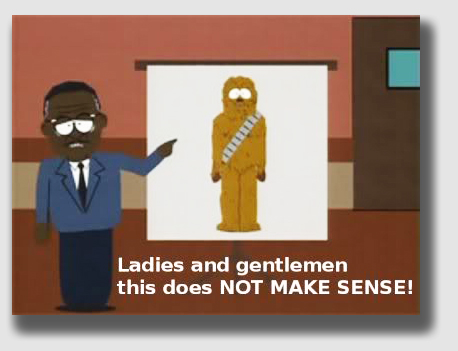
Every good trial lawyer knows how to employ the Chewbacca Defense.

Every good trial lawyer knows how to employ the Chewbacca Defense.

Sometimes you wonder when you read a decision, “What were they thinking? That does not make sense.”

Today’s case is something like that. The facts are straightforward enough. Smith sold a gas station-restaurant-bar to Mendonsa, but carefully secured Mendonsa’s promise that he wouldn’t let the trees on the plot get so high that they shaded Smith’s adjacent orchard. Wouldn’t you know it, Mendonsa at some point decided he liked tall trees, or he didn’t like trimming trees, or he couldn’t find his clippers, or something. He let the trees grow, and they shaded four of Smith’s something-berry trees (we have no idea what he was raising in the orchard, but this being California, they probably weren’t plantain trees).

Anyway, Smith sued, and Mendonsa, for some foolish reason, fought the action. The trial court found for Smith in due course and then worked some rump math, figuring the past damages were about $140.00 a year (this was 1952, when a dollar was worth a bit more than now), and multiplied over three years, the damages were $420.00 (or $5,136 in 2026 dollars). The Court also enjoined Mendonsa from maintaining trees over 15 feet or branches that were hanging over Smith’s land.

On appeal, Mendonsa complained that the damage calculations were too imprecise and that the injunction was unduly burdensome on him. The Court of Appeals disagreed, finding the calculations pretty good for an uncertain case, and anyway complaining that “[t]he wrong was that of the appellants and they are not in a favored position to urge the technical rules governing awards of damages.”

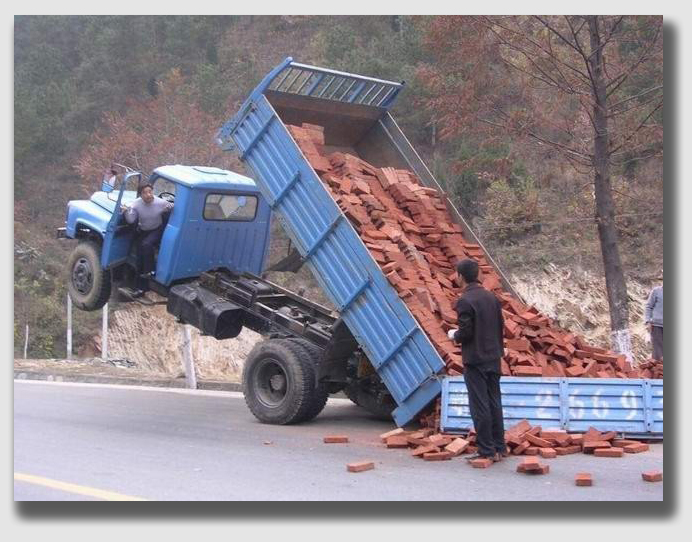
This case may be the legal equivalent of this - what were they thinking?

This case may be the legal equivalent of this – what were they thinking?

Huh? In the words of South Park’s parody of Johnnie Cochran in the legendary Chewbacca defense: “that does not make sense.” If the wrongdoer isn’t entitled to argue that the court has to follow the “technical rules” of assessing damages, then who is? It’s a cinch the plaintiff isn’t going to do anything to restrain the court in calculating damages. This is probably one of those “hard cases make bad law” kinds of decisions … but even so, it’s difficult to feel much sorrow for Mr. Mendonsa, who should have been enjoined and been made to pay damages.

A deal’s a deal, after all.

Smith v. Mendonsa, 108 Cal.App.2d 540, 238 P.2d 1039 (Ct.App. Cal. 1952). Smith entered into an agreement with Mendonsa concerning the use of a gas station, restaurant and bar he had sold to him. Mendonsa agreed that he would permit no trees to remain on the site that exceeded 15 feet in height, and that if any tree grew taller than that height, Smith would have the right to remove it. The agreement was intended to prevent shading of Smith’s orchard next door. land and to prevent trees on the appellants’ property from overhanging it. Mendonsa let the trees get too tall, and Smith sued to enforce the deal. The trial court agreed with Smith and awarded him money damages for past violations, as well as an injunction prohibiting Mendonsa from maintaining any tree over 15 feet tall or permitting any tree’s branches to overhang the orchard. Mendonsa appealed, complaining that the damages awarded weren’t supported by the record and that the injunction was too harsh.

Mendonsa let the trees get a little too tall …

Held: The Court upheld the damages and injunction. The Court observed that the record showed that the shading of the orchard trees near  Smith’s property line was detrimental to the growth of the trees themselves and would, during some seasons, decrease the yield of fruit on the affected trees. The evidence showed that four trees were affected, and while the proof of damage was not exact, it nonetheless provided a fairly definite basis for computation.

For growing crops, damages are measured as the market value of the probable yield without detriment, minus the cost of producing and marketing, and minus the return actually received. The damages awarded amounted to about $140.00 per year, and the period of the damage was three years. Additionally, the trees themselves were retarded in growth by the shade.

The Court concluded that the record furnished adequate support for the award made. Anyway, the Court said, Mendonsa was in the wrong, and thus he was not in any position to demand the application of the technical rules governing awards of damages. Where a party has suffered damage, the Court held, a liberal rule should apply in allowing a court or jury to determine the amount, and that, given proof of damage, uncertainty as to the exact amount is no reason to deny recovery.

As for the injunction, the Court held, in cases involving promises as to use of property, injunctive relief — depending on the inadequacy of damages — may be granted. A deal is a deal, the Court seemed to say, and where Mendonsa made the promise to keep the trees trimmed back and then violated it, the award of a perpetual injunction from maintaining any tree in excess of the agreed-upon height and from permitting branches to overhang was not an abuse of the trial court’s discretion.

It is, after all, the duty of the court to encourage the keeping of agreements properly made and to give adequate remedy for breach thereof when it occurs, particularly where the breach is deliberate and wrong is willful.

– Tom Root

TNLBGray

Case of the Day – Tuesday, September 22, 2026

A GAME OF INCHES

Baseball, they say, is a game of inches. So are boundary trees, called “line trees” in the State of Pennsylvania (which, by the way, also calls itself a “Commonwealth” instead of a “State”).

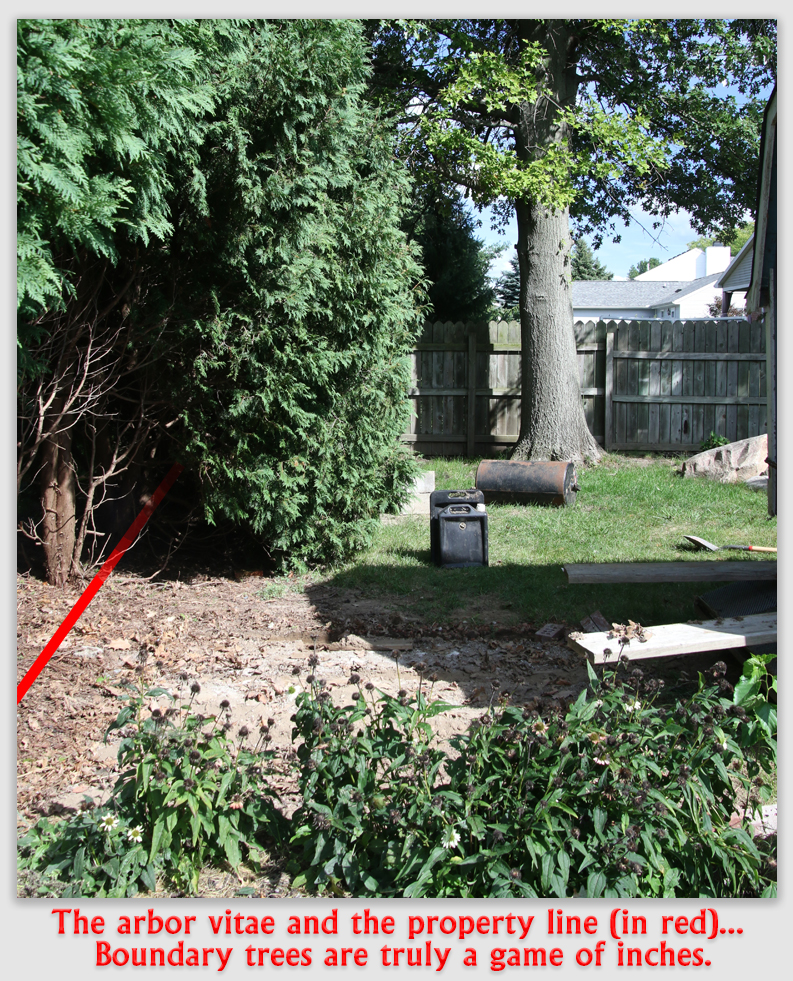
Life imitates art, I guess. Last weekend, I hauled away our 25-year-old shed. I am replacing it with a newer, larger shed – complete with electricity, windows, and (if I have anything to do with it) a beer refrigerator. Replacing it will come with a set of problems, specifically a line of arborvitae trees, standing behind the shed along the property line.

The arborvitae were tiny little shrubs when our next-door neighbor (two owners ago) planted them in the late 1990s. Now, they’re monsters.

I need to trim back a few of the arborvitae before the concrete pad for the new shed gets poured. After reading some of what I have written about boundary trees over the past few weeks, I figured I had better make sure I was dealing with some good old-fashioned Massachusetts Rule trimming of branches overhanging my property (and not with some oversized arborvitae that had grown across the property line to become boundary trees).

I found the iron pin on one end of the property line and the post on the other, and I ran a line through the trees. Sure enough, two of them have grown across the property line. Lucky for me, the ones I need to trim are still solidly anchored completely on my neighbor’s land. Those I can trim back, exercising both my Massachusetts Rule rights and my ratcheting loppers.

It seems strange that a matter of inches separates the trees I can trim with abandon from the trees I cannot touch without my neighbor’s permission. (I have a great neighbor, by the way, so it is probably not a problem).  Nevertheless, the perverseness of the interplay between boundary trees and encroaching trees that stand entirely on land other than one’s own puzzles and irritates me, both academically and legally.

My situation is similar to today’s case, which pits a car wash against a restaurant over a row of pine trees that may or may not be on the boundary. Because the pine trees at the root of the lawsuit grew along the property line, no one really won: the restauranteur wanted the trees gone, and the car wash owner wanted them to remain.

In the end, some of the trees stayed, some did not. And it was all a game of inches…

Wolfinger v. Moates, 7 Pa. D. & C.4th 220 (Pa.Com.Pl. 1990). A line of pine trees separated the Wolfinger Car Wash property from the Moats Restaurant property. Bill Moats received complaints from his patrons about the pine trees that encroached on his parking lot, scratched diners’ cars and dropped pine cones everywhere (even damaging his lawnmower).

Bill decided to cut down the trees. He told his neighbor, “Suds” Wolfinger, what he planned. Suds was shocked. He liked the trees, partly because they served as a barrier between his business and the restaurant. Plus, his customers preferred parking under them, using the shade while they wiped down their cars. Suds asked Bill not to cut them down.

Bill cut them down anyway, taking out four of the 13 trees on his first day wielding his chainsaw. Suds raced to his lawyer, and together they raced to the courthouse for a temporary injunction. After Bill was forced to stop, Suds tried to make the injunction permanent.

The court found that the two tracts of real estate shared a common boundary line, and 13 trees stood on or near the line. A survey showed that the first five trees, including the four Bill had cut down, were all on his property. Lucky Bill. The next three, however, straddled the boundary. The  Court referred to them as “line trees.” Tree No. 9 was on Bill’s land, but some bark on the flare touched the boundary line. The last four trees were all on Bill’s land.

Held: Bill was not allowed to cut the three trees that straddled the boundary.

Pennsylvania law made it unlawful “for any owner or owners of any undivided interest in timber land within this Commonwealth to cut or to remove, or to cause to be cut or removed, from the said land, any timber trees, without first obtaining the written consent of all co-tenants in said premises.”

The Court held that the statute dictated its holding that the owners of adjacent tracts of real estate own all trees growing on their common boundary line as tenants in common. Tenants in common may not unilaterally cut down or remove such commonly owned line trees.

Applying the general rules of law governing tenancy in common, the Court held, “We conclude neither adjoining real estate owner may remove a tree growing on a common boundary line. Consequently, in the case at bar, although only inches of the trunks of trees 6, 7 and 8 are on the boundary line between the properties of the plaintiffs and defendants, those trees are jointly owned by plaintiffs and defendants. Therefore, defendants may not remove them.”

Suds was not satisfied. He argued that Tree No. 9 was commonly owned as well because the bark of the tree’s trunk touched the boundary line. Citing the Illinois case Ridge v. Blaha, the Court held that the critical question was “whether any portion of the trunk of the elm tree grows on plaintiff’s property… The law… is determined by the exact location of the trunk of the tree at the point it emerges from the ground.” The fact that the bark of Tree No. 9 touched the line, the Court said, was insufficient to create a tenancy in common.

Trees 1 through 5 and 9 through 13, therefore, were Bill’s sole property. He could cut them down as he wished. But the injunction would become permanent on Trees No. 6 through 8, leaving them to provide both shade and pine cones.

– Tom Root

TNLBGray140407

Case of the Day – Monday, September 21, 2026

THE OYES DON’T HAVE IT

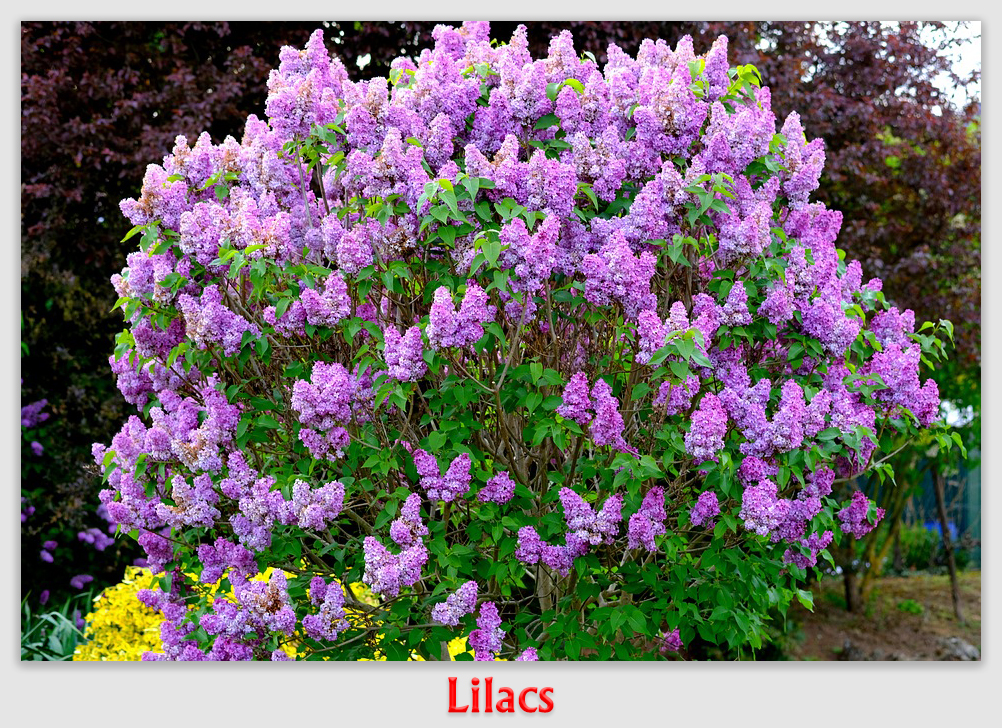
You sort of wonder how a kerfuffle over some lilac bushes and a bridal wreath bush in a backyard can end up in the state supreme court. I mean, even back in 1983, legal fees were not insignificant. These bushes were on the back boundary of a couple of properties, so we’re not even talking curb appeal.

Regardless, Raymond Oye did not like the shrubs on the property line. He and his wife thought they were ugly. Neighbor Lou Ann Patterson did not. But Ray started tearing them out anyway. When Lou Ann protested, Mr. Oye said, ‘Nay.’

A trial ensued, followed by an appeal and a trip to the Supreme Court in Lincoln, Nebraska, the principal purposes of which seemed to be enriching some lawyers and reaching a result Mr. Oye should have seen coming like a freight train through a tunnel. Now mind you, we have no problem with enriching lawyers. We sort of see it as a happy ending. But not everyone feels that way, nor should they.

More than once, we’ve told would-be clients to save their money and suck it up, because they weren’t going to win. We often quote the old legal saw, “A bad settlement is better than a good lawsuit.” It’s an enduring aphorism, probably because it’s true.

In this case, the Oyes didn’t have it, and never did. Compromise with Ms. Patterson would have been much cheaper.

Patterson v. Oye, 214 Neb. 167, 333 N.W.2d 389 (Supreme Ct. Neb. 1983). Lou Ann Patterson owned a piece of property next to Ray and Jeanette Oye’s place. Their backyards abutted on a 132-foot north-south line, with Lou Ann’s property being slightly higher at the boundary line. Truman Clare built Lou Ann’s house in 1955, and she bought it in 1972. The Oyes’ residence was built in 1956 by Elmer Larsen, who planted lilac bushes and some beautiful bridal wreath on the southern third of the boundary line.

Both Elmer and Truman said the bushes contributed to their privacy and improved the general appearance of their backyards. When Elmer sold the property to Lou Ann, the bushes were at least six feet high and had spread out by natural growth. Other bushes grew on the property line, and Elmer trimmed them, but he never claimed to own them.

Between 1973 and 1977, Lou Ann and the Oyes both maintained the bushes, although the Oyes did more work than Lou Ann. Nevertheless, Lou Ann considered the bushes to be growing on the boundary line and to be common property. She said they provided her privacy and added to the property’s aesthetic value. The Oyes claimed they owned the bushes because Elmer had planted them and they had done most of the caring for them. In fact, Ray Oye claimed that in 1973, Lou Ann told him she thought the hedge belonged to him.

The Oyes considered the brilliant purple of the lilacs and delicate whites of the bridal wreath to be ugly. Ray wanted to remove the hedge and build a rock wall, partly to divert runoff from his land. So Ray started to work, removing about 48 feet of bushes at the north end of the boundary line before Lou Ann objected. The neighbors’ efforts at compromise failed, so Lou Ann sued, alleging trespass and asking for damages and an injunction.

As of the time of trial, the remaining bushes were 12 to 18 inches wide at their base, growing on the boundary line and were untrimmed, spread out and intermingled with other growth. The cost of replacing the bushes Ray had torn out was from $300 to $1,500.

The trial court found that the shrubs were on the boundary line and issued an injunction against Ray and Jeanette cutting any more of the bushes. The court further ruled that Oyes owed Lou Ann $400.00 in trespass damages.

The Oyes appealed.

Held: A tree standing directly on the line between adjoining owners, so that the line passes through it, is the common property of both parties, and neither owner may cut and destroy it without the other’s consent. When one common owner threatens damage to a commonly owned tree or shrub, a court may issue an injunction to prevent the damage.

Traditionally, where the tree trunk impinges upon the lot line, “and when the respective owners have for years jointly cared for the tree, and divided the expenses of protecting it… then each has an interest in the tree sufficient to demand that the owner of the other portion shall not destroy the tree.” The equities in a boundary tree favor the tree’s shade and other benefits.

The Supreme Court of Nebraska found that Lou Ann and the Oyes owned the bushes growing on their common boundary line as tenants-in-common and that the Oyes wrongfully removed and destroyed about 48 feet of those bushes, for which the trial court properly assessed $400 in damages. The Court found that if the Oyes continued on their course of conduct, they might “harm, damage, or destroy some or all of the remaining bushes growing on the boundary line, which would cause irreparable damage to plaintiff and unnecessary litigation, and that the terms of the trial court’s injunction are equitable.”

The Oyes argued that the injunction would impose years of unreasonable future hardship on them and invite abuse from Lou Ann. The Court was unmoved: “Defendants are reminded that the law provides avenues of relief in the event they feel aggrieved. Where there is a change of circumstances, they may apply to the court to vacate or modify the decree.”

To channel the late Rodney King, Mr. and Mrs. Oye, can’t we all just get along?

– Tom Root

TNLBGray