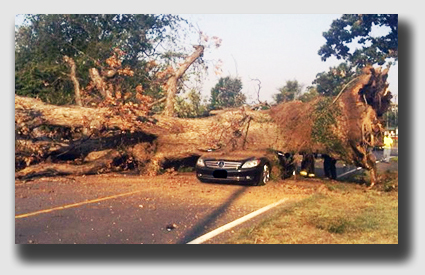
Case of the Day – Thursday, April 18, 2023

CRUISIN’

cruiseE151026Huey Lewis and Gwinneth Paltrow covered Smokey Robinson’s 1979 hit, Cruisin’, in a duet recorded in 2000. For most of you, that’s ancient history. But people like me, however, remember what we were doing when Smokey’s version first made the charts. Seems that ’79 was a pretty good year…

But we’re not cruising’ down Memory Lane here. Instead, the cruising’ we’re talking about today is all about trees. You’re surprised? You shouldn’t be – that’s what we do.

An interesting decision from the United States District Court for the Southern District of Illinois contains a trove of judicial findings of fact and application of law in a timber trespass case, including an explanation of timber cruising. The Court presided over a trial of an overzealous timber harvester, whose timbering activities went beyond the owner’s property and took 231 of Uncle Sam’s trees formerly attached to the Shawnee National Forest.

Now you’d think that 231 trees would be a trifling to a government that can approve multi-trillion stimuluses without reading the bill, and then spend it all within about three weeks. But nothing’s too petty to escape the eagle eye of the United States Attorney.

cruiseB151026The case is interesting not so much because the Court wisely slapped down the tree cutter’s claim that the Government had to show he intended the trespass (read our discussion a few days ago of Stukes v. Bachmeyer on that subject) — but because the Court carefully describes the technique of timber cruising and differentiates between stumpage value and timber value. You should read the full case: the Court finds tree cutter Kosydor liable through a carefully constructed wall of direct and circumstantial evidence, it finds against the Government on unjust enrichment, and it gives a shaky analysis of why the suit against Kosydor was filed within the statute of limitations.

And if you’re of a mind to read more, the U.S. Forest Service has a detailed handbook on tree cruising available for downloading, as well as some pretty slick software.

United States v. Kosydor, 2007 U.S. Dist. LEXIS 61621, 2007 WL 2409557 (S.D.Ill., Aug. 21, 2007). Larry Griffin, a conservation officer for the Illinois Department of Natural Resources, went to Terry Foster’s property to investigate a deer hunting complaint. He noticed timber cut from what appeared to be the Shawnee National Forest. At the time, the boundary line between Foster’s property and the Shawnee was not marked, and no survey had ever been conducted to establish the boundary line.

cruiseD151026After Griffin reported matters to the U.S. Forest Service, the agency conducted a survey to establish the actual boundary line between Foster’s property and the Shawnee. Once the boundary was marked, the Forest Service initiated a timber cruise.

Timber cruising includes identifying a tree species, taking stump diameter measurements, taking measurements from the stump to the top of the tree left on the ground, taking measurements of any logs left on the ground, and recording measurements on a tally sheet. A total of 231 tree stumps were counted on the Shawnee property in the area adjacent to Foster’s property. Information regarding each stump was recorded, including its species, its diameter, and the distance from the stump to the corresponding treetop left in the woods.

Kosydor owned and operated a timber logging business. He contracted with Foster to harvest timber from Foster’s land. His agreement provided for a 50/50 split of proceeds generally, with a 70/30 split on walnut veneer in favor of Foster. Although Kosydor, who was aware that Foster’s property bordered the Shawnee, denied cutting any trees in the National Forest, one of his employees testified emphatically that he had cut trees from the Shawnee National Forest under Kosydor’s direction.

As for the owner, Mr. Foster was unaware of anyone else, other than Kosydor, doing logging off of those areas during the period of time that he has lived there. The only reasonably available route for accessing and removing the wrongfully cut timber passes over Foster’s property and within very close proximity to his residence.

cruiseA151026Held: Kosydor was liable to the government under the Illinois Wrongful Tree Cutting Act. The Court found that Kosydor had voluntarily taken on the responsibility of determining the boundary line between Foster’s property and the Shawnee, despite a provision in their contract that Foster would be responsible for doing so, and that he was responsible for the entire logging operation. The Court noted that to prevail on the WTCA claim, the government had to prove that Kosydor intentionally cut or knowingly caused to be cut trees belonging to the United States which he did not have the full legal right to cut.

Kosydor argued the government had to prove that he intended to trespass on the National Forest land, but the Court disagreed. All the United States had to do, it held, was to prove he intended to cut the trees that happened to belong to the Government. Kosydor’s allegedly innocent mistake as to the location of the boundary line, the Court said, was not a defense to the WTCA claim. The Court observed that it is rational that the burden of establishing boundaries be placed on a defendant who orders wood to be cut. Otherwise, it would be advantageous for a defendant to cut now and worry about tree boundary lines later, since the maximum financial burden he would face would be the stumpage value of the severed trees.

One purpose of the WTCA is to discourage timber cutters from cutting trees without thoroughly checking out the boundary lines. The Act is meant to discourage not only the malevolent timbermen but also errant timbermen.

cruiseC151026Under the WTCA, stumpage value is used to calculate the underlying value of the timber. Stumpage value and timber value estimates, the Court said, both depend upon timber volume estimates, which in turn are based upon the raw data collected in the field by timber cruisers. Put another way, estimating the value of timber taken in a trespass involves a three-step process. First, a timber cruise is conducted and measurements are taken in the field. Second, the collected measurements are then converted into volume estimates using established mathematical formulas. Third, those volume estimates are then converted into value estimates.

The distinction between timber value and stumpage value only comes into play during the third step of the process. Stumpage value is the value of standing trees or what one might pay for the right to cut and remove trees. Timber value is the value paid by mills for cut logs. In this case, the Court held, the stumpage value was about $12,500, reduced from the Government’s estimate by 10% to give Kosydor the “benefit of the doubt.” Because the trebling of stumpage value is mandatory under the Illinois WTCA, the total loss was about $37,500.

The Government had already reached a separate peace with Foster, who paid $18,000 to make his problem go away. This was deducted from the judgment, and Kosydor was ordered to pay about $19,500.00.

– Tom Root

TNLBGray140407

Case of the Day – Tuesday, April 16, 2024

YOU’LL GET NOTHING AND LIKE IT

We’ve all had it happen to us. Our next-door neighbor gets drunk and rams his bulldozer into our best shade tree, gouging it up pretty badly. Then we have to sue, and while the torn-up grass he left behind and shrubs he rolled over get paid for, we get nothing for the tree. All because he wounded it but didn’t kill it.

What? You say it hasn’t happened to you? OK, but it did happen to Mike and Melissa in Huron County, Ohio. When neighbor Bob Tite got a little tight and rammed their tree, the trial court told them they’d get nothing for the wounded walnut, because it’s not dead. Dead trees we can figure the cost of, but a wounded tree… Well, it may die sooner instead of later, but who can say? The trial court said the damage is “speculative.”

Speculative? If Mike or Melissa had been rammed by the tight Mr. Tite, they would have been able to collect for their injuries without having to die first. And trees are people, too, right? Well, maybe not, but a tree probably shouldn’t have to die before a property owner can get compensation for damage to it.

Tinney v. Tite, 2012-Ohio-2347 (Ct.App. Huron Co. 2012). One summer day, Mike and Melissa Tinney heard a loud noise outside of their house. When they looked out through the window, they saw their across-the-road neighbor, Bob Tite – quite inebriated at the time – sitting on his bulldozer lodged hard up against a sizeable black walnut tree in their back yard. Deep ruts across their lawn and two smaller trees splintered on the ground marked the path the bulldozer had taken.

The Tinneys sued Bob for the damage. Their certified arborist expert said damage to the walnut covered 25 to 30 percent of the circumference of the tree. He testified the extent of the damage “ruined” the tree because, although it would not kill the tree immediately, it would result in “a slow decaying process” that would eventually compromise the structural integrity of the tree and cause it to become a hazard. The arborist was unsurprised that the tree was still producing leaves one year after the incident. He said the wound was starting to develop a callus as the healing process proceeded, but the tree would weaken over time because the wound would not heal completely before decay set in. He could not say that the tree would die from the wound, but he said that the structural integrity of the tree is likely to become a dangerous factor in the future.

The Tinneys also called a witness who had a degree in landscape horticulture. He said the severity of the damage would probably stress the tree out, and eventually, the old walnut would die. He testified that as the years progressed, the Tinneys could expect more decay and more branches showing signs of decline. He said the tree’s declining and potentially dying was “not an immediate thing. It’s going to take some time” because “it’s a long process for this tree to decline.”

Bob’s sister testified in support of her brother, however, testifying that she saw the damaged black walnut the summer after the incident, and it looked “healthy, green, and alive” despite the wound on the trunk.

The Tinneys won a judgment of $3,410.00. The award covered the lawn and the saplings but included nothing for the wounded but still living walnut tree because the trial court found that giving them damages for the walnut tree’s injury would be “potentially temporary and speculative at best” since “its appearance remains the same.”

The Tinneys appealed.

Held: The Tinneys were entitled to damages for the injured walnut tree.

The Court observed that most decisions involving O.R.C. § 901.51 – the Buckeye State’s statute on wrongful cutting of trees –  involve situations where trees have been completely cut down, making it considerably easier to determine the full extent of the damage. In this case, the tree is still alive, even if it is not necessarily guaranteed to stay that way for decades to come. Nevertheless, the Court said, temporary damages to vegetation are recoverable, because it is a “fundamental rule of the law of damages is that the injured party shall be fully compensated.”

As a general rule, speculative damages are not recoverable. An award of damages must be shown with a reasonable degree of certainty and in some manner other than mere speculation, conjecture, or surmise. However, the Court ruled, if an appellant “establishes a right to damages, that right will not be denied because the damages cannot be calculated with mathematical certainty.” Even when permanent damages are awarded for trees that were cut down, temporary damages may still be awarded if the permanent damages alone do not fully compensate the plaintiff. 

Both of the Tinneys’ experts testified it was reasonably certain that the tree was permanently damaged because it would not heal before decay set in. The Tinneys furnished precise calculations on the reasonable restoration value of the property. Therefore, the Court ruled, they had shown “with a reasonable degree of certainty what would be required to reasonably restore their property. The damages to the tree must have had some value, but the plaintiffs were awarded nothing, even if just a nominal amount for the temporary trespass onto their property.”

The Court of Appeals sent the case back to the trial court for a calculation of damages to the wounded walnut tree.

– Tom Root

TNLBGray140407

Case of the Day – Monday, April 15, 2024

TRIVIAL PURSUIT

Anyone who follows the law (or, for that matter, reads this blog) must from time to time read about a case that seems… well, just so trivial.

What can we say? Lawyers have to eat, too, and some of our brethren and sistren in the bar will take some ridiculous cases, just because the monied defendant will pay nuisance value to make the case go away.

Sometimes, hard to believe, a case is too trivial even for the court. In today’s case, we review one of three fact patterns from three separate apparently trivial cases that were wrapped into a single New York Court of Appeals decision (the Court of Appeals being New York’s highest court). If you’re a glutton for punishment, you can go right to the decision and read about the other two cases included in the decision, both of which involved falling on staircases. The fact pattern we’re focusing on is sufficient to provide an excellent illustration of  the trivial defect doctrine.

As the Court puts it in the decision’s preface, “it is usually more difficult to define what is trivial than what is significant.” The trivial defect doctrine differs from the ancient legal maxim “de minimis non curat lex,” which – as my beloved high school Latin teacher, Emily Bernges, would have explained – translates as “the law does not concern itself with trifling matters.” Usually, “de minimis non curat lex” applies when the injury is insignificant, i.e., a hotel guest asked for a king-size bed and got a queen-size bed instead. The trivial defect doctrine, on the other hand, applies where the injury is quite real, as in victim-plaintiff Lennie Hutchinson’s trip and painful fall over a small protrusion in the sidewalk. No one doubted that Lennie was good and truly hurt. Instead, the question was whether the defect he tripped over was trivial. Thus, the “de minimis non curat lex” situation attends where the defect is real but the injury is trifling. The trivial defect doctrine applies when the obverse is the case.

Certainly, at first blush it seems easy enough to dismiss Lennie Hutchinson’s complaint that he tripped over something a fraction of an inch wide and another fraction high. But as we’ll see, invoking the Trivial Defect Doctrine is not always easily done.

Hutchinson v. Sheridan Hill House Corp., 26 N.Y.3d 66, 19 N.Y.S.3d 802 (Ct.App. N.Y. 2015). Leonard Hutchinson was walking on a concrete sidewalk in the Bronx when his right foot “caught” on a metal object protruding from the sidewalk and he fell, sustaining injuries. Hutchinson sued Sheridan Hill House Corp., the owner of a building abutting the site of Leonard’s fall. Under New York City Administrative Code Sheridan was responsible for maintaining the sidewalk in a reasonably safe condition.

Leonard described the metal object as being “screwed on in the concrete” and gave rough estimates of its dimensions. Sheridan’s attorney had the sidewalk inspected, and found the object, cylindrical in shape, projected “between one eighth of an inch… and one quarter of an inch” above the sidewalk and was about five-eighths of an inch wide.

The trial court granted Sheridan summary judgment on the ground that it lacked notice of the defect. The appellate court affirmed, holding additionally that the metal object’s “minor height differential alone is insufficient to establish the existence of a dangerous or defective condition.”

Leonard took the case to New York State’s highest court, the Court of Appeals.

Held: The defect Leonard complained of was trivial as a matter of law, and thus not actionable.

The Court said a defect alleged to have caused injury to a pedestrian may be trivial as a matter of law, but such a finding must be based on all the specific facts and circumstances of the case, not size alone. Indeed, a small difference in height or other physically insignificant defect is actionable if its intrinsic characteristics or the surrounding circumstances magnify the dangers it poses, so that it “unreasonably imperils the safety of” a pedestrian.

Liability does not turn on whether the hole or depression that causes a pedestrian to fall constitutes a trap. Many factors may render a physically small defect actionable, including a jagged edge, a rough, irregular surface, the presence of other defects in the vicinity, poor lighting or a location – such as a parking lot, premises entrance/exit, or heavily traveled walkway – where pedestrians are naturally distracted from looking down at their feet.

Liability from physically small defects are “actionable when their surrounding circumstances or intrinsic characteristics make them difficult for a pedestrian to see or to identify as hazards or difficult to traverse safely on foot,” the Court said. “Attention to the specific circumstances is always required.”

Finally, the Court said, under the trivial defect doctrine, a defendant seeking dismissal on the basis that the alleged defect is trivial must first show that the defect is, under the circumstances, physically insignificant and that the characteristics of the defect or the surrounding circumstances do not increase the risks it poses. Only then does the burden shift to the plaintiff to establish an issue of fact.

Sheridan met its burden by producing measurements indicating the metal protrusion was only about a quarter inch high and 5/8ths inch wide, together with evidence of the surrounding circumstances. Hutchinson tried to show features of the defect that would magnify the hazard it presented, arguing it had a sharp edge, was irregular in shape, and was firmly embedded in the sidewalk, so that “it could snag a passerby’s shoe.” Hutchinson argued he should not be required to look at his feet while walking on the sidewalk.

The Court was unimpressed. It said the characteristics Hutchinson identified were common to sidewalks. Instead, the Court said, the “relevant questions are whether the defect was difficult for a pedestrian to see or to identify as a hazard or difficult to pass over safely on foot in light of the surrounding circumstances.”

Here, the metal object protruding only slightly from the sidewalk, was in a well-lit location in the middle in the middle of the walk in a place where a pedestrian “would not be obliged by crowds or physical surroundings to look only ahead.” The object stood was not hidden or covered in any way so as to make it difficult to see. Its edge was not jagged and the surrounding surface was not uneven. Taking into account all the facts and circumstances presented, “including but not limited to the dimensions of the metal object,” the Court said, “we conclude that the defect was trivial as a matter of law.”

– Tom Root

TNLBGray140407

Case of the Day – Friday, April 12, 2024

LIGHTNING AND LIGHTNING BUGS

furball151002I was talking to my son in Texas (OK, texting, because he’s a 30-something, and texting instead of talking – sort of using the telegraph instead of the telephone – is what people under 40 do) about the standing water in the flat land that constitutes his extended back yard. It reminded me of Texas’s flat land that seems to this Midwesterner to go on forever – and that Texas is a place where a husband can shoot his wife’s lover, and the wife’s the one who gets charged.

That makes me a little gratified when what could have devolved into a gunfight ends up with the misbehaving defendants coming up on the short end of a jury verdict instead, and at the same time, a little pleased to bring you a Texas case.

This case — a perfect illustration of the problem we’ve talked about before with verbal contracts — shows the horrors that result when complex deals aren’t written down. Bachmeyer and the Stukeses made an oral deal: Bachmeyer could graze his herd on their land if he would expend his time and money fixing their place up. He did, to the tune of about $8,186.00, but clearly, some event must have intervened to sour the deal because the Stukeses refused to let Bachmeyer’s longhorns graze. “Be that way,” Bachmeyer may have replied, “but give me back the $8,186.00 I spent.” Strangely, they refused to even do that.

The other side in today’s hearing reminds us of the Stukeses, but that’s another story.

Bachmeyer sued, and the Stukeses obligingly counterclaimed, raising a host of complaints against him about trespass, shoddy fence-building, cutting down too many trees… the works. The trial thus turned into a regular furball, made more complicated by the lack of a written agreement that would have settled a number of issues.

Things got even messier because it turned out the Stukeses didn’t do much better choosing lawyers than they did writing contracts. Their attorney let the trial court give a whacked-out jury instruction on the meaning of “trespass,” one which essentially required the jury to find that Bachmeyer intended or negligently trespassed, instead of merely intending the act that led to the trespass.

lightning151002Mark Twain once observed that “[t]he difference between the almost right word and the right word is really a large matter — it’s the difference between lightning and a lightning bug.” And was he ever right! At law, one has trespassed if he or she intends or negligently enters onto the real property of another. That is, if you step off a public sidewalk onto my lawn in order to let a group of nuns pass, you have trespassed. You intended to take the step that you took and intended to end up on my grass. It matters not that you were being polite, or that it was for a good reason, or that the Pope would have wanted you to do so. It’s trespass.

If however, you remained on the sidewalk, but the nuns grabbed you and threw you bodily onto my lawn, you did not trespass – not that nuns would ever do such a thing.

The instruction the court gave let the jury think that Bachmeyer had to intend that his incursion on the property was a trespass. If turned trespass into a “state of mind” offense that it has never been. The upshot of the wrong instruction — just the almost right words in almost right places — as well as the Stukeses’ lawyer being asleep at the switch, was a judgment against the defendants. The Stukeses were told to cover Bachmeyer’s $8,186.00 and, for good measure, to pay Bachmeyer’s legal fees in the amount of $17,500.00.

The Court of Appeals wasn’t terribly sympathetic… except on the fee award, which it sent back for reduction and recalculation. Speaking of fees, we bet that the Stukeses’ lawyer had some trouble collecting his.

Stukes v. Bachmeyer, 249 S.W.3d 461 (Tex.App., 2007). Bachmeyer and the Stukeses owned neighboring properties. They entered into an oral agreement to allow Bachmeyer to use the Stukeses’ property to graze cattle in exchange for Bachmeyer‘s agreement to replace the fence separating the two properties, to remove brush, and to otherwise improve the Stukeses’ property. The total value of Bachmeyer’s material and labor was $8,186.00.

When the Stukeses didn’t pay him, he sued. The Stukeses counterclaimed breach of contract, negligence, trespass, promissory estoppel, and a declaratory judgment. They claimed Bachmeyer failed to perform his services in a workmanlike manner because portions of the property had been flooded unnecessarily, requiring repairs to roadways and replanting of pasture; Bachmeyer removed trees that he wasn’t authorized to remove; Bachmeyer removed vegetation in a manner that left the property uneven and unsuitable for pasture; Bachmeyer failed to fertilize and to control weeds, or he did so in an improper manner; Bachmeyer installed fencing unevenly so that it encroached on the boundaries of the property; Bachmeyer damaged the Stukeses’ tractor; and Bachmeyer altered the natural terrain of the property in a manner that directed excess water runoff onto the Stukeses’ property.

The case was tried to a jury that found in Bachmeyer’s favor on all claims. The trial court entered a judgment ordering that the Stukeses take nothing by their counterclaims, that Bachmeyer recover actual damages from the Stukeses in the amount of $8,186.00 plus interest, and that Bachmeyer recover attorney’s fees in the amount of $17,500.00 for trial and $4,000.00 more if the Stukeses appealed.

trespass151002The Stukeses promptly did appeal, claiming that the evidence was legally and factually insufficient to support the jury’s negative findings on trespass and negligence claims and that the evidence was legally insufficient to support the jury’s finding on Bachmeyer’s attorney’s fees.

Held: The verdict on trespass and negligence was upheld. It turned out that the trial court gave the jury a bad instruction on trespass. Trespass to real property occurs when a person enters another’s land without consent. To recover trespass damages, a plaintiff must prove that (1) it owns or has a lawful right to possess real property, (2) the defendant physically, intentionally and voluntarily entered the land, and (3) the defendant’s trespass caused damage.

But the trial court gave the jury a bum instruction. It told the jury that “[o]ne who intentionally trespasses upon land in possession of another is subject to liability whether or not the actor causes harm to the other. A trespass may also be committed through negligence.” The jury paid attention and found that Bachmeyer did not intentionally commit a trespass and that he did not negligently commit a trespass.

The problem was that negligence is not a required element of a trespass cause of action. What’s more, while a plaintiff has to prove that the defendant intentionally committed the act that constituted a trespass, the plaintiff doesn’t have to show that the defendant intended a trespass. If Bachmeyer had tripped on a tree root and fallen over the boundary, the act would not have been a trespass. But if he walked over the boundary — even if he didn’t know the boundary was there — he would be trespassing, because he intended the action, walking, that resulted in the invasion of the property. The jury charge, however, required the jury to find that Bachmeyer either intentionally or negligently committed a trespass.

The Stukeses did not object to these instructions. They were, therefore, required to show more than simple trespass, and the Court of Appeals was duty-bound to assume that the charge correctly stated the law. As for alleged overflow of water onto their land from Bachmeyer’s land, the Court ruled the Stukeses were heist by their own petard: they were unable to prove that Bachmeyer had negligently or intentionally trespassed with the water onto their land. As for the wandering fence, the Stukeses argued it encroached on their property in places. Bachmeyer testified he and the Stukeses had agreed on the encroachments. The Court held that the mere fact that the fence encroached on the Stukeses’ property was insufficient to establish that Bachmeyer intentionally or negligently trespassed. The jury was free to believe or disbelieve Bachmeyer’s testimony that the parties agreed to place the new fence as closely as possible to the old fence and that he did so. The Court deferred to the jury’s resolution of this credibility issue.

The Stukeses also argue that Bachmeyer trespassed because he unnecessarily cut down trees on their property. A landowner who intends to have timber cut on his property owes a duty to adjoining landowners to ascertain the property line of adjoining land with diligence and care. Here, the Court said, the Stukeses and Bachmeyer agreed that to replace the old fence, some of the trees would have to be removed. Bachmeyer testified that he told the Stukeses that he would have to remove some of the trees to put up a straight-line fence and that the Stukeses agreed to the removal of the trees. It is undisputed that Bachmeyer had the right to remove trees on the Stukeses’ property to construct the new fence. Whether he negligently or intentionally exceeded that right, the Court said, was inherently a fact question. The jury had factually and legally sufficient evidence to conclude that he did not.

– Tom Root
TNLBGray140407

Case of the Day – Thursday, April 11, 2024

THE BORING BUT CONSEQUENTIAL WORLD OF CIVIL PROCEDURE

nimby151023The Croneys of Bigelow, Arkansas, bought a place on Taylor Loop Road, and — apparently being NIMBY enthusiasts — immediately sued the city to keep it from making their residential road any bigger or better. The court told them they had to name all the other landowners as parties to the suit. They did not, and the court threw the case out.

That was back in 1998, and the Croneys thereafter probably got busy with Y2K or the dot-com bubble or maybe just going to see There’s Something About Mary. Whatever the reason, they didn’t pursue it. But when the City started to bury new utilities on the road in 2005, the Croneys sued again.

This time, the City complained that the suit was barred by res judicita, a doctrine that prevents parties from litigating the same issues over and over, sort of a “one bite of apple” doctrine. After all, the City complained, the Croneys tried this lawsuit once before and got thrown out. What’s more, when the Croneys added some neighbors to the suit, the neighbors were dismissed as defendants and the Croneys were told to pay their legal fees. The trial court agreed.

The Court of Appeals reversed and remanded the case. It concluded that when your case gets thrown out for failure to join necessary parties, you’ve not had a fair chance to litigate the issue. The heart of res judicata is that the plaintiff gets one bite of the apple before the apple’s taken away. Here, the apple was snatched away before the Croneys got their first chomp.

apple151023Also, the Court of Appeals was a bit miffed that the trial court said the Croneys’s claims against the few neighbors they did include as defendants to the suit were meritless. The trial court could hardly complain on one hand that the Croneys had no claims against the neighbors and complain on the other that the neighbors were necessary to be included as defendants in the case.

This may seem to be a dry-as-toast civil procedure issue, but on such technicalities, serious neighbor law issues may founder.

Croney v. Lane, 99 Ark.App. 346, 260 S.W.3d 316 (Ark.App., 2007). In 1998, the Croneys bought property on Taylor Loop Road. They sued to enjoin the City of Bigelow and Perry County from improving Taylor Loop Road. The trial court ordered them to clearly specify the relief sought and to join in the lawsuit “all landowners that may use the subject road to access their property.” They didn’t do, so the trial court dismissed their complaint.

In July 28, 2004, the Croneys again sued to quiet title to their property, subject to a public easement by prescription across Taylor Loop Road, and to enjoin the City from installing utility lines under the roadway. In response, the City argued that the Croneys’ lawsuit was barred by the doctrine of res judicata.

toast151023The Croneys amended their petition to allege that neighbor Buddy Lane destroyed their trees and was continuing to trespass on their property and to allege that other neighbors, the Hootens, owned the land. The trial focused primarily on the width of Taylor Loop Road and the uses to which the City has made of it, but there was also testimony regarding the lack of records in the clerk’s office indicating how the road has been used, about the ever-increasing width of the road, and about the City’s placement of culverts and water lines under the road. At the close of the testimony, both defendant Lane and the Hootens moved for directed verdicts. The motions were granted.

The court entered an order dismissing Croneys’ complaint for failing to join all of the landowners on Taylor Loop Road, and because the action was barred by res judicata because appellants had previously filed suit against the City on the same issues and that the previous suit had been dismissed with prejudice. Finally, the court declared Taylor Loop Road a public road.

Croneys appealed, arguing the trial court erred in summarily dismissing their complaint on the basis of res judicata, that the City had no right to bury utilities under, or to widen, Taylor Loop Road, that the Croneys were entitled to a decree describing the City’s easement with specificity, and that the trial court erred in dismissing Croneys’ petition to quiet title.

Held: The trial court’s decision was reversed, and the case was remanded. The Court said that the purpose of the res judicata doctrine is to put an end to litigation by preventing the re-litigation of a matter when a party has had one fair trial on the matter. The test to determine whether res judicata applies is whether matters raised in a subsequent action were necessarily within the issues of the former suit and might have been litigated there.

The key question is whether the party against whom the earlier decision is being asserted had a full and fair opportunity to litigate the issue in question. Here, the Court said, the Croneys did not have a full and fair opportunity to litigate their case, because it was involuntarily dismissed pursuant to the rules of civil procedure for failure to add necessary parties and to clearly specify the relief sought. The fact that the trial court specified that the dismissal was “with prejudice” didn’t matter because the trial court had had the option to dismiss without prejudice, and when the rules preclude declaring a case to be dismissed with prejudice, the doctrine of res judicata should not apply.

The Croneys liked their street the way it was ...

The Croneys liked their street the way it was …

The Court of Appeals said that dismissal of the case for failure to join indispensable parties was improper because nothing in the record showed that the nonjoined property owners could not be joined to the lawsuit. As a predicate to dismissing a case pursuant for nonjoinder, a trial court must determine that the indispensable, nonjoined parties cannot be made parties to the litigation. Consequently, before dismissing the appellants’ case, the trial court was required to determine that the nonjoined parties who relied on Taylor Loop Road to access their properties were not amenable to process. Here, the Court said, nothing in the record indicated that these other parties could not be joined.

The trial court had dismissed Lane and the Hootens as defendants because the Croneys presented no evidence establishing that Lane had destroyed their trees or was continuing to trespass on their property. The trial court awarded Lane and the Hootens fees after concluding that the actions against them were “totally lacking a justiciable issue of law or fact, as permitted by Ark.Code.Ann. §16-22-309(a)(1). This offended the Court of Appeals, which complained that the trial court erred, on one hand, in finding that Croneys were required to join all of the adjacent property owners in the suit while, on the other hand, finding that their claim against the only adjacent property owners who had been added was lacking merit.

Although the arguments made against the Hootens were weak, the Court said, the Hootens were nonetheless indispensable parties whom appellants were required to join for a complete adjudication of the road issues. Consequently, the trial court erred in awarding attorney’s fees to the Hootens. As for Lane, he was not an indispensable party, and Croneys presented no evidence establishing the merit of their claims against him. The trial court was permitted to assess fees against the Croneys for Mr. Lane. 

– Tom Root

TNLBGray140407

Case of the Day – Wednesday, April 10, 2024

DOING NOTHING IS NOT AN OPTION

Among our favorite meaningless aphorisms is the admonition that “doing nothing is not an option.”

Who are these guys kidding? Doing nothing is always an option, which helps explain why so many people do it so often and so well. We admit that sometimes doing nothing brings unpleasant results. But a lousy outcome does not mean that doing nothing is not an option. It only means that it may not be a wise option.

In a lot of legal decisions, you can sense some of the undercurrents at work behind the law that’s being applied, like you’re getting a glimpse of the litigants’ B-roll. In today’s case, you have the good guy defendants – Ev and Marie Walsh, who happily occupy their snug little home – and then there’s the ogre plaintiff, the absentee owner of the rental house next door.

How do we know this? First, when landlord Ed Scannavino noticed his retaining wall starting to tilt and break apart, he didn’t stop by at the Walshes for a pleasant chat. Instead, he sent the neighbors a letter complaining that their trees were knocking down his wall. The nice-guy neighbors ignore the impersonal slight that the letter represents and hire contractors to professionally trim their trees along the wall.

The trimming did not help, because the problem was encroaching roots. So a few months later, Ed ramps it up with a certified letter, so the Walshes would have to sign for it. How often have you ever gotten a certified letter containing good news? In the letter, Ed complains again, but this time he adds that if the Walshes try to fix the problem he had demanded they fix – like the dutiful neighbors they are – they had better not let their contractors step on his land unless they first prove they have insurance and permits.

This time, the Walshes detected Ed’s condescension, or at least sensed the futility of trying to make this guy happy. In response to the certified letter, they did nothing. Which, it turns out, was as good an option as anything.

Face it – absentee landlord Ed was spoiling for a fight right from his first letter. How did that work out for Ed? Well, as the Good Book says, sow the wind, reap the whirlwind. Ed got a fight all right, and when the smoke cleared, Ed’s retaining wall lay in small chunks in his yard.

Ed had to rebuild the wall, and he had to pay for it. Donald Trump could be inspired by such an outcome.

Scannavino v. Walsh, 445 N.J.Super. 162, 136 A.3d 948 (N.J.Super.A.D. 2016). Ev and Marie Walsh had a house next to \one owned by Ed Scannavino. Ed was a landlord, with a tenant occupying his parcel. The Walsh family moved into their home in 2004.

The properties were separated by a cinder block retaining wall, about four feet high and 100 feet long. Sometime after the Walshes moved in, a mulberry tree and some shrubs began growing on their property near the retaining wall. No one knew how the tree got there, and the trial court held it was a natural occurrence.

Once the tree and shrubs began growing, Marie or her son trimmed the trees every year, but never trimmed any of the roots below ground level. No evidence was presented that trimming trees above the ground had any effect on the growth of the roots.

Ed said he first noticed damage to the retaining wall in January 2012, and he asserted roots from the mulberry tree and shrubs caused the retaining wall to tilt. He sent a letter to Marie expressing concern about the damage. She hired some guys to trim the trees and bushes near the retaining wall. But 10 months later, Ed sent Marie a second letter, this one by certified mail, complaining again that “the trees on your property have caused excessive damage to my retaining wall.” In a spirit of accommodation, Ed also warned Marie not to have any workers she hired enter his property to remove the trees without first supplying him with proof of insurance and permits. Marie did not respond.

Nine months later, Ed sued the Walshes, alleging that their careless, negligent, and grossly negligent maintenance of their property caused damage to the retaining wall. He demanded $12,750 in damages.

At trial, the Walshes argued that improper installation, or “simple wear, tear, and deterioration,” could have caused the damage to the retaining wall. Marie also asserted that when she and her husband moved onto the property, the retaining wall was already tilting and had some cinder blocks missing.

The trial court found that the trees near the wall were a “naturally occurring condition and therefore defendants cannot be held liable for the condition of the wall.”

Ed appealed.

Held: The mulberry and shrubs were not a nuisance, and the Walshes were thus not liable. The Court noted that the Restatement (Second) of Torts held that “neither a possessor of land, nor a vendor, lessor, or other transferor, is liable for physical harm caused to others outside of the land by a natural condition of the land.” A natural condition of the land includes the natural growth of trees, weeds, and other vegetation upon land not artificially made receptive to them.

Thus, the Court said, “we have recognized that the Restatement (Second) of Torts ‘draws a distinction between nuisances resulting from artificial and natural conditions of land. The former are actionable; the latter are not’.” But here, Ed was claiming that Marie and Ev were liable “not because of the natural process of the growth of the tree roots. Instead it is the positive act — the affirmative act — of the property owner in the actual planting of the tree which instigated the process.”

The Court disagreed. “The fact that the affirmative act is helped along by a natural process does not thereby make the condition a natural one within the meaning of the traditional rule.” Here, the trial court found the tree roots that grew and allegedly damaged the retaining wall were a natural condition. It is true, the Court said, that the Restatement (Second) of Torts may permit liability for damage caused by a tree not planted by the possessor of land where the possessor has “preserved” the tree. However, the preservation envisioned by the comment “means some sort of affirmative action on the part of the defendant and not its failure to act.” There was no evidence Marie took affirmative action to preserve the trees or engaged in any “nurturing” like fertilizing, or in any other maintenance “designed to keep the trees alive or growing.” Rather, she and her son simply trimmed the trees.

The Court rejected the notion that it needed to explore whether evidence of trimming or pruning that improves the health or growth of a tree would be sufficient to convert a “natural” tree into an “artificial condition.” Ed had not introduced any evidence that Marie’s trimming had improved the tree’s health or accelerated root growth, and the trial court had found nothing else in the record that suggested that “Marie or her agent caused the damage to the wall.” Even Ed admitted on appeal that he was not suggesting that Marie’s trimming back the trees had increased root growth.

Instead, Ed argued that the mere fact she had trimmed the trees made her responsible for whatever damage the tree caused. The Court rejected this, pointing out that “the rule of non-liability for natural conditions of land is premised on the fact that it is unfair to impose liability upon a property owner for hazardous conditions of his land which he did nothing to bring about just because he happens to live there.” Because Marie’s trimming did not bring about root growth, she could not be blamed for the damage to the retaining wall. Besides, the Court said, Ed’s proposed rule of liability would “lead to the anomaly of imposing liability upon one who cuts back wild growth ‘while precluding liability of an adjacent landowner who allows the natural condition of his property to run wild’.”

The Court wanted to be sure it did not send the signal that doing nothing was an option.

– Tom Root

TNLBGray140407

Case of the Day – Tuesday, April 9, 2024

LETTING SLEEPING EASEMENTS LIE

The eclipse is now in the record books, a moment when all of America came together for a common purpose… to be wowed and humbled a little by nature. And to eat too much, drink too much, and groan at bad jokes.

We don’t come together for a common purpose that much anymore. Not like we used to. A long time ago in a war far away, everybody was doing all he or she could for the war effort. Buying bonds, working on the home front, soldiers marching, airmen flying, sailors sailing, marines landing… we were all in it together.

The Heaths, who owned property in New Jersey, were in it, too, and were only too happy to provide an easement to a defense plant for a natural gas pipeline to be laid under their land.

The War ended but the easement lived on. It passed from owner to owner (as did the unimproved land to which the easement applied) until the easement for the gas lines was owned by Duke Energy and the unimproved land had become University Heights. By then, the easement for the gas lines was lined up with a beautiful boulevard that had been built over it. That boulevard, Fountain Avenue, in turn, was lined with trees when the bullets were flying in the 40s. Now, they had become stately 75′ oak trees.

Fast forward to 2001, a new century, a time when World War II vets were octogenarians. Duke Energy announced that it was going to cut down the trees to better service the gas lines. All that collective “we’re in it together” twaddle had long since gone the way of Howdy Doody and the jitterbug. By the new millennium, it was every dog for himself. Thus, as they say in legal circles, litigation ensued.

The trees belonged to the Township, although as the Court of Appeals observed, the homeowners thought of them as their own. The Township rolled over and agreed that Duke could take down 55 of the 80 it had planned to cut, but the residents kept up the fight. The trial court sided with them, and prohibited Duke from cutting the trees.

Duke appealed, arguing the homeowners had no standing to stop it. After all, the trees didn’t belong to them. Standing is a powerful concept in the law. The Constitution empowers courts to hear “cases and controversies,” and those words have meaning. If a party lacks standing, that is, skin in the game, there’s no real case or controversy, because the parties aren’t really at loggerheads.

Here, the Court disagreed with Duke. A 75’ shade tree in your front yard is, the Court said, powerful incentive to litigate vigorously. However, the Court said, the trial court’s siding with the homeowners on summary judgment was too hasty. Real questions existed whether aerial surveillance was necessary, whether the tree roots were really invading the gas line, and whether the trees would keep crews from an emergency break.

Gas line explosions are usually big enough to get ...your attention ... hence, Duke Energy's concerns were entirely fanciful

Gas line explosions are usually big enough to get your attention. Hence, Duke Energy’s concerns were not entirely fanciful …

Township of Piscataway v. Duke Energy, 488 F.3d 203 (3rd Cir., June 6, 2007). In the early 1940s, Flora and H. Morgan Heath took title to a large tract of undeveloped land in the Township of Piscataway. The Heaths granted Defense Plant Corporation “the right to lay, operate, renew, alter, inspect and maintain” two pipelines for the transportation of natural gas across the land. The 1944 grant required Defense Plant “to bury such pipelines so that they will not interfere with the cultivation or drainage of the land, and also to pay any and all damages to stock, crops, fences, timber and land which may be suffered from the construction, operation, renewal, alteration, inspection or maintenance of such pipelines.” Defense Plant subsequently installed two 20-inch diameter natural gas pipelines.

In January 1960, the Richters and Gerbers (who now owned the property) granted TETCO — which was Defense Plant’s successor — the right to construct a third pipeline across the property. The 1960 grant allowed the owners “to fully use and enjoy the said premises, except for the purposes granted to [TETCO] and provided the [owners] shall not construct nor permit to be constructed any house, structures or obstructions on or over, or that will interfere with the construction, maintenance or operation of, any pipe line or appurtenances constructed hereunder, and will not change the grade over such pipe line.” TETCO agreed to bury all pipes to a sufficient depth so as not to interfere with cultivation, and agreed to pay such damages which may arise to growing crops, timber, or fences from the construction, maintenance and operation of said lines. TETCO then constructed a third 36-inch diameter pipeline.

Three years later, three real estate development companies that then owned the property entered into an agreement with TETCO in which TETCO agreed to reduce the size of the easement by releasing all portions of the land in the prior grants not needed for the pipelines. Attached to the 1963 agreement was a drawing prepared by TETCO, which showed a proposed residential neighborhood through which TETCO’s 60-foot wide easement ran at a slight diagonal. The 1963 agreement preserved all of the rights and restrictions set forth in the prior grants. Later, Duke Energy succeeded TETCO.

Meanwhile, as a result of residential development of the property, the land on which the easement is located became a one-block long public street named Fountain Avenue. The street became flanked by a large number of trees, many of which were planted in the early 1960s as part of the original residential development of the neighborhood and have grown to about 75 feet tall.

The homeowners who became part of this lawsuit lived in single-family homes built by the developers on lots lining Fountain Avenue. Although all of the trees at issue in the case were located on Township property, the homeowners viewed the trees, from a practical and aesthetic perspective, as extensions of their front yards. In April 2000, Duke announced that it would be removing approximately 80 trees from Fountain Avenue in order to better maintain the pipelines. Township residents vehemently opposed the proposed action, and sued Duke for an order prohibiting the Township and the homeowners from interfering with Duke’s rights under the easement.

The Township settled with Duke and consented to the immediate removal of fifty-five trees from Fountain Avenue, as well as to the future removal of any trees that exceed eight inches in diameter. The homeowners disagreed, and proceeded with the case. Following a hearing, a federal district court granted the homeowners’ motion for summary judgment, concluding that Duke failed to offer any evidence that removal of the trees was “reasonably necessary” to the maintenance of the pipelines and that Duke was barred by the doctrine of laches from asserting a right to remove the trees pursuant to the terms of the easement grant.

Duke appealed.

street151022Held: The case was sent back to the trial court. Duke argued that because the homeowners didn’t own the trees, they lacked the legal standing to stop Duke from cutting them down. But the Court disagreed, finding that removal of the trees from in front of homeowners’ property would have caused actual injury to the homeowners’ servient estates. The trees added to the value of the owners’ property, and they helped reduce air pollution, improved air quality, and provided cooling shade which reduced energy costs in summer months.

Under New Jersey law, the Court said, there is an implied right arising out of every easement to do what is reasonably necessary for its complete enjoyment. However, that right is to be exercised in such reasonable manner as to avoid unnecessary increases in the burden upon the landowner. Therefore, summary judgment for the homeowners wasn’t proper here, because a genuine issue of material fact existed as to whether aerial surveillance was reasonably necessary to the maintenance of natural gas pipelines and, if so, whether the trees along Fountain Avenue prevented such surveillance. Likewise, a question existed as to whether the trees prevented operators from gaining quick access to pipelines in event of an emergency, as well as to whether the root growth of the trees posed a significant threat to the integrity of the pipelines.

The trial court also found that Duke was barred by laches from seeking to remove the trees now, after having had the right to do so for many years without exercising it. Under New Jersey law, laches may be enforced only when the delaying party had sufficient opportunity to assert the right in the proper forum and the prejudiced party acted in good faith believing that the right had been abandoned. The key factors to be considered when deciding under New Jersey law whether to apply the laches doctrine, according to the Court, were the length of the delay, the reasons for the delay, and the changing conditions of either or both parties during the delay. In this case, the Court said, there was evidence of newly promulgated natural gas transmission standards, as well as greater attention paid to natural gas pipeline safety, as a result of recent catastrophes. Those new developments, the Court said, were sufficiently compelling to create a genuine issue for trial.

– Tom Root

TNLBGray140407