Case of the Day – Thursday, July 10, 2025

ZOOM, ZOOM, DING

An alert reader sent us a link to an old sports car forum recently in which the proud owner of a Mazda RX-8 bemoaned the fact that his car had been hit by a limb that fell from his landlord’s tree. The owner wondered whether his landlord was liable for the deductible on his insurance. The post may be old, but the question is timeless.

Collisions with trees can be harrowing, whether in a care or on a bicycle.

Collisions with trees can be harrowing, whether in a car or on even just riding a bicycle.

Good question! Because the RX-8 and the tree are both from South Carolina, we looked first at Staples v. Duell. In that case, Ms. Staples was driving down a rural road when she came upon one of Mr. Duell’s trees, which had fallen across the road. She came upon it rather suddenly, because she collided with it. She sued Mr. Duell, who was a landowner of some magnitude (about two miles worth of real estate along each side of the road).

Mr. Duell had an employee who was assigned the task of checking the security of the estate, including looking for dead trees, on a daily basis. Somehow, he must have missed this 100-foot pine’s condition. Ms. Staples sued Mr. Duell for negligence.

The Court found for Mr. Duell. It held that in South Carolina, rural landowners have no duty to others to inspect and improve their land. The fact that Mr. Duell voluntarily did so by sending an employee around didn’t create a duty where none existed. And that makes sense: if voluntarily performing a good deed created a legal duty to perform such deeds, no one would ever perform a good deed, that is, to go beyond the minimum the law requires for fear they would become liable for a good deed.

This doesn’t exactly answer our driver’s lament. After all, the landlord may be an urban landowner, and the Court suggests that an urban owner’s duty is different. Also, as a landlord, the tree owner’s duty may be greater. We’ll consider that tomorrow.

Meanwhile, good news from the Mazda front… the hapless sports car owner later reported that his landlord’s insurance covered his deductible.
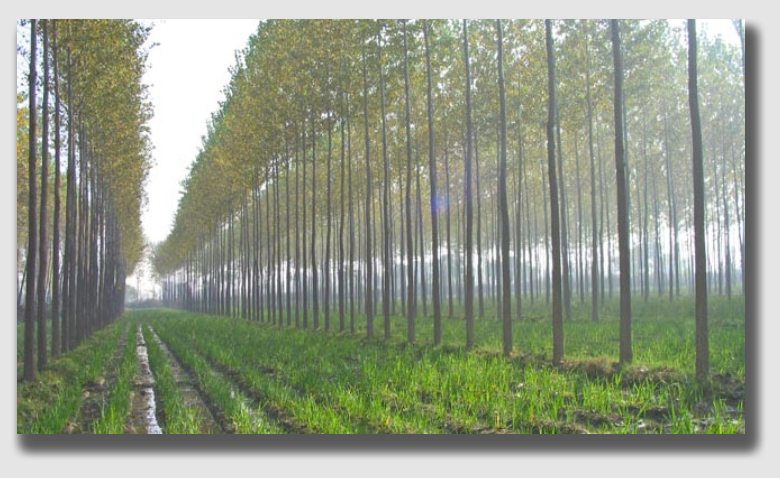
Mr. Duell owned a lot of trees ...

Mr. Duell owned a lot of trees …

Staples v. Duell, 329 S.C. 503, 494 S.E.2d 639 (S.Ct. S.C. 1997). Ms. Staples was driving from Charleston toward Summerville on Highway 61 when she encountered a dead pine tree in the road. She swerved but collided with the tree, a 100-foot long-dead pine.

The tree fell about sixty feet from the roadway and was located on Mr. Duell’s land, a plantation that stretched for about two miles along both sides of the road. In this area, only one residence – a cabin – stood. About 13,500 vehicles a day passed by Duell’s two-mile stretch of land on Highway 61. Duell owned Middleton Place National Historic Landmark, a tourist attraction that received about 100,000 admission-paying visitors a year. The only public entrance or exit to Middleton Place is on Highway 61. Duell maintained a 250-foot buffer zone of trees on both sides of the highway to protect the scenic beauty of the road. Duell’s employee, James Woddle, took care of the woodlands at Middleton Place. Woddle’s job duties included twice a day driving around the perimeter of Middleton Place to inspect the premises. During his inspections, he looked for trespassers, abandoned vehicles, and dead trees.

Staples sued Duell for negligence in permitting the tree to become a hazard. The trial court directed a verdict for Duell, holding that because the land from which the tree fell was rural, he had no common-law duty to discover and prevent the dangerous condition caused by the dead pine tree. Even if Duell had a policy of searching for dead trees along the roadway, his voluntary practice did not create a duty. Duell could have abandoned it at any time and it did not increase the risk.

Staples appealed.

gooddeed140925Held: The Court found for Mr. Duell. To prevail on her theory of negligence, Ms. Staples had to establish that (1) Duell owed her a duty of care, (2) that by some act or omission, he had breached that duty, and (3) that as the proximate result of his breach, she had been injured. The Court ruled that as an owner of rural property adjacent to a highway, Duell did not owe a duty of care to motorists on the highway to inspect and improve his land. Rural landowners have different duties and responsibilities from city dwellers, the Court said, based on the different levels of risk posed by defects on rural land and the burden of maintaining larger tracts of real estate. Thus, unlike urban landowners, rural landowners do not have a duty to inspect and improve the land.

Mr. Duell’s policy of searching for dead trees on his property was good stewardship, but it did not result in his assuming a duty to motorists for injuries resulting from trees falling onto the road. His policy of examining his trees didn’t increase the risk of harm to motorists. The people driving by had no prior knowledge of the policy and thus did not detrimentally rely on it. This of course makes one wonder – if people did rely on Mr. Duell’s perspicacity and gumption, would the Court have turned his voluntary good deed into a duty? A scary thought…

– Tom Root

TNLBGray140407

Case of the Day – Wednesday, July 9, 2025

FUN WITH TREE LAWNS

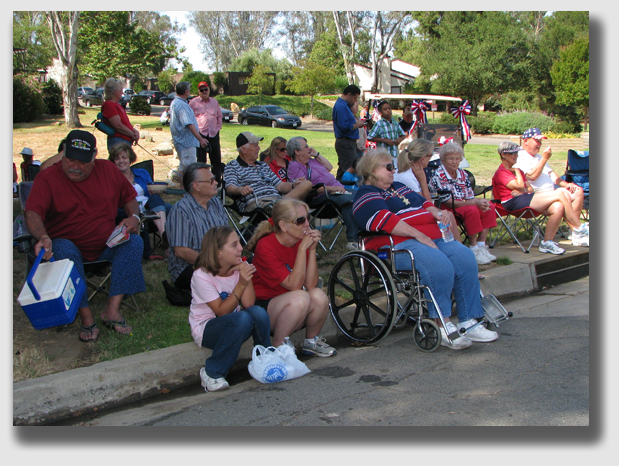
paradewatch140703 We must seem like pretty serious killjoys at treeandneighborlaw. Last week, we dumped a bucket of water on backyard fun with fireworks. Today, we rain on your parade.

We could have used a little rain on our hometown parade last Friday, a 95-degree sizzler under a blazing sun. The best thing we could say is that we weren’t in Philadelphia, where in addition to the heat, parade fans were treated to the olefactory bouquet of uncollected garbage. 

Not that small town America doesn’t have its own parade issues. In my town, people start placing chairs and roping off other people’s tree lawns, that strip between your front sidewalk and the street, on July 1st. And last Friday, we again heard the same question we hear every year: can I, Harry or Harriet Homeowner, keep parade watchers off my beautiful tree lawn (or, in the alternative, can I reserve the best seats for my family and friends)?

Generally speaking, it’s your tree lawn (subject to the rights of the city to maintain its right-of-way). That’s what the Miller-Lagro family established in today’s case. It seems that they arrived home one day to find that the electric utility and its tree-trimming subcontractor had butchered the trees on their tree lawn. This being America and all, they did the American thing.

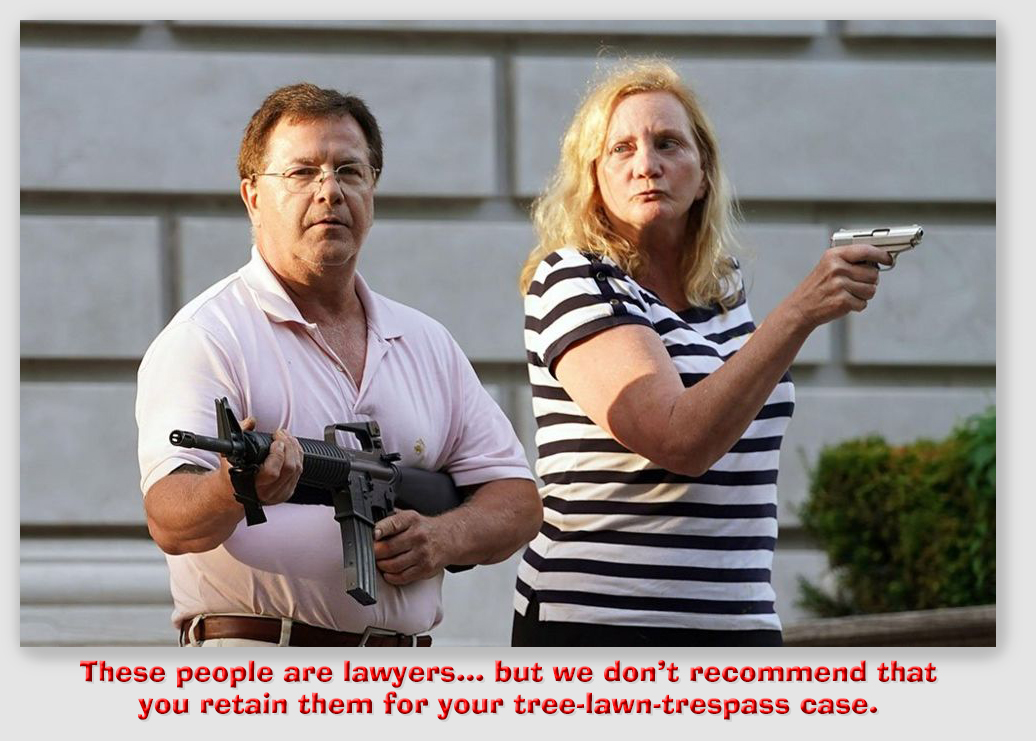
No, they didn’t unlimber their assault rifles to threaten the mob, like some lawyers might do. Instead, they did what almost all other lawyers would have their clients do. They sued, citing a Minnesota statute giving them the right to treble damages for wrongful cutting on their property.

The trial court sided with the utility, holding that because the tree lawn was land dedicated to the road right-of-way, the Miller-Lagros could not recover.

The Court of Appeals reversed.

The Minnesota Supreme Court sided with the Miller-Lagros. It held that they had standing under common law and the statute. Sure, the Court said, their interest in the trees was subordinate to the right of the city, as exercised by the electrical utility in its utility line maintenance function. But the utility’s rights to trim, derived from the city’s right-of-way maintenance rights, existed only to the extent that the trimming was reasonable and necessary.

The Miller-Lagros had the right to their day in court to prove that the trimming was unreasonable.

Normally, a landowner owns property to the center of the roadway passing the land, including the tree lawn. Obviously, the public has the right to occupy the roadway and sidewalks for their intended purpose, to transit across the land. However, there is no similar public purpose that would let people occupy the tree lawn. It seems to us that a landowner has the exclusive right of possession to the tree lawn, subject only to utility easements and rights-of-way (if the city wants to widen the street, you’re probably out of luck). As for the sofa, beer refrigerator, umbrella and roped-off area that some people from the other side of town have erected on your tree lawn (with the parade days away): they’re trespassers. Pure and simple.

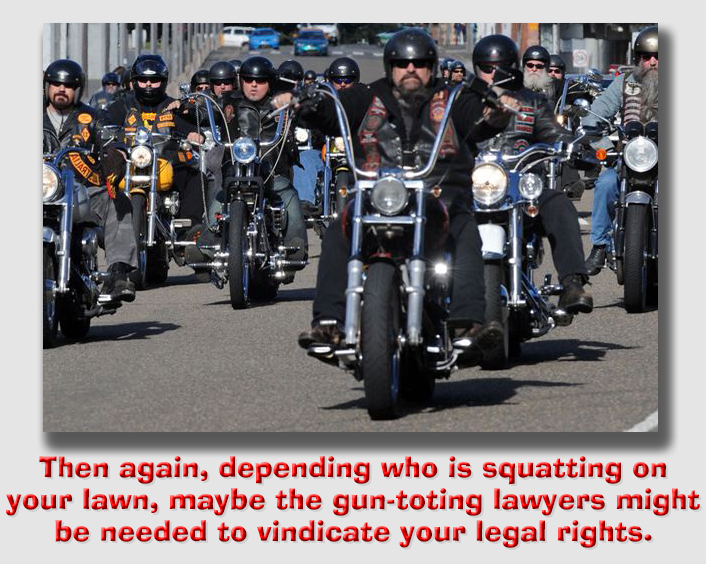
That’s the legal end of it… of course, there are social and political considerations in evicting them as well, especially if the patriarch of the parade squatters is 6’5”, 290 lbs. and goes by “Bubba.”

You’re on your own.

Miller-Lagro v. Northern States Power Co., 582 N.W.2d 550 (Sup.Ct. Minn. 1998). When Heidi Miller-Lagro and Kent Lagro returned to their home in Medicine Lake on the afternoon on October 21, 1992, they were shocked to discover that Northern States Power Company and Asplundh Tree Company had cut down several trees that were located on the city right-of-way between their lot and the paved roadway. The Lagros sued NSP and Asplundh, who promptly submitted surveys showing the trees were on land that was dedicated as a public roadway in 1887 and thus were the property of the City of Medicine Lake, not the property of the Lagros.

The trial court granted NSP’s and Asplundh’s motion for summary judgment, concluding that the Lagros lacked standing and could not recover because the trees were not located on their property. They appealed, citing Minn.Stat. §561.04, that stated “[w]hoever without lawful authority cuts down or carries off any… tree… on the land of another person, or in the street or highway in front of any person’s house… is liable…” The Court of Appeals reversed, holding that the statute did apply, remanding the case for further proceedings on the issue of whether NSP had lawful authority to cut down the trees.

Held: The Miller-Lagros control the tree lawn. The Minnesota Supreme Court held that homeowners had standing under both common law and wrongful tree removal statute to bring a claim for removal of trees located on the tree lawn in front of their residence by a utility company’s contractor.

The homeowner’s interest in the trees is subordinate to the right of the city, as exercised by the electrical utility in its utility line maintenance function, to trim or cut trees in the performance of its public works, the broad grant of authority provided by the statute governing utility’s maintenance of its lines, and the corresponding city ordinance. However, the statutes do not divest the property owner of ownership or control of the tree lawn, but rather only give] utility companies the lawful right to trim or remove trees to the extent that the trimming is reasonable and necessary for the purpose of constructing, using, operating, and maintaining lines.

– Tom Root

TNLBGray140407

Case of the Day – Tuesday, July 8, 2025

WATERWORLD

shortage160803In a little shot of neighbor law today, we’re going to talk about Waterworld.

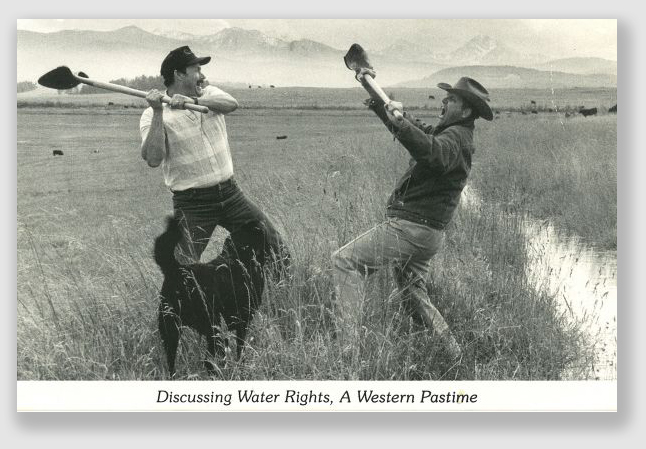
No, Kevin Costner, it’s not that kind of Waterworld. Instead of a $200 million turkey, this waterworld’s a place where water is precious because there’s not that much of it, a semi-arid climate in Nebraska, a state once considered to be part of the Great American Desert but is now an agricultural powerhouse. Water’s scarce in Nebraska, Kansas and Missouri (as well as in Kerr County, Texas, ironically enough), and water rights have been litigated ever since settlers put down their six-guns and hired the first local frontier lawyer.

In this case, a greedy downstreamer in the Lower Platte River basin had used an unnamed tributary to build his pond — his own fine little fishing pond — and he wanted his upstream neighbor to be prohibited from doing the same until his pond was full to his satisfaction. The trial court agreed with him, but the Nebraska Supreme Court found that Koch’s claim to a superior appropriative right to the water was as fictional as most of the cowboy-and-Indian stories of the old West.

As a riparian owner, Koch’s rights to the water turned out to be no better than that of his upstream neighbor.

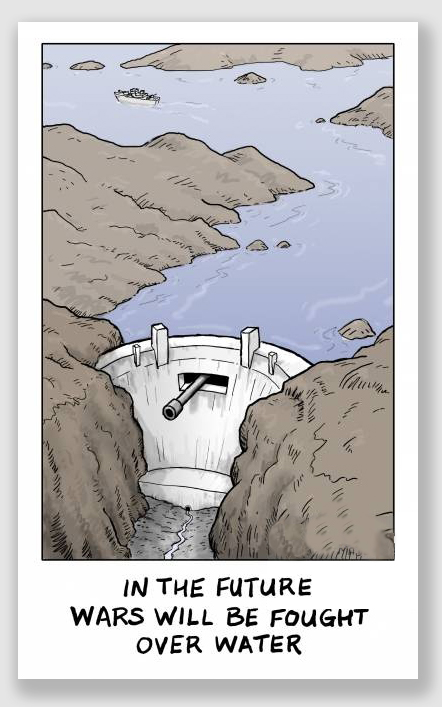
waterfight160803It’s just a case about a little water, you say. What do you know? Water has been declared to be the oil of the 21st century, and it probably is. Having the right amount of water of the right degree of purity at the right place at the right time is right important. Those who have it – think of those of us in the Great Lakes watershed, for example – guard it jealously. Having some sense of how water law is applied – the world of riparian rights – is a pretty good idea.

Koch v. Aupperle, 274 Neb. 52, 737 N.W.2d 869 (Sup.Ct. Neb. 2007). The Aupperles built a small dam to create a farm pond along the banks of an unnamed tributary of Weeping Water Creek. Loren Koch, a downstream user of the tributary’s waters, sued. He complained that in 1989, he dammed the waters of the tributary and built a three-acre pond on his property next to his house. Koch alleged the Aupperle dam would prevent his pond from filling and deprive him of stream water for livestock watering.

Koch said he bought his property in 1981 and that, aside from two brief times in the past two years, he had observed a constant flow of water in the tributary. His dam, built in 1989, impounded approximately 40 to 50 acre-feet of water. In 1990, he stocked the pond with largemouth bass, bluegill, and catfish, and, by the time of trial, the pond had become “one of the best little fishing ponds around.”

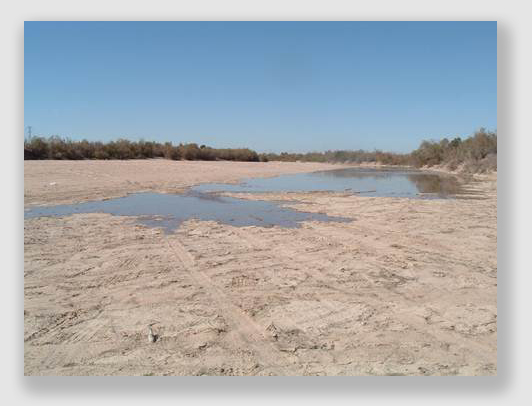
This is what the mighty Colorado used to look like when it met the Sea of Cortez, a victim of too many riparian rights holders taking too much water, A recent agreement between the U.S. and Mexico has improved matters, but not a lot.

This is what the mighty Colorado used to look like when it met the Sea of Cortez, a victim of too many riparian rights holders taking too much water, A recent agreement between the U.S. and Mexico has improved matters, but not a lot.

Although Koch said he used his pond to water his livestock, he had no livestock from 1997 until shortly before trial. He said he intended to have a small number of cattle on his property again and that he had recently obtained seven head of cattle; he anticipated having a maximum of 45 head.

Koch admitted that he had other water sources for cattle on his property, but he testified that he preferred to use the running water from the tributary. He also used the pond for recreational boating. Koch was concerned that if the drought continued and the Aupperles were allowed to build their pond, no water would pass through to his pond and it would dry up and kill his fish. He asked the court to require a “six-inch drawdown” in the Aupperle dam so that water could be passed through the Aupperle structure until Koch’s pond was full.

Koch conceded he had no appropriative right to use the water in the tributary. He said he wanted all the water in the tributary until his pond was full. At that time, the court could authorize upstream impoundment by the Aupperles.

Koch admitted that he had other sources of water that he could use for his livestock, including several other ponds, a well, some rural water spigots, and stock tanks. Paul Zillig, the assistant manager of the Lower Platte Natural Resources District, testified that based on data compiled by the Natural Resources Conservation Service, the entity that designed the Aupperle farm pond, there was sufficient water in the tributary to support both ponds.

The trial court found that while both parties intended to use the water for the same purpose, Koch “has priority of appropriation due to the fact that his dam was constructed back in 1989 and has existed since that time.” On this basis, the court concluded that “Koch’s use of the water from the stream is superior to [the] Aupperles.” The district court permanently enjoined the Aupperles from constructing their farm pond “until such time as the dam structure contains a draw-down or similar device which will allow for the passage of water through the dam structure.” The Aupperles appealed.

Held: The injunction was reversed. The basic concept of riparian rights is that an owner of land abutting a water body has the right to have the water continue to flow across or stand on the land, subject to the equal rights of each owner to make proper use of the water. Riparian rights extend only to the use of the water, not to its ownership. One of the most significant maxims of riparianism is that, unlike the rule of the prior appropriation system, there is no priority among riparian proprietors utilizing the supply. All riparian proprietors have an equal and correlative right to use the waters of an abutting stream.

dam160803Of equal importance with this maxim is that use of the water does not create the riparian right and disuse neither destroys nor qualifies the right. While a riparian right will not permit any one man to monopolize all the water of a running stream when there are other riparian owners who need and may use it also, neither does it grant to any riparian owner an absolute right to insist that every drop of the water flow past his land exactly as it would in a state of nature.

Applying these principles, the Court concluded as a matter of law that Koch could not have acquired any “senior” riparian right by constructing his dam in 1989. Any riparian right he may have to use water in the tributary would be equal and correlative to the rights of other riparian proprietors. The rights of one riparian landowner versus another is determined by examining the reasonableness of each landowner’s respective use of the water.

The record in this case did not establish that either Koch or the Aupperles held riparian rights. The Court found the parties were simply owners of adjoining tracts of land through which the tributary flows, with Koch’s land situated downstream of that of the Aupperles. Koch, as the party seeking injunctive relief, had the burden to show that the proposed Aupperle dam would infringe on his rights. Because he could not demonstrate the existence of a common-law riparian right, the Court held, he clearly was not entitled to injunctive relief.

Accordingly, the Court said, it did not need to analyze the reasonableness of the use by each party of the water flowing in the tributary. If it had, it said, it noted that both parties intended to use water in the tributary “primarily for aesthetic and recreational purposes with grade stabilization, erosion control, and domestic use (watering cattle) being secondary in nature.”

– Tom Root


Case of the Day – Monday, July 7, 2025

NOW LOOK WHAT YOU’VE DONE!

Rarely (as in “I don’t recall when I’ve ever said this before”) do I caution that the prevailing law in any particular state is wrong, and likely to be cruisin’ for a bruisin’ the next time an appellate court has to think about it. But I feel comfortable issuing that warning about today’s case.

From Ohio (home of rock ‘n roll, pro football, the first guy to walk on the moon, the brothers who turned a bicycle into the first airplane, and a ton of other cool things), comes a case that pretty much runs smack into Fancher, Herring, the Hawaii Rule, and a raft of other cases reflecting the modern view that a homeowner whose tree is wreaking havoc on the neighbor’s property may be ordered by a court to fix the damage at his expense.

To be fair, this case may be proof of the old legal aphorism that “hard cases make bad law.” Even the most cursory reading of the facts suggests that Dave Rababy may well have been a horse’s ass, hounding his neighbor because a tree dropped leaves and twigs on his property. Speaking as a guy who owns all of my five southern neighbors’ leaves every fall – and these things are the size of dinner plates – I understand how it can be irritating to have other peoples’ leave on your lawn. But I would never sue them over it. I don’t think I would…

Dave had no such compunction, and his emesis of woe delivered to the court made him the boy who cried wolf. He howled so loudly about leaves and twigs and the fact that his trimming crew was not allowed to trespass on Roy’s property and hack away at the offending tree, and minutiae of a similar nature, that his real complaint – his driveway was being heaved and foundations dislodged by the roots – got lost in the underbrush. In Fancher, Whitesell, and even Iny, such damage was enough to get the neighbor’s tree declared a nuisance. If Dave had exercised a little plaintiff self-control, he might have gotten there, too.

We are too urban and too suburban, and our properties are too developed for the Massachusetts Rule to be the exclusive remedy for genuine harm done by a neighbor’s tree. That is the way the law is trending throughout the civilized world, and it is bound to reach Ohio sooner or later.

Rababy v. Metter, 30 N.E.3d 1018 (Ct. App. Cuyahoga Co., 2015). David Rababy and Roy Metter were next-door neighbors. Dave’s driveway abutted Roy’s property in certain places and nearly abuts in others. A fence separated the properties, and a stand of mature trees ran along the fence on Roy’s side of the boundary line.

Dave sued Roy for negligence, nuisance, trespass, and interference with a business contract. Dave asserted that trees at the edge of Roy’s property extended over his own property, and dropped leaves, needles, sap, and branches onto his car and home. Some of the trees, Dave complained, were rotten. He whined that the trees cast shadows over his property and cause mold growth on his roof, as well as damaged his driveway and foundation.

Dave groused that he had hired a company to trim the overhanging branches, but Roy’s daughter prevented the unnamed landscape service company from properly performing this work. The complaint alleged the trees constituted an ongoing nuisance and trespass, and that Roy negligently maintained the trees. Dave asked for $52,500: $37,000 for future tree trimming services and $15,000 in compensatory damages.

Both parties filed motions for summary judgment. Dave argued that on “an ongoing basis, Roy’s trees encroach onto my property, specifically over my home and driveway. His trees deposit leaves, debris, and sap onto my property, causing damage.” Dave also repeated the claim about Roy’s daughter running off the tree trimmers.

Roy argued that he owed no duty to Dave to trim otherwise healthy trees on his property. He claimed the trees were mature and preexisted either party’s ownership of the property. He said that a year before, Dave hired Cartwright Tree Service to trim the row of pine trees that ran along the driveway. He said no one complained when Cartwright trimmed the overhanging branches from Dave’s property free, but when Cartwright began trimming branches and trees back further than the property line, Roy’s daughter objected. Roy said that he has no objection to Dave trimming the overhanging branches back to the property line.

Dave replied with new allegations that the trees in question were decaying or dead. Attached to the reply was a new affidavit that averred that the trees were decaying and dangerous and that one had fallen on his property. He included a picture of a tree that appears to have fallen across a driveway. However, the affidavit was neither signed nor notarized.

The trial court granted Roy’s motion for summary judgment and denied Dave’s. Dave appealed.

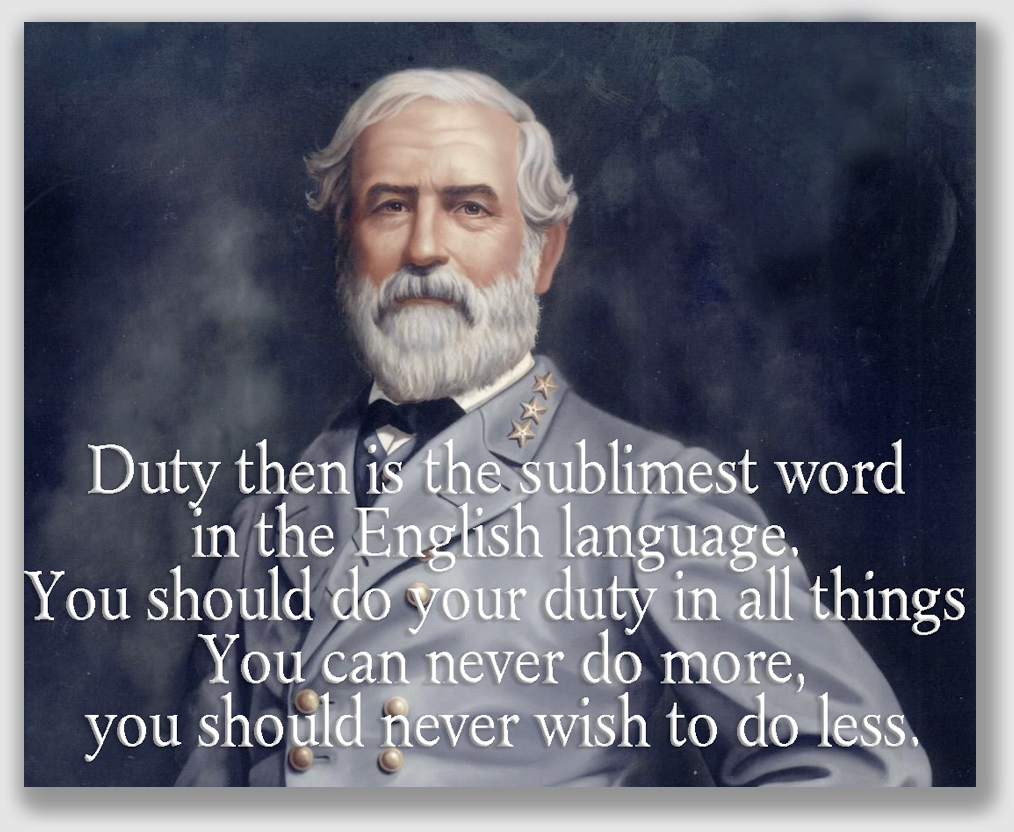
Gen. Robert E. Lee – a man recently consigned to the ash heap of history – knew something about duty … and even he couldn’t have found that Roy owed one to Dave.

Held: Roy owed Dave no duty, so the trial court’s dismissal of the case was upheld.

In order to succeed in a negligence action, the Court said, Dave must demonstrate that Roy owed him a duty, that Roy breached the duty, and that he suffered damages that proximately resulted from Roy’s breach. Here, Dave offered evidence that falling pine needles, leaves, sap, and sticks have damaged his car, driveway, and roof. He also alleges, without evidentiary support, that encroaching tree roots damaged his driveway and home.

While he showed damage, Dave was unable to show that Roy owed him any duty. A landowner is generally not responsible for the losses caused by the natural condition of the land. Instead, the Court observed, states generally allow one impacted by such growth the remedy of self-help. A privilege existed at common law, such that a landowner could cut off, sever, destroy, mutilate, or otherwise eliminate branches of an adjoining landowner’s tree that encroached on his land. But, the Court said, whether a separate remedy exists is an open question.

The Massachusetts Rule provides that in almost all circumstances, the sole remedy for damages resulting from the natural dropping of leaves and other ordinary debris from trees is the common law remedy of self-help. The rule does provide a limited exception for dead trees, just as Ohio has established a duty for urban landowners of reasonable care relative to the tree [hat overhangs a public street, including inspection to make sure that it is safe.” Where constructive or actual knowledge of an unreasonably dangerous condition exists on the land of an urban landowner, such as a dead tree, the duty prong of a negligence claim may be satisfied.

The reasoning set forth in support of the Massachusetts Rule, the Court said, is apt to the facts of this case: “[T]o grant a landowner a cause of action every time tree branches, leaves, vines, shrubs, etc., encroach upon or fall on his property from his neighbor’s property, might well spawn innumerable and vexatious lawsuits.” The Court thus adopted the Massachusetts Rule as the law of this jurisdiction.

But Dave also argued that in Ohio a “landowner in an urban area has a duty to exercise reasonable care to prevent an unreasonable risk of harm to others from decaying, defective or unsound trees of which such landowner has actual or constructive notice.” Dave contended Roy’s trees were in such a defective condition and thus constituted a nuisance. Dave also argued that Roy, an urban landowner, had a duty to inspect his trees and protect others from a dangerous condition created by any unsound trees. Even if such a duty existed, the Court said, it only is breached when the owner has actual or constructive notice of a dangerous condition.

Leaves – often a pain in the arse, but seldom a nuisance

The Court held that Dave put forth no evidence that any of the trees constituted a dangerous condition of which Roy was aware or should have been aware. He presented no evidence that the trees are dead, decaying, or unsound, and cited no case holding that “the normal yearly life-cycle of a tree and the natural shedding of leaves, twigs, and sap constituted a nuisance. Thus, he provided no compelling justification for a court to hold that Roy’s trees case constituted a nuisance or a dangerous condition. The problems Dave had experienced with the trees “are the natural consequence of living in an area beautified by trees. Dave’s remedy is to trim tree limbs that overhang his property back to the property line, to which Roy averred he has no objection.”

The trees at issue, in this case, do not constitute a nuisance, and Roy is not negligent in regard to them.

Dave also asserted that the trees on Roy’s property constituted a trespass. But the elements of a successful trespass claim include an unauthorized intentional act and entry upon land in the possession of another. Here, there is no intentional act. Dave claimed that Roy’s actions of not removing or trimming the trees constitute an intentional act. But, the Court said, as it explained, Dave’s remedy for intrusion by vegetation is to trim it back to the property line.

In sum, Dave’s claims that detritus falling from trees from the neighboring property constituted a trespass, a nuisance, and negligence were simply not actionable. The Court cited a Maryland case that “it is undesirable to categorize living trees, plants, roots, or vines as ‘nuisances’ to be abated. Consequently, we decline to impose liability upon an adjoining landowner for the ‘natural processes and cycles’ of trees, plants, roots, and vines.”

– Tom Root

TNLBGray140407

Case of the Day – Tuesday, July 1, 2025

I CHANGED MY MIND… I GUESS

Doug Van Dyke had big plans for getting folks back to nature. He wanted to build a nature trail along a ravine that split his property and that of his waffling neighbor, Eunice North. People could enjoy the birds, the babbling brook, the scent of pine… that kind of thing.

If you ever wonder whether it’s a good idea to get agreements in writing, Doug’s $70,000 mistake will settle that question for you. Because Doug’s nature path would meander a bit onto Eunice’s side of the ravine, he told her about his plans for the trail. Eunice, who admitted that she really had no idea what Doug was talking about, said she just “shrugged my shoulders” and replied that “I guess it would be okay.”

To Doug, that was like the green flag at Indy.  But little did he know that Eunice promptly began to fret about her confused acquiescence. She had trouble sleeping for her worry, and finally asked a friend about the plan. Her friend told Eunice the trail idea was a mistake. Armed with this advice, Eunice said, she reneged. She claimed she told Doug that she didn’t want him around.

“No probalo,” Doug – who had no intention at all of honoring Eunice’s change-of-heart – allegedly responded. Regardless of his actual intentions, Doug promised Eunice that he “would go to a different plan.”

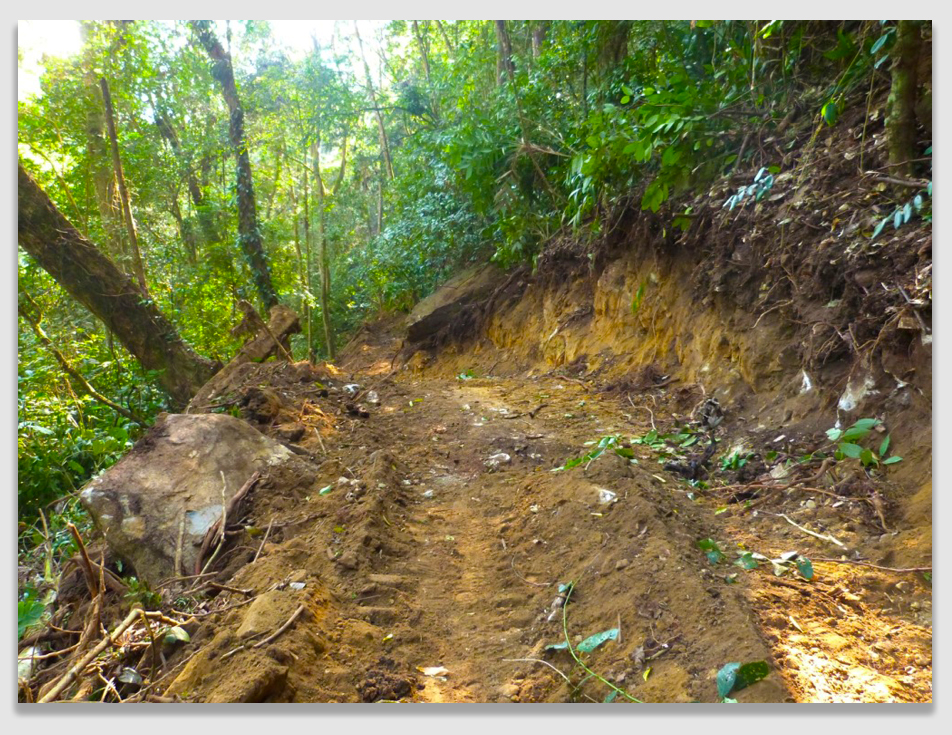
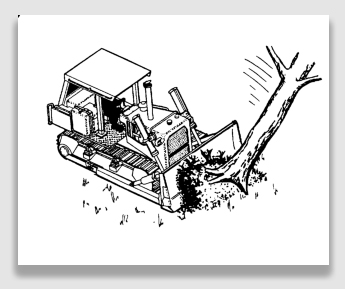
That different plan seems to have involved having his contractor run the bulldozers at full throttle instead of half throttle. By the time the diesel fumes cleared, 20 of Eunice’s trees had been ground under Caterpillar treads and the trail encroached on her land.

Eunice sued Doug for trespass, loss of lateral support, and loss of trees. The jury awarded Eunice $50,000 on the trespass and lateral support claims and $20,100 in treble damages on the loss-of-tree claim. It mattered little that Doug and the contractor both told a different story, the bulldozer operator testifying that Eunice had agreed to Doug’s plan. The jury believed Eunice.

Juries do that, often buying one side of the story and not the other, many times against common sense. We don’t know that that happened here, but it sure did not help Doug that he had not bothered to have the property boundaries surveyed before the ‘dozers started dozing.

Much of Doug’s case in the appeals court focused on damages. The jury agreed that Doug’s dozing had made Eunice’s side of the ravine unstable. Eunice’s expert testified that there were three ways to repair the damage, but none of the trees would restore the ravine to its pristine state. Doug argued that said because the land could not be repaired to the way it was before the bulldozers rolled through, then the diminution of the fair market value of the ravine was all that mattered.

Not so, the court said. The law does not require that the evidence show that the damage can be repaired so as to make the property as good as new. While it is a general rule of Iowa law that the cost to repair property is the fair and reasonable cost of repair not to exceed the value of the property immediately prior to the loss or damage, all Eunice was required to do was to establish a fair and reasonable cost to fix things up in order to arrest further deterioration and make the place as good as it can be made. In this case, Eunice showed that she had three means of stabilizing the steep bank after Doug’s earth-moving frolic and only one of those made any sense. She established the cost of that repair, and the value of the property before the damage.

Because the damages did not exceed her expert’s $129,000 repair price tag, it was clear the jury fulfilled its function in weighing the evidence.

Next time, Doug, get the landowner’s OK in writing. Call a surveyor. Stake the property boundaries. Surely that’s cheaper than $71,000.

North v. Van Dyke, Case No. 16-0165 908 N.W.2d 880 (Ct.App. Iowa, 2017). Douglas Van Dyke hired Heck’s Dozer, Inc., to build a trail along a ravine between his property and adjacent land owned by Eunice North. Twenty of North’s trees were removed during the trail’s construction, and a portion of the completed trail encroached upon North’s property. Doug said Eunice gave him permission. Eunice said she initially sort of equivocated, but later told Doug in no uncertain terms that he was to stay off her land.

Doug said he would do so, but he never had the land surveyed or staked, and his guess as to the location of the property line was by guess and by gosh. Doug’s contractor said he met with Eunice, and she approved the plans. Eunice said she had never met the contractor.

Eunice testified that after she told Doug to steer clear of her property, she heard a “‘loud commotion.’ Standing on her deck, she saw ‘two pieces of heavy equipment’ below and ‘trees… flying.’ She decided not to go into the ravine to check on the commotion because she was ‘afraid’ she would get ‘hit with something,’ and she had physical difficulties getting ‘down there.’ Suspicious of an encroachment on her land, she commissioned a survey. The surveyor confirmed her fears.”

Eunice sued Doug for trespass, loss of lateral support, and loss of trees. The jury awarded her damages of $50,000 on the trespass and lateral support claims and $20,100 in treble damages on the loss-of-tree claim. Doug appealed.

Held: Eunice amply proved that Doug should pay treble damages under Iowa Code § 658.4 (2013). The statute requires the damage to trees be committed willfully or without reasonable excuse.” The term “willfully” has been characterized as an intentional and deliberate act without regard to the rights of others. Here, the Court of Appeals said, a reasonable juror could have believed that Eunice said “no” the jurors could have found Van Dyke “acted… without reasonable excuse.”

The jury additionally could have found that Doug’s failure to commission a survey before building the trail denied him any reasonable excuse for the trespass. The testimony established that Doug relied on an “old fence,” “old posts,” a “shed,” and a “roofline” to gauge the boundary.

The measure of damages is the cost of repair, as long as that cost does not exceed the value of the property prior to the damage. Doug complained that because Eunice’s expert testified only that the continued deterioration of the property could be stopped by stabilizing the steep bank, she was not able to show that the property could be repaired to its original state.

The Court of Appeals held that nothing requires that the repair estimate be enough to restore the land to its state before the damage. As long as Eunice provided evidence of the fair market value of the land before and after the damage, and a repair cost that is less than the value of the place before the damage – which she did – she met her obligation. Here, the damages awarded by the jury were higher than Doug’s estimate of $2,500.00 to fix it, but well below Eunice’s estimate of $127,000. Plus, the jury’s $50,000 award for trespass and lateral support was well below Eunice’s evidence that the land was worth $250,000.

The damage to the trees was assessed separately, with the value of the lost timber found to be $6,700, trebled to $20,100.

– Tom Root

TNLBGray140407

Case of the Day – Monday, June 30, 2025

LET’S BE CAREFUL OUT THERE


crazy160718Summer has officially begun, and it all feels so… so comfortable, like a pair of old shoes. Begun? June is gone already.

Yesterday, my bride and I wandered through Vermilion, Ohio, for some ice cream at Dairy Dock. Tourists were everywhere, the cottages sitting along the Lake Erie shoreline full, boats in and out of the marinas. Hot fun in the summertime, as Sly puts it.

And just for a moment, I felt like that old twinge, a fear really, that summer days are already running through my fingers like the sands of an hourglass. But to all those folks who complained in May about the cold, wet weather… I hope you’re happy now. It’s hot and muggy and bright… perfect for stopping by the old swimming hole, a place where my friends and I had a lot of fun (back when we didn’t worry about how we looked in a swimsuit, if we bothered to wear one at all).

The old swimming hole. Where we had a lot of fun. And, sadly, a place where tragic things can happen.

We must make an extra effort to be caerfull careful. Especially with July 4th upon us, this might be a good time to consider due care, that is, our duty of care to others.

In a negligence action, a plaintiff generally has to show that (1) the defendant had a duty of care in relation to the plaintiff, (2) the defendant failed to conform its conduct to the requisite standard of care, and (3) an injury to the plaintiff was proximately caused by the failure.

Do you really want to be eating food that's staring back at you?

That’s what “fisheye” is all about: Do you really want to be eating food that’s staring back at you?

The duty of care is a moving target, depending to a large extent on the relationship of a defendant to the plaintiff. If someone delivering your double-anchovy pizza and atomic wings falls into an open hole in your front yard, the law treats your liability a whole lot differently than if, say, a thief sneaking around at night trying to steal your garden troll statue falls into the same hole. (But even if the law doesn’t wonder, we’re puzzled that you’d order a double-anchovy pizza).

No-DivingIn today’s case, a young man was paralyzed for life when he dove into the lake at his parents’ house. He had made the same dive countless times before, but the defendant in the case — the non-profit corporation that owned the lake — had recently installed a dredge pipe underwater near the shore. The pipe apparently was just below the surface of the lake.

The lake’s owner argued that the young man was merely a licensee, not an invitee. The difference was crucial because a licensee pretty much takes the property in the condition he or she finds it. The trial court agreed that the plaintiff was much more than that, and after a jury trial, the young man was awarded $1 million (when that was still a lot of money).

The appellate court looked at the corporate purpose of the non-profit lake owner, as well as the terms under which it acquired the lake from the public utility that had owned it previously. Both required that the lake be maintained for public purposes, despite being ringed with private homes, and that evidence convinced the Court of Appeals that the young man wasn’t just someone who was using the lake with the permission of the defendant non-profit corporation. Instead, he was an invitee, someone to whom an invitation had been extended to enter or remain on land for a purpose for which the land was being held open to the public. As such, the landowner had a much higher duty of care to the young swimmer, a duty it violated by not being more careful in installing and marking the dredge pipe.

Not all shallow water is so well labeled.

Not all shallow water is so well labeled.

Shafer & Freeman Lakes Environmental Conservation Corp. v. Stichnoth, 877 N.E.2d 475 (Ct.App.Ind., 2007). Twenty-six-year-old Justin Stichnoth was visiting his parents at their house located on Lake Shafer. During a conversation that day, Justin’s father, Kerry, told Justin about a dredge pipe that Shafer & Freeman had installed in the channel near their dock. Kerry explained that recently he had gotten his boat “hung up” on the dredge pipe. Shortly thereafter, Justin took a running dive off of his parents’ dock into the channel, something he had done often over the years. Justin struck his head on the dredge pipe, which was located on the channel floor about 17 feet from the dock. Justin was left a paraplegic. He sued Shafer & Freeman, alleging that the firm’s negligence caused his injuries because it didn’t warn that there was a pipe underwater, it didn’t mark the pipe so that it would be visible to users of the lake, and it didn’t use reasonable care in dredging the lake.

Shafer & Freeman denied the allegations of negligence. Later, it filed a motion for summary judgment on the issue of whether Justin was a licensee of Shafer & Freeman. The trial court denied it, and a jury found it liable to Justin, awarding $1 million to the injured plaintiff. Shafer & Freeman appealed.

Be careful when diving into unfamiliar water.

Be careful when diving into unfamiliar water.

Held: Justin was an invitee. Indiana law holds that a person entering the land of another comes upon the land either as an invitee, licensee, or trespasser. The person’s status on the land defines the nature of the duty owed by the landowner to the visitor. Licensees have a license to use the land and are privileged to enter or remain on the land by virtue of the permission of the owner or occupier, but they take the premises as they find them. Invitees, on the other hand, are owed a much higher duty of care. The decisive factor with regard to whether a landowner has extended an “invitation” or “permission” is the interpretation that a reasonable man would put upon the owner’s words and actions, given all of the surrounding circumstances. Here, the Court found, the lake was held open to the public, even though it was surrounded by private property, and thus Justin — who dove off a dock and struck his head on a dredge pipe located on the channel floor — was an invitee rather than a licensee for purposes of personal injury action. The Court held that the articles of incorporation of Shafer & Freeman, the non-profit corporation that owned the lake, provided that the corporation would protect and enhance the water quality of the lake in order to facilitate public recreational use and ensure continued public access.

What’s more, the Court said, the agreement by which Shafer & Freeman acquired the title from the electrical utility, provided that Shafer & Freeman would hold the lake for public, charitable, recreational, conservation, and environmental purposes. It is not enough, to hold land open to the public, that the public at large is permitted to enter at will upon the land for their own purposes. As in other instances of invitation, the Court said, there must be some inducement or encouragement to enter, some conduct indicating that the premises are provided and intended for public entry and use and that the public will not merely be tolerated, but is expected and desired to come. When a landowner lets local boys play basketball on his vacant lot they are licensees only. If he installs playground equipment and posts a sign saying that the lot is open and free to all children, there is then a public invitation, and those who enter in response to it are invitees.

– Tom Root
TNLBGray140407

Case of the Day – Friday, June 27, 2025

HOW MUCH IS ENOUGH?

A eucalyptus tree, similar to the one that offended Ms. Cannon

A eucalyptus tree, similar to the one that offended Ms. Cannon.

There was a time, back when people of grit populated the land, that a landowner only had one choice when his neighbor’s trees encroached – to cut ‘em back. The Massachusetts Rule was the coin of the realm: if you didn’t like your neighbor’s tree overhanging your eaves, or its roots wrapping around your sewer line, you only had one option. The courts didn’t want to hear about it. Self-reliance was what it was all about.

Then along came the Hawaii Rule, which suggested that a naturally growing tree could be or could become a nuisance, and that an aggrieved landowner could sue for an order requiring its removal. One rule does not necessarily negate the other. So when does one oil up the chainsaw, and when does one fire up the word processor?

The Massachusetts Rule is, generally speaking, a blunt instrument. It’s one thing to cut away branches that pose a threat (or even an inconvenience) to your property. But what if cutting a limb back to the property line leaves a 15-foot leafless stub extending from the branch to the boundary. That’s not necessarily according to ANSI Standard A-300, but on the other hand, you don’t have the right to trim it properly unless your neighbor consents to you coming onto his or her land to do so.

Or, more dangerously, what if you cut back roots to the extent that the tree loses too much subsurface support, and falls on your neighbor’s new Bugatti Chiron? Are you liable? After all, you did no more than what the Massachusetts Rule permitted you to do.

The Hawaii Rule, on the other hand, is Doug Lewellyn’s dream. What an All-American solution – let’s sue! When is harm sensible? When your foundation walls collapse? When a dead branch falls on your Bugatti? When leaves clog the filter on your swimming pool? How much harm is enough?

Joan Cannon lived next to Lamar Dunn. Joan was unhappy with the roots from the Dunns’ eucalyptus tree, which were encroaching underground onto her land, as roots are wont to do. After all, a tree will quite often send roots out 35 feet or more from the base of the trunk, and the root system has little regard for some lines drawn on a recorder’s map.

We’re not sure why Joan was so exercised. Maybe she was naturally crotchety. Perhaps she was unusually territorial. Maybe her neighbor had a nice Bugatti, while Joan drove a Yugo. What we can be sure of is that the eucalyptus roots weren’t really causing any harm.

encroach160715

Sometimes encroaching roots can be an inconvenience.

That didn’t stop Joan from suing the Dunns.  The trial court denied an award of any damages and refused to order Lamar the appellee to remove the offending roots and tree. Joan appealed.

The Court of Appeals considered the classic Restatement of the Law trespass approach, which held simply that if a neighbor owns something that trespasses, he or she has to remove it if there is a duty to remove it, regardless of whether it causes harm or not. That’s the rub, the court said. When does such a duty arise?

The court found guidance in the Restatement on nuisance and held that a duty to remove offending branches or roots arose when some actual and sensible or substantial damage has been sustained. Joan’s general objection to the unseen eucalyptus roots did not equate to harm. Thus, the roots could remain.

Cannon v. Dunn, 145 Ariz. 115, 700 P.2d 502 (Ariz.App. Div. 2 1985). This case involves the liability of Lamar Dunn, an adjoining landowner, for roots from a eucalyptus tree that invaded the subsurface of land belonging to his neighbor, Joan Cannon. The trial court found that the roots had caused no actual damage, and denied an award ordering the Dunns to remove the offending roots and tree.

Joan appealed.

Held: Dunn did not have to remove the roots. The Court of Appeals rejected Cannon’s argument that it should apply the Restatement (Second) of Torts § 158 (1965), which stated that “one is subject to liability to another for trespass, irrespective of whether he thereby causes harm to any legally protected interest of the other if he intentionally… fails to remove from the land a thing which he is under a duty to remove.”

The Court said that it was “obvious that one must first determine whether there is a duty to remove the object and that in this case § 158(c) really begs the question.” More to the point, the Court observed, was the Restatement (Second) of Torts § 840 (on nuisances), which held that a possessor of land is not liable to his adjoining landowner for a nuisance resulting solely from a natural condition of the land.

Ms. Cannon could not prove any damages flowing from the alleged encroachment ... unlike this guy.

Ms. Cannon could not prove any damages flowing from the alleged encroachment … unlike this guy.

The Court paid lip service to the Massachusetts Rule, noting that Arizona law permitted a “landowner who sustains an injury by the branches or roots of a tree or plant on adjoining land intruding into his domain, regardless of their non-poisonous character may, without notice, cut off the offending branches or roots at the property line.” At the injured landowner’s expense, of course.

But when some actual and sensible or substantial damage has been sustained, the Court said, the injured landowner may maintain a nuisance action for abatement of the nuisance, and compel the removal of the branches or roots at the tree owner’s expense. However, where no injury has been sustained, no lawsuit be brought for either an injunction or damages.

– Tom Root
TNLBGray140407