Case of the Day – Martin Luther King, Jr., Day 2025

SOME THINGS EVEN A COURT CAN’T DO

The majestic courage shown by the Selma marchers 50 years ago, as well as by countless others who, by acts large and small, defended the equality we now identify as a bedrock principle of our society and legal system, fortunately cannot be undone by knuckleheads like today's plaintiff.

The courage shown by the 1965 Selma marchers 60 years ago, as well as by countless others who, by acts large and small, defended the equality we now identify as a bedrock principle of our society and legal system, fortunately, cannot be undone by knuckleheads like today’s plaintiff.

For a country that was supposed to be sailing into a post-racial world after the election of President Obama in 2008, we’ve had a rough time of it in the last 17 years.  In race relations, 21st century-style, there is the deadly serious (such as Ferguson, Chicago, ClevelandCharleston, Minneapolis, and Brunswick, Georgia)– the merely reprehensible (University of Kentucky senior arrested after screaming racial slurs at black UK freshman) – the head-scratching (trees can be racist?), and of course a former President (“former” until noon Eastern time today) who had no problem saying that white people are being sent to the back of the line for COVID treatment.

That last issue and exactly how he may have referred to the governance and economics of Haiti, El Salvador, and some countries in Africa, are a suitable launching point for a trip into the absurd. The absurd is something we’ll look at today, on Dr. Martin Luther King’s birthday commemoration and said one-and-future President’s second inauguration.

Sigmund Freud was famously but questionably credited with having said, “Sometimes a cigar is just a cigar.” In today’s case, a matter of trespass to trees was somehow recast into a federal civil rights action by the plaintiff, who was a man with a litany of offenses committed against his ancestors which he wanted to redress.

Mr. Brewer apparently trespassed on Mr. Lance’s property and removed three trees. Rather than an appropriate trespass to trees action (with a request for treble damages) in South Carolina courts, Mr. Lance went for broke, suing Mr. Brewer for violation of his civil rights under 42 U.S.C. § 1983.

A § 1983 action is a powerful one, authorizing a federal court action to be brought against persons who, under color of state law, deprive another of his civil rights. It has been used against those who discriminate in housing, police officers who wrongly kill suspects, employment discrimination, and even in zoning decisions.

But § 1983 doesn’t do everything. Here, Mr. Lance argued that not only had Mr. Brewer falsely claimed to have the County’s permission to cut down the trees, but Mr. Brewer’s grandfather had defrauded Mr. Lance’s cousin in a land deal about 40 years before. When the Federal magistrate judge recommended dismissal of the § 1983 action, Mr. Lance objected, arguing rather ineloquently that ““GOD ALMIGHTY does not like what you Racist people are doing, and GOD will show it very soon by punishment, and Destruction.”

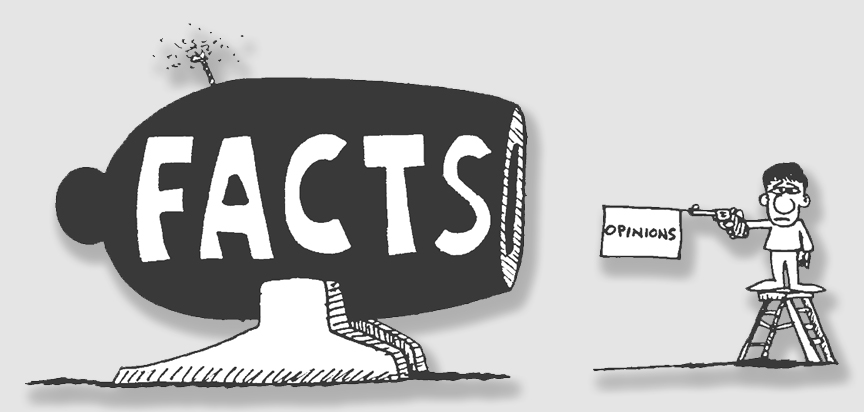
cartoon150313Destruction was something the federal court was willing to risk, holding that no matter how it tried to construe Mr. Lance’s complaint, there just wasn’t a civil rights violation alleged. Of course, he was free to pursue his complaint in state court, and we assume he did so.

Lance v. Brewer, 2007 U.S. Dist. LEXIS 30247, 2007 WL 1219636 (D.S.C., Apr. 24, 2007). In late 2005 Defendant Brewer cut down three large trees and other tree limbs on Plaintiff Lance’s property without permission. Lance asserted that Brewer, who ran a business named Don’s Scrap Metal and Iron, sold these trees for profit but that he and his relatives did not receive any profit. Lance alleged that Brewer told him the county gave him permission to cut down the trees, but according to Lance, a county employee told him that Brewer did not have permission to cut down the trees. In addition to these claims, Lance argued that Brewer’s grandfather purchased the property adjoining his property forty to fifty years ago by “fooling” Lance’s cousin into selling 20 acres of river-front property for $200.00.

Lance alleges Brewer’s actions constitute racism and discrimination under 42 U.S.C § 1983, and he seeks $85,000.00 on behalf of the heirs of his cousin, Willie Lance. A U.S. Magistrate Judge recommended that Lance’s claim be dismissed. Lance disagreed and sought rejection of the Report & Recommendation.

Dr. King stood for equality and justice… not nonsense.

Held: Lance’s tree-cutting-as-civil-rights case was dismissed. The Court noted that Lance had objected to Report and Recommendation because “GOD ALMIGHTY does not like what you Racist people are doing, and GOD will show it very soon by punishment, and Destruction. The United States Court has Federal Jurisdiction, because this is a Civil Rights Violation.” The Court said, “[t]he Plaintiff’s unsubstantiated statement that the Court has federal jurisdiction because this is a civil rights violation does not change the fact that even liberally construing the Plaintiff’s complaint, it fails to state a claim for a federal civil rights violation.” Here, Brewer is a private individual.

What’s more, Lance tried to state a claim pursuant to § 1981. The Court held that Lance has failed to allege an essential element of a § 1981 claim, that there is a contract or property law right enjoyed by white citizens but not by the Plaintiff, who is black. The Court concluded that – tree or no tree – no federal question was raised by Lance’s claim, and thus jurisdiction did not exist.

– Tom Root

TNLBGray140407

Case of the Day – Friday, January 17, 2025

SO WHAT IF YOUR NEIGHBOR BUGS YOU?

You remember that neighbor kid when you were young, the one who was always threatening to tattle to his mother or father about your alleged misdeeds?

All right, you never committed misdeeds. I did, however, and I remember my neighbor Rick, who would run to his parents at the drop of a hat. One July 4th weekend, he told them I was responsible for some shenanigans that resulted in his burning his eyebrows off. I won’t go into details (but it involved igniting gunpowder Rick had obtained by cutting open 12-gauge shotgun shells). I escaped liability only because I happened to be 500 miles away at summer camp at the time.

Even then, his parents blamed me.

Some people never grow out of that urge to tattle and whine. When they become adults, they like to call the police, complain to the zoning people, and even sue. Many times, they complain about conduct that is legal (or nearly so), but merely bothersome: the neighbor puts her garbage out early, or shovels his walks late or not at all, or never weeds the garden, or parks his truck on the street, or his boat in the yard…

Nuisance is the legal doctrine that lets you bend your neighbor’s conduct to your whims. It is not easy to prove a nuisance, nor should it be. It must be an unreasonable, unwarranted or unlawful use of one’s property, and even then, the use has to annoy, inconvenience or disturb you enough that the law will presume damage.

In today’s case, the neighbor’s stand of trees bugged Chuck Merriam – literally. But swarms of disgusting insects were not enough to convince the court to boss around Chuck’s neighbor for his benefit.

Merriam v. McConnell, 31 Ill.App.2d 241 (Ct.App. Illinois 1961). Charles Merriam and next-door neighbor Jean McConnell lived in a well-populated residential area of Northfield, Illinois. Jean was growing a large number of box elder trees on her property. As part of the box elder ecosystem, Jean played host to box elder bugs – ugly, black and red, three-quarter-inch long insects – that infest the box elders every summer. Swarms of the bugs migrated from the trees to Chuck’s house and yard, endangering his “comfortable and peaceable use and enjoyment” of his residence, impairing the value of his property, and “embarrassing and distressing” his guests. The bugs even invaded Chuck’s residence and messed up the furniture and draperies, which were expensive and time-consuming to clean.

Chuck complained to Jean repeatedly, but she was powerless to keep the bugs out unless she cut down the trees (which she was not about to do). Chuck asked for $150.00 in damage (and this being 1961, that was a lot of money, about equal to the federal debt ceiling) and for an injunction to get rid of the trees.

The trial court dismissed Chuck’s complaint, and he appealed.

Held: Jean’s box elders were not a nuisance, and Chuck had no basis for an injunction against her maintenance and growing of box elder trees or, alternatively, the control of the box elder bugs.

Chuck’s complaint was based on the theory of private nuisance. In general, a private nuisance is an individual wrong arising from an unreasonable, unwarrantable or unlawful use of one’s property producing so much annoyance, inconvenience, discomfort or hurt that the law will presume that damages will be a consequence of the conduct.

This means that the complaint, in order to be successful, ought to allege facts that justify the inference that the defendants are using their property in an unreasonable, unwarrantable or unlawful way.

The Court cited Michalson v. Nutting for the notion that “an owner of land is at liberty to use his land, and all of it, to grow trees. Their growth naturally and reasonably will be accompanied by the extension of boughs and penetration of roots overhead and into adjoining property of others.” The Michalson court thought it “wiser” to adopt the common law practice of leaving the neighbor to his own protection “if harm results to him from this exercise of another’s right to use his property in a reasonable way, than to subject that other to the annoyance, and the public to the burden of actions at law, which would be likely to be innumerable and, in many instances, purely vexatious.”

The Court noted that no Illinois precedent enjoined the operation of natural forces. Instead, only where “a human agency has intervened in a negligent, careless or willful way to turn the natural creation into a nuisance, as for instance, where cities have polluted natural water courses, or an individual has done so.” The court said

a nuisance cannot arise from the neglect of one to remove that which exists or arises from purely natural causes. But, when the result is traceable to artificial causes, or where the hand of man has, in any essential measure, contributed thereto, the person committing the wrongful act cannot excuse himself from liability upon the ground that natural causes conspired with his act to produce the ill results.

The Court observed that Chuck asked that Jean be forced to take “necessary steps” to limit the bugs to her property. “On its face,” the Court said, “this prayer is obviously impossible. Plaintiff does not suggest how the defendant could limit the bugs to her property. He asks that defendant[] be restrained from growing box elder trees upon [her] property. There is nothing unlawful about the growing of box elder trees… [Jean] may grow trees to whatever extent [she] wishes on [her] own property. The fact that box elder bugs may annually infest the trees, in our opinion, does not make the trees a private nuisance nor does the conjunction of the bugs and the trees constitute a private nuisance.”

The law requires that Jean would have to be guilty of some carelessness, negligence or willfulness in bringing, or helping to bring, about a harmful condition in order to entitle Chuck to the relief he sought in his complaint.

The Court concluded:

When a person moves to a wooded suburban area he should know that he is going to a place where nature abounds; where trees add to the pleasure of suburban life; and where the shade of trees, leaves, overreaching branches, roots, squirrels, birds, insects and the countless species of nature tend to disregard property lines. The effects of nature are incidents of suburban living…

We think that reversing the decree before us would probably expose property owners, especially in wooded suburban areas, to much vexation. And, it might result in adding the weight of “clothes-line” disputes, which ought to be settled amicably by neighbors, to the mounting burden of lawsuits now impeding the administration of justice… Equity should not lend its jurisdiction to the control or abatement of natural forces as though they were nuisances.

– Tom Root

TNLBGray

Case of the Day – Thursday, January 16, 2025

SITTING ON YOUR RIGHTS

Equity is a beautiful thing.

There was a time, back in merry olde England, went the courts of law had gotten so hidebound and formalistic that your average aggrieved peasant couldn’t catch a break. So people who needed something more than what the law could provide would petition the Lord Chancellor.

Thus began the courts of chancery, known more commonly as courts of equity. A court of equity is authorized to apply principles of equity, as opposed to those of law, to cases brought before it.

Equity courts hear lawsuits and petitions requesting remedies other than damages, such as writs, injunctions, and specific performance. Most equity courts were eventually merged with courts of law, but some American states, including Delaware, Mississippi, New Jersey, South Carolina, and Tennessee, preserve the distinctions between law and equity and between courts of law and courts of equity.

Today’s case, being from Tennessee, started with a Chancellor (something like this fellow), because what the plaintiffs really wanted was an injunction, a court order that the owner of the hedge trim it. But it ended up in the Tennessee Supreme Court.

At its root, equity is nothing more than fairness. Note how equity creeps into this case, not only in the application of the Massachusetts Rule – and how much a creature of equity is that? – but in the observation at the end of the decision that laches should prevent Bill Granberry from getting any relief from his claim.

Bill sat on his rights. If he had sued Penelope when the hedge was still short and young, the outcome might have been different.

Granberry v. Jones, 188 Tenn. 51, 216 S.W.2d 721 (Supreme Ct. Tenn. 1949): Bill Granberry and Penelope Jones each owned a residence on adjoining lots in Tullahoma. Due to the narrow frontage, Bill’s residence is a little less than five feet from the boundary line between the properties.

Penny planted an evergreen shrubbery hedge entirely on her side and within a few inches of the boundary line. The hedge has grown to a height of about twenty feet and its branches and foliage have grown over the boundary line and over Bill’s property to the extent that they rub the side of his house and enter his open windows.

Bill sued for an injunction that would require Penny to trim the hedge back to the boundary line. For good measure, he also asked for a decree requiring her to move the hedge entirely or at least to cut it down to a height of not more than 24 inches and to keep it that way, and for damages.

Penny demurred (which is legalese for saying to the court, “Even if everything he says is true, Bill’s got nothing coming). Penny argued that she had the legal right to grow the shrubbery on her own property to any height she desired, and if any of the branches or foliage protruded onto Bill’s land, his remedy was only to cut the hedge to the extent of the protrusion. The trial court overruled her demurrer, and Penny appealed.

Held: Penny’s demurrer was correct: Bill’s remedy was limited to self-help.

The court reversed the lower court’s decree which had overruled the defendants’ demurrer to the complainant’s bill, seeking inter alia to enjoin the defendants from permitting their hedge to extend onto his land. The court dismissed the bill.

Noting that it could “find no Tennessee case where resort to a Court of equity has been attempted on the facts alleged by this bill,” the Supremes ruled that every owner of land has dominion of the soil, and above and below to any extent he or she may choose to occupy it. As against adjoining property owners, the owner of a lot may plant shade trees or cover the grounds with a thick forest, and the injury done to them by the mere shade of the trees is damnum absque injuria.

No landowner has a cause of action from the mere fact that the branches of an innocuous tree belonging to an adjoining landowner overhang his or her premises. The afflicted owner’s right to cut off the overhanging branches back to the property line is considered a sufficient remedy, the Court said, citing the Massachusetts Rule.

The principle, the Court said, is that an owner of land is at liberty to use his land, and all of it, to grow trees. Their growth naturally and reasonably will be accompanied by the extension of boughs and the penetration of roots over and into the adjoining property of others.

Bill argued that the overhanging branches and foliage had caused the outside wall of his home to rot and decay, and the sills and woodwork have been caused to rot to such an extent that they will have to be replaced by reason of the constant leaning against them of the hedge.

The Court was a mite troubled that it obviously had taken many years for the hedge had grown to its current size. Bill could have taken action when the hedge was much smaller, and the damage to him and burden to Penny – were she to be required to cut the hedge – would have been much less. “The long acquiescence and laches upon the part of [Bill] without any notice to [Penny] and with no attempt to aid himself,” the Court wrote, “is clearly the cause of the damage for which he seeks equitable relief. Of course, the Courts are open to [Bill] if, in legally aiding himself, he is improperly interfered with by [Penny] or her brother. Our conclusion, also, is without prejudice to whatever rights, if any, [Bill] may have for recovery of the expense to which he may be put now or hereafter in cutting the overhanging branches or foliage.”

– Tom Root

TNLBGray

Case of the Day – Wednesday, January 15, 2025

THERE ARE LEGAL COSTS, AND THEN THERE ARE LEGAL COSTS

fees160104Let nothing come between a lawyer and his fee.

You might be cynical, and see today’s case as nothing more than a lawyer worried about collecting a large and unwarranted fee. But the case is much more than that.

The facts are rather prosaic. Some landowners failed to carefully mark the common boundary with their neighbor before setting a timber company loose on the property. Sure enough, the cutters harvested some of the neighbor’s trees. That much wasn’t an issue.

When Valarie Garvey sued the Chaceys for timber trespass, property damage and a collection of related causes of action, the Chaceys hired some aggressive litigators. Their lawyers knew that the best trial defense often is a good pretrial offense. They fought tooth and nail before trial, gaining their best tactical high ground when Valerie’s lawyer inexplicably didn’t identify the plaintiff’s timber expert by the pretrial deadlines.

The expert was crucial because he was going to testify as to the value of the timber that had been wrongfully cut. But once the expert established the value of the missing trees, Section 55-332 of the Virginia Code would let Valerie Garvey collect three times the value of the wrongly-cut timber, plus reforestation costs, plus other damages to the property (such as the private road the timber harvesters ripped up) plus “legal costs directly related to the trespass.” In short, it looked like a big payday for Valerie Garvey. She just had to do one thing. She had to prove the value of the stolen timber.

Alas, she screwed it up. Perhaps it would be more appropriate to say her lawyer screwed it up. Without the expert, Valerie had no way to get the value of the timber into evidence. When the jury decided the case, it was able to award her the princely sum of $15,135.00 (only a fraction of the reforestation costs she estimated to be $78,000.)

expert160104Valerie’s lawyer, trying to save a case that was going south pretty fast, successfully convinced the trial court that the “directly associated legal costs incurred by the owner of the timber as a result of the trespass” included attorneys’ fees. Valerie claimed she had spent over $135,000 in legal fees, and the trial court awarded even more than that – $165,000 – in fees.

I doubt that Valerie’s lawyer was going to get all of that pile of cash. In fact, Val had every right to be as mad as a wet hen over counsel’s missing the expert witness deadline. I suspect that the lawyer and client had made a deal to salvage something out of the case, a deal that would have counsel ending up with little more than cab fare (but no malpractice claims). Unfortunately, we’ll never know, because, on appeal, the Chaceys convinced the Virginia Supreme Court that whatever “directly associated legal costs” might be, they are not “attorneys fees.” The Supreme Court was impressed that wherever the legislature intended to authorize the award of attorneys fees – in over 200 statutes in the Code – it was able to clearly say so.

The Chaceys – not satisfied with hitting a triple – swung for the fence. They asked the Supreme Court to rule that where a plaintiff claiming timber trespass did not prove the value of the missing timber, the case should be thrown out. The Supreme Court disagreed. Proving a timber trespass does not require that one prove the value of the purloined pines. Of course, not doing so cuts the plaintiff out of a lot of damages, but the offense does not depend on proven damages. It just requires that a trespass to timber occur, whether the tree is worth anything or not.

As for Valerie’s attorney, I suspect he marched straight from the courtroom to his malpractice carrier’s office.

reforest160104Chacey v. Garvey, 295 Va. 1, 781 S.E.2d 357 (Supreme Court of Virginia, 2015). In 1995, Valerie Garvey bought 50 acres of land from Allan and Susan Chacey. The Chaceys retained ownership of adjacent property, and they reserved to themselves an easement over Garvey’s property as a means for ingress and egress to their property.

At the end of 2012, Garvey sued the Chaceys and Blue Ridge Forestry Consultants, Inc., alleging timber theft and trespass. Garvey said the Chaceys had hired a logging company a few years previously to remove some timber located on their property, and that the company had trespassed on her property and removed timber without her permission. She alleged that she was entitled to damages for timber theft at three times the value of the timber on the stump, as well as reforestation costs not to exceed $450 an acre, the costs of ascertaining the value of the timber, and her attorney’s fees. She also asked for $30,000 for damages to her property caused by the trespass, including damage to the road, fencing, and the stone bridge.

Prior to trial, Garvey attempted to designate an expert witness for the purpose of establishing the monetary value of the timber on the stump at issue in the complaint. However, she did so too late and the trial court refused to let her expert testify during the three-day jury trial.

While she was testifying at trial, Garvey was asked by her attorney whether she had incurred legal costs in connection with the trespass. The Chaceys objected, but the trial court ruled that legal costs included attorney’s fees. Garvey told the jury that she had incurred more than $135,000 in legal costs, including attorney’s fees, which she claimed were all directly associated with the trespass. She also testified that she had negotiated with Bartlett Tree Services for the restoration of the trees, and she had paid a deposit of $440 towards that work, against a total price of $78,000.

The trial court ruled that Garvey could not recover treble damages since her expert evidence regarding the value of the timber on the stump had been excluded. However, the case could still go to the jury for consideration of damages for reforestation and legal costs.

The Chaceys argued that attorneys’ fees are not recoverable by a prevailing party in an action for timber theft pursuant to the Virginia Code § 55-331. They also contended that Garvey’s timber trespass claim should not have been submitted to the jury, because she had failed to provide any evidence related to the value of the alleged damaged timber. However, the jury found for Garvey on her claims of timber theft, trespass, and property damage. On the timber theft claim, the jury awarded Garvey $135.00 in reforestation costs. The jury also awarded her legal costs. On the trespass count, the jury awarded Garvey $15,000 in damages. The trial court held that Garvey was entitled to $165,135 in “directly associated legal costs incurred by Plaintiff as a result of the trespass, including attorney’s fees, in the amount of $150,000 …”

The Chaceys appealed.

needlawyer160104Held: The Virginia Supreme Court split the ticket. It observed that although Virginia Code § 55-331 permits any victim of timber trespass to collect “directly associated legal costs incurred by the owner of the timber as a result of the trespass,” whether Garvey was entitled to attorney’s fees depends upon the meaning of “costs.” Garvey argued that her attorney’s fees are legal costs directly associated with the trespass. The Chaceys argued that Garvey is merely entitled to the costs necessary for the prosecution of her suit.

Tracing the definition of “costs” in other proceedings, the Court held that “the term ‘costs’ is limited to the costs necessary for the prosecution of a suit, and does not include attorney’s fees. The Code of Virginia contains more than 200 instances where the General Assembly has determined a successful litigant is entitled to ‘attorney’s fees and costs’ or ‘costs and attorney’s fees’ … However, the General Assembly did not include the right to recover attorney’s fees in this statute, something it has done in more than 200 other separate instances.”

The Court disagreed with the Chaceys, however, about the timber trespass claim. The Chaceys, no doubt wanting to capitalize on their pretrial success in keeping Garvey’s expert off the stand, argued that the trial court erred in permitting Garvey’s timber trespass claim to proceed to the jury because Garvey failed to provide any evidence related to the value of the alleged damaged timber. Essentially, the Chaceys were contending that evidence related to the value of the damaged timber is a prerequisite to awarding any of the additional damages provided for under Code § 55-332(B).

Virginia Code § 55-332(B) holds that any person who removes timber from the land of another without permission is liable to the rightful owner for “three times the value of the timber on the stump and shall pay to the rightful owner of the property the reforestation costs incurred not to exceed $450 per acre, the costs of ascertaining the value of the timber, and any directly associated legal costs incurred by the owner of the timber as a result of the trespass.” The Court held that there was nothing in the statute that stated that an owner is only entitled to reforestation costs, legal costs, or the costs of ascertaining the value of the timber after he or she had first established the value of the timber that was improperly taken. Instead, the Court said, the statute made clear that the person who removed the timber “shall be liable to pay” all of these damages to the owner. The fact that Garvey was unable to prove the value of the timber on the stump in this case did not preclude her from being able to recover the other damages she was entitled to under Code § 55-332(B).

– Tom Root

TNLBGray

Case of the Day – Tuesday, January 14, 2025

MISSION CREEP

It pretty much stands to reason that landowners whose trees and shrubs overgrow signs along the road, thus endangering motorists, might have a duty to trim their trees.

That’s the law in Florida. But what happens when the vegetation merely creeps up over an extended period of time? That happened on a country road in Dade County, where pine tree roots over 50-70 years submarined a roadway and turned the pavement into corduroy. Of course, it did not help that, at some point, the County widened the road, so that trees that were once well away from the road ended up uncomfortably close to the shoulder.

I once had a dapper contracts law professor – an adjunct with an alternative life as a litigation partner in a downtown law firm – who explained to us well-scrubbed first-year students that the law was a seamless web. We would never, he explained, have a case that was exactly like a case that had already been decided. Instead, our fact patterns and legal issues would fall somewhere in between cases and legal principles that had been settled by courts and lawyers who had gone before. Our job as attorneys, he said, was to convince the judge that our clients’ cases fell closest to the legal principle that best served our client’s interest.

That’s what the lawyer for injured passenger Mary Sharon Sullivan tried to do when he sought to convince a Florida appellate court that if a landowner can be dinged because its trees overgrow a stop sign, it certainly ought to be liable when roots from the landowner’s trees grow beneath a public street, breaking up the pavement.

Silver Palm Properties, Inc. v. Sullivan, 541 So.2d 624 (Ct.App. Florida, 1988). Bob Stevens was driving with a passenger, Mary Sullivan, on a two-lane county paved road in an agricultural section of Dade County. Bob’s car hit a series of bumps submerged in rainwater, and he lost control, swerved to the left and crashed into a tree several hundred feet away. Both Bob and Mary were injured.

Mary sued Silver Palm, the owner of the property next to the accident site, complaining that the company had a duty to maintain the trees on its property so that “subterranean growth” would not cause dangerous bumps, cracks, and protrusions in the road. She argued Silver Palm was negligent in allowing the trees to grow in such a manner as to damage the road, and in failing to inspect, discover, or repair the area. She said Silver Palm knew or should have known of the condition of the road “and therefore had a duty to take action reasonably calculated to correct the dangerous conditions created by its actions or inactions.”

Since 1974, Silver Palm has owned the avocado grove adjacent to the road where the accident occurred. About 50 to 70 years earlier, a prior owner planted Australian pine trees alongside the grove as windbreaks to reduce wind damage to the avocados. Silver Palm had never trimmed or pruned the trees. The trees were not originally located right next to the road, but when the county widened the highway in 1974, they ended up much closer than they had been before.

Mary’s expert witness, a mechanical engineer, said that about three and one-half to four feet of pavement had been uprooted and broken up to a height of five or six inches because of the pine tree roots. Another expert witness corroborated the engineer’s testimony. The expert explained that four methods were generally employed to prevent the growth and spread of tree roots. Two of the methods would kill the tree outright. In a third method – topping – limbs are cut away to reduce the height of the pine tree from about 30 feet to six feet. In a fourth method, root trenching, a trench is dug parallel to the roadway, severing the roots.

The horticulturist admitted that locally, he never seen had any owner other than Dade County perform root trenching, and he had never known of any company, individual, or landowner who had done root work on pine trees within 15 feet of a roadway. No one testified as to when in the past the topping method would have had to have been performed in order to retard the root growth enough to prevent the pavement from buckling and cracking.

The horticulturist also testified that when the County widened the road in 1974, its workers merely scraped over the tops of the existing roots instead of root trenching, which would have been the proper means of controlling the root problem. Had the county root-trenched in 1974, he testified, the trenching would have retarded root growth for about ten years, well beyond the date of the accident.

Dade County admitted it had prior knowledge of the condition of the road, and it admitted it had had the responsibility to maintain and repair it. It settled for $50,000 just after the jury had retired for deliberation.

Silver Palm did not, and the jury found it 22.5% negligent; Dade County, 15% negligent; and Bob (the driver) 62.5% negligent. The trial court entered a final judgment against Silver Palm and its insurer for $200,000.

Silver Palm appealed.

Held: Silver Palm was not liable to Mary.

Florida law holds that users of a public right-of-way have a right to expect that the roadway will not be unreasonably obstructed. Thus, a landowner may incur liability for damages caused by something which grows on private property but which obstructs the public right-of-way.

The Court distinguished the situation from other cases where obvious conditions created hazards, such as vegetation obscuring traffic signs. In those cases, “common sense required that a duty be imposed upon the landowner to remove landscaping which obstructed critical traffic signage. Vegetation that overhangs and blocks out a traffic control device constitutes an obvious condition and presents an imminent danger of uncontrolled traffic. The offending branch, moreover, need only be clipped away, a straightforward remedy.”

In this case, however, “the offending vegetation was anything but obvious. The root growth was slow and subterranean; the defect in the right-of-way became noticeable only after a considerable passage of time; and the remedy was known only to horticulturists and practiced only by a governmental entity.” Everyone agreed that Dade County, not Silver Palm, owned and maintained the roadway shoulder and surface in the area of the accident. Silver Palm had no right, the Court observed, to repair or alter the surface of the roadway.

To hold a landowner liable for failing to clip back vegetation that has overgrown a traffic control device is reasonable. To impose upon a landowner a duty to undertake root trenching or tree topping purely in anticipation that subterranean growth may alter the surface of a public right-of-way at some indeterminate time in the future is both burdensome and unreasonable.

– Tom Root

TNLBGray140407

Case of the Day – Monday, January 13, 2025

CONNECT THE DOTS

A negligence action is a lot like a child’s “connect-the-dots” game. If you want to win, you have to connect the dots of “duty” to “breach of duty” to “proximate cause of damages” to “amount of loss.”

Skip a step, and you can walk away empty-handed, or – like the couple in today’s case – with a lot less.

We find it a bit unsettling that a tree service was not alerted to a bigger problem by the 100-lb. concrete plug stuck in the bottom of a tree it was to trim, and that the trimming crew proceeded to “top” the tree in order to make it healthier. Perhaps using animal magnetism on the tree or dousing the roots in snake oil might have helped.

This case has cautionary tales aplenty. First, with digital film as cheap as it is (as in, 80% of Americans have smartphones), take pictures of the trees before and right after trimming. This is true whether you’re Harry and Harriet Homeowner or whether you run Paul Bunyan’s Tree Service.

Second, do not ignore warning signs that a tree has significant problems. Pretending that a concrete plug was not poured into a tree by a former owner and that some simple shaping will keep it strong and healthy, is confusing a dangerous conflation of wishes and facts.

Third, both the homeowners and the tree service should insist on a detailed contract, one that spells out the obligations and expectations of both parties.

Finally, if litigation ensues, take a serious look at your expert’s analysis. Try to poke holes in the expert’s report. Be your own “tiger team.” When you read in the decision that the expert was unable to testify to a crucial element, it’s already too late.

Sandblom v. Timber Tree Service, Inc., 2009 R.I. Super. LEXIS 126, (Super. Ct. Rhode Island, Oct. 27, 2009). Steve and Terri Sandblom hired Timber Tree Services, Inc., to provide tree services to five trees located on their Arlington Street property. Steve told Timber Tree that he and his wife wanted one tree removed and the other four trimmed – two in the backyard and two in the front yard, one of which was a mature silver maple tree.

A concrete patch in a tree… never a good idea.

Even before work commenced, Timber Tree told Steve that total removal of the silver maple tree was an option, due to the fact that the tree appeared to be damaged, with a basketball-sized cement plug in the base of the tree. The concrete suggested rot, which was later confirmed by Timber Tree workers. The plug had been in the tree when the Sandbloms bought the property in 2004. Steve elected to have the tree “topped” instead because Timber Tree’s owner told Steve that after “topping off,” the tree would be healthy and regain a healthy condition similar to a neighbor’s fully-grown silver maple.

Timber Tree gave the Sandbloms a written estimate of the charges for the work to be performed, a total charge of $1,400.00 without itemization. Work began in April 2005.

Late in the day, a Timber Tree worker asked Steve whether he wanted the silver maple tree cut down entirely. Steve examined the tree, and testified later that so much growth had been cut from the silver maple that it only could be described immediately after the work as two bare trunks, totally denuded of any vegetation.

The Sandbloms sued, claiming that as a result of Timber Tree’s negligent services, the silver maple tree in the front yard suffered permanent and irreversible damage, thereby reducing the value of their property as a whole. Pursuant to G.L. 1956 § 34-20-1, they sought twice the value of the tree and three times the value of the wood. Timber Tree counterclaimed for the outstanding balance due for services rendered.

Held: The Court, rejecting Steve’s testimony that the tree was healthy, found that the silver maple was already a diseased tree when it was topped. Steve’s expert was unable to quantify how much of the tree’s condition was caused by existing rot or prior improper pruning. The expert’s damage calculation thus was rejected.

Steve testified that before Timber Tree’s work, the silver maple was “overgrown” with vegetation and needed trimming, but was otherwise healthy. The Court found the testimony not credible in light of the observations of rot made by Timber Tree’s owner and workers. The placement of a cement plug sometime before suggested that rot may have been present for a considerable period of time.

Despite Timber Tree’s suggestion that perhaps the tree was not worth further substantial investment, Steve chose to proceed with the request to “top off” the maple. Steve said he expected the silver maple would be “topped” to get tree growth away from electrical wires. Timber Tree’s owner described the work to be performed as the removal of “sucker growth.”

Instead, Timber Tree trimmed so much growth from the silver maple that was nothing but two bare trunks. However, because there was no photographic evidence of the condition of the silver maple prior to the trimming, the Court could only conclude from the evidence that the silver maple was not healthy before it was topped.

Steve’s expert, John Campanini, testified that Timber Tree’s work was contrary to industry standards in that its workers removed more than 20% of the live wood from the tree. He also testified that Timber Tree failed to adhere to industry standards by pruning or cutting known nodes of the tree, which he found by observing the “cuts” made to the tree.

As for Timber Tree’s other work, John Campanini said some of the work appeared improper in that Timber Tree failed to remove all of the dead wood on one of the trees. On a second tree in the backyard, Timber Tree did not complete the job of thinning out the crown of the tree, in that many branches on the lower canopy were not removed. This, John Campanini described, was “sub-par performance.” John Campanini supplied no testimony to quantify the damage caused by Timber Tree’s errors and omissions.

Mr. Campanini used a formula called the “trunk formula,” whereby the calculation of loss starts with the circumference of the trunk near the ground and continues based on certain objective and subjective factors relative to the tree’s location and condition. According to Mr. Campanini, this mode of calculation is approved by the International Society of Arboriculture. The result of the calculation is to determine an “appraised” value of the tree before Timber Tree’s work, which he concluded to be $5,100.00.

Although it found his testimony credible, the Court declined to rely on Mr. Campanini’s analysis. It noted that, for example, the formula failed to account for the apparent rot of the tree, as evidenced by the concrete plug. Also, the photographic evidence of the current condition of the tree undercut any claim that the silver maple was “totally lost” as a result of Timber Tree’s work. On the contrary, the evidence of the tree’s current condition showed that the silver maple had returned to a tree lush with foliage; indeed, even Mr. Campanini testified that the Silver Maple was not dead and did not need to be replaced.

Mr. Campanini said that damage to the silver maple could be cured by four or five subsequent remedial prunings at $750.00 apiece, to select branches that may develop good supporting unions and help regain the form and shape of a natural silver maple. The tree was about 80 years old, making replacement almost impossible. Such a mature tree would not be available from a nursery for transplantation, leaving the only replacement alternative as a young sapling that would take many years to develop into the stature of the silver maple prior to Timber Tree’s work.

In order to establish a negligence claim against Timber Tree, the Sandbloms had to prove by a preponderance of the credible evidence that Timber Tree was negligent, by showing that Timber Tree owed the Sandbloms a legally cognizable duty, a breach of that duty, proximate causation between the conduct and the resulting injury, and the actual loss or damage. Then, the Sandbloms had to prove that Timber Tree’s negligence caused loss or damage to their property and demonstrate the value of those damages as determined by the reasonable value of the loss or damage. Although mathematical exactitude is not required, the damages must be based on reasonable and probable estimates.

The Rhode Island Supreme Court has held that “the general rule is that where the damage to realty is temporary, the cost of repair measure is proper, and where the damage is permanent, the diminution in value measure is most appropriate.”

Looks good to me…

Although the Court found that Steve proved negligence by Mr. Campanini’s testimony, his evidence on the issues of whether the negligence caused damage and how much those damages were was “somewhat shaky.” The evidence showed that the silver maple was not healthy when it was pruned, meaning that the evidence did not show that Timber Tree’s negligence damaged the tree beyond where it was before the topping. What’s more, the evidence did not show that the silver maple was completely destroyed, such that replacement would be the proper measure of damages. Good thing, too, because an actual replacement cost would be very difficult to calculate, “due to the fact that a similar mature maple would not be available at a nursery for transplantation.”

Because the evidence showed that the tree had made a considerable recovery since it was pruned, the damage it suffered was temporary and the cost of repair would be the appropriate measure of the damages. The only credible testimony concerning the cost remedial measures was Mr. Campanini’s testimony that the silver maple could be restored with four to five remedial prunings, at a cost of $ 750.00 per pruning. The Court awarded the Sandbloms $ 3,750.00 in damages.

The Sandbloms asked for double damages under § 34-20-1. But that section only provides such damages where the cutting or destruction of a tree occurred “without leave of the owner thereof.” Here, Timber Tree performed its services with Steve’s permission. “While the services may not have been to Mr. Sandblom’s satisfaction, “ the Court said, “the Legislature did not intend double damages for negligent services that were performed at Plaintiffs’ request.”

– Tom Root

TNLBGray140407

Case of the Day – Friday, January 10, 2025

TRESPASS 101

There are a few basic peculiarities of trespass that I have written about repeatedly, but which do not seem to sink in. C’mon, people!

A few years ago, I was working on a case in which a utility company delivered a standard form easement to a homeowner. The owner found the document stuck in his door with a dollar bill attached. He read the easement, tore it in half, and thought nothing more of it until the utility crews – figuring he must have signed it – tore up his side yard.

The homeowner bided his time, suing many years later (but within the 21-year statute of limitations). The electric company was a Goliath and brought in a big law firm from the big city to defend it. The lawyers were derisive in their answer, contending that the trespass complaint failed because – among other reasons – the utility workers believed in good faith they had an easement to be on the land, and, at any rate, the homeowner could not prove he had been damaged by the trespass.

I well recall the utility’s lawyers’ incredulity when I suggested that at common law, their good faith and five bucks could buy a cup of coffee at Starbucks.  (Well, maybe not anymore). Speaking of five bucks, the very fact of their trespass was the only damage the homeowner had to show. Where there is trespass, there are always damages. “You can go look it up,” I suggested.

They did. And the utility settled.

Today’s case – nearly as old as I am – is one where one homeowner let her pet dinosaur wander on the property of another… No, not really, but sometimes I feel that old. Instead, the case is one where a property owner thought some cedar trees were hers, not her neighbors. She hired a tree service to top them. Topping is never a good idea, but that’s a topic for another time. When the trespassing owner got sued, her defense was that she did not know the trees belonged to her neighbor, and anyway, the trespass did not cause any damage.

Those two concepts – intent is irrelevant and damages are presumed – are the bedrock of trespass.

Longenecker v. Zimmerman, 175 Kan. 719, 267 P.2d 543 (Supreme Court of Kansas, 1954). Alice Longenecker owned a piece of real estate. Kay Zimmerman, without her permission, directed the Arborfield Tree Surgery Company to enter Alice’s property and top off, injure and effectively destroy three cedar trees worth $150 each, which both provided shade and were ornamental. Alice argued she was entitled under the provisions of G.S.1949, 21-2435, to recover treble damages.

Alice and Kay owned adjoining residences and were neighbors for about five years. On September 8, 1950, Kay hired a tree surgery company to go onto Alice’s property to top three cedar trees. The trees were located some two or three feet north of Alice’s south boundary line. The trees, before being topped, were 20 to 25 feet high and were trimmed as Alice wanted them to be.

They did not meet with Kay’s approval, however. She had the tree surgeons cut about  10 feet off the tops of the trees. The topping meant the trees would never grow any higher.

Alice didn’t want the trees to stop growing. Cedars are not pruned from the top but are feathered and shaped, not cropped. Alice argued that the trees were, in effect, destroyed by improper pruning. She attached a sentimental value to them as they stood; they served a special purpose as both shade and ornamental trees.

Kay told a different story. She said the trees, prior to the time they were topped, seemed to be dying out at the top and they also contained bagworms; that two or three feet were taken out of the top of one tree and about a foot or so out of the other two; that the work she had done was beneficial to the trees and that they were not injured. The work consisted of cutting out dead branches and cleaning out bagworms.

One of Kay’s expert witnesses testified that the cutting away of dead wood would not have injured the physical condition of the tree. However, he admitted that if the top is taken out, the trunk is no longer going to grow in height. Kay said she was mistaken as to the boundary line and had believed the trees were on her property.

The trial court found for Kay, and Alice won nothing. She appealed.

Held: The trial court gave the wrong instruction on trespass, and its decision was reversed.

The determinative question on appeal was whether the trial court erred in refusing Alice’s requested instruction to the effect that because Kay had admitted the trespass on Alice’s property by topping the three cedar trees, she was liable to Alice in damages. But instead of Alice’s requested instruction, the court told the jury that because Kay had

admitted that she had plaintiff’s trees topped and therefore she has admitted the trespass and is liable in damages for such sum, if any, as you find from a preponderance of the evidence plaintiff has sustained. In arriving at the value of said trees you may, if you find from a preponderance of the evidence they have been damaged, injured or destroyed, and should take into consideration the cost of replacement and also the sentimental and utility value of the trees.

The Court held that this instruction was just plain wrong. From every trespass, that is, the “direct invasion of the person or property of another, the law infers some damage, without proof of actual injury. In an action of trespass, the plaintiff is always entitled to at least nominal damages, even though he was actually benefited by the act of the defendant.” Nominal damages are recoverable even though no substantial damages result and none are proved.”

The trial court was wrong to include a suggestion that Kay could have trespassed without causing any damage to Alice. A trespass always causes damage, even though that damage may be nominal. The trial court submitted the question to the jury whether Alice had suffered any damage by reason of the unlawful trespass, when in fact the jury should have been instructed that damages, in some amount, resulted as a matter of law.

It cannot be said that the erroneous instruction given by the trial court did not prejudice Alice.

– Tom Root

TNLBGray140407