Case of the Day – Tuesday, April 8, 2025

HEAD IN THE SAND

ostrich150416When Dominick Cristino and his brother got sued for cutting down a silver maple and a couple of elms on his neighbor’s land, Don’s bro hired a lawyer. But Dom wasn’t worried. His brother was a nervous Nellie. What did Dom need a high-priced lawyer for?

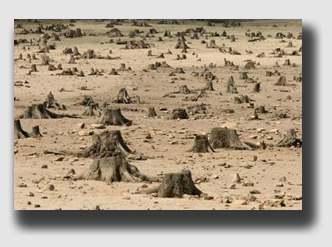
He soon found out. Acting as his own attorney, Dom had a fool for a client. He missed the deadline for pleading, and he couldn’t figure out that the judge was throwing him a life ring when he suggested Dom work something out with the plaintiff’s attorney. When Dom did not, the court entered a default against him. When the judge ruled that the tree damage was about $12,000, Dom thought that maybe having a mouthpiece wasn’t such a bad idea.

The new solicitor asked the court to set aside the judgment because Dom thought his brother’s lawyer was his lawyer, too. Horse-puckey, the Court said. Then Dom said he and his brother hadn’t cut the trees down willfully, meaning that treble damages could not be assessed under state law. The Court had to balance justice and judicial efficiency, fairness, and the public interest in finality. Dom had had his chance to argue that he hadn’t deliberately chopped down the trees. He sat on his rights.

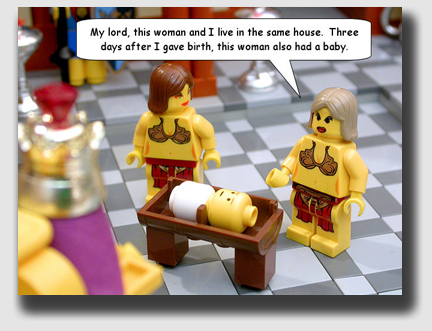
The judge may have been no Solomon, but he did all right: he decided that justice demanded that Dominick not be hammered with treble damages — which, after all, are punitive in nature — without a chance to be heard. So the court told the plaintiff he could take the $12,000 and run, or the Court would decide the treble damage issue on the merits.

The judge was not Solomon, and he kept the swords out of the courtroom - but he brokered a balanced, efficient and fair result.

     The judge was not Solomon, and he kept the swords out of the courtroom – but he brokered a balanced, efficient, and fair result.

Still, Dominick would have done a lot better if he had hired counsel at the outset.

Bontempo v. Cristino, 2007 Mass. Super. LEXIS 407, 2007 WL 3014707 (Mass.Super., Sept. 6, 2007).  Bontempo sued the Cristino brothers for the harm caused when Dominick Cristino cut down three trees located on the Bontempo property without permission.

One brother settled, but Dominick Cristino did not bother to defend the action. A default judgment was entered against him, despite the fact he was in court when it occurred. He declined the court’s invitation to talk to the plaintiffs to settle and offered no reason why a judgment should not enter against him.

At a damages hearing, Noel Bontempo and Dominick Cristino both testified. An expert estimated the replacement cost of the silver maple that had been cut down at $30,000 and two other elms at $7,000 each. The court determined that damages in the amount of $12,000 should be awarded against Dominick Cristino.

After the hearing, Dominick Cristino hired a lawyer and moved to set aside the default on the grounds that Dominick Cristino was misled into thinking that the law firm representing his brother also represented him. Also, Dominick and his brother Antonio filed affidavits that maintained they acted on the mistaken but good-faith belief, that the trees in question were located on their land.

chop150416Held: The default judgment would stand because Dominick Cristino had admitted that he cut down trees on Bontempo’s land without license in violation of Massachusetts G.L. Chapter 242, §7. What was in dispute, according to Dominick Cristino, was whether he acted willfully. If he did, the Court held, he would be liable to the owner for three times the amount of the damages assessed. The Court held that the interests of justice required that Bontempo should be given the opportunity to offer evidence in rebuttal to Dominick’s affidavit, and then the Court would decide the issue of willfulness on the merits, that is, whether the damages should be trebled or not.

If Bontempo was satisfied with the $12,000 award, the Court would uphold that and everyone could go home.  To Cristino’s relief, Bontempo took the deal.

– Tom Root

TNLBGray140407

Case of the Day – Monday, April 7, 2025

STAKING A CLAIM

We’re rather hesitant to wander into the political morass.  But back when President Trump was merely Candidate Trump, he told CNBC that he was the “king of debt.”   “I love debt,” he said.   “I love playing with it.”

He sure proved that. The debt went up 40% in four years, from $19.9 to $27.6 trillion. And in four years, President Biden increased it by another $7.4 trillion. Lucky that the government loves debt, because there sure is plenty of it to love.

But we’re not here to criticize any President. Instead, we merely wonder what do you do when you play with debt?  If you’re the government, “playing” means spending it.   Indeed, the wisdom and prescience of the government are so awe-inspiring that we should be giving all of our extra money to our needy Washington, D.C., uncle, to our cousins in the state capital, or even the folks downtown

What? You question whether the government spends our dollars wisely? “Like what thoughtful investments will the government make? Well, how about all those spindly trees that cities and towns plant by the hundreds, pathetic things supported by one or more posts and guy wires, standing on tree lawns and in medians with not much more than a pathetic possibility that they might someday be majestic shade trees?  We bet the Donald could make a great deal on buying some of those (if they’re grown in America, of course).

Guyedtrees

Well, maybe those aren’t the best investment. Take what happened in Kenner, Louisiana, one day. One of these staked and wired sentinels fell in high winds, and the City of Kenner, Louisiana, sent one of its crews to repair it. They replanted it in the same hole and rewired it with the same guy wires — hardly a prescription for a tree with a future. But what a prudent use of existing resources!

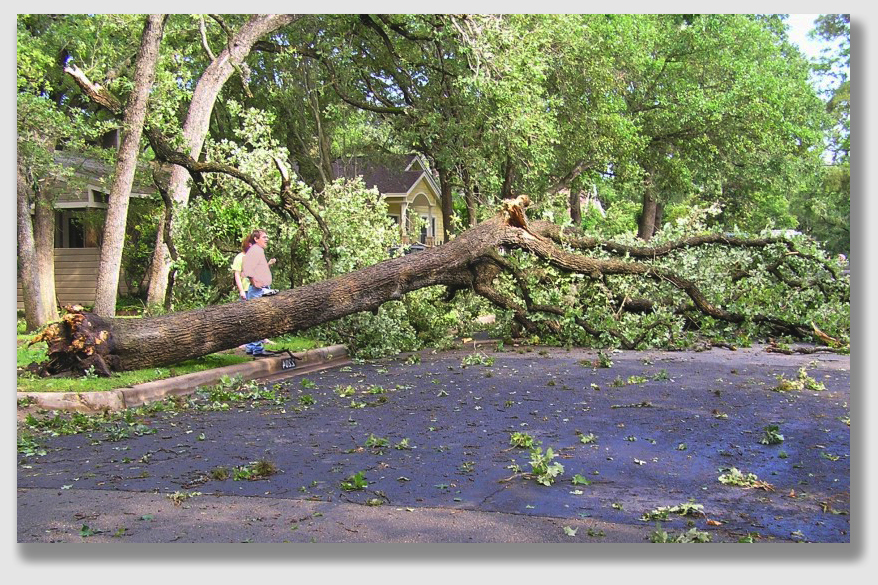
Maybe not this time. As it turned out, the tree’s future after replanting could have been measured on a stopwatch. Within hours, it fell again in some more high winds, this time squarely onto Mrs. Sampedro’s car.

You’d think the Sampedros would have cheered the frugality of the City. They did not. Instead, the Sampedros sued, claiming that the City had negligently placed guy wires on the tree, and that anyway, the City should be strictly liable whenever one of its trees falls. The trial court granted summary judgment for the City.

Strict liability is a great thing for a plaintiff. He or she is generally relieved from proving any more than that something injured him or her, and that the defendant owned or controlled it. Negligence is irrelevant. But in 1995, the Louisiana legislature gutted strict liability where a municipality was a defendant. Even in strict liability cases, the lawmakers said, the plaintiff had to prove that the municipality had notice of the defect.

The Court here ruled that it didn’t matter that the Sampedros had an expert who testified that the guy wires should have been placed differently. There were no published guidelines on how to guy a tree, and anyway, the City had planted hundreds of trees in the year before the accident, with only about a dozen of them falling. That’s about a 4% failure rate for those math whizzes among us. Not bad: imagine if the airline industry only had 2,000 crashes per day out of its 49,000 flights.

But the numbers seemed right to the Court. High winds had knocked over the tree, it said, not bad guy wires. Of course, this begs the question of why guy wires were there to begin with, if not to keep trees from falling in high winds. But Mrs. Sampedro had to repair her own car. The City was not liable.

Sampedro v. City of Kenner, 989 So.2d 111 (La.App. 5 Cir., 2008). Rosa Sampedro was driving past the intersection of Williams Boulevard and Granada Street when a tall, slender oak tree fell into the path of her vehicle. Mrs. Sampedro, who was wearing her seat belt, braked quickly and struck her knees on the dashboard of her vehicle. The tree damaged her vehicle but no other vehicles were involved. A police officer said he thought that high winds caused the tree to fall. The Sampedros sued the City of Kenner and its insurer.

Stake1

Trial testimony showed that the day before the accident, a driver lost control of his pickup truck at the same intersection and knocked down the oak tree in question. The next day, a maintenance crew from Kenner’s Department of Public Works re-planted the tree, securing it with guy wires on three sides as it had been prior to the accident. The Public Works crew used the same guy wires attached to the tree and placed them close to the base so as not to interfere with the mowing of the grass on the median. A witness from the city admitted the alternative would have been to put the guy wires farther out and instruct the mowers to be careful. The Public Works Department had planted 200 to 300 trees in Kenner in the prior year, and the department had received about a dozen complaints of leaning or fallen trees since that time. It had never received a complaint regarding the tree in question.

The court found for the City, concluding it did not have notice of a defect before the accident so it was not strictly liable for Mrs. Sampedro’s damages. Even if it had been put on notice, the City was not negligent under for the placement of the tree in question. The Sampedros appealed.

Held: The City was not liable. Louisiana law provided two theories under which the City might be held liable for damages: negligence under Louisiana Civil Code § 2315 and strict liability under Civil Code § 2317. Under strict liability, a plaintiff was relieved of proving that the owner of a thing that caused damage knew or should have known of the risk involved. In 1985, however, the Louisiana Legislature eviscerated this distinction in claims against public entities by requiring proof of actual notice of the defect that causes damage, thus making the burden of proof the same under either theory.

The Sampedros argued the City of Kenner was negligent because of its “want of skill” in replanting the tree that had been struck by a car the previous night. They claimed the City was negligent because the Public Works Department improperly erected the tree by placing the guy wires too near the base of the tree and too low on the trunk of the tree. They presented an affidavit from a horticulturist stating that the City “improperly tied the guy wires too low on the trunk to provide adequate stability.” The record, however, contained no guidelines for guy-wire placement that were not followed by the City of Kenner or procedures that were lacking in its installation of trees. By 2003, the City had planted between 200 and 300 trees since 2000 in the same manner as the tree in question under the direction of a landscape architect and had received only a dozen complaints of leaning or falling trees.

Sometimes, the trees fall even when they're staked and guyed in place ... like this poor thing, which toppled after a careering drunk hit it.

Sometimes, the trees fall even when they’re staked and guyed in place … like this poor thing, which toppled after a careering drunk in a pickup truck drove over it.

The Court ruled that the Sampedros had not met their burden by merely arguing that the placement of the guy wires was improper, causing the tree to fall over in high winds.

As for the Sampedros’ claim that the City was strictly liable for their damages because it knew of the defective guy wires and failed to correct the defect, the Court ruled that the complaint was foreclosed by law. Under the 1995 amendment to Louisiana’s Civil Code, “no person shall have a cause of action against the public entity for damages caused by a condition under its control absent a showing of actual or constructive notice of the particular condition and a reasonable opportunity to remedy the defective condition.”

The Sampedros had to establish that the thing that caused the damage was in the custody of the defendant, that it was defective, and that the defendant had actual or constructive notice of the defect and failed to take corrective measures within a reasonable time. The law defines constructive notice as the “existence of facts which infer actual knowledge.”- The Sampedros contended that the City of Kenner was aware that the tree had been knocked down the night before this accident so it was aware that “the defective guy wire locations … had failed the night before the accident.” The Court didn’t buy it. The record supported the theory that the tree fell because of high winds the night before. The fact that a tree was knocked down and then re-planted “securely” did not constitute constructive notice of a defect in the guy wire or the tree’s placement.

– Tom Root

TNLBGray140407

Case of the Day – Friday, April 4, 2025

VIRTUAL TRESPASS

More today from the annals of good neighboring. Out in Washington State, where some mighty big trees grow, the Herrings shared a boundary tree with their next-door neighbors, Jose and Blanca Pelayo.

What do we know about boundary trees, trees that grow with part of the base in each of two or more properties? First and most important, states generally hold that the trees are owned by all of the property owners as a tenancy in common. For the purpose of tree ownership, “tenancy in common” is a fancy way of saying that no one owner may do anything to the tree without the permission of all of the owners.

In 2011, the Herrings trimmed some of the branches from the boundary tree, branches that were overhanging their property. They did not ask permission of the Pelayos before they did so.

That, of course, was so wrong. But rather than suing the Herrings – the Pelayos may have considered their response restrained on this point – Jose and Blanca decided to go tit for tat. They called their own arborist to look at the tree. He told them the tree seemed unbalanced and dangerous with the branches on the Herring side removed. He suggested a few options, including cutting all of the remaining branches off. Amazingly, the Pelayos thought that sounded like a good idea.

Just as had the Herrings, the Pelayos did not discuss their plans with the neighbors. After the arborist left what was essentially a very dead telephone pole standing on the boundary line, the Herrings (with no sense of irony) sued the Pelayos for trespass to trees, asking for treble damages under state law for wrongful cutting. The trial court found the Pelayos liable, awarding $10,475 to the Herrings.

On appeal, the Pelayos argued that they could not have possibly trespassed in cutting the tree, because they had never stepped off their own property when they butchered the tree, and anyway, under the Massachusetts Rule, they had every right to trim branches that were overhanging the property. They also argued they could not be liable for treble damages, because the trial court had not made a finding that the cutting was willful.

The appeals court made short work of the Pelayos’ arguments. Yes, the court said, you can trespass on timber without necessarily trespassing on the underlying land (I guess that’s virtual trespassing). No, the Massachusetts Rule does not let you cut overhanging branches from a boundary tree in which you have an ownership interest. And no, the trial court does not have to make a willfulness finding unless you have argued that the cutting was casual and involuntary. No one contended the cutting had not been willful.

There is a certain irony that the Herrings had done exactly what the Pelayos had done, except for merely mauling the tree rather than killing it. But the Pelayos apparently figured they could get even simply by replicating the Herrings’ bad conduct. The law does not work that way.

Herring v. Pelayo, 198 Wn. App. 828, 397 P.3d 125 (Ct. App. Washington, May 2, 2017). The Herrings and Pelayos are neighbors who share a common property line. In early December 2011, the Herrings hired a tree trimmer to remove some branches from a tree located on the common property line. The Herrings did not discuss their plan to remove branches from the tree with the Pelayos. The Pelayos thought the trimming done by the Herrings unbalanced the tree, constituting a danger to their home. So four weeks later, the Pelayos’ own tree trimmer removed all of the remaining branches, without first discussing their plan with the Herrings. The tree obligingly died.

The Herrings sued the Pelayos, claiming timber trespass in violation of RCW 64.12.030 or RCW 4.24.630. At trial, Jose Pelayo admitted he knew the tree was on the common property line, he told his tree trimmer to remove all of the remaining branches from the tree, he did not discuss his plan with the Herrings, the tree was alive prior to the removal of the remaining branches, and he figured that removing the remaining branches would kill the tree.

The trial court found the Pelayos liable for timber trespass under RCW 64.12.030 and awarded treble damages.

The Pelayos appealed.

Held: The Pelayos committed timber trespass. Although the Pelayos argued the trial court never specifically found their conduct to be willful, the court noted that Jose’s testimony “was tantamount to a concession that his conduct in removing the branches was willful, and there was no other evidence presented at trial from which the trial court could infer that this conduct was casual or involuntary. Therefore, no specific finding as to willfulness was required to conclude that the Pelayos were liable under RCW 64.12.030.”

The Pelayos also argued they couldn’t be liable for trespass “because they were lawfully authorized to remove branches from the boundary tree that were overhanging their property.” The Court agreed a landowner has the authority to “engage in self-help and trim the branches and roots of a neighbor’s tree that encroach onto his or her property.” A landowner does not, however, have the right to cut down an encroaching tree.

The Court held that the right of self-help, derived from the Massachusetts Rule, does not apply where the landowner using self-help owns an interest in the tree because the portions of the tree overhanging his or her property cannot be said to be “encroaching.” You simply cannot encroach upon yourself.

What’s more, the Court said, as tenants in common, the Pelayos and Herrings were each entitled to use, maintain, and possess the boundary tree, but not in a manner that “interfered with the coequal rights of the other cotenants.” Unlike a landowner engaging in self-help to trim branches overhanging his or her property from a tree situated entirely on the property of another, a cotenant to a boundary tree has a duty not to destroy the common property and thereby interfere with the rights of the other cotenants.

The Court said, “We discern no meaningful distinction between cutting down a tree and trimming a tree in a manner intended to kill the tree.”

The Pelayos argued that because they cut the tree branches while standing on their property, they had probable cause to believe that they owned the land where such conduct took place. Their argument was based on the mistaken belief that the trebling provisions of RCW 64.12.030 don’t apply when the defendant’s conduct resulting in the destruction of a tree occurs while the defendant is on his or her own property. The Court held that even if the conduct resulting in the tree’s death occurred solely on the Pelayos’ own property, the trial court would not be required to conclude that mitigating circumstances applied to reduce the damages award. Instead, when determining whether mitigating circumstances applied, the relevant inquiry for the trial court was whether the Pelayos proved that their trespass on the common property tree was casual or involuntary.

At trial, the Pelayos did not claim, let alone prove, that the trespass upon the tree was casual or involuntary. Thus, they were liable for treble damages.

– Tom Root

TNLBGray140407

Case of the Day – Thursday, April 3, 2025

WON’T YOU BE MY NEIGHBOR?

Even the late and beloved Fred Rogers could have had problems with this.

Follow along, because there will be a quiz: The Does lived next to the Roes for years and years. Then, the Does moved, and the Smiths moved in. The Roes moved and the Joneses moved in. The Smiths sell to the Johnsons, and the Joneses sell to the Browns.

And all this time, there was a nice old hedgerow between the two houses, and the neighbors jointly and lovingly maintained it. A couple of stately elms stood on the Roes’ side of the hedge, and they raked under them, had them trimmed, and mulched around their bases.

After 30 or 40 years passed, the Johnsons sold to Alice Avarice. The first thing she did was have the property surveyed. Lo and behold, the hedgerow was not the boundary between the properties. Instead, the line was 10 yards to the other side, meaning that the two elm trees had never belonged to the Roes and their successors, but always to the Does and their successors.

Something just doesn’t seem, well, very fair about the whole thing. “The law’s the law,” Alice cackled as she erected the chain-link fence along the new property line.

Of course, it is, which is the whole point of this blog. But exactly what does the law say about Alice’s claim?

Welcome, Alice, to the doctrine of “acquiescence.” The Does acquiesced to the Roes caring for everything on the other side of the hedgerow, and the Roes acquiesced to doing so. The subsequent owners did as well, for 50-plus years, until Alice came along and riled everyone up. Under the doctrine of acquiescence, the boundary line became what the parties had always considered it to be.

Where’s Fred Rogers when you need him? Rest in peace, you very good man.

Guthrie v. Jones, 780 N.W.2d 248 (Court of Appeals, Iowa, 2010). The Guthries’ property abutted land owned by Jones. A line of shrubs and trees ran along one side of the adjacent properties, and the Guthries had always believed that the tree line marked the property boundary.

It didn’t. Instead, a 2007 survey by neighbor Jones showed the property line to be 10 feet to the west of the line of shrubs and trees.

The Guthries had gotten used to thinking they had 10 feet more room in the side yard than they really did, so they brought suit, arguing that under Chapter 650 of the Iowa Code, the shrub and tree line – not the surveyed line – should establish the actual boundary. The Guthries argued that the Joneses had agreed to the property line being marked by the trees, an argument known as “acquiescence.”

The trial court found that the boundary line between the two properties was established by the survey because the Guthries did not prove the Joneses’ acquiescence.

Held: The appellate court affirmed the trial court. Iowa law governing boundaries by acquiescence holds that “a boundary line may be established by a showing that the two adjoining landowners or their predecessors in title have recognized and acquiesced in a boundary line for a period of ten years.” The owners’ recognition may be evidenced by conduct or by claims asserted by the parties, but it must be by both parties. The acquiescence by both parties is a condition precedent for proving the existence of a boundary by acquiescence.

The party seeking to establish a boundary line that deviates from the surveyed boundary line must prove acquiescence by clear evidence. This is a higher standard than the usual civil standard of proof, which is “preponderance of the evidence” (which means, essentially, by a majority of the evidence).

In this case, the appellate court agreed with the trial court that Jones did not consent to the shrub and tree boundary line for the required 10-year period. The Guthries purchased their lot in 1979. At that time, the seller placed metal pins in the ground to mark the boundary line. Subsequently, the Guthries used the pins as a guide for mowing. Jones did not object to the use of the land “close to, if not over the surveyed boundary line.” However, the court reasoned that this failure to object constituted nothing more than a neighborly gesture, and fell far short of showing Mr. Jones’ consent to a new boundary line.

At trial, Mr. Jones asserted that he had maintained the area in question since 1989 and did not recognize the shrub and tree line as the true boundary. The Guthries didn’t have sufficient evidence to disprove this. Thus, the Guthries failed to prove their claim for acquiescence.

– Tom Root

TNLBGray140407

Case of the Day – Wednesday, April 2, 2025

KIDS WILL BE KIDS

The grass is greening up, and the neighbor boys are ramming around on their new electric scooters, cutting across very soft lawns and leaving furrows.  Now I understand why my father – who would be turning 102 tomorrow (happy birthday, Dad… I miss you) – yelled at the neighbor boy when his Schwinn strayed off the lawn.

I try not to complain. Kids being kids everywhere is the point of today’s case. They are not great respecters of property lines, they tend toward recklessness, and they’re doggone fast. It’s a prescription for disaster. What duties do property owners owe the little ankle-biters?

The Cotes were nice neighbors. They let little Chuckie Herrington cut across their yard on his bike because there was no sidewalk. They did not extend their invitation to the kid to ride his bike in their driveway, but he was a kid, and we know how kids are. He did anyway. Racing down the drive into the street, the reckless rugrat ran into the side of the Cotes’ car, being driven by Jennifer Cotes at the time.

Ouch. The boy was hurt. His parents responded in the usual American fashion: they sued the Cotes for not trimming their shrubs so that Chuckie could see where he was going.

Herrington v. Cote, 2007 Tex. App. LEXIS 2501, 2007 WL 926622 (Court of Appeals, Texas, Mar. 29, 2007). Charles Herrington, a minor child, was riding his bicycle on the Cotes’ property. As he rode out of the driveway and into the street, he hit the side of a car driven by Jennifer Morgan and was badly injured. His mother sued the Cotes, claiming that shrubs planted along their driveway from the garage to the edge of the street created a dangerous condition that obstructed her son’s ability to see oncoming traffic. The Cotes asked the trial court for summary judgment, claiming they did not owe a duty to Charles, did not breach any duty, or proximately cause the youth’s injuries. The trial court granted summary judgment in favor of the Cotes.

Held: The summary judgment was upheld. Herrington argued that her son Charles should have been considered a licensee on the Cotes’ property, and thus that the Cotes had a duty to warn of, or to make safe, the dangerous condition that they were aware that they had created by planting shrubs along their driveway. However, the Court of Appeals held that in a premises liability case, the duty owed is determined by the status of the complaining party at the time and place of the injury.

A licensee is a person who is privileged to enter or to remain on land only by virtue of the possessor’s consent, thus entering with the permission of the landowner, but doing so for his own convenience or on business for someone other than the owner. The duty owed a licensee is not to injure him willfully, wantonly, or through gross negligence and, in cases in which the owner or occupier has actual knowledge of a dangerous condition unknown to the licensee, to warn of or to make safe the dangerous condition. The issue, the Court said, was whether Herrington presented summary judgment proof sufficient to raise a fact issue as to whether the Cotes knew of a dangerous condition that Charles did not know of, but failed to warn him of it or to make the condition safe. A dangerous condition is one that creates a substantial risk of injury when the property is used with due care in a manner in which it is reasonably foreseeable that it will be used.

Here, Herrington was obligated to provide some evidence showing that it was reasonably foreseeable that the Cotes’ driveway would be used by a child riding a bicycle so that the shrubs on the side of their driveway would become a dangerous condition. Herrington showed the Cotes had given Charles permission to walk across their yard because of the absence of sidewalks, but the Court ruled that this evidence did not suggest that the Cotes should have reasonably foreseen that Charles would ride his bicycle in their driveway.

Herrington argued that the Cotes should have known that planting the shrubs created an unreasonable risk of danger because an owner or occupant of premises abutting a highway has a duty to exercise reasonable care not to jeopardize or to endanger the safety of persons using the highway as a means of passage or travel, but the Court observed that Charles was not a traveler on the highway and the Cotes did not know or have reason to know that the shrubs created a dangerous condition for a child riding a bicycle on their driveway.

Thus, Herrington had failed to show that the Cotes owed a duty to her son, and no premises liability could attach.

– Tom Root

TNLBGray140407

Case of the Day – Tuesday, April 1, 2025

EXTREME SPORTS

bikecrash141015Young Michael Rivera and his buddies were riding their bicycles around when one of them decided to cut off the sidewalk onto what could charitably be called a “beaten path” through some woods in the large Glen Oaks Village residential cooperative. Young Mike was said to be an experienced rider, but this young BMX’er was no match for the big hole in the trail. He fell and was injured. Then, like any true American, he sued.

That’s when the extreme lawyering commenced. The co-op argued that it was protected by the New York recreational user statute, because bicycling was one of the activities specifically mentioned in the law, and the trial was suitable as a bike trail. Not so, young Mikey’s mouthpiece claimed. The trail was just a path in the middle of a large residential community not designed for cycling.

The trial court, perhaps sympathetic to the young man’s crash found New York’s recreational user statute didn’t apply. But in an impressive piece of circular reasoning, the Appellate Division said that the trail was suitable for bicycling chiefly because Mike and his buds were biking on it and other people had, too.

This reminds me somewhat of my mother asking me whether I’d jump off a cliff just because the ornery neighbor kid, Rick, did, too. (The real answer, of course, was “probably,” but I knew better than to interrupt Mom when she was on a roll). Anyway, shaky reasoning or not, the Appellate Division did justice to the intent of the recreational use statute: to protect landowners from liability when they make unimproved land available for the use of, as the Court put it, “recreationists.” The dictionary says it’s a good word, and the outcome in this case is probably a good result.

Rivera v. Glen Oaks Village Owners, Inc., 41 A.D.3d 817, 839 N.Y.S.2d 183, 2007 N.Y. Slip Op. 05718 (N.Y.A.D., 2007). Mike Rivera and two of his friends went bicycling on a dirt trail located in a two-acre wooded area, which was part of a large residential cooperative community. The trail was 500 feet long and 10 feet wide, and “bumpy.” After traveling about 30 to 40 feet on the trail, Mike came upon a 2′ x 3’ hole in the ground. He was unable to avoid the obstacle, and his front wheel went into the hole, causing him to be thrown over the bicycle’s handlebars. He only saw the hole “maybe a second” before he fell into it. As a result of his fall, Mike was injured.

His family sued the owner of Glen Oaks Village Owners, Inc., the residential cooperative community, to recover damages. The trial court denied Glen Oaks’ motion for summary judgment, which it argued on the basis that the New York recreational use statute applied and that the youth had assumed the risk of injury. Glen Oaks appealed.

bikecrashb141015Held: The case was reversed. The appellate court found that New York’s General Obligations Law §9-103, commonly known as the recreational use statute, applied to this case. The Court said that the sole purpose of the statute was to induce property owners – who might otherwise be reluctant to do so for fear of liability – to permit persons to come on their property to pursue specified activities. In return for opening up their lands for public use, property owners are provided immunity from liability. The statute applies whenever a user engages in one of the activities identified in the statute, and he or she is recreating on land suitable for that activity. The requirement that property be physically conducive to a particular recreational activity — for purposes of determining whether a landowner is protected by the statute against claims of ordinary negligence — is satisfied when the property is the type that is not only physically conducive to a particular activity or sport but is also a type which would be appropriate for public use in pursuing the activity as recreation.

The Court ruled that this so-called suitability test was a question of statutory interpretation and, therefore, a question of law for the court. The Court said that a substantial indicator that the property is physically conducive to a particular recreational activity is whether recreationists have used the property for that activity in the past. Such past use by participants in the sport manifests the fact that the property is physically conducive to it. Here, the recreational use statute applied to Mikey’s bicycle riding on a dirt trail in a large residential cooperative community because bicycling was an activity included in the statute, and the trail was physically conducive to bicycling.

Young Michael’s use of the dirt trail — as well as the use of it by his friends — and the physical characteristics of the trial, established that it was physically conducive for bicycling, the Court said. In other words, its suitability for use was judged by the use to which it was put (as circular as that reasoning may seem).

The Court rejected Mike’s claim that the fact that the trail was in the middle of a large private residential cooperative community rendered it unsuitable for bicycling. It held instead that the recreational use statute should be applied liberally to public and private land, to rural or urban property, whether developed or undeveloped.

– Tom Root
TNLBGray140407

Case of the Day – Monday, March 31, 2025

NEIGHBORS BEHAVING BADLY

There aren’t any winners in today’s neighbor-aggravating-neighbor case, one that had its genesis in one neighbor deciding that encroaching tree branches meant he could hack the trees – which stood on his neighbor’s land – back to mere stumps.

Things fell apart from there. The neighbors alleged two more atrocities in the ensuing year, and they blamed the tree hacker, because… well, why not? The Court, I think, was all too credulous, partly because the tree-cutter was not a native English speaker and was too easily dismissed for that reason.

I suspect that because the all-too-clear video of one altercation has Craig, who portrayed himself as the victim to the court, calling Mr. Cheung things – such as “f—face” – that would have gotten Craig’s teeth relocated in any midwestern bar. And he told Mr. Cheung that he was under arrest, a claim that I would have found amusing. But then, I have three years of law school and many more of law practice behind me. Mr. Cheung is an immigrant, and may well come from a place where arbitrary arrest is the rule rather than the exception.

Old Craig did not seem terribly rattled by Mr. Cheung’s alleged threat to kill him, and as a threat – if that’s what it was – it was dishwater-weak.

The wily Confederate raider (whose conduct in other quarters, I hasten to add, was abhorrent and who has not yet been rehabilitated by the current Administration), General Nathan Bedford Forest, is widely credited with saying that his guiding tactical principle is “getting there firstest with the mostest.” That’s what Craig and his wife did here, it seems, got to court first with a double-barreled assault that the neophyte Hogan Cheung was helpless to fend off.

Still, had Hogan only been a faithful treeandneighborlawblog reader, he would have been well aware of the Massachusetts Rule, and only cut the offending branches to the fence line. And all of the ensuing unpleasantness could have been avoided.

Stolarczyk v. Cheung, 2019 Cal. App. Unpub. LEXIS 2271 (Ct.App. 1st Dist., March 28, 2019). Craig and Shana Stolarczyk and their two young children live on a property that adjoins the parcel on which Hogan Cheung, his wife, two small children, and mother-in-law live in San Mateo. A fence that runs between the Stolarczyks’ backyard and Cheung’s side yard.

The Stolarczyks complained that Hogan Cheung had cut down two trees on their side of the fence a few years ago. Matters escalated from there into general ugliness. At one point, Craig and Shana said, someone dumped gasoline on their backyard, with a dribble that seemed to run from the dump location to the fence. Hogan denied having done so.

Craig’s and Shana’s landlord lived next door. Being aware of the problems, he installed a security camera on his own property that took in the Stolarczyks’ and Cheungs’ backyards. The camera recorded, among other things, a verbal altercation between Craig and Hogan over the camera installation. Craig taunted Hogan with obscenities. Hogan asked Craig to take the camera down. When Craig refused, Hogan covered the camera lens. Craig then told Hogan he was under arrest followed by the same vile epithet first used to address him. Hogan asked Craig if he was threatening him. Craig again told Hogan that he was under arrest, and Hogan responded, “That’s fine, thank you. And I will always come back for you.”

Craig asked Hogan if he ‘want[ed] to do something?” Hogan said, “I already did something.” Craig accused Hogan of pouring gasoline on his yard, to which Hogan replied, “No one put gas, you put your gas and you[‘re] blaming it on people.” Craig asked Hogan if he “want[ed] to settle it,” to which Hogan responded, “You don’t need to settle it, you’re dead.” Laughing, Craig told Hogan he was going to call the police because he was just threatened.

Hogan admitted he cut down overgrown trees planted in the Stolarczyks’ backyard in March 2016. Prior to cutting the trees, Hogan twice requested the Stolarczyks’ landlord manage the trees to no avail. According to Hogan, the trees grew fast, crossed the fence by three feet to four feet, and left limbs over his house and satellite dish. In addition, noise from the trees swaying in the wind and scraping and rubbing against the walls of his house made it difficult to sleep. Hogan stated he did not cut down the trees completely, only the portions rubbing against his house that were overgrown.

Hogan denied pouring gasoline in the Stolarczyks’ yard, and he said he placed tape over the camera lens because his wife was afraid, seeing the camera as “a really bad invasion looking into my house in the bathroom[], whatever [his wife] was doing.” He acknowledged he called the police about the camera before he taped over it and that an officer told him not to touch it. Prior to covering it, he also asked the Stolarczyks to take it down but they threatened and cursed him. Addressing the “you’re dead” statement he made to Craig, Hogan explained that Craig and his companion were cursing and provoking him, that his English was not “too good,” and he did not know what to say. He said his comment was not a threat but his way to end the conversation and signal he no longer wanted to talk. Hogan denied ever threatening to kill Craig.

In 2016, the Stolarczyks suspected herbicide was dumped over the fence into their yard, and in July 2017, Craig was overwhelmed by the smell of gasoline in his backyard. He said he smelled gas in the soil all along the fence line and observed discolored and foul-smelling mulch. The fire department confirmed the presence of a gasoline odor and doused the area with water.

The Stolarczyks filed a petition for a civil harassment restraining order against Hogan Cheung the next month.

The trial court acknowledged Hogan’s right to reasonably trim a neighbor’s trees that cross into his property but held he was not entitled to simply cut off the foliage to a point below the fence line. The court also noted the ongoing and escalating nature of the dispute and found Hogan Cheung to be “not the most believable witness” ever to appear in court. The court found his explanation that he did not understand what he was saying on the video to be “ludicrous” and did not see him as a victim in any way. Based on the video, the court found Hogan was self-confident and assertive when he taped over the camera, which the court said the property owner had every right to place on his property. Nothing suggested the camera was positioned to film the interior of Hogan Cheung’s home. With respect to the chemicals on their property, the court found it was “a reasonable inference to draw that someone else is responsible for that and I think that [the Stolarczyks’] concerns are legitimate that [Hogan Cheung was] responsible for that… I think without question, it has been sufficiently proven that Mr. Cheung damaged their property. He vandalized their property. There is a reasonable inference to be drawn, and it’s for that issue I am still going to issue a restraining order.”

The order required Hogan Cheung to stay five yards away from the Stolarczyks and to refrain from harassing or contacting them, or destroying their personal property. Mr. Cheung appeals.

Held: The restraining order was upheld.

Under Section 527.6 of the California Code of Civil Practice, a person who has suffered harassment… may seek a temporary restraining order and an order after hearing prohibiting harassment.” Harassment is “a knowing and willful course of conduct directed at a specific person that seriously alarms, annoys, or harasses the person, and that serves no legitimate purpose. The course of conduct must be that as would cause a reasonable person to suffer substantial emotional distress, and must actually cause substantial emotional distress to the petitioner.”

Hogan Cheung argued the court erred in granting the restraining order because the Stolarczyks failed to establish several of the required elements of Section 527.6 by clear and convincing evidence. In particular, he contends that the Stolarczyks failed to prove his conduct served no legitimate purposes, caused them substantial emotional distress, or posed any risk of future harm.

The Court of Appeals rejected his argument. “We find no merit to Cheung’s broad contention that his version of what happened was ‘equally likely’ as the Stolarczyks’ and did not amount to harassment.” Hogan claimed the Stolarczyks failed to prove his acts served no legitimate purpose: he said his trimming trees encroaching on his property and covering a surveillance camera directed towards his house were lawful acts with legitimate purposes. But Hogan Cheung cut the trees below the fence line, and not just those portions extending into his property. Also, the video camera was neither located on the Cheung property “nor trained on the inner sanctum of Cheung’s house.” It hardly helped Hogan’s case that he admitted that he was told by police not to touch the camera but did so anyway. “All of this evidence,” the Court said, “supports an implied finding that Cheung’s acts served no legitimate purpose.”

Hogan also claimed his conduct did not cause the Stolarczyks substantial emotional distress. In fact, the trial court rebuked Craig for behaving badly, describing his behavior in the video as “antagonistic and sarcastic and profane.” Nonetheless, the appellate court said, the petition for a restraining order was not filed solely based upon the camera incident nor was Craig the sole petitioner. Despite Craig’s laughter and the potty-mouthed taunting that he displayed that evening, the Court ruled that the “trial court could reasonably infer that both Craig and Shana suffered substantial emotional distress from having their trees chopped down and the debris left in their yard, and from having chemicals poured into their backyard where their small children play.”

The record likewise permitted the finding of likely future harm, supporting “the conclusion that a restraining order was necessary to prevent bad acts from continuing into the future. Cheung initially chopped down the Stolarczyks’ trees in March 2016; the Stolarczyks smelled gasoline along their fence line in July 2017; the altercation over the camera occurred in August 2017; and by the time of the hearing in September 2017, the trees had regrown to twice the height of the fence.” The dispute had not resolved itself in over a year, and the trees were growing large again. “Because we’re talking about trees that were cut in 2016, and Mr. Cheung still, it would appear, has issues with the fact that these trees are on his neighbor’s property and continue to grow and grow tall,” the Court said, the record supported a finding of threat of future harm.

– Tom Root

TNLBGray140407