


A newly confirmed outbreak of a lethal tree disease in southeastern North Dakota has forestry officials assessing the threat to the state’s windbreaks and shelterbelts. The arrival of pine wilt disease in Ransom and Sargent counties marks the first time the pathogen has been officially confirmed in the state, and experts warn that rising temperatures could help the disease march steadily northward. The discovery of the disease in North Dakota began with a phone call. “We got a sick tree assistance call from somebody down in Forman. They were saying that their Scotch pines were dying,” said Martin Shervey, forest health manager with the North Dakota Forest Service. Because it was too early in the spring to take viable samples, forestry staff scheduled a follow-up visit later in the season. Shortly after, a Forest Service staff member noticed similarly declining trees in the Sheyenne River State Forest. Samples from both locations were sent to the South Dakota State University plant pathology lab, which confirmed the presence of the disease on August 11, 2026. Pine wilt disease is caused by the pine wilt nematode, a microscopic roundworm. Rather than moving on its own, the nematode relies on native sawyer beetles to travel from tree to tree…
Bakersfield, California, KGET-TV, August 17, 2026: 80% of tree planting in Bakersfield to be in underserved areas: report
Following calls from the community and city leaders for more trees in Bakersfield, the Tree Advisory Group is looking to increase tree planting and urban canopy across the city. The Bakersfield Recreation and Parks Department presented updates on the city’s Tree Advisory Group and its accomplishments and ongoing recommendations during the Safe and Healthy Neighborhoods Committee meeting on Friday. TAG’s goal is to create an urban forest through planting, care and preservation of trees, according to city officials. So far, TAG has recommended a list of trees to be used in public spaces, which was approved by the Recreation and Parks director in December 2025… Phys.org, August 17, 2026: How ancient trees are warning us about the next enormous solar storm
Our sun is capable of storms far bigger than we’ve ever recorded. Studying the world’s oldest trees suggests we could soon be due one of these gargantuan events. The first clear sign of exceptionally high solar activity came from Japanese cedar trees. In 2012, Fusa Miyake was studying slices of ancient Japanese cedar taken from a tree felled in the 1950s. It had grown on Yakushima Island, a protected site famed for its long-lived trees, some of which have stood for millennia, laying down one ring of wood after another. These tree rings aren’t just markers of age—they are also annual records of Earth’s atmosphere, and studying them could help us predict and prepare for future disruptive solar storms. While perusing these ancient tree records, Miyake stumbled upon something that gave her pause. The relative proportion of carbon-14 in each tree ring reveals how active the sun was each year…
Mongabay, August 17, 2026: Logging and the slow disappearance of Australia’s large old trees
Large old trees are among the most important structures in native forests, in Australia and around the world. They store disproportionately large amounts of carbon relative to small, young trees, and they provide the nesting and denning hollows that hundreds of animal species depend on. A single large old tree can take two or three centuries to grow. There is a persistent claim that logging does little or no lasting harm to these trees. It is worth examining what the evidence actually shows. I have studied populations of thousands of large old trees for more than four decades and published that work in the international peer-reviewed literature. I have also written a series of global reviews on large old trees and co-edited an international book on the subject – so the issue of logging effects on large old trees can be examined from data rather than assertion. Our long-term research has shown quite clearly that logged and regenerated forests have far fewer large old trees than places that have not been logged. There are several reasons for this – some obvious and some not so obvious. First, most trees are removed in a logging operation. Second, trees that are retained in logged areas are very exposed to increased windspeeds – the previous tree cover is not there to slow air movement. Third, the debris left on the forest floor after logging is burnt in a fire lit deliberately to help regenerate the forest…

Law enforcement has released the identity of an elderly man shot and killed by San Bernardino County sheriff’s deputies Friday after he opened fire on tree trimmers who’d been working near his home, county officials said. Paul Ronald Selby, 78, shot at tree trimmers that Southern California Edison had sent to prune vegetation outside his home in Mentone, a small hamlet between Redlands and Yucaipa in San Bernardino County, late Friday morning, according to the Sheriff’s Department. When deputies from the Yucaipa Sheriff’s Station responded about 10:50 a.m., Selby barricaded himself inside his house. The department then sent in crisis negotiators and a tactical team with armored vehicles to try to disarm him, officials said. “Over several hours, deputies made many public announcements directing Selby to exit the home, but he refused to comply,” the department said in a statement. Deputies eventually used chemical weapons to flush Selby’s wife out of the house, but Selby remained inside. The standoff ended around 2 p.m., when officials say Selby fired at deputies, who shot and killed him in response. “Medical personnel attempted lifesaving measures, but the suspect was pronounced deceased at the scene,” the department said in a statement. “No civilians or deputies were injured during the incident…”
As deer hunters start preparing for the season, the Wisconsin DNR is offering a few reminders. The biggest thing to avoid is placing deer stands in or near ash trees. Unfortunately, most ash trees in Wisconsin are dying from emerald ash borer, and infestations continue to worsen. The DNR says it’s also important to carefully place and maintain tree stands, as trees infested with the invasive bug could suddenly snap. DNR Forest Health Specialist says in many cases, “it can be hard to tell if a tree has been infested by emerald ash borer, so hunters should place deer stands in other types of trees instead.” Ash trees can be identified by looking for opposite branches, with two branches arising from the main stem directly opposite one another…

It was a brisk morning and some light smoke from nearby wildfires still hung in the air. I gathered my crew of tree planters and gave a quick safety briefing. From there, each planter worked in the section of land I’ve designated for them on that day. For most of my 12-hour shift, I rushed around from planter to planter, making sure everybody has tree seedlings to plant and that they are being planted in the correct place. Planters loaded their bags with 13 to 18 kilograms of these seedlings, working to plant a clearcut of spruce trees that was harvested a few months prior. That day, I got lucky and found time to plant some trees myself. I threw my shovel in to open a hole in the ground, planted the tree and moved on to the next. I imagined myself like an Olympic freestyle swimmer. Trying to make my movements fluid and natural, I pretended each strike of the shovel is another stroke in the water. I’ve been a tree planter all my adult life. Every summer, I, along with thousands of other individuals, congregate in remote pockets of the Canadian bush. Logging and fires remove vast swaths of Canada’s forests annually. These areas need to be replanted and we are the workforce paid to do so…
Chicago, Illinois, Tribune, August 16, 2026: Tree suckers may be signs of stress
Did you plant a shrub at the base of that tree? If not, you may be looking at a mass of suckers. Stems that sprout from the base of a tree’s trunk are called suckers, on the theory that they compete with the main tree for water and nutrients, according to Michael Jesiolowski, manager of the Plant Clinic at The Morton Arboretum in Lisle. The real problem — apart from their untidy, bushy appearance — is that they can be a sign of trouble. “Suckers are a way for a tree to produce more leaves so it can gather more sunlight,” he said. Often, a tree grows suckers in response to stress from pests, diseases, or damage, or to difficult conditions such as inadequate root space or insufficient water. “If part of a tree’s leafy canopy is dying back or damaged, the tree may try to grow more stems from its base to compensate,” Jesiolowski said. Suckers that grow in clusters from higher up on the trunk or along branches are called water sprouts and may also be a sign of stress…
 Reno, Nevada, KRXI-TV, August 3, 2026: Deputies seek tips and security video in tree poisoning case
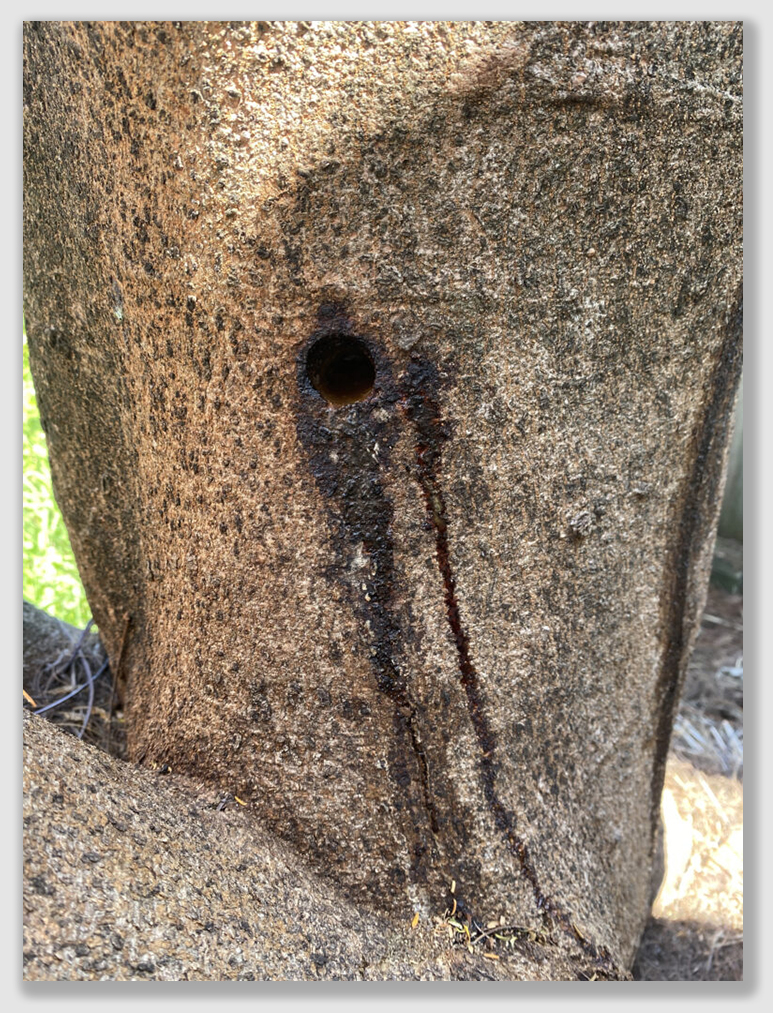
The Washoe County Sheriff’s Office is investigating a string of deliberate tree poisonings at Burnt Cedar Beach after multiple trees were recently found contaminated. Deputies first responded to the beach on July 24, after a strong odor was discovered near the base of a large pine tree. Soil samples collected from the scene carried a distinct smell consistent with previous tree-poisoning incidents reported at the property. Investigators returned to Burnt Cedar Beach on August 2 after additional trees were found with a suspicious substance poured around their bases. Authorities believe the most recent attack occurred between 11:30 a.m. on Saturday, August 1, and 5:00 a.m. on Sunday, August 2. A trail camera in the area captured a brief flash of light around 2:00 a.m. on August 2. Detectives are continuing to canvas the neighborhood for additional security video and evidence…
Elizabeth Linker of Hedges & Gardens is taking the lead on pitching the East Hampton Village Board on a law that would cut down on property owners felling aged trees during construction. This saga began last month, when Linker led a chorus that reacted sharply to the felling of a tree thought to be nearly 200 years old during the demolition of a house on Newtown Lane. Those opposed were left up in arms over what appeared to be the unnecessary destruction of a healthy tree and pointed to laws meant to protect trees in other municipalities, like North Haven and Sag Harbor. But when Linker was before the Village Board on July 31, she advocated for a stricter law than those found in neighboring municipalities, referencing specifically the tree legislation in Old Westbury, where cutting down specimen trees over 6 inches in diameter is regulated. The numbers for regulation have been — and remain — up in the air for East Hampton, as Linker has alternatively suggested mandating a permit to cut down trees over 10 inches in diameter…
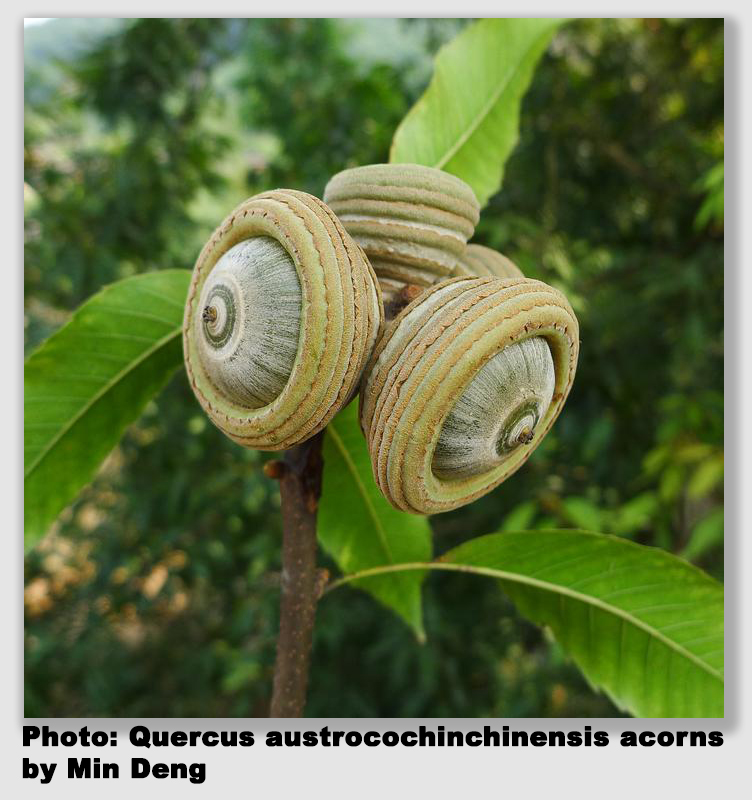
Many threatened or understudied oak tree species are at risk of extinction in Southeast and East Asia, where more than half of their native range is subject to sharply increasing human pressure. Should these species of oak disappear from the wild, most of them do not have a single backup in a managed botanical collection anywhere in the world. Those are among the findings in the first Conservation Gap Analysis of Select Native Asian Oaks, conducted by scientists at The Morton Arboretum alongside collaborators in the region. Oaks are a crucial species that anchor entire ecosystems—supplying food and shelter for humans and wildlife alike—and by addressing vast disparities in data about these at-risk trees, this report informs the most practical next steps for conserving them. “Southeast Asia is a biodiversity hotspot for oaks,” said lead author Kate Good, the Arboretum’s global tree conservation research manager. “There are more threatened species of oak in Asia than anywhere in the world, and yet many of these species are not adequately represented in protected areas or in botanic gardens…”
Atlanta, Georgia, Saporta Report, August 3, 2026: Atlanta’s tree canopy hits new low
The City of Atlanta set a goal in 2023 to have a tree canopy of 50 percent. At the time, the Atlanta City Council said the city’s tree canopy “is a well-recognized integral part of the City’s identity, as the city is frequently described as the ‘City in the Forest.’” It went on to cite a 2018 study that showed the canopy cover at 46.5 percent, saying the goal of 50 percent was within reach. Shortly after, the City of Atlanta commissioned a new assessment (based on 2023 data) from Georgia Tech’s Center for Urban Resilience and Analytics. The Center had conducted the previous tree canopy studies for the city. Based on 2023 data, Atlanta’s tree canopy is now at 45.5 percent, a significant drop from 47.9 percent in 2008. Although the city has had the findings of the report for two years, there has been no public release of the study. SaportaReport received a copy of the report through an indirect channel thanks to a couple of city council members who had shared it with interested citizens…
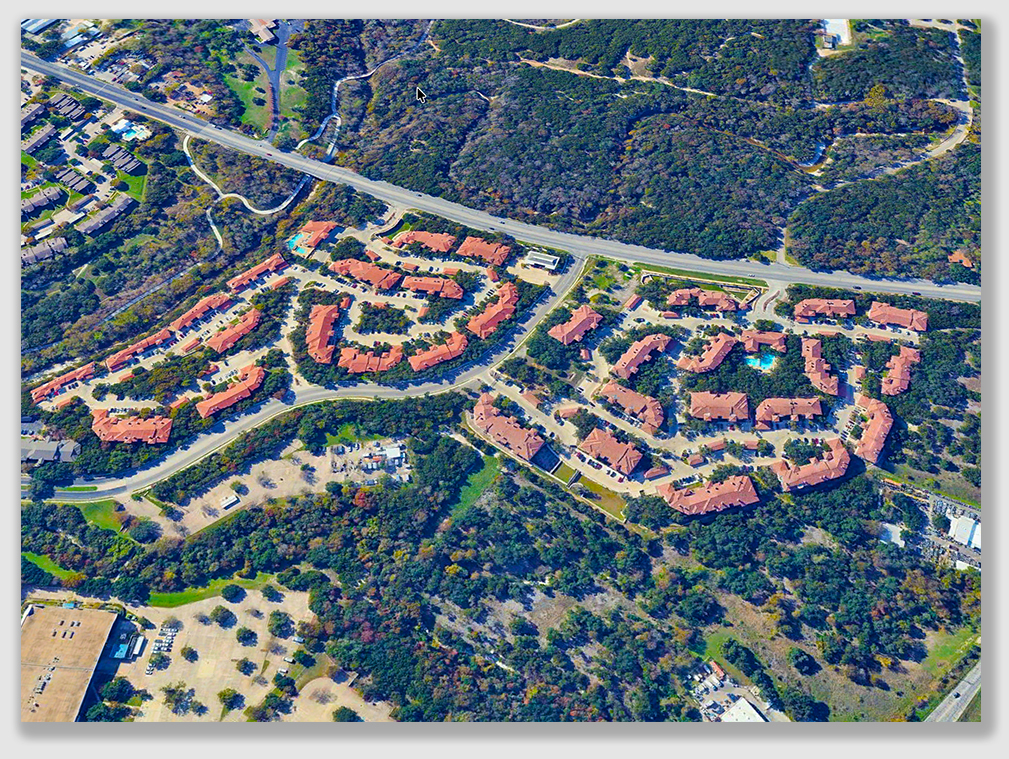
Money is getting tighter for America’s hundreds of thousands of homeowners associations, and they are extending a shorter financial leash to their residents. HOAs are getting more aggressive about pursuing people who rack up unpaid dues, skipping informal grace periods to make up the payments and turning delinquent accounts over to lawyers. In the most extreme cases, they are pursuing foreclosures on these properties. There were 6,376 properties with HOA-related foreclosure filings in the first quarter of this year—spanning initial default notices to completed sales. That is up nearly 40% from two years earlier and rising faster than overall mortgage foreclosure rates, according to real-estate analytics firm Attom. “HOAs are being forced into more aggressive collections to avoid their own financial collapse,” said Brian Fox, co-founder of real-estate technology firm Benutech, which tracks HOA delinquency trends and foreclosures…
New York City, The New York Times, August 1, 2026: When Neighbors Fight Over Shared Space, Who Wins?
Q: I own a single-family home in New York City. The apartment building next door has an illegal unit in the basement, and we share ownership of a small paved alley. The owner next door has complained of flooding in the basement apartment because the drain to the sewer on his side of the alley isn’t functioning. He told me that he intends to block the drain, regrade our alley and redirect all the water through the alley and into the street — which will wash out our lawn. If we won’t regrade the alley with him, he will make his side higher, redirecting all the water away from the basement and toward our house. What are our rights?
A: Your neighbor cannot solve his problem by directing water onto your property, or by ignoring city laws. The city code requires owners to keep their properties in a safe, code-compliant condition, and this could arguably include the drain, said Michael Nacmias, a lawyer in Brooklyn. To take a legal approach to this project, he would likely have to file plans and obtain permits before any work is done. This would mean figuring out whether the consent of both owners is required by checking deeds, surveys and easements, said Mr. Nacmias. If the work requires temporary access to your property and you do not grant it, be aware that your neighbor could sue you under state law, though the law does not allow your neighbor to alter your property…
 Southern Living, August 2, 2026: How To Get Rid Of Tree Roots Without Damaging The Rest Of Your Yard
When you take down a tree in your yard, that usually isn’t the end of it. A thicket of shoots grows from the stump, forcing you to remove the stump or do everything you can to kill it. Then, suckers begin sprouting from the ground 5 or 10 feet away—maybe even all over the lawn. This remarkable survival mechanism can cause endless frustration for a homeowner. Tree roots can survive for years after the original tree is gone. Digging up an extensive root system is difficult and could damage your lawn and flower beds. Drenching the roots with weed killer or rock salt will kill every other plant around. If you’re looking for a way to kill tree roots, there are safer methods you can use. Here’s how to kill tree roots without damaging your yard…

 Tree and Neighbor Law For Homeowners and Professionals