

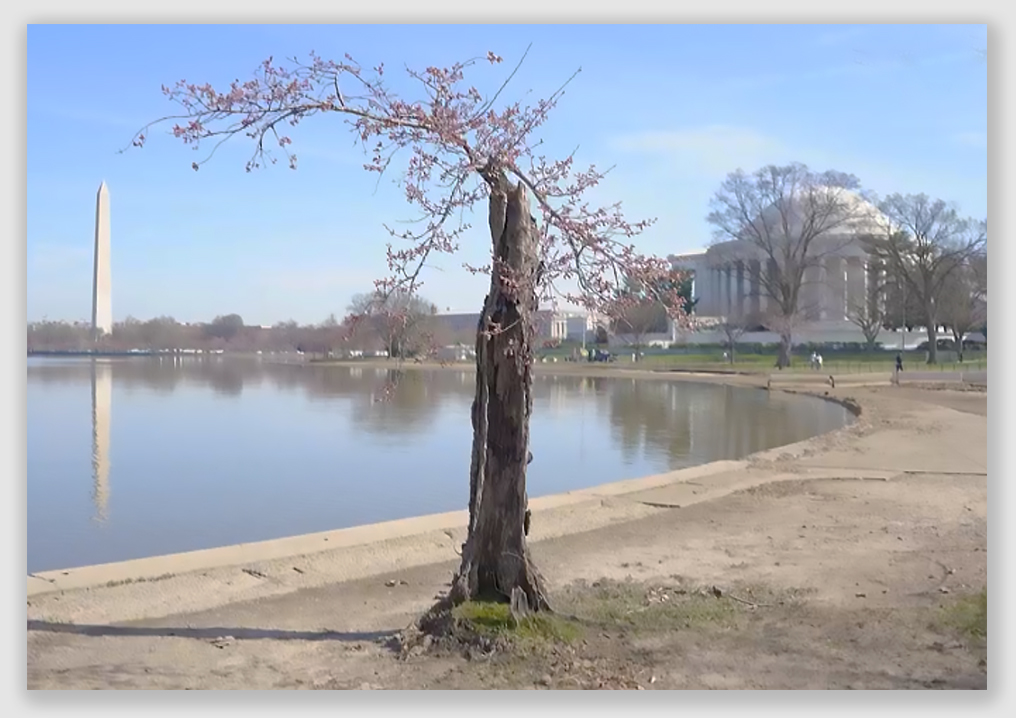
The District’s cherry blossom trees reached peak bloom Thursday, drawing crowds to the Tidal Basin on a mild afternoon as puffy white blossoms wrapped the shoreline. With more than 70% of the blooms open, people poured into the area, many stopping for selfies, lingering beneath the trees or wandering slowly along the water. Some admitted they were playing hooky from work to take in the annual show. Others traveled specifically for the experience or made it part of an annual tradition. “This is my first time seeing the cherry blossoms,” said Nikki Taylor, of Detroit. “They’re absolutely gorgeous.” For some, what makes the experience special is that it offers something rare without leaving the country. “I think how pretty they are, and it’s very unique to D.C., other than Japan,” said Sara Hummel, of Clarksburg, Maryland. “So if we don’t have to fly … 17-20 hours to see them, then we’re lucky that we have them close by…” Among the rows of cherry trees, one stood out in particular. Its hollowed trunk and single long branch bursting with blooms drew a steady stream of onlookers, many slowing down to take a closer look. Some said it reminded them of “Stumpy,” the iconic cherry blossom tree that became a symbol of resilience before it was removed during construction work at the Tidal Basin…
Nursery Management, March 24, 2026: Now is the time to check boxwood plants for box tree moth (Cydalima perspectalis)
The first confirmed report of box tree moth in Maryland was in Washington County in July 2025. This insect pest overwinters as larvae that are about a half-inch in size. The larvae are within hard-to-find hibernaculum that have a sheer, water-resistant covering. Larvae feed from the inside area of the leaf to the outside edge, leaving the outer leaf rims on the plant. When finished feeding on leaves, the caterpillars can also feed on the bark, causing branches to become brittle and dry. The caterpillars will start to become active in March when temperatures are around 50 °F. The predictive model for 2026 shows the potential for some caterpillars to become active starting March 7; however, emergence will ramp up beginning March 21 after an accumulation of warmer days throughout the month. Box tree moth larvae damage plants very quickly. If growers find overwintering hibernaculum or viable larvae in March, treat immediately with a residual insecticide…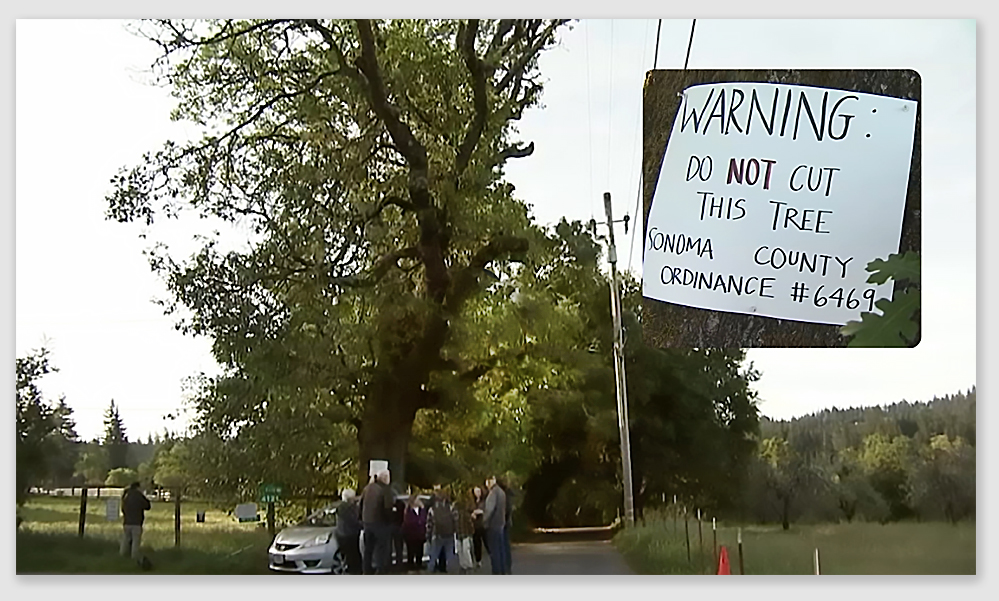 San Francisco, California, KGO-TV, March 26, 2026: North Bay neighbors rally to protect 250-year-old oak tree from being cut down by PG&E
Musicians played and sang as a drum beat of opposition was building on Bones Road in Sebastopol. Neighbors are prepared to defend an ancient oak tree from a chainsaw. “This tree we feel is the sentinel of the neighborhood, said Catherine Armer. Catherine Armer and a dozen of her neighbors surrounded the 80-foot oak early Thursday morning, ready to protect it from a tree crew with orders to remove it. “Our message is- we’re not looking for a fight, we’re looking for time to explore other options, Armer added. “My arborist said it was it was 200 years old, maybe 250, said Laurie Meyers. Which explains a nod to 1776, written on a sign. PG&E tells ABC7 Eyewitness News, the tree must go. “Inspection of the tree found evidence of active decay and the tree was determined to be a risk of failure into PG&E’s assets. In order to ensure the reliability and the safety of the public, PG&E must remove or heavily prune the tree.” The oak sits on Laurie Meyer’s property — her arborist says the tree is heathy…
Boston, Massachusetts, Bay State Banner, March 25, 2026: Report sheds light on Boston’s tree canopy growth
Boston’s canopy is thriving and growing, according to a five-year report assessing the tree cover over the city. The report, prepared by the University of Vermont’s Spatial Analysis Lab, is the first since the city launched its urban forestry plan in 2022. Overall, the March 5 report found that between 2019 and 2024, the city’s tree canopy grew by 1,064 acres. At the same time, it also lost 913 acres, for a net gain of 151 acres overall, a 0.5 % increase since 2019. While that may seem small, that is equal to about 114 football fields. “We want to see how things change over time with the understanding that ultimately, we’re running a marathon; this isn’t a sprint,” said Todd Mistor, director of the city’s Urban Forestry Division. “There’s always this balance at play, but I do think that this is a good indication that some of the places where we’ve invested resources are paying off…”
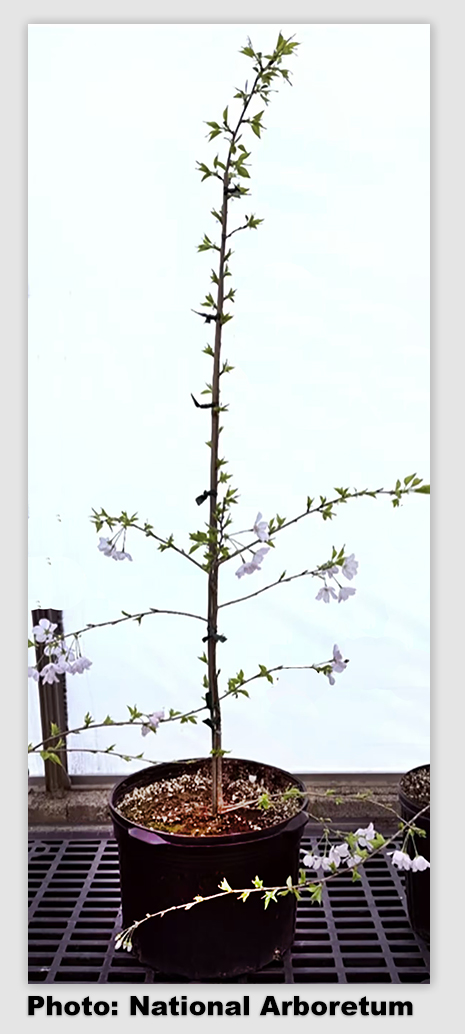
Clones of the scraggly, beloved cherry blossom tree felled two years ago in the nation’s capital have flowered for the first time this spring, reaching what federal officials described Wednesday as a “pinnacle achievement.” The National Arboretum said in a statement that the plant material used to propagate the Yoshino cherry clones was collected in the summer of 2024. It was one of thousands that line the banks of the Tidal Basin reservoir between the Thomas Jefferson and Franklin Delano Roosevelt memorials. The new trees are healthy and have put on substantial growth since they formed their own root systems, according to the statement. They will remain at a nonpublic research area until the National Park Service can replant them, perhaps as soon as next spring, the arboretum said…
Valencia, California, The Signal, March 25, 2026: Group threatens city over oak-tree changes
It wasn’t a love of the oaks, appreciation for the shade or a love of the city’s bucolic greenbelt, but a legal threat letter and a closed-door decision that saved the trees this week, according to a report out of closed session from City Attorney Joe Montes. On Tuesday, the city had previously planned a second reading and approval of changes to its oak-tree ordinance that the City Council had expected to finalize this week. Then a council agenda was released that called for a special closed-session conference with the city’s attorney, Joe Montes, who shared the following in his report out of his closed-session talk with the council: “With regard to the first closed-session agenda item: In light of the environmental issues raised, with the unanimous direction of council, staff is going to take another look at this item rather than schedule it for a second reading at this time…”
 Politico, March 24, 2026: Lithuanian oak defeats Polish elm in Eurovision of trees
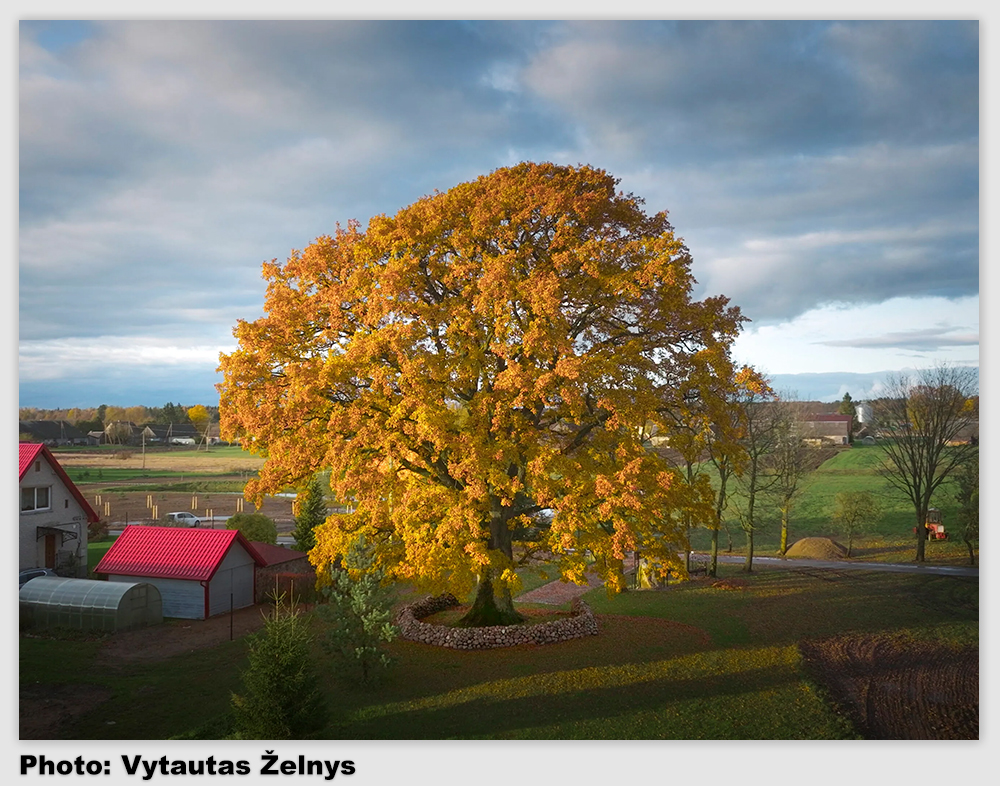
A Lithuanian oak was named the 2026 European Tree of the Year on Tuesday, putting an end to four years of Polish domination in the Eurovision-like contest. The Oak of Laukai, a 400-year-old specimen standing proud in the rural community of Rukai, was crowned at a ceremony in Brussels’ European Parliament, defeating a wild apple tree overlooking a Slovak village and a crooked elm leaning over the moat of a Polish castle. “This is truly an exceptional, historic moment for Lithuania … At one point, this tree was almost forgotten, but people came together, took care of it and gave it a new life. Today, we’re here because of that,” said a Lithuanian representative in accepting the award, while Polish commenters implored officials to “stop the count” on the ceremony’s YouTube stream. It’s the first time a Lithuanian tree has won the prize in the contest’s 15 annual iterations. The Oak of Laukai’s victory follows a change in the online voting system that used to favor bigger countries and last year fueled a bitter feud between Polish and Spanish tree lovers…
An Oakwood Village homeowner is alleging chainsaw-wielding developers tried to cut down a tree on private property without his permission. Ian Pearson tells CityNews Modcity, a development company accused of cutting down trees at multiple properties across Toronto, had workers come to his property and try to cut down his tree. “There were guys with chainsaws back here and they had taken out two sections of my fence,” said Pearson. “The property owner had told them that the property line was on the other side of this tree, that I had built my fence into his property, and that it was his tree and he was cutting it down.” Pearson said Modcity bought the house behind him with plans for a major redevelopment. Before they even had a permit to build at the address on Glenholme Avenue, workers were hacking down the tree at the corner of Pearson’s property…
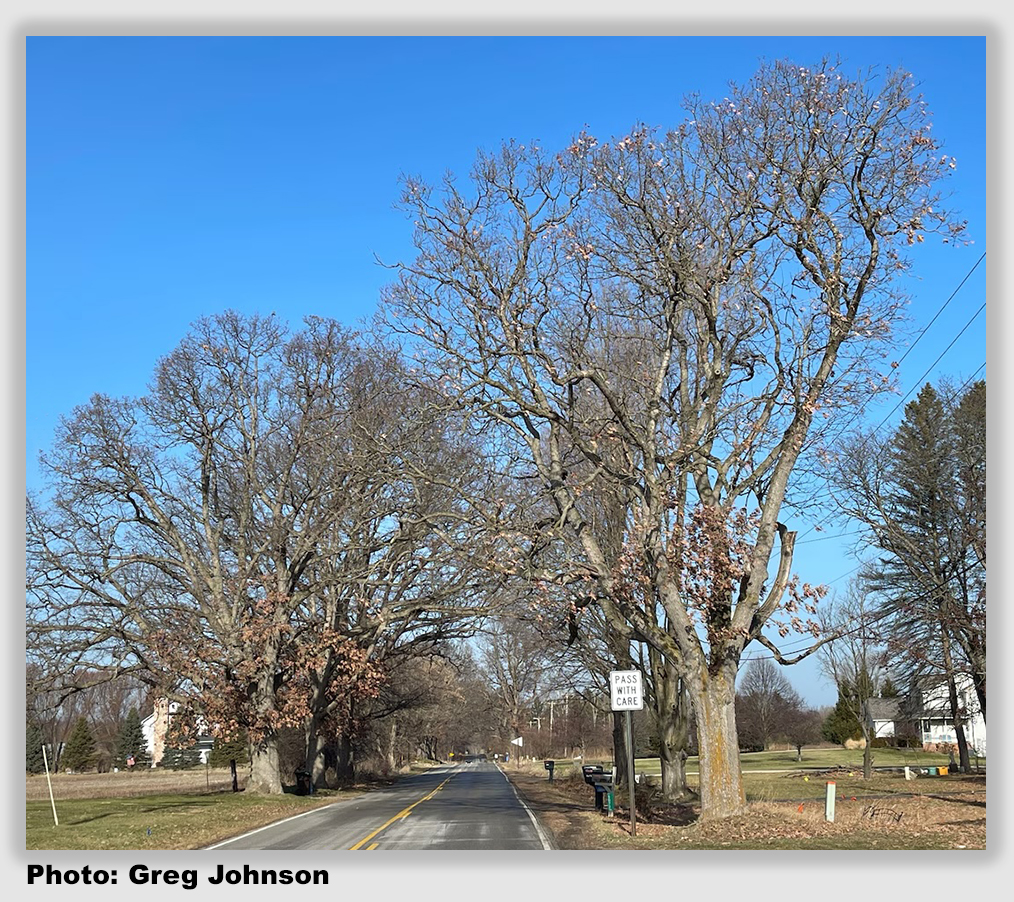
The removal of dozens of trees for roadwork just outside downtown Chelsea will move forward despite pushback and a lawsuit aimed at stopping it. On Monday, March 23, a Washtenaw County judge ruled in favor of the Washtenaw County Road Commission in a lawsuit filed by residents over the planned removal of trees on a section of Werkner Road in Sylvan Township just outside downtown Chelsea. Tree clearing will happen in advance of the two-part road improvement project on the road between Sibley Road and M-52. The road commission is gearing up to remove 42 trees from along the road right-of-way where a portion of the road needs to be widened for shoulders and drainage improvements. All of the trees to be removed are located between an entrance to a city water plant south of Ivy Road and M-52. That stretch of Werkner Road needs more extensive repairs and upgrades than in the remainder of the construction project. It is where the road will be widened by a total of 8 feet for road shoulders, including 2 feet of pavement and 2 feet of gravel shoulders on each side of the road. The road commission will begin marking trees as they finalize the timeline for removal with a contractor, the road commission announced Monday. Tree removals will cause brief traffic delays, with flaggers managing traffic. Residents Gregory Johnson and Nan Spike filed suit in February under the Michigan Environmental Protection Act (MEPA). They were seeking to prevent the removal of the trees. Spike lives on the road, and Johnson owns property there and lives nearby…
The City of Tumwater now has a plan to keep the 400-year-old Davis Meeker Garry Oak tree standing, almost two years after former Mayor Debbie Sullivan called to cut the tree down after a large branch fell near Old Highway 99. The plan consists of a three-year maintenance plan. However, the funds the city has set aside to care for the tree might not cover what needs to be done in the first year. The city’s Historic Preservation Commission unanimously approved the work plan for the tree on March 12. City spokesperson Jason Wettstein said the plan will be brought to the City Council in late April or early May. A Thurston County Superior Court judge ruled in December that the city can’t cut down the historic tree without prior approval from its Historic Preservation Commission…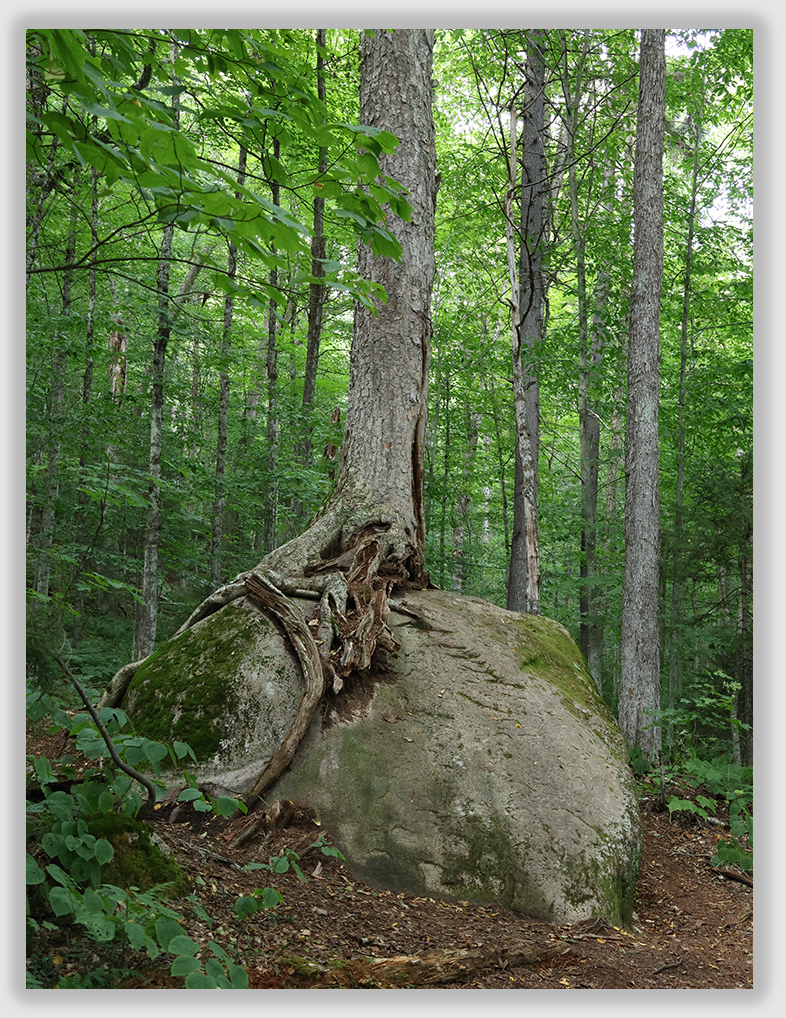
Adirondack Explorer, March 23, 2026: How to spot old trees and old-growth forests in the Adirondacks
Old trees have a special beauty and significance. They inspire awe. When hiking through the Adirondack Park’s forests, most of which have regrown beautifully following logging in the 1800s, it is a special treat to find these ancient residents. Perhaps surprisingly, very old trees are quite easy to find. Many Adirondack logging operations were selective—involving harvest of the most valuable softwood tree species: white pine, spruce and hemlock. Hardwood trees, including beech, birch and maple, were often left in place. Even in areas where logging nearly denuded large tracts (“clear-cuts”), individual trees with blemishes, like large fire scars or burls, were often skipped. Thus, old trees can still be found growing in otherwise second-growth forests. Despite the intense logging history of the Adirondacks, some patches of old growth forests survived. Two fabulous and easy-to-access examples can be visited on the Cathedral Pines Trail near Seventh Lake and the Ampersand Mountain Trail near Middle Saranac Lake. Many old growth tracts remain undiscovered. This guide has two goals. The first is to help hikers recognize individual old trees that still stand in otherwise second-growth forests. The second is to help hikers recognize those rare tracts of forest that were never logged—the pristine old growth forests…

 Tree and Neighbor Law For Homeowners and Professionals