

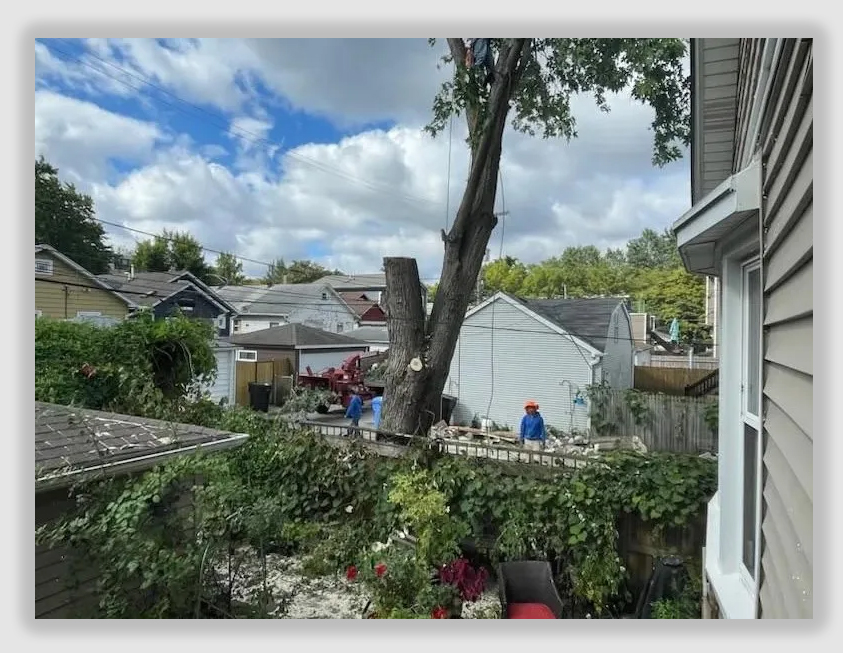
It’s never fun to fight with a neighbor, especially when it comes to property lines and landscaping. Knowing your local laws could help alleviate some stress in the long run. In the r/TreeLaw subreddit, a Reddit user asked for advice on a tense situation with a neighbor. They posted several photos of their friend’s backyard, where the neighbor cut down a mature maple tree without permission that straddled the homes’ property line. “My good friend is currently traveling in Europe and while she is gone, her next-door neighbor […] cut down the shared tree,” the original poster said. They added that the neighbor had previously spoken with the homeowner about the tree, and they disagreed on cutting it down. The OP’s friend was devastated to come home from vacation to find the tree removed. They said they intend to sue the neighbor because their property was surveyed in the past, which determined that 60% of the tree was technically on their side of the property line. However, the tree was on the neighbor’s side of the fence…
Savannah, Georgia, WTOC-TV, February 25, 2026: ‘Unfortunately, the tree must be removed’: Historic 300-year-old oak tree taken down in Chatham Co.
Georgia Power issued an update about a live oak on Little Neck Road that has garnered significant community attention this month. In a quote to WTOC, Georgia Power said while they understand the oak’s significance, the tree must be removed. “We appreciate the important cultural and historical significance of Savannah’s live oaks. For more than 100 years, Savannah Electric and Georgia Power have worked to protect our area’s trees and other natural resources as the area has grown. We also recognize the history of this tree and the sentimental attachment many have to it – we have explored all options and, unfortunately, the tree must be removed. While we always work to listen to different perspectives and minimize our impact as much as we can, our priority has to be maintaining reliable and affordable electric service to thousands of customers in Savannah,” said William Mock, region executive for Georgia Power based in Savannah… SciNews, February 26, 2026: Scientists Observe Electrical Discharges on Trees under Thunderstorms
For as long as thunderstorms have rolled across the planet’s forests, cloud-to-ground lightning has commanded attention: splitting trunks, igniting wildfires and briefly turning night into day. But scientists are now focusing on a far subtler electrical phenomenon that forms on the tips of leaves during thunderstorms. Unlike lightning, which superheats the air to tens of thousands of degrees, coronae are weak electrical discharges, with temperatures only slightly above the surrounding air. Yet these understated sparks produce extreme amounts of hydroxyl, the atmosphere’s main oxidizer, damage tree leaves, and potentially contribute charged particles to the thunderstorm cloud base. “These things actually happen; we’ve seen them; we know they exist now,” said Dr. Patrick McFarland, a meteorologist at the Pennsylvania State University. “To finally have concrete evidence of that…is what I think is the most fun…”
Insurance Journal, February 25, 2026: Tree-Planting in Louisiana Wetlands Aims to Rebuild Natural Barriers
Across the calm waters behind a pumping station near Lake Borgne, hundreds of saplings stand out in the mist, wrapped in white plastic cylinders. To get there and to other sites like it, organizers have ferried dozens of volunteers week after week in airboats. They have a trailer equipped with supplies. Rubber boots in all different sizes. Bins full of snacks for the end of a hard day’s work. One day, they hope to see 30,000 fully grown trees like bald cypress and water tupelo at this and other sites that restore the natural barrier of wetlands into the protective forest it once was. The goal is for the roots of these native trees to hold the earth around New Orleans in place as it slips further below sea level, create habitat for wildlife and help shield the city from storms…
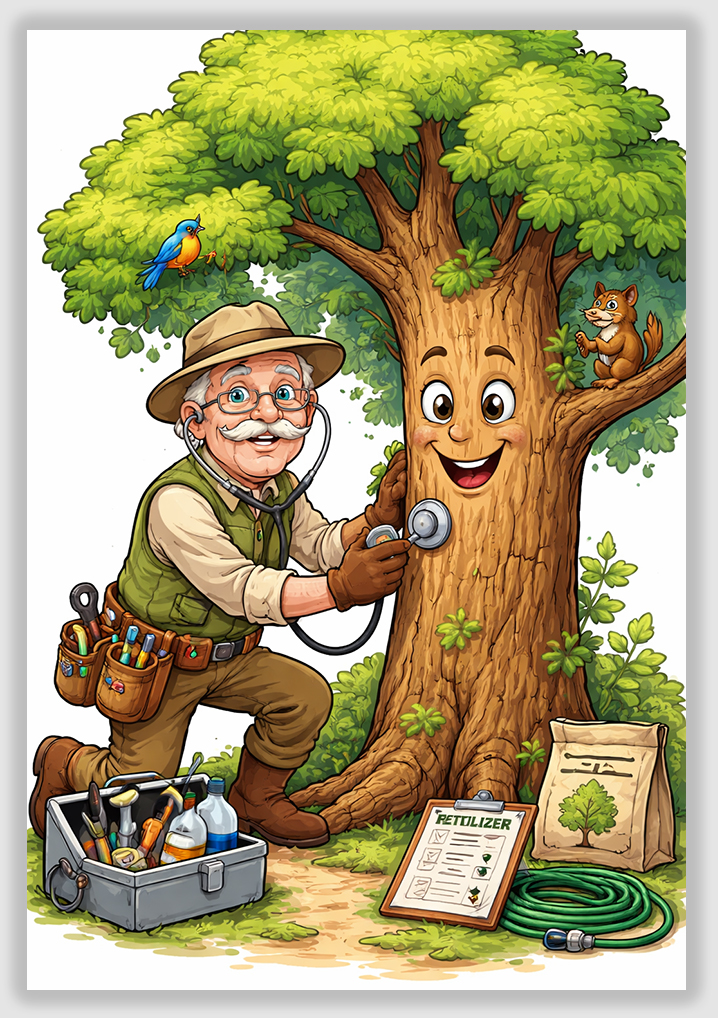 New York City, The New York Times, February 24, 2026: When Do You Need to Call a Tree Doctor?
Homeowners who plant trees know how crucial care is during the formative years of the investment. But what about that front yard guardian that is likely older than the house itself? Although a mature tree may not demand the same attention as a young Japanese maple, problems still arise. And while a property owner with a green thumb can usually prune young trees from terra firma, mature trees require specialized cutting, pest and disease management that professionals should handle. It’s worth the extra effort. Environmental studies and real estate experts agree that a mature tree near your home can boost its value by 3 to 15 percent. “You do not, in fact, need to own the tree to see the financial benefits,” said Geoffrey Donovan, an economist and scientist who consults on the benefits of urban trees. Renters might see reduced cooling costs in summer because of a mature tree’s shade, along with better air quality and reduced traffic noise, he said…
A team of apple sleuths has uncovered four unique trees at the former site of pioneer orchardist Peter Britt in Jacksonville, and preliminary DNA tests showed their special character. “They may not be found anywhere else in the world,” team leader Carol Knapp told Jacksonville City Council during a study session Feb. 17, where she updated members on the latest developments for the Britt Heritage Apple Project. Knapp, Gayle Lewis and Jill Brenkman having been working on identifying 10 apple trees, half of which are on the Britt Festival grounds and the other half on the city’s adjacent Britt Gardens. The four unidentified trees and six other heritage apple trees are not in great shape, although all produce some fruit…
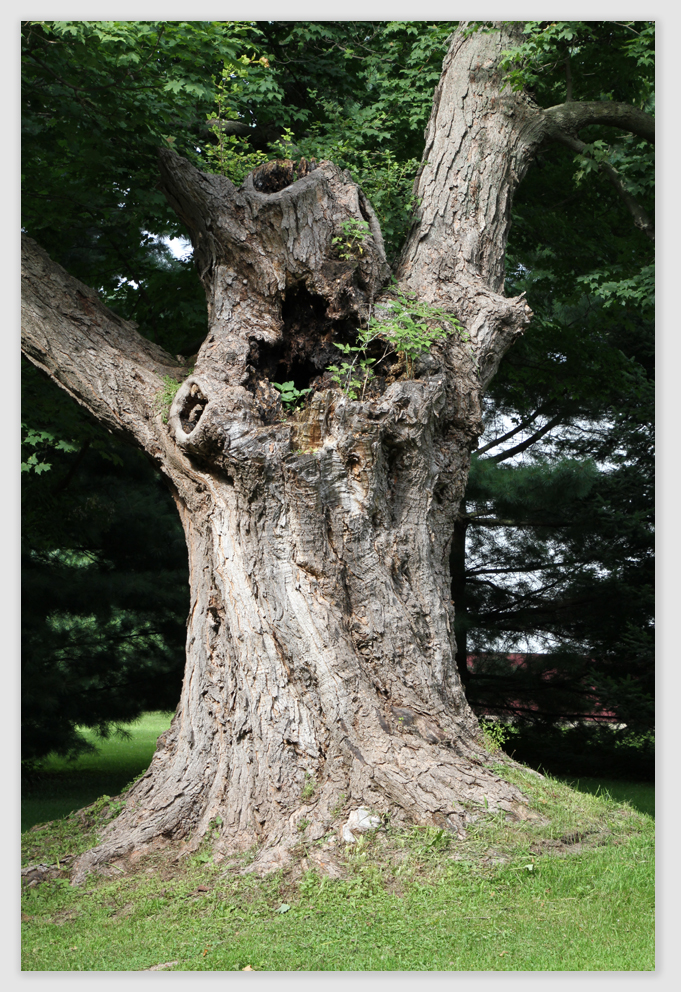
Throughout their lifetimes, healthy forests produce more oxygen than they use, while taking in greenhouse gases via plants and soils. This ecosystem-wide service, called carbon sequestration, regulates global climate and is an essential component of climate models and goals. Forest health, however, influences carbon cycling, and when trees get sick, the net reduction of greenhouse gases may be more limited than previously thought. New research conducted at the University of Notre Dame Environmental Research Center (UNDERC) suggests that upland forests harboring trees with a common and incurable fungal disease known as heart rot could actually be emitting more methane than they take in, therefore releasing more greenhouse gases than previously thought. Methane, a flammable natural gas, is more than 30 times more effective at trapping heat than carbon dioxide. “Historically, upland forests were thought to be strong methane sinks because they have organisms in their dry soils that take up methane instead of releasing it to the atmosphere,” said Adrian Rocha, an ecologist at the University of Notre Dame who supervised the research. “Heart rot disease has the potential to switch upland forests from being methane sinks to methane sources since diseased trees emit more methane than healthy trees…”

 Tree and Neighbor Law For Homeowners and Professionals