


In the days since last week’s fatal landslides at Mount Maunganui, there has been widespread discussion about what may have caused the slopes above the campground to fail, including the possible role of recent tree removal on Mauao. In the aftermath of such tragedy, it is natural to search for clear explanations. But landslides typically reflect a complex combination of factors – from geology and long-term slope evolution to weather, climate and land use. The Tauranga region is underlain by volcanic materials that are well known for their instability. Over time, volcanic rock weathers into clay-rich soils, including a problematic mineral known as halloysite. During heavy rainfall, water infiltrates these clay-rich soils, increasing porewater pressure between soil particles. This reduces the soil’s shear strength, making slopes more prone to failure…
Mongabay, January 26, 2026: Tree spirits: The unintended ecology of belief
In parts of Indonesian Borneo, forests endure not because they are fenced off or regulated, but because they are feared. Among the Indigenous Iban people of Sungai Utik, large strangler fig trees are believed to house spirits that can mislead, sicken, or even kill those who disturb them. The belief is not abstract. It is anchored in stories, warnings and remembered loss, Mongabay’s Liz Kimbrough recently reported. One such story recounts a boy who vanished near a rice field, only to be found hours later by a towering fig. He said spirits had called to him and hidden him in plain sight. His family took him to a shaman. His name was changed, to sever the spirits’ hold. The tree remained. For researchers, these accounts might read as folklore. Yet new fieldwork shows that the consequences of such beliefs are visible on the land. When the Iban clear fields for farming, they leave large strangler figs standing. They also leave a buffer of forest around them, creating islands of vegetation scattered through farmland. The practice is called dipulau, a word that translates simply as “island.” These islands occupy only a small fraction of the cultivated landscape, perhaps 1 or 2%. Still, they matter. Different species of strangler figs fruit at different times of the year and draw birds, primates and wild pigs when other food is scarce. Hunters once waited beneath them. Today, wildlife still moves between forest and field along these living stepping stones…
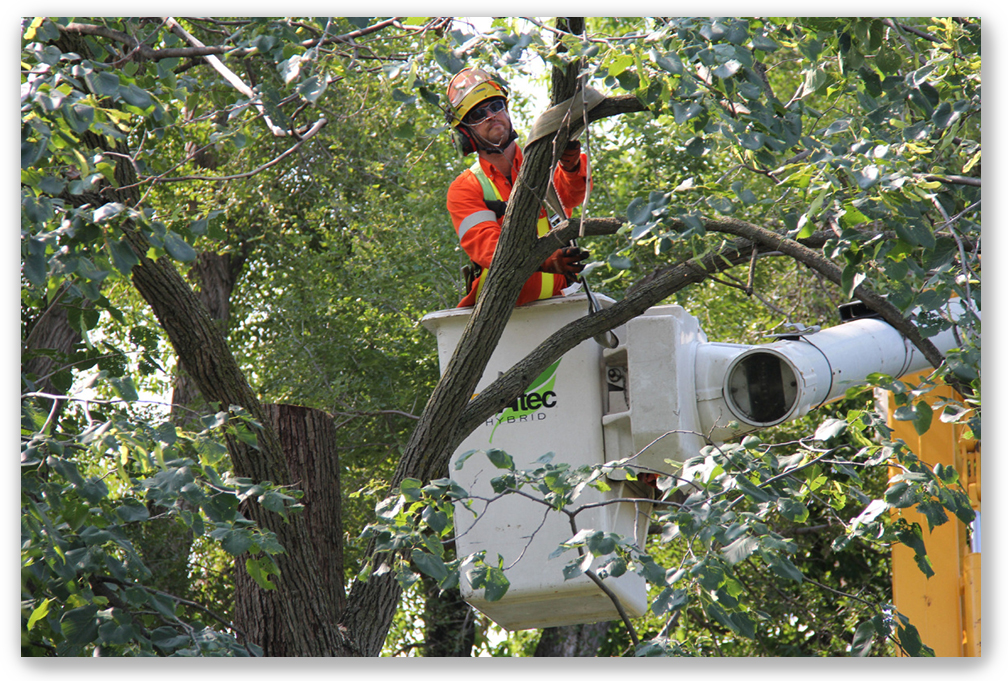
Vegetation encroachment is one of the most persistent and costly risks utilities face. Overgrown trees and brush do not just interfere with power lines; they represent one of the leading causes of outages, wildfires, and regulatory fines. In fact, nearly half of all weather-related power outages are linked to vegetation issues. In recent years, catastrophic wildfires tied to vegetation encroachment have cost utilities billions in fines and settlements. At a time when utilities are under pressure to ensure reliability, reduce wildfire risks, and meet stricter compliance standards, vegetation management has transformed from a periodic maintenance task into a mission critical priority. This shift aligns with broader industry trends: utilities face mounting regulatory scrutiny, accelerating digital transformation, and the urgent need to modernize outdated infrastructure in the face of climate-driven risks. Today, we are at an inflection point. Utilities are evolving their vegetation management strategies from reactive to proactive and now, with the help of advanced AI and geospatial analytics, toward predictive. This transformation is not just about trimming trees more efficiently. It is about harnessing RGB, LiDAR, and multispectral aerial imagery, geospatial data, and artificial intelligence to anticipate risks, allocate resources smarter, and ultimately safeguard communities and critical infrastructure…
Evansville, Indiana, RoundTable, January 28, 2026: The fragile life of a parkway tree
What started as a simple 311 call — a broken tree limb — ended with the removal of a beloved tree. We called the city when we noticed a large branch dangling unattached from a parkway tree outside our home. A city forestry department crew arrived in no time. I watched from our third-floor apartment as a forester headed to the top of the tree in a cherry picker to untangle the branch. The job seemed quick and easy. But when I went downstairs to talk to the crew, I could tell things were not that simple. “I have concerns about the tree,” crew leader Juan Octaviano told me. He could see a cavity in another large branch, and he wanted to take a closer look at the tree.I couldn’t imagine what was wrong. The tree, which I learned that day was a big-leafed linden, about 60 years old, looked perfectly healthy. Its leaves were as beautiful this year as ever before. They blossomed at the same time as the other trees and fell right on time not too long ago. But Octaviano, who has 28 years of experience, saw the tree differently and he wanted the city to take a closer look. Kindly, he didn’t want to say much…
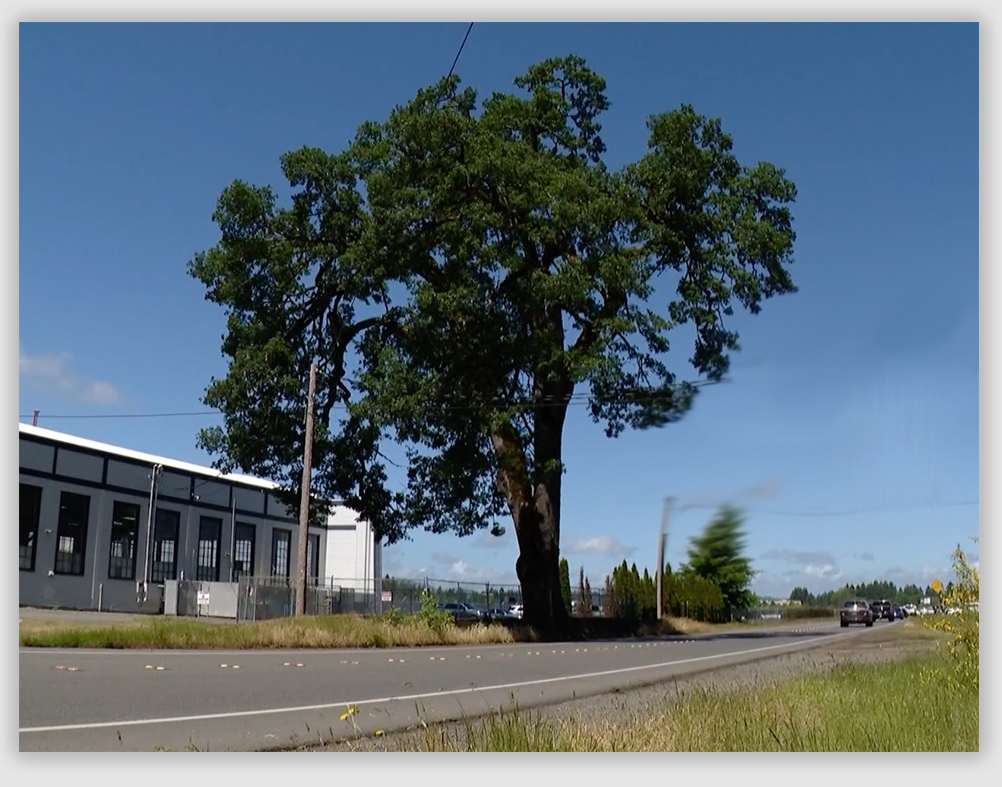
Community activists worked for more than a year and a half to protect a Garry oak tree in Tumwater, Washington, that the city estimates is 400 years old. A superior court judge ruled in late December that the city’s Historic Preservation Commission has the final word on what happens to the tree, not the city. The concerns started in 2024. The former Mayor of Tumwater announced that the city would remove the huge oak tree, citing safety concerns, after it dropped a large branch from 50 feet. The tree soars 85 feet tall. Its crown spans 80 feet from edge to edge and the trunk’s diameter at breast height is five and a half feet. Several city council members objected to the mayor’s executive action. Dozens of community members spoke out in a packed public hearing in June. And a small group took legal action to stop the city from cutting the tree down. They argued that the tree is listed with Tumwater’s Historic Preservation Commission, so only the commission can decide the tree’s fate…
Wild American chestnut trees, deemed “functionally extinct” decades ago, may already be quietly mounting an unexpected comeback in the northern forests of the US. Thousands of naturally thriving, wild trees in Maine contradict decades of assumptions about the species’ extinction—and how genetic engineering is the only solution. When an accidental importation of an Asian fungus in 1904 began killing this majestic tree—once abundant along the U.S. East Coast and Canada—ghostly gaps left in the landscape haunted biologists. But a new documentary (watch below) brought to light a remarkable and little-known success story: thousands of wild, healthy American chestnut trees are flourishing on the Maine forest land of renowned biologist and author Dr. Bernd Heinrich…
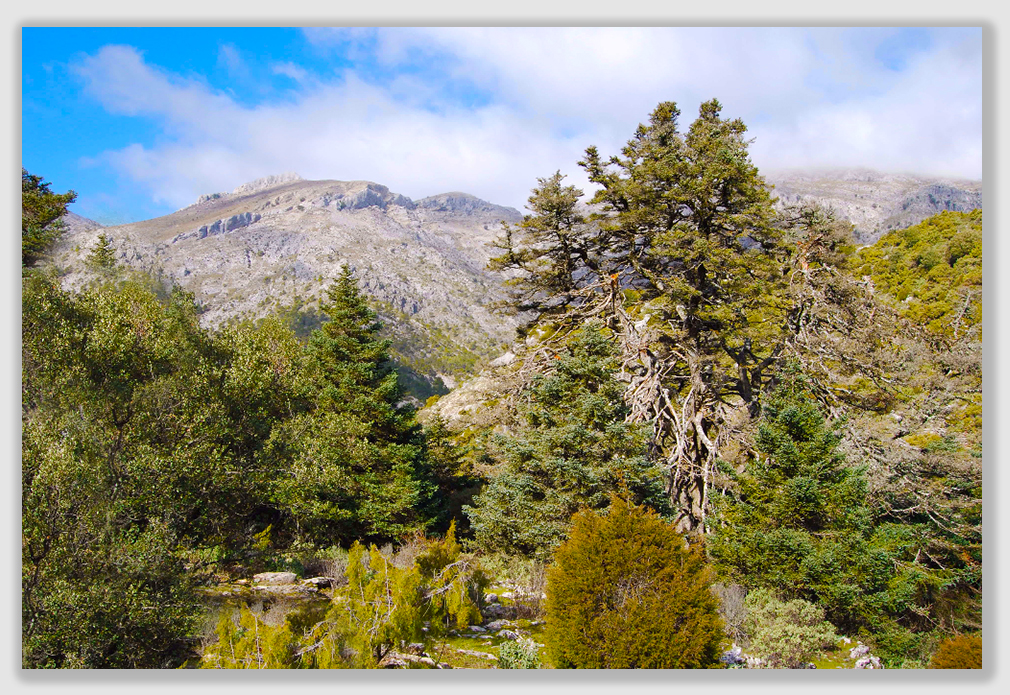 Phys.org, January 24, 2026: Ancient Spanish trees reveal Mediterranean storms are intensifying
Ancient pine trees growing in the Iberian mountains of eastern Spain have quietly recorded more than five centuries of Mediterranean weather. Now, by reading the annual growth rings preserved in their wood, scientists have uncovered a striking message: today’s storms and droughts are becoming more intense and more frequent than almost anything the region has experienced since the early 1500s. New research, published in Climate of the Past, reconstructs 520 years of rainfall variability in the western Mediterranean using tree-ring data from long-lived Spanish pines (Pinus sylvestris and Pinus nigra). The findings show that recent decades stand out sharply in the historical record, marked by an escalation of both extreme rainfall events and prolonged dry spells as the climate warms. Each year, trees add a new growth ring, forming a natural archive of environmental conditions. In wet years, trees typically produce wider rings as water is readily available for growth, while dry years leave behind narrower rings as growth slows…

 Tree and Neighbor Law For Homeowners and Professionals